Fokker, A
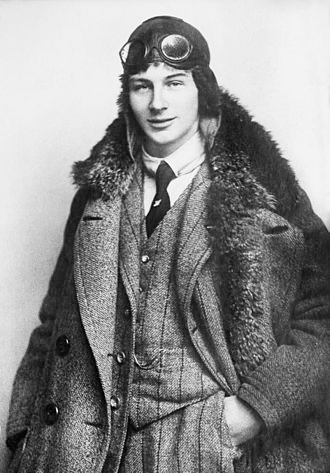
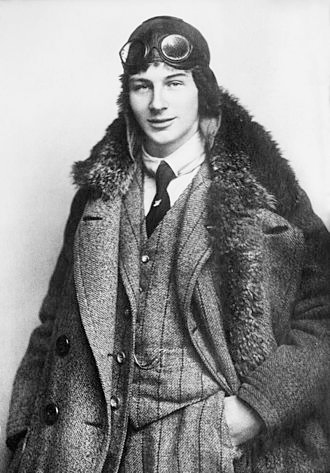
Fokker, Anthony Herman Gerard
ACHIEVEMENT(S): Fokker airplanes
NICKNAME/ALIAS: None
DATE/PLACE OF BIRTH: 6 April 1890, at Kediri, Java, Netherlands East Indies
DATE/PLACE/AGE AT DEATH: 23 December 1939, New York , NY. Aged 49
DISCIPLINE: Aviator and aircraft manufacturer
FIELD: Aviation
LANGUAGE: Dutch and German
PARENTS: Herman Fokker and Anna Diemont, married 1888
SIBLINGS: Katharina
SPOUSE: Married twice: divorced in 1927; marriage again, 1928 (d. 1929)
CHILDREN: ?
EDUCATION: Primary and secondary schools in Haarlem, the Netherlands to 1908; Zalbach Engineering School, 1910
MAJOR WORK: 'Flying Dutchman: The Life of Anthony Fokker', 1931
LIFE AND TIMES:
In early 1910 Fokker entered a special school for automotive engineers in Zalbach, near Mainz in Germany, where he was given the opportunity to build his first two airplanes and, although both failed to fly, he met through this venture a German officer named von Daum who agreed to bankroll a Fokker-designed plane.
In the autumn of 1910 Fokker built his first successful airplane, named Spin I. Throughout early 1911, Fokker continued to make improvements to a new plane (Spin II) including a new elevator and a rudder in the rear. This plane also crashed in May 1911, but in a third plane, Spin III, in the summer of 1911 succeeded in flying across the Rhine river from near Wiesbaden to the aero club in Mainz.
In 1913 he won a German Army competition for a reliable airplane that could be taken apart and moved around on an army truck. In 1914 when World War WWI began, he designed aircraft for the Army’s aviation division. During his wartime stay in Germany, Fokker was inundated with orders, and designed some 40 models of aircraft, first reconnaissance planes and then, from 1915, fighter planes.
Fokker's greatest war-time achievement was the development of a synchronized firing mechanism for plane-mounted machine guns that allowed the guns to fire through the rotating blades of a propeller.
Although planes were mainly used for observation during the early part of the war, some French pilots were experimenting with machine guns mounted on the nose of their Farman aircraft which had the propellers at the rear.
Some machine guns were mounted on both French and British aircraft with front-mounted propellers, but – in order to protect the propellers - their pilots were forced to shoot only to the side of the aircraft, and these disadvantages spurred engineers to consider ways of allowing aircraft to fire machine-guns from the front of an aircraft.
Other aircraft designers, such as Franz Schneider in Germany and Raymond Saulnier in France, were also working on the same idea. In the early months of 1915, the French pilot Garros* added deflector plates to the blades of the front-propeller of his Morane-Saulnier, the idea being that these small wedges of toughened steel would deflect any bullet hitting the blades.
After the Morane-Saulnier Roland Garros was flying crashed at Courtrai on 19 April, 1915, and could be studied by the Germans, Fokker (now at the Military Aircraft Factory at Fischamend, Austria, with the aerodynamicist Karman*) and his designers developed an interrupter mechanism.
A cam was attached to the crankshaft of the engine in line with each propeller blade, so that when the blade reached a position in which it might be struck by bullets from the machine-gun, the relevant cam actuated a pushrod which, by a series of linkages, stopped the gun from firing. When the blade was clear, the linkages retracted, allowing the gun to fire.
This synchronized machine-gun was fitted to the Fokker E aircraft, and transformed the aircraft into a deadly weapon, giving the Germans a considerable advantage over the Allied pilots. German aces like Max Immelmann and Oswald Boelcke became national
heroes.
In 1917 Fokker and Reinhold Platz began working on a new aircraft. Making use of the advice given by German flying ace Manfred von Richthofen*, the Fokker Flugzeug-Werke company produced the Fokker D-VII. The first of these planes reached the Western Front in April 1918 and by October there were 800
D-VIIs on active service. The Fokker D-VII was strong, fast and superb at high altitudes, was extremely popular with the German pilots, and was regarded by many as the deadliest airplane of the war.
After the war, Fokker managed to smuggle himself, 400 engines and the dismantled parts of 120 aircraft from Fokker Flugzeug-Werke company out of Germany and into the Netherlands. Here, during the 1920s the Fokker D-VII became the mainstay of the Dutch air force, while Fokker continued to design airplanes and soon became the preeminent designer and manufacturer of commercial aircraft in the world.
In 1919-20 Fokker sold several of his D.40 fighter monoplanes to the U.S. military for experimental purposes, and in 1922 he established the Atlantic Aircraft Corporation at Habrouck Heights, New Jersey.
He also maintained a large aircraft factory in The Netherlands. In 1925 Byrd* purchased the first of Fokker's tri-motors, a plane with three separate motors and propellers. Byrd named the airplane the 'Josephine Ford', and flew it with Floyd Bennett on their historic flight over the North Pole on 9 May 1926.
During the 1920s and the 1930s Fokker concentrated on the design and development of commercial aircraft that were widely used in the U.S. commercial aviation industry. His tri-motor planes in particular proved successful, Byrd flying a larger model named the 'America' across the Atlantic in 1927, in the wake of Charles Lindbergh's pioneering flight, and in the same year two Army lieutenants, L.J. Maitland and A.F. Hegenberger, flew a Fokker tri-motor from California to Hawaii, establishing the world record for flying over water. Then, in 1930, Commander Charles Kingsford-Smith broke that record by circumnavigating the world in a Fokker tri-motor.
Meanwhile, in 1929, the Fokker Aircraft Corporation had become a subsidiary of General Motors (GM). Later that year, Fokker had a major disagreement over aircraft design with the GM management and left the company, which was then renamed the General Aviation Corporation, and in 1934 moved to California to become North American Aviation. Fokker published his autobiography, 'The Flying Dutchman', in 1931, but had by this time given up aviation and had turned his attention to designing boats.
ASSESSMENT: A major figure in the early development of flight.
EXTRA CONNECTIONS: He influenced Lindbergh*
Goering* worked for him.
His planes were bought Trippe*
His planes were used by Pan Am *
The Stade Roland Garros tennis centre constructed in Paris in the 1920s was named after him. It accommodates the French Open, one of the four Grand Slam tennis tournaments.[28] Consequently, the tournament is officially called Les Internationaux de France de Roland-Garros (the "French Internationals of Roland Garros").
He was a close friend of Ettore Bugatti and in 1913 became the first owner of the Garros Bugatti Type 18, later named Black Bess by its second owner, British racing driver Ivy Cummings.
In June 1928, Amelia Earhart crossed the Atlantic to Wales in a Fokker F.VII/3m trimotor, and in 1930 Charles Kingsford Smith circumnavigated the globe in another. However the reputation was hurt when the famous University of Notre Dame football coach Knute Rockne was killed in the crash of a Fokker F.10A in March 1931.
BIBLIOGRAPHY:
EB
Notable Twentieth-Century Scientists
Fokker, Anthony H.G., Gould, Bruce, Flying Dutchman: The Life of Anthony Fokker, London: George Routledge & Sons, Ltd., 1931.