Howe, Julia
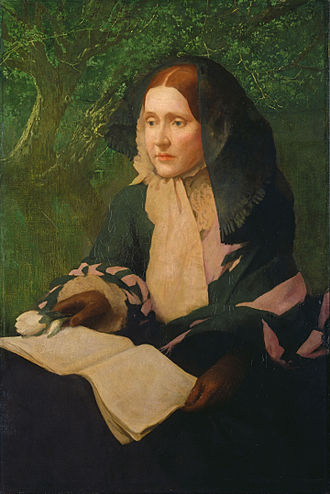
Achievements: Wrote “The Battle Hymn of the Republic”
Born: May 27, 1819; New York, NY
Died: October 17, 1910; Oak Glen, Massachusetts (Aged 91)
Field & Discipline: Politics; Activist
Language: English
Father: Samuel Ward
Mother: Julia Rush
Siblings: Unknown
Spouse: Samuel Grindley Howe (m. 1843)
Children: 6
Education: At home and private school
Major Work:
“Battle Hymn of the Republic” (1862)
Life & Times:
Julia Ward Howe was five when her mother died. In 1843 she married [husband was] Samuel Grindley Howe*, eighteen years older. In early married life Julia stayed at home looking after her husband and children, forbidden by Howe from taking part in public or social work, although she attended lectures, studied languages, and wrote poetry and drama.
By 1850 she was in Rome with her children and contemplating divorce. It was in Rome that she really began to write (“Passion-Flowers,” 1850). She next wrote “Leonora” a semi-autobiographical play. In 1860 her “Trip to Cuba” was published, as well as articles for the New York Tribune.
In 1862 she wrote the [wrote] “Battle Hymn of the Republic,*” inspired by the anti-slavery radical [inspired by] John Brown*. The song became a Northern rallying call during the Civil War.
From then on her writing career took off. In 1867 she produced eleven editions of a literary magazine “Northern Lights”; in 1870 she founded “Woman’s Journal,” (a widely-read women’s rights magazine); she edited “Sex and Education” in 1874; and wrote a biography of the first women journalist, Margaret Fuller, in 1883. She continued to write until her death.
In 1868 her work in womens’ right began in earnest, once Howe relaxed his prohibition on her public work. She helped found the new England Women’s Club, and in 1869 became co-leader of the American Woman Suffrage Association. In 1872 she organized a Woman’s Peace Conference in London.
In 1876 her husband died and she was free to begin non-stop work for women’s rights, speaking all over the country, writing prolifically, heading local and national organizations to promote equality for women, and becoming a powerful force in the movement for the emancipation of women.
She was working for the cause until her death.
Assessment: A major force for womens’ rights.
Oneliner: Julia Howe, author of the “Battle Hymn of the Republic” and women’s rights campaigner
Bibliography:
- American National Biography.