Photosynthesis
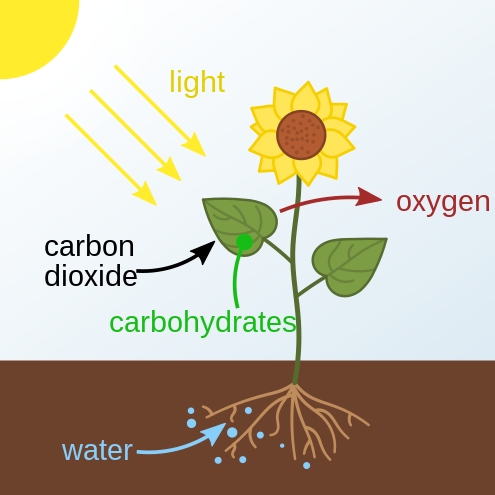
DETAILS/DESCRIPTION:
Photosynthesis, discovered by the Swiss Jean Senebier* is the chemical process by which organisms convert light energy into chemical energy.
Through photosynthesis, in the leaves of green plants carbohydrates are manufactured from carbon dioxide and water.
Chlorophyll acts as a catalyst (it allows the process to happen) by absorbing energy from the sunlight. Plants then us this energy to combine carbon dioxide from the air with water from the roots. The formula for the photosynthesis process is:
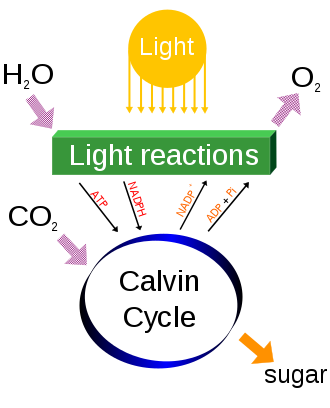
(six molecules of carbon dioxide plus six molecules of water are processed into six molecules of carbohydrate and six molecules of free oxygen).
This reaction is believed by many scientists to have been responsible for the creation of free oxygen in the beginning of life on earth by releasing it from compounds such as water, carbon dioxide and sulphur dioxide present in the early periods of earth’s formation.
ONELINER: Photosynthesis is the process by which organisms convert light energy into chemical energy.
OTHER CONNECTIONS: The main source of oxygen in the Earth's atmosphere derives from oxygenic photosynthesis
BIBLIOGRAPHY:
Cooper, Christopher, Matter, Dorling Kindersley, Inc., New York. p 28.
Krauskopf, Konrad B. & Arthur Beiser, The Physical Universe, 7th Ed. McGraw-Hill, San Francisco. PP. 357-358, 360.
“Photosynthesis Equation”. Google. http://van.hep.uiuc.edu/van/qa/section/Everything_Else/Plants/20020821214318.htm. 9/7/03