Senebier
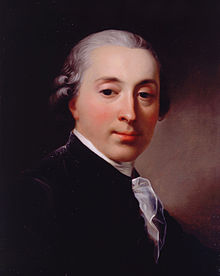
ACHIEVEMENTS:
Produced the first study of photosynthesis
NICKNAME/ALIAS:
None
DATE AND PLACE OF BIRTH:
6 May 1742, Geneva, Switzerland
DATE AND PLACE OF DEATH AND AGE AT DEATH:
22 July 1809, Geneva, Switzerland. Aged 67
DISCIPLINE:
Natural scientist
FIELD:
Natural history
LANGUAGE:
French
PARENTS:
Father: Jean-Antoine Senebier
Mother: Marie Tessier
SIBLINGS:
??????
SPOUSE:
????
CHILDREN:
????
EDUCATION:
???
MAJOR WORK:
“Experiences sur l’action de la lumiere solaire dans la la vegetation” (1788)
“Physiologie vegetale” (1800)
LIFE AND TIMES:
Senebier was interested in the natural sciences but in accordance with the wishes of his family he took holy orders in 1765 and became the pastor of a Protestant church in Geneva. During a year spent in Paris he mixed in scientific circles.
In Geneva, he assisted Bonnet* in his experiments on plant physiology. At Bonnet’s suggestion, Senebier submitted to the Netherlands Society of Sciences at Haarlem a paper on the art of observing for which he received an honourable mention.
In 1770, he published “Contes moraux” (“Moral Tales”). His treatise on the art of observation was published in 1772 and two years later Senebier resigned from his position as pastor to become librarian for the Republic of Geneva. In 1775 he published “Art d’observer” (“The Art of Observation”).
He translated the work of the Italian scientist Spallanzani* into French and published the first volume of Spallanzani’s: “Opuscules de physique animale et vegetale” in 1777. Inspired by the work of the English scientist Joseph Priestley* on the purification of air by plants and the influence of light on this process, Senebier had pursued his early interest in plant leaf physiology and in 1779 began to publish the work on photosynthesis* for which he is known, “Action de la lumiere sur la vegetation.” (“The effect of light on vegetation”).
He made a special study of the gas exchanges of green plants exposed to light, and was the first to note that they absorb carbonic acid gas and emit oxygen while manufacturing a substance with a carbon base. The first of five volumes of his “Traite de physiologie vegetale” appeared in 1800.
Together with Francois Huber, he investigated the behavior of bees and published “Influence de l’air… dans la germination” in 1801. Huber was one of several young natural historians whom Senebier taught, among whom was Candolle*.
ASSESSMENT: Senebier conducted ground-breaking investigations into photosynthesis.
EXTRA CONNECTIONS: None
ONELINER: Jean Senebier, who first studied photosynthesis
BIBLIOGRAPHY:
DSB