Brindley, James
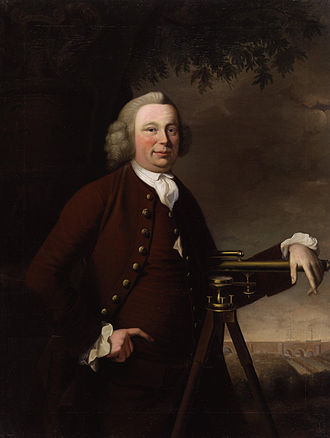
ACHIEVEMENT(S): 18th-century British engineer and pioneer canal-builder, who constructed the first English canal of major economic importance, the Bridgewater Canal (1759-61).
NICKNAME/ALIAS: None
DATE/PLACE OF BIRTH: 1716, at Tunstead, near Buxton, Derbyshire, England
DATE/PLACE/AGE AT DEATH: 30 September 1772, in Turnhurst, Staffordshire, England. Aged 56
DISCIPLINE: Engineer
FIELD: Canals
LANGUAGE: English
PARENTS: Unknown
SIBLINGS: Unknown
SPOUSE: Anne Henshall, married 1765
CHILDREN: None
EDUCATION: No formal education
MAJOR WORK: Bridgewater Canal, 1759-61
LIFE AND TIMES: In 1742, the 26-year-old Brindley set up his own millwright's shop in Leek, Staffordshire, where he was soon running a successful business repairing old machinery and installing new machines. During the 1740s he was employed by Wedgwood*, then a small pottery firm, to construct flint mills for grinding the calcined flint used for glazing
pottery, and he completed the machinery for a silk mill at Congleton in Cheshire.
During the early 1750s he was given the job of improving the machinery used to draw water from the mines at Wet Earth Colliery, Clifton, Lancashire. Brindley's solution (1752) for draining the coal pits was to tunnel 600 ft (183 m) through the rock to provide a leat for driving a water-powered pump-engine, which he had designed and built himself. However, despite temporarily improving the condition of the mines, this problem was only effectively solved by the general introduction of Thomas Newcomen's* atmospheric steam engine (1712), to which Brindley made several improvements during the late 1750s (patented 1758).
During the late 1750s, Brindley was also hired to improve a pump on Earl Gower's estate at Trentham, and through the success of this job he was suggested as the engineer for the proposed canal for which Gower's brother-in-law, Francis Egerton, the Duke of Bridgewater*, had obtained an act in 1759.
This 10-mile (16-kilometre) canal, later known as the
Bridgewater Canal, was to be constructed in order to transport coal cheaply from the Duke's mines at Worsley to the textile-manufacturing centre at Manchester, and had been suggested to the Duke of Bridgewater by the success of the Canal du Midi.
Brindley was at first called in as an adviser, but after studying the route he soon persuaded the Duke to change his plan of constructing a conventional canal, using locks and rivers, and
to approve instead a revolutionary scheme including a subterranean channel extending from the barge basin at the head of the canal into the mines, and a 40 ft (12m) high aqueduct carried on arches - later known as the Barton Aqueduct - by which to carry a gravity-flow canal over the River Irwell.
Brindley's proposals were accepted, and under his supervision the canal was built on a single level and extended deep into the coalfield, his natural engineering skills enabling him to develop a method for constructingsufficiently strong, waterproof banks by 'puddling' clay, and to design a system by which the canal simultaneously acted as a mine drain, a feeder for the main canal at the summit level, and a barge-carrying canal.
The Bridgewater Canal was completed in 1761 and immediately proved itself a financial success, acilitating cheaper transportation and within weeks cutting the cost of coal in Manchester by half. The first canal of any commercial importance in England, Brindley's achievement was all the more noteworthy as he was almost entirely illiterate, barely able even to write his own name, and made no calculations or drawings of the tasks on which he was involved, but, aided by his apparently photographic memory, he did almost all the work in his head, leaving no records except the works themselves.
The Canal established him as the leading canal builder in England, and he was immediately hired by Earl Gower to construct a canal to carry pottery for export between Manchester and Liverpool. The result was the Trent and Mersey Canal (completed 1776), which was later extended as part of the Grand Trunk Canal and established a cross-England route which penetrated the central ridge of England by the Harecastle Tunnel.
During the 1760s, Brindley surveyed a large number of projects, and his reputation was such that virtually every canal proposal was first submitted to him for an opinion this included the Staffordshire and Worcestershire canals, the Coventry and Droitwich canals, the Rochdale canal, the Oxford canal, and the old Birmingham and Chesterfield canals, all designed and, with one exception, executed by Brindley).
However, although he was nominally in charge of each contract, much of the work was of necessity carried out by his growing band of assistants, while he spent a great deal of his time travelling between projects, supervising their construction.
Brindley's most important undertaking, however, was probably the Grand Union Canal, which connected Manchester with the potteries in the Midlands, Derby and Birmingham. Constructed almost entirely according to his overall design (although he did not live to see its completion), this canal system developed by following the natural contours of the land (rather than by making cuttings and constructing large embankments), and Brindley's canals are winding, unlike later straight waterways that are easier to traverse.
Brindley's canals were also characterized by his adoption of the 7 ft (2.13 m) wide lock as a ruling dimension for all engineering features, and, in order to reduce costs, he formed his canal
tunnels without a towpath, leading to the dangerous practice of legging boats through the tunnels. This canal network completely transformed life in the Midlands, the population of the potteries trebling between 1760 and 1785.
Altogether, Brindley was responsible for a network of canals totaling about 360 miles (584 km). He remained a bachelor until the age of 49, when he married Anne Henshall, whose brother was also a canal engineer. By the time of his death in 1772, aged 56, from a chill sustained when surveying the Caldon Canal, his extensive fees and salaries had made him a wealthy man.
ASSESSMENT: His work effectively began the era of canal-building in Britain.
EXTRA CONNECTIONS: None
ONELINER: James Brindley, first great English canal-builder
BIBLIOGRAPHY:
EB, DNB
Biographical Dictionary of Technology
Buckley, S.E., James Brindley, London: Harrap, 1948.