Carnap, R
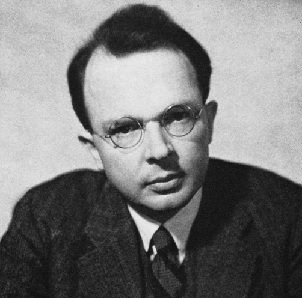
NAME: Carnap, Rudolf
NICKNAME/ALIAS: None
DATE OF BIRTH: 19th May, 1891
PLACE OF BIRTH: Ronsdorf, Germany
DATE OF DEATH: 14th September, 1970
PLACE OF DEATH: Santa Monica, California
DISCIPLINE: Philosophy
FIELD: Philosopher of science, Logician, Educator
ASSESSMENT: A major figure in analytical philosophy in the twentieth century.
LANGUAGE: German, English
EDUCATION: University of Jena, doctorate in philosophy, 1921
ACHIEVEMENTS: Co-founded Erkenntnis and International Encyclopedia of Unified Science; Chair of natural philosophy at the German University in Prague 1931-35; Chair of philosophy at the University of California at Los Angeles 1954-62;
MAJOR WORK: Der Logische Aufbau der Welt ("The Logical Construction of the World"), 1928; Logische Syntax der Sprache (“Logical Syntax of Language”), 1934; Philosophy of Rudolf Carnap – Library of Living Philosophers, 1963.
PARENTS: Father: Johannes S. Carnap; mother: Anna Dorpfeld.
SPOUSE: Elizabeth Ina von Stoger
SIBLINGS: 1, sister
CHILDREN: 4
LIFE AND TIMES:
Rudolf Carnap’s initial studies included physics, mathematics and philosophy. At Jena, he was greatly influenced by an unpopular mathematics professor, Frege*.
Although Frege is now credited with founding mathematical logic, he was virtually unknown at the time, but his lectures on logic captured Carnap’s imagination. By 1913, Carnap began research in physics towards a dissertation. He found scientific experiments technically difficult and unsuitable for him.
The research was cut short by the outbreak of World War I. He was drafted, serving over four years, the majority of it on the Western Front, where he continued to read and study science and philosophy, including an introduction to Einstein’s theory of relativity.
After the war, Carnap returned to Jena and chose a dissertation in philosophy, writing about the concept of space. He argued that the frequent arguments about space by physics, mathematics and philosophy are futile because each field is talking about something different, despite using the common word. This investigation of the importance of language and its usage in science and philosophy was a common theme in his long career.
He received his doctorate in philosophy in 1921. About this time, he started intensive study of the works of Bertrand Russell*, a mathematician and philosopher that Carnap admired. Much of this study centered around logic and the methodology of science and philosophy. In March of 1923, Carnap met Hans Reichenbach, a fellow philosopher, who became a close friend and a sounding board for much of the ideas on the philosophy of science.
Fuelled by Russell’s book, Principles of Mathematics, Carnap worked on his own book, Logical Structure of the World. In it, he attempted to show a system that used precise methods to explain everything that exists in terms of sensory experiences and language that describes them. Although he worked on this book for most of the early 20s, it was not published until 1928.
In 1926, Carnap took a position as philosophy instructor at the University of Vienna. There, he joined the Vienna Circle (a group started by Moritz Schlick) that discussed philosophy as a science which deserved the same extensive methodology as other sciences.
The discussion of the Vienna Circle gave rise to logical positivism (also known as logical empiricism), a philosophy that emphasizes analysis in solving philosophical problems. This line of philosophy is an extension of the empiricism (also known as rationalism) espoused by others who influenced Carnap: the philosophers as Hume* and Mach*.
Carnap and the other positivists also studied the works of Wittgenstein*, trying to understand his difficult texts. Wittgenstein was invited to shed light on some of his material and to participate in the discussions, but didn’t care much for collaboration with other philosophers.
After several requests, Wittgenstein agreed to meet a few of the members of the Vienna Circle, including Carnap. But after only a few meetings, Carnap’s absence was requested by Wittgenstein. Still, Carnap held him in high regard, listing Wittgenstein as one of the biggest influences on his development as a philosopher.
In the late 20’s, Carnap continued his exploration of logic, mathematics and language, especially the contribution to be made by an artificial, international language, Esperanto, in making scientific research internationally uniform and more efficient in solving problems. In 1930, he and Reichenbach started and edited Erkenntnis, the journal of the logical positivists. The next year, after five years of teaching at the University of Vienna, Carnap took the chair in natural philosophy at the German University in Prague in Czechoslovakia. Two years later, he married Elizabeth Ina von Stoger, and they eventually had four children.
While at the German University, he published his second major work, Logical Syntax of Language. Carnap wrote of this book, “The whole theory of language structure and its possible applications in philosophy came to me like a vision during a sleepless night in January, 1931, when I was ill. On the following day, still in bed with a fever, I wrote down my ideas on forty-four pages under the title ‘Attempt at a meta-logic.’ These shorthand notes were the first version of my book, Logical Syntax of Language."
He remained in Prague until 1935, when the growing threat of Nazism took him to the United States, where he noticed that many of philosophers were receptive to scientific philosophy. Particularly popular was Husserl’s* phenomenology, a system of study emphasizing descriptions of experiences.
Many European philosophers of science had also fled Nazism to the United States and in this rich environment, Carnap helped found the International Encyclopedia of Unified Science, which discussed the general philosophy of science issues.
Carnap remained at the University of Chicago until 1952. Around this time, his old friend Reichenbach, who held the chair of philosophy at the University of California at Los Angeles, died. Carnap took over the position in 1953 and remained there until he retired.
Most of his work is inaccessible to the layman, due to the extremely technical nature of it. However, his final book: An Introduction to the Philosophy of Science, taken from transcripts of his celebrated lectures at UCLA, is widely used by philosophers, scientists and general readers attempting to understand the basics of the philosophy of science.
Throughout a 50-year career in philosophy, Carnap made great contributions in analytical philosophy and the study of science.
EXTRA CONNECTIONS: None
ONELINER: Rudolf Carnap, major 2oth century philosopher
BIBLIOGRAPHY:
EB, ANB
“Rudolf Carnap.” Encyclopedia of World Biography, 2nd ed. 17 vols. Gale Research, 1998. Reproduced in Biography Resource Center. Farmington Hills, Mich.: The Gale Group. 2003. http://0-www.galenet.com.mill1.sjlibrary.org:80/servlet/BioRC
“Rudolf Carnap.” World of Mathematics. 2 vols. Gale Group, 2001. Reproduced in Biography Resource Center. Farmington Hills, Mich.: The Gale Group, 2003.
http://0-www.galenet.com.mill1.sjlibrary.org:80/servlet/BioRC
Salmon, Wesley C. “Carnap, Rudolf”; http://www.amb.org/articles/20/20-00150.html; American National Biography Online Feb. 2000. Access Date: Wed Sep. 17 08:07:36 PDT 2003
Schilpp, Paul Arthur, The Philosophy of Rudolf Carnap, Open Court, La Salle, Illinois, 1963.