Hamilton, Andrew
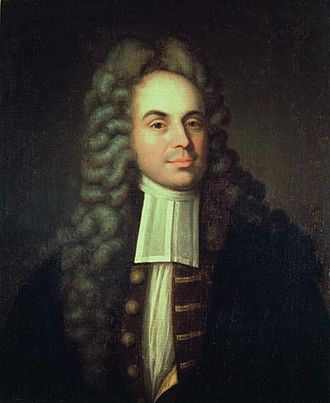
Name: Andrew Hamilton
Achievements: Defense of John Peter Zenger, Speaker of the Pennsylvania assembly
Born: c. 1676; Scotland
Died: August 4, 1741; Philadelphia, Pennsylvania
Field & Discipline: Government & Politics; Law
Language: English
Father: Unknown
Mother: Unknown
Siblings: Unknown
Spouse: Ann Preeson
Children: Three
Education: St, Salvator’s College of St. Andrews University
Life & Times:
Andrew Hamilton moved to colonial America in approximately 1697. There is little concrete documentation of his life before this time. However, it is generally agreed that while in Scotland he attended St. Salvator’s College of St. Andrews University, Scotland.
Once in America Hamilton settled in Virginia. It was there that he gained a basic knowledge of the law, either through self-study or in the office of a practicing attorney. He also taught school to children of Eastern Virginia’s leading families. In 1703 Hamilton was admitted to practice law in the Virginia colony. Most of his cases involved settling estates, debt collection, or trespassing. Hamilton was soon one of the most active attorneys in the Eastern shore.
In March of 1706 Hamilton married Ann Preeson. The two moved to Kent County Maryland in 1708 so Hamilton could be closer to clients in Maryland, Delaware and Virginia. Hamilton’s work took him as far north as Pennsylvania and on one of those trips he met William Penn’s proprietary agent.
From 1712 on Hamilton handled the Penn family’s legal affairs. In 1713 [lawyer to] William Penn*’s affairs took Hamilton to England where he further pursued his legal studies at Gray’s Inn, London. Eventually he became a member of the English bar, which greatly enhanced his standing as a lawyer when he returned home.
He was elected to the Maryland House of Delegates from Kent County without his knowledge. Baltimore power brokers had been so impressed by Hamilton’s work with Penn’s affairs in England that they elected him for the purpose of writing judicial code. In a matter of weeks Hamilton had proposed a body of laws ready for passage in the Maryland house. He was then excused from having to serve further.
Hamilton moved his wife and three children to Philadelphia permanently in late 1715 or early 1716. He soon became a well-known lawyer and in 1717 he was appointed attorney general of Pennsylvania.
In 1720 he became a member of the provincial council and in 1727 he was appointed master of the rolls, recorder of Pennsylvania, prothonotary of the supreme court and elected to represent Bucks County in the colonial assembly. In 1729 he was elected speaker of the assembly for both Pennsylvania and Delaware simultaneously. He held the office in Pennsylvania until 1739.
Before 1729 Pennsylvania’s assembly did not have a regular meeting place. Hamilton purchased a plot of land for the assembly building, designed a structure, and supervised construction of what later became known as Independence Hall.
Hamilton’s greatest professional achievement was his successful defense of John Peter Zenger in his free-press trial in 1735. Zenger was the printer of the newspaper The New York Weekly Journal, which published outspoken articles in opposition of the unrestrained behavior of New York’s colonial royal governor William Cosby. Cosby had Zenger arrested and charged with seditious libel in 1734. Zenger remained in jail while his friends tried to free him.
The governing party in New York disbarred all local lawyers who ventured to defend Zenger because they challenged the authority of Chief Justice James De Lancy to preside over the trial. Eventually, political opponents of Cosby secretly brought Hamilton into the case to defend Zenger. By then Hamilton was the most famous lawyer in the colonies.
Hamilton’s brilliant defense turned the tables on Zenger’s accusers. Hamilton admitted that Zenger published the articles in question, but argued that the articles were true and therefore could not be judged libelous. At that time the role of the jury was only to determine who published the articles.
It was then the law that the judges were responsible for determining if the articles were libelous or not. The judges were controlled by Cosby, so Hamilton had to find a way around the judges to avoid certain conviction. Hamilton did this by arguing that the jury, not the judges, should decide the truth of the articles. Hamilton urged the jury to bring back a general verdict of acquittal, which would leave the judges with nothing to decide. The chief justice ruled Hamilton out of order and ordered the jury to ignore his arguments, but the jury returned a verdict of not guilty. He argued that the definition of criminal libel, which didn't require the accusations to be false, came from the hated [Star Chamber.[9] His eloquence secured a verdict of "not guilty".[]
The phrase “Philadelphia lawyer” was coined after Hamilton won the case. Years later constitution signer [was admired by] Gouverneur Morris* hailed the trial as “the germ of American freedom, the morning star of that liberty which subsequently revolutionized America.”
Hamilton’s wife died in 1736. He was appointed judge of the vice-admiralty court in 1737, but his own bad health forced him to retire in 1739.
Extra Connections: In 1740 he hired inventor [hired] Godfrey* to glaze his windows.
Benjamin Franklin*?
Hamilton is often credited for the design of Independence Hall (then known as the Pennsylvania State House). It is more likely that his designs were for initial planning and that he did not create the final plans.
Hamilton's second child and first son James Hamilton become a mayor of Philadelphia and a governor of the Pennsylvania colony. The Hamilton Watch Company was named after him. During the expansion of the railroads in the U.S., Hamilton maintained over 56% of the market. Railroads purchased all of Hamilton's production. The company manufactured wristwatches as the market switched from pocket watches to wristwatches after World War I. During World War II, Hamilton retooled its business model to serve the military, dropping its consumer products.
During World War II, a Liberty Ship was commissioned the SS *Andrew Hamilton* in Hamilton's honor.
Assessment: Andrew Hamilton was a colonial lawyer and public official who won the first victory for freedom of the press.
Oneliner: Andrew Hamilton, hotshot American colonial lawyer
Bibliography:
- American National Biography.
- Encyclopedia Britannica. “Hamilton, Andrew” online. retrieved June 30, 2003. http://jlp.sjsu.edu:2051/eb/print?eu=39838.
- Humes, James C. “Andrew Hamilton: The ‘Philadelphia Lawyer.’” American Bar Association Journal, 55 (March 1969): 227-231.
- Nix, Foster, C. “Andrew Hamilton’s Early Years in the American Colonies.” William and Mary Quarterly. 3rd ser., 21, no. 3 online. retrieved July 6, 2003. http://libaccess.sjsu.edu:2074/cgi-bin/jstor/viewitem/oof35597/di957184/95p00663.
Andrew Hamilton (lawyer) - Wikipedia