Arlen H
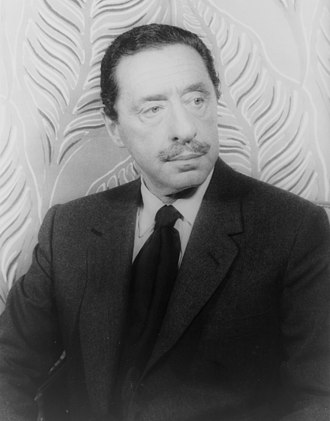
NAME: Arlen, Harold
ACHIEVEMENTS: Composed many popular songs and scores.
NICKNAME/ALIAS: Hyman Arluck
DATE AND PLACE OF BIRTH: 14 February 1905, Buffalo, NY
DATE/PLACE OF DEATH/AGE AT DEATH: 23 April, 1986, New York, NY Aged 81
DISCIPLINE: Composer
FIELD: Musical Theater, Films.
LANGUAGE: English
PARENTS: Samuel Arluck and Celia Orlin
SIBLINGS: Jerry Arlen (Julius Arluck)
SPOUSE: Anya Taranda
CHILDREN: none
EDUCATION:
MAJOR WORK:
LIFE AND TIMES:
Hyman Arluck dropped out of high school several times, as his father, a cantor and respected community leader tried to persuade him to undertake a formal education. But Hymen was not convinced. He had learned to play the piano with great skill and formed his own band, playing in cafés, dance halls and even on a lake boat.
When he was 19, he published his first song, “My Gal, My Pal.” In 1926, he moved to New York City and tried to make a name for himself as an arranger and stage performer. He began using the name “Harold Arlen” and achieved some measure of success living from job to job.
Arlen’s achievements as a composer are strongly tied to his relationships with a series of brilliant lyricists, and he met the first of these in 1929. Ted Koehler was an experienced writer with a knack for incorporating everyday speech into his lyrics. The two men worked well together and soon created their first hit song, “Get Happy”. The success of this energetic tune, which recalled African-American religious music, led to regular work composing for Harlem’s legendary Cotton Club. While there, Arlen and Koehler continued their success with “I Love a Parade” and “Stormy Weather”.
In 1934, Arlen moved on to a different venue and a different lyricist. E. Y. “Yip” Harburg’s speciality was sparkling, verbal wit, and his lyrics are full of amusing rhymes and puns. Harburg had worked with Arlen a few times during the Cotton Club period, but now he was to be a primary collaborator as the two men set about writing a Broadway musical. “Life Begins at 8:40” was a modest success and composer and lyricist followed with another memorable hit song, “Last Night When We Were Young”, written as Arlen began his married life with singer and dancer Anya Taranda.
Harburg and Arlen worked on several movies and Broadway shows during the next few years, but it was in 1938 that they were given one of their most unusual and successful assignments.
“The Wizard of Oz” provided an ideal vehicle for Harburg’s wit, while Arlen easily composed within the limits of cheerful, mainstream popular music. The song “Over the Rainbow” provided the film’s star, Judy Garland*with a tune that would be associated with her for the rest of her career.
The duo followed this triumph with a brief trip into the world of the Marx Brothers, contributing a handful of numbers to their film “At the Circus”. Once again, performer and song were perfectly matched, as Groucho Marx* glided mischievously through “Lydia the Tatooed Lady”, featuring some of Harburg’s cleverest lines.
Arlen collaborated with Johnny Mercer on the song “Blues in the Night”, and continued to work with him throughout the Second World War, turning out such classics as “That Old Black Magic”, “One for My Baby” and “Accentuate the Positive”.
The 1946, Mercer/Arlen Broadway musical, “St. Louis Woman” was not a success, but the recorded version of the score was triumphantly popular, especially the poignant “Come Rain or Come Shine”.
In 1950, Arlen’s first big hit, “Get Happy”, was revived as what amounts to a coda in the film “Summer Stock”, where once again Judy Garland became identified with an Arlen number. Four years later, Arlen and Mercer provided Garland with more hit songs for the film “A Star is Born”, including the memorable “The Man That Got Away”, with lyrics by Ira Gershwin*.
Also in 1954, the film “The Country Girl”, though it provided an association with legendary singer Bing Crosby* and Gershwin, failed to provide outstanding inspiration to the composer. An unusual collaboration with Truman Capote and director Peter Brook, however, produced “House of Flowers”. This musical, set in a West Indies bordello, received a mixed reception from audiences and critics.
ASSESSMENT: Harold Arlen is frequently overlooked among American composers of popular music. He matched his music to a series of highly individual lyricists, pointing up their virtues and contributing his own genius. Perhaps this versatility has kept Arlen from being as easily recognized as his contemporaries, but it hasn’t prevented his work from remaining popular with vocalists and audiences.
EXTRA CONNECTIONS: None
ONELINER: Harold Arlen, Broadway and film-music composer
BIBLIOGRAPHY:
http://www.haroldarlen.com
Encyclopedia Britannica, 15th edition.
Jablonski, Edward. Harold Arlen: Rhythm, rainbows and blues, Boston: Northeastern University Press, 1996.
-