Clementi
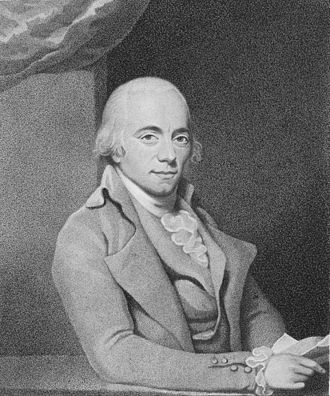
NAME:
Clementi, Mutius Philippus Vincentius Franciscus Xaverius
ACHIEVEMENTS: The “father of the pianoforte”.
NICKNAME/ALIAS:
Muzio
DATE AND PLACE OF BIRTH:
23rd January 1752, in Rome, Italy.
DATE/PLACE OF DEATH/AGE AT DEATH:
10th March 1832, in Evasham, England. Aged 80.
DISCIPLINE:
Pianoforte, composer, music publisher.
FIELD: Music
LANGUAGE: 1st language: Italian.
PARENTS:
Father: Nicolo Clementi. Mother: Magdalena Kaiser.
SIBLINGS:
6 siblings- 3 survived beyond childhood: Gaetano (brother), Maria Luigia and Regina (sisters).
SPOUSE:
First: Caroline Lehmann. Second: Emma Gisborne.
CHILDREN:
1 son: Carl (with Caroline). 2 daughters and 2 sons: Reverend Vincent Clementi, Caecilia Susannah, Caroline, and John (with Emma).
EDUCATION:
No formal education.
MAJOR WORK:
Gradus ad Parnassum
LIFE AND TIMES:
Muzio Clementi was born in Rome in 1752 and, at an early age, showed a strong disposition for music. His father, a dedicated amateur musician, nurtured his son’s talent with the best teachers. When he was nine, Clementi passed a rigorous exam and was admitted as an organist in Rome. At the age of 14, he became the organist for his home church.
Peter Beckford was impressed with Clementi’s playing and brought him to his estate in rural England. For seven years, Muzio solitarily studied and practiced his harpsichord while providing Mr. Beckford’s home with minimal low-cost entertainment.
London concert life bustled during the 1770’s, so it is no surprise that Clementi moved there in 1774. He emerged with increasing popularity in London as the keyboard conductor for the King’s Theatre, a fashionable venue in the Haymarket. Ambitiously, he decided to tour the continent in 1780. His first stop was in Paris, where he performed for Queen Marie Antoinette and the French court. He was a hit there, and a sudden demand for publications of his works ensued. From Paris he travelled to Vienna.
Accepting an invitation to dine at the court of Emperor Joseph II, he participated with Mozart* in a pianoforte competition. Mozart and Clementi each improvised selections from their own compositions. While Clementi was impressed with Mozart’s “spirit and grace”, Mozart condemned Clementi, calling him a “charlatan” and a “mere mechanicus”. However, Beethoven* respected Clementi’s music more than Mozart’s.
Czerny*, Beethoven’s student and teacher of Franz Liszt, remarked that Clementi was the finest pianist of his time. Some of Clementi’s most memorable music was written from during his stay in Vienna. He wrote perhaps twelve sonatas from December 1781 through May 1782.
Returning to London for a short while, Clementi left again after March 1784. He travelled to Lyons in France where he taught Marie Victoire Imbert-Colomes. Clementi dedicated his Opus 8 to Marie and asked for his 18-year-old student’s hand in marriage. Marie’s father ended the romance. Dejected and heartbroken, Clementi retired anonymously to Bern but returned to London by the end of 1784, remaining until 1802.
Clementi reached the height of his career as a composer and performer during these years. In 1786, he participated in the Hanover Square Grand Concerts, this time as the principal composer and performer. He also soloed at Covent Garden, another fashionable theatre.
He performed many new symphonies, extending his repertoire beyond music for the keyboard. During this year he gave up his career as a public pianist. In May 1790, he performed his last public concert, and after 1796 he refrained from conducting for almost 20 years.
From 1784, Clementi became a sought-after and highly-paid teacher, even turning down an offer to tutor members of the royal family because the travel time would impinge upon time with other students. Clementi’s students included John Field, Johann Baptist Cramer, Ludwig Berger and Meyerbeer*, whom he met in Berlin in 1803.
The outrageous tuition fees charged to his wealthy pupils enabled Clementi to pursue instrument manufacturing and music publishing. In 1798, he established a firm called Longman, Clementi & Co., and by 1800, the music business took prominence over composition. During the years of 1802-1810, Clementi produced little new music, but devoted his musical time to preparing materials for his Gradus ad Parnassum.
This first volume of this work, which would change the course of musical education and form the basis for subsequent piano school techniques, was published in March 1817. The three-volume work saw completion in 1826, and is a result of over 40 years of Clementi’s composing, revising, and editing. This work is a synopsis of Clementi’s work at its finest.
Clementi embarked on another European tour in 1802 to sell Clementi pianos and to bargain for publishing rights to new music. In April of 1807, Clementi and Beethoven signed a contract, which resulted in Clementi & Co. issuing excellent first editions of ten new works by Beethoven in 1810-11. During this tour, he met his future wife in Berlin. Caroline was only 18 (Clementi was 52) and a member of a young group of intellectuals and artists. The group disapproved of Clementi, whose dignified image didn’t quite fit its restless and carefree nature. Nevertheless, the two married when she was 20. To Clementi’s sorrow, she died nine days after their son, Carl, was born.
Shortly after returning to London in 1811, Clementi married Emma Gisborne, an Englishwoman. Emma had been a good friend to Caroline, Clementi’s late wife. They had four children, and in 1818 Clementi and Caroline’s son, Carl, now thirteen, left Caroline’s parents and went to live in London with Clementi’s growing family.
In an effort to revive concert life in London, which had dwindled as a result of the Napoleonic Wars, Clementi and other distinguished musicians convened to form the Philharmonic Society, of which Clementi was one of six directors. He re-emerged onto the public scene as a musician, often as conductor. Clementi’s professional life continued to develop, and at the end of 1814 he was elected as a member of the Swedish Royal Academy of Music. Clementi’s late years in London surrounded him with friends, admirers and a young growing family.
When Clementi retired from his firm in 1831, he moved with his family to Lichfield, Staffordshire, where they lived for five years. They then relocated to Worcestershire, England. He died after a brief illness at the age of 80. His funeral at Westminster Abbey was well attended by friends, esteemed musicians, and the public.
ASSESSMENT: Muzio Clementi wrote the Gradus ad Parnassum, a work that influenced subsequent piano teaching methods. His virtuoso keyboard techniques influenced, more than any other composer, the prominence of the keyboard in the future orchestral works of the 19th century.
EXTRA CONNECTIONS: None
ONELINER: Muzio Clementi, composer and ”father of the pianoforte”
BIBLIOGRAPHY:
Plantinga, Leon, Clementi: His Life and Music, Oxford University Press, London, 1977.
Sadie, Stanley and John Tyrrell (eds.). The New Grove Dicionary of Music and Musicians (2nd ed.), pages 39-44, Macmillan Publishers Limited, London, 2001.