De Valera, E
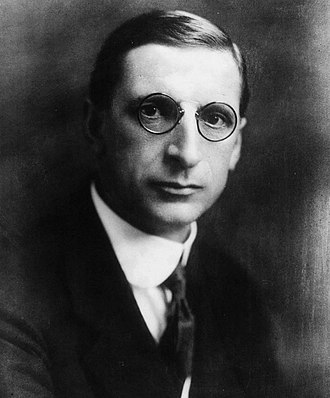
OTHER-NAME: Dev; the Long Fellow
BIRTH: 10/14/1882, New York, NY
DEATH: 8/30/1975, Dublin, Ireland
CATEGORY: Politics & Government
DISCIPLINE: Statesman
ASSESSMENT: He helped found the modern state of Ireland,
LANGUAGE: English, Gaelic
EDUCATION: National School of Bruree (age 6 (5/7/1888)-12), Christian Brothers High School in Charleville (determined not to become a farm laborer, he walked 7 miles each way to attend this school),
Blackrock College, Dublin 1898 (won scholarship at 16), Royal University of Ireland (now the National University of Ireland) (won scholarship), 1902-1904, degree in mathematics
ACHIEVEMENT: Teacher, author, former prime minister and president of the Irish Republic .
The Irish Constitution, Fianna Fail political party, the Irish Press Group (2nd largest Irish newspaper empire)
MAJOR-WORK: Ireland’s Case Against Conscription; The Foundation of the Republic of Ireland in the Vote of the People; Ireland’s Stand, 1939-1945
DETAILS:
Eamon de Valera was born in New York City but was sent to live with his mother’s family in County Limerick, Ireland after his father died in November 1884. He began his career teaching mathematics, physics, Latin, and French.
De Valera, a supporter of the Irish language revival movement, joined the Gaelic League in 1908. It was through this organization that he met his future wife.
In 1911, de Valera was appointed director of an Irish summer school at Tawin where he met Roger Casement*, the school’s patron. In 1913 de Valera’s life changed direction when he joined the newly-formed Irish Volunteers, a secret organization dedicated to expelling the British from Ireland.
De Valera quickly rose through the ranks and was appointed commandant of the 3rd^ Battalion in March 1915. During 1915 plans were made for an uprising against Britain. At noon on Easter Monday, April 24, 1916, the uprising began. In the court martials that followed, De Valera was sentenced to death, but the sentence was commuted to a life sentence in an English prison; he was freed in the general amnesty of June 15, 1917.
De Valera was elected Sinn Fein political party representative for East Clare (July 11, 1917), President of Sinn Fein (October 25, 1917), and President of the Volunteers’ Executive, the reorganized Irish Volunteers (October 27,1917).
In May of 1918, de Valera was arrested as a leader of Sinn Fein for alleged communication with the Germans, but on February 3, 1919 he escaped from Lincoln Jail with the help of Michael Collins*.
In the December 14, 1918 election Sinn Fein won three-quarters of all Irish constituencies. In 1919, Sinn Fein abandoned the British Parliament and established an independent Irish Parliament, known as the Dail Eireann. The Dail adopted a declaration of independence and reaffirmed the establishment of an Irish republic which had been first announced during the 1916 Easter Rebellion. On April 1, 1919, de Valera was elected Priomh Aire (prime minister) of the Dail Eireann.
De Valera traveled to the U.S. in June to raise funds to aid Ireland in the fight against the British. While in America, he raised over $6 million through the sale of bond certificates. On the opinion of then-lawyer Franklin Delano Roosevelt, the bond certificates (which would be exchanged for real bonds when the Irish republic was recognized) were legal.
While he had been in the U.S., the political landscape in Ireland had changed dramatically with the beginnings of the bloody guerrilla warfare and the development of Michael Collins’ Squad. De Valera was in America for Bloody Sunday, November 21, 1920, in which the Squad killed 19 officers of the British Secret Service. De Valera disagreed with Collins’ approach to fighting the British and was upset over the influence Collins exerted as Acting President of the Dail during his absence.
On July 11, 1921, a truce went into effect between Britain and Ireland and De Valera traveled with a delegation to London to negotiate a peace treaty. During these talks he met privately with Prime Minister Lloyd George* four times.
The British offer included dominion status for the 26 counties of southern Ireland. The six northernmost counties were primarily Protestant, pro-British and would be partitioned until such time as they wished to join the rest of Ireland. In addition, the British proposal called for the use of Irish ports, British defense of Irish coastal waters, the limitation in size of any Irish Army, and Irish responsibility for a portion of the British National Debt. De Valera rejected the proposal and said he would not recommend it to the Dail.
On August 26, the Dail accepted de Valera’s proposal to change his title to President and Prime Minister of the Republic. Irish peace delegates accepted British terms, signed a treaty on December 6, and the Dail began its debate on the 14th. De Valera denounced the treaty creating the Irish Free State because it did not incorporate the six counties of Northern Ireland and it required Irish officeholders to swear allegiance to the British crown. However the Republican Parliament of Dail Eireann approved the Separation Treaty (or Anglo-Irish Treaty) on January 7, 1922, in a vote of 64 to 57.
In protest, De Valera resigned from the Dail on January 9, but remained the president of Sinn Fein.
Michael Collins, the chairman of the provisional government set up by the treaty, called for an immediate general election and the country voted in favor of the Treaty and the Provisional Government.
On June 28, 1922, civil war broke out in Dublin between the Collins Free State Faction and the de Valera Republican Faction. Collins was killed in an ambush on August 22. On October 25, de Valera, with the support of the IRA, formed a new “government” which considered itself to be the second Dail. De Valera was elected President and had the responsibility for the IRA.
After failed negotiations with the Provisional Government, de Valera finally issued a statement calling a halt to the civil war on May 24, 1923. He was arrested on August 15 by the Irish Free State for his civil war activities. While in prison, de Valera won election as Sinn Fein candidate to represent County Clare. He was released from prison on July 16, 1924 only to be re-arrested in October for going into the Six Counties to support an anti-Treaty candidate and disrupt elections.
Although they made gains in every election, Sinn Fein representatives refused to enter the Parliament (which they saw as an illegitimate government set up by Britain). On March 9, 1926, de Valera proposed a compromise to the party that Sinn Fein representatives could enter the Parliament if they did not have to swear the Oath of Allegiance, but the motion was defeated. He resigned his position as president of Sinn Fein to become a free agent, at leave to enter the Dail.
On April 17, de Valera announced his new party, Fianna Fail (Warriors of Destiny), to the press. De Valera easily won the next election.
He tried to enter the Parliament on June 23, 1927, but he was not allowed to enter without taking the Oath. On August 10, he finally signed the Oath of Allegiance, declaring it a political formality, and took his place in the Dail. During the February 16, 1932 general election, Fianna Fail members formed a coalition government with the Labour party, gaining a majority in the Dail. De Valera was elected to the presidency of the Executive Council on March 9. He then appointed himself Minister of External Affairs in the Cabinet. On April 20, de Valera introduced a bill to abolish the Oath of Allegiance. This bill passed on May 3, 1933.
The Dail approved de Valera’s draft new Constitution on June 14, 1937, declaring itself a sovereign state. In the July 1 election the Constitution was approved by a slim margin and was ratified on December 29.
On April 25, 1938, an agreement with Britain ended British occupation of Irish naval bases. With World War II looming, Winston Churchill* objected to the agreement in the House of Commons, but ir was accepted.
Churchill’s fears were justified when de Valera declared neutrality during WWII and refused to let the British use Irish ports. This policy was implemented in an effort to safeguard Ireland from German bombing campaigns, as well as to demonstrate Ireland’s independence.
In December 1940, the British imposed “punitive” measures against Ireland, which had the effect of severely limiting imports into the country and causing drastic shortages. Throughout the war, de Valera exercised strict censorship of the Irish Press to limit the information reaching the Irish people about the war and German atrocities. Following Hitler’s death, de Valera paid a visit of condolence to the German Embassy.
In the February 4, 1948 general election Fianna Fail lost their majority and John A. Costello became president of the Dail. Costello introduced the Republic of Ireland Act in 1948 which was signed on December 21, 1948 and took effect in April 1949. This Act formally established the Irish Republic. Britain recognized the Republic of Ireland but declared that the northern six counties of Ireland could not be included without the consent of the Parliament of Northern Ireland.
De Valera returned to power as prime minister from 1951 until 1954 when he was again defeated by Costello. After a last stint as prime minister from 1957 to 1959 he became President of the Republic of Ireland until 1973. At the conclusion of his second term as President, de Valera retired to Talbot Lodge, a nursing home run by the Sisters of Charity.
EXTRA CONNECTIONS: Having been warned that Austrian physicist Edwin Schrödinger* was in danger from the Nazis, de Valera contacted him in Geneva and invited him to Ireland. Schrödinger was appointed Director of the School of Theoretical Physics at the Institute for Advanced Studies on November 21, 1940.
As President of Ireland, de Valera received many state visits, including the 1963 visit of US president John F. Kennedy. Five months later de Valera attended the state funeral for Kennedy in Washington, D.C. and accompanied a group of 24 Defence Forces cadets who performed a silent drill at his grave site.[97] In June 1964, he returned to Washington, D.C. as the second President of Ireland to address the United States Congress.[99]
ONELINER: Eamon de Valera, first President of Ireland
BIBLIOGRAPHY:
Contemporary Authors Online, Gale, 2002. Reproduced in Biography Resource Center. Farmington Hills, Mich.: The Gale Group. 2002.
Coogan, T. P. Eamon de Valera: The man who was Ireland. Dorset Press. New York: 1993.
“De Valera, Eamon.” The Columbia Encyclopedia, 6th ed. Columbia University Press, 2001.
“de Valera, Eamon.” Encyclopedia Britannica. http://search.eb.com/eb/article?ue=30094. Accessed August 14, 2002.
“Eamon De Valera.” Almanac of Famous People, 6th ed. Gale Research, 1998. Reproduced in Biography Resource Center. Farmington Hills, Mich.: The Gale Group. 2002.
“Eamon De Valera.” Encyclopedia of World Biography, 2nd ed. 17 vols. Gale Research, 1998. Reproduced in Biography Resource Center. Farmington Hills, Mich.: The Gale Group. 2002.
“Eamon de Valera.” Historic World Leaders. Gale Research, 1994. Reproduced in Biography Resource Center. Farmington Hills, Mich.: The Gale Group. 2002.
“Ireland.” Encyclopedia Britannica. http://search.eb.com/eb/article?ue=109324. Accessed August 14, 2002.
PARENTS: Catherine (Kate) Coll of Knockmore townland; Juan Vivion de Valera (m. 9/19/1881)
SPOUSE: Jane “Sinead” Flanagan (m. 1/8/1910, d. 1/7/1975)
SIBLINGS: half-sister Annie Wheelright and half-brother Thomas Wheelright
CHILDREN: 5 sons, 2 daughters (Vivion b. 1911; Mairin b. 4/1912; Eamonn b. 10/1913; Brian (b. ??? d. 2/36); Ruari b. 11/1916; Emer b. 8/15/1918; Terry b. 1922)