Harrington
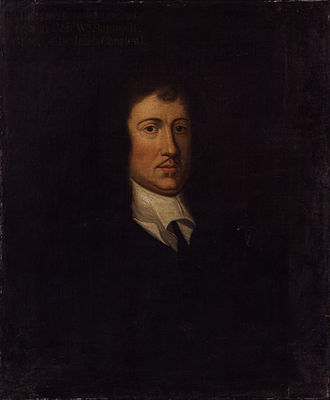
Name: James Harrington
Achievements: 17th century political theorist
Born: January 7, 1611; Upton, Northamptonshire, England
Died: September 11, 1677; London, England (Aged 66)
Field & Discipline: Politics; Propagandist
Language: English
Father: Father: Sir Sapcote Harrington
Mother: Jane Samuell
Siblings: William; Elizabeth; Anne
Spouse: Miss Dorrell
Children: None
Education: Privately at home; Trinity College, Oxford
Major Work:
"The Commonwealth of Oceana" (1656), This work was an exposition of an ideal constitution, a utopia, designed to facilitate the development of the English republic established after the regicide, the execution of Charles I in 1649.
Life & Times:
Harrington, who was born into an aristocratic family, went to Oxford as a ‘gentleman-commoner’ in 1629. He inherited a large estate after his father's death in 1631 and left university without a degree to spend the next few years on the continent.
He wanted to study military science and in 1632 he went to Holland and joined the court of the elder brother of [worked for] Prince Rupert* of the Rhine, the (deposed) Palatine Prince of Bohemia, whose wife, Elizabeth, was connected with the Harrington family.
In an effort to help the Prince regain his territory, and to learn martial arts, Harrington joined the volunteer regiment of Lord Craven who was fighting on the Continent for the Protestants against the Catholics in the Thirty Years War.
There was very little fighting to be done (because the Protestant leader [knew] Gustavus Adolphus* refused offers of help) but Harrington became a popular member of the Prince's court and accompanied him on a diplomatic mission to Denmark. He visited France, which he disliked for their autocratic form of monarchical government, and travelled on to Italy.
In Rome he refused to kiss the Pope's toe, which he afterwards explained to [knew] Charles I* by saying that after kissing the king's hand he was not going to kiss a Prince's foot. He spent some months in Venice, where he learned Italian and read widely about the earlier history of the Venetian republic for which he had a great admiration. After returning to England around 1637 he divided his time between his estates and the court at
London.
He was appointed a gentleman of the privy chamber by the king and in 1639 accompanied him to Scotland when Charles travelled there to reassert his authority during the First Bishops' War. Harrington took no active part in the events leading up to the Civil War (which broke out in 1642) and appears to have stayed outside the controversy until, in 1646, he joined the Parliamentary commissioners when Charles was brought south after being handed over to Parliament by his Scottish captors.
Harrington's sympathies were with Parliament but he was an old friend of the king's and was trusted by both sides. In 1647 he was appointed groom of the royal bedchamber and he accompanied Charles to his imprisonment on the Isle of Wight. Harrington and Charles discussed politics and Harrington attempted to modify Charles' inflexible position on the matter of the divine right of kings.
He became close to the king and disturbed by the rabid hatred of the more extreme Puritan ministers for the Crown. He was eventually dismissed by Parliament after showing sympathy for the king and advocating that the concessions Charles asked for should be granted. Harrington was also imprisoned briefly when he refused to take an oath saying he would not help the king to escape.
In 1649 he accompanied Charles to the scaffold in 1649, an experience which affected him deeply. For the next eight years he lived retired from society and devoted his time to writing poetry and translating Virgil.
He eventually turned to political theory and in 1656 he completed "The Commonwealth of Oceana" in which he set out his vision of an ideal republican state in which powers were limited and balanced. Harrington based his political theory on the fact that power was determined by the distribution of property, and he was convinced that a successful state was based on the correct balance of property ownership.
According to his theory, when power became unbalanced, the state would fall into disorder, even civil war. He advocated dividing the country into landholdings each of
which had a maximum value. Because of the size of England, there would be enough landowners for avoid the dangers of forming a landowning oligarchy.
He proposed a complicated system of election for office and those eligible for office were limited to members of society who fulfilled certain criteria relating to land, money or goods. There should also be a referendum on each law proposed by the law-making body. His system of government was remarkable for its absence of a bureaucracy but relied on a large army.
In essence, Harrington believed in a fairly small property-owning ruling class which was nevertheless large enough to prevent the rise of factions. In an attempt to evade the censorship imposed under the protectorate of [dedicated work to] Cromwell*, Harrington divided the manuscript among three different printers, only to see the whole text impounded.
It was eventually published later that year after Harrington managed to get help from Cromwell's daughter. The book was dedicated to Cromwell who did not like it but apparently declared that what he had gained by the sword would not be lost for a little paper shot.
Over the next few years, Harrington wrote further works promoting or defending his ideas. After Cromwell's death in 1659 he formed a club, The Rota, to debate political theory.
He agreed to the restoration of the monarchy in 1660 but was regarded suspiciously and in 1661 he was arrested and kept in the Tower of London until April 1662. He was then moved to another prison where he was treated so badly that his health and mental stability declined. He was eventually released later in the year but he never recovered his health. He was buried next to Sir Walter Raleigh in St Margaret's, Westminster.
Assessment: Harrington was a political theorist who was stimulated by the events of his lifetime. His ideas on revolution and constitutional stability later influenced the American revolutionaries in the eighteenth century.
Oneliner: James Harrington. 17th century political theorist
Bibliography:
- Downs, Michael, James Harrington, Twayne Publishers, Boston, 1977.
James Harrington (author) - Wikipedia