Keats
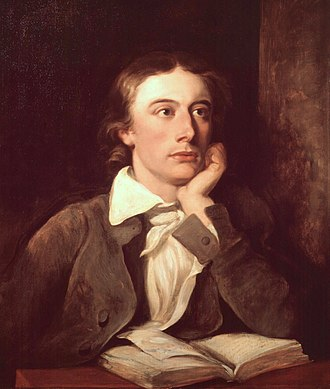
ACHIEVEMENT(S): Major Romantic poet
NICKNAME/ALIAS: None
DATE/PLACE OF BIRTH: October 31, 1795, London, England
DATE/PLACE OF DEATH/AGE AT DEATH: February 23, 1821, Rome, Papal States [Italy]. Aged 25
DISCIPLINE: Poet
FIELD: Literature
LANGUAGE: English
PARENTS: Thomas Keats; Frances Jennings
SIBLINGS: George; Thomas; Frances Mary
SPOUSE: None
CHILDREN: None
EDUCATION: John Clarke's School, Enfield, England
MAJOR WORK: "On First Looking Into Chapman's Homer", "Endymion", "The Eve of St. Agnes", "Ode on a Grecian Urn", "To a Nightingale", "The Fall of Hyperion"
LIFE AND TIMES:
When he was 21, Keats met essayist Leigh Hunt, the editor of a journal, the "Examiner", who published Keats's poem "O Solitude." Soon after, Hunt published Keats' sonnet, "On First Looking Into Chapman's Homer", and introduced him to the English Romantic poet Shelley*.
Keats's first book, "Poems", was published in early 1817 and included, among sonnets, epistles and miscellaneous poems, "I stood tip-toe upon a little hill" and "Sleep and Poetry". The work got favorable reviews, but sales were poor.
In 1817, Keats spent some time alone on the Isle of Wight, then some weeks with his brothers in Canterbury, where he completed his long, mythological poem "Endymion". In December, 1817, he moved into lodgings with his brothers in London, and over the following months met Romantic poets Coleridge* and Wordsworth* and the essayist William Hazlitt, all of whom influenced Keats's work. "Endymion" , a poem in four books dedicated to Thomas Chatterton (whom Keats greatly admired), was published in the spring of 1818.
In 1818, Keats completed his narrative poem "Isabella, or the Pot of Basil" , an adaptation of the "Pot of Basil" from Italian author Giovanni Boccaccio's "Decameron". In late 1818, while looking after his dying brother, Tom, Keats wrote the first version of his epic poem "Hyperion" (he completed only two parts of the poem).
After Tom's death in December, 1818, Keats moved into Charles Brown's house in Hampstead (now known as Keats’ House). Here he fell in love with the spirited 18-year-old Fanny Brawne.
The year 1819 was a high point in Keats's short creative life. In January, he wrote "The Eve of St. Agnes", arguably the best of his narrative romances, and then a group of five odes, four of which ("Ode to Psyche", "Ode to a Nightingale", "Ode on a Grecian Urn", and "Ode on Melancholy") are considered to be among the greatest short poems in the English language.
In the same period, he wrote "The Eve of St. Mark", "La Belle Dame sans Merci", "Lamia Part I", "Otho the Great" (in collaboration with Brown), the second version of "Hyperion" ("The Fall of Hyperion", which contains some of his most outstanding poetry), "To Autumn" and "Lamia Part II". After September, 1819, Keats produced little poetry of regard.
His money troubles, always pressing, were aggravated by the financial straits of his brother George, who had emigrated to the United States and been persuaded to part with almost all of his money (and John's) in a disastrous business venture set up by Audubon*.
Although Keats had become engaged to Fanny Brawne in late 1819, his failing health, now obviously tuberculosis, and precarious financial situation meant there was no hope for marriage in the near future.
In early 1820, less than a week after George's departure for the U.S., Keats had a severe hemorrhage and coughed up blood. This began a year of what Keats called his "posthumous existence". Sustained work became impossible, although he did manage to prepare a third volume of poems: "Lamia, Isabella, The Eve of St. Agnes, and Other Poems". Published in July, 1820, the volume contained most of his greatest work and. though sales were low, it was generally well received.
Hearing of his condition, Shelley invited Keats to Pisa, Italy. In September, Keats settled in Rome, where he died the following February.
ASSESSMENT: The youngest of the major poets of the Romantic period in English literature
EXTRA CONNECTIONS: He was medical dresser to Sir AP Cooper*
ONELINER: John Keats, great Romantic poet
BIBLIOGRAPHY:
EB, Collier's Encyclopedia
Oxford Companion to English Literature
Gittings, Robert, John Keats, Oxford, 1968, reissued 1985