Jane Goodall
Jane Goodall is a renowned primatologist and conservationist who has dedicated her life to studying and protecting chimpanzees in their natural habitats. Born on April 3, 1934, in London, Goodall developed a fascination with animals from an early age. Her passion for wildlife eventually led her to Tanzania, where she made groundbreaking discoveries about chimpanzee behavior that revolutionized our understanding of these intelligent creatures.
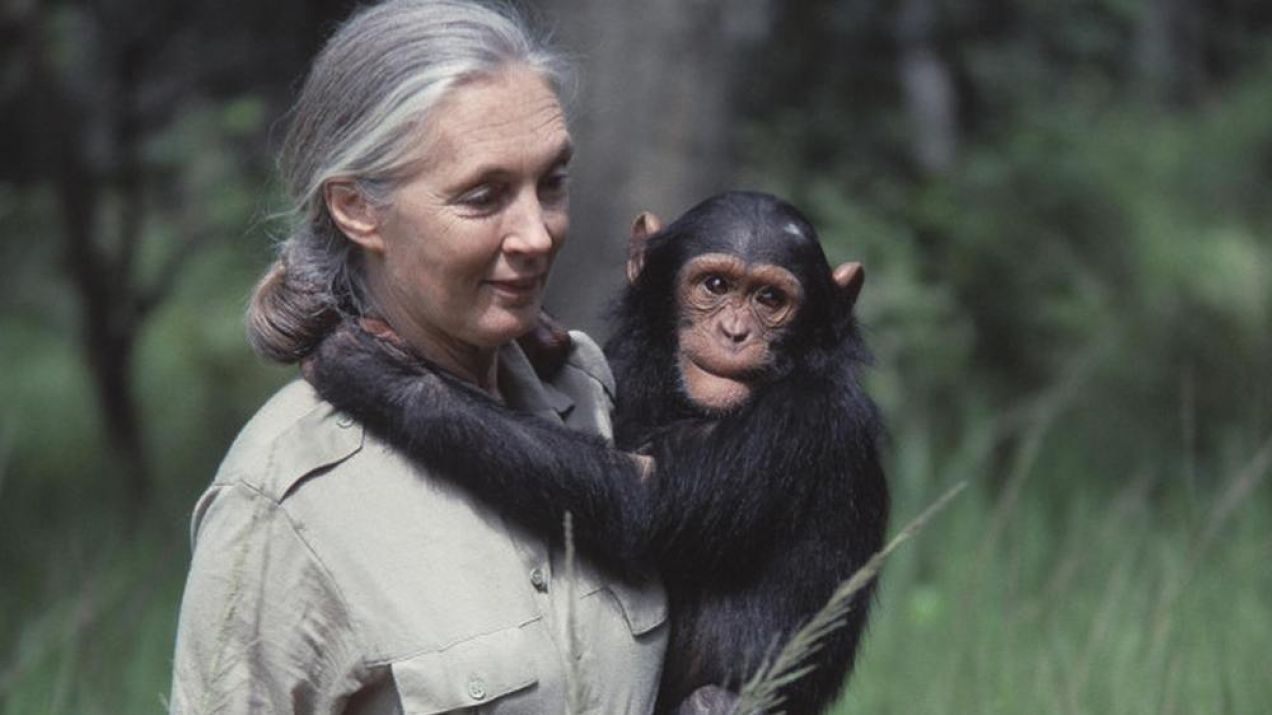
Goodall began her remarkable journey in 1960 when she traveled to Gombe Stream National Park, Tanzania, to study the behavior of wild chimpanzees. Armed with only a notebook and a pair of binoculars, she immersed herself in the chimpanzee community, patiently observing their actions and interactions. It wasn't long before she made a groundbreaking discovery – chimpanzees were not only capable of using tools, but they also exhibited complex behaviors such as hunting, warfare, and social hierarchies.
Goodall's observations shattered the long-held belief that tool use was exclusive to humans, challenging our understanding of what it means to be human. Her research gained worldwide attention, and she became the first person to document chimpanzees making and using tools. By naming the chimpanzees she studied instead of assigning them numbers, she humanized their individuality and emphasized the importance of recognizing their unique personalities and characteristics.
In addition to her groundbreaking research, Goodall played a crucial role in raising awareness about the need for conservation efforts. She highlighted the threats faced by chimpanzees due to deforestation, habitat destruction, and the illegal pet trade. Her efforts led to the establishment of the Jane Goodall Institute in 1977, which focuses on wildlife research, education, and conservation.
Through her institute, Goodall has initiated various programs to protect chimpanzees and their habitats. These include community-centered conservation initiatives that promote sustainable livelihoods for local communities while ensuring the well-being of wildlife. She has also been a strong advocate for animal welfare and has campaigned against unethical practices such as animal testing and captivity.
Goodall's work extends beyond the scientific realm. She has become a prominent environmental activist, addressing global audiences and inspiring individuals to take action towards a more sustainable future. Her powerful message emphasizes the interconnectedness of all living beings and the importance of preserving biodiversity for the well-being of our planet.
Throughout her career, Goodall has received numerous accolades for her contributions to science and conservation. She has been awarded over 50 honorary degrees and has been named a United Nations Messenger of Peace. In 2002, she was appointed a Dame Commander of the Order of the British Empire by Queen Elizabeth II for her services to wildlife conservation.
Even in her 80s, Goodall continues to dedicate herself to her mission, traveling extensively to speak at conferences, schools, and other venues. She believes in the power of young people to create positive change and has established the Roots & Shoots program, which empowers youth to take action on environmental and humanitarian issues. By encouraging young individuals to become compassionate and responsible global citizens, Goodall ensures that her legacy lives on for generations to come.
In conclusion, Jane Goodall's pioneering research on chimpanzees and her tireless efforts in conservation have made an indelible impact on the scientific community and the world at large. Her work has challenged our understanding of the natural world, inspired millions of people, and laid the foundation for a more compassionate and sustainable future. Jane Goodall's legacy serves as a reminder of the power of individuals to make a difference and the importance of protecting the natural world we all share.