Famous Naturalists
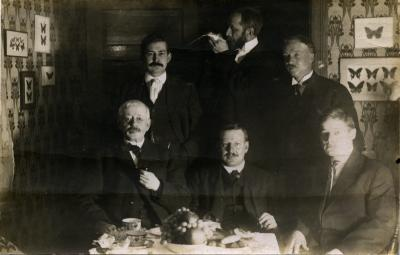
Celebrated Naturalists Who Shaped Our Understanding of Nature
Naturalists have contributed immensely to the understanding of the natural world. Their studies, observations, and discoveries have helped humankind appreciate the intricate relationships within ecosystems and the importance of preserving biodiversity. Below are some of the most influential naturalists who have left an indelible mark on the field of natural sciences.
Charles Darwin
Charles Darwin is perhaps the most renowned naturalist of all time. Born in 1809, Darwin's most significant contribution came through his theory of evolution by natural selection. His seminal work, On the Origin of Species, published in 1859, challenged the prevailing views of the time and laid the foundation for modern evolutionary biology. Darwin's observations during his voyage on the HMS Beagle, particularly those made in the Galápagos Islands, were pivotal in shaping his ideas about natural selection and adaptation.
Alfred Russel Wallace
Often mentioned alongside Darwin, Alfred Russel Wallace independently conceived the theory of evolution through natural selection. Wallace's extensive fieldwork in the Malay Archipelago provided crucial evidence supporting the theory. In 1858, Wallace sent Darwin a paper outlining his findings, which led to the joint presentation of their work to the Linnean Society of London. Wallace is also celebrated for his contributions to biogeography, particularly the Wallace Line, which demarcates distinct faunal regions in Southeast Asia.
John Muir
John Muir, born in 1838, was a pioneering naturalist and conservationist. His advocacy for wilderness preservation led to the establishment of several national parks in the United States, including Yosemite and Sequoia National Parks. Muir's writings and activism were instrumental in founding the Sierra Club, an influential environmental organization. His deep reverence for nature and his efforts to protect it earned him the title "Father of the National Parks."
Rachel Carson
Rachel Carson, born in 1907, was a marine biologist and conservationist whose work had a profound impact on environmental policy. Her book Silent Spring, published in 1962, exposed the dangers of pesticide use, particularly DDT, on wildlife and human health. Carson's work sparked the modern environmental movement, leading to the eventual ban of DDT in many countries and the creation of the U.S. Environmental Protection Agency (EPA).
Alexander von Humboldt
Alexander von Humboldt, born in 1769, was a Prussian polymath whose explorations in Latin America significantly advanced the field of natural sciences. Humboldt's observations and measurements of flora, fauna, and geological formations helped establish the foundations of biogeography and ecology. His multi-volume work, Kosmos, sought to unify various scientific disciplines, offering a comprehensive view of the natural world. Humboldt's integrative approach influenced many subsequent scientists, including Darwin.
Jane Goodall
Jane Goodall, born in 1934, is one of the most well-known primatologists and anthropologists. Her groundbreaking studies of wild chimpanzees in Gombe Stream National Park, Tanzania, provided unprecedented insights into primate behavior and social structures. Goodall's work challenged previous assumptions about the uniqueness of human beings, showing that chimpanzees have complex emotions and use tools. She has also been a tireless advocate for animal welfare and environmental conservation.
E.O. Wilson
Edward Osborne Wilson, born in 1929, is a preeminent biologist known for his work in biodiversity and sociobiology. Wilson's research on ants led to significant advancements in understanding social behavior in insects. His controversial book, Sociobiology: The New Synthesis, extended these principles to explain social behaviors in other animals, including humans. Wilson has been a vocal advocate for preserving the Earth's biodiversity, coining the term biodiversity and highlighting the importance of conservation.
Dian Fossey
Dian Fossey, born in 1932, was a primatologist best known for her extensive study of mountain gorillas in Rwanda. Fossey's work brought global attention to the plight of these endangered animals and the threats posed by poaching and habitat loss. Her book, Gorillas in the Mist, and subsequent film adaptation brought her work to a wider audience, galvanizing efforts to protect gorillas and their habitats.
These naturalists have played vital roles in advancing our understanding of the natural world and advocating for its preservation. Their legacies continue to inspire new generations of scientists and conservationists dedicated to protecting the planet's biodiversity.