Aldo Leopold
Aldo Leopold: A Pioneer in Conservation
Aldo Leopold is regarded as one of the most influential figures in the history of American environmentalism and conservation. His ideas and writings have profoundly shaped modern environmental ethics and the conservation movement. This note delves into his life, key contributions, and the lasting impact of his work.
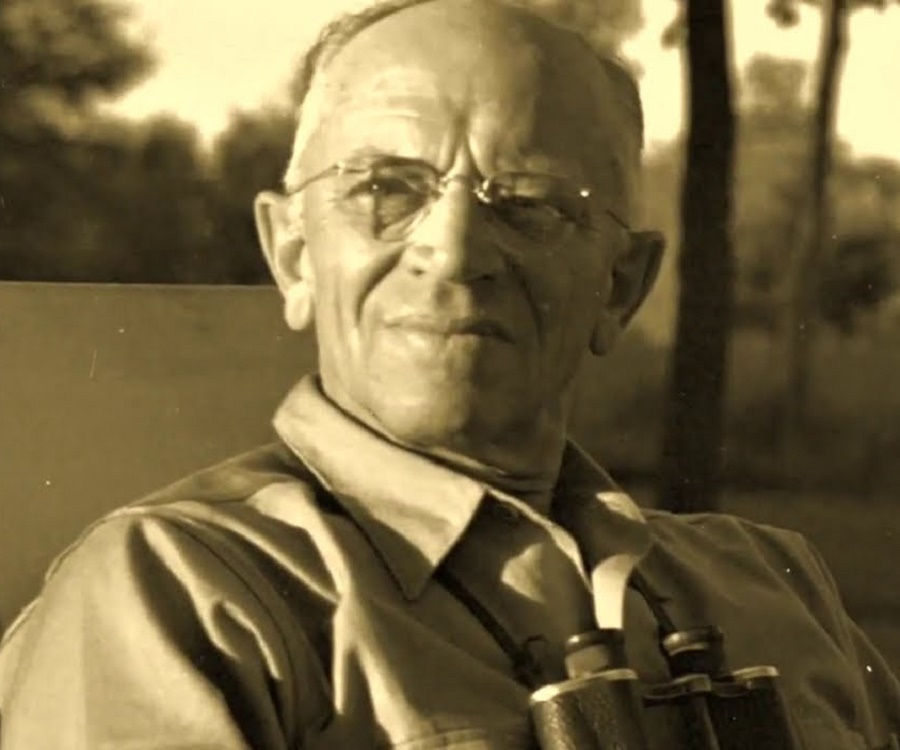
Early Life and Education
Aldo Leopold was born on January 11, 1887, in Burlington, Iowa. From a young age, he exhibited a keen interest in nature, spending much of his childhood exploring the outdoors. His passion for nature led him to pursue a degree in forestry at Yale University’s School of Forestry, where he graduated in 1909. This education laid the foundation for his future work in conservation.
Career and Major Contributions
U.S. Forest Service
Leopold began his career with the U.S. Forest Service in the Southwest, where he worked in New Mexico and Arizona. During this time, he developed a deep understanding of the complexities of ecosystems and the importance of sustainable land management. His observations and experiences in the Southwest significantly influenced his later writings and philosophies.
Game Management
In 1933, Leopold published "Game Management," a groundbreaking book that established him as a leading authority on wildlife conservation. The book introduced scientific principles for managing game populations, emphasizing the need for habitat preservation and sustainable hunting practices. This work laid the groundwork for modern wildlife management and conservation biology.
The Land Ethic
Perhaps Leopold's most enduring legacy is his concept of the "land ethic." In his seminal work, "A Sand County Almanac," published posthumously in 1949, Leopold articulated the idea that humans should view themselves as part of a larger ecological community. He argued that ethical considerations should extend to the land, plants, animals, and ecosystems, promoting a harmonious relationship between people and nature. This philosophy has since become a cornerstone of environmental ethics.
Ecological Restoration
Leopold was also a pioneer in the field of ecological restoration. He and his family undertook an ambitious project to restore a degraded farm in Wisconsin, known as the Shack. This experiment in land restoration demonstrated the potential for human intervention to heal damaged ecosystems and provided valuable insights into the dynamics of ecological recovery.
Key Publications
A Sand County Almanac
“A Sand County Almanac” is perhaps Leopold’s most famous work. The book is a collection of essays that blend natural history, philosophy, and lyrical prose. It reflects Leopold’s deep love for the land and his belief in the interconnectedness of all living things. The book has inspired countless readers and remains a seminal text in environmental literature.
Game Management
As mentioned earlier, “Game Management” is a foundational text in the field of wildlife conservation. It introduced scientific methods for managing and preserving wildlife populations, emphasizing the need for habitat protection and sustainable use of natural resources.
Other Writings
Leopold was a prolific writer, and his contributions extend beyond his major books. He published numerous articles and essays on topics ranging from forestry and wildlife management to conservation policy and environmental ethics. His writings have been compiled in various collections, continuing to educate and inspire new generations of conservationists.
Legacy and Impact
Aldo Leopold's influence extends far beyond his lifetime. His ideas have shaped environmental policies, conservation practices, and the broader environmental movement. Several organizations and institutions, such as the Aldo Leopold Foundation, continue to promote his vision and principles.
Educational Influence
Leopold's work has become a staple in environmental education. His writings are widely read in schools and universities, and his concepts, such as the land ethic, are integral to the study of environmental ethics and conservation biology.
Conservation Practices
Leopold’s principles have been integrated into various conservation practices, including wildlife management, habitat restoration, and sustainable land use. His emphasis on ecological health and ethical responsibility continues to guide contemporary conservation efforts.
In summary, Aldo Leopold's contributions to conservation and environmental ethics are monumental. Through his writings and practical work, he has left an indelible mark on the field, inspiring individuals and shaping policies that promote a more sustainable and harmonious relationship with the natural world. His legacy endures, reminding us of the profound interconnectedness of all life and the ethical duty to protect our planet.