Dept of Energy DOE
===
SEE CHRIS WRIGHT CEO TRUMP DENIAL
see perry
biden pick?
===
an 10 25
After President Donald Trump returned to the White House almost nine months ago, his administration carried out an aggressive campaign to downsize a range of federal government agencies. And it did so with the help of the Department of Government Efficiency (DOGE), which was led by Tesla/SpaceX/X.com head Elon Musk at the time.
Agencies ranging from the Internal Revenue Service (IRS) to the U.S. Department of Veterans Affairs (VA) to the U.S. Social Security Administration (SSA) were targeted for mass layoffs. Another was the U.S. Department of Energy (DOE).
In a Canary Media article republished by Mother Jones on October 16, journalist Maria Gallucci details the Trump Administration's push to eviscerate the Energy Department's Office of Clean Energy Demonstrations (OCED) — a move that might have killed a lot of job creation.
"The Office of Clean Energy Demonstrations was supposed to be a launchpad for ambitious projects to help America lead the way on cleaner power and manufacturing. Now, it's been reduced to a shell of itself," Gallucci explains. "As the Trump Administration slashes spending and fires workers across the federal government, the U.S. Department of Energy has emerged as one of the hardest-hit agencies — and perhaps no other of its divisions has been singled out as deliberately as OCED…. The situation is best summarized by the budget the White House has requested for OCED for the next fiscal year: $0."
According to Gallucci, this is a "dramatic reversal" from former President Joe Biden's energy policies.
"During the Biden Administration," Gallucci explains, "Congress endowed it with nearly $27 billion to try to scale up cutting-edge technologies that could curb planet-warming pollution from industrial facilities and power plants. Trump officials have, in recent months, hollowed out the office, canceling billions in previously issued awards for everything from low-carbon chemical manufacturing to rural energy resiliency, while also dismissing over three-quarters of its employees…. Experts and insiders warn that the tumult within OCED and the DOE more broadly is eroding the private sector's trust in the federal government and its ability to drive energy innovation."
Advait Arun of the Center for Public Enterprise told Gallucci that the Trump Administration "has really created a chilling effect on the willingness of future early-stage technology developers to work with the Department of Energy."
A former OCED staffer, interviewed on condition of anonymity, told Gallucci, "We are eliminating ourselves as a leader in the clean energy space, especially for the industrial complex. What I'm seeing is China is about to slip right into that position. Just logically and economically, I don't understand the steps that are being taken."
*Read Maria Gallucci's full article at this Mother Jones link.
---
---
mma
The Trump administration's “critical review” of climate science is authored by some of Fox News’ favorite climate deniers
Special ProgramsClimate & Energy
Written by Allison Fisher
Published 08/14/25
- On July 23, the Department of Energy released a so-called “critical review” of climate science to serve as a basis for the Environmental Protection Agency to stop regulating climate pollution. The New York Times reported:
- > Sea level rise is not accelerating. More carbon dioxide in the atmosphere will be good for plant growth. The computer models used to predict global warming tend to exaggerate future temperature increases.
These arguments, routinely made by people who reject the scientific consensus on climate change, were included in an unusual report released by the Energy Department on Tuesday. The report, which is meant to support the Trump administration’s sweeping efforts to roll back climate regulations, contends that the mainstream scientific view on climate change is too dire and overlooks the positive effects of a warming planet.
- The conclusions in the DOE report have been widely criticized by climate scientists. From The Washington Post:
- > Scientists argue that the new report, composed in less than two months by five authors known to have skeptical views on climate science, would not pass any peer review process. “If almost any other group of scientists had been chosen, the report would have been dramatically different,” Andrew Dessler, a climate scientist at Texas A&M University, said in a statement.
“There is a history of some of the authors of this document cherry-picking dates to show that there is no change, but they’re not providing the evidence to support that,” said Kristie Ebi, a professor of global health at the Center for Health and the Global Environment at the University of Washington.
- To author its new report, the Department of Energy tapped climate contrarians, including several who have been on the payroll of the fossil fuel industry and whose discredited and debunked arguments have been promoted by right-wing media to manufacture doubt about the science that compels climate action. In fact, four of the five authors of the report — Judith Curry, John Cristy, Steven Koonin, and Roy Spencer — have appeared on Fox News during key moments to dismiss climate science and deny the link between our warming planet and extreme weather.
- ## Climate deniers behind the Trump administration’s new climate report have appeared on Fox News to dismiss climate science during key moments
- Judith Curry
Judith Curry, former chair of the School of Earth and Atmospheric Sciences at Georgia Tech, consulted for oil and gas companies during her time in academia. She resigned from Georgia Tech in 2017 citing climate “craziness” and has been called out by other scientists for promoting debunked climate denial arguments.
As climate-fueled Hurricane Idalia barreled toward Florida in August 2023, Curry appeared on Jesse Watters Primetime to argue that scientists have “seriously mischaracterized” the threat of climate change. She claimed that the “dominant factor” in climate change is “far and away” the “natural climate variability” of the Earth. (Earlier that same month, Curry published an op-edin the New York Post, another Murdoch property, where she falsely claimed that the “overwhelming scientific consensus” on climate change is “manufactured” and suggested that scientists are incentivized by “fame and fortune” to push the idea that climate change is caused by human activity.)
John Christy
John Christy is “an atmospheric scientist who doubts the extent to which human activity has caused global warming,” according to The New York Times. (In reality, “more than 99.9% of peer-reviewed scientific papers agree that climate change is mainly caused by humans.”) He has regularly downplayed the link between climate change and extreme weather and has also pushed the false narrative — central to the Trump DOE climate report — that “CO2 is not the problem” because “carbon dioxide makes things grow. The world used to have five times as much carbon dioxide as it does now. Plants love this stuff. It creates more food.”
During a deadly global heat wave in July 2022, Christy appeared on The Ingraham Angle to falsely claim that extreme heat and other disasters are not “increasing in intensity or frequency.” He also repeated the common climate denial argument that “deaths from weather disasters and so on has gone down about 95% in the last hundred years.” But Reuters points out that the decrease in deaths since 1920 is largely due to “better forecasting and preparedness,” even while “the number, intensity, and cost of climatic and meteorological hazards have all increased over the last hundred years.”
Steven Koonin
Physicist Steve Koonin, a former scientist for the oil and gas giant BP who wrote a book chock-full of errors about climate change, appeared on the August 10, 2021, edition of Fox Business’ Kudlow to downplay the release of the U.N. Intergovernmental Panel on Climate Change’s sixth climate assessment. Koonin stated that “it is kind of absurd to think that another one degree over a century is going to create catastrophe.” But this would put the planet at over 2 degrees Celsius of warming, which climate scientists have long urged policymakers to prevent because it will be catastrophic for large parts of the globe.
Koonin also appeared on the August 10, 2021, edition of Special Report with Bret Baier to dismiss the connection between extreme weather and climate change, claiming that natural disasters were “on the face of it, weather. If they were climate, we would see trends over several decades in those phenomena, and we don't.”
In fact, climate scientists have been able to estimate how much climate change affects any given extreme weather event for years. Notably, researchers found that the heat wave that sent temperatures in the Pacific Northwest into triple digits just two months before the release of the 2021 report would have been “virtually impossible” without global warming.
Roy Spencer
Roy Spencer is a research scientist at the University of Alabama in Huntsville, an adviser to the Heartland Institute, and a former visiting fellow at the Heritage Foundation who was known as Rush Limbaugh's “official climatologist.” Politico reported that even while he has written that “climate change is big business” driven by a “marching army of climate scientists whose careers now depend on a steady stream of funding from governments” (a frequent claim among climate deniers), Spencer himself “has worked with organizations that have received funding from an interlinked network of fossil fuel companies — a multitrillion-dollar global industry — as well as wealthy foundations with billions of dollars in holdings that support groups opposing climate and energy regulations.”
After Hurricane Irma devastated parts of the U.S. in 2017, Fox & Friends hosted Spencer to undermine the science linking more intense storms to a warming planet. Spencer claimed: “As you go through time, there has been no increase in the number of major land-falling hurricanes in Florida, and there's been no increase in their intensity.” While climate scientists predict that “storm frequency will either decrease or remain unchanged” due to climate change and studies consistently show “no discernible trend in the global number of tropical cyclones,” data has confirmed that warmer temperatures have increased their intensity — including stronger wind speeds and greater precipitation.
- ## Energy Secretary Chris Wright has appeared on Fox and CNN to defend the report and its authors
- On August 5, CNN anchor Kaitlan Collins summarized the Trump DOE report’s conclusions “that more carbon dioxide in the air is good for plant growth, that [rising] sea levels are not accelerating,” and asked Secretary of Energy Chris Wright how the authors were selected. Wright responded:
“I've been in the climate debate and discussion for over 20 years, so I know certainly a lot of people in that world and I just made a list of who I think are the true, honest scientists,” Wright responded. “They follow the data and the facts where they lead them. They don't have a political agenda or a desired policy or a desired thing. They're just honest scientists. There's plenty of those. But I made a list of about a dozen of them that I thought were very senior and very well-respected. I called the top five and everyone said yes.”
Collins noted that “some people have criticized the report saying the information was cherry-picked by people who had already predetermined what they wanted to say in this report.” Notably, “some people” includes climate scientists whose work is cited in the report.
Wright also claimed that “the report references the Intergovernmental Panel on Climate Change reports over 100 times,” but it is worth noting that the well-known climate contrarians behind the Trump administration’s “critical review” contradict the findings of the hundreds of scientists who spent eight years developing the IPCC report.
On the August 7 edition of Morning with Maria, host Maria Bartiromo asked Wright to respond to The New York Times’ “pushback” from the article headlined “Energy Department attacks climate science in contentious report.”
“What a crazy headline, but I guess that’s par for the course for The New York Times — in fact we are doing the exact opposite,” Wright responded. “We are exposing the American people and the broader scientific community to what is actually in the Intergovernmental Panel on Climate Change reports, not the hyperbolic summaries for policymakers or media headlines that claim all sorts of crazy stuff. This is what we actually know.”
“How often do you hear that the planet is getting greener because there’s more carbon dioxide in the air that contributes to increased crop productivity and greener wilderness?” he continued. “How often do you hear that deaths from extreme weather have been falling like stone for a century? And that insured losses from extreme weather events have been on a multidecadal decline — those are just facts.”
All of these climate denial arguments have been debunked for years. Increasing CO2 is far more harmful to plants and farmers than any short-term benefit. Extreme weather deaths are falling because of better forecasting even while weather events are more intense due to our warming planet. And we are currently facing an insurance crisis because of climate-fueled events making some locations economically unviable and dangerously uninhabitable. But these stark realities were abandoned in the Trump administration’s climate report in favor of debunked arguments that support the fossil fuel industry’s campaign against climate action.
---
https://www.alternet.org/2021/05/west-virginia-coal-mines/
salon
on Earth Day this year, as President Biden assembled world leaders to a climate summit to focus on a "clean energy future," retired coal miner Chuck Nelson hunkered down in the green hills of West Virginia, recovering from a recent stroke and with one remaining kidney, as thousands of tons of explosives from mountaintop removal strip mining operations detonated nearby with a toxic haze of coal dust.
Yes, Greta (Thunberg), we still blow up mountains in the United States to mine deadly coal.
While coal mining has decreased dramatically in recent years, state permits for reckless mountaintop removal operations by absentee corporations, which involve only small numbers of non-union heavy equipment operators and explosives, in contrast to labor-intensive underground mines, continue to be doled out in central Appalachia in a desperate attempt to shake down the region for a final coal tattoo.
In fact, the West Virginia Department of Environmental Protection celebrated Earth Day by rubber-stamping a new strip-mining permitfor an out-of-state coal company, slated to destroy 1,085 acres of forested ridges and wreak havoc for neighboring communities for the next eight years, despite decades of protestby local citizens and reams of shocking health studies on heightened cancer, heart andbirth defect rates associated with mountaintop removal mining dust.
The endless war on the central Appalachian mountains continues. Needlessly, we should add.
"Millions of acres of Appalachian mountains have been permanently destroyed, and thousands of miles of streams have been permanently buried," emailed Nelson, whose wife died from chronic obstructive pulmonary disease in 2019. "With a flow of permits being processed right now, thousands more acres are planned to be wiped away forever. As devastating as mountaintop removal mining is to our majestic mountains, and the people's health impacts, only 3% of it is for electrical demand — only 3%. Mountaintop removal mining goes against everything we're fighting for in trying to deal with the climate crisis. These are criminal acts carried out by criminal enterprises."
Instead of recognizing thecentury-old legacy of ruin in coal country, from Appalachia to Alaska and 20-odd states and several First Nations in between — including an enduring array of abandoned mines, dangerous coal slurry impoundments, fraudulent "reclamation" projects, polluted waterways, desperate black lung victims, and gutted and sick communities with few economic options — the Biden administration risks falling into the trap of outdated policies.
Two days after Earth Day applause, the Department of Energy quietly awarded millions of dollars "to boost the economic potential of coal and power plant communities," and subsidize "critical mineral extraction from coal and associated waste streams," as well as widely debunked carbon capture and storage schemes.
Listen here: Advocates in coal country have been calling for a Green New Deal since 2008 — and acoalfields regeneration fund for everyone in coal mining communities, not simply the out-of-state companies, and not just throwing out a few job training opportunities for the dwindling ranks of largely non-union miners.
If the Biden administration and Congress truly want to build back better, they should have passed the RECLAIM ACT years ago, simply to start the process of reclaiming and reinvesting in all mining regions. And they should now double down on the commitment and make the Appalachian region, like all extraction zones from the Illinois Basin to the Navajo Nation to the Powder River Basin, a showcase for a clean energy economy, not a backwoods of denial.
If the Biden administration and Congress want to end the war on Appalachia, they should simply pass the Appalachian Community Health Emergency (ACHE) Act,which calls for a moratorium on such devastating operations until a basic health study is completed.
This is one of the most shameless realities in regulation: One of the Trump administration's first acts was to cancel a long-term health study on the impacts of mountaintop removal mining.
The sad truth is that this humanitarian and environmental crisis has been a federally sanctioned disaster since Jimmy Carter begrudginglysignedthe Surface Mining Control and Reclamation Act in 1977, complaining that it would allow "the mining companies to cut off the tops of Appalachian mountains to reach entire seams of coal."
Let's repeat that phrase, "cut off the tops of Appalachian mountains" — as in the tops of more than 500 mountains for over a half-century, literally clear-cutting deciduous forests and the region's ancient carbon sink, blowing ridges into oblivion with explosives and dumping the toxic remains and pulverized heavy metals in polluted streams, and ravaging the lives of citizens considered collateral damage, along with everything else in the way.
It doesn't have to be like this. Last month, Canadian government officials reversed their own 45-year policy for open-pit coal mining, admitting, "We didn't get this one right."
It's time for Biden and Congress to get this one right in Appalachia and all mining communities.
Just listen to Vernon Haltom, director of Coal River Mountain Watch, based in the frontline extraction zones of West Virginia, not in Washington, an organization that deserves as much support as possible:
With millions of Americans seriously ill or dead from the COVID pandemic, the stockholders and executives of Alpha Metallurgical Resources have no qualms about filling the air in Appalachian communities with carcinogenic blasting dust. Their enablers at the West Virginia Department of Environmental Protection have no qualms about rubber stamping new and renewed mountaintop removal permits, "just following the law" to sentence innocent people to death and misery. People like WVDEP permit supervisor Laura Claypool face no negative consequences for their actions, apparently not even remorse, but the people face the consequences of death. How do they sleep at night? It's not as if they don't know about the dozens of peer-reviewed health studies demonstrating that mountaintop removal is a deadly public health threat. No, they sleep soundly in the comfort of a steady job doing the coal barons' bidding. The WVDEP has made it personal by approving the death of friends and family like Judy Bonds, Larry Gibson and Joanne Webb, so they shouldn't be surprised if we make it personal about their cold, inhumane decisions. But since they've proven their incapacity for basic human decency, we need the Appalachian Communities Health Emergency (ACHE) Act, H.R. 2073 in this U.S. Congress, to protect the people.
FROM YOUR SITE ARTICLES
- Who made Joe Manchin 'The Decider'? Here's why West Virginia's ... ›
- This billionaire governor's coal companies owe millions more in ... ›
- Mining History Museum Preserves the Labor History That Led to ... ›
RELATED ARTICLES AROUND THE WEB
- West Virginia Mining | American Experience | Official Site | PBS ›
- Interactive map of coal mines in West Virginia | American ... ›
- Life After Coal: The Decline and Rise of West Virginia Coal Country ... ›
2018 bs doe study
https://blog.ucsusa.org/jeremy-richardson/department-of-energy-releases-bogus-coal-study
Department of Energy Releases Bogus Study to Prop Up Coal Plants
JEREMY RICHARDSON, SENIOR ENERGY ANALYST | APRIL 10, 2018, 9:40 AM EDT
This post is a part of a series onCoal-in-Context
UPDATE (4/16/2018): PJM has released its own response, noting that the NETL report “reaches some sweeping conclusions that are not supported by the specific facts concerning grid operations” and debunking NETL’s claim that blackouts would have occurred without the coal units dispatched during the bomb cyclone.
A few months ago, the Department of Energy (DOE) made a request to one of its national labs, the National Energy Technology Laboratory (NETL), to study the impacts on the electricity grid of a severe cold snap called the bomb cyclone that hit the Northeast in early January 2018. NETL conducts important R&D on fossil energy technologies. The report released last week uses deeply flawed assumptions to inaccurately paint coal (and to a lesser extent, fuel oil) as the savior that prevented large-scale blackouts during the extreme cold, while greatly understating the contribution from renewable energy sources. It also estimates a bogusvalue for coal providing these so-called “resiliency” services. One has to wonder whether this deeply flawed and misleading study is part of the administration’s continued attempts to prop up the coal industry at all costs, especially after FERC rejected the DOE’s fact-free proposal to bail out coal and nuclear plants late last year. The utility FirstEnergy, which owns and operates a fleet of coal and nuclear generators, immediately seized upon NETL’s report and is petitioning DOE for an emergency bailout.
Separating the Facts from the Fiction
The report emphasizes the fact that fossil and nuclear power played a critical role in meeting peak demand during the cold snap. Across six regions, according to the report, coal provided 55 percent of daily incremental generation, and the study concludes that at least for PJM Interconnection (which manages the electricity grid across 12 Midwest and Mid-Atlantic states as well as DC), “coal provided the most resilient form of generation, due to available reserve capacity and on-site fuel availability, far exceeding all other sources” without which the region “would have experienced shortfalls leading to interconnect-wide blackouts.” The report then goes on to incorrectly estimate value of these “resiliency” services to be $3.5 billion for PJM.
The nugget of truth here is that we do need reserve capacity to be available in times of peak demand, especially during extreme weather events that lead to greatly increased need for heating or cooling. And this is especially important during the winter, when the demand for natural gas for home heating spikes in some parts of the country, leading to higher prices and less natural gas available for electricity generation (since home heating takes priority over electricity generation in terms of natural gas pipeline delivery contracts). In the Northeast, which uses a lot of natural gas for heating, this shortfall in natural gas led to an increase in electricity generation from dirty fuel oil, as the report points out.
However, regional transmission organizations (RTOs) and independent system operators (ISOs)were prepared for the cold snap, and the markets performed as expected. PJM in particular put systems in place to prepare for extreme cold weather following the 2014 Polar Vortex, and electricity markets in the Eastern U.S. are organized to provide payments to power plants for providing either energy (electrons to the grid) or capacity (the ability to switch on and provide a certain level of output if called upon). As fossil generators retire because they are uneconomic, plenty of other resources are under construction or in advanced planning stages and will be ready at the time they’re needed. This is why planning for future electricity needs is critical, and this is the responsibility of regional grid operators—one they take quite seriously.
To that point, grid operators and reliability experts see no threat to grid reliability from planned retirements of coal and nuclear power plants. The North American Electric Reliability Corporation (NERC), whose mission is to ensure the reliability of the bulk power system for the continent, finds in its 2017 Long-Term Reliability Assessment, that (contrary to NETL raising potential reliability issues from future coal and nuclear retirements) most regions of the country have sufficient reserve margins through 2022, as new additions more than offset expected retirements. PJM, in its strongly worded response to FirstEnergy’s petition to DOE for an emergency bailout (see below), stated “without reservation there is no immediate threat to system reliability.”
Beyond this, the report and its pseudo-analytic underpinnings really goes off the rails. Let’s take a few of its misleading points in turn.
How to Quantify Resiliency
NETL decided to consider the incremental generation from each fuel source—that is, how much more electricity was produced by each fuel during the bomb cyclone—as a metric for which fuel provides the grid with resilient services. As they put it:
....
Light bulb manufacturers score victory with new Trump energy rule
The Department of Energy finalized a rule Wednesday that will prevent Obama-era efficiency standards for light bulbs from being implemented. The decision was cheered by lighting manufacturers that have spent the last two years lobbying Congress and the DOE to reverse new energy efficiency standards that would have affected billions of light bulbs sold in the U.S. Read more
:{:{
}:}:
The Department of Energy finalized a rule Wednesdaythat will prevent Obama-era efficiency standards for commonly used light bulbs from being implemented.
The decision was cheered by lighting manufacturers that have spent the last two years lobbying Congress and the DOE to reverse new energy efficiency standards that would have affected billions of light bulbs sold in the U.S. The stricter standards were set to go into effect in January 2020.
Environmental groups, on the other hand, expressed disappointment and argued the decision would worsen the climate by enabling the sale of inefficient bulbs that contribute to carbon dioxide emissions.
The National Electrical Manufacturers Association applauded the Trump administration’s new rules in a statement Wednesday, arguing the Obama-era efficiency standards were not feasible for manufacturers producing certain kinds of lamps. It said the rule change “will not impact the market’s continuing, rapid adoption of energy-saving lighting in the next few years.”
The trade group, which represents major lighting manufacturers such as General Electric and Acuity Brands, fiercely fought new DOE efficiency standards when they were finalized on President Barack Obama’s final full day in office. It spent $5 million on lobbying since the start of 2017 and dispatched dozens of revolving door lobbyists.
The Trump administration cited statistics from lighting trade groups in its final rule, noting that the Obama-era regulations would place costs on retailers that have to replace their outdated bulbs. DOE argued in its new rule that the new efficiency standards were not consistent with a 2007 law that requires the agency to phase out inefficient bulbs by 2020.
The environmental advocacy group Natural Resources Defense Council, which spent $2.4 million on lobbying since 2017, disagreed. The group said in a press release it will “explore all options, including litigation, to defend these critically important lighting efficiency standards.”
The new DOE rule is a win for light bulb manufacturers. But the lighting trade group, along with prominent air conditioning and appliance manufacturers, are urging Congress to take the next step and amend the 1975 law that requires DOE to periodically craft new efficiency standards.
The American Lighting Association, a lighting industry trade association that does not deploy registered lobbyists, flew its members to Washington in May to push for changes to “modernize” the 43-year-old Energy Policy and Conservation Act. The group said it had lunch with Daniel Simmons, who oversees the DOE’s energy efficiency programs. Simmons previously worked for the conservative Institute for Energy Research, a nonprofit that fights renewable energy efforts.
The Association of Home Appliance Manufacturers has called on lawmakers to change the act by excluding some products that already operate at high efficiency and to require DOE to consider the impact of new regulations. Representing industry giants such as LG Electronics and GE Appliances, the trade group is on pace to break its own lobbying spending record in 2019, shelling out $675,000 through the first half of the year.
“More stringent federal efficiency standards are likely to increase costs for manufacturers and consumers without providing meaningful energy savings,” the group said in a press release.
The Air Conditioning Heating, & Refrigeration Institute shelled out a record $1 million in cold hard cash last year and another $552,000 through the first half of 2019. It reported dispatching lobbyists to DOE to lobby for “needed reforms” to the law to “improve the regulatory process and accountability.”
In February, DOE proposed changes to slow down the rulemaking process for setting new efficiency standards. That move was criticized by environmental groups but drew support from appliance and lightbulb manufacturers and other affected trade groups.
==
==
DOE SHIPPED NUCLEAR WASTE TO NEVADA FOR YEARS The U.S.Department of Energy shipped potentially dangerous nuclear material incorrectly labeled as low-level radioactive waste intoNevada for several years, the governor said. [HuffPost]
==
Trump's Budget Cuts Could Have a Chilling Effect on U.S. Clean Energy Leadership
BY: DAN GEARINO
The national labs are the country's cradle of innovation for renewable energy and efficiency. President Trump's proposal for deep budget cuts sends a message.
APR 2, 2019
At the Ames Laboratory, a national energy lab in the heart of Iowa, scientists and engineers are developing low-cost substitutes for the rare-earth metals used in electric-vehicle batteries and solar cells to reduce the need for imports from geopolitical rivals like China.
It's the kind of foundational research and development being carried out at national labs across the country that has helped to dramatically lower energy technology costs and pushed clean energy toward a tipping point.
But that renewable energy work and its local economic impact are at risk in the Trump administration's budget proposal for the coming year.
The administration's proposal would zero out energy efficiency and renewable energy (EERE) funding at the Ames lab and would slash similar funding by more than half at almost all of the national labs with EERE programs. With labs targeted for cuts in more than a dozen states, each representing jobs and local economic impact, the budget plan isn't likely to get through Congress without major changes, but scientists say that kind of proposal alone can have a chilling impact.
At the flagship National Renewable Energy Lab, where breakthroughs in solar, wind and electric vehicle technology have increased energy efficiency and lowered costs, the administration's proposed budget would leave wind power projects with a third of their current funding. Work on energy efficient buildings technologies, targeting another major source of greenhouse gas emissions driving climate change, would be left with less than 8 percent of current funding, according to the budget documents released in March by the Department of Energy.
In all, the proposed budget would cut 86 percent of new spending for the Energy Department and labs' work in energy efficiency and renewable energy, going from nearly $2.4 billion to a proposed $343 million.
Congress started hearings on the Energy Department budget last week, and the funding numbers are likely to change significantly before it's done. That happened in each of the past two years as President Donald Trump and his administration promoted fossil fuel interests and talked down renewable energy.
But the threat still has a chilling effect on scientists and the surrounding communities, where the total proposed cuts at the national labs would cost thousands of jobs and interrupt work that is essential to the leadership of the U.S. and its private businesses in the energy economy, congressional Democrats and scientists say.
The proposal may do damage even if lawmakers reject the bulk of the cuts, said Jacob Carter of the Union of Concerned Scientists, because it creates a sense of instability at the labs, hurting morale and any sense of job security and undermining officials' ability to attract and retain scientists. And any cuts that are eventually approved also ripple through the surrounding economies, connected universities and businesses.
"The fallout of this would be drastic given the multiplier-effect on DOE-supported jobs is in the range that could double or triple that job fallout," U.S. Rep. Marcy Kaptur, D-Ohio, chair of the subcommittee that oversees the Energy Department budget, said at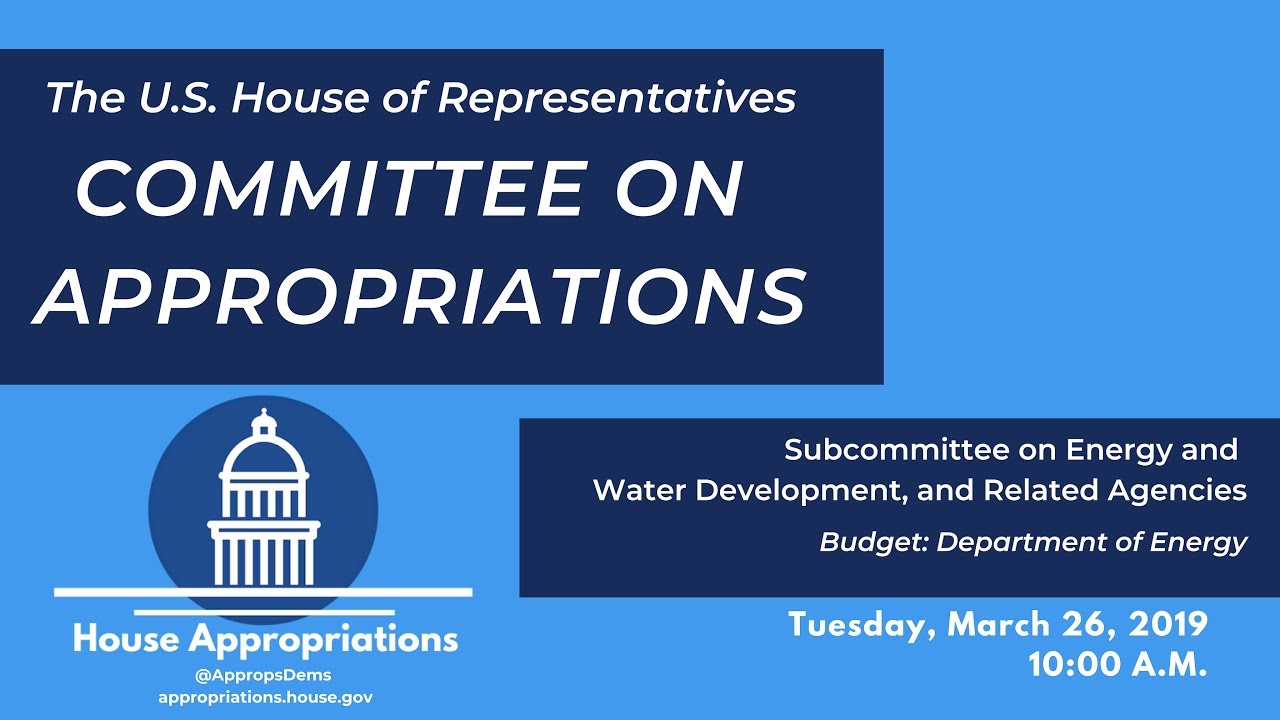 last week. "It is no secret that the innovation economy faces fierce international competition, including those with nefarious intent."
House Democrats estimate the budget cuts would eliminate 6,100 jobs in the national labs, many of which would be in energy efficiency and renewable energy.
"We're sliding backward," Kaptur said.
Energy Secretary Rick Perrydiscussed the budget before U.S. House and Senate committees last week, emphasizing the research areas getting increases in funding, such as supercomputing, but saying little to disagree with lawmakers from both parties who questioned the proposed cuts to the national labs.
Perry said the administration's budget was just the beginning of a process, noting that when he was in Texas politics, "the governor's budget was a very useful doorstop." With the Energy Department's budget proposal, he said he was just "saluting the flag on the 5 percent reduction across the board" that had been ordered by the White House, then he went on to praise the national labs' work as "what keeps America ahead."
'Crown Jewels' of U.S. Science Capabilities
The Department of Energy's national labs are the "crown jewels in the national science capability," said Lynn Orr, who was undersecretary for science and energy at the department for the final three years of the Obama administration, overseeing budgets for 13 of the 17 national labs. He now teaches at Stanford.
"People mostly don't know what the labs are, what they do," he said. "Taken together, they are a very important part of our national R&D enterprise."
The labs are the foundation of the Energy Department's research and development efforts, and those efforts helped to make the department by far the leader among government agencies in the number of patents per billion dollars of spending in 2013 and 2014, according to a report done while Orr was at the agency.
They developed crucial technology used in electric vehicle batteries, designed utility-scale energy storage now used by private companies, developed coatings used to reduce wear and tear on wind turbines, and worked with industry to develop energy efficient lighting and window technologies, among many other developments.
Pooling Expertise for Difficult Research
Ames Laboratory, nestled among the science buildings at Iowa State University in Ames, specializes in developing new materials to improve the efficiency of manufacturing and clean energy technologies.
Its Critical Materials Institute brings together engineers and scientists from labs and universities around the country to pool their resources on projects involving rare-earth metals and other important materials that could be subject to supply disruptions.
It's not "sexy" research, so the work of the lab and others like it often isn't known or appreciated by the public, said Tom Barton, a chemist who was director of the lab from 1988 to 2007, and is now on the faculty at Iowa State.
But it's important to U.S. competitiveness, he said.
Under the administration's budget proposal, funding for the lab's research related to energy efficiency and renewable energy would be eliminated. That includes the advanced manufacturing research."I think the Ames lab is something the state of Iowa should be proud of, and it's something the nation should be proud of," Barton said.
A spokeswoman for the lab declined to comment about the potential effects of budget cuts, referring those questions to the Department of Energy, which had no comment. Adam Schwartz, the lab's director, emailed a statement about the importance of what the lab does.
"We use our scientific expertise and unique capabilities to create materials and energy solutions for our economic and national security," Schwartz said. The lab has about 380 employees, plus shared faculty with Iowa State, visiting scientists and graduate students.
Officials at other labs also declined to publicly discuss the president's budget proposal for the most part, directing questions to the Department of Energy.
NREL's Economic Impact Tops $1 Billion a Year
The National Renewable Energy Laboratory in Golden, Colorado, would also face transformative cuts under the Trump administration's proposed budget, dropping from $332 million this fiscal year to $206 million in the next one.
That kind ofloss would reverberate across the entire renewable energy industry, which relies on research from the lab to improve the efficiency of wind turbines, solar panels and other components of the clean energy economy.
The lab issued a news release this month calling attention to a study about the economic impact of the lab's work. During the 2017 fiscal year, the lab had 1,745 full-time and part-time employees and contributed $1.1 billion to the nation's economy, the release said. A lab spokeswoman referred budget questions to the Energy Department.
At the Pacific Northwest National Laboratory inRichland, Washington, where the research and development work includes making the electricity grid more efficient and resilient, overall funding would fall from $603 million this year to $521 million under the administration's proposed budget. Funding for its energy efficiency and renewable energy work would drop from about $78 million in the current year to $24 million next year, according the budget breakdown released in March.
The cut didn't make sense toRepublican Rep. Dan Newhouse of Washington,who asked Perry to explain at the hearing. Perry said he agreed that the lab's work was vital.
Newhouse's objection reflects why the labs' funding is typically protected: The national labs are found in communities nationwide, represented by Republicans and Democrats, and several are in states with an outsize influence on presidential politics, such as Iowa.
The Energy Department's Argument
The Department of Energy says in a budget summary document that the cuts to energy efficiency and renewable energy funding are part of a focus on "early-stage R&D, where the federal role is strongest, and reflects an increased reliance on the private sector to fund later-stage research." In other words, it argues that the government should have a smaller role in developing technologies that are close to being ready for market.
Orr saw early indications of that approach during the transition to the Trump administration after the 2016 election.
"Their view, I think, is that it's fine to do the fundamental science, but if it's stuff that has potential commercial utility, even if it's far downstream, that should be done by private industry," Orr said.
He disagrees with that approach and thinks it is harmful to the economy to reduce funding for energy efficiency and clean energy.
There is a worldwide race to see which countries and companies will be leaders in the transition to clean energy, and the U.S. is unwise to reduce the government's role, he said.
Fears of a Chilling Impact on Science
A larger concern is that the administration is eroding the country's science infrastructure, said Carter of the Union of Concerned Scientists, who previously was a scientist for the U.S. Environmental Protection Agency.
The administration is succeeding at sending a message to scientists that their work is not valued and that they will face ongoing instability about budgets, he said.
The Union of Concerned Scientists found low morale in a survey of federal scientists last year. It didn't include employees of the national labs, but Carter suspects that there are similar problems there.
Barton, the former Ames lab director, said the constant threat of cuts may be bad for morale, but the fact that this threat comes almost every budget cycle reduces its effect.
If the budget cuts were to be enacted, that would be bad for the economy and bad for the environment, Kaptur told Perry during the hearing.
"Emblazoned on the president's budget request are the words, 'A Budget for a Better America: Promises Kept, Taxpayers First,'" she said. "However, the proposals in this request tell a very different story. In fact, the president's budget request harms America's energy future, our competitiveness, our consumers and our economy."
PUBLISHED UNDER:
==
5 Products Improved in 2018, Thanks to Obama-Era Efficiency Standards
By Lauren Urbanek
Hotels, offices, stores and other commercial spaces across the U.S. are reaping benefits from new energy efficiency standards taking effect this year, one of which is the largest ever set by the Department of Energy (DOE). Consumers will see lower bills from these efficiency efforts, which were finalized during the Obama administration, even as the Trump DOE seeks to stall new standards.
==
https://www.alternet.org/trumps-department-energy-neuters-nuclear-oversight-safety-board
ProPublica Local Reporting Network.
The Trump administration has quietly taken steps that may inhibit independent oversight of its most high-risk nuclear facilities, including some buildings at Los Alamos National Laboratory, a Department of Energy document shows.
An order published on the department’s website in mid-May outlinesnew limits on the Defense Nuclear Facilities Safety Board — including preventing the board from accessing sensitive information, imposing additional legal hurdles on board staff, and mandating that Energy Department officials speak “with one voice” when communicating with the board. The board has, by statute, operated independently and has been provided largely unfettered access to the nation’s nuclear weapons complexes in order to assess accidents or safety concerns that could pose a grave risk to workers and the public. The main exception has been access to the nuclear weapons themselves.
For many years, the board asked the Department of Energy to provide annual reviews of how well facilities handled nuclear materials vulnerable to a runaway chain reaction — and required federal officials to brief the board on the findings. It also has urged the energy secretary not to restart certain nuclear operations at various sites until work could be done safely.
At Los Alamos, the board has conducted ongoing reviews of the plutonium facility, holding hearings in Santa Fe and in recent years identifying imminent and “major deficiencies” in the building that could put the public at risk in the event of an earthquake. The lab sits on an active and complex geological fault system capable of causing a high magnitude quake.
The Energy Department’s orderis the latest effort to limit transparency and weaken the board’s ability to conduct oversight, experts and critics say. And it represents another step by the Trump administration to stall or halt the work done by advisory boards and committees across the federal government, including a scientific advisory board at the Environmental Protection Agency and several of the Department of Labor’s advisory committees established to protect worker safety and health.
“This administration is very regressive,” said Robert Alvarez, who helped draft the legislation that created the board in the 1980s as a senate staff expert for Sen. John Glenn, D-Ohio, and subsequently served as senior policy adviser for former Energy Secretary Bill Richardson. “We shouldn’t have to wait for something to blow up or catch fire in order to pay attention to a safety problem.”
The five-member board was formed in 1988 near the close of the Cold War, as the public and Congress began to question the lack of accountability at the Department of Energy and its predecessor agencies, which since the end of the Manhattan Project had made their own rules and been entirely self-regulating. At the time, there were reports of widespread radiological contamination at the Rocky Flats Plant in Colorado and problems at other nuclear facilities. The board’s formation also came on the heels of the Chernobyl nuclear disaster.The Department of Energy did not respond to multiple requests for comment, but said in a presentation that the order will increase efficiency and decrease costs. “This order does not hinder cooperation with the board or to prevent them from accomplishing their safety oversight responsibilities,” the presentation said. A spokesman for the safety board also declined comment on the order, saying it was in the Energy Department’s purview. The spokesman said the board and staff are waiting to see how it “shakes out.”
Chernobyl, Alvarez said, showed the lax conditions in which nuclear power and materials were being manufactured both in the then-Soviet Union and the United States, and the calamity that could arise from an accident. The board was born out of that understanding, and now relies on a staff of more than 100, several of whom are stationed at lab sites. These staffers create weekly one-page reports that outline mishaps and near-misses and help inform larger recommendations.
The board does not have regulatory power, but for the first two decades of its life, all of its recommendations were adopted by the energy secretary.
Now, Alvarez said, the Department of Energy is trying to “isolate and fence off” the board’s access, part of a “constant effort to chip away at the ability of the board to do oversight.”
“We have seen too many serious safety and security lapses at DOE nuclear sites to accept any attempts to weaken” the board, Udall said, adding that he wants to preserve the board’s “critical role as an independent watchdog for public health and safety.”Sen. Tom Udall, D-N.M., said in an email that the board is integral to New Mexico’s weapons labs. The board also oversees facilities in California, Washington state, South Carolina and other states.
He said he will be asking the Department of Energy for a “full account” of how the changes will affect worker safety and public health.
The safety board’s very existence — and its ability to provide nuclear safety information to the public — has been threatened in recent years, advocates of the board say. Last summer, for example, the board’s then-chairman proposed dissolving the board entirely. A few months later, the National Nuclear Security Administration, an arm of the Energy Department that oversees the nation’s nuclear stockpile, said less information should be made public by the board.
Last September, the board rescinded one its long-pending recommendations, related to emergency safety, after concluding that the Department of Energy failed to understand the problems and that officials did not to intend to remedy them. The board has made no new recommendations since 2015.
Critics of the board, including some of its former leaders, say limiting its access to information may be a good thing.
Sean Sullivan, who retired as the board’s chairman in February, recommended last summer that the board be disbanded, saying it was a relic of the Cold War and its oversight was redundant of the work already done by the Department of Energy and the National Nuclear Security Administration. The proposal, he said, was a cost-cutting measure but it was opposed by other board members and abandoned.
Sullivan says it makes sense for the Department of Energy to have control over all information released to the public and it has long been frustrated when the safety board autonomously made safety information public.
For instance, Sullivan said, when board staff raised concerns in 2015 about uranium processing at the Y-12 nuclear facility in Tennessee, it was reported by a local paper and caused a headache for the nuclear security administration. Energy officials had yet to discuss problems at the site with congressional representatives from the state.
“Government shouldn’t try to hide things,” said Sullivan, emphasizing that he was speaking as a private citizen, but “if the public gets everything, conclusions may be drawn which are inaccurate — and that in and of itself can be problematic.”
Some of the nuclear security administration’s dissatisfaction with the board was revealed last fall when former Energy Undersecretary Frank Klotz recommended that the board stop publishing its weekly, one-page site reports from several national laboratories, including Los Alamos, online.
Klotz, citing an article about nuclear safety problems at Los Alamos, published in September in The New Mexican, said the reports were unflattering and might discourage workers from bringing issues to light in the future (even though workers are unnamed in the reports), the Center for Public Integrity reported.
Current acting board chairman Bruce Hamilton drew up a proposal recommending the board staff make weekly reports orally to board members, so as to avoid public embarrassment, but it was not adopted and the reports are still available. Around the same time, all Energy Department staff were required to undergo training to “control” the release of unclassified information.
David Jonas, a Washington, D.C., lawyer who served as general counsel for both the National Nuclear Security Administration and the safety board, said there have long been disagreements between the board and the Department of Energy. But there’s never before been such explicit limits on what the safety board can access, as outlined in the order, he said.
“The defense board is going to end up getting a little less information based on this,” he said.
The statute establishing the safety board explicitly gave board members and staff powers of investigation and said the secretary of energy should cooperate fully with the board and provide it “with ready access to such facilities, personnel, and information as the Board considers necessary to carry out its responsibilities.”
The new order appears to add caveats to how the law is carried out. Board members can no longer speak to lab staff without permission from the Department of Energy. The order may also make it difficult for them to access records related to how much radiation exposure workers receive.
While the statute that established the board technically trumps the order, the document gives the Department of Energy “more power to resist the defense board requests” and as a result will delay the process of getting information to the safety board, Jonas said.
He anticipates a legal fight, saying, “It’s a mess.”
Even before the start of the Trump administration, the Department of Energy had been tightening control over information released to the public.
In January 2017, while Barack Obama was still president, the Energy Department deleted several requirements for what types of incidents laboratory managers must report to a federal database used by the safety board to review problems at laboratories. Beginning that fall, labs no longer had to report certain potential safety problems or provide as much information about “near-miss” accidents.
The impact of the change is already apparent. Under the old reporting requirements, the Los Alamos lab detailed 103 incidents in 2016 and 77 incidents in the first nine months of 2017. Under the new order, Los Alamos reported just 13 incidents for the last three months of 2017 and 28 for the first six and a half months of 2018.
Sullivan, on behalf of the board, wrote a letter to Energy Secretary Rick Perry in May 2017 saying the new requirements “negatively affect safety oversight” and reduce nuclear facilities’ ability to learn from mistakes. (Sullivan personally voted against sending the letter.) Perry declined to make changes, saying the new rules still ensure “safety oversight is not degraded at defense nuclear facilities.”
The safety board voted last month to hold up to three public hearings beginning in late August on the intent of the new order and how it might impact access to information. Hamilton, the board chairman, was the only member to vote against holding the hearings.
==
==
https://www.desmogblog.com/2018/03/29/christine-harbin-anti-wind-koch-department-energy
Until February, Christine Harbin spent much of this decade fighting against state and federal clean energy initiatives for organizations with close ties to the petrochemical billionaire Koch brothers. Now, however, she has joined the Trump administration as a senior adviser for external affairs in the U.S. Department of Energy's (DOE) Office of Electricity Delivery and Energy Reliability, which deals primarily with the electricity grid.
Before joining a number of other Koch network alum in the Trump administration, Harbin served as vice president of external affairs at Americans for Prosperity, a Koch-funded group with nearly three dozen active state chapters pushing for conservative legislation at the state and national levels. She had worked for Americans for Prosperity since 2012.
Before that, she was employed for a year with the American Legislative Exchange Council (ALEC), a Koch-funded and founded group that writes so-called “model legislation” for state governments and cultivates relationships with mainly GOPstate legislators through its meetings and summits in the interest of advancing “limited government, free markets, and federalism at the state level.”
Chrissy Harbin's History of Clean Energy Attacks at Americans for Prosperity
While working at Americans for Prosperity, Harbin often criticized the Obama administration's clean energy policies, including, repeatedly, the president's signature Clean Power Plan, which proposed reducing carbon dioxide emissions from the electricity sector, including coal-fired power plants.
She also used her position in Americans for Prosperity's national office to coordinate local “grassroots” groups in campaigns and messaging against wind power. The first of these efforts came to light in 2012, as David Anderson explained on the Energy and Policy Institute blog:
“[I]t was Christine Harbin of the Koch-backed Americans for Prosperity that organized a 2012 letter signed by a number of local anti-wind groups and national organizations backed by the Koch brothers, according to a document found on the website of one of the signers, Auglaize Neighbors United. Among the signers were AWED, Freedomworks, and the American Energy Alliance.”
Evidence of Harbin's coordination can be seen in the draft letter that was circulated to the local groups:

And also in the final product, which was signed by dozens of national and local groups and published online:
[img]
In June 2014, a similar letter was published as a full page ad in Politico. Further investigation by The Energy and Policy Institute found that some of the “organizations” that signed the letter were little more than names on paper, with no online presence or formal organizational structure.
In December 2015 and January 2016, Harbin penned a pair of op-eds for The Hill in which she bashed the production tax credit (PTC) for wind power, which Congress was in the process of extending through 2020 in a massive omnibus spending bill. Though she called the PTC “corporate welfare” and “forced investment” for American taxpayers, she neglected to mention the much larger and permanent tax breaks and subsidies that are enjoyed by the fossil fuel industries, such as the $4.86 billion (on average, in today's dollars) that the oil and gas industry has received every year since 1918.
In February 2018, Harbin left Americans for Prosperity to join the Department of Energy, where she will work alongside a number of fellow Koch network alums.
But if a genuine concern of Harbin's is seeking “energy solutions that can make it on their own in the marketplace — not ones that need to be propped up by government indefinitely,” she may get a shock at the DOE under Secretary Rick Perry.
Last fall Secretary Perry proposed a controversial rule, which sought to prop up ailing coal and nuclear plants by guaranteeing to pay them for all of their power, whether or not it was needed, in the name of grid “resiliency.” Perry's plan contradicted the conclusions of his own agency about the state of the American power grid, and was ultimately rejected.
The DOE's Office of Electricity Delivery and Energy Reliability, where Harbin now works, is charged with “[developing] new technologies to improve the infrastructure that brings electricity into our homes, offices, and factories, and the federal and state electricity policies and programs that shape electricity system planning and market operations.”
Under the Obama administration, this office focused greatly on electric grid reliability and promoting the “next generation” of transmission technology.
If Harbin's recent work history in Koch-funded organizations is any indication, she will use the office to promote fossil fuel generation as a sort of “cure all” for electric system reliability issues, and to bash wind and solar power as “unreliable.”
TAGS:
americans for prosperity (AFP)
American Legislative Exchange Council ALEC
==
https://www.vanityfair.com/news/2017/07/department-of-energy-risks-**michael-lewis**
....
Meanwhile, inside the D.O.E. building, people claiming to be from the Trump administration appear willy-nilly, unannounced, and unintroduced to the career people. “There’s a mysterious kind of chain from the Trump loyalists who have shown up inside D.O.E. to the White House,” says a career civil servant. “That’s how decisions, like the budget, seem to get made. Not by Perry.” The woman who ran the Obama department’s energy-policy analysis unit recently received a call from D.O.E. staff telling her that her office was now occupied by Eric Trump’s brother-in-law. Why? No one knew. “Yes, you can notice the difference,” says one young career civil servant, in response to the obvious question. “There’s a lack of professionalism. They’re not very polite. Maybe they’ve never worked in an office or government setting. It’s not hostility so much as a real sense of concern with sharing information with career employees. Because of that lack of communication, nothing is being done. All policy questions remain unanswered.”
The D.O.E. has a program, for example, to provide low-interest loans to companies to encourage risky corporate innovation in alternative energy and energy efficiency. The loan program became infamous when one of its borrowers, the solar-energy companySolyndra, was unable to repay its loan, but, as a whole, since its inception in 2009, the program has turned a profit. And it has been demonstrably effective: it lent money to Tesla to build its factory in Fremont, California, when the private sector would not, for instance. Every Tesla you see on the road came from a facility financed by the D.O.E. Its loans to early-stage solar-energy companies launched the industry. There are now 35 viable utility-scale, privately funded solar companies—up from zero a decade ago. And yet today the program sits frozen. “There’s no direction what to do with the applications,” says the young career civil servant. “Are we shutting the program down?” They’d rather not, but if that’s what they are going to do, they should do it. “There’s no staff, just me,” says the civil servant. “People keep bugging me for direction. It’s got to the point I don’t care if you tell me to tear the program down. Just tell me what you want to do so I can do it intelligently.” Another permanent employee, in another wing of the D.O.E., says, “The biggest change is the grinding to a halt of any proactive work. There’s very little work happening. There’s a lot of confusion about what our mission was going to be. For a majority of the workforce it’s been demoralizing.
...
==
https://www.ecowatch.com/doe-grid-study-2476529506.html
DOE Grid Study Boosts Coal, Downplays Renewables
Natural gas and market forces are the largest influence on the retirement of coal-fired power plants, a long-awaited Department of Energy study concluded.
The study, released late Wednesday night, proposes slashing certain regulations, including reducing permitting requirements at coal-fired power plants, to make it easier for nuclear and coal plants to keep operating.
While the study does not issue an all-out attack on renewable energy, as many advocates feared following Secretary Rick Perry's aggressive April memo ordering the study, it downplays renewables' reliability benefits to the grid and suggests price changes to wind and solar. A draft of the study from DOE staff, leaked earlier this month, concluded that renewable energy is not a threat to grid reliability.
In response, Janet Redman, U.S. policy director at Oil Change International, released the following statement:
"The Department of Energy's grid study does little more than reveal the Trump administration's pro-fossil fuel bias and anti-regulation agenda.
"Trump and his dirty DOE refuse to face the facts—thanks to growth in renewable energy and efficiency, America's demand for electricity is flatlining, and clean energy options like solar and wind power are outperforming dirty energy like coal. Yet, this study ignores those facts and calls for fast-tracking coal-fired power plants, fracked gas pipelines and other dirty projects that would lock in climate pollution for decades. The DOE needs to pull its head out of the sand.
"Instead of embracing the clean energy future that Americans want, the Trump administration is looking backwards. Propping up a dirty energy system of the past at the expense of renewables makes the nation's energy grid more polluting and American families less secure."
For a deeper dive:
AP, Reuters, Washington Post, New York Times, WSJ, FT, NPR, Bloomberg, Washington Examiner, LA Times, The Hill. Commentary: ThinkProgress, Joe Romm column. Background: Climate Nexus
==
Top advisory groups dormant at DOE, White House
Rod Kuckro and Christa Marshall, E&E News reporters
Published: Thursday, May 11, 2017
The Trump administration continues to operate without the usual cadre of outside experts that offer presidents advice on questions of science, research, energy, technology and innovation.
Trump administration continues to operate without the usual cadre of outside experts that offer presidents advice on questions of science, research, energy, technology and innovation.
The White House website for the President's Council of Advisers on Science and Technology (PCAST) is no longer; the current page says, "Thank you for your interest in this subject. Stay tuned as we continue to update whitehouse.gov."
At the Department of Energy, the board of the secretary's most senior advisers is in limbo at best, with all of the 19 former members of the Secretary of Energy Advisory Board (SEAB) having resigned on Jan. 20.
It is unclear whether the administration is just slow in making personnel decisions or whether it reflects an antipathy toward the value of scientific advice.
Last Friday, a dozen members of U.S. EPA's advisory board of scientists were dismissed by the agency, and a spokesman said the dismissed members could be replaced by researchers from the industry that the agency is tasked with overseeing (*Climatewire*, May 9).
Neither White House nor DOE media personnel responded to questions on the future of either advisory group.
The White House advisory group is not required by law, but it has been a tradition dating back to 1933, when President Franklin Roosevelt set up his Science Advisory Board.
And since then, each president has established an advisory committee of scientists, engineers and health professionals, said John Holdren, President Obama's science adviser and director of the White House Office of Science and Technology Policy (OSTP), where he was co-chairman of PCAST. He now teaches at Harvard University.
"One of the key functions of PCAST is to connect the science and technology operation in the White House and the president to the wider community" of academia, industry and civil society to provide private-sector perspectives, Holdren said.
During his tenure, PCAST's 19 members produced 38 reports for the president, ranging on topics such as advanced manufacturing, accelerating drug development and approval, and private sector adaptation to climate change.
"It was a very busy PCAST, a very productive PCAST," Holdren said, pointing to a number of recommendations that became administration policy.
"I basically know nothing," Holdren said of what the Trump administration may be planning for PCAST.
One week before the inauguration, Holdren said he was visited by a member of the Trump transition team who mostly listened for a hour about what OSTP and PCAST did.
Holdren turned over a briefing book "about 3 ½ inches thick," and to date, "no one has gotten back to me on the briefing book," he said.
Holdren hopes that President Trump will name a science adviser to head up OSTP and that the person will have the rank of assistant to the president, as he did.
"It makes all the difference because as direct reports they are the folks who can get a meeting with the president whenever they want one; they can get a memo to the president whenever they want to," he said.
Not every president has an SEAB
At DOE, the SEAB was the pre-eminent panel of experts out of the more than 20 advisory committees still listed on the agency's website.
The first such board was established by James Watkins, who was Energy secretary in the administration of George H.W. Bush. He brought the advisory model from the Defense Department, where he had been chief of naval operations.
:{
"As best I know, there isn't a SEAB. It's up to Secretary Perry whether he wants to have one or not, and if he does, who will be on it?" said the person who spoke on the condition of anonymity.}:But "there's nothing in law that says you have to have a SEAB," said a former Watkins protégé who was among those who resigned Jan. 20.
Samuel Bodman, who was Energy secretary under President George W. Bush, let the SEAB languish, believing there was ample other sources of advice to the secretary.
It was reconstituted by President Obama in 2010.
During the Obama years, both Energy Secretary Ernest Moniz and Deputy Secretary Elizabeth Sherwood-Randall attended the SEAB meetings on a regular basis....
ref
http://www.energyandpolicy.org/travis-fisher-rick-perry-grid-study/
Fisher, a Trump political appointee in the Department of Energy, wrote a 2015 report for the Institute for Energy Research that called clean energy policies “the single greatest emerging threat” to the nation’s electric power grid, and a greater threat to electric reliability than cyber attacks, terrorism, or extreme weather.
Fisher is now leading up a :{controversial grid study:(style="box-sizing:border-box;border:0px;font-style:inherit;margin:0px;outline:0px;padding:0px;vertical-align:baseline"):}: ordered by Secretary of Energy Rick Perry under the pretense of ensuring the long-term reliability of the nation’s electricity supply. If Fisher’s past writings on the topic are any indication, the forthcoming DOE study is sure to be :{a thinly veiled political attack on renewable energy:(style="box-sizing:border-box;border:0px;font-style:inherit;margin:0px;outline:0px;padding:0px;vertical-align:baseline"):}: aimed at :{propping up outdated coal and nuclear power plants:(style="box-sizing:border-box;border:0px;font-style:inherit;margin:0px;outline:0px;padding:0px;vertical-align:baseline"):}: that can’t compete in today’s electricity market.
Rick Perry’s grid study sounds strikingly similar to the one Travis Fisher wrote for fossil fuel interests in 2015
:{:{:{
Fisher wrote in his 2015 IER report:}:In his }::{February 2015 report:(style="box-sizing:border-box;border:0px;font-style:inherit;margin:0px;outline:0px;padding:0px;vertical-align:baseline"):}: for the Institute for Energy Research (IER), Fisher attacked wind and solar power as “unreliable” sources of electricity. That same year, IER and its lobbying arm, theAmerican Energy Alliance (AEA), together :{received millions of dollars from foundations affiliated with the Koch brothers:(style="box-sizing:border-box;border:0px;font-style:inherit;margin:0px;outline:0px;padding:0px;vertical-align:baseline"):}:, who have :{bankrolled an all out campaign:(style="box-sizing:border-box;border:0px;font-style:inherit;margin:0px;outline:0px;padding:0px;vertical-align:baseline"):}: to roll back state and federal clean energy policies. In a 2016 bankruptcy filing, coal producer Peabody Energy also :{disclosed that it contributed $50,000 to IER:(style="box-sizing:border-box;border:0px;font-style:inherit;margin:0px;outline:0px;padding:0px;vertical-align:baseline"):}: in 2015.}:
The single greatest threat to reliable electricity in the U.S. does not come from natural disturbances or human attacks. Rather, the host of bad policies now coming from the federal government – and unfortunately from many state governments – is creating far greater and more predictable problems with grid reliability.
He also offered this overview:
New stresses on the electricity delivery system are coming primarily from two types of policies:
1) Regulations that directly shut down reliable sources of electricity, such as coal and nuclear power, and
2) Subsidies and mandates that force increased amounts of unreliable sources of electricity on the grid, such as wind and solar power, and undermine the normal operation of reliable power plants.
Together, these two types of policies create a much less reliable grid and increase the chances of a major blackout.
A :{strikingly similar narrative:(style="box-sizing:border-box;border:0px;font-style:inherit;margin:0px;outline:0px;padding:0px;vertical-align:baseline"):}: appeared in the memorandum fromSecretary Perry, who also:{**serves on President Trump’s National Security Council**:(style="box-sizing:border-box;border:0px;font-style:inherit;margin:0px;outline:0px;padding:0px;vertical-align:baseline"):}:, which ordered a new DOE study on grid reliability be prepared in just 60 days:
Baseload power is necessary to a well-functioning electric grid. We are blessed as a nation to have an abundance of domestic energy resources, such as coal, natural gas, nuclear, and hydroelectric, all of which provide affordable base load power and contribute to a stable, reliable, and resilient grid. Over the last few years, however, grid experts have expressed concerns about the erosion of critical baseload resources.
Specifically, many have questioned the manner in which baseload power is dispatched and compensated. Still others have highlighted the diminishing diversity of our nation’s electric generation mix, and what that could mean for baseload power and grid resilience. This has resulted in part fromregulatory burdens introduced by previous administrations that were designed to decrease coal-fired power generation.Such policies have destroyed jobs and economic growth, and they threaten to undercut the performance of the grid well into the future. Finally, analysts have thoroughly documented the market-distorting effects of federal subsidies that boost one form of energy at the expense of others. Those subsidies create acute and chronic problems for maintaining adequate baseload generation and have impacted reliable generators of all types.
Secretary Perry’s memorandum included a specific order to examine, “The extent to which continued regulatory burdens, as well as mandates and tax and subsidy policies, are responsible for forcing the premature retirement of baseload power plants.”
Travis Fisher targeted state and federal clean energy policies for repeal
Perry’s words since his memorandum serve as a further reminder of the undue influence of IER and AEA over the Trump administration’s energy policies, made possible by :{AEA’s loyal support for Donald Trump:(style="box-sizing:border-box;border:0px;font-style:inherit;margin:0px;outline:0px;padding:0px;vertical-align:baseline"):}:during the 2016 election. Perry recently revealed the Trump administration’s :{half-baked and “highly classified” plan:(style="box-sizing:border-box;border:0px;font-style:inherit;margin:0px;outline:0px;padding:0px;vertical-align:baseline"):}: to preempt state and local energy policies in the name of national security.
The clean energy policies that Fisher targeted for repeal in his 2015 study for IER provide some clues about the possible identity of the “mandates and tax and subsidy policies” to which Perry made vague reference in his memo. These included a mix of state and federal policies designed to increase the use of renewable energy, as well as reduce carbon dioxide and mercury emissions from coal-fired power plants.
Fisher specifically recommended that policymakers repeal:
- the Environmental Protection Agency’s Clean Power Plan and Mercury and Air Toxics Standards
- the federal Production Tax Credit for wind power
- state renewable energy standards
- net metering incentives for rooftop solar
These are the sort of clean energy policies that have long been :{targeted for repeal:(style="box-sizing:border-box;border:0px;font-style:inherit;margin:0px;outline:0px;padding:0px;vertical-align:baseline"):}: by IER and AEA and their backers in the fossil fuel industry. Beyond Capitol Hill, a similar study with DOE’s stamp could reignite :{failed attacks against renewable energy policies in states like Ohio:(style="box-sizing:border-box;border:0px;font-style:inherit;margin:0px;outline:0px;padding:0px;vertical-align:baseline"):}:, where :{IER and AEA’s misleading reports:(style="box-sizing:border-box;border:0px;font-style:inherit;margin:0px;outline:0px;padding:0px;vertical-align:baseline"):}: have failed the smell test.
Fisher also referenced “bureaucratic hurdles” at the Nuclear Regulatory Commission, which he claimed has contributed to closure of “reliable” nuclear power plants. He pointed to the NRC as a factor in the closing of the Vermont Yankee nuclear power plant, but failed to mention the plant had been plagued by problems in recent years, including :{a cooling tower collapse and radioactive tritium leak:(style="box-sizing:border-box;border:0px;font-style:inherit;margin:0px;outline:0px;padding:0px;vertical-align:baseline"):}:.
Despite all the doomsday scenarios of electricity blackouts thrown into Travis Fisher’s 2015 grid study for IER, he never named a single example where one of these clean energy policies actually caused the lights to go out. Most of these policies had been on the books for years, without causing the sorts of blackouts that Fisher predicted for the near future.
Real world experience has proven beyond any reasonable doubt that grid operators and utilities can comply with clean energy policies, while also providing a reliable supply of electricity. After all, a total of :{29 states have renewable energy standards:(style="box-sizing:border-box;border:0px;font-style:inherit;margin:0px;outline:0px;padding:0px;vertical-align:baseline"):}: and :{39 states have net metering:(style="box-sizing:border-box;border:0px;font-style:inherit;margin:0px;outline:0px;padding:0px;vertical-align:baseline"):}: on the books. The :{Production Tax Credit for wind power:(style="box-sizing:border-box;border:0px;font-style:inherit;margin:0px;outline:0px;padding:0px;vertical-align:baseline"):}: has been around since 1992. Utilities have :{already been complying:(style="box-sizing:border-box;border:0px;font-style:inherit;margin:0px;outline:0px;padding:0px;vertical-align:baseline"):}: with the EPA’s Mercury and Air Toxics Standard.
During the 1970’s, :{electric utilities like American Electric Power:(style="box-sizing:border-box;border:0px;font-style:inherit;margin:0px;outline:0px;padding:0px;vertical-align:baseline"):}: ran ads that made the same sort of “doomsday predictions” about the Clean Air Act. In February 2015, the EPA :{responded to similar attacks:(style="box-sizing:border-box;border:0px;font-style:inherit;margin:0px;outline:0px;padding:0px;vertical-align:baseline"):}: on the Clean Power Plan by pointing out that, “… at no time in the more than 40 years that EPA has been implementing the Clean Air Act has compliance with air pollution standards resulted in reliability problems.”
Fisher should heed his own advice
“Heed the advice of grid experts, such as the electrical engineers at NERC, FERC, utilities, and regional transmission organizations,” Fisher recommended at the end of his 2015 study for IER.
What the grid gurus have told us over and over again is that :{renewable energy is reliable:(style="box-sizing:border-box;border:0px;font-style:inherit;margin:0px;outline:0px;padding:0px;vertical-align:baseline"):}:, and we can use much more of it in the years to come using the tools and technologies that are available today. Plus, clean energy policies generate cleaner electricity and a host of co-benefits. For example, :{previous analyses of state renewable energy standards by two of DOE’s national labs:(style="box-sizing:border-box;border:0px;font-style:inherit;margin:0px;outline:0px;padding:0px;vertical-align:baseline"):}: have powered new jobs and reduced carbon dioxide and other harmful air pollutants, all at little to no additional cost to consumers. Rick Perry has :{praised those labs:(style="box-sizing:border-box;border:0px;font-style:inherit;margin:0px;outline:0px;padding:0px;vertical-align:baseline"):}: as national scientific and engineering treasures.
Travis Fisher downplayed real threats to the power grid
“Extreme weather places immense stress on the electricity system,” Fisher admitted in his 2015 grid study for IER. “In fact, bad weather remains the number one cause of power outages.”
Fisher’s own words exposed his all too obvious attempt to mischaracterize clean energy policies as “the single greatest threat to reliable electricity,” as he put it. Meanwhile, DOE published a :{2015 report:(style="box-sizing:border-box;border:0px;font-style:inherit;margin:0px;outline:0px;padding:0px;vertical-align:baseline"):}: that identified the ways that that extreme weather and climate change threaten reliable electricity in every region of the U.S.
:{A total of 8.5 million people lost power:(style="box-sizing:border-box;border:0px;font-style:inherit;margin:0px;outline:0px;padding:0px;vertical-align:baseline"):}: during 2012’s Hurricane Sandy. The impact of that storm :{was strengthened by climate change:(style="box-sizing:border-box;border:0px;font-style:inherit;margin:0px;outline:0px;padding:0px;vertical-align:baseline"):}:. Long :{lines formed at gas stations:(style="box-sizing:border-box;border:0px;font-style:inherit;margin:0px;outline:0px;padding:0px;vertical-align:baseline"):}: as people sought fuel to power backup generators. Yet Fisher made no mention of Hurricane Sandy in his 2015 IER study.
In fact, he avoided any mention of the threat that climate change poses to the electric grid. He instead focused on his attacks on the Clean Power Plan, which set the first-ever national limits on carbon dioxide emissions from power plants that contribute to climate change. Fisher even mixed in the sort of rhetoric common among the network of fossil fuel funded climate skeptics that IER and AEA are a part of.
:{:{:{
To his credit, Fisher did mention that coal and natural gas can face challenges during periods of extreme cold. He focused on how the Polar Vortex disrupted the natural gas market as demand spiked. However, like many coal backers, Fisher either missed or ignored the fact that}::{ coal-fired power plants accounted for 26 percentage of outages:(style="box-sizing:border-box;border:0px;font-style:inherit;margin:0px;outline:0px;padding:0px;vertical-align:baseline"):}: in the ERCOT and Eastern Interconnections. He also neglected to mention that record :{wind power had saved electric utility customers money during recent periods of extreme cold:(style="box-sizing:border-box;border:0px;font-style:inherit;margin:0px;outline:0px;padding:0px;vertical-align:baseline"):}:.“}:The problem with calling it the ‘Clean Power Plan’ is that carbon dioxide is not dirty but rather a clean, odorless gas,” Fisher wrote.}:
Fisher also downplayed the threat posed by cyber, electromagnetic pulse, or terrorist attacks on the nation’s power supply. He suggested the threat of U.S. retaliation served as an effective deterrent effect against attacks on the nation’s power grid. He acknowledged :{one real world example in San Jose:(style="box-sizing:border-box;border:0px;font-style:inherit;margin:0px;outline:0px;padding:0px;vertical-align:baseline"):}:, where quick action by the local utility averted a blackout after a 2014 sniper attack on a power substation.
However, Fisher ignored the 9/11 terrorist attacks of 2011. While terrorists’ primary target in New York was the World Trade Center, the attack also knocked out power to Lower Manhattan and destroyed two power substations. More than 2,000 Con Edison employees eventually :{restored power :(style="box-sizing:border-box;border:0px;font-style:inherit;margin:0px;outline:0px;padding:0px;vertical-align:baseline"):}:after they laid down 36 miles of emergency cable to bring electricity back to the impacted area. Initial estimates by Con Edison put :{the cost of repairs at $400 million:(style="box-sizing:border-box;border:0px;font-style:inherit;margin:0px;outline:0px;padding:0px;vertical-align:baseline"):}:.
Fisher didn’t deny that extreme weather and “human attacks,” as he called them, posed significant threats, but he did mischaracterize clean energy policies as an even greater threat to the power grid.
Travis Fisher supported new infrastructure to benefit fossil fuels, but not for renewable energy
The 2015 grid study that Fisher wrote for IER also included support for escalating new oil and gas pipelines by overcoming what he described as “permitting delays” at the Federal Energy Regulatory Commission (FERC) and at the state level. Many environmentalists :{view FERC as a “rubber stamp”:(style="box-sizing:border-box;border:0px;font-style:inherit;margin:0px;outline:0px;padding:0px;vertical-align:baseline"):}: for pipelines, a :{concern that’s:(style="box-sizing:border-box;border:0px;font-style:inherit;margin:0px;outline:0px;padding:0px;vertical-align:baseline"):}: :{only increased:(style="box-sizing:border-box;border:0px;font-style:inherit;margin:0px;outline:0px;padding:0px;vertical-align:baseline"):}: since President Trump named his nominees to the commission.
Fisher even threw in a pitch for the Keystone XL pipeline, even though :{oil provides less than one percent of U.S. electricity:(style="box-sizing:border-box;border:0px;font-style:inherit;margin:0px;outline:0px;padding:0px;vertical-align:baseline"):}:. He claimed that reliance on railroads to move tar sands oil meant that less rail capacity was available to transport coal and other things.
Fisher wrote that use of fossil fuels was limited by a lack of infrastructure, and he was happy to spend other people’s money to fix it. Not so for renewable energy. Fisher argued that the grid should not be updated to integrate more wind and solar power.
“In other words, the incompatibility of wind and solar power on the grid is not a major drawback of the grid,” Fisher said. “Rather, it is a major drawback of these sources of power.”
Fisher encouraged government to engage in the very behavior that he and his “free market” allies in the Koch world routinely disparage: picking winners and losers in the energy market.
Travis Fisher is loyal to fossil fuel interests and powerful political donors
Travis Fisher is t:{he subject of one edition:(style="box-sizing:border-box;border:0px;font-style:inherit;margin:0px;outline:0px;padding:0px;vertical-align:baseline"):}: of the John William Pope Foundation’s “:{achiever spotlight:(style="box-sizing:border-box;border:0px;font-style:inherit;margin:0px;outline:0px;padding:0px;vertical-align:baseline"):}:,” which highlights “the lives of individuals who have achieved much, thanks in large part to the generosity of nonprofits and organizations supported by the Foundation.”
The foundation is led by Art Pope, a financier of right wing causes who plays an outsized role in North Carolina politics. Among the causes Pope has funded: :{climate denial:(style="box-sizing:border-box;border:0px;font-style:inherit;margin:0px;outline:0px;padding:0px;vertical-align:baseline"):}: and :{attacks on clean energy policies:(style="box-sizing:border-box;border:0px;font-style:inherit;margin:0px;outline:0px;padding:0px;vertical-align:baseline"):}:.
As a college student at North Carolina State University in 2006, Travis Fisher was enrolled in the school’s program on Economic, Legal, and Political Foundations of Free Economies. a :{beneficiary of Pope’s largesse:(style="box-sizing:border-box;border:0px;font-style:inherit;margin:0px;outline:0px;padding:0px;vertical-align:baseline"):}:. He was also :{a research intern:(style="box-sizing:border-box;border:0px;font-style:inherit;margin:0px;outline:0px;padding:0px;vertical-align:baseline"):}: at the :{John Locke Foundation:(style="box-sizing:border-box;border:0px;font-style:inherit;margin:0px;outline:0px;padding:0px;vertical-align:baseline"):}:, which was :{launched by Pope during the 1990s:(style="box-sizing:border-box;border:0px;font-style:inherit;margin:0px;outline:0px;padding:0px;vertical-align:baseline"):}: and has :{received money from the Koch brothers:(style="box-sizing:border-box;border:0px;font-style:inherit;margin:0px;outline:0px;padding:0px;vertical-align:baseline"):}:, where he worked on “policy alternatives” on issues that included the environment. The group would :{later use Fisher’s work for IER and AEA:(style="box-sizing:border-box;border:0px;font-style:inherit;margin:0px;outline:0px;padding:0px;vertical-align:baseline"):}: to support its attacks on North Carolina’s renewable energy standard.
After college, Fisher landed a job as an economist at FERC during the summer of 2006.After 7 years at the commission, he decided to take a job at IER in 2013. Fisher later shared his thinking on energy policy with the John William Pope Foundation.
“It seems conventional wisdom that government should get more involved in energy,” Fisher said in his :{achiever spotlight on JWPF.org:(style="box-sizing:border-box;border:0px;font-style:inherit;margin:0px;outline:0px;padding:0px;vertical-align:baseline"):}:. “It’s counter intuitive [sic] to argue that government should get out of energy. But I like the challenge.”
Who paid for Travis Fisher to serve on Trump’s Department of Energy landing team?
A list of landing team members on GreatAgain.gov, the Trump :{transition team’s website:(style="box-sizing:border-box;border:0px;font-style:inherit;margin:0px;outline:0px;padding:0px;vertical-align:baseline"):}:, disclosed Fisher’s “current or most recent employer” as IER, but did not list AEA – even though Fisher is listed as an “:{IER economist:(style="box-sizing:border-box;border:0px;font-style:inherit;margin:0px;outline:0px;padding:0px;vertical-align:baseline"):}:” and “:{AEA economist” :(style="box-sizing:border-box;border:0px;font-style:inherit;margin:0px;outline:0px;padding:0px;vertical-align:baseline"):}: on the groups’ respective websites. The :{transition team website:(style="box-sizing:border-box;border:0px;font-style:inherit;margin:0px;outline:0px;padding:0px;vertical-align:baseline"):}: also listed “funding source: private” for Fisher, while some other landing team members were identified as volunteers. The site did not disclose the private source of Fisher’s funding.
A separate :{financial disclosure filed by Fisher:(style="box-sizing:border-box;border:0px;font-style:inherit;margin:0px;outline:0px;padding:0px;vertical-align:baseline"):}: and :{published by The Intercept:(style="box-sizing:border-box;border:0px;font-style:inherit;margin:0px;outline:0px;padding:0px;vertical-align:baseline"):}: also disclosed his employment by IER, but not AEA. He also disclosed “Employment Assets and Retirement Plans,” which included his IER salary and related 401K, as well as his participation in the “Charles Koch Industries 401K.” In a section below titled, “Filer Employer Agreements and Arrangement,” Fisher disclosed to continue to participate in both 401K plans, but specified that both IER and the “Charles Koch Institute” would no longer make contributions.
A Google search revealed no previous record of Fisher’s employment with the Charles Koch Institute.
Just the latest sign of IER, AEA influence over Trump
It’s no coincidence that, now that Donald Trump is in the White House, some of the same clean energy policies that Fisher targeted for attack in his 2015 grid study for IER are now being rolled back.
As a candidate, Donald Trump was :{one of only two:(style="box-sizing:border-box;border:0px;font-style:inherit;margin:0px;outline:0px;padding:0px;vertical-align:baseline"):}: Republicans who :{responded to an AEA questionnaire:(style="box-sizing:border-box;border:0px;font-style:inherit;margin:0px;outline:0px;padding:0px;vertical-align:baseline"):}:. In his response to a question about the Clean Power Plan, Trump pledged that “all EPA rules will be reviewed.” Trump also :{pledged to rescind:(style="box-sizing:border-box;border:0px;font-style:inherit;margin:0px;outline:0px;padding:0px;vertical-align:baseline"):}: the Clean Power Plan while in the campaign trail.
During the Trump transition, an IER-AEA memo from the desk of Tom Pyle, which was :{obtained by the Center for Media & Democracy:(style="box-sizing:border-box;border:0px;font-style:inherit;margin:0px;outline:0px;padding:0px;vertical-align:baseline"):}:, predicted that the Clean Power Plan would be withdrawn by the Trump administration – even if courts upheld the rule.
Pyle, IER and AEA soon got their wish. Trump signed an :{executive order:(style="box-sizing:border-box;border:0px;font-style:inherit;margin:0px;outline:0px;padding:0px;vertical-align:baseline"):}: that began the process of reviewing the Clean Power Plan during his first 100 days in the White House. His administration also :{hit the pause button:(style="box-sizing:border-box;border:0px;font-style:inherit;margin:0px;outline:0px;padding:0px;vertical-align:baseline"):}: on the EPA’s legal efforts to defend the Mercury and Air Toxics Standards, another target of Fisher’s 2015 IER report, in court.
What’s next?
With Fisher at the helm, the DOE grid study ordered by Rick Perry could serve as a convenient excuse when the Trump administration’s “review” of the Clean Power Plan culminates in a real plan to “:{suspend, revise, or rescind:(style="box-sizing:border-box;border:0px;font-style:inherit;margin:0px;outline:0px;padding:0px;vertical-align:baseline"):}:” the rule. It could also be used to justify attempts by the Trump administration to preempt state and local clean energy laws, though any such effort would face an uphill battle. Finally, the new DOE grid study could be used to reignite efforts to rollback renewable energy standards and net metering incentives at the state level.
In any case, clean energy supporters will have no shortage of evidence at the ready to debunk any erroneous claims made by Fisher, and make the case that renewable energy is affordable, reliable, and benefits our economy and the environment
==
80% cut renewable r&d
==
http://www.alternet.org/environment/key-hires-energy-department-raise-concerns
Most people who know anything about Rick Perry know he’s a friend to the fossil fuel industry. For 14 years, he was the Republican governor of Texas, a state that contains one-third of the nation’s oil reserves and is home to oil giants ConocoPhillips, ExxonMobil and Valero Energy. As a political candidate, Perry received millions in donations from oil and gas companies and their executives. Until recently, he was a board member of Energy Transfer Partners, the co-owner of the dirty tar sands oil transport mechanism, Dakota Access Pipeline, which was approved by Donald Trump in January and runs through Native American lands in North Dakota.
Perry supported new coal plants in Texas as well, but he also allowed a major expansion of wind energy and signed a renewable portfolio standard that aided growth in that industry. He appears to favor an all-of-the-above approach to energy production, as opposed to the severely anti-clean energy agenda Trump projects and which the conservative Heritage Foundation hoped he would adhere to. In the past, however, Perry called the science of climate change a "contrived phony mess.”
Now, as head of the Department of Energy—an agency he wanted to eliminate during his 2012 presidential bid (and the name of which he famously forgot in a televised debate)—Perry seems to be welcoming climate-change deniers into his fold while at the same time sticking up for the department’s energy efficiency and renewables programs.
The Department of Energy made headlines when disaster was narrowly averted after a tunnel collapsed at a nuclear site in Washington state and when Perry refused to join the other G7 nations in a joint climate accord at a summit in Italy.
Here’s what’s been going on behind the scenes at the Department of Energy in its first three months under Perry.
Clean Energy Enemies Join the Department
At least three staffers from conservative, anti-clean energy think tanks now have roles in the Energy Department. This comes after Thomas Pyle, a former Koch Industries lobbyist, ran Trump’s transition team for the department. Pyle is president of the Institute for Energy Research (IER), a think tank co-founded and partially funded by fossil fuel industrialist Charles Koch, as well as its advocacy arm, the American Energy Alliance. A leaked Pyle memo obtained by the Center for Media and Democracy from December revealed Trump’s energy plan, a “fossil fuel industry wish list.”
Travis Fisher, an economist and current Energy staffer, most recently worked for IER, where he wrote columns opposing renewable energy and defending fossil fuels. Big funders of IER have included ExxonMobil, the American Petroleum Institute, several Koch-backed nonprofits and two Koch family foundations.
Fisher was once an intern at the John Locke Foundation, one of several North Carolina-based think tanks founded and funded by close Koch ally Art Pope.
On April 14, Perry issued a memo requesting a study, to be overseen by Fisher, on whether clean energy programs are hindering coal and nuclear programs. The study has caught fire from the left, with a group of Democratic senators writing to Perry with serious concerns, calling it “a thinly disguised attempt to promote less economic electric generation technologies, such as coal and nuclear, at the expense of cost-competitive wind and solar power.”
They wrote, “The notion that a 60-day review conducted by ideologues associated with a Koch brothers-affiliated think tank should supplant research and analysis conducted by the world’s foremost scientists and engineers would be a grave disservice to American taxpayers.”
Chief of staff to Perry is Brian McCormack, former vice president of political and external affairs at the Edison Electric Institute, an influential trade group for investor-owned electric utilities that has attacked residential solar access and opposed renewable energy targets and the 2007 Clean Water Restoration Act, according to SourceWatch. While there, McCormack was a key player in the institute’s campaign to take down rooftop solar energy. EEI’s PAC, funded mostly by employees in the fossil fuel industry, gives the majority of its campaign donations to Republican candidates and PACs, and the group funds independent super PACs and political nonprofits as well. At DOE, McCormack will likely help shape the future of several of the departments’ solar programs.
On May 3, the Department of Energy hired another Institute for Energy Research alum, Dan Simmons, to head the Office of Efficiency and Renewable Energy, which Trump wants to cut by 70 percent and the Heritage Foundation wants to eliminate entirely. As vice president of policy at IER, he attacked subsidies for rooftop solar and called for increased fossil fuel exploration on federal lands.
Simmons also directed the Natural Resources Task Force of the American Legislative Exchange Council, a conservative “bill mill” where politicians and big-business representatives, many from fossil fuel companies, work together to craft model legislation that will boost corporate profits. Finally, Simmons was a research fellow at the heavily Koch-funded Mercatus Center at George Mason University.
Now he’ll oversee a major DOE office in charge of grants, competitions and initiatives including solar funding program SolarShot and efficiency program Energy Star, which is operated by both the DOE and the Environmental Protection Association (which, in turn, is led by fossil fuel shill Scott Pruitt, who has wanted to shutter the agency for some time).
Who else will carry out the Energy Department’s agenda is largely unknown, as most top department officials are only temporary appointees. Trump has yet to nominate anyone for 20 out of 22 top Energy positions, in keeping with his slow nomination process: Out of 557 key positions requiring Senate confirmation, Trump has put forth a mere 49 nominees, according to the Washington Post.
Aside from ordering the study on coal and nuclear energy, Perry has done other things that were surely hailed by fossil fuel companies.For instance, the new Energy secretary refused to join the six other nations at the April G7 summit in signing joint declaration reaffirming commitments to the 2015 Paris Agreement on climate. Perry found out there that opposing the agreement will have significant diplomatic and political consequences; he was met with foreign diplomats who voiced concerns that the U.S. will slow down its renewable energy production, thus hampering international efforts at combatting climate change.
A Perry Push for Energy Efficiency?
Trump’s 2018 budget blueprint called for steep cuts to the Energy Department’s efficiency and renewables programs, but Congress passed only modest cuts through the end of this year: The low-carbon transportation programs will get a 3.6 percent cut, and renewables program will see a 5.6 percent cut. However, its energy efficiency programs will have a 12.7 percent increase. Fossil energy research programs will get a 5.7 percent boost.
While the signs are not very good for clean energy expansion or significant reduction of greenhouse gas emissions any time soon, it seems, at least for now, that a sliver of the Energy budget will still go toward efficiency and clean energy efforts.
According to Clean Technica, Perry has been “trolling his deputy” by aggressively promoting its energy efficiency programs. Although Trump wanted to kill Energy Star, which sets efficiency standards for appliances and buildings, the DOE has been regularly posting blogs about energy efficiency jobs and touting renewables on social media, including from Perry’s own Twitter account. If the EPA and the Department of Education crumble as planned, perhaps vestiges of the Department of Energy will remain.
Over in the State Department, Rex Tillerson, who worked for 40 years at Exxon, the oil company that dangerously misled the world on climate change, recently signed an international declaration recognizing climate change, despite the many powerful climate change deniers in the White House.
Don’t expect Perry to be a warrior for clean energy, but look for instances where he may do things that are out of step with the goals of Trump, Pruitt and other members of the opposed-to-any-form-of-green-energy cohort.
==
==
http://www.ecowatch.com/energy-dept-bans-climate-language-2336490869.html
Energy Department Tells Staff to Stop Using Phrase 'Climate Change'
A supervisor at the Department of Energy's Office of International Climate and Clean Energy told staff to stop using the phrases "climate change," "emissions reduction" and "Paris agreement" in any official written communications, according to POLITICO's sources.
The instructions were reportedly given at a Tuesday meeting held shortly after President Trump's latest controversial executive order that reversed Obama-era climate policies.
Senior officials apparently told DOE climate office staff that the climate-related words would cause a "visceral reaction" with Energy Sec. Rick Perry, his immediate staff and the department's White House advisers.
While a department spokeswoman denied any official language ban in the climate office or in the department as a whole, POLITICO's sources said that there is a general sense amongDOE employees that such hot-button terms should be avoided in favor of words like "jobs" and "infrastructure" in light of the Trump administration's anti-environmental agenda.
Environmental groups have balked at POLITICO's report. The Sierra Club noted that the DOE only just emerged from a storm of controversy regarding climate change after its staff purge during the transition period.
"What exactly is this office supposed to call itself now? The international C****** office?" Sierra Club Climate policy director Liz Perera said. "Ignoring the climate crisis will not make it go away, will not create jobs in the booming clean energy economy, and will not make our country great."
"Rick Perry lied to Congress about climate science to get a job at an agency he wanted to eliminate, and he has started things off with a blatant dereliction of duty. The only place the climate is not changing is in the minds of those in the Trump administration," Perera added.
The former Texas governor told Congress during his confirmation hearing that "science tells us that the climate is changing, and that human activity, in some manner, impacts that change." In a 2011 presidential debate, Perry famously forgot the name of the agency he would abolish.
==
G. Michael Brown is a political consultant from Texas. In 2016, he was the national field director for Ben Carson's 2016 presidential campaign.[1][2] Brown previously worked as chief of staff for Texas State Rep. Jason Isaac and as campaign director for Brian Munzlinger's Missouri State Senate campaign in 2010.[3][4]Outside of politics, Brown has worked in market development for Chesapeake Energy and as the CEO of the Columbia (Mo.) Board of Realtors.[4][5]
Career
During the 2006 election cycle, Brown worked for the Missouri Republican Party as Election Day Operations Manager "to prevent vote fraud, provide ballot security, and maintain voter integrity in over 1000 precincts throughout Missouri."[6]
Brown's career in Washington, D.C. politics began as "press secretary for the International Trade Administration" during the final months of George W. Bush's second term as president.[4] In 2009, Brown moved to Columbia, Missouri and worked on a campaign for "Amendment 3, which changed the Missouri Constitution to prohibit taxes on real estate transactions," as well as the Munzlinger campaign.[4]
After working in the private sector at the Columbia Board of Realtors and Chesapeake Energy, Brown became chief of staff to Texas State Rep. Jason Isaac.[3]
==
trumpistas:
Thomas Pyle, president of the American Energy Alliance and a former Republican congressional aide.
Kelly Mitchell, sales executive at Multi-Automatic Tool & Supply Co., outreach vice chair for Michigan Republican Party.
Travis Fisher, economist at the Institute for Energy Research, former economist at the Federal Energy Regulatory Commission.
Martin Dannenfelser, Jr., previously at the Energy Innovation Reform Project and House Energy and Commerce Committee.
David Jonas, partner at Fluet, Huber + Hoang, PLLC; former general counsel for the National Nuclear Security Administration.
Jack Spencer, vice president of the Institute for Economic Freedom and Opportunity at the Heritage Foundation.
William Greene, deputy director of government affairs at Safari Club International.
Mark Maddox, former acting assistant secretary of fossil energy at DOE during the George W. Bush administration.
Daniel Simmons, vice president for policy at the Institute for Energy Research, formerly at the American Legislative Exchange Council.
Thomas Norris, owner of Cap Square Solutions LLC.
John Giordano, former aide to Trump presidential campaign.
| Energy | Tristan Abbey | Assistant to the Secretary | GS-14 | 1/20/17 |
|---|---|---|---|---|
| Energy | Justin Bis | Assistant to the Secretary | GS-10 | 1/20/17 |
| Energy | G. Michael Brown | Executive Advisor | SES | 1/20/17 |
| Energy | Sam Buchan | Assistant to the Secretary | GS-12 | 1/20/17 |
| Energy | Hunter Budd | Assistant to the Secretary | GS-10 | 1/20/17 |
| Energy | Joshua Campbell | Assistant to the Secretary | GS-15 | 1/20/17 |
| Energy | Martin Dannenfelser | Assistant to the Secretary | GS-15 | 1/20/17 |
| Energy | Brett Fetterly | Assistant to the Secretary | GS-11 | 1/20/17 |
| Energy | Travis Fisher | Assistant to the Secretary | GS-13 | 1/20/17 |
| Energy | Stanley Gerdes | Assistant to the Secretary | GS-14 | 1/30/17 |
| Energy | William Greene | Assistant to the Secretary | GS-15 | 1/20/17 |
| Energy | Wells Griffith | Senior WH Advisor | SES | 1/20/17 |
| Energy | Sarah Habansky | Public Affairs Specialist | GS-15 | 1/20/17 |
| Energy | Bob Haus | Public Affairs Specialist | GS-14 | 1/26/17 |
| Energy | Kayla Hensley | Assistant to the Secretary | GS-10 | 1/20/17 |
| Energy | Roger Jarrell | Assistant to the Secretary | GS-15 | 1/20/17 |
| Energy | Suzanne Jaworowski | Assistant to the Secretary | GS-15 | 1/20/17 |
| Energy | Patrick Johnson | Assistant to the Secretary | GS-13 | 1/23/17 |
| Energy | Mark Maddox | Assistant to the Secretary | GS-15 | 1/23/17 |
| Energy | Eric Mahroum | Assistant to the Secretary | GS-10 | 1/30/17 |
| Energy | Doug Matheney | Assistant to the Secretary | GS-10 | 1/20/17 |
| Energy | Jake McCurdy | Assistant to the Secretary | GS-10 | 1/20/17 |
| Energy | Taylor Playforth | Assistant to the Secretary | GS-13 | 1/23/17 |
| Energy | Daniel Simmons | Assistant to the Secretary | GS-15 | 1/20/17 |
| Energy | Cathy Tripodi | Assistant to the Secretary | GS-15 | 1/30/17 |
| Energy | Joseph Uddo | WH Liaison | GS-15 | 1/20/17 |
| Energy | Dan Wilmot | Assistant to the Secretary | GS-15 | 1/20/17 |
| Energy | Kyle Yunaska | Assistant to the Secretary | GS-13 | GS-13 |
Almost 20 years ago, the U.S. Energy Information Administration had an idea: Make an educational website for children about energy sources and the science behind them.
In short order, the EIA created “Energy Kids,” which now features energy-themed sudoku and crossword puzzles, colorful pie charts and a know-it-all mascot called Energy Ant. Images of a school bus parked between a coal plant and an oil rig adorn the bottom of the web page, along with drawings of wind turbines, solar panels and an energy-efficient lightbulb During the Obama administration, Energy Kids even won multiple international awards for its content and design, as well as one from a digital publishing company that hailed it as “the best of the best in open and engaging government.”

The Trump administration, it seems, wasn’t altogether impressed with the site or its awards. In recent weeks, language on the website describing the environmental impacts of energy sources has been reworked, and two pie charts concerning the link between coal and greenhouse gas emissions have been removed altogether....
=== When Rick Perry faces his Senate confirmation hearing, the former Texas governor’s goal will be to convince all of us that he’s up to the task of running the U.S. Department of Energy (DOE). America has enjoyed years of incredible clean energy progress and the senators need to make sure this climate denier won’t hamper our nation’s clean economy momentum, costing U.S. jobs and raising our energy bills.
Moving backward on clean energy progress is not an option. Wind and solar power are cost-competitive with fossil fuels in some states and 2.5 million Americans are employed in the clean energy sector in all 50 states. In fact, as NRDC’s recently released Fourth Annual Energy Report shows, a clean energy revolution is underway, decarbonizing the electric grid through carbon reduction targets, energy efficiency gains, and renewable energy additions. We’re in a period where a clean energy future costs less than a dirty one. DOE programs and initiatives have contributed to that success and the next energy secretary will be responsible for continuing to push this trajectory.
The United States is at a key turning point for climate and clean energy leadership, both domestically and globally, and the next secretary of energy must tackle these challenges head on. The members of the Senate Energy and Natural Resources Committee should ask hard questions tomorrow to determine whether Perry is capable of championing our nation’s continued clean energy progress.
Considering that first and foremost the Department of Energy is a nuclear agency tasked with protecting the nation’s nuclear security (60 percent of the DOE budget goes toward nuclear energy, security, weapons, and cleanup), the Committee also needs to question Perry about these critical responsibilities.
But it’s imperative that the Senators recognize that fulfilling the DOE mission “to ensure America’s security and prosperity by addressing its energy, environmental and nuclear challenges through transformative science and technology solutions,” has led the U.S. to catapult past clean energy milestones as prices have plummeted across the board for pollution-free energy resources.
img
The secretary of energy should be tasked with continuing that progress while overseeing our nation’s weighty nuclear issues. Unfortunately, NRDC has serious concerns about Rick Perry’s interest and ability to pass that test.
Progress made
Perry has been nominated to lead the DOE at a time when we are accelerating our move into a clean energy future. Wind energy has made remarkable progress, for example. Land-based wind accounted for 41 percent of all new electric generation capacity installed in 2015. At the close of 2016, our nation’s first offshore wind project came online, a 30-megawatt project off the coast of Rhode Island. Last year also saw the millionth solar system installed and thanks to DOE programs like the SunShot Initiative, the cost of these systems has declined 54 percent since 2008. Utility-scale solar has seen even greater declines of 64 percent over the same period. The DOE’s EV Everywhere program helped drive nearly half a million EVs onto U.S. streets, making America one of the largest EV markets in the world. And as a direct result of government and industry supported R&D, the cost of a highly efficient LED lightbulb has dropped by 94 percent since 2008.
What's at stake
Our nation’s clean energy progress affects Americans quite directly, bringing quality jobs and cleaner air. The clean energy economy has created or sustained quality jobs in the energy sector nationwide—2.5 million jobs to be exact—and energy efficiency is the largest segment, with 1.9 million workers and growing. Putting electricians and plumbers to work retrofitting homes to make them more efficient helps build our economy.
Speaking of making our homes more efficient, the Obama administration has issued about 50 minimum efficiency standards that are helping the average American household save $500 on their utility bills annually. That is more than any previous administration and will help reduce carbon emissions by nearly 2.5 million metric tons by 2030. The standards set last year, alone—ranging from battery chargers to pool pumps—will save consumers nearly $75 billion on their utility bills and avoid the need to generate 1.4 trillion kilowatt-hours of electricity over the next 30 years of shipments. That’s progress worth protecting.
Further, basic research and technological innovation is core to U.S. competitiveness as well as DOE’s mission. Opportunities like tapping into U.S. offshore wind power potential will be influenced by our next secretary of Energy. Decisions.
Unqualified for the job
Rick Perry is not the right person to lead the Department of Energy.Along with the concerns cited earlier, NRDC and others are urging the Senate to reject his selection because he:
- Opposes the Department of Energy’s mission;
- Has a poor track record on energy issues beyond oil and gas, and none on nuclear;
- Has denied climate change;
- Received more than $13 million in campaign contributions from fossil fuel interests;
- Sat on the board of the company responsible for the Dakota Access Pipeline; and
- Was governor when the Texas Department of Environmental Quality censored scientific research on proven sea level rise in Galveston Bay.
As our U.S. senators prepare for Rick Perry’s hearing and to vote on his nomination, they should be thinking whether they want him to be part of their legacy, and ours.
Elizabeth Noll is the Legislative Director of the Energy & Transportation Program at the Natural Resources Defense Council.
The Energy Department Perry would take over has changed substantially since its creation in 1977 under President Carter on the heels of the oil crisis that struck after the Arab countries of OPEC imposed an embargo on the United States. In the 1970s, the agency focused on weapons maintenance and regulations. In the 1980s, nuclear weapons research took center stage. In the 1990s, arms control and anti-proliferation took priority.
But the last two secretaries, physicists Steven Chu and Ernest Moniz, have moved laboratories and other energy programs toward finding ways to slow climate change. The much derided loan and loan guarantee program — which stumbled with a half billion loss linked to solar panel maker Solyndra — has as of September had issued $31.98 billion in loans and loan guarantees for 30 projects, which have leveraged $50 billion in total project investment and created or saved 56,000 jobs. More than $1.65 billion in interest payments have already been paid.
Moniz also used his knowledge of physics and nuclear weapons, and the department’s national laboratories to play a key role in talks aimed at limiting Iran’s nuclear program. Perry brings lacks that knowledge.
==
Trump’s transition team has issued a list of 74 questions for the Energy Department, asking agency officials to identify which employees and contractors have worked on forging an international climate pact as well as domestic efforts to cut the nation’s carbon output.
The questionnaire requests a list of those individuals who have taken part in international climate talks over the past five years and “which programs within DOE are essential to meeting the goals of President Obama’s Climate Action Plan.”
[Pruitt, Trump’s EPA pick, has both sides of climate divide girding for a major fight]
Trump and his team have vowed to dismantle specific aspects of Obama’s climate policies, and Trump has questioned the reality of climate change. The questionnaire, which one Energy Department official described as unusually “intrusive” and a matter for departmental lawyers, has raised concern that the Trump transition team is trying to figure out how to target the people, including civil servants, who have helped implement policies under Obama.
Thousands of scientists have signed petitions calling on the president-elect and his team to respect scientific integrity and refrain from singling out individual researchers whose work might conflict with the new administration’s policy goals. This potential clash could prompt a major schism within the federal government, with many career officials waging a battle against incoming political appointees.
While there have been many instances of political appointees and career scientists clashing in various administrations, what is novel is the request for the names of so many individual scientists, and the fact that it comes during the transition period, before the Trump administration has even taken power. This may be a signal of even more intense politicization after the inauguration.
Yale University environmental historian Paul Sabin said in an interview that previous administrations have worked to install like-minded energy and environmental experts in key agencies, often at the expense of employees from previous administrations.
“But what seems unusual is singling people out for a very specific substantive issue, and treating their work on that substantive issue as, by default, contaminating or disqualifying,” Sabin said, adding that officials can now track a civil servant’s past activities “in such a systematic way.”
During Ronald Reagan’s time, when his political appointees sparred with officials at the Interior Department and the Environmental Protection Agency, Sabin noted, “it would have been so much harder to collect it on paper and track it down.”
Trump’s transition team did not respond to a request for comment. White House deputy press secretary Eric Schultz told reporters that he could not speak to the questionnaire directly, saying, “If you have questions about activity that the president-elect’s team is doing, you should check in with them and try and figure out why they’re doing it.”
But Schultz added: “All I can tell you is that President Obama is enormously proud of the work of civil servants and federal workers across the administration, that over the past eight years they’ve worked to make this country stronger. And they don’t do so out a sense of great pay or because the hours are great. They do so out of a sense of patriotism. And the president’s proud of their record.”
The questionnaire was first reported by Bloomberg News. The Washington Post has obtained its own copies of both the initial document and one with some of the agency’s replies filled in, in addition to confirmation from other people in the department that the documents are legitimate.
Rep. Bill Foster (D-Ill.), a physicist, warned that the questionnaire “threatens to undo decades of progress we have made on climate change,” and Sen. Edward J. Markey (D-Mass.) said punishing civil servants for their work under previous administrations “would be tantamount to an illegal modern-day political witch hunt and would have a profoundly chilling impact on our dedicated federal workforce.”
The document spanned a broad area of Energy Department activities, including its loan program, technology research program, responses to Congress, estimates of offshore wind and cleanup of uranium at a site once used by the military for weapons research. In many cases, the inquiries meshed with the priorities of conservative groups such as the Heritage Foundation, which held a meeting on energy and environment issues in Washington on Thursday, as well as priorities outlined in a recent fundraising pitch sent by the American Energy Alliance (AEA), a wing of the Institute for Energy Research.
Thomas Pyle, who heads the AEA, leads Trump’s Energy Department transition team. In a recent fundraising pitch, Pyle wrote supporters: “After eight years of the Obama administration’s divisive energy and environmental policies, the American people have voted for a change — a big change. We expect the Trump administration will adopt pro-energy and pro-market policies — much different than the Obama administration’s top-down government approach.”
One question zeroed in on the issue of the “social cost of carbon,” a way of calculating the consequences of greenhouse gas emissions. The transition team asked for a list of department employees or contractors who attended interagency meetings, the dates of the meetings, and emails and other materials associated with them.
The social cost of carbon is a metric that calculates the cost to society of emitting a ton of carbon dioxide to the atmosphere. The Obama administration has used this tool to try to calculate the benefits of regulations and initiatives that lead to lower greenhouse gas emissions.
At Thursday’s Heritage meeting, senior fellow David Kreutzer attacked the idea of using the social cost of carbon during the regulatory process. He said it “actually can be considered a fiction, the way it’s produced in the [Environmental Protection Agency] right now,” adding that it “is supposedly a measure of the damage done to the world economy for each ton of carbon emitted in a given year.” Kreutzer is a member of Trump’s EPA transition team; Trump recently named Oklahoma Attorney General Scott Pruitt, who is suing the EPA over its environmental regulations, to head the EPA.
[The staggering economic cost of air pollution]
Another question appeared to delve deeply into the mechanisms behind scientific tools called “integrated assessment models,” which scientists use to forecast future changes to the climate and energy system. It also asked what the Energy Department considers to be “the proper equilibrium climate sensitivity,” which is a way climate researchers calculate how much the planet will eventually warm, depending on the amount of greenhouse gases emitted into the atmosphere.
“My guess is that they’re trying to undermine the credibility of the science that DOE has produced, particularly in the field of climate science,” said Rob Jackson, a Stanford climate and energy researcher, in response to the question about the integrated assessment models.
The questionnaire also appeared to take aim at the national laboratories, which operate with a high degree of independence but are part of the Energy Department. The questionnaire asked for a list of the top 20 salaried employees of the labs, the labs’ peer-reviewed publications over the past three years, a list of their professional society memberships, affiliations, and the websites they maintain or contribute to “during work hours.” Researchers at national labs focus on a range of issues, including renewable-energy development and climate analysis.
Career Energy officials who are the designated liaisons to the Trump transition team are allowed to disclose only publicly available information, unless it is in the context of a classified briefing to transition team members who have obtained security clearance through the White House. A response to the question about the top 20 salaried employees read: “DOE does not collect this information. This would require a call to the Labs, and the information is not available publicly.” The department gave a similar to reply to questions about professional society memberships, websites they maintain or contribute to, and paid and unpaid positions.
The transition team questionnaire also asked how to keep open aging nuclear power plants, restart the controversial Yucca Mountain nuclear waste site shelved by Obama and support the licensing of small modular reactors.
It included 15 questions for the Energy Information Administration, some of them routine but some questioning the way the agency uses data about energy production.
It included 15 questions for the Energy Information Administration, some of them routine but some questioning the way the agency uses data about energy production.
...
The questions called to mind past cases of conflicts between Republican administrations and federal agency scientists, on the environment and other matters.
In Reagan’s first term, Anne Gorsuch was appointed to head the Environmental Protection Agency amid a major push for regulatory rollback. But after Gorsuch resigned amid controversy in 1983, Congress opened investigations into supposed “hit lists” at the agency used to track the views of members of scientific advisory boards, according to contemporary news reports.
During the George W. Bush administration, there were complaints that scientific documents had been edited to raise doubts about the science of climate change and that researchers had been prevented from speaking openly to the media and sharing their expertise.
In late 2010, the Obama administration issued governmentwide “scientific integrity” guidelines aimed at shielding federal scientists from political interference, part of an effort to distinguish itself from the Bush administration. The four-page memo, written by John Holdren, director of the White House Office of Science and Technology Policy, included a prohibition against agency leaders or public affairs officers asking or demanding federal scientists to alter or suppress their findings. It also instructed agencies to “involve science and technology experts where appropriate” to craft “policymaking of the highest integrity.”
[Amid funding fears, NASA announces another climate research mission]
Energy Department officials have not yet decided how to respond to the questions targeting the agency’s climate activities, according to federal officials who spoke on the condition of anonymity to discuss internal deliberations.
“With some of these questions, it feels more like an inquisition than a question, in terms of going after career employees who have been here through the Bush years to Clinton, and up to now,” said one current Energy Department employee. “All of a sudden you have questions that feel more like a congressional investigation than an actual probing of how the Department of Energy does its job.”
Michael Halpern, deputy director of the Union of Concerned Scientists’ Center for Science and Democracy, called the memo’s demand that Energy officials identify specific employees “alarming.”
“If the Trump administration is already singling out scientists for doing their jobs, the scientific community is right to be worried about what his administration will do in office. What’s next? Trump administration officials holding up lists of ‘known climatologists’ and urging the public to go after them?” Halpern asked.
He added that lawmakers have attacked executive-branch scientists in the past for doing “work they find inconvenient. It seems that they are about to get accomplices in the Department of Energy. But don’t expect the federal workforce to simply roll over. The new administration will find thousands of federal workers who still believe in their departmental mission and will work hard to resist attacks on their peers. Scientists outside government are standing by to expose these actions and fight back.”
Christine McEntee, the executive director of the American Geophysical Union, a large society of Earth scientists, added in response to the questionnaire that “we don’t know at AGU the intent of all these questions, but if you look at them without knowing that intent, they are raising alarm for us.”
McEntee said that in general, when it comes to politics and science under Trump, “we’re hearing a lot from members, they’re quite concerned.” At the American Geophysical Union meeting in San Francisco next week, where more than 20,000 scientists gather annually, there will be sessions on the consequences of the election for science and on giving publicly funded scientists legal advice on how to respond to requests for their communications, she said.
The Trump transition team’s meetings with Energy Department officials so far have excluded political appointees, one current official said.
At the Defense Department, Trump transition officials are having multiple meetings a day with Pentagon personnel but in some cases have asked Obama administration political appointees not to attend those meetings, officials there said.
Chris Mooney, Brady Dennis and Missy Ryan contributed to this report.
==
==