R&D Research Devel
SEE TWO INNOVATION 10 25
5/18 wow belated
nb none of drugs last 15 yrs come from corps, virtually all NIH, then swoop in for profit;
voodoo tax cut went to stock buyback and token small wage up
DOE CUT BY PERRY WRIGHT GOP
PC, GPS, WWW all gov't
---
---
AN 12 25
After President Donald Trump returned to the White House on January 20, his administration aggressively downsized a long list of federal government agencies with the help of the Department of Government Efficiency (DOGE) and its then-leader, Tesla/SpaceX/X.com head Elon Musk. Trump claimed that his goal was reducing "waste, fraud and abuse," but critics of the Trump Administration/DOGE cuts argued that they were robbing the agencies of crucial personnel they need in order to function properly — from the U.S. Social Security Administration (SSA) to the National Weather Service (NWS) to the Internal Revenue Service (IRS).
Another agency that has been suffering chaos during Trump's second presidency is the U.S. Food and Drug Administration (FDA).
In an article published on December 4, Axios' Pete Sullivan describes the FDA departures that are contributing to instability at the agency.
"Another abrupt departure of a high-ranking Food and Drug Administration official is raising alarm about a brain drain that could mean new drugs take longer to reach the public," Sullivan reports. "Why it matters: Biotech and pharmaceutical companies rely on the FDA for dependable guidance as they spend huge sums developing new treatments. The American public needs the agency to ensure treatments are safe and effective…. Driving the news: The latest uproar surrounds the unexpected departure of Richard Pazdur, a respected oncologist who just three weeks ago became the fourth person to direct the FDA's drug center this year."
Sullivan adds, "Pazdur's appointment had helped calm nerves to some degree within industry after months of turmoil. But now, executives and even former FDA commissioners are publicly questioning the agency's direction."
One of the people who is sounding the alarm about the FDA is Biotechnology Innovation Organization CEO John Crowley.
Crowley told Axios, "This constant turmoil is undermining America's leadership in biotechnology, creating unprecedented regulatory instability and unpredictability, and risks ceding this critical sector to China."
According to Sullivan, "morale" has "plummeted" at the FDA.
A former FDA staffer, interviewed on condition of anonymity, told Axios, "They don't talk to each other. They go to the bathroom, they come (back), they shut their door."
*Read Peter Sullivan's full article for Axios is available at this link.
---
===
an 10 25
After President Donald Trump returned to the White House almost nine months ago, his administration carried out an aggressive campaign to downsize a range of federal government agencies. And it did so with the help of the Department of Government Efficiency (DOGE), which was led by Tesla/SpaceX/X.com head Elon Musk at the time.
Agencies ranging from the Internal Revenue Service (IRS) to the U.S. Department of Veterans Affairs (VA) to the U.S. Social Security Administration (SSA) were targeted for mass layoffs. Another was the U.S. Department of Energy (DOE).
In a Canary Media article republished by Mother Jones on October 16, journalist Maria Gallucci details the Trump Administration's push to eviscerate the Energy Department's Office of Clean Energy Demonstrations (OCED) — a move that might have killed a lot of job creation.
"The Office of Clean Energy Demonstrations was supposed to be a launchpad for ambitious projects to help America lead the way on cleaner power and manufacturing. Now, it's been reduced to a shell of itself," Gallucci explains. "As the Trump Administration slashes spending and fires workers across the federal government, the U.S. Department of Energy has emerged as one of the hardest-hit agencies — and perhaps no other of its divisions has been singled out as deliberately as OCED…. The situation is best summarized by the budget the White House has requested for OCED for the next fiscal year: $0."
According to Gallucci, this is a "dramatic reversal" from former President Joe Biden's energy policies.
"During the Biden Administration," Gallucci explains, "Congress endowed it with nearly $27 billion to try to scale up cutting-edge technologies that could curb planet-warming pollution from industrial facilities and power plants. Trump officials have, in recent months, hollowed out the office, canceling billions in previously issued awards for everything from low-carbon chemical manufacturing to rural energy resiliency, while also dismissing over three-quarters of its employees…. Experts and insiders warn that the tumult within OCED and the DOE more broadly is eroding the private sector's trust in the federal government and its ability to drive energy innovation."
Advait Arun of the Center for Public Enterprise told Gallucci that the Trump Administration "has really created a chilling effect on the willingness of future early-stage technology developers to work with the Department of Energy."
A former OCED staffer, interviewed on condition of anonymity, told Gallucci, "We are eliminating ourselves as a leader in the clean energy space, especially for the industrial complex. What I'm seeing is China is about to slip right into that position. Just logically and economically, I don't understand the steps that are being taken."
*Read Maria Gallucci's full article at this Mother Jones link.
---
---
https://www.alternet.org/2022/02/pfizer/
public R&D
profiteer, someone's mrna vacc reverse engr from open records? but still need license?!
---
---
https://www.alternet.org/2020/04/how-the-pandemic-pulled-back-the-curtain-on-the-flawed-global-economic-system/
no lnx
How the pandemic pulled back the curtain on the flawed global economic system
Written by Marshall Auerback, Jan Ritch-Frel April 2, 2020
When the wealthiest country in the world is unable to produce basic medical gear to cope with a rampaging pandemic, it is dealing with a strategic vulnerability by depending on multinational supply chains to produce manufactured goods. Absent sufficient redundancies and physical reserves of resources, “just-in-time” lean supply systems can’t cope with sudden disruptions. The global pandemic of 2020 is a case in point.
This pandemic continues to unfold, but it will serve as the D-Day equivalent of a new predominating economic model for the world, and which in many ways was beginning to take shape before COVID-19. At its core, developed and mixed market economies will factor in the health risk and growing military cost of sustaining international supply chains against investing in high-tech production closer to their markets, and increasingly export their goods to the rest of the world.
Dozens of economies that developed in the past 50 years by enmeshing themselves in the international supply chain on the basis of their labor price advantage will find themselves increasingly cut out of the new process. The contest for global power will increasingly pivot to the extraction and refinement of minerals and component materials that are critical to sustaining the high-tech economy model, away from carbon energy resources. We will be hearing much more about “national stockpiling” and “strategic reserves” beyond oil in the months and years ahead.
Not only has COVID-19 exposed potential health risks and costs involved (as globalized trade routes become vectors of contagion), but the champions of the offshoring phenomenon increasingly resort to myths and misconceptions that are irrelevant to a 21st-century economy. They are as obsolete as spending trillions annually on managing the supply and price of Middle East oil, which American foreign policy figures, including Martin Indyk, are beginning to openly say “isn’t worth it.”
Before we get into the details on thefuture economy, let’s quickly review how the U.S. saw a massive decline in its industrial capacity. Bad ideas and pernicious orthodoxies grew like barnacles over the decades on what was once the world’s leading manufacturer. First was the idea that offshoring is essential to preserving profitability. Often this assertion has been more apparent than real. As far as profitability goes, many companies have made choices to move manufacturing offshore despite continuing domestic profits on home shores. For example,the five North American plants that General Motors (GM) shut down in 2019 were still profitable, but the company, which had received a government bailout in 2009, chose to refocus on the higher-margin operations in China.
Of course, capitalism controlled by bankers and speculators gives free rein to companies to make profits on how they see fit.The consequences are that for decades, Detroit’s “Big Three” automakers have consistently underperformed their German and Japanese counterparts because of their decision to embrace a Wall Street-driven culture that has prioritized short-term quarterly earnings, massive dividend payouts and unprecedented spending on stock repurchases over productive investment in innovation. And as GM’s 2019 experience illustrates, the resultant profits did not go to spur domestic reinvestment, which in turn creates domestic employment, but abroad to expand China’s manufacturing base. GM is but one example of the hundreds of major corporate actors that have denuded the country’s industrial ecosystem, creating gaps in the U.S. workforce and shortages of vital skilled labor.
There are also multiple examples of companies acquiring smaller innovative companies “solely to discontinue the target’s innovation projects and preempt future competition,” according to researchers Colleen Cunningham, from London Business School, and Florian Ederer and Song Ma, both from Yale. A particularly poignant example of these “killer acquisitions,” given today’s ongoing ventilator shortage, is Covidien’s attempted 2012 purchase of California-based Newport Medical Instruments, a smaller competing medical device company that had secured a contract from the federal government in 2010 to produce up to40,000 mobile ventilators.But as David Dayen of The American Prospect observed, the purported rationale for the acquisition was bogus: It had nothing to do with expanding Covidien’s product base and everything to do with destroying a competitor whose product “could cut into its existing profits.”
For years, the political economist Seymour Melman argued that companies that embraced the soft option of downsizing/offshoring labor would ultimately create grave production weaknesses in the U.S. economy and stifle innovation. Higher domestic wages, by contrast, would induce competent managers to compensate by using and investing in more and better machinery, which in turn would lead to a virtuous cycle of production: higher profits, which can lead to higher wages, leading to better machinery and organization of work.
While American companies may think they are improving their individual competitiveness in the short term by shifting operations to low-cost labor economies, the current pandemic illustrates that they collectively undermined America’s (and their own) competitiveness over the long haul.
...
==
Trump's Budget Cuts Could Have a Chilling Effect on U.S. Clean Energy Leadership
BY: DAN GEARINO
The national labs are the country's cradle of innovation for renewable energy and efficiency. President Trump's proposal for deep budget cuts sends a message.
APR 2, 2019
At the Ames Laboratory, a national energy lab in the heart of Iowa, scientists and engineers are developing low-cost substitutes for the rare-earth metals used in electric-vehicle batteries and solar cells to reduce the need for imports from geopolitical rivals like China.
It's the kind of foundational research and development being carried out at national labs across the country that has helped to dramatically lower energy technology costs and pushed clean energy toward a tipping point.
But that renewable energy work and its local economic impact are at risk in the Trump administration's budget proposal for the coming year.
The administration's proposal would zero out energy efficiency and renewable energy (EERE) funding at the Ames lab and would slash similar funding by more than half at almost all of the national labs with EERE programs. With labs targeted for cuts in more than a dozen states, each representing jobs and local economic impact, the budget plan isn't likely to get through Congress without major changes, but scientists say that kind of proposal alone can have a chilling impact.
At the flagship National Renewable Energy Lab, where breakthroughs in solar, wind and electric vehicle technology have increased energy efficiency and lowered costs, the administration's proposed budget would leave wind power projects with a third of their current funding. Work on energy efficient buildings technologies, targeting another major source of greenhouse gas emissions driving climate change, would be left with less than 8 percent of current funding, according to the budget documents released in March by the Department of Energy.
In all, the proposed budget would cut 86 percent of new spending for the Energy Department and labs' work in energy efficiency and renewable energy, going from nearly $2.4 billion to a proposed $343 million.
Congress started hearings on the Energy Department budget last week, and the funding numbers are likely to change significantly before it's done. That happened in each of the past two years as President Donald Trump and his administration promoted fossil fuel interests and talked down renewable energy.
But the threat still has a chilling effect on scientists and the surrounding communities, where the total proposed cuts at the national labs would cost thousands of jobs and interrupt work that is essential to the leadership of the U.S. and its private businesses in the energy economy, congressional Democrats and scientists say.
The proposal may do damage even if lawmakers reject the bulk of the cuts, said Jacob Carter of the Union of Concerned Scientists, because it creates a sense of instability at the labs, hurting morale and any sense of job security and undermining officials' ability to attract and retain scientists. And any cuts that are eventually approved also ripple through the surrounding economies, connected universities and businesses.
"The fallout of this would be drastic given the multiplier-effect on DOE-supported jobs is in the range that could double or triple that job fallout," U.S. Rep. Marcy Kaptur, D-Ohio, chair of the subcommittee that oversees the Energy Department budget, said at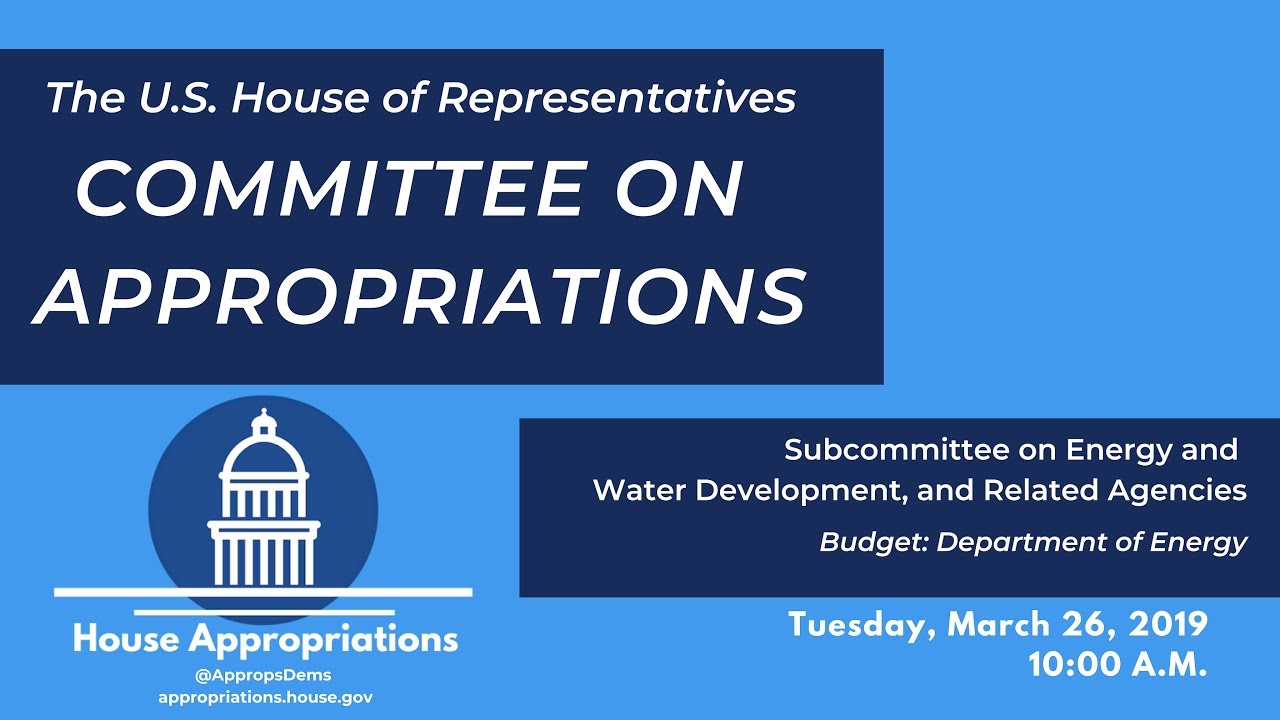 last week. "It is no secret that the innovation economy faces fierce international competition, including those with nefarious intent."
House Democrats estimate the budget cuts would eliminate 6,100 jobs in the national labs, many of which would be in energy efficiency and renewable energy.
"We're sliding backward," Kaptur said.
Energy Secretary Rick Perrydiscussed the budget before U.S. House and Senate committees last week, emphasizing the research areas getting increases in funding, such as supercomputing, but saying little to disagree with lawmakers from both parties who questioned the proposed cuts to the national labs.
Perry said the administration's budget was just the beginning of a process, noting that when he was in Texas politics, "the governor's budget was a very useful doorstop." With the Energy Department's budget proposal, he said he was just "saluting the flag on the 5 percent reduction across the board" that had been ordered by the White House, then he went on to praise the national labs' work as "what keeps America ahead."
'Crown Jewels' of U.S. Science Capabilities
The Department of Energy's national labs are the "crown jewels in the national science capability," said Lynn Orr, who was undersecretary for science and energy at the department for the final three years of the Obama administration, overseeing budgets for 13 of the 17 national labs. He now teaches at Stanford.
"People mostly don't know what the labs are, what they do," he said. "Taken together, they are a very important part of our national R&D enterprise."
The labs are the foundation of the Energy Department's research and development efforts, and those efforts helped to make the department by far the leader among government agencies in the number of patents per billion dollars of spending in 2013 and 2014, according to a report done while Orr was at the agency.
They developed crucial technology used in electric vehicle batteries, designed utility-scale energy storage now used by private companies, developed coatings used to reduce wear and tear on wind turbines, and worked with industry to develop energy efficient lighting and window technologies, among many other developments.
Pooling Expertise for Difficult Research
Ames Laboratory, nestled among the science buildings at Iowa State University in Ames, specializes in developing new materials to improve the efficiency of manufacturing and clean energy technologies.
Its Critical Materials Institute brings together engineers and scientists from labs and universities around the country to pool their resources on projects involving rare-earth metals and other important materials that could be subject to supply disruptions.
It's not "sexy" research, so the work of the lab and others like it often isn't known or appreciated by the public, said Tom Barton, a chemist who was director of the lab from 1988 to 2007, and is now on the faculty at Iowa State.
But it's important to U.S. competitiveness, he said.
Under the administration's budget proposal, funding for the lab's research related to energy efficiency and renewable energy would be eliminated. That includes the advanced manufacturing research."I think the Ames lab is something the state of Iowa should be proud of, and it's something the nation should be proud of," Barton said.
A spokeswoman for the lab declined to comment about the potential effects of budget cuts, referring those questions to the Department of Energy, which had no comment. Adam Schwartz, the lab's director, emailed a statement about the importance of what the lab does.
"We use our scientific expertise and unique capabilities to create materials and energy solutions for our economic and national security," Schwartz said. The lab has about 380 employees, plus shared faculty with Iowa State, visiting scientists and graduate students.
Officials at other labs also declined to publicly discuss the president's budget proposal for the most part, directing questions to the Department of Energy.
NREL's Economic Impact Tops $1 Billion a Year
The National Renewable Energy Laboratory in Golden, Colorado, would also face transformative cuts under the Trump administration's proposed budget, dropping from $332 million this fiscal year to $206 million in the next one.
That kind ofloss would reverberate across the entire renewable energy industry, which relies on research from the lab to improve the efficiency of wind turbines, solar panels and other components of the clean energy economy.
The lab issued a news release this month calling attention to a study about the economic impact of the lab's work. During the 2017 fiscal year, the lab had 1,745 full-time and part-time employees and contributed $1.1 billion to the nation's economy, the release said. A lab spokeswoman referred budget questions to the Energy Department.
At the Pacific Northwest National Laboratory inRichland, Washington, where the research and development work includes making the electricity grid more efficient and resilient, overall funding would fall from $603 million this year to $521 million under the administration's proposed budget. Funding for its energy efficiency and renewable energy work would drop from about $78 million in the current year to $24 million next year, according the budget breakdown released in March.
The cut didn't make sense toRepublican Rep. Dan Newhouse of Washington,who asked Perry to explain at the hearing. Perry said he agreed that the lab's work was vital.
Newhouse's objection reflects why the labs' funding is typically protected: The national labs are found in communities nationwide, represented by Republicans and Democrats, and several are in states with an outsize influence on presidential politics, such as Iowa.
The Energy Department's Argument
The Department of Energy says in a budget summary document that the cuts to energy efficiency and renewable energy funding are part of a focus on "early-stage R&D, where the federal role is strongest, and reflects an increased reliance on the private sector to fund later-stage research." In other words, it argues that the government should have a smaller role in developing technologies that are close to being ready for market.
Orr saw early indications of that approach during the transition to the Trump administration after the 2016 election.
"Their view, I think, is that it's fine to do the fundamental science, but if it's stuff that has potential commercial utility, even if it's far downstream, that should be done by private industry," Orr said.
He disagrees with that approach and thinks it is harmful to the economy to reduce funding for energy efficiency and clean energy.
There is a worldwide race to see which countries and companies will be leaders in the transition to clean energy, and the U.S. is unwise to reduce the government's role, he said.
Fears of a Chilling Impact on Science
A larger concern is that the administration is eroding the country's science infrastructure, said Carter of the Union of Concerned Scientists, who previously was a scientist for the U.S. Environmental Protection Agency.
The administration is succeeding at sending a message to scientists that their work is not valued and that they will face ongoing instability about budgets, he said.
The Union of Concerned Scientists found low morale in a survey of federal scientists last year. It didn't include employees of the national labs, but Carter suspects that there are similar problems there.
Barton, the former Ames lab director, said the constant threat of cuts may be bad for morale, but the fact that this threat comes almost every budget cycle reduces its effect.
If the budget cuts were to be enacted, that would be bad for the economy and bad for the environment, Kaptur told Perry during the hearing.
"Emblazoned on the president's budget request are the words, 'A Budget for a Better America: Promises Kept, Taxpayers First,'" she said. "However, the proposals in this request tell a very different story. In fact, the president's budget request harms America's energy future, our competitiveness, our consumers and our economy."
PUBLISHED UNDER:
---
---
https://www.ecowatch.com/tesla-australia-battery-2568719032.html
Tesla's Giant Australian Battery Saved Consumers $35 Million in Four Months
Since switching on in December, Tesla's massive battery in South Australia has already drastically lowered prices in the region's frequency and ancillary services market (FCAS) and has taken a major share of that market, Renew Economy reported.
During Australian Energy Week, McKinsey and Co. partner Godart van Gendt boasted about the stunning efficiency of the 100-megawatt Powerpack system, which is connected to Neoen's Hornsdale wind farm....
==
==