Newby, Paul Hon
---
---
omg
an 10 25
Republican Party officials are now using their “connections” to the Trump administration to threaten journalists into dropping critical coverage.
That’s what Doug Bock Clark, a reporter for ProPublica, recently discovered as he worked on a feature-length story on the rise of Paul Newby, the Republican chief justice of North Carolina’s Supreme Court, who has become one of the most quietly influential jurists in the nation.
The piece published Thursday examines how Newby, a born-again Christian who was elected to the bench in 2004, believes he was called by God to exact what he calls “biblical justice.”
Over the past two decades, Clark wrote that Newby has “turned his perch atop North Carolina’s Supreme Court into an instrument of political power” and “driven changes that have reverberated well beyond the borders of his state.”
Newby’s most significant contribution has been the landmark decision that legalized partisan gerrymandering in North Carolina, a state that had long had some of the strongest laws in the country against partisan redistricting.
The change led the state’s Republican-controlled Legislature to draw up wildly slanted maps that netted the GOP an additional six seats in the US House of Representatives in 2024, handing the party a national trifecta at the beginning of President Donald Trump’s second term, which has allowed him to wield extraordinary power almost totally free of oversight from Congress.
It’s just one of the ways, Clark said, that “Newby has provided a blueprint for conservatives to seize most of the nation’s state supreme courts, which have increasingly become the final word on abortion rights, LGBTQ+ rights and voting rights.”
The report drew from more than 70 interviews with those who know Newby professionally and personally. But he was unable to get in contact with Newby himself.
“I reached out to Newby multiple times during the course of my reporting and was even escorted out of a judicial conference while trying to interview him,” Clark wrote on social media. “The court’s communications director and media team also didn’t respond to detailed questions.”
When Clark attempted to contact Newby’s daughter for comment, he instead received an ominous message from that aforementioned communications director, Matt Mercer.
Mercer ranted that ProPublicawas waging a “jihad” against “NC Republicans,” which would “not be met with dignifying any comments whatsoever.”
He continued: “I’m sure you’re aware of our connections with the Trump administration, and I’m sure they would be interested in this matter. I would stronglysuggest dropping this story.”
As Clark pointed out, “He bolded and underlined ‘strongly,’ in case we missed his point.”
After the story, which made note of Mercer’s threat, was published, Mercer then doubled down on social media, urging Trump to “feed ProPublica to the USAID wood chipper,” referencing the president’s near-total stripping of funds from the foreign aid agency.
Trump has issued an executive order slashing federal funds for media organizations supported by the Corporation for Public Broadcasting, like NPR and PBS, in response to critical coverage of his administration. But it’s not entirely clear how he would actually go about doing such a thing to ProPublica,which does not receive government dollars but instead subsists on private grants and donations.
At any rate, Mercer’s messages were widely perceived as a not-so-veiled attempt to coerce ProPublica into ceasing its inquiries.
Travis Fain, a freelance reporter who previously worked for Raleigh’s NBC News affiliate, WRAL, expressed disbelief at Mercer’s belligerence on social media: “Well, there you go,” he said. “The North Carolina Republican Party officially threatens journalists now.”
Wiley Nickel, the former Democratic US House representative for North Carolina’s 13th District, lamented that it was “not normal” for a party official to “threaten ProPublica with retaliation from Trump” for writing a profile about another GOP official.
Despite the threats, Clark says “ProPublica persisted” with the story that Mercer “warned [it] not to tell.”
“I’m always amazed when grown-ups with jobs say things like this to journalists,” said Jessica Huseman, a former ProPublica reporter. “Like, do you think that’s gonna do anything but make us more eager to publish the story?”
:{---
an 10 25 very long
In early 2023, Paul Newby, the Republican chief justice of North Carolina’s Supreme Court, gave the state and the nation a demonstration of the stunning and overlooked power of his office.
The previous year, the court — then majority Democrat — had outlawed partisan gerrymandering in the swing state. Over Newby’s vehement dissent, it had ordered independent outsiders to redraw electoral maps that the GOP-controlled legislature had crafted to conservatives’ advantage.
The traditional ways to undo such a decision would have been for the legislature to pass a new law that made gerrymandering legal or for Republicans to file a lawsuit. But that would’ve taken months or years.
Newby cleared a way to get there sooner, well before the crucial 2024 election.
In January — once two newly elected Republican justices were sworn in, giving the party a 5-2 majority — GOP lawmakers quickly filed a petition asking the Supreme Court to rehear the gerrymandering case. Such do-overs are rare. Since 1993, the court had granted only two out of 214 petitions for rehearings, both to redress narrow errors, not differences in interpreting North Carolina’s constitution. The lawyers who’d won the gerrymandering case were incredulous.
“We were like, they can’t possibly do this,” said Jeff Loperfido, the chief counsel for voting rights at the Southern Coalition for Social Justice. “Can they revisit their opinions when the ink is barely dry?”
Under Newby’s leadership, they did.
Behind the closed doors of the courthouse, he set aside decades of institutional precedent by not gathering the court’s seven justices to debate the legislature’s request in person, as chief justices had historically done for important matters.
Instead, in early February, Justice Phil Berger Jr., Newby’s right-hand man and presumed heir on the court, circulated a draft of a special order agreeing to the rehearing, sources familiar with the matter said. Berger’s accompanying message made clear there would be no debate; rather, he instructed his colleagues to vote by email, giving them just over 24 hours to respond.
The court’s conservatives approved the order within about an hour. Its two liberal justices, consigned to irrelevance, worked through the night with their clerks to complete a dissent by the deadline.
The pair were allowed little additional input when the justices met about a month and a half later in their elegant wood-paneled conference room to reach a decision on the case. After what a court staffer present that day called a “notably short conference,” Newby and his allies emerged victorious.
Newby then wrote a majority opinion declaring that partisan gerrymandering was legal and that the Democrat-led court had unconstitutionally infringed on the legislature’s prerogative to create electoral maps.
The decision freed GOP lawmakers to toss out electoral maps that had produced an evenly split North Carolina congressional delegation in 2022, reflecting the state’s balanced electorate.
In 2024, the state sent 10 Republicans and four Democrats to Congress — a six-seat swing that enabled the GOP to take control of the U.S. House of Representatives and handed Republicans, led by President Donald Trump, control of every branch of the federal government.
The gerrymandering push isn’t finished. This month, North Carolina Republican lawmakers passed a redistricting bill designed to give the party an additional congressional seat in the 2026 election.
The Epicenter
Few beyond North Carolina’s borders grasp the outsize role Newby, 70, has played in transforming the state’s top court from a relatively harmonious judicial backwater to a front-line partisan battleground since his election in 2004.
Under North Carolina’s constitution, Supreme Court justices are charged with upholding the independence and impartiality of the courts, applying laws fairly and ensuring all citizens get treated equally.
Yet for years, his critics charge, Newby has worked to erode barriers to politicization.
He pushed to make judicial elections in North Carolina — once a national leader in minimizing political influence on judges — explicitly partisan and to get rid of public financing, leaving candidates more dependent on dark money. Since Newby’s allies in the legislature shepherded through laws enacting those changes, judicial campaigns have become vicious, high-dollar gunfights that have produced an increasingly polarized court dominated by hard-right conservatives.
As chief justice, he and courts under him have consistently backed initiatives by Republican lawmakers to strip power away from North Carolina’s governor, thwarting the will of voters who have chosen Democrats to lead the state since 2016. He’s also used his extensive executive authority to transform the court system according to his political views, such as by doing away with diversity initiatives. Under his leadership, some liberal and LGBTQ+ employees have been replaced with conservatives. A devout Christian and church leader, he speaks openly about how his faith has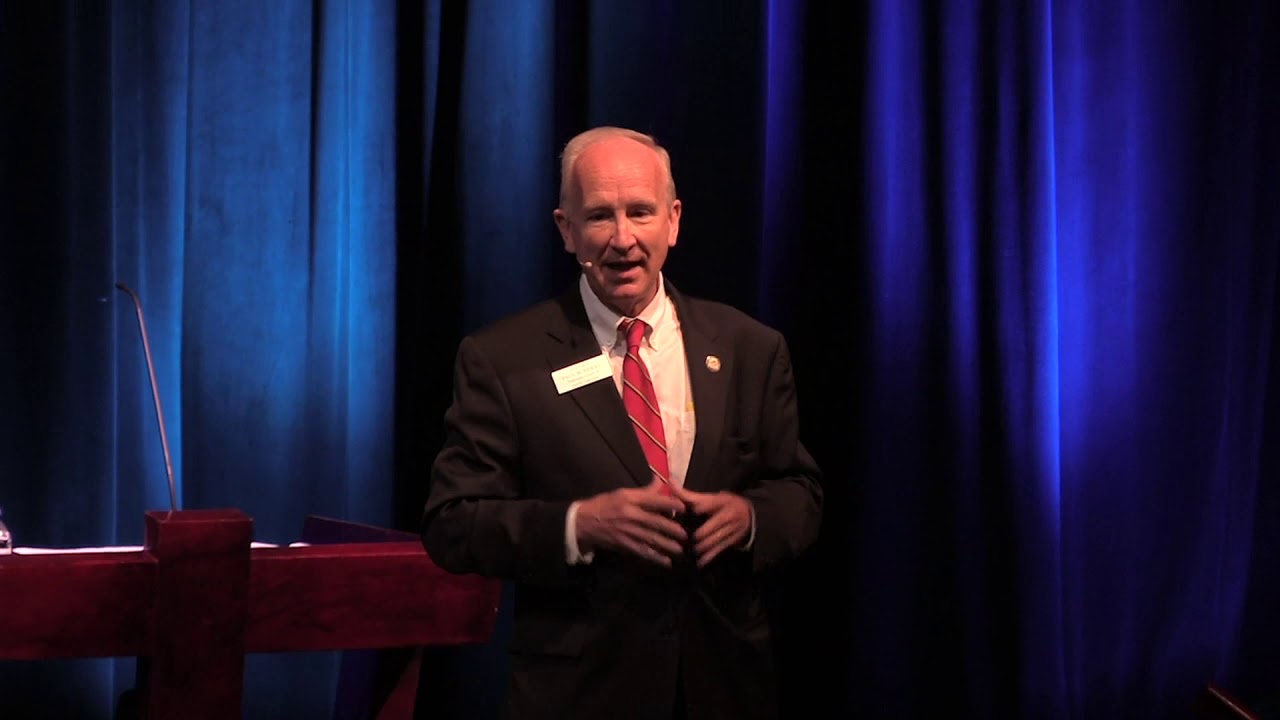 and
 .
According to former justices, judges and Republicans seeking to be judicial candidates, Newby acts more like a political operator than an independent jurist. He’s packed higher and lower courts with former clerks and mentees whom he’s cultivated at his Bible study, prayer breakfasts and similar events. His political muscle is backed by his family’s: His wife is a major GOP donor, and one of his daughters, who is head of finance for the state Republican Party, has managed judicial campaigns.
He’s supported changes to judicial oversight, watering it down and bringing it under his court’s control, making himself and his fellow justices less publicly accountable.
The man Newby replaced on North Carolina’s Supreme Court, Bob Orr, said his successor has become the model for a new, more politically active kind of judge, who has reshaped the court system according to his views.
“Without question, Chief Justice Newby has emerged over the past 20 years as one of the most influential judicial officials” in modern North Carolina history, said Orr, a former Republican who’s become an outspoken critic of the party’s changes under Trump. “The effect has been that the conservative legislative agenda has been virtually unchecked by the courts, allowing the sweeping implementation of conservative priorities.”
Newby declined multiple interview requests from ProPublica and even had a reporter escorted out of a judicial conference to avoid questions. He also did not answer detailed written questions. The court system’s communications director and media team did not respond to multiple requests for comment or detailed written questions.
When ProPublica emailed questions to Newby’s daughter, the North Carolina Republican Party’s communications director, Matt Mercer, responded, writing that ProPublica was waging a “jihad” against “NC Republicans,” which would “not be met with dignifying any comments whatsoever.”
“I’m sure you’re aware of our connections with the Trump Administration and I’m sure they would be interested in this matter,” Mercer said in his email. “I would stronglysuggest dropping this story.”
To tell Newby’s story, ProPublica interviewed over 70 people who know him professionally or personally, including former North Carolina justices and judges, lawmakers, longtime friends and family members. Many requested anonymity, saying they feared that he or his proxies would retaliate against them through the courts’ oversight system, the state bar association or the influence he wields more broadly.
We reviewed court documents, ethics disclosure forms, Newby’s calendars, Supreme Court minutes, and a portion of his emails obtained via public records requests.
We also drew on Newby’s own words from dozens of hours of recordings of speeches he’s made on the campaign trail and to conservative political groups, as well as interviews he’s given to right-wing and Christian media outlets. In these venues, he has described his work on the Supreme Court as apolitical and designed to undo the excesses of liberal activist judges. He has said repeatedly that he believes God has called him to lead the court and once described his mission as delivering “biblical justice, equal justice, for all.”
Some North Carolina conservatives see Newby as something close to a hero, undoing years of harm inflicted by Democrats when they dominated the legislature and the courts.
“I think Chief Justice Newby has been a great justice,” said U.S. Sen. Thom Tillis, R-N.C., who forged a relationship with Newby as a leader in the state legislature. “If Democrats are complaining about … what Justice Newby is doing, they ought to look back at what happened when they had the votes to change things.”
As much as Newby’s triumphs reflect his own relentless crusade, they also reflect years of trench warfare by the conservative legal movement.
For the last generation, its donors have poured vast amounts of money into flipping state supreme courts to Republican control, successfully capturing the majority of them across America. While most attention has focused on theright-wing power brokers shaping the U.S. Supreme Court, state courts hear about 95% of the cases in the country, and they increasingly have become the final word on civil rights, abortion rights, gay and trans rights and, especially, voting rights.
North Carolina has been at the forefront of this work. Douglas Keith, deputy director of the judicial program at the Brennan Center for Justice at NYU Law, which has criticized the changes made under Newby, called North Carolina “the epicenter of the multifront effort to shape state supreme courts by conservatives.”
In recent years, Democrats have countered in a handful of states, notably Wisconsin, where the party regained a Supreme Court majority in 2023 after a decade and a half. The Wisconsin court — in contrast to its counterpart in North Carolina — has thus far rejected efforts aimed at redistricting the state to add Democratic congressional seats.
At the same time the Newby-led Supreme Court cleared the path for re-gerrymandered electoral maps, it used identical tactics to reverse another decision made by its predecessor on voting rights. In that case, the court reinstated a law requiring that voters show photo ID to cast ballots, writing that “our state’s courts follow the law, not the political winds of the day.”
Gene Nichol, a professor of constitutional law at the University of North Carolina at Chapel Hill, said Newby had essentially turned the court into an arm of the Republican Party.
“Newby,” he said, “has become the chief justice who destroyed the North Carolina Supreme Court as an impartial institution.”
Newby “Nobody”
When Newby announced that he was running for a seat on North Carolina’s Supreme Court in the 2004 election, it seemed like a foolhardy choice.
He’d jumped into an eight-way race that featured well-known judges from both parties. Newby, then 49, had virtually no public profile and no judicial experience, having spent nearly the previous two decades as a federal prosecutor in North Carolina’s Eastern District.
“There was no case that he handled that stands out in my memory,” said Janice McKenzie Cole, who was Newby’s boss from 1994 to 2001 when she was the district’s U.S. attorney. “Nothing made him seem like he’d be the chief justice of the state.”
Newby believed that God had called him to serve.
Upset by what he saw as liberal overreach — particularly a federal appeals court ruling that deemed the Pledge of Allegiance unconstitutional because the words “one nation under God” violated the separation between church and state — he felt compelled to enter electoral politics. “I had a sense in my heart that God was saying maybe I should run,” he recalled in 2024 on the “Think Biblically” podcast.
Those close to Newby say his faith has fueled his political ambition, impelling him to defend what he sees as “biblically based” American systems from secular attacks.
“He’s a man of deep traditional conservative values,” said Pat McCrory, the former governor of North Carolina, who’s a childhood friend of Newby’s and attends a regular Bible study with him. “He’s not a hypocrite saying one thing and doing another. He lives what he believes.”
Newby has a deep commitment to charitable works, yet his tendency to see people as either with him or against God has at times led to conflicts with political allies, associates and even relatives. That includes two of his four children, from whom he’s distanced over issues of politics and sexuality.
Newby was steeped in religion from early childhood. He grew up a poor  ,” as he has described it, in Jamestown, a one-traffic-light town in North Carolina’s agricultural piedmont. His mother was a schoolteacher and his father operated a linotype when he wasn’t unemployed. One of his first memories is of them on their knees praying, he said
 at the National Day of Prayer in Washington, D.C.
In high school and at Duke University, where he enrolled in 1973, he was known for being reserved, serious and academically accomplished, even as a member of a college fraternity that multiple former brothers described with references to “Animal House.”
Newby has said he had a crisis of faith at Duke when a professor challenged the literal truth of the Bible and he felt unprepared to defend it. He would later call his years at the college and then the University of North Carolina at Chapel Hill’s law school a “failed attempt to indoctrinate me” with liberal and secular beliefs.
Near the end of law school, after well-known evangelist Josh McDowell directed Newby to read his book “More Than a Carpenter,” an argument for the historical reality of Jesus, Newby was born again. He became more overt about his faith, praying in public and weaving Bible quotations into speeches. He still gives a copy of the book to each of his interns and law clerks.
In 1983, he married Toler Macon Tucker, a woman with a similarly deep investment in Christianity, whom he had met in law school. The match drastically transformed his fortunes. Macon was part of a prominent North Carolina family that had become wealthy in banking and furniture stores and was deeply involved in conservative politics. Macon, who’d held a prestigious clerkship with the North Carolina Court of Appeals, did not continue her legal career. (She did not respond to questions from ProPublica for this article.)
Over the next decade, Newby and his wife adopted three children. In September 1994, they brought home a fourth child, a baby girl, to their two-story colonial in Raleigh, its mailbox decorated with a pink bow, only to be hit with a court order to relinquish her.
The child’s birth mother, Melodie Barnes, had split from her boyfriend after getting pregnant and, with the help of a Christian anti-abortion network, moved to Oregon, which then allowed mothers to put babies up for adoption without their fathers’ consent. Barnes’ ex disputed the adoption, obtaining a restraining order to halt the process. According to news reports, the Newbys and their lawyer were notified of this before the birth, but went forward anyway. They took custody just after the baby was born, christening the little girl Sarah Frances Newby.
To thank Barnes, the Newbys gave her a gold key charm to symbolize what she says they called her “second virginity,” which they suggested she save for her future husband. Two weeks later, when a court ordered the Newbys to return the child to her father, they instead sought to give the baby to Barnes, someone who shared their evangelical beliefs.
They “called me and said you should come get the baby because you’ll have a better chance of winning a custody battle … than we will,” Barnes recalled. The Newbys turned the baby over to Barnes in the parking lot of the Raleigh airport, along with diapers and a car seat. Soon after, a court order compelled Barnes to give the baby to her father. (The Newbys and the baby’s father didn’t respond to questions from ProPublica about the case.)
Losing the baby was “traumatic,” according to multiple family members and a person who attended Bible study with Macon. The Newbys went on to start two adoption agencies, including Amazing Grace Adoptions, an agency whose mission was to place children in Christian homes and save babies from abortion. They eventually adopted another baby girl, whom they also named Sarah Frances.
When Newby ran for the Supreme Court in 2004, he focused on turning out church and homeschool communities, voters to whom he had deep ties. A campaign bio highlighted his work to facilitate Christian adoptions and other faith-related activities.
Although North Carolina is among the states that elect supreme court justices (elsewhere, they’re appointed), state law at the time dictated that judicial races were nonpartisan. Newby, determined to distinguish himself in a crowded field, nonetheless sought and got the endorsement of the state Republican Party, meeting with each member of the executive committee personally and emphasizing his conservative beliefs.
“That was savvy politics,” a Republican former state official said, suggesting that it helped Newby win what was essentially a behind-the-scenes “primary” over candidates who had stronger credentials.
Because Newby was working as a federal prosecutor at the time, his critics saw his tactics as more troubling — and possibly illegal. Another conservative candidate in the race, Rachel Hunter, accused him of violating the Hatch Act, which bars federal employees from being candidates in partisan elections. The U.S. Office of Special Counsel, which enforces the Hatch Act, has warned that seeking an endorsement in a nonpartisan race can make it partisan.
“It speaks to someone who’s so stupid they don’t know the rules,” Hunter told ProPublica. “Or someone who’s so malevolent that they don’t care.”
Newby denied he’d broken the law. The U.S. Office of Special Counsel opened an investigation but took no public action against Newby. (It’s not clear why.) The office didn’t answer questions from ProPublica about the case and declined to release the investigative file, citing privacy laws.
The controversy didn’t thwart Newby’s otherwise low-budget, low-tech campaign. He spent a grand total of $170,000, mostly on direct mailers. Macon bought stamps and made copies. Boosted by the Christian right, he won his first eight-year term on North Carolina’s highest court with about 23% of the vote, finishing a few percentage points ahead of Hunter and another candidate.
“I think Paul really believed that God wanted him to fill that role,” said Bradley Byrne, a Republican former congressman from Alabama who was Newby’s fraternity brother at Duke and consulted with him on his political runs. “He figured out what he needed to do to be successful, and he did it.”
“Court Intrigue”
Once Newby joined the court, it took years for him to find his footing and start transforming it into the institution it is today.
When he first donned black judicial robes, he became the junior member of a collegial unit that worked hard to find consensus, former justices said.
In conferences to decide cases, they’d sometimes pass around whimsical props like a clothespin to signal members to “hold their noses” and vote unanimously to project institutional solidarity. They often ate together at afamily-run diner near the Capitol, following the chief justice to their regular table and seating themselves in order of seniority. (“Like ducklings following their mother,” the joke went at the legislature.) Newby, as the most junior member, had to close doors and take minutes for the others.
Six of the court’s seven justices were Republicans, but most were more moderate than Newby, and he had little influence on their jurisprudence. He quickly gained a reputation for being uncompromising — “arm-twisting,” in one former colleague’s words.
“He would not try to find common ground,” one former justice complained. Another warned Newby that information about his confrontational behavior would be leaked to the newspapers if he didn’t stop.
Newby toned it down and bided his time.
His 2012 bid for reelection turned into a game changer, a crucial step both in pushing the court’s conservatives further to the right and in opening it to more unchecked partisanship.
Superficially, Newby’s campaign seemed folksy — one of his slogans was “Scooby-dooby, vote for Newby” — but it was backed by serious money.
Not long before, the U.S. Supreme Court’sCitizens United decision had cleared the way for so-called dark money groups, which don’t have to disclose their donors’ identities, to spend uncapped amounts to influence campaigns. Newby’s opponent — Sam J. Ervin IV, the son of a federal judge and the grandson of a legendary U.S. senator — depended mostly on $240,000 provided by North Carolina’s pioneering public financing system. Ervin did not respond to a request for comment.
A few weeks before Election Day, polls showed Ervin ahead. Then, about $2 million of dark money flooded into the race in the closing stretch, according to campaign finance records and news reports. Much of it came from groups connected to the Republican State Leadership Committee, the arm of the party devoted to state races, and conservative super-donor Leonardo Leo, who has worked to win Republican majorities on state courts nationwide.
The cash funded waves of ads supporting Newby and blasting Ervin. TVs across the state blared what became known as the  ,” in which a country singer crooned that Newby would bring “justice tough but fair.”
Newby won by 4%, helping Republicans keep a 4-3 edge on the court, having outspent his opponent by more than $3 million.
https://www.youtube.com/watch?v=LC_PlcM_Fuo
Ensconced in another eight-year term, Newby began working with conservatives in the legislature to change judicial elections to Republicans’ advantage.
In 2010, a red wave had flipped the North Carolina legislature to Republican control for the first time in more than 100 years, putting Newby’s allies into positions of power.
His backchannel conversations with General Assembly members were “openly known” among court and legislative insiders, one former lawmaker said.
“It was like court intrigue,” agreed a former justice. “It was common knowledge he was down at Jones Street,” home to the legislature’s offices.
Tillis, then speaker of the North Carolina House, and Paul “Skip” Stam, then the General Assembly’s majority leader, confirmed that Newby’s opinion was taken into account.
“Judge Newby was a part” of a dialogue with key lawmakers, Tillis said, not dictating changes but advocating effectively. Tillis said he didn’t think Newby did anything improper.
But justices typically hadn’t engaged in these types of discussions for fear of tarnishing the judiciary’s independence.
“Most of us refrained, except, of course, Newby,” another Republican former justice said. “Paul had some strong ideas about the way things ought to be, and he’d go to the General Assembly and make sure they knew what he thought.”
The stealth lobbying campaign proved effective.
In 2013, the legislature did away with public financing for judicial candidates, making them reliant on private contributions and dark money groups. The move had Newby’s support, according to Tillis and former justices. Research subsequently showed that when North Carolina’s public financing system was in place, rulings by justices were more moderate and reflected less donor influence. Prodded by Newby, those constraints fell away.
Legislators also passed another measure Newby favored, according to lawmakers, former justices, judges and court staffers. It cloaked investigations by the courts’ internal watchdog, the Judicial Standards Commission, in secrecy and gave the Supreme Court veto power on sanctions and whether cases became public. The law was passed over the objections of commission members. Stam said that the changes guarded against judges being “smeared at the last minute” by people filing public complaints during elections “for political purposes.”
Newby had drawn the commission’s scrutiny for engaging in activities that could cause litigants to question his impartiality, including attending a rally against same-sex marriage in his first year on the bench. A decade after the commission was made into one of the most secretive in America, the court — under Newby’s leadership — would quash disciplinary actions against two Republican judges. They had admitted to egregious breaches of the state’s judicial code, including one contributing to a defendant’s death, according to sources familiar with the matter. The decisions to quash the discipline remained secret until ProPublica reported them.
In 2016, Republican lawmakers handed Newby a third victory when they began phasing out nonpartisan judicial elections, according to former justices, court staff and lawmakers. Democrats criticized the changes, but Republicans pointed out that Supreme Court elections had become nonpartisan in the mid-1990s because Democrats — then in control of the legislature — thought that obscuring candidates’ party affiliations gave Democrats an edge.
“Is it unsavory, some things the party did? Do we wish it was more gentlemanly? Yes, we do,” said Marshall Hurley, the state Republican Party’s former general counsel and a childhood friend of Newby. “But I think once both sides figured out courts can have an outsize role in issues, they realized they had to fight that fight.”
Newby’s willingness to engage in political sausage-making turned him into a favorite among some state lawmakers to become the court’s next chief justice.
In 2019, the then-chief, Mark Martin, announced he would resign to become dean of a Virginia law school. Martin didn’t respond to emailed questions from ProPublica about why he left the bench.
Tradition dictated that the court’s senior associate justice — Newby — be appointed to complete Martin’s term. Instead, Democratic Gov. Roy Cooper chose a Democrat, Cheri Beasley, who became the state’s first Black female chief justice. Newby called the decision “raw, partisan politics” and publicly promised to challenge Beasley in 2020.
He ran a bare-knuckle campaign, attacking Beasley’s work to start a commission to study racial bias in the court system and fighting her efforts to remove a portrait that hung over the chief justice’s chair portraying a former justice who had owned slaves.
Newby’s family members played key roles in his push to lead the court.
He’d to create a fundraising committee to boost conservative candidates for court seats. His daughter Sarah, who had recently graduated from college with a degree in agriculture, was picked to run it, though Newby’s disclosure forms described her previous job as “Ministry thru horses.” She “more or less” ran her father’s 2020 race, a Republican political consultant said. (Sarah Newby did not respond to requests for comment.)
Newby’s wife, Macon, put almost $90,000 into Republican campaigns and the state GOP. She also invested in a right-wing media outlet, the North State Journal, that reported favorably on her husband without disclosing her ownership stake, the Raleigh News & Observer reported. (The then-publisher of the North State Journal did not respond to The News & Observer’s request for comment; he referred questions from ProPublica to the Journal, which did not respond.)
Still, the race was tight. On election night, Newby led byabout 4,000 votes, but his margin shrank over the following month as officials continued to cure provisional ballots and conduct recounts.
Macon wrote to friends, asking for their prayers in helping her husband win. “Paul, as a believer in Christ Jesus, is clothed in the righteousness of Christ alone,” her note said. “Because of that, he has direct access to Almighty God to cry out for wisdom in seeking for the Court to render justice.”
After around 40 days and 40 nights, which Newby later , Beasley conceded. The final margin was 401 votes out of around 5.4 million cast.
Justice League
When Newby was sworn in just after midnight on New Year’s Day, he became chief justice of a court with a 4-3 Democratic majority, limiting his ability to shape laws in the courtroom.
Still, as chief justice, he possessed considerable executive authority to unilaterally reshape the 7,600-person court system and moved swiftly to use it in ways that had no precedent, multiple former justices and court staffers said.
Chief justices have considerable hiring and firing power, though Newby’s predecessors had used it sparingly, typically replacing only a few top-level appointees. In Newby’s case, his senior-level hires cleared out additional people in the courts’ central administrative hub, including at least 10 managers and lower-level employees, many of whom were outspoken liberals or openly LGBTQ+, current and former employees told ProPublica.
They were replaced by people with conservative political connections, such as a former clerk of Newby’s and attendees of his prayer groups, court staffers said. Court officials didn’t respond to questions from ProPublica about these steps. At the time, acourt spokesperson said that Newby was bringing in an executive “leadership team consistent with his vision, as other state leaders have routinely done in the past.”
Newby also could promote or demote judges on lower courts, deciding who served as their chiefs and held prestigious committee posts. These appointments affect crucial elements of the legal system, from the composition of court panels to policies on bail. In the past, seniority had dictated most of these choices. Newby, however, demoted or forced into retirement as many as nine senior judges with little public explanation, according to sources familiar with the matter; all were Democrats or moderate Republicans, or had clashed personally with Newby or his allies.
Among the most notable was Donna Stroud, the Republican chief judge of the Court of Appeals, whom Newby removed after she was reported to have hired a clerk favored by Democrats over one favored by a Republican justice. Stroud didn’t respond to a request for comment from ProPublica; at the time, she told WRAL News that Newby had given her little explanation for her demotion.
Newby replaced Stroud with a close ally, Chris Dillon. (Dillon did not respond to questions from ProPublica.)
Dillon had been appointed chair of the Judicial Standards Commission just before Newby took over as chief justice. Newby kept him in the role, filling one of six seats he controlled on the 14-member panel; through those appointees, Newby has exercised considerable control over the commission.
In 2022, after the commission’s longtime director clashed with Dillon about limiting judges’ political activity, she was ousted. Her replacement, Brittany Pinkham, swiftly led two investigations into alleged misconduct by Democratic Supreme Court Justice Anita Earls, who had spoken publicly about Newby’s actions to end initiatives to address a lack of diversity in the court system.
Newby personally encouraged at least one of the investigations, ProPublica reported. Pinkham and the commission’s current chair, Court of Appeals Judge Jeffery Carpenter, didn’t respond to questions from ProPublica about the cases in person or via email. Earls declined to comment on Newby’s role in the commission’s investigations into her conduct.
Neither investigation resulted in sanctions, but judges said that, in combination with the firings and demotions, the probes conveyed a chilling message that Newby would punish those who crossed him. Several judges said they were intimidated to the point that it shaped how they did their jobs. Some said they or others had felt pressured to participate in prayers Newby conducted at courthouses or conferences.
Judges and court staffers “are afraid of speaking out,” said Mary Ann Tally, a judge who retired near the beginning of Newby’s tenure as chief justice when she hit the statutory retirement age. Tally, a Democrat, said other judges had told her they were “afraid of Newby retaliating against them or that they would end up in front of the Judicial Standards Commission.” ProPublica spoke to more than 20 current or former judges who expressed fear that Newby or his allies might seek to harm their judicial or legal careers.
Newby didn’t respond to questions about whether his actions had created a climate of fear.
Newby’s appointments affected aspects of life in North Carolina well beyond its courthouses. The state’s administrative law office decides whether rules and regulations written by North Carolina agencies are in keeping with state law. Newby replaced the office’s longtime head with Donald van der Vaart, a climate change skeptic and fracking proponent who served in the first Trump administration. During van der Vaart’s tenure as chief administrative judge, which ended in July, he ruled against limits on potentially dangerous chemicals in drinking water set by the state’s Department of Environmental Quality. Van der Vaart declined to answer questions from ProPublica about these decisions, saying he could no longer comment on the court system now that he’s left.
The 2022 election offered Newby a chance to expand his powers beyond personnel. Two Supreme Court seats held by Democrats were up for grabs, enough to allow Republicans to regain the majority.
The races drew $10.4 million in outside dark money that favored Republicans over Democrats by about 2-1, according to an analysis by the Brennan Center. It was well known within the party, former justices and other judges said, that Newby hand-picked Republican judicial candidates, demanding that those vying for seats be “in lockstep” with his views, as one described it. In one Supreme Court race, he championed a former clerk whose career he’d nurtured since 2005.
During Newby’s tenure as chief justice, a cartoon has hung in the Supreme Court depicting him as Superman, surrounded by a coterie of conservative appellate justices caricatured as other members of DC Comics’ Justice League.
It’s a gag, but one that hints at his dead-serious ambition to build a lasting judicial dynasty. Berger, the son of North Carolina’s Republican Senate president, who’s described himself as Newby’s “wingman,” appears as Batman. Dillon, Newby’s pick to head the Court of Appeals, is Aquaman.
In November 2022, Newby took a giant leap toward realizing this vision. North Carolina Democrats gained seats in Congress that year, but Newby’s candidates ran sophisticated, well-financed campaigns and crushed their Democratic opponents.
With Newby leading the way, Republicans had swept the last 14 appellate judicial elections, cementing their dominance of the Court of Appeals and the Supreme Court.
The Long Run
In late January 2023, the day after the legislature petitioned the Supreme Court to rehear the gerrymandering case, Newby and three of his colleagues, all Republicans, flew to Honolulu.
They made the trip to attend a conference organized by George Mason University’s Antonin Scalia Law School, which megadonors like Leo have turned into a crucial pipeline and convener for the conservative legal movement.
Newby’s presence at the weeklong gathering — held at The Royal Hawaiian Resort, a pricey beachfront hotel known as the “Pink Palace of the Pacific” — reflected his growing national stature.
According to emails ProPublica obtained through a public records request, he’d been personally invited to participate in school events by Donald Kochan, the director of the school’s Law & Economics Center. They’d met the previous August at a summit for the Federalist Society, the influential conservative legal group.
Records from Scalia Law show the school spent about $14,000 to cover expenses for Newby and the others. They went to lectures on conservative legal principles in the mornings, then enjoyed local attractions, from hot-tubbing to hiking, the rest of the day, according to a ProPublica reporter who was at the event. On the final evening, they attended an outdoor banquet lit by tiki torches that featured a whole roasted luau pig.
Only one of the four — Berger — disclosed the trip in their annual judicial ethics forms, though the form directs judges to report gifts of over $500. Berger did not respond to a request for comment from ProPublica.
Experts said that only the Judicial Standards Commission could definitively determine if Newby had violated disclosure rules in this instance. The commission declined to answer detailed questions from ProPublica beyond directing a reporter to the Code of Judicial Conduct and information on its website.
Newby didn’t respond to questions from ProPublica about the trip or why he didn’t report it.
Ethics experts said Newby has made a habit of flouting North Carolina’s rules on judicial conduct, a pattern startling in the state’s highest-ranking jurist.
The rules state judges “may not personally make financial contributions” to candidates seeking elected office, but campaign finance data shows Newby is among more than a dozen judges and judicial candidates who have ignored this prohibition. He’s made four such donations since 2008, including one in 2022, when he was chief justice.
Billy Corriher, the state court manager for the People’s Parity Project, which advocates for what it calls progressive judicial reform, alerted ProPublica to Newby’s contributions and described them as “crystal clear” violations. Newby didn’t answer questions about his political contributions.
North Carolina judges hold sole authority over whether to recuse themselves from cases, but its judicial code advises them to do so when their impartiality “may reasonably be questioned,” including if they have “a personal bias or prejudice concerning a party.”
Yet, in late 2021, Newby wrote an opinion in an adoption case without disclosing his connection to one of the parties: Amazing Grace Adoptions, the anti-abortion adoption agency he’d founded in 1999. He’d gone on to serve on the agency’s board of directors and touted his connection to it during his 2004 Supreme Court campaign.
His ties to the agency ended then, but experts in judicial ethics expressed surprise that Newby hadn’t at least disclosed the relationship even if he thought he could rule impartially on the case, which he decided in Amazing Grace’s favor.
“Disclosing can mitigate the appearance of impropriety,” said Jeremy Fogel, the executive director of the University of California, Berkeley Judicial Institute and a former federal judge. “I think people ought to disclose. That’s what I would have done.”
The case involving the adoption agency wasn’t the first Newby had decided despite having a potential conflict, according to experts and media reports. According to the Center for Public Integrity, he ruled at least six times in cases involving Duke Energy or its subsidiaries while he and his wife held stock in the company, always siding with it. During that eight-year period, Newby and his wife’s shares were worth at least $10,000 each year, according to his disclosure forms. He also authored two opinions on a federal agricultural program from which he, as a farm owner, had earned income, while disclosing his participation in the program in court.
As Newby finishes his third term, his cumulative effect on democracy and justice in North Carolina stands out in bold relief.
He’s played a decisive role in the ongoing power struggle between the state’s governor and General Assembly, which has intensified as Democrats have won the last three races for the governor’s mansion.
That’s because, as lawmakers have passed measure after measure transferring powers traditionally held by the governor to other parts of government controlled by Republicans, the governor has sought relief in the courts.
But the chief justice picks the three-judge panels who hear these cases. Since 2023, when Newby gained more power over this process, his picks have repeatedly upheld laws shrinking gubernatorial powers, as have Newby’s conservative allies on the Court of Appeals.
Collectively, these decisions have reduced the governor’s control over a broad array of entities, including those responsible for regulating utilities, the environment and building standards.
This year, Newby helped Republicans wrest away control over what many saw as the most valuable prize: the state election board.
The board had long been controlled by the governor, who appointed its members. After years of failed attempts to change this, in late 2024, the legislature passed a law giving the state auditor, a Republican, the power to make election board appointments. The governor filed a legal challenge, but Newby’s court had the last word, affirming the Court of Appeals’ decision permitting the takeover.
The legislature has raised the mandatory retirement age for judges from 72 to 76, allowing Newby to complete his current term, but he’s not expected to run again in four years. He will leave behind an intensely partisan, politicized court system in which elections are brutal slugfests.
The most recent Supreme Court race ended after a six-month legal battle that the Republican challenger, a Newby mentee, conceded only when a federal court — a venue beyond Newby’s control — rejected his bid to toss out 65,000 ballots.
Even with that loss, conservatives hold a durable advantage in North Carolina’s judiciary. On the Supreme Court, they’ll be in the majority until at least 2028 even if Democrats win every election between now and then — and much longer if they don’t.
Newby no longer bothers to have the members of the court deliberate together on important cases with political implications, according to sources familiar with the matter. Instead, the conservative majority just provides drafts of its decisions to the two Democratic justices; if conservative justices oppose Newby, sometimes they are cut out, too.
The changes Newby has driven have turned North Carolina into a model for other states, providing a road map conservatives elsewhere have used to consolidate control over court systems.
Ohio has followed North Carolina’s lead and switched to partisan judicial elections, a move that’s tilted courts in Republicans’ favor. In Arizona and Georgia — where justices are appointed, not elected — lawmakers have expanded state Supreme Courts to allow Republican governors to add more conservatives.
Big-money judicial races increasingly have become the norm in other states as they have in North Carolina. Wisconsin saw the first $100 million state supreme court race in U.S. history in 2025, with Elon Musk alone spending $20 million on an unsuccessful attempt to swing the court back to Republican control.
The fierce politicking has eroded Americans’ confidence in the judiciary. According to a Gallup poll released in December, only 35% of respondents, a record low, said they trusted courts, down from almost 60% in 2006.
Some North Carolina Republicans — including Tillis, who sees Newby’s efforts largely as rebalancing scales tilted by Democratic lawmakers a generation ago — acknowledge that the tactics that have put them in the political driver’s seat may be destructive over the long haul.
Tillis called partisan judicial elections “a bad idea on a long-term basis.” He’s not running for reelection in 2026, after clashing with Trump over health care cuts and concluding the current divisiveness had made it impossible to serve all of his constituents.
Experts fear what will happen nationally if there is no reversal of course and the approach that Newby has pioneered becomes the norm.
“The distinct line between the judiciary, the legislature and politics is blurring,” said Charles Geyh, a law professor at Indiana University Bloomington who specializes in judicial ethics. “And if we don’t preserve that, it’ll be naked power all the way down.”
==
propubl:
In the November election, a million more Americans voted for Democrats seeking election to the U.S. House of Representatives than Republicans. But that popular vote advantage did not result in control of the chamber. Instead, despite getting fewer votes, Republicans have maintained a commanding control of the House. Such a disparity has happened only three times in the last century.
(Here’s a chart comparing 2010 and 2012.)
Analysts and others have identified redistricting as a key to the disparity. Republicans had a years-long strategy of winning state houses in order to control each state's once-a-decade redistricting process. (Confused about redistricting? Check out our song.)
Republican strategist Karl Rove laid out the approach in a Wall Street Journal column in early 2010 headlined "He who controls redistricting can control Congress."
The approach paid off. In 2010 state races, Republicans picked up 675 legislative seats, gaining complete control of 12 state legislatures. As a result, the GOP oversaw redrawing of lines for four times as many congressional districts as Democrats.
How did they dominate redistricting? A ProPublica investigation has found that the GOP relied on opaque nonprofits funded by dark money,supposedly nonpartisan campaign outfits, and millions in corporate donations to achieve Republican-friendly maps throughout the country. Two tobacco giants, Altria and Reynolds, each pitched inmore than $1 million to the main Republican redistricting group, as did Rove's super PAC, American Crossroads; Walmart and the pharmaceutical industry also contributed. Other donors, who gave to the nonprofits Republicans created, may never have to be disclosed.
While many observers have noted that mega-donors like Sheldon Adelson backed losing candidates, a close look at the Republicans' effort on redistricting suggests something else: The hundreds of millions spent this year on presidential TV ads may not have hit the mark, but the relatively modest sums funneled to redistricting paid off handsomely.
Where Democrats were in control, they drew gerrymandered maps just like Republicans. They also had their own secretive redistricting funding. (Last year, we detailedhow Democrats in California worked to undermine the state's attempt at non-partisan redistricting.) But Democrats got outspent 3-to-1 and did not prioritize winning state legislatures. They also faced a Republican surge in 2010.
Exactly how the Republican effort worked has been shrouded in mystery until now. But depositions and other documents in a little-noticed lawsuit in North Carolinaoffer an exceptionally detailed picture of Republicans' tactics.
Documents show that national Republican operatives, funded by dark money groups, drew the crucial lines which packed as many Democrats as possible into three congressional districts. The result: the state's congressional delegation flipped from 7-6 Democratic to 9-4 in favor of Republicans. The combination of party operatives, cash and secrecy also existed in other states, including Wisconsin, Ohio and Michigan.
Redistricting is supposed to protect the fundamental principle of one-person-one-vote. As demographics change, lines are shifted to make sure everyone is equally represented and to give communities a voice. In order for Republicans to win in North Carolina, they undermined the votes of Democrats, especially African-Americans. (Party leaders in North Carolina say they were simply complying with federal voting laws.)
The strategy began in the run-up to the 2010 elections. Republicans poured money into local races in North Carolina and elsewhere. It was an efficient approach. While congressional races routinely cost millions, a few thousand dollars can swing a campaign for a seat in the state legislature
The Republican effort to influence redistricting overall was spearheaded by a group called the Republican State Leadership Committee, which has existed since 2002. For most of that time, it was primarily a vehicle for donors like health care and tobacco companies to influence state legislatures, key battlegrounds for regulations that affect corporate America. Its focus changed in 2010 when Ed Gillespie, former counselor to President George W. Bush, was named chairman. His main project: redistricting.
Soon after Gillespie took over, the RSLC announced an effort to influence state races throughout the country, the Redistricting Majority Project, or REDMAP. Fundraising soared. The group raised $30 million in 2010, by far its best year. (Its Democratic counterpart raised roughly $10 million.)
The RSLC is organized as a type of political group that can take in unlimited corporate donations. It must disclose its contributors. But that doesn't mean it's always possible to trace the origins of the money.
Along with Walmart and tobacco companies, the RSLC's largest funders in 2010 were the Chamber of Commerce and American Justice Partnership, which gave a combined $6.5 million. Those two groups raise money from corporations and others but don't have to disclose their donors.
As the 2010 North Carolina legislative elections heated up, the RSLC jumped into local races. But the way they made contributions kept their involvement away from the attention of state voters. Rather than running campaign ads under its own name, the RSLC distributed money to a newly formed local nonprofit. The RSLC declined to comment.
The RSLC gave $1.25 million to its vehicle of choice Real Jobs NC. The group calls itself a "non-partisan organization that believes we need to return to a reliance on the free enterprise system that made our country great for real answers." It was started in 2010 and got a hefty $200,000 boost from dollar store magnate and Republican supporter Art Pope, although Pope denies his donation was related to redistricting or REDMAP.
Real Jobs NC produced ads and mailers slamming more than 20 state Democrats.
"Steve Goss … nice guy," intoned the voiceover in in North Carolina, attacking then-Democratic State Senator Goss. "Too bad he's voting with the Raleigh liberals over hometown conservatives."
Goss lost, and Democrats lost control of North Carolina's General Assembly for the first time in a century. The pattern repeated itself across the country.
"Twenty legislative bodies which were previously split or under Democratic control are now under Republican control," said a triumphant RSLC REDMAP post-electionanalysis, highlighting its spending in Wisconsin, Ohio, Pennsylvania and North Carolina, among other states.
The next step for Republicans was to draw district maps, which can be expensive. The maps require expertise, extensive data and sophisticated software. Skillful map drawers can make even the most partisan gerrymander look reasonable.
To fund the work, the Republican State Leadership Committee used its previously dormant nonprofit arm, the State Government Leadership Foundation. Such dark money groups are increasingly popular because they are allowed to keep secret the identity of their donors. Federal tax law permits them to do this as long as they pledge that politics is not their primary focus.
Flush with anonymous donors' cash, the Foundation paid $166,000 to hire the GOP's pre-eminent redistricting experts, according to tax documents. The team leader wasTom Hofeller, architect of Republican-friendly maps going back decades.
"Our team would be happy to assist in drawing proposed maps, interpreting data, or providing advice," wrote Chris Jankowski, the head of both the RSLC and State Government Leadership Foundation, in a of introduction to North Carolina legislators. The letter was disclosed as part of the North Carolina lawsuit.
"We are engaged in a number of states and believe we are playing a meaningful role in helping draw fair and legal lines that will allow us to run competitive elections in 2012 and in future cycles," Jankowski added.
The same letter emphasized that the Republican redistricting push was being funded through its dark money nonprofit: "The entirety of this effort will be paid for using non-federal dollars through our 501c(4) organization."
Jankowski, representing both the RSLC and the Foundation, declined to comment.
Because Hofeller's team was paid with dark money and the redistricting process is so secretive, it is hard to know the full extent of its activities. In Wisconsin, the team provided technical assistance to an aide to Rep. Paul Ryan as he drew new districts that favored Republicans. In Missouri, Hofeller was the sole witness called by attorneys representing the Republican legislators who drew the maps there.
In the case of North Carolina, Hofeller made his first trip to Raleigh on Feb. 1, 2011, even before final state Census data had been released, the first of 10 trips that year.
From then on, two parallel redistricting processes unfolded in the state.
Through the spring and summer, legislators in charge of redistricting traveled the state holding public meetings at local colleges, soliciting comment and proposed maps from citizens — though the Republicans on the committee would not produce draft maps themselves.
"We are not here to answer questions. We are not here drawing maps," state Senate redistricting committee chairman Bob Rucho told the crowd at a hearing in Durham. "What we are here for is to basically hear your thoughts and dreams about redistricting."
But that input had little influence on the districts that were eventually drawn.
Instead, the real maps were being produced behind the scenes by a team that based its operations at Republican Party headquarters on Hillsborough Street in Raleigh. Armed with advanced mapping software, Hofeller and others crafted districts that would virtually guarantee big gains for the party.
Hofeller did not attend or read transcripts of any of the public meetings, according to his deposition. Hofeller did not respond to requests for comment.
A mysterious state dark money nonprofit that sprung up just in time for the process, called Fair and Legal Redistricting for North Carolina, hired a technician to operate the mapping workstation day-to-day, and another Republican mapping expert. The group did not respond to our requests for comment.
State-based nonprofits have been a vehicle for Republicans to funnel anonymous money into their map-drawing operations in a number of states, including self-proclaimed nonpartisan groups in Michigan and Minnesota.
Republican state legislators tasked with redistricting frequently visited and consulted with the mapping team, according to depositions.Even Art Pope, the most influentialconservative donor in the state, was appointed "co-counsel" to the legislative leadership and allowed in the room to give direct instructions to the technician.
"We worked together at the workstation," said Joel Raupe, the technical expert paid by Fair and Legal Redistricting, in a deposition. "He sat next to me."
Pope, who is a lawyer but does not actively practice, was made co-counsel to the state legislature, offering his services pro bono. Now, because he was technically a legal adviser to the state, he says any information about his involvement in the redistricting is privileged.
(The New Yorker had a sweeping profile of Pope last year, detailing how he has used his fortune to dominate North Carolina politics.)
North Carolina's Republican incumbents in Congress pushed for a so-called "10-3 map," the majority they hoped to win in the state's delegation.
Hofeller, the mapping expert, delivered. His maps kept most of the districts from being competitive — or even remotely winnable — for Democratic candidates.
A key part of the redistricting strategy was to push minority voters into three districts. Republicans insisted their maps were "fair and legal," necessary to conform to lawsprotecting minority voting rights, although according to a well-known voting rights attorney, the opposite is true.
But federal voting rights law "doesn't require a jurisdiction to pack blacks in districts," said Laughlin McDonald, director of the American Civil Liberties Union's Voting Rights Project. "If you tried to pack minority voters into a district, that would arguably be a violation."
In two of those districts, African-American incumbents been already been winning by large margins for years. Republicans' maps added yet more African-Americans to the districts, what's known in redistricting parlance as "packing." As Hofeller wrote in an email about one of the districts, the plan was to "incorporate all the significant concentrations of minority voters in the northeast into the first district."
A third district was 120-mile long, and sea monkey-shaped, connecting pockets of African-Americans from three different, distant cities. Republicans justified it on the basis of a common media market.
The maps were designed to "segregate African-American voters in three districts and concede those districts to the Democrats," says Bob Hall of Democracy North Carolina, a nonpartisan public interest group that joined the lawsuit against the new maps.
In 2012, Democrats won the three districts by more than 70 percent of the vote. Another effect: the surrounding districts were much more Republican.
Rucho and other Republican legislators had presented the maps as advantageous to Democrats. Indeed, registered Democrats actually outnumbered registered Republicans in seven additional districts beyond those that were clearly slated to be Democratic.
Emails show Republicans decided to make that fact a major talking point.
But the stat was misleading, as the Republicans' own data indicates. An internal analysis of one of Hofeller's later drafts (code name "Blue Horizon 3") obtained by ProPublica shows that those seven allegedly "competitive" districts would have been landslide wins for John McCain in 2008, and for Republican Senator Richard Burr in 2010.
The carefully drawn maps worked. In this year's elections, Democratic candidates for the U.S. House of Representatives in North Carolina won 50.6 percent of the total vote. But the state's House delegation now has nine Republicans and just four Democrats. One of the Democrats won by just a few hundred voters, despite the fact that his newly drawn district skewed heavily Republican and that his own home had been drawn out of it. North Carolina's delegation before the election had seven Democrats and six Republicans
In addition to his pay from national Republican groups, invoices show Hofeller billed North Carolina taxpayers $77,000 for his services.
The Republican maps are still under threat by suits filed by Democrats and the NAACP. The lawsuits are headed to the state Supreme Court. But a flood of contributions tied to the RSLC have lowered the risk of the maps' being overturned.
While judicial elections in North Carolina are nominally nonpartisan, it was common knowledge that Republicans held a 4-3 majority on the court. One of those Republican incumbents was facing a tough challenge in 2012, potentially throwing the whole redistricting result in jeopardy.
Justice Paul Newby was running for re-election against appellate judge Sam Ervin IV, grandson of the famous North Carolina senator who investigated Watergate. With a few weeks left until the November election, Newby was trailing Ervin.
But then, in the final stretch, Newby was the beneficiary of a flood of late spending that can be traced back to the Republican State Leadership Committee.
Once again the contributions were funneled through homegrown groups. With only a few weeks to go, the RSLC gave more than $1.1 million to a group called Justice for All NC. Campaign finance filings show Justice for All NC in turn gave nearly $1.5 million to a super PAC running pro-Newby ads, the NC Judicial Coalition.
Most of the money spent by the super PAC went to pay for hundreds of airings of a featuring lines like, "Paul Newby / Justice tough but fair / Paul Newby / Criminals best beware" set to infectious banjo music.
The spending didn't end there: and Pope's fingerprints were also on the race. Two dark money groups affiliated with Pope — the state-basedCivitas Action and Americans for Prosperity— spent another $300,000 on radio ads and mailers supporting Newby. Pope's company also gave to the RSLC in the run-up to this fall's elections.
Pope says he gave money to Americans for Prosperity for years before the judicial race even came up, and that he was not involved in the decision to run pro-Newby ads.
"I'm Republican, I support Republican groups," Pope said. "But just because you support something doesn't mean you're responsible for all they do."
It was an unusually large amount of outside spending for a judicial race. The outside pro-Newby groups had spent more on the race than the two campaigns combined.
In the end, Newby eked out a 52-48 victory, preserving the court's Republican majority.
When the groups contesting the maps called for Newby to recuse himself from redistricting litigation, lawyers for Republican legislators argued that because the campaign ads were paid for by "independent" groups, they did not jeopardize Newby's impartiality.
On Monday, the state Supreme Court rejected the motion for Newby to recuse himself.
"I've got no control over who contributes to an ad. I have no control over who endorses me," Newby — who did not respond to a request for comment — told a local TV station on the eve of the election. "You've got to put your blinders on like lady justice."
==
NC Supreme Court a 'virtual sinkhole' for environmental law, and it could get worse
The North Carolina Supreme Court has racked up an "extraordinary record of hostility" to the environment in major cases it's considered over the past 15 years -- and with the seven-member court's three Democrats facing tough re-election challenges this year, it could soon get even more inhospitable to environmental concerns.
So concludes a study released this month by John Echeverria, a professor at Vermont Law School and a former attorney for the National Audubon Society and American Rivers.He looked at the judicial electoral process in North Carolina, Wisconsin, Montana and Washington -- states that use either a partisan or nominally non-partisan method for selecting judges for their high courts -- in order to identify changes in the ideological direction of the courts' decisions.
In North Carolina, where high court elections are nominally nonpartisan, Echeverria considered a total of seven environmental law cases during that period. They pertained to the state law designed to limit sediment pollution in waterways, open burning rules, water quality standards, and hog farm regulations.
"Over the last fifteen years, in every instance in which the Court has reviewed a major environmental law issue, the Court has sided with the anti-environmental protection side of the dispute," Echeverria writes.
He notes that the probability of the court ruling against the environment in all seven cases is 1 in 128 -- "long odds indeed." North Carolina's high court, he says, "has become a virtual sinkhole for environmental law."
Echeverria explores the connection between the court's hostility to environmental claims and financing of state judicial elections. In 2004, North Carolina implemented a public financing program that was used by 80 percent of judicial candidates and curbed special-interest spending in campaigns. That program was repealed in 2013, a move that has increased the flow of corporate special-interest dollars into judicial elections.
At the same time, independent groups have increased their spending on North Carolina judicial races. In 2012, super PACs and other outside groups spent nearly $3 million on just one N.C. Supreme Court race, with about 90 percent of the money benefiting conservative justice Paul Newby. In this year's primary, outside groups spent almost $1.3 million to unseat Associate Justice Robin Hudson -- a registered Democrat who was elected in 2006 and who Echeverria found has been the sole dissenter from the court's pattern of weakening environmental protections.
Hudson faced a heated primary challenge from conservative trial judge Eric Levinson and Jeanette Doran, chair of the N.C. Division of Employment Security Board of Review. Doran is also a former staff member of the N.C. Institute for Constitutional Law, a limited-government advocacy group founded and funded by influential conservative money man Art Pope, who as former state budget director played a key role in killing the judicial public financing program.
The primary race featured a controversial ad attacking Justice Hudson for being "soft on child molesters," leading one political observer to call it "perhaps the most despicable advertisement ever aired in the state." That ad was sponsored by Justice for All NC, an outside spending group funded by the Republican State Leadership Committee, which in turn has received major contributions from corporations with a financial stake in cases that may come before the N.C. Supreme Court. They include Koch Industries, the Kansas-based oil and chemical conglomerate that has operations in North Carolina, and North Carolina-based Duke Energy, which currently has a case related to groundwater contamination from its coal ash ponds before the high court after the justices exercised their discretion to take the case away from the N.C. Court of Appeals.
At the same time Justice for All NC was running the controversial ad attacking Hudson, the NC Chamber IE, the independent expenditure arm of the NC Chamber, was running positive ads supporting Doran and Levinson. Koch Industries was also among the companies that contributed to the NC Chamber IE.
Echeverria observes:
An undisclosed subtext of the attacks on Justice Hudson is that she is the single justice on the present Court who has distinguished herself by voting in favor of environmental protections in the cases that have come before her.
In the end, Hudson survived the primary. She is now facing off against Levinson in the general election -- a contest that’s shaping up to be North Carolina's most expensive state court racethis year.
Echeverria found that the last time the N.C. Supreme Court handed the environmental side a win was 1998, when a majority of justices rejected a legal challenge to the revocation of an aerial pesticide applicator's license for violating state regulations.
Four years earlier, the court handed down another major environmental ruling in Empire Power Co. v. N.C. Department of Environment, upholding the right of citizens to go to court to protect themselves from air polluters. Reversing the N.C. Court of Appeals, the high court held that the owner of land next to a proposed power plant was entitled under state law to challenge the department's issuance of an air pollution control permit to Duke Power.
But that precedent is now threatened by a similar case involving property owners and environmental groups challenging state's air quality permit for a new cement manufacturing facility in New Hanover County.
Last year an administrative law judge, siding with the state Division of Air Quality, arrived at what Echeverria calls "the novel conclusion" that in order for a person to challenge an air emissions permit he must show how much additional pollution would be produced and what specific injuries would result. The N.C. Environmental Management Commission upheld the judge's ruling, and the plaintiffs filed an appeal in Superior Court. That case could eventually make its way to the N.C. Supreme Court, which would have the chance to reverse its Empire Power ruling.
While Hudson's re-election would be no guarantee that wouldn't happen, her loss would make it even more likely that it would.
"Given the current and likely future makeup of the Court, Justice Hudson would be unlikely to sway the Court in many environmental cases," Echeverria concludes, "but at least she can -- if reelected -- serve as a counterweight to the other justices on the Court who appear to have less sympathy for environmental protections."
Sue Sturgis on Thu, 10/23/2014 - 14: