glypho bak
---
-=-=
Corporate Constitutional Rights are Cancerous to Democracy
We must take these public health choices out of the hands of corporate executives and put corporations in their proper place: subservient to public welfare.
Kaitlin Sopoci-BelknapJudy Young
Jul 27, 2020 Common Dreams
Should constitutional rights be used to shield corporations from hiding their dangerous products from the public? A recent federal court decision says so.
Monsanto is the maker of Roundup which is used around the world as a weedkiller, a drying agent, and a desiccant to speed the harvest of corn, soybean, and wheat crops. Roundup’s active ingredient is glyphosate. In 2015, the International Agency for Research on Cancer (IARC) labeled the herbicide as “probably carcinogenic.” In 2017, the California Office of Environmental Health Hazard Assessment listed glyphosate as a cancer-causing chemical and California started listing Glyphosate in the list of chemicals known to cause cancer.
Dewayne Johnson v. Monsanto Company was the first Roundup cancer lawsuit to proceed to trial. The lawsuit alleged that exposure to Monsanto’s Roundup weed killer and its active ingredient, glyphosate, caused Dewayne Johnson, a groundskeeper, to develop non-Hodgkin lymphoma (NHL). The jury awarded Dewayne Johnson $289.2 million, making this a landmark Monsanto Roundup verdict.
The next two Roundup cancer lawsuits resulted in jury verdicts against Monsanto. The total damages awarded in these first three Roundup cancer lawsuits was $2.424 billion.
Since Monsanto introduced Roundup in the 1970s, Monsanto has denied claims that Roundup causes cancer. “But according to internal Monsanto emails now known throughout the world as The Monsanto Papers, Monsanto has known for several decades that Roundup (glyphosate) causes cancer. Rather than informing consumers about the glyphosate cancer risk, Monsanto buried the risks as sales of Roundup continued to skyrocket.”
Because of these Supreme Court invented Corporate Constitutional Rights, corporations enjoy more rights than people or their local governments to exercise police powers to protect the health, safety, and welfare of the people in their communities.
In 2015 the International Agency for Research on Cancer (IARC) found glyphosate to be “probably carcinogenic to humans.” It included a summary of a review of studies and a meta analysis that showed a significant increased risk of NHL for individuals exposed to Roundup.
Bayer purchased Monsanto in 2018. As a result of the first case in which Monsanto was found liable for the cancer caused by Roundup, tens of thousands of other lawsuits were filed against Monsanto. Bayer, now owner of Monsanto, has agreed to pay $10 billion for these legal claims that their product Roundup causes cancer.
“The Monsanto Papers tell an alarming story of ghostwriting, scientific manipulation, collusion with the Environmental Protection Agency (EPA), and previously undisclosed information about how the human body absorbs glyphosate. These documents, which Monsanto does not want you to see, provide a deeper understanding of the serious public health consequences surrounding Monsanto’s conduct in marketing Roundup.”
Based on California’s Prop 65, products that are found to cause cancer require businesses to “provide warnings to Californians about significant exposures to chemicals that cause cancer, birth defects, or other reproductive harm.”
Even in the face of Monsanto’s deceit and Bayer’s liability, U.S. federal appeals court Judge William Shubb wrote in National Association of Wheat Growers, et al. v. Becerra that mandating a cancer warning label on products which contain glyphosate, such as Roundup, would violate the corporation’s First Amendment rights by compelling them to echo a finding that the judge characterized as “not purely factual and uncontroversial.”
Judge Shubb wrote that California has other options to inform consumers that the state has determined that glyphosate is a carcinogen in ways that would not burden the free speech of corporations such as Bayer. The state could run advertising campaigns or post information on the internet. However, most consumers will never see a warning that is not on the label.
This story is strangely similar to the fossil fuel industry’s knowledge in the 1970s that burning fossil fuel was a major cause of climate change. Yet the fossil fuel industry covered up that information and published false information for decades and allowed the harm to continue unabated. Now, with the lawsuits against Monsanto in which plaintiffs were awarded jury verdicts totaling over $2 billion and the Monsanto Papers that show the same disturbing story of deceit and coverup, a federal court has ruled in favor of the corporations. The federal court ruling is based on the Supreme Court-invented Corporate Constitutional Rights (CCRs), the notion that corporations have constitutional rights such as First Amendment Free Speech rights. For the fossil fuel industry and climate change story, see “How Corporate Rule Fueled the Climate Crisis.”
926
...
Oil Corporations Invoke Numerous CCRs to Defend Against Their Climate Coverup and/or Resulting Damages
To date oil corporations have used one or more of the following CCRs as defenses in numerous lawsuits based on their climate cover up:
First Amendment, Fourth Amendment (overbroad subpoena), Fifth Amendment (takings clause), Fourteenth Amendment, Commerce Clause, Equal Protection Clause, and Contracts (“Impairments”) Clause. [4]
Oil Company Wins Lawsuit to Allow Fracking Based on CCRs Despite Ordinance Prohibiting It
SWEPI, LP v. Mora County, 81 F.Supp.3D 1075 (D.N.M. 2015)
SWEPI, Limited Partnership [5], entered into an oil-and-gas lease with the State of New Mexico in 2010. In 2013 the Mora County (New Mexico) Board of Commissioners adopted an Ordinance titled “Mora County Community Water Rights and Local Self-Government Ordinance” (Ordinance). In relevant part the Ordinance sought to protect the land, water, and rights of Mora County and its residents by prohibiting corporations from extracting water for use in the extraction of fossil fuels, depositing waste water, and maintaining infrastructure related to fossil fuel extraction. In other words, the Ordinance tried to ban hydraulic fracturing (“fracking”)
If corporations violated the Ordinance, it denied them the rights of persons afforded under the New Mexico and U.S. Constitutions. Further, the Ordinance refused to recognize the validity of a permit issued by any federal or state agency if it interfered with these rights. Preemption by state or federal law was recognized only if those laws expressly preempted County ordinances and charters, and provided greater protection for the health, safety, and welfare of Mora County’s people than County ordinances.
Violation of the Ordinance was a crime. SWEPI filed a complaint in 2014 seeking an injunction against the Ordinance. In 2015 the federal District Court ruled, in relevant part, that the Ordinance violated the Supremacy Clause and First Amendment rights of SWEPI, and invalidated the entire Ordinance.
The Court reasoned that, because the Supreme Court had established (actually, invented) the doctrine that corporations are persons under the Equal Protection Clause of the 14th Amendment they are entitled to its protections, including under the First and Fifth Amendments.
The Ordinance violated the Supremacy Clause because federal law supersedes a local ordinance and such an ordinance cannot nullify a constitutional right. The Ordinance violated the First Amendment because it was overbroad in that it absolutely prohibited all of SWEPI’s First Amendment rights. In a Pennsylvania case, the Court invalidated a similar ordinance but also found the arguments supporting it to be “frivolous” and ordered two attorneys for the environmental group representing the township to pay an energy limited liability company $52,000 in legal fees! [6]
Conclusion: This SWEPI case demonstrates three principles.
First, corporations have used their invented constitutional rights to continue the same activities that have caused global warming. Unless the Supreme Court has a change of heart (unlikely) or the People pass a constitutional
amendment eliminating CCRs, corporations will also attempt to evade liability for their decades-old climate cover up as evidenced by the cases cited in endnote 4.
Second, this case illustrates that CCRs allow unelected judges and justices to effectively override the authority of elected officials to carry out their duty to use the police power to protect the health, safety, and welfare of their residents. [7]
Third, local communities that lose control over their land can suffer very real harm. CCRs unjustly allow corporations to override the ability of local governments to care for the people of their communities.
Mora County’s Ordinance challenged the CCR doctrine, a legal fiction that threatened to contaminate the local community with highly toxic fracking wastewater. Some would say that the court made the correct decision because its ruling followed precedent. In response, all CCR cases rest upon a so-called foundation unsupported by history, legal authority, or logic. [8]
Further, as SWEPI illustrates, the CCR doctrine, by elevating the profit-making interests of corporations over the health and safety of natural persons, protects property at the expense of the actual human beings who created the corporations . This is inherently unjust and “in the face of injustice, all people have the right and moral duty to peacefully protest unjust laws.” [9] The solution to CCRs is Move to Amend’s We The People Amendment, HJR 48: https://www.movetoamend.org/amendment
Because of these Supreme Court invented Corporate Constitutional Rights, corporations enjoy more rights than people or their local governments to exercise police powers to protect the health, safety, and welfare of the people in their communities.
In expanding First Amendment free speech protection to corporate commercial speech, the federal courts have relied heavily on the notion that the public has a First Amendment right to hear what corporations have to say.
It turns out that what the public gets to hear is only what the corporations want us to hear which is whatever increases their profits or makes them look good. In this case, Monsanto did not want the public to hear that Roundup might cause cancer and used its so-called First Amendment constitutional right ‘not to speak’ to hide that information from the public to maintain its profits.
We must take these public health choices out of the hands of corporate executives and put corporations in their proper place: subservient to public welfare. The only way to do that is make clear that corporations do not have Constitutional rights and that these rights are meant for human beings, not artificial entities. The We the People Amendment to the Constitution, written by the Move to Amend coalition and introduced by Congresswoman Pramila Jayapal (WA) will do just that. House Joint Resolution 48 currently has 74 co-sponsors in the House of Representatives, and with rulings like National Association of Wheat Growers, et al. v. Becerra the long list of reasons for this critical amendment continues to grow. Join the movement to pass the We the People Amendment: https://www.movetoamend.org/motion.
4 REFS 3 404?
MTA HANDOUT RT NOT TO SPK
2020 8PP pt 3 fail xml
-=-=
2018 FARM BILL VADEN?
Pro-Pesticide Measure Cut from Farm Bill Following Public Outcry
---
GGL 6 26
AI Overview
The original 2018 Farm Bill ( Descriptive Anchor Text Congress.gov) established agricultural policy for years but did not create broad liability shields for pesticide manufacturers. However, during the prolonged Farm Bill renewal process, lawmakers debated highly controversial language designed to immunize manufacturers of chemicals like glyphosate from lawsuits and to preempt local pesticide regulations (
 Descriptive Anchor Text Earth Island Institute). [1, 2, 3,
,
 ]
Here are the details of how the pesticide and herbicide provisions shaped the recent debate
The Battle Over Chemical Pesticides and Herbicides in the Farm Bill
During the legislative markup and floor votes in the House, contentious sections were introduced that deeply impacted the agrochemical debate:
- Pesticide Liability Shield: Draft provisions sought to prohibit lawsuits against chemical manufacturers if they failed to provide complete safety warnings (e.g., failure-to-warn claims regarding health conditions like cancer or Parkinson's disease). [1, 2, 3]
- Preemption of State/Local Bans: Proposed text aimed to strip local and state governments of their authority to impose stricter restrictions on pesticide use or labels than what the federal government dictates. [1, 2]
- Environmental Exemptions: Language was proposed to exempt certain EPA-registered pesticides from reviews otherwise required by the Endangered Species Act and the Clean Water Act. [1, 2]
Recent Legislative Action
These provisions faced massive pushback from public health advocates and bipartisan lawmakers. In a major floor vote, the House of Representatives successfully passed an amendment to strip these controversial liability protections and preemption measures from the Farm Bill. [1, 2]
Following the removal of this language, the broader Farm Bill advanced through the House, but continues to face a complex path as it moves to the Senate.
---
Pro-Pesticide Measure Cut from Farm Bill Following Public Outcry
EIJ APR 2026
Besieged by legal troubles, the pesticide industry had been working vigorously behind the scenes to pass a version of the 2026 Farm Bill that would have given the US Environmental Protection Agency (EPA) sole regulatory oversight over pesticide labeling. But faced with mounting opposition, especially from members of the Trump-leaning Make America Healthy Again (MAHA) movement, the Republican-controlled House today voted to strip the pro-pesticide policies from the Farm Bill, which sets the nation’s agriculture policy for five years.
The industry-backed text would have preempted state and local governments from setting their own, potentially more restrictive, labeling guidelines. Environmentalists, farmworker groups, and public health watchdog groups opposing the measure say the now-defeated provision was part of a concerted effort by pesticide manufacturers to shield themselves from legal liability.
“There’s a coordinated three-pronged strategy underway to shield chemical companies from accountability after dangerous pesticides have contaminated the environment and caused cancer, Parkinson’s, and birth defects,” says JW Glass, EPA policy specialist at the Center for Biological Diversity. The plan, he says, involves pushing for federal legislation that would concentrate all regulatory power over pesticide labeling in the hands of the EPA. It also lobbied the EPA to simultaneously reverse or loosen its pesticide-labeling regulations and pass state-level “failure-to-warn” legislation that would offer the industry legal immunity as long as their products comply with the EPA’s labeling requirements. Language in these bills also prohibits the EPA from approving a pesticide product label or taking action that is not in alignment with existing human health assessments or carcinogenic classification for the product.
The pesticide industry’s aggressive efforts to restrict labeling requirements appear to be prompted by several significant wins for consumer lawsuits against pesticide manufacturers in recent years. Court rulings on such suits in three states have required Bayer to pay more than $500 million in damages for failing to warn the public about the health risks of its Roundup herbicides. The Germany-based company, which inherited an avalanche of Roundup-related legal claims when it bought Monsanto in 2018, has already settled around 100,000 lawsuits and paid out over $11 billion in damages. But, according to the Lawsuit Information Center, as of April 27, another 61,000 cases against it are still pending in state and federal courts.
Similarly, ChemChina-Syngenta is facing more than 8,000 lawsuits in the United States over the links between its paraquat weed killer and increased rates of Parkinson’s disease. (Paraquat is banned in China and 70 other countries, but not in the US.) The company has begun to settle some of the lawsuits, but thousands more remain. In early March, Syngenta announced it would stop paraquat production by the end of June, but other manufacturers of the chemical will continue supplying it.
Naturally, this multi-billion-dollar industry is not going to sit still while the lawsuits and setbacks mount. Bayer has already publicly declared that it is “pursuing several measures to manage and mitigate the risks of Roundup litigation in the US.” The company is spearheading an alliance of some 110 agricultural organizations across the US, named Modern Ag Alliance, that is advocating for “farmers’ access to the crop protection tools” such as chemical pesticides and fertilizers, including Roundup and several others, that are known to be toxic to humans and the environment.
It is the Bayer-led Modern Ag Alliance that pushed for the Farm Bill measure. Its effort on that front traces to June 2023, when the alliance and other industry groups backed the so-called Agricultural Labeling Uniformity Act, which provides sweeping protections for pesticide companies. Proposed by Republican Representative Dusty Johnson from South Dakota, the measure ostensibly seeks to address the fragmented regulatory landscape for pesticide use in the country by reaffirming that under the Federal Insecticide, Fungicide, and Rodenticide Act (FIFRA), only the EPA can decide how pesticides should be labeled. It prohibits states and courts from requiring manufacturers to include health warnings not recognized by the EPA.
The bill made it only as far as the Congressional Subcommittee on Conservation, Research, and Biotechnology, but it resurfaced in 2025 as a rider to a Department of Interior appropriations bill. In January this year, following sustained resistance from food and farming watchdog groups, the rider was stripped from the bill.
But it returned again as part of the new Farm Bill introduced in February by House Agriculture Committee Chairman Glenn Thompson. The Republican representative from Pennsylvania’s 15th district received his biggest campaign contributions, incidentally, from the “Crop Production & Basic Processing” and “Agricultural Services/Products” industries. According to OpenSecrets.org, in 2023 to 2024, these contributions amounted to $367,990 and $270,180, respectively. According to a report by news site U.S. Right to Know and data from OpenSecrets.org, Bayer also spent $9.2 million in 2025 to hire lobbyists to push its agenda in Congress and other federal departments.
Though the provision has been stripped from the Farm Bill, the pesticide industry has other cards in play. Key among those is an effort to have the US Supreme Court overturn the 2023 ruling in the Monsanto v. Durnell case, wherein a Missouri court found that Monsanto (now Bayer Crop Science) had failed to warn the plaintiff, John Durnell, that glyphosate could cause cancer. Durnell, a gardener, had sued the company saying he developed non-Hodgkin’s lymphoma after more than 20 years using Roundup — the company’s popular weed killer whose active ingredient, glyphosate, has been linked to cancer by various studies. The EPA, however, says that the pesticide poses no risks to human health when used according to label instructions and doesn’t require a cancer warning (say, the way cigarettes do) on the product label.
The case, which the Supreme Court heard earlier this week, hinges on whether the EPA indeed is the sole authority with the power to implement pesticide label warnings. If the Supreme Court rules that it is, as Bayer contends, then pesticide manufacturers will get the immunity that they want — it will be harder for consumers to file similar lawsuits against not only Bayer, but other pesticide manufacturers, too.
The Trump administration has backed Bayer on this issue, and in February Trump issued an executive order to bump up glyphosate production, calling it necessary for “national security.” But this has put the administration at odds with its MAHA supporters, who staged a People vs. Poison rally along with other environmental groups outside the Supreme Court as it heard the case on Monday.
The court is expected to issue a ruling by late June or early July. Irrespective of how that ruling goes, the industry is pursuing yet another tactic — supporting a slew of state-level “pesticide immunity bills” that are largely similar to the federal Agricultural Labeling Uniformity Act in that they are aimed at limiting the industry’s liability in injury and product liability lawsuits by establishing the EPA as the sole labeling regulator. (According to a report in The American Prospect, the Modern Ag Alliance has been pushing state legislators to introduce these bills since 2024.)
So far, in 2026, at least 10 states have introduced such bills, and they already passed in North Dakota and Georgia last year. Here, for example, is language in Georgia’s Senate Bill 144, which Governor Kemp signed into law: “A manufacturer cannot be held liable for failing to warn consumers of health risks above those required by the United States Environmental Protection Agency with respect to pesticides.”
However, resistance to the industry’s efforts is mounting on both sides of the political aisle.
On April 22, representatives Chellie Pingree (D-Maine) and Thomas Massie (R-Kentucky) introduced an amendment to strip the immunity provision from the Farm Bill. “Big Chemical has spent years trying to buy exactly this kind of protection from Congress: immunity from lawsuits, weaker safeguards, and a federal override of state and local pesticide protections. This Farm Bill would hand it to them on a silver platter,” Pingree said in a press statement. “If a company’s product makes people sick, that company should be held accountable. If states and local communities want to put stronger protections in place, they should have every right to do so,” the statement said, while pointing out that just one state, Maine, has more than 30 state and local regulations related to pesticide use and warning requirements that would have been undermined or preempted under the pesticide provision in the Farm Bill.
Separately, last July, New Jersey Democratic Senator Cory Booker introduced legislation that would allow private citizens to sue pesticide manufacturers in federal court for harm caused by their products. The Pesticide Injury Accountability Act would amend the FIFRA to allow for “private right of action” for injuries caused by pesticides.
Booker has introduced much more extensive FIFRA amendments in past years that didn’t pass, and according to legal experts, there is little chance that this bill, which is currently sitting with the Senate Committee on Agriculture, Nutrition, and Forestry, will become law.
*Note: The Farm Bill is problematic on many other fronts. Learn more about those issues here.
---
MTA GMAIL 4 26 MIKE FERER
...
A recent NY Times article featured the Bayer Corp. plant in Soda Springs, Idaho, that produces glyphosate, the cancer-causing active ingredient in Roundup, banned in Europe for decades. Significantly, it also explained that in the glyphosate production process, White Phosphorus (Willy Pete to the U.S. military) is a chemical precursor. Environmentalists can picket the plant because it produces glyphosate. Peace activists can do the same because of Willy Pete. What would be revolutionary would be for a joint action that focuses on corporations’ abuse of Constitutional protections on equal billing with the harms of glyphosate and Willy Pete.
...
-=-=-
-=-=
Corporations, Too, Can Be Slandered: The Roundup Story
Barbara Pfeffer Billauer JD MA (Occ. Health) PhD — Sep 30, 2025
Related content:
Science Finally Winning the Day in Glyphosate Cases
Modern Salem-Witch-Trials 2: Rounding on Roundup
The Witch-Trials Return: Rematch On Roundup
Kabashing the Roundup Litigation
Stare decisis is the legal principle assuring that courts follow established precedents (prior decisions) when ruling on similar cases. Its purpose is to promote consistency, predictability, and integrity in the legal system. The principle works when cases are brought within the same jurisdiction. Still, courts are not bound by rulings from other states, and state courts are not bound by many federal court rulings, contributing to a hodgepodge of conflicting verdicts.
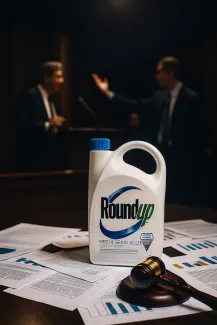
Image: ACSH
This inconsistency disrupts corporations’ handling of toxic tort lawsuits, which arise in federal courts and multiple state courts simultaneously, impacting reserves, SEC disclosures, and corporate planning. When courts conflict, only Congressional action can provide some measure of consistency. However, when attempts to standardize the regulation of pesticides through legislation were introduced, pesticide manufacturers – especially Bayer/Monsanto, the manufacturer of Roundup experienced a barrage of attacks, including false characterizations of the proposed legislation.
Before tackling the mischaracterization of the proposed law as a reckless attempt to thwart litigation and protect manufacturers, it is worth examining how we got here in the first place: That derives from a schism in the way some states and the federal courts address admissibility of scientific evidence to assure junk science stays out of the courtroom, resulting in conflicting findings in the RoundUp litigation.
State of the Cases
As of May, 61,000 Roundup cases against Monsanto/Bayer remained. These are mostly pending in a few state courts at the trial level, with 4,000 cases pending in a federal MultiDistrict Litigation in California; the results will undoubtedly be inconsistent. The divergence often hinges on the differing standards of admissibility employed by various courts.
Frye v. Daubert
Most state and federal courts follow the Daubert requisites. Under Daubert, the judge is designated as the “gatekeeper” of scientific evidence: i.e., before any evidence reaches the jury, the judge must first decide whether that evidence is reliable, relevant, and “fit”. When Daubert speaks of “reliable,” it really covers two scientific concepts:
- Validity – the method or science fits the purpose for which it is being used.
- Repeatability – the results can be reproduced.
The latter “Joiner” decision adds the requirement that experts may provide opinions based on the evidence, but those opinions must be logically tied to that evidence. Experts can no longer offer “ipse dixit” (“because I say so”) testimony.
In December 2023, the amended Federal Rules of Evidence (FRE) 702 and 203 reinforced the judge’s role as gatekeeper. These updates remind judges that they, not the jury, must decide whether the offered evidence and expert testimony rest on sound and relevant science. Judges can no longer delegate that responsibility to jurors, as they are charged with making an initial determination of whether the proffered evidence is reliable, relevant, and admissible.
The amendment was needed because, as the Fourth Circuit noted,
“some courts had abdicate[d] that duty by opening the gate indiscriminately to any proffered expert witness” and “exposing jurors to ‘dubious scientific testimony’ that [could] ultimately ‘sway’ their verdict.”
This admonition, however, did not prevent one state court judge, charged with following the Daubert standard, from doing precisely this in the Zantac litigation. In the spring of 2024, abdicating her responsibility as gatekeeper, Judge Vivian Medinilla presented all the scientific evidence to the jury, adopting a “let them decide” philosophy.
Her decision would have allowed experts to testify with junk science. Not surprisingly, shortly after this decision, 92 Roundup cases were filed in Delaware. Subsequently, Judge Medinilla’s ruling was overruled by the State’s highest court, ruling that all expert testimony was inadmissible as “junk science.” However, the court left open the question of threshold dose. Perhaps, as a result, the plaintiffs’ bar has tightened its eligibility requirements for Roundup plaintiffs it will represent, insisting on a high level of exposure for new clients (although it has apparently recently reversed this position).
“In recent years, we tightened our Roundup case criteria. That meant turning away many potential clients who did not meet strict thresholds for pesticide exposure or who fell outside the statute of limitations. We required a clear and consistent history of Roundup use over several years…”
(Plaintiff’s) Lawsuit Information Center
California Rejects Roundup as Causal
Stay curious. Stay informed. Free, independent writing delivered weekly
— no ads, no sponsored fluff.
In a recent 9th Circuit case, Engilis v. Monsanto, under the Daubert standard, the appellate court affirmed a summary judgment in favor of Monsanto, striking an expert witness on specific causation, i.e., finding that Roundup did not cause the particular plaintiff’s cancer.
Going further, a week ago in Bulone v. Monsanto, again under the Daubert, the 9th Circuit affirmed the trial court’s rejection of expert testimony on the issue of general causation, meaning the case could not proceed against Monsanto since there was no sound scientific evidence establishing that Roundup is even capable of causing cancer.
State Courts Using Frye
The same outcome would not be expected under the Frye standard, where the general consensus of scientific opinion drives admissibility. Judges are only involved in deciding what that consensus is, allowing the jury to assess the strength of the evidence, often after being bombarded with irrelevant and slanderous information about the manufacturers and further swayed by the horribly injured plaintiff before them.
Most states where the Round Up cases are pending rely on Frye, and it’s not accidental. Under Frye, one important, albeit deeply flawed, consensus report from the International Agency for Research on Cancer (IARC) released in 2015, can and has been admitted. That this report has since been debunked appears to carry little weight.
Indeed, the blatant partisanship, conflict of interest, and junk science embodied by the IARCreport would render it inadmissible under Daubert. For example, the head of the committee, Christian Portier, a statistician, had reportedly signed a lucrative contract to act as a litigation consultant for two law firms preparing to sue manufacturers, claiming their clients suffered cancer as a result of glyphosate exposure.
Poitier played a key role in the IARC decision, resulting in a conclusion that glyphosate was “probably carcinogenic”. The designation is modified by the phrase “although based on limited evidence, namely animal and cell studies”, but this caveat is glossed over when plaintiffs’ attorneys describe (malign) the product. Additionally, the report is based on “cherry-picked results, emphasizing those studies favoring the plaintiffs’ claim and ignoring negative studies”, a cardinal rubric upon which judges following the amended 702 reject testimony and dismiss cases. The results rendered in the study are also unreliable, further disqualifying them from admissibility under Daubert.
“According to a 2016 commentary entitled in the European Journal of Cancer Prevention, Robert Tarone, a statistician who spent most of his career at the National Cancer Institute, re-examined the animal studies cited by IARC. The results could not be replicated.”
“What Tarone found is that the IARC panel highlighted certain positive results from the rodent studies … and, glaringly, ignored contradictory negative results from the same studies. He also found that an inappropriate statistical test was used, making the data look more impressive than they actually were…” - Forbes
Another exposé by Reuters confirmed findings that the glyphosate document underwent significant editing to remove null results and to strengthen positive conclusions. In 10 significant instances, “a negative conclusion about glyphosate leading to tumors was either deleted or replaced with a neutral or positive one,” noting that “the original draft found little animal evidence that glyphosate was a carcinogen.” Reuters concluded:
“It is crucial to repeat that the classification of glyphosate as probably carcinogenic to humans relied entirely upon the conclusion that there was sufficient evidence of animal carcinogenicity because the epidemiologic evidence was not strong.” [emphasis in original]
If there remains any doubt about the lack of evidence tethering Roundup to cancer, the impartial and astoundingly thorough review by Judge Michael Lee of Australia, dismissing the class action case against Monsanto, should be dispositive. After reviewing thousands of pages of epidemiological, animal, cellular, and genetic evidence, the judge concluded there simply was not enough evidence to demonstrate, more probably than not, that Roundup caused cancer. While noting there were isolated studies that did show an association, he relied on the largest epidemiological study, which conclusively showed no connection.
Notwithstanding, the plaintiffs continue to tout diversionary studies, such as the June study published by Environmental Health. This one ostensibly showed a relationship between glyphosate exposure and leukemia in baby rats to support the (now debunked) IARC report. There are several significant problems with the study, including exposures beginning during gestation, and the excess incidence found was of lymphoblastic leukemia. Lawsuits against Monsanto focus on glyphosate’s alleged causal relationship with Non-Hodgkin Lymphoma (NHL). The two are distinctly different diseases with different mechanisms of causation. Lymphomas start in the lymphatic system, while leukemia begins in the bone marrow and primarily affects blood and bone marrow cells.
The persistence of the plaintiffs’ bar despite repeated sound scientific evidence establishing no connection between glyphosate and NHL requires a solution. Bayer/Monsanto is attempting to establish a nationwide uniform system of pesticide regulation, relying on the EPA’s determination of safety, which aligns with the WHO and the European Food Safety Authority. This approach is similar to the one used for pharmaceuticals, where lawsuits are limited once the FDA has established safety.
Let’s hope they prevail.
Tags:
- Roundup cancer lawsuits
- Bayer Monsanto litigation
- glyphosate scientific evidence
- Daubert vs Frye standard
- junk science in courts
- pesticide regulation debate
- IARC glyphosate report
- federal vs state court rulings
Category
---
an 4 26
This Monday, April 27, the U.S. Supreme Court is hearing oral arguments in Monsanto Company v. Durnell. At issue in the case, according to SCOTUSblog, is "whether the Federal Insecticide, Fungicide, and Rodenticide Act preempts a label-based failure-to-warn claim where" the Environmental Protection Agency (EPA) "has not required the warning."
The Monsanto in Monsanto Company v. Durnell is the Bayer-owned company Monsanto.
Carey Gillam, author of the 2018 book, "Whitewash: The Story of a Weed Killer, Cancer and the Corruption of Science," examines the case in an article published by The Guardian on April 27.
"The case centers on glyphosate, a weedkilling chemical used in the popular Roundup brand and numerous other herbicide products," Gillam explains. "The chemical has been scientifically linked to cancer in multiple studies, and was classified a probable human carcinogen by an arm of the World Health Organization in 2015. Monsanto, the company that introduced glyphosate to the world in the 1970s and is now a part of the German conglomerate Bayer, has spent the last decade fighting more than 100,000 lawsuits claiming it failed to warn customers of cancer risks."
Gillam continues, "While maintaining that its products don't cause cancer, Monsanto is asking the Supreme Court to rule that under the Federal Insecticide, Fungicide, and Rodenticide Act (FIFRA), it cannot be held liable for failing to warn of a cancer risk if the Environmental Protection Agency (EPA) has not found such a risk exists and not required such a warning. The EPA's position is that glyphosate is 'unlikely' to be carcinogenic."
Gillam notes that Bayer believes a ruling favorable to Monsanto in the case will put an end to the lawsuits, while Jim Jones — who served in the EPA under former President Barack Obama — filed an amicus brief against Monsanto.
Environmentalist Vani Hari agrees with Jones' position.
Hari told The Guardian, "The Trump administration should know that siding with Bayer over American families is a losing position. People expect leadership that puts their health first, not policies that protect corporations from being held responsible."
---
an 3 26
Mark Twain supposedly once said, “Never let the truth get in the way of a good story,” but there is a difference between a good story told in fun and a story (supposedly backed by independent scientific research) that people are led to believe because, well, science is supposed to be true. And so we come to the story of Roundup, the herbicide developed by Monsanto that swept the world because it worked and was the “safe” alternative to widely used weedkillers like Dicamba and 2,4-D,—it was said to be safer than table salt!
Roundup was developed in the 1970s as a non-selective herbicide, meaning it would kill almost any growing plant it touched. It was an effective burn-down herbicide farmers could apply prior to planting, and it assured an almost weed-free field at the beginning of the growing season. Roundup could be used in non-agricultural situations as well, to kill weeds and grass growing in sidewalk and patio cracks, around buildings, etc, but care was needed because, as noted, it was non-target and could kill whatever plant it touched.
For farmers, it worked well, except while it did kill growing weeds, buried weed seeds were not harmed, so a weed-free field at planting time did not ensure a weed-free field throughout the growing season. Weeds would continue to sprout, and more herbicide applications would be needed during the growing season.
Then Monsanto developed their big fix released in 1996, genetically engineered (GE) soybeans resistant to Roundup, followed by GE versions of other commodity crops: corn, cotton, sugar beet, and canola. Over-the-top spraying of these GE crops would kill everything but the crop, and Roundup became one of the most widely used herbicides in the world and GE crops came to dominate world commodity crop production.
Companies like Bayer have to protect their product and their profit even if they have to tell a few lies to do so.
While Monsanto sold Roundup with the slogan, “One spray is all you’ll ever need,” in time, it became clear that some weeds were developing resistance to Roundup and farmers were right back where they started, looking for herbicides that worked consistently. More genetic modifications were made to commodity crops making them resistant to other herbicides, like Dicamba and 2,4-D, the herbicides Roundup was supposed to have replaced. These multiple GE or “stacked” crops could be sprayed with a cocktail of herbicides, hopefully ensuring weed-free fields for the entire growing season.
Farmers are using more herbicide, even on the GE crops, and costs for GE seed have risen much faster than non-GE seed. Of course, the motive was never to reduce the farmer’s production costs or agricultural herbicide use but to increase it—that’s where the profit is.
For farmers who didn’t jump on the GE bandwagon, finding non-GE seed is often difficult. Even more onerous, some farmers have found it necessary to plant GE seed as a preventative measure because non-GE cropscan be damaged by chemical drift from neighboring GE fields.
So much for effectiveness, what about the safety of Roundup? In 2000 a study was published in the journal Regulatory Toxicology and Pharmacologythat deemed the active ingredient in Roundup (glyphosate) was safe and not a human health risk. Since then, that study has been cited consistently as proof of Roundup’s safety. Numerous other studies have shown that glyphosate could cause cancer and that the inert ingredients that are part of the patented Roundup formulation increase the toxicity of glyphosate. Further, the practice of using Roundup as a desiccant on small grain crops (oats, wheat, and barley) prior to harvest puts Roundup directly on grain that enters the human food chain.
Since acquiring Monsanto in 2018, Bayerhas paid out about $11 billion to settle almost 100,000 cancer-related lawsuits with approximately 61,000 still pending. In December of 2025 another blow to the claimed safety of Roundup came when the Regulatory Toxicology and Pharmacology journal withdrew the 2000 article that had touted Roundup’s safety. While the study claimed to be independent and peer reviewed, it has come to light that Monsanto’s scientists played a significant role in conceiving and writing the article. Oops.
For decades Roundup has been sold as an effective herbicide, one that was safe for humans and the environment, and without which “consequences would be dire.” Companies like Bayer have to protect their product and their profit even if they have to tell a few lies to do so. They claim to produce safe products that help farmers thrive—real independent research refutes that. Bayer and the agribusiness industry may be thriving, but farmers are not and in these times, too few people seem to care that lies are accepted as truth.
---
6 22 kpfa SCOTUS upheld (ca?) on roundup?!
---
11 25
MAHA Slams “Corporate Capture” While Trump Strips Regulations
between frenzied claims about Tylenol and disparaging remarks about autism, the voices of the “Make America Healthy Again” movement empowered by President Donald Trump have directed criticism at the country’s massive food, pharmaceutical, and chemical industries — still-too-rare targets for the leaders of either political party in the U.S.
When the White House unveiled its comprehensive report on how to “Make Our Children Healthy Again” in May, it slammed “corporate capture” of regulatory bodies and argued that companies responsible for making children less healthy wield undue influence in Washington. A subsequent strategy report, released last month, called to “protect public health from corporate influence.”
“It was one of the first times I saw the federal government actually call out corporate capture and how chemical companies influence regulation,” said Darya Minovi, a senior analyst for the Center for Science and Democracy.
But the Trump administration’s political marriage of unbridled crony capitalism and fringe health conspiracism is not without its contradictions.
While the “Make America Healthy Again,” or MAHA, movement preaches a healthy utopia for the nation’s children free of real and imagined toxins, public health experts say the Trump administration has pursued an aggressive deregulation campaign that has opened the floodgates for toxic chemicals in our food, water, and air — while also defunding vital medical research and spreading dangerous medical misinformation.
“There’s a lot of rhetoric about problems that they’re solving,” Minovi said. “But when I’m looking at the actual actions that the administration is taking, largely, these actions are not making any kids or families healthier.”
A glaring tension between the MAHA movement’s purported goals and the Trump administration’s aggressive deregulatory strategy is the issue of environmental toxins, particularly PFAS, also known as forever chemicals, found in many household items.
These chemicals, which can disrupt liver, kidney, and thyroid functioning, are especially harmful to children.
[
Related
Trump EPA’s Next Move: Making It Harder to Sue for Getting Cancer from Roundup
https://theintercept.com/2025/03/21/trump-epa-monsanto-roundup-bayer-cancer-chemicals/)
The strategy report, drafted by the Make America Healthy commission led by Health and Human Services Secretary Robert F. Kennedy Jr., laid out a series of recommendations to “end chronic childhood disease,” which included studying the cumulative effect of chemicals in the environment. But in May, the Environmental Protection Agency announced that it was rolling back restrictions on the acceptable levels of these forever chemicals within drinking water, which were put in place during the Biden administration. And in the spring, the agency ended a grant to research children’s exposure to chemicals from soil and dust, accordingto the KFF Health News.
“When it comes to actually taking action, we’re not really seeing policies that are getting ahead of corporate capture and holding the chemical industry responsible,” Minovi said.
Over the coming months, the EPA has announced it will take 31 separate deregulatory actions, including loosening restrictions on power plants that emit air pollution and eliminating safeguards put in place during the Biden administration for petrochemical accidents.
Most Read
[
YouTube Quietly Erased More Than 700 Videos Documenting Israeli Human Rights Violations
Nikita Mazurov, Jonah Valdez](https://theintercept.com/2025/11/04/youtube-google-israel-palestine-human-rights-censorship/)
[
A Journalist Asked Why Israel Isn’t Paying to Rebuild Gaza. It Cost Him His Job.
Arthur Neslen](https://theintercept.com/2025/11/04/journalist-israel-gaza-nova-gabriele-nunziati/)
[
Man Jailed for Facebook Meme Is Freed in Tennessee
Liliana Segura](https://theintercept.com/2025/10/30/larry-bushart-tennessee-free-speech-charlie-kirk-meme/)
Alongside pursuing a deregulatory strategy that experts predict will introduce more chemicals into the air, water, and food supply, the administration has also moved aggressively to cut research, including on childhood diseases.
For example,in August, the Trump administration announced it was cutting federal funding to a network researching pediatric brain cancer.
White House spokesperson Kush Desai denied cutting cancer research funding, saying HHS canceled grants supporting “DEI and other ideological pet projects,” and that the money was reallocated.
“President Trump made a pledge to Make America Healthy Again by restoring accountability, transparency, and Gold Standard Science in public health decision-making,” wrote Desai. “The President and White House maintain complete confidence in Secretary Kennedy and the rest of the HHS team to deliver on this pledge.”
The Department of Health and Human Services and the EPA did not respond to The Intercept’s request for comment.
Food assistance and educational programs have also come under fire during the Trump administration. Earlier this year, Republicans enacted the most significant cut to the Supplemental Nutrition Assistance Programin history. The program provided food assistance to roughly 1 in every 5 children in the United States, as well as nutrition education.
“A lot of this movement is designed to benefit privileged people who have the resources to access certain healthier foods or a community with clean air,” said Minovi, as opposed to “everyday people who might actually depend on public policies to ensure they have healthy food, clean air, clean water in their community.”
“A lot of this movement is designed to benefit privileged people who have the resources to access certain healthier foods or a community with clean air.”
The recommendations emerging from HHS and the MAHA movement about vaccines and autism are particularly troubling, said Jill Rosenthal, director of public health policy at the Center for American Progress. “It’s a matter of promoting a personal agenda that RFK has rather than following decades of good science,” she said.
Riddled throughout the MAHA strategy and separate report are concerns over vaccines and the vaccine schedule, which is used to determine the timing for childhood vaccinations.
Both RFK Jr. and Trump have peddled pseudoscientific conclusions connecting autism to vaccination, suggesting that the vaccine schedule needs to change. During the press conference last week, Trump advised against vaccinating children for Hepatitis B until they’re 12 years old, which runs at odds with medical guidelines.
“They’re making it more difficult for children to get routine childhood vaccinations. We know that vaccination has saved millions of lives, and so any efforts that make it harder for children to access vaccines are really, really jeopardizing kids’ health,” said Rosenthal. “Instead of following the science and believing what evidence we already have, we’re just creating a lot of distrust and making it harder for people to keep their kids healthy.”
The recent recommendations that pregnant women avoid Tylenol also carry risk for pregnant people and their future children.
“In the near term, I think that pregnant patients are going to be worried enough that they seek alternate forms of medication to treat their pain,” said Dr. Mariana Montes, a former pediatrician and obstetric anesthesiologist. “That’s extremely concerning, because there is nothing that’s been proven safe for pregnancy except for acetaminophen.”
Ibuprofen, the active ingredient in Advil, has been known to lower amniotic fluid — the liquid in utero that surrounds and protects the fetus — and can have negative effects on kidney and heart development, said Montes.
“Patients might choose to take ibuprofen without knowing the effects, and then unknowingly actually harm a healthy pregnancy because they’re so worried about taking Tylenol,” she said.
[
Related
RFK Jr. Talks About Public Health, but He’s Joining an Administration That’ll Make Us Sicker Than Ever
https://theintercept.com/2024/11/14/rfk-jr-health-human-services-water-air-project-2025/)
Left with fewer options they believe are safe, Rosenthal warns that pregnant people might forgo medication altogether, even when they have a fever. “If women avoid taking Tylenol, for instance, when they have a fever, it can increase the risk of birth defects,” she said. “So by scaring women away from taking needed medication, it can actually impact their health and the health of their developing babies.”
The stigma these types of pronouncements cause for people with autism is also a serious concern.
“It’s necessary to point out the ableist language in this whole autism debacle,” said Minovi. “Of course, it’s a condition that needs to be understood and studied, and obviously impacts families significantly, but the way in which the administration, particularly RFK, talks about it is dismissive and negative about people’s lived experiences.”
Republicans, who once denounced former First Lady Michelle Obama for attempting to make school lunches moderately healthier, now inhabit a coalition whose purported goals would have instantly launched “nanny state” accusations just a few years prior.
But the MAHA movement has been so successful despite its inherent contradictions, Rosenthal said, because there’s a “kernel of truth” to what it’s preaching.
“For instance, ultra-processed food is not the first choice for how we want to take care of our bodies,” Rosenthal said, “but at the same time, is that the best way to use limited resources and protect or promote child health? Not when we have kids who don’t have enough to eat, right?”
Minovi said it’s understandable that people are drawn to this movement — which only heightens culpability for people like RFK Jr. and Trump.
“These are families that are just trying to do right by their kids, and the concerns that folks are raising are valid,” said Minovi. “The behavior of the leaders in this movement is nothing short of predatory.”
---
---
maha?
health and Human Services Secretary Robert F. Kennedy Jr. raised his concerns about widely used herbicides containing glyphosate and atrazine, linking them to chronic disease, in a Thursday report by the Make America Healthy Again (MAHA) Commission.
Why It Matters
The report highlights two commonly used weed killers—glyphosate, the active ingredient in Roundup, and atrazine, another widely used herbicide for weed control.
In 2015, the International Agency for Research on Cancer classified glyphosate as "probably carcinogenic to humans." But the U.S. Environmental Protection Agency (EPA), which has reviewed and reevaluated its status, said in 2020, "glyphosate is unlikely to be a human carcinogen." There are conflicting opinions about the toxicity of pesticides and their potential health risks, as well as their impact on the food system and environment. Herbicides are classified as a type of pesticide.
President Donald Trump signed an executive order in February establishing the Make America Healthy Again Commission, which pledged to produce a report within the president's first few months back in office. The assessment, released Thursday, aims to lay the groundwork for understanding what Kennedy calls the "magnitude of crisis" in American children's declining health and the factors driving it.
As the nation's top health official, Kennedy has repeatedly raised concerns about chemicals in food and the environment and their connection to chronic disease. The report's first section focuses on the rise of ultra-processed foods, while the second addresses the "cumulative load of chemicals in our environment."
What To Know
The 69-page assessment took issue with common herbicides, saying that children are exposed to them through food, water, dust, lawn treatment and household sprays.
"The cumulative effect of multiple chemical exposures and impact on children over time is not fully understood," the report says, adding that data and research on the "complex mixtures of chemicals" children encounter have yet to be fully explored.
Kennedy has long opposed pesticides, having helped win a 2018 lawsuit filed against Monsanto, the original producer of Roundup.
Pesticides are widely used in farming across the U.S. In April, a group of 79 Republicans, including some Senators like Chuck Grassley of Iowa, wrote a letter to Kennedy, saying that "regular testing by DFA and USDA finds that more than 99% of all pesticide residues meet extremely conservative limits established by EPA."
As of 2017, the United States Geological Survey reported, "about 1 billion pounds of conventional pesticides are used each year" throughout the country.
Read more Robert F. Kennedy Jr.
Is the FDA Doing Enough About Food Additives?
The MAHA Commission's assessment received expected blowback from agricultural and farming associations, which largely rely on pesticides for their livelihood.
What People Are Saying
The National Corn Growers Association said in a statement:"The Make America Healthy Again Report is filled with fear-based rather than science-based information about pesticides. We are deeply troubled that claims of this magnitude are being made without any scientific basis or regard for a long history of EPA expert evaluations of these products."
American Soybean Association said in a statement: "The American Soybean Association strongly rebukes the May 22 Make America Healthy Again Commission report for being brazenly unscientific and damaging to consumer confidence in America's safe, reliable food system. Should the administration act on the report—which was drafted entirely behind closed doors—it will harm U.S. farmers, increase food costs for consumers, and worsen health outcomes for all Americans. ASA calls on President Trump, who has long been a friend of farmers, to step in and correct the Commission's deeply misguided report."
Dr. Michelle Perro, pediatrician, author and activist for children's health, told The New Lede: "While I support and applaud the MAHA focus on chronic diseases affecting our children, it is disheartening that it took us decades to get here. The environmental toxic impacts on our children's well-being has been known for decades, but not acted upon until now."
The National Council of Farmer Cooperatives said in a Thursday statement:"We have serious concerns over the assessment's allegations about pesticides. The report includes statements that do not reflect the wealth of evidence developed over decades by federal agencies such as the EPA and USDA on the safety of crop inputs and food production methods. These institutions have consistently reaffirmed the safety and efficacy of the systems that help feed our country and the world."
American Farm Bureau President Zippy Duvall said in a statement:"It is deeply troubling for the White House to endorse a report that sows seeds of doubt and fear about our food system and farming practices, then attempts to celebrate farmers and the critical role they play in producing the safest food supply in the world.
Farmers are identified as 'critical partners,' yet were excluded from development of the report, despite many requests for a seat at the table. The report also expresses a desire to ensure farmers continue to thrive, but undermining confidence in our food system directly contradicts that noble goal. The report spotlights outlier studies and presents unproven theories that feed a false narrative and only then does it acknowledge a mountain of evidence about the safety of our food system." zippy
What Happens Next
The report pledges to support "gold-standard scientific research" as part of its effort to address chronic disease. The assessment marks the first step toward developing the commission's strategy, which is due 180 days after Trump's February executive order establishing the panel.
===
https://www.desmog.com/2022/12/09/pesticide-industry-science-denial-monsanto-glyphosate-cancer/
As regulators in the United States and European Union prepare to review and potentially reauthorize the controversial weedkiller glyphosate, anew report reveals the stealth tactics and narrative spin deployed by the chemical’s manufacturer to discredit inconvenient science and protect profits.
The report, published by Friends of the Earth and nonprofit investigative organization U.S. Right to Know, uses the case study of Monsanto (now owned by Bayer) and its widely used glyphosate-based product Roundup to illustrate the pesticide industry’sdeceptive tactics and communications strategies — which mirror those of the tobacco and fossil fuel industries.
“The pesticide industry is not just following in the footsteps of Big Tobacco and Big Oil, they co-wrote the playbook,” Stacy Malkan, lead report author and co-founder of U.S. Right to Know, said.
The pesticide industry used this PR strategy, which involves tactics like distorting science and disseminating misleading messaging through third party allies, to convince regulators and the public that its products were safe and necessary, the report explains.
“This case study provides an important window into how one company worked with many partners across the pesticide and processed food industries, academia, PR firms, and various front groups to sell the world on a toxic pesticide,”said author and advocate Anna Lappé, who contributed to the report. “These disinformation tactics are critical to understand because they have been used to push the entwined myths that we need pesticides to ‘feed the world’ and that they are totally safe.”
Despite mounting scientific evidence of their harms to human health and the environment, pesticides have proliferated, withglobal usage up by about 80 percent since 1990. The most widely used pesticide in the world is Roundup, which is alleged to have caused cancers. Litigation over this cancer link is ongoing, spurred by a 2015 finding from the World Health Organization’s cancer research arm classifying the chemical as a probable human carcinogen.
[twt]
the report, released December 5, brings together internal corporate documents revealed through this litigation, as well as documents obtained through public records requests filed by U.S. Right to Know, to illuminate the extensive campaign by one of the world’s leading pesticide manufacturers — Monsanto, acquired by Bayer in 2018 — to disseminate disinformation and manipulate science regarding the health and environmental impacts of glyphosate.
These strategies have been “used by the pesticide industry for decades now and [their] impact on public health is enormous,” Nathan Donley, PhD, environmental health science director at the Center for Biological Diversity, told DeSmog via email.
Litigation concerning the health hazards of various pesticides, including glyphosate, stems from companies hijacking the regulatory process, he explained. “This can happen multiple ways, from pressuring decision makers at the EPA to producing enormous amounts of biased data that guide the actions of regulators. It’s been very effective unfortunately.”
For example, as noted in the report, under pressure from Monsanto in 1986, EPA overturned its own decision made the previous year to classify glyphosate as a possible human carcinogen. To this day, EPA maintains the position that glyphosate is not carcinogenic and does not pose human health risks if used according to its label. However, the agency is planning to conduct a new review of the chemical after a federal appeals courtstruck down EPA’s previous designation of glyphosate as benign.
The report found that over a five-year period, seven front groups with links to Monsanto spent $76 million “to push corporate disinformation, including attacks on scientists.” During that same period, six industry trade associations that appear in Monsanto PR papers spent $1.3 billion, including on lobbying and PR around glyphosate regulation.
It also argues that the pesticide industry’s current business model “would not be possible if pesticide products were subject to rigorous, independent research and if there were widespread public understanding of the harms and risks of many of these products.”
“It’s clear from this report and all the work that’s been done in this field that corporate influence in science-based decision-making is way too common,” said Genna Reed, director of policy analysis in the Center for Science and Democracy at the Union of Concerned Scientists, and lead author of a2021 study exploring ways to protect scientific integrity from the corporate “disinformation playbook.”
“This isn’t just a wonky policy problem,” Reed added. “This is a massive institutional rot that needs to be fixed to protect public health.”
Fossil Fuel and Pesticide Industry Parallels
In addition to pressuring regulators, Monsanto deployed other strategies to discredit evidence of health and environmental harms of its glyphosate-based product. The report found that Monsanto undermined or even shaped the science, attacked public health experts, bought influence at academic institutions, and used third party messengers to pollute the public discourse. These are the same strategies — and in some instances involved the same actors — that the tobacco and fossil fuel industries used to generate doubt and to deceive the public about the harmful consequences of their products.
According to the report, Monsanto covertly contributed to the scientific literature examining the health risks of glyphosate, ghostwriting papers in toxicology journals, including an influential paper published in April 2000 that concluded that glyphosate-based Roundup “does not pose a health risk to humans.” Internal company emails reveal that Monsanto employees played critical roles in data collection, drafting, editing, and relationship-building with the paper’s authors. In the wake of the 2015 glyphosate classification from the World Health Organization’s cancer research agency, Monsanto ghostwrote scientific manuscripts published in a prestigious journal as an “independent review” on the science of glyphosate. The company also orchestrated a campaign to intimidate cancer researchers and enlist Republican lawmakers to try to defund the World Health Organization’s cancer research arm.
[twt]
monsanto’s influence extended to academia.The report details how the company funded academics and universities to promote educational messaging supportive of pesticides and genetically engineered organisms (GMOs) — seed traits designed to resist toxic chemicals. Emails obtained from records requests reveal that the University of Florida, for example, “had plans for ‘educating the masses’ about GMOs and pesticides with messaging that was ‘harmonious’ with Monsanto’s,” Malkan explained.
This co-opting of academia was part of a larger pro-pesticide PR strategy. As the report explains, PR firms that helped Monsanto defend glyphosate and promote GMOs have worked with other polluting industries, including tobacco and fossil fuels. For example,FTI Consulting,which has worked extensively with the oil and gas industry, has also worked closely with Monsanto/Bayer to discredit the science on glyphosate.
Furthermore, as the report details, one industry front group that worked to attack cancer scientists and dispute the evidence linking glyphosate to cancer was the Genetic Literacy Project. Its founder Jon Entine has worked in defense of chemicals, plastics, fracking, and oil companies, and the group’s funding sources “trace back to some of the largest, most consistent funders of climate science denial.” These include foundations like Donors Trust, Scaife Foundation, and Charles Koch Foundation. Other institutions that engaged in climate denial — including Competitive Enterprise Institute,Heartland Institute,Cato Institute, andCommittee for a Constructive Tomorrow (CFACT) — also attacked scientists who raised concerns over glyphosate, according to the report.
“This is not surprising since nearly all agricultural chemicals are derived from fossil fuels,” Malkan said, adding that both industries are continuing to mislead the public in portraying their business or products as essential to climate and sustainability solutions.
“Just like Big Oil, pesticide companies are using disinformation tactics to push false solutions for the climate crisis, and stalling action on real solutions,” Malkan added. ADeSmog investigation published in November 2020 described how pesticide companies are now marketing themselves as climate-friendly.
“Pesticide companies are desperately trying to, and in many instances are successfully greenwashing the poisons they make billions of dollars selling,” Lori Ann Burd, senior attorney and environmental health program director at Center for Biological Diversity, said via email. She added that many U.S. government officials have adopted the pesticides industry’s position that their products are necessary.
“USDA, EPA and many members of Congress have largely bought in to industry rhetoric that dangerous pesticides are essential tools for feeding Americans, ignoring the reality that many countries, including Brazil, China and nations within the E.U. continue to eat despite having banned dangerous pesticides that are still widely used in the U.S.,” she explained. UN human rights experts have also pushed back against the claim that pesticides are necessary to feed the world.
Bayer did not immediately respond to a request for comment on the report.
Countering the Disinformation Playbook
The report concludes with some recommendations and steps to take to counter the pesticide industry disinformation playbook. According to this advice, which is aligned with that of other experts in fighting disinformation, exposing the tactics and strategies and enforcing strong disclosure and accountability rules are important steps to mitigate undue industry influence.
“We need to continue to shine a light on these practices and actively work on policies that can serve as firewalls,” Reed of the Union of Concerned Scientists said.
Other recommendations include challenging corporate influence in academia and holding PR firms accountable. Just as there are now campaigns to do just that for fossil fuels, the report calls for similar action and pressure for combatting pesticide industry influence and enablers.
“While the propaganda tactics of Big Oil and Big Tobacco are well-documented and their grave impacts well understood, the pesticide industry’s similar role in widespread disinformation, and its extensive scope and impact, has not been as well documented or publicly understood. We hope this report, and the chorus of recent reporting, will change that,” the report states.
===
---
no lnx in orfig (monsanto tag]
https://www.washingtontimes.com/news/2022/oct/10/monsantos-triumph-over-junk-science/
LAW_CRIME
MONSANTO
Illustration on resisting junk science by Linas Garsys/The Washington Times
COMMENTARY
By Tiger Joyce - - Monday, October 10, 2022
OPINION:[note no cya caveats]
One of the country’s most vilified companies prevailed in a recent jury trial against sympathetic witnesses in the “judicial hellhole®” that is the 21st Judicial District of Missouri. The story of how the truth won out over an elaborate scheme cooked up by junk scientists and the trial bar is worth exploring.
All 10 jurors in that St. Louis courtroom sided with Monsanto after a month of testimony that opened with plaintiffs brought to tears as they recalled the horror of learning of their diagnosis of non-Hodgkin’s lymphoma, a severe form of cancer. Expert witnesses testified that glyphosate, the active ingredient in Monsanto’s signature Roundup weedkiller, was to blame for triggering the disease.
The trial bar successfully monetized the same argument in June 2020, to the tune of over $10 billion in settlements and verdicts. Yet more trials are underway, featuring a long list of victims of non-Hodgkin’s lymphoma who were attracted by a $60 million advertising campaign holding out the hope of “substantial compensation.”
But the St. Louis case fell apart under cross-examination as their expert witnesses proved less than credible.
One of those expert witnesses, William Sawyer, advertised on his LinkedIn resume that he was a “board-certified toxicologist.” But when confronted on the stand, was forced to admit he was unable to obtain certification from the American Board of Toxicology after twice failing the required exam. Mr. Sawyer then turned to Robert O’Block, founder of the American College of Forensic Examiners, who supplied an appropriate diploma. However, Mr. O’Block was so willing to certify any paying customers thatsome reports say he once certified a cat.
Mr. Sawyer’s “career” as a full-time expert witness in glyphosate product liability trials has made him a millionaire. Billing $785 an hour, he’s collected $2.5 million from his testimony in four Roundup trials.
But at least Mr. Sawyer had academic training in toxicology. By contrast, fellow expert witness Charles Benbrook testified about glyphosate’s health effects despite having no training in medicine, chemistry or epidemiology. Mr. Benbrook, an economist, took a physics course in college — that’s the sum of his formal education in the sciences.
Mr. Benbrook runs the Heartland Health Research Alliance (HHRA), which produces studies linking cancer to herbicides such as Roundup, as well as competing herbicides like dicamba and 2,4-D. His studies are likely laying the groundwork for a future lawsuit against those products.
The trial bar values Mr. Benbrook’s endeavors, rewarding him $1.3 million for his testimony in addition to his $220,000 salary. The trial bar not only provides funding to Mr. Benbrook’s nonprofit, scientific research organization, but it also provides management direction. HHRA’s vice chair, Robin Greenwald, is a partner at Weitz & Luxenberg — one of the many firms suing Monsanto.
Trial lawyers funding and managing the organization producing “scientific” studies cited as evidence in a trial is a clear conflict of interest. But conflicts of interest aren’t new to Mr. Benbrook. A few years ago, he was caught coordinating his academic work with outside interests, forcing the New England Journal of Medicine to update a paper it published to reveal Mr. Benbrook’s previously undisclosed funding from litigators and the organic food industry. In April, Cornell University microbiologist Kathleen Hefferon pointed out that another scientific journal article co-authored by Mr. Benbrook violated clear ethical standards for peer review.
There’s a reason the trial bar turned to individuals with dubious credentials and a loose appreciation of ethical norms — the truth simply isn’t on their side.
Environmental safety agencies in the U.S., Canada, Brazil, Australia, New Zealand, Japan and the European Union have spent decades reviewing the health impacts of glyphosate. All agree that no credible evidence exists linking glyphosate to non-Hodgkin’s lymphoma.
But one outlier organization says otherwise. An advisory group of the International Agency for Research on Cancer (IARC) deemed glyphosate a “probable human carcinogen.” In 2017, a senior scientist on that IARC panel testified critical evidence favorable to glyphosate had been withheld and would likely have changed IARC’s conclusion. The panel, however, was run by Christopher Portier, a scientist who received $160,000 from litigators and worked under the direct supervision of Ms. Greenwald.
It seems that most evidence against Monsanto was produced by individuals under the direct financial sway of litigators.
It’s a tribute to the resilience of our judicial system that a set of brave jurors stood for the truth in this instance, but it’s also a warning. Judges and state legislatures across the country must implement reforms to align expert evidence standards with those set forth by the Federal Rules of Evidence and the Supreme Court. This will ensure jurors hear only evidence reflecting the true consensus of the scientific community and not unproven conclusions of paid litigation “experts.” Ultimately, the onus falls on individual judges to prevent lawsuit abuse and junk science in their courtrooms.
Tiger Joyce is president of the American Tort Reform Association. note no coi disclosures]
---
---
see main
no content 1/16 ?!
120 bak
bayer massive stock loss post merger
big legal loss CA and france
see seralini entine monsanto GMOnsanto tag
---
---
alex sci suppress
https://news.mongabay.com/2019/11/science-prevails-as-suspension-of-award-for-herbicide-research-is-reversed/
---
---
11 21 grab acsh
Health Scares Vs Health Threats
Thank You,Trial Lawyers, For Protecting Us from the Scourge of Baby Powder
Scientists say that talcum baby powder doesn't cause cancer. Trial lawyers say it does. As usual, the lawyers win. Scientists, common sense, and Americans lose.
Read more
Coronavirus: Fear of a Pandemic, or a Pandemic of Fear?
We must eliminate both. Here's one group's plan to do that.
Read more
95% of Baby Food Tainted with Toxic Metals? Don't Panic
The Centers for Disease Control says that the “American food supply is among the safest in the world.” But a read of some recent news reports about toxic metals in baby food may have you feeling somewhat concerned. So what's really the state of the supermarket aisle? Let's take a closer look.
Read more
Everything Goes to Pot: Myths Are Driving FDA, CDC Vaping Policy
While an investigation is underway into the exact nature of the problem, so far the likeliest explanation is that improper use of vaping devices has led to illness, or the death, of some users. But that sort of nuance isn't governing the thinking of the FDA or CDC officials, both of which are allowing myths and fearmongering to drive their policies and public statements.
Read more
Precautionary Principle:We Must Ban Driving to Whole Foods
Better safe than sorry. That's a great lesson for a child when a parent explains why she should wear a helmet when riding her bicycle. But that refrain makes for terrible public health policy.
Read more
CDC Misleads by Calling E-Cigarettes a 'Tobacco Product'
The CDC says "tobacco use by youth is rising." If that were to be true, it'd be horrible -- but it's not. Cigarette use is down. The only reason the CDC can make this claim is because the agency considers e-cigarettes and vaping devices -- which only contain nicotine -- to be tobacco products. This is misleading and undermines public health.
Read more
AAAS Runs Dishonest Glyphosate Story, Then Deletes It. Is Politics to Blame?
:{:{}:
}:
The American Association for the Advancement of Science is one of the foremost pro-science organizations in the world. Not only does it advocate for good science and science policy, it publishes Science, the prestigious journal read globally by millions. Unfortunately, AAAS has gotten a bit weird in recent months.
Read more
UK Parliament Endorses E-Cigarettes to Help Smokers. Will U.S. Follow?
U.S. public health agencies struggle to endorse an obvious solution to a true public health menace. Hopefully, the UK Parliament will provide a much-needed boost to the forces of common sense.
Read more
Glyphosateand Pesticides: Et Tu, Live Science?
:{:{}:
}:
Normally a reliable source of information, Live Science published an article that is a dream for anti-pesticide and anti-chemical fearmongers.
Read more
CNN's Christiane Amanpour Misleads on Flint Water Crisis [recall BSS elsewhere on pb]
The recent reporting on Flint's water crisis by CNN's Christiane Amanpour has a tenuous grasp of the data and the reality.
Read more
New Study Refutes the 'Wine Will Kill You' Nonsense
A few weeks ago, a paper claimed that an extra glass of wine will shorten your life. The story circled the globe in minutes. A new paper, with better methodology, concluded what we all knew: Moderate alcohol consumption can be integrated into a healthy lifestyle. It, however, won't receive nearly as much attention as the sensationalist report. Such is the power of the academic PR hype machine combined with a gullible, sensationalist press.
Read more
Diarrhea Outbreaks: A Glimpse into Anti-Vaxxer Utopia
Despite the reality of measles, rotavirus, and a plethora of other infectious diseases, there's yet another anti-vaccine movement afoot inCalifornia. And its aim is to turn the clock back to the 10th Century.
Read more
---
---
https://www.alternet.org/2021/03/roundup-cancer/
loki IMI
glyphosate is a broad-spectrum herbicide used to kill weeds and grasses that compete with food crops. First registered for use in the United States in 1974 by agrochemical giant Monsanto under the brand name Roundup, it is one of the most widely used weedkillers in the nation, from large-scale industrial farms to lawns and home gardens. The chemical is extremely effective at killing weeds, especially when used on Monsanto's "Roundup Ready" crops, such as soy, corn, canola, alfalfa and cotton that have been genetically modified to be resistant to glyphosate. More than 90% of corn, soybeans and upland cotton grown in the U.S. have been engineered to be resistant to herbicides like Roundup, according to the U.S. Department of Agriculture.
But a growing volume of scientific research has pointed to the negative impact that glyphosate has on human and environmental health. In 2014, for example, researchers at the International Agency for Research on Cancer (IARC) in Lyon, France, the cancer research arm of the World Health Organization, conducted a meta-analysis of more than 40 studies covering nearly three decades of research on the relationship between non-Hodgkin lymphoma (NHL), a type of cancer, and occupational exposure to agricultural pesticides. They concluded that there is "consistent evidence of positive associations" between glyphosate and an increased risk of NHL. The following year, IARC classified glyphosate as "probably carcinogenic to humans," noting that "Case-control studies of occupational exposure in the USA, Canada, and Sweden reported increased risks for non-Hodgkin lymphoma that persisted after adjustment for other pesticides."
More recently, a meta-analysis published in 2019 conducted by researchers from the University of California at Berkeley, the University of Washington in Seattle and the Icahn School of Medicine at Mount Sinai in New York found that glyphosate exposure raises cancer risk by 41%.The study's senior author Lianne Sheppard, a biostatistician and environmental and occupational health scientist at the University of Washington, told CNN that she was "convinced" of glyphosate's carcinogenic properties.
The sheer amount of glyphosate that has been used across the globe is stunning. In 2014, farmers sprayed enough of the herbicide to cover every acre of cropland in the world with nearly a half-pound of it, according to a 2016 study published in Environmental Sciences Europe. "No herbicide in the history of the world has ever been used this heavily," said the study's author Charles Benbrook, an agricultural economist. "It's a completely unprecedented case."
Since the IARC classification in 2015, several countries have banned or restricted the use of glyphosate. Last year, Austria became the first nation in the European Union (EU) to vote to ban its use completely (though the European Commission (EC) blocked the planned ban). Germany announced that it will be phased out by 2023. Nearly 20 other countries currently have some legislation around glyphosate, including France, the Netherlands, Italy, Belgium, Saudi Arabia, Thailand and Vietnam. The EC has approved its use in the EU until December 2022.
In the United States, individual states and municipalities have also moved to ban or restrict its use. In 2017, California became the first state to issue an official warning about glyphosate by adding the chemical to its Proposition 65 list of cancer-causing chemicals. Dozens of counties, cities and townships across the nation have adopted some sort of restrictions that limit or ban the use of glyphosate. Every single state has a Change.org petition requesting its governors to ban glyphosate. Several environmental, public health and consumer advocacy groups, including Friends of the Earth Action, Food & Water Action, Progress America and Corporate Accountability have sponsored a public petition urging the Environmental Protection Agency to ban the use of glyphosate.
There are also rising concerns about glyphosate's impact on wildlife and the natural environment. In 2019, researchers at the University of Florida published a study on the persistence of glyphosate in the environment. They found that the chemical accumulates in topsoil and has been detected in groundwater and surface water due to pesticide runoff from farms. "Owing to the relatively high mobility of glyphosate, the likelihood of a rise in surface and groundwater content in tandem with herbicide use is high," the study authors concluded. "Hence, potential routes of exposure into the environment, as well as the consequent implications on animals and humans, need to be explored more thoroughly."
Other research has revealed that exposure to glyphosate can impact the metabolism and reproductive functions of a variety of wildlife, including mussels, crayfish and other aquatic invertebrates. Studies also suggest that glyphosate exposure can harm the navigational ability and gut bacteria of bees, which are critical for crop and plant pollination. Researchers have also found that the herbicide causes neurological harm to mosquitoes, which are an important food source to a myriad of other species, including bats, birds, reptiles, amphibians and other insects, and also serve as plant pollinators.
Still, much more research is needed to know the full impacts of glyphosate on wildlife and the natural environment. "We've barely begun to investigate the microbiomes of animals and soil as possible targets for glyphosate toxicity," Nico van Straalen, an ecotoxicologist at Free University Amsterdam in the Netherlands, told Environmental Health News in 2019. And that's why the current body of research should trigger the use of the precautionary principle, a philosophical and legal approach used to pause the use of a new product or process when its ultimate impacts are unknown or disputed.
"When an activity raises threats of harm to human health or the environment, precautionary measures should be taken even if some cause and effect relationships are not fully established scientifically," said the International Federation of Gynecology and Obstetrics (FIGO), a nongovernmental organization focusing on women's health, in a 2019 statement. The group, which holds official consultive status with the United Nations, added, "We recommend that glyphosate exposure to populations should end with a full global phase out."
But while the pressure to eliminate glyphosate from store shelves and the food system in general mounts in tandem with the research revealing its negative effects, the market forces supporting its continued use are strong. Roundup is the bestselling weedkiller, accounting for 25% of all herbicides sold worldwide.
In 2015, Monsanto "made nearly $4.76 billion in sales and $1.9 billion in gross profits from herbicide products, mostly Roundup," notes financial blogger Maxx Chatsko on the Motley Fool. Unsurprisingly, Monsanto mounted a massive disinformation campaign to hide Roundup's potential link to cancer. "We now know they had pet journalists who pushed Monsanto propaganda under the guise of 'objective reporting,'" Tim Litzenburg, a partner with the law firm Kincheloe, Litzenburg & Pendleton who represents several plaintiffs suing Monsanto over Roundup, told the Guardian in 2019. "At the same time, the chemical company sought to amass dossiers to discredit those journalists who were brave enough to speak out against them."
In 2016, Bayer, a German multinational pharmaceutical company, took over Monsanto. But the $63-billion acquisition has been called a "merger failure" primarily due to the more than 13,000 legal claims concerning the fact that Monsanto did not warn farmers and consumers of its product's potential carcinogenic properties.
Even if glyphosate is banned on a large scale, the majority of farmers will turn to other herbicides, the effects of which will likely also be debated. "It's probable [the glyphosate issue] would have happened with whatever herbicide had been associated with the [genetically engineered] crop revolution," said Benbrook. "It just happened to be glyphosate."
And then there's Mother Nature, who in the end, always wins. Perhaps the ultimate solution is to eliminate chemicals from the way we grow our food and move toward organic farming, which not only has the potential to be scaled up to compete with industrial farming but is much less harmful to human and environmental health—if only the political will were there to make the transition. The Rodale Institute, a nonprofit that supports organic farming research, says that "the myth that organic food can't feed the world isn't just wrong, it's downright counterproductive."
"Plants will evolve resistance to anything," Franck Dayan, a weed scientist at Colorado State University in Fort Collins, told ScienceMag. "Whatever we do, we'll have to face the way nature works."
FROM YOUR SITE ARTICLES
- 'This decision is grave': How the Trump White House gave the green ... ›
- Bombshell documents reveal Monsanto colluded with Republicans ... ›
RELATED ARTICLES AROUND THE WEB
- Roundup Maker to Pay $10 Billion to Settle Cancer Suits - The New ... ›
- Does Roundup Cause Cancer? ›
- What you need to know about a popular weed killer's alleged link to ... ›
==
2x?
Corporations can legally put carcinogens in our food without warning labels. Here's why
Cheerios has so much glyphosate in it, it should be labeled as toxic. Corporate free speech precedents prevent that
MATTHEW ROZSA
JULY 14, 2019
A recent study by the Environmental Working Group revealed something horrifying: Glyphosate, the active ingredient in the popular weedkiller Roundup, was present in 17 of the 21 oat-based cereal and snack products at levels considered unsafe for children. That includes six different brands of Cheerios, one of the most popular American cereals.
I've written before about the limits of corporate free speech when it comes to public safety, but on that occasion I discussed this insofar as it involved corporate-sponsored climate change denialism. Yet here we have something more tangible, more direct: The safe glyphosate limit for children is 160 parts per billion (ppb), yet Honey Nut Cheerios Medley Crunch has 833 parts per billion and regular Cheerios has 729 ppb. While the potential risks of glyphosate are fiercely debated, many scientists believe that it is linked to cancer.
So if there are unsafe levels of glyphosate in a cereal popular with children, why isn't this disclosed on the cereal boxes? The complicated answer has to do with a legal case that defined free speech as something that non-human persons, like corporations, have a "right" to, in a sense. That sounds absurd, perhaps, and probably not something the framers of the constitution intended. Indeed, the idea of "corporate constitutional rights" is a relatively new one, yet one that corporations' legal arms fight tooth and nail to preserve.
There are several activist groups working to amend the constitution to undo the notion of corporate personhood and make it so that this mind-bending and harmful interpretation of corporate free speech is no longer enshrined in law. Move to Amend — as in, the constitution — is one such group. Salon interviewed ...What does glyphosate do to weeds?
There are several activist groups working to amend the constitution to undo the notion of corporate personhood and make it so that this mind-bending and harmful interpretation of corporate free speech is no longer enshrined in law. Move to Amend — as in, the constitution — is one such group. Salon interviewed Kaitlin Sopoci-Belknap, the National Director of Move to Amend, to understand how this weird legal situation came to exist.
Glyphosate is a non-selective herbicide, meaning it will kill most plants, not just weeds. It prevents plants from making certain proteins that are needed for plant growth.
What do peer-reviewed studies indicate it does to human beings and animals if they ingest it?
The International Agency for Research on Cancer (IARC) has labeled glyphosate as “probably carcinogenic” and the California Office of Environmental Health Hazard Assessment categorized it as a “chemical known to the state to cause cancer.”
How did glyphosate wind up in foods like breakfast cereals?
According to the U.S. Geological Survey, 250 million pounds of glyphosate are sprayed on American crops each year. Glyphosate is primarily used on Roundup Ready corn and soybeans that are genetically modified to withstand the toxin. Glyphosate is also sprayed on other non-GMO crops, like wheat, oats, barley and beans, right before harvest.
What have Monsanto and other companies done to suppress knowledge of its effects (lobbying, suppressing science, etc.)?
Monsanto has waged a sophisticated PR campaign to bully scientists and undermine findings that glyphosate is cancerous. In addition Monsanto and agribusiness leaders protecting the company's interests have a revolving door relationship with many agencies that are supposed to be overseeing and regulating the corporation. Monsanto and agribusiness associations have also made significant political contributions to Congressmembers like former Rep Lamar Smith from Texas who chaired the House Science, Space, and Technology Committee where he used his platform to undermine the [International Agency for Research on Cancer] when their cancer findings came out, accusing the agency of using "cherry-picked" science when determining that glyphosate is “probably carcinogenic.” ...Monsanto has argued that California's Prop 65 labeling law is a violation of the company's First Amendment right not to speak.
What is the boundary separating corporate free speech between their responsibility to the public health? Have those boundaries shifted over the years?
The courts have expanded the ability of corporations to overturn labeling requirements on a number of occasions over the last 35 years. In 1986 the Supreme Court decided that the Pacific Gas and Electric Company in California was not required to allow a consumer advocacy group to use the extra space in their billing envelope, upholding the corporation's right not to speak and protecting the corporation's “freedom of mind.”
In 1996 the U.S. Second Circuit Court of Appeals overturned a Vermont law requiring the labeling of all products containing bovine growth hormone and ruled that the right not to speak inheres in political and commercial speech alike and extends to statements of fact as well as statements of opinion.
In Nike v. Kasky in 2003the Supreme Court heard arguments on whether purposeful untruths in advertising are protected political speech before sending the case back to a California courtwhere it was settled in Kasky’s favor, finding that the state laws requiring truth in advertising had been violated. The question of whether the First Amendment gives a corporation the right to speak lies remains unsettled.
Legally speaking, why are companies allowed to have poisons in our foods without warning the public of that fact?
The Supreme Court never had the authority to determine that corporations have any Constitutional rights, including First Amendment rights. By granting corporations these powers, meant to be the ultimate protections for people from government overreach, it in effect means that in many ways regulatory agencies have no authority over corporate actions — even when those actions are determined to cause public harm. In cases involving the First Amendment right not to speak it is even more insidious because it means that their so-called right not to warn the public about their toxic products trumps our right to know what's in our food.
The only solution to this problem is to pass an amendment to the US Constitution to make clear that only human beings have Constitutional rights, and that government absolutely has the right to regulate corporations like Monsanto, so that they can no longer use the Constitution as a shield against public oversight and protection. The We the People Amendment will do just that.
MATTHEW ROZSA
Matthew Rozsa is a breaking news writer for Salon. He holds an MA in History from Rutgers University-Newark and is ABD in his PhD program in History at Lehigh University. His work has appeared in Mic, Quartz and MSNBC.
==
==
https://www.ecowatch.com/monsanto-glyphosate-studies-2645479132.html
A new investigation revealed that Monsanto funneled money to secretly fund academic studies that warned of catastrophic consequences to farmers if glyphosate was banned in the UK, according to research from the German watchdog LobbyControl, as The Guardian GUK reported.
The two studies in question come from 2010 and 2014, which was before the German chemical and pharmaceutical giant Bayer bought Monsanto in 2018. Upon learning of the secret funding, Bayer said the failure to disclose it violated the company's principles, according to The Guardian.
"This is an unacceptable form of opaque lobbying," said Ulrich Müller at LobbyControl, as The Guardian reported. "Citizens, media and decision-makers should know who pays for studies on subjects of public interest. The studies also used very high figures for the benefits of glyphosate and for possible losses in case of a ban. These extreme figures were then used to spin the debate."
However, the authors of the two studies said that the funding did not influence their findings. The 2010 study, called How Valuable is Glyphosate to UK Agriculture and the Environment? touted glyphosate for "a wide range of benefits to users." It said that glyphosate binds to soil and rarely leaches into groundwater. It does mention that glyphosate is sometimes found in surface water, but far below levels that would register as toxic. It then goes on to discuss how a ban of glyphosate would upend UK farming and gardening.
The 2014 study followed a similar line of reasoning. The study, titled Glyphosate Use on Combinable Crops in Europe: Implications for Agriculture and the Environment, also mentioned that glyphosate is highly water soluble and does not readily leach into soil or water and is found in less than 1 percent of water samples. It then goes on to assess "the value of glyphosate use across wheat, winter barley and oilseed rape in Europe."
And yet, one of the lead researchers Sarah Wynn said the funding did not influence her research. She told The Guardian, "As with other companies in our field, it is entirely normal for external organizations to fund research studies. However, it has always been our core principle that our research is never influenced in any way by those that fund us."
Wynn and her colleagues, unsurprisingly, came down in favor of continued glyphosate use. The research concluded, "the loss of glyphosate would cause very severe impacts on UK agriculture and the environment," as The Guardian reported. In the 2014 study they concluded that Europe would see a 20 percent fall in wheat and rapeseed production if glyphosate were banned.
Other researchers came to a different conclusion, noting that farming practices would change. The Andersons Centre at Oxford Economics challenged the conclusion of the Monsanto-funded studies.
In its report on a glyphosate ban in the UK, it said, "The Andersons Centre believe that this may be rather high given the mitigation efforts and the rotational changes discussed elsewhere. A similar process has been undertaken for all the major crops grown in the UK, using the best available data and knowledge of industry experts."
The 2010 and 2014 studies were instrumental in the lobbying efforts of the National Farmers Union and others to successfully campaign against a European ban of glyphosate in 2017, as The Guardian reported. The new revelations have spurred the National Farmers Union to note the source of the funding on its glyphosate information.
The National Farmers Union was not alone in using the research. Industry lobbyings groups the Glyphosate Task Force (now renamed the Glyphosate Renewal Group), also used the research, as did the Crop Protection Association, according to The Guardian.
- Monsanto Behind GOP Effort to Defund Cancer Researchers ›
- EPA Ignored Scientific Research Showing Monsanto's Glyphosate ... ›
- Glyphosate and cancer: The EPA may be wrong about dangers of ... ›
glyphosate monsanto science public health agriculture
---
https://www.ecowatch.com/glyphosate-cancer-epa-2644989354.html
PresidentDonald Trump's Environmental Protection Agency on Thursday wrapped up a regulatory review of the safety of the weedkiller glyphosate and found the chemical poses no risk to human health — a decision that was immediately decried by advocates as another indication of the closeness between the administration and private sector interests.
"The Trump EPA's assertion that glyphosate poses no risks to human health disregards independent science findings in favor of confidential industry research and industry profits," Lori Ann Burd, the Center for Biological Diversity's director of environmental health. "This administration's troubling allegiance to Bayer/Monsanto and the pesticide industry doesn't change the trove of peer-reviewed research by leading scientists finding troubling links between glyphosate and cancer." The EPA came to the conclusion after reviewing the chemical's effects on humans, but the determination is unlikely to change views on either side of the conflict over the chemical's safety.
"A whole lot of people will disagree" with the EPA, The conclusion reaffirms the agency's stance on glyphosate, the key ingredient in Bayer AG's Roundup, despite judgments by U.S. juries that have found that use of the weedkiller was responsible for plaintiffs' cancer in some trials.
...
In 2015, the World Health Organization's cancer arm classified glyphosate as "probably carcinogenic to humans."
There are reportedly tens of thousands of lawsuits against Bayer/Monsanto for the chemical's cancer links, and the company is considering settling the claims for between $10 and $12 billion.
Thursday's decision is not expected to have an effect on those suits. But the message the EPA is sending, the Center for Biological Diversity's Burd said, is clear.
"The EPA's pesticide office is clearly willing to bend over backwards, including disregarding its own guidelines for evaluating cancer risks, to give the industry what it wants," said Burd.
As Common Dreams has reported, Trump's EPA has been criticized by advocates for years for its closeness to Bayer/AG and its treatment of glyphosate.
Media strategist Jen Degtjarewsky gave a blunt assessment on the president's environmental record in the context of Thursday's ruling.
"It's open season on clean air, water, and soil," said Degtjarewsky.
==
https://theintercept.com/2019/08/23/monsanto-republicans-cancer-research
EMAILS SHOW MONSANTO ORCHESTRATED GOP EFFORT TO INTIMIDATE CANCER RESEARCHERS
Lee Fang
August 23 2019, 3:00 a.m.
IN 2015, the World Health Organization’s cancer research arm, the International Agency for Research on Cancer, classified glyphosate, an active ingredient in the herbicide Roundup, as a “probable carcinogen,” setting off a global debate about the world’s most popular weedkiller.
Over the last four years, Republicans in Congress have excoriated and pushed to defund the IARC, casting their defense of the chemical as a quest on behalf of small American farmers. Rep. Frank Lucas, R-Okla., has written that his outrage over the cancer research is on behalf of the “farmers and food manufacturers who rely on traditional farming methods to produce the food that fuels America — and the world.”
But according to a recent trove of documents, the ongoing political assault on the IARC has been scripted in part by Monsanto, the St. Louis-based chemical and seed conglomerate that produces Roundup and Roundup-resistant crops.
Roundup has been cash cow for the company since the 1970s, fueling billions of dollars in annual profits. Its use has skyrocketed in recent decades since the company developed genetically modified corn and other crops that are resistant to it; it is now the world’s leading herbicide.
A growing number of individuals say that Monsanto failed to warn consumers of the dangers of using Roundup and had marketed the chemical spray as harmless to humans, while internally recommending that its own employees use gloves and protective gear. Critics say that the Roundup formula used in the U.S. also contains a surfactant that makes the herbicide far more toxic than the variation of the spray sold in the European market.
Monsanto, which merged with German multinational pharmaceutical company Bayer AG last year, is facing as many as 11,000 cases relating to glyphosate. Last year, Dewayne Johnson, a former groundskeeper now dying of cancer, was the first to win his jury trial in San Francisco state court against Monsanto, alleging that years of using Roundup contributed to his non-Hodgkin’s lymphoma. Johnson was awarded $289 million by a jury, though a judge later reduced the amount to $78 million. Another plaintiff, Edwin Hardeman, also alleged that he spent decades spraying the glyphosate-based weedkiller with little to no protective gear and developed the same blood cancer, won a similar case in federal court this year.
[Plaintiff Dewayne Johnson after hearing the verdict in his case against Monsanto at the Superior Court of California in San Francisco on Aug. 10, 2018. Photo: Josh Edelson, Pool/AP]
The newly disclosed files, released by a plaintiff’s law firm, Baum Hedlund, include company emails, documents, and deposition transcripts showing that Monsanto lawyers and lobbyists guided lawmakers, coordinating efforts to question the IARC’s credibility and slash U.S. support for the international body.
The company has denied claims that its products cause cancer, and Monsanto lawyers have declared that Environmental Protection Agency’s designation of glyphosate as safe should clear the company of any legal liability. In a recent marketing campaign, Bayer touted its friendly cooperation with regulators as a sign that the public should have nothing to fear from its products.
But the documents also suggest that the firm has used its influence with lawmakers to antagonize regulators, applying pressure and investigative threats to shape the science used to research glyphosate and other controversial chemical compounds, as part of a larger campaign to silence critics and discredit the IARC.
IN JUNE 2015, Michael Dykes, then serving as Monsanto’s vice president of government affairs, laid out the company’s strategy for “managing the IARC issue,” following the cancer research center’s determination that March.
The company, he wrote in an email, had dispatched its team of lobbyists to brief “key staff at EPA, USTR, USDA, and the State Department as well as members of Congress” to raise concerns with the IARC’s scientific process, and with how the decision could impact agriculture as well as international trade. Lobbyists also met with an official at the Department of Health and Human Services; they saw the agency’s support as key “to secure a WHO clarification.”
Later in the year, Dykes updated the Monsanto team with plans to push back against the IARC, including the possible placement of advertisements — in the form of letters from third-party groups — in Capitol Hill newspapers, as well as preparation to use a Senate Agriculture Committee hearing as a venue to get the EPA to reaffirm support for glyphosate. “We will make sure Committee members ask EPA the glyphosate safety question,” Dykes wrote.
[Roundup weed killing products on May 14, 2019. Photo Illustration: Scott Olson/Getty Images
The following year, FTI Government Affairs, one of several consulting firms guiding Monsanto’s political response to the IARC decision, assisted GOP lawmakers with an effort to investigate U.S. support for the IARC.
In one email sent by Todd Rands, a former Monsanto attorney working with FTI, sent a draft of a letter ostensibly written by Rep. Rob Aderholt, R-Ala., a senior lawmaker on the House Appropriations Committee, addressed to Dr. Francis Collins, the director of the National Institutes for Health. NIH is the government agency responsible for most federal public health research and is the largest funder to the IARC. The letter, in fact, had been written by FTI consultants, along with Rands’s edits, accordingto his deposition testimony.
The FTI-written letter declared that glyphosate “does not cause cancer,” accused the IARC of peddling “bunk science,” and threatened a reassessment of the NIH budget to ensure that the agency is “committed to only funding organizations that produce information and conclusions based on sound science, robust processes, and credible methodology.”
During his deposition, Rands said that he believed it appropriate for Monsanto to draft a letter on behalf of a lawmaker to NIH, calling such ghostwriting a “common practice in Washington.”
It’s not clear what Aderholt’s office did with the FTI-authored letter. Aderholt’s office did not respond to a request for comment from The Intercept. On June 2, 2016, Aderholt sent a letter to NIH to request a briefing on the IARC’s designation of glyphosate as a probable carcinogen and “the standards that NIH places on research funded by the U.S. taxpayers,” a letter that mirrored many of the demands in the FTI letter, though it used different language.
More GOP letters and demands for investigation over NIH’s funding for IARC followed. Rep. Jason Chaffetz, R-Utah, then-chairman of the House Oversight Committee, Rep. Trey Gowdy, R-S.C., Chaffetz’s successor as Oversight chair, and Rep. Lamar Smith, R-Texas, then-chair of the House Science Committee, all called for inquiries into IARC funding and the designation of glyphosate as a carcinogen.
The Monsanto lobbyists closely conferred with the committees as they honed in on the IARC’s funding. Drew Feeley, an attorney for the GOP staff of the House Oversight Committee, emailed an FTI consultant to explain that his office was working to attach a line to a government budget bill designed “to apply to IARC” in order to slash its funding over the glyphosate issue. “Thanks again for coordinating,” Feeley wrote to the Monsanto consultant. Feeley, notably, is now serving as an attorney with the Council on Environmental Quality, the White House office that oversees environmental policy.
“We expect the House OGR investigation about IARC to expand as they move into the new administration,” wrote Rands, in an update to Monsanto colleagues.
Last year, under Smith, the House Science Committee devoted an entire committee hearing into questioning the IARC, with a focus on its conduct around glyphosate. Smith subsequently sent more letters to cancer researchers in Norway, demanding they “correct the flaws in IARC.” The House Appropriations Committee followed up by cutting $2 million in funding to the IARC, a symbolic move to distance the U.S. from the international body, which relies on a budget of around $40 million from a range of member countries.
THE CONGRESSIONAL OUTREACH was only part of a multifaceted effort to control the backlash sparked by the IARC designation.
In recent years, a great deal of new information has come to light around Monsanto’s work to conceal the potential health risks around glyphosate. Earlier this month, new documents revealed that Monsanto operated a “fusion center” to discredit critics of the company, including former Reuters journalist Carey Gillam, who has written extensively about glyphosate. The operation even monitored and considered legal action again singer Neil Young, a critic of Monsanto.
Le Monde, the French newspaper, published an award-winning investigation on the controversy, referring to the Monsanto-run campaign to discredit the IARC as an effort to “intimidate” the cancer research center.
A separate cache of litigation files, released in May, revealed that Monsanto also contracted with Hakluyt, a corporate intelligence firm, to keep close tabs on political elites in Washington. The company consulted with senior Trump and EPA officials, and confirmed that the administration would support Monsanto on glyphosate issues. “We have Monsanto’s back on pesticide regulation,” a domestic policy adviser in the White House told Hakluyt.
[pixA building on the campus of Monsanto headquarters in St. Louis on May 23, 2016. Photo: Michael B. Thomas/AFP/Getty Images
The last year has exposed other cloak-and-dagger tactics. The company was criticized for ghostwriting scientific studies on the safety of glyphosate, which were presented as independent research. At the San Francisco civil trial over glyphosate, an FTI consultant working for Monsanto was caught posing as a journalist working for the BBC and another British outlet.
And in 2017, one of the most stunning disclosures revealed that a senior EPA staffer, Jess Rowland, had quietly tipped Monsanto off to the fact that federal agencies had sought to reevaluate the safety of glyphosate, boasting to the company that he could “kill” federal investigations into glyphosate. Shortly before a crucial European Union vote on glyphosate products, the EPA suddenly released a report declaring the safety of the product. The document was later taken down because it had not yet been completed. One Monsanto official relayed to a colleague that Rowland had told him, “If I can kill this I should get a medal,” in regards to the glyphosate review conducted by the Agency for Toxic Substances and Disease Registry, a department of Health and Human Services.
After leaving the EPA, Rowland went to work in the private sector, consulting for chemical companies.
There’s also a revolving door between lawmakers supporting Monsanto and professionals working on behalf of the company. Shortly after retiring from Congress this year, following his investigation of the IARC, Lamar Smith took a job at Akin Gump Strauss Hauer & Feld LLP, a lobbying firm that represents Bayer-Monsanto’s interests in Washington.
==
no lnx
Corporations can legally put carcinogens in our food without warning labels. Here's why
Cheerios has so much glyphosate in it, it should be labeled as toxic. Corporate free speech precedents prevent that
MATTHEW ROZSA
JULY 14, 2019
A recent study by the Environmental Working Group revealed something horrifying: Glyphosate, the active ingredient in the popular weedkiller Roundup, was present in 17 of the 21 oat-based cereal and snack products at levels considered unsafe for children. That includes six different brands of Cheerios, one of the most popular American cereals.
I've written before about the limits of corporate free speech when it comes to public safety, but on that occasion I discussed this insofar as it involved corporate-sponsored climate change denialism. Yet here we have something more tangible, more direct: The safe glyphosate limit for children is 160 parts per billion (ppb), yet Honey Nut Cheerios Medley Crunch has 833 parts per billion and regular Cheerios has 729 ppb. While the potential risks of glyphosate are fiercely debated, many scientists believe that it is linked to cancer.
So if there are unsafe levels of glyphosate in a cereal popular with children, why isn't this disclosed on the cereal boxes? The complicated answer has to do with a legal case that defined free speech as something that non-human persons, like corporations, have a "right" to, in a sense. That sounds absurd, perhaps, and probably not something the framers of the constitution intended. Indeed, the idea of "corporate constitutional rights" is a relatively new one, yet one that corporations' legal arms fight tooth and nail to preserve.
There are several activist groups working to amend the constitution to undo the notion of corporate personhood and make it so that this mind-bending and harmful interpretation of corporate free speech is no longer enshrined in law. Move to Amend — as in, the constitution — is one such group.Salon interviewed Kaitlin Sopoci-Belknap, the National Director of Move to Amend,to understand how this weird legal situation came to exist.
:{:{}:
}:
What does glyphosate do to weeds?
:{:{}:
}:
Glyphosate is a non-selective herbicide, meaning it will kill most plants, not just weeds. It prevents plants from making certain proteins that are needed for plant growth.
:{:{}:
}:
What do peer-reviewed studies indicate it does to human beings and animals if they ingest it?
:{:{}:
}:
The International Agency for Research on Cancer (IARC) has labeled glyphosate as “probably carcinogenic” and the California Office of Environmental Health Hazard Assessment categorized it as a “chemical known to the state to cause cancer.”
:{:{}:
}:
How did glyphosate wind up in foods like breakfast cereals?
:{:{}:
}:
According to the U.S. Geological Survey, 250 million pounds of glyphosate are sprayed on American crops each year. Glyphosate is primarily used on Roundup Ready corn and soybeans that are genetically modified to withstand the toxin. Glyphosate is also sprayed on other non-GMO crops, like wheat, oats, barley and beans, right before harvest.
:{:{}:
}:
What have Monsanto and other companies done to suppress knowledge of its effects (lobbying, suppressing science, etc.)?
:{:{}:
}:
Monsanto has waged a sophisticated PR campaign to bully scientists and undermine findings that glyphosate is cancerous. In addition Monsanto and agribusiness leaders protecting the company's interests have a revolving door relationship with many agencies that are supposed to be overseeing and regulating the corporation. Monsanto and agribusiness associations have also made significant political contributions to Congressmembers like former Rep Lamar Smith from Texas who chaired the House Science, Space, and Technology Committee where he used his platform to undermine the [International Agency for Research on Cancer] when their cancer findings came out, accusing the agency of using "cherry-picked" science when determining that glyphosate is “probably carcinogenic.”
Good info on this is here.
Where do corporate constitutional rights play into why these companies don't have to have warnings about pesticides in their foods?
Monsanto has argued that California's Prop 65 labeling law is a violation of the company's First Amendment right not to speak.
What is the boundary separating corporate free speech between their responsibility to the public health? Have those boundaries shifted over the years?
The courts have expanded the ability of corporations to overturn labeling requirements on a number of occasions over the last 35 years. In 1986 the Supreme Court decided that the Pacific Gas and Electric Company in California was not required to allow a consumer advocacy group to use the extra space in their billing envelope, upholding the corporation's right not to speak and protecting the corporation's “freedom of mind.”
In 1996 the U.S. Second Circuit Court of Appeals overturned a Vermont law requiring the labeling of all products containing bovine growth hormone and ruled that the right not to speak inheres in political and commercial speech alike and extends to statements of fact as well as statements of opinion.
In Nike v. Kasky in 2003 the Supreme Court heard arguments on whether purposeful untruths in advertising are protected political speech before sending the case back to a California court where it was settled in Kasky’s favor, finding that the state laws requiring truth in advertising had been violated. The question of whether the First Amendment gives a corporation the right to speak lies remains unsettled.
Legally speaking, why are companies allowed to have poisons in our foods without warning the public of that fact?
The Supreme Court never had the authority to determine that corporations have any Constitutional rights, including First Amendment rights. By granting corporations these powers, meant to be the ultimate protections for people from government overreach, it in effect means that in many ways regulatory agencies have no authority over corporate actions — even when those actions are determined to cause public harm. In cases involving the First Amendment right not to speak it is even more insidious because it means that their so-called right not to warn the public about their toxic products trumps our right to know what's in our food.
The only solution to this problem is to pass an amendment to the US Constitution to make clear that only human beings have Constitutional rights, and that government absolutely has the right to regulate corporations like Monsanto, so that they can no longer use the Constitution as a shield against public oversight and protection. The We the People Amendment will do just that.
MATTHEW ROZSA
Matthew Rozsa is a breaking news writer for Salon. He holds an MA in History from Rutgers University-Newark and is ABD in his PhD program in History at Lehigh University. His work has appeared in Mic, Quartz and MSNBC.
==
==
https://www.yahoo.com/news/france-probes-alleged-monsanto-files-opinion-makers-215448544.html
oppo
paris (AFP) - France has opened an preliminary enquiry into alleged illegal files put together for US pesticides maker Monsanto on the views and pliability of hundreds of high-profile figures and media outlets.
Paris judicial police will carry out the probe following a complaint by the daily Le Monde and one of its journalists, whose names appear on the list, the Paris prosecutors office said.
Two anti-pesticide NGOs -- Foodwatch and Generations Futures -- are also preparing to lodge legal complaints over the alleged lists.
The investigators will look into the possible "collection of personal information by fraudulent, unfair or illicit means".
US giant Monsanto allegedly had public relations agency Fleishman Hillard draw up the files on the opinions of the targeted people and media bodies on the controversial weedkiller glyphosate and on genetically modified crops as well as their propensity to be influenced in their opinions.
Figuring on the list are politicians, scientists, journalists -- including four from AFP (Agence France-Presse). Information was collected on their views on pesticides and on Monsanto as well as their leisure pursuits, addresses and phone numbers, according to the France 2 public television channel.
Some of the names were listed under categories such as "priority targets" and "potential allies to recruit", according to reports.
France's former environment minister Segolene Royal, whose name was said to appear on the lists, said the allegation "says a lot about the methods of lobbyists... they carry out spying, infiltration, seek to influence, sometimes financially I imagine", adding that other companies are likely to indulge in similar practices.
Glyphosate developer Monsanto was convicted in the United States in 2018 and 2019 of not taking necessary steps to warn of the potential risks of Roundup -- their weed killer containing the chemical, which two California juries found caused cancer in two users.
German pharmaceutical firm Bayer, which bought Monsanto last year, announced last month that over 13,000 lawsuits related to the weed killer have been launched in the US.
There was no reaction late Friday from Bayer or Fleishman Hillard to the opening of the French investigation.
--
https://www.ecowatch.com/bayer-secret-list-of-monsanto-critics-2636999291.html
no lnx
==
'Huge Victory': French Court Finds Monsanto Guilty of Poisoning Farmer
https://www.commondreams.org/news/2019/04/12/huge-victory-french-court-finds-monsanto-guilty-poisoning-farmer
---
==
2 big ct loss --> settle 5 bill?$
4 key epa sci oppose current legal status, one ed imp peer jrl
kpfa 3/12 jess roland rev dr to chem gp; dessicant on wht and oats 9kids food, ~ ca bill)
Whitewash Bk USRTK Terry Gillam
40 mil lbs? to 300 m now, in rain
==
https://www.ecowatch.com/glyphosate-approval-eu-2626086402.html
EU Approval of Glyphosate Based on Review That Plagiarized Monsanto Studies
The European Union's license extension of the world's most popular weedkiller, glyphosate, was based on a review that heavily plagiarized industry studies, according to a report (pdf) commissioned by European parliamentarians (MEPs).
The new analysis released Tuesday compares whether a risk assessment of the controversial herbicide was actually authored by scientists representing Germany's Federal Institute for Risk Assessment (BfR) or by the European Glyphosate Task Force (GTF), an industry group that includes Monsanto, the manufacturer of glyphosate-based Roundup, in its ranks.
"Plagiarism was discovered exclusively in the chapters dealing with the assessment of published studies on health risks related to glyphosate," according to the report by plagiarism researcher Stefan Weber and biochemist Helmut Burtscher-Schaden. "In these chapters, 50.1 percent of the content was identified as plagiarism."
In one of their most "remarkable findings," the report's authors determined that even BfR's assessment methods were directly lifted from GTF text.
"The BfR had thus copied Monsanto's explanation of Monsanto's approach in evaluating the published literature, yet had presented it as the approach of the authority. This is a striking example of deception regarding true authorship," the report states.
The BfR and the European Food Safety Authority (EFSA) rejected the World Health Organization's International Agency for Research on Cancer's March 2015 classification of glyphosate as a possible carcinogen. The EFSA based its conclusion on the BfR's stance. Critics have previously accused both agencies of its close ties to the industry.
Weber pointed out to POLITICO that BfR's plagiarizing also means that dozens of studies dismissed by the Glyphosate Task Force were similarly disregarded by European food safety authorities.
"It is very concerning under the hypothesis that all these studies ignored are simply considered as not reliable," he said.
MEPs from the Greens, Socialists & Democrats and European United Left–Nordic Green Left parties commissioned the new report not long after the Guardian revealed that the BfR's glyphosate safety assessment copy-and-pasted large sections of text from a study conducted by Monsanto.
..[doc comp graf]
...
==
General Mills Faces Lawsuit Over Glyphosate in Cereals
Monsanto's—and now Bayer's—glyphosate problem is also a headache for General Mills. The Cheerios-maker could face a class action lawsuit alleging the company failed to warn consumers about traces of the controversial herbicide in its products.
A Florida woman filed the lawsuit Thursday in Miami federal court, according to Reuters. The move comes about a week after a California jury awarded $289 million to a school groundskeeper who claimed Monsanto's blockbuster weedkiller Roundup gave him cancer.
Plaintiff Mounira Doss cited the Environmental Working Group's (EWG) widely circulated report last week that found Cheerios contained 470 to 530 parts per billion (ppb) of glyphosate, Food Navigator reported. The U.S. Environmental Protection Agency (EPA) sets its tolerance for glyphosate at 30,000 ppb in grains and cereals but the EWG sets their health benchmark at 160 ppb.
The plaintiff said she never would have purchased the company's Cheerios and Honey Nut Cheerios had she known they contained the chemical, which the International Agency for Research on Cancer's (IARC) classified as a "probable human carcinogen" and is listed on California's Prop 65 list of cancer-causing chemicals, which was based on IARC's findings.
"Scientific evidence shows that even ultra-low levels of glyphosate may be harmful to human health," Doss said, as quoted by Food Navigator.
General Mills "failed to disclose or actively concealed information reasonable consumers need to know before purchasing" the cereals, she argued.
She claimed the company "knew or should have known that Cheerios and Honey Nut Cheerios contained glyphosate but withheld this information from consumers and the general public."
This is not the first time General Mills has faced a lawsuit over glyphosate in its products. In August 2016, consumer groups sued the company for allegedly mislabeling Nature Valley granola bars as "natural" when they contained residues of the chemical.
In response to the latest lawsuit, General Mills said its products are safe and meet regulatory safety levels.
"The EPA has researched this issue and has set rules that we follow as do farmers who grow crops including wheat and oats," Mike Siemienas, a spokesman for General Mills, told Food Navigator. "We continue to work closely with farmers, our suppliers and conservation organizations to minimize the use of pesticides on the crops and ingredients we use in our foods."
Roundup has been at the center of a wave of legal challenges over the years. The $289 million ruling against Monsanto this month could open the floodgates for thousands of other plaintiffs that believe glyphosate caused them or their loved ones to develop cancer.
Reuters reported Thursday that the German pharmaceutical giant is facing 8,000 U.S. lawsuits alone, up from the 5,200 it previously disclosed.
"The number of plaintiffs in both state and federal litigation is approximately 8,000 as of end-July. These numbers may rise or fall over time but our view is that the number is not indicative of the merits of the plaintiffs' cases," Bayer CEO Werner Baumann told analysts in a conference call on Thursday, as quoted by Reuters.
Bayer, which purchased Monsanto for $66 billion, vows to appeal the verdict and says glyphosate is safe and does not cause cancer.
==
OMG
yikes 818
https://www.ecowatch.com/generational-harm-of-pesticides-2596453994.html
Environmentally-Caused Disease Crisis? Pesticide Damage to DNA Found 'Programmed' Into Future Generations
When Dr. Paul Winchester, a pediatrician, moved to Indiana fromColoradoin 2002, he noticed something disturbing—a high number of birth defects.
"I was used to the number of birth defects I should see in a community hospital, and I saw many more in Indiana," said Winchester, who is medical director of the Neonatal and Intensive Care Unit at St. Francis Hospital in Indianapolis.
Winchester decided to investigate the reason for the higher numbers of birth defects. His research zeroed in on the herbicide atrazine, one of the most widely used herbicides in the U.S. and the most commonly detected pesticide in U.S. drinking water.
Winchester and several other researchers including Michael Skinner, professor of biology at Washington State University's Center for Reproductive Biology, conducted a study to see if there was a link between atrazine in drinking water and birth defects.
Studies have found that atrazine is an endocrine disruptor, a substance that can alter the human hormonal system. Atrazine was banned by the European Union because of its persistent groundwater contamination.
In their study, Winchester and his team found that concentrations of atrazine in drinking water were highest in May and June when farmers sprayed their fields with the herbicide. They also found that birth defects peaked during the same months indicating a close correlation.
"We plotted water concentrations and birth defects, and they fit like a hat," Winchester said.
Their study, which was funded by the Gerber Foundation, was published in 2017 on PLOS One.
Epigenetic Changes Programmed Into Future Generations
But the most disturbing finding was that atrazine had epigenetic effects. Epigenetics is the theory that environmental factors, such as diet, lifestyle choices and pesticides can impact the health of people who are exposed to them and also their descendants. Human DNA, according to epigenetics, is not unchangeable; it can be altered by such environmental factors. Epigenetic changes can be imprinted on the DNA of a fetus during pregnancy according to Winchester.
"If it is fixed then, it becomes inheritable and it becomes a trait that you can pass on to the next generation and the next and next."
Epigenetics is a fairly new concept that is slowly gaining acceptance.
"This is a really important concept that is difficult to teach the public, and when I say the public I include my clinical colleagues," Winchester said.
For the atrazine study, Winchester's team used Skinner's advanced technology to detect epigenetic changes—and resulting negative health impacts—over several generations of rats whose mothers were exposed to atrazine.
Common sense would seem to dictate that fewer negative health outcomes would be seen with subsequent generations. But the study found the opposite: There were more abnormalities and diseases in later generations of rats.The first generation of rats whose mother was exposed to atrazine weighed less than a group of control rats. The second generation weighed less but also had incidences of testicular disease and breast cancer. The third generation suffered the most problems, according to Winchester.
"We waited until the third generation, where no direct exposure (to atrazine) occurred, to ask if these epigenetic effects could be inherited, because there is no mechanism, no exposure, no toxicity that could explain a change in disease rates in the third generation. We found that 50 percent of offspring had multiple diseases, emotional and physical problems, hyperactivity, abnormal sperm, and premature puberty."
In an earlier study, Skinner found that the fungicide vinclozolin also caused inheritable diseases in rats. In all, he tested nearly 20 chemicals and found that all produce epigenetic effects, said Winchester.
"The most alarming (finding) to me is that almost every chemical tested including atrazine reduced fertility in the third generation of offspring."
Winchester called the discovery of the link between chemicals like pesticides and epigenetic changes leading to disease "the most important next discovery in all of medicine."
"What we are learning is that virtually every adult disease we have is going to be linked to epigenetic origins as well," he said.
More research needs to be done on the link between epigenetic effects and disease but Winchester says limited funding is available for such research.
"This is a huge thing that is going to change how we understand the origin of disease. But a big part of that is that it will change our interpretation of what chemicals are safe. In medicine I can't give a drug to somebody unless it has gone through a huge amount of testing. But all these chemicals haven't gone through anything like that. We've been experimented on for the last 70 years, and there's not one study on multigenerational effects."
Glyphosate Levels in Mothers Linked to Shorter Pregnancies
Winchester also co-authored a study published recently in Environmental Health that found detectable levels of glyphosate in the urine of 93 percent of a group of pregnant women in Central Indiana. The levels of glyphosate detected correlated with shorter pregnancies.
Again, the study raises concerns of possible epigenetic effects leading to disease in later generations.
"We are the first researchers in the U.S. to report that virtually every pregnant mother has glyphosate in her body at the time that she is creating fetal (epigenetic) imprints in her baby," Winchester said.
Winchester and his team focused on atrazine and glyphosate because they are the most heavily used pesticides in the U.S.
"That's the only reason they were chosen. We looked to see how commonly they are found in pregnant women, and we were mortified."
Winchester has been surprised by the lack of reaction to the glyphosate study.
"A chemical (glyphosate) that didn't come onto the scene until the 1970s has now managed to find its way into every single pregnant woman in the U.S, except seven percent of them. We thought that should be news. But in the current paradigm, which is definitely pro-business, the only thing companies have to prove is that it doesn't kill you if you drink it or take a big dose of it."
He sees a potentially catastrophic outcome resulting from the epigenetic damage caused by pesticides.
"Every one of the chemicals tested so far produces infertility, and the industrial world has reached the lowest level of fertility on record. We are below replacement levels in most industrialized countries including the U.S.This is looking at your own species extinction."
Winchester lays the blame at the feet of the U.S. Environmental Protection Agency, which doesn't consider epigenetic or generational effects of chemicals, and the pesticide and chemical manufacturers like Monsanto.
"They can sell all the Roundup they want, but if it's in me they are going to have to pay for that. Every molecule that I find is on them … What I want to know is: has my fetus had altered DNA imprinting because of this chemical? I have a right to know that. If we are going to have to wait 75 years to find out if my grandchildren are going to be affected by it, I think somebody has to pay. They better put a fund together. I want somebody's head to roll. I don't think that the EPA and Monsanto get to walk away."
Winchester connects an ancient expression to a modern health crisis.
"Even in the Bible, there is the saying, 'the sins of the father are visited upon his offspring.' Well, it turns out that they are."
==
==
https://www.alternet.org/news-amp-politics/monsanto-ordered-pay-massive-financial-damages-groundskeeper-who-said-roundup-gave
NEWS & POLITICS
Monsanto Ordered to Pay Massive Financial Damages to Groundskeeper Who Said Roundup Gave Him Deadly Cancer
A jury sided with the groundskeeper over the massive agriculture giant.
cody f
Monsanto has been ordered by a San Francisco juryto pay Dewayne Johnson a total of nearly $329 million in damages after he claimed in court that the company's product, Roundup, gave him cancer, NBC News reported.
Johnson, 42, worked as a groundskeeper and used Roundup, an herbicide, along with Ranger Pro, another Monsanto product, according to the report. He now has lymphoma, which many believe is caused by exposure to Roundup.
Monsanto has denied the Roundup causes cancer, but the jury, it seems, disagreed.
NBC News notes that this particular ruling does not have any direct effect on the other Roundup cases making their way through the courts.
“Today the jury confirmed what we have known since our investigation began — that Monsanto knew Roundup contained cancer-causing ingredients and failed to take this product off the shelf and protect consumers," said Micah Dortch of the Potts Law Firm, according to USA Today. "The company chose corporate profit and greed above humanity.”
Dortch was not directly involved in the case decided Friday, but his law firm represents more than a 100 client making related claims.
==
==
https://www.ecowatch.com/brazilian-judge-orders-glyphosate-suspension-2593579666.html
Federal Judge Bans Use of Glyphosate in Brazil
A federal judge in Brazil ordered the suspension of products containing glyphosate until the government re-evaluates the chemical's toxicology, Reuters reported Monday, citing legal papers.
The decision prohibits the registration of new products containing the herbicide and suspends existing registrations within the next 30 days, the report said.
The ruling affects Monsanto, the maker of glyphosate-based weedkillers such as Roundup and "Roundup Ready" seeds that are genetically modified to resist the chemical. Brazil happens to be the world's largest soybean producer and exporter and plants Monsanto's herbicide-tolerant soybeans on a wide scale, Reuters noted.
"I think the judge is wrong and that the decision will be revoked somehow," Director Luiz Lourenço of agribusiness industry association Abag told the news service. "It is impossible to do agriculture without these products."
Glyphosate is the world's most popular herbicide and has been at the center of controversy since 2015, when the chemical was classified as a "probable human carcinogen" by the World Health Organization's International Agency for Research on Cancer.
In the U.S., Monsanto is facing roughly 4,000 lawsuits from plaintiffs claiming that exposure to the herbicide caused them or their loved ones to develop non-Hodgkin lymphoma. The lawsuits also allege that the company suppressed scientific evidence related to the health risks of its weedkillers.
Monsanto, which was recently purchased by German pharmaceuticals giant Bayer for $62.5 billion, has adamantly defended the safety of its products.
In a statement given to Reuters, Monsanto said that glyphosate has been used for four decades in Brazil and that reviews worldwide have concluded the herbicide can be used safely. It also respects the procedures used by Anvisa, Brazil's national health authority, to ensure the chemical's safe use, the statement adde
...
==
together at last: https://www.ecowatch.com/glyphosate-sprayed-on-gmo-crops-linked-to-lake-eries-toxic-algae-bloom-1906543478.html
glyphosate Sprayed on GMO Crops Linked to Lake Erie’s Toxic Algae Bloom
Glyphosate, the controversial main ingredient in Monsanto's Roundup and other herbicides, is being connected to Lake Erie's troubling algae blooms, which has fouled drinking water and suffocated and killed marine life in recent years....
---
pathos:
term cancer
"I would never have sprayed the product around school grounds or around people if I thought it would cause them harm," the 46-year-old Dewayne "Lee" Johnson told the San Francisco Superior Court jury, as quoted by the San Francisco Chronicle. "They deserve better."
Dewayne Johnson v. Monsanto Company is considered a "bellwether" case. If Johnson is successful, it could open the door for roughly 4,000 other similar lawsuits against Monsanto. Conversely, if he loses, it could discourage the other cases.
The plaintiffs claim that exposure to Monsanto's glyphosate-based herbicide caused them or their loved ones to develop non-Hodgkin lymphoma (NHL). The lawsuits also allege that the company suppressed scientific evidence related to the health risks of its weedkillers.
https://www.ecowatch.com/monsanto-roundup-cancer-lawsuit-2589521100.html
==
did monsanto sell out b/c they knew about toxicity and wd be outed at some pt soon?]
https://www.alternet.org/food/new-study-epas-safe-levels-monsantos-glyphosate-food-arent-so-safe-after-all
op-ed by Katherine Paul, associate director of the Organic Consumers Association, was produced by Earth | Food | Life, a project of the Independent Media Institute.
Last summer, testing by the Organic Consumers Association (OCA) of Ben & Jerry’s popular ice cream flavors for the presence of glyphosate—the active ingredient in Monsanto's Roundup weedkiller—turned up positive results in 10 of 11 samples tested.
Critics fired back that the glyphosate levels we found were "well below" the levels that the U.S. Environmental Protection Agency (EPA) tells us are "safe." In other words, they said: Relax, a little bit of Monsanto Roundup weedkiller in your ice cream is nothing to fret over. But now a new pilot study, soon to be published in the scientific journal Environmental Health, suggests that EPA "safe" levels aren’t actually safe at all—especially for kids.
The Global Glyphosate Study pilot experimental phase, the first study of its kind, suggests that exposure to glyphosate at levels the EPA wants us to believe are "safe" can, in fact, lead to "certain important biological parameters, mainly relating to sexual development, genotoxicity and the alteration of the intestinal microbiome."
This new study follows on the heels of recent news that when glyphosate is combined with other chemicals to create the final weedkiller formulation, the herbicide is more toxic to human cells than glyphosate alone.
Most intriguing is the study’s mention of how glyphosate alters the intestinal microbiome, the collection of trillions of microbes—bacteria, viruses and single-cell eukaryotes—in our bodies that are critical to health.
But will this new evidence lead to a ban on glyphosate? It's hard to tell, given what is known about possible collusion in the past between Monsanto and the EPA to keep consumers in the dark about how toxic Roundup and glyphosate are to human health. Plus, this EPA favors hiding the truth about toxic chemicals from the public, over protecting the chemical industry’s image.
Why is this study different?
But a major legal battle is brewing. OCA, along with Beyond Pesticides, is involved in a lawsuit against Monsanto for falsely for misleading consumers who buy Roundup for their lawns about the product's safety. Monsanto tried to get the lawsuit dismissed, but a federal judge recently ruled in favor of allowing the lawsuit to proceed.
There have been many studies conducted on the potential health hazards of glyphosate, including the well-known Seralini study, which linked glyphosate to cancer in rats. But until now, there have been no long-term, peer-reviewed studies of the potential health impact of glyphosate exposure at levels lower than the EPA’s guidelines.
Why is that critical? Because it tells us that the EPA set its "allowable safe limits" without having any scientific evidence to back up the "safety" claim—because glyphosate had never been tested for potential human health effects at levels below those so-called safe limits.
The Ramazzini Institute’s Global Glyphosate Pilot,which is the first phase of a longer study to come, differs from previous studies in that it is the only comprehensive study of glyphosate. Previous studies have looked at toxicity and "omics" (genomics, proteomics or metabolomics—the study of genes, proteins and metabolites, respectively). But the Ramazzini multi-generational study covers toxicity, carcinogenicity, neurotoxicity, prenatal developmental toxicity, endocrine disruption and impact on the microbiome.
Why is this study critical for consumers?No other glyphosate studies have incorporated all of those elements.
Glyphosate contamination is widespread in the U.S. It’s in many foods, even those labeled "natural," including foods we feed our kids.
As long as the EPA sticks to its claim that there are "safe" levels of glyphosate contamination, nothing will change. If we want glyphosate banned, we need a comprehensive, long-term study of glyphosate’s adverse effect on human health, even at low levels.
According to the Ramazzini Institute, there are still "many large gaps in our knowledge regarding the health effects of glyphosate and glyphosate-based herbicides, especially at real-life exposure levels of the chemical." The main reasons for these gaps in our knowledge are, according to the Global Glyphosate website, are:
- Independent scientists have never had the funding available to create and carry out a comprehensive study
- Glyphosate industry safety studies on glyphosate have never concentrated on real-life exposure levels of the chemical
- Glyphosate industry safety studies on glyphosate are often ‘commercially confidential’ and kept hidden from the public and independent scientists, so cannot be independently evaluated
- Independent researchers have never before been able to call on the expert advice of a wide range of scientific experts during the creation of the protocol for the study
Can the scientists at the Ramazzini Institute fill in these gaps? The Institute has an impressive history of exposing the dangers—and reducing allowed limits—of multiple chemicals, including vinyl chloride, benzene and formaldehyde.
On glyphosate, the Institute claims that is "one of the only independent scientific bodies in the world that has the ability to create and carry out a comprehensive long-term study that will have the backing of a large number of global scientific experts as well as the general public."
Monsanto wasted no time in attacking the pilot study, and will no doubt ramp up a well-funded campaign to discredit the Ramazzini scientists—just as it did when the World Health Organization’s International Agency for Research Cancer classified glyphosate as a "probable human carcinogen.”
Time will tell. But for now, this new study is our best hope for ridding the world of glyphosate, once and for all.
==
https://www.ecowatch.com/glyphosate-cancer-lawsuits-2585689479.html
More Than 400 Glyphosate Cancer Lawsuits Can Go to Trial, Judge Rules
A federal judge presiding over more than 400 lawsuits claiming that glyphosate—the active ingredient in Monsanto's Roundup weed killer—causes cancer ruled Tuesday that the plaintiffs could present their evidence in court, ABC reported.
U.S. District Judge Vince Chhabria said the evidence presented by experts in March hearings linking glyphosate to a type of cancer called non-Hodgkin's lymphoma were "not junk science" and could be heard by a jury. However he also said the evidence was "rather weak" and that lawyers faced a "daunting challenge" in convincing him to let the jury hear evidence linking individual cancer cases to glyphosate.
...
---
618 ca
https://www.ecowatch.com/landmark-glyphosate-case-2571385642.html
---
==
history roundup
https://www.alternet.org/environment/glyphosate-monsantos-toxic-legacy
no link
Monsanto’s Toxic Legacy: An Investigative Reporter Talks Glyphosate
The American food system is dependent on harmful pesticides.
By Tracy Frisch / In These Times March 23, 2018, 12:01 PM GMT
Editor’s Note: In the following interview, for Acres U.S.A., Tracy Frisch interviews Carey Gillam about her first book: Whitewash: The Story of a Weed Killer, Cancer, and the Corruption of Science. Gillam, a “Kansas-based journalist turned glyphosate geek” has been a reporter for over 25 years, 17 of which were spent with Reuters covering, among other topics, economic policy, corporate earnings and commodities trading. In that time, Gillam’s reporting specialized on corporate agribusiness and the agrichemical industry. The public health deceptions she’s since uncovered are numerous. Two years ago she became Research Director with U.S. Right to Know, a nonprofit consumer group that “pursues truth and transparency in America’s food industry.”
This interview has been edited for length, but a link to the full (and more in-depth) conversation can be found at the bottom of the post.
Tracy Frisch: What’s the origin of the chemical that became the world’s most widely-used weed killer?
Carey Gillam: In 1950, while looking for new pharmaceuticals, the Swiss chemist Henri Martin synthesized the chemical we call glyphosate. … But it took Monsanto and John Franz, a young Monsanto chemist, to unlock the weed-killing magic within glyphosate and bring it to market as the highly profitable product Roundup. Franz discovered that glyphosate killed plants in 1970 and went on to receive great acclaim for his finding. In 1974, Monsanto rolled out Roundup as a very safe and effective weed killer, and it was quickly embraced for a number of different uses.
In your book, Whitewash, you note that the glyphosate patent was going to expire around the time that the first Roundup Ready crop—soybeans—entered the market.
This was certainly no accident. The company had very good sales over the years. But Monsanto discussed with investors its expectation that the glyphosate sales volumes would soar with the rollout of its Roundup Ready crops in the 1990s. Roundup use did explode, and Monsanto had fabulous sales. Selling the seeds and the herbicide that went along with the seeds was a really smart business play. Farmers that I interviewed did love it. For many years after these genetically engineered crops came out, Roundup was like gold.
When did Roundup start being widely used right before harvest?
That suggestion for glyphosate use came up fairly early on. Oklahoma wheat farmers thought that this could be helpful to them. The idea was to spray Roundup directly on your crops shortly before harvest to help them dry out. The problem, of course, is that this practice leaves higher residues of glyphosate in the finished products.
Glyphosate went on the market in 1974. In the late 1970s and the 1980s, fraudulent practices were discovered at IBT and Craven, two major testing laboratories that conducted many of the toxicological studies for Monsanto and other pesticide companies.
Three IBT officials were convicted of trying to defraud the government by covering up their research data. Though the company now claims it was a victim of the IBT fraud, Monsanto certainly had connections to it. A Monsanto employee had gone to work for IBT, was there during the scandal, and was charged in connection with falsification of scientific results. And Monsanto helped in his defense in the court case.
Even today, people still don’t know in which cases the EPA accepted the data sets from testing conducted at those discredited labs rather than insisting that the tests be redone.
There are still concerns that regulators may consider some tests done by these labs to be valid, though Monsanto will say that they had them all redone. But at this point we have a bigger concern. We now know that for many of the studies that the EPA relies on, Monsanto has worked very hard to manipulate the findings and the way they’re assessed. For instance, the documents we have show that the company has engaged in ghostwriting research papers that appear to be authored by scientists working independently of Monsanto.
Can you give an example of how Monsanto has influenced the EPA’s interpretation of a glyphosate study?
The 1983 mouse study illustrates a troubling dynamic. You can see in documents how Monsanto talked about what they did with that study and other studies, as far as regulators were concerned. The study in question involved 400 mice. The EPA’s toxicology experts looked at the study and came to the obvious conclusion: “This stuff causes cancer.” In the study, the mice, other than the controls, were dosed with glyphosate and some got these rare tumors. Monsanto’s response was to say, “You’re just not looking at it right. These tumors aren’t really due to glyphosate.” At first the EPA toxicologists held firm and remained outspoken. “Monsanto’s argument is unacceptable. Glyphosate is suspect. Our job is to protect the public, not the registrant.” They wrote words like these in memo after memo.
Monsanto then hired a pathologist who, they said in their internal email chain, would convince the EPA that they were wrong. Lo and behold, he told EPA that there was a tumor in the control group that nobody had noticed before. The EPA toxicologists continued to fight back. This went on and on. The EPA had a separate outside group look at it, which told the agency to have Monsanto redo the tests. Monsanto refused. A decade later, in 1993, the EPA finally relented. They accepted Monsanto’s study and conclusions and classified glyphosate as having no evidence of carcinogenicity. Some of the EPA scientists refused to sign off on that determination. This case shows how hard it has been for the EPA to stick with the findings of their own scientists. This has occurred repeatedly for Monsanto, with PCBs and dioxin. Companies like Monsanto have a lot of clout, and they use that power. Monsanto spends a lot of money on lobbyists and campaign contributions, and political appointees hold the top positions at the EPA.
We seem to be at a watershed moment right now. From the outside it looks like this started when the International Agency on Research on Cancer classified glyphosate as a probable human carcinogen. What do we know about how scientists make such assessments for IARC?
The International Agency on Research on Cancer is a unit of the World Health Organization that looks at different substances to determine their cancer hazard. As with the working group on glyphosate, the people that serve on IARC panels are independent scientists invited to participate. They work at academic universities and government agencies around the world and are not supposed to have any ties to industry or organizations. The World Health Organization does not employ them and they are not paid.
How is IARC’s work different than what the EPA does?
IARC looks at the best, most authoritative studies—only published, peer-reviewed research—whereas the EPA relies pretty heavily on studies and research presented by the companies themselves. A lot of those studies have not been published or peer reviewed. That’s a very big distinction.
I’m under the impression that the studies that chemical companies submit to the EPA are often confidential, so that independent scientists never get a chance to see it.
Yes. I’ve gotten copies of them myself, and every single page is stamped “Trade Secret. Confidential.” That is a problem. Over time, independent researchers and scientists have done a number of studies on glyphosate and Roundup, and they have found problems. And some of that is what IARC looked at and how they came to their conclusion.
The revelations coming out of Monsanto’s internal documents are breathtaking. Why are they being released?
These documents that I used for my book and that continue to churn out come from several sources. There are discovery documents coming out as a result of litigation against Monsanto. In them you see Monsanto’s internal conversations among themselves or with others in the industry. We’ve gotten documents through Freedom of Information from the EPA, the FDA, and other agencies. There are also state record requests, which we’ve gotten from state universities, that show various professors and other academics collaborating with Monsanto on certain issues—like Monsanto assigning them policy papers to write and drafting reports that would carry the names of these professors, though in reality Monsanto wrote them. Putting all these documents together gives a fairly complete picture of the deception that’s gone on for so long.
Do you think that IARC’s classification of glyphosate as a probable human carcinogen is what opened the floodgates to all the lawsuits against Monsanto?
It really is. The lawyers were aware of the research tying glyphosate and Roundup to non-Hodgkin’s lymphoma. But when IARC made its classification, it really did open the floodgates, and the lawsuits started piling on from people all over the United States who either have non-Hodgkin’s lymphoma, or family members who have already died from it. These are farmers and farm workers and others who were routinely exposed to glyphosate. Many of these farmers say they chose to use glyphosate because they had been led to believe it was so much safer than other herbicides.
As you have alluded to, one of Monsanto’s tactics to hide glyphosate’s health problems has been to work with academics as their paid operatives. Could you describe the behavior of one or two such scientists and their relationship to Monsanto?
There are academics all over the United States, Canada and Europe. Where Monsanto has forged collaborations or alliances to enlist these professors, they appear to be independent and neutral. Monsanto wants to leverage that to their benefit, and they talk about it. They have different ways of funding these academics, sometimes through grants or donations to their research programs or to their universities, or they may pay them as consultants. Bruce Chassy, for instance, was at the University of Illinois. Monsanto gave quite a bit of money to his program, funneled through the foundation there. They talk with Bruce Chassy about sending the money and about how much money. At the same time they’re communicating about things that Bruce Chassy can do that would be beneficial to their agenda. They have him traveling around the world, making presentations to policymakers in other countries about how wonderful and safe Monsanto’s products are.
Is he the one who was going to China without knowing what he’d be doing there?
Exactly. He was telling Monsanto, “I’m ready to go, but you haven’t told me what my mission is yet.” Monsanto was preparing slides and presentations and editing things for him. Their part in his appearances and articles was not disclosed, and that’s not what people expect when they think that they’re hearing from an esteemed, independent academic. It really made my jaw drop to read the emails where Monsanto wanted to set up a nonprofit organization to be used to promote its products and its agenda while attacking and discrediting scientists, journalists and other individuals who challenged the industry. They have set up a number of websites and nonprofits designed to look independent while they manipulate and influence media, public opinion, and, of course, lawmakers and regulators.
One notable example is Academics Review, a site that publishes pro-industry propaganda and attacks people who question the industry spin. In an email we’ve obtained that I talk about in my book, a Monsanto executive says, “From my perspective, the problem is one of expert engagement, and that could be solved by paying experts to provide responses. The key will be keeping Monsanto in the background so as not to harm the credibility of the information.” That’s so deceptive and unfair to people like farmers who just want the truth so they can make informed decisions. They deserve truth and transparency. I find such a concerted effort to deceive the public egregious.
The Séralini affair is another example of Monsanto tactics. What was unusual about the Séralini study?
The Séralini study was a two-year feeding study of rats that has become one of the most controversial of all the studies out there examining impacts of glyphosate and Roundup. It was published in 2012 in Food and Chemical Toxicology, but after a storm of protests engineered by Monsanto it was retracted and then republished in another journal. The study found health problems in rats fed genetically modified corn or given Roundup herbicide. The study ran much longer than most, and Séralini’s team said its work showed much deeper investigation was needed into the safety of GMO foods and of Roundup. Monsanto went after Séralini pretty hard with a variety of tactics. They got many different individuals to write letters of complaint and demand the journal retract the Séralini study. The documents show that Monsanto had a financial relationship both with the editor of the journal that ultimately retracted the study and with a scientist on the editorial board. The documents show that even though the company orchestrated the demand for a retraction, they wanted it to appear to be independent of the company’s influence.
Where do we find glyphosate in the environment?
It has been found in our rivers and streams, and in municipal drinking water supplies. These are the findings of government scientists at the U.S. Geological Survey—not some random, crazy scientists!
What about in soil? In terms of growing plants, isn’t that of great significance?
The soil is something that really concerns me. The presence of glyphosate affects the health and nutritional value of our food. A number of scientists have documented changes in the soil after multiple years of glyphosate use. They’ve shown that heavy glyphosate use, which is so common, affects soil properties, plant growth, and soil microorganisms. Over time, the health of soil microbial community is eroded, and the soil becomes almost sterile.
Is it true that glyphosate has a patent as an antimicrobial or antibiotic?
Scientists are seeing that with repeated applications of glyphosate the soil becomes bereft of its natural microbial community, which negatively impacts the crops that farmers are using glyphosate to protect. Plants lose access to the nutrients mediated by these soil organisms and become more vulnerable to disease. So then farmers use more fungicides and more fertilizer. Glyphosate is creating an environment that encourages more pesticide use and we are eating food with more pesticide residues. Our government has even documented this. In its latest report, 85 percent of the foods that the USDA tested showed pesticide residues, the highest level in more than a decade.
In Whitewash, you write about the failure of government agencies to test food for glyphosate residues, despite the existence of monitoring programs for many types of pesticides. How did they manage to avoid testing for glyphosate?
A number of years ago this became a pet peeve of mine. Every year the USDA and the FDA monitor food for pesticide residues. They’re required to do this testing and keep track of it in a database. This allows government agencies to determine if food producers are violating the allowable levels determined by the EPA for particular pesticides. The monitoring program also enables us to understand what we’re taking into our bodies. As I’ve stressed, glyphosate is the most widely used herbicide in history, but it’s the only pesticide that neither the USDA nor the FDA have tested for.(The USDA did one special project in 2011 looking at glyphosate residues in soybeans and found residues of the weed killer in more than 90 percent of the samples.) For decades they have refused to test for it. Many years ago I started asking them why they didn’t test for glyphosate. They told me that, first, it’s so safe so it doesn’t matter if they test for it. Second, they would say that it’s really expensive to test for. The third reason was, “We know that if it’s in the food, it’s probably not in very high amounts.” I found that laughable.
Don’t they require the pesticide manufacturer to provide a laboratory method for testing as part of its registration?
Wouldn’t that be a good idea? Actually, I don’t know. I think the companies do give a method, but that doesn’t mean the government agencies have the equipment to test for it. What they’ve told me is that doing the test is very expensive, and the methodology is very complicated. Interestingly, we know from internal documents that in 2017 the USDA was slated to start testing for glyphosate. They laid out what they were going to test. I was writing the story. Then early last year, shortly before they were supposed to start this program, they decided that they were going to continue to not test for glyphosate. The FDA has an even more interesting little saga. In early 2016, they said they were going to start some limited testing for glyphosate residues. I reported that in a big story that was picked up all over the place. The FDA was not happy that I reported that because they didn’t want people to know. That surprised me. If you’re a government agency and part of your job is to test food for pesticide residues, why wouldn’t you want to shout it from the rooftops when you’re finally going to start testing for the most widely used herbicide? You’d think they would be proud of it, but they weren’t.
Internal documents show that they did start testing and found residues that I suppose they didn’t anticipate, like glyphosate contamination in honey and oatmeal. One of the FDA chemists found pretty high levels of glyphosate in honey, even in the organic honey, which created quite an uproar. Beesare getting it from their environment, which is doused with glyphosate. In addition to farm fields, the herbicide is used on golf courses, parks, yards, playgrounds, roadsides, and other settings. Lawsuits have been filed against honey producers because of glyphosate being found. Yet EPA and FDA are remaining mum on this. After I reported on the oatmeal and the honey issues, the FDA glyphosate testing program was suspended. It was supposed to have resumed in 2017, but we haven’t heard anything. I recently received word that the FDA has explicitly told its scientists not to test any honey for glyphosate in 2018.
On top of that, didn’t the federal government bump the maximum residue level for glyphosate up many times higher than it used to be?
Yes. Over the years, the legal limits for residues of glyphosate have been raised many times, for many different foods and feed crops.
I loved that those members of the European Parliament did a urine test. What a great way to publicize glyphosate’s ubiquitousness!
When you have your own bodily fluid tested and you find that you have this pesticide in you, it really does resonate more. I’ve had my urine tested, and though I was on the very low side of the average among people tested at this particular laboratory, it still impacts you. You also realize that this is not the only pesticide you’re carrying around inside your body.
You reported that the average Member of Parliament had a 17 times greater concentration of glyphosate in their urine than the European drinking water standard.
Yes. That woke some people up a bit. With the license for glyphosate expiring in December, the European Union has been caught up in hot debate over whether to renew it. Parliament voted in October to ban glyphosate, but the member states have been struggling to reach a qualified majority on the re-authorization issue. It’s a very deeply divided situation. At the same time, the EPA is due to issue a new risk assessment of glyphosate.
Is the glyphosate saga indicative of the failure of mainstream chemical agriculture?
I say that Monsanto and glyphosate represent a poster child for a much larger problem—the pesticide treadmill. We’re stuck in a place of dependency, thinking that we can only grow food, manicure our lawns, and take care of our golf courses with an array of pesticides. It’s not good for our health or the environment, or for our future or that of our children.
I’m glad you included discussion of some front-line populations in your book. Why is glyphosate so widely used in Hawaii?
Hawaii has become a testing ground for Monsanto and other large seed companies. It offers an ideal year-round growing environment with its temperate climate, good rains, and sunshine. Some people call it a poison paradise. Big agrochemical and biotech companies have leased or purchased land there to test and grow their genetically engineered seeds. Glyphosate is one of the pesticides that they’ve been using, as well as a host of restricted-use pesticides. People there are very concerned that these pesticides are contributing to health problems.
What kinds of things are the citizens pushing for?
They’re scared and are trying to figure out what they can do to protect themselves. One of the main things they’ve asked for was transparency. Tell us what you’re spraying, how much you’re spraying, and when you’re spraying. The companies have even fought back on providing that information. People have also demanded increased buffer zones so there’s more distance between them and the pesticide spraying. Studies have found the pesticides in the water, soil, and dust, and the residue is in people’s homes and schools. It’s pervasive.
You wrote that weed scientists and others knew that the agricultural system Monsanto was promoting would be a perfect incubator for resistance, but neither Monsanto nor the EPA or USDA would listen to them. Where are we now?
It’s too late. I was reminded of how early people sounded the alarm bells on this problem. The weed scientists, who were in the best position to know, warned everybody, shortly after genetically engineered crops were introduced. They predicted that such extensive, repeated use of one chemical would create populations of resistant weeds and the herbicide wouldn’t be effective anymore. Monsanto brushed them off and convinced the EPA to ignore them, too. I remember talking to Monsanto about weed resistance issues and them telling me it wasn’t going to happen. Only after facts on the ground shifted and the company and the regulators could no longer deny the epidemic of resistant weeds did they get engaged. By that time, 2011 or 2012, the horse was already out of the barn. Farmers were using two and three times more glyphosate to try to kill these weeds. A lot of cotton farmers had to hire people to pull weeds by hand. It’s been extraordinarily costly in labor and decreased production.
Sounds like the worst of all worlds.
The chemical industry’s answer has been to pile on more chemicals. They’ve created crops with tolerance to both dicamba and glyphosate and to 2,4-D and glyphosate. This pesticide treadmill serves the chemical industry really well, but doesn’t benefit public or environmental health. Dicamba and 2,4-D have their own range of toxic problems. Dicamba especially is notorious for not staying where you put it. It volatilizes and drifts. It’s killing other farmers’ crops around the Midwest and South. Farmers who don’t have these specialty dicamba-tolerant seeds are finding their crops damaged or destroyed. It’s extremely costly. Farmers are suing and there are regulatory battles. It didn’t have to be this way at all.
Is there anything else you want to say about your book?
I hope that people understand that my book Whitewash is not aimed at Monsanto or at one particular chemical. I tried rather to use glyphosate and Monsanto as the storytelling vehicle to illuminate a much larger problem—our complacency with a pesticide-dependent system. It’s creating an unhealthy future for our children, which sets them up for a range of diseases, and it’s destructive to ecosystems. We’re smarter than this. The information is out there. We just need to pay attention to it. The book aims to help wake people up to that.
Whitewash: The Story of a Weed Killer, Cancer, and the Corruption of Science, by Carey Gillam. (Image: @CivilEats)
("Glyphosate: A Toxic Legacy" was originally published in the January 2018 issue of Acres U.S.A. and was reposted on Rural America In These Times with permission from Tracy Frisch. To view the interview in its entirety, please click here. For more information about Carey Gillam and her book, visit her website.)
Tracy Frisch is an independent journalist based in upstate New York near the Vermont border. In the 1990s and early 2000s, she worked as an advocate and organizer on pesticide and environmental health issues. She later promoted ecological agriculture with farmers and the local food movement. She can be reached at tracy.frisch@gmail.com.
---
---
https://www.ecowatch.com/cancer-warning-glyphosate-2540852295.html
A California federal judge ruled on Tuesday that the public does not need a warning label to inform us that cancer-causing and harmful chemicals in glyphosate herbicides are in our food or products, temporarily relieving manufacturers from the responsibility of being honest with their customers. At a time when more and more American families are struggling with diseases and their high cost, one man decided that it was an injustice to the chemical companies to have to tell us about the presence of their chemicals.
Senior United States District Judge William B. Shubb released his ruling regarding the case of Wheat Growers and Monsanto against the California Environmental Protection Agency (CA EPA), Office of Environmental Health Hazard Assessment (OEHHA) and the CA attorney general to remove glyphosate, the declared active chemical ingredient in Roundup, the most widely used herbicide in the world, from the CA Prop 65 carcinogen list, a law approved by California voters by ballot initiative in 1986.