DEA / War on Drugs
===
PRES HONDURAS?
see PIC
see 2 am polarization
see strict father
tough on crime
see militarization
---
---
~ narcos desantis
https://www.alternet.org/end-up-stone-cold-dead/
---
---
note same time as razor wire kia texas
https://www.alternet.org/bombing-mexico-shoplifting-terrorist-activity/
an 7 23 no lnx
Fox hosts: Bombing Mexico 'a good idea' because shoplifting is 'terrorist activity'
Maya Boddie July 26, 2023
During the Wednesday, July 25, segment ofFox News' The Five, the conservative co-hosts Jesse Watters, Jeanine Pirro, Dana Perino and Greg Gutfeld suggested Mexican drug cartels are behind a shoplifting surge in America, and to combat the alleged issue — the U.S. military should bomb them.
Host Jesse Watters began the conversation saying, "While the liberal media gets a crash course on crime, we're learning that Mexican drug cartels are fueling America's shoplifting surge. They're selling the stolen stuff online and then laundering the profits through, guess where?Chinese brokers. So, Dana, CNN finally discovered crime is a crisis in San Francisco."
Dana Perino replied, "This is after they made fun of us for pointing it out last year...On this point, I think that finding out that there areMexican cartels behind this, makes me feel maybe there's hope that we could figure out a way to do something about it. So the state attorneys general are banding together and they're like let's go after it. But also they need help from the retailers. The retailers don't want to be looted like this either. But the problem, to me, is that all this stuff gets taken and then it's resold online. Like on Amazon, for example. So can Amazon help us out? Somehow, can they figure out a way to track them? We've got AI, we've got all these other tools. There must be a way to try to prevent all of this from happening."
READ MORE: Donald Trump complains that 'somebody leaked' his plans to launch Patriot missiles at Mexican cartels
In April, CNN interviewed Mission Local managing editor Joe Eskenazi about San Francisco's surge in crime, and the editor noted, "There is crime in downtown San Francisco, but there always has been.I think the notion that these businesses were driven out by crime is frankly dishonest. That's always been a factor."
Eskenazi later added, "San Francisco also has lots of property crime because there's a great divergence of wealth and people steal things. But San Francisco’s violent crime rate is at a near historic low right now."
Watters then said, "You can put up the task force, maybe with the FBI, bring in the DEA, make it transnational Greg, since the cartels are involved."
Greg Gutfeldreplied, "It's weird to see these cartels diversify. They're almost like Amazon now. They're doing drugs, smuggling and theft, pretty soon they're gonna have their own podcast. There's another thing that we said a long time ago and I bet we don't -- bombing the car-- remember we said we were talking about bombing the cartels? And people were going, 'No, no, no, that's an act of war, that's in another country.' Yeah, but we do that to terrorists as well, and this is kind of a terrorist activity. And the thing is, now, we see this at least on the Republican side, a lot of candidates are talking about doing it and I think it's a good idea. I think we need to elect a president who values a border. That's the important thing. Bomb these. And there's, like, one cartel we can cooperate with, let them kill the rest. Encourage them to kill the rest."
READ MORE: MTG says U.S. should be 'bombing Mexican cartels' and 'Antifa BLM rioters' instead of 'aiding' Ukraine
Watters then asked Pirro, "Remember when theChinesewere ripping off our DVDs and we sent the entire federal government after them and we actually were pretty effective. This is pretty similar in terms of now it's shoplifting.
She said, "Yeah, and I remember prosecuting a case for the Motion Picture Association because what they were doing was people were going in and they were just making copies of movies," to which Watters replied, "I've watched a few movies like that where the guy just holds the camcorder and the finger? I mean, my friend watched it."
Pirro added, "This is part of a, you know, global organized criminal activity. The problem is that this organization is not just doing retail theft. They're also doing human trafficking. They're doing fentanyl. They're doing all kinds of crime and so they're expanding their criminal network. And now they're going to be so powerful, I don't know if we're ever going to be able to defeat them. Because we've got a president right now, who, you know, with the border -- and they're in charge at the border -- there is nothing going on that's preventing the fentanyl from coming in. We hear about an arrest every now and then. It's usually the locals making the arrests, not the federal government. But the issue is whether or not these criminals are being prosecuted. That guy walked out, right, and then the person in the store says it's a police state for everyone. So for the victims it's a police state, with the criminal, it's not a police state.
That's the actual problem. It's low risk and it's high reward. Low risk because the employee's not gonna punch you out, you're not gonna get arrested, you're gonna make a fortune. You're gonna start this business and you're gonna launder your money through China. And unless we get serious about this, whether it's bombing or whatever -- you have to come up with something. These organizations are dangerous. They are absolutely dangerous. And for everybody at home, your insurance is gonna go up because of it. The cost of retail and consumer products are gonna go up. You're paying for this."
The New York Times' Maggie Haberman reported last year that "President Donald J. Trump in 2020 asked Mark T. Esper, his defense secretary, about the possibility of launching missiles into Mexico to “destroy the drug labs” and wipe out the cartels, maintaining that the United States’ involvement in a strike against its southern neighbor could be kept secret, Mr. Esper recounts in his upcoming memoir. When Mr. Esper raised various objections, Mr. Trump said that 'we could just shoot some Patriot missiles and take out the labs, quietly,' adding that 'no one would know it was us.'"
READ MORE: 'Bomb the Mexicans' is the GOP’s new 'build the wall': columnist
However, Haberman wrote experts argue that, "Patriot missiles are the primary surface-to-air missile used by the U.S. military, which is designed as anti-aircraft and anti-ballistic missile interceptors.As there are no reports of airborne drug labs in Mexican air space.
Trump supporter U.S. Rep. Marjorie Taylor Greene (R-GA) complained earlier this year that American is "not bombing the Mexican cartels who are poisoning Americans every single day. And I know that sounds extreme. I'm not talking about the Mexican government or the Mexican people. I'm talking about the cartels. They're murdering Americans."
Miami Herald columnist Jean Guerrero notes the "Calls for U.S. attacks on Mexican drug cartels, recently discussed in secret if at all, have become a loudly expressed talking point for Republicans who are trying to exploit the violent rhetoric for political gain," highlighting Trump's 2024 GOP opponent and Florida Governor Ron DeSantis' "recent promises to deploy the military against drug cartels, along with his support for executing smugglers and his assertion that 'you absolutely can use deadly force.'"
She argues, "Republicans aren't making a good faith argument, and that their rhetoric has more to do with racism than finding solutions to the ongoing opioid crisis."
Axios reports earlier this year, Rep. Veronica Escobar (D-Texas) said, "If my colleagues were serious about addressing the cartels, they would start with addressing guns here in America," noting that the cartels "are able to outgun Mexican local law enforcement because of American guns."
READ MORE: 'Time to reverse course': NYT Editorial Board endorses ending the War on Drugs
Watch Media Matters' video below or at this link.
READ MORE: Lawmakers readying bipartisan bills to authorize Pentagon resources to combat fentanyl: report
CNN's full report is available at this link. Axios' report is here.
FROM YOUR SITE ARTICLES
Republican senator: Mexico 'would be eating cat food' without the United States ›
Arizona GOP 'voter fraud' witness implicates Trump-loving lawmaker in drug cartel bribe claims ›
'Bomb the Mexicans' is the GOP’s new 'build the wall': columnist ›
RELATED ARTICLES AROUND THE WEB
White House accuses GOP of helping Mexican drug cartels by ... ›
Why Trump and other Republicans want to go to war in Mexico - Vox ›
Opinion | Declaring war on Mexican cartels is popular. That doesn't ... ›
---
---
https://www.alternet.org/2022/04/tennessee-report-drug-overdoses-police/
---
an 12 22
Over the years, the Republican Party has had countless promoters of the War on Drugs — from President Ronald Reagan to Bill Bennett (former secretary of education under Reagan) to the late radio host Rush Limbaugh (who had a major OxyContin addiction at the same time he was calling for draconian penalties for drug users). And the United States has the prison population to show for it, incarcerating, per capita, more of its residents than any other country in the world.
The fact that the GOP has played so prominent a role in the War on Drugs doesn’t mean that its own members are immune to drug charges. In Barrow County, Georgia, a Republican who was elected to the Georgia House of Representatives in the 2022 midterms has been arrested for allegedly stealing drugs from an assisted living center. According to Athens Banner-Herald reporter Wayne Ford, Rep.-Elect Daniel E. Rampey was arrested on Thursday, December 15.
Barrow County Sheriff Jud Smith alleges, “We had a couple of instances of him on video taking the items, and today, we had one as well. We actually filmed him going into the residence and taking the items.”
READ MORE: Joe Biden's cannabis pardons matter. But the war on drugs' racist legacy lingers
The 67-year-old Rampey was scheduled to be sworn into the Georgia House of Representatives on January 9, 2023. Rampey defeated fellow Republican Marcus Ray in his district in a primary earlier this year but was unopposed in the general election.
Ford reports, “The criminal investigation began about two weeks ago after the Barrow County Sheriff’s Office received information about ‘suspicious activity involving missing medications,’ according to the Sheriff’s Office….The stolen drugs involved prescription narcotics, Smith said.”
According to Ford, Rampey has been “charged with the distribution or possession of a controlled substance, burglary, and exploitation of a disabled adult.”
Ford reports, “He remains in the Barrow County Detention Center without bond, but Smith said a bond hearing is possible on Friday, (December 16) in front of a Magistrate’s Court judge.
READ MORE:Convicted 'Team America' DEA agent says the War on Drugs is 'unwinnable'
Additional charges, according to Smith, are possible if more evidence is uncovered.
READ MORE:'A step in the right direction': How Colombia's president plans to end 'the failed War on Drugs'
---
vs tenn
oregon just decrim all possession?! 2/21
---
see fox feedback trump loop
---
https://www.opensecrets.org/news/2020/12/pharma-lobby-poured-millions-into-darkmoney-groups/
pharmaceutical companies’ top lobbying group funneled millions of dollars to prominent “dark money” groups that pushed industry friendly messages to lawmakers and 2020 voters.
The Pharmaceutical Research and Manufacturers of America raised nearly $527 million last year and spent roughly $506 million, new tax returns obtained by OpenSecrets reveal. That’s a record haul for the organization, which is funded by the world’s most powerful pharmaceutical companies.
The trade association made its largest political donation of 2019 — $4.5 million — to the American Action Network, a dark money group that backs House Republicans. The conservative nonprofit and its pharmaceutical industry donor share disdain for proposals to regulate the price of prescription drugs.
The same year it received PhRMA’s donation, theAmerican Action Networklaunched several multi-million dollar ad campaigns opposing President Donald Trump’s proposal to let Medicare negotiate drug prices. This year, the group launched multi-million dollar ad campaigns opposing House Democrats’ bill to lower drug prices and ads boosting vulnerable Republicans who supported an alternative bill considered much friendlier to drugmakers.
The alliance between drugmakers and GOP groups isn’t new. PhRMA has given $14.6 million to the American Action Network since 2016. In that time, the American Action Network became a major contributor to GOP causes. During the 2020 election cycle, it gave $26.4 million to the Congressional Leadership Fund, the House Republicans’ top super PAC that helped unseat several freshman Democrats.
In several key 2020 races, the American Action Network battled with a Democratic group that also received funding from drugmakers. PhRMA gave nearly $1.6 million to Center Forward, a dark money group aligned with moderate Blue Dog Democrats, last year. That nonprofit provided most of the funding for an allied super PAC that spent $3.3 million supporting House Democrats. The pharma-backed GOP and Democratic groups went head-to-head in several key House races, including a tightly contested New York race that has come down to a handful of votes.
Late last year, as Congress debated drug pricing bills, Center Forward flew House staffers to San Francisco to meet with drug company executives. The nonprofit’s board members have also lobbied for pharmaceutical interests. Republicans in Congress are the most vocal opponents of efforts to have the government regulate drug prices — a measure that would damage drugmakers’ profits — but Blue Dog Democrats also pushed back on more aggressive proposals to lower drug prices.
Drugmakers bankroll groups pushing industry talking points to Trump
Prominent drugmakers have spent much of 2020 developing vaccines to fight COVID-19, and the threat of drug pricing legislation in Congress has died down amid the pandemic. But Trump has continued to push forward with executive actions on prescription drugs opposed by the pharmaceutical industry.
PhRMA deployed creative tactics in an attempt to persuade Trump against following through on his campaign promise to aggressively lower drug prices. During the Trump era, the trade association has bankrolled conservative groups that have access to the president.
The American Conservative Union, which hosts the annual Conservative Political Action Conference, received $150,000 from PhRMA in 2019. Led by Trump ally and corporate lobbyist Matt Schlapp, the conservative nonprofit launched the Coalition Against Socialized Medicine late last year to oppose efforts to regulate drug prices and enact single-payer health care proposals.
Nearly all of the coalition’s members received funding from drugmakers within the last two years. Big pharma’s trade group gave $505,000 to American Commitment, $78,500 to Americans for a Balanced Budget and $60,000 to the Taxpayers Protection Alliancelast year alone, according to new tax returns. The Taxpayers Protection Alliance launched a six-figure ad campaign last month aimed at killing “surprise” medical billing legislation and calling it a “handout” to big insurance companies.
New tax returns also show that pharmaceutical manufacturers’ trade group gave $200,000 to the National Sheriffs Association, a nonprofit representing thousands of law enforcement officials. The group launched a six-figure ad campaign last year warning against Trump’s proposal to import drugs from foreign countries, a measure bitterly opposed by drugmakers. Those ads specifically targeted Trump, airing in Washington, D.C., on his favorite Fox News programs.
Trump ultimately approved a plan to import drugs from Canada in September, but its scope was limited. He also moved ahead with a rule that would allow Medicare to negotiate the cost of drugs based on the price foreign governments pay, another measure strongly opposed by drugmakers.
Still, while Trump has moved ahead with industry-opposed measures, his GOP allies in Congress have not made drug pricing legislation a priority. Republican lawmakers and their aides are consistently fed opinion pieces and ad campaigns from conservative groups urging them to reject “socialist price controls.”
Republicans ran political ads in 2020 that mirrored talking points from major healthcare industry players. Super PACs aligned with Senate Majority Leader Mitch McConnell (R-Ky.) attacked Democrats’ over their support for a public health insurance option, a proposal that could hurt drugmakers’ profits. Those ads cited a study from the Partnership For America’s Health Care Future, a conglomerate of insurers, hospitals and pharmaceutical companies that received $300,000 from PhRMA last year.
Longtime pharmaceutical ally gets seven-figure gift in retirement
One of PhRMA’s largest 2019 gifts was a $2 million donation to the Orrin Hatch Foundation, athink tank and research library launched by former Sen. Orrin Hatch (R-Utah). The trade group gave $140,000 to the foundation between 2017 and 2018.
Hatch, who retired in January 2019, was known as the pharmaceutical industry’s “man on the Hill” by the end of his 42-year tenure. Hatch helped shape current laws that regulate generic drugs and opposed measures to limit drugmakers’ monopoly protections. As chairman of the Senate Finance Committee, Hatch was considered the major roadblock to drug pricing changes proposed by Democrats and Trump.
the pharmaceuticals and health products industry gave $2.8 million to Hatch’s campaign committee since 1998, more than any member of Congress who didn’t run for president.When Hatch faced a primary challenge in 2012, PhRMAgave $750,000 to a super PAC boosting his reelection campaign.
During Hatch’s final years in office, his allies reportedly asked pharmaceutical companies and K Street lobbyists for donations to fund the Orrin Hatch Foundation. In 2018, the foundation invited major corporations, including pharmaceutical giant Merck, to a luxury mountain resort for a fundraiser.
While the foundation will serve as a library to catalogue Hatch’s government service and provide civic education, it has also put out policy reports on pressing issues. Its most recent report delves into how lawmakers can craft “sensible solutions to both foster innovative biologics and curb skyrocketing drug prices.”
---
https://www.opensecrets.org/news/2019/07/sheriffs-target-trump-w-ads-stop-prescription-drugs/
ref
bringing in prescription drugs from other countries to reduce prices is an idea that has gained traction across the political spectrum, from Sen. Bernie Sanders to President Donald Trump.
But the proposal, generally criticized by pharmaceutical companies, has faced additional opposition on the airwaves in recent weeks from a different kind of group: the National Sheriffs’ Association.
The association, a 501(c)(4) group representing thousands of law enforcement officials, has spent more than $500,000 in the past few weeks to air TV ads opposing the importation of prescription drugs, according to FCC filings compiled from OpenSecrets’ political ad database.
The ads, which mostly target adults over the age of 55, have aired in the Washington, D.C., metro area on the local CBS and NBC affiliates, as well as on cable channels including ESPN, HGTV and Fox News. The ad buy included more than 600 spots, including dozens on shows that the president is known to watch, such as Hannity, Fox & Friends and Tucker Carlson Tonight.
“We protect our communities from illegal imported fentanyl and counterfeit pills that often come from other countries,”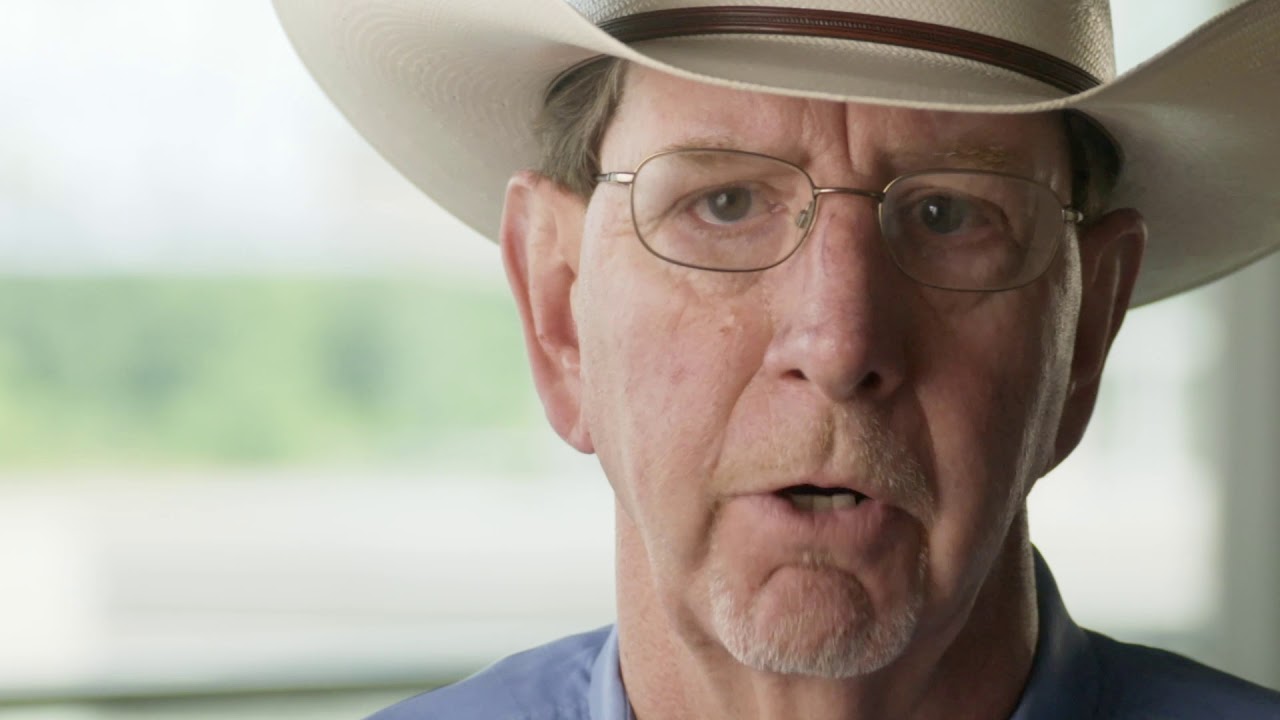 says. “Opening our borders to foreign drug importation will only increase the threat of counterfeits and escalate this crisis.”
The association has previously cited research sponsored in part by pharmaceutical companies to support these statements. It has also, as recently as at least 2016, received grants from these companies to support some of its operations.
In a in front of the House Appropriations Committee earlier this year, former FDA commissioner Scott Gottlieb said he had little worry about consumers buying drugs from Canada, but that the agency remained concerned about online pharmacies that purported to be from America’s northern neighbor.
Research on counterfeit drugs from economist Roger Bate, visiting scholar at the American Enterprise Institute, has found that foreign online pharmacies that are credentialed consistently export safe drugs.
Importing prescription drugs from abroad is illegal in most cases, although surveys suggest that millions of Americans do it anyway. States are allowed to import cheaper drugs from foreign countries, but only if the Department of Health and Human Services verifies their safety.
Trump pledged to lower drug prices during his 2016 presidential campaign and has sought to fulfill this promise during his presidency, though prices have remained mostly the same. On Thursday, the White House backed off a proposal that had been at the centerpiece of its efforts to reduce prices and would have eliminated industry rebates, encouraging drug makers to pass discounts to patients instead.
The president has endorsed importing drugs from countries such as Canada on several occasions, but such a program has yet to be developed at a national level.
The National Sheriffs’ Association adopted a resolution opposing drug importation legislation in July 2017. When the Trump administration proposed a working group to explore safe ways to import drugs in August 2018, the association sent the president a letter outlining its members’ concerns. It argued that allowing imported prescription drugs would likely increase the flow of false or dangerous drugs into the United States and worsen the opioid epidemic.
“Already overburdened law enforcement and regulatory capacity would be unable to ensure a safe prescription drug supply under importation,” the letter said.
The association issued another statement reiterating these concerns this past January, after members of Congress on both sides of the aisle introduced bills that would allow patients and pharmacists to import drugs from Canada and other major countries.
To explain the dangers posed by importation, both the letter from last August and the statement from January cited a study published in June 2017 by the Freeh Group, an international risk management firm. That study was commissioned by the Partnership for Safe Medicines, a 501(c)(6) organization with more than 60 members, according to its website. Those members include both 501(c)(3) nonprofits and other 501(c)(6) groups, such as the Pharmaceutical Research and Manufacturers of America, the premier trade association of pharmaceutical companies and the industry’s largest lobbying group.
The National Sheriffs’ Association, meanwhile, is a 501(c)(4) social welfare organization, so it is not required to disclose its donors and does not do so voluntarily. According to IRS filings, it raised $7.1 million in revenue from October 2016 through September 2017.
In the past, the association has partnered with pharmaceutical companies for other purposes. In 2016, it received a $350,000 grant from Purdue Pharma to train sheriffs to use naloxone, the opioid-overdose reversal drug, and a grant of an undisclosed amount from biopharmaceutical company Alkermes, Inc. to raise awareness about the opioid epidemic among law enforcement officers.
the association did not return requests for comment as to whether the recent anti-import ad campaign was part of a partnership.
Such 501(c)(4) groups are allowed to engage in political activity, so long as politics do not become their primary activity — a guideline that has been interpreted to mean that up to 49.9 percent of their funds can be spent on politics.
The ads in the sheriffs’ association campaign are classified as issue advocacy ads, since they are political in nature but do not expressly advocate for a candidate. FCC filings list prescription medication as the issue of national importance in each ad.
---
---
this rachets up on builds on d'souza BS about how dems are predatory on POC AA?
https://www.alternet.org/2022/02/free-base-pipe/
no lnx vid twt?
Right-wing website made up viral fake claim Republicans like Marco Rubio are now pushing: report
[Marco Rubio embarrasses himself again by doubling down on false attack of defense secretary]
David Badash and The New Civil Rights Movement February 10, 2022
This week Republican lawmakers and voters have had a great time pushing a false claim that the Biden administration is spending tens of millions of dollars to pay for "free crack pipes" for drug abusers. The claim came from a report by the right-wing website Washington Free Beacon, including a quote falsely attributed to an HHS spokesperson, according to The Daily Beast.
It's no surprise The Daily Beast is calling "a lie" made its way to the floor of the U.S. House of Representatives and a U.S. Senator's Twitter account.
"The Washington Free Beacon seemed to take a big leap to assert that free crack pipes would be part of a harm reduction package," The Daily Beast's Roger Sollenberg reports, calling it "a lie rocketed around conservative media."
The report, published Monday and titled “Biden Admin To Fund Crack Pipe Distribution To Advance ‘Racial Equity,’” cited an HHS spokesperson as confirming that a sweeping harm reduction package “will provide pipes” to smoke, quote, “any illicit substance.”
The Free Beacon's article reads: “A spokesman for the agency told the Washington Free Beacon that these kits will provide pipes for users to smoke crack cocaine, crystal methamphetamine, and ‘any illicit substance.’”
The Daily Beast reviewed the email chain between the Washington Free Beacon and HHS. It's unclear how the Free Beacon made the "any illicit substance" claim, given the HHS email specifically states no federal laws would be broken.
In fact, The Daily Beast reports the HHS spokesperson says the Free Beacon “omitted the information shared with him about the grantees needing to comply with federal, state, and local laws—the very language that would prohibit crack pipes.”
The damage has already been done. The "free crack pipes" claim is now one more myth in conservatives' false reality.
Arizona far-right Republican U.S. Congresswoman Debbie Lesko made the false claim on the floor of the House of Representatives:
:{:{}:
}:
Florida Republican U.S. Senator Marco Rubio, linking to an article literally titled: "Biden administration denies funding programs that hand out crack pipes to prevent infection and promote 'racial equity'" says in a video posted to his Twitter account, "The Biden administration is going to be sending crack pipes and meth pipes, targeting minority communities," a claim he knows is a lie.
:{:{}:
}:
Fox News entertainers Tucker Carlson and Sean Hannity both made the most of the claim, with The Daily Mail reporting: "Tucker Carlson slams policy to hand out free crack pipes and needles warning it 'will result in addicts shooting up on the streets.'"
The genie is out of the bottle, and no one on the right has any intention or desire to put it back.
---
---
an 11 21
Criminologists and, increasingly, local court systems love the idea of "swift, certain and fair" punishments for drug use (including alcohol) by people with criminal justice system involvement. They say that releasing people with strict anti-drug use conditions will curb mass incarceration, cut costs and assist in rehabilitation — a win for everyone.
Not only is this misleading, but the programs they are creating might be unconstitutional. That is what the ACLU contends of the 24/7 Sobriety Program in Wyoming, in a demand letter recently sent to Governor Mark Gordon, Attorney General Bridget Hill, the Teton County Sheriff's Office and others.
Its effectiveness as a public safety program is also in doubt.
The program, which was first created as a result of a 2014 law, creates stringent pretrial release conditions for people awaiting alcohol-related charges. Anyone caught drinking will be put back in jail. State lawmakers were inspired by a program created by former South Dakota Attorney General Larry Long in his state.
A training from the South Dakota Attorney General's Office illustrates what the program looks like, as well as some of the ideas behind it. The first slide tells the audience, "Why do we need the 24-7 Program? UNENFORCEABLE CONDITIONS," then lists examples of these conditions: Don't drink. Don't go to bars. Don't drive.
Later, it explains the program's two breathalyzer tests per day, which are mandated whether or not the person is driving. People who are convicted, but also those who are presumed innocent until proven guilty, can face these conditions. They also have to pay for the testing themselves.
A 2017 best practices manual from the National 24/7 Advisory Council shows another bad side to the program. Despite being billed as a personal-responsibility program that saves money and allows people to keep their jobs, South Dakota's in-person testing requirement "made it very difficult, if not impossible, for participants to obtain and keep jobs, attend school, or maintain a healthy family life." The state then introduced a transdermal patch as an alternative testing option.
In Wyoming, people are still coming in person for these tests. To be eligible for the program, the Teton County Sheriff demands an enrollment fee of $30, cash only, exact amount only.
Academic and think tank researchers bolstered the spread of the program, but their research has arguably been mischaracterized by the program's founder, Larry Long.
Sandwiched in between stories of drunk driving and domestic violence, Long wrote in 2017 that "RAND research, published in Lancet Psychiatry in 2016, showed that the implementation of a 24/7 Sobriety Program was followed by a 4.2% decrease in the state's mortality rate, equal to saving the lives of several hundred South Dakotans a year."
Yet Michael Farrell of the National Drug & Alcohol Research Centre in Australia, in summarizing that paper, stated: "In an analysis of cause-specific mortality, circulatory disorders but not digestive disorders or injuries (all proxies for alcohol-related mortality) were significantly reduced, whereas there was no association with cancer-related deaths (a falsification test)."
And the authors of the original paper themselves acknowledged that the decline in mortality was "most evident among circulatory disorders" amongst 24/7 Sobriety Program participants.
Thus, the program is not really about crime; rather, it is wielding public health concerns as a carceral weapon. The government has opted to subject the people it is allegedly trying to help to a humiliating, pervasive surveillance.
It is not surprising when you look at the founding members of the National 24/7 Advisory Council. Honolulu Prosecuting Attorney Steve Alm, the inventor of the ineffective and repressive HOPE probation program, is there. So is Stephen Talpins, the second-in-command to the fake-progressive Miami-Dade County State Attorney, Katherine Fernandez Rundle, who described the South Dakota program as "one of the most progressive programs in the country."
This article was originally published by Filter, a magazine covering drug use, drug policy and human rights
---
---
south Dakota voters ended marijuana prohibition — but Kristi Noem helped get it overturned by a judge
February 09, 2021
The will of the voters in South Dakota was overturned by a judge on Monday.
"A Hughes County judge has ruled that a voter-approved amendment to the South Dakota Constitution ending marijuana prohibition in the sta
---
aha /doh: pot legalized via prop, jeff feds resist; decrim really 1st and only concrete step to crim justice reform? (after koch backed bill?]
an 1220
oregon just decriminalized all drugs – here’s why voters passed this groundbreaking reform
Scott Akins, Oregon State University and Clayton Mosher, Washington State University
Oregon became the first state in the United States to decriminalize the possession of all drugs on Nov. 3, 2020...
---
---
https://www.alternet.org/2020/02/trump-thinks-authoritarian-executions-stop-drug-use-but-hes-totally-wrong/
---
==
https://www.alternet.org/drugs/crackdowns-heroin-pain-pills-gave-rise-fentanyl-overdose-epidemic
==
https://www.alternet.org/2019/01/answer-why-heroin-cocaine-drugs-are-crimes/
==
https://www.alternet.org/2019/01/answer-why-heroin-cocaine-drugs-are-crimes/
==
---
an 1219
America’s Afghanistan anti-drug boondoggle nears the $9 Billion markPhillip Smith / Independent Media inst
---
===
war metaphor agw
:{:{}:
}:
https://grist.org/article/the-war-on-climate-the-climate-fight-are-we-approaching-the-problem-all-wrong/
==
---
duterte
---
---
https://www.alternet.org/drugs/mexicos-cartels-have-gotten-so-big-they-act-governments
Mexican villagers impacted by a tropical depression that hit the northwestern state of Sinaloa in September are saying “Thank you, El Chapo!” after receiving much-needed donations of mattresses and electric stoves attributed to imprisoned Sinaloa cartel leader, Joaquin “El Chapo” Guzman Loera.
Despite being the head of one of the most violent and powerful drug trafficking organizations in the world, El Chapo still retains popular support, especially in his home state of Sinaloa. That’s in part because, like some other drug traffickers, the Sinaloa cartel has taken care to reach out to local populations, especially when the state has failed to provide critical services.
Colombian Medellin cartel head Pablo Escobar, for example, built up a political base by building soccer fields and housing developments in Medellin in the 1980s. Other Mexican drug traffickers have taken a similar approach to building popular support. The notorious Zetas handed out Christmas gifts to the poor in 2014 in Nuevo Laredo, and added food to the presents last year.
The Mexican cartels are also notorious for boosting local economies with outrageous spending on multi-day fiestas and for providing “narco alms”—cash donations to local priests and parishes to fund public works and church activities—in bids at winning popular support. Such giving created a scandal in 2010, when it was revealed that a church with a stunning 65-foot cross built in a working-class barrio of the central Mexican city of Pachuca bore a plaque thanking Zetas head Heriberto Lazcano for its construction....
el chapo widow philanthrpy?!
---
==
How This Red State's Cruel Meth Laws Are Putting Women Behind Bars in Record Numbers
By Phillip Smith, Independent Media Institute
In South Dakota, testing positive for drugs is a felony. READ MORE»
==
asa h
https://www.motherjones.com/politics/2018/08/exclusive-senators-are-demanding-information-about-giulianis-opioid-lobbying/
met w rudy and perdue, let off hook
---
==
aha war on drugs is sys fail; opium record amounts in afghanistan (which is a regional issue, other countries are stakeholders [Paki intel works at cross purposes?)
drug WAR is wrong metaphor: build a wall to keep the bad guys out; ignores the demand (ppl are sick, need treatment); opioid epidemic of despair (often starts with pain med for ppl hurt at work; trump no $ for new opioid pgm (tho recently rolled on going after co's?); opioid sold as non-addictive, data hidden like tobacco?
see dana m on traps: problem with drug war is that the obvous tactic is to push harder, arrest more, harsher mandatory sentnences (3 strikes) but it just reduces supply which raises the price which provides more resources to smuggle and incentives to use violence (so the answer is surrender? truce?) legalize? libtard reductionism? (junkies who kill themselves are "externalities/ collateral dmamage, stupid poor brn ppl who take themselves out of the darwinian/american pool?)
connection between militarism and drug addiction? 4 horse [heroin pun] war on terror
war on drugs big under nixon, Reagan and bush 43 --> PIC (Clinton triangulation)
---
https://www.alternet.org/drugs/how-prevent-opioid-overdoses-provide-addicts-free-pharmaceutical-heroin
no lnx
This Bold Plan to Fight Opioid Overdoses Could Save Lives — But Some Conservatives Think It's 'Immoral'
That's what the Dutch do, and it's working.
By Phillip Smith / Independent Media Institute July 17, 2018,
With Ohio beset by a massive public health around opioid use and overdoses—more than 4,000 Ohioans died of opioid overdoses in 2016—the Cleveland Plain Dealer sent travel editor Susan Glaser to Amsterdam in search of innovative approaches to the problem. While there, she rediscovered Holland's long-standing, radical, and highly effective response to heroin addiction and properly asked whether it might be applied to good effect here.
The difference in drug-related death rates between the two countries is staggering. In the U.S., the drug overdose death rate is 245 per million, nearly twice the rate of its nearest competitor, Sweden, which came in second with 124 per million. But in Holland, the number is a vanishingly small 11 per million. In other words, Americans are more than 20 times more likely to die of drug overdoses than the Dutch.
For Plain Dealer readers, the figures that really hit home are the number of state overdose deaths compared to Holland. Ohio, with just under 12 million people, saw 4,050 drug overdose deaths in 2016; the Netherlands, with 17 million people, saw only 235.
What's the difference? The Dutch government provides free heroin to several score hardcore heroin addicts and has been doing so for the past 20 years. Public health experts there say that in addition to lowering crime rates and improving the quality of life for users, the program is one reason overdose death rates there are so low. And the model could be applied here, said Amsterdam heroin clinic operator Ellen van den Hoogen.
"It's been an enormous success. I think it would work elsewhere," she told Glaser.
It already has. The Dutch program was modeled on a similar effort in Switzerland, which has also proven successful. Germany and Britain have also adopted similar programs.
The Dutch approach is an example of the country's policy of gedogen (pragmatic tolerance), the same principle that led the Dutch to pioneer legal access to marijuana in the 1980s. It is also rooted in the notion that, for some, drug addiction is a chronic disorder, not a condition to be "cured," and one that can be treated with supervised drug use under clinical supervision. And the complete cessation of drug use need not be the ultimate goal; rather, the Dutch look for reductions in criminal activity and increases in the health and well-being of the drug users.
"It's not a program that is meant to help you stop," acknowledged van den Hoogen. "It keeps you addicted."
That's not a sentiment sits well with American moralizers, such as George W. Bush's drug czar, John Walters, whom Glaser consulted for the story. He suggested that providing addicts with drugs was immoral and not "real treatment," but he also resorted to lies about what the Dutch are doing.
He claimed the Dutch are "keeping people addicted for the purpose of controlling them" and that the Dutch have created "a colony of state-supported, locked-up addicts."
Actually, the Dutch are dealing with older, hard-core addicts who have repeatedly failed to quit after repeated stints in treatment, including methadone maintenance therapy, and they are neither "controlling them" or locking them up. Instead, the people in the program show up at the clinic twice a day, get their fix, then go about their business. This heroin-assisted treatment (HAT) allows those hardcore users to live less chaotic and more productive lives.
And heroin-assisted treatment is "real treatment," said Peter Blanken, a senior researcher with the Parnassia Addiction Research Centre in Rotterdam. He pointed out that one-quarter of program participants make a "complete recovery," including better health and quitting illegal drugs and excessive drinking. Many others continue to use heroin, but do so with better outcomes, he said.
There is also a real safety benefit to using state-supplied pharmaceutical heroin. It's potent, but it's a known quantity. Users face no risk of adulteration with more dangerous drugs, such as fentanyl, which is deeply implicated in the current U.S. overdose crisis.
In the current political atmosphere in the United States, providing heroin to hard-core addicts is a hard sell indeed. Other, lesser, harm reduction interventions, such as needle exchanges remain controversial, and the country has yet to see its first officially sanctioned safe injection site. And drug decriminalization, which has led to a dramatic reduction in heroin addiction and overdose deaths in Portugal, remains off the table here, too. But with an annual drug overdose death toll of more than 50,000 people a year, it may time to start asking how many more Americans we are willing to sacrifice on the altar of moralistic drug prohibition.
This article was produced by Drug Reporter, a project of the Independent Media Institute.
---
==
too big to jail:
Whistleblowers: DEA attorneys went easy on McKesson, the country's largest drug distributor
A 60 Minutes/Washington Post joint investigation into the DEA's response to the opioid epidemic again finds investigators who hit a brick wall in Washington
2017
Dec 17
CORRESPONDENT
Bill Whitaker
In October, we joined forces with the Washington Post and reported a disturbing story of Washington at its worst - about an act of Congress that crippled the DEA's ability to fight the worst drug crisis in American history - the opioid addiction crisis. Now, a new front of that joint investigation. It is also disturbing. It's the inside story of the biggest case the DEA ever built against a drug company: the McKesson Corporation, the country's largest drug distributor. It's also the story of a company too big to prosecute.
In 2014, after two years of painstaking inquiry by nine DEA field divisions and 12 U.S. Attorneys, investigators built a powerful case against McKesson for the company's role in the opioid crisis.
Our reporting turned up the leader of the DEA team, David Schiller, who tells for the first time how his investigators hit a brick wall in Washington when they tried to hold the powerful company accountable.
fullmain.jpg
David Schiller CBS NEWS
David Schiller: This is the best case we've ever had against a major distributor in the history of the Drug Enforcement Administration. How do we not go after the number one organization? In the height of the epidemic, when people are dying everywhere, doesn't somebody have to be held accountable? McKesson needs to be held accountable.
Holding McKesson accountable meant going after the 5th largest corporation in the country. Headquartered in San Francisco, McKesson has 76,000 employees and earns almost $200 billion a year in revenues, about the same as Exxon Mobil. Since the 1990s, McKesson has made billions from the distribution of addictive opioids.
David Schiller: I was with DEA for over 30 years. I was the Assistant Special Agent in Charge for the Denver Field Division.
Bill Whitaker: How many people did you supervise?
David Schiller: Approximately 100.
"They're killing people. And their motive? This is all for financial gain. That's the problem."
Before he retired in August, Schiller had supervised investigations in drug trafficking and money laundering cases, but he considered the case against McKesson to be the single most important investigation of his lifetime.
Bill Whitaker: What did they do that was wrong?
David Schiller: The issue with McKesson was they were providing millions and millions and millions of pills to countless pharmacies throughout the United States, and they did not maintain any sort of due diligence. This wasn't just happening in Denver, Colorado. This was happening in Los Angeles, California. It was happening in Detroit, Michigan. It was happening in New York City. It was a national problem and nobody wanted to deal with it.
McKesson told us when it comes to the opioid crisis and pills flooding into American communities, there's plenty of blame to go around: drug makers; other distributors; doctors; pharmacies, all played a role.
But in 2008, McKesson agreed to pay $13.3 million in fines for failing to report huge orders of hydrocodone to shady internet pharmacies. After that settlement, the company promised to do a better job of monitoring shipments of controlled substances. Now, special agent Schiller and his team had caught McKesson again shipping suspicious orders of opioids.
DEA investigators discovered that McKesson was supplying pharmacies and doctors, that were fronts for criminal drug rings and pills were ending up on the black market.
David Schiller: And everybody kept saying, "It's just a prescription drug. It's a pill. It's a liquid. What's the big deal?" And I would say, "They're killing people." And their motive? This is all for financial gain. That's the problem.
Bill Whitaker: One of the Former D.E.A. Administrators said that the McKesson Corporation has fueled the explosive prescription drug abuse problem in this country. Do you agree with that?
David Schiller: 100%. If they woulda stayed in compliance with their authority and held those that they're supplying the pills to, the epidemic would be nowhere near where it is right now. Nowhere near.
Bill Whitaker: So you decided to take a swing at a hornet's nest.
David Schiller: I knew that if we could get to the distributor, we could make a great impact for the United States citizens immediately. Immediately.
mckessan-ext.jpg
McKesson Corp. Headquarters CBS NEWS
McKesson delivers more than 1/3 of all medicines in the U.S. from a network of 30 warehouses around the country. The DEA requires drug distributors to identify, stop and report orders of unusual size or frequency to the agency - something Schiller says McKesson did not do until the company learned it was under investigation.
David Schiller: They had hundreds of thousands of suspicious orders they should have reported, and they didn't report any. There's not a day that goes by in the pharmaceutical world, in the McKesson world, in the distribution world, where there's not something suspicious. It happens every day.
Bill Whitaker: And they had none.
David Schiller: They weren't reporting any. I mean, you have to understand that, nothing was suspicious?
In one case, DEA investigators discovered that McKesson was shipping the same quantities of opioid pills to small-town pharmacies in Colorado's San Luis Valley as it would typically ship to large drugstores next to big city medical centers.
Helen Kaupang: McKesson is supplying enough pills to that community to give every man woman and child a monthly dose of 30 to 60 tablets. Is that not shocking? I found it shocking.
Helen Kaupang, retired from the DEA this fall after 29 years as an investigator and supervisor. She worked with Schiller on this investigation. She says the delivery of so many pills to such small towns should have set off alarms at McKesson.
kaupang-cu.jpg
Helen Kaupang CBS NEWS
Helen Kaupang: There was no legitimate reason for that pharmacy in that little town in remote Colorado to be getting hundreds of thousands of pills over a several-year period. None.
Bill Whitaker: Did McKesson know this, or should McKesson have known this--
Helen Kaupang: Absolutely. It was their customer. They were supplyin' it. It was just outrageous. They were turning a blind eye to the very problem that we were trying to address.
Kaupang said to get around reporting suspiciously large orders, at the time, McKesson would simply raise the limit a pharmacy was allowed. No order, no matter how large, was ever reported as suspicious.
Bill Whitaker: They would set a threshold. And if they surpass their own threshold--
Helen Kaupang: Yes.
Bill Whitaker: They would just bump up the threshold to meet this new higher number?
Helen Kaupang: Yes.
Bill Whitaker: So they rigged the system.
David Schiller: Absolutely. Absolutely.
Bill Whitaker: And to be clear here, we're talking addictive opioids.
David Schiller: Highly addictive, Oxycodone and Hydrocodone in particular. That's what we're talking about. The most commonly prescribed and abused controlled substance in the United States.
Bill Whitaker: McKesson would say they're just supplying the doctors and the pharmacies. They're giving them the prescriptions they are allowed to have. How are they wrong?
David Schiller: Because they are going above and beyond those thresholds without any due diligence, with reckless regard and they don't consider any of that suspicious?
A 2014 DEA memo that outlined the investigative findings from all the field offices, obtained by 60 Minutes and the Washington Post, said McKesson, had a pattern of "dramatic increases in thresholds without justification..." And had "supplied controlled substances in support of criminal...Activities" to pharmacies.
David Schiller: I mean the president declared a public health emergency. It's on the front lines of everybody's dinner table conversation. There's not a bigger problem we have in the United States. And who led to the problem? McKesson was at the forefront.
With the opioid epidemic getting worse year by year, special agent Schiller and his team wanted to send a message to the pharmaceutical industry by hitting McKesson hard. They wanted to fine the company more than a billion dollars, revoke registrations to distribute controlled substances, and, more than anything, put a McKesson executive behind bars. But Schiller says, attorneys for the DEA and the Department of Justice retreated at the thought of going against McKesson and its high-powered legal team.
Bill Whitaker: Did a DEA attorney actually tell you that they were not going to pursue McKesson because they had lawyers who had gone to Harvard and Yale?
David Schiller: They told me those exact words, because the case would take too much time and too much effort and, by the way, "What if we lost?" I said, "What if you lost?" I go, "You-- you can't have a better case on a silver platter."
Bill Whitaker: Were they scared?
David Schiller: Yes.
Bill Whitaker: Scared of going after McKesson?
David Schiller: A better word might be "intimidated."
joe-ranazzisi-cu.jpg
Joe Ranazzisi CBS NEWS
This was at the time whistleblower Joe Ranazzisi, the DEA's then deputy assistant administrator, was sounding alarms that the DEA and Congress were bending to the will of the pharmaceutical industry. In our October report, he told us Justice Department attorneys were pressing him and his investigators to take a softer approach toward the industry.
Bill Whitaker: The summer of 2014 -- you get a request to play nice with the pharmaceutical industry.
Joe Ranazzisi: Yes.
Bill Whitaker: What do you think of that?
Joe Ranazzisi: I didn't think it was appropriate. We told 'em what they need to do. We told 'em what compliance is and how to comply with the act. We met these people over and over again. The time for meetings and reports are over. You either comply or you lose your registration.
But in the McKesson case, negotiations with company attorneys went on for more than two years. In the end, instead of the billion-dollar fine DEA investigators wanted, the company was fined $150 million. That was a record for the DEA, but Schiller called it a slap on the wrist for a fortune five company and a second-time offender.
David Schiller: There was backdoor deals being cut that we didn't know about, I didn't know about, and I was representing DEA nationally on the investigation at the highest level. How do you settle? How do you say it's okay just, "Here, write this check this time and-- and close this place for a little bit, sign this piece of paper." How do you do that? No. Put 'em in jail. You put the people that are responsible for dealing drugs, for breaking the law, in jail. Nobody's in jail. They wrote a check.
Bill Whitaker: Did you think McKesson was getting special treatment?
David Schiller: I don't think -- I know they were getting special treatment. They were getting treatment like I'd never seen in my 30-year career.
Getting special treatment, he said, from lawyers at his agency. In an e-mail, a member of DEA's senior leadership team, who sided with Schiller, told him she was overruled.
"David... I am totally against settling," she wrote, "but how do we hold their feet to the fire...? Our attorneys have us over a barrel with their refusal to go to court."
David Schiller: There is not a man or woman in DEA today that's happy with the settlement and morale has been broken because of it.
Bill Whitaker: Why did you ultimately decide to sit down and talk to us?
David Schiller: I saw what's happening to our country now with this epidemic. I saw the limitations being placed on it-- on us by our own people and chief counsel fighting with our own agents and investigators. And I know I'm gonna make a lotta enemies, because people don't like to hear the truth. I'm doing it because the truth needs to be told.
walk-2.jpg
David Schiller and correspondent Bill Whitaker CBS NEWS
Schiller pointed out to us the $150 million fine was only about $50 million more than McKesson CEO, John Hammergren's compensation last year. He was the third-highest paid CEO in the country; only Tim Cook of Apple, and Reed Hastings of Netflix earned more. In the last earning period McKesson's revenues were up $8 billion.
We wanted to speak to a McKesson representative on camera but they declined. But in a statement, McKesson said, "In the interest of moving beyond disagreements… The company agreed to settle with the DEA and DOJ." And McKesson promised to do a better job flagging suspicious orders.
We asked the DEA about allegations its attorneys went easy on McKesson. A spokesperson told us the agreement was a good deal; that the priority was to get McKesson to do the right thing going forward. And now an independent monitor has been put in place to watch McKesson more closely.
Maggie Hassan: The pharmaceutical industry is doing everything it can to keep this epidemic going.
Bill Whitaker: That's pretty strong.
Maggie Hassan: Yeah. It is.
New Hampshire Senator Maggie Hassan has been critical of Congress for not aggressively investigating industry's role in this epidemic. New Hampshire has the second highest rate of drug overdose deaths in the country.
Bill Whitaker: What more is it going to take to convince Congress to act?
Maggie Hassan: Well, one of the things we have to do is begin to hold the pharmaceutical companies accountable for this. And right now, when you see a fine for the McKesson Company of $150 million when they make a $100 million a week in profits, that isn't gonna do it.
Bill Whitaker: What incentive do they have to change their behavior?
Maggie Hassan: Well, right now, they don't have a lot of incentives and that's something that has to be changed. This in many ways reminds me of the situation with big tobacco-- and, you know, I think it's one of the reasons you see attorneys general around the country--beginning to file lawsuits against the pharmaceutical industry--to hold them accountable for the cost of this terrible epidemic.
41 state attorneys general have banded together to sue the opioid industry. While at McKesson, John Hammergren begins his 18th year as CEO. This year, the board awarded him an additional $1.1 million performance bonus. A bonus based on ethics and accountability.
Produced by Ira Rosen and Sam Hornblower. Associate Producers, Alex J. Diamond and LaCrai Mitchell.
==
http://www.alternet.org/drugs/left-right-challenge-failed-war-drugs
==
http://www.alternet.org/news-amp-politics/war-drugs-taking-center-stage-united-nations
==
94 Professional & Citizen Journalists Killed in 2015
DECEMBER 30, 2015
HEADLINES
Reporters Without Borders says 67 professional journalists and 27 citizen journalists have been killed in 2015 worldwide. The deadliest countries for journalists were Iraq and Syria. The third most deadly country for journalists was France due to the January 7 attack on the newspaper Charlie Hebdo, where eight journalists were killed. Yemen, South Sudan, India, Mexico, the Philippines and Honduras all ranked among the top 10 deadliest countries for journalists. Reporters Without Borders Secretary-General Christophe Deloire spoke about how the majority of journalists killed in 2015 were deliberately targeted for their work.
http://www.popularresistance.org/dea-manual-teaches-police-how-to-lie-about-using-nsa-info/
...New disclosures now allow us to see online the DEA training manuals with which Drug Enforcement Administration agents are taught to coach local police departments across the country how to lie about their chains of evidence and sources, how to willfully violate the law and cover their tracksin thousands or tens of thousands of cases every year in order to fill the cells of the US prison state with drug ...
//eco-terror fusion ctr
:{:{}:
}:
==
UCSC
==
also haney
http://socialsciences.ucsc.edu/research/featured-research/crime-prison-reading-list.html
Craig Reinarman, Professor in the division’s Sociology Department, specializes in law, crime, and social justice and most recently published various arguments for loosening drug policy in the USA.
Reinarman comments in the Santa Cruz Sentinel how"Drug problems cannot be understood apart from the matrix of other social problems in which they are embedded. The solutions will not be simple. Not all drug abuse, licit or illicit, can be considered addiction and not everyone arrested for drug possession needs treatment. But there is a growing consensus that we cannot incarcerate our way out of our drug problems."
==
open secrets:
The following is adapted from OpenSecrets.org’s new marijuana issue profile.Read moreabout the marijuana industry’s campaign donations and lobbying efforts as well as relevant marijuana focused legislation.
In late November 2012, voters in Washington and Colorado passed ballot initiatives to fully legalize marijuana for recreational use. Coloradans were able to start purchasing recreational marijuana on Jan. 1, 2014. As for Washington, the state issued its first retail marijuana licenses about six months later, on July 7th.
So how has Colorado been doing?
Since the beginning of 2014 though early June, Colorado had reaped nearly $11 million in sales and excise taxes on recreational marijuana, with the total take from both recreational and medical marijuana taxes and fees topping out at nearly $18 million, according to the Denver Post. In the fiscal year that begins in July, Colorado could even see $98 million in marijuana tax revenue according to a recent budget proposal from Gov. John Hickenlooper.
But Colorado is not the only state cashing in on marijuana profits. As of August 2014, 22 states and the District of Columbia have legalized medical marijuana and 16 havedecriminalized it. Of course, along with the arguments for legalizing marijuana — the revenue boost, more effective law enforcement and criminal justice, less money supporting organized crime, and wider access for medicinal use — there are also arguments against it. Marijuana is a drug, and with all drug substances there are side effects — including altered perception, which doesn’t mix well with driving. In an effort to promote safe, recreational cannabis use, Colorado is spending $1 million on television ads reminding users: “Drive High, Get a DUI.” Additionally, the National Institute on Drug Abuse states that marijuana can negatively affect your brain, lungs, heart, and mental health.
Whatever the health effects, the legalization of cannabis brings a formerly black market into the legal economy and gives rise to a new industry that spends money in Washington to further its interests.
Where is the Opposition?
As it turns out, there is big money in marijuana prohibition.
- Alcohol and Beer Companies. For the alcoholic beverage industry, legalized marijuana would compete for money Americans devote to leisure pursuits. As a result, some alcohol industries are very slowly beginning to lobby against the legalization of bud. For example, back in 2010 one independent distributor of the California Beer and Beverage Distributors gave $10,000 to Public Safety First, a PAC working against California’s Prop 19 which, if passed, would have legalized various marijuana-related activities in the state. At the federal level, these companies assert their heft by pouring millions into lobbying and campaign donations. Since 2009 the Beer, Wine and Liquor industry has spent at least $19.5 million each year on lobbying efforts, most of which have been focused on alcohol taxes and regulations. And in the 2012 campaign cycle, the industry gave nearly $17.8 million to federal candidates, parties and committees.
- Police Unions. Public Safety First itself, however, is largely funded by a different industry that’s unhappy about the legalization of marijuana: law enforcement. The revenue from waging the war on drugs has become a significant source of financial support for local law enforcement. Federal and state funding of the drug war — as well as the property police forces seize as a part of drug raids — have become significant financial supplements to local forces’ budgets. While these unions exert more influence at the local level (what state or local candidate doesn’t want the endorsement of the Fraternal Order of Police?), they have a presence in Washington as well. Every year since 2008 the National Fraternal Order of Police has spent at least $220,000 on lobbying efforts; the National Association of Police Organizations, $160,000; the International Union of Police Associations, $80,000; and the International Association of Chiefs of Police, $80,000.
- Private Prison Corporations. Private prisons are in the business of filling their jails’ beds, and they make millions by incarcerating nonviolent drug users, such as those convicted for marijuana use and possession, along with violent felons and white-collar criminals. The private prison company GEO is particularly successful at this. In its 2012 annual report, GEO noted that it had filled 65,949 out of 73,000 beds in its 96 facilities; on average the company had a facility occupancy rate of 95.7% for 2012. One of the largest for-profit prison companies, Corrections Corporation of America, even stated in a regulatory filing that keeping the drug war alive is essential to its success as a business: “[A]ny changes with respect to drugs and controlled substances or illegal immigration could affect the number of persons arrested, convicted, and sentenced, thereby potentially reducing demand for correctional facilities to house them.” Since 2008, the Corrections Corporation of America has spent at least $970,000 a year on lobbying. GEO has been less consistent in its lobbying efforts and has spent anywhere between $240,000 to $660,000 a year on lobbying since 2008.
- Prison Guard Unions. Similar to for-profit prison companies, prison guard unions also have a vested interest in keeping nonviolent drug offenders behind bars. TheCalifornia Correctional Peace Officers Association for example gave $1 million to the successful 2008 campaign against Proposition 5, which would have “reduce[d] the parole terms of nonviolent [drug] offenders” while emphasizing drug treatment and rehabilitation programs. At the national level, many prison guards are represented by the American Federation of State, County and Municipal Employees (AFSCME), one of the most politically active labor unions. In the 2012 campaign cycle AFSCME gave more than $13 million to candidates, parties and committees at the federal level. In 2013, AFSCME spent almost $2.7 million on lobbying efforts.
- Pharmaceutical Corporations. Retired police officer turned anti-drug war lobbyist Howard Wooldridge told the Republic Report in 2012 that one of his biggest opponents on Capitol Hill was the Pharmaceutical Research and Manufacturers of America (PhRMA), given that marijuana can “tak[e] the place of everything from Advil to Vicodin and other expensive pills.” PhRMA is certainly an organization to be reckoned with. In 2013 alone PhRMA spent nearly $18 million on lobbying, ranking it ninth in spending among all lobbying clients. Drug manufacturers gave big in the 2012 elections — nearly $21.8 million to various federal candidates and committees as well as the parties.
==