Movies
==
see also celebrity
some kimmel pushback
see ruffalo frack pfoa
AN 1 26 // MELANIA FAIL?
In early 2020, Daily Wire CEO Jeremy Boreing found himself inspired by the eagerness with which the MAGA community devoured Daily Wire documentaries, and he decided to build a conservative Hollywood in Nashville, according to Bulwark Editor Will Sommer.
“Boreing’s pet project was a Game of Thrones–style take on the King Arthur legend, called The Pendragon Cycle: The Rise of Merlin. And, for a while, the right’s long-running dream of having more influence in entertainment seemed like it just might happen,” said Sommer.
But then the series caught the common Hollywood bugs of cost overruns and chaos and Boreing abruptly stepped down and vanished last March, according to Sommer. Then came the layoffs of Boreing’s entertainment division. “The dream of cool Hollywood conservatism,” said Sommer, “lay in ruins.”
But, lo and behold, the first two episodes of Boreing’s $14 million Pendragon project have finally broken ground. Or, maybe it cost $67 million, as podcaster Candace Owens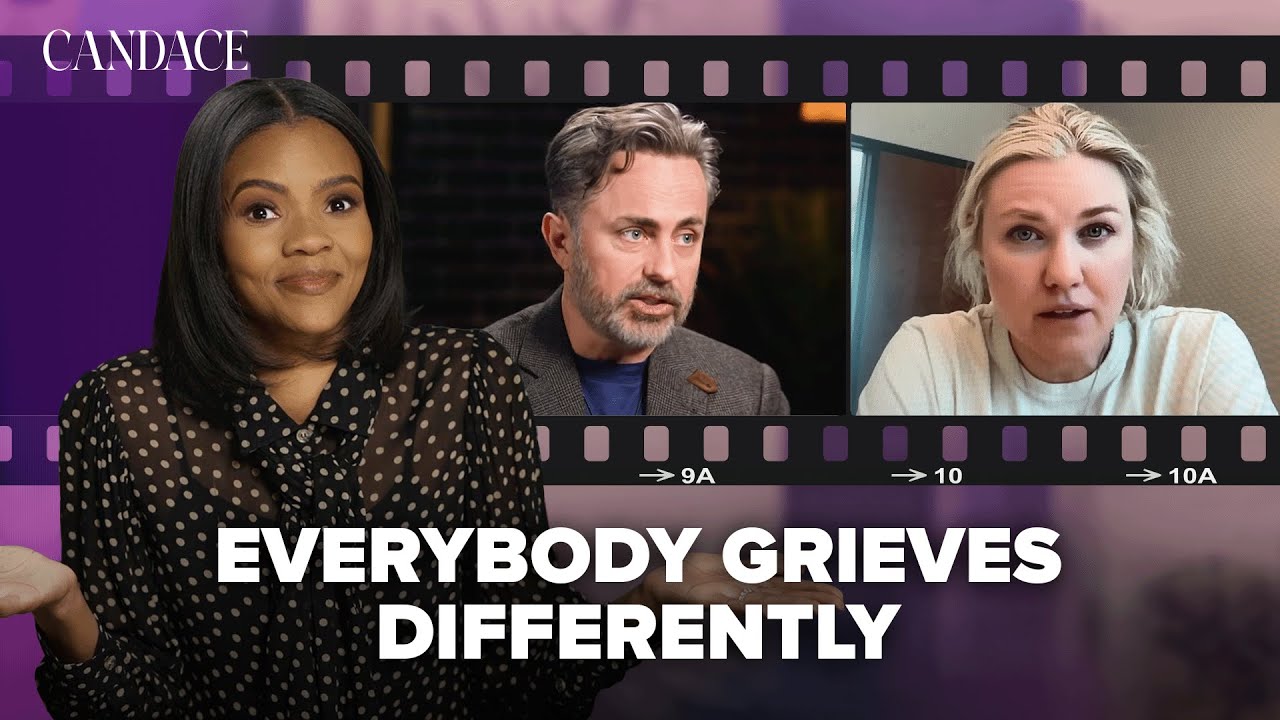 . Either way, the money just couldn’t buy a path out of mediocrity.
“Production-wise, Pendragon has the look of a quickly forgotten second-tier streaming show—which is . . . not bad, certainly when you consider where it’s coming from,” said Sommer. “Unfortunately for Boreing, he was and is no Ted Sarandos, the Netflix honcho hoovering up the competition. Instead, his dreams of bringing Pendragonto life appear to have deeply complicated his own career and the status of the Daily Wire itself. Investors in the conservative news site long ago began to wonder why they were paying so much to make a fantasy TV show when that money could have gone to, say, another dozen podcasts.”
In a “Deadline” interview, Boreing claimed the show cost “eight figures,” with “seven figures” spent on each of the seven episodes, said Sommer — which does not compare with the cheap, self-soothing schmear of Daily Wire’s 2024 documentary Am I Racist?costing just $3 million and then going on to “become the highest-grossing documentary of 2024.”
The problem for Pendragon is that Daily Wire’s audience prefers to buttress its beliefs with echo chamber documentaries, not wizards with arcane ties to Atlantis. It’s yet to be seen what kind of return all that money is going to bring, but Sommer notes that Boreing touched on his “apparently soured relationship” with Daily Wire founder Ben Shapiro in the “Deadline” interview.
“Either way, Boreing seems more focused on the world of movies now,” said Sommer. “He told Deadline he wants to launch ‘a conservative alternative to A24.’ He said Hollywood treats conservative viewers ‘as though they’re anathema. It takes them for granted.’”
“… [T]he sky’s the limit for Boreing’s conservative-film ambitions,” said Sommer, “as long as he is willing to cut the check this time.”
Read the Bulwark report at this link.
---
AN 9 25 COMM DR
After the Trump administration successfully pressured ABC to kick Jimmy Kimmel off the air last week, hundreds of artists signed an open letter Monday denouncing the government’s campaign to “pressure” entertainers and journalists into silence.
The letter, organized by the ACLU, was signed by numerous household names, including Jason Bateman, Jamie Lee Curtis, Ariana DeBose, Jane Fonda, Maggie Gyllenhaal, Regina King, Julia Louis-Dreyfus, Diego Luna, Lin-Manuel Miranda, Natalie Portman, Olivia Rodrigo, Martin Short, and Ramy Youssef.
“Jimmy Kimmel was taken off the air after our government threatened a private company with retaliation for Kimmel’s remarks. This is a dark moment for freedom of speech in our nation,” the letter says. “This is unconstitutional and un-American. The government is threatening private companies and individuals that the president disagrees with. We can’t let this threat to our freedom of speech go unanswered.”
Kimmel’s suspension came hours after the Federal Communications Commission chairman, Brendan Carr, threatened to revoke the broadcast license of ABC Newsaffiliates unless the network pulled the comedian’s late-night show off the air following comments he made criticizing the President Donald Trump’s reaction to the assassination of right-wing activist Charlie Kirk.
Major entertainment unions have condemned Kimmel’s suspension, including SAG-AFTRA and the Writers Guild of America, which organized demonstrations in Times Square and outside ABC’s parent company Disney over the weekend that drew hundreds of protesters, while some actors have pledged to stop working with Disney until Kimmel is reinstated.
In subsequent days, Trump continued to issue threats to the media, suggesting that he would seek to strip the broadcasting licenses of networks that give him “bad press,” saying, “They’re not allowed to do that.”
The letter says that “In an attempt to silence its critics, our government has resorted to threatening the livelihoods of journalists, talk show hosts, artists, creatives, and entertainers across the board. This runs counter to the values our nation was built upon, and our Constitution guarantees.”
Members of the Trump administration, including JD Vance, have also promoted a wide-ranging campaign to have private citizens reported to their employers over critical comments they made about Kirk following his assassination.
Students for Trump National Chair Ryan Fournier created a database with tens of thousands of social media accounts and has boasted of having gotten dozens of people fired over their posts, many of which simply state disagreement with Kirk even without endorsing his assassination.
“We know this moment is bigger than us and our industry. Teachers, government employees, law firms, researchers, universities, students, and so many more are also facing direct attacks on their freedom of expression,” the letter says. “Regardless of our political affiliation, or whether we engage in politics or not, we all love our country. We also share the belief that our voices should never be silenced by those in power—because if it happens to one of us, it happens to all of us.”
Anthony D. Romero, executive director of the ACLU, described these blacklisting efforts as the dawn of “a modern McCarthy era” with Americans “facing exactly the type of heavy-handed government censorship our Constitution rightfully forbids.”
Noting that former Sen. Joseph McCarthy (R-Wis.) “was ultimately disgraced and neutralized once Americans mobilized and stood up to him,” Romero said that “we must do the same today because, together, our voices are louder and, together, we will fight to be heard.”
an 9 25
'Very dangerous': Actress Angelina Jolie says she doesn't 'recognize' America
:{---
AN 9 25
// CONTEXT
Journalist Gabriel Sherman, who wrote the film “The Apprentice,” tells the New York Times that the Hollywood entertainment industry may be too weak to battle an autocrat willing to use the levers of government against it.
“Hollywood is no longer protected by its glamour and profit margins,” said Sherman. “It’s still reeling from the collapse of traditional business models — box office, cable fees, advertising — and the aftereffects of pandemic shutdowns and writer and actor strikes. Entertainment companies, up against tech behemoths with endless resources and an algorithmic sensibility, are desperate to consolidate. They have shed tens of thousands of jobs under pressure to make money-losing streaming businesses profitable. And that’s before A.I. makes these upheavals seem quaint. In this weakened state, the entertainment industry simply can’t afford to fight.”
These are no longer the days of powerful organizations with imperious public relations departments, said Sherman, who watched his well-reviewed “The Apprentice” project fall off the radar after Trump campaign spokesman, Steven Cheung, called it “malicious defamation” and Trump threatened to sue the producers and any company that released it.
“Going into the festival, my producers had lined up screenings with every major studio and streamer. There was tremendous interest from buyers. When Mr. Trump’s campaign attacked the film, the radio went silent,” said Sherman. “Every major Hollywood studio and streamer passed.”
Eventually, independent distributor Briarcliff Entertainment bought the film, which went on to receive two Oscar nominations. But Sherman said Trump’s pressure campaigns are delivering their intended effect.
“Hollywood is paralyzed creatively. In meetings, studio executives say they don’t want projects that are political or could be perceived as anti-Trump. They seem genuinely afraid of an audience that they no longer understand and that may not share their progressive values,” said Sherman. “… The decision by Disney, ABC’s owner, to pull the late-night host Jimmy Kimmel off the air ‘indefinitely’ for comments he made after Charlie Kirk’s assassination feels like a dark turn.”
Before Kimmel, Sherman said CBS’s owner, Paramount, settled Trump’s “bogus lawsuit” against “60 Minutes” and canceled Stephen Colbert. And Trump is now demanding NBC drop late-night hosts Jimmy Fallon and Seth Meyers.
Will Hollywood draw a line? Sherman is skeptical.
“One talent manager texted me that Mr. Kimmel’s ouster could be when Hollywood is finally galvanized to push back,” recalled Sherman, “The manager then cited Hollywood’s “truth to power” filMs, like “All the President’s Men,” “Good Night, and Good Luck,” and “Spotlight.”
But those films were released during a time of healthy box office sales in a culture that hadn’t gone fully berserk with social media, Sherman warned.
“Today’s Hollywood faces a bleaker reality,” he said. “We all do.”
---
pfaw 12 24
Jamie Lee Curtis
---
AN 4 25
Premiering this week, the second and final season of Star Wars streaming show Andor seems destined to be one of the pop culture defining moments of the second Trump presidency.
Andor, which began airing in 2022, tells the story of the early days of the Rebel Alliance before the adventures of Luke Skywalker and Princess Leia. The series is the most politically articulate of the Star Wars franchise.
Where older Star Wars entries focused on lightsaber battles and dogfights in space, Andor shows a world of political manifestos, fractious alliances between rebel groups, and surreptitious fundraising for revolution.
Season one of the show followed the political awakening of the titular Cassian Andor (Diego Luna), who progresses from troubled thief to total ideological commitment to fighting the Empire. The show also follows a covert revolutionary leader (Stellan Skarsgård), an ineffective politician who secretly finances the rebellion (Genevieve O'Reilly), and two Imperials manoeuvring for power (Denise Gough and Kyle Soller).
Showrunner Tony Gilroy has so far taken inspiration for Andor from a variety of real historical revolutionary events, from Stalin’s bank robbery in Tiflis of 1907 to the Baader-Meinhof group in West Germany.
Aesthetically, Andor has more in common with the political filmmaking of the likes of The Battle of Algiers (1966), the films of Costa-Gavras, or than the central Flash Gordon-inspired Star Wars saga.
As authoritarian governments and conflicts loom large globally, the final season of Andor in 2025 is perfectly timed to articulate anxieties much closer to home than the galaxy far, far away.
Star Wars has always been political
Andor is far from the first time that Star Wars has captured the political zeitgeist. In fact, much of the franchise’s success stems from the way it provides us with a pop culture language to talk about politics.
In 2016, Trump’s first election win coincided with the release of Rogue One, the Star Wars precursor to Andor.
Within days, two Star Wars creatives made public comparisons between Trump and Rogue One’s villains, with writer Chris Weitz posting on Twitter “the Empire is a white supremacist (human) organization”. Writer Gary Whitta replied: “Opposed by a multi-cultural group led by brave women”.
They were officially reprimanded by the studio. “This is a film that the world should enjoy,” said Disney CEO Bob Iger at the time. “It is not a film that is, in any way, a political film.”
Under the ownership of a risk averse corporation like Disney, Star Wars is supposed to be family friendly, apolitical entertainment.
However, since its very conception, Star Wars has been political.
Inspired by anti-Vietnam war protests, director George Lucas described Darth Vader and the Empire as “Nixonian gangsters” in early drafts of the original film’s script. Lucas, who had developed Apocalypse Now before Francis Ford Coppola ultimately directed the film, has consistently claimed to have thought of the Rebel Alliance as similar to North Vietnamese fighters resisting United States forces.
When it came time for the prequel trilogy in the 2000s, Lucas told a story of democracy willingly falling to dictatorship (beginning with a trade war, something not lost on contemporary observers). In 2005, Lucas even had Darth Vader paraphrase George W. Bush.
It has also shaped politics. Scholars and critics like Andrew Britton and Robin Wood argued Star Wars was so escapist and disconnected from politics here on earth that it set the scene for Ronald Reagan’s good-versus-evil rhetoric.
A galaxy not so far away
It is precisely Star Wars’ apolitical image that gives it so much political utility. A series with such strong heroes and villains inevitably invites comparison.
Almost immediately after its release in 1977, Star Wars became a pop culture language for understanding politics.
When Maggie Thatcher won government in the United Kingdom on May 4 1979, the Conservative Party took out an advertisement in the London Evening News congratulating her with the words “May the Fourth Be With You”.
When Ronald Reagan proposed a “Strategic Defense Initiative” missile system in 1983, critics immediately and famously labelled it “Star Wars” (something Lucas tried unsuccessfully to stop). Reagan himself eventually joined in, too, claiming in a speech in 1985 that “the Force is with us”.
It is easy to find examples of politicians of all stripes being likened to Star Wars villains like Darth Vader (most enduring was Dick Cheney who claimed to not mind the comparison).
Composer John Williams’ Imperial March has even been played at protests as a way to antagonise opponents.
The enduring currency of the political language of Star Wars is in part due to its generalities. In any political conflict it helps to have a way to describe an archetypal evil puppet master (the Emperor), his henchman (Darth Vader), and the soulful heroes putting their lives on the line (the Jedi).
The real trick to Star Wars’ ongoing relevance, however, lies in its very real inspirations. Whether it is George W. Bush, the Viet Cong, or the Bolsheviks, Star Wars has time and again turned the specifics of political history into mythology.
At a time where many see global politics as having set the stage for the Empire to Strike Back, the final season of Andor may give many a language to articulate A New Hope.
Dan Golding, Professor and Chair of the Department of Media and Communication, Swinburne University of Technology
This article is republished from The Conversation under a Creative Commons license. Read the original article.
---
Tempers flare as Robert DeNiro clashes with Trump supporter outside hush money trial
How Barbie sped up the collapse of Trump’s macho-based hate movement
Thom Hartmann
August 28, 2023
This article was paid for by AlterNet subscribers.
Have you noticed Americans are beginning to reject hate?
Trump’s popularity — even among Republicans — is dropping like a stone, and parents are beginning to show up in large numbers at school board meetings to talk back to bigots and haters.
MSNBC and CNN are filled with Republicans who have rejected Trump and hate. Increasingly, pastors are speaking out against Trump and hate.
Trump called for huge protests at his arraignments, but only a handful of people showed up, and the Wall Street Journal is calling for Republican presidential candidates to organize themselves in a way that will prevent Trump from becoming the GOP’s nominee again.
As investigative reporter Jordan Green notes over at Raw Story:
“On Telegram accounts linked to the Proud Boys, posts about the Maui wildfires — typically suggesting sinister causes or accusing the Biden administration of neglect — appear to outnumber references to the Trump indictment roughly four to one.”
The New York Times reports that even in the weeks before Fani Willis’ Fulton County indictment:
“A majority of Americans, in four recent polls, said Mr. Trump’s criminal cases were warranted.”
And democracy expert David Pepper points out on his excellent Substack blog Pepperspectives:
“Recent polls on Trump are brutal, with more than 60% saying they won’t vote for him in a general election.
“Recent elections in Ohio and Wisconsin confirm that the far right’s toxic brew of extremist policies and attacks on democracy are also deeply unpopular. Absolute losers at the polls.”
Political candidates who base their campaigns on hate are failing, and ordinary cordial discourse among Americans with different political views is beginning to return.
The media has noticed the trend, but they think it’s caused entirely by Trump’s legal troubles. While that’s no doubt a very large factor, I believe there’s also another force at work here: the movie Barbie.
Seriously.
Last week Louise got together with some “girlfriends” — including a few Trump supporters — for a Barbie Party. A group of boomer women all hanging out wearing pink and talking smack about “the patriarchy.”
Before you scoff, consider this:
— The reason “shock therapy” (electro-convulsive therapy or ECT) fell out of favor in America wasn’t just because of the development of anti-depressive medications during that era: it was also because of the movie One Flew Over the Cuckoo’s Nest.
— Deer hunting collapsed as a sport in large part because of the Disney movie Bambi, and sociologists credit the film and it’s “Bambi Effect” with a rise in vegetarianism among boomers who were children when it came out (I sure still remember it, and my parents took me to see it during the film’s revival 66 years ago!).
— Teaching evolution and contrasting it with creationism in American classrooms became acceptable as the result of the movie Inherit The Wind about the Scopes Monkey Trial.
— The nationwide revival of the then-moribund Ku Klux Klan in the 1920s (leading to the Klan taking full political control of the State of Oregon that decade) was entirely attributable to D.W. Griffith’s movieBirth of a Nation.
— The movie Jaws caused a drop (that lasted for years) in people willing to swim in the ocean, as well as an increase in shark hunting that has caused some species to become endangered.
— The film Gone With The Wind, whitewashing the crimes of the Confederacy and the brutality of slavery, led to a revival in “Confederate Culture” that echoes across the South to this day.
Given this history, and the brilliant screenplay, acting, and production values of the movie Barbie, it would be naïve not to think it’s had an impact on American consciousness. The question is, how big is that impact?
A recent survey reported by The Hill found that fully 85 percent of conservatives who’d seen the movie Barbie said it increased their “awareness of the patriarchy at work.”
Fifty-seven percent of all viewers surveyed said the movie “improved their opinion of women in leadership.” The percentage of people surveyed who said that women were more effective leaders than men went from 19 percent before seeing the film to 29 percent after.
A movie ostensibly about a Mattel doll, it opens with a Barbie character proclaiming:
:{
}:
“In Barbieland, corporations are not people, and money is not considered protected free speech!”
From there the plot becomes even more progressive. Ken goes from the matriarchal Barbieland to the “real world” and brings back the idea of patriarchy, a cultural contagion that destroys Barbieland nearly as completely as Trump tried to destroy democracy in America. (I promise not to give away any more of the movie.)
The analogies between the transformations of Barbieland and the collapse of Trump’s macho-based movement are startling; it’s hard to imagine the screenwriters weren’t either influenced directly by it or at least by the same social forces that brought it about.
And it’s hard to overestimate how widespread the impact of the movie has been. It’s grossed over a billion dollars, and fully 22 percent of people who saw it hadn’t been to a movie in years.
:{
}:
Hopefully, this is the start of a trend like the one we saw during the latter Obama years.
:{
}:
Between 2013 and 2014, hate in America experienced a significant decline: in an “Intelligence Report” released in March, 2015, the Southern Poverty Law Center said, as CNN reported, “the number of hate groups operating in the U.S. declined 17% between 2013 and 2014.” They were, SPLC reported, at their lowest levels since 2005.
But then Donald Trump came down the escalator at Trump Towerand, like Satan opening his mouth and unleashing the hounds of hell, poured out a plume of hatred, bigotry, and a call for violence that has saturated our nation for nearly eight long years.
There was an immediate jump in hate crimes, a trend that continued and increased steadily right up until this year. The Washington Post summarized the phenomenon succinctly in a 2019 headline:
“Counties that hosted a 2016 Trump rally saw a 226 percent increase in hate crimes”
It’s premature to proclaim the era of Trump-fueled racism and hate over, but the sense I’m getting from doing a national radio and TV call-in talk show for the past 20 years is that America has begun its much-needed healing.
Perhaps most surprising, people who had previously called in to promote Trump and “conservative values” are increasingly telling me and my listeners that they’ve seen the light and want to work together to make America a better place for all.
Beth Felker Jones writes for Christianity Today that she’s seeing it in her family and her church community, as the twin sensations of Barbie and Taylor Swift’s tour (and Swift’s open disavowal of hate) sweep the nation:
“Movie theaters are full of families and groups of friends, dressed in pink and laughing together; the country’s biggest stadiums are packed out with a tiny slice of those who would have come to see Swift perform, had more tickets been available.”
She notes how the pandemic and America’s political differences pulled us apart for years; now, she writes, things are changing for her kids and others:
“Now they’re hungry for togetherness. They’re hungry for large-scale shared cultural events and wearing dress-up clothes in public.”
Whether it’s Barbie or the Trump prosecutions that have brought about what feels like the early stages of a sea-change in the American zeitgeist — or the perfect storm of the combination of the two around the same time — I’ll take it.
America is better for both!
tequila habitat; autism film 180? vax?
https://theintercept.com/2020/12/09/barbuda-resorts-dejoria-de-niro/
still no fed law, trump admin threat veto; mark ruffalo movie Dk waters
does not brk down in nature or ppl thus massive liability
FEBRUARY 15, 2020
Exposure
Environmental lawyer Robert Bilott chronicled his 20-year legal battle against DuPont.
https://www.c-span.org/video/?468718-10/exposure
pfos
==
Sam Mendes’ ‘1917’ has one major flaw: It’s irresponsibly nationalistic in the age of Trump:{https://www.alternet.org/2020/01/sam-mendes-1917-has-one-major-flaw-its-irresponsibly-nationalistic-in-the-age-of-trump/:(style="font-weight:400"):}:Matthew Rozka sp
Rush Limbaugh Is Furious That a Black Actor Might Be the Next James Bond
by :{December 24, 2014:(style="box-sizing:border-box;outline:none;margin:0px;padding:0px"):}:
The right-wing radio host is apparently thoroughly confused by the concept of fiction.
http://www.alternet.org/environment/why-sharknado-4-matters-do-climate-disaster-movies-hurt-climate-cause
Given that 2016 is expected to be the hottest year on record, with several months that not only surpassed old heat records but did so by increasingly large margins, it stands to reason climate change should be an issue we as a nation are rushing to address. But we’re not, exactly. Instead, climate scientists are subject to political attacks and lawsuits, and debate over whether climate change even exists roils the United States Senate. A reasonable person could be left wondering how the hell we got here.
Social scientists have made great strides in determining what factors influence climate denier attitudes and what kinds of messages have the potential to combat denial. Indeed, a burgeoning movement of academics and communicators are taking on the problem of climate denial with gusto, working nonstop to produce empirically based strategies for getting the message out to the public.
Despite these efforts, researchers have paid less attention to how we’re talking about climate change in a larger cultural sense.
Enter “Sharknado.” On July 31, the fourth installment of the “Sharknado” film series aired on SyFy. The low-budget films are a surprise smash hit, breaking records in 2013 with the original “Sharknado.” It’s led to a series of movies and a variety of media spin-offs, including a video game and companion book.
If you’ve missed this cultural phenomenon, worry not: The film’s title tells you most of what you need to know. Major American cities are suddenly beset with waterspouts flinging man-eating sharks – sharknados – through the air at 300 miles per hour, while characters attempt to survive. The plots are predictably ridiculous and the special effects – particularly in the first “Sharknado” – are about what you would expect from a B-movie.
At their heart, however, the “Sharknado” films are stories about climate change, albeit in a way that is scientifically flawed to a comical degree. It’s a genre – climate disaster films – we decided to explore as an emerging mode of communication in society.
Fiction helps us understand reality
It’s explained in the original “Sharknado” that climate change has created an unusually strong tropical cyclone approaching Southern California. The sequels backed away from that explanation, whether out of a desire to avoid courting political controversy or simply because the creators felt that sharknados needed no explanation, we can’t be sure. But casting climate change as a catalyst for extreme, globally threatening natural disasters is a move characteristic of a small but growing genre of climate disaster films.
With a few notable exceptions (“The Day After Tomorrow” and “Snowpiercer” come to mind), climate disaster films tend to be low-budget, made-for-television creatures. Silly as they may seem, they represent the first drops in what is sure to be a storm of fictional depictions of climate change as the issue gains more traction in the public consciousness. In a very real sense, these films are the product of a society attempting to grapple with a massive social threat unlike anything we’ve seen before.
The Twilight Zone TV series featured episodes about the dangers of nuclear war, including the episode ‘Third from the Sun’ in 1960, which was based on a science fiction short story. Bureau of Industrial Service (Wikipedia)

Climate fiction films are important for their potential impact on the public. Climate change itself is difficult to observe for those not trained in environmental sciences; typically people don’t notice small changes that happen over time, and carbon dioxide emissions are invisible to the naked eye. Meteorological and climatological records are regularly questioned by climate deniers, some of whom hold political office. Even personal experience may not sway opinions: Research suggests that a person’s political leanings can even affect whether he or she perceives unusual weather patterns to be out of the ordinary.
Some scholars hypothesize that this is where fiction comes in. As researcher David Kirby puts it, fiction can serve as a “virtual witnessing tool” that lets us see the scientific process. Literary scholars tout science fiction’s ability to show us futures that have not yet come to pass without having to live through them. Indeed, one of fiction’s power is this ability to let us explore scenarios and situations in a safe way, without real risk to life or property.
Consider, for instance, the prevalence of fiction about nuclear war during the Cold War. These stories were widely credited with helping society envision the future after a nuclear exchange even as political leaders worked to prevent such an event. Books (and later film adaptations) like “Fail-Safe” and “On the Beach” shaped society’s understanding of the consequences of nuclear war. Television shows like the “Twilight Zone” featured stories – and warnings – about nuclear weapons prominently in their plots. President Ronald Reagan even noted in his journal the television movie “The Day After” had a profound effect on him.
Medium for misinformation?
What does this mean for climate change? Like nuclear war, a future in which humanity has undertaken no effort to combat climate change is one we hope to never see. Can fiction play a role in shaping our attitudes and beliefs about climate change and encourage the public to take the threat seriously before it’s too late?
A handful of studies were conducted around the release of “The Day After Tomorrow.” Similar studies were also conducted on the docudrama “The Age of Stupid” and the documentary “An Inconvenient Truth.” But these studies typically examine only blockbuster films and do not address disaster films as a whole.
The studies generally suggest that fictional depictions of climate change can have an effect on audiences – at least in the short term. Seeing clips of these films tends to raise levels of environmental concern and, in some cases, cause people to be more supportive of action to meet the climate threat.
‘The Day After Tomorrow’ depicts an out-of-control and damaging natural world.
To get a better sense of how fictional disaster films shape environmental attitudes, I (Lauren) conducted an in-depth analysis of 18 disaster films featuring climate change. The results of my research show that most of these films make only tenuous connections between climate change and natural disasters, which affects how people react to them.
Terminology related to climate change and extreme weather is often misused, and it’s not uncommon to see films that use the term “climate change” or “global warming” to refer to completely different phenomena – some of which are physically impossible and could happen in no world. For example, one film uses climate change to discuss a buildup of methane gas in the atmosphere that is predicted to ignite, incinerating all life on Earth.
The results from focus groups I held with participants who watched one of three representative disaster films confirm that these scientifically dubious depictions of climate change dilute any perceived environmental message in climate disaster films. Most participants were unconvinced – often with good reason – that anything shown in the films could happen in the real world and did not see much of an environmental message.
More worrisome is the possibility for climate fiction films to distribute misinformation. Because many films draw on real terminology used by climatologists and atmospheric scientists to add a sense of realism to their films, audiences may find themselves confused where fiction ends and facts begin.
Here to stay
There is some precedence for these concerns. Research on historical fiction filmssuggests that people often remember misinformation presented in fictional narratives and then attribute these “facts” to authoritative sources like textbooks. This has been observed even when participants are warned ahead of time that they will be seeing a dramatization of a historical event that contains inaccuracies.
As society struggles to envision a future shaped by climate change, we will continue to produce works of fiction that depict these futures. Climate disaster films are only one facet of this phenomenon, and more are sure to come.
Follow-up studies examining the effects of “The Day After Tomorrow” on public attitudes toward climate change hint at possible changes.
In the short term, audiences were more concerned about climate change after viewing the film and were more willing to take some political action to combat the threat. Long term, the film seemed to clue audiences in to the problems of climate change, and provided something of a cultural script with which to discuss it.
It’s worth noting, however, that “The Day After Tomorrow” was an exception within the larger climate disaster film genre, both in terms of its production value and its (relatively) detailed discussion of climate change. Low-budget films like “Sharknado,” which stray very far afield from climate science, likely pose different possibilities for both misinformation and engagement with climate change. The question, then, is how to best tap into this potential while avoiding the pitfalls.
This article was originally published on The Conversation. Read the original article.
Lauren Griffin is an adjunct associate professor of sociology at the University of Florida. Lauren is also a writer for frank, a public interest communications organization housed in the College of Journalism and Communications at the University of Florida. Learn more about frank on Twitter: @frankgathering.
Ann Christiano is the the Frank Karel Chair in Public Interest Communications. Her role is to develop a curriculum in the newly-emerging discipline of public interest communications, which uses the tools of public relations and journalism to create positive social change. Before joining the University of Florida, she directed communications for The Robert Wood Johnson Foundation's Vulnerable Populations portfolio. She has also worked with the Washington Business Group on Health, now the National Business group on Health.
==
http://www.motherjones.com/mixed-media/2014/01/hollywood-movies-change-political-views-more-liberal-study
2.The Day After Tomorrowmade you care more about global warming.
Yes, yes, we know it wasn't scientifically accurate or plausible. But did the 2004 disaster film, in which global warming somehow manages to bring on a new Ice Age (you are right to scratch your head), make audiences more worried about climate change? According to a study by current Yale researcher Anthony Leiserowitz, the answer is yes. Leiserowitz conducted a national survey three weeks after the film's release, and found that 83 percent of film viewers said they were "somewhat" or "very concerned" about global warming, compared with 72 percent of nonwatchers. Moviegoers were also more likely to believe in the likelihood that a variety of climate-related impacts, ranging from more extreme weather to the flooding of major cities, would occur in the next 50 years. The study only sampled 529 people, but The Day After Tomorrow grossed more than $500 million globally. So one can infer it had a pretty significant effect on public opinion around the world.
5.All the President's Men caused Republicans to favor more restrictions on the press.
The acclaimed 1976 film (directed by Alan J. Pakula and starring Robert Redford and Dustin Hoffman) dramatizes Washington Post reporters Bob Woodward and Carl Bernstein's investigation of the Watergate scandal, which exposed the abuse of power by Republican president Richard Nixon. All the President's Men is actually credited with boosting enrollment numbers at journalism school in the United States, due to the heroism of the two journalists. The film also affected the Republican and Democratic attitudes towards the press, according to a 1979 study by professors William R. Elliott, of the University of Oregon, and William J. Schenck-Hamlin, of Kansas State University. As you would probably guess, the study found that the movie caused liberal viewers to have a more positive view of the press and caused conservative ones to hold a more negative one.
In particular, after seeing the movie, Democrats agreed less with this statement "there should be laws that control some of the things reporters write and talk about." Republicans, however, moved in the opposite direction, and became significantly more in favor of press restrictions.
==
http://www.alternet.org/mad-max-fury-road-resource-conscious-blockbuster-our-time
==
OAKLAND, California, Aug 20 2008 (IPS) - Right-wing groups are stepping up their campaign against Democratic presidential candidate Barack Obama, with two new books on the best-seller lists, another on the verge of publication, and a full-length documentary that will premiere during the party conventions later this month.
Jerome Corsi, a veteran of the 2004 Swiftboating campaign that helped sink the candidacy of the Democratic Party’s John Kerry, had his book “The Obama Nation: Leftist Politics and the Cult of Personality” debut at No. 1 on the New York Times hardcover nonfiction best-seller list on Sunday. Aug. 17 – although the list’s editors noted that some bookstores have reported receiving bulk orders.
“The Case Against Barack Obama: The Unlikely Rise and Unexamined Agenda of the Media’s Favorite Candidate” by David Freddoso is currently ranked at number five. And another Obama-bashing tome, expected sometime next month, is tentatively titled “Obama Unmasked,” and is written by Floyd Brown – the creator of 1988′s infamous Willie Horton television advertisement that helped put the kybosh on the presidential hopes of the Democrat’s Michael Dukakis.
Now, on Aug. 24, the eve of the Democratic Party’s convention in Denver, “Hype: The Obama Effect” – a full-length documentary that attacks everything about the Democratic Party’s presidential nominee – will be premiering at the Regal Pavilions 15 in the host city. The free showing is being sponsored by Citizens United and Chairman Dick Wadhams of the Colorado Republican Committee.
(The Regal Entertainment Group, which own Regal theaters, is the largest motion picture exhibitor in the world – it operates nearly 20 percent of all indoor screens in the U.S. The chain is owned by Philip Anschutz, an oil magnate, media mogul, and long-time contributor to conservative political causes.)
The film, through interviews with a host of Republican Party supporters, criticises Obama’s political positions, mocks the so-called cult of personality that many critics claim embodies his campaign, casts doubts about his judgment, and questions his character.
“While ‘Hype’ may not generate large box office receipts, it is sure to become another prong in the right-wing attack machine,” Mike Reynolds, a longtime investigative reporter covering politics and religion, told IPS. “[Citizens United head David] Bossie might be hopeful that as the campaign moves forward, some right-wing websites might offer the film as a premium as they have for the books.”
==
http://www.nytimes.com/2013/06/26/books/scholar-asserts-that-hollywood-avidly-aided-nazis.html?src=me&ref=general
==
http://www.prwatch.org/node/11943
Before Gus Van Sant's latest film Promised Land even premiered, the energy industry was up in arms, gearing up to counter the film's apparent anti-fracking stance with a barrage of "community" responses (read: thinly veiled corporate PR). James Schamus, chief executive of Focus Features the distributor of the film, expressed shock about the attacks on Promised Land: "We've been surprised at the emergence of what looks like a concerted campaign targeting the film even before anyone's seen it." With blogs, astroturf websites, Facebook pages, internet ads, and theater ad buys in advance of the movie, the industry is working hard to spin the conversation in a more fracking-friendly direction.
The film chronicles the story of a gas industry salesman, played by Matt Damon, and his attempt to convince the residents of a rural Pennsylvania town to agree to fracking development. The questions raised by actors in the film mirror the debates taking place in communities across the country. What type of chemicals are used in fracking? What is the effect of fracking on air and water? While the industry may make a few struggling families rich, what is the cost for the community as a whole?
Conveniently, the fracking industry has launched a number of websites to answer these questions for you.
Energy in Depth Launches "Real Promised Land" Site
The fracking industry was caught unprepared by the brilliant, 2010 documentary Gaslands by Josh Fox, whose indelible images of tap water bursting into flames introduced fracking to the American public. Having learned their lesson, the industry was not eager to repeat its mistakes.
Befoe it was even released, Energy in Depth (EID) took issue with the new movie, which is not a hard-hitting documentary like Gaslands and has more romantic content than factual content. Through a new website titled RealPromisedLand.org, EID rolled out "real stories" from "real Americans" about their positive experiences with fracking. Videos from Ohio, Colorado, Texas, and Pennslvania highlight seemingly ordinary citizens who have benefited from fracking development in their area. On their glossy Facebook page you can learn that: "the natural gas industry takes all the safety measures possible in order to protect the earth and water from any contamination" and other tall tales.
The website does not disclose that EID was launched by the Independent Petroleum Association of America to serve as the PR mouthpiece for the gas industry. As CMD has documented, EID is funded by the likes of Shell, BP, Chevron, and XTO Energy, a subsidiary of ExxonMobil. EID has also privately described itself, in a memo, as the "online resource center to combat new environmental regulations."
Industry Buys Ads for PA Movie Theaters
The Marcellus Shale Coalition, the drilling industry's biggest trade group in Pennsylvania, cut ads to run before the film aired in Pennsylvania theaters. The ads direct viewers to their website, learnaboutshale.org, which seeks to dispel the "complete work of fiction" they call Promised Land. Would-be viewers of the film are implored to engage in a "straightforward" and "honest" conversation on natural gas. Folks worried about fracking's impact on water will not be told what chemicals are used or how many wells have been contaminated, but they will be reassured that water sources will be just fine -- as long as the drillers follow all state and federal regulations.
"Propaganda Specialists" Fight Anti-fracking Narrative
"To be honest," said Schamus of Focus Films, "if I could afford the kind of propaganda specialists the fracking industry has sent after our little movie... They're pretty impressive at what they do."
Curiously, none of the countless websites and articles published against Promised Land have countered any of the movie's factual claims about hydraulic fracturing. The attacks against the film are more centered on the notion that the film's narrative is flawed, not that it presents false information.
Despite finding no factual errors in Promised Land, the gas industry will not take bad PR lying down. In response to Gasland, the industry produced a film called  . We can't wait to see what their next "blockbuster" will be, *Broken Promises?
Learn more about fracking battles taking place across the nation at Food and Water Watch's Fracking Action Center.