bannon2bak
519
bannon2519
12/16 see older node
see alt rt EUR
capt 917 (lost format?)
no lnx
National Security
Trump’s 2016 campaign chair was a ‘grave counterintelligence threat,’ had repeated contact with Russian intelligence, Senate panel finds
By
Karoun Demirjian and
Ellen Nakashima
August 18, 2020
:{
}:
President Trump’s 2016 campaign chairman posed a “grave counterintelligence threat” due to his interaction with people close to the Kremlin, according to a bipartisan Senate report released Tuesday that found extensive contacts between key campaign advisers and officials affiliated with Moscow’s government and intelligence services.
:{
}:
In its report, the Republican-led Senate Intelligence Committee states that Trump’s then-campaign chair Paul Manafort worked with a Russian intelligence officer “on narratives that sought to undermine evidence that Russia interfered in the 2016 U.S. election,” including the idea that purported Ukrainian election interference was of greater concern.
It found that a Russian attorney who met with Manafort, along with the president’s son, Donald Trump Jr., and his son-in-law Jared Kushner at Trump Tower in 2016, had “significant connections” to the Kremlin. The information she offered them was also “part of a broader influence operation targeting the United States that was coordinated, at least in part with elements of the Russian government,” the report stated.
But the panel also concluded that the FBI’s handling of Russian threats to the election was “flawed” and that the bureau gave “unjustified credence” to allegations about Trump’s Russia ties made in a dossier compiled by former British spy Christopher Steele, “based on an incomplete understanding of Steele’s past reporting record.”
Document: Read the Senate Intelligence Committee’s report on Russian interference in the 2016 election]
The Senate Intelligence Committee’s three-and-a-half year investigation stands as Congress’s only bipartisan examination of Russian interference in the 2016 election. The panel, significantly, agreed that the FBI overestimated Steel’s reliability and that Manafort and other aides exposed the campaign to undue Russian influence. But its leaders were noticeably divided along party lines in how they interpreted the report’s significance, and several committee members — including its acting chairman Sen. Marco Rubio (R-Fla.) — endorsed dissenting conclusions about Trump’s own culpability.
The partisan divisions are a sign that the panel’s tome likely will not put to rest the political wrangling over how seriously to treat foreign interference in U.S. democracy as the country heads into its most divisive election in modern history.
“After more than three years of investigation by this Committee, we can now say with no doubt, there was no collusion,” a group of six panel Republicans, including Rubio, wrote in a statementinstead accusing the Democratic Party of coordinating with foreign actors to produce Steele’s dossier.
“In 2016, the Democratic Party, using a series of arm’s length transactions, hired a foreign citizen to seek out dirt on a political opponent, provided by foreign sources,” the Republicans wrote, attacking the FBI for “sloppy work and poor judgment.”
Five Democrat senators — including Kamala D. Harris (D-Calif.), the party’s 2020 vice-presidential nominee — asserted the report “unambiguously shows that members of the Trump Campaign cooperated with Russian efforts to get Trump elected.” Referring specifically to their findings on Manafort, the Democrats wrote, “This is what collusion looks like.”
The intelligence committee’s vice chairman, Sen. Mark R. Warner (D-Va.), who did not sign onto the Democrats’ dissenting views, noted “a breathtaking level of contacts between Trump officials and Russian government operatives that is a very real counterintelligence threat to our elections,” and he encouraged “all Americans to carefully review the documented evidence of the unprecedented and massive intervention campaign waged on behalf of then-candidate Donald Trump by Russians and their operatives and to reach their own independent conclusions.”
The committee’s past chairman Sen. Richard Burr (R-N.C.), who oversaw the bulk of the investigation and also steered clear of the GOP’s dissent, struck a position in the middle.
“One of the Committee’s most important — and overlooked — findings is that much of Russia’s activities weren’t related to producing a specific electoral outcome, but attempted to undermine our faith in the democratic process itself,” he said in a statement. “Their aim is to sow chaos, discord, and distrust. Their efforts are not limited to elections. The threat is ongoing.”
Senate panel told Justice Dept. of suspicions over Trump family members’ Russia testimony
Burr and Warner launched the committee’s probe before Trump’s inauguration in January 2017 and sustained the bipartisan investigation over the following three and a half years, even as other Congressional investigations into the same matter faltered along partisan lines. Since the Senate Intelligence Committee began its probe, former special counsel Robert S. Mueller III also released a 448-page report on Russian interference in the 2016 election — and Trump was impeached and acquitted after Democrats accused him of coercing Ukrainian leaders to interfere in the 2020 election.
Though the committee’s probe covers much of the same turf as Mueller’s investigation, it was different in nature. Mueller was running a criminal probe; the Senate committee was conducting an intelligence investigation — a distinction that helps to explain some of nuanced differences between their conclusions.
The Senate panel’s probe, which was mostly driven by the committee’s bipartisan staff, included more than 200 witnesses and considered evidence relating to Russian disinformation, Trump’s personal, business and campaign contacts with Russians and the transition period following the 2016 election.
:{
}:
At one point, the document all but concludes that Trump aides were duped and manipulated by Russian interests they were too callow to understand.
“Russian officials, intelligence services, and others” acting in concert with the Kremlin “were capable of exploiting the transition team’s shortcomings,” the report concluded. “Based on the available information, it is possible — and even likely — that they did so.”
The report also presents a damning portrait of the Trump campaign’s hasty move in March 2016 to assemble a foreign policy team, asserting that it had recruited inexperienced people without thoroughly vetting them and thus potentially exposed itself to Russian influence.
“Ultimately,” the committee wrote, “the foreign policy team exposed the Trump Campaign to significant counterintelligence vulnerabilities.”
The committee pointed to Trump campaign aide George Papadopoulos, who attempted to secure a face-to-face meeting between Trump and Russian President Vladimir Putin through “highly suspicious” contacts with people close to the Russian government. Ultimately, investigators concluded, Papadopoulos “was not a witting co-optee of the Russian the Russian intelligence services. The panel also found that while Russia seemed to show an interest in campaign adviser Carter Page, investigators “found no indication that Page had useful Campaign information for the Russian intelligence services to extract, nor meaningful influence for them to exploit.”
The committee did find however that Putin personally directed the 2016 hack-and-leak campaign targeting the Democratic Party, the Democratic Congressional Campaign Committee and the Clinton campaign. The anti-secrecy group WikiLeaks “actively sought and played a key role in the Russian campaign and very likely knew it was assisting a Russian intelligence influence effort,” the report stated, surmising that a Russian military spy agency, known as the GRU, transferred hacked emails to WikiLeaks likely because it offered a more effective platform for publicity than the GRU’s own methods.
Yet investigators could not “reliably determine the extent of authentic, nonpublic knowledge” Trump’s friend Roger Stone had about WikiLeaks’s coming releases and shared with the campaign.
The panel noted that its investigation was hampered by several witnesses’ refusing interviews and to produce documents, citing Fifth Amendment rights that protect against self incrimination. These included Stone, Manafort and Rick Gates, the campaign’s deputy chair at that time. The panel’s request to interview Julian Assange was rebuffed.
The committee also outright accused Blackwater founder and Trump supporter Erik Prince of stonewalling its investigation, saying that it was “hampered by a lack of cooperation” and that his account of a controversial 2017 meeting in the Seychelles alongside a Russian official was “brief and deceptive.”
:{
}:
The committee previously released other volumes detailing aspects of its inquiry. Those reports focused on U.S. election security, Russia’s use of social media in disinformation campaigns, the Obama administration’s response to the perceived threat in 2016 and the intelligence community’s joint assessment that Russia had interfered in an attempt to tip the scales in Trump’s favor.
Yet the panel’s effort to maintain a bipartisan approach has not saved it from partisan scrutiny. Last year, the panel came under fire from Senate Republicans after issuing a subpoena for Donald Trump Jr. to come in for a second round of testimony.
After his testimony, Trump Jr. was one of several witnesses that the panel referred to the Justice Department for closer scrutiny over discrepancies between their testimony and that of Gates, the ex-deputy campaign chair who was a key witness in Mueller’s probe.
:{
}:
Earlier this year, Burr stepped aside as panel chairman after coming under scrutiny over stocks he sold in industries hit badly by the coronavirus pandemic. Rubio has been serving as acting chairman in his place.
ref
no lnx
National Security
Senate panel told Justice Dept. of suspicions over Trump family members’ Russia testimony
Donald Trump Jr. departs Capitol Hill in June 2019 after meeting privately with members of the Senate Intelligence Committee.]
By
Karoun Demirjian,
Ellen Nakashima and
Matt Zapotosky
August 15, 2020
The Republican and Democratic chairmen of the Senate Intelligence Committee notified federal prosecutors last year of their suspicion that several individuals, including President Trump’s family members and confidants, might have presented misleading testimony in the panel’s investigation of Russian interference in the 2016 election, people familiar with the matter said.
The list of individuals included the president’s son, Donald Trump Jr., and son-in-law, Jared Kushner, whose accounts of their pre-election meeting with a Russian lawyer were contradicted by the president’s former deputy campaign chairman Rick Gates in interviews that were part of the criminal investigation led by special counsel Robert S. Mueller III, these people said. Like others, they spoke on the condition of anonymity to discuss what remains a highly politicized and sensitive matter.
Inside the June 2016 Trump Tower meeting: A droning Russian lawyer and hot pink jeans, but no Clinton dirt]
But the intelligence committee, one person said, reserved its harshest allegations for the president’s former chief strategist, Stephen K. Bannon, former campaign co-chair Sam Clovis and private security contractor Erik Prince, saying it had reason to believe all three had lied to congressional investigators — a potential felony.
The committee’s concerns were detailed in a formal letter sent to the U.S. attorney’s office in Washington, D.C., in June 2019, people familiar with the matter said. Existence of the letter was first reported by the Los Angeles Times late Friday night.
The Senate Intelligence Committee referred several individuals’ testimony to the Justice Department over the course of its 3½ -year probe, citing discrepancies in their accounts, three officials said.
The panel, which has prided itself on having pursued its investigation without the politically charged disruptions that have undermined similar probes undertaken by other congressional committees, already has issued reports affirming that the Russians worked to damage Democrat Hillary Clinton in the 2016 election while bolstering Trump. It is expected to release the final volume of its findings as soon as next week.
The committee’s referrals were signed by then-Chairman Richard Burr (R-N.C.) and Vice Chairman Mark R. Warner (D-Va.), officials said. Some letters went to Mueller, whose investigation focused not only on Russia’s activities in 2016 but also on whether anyone within the Trump campaign conspired with those efforts. Others went to the D.C. U.S. attorney’s office.
It is unclear whether the Justice Department took action on the referrals. Officials there and with the D.C. U.S. attorney’s office declined to comment.
A referral is a tip that Congress suspects a crime was committed but does not by itself spark an investigation, let alone a prosecution. Prosecutors generally view referrals from Congress with suspicion, often seeing them as partisan attempts to embarrass political opponents — although this referral was made with bipartisan agreement. Others fall short of alleging serious legal wrongdoing.
Burr acknowledged in 2018 that the panel had made criminal referrals — and that “in a lot of those cases, those might be tied to lying to us.” At the time, he said the intelligence committee had interviewed more than 200 witnesses. His office declined to comment for this report.
According to the Los Angeles Times, which viewed a copy of the referral letter, the committee told the Justice Department than Bannon may have lied about his interactions with Prince and others regarding a meeting Prince held in the Seychelles with an official close to President Vladimir Putin.Prince had told Mueller’s team that he briefed Bannon on the meeting, which occurred before Trump’s inauguration in early 2017; Bannon denied the conversation took place.
Last year, shortly after a report was released detailing Mueller’s findings, the Democrat-led House Intelligence Committee made a criminal referral to the Justice Department for Prince, accusing him of intentionally misleading the panel during its examination of the 2016 election. The Times article also notes that Clovis was referred for possibly lying about his contacts with a Republican operative spearheading an effort to obtain undisclosed emails from a personal computer server belonging to Clinton.
William Burck, a lawyer for Bannon, declined to comment, saying “it’s impossible to respond to something I’ve never heard about before.”
Victoria Toensing, a lawyer for Clovis,said: “You mean former Chairman Burr, who is under investigation for insider trading, also doesn’t know the legalities of a false statement? Mr. Clovis testified at length before the special counsel’s grand jury and was never charged. After his testimony, we never heard again from the special counsel.”
The Justice Department has been investigating stock sales Burr made before the coronavirus pandemic crashed global markets, and in recent months seized his cellphone and executed a search warrant for his electronic communications. Burr stepped down as committee chairman amid the probe.
Matthew L. Schwartz, a lawyer for Prince, noted that Prince had testified to the House Intelligence Committee in November 2017 and his testimony has been public for years. That committee made a criminal referral in April 2019. “It unsurprisingly went nowhere,” Schwartz said in a statement. “If members of the Senate likewise made a referral — which we don’t know anything about — there would be nothing new for the Department of Justice to consider, nor is there any reason to question the Special Counsel’s decision to credit Mr. Prince and rely on him in drafting its report.”
Democrats examine Erik Prince’s statements on Seychelles meeting
Prince, according to a person familiar with the matter, never testified before the Senate Intelligence Committee, though he provided a copy of his House testimony to that panel.
The letter sent to prosecutors last year was divided into two sections, according to two people familiar with its contents. The first named those suspected of making false statements: Bannon, Clovis and Prince.
Its second section raised concerns about other witnesses whose testimony was contradicted by Gates, though it did not pointedly make a false-statements allegation, people familiar with the letter said. In addition to Trump Jr., that section of the letter also cited Trump’s former communications director Hope Hicks and former campaign chairman Paul Manafort.
Schiff says Donald Trump Jr. refused to answer some questions
Rep. Adam B. Schiff (D-Calif.) said Donald Trump Jr. did not answer some questions in a closed hearing on Dec. 6, 2017. (The Washington Post)
“We are fully confident in the testimony and information provided by Donald J. Trump, Jr.,” said Alan Futerfas, his lawyer. “In our view, this is a non-story.”
Trump Jr. says he’s ‘not at all’ worried about perjury charges
A lawyer for Manafort declined to comment. A representative for Kushner did not immediately respond to requests for comment. Hicks declined to comment immediately, citing a lack of familiarity with the referral.
Trump Jr., Kushner, Hicks and Manafort all either took part in or were involved in strategizing how to speak to the media about a June 2016 meeting at Manhattan’s Trump Tower with Natalia Veselnitskaya, the Russian lawyer promising damaging information about Clinton.
Trump Jr., who first sat for a lengthy interview with the Intelligence Committee investigators in late 2017 and returned under subpoena to speak with the full panel in June 2019, told investigators that he never informed his father about the Trump Tower meeting. But Trump’s former personal lawyer Michael Cohen told investigators working with Mueller that he recalled otherwise.
Cohen told Mueller’s team of being present when Trump Jr. “told his father that a meeting to obtain adverse information about Clinton was going forward,” according to a report detailing the special counsel’s findings. Cohen said he did not remember whether the meeting was connected to Russia, Mueller’s report said. He was later sentenced to three years in prison for, among other crimes, lying to Congress.
Gates, meanwhile, told Mueller’s team that he recalled that in the days before the Trump Tower meeting, Trump Jr. announced at a regular gathering of senior campaign staff and Trump family members that he had a lead on negative information about Clinton’s family foundation, according to the special counsel’s report. Among those present, Gates told Mueller, were Manafort, Hicks and Eric Trump, another of the president’s sons.
Spencer S. Hsu contributed to this report.
Karoun Demirjian
Karoun Demirjian is a national security reporter covering Capitol Hill, where she focuses on defense, foreign affairs, intelligence and policy matters concerning the Justice Department. She was previously a correspondent based in The Post's bureau in Moscow. Follow
Ellen Nakashima
Ellen Nakashima is a two-time Pulitzer Prize-winning reporter covering intelligence and national security matters for The Washington Post. She joined The Post in 1995 and is based in Washington, D.C. Follow
Matt Zapotosky
Matt Zapotosky covers the Justice Department for The Washington Post's national security team. He has previously worked covering the federal courthouse in Alexandria and local law enforcement in Prince George's County and Southern Maryland. Follow
More from The Post
==
GAME OVER?!
https://www.alternet.org/2019/11/welcome-to-the-new-mainstream-gop-conservative-website-delivers-sobering-news-about-republicans-descent-into-the-alt-right/
no lnx
'Welcome to the new mainstream GOP': Conservative website delivers sobering news about Republicans' descent into the alt-right
Written by Alex Henderson November 27, 2019
Founded by Charlie Sykes and Bill Kristol in December 2018, The Bulwark has become a refuge for conservatives who are disdainful of Donald Trump's presidency. And contributor Laura K. Field, in a November 27 article, delivers some sobering news to The Bulwark's right-wing anti-Trump readers: the alt-right fringe has become the mainstream of the Republican Party.
Most of The Bulwark's readers probably knew that already, but Field (who has held faculty positions at Georgetown University and American University) offers a lot of evidence to drive the point home. Under Trump, Field laments, alt-right figures likeSteve Bannon, Sebastian Gorka and Stephen Miller have become "the face of today's conservatism and today's Republican Party."
Field demonstrates the prominence that extremists have achieved in the GOP by discussing an event held during Donald Trump Jr.'s recent book tour in support of "Triggered: How the Left Thrives on Hate and Wants to Silence Us." The writer notes that when the tour took Trump Jr. to the University of California, Los Angeles (UCLA), Trump Jr. and the group Turning Point USA were described as "mainstream conservatives" - and Trump Jr. was heckled by supporters of antisemite Nick Fuentes.
"This shift in language represents a victory for Don Jr., as well as for the extremists who attacked him," Field explains. "Now that Junior has been upstaged by the neo-fascist far right, he gets to be cast as mainstream. And if Turning Point USA counts as establishment, it means that the extremists aren't so far out there anymore. It's a win-win for them all."
Field goes on to say that many of the people who defined "movement conservatism" in the past have been marginalized in the modern GOP.
"You don't have to lionize the old GOP to see that many of the think tanks, magazines and intellectuals that made up movement conservatism since the Reagan years have slid into irrelevance under Trump, while talk radio and Fox News have grown in influence," Field observes. "Individuals and organizations dedicated to defending Trump and promoting Trumpism have prospered."
Field also laments that recently, "e-mails were leaked that definitively proved Stephen Miller's white supremacy, and not a single Republican member of Congress has joined the call for his resignation."
The leaked e-mails that Field is referring to were exchanges between Miller and journalist Katie McHugh, formerly of Breitbart News, in 2015 and 2016. Some of the e-mails show Miller recommending that McHugh use white nationalist websites like VDare and American Renaissance as sources of information.
Field wraps up her article on a troubling note, warning that extremists such as Fuentes won't be disappearing from the GOP anytime soon.
"The extreme environmentalists and Green New Dealers are fighting for the future of life on this planet; Nick Fuentes and his ilk want a white Christian ethnostate," Field writes. "That conservatives today aren't reeling at this difference tells us all we need to know about the successes of the alt-right…. Ladies and gentlemen, welcome to the new mainstream GOP."
==
==
New ISLAMOPHOBE
new
https://yyy.theguardian.com/world/2019/aug/16/the-myth-of-eurabia-how-a-far-right-conspiracy-theory-went-mainstream
guk no lnx
The long read
The myth of Eurabia: how a far-right conspiracy theory went mainstream
Once an obscure idea confined to the darker corners of the internet, the anti-Islam ideology is now visible in the everyday politics of the west. How did this happen? By Andrew Brown
Fri 16 Aug 2019 01.00 EDT Last modified on Fri 16 Aug 2019 07.48 EDT
In July 2011, a quiet European capital was shaken by a terrorist car bomb, followed by confused reports suggesting many deaths. When the first news of the murders came through, one small group of online commentators reacted immediately, even though the media had cautiously declined to identify the attackers. They knew at once what had happened – and who was to blame.
“This was inevitable,” explained one of the anonymous commenters. And it was just the beginning: “Only a matter of time before other European nations get a taste of their multicultural tolerance that they’ve been cooking for decades.”
“Europe has been infested with venomous parasitic vermin,” explained another. “Anything and everything is fine as long as they rape the natives and destroy the country, which they do,” said a third.
As the news grew worse, the group became more joyful and confident. The car bomb had been followed by reports of a mass shooting at a nearby camp for teenagers. One commenter was “almost crying of happiness” to be proved right about the dangers of Islam. “The massacre at the children’s camp,” another noted, “is a sickening reminder of just how evil and satanic the cult of Islam is.”
A couple of hours after the first reports of the bomb explosion in central Oslo, a few doubts emerged to cloud the picture: “Because the targets in the shooting were all good little leftists, won’t the shooter be played up as a rightwing extremist, whatever his actual motives?” one person asked.
When information emerged to suggest that the attacker might be a “tall Nordic guy”, one of the commenters, who called himself “Fjordman”, realised the true nature of the disaster: “Judging from some of the recent information, it must be treated as a serious possibility that this is actually some Timothy McVeigh, not a Muslim. It is too early to tell. If that is indeed the case … it would practically destroy my country, and make the working conditions for people like myself incredibly difficult for a long time to come, I’m afraid.”
The truth turned out to be worse than Fjordman feared. The massacre in Oslo had not been committed by Muslims. It was the work of a white supremacist, Anders Behring Breivik, who had detonated a bomb in Oslo, killing eight people, and then shot dead 69 others, many of them teenagers, at a youth camp run by Norway’s Labour party. And, according to the manifesto he published online, Breivik had been directly inspired by Gates of Vienna – the blog where all these comments appeared on the day of his massacre. Breivik called the ideology that justified his murders “The Vienna school”, after the blog.
Fjordman, whose real name is Peder Are Nøstvold Jensen, now lives in obscurity in provincial Norway. He outed himself as the man behind the pseudonym to a Norwegian tabloid in the weeks following the massacre – butmanaged to avoid testifying at Breivik’s trial, thanks to the intervention of high-powered lawyers paid for by the Middle East Forum, a rightwing American group that would later sponsor Tommy Robinson– real name Stephen Yaxley-Lennon – in Britain. Nonetheless, Jensen’s influence on Breivik, however indirect, had been considerable.
Breivik borrowed part of the title of his manifesto, A European Declaration of Independence, from one of Fjordman’s blog posts, and many of the chapters in it were simply reprintings of Fjordman’s postings on various blogs, mostly Gates of Vienna, but also a far-right and passionately anti-EU site called the Brussels Journal.
Gates of Vienna was, and still is, run by Edward “Ned” May, an American computer programmer from Washington DC. It was among the first in a wave of blogs that urged the US to war after the shock of 9/11, and almost certainly the most fanatically anti-Muslim. It takes its name from the siege of Vienna in 1683, when an Ottoman Turkish army was defeated by a Polish-led one. Its essential thesis is that this was only one battle in a long war and that Europe and its civilisation are constantly threatened by a Muslim invasion.
On these varied online forums, the narrative was always the same: a liberal cabal was conspiring with hostile Muslim powers to hand over the decent working people to Islam. This was the animating myth of the bloggers, calling themselves the “counter-jihad”, who congregated at Gates of Vienna and other like-minded sites – and inspired both the violence of Breivik and the message of the racist far-right parties that have transformed European politics in the past decade.
But all of these later conspiracy theories took inspiration from a founding myth of contemporary Islamophobia: an invented plot, known as “Eurabia”, to destroy European civilisation. This is the doctrine that Jensen promoted and Breivik acted on, a hidden underpinning of a movement that has changed the world.
Once an ideology confined to the kookier corners of the internet, the idea of Eurabia is now visible in the everyday politics of the US, Australia and most of Europe: when Trump tweets about stabbings in London and falsely claims that crime in Germany is “way up”, he is invoking the Eurabian myth, taken as fact on Fox News, that European liberals have surrendered their cities to Muslim criminals.
The spread of the belief that elites conspired to push Muslim immigration on their native populations is also the story of a conspiracy theory that was nourished on some of the very first blogs and message boards, started appearing in mainstream discourse after 9/11, and thentook on a life of its own, even while the supposed facts behind it were exposed as ridiculous. It is a lesson in the danger of half-truths, which are not only more powerful than truths but often more powerful than lies.
Eurabia is a term coined in the 70s that was resurfaced byGisèle Littman, an Egyptian-born Jewish woman who fled Cairo for Britain after the Suez crisis, and then moved to Switzerland in 1960 with her English husband. She wrote under the name of Bat Ye’or (Hebrew for “Daughter of the Nile”). In a series of books, originally written in French and published from the 1990s onward, she developed a grand conspiracy theory in which the EU, led by French elites, implemented a secret plan to sell out Europe to the Muslims in exchange for oil.
The original villain of Littman’s story was General Charles de Gaulle. It is difficult for an outsider to understand how De Gaulle, who led the French resistance to the Nazis and was probably the greatest conservative statesman in French history, could be reinvented as the man who betrayed western civilisation for money. But Littman had lived many years in France, and the French far right hated De Gaulle, and indeed tried several times to assassinate him. Not only had De Gaulle fought the Vichy government, he had also admitted defeat in the long and hideously bloody war of Algerian independence – granting an Arab Muslim country its freedom at the expense of the French-Christian settler population, who had to retreat to France (and whose descendants formed the backbone of Jean-Marie Le Pen’s National Front).
Agreeing to Algerian independence was understood by the French far right as a betrayal. De Gaulle had been brought out of retirement and restored to power in 1958 because he was believed to be on the side of the settlers in their war, which was opposed by much of the left. And so, to the far right, the Mediterranean came to seem like the frontline in a long, shifting struggle between rival colonialisms, Christian and Muslim, in which the Muslims had won a great victory in Algeria. Where would their new advance stop?
Littman’s argument, framed by her experience in Egypt (which a French force had invaded, along with the British and Israelis, in 1956), was that Islam imposed a second-class status on all non-Muslims, whom they ruled. This status of “dhimmitude” – a coinage of Littman’s, meaning subjection to Islamic rule on pain of “forced conversion, slavery or death” – was now to be extended to Europe.
According to Littman, her books describe “Europe’s evolution from a Judeo-Christian civilisation, with important post-Enlightenment secular elements, into a post-Judeo-Christian civilisation that is subservient to the ideology of jihad and the Islamic powers that propagate it.”
She saw tentacles of the great conspiracy in committees of blameless tedium and obscurity, such as the Euro-Arab Dialogue, an institution set up by the European Economic Community and the Arab League in the 70s to promote greater discussion between the regions. Her conspiracy theory was dismissed in 2006 by the Israeli historian Robert Wistrich as “the protocols of the elders of Brussels”, but what mattered more was the place he chose to challenge her ideas: a conference in Jerusalem on antisemitism to which she had been invited despite her lack of academic status. September 11 had changed everything for Littman, she told Haaretz after the conference: “In the United States, I am certain that the September 11 attacks woke people up, including the Jewish community that had previously ignored me, because it belongs more to the left.”
She explained to Haaretz the future she saw for Europe. “We are now heading towards a total change in Europe, which will be more and more Islamicised and will become a political satellite of the Arab and Muslim world.”
This was the idea that the Norwegian Jensen was enchanted by, and which, as Fjordman, he transmitted to Anders Breivik.
[Marine Le Pen, president of France’s far-right National Rally (formerly National Front) party, applauds the former US presidential adviser Steve Bannon after his speech at the party’s annual congress in March 2018.]
Jensen is unusual among Eurabia believers in that he has actually had some experience of the Muslim world and even speaks Arabic. He is the son of a socialist politician in Norway and studied Arabic in Cairo – his earlier university studies in Bergen had included English (which he writes fluently), Russian, Arabic and Middle Eastern history. In 2000, he had been interviewed by the local paper back in Norway, and spoke enthusiastically about his hosts in Egypt: “Outside the tourist areas, you meet friendly, hospitable, curious and open people who want to get to know you. I have been part of their daily lives. We’ve been invited to their homes, and talked and smoked shisha together.”
That was Jensen’s first encounter with Islam, and he was still in Cairo at the time of the 9/11 attacks. He says he saw then that there were some Muslims who celebrated the slaughter, and he also saw that this wasn’t reported in the Norwegian papers. The next year, he worked for the Norwegian Refugee Council in the disputed city of Hebron in the occupied West Bank.Unusually among Scandinavians who have worked with Palestinians in Israel, he identified with the Israelis.He narrowly escaped a suicide bombing in Tel Aviv, at a bar where two of his colleagues had been killed in another attack the previous year. The experience cemented his growing fear and loathing of Islam.
The fact that the Norwegian press took a generally pro-Palestinian line while he and his friends had been the victims of Palestinian terrorism helped to convince Jensen that Islam was an existential threat to European civilisation which the politically correct establishment was wilfully ignoring. Like Littman, he seems not to acknowledge any element of nationalism in Palestinian consciousness: it is all either Arab or Muslim. In fact, the belief that Islam is hostile to national consciousness is quite widely held on the right: the philosopher Roger Scruton brought it up in a controversial speech on nationality in Hungary in 2013, in which he contrasted European Christian nations with Islamic empires.
In 2003, Jensen returned to Norway, where he attempted to make a name for himself as a public intellectual. At first, he was hostile to feminism, accusing feminists of destroying Norwegian manhood. But the focus of his concerns soon switched to Islam. He started writing under the pseudonym “Norwegian Kafir” on an American blog calledLittle Green Footballs, which loudly and fervently supported the invasion of Iraq. From then on, his writing appeared in English, on American-hosted blogs. There, he hammered into shape the narrative of elites, specially identified with the EU, who are destroying and betraying Europe by the deliberate encouragement of mass immigration.
At this point in time, the Eurabian conspiracy appealed largely to those who had long perceived a conflict between Islam and the Judeo-Christian west – with Israel as a beleaguered and persecuted outpost of western values. These people, largely on the American right, were among the earliest exponents of Eurabia – but as they never ceased to complain, theirs was not an attitude very widely shared in Europe. What would soon supply the emotional force of the fantasy was another set of ideas about global migration, less conspiratorial in their essence, but much more widely accepted among generally apolitical Europeans. These, also, originated in France, where they were known as the“great replacement”.
The idea of the great replacement had its origin in a blatantly racist French novel of the 1970s, The Camp of the Saints, in which France is overthrown by an unarmed invasion of starving, sex-crazed Indian refugees when the French army is not prepared to fire on them. The moral of the book is that western civilisation can only be saved by a willingness to slaughter poor brown people. Steve Bannon, among the founders of the rightwing news site Breitbart and a former adviser to President Trump, has referred to it repeatedly.
Throughout the 80s and 90s, the naked racism of The Camp of the Saints kept it largely out of public debate. But the rise of Islam as a global force allowed the question to be recast. If the threatening masses were defined by religion rather than by skin colour, then hating them could be presented as an intellectual commitment rather than a racist one.
And the paranoid did have a large, shadowy half-truth to fall back on. The demographic shrinkagefacing Europe is real and undeniable, and it was obvious in the early years of this century, too. So are the much greater birth rates in sub-Saharan Africa and south Asia. In 2002, Russia and Pakistan both had populations of about 145 million; by 2017, Russia’s population was 144 million while Pakistan’s was 200 million.
The next stage in the development of a xenophobic populist worldview was for the two narratives to merge, so that Islam and Muslims became both a conspiracy and a demographic threat.
The 9/11 attacks changed attitudes to Islam in much of Europe and the US. Israel and the US now shared a sense of being under attack from Muslims. Without 9/11, Littman would have remained an obscure crank, and Jensen more obscure still. But the assault on the twin towers unleashed an immense backlash of wounded American pride and nationalism that led to the devastation of two whole countries, Afghanistan and Iraq, and countless deaths. It also fuelled a demand for explanations. Theories about the unique malevolence and danger of Islam answered a popular hunger. George W Bush declared at the time that the US had no quarrel with Islam, but many of his compatriots disagreed.
One of the many bad fruits of 9/11 was the new atheist movement, a phenomenon marked by mutual self-praise and undeviating hostility to Islam. Even if the ostensible target of much of the hostility was Christianity, the new atheists tend to consider Islam far worse and more “religious” a religion. The American writer Sam Harris’s breakthrough book The End of Faith from 2004 now reads like Bat Ye’or without the inconvenient scaffolding of easily disproved facts. “We are at war with Islam,” he writes. “It may not serve our immediate foreign policy objectives for our political leaders to openly acknowledge this fact, but it is unambiguously so. It is not merely that we are at war with an otherwise peaceful religion that has been ‘hijacked’ by extremists … Armed conflict ‘in the defence of Islam’ is a religious obligation for every Muslim man ... Islam, more than any religion humans have ever devised, has the makings of a thoroughgoing cult of death.”
In the run-up to the Iraq war, and after the invasion, coverage in American newspapers and on television was, to a European eye, jingoistic in the extreme. The possibility of defeat was unthinkable. Nonetheless, a new wave of bloggers began using the term “MSM” for “mainstream media” as a disparaging reference to the large media organisations’ pretended neutrality. One of the earliest and most influential of these was Little Green Footballs, founded and run by Charles Johnson, a Los Angeles-based former session guitarist with an interest in web design. It was typical of the moment that he was an opinionated amateur with no credentials, whose real advantage was that he could build websites at a time when this required some programming skill.
Jensen, commenting on Little Green Footballs as Norwegian Kafir, made it a distribution point for Eurabian ideas. Another was Gates of Vienna itself, run by Ned May under the moniker Baron Bodissey after a sage in the sci-fi novels of Jack Vance. Then there was Jihad Watch, run by the American author Robert Spencer. Both Spencer and his frequent collaborator Pam Geller were banned from the UK in 2013 for making statements likely to foster hatred and violence between communities.
The only European blog of note in this constellation was the fanatically anti-EU site the Brussels Journal, where the Conservative MEP Daniel Hannan was a contributor. The Brussels Journal was run by Paul Beliën, a far-right Belgian journalist and author. Jensen was active on all these sites, taking part in discussions in which the Eurabian beliefs gave rise to something that called itself the counter-jihad movement.
Nowadays, when Facebook effortlessly spreads disinformation around the world, it is difficult to recapture the sense of revelation, and of belonging, that once accompanied the discovery of a new blog. The cramped but, to its adherents, strangely comforting thought world of the counter-jihad blogs turned politics into a gigantic online game. Anyone could play and everyone could find in it their inner child: “Some people think I’m weird; some think I am exceptionally intelligent,” Jensen had told a reporter when he was still a student in Cairo.
The boundaries between these blogs and the “MSM” they affected to despise were porous. Some writers aimed for a high-minded tone about the dangers of Muslim immigration: the former Financial Times columnist Christopher Caldwell published in 2009 a book, Reflections on a Revolution in Europe, that recapitulates the idea of a slow-moving Muslim barbarian invasion from a position of Olympian disdain: “Immigrants also bring a lot of disorder, penury and crime … Muslim culture is unusually full of messages laying out the practical advantages of procreation … If you walk north across the Piazza Della Repubblica in Turin, you see, mutatis mutandis, what the Romans saw. To the east, two well-preserved Roman towers remain, and so do the walls built to separate citizens from barbarians. Today, in the space of about 60 seconds on foot, you pass from chic shops and wine bars through a lively multiethnic market into one of Europe’s more menacing north African slums.”
Some were less highbrow. In 2004, the Daily Telegraph gave a column to the Canadian prophet of American greatness Mark Steyn, who had originally made his name as a witty critic of musical theatre. Doom and horror was all he saw in Europe’s future. As early as 2002, he said: “I find it easier to be optimistic about the futures of Iraq and Pakistan than, say, Holland or Denmark” – a remark he was still proudly quoting for Telegraph readers in 2005, when Iraq had become a slaughterhouse.
:{
}:
In terms that anticipated Jensen, Breivik and the alleged manifesto of the man charged with the Christchurch massacre, Steyn wrote (and the Telegraph published) this prophecy: “In a democratic age, you can’t buck demography – except through civil war. The Yugoslavs figured that out. In the 30 years before the meltdown, Bosnian Serbs had declined from 43% to 31% of the population, while Bosnian Muslims had increased from 26% to 44%.”
[painting naked white? woman sucks finger, others gawk; ‘Europeans, vote for AfD, so that Europe will never become ‘Eurabia’!’ reads a campaign poster in Berlin for the far-right party during this year’s European elections.
Compare Steyn in 2005 with the manifesto of Patrick Crusius, who confessed to murdering 22 people in El Paso earlier this month: “This attack is a response to the Hispanic invasion of Texas. They are the instigators, not me. I am simply defending my country from cultural and ethnic replacement brought on by an invasion ... America is rotting from the inside out, and peaceful means to stop this seem to be nearly impossible.”
In 2007, the believers in a counter-jihad began to meet up in the real world. After a preliminary meeting of bloggers, commentators and Danish and Norwegian sympathisers in Copenhagen, attended by Jensen, a conference was arranged by May and the far-right Flemish party Vlaams Belang, in Brussels in 2007. This brought together most of the ideologues of Eurabia, as they attempted to transform it from an idea into a movement.Littman was the keynote speaker. Others present were Geller and Robert Spencer from the US, and Gerard Batten, later briefly the leader of Ukip in Britain. Ted Ekeroth, of the nationalist, rightwing Sweden Democrats, also attended.
As both Ukip and the Sweden Democrats rose to become powerful political forces, anxieties about terrorism were subsumed into much wider anxieties about demography, and about status within the old order. The American anthropologist Scott Atran has carried out extensive research into the mindset of the young men who become Islamic terrorists: the combination of wounded pride with the delight of belonging to a movement which has both global, apocalyptic significance and a living presence in a friendship group is tremendously important in recruiting jihadis. The same dynamic operates among their enemies: Breivik was remarkable chiefly in that he was so solipsistic that he could radicalise himself without the aid of any friends in real life, only those he imagined on the internet. He had at one stage approached his intellectual idol, Jensen, via email, who brushed him off as “boring as a vacuum cleaner salesman”.
You do not have to be a jihadi to feel the tug of these compulsions. The counter-jihadis, just as much as their enemies, believed they were entering an apocalyptic battle between good and evil. This is a century of wounded pride and anxieties about status for almost everyone.
Despite all this, there were some signs, even before the Breivik killings, that the original Eurabian front would break up. Those who were opposed to immigrants in general began to separate from those who hated Muslims in particular.Johnson, the founder of Little Green Footballs, excommunicated most of his followers in 2010 because of their increasing closeness to parties of western Europe that he regarded as being descended from fascists – the Vlaams Belang in Belgium and the Sweden Democrats, although he also denounced the English Defence League. Johnson was a genuine philosemite, who could not forgive the taint of antisemitism.
The anti-immigrant right had good reasons for separating itself from the anti-Muslim right. If the logic of the “Vienna school” – Jensen, Spencer and Geller, May and Littman – led inexorably to civil war and the righteous slaughter of Muslims and their leftie enablers, then most of the right shrank back from it. Commenters such as Douglas Murray and Caldwell quite genuinely believed that Breivik was insane, and that his actions had no relation to the ideas that he espoused. There may in this have been an element of self-deception, but it is also a testimony to the sort of instinctive, unthinking decency we all need sometimes to rescue us from the consequences of our ideas. It seemed that some kind of pragmatism would prevail.
:{
}:
The hope now seems deceptive. What changed this was above all the election of the US president, Donald Trump, whose then adviser Bannon was a believer in a “brutal, bloody ... global war” against “Islamic fascism”. They showed that there was a huge constituency for racialised hatred and despair and – for them – no real negative consequences, electoral or otherwise, in pandering to it.
Since Breivik’s massacre, his own beliefs have only become more widespread.They have spread into the politics of all European countries. In the campaign for the European elections this May, the German far-right party AfD ran posters showing a naked white woman being pawed by dark-skinned men in Arab headgear. One had stuck his fingers in her unresisting mouth. “Europeans, vote for AfD, so that Europe will never become ‘Eurabia’,” said the caption. Millions of people who have never heard of Bat Ye’or, of Fjordman, or even of Breivik and Bannon, now understand that poster at a glance, and no amount of evidence will shake their certainty. They now believe all politics comes down to the words of one of Trump’s more recent tweets: “The losers all want what you have, don’t give it to them … Be strong & prosper, be weak & die!”
But who, in this situation, are the losers, and who are the strong? Last week, in an apparent attempt to emulate Breivik, a rich, disaffected young Norwegian, Philip Manshaus, shot his way through the entrance gates to a mosque in the upmarket suburb of Oslo where he lived and started firing at the congregation. He was wrestled to the ground by an unarmed 65-year-old Muslim, Mohammed Rafiq, who then held him down, with the help of another man, until the police arrived. On the Gates of Vienna blog, this episode was not deemed worthy of mention. Instead, its devoted readers were told that Muslims had been responsible for a recent outbreak of animal cruelty in Sweden.
•Follow the Long Read on Twitter at @gdnlongread, and sign up to the long read weekly email here.
==
https://www.vox.com/world/2017/2/13/14559822/trump-islam-muslims-islamophobia-sharia
zach b
Last July, a sharply dressed man named Frank Gaffney:{ }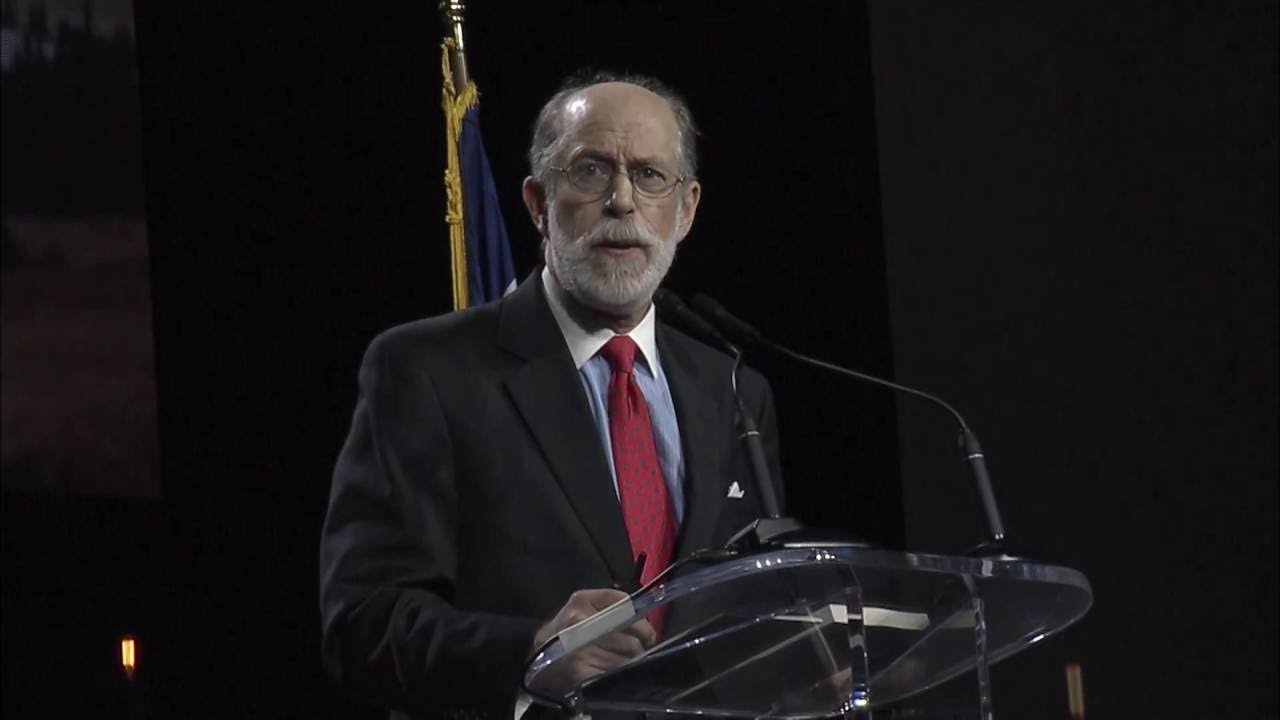 :{ }::{onto the stage of a crowded convention center in downtown Denver and proceeded to calmly warn his audience that Muslims were working to conquer America from the inside.}:
:{
}:
Speaking without notes at a glass lectern, Gaffney — who worked, decades ago, as a Pentagon official in the Reagan administration — told the audience that political leaders from both parties had spent years covering up the true threat to the US. It didn’t come from terrorists acting in the name of Islam. It came from Islam itself.
Gaffney said that sharia, the Arabic term for Islamic law, was a “brutally repressive, totalitarian, political, military, and legal program” for gradually subverting Western governments and replacing them with ones that adhere to harsh Islamic dictates. And in the US, those efforts were already well underway.
“This program of subversive, stealthy penetration and takedown is operating. It’s, in fact, been at work for 50 years,”. “Our government has been subverted.”
Gaffney wasn’t speaking metaphorically. He accused “agents of Hillary Clinton” of shredding files about Muslim radicals living both inside and outside the US and said that then–Homeland Security Secretary Jeh Johnson was surrounded by “a small echo chamber which is filled by Muslim Brotherhood operatives.”
The notion of senior US officials intentionally weakening American national security or appointing advisers who were literal members of a Middle Eastern Islamist movement is preposterous. But it’s important to take Gaffney seriously: He isn’t some little-known crank pumping out Islamophobic literature on the internet, and the event wasn’t a fringe gathering outside the political mainstream.
It was instead the, a major meeting of thousands of Republican activists in Denver billed as “the largest gathering of conservatives outside of Washington, D.C.” Other featured speakers included then-GOP presidential candidate Donald Trump, Sarah Palin, major conservative media figures like Hugh Hewitt and Erick Erickson, and two sitting US senators.
Gaffney is an important cog in a vast and growing ecosystem that exists just out of sight of most Americans— one that has spent years pushing the notion that there is a creeping, quiet plot to take over America from within. It is a plan that springs from Islamic scripture itself, and is supported by most mainstream Muslim organizations, most mosques, and, in all likelihood, your Muslim neighbor.
The only way to be safe from the threat, according to Gaffney and other self-proclaimed "counter-jihadists," is to slash Muslim immigration, arrest key leaders of the Muslim American community, and shut down huge numbers of mosques. They have not gone so far as to propose outright ethnic cleansing; Gaffney, in his speech, says he has Muslim friends. Their dream, instead, is to destroy the Muslim American community without kicking out Muslims.
The dire warnings are spread through an influential lobby, slick documentaries, and best-selling books with titles like The Truth About Muhammad: Founder of the World's Most Intolerant Religion. And now that fearful vision of Islam has found a home in the Trump White House.
[
The Truth About Muhammad - Wikipedia
https://en.wikipedia.org/wiki/The_Truth_About_Muhammad
2.
Publisher: Regnery Publishing
Response · Reviews · References and notes
The Truth About Muhammad: Founder of the World's Most Intolerant ...
https://www.amazon.com/Truth-About-Muhammad-Intolerant-Religion/.../159698528...
2.
:{]]:(style="overflow-wrap:break-word"):}:
That’s because the real motivation was rooted in counter-jihadist logic. The movement’s thinkers have, for years, advocated a similar ban on Muslim immigration. They look to Europe and see Muslim immigrants creating a continentridden with terrorism and nearly lost to Islamist subversion. The Muslim ban only makes sense when seen as part of their plan to prevent America from going down the same path — by keeping out as many Muslims as possible.
The counter-jihadist influence in the Trump administration appears far from exhausted. They have long wanted to designate the Muslim Brotherhood as a foreign terrorist organization, because they see major American Muslim organizations as Brotherhood fronts — and now that’s reportedly a major priority inside the Trump White House.
Trump’s policies reflect an even scarier kind of prejudice than his own: one with a plan.
The theory: ISIS represents the soul of Islam
Gaffney is the president of the Center for Security Policy, or CSP, a right-wing think tank located just blocks from the White House. In 2010, it convened a panel to study the Islamic threat to America. The group — which included former CIA Director R. James Woolsey and former head of the Defense Intelligence Agency Edward Soyster — called itself “Team B II.”
The original Team B was a working group put together in the ’70s as a kind of devil’s advocate in the Gerald Ford administration. Its goal was to provide a hawkish counterpoint to the softer detente policy toward the Soviet Union favored by the White House. Team B argued that communism was an insatiably aggressive doctrine, one that could not be appeased — a conclusion that would influencing Ronald Reagan’s foreign policy ideology.
Team B II aimed to do something similar, but for radical Islamism and today’s Republican Party. They drew on the arguments of a loose intellectual movement that had coalesced on blogs in the years after 9/11, and had come to refer to itself as the “counter-jihad.”
Counter-jihadists believe that mainstream scholars of Islam, and counterterrorism experts in governments the world over, have fundamentally misunderstood the nature of the Islamist threat. Their basic mistake is that they overemphasize differences between Muslims, like the Sunni-Shia split, and assume that ISIS and al-Qaeda are aberrant distortions of Islam.
The truth, counter-jihadists believe, is more like the opposite. They argue that a correct reading of Islamic scripture shows that violence is intrinsic to Islam — that the religious doctrine itself, properly understood, commands Muslims to kill subjugate unbelievers. People who say otherwise — and CSP lumps both George W. Bush and Barack Obama into this category — are either willfully or unintentionally deceiving the American public.
In the years since its publication in 2010, the “Team B II” report — titled “Shariah: The Threat to America” — has become something of a counter-jihadist bible. It’s the clearest and most comprehensive summary of their ideas. To understand what they believe, and why they believe it, you have to understand this report.
The great enemy in the report is something called “sharia.” An Arabic word that literally translates as “law,” it’s the vast body of rules and regulations that guide daily life for believing Muslims — everything from not eating pork to who can lawfully be killed in a time of war to whether to charge interest on bank loans.
“UNDER ISLAMIC LAW, LYING IS NOT ONLY PERMISSIBLE, BUT OBLIGATORY”
But because there is no single authority in Islam (like, say, the pope in the Catholic Church), there is no single, official, agreed-upon interpretation of sharia. The thousands of rules and regulations that collectively make up the body of sharia have been deeply contested among Muslim scholars — and even individual Muslims — since the birth of Islam, with no agreement even on many vital issues.
Team B II argues that sharia is different from similar moral codes in other religions, like the Jewish law that governs the rules for keeping kosher. They argue that sharia is fundamentally political; that its aim is to govern the lives of all people, and not just Muslims, by seizing control of the world’s governments.
“There is ultimately but one sharia,” the report holds. “It is totalitarian in character, incompatible with our Constitution, and a threat to freedom here and around the world. Sharia’s adherents are making a determined, sustained, and well-financed effort to impose it on all Muslims and non-Muslims, alike.”
To make this argument, Team B II’s authors rely heavily on something called “abrogation.” This is a complex concept in Islamic legal theory, but it basically boils down to the idea that when trying to determine the “correct” answer to some legal question — say, whether it’s okay to drink alcohol, for instance — later verses in the Quran carry more weight than earlier ones. That is, the later verses abrogate, or override, the earlier ones.
This stems from the fact that the Quran was revealed to the Prophet Mohammed not all at once, but rather over a period of 23 years. During that time, the circumstances in which Mohammed and the early Muslim community were living changed quite a bit. The earlier verses of the Quran came down while Mohammad was more of an itinerant preacher in Mecca, whereas the later verses came down during a time when Mohammed controlled the city of Medina and commanded a large Muslim army.
The result is that the later verses tend to be more concerned with real-world administrative rules and military doctrine — including verses about conquering unbelievers — while the earlier verses are more focused on broader, more universal concepts of spirituality.
As a result of the doctrine of abrogation, Team B II claims, all Muslims are obligated to conquer the West and replace its governments with an Islamic theocracy called a caliphate. But one would be hard-pressed to find a single credible Islamic scholar who interprets it this way.
For Islamic legal scholars, abrogation is but one tool used to interpret the Quran, and not an ultimate trump card. And the Quran, like the Bible, contains scriptures that both endorse and reject violence. In the full context of Islamic law, the injunctions to kill and conquer are often interpreted as being specific to that time and place in history, and do not necessarily overrule other, more peaceful verses in the Quran (e.g., “let there be no compulsion in religion”).
Team B II dismisses this as a form of tactical, sharia-sanctioned lying. There is an actual Arabic term for permissible lying in sharia, called taqiyya. It’s an obscure medieval ruling that basically permits Muslims to verbally blaspheme God or renounce their religion without incurring God’s wrath if they are under compulsion to do so.
So, for instance, if a Muslim were traveling in a land where being Muslim could get him killed and is captured by the authorities, he is allowed to say he isn’t Muslim — or even do things like praise pagan gods or slander the Prophet Mohammed — if his survival is on the line, without God getting mad. It’s a sort of get-out-of-jail-free card. It’s also a concept generally associated with Shia Islam, as nearly all Sunni Islamic legal scholars reject the concept outright.
But the counter-jihadists have taken this medieval concept and turned it into a devious trick that Muslims are using to hide their true violent intentions.
They assert that the peaceful interpretations of Islam offered by Muslim authorities are a form of taqiyya designed to obscure the true nature of Islam from gullible Westerners. They point to things like the 9/11 hijackers going to strip clubs and drinking alcohol as examples of terrorists using taqiyya to blend in. And while the 9/11 hijackers certainly did those things, and may even have tried to justify their actions by saying they were just trying to blend in, they were all Sunni Muslims and therefore never would’ve used the concept of taqiyya to justify their actions.
“Under Islamic law, lying is not only permissible, but obligatory for Muslims in some situations,” Team B II writes in its report. “What Muslim audiences are required to know about Islam is not the same thing as what non-Muslim Western audiences are allowed to know — or encouraged to think — by Islamic authorities.”
This quickly takes on the character of a conspiracy theory. Any attempt to cite an Islamic authority who takes a different view of the Quran is only proof, to the counter-jihadists, that you are taken in by sharia propaganda. In that sense, arguing with the counter-jihadists is something of an impossible task. It’s a bit like attempting a point-by-point rebuttal of The Protocols of the Elders of Zion.
How a conspiracy theory goes from the fringes to the White House
[vid act for am]
When you ask credentialed experts on Islam and terrorism about counter-jihadist theories today, they usually don’t know whether to laugh or cry.
“It's hard to reply without sounding snooty,” Will McCants, the director of the Brookings Institution’s Project on US Relations with the Islamic World, tells me in response to a question about counter-jihadists. “[They] sell a lot of books and scare the hell out of Americans, but their policy recommendations range from vague to downright harmful.”
McCants is not wrong about the books. America Alone, a 2006 book alleging that ”a large majority of Western Muslims support the terrorists’ strategic goals,” cracked the top five of the New York Times’s best-seller list. Several other counter-jihadist books, including The Politically Correct Guide to Islamand Because They Hate, made the best-seller list around the same time.
What few reviews of these books could be found in mainstream publications were not kind. Yale lecturer Daniel Luban wrote that they “can justly be called the new McCarthyism” in a review of the genre published in the Jewish magazine Tablet.
Regardless, the success of counter-jihadist literature spawned a whole mini industry — what author Nathan Lean termed “the Islamophobia Industry.” In 2008, an organization called theClarion Projectdistributed 28 million copies of a documentary titled , which alleged that more than 100 million Muslims were in thrall to “militant Islam.”
Another Clarion video, The Third Jihad: Radical Islam’s Vision for America, was blurbed by former New York City mayor and current White House cybersecurity adviser Rudy Giuliani and Sen. Jon Kyl (R-AZ:{). Clarion’s 2015 mini documentary } :{, starring a Muslim woman named Raheel Raza who alleges a majority of her co-religionists want sharia to set national law, has more than 4 million views on YouTube.}:
These works found a large audience, mostly among conservatives, largely as a result of America’s encounter with Islamic extremism over the course of the 2000s. The 9/11 attacks, interestingly, did not themselves spark an immediate turn against Muslims.
Part of this can be attributed to concerted efforts by the George W. Bush administration to discourage such sentiments. Indeed, just a little over a month after the 9/11 attacks took place, Bush issued a message to commemorate the Muslim holy month of Ramadan, stating, "The Islam that we know is a faith devoted to the worship of one God, as revealed through The Holy Qur'an. It teaches the value and the importance of charity, mercy, and peace."
But as the wars in Afghanistan and Iraq dragged on and more and more American service members died in those countries at the hands of Muslims, and as terrorist attacks in the name of Islam continued to take place around the world, many Americans started to blame Islam in general for the continuing bloodshed.
[graf]
Under the Obama administration, this took on an overtly partisan flavor. When Bush defended Islam, few Republicans were interested in attacking him. Barack Hussein Obama got no such dispensation: Republicans attacked him as soft on ISIS and claimed he was more interested in protecting “the image of Islam” than in protecting America. Influential right-wing pundits suggested he was an Islamist sympathizer or even a secret Muslim himself.
All of this, combined with Trump’s much more overt anti-Islam rhetoric, has helped turn the Muslim religion into a partisan issue:
Right-wing media, recognizing the appeal of the counter-jihadist message among their audience, has embraced this extreme anti-Islam narrative the counter-jihadists are peddling. A study published by UCLA’s Chicano Studies Research Center found that guests with extreme anti-Muslim views made up 11 percent of all guests on prominent conservative talk radio during a period they studied in 2010. Two prominent counter-jihadists appeared on Fox News 15 times between September 2015 and February 2016, according to a count by Media Matters. Prominent televangelists spread the anti-Islam gospel to yet another group of reliable conservatives. Pat Robertson, the host of the widely broadcast 700 Club, once said on air that “Islam is a political system that is bent on world domination.”
All of this is supplemented by a vast grassroots network, centering on a group called ACT for America. Billing itself as the “the NRA of National Security,” it claims to have a membership of 500,000 nationwide, clustered in 1,000 chapters around the country.
Its president, Brigitte Gabriel, is the author of one of those mid-2000s counter-jihadist bestsellers (Because They Hate). A Lebanese Christian immigrant who calls herself “one of the leading terrorism experts in the world,” Gabriel has no formal background in terrorism, either through working in government or academia. According to her book, the highest level of education she received was a one-year course in business administration at a YWCA. Her claim to authority stems, allegedly, from experiences of persecution at the hands of Muslims during the Lebanese civil war in the 1980s — a historically dubious story that Lebanese-American journalist Michael Young once labeled a “con act.”
In a speech in at the Oasis Church in Middletown, Ohio, Gabriel delivered an accessible and entertaining speech on the counter-jihadist view of Islam. In her telling, the history of Islam is a history of bloodshed.Between Islam’s founding in the seventh century and the dissolution of the Ottoman Empire in 1924, she says, “Islam was responsible for 270 million people across the globe — killed by the sword.”
This violence was not accidental, Gabriel told the rapt crowd. It was the core of Islam itself.
Gabriel believes that for 12 years, Mohammed attempted to peacefully proselytize — and failed, miserably. Only when he turned to violence, to conversion at the point of the sword, did he begin to win success.
“Islam went from being strictly a spiritual movement, after 12 years, to becoming a political movement cloaked in religion,” she says. “Jihad is mentioned in the Quran 40 times — 36 times out of 40 as a holy war against the infidels, to either kill them or subjugate them.”
These are all historically inaccurate claims. Haroon Moghul, a fellow at the New America Foundation, writes that they “play loose and fast with very different eras, places and peoples,” in order to put together a narrative of a uniformly aggressive Islam. Yet Gabriel’s group has been profoundly influential.
[twt mar lago sec breifing look who i ran into djt]
Her activists have worked tirelessly to pass legislation, based on a template constructed by Gaffney and CSP in-house counsel David Yerushalmi, that would ban state courts from considering sharia a valid source of law.By 2016, they had succeeded in nine states: Alabama, Kansas, North Carolina, Oklahoma, Louisiana, Arizona, South Dakota, Arizona, and Tennessee.
“No court, administrative agency, or other governmental agency may enforce any provisions of any religious code,” the South Dakota version reads, neutral language obscuring the clear intent.
More alarmingly, the ideas pushed by Gabriel and CSP have been embraced by the most important members of the Trump White House.
“Most people in the Middle East, or at least 50 percent, believe in being sharia-compliant,”Bannon said on theBreitbart Daily News radio show in 2015. “Sharia-compliant” is an innocuous phrase commonly used by Muslims to denote that something is in line with Islamic law: For instance, you can find sharia-compliant home mortgage companies in the US that cater primarily (but not exclusively) to Muslims, because Islamic law forbids Muslims from collecting or paying interest on loans.
The Team B II report’s authors sees things like sharia-compliant financial institutions as an insidious threat to the US Constitution (they never really explain how a home mortgage company that doesn’t charge interest threatens the Constitution).
It’s not just Bannon.But the Team B II report also frequently uses the term “sharia-compliant” to describe not institutions or practices, but people: specifically, Muslims with dangerous, anti-American beliefs, anti-constitutional beliefs. And this is exactly the way Bannon is using the term. “If you're sharia-compliant or want to impose sharia law, the United States is the wrong place for you,” Bannon proclaimed.
In his 2016 book*The Field of Fight*, Trump’s new national security adviser, Michael Flynn, wrote that Islamic scholars are attempting to trick the West to obscure the true nature of sharia.
“These so-called Islamic scholars keep their message so complicated so as to create chaos, to confuse in order to control,” Flynn writes. “Mao, Pol Pot, Stalin, and Mussolini were more transparent. Sharia is a violent law that is buried in barbaric convictions.”
Trump’s new attorney general, Jeff Sessions, said more or less the same thing — in an official Senate press release. “Once again we face a totalitarian threat to the free world. This time it’s from ideological and apocalyptic Islam,” Sessions said.
“Theologically-based sharia law,” Sessions argued, “fundamentally conflicts with our magnificent constitutional order that separates church and state, and that considers free debate and dissent the way to a better world.”
That these individuals all espouse the same weirdly specific interpretation of sharia is not a coincidence. Each one of them is deeply connected to the counter-jihadist world.
Bannon hosted counter-jihadists on his Breitbart radio show 41 times,according to a count by Mother Jones’s Josh Harkinson. Flynn is an adviser to the board of Gabriel’s ACT for America, and local ACT chapters organized many of the stops on the speaking tour for Flynn’s book. In 2015, Sessions received CSP’sKeeper of the Flame award, in honor of “his leadership on issues of great importance to the national security.”
And it goes even deeper than just Trump’s cabinet. Walid Phares, a fringe Lebanese Christian academic who served as Trump’s Middle East policy adviser during the campaign, once said, “It is absolutely constitutional and moral that citizens reject Sharia as a legal system that takes away their rights.”
Sebastian and Katharine Gorka, a married couple who are staples of the counter-jihadist movement, have been given high-level positions on Trump’s staff: Sebastian is now his deputy assistant in the White House, and Katharine was on Trump’s Department of Homeland Security transition team.
Trump himself, at times, has sounded a lot like a counter-jihadist.
“Sharia authorizes such atrocities as murder of non-believers who won’t convert, beheadings, and more unthinkable acts that pose great harm to American — especially women,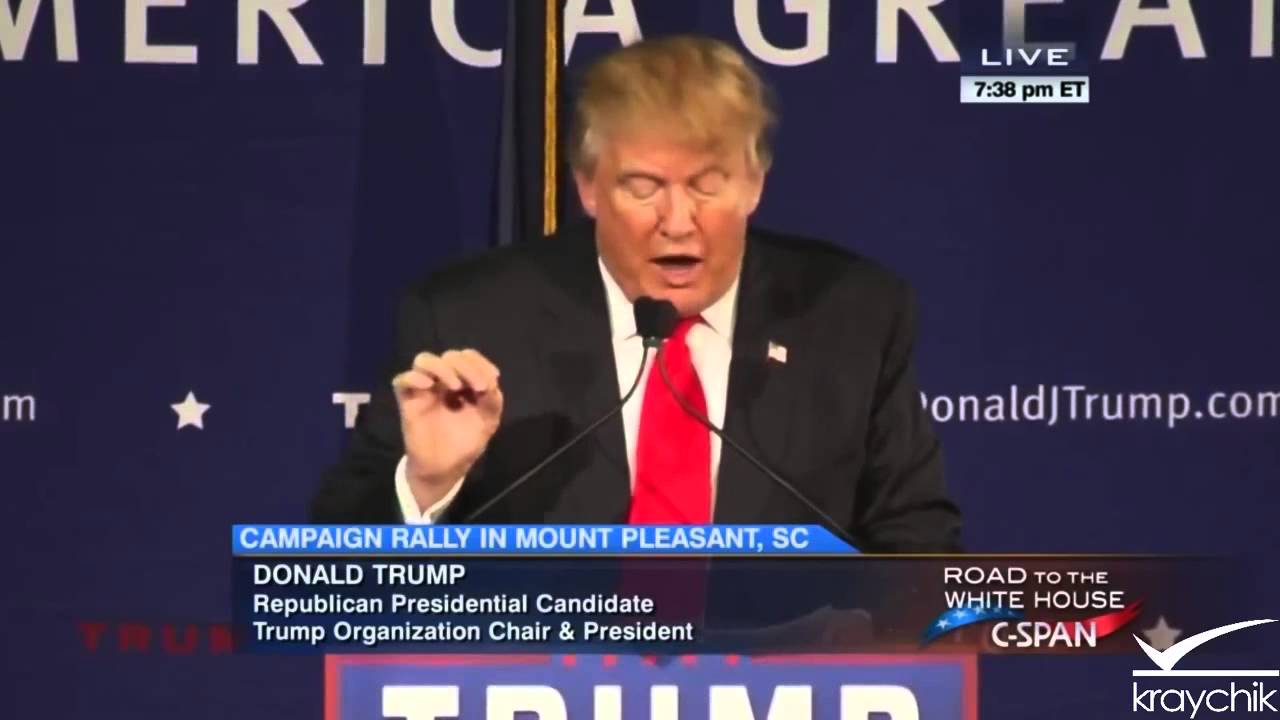 , reading off a prepared statement during a December 2015 televised rally defending his proposal for a Muslim ban. “These are people who believe only in jihad. They don’t want our system.”
Several months prior to the rally, Trump had met with staffers at CSP for an hour-long briefing. The subject was the threat from sharia.
Counter-jihadists see leading American Muslims as part of the problem
The fact that most Muslims are not killers is, for the counter-jihadists, a most inconvenient fact. Over time, counter-jihadists have put less emphasis on the threat from overtly violent groups, like al-Qaeda and ISIS, and focused instead on a more insidious threat: the “stealth” or “civilization jihad.”
The foremost theorist of civilization jihad is a writer named Robert Spencer. “He’s author of so many books, and one of the top two or three experts in the world on this great war we’re fighting against fundamental Islam,” Bannon said, when hosting Spencer onBreitbart Daily News on August 9, 2016. “Trump is listening to people like you,” he told Spencer later in the interview.
Spencer, like Gabriel and Gaffney, has no formal training in Quranic scholarship. He received an MA in 1986 in religious studies from the University of North Carolina Chapel Hill and wrote his master’s thesis on Catholic history.
He’s run the blog Jihad Watch, a near-obsessive tracker of Islamist activity, since 2003. He is also the author of 16 books, with titles like The Complete Infidels' Guide to the Koran. Many of his books have been published by Regnery, the conservative publishing giant that also put out both Trump’s and Mitt Romney’s most recent books. Two of Spencer’s tomes made the New York Times best-seller list; there’s a decent chance you’ve seen him on Fox News in the wake of a terrorist attack.
In person, Spencer is short and portly, with a neatly trimmed black beard. He’s exceptionally confrontational, constantly trumpeting his willingness to debate all comers on Twitter and on Jihad Watch. When I contacted him for this story, his reply attacked the media — like most counter-jihadists, he sees journalists as some of jihad’s most powerful enablers.
“There you go again, Zack,” he wrote in response to one of my questions. “I know you’re a reporter, and a reporter for Vox, so I know where you stand.”
Spencer’s 2008 book, Stealth Jihad: How Radical Islam Is Subverting America Without Guns or Bombs, developed one of the most important ideas of the counter-jihad. Its arguments were cited repeatedly and amplified in the Team B II report and also appear, in a simplified form, in speeches delivered by people like Gabriel in towns around the country. Spencer also regularly gives “counterterrorism” seminars based on these arguments to law enforcement agencies.
The central idea is that terrorists aren’t America’s real Muslim problem.
“Distracted by foreign wars and the prospect of domestic terror attacks, Americans pay little heed to the true agents of intolerance in their midst,” Spencer writes. “The stealth jihad advances largely unopposed because it is largely unrecognized.”
The “agents of intolerance” at the heart of this stealth jihad, Spencer explains, are the Muslim Brotherhood.
It’s a group you’re probably at least passingly familiar with. Founded in Egypt in 1928, the Brotherhood is one of the oldest and most influential Islamist groups in history. The group’s goal has long been the toppling of the Egyptian government and its replacement with a Sunni theocracy.
Its tactics have varied over time, from promoting grassroots social change to fielding candidates for parliament, and some individuals and groups associated with the Brotherhood in the past have advocated violent revolution. The Brotherhood even managed to gain control over the Egyptian government briefly, when Brotherhood candidate Mohammed Morsi won in the country’s first democratic election following the Arab Spring uprising in 2011.
Today, the group’s influence is relatively limited — Egypt’s military dictator, Abdel Fattah el-Sisi, overthrew Morsi in 2013 and since then has viciously suppressed Brotherhood activity. According to Human Rights Watch, he has killed more than 1,000 individuals linked to the Brotherhood and arrested many, many more.
In Spencer’s telling, though, the Brotherhood is not defined by its founding chapter in Egypt, or even its various open branches and offshoots (like the Palestinian militant group Hamas or the moderate Islamist Ennahda party in Tunisia). The hidden history of the 20th century, according to Spencer, is a history of the Brotherhood’s stealth penetration of the West.
“Of course the MB still has the resources to act in the US and Europe,” Spencer tells me. “Its organizations here were well-established and handsomely funded before Sisi came along.”
In Stealth Jihad, Spencer rests this claim on a 1991 memo, written by a Muslim Brother named Mohamed Akram. The memo outlines a plan to establish a “global Islamic state,” starting in the United States. This begins, according to Akram, through a “shift from the collision mentality to the absorption mentality” — to move away from open conflict with Western authorities to suborning them from within.
This might seem like a pathetically impossible task, given the minuscule number of Muslim Brothers in the US. But — and this is the absolutely critical part — Akram thinks the Brotherhood has powerful allies who might successfully and quietly mainstream its radical agenda. In the memo, he writes out “a list of our organizations and the organizations of our friends.”
The Brotherhood, and its present-day allies and friends, [are] really working to forward the ‘grand jihad,’” Spencer writes. “When we scratch the ‘moderate’ surface of groups such as the Council on American-Islamic Relations (CAIR) and the Muslim Public Affairs Council (MPAC), we find links to terrorist organizations and exhortations to Islamic supremacism.”It reads like a who’s who of Muslim civic organizations in the United States, including the Islamic Society of North America (the continent’s largest Muslim civic group) and the Muslim Students’ Association (the organization that represents Muslim students on virtually every college campus in the United States). This one memo, for Spencer and Gaffney, is solid proof that these organizations are Brotherhood fronts.
The Team B II report, two years later, put the point even more clearly.
“The majority of Islamic organizations in America are affiliates of or associated with the Muslim Brotherhood in some way,” its authors explain. “Any organization that does not embrace sharia and the MB line has not been able to gain broad recognition as a Muslim-American force.”
The evidentiary basis for this claim is extremely thin. For one thing, scholars of the Brotherhood have found no evidence that Akram’s memo was an accurate representation of the Brotherhood’s reach.
“Nobody has ever produced any evidence that the document was more than something produced by the daydream of one enthusiast,” Nathan Brown, a George Washington University professor who studies the Brotherhood, told Religion Dispatches’ Sarah Posner in 2011. “Nothing in anything that I have heard has ever struck me as similar in tone or content to the ‘master plan.’”
Beyond that, the organizations themselves flatly deny being agents of the Muslim Brotherhood. Of course, as Spencer and his ilk would say, this could just be taqiyya. Except that the groups don’t just deny these affiliations — they openly advocate policies and interpretations of Islam that directly contradict this supposed grand Muslim Brotherhood plot against American values.
That does not stop Spencer, Team B II, and the rest of the counter-jihadists from citing Akram’s memo as gospel. Gaffney still tells audiences to download it (it’s available for free on CSP’s site).
The idea that the Brotherhood dominates Muslim American life serves a critical bridging point in counter-jihadist ideology. It is the only possible explanation for why, despite sharia’s supposed mandate to violence and domination, Muslim Americans are not all that violent. It’s not that they don’t believe in “Islamic supremacism” (a favored counter-jihadist term); it’s that they’re more strategic about it than the dummies in al-Qaeda and ISIS.
Militant groups can be bombed and killed. But stealth jihadists cannot: They wield Western commitments to free speech and political tolerance as a shield, allowing them to build up Muslim strength in the West without meaningful opposition.
Counter-jihadists latch onto any evidence of links between Muslim civic society and the Muslim Brotherhood to buttress this theory, wrenching quotes from Muslim leaders out of context and casting fringe figures as leading Muslim authorities.
Take their strongest and most commonly cited piece of evidence: a 2007 Justice Department case against the Holy Land Foundation, a Muslim charity in the Dallas area that was diverting some of its donations to Hamas, a designated foreign terrorist organization.
This is the most significant and largest case of a terror-funding operation using an American Muslim civic group as a front. The Akram memo was uncovered during the HLF investigation.
But in addition to the five leaders of the HLF who were actually convicted in the case, more than 246 individuals and Muslim groups, including ISNA and CAIR, were named as “unindicted co-conspirators” in the indictment — meaning the prosecutors believed they were linked to HLF’s scheme but couldn’t prove it.
They couldn’t prove it because they had no real evidence for this claim. ISNA and CAIR later filed a suit alleging that the prosecutors had unjustifiably damaged their reputation by mentioning them in the indictment. Their evidence was that counter-jihadists were using it to smear them, and the court agreed.
“There is no real dispute that CAIR suffered injury to its reputational interest by being listed as an unindicted co-conspirator in this terrorism case. Press accounts and blog entries have reported, based on this case, that CAIR is a criminal organization that supports terrorism,”the presiding judge ruled. “The government has not argued or established any legitimate government interest that warrants publicly identifying CAIR and 245 other individuals and entities as unindicted co-conspirators.”
Now a faction in the Trump administration,reportedly led by Flynn, is pushing to do the same thing by executive fiat — to add the Muslim Brotherhood to the State Department’s list of foreign terrorist organizations.But, as with the Akram memo, the counter-jihadists have not stopped using the HLF case as proof that America’s largest Muslim organizations are part of a stealth jihad. Multiple Republican members of Congress have parroted these accusations, most notably when they accused Hillary Clinton aide Huma Abedin of having ties tothe Muslim Brotherhood. Sen. Ted Cruz, a frequent speaker at CSP events, has repeatedly pushed legislation labelingthe Muslim Brotherhood a terrorist group — a key recommendation in both Spencer’s book and the Team B II report.
The State Department reportedly opposes this move as illegal. A new CIA memo, reported by Politico, warns that it would boost ISIS and al-Qaeda recruiting. Virtually every expert on the Muslim Brotherhood thinks it would be unworkable and unwise.
Despite all this, the New York Times reports that the move has broad support in the White House. This should be no surprise: Both Attorney General Sessions and CIA Director Mike Pompeo, while in Congress, co-sponsored Cruz’s bill.
“There are organizations and networks here in the United States tied to radical Islam in deep and fundamental ways,” Pompeo told Gaffney in a February 2015 interview on the latter’s radio program. “They’re not just in places like Libya and Syria and Iraq, but in places like Coldwater, Kansas, and small towns all throughout America.”
Bannon has long been warning of the threat from the Muslim Brotherhood and stealth jihad; in 2007, he wrote a documentary script proposal specifically calling CAIR and ISNA "cultural jihadists" secretly working to build “an Islamic Republic in the United States.” Housing and Urban Development Secretary Ben Carson, in a2016 interview with Bannon, warned of “an explanatory memorandum” uncovered in the Holy Land Foundation trial telling Muslims “to infiltrate, to multiply, to gain positions of power, and to commit what they call ‘civilization jihad.’”
Officially labeling the Brotherhood a terrorist group, an odd step given that the Brotherhood has not been linked to a terrorist attack in decades, takes on much darker tones when viewed through a counter-jihadist light. Remember, counter-jihadists think the majority of Muslim American groups in the United States are Brotherhood fronts. It’s illegal for any American to provide assistance to a designated foreign terrorist organization.
This, then, could set the stage for a massive federal inquisition into America’s major Muslim organizations based on counter-jihadist conspiracy theories. The text of the Cruz-Sessions-Pompeo bill refers to CAIR and ISNA as “United States-Muslim Brotherhood affiliates,” citing the Holy Land case. Gaffney toldBloomberg View’s Eli Lake that "CAIR is one of the organizations [prosecutors] would have to look at” if the Brotherhood were designated a terrorist group.
Spencer told me that the solution to the stealth jihad was to “enforce existing laws regarding sedition and subversion,” adding that “Muslim organizations in the West should be called upon to back up their pro-forma condemnations of al-Qaeda and ISIS with transparent, inspectable, honest programs teaching young Muslims why they should reject the understanding of Islam offered by jihad terror groups.”
Investigations into, and perhaps prosecutions of, Muslim civic organizations. “Inspectable” programs ensuring that Muslim organizations toe a religious line that counter-jihadists find acceptable. That’s what the counter-jihadists really want from Trump.
Europe will soon be “Eurabia” — a fate America might share
In July of last year, I went to Cleveland to report on the Republican National Convention. It was a weird event by any metric, but the high point of strangeness had to be the evening I spent at a party for queer counter-jihadists.
The event, organized by Breitbart’s gay firebrandMilo Yiannopoulos, was called “Wake Up!” — as in, “wake up” to the threat of jihadism. Held in a dark ballroom adorned with pictures of mostly naked, extremely young-looking men posing in red “Make America Great Again” hats, the party attracted afairly infamous crowd.
I bumped into Pamela Geller, who co-founded (alongside Spencer) a counter-jihadist group calledStop the Islamization of America, since renamed the American Freedom Defense Initiative, wearing a rainbow sequin shirt emblazoned with the slogan “Love Will Win.” Geller is a regular on Fox News and conservative talk radio; she’s one of the most widely known counter-jihadists due to her assuming a leadership role in the fight against the “ground zero mosque” in 2010. She also has a tendency to embrace the most outlandish of conspiracy theories, once publishing a piece on her website suggesting that Barack Obama is the secret love child of Malcolm X.
When I ran into her, she was warning a partygoer of the imminent threat from Syrian refugees.
“ISIS said they were going to send a jihad army into Europe via migration in 2015. Then two months later, the migration started,” Geller said. The implication — that the refugee crisis was an ISIS plot — wasn’t especially subtle.
The ostensibly perilous state of Europe was something of a motif at the party. The featured speaker was Geert Wilders, the virulently anti-Muslim and anti-immigrant leader of the Netherlands’ far-right Party for Freedom (PVV). Wilders, an extremely tall man with slicked-back, Trumpesque hair, gave a fiery speech denouncing the influence of Islam in his homeland.
“There is only one Islam, and that Islam has no place in a free society,” Wilders told the crowd. “We should de-Islamize our societies. It’s a matter of our existence.”
One could not have hoped for a better summary of the counter-jihadist view of Europe. Proponents see the continent as a dark twin of America, a “there but for the grace of God” dystopia the Islamists are on the verge of conquering.
The key culprit, in their minds, is immigration. Prior to World War II, the Muslim population in Europe was negligible. After the war, a need to rebuild the continent led Europe to bring in a lot of people from the nearby Middle East and North Africa as guest workers. Many of these guest workers stayed, and eventually brought over their families. These people formed Muslim communities, which continue to be a draw for new Muslim immigrants today, at the same time that birthrates among white Europeans were slowing down.
The result was a rapidly growing Muslim minority in Western Europe. In 1950, 2 percent of Europeans were Muslim. That figure was 4 percent by 1990, and 6 percent by 2010.
In 2005, a Cairo-born woman named Gisèle Littman published a book warning of the dangers of this demographic shift, titled*Eurabia: The Euro-Arab Axis*. Littman, who publishes under the name Bat Ye’or (Hebrew for “daughter of the Nile”), dropped out of a master’s program at the University of Geneva in the 1960s. Nevertheless, she spent much of her life publishing “academic” tomes on Islam and Europe, arguing that the history of Islam is an unbroken history of theologically driven conquest.
In Eurabia, Ye’or posited that Muslim immigration to Europe was not the benign economic migration it seemed. It was, instead, a dark plot — a plan, dating back to 1973, “superimposed on Europe by powerful governmental lobbies.” The goal was to Islamize Europe, to reduce European whites to “dhimmitude” — a term she uses for second-class citizenship granted to non-Muslims in an Islamic society.
In the pages of Jihad Watch and CSP publications, the notion that Muslim immigrants are imposing their rule on a hapless and clueless European majority is simply common sense. Every crime or terrorist attack committed by a Muslim, every law granting religious accommodations to Muslims, is cast as proof of the coming of Eurabia.Eurabia has gotten scant mention in the American press; mainstream historians have scorned it. Yet the book’s thesis has risen to the level of dogma among American counter-jihadists; Geller has called Ye’or “the world's leading scholar and historian on Islamic expansionism in Europe, the Middle East and the West.”
At the 2015 Values Voter Summit, the big annual gathering for right-wing evangelicals, Bannon sat down with ACT’s Gabriel to talk about the European refugee crisis. He referred to it as a Muslim “invasion,” and asked Gabriel if that was an overstatement.
“It is not,” she replied. “Europe will no longer be Europe by 2050. Europe has already become Eurabia. Europe is Eurabia right now.”
For this reason, immigration occupies a central role in the counter-jihadist imagination. If Muslim immigration turned Europe into a terror-ridden nightmare on the brink of sharia rule, then the first priority in the United States needs to be making sure the same thing can’t happen here. The Muslim Brotherhood is most easily defeated when you deny it foot soldiers.
One of the key recommendations of CSP’s Team B II report is that “immigration of those who adhere to sharia must be precluded.” More recently, CSP and ACT for America have been out front in opposing the resettlement of Syrian refugees. CSP has teamed up with longtime anti-refugee activistAnn Corcoran, who got her start in 2006 opposing the resettlement of African refugees in her area of rural Maryland. A CSP video starring her has racked up nearly 3 million views on YouTube.
“This process of Muslim colonization is called the hijra,” Corcoran says in the video, using the Arabic word for migration. “Mohammed told his followers to migrate and spread Islam, in order to dominate all the lands of the world ... and that’s exactly what they’re doing now.”
The “Muslim ban” and the counter-jihad
When Trump initially announced his plan for a “total and complete shutdown of Muslims entering the United States,” way back in December 2015, his campaign statement cited a poll conducted by CSP as the key piece of justification.
“A poll from the Center for Security Policy released data showing ‘25% of those polled agreed that violence against Americans here in the United States is justified as a part of the global jihad,’”the statement read. “51% of those polled, ‘agreed that Muslims in America should have the choice of being governed according to sharia.’”
This poll was, unsurprisingly, shot full of methodological problems. It was anonline opt-in poll, meaning that it was not a random sample of American Muslims, and several questions were written in such a way that the answers would end up sounding extremist no matter what.
More interestingly, though, is the person who conducted the poll on CSP’s behalf. It was none other than Kellyanne Conway, who would go on to become Trump’s campaign manager and chief press surrogate. According toMother Jones’s Pema Levy, who first reported the link, Conway’s firm had a relationship with CSP that dated back to 1998.
"It's very alarming to me that such a high number of individuals, Muslims living in the US, would say, 'Well, we can have a choice' [to follow sharia]," Conway said during a June 2015 appearance on a CSP podcast. “The Muslims living in the US themselves — 27 percent of them, anyway — say that this is what the purpose of jihad is, to either punish nonbelievers (16 percent) or, the other 11 percent, to undermine non-Muslim states."
This is the way in which the “Muslim ban” makes sense. Not as something Trump dreamed up by accident, but as a direct product of the counter-jihad’s influence on the president of the United States. You can even see the counter-jihadist influence in the text of the executive order itself.
“In order to protect Americans, the United States must ensure that those admitted to this country do not bear hostile attitudes toward it and its founding principles,” the order reads. “The United States cannot, and should not, admit those who do not support the Constitution, or those who would place violent ideologies over American law.”
When the Trump administration talked about the Muslim ban to press, they warned that unfettered Muslim entry into the country would bring about a constant drumbeat of low-level terrorism — a warning that sounded a lot like some counter-jihadists’ descriptions of contemporary Europe.
“We don't want a situation where 20, 30 years from now, it's just like a given thing that on a fairly regular basis that there's domestic terror strikes, that stores are shut up or that airports have explosive devices planted or people are mowed down in the street by cars and automobiles and things of that nature,” an unnamed senior administration official told the Washington Post’s Jenna Johnson. “These are the realities that we're living in today.”
How counter-jihadists want to change America — if Trump will let them
There is a counter-jihadist master plan.
In 2015, CSP issued a follow-up report to the Team B II report. Titled “The Secure Freedom Strategy,” and authored by “the Tiger Team,” it fleshed out a broad slate of specific policy actions that could be taken to act on Team B’s diagnosis of the problem. Something like Trump’s ban on refugees entering the country is in there, as is the Flynn-Sessions-Pompeo plan for listing the Muslim Brotherhood as a terrorist organization.
Those aren’t the only two examples. The report spends a great deal of time lambasting the Obama administration for failing to openly name Islamism as our enemy.
“The Obama administration’s increasingly institutionalized secularist — if not actively pro-Islamic — policies have largely prevented the U.S. government from engaging in strategic information operations aimed at exposing and undermining the supremacist doctrine of shariah and the terrorism it commands,” its authors write. “Public clarity about that threat has also been compromised by the distortion of intelligence analysis and terminology used to describe Islam, jihad, and shariah.”
This has obvious resonances with the Republican attacks on Obama for failing to call terrorists “radical Islamists.” But it also targets, specifically, President Obama’s “Countering Violent Extremism” initiative — a program that focuses on preventing Americans from being attracted to violent political movements, Islamist and non-Islamist alike. This, the Tiger Team argues, is a way of downplaying the threat from the more dangerous stealth jihad.
Now bothReuters andCNN have reported that the Trump team is planning to revamp the CVE program to focus solely on Islamism. Its new name? “Countering Islamic Extremism,” nomenclature that a) is focused exclusively on Islam, and b) deemphasizes the threat from violence specifically.
News of the Trump team’s plans delighted counter-jihadists, who have long attacked US government counterterrorism training for downplaying the threat from sharia. Spencer told me the revamp of the CVE program was the Trump initiative that he was most excited about.
Spencer is being a bit premature — as of right now, the reports about the program still aren’t confirmed. But his glee points to something important, something missed in taking these things in isolation.
The Trump team is incredibly disorganized: According to one New York Times account, Trump staffers still haven’t figured out how to turn on the lights in the White House Cabinet room. They also have an insurgent ideology, one that’s in many ways at odds with what you hear from mainstream Republicans — especially on foreign policy. There just isn’t a clear sense of what they want to do on a lot of issues, or what specific tools they could use to do it.
The counter-jihadists, by contrast, are extremely organized. They have a think tank that has put out detailed policy proposals, intellectuals with fairly large megaphones who can argue for the think tank’s ideas, and a large activist network that’s surprisingly well-connected inside the Republican Party.
And, of course, they have a lot of like-minded sympathizers in the White House. So if the Trump team needs policy ideas on national security and terrorism, it’s entirely likely that they’d turn to CSP for help. Indeed, the explicit point of the Tiger Team’s Secure Freedom Strategy was to provide a comprehensive blueprint for a “war” on sharia to a White House that’s willing to listen.
So what are their actual policy proposals?
The report advocates reorienting training for counterterrorism staff around “the threat doctrine — sharia,” essentially meaning that the US should teach its spies and law enforcement officials that Islam is their enemy. It proposes “rolling up and shutting down [Muslim Brotherhood] front groups in the United States,” by which it means the main Muslim organizations in America. It suggests ending university programs that promote “Muslim-Christian dialogue,” and replacing them with “corresponding educational activities exposing the true nature of sharia and the Muslim Brotherhood’s operations.”
Some recommendations are even more jarring. The report calls on the US government to use “sharia adherent advocacy and practices as legal premises for deportation and stripping of American citizenship” — in other words, kicking out Muslims who publicly announce that they live by Islamic moral codes. Former Speaker of the House and staunch Trump supporter Newt Gingrich has fervently embraced this idea, telling Sean Hannity in June 2016 that the US government should deport all Muslims who believe in sharia.
The CSP report further states that “over eighty percent of U.S. mosques have been shown to be sharia-adherent and promoting jihad,” and that “they are incubators of, at best, subversion and, at worst, violence and should be treated accordingly.” The clear implication is that the US government should shut down 80 percent of American mosques and arrest their imams on charges of promoting terrorism.
This isn’t just a blueprint for war on sharia — it’s a blueprint for war on the Muslim American community. For using the power of the state to shut down Muslim organizations, arrest believing Muslims, and close the vast majority of mosques.
Prominent politicians have endorsed this plan (though it’s not clear if they’ve read it all the way through). At a 2015 CSP conference, the entirety of which is uploaded to YouTube, both Gingrich and Cruz labeled the Secure Freedom plan a sound strategy for fighting jihadism — a move that garnered very little attention at the time. The document is too obscure, and too boring, for most people to root through it.
But these ideas in it cannot be seen as obscure anymore.
“I definitely see individuals with this [counter-jihadist] network having a huge influence within this administration,” Yasmine Taeb, a lobbyist at the Friends Committee on National Legislation who focuses on terrorism and civil liberties, tells me. “[Trump’s] policies are ones that they’ve been advocating for ... which is scary.”
According to McCants, the Brookings scholar on Islam, “national security professionals on both sides of the aisle are freaking out” about the influence of counter-jihadists on Trump.
Would Trump be able to implement all of the policies in the Secure Freedom Strategy by executive fiat? Almost certainly not. More to the point, it’s not clear that he’d want to: Shutting down 80 percent of America’s mosques is extreme even for him, well beyond anything he’s said publicly.
The point, rather, is that this is where the people who are advising the president are coming from. Their repeated public statements, and the administration’s policy alignment with some key counter-jihadist priorities, cannot be ignored. These ideas, ideas which when taken to their logical conclusion end in a mass campaign of persecution targeting Muslim Americans, are now the dominant approach to terrorism among the president’s closest advisers.
Watching the video of Gaffney’s speech at the Western Conservative Summit no longer feels like watching the ramblings of a coot. It feels like peering through a window into the way the Trump White House sees the world.
==
==
pal of erik prince of darkness
...
Meanwhile, Prince’s relationship with Bannon has gone from fellow ideological traveler to business partner. According to a former Trump White House official and the former U.S. official close to the UAE royal family, Prince has teamed up with Bannon to offer a newer version of the armed crop duster to the Emirati air force. The pitch includes Israeli-made avionics and surveillance software for geolocating targets on the ground. Prince and Bannon are also offering a different package to the Emirate’s despised rival, Qatar. According to a former senior U.S. official who reviewed the proposal, Prince is currently hawking proposals for preventing social and political unrest from Qatar’s foreign laborers before and during the 2022 FIFA World Cup. The proposal specifically names Project Veritas as a partner and offers the Qatari government an ability to infiltrate the community of foreign laborers, who make up almost 90 percent of the country’s population of roughly 2.3 million. The pitch is designed to appeal to Qatari fears of a popular uprising and to fend off and neuter political dissent leading up to the soccer tournament. The proposal also offers social media monitoring and messaging — something Bannon would be familiar with from his past work for Cambridge Analytica.
In response to questions from The Intercept, Prince’s spokesperson said, “Mr. Prince supports Project Veritas’s mission of uncovering government largesse and corruption, and has allowed Project Veritas to use his family’s ranch in Wyoming. Mr. Prince has no business relationship with Steve Bannon, James O’Keefe, or Project Veritas, and has never pitched a project with Mr. Bannon to the Qatari or any other government.” Bannon would not comment.
deleted his blackberry (at trump twtr mtg?
tom dispatch
The Threat of Political Climate Change
Countering the Bannon Archipelago
By John Feffer
In the Americas, the Trump tsunami has swept across both continents and the “pink tide” of progressivism has all but disappeared from the southern half of the hemisphere. In Europe, with the recent exception of Spain, the left has been banished to the political margins. In Africa and Asia, socialism has devolved into nationalism, authoritarianism, or just plain corruption. And forget about the Middle East.
In this planet-wide rising tide of right-wing populism, the liberal left commands only a few disconnected islands -- Iceland, Mexico, New Zealand, South Korea, Spain, Uruguay. In so many other places, increasingly illiberal leaders are in charge. Add up the numbers and significantly more than half the world’s population currently lives under some form of right-wing populist or authoritarian rule, courtesy of Donald Trump in the United States, Jair Bolsonaro in Brazil, Narendra Modi in India, Recep Tayyip Erdogan in Turkey, Vladimir Putin in Russia, and Xi Jinping in China, among others.
Optimists cling to the pendulum theory of politics: conservatives are now basking in the limelight, but the day will come when the right inevitably falls on its face and the left swings back into action; witness the results of the 2018 mid-term elections in the United States.
In addition, pragmatists point out that many of these latter-day autocrats, for all their anti-democratic tendencies, came to power through elections. Yes, they have since sought to change constitutions, pack courts, muzzle the media, and crack down on civil society, but they remain constrained by the guardrails of the more-or-less liberal political systems they still run. In the end, so goes such thinking, democracy will prevail. Look at how, over time, some right-wing populists have been dislodged at the polls (Vladimir Meciar in Slovakia), brought down by corruption scandals (Alberto Fujimori in Peru), or forced to resign in disgrace (Silvio Berlusconi in Italy).
Optimists and pragmatists alike ultimately have faith that democracies are self-regulating organisms, not unlike the Earth’s ecosystem. The planet has managed to survive countless asteroid strikes, solar flares, and extreme weather conditions. Democracy, too, will outlast Hurricane Donald and all the other examples of extreme political weather, thanks, sooner or later, to woke voters and resilient mechanisms of checks and balances.
Unfortunately, given the malign impact humans are having on the planet, this analogy is far less reassuring than it once might have been. Only the willfully ignorant expect that some natural oscillation in global temperature or the Earth’s own adjustments to its climate feedback loops will arrive in time to save us. Humankind has clearly thrown a spanner into the works and now faces a distinctly difficult, if not disastrous, future. Similarly, across the globe, the electoral pendulum appears to be stuck on the side of reaction and the new generation of right-wing populists could well be on the verge of changing the political playing field, just as humans are in the process of irrevocably transforming the planet.
Bolsonaro, Erdogan, Putin, Trump, and their ilk should indeed be understood as the political equivalent of global warming. Instead of deadly carbon, they spew hateful invective and show a remarkable determination to destroy a far-from-perfect status quo. Moreover, they are the product not of farting livestock or extraterrestrial events but of the self-interested acts of blinkered humans. In an increasingly restrictive political space, liberals and progressives are looking ever more like so many polar bears on ever fewer ice floes, with diminishing room for maneuver.
Don’t bet on politics as usual to lower the temperature and put a stop to this moment’s tidal surge of ugly intolerance. Because the nature of the game has changed, those who oppose the global New Right must engage in a strategic rethink -- or we’ll all drown in the rising waters.
The Game Changers
Today’s autocrats are, at first glance, a diverse band of brothers.
In the Philippines, Rodrigo Duterte has attacked the Catholic Church for defending the sanctity of human life and challenging his campaign of extrajudicial murder. In Nicaragua, one-time revolutionary Daniel Ortega has courted the Catholic Church as a pillar of his undemocratic rule. Vladimir Putin presents himself and his country as saviors of Christianity, while Turkey’s Recep Tayyip Erdogan continues to promote his own brand of political Islam, Narendra Modi has ridden to power thanks to Hindu nationalism, and Xi Jinping eschews religion altogether. Some right-wing nationalists like Bolsonaro have ambitious plans to privatize state assets, while others, like those in Italy’s current leadership, want to nationalize major properties. Hungary’s Viktor Orban is concerned about climate change, but most right-wing populists like Donald Trump insist that the threat doesn’t exist and want to extract ever more fossil fuels.
Don’t be fooled, though. While these leaders may not rhyme, they all dance to the same rhythm.
These illiberal politicians have uniformly come to power by attacking globalization. They have criticized the neo-liberal transformations of the recent past that enriched the few at the expense of the many, while challenging the major political parties of the center left and center right that implemented the economic reforms that unleashed such forces. They have taken aim at the corruption that has metastasized in political systems already ill equipped to handle a massive uptick in cross-border financial transactions. When politically useful, they have demonized immigrants and refugees who are one side effect of, as well as victims of, that very burgeoning globalization movement. They have championed national sovereignty against the interventions of multilateral organizations, while blasting multicultural values and the human-rights groups that promote them. And they have taken advantage of social media like Facebook and Twitter that promote a version of participatory totalitarianism in which individuals can freely relinquish their privacy and abandon conventional news media for daily dispatches from their favorite celebrity autocrat.
Election results in the world’s most populous democracies suggest that liberalism -- in its free-market economic form and its more tolerant, inclusive, and statist political version – has become discredited at a popular level. A quick glance at the titles of some recent books (Why Liberalism Failed, The Retreat of Western Liberalism, How Democracies Die, What Was Liberalism) reveals that the chattering classes, too, have noticed this global trend.
The Trumps of this world have cannily identified a fundamental shift in the political playing field, rushing into the gap created by the declining popularity of liberal values. Viktor Orban set an early example of such opportunism when, in the 1990s, he jettisoned his liberal past and opted instead for the right side of the Hungarian political spectrum. In the aftermath of the collapse of communism in Eastern Europe, the left and right had alternated in power as voters became disgusted with whatever party controlled the levers of state. By successfully linking all the ills facing the country to liberals and their follies, however, Orban became the one to preside over a genuine transformation of the political landscape. The premier liberal party, the Alliance of Free Democrats, effectively disappeared when he became prime minister in 2010 -- and formally dissolved three years later. Almost a decade after he first took office, the only serious opposition to Orban is to his right.
The last time globalization transformed the world so thoroughly, in the early twentieth century, the ensuing backlash led to liberalism’s first catastrophic fail. In those years, liberals consistently failed to understand that the ground had shifted under them. In Russia, Bolsheviks took power from the weak crew of potential democratic reformers that had overthrown the tsar, inspiring a handful of movements in Europe that attempted something similar. In Germany, illiberal politicians took aim at the cosmopolitan values of the Weimar Republic. In Italy and Spain, leaders adopted virulent nationalism, challenging incipient global institutions like the League of Nations. In the wake of the Great Depression, Japanese ultra-militarists easily dispatched the weak Taisho democracy. Meanwhile, in the United States, right-wing demagogues like Father Charles Coughlin built large followings by railing on the radio against communists, Wall Street, and “the international money-changers in the temple,” though they failed to take power in the era of a charismatic liberal president, Franklin Delano Roosevelt.
Where liberalism survived, it did so largely by absorbing some of the strategies of the illiberal communists and fascists, namely relying on the state to keep the economy afloat, as Roosevelt did with his New Deal policies. This lesson carried over into the post-World War II-era in which American liberals continued to embrace New Deal principles that would culminate in President Lyndon Johnson’s Great Society programs and European liberals embraced the compromises that would eventually produce the European Union. At the global level, nations of various ideological dispositions came together to create a set of institutions -- the United Nations, the World Bank, the International Monetary Fund -- meant to ensure some degree of permanent stability. Economic globalization resumed, but this time in a regulatory environment that, initially, seemed to spread the benefits more equally.
That all changed in the 1970s when, in one country after another, a new generation of liberals and conservatives began to dismantle those very regulations in hopes that an unfettered market would jump-start growth globally. However, only after China embraced capitalism and the Soviet Union collapsed did economic globalization take a quantum leap to true globalization. With it the world returned to Gilded Age levels of concentrated wealth and inequality. No surprise, then, that the instability and intolerance of that long-gone era has returned as well.
Leaders like Putin, Erdogan, and Trump aren’t just politically savvy, nor have they simply been lucky or unusually ruthless. Instead, they sensed the changing mood of a moment and were able to capitalize on a profound discontent with the status quo that liberals had built, a discontent that won’t disappear simply because right-wing populists are exposed as frauds, incompetents, or cheats. Worse, crafty operators with even more ambitious agendas stand ready to destroy the liberal status quo once and for all.
The Bannon Archipelago
A Nationalist International should be a contradiction in terms, but that hasn’t stopped Steve Bannon from trying to create one. The erstwhile publisher and moviemaker, darling of the alt-right, and one-time Trump whisperer is on an extended world tour aimed at building a loose network of right-wing populists that he calls the Movement. It’s centered in -- of all places -- Brussels, the home of the European Union.
Bannon hopes to take advantage of post-Brexit Euroskepticism to roll his Trojan horse of a movement into the very heart of the enemy’s camp. With the encouragement of various right-wing oligarchs like financier John Thornton, he’s already met with neo-fascists associated with groups like the Belgian Vlaams Belong, France’s National Rally (the rebranded National Front), and Sweden’s Democratic Party, as well as more conventional right-wing populists in Italy and Hungary. He’s out to take the EU from the social democrats and pallid conservatives, the Vatican from the too-permissive Pope Francis, and the West from the clutches of immigrants and multiculturalists.
Elections for the European Parliament at the end of May should prove a testing ground for Bannon’s Movement. Right now, if the polling is accurate and the Euroskeptic, populist, and far-right parties combine their efforts, they could, staggeringly enough, become the largest coalition in that body. True, some prominent right-wing parties, like Poland’s Law and Justice, remain unseduced by Bannon. But it’s a mistake to underestimate him, just as it was a mistake to dismiss Trump in 2016. Success can be very persuasive, as The Donald proved in his takeover of a Republican Party whose leaders initially and almost universally despised him.
But Europe is only part of Bannon’s plan. For someone who has vented so much spleen at “globalists” like financier and philanthropist George Soros, Bannon is quite the internationalist. In Latin America, he’s already appointed Jair Bolsonaro’s youngest son as his regional representative to help build on the right’s electoral successes in Brazil, Colombia, Guatemala, Honduras, and Paraguay. Bannon has also partnered with a Chinese billionaire to create a Rule of Law Fund that’s meant to be the point of a spear aimed at the regime in Beijing.
In search of a stable of princes, that would-be Machiavelli has also visited Japan at the invitation of the fanatical Happiness Realization Party, a political cult that embraces Japanese militarism. Israel, too, is to be part of Bannon’s alt-right archipelago because the self-professed “Christian Zionist” sees Prime Minister Benjamin Netanyahu as a key link in a future anti-Islamic front. Also figuring prominently in his thinking is Russia, a vast, mostly white country led by a critic of Western liberalism and “radical Islam,”though Bannon acknowledges that the Mueller report has temporarily set back his efforts.
Bannon didn’t create the new right-wing populist wave, but he’s been clever enough to grab a surfboard, dive into the waters, and try to guide the swell further to the right. Toward that end, he’s creating what he calls a “war room.” He says:
“It’s what we did for Trump in the U.S.: writing op-eds, booking people on media, surrogate media -- all that. The last part of it is to do with grassroots social media and getting organized physically and getting out the vote.”
This isn’t, however, just a global version of Richard Nixon’s “Southern strategy,” an opportunistic attempt to solidify a political realignment. Bannon and his ilk have a much more ambitious project in mind. Having dismissed the current resident of the Vatican as far too liberal, Bannon has put himself forward as the pope of a new movement to fight the barbarians (as he defines them).
A lifelong Catholic and former military man, he harkens back to a much earlier papal tradition, that of Pope Urban II, who launched the First Crusade to retake Jerusalem at the end of the eleventh century. Bannon wants to recreate a pre-EU, whiter, more martial and nationalistic Europe. Like the popes and princes of the eleventh century, the right-wing populists in Europe have already been conjuring up external enemies to unify the like-minded. Islam remains a suitable adversary, whether in the form of ordinary immigrants or extraordinary terrorists. But there’s China, too, which poses the greatest challenge to the West since the Middle Kingdom last ruled the world of commerce, innovation, and culture so many centuries ago. Finally, there’s the enemy within: the globalists who have no patience for nationalism, the secularists who want to hold religion at arm’s length, and the multiculturalists who campaign against white privilege.
This crusade of Bannon’s and the far right is a last-ditch effort to maintain the United States and a large swath of Eurasia as bastions of white Christendom. For decades, those who held such views populated the extremes where they belonged. However, the economic failures of globalization, a huge uptick in refugee flows, and a general decline in faith in democratic institutions have proved fertile ground for such a new crusade to take shape.
Movement vs. Movement
In the United States, organizations like Indivisible, a progressive group created by former congressional staffers in the wake of the 2016 elections that now has 5,000 local chapters, are not waiting for the political pendulum to swing by itself. They’re already working hard to push politics back to the left -- and their organizing produced results in the 2018 midterm elections when the Democratic Party retook the House of Representatives.
The 2020 presidential election, however, is a different matter. Trump now has the incumbent’s advantage and, for the time being, the tailwind of a strong economy. In fact, some economic forecasters predict a landslide for him as long as the economy doesn’t tank. The president’s team has also made sure that areas of the country where his base is strong are experiencing greater job growth than in Democratic Party strongholds.
In addition, Trump and his minions are hard at work eroding the foundations of a democratic society -- demonizing the media, working to suppress voter turnout, chipping away at the barriers between church and state, and packing the courts with ideologues who support their agenda. The vast majority of the groups mobilizing to defeat Trump in 2020 are working with traditional tools to effect political change. Having learned from past masters of populism like Orban and Erdogan, Team Trump is instead busy changing the playing field.
That’s what makes the current political moment different. The pendulum theory of political change only applies if the major electoral actors play by the same rules. The right-wing populists have, however, been busy transforming the rules of the game so that they can stay in power as long as possible, while using the levers of the state to enrich themselves and their cronies. Putin has ruled Russia for two decades. Erdogan has held onto power for 16 years. Orban is closing in on a decade in office. Even in an undemocratic country like China, Xi Jinping has altered the collective rules of succession to ensure that he will remain leader for life.
One possible response to right-wing populism would, of course, be to ramp up left-wing populism. This was a winning strategy in 2015 for the Greek political party Syriza, which has been in charge of that country for four years now. It also worked for Evo Morales, who has captained Bolivia for more than a dozen years. And, of course, Bernie Sanders came close to being the Democratic Party’s standard bearer in the 2016 election while promoting his version of left-wing populism, which capitalizes on an essential political reality: passion often moves people more effectively than policy.
But it’s hard to see left-wing populism as a long-term answer to the New Right. It either fails electorally, as Jean-Luc Melenchon, the standard bearer for the movement France Unbowed, discovered in that country’s last presidential election; or it faces the kind of “economic realities” that forced Syriza to accommodate the austerity demands of European bureaucrats and banks; or, as Morales has demonstrated in Bolivia, it ends up presiding over the same erosion of democratic practices as its right-wing counterparts.
Yes, the nuts-and-bolts organizing of groups like Indivisible is indispensable. Yes, the passion of left-wing populists is essential. But such politicking and the mirror-image populism that sometimes goes with it are mere life preservers. They may keep us afloat, but they won’t rescue us. The New Right requires a far more original kind of response.
After all, the forces that gave rise to this tidal wave of right-wing populism remain in place: widening economic inequality, surging migrant flows, ballooning corruption scandals. Parties of the center remain discredited, and liberals have not come up with convincing alternatives to the policies and institutions of globalization they created. Trying to nudge the political pendulum out of the emergency zone is a necessary but ultimately insufficient approach. It’s the equivalent of expecting that a conventional fix like a gasoline tax will stop climate change. Environmentalists understand that unprecedented change requires an unprecedented response. To deal with the threat of political climate change, a similarly international, broad-based, and fundamentally new approach is called for.
So don’t wait for the pendulum to swing. Don’t put your faith in the guardrails. It’s not time for a manifesto or a 10-point plan. It’s time for a movement to counteract Bannon’s Movement, a global coalition that joins people and politicians in a united, international effort to respond to the true global problems -- climate change, endless war, and economic inequality -- that threaten to overwhelm us all. Absent such a movement, the rising tide of populism will sink all boats, life preservers and all.
John Feffer, a TomDispatch regular, is the author of the dystopian novel Splinterlands and the director of Foreign Policy In Focus at the Institute for Policy Studies. His latest novel is Frostlands, a Dispatch Books original and book two of his Splinterlands series.
==
ref "underestimete"
https://www.splcenter.org/fighting-hate/intelligence-report/2019/steve-bannons-lonely-european-vacation
2018 was another bad year for Steve Bannon.
After being booted from the White House and departing as executive chairperson of Breitbart News, which he turned into a platform for the racist “alt-right,” Bannon struggled to remain relevant by traveling overseas. In Europe, his ventures failed time and again as he was rejected by most European far-right parties.
July 15, 2018
Bannon was caught on tape insulting a radio host and clashing with former United Kingdom Independence Party leader Nigel Farage over Bannon’s support for then-jailed anti-Muslim activist Stephen Yaxley-Lennon, known under his pseudonym, Tommy Robinson.“You guys hate Tommy Robinson. You hate him because he’s a working class guy. You’re one of these fucking elites that hate him,” Bannon told a radio station. “Tommy Robinson is the fucking backbone of this country.”
July 20, 2018
Steve Bannon announced he would appropriate a foundation based in Brussels, called The Movement, to bolster far-right anti-European Union parties ahead of the EU parliamentary elections. The announcement was largely met with skepticism: The ruling party Prawo i Sprawiedliwosc (Law and Justice party, PiS) in Poland rejected the offer to work with Bannon, saying this was “an offer for those who want to break the union,” and, “this is not for us.” Gerolf Annemans, from Belgium’s far-right Vlaams Belang party, said the project appeared “poorly organized” and worried Bannon would use it to employ his friends. In France, a Rassemblement National member declared: “Bannon is American and has no place in a European political party.”
July 23, 2018
Bannon’s offer of support to European far-right parties prompted the party secretary of the far-right Finns Party to say she would decline his help. “I can’t think of what kind of added value this type of support would bring,” the Finnish politician said.
July 24, 2018
The representative of Sweden Democrats told a Danish newspaper: “We aren’t following Steve Bannon’s political work. He as a person … is of no interest to us.”
Aug. 11, 2018
Alexander Gauland of the far-right German party Alternative für Deutschland (AfD, Alternative for Germany) said of Bannon, “We’re not in America. The interests of the anti-establishment parties in Europe are quite divergent.” Another party member previously declared, “coaching from outside the EU — we basically do not need.”
Oct. 8, 2018
Marine Le Pen, leader of the French Rassemblement National (National Rally), emphasized at a press conference: “Bannon is not from any European country, he is American.” She added: “It will be us, only us, who will structure the political force that will result from the elections in Europe.”
Nov. 21, 2018
The Guardian reported [lnx]Bannon will be prevented from financing campaigns in nine of the 13 countries he is targeting, due to existing laws. Even Bannon’s business partner cannot receive money from The Movement, an experience he described as “a bit frustrating.” Given a lack of allies and legal restrictions, Italy and the Netherlands are the only two countries where The Movement could potentially do work. When confronted with the research, Bannon said he is seeking legal advice.
actright
...
Your Phone Is Leaking Information
ActRight’s Darian Rafie is an experienced political consultant in the United States who has played key roles in a number of companies that have worked for the Republican National Committee and the Republican Party in Ohio and Michigan; received payments from a super PAC supporting Texas Republican Ted Cruz (as did ActRight in 2015); and worked with the Tea Party group Think Freely Media.
Speaking to openDemocracy’s undercover reporter, Rafie said he “did a lot of fundraising politically with Trump,” mostly through political action committees (PACs) but also “directly with the campaign… [and] directly with the party” and that he expects one of his companies to be working “in the majority of states” in the 2020 presidential election campaigns.
“There is a lot of stuff to be done with mobile phones and geo-fencing areas,” he told the reporter. “Say there’s a rally somewhere, one of these big Trump campaign rallies. What we’ll do is we’ll draw a polygon around that event and then we’ll register all the phones that were there… Then we follow those phones home, then we know who they are, and what they do, and now I know what your Netflix unique ID is, and I’ve got your Facebook unique ID, so then I can communicate with you through a whole variety of ways.”
Rafie said, “you can do that in Europe” too, though “it’s a little more limited… because the privacy laws are better [there], for the consumer.”
He said: “It’s actually really scary, when you peek beneath the covers, and realize that this phone that you’re carrying around with you is leaking everywhere all of your information,” which can be correlated with personal data “very quickly.” In the United States, he explained, “all of the data is routinely collated and correlated and available for sale.”
Over email, Rafie clarified to openDemocracy that this company uses “ad networks” as do “many political campaigns and businesses in the United States…. to delineate an area and identify unique device IDs and their associated advertising profiles.”
“We should all be frightened by the amount of data routinely collected, collated and sold by ad networks (such as Google and Facebook),” he added.
Friends Across Europe’s Far Right
On stage at the World Congress of Families meeting in Verona, Italy, in late March, CitizenGo’s Arsuaga urged European and other international ultra-conservatives to pursue an indirect, “less understood, practiced path to power” that he summarized as: “By controlling [politicians’] environment… you also control them.”
Speaking to openDemocracy’s undercover reporter at this event, Arsuaga revealed that CitizenGo also has “a lot of contact” with the Fidesz and Lega far-right parties in Hungary and Italy, respectively, along with “some contact” with the far-right AfD in Germany.
Asked if he discussed his group’s campaign strategies with these parties, Arsuaga told the undercover reporter, “yeah, yeah… we inform them about what we are going to do.”
He also offered to introduce openDemocracy to Lega party senator Simone Pillon and an AfD official believed to be Maximilian Krah, who was photographed with Salvini at the Verona event.
In Germany, CitizenGo’s events have attracted Princess Gloria von Thurn und Taxis—another World Congress of Families speaker, patron of conservative Christian causes and a friend of Steve Bannon—along with the AfD’s Benjamin Nolte.
In Italy, CitizenGo was one of the organizers of the WCF event in Verona along with the ProVita anti-abortion campaign that has ties to the neo-fascist party Forza Nuova.
CitizenGo has also been involved in training Italian activists including via a four-day workshop in 2018 with the Leadership Institute—a U.S. conservative group that counts Vice President Mike Pence among the alumni of its trainings in America.
OpenDemocracy contacted the Lega, AfD and Fidesz parties, but they did not respond to requests for comment on their relationships with CitizenGo.
‘A Loud and Clear Wake-Up Call’
Lawmakers from across Europe have expressed alarm at openDemocracy’s findings about CitizenGo and its international networks.
...
Bannon v. Pope Francis: Here’s how the Trump ally and former Breitbart exec is trying to push the Catholic Church to the far right
Alex Henderson
Jorge Mario Bergoglio, the 82-year-old Buenos Aires native best known as Pope Francis, has been the most liberal pope in the history of the Catholic Church. There are some areas…
==
2 new docs
https://www.alternet.org/2019/03/insightful-new-documentary-the-brink-lays-bare-the-banality-of-steve-bannons-evil/
...?
At a point early in Alison Klayman’s insightful new documentary, “The Brink,” Steve Bannon gushes over the architectural and organizational planning behind the Bergen-Belsen concentration camp, where 50,000 Jews were exterminated. His emphasis on the planning and details are reflective of what Hannah Arendt termed “the banality of evil,” which could easily be the subtitle of the new film hitting theaters on Friday.
It’s a fly-on-the-wall account of Bannon’s daily life and peripatetic schedule from October 2017—mere weeks after he was fired by Donald Trump—through the November midterm elections. At first glance, we get what we might expect: the shuffling, unkempt figure familiar from news footage. What we don’t expect is the sheer mediocrity of his intellect. Sometimes amusing, sometimes irascible, when unchallenged, Bannon speaks with full-throated brio and a firm grasp of anecdotes and figures (often made up). But the moment he is met with pushback, he obviously and not very credibly resorts to evasion. Still, for someone who was often called Trump’s brain, a thin base of knowledge and a loose grasp of facts might be expected.
“I’ve spent a lot of time listening to him and watching him. He is quite fast to give a combative response, but I think his tactics are often to change the conversation, to distort facts, to lie, to make a joke,” Klayman said in an interview with Truthdig. Klayman was a 2012 Sundance Jury Prize winner for “Ai Weiwei: Never Sorry,” which focused on the world-famous Chinese dissident artist. For “The Brink,” she shot most of the film single-handedly, alone in the room with Bannon and his alt-right peers.
Oddly insecure in various scenes, Bannon worries about people calling him Jabba the Hutt, or about the press noting his lavish hotel stays while doing what he calls “the Lord’s work.” He is surprisingly unctuous with a journalist after a confrontational interview in Venice, where another documentary about him—Errol Morris’ “American Dharma”—was premiering at the city’s celebrated film festival. “Even after Paul Lewis at ‘The Guardian’ goes after him really hard in the interview, he’s going to try to keep everything on this keel of ‘that was fun, right?’ I think he’s fairly easy to win over.”
In “The Brink,” Bannon’s big professional push is two-pronged. First, he’s focused on establishing his 501(c)4, COAR (Citizens of the American Republic), an organization that aims to boost Republican turnout despite Bannon having no formal ties with the party. Second, he’s founding The Movement with the goal of unifying nationalist, mostly racist, organizations across Europe. At an international convention scheduled for January (that didn’t end up taking place), participants were to hammer out a plan for the EU parliamentary election in May that would tip the whole continent to the right.
One of the movie’s most memorable scenes has Bannon meeting in a hotel room with alt-right leaders from throughout the continent. Present are Flemish Parliament member Filip Dewinter, an overt admirer of the SS, along with Sweden’s Kent Ekeroth of the Swedish Democrats, a party rooted in white nationalism, and Italy’s deputy prime minister, Matteo Salvini, of the right-wing populist group Brothers of Italy. They do little more than express frustration, generally holding their tongues in the presence of Klayman’s camera. Then, in later encounters, Bannon denies meeting some of them, brushing questions off with a Trumpian answer: “We were at the same dinner event one time, but I don’t know him.”
“What he’s trying to say is he’s a messenger and he’s trying to shape the narrative according to his ideology,” Klayman said. “It’s part of a legitimization process to make hateful ideas into something that sound more practical and economical.”
Klayman and Bannon bicker in the movie over whether using George Soros’ name in speeches is a dog whistle to anti-Semites. But alt-right commentator (and Bannon’s former Breitbart colleague) Ben Shapiro contends that Bannon isn’t anti-Semitic, telling Slate, “I think Steve’s a very, very power-hungry dude who’s willing to use anybody and anything in order to get ahead. And that includes making common cause with the racist, anti-Semitic alt-right.”
“I don’t think there’s a distinction,” Klayman said, noting that Bannon is considered one of the main architects of Trump’s anti-Muslim travel ban. “I would include pandering to racists in my personal definition of racism. He told me, ‘I don’t believe in structural racism.’ If he’s talking about blacks and Hispanics in the inner city as so horrible and [about] black crime, if he doesn’t think there’s anything structurally that creates that experience, the logical conclusion is that there’s something not right about them. There are many things that if you take what he says and it sounds safe and logical, you really end up in anti-Muslim, anti-immigrant, xenophobic places.”
Producer Marie Therese Guirgis worked as Bannon’s assistant for three years at Wellspring Media, a film distribution company. Once she got permission from him to make a movie, she turned to Klayman, with whom she had worked on the 2018 documentary, “On Her Shoulders.”
“I had never seen him as racist, as anti-Semitic, misogynist,” Guirgis said. “But the film shows what kind of a person he is. The work he is doing is promoting racism. The people he’s working with in Europe, some of them are actual neo-Nazis.”
As Klayman follows Bannon’s crusade to unite the right, a funny thing happens on the way to the revolution—the midterms. Since the crushing defeat of Republicans in the House of Representatives, many alt-right European leaders have spurned The Movement, funding for which Bannon says comes from anonymous European donors.
“I don’t even know if The Movement has a bank account and is a real entity. It seems like a bust,” Klayman said. “The question is, who is funding those projects and who is funding COAR, his (c)4?” Klayman noted that expenditures on European elections must, by law, come from European donors. “He claims he has connections to a lot of nationalists, Dubai, Qatar, [exiled Chinese billionaire] Miles Kwok, a lot of people. And my hope is that investigative reporters follow the money when they see this movie.”
In Rome last weekend to condemn a tentative economic agreement with China, Bannon told Yahoo.com that, following the findings of special counsel Robert Mueller’s report, Trump would “come off the chains,” and that he is “going to go full animal” on his political opponents. He also suggested that Hillary Clinton would be the likely Democratic candidate in 2020, Brexit will end in a no-deal solution, and warned of Chinese hegemony.
“Everything he puts out into the universe has an impact,” says Klayman, who remains concerned about an empowered Bannon. “The fact is, these (alt-right) parties may still have success in the May 2019 elections that he’ll take credit for. And I think that’s a scary prospect.”
https://www.alternet.org/2019/03/trump-linked-christian-fundamentalists-are-pouring-dark-money-into-europe-and-boosting-the-far-right/
Claire Provost and Mary Fitzgerald
According to a new analysis released by openDemocracy, Christian-right fundamentalists linked to the Trump administration and Steve Bannon are among a dozen American groups that have poured at least $50 million of dark money into Europe over the last decade.
[graf]
Between them, these groups have backed armies of ultra-conservative lawyers and political activists, as well as so-called family values campaigns against LGBTQ rights, sex education and abortion—and a number appear to have increasing links with Europe’s far right.
They are spending money on a scale “not previously imagined,” according to lawmakers and human rights advocates, who have called openDemocracy’s findings “shocking.”
Among the biggest spenders is a group whose chief counsel is also Donald Trump’s personal lawyer, Jay Sekulow. Another organization has collaborated with a controversial Rome-based institute backed by Steve Bannon.
None of these American groups discloses who its donors are—though at least two have links to famous conservative billionaires, such as the Koch brothers (who helped bankroll the Tea Party movement) and the family of Trump’s education secretary, Betsy DeVos.
‘Nobody should be in any doubt as to the insidious nature of these fundamentalist groups’
The increasing ties between some of these Christian conservative groups and the European far right will be on display this weekend at a summit of the World Congress of Families (WCF): a network of American, Russian and other ultra-conservative activists.
Right-wing politicians and their supporters from across Europe are expected to attend the event in Verona, Italy—including the Italian deputy prime minister, Matteo Salvini, who has described the WCF as a showcase for “the Europe that we like.”
A cross-party group of more than 40 members of the European Parliament (MEPs) has called on the EU’s transparency tsar Frans Timmermans to look into the influence of “U.S. Christian fundamentalists… with the greatest urgency” ahead of May’s European Parliament elections.
In a letter reacting to openDemocracy’s findings, and copied to the presidents of the European Council, European Commission and European Parliament, the MEPs have demanded action to protect European democracy “against nefarious outside influences.”
Scottish National Party MEP Alyn Smith, who sits on the European Parliament’s foreign affairs committee and signed the letter, said on Wednesday: “This investigation by openDemocracy is extremely timely and shines a light on a major challenge facing democracy in Europe.”
OpenDemocracy’s findings “are highly alarming, and nobody should be in any doubt as to the insidious nature of these fundamentalist groups,” he continued. “No group of any kind should be able to use dark money to distort debate and to subvert democracy in Europe, least of all groups such as these whose causes are deeply regressive.”
‘The Europe we like’
OpenDemocracy has examined a decade of U.S. Christian organizations’ financial accounts and found that several of them appear to have significantly increased their spending in Europe over the past five years.
These findings come as far-right parties aim for big wins in the upcoming European Parliament elections in May, and show how large amounts of foreign money have supported the spread of their “traditional values” messages.
OpenDemocracy has reviewed hundreds of pages of financial filings for a dozen religious conservative groups that are registered as tax-exempt non-profit organizations, and thus are required to disclose some information about their foreign spending.
Some of these groups have been previously accused of supporting campaigns to criminalize homosexuality in Africa, “draconian” anti-abortion laws in Latin America and controversial projects to encourage gay people in the United States to “leave homosexuality.”
But the extent of their European activity has—until now—received little scrutiny. The new investigation reveals that some of these groups have:
Sent teams of lobbyists to Brussels to influence EU officials
Challenged laws against discrimination and hate speech in European courts
Supported campaigns against LGBTQ rights in the Czech Republic and Romania
Funded a network of seemingly grassroots anti-abortion campaigns in Italy and Spain
Deployed ambulance-chasing evangelists after tragedies such as the Grenfell Tower fire, and in the wake of terrorist attacks ???
Five of the conservative groups have previously been listed as partners of the World Congress of Families (WCF) network, which is meeting in Verona this week.
It’s not just European politicians who are concerned about them: These groups are controversial in America too. The WCF itself has been described as an “anti-LGBT hate group” by the Southern Poverty Law Center (SPLC), which monitors extremist movements and tracks this network’s increasing connections with the far right.
The SPLC explains that “viewing homosexuality as unbiblical or simply opposing same-sex marriage” is not enough to be categorized as a “hate group.” Groups on this list go further—claiming that homosexuality is dangerous, linked to pedophilia, and should be criminalized, disseminating “disparaging ‘facts’ about LGBT people that are simply untrue.”
This is, says SPLC, “no different to how white supremacists and nativist extremists propagate lies about black people and immigrants to make these communities seem like a danger to society.”
Joseph Grabowski, a WCF spokesperson, told openDemocracy: “We dispute entirely the premise [of the ‘hate group’ designation]… It’s an unfortunate slight for the countless Americans and the people around the world who hold the same views as we do on marriage, the nature of family and the right to life, that are part of the fabric of Christianity and also other traditional points of view,” he said.
The WCF is a project of the International Organization for the Family and the Illinois-based Howard Center for Family, Religion and Society, whose directors include anultra-conservative Spanish activist linked to the leader of the far-right Vox party.
Other directors include a close associate of a Russian oligarch who sponsored a 2014 “secret meeting” in Vienna with key French and Austrian far-right leaders—and an Italian politician facing corruption charges in his country.
Over the last decade, the WCF has hosted at least seven major meetings in Europe, attended by hundreds of religious right activists and a growing list of far-right politicians. Its 2017 meeting in Budapest was opened by Hungarian prime minister Viktor Orbán.
Among the conveners of this week’s event in Verona is an Italian anti-abortion group linked to the neo-fascist Forza Nuova party, whose leader is also expected to attend the WCF.
Trump, the far-right and the Christian ‘legal army’
Two of the Trump-linked groups examined by openDemocracy are Christian-right legal powerhouses: Alliance Defending Freedom (ADF) and the American Center for Law and Justice. Together, they have spent more than $20 million in Europe since 2008.
They don’t disclose their funders, but journalists have previously traced at least $1 million in grants to ADF from a foundation controlled by the billionaire family of Betsy DeVos, Trump’s education secretary, and Erik Prince, founder of the Blackwater mercenary firm.
ADF was co-founded by Alan Sears, a Christian-right leader who co-authored a book against “the homosexual agenda.” It is increasingly active internationally, including in Latin America. It supported a 2016 law in Belize making gay sex punishable with 10 years in jail.
This group tripled its annual spending in Europe between 2012 and 2016, to more than $2.6 million a year. It now has offices in Belgium, France, Austria, Switzerland and the UK, and spends hundreds of thousands of euros lobbying EU officials, according to separate transparency data.
Among its European projects, the group supported the defense of a notorious German activist who compared abortion to the Holocaust and accused specific doctors of murder.
This year, ADF International also co-hosted an event with the French group La Manif Pour Tous, which has been previously been linked to the far-right party Front National.
Ahead of the last European Parliament elections in 2014, La Manif Pour Tous launched a “Europe for Family” campaign that got 230 French candidates to sign a pledge opposing marriage equality, trans rights and sex education.
Speaking to openDemocracy, a spokesperson for ADF International said they are “exclusively privately funded by people from all over the world, who care about human rights” and that their activities include “advocating for freedom of speech in Europe.”
Asked for more detail about whom the group gives its money to, they said: “Since our advocacy involves court cases in countries where people are harassed, stigmatized, and even killed because of their religious convictions, it is our general policy not to disclose any recipients of funding in order to protect their personal safety and livelihoods.”
The second of the two Trump-linked groups, the American Center for Law and Justice (ACLJ), also operates through the courts. It was founded in 1990 by American televangelist Pat Robertson to oppose the American Civil Liberties Union.
The group’s current chief counsel is Jay Sekulow, a conservative talk-show host who has been described as “the top lawyer” on Donald Trump’s legal team in the Mueller inquiry.
This group has had an office in Strasbourg, France—home of the European Court of Human Rights—for more than 20 years, from where it has intervened in numerous caseson issues including same-sex marriage, abortion rights and artificial insemination.
The director of its Strasbourg outfit has also represented the Holy See at the Council of Europe, while its Moscow center has praised Putin’s laws banning “gay propaganda.”
Trump, Franklin Graham and U.S.-sanctioned Kremlin officials
The Billy Graham Evangelistic Association is another major spender. It is led by the famous evangelical preacher’s son, Franklin Graham, who said Satan is the architect of same-sex marriage and described Islam as an “evil and very wicked religion.”
Franklin Graham, who has supported Trump as someone who “defends the faith,” was in Russia earlier this month meeting with Kremlin officials under U.S. sanctions, on a trip that he said was personally signed off on by Vice President Michael Pence.
In 2018, his group organized festivals in England and Scotland amid protests from Muslim and LGBT rights groups. It also supports “rapid response chaplains” that target crises and have been accused of “chasing ambulances” and “exploiting tragedy.”
Its filings disclose more than $23 million spent in Europe through two different U.S. entities between 2008 and 2014—making it the largest spender in this region, of the American groups analyzed by openDemocracy.
However, 2014 is the latest year for which openDemocracy was able to find public documents for this group, which has offices in the UK, Germany, France and Spain, so the true extent of its influence in the region is not yet known.
Training Europeans, on the ‘front lines of the Culture War’
A number of groups spending smaller amounts of money appear to have increased their activities in Europe in recent years.
The Acton Institute for the Study of Religion and Liberty, which combines a conservative Christian worldview with free-market economics, has received hundreds of thousands of dollars from the Koch family foundations.
This group spent more than $1.7 million in Europe since 2008, with its spending in the region rising in recent years (from around $166,000 in 2008 to almost $240,000 in 2017).
In Italy, it has collaborated with the Dignitatis Humanae Institute—of which Steve Bannon is a trustee—that has locally controversial plans to use a monastery outside Rome as a “gladiator school for culture warriors.”
Also on the list is the U.S. branch of the Tradition, Family and Property (TFP), an ultra-conservative transnational Catholic movement that says it’s “on the front lines of the Culture War, peacefully defending the values of tradition, family and private ownership.”
This group said it spent about $100,000 in Europe since 2010. Its filings don’t detail where this money went, but the TFP has been linked to a controversial think tank in Poland that has helped develop policies for far-right Law and Justice (PiS) politicians.
A ‘wake-up call’ to prevent ‘foreign interference’
Under U.S. law, the groups analyzed by openDemocracy are required to publicly disclose some information about their foreign spending, but not the names of their overseas recipients, details of what activities they fund—or the identities of their own funders.
The $50 million figure drawn from openDemocracy’s analysis is also a likely underestimation of the resources that U.S. conservatives have channeled into Europe in recent years.
Data for 2018 is not yet available; meanwhile, there are some important loopholes. Religious organizations registered as churches, for example, don’t need to file the same disclosures.
A number of other U.S. Christian conservative groups appear to be spending money in Europe, but do not disclose this on their U.S. filings—including the Howard Center for Family, Religion and Society, which has coordinated the WCF network.
Reacting to openDemocracy’s findings, German Green MEP Terry Reintke, who sits on equality-related committees at the European Parliament, said: “This extreme extent of financial support flooding the EU is shocking—especially with the European elections ahead of us.”
The SNP MEP Alyn Smith has said he and his fellow parliamentarians who signed Wednesday’s letter have called for the mobilization of “EU institutions and member states in preventing malign actors such as those identified in the investigation from interfering in the European Parliament elections in May—and beyond.”
Caroline Hickson, regional director of the International Planned Parenthood Federation’s European Network, said: “The scale of this meddling by U.S. extremists is shocking, but sadly no surprise to us. Every day European societies face concerted attacks by outside forces seeking to impose reproductive coercion… This is utterly at odds with the European values of democracy and human rights.”
“This is dark money coming into Europe to threaten human rights, and we’re not doing anything about it,” warned Neil Datta, secretary of the European Parliamentary Forum on Population and Development, describing the amounts of money involved as “staggering.”
“It took the Christian right 30 years to get to where they are now in the White House,” he said. “We knew a similar effort was happening in Europe, but this should be a wake-up call that this is happening even faster and on a grander scale than many experts could have ever imagined.”
https://www.alternet.org/2019/03/explosive-new-letter-reveals-trump-aides-unsecured-scheme-to-transfer-sensitive-u-s-nuclear-technology-to-an-authoritarian-state/
Former Deputy National Security Adviser K.T. McFarland and other aides in the White House appear to have worked on a plan to “transfer sensitive U.S. nuclear technology” to Saudi Arabia over unsecured emails, according to a new letter from the House Oversight Committee chair sent on Thursday.
The detail is one of many allegations in a broader letter about the White House’s compliance with the Presidential Records Act, which has strict requirements about how administration officials should conduct and record official business. The letter, signed by Rep. Elijah Cummings (D-MD), said that the committee has been investigating concerns about the White House’s use of private email and messaging apps, including use by President Donald Trump’s son-in-law and top aide Jared Kushner.
Trump and his supporters emphasized the issue of administration messaging and recordkeeping practices in the 2016 campaign in light of the investigation of Hillary Clinton’s use of private email when she was secretary of State.
But the new revelation that Trump administration officials were working on a plan to transfer “nuclear technology” to Saudi Arabia is a remarkable development, given the continuing scandal of the White House’s twisted relationship with the authoritarian regime.
The letter noted that McFarland’s discussion of the plan, using an AOL email address, was done in coordination with Tom Barrack, who is described as “a personal friend of President Trump and the chairman of President Trump’s inaugural committee.”
Cummings also said that Steve Bannon, the president’s former top strategist who has left the White House, may also have been involved. One email “appears to show that Steve Bannon, former White House Chief Strategist, received documents pitching the plan from Mr. Barrack through his personal email account,” according to the letter.
The letter continued:
These communications appear to be sent while Mr. Bannon worked at the White House in order to inform Mr. Bannon’s official work relating to developing “broader middle east policy.”
These communications raise questions about whether these officials complied with the Presidential Records Act and whether the White House identified this personal email use during its internal review and took steps to address it. The Committee has jurisdiction over the Presidential Records Act and our oversight over compliance with the law will inform whether additional changes to strengthen the law are necessary.
McFarland no longer works at the White House. At the time of the emails in question, she served under National Security Adviser Michael Flynn, who was since ousted, indicted, and charged with lying to the FBI by Special Counsel Robert Mueller and accused of working as an unregistered foreign agent.
==
at dinner before brazil summit
AMY GOODMAN: Who is Eduardo Bolsonaro?
MARIA LUÍSA MENDONÇA: Well, he’s been the one that built relationships with Steve Bannon, at least as far as we know from the reports that we have seen. And there was actually a dinner prior to this meeting, a few days ago, in which Steve Bannon was present. And they talk about the possibility of expanding a far-right coalition, global coalition, to promote the views that they have.
It’s important to know now that the situation in Brazil is so extreme that this group that took power because of the coup, the political vacuum that was created after the parliamentary coup against President Dilma in 2016, and then the fact that former President Lula was put in jail although there is no evidence against him—so you create this political vacuum that opened the space for a far-right candidate that is connected to the most extreme paramilitary sectors of the military. So, now what we have, the situation that we have, is the military officers in government are the more moderate forces in power in Brazil. So we have a very extreme situation.
JUAN GONZÁLEZ: I wanted to ask you about President Bolsonaro’s stance on climate change. Brazil was supposed to host a U.N. climate summit and pulled out of that. The impact of that, given the importance of Brazil in terms of the future of our planet when it comes to climate change?
MARIA LUÍSA MENDONÇA: Exactly. That was also a surprise, because Brazil negotiated being the host of the conference, and then he decided to cancel it. And the situation is very dramatic, because he said that he’s going to allow, for example, mining exploitation in indigenous land. He’s going to cancel all land rights of indigenous people. He has threatened peasant communities.
And also he defends expansion of monocropping of
==
OPP-ART: DISPATCHES FROM THE RESISTANCEPODCASTSTHE ARCHIVE
The Nation
https://www.thenation.com/article/is-steve-bannon-trumps-link-to-putin-and-the-european-far-right/
3/18 no lnx
TRUMP AND RUSSIA STEVE BANNON FASCISM
Is Steve Bannon Trump’s Link to Putin and the European Far Right?
The ultra-right populism of the president’s former top adviser is in sync with Euro-Russian reaction.
By Bob Dreyfuss MARCH 19, 2018
Marine Le Pen, National Front (FN) political party leader, and former White House chief strategist Steve Bannon attend the party’s convention in Lille, France, March 10, 2018. (Reuters / Pascal Rossignol)]
Last September, Steve Bannon told 60 Minutes, “There’s nothing to the Russia investigation.” Trump, who has grudgingly admitted that Russia might have meddled in the 2016 US elections, also suggests the culprit may have been “a 400 pound genius sitting in bed and playing with his computer.” And Vladimir Putin, in his recent interview with Megyn Kelly, called the whole thing “nonsense,” “ridiculous,” and told her, “Sometimes I think you are joking.” For good measure, Putin came up with an even more offensive version of who those 13 Russians indicted by Russiagate special counsel Robert Mueller might be. “Maybe they were not even Russians, but Ukrainians, Tatars, or Jews, but with Russian citizenship,” he told Kelly, with a smirk.
But if Bannon, Trump, and Putin all agree that Russiagate is fake news, they have something else in common too: Trump’s far-right nationalism, Europe’s growing, proto-fascist nativism, and Russia’s own traditionalist, Orthodox Church–based version of nationalism, are converging—and there’s evidence they are increasingly working together, or at least in parallel. Over the past week, Bannon toured Western Europe, dispensing his rough-edged benediction on Italy’s far right. He spoke at a rally for France’s fascist-tinged National Front (“let them call you racist…wear it as a badge of honor”). He met with a leader of Germany’s far-right Alternative for Germany (AfD). And he praised Hungary’s Viktor Orbán (“a real patriot and a real hero”), whose fascist-leaning, Islamophobic ruling Fidesz party leans toward Putin. Next door, the far-right Freedom Party of Austria has established a five-year cooperation agreement with Putin’s United Russia party.
Indeed, many of these Euro-rightists applaud Russia, whose leaders have reportedly returned their approval. And it’s worth remembering that for years Bannon has also looked favorably on Russia, not least because he apparently believes that Trump’s America and Putin’s Russia are Christian allies against the Muslim world. Bannon sees Russia as the bastion of something not too far removed from the Catholic-inspired right-wing nationalism that he himself espouses. In a 2014 speech at an event hosted by the Human Dignity Institute at the Vatican—whose text was published by Buzzfeed—Bannon went on a some length explaining the nature of his attraction to Putin’s Russia. “Vladimir Putin, when you really look at some of the underpinnings of some of his beliefs today, a lot of those come from what I call Eurasianism; he’s got an adviser who harkens back to Julius Evola and writers of the early 20th century who are really the supporters of what’s called the traditionalist movement, which really eventually metastasized into Italian fascism,” said Bannon.
“We the Judeo-Christian West really have to look at what [Putin is] talking about as far as traditionalism goes.” —Steve Bannon
“A lot of people that are traditionalists are attracted to that,” added Bannon. “One of the reasons is that they believe that at least Putin is standing up for traditional institutions, and he’s trying to do it in a form of nationalism—and I think that people, particularly in certain countries, want to see the sovereignty for their country, they want to see nationalism for their country. They don’t believe in this kind of pan-European Union or they don’t believe in the centralized government in the United States.” Bannon’s conclusion? “We the Judeo-Christian West really have to look at what he’s talking about as far as traditionalism goes.”
In his book Devil’s Bargain, journalist Joshua Green has reported at length on Bannon’s attraction to “Eurasianism” and Putin-style nationalism. In an interview, Bannon told Green that both Putin and China’s Xi Jinping are nationalists, akin to the rising wave of ultranationalists in Western Europe, including Britain’s Nigel Farage, France’s Marine Le Pen, Hungary’s Orbán, and Poland’s right-wing nationalists. (Both Farage, the former leader of the UK Independence Party, and Marion Maréchal-Le Pen, niece of Marine and granddaughter of the National Front’s pro-Nazi founder, Jean-Marie Le Pen, made appearances at the Conservative Political Action Conference in February.)
There’s an intellectual and theoretical basis for Bannon’s affinity for Russia and for Europe’s far right. As Green recounts, Bannon has long been enthralled by René Guénon, an early-20th-century proponent of one of fascism’s root ideologies, Traditionalism. One of those influenced by Guénon’s theorizing was Julius Evola, a sometime ally of Mussolini’s and a man who was cited by Bannon in the Vatican speech released by Buzzfeed. Evola is a favored inspiration for none other than Alexander Dugin, one of the leaders of the so-called Eurasianism movement. Dugin—who was once described, not unfavorably, as “Putin’s Rasputin” by Breitbart, when it was still run by Bannon—is a fascist-leaning Russian ultra-nationalist who maintains close ties to many organizers of Europe’s far right. Though both Putin and his spokesman, Dmitri Peskov, have kept Dugin at arm’s length, rejecting assertions that he advises or influences the Russian president, Dugin remains a strong supporter of Putin and of Russia’s interventions in Ukraine, Georgia, and elsewhere. And, according to Bloomberg, Dugin called the inauguration of Trump “incredibly beautiful, one of the best moments of my life.”
To be sure, this is unlikely grist for the mill being churned by special counsel Mueller, since Mueller is required to stick to the law, not politics. The legal questions he’s looking at are immense in their own right: Did the Russian state intervene in America’s 2016 vote? If so, did the Trump campaign cooperate with Russia? And, since taking office, has the president tried to obstruct the investigation? But those questions leave aside an underlying political question: What are the points of political accord between Trump and Putin, if any? Quite properly, Mueller hasn’t, and shouldn’t, probe the motivation for Putin’s alleged favoring of Trump in 2016, nor should he look at Trump’s own apparent political attraction to Putin’s version of authoritarianism.
There is a long list of topics about which Bannon might provide critical information to Mueller.
First, what does he know about financial misdeeds and money laundering by Trump, Jared Kushner, et al. during their years of dealing with Russia? (In Michael Wolff’s Fire and Fury, Bannon was quoted as saying about Mueller, “You realize where this is going.… This is all about money laundering.”)
Second, what does Bannon know about the circumstances surrounding the June 2016 meeting in Trump Tower involving Kushner, Donald Trump Jr., and Paul Manafort with a delegation of Russians? Bannon is on record in Fire and Fury saying that there’s no way that Trump didn’t himself meet with the Russians that day.
Third, what does Bannon know about the role of Erik Prince, brother of Education Secretary Betsy DeVos and purveyor of mercenary armies, and his Russia connections? Prince, a Bannon ally, took part in a pair of meetings being scrutinized by Mueller. One involved Kushner, Gen. Michael Flynn, and Mohammed bin Zayed al-Nahyan (aka MBZ), the crown prince of Abu Dhabi and de facto ruler of the United Arab Emirates, who held a meeting in Trump Tower in December 2016, a meeting also attended by Bannon. For the second, a month later, Prince flew halfway around the world for a meeting in the Seychelles, an Indian Ocean archipelago, where he met Kirill Dmitriev, a senior Russian financier, at the behest of MBZ.
Fourth, what does Bannon know about the role of Cambridge Analytica, the high-powered data firm that he once partly owned, in the Russiagate story? Some suspect that CA may have aided the Russians in targeting US voters, and its CEO, Alexander Nix, contacted WikiLeaks in June 2016 to ask them if they had information about Hillary Clinton’s missing e-mails.
At the White House’s urging, Bannon has stonewalled questions from the House Permanent Select Committee on Intelligence, invoking “executive privilege.” However, when Bannon spent two days testifying in front of Mueller’s team, executive privilege didn’t apply, though it isn’t known what topics Bannon’s appearance covered. Ultimately, in questioning Bannon, who served as Trump’s consigliere during the latter months of the campaign and then, for seven months, as the White House’s “chief strategist,” Mueller might help the rest of us figure out whether Bannon served as a missing link between Trump and the Russian president in 2016. And, though Mueller won’t ask about politics directly, he might ultimately help us understand whether or not Bannon’s version of populist nationalism is part of what made Putin look with favor on Trump’s right-populist campaign.
Bob DreyfussBob Dreyfuss, a Nation contributing editor, is an independent investigative journalist who specializes in politics and national security.
==
prolly but not proved?
https://www.alternet.org/2019/01/steve-bannon-was-one-of-the-senior-officials-mentioned-in-roger-stone-indictment-report/
Trump ally and longtime adviser Roger Stone was arrested by the FBI Friday morning in a pre-dawn raid after a federal grand jury indicted him. The indictment refers to unnamed senior Trump campaign officials.
“The indictment alleges that Stone had been in contact with top-ranking Trump campaign officials about efforts to leak damaging information about Hillary Clinton just before the 2016 election,” CNBC reports.
“According to a person with direct knowledge of the matter, one of the senior officials who reached out to Stone was Steve Bannon, who served as CEO of the Trump campaign during the election’s final stages.”
Meanwhile, Buzzfeed’s National Security Correspondent offers this tweet, citing the Mueller indictment of Roger Stone:
...
AN
Bannon’s year is going from bad to worse. In late October his speaking tour puttered out, ending with this very sad trip to a Topeka hotel conference room to speak to this crew:[twti]
Now he’s bailing on a debate at the University of Montana. Why? Well, let’s take things I never thought I’d type for $1,000, Alex: Because after he was booked at UM, it was announced Bannon would headline a sex robot conference. From Montana Kaiman, the student newspaper of the University of Montana:
Steve Bannon will no longer be speaking at a UM, the latest and third event to be canceled following the announcement he would be a keynote speaker at a joint conference on sex robots this month.
An email sent to people registered for the event, the Athenian Parrhesia Free Speech Forum, stated, “Postponement: Due to the unavailability of Mr. Stephen Bannon this event is postponed until further notice. We apologize for the inconvenience.”
Turns out, all three events are now canceled.
Thanks to Daily Kos community member dangoch for providing an additional statement from Love and sex with robots about the cancellation:
The congress had been due to take place at the University of Montana in Missoula, alongside the 2018 Advances in Computing Entertainment Conference (ACE). When it was announced that one of the keynote talks at ACE was to be given by Steve Bannon on the subject of employment opportunities for minorities in the computing entertainment industry, there were so many protests against Mr Bannon participating in the ACE conference that it became necessary to cancel the 2018 ACE conference. Since the arrangements being made for both conferences were inextricably intertwined, we have had no alternative but to postpone the congress on Love and Sex with Robots.
The 4th International Congress on Love and Sex with Robots will now take place just over 12 months later, in Las Vegas, during the period of the AVN Adult Entertainment Expo in January 2020.
==
AN new civil war
.....She was not the first to die in the new civil war. Already dead were black churchgoers in Charleston, South Carolina; a native of India in Olathe, Kansas; an Army lieutenant in College Park, Maryland; and many others.
But the death of Heather Heyer would become a focus of the violence and killing in the new civil war, because President Trump would put it there.
Later the day she died, President Trump went before the cameras at his golf club in Bedminster, New Jersey, and said, "We all must be united and condemn all that hate stands for. There is no place for this kind of violence in America. Let's come together as one!" Responding to a question, he went on to say, "we condemn in the strongest possible terms this egregious display of hatred, bigotry and violence on many sides, on many sides." He was roundly criticized that day and the next for blaming the violence that caused multiple injuries and the death of Heather Heyer on “many sides.”
Responding to the criticism three days later, Trump addressed the media at Trump Tower and repeated his claim that there was “blame on both sides.” Responding to another question, Trump asserted, "Not all of those people were neo-Nazis, believe me. Not all of those people were white supremacists by any stretch.” He went on to criticize the movement to take down Confederate statues as “an attempt to change history,” and criticized “the very, very violent alt-left.” He went on to defend the protest by the alt-right in Charlottesville by saying “there were very fine people on both sides.”
In an interview the next day, Steve Bannon, who was then serving in the White House as Trump’s Chief Strategist, called Trump’s press conference the previous day “a defining moment” in Trump’s presidency because Trump had chosen “his people” over “globalists.”
At a rally in Phoenix, Arizona a week later, Trump defended his statements at the Trump Tower press conference and again criticized the movement to take down Confederate statues. “They're trying to take away our culture, they're trying to take away our history,” Trump said. “And our weak leaders, they do it overnight.”
Like a blind squirrel who found an acorn, Steve Bannon was right that Trump’s remarks after Charlottesville were a defining moment in his presidency. Trump had taken the side of “his people” when he told the world there were “very fine people on both sides,” and said “they” were taking away “our” culture and history.
It was crystal clear who “our” refers to, crystal clear why Trump felt compelled to note that “not all” of the demonstrators in Charlottesville were “neo-Nazis” and “white supremacists.” He stood with those defending the celebration of the Confederacy with statues of Confederate generals like Robert E. Lee and Stonewall Jackson. ”Our” people are white people.
The New York Times created a stunning portrait of the new civil war on the cover of its Sunday magazine on November 11. Against a photograph of a burning Nazi swastika at a white supremacist rally in Georgia this year, the Times displayed a list of 70 white supremacist demonstrations, shootings, bombings, and planned attacks going back to the killing of nine African Americans at the Emanuel African Methodist Episcopal Church in Charleston, South Carolina by white supremacist Dylann Roof on June 17, 2015. The Times used the list to illustrate an article about how federal and state law enforcement agencies have failed to respond to the threat of white supremacist violence in this country. Read another way, it’s a list of battles in the new civil war.
...
==
https://www.alternet.org/world/theres-growing-international-alliance-right-wing-demagogues
no lnx few
There’s a Growing International Alliance of Right-Wing Demagogues
From Brazil’s Bolsonaro to the Philippines’ Duterte to the leader of them all, Trump.
By Vijay Prashad / Independent Media Institute October 23, 2018, 12:06 PM GMT
Lula in His Cell
Lula da Silva—Brazil’s former president—is sitting in his prison in Curitiba, a small town southwest of São Paulo. He should not be there. Evidence of corruption against him hangs on the words of a felon. Lula should have been on the ballot. But the oligarchy refused to allow this most popular man to run for the presidency. Lula is visited by Pastor Anete Roese of the Evangelical Lutheran Confessional Church of Brazil. The pastor steps outside the prison and makes a statement. She says that Lula is concerned about the escalation of violence in Brazil. People are being murdered when they express their political support for the Workers’ Party candidate for president—Fernando Haddad. “The gates of violence are opening,” said Pastor Roese. The election—on October 28—will signal an “unprecedented avalanche of violence,” warned the pastor. Lula, sitting in his cell, unjustly incarcerated, worried with her. It is the poor who will suffer. It is always the poor who suffer.
Bolsonaro’s Fraud
Jair Bolsonaro, the candidate of the far-right who is now the candidate of the oligarchy, leads in the polls. He is nostalgic for Brazil’s military dictatorship (1964-1985) and wants to use unconstitutional force against those whom he sees are a problem for Brazil. His targets are the poor and the social minorities—Afro-Brazilians, Gays, Leftists. The oligarchy flooded the Bolsonaro camp with money. Democracy needs lubrication, and money does the trick. Some corporations used their money to create WhatsApp groups that carried fraudulent messages about Haddad, who is running against Bolsonaro. This is illegal. The hashtag #Caixa2doBolsonaro zipped across the internet. The whiff of fraud should have triggered an immediate investigation. It did not happen. It is Lula in prison. Bolsonaro hides his fangs behind his smile.
Bannon’s Fascist International
Steve Bannon said as he left the White House that the shackles were off his hands. He was no longer imprisoned by propriety. He wanted to be in the trenches, building his white supremacist, fascist international. Bannon calls his group The Movement. One of Bolsonaro’s sons said that Bannon has advised his father’s campaign, that Bannon—in sum—has drawn Bolsonaro into The Movement. Bolsonaro hastily denied this claim. To be linked to Bannon is not an advantage. Nor to Bannon’s fascist international directly. Nothing Bolsonaro says is varnished. He called people from the African continent, from Haiti and from the Arab-speaking world the “scum of humanity.” Bolsonaro’s moral geography mirrors that of Donald Trump, who called many of these places “shithole countries.” Of Afro-Brazilians, Bolsonaro called them lazy and obese, saying, “I don’t think they’re even good for procreation anymore.” Another member of the fascist international—Marine Le Pen of France—said that Bolsonaro’s comments are “extremely unpleasant.” Bolsonaro distressed her. This is Bannon country. Precise and clearly articulated hatred and venom.
Gunmen
Bolsonaro has been proud to say that he is “Brazil’s Trump.” But this is not a good comparison. It is clearer to say that Bolsonaro is Brazil’s Duterte. Rodrigo Duterte is the president of the Philippines. He came to office with a gun in his hand. Duterte was the mayor of Davao, where he empowered death squads to kill anyone deemed to be a criminal. “Kill them all,” he said in 2015 in reference to criminals. “Kill a drug dealer and I’ll give you a medal,” he said. He likes to be photographed with a gun in his hand, preferably a machine gun. Duterte would like to give out 42,000 guns to deepen the civil war in his society. Violence is the antidote to social problems. No policy of economic and social reform is sufficient. Gunfire is Duterte’s solvent. It is the glue of the Bolsonaro family. Jair Bolsonaro’s son—Eduardo—won re-election to the Federal Assembly on October 7 with a massive margin. In a video from last year, Eduardo holds a 50-caliber Barrett sniper rifle and says of the school shootings in the United States, “Thanks to you who support gun-free zones and this initiative to disarm people—you are responsible for these massacres.” Duterte also likes high-caliber sniper rifles, the M-4 Armalite being a favorite. These are men with guns, men who believe that guns make good policy.
Money and Monsters
In August, Steve Bannon told New York magazine that the rise of Trump—and the other neo-fascists (or monsters)—can be directly linked to the financial crisis of 2008. “The legacy of the financial crisis is Donald J. Trump,” Bannon said. “You know why the deplorables are angry? They’re rational human beings. We took away the risk for the wealthy.” Wall Street dislikes this analysis. They would like to maintain a firewall between their shenanigans and the rise of what they like to call “populists.” Bannon is both right and wrong. He is right that the neoliberal “moderates” drove a policy from the 1980s onward that allowed the rich to avoid paying taxes and to avoid investment, while the working people failed to earn their share from the gains of productivity and technology. High inequality rates around the world drained the legitimacy of the neoliberal “moderates.”
The neo-fascists that emerged with acid on their lips did speak clearly about the fraud of the system, the theft from ordinary people by the oligarchy. But they did not point their fingers at the oligarchy or at high finance. Instead, true to form, the neo-fascists pointed their guns at migrants and refugees, at the urban poor and the rural distressed. For them, social marginality is the crime. Under cover of the monsters’ corrosive rhetoric, the oligarchy and the bankers have continued their plunder. None of these neo-fascists wants to implement Basel-III, a framework to regulate banking by increasing capital holdings. Nor do they want to make sure that corporations bear the downside of risks, rather than take the profits and burden taxpayers with losses. None of these elementary reforms are on the lips of the neo-fascists. They are too busy oiling their guns.
Hunger and Illiteracy
Hunger hangs heavily over the Brazilian poor. In 1960, the Afro-Brazilian writer Carolina Maria de Jesus wrote in her diary, “What a surprising effect food has on our organisms. Before I ate, I saw the sky, the trees, the birds—all as yellow. But after I ate, everything became normal to my eyes.” Hunger is blistering. It is what Lula’s government focused upon with its Fome Zero (Zero Hunger) program. According to the UN, hunger was almost eradicated by Lula’s government. Haddad was Lula’s education minister. They used public funds to expand Brazil’s public university system. Food and reading were at the heart of the Workers’ Party agenda. Poverty was reduced by 55 percent, while extreme poverty was reduced by 65 percent. No guns were needed. Lula’s agenda was to expand democracy. Bolsonaro’s agenda is to deepen neo-fascism.
No Neutrality
Five hundred people of good sense—from Bernie Sanders to Angela Davis, from Noam Chomsky to Pablo Iglesias—signed a short document, an international declaration against fascism in Brazil. The document calls upon the Brazilian population to reject Bolsonaro, whose presidency would be a “threat to any free, tolerant and just society.” Brazilians will have to choose between “liberty and pluralism” on one side and “retrograde authoritarianism” on the other. “There can be no neutrality,” the signatories write, “in the choice between democracy and fascism.” This is a document. It might have a small impact. But it will not be able to compete with fake news and with hatred. Hatred is a more powerful emotion than love. It is what so easily undermines democracy. If Bolsonaro wins, asks the Portuguese political theorist Boaventura de Sousa Santos, will Brazil still be a democracy?
This article was produced by Globetrotter, a project of the Independent Media Institute.
==
https://www.alternet.org/trump-freaked-out-when-he-learned-his-presidential-transition-team-cost-millions-fck-law-i-want-my
fired christie
moneyball lewis guard uk
That had been the first hint Christie had of trouble. He had asked Kushner what that was about, and Kushner had simply said, Trump ran a very unconventional campaign, and he’s not going to follow any of the protocols. The next hint that the transition might not go as planned came from Pence – now, incredibly, the vice-president-elect. Christie met with Pence the day after the election, to discuss the previous lists of people who had been vetted for jobs. The meeting began with a prayer, followed by Pence’s first, ominous question: “Why isn’t Puzder on the list for labour?” Andrew Puzder, the head of CKE Restaurants, the holding company for the fast-food chains Hardee’s and Carl’s Jr, wanted to be the secretary of labour. Christie explained that Puzder’s ex-wife had accused him of abuse (although she later retracted the allegation) and his fast-food restaurant employees had complained of mistreatment. Even if he was somehow the ideal candidate to become the next secretary of labour, he wouldn’t survive his Senate confirmation hearings. (Trump ignored the advice and nominated Puzder. In the controversy that followed, Puzder not only failed to be confirmed, but also stepped down from his job.)
==
==
https://www.motherjones.com/politics/2018/09/new-documents-undercut-commerce-secretarys-claims-about-origins-of-census-citizenship-question/
In March, Commerce Secretary Wilbur Ross, who oversees the Census Bureau, approved a controversial question about US citizenship on the 2020 census, claiming that the Justice Department needed it for “more effective enforcement” of the Voting Rights Act. Ross said at the time and in subsequent testimony before Congress that he approved the question after the Justice Department requested in December 2017 that it be added.
However, new documents released as part of a lawsuit by New York state against the Trump administration directly contradict Ross’s public comments, showing that the commerce secretary repeatedly lobbied the Justice Department to add the citizenship question after consulting with anti-immigration hardliners. On September 8, 2017, Earl Comstock, a top official in the Commerce Department, wrote to Ross, “Justice staff did not want to raise the [citizenship] question given the difficulties Justice was encountering in the press at the time (the whole Comey matter)." [doc]
twit: In our Census case, we just got this email to Wilbur Ross that the court ordered the Govt to unredact. It shows that when Commerce first asked DOJ to come up w/a pretext for adding the citizenship q, DOJ balked b/c it was already getting bad press with "the whole Comey matter"... The email, released Monday, is part of a series of internal memoranda that refute Ross’ public rationale for the citizenship question. As Mother Jones previously reported, Ross stated in a memo he filed to the court on June 21 that he first considered adding a citizenship question after he was confirmed as commerce secretary in February 2017, months before the Justice Department requested the question at Ross’s urging. He wrote that he had approached the Justice Department about the question, not the other way around, after consulting with “other senior Administration officials” who had “previously raised” the citizenship question. Ross said he had “inquired whether the Department of Justice would support, and if so would request, inclusion of a citizenship question.”
One of the senior administration officials who lobbied Ross to add the question was former White House chief strategist Steve Bannon. In July 2017, Kansas Secretary of State Kris Kobach—at the time the vice chair of President Donald Trump’s now-defunct Election Integrity Commission—wrote to Ross “at the direction of Steve Bannon” and said it was “essential” that the citizenship question be added to the census. Kobach wrote that the absence of a citizenship question “leads to the problem that aliens who do not actually ‘reside’ in the United States are still counted for congressional apportionment purposes.”
Kobach’s correspondence with Ross contradicted the Trump administration’s stated rationale for the question—Kobach never mentioned the Voting Rights Act in his letter—and suggested the question was added to reduce the political clout of areas with many immigrants and boost Republicans. The Justice Department said in court that Kobach, Bannon, and Attorney General Jeff Sessions, who have all advocated aggressive crackdowns on immigration, were among those involved in pushing for the citizenship question.
The census has not asked respondents about their citizenship status since 1950. Civil rights groups say the citizenship question will depress response rates from immigrants, imperil the accuracy of the census, and shift political power to areas with fewer immigrants. The census determines how $675 billion in federal funding is allocated, how much representation states receive, and how political districts are drawn.
In July, Judge Jesse Furman of the Southern District of New York ruled that a lawsuit against the Trump administration filed by New York and 16 other states challenging the citizenship question should go to a full trial. While noting that Ross had “broad authority over the census,” Furman said his decision to add the citizenship question may have been “motivated at least in part by discriminatory animus and will result in a discriminatory effect.”
Furman questioned Ross’s truthfulness and the administration’s motives in adding the question. “Secretary Ross’s sole proffered rationale for the decision, that the citizenship question is necessary for litigation of Voting Rights Act claims, may have been pretextual,” he wrote. “For one thing, there is no indication in the record that the Department of Justice and civil rights groups have ever, in the fifty-three years since the Voting Rights Act was enacted, suggested that citizenship data collected as part of the decennial census would be helpful, let alone necessary, to litigate such claims. For another, while Secretary Ross initially (and repeatedly) suggested that the Department of Justice’s request triggered his consideration of the issue, it now appears that the sequence of events was exactly opposite.”
Indeed, in a May 2017 email to Ross, Comstock wrote, “We need to work with Justice to get them to request that citizenship be added back as a census question.” Ross responded to Comstock in August 2017, “Where is the DoJ in their analysis? If they still have not come to a conclusion please let me know your contact person and I will call the AG.” (These emails were first reportedby Hansi Lo Wang of NPR.)
Plaintiffs in the New York lawsuit, which include the New York attorney general’s office and the ACLU, have filed a motion to depose Ross, claiming he repeatedly misled the public about the origins of citizenship question and why it was needed, including under oath during testimony to Congress in March 2018 when he claimed that the Department of Justice had “initiated” the request. “This is astonishing, unprecedented conduct from a Cabinet member,” they wrote in a filing on Monday night. “It has consequences not for some minor or ministerial matter, but for the accuracy of the decennial census—which the Secretary agrees will affect ‘foundational elements of our democracy.'”
Six major lawsuits, including the one from New York and 16 other states, are currently challenging the citizenship question. The first trial begins in New York City on November 5, one day before the midterms.
==
==
https://boingboing.net/2018/09/15/no-steve-bannon-should-not-sp.html
==
https://www.alternet.org/donald-trumps-trade-war-masks-darker-agenda-aiding-far-right-europe
djt moron but
there are others with a more sophisticated agenda, however, which may be even more concerning since they seem to see Trump as a useful tool. One of those is former Trump campaign chief and senior adviser Steve Bannon, who has been out of the limelight these last few months. The last we heard Trump was calling him "sloppy Steve," but apparently Bannon hasn't lost his affection for the big guy in spite of that. Frankly, Trump may not have lost his for Bannon either -- as long as someone is willing to kiss his ring he'll invite them back into his circle before long.
Fareed Zakaria interviewed Bannon in Rome recently where he was enthusiastically cheering on the chaos of the recent Italian elections, implying that a new day of economic populism was surging across Europe like a Panzer division on methamphetamines. He was full of the usual contradictions and muddled philosophical compost, but he essentially made the case that right-wing nationalism is the wave of the future, while trying unconvincingly to claim that race, ethnicity and religion have nothing whatsoever to do with it. He sputtered his way through an unconvincing explanation about how Trump's massive tax cuts were the basis of Trump's economic populism:
Europe is about a year ahead of the United States. . . . You see populist-nationalist movements with reform [here]. . . . You could begin to see the elements of Bernie Sanders coupled with the Trump movement that really becomes a dominant political force in American politics.
It's hard to say what's going to happen in America but it's hard to imagine a successful marriage between Sanders' left-wing populism and Trump's right-wing nativism. The xenophobia and racism is a real sticking point.
In Europe there is certainly a rising right-wing movement that Bannon and his allies are closely observing, presumably for tips on how to use Trump to make it happen in America. For instance, Trump's newly confirmed ambassador to Germany, a former right-wing hit man and odious Twitter troll named Richard Grenell, has made one of the worst first impressions of any diplomat in history with this tweet:
There was widespread indignation from across the German political spectrum but Grenell refused to back down, basically telling the German people he was only following orders:
Mind you, he was the only U.S. ambassador to do such a thing. Over the weekend Grenell went even further, giving an interview to Breitbart News in which he said he was “excited” by the rise of far-right parties in Europe and was prepared “to empower other conservatives throughout Europe, other leaders.” Breitbart reported:
Unafraid to name names, Mr Grenell expressed a deep respect and admiration for the young Austrian Chancellor Sebastian Kurz saying, “Look, I think Sebastian Kurz is a rockstar. I’m a big fan.”
Chancellor Kurz, leader of the conservative Austrian People’s Party (ÖVP), formed a coalition with the populist Freedom Party (FPÖ) earlier this year, and has been one of the strongest advocates for securing the European Union’s external border.
Not long after the formation of the coalition, Kurz stood up to German Chancellor Angela Merkel, rejecting the controversial European Union migrant quota system. He was also been [sic] a leading conservative on the topic of counter-Islamisation while Foreign Minister in the previous coalition government, advocating and helping to pass a ban on the full-face Islamic veil.
The German government was not amused. According to Robert Mackay at The Intercept, it "demanded a formal explanation from the United States on Monday of what, exactly, the new U.S. ambassador in Berlin, Richard Grenell, meant when he promised to use his office to help far-right nationalists inspired by Donald Trump take power across Europe." Grenell tweeted that he did not plan to endorse anyone but stood by his claim that Europe, like America, is “experiencing an awakening from the silent majority — those who reject the elites and their bubble. Led by Trump.”
No doubt America's European allies were thrilled to hear that, especially with the neo-fascist rumblings coming from Hungary's Prime Minister Viktor Orbán and now Slovenian right-wing nationalist Janez Janša.
The trade war is bad enough. White nationalist Trumpers stomping around Europe shooting off their mouths and giving support to far right politicians is making it worse.
In a detail nearly no one will notice, Trump just named a right-wing academic and filmmaker named Michael Pack, who is allied with Bannon, to lead the broadcasting arm of the U.S. government, a $685 million agency that oversees prominent outlets such as the Voice of America and Radio Free Europe/Radio Liberty. What could possibly go wrong there?
==
https://www.alternet.org/news-amp-politics/breitbart-implicated-disgusting-plot-discredit-roy-moores-accusers
An attorney who represented one of the women who accused former Alabama Senate candidate Roy Moore of sexual misconduct says that some of Moore's supporters offered him money to drop her as a client.
Attorney Eddie Sexton was approached by two Moore supporters a few days after his client, Leigh Corfman, came forward to accuse Moore of sexual misconduct when she was a minor, according to the Washington Post. They are reported to have asked Sexton to drop Corfman as a client and publicly denounce her accusations through a statement that would be given to Breitbart News, a media outlet notoriously friendly to President Donald Trump and run at the time by his former chief strategist Steve Bannon. In return, Sexton would be paid $10,000 and introduced to Bannon.
One of the men who allegedly participated in the call, Gary Lantrip, told Sexton that "all they want to do is cloud something" and that "if they cloud, like, two of them, then that’s all they need.
The term "cloud" was presumed to be a reference to casting doubt on the credibility of the multiple accusations against Moore.
Lantrip was also recorded using coded language to discuss paying Sexton $10,000, promising him that after they "make some quick little-bitty for you … and then, on down the line, we can go to D.C."
Both of the men implicated in the report, Lantrip and Bert Davi, have denied any wrongdoing.
Moore himself worked strenuously to discredit the accusations of the women who came forward against him during the 2017 campaign, including threatening to sue the Washington Post for publishing its initial story. After he accused Corfman of being "politically motivated," "malicious" and "completely false," she sued him for defamation of character.
Corfman claims that when she was 14 and Moore was a 32-year-old assistant district attorney, he fondled her and attempted to get her to fondle him.
...
3/18 bannon on eur alt rt tour
“Compassion, respect, financial transparency,” Mr. Pierce said when asked what was guiding them here.
Mr. Pierce, the director of the Bitcoin Foundation, is a major figure in the crypto boom. He co-founded a blockchain-for-business start-up, Block.One, which has sold around $200 million of a custom virtual currency, EOS, in a so-called initial coin offering. The value of all the outstanding EOS tokens is around $6.5 billion.
A former child actor, Mr. Pierce got into digital money early as a professional gamer, mining and trading gold in the video game World of Warcraft, an effort funded partly by Stephen K. Bannon, the former Trump adviser. Mr. Pierce is a controversial figure — he has previously been sued for fraud, among other matters.
Downstairs, in the Monastery penthouse, a dozen or so other expats were hanging out. The water was out that night, so the toilets and faucets were dry. Mr. Minor lounged on an alcove chaise.
“The U.S. doesn’t want us. It’s trying to choke off this economy,” Mr. Minor said, referring to the difficulties that crypto investors have with American banks. “There needs to be a place where people are free to invent.”
Mr. Pierce paced the room with his hands in fists. A few times a day, he played a video for the group on his phone and a portable speaker: Charlie Chaplin’s 1940 “The Great Dictator,” in which Chaplin parodies Hitler rallying his forces. He finds inspiration in lines like “More than machinery, we need humanity.”
on ropes w/ moore loss thus desperate? cf prop/spin --> deflection /chaos theory of chomsky et al:
https://www.alternet.org/right-wing/steve-bannon-savages-javanka-laying-bare-white-house-tensions
guard uk reporter:
Trump’s daughter Ivanka and her husband Jared Kushner are under fresh scrutiny over their influence at the White House after a very public eruption of their feud with former chief strategist Steve Bannon.
In a gloves-off interview with Vanity Fair magazine, Bannon laid bare the mutual enmity with the senior advisers to the president, one of the worst-kept secrets of the Trump administration.
“The railhead of all bad decisions is the same railhead: Javanka,” he said, using a nickname that conflates the couple.
Bannon, who returned to rightwing site Breitbart News after being forced out of the White House in August, recalled an Oval Office meeting in which he accused Ivanka of being “the queen of leaks”. The first daughter allegedly retorted: “You’re a fucking liar!”
He also condemned Ivanka over her handling of the recent US Senate special election in Alabama, where Republican candidate Roy Moore denied accusations of sexual misconduct with teenagers. Ivanka said pointedly during the campaign: “There is a special place in hell for people who prey on children.”
Bannon, who supported Moore despite the allegations only to see him lose the Republican heartland to a Democrat, responded in the Vanity Fair interview: “What about the allegations about her dad and that 13-year-old?” – a reference to an unproven allegation from a California woman that Trump raped her as a teenager (last year the woman dropped a lawsuit making the claim). Trump has faced multiple claims of sexual misconduct and denies all of them.
Bannon added to Vanity Fair: “Ivanka was a fount of bad advice during the campaign.”
As for Kushner, Bannon made little attempt to disguise his contempt. “He doesn’t know anything about the hobbits or the deplorables” – using two ironic terms for Trump supporters.
It was Kushner who reportedly encouraged the president to fire FBI director James Comey, a move that could come back to haunt him during the investigation into alleged collusion with Russia in the election campaign. Bannon said: “It’s the dumbest political decision in modern political history, bar none. A self-inflicted wound of massive proportions.”
There was never much love lost between Bannon and “Javanka” as, like medieval courtiers, they competed for the ear of the president. Bannon, 64, has an unkempt appearance – one congressman recently remarked that he looks like a “disheveled drunk” – and grew up in a working-class, Irish Catholic family in Virginia. He embodies Trump’s instincts of insurgent nationalism and anti-globalisation and has been accused of stoking antisemitism, which he denies.
Kushner is Jewish and, at 36, from a different generation, with a clean-cut smartness that contrasts with Bannon’s scruffiness. The scion of a New York property empire, he was previously a Democratic donor who mingled with the wealthy east coast elites that Bannon despises. Ivanka, also 36, also belongs to the “New York faction” and is seen as the favourite of Trump’s five children.
Liberal observers had expressed a hope that “Javanka” would tame Trump’s wilder impulses but there have been constant disappointments. The president’s decision to pull the US out of the Paris climate deal was a notable victory for Bannon.
Rick Tyler, a Republican analyst and co-founder of consulting firm Foundry Strategies, said: “These things are very difficult when family is involved with any elected official. They have a different relationship with the principal and it’s very difficult to work around if there’s a problem.
Ivanka came under fire this week after promoting Republicans’ sweeping tax reform, her father’s first major legislative achievement. During a sycophantic interview by Fox News, which praised her for securing an increase in the child tax credit, she claimed: “I’m really looking forward to doing a lot of traveling in April when people realise the effect that this has … The vast majority will be [doing their taxes] on a single postcard.” Critics were quick to point out the postcard was a publicity stunt and a promise that has not been kept.“I don’t know what Jared and Ivanka bring to the administration. Some said they were going to moderate the president and keep him presidential but there’s not much evidence of that. I think a lot of advice they provided to the president has not been good.”
A headline in the Washington Post read: “Once again, Ivanka Trump shows off her cluelessness.” Columnist Jennifer Rubin wrote: “She’s a walking advertisement for the danger of nepotism, an exemplar of class privilege and a perfect representative for Republican know-nothingism. She was supposed to be the brains of the family and the moral ballast; instead, she’s a self-righteous enabler.”
Kushner, meanwhile, appears to be in retreat. Once ubiquitous, his public appearances have declined. It has been widely reported that his gigantic portfolio has shrunk and his influence is on the wane, raising questions over how long “Javanka” will remain in Washington.
This may in part be because of speculation that he will be the next big fish caught in special counsel Robert Mueller’s investigation into Russian meddling in last year’s presidential election. There has been a steady drip of revelations about his part in the intrigue. Kushner was also forced to apologise in July for filing incomplete security clearance forms. He has denied any kind of collusion with Russia.
Also, according to media reports, Kushner was key to Trump’s decision to recognise Jerusalem as the capital of Israel, a move that earned considerable international blowback. This week the UN general assembly voted by a huge majority to reject America’s stance.
Tyler, former campaign spokesman for Republican Ted Cruz, added: “Jared has shrunken from the spotlight. He seemed to be seen in every photo and was keenly aware of where the photographers were and what type of lens they were using. But we never heard from him and, when we did, it wasn’t terribly impressive.
“Usually when we put people in positions of great responsibility and authority we have knowledge of their commensurate qualifications and experience; with Jared we know of none.”
==
bs W examiner
Washington Examiner editor Keith Koffler reported on life and career of Steve Bannon and his role in the Trump presidency.
https://www.c-span.org/video/?437625-1/after-words-keith-koffler
==
Conservative media learn that supporting a reported child molester may not be a good idea
Doug Jones beat reported child molester Roy Moore in the Alabama Senate election, and right-wing media immediately tried to find excuses for a Democrat winning in Alabama. Alex Jones predictably had a wild conspiracy theory. Pundits who predicted that Jones' support for abortion access would destroy his candidacy were proven wrong. Sean Hannity furiously tried to distance himself from Moore, and others at Fox News immediately blamed the entire fiasco on Breitbart chairman Steve Bannon. Breitbart's editor-in-chief even said that the site defended Moore from the child molestation accusations in order to protect Trump from his accusers.
Must-read: As Simon Maloy explained, Moore's loss shows that Bannon isn't the Machiavellian super-genius that he sells himself as.
==
gop civil war?
https://www.alternet.org/news-amp-politics/wall-street-journal-editorial-board-sticks-giant-fork-steve-bannon
Republican Party’s white nationalist, anti-Washington wing led by Steve Bannon is hoping to turn 2018’s Senate elections into a GOP civil war in which right-wingers oust Republican incumbents deemed insufficiently loyal and unseat Mitch McConnell as Senate majority leader.
That’s the takeaway from a series of reports over the past weekend, including a lengthy report at Breitbart News, which Bannon oversees, telegraphing this new intra-party civil war plan and targeting McConnell. The reports imply Bannon has access to the millions needed to wage the 2018 primary campaigns. In all likelihood, funds would come from his longtime patron, hedge fund billionaire Robert Mercer and his family. The reports also suggest the Tea Party, long underwritten by the billionaire Koch brothers, would contribute.
Next year’s congressional midterms were supposed to be the Democrats’ nightmare, with 23 incumbents and two Independents who vote with them defending their seats, while only eight GOP incumbents face re-election. Now, however, it appears that the Republicans’ extreme right wing is poised to oust anyone resembling a centrist in low-turnout primaries before turning to November’s race against Democrats.
Breitbart boasted on its website:
“‘We’re planning on building a broad anti-establishment coalition to replace the Republican Party of old with fresh new blood and fresh new ideas,' Andy Surabian, a senior adviser to the Great America Alliance [a pro-Trump super PAC that raised $30 million last year] and ex-White House aide, told Breitbart News. Their [Republican Senate] repeated failures to govern have only crystallized their lack of vision or backbone. The group of candidates we are looking to support in 2018 are all bound together in their agreement that the new Republican Party must be bold in their thinking and aggressive in their tactics.”
Breitbart was the most influential Republican website before last November’s vote, as measured by reader traffic and shared content. Its latest account, however propagandistic, also quoted other far-right extremists like Jenny Beth Martin of Tea Party Patriots and Tony Perkins, the Family Research Council’s president, who both said Washington Republicans were failing the voters who elected Trump president.
“They are angry at the lack of Republican leadership on Capitol Hill, and many think it’s time to ditch Mitch as the leader of the Senate,” Martin said. “What I am beginning to remind people and let people know is I’m meeting incredible candidates around the country who are willing to take on the Republican status quo.”
One of those “incredible candidates” is Erik Prince, the founder of Blackwater, whose corporation providing mercenaries to the Pentagon was involved in the mass murder of Iraqi civilians. The New York Times reported that Prince, who once lived in Wyoming, traveled there to explore establishing legal residency to run as a senatorial candidate.
“Mr. Prince appears increasingly likely to challenge John Barrasso, a senior member of the Senate Republican leadership, according to people who have spoken to him in recent days,” the Times reported. “Republicans have privately said that a primary challenge against a lawmaker like Mr. Barrasso is the kind they fear most: an out-of-the-blue run by a renegade from the right against a senator whose sin is not a lack of conservative credentials, but an association with Mr. McConnell and other party leaders.”
Other outlets such as Bloomberg.com, reported that Bannon is the ringleader of a plan to “back primary challengers to almost every Republican senator who runs for re-election next year in an effort to depose Majority Leader Mitch McConnell and streamline Senate voting procedures.”
“Bannon has held a series of meetings to plan his moves for 2018 since late September, when he backed Roy Moore, the Alabama judge who’s been accused of bigotry, in a successful runoff election against Senator Luther Strange, who had support from Trump and McConnell,” Bloomberg reported. “Bannon plans to support as many as 15 Republican Senate candidates in 2018, including several challengers to incumbents, the people said. He’ll support only candidates who agree to two conditions: They will vote against McConnell as majority leader, and they will vote to end senators’ ability to block legislation by filibustering.”
The news accounts describe Bannon targeting Republican incumbents who are close to the GOP leadership, such as Mississippi Sen. Roger Wicker. “Mr. Bannon is also hoping to persuade Ann LePage, the wife of Maine’s outspoken governor, Paul LePage, to run for the Republican nomination to challenge Senator Angus King, an independent who is up for re-election in 2018,” the Times said.
The report on this would-be right-wing senatorial coup, from Bannon’s mouthpiece, Breitbart, also listed which candidates they will be promoting. In Tennessee, where Republican incumbent Sen. Bob Corker is not seeking re-election, Breitbart is cheering on Republican Rep. Marsha Blackburn.
There was other breathless prose in Breitbart supporting Missouri Attorney General Josh Hawley for its GOP primary, Florida Gov. Rick Scott (he faces term limits as governor), Republican Rep. Evan Jenkins in West Virginia, Ohio Treasurer Josh Mandel, “Wisconsin conservative outsider Kevin Nicholson,” and Virginia’s “anti-establishment Corey Stewart.” The only Republican incumbent not targeted in a primary by Bannon was Texas’ Sen. Ted Cruz, whom the Mercers supported for president before losing to Trump.“It’s not just Tennessee and Wyoming where McConnell and establishment Republicans are down on their luck,” Breitbart writes. “Weak incumbent Republicans face tough primaries in both Arizona and Nevada, where the vehemently anti-Trump Sens. Jeff Flake (R-AZ) and Dean Heller (R-NV) face conservative pro-Trump challengers next year. Danny Tarkanian, a businessman and son of the legendary UNLV basketball coach Jerry Tarkanian, is running against Heller while former state senator Dr. Kelli Ward is running hard against Flake in Arizona. Both Tarkanian and Ward are polling ahead of the incumbent senators nearly a year from the election, something causing great alarm for the GOP establishment in Washington.”
Breitbart said this is “all part of an effort to wrest control of the Republican Party away from failed leaders and hand it to fresh blood.” And it suggested that House Speaker Paul Ryan and incumbents not aligned with the House Freedom Caucus are also being targeted.
“That doesn’t even mention House or gubernatorial races,” Breitbart boasted. “On the House side of things, conservatives have their eyes on taking down many failed incumbent establishment Republicans and are also even looking at many open races. That picture, movement leaders say, is expected to come together more clearly in the days and weeks ahead.”
Despite their propagandistic posturing, the threat posed by Bannon and his allies and funders is very serious. Primary elections in non-presidential years are historically low-turnout contests. That means smaller, more ideological groups can have outsized impacts, as the Tea Party did in 2010. It does not matter that nationally, poll after poll has found support for Trump’s policies hovers in the mid-30s, percentage-wise, or that the Democrats, nationally, won 2.9 million more presidential votes in 2016.
If Bannon is successful, Republicans like Ted Cruz may find themselves as part of a new extremist firmament seeking to bend Congress to its whims.
Steven Rosenfeld
==
Major story about ties between Mercers, Breitbart, and neo-Nazis
Some of this was evident already, it's true. But the confirmation and salacious details are absolutely wild. BuzzFeed's Joe Bernstein broke a major story this week about how Breitbart under Steve Bannon used Milo Yiannopoulos to give editorial control to white nationalists and neo-Nazis. The lengthy story is definitely worth reading in full. We pulled out a few things worth noting, including how the entire affair is orchestrated by the GOP donors Robert and Rebekah Mercer. In retrospect, 60 Minutes' failure to confront Steve Bannon about Yiannopoulos or the Mercers is even more of a failure than it was at the time.
==
see moore/strange fight:
mtg w/ TP, got brooks to endorse...
http://www.politico.com/story/2017/09/25/alabama-senate-bannon-strange-moore-243131
For Mitch McConnell and Ward Baker and Karl Rove and Steven Law — all the instruments that tried to destroy Judge Moore and his family — your day of reckoning is coming,” Bannon said, referring to the Republican Senate leader and a trio of prominent GOP strategists backing incumbent Sen. Luther Strange. “But more important, for the donors who put up the [campaign] money and the corporatists that put up the money, your day of reckoning is coming, too.”
With polls showing Moore leading comfortably, the event was an early victory lap of sorts for the nationalist ex-Trump adviser. Since departing the White House last month, he’s made electing Moore — a like-minded, pugilistic outsider — the first of what he hopes will be many pet projects to oust “globalist” Republican incumbents. Bannon broke with his ex-boss, President Donald Trump — who traveled to the state last week to campaign for Strange — and suggested Monday that the president was duped into supporting the incumbent.
Bannon said mainstream Republicans behind Strange's campaign regard Alabama voters as “a pack of morons. They think you’re nothing but rubes. They have no interest at all in what you have to say, what you have to think or what you want to do. And tomorrow, you’re gonna get an opportunity to tell them what you think of the elites who run this country!”
Bannon headlined the get-out-the-vote rally inside a hay-lined barn alongside Moore — who at one point pulled a gun out of his pocket to highlight his Second Amendment bona fides —Brexit leader Nigel Farage and “Duck Dynasty” star Phil Robertson.
But Bannon stole the proverbial show. In his fiery us vs. them rhetoric, Bannon name-checked his enemies, repeatedly going after McConnell.
...
https://www.theatlantic.com/politics/archive/2017/09/the-breitbart-universe-unites-for-roy-moore/541059/
long
FAIRHOPE, Ala.—There were the Avengers. There were the X-Men. There was the Suicide Squad.
And then there was Steve Bannon, Nigel Farage, Phil Robertson, Chris McDaniel, Paul Nehlen, and Roy Moore.
Monday night in the Mobile Bay town of Fairhope, the stars of the Breitbartuniverse assembled for Moore’s closing rally ahead of Tuesday’s Senate special primary to fill Attorney General Jeff Sessions’s old seat. On the other side from the aforementioned A-team: Luther Strange and millions of dollars connected to Senate Majority Leader Mitch McConnell—and, though it was barely mentioned, President Trump.
The crew in town for Moore’s rally, despite a mixed record of electoral success and relevance, constitute some of the biggest avatars of the insurgent populist movement Bannon has championed. There was Bannon himself, the former chief strategist who has returned to Breitbart and used it to heavily promote Moore in this special election, which Bannon views as a bellwether for insurgent candidates in 2018. McDaniel and Nehlen are two of Bannon’s favored candidates; McDaniel ran unsuccessfully against Senator Thad Cochran in Mississippi in 2014, and Nehlen, a hardline anti-globalist and occasional user of the alt-right epithet “cuck,” lost by 68 points against Paul Ryan in 2016 and is challenging him again this cycle. Farage, the Brexit thought leader, represents the global aspect of Bannon’s vision of a worldwide nationalist insurgency.
Their presence here also underscored the fevered interest in this low-turnout runoff election, which has turned into a larger proxy war for opposing forces on the right and which has attracted national press due to Bannon’s efforts against Trump’s preferred candidate. Taking the stage as the last speaker, Moore even thanked Bannon directly, calling him an “outstanding man” and saying that he had had one phone call with him and met him once in person, and that he had received more encouragement from him than anyone else. (Moore also at one point brandished a gun onstage that he pulled from his pocket.)
Moore’s anti-establishment appeal stems from his crusade to keep a monument to the 10 Commandments in Alabama’s supreme court, a saga that made him a star in grassroots conservative circles; many Alabamians view Moore’s hard-right social conservatism as a sign of his commitment to standing on principle. Strange, on the other hand, is viewed by Moore voters as merely a tool of the Republican establishment, and they question the way he was appointed by scandal-laden former Governor Robert Bentley, whom he was investigating at the time.
McDaniel, stopping to talk to reporters before entering the venue, smiled when asked who had invited him there: Bannon, or the Moore campaign.
“One and the same, aren’t they?” he said.
Farage said he had been sitting at home in England on Saturday night when he got a call from Raheem Kassam, the Breitbart London editor who is among the crew of Breitbarters deployed down to Alabama this week and who introduced Farage onstage on Monday night. “It was Saturday evening, I’d cut the grass, the sun was starting to go down, I thought, ‘Well, it’s probably time for a drink now,’” he said. “And then the phone rings, and it was Raheem on behalf of Bannon, saying would you come to Alabama, or words to that effect. So I thought about it very hard—I thought about it for certainly 10 seconds to make my mind up.” (Farage gave a similar version of this account onstage shortly after giving it to me, but the onstage version had Bannon calling him directly.)
Breitbart chief and former chief strategist for Trump Steve Bannon spoke to 60 Minutes, and the story is what 60 Minutes didn't ask about. There was not a single question about Robert and Rebekah Mercer, Bannon's billionaire patrons. Bannon previously had a position at Cambridge Analytica, the data firm primarily owned by Robert Mercer that is reportedly being looked into by congressional investigators. Beyond the Mercers, there was also no question from 60 Minutesabout reports that Breitbart is being illegally run out of the so-called Breitbart Embassy, a house in Washington D.C. owned by an Egyptian businessman.
==
http://www.alternet.org/media/steve-bannon-60-minutes-disgrace
gitlin jrnl fail
==
ref
https://www.mediamatters.org/blog/2017/05/18/Report-Congressional-TrumpRussia-Probe-Looking-Into-Breitbart-And-Cambridge-Analytica/216551
Time magazine reported that congressional investigators looking into Russia’s role in the 2016 election are investigating both Breitbart and data analytics firm Cambridge Analytica.
Breitbart, which was formerly headed by current White House chief strategist Stephen Bannon, is reportedly under investigation by the FBI for Russian bots allegedly pushing pro-Trump stories from the website. The website has also repeatedly tried to delegitimize stories of ties between Russia and President Donald Trump. Cambridge Analytica is primarily owned by major Trump donor Robert Mercer. Breitbart and Mercer have a symbiotic relationship; he finances the website, and Breitbart regularly promotes the Mercer family’s interests. Bannon also reportedly had a financial stake in Cambridge Analytica, and Federal Election Commission reports have indicated that millions of dollars allegedly paid by a pro-Trump super PAC to the firm were mysteriously sent to a California address registered to Bannon. The Trump campaign also hired the firm and reportedly paid it millions of dollars at the urging of Mercer’s daughter, Rebekah Mercer.
Time, in a May 18 report titled “Inside Russia’s Social Media War on America,” reported that “congressional investigations are probing not just Russia's role” in the 2016 election, “but whether Moscow had help from the Trump campaign.” The investigators, according to Time, are focusing on “two Trump-linked organizations,” Cambridge Analytica and Breitbart. It added that investigators were specifically “looking at ties between those companies and right-wing web personalities based in Eastern Europe who the U.S. believes are Russian fronts.” From the report:
Russia plays in every social media space. The intelligence officials have found that Moscow's agents bought ads on Facebook to target specific populations with propaganda. "They buy the ads, where it says sponsored by--they do that just as much as anybody else does," says the senior intelligence official. (A Facebook official says the company has no evidence of that occurring.) The ranking Democrat on the Senate Intelligence Committee, Mark Warner of Virginia, has said he is looking into why, for example, four of the top five Google search results the day the U.S. released a report on the 2016 operation were links to Russia's TV propaganda arm, RT. (Google says it saw no meddling in this case.) Researchers at the University of Southern California, meanwhile, found that nearly 20% of political tweets in 2016 between Sept. 16 and Oct. 21 were generated by bots of unknown origin; investigators are trying to figure out how many were Russian.
As they dig into the viralizing of such stories, congressional investigations are probing not just Russia's role but whether Moscow had help from the Trump campaign. Sources familiar with the investigations say they are probing two Trump-linked organizations: Cambridge Analytica, a data-analytics company hired by the campaign that is partly owned by deep-pocketed Trump backer Robert Mercer; and Breitbart News, the right-wing website formerly run by Trump's top political adviser Stephen Bannon.
The congressional investigators are looking at ties between those companies and right-wing web personalities based in Eastern Europe who the U.S. believes are Russian fronts, a source familiar with the investigations tells TIME. "Nobody can prove it yet," the source says. In March, McClatchy newspapers reported that FBI counterintelligence investigators were probing whether far-right sites like Breitbart News and Infowars had coordinated with Russian botnets to blitz social media with anti-Clinton stories, mixing fact and fiction when Trump was doing poorly in the campaign.
There are plenty of people who are skeptical of such a conspiracy, if one existed. Cambridge Analytica touts its ability to use algorithms to microtarget voters, but veteran political operatives have found them ineffective political influencers. Ted Cruz first used their methods during the primary, and his staff ended up concluding they had wasted their money. Mercer, Bannon, Breitbart News and the White House did not answer questions about the congressional probes. A spokesperson for Cambridge Analytica says the company has no ties to Russia or individuals acting as fronts for Moscow and that it is unaware of the probe.
==
http://www.alternet.org/media/single-biggest-question-left-unanswered-steve-bannons-60-minutes-interview
mercer
==
AN
Bannon, current Breitbart News CEO and former White House strategist, is everywhere these days, it seems—on your TV, college campuses, and smack in the middle of the midterm congressional elections.
The day his blustery interview with Charlie Rose aired on the September 10 edition of CBS’s 60 Minutes, word spread of Bannon’s intervention in campaigns for upcoming U.S. Senate campaigns; he’s backing primary challengers to sitting Republican Senators Jeff Flake of Arizona, Luther Strange of Alabama, and Dean Heller of Nevada. It’s not his own money he’s spending, of course. For this project, as for most recent Bannon escapades, the money is coming from Robert Mercer, the reclusive hedge-fund billionaire, according to Alex Isenstadt of Politico. Also under consideration for the Bannon treatment, Politico reports, is Roger Wicker of Mississippi, and Bob Corker of Tennessee. Their sin? Insufficient loyalty to President Donald J. Trump.
As Republican leaders fret over a possible loss of control of the Senate due to Bannon’s actions, they fail to notice that Bannon is not playing a short-term game for GOP majorities in Congress. Bannon’s game is one for control of the Republican Party writ large.
It’s clear that Mercer has no small amount of envy for the Koch brothers, the billionaire siblings whose will has largely shaped the GOP agenda as the party became ever more dependent on the political infrastructure built by the Kochsand the donor network they have cultivated over the course of decades. No longer insurgents, the Kochs and their political beneficiaries have become part of the GOP establishment. House Speaker Paul Ryan, whose career got a mighty boost from the Koch-founded Americans For Prosperity (AFP), is a case in point. Ryan, along with Senate Majority Leader Mitch McConnell, are now tasked with the realities of governing, which often leads them to make decisions that are at odds with the president’s whims. And that makes them, and some of the incumbents they hope to re-elect, the focus of right-wing ire.
Bannon and his patron Mercer, it seems, are willing to take their chances on the possible loss of the GOP’s narrow Senate majority if the gambit places Mercer in the kingmaker’s seat, supplanting the Koch brothers in that role. But there’s a fly in that ointment, for nearly all Republican lawmakers depend on the Koch brothers’ political apparatus in order to win re-election, especially the get-out-the-vote operations of Americans For Prosperity, and the data firm i360. Bannon seems to be betting that AFP will turn out the vote for any Republican who runs for the Senate, including the neo-theocrat Roy Moore, whom Bannon is backing against Strange in the Alabama Republican primary.
Then again, Bannon may night mind seeing the GOP lose the Senate, seeing how that would deprive McConnell, as special target of Bannon’s opprobrium, of what power he currently holds. Both Ryan and McConnell, Bannon charged in his 60 Minutes interview, seek “to nullify the 2016 election.”
He added: “They do not want Donald Trump's populist, economic nationalist agenda to be implemented. It's very obvious.”
Given Bannon’s longstanding contempt for McConnell and Ryan, it would be easy to take these statements at face value. But there’s something far deeper going on. This is not about a battle for the soul of the party. It’s about which billionaires get to control the levers of power. And Mercer clearly thinks it should be him.The Republican leaders won’t help Trump, Bannon said, unless they’re “put on notice” via the war he’s planning to wage on them.
During the presidential campaign, the Koch brothers made a show of not backing Donald Trump for the party’s nomination, and later saying they wouldn’t put money into the presidential contest. But that was more posture than pledge, since all of AFP’s voter-turnout efforts surely redounded to Trump’s benefit, since most who came to a voting booth to select a Republican for Congress likely marked the box next to Trump’s line among the choices for president. Like many Republicans, Koch operations like to play the race card without naming it as such. Calls for ending Obamacare or shrinking the food stamp program: This is the kind of code employed in Kochian rhetoric. Trump’s crime was his coarse and obvious embrace of haters of all stripes.
Mercer, however, doesn’t stand on ceremony. He’s poured some $10 million into Breitbart.com, the website Bannon proudly dubbed “the platform of the alt-right,” where Islamophobia and racism shape false narratives about terrorism and crime, and misogyny abounds. Mercer money also fueled the nonprofit Government Accountability Institute founded by Bannon, which generated false narratives about Democratic candidate Hillary Clinton, producing the since-discredited book, Clinton Cash, whose claims were picked up by The New York Times. Mercer also gave Bannon a top post at his for-profit political data firm, Cambridge Analytica, which uses Facebook profiles to determine voter preferences. (Bannon resigned as Cambridge Analytica’s vice president when he won his White House appointment.)
Democrats may rub their hands in glee at the specter of Mercer battle against the Kochs for the GOP. But ultimately, Bannon’s gambit is bad for democracy. A Republican Party pushed to embrace Trump’s neo-fascism will still remain one of the nation’s two major political parties—which means they will sometimes win. And when a battle between would-be oligarchs stands to shape the whole of American politics, you have to wonder if there’s even a democracy at present.
Bannon’s scorched-earth tactics may harm the Republican Party in the short run, but could wound the nation for generations to come.
==
MIRROR strat
http://www.alternet.org/right-wing/did-steve-bannon-and-breitbart-deploy-gop-vote-suppressor-kris-kobach-distract-new
Why did Kansas Secretary of State Kris Kobach, the national voice of the Republican’s toxic effort to hijack elections by rigging the voting process, spread out a pathetic and immediately debunked big lie about thousands of illegal voters in New Hampshire last November—an allegation that was debunked last winter by none other than Donald Trump’s first campaign manager Corey Lewandoski?
Kobach’s tirade was swiftly slapped down. The headline from the Brennan Center for Justice at New York University School of Law’s blog delivered the gist: “Kobach Discovers College Students Live in College Towns.” The Washington Post’s David Weigel tweeted, “In one hour, I found four legit NH voters whom Kobach accused of being fraudulent.” Going deeper, Philip Bump, his Post colleague, said Kobach was unfit to co-chair Trump’s presidential commission on election integrity and every media outlet knows by now he is a serial liar on this topic.
“What I’m saying is that the arguments Kobach presents about fraud in New Hampshire—and I recognize the significance of what I’m about to write—should have been too far afield even for Breitbart,” wrote Bump.
That’s the clue. Kobach’s screed was published on Breitbart News on September 7, the same day the New York Times put online its Friday above-the-fold front-page blockbuster, “To Sway Vote, Russia Used Army of Fake Americans: Flooding Twitter and Facebook, Imposters Helped Fuel Anger in Polarized U.S.” by Scott Shane.
Steve Bannon, President Trump’s former campaign CEO and ex-White House strategist, is back at the helm of Breitbart, where he pledged “anyone who stands in our way, we will go to war with.” It may be a coincidence that Kobach’s piece arrived on the same day as Shane’s expose. But it also may be Bannon’s propagandistic hand diverting press attention with Kobach's click-bait garbage from deepening disclosures on Russian meddling that helped Trump.
The Times report described “a cyberarmy of counterfeit Facebook and Twitter accounts, a legion of Russian-controlled impostors whose operations are still being unraveled” that was behind 2016’s barrage of anti-Hillary Clinton content posted last year. When Bannon became Trump’s campaign CEO, he didn’t just bring a savvy understanding of online media along with white nationalist values; he brought the cutting-edge online analytics developed by hedge fund billionaire Robert Mercer. His tools targeted voters in key states in similar ways to what the Times expose describes as Russian meddling.
Bannon is possibly using a willing Kobach to deflect attention and change the topic in a media environment that’s always looking for easy controversies. Russian meddling, the hijacking of Facebook and Twitter accounts to create and enlarge hyper-partisan echo chambers, and similarities between how the Trump campaign and Russian agents operated, are complex stories to report, and as Shane notes, are “still being unraveled.”
In contrast, having Kobach change the subject of illegal electioneering from Russian meddling to 5,000-plus people he falsely accuses of illegally voting in New Hampshire—blocking a Trump victory and election of another Republican senator—is not merely recycling voter fraud clichés that would appeal to Trump’s base and inflame moderates and the left. It’s a deft tactic in the pro-Trump propaganda war that Bannon promised. It has been working, as Kobach was quickly beaten up in the press by reporters on the election beat and by tweeting election experts (which Kobach predicted would happen in his piece).
Kobach may be all too willing to play the role of a martyr for the Republicans writ large or for a president who could always appoint him to a federal post if he loses an upcoming race for Kansas governor. He has a penchant for using sloppy analysis to jump to conclusions that anyone who is not a loyal Republican, such as the New Hampshire college students, must be an illegal voter.
But Bannon is likely playing a deeper and smarter game as more pro-Trump Russian meddling is traced.
As CBS-TV’s Charlie Rose said of Bannon to preview this weekend’s interview on 60 Minutes, “He was an eyewitness to a lot of stuff.”
Indeed, Bannon doesn’t just have strong opinions and likes to talk; he relishes hardball. As Rose told CBS This Morning, Bannon expects unswerving loyalty to Trump from his team.
After some bragging by Bannon, Rose replied, “you took names?”
“You know, I’m Irish,” Bannon replied. “I’ve got my black book and I got em.”
Kobach’s piece could be narrowly read as more evidence that he and the GOP are willing to use sloppy accusatory tactics to disenfranchise Democratic voters. But it also could be seen as evidence of the lengths Bannon will go to divert attention from an evidence trail tying Russian meddling to Trump’s election.
AN digby
highly self-satisfied Attorney General Jeff Sessions had his long-awaited moment in the sun on Tuesday morning when he stood before the American people and declared that nearly 800,000 young people may be deported for simply doing what their parents and their government told them to do. He proclaimed that the executive branch had no legal authority to issue the DACA policy and that the Department of Justice was therefore rescinding it, to take effect six months from now — supposedly to give Congress time to pass something to fix the situation. (He didn’t mention that Congress had already tried and failed numerous times because anti-immigrant zealots, led by then-Sen. Jeff Sessions of Alabama, blocked the legislation.)
His legal analysis is questionable, to say the least. But Sessions went on to make it clear that the underlying reason for the decision is that the “Dreamers” have stolen the jobs of deserving Real Americans, and he also claimed the policy had drawn child refugees to the border. (Those are lies.) He associated immigrants with crime, violence and terrorism. He called them “illegal aliens.” It was an ugly performance.
President Trump seemed to be out to lunch all day, merely telling the cameras at one point that he hoped Congress would do something and pointing out that the Dreamers are actually young adults, as if that makes a difference. Then, after the White House issued a formal statement saying that “there can be no path to principled immigration reform if the executive branch is able to rewrite or nullify federal laws at will,” the president issued this weird tweet: ...Congress now has 6 months to legalize DACA (something the Obama Administration was unable to do). If they can't, I will revisit this issue! ...Clearly, he didn’t read Sessions’ statement or his own — or didn’t understand them if he did. We have no idea what he’s talking about at this point, and neither does he. I don’t find Trump’s tweet surprising, frankly. He has already shown that he thinks Congress and the courts are like the HR and accounting departments at the Trump Organization, and he’s the big boss. But in this case, if Congress fails to provide the Dreamers with a secure future and the president rescinds his rescission, then fine. But it will be very interesting to see how the administration jumps through hoops to explain itself if he does.
Meanwhile, the focus now moves to Congress, where members looked as if they’d been run over by a Mack truck on their first day back in session. Nobody wants to deal with this highly emotional hot potato in the middle of what was already going to be a brutal September. They must raise the debt ceiling, pass a continuing budget resolution, address the situation with health care payments and deal with massive hurricane relief funding — and now Trump wants them to try to repeal Obamacare one more time. Dealing with the fallout from this ill-timed DACA decision is the last thing they needed.
Just to make the whole situation really crazy, our old friend Steve Bannon has apparently taken on the role of chief strategist for the extremist faction of the GOP. Jonathan Swan at Axios reported that Bannon recently met with Rep. Mark Meadows, R-N.C., the head of the House Freedom Caucus, which has about 40 hardcore right-wing members ready to rumble. Swan writes that they plan to fight the leadership’s decision to attach hurricane relief to the debt ceiling increase. The only good news is that unctuous Sen. Ted Cruz won’t be leading the opposition to relief funds this time around, since his constituents in Texas are the ones who need it. Swan quotes a source saying this:
This is bigger than Breitbart or the Freedom Caucus . . . The topics discussed included conservative alternatives to everything the anti-Trump Republican leadership has planned on every major policy matter facing the United States of America in September. Including Paul Ryan’s and Mitch McConnell’s demonstrated failure to govern, and how to effectively implement the Trump agenda moving forward.
A source told Hallie Jackson and Kristen Welker of MSNBC that “they focused on the idea that the GOP should brace for a ‘bloody September,’ as the president’s far-right base prepares to dig in on key issues from DACA to the debt ceiling.” This may well include Bannon’s desire to settle scores with his enemies, like White House economic adviser Gary Cohn, but it’s also likely to result in some twisted legislative scenarios in which Republicans will be battling each other simply to keep the country from defaulting on its debts or the government from shutting down.
Bannon has been pushing for brinksmanship from inside the White House since January, and now that he’s out, he’s coming at it from the direction of Congress instead. If reports are true that he’s been strategizing with Meadows to thwart the plan to couple the debt ceiling with hurricane relief funding, then he’s working directly against his old boss. The White House is endorsing that move, and will tell congressional leaders there is no money to pay for the flood damage if the debt ceiling isn’t raised. Meadows told Breitbart on Tuesday that he’s having none of it.
According to BuzzFeed, Bannon believes DACA is “a strategic asset” in the immigration debates. In other words, it can be traded for certain items that he and the hardliners would like to achieve in addition to the all-important border wall funding, including building more jails and “sharply increasing enforcement and deporting millions.”As for DACA, Bannon supposedly has some tolerance for the Dreamers because he thinks they are “culturally American,” perfectly illustrating that it’s fatuous to claim that his “economic nationalism” has no racial or ethnic component. (“Culture” in that context is a white supremacist buzzword and has nothing to do with economics.)
Bannon’s most famous quote is:
Lenin wanted to destroy the state, and that’s my goal, too. I want to bring everything crashing down, and destroy all of today’s establishment.
He helped get Donald Trump into the White House. Now that he’s out, he’s working with congressional extremists and warning that it will be a “bloody September.” So far everything’s going according to plan.
==
NB inevitable money " analysis":
http://www.alternet.org/news-amp-politics/steve-bannon-levels-deranged-attack-catholic-church-its-stance-immigrant-rights
...upcoming 60 Minutes interview, former Trump political strategist Steve Bannon attacked the Catholic Church for its stance on immigrant rights.
“The Catholic Church has been terrible about this,” Bannon said about its stance on immigration. “To come to grips with the problems in the church, they need illegal aliens, they need illegal aliens to fill the churches… They have an economic interest in unlimited immigration, unlimited illegal immigration.”
CBS’s Charlie Rose pointed out that this seemed to be an awfully harsh thing to say about the Catholic Church.
“As much as I respect Cardinal Dolan and the bishops on doctrine, this is not doctrine,” Bannon said. “This is not doctrine at all. I totally respect the pope and I totally respect the Catholic bishops and cardinals on doctrine. This is not about doctrine. This is about the sovereignty of a nation. And in that regard, they’re just another guy with an opinion.”
Bannon also said that many people in his ideological circle were “not happy” with Trump’s declaration that he would “revisit” the Deferred Action for Childhood Arrivals program if Congress was unable to reach a deal to preserve it.
feeds history to djt eg a jackson, pal of Miller who plugged trump into hard right eg immigration
https://kpfa.org/episode/rising-up-with-sonali-august-29-2017/
==
post charlottesville pressure to dump alr rt: [djt: good guy, late to campaign
There are mounting signals that far-right groups and the Trump administration are open to collaboration. Activists have pointed to the roles of Steve Bannon and Stephen Miller in the White House as an indication of a tacit partnership. The former head of alt-right media platform Breitbart, Bannon is linked to an international reactionary Catholic network and cites fascists like Julius Evola and Alexander Dugin as some of his most formative influences. Miller and alt-right leader Richard Spencer were close while members of the Conservative Union at Duke University, according to Spencer, and worked together to bring notorious white nationalist Peter Brimelow to campus for a debate on immigration in 2007. More recently, White House advisor Sebastian Gorka has played down the threat of white nationalists.
https://www.democracynow.org/2017/7/26/joshua_green_on_the_devils_bargain
..., the Mercers were big backers of Trump. They were originally behind Cruz, but once he fell, they got behind Trump right away, in a way that a lot of other wealthy Republicans were loath to do, giving him money, setting up a super PAC. But Rebekah Mercer, the daughter, who is very aggressive in getting involved in the candidates and causes she backs—I have a scene in the book where she flies out to a Trump fundraiser in Long Island, demands a meeting with Trump—and you can do that if you’ve given him millions and millions of dollars, as the Mercers have—and says, "Look, you’re losing. You’re going to lose this election unless you make a change." And Trump says, "Well, yeah, things aren’t going real well, but..." And she says, "No, you’re losing. And the only way you’re going to win is if you have a radical change. I have a team of people that I think ought to take over your campaign"—Steve Bannon, Kellyanne Conway and, later, David Bossie, all of them veteran Clinton activists. And Trump, who was frustrated with his current campaign manager, Paul Manafort, agrees and says, "OK, let’s put them in charge. We need somebody who can hit harder."
Bannon is this famously aggressive Breitbart News publisher who would not be held back, has the same instincts as Trump. And people didn’t know it at the time, but Trump had known Bannon for a long time. And lo and behold, we wake up, I think on a Wednesday morning, to this announcement that Steve Bannon, despised by just about everybody in Washington, is now in charge of Trump’s presidential campaign.
AMY GOODMAN: And Paul Manafort is out, something he was resisting, and Jared Kushner played a role in that.
JOSHUA GREEN: Well, it’s funny. Paul Manafort wasn’t out, originally. And what Trump did was he hired Bannon, I think on a Sunday night, without telling Paul Manafort or anybody else. And there’s a scene in the book, where it’s on a Sunday, and Trump tells Bannon, "OK, you’re in. Drive out to my country club in Bedminster, New Jersey, tomorrow. We’re going to have a senior staff meeting," with Giuliani and Chris Christie and Manafort and all the kind of campaign brain trust. Kushner actually wasn’t there, because he was off yachting in Croatia with David Geffen, so he wasn’t present for that meeting. But at the meeting, Manafort, who still thinks he’s in charge of the campaign, walks into a room and sees Steve Bannon there. And Bannon says, "Hey, I’m kind of joining the campaign."...
https://www.democracynow.org/2017/7/26/joshua_green_on_the_devils_bargain
Steve Bannon, the former head of Breitbart News. During the early days of the Trump presidency, many suggested Bannon, Trump’s chief strategist, was pulling many of the strings in the Oval Office. We speak to journalist Joshua Green about how Bannon took his hard-right nationalist politics from the fringes of the Republican Party all the way to the White House. Green has been closely following Bannon’s career for years. In October 2015—before Bannon joined Trump’s campaign—Green dubbed Bannon the "Most Dangerous Political Operative in America." His new book is "Devil’s Bargain: Steve Bannon, Donald Trump, and the Storming of the Presidency."
Watch Part 2 || A Look at How a Racial Theorist Tied to Mussolini & Hitler Influenced Steve Bannon
Watch Part 3 || Joshua Green on How Bannon’s Experience with Video Gamers Gave Rise to the Alt-Right
GOODMAN: We’re talking to Joshua Green. His new book is Devil’s Bargain: Steve Bannon, Donald Trump, and the Storming of the Presidency. You also talk about how Breitbart News went after Fox News to make it more extreme, and the gaming background of Steve Bannon, recognizing that Fox News was for old folks. There was this huge young conservative set that he could bring in.
JOSHUA GREEN: You know, another story in the book—another thing I got asked about a lot as a political reporter was: Where did this idea of the alt-right come from? Who are these people? How did they infect our politics in the way that they had? And Bannon, oddly enough, is a critical figure in the rise of the alt-right, many of whose members, I should just add as a side note, read and admire Julius Evola and his thinking.
But back in 2007, after Bannon had done Hollywood and filmmaking, he wound up, for about a year and a half, as the CEO of a video game company in Hong Kong, which did not actually make video games that you play. It pioneered something called gold farming, which I had never heard of. But what gold farming is, is the process of going into these massive multiplayer games, like World of Warcraft, and winning armor and prizes and gold, which allow you to advance in the game, but then turning around and selling them to people in the real world. So Bannon’s company would hire teams of low-wage Chinese workers to play these games in 24-hour rotating cycles, win all this stuff, and then sell it to wealthier gamers offline, which was considered a serious enough business that Goldman Sachs actually invested money in Bannon’s company.
But what happened was, the gamers—most of the people who played the games considered this cheating, and they got very angry. You know, kids would spend hours and weeks and months absorbed in these games, and didn’t like the fact that there was this shortcut. And so, the gamers themselves organized on message boards. There are special message boards devoted to these multiplayer games. And they organized themselves and said, "Hey, we’re going to put pressure on these video games and make them shut down the practice of gold farming." And they did. And it destroyed—it bankrupted Bannon’s business.
But the lesson he took away from this was that there are millions and millions of young, white—mostly white—men who spend their entire lives in these online alternate realities, and that—
AMY GOODMAN: 4chan.
JOSHUA GREEN: 4chan, exactly, Reddit—and that if they are motived to do so, they could be a very powerful political force: "They bankrupted my company. I want to see if I can channel them into politics." And when Bannon got to Breitbart News, he hired a notorious internet troll named Milo Yiannopoulos to be Breitbart’s tech editor and to essentially entice these legions of angry online gamers into the world of populist right-wing politics. And eventually Bannon was able to turn them on to Trump.
AMY GOODMAN: So, you now have Bannon in the White House. His main issues, as he talked about at CPAC, is dismantling the administrative state. Is he succeeding? How powerful is he right now
JOSHUA GREEN: He is, to an extent, not the extent he’d like to. But when you saw the CPAC clip that you showed him deconstructing the administrative state, that is a signal that is operating on two levels. If you are a ordinary, traditional movement Republican—you don’t like government, you want government to shrink—you hear what Bannon said as "We’re going to shrink government."
But on another level, and this gets back to Guénon and the Traditionalists, Bannon is using coded language there, which says deconstructing the administrative state—one of Guénon’s beliefs was that there were two pivotal moments in world history that brought us away from God and the transcendent. One was the destruction of the Order of Knights Templar in 1312, which cut off Western connection to esoteric knowledge. And the other was the Peace of Westphalia, which gave rise to the modern nation-state. That is what Bannon wants to destroy.
AMY GOODMAN: Finally, he talks about fake news. He talks about The New York Times as fake news, but he used The New York Times to advance his goals. And that goes to the issue of Clinton cash, etc.
JOSHUA GREEN: Absolutely, yeah. And so I tell the story in the book. Bannon, for all his complaints about the media, is a very savvy guy who understands how to manipulate the mainstream media. And one of the things—
AMY GOODMAN: We just have a minute.
JOSHUA GREEN: One of the things I thought he did so brilliantly, and I write about in the book, was find a way to get his stories into The New York Times. And so, he funded two years’ worth of research, produced the book Clinton Cash by Peter Schweizer, which documented all this stuff, all these financial connections, and then brought the book to reporters in mainstream outlets like the Times, like the Post, who took these stories, published them in their papers and spread his anti-Clinton message in the mainstream media, dissuading and discouraging a lot of Clinton’s own voters. And in the end, that proved to be a very effective tactic.
AMY GOODMAN: And he also went after Fox News.
JOSHUA GREEN: Well, he also went after Fox News because Bannon believes that there is a—there was a split between populist Republicans and what he would call Fox News establishment Republicans. There’s a scene in the book of Bannon screaming profanely at Roger Ailes. Eventually Bannon won that war, broke the back of Fox News, and now they’ve become the most pro-Trump station you can find anywhere on the cable dial.
AMY GOODMAN: Finally, we have just 30 seconds, but you went to college with Sean Spicer, Josh.
JOSHUA GREEN: I did go to college with Sean Spicer. I went to Connecticut College, a very PC liberal arts school. He was one of about 10 openly Republican kids on campus, very loud about it. His nickname in college was Sean Sphincter, so that gives you an idea of his popularity. But it was surprising to see where he’s wound up, but I certainly recognize the guy that I went to college with.
AMY GOODMAN: Well, we’re going to leave it there. Joshua Green, senior national correspondent for Bloomberg Businessweek. His new book, Devil’s Bargain: Steve Bannon, Donald Trump, and the Storming of the Presidency.
--
andrew miller hypes girls face slash by immigr b/c press not cover thus alt fact?
mercers alt koch bros
http://www.alternet.org/right-wing/steve-bannon-war-afghanistan
So according to Donald Trump Jr.’s own emails it looks like he, Jared Kushner and Paul Manafort knowingly met with a woman said to be representing the Russian government who was peddling derogatory information about Hillary Clinton. Whether that constitutes a crime is still unknown, but it proves that the Trump campaign was at best dumb as rocks, and at worst willing to collude with a foreign government to win an election in return for God knows what.
That story has sent an electric shock through Washington with tales of a White House in chaos and a Shakespearean family drama unfolding before our eyes. The president has uncharacteristically withdrawn from public sight as his son and son-in-law become the central players in the scandal with speculation running rampant about who is leaking the information and why.
Ever since President Trump’s inauguration there has been a tremendous amount of palace intrigue with factions loyal to Jared Kushner and Steve Bannon fighting for influence alongside whichever policy advisers and cabinet officials happen to be relevant that particular week. The Russia scandal has implicated Kushner in ways that make him especially vulnerable, however, and Bannon appears to be filling the vacuum.
According New York Magazine’s Joshua Green, who has been following Bannon for years and has a new book coming out on the subject called “Devil’s Bargain: Steve Bannon, Donald Trump, and the Storming of the Presidency,” Bannon is fully back in the fold after a few shaky months and he’s advising Trump to fight and win by any means necessary. Green reports that the withdrawal from the Paris climate accord, the recent moves on immigration and Trump’s Warsaw speech are all signs that Bannon’s influence is once again on the rise. He notes that Bannon, so far, is personally untouched by the Russia scandal:
Bannon’s feud with Kushner has quieted down. And so far, while at least ten White House officials and former aides, including Kushner, have retained lawyers in the special counsel’s probe, distancing themselves from Trump, Bannon is not among them.
Instead, he’s back in the bunker alongside a boss who is often angry, always under fire, and, on the matter of Russia, increasingly isolated from all but a handful of advisers and family members.
Green calls Bannon “Trump’s indispensable henchman, the man he turns to when everything’s going to hell,” and says he is in charge of Trump’s “war room.” That has largely been concentrated on assassinating the character of Robert Mueller, which Bannon evidently sees as the fight’s most important priority.
In a startling story that got overlooked this week amid all the Don Jr. email excitement, the New York Times reported that Bannon and Kushner have been dabbling in real war planning as well:
Erik D. Prince, a founder of the private security firm Blackwater Worldwide, and Stephen A. Feinberg, a billionaire financier who owns the giant military contractor DynCorp International, have developed proposals to rely on contractors instead of American troops in Afghanistan at the behest of Stephen K. Bannon, Mr. Trump’s chief strategist, and Jared Kushner, his senior adviser and son-in-law, according to people briefed on the conversations. On Saturday morning, Mr. Bannon sought out Defense Secretary Jim Mattis at the Pentagon to try to get a hearing for their ideas, an American official said.
I wrote about Prince’s relationship with Trump a few months ago. They’re close enough that Prince was with Trump and the family on election night. Prince has also been implicated in the Russian scandal, according to the Washington Post, having arranged a secret meeting in the Seychelles Islands with an emissary from Vladimir Putin to set up a back channel between the two presidents. Prince is also currently under investigation by the Justice Department and other federal agencies for money laundering and attempts to broker military services to foreign governments. His history of running a criminal operation in Iraq is well known, but he seems to have landed on his feet. It’s easy to see why Trump has such a high regard for him. He’s almost like family.
Prince wrote about his plan in the Wall Street Journal in May, suggesting that the president appoint a “viceroy” for Afghanistan, using the colonial model of the East India Company to illustrate his idea. Salon’s Matthew Pulver explained how Prince planned to bring this idea up to date:
The British East India Company was not simply a mercenary army like his Blackwater but an armed corporation that colonized like a state power. It was not merely a government contractor like Blackwater but an autonomous military and administrative entity sharing the worst aspects of both the corporation and the imperial state. So, Prince’s first innovation is to do away with civilian-military control administered by the Department of Defense and overseen by civilian, elected leadership, as is currently in place, and replace that apparatus with an armed corporation.
The second innovation will be to use cheap local labor paid for by resource extraction. Pulver wrote:
“There’s a trillion dollars in value in the ground: mining, minerals, and another trillion in oil and gas,” Prince says of Afghanistan. This would provide the revenue stream to replace government contracts. Prince’s firm would be self-funded, self-reliant, and thus autonomous to a degree more similar to a nation-state than a military contractor like Blackwater serving under a defense department.
I have long believed that the notion Trump is an isolationist is a grave misunderstanding. He’s a crude imperialist, who believes we should “take the oil” because “to the victors belong the spoils.” Lately, it’s become less clear that Bannon’s “nationalism” is aligned with America rather than some vague (and racist) notion of “the West.” It looks more and more as if Trump’s loyalties lie wherever the Trump Organization has a real estate or licensing deal. Prince’s plan sounds like it’s a perfect fit for both of them.
Thankfully, according to the New York Times, Secretary Mattis “listened politely” but told Bannon that he had no intention of including this daft idea into the review of Afghanistan policy that he and national security adviser H.R. McMaster are leading. Let’s just hope that Bannon and Trump are now so immersed in their Russia scandal “war” plans that they lose interest in privatizing a real one.
digby
==
http://www.newsweek.com/steve-bannon-donald-trump-jared-kushner-vladimir-putin-russia-fbi-mafia-584962
no link
ALEXANDER DUGIN AND STEVE BANNON’S IDEOLOGICAL TIES TO VLADIMIR PUTIN’S RUSSIA
BY OWEN MATTHEWS ON 4/17/17 AT 9:16 AM
White House Chief Strategist Steve Bannon
IN THE MAGAZINE
Donald Trump's chief strategist, Steve Bannon, speaks at the Conservative Political Action Conference in National Harbor, Maryland, on February 23.
Updated | These days, having any sort of ties to Moscow is politically toxic in Washington. Recent reports indicate President Donald Trump may have borrowed Russian money to keep his property empire afloat—while several investigations are underway into alleged Kremlin interference in the U.S. presidential election.
Trump’s chief strategist, Steve Bannon, hasn’t been implicated in any of the ongoing probes. But Bannon does have ideological ties to Russia—and arguably they’ve had a profound impact on the administration’s relationship with the Kremlin.
At least until now. In early April, Bannon was booted off Trump’s National Security Council in a White House coup that was at least partly a scuffle over how to confront a resurgent Russia. Days later, after the Moscow-protected government in Syria killed civilians in a chemical attack, Bannon lost a heated debate with Jared Kushner, Trump's son-in-law and senior adviser, over whether to punish the regime in Damascus. Despite these setbacks, Bannon remains an influential voice in the Trump administration, and his revolutionary brand of conservatism is a powerful force in the Republican Party.
Related: Why Putin's power has always been linked to terrorism
04_08_kushnerbannon_01
White House chief strategist Steve Bannon left, and senior advisor Jared Kushner speak after President Donald Trump signed an executive order at the White House in Washington, February 3.
A former banker turned film producer and right-wing polemicist, Bannon has praised not only Russian President Vladimir Putin but also a brand of Russian mystical conservative nationalism known as Eurasianism, which is the closest the Kremlin has to a state ideology. Eurasianism proclaims that Russia’s destiny is to lead all Slavic and Turkic people in a grand empire to resist corrupt Western values. Its main proponent is Alexander Dugin, a Russian political scientist. Dugin’s philosophy glorifies the Russian empire—while Bannon and the conservative website he formerly led, Breitbart News, revived the “America First” slogan, which Trump later adopted in his campaign.
Despite their nationalism, Bannon and Dugin have something in common: They both believe global elites have conspired against ordinary people. Their enemies: secularism, multiculturalism, egalitarianism. In both Bannon’s and Dugin’s worldview, the true global ideological struggle is not between Russia and the United States but between culturally homogenous groups founded on Judeo-Christian values practicing humane capitalism on one side and, on the other, an international crony-capitalist network of bankers and big business.
Bannon’s fix for the world is to revive the nation-state—precisely what Putin’s Kremlin is promoting as it backs anti–European Union candidates from Hungary to France. “I happen to think that the individual sovereignty of a country is a good thing and a strong thing,” Bannon told an audience of Catholic thinkers at the Vatican by video link from the U.S. in 2014. “Putin is standing up for traditional institutions, and he’s trying to do it in a form of nationalism.”Dugin agrees. “We are unfairly described as nationalists—but this is not old-fashioned nationalism in the sense of ethnic chauvinism but reflects the idea that we believe in many civilizations that are all equal and have the right to their own identity and decide their own course.”
Both men are also self-styled revolutionaries. Bannon—though he once worked at Goldman Sachs—reportedly described himself as a “Leninist” who wanted to “destroy the state.” And Dugin was the founder of the radical nationalist National Bolshevik Party, whose members have been imprisoned for attempting to foment armed uprisings among Russian minorities in former Soviet republics such as Kazakhstan.Trump’s election was greeted with delight in Russia and encouraged by state television, which lionized the New York real estate mogul as a man who would finally give Russia respect. In the early days of the Trump administration, the Kremlin had hoped for a better relationship with Washington based on Trump’s promise that he would work closely with Putin to destroy the Islamic State militant group in Syria.Trump’s starting team gave the Kremlin even more hope. Bannon was head of strategy. Michael Flynn—who had accepted a $40,000 fee to appear at the Moscow anniversary party of the Kremlin-sponsored RT television channel, where he sat next to Putin—was named national security adviser. Rex Tillerson, the former Exxon Mobil CEO, who negotiated a $7 billion oil exploration deal in the Russian Arctic with close Putin ally Igor Sechin, was appointed secretary of state.
The love-in between Trump and the Kremlin proved brief. Bannon apparently made no move to lift U.S. sanctions on Russia imposed after the annexation of Crimea in 2014. At the same time, damaging allegations—including an unverified dossier alleging contacts between Trump advisers and Russian spies—plagued the White House. In the wake of Flynn’s resignation in March—he was untruthful regarding his discussions with Russian Ambassador Sergey Kislyak about the possible lifting of sanctions—Trump tweeted that he would be “tough on Russia”—and the White House announced it would not lift sanctions against the Kremlin until Crimea was returned to Ukraine. At the same time, Flynn’s replacement, General H.R. McMaster, along with Secretary of Defense General James Mattis, seemed to gain power within the administration and take a harder, more mainstream Republican line against Russia.
Many factors contributed to Bannon’s ouster from the National Security Council: He was instrumental in two travel bans on Muslim countries that the courts struck down, he was one of the key architects of a failed health care bill, and he was embroiled in a high-profile row with Kushner. But it was also clear in the aftermath of Flynn’s fall that admiration for Putin—or any kind of appeasement of Moscow—has become politically impossible for fear of giving congressional and FBI investigators evidence of collusion.Bannon’s admiration for Putin has come into direct conflict with the White House’s new policies. In mid-April, in the aftermath of the Syria attack, Trump described U.S. relations with Russia as at “an all-time low” and reversed his earlier position on NATO, saying the alliance was “no longer obsolete.” At a G-7 meeting in Italy, Tillerson spoke out emphatically against the Kremlin. And when he reached Moscow to meet Putin, his reception was chilly.The political honeymoon between Trump and Putin is over, and Bannon has found a way to survive with at least some juice in the White House and his party. The question now is whether he can do the same if the Putin-Trump relationship ends in a bitter divorce.This story has been updated with a version that will appear in the May 5, 2017 version of Newsweek magazine.
==
http://www.salon.com/2017/05/23/frontlines-bannons-war-an-efficient-examination-of-the-philosophy-steering-the-white-house/
...Bannon also viewed this protest spike as proof that “shock and awe” tactics could win, in that it sent a signal to Trump’s base that the president wasn’t merely spouting xenophobic and racist rhetoric on the campaign trail to get their vote. “Bannon thinks, ‘This is great. We’re killing it. We’re winning. We’re doing everything that we said we would,’” former Breitbart spokesman Kurt Bardella says in the film. “‘We are beating down the establishment and the liberals into submission. We are literally making America great again.’”
...
boosts bossie, sessions, miller
bossie plugged bannon into network? mercer?
s chaos swirls around President Donald Trump and his administration, FRONTLINE tonight will premiere Bannon’s War — an in-depth look at controversial Trump strategist Stephen Bannon, who has long made it clear that upending the political establishment is his goal.
clash of civ started in usn
http://www.alternet.org/news-amp-politics/believe-it-or-not-new-age-and-occult-underpinnings-trump-and-bannons-ideology
When my book “Occult America,” a history of supernatural religions in the U.S., appeared in 2009, I was surprised to receive an admiring phone call from a conservative documentarian and financier. He professed deep interest in the book’s themes, and encouraged me in my next work, “One Simple Idea,” an exploration of positive-mind metaphysics in American life. His name was Stephen K. Bannon.
Although the media have characterized Bannon as the Disraeli of the dark side following his rise to power in the Trump administration, I knew him, and still do, as a deeply read and erudite observer of the American religious scene, with a keen appetite for mystical thought.
Ronald Reagan, a hero of his, was not dissimilar. As I’ve written in the Washington Post and elsewhere, Reagan, from the start of his political career in the 1950s up through the first term of his presidency, adopted phrasing and ideas from the writings of a Los Angeles-based occult scholar named Manly P. Hall (1901-1990), whose 1928 encyclopedia arcana “The Secret Teachings of All Ages” is among the most influential underground books in American culture.
President Trump himself has admiringly recalled his lessons in the mystic art of “positive thinking” from the Rev. Norman Vincent Peale, the Trump family’s longtime pastor, who popularized metaphysical mind-power themes in his 1952 mega-seller “The Power of Positive Thinking.”
What in the cosmos is going on? New Age and alternative spirituality are supposed to be the domain of patchouli-scented aisles of health food stores and bookshops that sell candles and pendulums, right? Well, not exactly.
There is a long-standing intersection between mysticism and conservatism in America. This marriage extends back to the late 19th century when globetrotting occultist and Russian noblewoman Madame H.P. Blavatsky depicted America as the catalyst for a revolution in human potential in her 1888 opus “The Secret Doctrine.” “It is in America that the transformation will take place,” Blavatsky wrote, “and has already silently commenced.”
Generations of occult writers echoed Blavatsky’s theme of America as a Holy Grail among nations, possessed of a “secret destiny,” as Manly P. Hall put it, and thus married esoteric spirituality to patriotic ideals. This partnership has flourished out of view of most mainstream observers—and significantly impacted American culture, including the look of our currency.
In 1935, then-Secretary of Agriculture Henry A. Wallace, a former Republican and mystical seeker who went on to become Franklin Roosevelt’s second vice president, approached FDR with a novel idea: mint a coin with the mysterious reverse side of the Great Seal of the United States—the eye-and-pyramid surrounded by the Latin maxim “God Smiles on Our New Order of the Ages.” Both men were Freemasons with a taste for portentous imagery—and were on the lookout for epic, unifying symbols for the recovering nation. (Wallace had spoken of the need for a “New Deal of the Ages.”) Roosevelt was so taken with the 1782 image, with its Masonic undertones and message that worldly achievement is incomplete without higher ethics, that he personally supervised its installation on the back of the dollar bill, making a previously arcane insignia into an indelible symbol of the republic.
President George H.W. Bush brought new attention — and unintended infamy — to the concept of a “New World Order.” In his Sept. 11, 1990, speech to a joint session of Congress, Bush sought to celebrate the possibilities of international trade and cooperation that could follow a swift victory in the first Gulf War: “Out of these troubled times, our fifth objective—a new world order—can emerge … An era in which the nations of the world, East and West, North and South, can prosper and live in harmony.” Little was he aware that his use of the term would inspire a generation of conspiracy theorists to notions of a hidden, sinister global plan.
Conservative metaphysics extend beyond geopolitics. One of Richard Nixon’s confidants — in addition to the Rev. Peale, whose church he also attended—was insurance magnate W. Clement Stone, a right-wing activist, benefactor of the famous ESP lab at Duke University, and collaborator to Napoleon Hill, author of the mind-metaphysics classic “Think and Grow Rich.”
Most liberals and centrists find these kinds of associations jarring and a bit creepy. Thoughtful people are suspicious of mixing Rasputin-like intrigue with American politics. And with good reason. As Vice President Dan Quayle once put it—and he was specifically referring to Rasputin — “people that are really very weird can get into sensitive positions and have a tremendous impact on history.” (It should be noted, however, that the “mad monk” soberly cautioned the tsar against getting entangled in World War I.)
Critics fear that a sense of spiritual preordainment can produce reckless or dangerous policy choices. Yet such episodes in American history have traditionally had less to do with religious impulses than the kinds of hubris that once drove “the best and the brightest” into Vietnam, or moved senators from both parties to support President George W. Bush’s tragic rush into Iraq, based on the cynical calculus that a quick and tidy war would net a political victory.
Rather than fomenting secrecy or subterfuge, America’s embrace of esotericism is often characterized by a chin-out earnestness, something that many observers and conspiracy-mongers miss. “You can call it mysticism if you want to,” Reagan told the Conservative Political Action Conference in 1974, “but I have always believed that there was some divine plan that placed this great continent between two oceans to be sought out by those who were possessed of an abiding love of freedom and a special kind of courage.” In announcing his candidacy in 1979, Reagan declared: “To me our country is a living, breathing presence, unimpressed by what others say is impossible . . . and that man is capable of improving his circumstances beyond what we are told is fact.” Reagan often returned to such themes, echoing Hall’s 1944 book “The Secret Destiny of America.”
This rhetoric may sound flighty, but that, too, is part of our heritage. Historically, I prefer the cadences of offbeat idealism to the rampant ugliness of our current president’s Twitter insults, or the low-octane, visionless speechmaking that burdened Hillary Clinton’s campaign.
Conservative presidencies have not cornered the market on the otherworldly. During the 2016 campaign, I was surprised that no one revisited an episode from Bill Clinton’s first term, when then first lady Hillary Clinton was accused of holding “séances” in the White House—a term misapplied to her visioning sessions with New Age teacher Jean Houston, a pioneer of the human-potential movement. Houston, whom I’ve published, didn’t quite know how to explain to reporters that when she guided the first lady in dialogues with her political hero Eleanor Roosevelt, they were not summoning spirits but rather conducting creativity and value-defining exercises. President Clinton was cool toward these tête-à-têtes. Houston told me that the president once sat in on one of their sessions. When the guru told him he was an “undeveloped shaman,” he stood up and left the room.
Bill Clinton took a similarly dim view of parapsychology. During a period of post-Cold War cost cutting in 1995, he eliminated the CIA’s budget for its psychic-spying program. Jimmy Carter, by contrast, admired the “remote viewing” operation. The year of Clinton’s cuts, Carter told a group of Emory University students that during his presidency, clairvoyant spies helped identify the coordinates of a crashed Soviet spy plane in Central Africa, netting a significant intelligence gain.
Off-the-grid practices should come as no surprise to students of politics. People in power always import values, customs and attitudes from their backgrounds—sometimes the religious conservatism of a Mike Pence and other times the Southern Californian vibes of a Ron and Nancy Reagan, with their enthusiasm for astrology, psychics and UFOs (Reagan reported sightings as both an actor and governor). Reagan alone was at ease swapping stories with New Age neighbors at Hollywood pool parties, while simultaneously maintaining a sincere, and mutual, affection for evangelicals. He was the model American religionist.
Even conservative evangelicals today borrow from American mysticism. When Pat Robertson speaks of the “Law of Reciprocity” (did you miss that in Scripture?) he is reprocessing the “Law of Attraction,” a concept popularized by the book and movie “The Secret,” but rooted in an American mystical tradition extending back to 1854, when a spirit medium named Andrew Jackson Davis coined the term.
Davis’ career illuminates how historically deep these entanglements go. Called the “Poughkeepsie Seer” for his Hudson Valley, New York, hometown, Davis was naturally controversial—with one prominent defender, who attested that his channeled trances were an authentic telegraph to the spirit world. The medium’s advocate was a Rev. George Bush, a first cousin, four times removed, to the Bush presidential family. The Rev. Bush caused a stir in 1845 by leaving the Presbyterian Church to become a minister in the Church of the New Jerusalem, an ecclesiastical body based on the ideas of Swedish mystic-scientist Emanuel Swedenborg. Bush wrote admiringly of Davis, and attended his séances (a term Davis also coined in its occult sense) along with a dubious journalist named Edgar Allan Poe.
Today, cable television producers and radio hosts often urge me to postulate some kind of occult “pact” between the Bushes and the dark side (cue up Skull and Bones). But such things are fantasy. The truth is, Americans have always been, well, a little strange. As a historian, I feel affection for that aspect of American life. Shadowy figures have long hung around the fringes of power in many nations; but rarely have they done so with the ingenuousness and transparency of those I’ve been considering.
If there is a central principle in American life, one valued across our political spectrum, it is a belief in the protection of the individual search for meaning. The presence and persistence of esoteric and unusual religious ideas in our political culture, including in its most conservative quarters, serves as evidence that that core principle is still working. In the U.S. military, religiously observant service members and veterans can now choose among more than 65 “emblems of belief,” including pentagrams, druidic symbols and every variety of mystical insignia. We are truly one nation under many gods — a fact that unites us across our fractured political divide.
Mitch Horowitz is the PEN Award-winning author of books including "Occult America" and "One Simple Idea: How Positive Thinking Reshaped Modern Life."
http://www.dailykos.com/stories/2017/4/5/1650448/-Bannon-got-demoted-but-he-just-can-t-handle-the-truthclaim was he was flynn minder, so now no need; 2 legit roles restored == biosphere: fed marshall but also hired goons 2 limos=https://motherboard.vice.com/en_us/article/the-strange-history-of-steve-bannon-and-the-biosphere-2-experiment...Bannon spoke out on climate change concerns more than 20 years agoDuring his four years at Breitbart, much of the website's content was devoted to "debunking" climate change, with articles calling its supporters "pure scum" and putting the word science in scare quotes.But in a 1995 interview for C-SPAN about Biosphere 2, as Mother Jones noted, while he was consulting for the project Bannon seems to support the climate change concerns that the Biosphere 2 scientists shared:"A lot of the scientists who are studying global change and studying the effects of greenhouse gases, many of them feel that the Earth's atmosphere in 100 years is what Biosphere 2's atmosphere is today. We have extraordinarily high CO2, we have very high nitrous oxide, we have high methane. And we have lower oxygen content. So the power of this place is allowing those scientists who are really involved in the study of global change, and which, in the outside world or Biosphere 1, really have to work with just computer simulation, this actually allows them to study and monitor the impact of enhanced CO2 and other greenhouse gases on humans, plants, and animals."...He was accused of harassing employeesAfter this takeover, project director Augustine accused Bass of having used his agents to dissociate her from the Biosphere project in breach of an earlier agreement, Buzzfeed reported again in August. In a counter-suit, Space Biosphere Ventures accused her of self-dealing and funneling $800,000 of project money.She claimed this was an effort to slander her out of the position, and accused Bannon, Bass and another banker of a long list of harassment in her complaint: "Both Bowen and Bannon were insulting to the plaintiff and other females employees of Biosphere 2, and in their presence, and against their will, made lewd remarks, told offensive off-color stories, made disparaging remarks about females, made sexually suggestive remarks, discussed females they had known in a lewd and derogatory fashion and in general acted with total indifference to the feelings of the plaintiff and other female employees of Biosphere 2." She also claimed that Bannon once made comments about her being "a woman in a man's job."In the face of the counter-suit, she dropped her legal action and was removed from the project in 1993.He threatened the safety of researchersDuring his abuse of process trial for the takeover, Bannon acknowledged that he "vowed to kick (Alling's) ass." When Alling claimed she had written a five-page statement about the safety problems with Biosphere 2 after his new management takeover, he "threatened to ram it down her ——- throat," the Tuscon Citizen reported in 1996. He also called her a "self-centered, deluded young woman" and a "bimbo."All of this, he chalked up to "hard feelings and broken dreams."https://en.wikipedia.org/wiki/Biosphere_2 Biosphere 2 is an Earth systems science research facility located in Oracle, Arizona. It has been owned by the University of Arizona since 2011. Its mission is to serve as a center for research, outreach, teaching, and lifelong learning about Earth, its living systems, and its place in the universe. It is a 3.14-acre (1.27-hectare)[1] structure originally built to be an artificial, materially closed ecological system, or vivarium. It remains the largest closed system ever created.[2]Biosphere 2 was originally meant to demonstrate the viability of closed ecological systems to support and maintain human life in outer space,[3] defining mission one as eight humans for two years. Additionally, it served to explore the web of interactions within life systems in a structure with five areas based on biomes, and an agricultural area and human living and working space to study the interactions between humans, farming, and technology with the rest of nature. It also explored the use of closed biospheres in space colonization, and allowed the study and manipulation of a biosphere without harming Earth's. Its five biome areas were a 1,900 square meter rainforest, an 850 square meter ocean with a coral reef, a 450 square meter mangrove wetlands, a 1,300 square meter savannah grassland, a 1,400 square meter fog desert, a 2,500 square meter agricultural system, a human habitat, and a below-ground infrastructure. Heating and cooling water circulated through independent piping systems and passive solar input through the glass space frame panels covering most of the facility, and electrical power was supplied into Biosphere 2 from an onsite natural gas energy center.[4]Biosphere 2 was only used twice for its original intended purposes as a closed-system experiment: once from 1991 to 1993, and the second time from March to September 1994. Both attempts, though heavily publicized, ran into problems including low amounts of food and oxygen, die-offs of many animals and plants included in the experiment, squabbling among the resident scientists and management issues.In June 1994, during the middle of the second experiment, Space Biosphere Ventures dissolved, and the structure was left in limbo. It was purchased in 1995 by Columbia University, who used it to run experiments until 2005. It then looked in danger of being demolished to make way for housing and retail stores, but was taken over for research by the University of Arizona in 2007; the University of Arizona assumed full ownership of the structure in 2011....see bass bros http://www.alternet.org/news-amp-politics/inside-secretive-trump-lobby-wants-profit-breakup-iraqEx-Bush administration officials with pro-Trump leanings have forged a secret alliance with a former private Iraqi Pentagon contractor who is a member of one of Iraq’s wealthiest dynasties. Their mission is to promote the breakup of Iraq as the only viable way to defeat the Islamic State. They have achieved partial success: on Monday, the Trump administration announced a seismic shift in U.S. policy toward the possibility of Iraq’s dissolution.Yet this network has been intimately connected to Cambridge Analytica (the technology firm that ran Trump’s election campaign), entities that have sponsored ISIS and other Islamist militants, as well as to ExxonMobil and the Koch brothers?—?who might benefit from the breakup of the country. If you want an inside glimpse into how Deep State 2.0 under Trump is working, this is it. It’s all about networks of influence, vested interests and manipulation of public opinion, in the U.S. and Iraq, in particular. But it’s also about oil and raw materials, and how in some ways, sectarian tensions represent only the surface of deeper drivers of conflict.By perusing documents, speaking to sources and digging into obscure public records, Insurge Intelligence was able to follow a thread that has so far only been guessed at: what is driving the Trump administration’s thinking on Iraq, a country the U.S. invaded and occupied in 2003, and where it still fights an endless "war on terror"?A window into the answer comes from a little-known U.S.-Iraqi network, operating through the front of a supposedly patriotic American campaign group. The network was active through the latter half of 2016, coinciding with the final stages of presidential campaigning, and focused on opposing President Obama’s Iraq policy.The locus of the activity is an organization called the Committee to Destroy ISIS, set up in July 2016 by Sam Patten. Patten served in the George W. Bush administration as a senior State Department advisor from 2008 to 2009, and previously was Bush’s presidential campaign coordinator in 2000. He is executive director of the Committee, which describes itself as a group of Americans and Iraqis campaigning for the western Sunni region of Iraq to achieve independence from the central government in Baghdad.In October 2016, Patten’s Committee to Destroy ISIS provided financial support to the Hudson Institute, a conservative Washington DC think-tank with direct ties to the Trump transition team, to produce a report which calls for the breakup of Iraq along sectarian lines.The curious implications of the connection between Patten and the Hudson Institute report were first highlighted in October 2016 by Ali Hadi al-Musawi for 1001IraqiThoughts. The report, "West Iraq: The Search for Leaders and Leverage," describes itself as a "feasibility study" of western Iraq becoming an independent or autonomous Sunni statelet. The proposal would end up giving neighboring Saudi Arabia significant influence on the envisioned statelet.The idea of breaking up Iraq is not new. It was, according to high-level sources in Jordan, actively discussed by Bush administration officials based on a vague plan brokered by Vice President Dick Cheney and Deputy Defence Secretary Paul Wolfowitz, a year before the 2003 invasion. Officials talked about engineering the sectarian partition of Iraq into three autonomous cantons for Sunnis, Kurds and Shi’as. This could make it easier for the U.S. to control the country and access the oil-rich regions.The plan never left the drawing board, but the strategic thinking behind it lingered and continued to surface in neoconservative planning for the future of the Middle East. This thinking seeped across party political lines and reared its head repeatedly among Democrats. In 2006, Joe Biden, as the senior Democrat on the Senate Foreign Relations Subcommittee, advocated splitting Iraq into three along sectarian divisions. Since then, pundits and policymakers have circulated the idea. But the U.S. government never formally adopted it as even a potential scenario?, ?until now.The lead author of the Hudson Institute report is Michael Pregent, with research assistance provided by Kevin Truitte. Pregent is a former intelligence adviser to General David Petraeus who served in Iraq and heads up a separate campaign group known as Veterans Against The Deal (VATD), set up to oppose the nuclear deal with Iran brokered by the Obama administration.VATD launched in late 2015 with a million-dollar ad campaign against the Iran deal, claiming it would give Iran billions of dollars to fund terrorism in the Middle East. But the group did not disclose its donors.To be sure, Iran has played an increasingly abysmal role in escalating atrocities in Iraq and Syria, fueling anti-Sunni sectarianism and, in turn, emboldening anti-Shi’a extremists. Yet conversely, Michael Pregent and his backers appear to have a curious blindspot on the role of Turkey and the Gulf kingdoms in supporting extremists linked to al-Qaeda and ISIS.The Koch-Bush-Trump nexusAt its launch, VATD’s board members included Pete Hegseth, CEO of another pro-Republican campaign group, Concerned Veterans for America. Hegseth’s group was financed almost entirely by the Koch brothers’ $400 million political donor network.A year later, Hegseth met with Donald Trump as a potential candidate for the post of Secretary of Veterans Affairs. He didn’t get the job. But Michael Flynn, Trump’s one-time National Security Advisor (before his untimely resignation in February) was also previously an advisor to VATD.VATD’s PR campaign was run by a Washington DC PR firm, Javelin DC, founded by Matt Latimer, President George W. Bush’s deputy director of speechwriting and chief speechwriter to former defence secretary Donald Rumsfeld. Javelin’s co-founding partner is Keith Urbahn, who served as Rumsfeld’s chief of staff.VATD executive director Michael Pregent is also closely connected to the Center for Security Policy, a Washington DC think-tank founded and run by former Reagan defense official Frank Gaffney. Pregent frequently appeared as a guest on Gaffney’s CSP ‘Secure Freedom’ radio podcast from 2015 to 2016.Gaffney?—?a staunch advocate of the Obama Muslim birther conspiracy theory?—?was asked by Trump to help him select his national security team, according to sources speaking to the Wall Street Journal. The Trump team denied that Gaffney formally advised the transition, but did not confirm or deny whether he had met with Trump.Pregent declined to comment when asked whether he agreed with Gaffney’s bizarre conspiracy theories.Cambridge AnalyticaIn their Hudson Institute report, Pregent and his co-author Truitte “acknowledge support from the Committee to Destroy ISIS, which helped defray expenses incurred during the preparation of this study.”One of Donald Trump’s senior foreign policy advisors at the time of publication was George Papadopoulos, a former research associate at the Hudson Institute from 2011 to 2015. During his Hudson Institute tenure, Papadopoulos worked under Richard Weitz, director of the think-tank’s Center for Political-Military Analysis.Sam Patten, whose Committee to Destroy ISIS funded the Hudson Institute feasibility study for the breakup of Iraq, has his own ties to the Trump administration.Patten’s biography on the website of his lobbying firm, Office of Sam Patten LLC, describes him as having worked with “one of London’s most innovative strategic communications companies to introduce new technologies and methodologies to US campaigns during the 2014 congressional cycle. This beta run of a cutting-edge electoral approach included taking micro-targeting to the next level. Currently this approach is being adopted by at least one major US presidential candidate.”It’s now well-known that the London-based technology firm engaged in presidential campaigning in this way was Cambridge Analytica. The company, which has become notorious for its role in supporting Trump’s presidential campaign, previously supported the campaigns of Ted Cruz and Ben Carson.A spokesperson for the firm told me that Patten had indeed worked for Cambridge Analytica at the Oregon office of its parent company, SCL Group. Patten had got involved early when the firm was actively fine-tuning its methodologies in 2014 before the presidential campaign.Trump’s chief strategist in the White House, Steve Bannon, is on the board of Cambridge Analytica, which is now actively using its close ties to Trump’s inner circle to pitch for new government contracts.Michael Flynn?—?who advised Michael Pregent’s VATD?—?also served as an advisor to Cambridge Analytica’s parent company, SCL Group, to help expand its contracting work. Under Trump, the firm has just finalized a contract with the State Department’s Global Engagement Center on a new counter-extremism program.Among the firm’s main financiers is billionaire Robert Mercer, one of Trump’s chief political donors, and previously a key funder for Bannon’s Breitbart News, among other projects.In 2014, Bannon was the Mercer family’s political advisor, and played a key role in rolling out Cambridge Analytica for the US Republican election scene?—?precisely when Patten worked there.In July 2016, the month Patten launched the Committee to Destroy ISIS, Patten was interviewed by Steve Bannon on Breitbart News’ radio show to discuss the Committee’s vision for a partitioned Iraq. Breitbart also published an op-ed by Patten putting forward the same views.Asked about his relationship with Steve Bannon, and whether he believed the Trump administration might end up taking on the Committee’s proposals for a breakup of Iraq, Patten said: “One outcome of the US election is the likely change in approach to foreign policy. The new administration includes voices that oppose making America’s regional policy a hostage to a single Gulf nation’s ambition, and has been actively calling for new ideas.”Patten also heaped praise on the White House chief strategist: “We met Mr. Bannon last summer and he struck us a thoughtful person, an avid student of history and an original thinker. We hope that new thinking may challenge the cynical, status quo of recent years….”I asked the U.S. State Department whether it supported the Committee’s position, or still stood by the traditional U.S. position of previous administrations supporting a unified Iraq. A spokesperson sent me an excerpt from Monday’s press briefing, in which an official confirmed that the Trump administration was moving to accommodate the possibility of a divided Iraq: “With respect to the unity of Iraq, you’re right, that is something we make a point of saying. But ultimately, these are all internal political discussions that Iraq needs to have with all ethnic groups resident in the country.” This is the first time that the State Department has officially declared the U.S. government’s willingness to contemplate the prospect of an Iraq breakup of some kind. The reality on the ground is that the process is already underway, but the Trump administration’s position is a major step toward formalizing it.But former Bush PR guru Sam Patten is not just connected to the Trump administration. He simultaneously works with certain Sunni factions in Iraq?—?some of whom were suspected by U.S. intelligence of having ties to the anti-U.S. insurgency.Flirting with insurgentsIn 2014, as Iraqi writer Ali Hadi al-Musawi reported, Patten separately registered as a foreign agent on behalf of the Sunni-led Al Arabiya bloc, an Iraqi political coalition formed by then-deputy prime minister of Iraq, Saleh al-Mutlaq. Under Saddam, al-Mutlaq was a member of the Ba’ath Party until the late 1970s when he was expelled for insisting that five Shi’ite men should receive a fair trial.Since then, however, al-Mutlaq unofficially maintained contacts with the Ba’ath Party on many levels, according to Jordanian writer Mohammed Hussainy. Disclosure filings confirm that during this time, Patten was paid from al-Mutlaq’s Jordanian office in Amman.According to the Daily Beast, “some in U.S. intelligence have suspected him [al-Mutlaq] of having ties to Sunni insurgents over the years.”In January 2007, U.S. forces were reportedly fired on from al-Mutlaq’s office in Baghdad, during a raid on a suspected al-Qaeda safehouse. “One of the buildings from which Coalition Forces received heavy enemy fire, including grenade launches, was later identified as belonging to Dr. Saleh al-Mutlaq,” said a US statement. Al-Mutlaq denied the incident.On April 17, 2007, al-Mutlaq called for Iraq’s insurgent groups to unite against the U.S. during an interview with Reuters from Amman. He said that insurgents must agree on a future vision of Iraq if the U.S. military did not abruptly pull out of the country.His rapport with the wider Sunni population is questionable, though. A declassified December 2007 intelligence assessment by the British government’s Joint Intelligence Committee described al-Mutlaq as commanding “little support from the Sunni street.”But the key point is that Sam Patten didn’t seem particularly concerned by the fact that the U.S. administration he once served suspected al-Mutlaq of siding with the insurgency.Lobbying for the dynastyPatten’s loyalties are further revealed from documents he filed in accordance with lobbying regulations.Congressional filings for the Committee to Destroy ISIS reveal that Patten’s Iraqi benefactors go far beyond al-Mutlaq and the al-Arabiya Coalition, to one of Iraq’s most powerful and wealthiest Sunni clans. The dynasty once maintained friendly relations with Saddam Hussein’s Ba’ath Party, but went on to forge close relations with the U.S. military occupation run by the Bush administration.The first filing, filed and signed by Patten in August 2016, reveals that the Committee is majority-owned by a foreign entity listed in the disclosure form as “Rhodes Precast Concrete Ltd.” The documents show that Patten is essentially acting as a lobbyist for this “foreign entity.” ==http://www.alternet.org/culture/what-citizen-bannon-misremembered-and-misread-his-way-guiding-trump The Wall Street Journal’s decade-long decline as a trustworthy source of news about politics can't have surprised anyone who knows that it’s been owned since 2007 by Rupert Murdoch, Donald Trump’s closest and most powerful friend in news media. (I predicted the Journal’s decline in 2006 in “Invasion of the Body Snatchers,” rebutting a fawning profile of Murdoch as he was winning ownership of the paper.).Now the Journal’s untiring efforts to normalize Trump have turned its decline into an implosion, nowhere more glaringly than in reporter Michael Bender’s fawning interview with Steve Bannon, (subscription may be required) which faithfully creditsthe Trump adviser’s pseudo-populist fable of how his working-class father's setbacks made the son an “economic nationalist.”Bannon was a thoroughly sinister, plutocratic “economic nationalist” long before his supposed conversion by his aging, working-class Dad’s loss of all his hard-earned investments in the financial meltdown of 2008. A day after the Journal gave Bannon’s sob story wings, Bloomberg’s Francis Wilkinson shot it down by contrasting the true development of Bannon’s economic nationalism with what Wilkinson rightly calls “Bannon’s preposterous ‘Rosebud’ moment” – an American approximation of a “road to Damascus” moment when his father was devastated in the meltdown.The New Yorker’s Nicholas Lemann rebuts Bannon’s fable, too, in the rather more subtle, insouciant manner of that magazine’s effort to assist its typical reader’s unending search for what the critic Robert Warshow called "the most comfortable and least compromising attitude he can assume toward capitalist society without being forced into actual conflict.”Bannon has been busy mythologizing not only his political and economic but also his higher-intellectual development, as the uncompromising American social critic and Baffler editor-in-chief Chris Lehmann revealed last week, exploding Bannon’s claim, to another reporter, that he’d been inspired by the late, heterodox historian and social critic Christopher Lasch’s last book, The Revolt of the Elites and the Betrayal of Democracy.Certainly one can imagine that title capturing Bannon’s attention. But, as it happens, Lehmann was Lasch’s student and closest assistant in writing his magnum opus, The True and Only Heaven and The Revolt of the Elites, which incorporates some of Lasch’s prescient essays into a complex, searing examination of much of what Bannon champions. (As it also happens, as Lehmann notes, one of the book’s essays is about me and my The Closest of Strangers, which Lasch had reviewed.)To say that Bannon misread Lasch on his own journey toward plutocratic, racist economic nationalism would be an understatement. Bannon misappropriated and plundered him in telling a reporter what an inspiration the book had been, hoping perhaps to claim a patina of intellectual respectability.won’t unpack Bannon’s misappropriations of Lasch’s critiques of racial and sexual identity politics and of “neoliberal” elites’ other false-compensations and pretentions, since Lehmann unpacks them so well in The Baffler. But I can imagine how thrilled Bannon may have been, if he followed Lasch’s advice, by reading my own prediction, in The Closest of Strangers,1990, that “the disintegration of white working-class family life, replete with the pathologies of violent essentially homeless youths,… may well overshadow the problems of the black underclass in the popular mind in the years ahead.” There I portray working-class white ethnics in New York with as much empathy as I do their African-American and Latino antagonists, among whom I lived and worked for several years at that time.Mightn't work such as Christopher Lasch's help start the conversations across lines of ideology, party, and racial and sexual identity? It didn't in the 1980s, when both progressives and right-leaning populists like Bannon misread Lasch (and me, and others like us) for their own ends. Now, though, forays such as Chris Lehmann's and Frank Wilkinson's into the mind of the man who really has Trump's ear should prompt earnest conversations among honorable conservatives and progressive activists of many stripes, all of us more worried and perhaps chastened now than we were two decades ago.pro mccarthy http://www.alternet.org/news-amp-politics/alternative-history-dangerous-byproduct-fake-factsrun-down of some of the Trump hires.The Breitbart wingCurtis Ellis was a columnist for WorldNetDaily, a website best known for its enthusiastic embrace of the false notion that President Obama was born outside the United States. A column headlined the “The Radical Left’s Ethnic Cleansing of America” won Ellis an admiring interview with Steve Bannon, now Trump’s top aide. He is a longtime critic of trade deals such as the Trans-Pacific Partnership.Ellis was hired Jan. 20 as a special assistant to the secretary at the Labor Department. Asked about his role in a brief phone interview Tuesday, he said: “Nothing I can tell you.”Jon Perdue, a self-described guerrilla warfare expert and fellow at a little-known security think tank, wrote a book called “The War of All the People: The Nexus of Latin American Radicalism and Middle Eastern Terrorism.” He is also a onetime contributor to Breitbart.Perdue was featured on CNBC’s reality series “Make Me a Millionaire Inventor” for his invention, the Packbow, which Perdue came up with while studying “collapsed societies, and what people who lived in those societies came up with to either defend themselves or to survive.” It’s a bow and arrow that doubles as a compass, tent pole, walking stick, spearfishing rig, and water purification tablet receptacle.Perdue was hired as a special assistant at the Treasury Department. The agency didn’t immediately respond to a request for comment.John Jaggers ran the Trump campaign in Maryland and Virginia, where he made headlines for endorsing the conspiracy theory that Hillary Clinton was “very, very sick and they’re covering it up.” As he put it last August: “The woman who seeks to be the first female president of the United States wears a wool coat at every single thing. Have you ever stopped to wonder why? It’s a big deal, folks.”Jaggers was hired Jan. 20 as senior adviser at the General Services Administration, which oversees tens of billions of dollars of government procurement every year. But records show he left the job on March 3. He declined to comment.pro publhttps://www.propublica.org/article/meet-hundreds-of-officials-trump-has-quietly-installed-across-government http://time.com/4659390/howe-strauss-steve-bannon/ When Steve Bannon joined Donald Trump’s campaign months ago, I recalled an encounter I had with him eight years earlier. Writing in November, after he was appointed to the White House staff, I described how Bannon had interviewed me for a documentary film he made in 2009. Our conversation took on a worrying layer of meaning given Bannon’s new political power, and events of the last two weeks have confirmed the historical role he wants to play. The film, Generation Zero, which can be viewed on YouTube, was largely based on a theory laid out by William Strauss and Neil Howe in the 1990s in two remarkable books, Generations and The Fourth Turning. Bannon interviewed both Neil Howe and myself at length (Bill Strauss had died in 2007) about its implications for the immediate future. Looking at the whole sweep of American history, Strauss and Howe realized that a great crisis, involving the death of an old order and the birth of a new one, had occurred every 80 years at least since the 18th century. These crises included the period of the American Revolution and the Constitution (1774-1794), the Civil War (about 1860-1868), and the Depression and the Second World War (1929-1945). Doing the math, they predicted a fourth great crisis—or “fourth turning”—sometime in the first 15 years of the 21st century. While they were far too wise to attempt to predict exactly what might trigger it or what course it might take, they listed terrorism, financial crises and federal-state conflicts as possible events that might begin the new era. Their prediction has come true. This theory, which never really caught on in the media or in academia, is something I have tried to introduce to readers in various posts here over the past three years and in numerous posts since 2004 at my personal website, and in books on the Vietnam War and U.S. entry into the Second World War. In the piece about my conversation with Bannon, I discussed two particular aspects of our discussion about Strauss and Howe—our conversations about the wars that had accompanied the last of America’s three great crises, and my realization that other nations had not come through their moments of crisis as well as ours had. Get your history fix in one place: sign up for the weekly TIME History newsletter He has a point. Many people in the major media, academia and Democratic politics cannot imagine alternatives to the status quo. They simply could not believe that something like Trump’s immigration order would go through, because it was antithetical to their values. The election, however, already showed that their values, while shared by most of the population in the blue states, are not consensus values. Some polls have shown that a majority of American voters supported the idea of Trump’s immigration order. Trump’s opponents are now in a fight for their political lives. To paraphrase FDR, they hate Trump — and he welcomes their hatred. Meanwhile, Trump — like Lincoln and FDR — is now also a leader of a worldwide movement: the populist nationalism that already rules Russia and Turkey, contributed to the Brexit vote in Britain, and will soon be tested in France and Germany.Since then, it has become even clearer that Bannon sees this moment as a crisis of the sort Strauss and Howe described. “What we are witnessing now,” he wrote this week in an email to the Washington Post dealing with the outcry against the immigration order, “is the birth of a new political order, and the more frantic a handful of media elites become, the more powerful that new political order becomes itself.” No one can predict the outcome of the next four years, but the preservation of the status quo does not seem to be any more of an option than it was in 1861 or 1933.In one scenario, Trump, Bannon and the Republicans may not only eliminate much of the federal government but truly break the political influence of the educated blue-state elites, reducing them to local powers in certain regions, like the Federalists after 1801 or white southerners after 1868. Another more chilling scenario would echo the Civil War in a different way, involving actual conflict between federal and local authorities over a topic like immigration, which might easily ignite the talk of blue-state secession that has already started on the west coast. Alternatively, the Administration may not be able to survive what may be its greatest vulnerability—Trump’s own leadership, which, it has been widely reported, has bred chaos in the White House, the consequences of which cannot be predicted. Or, as happened in the most recent American crisis, the nation may become involved in a confrontation and war with a foreign power, with utterly uncertain results. And it remains possible that the effects of climate change will become so obviously threatening that even Trump may have to decide to do something about it.In none of these cases will the United States resemble what we have come to know over the last two decades. Even if a Democrat wins the White House in 2020, he or she will head a very different nation. Nothing in Strauss and Howe’s ideas favored a right-wing outcome to our current crisis. I thought eight years ago that Barack Obama was going to revive the New Deal, but he chose not to do so. He very consciously declined to mobilize the anger in the country to set one group of Americans against another—a feature of previous fourth turnings. The Tea Party and the Republican Party filled the vacuum, and the Trump campaign piggy-backed on what they had done.Bannon is where he is, and can do what he is doing, partly because he took the trouble to read The Fourth Turning. Those who want the next few years to turn out differently than he does would do well to do the same.trump "SOU" long awaited pivot to gop orthodoxy? http://www.alternet.org/news-amp-politics/knives-are-out-steve-bannon-wall-street-journal-slams-trump-advisor-scalding=https://www.nytimes.com/2016/12/30/us/church-militant-theology-is-put-to-new-and-politicized-use.html?_r=0 bannonhe words could serve as a mission statement for Mr. Vorsi’s ChurchMilitant.com. A television producer who renounced his earlier life as a gay man, Mr. Voris, 55, has developed a media operation from ChurchMilitant.com’s studio in suburban Detroit that produces books, online articles, YouTube videos, podcasts and a daily talk show. These cumulatively attract about 1.5 million views a month, he said.In an earlier iteration, ChurchMilitant.com operated as Real Catholic TV, until the Archdiocese of Detroit forced it to stop using the name because it had no permission. While some of the core issues for ChurchMilitant.com are staples of traditionalist Catholics — advocating the Latin Mass, for instance — others map neatly onto the secular political landscape. And they do so in a highly strident way.ChurchMilitant.com, for example, has dismissed climate change as a hoax. It likened the Black Lives Matter movement to “the new fascism.” Hillary Clinton, whom it routinely calls “Killary,” was “Satan’s mop for wiping up the last remaining resistance to him in America.” Mr. Voris has described social-welfare programs as a system in which “half the people of America” pay no taxes and “get things handed to them.”...Contrary to the Second Vatican Council’s endorsement of interreligious dialogue, Mr. Voris views Islam as “entirely different” from Christianity and portrays Judaism in outdated terminology that experts in Catholic-Jewish relations consider anti-Semitic. (The Trump campaign was accused at times of indulging in and even disseminating anti-Jewish rhetoric and imagery.)In a statement that echoed one made by Mr. Bannon when he was still with Breitbart, Mr. Voris maintained that American Catholic bishops supported immigration solely to “shore up flagging numbers of Catholics” and rebuild a “shrinking, shriveling church” with both legal and illegal arrivals from Mexico.More broadly, Mr. Voris blames Cardinal Joseph Bernardin, the archbishop of Chicago who died in 1996, for his “seamless garment” theology, which united such stances as opposition to abortion, euthanasia, nuclear arms and the death penalty under a “consistent ethic of life.” To Mr. Voris, that formulation is “a total whitewash of Catholic social teaching.”Not all of Mr. Voris’s criticisms are aimed at Catholics. He has also singled out the liberal philanthropist George Soros and the deceased community organizer Saul Alinsky, familiar targets for conservative activists like Newt Gingrich and Glenn Beck. Mr. Voris, though, goes a significant step further by prominently identifying both Mr. Soros and Mr. Alinsky as Jewish.Why is their religion relevant, particularly as neither man was observant? Mr. Voris responded, “The fuel, as it were, for the Democratic Party has come from a liberal Jewish mind-set.”Such a comment might not sound so offensive were it not for Mr. Voris’s overarching views of Jews, which contravene Catholic policy since the Second Vatican Council. In a 2010 episode of ChurchMilitant.com’s webcast “The Vortex,” he contended that the Roman destruction of the Second Temple ended God’s covenant with the Jews. Subsequent Judaism, he said, is merely a “man-made religion.”Asked about the statements, Mr. Voris said: “I’m not anti-Semitic at all. I’m just speaking on theological grounds.”The explanation did not impress Mark Weitzman, an expert in hate groups for the Simon Wiesenthal Center, who has studied ChurchMilitant.com. “What he says about Jews is classical supersessionist anti-Semitism,” Mr. Weitzman said, “and if he doesn’t repudiate it, that’s a problem.”Repudiation does not appear likely for any of ChurchMilitant.com’s extremist positions, especially now that kindred spirits are about to take control of the executive branch of the American government.“The Trump election gave permission to a lot of people who would never say certain things publicly to say them,” said the Rev. Mark S. Massa, a professor of church history at Boston College. “And for those who have been saying them all along, the repercussions will be minimal.” =end nytCardinal Burke — who has said that the pope’s exhortation, which opened the door for divorced Catholics remarried outside the church to receive communion, might require “a formal act of correction” — has been unusually outspoken in his criticism of Francis. Cardinal Burke and Mr. Bannon declined to comment for this article.Just weeks ago, the pope stripped Cardinal Burke of his remaining institutional influence after a scandal exploded at the Knights of Malta, a nearly 1,000-year-old chivalrous order where he had been exiled as a liaison to the Vatican. The pope had removed the order’s grand master after he showed disobedience to the pope. There was a sense in the order that the grand master followed the lead of Cardinal Burke because he projected authority, a power that stemmed in part from his support by the Trump administration, one influential knight said.Cardinal Burke has become a champion to conservatives in the United States. Under Mr. Bannon, Breitbart News urged its Rome correspondent to write sympathetically about him. And at a meeting before last month’s anti-abortion March for Life rally in Washington, Cardinal Burke received the Law of Life Achievement, or Nail award, a framed replica of the nail used to hold the feet of Christ to the cross. According to John-Henry Westen, the editor of Life Site News, who announced the award, the prize is awarded to Christians “who have received a stab in the back.”Despite Mr. Bannon’s inroads in Rome, Mr. Burke and other traditionalists are not ascendant in the Vatican.The Rev. Antonio Spadaro, a Jesuit priest who edits the Vatican-approved journal La Civilta Cattolica and who is close to the pope, dismissed their criticism as the stuff of a noisy but small “echo chamber.”He also played down the effect of Mr. Trump’s ascent on the standing of Francis’ opponents in the Vatican, saying it was only on a “level of image” and “propaganda.”The pope will maintain his direction and not be distracted by fights against those trying to undercut him, Father Spadaro said. “He moves forward, and he moves ahead very fast.”He added that Mr. Trump’s ban on immigrants from certain Muslim countries was “opposite” to the pontiff’s vision for how to foster unity and peace. The pope, Father Spadaro said, is doing everything he can to avoid the clash of civilizations that both fundamentalist Muslims and Christians want.Indeed, the pope does not seem to be slowing down.Days after the election of Mr. Trump, in St. Peter’s Basilica, the Vatican officially elevated new cardinals selected by Pope Francis who reflected the pope’s emphasis on an inclusive church — far from the worldview of Mr. Bannon and Mr. Burke.“It’s not that he is just bringing new people in that think maybe like him,” Cardinal Blase Cupich, the influential new cardinal of Chicago, said after the ceremony. “He is transforming the church in making us rethink how we have done things before.”That transformation was evident later in the evening, when the old conservative guard came to pay their respects to the new cardinals.João Braz de Aviz, a powerful cardinal close to the pope, walked around in simple cleric clothes, the equivalent of civilian dress among all the flowing cassocks. Asked whether the ascent of Mr. Trump would embolden Mr. Bannon’s allies in the Vatican to intensify their opposition and force the pope to take a more orthodox line, he shrugged.“The doctrine is secure,” he said, adding that the mission of the church was more to safeguard the poor. It was also, he reminded his traditionalist colleagues, to serve St. Peter, whose authority is passed down through the popes. “And today, Francis is Peter.”no link https://www.nytimes.com/2017/02/07/world/europe/vatican-steve-bannon-pope-francis.html?_r=0 OME — When Stephen K. Bannon was still heading Breitbart News, he went to the Vatican to cover the canonization of John Paul II and make some friends. High on his list of people to meet was an archconservative American cardinal, Raymond Burke, who had openly clashed with Pope Francis. In one of the cardinal’s antechambers, amid religious statues and book-lined walls, Cardinal Burke and Mr. Bannon — who is now President Trump’s anti-establishment eminence — bonded over their shared worldview. They saw Islam as threatening to overrun a prostrate West weakened by the erosion of traditional Christian values, and viewed themselves as unjustly ostracized by out-of-touch political elites. “When you recognize someone who has sacrificed in order to remain true to his principles and who is fighting the same kind of battles in the cultural arena, in a different section of the battlefield, I’m not surprised there is a meeting of hearts,” said Benjamin Harnwell, a confidant of Cardinal Burke who arranged the 2014 meeting. While Mr. Trump, a twice-divorced president who has boasted of groping women, may seem an unlikely ally of traditionalists in the Vatican, many of them regard his election and the ascendance of Mr. Bannon as potentially game-changing breakthroughs. Just as Mr. Bannon has connected with far-right parties threatening to topple governments throughout Western Europe, he has also made common cause with elements in the Roman Catholic Church who oppose the direction Francis is taking them. Many share Mr. Bannon’s suspicion of Pope Francis as a dangerously misguided, and probably socialist, pontiff. Until now, Francis has marginalized or demoted the traditionalists, notably Cardinal Burke, carrying out an inclusive agenda on migration, climate change and poverty that has made the pope a figure of unmatched global popularity, especially among liberals. Yet in a newly turbulent world, Francis is suddenly a lonelier figure. Where once Francis had a powerful ally in the White House in Barack Obama, now there is Mr. Trump and Mr. Bannon, this new president’s ideological guru.... who are fearful of a pontiff they consider outwardly avuncular but internally a ruthless wielder of absolute political power, this angry moment in history is an opportunity to derail what they see as a disastrous papal agenda. And in Mr. Trump, and more directly in Mr. Bannon, some self-described “Rad Trads” — or radical traditionalists — see an alternate leader who will stand up for traditional Christian values and against Muslim interlopers. “There are huge areas where we and the pope do overlap, and as a loyal Catholic, I don’t want to spend my life fighting against the pope on issues where I won’t change his mind,” Mr. Harnwell said over a lunch of cannelloni. “Far more valuable for me would be spend time working constructively with Steve Bannon.” He made it clear he was speaking for himself, not for the Institute for Human Dignity, a conservative Catholic group that he founded, and insisted that he shared the pope’s goals of ensuring peace and ending poverty, just not his ideas on how to achieve it. Mr. Bannon publicly articulated his worldview in remarks a few months after his meeting with Cardinal Burke, at a Vatican conference organized by Mr. Harnwell’s institute. Speaking via video feed from Los Angeles, Mr. Bannon, a Catholic, held forth against rampant secularization, the existential threat of Islam, and a capitalism that had drifted from the moral foundations of Christianity.... That talk has garnered much attention, and approval by conservatives, for its explicit expression of Mr. Bannon’s vision. Less widely known are his efforts to cultivate strategic alliances with those in Rome who share his interpretation of a right-wing “church militant” theology.Mr. Bannon’s visage, speeches and endorsement of Mr. Harnwell as “the smartest guy in Rome” are featured heavily on the website of Mr. Harnwell’s foundation. Mr. Trump’s senior adviser has maintained email contact with Cardinal Burke, according to Mr. Harnwell, who dropped by the cardinal’s residence after lunch. And another person with knowledge of Mr. Bannon’s current outreach said the White House official is personally calling his contacts in Rome for thoughts on who should be the Trump administration’s ambassador to the Holy See.During Mr. Bannon’s April 2014 trip he courted Edward Pentin, a leading conservative Vatican reporter, as a potential correspondent in Rome for Breitbart, the website that is popular with the alt-right, a far-right movement that has attracted white supremacists.“He really seemed to get the battles the church needs to fight,” said Mr. Pentin, the author of “The Rigging of a Vatican Synod?” a book asserting that Pope Francis and his supporters railroaded opponents. Chief among those battles, Mr. Pentin said, was Mr. Bannon’s focus on countering a “cultural Marxism” that had seeped into the church.Since that visit and the meeting with Cardinal Burke — an experience that Daniel Fluette, the head of production for Breitbart, described as “incredibly powerful” for Mr. Bannon — Mr. Trump’s ideological strategist has maintained a focus on Rome.Mr. Bannon returned to direct the documentary “Torchbearer,” in which the “Duck Dynasty” star Phil Robertson contemplates the apocalyptic consequences of an eroding Christendom. Mr. Bannon also reunited with old friends, including Breitbart’s eventual Rome correspondent, Thomas Williams.A former priest, Mr. Williams said that he used to have arguments with Mr. Bannon about whether the pope subscribed to a hard-left brand of liberation theology, with Mr. Bannon calling the pope a “socialist/communist.” Mr. Williams said he usually defended the pope, but that recent statements by Francis convinced him “Steve turned out to be right. That happens more often than not.”Mr. Bannon’s private thoughts about the pope have at times surfaced in public.On May 23, Mr. Bannon and Mr. Williams spoke about Pope Francis on the radio program Breitbart News Daily.Discussing a Breitbart article about the new mayor of London titled “Pope Hails Election of Sadiq Khan, Celebrates Mass Muslim Migration Into Europe,” Mr. Bannon suggested that the pope “seems almost to be putting the responsibility on the working men and women of Italy and Europe et cetera, that they have to go out of their way to accommodate” migration. Was the pope a global elitist, Mr. Bannon asked, “two or three steps removed from this?”Many critics of Francis express similar views, but they are often scared to express it for fear of retribution from the pope, who, they say, has eyes and ears all over the Vatican.Instead, the pope’s critics anonymously papered Rome over the weekend with posters of a grumpy-looking Francis above complaints about his removing and ignoring clerics and cardinals. “Where’s your mercy?” it asked.Conservatives and traditionalists in the Vatican secretly pass around phony mock-ups of the Vatican’s official paper, L’Osservatore Romano, making fun of the pope. Or they spread a YouTube video critiquing the pope and his exhortation on love in the family, “Amoris Laetitia,” which many traditionalists consider Francis’ opening salvo against the doctrine of the church. Set to the music of “That’s Amore,” an aggrieved crooner sings, “When will we all be freed from this cruel tyranny, that’s Amoris” and “It’s the climate of fear engineered for four years, that’s Amoris.” == Steve Bannon vs. Pope Francis? - The Washington Posthttps://www.washingtonpost.com/...bannon...pope-francis/.../4d6e44dc-ee47-11e6-b4ff-...Feb 8, 2017 - Will he disrupt the Roman Catholic Church by joining forces with right-wing Catholics who oppose Pope Francis? Bannon's dark vision ... --Stephen K. Bannon disrupted American politics and helped elect Donald Trump as president. Will he disrupt the Roman Catholic Church by joining forces with right-wing Catholics who oppose Pope Francis? Bannon’s dark vision contrasts sharply with the sunny disposition of a pope who has chided “sourpusses” and “querulous and disillusioned pessimists.” Bannon believes that “the Judeo-Christian West is in a crisis.” He calls for a return of “the church militant” who will “fight for our beliefs against this new barbarity,” which threatens to “completely eradicate everything that we’ve been bequeathed over the last 2,000, 2,500 years.” Where Francis has insisted on dialogue with Muslims, Bannon points to “the long history of the Judeo-Christian West struggle against Islam” and reaches as far back as the eighth century to praise “forefathers” who defeated Islam on the battlefield and “kept it out of the world, whether it was at Vienna, or Tours, or other places.” “See what’s happening,” Bannon insists, “and you will see we’re in a war of immense proportions.” Pope issues stinging criticism of Burma's treatment of Rohingyas Embed Share Play Video1:05The pope has issued a strong criticism of Burma's treatment of the minority Rohingya people. (Reuters)Bannon offered these comments in 2014 to the Institute for Human Dignity, an ultra-traditionalist group based in Rome and allied with some of Francis’s sharpest internal critics. They include Cardinal Raymond Burke, who has been so tough on Francis that he had to deny he was accusing the pontiff of heresy. [‘What happens to us?’ Why Sweden is so worried about the Trump administration.] The New York Times’ Jason Horowitz put Bannon’s Catholic project front and center this week with a Page 1 story reporting that during a 2014 visit to Rome for the canonizations of Popes John Paul II and John XXIII, Bannon met and “bonded” with Burke. Neither Bannon nor Trump (nor, for that matter, Burke) is likely to dent Francis’s immense popularity with American Catholics. But Horowitz’s story brought into relief the struggle inside the church — and particularly within American Catholicism — over the pope’s stewardship, his emphasis on battling poverty, his insistence on the importance of welcoming immigrants and refugees, and his relative openness to modernity. Massimo Faggioli, a professor of theology and religious studies at Villanova University and a close student of the Vatican, argues that Francis has aroused a similar hostility among some on the Catholic right to that Barack Obama called forth on the right end of politics generally. Francis is the first pope from Latin America, and his vision of economics is inflected by his experiences there. Moreover, Francis accepts the reforming Second Vatican Council in the 1960s “in its entirety and is not just paying lip service.” The vast majority of conservative American bishops and Catholic thinkers have, of course, pledged their allegiance to the pope. But Faggioli argues that many of them are often critical of Francis’s attitude toward doctrine (the pope, he says, is “pastoral, not ideological”) and toward Vatican II’s reforms, which shifted church teaching toward a greater respect for religious pluralism. On the surface, some of Bannon’s economic views would seem to match Francis’s. In his speech broadcast to the group in Rome, Bannon spoke against “a brutal form of capitalism that is really about creating wealth and creating value for a very small subset of people.”...no lonk--Steve Bannon Aligns With Vatican Hard-Liners Who Oppose Pope ...www.npr.org/.../steve-bannon-aligns-with-vatican-hardliners-who-oppose-pope-francisFeb 8, 2017 - He also seems to have forged an alliance with Vatican hard-liners who oppose Pope Francis' less rigid approach to church doctrine. ... Bannon hired Thomas Williams, an American former priest, as Breitbart's Rome correspondent. ... In July 2014, Bannon addressed a conference that was held ...Steve Bannon Carries Battles to Another Influential Hub: The Vatican ...https://www.nytimes.com/2017/02/07/world/.../vatican-steve-bannon-pope-francis.htmlFeb 7, 2017 - Pope Francis leading a prayer at the Vatican in late January. The pope's agenda has made him a figure of unmatched global popularity, ...Steve Bannon is trying to undermine Pope Francis through an ultra ...www.rawstory.com/.../steve-bannon-is-trying-to-undermine-pope-francis-through-an-... Fake News: HuffPo Invents a Steve Bannon 'War' on Pope Franciswww.breitbart.com/big.../fake-news-huffpo-invents-steve-bannon-war-pope-francis/ Jesuit Priest Stokes Fake War Between Pope and Steve Bannonwww.breitbart.com/big.../jesuit-priest-stokes-fake-war-pope-francis-steve-bannon/ NYT: Bannon, Trump trying to take on the Pope « Hot Airhotair.com/archives/2017/02/07/nyt-bannon-trump-trying-to-take-on-the-pope/ Report: Steve Bannon aligns with critics of Pope Francis - AOL Newshttps://www.aol.com/article/news/2017/02/09/...bannon...pope-francis/21710955/ Blog: Trump, Bannon, Burke, and Pope Francis - American Thinkerwww.americanthinker.com/blog/2017/.../trump_bannon_burke_and_pope_francis.ht... Steve Bannon 'In Contact' With Top Pope Francis Critic - Newsweekwww.newsweek.com/steve-bannon-pope-francis-critic-vatican-raymond-leo-burke-ca... ==disruption cpacTpac Bannon, President Trump’s reclusive chief strategist and the intellectual force behind his nationalist agenda, said Thursday that the new administration is locked in an unending battle against the media and other globalist forces to “deconstruct” an outdated system of governance. In his first public speaking appearance since Trump took office, Bannon made his comments alongside White House Chief of Staff Reince Priebus at a gathering of conservative activists. They sought to prove that they are not rivals but partners in fighting on Trump’s behalf to transform Washington and the world order. ADVERTISING “They’re going to continue to fight,” Bannon said of the media, which he repeatedly described as “the opposition party,” and other forces he sees as standing in the president’s way. “If you think they are giving you your country back without a fight, you are sadly mistaken.” Atop Trump’s agenda, Bannon said, was the “deconstruction of the administrative state” — meaning a system of taxes, regulations and trade pacts that the president and his advisers believe stymie economic growth and infringe upon one’s sovereignty. “If you look at these Cabinet nominees, they were selected for a reason, and that is deconstruction,” Bannon said. He posited that Trump’s announcement withdrawing from the Trans-Pacific Partnership was “one of the most pivotal moments in modern American history.” [Alt-right leader expelled from CPAC, after organizer denounces ‘left-wing fascist group’] Bannon and Priebus advanced the administration’s war against the media in a joint appearance at the Conservative Political Action Conference, where they were interviewed on stage by Matt Schlapp, president of the American Conservative Union, which hosts the gathering. Last week, Trump tweeted an extraordinary condemnation of the media, calling news organizations “the enemy of the American People ==main mission is link up neonazi in europe: baby babe la pen?=https://www.mediamatters.org/blog/2017/01/30/breitbart-clauses-trump-s-executive-orders/215179 Two executive orders signed by President Donald Trump last week include clauses that seem designed to provide Breitbart.com and other xenophobic right-wing media outlets with fearmongering content about the supposed criminality and dangerousness of immigrants, particularly Muslim ones.The orders create a feedback loop between the Trump administration and the right-wing media: Both want to crack down on immigration and immigrants, so the administration is providing its media allies with fuel to inflame their audience, building support among Trump’s base for those policy shifts.A little-noticed clause in Trump’s executive order temporarily banning nationals from several Muslim-majority countries from entering the United States and barring admission of refugees, signed Friday, states that in order to “be more transparent with the American people,” the federal government will release biannual reports detailing terrorism-related offenses and gender-based violence and honor killings committed in the U.S. by foreign nationals.Trump’s executive order on immigration enforcement likewise included a clause calling for the weekly publication of “a comprehensive list of criminal actions committed by aliens” in jurisdictions that don’t honor federal requests to hold arrestees in jail due to their immigration status (so-called “sanctuary cities”).Critics note that the data does not support the implication that “large numbers of foreigners are coming to the United States and committing acts of terrorism here.” Likewise, studies show immigrants are less likely to commit crimes than native-born Americans.But the purpose of these orders is not to provide the American people with accurate information in proper context. It’s to scare the hell out of them -- particularly Trump’s base -- by taking advantage of a network of right-wing outlets that have spent years driving their audiences into a frenzy with horror stories of crimes committed by foreign nationals.Steve Bannon is the nexus point for this strategy. As Trump’s chief strategist, he reportedly helped draft the Muslim ban. And before joining the Trump campaign, he helped turn Breitbart, where he served as chairman, into the “platform for the alt-right,” in part by driving these xenophobic storylines.The website infamously has a tag devoted to “Black Crime” that aggregated stories of offenses committed by African-Americans. They’ve used similar practices to dehumanize undocumented immigrants and Muslims living in the United States and abroad.Breitbart aggregates reports of Muslim “honor killings” from around the globe. As with “black crime,” they have an entire tag devoted to the subject. They have a similar tag for stories about child marriage in Muslim countries. And one detailing instances of “female genital mutilation.” They also regularly suggest that American Muslims are secret operatives of the Muslim Brotherhood.Breitbart’s reports often portray Muslim refugees as disease-carrying criminals who are a danger to the countries in which they seek asylum, and specifically to those countries’ women. As they have sought to expand their presence in Europe, the website has frequently attacked Muslim communities in European nations and highlighted friction between those communities and white Europeans.Here are some headlines Breitbart has published about Islam, Muslims, and refugees: Likewise, Breitbart regularly aggregates reporting on crimes committed by undocumented immigrants. Their singular focus creates the false impression that such crimes are far more prevalent than the data show. Here are some Breitbart headlines on undocumented immigrants: Thanks to Bannon and Trump, Breitbart’s efforts to stoke fears about refugees, Muslims, and immigrants will have the official aid and imprimatur of the federal government.The actual numbers of cases the Department of Homeland Security and the Justice Department will report will likely end up being relatively low. But because they will come in a steady stream, on a weekly or semi-annual basis, the reports will generate a regular set of fresh news hooks for right-wing media to stoke outrage.This creates a synergy between the right-wing media and the Trump administration. The Trump administration wants excuses to limit immigration and crack down on undocumented immigrants, so they need an inflamed base focused on those issues.Outlets like Breitbart want to be able to report horror stories about refugees, American Muslims, and undocumented immigrants, both for ideological reasons, and presumably because such stories get good traffic with Trump’s base.By making the information available, Trump and Bannon help those outlets, and thus gain momentum to push even harsher anti-immigrant policies.== How to get away with white supremacy in the White HouseThe news media was consumed with the question this week of whether Trump chief strategist and former Breitbart chief Stephen Bannon is a white supremacist. Rather than trying to guess what is in his heart, they only need to look at Bannon's record: Bannon has a long track record of empowering white supremacists and publishing a white nationalist website. He's even bragged about how he made Breitbart the home to the "alt-right," the fringe group that prominently includes white supremacists. While media figures fretted over what label to apply to Bannon, Trump's executive orders literally include Breitbart clauses. no link How To Get Away With White Supremacy In Trump's White HouseStephen Bannon: White Supremacist Or Just #1 Fan Of White Supremacists?Blog ››› February 3, 2017 2:19 PM EST ››› JOHN WHITEHOUSE With the appointment of former Breitbart chief Stephen Bannon as a permanent member of President Donald Trump’s National Security Council, white nationalist forces in America have achieved what Jefferson Davis, Robert E. Lee, and Stonewall Jackson could only dream of: a revanchist, retrograde ethno-nationalist at the highest levels of the United States government. You might think this would be a major news story, but instead the focus has been more parochial, largely focused on the extremism of Breitbart.com under Bannon. And indeed, the website was extreme. But the driver of Breitbart is not its focus on or use of verboten topics or words. Breitbart is driven by the horde of white supremacists and misogynists who frequent the site. Don’t take my word for it. Take it from Stephen Bannon himself. In late December, Bannon told Breitbart radio, “The best thing we ever had was both the comments section at Breitbart and the callers, the great audience we’ve got here at SiriusXM, to call and share every day what their feelings were.” He reiterated the importance of the “intensity in the comments” later in the interview. There is no ambiguity about which commenters Brannon was referencing. He bragged to Mother Jones at the Republican National Convention in August that Breitbart was “the platform for the alt-right.” And the “alt-right” loves Bannon back. Former Breitbart editor Ben Shapiro said that “Breitbart has become the alt-right go-to website, with [editor Milo] Yiannopoulos pushing white ethno-nationalism as a legitimate response to political correctness, and the comment section turning into a cesspool for white supremacist mememakers” (emphasis added). Beyond Yiannopoulos, Breitbart has also hired white nationalists as reporters. Shapiro said the “alt-right” is “shot through with racism and anti-Semitism” and explained the connection with Breitbart at length: I’d heard, of course, that the some (sic) of Breitbart’s comment sections had been occupied over previous months by a motley collection of white supremacists and anti-Semites (I generally never check the comments). I’d certainly felt their online wrath, accused by alt-righters of being an anti-Trump “cuck” — accusations that came with memes of gas chambers and “shekelmeister” cartoons that could have come directly from Der Stürmer. Such material flowed into my inbox and Twitter feed. That flow escalated dramatically after I declared that I would not support Trump, and it escalated again after I left Breitbart over its attempts to smear its own reporter, Michelle Fields, in order to shield then-Trump campaign manager Corey Lewandowski against charges that he’d yanked her by the arm at a campaign event. But it wasn’t until March 29 that Breitbart’s full embrace of the alt-right became clear. That’s the day the site featured Yiannopoulos’s lengthy piece glorifying the alt-right. Yiannopoulos had already given interviews in which he stated that “Jews run the banks” and “Jews run the media,” dismissing anti-Semitic memes as merely “mischievous, dissident, trolly.” He wrote, along with co-author Allum Bokhari, this insane sentence: “There are many things that separate the alternative right from old-school racist skinheads (to whom they are often idiotically compared), but one thing stands out above all else: intelligence.” And this is the cast of characters, and their enablers, to whom Trump has turned. White nationalists and white supremacists were overjoyed when Trump appointed Bannon as his chief strategist. Former KKK grand wizard David Duke told CNN, "You have an individual, Mr. Bannon, who's basically creating the ideological aspects of where we're going." Duke added on his radio show that Bannon had “been right on about a lot of the issues facing European Americans.” A neo-Nazi website described Bannon’s White House position as “pure awesomeness.” Richard Spencer, the Nazi who was punched during inauguration weekend, lauded Bannon’s ability to chart Trump’s “macro trajectory.” Andrew Breitbart himself reportedly called Bannon “the Leni Riefenstahl of the Tea Party movement,” referring to the German filmmaker who made propaganda films for the Nazis. And yet the mainstream media is still insistent upon protecting Stephen Bannon’s reputation. NPR’s deferential interview with Breitbart editor Joel Pollak was a signal of what was to come. After House Minority Leader Nancy Pelosi (D-CA) twice called Bannon a “white supremacist,” mainstream figures rushed to his defense. Speaking to MSNBC’s Greta Van Susteren, The New York Times’ Nick Confessore literally scoffed at the idea of Bannon as a white supremacist: Scott Pelley on CBS Evening News described Bannon as “controversial” and said that CBS Evening News could not find “any quotes from Bannon himself advocating white supremacy.” Stephen Bannon spent years empowering white supremacists and publishing a white nationalist website, and his ex-wife even swore in court that “he said he doesn’t like Jews” and didn’t want his children to go to “school with Jews.” And yet, mainstream media give him a pass because he has enough sense to not say anything in public that explicitly reveals white supremacist views. This is narrowing the definition of white supremacy to just the cartoonish, David Duke version. Bannon’s longest description of his own worldview described an apocalyptic clash of civilizations, even invoking the siege of Vienna in 1529. From a perspective — this may be a little more militant than others. I think definitely you’re going to need an aspect that is [unintelligible]. I believe you should take a very, very, very aggressive stance against radical Islam. And I realize there are other aspects that are not as militant and not as aggressive and that’s fine. If you look back at the long history of the Judeo-Christian West struggle against Islam, I believe that our forefathers kept their stance, and I think they did the right thing. I think they kept it out of the world, whether it was at Vienna, or Tours, or other places… It bequeathed to use the great institution that is the church of the West. … Because it is a crisis, and it’s not going away. You don’t have to take my word for it. All you have to do is read the news every day, see what’s coming up, see what they’re putting on Twitter, what they’re putting on Facebook, see what’s on CNN, what’s on BBC. See what’s happening, and you will see we’re in a war of immense proportions. It’s very easy to play to our baser instincts, and we can’t do that. But our forefathers didn’t do it either. And they were able to stave this off, and they were able to defeat it, and they were able to bequeath to us a church and a civilization that really is the flower of mankind, so I think it’s incumbent on all of us to do what I call a gut check, to really think about what our role is in this battle that’s before us. The “alt-right” is counting on the media using only the cartoonish definition of white supremacy and white nationalism. Its adherents take advantage of the hesitancy of mainstream media and establishment figures to call out connections between Bannon and white supremacy. The “alt-right” is self-organizing and aims to protect the reputation of their allies. BuzzFeed gained access to secret chat rooms in France and documented Trump supporter’ efforts to manipulate the conversation to favor the “alt-right” by making far-right Marine Le Pen supporters appear to be the most reasonable political group. Trump supporters in America are undeniably using the same tactics. It’s more than fine if news outlets want to fact-check statements made about the chief strategist to the president of the United States. But it would be nice if they also gave a little more scrutiny to what, exactly, he is planning for America’s future. e key question of the Trump presidency in its first week is: who is actually going to perform the tasks associated with the job?While the liberal comedians and right-wing pundits agitate themselves about crowd sizes, odd tweets and imaginary voter fraud, Politico and the Hill supply some data points about the all-important paper flow in Washington. Steve Bannon, the former Goldman Sachs executive-turned-Breitbart news chief, is running the government, while the president argues with actresses.Politico reports that the executive orders Trump has been signing were prepared and coordinated by Bannon. Various Cabinet secretaries and congressional leaders were not consulted, according to the story. Such procedural corner-cutting is not inconsequential when it comes to spending $25 billion of taxpayer funds or running the CIA.But whatever the eventual costs, the current reality seems to be that Bannon—not his White House rivals, chief of staff Reince Priebus or Vice President Mike Pence—decides what piece of paper gets put in front of Donald Trump's pen.The Breitbartization of the White House comes as no surprise to people at the conservative news site.“I’m surprised it took this long,” one Breitbart reporter told The Hill. “There are a number of people on staff who clearly have resumes that would lend themselves to the administration. These two are ideologically in line with Bannon. They’re people he can trust. It makes sense.”The two are Breitbart immigration operative Julia Hahn and Breitbart’s national security propagandist, Sebastian Gorka. Hahn is expected to join the White House as an aide to Bannon. Gorka will also relocate to the White House, likely with a spot on the president’s National Security Council, according to Business Insider. Neither has much relevant experience.InterregnumSo far Trump is rubber-stamping the agenda of a radical Congress on Capitol Hill. But that is not the most distinctive feature of the Trump interregnum. An "interregnum" is a period when normal government is suspended. That is clearly the case in Washington. The Trump administration is not normal American government, not in its ethos or allegiance to democratic norms; it is an interruption.And Bannon is the interruptor. The Republican congressional leaders may be radical; they are also spineless. When House Speaker Paul Ryan was asked about the president’s bogus claims about electoral fraud, he shrugged and said, “I'm a policy guy." As Trump wobbles and wheezes, Bannon is stepping forward. On the fifth day of Trump's presidency he called a reporter to denounce the New York Times as "the opposition" who, he emphasized, deserved "humiliation."Bannon projects the image of a strong, if flabby man. He's a winner in the mold of Trump but perhaps more intelligent, an ordinary guy, a Seinfeld fan. He is also a self-proclaimed revolutionary from Wall Street, imbued with the animal spirits of capitalism and the racial chauvinism of the so-called alt-right.Compared to Bannon, Pence and Priebus are out of his league. They want to play with piety and politics. Bannon wants to remake the globe. Pence worries about the morals of gay people. Bannon wants to depose German Chancellor Angela Merkel.Bannon's unsurprising emergence as first among equals in the White House is a signal moment in the Trump interregnum. Compared to Trump, he looks presidential.The JobAs the citizenry starts to pierce the smokescreen of Bannon's taunting and Trump’s fibs, they will have to pay attention to how the White House actually works.Traditionally, the American presidency has two leadership functions, neatly summarized in a sign I saw in a friend's kitchen: "El hombre reina; la mujer gobierna." The man reigns; the woman governs. The message is gendered (as they say), but the wisdom it expresses is common sense. Leadership of a household or a nation-state has two dimensions: the ceremonial function of embodying a functioning collective and the practical function of getting things done.As performed by the last four presidents, the position of the chief executive of the U.S. government was akin to that of the CEO of the world’s largest non-profit. While their politics varied widely, Barack Obama, Bill Clinton, George W. Bush and Bush Sr. all did the same basic job.These presidents presented themselves as the embodiment of the nation while presiding over a vast network of executive branch agencies. They reported to a fractious board of directors (Congress) and a vast service audience (the American people). Whether Republican or Democrat, these presidents organized their staff to receive, screen and distill information and policy choices coming in from Cabinet agencies, the armed services and scores of independent federal agencies. These presidents used the information to direct the governmental actions according to their political calculations and beliefs and to negotiate with Congress and the courts for money and legitimacy. This executive aspect of the Oval Office job does not much interest Trump. He is a marketer by trade, with some genius for developing and executing dubious real estate deals. His attention span is legendarily short. He is passionate about a few issues (immigration, regulation, murder in Chicago) but has no interest in public policy as a daily task.The CeremonyTrump delights in the ceremonial presidency, as demonstrated by his ramblings about crowd size, popular vote margins and standing ovations. Trump may be losing his mind in public but he is a master of the ceremonial presidency. Or he is an emperor with no clothes. Or both.Masha Gessen notes that Trump, like his friend Vladimir Putin, understands the "lie is the message"; Trump's false statements serve as true messages to his supporters. His lies disrupt and distract his opponents and burnish his image as the reigning power. While his opponents bicker about facts, he floats higher: El hombre reina.It is a tragedy. It is a farce. It is, according to the Washington Post, a story of backbiting, ego contests and confusion. Yet there is no doubt Trump and Bannon are projecting a strong and clear message to their supporters: The president is on the job. He’s a break from the liberal past. His critics are contemptible and petty. You can read all about it on Breitbart News: America is in control of its borders. ... Voter fraud is under investigation. ... Madonna has been banned from a Texas radio station. ... Milo is courageously fending off oppressive gay leftists. ...America is getting greater, one Border Wall Construction Co. T-shirt at a time.One would have to go back to Ronald Reagan to find a president as disinterested in daily decision-making as Trump is likely to be. Trump resembles Reagan in key ways, both in his appeal and his politics. The difference is that Reagan was conservative, not radical. The Reagan team sought to capture the existing federal government structure on behalf of the conservative movement.The Trump team is seeking to dismantle the existing government structure and traditions of government in a way that is not normal. When Reagan came to Washington, the top management team of the State Department did not resign en masse. Under Trump, they just did. They are not partisans but public servants. They would be glad to hand off to a new administration. They want no part of Trump.Bannon can claim a victory of sorts. The Washington establishment is being routed. And indeed it is. The normal administration of the American government has ended. The interregnum has begun. Jefferson Morley is AlterNet's Washington correspondent. He is the author of Snow-Storm in August: Washington City, Francis Scott Key and the Forgotten Race Riot of 1835 (Nan Talese/DoubleDay).http://www.alternet.org/news-amp-politics/bannon-takes-control=rick perlstein kpfa 1/9/17 scary occupy video shown at GOP convention, quasi-fascist?no pics, posters tellingno links http://www.politico.com/magazine/story/2016/12/steve-bannon-films-movies-documentaries-trump-hollywood-214495 What I Learned Binge-Watching Steve Bannon’s Documentaries He has the next president’s ear. Here’s what 13 hours and 11 minutes of fever-dream conservative viewing says about his dark worldview. By ADAM WREN December 02, 2016 Before he directed Breitbart News, before he directed Donald Trump’s insurgent campaign to a surprising victory in November, and before he directed the president-elect’s nascent administration as a senior adviser and consigliere, Steve Bannon directed a different kind of creative enterprise altogether. Documentary films. Bannon—the bomb-throwing anti-establishment provocateur turned Trump whisperer—enjoyed a long and extensive dalliance with Hollywood, producing 18 films, from the 1992 Sean Penn drama “Indian Runner” to the 1999 Anthony Hopkins Shakespeare adaptation, “Titus.” He handled distribution for the independent film company Wellspring Media. Along the way, he also racked up nine directorial credits of his own, compiling a body of work replete with red-meat conservative documentaries. His oeuvre, a set of 9 films released from 2006 to 2016, included projects capturing the rise of the Tea Party, such as 2010’s “Battle for America,” and 2012’s takedown of the Occupy movement, “Occupy Unmasked.” If you’ve never heard of these, you’re not alone: Only four appeared to have ever enjoyed even limited releases in theaters; most went straight to video, and circulated on Amazon and local libraries to a small and presumably deeply conservative audience. One, 2012’s “District of Corruption,” which is a 70-minute commercial for the work of Judicial Watch, the conservative non-partisan watchdog group that hounded Hillary Clinton over her emails, “scored the second highest per-screen average at the box office on its opening weekend,” averaging $7,374 per theater, according to a press release from Judicial Watch. Perhaps Bannon’s best-known film, the 2011 “The Undefeated,” which follows the rise of Sarah Palin, had a budget of $1 million, according to IMDb.com, and played in at least 10 theaters. Only one of his films—the Reagan love letter “In the Face of Evil,” Bannon’s 2004 directorial debut—has been rated by Rotten Tomatoes critics, who gave it a gut-punching 11 percent. This relative obscurity is, apparently, fine with the director, who clearly aimed them at a highly motivated audience. “I don’t do things for packs,” Bannon once said of his films. “I’m an independent filmmaker.” Since Trump named Bannon his “chief strategist,” a job that gives him the president’s ear in what’s likely to be a smash mouth, mercurial White House, reporters have been riffling through his past to pin down his politics. Sure, in interviews, he’s laid out a worldview that touches on everything from “enlightened capitalism” to the decline of Christianity. And his welcoming of the white-nationalist “alt-right” on Breitbart has made him the target of protests, unusual for an adviser in an administration that hasn’t even taken office yet. But the documentaries offer a different, and rarely opened, window into how he sees the struggle America is facing. From start to finish, Bannon productions are intense, often short (they average 82 minutes), and vehicles for an extremely Darwinian, highly alarmed view of just what threatens the nation—and who might save us. Over several days in November, I set out to watch every Bannon-directed documentary, and two others he produced. They were not all easy to find: I scoured the Apple Store and Amazon, where I rented the docs on-demand or purchased new and used copies from people with usernames like “da_grandma” and “RetroResale.” The earliest documentary, a 2004 collaboration with Clinton Cash author Peter Schweizer on the glory of the Reagan days, was available at my local library. The experience was an agitprop fever dream, nine films spanning 13 hours and 11 minutes made with a “kinetic” editing style that aims to “almost overwhelm an audience,” as Bannon himself told Variety in a 2011 interview. If you imagined a Breitbart version of ESPN’s “30 for 30,” only far less subtly done, you’d be in the ballpark. They flicker with stock footage of a pride of lions noshing on a bloody zebra’s flesh, blooming flowers, rearing grizzly bears; there are towering mushroom clouds and seething Hitler speeches that flash on the screen while we hear a monologue from talking heads like Newt Gingrich and Phil Robertson of “Duck Dynasty” fame. BannonFilmsCitizens United Productions] If I learned one thing during this all-out assault on the senses, it was that the arc of the moral universe may be long, but it bends toward the guillotine. Western Civilization as we know it is under attack by forces that are demonic or foreign—the difference between those is blurry—and people in far-distant power centers are looking to screw you. What’s worse, Christianity and freedom are on the wane. In his documentaries, the president-elect’s man is a kind of political John the Baptist, explaining to you how bad and corrupt and Godless our country really is, and preparing the way for potential saviors to take the country back. The Big Banks, the Establishment, Hollywood, the Left, the Right—to all of them, Bannon insists, “the forgotten man” is a potential mark in a long con that threatens to topple the “Judeo-Christian West,” as he put it in a colloquy with the Vatican in 2014, according to a recording unearthed by Buzzfeed. Even Justin Beiber, Miley Cyrus and Kimye are in on the plot. More on that later. In Bannon’s dark an apocalyptic world, where the heroes are few and the stakes are high, we’ve only a cadre of mavericks and truth tellers to protect us. They include Sarah Palin and Newt Gingrich and Lou Dobbs and Michele Bachmann. An important one is Robertson, the God-fearin,’ gun-totin’ patriarch of the clan; he’s the star of Bannon’s most recent film, “Torchbearer.” It saw a limited release at 31 theaters nationwide, mostly in flyover country, and was screened at this year’s Republican National Convention, as well as at Cannes, where Robertson himself appeared, surrounded by armed guards, to promote the film. Throughout all of the films, a Trumpian through line emerges. As you watch them, the seemingly disconnected strands of Trumpism—anti-illegal immigration, economic angst, frustration with “the Party of Davos”—form a cacophony that Bannon somehow marshals into a symphony. Start with a strong foundation of Reagan worship (Bannon’s first documentary, 2004’s “In The Face of Evil,” which seems to argue a great-man view of history, in Trump-like fashion, that Reagan alone could steer us through the Cold War). Sprinkle on a polemic about the woes of the “illegal immigration invasion” (2005’s “Cochise County, USA,” which frames illegal immigration as a “national tragedy,” and 2006’s “Border War,” which paints a bleak picture of the same topic in locales ranging from Nogales, Arizona, to Washington, D.C). Add a little economic anxiety and anti-elitism (2010’s “Generation Zero,” which tracks the origins of the 2008 financial crisis back to Woodstock and the “narcissism of the hippies”). Mix it with a glowing appraisal of the Tea Party (2010’s “Battle for America,” which covers the rise of the Tea Party movement, 2010’s “Fire From the Heartland,” which follows the once-meteoric ascent of conservative women like Michele Bachmann and Congresswoman Cynthia Lummis, and “The Undefeated,” the 2011 work that examines Sarah Palin’s career). Layer on a lament about crony capitalism, Clintonian scandals, professional protesters and Obama fatigue (2012’s trio of films “District of Corruption” and “Occupy Unmasked” and “The Hope & The Change”). Top it with Clash of Civilization and culture wars (2016’s “Torchbearer,” which focuses on Robertson). And then you realize it: Long before Trump announced his 2016 campaign, Bannon was staking out the political terrain that would later become the familiar geography of his boss’s presidential bid. In roughly reverse chronological order, starting with the Robertson doc, I went down the Bannon rabbit hole. Soon, I would realize that the average Bannon film had all the filmic subtlety of an R. Kelly slow jam (beneath a voiceover about Sarah Palin’s many political enemies, we see a man choking another man over a table); all the historicity of a Dan Brown novel (The bank bailouts happened because hippies gathered at Woodstock?) and, in some cases, the shelf life of arugula. The same day I started watching the Robertson film, released to select theaters on October 7—as scooped by Breitbart!—news broke that “Duck Dynasty” had been cancelled. Not long after I polished off that first documentary—images of a camouflaged Robertson pointing a rifle at me, an actual scene in the film, still haunting me—the toll of the bruising task I was about to undertake dawned on me. Only 11 hours and 37 more minutes to go, I told myself. ** The first thing I learned is that in Bannon’s filmic world, there are no shades of gray, only black and white, sinners and saints, demons and angels. Here, an abridged list of “enemies” from the Phil Robertson flick: The atheist lawyer Clarence Darrow, he of Scopes’ trial fame; hippies, Hitler and Hollywood, apparently Bannon’s own Axis of Evil; the French; journalists who criticize Phil Robertson; the Nazi doctor Josef Mengele and Planned Parenthood. Amid that cavalry of offenders enters a lone cowboy, Phil Robertson, Duck Commander-in-Chief. Over the course of the documentary, Robertson worries aloud about the potential fall of our godless Republic, a fall he apparently thinks began with the Scopes Monkey Trial. As Robertson diagnoses it, society’s ills aren’t so much illegal immigration or nuclear war or genocide or even ISIS, but Godlessness. The tagline of the film may as well be Make America God-Fearing Again. “From the guillotine to the gas chamber to the gulag,” Robertson tells the camera, “the story is always the same. When you take God out of the story of your civilization, you open the door to tyranny.” Much of our bleak current affairs stems from hippie culture, Robertson concludes, when we turned inward and became our own gods. (This would become a motif of Bannon’s filmography, I would soon learn.) “What started out as free love and flowers in your hair ended up with the Manson Murders,” Robertson says. Wow, I thought, that escalated quickly. “Murder is mainstream, we slaughter our own children,” Robertson told Breitbart ahead of the film released earlier this year. “We priss around and parade our perversion; it’s being done in front of our very eyes. Depravity, literally. And I never thought I’d see it in my lifetime. But it has literally become mainstream.” So goes the camouflaged philosopher's lament about the fall of Western Civilization. Along the way, he highlights various crossings-of-the-cultural Rubicons that have lead us here: The teaching of evolution in classrooms, of course; the inventions of the guillotine (the French “totally despised Christianity”) and the atomic bomb; the rise of the “Cult of Reason” and “the worship of science.” We see b-roll of what we’re lead to believe are baby parts being harvested by Planned Parenthood victory. Near the end of the film, we see images of Justin Bieber, Kanye West and Kim Kardashian-West and Miley Cyrus riding lustily on her wrecking ball, which the viewer is left to assume, isn’t headed toward her ex-boyfriend Liam Hemsworth, but everything that makes America great. “You are your own God,” Robertson says, the images passing in quick succession on the screen, summarizing the spirit of our current secular age. “We go about our lives accumulating as much as we can. Seeking whatever amusements we can to distract from our emptiness, hooking up with whomever we can. We are no longer image bearers. We are crutch-driven animals following our instincts.” At times, it’s hard to tell where Robertson ends and Bannon begins. For starters, they share a disdain of youth culture. As Bannon told his Vatican audience, “if you look at younger people, especially millennials under 30, the overwhelming drive of popular culture is to absolutely secularize this rising iteration.” But that’s merely a symptom of a larger problem that’s gripped the globe. “I believe the world, and particularly the Judeo-Christian west, is in a crisis,” Bannon told the Vatican conference in 2014 (later, he would add that “secularism has sapped the strength of the Judeo-Christian West to defend its ideals”). To return to Pax Americana, according to Bannon, we must repent of our Godless ways. The film ends with Robertson conducting an impromptu baptism of seemingly random people—first there is “Becky,” followed by a “dude” with red hair whom Robertson simply calls “Red on the head,”— in what we assume is a Louisiana river, after he delivers a short homily on the “Gospel of God’s grace—what a message, what a hope.” A gospel song plays. This baptism could be the beginning of a metaphorical national revival, if we wanted it to be, as Robertson and Bannon suggest we should. The invitation is there for the taking. It’s like Robertson says, in one of his many syrupy non-sequiturs, walking down the steps of the Jefferson Memorial, as the documentary rolls interminably on. “If you have life and liberty, and you’re happy, happy, happy, what else is there?” He lifts his hands up, forms a shruggie emoticon. ** I journeyed deeper still into Bannon’s filmography, and what was a whirlwind 2012 for Bannon. In March of that year, Andrew Breitbart died of heart failure, and Bannon took over Breitbart, while also releasing three documentaries (he would have another three-documentary year in 2010!) : “District of Corruption,” the infomercial for the work of Judicial Watch, the conservative watchdog organization that released the steady drip drip drip of Clinton emails during the campaign and “changed history” by getting their man elected, according to president Tom Fitton in a post-election Breitbart editorial; “Occupy Unmasked,” an exposé on what Bannon sees as the professional protesters behind the Occupy movement; and “The Hope & The Change,” which follows 40 “hard-working Democrats and Independents who voted for President Barack Obama in 2008, and are now having second thoughts”—and which Fox News’ Sean Hannity, a regular Trump booster, gushed was “the most powerful documentary I’ve ever seen in my life.” The first three films blur together in a haze of archival news clips. But beyond stock footage, they all blend a disdain for the establishment, which clings to power through “rigged” political and economic systems and is driven by “a form of capitalism that is taken away from the underlying spiritual and moral foundations of Christianity and, really, Judeo-Christian belief.” “District of Corruption,” the first documentary of this period written and directed by Bannon, is a companion film to the New York Times best-selling book, “The Corruption Chronicles, Obama’s Big Secrecy, Big Corruption, and Big Government.” At its core, it’s an expose of D.C. over the last 20 years, and covers well-trodden conservative media territory. We learn about the “Chicago Gangster” Obama administration. About Bill Clinton’s Marc Rich pardon. We discover that Clinton “ran the office like a criminal mob operation.” The film frets over the influence of A.C.O.R.N and Saul Alinsky on American politics. Even George W. Bush is skewered by the film for his role in signing TARP. Wall Street’s “bailout central.” Here, if you close your eyes, you can almost hear Trump doing the voiceover: A rigged system! I remembered a Bannon line from his 2014 Vatican Skype session. “For Christians, and particularly for those who believe in the underpinnings of the Judeo-Christian West, I don’t believe that we should have a [financial] bailout,” Bannon said. “Occupy Unmasked,” also released in 2012, represented a new moment in Bannon’s career. By then, he had cemented his relationship with Andrew Breitbart (who also appeared in the 2011 Palin film, “The Undefeated.”) Here, though, Breitbart appears as a prominent talking head explaining the chicanery and fraud of the Occupy movement. Occupy, the film argued, was really defined by “raping, pillaging, pooping.” The documentary—“really kind of an arthouse film,” the auteur, Bannon, once mused in a 2012 interview he did with the investigative journalist Lee Stranahan—predicted that “Occupy will give way to race wars.” It decried professional protestors who were allegedly paid $60 a day to join the movement. I thought of Trump’s post-election tweet: “Just had a very open and successful presidential election. Now professional protesters, incited by the media, are protesting. Very unfair!” Bannon clearly doesn’t like professional protestors. “Andrew, what are you talking about? It’s a bunch of dirty hippies,” Bannon told Breitbart, according to the Stranahan interview, when the late activist broached the idea of covering the movement. Still, he made the film. Citizens United Productions, Victory Film Group] Hipsters and protesters aside, no one in this triad of films came off worse than Obama. “The Hope & The Change” opens on hopeful images of the early days of his presidency. We meet voters from across the country, assembled by the Democratic pollster Pat Caddell, who were optimistic about the Obama era, but soon, they grew disappointed. “There’s no way that anybody who watches this film can vote for Barack Obama,” mused Sean Hannity during his Aug. 24 show on Fox News. “It’s impossible. You bring us back and walk us through the whole election cycle.” It’s in this film that we see the message of Bannon and Trump’s populism take shape. “I feel like it’s a complete hustle, and we’re the but of a joke,” one disillusioned Obama voter said of the bailouts. “The middle class has not gotten bailed out in this entire process,” says another. “We’re not the big banks,” says another. “We’re not the car dealerships. We’re just small, average people, and in Obama’s eyes, we don’t count.” A rigged system, one might say. For nearly six hours, I had subjected myself to suspenseful music played over non-suspenseful C-SPAN footage. Harried, swooping panning shots of the Jefferson Memorial at night. Crash dummies rocked in a collision to demonstrate the moral hazard of the bailouts. Conspiracy theories about Bill Clinton and Tyson’s chicken. An indistinguishable parade of white talking heads against a white background. Hundred dollar bills spread out across the screen—a visual metaphor for political bribes, if you didn’t catch it. Generic act titles such as “Filegate” and “Coda: Children of the Revolution.” “My films are very tightly structured into acts,” Bannon said in the 2012 interview with Stranahan. “The whole film is highly structured before I run the camera on what I call the subject matter experts.” But they drone on, often in sound bites that would otherwise strike you as terrible dialogue in a film: “The most transparent administration ever,” one of those subject matter experts says, “ended up being not very transparent at all.” At least three of Bannon’s documentaries use virtually the same clip of CNBC’S Rick Santelli 2009 rant from the floor of the Chicago Board of Trade, the one that gave rise to the Tea Party. “This is America! How many of you want to pay for your neighbor’s mortgage that has an extra bathroom and can’t pay their bills? Raise their hand?” The floor boos. “President Obama, are you listening?” I still was. ** Four documentaries into the experiment, I have to admit I wanted out. I brainstormed excuses to email my editor, begging off the assignment. But I was too far down the rabbit hole to stop. Next on my list was “The Undefeated,” the 1-hour and 57-minute paean to Sarah Palin. Bannon’s longest work, surpassing even his debut Reagan documentary by seven minutes, it traces the rise of Palin from mayor of Wasilla, Alaska, to national political phenomenon. Bannon’s films often began with a verse of scripture appearing as white text over a black screen. In “Generation Zero,” it’s a quote from Ecclesiastes; in “The Undefeated,” it’s a passage from the Gospel of Matthew: “Every good tree bringeth forth good fruit. But a corrupt tree bringeth forth evil fruit … by their fruits ye shall know them.” Palin, we’re left to posit, is a good tree. One-minute and 29 seconds into the documentary, we see images of cats licking themselves, apropos of nothing. Not 20 seconds later, a shadowy figure readies a handgun in front of a television screen blasting black and white static. A few cuts later a man handles a knife. Later, when we hear about how the left is attacking Palin, we see a door open in a bomber plane, and, is that a bevy of bombs falling out of the sky? Yes. Minutes later there is footage of a shark attack. It was, in a word, disorienting. If there was a unifying theme, though, it was this: In Palin, Bannon found his first vessel: a politician who could bind together the diverse strands of his political philosophy—a missionary missile aimed straight at secularization and crony capitalism. “Whether she becomes a candidate or not for the presidency, I think these big broad themes of her life and her political life are going to play out on the national level over the next couple of years,” Bannon said in a September 2011 interview with The Palin Update, an independent radio show hosted by the Palinista Kevin Scholla. So enraptured by Palin was Bannon that he lingered on her early days as mayor and governor for more than 60 minutes before reaching the apogee of her political career, when she was selected as Senator John McCain’s running mate in 2008. You learn more about the inner workings of Alaska’s budget process than you ever wanted to know. This movie was one of the few to be reviewed in the mainstream press, and not too kindly: “Its tone is an excruciating combination of bombast and whining,” wrote Kyle Smith, the New York Post’s film critic, “it’s so outlandishly partisan that it makes Richard Nixon look like Abraham Lincoln and its febrile rush of images—not excluding earthquakes, car wrecks, volcanic eruption and attacking Rottweilers—reminded me of the brainwash movie Alex is forced to sit through in ‘A Clockwork Orange.’ Except no one came along to refresh my pupils with eyedrops.” “The Undefeated,” however, does feel like Bannon’s most personal film. As the screen fades to black, we see a name flash on the screen: “Doris Herr Bannon: 1922-1992.” The film ends with a quote from Thomas Paine’s The Crisis: “If there must be trouble, let it be in my day, that my child may have peace.” He had dedicated this film to his mother. Did The Mama-Grizzly Mater Familias remind him of her? Like 2010’s “Fire from the Heartland,” a meditation on the journeys of conservative Tea Party political women such as Michele Bachmann and Jenny Beth Martin, it seems to posit that it’s novel that women are getting involved in politics. Can you believe it? Here are all these women—and conservatives at that!—who have things to say about the direction of the U.S. government. There oughtta be a documentary made! If Palin was Bannon’s preferred candidate to lead his anti-establishment revolution and return the U.S. to its Judeo-Christian roots, it was Reagan who provided the Platonic ideal of a revolutionary. Bannon’s seminal and most conventional documentary is his paean to the Gipper: “In the Face of Evil: Reagan’s War in Word and Deed.” It was everything you would expect a fawning Reagan documentary to be, rich in pro-Reagan interviews and archival historical footage, like the president’s “Tear Down this Wall” speech. This one also got reviewed. “A brilliant effort … extremely well done,” trumpeted Rush Limbaugh. In its review, The Washington Post’s Desson Thomson was more circumspect, calling it “the sort of film that will make its target audience, presumably religious, right-wing Christians, heartened and possibly misty-eyed. But it’s likely to provoke hooting and hollering in less reverent circles. Being single-minded in purpose, ‘In the Face of Evil’ takes a wide berth around issues and events inconvenient to its narrative propulsion.” Bannon Films, Citizens United Productions]]Reagan is the plainspoken archetypal “great man,” who saw the world as it really was—called a spade a spade, the Republican establishment be damned!—and put it across in a style that only a few leaders have effectively mimicked (Palin, and now Trump, chief among them— “an outsider, a radical, with extreme views” as text in the Reagan trailer blares.) “Trump is Steve’s Reagan,” Julia Jones, Bannon’s co-writer on the project, told The New York Times. “In the Face of Evil” was also transformational for Bannon’s career arc, leading him to his first brush with Andrew Breitbart. “We screened the film at a festival in Beverly Hills,” Bannon recounted in an interview with Bloomberg, “and out of the crowd comes this, like, bear [Breitbart] who’s squeezing me like my head’s going to blow up and saying how we’ve gotta take back the culture.” ** Bleary-eyed and now experiencing a low-level anxiety about nothing in particular and everything in general, I finished my trip through all things Bannon on a chilly Tuesday evening the week of Thanksgiving. Days before the rest of the nation prepared to watch television marathons of a more entertaining variety, sedated in a tryptophan-induced stupor, I found myself in a far less pleasant stupor of my own. Was everything I thought I knew wrong? Maybe Sarah Palin’s political career wasn’t finished. Maybe the hippy culture did lead to the financial crash of 2008. Maybe Western civilization was on the verge of collapse. And here I am, wiling away the apocalypse watching indie political documentaries when I should be spending time with my loved ones. But one thing I was sure of was that the Bannon that emerges in his documentaries is occasionally a contradiction from the Bannon we’ve come to know in recent months. For as much gnashing of teeth as there’s been about Bannon’s white nationalist ties, his documentaries largely steer clear of racial themes, though most of his subjects and talking heads are white Christians. There was Shelby Steele, the Hoover Institution fellow who calls himself a “black conservative.” In “Generation Zero,” Steele wonders how “white guilt” contributed to the financial crisis. “Since the 60s, white Americans have been in a place where they constantly have to prove that they are not racist,” he says. “It is that phenomenon of white guilt that presses people in the government to say things like ‘Everybody has a right to a house.’ Unfortunately, capitalism doesn’t work like that.” At the end of my experience, I couldn’t help but wonder: Does Bannon actually believe these things, or does he merely see a business market in untapped, conservative moviegoing audiences? For instance, both “The Hope and the Change” and “District of Corruption” poke fun in mini-montages of Obama’s infrastructure spending and “shovel ready” projects. And yet, in a recent interview with The Hollywood Reporter’s Michael Wolff, Bannon boasted, “I’m the guy pushing a trillion-dollar infrastructure plan. With negative interest rates throughout the world, it’s the greatest opportunity to rebuild everything. Shipyards, iron works, get them all jacked up. We’re just going to throw it up against the wall and see if it sticks. It will be as exciting as the 1930s, greater than the Reagan revolution—conservatives, plus populists, in an economic nationalist movement.” Is the Bannon whose documentaries worry about the corruptive influence of Hollywood on Obama and American culture still the same one who receives Seinfeld royalties, to which he acquired partial rights from the sale of Castle Rock that he helped broker in 1993? “People have very strong political beliefs, but at the end of the day, I haven’t met a bigger set of capitalists than I have met in this town,” he told Variety, speaking of Hollywood, ahead of “The Undefeated” release. “It is one of the most Darwinian of environments that I have ever seen.” With Bannon’s documentary career behind him, at least for now, it doesn’t matter as much whether he precisely believes the content of his documentaries. What matters is that he certainly knows how to package a story to a specific audience. It’s easy to see Bannon becoming the keeper of Trump’s message, the necromancer of his narrative. You can see him being tasked with making a running documentary of Trump’s first years in office that plays at the RNC in a 2020 re-election campaign. After all, Andrew Breitbart once called Bannon the Tea Party’s Leni Riefenstahl, the Nazi propagandist. “People have said I’m like Leni Riefenstahl,” Bannon once said. “I’ve studied documentarians extensively to come up with my own in-house style. I’m a student of Michael Moore’s films, of Eisenstein, Riefenstahl. Leave the politics aside, you have to learn from those past masters on how they were trying to communicate their ideas.” In Trump, Bannon has perhaps finally found the subject of his magnum opus, his greatest muse since Palin. Because Trump has given Bannon, now headquartered at 1600 Penn, his shot at a wider audience, “the packs” he once shrugged off: It’s all of us. This time, you won’t have to troll the dark corners of Amazon to find his work. And this show’s running time, already far longer than the paltry 13 hours it took me to churn through his filmography, could be measured not in hours and minutes, but years.https://www.jacobinmag.com/2016/11/breitbart-news-drudge-alt-right-koch-trump/ ==https://en.wikipedia.org/wiki/Steve_Bannon Stephen Kevin "Steve" Bannon (born November 27, 1953) is an American campaign manager, businessman, and media executive who is chief strategist and Senior Counselor for the Presidency of Donald Trump.[1] Bannon became chief executive officer of the 2016 presidential campaign of Donald Trump in August 2016,[2][3] and previously served as executive chair of Breitbart News, a far-right[15] news, opinion and commentary website[5][16] which Bannon described as the platform of the Internet-based alt-right.[24]Bannon took a leave of absence from Breitbart in order to work for the campaign.[4][25] In preparation for serving as chief strategist, he plans to resign from Breitbart.[4]Contents [hide] 1Early life, family. and education2Service in U.S. Navy3Business career3.1Investment banking3.2Environmental sector3.3Film and media3.4Breitbart News4Donald Trump campaign5Trump administration6Personal life7Filmography8References9External linksEarly life, family. and education[edit]Stephen Kevin Bannon was born on November 27, 1953, in Norfolk, Virginia, into a working-class, Irish Catholic, pro-Kennedy, pro-union family of Democrats.[26][27] He graduated from Virginia Tech in 1976 and holds a master's degree in National Security Studies from Georgetown University School of Foreign Service. In 1985,[29] Bannon received a master of business administration degree with honors from Harvard Business School.[30]Service in U.S. Navy[edit]Bannon was an officer in the United States Navy for seven years in the late 1970s and early 1980s, serving on the destroyer USS Paul F. Foster as a Surface Warfare Officer in the Pacific Fleet and stateside as a special assistant to the Chief of Naval Operations at the Pentagon.[31]Business career[edit]Investment banking[edit]After his military service, Bannon worked at Goldman Sachs as an investment banker in the Mergers and Acquisitions Department.[32] In 1990, Bannon and several colleagues from Goldman Sachs launched Bannon & Co., a boutique investment bank specializing in media. Through Bannon & Co., Bannon negotiated the sale of Castle Rock Entertainment to Ted Turner. As payment, Bannon & Co. accepted a financial stake in five television shows, including Seinfeld. Société Générale purchased Bannon & Co. in 1998.[33]Environmental sector[edit]In 1993, while still managing Bannon & Co., Bannon was made acting director of Earth-science research project Biosphere 2 in Oracle, Arizona. Under Bannon, the project shifted emphasis from researching space exploration and colonization toward pollution and global warming. He left the project in 1995.[34][35]Film and media[edit]After the sale of Bannon & Co., Bannon became an executive producer in the Hollywood film and media industry. Bannon produced 18 films[36] from the 1992 Sean Penn drama The Indian Runner to executive producing Julie Taymor's 1999 film Titus. Bannon became a partner with entertainment industry executive Jeff Kwatinetz at The Firm, Inc., a film and television management company.[33] In 2004, Bannon made a documentary about Ronald Reagan titled In the Face of Evil. Through the making and screening of this film, Bannon was introduced to Peter Schweizer and publisher Andrew Breitbart, who would later describe him as the Leni Riefenstahl of the Tea Party movement.[33] He was involved in the financing and production of a number of films, including Fire from the Heartland: The Awakening of the Conservative Woman, The Undefeated (on Sarah Palin), and Occupy Unmasked.Bannon is also executive chair and co-founder of the Government Accountability Institute, where he helped orchestrate the publication of the book Clinton Cash.[33][37]In 2015, Bannon was ranked No. 19 on Mediaite's list of the "25 Most Influential in Political News Media 2015".[38]Bannon persuaded Goldman Sachs to invest in a company known as Internet Gaming Entertainment.[39] Following a lawsuit, the company rebranded as Affinity Media and Bannon took over as CEO. From 2007 through 2011, Bannon served as chair and CEO of Affinity Media.[39][40] During this time, Bannon spoke at the Liberty Restoration Foundation Orlando Florida on the Economic Crisis of 2008, the potential impact on Medicare and Medicaid and his 2010 film Generation Zero.Bannon also hosts a radio show (Breitbart News Daily) on a Sirius XM satellite radio channel.[41]Breitbart News[edit]Main article: Breitbart NewsBannon was a founding member of the board of Breitbart News,[42] a far-right[4][5][6][7][8][9][10][11][12][13][14][16] news, opinion and commentary website which, according to Philip Elliott and Zeke J. Miller of Time, has "pushed racist, sexist, xenophobic and anti-Semitic material into the vein of the alternative right".[5]In March 2012, after founder Andrew Breitbart's death, Bannon became executive chair of Breitbart News LLC, the parent company of Breitbart News.[25][43][44] Under his leadership, Breitbart took a more alt-right and nationalistic approach toward its agenda.[45] Bannon declared the website "the platform for the alt-right" in 2016.[17]Bannon identifies as a conservative.[46][47][48] Speaking about his role at Breitbart, Bannon said: "We think of ourselves as virulently anti-establishment, particularly 'anti-' the permanent political class."[49]The New York Times described Breitbart News under Bannon's leadership as a "curiosity of the fringe right wing", with "ideologically driven journalists", that is a source of controversy "over material that has been called misogynist, xenophobic, and racist." The newspaper also noted how Breitbart was a "potent voice" for Donald Trump's presidential campaign.[50]Donald Trump campaign[edit]On August 17, 2016, Bannon was appointed Chief Executive of Donald Trump's campaign to become President of the United States.[43][46][51][52] He went on leave from Breitbart in order to take the new job.[25]Trump administration[edit]On November 13, 2016, Bannon was appointed chief strategist and senior counselor to President-elect Donald Trump.[53] This appointment drew opposition from the Anti-Defamation League, the Council on American–Islamic Relations, the Southern Poverty Law Center, Democrat Senate Minority Leader Harry Reid, and some Republican strategists, because of statements in Breitbart News that were alleged to be racist or anti-Semitic.[2][3][54][55][56]Ben Shapiro,[56][57][58] Bernard Marcus of the Republican Jewish Coalition,[59] Morton Klein[60] and the Zionist Organization of America,[59] Pamela Geller,[61] Shmuley Boteach,[62] and David Horowitz[63] defended Bannon against the allegations of antisemitism. Alan Dershowitz first defended Bannon and said there was no evidence he was anti-semitic,[64][65] but in a later piece stated that Bannon and Breitbart had made bigoted statements against Muslims, women, and others.[66] The ADL said "we are not aware of any anti-Semitic statements from Bannon", while adding "under his stewardship, Breitbart has emerged as the leading source for the extreme views of a vocal minority who peddle bigotry and promote hate."[67] Shapiro, who previously worked for Breitbart, said that he has no evidence of Bannon being racist or an anti-Semite, but that he was "happy to pander to those people and make common cause with them in order to transform conservatism into European far-right nationalist populism",[68] an assertion supported by other sources and his alluding to Front National politician Marion Maréchal-Le Pen as "the new rising star".[69]On November 15, 2016, Rhode Island Representative David Cicilline released a letter to Trump signed by 169 Democratic House Representatives urging him to rescind his appointment of Bannon. The letter stated that appointing Bannon "sends a disturbing message about what kind of president Donald Trump wants to be",[70][71][72]because his "ties to the White Nationalist movement have been well documented"; it went on to present several examples of Breitbart News' alleged xenophobia.[73]Bannon denied being a white nationalist and claimed, rather, that he is an "economic nationalist."[74]On November 18, 2016, during his first interview not conducted by Breitbart Media since the 2016 Presidential Election, Bannon remarked on some criticisms made about him, stating that "Darkness is good: Dick Cheney. Darth Vader. Satan. That's power. It only helps us when they get it wrong. When they're blind to who we are and what we're doing."[75][76] The quote was published widely in the media.[75][77][78][79][80] The Daily Mail said the quote showed that "Bannon liked being characterized as a villain because he believed it showed the cluelessness of liberals and the media",[78] while The Independent said that Bannon had "beaten the liberal media to the punch by comparing himself to the devil".[80] In the same interview, Bannon declared "I'm not a white nationalist. I'm a nationalist. I'm an economic nationalist".[75][78]Donald Trump responded to the ongoing controversy over Bannon's appointment in an interview with The New York Times, saying: "I’ve known Steve Bannon a long time. If I thought he was a racist, or alt-right, or any of the things that we can, you know, the terms we can use, I wouldn’t even think about hiring him."[81]Personal life[edit]Bannon's first marriage was to Cathleen Suzanne Houff, born 1955.[82] Bannon and Houff had a daughter, Maureen, in 1988.[83][84] They were divorced.[54]Bannon's second marriage was to Mary Louise Piccard, a former investment banker, in April 1995. Their twin daughters were born three days later.[85] Piccard and Bannon divorced in 1997.Bannon's third marriage was to Diane Clohesy. That marriage also ended in divorce, in 2009.[86]Bannon was charged with misdemeanor domestic violence, battery and dissuading a witness in early January 1996, after Piccard accused Bannon of domestic abuse. The charges were later dropped when his now ex-wife did not appear in court.[87] In an article in The New York Times, Piccard stated her absence was due to threats made to her by Bannon and Bannon's lawyer:Mr. Bannon, she said, told her that "if I went to court he and his attorney would make sure that I would be the one who was guilty"... Mr. Bannon’s lawyer, she said, "threatened me," telling her that if Mr. Bannon went to jail, she "would have no money and no way to support the children." ... Mr. Bannon’s lawyer ... denied pressuring her not to testify.[88]During the divorce proceedings, Piccard also stated that Bannon had made antisemitic remarks about choice of schools, saying that he did not want to send his children to The Archer School for Girls because there were too many Jews at the school and Jews raise their children to be "whiny brats". Bannon's spokesperson denied the accusation, noting that he had chosen to send both his children to the Archer School.[87][89][90][91][92]Filmography[edit]Bannon has been a producer, writer or director on the following films and documentaries: