Cantor Fitzgerald Lutnick
---
merri ok
SEE LUTNICK MAIN COMMERCE
DAD OFFSHORE DRILL SEA BED MINING 9 26
AI DATA CTR CRYPTO
might convert this to nepo son corrupt Brandon tariffs
origin story 9/11
---
-=-=
-=-=
-=-=-
dck 11 26
Search Assist
Brandon Lutnick, son of Commerce Secretary Howard Lutnick, is the chairman of Cantor Fitzgerald, which has been involved in buying rights to tariff refunds from U.S. companies, potentially profiting from the Supreme Court's decision to strike down tariffs. This situation has raised concerns about conflicts of interest and insider trading due to the Lutnick family's close ties to the Trump administration.
Involvement of Brandon Lutnick in Tariff Refunds
Background
Brandon Lutnick is the son of Commerce Secretary Howard Lutnick and currently serves as the chairman of Cantor Fitzgerald. The firm has been implicated in purchasing rights to tariff refunds from U.S. companies, which has raised significant ethical concerns.
Key Points
- Tariff Refund Market: Cantor Fitzgerald has engaged in buying rights to tariff refunds, offering companies a fraction of what they paid in tariffs in exchange for the full refund amount if the tariffs were deemed illegal.
- Supreme Court Ruling: The Supreme Court recently struck down tariffs imposed under the Trump administration, potentially allowing for substantial refunds to U.S. firms. This ruling has created a secondary market for these refunds, which Cantor Fitzgerald is positioned to profit from.
- Conflict of Interest Concerns: The close relationship between the Lutnick family and the Trump administration has led to allegations of insider trading and conflicts of interest. Critics, including Rep. Jamie Raskin, have called for investigations into whether Cantor Fitzgerald had access to nonpublic information that influenced their trading decisions.
Potential Financial Impact
| Aspect | Details |
|---|---|
| Estimated Refunds | Up to $180 billion in potential refunds |
| Cantor Fitzgerald's Offer | 20-30% of the tariff amount for refund rights |
| Example Transaction | A company paying $10 million could receive $2-3 million in a trade |
The situation surrounding Brandon Lutnick and Cantor Fitzgerald highlights significant ethical questions regarding the intersection of government policy and private financial gain.
-=-=
FACTUALLY
-=-=-
Executive summary
Reporting shows that Cantor Fitzgerald — the firm Howard Lutnick chaired before joining the Trump administration and now run by his sons — marketed deals to buy legal claims to potential tariff refunds, offering importers roughly 20–30% of any recovered refund in exchange for those rights [1]^ ^[2]; however, public reporting and firm statements stop short of proving widespread, completed purchases by the Lutnick family’s firm, and Cantor has publicly denied executing transactions that took risk on the tariffs’ legality [3]. Congress has opened inquiries and Capitol Hill Democrats have demanded records to determine whether the marketing of those “tariff receipt” claims translated into purchases that now entitle the Lutnicks to refunds after the Supreme Court struck down the levies [4]^ ^[5]^ ^[6].
AccurateInaccurate
1. What reporters actually documented: marketing a secondary market, not a cashier’s check
Multiple outlets documented a nascent secondary market in which Wall Street firms — and Cantor Fitzgerald in particular — offered to buy companies’ legal claims to future tariff refunds, pitching to assume the legal risk in exchange for 20–30% of any recovered duties [2]^ ^[1]; Wired and other reports described internal programs that allowed traders to acquire the rights to “hundreds of millions” in potential refunds, which triggered public scrutiny because of Howard Lutnick’s prior leadership of Cantor and his role as Commerce Secretary [7]^ ^[8].
2. What advocates in Washington flagged: appearance of insider advantage and formal records requests
Senators Ron Wyden and Elizabeth Warren publicly probed Cantor for potential conflicts and insider dealing after press reports that the firm marketed these deals while the former boss (now Commerce Secretary) had been instrumental in designing those tariffs [1]. Representative Jamie Raskin demanded records from Secretary Lutnick and his son Brandon to investigate whether the family’s transactions create an appearance of profiting from policy the elder Lutnick helped craft [4]^ ^[5].
3. What Cantor and other reporting actually deny or confirm — the evidentiary gap
Cantor Fitzgerald has told at least one outlet that it “has never executed any transactions or taken risk on the legality of tariffs,” pushing back on claims that Lutnick’s sons personally profited from a bet against the tariffs [3]. News coverage and fact-checks note that while the firm marketed the opportunity to buy claims and allowed traders to express interest, public reporting does not supply a ledger of completed purchases or identify specific refund claims now held by the Lutnicks [8]^ ^[6].
4. So: did the family pay companies to buy their tariff receipts?
Available public reporting establishes that Cantor Fitzgerald marketed and offered to buy tariff-refund claims and that traders had the capacity to buy such rights [2]^ ^[6], but does not provide conclusive, documented proof that the Lutnick family paid companies to transfer those claims in completed, traceable transactions; the firm’s denial and the absence of transaction records in reporting leave that question unresolved in the public record [3]^ ^[8].
5. Are they benefitting from tariff refunds now?
Because the Supreme Court’s decision created the possibility of large refunds, outlets and commentators have warned that any firm holding purchased claims could profit, and some coverage describes a potential windfall for Cantor if it holds claims [7]^ ^[9]; but without verifiable disclosure of executed deals or public filings showing claim ownership, there is no confirmed public evidence that the Lutnick family is receiving refund payouts today — only plausible exposure and ongoing congressional scrutiny [6]^ ^[4].
6. What to watch next and why agendas matter
Congressional records requests and any mandatory disclosures from Cantor or the Commerce Department are the clearest avenues to move from plausible exposure to documented fact; meanwhile, political actors and some outlets have incentives to amplify worst-case narratives about corruption given the partisan stakes, while Cantor has clear reputational incentive to deny trades — readers should treat both denunciations and denials as motivated until primary documents are released [1]^ ^[3].
-=-=-
-=-=

Newsweek
Howard Lutnick's Son Under Investigation Over Alleged Tariff Ruling ...
Feb 27, 2026Rep. Jamie Raskin sent a letter to Commerce Secretary Howard Lutnick and his son Brandon, citing potential conflicts of interest.
Fortune
A $100 billion secondary market for tariff refunds has quietly emerged ...
Mar 7, 2026The market gained attention following allegations Brandon Lutnick, the son of Commerce Secretary Howard Lutnick, participated in the otherwise legal trade with conflicts of interest.

The New Republic
Trump Secretary Silent as Sons Poised to Make Bank From End of Tariffs
Feb 20, 2026The Supreme Court decision striking down Donald Trump's many tariffs may prove to be a windfall for the family of Commerce Secretary Howard Lutnick, a key architect of Trump's signature ...
factually.co
https://factually.co › fact-checks › business › howard-lutnick-family-tariff-receipts-refunds-c848c7
Did Howard Lutnick's Family Buy Tariff-Refund Claims —...
Apr 21, 2026Reporting shows that Cantor Fitzgerald — the firm Howard Lutnick chaired before joining the Trump administration and now run by his sons — marketed deals to buy legal claims to potential tariff refunds, offering importers roughly 20-30% of any recovered refund in exchange for those rights [1] [2]; however, public reporting and firm ...
Talking Points Memo
Lutnick Family Angling To Make Astronomical Sums Off Court Nixing Tariffs
Sep 1, 2025Indeed, far more important than whatever influence Lutnick has over tariff policy is that significant visibility he has into the bet's probable outcome.
U.S. House Judiciary Committee Democrats
Ranking Member Raskin Demands Records From Secretary Lutnick, Son Over ...
Feb 27, 2026Today, Rep. Jamie Raskin, Ranking Member of the House Judiciary Committee, is demanding answers from Commerce Secretary Howard Lutnick and his son, Brandon Lutnick, the Chairman of Cantor Fitzgerald, regarding reports that the firm spent millions of dollars buying the rights to potential tariff refunds.

Newsweek
https://www.newsweek.com › howard-lutnick-sons-may-make-money-supreme-court-ruling-tariffs-11558345
Howard Lutnick's Ex-Firm Rejects Claims It May Profit From Tariff ...
Feb 20, 2026Secretary of Commerce Howard Lutnick's sons may benefit from tariff refunds.
Times Now
US Supreme Court Tariff Ruling: Did Howard Lutnick's Family Make a ...
Feb 20, 2026In the wake of the Supreme Court's decision striking down most of President Donald Trump's tariffs, social media posts have drawn attention to transactions involving the family firm of the commerce secretary Howard Lutnick. The posts, widely shared on X, formerly Twitter, assert that Lutnick's ...
WIRED
https://www.wired.com › story › cantor-fitzgerald-trump-tariff-refunds
Trump's Commerce Secretary Loves Tariffs. His Former ... - WIRED
Jul 21, 2025A subsidiary of Cantor Fitzgerald, which is run by the sons of US commerce secretary Howard Lutnick, is letting clients essentially bet that President Donald Trump's tariffs will be struck down ...
National File
LUTNICK TARIFF SCANDAL: Sons Pocket 500% Windfall While Dad Pushed ...
Apr 21, 2026U.S. Commerce Secretary Howard Lutnick faces scrutiny over his sons' massive financial gains. While Lutnick vocally championed President Trump's tariff policies, his sons, Kyle and Brandon, positioned their firm to profit from the policy's eventual collapse. The New Republic reported that Cantor Fitzgerald, the firm Lutnick handed to his sons, purchased tariff refund rights for as little ...
-=-=
-=-=
YIKES OFFSHORE OIL AN 9 26
President Donald Trump has made numerous moves criticized as "power grabs" throughout his second term in the White House, but in a new piece for The Hill, a former Republican sounded the alarm about one that has potentially flown under the radar.
Christine Todd Whitman previously served as the first female governor of New Jersey from 1994 to 2001, before joining the administration of George W. Bush as head of the Environmental Protection Agency until 2003. As of 2022, however, she has departed the Republican Party to head up the Forward Party, an attempt to launch a centrist third party, alongside former Democratic candidate Andrew Yang.
On Sunday, Whitman published a new op-ed for The Hill in which she professed to be "extremely concerned" about Trump's efforts to manipulate the Coastal Zone Management Act in order "to impose a federal takeover of California’s coast." She praised the law, signed by Richard Nixon, for establishing a system of "state-federal partnership" in managing ocean and lake coastlines that helps states "advance their own priorities in federal decision making," rather than allowing decisions to be made via "presidential fiat."
"Under the guise of expanding offshore oil drilling and space launches, along with the establishment of seabed mining, this effort is supported by some of my Republican friends," Whitman wrote. "But political pendulums inevitably swing, and this short-sighted initiative creates a dangerous power grab for future presidents of any political stripe to exploit. It began when Commerce Secretary Howard Lutnick ordered the National Oceanic and Atmospheric Administration (NOAA) to reopen the routine evaluation of California’s coastal management program done, but not finalized, under the Biden administration. Lutnick’s order, citing economic factors and favoring select industries, signals this duplicative review is rigged."
Whitman added that "California has successfully worked alongside 10 presidents" in managing its coastlines under this law, and over the decades has "expanded access to its coast, preserved coastal parkland and wildlife, and ensured local governments have a voice in the approval of federal projects, including subsea fiber optic cables, offshore oil and gas production, and military training exercises." Under this newly ordered review, the state now stands to lose all of that progress.
"Over nearly 50 years, California has reviewed more than 3,700 federal actions impacting its coast and, in 96 percent of cases, either negotiated improvements or approved projects as submitted," Whitman explained. "Clearly, the state-federal partnership has worked.... This formula for success falls apart if Washington can supplant California’s priorities with its own, especially if the Trump administration’s rush for new offshore drilling results in oil spills. We’ve seen time and again that such spills close fisheries, beaches and harbors, and transform vibrant coastal communities into ghost towns overnight."
Whitman also noted that California's coastal management systems are widely regarded as the best in the nation. If Trump were to successfully wreck them, "then like dominos, other states will easily follow, destroying one of our best examples of federalist governance."
"This should alarm every American," Whitman concluded. "Our love of the ocean is universal, so the right to manage the coast should remain equal under the law for all coastal states. Instead we see the administration play favorites, demonstrated by the abandonment of its oil drilling plans off the Atlantic coast after significant opposition from the region’s Republican leaders. As the old saying goes, Washington doesn’t have a monopoly on wisdom. Hopefully, we won’t have to relearn this lesson the hard way."
==
-=-=
ggl 7 26
AI Overview

Brandon and Kyle Lutnick are the sons of U.S. Commerce Secretary Howard Lutnick. Following their father's appointment to the administration, Brandon (currently 28) assumed the role of Chairman of Cantor Fitzgerald, while Kyle (currently 29) became the Executive Vice Chairman of the firm. Together, they oversee the sprawling network of financial and real estate companies, including the private brokerage Cantor and the commercial real estate firm Newmark Group. [1, 2, 3, 4, , 6]
For an interview with the two executives discussing the legacy and expansion of their family firm:
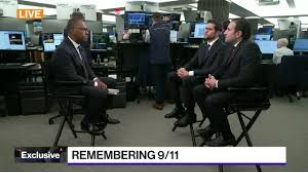
4m
[Cantor's Brandon and Kyle Lutnick Reflect on 9/11


Bloomberg Podcasts
YouTube · Sep 11, 2025](https://www.youtube.com/watch?v=0gFtJ0JJtRc&t=187)
“‘Howard Lutnick gives top Cantor Fitzgerald jobs to his sons Brandon and Kyle,’ is a very clean example of meritocracy
[### Family Affair: Commerce Secretary's Sons Cash In on A.I. ...

The New York Times
https://www.nytimes.com › U.S. › Politics](https://www.nytimes.com/2025/11/20/us/politics/howard-lutnick-family-ai.html)
Nov 20, 2025 — Neugebauer turned to Kyle and Brandon Lutnick to help Fermi raise $107.6 million as an early step in plans to build the President Donald J.Read more
Family Affair: Commerce Secretary’s Sons Cash In on A.I. Frenzy
Howard Lutnick is helping push data center projects. His family companies are profiting from them.
A mammoth data center is rising in Amarillo, Texas. Firms controlled by the Lutnick family have helped finance it, banking millions in fees in the process.Credit...Paul Ratje for The New York Times
By Eric LiptonMichael RothfeldDavid Yaffe-Bellany and Ana Swanson
Eric Lipton reported from Miami; Michael Rothfeld from New York; David Yaffe-Bellany from Lugano, Switzerland; and Ana Swanson from Washington.
Nov. 20, 2025
Kyle Lutnick, the 29-year-old scion of his family’s real estate business, traveled in July to Amarillo, Texas, to walk a dusty tract of land with the head of an artificial intelligence start-up called Fermi America.
He was touring the site of a future data center with Toby Neugebauer, a billionaire who is building one of the behemoth facilities that will power the next generation of A.I. Mr. Lutnick’s company was helping raise capital for the center, banking millions in fees in the process.
“Polite young man,” Mr. Neugebauer said in an interview.
A month later, Kyle’s father, Howard Lutnick, was photographed with Mr. Neugebauer at an event near the White House that celebrated Fermi’s partnership with a South Korean company on the same data center project.
This sequence of events — a son making money on a project his father is boosting as a federal official — has come up repeatedly since President Trump tapped Howard Lutnick to head the Commerce Department, according to an investigation by The New York Times.
In that role, Mr. Lutnick has twisted the arms of American allies, dangling policy favors in exchange for investments in U.S. industrial projects. At times, these tactics have created opportunities for his family’s clients to gain access to much-needed foreign capital, The Times found.
Mr. Lutnick, for example, demanded that the South Korean government invest billions of dollars in U.S. industry to reduce tariffs. Mr. Neugebauer is vying for a share of those investment dollars to build the data center that Mr. Lutnick’s family is also helping to finance.
The job of commerce secretary has always been to promote American industry through deal-making at home and abroad, and the position has traditionally been populated with titans of industry who were expected to bring a business sensibility to meetings filled with career government workers.
But never in modern U.S. history has the office intersected so broadly and deeply with the financial interests of the commerce secretary’s own family, according to interviews with ethics lawyers and historians.
Since February, Kyle Lutnick and his younger brother Brandon, 27, have helped run a network of companies under the corporate umbrella of Cantor Fitzgerald L.P. The companies, led by their father until this year, include the Wall Street investment firm Cantor, the securities brokerage BGC Group and the real estate company Newmark Group.
Brandon is the chairman of Cantor Fitzgerald L.P., and Kyle is the executive vice chairman. The sons and their two younger siblings have a controlling ownership stake in all three companies in the network.
The family’s companies operate in a wide range of industries, from cryptocurrencies to data centers, that overlap with Mr. Lutnick’s work in government, raising concerns even among high-level staff members in the Commerce Department, according to five current and former officials and others familiar with the matter.
It is a blurring of lines that has become a defining characteristic of Mr. Trump’s second term, where top officials and their family members have retained major stakes in industries the government oversees. For months, the president’s two older sons and the sons of his Middle East adviser, Steve Witkoff, have traveled the world pursuing deals that have generated hundreds of millions in profits, at least on paper.
As for Mr. Lutnick, The Times did not find evidence that he had intervened in policy discussions with the intention of driving business to his family. But as he promoted data center construction, business has boomed at the Lutnick companies.
Newmark recently announced that it had completed more than $25 billion of data center deals in the past 12 months, taking a small cut in fees on each transaction. “We are having our best year ever,” Brandon Lutnick said in October at a conference in Switzerland.
Image
Brandon Lutnick speaking at a crypto conference in Lugano, Switzerland, last month. The family’s companies operate in a wide range of industries that overlap with Howard Lutnick’s work in government.Credit...Maurizio Fiorino for The New York Times
The White House and the Commerce Department said in statements that Mr. Lutnick had fulfilled his ethics requirements and took them seriously.
“The fact of the matter is that the only special interest guiding Secretary Lutnick and the rest of the Trump administration’s decision-making is the best interest of the American people,” said Kush Desai, a White House spokesman.
Representatives for Cantor and Newmark said the firms had business expertise and relationships that long predated Mr. Lutnick’s role in the administration.
Newmark’s chief executive, Barry Gosin, said in a statement that the company was the industry leader in raising capital and leasing for data centers.
“Newmark’s data center advisory work is independent of governmental and other private activities,” Mr. Gosin said. “Our success in this sector reflects the optimal outcomes we deliver for our clients.”
‘Enough Money’
Howard Lutnick first drew international attention in 2001, when 658 employees of Cantor, including his younger brother, were killed in the attacks on the World Trade Center. Mr. Lutnick was not at work that morning because he was dropping off Kyle for the first day of kindergarten.
Over the next two decades, he rebuilt the business in the wake of the tragedy. It now has more than 13,000 employees, and has expanded into new areas of the finance world, after acquiring Newmark in 2011.
At times, Mr. Lutnick has pushed boundaries and found his companies in the cross hairs of law enforcement. Cantor and affiliates agreed to pay more than $50 million over the last decade to settle at least eight separate investigations of illegal gambling and money laundering, incomplete, false or misleading statements in financial filings, and other issues, enforcement records show. In some cases, the firms settled without admitting or denying wrongdoing.
When Mr. Trump nominated him to lead the Commerce Department, Mr. Lutnick noted that at the age of 63, he wanted to serve the nation. “I’ve made enough money in my life,” he said at his confirmation hearing.
Mr. Lutnick has said he eliminated any ethics issues by turning over his ownership stake of the companies to his children, a process he announced in May, with an agreement that excluded him from any profits or losses after that date.
He has also claimed that he does not speak to his sons about their work. “I would love to talk to them about it, but I’m not allowed,” Mr. Lutnick said on a podcast in March.
The actual transfer of his ownership stake was not completed until early October, meaning he continued to have a financial interest in parts of the family’s business while he was commerce secretary, with his name on filings in full view of any client.
Until his divestment was completed, the Trump administration granted Mr. Lutnick an ethics waiver. That permitted him to participate in certain policy matters that might benefit the firms, while prohibiting him from working on specific deals in which they were involved.
Three ethics lawyers interviewed by The Times said it was not clear whether Mr. Lutnick had violated federal ethics rules or the terms of his waiver. But they said the Lutnick family’s connections to the same deals in both government and private spheres — like its involvement on different sides of Fermi’s data center project — raised questions about whether Mr. Lutnick was doing enough to distance himself from possible ethical conflicts.
“If there is a cloud of distrust over whether the action of that official is aimed at the public interest versus their family’s own interest, that’s a problem,” Kedric Payne, general counsel at the nonpartisan Campaign Legal Center, an ethics group, said after reviewing documents at the request of The Times. “You’re going to create a risk that the public will just start to really lose trust in the government.”
Pressuring the Emiratis
Artificial intelligence has become a vital engine of the U.S. economy in recent years, drawing hundreds of billions of dollars in investment from around the world. Much of that money has flowed into data centers — sprawling facilities that sit on vast swaths of land and run industrial-grade computers that power A.I.
So it is no surprise that major commercial real estate brokers like Newmark were attracted to the sector.
In 2023, when Mr. Lutnick was the company’s chairman, Newmark expanded its team of investment bankers specializing in data centers. The company helps select land for these colossal projects, find power supplies and line up billions of dollars worth of loans and other financing.
The data center boom is “a modern-day gold rush,” Chad Lavender, a top Newmark executive, said in a podcast interview in September, shortly before the company reported record earnings for the quarter. “We’re seeing a ton of activity.”
Now Mr. Lutnick is helping foster that activity from Washington. The Commerce Department is seeking to accelerate data center construction with tax breaks, grants and permits to build new power sources to fuel the facilities.
Mr. Lutnick has also repeatedly pressed foreign nations to send chunks of their own money to help build data center projects in the United States, at the same time that his family’s company serves as one of the data center industry’s leading deal makers, earning tens of millions in fees.
Image
Mr. Lutnick at an announcement of new tariffs in April. A blurring of lines has become a defining characteristic of President Trump’s second term, where top officials and their family members have retained major stakes in industries the government oversees.Credit...Haiyun Jiang for The New York Times
Among the nations that Mr. Lutnick has pressured is the United Arab Emirates.
This spring, the Emiratis approached the Trump White House, requesting access to advanced U.S.-made computer chips, which are crucial to the Emirates’ ambitions of dominating the A.I. industry.
It was a controversial ask.
During the Biden administration, the United States had established strict controls to limit access to the chips, fearing that the Emiratis might share them with China and allow the Chinese to create sophisticated weapons that could be turned on U.S. soldiers. Even some within Mr. Trump’s administration were reluctant to give the Emirates unfettered access to the most advanced chips.
Mr. Lutnick was open to exporting chips, with the right safeguards in place. But his position gave him the power to say “no” and the Emiratis knew it. That is because the Commerce Department oversees the nation’s export licenses.
So he made clear that he wanted the Emiratis to commit billions of dollars to the construction of data centers in the United States in return for the chips, according to administration officials involved in the process.
“You will invest in America and build data centers in America for an equal amount of chips,” Mr. Lutnick said, describing the terms of the deal with the Emiratis during Senate testimony in June.
Eventually the chips deal was approved. Newmark’s clients are one of the possible beneficiaries.
Early this year, the Emirates agreed to commit money to help build the U.S. portion of a global network of data centers. The flagship site of this network, named after the 1994 sci-fi movie “Stargate,” is rising in Abilene, Texas.
Newmark has helped finance construction of the Abilene facility, soon to become one of the largest data centers in the country. The firm brokered more than $9.4 billion in loans this year for a partnership working on the project.
The Emirati money ultimately might not be used on the Abilene data center, executives involved in the effort said. But it is already helping finance other Stargate sites.
Deals have also been struck with Saudi Arabia to invest at least $20 billion in energy and data center projects in the United States, helping bring yet more business to the real estate brokers who structure financing for these projects, though there is no indication whether it will benefit Newmark specifically.
A Commerce Department spokesman said Mr. Lutnick did not pressure Middle East partners to fund specific projects, just to spend money on data centers somewhere in the United States.
A similar instance of overlaps played out again in July.
That month, Mr. Lutnick joined Mr. Trump in Pittsburgh, boasting about the billions of dollars that private companies are spending on a slate of data centers, including a giant project in Lancaster, Pa.
“The A.I. revolution will change the way the world works, and we cannot lose,” Mr. Lutnick said at the event. “The Trump administration will not let us lose.”
What he did not mention was that Newmark was involved in the Lancaster project. A few weeks after Mr. Lutnick’s appearance in Pennsylvania, the company announced it had brokered a $4 billion joint venture to build a “state-of-the-art A.I. data center campus” there.
A Commerce Department spokesman said Mr. Lutnick had no role in any of the individual deals that he promoted in Pennsylvania, and attended the event simply to support the industry.
Pressuring the Koreans
Toby Neugebauer, who is building the Fermi data center that will power the next generation of artificial intelligence, said he chose Newmark because of the expertise of its staff, not its connection to the commerce secretary.Credit...Paul Ratje for The New York Times
The intersection of Mr. Lutnick’s work as commerce secretary and his sons’ as data center deal makers is most apparent in the Fermi America project in Amarillo.
Fermi was co-founded in January by Rick Perry, the former Texas governor who was Mr. Trump’s first-term energy secretary, and Mr. Neugebauer, a major Republican donor who has supported Mr. Trump. The company has not yet generated any revenue.
This year, Mr. Neugebauer turned to Kyle and Brandon Lutnick to help Fermi raise $107.6 million as an early step in plans to build the President Donald J. Trump Advanced Energy and Intelligence Campus, which would be powered in part by nuclear energy.
Mr. Neugebauer said he chose Newmark because of the expertise of its staff, not its connection to the commerce secretary. He said he knew that seeking favors would most likely backfire.
“Was never going to help me,” he said. “Makes it harder.”
In July, Mr. Neugebauer gave a tour of the Texas construction site to Kyle Lutnick, a Stanford graduate who has worked as a D.J. under the stage name Kxtz. Mr. Neugebauer said that he gave Kyle and other visitors Fermi-branded cowboy hats, and that Kyle later texted a picture of himself with the hat.
Soon Mr. Neugebauer was also engaging with Kyle’s father. Shortly after the Texas tour, Mr. Lutnick announced that South Korea had agreed to a trade deal that would funnel $350 billion into the United States.
Mr. Neugebauer coveted a piece of those investments.
His plan was to get the South Korean government, with the support of the Trump administration, to help finance a nuclear power plant to fuel his Amarillo data center. Components for the plant would be supplied by Doosan Enerbility, a South Korean industrial giant.
In August, Mr. Lutnick appeared alongside Mr. Neugebauer during a U.S.-Korean business summit at the historic Willard InterContinental hotel, where Fermi and Doosan announced plans to collaborate.
Mr. Neugebauer and his Doosan counterpart posed for a photo holding their memorandum of understanding, flanked by Mr. Lutnick and a Korean government official.
“You’re going to see a national and economic security fund built with the Japanese money, the Korean money and other countries’ money,” Mr. Lutnick said on CNBC the day after the event.
Image
A photo distributed in a news release by Fermi America showing Mr. Lutnick with Kim Jung-kwan, South Korea’s trade minister; Jongdoo Kim, the president of Doosan Enerbility Nuclear Power Plant BG; and Mr. Neugebauer.
Days after the Doosan announcement, Fermi unveiled its financing deal for the Amarillo project, with both Newmark and Cantor listed as advisers. The companies were paid $6 million for this work, according to a financial filing.
In a bigger coup for the Lutnick companies, Cantor jointly managed an initial public offering of Fermi’s stock in early October that valued the company at more than $12.5 billion. Millions of dollars in additional fees flowed to Cantor.
“Honored to co-lead the I.P.O. for such an innovative and inspiring company Fermi America,” Kyle Lutnick posted on social media at the closing of that deal.
Ben Kass, a Commerce Department spokesman, said no decision had been made on where to allocate the funds South Korea had agreed to spend in the United States. So far, he said, the department is planning to use part of the money to promote U.S. shipbuilding, rather than nuclear power.
Still, Mr. Kass added, the final terms of the trade deal remain under negotiation.
Image
Rick Perry, the former Texas governor who was Mr. Trump’s first-term energy secretary, co-founded Fermi with Mr. Neugebauer.Credit...Paul Ratje for The New York Times
At a recent meeting in Washington, Mr. Neugebauer pressed Deputy Commerce Secretary Paul Dabbar to direct money from the Korean trade deal toward Fermi’s nuclear plant.
Mr. Neugebauer has an important ally in Senator Ted Cruz, Republican of Texas and the chairman of the Senate Commerce Committee. Fermi is also seeking low-interest financing from the Energy Department, which is offering billions of dollars in nuclear-energy loans.
“Toby has been a close friend of mine for 20 years,” Mr. Cruz said last week, at a Cantor-sponsored conference at the Ritz-Carlton in Miami Beach, after he wrapped Mr. Neugebauer in a bear hug by the pool. “It is a powerful proposal to bring billions of investments to Texas and create a whole lot of jobs.”
Mr. Neugebauer remains optimistic that the Commerce Department will help him get the Korean funding.
“Do I think it probably gets done?” Mr. Neugebauer said. “Yes.”
He added, “We got no special treatment.”
Image
The site where a natural gas facility is being built to help power the Fermi data center. Artificial intelligence has become a vital engine of the U.S. economy in recent years, drawing hundreds of billions of dollars in investment from around the world.Credit...Paul Ratje for The New York Times
Cade Metz contributed reporting. Susan C. Beachy, Kitty Bennett and Laine Cibulskis contributed research.
Eric Lipton is a Times investigative reporter, who digs into a broad range of topics from Pentagon spending to toxic chemicals.
Michael Rothfeld is an investigative reporter in New York, writing in-depth stories focused on the city’s government, business and personalities.
David Yaffe-Bellany writes about the crypto industry from New York. He can be reached at davidyb@nytimes.com.
Ana Swanson covers trade and international economics for The Times and is based in Washington. She has been a journalist for more than a decade.
A version of this article appears in print on , Section A, Page 1 of the New York edition with the headline: Sons of Commerce Chief Cash In as He Pushes A.I.. Order Reprints
---
[### Brandon Lutnick's Post

LinkedIn · Brandon Lutnick
380+ reactions · 1 month ago](https://www.linkedin.com/posts/brandon-lutnick-058443144_congratulations-to-kyle-lutnick-on-his-appointment-activity-7463640972044804096-Q7a_)
Congratulations to Kyle Lutnick on his appointment as Chief Strategy Officer at Newmark. Newmark is one of the largest commercial real ...
---
MOJO
Donald Trump’s network of family businesses—and network of US government deals with those businesses—is mind-bogglingly wide. A *New York Times*investigation reveals his sons’ latest venture: tungsten mining in Kazakhstan.
The US government recently cut a massive mining deal for the critical mineral with the government of Kazakhstan, whose leader recently said Donald Trump was “sent by Heaven.” Trump’s sons Eric and Donald Jr., and Commerce Secretary Howard Lutnick’s sons Brandon and Kyle, are all tied directly or indirectly to the American company, Kaz Resources, that plans to break ground on the tungsten mine. Kaz Resources is also slated to receive at least $1.6 billion in government funding.
Tungsten, a mineral widely used in missile warheads, fighter jets, and computer chips, has become increasingly difficult for the US to access since China put export restrictions on it in 2025. Since then, the Pentagon has selected contractors to build small tungsten refineries on US military bases, while also looking to expand overseas mining—because no onshore mines are currently operational, and likely won’t be for a long time. And those offshore mining deals may mean big money for Trump and Lutnick-affiliated companies: at least 14 different companies affiliated with one or both families are actively working with the federal government on critical mining deals.
The Kazakh deal was signed on November 6th, without disclosing the Trump or Lutnick families’ involvement. Eric Trump, Donald Trump Jr., Brandon Lutnick and Kyle Lutnick were “doing business with partners in a deal that their fathers were negotiating, continuing a pattern of self-enrichment in the second Trump administration that has few precedents in American history,” Paul Sonne and Eric Lipton of theTimes wrote.
“I can see how the optics might be disturbing to some people,” Pini Althaus, the CEO of Kaz Resources, said. “But that’s unfortunate because this company and this project goes way beyond any one president, let alone any family.”
---
---
report 6 26
dn
etp kelcy warren pipelines to data ctrs
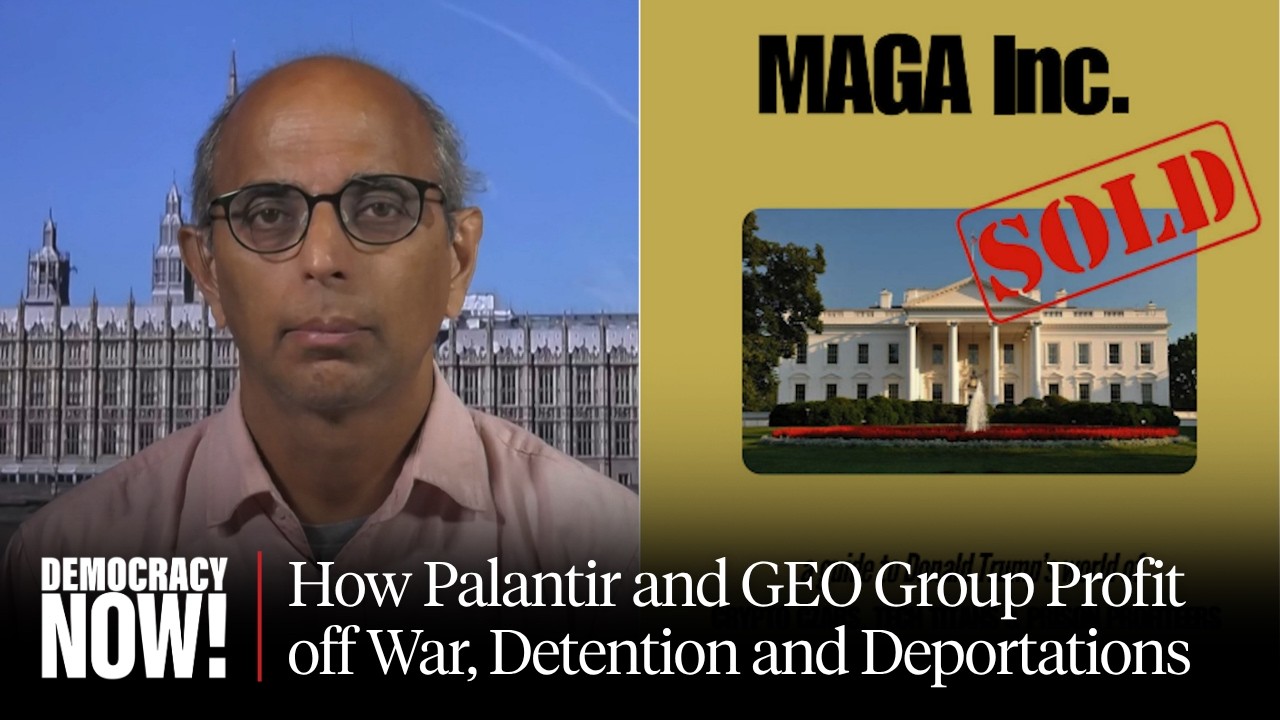
Jun 23, 2026 Latest Shows
Support our work: https://democracynow.org/donate/sm-de...A new report by CorpWatch titled "MAGA Inc." reveals which allies of President Trump are profiting off of the administration's policies. Pratap Chatterjee, executive director of CorpWatch, says that prison companies and Big Tech companies have cashed out on policies of mass deportation. "The people that we think are profiting the most out of MAGA [are in] the business of deportation, the business of gathering data," says Chatterjee. Palantir, in particular, has provided the government with information to support the surveillance of immigrants and data to support war efforts. The Trump family is also expanding their fortune through cryptocurrency, according to the report. "These are schemes by which you can move money anonymously around the world, something that drug dealers, gun manufacturers or gun dealers and criminals love," says Chatterjee. "This is the sort of business that is now benefiting the Trump family."
csi aviation deport alan wei trump findraiser got big contracts
pt 2
cantor fitzgerald lutnick
---
---
Cantor Fitzgerald - Wikipedia some talk
6 26
Cantor Fitzgerald, L.P. is an American financial services firm that was founded in 1945. Cantor Fitzgerald's 1,600 employees work in more than 30 locations, including financial centers in the Americas, Europe, Asia-Pacific, and the Middle East. Together with its affiliates, Cantor Fitzgerald operates in more than 60 offices in 20 countries and has more than 12,000 employees.[2] The firm controls two publicly traded companies: the Newmark Group and BGC Group.[3]
Until 2001, the company's headquarters were located between the 101st and 105th floors of the North Tower of the World Trade Center in New York City, just above the impact site of American Airlines Flight 11 during the September 11 attacks. 658 Cantor Fitzgerald employees who were present that day were killed, representing the largest loss of life among any single organization in the attacks.
The company was headed by Bernie Cantor from its founding to his death in 1996. From 1996 to 2025, the company was headed by Howard Lutnick, until he took the position of United States secretary of commerce in the second Donald Trump administration. Since 2025, the company has been headed by Lutnick's sons, Brandon and Kyle, who are in their 20s. During his time in the Trump administration, Lutnick has promoted projects that benefit Cantor Fitzgerald, raising conflict of interests questions.[4] 2025 was the firm's most profitable year in its history.[3]
Early history
Cantor Fitzgerald was formed in 1945 by Bernard Gerald Cantor and John Fitzgerald as an investment bank and brokerage business.
In 1965, Cantor Fitzgerald began "large block" sales/trading of equities for institutional customers. It became the world's first electronic marketplace for US government securities in 1972,[5] and in 1983 it was the first to offer worldwide screen brokerage services in US government securities,[citation ^needed] becoming in time the market's premier government securities dealer.[6] It also became known for the quality of its institutional distribution business model.[clarification ^needed][citation ^needed]
In 1991, Howard Lutnick was named president and CEO of Cantor Fitzgerald; he became chairman of Cantor Fitzgerald, L.P., in 1996.[7]
In 1999 eSpeed, an electronic bond trading platform, became publicly traded.[5]
September 11 attacks
Main article: September 11 attacks
Further information: Casualties of the September 11 attacks
[ ](https://en.wikipedia.org/wiki/File:World_Trade_Center,_New_York_City_-_aerial_view_%28March_2001%29.jpg)1 World Trade Center (North Tower), the building with the antenna to the left, included the corporate headquarters of Cantor Fitzgerald.[8]
Cantor Fitzgerald's corporate headquarters and New York City office,[8][9] on the 101st to the 105th floors of 1 World Trade Center in Lower Manhattan (2 to 6 floors above the impact zone of American Airlines Flight 11), were destroyed during the September 11 attacks. At 8:46:46 a.m., eighteen seconds after the plane struck the tower, a Goldman Sachs server issued an alert saying that its trading system had gone offline because it could not connect with the server.[10][11] Since all stairwells leading past the impact zone were destroyed by the initial crash or blocked with smoke, fire, or debris, every employee who reported for work that morning located in Cantor's offices between the 101st to the 105th floors[a] was killed in the attacks; 658 of its 960 New York employees were killed or missing,[12] or 68.5% of its total workforce, which was considerably more than any of the other World Trade Center tenants, the New York City Police Department, the Port Authority Police Department, the New York City Fire Department, or the Department of Defense. Forty-six contractors, food service workers, and visitors in the Cantor Fitzgerald offices at the time were also killed.[13] CEO Howard Lutnick was not present that day, but his younger brother, Gary, was among those killed. Lutnick vowed to keep the company alive, and the company was able to bring its trading markets back online within a week.[14][15]
On September 19, Cantor Fitzgerald made a pledge to distribute 25% of the firm's profits for the next five years (that would otherwise have been distributed to its partners), and committed to paying for ten years of health care for the benefit of the families of its 658 former Cantor Fitzgerald, eSpeed, and TradeSpark employees.[16] In 2006, the company had completed its promise, having paid a total of $180 million (and an additional $17 million from a relief fund run by Lutnick's sister, Edie).[17]
Until the attacks, Cantor had handled about a quarter of the daily transactions in the multi-trillion dollar treasury security market. Cantor Fitzgerald subsequently rebuilt its infrastructure, partly through the efforts of its London office,[18] and relocated its headquarters to Midtown Manhattan. The company's effort to regain its footing was the subject of Tom Barbash's 2003 book On Top of the World: Cantor Fitzgerald, Howard Lutnick, and 9/11: A Story of Loss and Renewal as well as a 2012 documentary, Out of the Clear Blue Sky.
On September 2, 2004, Cantor and other organizations filed a civil lawsuit against Saudi Arabia for allegedly providing money to the hijackers and al-Qaeda.[19] It was later joined in the suit by the Port Authority of New York and New Jersey.[20] Most of the claims against Saudi Arabia were dismissed on January 18, 2005.[21]
In December 2013, Cantor Fitzgerald settled its lawsuit against American Airlines for $135 million. Cantor Fitzgerald had been suing for loss of property and interruption of business by alleging the airline to have been negligent by allowing hijackers to board Flight 11.[22]
Recent history
In 2003, the firm launched its fixed-income sales and trading group.[citation ^needed][23] Three years later, the Federal Reserve added Cantor Fitzgerald & Co. to its list of primary dealers.[24] The firm later launched Cantor Prime Services in 2009. It was meant to be a provider of multi-asset, perimeter brokerage prime brokerage platforms to exploit its clearing, financing, and execution capabilities.[citation ^needed] A year after, Cantor Fitzgerald began building its real estate business with the launch of CCRE.[citation ^needed] Cantor's affiliate, BGC Partners, expanded into commercial real estate services in 2011 by its purchase of Newmark Knight Frank and the assets of Grubb & Ellis, to form Newmark Grubb Knight Frank.[citation ^needed]
On December 5, 2014, two Cantor Fitzgerald analysts were said to be in the top 25 analysts on TipRanks.[25] Cantor Fitzgerald has an active special-purpose acquisition company underwriting practice, having led all banks in SPAC underwriting activity in both 2018 and 2019.[26]
In March 2016, Sage Kelly, formerly of Jefferies & Co., joined the firm as senior managing director and head of its investment-banking division.[27]
Cantor Fitzgerald is one of 24 primary dealers that are authorized to trade US government securities with the Federal Reserve Bank of New York.[28]
2025 was the company's year of record profitability. That same year, Howard Lutnick had been appointed as Commerce Secretary in the second Donald Trump administration and handed control of the company over to Brandon and Kyle Lutnick. According to Bloomberg News, the sons "bristle at suggestions that their new connections in Washington are contributing to that success."[29] During his time in the White House as commerce secretary, Lutnick has pushed for projects and investments that benefitted his family.[30] New York Times wrote in November 2025, "never in modern U.S. history has the office intersected so broadly and deeply with the financial interests of the commerce secretary’s own family, according to interviews with ethics lawyers and historians."[30]
Philanthropy
The Cantor Fitzgerald Relief Fund provided $10 million to families affected by Hurricane Sandy. Howard Lutnick and the Relief Fund "adopted" 19 elementary schools in impacted areas by distributing $1,000 prepaid debit cards to each family from the schools.[31] A total of $10 million in funds was given to families affected by the storm.[32]
Two days after the 2013 Moore tornado struck Moore, Oklahoma, killing 24 people and injuring hundreds, Lutnick pledged to donate $2 million to families affected by the tornado. The donation was given to families in the form of $1,000 debit cards.[33][34]
Each year, on September 11, Cantor Fitzgerald and its affiliate, BGC Partners, donate 100% of their revenue to charitable causes on their annual Charity Day, which was initially established to raise money to assist the families of the Cantor employees who died in the World Trade Center attacks.[35] Since its inception, Charity Day has raised $300[36] million for charities globally.[37]
Subsidiaries and affiliates
The firm has many subsidiaries and affiliates, including:
- BGC Partners, named after fixed-income trading innovator and founder B. Gerald Cantor, is a global brokerage company that services the wholesale financial markets and commercial real estate marketplace in New York, London, and other financial centers. BGC Partners includes Newmark Grubb Knight Frank, the fourth-largest real estate service provider in the US.[citation ^needed]
- Cantor Ventures is the company's corporate venture capital and enterprise development arm. Led by Henrique De Castro, the group's current investments include delivery.com, Ritani, TopLine Game Labs, AdFin, Lucera, NewsWhip, and XIX Entertainment.[citation ^needed]
- Hollywood Stock Exchange, founded in 1996, is the world's virtual entertainment stock market.[citation ^needed]
- TopLine Game Labs is a technology company to create short-duration fantasy sports and entertainment-based social gaming. Headquartered in Los Angeles, TopLine Game Labs was, in 2013, building a platform-agnostic architecture to power game experiences for sports.[38]
Senior management
List of chairpersons
- Bernie Cantor (1945–1996)
- Howard Lutnick (1996–2025)
- Brandon Lutnick (2025–present)[39]
List of CEOs
- Bernie Cantor (1945–1991)
- Howard Lutnick (1991–2025)
- Pascal Bandelier, Sage Kelly, and Christian Wall (co-CEOs) (since February 2025)[39]
List of presidents
- Anshu Jain (2017–2022)[40]
See also


---