opioid bak
819 all 3 nodes
==
see perdue
see press conf/mtg nsa and djt
trump thinks they are imported?
see also crack cocaine
and opioids
see sackler
3 big law firms?!
see J&J
===
AN 11V 25
Revealed: Opioid settlement cash spent on sock hops and concerts - Alternet.org
---
an 4 25
Arlie Russell Hochschild’s Strangers in their own Land, which explored the motivations and resentments of working-class conservatives in Louisiana, was named one of six books to help understand Donald Trump’s win by the New York Times when he was first elected president, in 2016. (Another was Hillbilly Elegy, by now vice president JD Vance, published just a few months earlier.)
Since then, Californian progressive sociologist Hochschild has been struggling to understand the appeal of Donald Trump: particularly to white, working-class men, once a strong Democratic constituency. No writer has worked harder to grasp the gut-level appeal that saw Trump win two elections – and in the process, convert the Republican Party into his personal fiefdom.
*Review: Stolen Pride: Loss, Shame and the Rise of the Right – Arlie Russell Hochschild (The New Press)
The puzzle is greatest when one contrasts the current billionaire cabinet with the fact much of Trump’s support comes from people who are objectively worse off under his policies – including tariffs. Last week, Oxfam America called them “an attack on the global working class” that will harm working-class families in the United States and “inflame inequality”.
In Strangers in their own Land, Hochschild called this “the Great Paradox”. Stolen Pride returns to many of that book’s questions, but in a different era – and a US that seems more fragmented, and far angrier than it was in 2016.
Hochschild explores the world of Pikeville, Kentucky, a poor, overwhelmingly white, Trump-supporting city in the heart of Appalachia: in the “whitest and second-poorest congressional district in the country, a region that had rapidly shifted from the Democratic Party to the Republican Party”.
The American dream’s broken promise
One of Hochschild’s subjects is James Browning, a recovering drug user whose hands are tattooed and covered in rings. “There you have it” he says, “I have a shame hand and a pride hand.” This sums up the basic argument of Stolen Pride.
“Pride and shame,” she writes, “signal the juncture between the identity we hold out to the world, and how the world responds to our identity.” The men she speaks to desperately need a sense of pride, but too often find their failures are the cause of deep shame. The American Dream, after all, teaches them every individual can make it, inherently implying failure is due to individual weakness.
Many of the men she speaks to have experienced unemployment, domestic breakups, jail, alcoholism and drug abuse. (She even manages to speak to one current jail inmate.) Kentucky has one of the highest rates of opioid addiction in the United States – and despite Trump’s attacks on Mexico and Canada, the doctor-prescribed drugs some were addicted to appear to be domestically manufactured.
So many of the men Hochschild interviewed talk of the balance between shame and pride, I began to wonder if they were prompted. On reflection, I suspect this represents Hochschild’s careful selection from a series of very extensive interviews, conducted over roughly six years.
Her emphasis is almost entirely on the men in Pikeville, though a majority of white women also voted for Trump. I would love to see Hochschild explore this further. That so many women can support a convicted sexual predator in a country obsessed with sexual behaviour is one of the mysteries of contemporary American politics.
By 2021, many Americans – and most Republicans – believed Trump’s claims that he had really won the 2020 election. They saw the rioters at the Capitol on January 6 as heroes defending American democracy. In Trump’s claim the election was stolen, many of those Hochschild interviews saw parallels to what they believed had been stolen from them, by economic and cultural upheavals.
Importantly, many of her respondents saw Trump as a bully — but a bully who stood up for them, against what they perceived as urban liberal elites. When Hillary Clinton spoke of his supporters as “a basket of deplorables”, she reinforced the grievances of people consistently looked down on as “hillbillies” and “rednecks” by people they identified as Democratic elites.
How ‘deep stories’ inform politics
For Hochschild, there are underlying emotional narratives, which she calls “deep stories”, that inform our political positions.
In Strangers in their Own Land, these were identified as a sense of being overtaken by groups, usually educated women and Black people, who benefited from programs of affirmative action. The second Trump administration’s crusade against “DEI” is playing directly to these grievances. In Stolen Pride, this feeling is strengthened by the sense liberal elites are undermining both traditional values and the ability for individuals to succeed.
Eastern Kentucky is coal country, and Clinton’s ill-worded election-trail claim she would “put a lot of coal miners and coal companies out of business” was a major factor in swinging voters towards Trump. For men who took pride in their work, the collapse of the coal industry produced a sense of shame: strengthened by a strong belief individuals are to blame for their own misfortunes.
Pikeville was also the site of a neo-Nazi march in April 2017, the forerunner of the tragic Unite the Right march in Charlottesville later that year, which resulted in one death and multiple injuries.
Much of the book skilfully explores the preparations for and reactions to the Pikeville march, which seemingly passed without incident. Some 100 white nationalists turned up and were outnumbered by counter protesters, As Hochschild writes, “Very few Pikeville locals were involved on either side”.
Perhaps the most fascinating figure in Hochschild’s book, and evidence of her skill in persuading the most unlikely people to open up in interviews, is Matthew Heimbach, who led the 2017 Pikesville march, identified as a proud Nazi and co-founded the now-defunct neo-Nazi party, Traditionalist Worker Party.
He also co-planned the Charlottesville march, where he railed against “white genocide” and was sued (with other members of the TWP) for his role in it on behalf of Charlottesville victims. He was found guilty on charges of civil conspiracy in 2021.
“Some years later”, he reveals some of his core beliefs are shaken, especially his attitude toward Black Americans, whom he recognises as often sharing the same sense of dispossession that had fuelled his own anger. “I love Russia and I love Putin,” he told Hochschild, “so I looked into moving there.” As Hochschild remarks: “It seemed that Adolf Hitler was to be replaced in his pantheon by Vladimir Putin.”
Transcending the gulf?
Pikesville is also the home of America’s most famous family feud, between the Hatfields and the McCoys. The feud, which lasted many decades from the late 19th century, “began as a dispute over a stolen pig” and “ended as the longest and fiercest clan fight in the nation”. It has been the basis for a dozen movies, virtually all unmemorable. In 2017, a member of the reconciled clans said if they could settle their differences, “there has to be a way for Americans to get back together as one”.
In the last section of the book, Hochschild looks for ways to transcend the apparent gulf that separates blue and red America. Reading the book after Trump’s return to power, this felt sadly inadequate. Yes, as she points out, most voters are more moderate than the politicians on either side. Sadly, this is not sufficient protection against the rise of the authoritarian plutocracy that now seems to have a firm grip on Washington.
Hochschild wrote this book during the Biden administration and the lead-up to the 2024 elections. I assume she finished it before Trump named Vance as his vice president: a man who first came to prominence with his own account of Appalachian pride and shame. Hochschild doesn’t discuss his Hillbilly Elegy, though it is listed in her references.
Hochschild brilliantly captures the pain of men who feel left behind and conveys something of life in rural Kentucky that goes beyond easy stereotypes. I could feel empathy for many of the people she comes across. But I was unpersuaded there is much room for optimism that the appeal of Trump, and those who follow him, will easily be defeated.
Dennis Altman, Vice Chancellor's Fellow and Professorial Fellow, Institute for Human Security and Social Change, La Trobe University
This article is republished from The Conversation under a Creative Commons license. Read the original article.
---
===
AN 1 25
The highest rate of battery on a school employee from a child is occurring in West Virginia’s kindergarten classrooms — an alarming statistics that the state schools superintendent said is tied to the state’s multigenerational drug epidemic.
State Superintendent of Schools Michele Blatt told lawmakers that 19% of battery cases were in kindergarten classes, and the number drastically dropped off as children moved up in grade levels.
“I don’t believe that we have kindergartners who are doing this out of willful intent to harm someone,” said Blatt, who spoke with lawmakers Jan. 7 at the state Capitol. “As we are thinking about these students, we know that we’re dealing with either students who are born addicted to alcohol or drugs. We’re dealing with students who are being raised by parents who are addicted to one of those substances.”
Del. Joe Statler, R-Monongalia, said the number of violent incidents was likely much larger than the data reported.
“These numbers are alarming to say the least,” he said.
West Virginia’s overdose rate is declining since its spike during the COVID-19 pandemic, but the state continues to lead the nation in overdose death rates and has the highest number of babies born with neonatal abstinence syndrome. Fetal drug exposure is tied to a higher likelihood of mental disorders, adverse behavior problems and needing an Individualized Education Plan (IEP).
Lawmakers are grappling with how to help elementary teachers address an uptick in violent and disruptive student behavior.
Teachers told lawmakers that they need more staff to help these children, who sometimes spend their school day in the principal’s office because there’s nowhere to put them. Test scores won’t improve until it’s addressed, educators said.
Many counties don’t have alternative learning centers for young students, and Blatt said creating those spaces must be a priority.
“What are we going to do with those students when those supports aren’t enough? Where is that alternative education placement? … I do believe in most instances, if we can get the proper supports and treatments in place for those students, and the support for those teachers in the classroom, then for many of these children we can change their trajectory,” she said.
Senate Education Committee Chair Amy Grady, R-Mason, has proposed asking counties to use their opioid settlement funds to build alternative environments.
The second highest rate of battery on a teacher (13% of incidents) occurred in third grade classrooms.
Blatt said that many children had never been taught how to behave in a classroom.
“We are truly dealing with students where no one has ever taught them how to behave in school or how to behave in any situation. Many of them have physical issues from the addictions they were born with,” she said.
Lawmakers will try again on student discipline bill
Blatt updated lawmakers on the West Virginia Department of Education’s STRIVE Initiative, which is meant to bolster schools’ resources for addressing kids’ behavioral health, chronic absenteeism and more. It offers financial resources, alternative learning programs, behavioral support and more.
“The STRIVE model is to make sure that not only do have have a touch point with what’s going on in all of our counties and what their needs are, but also that they are aware of all the resources that are available to them to support, whether it’s academic, social, emotional or behavioral needs,” Blatt said.
Additionally, the WVDE will work with Marshall Behavior/Mental Health Technical Assistance Center to examine seven schools with an excessive amount of battery on a school employee.
“While there were 511 of these incidents, we’re looking at 131 students. If you look at the data … what we’re finding is there’s a lot of incidents of the same child repeatedly,” Blatt said. “Whatever’s being done with that student to address those concerns, their needs are not being met, and we need to find a different way to address those needs.”
Del. Buck Jennings, R-Preston, said that discipline was one of “our biggest issues.”
“I hope you can come up with an answer that’s more than having another group study,” he said.
Lawmakers last year failed to pass legislation that would have given elementary teachers greater authority to remove students for disruptive, aggressive or violent behaviors. It outlined steps for how schools should deal with students who needed to be removed from their classrooms. Critics of the bill worried that it didn’t do enough to help address children’s mental health needs, and they noted that it didn’t come with funding to hire additional staff or create alternative learning spaces.
Some version of the elementary discipline legislation is expected to be considered during the upcoming 60-day legislative session. It begins Feb. 12.
West Virginia Watch is part of States Newsroom, a nonprofit news network supported by grants and a coalition of donors as a 501c(3) public charity. West Virginia Watch maintains editorial independence. Contact Editor Leann Ray for questions: info@westvirginiawatch.com.
---
pro pub long
an 12 24
- delayed Justice: After a whistleblower exposed the criminal behavior of Endo, a drug manufacturer, the Justice Department waited more than a decade to bring charges against the company.
- A Steep Discount: Federal agencies said Endo owed up to $7 billion in criminal fines, back taxes and other charges. The government settled this year for just $200 million.
- Winners and Losers: Endo is still selling narcotics. Lawyers made $350 million. A few executives shared $95 million in bonuses. Thousands of opioid victims are to share $40 million.
These highlights were written by the reporters and editors who worked on this story.
This spring, the Justice Department announced a major victory against a drug firm that manufactured billions of opioid painkillers. Endo Health Solutions, the agency said, would face $1.5 billion in fines and forfeitures and plead guilty to a corporate criminal charge.
Prosecutors said the massive fine would hold accountable a suburban Philadelphia company that profited by “misrepresenting the safety of their opioid products and using reckless marketing tactics to increase sales.”
But in the end, federal prosecutors offered far friendlier terms than those trumpeted by the agency.
Endo would not have to pay the $1.5 billion in criminal penalties, which was already a deep discount from the billions federal officials said Endo owed for dodging taxes and driving up Medicare costs.
In what amounted to a liability fire sale by the Justice Department, the company’s woes with the federal government would all be resolved by a $200 million payment.
In sentencing Endo in federal court in May, Judge Linda Parker wondered how the amount paid to the U.S. could be so low.
“I don’t understand. I really don’t understand,” Parker said. “I just don’t understand how it went from $1 billion to $200 million.”
:{Federal prosecutor Benjamin Cornfeld explained: Endo was broke.}:
“The reality is that there are limited funds available because the debtors were in bankruptcy,” Cornfeld said.
But a fuller explanation, drawn from corporate filings, interviews, and criminal court and bankruptcy records, shows how the DOJ, after years of aggressively prosecuting opioid companies, delayed for a decade a winning criminal case against Endo. In the intervening years, Endo vastly expanded its narcotic-pill empire before executing a corporate escape plan.
Codenamed Project Zed, the plan allowed Endo to restructure its debt to retain control of the company and hand out $95 million in executive bonuses before seeking protection in bankruptcy. The result for U.S. taxpayers: Endo paid a tiny fraction — three pennies on the dollar — of the $7 billion that officials said it owed the U.S. government, including $4 billion in taxes.
Endo is not a household name. But by 2018, a year when 15,000 Americans overdosed and died on prescription painkillers, Endo and the firms it purchased had sold 33 billion opioid pills over two decades, almost three times the number sold by Purdue Pharma, the Sackler family’s OxyContin powerhouse.
Though federal prosecutors first learned about Endo’s criminal behavior in a 2013 whistleblower suit, they dropped their investigation, even as they doggedly pursued Purdue. By the time DOJ prosecutors revived the allegations against Endo early this year, the company was bankrupt.
Hundreds of lawyers, paralegals and financial advisers litigated Endo’s bankruptcy, billing more than $350 million. Some lawyers charged more than $2,000 an hour. Paul Leake, Endo’s lead attorney, said in a court filing that the bankruptcy plan “extinguished” Endo’s liabilities for “a fraction of the debtors’ total criminal and civil exposure.”
Individual opioid victims didn’t fare as well. They got just $40 million from Endo — a sum that works out to about $1,000 per victim. In comparison, people hurt by bankrupt Purdue, the poster firm for the U.S. painkiller trauma, were to share up to $750 million. Purdue victims are to receive sums ranging from $3,500 to $48,000.
Margo Siminovitch, an attorney representing opioid victims, was the fiercest critic of the plan. At the bankruptcy’s last major hearing, she told the judge that lawyers in the case earned hourly rates that “exceed what an opioid victim who’s had their life devastated is going to get.”
Endo “came with a strategy purposely intended to reduce payments to opioid victims,” Siminovitch said in an interview. “All of the [Endo] opioid victims were burned by this process, in that they were going to get virtually nothing.”
Profiting From Pain Management
Spun out of DuPont Merck in 1997, Endo — the name is Greek for “inside” — set out to make money “in the changing landscape of pain management,” and for 20 years it did just that.
The company started with Percocet: It upped the per-pill opioid dosage and whipped up sales through promotions and a contest among salespeople where BMW corporate cars were the prize. Revenue soared.
Endo’s next big bet was Opana ER, an extended-release painkiller that won the Food and Drug Administration’s approval in 2006. Opana ER became its flagship opioid, Endo’s answer to Purdue’s OxyContin. Endo launched the brand with a $48 million marketing campaign and began, in a phrase Endo used internally, “hyper-targeting” heavy opioid prescribers.
To ease deep-seated concerns over opioid addiction, Endo also linked up with other pharma companies to try to reshape the public image of prescription narcotics. The firm poured millions into advocacy front groups, notably the American Pain Foundation, which contended doctors feared opioids “because they mistakenly think their patients will become addicted.” The foundation shut down the day a Senate committee announced it was probing the industry groups.
Larry Romaine, Endo’s senior vice president for sales, told subordinates in a 2012 voicemail that salespeople had to be “laser focused” on selling Opana ER. “If we have reps out there, I don’t care who they are, that can’t sell Opana ER clinically, they can’t be with Endo. OK?” he said.
His voicemail and other material from inside Endo, including emails, became public court records in lawsuits filed against the company.
Endo declined to comment for this story and would not respond to detailed questions sent to the firm. Former Endo employees, including those whose communications were entered into court records and are cited in this story, did not return emails and phone calls seeking comment.
In an email sent in 2009, Endo sales manager Bret Anderson wrote to his team, referencing requirements to identify and cut off doctors who prescribed suspiciously high volumes of opioid drugs, with a warning that if too many doctors were flagged it could hurt business. “I also consider the rule: ‘if you are not aware of any major issues, it is probably not a problem.’”
At Endo’s headquarters, Linda Kitlinski oversaw Endo’s education programs for doctors for 16 years. In 2009 she sent an email to her husband documenting her concerns that “Endo’s senior leadership” was pressuring her to improperly use her program as a sales tool. Soon after she raised these issues internally, her boss called her into his office and warned her that she had nearly been fired because she was “an impediment to the business.” She needed to stop “playing policeman.”
When Endo salespeople alerted bosses to dangerous doctors, lawsuit testimony revealed that the company, unlike other manufacturers, never reported those suspicions to the Drug Enforcement Administration. Those reports were required by law.
In Alabama, Endo sales reps made 1,200 visits to a Mobile clinic where two doctors wrote “thousands of Opana ER prescriptions after Endo knew the clinic to be engaged in abuse,” the government said this year in its criminal case against Endo. Prosecutors said the clinic had a crowded waiting room with intoxicated customers, armed guards and medical staff “abusing controlled substances on-site.”
In Knoxville, Tennessee, where Endo sold more Opana ER pills than in New York City, Los Angeles and Chicago combined, a sales rep reported to supervisors that one doctor had “patients waiting in the parking lot in lounge chairs,” and “it is just a matter of time before the DEA closes him down.”
In Pittsburgh, more than 100 pharmacies refused to fill prescriptions for a reckless doctor, yet Endo continued to supply him. He was the nation’s largest Opana ER prescriber, according to an Endo email.
Doctors in those clinics were eventually sentenced to prison.
Separately, records show that of Endo’s 20 biggest Opana ER prescribers in the Medicare program in 2016, four clinic operators would later be convicted of running multimillion-dollar pill mills. A fifth would lose her medical license for dangerous prescribing.
As it became clear that opioids were causing a health crisis, Endo came up with a response. It engineered a new, purportedly safer pill with a hard outer shell to make it more difficult to extract the active opioid, branding it as Opana ER “with Intac Technology.”
But there was a big problem: The FDA found the retooled drug to be no safer than the old version. For three years, the agency warned Endo that the pill could be “readily prepared for injection” — an even riskier high than snorting because of the danger of sharing needles.
Within Endo, Bob Barto, the vice president for regulatory affairs, warned in a 2010 email against using the Intac slogan “because we don’t have any data to demonstrate that the technology conveys any benefit to the patient.”
Endo leaders didn’t drop the marketing approach. In the new drug’s slogan, the company said the pills were “designed to be crush resistant,” stopping short of saying they actually were crush resistant.
In early 2012, William Best, an Endo executive who dealt with regulators, emailed internally to say he was comfortable with promoting Opana as designed to be safe. While acknowledging that the language might provoke FDA disapproval, Best wrote, “it is likely to be a warning letter.”
As the company began selling its new formulation, the firm declared in marketing material: “At Endo, we are doing our part to limit abuse.”
Warning Signs for Endo
In 2013, a whistleblower emerged from the Endo salesforce. Her name was Loretta Reed.
A veteran in the pharma industry, Reed had worked for Endo for seven years when she filed a lawsuit in Philadelphia federal court alleging that top executives were intent on selling the updated version of Opana ER as safer, despite the FDA’s rejection of that claim. The 50-year-old’s job was to market Endo’s pain drugs to doctors in the Atlantic City, New Jersey, area.
Endo leaders distributed marketing gimmicks, notably kits with samples of Opana ER’s new hard covering, Reed disclosed. Salespeople deployed the kits, she said in the suit, to demonstrate the toughness of the pills, pounding samples with hammers and microwaving them — the kinds of misleading tactics cited later as part of Endo’s guilty plea.
But while hammering and microwaving demonstrated the new pill’s exterior strength, it left doctors uninformed about the other ways the narcotic active ingredient, oxymorphone, could be extracted by abusers, including by cutting, chewing, grinding and heating the pills for injection.
Endo’s marketing was “purposely designed to fraudulently manipulate prescribing physicians,” Reed’s suit charged. She said the company’s management misled the sales force about the FDA’s concerns.
Indeed, Endo’s own research, provided to the FDA in 2016, showed that many users switched to shooting up when abusing the product.
In 2017, a senior medical adviser with the Centers for Disease Control and Prevention investigated the role Opana ER had played in an HIV outbreak in Indiana after doctors diagnosed 135 people with the disease, all of them tightly concentrated in a rural county. Narcotics users had extracted the oxymorphone from Opana ER and shot it up, with many sharing needles.
In his report, the CDC investigator quoted a drug user as saying that once Opana ER added its hard cover, “You had to cook them. … It pretty much forced me to have to inject really.”
Said another: “I couldn’t find any [original] Opanas or other pain medicine to snort. It became almost non-existent. So I was turned on to shooting up. So that’s pretty much how that went down.”
Reed’s allegations of mislabeling were strikingly similar to those made by an Endo salesperson eight years earlier. In a 2005 federal lawsuit, sales rep Peggy Ryan had reported that top executives had relentlessly pushed the sales force to sell the nonopioid shingles drug Lidoderm off-label for everything from sore backs to carpal tunnel. Ryan declined to comment for this story.
Federal prosecutors had embraced Ryan’s suit, using her to gather evidence. Ryan wore a wire for the FBI for two years. The criminal investigation advanced slowly, but in early 2014, Endo admitted it had illegally misbranded Lidoderm. It paid a $192 million fine and signed a “corporate integrity agreement” promising to improve its ethics. The deal permitted it to keep doing business with Medicare, despite a law mandating that criminal pharma firms be cut off.
As for new whistleblower Reed’s allegations involving Endo’s leading narcotic painkiller — a far more dangerous drug than Lidoderm — the Justice Department took them seriously at first. Federal officials put together a task force of prosecutors and FDA investigators.
By the fall of 2014, eight months after charging Endo over Lidoderm, prosecutors had decided to end their probe regarding Opana ER, Philadelphia court documents show. That led Reed to withdraw the case in 2015. Prosecutors would not discuss their reasons for dropping the Opana ER investigation.
The Justice Department did not answer questions in detail for this article, but in a statement it praised the deal it finally reached with Endo this year that “secured a victory for American taxpayers and other stakeholders.”
Reed’s lawsuit aside, Endo still saw promise in opioids. New chief executive Rajiv De Silva, who took charge in 2013, executed an ambitious acquisition strategy, taking on debt to buy Par Pharmaceuticals, a maker of generic opioids that was churning out billions of pills a year, for $8 billion.
The timing was terrible. After Endo’s expensive wager on Par, the national conversation over opioids darkened. Tens of thousands had overdosed and social costs exploded. Cities and counties across the nation, linking up with aggressive personal-injury law firms, sued opioid players at every rung of the business, from pillmakers to distributors to pharmacies to doctors. More than 40 state attorneys general joined together to demand compensation from opioid firms.
In 2017, the FDA held two days of emotional public hearings on Opana ER that laid bare its dangers.
Not long after, the agency asked Endo to take Opana ER with Intac Technology off the market, a first in modern times for an approved opioid. If Endo didn’t remove the drug, the FDA said it would. Endo complied. By then, Endo had made $543 million in profits over six years selling the painkiller.
In 2018, federal prosecutors subpoenaed opioid-related records from Endo. After the FBI contacted Reed, now living in Florida, about the allegations made in her withdrawn Philadelphia case, her lawyer, Eric Young, refiled the whistleblower suit in Florida. But it would be another five years before federal prosecutors would bring criminal charges against Endo.
Launching Project Zed
As the feds delayed, Endo acted.
Facing a growing wave of lawsuits, Endo spent heavily on legal fees — ultimately paying $345 million. Its fierce legal strategy generated its own controversy as Endo’s leading defense firm, Arnold & Porter, faced repeated allegations that it wasn’t fighting fair.
One New York state prosecutor in a civil trial accused the law firm of “concealing vast troves of smoking-gun evidence proving Endo’s grave misconduct.”
In California, a judge barred testimony from former Endo senior director Kitlinski after Arnold & Porter and other defense law firms did not turn over her 2009 memo.
In Tennessee, the legal hardball became a debacle for both Endo and Arnold & Porter. A judge there held them in contempt and found that they had engaged in “a coordinated strategy” to deprive opponents of information. The judge demanded that Arnold & Porter apologize to the court and that its attorneys take an ethics refresher class.
Arnold & Porter declined to comment, but referred reporters to previous statements. The firm said at the time it had acted in good faith and regretted that any document had been produced late. It said its lawyers had worked hard to locate and turn over all relevant documents and had even offered to pay for additional depositions to go over issues raised in any belatedly revealed material.
Endo turned to another big law firm, Skadden Arps in New York, to deal with a declining business and potential bankruptcy. From Endo’s perspective, the lawyering here proved more successful. Skadden Arps helped develop a plan that Endo confidentially codenamed Project Zed.
When companies declare bankruptcy, all the businesses and people who are owed money file proofs of claims to be paid. These creditors are divided into groups, and those with the strongest legal claims are placed in higher tiers for payment — and thus are more likely to recover funds.
Distressed companies have gotten aggressive with rearranging debt so that some creditors may leapfrog others through a process called “uptiering.”
Endo completed sweeping uptiering transactions in 2019 and 2020, putting liens on assets and replacing unsecured debt with secured debt. Endo said its uptiering under Project Zed gave the firm time to seek settlements for opioid lawsuits by extending debt deadlines.
But the uptiering also shrank the funds available to deal with Endo’s opioid liability. State attorneys general initially sought $3.3 billion from Endo for its role in the epidemic, according to bankruptcy court records. They lost bargaining power, though, as the business declined and Endo uptiered debt. Before Endo filed for bankruptcy, the state prosecutors settled for $274 million.
In total — including pre-bankruptcy lawsuit settlements with a few individual states and payments to private organizations and victims — Endo paid about $635 million for the ravages of the opioid crisis.
In their deal, the Sacklers and Purdue agreed to pay $6 billion in compensation, with most of the money going to state and local governments. Teva and Allergan, pharmaceutical companies that merged their generic opioid businesses, are to pay $6.5 billion.
Mallinckrodt, the nation’s biggest opioid pill maker, agreed to pay $1.7 billion in opioids damages in 2022 in its first bankruptcy. It filed a second bankruptcy last year and cut its payment to $700 million.
In the Endo bankruptcy, lawyers for opioid victims and other unsecured creditors labeled Project Zed a scheme to wall off assets, alleging it amounted to fraud. Endo denied the fraud allegations.
“It’s all the more unfortunate,” attorneys for opioid victims and unsecured creditors said in court filings, “that the victims of Endo’s conduct in this should also be the victims of the opioid crisis from which Endo profited handsomely.”
In interviews, legal experts called uptiering a dangerous trend. Opioid victims are “kind of like sitting ducks,” Berkeley Law professor Kenneth Ayotte said. Opioid victims, he said, “don’t have contracts to protect themselves against these transactions.”
As it failed to pull out of a financial tailspin, Endo accelerated bonuses to about two dozen executives. Records show a total of $95 million was paid in less than a year.
Four days after the last bonus round of $22 million was paid to chief executive Blaise Coleman and his three top lieutenants, Endo filed its bankruptcy petition in federal court in New York. The total Endo paid its top bosses dwarfed the controversial $7 million in pre-bankruptcy bonuses granted to a handful of Purdue executives.
The bonuses immediately came under fire from a federal bankruptcy watchdog, opioid victims and many creditors. The critics told U.S. Bankruptcy Court Judge James Garrity Jr. that the payouts violated a law, championed by then-Sen. Ted Kennedy, D.-Mass., nearly 20 years ago after scandals involving windfalls paid to executives of bankrupt firms, most notably Enron.
In interviews, professors who specialize in bankruptcy said that the bonuses appeared to be an end run around Kennedy’s reforms. “It looks like pre-petition theft,” said Gregory Germain, a widely published bankruptcy expert at the University of Syracuse.
Skadden lawyer Lisa Laukitis defended the bonuses in a bankruptcy hearing. “These are not windfall payments that were made to line the pockets of executives on the eve of the filing,” she said.
The bankruptcy went on for months. Hedge funds and other investors — led by GoldenTree Asset Management, a New York firm that specializes in buying distressed debt — agreed to use their secured debt to buy Endo out of bankruptcy. In negotiations to take ownership, the group sweetened the deal by increasing the payments going to individual opioid victims and other unsecured creditors. As part of the deal, the critics dropped their complaints about Project Zed and the bonuses.
Garrity, the judge in New York, confirmed Endo’s bankruptcy plan in March. Federal prosecutors, engaged in a parallel criminal investigation of Endo, had reached their own deal. All that remained was for Parker, the judge in the criminal court in Michigan, to approve the intertwined deals.
Winners and Losers
On the afternoon of May 2 in Detroit, federal prosecutors and Endo’s defense lawyer explained to Parker how the financial penalty facing Endo had dwindled to $200 million.
Along with the criminal fine, a final “global resolution” signed by U.S. officials and Endo wiped out virtually all of the potential $4 billion IRS bill. The agreement also mostly erased claims of another $1.5 billion for false health care billing and Medicare costs generated by the opioid crisis.
Endo’s attorney, Carole Rendon, a former U.S. attorney from Cleveland, blamed the misconduct at the firm on a “very small number” of rogue salespeople.
She told the judge the company had cleaned up its act, including firing its 375-member opioid sales staff back in 2016. The firm at one point had called them “pain solution brand ambassadors.”
A near-defunct Endo subsidiary pleaded guilty to a misdemeanor, allowing the parent company to again sidestep a law barring convicted firms from doing business with federal health care programs. No Endo executives or employees were criminally charged in the case. Endo is still selling Percocet and other opioids that bring in 7% of its revenue.
With the bankruptcy case closed, law firms and financial advisers won big. Skadden Arps billed for the labor of nearly 350 lawyers and paralegals. Its total fees: $114 million.
Two law firms, Akin Gump and Cooley LLP, represented painkiller victims. In total, the lawyers and other advisers for victims are set to receive $48 million — more than the $40 million Endo’s individual opioid victims are to share in a court-approved trust.
Reed, the Endo opioids whistleblower, received a reward of about $1.9 million.
Stockholders got wiped out. More than 3,000 victims’ lawsuits were ended.
And Endo continues to reward its veteran and new top executives, setting aside more than $80 million in a stock pool for them, board members and other “key employees.” It gave former CEO Coleman a $6.1 million parachute when he resigned in August.
Individual victims still need to be compensated. If the number of individual victims holds steady, arithmetic shows they might each receive about $1,000 after administrative costs from the court-approved trust. Under the $750 million Purdue plan, the largest checks, for $48,000, were to go to family members who lost someone to a fatal overdose.
The Rappold family has filed for compensation. They lost Nicholas Rappold, 21, a kosher deli waiter and community college student. He was found slumped in his car in 2010, dead from an overdose. Rappold received various prescriptions, including for Percocet, from Dr. Stan Li in the weeks leading up to his death, according to court records from Li’s criminal trial. Li banked thousands in cash from selling painkillers at his New York City clinic to customers who lined up around the block.
Nicholas’ mother, Margaret, faulted the way Endo and other firms marketed to Li. The doctor died in prison while serving a 10-year sentence for manslaughter in the fatal overdoses of her son and a 37-year-old former stockbroker.
“Just to get sales, they don’t care what they sell,” said Margaret Rappold, 75, who works at a school cafeteria. “Whether it’s good for you or not good for you.”
While she says money would never make up for the loss of her boy, it could defray her expenses, including her son’s $14,000 funeral.
So far, the Rappolds and other families have found collecting difficult. They have had to deal with paperwork filled with legalese and footnotes, a short deadline for seeking money, an application website that didn’t work — and, most significantly, rules that barred thousands of victims from getting help.
Emily Walden, a Kentucky woman whose son, T.J. Walden, died at age 21 on a camping trip after taking Opana given him by a friend, followed the Endo saga closely until she realized that the trust will only help if victims had a doctor’s prescription for an Endo narcotic.
“These prescriptions were not falling off trucks,” Walden said. “They marketed these drugs inappropriately and wrongly and flooded the streets. They did nothing about it because money was number one.”
Some 90,000 individual victims initially filed opioid claims against Endo. Already, two-thirds of them have dropped out.
===
no lnx an 7 23 tex trib
Texas A&M suspended professor accused of criticizing Lt. Gov. Dan Patrick in lecture
Kate McGee,James BarragánandThe Texas Tribune July 25, 2023
Texas A&M suspended professor accused of criticizing Lt. Gov. Dan Patrick in lecture" was first published by The Texas Tribune, a nonprofit, nonpartisan media organization that informs Texans — and engages with them — about public policy, politics, government and statewide issues.
Joy Alonzo, a respected opioid expert, was in a panic.
The Texas A&M University professor had just returned home from giving a routine lecture on the opioid crisis at the University of Texas Medical Branch when she learned a student had accused her of disparaging Lt. Gov. Dan Patrick during the talk.
In the few hours it took to drive from Galveston, the complaint had made its way to her supervisors, and Alonzo’s job was suddenly at risk.
:{
}:
“I am in a ton of trouble. Please call me!” she wrote to Chandler Self, the UTMB professor who invited her to speak.
Alonzo was right to be afraid. Not only were her supervisors involved, but so was Chancellor John Sharp, a former state comptroller who now holds the highest-ranking position in the Texas A&M University System, which includes 11 public universities and 153,000 students. And Sharp was communicating directly with the lieutenant governor’s office about the incident, promising swift action.
Less than two hours after the lecture ended, Patrick’s chief of staff had sent Sharp a link to Alonzo’s professional bio.
Shortly after, Sharp sent a text directly to the lieutenant governor: “Joy Alonzo has been placed on administrative leave pending investigation re firing her. shud [sic] be finished by end of week.”
The text message was signed “jsharp.”
For free speech advocates, health experts and students, Texas A&M’s investigation of Alonzo was a shocking demonstration of how quickly university leaders allow politicians to interfere in classroom discussions on topics in which they are not experts — and another example of increasing political involvement from state leaders in how Texas universities are managed.
The revelation comes as Texas A&M is reeling over concerns that the university allowed politically motivated outsiders to derail the hiring of Kathleen McElroy, a Black journalism professor at the University of Texas at Austin, to revive the journalism school at Texas A&M. The subsequent outcry over how Texas A&M handled the situation prompted the university president to resign last week, and the interim dean of arts and sciences stepped down from that role but will remain a professor.
In an email obtained by The Texas Tribune through a public records request, Alonzo told Self the investigation had been kicked off by a student “who has ties to Texas A&M Leadership.”
The Texas A&M system confirmed the series of phone calls and text messages that led to Alonzo’s investigation was kicked off by Texas Land Commissioner Dawn Buckingham, a graduate of UTMB’s medical school. The Tribune confirmed her daughter, a first-year medical student at the time, attended Alonzo’s lecture. Buckingham served six years in the Texas Senate with Patrick, who endorsed her run for land commissioner last year, and she recently attended Sharp’s wedding in May.
Buckingham declined to comment.
A few hours after Texas A&M started looking into the complaint, course leaders at UTMB sent an email to students in the class saying Alonzo’s comments “about Lieutenant Governor Dan Patrick and his role in the opioid crisis” did not represent the opinion of the university.
The email also included a “formal censure” of Alonzo, although it did not specify what she said that was offensive.
Neither UTMB nor Texas A&M would confirm what Alonzo said that prompted such a reaction, and UTMB students interviewed by the Tribune recalled a vague reference to Patrick’s office but nothing specific.
UTMB declined to comment for this story, and Alonzo declined to be interviewed.
Ultimately Texas A&M allowed Alonzo to keep her job after an internal investigation could not confirm any wrongdoing.
In a statement, Texas A&M University System spokesperson Laylan Copelin said Sharp’s text to Patrick was a “typical update,” saying it is not unusual for the chancellor to “keep elected officials informed when something at Texas A&M might interest them.”
“It is not unusual to respond to any state official who has concerns about anything occurring at the Texas A&M System,” said Copelin, who said the system followed standard procedure to look into the claim.
Patrick did not respond to a request for comment.
Adam Steinbaugh, an attorney with the Foundation for Individual Rights and Expression, a nonprofit legal group focused on protecting free speech on college campuses, said “it would be highly inappropriate for a university to conduct an investigation if a faculty member says something critical of a state leader or a government official.”
“That is, I think, a misuse of institutional resources, and it’s one that will have a chilling effect and that has a chilling effect even if you wind up clearing the professor,” Steinbaugh said.
A day after the complaint about Alonzo’s talk, Marcia Ory, a professor at Texas A&M Health and co-chair of the university’s Opioid Task Force with Alonzo, warned about the long-term consequences.
“The incident in Galveston yesterday is probably an indicator of how sensitive and politically charged this topic is and the need to tread lightly and be aware that anything can be taken out of context,” Ory wrote in an email to Jon Mogford, vice president of Texas A&M Health.
“It’s a shame because all we want is to make people aware of harm-reduction strategies that can save lives, especially among youth and young adults who are especially vulnerable these days,” wrote Ory, who did not respond to a request for comment.
An expert with a solid reputation
Alonzo has spent more than two decades as a pharmacist in Japan, Missouri and elsewhere, and has taught college students in Texas for more than a decade. She now teaches at Texas A&M while working as an ambulatory care pharmacy director at a free health clinic in Bryan.
:{
}:
She has helped bring millions of federal research dollars to the university, and last year Texas A&M’s pharmacy school named her the early career researcher of the year.
One of Alonzo’s recent projects focuses on training people to use Narcan, a nasal spray that reverses opioid effects and can save lives in overdose cases. She’s also advised state leaders on other public policies that could improve the fight against opioid overdoses.
Fentanyl, a synthetic opioid often illegally manufactured by Mexican drug cartels, is a growing problem. Between 2019 and 2021, overdose deaths involving fentanyl in the state rose nearly 400%.
This year, Gov. Greg Abbott declared cracking down on fentanyl as one of his seven priority issues for the legislative session.
Lawmakers allocated $18 million over the next two years toward providing naloxone, an opioid-reversing drug, to police, schools and community organizations on the front lines of the epidemic. To improve the government’s response to overdose spikes, they also passed laws requiring police and other public entities to report overdoses to a public health agency.
But instead of backing other recommended strategies to reduce overdose deaths, such as legalizing test strips that can detect the presence of fentanyl in other drugs, lawmakers focused on a more punitive approach, approving laws that increase criminal penalties for providing fentanyl that leads to an overdose death.
Public health experts like Alonzo have largely supported harm-reduction efforts rather than increasing punishments for drug users. As the crisis intensified, Alonzo often received urgent emails from Texas school districts and law enforcement agencies eager for training and naloxone kits. In the past, she estimated she had given away more than $4.5 million worth of naloxone through her training sessions.
Statement of formal censure
Self, the professor at UTMB, scheduled Alonzo to give the lecture to the first-year medical students months in advance.
“I can’t tell you enough how much the students value this presentation,” Self wrote in October, according to emails obtained through an open records request. “I get feedback all the time from them telling me how important they view this talk. They’ll come up to me even months later to tell me.”
On March 7, the two started the day with breakfast at the laid-back Mosquito Cafe in Galveston before heading to the lecture, which was mandatory for students to attend.
The lecture was not recorded, but according to presentation slides obtained by the Tribune through an open records request, Alonzo gave students a broad overview of the opioid crisis and the science behind opioids. She walked them through how to prevent opioid deaths, how to recognize an overdose and how to administer naloxone. She even touched on what to do if a police dog was exposed to fentanyl.
The slides show that Alonzo discussed how a lack of infrastructure limits the state’s ability to respond to the crisis, noting that many Texas counties lack a medical examiner; reporting on opioid deaths by emergency rooms is infrequent; and many law enforcement agencies and local health departments don’t track opioid deaths.
This means the U.S. Centers for Disease Control and Prevention considers Texas a nonreporter when it comes to opioid data, which makes it more difficult for researchers to receive grants to tackle the issue. (Alonzo gave her presentation before the Legislature passed new reporting laws this year.)
The lecture ended around noon. Afterward, students gathered at the front of the class to grab free naloxone kits provided by Alonzo. Some stuck around to ask Alonzo questions.
:{
}:
The course’s instructors gave no indication anything had gone awry.
Alonzo got in her car and started her two-and-a-half-hour journey home.
At 4:22 p.m., as Alonzo was learning that a controversy was brewing, a course coordinator sent an email to the entire class distancing UTMB from comments Alonzo allegedly made about Patrick. The subject line read, “STATEMENT OF FORMAL CENSURE.”
“The statements made by the guest lecturer do not represent the opinion or position of the University of Texas Medical Branch, nor are they considered as core curriculum content for this course,” the email said.
“UTMB does not support or condone these comments. We take these matters very seriously and wish to express our disapproval of the comment and apologize for harm it may have caused for members of our community,” the email continued. “We hereby issue a formal censure of these statements and will take steps to ensure that such behavior does not happen in the future.”
The email did not specify what comments had led to the censure.
The trouble had started several hours earlier when Buckingham called Patrick to alert him that an A&M professor had made negative comments about him during a guest lecture at UTMB, said Copelin, the A&M system spokesperson. Buckingham then called Jenny Jones, the university system’s vice chancellor for governmental relations.
Copelin said a text message had alerted Buckingham of the comments, but he did not provide information on who sent the text message.
Patrick then called Sharp and Kevin Eltife, the chair of the University of Texas System’s board, Copelin said. The call between Sharp and Patrick was short. Patrick’s chief of staff, Darrell Davila, followed with the text to Sharp that linked to Alonzo’s faculty page. Eltife declined to comment.
Sharp asked then-A&M President M. Katherine Banks to investigate Alonzo’s comments.
Copelin said Sharp’s request went through the chain of command at A&M’s Health Science Center and ended up with Kevin McGinnis, the system’s vice president and chief compliance officer.
At the same time, the government relations team alerted the Health Science Center and the pharmacy school, which are affiliated with Alonzo, Copelin said.
A&M officials received a copy of UTMB’s censure statement and reached out for more information, but UTMB did not cooperate, Copelin said.
“By the close of the day, McGinnis decided to put Alonzo on paid leave and investigate to determine what really happened,” Copelin said in a statement.
As the situation developed, A&M officials updated Patrick and his team.
At 4:43 p.m., just 15 minutes after UTMB sent its official censure letter, Jones alerted Patrick’s deputy chief of staff, Marian Wallace, that the investigation was underway.
“joy alonzo placed on administrative leave pending firing investigation this week js,” read the message from Jones obtained by the Tribune through a public records request.
Copelin said the university’s handling of the complaint against Alonzo followed standard procedure and appropriately updated the relevant lawmakers on the investigation’s progress.
“The investigation into the matter was a reasonable step to take, particularly after UTMB issued a public statement ‘censuring’ one of our faculty members,” he said. “In fact, it would have been irresponsible not to look into it.”
Texas A&M would not answer questions about what specific policy Alonzo may have violated with her comments or provide documents pertaining to the investigation, citing state law that allows a university to withhold such information if a person is cleared of wrongdoing.
The timing of the complaint came as the legislative session was heating up. Universities, including Texas A&M, were making pitches to lawmakers to devote some of the state’s multibillion-dollar surplus to fund special projects.
Alonzo’s predicament also comes as Texas universities are dealing with increasing government involvement in ostensibly independent public universities, particularly at the hand of Patrick, whom Alonzo was accused of criticizing. This year, Texas lawmakers banned diversity, equity and inclusion offices on college campuses, a priority for Patrick.These offices target underrepresented groups on campus to help them succeed, but critics accused them of pushing “woke,” left-leaning ideology on students and faculty.
:{
}:
Patrick also prioritized a bill that would limit certain conversations about race and gender in college classrooms. When professors at UT-Austin publicly reaffirmed their academic freedom to teach critical race theory last year, Patrick pledged to ban tenure in public universities. Ultimately, that proposal was unsuccessful, but faculty say the broad attack on higher education has made Texas a less appealing and more difficult place to work.
Students scramble to understand what happened
When students at UTMB received the email hours after the lecture, several started texting each other, trying to figure out what Alonzo had said that was so offensive.
According to one student who asked to remain anonymous for fear of retaliation from the school, some students wondered if it was when Alonzo said that the lieutenant governor’s office was one of the reasons it’s hard for drug users to access certain care for opioid addiction or overdoses.
A second student who also asked to remain anonymous for the same reason said Alonzo made a comment that the lieutenant governor’s office had opposed policies that could have prevented opioid-related deaths, and by doing so had allowed people to die.
:{
}:
A third student who also spoke on the condition of anonymity said Alonzo talked about how policies, like the state’s ban on fentanyl test strips, have a direct impact on the ability to prevent opioid overdoses and deaths.A push to legalize the test strips died earlier this year in the Patrick-led Senate despite support from top Republicans, including Abbott.
All of the students interviewed said they felt Alonzo’s comments were accurate and they were not offended by anything in the presentation.
In a statement provided by Copelin, the A&M system spokesperson,Alonzo said “her remarks were mischaracterized and taken out of context,” but she did not confirm exactly what the comments were.
“She added that she had no issue with how the university handled the situation,” Copelin said.
The third student at UTMB said the email from the school was frustrating because it was unclear which comments the university found problematic.
“We’ve been left wondering exactly what it was they objected to,” the student said. “That vagueness just leads to some more self-censorship, since it’s hard to tell what is and isn’t allowed.”
Steinbaugh, an attorney with the legal nonprofit FIRE, said schools have the right to criticize an employee or guest speaker for statements they make, but issuing a formal censure sends a strong and unambiguous message.
“That is a suggestion that if you repeat this language or these criticisms, then you will be subject to disciplinary consequences that go beyond formal censure,” he said. “That is a way to really put an exclamation point on the chilling effect.”
In a statement last week to faculty who were upset about the fallout over the botched hiring of McElroy to the journalism department, Sharp expressed concern about outside influences in the hiring and promotion of faculty, saying it was “never welcome, nor invited.”
Sharp said he only participates in hiring questions over the school’s president and vice chancellors for agriculture and engineering.
“Other than that, I don’t believe it is my place to be part of the hiring process for faculty,” he wrote.
Fear of a chilling effect on life-saving information
A few hours after Alonzo reached out to Self about the trouble she was in, she finally heard back. But the tone of the email was notably different from the earlier cordial exchanges.
:{
}:
Self said she did not record the lecture and noted that “all further correspondence will be funneled through our Office of Education.”
Self referred a request for comment by the Tribune to UTMB’s media relations department, which declined to discuss the situation.
Meanwhile, emails obtained through an open records request show that opioid experts and advocates across the state started sending Alonzo letters of support that evening.
“I’ve never seen her to be anything other than professional, knowledgeable, and compassionate,” wrote Kathy Posey, who helped start the Montgomery County Overdose Prevention Endeavor, an opioid overdose awareness group made up of people whose family members have been addicted to opioids or died from an overdose.
Lucas Hill, a clinical associate professor of pharmacy at the University of Texas at Austin, wrote in his letter that Alonzo was not a divisive educator.
“While I was not present during her guest lecture at the University of Texas Medical Branch this morning, my interactions with Dr. Alonzo gives me great confidence that she engages learners in discussions of controversial topics with the professionalism and restraint described in established principles of academic freedom,” he wrote.
The stakes are high for professors who simultaneously work in their fields and teach, many of whom, like Alonzo, do not have tenure. And it raises concerns that medical experts working on high-stakes issues like the opioid crisis might withhold important, life-saving information out of fear of reprimand or punishment.
“When we’re dealing with basic life-saving interventions, chilling effects can have much more deep consequences,” said Aaron Ferguson, an addiction treatment expert in Austin who works with researchers at public universities to combat opioid overdoses. “People don't feel emboldened to share basic science that could save people’s lives.”
“Some members of the audience” were offended
On March 21, two weeks after she was placed on paid leave, Alonzo received an email saying her leave had been lifted.
:{
}:
The following day, pharmacy school Dean George Udeani said in a memo to Alonzo that during the lecture she “related an anecdote and an interaction with a state official.”
:{
}:
“I understand that your comment did not assign blame. However, some members of the audience felt that your anecdote was offensive,” he wrote.
“While it is important to preserve and defend academic freedom and as such be able to discuss and present to students and the public the results of research observations and strategies, you should be mindful of how you present your views,” Udeani said.
an 12 22
MAGA Republicans, claiming that President Joe Biden and other Democrats have promoted an “open borders” policy, often blame them for the United States’ opioid problem. That problem, they claim, is aggravated by the Biden Administration being weak on border security — a claim that is contradicted by the fact that U.S. Customs and Border Protection (CBP) have, during the Biden era, been very aggressive about trying to prevent people from entering the country illegally.
Another factor missing in Republican claims that an “open borders” policy is aggravating the opioid crisis is the role that Big Pharma has played in the crisis.
On Thursday, December 29, the U.S. Department of Justice (DOJ) filed a lawsuit against drug manufacturer AmerisourceBergen Corp. for, according to Politico, failing to report “at least hundreds of thousands” of suspicious opioid orders to the Drug Enforcement Agency (DEA).
Politico’s Kelly Garrity reports, “Under the Controlled Substances Act, pharmaceutical distributors must monitor the orders they receive for controlled substances, and are required to flag any they deem suspicious to the DEA. According to the filing, AmerisourceBergen repeatedly failed to do so since 2014, despite being made aware of significant ‘red flags’ at pharmacies across the country.”
Associate U.S. Attorney General Vanita Gupta, during a phone conversation with reporters on December 29, explained, “In the midst of a catastrophic opioid epidemic, AmerisourceBergen allegedly altered its internal systems in a way that reduced the number of orders that would be flagged as suspicious. And even up to the orders that AmerisourceBergen identified as suspicious, the company routinely failed to report those suspicious orders.In short, the government’s complaint alleges that for years, AmerisourceBergen prioritized profits over its legal obligations and over Americans’ wellbeing.”
Philip Sellinger, a federal prosecutor for the District of New Jersey, told reporters that AmerisourceBergen knew that drugs sent to pharmacies in West Virginia and Florida “were likely being sold in parking lots for cash.”
Garrity reports, “In New Jersey, the company knowingly sent drugs to a pharmacy that has pleaded guilty to ‘unlawfully selling controlled substances,’ as well as one where the pharmacist in charge has been indicted on charges of drug diversion, according to prosecutors. And in Colorado, AmerisourceBergen supplied a pharmacy where it had identified 11 patients as potential ‘drug addicts’ with illegitimate prescriptions; two of those patients later died of overdoses, according to the Justice Department. AmerisourceBergen contends that the suit focuses too heavily on these five pharmacies, which it alleges were ‘cherry picked” out of tens of thousands it works with.”
READ MORE:**Fox News wants Halloween canceled over fentanyl**
https://www.alternet.org/2022/08/jd-vance-2657891320/
an 8 22
no twt
Vance, the billionaire-backed U.S. Senate candidate in Ohio, has routinely positioned himself as an anti-opioid China-hawk, promising to rein in Big Pharma and bring jobs back to the U.S. But in recent weeks it has been revealed that Vance, a Trump-backed author, worked for a white shoe law firm that represented multiple Chinese companies and lobbied for Purdue Pharma, the maker of OxyContin. Vance then hired an American Enterprise Institute (AEI) resident who cited Purdue-funded studies to downplay the role overprescribing painkillers plays in the opioid crisis as the addiction specialist to Ohio's Appalachian region for his nonprofit, "Our Ohio Renewal."
The apparent contradiction, first reported by Politico, stems from a "vulnerability analysis" posted online by Protect Ohio Values (POV), the Super PAC through which Vance has raised millions of dollars for his Senate campaign. Because campaign finance law bars any candidates from communicating with their associated Super PACs, POV appears to have posted a trove of polling data, strategic documents, and opposition research on a low-profile Medium account for Vance to reference, detailing potential weak spots in his competitors' campaigns as well as his own.
Vance's vulnerability analysis reveals that the lawyer-turned-author, who founded a non-profit dedicated to curbing the opioid epidemic, had at one point worked for law firm Sidley Austin LLP in Washington, D.C. During Vance's time there, the firm's lobbying arm was working on behalf of Purdue Pharma, which pleaded guilty in 2020 to criminal charges and faced penalties of roughly $8.3 billion. During that same time, Sidley Austin also reportedly represented "a Chinese real estate company" and lobbied Alibaba Group, a massive Chinese e-commerce platform. But as a Senate candidate, Vance has repeatedly called for the U.S. to sever its economic ties with the country, calling globalization a "gravy train" for China.
"On one side you have people who want to go back to the America Last foreign policy, the weak on China trade policies," as Vance said in a recent Fox News interview. "And on the other side you have me, supported by President Trump, trying to bring back our manufacturing jobs from China."
The Associated Press (AP) then reported this week that Vance's charity suffered a major conflict of interest when it recruited an AEI resident who never disclosed Perdue's financial contributions to AEI while favorably citing Perdue-funded studies to argue that prescription painkillers played a significant role in the region's drastic uptick in opioid addiction. According to the AP, Dr. Sally Satel "occasionally shared drafts of the pieces with Purdue officials in advance." And as ProPublica reported in the past, AEI received financial support from Purdue totaling $800,000.
Vance's past work may prove a problem with other areas besides Big Pharma. He was with Sidley Austin while the firm filed an amicus brief in support of gay marriage back in 2015, while the Supreme Court was ruling on Obergefell v. Hodges. Since then, Vance has taken countless swipes at the LGBTQ+ community. AIn 2020, Vance excoriated the "conservative legal movement" after Supreme Court ruled that gay and trans workers cannot be fired for their gender identity or sexual orientation.
"The conservative legal movement has accomplished two things: libertarian political economy (enforced by judges) and betrayal of social conservatives and traditionalists," he wrote at the time in a since-deleted tweet.
Since the beginning of his campaign, numerous critics have also called out Vance's funding as problematic. Vance has repeatedly blasted Big Tech, claiming that the industry systematically censors conservative voices. But the Republican's chief benefactor is Peter Thiel, a prominent tech billionaire responsible for co-founding PayPal, Palantir Technologies, and Founders Fund, through which he was one of the first investors in Facebook.
no lnx twt
Ron Johnson challenger says senator is 'bought and paid for' by Big Pharma
Elizabeth Preza August 17, 2022
The campaign of Wisconsin Lt. Gov. Mandela Barnes, who is running to unseat U.S. Sen. Ron Johnson, declared Tuesday that the Republican incumbent "is bought and paid for by Big Pharma."
:{
}:
That charge came in response to Johnson's Monday comments about Medicare negotiating the cost of certain prescription drugs, which is included in the Inflation Reduction Act that U.S. President Joe Biden signed into law Tuesday afternoon.
:{
}:
Appearing on "The Brian Kilmeade Show," Johnson told the Fox News host that "when you start punishing the pharmaceutical industry, you're gonna have less innovation; you're gonna have fewer lifesaving drugs. That's not a good thing."
:{
}:
Barnes—who won the Democratic primary last week—said Tuesday that "while Ron Johnson is worried about protecting the bottom lines of big pharmaceutical companies, I'm worried about working families across Wisconsin who are forced to choose between putting food on the table or affording the medication they need."
"For over a decade, Ron Johnson has put big corporations and his wealthy donors before the working people he was elected to represent," he asserted. "In the Senate, I'll hold Big Pharma accountable and ensure every Wisconsinite has a fair shot."
The progressive Democrat's campaign also highlighted recent reporting by The Cap Times that Johnson, while chairing the Senate Committee on Homeland Security and Governmental Affairs in 2018, "declined to subpoena Teva Pharmaceuticals as part of a Democrat-led investigation of the drugmaker's role in the opioid epidemic." In the months that followed, the company donated to both Johnson's campaign and an affiliated political action committee (PAC).
Johnson spokesperson Alexa Henning told the Madison-based newspaper that the "senator appreciates the support that people offer, but he doesn't personally track who gives what, and donations never impact his views on issues or how he votes." She added that asking about Teva's contributions "is another politically motivated hit job by the corporate media and cheered on by their allies in the Democrat Party."
Barnes' campaign, meanwhile, said Tuesday:
Ron Johnson has a long history of selling out Wisconsinites in favor of his large corporate donors. Earlier this year, Johnson justified sending 1,000 good-paying, family-sustaining jobs out of Wisconsin by claiming, "It's not like we don't have enough jobs here in Wisconsin." Reporting later showed the company shipping jobs out of state, Oshkosh Corp., "ranks seventh among Johnson's top career contributors."
Johnson, a businessman, was elected to the Senate in 2010 and won a second term in 2016.
In his bid to replace Johnson, Barnes has secured the support of various progressives groups across Wisconsin and the nation along with local, state, and federal elected officials, including Sens. Bernie Sanders (I-Vt.) and Elizabeth Warren (D-Mass.).
On the healthcare front, Barnes backs not only drug pricing reforms like those in the new law but also putting the United States on a path to universal healthcare by passing Medicare for All legislation at the federal level.
"In the richest nation in the world," the candidate says in a campaign video, "no one should be going bankrupt because of their medical bills."
404
an 920
the coronavirus pandemic has only made the opioid epidemic worse
The Conversation September 3, 2020
by Elizabeth Chiarello, Saint Louis University COVID-19 has overshadowed the U.S. opioid crisis, but that doesn’t mean opioid addiction has gone away.
https://theintercept.com/2020/07/07/purdue-pharma-bankrupt-donations/
Last SEPTEMBER, Purdue Pharma filed for bankruptcy after several cities sued the company for its role in creating the opioid crisis. By going bankrupt, it was able to get all litigation stayed; family members of the over 500,000 victims of the opioid crisis are now just creditors in the bankruptcy. The Sackler family — including Jonathan Sackler, a co-owner of Purdue who died Monday — made off with over $10 billion in company funds.
:{
}:
Meanwhile, in December, the Democratic Attorneys General Association accepted $25,000 in donations from the company, according to data collected by Political MoneyLine. Several members of the Association are leading the litigation against Purdue. The Republican Attorneys General Association received $60,000 in October.
In January, the Democratic Governors Association, headed by New Jersey Gov. Phil Murphy, accepted $50,000 from Purdue Pharma, as did the Republican Governors Association, headed by Texas Gov. Greg Abbott. Those donations come as states,
n:{cluding:(style="background-color:#ffff66;"):}: New Jersey, California, Delaware, Iowa, Kentucky, Maine, Massachusetts, Montana, Tennessee, and Vermont, are considering excise taxes on prescription opioids — which would be approved and implemented by governors.
Related
Purdue Pharma Hired PR Firm That Rebranded BP After Deepwater Horizon Spill
While Purdue is not publicly traded and as a result does not have to disclose risk factors to investors, close allies of Purdue, including the Healthcare Distribution Alliance and the lobbying group Pharmaceutical Research and Manufacturers of America, or PhRMA, have vocally opposed the taxes.Fellow pharmaceutical companies Mallinckrodt and Endo International have raised concerns that the taxes could materially affect their bottom line in SEC disclosures. To date just five states — New York, Minnesota, Rhode Island, Maine, and Delaware — have implemented an opioid tax or fee.
Purdue was much more generous with the Republican Attorneys General Association prior to the bankruptcy, donating $125,000 to the organization in the 2018 election cycle. Purdue also donated over $500,000 to RAGA in 2016, when the organization spent $6.4 million to reelect former pharmaceutical lobbyist Patrick Morrissey, among others, as attorney general of West Virginia. DAGA, on the other hand, has received a total of $235,000 from Purdue Pharma since October 2014 — and $155,000 from PhRMA while Purdue was a member.
Despite the contributions, only two Democratic attorneys general have broken ranks with the common front against Purdue and the Sackler family: New Mexico Attorney General Hector Balderas and Michigan Attorney General Dana Nessel. Nessel has said that she believes the proposed settlement is the quickest way to get money to fight the bankruptcy. In doing so, Balderas and Nessel implicitly support the stay on litigation that has prevented victims from getting heard in court. DAGA spent over $500,000 in outside money in 2018 to ensure Nessel’s victory.
“Michigan Attorney General Nessel’s decision to support the proposed settlement as part of the Purdue bankruptcy was based on a number of factors, including bringing as much money into our state as possible as quickly as possible,” said Kelly Rossman-McKinney, a spokesperson for Nessel. “To imply that any contribution to DAGA had an impact on her decision is not only untrue, but it ignores the complexities of this matter, the myriad of stakeholders participating, and the ongoing work that is being done to maximize the value of the settlement for claimants.”
DAGA, which is set up to elect Democratic attorneys general, said that it does not use pharmaceutical contributions for campaign-related expenses. The DGA and RGA did not respond to requests for comment. Neither did Purdue Pharma.
“It certainly appears that Purdue Pharma is playing the game to try to influence litigation,” said Craig Holman, a government affairs lobbyist with Public Citizen. “Certainly this is a good way of doing it, giving money to the governors and the attorneys general association. … [Purdue is] not doing it for partisan purposes, they seem to be doing it to influence the litigation that they are involved in.”
RAGA and DAGA, Holman said, are “organizations in which AGs have one-on-one contact not only with themselves but with any donors that give the group money. It’s a very close knit network and that’s why it makes it easy to influence the decision of AGs.”
Outside of Nessel and Balderas, Democratic attorneys general are united on a common approach: seeking a more just settlement and ensuring that litigation against Purdue and the Sacklers can continue. No state attorney general or prosecutor has filed criminal charges against the Sacklers for their role in the opioid crisis.
Informed of the campaign contributions, OxyJustice — a group founded by artist Nan Goldin, who has attracted notoriety for organizing protests that demand art institutions return donations from the Sackler — connected the donations to a settlement that recovery advocates feel is woefully inadequate. “We are alarmed, but not surprised, to learn of Purdue’s pervasive influence,” the group told The Intercept in a statement. “As we fight for transparency and accountability in Purdue’s bankruptcy, we demand that the government reject blood money—whether from campaign contributions or settlement offers. In court, the most important voices are being drowned out—those of the people harmed.”
==
==
new 320
https://www.alternet.org/2020/03/walmart-was-almost-criminally-charged-over-opioids-trump-appointees-killed-the-indictment/
no lnx
Walmart was almost criminally charged over opioids. Trump appointees killed the indictment
Written by Jesse Eisinger, James Bandler / Pro Publica March 25, 2020
On a Tuesday just before Halloween in 2018, a group of federal prosecutors and agents from Texas arrived in Washington. For almost two years, they’d been investigating the opioid dispensing practices of Walmart, the largest company in the world. They had amassed what they viewed as highly damning evidence only to face a major obstacle: top Trump appointees at the Department of Justice.
The prosecution team had come to Washington to try to save its case. Joe Brown, the U.S. attorney for the Eastern District of Texas, led the group, which included Heather Rattan, an over-20-year veteran of the office who had spent much of her career prosecuting members of drug cartels.
They first went to the Drug Enforcement Administration’s headquarters to meet the acting administrator, Uttam Dhillon. There Rattan laid out the evidence. Opioids dispensed by Walmart pharmacies in Texas had killed customers who had overdosed. The pharmacists who dispensed those opioids had told the company they didn’t want to fill the prescriptions because they were coming from doctors who were running pill mills. They pleaded for help and guidance from Walmart’s corporate office.
Investigators had obtained records of similar cries for help from Walmart pharmacists all over the country: from Maine, North Carolina, Kansas and Washington, and other states. They reported hundreds of thousands of suspicious or inappropriate opioid prescriptions. One Walmart employee warned about a Florida doctor who had a “list of patients from Kentucky that have been visiting pharmacies in all of central Wisconsin recently.” That doctor had sent patients to Walmarts in more than 30 other states.
In response to these alarms, Walmart compliance officials did not take corporate-wide action to halt the flow of opioids. Instead, they repeatedly admonished pharmacists that they could not cut off any doctor entirely. They could only evaluate each prescription on an individual basis. And they went further. An opioid compliance manager told an executive in an email, gathered during the inquiry and viewed by ProPublica, that Walmart’s focus should be on “driving sales.”
After they finished their presentation, Dhillon sat back in his chair and exclaimed, “Jesus Christ,” according to five people familiar with the investigation. “Why aren’t we talking about this as a criminal case?”
That’s precisely what had occurred seven months earlier: Rattan had informed Walmart that she was preparing to indict the corporation for violating the Controlled Substances Act. Indictments of Fortune 500 companies are unheard of, let alone of one with $500 billion in annual revenue and over 2 million employees. But Rattan, with support from her boss Brown, believed the evidence justified such an unprecedented step.
Before the Texas prosecutors could file their case, however, Walmart escalated concerns to high-ranking officials at the DOJ, who then intervened. Brown was ordered to stand down. On Aug. 31, 2018, Trump officials officially informed Walmart that the DOJ would decline to prosecute the company, according to a letter from Walmart’s lawyer that lays out the chronology of the case.
But the Texas prosecutors hadn’t given up. Now, two months later, they still thought they had a chance to bring the then-deputy attorney general, Rod Rosenstein, and other top officials around. After the first presentation at the DEA offices that day, the Texas group — now accompanied by the DEA’s Dhillon — caravanned over to the DOJ.
They filed into a big, bright conference room, where they were received by Rosenstein and a collection of political appointees and career staff. Rattan and her team were given a half-hour to make their presentation. She explained that dispensing opioids without a legitimate medical purpose is legally akin to dealing heroin. Criminal law says if a person or entity is willfully blind or deliberately ignorant, they are as liable as if they had acted intentionally. Once Walmart’s headquarters knew its pharmacists were raising alarms about suspicious prescriptions, but the compliance department continued to allow — even push — them to fill them, well, that made the company guilty, the Texas prosecutors contended.
This was not a question of a few rogue employees, Rattan explained. Walmart had a national problem. Worse, the prosecutors contended, the company was a repeat offender. Walmart had agreed to a settlement with the DEA seven years earlier in which it had promised to improve its controls over the abuse of opioid prescriptions. Still the problems persisted. That’s why the prosecutors believed they needed to pursue the extraordinary path of a criminal prosecution. As they concluded, Brown was emphatic, telling Rosenstein: “We have to act.”
A fine would not be a sufficient deterrent, the DEA’s Dhillon added, since Walmart “has more money than it knows what to do with.”
“Not that there’s anything wrong with that,” Rosenstein responded, according to five people familiar with the investigation. “We are all capitalists here.”
Rosenstein’s quip brought the prosecutorial team up short. They weren’t pursuing Walmart because it was profitable but because, in their view, the company had put its customers at deadly risk.
Not long after, Rosenstein’s assistant entered the room to say he had a call. He left. The prosecutors’ push to persuade Rosenstein to revive the criminal case had failed.
Still, there were multiple avenues left to pursue: After the meeting, the Texas prosecutors focused on bringing criminal charges against individual employees, as Rosenstein and other Trump DOJ officials directed them to do. But later, when the prosecutors sought to indict a mid-level Walmart manager, the Trump officials blocked that, too.
That left potential civil claims. After the meeting with Rosenstein, Brian Benczkowski, the head of the criminal division, had told Brown, “You have a whopper of a civil case,” according to four people familiar with the investigation.
But the civil case, too, was stymied by Trump appointees in the DOJ who continued to side with Walmart.
In its dealings with the DOJ, Walmart pursued a classic strategy. It relied on Jones Day, an influential law firm that has salted officials throughout the Trump administration. Walmart conceded mistakes and opened the door for a civil settlement. But the company consistently denied that any of its employees committed crimes.
In the view of many prosecutors and agents, Walmart never fully cooperated. (From the beginning of the investigation, Walmart said it was cooperating and taking action to fix its opioid dispensing practices. Still, the company acknowledged that it halted its cooperation in mid-2018 after it became convinced prosecutors were not acting in good faith.)
And Walmart and Jones Day added a Trumpian tactic: At a moment when the president had established a habit of attacking the investigators in his own government, the company followed a similarly aggressive approach. Walmart lawyers complained to Washington about the Texas prosecutors, accusing them of seeking to “embarrass” the company while using the threat of criminal charges to extort a larger civil fine. Criminal and civil investigations can run in parallel, but it’s an ethical violation for prosecutors to use the threat of criminal penalties to generate a higher civil settlement.
In a statement to ProPublica, Walmart spokesman Randy Hargrove reiterated the company’s complaints: “The United States Attorney’s Office for the Eastern District of Texas (EDTX) engaged in misconduct multiple times as it investigated Walmart, including threatening to bring meritless criminal charges against Walmart in order to extort an unjustified civil settlement from the company. This behavior was clearly improper, violated the Department of Justice’s own internal policies and rules of legal ethics, and was entirely inconsistent with the Department’s long-standing policies.”
Hargove added that having failed to bring “baseless” criminal charges against the company, “It appears that one or more individuals familiar with EDTX’s investigation have violated Department of Justice rules in an attempt to achieve through leaks what they could not accomplish in a court of law.”
In response to the Walmart statement, the U.S. attorney, Brown, offered his own to ProPublica: “Drug Enforcement Agency investigations of multiple opioid overdose deaths in the Eastern District of Texas resulted in our office opening parallel civil and criminal investigations of Walmart’s pharmacy practices. These investigations have been handled appropriately, and according to Department of Justice policy. These investigations, which we would typically not confirm or deny, but do so now because of Walmart’s statement, continue. Accordingly, it would be inappropriate to comment further on the specific facts of the case.
“Walmart chooses now to attack the investigators, a tried and true method to avoid oversight. We are confident that once all of the facts in this matter are public the hollowness of this criticism will be apparent. It is not the goal of our office to embarrass Walmart. Walmart’s behavior in dispensing opioid medication in the middle of a public health crisis should embarrass Walmart.”
Walmart’s ability to go over the heads of the Texas office left the U.S. attorney’s team profoundly frustrated — so much so that the lead civil prosecutor on the case resigned in protest on Oct. 25, 2019. “I deeply regret that Department leadership prevented EDTX from filing its lawsuit in 2018,” Joshua Russ, then the head of the Eastern District’s civil division, wrote in his resignation letter, a copy of which (with Walmart’s name blacked out) ProPublica obtained. “Corporations cannot poison Americans with impunity. Good sense dictates stern and swift action when Americans die.”
The investigations of Walmart have not been previously reported. This account is based on hundreds of pages of Walmart internal emails and investigative documents, correspondence between the company’s attorneys and the Justice Department, and interviews with nine people familiar with the investigation. All of the conversations described in this article were recounted either in those documents or by multiple people with knowledge of the conversations. The DOJ declined to make anyone available for interviews and did not answer an extensive list of questions.
The news of the Walmart investigation comes at a time when the Trump administration is being assailed for legal favoritism and cronyism. Attorney General Bill Barr has inserted himself into multiple investigations of Trump friends and associates. In February, four prosecutors on the case of Roger Stone, a Trump friend and adviser, quit the case in protest after political appointees undercut their sentencing recommendation.
The Trump DOJ has also pulled back on white-collar and corporate investigations and prosecutions.White-collar prosecutions are at a record low. Walmart itself seems to have already benefited from the Trump administration’s approach to corporate misconduct. The company was the subject of a seven-year investigation into bribery allegations in Mexico and around the globe. The Obama administration sought $600 million in fines, according to The New York Times, which broke the story, but failed to reach a resolution with the company. The Trump DOJ settled the charges for $282 million in June 2019. (“Walmart took the investigation very seriously, cooperated with the DOJ and the SEC’s investigation, and took extensive steps that have established its comprehensive Global Anti-Corruption Program,” the company said.)
Even as Trump’s DOJ was preventing its own prosecutors from getting tough on Walmart, the Trump administration told the public it was confronting the nation’s opioid crisis.In March 2018, Trump said his administration would hold those responsible accountable, pledging that federal lawsuits against opioid drugmakers “will happen.” The same month that Rosenstein declined to revive the criminal case against Walmart, Trump signed legislation aimed at curbing the opioid crisis. A key element was a public-private partnership with several companies, including Walmart, to implement measures such as opioid addiction education initiatives. “Together we are going to end the scourge of drug addiction in America,” Trump said. (This month, Walmart CEO Doug McMillon appeared in the White House’s Rose Garden to pledge the company’s help in combating the coronavirus.)
For those who spent years investigating Walmart, the chasm between the public posturing and the behavior behind closed doors has been deeply discouraging. By the end of the experience, one said: “I wanted to ask for a Walmart greeter badge. It’s got much more stroke than a DEA badge.”
The case against Walmart originated in the summer of 2016, with an investigation of two Texas doctors, Howard Diamond and Randall Wade, who were prescribing opioids on a vast scale. Prosecutors would link each to multiple deaths. The lead prosecutor on the criminal case, Rattan, made it clear to the DEA agents on the case that this should be run like any drug investigation. They should focus on cutting off the dealers’ sources of drugs.
One of those was Walmart. In August, DEA agents, surveilling Wade’s clinic, followed three women to a Walmart in McKinney, Texas. Shortly afterward, all three walked out with large quantities of painkillers.
On Dec. 7, 2016, DEA agents raided that Walmart, seeking records about Diamond and Wade. The two doctors were eventually convicted of illegal distribution of opioids, with Wade sentenced to 10 years in prison and Diamond 20 years.
Walmart has the fifth-highest pharmacy revenue in the country and was the fifth-largest opioid distributor in Texas from 2006-14, according to the DEA. But Walmart pharmacies had not been raided before; raids of Fortune 500 companies are exceedingly rare. Alarmed, Walmart’s lawyers quickly asked the government to conduct no more raids and pledged full cooperation.
The Texas prosecutors broadened their investigation and began to amass evidence that extended far beyond Diamond and Wade. Between 2011 to 2017, they discovered, Walmart pharmacists repeatedly filled prescriptions that they worried were not for legitimate medical purposes, including large doses of opioids and mixtures of drugs the DEA considered red flags for abuse. Walmart pharmacists not just in Texas but in Maine, North Carolina, Massachusetts, Kansas and Washington state raised alarms to the company’s national compliance department about doctors.
Sometimes, these pharmacists requested permission to stop filling opioid prescriptions for certain doctors. In February 2015, a pharmacist wrote to the national compliance department about Diamond:
“We are all concerned about our jobs and about filling for a pill mill doctor. I’m in my 29th year with walmart and have never had a situation this bad with a doctor. Other chains are refusing to fill for him which makes our burden even greater. Please help us.”
Another wrote that same month:
“doctor Diamond is a problem and a liability on us…
Filling for him is a risk that keeps me up at night. This is a serious situation.”
But even after more than a decade of soaring addiction and deaths had transformed opioids into a national crisis, Walmart had a policy that pharmacists could conduct no “blanket refusals” that shut off prescriptions written by a particular doctor. Nor would Walmart put doctors on a prohibited list from headquarters, known as a “corporate block.”
Some of Walmart’s competitors had stopped filling Diamond’s and Wade’s prescriptions, company pharmacists told headquarters. Why wasn’t Walmart doing the same?In February 2014, for example, Kroger sent a letter to Diamond saying it would no longer fill his controlled substances prescriptions. Walmart pharmacists were telling headquarters that CVS, Walgreens and Target were doing the same. (A CVS spokesman said the company implemented a policy of corporate blocks several years ago but, citing privacy, declined to comment on whether the policy was applied to Diamond and Wade. Spokespeople for Kroger, Walgreens and Target did not respond to requests for comment. Walmart insists there is no evidence that competitors issued corporate blocks against Diamond and Wade.)
A Walmart pharmacist in September 2016 wrote an alarmed note about a Pennsylvania doctor who was “under investigation by the DEA for what we believe is a pill mill operation.” He added:
“Rite Aid has sent him a blanket denial letter. …
And since then we have seen our almost solely narcotic and controlled prescriptions from him double….
We are putting pharmacists and Walmart in a bad situation legally….”
Instead of blanket refusals or a corporate block, Walmart’s compliance department said each prescription had to be evaluated separately. To block a prescription and report the refusal, a pharmacist had to fill out a form that could take 20 minutes, a bureaucratic hurdle that pharmacists sought to avoid because they were under pressure to fill prescriptions quickly.
From early 2014 to when Walmart finally blocked Diamond in March 2017 — after the federal investigation had started — the company’s pharmacists filled over 13,000 controlled substances prescriptions from Diamond, an average of 11 a day, according to documents reviewed by ProPublica. That amounted to over 1.3 million doses. Walmart only blocked Wade in November 2016, a month after he was indicted. Between the first Walmart employee’s alarm and then, Walmart pharmacies filled an average of nine controlled substance prescriptions a day written by Wade, amounting to 875,000 doses. Between 2011 and 2016, over 100 different Walmart pharmacies in 17 different states filled Wade’s opioid prescriptions.
More troubling to the federal investigators, for much of this period, Walmart was operating under a secret settlement, known as a Memorandum of Agreement, with the DEA, reached in 2011 and running four years. (The existence of the MOA has not been previously reported.) According to that agreement, a Walmart pharmacy in California had been filling prescriptions “for other than a legitimate medical purpose and/or outside the usual course of professional practice in violation of federal and state law” and had “dispensed controlled substances to individuals that [the pharmacy] knew or should have known were diverting the controlled substances.”
As part of the agreement, in which Walmart did not admit or deny wrongdoing, the company agreed to install national procedures to identify bad prescribers and prescriptions not written for legitimate medical purposes and report them quickly to the DEA.
In addition, Walmart had repeatedly run afoul of the Controlled Substances Act.The company had received more than 50 “Letters of Admonition” from the DEA for its prescribing practices from 2000 to 2018, according to records obtained by ProPublica. And it had paid two small Controlled Substances Act settlements in 2007 and 2008, one for filling unlawful prescriptions and the other for recordkeeping violations.
Prosecutors believed that Walmart was not fulfilling the terms of its agreement with the DEA. The company had an internal system for compiling pharmacists’ “refusals to fill” that it would send to the DEA. They found that Walmart didn’t always send the DEA its alerts. When the company did so, the notices were not complete. The form included a comments field, where pharmacists might write notes flagging concerns about doctors whom they believed were operating pill mills. Walmart sent the DEA the information that a prescription had been refused but excised the employee comments.
On Feb. 13, 2015, when a regional manager received a list of “Refusal to Fill” prescriptions from headquarters, he asked, “Does your team pull out any insights from these we need to highlight?” according to an email reviewed by ProPublica.
Brad Nelson, then a director of Health and Wellness Practice Compliance at Walmart, wrote back:
“The MOA that requires the reporting of the Refusal to fills expires in 30 days. We have not invested a great amount of effort in doing analysis on the data since the agreement is virtually over. Driving sales and patient awareness is a far better use of our Market Directors and Market manager’s time.”
Walmart maintains that Nelson was expressing relief that the onerous burden of alerting the DEA to its refusals to fill was coming to an end, and that in urging the manager to “drive sales,” he was referring to immunizations. Walmart depicted Nelson as a popular middle manager who was the first in the office every morning. He’d come in at 4:30 or 5 a.m. and spend the next three hours faxing refusals to fill to the DEA. Then he would make popcorn for his colleagues.
On Jan. 8, 2015, Nelson emailed colleagues that a pharmacist had contacted him with concerns, indicating “that he is feeling pressured” by his supervisor to fill prescriptions for controlled substances. If the pharmacist doesn’t fill the prescriptions, Nelson added, “then that would be a significant issue.”
Walmart says this email shows that Nelson was consistent: Pharmacists could not issue blanket refusals but could refuse prescriptions on a case-by-case basis. (Nelson referred questions to his lawyer, who did not respond to repeated requests for comment.)
Walmart told the investigators that the evidence the Eastern District compiled was misleading. The company said the DEA never required “corporate blocks” or “blanket refusals-to-fill.” The DEA did not respond to repeated requests for comment for this article.
Meanwhile, some state boards of pharmacy and medical boards protected doctors from being cut off by pharmacies on the grounds that companies should not interfere with the doctor-patient relationship, Walmart says.
For its part, Texas has no rules that would prohibit a pharmacy chain like Walmart from instituting a corporate block or blanket refusal policy, said Allison Benz, executive director of the Texas State Board of Pharmacy.
In Texas, pharmacy chains may, indeed, impose corporate-wide blocks on doctors whom they suspect are running pill mills, according to Sherif Zaafran, president of the Texas Medical Board. Zaafran said the board has told Walmart and other pharmacies that if they have concerns about a doctor, they have a legal obligation to file a complaint with the board while providing information supporting their concerns. “We never weigh in on a corporate block,” he said. “The corporation can instruct a licensed pharmacist to do so. It is the licensed pharmacist who has the legal ability to not dispense something.”
For its part, Walmart says it was taking its responsibilities seriously. The company says it flagged over 60,000 concerning prescriptions its pharmacists refused to fill during the period the investigation covered. It maintains Nelson was vigilant in urging his pharmacists to refuse to fill if they saw prescriptions they did not like, and to fill out the forms so that the company could send the information to the DEA. In the case of Diamond, Walmart says one of its pharmacists alerted the Texas Medical Board of its concerns. The board allowed Diamond to continue practicing medicine, finding that his “prescribing was appropriate.” (It did place him on a “remedial plan” to fix his allegedly sloppy record-keeping.) The board did not revoke Diamond’s license until October 2017, after his arrest.
The company argues that, as the regulatory entity that licensed doctors to dispense opioids, the DEA, not Walmart, was responsible for the failure to shut down pill pushers like Diamond sooner. After the investigation started, Walmart reversed itself and began instituting corporate blocks, which suggested to prosecutors that the company could have been doing so all along. Since Walmart began the policy, multiple states have assailed and even investigated Walmart for improperly interfering with doctors’ decisions.
The prosecutors did not find Walmart’s many explanations convincing.The fact that the company had sent so many refusals to the DEA for a given doctor and yet would turn around and keep filling prescriptions for the very same sketchy physician suggested the problem was widespread. As far as federal prosecutors and the DEA were concerned, the MOA had placed Walmart on parole — and the company had violated its terms.
In the spring of 2018, the Eastern District of Texas informed Walmart that it was preparing criminal charges against the company. In traditional criminal investigations against individuals, indictments often come as a surprise. The government accumulates evidence and makes its arrest. The defense eventually sees the evidence and can respond then, sometimes only at trial.
Criminal investigations of big corporations don’t typically work that way in the United States. They have developed into a ritualized series of give-and-takes between prosecutors and the company. Prosecutors lay out their evidence and theories and the company gets the opportunity to respond in great detail — all out of public view. The Eastern District of Texas skipped this dance.
Stunned and worried, Walmart requested a meeting with the prosecutors. In April 2018, the two sides sat down.
Walmart had a powerful team. Karen Hewitt, the partner-in-charge of Jones Day’s California region, was the company’s lead outside lawyer. She had been the U.S. attorney in the Southern District of California, appointed by George W. Bush and then serving under President Barack Obama, accumulating a record for prosecuting corrupt politicians and drug and border crimes. Walmart’s inside lawyer was Bob Balfe. Walmart’s chief counsel for global investigations, Balfe also had been a U.S. attorney, serving as the head of the Western District of Arkansas, which includes Walmart’s hometown of Bentonville. In the biggest case of his career, he’d successfully prosecuted a Walmart legend, then-vice chairman Tom Coughlin, for a bizarre embezzlement scheme. Since he’d come to Walmart, Balfe had helped steer the company through the seven-year bribery investigation.
Most of the interactions between the government and the Jones Day lawyers were politely choreographed. Hewitt and Balfe were the picture of affability. “When you meet with them, it’s like those two chipmunks,” said one person familiar with the investigation, referring to the Looney Tunes characters Mac and Tosh, gophers that speak with posh British accents. “‘After you.’ ‘No, after you.’ They are so polite.”
The two sides largely agreed on the facts, but differed completely on whether they justified a criminal charge. And a dispute over the use of a single word would poison relations between the two sides, with Walmart using the word as a cudgel to attack the prosecutors.
The word in question was “embarrass.” According to two people familiar with the prosecution, Rattan told the Walmart side that the company should feel embarrassed by its conduct. Walmart would portray it differently, claiming that Rattan said her goal was “to embarrass Walmart” with a criminal indictment. (Walmart’s account is captured in a letter of complaint Hewitt sent the next month to Deputy Attorney General Rod Rosenstein.)
For the moment, though, the two sides maintained decorum. Walmart asked for 30 days to respond. Prosecutors agreed. On May 3 and 4, the two sides met again, this time in Plano, Texas, where the U.S. attorney’s offices are located.
By this time, Josh Russ had ramped up his office’s civil investigation. He did not plan to attend the May meeting, because it was a meeting led by the criminal side.
Walmart’s lawyers said they hoped to resolve any criminal or civil investigations in one shot and insisted on Russ’ presence. The prosecutors, leery of being accused of improperly coordinating the criminal and civil cases, demanded that Walmart make the request in writing. Walmart did, and Russ agreed to attend. Soon, however, Walmart would accuse the prosecutors of precisely the behavior they were attempting to avoid.
During the first six hours of the meeting, Hewitt and the Walmart lawyers described the results of their own internal investigation, saying the company’s outside lawyers had found no evidence of criminal wrongdoing by the company or its employees. They’d found no evidence of collusion or any improper financial relationships between doctors or customers and Walmart pharmacists. They also admitted that “Walmart could have and should have done more to voluntarily combat the opioid crisis,” according to the letter Hewitt sent to Rosenstein.
The Walmart lawyers outlined the risks to shareholders, employees and the public that could result from a criminal prosecution. But the prosecutors were unmoved. Rattan said that Walmart was no different from an individual criminal defendant who pleaded with the government for leniency by stating that her children would be harmed by her incarceration. Civil Chief Randi Russell took her remarks a step further, saying that Walmart’s size didn’t make it above prosecution. Balfe, becoming animated, touted Walmart’s opioid reforms and the company’s extensive cooperation with law enforcement.
“All of our defendants find Jesus in jail,” one person present recalled thinking. “But that doesn’t mean they don’t go to prison.”
The country was in a crisis, with hundreds of thousands of people dead and major companies poisoning people like drug dealers, as the prosecution team saw it. To the prosecutors, Walmart’s attitude was not only that it hadn’t done anything wrong, but that Walmart didn’t even need to take the prosecutors seriously. That point was reinforced the next day when Walmart made its first settlement offer: $34 million. Calling the offer “insulting,” Russ said Walmart could do better. The parties, he said, were “in different solar systems.”
The discussions reached a crescendo after one of Walmart’s outside lawyers accused the prosecutors of unethically trying to use the threat of a criminal prosecution to leverage higher civil penalties. Russell, angry, demanded that the Walmart lawyer retract his statement. Russ left the room, saying he would not tolerate an attack on his ethics.
The Eastern District thought Walmart should pay an amount that was several times larger than the then-record $150 million civil penalty that McKesson, the giant pharmaceutical distribution company, had paid for its alleged violations of the Controlled Substances Act. Russell suggested a payment of $1.2 billion.
Later, Rattan pulled out her phone, announcing she’d received a “confidential text message” from her boss, U.S. Attorney Joe Brown, who was attending an NRA rally that day with President Donald Trump. According to Hewitt’s written account, Rattan read the text aloud to the slack-jawed Walmart lawyers: “Walk away, indict them, and then be willing to settle with them after the indictment.”
After another counteroffer, Rattan read Brown’s reply aloud: “That doesn’t hurt Walmart in the least.” Walmart, which had earlier boasted to the group of giving $1 billion a year away to charities, could do much better, the government prosecutors said. Civil Chief Russell quoted the New Testament: “To whom much is given, much is required.”
Some of the prosecutors were willing to trade off a large fine, however, if they could add greater detail to the statement of facts that would eventually go public.Russell said Walmart had to admit it had “killed people.” Jones Day appeared to be eager to avoid such an admission, which would have brought bad publicity and made the company vulnerable in private and state lawsuits. (Walmart is a defendant in the massive opioid lawsuit brought by the states.)
On the way home, Walmart’s lawyers processed what had just happened. Balfe told his colleagues it felt like a hostage situation. A week later, Hewitt wrote to Rosenstein, reiterating the complaint about the office’s purported ethical violations. In a subsequent letter to the DOJ, she appeared ready to make a civil deal: “Walmart is a responsible corporate citizen and stands ready to engage in a principled and reasoned dialogue concerning any potential conduct of its employees that merits a civil penalty under the CSA.”
Rattan and her fellow criminal prosecutors insisted they were sincere. “The threat of indictment is real,” she said, as she concluded the May meeting. “I am not bluffing.” Rattan had amassed a highly successful record in her dozens of trials. “I’m telling you right now,” she would say around the office of the case against Walmart. “Swear in 12 people and present the evidence and they are in trouble.”
Josh Russ began preparing to file the Eastern District’s civil complaint. He sent it to the DEA, which signed off on it. In August 2018, the U.S. attorney’s office commenced planning to bring its civil charges; it began preparations for a press conference to make the announcement.
Meanwhile, Walmart continued appealing up the chain to top officials in Washington. On Aug. 10, Jones Day’s Hewitt sent a letter to Benczkowski, assistant attorney general and head of the DOJ’s Criminal Division, complaining about the investigation. The letter argued that a conviction could harm “millions of low-income and elderly citizens” who rely on federal programs for food and medicine. A convicted corporation might not be permitted to participate in those programs any longer. She outlined what she said were Walmart’s “remedial” measures to become “an industry leader in the Nation’s fight against the opioid crisis.”
Soon after, an official in the deputy attorney general’s office called Brown and told him to halt the Texas office’s criminal investigation, according to five people familiar with the investigation.
Officials at DOJ in Washington then turned their attention to the civil probe. In a video conference call in late August, Stephen Cox, the deputy associate attorney general and a top official in the civil division, and Mary Daly, a daughter of Bill Barr and then the director of opioid enforcement, asked Russ’ team about its tactics and evidence. Cox, who had never been a federal prosecutor and joined the agency from Texas energy company Apache, appeared upset that the Texas prosecutors had sought emails between compliance officials and their bosses, senior executives at Walmart. He seemed to view that tactic as overly aggressive, according to a person familiar with the investigation. The Texas prosecutors said they did so to find out what top Walmart executives knew.
Russ and others contended the civil suit was ready to be filed. Cox said it wasn’t. To spur Cox and his colleagues to action, Russ began to send daily examples of what the prosecutorial team viewed as particularly egregious prescriptions Walmart pharmacists had filled. His message: People had died because of opioids Walmart had dispensed, and every day that passed meant another lost opportunity because of the ticking clock on the statute of limitations.
Meanwhile, Walmart exercised its PR and political muscle. Just days after the contentious May meeting with Eastern District officials, Walmart launched what it billed as a sweeping effort “aimed at curbing opioid misuse and abuse.” The cornerstone was that it would restrict initial opioid prescriptions to no more than a seven-day supply. In September 2018, Ivanka Trump visited a Walmart in Mesquite, Texas, very close to the Eastern District’s offices. She was there, the White House said, to learn how Walmart trains and retains workers. The trip seemed to indicate just how close the company was to the White House.
Then came the meeting with Rosenstein in October 2018.Asked about his comments that day, Rosenstein responded by email that he did not recall his comment about everyone being “capitalists” but said: “If you lack the courage to decline a proposed criminal prosecution when you conclude that it is a mistake, you do not belong in a leadership job. We reached every decision after considering the non-partisan factors set forth in the Justice Department’s principles of federal prosecution.”
Trump officials ordered a six-month cooling off period, directing the U.S. attorney’s office to try to reach a settlement with Walmart.
Meanwhile the DOJ formed a national Walmart Working Group, with four other U.S. attorney’s offices in New York, North Carolina, Florida and Colorado. State attorneys general were brought in. On the one hand, the creation of the group underscored the national character of Walmart’s opioid problems. On the other, it dispersed responsibility among different offices and Russ, who was appointed co-head of the group, told colleagues he thought his investigation was being taken away from him.
In January 2019, the DEA presented Walmart with a new, broad subpoena. Walmart had been furnishing what it contended were huge volumes of materials. But it had not handed over everything the government requested. Walmart complained to the prosecutors that the requests were too onerous and overreaching, and that the company needed more time.
Prosecutors felt Walmart wasn’t sufficiently cooperative. Walmart never furnished a full list of doctors its pharmacists were concerned about. Walmart did not give the government full information on its internal databases to analyze prescribing information and patterns. Perhaps most crucially, Walmart had not turned over the emails the Eastern District had subpoenaed between compliance officials and their bosses (the ones Cox had been so shocked about).
Russ begged Washington officials to take it to a judge to enforce the government’s subpoena. The Trump appointees refused, telling the Working Group to keep negotiating.
The Texas prosecutors worried Walmart had an even better inside track than it had already displayed. In June 2019, they learned that Hewitt and Balfe had met with Barr.
The company says the three met as part of a national conference of U.S. attorneys and that it amounted to a grip-and-grin photo op in the presence of several other U.S. attorneys. No one raised the investigation, according to Walmart: “Bob Balfe and Karen Hewitt did not have any discussions with Attorney General Barr or his staff about Walmart.”
In response to an extensive list of questions for this story, DOJ spokeswoman Kerri Kupec responded with a statement that read in whole: “While the Department does not generally confirm, deny, or acknowledge the existence of investigations, it is worth noting that Pro Publica’s reporting in this piece is misleading and contains numerous inaccuracies and erroneous conclusions. As just one example, the meeting with Attorney General Barr that is cited was with eight former US Attorneys from the National Association of Former US Attorneys (NAFUSA) all acting in their capacities as NAFUSA officers, where no particular matters were discussed.”
Still, the prosecutors felt like the Walmart side attempted multiple end runs. For example, Cox’s predecessor, Rachel Brand, had left the DOJ in February 2018 to take a top job in Walmart’s legal department. About a year later, Brand’s attorney inquired as to whether she could appear before the DOJ. The Eastern District team got wind of the request and raised concerns. Walmart says Brand had no interactions with top DOJ or White House officials about the investigation.
On the criminal side, now that the corporate indictment was dead, the Texas prosecutors pursued the directive to focus on individuals. Rattan prepared an indictment of Brad Nelson, the former compliance manager who had told an executive that the company should focus on “driving sales.”
Walmart lawyers objected. Nelson was no criminal, they contended. Jones Day kept up its pressure. In another letter to Trump officials on Sept. 27, 2019, this time addressed to Gus Eyler, who was now the co-head of the national Walmart Working Group with Russ, Hewitt objected to the threat of a Nelson indictment and once again accused the prosecutors of trying to embarrass the company. Hewitt wrote: “We are concerned that either of the following may be true: the threat of an indictment of Mr. Nelson is being made to pressure Walmart in a civil proceeding in violation of DOJ procedures and the rules of legal ethics, or, just as concerning, EDTX actually intends to prosecute an individual not because the facts support it but in an effort to embarrass Walmart in retaliation for the previous declination of a criminal case against the Company.”
She added, “We also intend to suspend further production of documents under the Omnibus Subpoena until these issues relating to the status of this investigation are resolved.”
The government had issued a lawful subpoena. Walmart was treating it as optional.
Under other circumstances, the DOJ might have raced into a court to force a defiant company to comply with the subpoena. Instead, soon after receiving Hewitt’s letter, Washington informed the Texas prosecutors that they could not indict Nelson.
The civil investigation was still muddling on, however. In midsummer, as the six-month deadline approached, Russ told DOJ officials that Walmart was still not cooperating fully. Trump officials decided to give Walmart three more months. When the next deadline came up on Oct. 25, Washington wanted to extend the negotiations again.
Russ resigned that day. Walmart, he said in his resignation letter, “abused the Department’s fairness, largely ignored our subpoena, and scoffed at our larger work on behalf of all Americans.”
He added, “When I took my oath of office, I invoked God’s judgment and swore that I would support and defend the Constitution.”
The news reverberated throughout the office. “Josh was Captain America, well-respected, well thought of. It came as a big blow,” said a person familiar with the investigation, adding, “It seemed that maybe the country’s best interests were not at heart.”
On Nov. 7, the new deputy attorney general, Jeffrey Rosen, summoned the Texas prosecutorial team again to Washington for another meeting, gauging the progress of the Working Group’s negotiations with Walmart. The team reprised its presentation of the evidence that it had delivered to Rosenstein about a year earlier. Joe Brown, the U.S. attorney, asked Rosen: “Can you point out what’s wrong with our evidence?” Rosen did not respond.
In recent weeks, the DOJ’s inaction has begun to raise concerns on Capitol Hill. Jerrold Nadler, the chairman of the House Judiciary Committee, sent a letter to Dhillon and Barr expressing “concern regarding the Department’s inability to hold prescription opioid distributors and chain pharmacies accountable.” A hearing may follow.
Meanwhile, four years after the investigation first began, negotiations on a civil settlement between the government and Walmart continue.
Do you have information about the Trump Department of Justice or corporate malfeasance? Jesse Eisinger can be reached at jesse.eisinger@propublica.org or on Signal: 718-496-5233.
==
new an 1119
Inside Purdue Pharma’s media playbook: How it planted the opioid ‘anti-story’
Written by David Armstrong / ProPublica November 21, 2019
In 2004, Purdue Pharma was facing a threat to sales of its blockbuster opioid painkiller OxyContin, which were approaching $2 billion a year. With abuse of the drug on the rise, prosecutors were bringing criminal charges against some doctors for prescribing massive amounts of OxyContin.
That October, an essay ran across the top of The New York Times’ health section under the headline “Doctors Behind Bars: Treating Pain is Now Risky Business.” Its author, Sally Satel, a psychiatrist, argued that law enforcement was overzealous, and that some patients needed large doses of opioids to relieve pain. She described an unnamed colleague who had run a pain service at a university medical center and had a patient who could only get out of bed by taking “staggering” levels of oxycodone, the active ingredient in OxyContin. She also cited a study published in a medical journal showing that OxyContin is rarely the only drug found in autopsies of oxycodone-related deaths.
“When you scratch the surface of someone who is addicted to painkillers, you usually find a seasoned drug abuser with a previous habit involving pills, alcohol, heroin or cocaine,” Satel wrote. “Contrary to media portrayals, the typical OxyContin addict does not start out as a pain patient who fell unwittingly into a drug habit.”
The Times identified Satel as “a resident scholar at the American Enterprise Institute and an unpaid advisory board member for the Substance Abuse and Mental Health Services Administration.” But readers weren’t told about her involvement, and the American Enterprise Institute’s, with Purdue.
Among the connections revealed by emails and documents obtained by ProPublica: Purdue donated $50,000 annually to the institute, which is commonly known as AEI, from 2003 through this year, plus contributions for special events, for a total of more than $800,000.The unnamed doctor in Satel’s article was an employee of Purdue, according to an unpublished draft of the story. The study Satel cited was funded by Purdue and written by Purdue employees and consultants. And, a month before the piece was published, Satel sent a draft to Burt Rosen, Purdue’s Washington lobbyist and vice president of federal policy and legislative affairs, asking him if it “seems imbalanced.”
On the day of publication, Jason Bertsch, AEI’s vice president of development, alerted Rosen to “Sally’s very good piece.”
“Great piece,” Rosen responded.
Purdue’s hidden relationships with Satel and AEI illustrate how the company and its public relations consultants aggressively countered criticism that its prized painkiller helped cause the opioid epidemic. Since 1999, more than 200,000 people have died from overdoses related to prescription opioids. For almost two decades, and continuing as recently as a piece published last year in Slate, Satel has pushed back against restrictions on opioid prescribing in more than a dozen articles and radio and television appearances, without disclosing any connections to Purdue, according to a ProPublica review. Over the same period, Purdue was represented by Dezenhall Resources, a PR firm known for its pugnacious defense of beleaguered corporations. Purdue was paying Dezenhall this summer, and still owes it money, according to bankruptcy filings.
Purdue funded think tanks tapped by the media for expert commentary, facilitated publication of sympathetic articles in leading outlets where its role wasn’t disclosed, and deterred or challenged negative coverage, according to the documents and emails. Its efforts to influence public perception of the opioid crisis provide an inside look at how corporations blunt criticism of alleged wrongdoing. Purdue’s tactics are reminiscent of the oil and gas industry, which has been accused of promoting misleading science that downplays its impact on climate change, and of big tobacco, which sought to undermine evidence that nicotine is addictive and secondhand smoke is dangerous.
:{
Media spinning was just one prong of Purdue’s strategy to fend off limits on opioid prescribing. It contested hundreds of lawsuits, winning dismissals or settling the cases with a provision that documents remain secret. The company paid leading doctors in the pain field to assure patients that OxyContin was safe. It also funded groups, like the American Pain Foundation, that described themselves as advocates for pain patients. Several of those groups minimized the risk of addiction and fought against efforts to curb opioid use for chronic pain patients.}:
:{
Purdue’s campaign may have helped thwart more vigorous regulation of opioid prescribing, especially in the decade after the first widespread reports of OxyContin abuse and addiction began appearing in 2001. It may also have succeeded in delaying the eventual reckoning for Purdue and the billionaire Sackler family that owns the company. Although Purdue pleaded guilty in 2007 to a federal charge of understating the risk of addiction, and agreed to pay $600 million in fines and penalties, the Sacklers’ role in the opioid epidemic didn’t receive widespread coverage for another decade. As backlash against the family swelled, the company filed for Chapter 11 bankruptcy in September.}:
“Efforts to reverse the epidemic have had to counter widespread narratives that opioids are generally safe and that it is people who abuse them that are the problem,” said Caleb Alexander, co-director of the Center for Drug Safety and Effectiveness at the Johns Hopkins Bloomberg School of Public Health, who has served as a paid expert witness in litigation alleging that Purdue’s marketing of OxyContin misled doctors and the public. “These are very important narratives, and they have become the lens through which people view and understand the epidemic. They have proven to be potent means of hampering interventions to reduce the continued oversupply of opioids.”
Satel, in an email to ProPublica, said that she reached her conclusions independently. “I do not accept payment from industry for my work (articles, presentations, etc),” she wrote. “And I am open to meeting with anyone if they have a potentially interesting topic to tell me about. If I decide I am intrigued, I do my own research.”
As for Purdue’s funding of AEI, Satel said in an interview that she “had no idea” that the company was paying her employer and that she walls herself off from information regarding institute funders. “I never want to know,” she said. She didn’t disclose that the study she referred to was also funded by Purdue, she said, because “I cite peer-reviewed papers by title as they appear in the journal of publication.”
The sharing of drafts before publication with subjects of stories or other interested parties is prohibited or discouraged by many media outlets. Satel said she didn’t remember sharing the draft with Rosen and it was not her usual practice. “That’s very atypical,” she said. However, Satel shared a draft of another story with Purdue officials in 2016, according to emails she sent. In that case, Satel said, she was checking facts.
Satel said she didn’t remember why the doctor with a patient on high doses of painkillers wasn’t named in the Times story. The draft she sent to Purdue identified him as Sidney Schnoll, then the company’s executive medical director, who defended OxyContin at public meetings and in media stories. In an interview, Schnoll described Satel as an old friend and said her description of his patient was accurate. He left Purdue in 2005 and now works for a consulting company that has Purdue as a client, he said.
Purdue, in a statement, said it has held memberships in several Washington think tanks over the years. “These dues-paying memberships help the company better understand key issues affecting its business in a complex policy and regulatory environment,” it said. “Purdue has been contacted over the years by policy experts at a variety of think tanks who are seeking additional context on industry issues for their work. Our engagement has always been appropriate and aimed at providing a science-based perspective that the company felt was often overlooked in the larger policy conversation.” The company declined to discuss specific questions about internal documents and emails reviewed by ProPublica.
A spokeswoman for the Times, Danielle Rhoades Ha, said in an email that the company doesn’t know the details of how the Satel story was handled because the editors who worked on it are no longer employed there. She noted that the Times labeled the article as an “Essay” and cited Satel’s connection to AEI. Currently, she said, Times editors “generally advise reporters not to share full drafts of stories with sources in the course of fact-checking,” but there is no formal rule.
Purdue launched OxyContin in 1996, and it soon became one of the most widely prescribed opioid painkillers. By 2001, it was generating both enormous profits as well as growing concern about overdoses and addiction. That August, a column in the New York Post opinion section criticized media reports that OxyContin was being abused. The piece — headlined “Heroic Dopeheads?” — mocked a “new species of ‘victim,’ the ‘hillbilly heroin’ addict.” The real victims, the article contended, were pain patients who may lose access to a “prescription wonder drug.”
At 5:17 a.m. on the day the article was published, Eric Dezenhall, the founder of Washington, D.C., crisis management firm Dezenhall Resources, sent an email to Purdue executives, according to documents filed by the Oklahoma attorney general in a lawsuit against opioid makers.
“See today’s New York Post on OxyContin,” he wrote. “The anti-story begins.”
Purdue had hired Dezenhall Resources that summer. Dezenhall’s hard-nosed reputation fit the blame-the-victim strategy advocated by Purdue’s then-president, Richard Sackler. “We have to hammer on the abusers in every way possible,” Sackler wrote in a 2001 email quoted in a complaint by the state of Massachusetts against the company. “They are the culprits and the problem. They are reckless criminals.”
Purdue later followed this approach to fend off a New Jersey mother who was urging federal regulators to investigate the marketing of OxyContin. Her daughter had died while taking the drug for back pain. “We think she abused drugs,” a Purdue spokesman said without offering evidence. Purdue later apologized for the comment.
However, pain patients with legitimate prescriptions for OxyContin and similar painkillers can and do become addicted to the drugs. The Centers for Disease Control and Prevention warns that “anyone who takes prescription opioids can become addicted to them,” and that “as many as one in four patients receiving long-term opioid therapy in a primary care setting struggles with opioid addiction.” A review article in The New England Journal of Medicine reported rates of “carefully diagnosed addiction” in pain patients averaged just under 8% in studies, while misuse, abuse and addiction-related aberrant behaviors ranged from 15% to 26% of pain patients.
Although Dezenhall Resources was working for Purdue until recently, it rarely has been linked publicly to the company. Purdue paid Dezenhall a total of $309,272 in July and August of this year and owes it an additional $186,575, according to bankruptcy court filings. The total amount paid to Dezenhall since 2001 was not disclosed in records reviewed by ProPublica.
Dezenhall Resources has also defended Exxon Mobil against criticisms from environmental groups and former Enron CEO Jeffrey Skilling as he fought against fraud charges, according to a 2006 BusinessWeek profile of Eric Dezenhall that called him “The Pitbull of Public Relations.” (Skilling was later convicted.) It reported that Dezenhall arranged a pro-Exxon demonstration on Capitol Hill to distract attention from a nearby environmental protest, and that the company discussed a plan to pay newspaper op-ed writers to question the motives of an Enron whistleblower. “We believe a winning outcome can only be achieved by directly stopping your attackers,” Dezenhall Resources states on its website.
ProPublica reviewed emails to Purdue officials in which Dezenhall and his employees took credit for dissuading a national television news program from pursuing a story about OxyContin; helping to quash a documentary project on OxyContin abuse at a major cable network; forcing multiple outlets to issue corrections related to OxyContin coverage; and gaining coverage of sympathetic pain patients on a television news program and in newspaper columns.
:{
“Dezenhall has been instrumental in helping with the placement of pain patient advocacy stories over the last several years,” Dezenhall Executive Vice President Sheila Hershow wrote in a 2006 email.
Eric Dezenhall told ProPublica that he does not confirm or deny the identity of clients. While declining to answer questions about Purdue, or comment on the BusinessWeek article about him, he said that his company acts appropriately and seeks fair and truthful coverage.
“We regularly work with experts and journalists, including Pro Publica, to ensure accuracy in reporting and persuade and dissuade them regarding various storylines with facts and research,” he wrote. “Ultimately, these journalists and experts decide how to use the information provided.”}:
One of Dezenhall Resources’ first moves, after being hired by Purdue, was to cultivate Satel. In July 2001, Hershow reported to Purdue officials that she and Eric Dezenhall had lunch with Satel and the doctor was “eager to get started.” Hershow said Satel had read a “debunking package” and was “interested in doing an opinion piece on the medical needs of patients being sacrificed to protect drug abusers.”
Satel said that the meeting with Dezenhall was not unusual, and that “I often talk to people who have interesting stories.”
Satel was raised in Queens and has an Ivy League pedigree. She attended Cornell University as an undergraduate before going to medical school at Brown University. She was a psychiatry professor at Yale University for several years and then moved to Washington. For a little over a decade beginning in 1997, she was a staff psychiatrist at a methadone clinic in the city.
She has become an influential voice on opioids, addiction and pain treatment. Her writings have been published in The Wall Street Journal, USA Today, The Atlantic, Slate, Health Affairs, Forbes, Politico and elsewhere. She frequently appears on panels, television shows and in newspaper articles as an expert on the opioid crisis and pain prescribing guidelines. “We’ve entered a new era of opiophobia,” she recently told The Washington Post.
Satel has been a resident scholar at the American Enterprise Institute since 2000. Among the notable figures who have spent time at AEI are the late Supreme Court Justice Antonin Scalia and former Trump national security adviser John Bolton. Current fellow Scott Gottlieb returned to AEI this year after serving as commissioner of the U.S. Food and Drug Administration, which approves and regulates prescription drugs like OxyContin.
Purdue said its annual payments of $50,000 to AEI were part of the institute’s corporate program. That program offers corporations the opportunity to “gain access to the leading scholars in the most important policy areas for executive briefings and knowledge sharing,” according to the institute’s website. Corporations can choose between three levels of donations: At $50,000 a year, Purdue was in the middle level, the “Executive Circle.” Besides the annual payments, Purdue has also paid a total of $24,000 to attend two special events hosted by the institute, according to a company spokesman.
Internal emails show the main Purdue contact with AEI was Rosen, the drugmaker’s in-house lobbyist based in Washington. In one email, Rosen described the leaders of the think tank as “very good friends” and also noted that former FDA Commissioner Mark McClellan ascended to that job after a stint at AEI as a scholar. Rosen also organized a group of pain reliever manufacturers and industry funded groups into an organization called the Pain Care Forum. It met to share information on government efforts to restrict opioid prescribing, according to records produced in litigation against Purdue.
Veronique Rodman, a spokeswoman for AEI, said the institute does not publicly discuss donors. She said that the institute does not accept research contracts, and that its researchers come to their own conclusions. “It makes sense” that Satel would be unaware of AEI funders, she said.
Dezenhall’s courting of Satel soon paid off. A month after the lunch with Dezenhall and Hershow, Satel defended Purdue’s flagship drug in an article for the opinion page of The Boston Globe.
“Something must be done to keep OxyContin out of the wrong hands, but the true public health tragedy will be depriving patients who need it to survive in relative comfort day to day,” she wrote.
In February 2002, AEI held a panel discussion at its headquarters to answer the question, “Who is responsible for the abuse of OxyContin?” The panel of experts included Satel, a Purdue executive and a Purdue lawyer. Covering the event, Reuters Health reported that the panel “mostly agreed that Purdue Pharma should not be viewed as the culprit in the problem of the abuse of its long-acting painkiller OxyContin.”
Two months later, Purdue approved spending $2,000 to pay for Satel to speak to the staff of a New Orleans hospital about addiction, according to internal company records. Satel said she had “absolutely no memory of speaking at a hospital in New Orleans.” The physician who organized the planned event said he doesn’t recall if it took place, and the hospital no longer has records of medical staff talks from that period.
In 2003, a Dezenhall staffer recommended Satel as a guest to a producer for “The Diane Rehm Show” on NPR. The firm and Purdue executives, including Vice President David Haddox, helped prep Satel for the appearance. Haddox passed along what he called “interesting intel for Sally” that Rehm’s mother suffered from chronic headaches. “Thanks for helping us get her up to speed for the show,” Hershow replied.
A spokeswoman for WAMU, the NPR station in Washington that produced the Rehm show, said there was no policy to ask guests about funding of their organizations, or if there was a financial connection to the show’s topic. “For most segments, the producers would try to bring as many perspectives to the table as possible so that listeners would be better able to make their own informed judgment of the topic at hand,” wrote the spokeswoman, Julia Slattery.
ProPublica was unable to reach Haddox for comment.
Also that year, when conservative radio commentator Rush Limbaugh revealed that he was addicted to prescription painkillers, Purdue declined a request from CNN for a company representative to discuss the news on the air. Instead, Purdue recommended Satel, who assured viewers that OxyContin was a “very effective and actually safe drug, if taken as prescribed.” Dezenhall’s Hershow told Purdue executives in an email that she was “very glad Sally went on.” Hershow, a former investigative producer at ABC News, declined comment for this article.
In September 2004, Forbes magazine published a Satel article under the headline, “OxyContin doesn’t cause addiction. Its abusers are already addicts.”
“I am happy this morning!” Purdue’s then general counsel, Howard Udell, emailed other company executives and Eric Dezenhall with the subject line “RE: Forbes Article.” Three years later, Udell and two other Purdue executives would plead guilty in federal court to a misdemeanor criminal charge related to misleading patients and doctors about the addictive nature of OxyContin.
As part of that 2007 settlement, Purdue admitted to acting “with the intent to defraud or mislead” when it promoted OxyContin as less addictive and less subject to abuse than other painkillers. In an article for The Wall Street Journal headlined “Oxy Morons,” Satel defended the company. “The real public-health damage here comes from the pitched campaign conducted by zealous prosecutors and public-interest advocates to demonize the drug itself,” she wrote.
:{After Purdue and Dezenhall launched their “anti-story,” media reports of OxyContin addiction and abuse declined for several years. In 2001, there were 1,204 stories that included the words “OxyContin,” “abuse” and “Purdue” published in media outlets archived on the Nexis database. The number plummeted to 361 in 2002 and to 150 in 2006.
Purdue’s counterattack against an ambitious investigative series about OxyContin abuse may have contributed to that drop}:. An October 2003 series in the Orlando Sentinel, “OxyContin Under Fire,” found that Purdue’s aggressive marketing combined with weak regulation had contributed to “a wave of death and destruction.”
The series, however, was marred by several errors that were detailed in a front-page correction nearly four months later. The reporter resigned, and two editors on the series were reassigned. While acknowledging the mistakes, the newspaper did not retract the series, and its review upheld the conclusion that oxycodone was involved in a large number of the overdoses in Florida.
Dezenhall Resources, in an email, took credit for forcing the newspaper to issue the corrections. “Dezenhall’s efforts resulted in a complete front-page retraction of the erroneous 5-day, 19-part, front-page Orlando Sentinel series,” Hershow wrote in a 2006 email summarizing Dezenhall’s work for Purdue under the subject line “Success in Fighting Negative Coverage.”
Purdue officials and the company’s public relations agencies came up with a 13-point plan to generate media coverage of the errors. It included getting a doctor to talk about how the series “frightened and mislead (sic) the people of Florida” and having a pain patient write a newspaper opinion column on the subject. The Sentinel series, one Purdue official wrote to other company executives and Dezenhall’s Hershow, was an opportunity to let the country know about “all of the sensational reporting on OxyContin abuse over the past 4 years. The conclusion: this is the most overblown health story in the last decade!”
In the six years after Purdue challenged the Sentinel’s findings, the death rate from prescription drugs increased 84.2% in Florida. The biggest rise, 264.6%, came from deaths involving oxycodone. The state became a hotbed for inappropriate opioid prescribing as unscrupulous pain clinics attracted out of state drug seekers. The route traveled by many from small towns in Appalachia to the Florida clinics was nicknamed the “Oxycontin Express.”
In 2017, 14 years after the Sentinel series was published, the Columbia Journalism Review described it as “right too soon” and said it “eerily prefigured today’s opioid epidemic.”
Purdue couldn’t hold off restrictions on opioid prescribing forever. Since 2011, a growing number of states, insurers and federal health agencies have adopted policies that have led to annual declines in prescribing. Advocates for pain treatment have complained that this turnabout has gone too far, and the CDC recently advised doctors against suddenly discontinuing opioids. Still, the U.S. remains far and away the world leader in per capita opioid prescriptions.
Under increasing pressure, Purdue enlisted other public relations firms known for aggressively helping corporations in crisis. Burson-Marsteller, which after a merger last year is now known as BCW, signed an agreement in 2011 to provide Purdue “strategic counsel.” Burson-Marsteller represented Johnson & Johnson as it responded to the Tylenol poisoning case and Union Carbide after the deadly Bhopal explosion in India. According to documents, it helped Purdue identify and counter “potential threats,” such as congressional investigators and the group Physicians for Responsible Opioid Prescribing. A 2013 proposed work plan between the companies called on Burson to perform as much as $2.7 million of work for Purdue. BCW did not respond to requests for comment.
Purdue also employed the services of Purple Strategies, a Washington-area firm that reportedly represented BP after the Deepwater Horizon disaster. Purdue paid $621,653 to Purple Strategies in the 90 days prior to the drugmaker’s Sept. 15 bankruptcy filing and owes it an additional $207,625, according to court filings. Purple Strategies did not respond to requests for comment.
Purdue also added Stu Loeser to its stable. The head of an eponymous media strategy company, Loeser was press secretary for Michael Bloomberg when he was mayor of New York City, and he is now a spokesman for Bloomberg’s possible presidential bid.
Soon after Loeser began representing Purdue, Satel wrote in a 2018 piece for Politico headlined, “The Myth of What’s Driving the Opioid Crisis,” about “a false narrative” that the opioid epidemic “is driven by patients becoming addicted to doctor-prescribed opioids.”
Loeser told Purdue executives in an email that “we are going to work with AEI to ‘promote’ this so it comes across as what it is: their thoughtful response to other writing.” His team was working to target the Satel story “to land in social media feeds of people who have searched for opioid issues and potentially even people who have read specific stories online,” he added.
Loeser said in an interview that he didn’t end up working with AEI to promote the story. He said Purdue is no longer a client.
==
Sanders unveils bold plan to legalize marijuana — and help restore communities hit by the drug war
Sen. Bernie Sanders released an expansive plan on Thursday to as president legalize marijuana and ensure the benefits of legalization are felt across all communities, especially those affected by the…
==
https://www.democracynow.org/2019/8/27/oklahoma_johnson_and_johnson_572_million
In a landmark ruling, an Oklahoma judge has ordered Johnson & Johnson to pay $572 million for contributing to the state’s opioid crisis. It marks the first time a drug company has been held responsible for the opioid crisis, though it fell far short of the $17 billion judgment sought by the state. According to the Centers for Disease Control and Prevention, almost 400,000 people died from an overdose involving opioids from 1999 to 2017, including from prescription and illicit opioids. Court documents say more than 6,000 people have died of painkiller overdoses in Oklahoma alone. The Oklahoma ruling sets the stage for the more than 40 states that are currently pursuing similar claims against drug makers and distributors. A massive federal lawsuit brought by almost 2,000 cities, counties and Native American tribes is scheduled to begin in October. We speak with Julia Lurie, senior reporter at Mother Jones, who has covered the opioid crisis for years.
AMY GOODMAN: In a landmark ruling, an Oklahoma judge has ordered Johnson & Johnson to pay $572 million for contributing to Oklahoma’s opioid crisis. Oklahoma District Judge Thad Balkman announced the ruling Monday.
JUDGE THAD BALKMAN: The opioid crisis is an imminent danger and menace to Oklahomans. My judgment includes findings of fact and conclusions of law that the state met its burden that the defendants Janssen and Johnson & Johnson’s misleading marketing and promotion of opioids created a nuisance as defined by 50 O.S. Section 1, including a finding that those actions compromised the health and safety of thousands of Oklahomans. Specifically, defendants caused an opioid crisis that is evidenced by increased rates of addiction, overdose deaths and neonatal abstinence syndrome in Oklahoma. This is a temporary public nuisance that can be abated. And the proper remedy for public nuisance is equitable abatement. As I just stated, the opioid crisis has ravaged the state of Oklahoma. It must be abated immediately. For this reason, I am entering an abatement plan that consists of costs totaling $572,102,028 to immediately remediate the nuisance.
AMY GOODMAN: Oklahoma Judge Thad Balkman, speaking Monday. Johnson & Johnson has vowed to appeal the ruling. This marks the first time a drug company has been held responsible for the opioid crisis, which has led to more than 400,000 overdose deaths since 1999. According to court documents, more than 6,000 people have died of painkiller overdoses in Oklahoma alone. The state of Oklahoma had sought a $17 billion judgment, but Oklahoma Attorney General Mike Hunter still celebrated the ruling.
ATTORNEY GENERAL MIKE HUNTER: Today, Judge Balkman has affirmed our position that Johnson & Johnson, motivated by greed and avarice, is responsible for the opioid epidemic in our state. Johnson & Johnson will finally be held accountable for thousands of deaths and addiction caused by their activities. … There is no question in my mind that we had to bring this case, that it had to be tried, that these facts had to see sunlight. That’s been accomplished here. And at the end of the day, you can’t sit in a corporate suite somewhere for the last 20 years and oversupply the country. Ten times more of this drug was coming in, and then you had, concomitantly, 15 times more people dying from opioid overdoses. So, there’s no question in my mind that these companies knew what was going on at the highest level. They just couldn’t quit making money from it. And that’s why they’re responsible.
AMY GOODMAN: The Oklahoma ruling sets the stage for the more than 40 states that are currently pursuing similar claims against the pharmaceutical industry, lawsuits targeting drug makers and distributors. A massive federal lawsuit, brought by almost 2,000 cities, counties and Native American tribes, is scheduled to begin in October in Cleveland.
Well, for more, we go to San Francisco, California, where we’re joined by Julia Lurie, a senior reporter at Mother Jones. Her new article, “Johnson and Johnson Was Just Found Liable for Fueling the Opioid Epidemic in a Historic Trial.”
Julia Lurie, welcome to Democracy Now! You’ve been following this trial very closely. Talk about the significance of the ruling.
JULIA LURIE: So, this ruling is huge. This is the first time that a case like this has gone to trial. And, you know, honestly, we didn’t really know what was going to happen. There is not really a precedent for this, for a pharmaceutical company being held liable for its role in this crisis. So, you know, you had all of this evidence that was being put out over the past several weeks, and still we didn’t really know how the judge was going to come down. And so, the news yesterday, that the state was going to be receiving millions of dollars from Johnson & Johnson, was really impressive. And at the same time, you know, the state had requested a lot more money. So, it’s definitely, I think, a mixed bag, but, overall, it definitely sets the tone for future cases like this, of which there will be many.
AMY GOODMAN: Now, it’s not as if this was the only drug company that contributed to the opioid crisis. But two other companies, Purdue Pharma and Teva, had settled with Oklahoma before, at less than — well under half the amount that this judge has now found Johnson & Johnson liable for.
JULIA LURIE: Correct. So, Johnson & Johnson was basically making the gamble that the state could not find a single company, namely Johnson & Johnson, liable for the entirety of the opioid crisis, that their role was so minuscule that they would not be found responsible. And that strategy really ended up backfiring, because, as you said, they ended up paying far more than Purdue and Teva combined.
AMY GOODMAN: On Monday, Johnson & Johnson’s attorney Sabrina Strong vowed to appeal the ruling.
SABRINA STRONG: We have sympathy for all who suffer from substance abuse, but Johnson & Johnson did not cause the opioid abuse crisis here in Oklahoma or anywhere in this country. We do not believe that the facts or the law supports the decision today. We have many strong grounds for appeal, and we intend to pursue those vigorously.
AMY GOODMAN: That’s Johnson & Johnson’s attorney Sabrina Strong vowing to appeal the ruling. Julia Lurie, one of the main arguments of Johnson & Johnson is “We didn’t prescribe these drugs; doctors did.”
JULIA LURIE: That’s true, and at the same time, Johnson & Johnson played a big role in getting those doctors to prescribe these drugs. So, what we now know from the evidence that was laid out in this trial was that Johnson & Johnson was a pharmaceutical company that went about a massive and misleading and false advertising, effectively, marketing campaign, in which they had sales representatives target high-volume prescribers, so doctors that they knew would be amenable to prescribing more and more opioids, and encouraging those doctors to prescribe higher doses of opioids, and also trying to convince folks, doctors and patients alike, that these were safe and effective drugs, that they were — that addiction was not a problem, that it was perfectly fine to take them at high doses for long periods of time. You know, one of the things that came out over the course of this trial was that Johnson & Johnson representatives, sales representatives, made — I think it was 150,000 calls just across the state of Oklahoma, sales calls, to doctors, pushing them to prescribe these opioids. And so, you know, it’s correct that ultimately the doctors are the ones that are prescribing these drugs; however, Johnson & Johnson played a huge role in influencing those doctors.
And another thing that we know that Johnson & Johnson did was support the pain patients, the advocacy groups, specifically, that were advocating on behalf of pain patients. You know, when a message is coming from a doctor or from a patient advocacy group, it seems much more trustworthy than a message coming from a pharmaceutical company. So we know that they really leveraged those messaging techniques. And as a result, the prescribing of opioids in Oklahoma, and really across the country, skyrocketed.
AMY GOODMAN: Oklahoma also argued that Johnson & Johnson targeted young children in its efforts to expand the opioid market. The state compared the company’s recruiting tactics to those of the tobacco industry. Julia, tell us more.
JULIA LURIE: So, it seems like there was no population that was sort of off limits for Johnson & Johnson to basically push these opioids onto. And, you know, from a marketing perspective, it makes sense. If you can get more people hooked on these drugs, especially people from a younger age, then you’ll have, you know, lifetime customers, as it were. However, as we know, these drugs are extraordinarily addictive, and there are all sorts of negative effects to prescribing these drugs. So, you know, we have all this marketing information now, that if you were just taking an economic perspective, you would say, “Oh, yeah, that makes sense. Target as many different populations as you can. Target people with cancer pain. Target people with noncancer pain. Target old people. Target young people.” And in reality, that kind of targeting has really devastating consequences.
AMY GOODMAN: You wrote a piece not a little while ago called “Inside Johnson and Johnson’s Quiet Domination of the Opioid Market.” Explain how key Johnson & Johnson was and how this market and the epidemic developed simultaneously. How did they do it? There is so much that is not known about the way these companies operate, with their secret documents, that now come out in trial.
JULIA LURIE: Sure. So, the company’s role was really multipronged. So, on the one hand, they had their own opioid products that they were selling and they were marketing, and they had a whole salesforce of folks who were going to doctors and encouraging doctors to prescribe those medications. But also — and this is something that I think that most people don’t know about Johnson & Johnson — Johnson & Johnson had two subsidiaries that were responsible for manufacturing the majority of active ingredients in opioids that were marketed and sold in the United States, not just Johnson & Johnson opioids but all sorts of opioids.
So, the way that they did this was, back in the '90s they had developed this high-thebaine poppy. Thebaine is a type of opioid that's used in a lot of painkillers. And back in the ’90s, they were able to connect with what is now Purdue Pharma to basically say, “Look, we have all these poppies. We have this active ingredient. We can help you to make this opioid painkiller, and we can supply as much of it as you want.” And over the years, you know, Johnson & Johnson subsidiaries ended up providing pharmaceutical companies across the country with 60% of the active ingredients that are in painkillers.
So, you know, on the one hand, you have Johnson & Johnson with its own painkillers and with its own salesforce, but they also were quietly playing this really massive role in providing the entirety of the United States and its pharmaceutical companies with the active ingredients that ended up in painkillers in medicine cabinets all over the country.
AMY GOODMAN: I also wanted to ask about Purdue Pharma’s role in the opioid crisis. Again, they settled earlier and didn’t go to trial in Oklahoma. Earlier today, the investigative news organization ProPublica published video testimony of Dr. Richard Sackler of Purdue Pharma, the maker of OxyContin. This is a part of a deposition he gave in a 2015 lawsuit in Kentucky. The company waged a three-year legal battle to keep this video secret.
TYLER THOMPSON: Sitting here today, after all you’ve come to learn as a witness, do you believe Purdue’s conduct in marketing and promoting OxyContin in Kentucky caused any of the prescription drug addiction problems now plaguing the commonwealth?
DR. RICHARD SACKLER: I don’t believe so.
TYLER THOMPSON: Sitting here today, after all you’ve come to learn as a witness, do you believe that Purdue’s conduct in Kentucky has led to an excessive or unnecessary amount of opioids being located throughout the commonwealth of Kentucky?
DR. RICHARD SACKLER: I don’t believe so.
TYLER THOMPSON: Do you believe that any of Purdue’s conduct has led to an increase in people being addicted in the commonwealth of Kentucky?
DR. RICHARD SACKLER: No.
AMY GOODMAN: That’s Dr. Richard Sackler of Purdue Pharma, the maker of OxyContin, again, part of a deposition he gave in a 2015 lawsuit in Kentucky. They did not want this video made public. Julia Lurie, as you listen to this for the first time, can you talk about the significance of his testimony in this affidavit?
JULIA LURIE: You know, on the one hand, it seems completely absurd that he would say that, and, on the other, that company has really stuck to those lines, that “we are not responsible for this addiction crisis” and “we’re not responsible for this overdose crisis.” So, in that way, it’s very on brand.
And, you know, with this crisis, overall, it’s complicated, because you have so many different companies that were playing a role in this, from Purdue Pharma and Johnson & Johnson and other pharmaceutical companies to the pharmaceutical distributors, who were responsible for taking pills from those pharmaceutical companies and distributing them to pharmacies across the country. And then you have the pharmacies, who were not responsible with making sure that these pills got into the right hands. And you have doctors who were overprescribing. There are so many places where the system failed. And Purdue has basically stuck to the line that, like, “Look, we just manufacture this one drug. How can we be responsible for this entire crisis that has subsequently unfolded?”
AMY GOODMAN: So, you now have the next series of lawsuits, and we’re talking about thousands and thousands of lawsuits. One case that’s going forward in Cleveland in October is actually 2,000 lawsuits brought together, brought by cities, counties and Native American tribes. Talk about the significance of this coming up and what this trial and verdict mean for the Cleveland trial.
JULIA LURIE: Sure. So, you know, over the past few years, municipalities, whether it’s cities or counties or tribal lands, have been paying financially for the cost of this crisis. It is very, very expensive to put people in treatment, to have the emergency services that are necessary when someone overdoses, to have the drug courts that folks go to when they’re dealing or using drugs. And so, for all of those things, they take a lot of money, and a lot of counties are really struggling with this. They don’t have the financial means to deal with this, or it’s cutting into budgets that they had for other things. So, over the years, a number of places have sued pharmaceutical companies for causing this crisis, and basically said, “Look, you are costing us all of this money. You’re causing this widespread devastation. And you need to pay up. You need to be responsible for this.”
So, all of those — or, a lot of those cases have been sort of rolled together into one big multidistrict litigation, that is going to trial in October. And this is going to be a huge case. It is — like you said, it is about 2,000 municipalities that are suing, and there are a ton of defendants — a lot of pharmaceutical companies, as well as distributors. And it’s expected that a lot of evidence against a number of pharmaceutical companies and distributors will come out during this trial.
We don’t know yet where things stand, if some places are going to — if some defendants are going to settle, if this is going to lead some companies into bankruptcy, if it’s not going to be a big deal. We don’t know. What we do know is that this trial that just happened in Oklahoma really sets the tone and sets a precedent for what this multidistrict litigation could be like. In Oklahoma, the lawyers for Oklahoma, the prosecutors, were basically saying that this was a public nuisance. They were basing their argument on the idea that the public nuisance that was created by Johnson & Johnson was so expensive that the company had to pay up. And that is a strategy that we didn’t know if that was going to hold up in court or not. And now that we know that, at least in this one case, it did, it’s expected that the lawyers for the defendants [sic] in the multidistrict litigation will also stick to that strategy.
AMY GOODMAN: And just to be clear, this was a nonjury case, right? This was a judge —
JULIA LURIE: Correct.
AMY GOODMAN: — made this decision. These pharmaceutical companies are, it seems, terrified of a jury of someone’s peers, of a victim’s peers.
JULIA LURIE: Correct. And the multidistrict litigation will be a jury. They will have a jury in that case.
AMY GOODMAN: Well, Julia Lurie, I want to thank you so much for being with us, senior reporter at Mother Jones. We’ll link to your new piece, “Johnson and Johnson Was Just Found Liable for Fueling the Opioid Epidemic in a Historic Trial.”
==
==
https://www.alternet.org/2019/08/watch-richard-sackler-deny-his-familys-role-in-the-opioid-crisis/
no vid
no lnx
Watch Richard Sackler deny his family’s role in the opioid crisis
Written by David Armstrong / ProPublica August 27, 2019
This story is a collaboration between ProPublica, STAT and ABC News.
Four years ago this week, Dr. Richard Sackler sat in a conference room at a law office in a Louisville, Kentucky, office park. Lawyers for the Kentucky attorney general’s office were taking his deposition as part of the state’s lawsuit alleging that the family business, Purdue Pharma, illegally marketed the opioid painkiller OxyContin by understating its addictive properties.
Sackler, who has been at various times Purdue’s president and co-chairman of its board, testified for more than eight hours. The lawyers asked him about his role at the company, what decisions he was involved in and whether he believes Purdue played any part in the opioid crisis that has resulted in more than 200,000 overdose deaths related to prescription drugs since 1999.
Despite hundreds of lawsuits against Purdue stretching back well over a decade, that August 2015 deposition, which was recorded on video, is believed to be the first time any member of the Sackler family was questioned under oath about their role in the marketing of OxyContin.
Four months after the deposition, Purdue agreed to pay Kentucky $24 million to settle the case.The company fought a legal battle for more than three years to keep the deposition secret. After the news organization STAT won a court decision in 2016 ordering its release, Purdue appealed all the way to the Kentucky Supreme Court. The court declined on Wednesday to hear the case, letting STAT’s lower court victory stand.
...
==
https://www.alternet.org/2019/08/how-deregulation-led-to-the-opioid-epidemic
no lnx
The opioid abuse epidemic is one of the worst public-health crises in American history. According to the Centers for Disease Control and Prevention (CDC), between 1999 and 2017, almost 400,000 people died in the U.S. from an overdose of either prescription or illicit opioids. In 2017 alone, opioids, more than one-third involving prescriptions, killed more than 47,000 individuals. And today, on average 130 people die each day from opioid overdoses.
This article originally appeared on The American Prospect.
The root cause of most cases of opioid addiction, particularly prescription-initiated addiction, is pain, a devastating but sometimes overlooked symptom. As a recent American Industrial Hygiene Association paper argues, “the opioid crisis should be seen primarily as a pain crisis, much of which is related to work.” Addressing that crisis precipitated another: treatment regimes that relied heavily on opioids. Today there’s little awareness that almosttwo decades ago, conservative members of Congress, in a burst of anti-regulatory zeal, championed the fight to eliminate the very ergonomics standard that was designed to reduce the high incidence of a number of common workplace injuries.
The tale of that misguided effort begins with the Occupational Safety and Health Act, which was signed into law by President Richard Nixon in 1970, following decades of unregulated, preventable workplace deaths, injuries, and illnesses. Its goal was to “assure safe and healthful working conditions for working men and women” and included “authorizing enforcement of the standards developed under the Act.”
The act incorporated existing industry safety standards and adopted new ones to cover an array of workplace hazards, such as work-related musculoskeletal disorders (WMSDs). These disorders included a wide range of conditions like carpal tunnel syndrome, back pain, and tendonitis that are related to repetitive stress, or sustained or sudden exertions resulting from lifting, pushing, and pulling; carrying many or irregularly shaped objects; maintaining awkward or unnatural positions; or handling vibrating machinery and tools.
By the 1980s, labor health and safety activists recognized that alarming rates of disabling WMSDs were occurring in a wide variety of workplaces, including auto manufacturers, garment factories, office environments, and meatpacking and poultry plants. New modes of assembly line production exacerbated these long-standing problems. The need to implement an ergonomics standard, one that would require employers to systematically address the hazards that give rise to musculoskeletal injuries suffered by their workers, became even more urgent.
There were several false starts for the controversial provisions,but OSHA began working in earnest on the standard in 1993. However, the resulting proposals soon ran into trouble on Capitol Hill. The Democrats lost control of Congress in 1994, and Newt Gingrich’s “Contract with America” heralded the new Republican majority’s deregulatory push. Bemoaning the costs that an ergonomics standard would entail for the private sector, industry lobbyists derided OSHA’s ergonomic proposal as the poster child for government overregulation. The agency estimated that the new rule would require $4.5 billion in annual compliance costs, but would generate $9.1 billion in benefits every year in the first ten years, and prevent hundreds of thousands of musculoskeletal disorders each year.
Gingrich’s acolytes fought the development of the standard tooth and nail, despite a 1997 General Accounting Office report that found that “billions of dollars are spent by private sector employers on workers’ compensation claims associated with WMSDs,” and that “employers can reduce these costs and injuries and thereby improve employee health and morale, as well as productivity and product quality” by implementing effective ergonomics programs in their workplaces.
After a decade of research and heated political debate,OSHA finally prevailed. On November 14, 2000, during the final weeks of the Clinton administration, the agency issued its ergonomics regulation. It applied to more than six million worksites covering 102 million workers and required all general-industry employers (excluding the agriculture, maritime, and construction sectors) to establish an ergonomics program if triggered by reports of a worker’s WMSD or persistent evidence of WMSDs in the workplace.
The standard went into effect days before George W. Bush was inaugurated. But a few months later, Congress used the Congressional Review Act of 1996 to obliterate the regulation, the first and only time the act had been used to rescind an agency regulation (until President Trump began to make frequent use of it).Usually, if a new administration dislikes a regulation and wants it revised or revoked, it needs to engage in rulemaking all over again and must justify the desired changes. The ergonomics standard escaped this process. In his first legislative act as president, Bush signed the rescission resolution on March 20, 2001, taking the standard off the books and prohibiting OSHA from ever issuing a substantially similar one. A regulation designed to protect workers from debilitating workplace injuries—that frequently required painkilling treatment regimes—had been completely destroyed.
The Bush administration paid lip service to the value of ergonomics programs. Administration officials noted that employers who ignored obvious problems with WMSDs might be cited under OSHA’s “general duty” to provide a workplace reasonably free from recognized hazards. But, as a June 2004 memo to OSHA’s regional administrators made clear, any new guidelines for the prevention of WMSDs “are not new standards or regulations and do not create any new OSHA duties for employers” (emphasis in original). Today, no federal ergonomics regulation exists. (Some states run their own OSHA programs, with federal financial and technical assistance and oversight. They are required to provide worker protections at least as vigorous as federal OSHA regulations require. Of these states, only California has specific ergonomics regulations currently on the books.)
But the hazardous workplace conditions that give rise to musculoskeletal injuries, and the chronic pain that so often accompanies those injuries, haven’t gone away. According to the Bureau of Labor Statistics, musculoskeletal injuries are the most prevalent occupational injury in the United States today, totaling, in 2017, 32 percent of serious nonfatal occupational injuries and illnesses. The CDC, meanwhile, continues to claim that “together, employers, workers, and other parties with an understanding of ergonomics can design effective programs to prevent and minimize WMSDs.”
In 2017, there were344,970 cases of workplace musculoskeletal injuries involving days away from work.How many of those cases represent workers who are being treated or are self-medicating with opioids today? How many are addicted? And how many of their injuries could have been prevented with an effectively enforced standard designed to reduce the hazards that cause WMSDs, like the short-lived 2001 rule?
Today, the CDC points out that the best ways to prevent opioid overdose deaths include improving prescribing through revamped clinical-practice guidelines and treatment and preventing opioid use disorder. But there’s little discussion even now about preventing the workplace injuries that cause the pain that contribute to opioid use and abuse. Federally enforceable worker-informed ergonomics programs continue to be urgently needed in every workplace where these hazards exist. If only Congress and President Bush had understood that 18 years ago.
==
==
https://www.alternet.org/2019/07/trumps-drug-czar-is-pushing-deceptive-and-misleading-information-about-the-opioid-crisis
no lnx
Trump’s drug czar is pushing deceptive and misleading information about the opioid crisis
First Lady Melania Trump receives a briefing from Jim Carroll, the Director of the Office of National Drug Control Policy Thursday, Feb. 7, 2019, at the Office of National Drug Control Policy in Washington, D.C. (Official White House Photo by Andrea Hanks) pix]
written by Phillip Smith / Independent Media Institute July 3, 2019
As part of its campaign to stem opioid addiction and overdoses, the White House Office of National Drug Control Policy (ONDCP—the drug czar’s office) has launched an education campaign called The Truth About Opioids, but some of the material it is presenting has more than a whiff of spin to it—and could imperil the ability of pain patients to get the relief they need.
The website declares in big, bold letters that “80% of heroin users started with a prescription painkiller,” and highlights the words “80%,” “heroin,” “started,” and “prescription” in lurid purple. The graphic suggests that heroin users were prescribed opioids, developed a habit, and then went on to junk, with the further implication that a way to reduce heroin addiction is to tighten and reduce the prescribing of opioids.
The website then asks readers if their reaction is “shocked,” “ah-ha!,” “outraged!,” or “fired up” by the information. It is only if readers scroll down the page that they are informed that the basis for the statistic is a 2013 study of “Heroin use and heroin use risk behaviors among nonmedical users of prescription opioid pain relievers.” (Emphasis added.)
That’s right, even though the graphic shouts out that people prescribed opioids then went on to become heroin addicts, the science it uses to back its claim is about recreational pain pill users. That’s deceptive.
Misleading claims about prescribing opioids and the potential for opioid addiction are, of course, nothing new. Twenty years ago, Purdue Pharma infamously claimed that the risk of addiction from OxyContin was so low as to be negligible, a marketing tactic that helped kick into overdrive the pain pill phase of the current wave of opioid use.
But the drug czar’s office, with its misleading suggestion that being prescribed opioids leads to heroin addiction, tips the pendulum too far in the other direction. There are real-world consequences to using such faulty information. The Drug Enforcement Administration cited that 80 percent figure last year when it ordered steep decreases in the supply of prescription opioids, and it claimed in the Federal Register that patients got addicted “after first obtaining these drugs from their health care providers.”
“The 80% statistic is misleading and encourages faulty assumptions about the overdose crisis and medical care,” Pain News Network columnist Roger Chriss argued in a column last year.
And now, a new study from researchers at Penn State University published in the Journal of Addictive Studies bolsters that claim. Concentrating on southwestern Pennsylvania, an area with high levels of addiction, the researchers conducted surveys and in-depth interviews with drug users to determine their drug-using histories. The sample size was small, with 125 people surveyed and 30 interviewed, but the results were illuminating.
This new study debunks the myth that the opioid crisis was driven primarily by doctors’ prescriptions.
The researchers found that two out of three of those interviewed got their first prescription opioids not from a doctor’s prescription, but either bought or stole them from a family member or friend. Another 7 percent bought their drugs from a stranger or a dealer. And only one out of four (26 percent) began with opioid medications prescribed by a doctor.
“What emerged from our study—and really emerged because we decided to do these qualitative interviews in addition to a survey component—was a pretty different narrative than the national one. There’s a lot about that narrative that I think is an overly simplistic way of thinking about this,” said lead author Ashton Verdery, Ph.D., an assistant professor of sociology, demography and social data analytics at Penn State.
“We found that most people initiated through a pattern of recreational use because of people around them. They got them from either siblings, friends or romantic partners,” he continued. “Participants repeatedly reported having a peer or caregiver in their childhood who had a substance use problem. Stories from childhood of witnessing one of these people selling, preparing, or using drugs were very common. Being exposed to others’ substance use at an early age was often cited as a turning point for OMI (opioid misuse) and of drug use in general.”
Among study participants, recreational drug use—or polysubstance abuse, in public health speak—was common, Verdery noted, and usually began not with prescription opioids but with drugs such as alcohol, marijuana, cocaine, methamphetamine, and prescription sedatives and stimulants.
“It is important to note that interviewees universally reported initiating OMI only after previously starting their substance use career with another drug (e.g., alcohol, marijuana, cocaine). Opioids were never the first drug used, suggesting that OMI is likely associated with being further along in one’s drug using career,” he added.
Researchers studying opioid addiction need to be aware of the role other substances play in the process, Verdery said. Understanding how opioid addiction is intertwined with other drug use is necessary to figure out the correct steps to take to prevent addiction before it takes hold.
“We think that understanding this mechanism as a potential pathway is worth further consideration,” said Verdery. “It’s not just that people were prescribed painkillers from a doctor for a legitimate reason and, if we just crack down on the doctors who are prescribing in these borderline cases, we can reduce the epidemic.”
It’s not nice for the drug czar’s office to promulgate deceptive and misleading information about why people are getting strung out on heroin. It results both in limitation on access to opioid pain medications for those who need them and in obfuscating the realities of how heroin addiction happens—and how best to deal with it.
Phillip Smith is a writing fellow and the editor and chief correspondent of Drug Reporter, a project of the Independent Media Institute. He has been a drug policy journalist for the past two decades. He is the longtime author of the Drug War Chronicle, the online publication of the non-profit StopTheDrugWar.org, and has been the editor of AlterNet’s Drug Reporter since 2015. He was awarded the Drug Policy Alliance’s Edwin M. Brecher Award for Excellence in Media in 2013.
This article was produced by Drug Reporter, a project of the Independent Media Institute.
==
omidyar medium
...
Emerging Mental Health Epidemics: The US Opioid Crisis
It’s difficult to talk about mental health without mentioning the US opioid crisis. The US faces a mental health epidemic; nearly 1 in 5 American adults suffering from a form of mental illness. Suicide rates are at an all-time high, 115 people die daily from opioid abuse, and 1 in 8 Americans over 12 years old take an antidepressant every day.The economic burden of depression alone is estimated to be at least $210 billion annually. People abusing opioids also often face the additional burden of depression. And while the opioid crisis is most pronounced in the US, the problem has begun migrating to Europe?—?which could portend an even greater, eventual global concern. The relationship between opioid abuse and depression is bi-directional, meaning that suffering from one increases the risk of the other. Many prescription opioid abusers may turn to using heroin. This addiction can lead to the feelings of hopelessness, despair, and guilt, and researchers estimate that 48 percent of people dependent on the drug will also experience depression.
Entrepreneurs, philanthropists, companies, and individuals have risen to the challenge, creating a range of tools and treatment options that go beyond traditional Western medicine. This includes the rise of “anti-tech tech,” appsand mobile phone-based tools that help users reduce phone use (like this app recently launched in the UK that allows users to earn rewards for not going on their phones; and the MP02, designed for people who want to unplug from the world of apps and constant notifications and use a simple, stripped-down phone). In addition, other types of innovations?—?“technology Rx” and unusual applications of natural medicine–are being applied to mental health.
==
https://www.mediamatters.org/video/2019/05/28/fox-guest-denies-pharmaceutical-companies-responsibility-opioid-epidemic-compares-crisis-people-who/223797
BETSY MCCAUGHEY (NEW YORK POST COLUMNIST): The fact is, this is the trial lawyers and ambitious politicians out to make a quick buck. Because the evidence shows that legitimately prescribed opioids are not to blame for this epidemic of deaths. For example, let me just give you some of the facts, Charles. High-dose opioid prescriptions are down 41% since 2010, even though the deaths are way up. And the National Survey of Drug Use and Health shows that 3/4 of opioid addicts and nearly all heroin addicts were never legitimately prescribed an opioid for their own pain.
CHARLES PAYNE (GUEST HOST): Well that goes against early conventional wisdom, is that the majority of folks started with an overabundance of pain medicine. You're saying that's not true.
MCCAUGHEY: That's right. But that's not true. In fact, the Annals of Internal Medicine has a new study showing that 87% of people taken to the ER for an opioid overdose were not prescribed opioids for pain themselves. They stole them. And let me ask you something. If a guy stole a Buick and robbed a bank, would you sue General Motors?
PAYNE: What's a legitimate amount of painkillers, though? You mentioned at the start of this conversation that, you know, that somehow too much wasn't prescribed. It feels like most people -- doctors, pharmacies, drug makers, Purdue in particular -- have acknowledged that maybe too many opioids were prescribed, going further back than to even 2010. Was there at some point too much of these pills being prescribed?
MCCAUGHEY: It's probably true that they were prescribed in too large quantities so that people didn't use the full quantity, put them in their medicine chest, their kids stole them, their neighbors stole them, somebody working in the home stole them. A lot of these pills on the street are stolen. Others, of course, are manufactured in huge quantities and flooding the marketplace.
PAYNE: Was there a responsibility for Johnson & Johnson and others to talk about the possibility of addiction?
MCCAUGHEY: Perhaps. But in the law, there's something called proximate cause, and Johnson & Johnson has a bench trial, not a jury trial, for a very strong reason. That is, they can present the facts to the judge, and I give them credit for not just settling the way so many of the other pharmaceutical companies did. Just throwing money at these trial lawyers and saying leave me alone, because the fact is, they're not going to be able to prove proximate cause.
PAYNE: If, though, you're wrong for whatever reason, and they lose this case, then that's -- I mean, listen, I'm with you, I hate when companies settle, I hate when people settle, I hate the whole thing, I hate the whole shakedown --
MCCAUGHEY: You think they should sue McDonald's for the obesity epidemic?
PAYNE: People want to do that. But this is different though, right? I mean, you know, listen, as much as I like a Big Mac I can never say I was ever actually addicted to one.
MCCAUGHEY: That's right. But there are plenty of people who eat too much. And the fact is individuals, including teenagers or their parents, have a responsibility to monitor their own conduct.
Related:
**Reuters: Oklahoma, Johnson & Johnson face off in first opioid crisis trial**
Previously:
**Lou Dobbs guest: Americans "are getting raped by all of the expense of" immigration**
DHS considers classifying fentanyl as a weapon of mass destruction
Phillip Smith / Independent Media Institute
Typically produced in China and then smuggled through Mexico or sent directly to the United States via package delivery services, fentanyl has been implicated in tens of thousands of drug overdose deaths in recent years.
==
https://kpfa.org/episode/the-ralph-nader-radio-hour-april-8-2019/
IV drug abused by docs visuva sufetynyl more potent, dod for war --> small pill
public citizen petition
500x more powerful than morphine, but not useful for war 11/2/18 fda commissioner doubt
==
https://www.alternet.org/2019/02/watch-drug-company-execs-used-rap-video-parody-to-push-high-dose-fentanyl-sales/
article was produced by Drug Reporter, a project of the Independent Media Institute.
Back in 2015, as the country was deep in the midst of the ongoing opioid crisis, at least one major pharmaceutical company thought its sales reps weren’t doing enough to push higher doses of its highly potent fentanyl product, so company executives produced a parody rap video to spur them on.
The video emerged last week during the trial in Boston of Insys Therapeutics Inc. founder John Kapoor and four of his former executives on charges they conspired to pay bribes and kickbacks to doctors to get them to prescribe the company’s fentanyl spray, which was designed to treat cancer patients with severe pain.
One of those executives was a former stripper hired as a regional sales manager even though prosecutors said she had no pharmaceutical experience. She was good at providing lap dances for doctors, though.
More than 900 people have died from Insys’ fentanyl spray since it was approved in 2012.
The video, “Great by Choice,” features suit-and-tie wearing sales reps rapping to the tune of an A$AP Rocky song, but with lyrics focused on getting doctors to gradually increase the doses of fentanyl spray they prescribed to patients, a process known as titration.
“I love titrations, yeah, that’s not a problem. I got new patients and I got a lot of ’em,” the sales reps rap. “Build relationships that are healthy. Got more docs than Janelle’s got selfies.”
And, of course, a shout-out to the boss:
“What we built here can’t be debated. Shout to Kapoor for what you’ve created,” they rap. “While the competition just making noise. We’re making history because we’re great by choice.”
The video also includes a cameo from former Insys vice-president of sales Alec Burlakoff. He pleaded guilty to racketeering conspiracy in November and is expected to testify against Kapoor in the current trial. He enters dressed up as a bottle of fentanyl spray before unveiling himself as the company’s hard-charging sales cheerleader. [vid]
the video is just the latest explosive revelation from the trial, which is expected to last for several more weeks, and, while not as titillating as the lap-dancing sales exec, does as much to demonstrate the craven corporate culture fostered by Kapoor in his bid to turn a profit off pain medications.
And now, Kapoor and his former top execs are turning on each other. Burlakoff and another key witness, former CEO Michael Babich, who pleaded guilty last month, are pointing fingers at Kapoor. Babich testified last week that Kapoor pushed sales reps to get doctors to put patients on higher doses, and Burlakoff is expected to echo that testimony.
Kapoor’s attorneys, though, are portraying Burlakoff and Babich as liars seeking reduced sentences and blaming Burlakoff for any criminal activity. Is there no honor among pharma execs?
==
Massive protest breaks out over Guggenheim Museum’s ties to Big Pharma: ‘Lock them up’
Demonstrators dropped thousands of white slips designed to look like OxyContin prescriptions to highlight the Sackler family's role in fueling the opioid epidemic.
Demonstrators inside New York’s Solomon R. Guggenheim Museum staged a “die in” and dropped thousands of paper slips designed to look like of OxyContin prescriptions Saturday night to protest the facility’s ties to the billionaire Sackler family, which owns Purdue Pharma and has been accused of deliberately fueling the opioid epidemic for profit.
“Education facilities at the Guggenheim, including a theater and an exhibition gallery, are housed inside the 8,200-square-foot Sackler Center for Arts Education, identified by the museum as ‘a gift of the Mortimer D. Sackler Family,'” the New York Timesreported.
“The cloud of white slips, created by a group founded by the photographer Nan Goldin, was a response to a recently disclosed statement by Richard Sackler, the son of a Purdue founder, who said years ago that OxyContin’s launch would be ‘followed by a blizzard of prescriptions that will bury the competition,'” the Timescontinued.
Videos of the striking demonstration quickly spread on social media:
==
OxyContin company considered capitalizing on the ‘addiction treatment boom’ — while trying to boost sales of opioids at the same time
==
quite good hist and analysis
https://kpfa.org/episode/letters-and-politics-january-23-2019/
"dea: heroin in a pill; just oxycontin, all patent use rationale on slow release, bs;
DECEMBER 30, 2018
Chris McGreal on the Opioid Crisis
Chris McGrealtalked about, American Overdose: The Opioid Tragedy in Three Acts, his book on the opioid crisis in the U.S. and why the problem has not been addressed in nearly two decades.
https://www.c-span.org/video/?456415-4/washington-journal-chris-mcgreal-discusses-opioid-crisis
https://www.amazon.com/American-Overdose-Opioid-Tragedy-Three/dp/1549176927
Customers who viewed American Overdose: The Opioid Tragedy in Three Acts also viewed
Dopesick: Dealers, Doctors, and the Drug Company that Addicted America
Dopesick: Dealers, Doctors, and the Drug Company that Addicted America
4.6 out of 5 stars 246
$19.04
117 used and new from $15.25
Dreamland: The True Tale of America's Opiate Epidemic
Dreamland: The True Tale of America's Opiate Epidemic
American Fix: Inside the Opioid Addiction Crisis - and How to End It
==
https://www.alternet.org/2019/01/made-in-america-how-big-pharma-and-our-health-care-industry-conspired-to-forge-a-national-epidemic/
==
https://www.alternet.org/2019/01/suicide-is-up-opioid-deaths-are-up-economic-inequality-is-up-and-its-not-a-coincidence/
The suicide rate rose by 3.7 percent from 2016 to 2017, contributing, with opioid deaths, to a drop in U.S. life expectancy. But both suicide and opioids may be linked to a higher-level cause: economic inequality.The link between inequality and suicide isn’t new, but it may be gaining in relevance given the increased inequality in the U.S. in recent decades.
Research has generally found that the higher the level of income inequality in the U.S. states, the higher the probability of death by suicide. According to social strain theory, when there’s a large gap between the rich and the poor, those at or near the bottom struggle more, making them more susceptible to addiction, criminality and mental illness than those at the top.
The official suicide rate may be too low, with opioid deaths classified as accidents that may not have been so accidental:
[Epidemiologist Ian] Rockett said he’s involved in a clinical trial at Harvard where researchers are interviewing people who survived overdoses.
“[Researchers] asked them about if they were considering suicide at the time and there’s evidence that quite a few of them are,” he said.
And, Rockett points out, opioid addiction itself can be a symptom of economic inequality:
In West Virginia, for instance, loss of jobs in the coal industry has led to unemployment and underemployment that forces people into multiple jobs to make ends meet, he said. Construction or extraction industries jobs have high injury rates that can lead to addictions to opioids.
“It’s not surprising, it’s tragic, actually, but growing inequality, under employment, unemployment, I think are major factors there,” he said.
Our economy is killing people, and the killer part is the part Republicans are trying to boost.
==
https://www.alternet.org/drugs/crackdowns-heroin-pain-pills-gave-rise-fentanyl-overdose-epidemic
==
JULY 25, 2018LAST AIRED SEPTEMBER 3, 2018HTTPS://WWW.C-SPAN.ORG/VIDEO/?448928-1/BARONS-SEA:{
}:
Barons of the Sea
Naval historian Steven Ujifuza recalled the 19th century American seamen and merchants who competed for profits in the tea and opium trades.
https://www.alternet.org/news-amp-politics/richard-sackler-purdue-pharma-opioid-crisis
Friday, the Financial Times reported that billionaire pharmaceutical tycoon Richard Sackler has secured a patent for a new drug to treat opioid addiction.
The drug, a reformulation of buprenorphine, is essentially just a milder opioid that can blunt the symptoms of withdrawal while a person is being weaned off — competing variants of which are already generating nearly $900 million in U.S. sales.
Sackler's family also happens to own Purdue Pharma, the company that first developed OxyContin — a powerful narcotic painkiller that has been blamed for spurring the epidemic of opioid addiction that has decimated communities all across America.
In other words, Sackler made millions off of sales of a drug that caused a massive public health crisis — and now he stands to make millions more by selling the public a solution.
Purdue, one of several drug companies that made a decades-long push for liberal prescription of opioids, is currently facing a mountain of lawsuits. Prosecutors in several states allege Purdue was aware of the risk of addiction and overdose, but deceived doctors and patients and downplayed the risks to increase their sales — a charge the company denies. Massachusetts Attorney General Maura Healey directly names several members of the Sackler family as defendants.
The National Institute of Drug Abuse estimates that up to 12 percent of patients prescribed an opioid develop an abuse disorder, and as many as 6 percent eventually switch to heroin. More than 115 people a day are now killed by opioid overdoses.
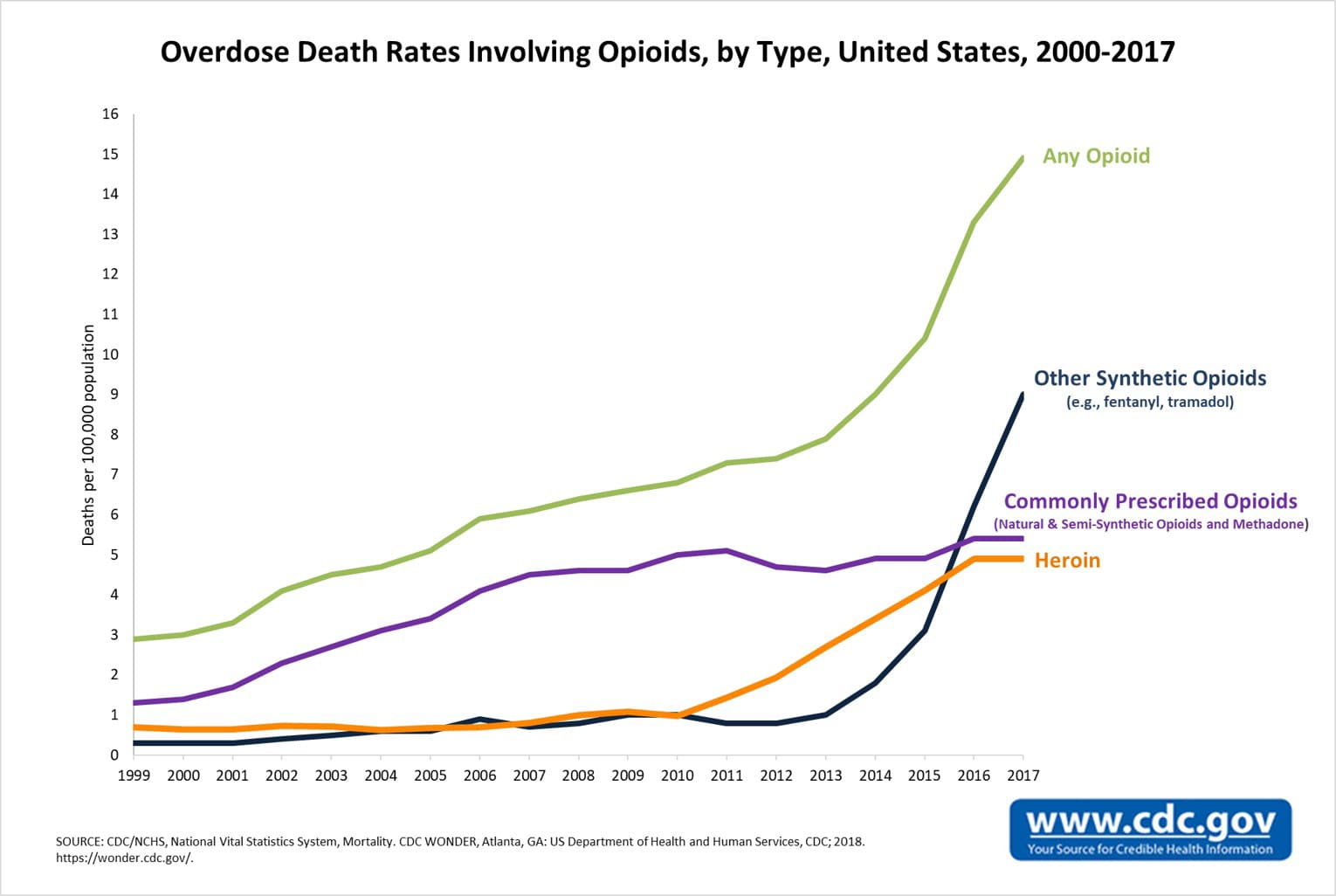
Rural areas have been especially impacted, with an astonishing 74 percent of farmers reporting they or someone they know is suffering from opioid addiction.
While increased availability of addiction treatment is a good thing, it is not a solution to the epidemic. Opioids remain a necessary tool to treat severe pain from surgery, cancer, and other serious conditions, but they must be used judiciously, and alternative therapies must be made available — particularly in lower-income rural areas where people are at higher risk.
==
https://www.motherjones.com/politics/2018/08/what-the-hell-is-going-on-in-west-virginia/
Earlier this month, Republicans in West Virginia impeached the state’s entire Supreme Court, a first in US history, over a scandal involving allegations of wasteful spending, poor administrative decisions, and criminal misconduct. Now the state’s governor, a Republican, has appointed two Republican lawmakers to temporarily serve as justices—a move he says will restore confidence to the judiciary. But Democrats are crying foul, saying the appointments are a clear political power grab aimed at stacking the bench with conservatives.
Gov. Jim Justice announced Saturday morning that state House Speaker Tim Armstead and US Rep. Evan Jenkins will serve on the state’s highest court until the midterm elections in November, when voters can elect new justices from a pool of 20 candidates. (Armstead and Jenkins are among those candidates.)They will replace Justice Robin Davis, who resigned on August 14 shortly after the House of Delegates moved to impeach the Supreme Court, and Justice Menis Ketchum, who resigned in late July shortly before he was charged with federal wire fraud.
The court’s other three justices will soon go before state lawmakers in an impeachment trial, accused of wasteful spending and failure to carry out administrative duties. If they are removed from their seats, the governor can appoint interim justices who will serve on the bench until the 2020 election. (One of them, Justice Allen Loughry, has already been suspended because he faces 25 federal charges and has been indicted on an obstruction-of-justice charge; he has pleaded not guilty.)
“We need true conservatives—this is really important—with honor and integrity to restore the trust from the blow to the stomach we’ve suffered in the last few months,” Gov. Justice said as he announced the two new appointments Saturday. Armstead has left his position in the House of Delegates, and Jenkins will resign from Congress when he takes the bench.
Jenkins is also a failed candidate for US Senate, having lost the Republican nomination to challenge Democratic Sen. Joe Manchin back in May. As my colleague Jeremy Schulman reported during the campaign, Jenkins put out racist political ads that appeared to blame West Virginia’s opioid epidemic on African Americans in cities like Baltimore, Detroit, and Chicago who he suggested were flooding his state with heroin. And his appointment to the judiciary comes despite earlier reports that he may be ineligible to serve on the state Supreme Court because of an inactive law license.
Democrats in West Virginia are outraged about the new appointments, likening the situation to a coup. “Governor Justice’s picks to fill the Supreme Court means more corruption and political positioning from Republican Leadership in West Virginia,” Belinda Biafore, chair of the state Democratic Party, said in a statement. “Not only do Armstead and Jenkins lack necessary experience, but by aligning with Justice they have proven that they are nothing more than political peas in a pod and will continue to make decisions based on politics and not people.”
The impeachment of the Supreme Court justices was approved on August 13 along party lines, with Democrats voting in opposition. (Three of the five justices were elected as Democrats.) “They’re going after everyone because it’s the balance of the court,” Delegate Mike Pushkin, a Democrat on the House Judiciary Committee, said at the time. Delegate Chad Lovejoy said that while he did not agree with the justices’ lavish spending, which included a $32,000 sofa for Loughry’s office, the budget decisions were technically legal and he believed a mass judicial impeachment was inappropriate. “It’s unprecedented in the United States that one branch of the government goes in and lops off another,” he said.
“The majority have ignored the will of the people who elected the justices of this court,” Davis, one of the justices who resigned, said. She is named in impeachment articles regarding her $500,000 office renovation and allegations that she overpaid a senior status judge and failed to hold other justices accountable. “They have erased the lines of separation between the branches of government. In fact, the majority in the legislature is positioning to impose their own party preferences.”
==
https://www.motherjones.com/politics/2018/08/exclusive-senators-are-demanding-information-about-giulianis-opioid-lobbying/
many docs
More than a decade ago, OxyContin maker Purdue Pharma approached Rudy Giuliani, then fresh off a stint as the lauded mayor of New York City, asking for help: The little-known pharmaceutical company needed a trusted lawyer to help fight growing public relations and legal battles. It was 2002, and Purdue was facing its first lawsuits accusing the company of underplaying the addictive effects of its signature drug. By the time Purdue sought Giuliani’s guidance, he was reportedly helping raise money for a museum dedicated to the Drug Enforcement Administration and his consulting firm, Giuliani Partners, was consulting the Justice Department on reorganizing its major drug investigations.
Recent developments cast a new light on the arrangement: Today, Giuliani serves as President Donald Trump’s lawyer, and Purdue Pharma is largely viewed as responsible for helping sow the seeds of the current overdose epidemic, which killed roughly 72,000 Americans last year. Purdue employed Giuliani Partners for years, clad with its founder’s shiny post-9/11 reputation and political connections. When a federal investigation in the mid-2000s threatened company executives with theprospect of felonies and jail time, the firm helped Purdue’s top brass get off with misdemeanor “misbranding” convictions and community service in 2007. Purdue Pharma’s parent company, Purdue Frederick, pleaded guilty to a misbranding felony that cost it $600 million, but Giuliani helped strike a deal that enabled Purdue Pharma to continue selling its blockbuster painkiller OxyContin. “Among Mr. Giuliani’s missions was the job of convincing public officials that they could trust Purdue because they could trust him,” as the New York Times put it that year.
On Wednesday, Sen. Maggie Hassan (D-N.H.) and Sheldon Whitehouse (D-R.I.) sent letters to the Department of Justice and the Drug Enforcement Administration requesting information on the respective agencies’ contact with Giuliani Partners. The letters, shared with Mother Jones, draw heavily on a recent New York Times investigationfinding that federal prosecutors knew about OxyContin’s widespread abuse and originally recommended that Purdue executives be charged with felonies, including conspiracy to defraud the United States.But top Justice Department officials in the George W. Bush administration pushed back—deciding instead to settle the case in 2007 rather than take it to trial.The letters also cite investigations suggesting that Giuliani used his political connections to influence the relatively lenient outcome of the federal suit, as well as the lax approach the Drug Enforcement Administration took in curbing misuse of the drug.
In addition to asking for documentation of communications between the federal agencies and Giuliani Partners, the letters ask pointed questions about Giuliani himself, such as “What steps were taken to ensure that Giuliani’s other relationships with DOJ and its components did not improperly influence plea negotiations?”
In recent years, dozens of states and municipalities have filed lawsuits against opioid makers and distributors including Purdue, alleging that the overdose epidemic has caused a strain on public resources. Last week,Trump asked Attorney General Jeff Sessions to bring a separate, “major lawsuit” against opioid companies. [seems out of character, defensive move?]
“Given that Mr. Giuliani has emerged as one of the President’s closest advisors, it’s important that we determine whether his past work on behalf of Purdue, a company that misled prescribers and patients alike about the addictive nature of its drug OxyContin, will influence this administration’s actions in terms of holding Purdue accountable for the devastating impact of its aggressive marketing of this drug,” wrote Ricki Eshman, Hassan’s press secretary.
Read the full letters below:...
==
==
heroin:
tom d
Or consider the report, “Counternarcotics: Lessons from the U.S. Experience in Afghanistan,” issued this June by the Special Inspector General for Afghanistan (SIGAR). Its focus: 15 years of American efforts to suppress opium growing and the heroin trade in that country (at historic lows, by the way, when the U.S. invaded in 2001). More than eight and a half billion American dollars later, SIGAR found, opium remains the country’s largest cash crop, supporting “590,000 full-time jobs -- which is more people than are employed by Afghanistan’s military and security forces.” Oh, wait, historian Alfred McCoy was writing about just that at TomDispatch back in 2010 under the headline “Can Anyone Pacify the World’s Number One Narco-State?” (“In ways that have escaped most observers, the Obama administration is now trapped in an endless cycle of drugs and death in Afghanistan from which there is neither an easy end nor an obvious exit.”)
Recently, SIGAR issued another report, this one on the rampant corruption inside just about every part of the Afghan government and its security forces, which are famously filled with scads of “ghost soldiers.” How timely, given that Ann Jones was focused on that very subject, endemic corruption in Afghanistan, at TomDispatch back in... hmmm, 2006, when she wrote, “During the last five years, the U.S. and many other donor nations pledged billions of dollars to Afghanistan, yet Afghans keep asking: ‘Where did the money go?’ American taxpayers should be asking the same question. The official answer is that donor funds are lost to Afghan corruption. But shady Afghans, accustomed to two-bit bribes, are learning how big-bucks corruption really works from the masters of the world.”...
https://bigthink.com/robby-berman/fatal-workplace-injuries-are-on-the-rise-in-the-us
nb does not say opiod explicity:
Between 2015 and 2016, fatal workplace injuries increased by 7%, an alarming statistic. The 5,190 workplace deaths in 2016 weren’t all in one career sector or geographical area, either. Some of it is a 23% increase in workplace violence, now the Number Two cause of workplace fatalities in 2016. Overdoses on the job are on the rise, too, with a 32% increase in 2016, and an increase of about 25% each year in fatalities since 2012. Injury Claim Coach has pulled 2015 and 2016 data from the Bureau of Labor Statistics (BLS) and organized it into a series of visualizations that tell the story.
What kind injuries are we talking about?
In 2015, the BLS listed workplace fatalities grouped into six categories, with transportation incidents taking the lion’s share at 43% of the total.
==
https://www.alternet.org/drugs/how-prevent-opioid-overdoses-provide-addicts-free-pharmaceutical-heroin
no lnx
This Bold Plan to Fight Opioid Overdoses Could Save Lives — But Some Conservatives Think It's 'Immoral'
That's what the Dutch do, and it's working.
By Phillip Smith / Independent Media Institute July 17, 2018,
With Ohio beset by a massive public health around opioid use and overdoses—more than 4,000 Ohioans died of opioid overdoses in 2016—the Cleveland Plain Dealer sent travel editor Susan Glaser to Amsterdam in search of innovative approaches to the problem. While there, she rediscovered Holland's long-standing, radical, and highly effective response to heroin addiction and properly asked whether it might be applied to good effect here.
The difference in drug-related death rates between the two countries is staggering. In the U.S., the drug overdose death rate is 245 per million, nearly twice the rate of its nearest competitor, Sweden, which came in second with 124 per million. But in Holland, the number is a vanishingly small 11 per million. In other words, Americans are more than 20 times more likely to die of drug overdoses than the Dutch.
For Plain Dealer readers, the figures that really hit home are the number of state overdose deaths compared to Holland. Ohio, with just under 12 million people, saw 4,050 drug overdose deaths in 2016; the Netherlands, with 17 million people, saw only 235.
What's the difference? The Dutch government provides free heroin to several score hardcore heroin addicts and has been doing so for the past 20 years. Public health experts there say that in addition to lowering crime rates and improving the quality of life for users, the program is one reason overdose death rates there are so low. And the model could be applied here, said Amsterdam heroin clinic operator Ellen van den Hoogen.
"It's been an enormous success. I think it would work elsewhere," she told Glaser.
It already has. The Dutch program was modeled on a similar effort in Switzerland, which has also proven successful. Germany and Britain have also adopted similar programs.
The Dutch approach is an example of the country's policy of gedogen (pragmatic tolerance), the same principle that led the Dutch to pioneer legal access to marijuana in the 1980s. It is also rooted in the notion that, for some, drug addiction is a chronic disorder, not a condition to be "cured," and one that can be treated with supervised drug use under clinical supervision. And the complete cessation of drug use need not be the ultimate goal; rather, the Dutch look for reductions in criminal activity and increases in the health and well-being of the drug users.
"It's not a program that is meant to help you stop," acknowledged van den Hoogen. "It keeps you addicted."
That's not a sentiment sits well with American moralizers, such as George W. Bush's drug czar, John Walters, whom Glaser consulted for the story. He suggested that providing addicts with drugs was immoral and not "real treatment," but he also resorted to lies about what the Dutch are doing.
He claimed the Dutch are "keeping people addicted for the purpose of controlling them" and that the Dutch have created "a colony of state-supported, locked-up addicts."
Actually, the Dutch are dealing with older, hard-core addicts who have repeatedly failed to quit after repeated stints in treatment, including methadone maintenance therapy, and they are neither "controlling them" or locking them up. Instead, the people in the program show up at the clinic twice a day, get their fix, then go about their business. This heroin-assisted treatment (HAT) allows those hardcore users to live less chaotic and more productive lives.
And heroin-assisted treatment is "real treatment," said Peter Blanken, a senior researcher with the Parnassia Addiction Research Centre in Rotterdam. He pointed out that one-quarter of program participants make a "complete recovery," including better health and quitting illegal drugs and excessive drinking. Many others continue to use heroin, but do so with better outcomes, he said.
There is also a real safety benefit to using state-supplied pharmaceutical heroin. It's potent, but it's a known quantity. Users face no risk of adulteration with more dangerous drugs, such as fentanyl, which is deeply implicated in the current U.S. overdose crisis.
In the current political atmosphere in the United States, providing heroin to hard-core addicts is a hard sell indeed. Other, lesser, harm reduction interventions, such as needle exchanges remain controversial, and the country has yet to see its first officially sanctioned safe injection site. And drug decriminalization, which has led to a dramatic reduction in heroin addiction and overdose deaths in Portugal, remains off the table here, too. But with an annual drug overdose death toll of more than 50,000 people a year, it may time to start asking how many more Americans we are willing to sacrifice on the altar of moralistic drug prohibition.
This article was produced by Drug Reporter, a project of the Independent Media Institute.
https://www.cbsnews.com/news/whistleblowers-dea-attorneys-went-easy-on-mckesson-the-countrys-largest-drug-distributor/
Whistleblowers: DEA attorneys went easy on McKesson, the country's largest drug distributor
A 60 Minutes/Washington Post joint investigation into the DEA's response to the opioid epidemic again finds investigators who hit a brick wall in Washington
2017
Dec 17
CORRESPONDENT
Bill Whitaker
In October, we joined forces with the Washington Post and reported a disturbing story of Washington at its worst - about an act of Congress that crippled the DEA's ability to fight the worst drug crisis in American history - the opioid addiction crisis. Now, a new front of that joint investigation. It is also disturbing. It's the inside story of the biggest case the DEA ever built against a drug company: the McKesson Corporation, the country's largest drug distributor. It's also the story of a company too big to prosecute.
In 2014, after two years of painstaking inquiry by nine DEA field divisions and 12 U.S. Attorneys, investigators built a powerful case against McKesson for the company's role in the opioid crisis.
Our reporting turned up the leader of the DEA team, David Schiller, who tells for the first time how his investigators hit a brick wall in Washington when they tried to hold the powerful company accountable.
fullmain.jpg
David Schiller CBS NEWS
David Schiller: This is the best case we've ever had against a major distributor in the history of the Drug Enforcement Administration. How do we not go after the number one organization? In the height of the epidemic, when people are dying everywhere, doesn't somebody have to be held accountable? McKesson needs to be held accountable.
Holding McKesson accountable meant going after the 5th largest corporation in the country. Headquartered in San Francisco, McKesson has 76,000 employees and earns almost $200 billion a year in revenues, about the same as Exxon Mobil. Since the 1990s, McKesson has made billions from the distribution of addictive opioids.
David Schiller: I was with DEA for over 30 years. I was the Assistant Special Agent in Charge for the Denver Field Division.
Bill Whitaker: How many people did you supervise?
David Schiller: Approximately 100.
"They're killing people. And their motive? This is all for financial gain. That's the problem."
Before he retired in August, Schiller had supervised investigations in drug trafficking and money laundering cases, but he considered the case against McKesson to be the single most important investigation of his lifetime.
Bill Whitaker: What did they do that was wrong?
David Schiller: The issue with McKesson was they were providing millions and millions and millions of pills to countless pharmacies throughout the United States, and they did not maintain any sort of due diligence. This wasn't just happening in Denver, Colorado. This was happening in Los Angeles, California. It was happening in Detroit, Michigan. It was happening in New York City. It was a national problem and nobody wanted to deal with it.
McKesson told us when it comes to the opioid crisis and pills flooding into American communities, there's plenty of blame to go around: drug makers; other distributors; doctors; pharmacies, all played a role.
But in 2008, McKesson agreed to pay $13.3 million in fines for failing to report huge orders of hydrocodone to shady internet pharmacies. After that settlement, the company promised to do a better job of monitoring shipments of controlled substances. Now, special agent Schiller and his team had caught McKesson again shipping suspicious orders of opioids.
DEA investigators discovered that McKesson was supplying pharmacies and doctors, that were fronts for criminal drug rings and pills were ending up on the black market.
David Schiller: And everybody kept saying, "It's just a prescription drug. It's a pill. It's a liquid. What's the big deal?" And I would say, "They're killing people." And their motive? This is all for financial gain. That's the problem.
Bill Whitaker: One of the Former D.E.A. Administrators said that the McKesson Corporation has fueled the explosive prescription drug abuse problem in this country. Do you agree with that?
David Schiller: 100%. If they woulda stayed in compliance with their authority and held those that they're supplying the pills to, the epidemic would be nowhere near where it is right now. Nowhere near.
Bill Whitaker: So you decided to take a swing at a hornet's nest.
David Schiller: I knew that if we could get to the distributor, we could make a great impact for the United States citizens immediately. Immediately.
mckessan-ext.jpg
McKesson Corp. Headquarters CBS NEWS
McKesson delivers more than 1/3 of all medicines in the U.S. from a network of 30 warehouses around the country. The DEA requires drug distributors to identify, stop and report orders of unusual size or frequency to the agency - something Schiller says McKesson did not do until the company learned it was under investigation.
David Schiller: They had hundreds of thousands of suspicious orders they should have reported, and they didn't report any. There's not a day that goes by in the pharmaceutical world, in the McKesson world, in the distribution world, where there's not something suspicious. It happens every day.
Bill Whitaker: And they had none.
David Schiller: They weren't reporting any. I mean, you have to understand that, nothing was suspicious?
In one case, DEA investigators discovered that McKesson was shipping the same quantities of opioid pills to small-town pharmacies in Colorado's San Luis Valley as it would typically ship to large drugstores next to big city medical centers.
Helen Kaupang: McKesson is supplying enough pills to that community to give every man woman and child a monthly dose of 30 to 60 tablets. Is that not shocking? I found it shocking.
Helen Kaupang, retired from the DEA this fall after 29 years as an investigator and supervisor. She worked with Schiller on this investigation. She says the delivery of so many pills to such small towns should have set off alarms at McKesson.
Helen Kaupang: There was no legitimate reason for that pharmacy in that little town in remote Colorado to be getting hundreds of thousands of pills over a several-year period. None.
Bill Whitaker: Did McKesson know this, or should McKesson have known this--
Helen Kaupang: Absolutely. It was their customer. They were supplyin' it. It was just outrageous. They were turning a blind eye to the very problem that we were trying to address.
Kaupang said to get around reporting suspiciously large orders, at the time, McKesson would simply raise the limit a pharmacy was allowed. No order, no matter how large, was ever reported as suspicious.
Bill Whitaker: They would set a threshold. And if they surpass their own threshold--
Helen Kaupang: Yes.
Bill Whitaker: They would just bump up the threshold to meet this new higher number?
Helen Kaupang: Yes.
Bill Whitaker: So they rigged the system.
David Schiller: Absolutely. Absolutely.
Bill Whitaker: And to be clear here, we're talking addictive opioids.
David Schiller: Highly addictive, Oxycodone and Hydrocodone in particular. That's what we're talking about. The most commonly prescribed and abused controlled substance in the United States.
Bill Whitaker: McKesson would say they're just supplying the doctors and the pharmacies. They're giving them the prescriptions they are allowed to have. How are they wrong?
David Schiller: Because they are going above and beyond those thresholds without any due diligence, with reckless regard and they don't consider any of that suspicious?
A 2014 DEA memo that outlined the investigative findings from all the field offices, obtained by 60 Minutes and the Washington Post, said McKesson, had a pattern of "dramatic increases in thresholds without justification..." And had "supplied controlled substances in support of criminal...Activities" to pharmacies.
David Schiller: I mean the president declared a public health emergency. It's on the front lines of everybody's dinner table conversation. There's not a bigger problem we have in the United States. And who led to the problem? McKesson was at the forefront.
With the opioid epidemic getting worse year by year, special agent Schiller and his team wanted to send a message to the pharmaceutical industry by hitting McKesson hard. They wanted to fine the company more than a billion dollars, revoke registrations to distribute controlled substances, and, more than anything, put a McKesson executive behind bars. But Schiller says, attorneys for the DEA and the Department of Justice retreated at the thought of going against McKesson and its high-powered legal team.
Bill Whitaker: Did a DEA attorney actually tell you that they were not going to pursue McKesson because they had lawyers who had gone to Harvard and Yale?
David Schiller: They told me those exact words, because the case would take too much time and too much effort and, by the way, "What if we lost?" I said, "What if you lost?" I go, "You-- you can't have a better case on a silver platter."
Bill Whitaker: Were they scared?
David Schiller: Yes.
Bill Whitaker: Scared of going after McKesson?
David Schiller: A better word might be "intimidated."
joe-ranazzisi-cu.jpg
Joe Ranazzisi CBS NEWS
This was at the time whistleblower Joe Ranazzisi, the DEA's then deputy assistant administrator, was sounding alarms that the DEA and Congress were bending to the will of the pharmaceutical industry. In our October report, he told us Justice Department attorneys were pressing him and his investigators to take a softer approach toward the industry.
Bill Whitaker: The summer of 2014 -- you get a request to play nice with the pharmaceutical industry.
Joe Ranazzisi: Yes.
Bill Whitaker: What do you think of that?
Joe Ranazzisi: I didn't think it was appropriate. We told 'em what they need to do. We told 'em what compliance is and how to comply with the act. We met these people over and over again. The time for meetings and reports are over. You either comply or you lose your registration.
But in the McKesson case, negotiations with company attorneys went on for more than two years. In the end, instead of the billion-dollar fine DEA investigators wanted, the company was fined $150 million. That was a record for the DEA, but Schiller called it a slap on the wrist for a fortune five company and a second-time offender.
David Schiller: There was backdoor deals being cut that we didn't know about, I didn't know about, and I was representing DEA nationally on the investigation at the highest level. How do you settle? How do you say it's okay just, "Here, write this check this time and-- and close this place for a little bit, sign this piece of paper." How do you do that? No. Put 'em in jail. You put the people that are responsible for dealing drugs, for breaking the law, in jail. Nobody's in jail. They wrote a check.
Bill Whitaker: Did you think McKesson was getting special treatment?
David Schiller: I don't think -- I know they were getting special treatment. They were getting treatment like I'd never seen in my 30-year career.
Getting special treatment, he said, from lawyers at his agency. In an e-mail, a member of DEA's senior leadership team, who sided with Schiller, told him she was overruled.
"David... I am totally against settling," she wrote, "but how do we hold their feet to the fire...? Our attorneys have us over a barrel with their refusal to go to court."
David Schiller: There is not a man or woman in DEA today that's happy with the settlement and morale has been broken because of it.
Bill Whitaker: Why did you ultimately decide to sit down and talk to us?
David Schiller: I saw what's happening to our country now with this epidemic. I saw the limitations being placed on it-- on us by our own people and chief counsel fighting with our own agents and investigators. And I know I'm gonna make a lotta enemies, because people don't like to hear the truth. I'm doing it because the truth needs to be told.
Schiller pointed out to us the $150 million fine was only about $50 million more than McKesson CEO, John Hammergren's compensation last year. He was the third-highest paid CEO in the country; only Tim Cook of Apple, and Reed Hastings of Netflix earned more. In the last earning period McKesson's revenues were up $8 billion.
We wanted to speak to a McKesson representative on camera but they declined. But in a statement, McKesson said, "In the interest of moving beyond disagreements… The company agreed to settle with the DEA and DOJ." And McKesson promised to do a better job flagging suspicious orders.
We asked the DEA about allegations its attorneys went easy on McKesson. A spokesperson told us the agreement was a good deal; that the priority was to get McKesson to do the right thing going forward. And now an independent monitor has been put in place to watch McKesson more closely.
Maggie Hassan: The pharmaceutical industry is doing everything it can to keep this epidemic going.
Bill Whitaker: That's pretty strong.
Maggie Hassan: Yeah. It is.
New Hampshire Senator Maggie Hassan has been critical of Congress for not aggressively investigating industry's role in this epidemic. New Hampshire has the second highest rate of drug overdose deaths in the country.
Bill Whitaker: What more is it going to take to convince Congress to act?
Maggie Hassan: Well, one of the things we have to do is begin to hold the pharmaceutical companies accountable for this. And right now, when you see a fine for the McKesson Company of $150 million when they make a $100 million a week in profits, that isn't gonna do it.
Bill Whitaker: What incentive do they have to change their behavior?
Maggie Hassan: Well, right now, they don't have a lot of incentives and that's something that has to be changed. This in many ways reminds me of the situation with big tobacco-- and, you know, I think it's one of the reasons you see attorneys general around the country--beginning to file lawsuits against the pharmaceutical industry--to hold them accountable for the cost of this terrible epidemic.
41 state attorneys general have banded together to sue the opioid industry. While at McKesson, John Hammergren begins his 18th year as CEO. This year, the board awarded him an additional $1.1 million performance bonus. A bonus based on ethics and accountability.
Produced by Ira Rosen and Sam Hornblower. Associate Producers, Alex J. Diamond and LaCrai Mitchell.
==
David Schiller and correspondent Bill Whitaker CBS NEWS
Schiller pointed out to us the $150 million fine was only about $50 million more than McKesson CEO, John Hammergren's compensation last year. He was the third-highest paid CEO in the country; only Tim Cook of Apple, and Reed Hastings of Netflix earned more. In the last earning period McKesson's revenues were up $8 billion.
We wanted to speak to a McKesson representative on camera but they declined. But in a statement, McKesson said, "In the interest of moving beyond disagreements… The company agreed to settle with the DEA and DOJ." And McKesson promised to do a better job flagging suspicious orders.
We asked the DEA about allegations its attorneys went easy on McKesson. A spokesperson told us the agreement was a good deal; that the priority was to get McKesson to do the right thing going forward. And now an independent monitor has been put in place to watch McKesson more closely.
Maggie Hassan: The pharmaceutical industry is doing everything it can to keep this epidemic going.
Bill Whitaker: That's pretty strong.
Maggie Hassan: Yeah. It is.
New Hampshire Senator Maggie Hassan has been critical of Congress for not aggressively investigating industry's role in this epidemic. New Hampshire has the second highest rate of drug overdose deaths in the country.
Bill Whitaker: What more is it going to take to convince Congress to act?
Maggie Hassan: Well, one of the things we have to do is begin to hold the pharmaceutical companies accountable for this. And right now, when you see a fine for the McKesson Company of $150 million when they make a $100 million a week in profits, that isn't gonna do it.
Bill Whitaker: What incentive do they have to change their behavior?
Maggie Hassan: Well, right now, they don't have a lot of incentives and that's something that has to be changed. This in many ways reminds me of the situation with big tobacco-- and, you know, I think it's one of the reasons you see attorneys general around the country--beginning to file lawsuits against the pharmaceutical industry--to hold them accountable for the cost of this terrible epidemic.
aug 2016
Prescription drug money fuels Morrisey campaign
Eric EyreDavid Gutman Aug 6, 2016 (0)
West Virginia Attorney General Patrick Morrisey’s re-election campaign is benefiting from money — both directly and indirectly — from lawyers and companies that have profited from the state’s prescription drug epidemic.
Prescription drug wholesalers being sued by Morrisey’s office for their role in fueling the state’s ongoing opioid problem have indirectly funded a portion of Morrisey’s re-election efforts.
Since 2014, McKesson Corp. and Cardinal Health, both defendants in state lawsuits overseen by Morrisey, have donated a total of $50,000 to the Republican Attorneys General Association, which has spent more money than any other organization in West Virginia to re-elect Morrisey.
What’s more, at least two lawyers representing drug distributors in the lawsuits have contributed directly to Morrisey’s campaign.
Morrisey also has taken campaign contributions from OxyContin manufacturer Purdue Pharma.
Morrisey is the only candidate in West Virginia, at any level of office, from House of Delegates, to Congress, through the governor’s race, to receive money from Purdue Pharma’s political action committee, which gave him the maximum allowable $1,000 in his uncontested primary election.
He is the only West Virginia candidate to receive money ($1,000) from Mallinckrodt, an Irish pharmaceutical company that produces several opioid products.
On the campaign trail, Morrisey has repeatedly touted his office’s “aggressive” fight against prescription drug abuse, and he has introduced initiatives that he says will significantly curb the number of opioids in West Virginia.
Morrisey campaign spokeswoman Kayla Berube said Morrisey holds the office and his campaign to the “highest of ethical standards.”
“He has a policy that prohibits intentional solicitation and acceptance of contributions from companies the office is suing,” Berube said.
Del. Don Perdue said Morrisey, a former lobbyist for the prescription drug industry, has “put his office up for sale.”
“Any argument that suggests these type of contributions are innocuous or have no effect defies logic,” said Perdue, a Wayne County Democrat and retired pharmacist.“Coupled with his strong personal ties to the drug industry and the legal gymnastics he has performed to slow down the litigation regarding the distribution of narcotics, it defies belief.”
While Purdue Pharma isn’t a defendant in the state’s lawsuits against drug wholesalers, the complaints allege the distributors shipped an excessive number of oxycodone pills (often sold under Purdue’s OxyContin brand name) to rogue pharmacies in West Virginia. The companies distribute more than 40 million oxycodone pills to West Virginia every year.
:{
}:
Thirty-five lawyers — whose Washington, D.C.-based law firms either lobby for Purdue Pharma or represent the drug giant in OxyContin-related lawsuits across the nation — have given Morrisey’s re-election campaign a combined $23,550 in the primary election cycle alone.
Purdue Pharma, whose drug is held more responsible than any other for the nation’s opioid epidemic, gave $290,000 to the Republican Attorneys General Association since 2014, IRS records show.
“We contribute to those who share our commitment in combating prescription drug abuse,” said Bob Josephson, communications director for Purdue Pharma.
During the same time period, Cardinal Health, the nation’s second largest prescription drug distributor, gave more than $34,000, and McKesson, the largest wholesaler, pitched in $16,000.
Morrisey inherited lawsuits against Cardinal Health and a dozen other distributors from his predecessor, Darrell McGraw. In January, Morrisey filed suit against McKesson after Gov. Earl Ray Tomblin’s aides prodded him to do so for more than a year.
RAGA also received donations totaling nearly $37,000 from two law firms — Foley & Lardner and Clark Hill PLC — that are representing other prescription drug distributors Morrisey’s office is suing.
The Republican Attorneys General Association, through an affiliated political action committee, has already spent nearly $640,000 in West Virginia this year to help re-elect Morrisey. That’s more than Morrisey and his Democratic opponent, Delegate Doug Reynolds, combined have spent on their campaigns so far.
:{
}:
That PAC, Mountaineers Are Always Free PAC, was founded in May and is funded exclusively by RAGA.
Scott Will, RAGA’s executive director and chairman of Mountaineers Are Always Free, was Morrisey’s campaign manager in 2012.
RAGA has also received major donations from such drug industry titans as Pfizer ($150,000), Eli Lilly ($76,000), GlaxoSmithKline ($50,000) and PhRMA ($50,000), the leading industry trade organization, representing nearly 60 pharmaceutical companies.
:{
}:
The donations from drug companies and their law firms are a veritable drop in the bucket for RAGA, which has raised more than $15 million this election cycle. The organization’s major donors include conservative heavyweights such as Koch Industries, the U.S. Chamber of Commerce and Sheldon Adelson.
“RAGA receives support from a wide variety of people and industries interested in supporting the rule of law,” Will said in an emailed statement.
McKesson, Cardinal Health and Purdue Pharma also have donated to the Democratic Attorneys General Association, but that group hasn’t spent any money in West Virginia. Reynolds has largely self-funded his campaign so far and has not received help from any outside groups or super PACs.
RAGA, which advertises on Morrisey’s behalf, is legally prohibited from coordinating with his campaign.
In April, Huntington lawyer Marc Williams gave $500 to Morrisey’s campaign — one of two lawyers to donate to the campaign who also represents a drug distributor that Morrisey’s office is suing.
:{
}:
“I don’t think there is any conflict,” Williams said. “All of the counsel that are representing the state in that, which includes staff attorneys and retained outside counsel, have done so vigorously and represented the state’s interest well in a way that would make any objective observer proud.”
Williams said he has also worked on other cases that Morrisey’s office is involved in — both with and against the attorney general — including litigation over the 2014 Elk River chemical spill, where he represents Eastman Chemical.
Williams, who’s defending drug wholesaler J.M. Smith, praised Morrisey, saying he had “significantly enhanced the quality of representation and lawyering in that office since he took over” in 2013.
The other drug company lawyer, Charles Bailey, did not respond to requests for comment. Bailey, who represents Quest Pharmaceuticals, gave Morrisey $1,000 in 2015.
Another lawyer who formerly represented a drug wholesaler being sued also donated to Morrisey’s campaign in May.
Two of Morrisey’s former employers — Washington, D.C., law firms King & Spalding and Sidley Austin — have given RAGA a combined $30,350.
:{
}:
King & Spalding is lead defense counsel for Purdue Pharma’s OxyContin-related lawsuits. Sidley Austin lobbies for Purdue Pharma on Capitol Hill.
While Morrisey worked for Sidley Austin, lobbyists for Purdue Pharma listed Morrisey as the firm’s contact, according to lobbying disclosure forms.
At King & Spalding, Morrisey himself lobbied for the Healthcare Distribution Management Association, a trade group that represents McKesson, Cardinal Health and other prescription drug wholesalers, generating $250,000 for the firm.
Morrisey’s wife, Denise Henry, lobbies for Cardinal Health in Washington.
:{
}:
Since last year, King & Spalding lawyers contributed $14,800 to Morrisey’s campaign, while Sidley Austin lawyers and lobbyists have added $8,750 to his coffers.
Lawyers from both firms, along with prescription drug wholesaler PACs and executives, also helped bankroll Morrisey’s 2012 campaign.
Cardinal Health executives donated $4,000 to Morrisey’s campaign in 2012, $3,000 of which came after McGraw’s office filed suit against the company. A Cardinal vice president also contributed $1,000 to Morrisey’s campaign in December 2012, a month after Morrisey defeated McGraw. Cardinal Health also contributed $2,500 to Morrisey’s inauguration ceremony
A McKesson vice president contributed to Morrisey’s campaign in 2012, and AmerisourceBergen’s PAC donated $2,000 to the campaign the same year.
In January, Morrisey recused himself from his office’s lawsuit against AmerisourceBergen and 10 other smaller distributors, following a state Lawyer Disciplinary Board investigation. The disciplinary board concluded that Morrisey did not violate any lawyer ethics rules, but the board suggested he step aside from the drug company lawsuit to avoid any appearance of impropriety.
That same month, Morrisey also recused himself from his office’s lawsuit against McKesson, after heading an investigation of the company for more than a year.
Morrisey previously stepped aside from the Cardinal Health lawsuit — a recusal he characterized as a “permanent screen” — in July 2013, seven months after taking office, according to the disciplinary board.
The investigative panel found the contributions from the drug wholesalers and their executives didn’t appear to “amount to extraordinary campaign support,” and it wasn’t unethical for Morrisey to accept the donations.
But the disciplinary board noted that attorneys general in other states restrict campaign contributions from companies their offices are investigating.
Reach David Gutman at david.gutman@wvgazettemail.com, 304-348-5199 or follow @davidgutman on Twitter.
Reach Eric Eyre at ericeyre@wvgazettemail.com, 304-348-4869
==
https://www.democracynow.org/2018/6/1/origins_of_the_opioid_epidemic_purdue
- Part 1: Origins of the Opioid Epidemic: Purdue Pharma Knew of OxyContin Abuse in 1996 But Covered It Up
- Part 2: “Pain Killer” Author Barry Meier on How West Virginia Became Ground Zero of Opioid Epidemic
- Part 3: Cities & States Sue Big Pharma, Targeting the Firms Who Profited from Peddling Addictive Opioids
- xplosive New York Times report has revealed that manufacturers of the drug OxyContin knew it was highly addictive as early as 1996, the first year after the drug hit the market. The Times published a confidential Justice Department report this week showing that Purdue Pharma executives were told OxyContin was being crushed and snorted for its powerful narcotic, but still promoted it as less addictive than other opioid painkillers. This report is especially damning because Purdue executives have testified before Congress that they were unaware of the drug’s growing abuse until years after it was on the market. Today, drug overdoses are the leading cause of death for Americans under age 50. While President Trump claimed Tuesday that numbers relating to opioid addiction are “way down,” the latest statistics show there was an increase of opioid-related deaths and overdoses during Trump’s first year in office. According to the Centers for Disease Control and Prevention, drug overdose deaths involving opioids rose to about 46,000 for the 12-month period that ended October 2017, up about 15 percent from October 2016. The epidemic has been so widespread that life expectancy is falling in the United States for the first time in 50 years. We speak with Barry Meier, the reporter who broke this story for the Times, headlined “Origins of an Epidemic: Purdue Pharma Knew Its Opioids Were Widely Abused.” Meier was a reporter at The New York Times for nearly three decades and was the first journalist to shed a national spotlight on the abuse of OxyContin. His book “Pain Killer: An Empire of Deceit and the Origin of America’s Opioid Epidemic” was published this week in an updated and expanded edition.
- ...
- : What took place is the following. Purdue Pharma was given permission to market OxyContin as less prone to abuse and addiction than competing narcotics. I mean, this sort of was like a gift—
AMY GOODMAN: Like drugs like Vicodin and others.
BARRY MEIER: Yes, exactly. It was a gift from the FDA. They took that gift, and they ran with it. They told doctors not only that it might be less prone to abuse and addiction, but that it would be less prone to abuse and addiction. In 2007, they admitted, basically, lying to doctors, lying to patients, by misrepresenting what they had been allowed to say.
What we didn’t know was that during the course of the investigation that led to that confession, the federal government had also uncovered information to show that not only had they mismarketed the drug, they were aware, almost from the beginning, that people were abusing OxyContin, significantly abusing OxyContin, and they concealed that information. Had they sent a warning about that to the public, OxyContin would have never become a billion-dollar drug, and thousands of peoples of lives—thousands of lives wouldn’t have been affected by it.
AMY GOODMAN: We’re going to talk about the origins of OxyContin, the Sackler family. We’re going to talk about how this drug company grew. But right now, your book came out like over 15 years ago, Pain Killer.
BARRY MEIER: Right.
AMY GOODMAN: That’s before the company was indicted and the corporate officials were indicted. Talk about Rudolph Giuliani—now once again in the headlines because he is Trump’s attorney—his role in the rise of OxyContin, in preventing a serious prosecution of this company.
BARRY MEIER: Well, Rudolph Giuliani was hired in 2002. A lot of the reporting I did for the Times in 2001 was aimed at the overaggressive marketing of OxyContin by Purdue Pharma, as well as, you know, the growing reports, public reports, about the drug’s abuse. They then came under scrutiny by the FDA, by the DEA, and they felt that they needed a public defender—a fixer, if you will. The person they brought in to do that was Rudolph Giuliani. And so he went in, with his reputation as a former prosecutor, mayor and so forth, and began—
AMY GOODMAN: It was right—I mean, you’re talking about right after the 2001 September 11th attacks, when he was called “America’s Mayor.”
BARRY MEIER: Exactly. And sort of he took that reputation, and he sold it to corporations. And one of the corporations he sold it to was Purdue Pharma. And so, he became their sort of front man, if you will, their fixer, went to meet with DEAofficials, with other officials, and basically spouted the company’s line. I mean, I have no idea what Rudy knew about what was in the company’s files, whether he was privy to the information that prosecutors later discovered. But he became, essentially, the person who tried to smooth things over with government officials.
AMY GOODMAN: And was particularly powerful because he was a cancer survivor himself—
BARRY MEIER: Absolutely.
AMY GOODMAN: —and spoke about what it means to reduce pain.
BARRY MEIER: Exactly. And, you know, he made a very compelling argument. I mean, this drug has valuable uses. It’s needed in certain situations. But, you know, what Purdue had done was to basically market this drug as a cure-all for all kinds of pain. And with the vast availability of the drug, it poured out onto the streets, and that led to this wave of abuse and addiction.
AMY GOODMAN: So, who were the officials in Washington, the political appointees in the Justice Department, who intervened? And this also goes to the whole story of West Virginia and a really crusading prosecutor who took this case on.
BARRY MEIER: Right. So, basically, there were people at the very—at the senior levels of the Criminal Division. Alice Fisher was then the head of the Criminal Division.
AMY GOODMAN: This is under George W. Bush.
BARRY MEIER: Correct. And Alberto Gonzales was the head—was the—
AMY GOODMAN: Attorney general.
BARRY MEIER: —attorney general at that tim
- ...
- Well, theSackler family is a fascinating family.As you know, their names are, you know, on every museum in the United States—here in New York at the Metropolitan, and at the National Gallery in Washington.
AMY GOODMAN: Their names are on wings. Their names are very prominent.
BARRY MEIER: On the elevators, on everything, you name it.
AMY GOODMAN: But when it comes to the drug, where they make their fortune—
BARRY MEIER: Right.
AMY GOODMAN: —we don’t see their name.
BARRY MEIER: Right. And not only that, the—there were three brothers, Arthur, Raymond and Mortimer. Arthur was the eldest. And he was sort of this kind of, I guess, you know, evil genius, if you will. He invented the modern-day drug advertising industry. All the ads that we see on TV today or in print are kind of the result of Arthur Sackler’s genius, or lack thereof, as you see it. And he kind of wedded together the pharmaceutical industry and the medical profession. He made doctors shills for drug companies. He created medical journals that were really kind of fake medical journals, because drug advertisers had to pay to get their studies into those medical journals. So he created all these deceptive marketing and advertising practices that are commonplace today. He died in 1986, before OxyContin was created.
But to get his brothers into the drug industry, he bought this tiny little firm called Purdue Frederick, that was located here in New York, in Greenwich Village, as it turned out. They basically sold a lot of kind of crazy stuff. And eventually, in the mid-1990s, they decided to get into the pain medication business. They first bought a drug called MS Contin, which was a long-acting form of morphine, and they marketed it mainly to cancer specialists, where the drug was very, very valuable in dealing with cancer pain. But then, in the mid-1990s, as this drive to treat pain more aggressively began to unfold, they began to sell OxyContin, which is a long-acting form of the narcotic oxycodone. And this became the most aggressive, high-powered marketing campaign for a prescription narcotic in drug industry history. It was financed with Sackler money. The Sacklers were the principal beneficiaries of it. There were something like $31 billion worth of OxyContin sales in subsequent years. And the Sacklers became, I believe, the 14th or 15th richest family in the United States.
AMY GOODMAN: I want to go to 1998. Purdue Pharma distributes another video, featuring seven patients who used OxyContin to deal with chronic pain. One of the patients was named Johnny Sullivan.
JOHNNY SULLIVAN: I got my life back now. Now I can enjoy every day that I live. I can really enjoy myself. And before, even a good day was hell. I mean, I couldn’t enjoy nothing. But now I can enjoy myself. That’s when I say it’s wonderful. I look at the future the same way a young guy, 25-, 30-year-old, would.
AMY GOODMAN: After appearing in that promotional video for Purdue Pharma, Johnny Sullivan became a severe addict to OxyContin and other opioids. In 2008, he died in a car crash when he fell asleep at the wheel. His wife said, because of his addiction, he would often nod off. Barry?
BARRY MEIER: You know, this drug, for some patients, has been a godsend. But for many, many others, it has turned into a nightmare. We focus a lot about—on the subject of addiction, and rightly so. But not long ago, I interviewed a pain specialist, who had been sort of on the bandwagon promoting these drugs when they first came out. And he said to me, “You know, addiction is not the real problem with these drugs. It’s not the only problem with these drugs.” These drugs caused patients to emotionally opt out of life, you know, to become couch potatoes, to become withdrawn, to reject their family members and lose social contact. They had all other—they have all other kinds of troubling side effects. And so, you know, there is now a generation of patients who, effectively, are emotionally dependent upon these drugs.
AMY GOODMAN: A spokesperson for Purdue Pharma said in a statement, in response to your article in The New York Times, his company is “involved in efforts to address opioid abuse,” and, quote, “Suggesting that activities that last occurred more than 16 years ago are responsible for today’s complex and multifaceted opioid crisis is deeply flawed.” Your response?
BARRY MEIER: You know, I’m not a $600-an-hour lawyer. I don’t come up with, you know, statements like that. But let me put it in simple terms. Purdue Pharma violated the trust of doctors and patients. It lied to them. The Justice Department discovered reams of information, which, in their minds, showed that this company also concealed extraordinarily powerful information pointing to the abuse of these drugs, early—early on, when it was first marketed.
AMY GOODMAN: What was the lie to the doctors?
BARRY MEIER: The lie was that OxyContin would be less prone to abuse and addiction than competing painkillers. They admitted that they had told that lie in 2007, and paid $600 million in fines. I mean, that was a drop in the bucket where OxyContin sales were concerned. But they admitted that they had lied.
AMY GOODMAN: You write about how Purdue sales reps used a chart to convince doctors that OxyContin was more stable than a traditional narcotic, even though the FDA had told Purdue that the information they were giving out was bogus.
BARRY MEIER: That was just one of many lies that they used. I mean, the entire predicate of the company’s marketing campaign was based on a lie. I mean, that’s the simplest way of putting it. The Food and Drug Administration had given them permission to say, “This drug might be less prone to abuse and addiction.” They trained their sales reps to say it was less prone to abuse and addiction. Sales reps would go—and sales reps didn’t know what the reality was, but they would go to doctors and pharmacists and say, “You know, you can’t inject OxyContin. You can’t extract the oxycodone from OxyContin and inject it, because like the junkie will get a heart attack, they’ll drop over and die. This is a safe drug. This is much safer.” It was all an incredible lie. And at the same time, the company was concealing what was probably the most significant information they needed to tell doctors, which was this drug was being widely abused.
AMY GOODMAN: Who is Laura Nagel?
BARRY MEIER: Laura Nagel was the head—a key figure within the DEA at the time of this episode. She was in charge of the division of DEA that went after the diversion of legal drugs onto the street. It wasn’t sort of the narcs, you know, the guys who busted people for selling heroin or cocaine, but it was the diversion division which dealt with the misuse of prescription drugs.
- ...
- Explain the nature of the settlement in 2007. Can the company—can individuals in the company be held criminally responsible today, what, 200,000 deaths later, in the last 20 years, though they would argue, “That’s not all us”?
BARRY MEIER: Right. So, the settlement was twofold. The company, Purdue Pharma, as a company, pled guilty to a felony charge called misbranding, which was essentially misrepresenting the drug, and paid $600 million in fines. The three executives, top executives, of the company pled guilty to a misdemeanor version of that charge. It was a sort of weird charge, because it only held him liable in their roles as corporate executives. It did not accuse them personally of any wrongdoing. They paid around—about $34 million in fines. But what we came to discover, and what was in the Times in the other day and in the expanded version of the book, is that the prosecutors on the case wanted to charge them also with very serious felonies, that could have put them in jail, had that case gone forward.
AMY GOODMAN: And talking about holding people responsible, you write about how those that do drugs together, a husband, could be found guilty of murdering his wife, etc. Talk about that.
BARRY MEIER: Well, you know, we have a different standard of justice in this country. One standard is for the person who gets caught with, you know, some drugs in their pocket. Another standard is for the person who’s caught selling drugs. And another standard is for the executives of corporations that allow these drugs to get into the wrong hands of people, or knowingly are aware that these drugs are being abused, and don’t say anything. And, you know, there seems to be very little punishment that those kinds of individuals face.
AMY GOODMAN: But what do people face on the ground, who are doing drugs?
BARRY MEIER: They face their—they face spending the rest of their life in prison.
AMY GOODMAN: Explain.
BARRY MEIER: You know, they can be sent away for 10 years, for 20 years. They can have their lives destroyed, whereas the corporate executives don’t see their bonuses going down. They don’t see their lives being ruined. They just go on with their lives.
AMY GOODMAN: Earlier this year, New York Mayor Bill de Blasio announced that New York would sue manufacturers and distributors of prescription opioids to account for their part in the city’s ongoing deadly opioid epidemic. Firms named in the suit include Purdue Pharma, Johnson & Johnson and McKesson Corporation.
MAYOR BILL DE BLASIO: This is a man-made crisis if ever there was one, fueled by corporate greed, fueled by the actions of big pharmaceutical companies that hooked millions of Americans on opioids to begin with. And some of them still are addicted to prescription drugs, and others have migrated to heroin. But we know where it began for so many people. And, bluntly, it was so a very few people could profit, and, obviously, the horrible actions of criminals who sell drugs and profit in death, as well. That combination has led to where we are today. We need to remember that those origins at the root of this problem means it’s a problem that can be defeated. We can fight back against the big pharmaceutical companies. We can fight back against the criminals who peddle drugs. We can change in so many ways, including changing the entire culture around this issue, so we can help people.
AMY GOODMAN: So that’s New York Mayor Bill de Blasio. More than 60 U.S. cities in over a dozen states are now suing Big Pharma over opioids. What does this mean?
BARRY MEIER: Well, this could have happened a long time ago, Amy. You know, what’s startling to me is, as someone who’s watched this over almost two decades, is the issue of, you know, why did we wait this long to do this. We could have done this in 2003, in 2007, in 2010, in 2012. We have allowed this to morph into this horrible situation. It’s a good thing that it’s happening now. And I really do hope that these cities and states carry through and get to the truth, and not walk away with a simple settlement the way the Justice Department did in 2007. The only way that this problem is really going to be solved is if we really understand what happened, if the truth about what happened comes out. I mean, the fact that, you know, this confidential memo has now come out adds to the truth of what we know.
AMY GOODMAN: And again, say what is the essential point in this confidential memo.
BARRY MEIER: The essential point is that Purdue Pharma has claimed, from day one, and still claims today, that it first became aware of OxyContin’s growing abuse in 2000. This memo shows that prosecutors believe that they were aware of the drug’s abuse for years before that and concealed that information.
AMY GOODMAN: And what about the lawsuits of New York and 60 other cities and towns? What are they trying to accomplish with these lawsuits? What’s the premise of them?
BARRY MEIER: They’re trying to get money. They’re trying to get money to pay for some of the medical costs that they’ve had to absorb as a result of prescription drug overdoses and addictions. It’s very similar to the tobacco lawsuits, which I also covered for the Times. It’s essentially taxpayers have borne the brunt of the healthcare costs related to prescription painkillers. Purdue Pharma hasn’t paid for it. Johnson & Johnson hasn’t paid for it. These drug distributors haven’t paid for it. They’ve only profited from it. So now these states and towns are trying to recover some of the costs from the people who profited from this trade.
AMY GOODMAN: Barry Meier, what about the American Medical Association?
BARRY MEIER: It’s funny you should bring that up. The American Medical Association has been, over time, one of the big stumbling blocks to the solution of this problem. Back in 2001, I met a wonderful doctor, Dr. Nathaniel Katz. And he argued that doctors should be required to undergo some type of mandatory training as a condition for prescribing prescription drugs like OxyContin, like six hours of training, eight hours of training. You could do it on your home. You could do it through some sort of, you know, thing on the internet. Very simple.
The AMA fought this tooth and nail, as recently as the Obama administration. The White House Office of Drug Policy wanted to propose a law to make this happen. AMA lobbyists came to officials of the White House and to the—you know, to the Obama administration, and said, “If you do this, we will fight you tooth and nail. We will not allow this to happen. This is too much of a burden for our members. They don’t have six hours or eight hours to spend looking at information on how to prescribe these drugs more safely.” So, I think they have a lot on their shoulders here. You know, they basically blocked taking a very simple step, that would have been—would have provided tremendous good for patients and for doctors.
AMY GOODMAN: So, the Sacklers didn’t put their name on the drug company and are a very secretive family when it comes to that, but very public when it comes to supporting the big museums, like you said, the Met in New York and the Sackler Wing. Do you think, given that these big art institutions and universities around the country get federal funding, that they should have their name stripped from these wings?
trump sez # down last year, not; boast 6 bill but that is for next year
==
https://www.alternet.org/party-people-republicans-keep-blocking-bills-could-help-suffering-americans
... plenty of signs of the U.S. Senate’s immense dysfunction. But perhaps none was as alarming as seeing Sen. Ted Cruz, R-Texas, standing as the only male Republican to side with every male Democratic senator in support of revised sexual harassment legislation on Capitol Hill. Cruz’s stance as the odd man out is hardly new: He has developed a reputation as the senator most loathed by his colleagues, on both sides of the aisle. It is indicative, however, of a larger and more troubling trend of Republican recalcitrance, even as the party in full control of the federal government.
On his 100th day in office, President Trump congratulated himself for signing the most bills in that period of any president since Harry Truman — overlooking the substance, or lack thereof, of most of them. But by the end of Trump's first year, he had sunk down to signing the fewest bills for a first-year president since Dwight Eisenhower. After passing massive corporate tax cuts on a party-line vote late last year, the Party of No has grown even more obstructionist, refusing to compromise on a host of vitally important legislation, including bills that would directly benefit their own red-state constituents, "economic anxiety" and all.
Take, for instance, legislation that would remove restrictions which make it virtually impossible for the DEA to freeze suspicious opioid shipments. That law is currently stalled in the Senate. Opioid overdoses claimed 115 lives per day in 2016, according to federal data. A disproportionate number of those deaths occurred in Trump-supporting middle America, and as a 2016 candidate, Trump declared the nation’s drug problem a “national emergency."
Trump has done very little since taking office to address the issue, other than nominating Rep. Tom Marino, R-Pa., as the nation's drug czar. It turned out that Marino had taken $134,000 in donations for his 2014 and 2016 re-election campaigns from the pharmaceutical industry, according to campaign finance website Open Secrets. He also sponsored the legislation that eventually resulted in pharmacies flooding small-town America with opioids.
Marino eventually withdrew from consideration, and to be fair, the Trump administration proposed a rule change on Tuesday aimed at strengthening the DEA's ability to go after drug distributors. But Republicans in the Senate are still dragging their feet on what would otherwise sound like a golden opportunity — the repeal of a law signed by Barack Obama.
Passed in 2016, the Ensuring Patient Access and Effective Drug Enforcement Act makes it more difficult for the DEA to temporarily suspend licenses of companies accused of failing to report suspicious orders of drugs. A blockbuster report in the Washington Post and on CBS’ “60 Minutes” last year revealed that the law — co-sponsored by Rep. Marsha Blackburn, R-Tenn., who’s now running to replace retiring Sen. Bob Corker — had responded to "a targeted lobbying effort" and deliberately "weakened the DEA's ability to go after drug distributors.” The Post explained:
Partially a function of what is known as the “revolving door” in Washington, D.C., after a successful stint of crackdowns that saw the shutdown of hundreds of pill mills across the nation, the DEA significantly slowed its efforts to stop the flow of prescription painkillers.
Drug companies upset by the agency’s efficacy offered former DEA and Justice Department officials high-priced salaries to switch sides.
...
==
history
https://www.smithsonianmag.com/science-nature/how-advertising-shaped-first-opioid-epidemic-180968444
==
disaster capitalism: PIC
https://www.alternet.org/human-rights/trumps-first-year-has-been-private-prison-industrys-best
Exactly 17 months ago, in August of 2016 -- back when most election polls had Hillary Clinton clinching the 2016 presidential election -- the Obama administration announced that it would end the Justice Department’s (DOJ) reliance on private prisons. The announcement came seven days after the DOJ’s inspector general (IG) called on the federal Bureau of Prisons (BOP) to more rigorously oversee its contracts with private prison companies. The IG’s report found that private prisons at the federal level consistently fail to measure up to federal standards in preventing dangerous conditions, intercepting contraband, and ensuring internal accountability for staff misconduct.
Shares of the private prison titans tanked.
CoreCivic and GEO Group’s stocks both ended the day down more than 35 percent and 39 percent, respectively -- an indication that the nation’s largest for-profit prison corporations' profitability might be on the wane. The day after the announcement, GEO Group CEO George Zoley stated in a conference call, “There’s been an overreaction to the news about the contracts. We think, in time, this will correct itself.” Even George Zoley couldn’t have predicted today’s turnaround.
With the election of Donald Trump to the White House a few months later, Zoley’s prescient statement of an “overreaction” made him look like a fortune teller.
On Nov. 7, 2016, when the closing bell of the American Stock Exchange rang and before any sense of who the 45th president of the United States would be, CoreCivic traded at 14.36 and GEO Group stood at 15.93. Following Trump's electoral victory, private prison company stocks skyrocketed. Today, CoreCivic is trading at 23.19 (a 61 percent increase) and GEO Group is trading at 23.03 (a 45 percent increase). And for good reason. The Trump administration is a godsend for the private prison industry.
First, there is the dangerous and misguided rhetoric that President Trump and Attorney General Jeff Sessions constantly spew -- despite evidence to the contrary -- about how the nation’s violent crime rate is rising and America’s streets are filled with carnage. Second, along with this bombastic language are their calls for harsher sentencing and draconian enforcement of drug and immigration offenses. Third, federal spending on private prisons has remained steady, despite Republican support for across-the-board budget cuts to other federal programs. Trump’s proposed fiscal year 2018 budget calls for $1.2 billion in new spending on detention, transportation and deportation of undocumented immigrants to expand detention capacity to more than 48,000 beds a day. Finally, in February of 2017, Attorney General Jeff Sessions revoked the Obama-era initiative to phase out the use of private contractors to run federal prisons, delivering the industry its biggest victory yet.
Private prison corporations have publicly expressed enthusiasm for the current administration’s aggressive stance on crime and immigration. In a 2017 third-quarter earnings call, a GEO official noted that the government’s need for additional detention space should benefit company revenues.
Here is how the private prison industry fared during Trump’s first year. Today, 65 percent of detainees held by the Department of Homeland Security are housed in privately run facilities.With the administration’s plans to increase the capacity to hold undocumented immigrants behind bars, the private prison industry’s revenues will surely follow suit. And in an unprecedented move, in late 2017, Immigration and Customs Enforcement (ICE) asked for information from contractors who can provide additional immigration detention space in the interior of the nation, in major cities such as Salt Lake City, Chicago, Detroit and St. Paul, along with an expected request for information on contractors who can provide additional capacity along the southern U.S. border in Texas.
CoreCivic’s CEO Damon Hininger publicly touted the administration’s move as a source of potential revenue to his company, noting in an August’s earnings call with investors, “ICE expects the average length of stay for detainees to increase as a result of increased interior enforcement. While immigrants arrested at the border typically are detained for 27 days, those arrested in the interior of the country are detained for roughly 52 days.” More days behind bars in their detention centers translates into more profits for the company.
The current administration and the private prison industry are also doing more than just merely talking. In April, ICE awarded GEO Group with a $110 million contract to build a new immigration detention center in Conroe, Texas, 40 miles north of Houston. At the time, the Associated Press reported that this contract award took many by surprise because GEO had “a surplus of 3,000 beds across its nationwide network of prisons.” And in December, CoreCivic filed plans with government officials in Elkhart County, Indiana, to construct an approximately $100 million detention facility. The move sparked candlelight vigils from area residents distraught by the development. CoreCivic has not yet received final approval from the Elkhart County Commissioners or ICE.
In April, the administration -- sticking to the message from Attorney General Sessions’ one-paragraph memo to the BOP reversing the Obama administration’s intent to reduce reliance on private prisons -- posted a notice requesting proposals from private prison companies to house prisoners in Criminal Alien Requirement (CAR) facilities. CAR prisons are privately managed prisons. There are 11 CAR prisons across the country run by three companies: GEO Group, CoreCivic and Management & Training Corp. The solicitation signaled a planned increase of 1,607 beds over BOP’s then-current population of privately imprisoned people -- 21,287 in total, as of May 2017. And on May 26, GEO Group announced that it had been awarded renewed contracts with the BOP for CAR facilities at the company’s prison complex in Big Spring, Texas. The 10-year agreement for 3,532 beds is worth up to $664 million.
My new book, "Inside Private Prisons: An American Dilemma in the Age of Mass Incarceration," notes that given today’s political realities, the private prison industry is not disappearing any time soon. Given the current administration’s penchant for privatizing government services -- including increasing its reliance on private prisons -- we owe the thousands of people who cycle into and out of private prisons and immigration detention centers a duty to constantly monitor their conditions and ensure that private entities that perform public functions should be subject to the same transparency, accountability and oversight as public entities. And for those worried about the private prison industry’s lack of transparency and accountability (in just one example, private prisons at the federal level are not subject to Freedom of Information Act Requests), if the first year of the Trump administration reflects the next three years, we need to act quickly to ensure that the ever-growing number of people behind bars in private prisons and immigration detention centers are the beneficiaries of improved conditions of confinement and better transparency. How? We need to ensure that state and federal laws are changed to require these corporations to comply with open records requests. And state and federal governments need to rewrite contracts with the private prison industry to require better programming, transparency, accountability and conditions of confinement.
While most of the coverage on private prisons has focused on the federal contracts, the administration’s rhetoric on reviving the war on drugs is starting to have a domino effect at the state level. Most recently, in Kentucky, the state signed a contract with CoreCivic to reopen a shuttered prison -- the Lee Adjustment Center in Beattyville -- and move about 800 inmates there. The opioid crisis in Kentucky pushed state policymakers to draft more draconian drug penalties that played a role in increasing its prison population to a record high of more than 24,000 inmates. With full prisons and jails, Kentucky felt it had no choice but to contract with CoreCivic to house almost 1,000 men it doesn’t have room to keep behind bars.
...
==
==
https://www.alternet.org/drugs/big-pharma-pimps-taxpayers-ny-times
The editorialdid not beat around the bush. After decades of "expanding opioid use by minimizing the dangers of addiction," Pharma will now receive the reward of taxpayer money to undo what it didandreverse the opioid epidemic,writes the New York Times. Imagine the government giving Big Tobacco our tax dollars to reverse the damage it did pushing cigarettesand you see how obscene this is.
The new public-private partnership between Pharma and the NIH (and supported by both the FDA and DEA) will explore ways to address the opioid crisis such as "nonaddictive painkillers and new treatments for addiction and overdoses."
Not surprisingly, Pharma likes its reward. J. David Haddox, vice president for policy at Purdue Pharma (who makes OxyContin) appreciates the idea of “converting” the opioid market to abuse-deterrent drugs.
But the CEOs of Pharma's lobby group, Pharmaceutical Research and Manufacturers of America or PhRMA, and Purdue Pharma do not appreciate the Times' charges.
There is no reason Pharma shouldn't be involved in "the long-term solutions" for the opioid crisis writes PhRMA CEO Stephen Ubl, calling Pharma operatives "the best minds in science," in a letterto the Times. Craig Landau, CEO of Purdue, appreciates the "regulatory framework to incentivize" Pharma to develop post opioid crisis drugs and writes that Pharma cannot "abandon... pain patients," in a letter to the Times.
The NIH partnership is just the latest example of government greasing opioid Pharma's palms. On the same dayin 2013 that the FDA announced new Vicodin restrictions, it approved hydrocodone bitartrate-based Zohydro with five to 10 times the abuse potential of OxyContin. The next year the FDA approved Tarrginiq ER while admitting it could cause overdoses and euphoria. In 2015, the FDA approved opioids for children as young as 11.
In 2016, Obama signed a Pharma-bought law curtailing DEA powers to regulate large opioid sales which bowed to "deep-pocketed chain pharmacies such as CVS and Walgreens and drug distribution companies like Cardinal Health and McKesson" wrotethe New York Times.
Making Money By Hooking People on Opioids
How did Pharma foster the opioid addiction? By paying medical groups to change pain condition guidelines so that opioids were the first choice for many conditions. (Notice how pain has become the "fifth vital sign" and medical personnel always ask you now "Are you in pain?" We have Pharma to thank for that.)
Pharma also fostered the epidemic by pushing the long-term use of opioids despite zero studies including the Cochrane Collection showing long-term safety or effectiveness. Finally, Pharma did it by telling doctors and patients that opioids aren't addictive like the parallel industry Big Tobacco.
A pain guide supported by the American Geriatrics Society and funded by Janssen (which makes Duragesic, Ultram ER and Nucynta) claims that opioids "allow people with chronic pain to get back to work, run, and play sports," and says that worries patients may get hooked are a "myth.” More than a hundred people a day now die in the U.S. from that myth.
According to investigative reporter John Fauber, half the American Geriatrics Society panel’s experts who revised opioid guidelines in 2009 “had financial ties to opioid companies, as paid speakers, consultants or advisers.” What changes did the experts make to the guidelines? “That over-the-counter pain relievers, such as ibuprofen and naproxen, be used rarely and that doctors instead consider prescribing opioids for all patients with moderate to severe pain,” declared the American Geriatrics Society. The University of Wisconsin’s Pain & Policy Studies Group received $2.5 million from opioid makers, too as the group pushed for––any guesses?––looser opioid use guidelines writes Fauber.
Between 1996 and 2002, Purdue Pharma “funded more than 20,000 pain-related educational programs through direct sponsorship or financial grants and launched a multifaceted campaign to encourage long-term use of [opioid painkillers] for chronic non-cancer pain,“ reports Vox Media. Included in the monetary persuasion was financial support to the American Pain Society, the American Academy of Pain Medicine, the Federation of State Medical Boards, the Joint Commission, pain patient groups, and other organizations, writes Vox, which in turn “advocated for more aggressive identification and treatment of pain, especially use of [opioid painkillers].
Pharma has got so many people on opioids, an ad for opioid-related constipation ran during the 2016 Super Bowl.Last year, the Los Angeles Times exposed a trove of emails, memos, meeting minutes and sales reports from Purdue Pharma admitting that it falsely marketing OxyContin as a 12-hour med when they knew it was an eight hour med leading the way to overdoses and addiction.
Addiction Medicine--Playing Both Sides of the Street
In the last decade "addiction medicine" has become a boom business with profit margins of over 20 percent. For example, Bain Capital paid$720 million for CRC Health in 2006 and sold it for $1.18 billion to Acadia Healthcare Company Inc. in 2014. Today Acadia boasts576 behavioral healthcare facilities with approximately 17,300 beds in 39 states.
Unlike traditional "rehab" which de-emphasized prescription drugs and promoted abstinence, current rehab, whether private or taxpayer funded, is an unapologetic Pharma enterprise and profit center. Pharma has recast addiction as a psychiatric condition and unless expensive psychiatric drugs are prescribed, rehab will be not be reimbursed two psychiatrists working in the field have told me. This further raises health care costs and taxes.
Addiction medicine, is, unsurprisingly, enmeshed with Pharma. The American Society of Addiction Medicine (ASAM)received $47,500 from Pfizer between 2013 and 2016 according to Pfizer reports. It published aconsensus statement in the December 2011 Journal of Addictive Medicine titled, "Statement of the American Society of Addiction Medicine Consensus Panel on the Use of Buprenorphine in Office-Based Treatment of Opioid Addiction," that was supported "by an unrestricted educational grant to ASAM from Reckitt-Benckiser Pharmaceutics Inc, manufacturer of Subutex and Suboxone." No conflicts there.
Board of directors at the American Academy of Addiction Psychiatry (AAAP) have financial links to Pharma including three who actually serveon drug makers’ speaker boards.
Like the new Pharma/NIH partnership, these Pharma-funded groups also receive our tax dollars. The program for AAAP’s 25th Annual Meeting thanks four government for their financial support: the Center for Substance Abuse Treatment, the Substance Abuse Mental Health Services Administration, the National Institute on Alcohol Abuse and Alcoholism and the National Institute on Drug Abuse.
For opioid addiction, these groups push buprenorpine, marketed as Suboxone, selling for $560 at CVS and $553 at Target for a 30-day supply last year.
Not surprisingly, buprenorpine has its own Pharma marketing group. The National Alliance of Advocates for Buprenorphine Treatment (NAABT), which admits it has "received donations from pharmaceutical companies" says its mission is to "Educate the public about the disease of opioid addiction and the buprenorphine treatment option; help reduce the stigma and discrimination associated with patients with addiction disorders; and serve as a conduit connecting patients in need of treatment to buprenorphine treatment providers."
Intended to replace opioid/heroin addiction, Suboxone is notoriously difficult to quit and has its own abuse potential. Statistics "show sharp increases in buprenorphine seizures by law enforcement, in reports to poison centers, in emergency room visits for the nonmedical use of the drug and in pediatric hospitalizations for accidental ingestions," wrote the New York Times.
When Big Tobacco was busted for lying to consumers that its products were neither addictive or deadly, it was forced to pay $206 billion in the 1998 Tobacco Master Settlement Agreement. Provisions include paying states, in perpetuity, for some of the medical costs of people with smoking-related illnesses. When Big Pharma caused a similar scourge it paid nothing. Worse, it is now receiving millions to "fix" the crisis it started by selling even more drugs.
Martha Rosenberg is an investigative health reporter and the author of "Born With a Junk Food Deficiency: How Flaks, Quacks and Hacks Pimp the Public Health (Random House)."
==
https://www.alternet.org/education/notorious-family-contributing-opioid-crisis-and-funding-charter-schools
notoriously secretive Sackler family, also known as the OxyContin Clan, has been the subject of much scrutiny of late, including lengthy exposés in the New Yorker and Esquireshining a harsh light on the connection between the drug that made the Sacklers wealthy and their philanthropic giving. But there is another troubling beneficiary of Sackler largesse that has escaped public scrutiny: charter schools. OxyContin heir and Purdue Pharma director Jonathan Sackler is a major funder of charters and an extensive network of pro-charter advocacy groups.
Figuring out who is funding the latest charter school-promoting front group often feels like a game of whack-a-mole. That's why reading Patrick Radden Keefe’s recent New Yorker piece, “The Family That Built an Empire of Pain,” made so much fall into place. Keefe writes, “Purdue and other pharmaceutical companies have long funded ostensibly neutral nonprofit groups that advocate for pain patients.”
The same influence techniques Purdue used to promote painkillers are now being used by Jonathan Sackler to expand charter schools.
Promotional power
The late Arthur Sackler, the eldest of three brothers who bought the company in 1952, was posthumously inducted into the Medical Advertising Hall of Fame, and cited for his achievement in “bringing the full power of advertising and promotion to pharmaceutical marketing.” Yet Allen Frances, former chair of psychiatry at Duke University School of Medicine, quoted in the New Yorkerpiece, highlighted the darker side of that power: “Most of the questionable practices that propelled the pharmaceutical industry into the scourge it is today can be attributed to Arthur Sackler.” As a copywriter at a medical advertising agency, Arthur Sackler devised strategies to promote drugs like Librium and Valium. Now, some of those same strategies are now being used with the aim of promoting charter schools.
Jonathan Sackler, Arthur’s nephew, is a well-known name in the education reform movement. He founded the charter school advocacy group ConnCan, progenitor of the nationwide group 50CAN, of which he is a director. He is on the Board of Directors of the Achievement First charter school network. Until recently, Sackler served on the board of the New Schools Venture Fund, which invests in charter schools and advocates for their expansion. He was also on the board of the pro-charter advocacy group Students for Education Reform.
Through his personal charity, the Bouncer Foundation, Sackler donates to the abovementioned organizations, and an ecosystem of other charter school promoting entities, such as Families for Excellent Schools ($1,083,333 in 2014, $300,000 in 2015 according to the Foundation’s Form 990s) Northeast Charter School Network ($150,000 per year in 2013, 2014 and 2015) and $275,000 to Education Reform Now (2015) and $200,000 (2015) to the Partnership for Educational Justice, the group founded by Campbell Brown which uses “impact litigation” to go after teacher tenure laws. Earlier this year, the Partnership for Educational Justice joined 50CAN, which Sackler also funds ($300,000 in 2014 and 2015), giving him a leadership role in the controversial—and so far failing cause—of weakening worker protections for teachers via the courts.
Just as Arthur Sackler founded the weekly Medical Tribune, to promote Purdue products to the medical professional who would prescribe them, Jon Sackler helps to fund the74million.org, the “nonpartisan” education news website founded by Campbell Brown. The site, which received startup funding from Betsy DeVos, decries the fact that “the education debate is dominated by misinformation and political spin,” yet is uniformly upbeat about charter schools while remarkably devoid of anything positive to say about district schools or teachers unions.
Vertical integration
The Sackler “special sauce” is vertical integration. As far back as the early 1960’s, staffers for Tennessee Senator Estes Kefauver prepared a memo for a subcommittee he chaired that was looking into the rapidly growing pharmaceutical industry.
“The Sackler empire is a completely integrated operation in that it can devise a new drug in its drug development enterprise, have the drug clinically tested and secure favorable reports on the drug from various hospitals with which they have connections, conceive the advertising approach and prepare the actual advertising copy with which to promote the drug, have the clinical articles as well as advertising copy published in their own medical journals, [and] prepare and plant articles in newspapers and magazines.”
This was used to great effect in promoting OxyContin. Art Van Zee MD looked at the Marketing and Promotion of OxyContin and found that in 2001 alone, the company spent over $200 million to market and promote the drug through a variety of methods. In the settlement in the US District Court of Western Virginia, the company admitted to misbranding the drug with the intent to defraud and mislead the public.
The company was lavish with branded swag for health care practitioners. According to a GAO report, these included, “OxyContin fishing hats, stuffed plush toys, coffee mugs with heat-activated messages, music compact discs, luggage tags, and pens containing a pullout conversion chart showing physicians how to calculate the dosage to convert a patient to OxyContin from other opioid pain relievers.”
The description of “lavish swag” will sound familiar to anyone who has witnessed one of the no-expenses-spared charter school rallies that are a specialty of Sackler-funded organizations like Families for Excellent schools. Then there is the dizzying array of astroturf front groups all created for the purpose of demanding more charter schools. Just in Connecticut, we’ve had the Coalition for Every Child, A Better Connecticut, Fight for Fairness CT, Excel Bridgeport, and the Real Reform Now Network. All of these groups ostensibly claim to be fighting for better public schools for all children. In reality, they have been lobbying to promote charter schools, often running afoul of ethics laws in the process.The GAO report went on to quote the DEA as saying the Purdue’s use of branded promotional items in the marketing of OxyContin was “was unprecedented among schedule II opioids, and was an indicator of Purdue's aggressive and inappropriate marketing of OxyContin.”
Take Families for Excellent Schools, a “grassroots” group that claims to be about parent engagement, yet was founded by major Wall Street players. In Connecticut, the group failed to register its Coalition for Every Child as a lobbying entity and report a multimillion-dollar ad buy expenditure and the costs of a rally in New Haven.
In Massachusetts, Families for Excellent Schools-Advocacy (FESA) recently had to cough up more than $425,000 to the Massachusetts general fund as part of a legal settlement with the Office of Campaign and Political Finance, the largest civil forfeiture in the agency’s 44-year history. Massachusetts officials concluded that FESA violated the campaign finance law by receiving contributions from individuals and then contributing those funds to the Great Schools Massachusetts Ballot Question Committee, which sought to lift the cap on the number of charter schools in the state, in a manner intended to disguise the true source of the money. As part of the settlement, the group was ordered to reveal the names of its secret donors. Jonathan Sackler was one of them.
Patrick Riccards, a former CEO of ConnCan, the pro-charter group that Sackler founded in 2005, told me, “Jon went to Berkeley and in many ways fits into that idealistic mold. But at the same time it was he who made it clear to me that one of the reasons ConnCan existed was to leverage the investment in the charter community, in Achievement First, which is still the dominant charter school network in the state. [CT] The venture capital community ... has put tons of money into seeing Achievement First grow, first in Connecticut, then in New York, then in Rhode Island.”
It’s all part of the model, concluded Riccards. “While you have a public vision of great public schools for all, ConnCan’s focus was: how does the charter industry continue to grow? Every year, ConnCan’s fight was how do we increase the number of seats, and how do we increase the per pupil expenditure?”
Staggering toll
OxyContin was approved for use in treating moderate to severe pain in 1995. Purdue was determined to make the drug a hit, and funded doctors like Russell Portenoy, who said in a 1993 interview with the New York Times: "There is a growing literature showing that these drugs can be used for a long time, with few side effects and that addiction and abuse are not a problem.”
Except that the literature was based on short-term usage, not on long-acting opioids taken over extended periods of time. By 2003, Portenoy admitted to the Times that he had misgivings about how he and other pain specialists had used the research. Although he had not intended to mischaracterize it or to mislead fellow doctors, he had tried to counter claims that overplayed the risk of addiction. But if not for such mischaracterizations, the Sacklers wouldn’t be as wealthy, and America might not be suffering from a public health crisis that is costing the country an estimated $78.5 billion a year.
Even as the scope and scale of the opioid epidemic unfolds, the fortune OxyContin built continues to grow. In the case of OxyContin heir Jonathan Sackler, part of that fortune is being devoted to expanding charter schools and weakening protections for teachers in traditional public schools. Patrick Keefe’s New Yorker feature ends with a stunning statistic: “An addicted baby is now born every half hour.” He asks whether such devastation should give pause to organizations that benefit from the Sacklers' extensive philanthropy. In the case of the charter schools and education reform advocacy groups that Jonathan Sackler funds, the answer to that question should be obvious.
https://www.alternet.org/news-amp-politics/who-profits-opioid-crisis-meet-secretive-sackler-family-making-billions-oxycontin
Donald Trump’s nominee for drug czar, Republican Congressmember Tom Marino, had to withdraw from consideration after a Washington Post/”60 Minutes” investigation found he led a drug industry-backed effort to pass a law that weakened the U.S. Drug Enforcement Administration’s ability to crack down on addictive opioids. Meanwhile, calls are growing to look at the major pharmaceutical companies that have fueled the opioid crisis. A new investigation by Esquire magazine reveals how the secretive Sackler family, owners of the company that invented OxyContin, downplayed the risks of addiction and exploited doctors’ confusion over the drug’s strength. We speak with Christopher Glazek, the Esquire reporter behind the story.
...
SHAIKH: We turn now to look at America’s staggering opioid epidemic, the secretive family making billions from the crisis, and how Congress undermined efforts to restrict the flow of pain pills that have led to tens of thousands of deaths. President Trump’s Commission on Combating Drug Addiction and the Opioid Crisis has said, quote, “America is enduring a death toll equal to September 11th every three weeks.”
But this week, his nominee for drug czar, Republican Congressmember Tom Marino, had to withdraw from consideration, after a Washington Post/60 Minutes investigation found he led a drug industry-backed effort to pass a law that weakened the U.S. Drug Enforcement Administration’s ability to crack down on addictive opioids and keep them off the black market. The Ensuring Patient Access and Effective Drug Enforcement Act passed in 2016. It made it nearly impossible for the Drug Enforcement Administration to intervene in cases where large, suspicious shipments of opioids are delivered to pharmacies bound for the black market. The drug industry lobbied heavily to win passage of the bill, contributing $1.5 million to its 23 congressional co-sponsors. Marino alone accepted nearly $100,000 in campaign cash from the industry.
This is Joe Rannazzisi, who ran the DEA’s Office of Diversion Control, which regulates and investigates the pharmaceutical industry, speaking to 60 Minutes about the measure.
JOE RANNAZZISI: If I was going to write a book about how to harm the United States with pharmaceuticals, the only thing I could think of that would immediately harm is to take the authority away from the investigative agency that is trying to enforce the Controlled Substances Act and the regulations implemented under the act. And that’s what this bill did.
BILL WHITAKER: The bill, introduced in the House by Pennsylvania Congressman Tom Marino and Congresswoman Marsha Blackburn of Tennessee, was promoted as a way to ensure that patients had access to the pain medication they needed.
AMY GOODMAN: Congressman Marino has said he’s proud of his work on the 2016 law, which passed without opposition in the House and Senate, was signed by President Obama.
Meanwhile, calls are growing to look at the major pharmaceutical companies who fueled the opioid crisis. A new investigation by Esquire magazine reveals how the Sackler family, owners of the company that invented OxyContin, downplayed the risks of the drug’s addiction and exploited doctors’ confusion over the drug’s strength. The piece in Esquire is headlined “The Secretive Family Making Billions from the Opioid Crisis.” It begins, “You’re aware America is under siege, fighting an opioid crisis that has exploded into a public-health emergency. You’ve heard of OxyContin, the pain medication to which countless patients have become addicted. But do you know that the company that makes Oxy and reaps the billions of dollars in profits it generates is owned by one family?”
...
the name Sackler is famous in the art world, because it’s hard to go into a museum where you don’t see an atrium named, whether we’re talking about the museum—the Metropolitan Museum, the Tate in London—I mean, all over. Why don’t you explain how we know the name, and how we don’t know the name when it comes to OxyContin, and how significant OxyContin is when it comes to the opioid epidemic?
CHRISTOPHER GLAZEK: Yeah, well, the Sackler family is very interesting, because, in some ways, it’s extremely public, and then, in other ways, it’s extremely private. So, you’ll see their name on university campuses. Almost every Ivy League school has an institute or a museum named for the Sacklers. As you mentioned, there’s—
AMY GOODMAN: Like where, in universities?
CHRISTOPHER GLAZEK: Oh, like at Yale, at Tufts, at Columbia, at NYU, at Cornell, at King’s College London, at Edinburgh, at Sussex. I mean, the list really goes on and on and on. And in the museum world, too. I mean, there’s named rooms or wings for the Sacklers at the Guggenheim, at the Louvre, at the Tate, at the Met. You know, so people know the Sackler name. But the Sacklers themselves are rarely interviewed. They basically never give interviews. They’re rarely seen in public. And almost nobody in the world, in the art world or in the world of higher education, understands that the major source of their fortune is OxyContin. And one reason for that is that the Sacklers never put their name on their company, never put their name on their product.
So, you know, as you mentioned, I mean, the reason I wanted to do the piece, we have an opioid crisis in this country, and more than 200,000 people have died from prescription drugs since OxyContin was released in 1996, and w have an accountability crisis also. You know, we tend to think of big social problems, like drug epidemics, as the product of these large, impersonal forces that are hard to understand. And there’s some truth to that. But that can also distract from the fact that a lot of social problems also have their origins in actions taken by individuals. So, that was something I wanted to shine a light on.
NERMEEN SHAIKH: Well, how did you learn, come to learn, of the Sacklers’ involvement in this?
CHRISTOPHER GLAZEK: Well, it’s very interesting. So, you know, I had read quite a bit about Purdue Pharma, which had manufactured OxyContin and which, in 2007, had to plead guilty to criminal charges for what was called criminally misbranding a prescription drug. And they had to pay a huge fine, and three of their top executives went down. And there had been a ton of writing about that, but almost no writing about the fact that the company was actually 100 percent owned by one family, and that family filled more than half of the board seats and actually supplied top executives for the company.
You know, one thing that kind of emerged is that when they signed onto this huge settlement, which got a ton of press in 2007, it seemed like the top leaders of the company took the fall, because the CEO at the time had to plead guilty to a misdemeanor. But he wasn’t the CEO during the period covered by the settlement or during the crucial period of OxyContin’s promotion and marketing. During that period, the top executive was actually a member of the Sackler family who owned the company. And yet the Sackler name appeared nowhere in the guilty plea. It was like a hundred pages. It appeared all over this other document that was attached, which was a nonprosecution agreement. And so, basically, the government said, “We’re not going to prosecute any of these 200 entities related to the Sackler family.”
AMY GOODMAN: So, Christopher Glazek, tell us the story of the Sackler family, their rise, the rise of OxyContin. Go back decades.
CHRISTOPHER GLAZEK: Sure. So, the Sacklers were basically three brothers from Brooklyn who were—came from a Jewish immigrant family. And they got their start, really—I mean, the eldest brother, Arthur Sackler—in medical advertising. So he was a really important pioneer in the field of medical, and specifically pharmaceutical, advertising. He was one of the first people ever inducted into the Medical Advertising Hall of Fame, actually.
So, basically, when he came on the scene in the '40s, there really wasn't much pharmaceutical advertising. There were these door-to-door salesmen. They were called “detail men,” and they would basically try to push their drugs on doctors. What Arthur realized is that you could use print advertising to reach a much larger number of doctors more efficiently. And he was actually the first person to convince the Journal of American Medicine to insert a color brochure advertising a particular drug, which, at that time, was an antibiotic—and then actually got involved in this big scandal about overprescription of antibiotics, you know, another public health problem. His big, huge first influx of cash came with Valium, because he was the one who designed the marketing campaign for Roche, which was the manufacturer, and he made Valium the most widely prescribed drug in America.
AMY GOODMAN: What was his trick there?
CHRISTOPHER GLAZEK: So the trick, basically, was that, you know, Valium—there was another drug that had already been on the market that was the same as Valium. It was called Librium. I mean, almost indistinguishable. And so it was like this big question: Well, how are we going to market this one? Librium had been marketed pretty narrowly for a specific anxiety function. His idea was to take Valium, a new drug with a new name, and market it for every kind of problem. And so he kind of—they played with this concept called “psychic tension,” which was purported to be the source of indigestion, of depression, of sleep problems, of restless leg syndrome. And so—
AMY GOODMAN: It was the word before “stress.”
CHRISTOPHER GLAZEK: Yes, right. It was kind of like what we now think of maybe as stress. You know, so he was, in this way, able to vastly expand the range of potential patients and indications, and, in that way, made the first $100 million drug.
NERMEEN SHAIKH: And what kind of use did Valium have versus Librium?
CHRISTOPHER GLAZEK: So, I mean, it was used by people who were suffering kind of what are called “somatic problems,” so different kind of physical manifestations which may or may not have their root in something related to anxiety. Valium was just narrowly targeted—or, sorry, Librium was narrowly targeted to people who had like a specific kind of anxiety issue, which at that time was not quite the thing that it is today.
NERMEEN SHAIKH: So Valium was prescribed much, much more than Librium—
CHRISTOPHER GLAZEK: Yes.
NERMEEN SHAIKH: —or Librium.
CHRISTOPHER GLAZEK: Yeah, way, way, way more. And it became, actually, the most prescribed medication of all time, you know, at that time.
AMY GOODMAN: And so, move on from there.
CHRISTOPHER GLAZEK: Right. So, Arthur also became a huge art collector, kind of established the family’s foothold in the art world. And throughout his entire life, he had actually passed on jobs and businesses to his younger brothers. So he was involved in the purchase of this really tiny pharmaceutical company in 1952 which was called Purdue Pharma, which was on its last legs. It had basically been a kind of patent medicine peddler. It had this drink called Gray’s Glycerin Tonic, which was—you know, in the patent medicine era, it was also marketed for all kinds of purposes—if you have a headache, if you have sex problems, if you have whatever problem. So, they bought this kind of shell, financially troubled shell.
And for years and years, Purdue Pharma didn’t really—wasn’t a major player in the pharmaceutical world. It had one really good product, which was Betadine, which it acquired in the ’60s, which was a disinfectant. And they kind of had this great fortune of acquiring the rights to Betadine just as the Vietnam War was amping up. So the government had bought huge quantities of Betadine to treat wounded soldiers. But still, you know, a midget in the pharma scene.
Then they got into the pain business, and that’s when the real money started flowing in. And they developed—you know, so the kind of company lore is that there was a doctor in London—because some of the family members moved to London—and who was associated with the hospice movement. And they said, “You have a time-release asthma pill that isn’t really selling very much. What if you made a time-release morphine pill?” And they said, “You know, we have these hospice patients who have these IVs, and it’s hard to give them enough pain medication to sleep through the night.” And so, he said, you know, “A time-release morphine pill could really be transformational.” So they made this, and it came out in the United States in 1984 as MS-Contint, which is kind of the predecessor of OxyContin. And it was targeted exclusively at the cancer market. And really, it was an amazing drug. It helped cancer patients sleep through the night without needing to redose. And, you know, addiction didn’t matter if you’re a terminal cancer patient.
There was a problem with MS-Contin: Its patent was going to expire in the '90s, and the company didn't have anything to replace, and that was really the company’s, you know, golden goose. So, basically, younger relatives of Arthur’s at the company, other executives at the company were brainstorming: What can we do about MS-Contin having its patent expire? And they said, “Well, what if we created a new time-release pain pill, but we don’t use morphine, we use another derivative of the poppy plant, oxycodone, and we create a time-release oxycodone pill, and instead of marketing it to cancer patients, we market it to 30 million back pain patients, we market it to people with menstrual problems, we market it to people with toothaches? So, what if we take this powerful drug that we know works for this one purpose, but then kind of give it to everybody?” And that was the billion-dollar idea, the $14 billion idea, that gave the Sacklers what is likely the largest fortune in pharmaceutical history.
NERMEEN SHAIKH: Well, I mean, one of the problems with the term—I mean, I realized, myself, when I was reading your piece, that there’s a lot of confusion between oxycodeine, oxycodone and the OxyContin. So, could you explain what that distinction is and whether the name itself was chosen so that precisely this confusion could be created?
CHRISTOPHER GLAZEK: Exactly. So, you know, I talked to employees at the company, you know, and there’s some reference to this also in some internal company documents. OxyContin and MS-Contin—one’s morphine, one’s oxycodone—they’re basically the same. They’re kind of—like Librium and Valium, they’re virtually indistinguishable. But morphine had a stigma, which is that people thought if you’re on morphine, that means you’re dying. And ordinary doctors, general practitioners, family practitioners, they weren’t going to prescribe morphine. Like that sounded like some really serious stuff. Oxycodone, though, had a very different brand, because it was in Percocet and Percodan. And so, thousands of doctors, you know, ordinary doctors, general practitioners, would prescribe Percocet for injuries. And so they were familiar with it, and they were comfortable with it. But Percocet has a very small dose of oxycodone in it.
As you allude to, there was another confusion: People thought that “oxycodone” sounded like “codeine.” And codeine is another weak opioid. Doesn’t sound like morphine. Morphine sounds strong. So, they were basically playing on this misconception that doctors had, and they acknowledged this when they had to plead guilty, that doctors thought that oxycodone was weak, even though it’s actually more powerful than morphine.
AMY GOODMAN: So let’s turn to a joint investigation between 60 Minutes and The Washington Post on the opioid crisis. This is Joe Rannazzisi, who ran the DEA’s Office of Diversion Control, which regulates and investigates the pharmaceutical industry, speaking with CBS correspondent Bill Whitaker.
JOE RANNAZZISI: That’s out of control. What they want to do is do what they want to do and not worry about what the law is. And if they don’t follow the law in drug supply, people die. That’s just it. People die. … This is an industry that allowed millions and millions of drugs to go into bad pharmacies and doctors’ offices, that distributed them out to people who had no legitimate need for those drugs.
BILL WHITAKER: Who are these distributors?
JOE RANNAZZISI: The three largest distributors are Cardinal Health, McKesson and AmerisourceBergen. They control probably 85 or 90 percent of the drugs going downstream.
BILL WHITAKER: You know the implication of what you’re saying, that these big companies knew that they were pumping drugs into American communities that were killing people.
JOE RANNAZZISI: That’s not an implication, that’s a fact. That’s exactly what they did.
AMY GOODMAN: Whistleblower Joe Rannazzisi, speaking with CBS correspondent Bill Whitaker. In another part of the interview, he talks about pain clinics.
JOE RANNAZZISI: Pain clinics, overnight, popping up off an entrance ramp or an exit ramp on an interstate. Then, all of a sudden, there’s a pain clinic there.
BILL WHITAKER: Had you ever seen anything like that before?
JOE RANNAZZISI: Never. In fact, it was my opinion that this made the whole crack epidemic look like nothing. These weren’t kids slinging crack on the corner. These were professionals who were doing it. They were just drug dealers in lab coats.
BILL WHITAKER: You know what a chilling picture that paints?
JOE RANNAZZISI: I do, because I watched them get arrested, and I was the one who approved the cases.
AMY GOODMAN: So, that is Joe Rannazzisi, who ran the Drug Enforcement Administration, the DEA’s Office of Diversion Control, which regulates and investigates the pharmaceutical industry, speaking with CBS correspondent Bill Whitaker. Of course, he became a whistleblower. Christopher Glazek, talk about the significance of what this man said.
CHRISTOPHER GLAZEK: Well, you know, the opioid epidemic has many different actors in different parts of the chain. And this investigation focused on the distributors, who are basically the people who carry the opioid pills from the manufacturer and give it to specific pharmacies. And there’s been a lot of litigation focused on them. Some thought that, you know, they knew, that they had had reason to know, that certain pharmacies maybe were involved in diversion. And they have this ongoing struggle with the DEA about what’s appropriate to seize and under what circumstances.
In my view, what you want to do when you look at the opioid crisis is look at where the real profits are. And it’s actually not with the distributors. It’s really with the manufacturers. And, you know, people kind of think they’re following the money. And McKesson and Cardinal are these huge, giant companies. But you really want to follow the margin, because that’s going to tell you who’s controlling a market and who’s kind of like a minor toll taker. And the fact is that the manufacturer, Purdue Pharma, which really created this market, created all this business for Cardinal and McKesson, etc., they had much more detailed information about where pills were going. They knew down to the prescription level, you know, what doctors were prescribing what. The distributors didn’t know that. The distributors—all distributors knew was about pharmacies. So they really are just one part of this giant chain. But Purdue had the aerial vision of the entire thing. And they—
AMY GOODMAN: Where is Purdue based?
CHRISTOPHER GLAZEK: It’s based in Stamford, Connecticut.
AMY GOODMAN: Mm-hmm.
CHRISTOPHER GLAZEK: Yeah.
NERMEEN SHAIKH: Well, one of the things that you point out in the piece is that part of the money, the money that the Sacklers made from Purdue and selling OxyContin, in a foundation they have called the Richard and Beth Sackler Foundation—could you talk about where they chose to donate some of that, the money from that foundation?
CHRISTOPHER GLAZEK: For sure. You know, we live in a billionaire democracy, and billionaires exert tremendous control not only over business, but also over the arts and higher education and over politics. And, you know, different members of the Sackler family have very different political leanings. Richard Sackler, who was the top executive during the time that OxyContin was mainly promoted, has given money to a variety of anti-Muslim groups. He’s actually given money to several groups designated hate groups by the Southern Poverty Law Center. He’s also given money to this organization called True the Vote, which was the original source for Trump’s claim that 3 million illegal immigrants voted in the election. You know, if you go what appears to be his Facebook page or his YouTube page, he seems to have some affection for Geert Wilders in the Netherlands and kind of Brexit types, so a lot of kind of—he also seems to be a gold bug, very concerned about inflation and things like that. Other members of the Sackler family are not right-leaning. Some are them are quite left-leaning, actually. But Richard’s foundation, you know, and the money that came from OxyContin has gone to a number of causes that raise some eyebrows.
AMY GOODMAN: So, what is happening with OxyContin now? Talk about the number of deaths a day. Talk about the bill that passed last year and was signed off on by the president—not by President Trump, but by President Obama—that now has led to Congressman Marino, who was the choice to be the drug czar, having to withdraw, under Trump.
CHRISTOPHER GLAZEK: Right. So, basically, what that legislation did is it hampered the ability of the DEA to seize suspicious shipments. And, you know, I actually—it’s quite a complex issue. Whether it really is the most important aspect of the opioid crisis is something that one could debate. It does seem pretty galling, though, that Trump nominated Marino, who was so involved in this legislation, to be the drug czar. Like you don’t want the fox guarding the chicken coop. So, that did seem pretty outrageous, and it’s a great thing that that has been exposed and brought to light.
But the key point about the opioid crisis is that what triggers addiction—you know, people talk a lot about diversion, the black market, drug dealers. That’s part of it. It’s kind of a small part. Most people become addicted to OxyContin by just taking it as prescribed. So, really, it’s the number of prescriptions, who is driving the prescriptions, and the total volume of opioid that’s circulating through the market.
NERMEEN SHAIKH: Well, one of the—you cite a piece, an L.A. Times investigative piece, which concludes that the American market for OxyContin is actually diminishing.
CHRISTOPHER GLAZEK: Yes.
NERMEEN SHAIKH: So could you explain why that is, and then how this drug is now being marketed, quite successfully, abroad?
CHRISTOPHER GLAZEK: Yes, exactly. So, you know, OxyContin has run into a lot of regulatory problems in the United States and a lot of bad press. And, you know, kind of borrowing from the Big Tobacco playbook, it’s like when you run into problems in your home market and you’ve got all these lawsuits, maybe it’s time now to go abroad. And that seems to be what the Sackler family is doing. They have all these international companies that are related to Purdue which sell pain products abroad.
And, you know, the CDC, in this country, actually issued this warning last year, basically saying that we’re not sure that opioids are good for long-term pain at all, that maybe opioid use is not an effective treatment for chronic pain, because it changes your pain threshold and, over time, it becomes less and less effective. So, I mean, this was like a really—you know, a kind of death blow for the chronic pain market here. But now you have the company going abroad, kind of reprising all of its greatest hits from the ’90s. They released a study in Colombia saying that we believe that more than 40 percent of the population suffers from chronic pain.
AMY GOODMAN: In May, a dozen members of Congress sent a bipartisan letter to the World Health Organization that warned the Sackler-owned drug companies were preparing to flood foreign countries with legal narcotics. The letter mentions the Sacklers by name, notes they own Purdue Pharma, and reads, quote, “Purdue began the opioid crisis that has devastated American communities. … Today, Mundipharma is using many of the same deceptive and reckless practices to sell OxyContin abroad.” Mundipharma, owned by the Sacklers. And the L.A. Timesreporting the company circulated a press release in Colombia that suggested 47 percent of the population suffered from chronic pain. Your final comment on all of this, Christopher Glazek, and where it goes now?
CHRISTOPHER GLAZEK: Well, the big question is complicity, and it’s a really tricky question. You know, is Tufts University complicit in the opioid epidemic because they’ve taken huge amounts of money from the Sacklers? You know, is a third-generation Sackler heir, who maybe is a documentary filmmaker or restaurateur—do they have some burden or complicity to address here? And I think that’s a complicated question. But the solution to complexity is not secrecy. And what we’ve seen again and again is that people who have taken Sackler money, and the Sacklers themselves, have concealed their connection to OxyContin. And that cannot be the solution to the problem.
Missouri attorney general sues 3 drug companies over state's opioid ...
https://www.cbsnews.com/.../opioid-crisis-missouri-attorney-general-josh-hawley-sues...
1.
Suing Big Pharma for the Opioid Epidemic - The Atlantic
https://www.theatlantic.com/business/archive/2017/06/...companies-opioids/529020/
1.
Ohio's opioid lawsuit against 5 pharma companies: 6 things to know ...
www.cleveland.com/metro/index.ssf/2017/05/ohios_opioid_lawsuit_against_5.html
1.
Oklahoma attorney general sues pharmaceutical companies | News OK
newsok.com/article/5554776
1.
Missouri AG files suit against 3 opioid manufacturers - CNN - CNN.com
www.cnn.com/2017/06/21/health/opioid-companies-missouri-lawsuit/index.html
1.
Ohio AG sues pharma companies over their role in the opioid epidemic
https://www.cnbc.com/.../ohio-ag-sues-pharma-companies-over-their-role-in-the-opio...
1.
Oklahoma AG Sues Drug Manufacturers Over Opioid Addiction ...
https://www.usnews.com/.../oklahoma-ad-sues-4-drug-manufacturers-over-opioid-add...
1.
Ohio Sues 5 Drug Companies Over Opio
==
http://www.purduepharma.com/about/leadership-team/
Alexandria, Va. and Stamford, Conn. (Dec. 7, 2015) –Today the National Sheriffs’ Association (NSA) and pharmaceutical manufacturer Purdue Pharma L.P. announced the launch of a pilot program to support training of front-line officers on the use of the “rescue drug” naloxone, which can reverse the fatal overdose effects of some opioids, including heroin. Also as part of this initiative, select law enforcement agencies will receive overdose kits to be disseminated in certain jurisdictions.
“Funding for this initiative is made possible through a $350,000 grant from Purdue Pharma,” said NSA Executive Director Jonathan Thompson. “Deaths from opioid overdoses continue unabated and we are grateful to Purdue Pharma for supporting this NSA program and law enforcement efforts to save lives.”
The number of states that have enacted “rescue drug” laws, allowing broader access to naloxone, has doubled since 2013. These laws, first adopted by New Mexico in 2007,1 enable medical professionals and first responders to administer naloxone, without fear of legal repercussions.
http://www.mapinc.org/drugnews/v97/n196/a03.html
EDITORIAL NOTEBOOK / By KARL E. MEYER
The Opium War's Secret History
Losers rarely name wars, an exception being the conflict between Britain and China from 1839 to 1842, known bluntly ever since as the Opium War.
To most Chinese, a century of humiliation began with this war, in which Westerners sought to force a deadly drug on an Asian people, and then imposed an unequal treaty that pried open their country and annexed the island that became Hong Kong.
In embarrassing truth, that is essentially what happened. As Hong Kong reverts to China at month's end, many of us for the first time may see a bit of history from a different end of the telescope. Yet a further point needs making.
Even the authors of the Opium War were ashamed of it, and Western protests against it marked the beginning of a concern with international human rights that in a fresh turn embarrasses today's leaders in Beijing.
Along with the slave trade, the traffic in opium was the dirty underside of an evolving global trading economy. In America as in Europe, pretty much everything was deemed fair in the pursuit of profits. Such was the outlook at Russell & Company, a Boston concern whose clipper ships made it the leader in the lucrative American tradein Chinese tea and silk.
In 1823 a 24yearold Yankee, Warren Delano, sailed to Canton, where he did so well that within seven years he was a senior partner in Russell & Company. Delano's problem, as with all traders, European and American, was that China had much to sell but declined to buy. The Manchu emperors believed that the Middle Kingdom already possessed everything worth having, and hence needed no barbarian manufactures.
The British struck upon an ingenious way to reduce a huge trade deficit. Their merchants bribed Chinese officials to allow entry of chests of opium from Britishruled India, though its importation had long been banned by imperial decree. Imports soared, and nearly every American company followed suit, acquiring "black dirt" in Turkey or as agents for Indian producers.
Writing home, Delano said he could not pretend to justify the opium trade on moral grounds, "but as a merchant I insist it has been . . . fair, honorable and legitimate," and no more objectionable than the importation of wines and spirits to the U.S.
Yet as addiction became epidemic, and as the Chinese began paying with precious silver for the drug, their Emperor finally in 1839 named an Imperial Commissioner to end the trade.
Commissioner Lin Tsehsu proceeded to Canton, seized vast stocks of opium and dumped the chests in the sea. This, plus a melee in which drunken sailors killed a Chinese villager, furnished the spark for the Opium War, initiated by Lord Palmerston, the British Prime Minister, and waged with determination to obtain full compensation for the opium. The Celestial Empire was humbled, forced to open five ports to foreign traders and to permit a British colony at Hong Kong.
But as noteworthy, the war was denounced in Parliament as "unjust and iniquitous" by 30yearold William Ewart Gladstone, who accused Palmerston of hoisting the British flag "to protect an infamous contraband traffic." The same outrage was expressed in the pulpit and the press, in America and England, thereby encouraging Russell & Company and most other American businesses to pull out of the opium trade.
Warren Delano returned to America rich, and in 1851 settled in Newburgh, N.Y. There he eventually gave his daughter Sara in marriage to a wellborn neighbor, James Roosevelt, the father of Franklin Roosevelt. The old China trader was closemouthed about opium, as were his partners in Russell & Company. It is not clear how much F.D.R. knew about this source of his grandfather's wealth. But the President's recent biographer Geoffrey Ward rejects efforts by the Delano family to minimize Warren's involvement.
The family's discomfort is understandable. We no longer believe that anything goes in the global marketplace, regardless of social consequences. It is precisely this conviction that underlies efforts to attach human rights conditions to trading relations to temper the amorality of the market a point that, alas, seems to elude the Socialist soontobe masters of Hong Kong.
Copyright 1997 The New York Times Company
eleen n la mott wrote book on opium monopoly, At Monthly
RA Kris Millegan©2000
Hon’ble John’s Band
*"When we sold the Heathen nations rum and opium in rolls,
And the Missionaries went along to save their sinful souls."*
The Old Clipper Days
--Julian S. Cutler
Col. WH Russell in his later years
William H. Russell (Skull &Bones; co-founder-1833) cousin Samuel Russell formally established Russell & Co. on January 1, 1824 for the purpose of acquiring opium and smuggling it to China. Russell & Co. merged with the number one US trader, the J. & T.H. Perkins "Boston Concern" in 1829. By the mid-1830s the opium trade had become "the largest commerce of its time in any single commodity, anywhere in the world." Russell & Co. and the Scotch firm Jardine-Matheson, then the world's largest opium dealer working together were known as the "Combination." George HW Bush (S&B 1948) was born in Milton, Massachusetts not far from the historic home of Robert Bennett Forbes, a Russell partner. Many great American, European and Chinese family fortunes were built on the "China"(opium) trade. Yes, they sold porcelain, tea, silks and other items at home in the US, but they "needed" the trade in opium for silver to pay for the desired goods and—opium smuggling returned "handsome" profits
Samuel Russell of Middleton, Connecticut
Opium smuggling didn’t just make money. At times, opium was money. Opium built empires and had a hand in financing much of the world’s infrastructure.
Wrapper for opium packet. Singapore c.1920
From Carl A Trocki’s excellent book, Opium, Empire and the Global Economy(1999):
"The trade in such drugs usually results in some form of monopoly which not only centralizes the drug traffic, but also restructures much of the affiliated social and economic terrain in the process. In particular two major effects are the creation of mass markets and the generation of enormous, in fact unprecedented, cash flows. The existence of monopoly results in the concentrated accumulation of vast pools of wealth. The accumulations of wealth created by a succession of historic drug trades have been among the primary foundations of global capitalism and the modern nation-state itself. Indeed, it may be argued that the entire rise of the west, from 1500 to 1900, depended on a series of drug trades."
<>
". . . the image of the "opium empire," a metaphor first offered by Joseph Conrad. It takes up the early history of opium and other "traditional drugs" such as tobacco and sugar and develops the paradigm of commercialized drug trades and ties that to the growth of European colonialism in the Americas and Asia . . ."
<>
". . . links between drug trades, European colonial expansion, the creation of the global capitalist system and the creation of the modern state. Drug trades destabilized existing societies not merely because they destroyed individual human beings but also, and perhaps more importantly, because they have the power to undercut the existing political economy of any state. They have created new forms of capital; and they have redistributed wealth in radically new ways."
<>
"Opium thus created a succession of new political and economic orders in Asia during the past two centuries. These included the state of the East India Company itself, the new Malay polities of island Southeast Asia, the colonial states of nineteenth-century Southeast Asia and the warlord regimes of post-Qing China as well as the Guomindang and communist states that arose out of that milieu. At the same time, the economies of the entire region were radically reoriented, or perhaps "re-occidented" would be a more appropriate word. India's opium production was brought under western control while China's domestic economy was opened to the west. Southeast Asia was first opened to western traders and then to western control. With the migration of Chinese labor, Southeast Asian economies were transformed into commodity-producing regimes focused on exporting to the industrializing western Powers. Underlying all of this, opium rearranged the domestic economies and pushed them down the path of mass consumption, which together with mass production, typified the "modern" economic order.
It is possible to suggest a hypothesis that mass consumption, as it exists in modern society, began with drug addiction. And, beyond that, addiction began with a drug-as-commodity. Something was necessary to prime the pump, as it were, to initiate the cycles of production, consumption and accumulation that we identify with capitalism. Opium was the catalyst of the consumer market, the money economy and even of capitalist production itself in nineteenth-century Asia.
<>
Opium was the tool of the capitalist classes in transforming the peasantry and in monetizing their subsistence lifestyles. Opium created pools of capital and fed the institutions that accumulated it: the banking and financial systems, the insurance systems and the transportation and information infrastructures. Those structures and that economy have, in large part, been inherited by the successor nations of the region today."
One might say, whomever controls opium—controls . . .
http://www.ctrl.org/boodleboys/boddlesboys2.html
...
The Opium Trade
"If the trade is ever legalized, it will cease to be profitable from that time. The more difficulties that attend it, the better for you and us."
-- Directors of Jardine-Matheson
The Portuguese arrived in China in the early 1500s and after an abortive attempt to settle near latter-day Hong Kong they were permitted to establish a trading base at Macao in 1557. They brought the first European traded opium to China from their colony of Goa. Arab traders had been bringing in opium ever since around 400 A. D. There was already some domestic production for medicinal uses, opium poppies having reached China some 300 years earlier. The trade had become steady—mainly medicinal—about 200 chests a year until the advent of the Europeans. The era of royal-chartered mercantilist enterprises was afloat and as the Portuguese influence in the East began to wane—there was a rush to fill the void. The Dutch, English and French each began large "corporate" ventures into the "spice" trade. There was also trade interests by other European nations plus Russian, Armenian, Jewish, Parsee and American merchants.
The opium trade sparked when the smoking of opium was "introduced." Sailors in the tropics—some for a medicinal benefit against tropical maladies—began to mix opium with their tobacco in their pipes in the late 1500s. This was picked up by various populations and developed into its own subculture. Soon there was the dropping of the mixing with tobacco to a prepared opium smoke(chandu). And special pipes—very similar to ones used on Crete several thousand of years earlier.
The Dutch began trading opium in the 1610s, and not just as a profitable trade item. They used opium "as a useful means for breaking the moral resistance of Indonesians who opposed the introduction of their[Dutch] semi-servile but immensely profitable plantation system." In 1689, the English began trading at Canton and by the early 1770's they surpassed the Portuguese, Dutch and French to "became the leading supplier" to China. Because the Spaniards were allies of the America during the US War of Independence and thus no Spanish silver was available to pay for Chinese tea, the British monopolized the source of opium (India) and became the major trafficker. Later, increased competition and the hard facts that a tenth of the British tax base came from tea—and the tea came from China—gave an impetus for an increase in production and reduction in price of opium in the 1820s. "In other words; so that the British public could go on drinking their millions of gallons of tea each year, twice as many Chinese opium addicts (and for that matter, British opium addicts) had to be created." At first, it was thought in China that the English were buying the tea and rhubarb in such large quantities because the Chinese believed the British to be a constipated race because of their dietary inclusion of milk products.
Many historians discount the American activity in the opium trade, generally concentrating on the British and their mercantilist trading syndicate, the British East India Company. Because of the Navigation Act of 1651, Americans "were not permitted to sail their own ships to the Orient," they were required as colonists and subjects to buy all their Chinese goods in London from the East India Company. The East India Company’s monopoly on the tea trade was more of a reason for the American Revolution than the cost of the tax. Through a political arrangement the tea was actually coming in for less than it could be bought in England. But the agitation of Samuel Adams, Ben Franklin and others had led to situation where ships were sent back to England unloaded, some cargoes rotted other shipments were destroyed—ala, the Boston Tea Party.
American smugglers, many of them prominent merchants, were already buying tea and Chinese merchandise from the Dutch and others. Smuggling was big business. The actual "tea tax" paid officially some years was very low in relation to tea that was drank. After the revolution, Americans were free to embark on their own mercantile adventures and when the East India Company outlawed their own ships from carrying opium, in 1805, American companies jumped right in. The War of 1812 caused some interruption of the trade but after the war the Americans held a major portion of the trade for many years.
The first US ship in the China Trade was the Boston sloop Harriet; it had traded American ginseng for Chinese tea. It didn't even get all they way to China, it traded its goods off the Cape of Good Hope. The Empress of China was especially built for the trade by Philadelphia's Robert Morris and first set sail towards China on Washington's birthday, February 22, 1784. It took ginseng and brought back teas, spices, silks, porcelains and other general household goods. There was interest in the products, a good profit was made and the China trade was off and running. Ginseng, seal and sea otter furs, and sandalwood were used to trade with the Chinese. Soon these resources were depleted and a new barter item was needed in lieu of silver—which the fledgling US had little of. In the late 1790's Smyrna (Izmer, today), Turkey a major source for opium began to become port of call for Americans.
Until 1792 part of the Perkins family shipping business, along with their Cabot relations was the slave trade. In 1789 Thomas H. Perkins first went to China with Elias Derby from Salem, Massachusetts. A "loyalist" cousin, who fled America during the War of Independence, George Perkins was a merchant in Symrna. With a solid "connection," a strong family framework and firm financial backing Perkins & Company became the leader in the American pack. It was a family affair. Thomas H. was brother-in-law of Russell Sturgis, an uncle to J.P. Cushing and brothers John M. and Robert B. Forbes. Joshua Bates, a partner in Baring Brothers Bank, handled the family business in London. He was married to a Sturgis. Russell Sturgis's grandson later became Chairman of the Board of Barings.
Perkins & Co. found that illegality both in nature and operation discouraged competition and used sporadic attempts by the Chinese Government to enforce their opium prohibition, "to [build] the machinery that allowed it to control the Canton market for Turkish opium." Perkins & Company became the first American firm to operate a "storeship" at Lintin in a new smuggling procedure. The opium was unloaded onto the "storeship," then the trading vessel would travel on to Canton with chits. The chits were then sold and the opium was retrieved later by the Chinese buyer. Smooth as silk—all illegal—but bribes were paid and business was good.
Samuel Russell and Phillip Ammidon came to Canton in 1824, Russell having first been there in 1818 as a business representative for a merchant house out of Providence R.I. Ammidon went on to India to serve as the firm's opium buyer. In "a series of accidents and coincidental decisions" Russell & Company acquired a "virtual" monopoly on the American portion of the trade in the 1830's. Other eastern merchants failed, died, or retired like John Jacob Astor. Perkins & Company, resident partner in Canton, Thomas T. Forbes was drown in August of 1829, and he carried a letter which gave Russell "charge of the firm's [Perkin's] business."
In the 1830's the price of opium went down and shipments of opium to China went up. The decade started out with four times the shipments of 1820 and by 1838 over ten times. The opium clipper—introduced by the Americans—with its ability to sail against the monsoons made three round-trip journeys within one year instead of taking up to two years. Profits were huge and there was a large flow of silver being introduced from China into booming western economies. In early 1837 there was a price-crash in the opium market and the speculators losses reverberated around the world in a financial panic in which specie became scarce both in Britain and the US.
August Belmont came to New York City in 1837, a stopover on his way to Havana, but stayed on in Gotham, buying securities, debts and property during the "Panic of 1837." Many say he was acting as an agent for the Rothschilds. Also in 1837 George Peabody, an old "China" trader—among other ventures—settled in London and brought into his sphere JS Morgan, progenitor of JP Morgan. Many Bonesmen were partners and principals in Morgan-related firms.
Robert Bennet Forbes (1804-1889) c. 1846
In Robert B. Forbes's autobiography Personal Reminiscences (1882), he talks about talking a trip to visit "constituents" in Europe, in 1841. His uncle, merchant T.H. Perkins went with him. In London they met with Forbes, Forbes and Co, Barings and the Rothschilds, "who were valuable constituents of Russell & Co."
That RB Forbes was obliged to go back to China to make another "opium" fortune—having lost his last because of financial problems brought about by the panic—is to say the least— ironic.
The "Combination", Russell & Company and the Scotch firm Jardine-Matheson, the largest opium trader, together developed a new trade up and down the China coast—the romantic opium clipper—and helped to spread the use of the opium further in China. After the first "Opium War" Russell & Co. became the third largest dealer in opium in the world.

RB Forbes spent many years at the opium smuggling station off Lintin Island c. 1830s Anon.
British engaging the Chinese January 1841
The Opium Wars
I had not come to China for health or pleasure, and that I should remain at my post as long as I could sell a yard of cloth or buy a pound of tea.
--RB Forbes to Capt. C Elliot, British Superintendent of Trade in refusing to leave Canton during the 1st Opium War
Relations between the West and the China has always been strained. There was little from the West that the Chinese wished to buy and their emperor would only receive ambassadors as if they were tribute bearing vassals. Also in the highly structured Chinese social caste, merchants were very low and were not worthy of respect, let alone discourse at an official level. For many years dealings with Westerners were delegated to a few "Hong" merchants who paid for the "privilege" and had to vouchsafe their commercial dealings with the "white devils." High Commissioner Lin Tse-hsu came to Canton in 1839 with an order to "investigate the port affairs." The first edict against opium had come in 1729; another against smoking came in 1796. The trade had grown to 40,000 chests and growing by 1838. The novel, more soporific and addictive manner of smoking opium plus the encouragement of the trade by the British and others—for both economic and imperialistic motives—devastated all segments of Chinese society. Corruption and smuggling was rampant, creating apathy; and the opium trade was also draining China's treasury.
Comissioner Lin Tse-hsu c. 1850 anon.
Lin couldn't believe that opium was legal in Britain and wrote a letter to Queen Victoria to implore her aid in stopping the trade. He disrupted the local merchants and published new edicts against the use and importation of the drug. Lin demanded that all chests of opium be forfeit as contraband and all trading houses sign a bond, pledge to smuggle no more and become liable to Chinese law which included the death penalty. Through threats, a servant walkout, giant gongs that were rung all-night and other measures, Lin was able to collect over 20,000 chest of opium (about half of that year's Indian trade). Then under orders from the emperor, he destroyed it all.
This conflagration sparked the first Opium War, made huge profits for those firms that had held on to chests and left Russell & Company the only trading firm left open in Canton.
During that first Opium War, the Chief of Operations for Russell & Co. in Canton was Warren Delano, Jr., grandfather of Franklin Roosevelt. He was also the US vice-consul and once wrote home, "The High officers of the [Chinese] Government have not only connived at the trade, but the Governor and other officers of the province have bought the drug and have taken it from the stationed ships … in their own Government boats."
Wu Ping-chen or Howqua II, the leading "hong"
merchant—considered by some to be one of the
world's richest men at the time—was worth over
twenty-six million dollars in 1833.
The trading life started off rather spartan, but through the years many upscale amenities led to a pampered gentry lifestyle. Profits were huge and many fortunes were made. Warren Delano went home with one, lost it and then went back to China to get more. Russell Company partners included John Cleve Green, banker and railroad investor who made large donations to and was a trustee for Princeton; A. Abiel Low a shipbuilder, merchant and railroad owner who backed Columbia University; merchants Augustine Heard and Joseph Coolidge. Coolidge's son organized the United Fruit company, and his grandson, Archibald C. Coolidge, was a co-founder of the Council on Foreign Relations. Partner John M. Forbes "dominated the management" of the Chicago, Burlington and Quincey, with Charles Perkins as President. Other partners and captains included Joseph Taylor Gilman, William Henry King, John Alsop Griswold, Captain Lovett and Captain J. Prescott. Captain Prescott called on his friend and agent in Hong Kong F.T. Bush, Esq. frequently. Russell & Co. and Perkins & Co. families, relations and friends are well represented in the Order of Skull and Bones.
After the first Opium War, the port of Shanghai was opened up, with Russell & Co. as one of it first traders, and the Stars and Stripes was the first flag flown in the new concessions. In 1841 Russell & Company brought the first steam ship to the Chinese waters and continued to develop transportation routes—as long as opium made them profitable. They also were invoved with early railroad ventures in China.
Russell & Co. Shanghai Headquarters c.1890
Spanish traders had joined with American and British traders in the early decades of the 1800s and Manila in the Philippines harbored several trading houses. These were used as offshore support and subterfuges in the opium smuggling dealings and "posturing."
The discovery of gold in California brought more dynamics, increased clipper ship activity and a renewed impetus for transcontinental railroads—which were financed a great deal by opium profits from investors in America, Britain and Scotland.
The second Opium War led to the legalization of opium in China in 1858 and the "country traders" began to lose their control. They were smugglers warehousing the "product" offshore and trying to control the flow—for maximum profits. Once the product was legalized the Chinese and Indian merchants started to take over the trade. Russell & Co. and others because of their role as smugglers had not developed a structure to sell opium in inner China. The Chinese brokers could now just order opium as any commodity and the trade was transferred to firms with strong ties at the producing base, India, and the consuming behemoth, China. Russell & Co. formed the Shanghai Steam Navigation Company and by 1874 they had 17 steamships—the largest fleet in Shanghai. Russell & Co. sold the Shanghai Steam Navigation Company to the China Merchant’s Steam Navigation Company in 1877 and the American share of Chinese shipping dropped by 80%. Russell & Co. is listed in some sources as failing in 1891 with British and German firms taken over their business. The Chinese Government an associate of Russell & Co. in the coast and ocean trade "lost heavily." According to some, the Russell & Co. successor in Shanghai was Shewan & Tomes.
Charles A Tomes[r] and friends, Hong Kong(1896)
The legal opium import trade continued until the early 1920's when an Occidental moral backlash, official regulations and Chinese political turmoil put the trade in the hands of the Chinese government—and Chinese gangs. Out of the turbulence—many years later—came Nationalist Chinese leader Chaing Kai Shek. Some reasons for his success came from the backing he received from the Shanghai's narcotics trafficking Green Gang and his "political manipulation of the narcotics traffic, under the guise of an 'opium suppression campaign, "to finance both a political and an intelligence apparatus."
In the early part of twentieth century there were many changes in the opium trade. China and India reached an agreement for cessation of Indian opium imports. By 1920's opium had infiltrated every part of Chinese life, 90% of males in some provinces smoked, morphine was called "Jesus opium" because of its introduction by Western Missionaries as a cure for opium addiction. China was a country divided-up into many different political units with "control" ceded to Japan, America and various European nations.
A "prize" from the Spanish-American War, the US had taken control of the Philippines and soon declared opium illegal there. William H. Taft (S&B 1878) had a huge hand in the establishment of US narcotics laws. He exhorted Americans towards the formation of international "narcotics" control and prohibitions. There was also the formalization of an early relationship that Yale University had with China into the Yale-in-China program. Behind these movements one can discern influences of Bonesman such as Anson Phelps Stokes (S&B 1896) and others. Skull and Bones interest and participation in the Philippines is immense. More on these stories later.
China was importing massive amounts of heroin from Japan and was officially blaming the Japanese for its problem. Japan did use opiate production both for economic accumulation and as a political tool, especially in Manchuria. But the Chinese heroin trade was larger, by the late thirties over 85% percent of the world's heroin was coming from China headed towards Europe and the Americas. Chinese, Japanese, French Corsican, Arnold Rothestein’s Jewish-American, and Lucky Luciano's American-Sicilian crime syndicates were involved.
During WWII, Chiang was fighting both the Japanese and Communist and towards the end of the conflict in the opium dominated province of Yunnan an interesting group converge—the OSS, Chenault's Flying Tiger's and remnants of Chiang's Army, the KMT. Individuals included E. Howard Hunt, Lucien Conein, Mitch Werbel, Ray Clines, William Pawley, Paul Heilwell, Major John Singlaub and others.
Which leads us to some more interesting stories and—interesting Bonesmen.
A sneak peek:
The Opium Wars:
The Addiction of One Empire and the Corruption of Another
W. Travis Hanes, William Travis Hanes, Frank Sanello
see sackler opioid
capt bak 819
==
https://www.alternet.org/2019/08/watch-richard-sackler-deny-his-familys-role-in-the-opioid-crisis/
no vid
no lnx
Watch Richard Sackler deny his family’s role in the opioid crisis
Written by David Armstrong / ProPublica August 27, 2019
This story is a collaboration between ProPublica, STAT and ABC News.
Four years ago this week, Dr. Richard Sackler sat in a conference room at a law office in a Louisville, Kentucky, office park. Lawyers for the Kentucky attorney general’s office were taking his deposition as part of the state’s lawsuit alleging that the family business, Purdue Pharma, illegally marketed the opioid painkiller OxyContin by understating its addictive properties.
Sackler, who has been at various times Purdue’s president and co-chairman of its board, testified for more than eight hours. The lawyers asked him about his role at the company, what decisions he was involved in and whether he believes Purdue played any part in the opioid crisis that has resulted in more than 200,000 overdose deaths related to prescription drugs since 1999.
Despite hundreds of lawsuits against Purdue stretching back well over a decade, that August 2015 deposition, which was recorded on video, is believed to be the first time any member of the Sackler family was questioned under oath about their role in the marketing of OxyContin.
Four months after the deposition, Purdue agreed to pay Kentucky $24 million to settle the case.The company fought a legal battle for more than three years to keep the deposition secret. After the news organization STAT won a court decision in 2016 ordering its release, Purdue appealed all the way to the Kentucky Supreme Court. The court declined on Wednesday to hear the case, letting STAT’s lower court victory stand....
==
3/19
New York state announced a sweeping lawsuit against members of the Sackler family, the owner of Purdue Pharma, which makes OxyContin, the highly addictive drug at the center of the opioid epidemic. New York Attorney General Letitia James accused the Sacklers of masterminding a scheme that “literally profited off of … suffering and death.” This is Letitia James speaking at a press conference Thursday.
Attorney General Letitia James: “And as Purdue sold more and more opioids, the Sackler family transferred more and more and more wealth to their personal accounts. And as the lawsuits have piled up against the Sackler family and Purdue for their roles in this crisis, they continue to move funds into trusts and, yes, offshore accounts.”
Purdue Pharma and the Sackler family are facing multiple lawsuits. A group of over 500 cities, counties and Native American tribes filed a lawsuit against the Sacklers last week, accusing them of lying about the dangers of OxyContin and deceitful marketing of the drug. The New York suit names five other opioid manufacturers, including Johnson & Johnson and Israeli company Teva.
==
==
Demonstrators inside New York’s Solomon R. Guggenheim Museum staged a “die in” and dropped thousands of paper slips designed to look like of OxyContin prescriptions Saturday night to protest the facility’s ties to the billionaire Sackler family, which owns Purdue Pharma and has been accused of deliberately fueling the opioid epidemic for profit.
“Education facilities at the Guggenheim, including a theater and an exhibition gallery, are housed inside the 8,200-square-foot Sackler Center for Arts Education, identified by the museum as ‘a gift of the Mortimer D. Sackler Family,'” the New York Timesreported.
“The cloud of white slips, created by a group founded by the photographer Nan Goldin, was a response to a recently disclosed statement by Richard Sackler, the son of a Purdue founder, who said years ago that OxyContin’s launch would be ‘followed by a blizzard of prescriptions that will bury the competition,'” the Timescontinued.
Videos of the striking demonstration quickly spread on social media:
https://www.alternet.org/2019/01/made-in-america-how-big-pharma-and-our-health-care-industry-conspired-to-forge-a-national-epidemic/
==
https://www.alternet.org/news-amp-politics/richard-sackler-purdue-pharma-opioid-crisis
Friday, the Financial Times reported that billionaire pharmaceutical tycoon Richard Sackler has secured a patent for a new drug to treat opioid addiction.
The drug, a reformulation of buprenorphine, is essentially just a milder opioid that can blunt the symptoms of withdrawal while a person is being weaned off — competing variants of which are already generating nearly $900 million in U.S. sales.
Sackler's family also happens to own Purdue Pharma, the company that first developed OxyContin — a powerful narcotic painkiller that has been blamed for spurring the epidemic of opioid addiction that has decimated communities all across America.
In other words, Sackler made millions off of sales of a drug that caused a massive public health crisis — and now he stands to make millions more by selling the public a solution.
Purdue, one of several drug companies that made a decades-long push for liberal prescription of opioids, is currently facing a mountain of lawsuits. Prosecutors in several states allege Purdue was aware of the risk of addiction and overdose, but deceived doctors and patients and downplayed the risks to increase their sales — a charge the company denies. Massachusetts Attorney General Maura Healey directly names several members of the Sackler family as defendants.
The National Institute of Drug Abuse estimates that up to 12 percent of patients prescribed an opioid develop an abuse disorder, and as many as 6 percent eventually switch to heroin. More than 115 people a day are now killed by opioid overdoses.
Rural areas have been especially impacted, with an astonishing 74 percent of farmers reporting they or someone they know is suffering from opioid addiction.
While increased availability of addiction treatment is a good thing, it is not a solution to the epidemic. Opioids remain a necessary tool to treat severe pain from surgery, cancer, and other serious conditions, but they must be used judiciously, and alternative therapies must be made available — particularly in lower-income rural areas where people are at higher risk.
==
https://www.motherjones.com/politics/2018/08/exclusive-senators-are-demanding-information-about-giulianis-opioid-lobbying/
many docs
More than a decade ago, OxyContin maker Purdue Pharma approached Rudy Giuliani, then fresh off a stint as the lauded mayor of New York City, asking for help: The little-known pharmaceutical company needed a trusted lawyer to help fight growing public relations and legal battles. It was 2002, and Purdue was facing its first lawsuits accusing the company of underplaying the addictive effects of its signature drug. By the time Purdue sought Giuliani’s guidance, he was reportedly helping raise money for a museum dedicated to the Drug Enforcement Administration and his consulting firm, Giuliani Partners, was consulting the Justice Department on reorganizing its major drug investigations.
Recent developments cast a new light on the arrangement: Today, Giuliani serves as President Donald Trump’s lawyer, and Purdue Pharma is largely viewed as responsible for helping sow the seeds of the current overdose epidemic, which killed roughly 72,000 Americans last year. Purdue employed Giuliani Partners for years, clad with its founder’s shiny post-9/11 reputation and political connections. When a federal investigation in the mid-2000s threatened company executives with theprospect of felonies and jail time, the firm helped Purdue’s top brass get off with misdemeanor “misbranding” convictions and community service in 2007. Purdue Pharma’s parent company, Purdue Frederick, pleaded guilty to a misbranding felony that cost it $600 million, but Giuliani helped strike a deal that enabled Purdue Pharma to continue selling its blockbuster painkiller OxyContin. “Among Mr. Giuliani’s missions was the job of convincing public officials that they could trust Purdue because they could trust him,” as the New York Times put it that year.
On Wednesday, Sen. Maggie Hassan (D-N.H.) and Sheldon Whitehouse (D-R.I.) sent letters to the Department of Justice and the Drug Enforcement Administration requesting information on the respective agencies’ contact with Giuliani Partners. The letters, shared with Mother Jones, draw heavily on a recent New York Times investigationfinding that federal prosecutors knew about OxyContin’s widespread abuse and originally recommended that Purdue executives be charged with felonies, including conspiracy to defraud the United States.But top Justice Department officials in the George W. Bush administration pushed back—deciding instead to settle the case in 2007 rather than take it to trial.The letters also cite investigations suggesting that Giuliani used his political connections to influence the relatively lenient outcome of the federal suit, as well as the lax approach the Drug Enforcement Administration took in curbing misuse of the drug.
In addition to asking for documentation of communications between the federal agencies and Giuliani Partners, the letters ask pointed questions about Giuliani himself, such as “What steps were taken to ensure that Giuliani’s other relationships with DOJ and its components did not improperly influence plea negotiations?”
In recent years, dozens of states and municipalities have filed lawsuits against opioid makers and distributors including Purdue, alleging that the overdose epidemic has caused a strain on public resources. Last week, Trump asked Attorney General Jeff Sessions to bring a separate, “major lawsuit” against opioid companies.
“Given that Mr. Giuliani has emerged as one of the President’s closest advisors, it’s important that we determine whether his past work on behalf of Purdue, a company that misled prescribers and patients alike about the addictive nature of its drug OxyContin, will influence this administration’s actions in terms of holding Purdue accountable for the devastating impact of its aggressive marketing of this drug,” wrote Ricki Eshman, Hassan’s press secretary.
Read the full letters below:...
==
aug 2016
Prescription drug money fuels Morrisey campaign
Eric EyreDavid Gutman Aug 6, 2016 (0)
West Virginia Attorney General Patrick Morrisey’s re-election campaign is benefiting from money — both directly and indirectly — from lawyers and companies that have profited from the state’s prescription drug epidemic.
Prescription drug wholesalers being sued by Morrisey’s office for their role in fueling the state’s ongoing opioid problem have indirectly funded a portion of Morrisey’s re-election efforts.
Since 2014, McKesson Corp. and Cardinal Health, both defendants in state lawsuits overseen by Morrisey, have donated a total of $50,000 to the Republican Attorneys General Association, which has spent more money than any other organization in West Virginia to re-elect Morrisey.
What’s more, at least two lawyers representing drug distributors in the lawsuits have contributed directly to Morrisey’s campaign.
Morrisey also has taken campaign contributions from OxyContin manufacturer Purdue Pharma.
Morrisey is the only candidate in West Virginia, at any level of office, from House of Delegates, to Congress, through the governor’s race, to receive money from Purdue Pharma’s political action committee, which gave him the maximum allowable $1,000 in his uncontested primary election.
He is the only West Virginia candidate to receive money ($1,000) from Mallinckrodt, an Irish pharmaceutical company that produces several opioid products.
On the campaign trail, Morrisey has repeatedly touted his office’s “aggressive” fight against prescription drug abuse, and he has introduced initiatives that he says will significantly curb the number of opioids in West Virginia.
Morrisey campaign spokeswoman Kayla Berube said Morrisey holds the office and his campaign to the “highest of ethical standards.”
“He has a policy that prohibits intentional solicitation and acceptance of contributions from companies the office is suing,” Berube said.
Del. Don Perdue said Morrisey, a former lobbyist for the prescription drug industry, has “put his office up for sale.”
“Any argument that suggests these type of contributions are innocuous or have no effect defies logic,” said Perdue, a Wayne County Democrat and retired pharmacist.“Coupled with his strong personal ties to the drug industry and the legal gymnastics he has performed to slow down the litigation regarding the distribution of narcotics, it defies belief.”
While Purdue Pharma isn’t a defendant in the state’s lawsuits against drug wholesalers, the complaints allege the distributors shipped an excessive number of oxycodone pills (often sold under Purdue’s OxyContin brand name) to rogue pharmacies in West Virginia. The companies distribute more than 40 million oxycodone pills to West Virginia every year.
:{
}:
Thirty-five lawyers — whose Washington, D.C.-based law firms either lobby for Purdue Pharma or represent the drug giant in OxyContin-related lawsuits across the nation — have given Morrisey’s re-election campaign a combined $23,550 in the primary election cycle alone.
Purdue Pharma, whose drug is held more responsible than any other for the nation’s opioid epidemic, gave $290,000 to the Republican Attorneys General Association since 2014, IRS records show.
“We contribute to those who share our commitment in combating prescription drug abuse,” said Bob Josephson, communications director for Purdue Pharma.
During the same time period, Cardinal Health, the nation’s second largest prescription drug distributor, gave more than $34,000, and McKesson, the largest wholesaler, pitched in $16,000.
Morrisey inherited lawsuits against Cardinal Health and a dozen other distributors from his predecessor, Darrell McGraw. In January, Morrisey filed suit against McKesson after Gov. Earl Ray Tomblin’s aides prodded him to do so for more than a year.
RAGA also received donations totaling nearly $37,000 from two law firms — Foley & Lardner and Clark Hill PLC — that are representing other prescription drug distributors Morrisey’s office is suing.
The Republican Attorneys General Association, through an affiliated political action committee, has already spent nearly $640,000 in West Virginia this year to help re-elect Morrisey. That’s more than Morrisey and his Democratic opponent, Delegate Doug Reynolds, combined have spent on their campaigns so far.
:{
}:
That PAC, Mountaineers Are Always Free PAC, was founded in May and is funded exclusively by RAGA.
Scott Will, RAGA’s executive director and chairman of Mountaineers Are Always Free, was Morrisey’s campaign manager in 2012.
RAGA has also received major donations from such drug industry titans as Pfizer ($150,000), Eli Lilly ($76,000), GlaxoSmithKline ($50,000) and PhRMA ($50,000), the leading industry trade organization, representing nearly 60 pharmaceutical companies.
:{
}:
The donations from drug companies and their law firms are a veritable drop in the bucket for RAGA, which has raised more than $15 million this election cycle. The organization’s major donors include conservative heavyweights such as Koch Industries, the U.S. Chamber of Commerce and Sheldon Adelson.
“RAGA receives support from a wide variety of people and industries interested in supporting the rule of law,” Will said in an emailed statement.
McKesson, Cardinal Health and Purdue Pharma also have donated to the Democratic Attorneys General Association, but that group hasn’t spent any money in West Virginia. Reynolds has largely self-funded his campaign so far and has not received help from any outside groups or super PACs.
RAGA, which advertises on Morrisey’s behalf, is legally prohibited from coordinating with his campaign.
In April, Huntington lawyer Marc Williams gave $500 to Morrisey’s campaign — one of two lawyers to donate to the campaign who also represents a drug distributor that Morrisey’s office is suing.
:{
}:
“I don’t think there is any conflict,” Williams said. “All of the counsel that are representing the state in that, which includes staff attorneys and retained outside counsel, have done so vigorously and represented the state’s interest well in a way that would make any objective observer proud.”
Williams said he has also worked on other cases that Morrisey’s office is involved in — both with and against the attorney general — including litigation over the 2014 Elk River chemical spill, where he represents Eastman Chemical.
Williams, who’s defending drug wholesaler J.M. Smith, praised Morrisey, saying he had “significantly enhanced the quality of representation and lawyering in that office since he took over” in 2013.
The other drug company lawyer, Charles Bailey, did not respond to requests for comment. Bailey, who represents Quest Pharmaceuticals, gave Morrisey $1,000 in 2015.
Another lawyer who formerly represented a drug wholesaler being sued also donated to Morrisey’s campaign in May.
Two of Morrisey’s former employers — Washington, D.C., law firms King & Spalding and Sidley Austin — have given RAGA a combined $30,350.
:{
}:
King & Spalding is lead defense counsel for Purdue Pharma’s OxyContin-related lawsuits. Sidley Austin lobbies for Purdue Pharma on Capitol Hill.
While Morrisey worked for Sidley Austin, lobbyists for Purdue Pharma listed Morrisey as the firm’s contact, according to lobbying disclosure forms.
At King & Spalding, Morrisey himself lobbied for the Healthcare Distribution Management Association, a trade group that represents McKesson, Cardinal Health and other prescription drug wholesalers, generating $250,000 for the firm.
Morrisey’s wife, Denise Henry, lobbies for Cardinal Health in Washington.
:{
}:
Since last year, King & Spalding lawyers contributed $14,800 to Morrisey’s campaign, while Sidley Austin lawyers and lobbyists have added $8,750 to his coffers.
Lawyers from both firms, along with prescription drug wholesaler PACs and executives, also helped bankroll Morrisey’s 2012 campaign.
Cardinal Health executives donated $4,000 to Morrisey’s campaign in 2012, $3,000 of which came after McGraw’s office filed suit against the company. A Cardinal vice president also contributed $1,000 to Morrisey’s campaign in December 2012, a month after Morrisey defeated McGraw. Cardinal Health also contributed $2,500 to Morrisey’s inauguration ceremony
A McKesson vice president contributed to Morrisey’s campaign in 2012, and AmerisourceBergen’s PAC donated $2,000 to the campaign the same year.
In January, Morrisey recused himself from his office’s lawsuit against AmerisourceBergen and 10 other smaller distributors, following a state Lawyer Disciplinary Board investigation. The disciplinary board concluded that Morrisey did not violate any lawyer ethics rules, but the board suggested he step aside from the drug company lawsuit to avoid any appearance of impropriety.
That same month, Morrisey also recused himself from his office’s lawsuit against McKesson, after heading an investigation of the company for more than a year.
Morrisey previously stepped aside from the Cardinal Health lawsuit — a recusal he characterized as a “permanent screen” — in July 2013, seven months after taking office, according to the disciplinary board.
The investigative panel found the contributions from the drug wholesalers and their executives didn’t appear to “amount to extraordinary campaign support,” and it wasn’t unethical for Morrisey to accept the donations.
But the disciplinary board noted that attorneys general in other states restrict campaign contributions from companies their offices are investigating.
==
Except that the literature was based on short-term usage, not on long-acting opioids taken over extended periods of time. By 2003, Portenoy admitted to the Times that he had misgivings about how he and other pain specialists had used the research. Although he had not intended to mischaracterize it or to mislead fellow doctors, he had tried to counter claims that overplayed the risk of addiction. But if not for such mischaracterizations, the Sacklers wouldn’t be as wealthy, and America might not be suffering from a public health crisis that is costing the country an estimated $78.5 billion a year.
Even as the scope and scale of the opioid epidemic unfolds, the fortune OxyContin built continues to grow. In the case of OxyContin heir Jonathan Sackler, part of that fortune is being devoted to expanding charter schools and weakening protections for teachers in traditional public schools. Patrick Keefe’s New Yorker feature ends with a stunning statistic: “An addicted baby is now born every half hour.” He asks whether such devastation should give pause to organizations that benefit from the Sacklers' extensive philanthropy. In the case of the charter schools and education reform advocacy groups that Jonathan Sackler funds, the answer to that question should be obvious.
endit
==
==
art invented modern rx drug ads?!
see perdue pharma
capt bak 819
https://www.alternet.org/2019/08/watch-richard-sackler-deny-his-familys-role-in-the-opioid-crisis/
no vid
no lnx
Watch Richard Sackler deny his family’s role in the opioid crisis
Written by David Armstrong / ProPublica August 27, 2019
This story is a collaboration between ProPublica, STAT and ABC News.
Four years ago this week, Dr. Richard Sackler sat in a conference room at a law office in a Louisville, Kentucky, office park. Lawyers for the Kentucky attorney general’s office were taking his deposition as part of the state’s lawsuit alleging that the family business, Purdue Pharma, illegally marketed the opioid painkiller OxyContin by understating its addictive properties.
Sackler, who has been at various times Purdue’s president and co-chairman of its board, testified for more than eight hours. The lawyers asked him about his role at the company, what decisions he was involved in and whether he believes Purdue played any part in the opioid crisis that has resulted in more than 200,000 overdose deaths related to prescription drugs since 1999.
Despite hundreds of lawsuits against Purdue stretching back well over a decade, that August 2015 deposition, which was recorded on video, is believed to be the first time any member of the Sackler family was questioned under oath about their role in the marketing of OxyContin.
Four months after the deposition, Purdue agreed to pay Kentucky $24 million to settle the case.The company fought a legal battle for more than three years to keep the deposition secret. After the news organization STAT won a court decision in 2016 ordering its release, Purdue appealed all the way to the Kentucky Supreme Court. The court declined on Wednesday to hear the case, letting STAT’s lower court victory stand.
This past February, ProPublica obtained and published a transcript of the deposition. In a statement then, Purdue stood behind Sackler’s testimony. The video, however, remained unavailable. In April, comedian John Oliver called on his HBO show for its public release, saying it wasn’t “something that Purdue gets to bury.”
Now ProPublica has obtained the video and selected significant passages. Here are those excerpts:
Sackler was questioned about how much money he and his extended family have made from sales of OxyContin.
Profits From OxyContin Sales
Sackler was both a board member and an executive of Purdue, in addition to an owner. His role in conceiving, launching and overseeing the marketing of OxyContin is discussed here.
“It is Almost That I Dedicated My Life to It”
Lawyers for the state of Kentucky asked Sackler about emails showing Purdue created OxyContin for fear that its existing painkiller, MS Contin, would soon face generic competition.
Generic Threat Pushes Purdue Pharma to Create OxyContin
Sackler was questioned about how Purdue incentivized its sales force to sell OxyContin and whether he thought the company’s marketing was appropriate.
Incentives for OxyContin Sales Reps
OxyContin Marketing Too Aggressive?
A 1997 email exchange, read to Sackler at the deposition, shows that he supported a decision by Purdue executives not to correct a misperception among doctors that OxyContin is weaker than morphine. In fact, OxyContin is twice as potent as morphine. Purdue pleaded guilty in federal court in 2007 to falsely promoting OxyContin by understating the risk of addiction to the drug, including failing to alert doctors that it was a stronger painkiller than morphine. In these clips, Sackler is questioned about the failure to tell doctors about the relative strength of OxyContin and how that may have benefited the company.
Oxycontin More Potent Than Morphine
Do Doctors Perceive Oxycontin as Weaker Than Morphine?
Sackler was asked about comments he made describing the U.S. Food and Drug Administration’s rapid approval of OxyContin.
OxyContin Gets Speedy FDA Approval
At the deposition, Sackler disputed some of the findings in the 16-page statement of facts related to Purdue’s 2007 guilty plea. He also said that he never read the full statement.
Statement of Facts About Purdue Pharma’s Misconduct
Sackler Challenges Meaning of 2007 Settlement
Sackler quibbles over whether patients could develop a tolerance to OxyContin, as stipulated in the 2007 agreed statement of facts.
Health Care Providers Told OxyContin Patients Wouldn’t Experience Withdrawal Symptoms
Sackler said “I don’t know” more than 100 times during the deposition, including in response to this line of questioning about Sackler-owned businesses.
Sackler Questioned About His Positions at Company
Near the end of the deposition, Sackler was asked if Purdue was responsible for the epidemic of opioid addiction in Kentucky.
Sackler Denies Purdue Pharma Conduct Caused Increase in Opioid Addiction in Kentucky
settled in okla took less $ b/c threat of bankrupt?
3/19
New York state announced a sweeping lawsuit against members of the Sackler family, the owner of Purdue Pharma, which makes OxyContin, the highly addictive drug at the center of the opioid epidemic. New York Attorney General Letitia James accused the Sacklers of masterminding a scheme that “literally profited off of … suffering and death.” This is Letitia James speaking at a press conference Thursday.
Attorney General Letitia James: “And as Purdue sold more and more opioids, the Sackler family transferred more and more and more wealth to their personal accounts. And as the lawsuits have piled up against the Sackler family and Purdue for their roles in this crisis, they continue to move funds into trusts and, yes, offshore accounts.”
Purdue Pharma and the Sackler family are facing multiple lawsuits. A group of over 500 cities, counties and Native American tribes filed a lawsuit against the Sacklers last week, accusing them of lying about the dangers of OxyContin and deceitful marketing of the drug. The New York suit names five other opioid manufacturers, including Johnson & Johnson and Israeli company Teva.
==
Massive protest breaks out over Guggenheim Museum’s ties to Big Pharma: ‘Lock them up’
Demonstrators dropped thousands of white slips designed to look like OxyContin prescriptions to highlight the Sackler family's role in fueling the opioid epidemic.
https://www.alternet.org/2019/01/made-in-america-how-big-pharma-and-our-health-care-industry-conspired-to-forge-a-national-epidemic/
Writer Chris McGreal and host Robert Scheer zero in on the book “American Overdose: The Opioid Tragedy in Three Acts” in this week’s episode of “Scheer Intelligence.”
Scheer and McGreal, the book’s author and a correspondent for The Guardian and other news outlets, discuss how the opioid addiction crisis is largely an American epidemic. As McGreal notes, “Eighty-five percent of the world’s prescription painkillers are consumed in the United States, which is five percent of the world’s population.”
SPONSORED
Scheer and McGreal discuss how these legally prescribed drugs are so destructive, and arrive at “another unique American aspect” in play, which is that in the U.S., “health care is an industry … in which patients are not seen as people but as clients.”
Big Pharma looms large in this crisis. According to McGreal, the pharmaceutical industry “persuaded the medical establishment that everybody needed access to these drugs, and so they got them inserted into hospitals through a program called ‘Pain as the 5th Vital Sign.’ ” And then there’s the Food and Drug Administration, which has lost sight of its stated mission of protecting consumers.
These and other factors—such as insurance companies cutting corners to cut costs, as well as patients conditioned to see themselves as clients and to follow a “pill for every ill” mentality—have exacted an immense cost, whether gauged in terms of health or wealth, in the blatant pursuit of profit. All the symptoms point to a sick system, with the drug industry free, at its heart, from anything resembling effective interventions from government or consumer sectors.
Listen to McGreal’s conversation with Scheer or read a transcript of their conversation below:
Robert Scheer:Hi, this is Robert Scheer with another edition of Scheer Intelligence, where the intelligence comes from my guests. In this case, it’s Chris McGreal, who’s written a really provocative book called “American Overdose: The Opioid Tragedy in Three Acts.” And I want to broaden the significance of your title, “American Overdose.”I think in many ways, we can look as a culture, at ourselves as having a culture that overdosed. What is powerful about your book is you have brought the insight, the wisdom, the world of experience, of a major correspondent, international correspondent for The Guardian; you’ve covered genocide, you’ve covered starvation, you’ve covered a lot of things. Reading your book, the thought that hit me was, hey—he’s writing about this country the way most of us American journalists have written about other countries. Like we’re coming from a superior society, we’re coming from an advanced civilization, we’re coming from a country where they really know how to do it—well, they don’t know how to do it in Rwanda, and they don’t know how to do it in China, and they don’t—OK. Your book actually sets us back on our heels and says, wait a minute. Maybe you people don’t know your own country. But this opiate crisis is really a failure of governance, of medicine, of logic, of science, in your country. And you know what else? You have some terribly poor people who have turned to the opiate to escape the reality of their life.
Chris McGreal:Ah, one of the reasons it’s “American Overdose” is because it is actually a uniquely American, pretty much uniquely American phenomenon, this opioid epidemic. And that was one of the reasons I wanted to write it. I was really struck, I’ve been doing reporting for The Guardian for several years; when you write newspaper reports, big questions loom in your mind the more you do them. And they don’t always get answered in the articles. The two big questions that started to haunt me about this epidemic were, why is it largely an American epidemic? Eighty-five percent of the world’s prescription painkillers are consumed in the United States, which is five percent of the world’s population. And the other question that began to bother me, particularly when I was doing reporting in some of those marginalized communities you’re talking about, those places that are actually invisible to the rest of America, like southern West Virginia, like eastern Kentucky, bits of Ohio—they were drawn into this epidemic 20 years ago, and yet it’s now that we’re sitting here, and this country is now talking about it. It took 15 years for most of the United States to get around to recognizing, actually, that the worst drug epidemic in the country’s history has consumed the United States. And I was haunted by those questions, and I set out to answer them in the book. And one of the answers, in a nutshell, is another unique American aspect to this, which is healthcare is an industry, it’s not a service. In most of Europe, where you have public health systems, the patient comes first. And they have their shortcomings, they have their restrictions on financing, they have their complications. But essentially, they’re run as patient-based services. And in the United States, actually, it’s about the insurance industry; it’s about selling pills. It’s about an industry, and the patient is really just the mechanism, the grease that keeps that industry turning.
RS:Well, the patient is the sucker. The medical industry, they’re the snake-oil salesman. I mean, clearly, that’s what’s the case in your book. And the reason it wasn’t noticed is, you know, we always think the other are going to be people of color, of another culture, another ethnic thing—no. A large part of the other that we ignore—we ignore their suffering, their problems—are white people in this country, of rural America, of forgotten America, the people who lost their jobs. And you capture them in this book, you actually are out there. And you hit on a key word in this crisis. We have led the world in criminalizing drugs that are not prescription drugs. And you put your finger on it: these are prescription drugs; some authorized person, some center of medical authority, has had to write that prescription, sometimes under very dubious circumstances—some pharmacy somewhere out in the hinterland or so forth. But these people are actually taking in—and you should take us through some of the drugs—they’re taking in devastating drugs, in some ways more devastating than the drugs that were branded as illegal. But they’re legal. They’re prescription drugs; they’re not being dispensed in a way that’s to the letter of the law, but some authority, somebody called a doctor with a medical degree or something, has actually authorized this. That’s the key to this epidemic.
CM:It is. But the key to why they’re doing that—again, how the American medical system works. A lot of doctors that prescribed these pills did so because they thought it was the right thing to do. There is a minority of doctors that just made huge amounts of money running what became known as pill mills, giving opioids to anybody that wanted them. And they are responsible for a good part of this epidemic. But a lot of ordinary people became hooked on very powerful painkillers, narcotics—heroin in a pill, as DEA agents call it—because their doctors thought it was the right thing to do. And the reason that their doctors thought it was the right thing to do was, essentially, the pharmaceutical industry got hold of medical policy. There’s lots of paths that lead to this point, but the kind of two main, main highways, so to speak, are—one is a group of doctors who came to believe that prescription opioids could be used to treat routine chronic pain. Ever since the Civil War and the years after it, in which there was a morphine epidemic because soldiers were given morphine to treat their wounds, and after that, there became much wider use of morphine to treat pain. By the beginning of the 20th century, this country actually had a serious opioid epidemic. And for the first time, a president, Teddy Roosevelt, appointed a drug czar, an opium czar. And that drug czar described Americans as “the world’s worst drug fiends.” And that’s how bad it was. Once they contained that, the medical profession of the United States decided that these drugs were basically unsafe; they were too addictive. Fast-forward 50, 60 years, and you see the emergence of the hospice movement in England to use morphine to treat pain in cancer in dying patients. And that was a perfectly reasonable thing to do, because it hardly matters if they become addicted; they’re dying. That was brought to this country by a group of doctors who then essentially misrepresented the science of addiction in order to push those drugs. They were evangelical about it. And one of them, Russell Portenoy, now admits that he completely overstated the evidence for both their effectiveness, and more importantly, their safety. But the drug companies, of course, saw an opportunity. And once they leaped in, they took hold of the policy. And essentially what they did was, using front organizations, using well-meaning doctors, they did two things. They persuaded the medical establishment that everybody needed access to these drugs, and so they got them inserted into hospitals through a program called “Pain as the 5th Vital Sign,” ensuring that everybody got asked about pain and was treated with opioids. But they then unleashed their salesmen on the ordinary doctors. And one of the surprising things to me in researching this is you discover that doctors in this country only get two or three days of training for pain, in four years of medical education. They actually know very little about it. And some of whom were prescribing these drugs because the salesmen from the drug companies told them that they were safe and effective. And I’m saying, why did you believe them? They said, because we got more training on how to deal with a heart attack than we did in treating pain. Said, I’ve never seen—
RS:Well, why are we accepting this? Come on, these doctors are pretty arrogant, pretty smart, pretty tough, pretty independent. And there must be another reason why they go along with some salesmen telling them that, you know, these drugs are without fault. I mean, they wouldn’t accept that—was there profit in it? Was it easier to do?
CM:As always with this, there are several things at work. One of the things is, doctors day after day see people in chronic pain. And so actually, what they want to do, they’re doctors—I’m talking about the good doctors here, not those who made the millions from prescribing as a matter of professional unprofessionalism. But the doctors that did it because they thought it was the right thing to do, see people in chronic pain all the time. So you’ve got that; they want to help them. You have the pressure from the industry, which has persuaded the medical establishment that doctors are undertreating pain; so now the orders are coming down from the state medical boards, you’ve got to focus more on treating pain. You have the insurance industry, which when you are treating pain doesn’t want to pay for physiotherapy, because that’s an expensive, long-term business; they want to pay for a pill, which is cheap, relatively. You have the hospitals, who want the doctors to churn through a patient every 10 or 15 minutes. Now, if a doctor’s going to sit there and talk about physiotherapy or any of that, that takes a lot longer than writing the pills, the prescription for the pills. And then you have the pressure from the patient themselves. In this country, what has emerged over the past couple of decades and more, is what’s now described as a “pill for every ill” mentality, where the patient goes in, sees themselves as a client because they pay so much for their health insurance, and they demand a pill as the solution to their problem. So you’ve got all of these things playing—
RS:I got you there. But let me step back. At the same time this is happening, there’s this huge prison population. Some of them are in prison because they smoked marijuana, or they’ve taken other drugs, right, that were prescribed as illegal. And you serve long sentences. We imprisoned a good chunk of Americans; we particularly savaged the black and brown community in this country. So these same doctors, health professionals, people running the insurance companies, people running the pharmaceutical companies, they’re happy with jailing people who are taking non-prescribed drugs, so-called illegal drugs. Yet they’re in the business—and in your book you make it quite clear, these legally prescribed drugs are every bit as destructive as the illegal drugs. So they’re sitting there in a system knowing that other folks are in jail because they’re dispensing similar drugs, but these things have been declared legal, and they’re giving them out with the same wanton disregard for the well-being of their patients at the end of the day. Because they’re not stupid. Go back to western Kentucky, maybe the folks there 20 years earlier didn’t know how dangerous, but by the time you’re covering this for the book, people know how dangerous this stuff is. And they’re still dispensing it legally. I want to get to that word, “legal,” and I want you to pick up on the theme you started with before that’s in your book: there’s something rotten about our medical system that makes the legal, dangerous drug acceptable.
CM:My personal view of this is you’ve got three kinds of doctors. You’ve got those who saw it was going wrong and started to retreat. But you also have those who ignored the evidence and just went along with what the patients and the doctors wanted—the drug companies wanted, the hospitals wanted, the insurance companies wanted. And then you’ve got those that made a fortune from mass prescribing. But I think it would be a mistake to get too focused solely on the actions of the doctors. I think the doctors, even those who must have had their suspicions, ultimately a lot of them were guided by a bigger part of the medical profession. Which was, in the cases of the hospitals, there’s something called the Joint Commission. The Joint Commission essentially licenses hospitals in this country, and in the licensing of hospitals, it sets standards, and it sets standards for things like pain treatment. In doing so, the hospitals have to follow that, and the doctors then have to follow the hospitals. And what happened in that particular case is that the industry, through various front organizations, essentially got the Joint Commission on board with the idea of “Pain as the 5th Vital Sign”; that pain should be regarded and tested in the same way that your pulse is tested, and that it should be treated accordingly. The problem is that you can take your blood pressure and you can take your pulse, but you can’t take your pain level; you can’t measure it, it’s entirely subjective in the patient.
RS:You say, on a scale of one to 10, where is your pain.
CM:Precisely. And that’s why your smiley faces are on the wall. But the consequence of that is what one surgeon who I talked to in the book, Charles Lucas in Detroit, described to me as a tyranny, in which the hospitals, in order to comply with the Joint Commission, essentially required everybody’s pain to be addressed, even if taking the pills was actually bad for them. It was more important they didn’t have pain than they not become addicted, or that the pills themselves didn’t cause other damage. And when you unravel how all of that came about, what you discover is that the Joint Commission essentially ends up in a financial relationship with the industry. Particularly one drug company, Purdue Pharma, ends up writing the pain policy and the training manuals that the Joint Commission distributes to the hospitals, and then lets the Joint Commission keep the money from the sale of those training manuals and things to the doctors, to the hospitals. So the Joint Commission ends up with a financial benefit from distributing material written by the drug company, which is essentially training doctors to prescribe their drugs. There was enormous pressure on those doctors. Now, Charles Lucas, a surgeon, underprescribed, according to the hospital; he was hauled before ethics committees, one of his colleagues ended up in front of the state medical board. And they, because they’d been surgeons for decades, could stand up to the pressure and they were fine. But as he said to me, if you’re a junior surgeon in this hospital, and you have to put up with this, being hauled up before ethics committees and all the rest for not prescribing enough painkillers, what are you going to do in the end? You’re not going to face that with every patient. And he said, you know, he called it a tyranny; he said there’s this tyranny. And he ends up writing a paper for a prestigious medical journal called “Kindness Kills,” in which he documents how these pills are killing patients, but nobody wants to do anything about it.
RS:But it’s not really kindness. We go back to the profit motive here. And you at the beginning of this interview mentioned that most of the world, the developed countries in the world, have a different way of dispensing medicine, and they’re concerned about the patient; that has some meaning. Here, the patient is what, the sucker, the client, the mark. So let’s talk about that. Because that’s, in your book one gets the sense—and here I’ll bring back the foreign correspondent. And in your book you’re describing us here as boobs, in a way. I’m not saying you were disrespectful. But it’s like, we’re people who have not been able to get straight with our medical system. So let’s try to focus a little bit on this critique of yours in the book, “American Overdose: The Opioid Tragedy in Three Acts.” You make the serious charge that we are the world’s leader in this problem. So what is it about our health system that has facilitated this?
CM:Well, as I said earlier, it’s an industry. And I think that means medical policy isn’t necessarily guided by what’s good for the patient; it’s guided by what is profitable and what is easy. And it depends which part of the industry you’re talking about, and they’re sometimes in conflict. The insurance industry wants to keep its costs to a minimum; the drug industry wants to sell as many drugs as possible. Sometimes that comes together, sometimes it doesn’t. A kind of overriding element of this is the extent to which the pharmaceutical industry and medical industry as a whole has captured the institutions in America that are supposed to protect Americans from exactly this. Particularly institutions like the Food and Drug Administration, for instance. These are the bodies that are supposed to stand between the patient and the industry. And the FDA is a very good example of one of those institutions that began well and ended up where it now has. It protected Americans in the early sixties from a drug called thalidomide, which was being prescribed widely across Europe to pregnant women for morning sickness. And the FDA looked at this drug and said this, you know, we don’t see the testing is fully developed; we want to see more. And they stalled and stalled on this drug despite pressure from the manufacturer, but they wouldn’t approve it. And after a year, the dam burst in Europe and it was revealed that thousands of babies were being born with severe deformities. Americans were safe from that, and the FDA ends up in a position of great power over the drug companies as a result; Congress passes all kinds of laws and regulatory things. As time has gone, that’s been eroded for a number of reasons. But one of them is the philosophy that arose in the eighties, where industry ends up paying, supposedly paying, for the facilities offered by institutions like the FDA. So the industry starts paying for the licensing of its drugs. And of course, that’s a dangerous road to go down, because the industry’s then, essentially, instead of being the regulator and the regulated, it starts to enter into a business relationship. Now, the FDA gets 60 percent of its income from the drug industry. And that has completely changed the equation.
RS:This is the agency that is supposed to objectively protect us, as consumers and patients, in our dealings with these companies. And you’re saying what percentage?
CM:Sixty percent.
RS:Of their income.
CM:Yes.
RS:Is coming from the drug companies.
...
==
==
cory d
bb
Sackler Family (previously) are a family of self-styled philanthropist billionaires who have been largely successful in their campaign to whitewash their family name by giving away a few percentage points off the profits they earned from deliberately creating the opioid epidemic by tricking and bribing doctors to overprescribe Oxycontin, falsely claiming that it was not addictive, and promoting the idea that any doctor who left a patient feeling pain was engaged in malpractice. Read the rest
==
https://www.alternet.org/news-amp-politics/richard-sackler-purdue-pharma-opioid-crisis
Friday, the Financial Times reported that billionaire pharmaceutical tycoon Richard Sackler has secured a patent for a new drug to treat opioid addiction.
The drug, a reformulation of buprenorphine, is essentially just a milder opioid that can blunt the symptoms of withdrawal while a person is being weaned off — competing variants of which are already generating nearly $900 million in U.S. sales.
Sackler's family also happens to own Purdue Pharma, the company that first developed OxyContin — a powerful narcotic painkiller that has been blamed for spurring the epidemic of opioid addiction that has decimated communities all across America.
In other words, Sackler made millions off of sales of a drug that caused a massive public health crisis — and now he stands to make millions more by selling the public a solution.
Purdue, one of several drug companies that made a decades-long push for liberal prescription of opioids, is currently facing a mountain of lawsuits. Prosecutors in several states allege Purdue was aware of the risk of addiction and overdose, but deceived doctors and patients and downplayed the risks to increase their sales — a charge the company denies. Massachusetts Attorney General Maura Healey directly names several members of the Sackler family as defendants.
The National Institute of Drug Abuse estimates that up to 12 percent of patients prescribed an opioid develop an abuse disorder, and as many as 6 percent eventually switch to heroin. More than 115 people a day are now killed by opioid overdoses.
Rural areas have been especially impacted, with an astonishing 74 percent of farmers reporting they or someone they know is suffering from opioid addiction.
While increased availability of addiction treatment is a good thing, it is not a solution to the epidemic. Opioids remain a necessary tool to treat severe pain from surgery, cancer, and other serious conditions, but they must be used judiciously, and alternative therapies must be made available — particularly in lower-income rural areas where people are at higher risk.
==
a million in lobbying, but small amt to cands?
| Strange, Luther (R-AL) | Senate | $2,500 |
|---|---|---|
| Butterfield, G K (D-NC) | House | $1,000 |
| Carter, Buddy (R-GA) | House | $1,000 |
| Issa, Darrell (R-CA) | House | $1,000 |
| Paulsen, Erik (R-MN) | House | $1,000 |
| Stivers, Steve (R-OH) | House | $1,000 |
| Tillis, Thom (R-NC) | Senate | $1,000 |
| Walker, Mark (R-NC) | House | $1,000 |
| Pringle, David (D-NJ) | House | $500 |
| Murphy, Christopher S (D-CT) | Senate | $60 |
| Jones, Doug (D-AL) | Senate | $10 |
https://www.opensecrets.org/orgs/summary.php?id=D000022208id=D000022208
2018 june
| Next Century Fund | $7,041 | $1,041 | $6,000 |
|---|---|---|---|
 National Republican Senatorial Cmte | $5,105 | $5,105 | $0 |
 Strange, Luther | $2,500 | $500 | $2,000 |
| Connecticut Democratic State Central Cmte | $2,000 | $2,000 | $0 |
| Republican National Cmte | $1,550 | $1,550 | $0 |
| Republican Party of Ohio | $1,500 | $0 | $1,500 |
 21st Century Majority Fund | $1,041 | $1,041 | $0 |
| Nebraska Sandhills PAC | $1,041 | $1,041 | $0... |
==
https://www.democracynow.org/2018/6/1/origins_of_the_opioid_epidemic_purdue
- Part 1: Origins of the Opioid Epidemic: Purdue Pharma Knew of OxyContin Abuse in 1996 But Covered It Up
- Part 2: “Pain Killer” Author Barry Meier on How West Virginia Became Ground Zero of Opioid Epidemic
- Part 3: Cities & States Sue Big Pharma, Targeting the Firms Who Profited from Peddling Addictive Opioids
==
https://www.alternet.org/education/notorious-family-contributing-opioid-crisis-and-funding-charter-schools
notoriously secretive Sackler family, also known as the OxyContin Clan, has been the subject of much scrutiny of late, including lengthy exposés in the New Yorker and Esquireshining a harsh light on the connection between the drug that made the Sacklers wealthy and their philanthropic giving. But there is another troubling beneficiary of Sackler largesse that has escaped public scrutiny: charter schools. OxyContin heir and Purdue Pharma director Jonathan Sackler is a major funder of charters and an extensive network of pro-charter advocacy groups.
Figuring out who is funding the latest charter school-promoting front group often feels like a game of whack-a-mole. That's why reading Patrick Radden Keefe’s recent New Yorker piece, “The Family That Built an Empire of Pain,” made so much fall into place. Keefe writes, “Purdue and other pharmaceutical companies have long funded ostensibly neutral nonprofit groups that advocate for pain patients.”
The same influence techniques Purdue used to promote painkillers are now being used by Jonathan Sackler to expand charter schools.
Promotional power
The late Arthur Sackler, the eldest of three brothers who bought the company in 1952, was posthumously inducted into the Medical Advertising Hall of Fame, and cited for his achievement in “bringing the full power of advertising and promotion to pharmaceutical marketing.” Yet Allen Frances, former chair of psychiatry at Duke University School of Medicine, quoted in the New Yorkerpiece, highlighted the darker side of that power: “Most of the questionable practices that propelled the pharmaceutical industry into the scourge it is today can be attributed to Arthur Sackler.” As a copywriter at a medical advertising agency, Arthur Sackler devised strategies to promote drugs like Librium and Valium. Now, some of those same strategies are now being used with the aim of promoting charter schools.
Jonathan Sackler, Arthur’s nephew, is a well-known name in the education reform movement. He founded the charter school advocacy group ConnCan, progenitor of the nationwide group 50CAN, of which he is a director. He is on the Board of Directors of the Achievement First charter school network. Until recently, Sackler served on the board of the New Schools Venture Fund, which invests in charter schools and advocates for their expansion. He was also on the board of the pro-charter advocacy group Students for Education Reform.
Through his personal charity, the Bouncer Foundation, Sackler donates to the abovementioned organizations, and an ecosystem of other charter school promoting entities, such as Families for Excellent Schools ($1,083,333 in 2014, $300,000 in 2015 according to the Foundation’s Form 990s) Northeast Charter School Network ($150,000 per year in 2013, 2014 and 2015) and $275,000 to Education Reform Now (2015) and $200,000 (2015) to the Partnership for Educational Justice, the group founded by Campbell Brown which uses “impact litigation” to go after teacher tenure laws. Earlier this year, the Partnership for Educational Justice joined 50CAN, which Sackler also funds ($300,000 in 2014 and 2015), giving him a leadership role in the controversial—and so far failing cause—of weakening worker protections for teachers via the courts.
Just as Arthur Sackler founded the weekly Medical Tribune, to promote Purdue products to the medical professional who would prescribe them, Jon Sackler helps to fund the74million.org, the “nonpartisan” education news website founded by Campbell Brown. The site, which received startup funding from Betsy DeVos, decries the fact that “the education debate is dominated by misinformation and political spin,” yet is uniformly upbeat about charter schools while remarkably devoid of anything positive to say about district schools or teachers unions.
Vertical integration
The Sackler “special sauce” is vertical integration. As far back as the early 1960’s, staffers for Tennessee Senator Estes Kefauver prepared a memo for a subcommittee he chaired that was looking into the rapidly growing pharmaceutical industry.
“The Sackler empire is a completely integrated operation in that it can devise a new drug in its drug development enterprise, have the drug clinically tested and secure favorable reports on the drug from various hospitals with which they have connections, conceive the advertising approach and prepare the actual advertising copy with which to promote the drug, have the clinical articles as well as advertising copy published in their own medical journals, [and] prepare and plant articles in newspapers and magazines.”
This was used to great effect in promoting OxyContin. Art Van Zee MD looked at the Marketing and Promotion of OxyContin and found that in 2001 alone, the company spent over $200 million to market and promote the drug through a variety of methods. In the settlement in the US District Court of Western Virginia, the company admitted to misbranding the drug with the intent to defraud and mislead the public.
The company was lavish with branded swag for health care practitioners. According to a GAO report, these included, “OxyContin fishing hats, stuffed plush toys, coffee mugs with heat-activated messages, music compact discs, luggage tags, and pens containing a pullout conversion chart showing physicians how to calculate the dosage to convert a patient to OxyContin from other opioid pain relievers.”
The description of “lavish swag” will sound familiar to anyone who has witnessed one of the no-expenses-spared charter school rallies that are a specialty of Sackler-funded organizations like Families for Excellent schools. Then there is the dizzying array of astroturf front groups all created for the purpose of demanding more charter schools. Just in Connecticut, we’ve had the Coalition for Every Child, A Better Connecticut, Fight for Fairness CT, Excel Bridgeport, and the Real Reform Now Network. All of these groups ostensibly claim to be fighting for better public schools for all children. In reality, they have been lobbying to promote charter schools, often running afoul of ethics laws in the process.The GAO report went on to quote the DEA as saying the Purdue’s use of branded promotional items in the marketing of OxyContin was “was unprecedented among schedule II opioids, and was an indicator of Purdue's aggressive and inappropriate marketing of OxyContin.”
Take Families for Excellent Schools, a “grassroots” group that claims to be about parent engagement, yet was founded by major Wall Street players. In Connecticut, the group failed to register its Coalition for Every Child as a lobbying entity and report a multimillion-dollar ad buy expenditure and the costs of a rally in New Haven.
In Massachusetts, Families for Excellent Schools-Advocacy (FESA) recently had to cough up more than $425,000 to the Massachusetts general fund as part of a legal settlement with the Office of Campaign and Political Finance, the largest civil forfeiture in the agency’s 44-year history. Massachusetts officials concluded that FESA violated the campaign finance law by receiving contributions from individuals and then contributing those funds to the Great Schools Massachusetts Ballot Question Committee, which sought to lift the cap on the number of charter schools in the state, in a manner intended to disguise the true source of the money. As part of the settlement, the group was ordered to reveal the names of its secret donors. Jonathan Sackler was one of them.
Patrick Riccards, a former CEO of ConnCan, the pro-charter group that Sackler founded in 2005, told me, “Jon went to Berkeley and in many ways fits into that idealistic mold. But at the same time it was he who made it clear to me that one of the reasons ConnCan existed was to leverage the investment in the charter community, in Achievement First, which is still the dominant charter school network in the state. [CT] The venture capital community ... has put tons of money into seeing Achievement First grow, first in Connecticut, then in New York, then in Rhode Island.”
It’s all part of the model, concluded Riccards. “While you have a public vision of great public schools for all, ConnCan’s focus was: how does the charter industry continue to grow? Every year, ConnCan’s fight was how do we increase the number of seats, and how do we increase the per pupil expenditure?”
Staggering toll
OxyContin was approved for use in treating moderate to severe pain in 1995. Purdue was determined to make the drug a hit, and funded doctors like Russell Portenoy, who said in a 1993 interview with the New York Times: "There is a growing literature showing that these drugs can be used for a long time, with few side effects and that addiction and abuse are not a problem.”
Except that the literature was based on short-term usage, not on long-acting opioids taken over extended periods of time. By 2003, Portenoy admitted to the Times that he had misgivings about how he and other pain specialists had used the research. Although he had not intended to mischaracterize it or to mislead fellow doctors, he had tried to counter claims that overplayed the risk of addiction. But if not for such mischaracterizations, the Sacklers wouldn’t be as wealthy, and America might not be suffering from a public health crisis that is costing the country an estimated $78.5 billion a year.
Even as the scope and scale of the opioid epidemic unfolds, the fortune OxyContin built continues to grow. In the case of OxyContin heir Jonathan Sackler, part of that fortune is being devoted to expanding charter schools and weakening protections for teachers in traditional public schools. Patrick Keefe’s New Yorker feature ends with a stunning statistic: “An addicted baby is now born every half hour.” He asks whether such devastation should give pause to organizations that benefit from the Sacklers' extensive philanthropy. In the case of the charter schools and education reform advocacy groups that Jonathan Sackler funds, the answer to that question should be obvious.
opensecrets 6/18 70 hits
Donor Lookup • OpenSecrets
https://www.opensecrets.org/.../results?...sackler...
Records 1 - 50 of 288 ... Money to Parties, SACKLER, MORTIMER MR NEW YORK, NY 10065,PURDUE PHARMA, 10-30-2015, $33,400.00, Republican National ...
Donor Lookup • OpenSecrets
https://www.opensecrets.org/.../results?...sackler...
Records 51 - 100 of 285 ... Money to Candidates, SACKLER, CLARE SAN FRANCISCO, CA 94102, FILMMAKER, 09-27-2016, $1,000.00, Clinton, Hillary (D).
Donor Lookup • OpenSecrets
https://www.opensecrets.org/.../results?...sackler...
Records 51 - 100 of 288 ... Money to Candidates,SACKLER, MORTIMER MR NEW YORK, NY 10065, SELF -EMPLOYED, 11-23-2015, $2,700.00, Fiorina, Carly (R).
Donor Lookup • OpenSecrets
https://www.opensecrets.org/.../results?...sackler...
Records 1 - 50 of 287 ... Money to PACs, SACKLER, ARTHUR NEW YORK, NY 10004, DR. KADE PHARMA, 04-10-2016, $2.00, Progressive Change Campaign ...
Donor Lookup • OpenSecrets
https://www.opensecrets.org/.../results?...sackler...
Records 1 - 50 of 288 ... Money to Candidates, SACKLER, ART BETHESDA, MD 20817, ATTORNEY, 10- 09-2016, $5.00, Clinton, Hillary (D). Money to Candidates ...
Donor Lookup • OpenSecrets
https://www.opensecrets.org/.../results?...sackler...
Records 1 - 50 of 288 ... Money to Candidates, SACKLER, JONATHAN GREENWICH, CT 06830, PURDUE PHARMA, 01-30-2015, $2,600.00, Bennet, Michael F...
Donor Lookup • OpenSecrets
https://www.opensecrets.org/.../results?...sackler...
Records 251 - 287 of 287 ... Money to PACs, SACKLER, ARTHUR NEW YORK, NY 10004, DR KADE PHARMA, 10-10-2016, $5.00, ActBlue. Money to PACs ...
Donor Lookup • OpenSecrets
https://www.opensecrets.org/.../results?...sackler...
Records 251 - 287 of 287 ... Money to PACs, SACKLER, LORI TENAFLY, NJ 07670, MORGAN STANLEY, 08- 16-2016, $5,075.00, Correct The Record. Money to ...
Donor Lookup • OpenSecrets
https://www.opensecrets.org/.../results?...sackler...
Records 1 - 50 of 288 ... Money to Parties, SACKLER, JESSIE B PLANO, TX 75024, UNEMPLOYED, 12- 28-2016, $18.00, Democratic Congressional Campaign ...
Lobbying Spending Database Sackler, Arthur B, 2014 | OpenSecrets
https://www.opensecrets.org/lobby/lobbyist_contribs.php?id...
Lobbyist total: $1,500 to Democrats: $1,000 to Republicans: $500 to recipients not affiliated with a political party: $0. Family total: $1,500 to Democrats: $1,000
| Money to Parties | SACKLER, MORTIMER MR NEW YORK, NY 10065 | PURDUE PHARMA | 10-30-2015 | $33,400.00 | Republican National Cmte(R) |
|---|---|---|---|---|---|
| Money to Parties | SACKLER, DAME JILLIAN NEW YORK, NY 10065 | AMS FOUNDATION | 09-15-2016 | $33,400.00 | Democratic Congressional Campaign Cmte (D) |
| Money to Parties | SACKLER, DAME JILLIAN NEW YORK, NY 10065 | AMS FOUNDATION | 07-29-2015 | $33,400.00 | Democratic Congressional Campaign Cmte (D) |
| Money toParties | SACKLER, JACQUELINE P MRS NEW YORK, NY 10065 | HOMEMAKER | 10-30-2015 | $33,400.00 | Republican National Cmte (R) |
| Money to Parties | SACKLER, RAYMOND R MD GREENWICH, CT 06830 | PURDUE PHARMA | 10-23-2015 | $10,000.00 | Connecticut DemocraticState Central Cmte (D) |
| Money to Parties | SACKLER, JONATHAN D GREENWICH, CT 06830 | PURDUE PHARMA | 09-28-2015 | $10,000.00 | Connecticut Democratic State Central Cmte (D) |
| Money to Parties | SACKLER, JONATHAN DAVID GREENWICH, CT 06830 | PORDOE PHARMA | 08-29-2016 | $9,800.00 | DNC Services Corp (D) |
| Money to Parties | SACKLER, MORTIMER NEW YORK, NY 10065 | PURDUE PHARMA | 10-30-2015 | $8,200.00 | Republican National Cmte (R) |
| Money to Parties | SACKLER, JONATHAN D MR GREENWICH, CT 06830 | PURDUE PHARMA LP | 02-02-2016 | $6,250.00 | National Republican Senatorial Cmte (R) |
| Money to PACs | SACKLER, LORI TENAFLY, NJ 07670 | MORGAN STANLEY | 08-16-2016 | $5,075.00 | Correct The Record |
| Money to PACs | SACKLER, JONATHAN GREENWICH, CT 06830 | PURDUE PHARMA INC. | 03-10-2016 | $5,000.00 | Purdue Pharma |
| Money to Parties | SACKLER, MORTIMER NEW YORK, NY 10065 | INVESTOR | 02-02-2015 | $3,125.00 | National Republican Senatorial Cmte (R) |
| Money to Parties | SACKLER, MORTIMER D A MR NEW YORK, NY 10065 | STILLWATER HOLDINGS | 01-26-2016 | $3,125.00 | National Republican Senatorial Cmte (R) |
| Money to Parties | SACKLER, JONATHAN GREENWICH, CT 06830 | PURDUE PHARMA LP | 02-02-2015 | $3,125.00 | National Republican Senatorial Cmte (R) |
| Money to Candidates | SACKLER, JONATHAN GREENWICH, CT 06830 | PURDUE PHARMA | 06-28-2016 | $2,700.00 | Bennet, Michael F (D) |
| Money to Candidates | SACKLER, JONATHAN GREENWICH, CT 06830 | PURDUE PHARMA | 06-28-2016 | $2,700.00 | Bennet, Michael F (D) |
| Money to Candidates | SACKLER, JONATHAN GREENWICH, CT 06830 | PURDUE PHARMA | 03-03-2015 | $2,700.00 | Graham, Lindsey (R) |
| Money to Candidates | SACKLER, JONATHAN GREENWICH, CT 06830 | PURDUE PHARMA | 06-28-2016 | $2,700.00 | Bennet, Michael F (D) |
| Money to Candidates | SACKLER, JACQUELINE MRS NEW YORK, NY 10065 | HOMEMAKER | 11-23-2015 | $2,700.00 | Fiorina, Carly (R) |
| Money to Candidates | SACKLER, MORTIMER MR NEW YORK, NY 10065 | SELF-EMPLOYED | 11-23-2015 | $2,700.00 | Fiorina, Carly (R) |
| Money to Candidates | SACKLER, JONATHAN D GREENWICH, CT 06830 | PURDUE PHARMA | 05-06-2016 | $2,700.00 | Himes, Jim (D) |
| Money to Candidates | SACKLER, MORTIMER NEW YORK, NY 10065 | SELF EMPLOYED | 01-13-2016 | $2,700.00 | Grayson, Dena (D) |
| Money to Candidates | SACKLER, JONATHAN D GREENWICH, CT 06830 | PURDUE PHARMA | 05-06-2016 | $2,700.00 | Himes, Jim (D) |
| Money to Candidates | SACKLER, JONATHAN DAVID GREENWICH, CT 06830 | PURDUE PHAMA | 08-29-2016 | $2,700.00 | Clinton, Hillary (D) |
| Money to Candidates | SACKLER, BEVERLY GREENWICH, CT 06830 | NOT EMPLOYED | 07-06-2016 | $2,700.00 | Bennet, Michael F (D) |
| Money to Candidates | SACKLER, BEVERLY GREENWICH, CT 06830 | NOT EMPLOYED | 07-06-2016 | $2,700.00 | Bennet, Michael F (D) |
| FEDERAL LAW PROHIBITS THE USE OF CONTRIBUTOR INFORMATION FOR THE PURPOSE OF SOLICITING CONTRIBUTIONS OR FOR ANY COMMERCIAL PURPOSE. | FEDERAL LAW PROHIBITS THE USE OF CONTRIBUTOR INFORMATION FOR THE PURPOSE OF SOLICITING CONTRIBUTIONS OR FOR ANY COMMERCIAL PURPOSE. | FEDERAL LAW PROHIBITS THE USE OF CONTRIBUTOR INFORMATION FOR THE PURPOSE OF SOLICITING CONTRIBUTIONS OR FOR ANY COMMERCIAL PURPOSE. | FEDERAL LAW PROHIBITS THE USE OF CONTRIBUTOR INFORMATION FOR THE PURPOSE OF SOLICITING CONTRIBUTIONS OR FOR ANY COMMERCIAL PURPOSE. | FEDERAL LAW PROHIBITS THE USE OF CONTRIBUTOR INFORMATION FOR THE PURPOSE OF SOLICITING CONTRIBUTIONS OR FOR ANY COMMERCIAL PURPOSE. | FEDERAL LAW PROHIBITS THE USE OF CONTRIBUTOR INFORMATION FOR THE PURPOSE OF SOLICITING CONTRIBUTIONS OR FOR ANY COMMERCIAL PURPOSE. |
| Money to Candidates | SACKLER, BETH NEW YORK, NY 10023 | PSYCHOLOGIST | 03-04-2016 | $2,700.00 | Clinton, Hillary (D) |
| Money to Candidates | SACKLER, MORTIMER NEW YORK, NY 10065 | INVESTOR | 03-03-2016 | $2,700.00 | Heaney, Andrew (R) |
| Money to Candidates | SACKLER, JONATHAN GREENWICH, CT 06830 | PURDUE PHARMA | 01-30-2015 | $2,600.00 | Bennet, Michael F (D) |
| Money to Candidates | SACKLER, LORI TENAFLY, NJ 07670 | MORGAN STANLEY | 08-05-2016 | $2,500.00 | Clinton, Hillary (D) |
| Money to PACs | SACKLER, JONATHAN D GREENWICH, CT 06830 | NORTH BAY ASSOCIATES | 12-25-2015 | $2,500.00 | Leaders in Education PAC |
| Money to PACs | SACKLER, JONATHAN D MR GREENWICH, CT 06830 | PURDUE PHARMA LP | 04-08-2016 | $2,083.00 | Next Century Fund (R) |
| Money to PACs | SACKLER, JONATHAN D GREENWICH, CT 06830 | PURDUE PHARMA LP | 02-02-2016 | $2,083.00 | Kelly PAC (R) |
| Money to PACs | SACKLER, JONATHAN D MR GREENWICH, CT 06830 | PURDUE PHARMA LP | 02-02-2016 | $2,083.00 | 21st Century Majority Fund (R) |
| Money to PACs | SACKLER, MORTIMER NEW YORK, NY 10065 | PURDUE PHARMA | 12-21-2016 | $2,000.00 | Majority Cmte PAC (R) |
| Money to Candidates | SACKLER, BETH NEW YORK, NY 10065 | NOT EMPLOYED | 10-23-2016 | $1,500.00 | McGinty, Katie (D) |
| Money to Candidates | SACKLER, BETH NEW YORK, NY 10065 | NOT EMPLOYED | 11-14-2016 | $1,500.00 | Campbell, Foster (D) |
| Money to Candidates | SACKLER, BETH NEW YORK, NY 10065 | NOT EMPLOYED | 10-23-2016 | $1,500.00 | Duckworth, Tammy (D) |
| Money to Candidates | SACKLER, BETH NEW YORK, NY 10065 | PSYCHOLOGIST | 10-23-2016 | $1,500.00 | Masto, Catherine Cortez (D) |
| Money to Candidates | SACKLER, BETH NEW YORK, NY 10065 | NOT EMPLOYED | 10-23-2016 | $1,500.00 | Hassan, Maggie (D) |
| Money to Candidates | SACKLER, BETH NEW YORK, NY 10065 | PSYCHOLOGIST | 10-23-2016 | $1,500.00 | Kander, Jason (D) |
| Money to PACs | SACKLER, MORTIMER MR NEW YORK, NY 10065 | INVESTOR | 02-02-2015 | $1,041.00 | 21st Century Majority Fund (R) |
| Money to PACs | SACKLER, JONATHAN D MR GREENWICH, CT 06830 | PURDUE PHARMA LP | 04-17-2015 | $1,041.00 | Next Century Fund (R) |
| Money to PACs | SACKLER, MORTIMER MR NEW YORK, NY 10065 | INVESTOR | 01-26-2016 | $1,041.00 | 21st Century Majority Fund (R) |
| Money to PACs | SACKLER, MORTIMER NEW YORK, NY 10065 | INVESTOR | 01-26-2016 | $1,041.00 | Kelly PAC (R) |
| Money to PACs | SACKLER, MORTIMER MR NEW YORK, NY 10065 | INVESTOR | 04-17-2015 | $1,041.00 | Next Century Fund (R) |
| Money to PACs | SACKLER, JONATHAN D GREENWICH, CT 06830 | PURDUE PHARMA LP | 02-02-2015 | $1,041.00 | Kelly PAC (R) |
| Money to PACs | SACKLER, MORTIMER MR NEW YORK, NY 10065 | INVESTOR | 04-08-2016 | $1,041.00 | Next Century Fund (R) |
| Money to PACs | SACKLER, JONATHAN D MR GREENWICH, CT 06830 | PURDUE PHARMA LP | 02-02-2015 | $1,041.00 | 21st Century Majority Fund (R) |
| Money to Candidates | SACKLER, BETH NEW YORK, NY 10065 | NOT EMPLOYED | 11-03-2016 | $1,000.00 | Clinton, Hillary (D) |
==