Pope Francis/ VATICAN
1020 pope tag, is for art
SEE POPE LEO 5 25
==
820 bak
html obsession 2x
---
---
an 2 25
Although Vice President JD Vance is quite popular among far-right white evangelicals and Christian nationalists, he isn't an evangelical himself. The "Hillbilly Elegy" author and former U.S. senator is a convert to Catholicism, and he argues that Trumpism is quite compatible with Christianity because it puts "American citizens first."
But not all Catholics share Vance's devotion to President Donald Trump and the MAGA movement. Former President Joe Biden and ex-House Speaker Nancy Pelosi (D-California), for example, consider themselves devout Catholics and are scathing critics of Trump. And now, Trump's immigration policies are drawing condemnation from the most prominent figure in the Catholic Church: Pope Francis.
In an open letter published on the Vatican's website on Tuesday, February 11, Pope Francis wrote, "I have followed closely the major crisis that is taking place in the United States with the initiation of a program of mass deportations. The rightly formed conscience cannot fail to make a critical judgment and express its disagreement with any measure that tacitly or explicitly identifies the illegal status of some migrants with criminality. At the same time, one must recognize the right of a nation to defend itself and keep communities safe from those who have committed violent or serious crimes while in the country or prior to arrival."
READ MORE:Small Trump-loving state projected to lose $12 million a year in federal research funding
Pope Francis continued, "That said, the act of deporting people who in many cases have left their own land for reasons of extreme poverty, insecurity, exploitation, persecution or serious deterioration of the environment, damages the dignity of many men and women, and of entire families, and places them in a state of particular vulnerability and defenselessness."
The New Republic's Greg Sargent examines the contrast between Vance and Pope Francis' views in an article published on February 12.
Sargent argues that the Pope's "remarkable" open letter "exposes some ugly truths about 'America First' Trumpism — and about the high-minded-sounding justifications that Vance is using to paper them over."
"First, Pope Francis correctly identified a big problem with Vance's defense of Trumpism," the New Republic journalist explains. "Vance wants us to believe that Trump's immigration policies reflect a good-faith ordering of our ethical obligations: Trump might not want to deport all undocumented immigrants, but this is required of him by his proper duty to American citizens. But there is no way to reconcile Vance's innocent rendering of 'America First' with what we're seeing right now. Trump's policies are built on a massive ratcheting back or withdrawal of our obligations to enormous numbers of people outside our borders — or outside our legal structures — who are making moral appeals on us, appeals that the United States under administrations of both parties has recognized for decades."
READ MORE:Why annexing Canada would destroy the United States
Sargent adds that the gutting of the U.S. Agency for International Development (USAID) by the Trump Administration and the Department of Government Efficiency (DOGE) "put nearly $500 million of food assistance at risk of spoilage."
"As former USAID official Jeremy Konyndyk tells me, it's likely this food is bound for places suffering from 'active famine' and 'major food emergencies,'" Sargent observes. "The Trump-Musk cuts evince an extraordinarily wanton lack of concern for the global poor. They practically proclaim this proudly."
*Read Greg Sargent's full article for The New Republic at this link and Pope Francis' open letter here.
---
---
On March 14, 2024, Pope Francis on Thursday encouraged a closer collaboration between Indigenous and scientific knowledge to address climate change, the loss of biodiversity, and threats to food and health security facing the world today.
The National Indian Health Board on Tuesday said the Pope’s acknowledgement is a step forward.
The Pope’s recognition of the value of Indigenous knowledge resonates deeply with the National Indian Health Board’s International work that has focused on defining and improving Indigenous Determinants of Health to improve the health and well-being of all American Indian, Alaska Natives, and Indigenous Peoples globally, the National Indian Health Board said in a press release.
Indian Country
“The National Indian Health Board has worked towards, and supports the Pope’s focus on a world view that incorporates Indigenous knowledge and determinants of health in the broader global efforts to mitigate climate change,” Stacy Bohlen, Sault Ste. Marie Tribe of Chippewa Indians, NIHB CEO said. “This is another acknowledgement that follows others on the international stage, that indigenous peoples hold game changing solutions to many modern problems through both longstanding knowledge and their experiences.”
The National Indian Health Boards has long recognized that Indigenous cultures hold valuable insights into sustainable living and environmental stewardship. Through millennia of living in harmony with nature, Indigenous communities have developed a profound understanding of ecological systems and the interconnectedness of all living beings.
“The culture of Indigenous people can heal the earth and its people,” William Smith, a citizen of the EYAK Tribe in the Alaska Village of Valdez and Chairman of NIHB said. “It is imperative that we elevate indigenous voices and incorporate their knowledge into global efforts to address the climate crisis.”
exposing-the-climate-apocalypse (https://www.churchmilitant.com/news/article/exposing-the-climate-apocalypse)
EXPOSING THE NONEXISTENT CLIMATE APOCALYPSE
NEWS: US NEWS (https://www.churchmilitant.com/search/category/246/us-news)
[grx]
candid challenge to climate change dogma
you are not signed in as a Premium user; you are viewing the free version of this program. Premium users have access to full-length programs with limited commercials and receive a 10% discount in the store! Sign up for only one day for the low cost of $1.99. Click the button below.
...
BALTIMORE (ChurchMilitant.com (http://churchmilitant.com/)) – As the United States Conference of Catholic Bishops (USCCB) convened in Baltimore for its fall Plenary Assembly, a prominent climate change critic and former Republican political aide stood nearby to challenge both the climate change narrative and the hierarchy's commitment to it.
pix Marc Morano
At a press conference (https://www.churchmilitant.com/news/article/spro-challenging-climate-claims) on Tuesday, Marc Morano offered a vigorous critique of both the mainstream climate change narrative and involvement by the Church — from Pope Francis to the USCCB.
He critically assessed the approaches of the United Nations and Pope Francis toward climate change, arguing the driving force is not science but rather sociopolitical agendas such as wealth redistribution.
The press conference was held at the Four Seasons Hotel by the Deposit of Faith Coalition, religious and political conservatives (https://www.churchmilitant.com/dof) partnering with scientists and climate experts to expose the fraud and misinformation that are weakening the American economy.
Challenging Church Involvement
Morano stressed that Pope Francis' alignment with U.N. climate initiatives (https://www.churchmilitant.com/news/article/pope-francis-to-attend-cop28) deviates from core scientific and religious principles and falls outside the Church's competency and mission to save souls.
Morano also portrayed the climate change movement as a secular religion.[
https://www.churchmilitant.com/news/article/exposing-the-climate-apocalypse#)
Although Francis urges world leaders to act on climate change, warning (https://www.pbs.org/newshour/world/pope-francis-urges-world-leaders-to-act-on-climate-change-as-planet-nears-point-of-no-return) of a "point of no return," Morano illustrated that such apocalyptic warnings are not new, using historical examples to show a tendency for hyperbole. Specifically, he cited an 1864 statement by George Perkins Marsh warning of "climatic excess" unless humanity altered its course.
Morano also portrayed the climate change movement as a secular religion. He cited the earth vigils held in Central Park during the People's Climate March in New York City, where participants engaged in what he described as a "serious, spiritual message of people communing with Mother Earth."
](https://www.churchmilitant.com/news/article/exposing-the-climate-apocalypse#)
Challenging Climate Claims
He argued that such events demonstrate how climate change activism has taken on religious-like fervor and even includes rituals. Morano also referenced a 2023 Time magazine article advocating making Earth Day a religious holiday, further illustrating his point about the intertwining of environmental activism with religious-like reverence.
He criticized the blending of climate change activism with religious observance, especially by the Catholic hierarchy, which he explained is acting outside its competency, causing confusion and discord among the faithful.
Impacts of Climate Policy
In his address, Morano expressed apprehension about the societal repercussions of proposed climate policies. He highlighted the risks of adopting authoritarian measures, such as climate lockdowns and lifestyle mandates, and drew parallels to the overreaches observed in recent years due to concerns about COVID-19. He emphasized that such policies could infringe upon personal freedoms and alter the fabric of daily life.
He cautioned against the centralization of food production and property ownership.
Morano further spotlighted figures like Bill Gates and the push for synthetic meat. He cautioned against the centralization of food production and property ownership, framing it as a modern form of serfdom endangering individual autonomy and traditional agricultural practices. He also pointed to the potential implications of these policies on food security and rural communities.
In his concluding remarks, Morano underscored his commitment to offering an alternative perspective on climate change and climate policy through his books and ClimateDepot.com (https://www.climatedepot.com/). He emphasized the importance of engaging in informed and balanced discussions on these critical issues.
Marc Morano is a well-known figure in the climate policy debate, challenging mainstream climate narratives through his work. He advocates for a balanced approach that weighs environmental sustainability against economic viability.
---
1123
rw sci biden refuse
Nobel Prize Winner Debunks Climate Hysteria – One America News Network (https://www.oann.com/video/in-focus-video/nobel-prize-winner-debunks-climate-hysteria/)
nobel Prize Winner Debunks Climate Hysteria - One America News Network
One America News Network
... Pearson Sharp Reports · Daily Feed · LIVE. Search … Nobel Prize Winner Debunks Climate Hysteria. with Marc Morano. 0:00 / 0:00. 15 seconds. 15 seconds.
Exposing the Nonexistent Climate Apocalypse - Church Militant
Church Militant
Marc Morano is a well-known figure in the climate policy debate, challenging mainstream climate narratives through his work. He advocates for a ...
The slow demise of green energy? - Fox News
Fox News
The push toward a net zero utopia is not practical and has been a complete disservice to the American consumer. Components of the green movement ..
---
https://theconversation.com/caring-for-the-environment-has-a-long-catholic-lineage-hundreds-of-years-before-pope-francis-168698
1021 an
According to New Hampshire Public Radio, New Hampshire GOP state Rep. Ken Weyler is now facing bipartisan calls to be stripped of leadership — including from GOP Gov. Chris Sununu. According to the accusations, the state house Finance Committee chairman circulated a series of bizarre COVID-19 conspiracy theories laced with attacks on the Catholic church.
"Sununu's statement comes after Weyler, 79, emailed colleagues materials full of COVID conspiracy theories, including a discredited, false report that claimsCOVID deaths are driven by a plot orchestrated out of Vatican City,Washington D.C. and London," reported Josh Rogers. "'It's all one huge puppet theatre, where the majority of the people — even most of those who are complicit — haven't got the slightest clue what is going on, and how everyone is being played,' the report states. Among other false claims, the report says some COVID vaccines include 'living organism(s) with tentacles.'"
According to WMUR's Adam Sexton, Weyler also called the Catholic church a "criminal network" full of "Satanists" and "Luciferians" dabbling in "dark ancient spiritual practices."
Weyler also spread COVID-19 conspiracy theories in a hearing in September, where he flatly refused to believe the state health commissioner's data that 90 percent of COVID-19 hospitalizations in the state were unvaccinated.
"Rep. Mary Jane Wallner, the ranking Democrat on the House Finance Committee, also criticized Weyler in a statement," said the report. "'The continued dissemination of disinformation on COVID from Rep. Weyler is a danger to public health in New Hampshire and to the credibility of the legislature as a whole,' she said."
congrats to Biden
https://www.ecowatch.com/dalai-lama-climate-change-book-2648871359.html
==
8/20 i wondered if horner strays from agenda 21 to grn blk death, ebell cei does, so found: [this comes from p 10 (of _?}of archive of press release art'ls]
https://eelegal.org/ee-legal-letters-issue-ix-ee%e2%80%88legal-releases-energy-poverty-video-for-papal-visit/
2 min vid]
Pope Francis and other faith leaders have made addressing ‘climate change’ one of most important ‘moral’ issues of our time. During his historic visit to the United States in September, the Pope in an address to a joint session of Congress said, “I call for a courageous and responsible effort to ‘redirect our steps’ and to avert the most serious effects of the environmental deterioration caused by human activity. I am convinced that we can make a difference, and I have no doubt that the United States — and this Congress — have an important role to play.”
E&E Legal firmly believes that humanity has a moral obligation to protect and preserve the environment. However, the Pope’s strategy to address ‘climate change’ – which is shared by many other faith leaders, extremists in the United Nations, and socialistic governments across Europe and the rest of the world – will only bring skyrocketing energy prices that have already devastated and killed the most vulnerable in those countries who have employed such policies.
To raise awareness of these failed and dangerous ‘climate’ policies prior to the Papal visit. As the video illustratress, these policies demanded in the name of climate change — which policies no one claims will detectably impact the climate, and so which are now offered in the name of protecting the most vulnerable — are in fact already killing the most vulnerable, by the tens of thousands.
Headlines used in the video come from Europe, where President Obama used to tell Americans to look if they want to see how these policies will work yet whose experiences, curiously, he no longer wants us to examine. Yet we echo Mr. Obama’s now-abandoned call: look to Europe if you want to see the U.S.’s future should EPA’s“global warming” rules be allowed to go into effect. Close examination reveals ugly truths.
This campaign to promote the environmentalists’ energy agenda turns morality on its head, and the public needs to know what, it seems, many advisers are apparently unwilling to let on. The evidence is clear and continued ignorance of the truth should no longer be tolerated, whether by the faithful being exhorted to lend their churches to this cause, or those who are moved by emotional, yet unsupportable appeals to change the climate or help the poor.
E&E Legal Senior Fellow Chris Horner notes, “In no rational world does social justice mean killing seniors [death panel bs? trump utter covid fail, go hug grandma?] and the poor in the name of a political cause; it is only worse that this cause is in the name of ‘climate’ when there is an actual consensus that these policies will have no impact on the climate. However, it is truly offensive to promote it in the name of the most vulnerable, who are the policies’ principal victims.”
Headlines in newspapers of all stripes, left-wing groups and social service organizations cry out about the “scandal” of these many premature deaths. Unlike computer-prophesied scenarios of the future, these deaths are real, they are occurring now and they are dramatically increasing. They are a direct, disgraceful result of government policies in the name of a fashionable cause that we know cannot rationally be what it purports to be, given these policies have no projected climate impact.
We do know these policies and EPA’s imminent contribution will kill more of those in whose name the rules are now promoted. These terrible costs must spread no further, and instead it is time to roll the cruel ideological agenda back. Telling the truth about this agenda’s impacts is an overdue, important first step.
:{E&E Legal has also made versions of its }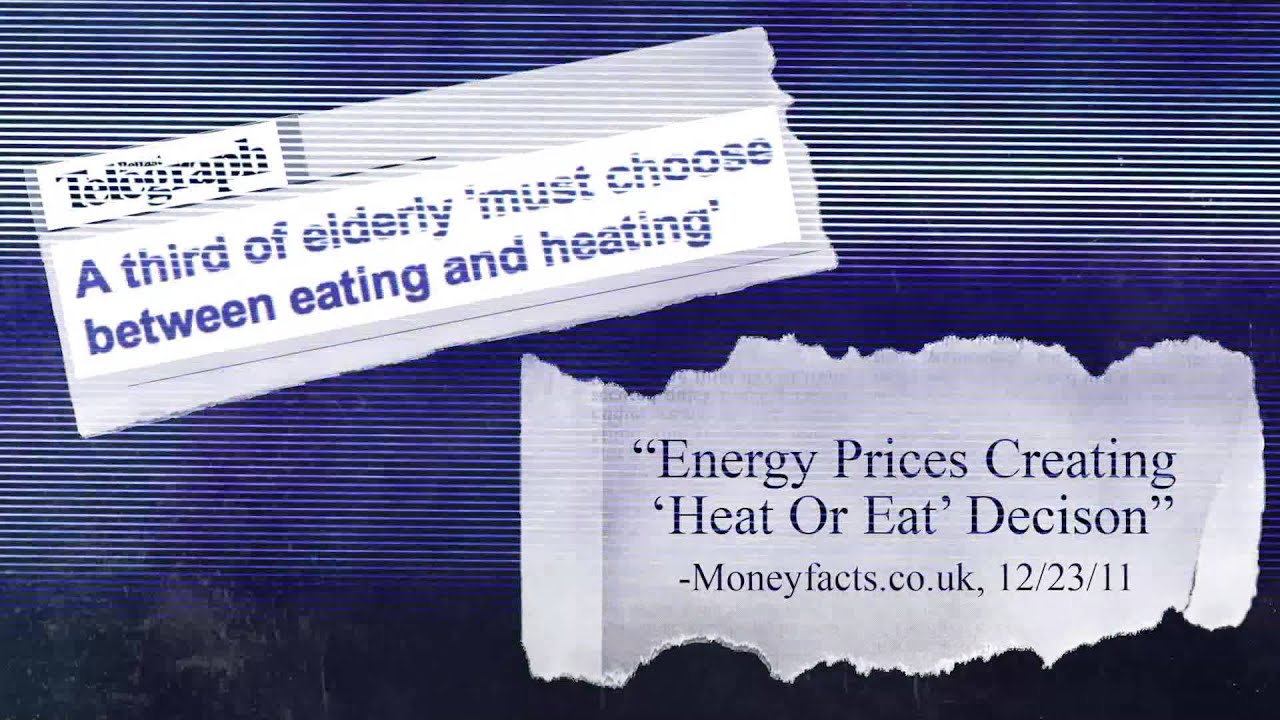 :{, whose government has indicated it can no longer bear these all-pain, no-gain policies, }
 :{. In December, }::{France will host the talks at which President Obama will agree to a new treaty — which he once again insists is not a treaty, to avoid the Senate having its say — replacing the failed Kyoto Protocol.}::{ Kyoto}::{, of course, went nowhere in the U.S. given that President Clinton acknowledged it was a treaty}::{. As with Iran, Mr. Obama is taking no such chances. This does not mean the public and their elected representatives are without a voice in these maters. }::{Congress must block EPA’s rules and demand a Senate vote on the upcoming Paris treaty.}:
E&E Legal Executive Director Craig Richardson, who authored an article in June responding to the release of Pope Francis’ ‘climate change’ encyclical, concludes, “As a practicing Catholic, I find it impossible to reconcile the policies advocated by Pope Francis in Laudato Si, which have had such a devastating impact on Europe’s most vulnerable, and he and the Catholic Church’s longstanding commitment to the world’s poor and most marginalized. It is my hope that Pope Francis and other religious leaders will rethink their approach, recognize that providing affordable, reliable energy sources is the most effective way of lifting the poor out of poverty, and understand that these failed ‘climate’ policies they espouse are clearly not the answer, in fact they’re the problem.”
November 23rd, 2015|"Climate Change", E&E Legal Letters, Energy Poverty, Horner, Richardson
==
==
1219 dn also blk friday materialism
NOV 25, 2019
Pope Francis Calls Nuclear Weapons Immoral as Catholic Activists Face Jail For U.S. Nuke Base Action
==
Pope Francis convenes an unprecedented meeting at the Vatican, bringing together Catholic bishops from around the world, climate experts and indigenous people to discuss the destruction underway in the Amazon rainforest. It pits two of the most powerful forces in Brazil against one another: the Catholic Church and President Jair Bolsonaro. Also, U.S. courts are starting to question the authority of natural gas pipeline builders to take land under eminent domain, Trump’s EPA loses a fight over interstate smog, and a look at how Britain ended its coal addiction. |
| With Amazon Burning, Pope Convenes Meeting on Rainforests Climate Change & Moral Obligation |
==
Francis Declares Climate Emergency in Meeting With Big Oil Leaders
Bannon v. Pope Francis: Here’s how the Trump ally and former Breitbart exec is trying to push the Catholic Church to the far right
Jorge Mario Bergoglio, the 82-year-old Buenos Aires native best known as Pope Francis, has been the most liberal pope in the history of the Catholic Church. There are some areas…
==
==
==
cf nebraska ricketts
Megachurch Pastor Robert Jeffress, a Fox News contributor, got a Bible lesson from the Internet over the weekend after he lashed out at Pope Francis for opposing the death penalty.
In a declaration last week, the Vatican said that “the death penalty is inadmissible because it is an attack on the inviolability and dignity of the person.”
On Sunday, Jeffress complained about the Catholic Church’s stance.
“Pope Francis is dead wrong about capital punishment,” he wrote on Twitter. “God has commanded government to use the death penalty to demonstrate the seriousness of murder.”
Jeffress went on to quote the book of Genesis: “Whoever sheds man’s blood, By man his blood shall be shed, For in the image of God He made man.”
https://www.alternet.org/local-peace-economy/why-vatican-meeting-larry-fink
pope’s June 9 meeting with Larry Fink—CEO of the investment firm BlackRock—and other executives on the issue of climate change couldn’t be more timely. Back in 2015, the pope issued an encyclical on climate change, highlighting that unchecked consumption and greed cause massive devastation to our planet. The pope has repeatedly brought climate change to the forefront of international discussions, including connecting the issue of worldwide hunger with war and climate change.
Forced migrations, hunger, water pollution/scarcity, increased poaching, escalating global insecurity, and the lack of political will to find sustainable solutions are just a few of the common connections between war and climate change. Considering the countless conflicts that have raged across the world and the continued threat of climate change, it’s well past time to hold institutions accountable for profiting on the backs of global destruction.
In October 2017, BlackRock CEO Larry Fink announced that he was going to start holding companies accountable to be good corporate citizens. BlackRock is the world’s largest investment firm, controlling more than $3 trillion in assets. Some of these assets are linked to weapons manufacturers such as Lockheed Martin, meaning that Mr. Fink should follow his own advice and set an example for Wall Street. C ODEPINK has been calling on BlackRock to stop investing in weapons of war. There should be no profit in war (or climate destruction). The pope has been meeting with financial and oil executives because their leadership is needed to pull us out of a spiraling climate crisis. We also recommend that the pope speak to corporate leadership about ending war, as it compounds and escalates the impacts of climate change. In the pope’s 2015 Climate Encyclical he states, “The environment is one of those goods that cannot be adequately safeguarded or promoted by market forces.”
Peace, like the environment, should not be dictated by market forces. When a company’s bottom line is driving decisions, its executives are not considering the impacts of their products on others. BlackRock invests in companies like Lockheed, Raytheon, General Dynamics, Northrop Grumman, and Boeing. These companies make the bombs, missiles, tanks, and warplanes that destroy other communities. Their legacy of environmental contamination includes polluting groundwater and leaving behind depleted uranium in soil for generations.
The legacy of war and climate change also includes the destruction of families. Whether through forced migrations or death, families are ripped apart. Pope Francis raised the issue of refugees and forced migrations during his 2018 World Peace Day address. There are over 65 million forcibly displaced people in the world. U.S. military interventions and U.S. produced weapons have played a leading role in displacing millions around the globe. Conservative estimates state that since 2001, U.S. interventions in Afghanistan, Iraq, and Pakistan have displaced 10 million people.
The impacts of war and climate change disproportionately impact those who have less, while an elite few let profits drive their decisions and line their pocketbooks. This is why we must Divest From War and invest in solutions like renewable energy. Our investments—personal and public—should reflect the needs and priorities of our local communities, not the bottom lines of Wall Street.
Learn more about how you can be a part of the solution at www.divestfromwarmachine.org.
==
https://www.alternet.org/pope-francis-says-continued-use-fossil-fuels-will-destroy-civilization
during a closed-door meeting with oil executives at the Vatican on Saturday, Pope Francis gravely warned against further fossil fuel exploration and extraction, arguing that continued use of dirty energy could ultimately "destroy civilization."
"Carbon dioxide emissions remain very high. This is disturbing and a cause for real concern," Francis said in an address at the close of a two-day conference titled Energy Transition and Care of Our Common Home. "More worrying is the continued search for new fossil fuel reserves, whereas the Paris Agreement clearly urged keeping most fossil fuels underground."
In attendance at the conference were several major players in the oil and gas industry, according to Reuters, including ExxonMobil and Shell—both of whichdenied the reality of climate change in public for decades despite knowing privately about the threat soaring carbon emissions posed to the planet.
A total of fifty industry executives were reportedly in attendance at the two-day event.
Denouncing "unlimited faith in markets and technology" exuded by corporate executives in an effort to justify the disastrous status quo, the pontiff argued that a just transition to clean, renewable energy is "a duty that we owe towards millions of our brothers and sisters around the world, poorer countries, and generations yet to come."
"We know that the challenges facing us are interconnected. If we are to eliminate poverty and hunger...the more than one billion people without electricity today need to gain access to it," Francis said.
"Our desire to ensure energy for all must not lead to the undesired effect of a spiral of extreme climate changes due to a catastrophic rise in global temperatures, harsher environments, and increased levels of poverty," he added
==
https://www.alternet.org/news-amp-politics/watch-fox-business-ludicrously-attack-pope-francis-promoting-authoritarian
...VARNEY (HOST): I've got two problems with this. Number one, this document approved personally by the Pope, is part -- it came from the Catholic doctrine, (comma) the Vatican's office for Catholic doctrine. Do we now believe that authoritarian socialism is part of Catholic doctrine? I've got a problem with that. Number two, I don't want to see politics. When I go to church on a Sunday, and I'm a believer, I go -- I don't want to hear politics from the pulpit. I just don't want to hear it. So I'm like, save my soul, not my vote.
:{
}:
ELIZABETH MACDONALD (FOX BUSINESS STOCKS EDITOR): And what did Jesus say, "render unto Caesar what is Caesar's," right?
...
==
https://www.alternet.org/media/pope-fake-news-sin
https://www.ecowatch.com/faith-institutions-divest-2492836438.html
Record Fossil Fuel Divestment Announced by Catholic Church
Wednesday, a coalition of 40 faith institutions on five continents have jointly just announced their divestment from fossil fuels. This is a big moment for both the global divestment movement and faith community, and we need to keep this momentum going strong.
This commitment well and truly quadruples the one announced in May, when nine Catholic organizations divested. We need to celebrate it and also seize the opportunity to build upon this moment.
In the words of Domenico Sorrentino, the bishop of Assisi-Nocera Umbra-Gualdo Tadino:
St. Francis (Pope Francis) encouraged us to live humbly, simply, and with true reverence for the Creator and Creation. Divesting from fossil fuels and making new investments in clean energy sources is our way of following St. Francis's example.
Pope Francis has prominently voiced his concerns about climate change and the fossil fuel industry. But while Vatican officials have acknowledged the call for fossil fuel divestment, the Vatican has not committed to divest its money from the industry that is destroying Creation—yet.
In the wake of this announcement, people from all over the world are uniting during the Season of Creation and urging the World Bank to stop financing fossil fuels and support for renewable energy instead. Please join and add your voice to the global call.
Now more than ever we need institutions to stand together on the right side of history against an immoral industry whose climate impacts we see and experience daily.
As we celebrate this inspiring show of moral leadership, let's make sure the World Bank puts its mouth where its money is and stops funding the fossil fuel industry and climate disasters.
A full list of all the institutions which have divested as part of this commitment can be found here.
==
https://insideclimatenews.org/news/08092017/hurricane-irma-harvey-climate-change-denial-pruitt-perry-limbaugh-texas-florida
...In the wake of the storms, Pope Francis and other leaders urged officials who deny the reality of climate change to open their eyes. "You can see the effects of climate change with your own eyes, and scientists tell us clearly the way forward," Pope Francis said Monday, stressing that leaders have a "moral responsiblity" to act. But "when you don't want to see, you don't see," he said. "History will judge those decisions." Miami's Republican mayor also called on President Donald Trump and EPA Administrator Scott Pruitt to acknowledge the role of climate change, saying "If this isn't climate change, I don't know what is."
But steadfast opponents of action on global warming are either sticking to their guns or avoiding comment, while Trump administration officials declared it inappropriate to discuss climate amid tragedy.
Texas politicians have been particularly silent on climate change's tie to the storm that ravaged their state. InsideClimate News received no response from Texas' two senators, Republicans Ted Cruz and John Cornyn, or from Congressmen representing districts on the southeast coast that were affected by Harvey. The Washington Post also obtained no direct answer to a similar query to all 38 members of the Texas delegation.
Only Rep. Lamar Smith (R-Texas), chairman of the House Science Committee, responded to the Post, by pointing to a CNN interview in which Bill Read, former director of the National Hurricane Center, said there was nothing uncommon about storms intensifying in the Gulf of Mexico. (Climate scientists would agree with Read, but they say that warmer air and oceans will, indeed, fuel more dangerous storms.) Another frequent argument is that the U.S. had been in a "hurricane drought" without "major hurricanes" for 12 years. (Researchers point out that that period included both Hurricane Ike and Superstorm Sandy.)
...
==
http://www.alternet.org/belief/vatican-fires-shot-us-religious-right-calls-out-religious-liberty-industry-and-evangelical
An article being described as “explosive,” written by two allies of Pope Francis in a Vatican-reviewed publication, is taking on the “spurious alliance between politics and religious fundamentalism” in the United States.
Antonio Spadaro and Marcelo Figueroa call out the dominionist groups“composed mainly of whites from the deep American South” for their rejection of the “global ecological crisis” and their Armageddon-infused rhetoric, pointedly drawing parallels to Islamic fundamentalism.
They accuse these evangelical fundamentalists of seeking “influence in the political and parliamentary sphere and in the juridical and educational areas so that public norms can be subjected to religious morals.”
And, they name names:
This is the doctrine that feeds political organizations and networks such as the Council for National Policy and the thoughts of their exponents such as Steve Bannon, currently chief strategist at the White House and supporter of an apocalyptic geopolitics.
But it’s not just evangelical fundamentalists who desire “religious influence in the public sphere”:
Appealing to the values of fundamentalism, a strange form of surprising ecumenism is developing between Evangelical fundamentalists and Catholic Integralists. . . . Some who profess themselves to be Catholic express themselves in ways that until recently were unknown in their tradition and using tones much closer to Evangelicals. They are defined as value voters as far as attracting electoral mass support is concerned. . . . This meeting over shared objectives happens around such themes as abortion, same-sex marriage, religious education in schools and other matters generally considered moral or tied to values.
More than 15 years after the Catholic bishops helped get George W. Bush elected president and nearly eight after the signing of the Manhattan Declaration, the Vatican has discovered what had become the defining feature of the Christian Right in America: the conservative evangelical-Catholic convergence.
And while Spadaro and Figueroa are critical of the sublimation of gospel values to the goal of right-wing political domination, it’s worth noting that the two issues that drove this convergence in the first place—abortion and same-sex marriage—haven’t exactly been abandoned by Pope Francis.
As for the “glue” that holds this altogether—and formed the underpinning of the Manhattan Declaration coalition—Francis has been a proponent of the idea that the “religious liberty” of Catholics is under attackin western democracies such as the United States, even as Spadaro and Figueroa criticize its use for political ends:
The erosion of religious liberty is clearly a grave threat within a spreading secularism. But we must avoid its defense coming in the fundamentalist terms of a “religion in total freedom,” perceived as a direct virtual challenge to the secularity of the state.
While much of their criticism is justified, Spadaro and Figueroa are silent about the role that Pope John Paul II and Pope Benedict played in the creation of the “evangelical Catholics” they complain about and about the role that the U.S. Conference of Catholic Bishops played in driving conservative Catholics into the arms of the Republican Party, and, eventually, Trump.
Nonetheless, they correctly call-out the “shocking rhetoric” of the Church Militant and other pro-Trump organizations that are “openly in favor of a political ultraconservatism and uses Christian symbols to impose itself”
. . . it has created a close analogy between Donald Trump and Emperor Constantine, and between Hilary Clinton and Diocletian. The American elections in this perspective were seen as a “spiritual war” . . . Church Militant asks if Trump’s victory can be attributed to the prayers of Americans. The response suggested is affirmative. The indirect missioning for President Trump is clear: he has to follow through on the consequences. This is a very direct message that then wants to condition the presidency by framing it as a divine election. For conservatives, however, this is not political warfare cloaked as spiritual warfare, but a logical and necessary outcome of attacks on the traditional church. Philadelphia Archbishop Charles Chaput The cooperation of Catholics and evangelicals was quite rare when I was a young priest. Their current mutual aid, the ecumenism that seems to worry La Civilta Cattolica, is a function of shared concerns and principles, not ambition for political power. . . . Dismissing today’s attacks on religious liberty as a “narrative of fear”—as the La Civiltà Cattolica author curiously describes it—might have made sense 25 years ago. Now it sounds willfully ignorant. It also ignores the fact that America’s culture wars weren’t wanted, and weren’t started, by people faithful to constant Christian belief.
But Spadaro and Figueroa call this a false ecumenism, “an ecumenism of conflict that unites them in the nostalgic dream of a theocratic type of state” and that “wants walls and purifying deportations.” By contrast, they say, Francis’ ecumenism “moves under the urge of inclusion, peace, encounter and bridges.”
Regardless of whose brand of ecumenism you subscribe to, one thing is for sure. Francis, they say, “wants to break the organic link between culture, politics, institution and Church.” But this link underpins much of the conservative religious understanding in the United States today. And breaking it may take more than just words.
==
Steve Bannon vs. Pope Francis? - The Washington Post
https://www.washingtonpost.com/...**bannon**...**pope**-**francis**/.../4d6e44dc-ee47-11e6-b4ff-...
Feb 8, 2017 - Will he disrupt the Roman Catholic Church by joining forces with right-wing Catholics who oppose Pope Francis? Bannon's dark vision ...
:{
}:
--
:{
}:
:{
Stephen K. Bannon disrupted American politics and helped elect Donald Trump as president. Will he disrupt the Roman Catholic Church by joining forces with right-wing Catholics who oppose Pope Francis?
Bannon’s dark vision contrasts sharply with the sunny disposition of a pope who has chided “sourpusses” and “querulous and disillusioned pessimists.”
Bannon believes that “the Judeo-Christian West is in a crisis.” He calls for a return of “the church militant” who will “fight for our beliefs against this new barbarity,” which threatens to “completely eradicate everything that we’ve been bequeathed over the last 2,000, 2,500 years.”
Where Francis has insisted on dialogue with Muslims, Bannon points to “the long history of the Judeo-Christian West struggle against Islam” and reaches as far back as the eighth century to praise “forefathers” who defeated Islam on the battlefield and “kept it out of the world, whether it was at Vienna, or Tours, or other places.”
“See what’s happening,” Bannon insists, “and you will see we’re in a war of immense proportions.”
Pope issues stinging criticism of Burma's treatment of Rohingyas Embed Share Play Video1:05
The pope has issued a strong criticism of Burma's treatment of the minority Rohingya people. (Reuters)
Bannon offered these comments in 2014 to the Institute for Human Dignity, an ultra-traditionalist group based in Rome and allied with some of Francis’s sharpest internal critics. They include Cardinal Raymond Burke, who has been so tough on Francis that he had to deny he was accusing the pontiff of heresy.
[‘What happens to us?’ Why Sweden is so worried about the Trump administration.]
The New York Times’ Jason Horowitz put Bannon’s Catholic project front and center this week with a Page 1 story reporting that during a 2014 visit to Rome for the canonizations of Popes John Paul II and John XXIII, Bannon met and “bonded” with Burke.
Neither Bannon nor Trump (nor, for that matter, Burke) is likely to dent Francis’s immense popularity with American Catholics. But Horowitz’s story brought into relief the struggle inside the church — and particularly within American Catholicism — over the pope’s stewardship, his emphasis on battling poverty, his insistence on the importance of welcoming immigrants and refugees, and his relative openness to modernity.
Massimo Faggioli, a professor of theology and religious studies at Villanova University and a close student of the Vatican, argues that Francis has aroused a similar hostility among some on the Catholic right to that Barack Obama called forth on the right end of politics generally. Francis is the first pope from Latin America, and his vision of economics is inflected by his experiences there. Moreover, Francis accepts the reforming Second Vatican Council in the 1960s “in its entirety and is not just paying lip service.”
The vast majority of conservative American bishops and Catholic thinkers have, of course, pledged their allegiance to the pope. But Faggioli argues that many of them are often critical of Francis’s attitude toward doctrine (the pope, he says, is “pastoral, not ideological”) and toward Vatican II’s reforms, which shifted church teaching toward a greater respect for religious pluralism.
On the surface, some of Bannon’s economic views would seem to match Francis’s. In his speech broadcast to the group in Rome, Bannon spoke against “a brutal form of capitalism that is really about creating wealth and creating value for a very small subset of people.”...
no lonk
}:
--
http://www.gmwatch.org/news/latest-news/16239-pope-francis-slams-gmos-and-pesticides-for-environmental-and-social-damage
Pope Francis slams both GMOs and pesticides in a draft of his major environmental document that was leaked Monday. He has also called for independent and interdisciplinary research to study GMOs
:{
}:
Pope Francis’s open-eyed vision of the problems caused by GMOs and pesticides in the articles below is in stark contrast with the ludicrous hype generated by GMO proponents in 2013 around the Pope giving “his personal blessing” to GMO golden rice.
:{
}:
In fact it was far from clear if he knew exactly what he was blessing and this act cannot be claimed to be an endorsement of this GMO or GMOs in general.
It’s evident from the second article below that Pope Francis will not fall for the lie that we need GMOs to feed the world. He states that the problem of hunger could be solved through political will and tackling food speculation and food waste.
- Pope Francis slams GMOs and pesticides for environmental and social damage
- Pope Francis: We can end world hunger if we want to
—
- Pope Francis slams GMOs and pesticides for environmental and social damage
Sustainable Pulse, Jun 16 2015
http://sustainablepulse.com/2015/06/16/pope-francis-slams-gmos-and-pesticides-for-environmental-and-social-damage/#.VX_cHufWlnc
* Pope Francis slams both GMOs and pesticides in a draft of his major environmental document that was leaked Monday. He has also called for the financing of independent and interdisciplinary research to study GMOs
:{
}:
On the subject of GMOs Pope Francis states, “It is difficult to give an overall judgment on the development of genetically modified organisms (GMO), plant or animal, for medical purposes or in agriculture, since they can be very different and require different considerations.”
:{
}:
He continues, “Although we do not have definitive evidence about the damage that transgenic cereals could cause to humans, and in some regions their use has produced economic growth that has helped solve some problems, there are significant problems that should not be minimized. In many areas, following the introduction of these crops, there has been a concentration of productive land in the hands of the few, due to the gradual disappearance of small producers, who, as a consequence of the loss of cultivated land, have been forced to retreat from direct production.
:{
}:
“The most fragile among them become temporary workers and many farm workers migrate to end up in miserable urban settlements. The spread of these (GM) crops destroys the complex web of ecosystems, decreases diversity in production and affects the present and the future of regional economies. In several countries there is a trend in the development of oligopolies in the production of seeds and other products needed for cultivation, and the dependence deepens when you consider the production of sterile seeds, which end up forcing farmers to buy (seeds) from producers.”
“No doubt there is a need for constant attention…to consider all ethical aspects involved. To this end it is necessary to ensure a scientific and social debate that is responsible and large, able to consider all the information available and to call things by their names.
“GMOs is an issue which is complex, it must be approached with a sympathetic look at all its aspects, and this requires at least one more effort to finance several lines of independent and interdisciplinary research… as we have seen in this chapter, the technique is unlikely to be able to …self-limit its power.”
On pesticides Pope Francis states, “We get sick, for example, due to inhalation of large amounts of smoke produced by fuels used for cooking and heating. This is added to by….fertilizers, insecticides, fungicides, herbicides, and toxic pesticides in general. Technology that is linked to finance, claims to be only solving problems…this solves a problem by creating others.
“It creates a vicious circle in which the intervention of the human being to solve a problem often worsens the situation further. For example, many birds and insects die out as a result of toxic pesticides created by technology, they are useful to agriculture itself, and their disappearance will be compensated with another technological intervention that probably will bring new harmful effects… looking at the world we see that this level of human intervention, often in the service of finance and consumerism, actually causes the earth we live in to become less rich and beautiful, more and more limited and gray, while at the same time the development of technology and consumerism continues to advance without limits.”
You can find the full draft document here (in Italian): speciali.espresso.repubblica.it/pdf/laudato_si.pdf
- Pope Francis: We can end world hunger if we want to
Mark Woods
Christian Today, 12 June 2015
http://www.christiantoday.com/article/pope.francis.we.can.end.world.hunger.if.we.want.to/56045.htm
Pope Francis has called for a new focus on global hunger in a major address to delegates from the international Food and Agriculture Organisation in Rome.
In a hard-hitting speech, he warned against the tendency to "delegate" and "desert" in the face of the problem. He spoke of a "generic resignation" and "indifference" to hunger, as if it were unavoidable. "Sometimes one has the sensation that hunger is an unpopular topic, an insoluble problem," he said.
However, Francis argued that a lack of will was behind the continuing lack of food security in many parts of the world and said that it was possible to tackle the issue.
He instanced food speculation, responsible for high prices that hit the poor hardest. The products of the earth "have a value that we can say is 'sacred', given that they are the fruit of the daily work of persons, families, communities of farmers – a work that is often dominated by uncertainties, worries over climatic conditions, anxieties over the possible destruction of the harvest", he said.
He also spoke of the shocking waste of food – standing at around a third of everything produced globally – and said it was important to reflect on the use of crops for biofuels and feeding animals: "It is worrying to know that a good quantity of agricultural products is used for other ends, perhaps good ends, but which are not the immediate need of one who is hungry."
Francis also warned against "monopolising of lands of cultivation by trans-national enterprises and states, which not only deprives farmers of an essential good, but which directly affects the sovereignty of countries". "There are already many regions in which the foods produced go to foreign countries and the local population is doubly impoverished, because it does not have food or land," he said.
"And what to say of the women who in many areas cannot possess the land they work, with an inequality of rights that impedes the serenity of family life, because the danger is run of losing the field from one moment to the other?" Most food production, he argued, was "in the main the work of family properties". He urged the FAO to support small-scale family enterprises through lobbying for better legislation.
The Pope urged a commitment to simpler lifestyles that would mean fewer resources were consumed, saying: "We must begin from our daily life if we want to change lifestyles, conscious that our little gestures can ensure sustainability and the future of the human family."
He concluded: "Let us modify our relation with the natural resources, the use of the soil, let us modify our consumption, without falling into the slavery of consumerism; let us eliminate waste and thus we will overcome hunger."
In another sign of the Pope's commitment to the poor, he is to open a homeless shelter on the edge of Vatican City in Rome. The shelter, which is still under construction, will host 30 people at a time and will be run by volunteers. It follows an earlier initiative to provide showers, haircuts and shaves under the colonnade of St Peter's Square.
Earlier this month Francis donated money to allow two busloads of poor people to travel from Rome to see the Shroud of Turin. He has also invited homeless people to a private viewing of the Vatican museums and the Sistine Chapel.
==
==
http://www.ecowatch.com/pope-francis-climate-change-1995225094.html
Destroying the environment is a sin, Pope Francis said in a message from Vatican City.
"Global warming continues," the pontiff said in a message released Thursday. "2015 was thewarmest year on record, and 2016 will likely be warmer still. This is leading to even more severedroughts, floods, fires, and extreme weather events."
He would like "caring for the environment" to be added to the traditional Christian works of mercy, which also include visiting the sick and feeding the hungry. The pope last year declared 2016 to be the "Year of Mercy," and urged Catholics to meditate on how they could reflect the love of God in the world.
He tied environmental concerns to the growing global migrant crisis.
"Climate change is also contributing to the heart-rending refugee crisis," he said. "The world's poor, though least responsible for climate change, are the most vulnerable and already suffering its impact."
Catholics should use this year to reflect upon sins they may have committed against the environment, and also urged forgiveness for the "selfish" capitalist system which advocates "profit at any price."
==
5/16 huffpo
Pope Francis isn’t mincing words in his latest denouncement of those who exploit the poor.
The pontiff was in his element during a passionate sermon at the Vatican on Thursday, berating rich employers who hire and fire poor people with callous disregard for their workers’ wellbeing, and who refuse to give their employees health care, pensions, or vacations.
He called people who take advantage of the poor in this way “true bloodsuckers” who “live by spilling the blood of the people who they make slaves of labor.”
Although some may think slavery no longer exists, Francis insisted that it is still a problem around the world.
“It’s true, people no longer go to Africa to capture [slaves] in order to sell them in America, no. But it is in our cities. And there are these traffickers, these people who treat the working people without justice,” Francis said in his sermon. “This is a mortal sin. And this demands a great deal of penance, a great deal of restitution, in order to be converted from this sin.”
In particular, Francis recalled the story of a young girl who told him that she worked for 11 hours a day for 650 euro a month, all under the table. Her employers reminded her that she could leave if she couldn’t handle the terms of the job — there were plenty of others like her who would do the work instead.
Paraphrasing the Bible passage for the day, taken from James 5, the pope said: “The blood of all these people that you have sucked [and on which] you have lived, is a cry to the Lord, it is a cry of justice.”
:{
}:
In a similar vein, Francis also slammed the “theology of prosperity,” which he said is the belief that “God shows you that you are just if He give you great riches.”
Televangelists have been preaching the prosperity gospel for decades in America. According to Religion News Service, this theology is popular in Latin America, Asia, and Africa. Proponents of this gospel promise their flock that God wants Christians to prosper financially, stay healthy, and live comfortably — as long as they have the right kind of faith.
Some critics have said that the prosperity gospel preys on the poor who are encouraged to donate money to churches with the promise that the investment will result in an abundance of wealth or miraculous healings later on.
Pope Francis insisted that people who believe in this theology have the wrong idea because it encourages them to become too attached to material goods.
“You cannot serve both God and riches,” Francis said during the sermon.
Pope Francis has often spoken up about the “idolatry of money“ and the evils of economic systems that treats people like commodities.
In the end, Francis left his listeners with a poignant metaphor about the importance of helping others:
“A glass of water in the name of Christ is more important than all the riches accumulated through the exploitation of the people.”
==
Pope Francis's Theory of Economics
A case for the pontiff's debt not to Karl Marx but to Karl Polanyi
Pope Francis and, clockwise from top left: Keynes, Polanyi, Hayek, and Marx (Reuters/Giampiero Sposito/Wikimedia Commons)
It would make for some pretty amazing headlines if Pope Francis turned out to be a Marxist.
Between his hints at rehabilitatingliberation theology—condemned by his predecessors—and talk about casting off "the economic and social structures that enslave us," Marxism isn't totally out of the question.
==
rush etc fox marxist
https://www.facebook.com/Mediamatters/videos/vb.26595441166/10153193908191167/
beck team will teach pope;danger, occupy alex jones; outlier:
ox Contributor Calls Out Host's "Absolutely Astounding" Selective Hearing On Pope's Call To Action On Climate Change
Father Jonathan Morris: It Is The Pope's Job To Say "Climate Change Is A Moral Issue Because It's Going To Affect Mostly The Poor
http://ecowatch.com/2015/07/13/pope-francis-rise-up-global-capitalism
==
http://www.alternet.org/environment/dalai-lama-endorses-pope-francis-climate-change-encyclical
http://www.alternet.org/environment/george-lakoff-why-pope-francis-killed-it-addressing-climate-change
Pope combines science, morality and politics.
By George Lakoff / AlterNet July 1, 2015
Beginning with my book Moral Politics in 1996 (Ch. 12), I have been arguing that environmental issues are moral issues. There I reviewed and critiqued conservative metaphors of nature as a resource, as property, as an adversary to be conquered.
Instead I argued that we needed to conceptualize nature as the giver of all life, as sustainer and provider, as having inherent value, imposing responsibility, and deserving gratitude, love, adoration, and commitment.
I suggested alternative metaphors of nature as mother, as a divine being, as a living organism, as a home, as a victim to be cared for, and a whole with us as parts inseparable from nature and from each other.
Pope Francis in his Encyclical used all of these and then went much further. First, he got all the science right -- no small task. I have been writing for some time about role of systemic causation in global warming and the environment. The Pope not only got the ecological system effects right, but he went much, much further linking the environmental effects to effects on those most oppressed on earth by poverty, weather disasters, disease, ocean rise, lack of drinking water, the degradation of agriculture, and the essential aesthetic and spiritual contact with unspoiled nature. And more, he spoke of our moral responsibility toward animals.
He spoke in metaphors that might sound strange coming in a scientific or political speech, but somehow seem entirely natural for the Pope.
The title of the encyclical is "On Care for our Common Home." This simple phrase establishes the most important frame right from the start. Using the metaphor of the "Earth as Home," he triggers a frame in which all the people of the world are a family, living in a common home.
This frame carries with it many assumptions: As one family, we should care for each other and take responsibility for each other. A home is something we all depend on, physically and emotionally. A home is something inherently worth maintaining and protecting.
- "...there has been a growing conviction that our planet is a homeland and that humanity is one people living in a common home."
- "...our common home is falling into serious disrepair."
- "Humanity still has the ability to work together in building our common home."
Pope Francis explicitly states what most progressives implicitly believe but rarely say out loud: "The climate is a common good, belonging to all and meant for all." The "Common Good" frame is about interdependence, shared responsibility and shared benefit.
- Human ecology is inseparable from the notion of the common good, a central and unifying principle of social ethics.
- Society as a whole, and the state in particular, are obliged to defend and promote the common good.
Critics of Pope Francis have attacked him as having a naïve understanding of the economy, of being anti-technology, or of denying the so-called productive role of self-interest. But he is doing much more, suggesting that business and technology can, and ought to, have moral ends, especially in the face of the looming worldwide disaster of global warming. He is further pointing out, correctly, that the global warming disaster and hugely disastrous other effects were created by the business-technology axis seeking profit above all, without being structured to serve the common good.
- Business is a noble vocation, directed to producing wealth and improving our world. It can be a fruitful source of prosperity for the areas in which it operates, especially if it sees the creation of jobs as an essential part of its service to the common good.
- The alliance between the economy and technology ends up sidelining anything unrelated to its immediate interests.
The Pope of course realizes the challenge. An alternative religion of market fundamentalism has taken hold both in public discourse and in the minds of the public -- so much so that it is hard to imagine a change in time to avert disaster.
- The idea of promoting a different cultural paradigm and employing technology as a mere instrument is nowadays inconceivable.
Indeed, market fundamentalism has become a kind of alternative religion, with its own idea of what is natural (the primacy of self-interest) and moral (in the conservative version of the Invisible Hand metaphor, if everyone pursues his own profit, the profit of all will be maximized). Pope Francis correctly points out that these metaphors have run wild, "ending up" creating enormous wealth for some, disaster for the many, and the terror of global warming for the earth. In market fundamentalism, there is only "individual responsibility," no common responsibility for the common good. Without such common responsibility, there will be no way to avert the coming disasters of global warming, which has been created by market fundamentalism and will be perpetuated by it, unless it is checked.
In market fundamentalism, wealth is measure of the good: an overall increase in monetary wealth is a moral triumph. But while the industrialization of China has increased the wealth of China's capitalists, of American corporate outsourcers to China, and of the Chinese government, the Chinese have suffered an ecological and social devastation, an overwhelming "cost" -- a cost beyond the measure of money. Just look at the pollution in Beijing and desertification in western China. Via global warming, they are imposing that cost on the world, just as the industrialization of the West has in the past.
Pope Francis extends his view of morality using the commonplace economic metaphor of "Moral Accounting" in which there are debts, costs, people who owe, people who are owed, and an expectation that debts should be paid. He points out that no one makes it on his own, that pre-existing resources, often taken from others and the labor of others, have made life possible for anyone who is economically well-off. We all have debts. We also all have basic rights, e.g., to human dignity. When market fundamentalism shifts the resources of others and fruits of the labor of others to the wealthy, robbing the poor of their right to dignity, the wealthy incur a debt, a moral debt.
- Our world has a grave social debt towards the poor who lack access to drinking water, because they are denied the right to a life consistent with their inalienable dignity. This debt can be paid partly by an increase in funding to provide clean water and sanitary services among the poor.
- A true "ecological debt" exists, particularly between the global north and south, connected to commercial imbalances with effects on the environment, and the disproportionate use of natural resources by certain countries over long periods of time.
- The Portuguese bishops have called upon us to acknowledge this obligation of justice: "The environment is part of a logic of receptivity. It is on loan to each generation, which must then hand it on to the next."
These are just a few examples of the many metaphors and frames used to powerful effect in this document. They have one thing in common, which they also share with the progressive value system: they are rooted in a worldview based on empathy.
This is Empathy writ large, beyond individual empathy: it is a global empathy for all humanity, all of life -- animals, fish, plants, and Nature, which provides all life. What is absent is the all too common narrow view of religion as about individuals alone, in which THE spiritual issue is whether YOU get into Heaven, and that is a matter of personal responsibility. You are responsible for yourself, not for others, not for all of life and what is life-giving. That narrow view of individual, not social or global responsibility is completely absent from the Pope's message. The message takes morality to the global level, to an ecological spirituality. It is a message especially appropriate for American democracy, which begins with the idea of union, of citizens caring for one another and taking the responsibility working through their government to provide public resources for all, whether for business or personal life, and with freedom and dignity for all as inalienable rights.
The whole Encyclical is well worth reading. It is a remarkable document and one that needs to be taken to heart not just by the world's Catholics, but by the world's full population, now and for many years into the future.
I am an advocate of the separation of church and state. I don't have a Pope. I have never tended to follow the edicts of a Pope just because he was Pope. And I am not doing so here.
It is vital to bear in mind that this Encyclical is not just a matter of church doctrine. All policy within the political domain is a matter of morality. Every politician who proposes a policy does so on the basis that it is right, not wrong or morally irrelevant. This Encyclical is overtly about politics and the role a global morality needs to play in politics.
I have long argued that global warming is the moral issue of our time. President Obama has said the same. I am thrilled that Pope Francis, spiritual and moral leader of 1.2 billion Catholics, has not just agreed, but has gone so much further, and that he has framed the issue so powerfully, often in language that flows most easily and readily from a Pope, and yet makes so much moral sense, whether you are Catholic or not, religious or not.
Moral questions are not the same as practical questions. But the fate of the earth in the face of global warming is so practical a question that it becomes a moral one. That is the lens through which to read the Pope's Encyclical.
==
http://ecowatch.com/2015/07/02/naomi-klein-people-planet-first/
...
It’s also a real honour to be here supporting and indeed celebrating the historic publication of the Pope’s encyclical.
Pope Francis writes early on that Laudato Si’ is not only a teaching for the Catholic world but for “every person living on this planet.” And I can say that as a secular Jewish feminist who was rather surprised to be invited to the Vatican, it certainly spoke to me.
“We are not God,” the encyclical states. All humans once knew this. But about 400 years ago, dizzying scientific breakthroughs made it seem to some that humans were on the verge of knowing everything there was to know about the Earth, and would therefore be nature’s “masters and possessors,” as René Descartes so memorably put it. This, they claimed, was what God had always wanted.
That theory held for a good long time. But subsequent breakthroughs in science have told us something very different. Because when we were burning ever larger amounts of fossil fuels—convinced that our container ships and jumbo jets had leveled the world, that we were as gods—greenhouse gases were accumulating in the atmosphere and relentlessly trapping heat.
And now we are confronted with the reality that we were never the master, never that boss—and that we are unleashing natural forces that are far more powerful than even our most ingenious machines. We can save ourselves, but only if we let go of the myth of dominance and mastery and learn to work with nature—respecting and harnessing its intrinsic capacity for renewal and regeneration.
And this brings us to the core message of interconnection at the heart of the encyclical. Whatclimate change reaffirms—for that minority of the human species that ever forgot—is that there is no such thing as a one-way relationship of pure mastery in nature. As Pope Francis writes, “Nothing in this world is indifferent to us.”
For some who see interconnection as a cosmic demotion, this is all too much to bear. And so—actively encouraged by fossil-fuel funded political actors—they choose to deny the science.....
==
http://www.globalpossibilities.org/climate-politics-and-the-disruption-of-conservative-orthodoxy/
UFFINGTON POST, BY CARL POPE, SIERRA CLUB
The Republican reaction to Pope Francis’s climate encyclical, juxtaposed to the Democratic congressional rebellion against President Obama on trade, suggest that climate and energy are powerfully disrupting the grid-locked orthodoxy which has dominated American politics for the last decade.
The Tea Party-Koch Brothers wing of conservatism, (and the corporate wing of the Democratic Party), are clearly on the defensive.
The most significant “tell” is the flailingresponses of reactionaries to the looming threat posed to climate denial by Francis’s Laudato Si.
Jeb Bush’s latest flip-flop — first asserting in New Hampshire that he wouldn’t take his economics from his church, and then backpedaling in Iowa — was merely the most recent spasm of right-wing discomfort.
Earlier Rick Santorum’s sputteringly strove to explain — on Fox news — why he was scolding the Pope, a non-scientist, to remain silent on climate, while Santorum himself, as a politician, had both right and duty to his own climate pulpit.
The assault began when the Heartland Institute tried to bully the Pope — unsuccessfully — into withholding or water down the encyclical by arguing that some of the voices urging climate action — UN Secretary General Ban Ki-moon and Columbia economist Jeffrey Sachs — opposed the Catholic Church on abortion. Indeed the overriding, major chord of the conservative assault on the encyclical is that Christian values only govern sex and family — economics, geopolitics, and climate should be left to secular, capitalist ideology.
Francis’s allies within the Church understand what this means better than outsiders. Archbishop Pedro Barreto Jimeno of Huancayo, Peruwarned that Francis“will have many critics, because they want to continue setting rules of the game in which money takes first place. We have to be prepared for those kinds of attacks.”
The Pope took his critics into account —making it clear within the textof Laudato Si that his approach to the environment is firmly rooted in traditional Catholic views of the uniqueness of human life and the need for a non-market based common good — drawing a line clarifying that he is not preaching a “new age” form of Catholicism.
(Reactionaries’ bewilderment that the Catholic Church’s option for the poor includes protecting them from greenhouse enhanced droughts, heat waves and rising oceans echoes their glib assumption that a presumed “social conservatism” would fence in American Hispanic voters, overriding their communitarian economic and environmental attitudes, and allowing Republicans to retain Hispanic voter loyalty while still promising to “self-deport” 11 million of their relatives.)
It is more a gale than a fresh breeze when the most ground-breaking Pope since John XXIII links poverty and climate, in a way which leaves the far-right sputtering — (just as it was a powerful symbol when a daughter of the Church, House Minority Leader Nancy Pelosi, broke with President Obama on tradeciting climate concerns.)
Indeed, something fundamental is shifting this summer in political and cultural attitudes around climate.
Compare this year to the summer that preceded Copenhagen, the dominant 2009 news on climate was the grinding failure of the US Senate and the Obama Administration on climate and energy legislation. And the rest of the news was equally dispiriting — no progress, little ambition, cynicism about the prospects.
Six months out from Paris, a new dynamism is palpable. Hawaii justcommitted itself to 100 percent clean energy by 2045.The California Senatepledged the world’s seventh largest economy to a 50 percent emission cut by 2030 – including petroleum. The first quarter witnessed a stunning 76 percent growth in US residential solar installations over the previous year. Georgia joined the growing list of states that permit homeowners to generate their own rooftop solar electrons, while giant (and historically conservative) Georgia Power proclaims that it will promote and grow clean power just as aggressively as it previously dominated coal and nuclear.
Globally renewable energy was more than half of added capacity. Chinese emissions declined in the first quarterby an amount equal to the total carbon pollution of Great Britain, Mexico became the first major emerging market to pledge solid emission reductions, and Ethiopia offered to reduce its projected 2030 carbon pollution by 64 percent — if climate finance is made available. Alberta tossed out its pro-tar sands Conservative Premier and elected the first left-leaning government in its history.
Led by “Climate Chancellor” Angela Merkel, :{the world’s major industrial nations called for a binding climate treaty at the “upper end” of the ambition levels:(style="background-color:#ffff66;"):}::{ required by climate science,:(style="background-color:#ffffff;"):}: and agreed that the era of fossil fuels must end this century. The Saudi Oil Minister signaled that his kingdom fears the era of oil by end by mid-century. And 199 nations meeting in Germany reached a breakthrough agreement on how to curb deforestationand lay the groundwork for an eventual reduction – through forest and grassland sequestration – in atmospheric carbon concentrations.
The price of oil remained mired below $70; OPEC agreed again to keep pumping and fighting for market share; and the share value of coal companies, already down by three-quarters, just kept slumping. (Purchasers two months ago of Peabody junk bonds have already lost 18 percent of their money.)
Sensing a change in the landscape, Europe’s six biggest oil and gas companies abandoned their fossil fuel common front with coal, and threw the black rock and its shareholders under the bus. Re-branding themselves as “almost gas” companies (shades of John Brown and BP’s “Beyond Petroleum” phase) Shell, BP, Total, Eni and British gas called on the international community to levy a global carbon taxthat would drive electricity generators from coal to gas.
This is exciting news for climate. But there are signs that this climate and energy revolution is also breaking apart the frozen tectonic plates which have locked American conservatism into an orthodoxy of inaction not just on global warming, but on almost every problem challenging our society.
No longer do all conservatives join Koch, Heartland, and Republican Presidential candidates in dismissing conservative engagement with climate solutions. Not only are both libertarians (the new Niskanen Center)and business conservatives (American Enterprise Institute)alike debating the need for conservative solutions like carbon taxes, but the first conservative climate progress mega-donor, Jay Faison has surfaced, pledging to spend $175 million on encouraging his movement to come to grips with atmospheric reality.
Over the past decade — ever since the nascent Tea Party partly seized control of Republican politics, shutting down George W. Bush’s forgotten campaign promise to clean up carbon pollution, rebuffing his immigration reforms, and eventually thrusting his “compassionate conservatism” into the fiery abyss of conservative heresy — a new Republican orthodoxy locked down the primary fault zone in American politics, where new realities and social change forces collide with conservative political, cultural, and economic habits.
The Supreme Court’s “money is speech and corporations are people” jurisprudence weakened the ability of business elites to buffer Tea Party pressures on elected Republicans. Even such routine public business as the reauthorization of infrastructure spending or the Export-Import Banks ground to a halt. Nothing, it seemed, was possible.
Tectonic drift isn’t dangerous when the plates glide and rub against each other, releasing their energy gradually. But when they freeze up, the “thrust fault” that results accumulates energy until it cracks, relieving stored up stress in a few seconds, and creating new landscapes and mountain ranges. And when three moving “oceanic” plates (demography, globalization, and climate) converge on the stationary continental plate of American conservatism, the eventual outcome, while unpredictable, is certain to be spectacular.
The crack-up has begun — and surprisingly it seems that climate, not Hispanic voting blocks or global competition, may be the disruption that shatters conservative orthodoxy
==
usual suspects
http://www.desmog.uk/2015/06/17/who-s-behind-pope-francis-climate-encyclical-denier-attack
==
http://www.alternet.org/environment/pope-francis-pulls-no-punches-leaked-climate-change-encyclical
==
...“Statistics on waste are very concerning: a third of food products end up under this heading,” the Pope said in front of representatives from more than 120 countries, citing FAO data showing the magnitude of edible food produced on the planet that is lost or wasted.
The Pontiff also voiced concerns over large-scale acquisitions of agricultural land by multinational companies and governments....[agric might not be good for hungry] According to a FAO press release, Pope Francis held a separate meeting with the organization’s Director-General José Graziano da Silva, where the Pontiff stressed the importance of FAO’s ongoing efforts to decentralize. He asked that FAO member nations work together to protect land and water resources, especially from multinational companies.
“If all Member states work for one another, consensus for action by FAO will not be late in arriving, and moreover, FAO’s original role will be rediscovered—fiat panis, ‘let there be bread,'” he said, in reference to the Latin phrase that appears on the FAO’s logo.
He also urged that all consumers should “decisively commit” to modifying our lifestyles and using natural resources more sustainably.
“We must begin with our daily lives if we want to change lifestyles, aware that our small gestures can guarantee sustainability and the future of the human family,” he said.
He concluded, “The Church with its institutions and its initiatives, walks with you, knowing that the Earth’s resources are limited and their sustainable use is an urgent need for agricultural development and food security.”
http://ecowatch.com/2015/06/12/pope-francis-fao/
http://ecowatch.com/2015/06/12/inhofe-pope-francis-climate-change/
==
ENCYCLICAL!
http://www.alternet.org/environment/5-reasons-pope-franciss-encyclical-environment-matters
==
http://ecowatch.com/2015/04/27/heartland-institute-pope-francis/
...
The Heartland Institute is sending the delegation as a “prebuttal” to the Vatican’s “Climate Summit,” which will take place on Tuesday. The reason they are bringing “real scientists,” as they claim, is to “dissuade Pope Francis from lending his moral authority to the politicized and unscientific climate agenda of the United Nations,” said the Heartland Institute.
UN Secretary-General Ban Ki-Moon and Harvard economist Jeffrey Sachs, both of whom will speak at the Pope’s climate summit, “refuse to acknowledge the abundant data showing human greenhouse gas emissions are not causing a climate crisis and there is no need for a radical reordering of global economies that will cause massive reductions in human freedom and prosperity,” says the Heartland Institute.
“The Holy Father is being misled by ‘experts’ at the United Nations who have proven unworthy of his trust,” said Heartland Institute President Joseph Bast. “Humans are not causing a climate crisis on God’s Green Earth—in fact, they are fulfilling their Biblical duty to protect and use it for the benefit of humanity. Though Pope Francis’s heart is surely in the right place, he would do his flock and the world a disservice by putting his moral authority behind the United Nations’ unscientific agenda on the climate,” said Bast.
One of those who will speak at the “prebuttal” is Dr. E. Calvin Beisner, founder and national spokesman for
the Cornwall Alliance for the Stewardship of Creation. He will expound on the declaration,Protect the Poor: Ten Reasons to Oppose Harmful Climate Change Policies, which the Cornwall Alliance issued last year.
Beisner admits that carbon dioxide emissions are warming the planet, but says the impact is “so tiny as to be insignificant. “Trying to reduce our emissions will neither protect the earth nor dignify humanity.” Beisner believes simulations by computer climate models are simply wrong and “the grave danger to the world, and especially to the poor, isn’t global warming, but the poverty that would be induced or prolonged by policies meant to fight it,” says Beisner.
Beisner, a seminary professor of historical theology and social ethics when he founded the Cornwall Alliance in 2005, received the “Outstanding Spokesman on Faith, Science, and Stewardship Award” from the Heritage Foundation at the Ninth International Conference on Climate Change last year. Beisner believes “Christian ethics requires protecting the poor from harm, since they lack the means to protect themselves.”
“Requiring the world to abandon the abundant, reliable, affordable energy provided by fossil fuels in the name of fighting global warming oppresses the poor,” says Beisner. “They desperately need that energy, and for now and the foreseeable future no other energy source can give it to them.”
It will be very interesting to see what the Pope has to say about all of this. Pope Francis has consistently taken a strong stance on the need for immediate action on climate change, and at the same time, has been an ardent defender of the poor and marginalized. He evenly personally witnessed those on the front lines of climate change when he met with survivors of Typhoon Haiyan in the Philippines.
YOU MIGHT ALSO LIKE
Pope Francis to Host Major Summit on Climate Change
Climate Depot publisher Marc Morano will be part of a high level skeptical delegation with the Heartland Institute, traveling to Rome to offer alternative voices to the Vatican and Pope Francis on global warming. The skeptical delegation will hold counter events during Pope Francis’ climate summit on April 28 at the Vatican. (See: Pope Francis to Host Major Summit on Climate Change)
Morano will join skeptical scientists from NASA and elsewhere, to lay out a detailed case explaining why climate science does not justify the Vatican putting its faith in the work of the United Nations’ Intergovernmental Panel on Climate Change (IPCC) or the UN climate agenda.
Skeptic Events In Rome – Morano & Heartland Institute – Who, Where & When:
Will also feature former NASA scientist Hal Doiron, Physicist Dr. Tom Sheahan, and Dr. Richard Keen, Christopher Monckton, Cal Beisner and others.
mostly heartland guys eg
Richard A. Keen is a meteorology instructor at the University of Colorado, academic scientist on the Juneau (Alaska) Ice Field Research Program, and author or coauthor of more than a dozen books. His research papers on climate topics have been published in major journals, including Science, Monthly Weather Review, Journal of Climate, Annals of Glaciology, Geophysical Monographs, Bulletin of the Global Volcanism Network, and International Comet Quarterly. His early meteorological training was with the U.S. Army Meteorological Team, and he received his Ph.D. in geography (thesis topic: arctic climate change) from the University of Colorado. He resides in the mountains west of Denver, where he operates a cooperative weather station for the National Weather Service, continuing a tradition of volunteer climate observation begun by Ben Franklin and Thomas Jefferson.
==
Pope Francis to Host Major Summit on Climate Change
This event is just the latest in what many are calling Pope Francis's...
=
Catholics Fast for Lent in Support of Pope Francis’ Call for Climate Action
Today marks Ash Wednesday, the beginning of Lent for Catholics. This Lent, the Global Catholic Climate Movement announced...
==
- ####
"Man Has Slapped Nature in the Face": Pope Francis Urges Climate Action in Philippines Visit

Pope Francis Plea for Climate Action Revives Concept of "The Commons" to Rethink Economy & Society
==
A Koch hack tells the Pope to 'back off' on climate change
-
Pope Francis will be issuing a rare encyclical on the environment and climate change next year, and it's pretty clear that his message will not be "Drill, baby, drill."
According to the Guardian story, Francis will urge "all Catholics to take action on moral and scientific grounds."
Along the lines of what he said in October:
The monopolising of lands, deforestation, the appropriation of water, inadequate agro-toxics are some of the evils that tear man from the land of his birth. Climate change, the loss of biodiversity and deforestation are already showing their devastating effects in the great cataclysms we witness.
Unlike in other matters through the many centuries, the Catholic Church has essentially accepted the overwhelming scientific consensus on climate change.
But some Catholics, especially in Fox "News"-deluded America, will have none of that, at least according to one of the hundreds of Koch-funded conservatives on offer to journalists to give the polluters' point of view.
More, below.
Calvin Beisner of the Cornwall Alliance, a Religious Right group that specializes in promoting pollution, has been well-paid by the Kochs and other polluters to say things like this:
[to believe in climate change] "really is an insult to God ... and it will eventually lead to tyranny."
Here's what he gave the Guardian for "balance":
Francis will also be opposed by the powerful US evangelical movement, said Calvin Beisner, spokesman for the conservative Cornwall Alliance for the Stewardship of Creation, which has declared the US environmental movement to be “un-biblical” and a false religion.
“The pope should back off,” he said. “The Catholic church is correct on the ethical principles but has been misled on the science. It follows that the policies the Vatican is promoting are incorrect. Our position reflects the views of millions of evangelical Christians in the US.”
This is interesting on several levels.
1) Beisner is not Catholic, so why would a reporter ask him about the Pope? Other than that he is sure to return your email/call, since that's his job.
2) Beisner's grift is getting polluters to fund his propagandizing of white conservative evangelical Protestants like himself. Preaching to the conservative choir is a solid meal ticket these days. But it's not a Catholic choir in this case.
3) A minority of US Catholics are right-wing conservatives, and some of them have lots of media cred. Were none of them available (on presumably short notice) to espouse climate change denial?
4) Why would Francis care what "millions of evangelical Christians in the US" think about his endorsing the climate change consensus? If he thinks it's the right thing to do, he will do it, even if millions of American Catholics oppose him.
5) The "false religion" bit is ironic, since that's a charge evangelical Protestants have been aiming at the Catholic Church for 500 years.
Besides the encyclical, Francis plans to convene a summit of world religious leaders and speak to the United Nations General Assembly, all with the goal of influencing a major UN meeting on climate change in Paris next year.
Climate change will become a much bigger story next year, in good part due to Pope Francis.
==
Pope Francis, or the awesomest pope in the history of ever, just said religious people have an obligation to fight climate change. It’s part of being a good steward of creation, after all.
Yesterday, the pope gave an address to a huge crowd in Rome as part of a series on the seven gifts of the Holy Spirit. This one was about knowledge (to paraphrase, don’t be a dumbass; take care of the Earth!). Here’s the meat of the pope’s address:
The gift of knowledge helps us to avoid falling prey to excessive or incorrect attitudes. The first lies in the risk of considering ourselves masters of creation. Creation is not a property that we can rule over at will, or, even less, the property of only a few. Creation is a gift, a wonderful gift that God has given us so that we care for it and we use it for the benefit of all, always with great respect and gratitude …
We are custodians of creation. But when we exploit creation we destroy the sign of God’s love for us … Safeguard creation. Because if we destroy creation, creation will destroy us!Never forget this! [emphasis added]
Once I was in the countryside and I heard a saying from a simple person who loved flowers, and he nurtured these flowers, and he said we must nurture these beautiful things that God has given us. Creation is for us to use well, not exploit …
This speech followed a five-day Vatican event on sustainability where scientists, lawyers, economists, philosophers, and more brainstormed about what the Catholic church can do about the effects of climate change. The pope has already dissed fracking, started on his green manifesto, and switched to a biofueled Popemobile. Next we’ll hear he’s doing shots of communion wine with Bill Nye. Let’s hope 1.2 billion Catholics take heed.
http://grist.org/list/pope-francis-climate-change/
==
http://www.globalpossibilities.org/hefty-global-goals-from-a-vatican-meeting-stabilizing-the-climate-energy-for-all-and-an-inclusive-economy/
A group statement has emerged from “Sustainable Humanity, Sustainable Planet, Our Responsibility,” the Vatican meeting of scientists, economists, theologians and others that I participated in earlier this month. (If you missed it, click here to watch or read the summary I presented as the meeting ended.)
:{
}:
:{
}:
Some of the participants in a Vatican workshop on sustainable development, outside the Pontifical Academy of Sciences. (Larger)
The workshop was remarkable both because it was only the second joint meeting of the Pontifical Academies of Sciences and Social Sciences and because of the range of participants: fromArchbishop Roland Minnerath (of Dijon, France) to the 96-year-old Scripps Institution oceanographer Walter Munk to Paulus Zulu, a South African sociologist.
The statement divides humanity’s task, appropriately, into the technical and scientific enterprise of nurturing human societies with sustainable sources of clean energy and food — which the participants deemed “available or within reach,” and the much greater challenge of building the moral commitment and governmental and financial structures that can reduce inequity, profiteering and other social ills. It held echoes of Pope Francis’s writings:
Human action which is not respectful of nature becomes a boomerang for human beings that creates inequality and extends what Pope Francis has termed “the globalization of indifference” and the “economy of exclusion” (Evangelii Gaudium), which themselves endanger solidarity with present and future generations.
A line about “redistribution of wealth” will surely raise hackles in some circles. And there was no mention of the words population or fertility, even though there were long discussions of demographics at the meeting demonstrating that both population and consumption growth matter. Nontheless, for many participants, myself included, it was a valuable step simply for the Vatican to host this meeting and a discussion including the full array of factors shaping humanity’s journey. Pope Francis’s brief meeting with the participants, along with the involvement of several of his senior advisers, hinted that some of the conclusions have a decent chance of emerging in his anticipated writings on the environment.
As in any statement reflecting the shared views of a range of individuals and institutions, this one lacks specifics, although a host of policy choices were explored in the four days of presentations and discussion. Once the permanent archive of papers and presentations is available, I’ll add a link.
Here’s an excerpt with a link to the full statement:
http://www.alternet.org/print/economy/pope-francis-understands-economics-better-most-politicians
November 27, 2013 |
Pope Francis [3] is a pontiff who has constructively broken all the rules of popery – so far to widespread acclaim. He's faulted the Catholic church for its negative obsession with gays and birth control The worship of the ancient golden calf has returned in a new and ruthless guise in the idolatry of money and the dictatorship of an impersonal economy lacking a truly human purpose. The worldwide crisis affecting finance and the economy lays bare their imbalances and, above all, their lack of real concern for human beings.
His thoughts on income inequality are searing:
How can it be that it is not a news item when an elderly homeless person dies of exposure, but it is news when the stock market loses two points? This is a case of exclusion. Can we continue to stand by when food is thrown away while people are starving? This is a case of inequality.
The pope's screed on "the economy of exclusion and inequality" will disappoint those who considers themselves free-market capitalists, but they would do well to listen to the message. Francis gives form to the emotion and injustice of post-financial-crisis outrage in a way that has been rare since Occupy Wall Street disbanded. There has been a growing chorus of financial insiders – from thelate Merrill Lynch executive Herb Allison [7] to organizations like Better Markets [8] – it's time for a change in how we approach capitalism. It's not about discarding capitalism, or hating money or profit; it's about pursuing profits ethically, and rejecting the premise that exploitation is at the center of profit. When 53% of financial executives say they can't get ahead without some cheating [9], even though they want to work for ethical organizations, there's a real problem.
Unlike Occupy, which turned its rage outward, Pope Francis bolstered his anger with two inward-facing emotions familiar to any Catholic-school graduate: shame and guilt, to make the economy a matter of personal responsibility.
This is important. Income inequality is not someone else's problem. Nearly all of us are likely to experience it. Inequality has been growing in the US since the 1970s. Economist Emmanuel Saez found that the incomes of the top 1% grew by 31.4% in the three years after the financial crisis [10], while the majority of people struggled with a disappointing economy. The other 99% of the population grew their incomes 0.4% during the same period.
As a result, federal and state spending on social welfare programs has been forced togrow to $1tn [11]just to handle the volume of US households in trouble. Yet income inequality has been locked out of of the mainstream economic conversation, where it is seen largely as a sideshow for progressive bleeding hearts.
In the discussions of why the US is not recovering, economists often mention metrics like economic growth and housing. They rarely mention the metrics that directly tell us we are failing our economic goals, likepoverty [12] and starvation. Those metrics of income inequality tell an accurate story of the depth of our economic malaise that new-home sales can't. One-fifth of Americans, or 47 million people, are on food stamps; 50% of children born to single mothers live in poverty; and over 13 million people are out of work. Children are now not likely to do as well [13] as their parents did as downward mobility takes hold for the first time in generations.
The bottom line, which Pope Francis correctly identifies, is that inequality is the biggest economic issue of our time – for everyone, not just the poor. Nearly any major economic metric – unemployment, growth, consumer confidence – comes down to the fact that the vast majority of Americans are struggling in some way. You don't have to begrudge the rich their fortunes or ask for redistribution. It's just hard to justify ignoring the financial problems of 47 million people who don't have enough to eat. Until they have enough money to fill their pantries, we won't have a widespread economic recovery. You can't have a recovery if one-sixth of the world's economically leading country is eating on $1.50 a day.
It's only surprising that it took so long for anyone – in this case, Pope Francis – to become the first globally prominent figure to figure this out and bring attention to income inequality.
Income inequality is the issue that will govern whether we ever emerge from the struggling economy recovery and it determine elections in 2014. The support for Elizabeth Warren to rise above her seat in the US Senate, for instance, largely centers on her crusade against inequality [14]. The White House's chirpy protestations that the economy is improving are not fooling anyone.
Into this morass of economic confusion steps Francis with clarifying force:
Some people continue to defend trickle-down theories which assume that economic growth, encouraged by a free market, will inevitably succeed in bringing about greater justice and inclusiveness in the world. This opinion, which has never been confirmed by the facts, expresses a crude and naïve trust in the goodness of those wielding economic power and in the sacralized workings of the prevailing economic system. Meanwhile, the excluded are still waiting.
It's a historic and bold statement, mainly because it's rarely heard from clergy. Money has always been at odds with religion, going back to the times when God had a fighting chance against Mammon. Moses grew enraged by the golden calf, Jesus by moneychangers in the temple, Muhammad by lending money at interest, or usury. It is easier for a camel to pass through the eye of a needle than for a rich man to go to heaven, the Bible tells us.
There have been criticisms from prominent men of religion before, but they didn't stick. in 2008, the Archbishop of Canterbury endorsed Marx against the forces of "unbridled capitalism [15]", and the Archbishop of York disdained traders as "bank robbers and asset strippers", but those cries went unheeded in the subsequent flood of corporate profits.
At the time, those criticisms seemed extreme, throwing pitchforks into frozen ground. Francis is speaking at a when the ground has been thawed. Outrage against the financial sector is lurking so close to the surface that the US government can extract a $13bn fine [16] from the nation's largest bank, throwing it into its first financial loss in nine years, and find significant approval.
Still, popes have been largely content to leave these particular issues of economic inequality behind in favor of focusing on social issues. There was, after all, a problem of throwing stones. The church's rich trappings and vast wealth, as well as its scandal-plagued Vatican bank, made an ill fit to preach too loudly about austerity.
Pope Francis, in hissimple black shoes and unassuming car [17] and house, is the first pontiff in a long time to reject flashy shows of power and live by the principle of simplicity. That makes him uniquely qualified to make the Vatican an outpost of Occupy Wall Street. His message about spiritual salvation applies mainly to Catholics but it would be sensible for economists and lawmakers to recognize his core message about the importance of income inequality applies to those even those who have no belief in religion.
Capitalism has always seen itself as an amoral pursuit, where the guiding stars were not "good" or "bad", but only "profit" and "loss". It's going to be harder to sustain that belief over the next few years.
See more stories tagged with:
Pope Francis [18],
income inequality [19],
Holy Moly: Did the Pope Just Come Out Against Fracking? By Tara Lohan, AlterNet This picture posted to Twitter sure makes it seem so.READ MORE» |
==
Pope Francis continues to shake up the Catholic Church. As *Raw Story*noted, he criticized what he called “ideological Christians” at mass last Thursday.
Francis said that ideologies are “rigid.” “When a Christian becomes a disciple of the ideology, he has lost the faith: he is no longer a disciple of Jesus, he is a disciple of this attitude of thought,” Francis said, according to *Radio Vatican.*
Francis added: “The faith becomes ideology and ideology frightens, ideology chases away the people, distances, distances the people and distances of the Church of the people. But it is a serious illness, this of ideological Christians. It is an illness, but it is not new.”
Francis’ comments on “ideological Christians” come a month after he criticized the Catholic Church’s obsession with gays, abortion and birth control.