Harvard Kennedy Sch
12/17 book tv spy schools cia recruits (says does not)
heated 5 24 molly
...The 2020 Princeton net zero report is a key example of the company leveraging university research for positive PR. In an email discussing press strategy ahead of the report’s release, Omayma Khan, a BP communications official, wrote to other executives that the study “plays to our aims of helping the world get to net zero.”
“The team that worked on [this report] are already advising Biden’s transition team,” Khan added. In a separate email, Stout wrote that BP would make “a continuing effort to leverage the study with the USG [U.S. government].”
:{Access to staff at these programs—and their relationship to policymakers—was a clear focus for BP in keeping up these relationships as well. Representatives from universities across the country routinely pop up in industry invite lists;:{ BP’s invite list for a private reception at CERAWeek in 2018 included Jason Bordoff, the head of Columbia’s Center on Global Energy Policy, as well as staffers from the}::{ Kennedy School}::{, Stanford’s Natural Gas Initiative, and Georgetown University.}:
The same BP document that references Harvard as a “revolving door for U.S. government officials” notes that “Kelly”—referencing Kelly Sims-Gallagher, the Dean of Fletcher School of Law and Diplomacy—is “active in the COP process,” calls her “flexible and accommodating” in her relationships with businesses, and notes that Tufts is “influential in many circles,” including COP and the Clean Energy Ministerial.}:
insert wiki
: List of Fletcher School of Law and Diplomacy alumni
The Fletcher School has over 9,500 alumni living around the world in 140 countries, including hundreds of sitting ambassadors, award-winning journalists and authors, global business executives and leaders of international peacekeeping, humanitarian and security initiatives.[21]
...
Center for International Environment and Resource Policy (CIERP) conducts interdisciplinary and policy-relevant research on pressing environmental issues. endit
VICTORY: Harvard dean relents, will offer fellowship to human rights leader
...fIRE requests that the Kennedy School immediately reinstate the original offer to Roth of a
senior fellowship with the Carr Center. Given the urgent nature of this matter, we request a
substantive response to this letter no later than the close of business on Friday, January 13,
2023.
Sincerely,
Jessie Appleby
Litigation Fellow
12 22 amy
petroganda: Shell Brings Back the Rational Middle Back in 2012, Shell commissioned a film series that focused on the "rational" trade-offs required to make the energy transition work...for oil companies. Researchers Geoffrey Supran and Ben Franta were post-docs at the time and wrote about how shocked they wereto see the film screened on Harvard's campus.
"The university promoted the event as “Finding Energy’s Rational Middle” and described the film’s motivation as “a need and desire for a balanced discussion about today’s energy issues,” they wrote. "Who can argue with balance and rationality? And with Harvard’s stamp of approval, surely the information presented to students and the public would be credible and reliable. Right? Wrong. The event’s sponsor was Shell Oil Company. The producer of the film series was Shell. The film’s director is Vice President of a family-owned oil and gas company, and has taken approximately $300,000 from Shell. The host, Harvard Kennedy School,has received at least $3.75 million from Shell. And the event’s panel included a Shell Executive Vice President."
Shell had of course tasked its PR firm Edelman with creating the series. Now it's back with new episodes, (that debuted at SXSW?!) hosted on the Rational Middle's website. In a weird twist, half of the Rational Middle website is devoted to Shell's net zero by 2050 campaign while the other half is focused on Immigration, giving the whole package a vaguely ecofascist vibe.
http://thetartan.org/2020/8/30/news/rick-grenell
stirs controv
Utkarsh | Aug 30, 2020
On June 9, the Institute for Politics and Strategy (IPS) at Carnegie Mellon announced the hiring of Richard Grenell as a Senior Fellow. Grenell had formerly served as the United States Ambassador to Germany and the acting Director of National Intelligence in the Trump administration. The appointment sparked nearly instant backlash among students and faculty. Many felt Grenell’s divisive rhetoric, particularly on his Twitter account, had no place at Carnegie Mellon.
Much of Grenell’s controversial punditry takes place on Twitter. He frequently tweets in defense of President Donald Trump, calling the president’s June photo op at St. John's Church amid the 2020 Black Lives Matter protests “a triumphant moment of hope over fear.” He has called the coronavirus “the Chinese flu”, and he has supported anti-mask rhetoric in statements made after he officially began his position on July 1, which is at odds with official university policies
Some feel that even without his divisive rhetoric, Grenell’s record is questionable. He has been criticized for saying he wanted to “empower” Germany’s conservative movement while serving as the US ambassador to Germany, and he has strained relations with German diplomats. Grenell has been accused of failing to disclose payments he received from Vladimir Plahotniuc, a Moldovan oligarch accused of corruption by the United States. Grenell was also paid for consulting work at the Magyar Foundation, a U.S. nonprofit funded mostly by theHungarian government, without having registered the work under the Foreign Agents Registration Act.
Another point of contention for those against his appointment was that Grenell was hired after Carnegie Mellon implemented a hiring freeze.
In the weeks that followed, multiple petitions to rescind Grenell’s appointment made the rounds, including a faculty-led open letter with 325 faculty signatories and a student-led petition with 1505 signatures. In response to the calls to rescind Grenell’s hiring Director of IPS Kiron Skinner released a statement defending the department’s decision.
In the statement, Skinner said that the “Institute for Politics and Strategy is fully committed to intellectual diversity, which is the hallmark of the Academy” and that “as the nation’s first openly gay member of a president’s cabinet, a political conservative, a Christian, and a ten-year veteran of the State Department, Ambassador Grenell brings a unique perspective to the practice of US diplomacy and politics.”
Following Skinner’s statement, Carnegie Mellon President Farnam Jahanian released a statement backing the department’s decision, stating that “as an academic community that values the free exchange of ideas, we respect the variety of viewpoints expressed by members of the community on this matter.”
President Jahanian also announced the formation of a special committee to review whether the appointment was consistent with university practice. The committee’s report was made available in a campus-wide email from Jahanian on Aug. 20.
In an interview with The Tartan, Skinner elaborated on the department’s decision to hire Grenell. She clarified that Grenell would not be in a teaching position. Rather, he would engage the campus community on “intellectual and policy projects” focusing on the emergence of a “New Europe” and the decriminalization of homosexuality worldwide through campus forums and seminars.
Skinner told The Tartan that it is standard to bring former government officials into academia, citing the Kennedy School’s appointment of Sean Spicer and Corey Lewandowski as fellows. “We’ve always had political figures and former officials on campus. This will be no different,” she said.
Skinner says she “hired [Grenell] not for his viewpoint but for his background.” She said that “his viewpoints would contribute to the diversity of thought” at Carnegie Mellon,opining that intellectual diversity is “where American academia is overall weakest.”She also emphasized that Grenell will be required to abandon his political views when he comes to campus.
In response to the controversy that surrounded Grenell’s appointment at IPS, Skinner stated “people who are writing petitions and letters and signing them are not coming to me to have a conversation to get a download on the facts about how and why I hired [Grenell].”
“There needs to be exhaustive research on the individual and what is being claimed about them and then we can return to our first amendment conversation,” she said.
Skinner added that it would be irresponsible for her to be the go-between for students and Grenell, saying she is “encouraging students to talk with Grenell themselves.” The Tartan requested comment from Grenell through IPS, but Grenell declined to comment.
In the faculty open letter opposing the hiring, the signatories disagreed with the administration’s use of the term academic freedom, stating “academic freedom does not in fact comprise an individual right to make appointments in a university, and it certainly does not remove the obligation to properly vet candidates for faculty positions (including visiting faculty) to ensure that they meet our university standards.”
Paul Eiss, an associate professor of history and one of the signatories of the letter, said the mischaracterization and misapplication of academic freedom “threw fuel on the fire” and was part of the reason many faculty signed the open letter.
“When you fundamentally mischaracterize that freedom, you weaken that freedom,” Eiss said.
He stated that academic freedom has three main applications: teaching, having the freedom to publish and research without reprisal, and inviting speakers. He emphasized that appointments do not fall under any of these categories.
“It is a profound misuse of the term to use it, in effect, to say ‘you can’t question this, you can’t look at it.’ Not only are you misusing academic freedom for the purpose of preventing transparency, which is exactly what it’s not supposed to be used for, but in the process, you introduce a great deal of confusion into the campus community about what academic freedom is,” said Eiss.
Later, a separate open letter was published with 11 signatories, of whom only two are tenured faculty, titled “Defending Academic Freedom and Intellectual Diversity at CMU”, which lauded the administration’s decision to allow Grenell to stay.
The letter reads, “Those demanding the appointment be rescinded are trying to redefine the meaning of ‘academic freedom’ to curtail this right, an action which would be extremely detrimental to the university. Furthermore, rescinding this appointment would create a chilling environment with respect to differences of opinion.”
Professor David Touretzky, a research professor of computer science and one of the co-authors of the letter supporting the administration’s decision, elaborated that the appointments should be the responsibility of the person in charge of hiring, rather than it being a group decision.
Touretzky told The Tartan, “if it’s a group decision, then you’re forced to the lowest common denominator, the least controversial people that everybody can agree on. What you really want is for someone to be interesting enough that at least one person whose judgement you respect thinks they’re worth having on campus.”
In response to the criticism that Grenell’s opponents have raised of his record, Touretzky found it to be “irrelevant” in the discussion about what Grenell could contribute to the campus discourse since they involve “political and professional decisions” made by Grenell.
He further adds that “the real dishonesty” is coming from Grenell’s opponents. He cites a Pittsburgh Post-Gazette article that included a tweet from Jeff Bigham, an associate professor in the Human-Computer Interaction Institute. The tweet states that “people who propped up Trump, helped to execute his agenda, should not be welcome to CMU.”
“That’s what this is about,” he said. “Anyone who remains a Trump supporter should not be welcome on the CMU campus. That is what is really motivating them.”
Touretzky added, “it’s the job of the adults to run the institution. Students don’t get to throw people off campus because they lose a popularity vote.”
However, in wake of the controversy, Skinner reaffirmed her “serious commitment to the students in IPS,” which included starting a student advisory committee so the department can “include their perspectives and ideas.”
The IPS department also held a virtual town hall on July 10 to directly communicate her decision with students. In the town hall, Skinner gave a timeline for Grenell’s hiring process. She discussed how Grenell had called her sometime after Carnegie Mellon’s hiring freeze to discuss a new book he was working on, as well as a project on the decriminalization of homosexuality. There was no search for a senior fellow position at the time.
Skinner told students that she hired Grenell with a pot of money she received from donors to the department that was not affiliated with the university’s funds. She used this same money to invite past speakers such as Laura Chinchilla, the former president of Costa Rica, as well as Howard Dean.
Mark Dempsey, a Class of 2020 alumni who attended the virtual IPS town hall, still felt skeptical about the hiring. Dempsey told The Tartan that “a charitable reading of Grenell’s hiring was that it is hubris and an uncharitable reading of it would be that it’s corrupt.”
Later statements from President Jahanian, as well as the committee review report on Grenell’s hiring, confirmed Skinner’s statements about the funding sources and showed that Skinner had followed the proper protocol to get approval for the hiring process. In addition, she had received approval from Deans Schienes, Hebert, and Sanders, as well as Provost Garrett.
In the midst of the debate over Grenell’s hiring, student activists have felt that their concerns about Grenell’s record have been misrepresented, and that the conversation had become too centered around the debate of academic freedom and partisan politics.
Liam O’Connell, a junior in IPS, said that “people’s concerns are about Grenell’s record and reputation, not his ideology. I don’t think there has been much of a conversation about the issues that have been brought up.”
O’Connell hoped that the conversation over the hiring could shift away from “liberals versus conservatives.” He stated that debate and “diversity of opinion” are good, but if the debate is “lies and misinformation, then I don’t see how it’s useful.”
“I don’t see how any academic institution, let alone one that talks about our prestige, would benefit.”
He also added that Grenell is a “US government alum whose focus is national security”, which is “not a new perspective that is being brought into IPS.”
Catherine Taipe, a junior in IPS and one of the co-authors of the student-led petition, told The Tartan that “this is not an issue of whether or not he’s affiliated with the Trump administration or even being in far-right groups. It’s that he got so many complaints about his performance and wasn’t found to be competent at his job.”
She added that “his Twitter account promotes harmful rhetoric, which is far different than having an opposing view.”
Taipe also expressed her disappointment with the university’s mischaracterization of diversity, stating that “I don’t care about his identity or his background, but rather that he is a corrupt person.”
“The co-opting of the term ‘diversity’ to mean the embracing of racist and dangerous rhetoric in institutions of higher education is the most shameless, disgusting phenomenon that has come out of 21st-century performative and corporate wokeness. The goal of diversity, equity and inclusion is to uplift and empower the most marginalized voices –– and the way our university has twisted this goal in its favor is telling of its true values,” Taipe told The Tartan.
Taipe’s disappointment ventured beyond the university’s response to Mr Grenell’s hiring.
“Carnegie Mellon University so badly wants to exist in this moral gray area for the sake of ‘diversity of thought’ that it ignores the active harm it is doing to its community members. This appointment is a slap in the face as a woman of color, as an IPS student, as a person who genuinely cares about the wellbeing of my classmates who are equally as disappointed,” Taipe said.
As the semester begins, Grenell has continued to cause controversy among the student body. His tweet supporting anti-mask rhetoric was made on Aug. 20, the same day the committee report overseeing his hiring was made available by President Jahanian.
That committee report states that Grenell will be expected to follow university policies and that it will “be incumbent on Prof. Skinner to make sure he understands this requirement and holds him accountable.”
However, Taipe sees the university’s promise of accountability differently. “CMU has a lot of platitudes about creating a diverse, enriching, and equitable environment, but the actions they take don’t show it.... I just don’t really trust CMU’s promise on keeping Grenell accountable.”
==
https://insideclimatenews.org/news/13062018/trump-epa-air-pollution-data-clean-water-regulations-public-health-environmental-laws-harvard-study
Using the U.S. Environmental Protection Agency's own numbers, two Harvard scientists have calculated that 80,000 more lives will be lost per decade if President Donald Trump's administration fulfills its plans to roll back clean air and water protections.
The researchers, terming their tally "an extremely conservative estimate," also estimated that the repeal of regulations will lead to respiratory problems for more than 1 million people. Their essay was published Tuesday in the authoritative Journal of the American Medical Association.
"We felt it was important to take a comprehensive view," said Francesca Dominici, a biostatistician and co-director of the Data Science Initiative at the Harvard T.H. Chan School of Public Health. "Some people, when looking at one specific repealing of a rule, might not think it's important. We wanted to put some numbers on the whole systematic repeal of rule after rule."
She and David Cutler, an economist at Harvard's Kennedy School of Government, drew their calculation from the health risk assessments that the EPA conducted during the Obama administration when determining the impact of rules it proposed. Last week, the Trump administration signaled it plans to overhaul the way that those cost-benefit studies are conducted. The agency is taking commentsfor the next 30 days on its plan, which has the potential to reduce the weight given to human health and climate benefits.
Dominici and Cutler decried creating greater risks to the public's health for the benefit of "a relatively few well-connected companies."
"The effects of the Trump administration's policies seem clear, even through the haze they will create," they wrote.
Pruitt's EPA Challenging the Assessments
The EPA dismissed the article because it was not peer-reviewed but appeared instead in the JAMA Forum, where researchers offer perspectives. "This is not a scientific article, it's a political article," the EPA said in response to InsideClimate News' request for comment.
But Dominici noted that she and Cutler pulled the numbers directly from the EPA risk assessments that had been developed for each of the rules they analyzed. "The EPA numbers themselves all rely on peer-reviewed science," Dominici said.
The EPA numbers, in fact, are being challenged and in some cases scaled back by the Trump administration as it seeks to revoke or replace Obama-era rules. But these moves face numerous legal challenges, and the agency will have to show that it has not acted arbitrarily or capriciously to pass muster in the courts.
It's hard to argue against the ample evidence that if air quality standards are relaxed, the health of those who breathe the air will suffer. The same goes for standards for water, pesticides, toxic waste and so on. Runaway climate change, too, would present a wide range of public health risks.
One Rollback, Majority of Respiratory Illnesses
The largest and most immediate health consequences are likely to come through erosion of air quality, Cutler and Domenici wrote. They included in their calculation the repeal of President Barack Obama's signature climate change initiative, the Clean Power Plan, as well as the rollback of vehicle fuel economy standards and Trump's tariffs on solar power components from abroad.
About 90 percent of the increase in respiratory ailments can be attributed to one deregulatory move—the effort to re-open a loopholethat allowed trucks that don't comply with pollution rules to remain on the road, the authors found.
Public health scientists have been raising increasing alarms as EPA Administrator Scott Pruitt has advanced Trump's deregulatory agenda. They have protestedPruitt's move to bar government-funded scientists from sitting on the agency's Science Advisory Board, and nearly 1,000 scientists signed a letter opposing Pruitt's plan to place restrictions on the EPA's use of science.
Pruitt's 'Secret Science' Plan Targets Health Data
In their JAMA essay, Dominici and Cutler singled out the move to curb agency use of science as one of the most potentially consequential, because Pruitt is targeting epidemiological studies of human subjects. Although Pruitt calls this a move for greater "transparency," Dominici said it would in fact bar EPA consideration of precisely the kinds of studies that formed the basis of the calculations that she and Cutler did.
"They are attacking the science because the science is what is putting the number of deaths where they are," she said. "It's a tactic to discredit the science, so that health impact analysis will not be able to be done any more."
The EPA, which received more than 150,000 public comments in 30 days on its proposal to restrict agency science, has extended the comment periodon that proposal through August. The agency also has set a July 17 hearing in Washington, D.C., on the plan.
PUBLISHED UNDER:
==
In his six months as press secretary, Spicer trampled every norm and standard of decency he deemed expedient, all in the service of a president many medical professionals believe to be a sociopath. In addition to lying about Trump's inauguration crowd size, Spicer argued that Syrian President Bashar Al-Assad was worse than Hitler because "even he didn't use chemical weapons against his own people," unwittingly parroting Nazi-era propaganda about German Jews. He referred to concentration camps as "Holocaust centers" in the same press conference.
Spicer also scolded April Ryan, a prominent member of the White House press corps and one of its few black women, for "shaking her head," among myriad indignities large and small. His punishment? A kiss from the "Late Late Show's" James Corden and a teaching fellowship at the Institute of Politics at Harvard Kennedy School.
Spicer isn't the only administration official to be handsomely rewarded for greasing America's track to authoritarianism. Joining him at Harvard as a visiting professor is Corey Lewandowski, the lobbyist and former Trump campaign manager who was charged with battery after grabbing Breitbart reporter Michelle Fields' arm at a campaign event in Florida last year, leaving her bruised and traumatized. (Lewandowski was never prosecuted.) More recently, he was sued for intimidating his neighbors with a baseball bat and threatening to use his political connections to make their lives a "nightmare."
huffpo tag
http://www.huffingtonpost.com/author/harvard-universityas-institute-of-politics
==
wfb sppof
http://freebeacon.com/blog/meet-new-harvard-iop-fellows/
...
She has also broken stories about how the Russians murdered Andrew Breitbart, how the U.S. government was considering the death penalty for Steve Bannon, and how Trump could face the death penalty himself. MSNBC has recognized Mensch's valuable reporting and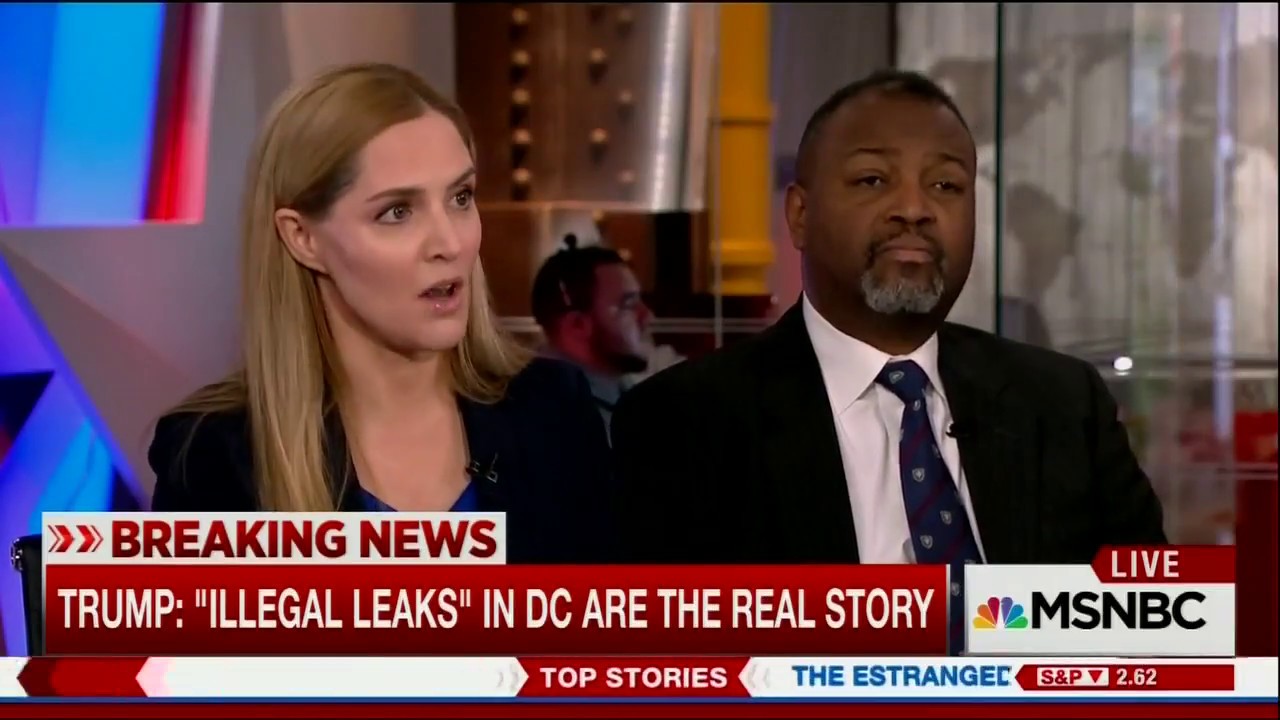 .
Luiz Gutiérrez is the Democratic Congressman from Illinois's fourth district. Gutiérrez has been a champion for immigrants and has been arrested several times for his advocacy. He also has no problem lecturing retired marine generals about the importance of honesty.
These individuals join previously announced Visiting Fellows Sean Spicer, Chelsea Manning, Robby Mook, and Mayor Sylvester "Sly" James, Jr.
"This expanded group of Visiting Fellows will be able to fulfill the Institute's mission of engaging students in discourse on topical issues of today, including conflict mediation with Bashar al-Assad, grassroots advocacy with Ayman al-Zawahiri, Muggle Studies with Voldemort, in-depth journalism with Louise Mensch, the value of military service with Luiz Gutiérrez, and issues of LGBTQ identity with Lady Gaga. This unique opportunity to closely engage with our Visiting Fellows will surely shape the semester, and we hope many students will participate in the upcoming events and discussions," said Emily Hall and Jason Ge, co-chairs of the IOP Fellows and Study Groups Program.
The Visiting Fellows program brings distinguished veterans of public life to campus for a limited, yet comprehensive number of events. The program is designed to provide short-term engagement with the student community, particularly undergraduate students.
==