jeffrey clark 2
SEE MAIN BOSSERT
trifecta
SEE MARTIAL LAW TRUMP COUP
freq on bannon?
heartland conf 2 23
---
TRAITOR pending, ok on jan6 comm recs took 5th 120x
primary pow on Our Children's Trust, mofo on CA, evil pending, mission accomplished on coup
note he started as corp polluter liar which got him in trump admin then seconded to coup
bak 6 22
html "ERRED M
---
8 23 one of 6 unindicted co-conspirator in jan 6 indictment
-=-=
HOW STILL SEEN AS LEGIT?
MMA
Right-wing media figures urge immediate purges of voter rolls following Supreme Court’s election database decision
Written by Sophie Lawton
Published 10/01/26
After the Supreme Court ruling on the modified Systematic Alien Verification for Entitlements database, right-wing media figures and election denial activists are calling on states to purge their voter rolls — even though there is a moratorium on the systematic removal of voters from voter rolls 90-days prior to election day, and evidence the database could boot eligible voters from the voter rolls.
What did the court say about the modified SAVE database?
The Supreme Court recently gave the Trump administration a win on its so-called election integrity efforts, ruling in favor of the government's attempt to weed out exceedingly rare cases of noncitizen voting using the modified SAVE database, which has been newly updated with data from the Social Security Administration. The database was “dramatically revamped” to allow searching through bulk uploads of voter lists for potential noncitizens.
Justice Ketanji Brown Jackson highlighted in her dissent that the newly shared SSA data that has been linked to the modified SAVE database “contains information about natural-born U.S. citizens as well as naturalized citizens and noncitizens," which she suggested could lead to citizens being pulled into bulk searches and potentially flagged for removal from the voter rolls.
There are already examples of citizens being inaccurately flagged by the modified SAVE database. In one review of registrants flagged by the database in Texas, “some 20% were later found to be citizens who were reinstated.”
The court's ruling also notes that the National Voter Registration Act does not allow states to conduct “any program the purpose of which is to systematically remove the names of ineligible voters from the official lists of eligible voters” less than 90 days prior to an election, but included the footnote:
We will consider the scope of this provision in Republican National Committee v. Mi Familia Vota, et al., No. 25–1017, which asks whether the NVRA prohibits States from implementing programs within 90 days of federal elections to cancel the registrations of voters who are not U.S. citizens. The parties in this case do not ask us to address that question and have not briefed it, and we do not need to decide it here.
The Trump administration may use this nonanswer about the 90-day moratorium from the Supreme Court as an opportunity to ignore the moratorium and encourage states to do mass purges of voter rolls using the data from DHS.
All of this is to the delight of figures like Cleta Mitchell and Hans Von Spakovsky who agree: The voter roll purges must go on.
What are election deniers saying about the ruling?
Right-wing media figures with ties to the election denial movement have called for purges based on the Supreme Court’s ruling — despite the clear language barring such purges within 90 days of the election.
War Room host Steve Bannon introduced one of his segments about the ruling by calling it “a flashing green to go purge these voter rolls with 39 days left” and hosted guests who argued the 90-day moratorium is moot.
Former Justice Department official Jeff Clark — who in 2022 praised the election conspiracy theory film 2000 Mules — spoke with Bannon about the ruling on the evening of September 25, arguing that the 90-day moratorium from NVRA is “blown up” because of an Illegal Immigration Reform and Immigrant Responsibility Act — or IIRAIRA — provision that he says is “very clear.” The passage Clark seems to be quoting apparently pertains to the sharing of information about citizenship and immigration status between government entities, not the removal of registered voters from the voter rolls.
Bannon asked Clark if states “can purge these voter rolls and do it right now for the 3 November election” despite the 90-day moratorium, to which Clark replied, “Yes.”
Clark also dismissed cases where individuals have been incorrectly flagged as noncitizens and barred from voting if they don't prove their citizenship fast enough, saying, “Tough.” He argued, “It's reasonable to expect people who want to vote … to come forth and prove that and to prove that on a timely basis.”
Video
Citation
From the September 25, 2026, evening edition of Real America's Voice's War Room
During the same edition Clark appeared on, election denial activist Cleta Mitchell made similar arguments, claiming that the 90-day moratorium was irrelevant because it “only applies to what the statute says is a systematic review and analysis of the voter rolls.” She called for a “very targeted process” of finding individuals who may be noncitizens. Mitchell encouraged people to use “citizen challenge laws” and go to their local election officials to demand “that those names come off before the election.”
Video
Citation
From the September 25, 2026, evening edition of Real America's Voice's War Room
During these interviews, Bannon raised the issue of whether Democrat-run states could be forced by DHS to use the SAVE database to clean their voter rolls. He asked Clark, “Practically, can the White House just tell people, Hey, the decree came out, and you're going to purge those voter rolls because the 90 days is not relevant?” Clark claimed the ruling will “disproportionately have an effect of making it harder to have the Democrats, you know, steal elections using illegals votes in red states than in blue states because, you know, it's not like Adrian Fontes in Arizona is going to be all hepped up about trying to get this information.” Mitchell argued that DHS “can make public the numbers, and they need to fight back when these blue state secretaries of state, these Democrat secretaries of state, who wanna act like there's nothing to see here. There's a lot to see here.”
Hans von Spakovsky — who has worked to “raise unfounded allegations of widespread voter fraud throughout the course of his decades-long career as a conservative activist” — also offered up action items on “blue states” that do not purge their voter rolls during a radio interview this week. He claimed that “there's one current remedy which is the U.S. Department of Justice suing California under the National Voter Registration Act, which requires states to maintain accurate voter rolls.”
Von Spakovsky also put forward that passing the SAVE America Act would “force blue states to actually check for citizenship” and agreed with the host that placing ICE agents at polling sites would deter noncitizens from voting.
Newsmax's Carl Higbie monologued about the ruling, calling it a “major win for the midterm elections” and saying he is “interested to see if this cuts away any historical Democrat voting numbers.”
Whether they are willfully ignoring the 90-day moratorium provision, arguing it simply does not count, or conspiring to create work-arounds, these right-wing media figures are more than happy to have the Supreme Court backing up their efforts to create chaos during the November elections.
-=-=
---
RWW
06/11/2025
*Commentary
President Donald Trump’s illegal moves to turn the U.S. military against American citizens on American soil are the latest and most dangerous actions in a scheme by MAGA figures to erode constitutional checks and balances and allow Trump to impose his will on the country by asserting dictatorial powers like a tyrannical king or an American Caesar.
The protests in Los Angeles were apparently sparked by White House official Stephen Miller’s lust for higher deportation numbers and demand that ICE make more arrests of people without criminal convictions—despite the administration’s claims to be prioritizing deportation of violent gang members.
Miller has falsely described people’s efforts to protect their neighbors from terrifying abductions as “rebellion” and “insurrection” to justify Trump declaring emergency powers and deploying the National Guard and Marines. Trump has done the same, referring to the localized and mostly peaceful protesters as “an insurrectionist mob.”
It’s not that Trump needed much convincing. Trump has long admired and envied the power wielded by dictatorial leaders. As The Bulwark’s Joe Perticone has noted, “Trump has fantasized about using the military against citizens for much of his political career.”
Trump reportedly regrets not deploying the military against racial justice protests in the summer of 2020. Before the 2024 election he talked about using the military against “the enemy from within.” Before he was vice president, J.D. Vance declared that “we need to be really ruthless when it comes to the exercise of our power.”
In his first term, Trump encouraged violent policing – he “gave police permission to be brutal,” in the words of journalist Adam Serwer. Since his return to power, the Justice Department has abandoned efforts to curtail abusive police violence—while Trump freed the violent Jan. 6 insurrectionists who attacked and injured Capitol Police on Trump’s behalf.
After Trump lost the 2020 election, MAGA activists like Michael Flynn and Oath Keepers founder Stewart Rhodes urged him to declare martial law to stay in power rather than acknowledge defeat. Former Justice Department official Jeffrey Clark, who reportedly argued that Trump could use the military to put down protests that would erupt if he refused to leave office, has remained on Trump’s teamand is now working at the OMB for Russ Vought, a key architect of Project 2025 and its plans for Trump to push the far-right’s agenda without regard for the law.
Since returning to power in January, the president and his henchmen have proven that predictions that a second Trump term would be for more dangerous to democracy were correct. Trump’s recent threat that anyone who dares protest his military parade—a multi-million-dollar birthday present to himself—would be met with “very heavy force” is a reflection of his tyrannical and antidemocratic contempt for checks and balances and disdain for dissent.
Far-right MAGA activists are urging Trump to go even further. Former White House aide Steven Bannon has declared that the Los Angeles protests are a sign that “we’re in the Third World War.” He wants Trump to order the arrest of Gov. Gavin Newsom and Mayor Karen Bass if they resist the administration’s hostile takeover of Los Angeles. (The state of California is suing Trump over his deployment of the National Guard over the governor’s objections.)
While most Americans do not approve of Trump deploying the marines against protesters in Los Angeles, Republican members of Congress are cheering him on, a sign of how thoroughly the GOP has been corrupted and cowed by Trump’s demands for cultish loyalty. Meanwhile, Trump has continued to corrupt and politicize the military, firing the military’s top lawyers and telling soldiers that protesters in Los Angeles are “animals” and a “foreign enemy.”
People For the American Way is calling on Americans to resist the Trump administration’s dangerous escalation of violence and authoritarian disregard for the Constitution and law by participating in one of this weekend’s No Kings protests that are taking place around the country.
---
senator kickass:
TY channel: 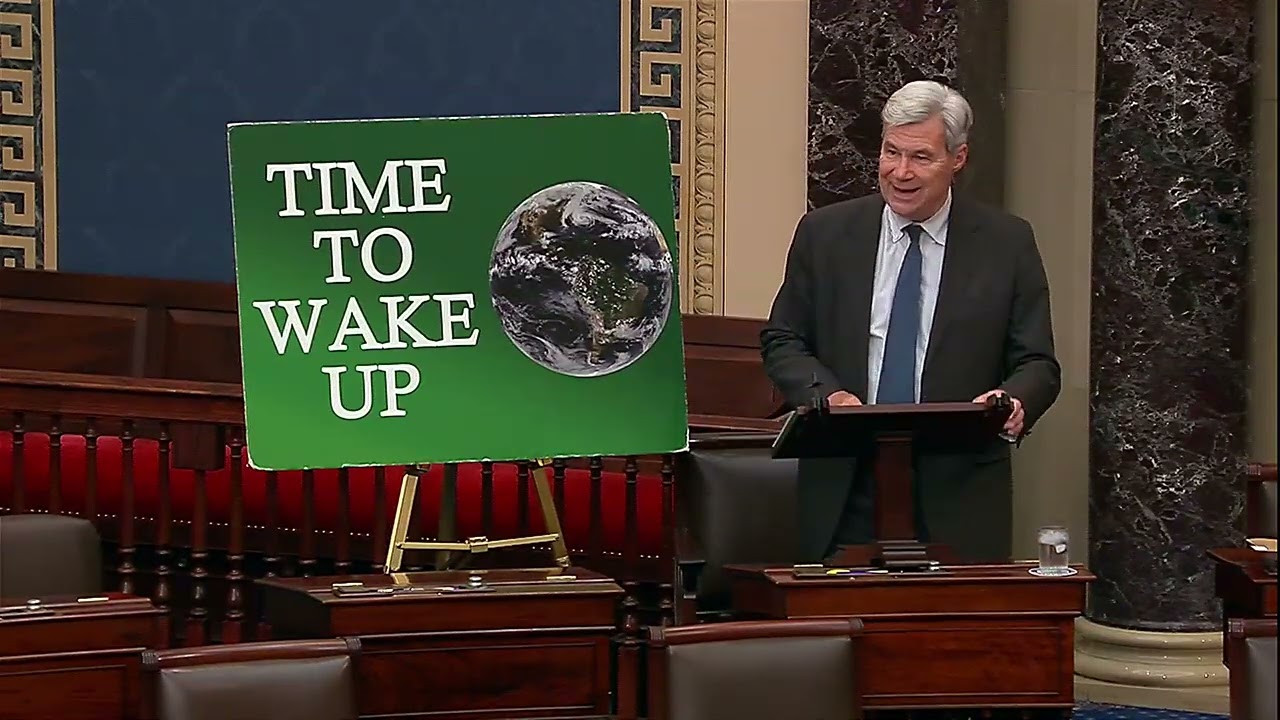
XO thaT wind and solar are not energy
jb clark omb social cost carbon 86 memo 150 to 190
700 billion subsidy
EPA carbon not pollut; us ff plants more than all but 6 cty
jerome powell fed shut dn our partic in int’l crntrlal banks 180 members gp: 4 min in disband task for on climate risk others refused; 86 own climate risk gp at fed;
yergin orzag 5k word manifsto for aff energy pragmatism; never mentions risk cost
---
---
OMFG KASH CONFIRMED SAME DAY
TMP 2 25
Remember Jeffrey Clark, the former acting assistant attorney general in the Trump DOJ’s environmental division? He became infamous in the first days of 2021, when Donald Trump tried, unsuccessfully, to install him as attorney general mid-coup attempt. Now, Clark is reportedly back in government, in a top post at the Consumer Financial Protection Bureau. It’s an agency that Trump, Elon Musk and other allies have taken steps to paralyze in recent weeks.
You’ll recall Clark was behind efforts to use the power of the Justice Department to pressure Georgia lawmakers to throw out President Joe Biden’s win in the state not long after the 2020 election. While his name was ultimately dropped as a co-conspirator, Clark was initially indicted in Georgia as part of Fulton County’s racketeering case against Trump and his allies for attempts to overturn the results of the election there. Clark’s law license was also suspended for two years, and he faces threats of disbarment in D.C. for his efforts to help Trump subvert the will of the voters in 2020.
Now, according to new reporting from American Banker, Clark has been installed as a senior adviser to attorney Mark Paoletta, the CFPB’s new chief legal officer. Per American Banker:
Clark and at least five other new hires showed up in the CFPB’s email directory this weekend, according to people familiar with the situation. They are now listed as part of the CFPB’s front office working under acting CFPB Director Russel Vought, who is head of the Office of Management and Budget.
Clark’s placement at the CFPB comes as other Trump loyalists within the bureau push forward with plans to effectively shutter the agency. The ubiquitous Russ Vought took over as acting director earlier this month, and halted all of the agency’s investigations and even closed the building. In the past week, the Trump administration began purging employees.
On Friday, CFPB employees were alerted that they’d been placed on indefinite administrative leave. Those reports emerged just before the Trump administration agreed in court to a temporary pause on terminating staff. U.S. District Judge Amy Berman Jackson on Friday issued an order stating the Trump administration had agreed to not fire more staff, delete agency data or transfer money out of its reserves — at least not until March 3. That’s when Berman Jackson will hold a hearing on a lawsuit that the National Treasury Employees Union filed on behalf of ousted CFPB staff. It is one of a handful of lawsuits that have been filed by former employees and other agency advocates in response to purges.
Musk and his cronies at DOGE have had their sights set on dismantling CFPB for weeks. Musk made those intentions public when he tweeted “CFPB RIP” earlier this month.
It is unclear what role Clark will play in his position at the bureau, which was created in the aftermath of the 2008 financial crisis, the brainchild of Sen. Elizabeth Warren (D-MA), to monitor banking systems and protect Americans from financial scams. But Clark, Paoletta and Vought all worked together both in the first Trump administration, and also at a right-wing think tank they set up that advocates for expanding executive authority, the Center for Renewing America. The group recently published a piece — written by “CRA staff” — advocating for the bureau to be “shut down” and explaining how best to do it.
---
1 25 politico
special counsel Jack Smith’s just-released report provides fresh insights into his bid to hold Donald Trump responsible for his efforts to overturn the 2020 presidential election.
Smith insisted he amassed enough evidence to win a conviction if the case had made it to trial, and he laid out a comprehensive compendium of the facts he might have presented to a jury. At the same time, his report struck a defensive tone, as he sought to explain why the case never made it that far.
The public report is also incomplete. Its second volume, which pertains to Smith’s investigation of the classified documents found at Trump’s Mar-a-Lago estate after he left office in 2021, remains secret.
Attorney General Merrick Garland does not intend to publicly release that portion of the report, though he wants to share it with select lawmakers. U.S. District Judge Aileen Cannon has blocked any dissemination of it outside the Justice Department. And once Trump is inaugurated next week and assumes control of the department, it will be easy for him to forestall any formal release of Smith’s final assessment of the documents case.
Trump slams 'nut job' Jack Smith after judge temporarily blocks report
Still, the 137-page write-up on the election case is a final accounting of how Trump sought to derail the transfer of power four years ago, how investigators built and litigated an unprecedented conspiracy prosecution against a former president, and how that prosecution fizzled when Trump won back the White House.
Here are POLITICO’s top takeaways from the historic document.
Smith comes to Garland’s defense
A common sentiment on the left is that Garland was too deferential to Trump after Joe Biden took office and failed to unleash the full might of the department on the former president for nearly two years. The delay, critics say, made it much more difficult for Smith — once he was appointed in November 2022 — to bring Trump to trial before the 2024 election.
But Smith’s report emphasized that the Justice Department was aggressively investigating leads related to Trump long before the special counsel’s tenure began. Litigation tactics by Trump and his allies, Smith argued, were the key factors that slowed the process to a crawl.
For example, Twitter, newly purchased by Elon Musk, delayed Smith’s effort to access Trump’s account data for weeks despite a court order that ultimately resulted in the company being held in contempt and fined $350,000.
It took Smith more than a year to obtain text messages between Rep. Scott Perry (R-Pa.) and Trump DOJ official Jeffrey Clark. And the department spent months fighting to access communications of John Eastman, a lawyer who helped devise Trump’s last-ditch efforts to remain in power.
The most protracted battles of all stemmed from Trump’s “broad invocation of executive privilege to try to prevent witnesses from providing evidence,” Smith wrote. It took months of secretive legal proceedings to secure testimony from Trump White House aides such as Mark Meadows, Dan Scavino and Pat Cipollone. Former Vice President Mike Pence also resisted testifying until a court ordered him to reveal some — but not all — details about his interactions with Trump. Smith noted that judges broadly rejected Trump’s privilege claims, with one holding that he was engaged in an “obvious” effort to delay the investigation.
Smith also drew attention to what may have been his biggest foil: the Supreme Court. He pointed out that the justices rebuffed his effort to put Trump’s presidential immunity claims on a similar timetable to the one the court adopted five decades earlier in litigation over Watergate and President Richard Nixon’s tapes.
And Smith argued that the Supreme Court’s resolution of Trump’s immunity assertion essentially guaranteed another round of litigation that would have been all but certain to return to the justices if Trump had not won the election and the prosecution had continued.
Smith’s path not taken: An insurrection charge
Much of Smith’s report amounts to a justification of the special counsel’s “charging decisions” — his reasons for bringing four felony counts against the former president. Smith also explained publicly for the first time his decision not to charge Trump with one of the gravest potential crimes in DOJ’s arsenal: inciting insurrection.
The bottom line, Smith said, was legal uncertainty about the federal insurrection statute. The law had not been used in 100 years. It may not have applied to a situation in which a sitting president sought to illegally retain power rather than an outside force seeking to depose a lawful administration. And, in a notable concession to Trump, Smith acknowledged the evidence didn’t show that Trump intended to cause “the full scope” of violence that occurred on Jan. 6, 2021.
“The evidence established that the violence was foreseeable to Mr. Trump, that he caused it, that it was beneficial to his plan to interfere with the certification, and that when it occurred, he made a conscious choice not to stop it and instead to leverage it for more delay,” Smith concluded. But federal investigators, he said, “did not develop direct evidence — such as an explicit admission or communication with co-conspirators — of Mr. Trump’s subjective intent to cause the full scope of the violence.”
A few tantalizing tidbits of evidence
Much of the evidence that Smith recounted has already appeared in prior court filings or was unearthed by the congressional investigation into Jan. 6. But there were a few striking new details in Smith’s report:
- A Signal exchange between Rep. Scott Perry (R-Pa.) and Trump DOJ official Jeff Clark in which Clark indicated a classified review of potential voter fraud evidence found “nothing helpful to P” — shorthand for President Trump.
- Details of interviews with Trump’s fake electors in which some described concerns about being duped into a plan intended to “overthrow the government.”
- An analysis that found Trump was watching Fox News on Jan. 6 when the broadcast aired an interview with a supporter marching to the Capitol who berated Pence for refusing Trump’s pressure to overturn the election. Moments later, Smith noted, Trump tweeted an attack on Pence, fueling the anger of the mob just as Pence was being evacuated to safety.
Will the public get to see the primary documents?
Smith’s report described the trove of evidence he assembled in narrative form. But the fate of the trove itself could be even more significant than his ultimate conclusions.
The House Jan. 6 select committee similarly mounted a two-year investigation and produced a voluminous final report. But it was the committee’s enormous cache of witness transcripts and primary source documents — drawn from Trump’s files in the National Archives, emails obtained through subpoenas and evidence produced during court battles — that has proved more enduring.
Smith reached into areas the select committee could not, getting grand jury testimony from Pence, Meadows and other top aides, including some returning to the White House next week. Those transcripts remain sealed, but there are several legal efforts underway to bring them into public view.
The Justice Department is due to respond to two of those efforts this week, a potential window into whether prosecutors may deem the public interest in the underlying materials of greater value than their continued secrecy, particularly now that the criminal case has been dropped.
===
---
mma
MAGA allies in the media make the case for Trump to ignore the Senate confirmation process
Written by Gideon Taaffe
Published 11/19/24
President-elect Donald Trump has called for Senate Republicans to let him make recess appointments for top positions in his upcoming administration, and his allies in right-wing media are making the case for his plan.
Trump named several picks for prominent cabinet positions that have drawn scrutiny for their inexperience and controversial statements, raising concerns that he is focused primarily on filling his administration with loyalists. He also signaled his intention to push through his picks without scrutiny by calling on Republican senators to let him make recess appointments.
His allies in right-wing media are now arguing that recess appointments would be justified and calling on senators to bend to his will and forgo their standard confirmation process.
Trump has demanded support to use recess appointments for top members of his cabinet, and he plans to fill multiple posts with right-wing media loyalists
- :{:{Trump posted on Truth Social on November 10 that “any Republican Senator seeking the coveted LEADERSHIP position in the United States Senate must agree to Recess Appointments.”As The Associated Press pointed out, Trump’s plan represents “a significant shift in power away from the Senate.” Though past presidents have confirmed appointments while Congress is in recess, it’s rare to use this process for high-level cabinet positions. The move would require Republican senators to pass a motion of adjournment with a simple majority vote. NBC News, [11/10/24; The Associated Press, 11/14/24]}:
}:
- Trump’s nominees include multiple right-wing media personalities who are loyal to him but have little to no relevant experience and have peddled conspiracy theories and extreme views.He has named multiple current and former Fox employees to top posts, including Pete Hegseth, Sean Duffy, Tom Homan, Tulsi Gabbard, Mike Huckabee, and Michael Waltz, along with frequent Fox guests including Robert F. Kennedy Jr. Media Matters, [11/13/24, 11/14/24, 11/15/24, 8/27/24; WNYC, On the Media, 11/15/24; Politico, 11/13/24; NPR, 11/16/24; CNN, 11/19/24]
- ## Trump’s MAGA allies in right-wing media are championing Trump’s plan to force his nominees through without Senate confirmation
- Center for Renewing America fellows Jeff Clark and Anthony Licata published a piece on the legality of Trump’s recess plan, saying he would be justified to pursue it.They wrote: “Given the extensive delays experienced during his first administration in getting the Senate to approve his nominees expeditiously, President-elect Donald Trump recently proposed the use of recess appointments, if necessary, to briskly stand up his new administration early next year. The question is whether the law and our history confirms the President’s belief that he should be allowed to assemble his Cabinet quickly via recess appointments? The answer is ‘yes.’” Center for Renewing America, [11/17/24]
- During an appearance on former Trump adviser Steve Bannon’sWar Roompodcast, Clark advocated for Trump to use the recess power.Clark claimed that “there are many of us who think that he [Trump] should” use the recess power in order to “set right the boundaries between the branches of the government.” Real America’s Voice, *War Room*, [11/18/24]
- Article III project founder Mike Davis responded to a question about recess appointments by saying, “Every option should be on the table.” Real America’s Voice, *War Room*, [11/18/24]
- Bannon told his audience members to call their senators and demand a 15-day recess for Trump to appoint his cabinet.Bannon told his audience that “we need you, when you call,” to tell your senator “the president needs 15 days recess — recess days in the first hundred.” Real America’s Voice, *War Room*, [11/11/24]
- Former Trump administration official Ric Grenell told Newsmax’s Greg Kelly that Senate Republicans should “at the very minimum, give him [Trump] a recess appointment and let the reform start.” Newsmax, *Greg Kelly Reports*, [11/15/24]
- :{Right-wing commentator :{Mike Crispi wrote: “Recess appointments solves all. It’s time to WIN!” Twitter/X:(style="background-color:#ffff00ff"):}:, [11/17/24]}:
- Far-right podcaster and Trump ally Laura Loomer attacked Senate Majority Leader-elect John Thune (R-SD) for saying the Senate might struggle to get the votes to recess.She wrote: “The joke is on everyone who fell for the unity nonsense this election season. Senate Republicans are about to screw President Trump.” Twitter/X, [11/15/24]
- Fox News host Laura Ingraham said: “I certainly hope that as they carry out their advise-and-consent role, Republican senators remember that Donald Trump is the reason they even have a majority.” Fox News, *The Ingraham Angle*, [11/14/24]
===
---
Jeffrey Clark — a senior official at former President Donald Trump's Department of Justice — may have committed a major verbal error while testifying under oath at his disbarment hearing.
The Associated Press reported that Clark, who was acting head of the DOJ's civil division in the waning days of the Trump administration, reportedly had inappropriate and unsanctioned contact with Trump behind the backs of his superiors. According to the AP, Clark maintained that there was rampant and widespread voter fraud in the 2020 election and urged the DOJ to take action to intervene in various battleground states that Trump lost — like Georgia, where Clark is a co-defendant in the Fulton County RICO case — to void President Joe Biden's victory.
Acting attorney general Jeffrey Rosen and his deputy, Richard Donoghue, made it clear to Clark that while there may have been a few isolated incidents of fraud scattered across various states, it wasn't nearly enough to make a difference in who won the election. They also learned that Clark had direct contact with Trump, which was a violation of DOJ policy as to who had contact with the White House. Even though Rosen and Donoghue told Clark to cease his contact with Trump, Clark continued to communicate with him in direct violation of DOJ rules.
READ MORE:Former Trump White House lawyer reveals new details about Trump's 2020 election ploy: report
“My first reaction was, and I said it out loud: ‘You violated the White House contacts policy,’” Donoghue testified during Wednesday's hearing. “I was taken aback... I said, ‘Do not violate it again.’”
During Clark's disbarment proceedings in Washington, DC this week, the lead investigator questioned him under oath about his time at the DOJ in the aftermath of the 2020 election. While Clark spoke generally about his legal background and experience, he invoked a number of privileges to get around answering most questions. But when Clark invoked attorney-client privilege, he may have gotten himself in even more trouble.
"Mr. Clark, you asserted a number of times attorney-client privilege," DC bar committeewoman Patricia Matthews asked. "For whom were you the attorney?"
Clark then responded that his client was "President Trump, the head of the executive branch, the sole head, the unitary head of Article Two, the executive branch of the United States government."
This prompted Clark's lawyers to interject and urge their client to plead the Fifth Amendment to avoid incriminating himself.
"I would respectfully request my client to invoke questions about the basis for attorney-client privilege because those answers would be intimidating to them as well,” Clark's attorney, Harry MacDougald, said. "So respectfully, I would ask him to invoke [the Fifth Amendment]."
Clark's disbarment proceedings will continue on Thursday, with a three-person committee expected to issue its recommendation on whether Clark can keep his law license to a professional responsibility board after proceedings conclude.
Meanwhile, at his own disbarment hearing in California, a committee recommended that former Trump attorney John Eastman's law license be revoked in relation to his attempts to help Trump overturn the election. Like Clark, Eastman is also under felony indictment in Fulton County District Attorney Fani Willis' RICO case.
READ MORE:'I'm sure Trump will compensate him': Experts praise John Eastman's disbarment ruling
===
---
an 3 24
ex-Assistant Attorney General Jeffrey Clark cannot be subpoenaed for "documents that might have justified his efforts to put the weight of the Justice Department behind efforts to overturn" the 2020 election in Georgia "and other states," according to the DC Court of Appeals' Monday, February 26 ruling, Politico reports.
Along with 17 others — including Donald Trump — Clark faces criminal charges in Fulton County for election interference, and the reports notes he was also "identified as one of six key Trump co-conspirators by special counsel Jack Smith in a Washington, D.C., indictment also related" to his attempt to overturn the election.
Per Politico, "Officials with the D.C. Bar’s Office of Disciplinary Counsel — which enforces professional ethics for attorneys who practice in the nation’s capital — subpoenaed Clark last year and demanded he produce any documents that might have justified his efforts to put the weight of the Justice Department behind efforts to overturn the election results in Georgia and other states."
READ MORE:'Materially changes this case': Trump gets involved in Jan. 6 accomplice’s disbarment
Months later, the three-judge panel with the DC court ruled "the investigators’ effort to subpoena documents from Clark 'infringes on Mr. Clark's Fifth Amendment right not to be compelled to be a witness against himself.'"
00:07
03:52
Politico notes the ruling is "the latest setback for bar authorities who have spent nearly two years attempting to discipline Clark for his role in Trump’s schemes," as the ex-Trump lawyer "has forced numerous delays in part by seeking to remove the case to federal court and rejecting the D.C. Bar’s authority over his conduct as a federal official."
READ MORE:3 Trump lawyers who tried to overturn election will now have to defend their law licenses
Politico's full report is here.
===
an 4 22
former Assistant Attorney General Jeffrey Clark is getting a last-minute assist from former President Donald Trump in his disbarment proceedings that may derail the entire process.
According to a Tuesday report in Politico, Trump lawyer Todd Blanche recently sent a letter to Clark's attorneys asking him to keep silent about any private conversations with the former president while he was in the White House. Blanche asserted that those conversations could be protected by "Trump’s executive privilege and other related privileges, including law enforcement privilege, attorney client privilege and deliberative process privilege." He added that the ex-president reserves the right to "intervene in any litigation involving these privileges."
Should Trump decide to assert executive privilege in Clark's disbarment proceedings, Politico legal correspondents Kyle Cheney and Josh Gerstein wrote that it could "force months of litigation on the matter."
Clark is currently defending his law license in Washington, DC, where he is in the midst of a disciplinary hearing that could result in his disbarment over his efforts in helping Trump overturn the 2020 presidential election. He is also one of the co-defendants in Fulton County, Georgia district attorney Fani Willis' sprawling RICO case against Trump and his associates for alleged election interference in the Peach State.
The former Trump DOJ official had previously sought to have his Georgia case moved from Fulton County to Washington, DC in an effort to have a friendlier venue, arguing that he was acting in his capacity as a federal government employee in DC. The judge who shot down Clark's bid to change the venue for his case also rejected former White House Chief of Staff Mark Meadows' attempt to relocate his trial from Georgia to DC.
Jeffrey Clark isn't the only Trump aide to face potential disbarment. John Eastman — author of the infamous "Eastman Memo" that laid out the plan to challenge electors and install Trump for a second term — is in the midst of his own disbarment proceedings in California. State bar officials have brought 11 disciplinary charges against Eastman as part of his attempts to subvert election results. A decision is expected by February 29. Eastman is also facing felony RICO charges in Fulton County.
After his failed attempts to move his Georgia trial, Clark and Eastman will both stand trial along with the former president in Fulton County, where they will each serve up to 20 years in prison if found guilty. Willis has requested an August trial date.
===
---
AN 1 24
Former Assistant Attorney General Jeffrey Clark is getting a last-minute assist from former President Donald Trump in his disbarment proceedings that may derail the entire process.
According to a Tuesday report in Politico, Trump lawyer Todd Blanche recently sent a letter to Clark's attorneys asking him to keep silent about any private conversations with the former president while he was in the White House. Blanche asserted that those conversations could be protected by "Trump’s executive privilege and other related privileges, including law enforcement privilege, attorney client privilege and deliberative process privilege." He added that the ex-president reserves the right to "intervene in any litigation involving these privileges."
Should Trump decide to assert executive privilege in Clark's disbarment proceedings, Politico legal correspondents Kyle Cheney and Josh Gerstein wrote that it could "force months of litigation on the matter."
Clark is currently defending his law license in Washington, DC, where he is in the midst of a disciplinary hearing that could result in his disbarment over his efforts in helping Trump overturn the 2020 presidential election. He is also one of the co-defendants in Fulton County, Georgia district attorney Fani Willis' sprawling RICO case against Trump and his associates for alleged election interference in the Peach State.
The former Trump DOJ official had previously sought to have his Georgia case moved from Fulton County to Washington, DC in an effort to have a friendlier venue, arguing that he was acting in his capacity as a federal government employee in DC. The judge who shot down Clark's bid to change the venue for his case also rejected former White House Chief of Staff Mark Meadows' attempt to relocate his trial from Georgia to DC.
Jeffrey Clark isn't the only Trump aide to face potential disbarment. John Eastman — author of the infamous "Eastman Memo" that laid out the plan to challenge electors and install Trump for a second term — is in the midst of his own disbarment proceedings in California. State bar officials have brought 11 disciplinary charges against Eastman as part of his attempts to subvert election results. A decision is expected by February 29. Eastman is also facing felony RICO charges in Fulton County.
After his failed attempts to move his Georgia trial, Clark and Eastman will both stand trial along with the former president in Fulton County, where they will each serve up to 20 years in prison if found guilty. Willis has requested an August trial date.
---
---
an 12 23
just weeks after the D.C. Circuit Court of Appeals unsealed documents revealing U.S. Congressman Scott Perry's (R-PA) conversations in his efforts to overturn the 2020 presidential election, a federal judge on Tuesday gave the Department of Justice permission to access almost "1,700 records recovered" from the Pennsylvania lawmaker's cell phone, The Washington Post reports.
Politico reported a few of Perry's interactions, including:
{A Dec. 12, 2020, text exchange with Republican National Committee Chair Ronna McDaniel discussing efforts to challenge Joe Biden’s victory in the election.}:
{A series of exchanges between Perry and a former DOJ colleague, Robert Gasaway, between Dec. 30, 2020, and Jan. 5, 2021, in which Perry embraced a plan to have then-Vice President Mike Pence 'admit testimony' prior to the counting of electoral votes on Jan. 6, 2021. Perry agreed to 'sell[] the idea' with a call to Trump, Pence and Trump adviser John Eastman, but Perry later alerted Gasaway that Pence’s chief of staff, Marc Short, 'will not allow access.'}:
The "most revealing" interaction, Politico noted, was a conversation the GOP leader had with ex-U.S. Department of Justice official Jeffrey Clark — and Donald Trump Georgia co-defendant — in which Perry told Clark that Trump was upset with Clark for using the Justice Department to defend Pence against a lawsuit brought by another House member, Rep. Louie Gohmert (R-Texas)."
Per the Post, on Tuesday, "Chief U.S. District Judge James E. Boasberg of Washington, D.C., gave investigators access to 1,659 records and withheld 396 others after a federal appeals court directed him to individually review 2,055 communications from Perry's phone to decide which were protected by the Constitution’s 'speech or debate' clause, which grants members of Congress immunity from criminal investigation when acting in their official capacities."
According to the report, "Tuesday's order will determine which messages investigators with special counsel Jack Smith can actually use as potential evidence in any case, pending an expected renewed appeal by Perry, part of legal fight that has tied up the records for more than a year."
READ MORE:You are the man': GOP rep’s 'extraordinary web' of exchanges pushing election reverse revealed
---
---
an 11 23
the D.C. Circuit Court of Appeals unsealed documents containing U.S. Representative Scott Perry's (R-PA) interactions and efforts to overturn the 2020 presidential election, Politico reports.
Per Politico, Perry's conversations with former U.S. Department of Justice (DOJ) official Jeffrey Clark — who was indicted alongside former President Donald Trump and 17 others the ongoing Georgia election case — "are perhaps the most revealing."
During one conversation, the news outlet reports, "Perry told Clark that Trump was upset with Clark for using the Justice Department to defend [ex-Vice President Mike] Pence against a lawsuit brought by another House member, Rep. Louie Gohmert (R-Texas)."
The Texas lawmaker "was seeking a court ruling declaring that Pence had the power to unilaterally reject Biden's electoral votes, but DOJ’s civil division — then under Clark’s leadership — stepped in to defend Pence against the suit, which failed," the report notes.
The Pennsylvania GOP leader texted Clark on December 30, 2020, "POTUS seems very happy with your response. I read it just as you dictated," to which the former DOJ official replied, "I'm praying. This makes me quite nervous. And wonder if I'm worthy or ready."
Perry said, "You are the man. I have confirmed it. God does what he does for a reason."
Politico listed the "extraordinary web of communications between Perry, who is now the chair of the House Freedom Caucus, and key figures in Trump's orbit," including:
A Dec. 12, 2020, text exchange with Republican National Committee Chair Ronna McDaniel discussing efforts to challenge Joe Biden’s victory in the election.*}:
A series of exchanges between Perry and a former DOJ colleague, Robert Gasaway, between Dec. 30, 2020, and Jan. 5, 2021, in which Perry embraced a plan to have then-Vice President Mike Pence “admit testimony” prior to the counting of electoral votes on Jan. 6, 2021. Perry agreed to “sell[] the idea” with a call to Trump, Pence and Trump adviser John Eastman, but Perry later alerted Gasaway that Pence’s chief of staff, Marc Short, “will not allow access.”
A description of numerous exchanges between Perry and top Trump administration officials, including Clark, White House chief of staff Mark Meadows, senior adviser Eric Herschmann and Director of National Intelligence John Ratcliffe, a former House colleague of Perry.}:
*Politico's full report ishere.
---
---
Bannon’s “War Room” is the media home of Project 2025 and Trump’s retribution plans
Bannon’s show is a staging ground for Trump’s plans to gut the civil service and normalize deploying the military against civilians
WRITTEN BY JOHN KNEFEL
RESEARCH CONTRIBUTIONS FROM JACINA HOLLINS-BORGES
PUBLISHED 11/09/23
The podcast hosted by former Trump adviser Steve Bannon is the media home of a sprawling right-wing effort, known as Project 2025, that’s designed to prepare policy papers and staffing assignments should a Republican win the presidency in next year’s election.
Bannon’s show, War Room, is a hub of election denialism, anti-immigrant bigotry, and promises to carry out retribution against insufficiently loyal Republicans — all hallmarks of former President Donald Trump’s first term in office and his campaign to retake the White House. Although Bannon has at times found himself isolated from Trump, he is once again “one of Trump’s most important advisers,” according to ABC News’ Jonathan Karl.
As a leading advocate for the MAGA wing of the conservative movement, Bannon has been a champion of Project 2025, organized by the increasingly far-right think tank The Heritage Foundation. The initiative has brought together more than 80 groups to provide hard-right personnel and white paper proposals for Trump — or another Republican administration — should he win next November.
According to The Washington Post, Trump and his allies at Project 2025 “have begun mapping out specific plans for using the federal government to punish critics and opponents should he win a second term, with the former president naming individuals he wants to investigate or prosecute and his associates drafting plans to potentially invoke the Insurrection Act on his first day in office to allow him to deploy the military against civil demonstrations.”
From his perch at War Room, Bannon has sought to normalize all of those ideas: deploying the military against protesters, weaponizing the Department of Justice against critics, and replacing the federal civil service with loyalist reactionaries.
Jeffrey Clark, who Trump attempted to install as acting attorney general in January 2021, has been on War Room several times this year and is also reportedly “leading the work on the Insurrection Act under Project 2025,” according to the Post. A Heritage spokesperson told the Post that “there are no plans within Project 2025 related to the Insurrection Act or targeting political enemies.”
Heritage’s denial notwithstanding, Clark — who is widely believed to be an unindicted co-conspirator in special counsel Jack Smith’s indictment against Trump for attempting to overturn the 2020 election — has a record of supporting the use of the military to quash dissent. In July, Clark appeared on War Room to explain how he had advocated for Trump to invoke the Insurrection Act in response to the racial justice protests in the summer of 2020.
:{Video
CitationFrom the July 3, 2023, edition of Real America's Voice's War Room
“I was actually summoned up to a meeting, you know, to discuss how to proceed in terms of that — what I would call an insurrection, because it was happening night after night,” Clark recalled to Bannon.
“Remember that [former Attorney General William] Barr is the one who had participated, when he was attorney general, in using the Insurrection Act against the L.A. riots, after the Rodney King case,” Clark said. “Why wasn’t that same aggressiveness used against the riots that were all across the country in the summer of 2020?”
Referring to a memo he’d written to Barr that included “some very creative ideas about how to enforce the law against those rioters,” Clark added, “If you want to see the legal advice I gave, it’s all blacked out,” strongly suggesting he’d supported deploying the military against civilian protesters.
The next month, Smith indicted Trump for his actions to overturn the results of the 2020 election. Clark was reportedly referred to in the indictment as “unindicted co-conspirator 4,” and is alleged to have suggested Trump use the military against civilians. On January 3, 2021, White House Council Patrick Philbin told Clark — who had just accepted the job of acting attorney general — that if the Trump-Clark coup plans went forward, “there would be riots in every major city in the United States."
“Well … that’s why there’s an Insurrection Act,” Clark responded.
In the Bannon interview from July, Clark also rejected the conventional wisdom that the Department of Justice is — or should be — independent from political pressure from the White House. In Clark’s telling, the DOJ shouldn’t be walled off, as it has been by most presidents following Richard Nixon’s targeting of his enemies during the Watergate scandal of the early 1970s.
:{Video
CitationFrom the July 3, 2023, edition of Real America's Voice's War Room
Past administrations put in “post-Watergate ‘norms’ that say the president actually can’t make decisions about law enforcement,” Clark said. “It’s ridiculous, it’s unconstitutional, and the reason why they’re having a meltdown, Steve, is that the queen position in the administrative state is the Justice Department.”
“To say that the Justice Department is not independent is sort of the ultimate heresy,” Clark added. “This is all just post-Watergate ‘norms.’ Who cares about post-Watergate norms?”
Clark is a fellow at the Center for Renewing America, a MAGA-aligned think tank run by Christian nationalist Russ Vought — another major player in Project 2025 and frequent War Room guest. Vought wrote the second chapter of Project 2025’s “Mandate for Leadership,” a combination manifesto and outline detailing how the coalition would approach the next Republican administration. In his chapter, Vought levies a broad critique of career staffers at executive branch departments and agencies, writing that “many agencies are not only too big and powerful, but also increasingly weaponized against the public and a President who is elected by the people and empowered by the Constitution to govern.”
Vought’s argument flows directly from Bannon’s long-running goal of a “deconstruction of the administrative state.” In an interview on War Room, Vought advocated for a change to budgeting rules that would allow Congress to target individual government workers, potentially canceling their funding, slashing their salary, or even firing them. He’s also a proponent of using so-called “Schedule F” to reclassify federal employees as at-will workers, an open attack on public unions and career staffers.”
Vought is especially interested in remaking the DOJ into a more explicitly reactionary institution, and his think tank has been clear that its goal is to unleash the FBI against its political enemies. As he told the Post: “You need an attorney general and a White House Counsel’s Office that don’t view themselves as trying to protect the department from the president.”
On November 6, Bannon floated a name for attorney general who would fit the bill: “Jeff Clark, you're on the short list of being attorney general for Trump, and I mean the very short list.” Bannon pitched Clark for the role at least once earlier this year and has suggested disgraced former national security advisor and QAnon adherent Michael Flynn serve as secretary of defense.
Bannon isn’t just engaging in a fantasy football-style draft though — he has interviewed Paul Dans, the director of Project 2025, several times this year. Although that’s a long way from installing Flynn as secretary of defense, it’s a sign that Bannon’s personnel preferences shouldn’t be dismissed simply as the rantings of a crank.
:{Video
CitationFrom the June 16, 2023, edition of Real America's Voice's War Room
“Let me just say to the [War Room] posse: The posse has landed at Heritage, and, you know, I really respect what your program does,” Dans gushed during an appearance in June. “I’ve been a devotee since 2020.”
Dans added, with a hat tip to Heritage Foundation President Kevin Roberts: “He brought me in in April. I started playing the War Room in May. We learned the word ‘based,’ and it's been spreading around the building. But we’re really taking over and infusing America First throughout the whole movement.”
Dans was back on the show in September with a promise to decimate the federal civil service by firing thousands of workers. “With 2025, we’re going to flood the zone,” Dans said, “It’s going to be more than 3,000 people.”
“Schedule F is one of our tools, but really the proposition of Schedule F is just saying: Look, when you come into the office, federal worker, each morning, and you’re in charge of policy, you’re not guaranteed your job when you walk out that afternoon,” Dans continued, “You have to perform. You’re going to become an at-will employee like the rest of us in real life, you know? Let’s make it look a lot more like America."
“Amen,” Bannon repeated as Dans spoke.
According to the Post, one of the top goals of another Trump administration and Project 2025 is investigating “onetime officials and allies who have become critical of his time in office, including his former chief of staff, John F. Kelly, and former Attorney General William P. Barr.” War Room frequently indulges in these impulses.
On June 12, Bannon baselessly argued that FBI director Christopher Wray and former Attorney General Bill Barr had suppressed evidence that proved Joe Biden and his family had committed financial crimes, thereby installing him in the presidency as the result of an illegitimate election.
“You are freaking guilty of treason,” Bannon said, addressing an imaginary Barr.
Back in January, former Trump advisor and right-wing pundit Sebastian Gorka went after Kelly on War Room. “You are an insult to Quantico,” Gorka said, referring to the Marine base. “You were never a Marine.”
“Go to hell, John Kelly,” he concluded.
“Wow,” Bannon responded.
---
---
1123 maddow on NYT? report on jeff clark insurrection act day 1
---
---
https://www.atlantanewsfirst.com/2023/08/15/here-are-19-people-named-sweeping-indictments-against-donald-trump/
no lnx
Here are the 19 people named in the sweeping indictment against Donald Trump
Here is a list of who is named in Fani Willis’ sweeping indictment of the nation’s 45th president and his allies.
By Tim Darnell, Atlanta News First staff and The Associated Press
Published: Aug. 14, 2023
ATLANTA, Ga. (Atlanta News First) - Fulton County DA Fani Willis’ sweeping indictment from her investigation into alleged attempts by former President Donald Trump to overturn Georgia’s 2020 election includes some of the most prominent figures in the Republican Party.
It comes just two weeks after the Justice Department special counsel charged him in a vast conspiracy to overturn the election, underscoring how prosecutors after lengthy investigations that followed the Jan. 6, 2021 riot at the U.S. Capitol have now, two-and-a-half years later, taken steps to hold Trump to account for an assault on the underpinnings of American democracy.
Though the indictment is centered on Trump’s efforts to subvert election results in just one state, its sprawling web of defendants stands apart from the more tightly-targeted case brought by special counsel Jack Smith, which so far only names Trump as a defendant. The Georgia case also stands out because, unlike the two federal prosecutions he faces, Trump would not have the opportunity to try to pardon himself if elected president.
FULL COVERAGE: Timeline, history and key players of historic indictment in Georgia
“Trump and the other Defendants charged in this Indictment refused to accept that Trump lost, and they knowingly and willfully joined conspiracy to unlawfully change the outcome of the election in favor of Trump,” says the indictment issued Monday night by the office of Fulton County District Attorney Fani Willis.
The indictment charges Trump with making false statements and writings for a series of claims he made to Georgia Secretary of State Brad Raffensperger and other state election officials on Jan. 2, 2021, including that up to 300,000 ballots “were dropped mysteriously into the rolls” in the 2020 election, that more than 4,500 people voted who weren’t on registration lists and that a Fulton County election worker, Ruby Freeman, was a “professional vote scammer.”
Here are the 19 people named in the indictment:
- DONALD TRUMP: Then-President Donald Trump fixated on Georgia after the 2020 general election, refusing to accept his narrow loss in the state and making unfounded assertions of widespread election fraud there. He also called top state officials, including Gov. Brian Kemp, to urge them to find a way to reverse his loss in the state. In a Jan. 2, 2021, phone call with Georgia Secretary of State Brad Raffensperger, Trump suggested the state’s top elections official could help “find” the votes needed for him to win the state. Fulton County District Attorney Fani Willis opened an investigation into possible illegal attempts to influence the election shortly after a recording of that call was made public.
- RUDY GIULIANI: During several legislative hearings at the Georgia Capitol in December 2020, the former New York mayor and Trump attorney promoted unsupported allegations of widespread election fraud in Georgia. Prosecutors have said Rudy Giuliani was also involved a plan to have 16 Georgia Republicans serve as fake electors, falsely swearing that Trump had won the 2020 presidential election and declaring themselves the state’s “duly elected and qualified” electors.
- JOHN EASTMAN: A former dean of Chapman University law school in Southern California, John Eastman, one of Trump’s lawyers, was deeply involved in some of his efforts to remain in power after the 2020 election. He wrote a memo arguing that Trump could remain in power if then-Vice President Mike Pence overturned the results of the election during a joint session of Congress where electoral votes would be counted. That plan included putting in place a slate of “alternate” electors in seven battleground states, including Georgia, who would falsely certify that Trump had won their states.
- MARK MEADOWS: Trump’s chief of staff visited Cobb County, in the Atlanta suburbs, while state investigators were conducting an audit of the signatures on absentee ballot envelopes in December 2020. Mark Meadows obtained the phone number of the chief investigator for the secretary of state’s office, Frances Watson, and passed it along to Trump, who called her. He also participated in the Jan. 2, 2021, phone call between Trump and Georgia Secretary of State Brad Raffensperger.
- SIDNEY POWELL: A lawyer and staunch Trump ally, Sidney Powell was part of a group who met at the South Carolina home of conservative attorney Lin Wood in November 2020 “for the purpose of exploring options to influence the results of the November 2020 elections in Georgia and elsewhere,” prosecutors have said. Wood, who’s licensed in Georgia, said Powell asked him to help find Georgia residents to serve as plaintiffs in lawsuits contesting the state’s election results. Additionally, emails and documents obtained through subpoenas in an unrelated lawsuit have shown that Powell was involved in arranging for a computer forensics team to travel to rural Coffee County, about 200 miles southeast of Atlanta, to copy data and software from elections equipment there in January 2021.
- KENNETH CHESEBRO: Prosecutors have said Kenneth Chesebro, an attorney, worked with Georgia Republicans in the weeks after the November 2020 election at the direction of Trump’s campaign. Chesebro worked on the coordination and execution of a plan to have 16 Georgia Republicans sign a certificate declaring falsely that Trump won and declaring themselves the state’s “duly elected and qualified” electors.
- JEFFREY CLARK: A U.S. Justice Department official who championed Trump’s false claims of election fraud, Jeffrey Clark presented colleagues with a draft letter pushing Georgia officials to convene aspecial legislative session on the election results, according to testimony before the U.S. House committee that investigated the Jan. 6, 2021, Capitol riot. Clark wanted the letter sent, but Justice Department superiors refused.
- JENNA ELLIS: The lawyer appeared with Rudy Giuliani at a Dec. 3, 2020, hearing hosted by state Republican lawmakers at the Georgia Capitol during which false allegations of election fraud were made. Jenna Ellis also wrote at least two legal memos to Trump and his attorneys advising that Pence should “disregard certified electoral college votes from Georgia and other purportedly ‘contested’ states” when Congress met to certify the election results on Jan. 6, 2021, prosecutors have said.
- RAY SMITH: A Georgia-based lawyer, Ray Smith was involved in multiple lawsuits challenging the results of the 2020 election in Georgia. He also gathered witnesses to provide testimony before Georgia legislative subcommittee hearings held in December 2020 on alleged issues with the state’s election.
- ROBERT CHEELEY: A Georgia lawyer, Robert Cheeley presented video clips to legislators of election workers at the State Farm Arena in Atlanta and alleged the workers were counting votes twice or sometimes three times. He spoke to the lawmakers after Giuliani.
- MICHAEL ROMAN: A former White House aide who served as the director of Trump’s election day operations, Michael Roman was involved in efforts to put forth a set of fake electors after the 2020 election.
- DAVID SHAFER: The chairman of the Georgia GOP, Shafer was one of 16 state Republicans who met at the state Capitol on Dec. 14, 2020, to sign a certificate declaring falsely that Trump had won and also declaring themselves the state’s “duly elected and qualified” electors. He also joined Trump in a lawsuit challenging the certification of the 2020 election in Georgia.
- SHAWN STILL: He was one of 16 Georgia Republicans who signed a certificate falsely stating that Trump had won the state and declaring themselves the state’s “duly elected and qualified” electors. Shawn Still was the finance chairman for the state GOP in 2020 and served as a Georgia delegate to the Republican National Convention that year. He was elected to the Georgia state Senate in November 2022 and represents a district in Atlanta’s suburbs.
- STEPHEN CLIFFGARD LEE: Prosecutors say Stephen Cliffgard Lee, a pastor, worked with others to try to pressure Georgia election worker Ruby Freeman and her daughter after Trump and his allies falsely accused them of pulling fraudulent ballots from a suitcase during the vote count. Lee allegedly knocked on Freeman’s door, frightening her and causing her to call 911 three times, prosecutors said in a court filing last year.
- HARRISON WILLIAM PRESCOTT FLOYD: Also known as Willie Lewis Floyd III, he served as director of Black Voices for Trump, and is accused of recruiting Lee to arrange a meeting with Freeman and Chicago-based publicist Trevian Kutti.
- TREVIAN C. KUTTI: Prosecutors allege publicist Trevian C. Kutti claimed to have high level law enforcement connections. They say Freeman met with Kutti at a police precinct, where she brought Floyd into the conversation on a speakerphone. Prosecutors say Kutti presented herself as someone who could help Freeman but then pressured her to falsely confess to election fraud.
- CATHY LATHAM: One of 16 Georgia Republicans who signed a certificate falsely stating that Trump had won the state and declaring themselves the state’s “duly elected and qualified” electors, Cathy Latham was also chair of the Coffee County Republican Party. She was at the county elections office for much of the day on Jan. 7, 2021, and welcomed a computer forensics team that arrived to copy software and data from the county’s election equipment in what the secretary of state’s office has said was “unauthorized access” to the machines.
- SCOTT GRAHAM HALL: An Atlanta-area bail bondsman, Scott Graham Hall was allegedly involved in commandeering voting information that was the property of Dominion Voting Systems from Coffee County, a small south Georgia jurisdiction. Also charged in the scheme were Powell, Latham and former county elections supervisor Misty Hampton.
- MISTY HAMPTON: She was the elections director in Coffee County. Misty Hampton was present in the county elections office on Jan. 7, 2021, when a computer forensics team copied software and data from the county’s election equipment. She also allowed two other men who had been active in efforts to question the 2020 election results to access the elections office later that month and to spend hours inside with the equipment.
Willis’ indictments come after months of speculation into whether the first-term Fulton County district attorney would bring charges against the nation’s 45th president. Among the former president’s mounting legal troubles, Willis’ indictments mark the second time Trump has been linked to any alleged attempt to overturn the 2020 presidential election. Those charges include allegedly pressuring Georgia election officials to change the election’s results, including his now-famous phone call to Secretary of State Brad Raffensperger on Jan. 2, 2021.
In February 2021, Willis opened a criminal investigation “into attempts to influence the administration of the 2020 Georgia General Election,” a contest that saw Joe Biden become the first Democrat to win Georgia since Bill Clinton in 1992 by less than one percent of the state’s overall vote.
A special grand jury with subpoena power was seated later that May at her request. In court filings, she alleged “a multi-state, coordinated plan by the Trump Campaign to influence the results of the November 2020 election in Georgia and elsewhere.” Willis’ investigation also examined an alleged plot involving 16 Republicans who served as fake electors, one of whom was allegedly then-state Sen. Burt Jones, now Georgia’s lieutenant governor.
Willis’ special grand jury investigation heard from 75 witnesses. Some of the more notable figures were Gov. Brian Kemp; Georgia Attorney General Chris Carr; Raffensperger; Duncan; former White House official Mark Meadows; former U.S. House speaker and Georgia congressman Newt Gingrich; and Republican South Carolina U.S. Sen. Lindsey Graham.
Last year, Raffensperger told a congressional committee investigating the Jan. 6, 2021, attack on the U.S. Capitol that Trump’s claims of 2020 election fraud “were false.”
Raffensperger, along with Gabriel Sterling, the office’s chief operating officer, appeared before the Democrat-led House Select Committee’s nationally televised public hearings. Raffensperger told the committee that the 2020 election went “remarkably smooth,” with average ballot-casting wait times between two to three minutes statewide. “I felt we had a successful election,” he said.
Trump has accused Willis of conducting a “strictly political witch hunt.” In a September 2022 statement, he also took aim at Atlanta as “number 1 in the country in murders and heinous crimes, especially on a per capita basis - even worse than now-fabled Chicago.”
“Yet the District Attorney there is spending almost all of her waking hours, which aren’t many, on attempting to prosecute a very popular president, Donald J. Trump, who got more votes in 2020 than any sitting president in the history of the United States,” Trump said at that time.
Timeline of Donald Trump/Georgia investigation
Trump timeline
Trump announced his 2024 White House candidacy last November.
Earlier this year, Willis notified Fulton County deputies she would announce charges from her investigation sometime between July 11 and Sept. 1. She also notified Fulton County Superior Court Judge Ural Glanville her office planned to work remotely during the first three weeks of August and asked no trials be scheduled during that time.
Willis’ indictments are the latest in a series of legal troubles for the nation’s 45th president. Back in April, Manhattan District Attorney Alvin Bragg indicted Trump on 34 felony counts of falsifying business records. With Bragg’s indictment, Trump became the first former president in history to be criminally indicted at any level.
In early May, Trump lost a civil battery and defamation case against him in New York in a case brought against him by E. Jean Carroll. The writer claimed Trump assaulted her in a New York department store back in the 1990s. A Manhattan federal jury has ordered Trump to pay Carroll $5 million, which the former president is appealing.
Then, on June 13, Trump was arraigned at a federal courthouse in Miami on a single federal indictment that included more than 30 charges of mishandling classified documents after he left the White House in January 2021. Trump became the first ex-president ever to face criminal charges from the federal government he once oversaw.
Special Counsel Jack Smith, who is overseeing that federal investigation, was also responsible for overseeing the criminal investigation involving Trump’s alleged role in the U.S. Capitol attack on January 6, 2021, an investigation that yielded, earlier this month, the four-count felony indictment.
The Fulton County Sheriff’s Office sent deputies to both New York and Miami to observe how local law enforcement prepared for any demonstrations or possible unrest in the wake of Trump’s indictments.
In late July, security barriers were seen being set up around the Fulton County courthouse. Fulton County Sheriff Pat Labat said in early August his department would be ready for any demonstrations or civil unrest that may result from Willis’ indictments.
FULL COVERAGE OF DONALD TRUMP/GEORGIA INVESTIGATION
Trump Investigation
He also said the former president, if indicted, would be booked, photographed and processed at the county jail on Rice Street, a facility that has come under intense scrutiny over the last several months because of its allegedly deplorable conditions, and which is also the target of a U.S. Department of Justice civil investigation.
link
https://www.atlantanewsfirst.com/2023/08/15/10-indictments-approved-fulton-countys-2020-georgia-election-interference-investigation/
...The charges include:
- Violation of the Georgia RICO Act
- Perjury
- Solicitation of violation of oath by a public officer
- False statements and writings
- Impersonating a public officer
- Conspiracy to commit impersonating a public officer
- Forgery in the first degree
- Conspiracy to commit forgery in the first degree
- Conspiracy to commit false statements
- Filing false statements
- Influencing witnesses
- Conspiracy to commit election fraud
- Conspiracy to commit computer theft
- Conspiracy to commit computer trespass
- Conspiracy to commit computer invasion of privacy
- Conspiracy to defraud the state
- Criminal attempt to commit filing false documents
...In total, there are 41 counts listed in the indictment. Trump is named in 13 of the counts.
Everyone named in the indictment is facing a violation of the Georgia RICO Act charge.
Willis said at a Monday night press conference that those named in the indictment are alleged to have engaged in a “criminal racketeering enterprise to overturn Georgia’s presidential election results.”
Willis said as is “the normal process in Georgia law,” the grand jury has also issued arrest warrants for those charged in the indictment. Willis said she is giving them until noon on Friday, Aug. 25 to voluntarily surrender.
==
THE STATE OF GEORGIA
V. DONALD JOHN TRUMP
Counts 1,5, 9, 11, 13, 15, 17, 19, 2729, 38-39
RUDOLPH WILLIAM LOUIS GIULIANI Counts 1-3, 6-7, 9,11,13,15,17,19, 23-24
JOHN ChaRLES EASTMAN
Counts 1-2, 9, 11,13, 15, 17, 19, 27
MARK RANDALL MEADOWS
Counts 1, 28
KENNETH JOHN CHESEBRO
Counts 1, 9,11,13,15,17,19
JEFFREY BOSSERT CLARK
Counts 1, 22
JENNA LYNN ELLIS
Counts 12 RAY STALLINGS SNIITH III Counts 1-2, 4, 6, 9, 11, 13,15, 17,19, 23, 25
ROBERT DAVID CHEELEY
Counts 1, 9,11,13, 15, 17,19, 23, 26, 41
MICHAEL A. ROMAN
Counts 1, 9, 11,13,15,17, 19
DAVID JAMES SHAFER
Counts 1, 8,10,12,14,16,18, 40
SHAWN MCAH TRESHER STILL
Counts 1, 8, 10, 12, 14, 16, 18
STEPHEN CLIFFGARD LEE
Counts 1, 20-21, 30-31
HARRISON WILLIAM PRESCOTT
FLOYD
Counts 1,
3031
TREVIAN C. KUTTI Counts 1,
SIDNEY KATHERINE POWELL Counts 1, 32-37
CATHLEEN ALSTON LATHAM
Counts 1, 8, 10, 12, 14, 32-37
SCOTT GRAHAM HALL
Counts 1, 32-37
misty hampton aka
Counts 1, 32-37
---
---
bkgd context:
slate sweet gig
Until he launched a direct assault on American democracy, Clark’s résumé looked much like that of countless conservative lawyers. He clerked for Judge Danny Boggs, a hard-right Ronald Reagan nominee, and worked at the big law firm Kirkland & Ellis. Naturally, hejoined the Federalist Society, frequently participating in the organization’s events and serving as chair of its environmental law and property rights practice group for seven years. Clark also taught at George Mason University School of Law (now Antonin Scalia Law School), a hub of conservative-libertarian legal studies lavishly funded by the Koch brothers. When he entered Trump’s Justice Department in 2018, he served as assistant Attorney General of the Environment and Natural Resources Division; in that position, he sought to weaken federal environmental protections, freeing polluters to disregard long-standing regulations.
---
Clark defended BP in lawsuits against the company following 2010’s Deepwater Horizon oil disaster in the Gulf of Mexico. He also represented the U.S. Chamber of Commerce in cases challenging the federal government’s authority to regulate carbon emissions
---
Jeffrey Clark, Former DOJ Official Implicated in Attempts to Overturn 2020 Election, Now Has Put Forward Maximalist ...
Quite the theory, and quite ironic from the team that insists the Biden DOJ has politicized the indictment of trump. Share this:.
.1 day ago
The Radical Strategy Behind Trump’s Promise to ‘Go After’ Biden
Conservatives with close ties to Donald J. Trump are laying out a “paradigm-shifting” legal rationale to erase the Justice Department’s independence from the president.
Donald Trump stands on a stage and points. He is in front of large white columns outside his golf club and an American flag is on the stage.
“I will totally obliterate the Deep State,” Donald Trump said on Tuesday evening at an event at his club in Bedminster, N.J., hours after his arraignment on federal charges.Credit...Doug Mills/The New York Times
By Jonathan Swan, Charlie Savage and Maggie Haberman
June 15, 2023
When Donald J. Trump responded to his latest indictment by promising to appoint a special prosecutor if he’s re-elected to “go after” President Biden and his family, he signaled that a second Trump term would fully jettison the post-Watergate norm of Justice Department independence.
“I will appoint a real special prosecutor to go after the most corrupt president in the history of the United States of America, Joe Biden, and the entire Biden crime family,” Mr. Trump said at his golf club in Bedminster, N.J., on Tuesday night after his arraignment earlier that day in Miami. “I will totally obliterate the Deep State.”
Mr. Trump’s message was that the Justice Department charged him only because he is Mr. Biden’s political opponent, so he would invert that supposed politicization. In reality, under Attorney General Merrick Garland, two Trump-appointed prosecutors are already investigating Mr. Biden’s handling of classified documents and the financial dealings of his son, Hunter.
But by suggesting the current prosecutors investigating the Bidens were not “real,” Mr. Trump appeared to be promising his supporters that he would appoint an ally who would bring charges against his political enemies regardless of the facts.
The naked politics infusing Mr. Trump’s headline-generating threat underscored something significant. In his first term, Mr. Trump gradually ramped up pressure on the Justice Department, eroding its traditional independence from White House political control. He is now unabashedly saying he will throw that effort into overdrive if he returns to power.
Mr. Trump’s promise fits into a larger movement on the right to gut the F.B.I., overhaul a Justice Department conservatives claim has been “weaponized” against them and abandon the norm — which many Republicans view as a facade — that the department should operate independently from the president.
Two of the most important figures in this effort work at the same Washington-based organization, the Center for Renewing America: Jeffrey B. Clark and Russell T. Vought. During the Trump presidency, Mr. Vought served as the director of the Office of Management and Budget. Mr. Clark, who oversaw the Justice Department’s civil and environmental divisions, was the only senior official at the department who tried to help Mr. Trump overturn the 2020 election.
Jeffrey B. Clark was the only senior official in the Justice Department who tried to help Mr. Trump overturn the 2020 election.Credit...Kenny Holston/The New York Times
Image
Along with Mr. Clark, Russell T. Vought argues that presidents should treat the Justice Department no differently than any other cabinet agency.
Mr. Trump wanted to make Mr. Clark attorney general during his final days in office but stopped after the senior leadership of the Justice Department threatened to resign en masse. Mr. Clark is now a figure in one of the Justice Department’s investigations into Mr. Trump’s attempts to stay in power.
Mr. Clark and Mr. Vought are promoting a legal rationale that would fundamentally change the way presidents interact with the Justice Department. They argue that U.S. presidents should not keep federal law enforcement at arm’s length but instead should treat the Justice Department no differently than any other cabinet agency. They are condemning Mr. Biden and Democrats for what they claim is the politicization of the justice system, but at the same time pushing an intellectual framework that a future Republican president might use to justify directing individual law enforcement investigations.
[Takeaways From Trump’s Indictment in the Documents Case
Card 1 of 8
New revelations. The 49-page indictment against Donald Trump and a personal aide, Walt Nauta, revealed a host of potentially devastating new details in the Justice Department’s inquiry into the former president’s mishandling of classified documents. Here are some of the most significant allegations:
There was a stunning pattern of obstruction. Prosecutors say Trump willfully ignored a May 2022 subpoena requiring him to return the documents — and took extraordinary steps to obstruct investigators. The indictment details how Nauta, at Trump’s direction, moved 64 boxes of documents so that Trump’s lawyer could not find them.
Boxes of documents were stored in a bathroom. In April 2021, Trump’s employees needed to move dozens of boxes from a ballroom at his Mar-a-Lago estate. “There is still a little room in the shower where his other stuff is,” one aide texted another. The boxes were hauled to a small bathroom and piled up nearly to the tiny chandelier next to the toilet.
Documents were stored sloppily. The indictment shows a picture of a box of top secret national security documents that in 2021 had spilled onto the floor of a Mar-a-Lago storage room accessible to many of the resort’s employees.
Trump made a “plucking motion.” The indictment recounts how Trump and his lawyer discussed what to do with a folder of 38 documents with classification markings. The lawyer said Trump made a “plucking motion” that implied, “why don’t you take them with you to your hotel room and if there’s anything really bad in there, like, you know, pluck it out.”
Trump was recorded sharing secrets. The indictment says Trump was recorded at his golf club in Bedminster, N.J., showing off secret U.S. battle plans to a writer. Trump described the material as “highly confidential” and “secret,” while admitting it had not been declassified.
Trump showed a secret map to a staff member. In August or September 2021, Trump shared a top secret military map with a staff member at his political action committee who did not have a security clearance; he warned the person not to “get too close.”
One of Trump’s lawyers is a key witness. Some of the most potentially damning evidence against the former president came from notes made by one of his lawyers, M. Evan Corcoran. The lawyer’s notes essentially gave prosecutors a road map to building their case.]]
Mr. Clark, who is a favorite of Mr. Trump’s and is likely to be in contention for a senior Justice Department position if Mr. Trump wins re-election in 2024, wrote a constitutional analysis, titled “The U.S. Justice Department is not independent,” that will most likely serve as a blueprint for a second Trump administration.
Like other conservatives, Mr. Clark adheres to the so-called unitary executive theory, which holds that the president of the United States has the power to directly control the entire federal bureaucracy and Congress cannot fracture that control by giving some officials independent decision-making authority.
There are debates among conservatives about how far to push that doctrine — and whether some agencies should be allowed to operate independently — but Mr. Clark takes a maximalist view. Mr. Trump does, too, though he’s never been caught reading the Federalist Papers.
In statements to The New York Times, both Mr. Clark and Mr. Vought leaned into their battle against the Justice Department, with Mr. Clark framing it as a fight over the survival of America itself.
Conservatives have been attacking President Biden and the Justice Department, claiming it has been “weaponized.”Credit...Doug Mills/The New York Times
“Biden and D.O.J. are baying for Trump’s blood so they can put fear into America,” Mr. Clark wrote in his statement. “The Constitution and our Article IV ‘Republican Form of Government’ cannot survive like this.”
Mr. Vought wrote in his statement that the Justice Department was “ground zero for the weaponization of the government against the American people.” He added, “Conservatives are waking up to the fact that federal law enforcement is weaponized against them and as a result are embracing paradigm-shifting policies to reverse that trend.”
Mr. Trump often exploited gaps between what the rules technically allow and the norms of self-restraint that guided past presidents of both parties. In 2021, House Democrats passed the Protecting Our Democracy Act, a legislative package intended to codify numerous previous norms as law, including requiring the Justice Department to give Congress logs of its contacts with White House officials. But Republicans portrayed the bill as an attack on Mr. Trump and it died in the Senate.
The modern era for the Justice Department traces back to the Watergate scandal and the period of government reforms that followed President Richard M. Nixon’s abuses. The norm took root that the president can set broad policies for the Justice Department — directing it to put greater resources and emphasis on particular types of crimes or adopting certain positions before the Supreme Court — but should not get involved in specific criminal case decisions absent extraordinary circumstances, such as if a case has foreign policy implications.
Since then, it has become routine at confirmation hearings for attorney general nominees to have senators elicit promises that they will resist any effort by the president to politicize law enforcement by intruding on matters of prosecutorial judgment and discretion.
As the Republican Party has morphed in response to Mr. Trump’s influence, his attacks on federal law enforcement — which trace back to the early Russia investigation in 2017, the backlash to his firing of then-F.B.I. director James B. Comey Jr. and the appointment of Robert S. Mueller III as special counsel — have become enmeshed in the ideology of his supporters.
Mr. Trump’s top rival for the Republican nomination, Gov. Ron DeSantis of Florida, also rejects the norm that the Justice Department should be independent.
Gov. Ron DeSantis has likewise argued that the Justice Department should be an extension of the executive branch.Credit...Kate Medley for The New York Times
“Republican presidents have accepted the canard that the D.O.J. and F.B.I. are — quote — ‘independent,’” Mr. DeSantis said in May on Fox News. “They are not independent agencies. They are part of the executive branch. They answer to the elected president of the United States.”
Several other Republican candidates acknowledged that Mr. Trump’s handling of classified documents — as outlined in the indictment prepared by the special counsel, Jack Smith, and his team — was a serious problem. But even these candidates — including Senator Tim Scott of South Carolina, the former United Nations ambassador Nikki Haley, and former Vice President Mike Pence — have also accused the Justice Department of being overly politicized and meting out unequal justice.
The most powerful conservative think tanks are working on plans that would go far beyond “reforming” the F.B.I., even though its Senate-confirmed directors in the modern era have all been Republicans. They want to rip it up and start again.
“The F.B.I. has become a political weapon for the ruling elite rather than an impartial, law-enforcement agency,” said Kevin D. Roberts, the president of the Heritage Foundation, a mainstay of the conservative movement since the Reagan years. He added, “Small-ball reforms that increase accountability within the F.B.I. fail to meet the moment. The F.B.I. must be rebuilt from the ground up — reforming it in its current state is impossible.”
Conservative media channels and social media influencers have been hammering the F.B.I. and the Justice Department for months since the F.B.I. search of Mar-a-Lago, following a playbook they honed while defending Mr. Trump during the investigation into whether his campaign conspired with the Russian government to influence the 2016 election.
Senator Tim Scott is among the other Republican presidential candidates who say the Justice Department is politicized.Credit...Travis Dove for The New York Times
On its most-watched nighttime programs, Fox News has been all-in on attacks against the Justice Department, including the accusation, presented without evidence, that Mr. Biden had directed the prosecution of Mr. Trump. As the former president addressed his supporters on Tuesday night at his Bedminster club, Fox News displayed a split screen — Mr. Trump on the right and Mr. Biden on the left. The chyron on the bottom of the screen read: “Wannabe dictator speaks at the White House after having his political rival arrested.”
As president, Mr. Trump saw his attorney general as simply another one of his personal lawyers. He was infuriated when his first attorney general, Jeff Sessions, recused himself from the Russia investigation — and then refused to reverse that decision to shut down the case.
After firing Mr. Sessions, Mr. Trump believed he had found someone who would do his bidding in William P. Barr, who had been in the role during George H.W. Bush’s presidency. Mr. Barr had an expansive view of a president’s constitutionally prescribed powers, and shared Mr. Trump’s critical views of the origins of the Russia investigation.
Under Mr. Barr, the Justice Department overruled career prosecutors’ recommendations on the length of a sentence for Mr. Trump’s longest-serving political adviser, Roger J. Stone Jr., and sought to shut down a case against Mr. Trump’s first national security adviser, Michael Flynn, who had already pleaded guilty. Both cases stemmed from the Russia investigation.
But when Mr. Trump wanted to use the Justice Department to stay in power after he lost the election, he grew enraged when Mr. Barr refused to comply. Mr. Barr ultimately resigned in late 2020.
Jonathan Swan is a political reporter who focuses on campaigns and Congress. As a reporter for Axios, he won an Emmy Award for his 2020 interview of then-President Donald J. Trump, and the White House Correspondents’ Association’s Aldo Beckman Award for “overall excellence in White House coverage” in 2022. @jonathanvswan
Charlie Savage is a Washington-based national security and legal policy correspondent. A recipient of the Pulitzer Prize, he previously worked at The Boston Globe and The Miami Herald. His most recent book is “Power Wars: The Relentless Rise of Presidential Authority and Secrecy.” @charlie_savage • Facebook
Maggie Haberman is a senior political correspondent and the author of “Confidence Man: The Making of Donald Trump and the Breaking of America.” She was part of a team that won a Pulitzer Prize in 2018 for reporting on President Trump’s advisers and their connections to Russia. @maggieNYT
A version of this article appears in print on June 16, 2023, Section A, Page 1 of the New York edition with the headline: Trump Allies Plan to Stifle Justice Dept.. Order Reprints | Today’s Paper | Subscribe
---
Bloomberg Law News
Jeffrey Clark Appeals Ruling on D.C. Bar Disciplinary Authority
Jeffrey Clark, a former assistant US attorney general during the Trump administration, will ask a federal appeals court to find the DC Bar...
.1 day ago
The New York Times
The Radical Strategy Behind Trump's Promise to 'Go After' Biden
Conservatives with close ties to Donald J. Trump are laying out a “paradigm-shifting” legal rationale to erase the Justice Department's...
.1 day ago
Politico
Judge clears way for disciplinary proceedings against Trump ally Jeffrey Clark
D.C. Bar authorities charged Clark, a top ally in the effort to undermine the results of the 2020 presidential election, with engaging in...
.1 week ago
---
2 23 e&e
the lead environmental attorney for former President Donald Trump said that climate change policy is part of a larger plot to “meta control” Americans.
Jeffrey Clark, Trump’s assistant attorney general for the Justice Department’s environment and natural resources division, spoke Saturday in Florida at a conference organized by the Heartland Institute, which has spent years attacking climate science.
Clark compared the Biden administration and climate advocates to the authoritarian pig characters in George Orwell’s dystopian novel “Animal Farm.” He said the climate movement’s “foot soldiers,” such as “soccer moms” and recent college students, had been manipulated to believe climate scientists.
"“The pigs who actually run the system, I think they run it for communistic purposes, so that’s what explains the fact that there’s a debate about whether this environmental catastrophe thinking is religious or is it self-interested from dark forces,” he told the crowd. “I think it’s both.”
Clark unsuccessfully pressured Trump to appoint him acting attorney general so he could help the former president try to overturn the 2020 election. He now works for the Center for Renewing America, an organization created largely by former Trump officials to influence the next Republican administration.
The Heartland Institute’s annual conference was a who’s who of climate deniers, Trump administration officials, members of Congress and researchers who claim climate change is not a threat.
As Clark spoke, he held up a piece of cardboard on which he had written “meta control.”
Last year, the congressional committee investigating the Jan. 6, 2021, Capitol riots referred Trump and “others” to the Justice Department for potential criminal prosecution for alleged conspiracy to defraud the United States. Clark’s actions are a significant focus of the report, but it’s not clear if he was referred for prosecution. He claimed that the body cameras worn by law enforcement officials who raided his home in June were intentionally used to embarrass him because he was detained in his underwear in the driveway of his Virginia home as part of the investigation into overturning the election.
After the election, Clark pushed Trump to appoint him as acting attorney general after Bill Barr resigned. The committee found that among the people close to Trump seeking to overturn the 2020 election, Clark “stands out as a participant.” He embraced conspiracy theories about the election and wanted the Justice Department to issue a statement that it had found evidence of widespread voter fraud. The plan failed when senior Justice Department officials told Trump, in an Oval Office meeting days before the Jan. 6 insurrection, that they would resign en masse if Clark took control.
On Saturday, Clark told the Heartland conference that he had been “canceled as a result of the 2020 election, The New York Times, etc., and the Jan. 6th Committee.”
Clark also served as deputy assistant attorney general under then-President George W. Bush in the Environment and Natural Resources Division. He has fought government climate regulations and called himself a longtime “climate hysteria lawyer.”
He said at the Heartland conference that he was scheduled during the Bush administration to have a climate debate with environmental activist Robert F. Kennedy, Jr., but that Kennedy canceled. Clark praised Kennedy’s current embrace of anti-vaccine and Covid-19 conspiracy theories.
He also shared insider stories of his time as Trump’s top environmental lawyer and talked about plans that had been discussed in secret to erode environmental protections. One of those included a form of “climate court” where states could select a jury of sympathetic researchers to challenge the science undergirding environmental protections.
Clark told the Heartland conference that in 2018 a major wind developer pressured him to eliminate environmental protections for migratory birds because they threatened business. Clark said he refused because he thought renewable energy was harming Americans.
“They were begging me, ‘Please, please make this enforcement action go away.’ And of course,I told them to pound sand, because I’m not going to save them from the fact that they’re engaged in an energy boondoggle that hurts the American people,” he said.
Sen. Ron Johnson (R-Wis.), who also spoke at the Heartland conference,said he was the “most ridiculed United States senator, particularly on climate.” Johnson, who has rejected basic climate science, told the audience that he believes rising temperatures are driven by natural warming trends, not the consumption of fossil fuels.
Climate scientists determined years ago that humans are responsible for rising temperatures. The last decade has seen the warmest global temperatures ever recorded.
Johnson, who was the Senate’s fourth-highest recipient of oil and gas donations in the last election cycle, told the crowd that he was“naturally skeptical” and refused to believe in settled climate science.
“You’ve got the other side that continues to proclaim that climate change is the greatest threat to mankind or to America,” he said. “I think the theme of my talk here today is that that is not true — the greatest threat to at least America, and I would say mankind, is radical leftism.”
---
j6 ch 4 no anno
...On December 31st, 2020, President Trump suddenly returned to Washington, DC, from Florida, where he had been celebrating Christmas. Shortly after Air Force One landed, Rosen and Donoghue were summoned to the Oval Office once again. They met with the President that afternoon. President Trump “was a little more agitated than he had been in the meeting on the 15th,” according to Donoghue.243 The President remained “adamant that the election has been stolen, that he won, that the American people were being harmed by fraud, and that he believed the Justice Department should be doing something about it.” 244
The President once again raised the prospect of naming Clark the Acting Attorney General.245 Donoghue and Rosen repeated what they had told the President previously—that he “should have the leaders that” he wanted, “but it’s really not going to change anything.” 246
President Trump again asked why DOJ would not file a complaint with the Supreme Court, alleging that the election was fraudulent. Rosen and Donoghue explained, once more, that the DOJ did not have standing.247 DOJ represents the Federal government, not the American people. President Trump was incredulous and became “very animated.” 248 The President kept repeating the same questions, “How is that possible? How can that possibly be?” 249
President Trump also floated the prospect of naming a special counsel, suggesting Ken Cuccinelli from the Department of Homeland Security as a possible candidate.250 “This sounds like the kind of thing that would warrant appointment of a special counsel,” Donoghue recalled the President saying.251 The President did not order the DOJ to name a special counsel, but he was clearly still thinking about it. Donoghue and Rosen “didn’t say a lot” in response, but simply pointed out that there was no evidence to support the many individual allegations that had been made, so there was “no evidence that would warrant appointing a special counsel.” 252
President Trump again raised the Antrim County, Michigan allegations.253 As mentioned above, bipartisan election officials in Antrim County completed a hand recount of all ballots on December 17th.254 This should have resolved the matter once and for all. There was simply no evidence that Dominion’s machines had manipulated the result. But President Trump would not accept this reality.
During the December 31st meeting, the President also raised the prospect of seizing the voting machines. “Why don’t you guys seize machines?” he asked.255 “You guys should seize machines because there will be evidence,” Donoghue recalled President Trump saying.256 Rosen pushed back, saying the DOJ had no basis to seize voting machines from the States. They needed a search warrant, but there was no evidence to justify one.257 Rosen explained to President Trump again that the DOJ has no responsibility for oversight, as the States conduct the elections. Rosen added that to the extent that any Federal agency is involved, it is the Department of Homeland Security, which ensures “software selection and quality control.” 258 At that point, the President called Ken Cuccinelli.259
Donoghue recalled the President saying something along the lines of, “Ken, the Acting Attorney General is telling me it’s your job to seize machines.” 260 Rosen had said nothing of the sort, but Cuccinelli quickly shot down the President’s line of inquiry, making it clear that the Department of Homeland Security had no such authority.261 White House Counsel Pat Cipollone was also in attendance and supported the DOJ leadership throughout the meeting.262
When Rosen spoke to Clark by phone on December 31st or January 1st, Clark revealed that he had spoken to the President again, despite previously promising Rosen and Donoghue that he would inform them of any other contact that he received from the White House.263 Clark told Rosen that President Trump had offered Clark the position of Acting Attorney General and asked him to respond by Monday, January 4th. Clark, however, said that he needed to do some “due diligence” related to claims of election fraud before deciding whether he would accept the President’s offer.264
4.13 January 2, 2021: Rosen and Donoghue Confront Clark Again
On Saturday, January 2nd, Rosen and Donoghue attempted, once again, to persuade Clark to stand down. The two reiterated that Clark should stop meeting with the President.265 Donoghue reprimanded Clark, emphasizing that he was the boss and that Clark’s ongoing contacts with the President were a violation of DOJ’s White House contact policy.266 Clark acknowledged that he had been briefed by the ODNI, as he had requested, and “that there was nothing in that briefing that would have supported his earlier suspicion about foreign involvement.” 267 Nevertheless, Clark still wanted to send his letter to Georgia and other contested States alleging voter fraud.268
During the conversation, Clark confirmed President Trump had offered him the position of Acting Attorney General.269 Clark told Rosen that he would decline the offer—if Rosen and Donoghue signed his dishonest letter to officials in Georgia.270 The two refused once again, making it clear “that there was no way we were going to sign that letter.” 271 Rosen reiterated his decision in an email on the night of January 2nd, writing: “I confirmed again today that I am not prepared to sign such a letter.” 272
That same day, President Trump attempted to coerce Georgia Secretary of State Brad Raffensperger into manufacturing enough votes to steal the election in that State. That call is discussed in Chapter 2 of this report. But one part of it deserves mention here. During that same call, President Trump brought up BJay Pak, whom President Trump had appointed as the U.S. Attorney for the Northern District of Georgia. President Trump referred to Pak as “your never-Trumper U.S. attorney there.” 273 The implication was that Pak was not doing enough to validate President Trump’s fictitious claims of voter fraud. President Trump’s mention of Pak proved to be ominous.
4.14 January 3, 2021: Clark Informs DOJ Leadership that He Will Accept President Trump’s Offer
On January 3rd, Clark informed Rosen that he had decided to accept the President’s offer to serve as the Acting Attorney General. Clark offered Rosen the position of his deputy.274 Rosen thought that Clark’s offer was “preposterous” and “nonsensical.” 275 Rosen told the Select Committee that “there was no universe where I was going to do that to stay on and support someone else doing things that were not consistent with what I thought should be done.” 276 Donoghue believed it was a done deal, and Clark would become the head of DOJ. But Pat Cipollone told Rosen that it was “not a done deal and that we should fight this out at the White House.” 277
White House call logs from January 3rd show that President Trump and Clark spoke four times that day starting at 6:59 a.m.278 The first three calls of the day, two in the morning and one in the early afternoon, show that the President spoke with “Mr. Jeffrey Clark.” 279 The final call between the two of them, from 4:19 to 4:22 p.m., however, shows that President Trump spoke to “Acting Attorney General Jeffrey Clark,” suggesting that Clark had, in fact, accepted the President’s offer.280
Acting Attorney General Rosen told the Select Committee that he would have felt comfortable being replaced by either Donoghue or Engel, but he did not “want for the Department of Justice to be put in a posture where it would be doing things that were not consistent with the truth, were not consistent with its own appropriate role, or were not consistent with the Constitution.” 281
As a result, Rosen took four immediate steps to try and prevent Clark’s ascension to Attorney General. First, he called Meadows and asked him to set up a meeting for that evening with President Trump.282 Second, he spoke to Cipollone, who told Rosen that Clark’s appointment was not inevitable and that he would also be at the meeting that evening to support Rosen and Donoghue.283 Third, Rosen called Engel and asked him to come to DOJ headquarters so he could attend the White House meeting.284 Finally, Rosen asked Donoghue and another senior Department attorney named Patrick Hovakimian to convene a meeting of the rest of the Department’s leadership to describe the situation to them and hear how they would react to Clark’s appointment.285
Hovakimian set up a conference call. Although some of the Assistant Attorneys General were not able to participate in the call, all of those who did agreed that they would resign if Rosen were removed from office.286 Pat Hovakimian drafted a resignation letter that read:
This evening, after Acting Attorney General Jeff Rosen over the course of the last week repeatedly refused the President’s direct instructions to utilize the Department of Justice’s law enforcement powers for improper ends, the President removed Jeff from the Department. PADAG Rich Donoghue and I resign from the Department, effectively immediately.287
Hovakimian never sent the letter because the threat of mass resignations dissuaded President Trump from replacing Rosen. Regardless, the letter stated a plain truth: President Trump was trying to use DOJ for his own “improper ends.”
The January 3, 2021, Oval Office meeting
At Rosen’s request, White House Chief of Staff Mark Meadows arranged a meeting with the President at 6:15 p.m. that evening.288
Select Committee graphic]
We should pause to reflect on the timing and purpose of the meeting. Congress was set to meet in a joint session in less than 72 hours. The States had already certified their electors. Former Vice President Biden was going to be certified as the winner of the 2020 Presidential election. There was no material dispute over Biden’s victory. Trump and his lawyers had not produced any evidence of significant fraud. Instead, they presented one nonsensical conspiracy theory after another. The DOJ and FBI were forced to debunk these claims—and they did.
None of this stopped President Trump’s effort to subvert DOJ. Quite the opposite. The President pushed forward with a plan to install Jeff Clark as the Acting Attorney General, apparently to attempt to interfere with the certification of the electoral college vote on January 6th. It is for this reason Rosen requested an emergency meeting on January 3rd.
Before heading into the Oval Office, Rosen and Donoghue discussed the possible leadership change with Cipollone and Pat Philbin. “They were completely opposed to it,” Donoghue explained.289 In fact, no one who attended the Oval Office meeting supported the leadership change—other than Jeff Clark.290 Donoghue didn’t initially join the meeting, but the President soon called him in.291
During the meeting, Clark attempted to defend the last-minute move to make him Acting Attorney General. Clark said he would “conduct real investigations that would, in his view, uncover widespread fraud.” 292 Clark declared that this was the “last opportunity to sort of set things straight with this defective election,” and he had the “intelligence,” the “will,” and “desire” to “pursue these matters in the way that the President thought most appropriate.” 293 Everyone else quickly disagreed.294
President Trump asked Donoghue and Engel what they would do, and both confirmed they would resign.295 Donoghue added that theirs would not be the only resignations. “You should understand that your entire Department leadership will resign,” Donoghue recalled saying.296 This included every Assistant Attorney General. “Mr. President, these aren’t bureaucratic leftovers from another administration,” Donoghue continued.297 “You picked them. This is your leadership team. You sent every one of them to the Senate; you got them confirmed.” 298 Donoghue argued that the President would look bad in the wake of the mass resignations. “What is that going to say about you, when we all walk out at the same time?” 299 Donoghue recalled asking the President. “And what happens if, within 48 hours, we have hundreds of resignations from your Justice Department because of your actions? What does that say about your leadership?” 300 Steve Engel reinforced Donoghue’s point, saying that Clark would be leading a “graveyard.” 301
White House Counsel Pat Cipollone threatened to resign as well, describing Clark’s letter as a “murder-suicide pact.” 302 Cipollone warned that the letter would “damage everyone who touches it” and no one should have anything to do with it.303
Some of the participants in the meeting argued that Clark was the wrong person for the job of Attorney General. Clark attempted to defend his credentials, arguing that he had been involved in complicated civil and environmental litigation.304 “That’s right. You’re an environmental lawyer,” Donoghue fired back.305 “How about you go back to your office, and we’ll call you when there’s an oil spill.” 306
The meeting lasted approximately 3 hours.307 Only toward the end of the contentious affair did President Trump decide to reverse his earlier decision to make Clark the Acting Assistant Attorney General. Donoghue recalled President Trump addressing Clark along the following lines:
I appreciate your willingness to do it. I appreciate you being willing to suffer the abuse. But the reality is, you’re not going to get anything done. These guys are going to quit. Everyone else is going to resign. It’s going to be a disaster. The bureaucracy will eat you alive. And no matter how you want to get things done in the next few weeks, you won’t be able to get it done, and it’s not going to be worth the breakage.308
Clark tried to change President Trump’s mind, saying “history is calling, this our opportunity” and “we can get this done.” 309 But the President was clearly rattled by the threat of mass defections and reiterated that the change would not happen. President Trump then wondered what would happen to Clark, and if Donoghue was going to fire him. Donoghue explained that only the President had that authority. That was the end of the matter. “And we all got up and walked out of the Oval Office,” Donoghue recalled.310
But for one DOJ employee, the matter was not entirely settled. During the January 3rd meeting in the Oval Office, President Trump complained bitterly about BJay Pak, the U.S. Attorney for the Northern District of Georgia.311 Barr had tasked Pak with investigating the State Farm Arena video in early December 2020. Like the FBI and Georgia State officials, Pak concluded that nothing nefarious had occurred. President Trump was dissatisfied.312
...
---
philly inq
https://www.mcall.com/news/pennsylvania/mc-nws-pa-republicans-jan-6-help-trump-20221222-ccq7ly5w2rfergjbcnwdatya3a-story.html
hundreds of pages of deposition transcripts released Wednesday by the congressional committee investigating the Jan. 6 attack offered new insights into the roles Pennsylvania Republicans played in aiding President Donald Trump’s efforts to overturn the 2020 election.
The committee is expected to issue the full report on its investigation on Thursday. But the newly released transcripts were filled with new details including that Mike Roman, a Philadelphia native and one of Trump’s top election advisers, helped spearhead the effort to send pro-Trump electors to Washington as Congress met to certify the election results that day.
They also revealed a previously undisclosed attempt by state Sen. Doug Mastriano to access certain voting machines days before Jan. 6 as well as references to a plan floated by the White House to sue Pennsylvania directly in the U.S. Supreme Court over its administration of the 2020 vote. The documents also shed new light on the role a congressional staffer for U.S. Rep. Mike Kelly played behind the scenes.
Here are some of the highlights from the committee’s interviews:
Mike Roman: A key Trump campaign operative’s role in the false electors scheme
Roman, a longtime Philadelphia Republican political operative, appeared to play a key role in organizing false electors in swing states such as Pennsylvania as part of a plot to overturn the election.
A former Philadelphia ward leader and senior adviser to the Trump campaign, Roman was designated by Trump lawyer Rudy Giuliani as “the lead for executing the voting” by the fake electors Dec. 14, 2020, according to an email the committee cited in an interview transcript released Wednesday.
The interview transcript suggests the pro-Trump electors in Pennsylvania were concerned about possible legal exposure if they signed official certificates purporting to be the legitimate electors.
In the interview, investigators referenced a Dec. 12, 2020, email sent to Roman from Trump campaign lawyer Kenneth Chesebro.
“Mike, here is my suggested language for dealing with the concern raised in the PA conference call about electors possibly facing legal exposure, parenthesis, at the hands of a partisan AG, close parenthesis, if they seem to certify that they are currently the valid electors,” the transcript says.
Investigators also asked Roman whether he knew if Mastriano, the state senator who ran as the GOP’s candidate for Pennsylvania governor this year, had expressed concerns about the elector plan. Roman pleaded the Fifth.
The transcript suggests Roman also played a role in organizing the delivery of Wisconsin Republicans’ fake elector certificate to Congress on Jan. 6. A person investigators identified as Michael Brown texted associates that he “should probably buy Roman a tie for sending me on this one. Hasn’t been done since 1876 ... ”
That’s an apparent reference to the disputed presidential election that year.
Roman refused to say whether he’d instructed Brown to deliver the document, the transcript says.
The interview transcript also references a briefing of Pennsylvania lawmakers in November 2020 about purported election fraud. On Nov. 8, 2020, Roman shared with an associate a screenshot of a message he’d obtained that said: “Maybe the Trump campaign should get some actual evidence of fraud and file in court. They’ve been horrible in their court filings. We just got a report from their legal team. They told us on caucus they have zero evidence.”
Roman declined to tell investigators who sent him the message or to discuss the briefing of Pennsylvania lawmakers, apparently delivered by Kentucky’s secretary of state.
U.S. Rep. Mike Kelly: Staffer’s behind-the-scenes involvement in false electors effort
Committee investigators repeatedly asked Roman during his deposition what he knew about behind-the-scenes efforts to undermine the election by a longtime top aide to U.S. Rep. Mike Kelly, a Butler County Republican and a top Trump ally in the House.
Between Nov. 21 and Dec. 4, 2020, Roman exchanged 25 messages with Kelly’s then-chief-of-staff, Matt Stroia, according to questioning in the deposition transcripts. Those included exchanges that suggested Stroia may have played a more active and earlier role in the efforts by Trump and his allies than was previously known.
His name had previously surfaced in the committee’s work in connection with efforts to deliver the slates of pro-Trump electors to Pence on Jan. 6.
Wisconsin Sen. Ron Johnson has said his office passed along the lists to Pence but that it was Kelly’s office that provided it to him. And while Kelly initially denied Johnson’s claims as “patently false,” the congressman’s office later acknowledged an “internal investigation” found Stroia had been in contact with Johnson’s staff.
But Roman’s deposition before the Jan. 6 Committee suggests Stroia may also have played a role in organizing a raucous Nov. 25 state Senate hearing in Gettysburg, during which Mastrianoand Trump lawyer Rudy Giuliani and Jenna Ellis pushed unfounded claims of fraud in the Pennsylvania election. Trump called in from Washington to voice his support.
“I hope it turns out like we envisioned,” Stroia wrote to Roman three days before the hearing in a message quoted in the deposition transcripts.
During his interview with the Jan. 6 Committee, Roman pleaded the Fifth and refused to answer questions about it or discuss whether he or Stroia had any involvement in organizing the Gettysburg hearing.
But other messages cited in Roman’s deposition show Stroia was in direct contact with Giuliani, who spearheaded Trump’s election challenges in the state. In one exchange with Roman, Stroia said he’d directed the president’s lawyer to talk to Roman instead.
“Do you know why Mr. Giuliani would have been calling Mike Kelly’s chief of staff ... about presidential election issues rather than you, who was acting as director of election day operations for the campaign?” committee staffers asked. He added: “I told him that you will know everything I do.”
Asked to explain, Roman again pleaded the Fifth.
Doug Mastriano and Jenna Ellis: The state senator and Trump lawyer sought access to Pennsylvania voting machines
The committee’s interview with Trump lawyer Jenna Ellis also shed light on Mastriano’s postelection activities.
“We made good headway convincing [hopefully] two counties with Dominion machines in Pennsylvania,” Mastriano wrote in a Dec. 28 email to Ellis, according to the transcript.
In another email, Mastriano makes reference to efforts to gain access to “ballot images.”Ellis declined to tell investigators why Mastriano was interested in that.
In a Dec. 29 email, Mastriano told Ellis that he’d emailed Trump himself with a letter related to “securing voluntary access for Dominion forensics.”
Fulton County later gave a third-party firm access to its Dominion voting machines, facilitated by Mastriano and state Sen. Judy Ward, R-Blair, for a supposed “audit” of the votes. That prompted the state to decertify those voting machines and force the county to obtain new ones. It wasn’t immediately clear which other counties Mastriano and other Trump allies sought to hand over access to voting machines.
Elliswas also questioned about her contacts with Pennsylvania House Speaker Bryan Cutlerand Jake Corman and Kim Ward, the GOP leaders of the State Senate. She declined to answer questions, however, on any efforts she and Giuliani had made to pressure them to set aside the state’s election results.
Cutler previously told the committee that Giuliani and Ellis called him daily during the run-up to Congress’ certification of the election, looking to push a baseless theory that state legislatures could set aside election results based on unsupported suspicions of fraud and appoint a new slate of Electoral College delegates instead.
Cutler said he largely avoided those calls, thinking they were inappropriate and had his attorneys respond, asking Giuliani and Ellis to stop contacting him.
Jeffrey Clark: A White House plan to sue Pennsylvania in the U.S. Supreme Court
In December 2020, Trump had White House lawyers draft a complaint to sue Pennsylvania in the U.S. Supreme Court over the administration of its election, according to committee questioning in the deposition of former Justice Department attorney Jeffrey Clark.
Clark, a Philadelphia native, has emerged as a central focus for the committee due to his role in a drama in which Trump briefly considered appointing him attorney general in the waning days of his administration.
Clark had been introduced to the president by U.S. Rep. Scott Perry, a York County Republican and key ally of the president in Congress. And according to earlier testimony before the committee, Clark expressed a willingness to use the Justice Department to pressure state legislatures in battleground states to overturn their election results despite no evidence of significant fraud.
On Monday, the Jan. 6 Committee referred him to the Justice Department for potential criminal prosecution.
During two contentious deposition interviews with the committee in November 2021 and February 2022, Clark refused to answer almost any questions about his relationship to Perry, his conversations with Trump, or the ideas he floated on how the Justice Department could help contest the election. He repeatedly invoked executive privilege — the doctrine that allows presidents and their staff to resist some legislative oversight — as well as his Fifth Amendmentright against self-incrimination.
He also balked at answering questions about the draft complaint that a White House assistant sent to top officials at the Justice Department on Dec. 29, 2020, for a suit against Pennsylvania. Correspondence referenced in the deposition of Ellis, the Trump lawyer, also referenced a Trump campaign plan to ask the Supreme Court to order new elections in as many as eight states to “ensure electoral integrity.” Those suits were never filed.
Instead, the Trump campaign filed a brief in support of a long-shot lawsuit filed at the Supreme Court by Texas Attorney General Ken Paxton, seeking to overturn Pennsylvania’s election. The justices declined to hear the case.
For his part, Clark during his deposition — in one of his only substantive exchanges with committee members — lamented the current partisan state of politics in Washington, recalling his own upbringing in a primarily white, working-class neighborhood near the foot of the Tacony-Palmyra Bridge.
“My dad was a truck driver who never graduated from high school,” he said. “He was a lifelong Democrat and a Catholic. My mom was a lifelong Republican and a Protestant. I wound up as a blend of the two, a Catholic conservative Republican.”
His lawyer Harry MacDougald was more acerbic. He called the Jan. 6 committee’s questioning “railroading” and accused members of indulging in a “paranoid fantasy.”
“It is not enough in Washington to merely disagree with someone about policy questions,” he said. “Instead, they must be destroyed. Those who disagree with Mr. Clark seek his destruction by any means available.”
The QAnon Hummer Duo: Coordination among right-wing extremist groups
Deposition transcripts were also released Wednesday for two Virginia men who made headlines in Philadelphia when they showed up outside the 2020 vote count at the Pennsylvania Convention Center in a Hummer filled with guns and emblazoned with QAnon stickers.
But the transcripts show neither Joshua Macias, president of the organization Veterans for Trump, nor his bodyguard, Antonio LaMotta, were forthcoming in their interviews with committee investigators. Both men asserted their Fifth Amendmentrights again and again, citing their ongoing prosecution in Philadelphia for weapons violations and attempted election interference.
(They were both later convicted on the weapons counts in October, but acquitted on the election related charges. LaMotta has since been federally charged with illegally entering the Capitol on Jan. 6.)
The committee’s investigators attempted to quiz both men on their contacts with other right-wing extremist groups like the Proud Boys, the Oath Keepers and the Three Percenters — the leaders of which Macias and LaMotta were shown in videos to have interacted with Jan. 5.
One video played during an earlier committee hearing showed Macias meeting with Enrique Tarrio, then-president of the Proud Boys, and Stewart Rhodes, head of the Oath Keepers, in a Washington parking garage the day before the Capitol attack. Committee members have previously cited the video to suggest some coordination among extremist groups in the run-up to Jan. 6.
But when asked in his deposition how he came to be in the garage, Macias remained tight lipped.
“I walked,” he responded.
Investigators asked him why. “I was asked to,” he said.
By whom? “Someone said, ‘Hey come here,” Macias replied.
He refused to say what they discussed in that meeting.
As for whether he considered himself a QAnon adherent, Macias responded: “I do not ascribe to people’s beliefs. I have my own belief system.”
Philadelphia Inquirer staff writers Jonathan Lai and Jonathan Tamari contributed to this article.
---
---
https://www.alternet.org/unequal-justice-crime-and-punishment/
j6 comm good at narr]
...
Trump’s prosecution, at least at the federal level (he’s also under serious investigation in the states of Georgia and New York), now rests in the hands of the Justice Department and special counsel Jack Smith. The DOJ has received criminal referrals from the committee for four overlapping federal felonies committed by the former President:
- Obstruction of an official proceeding, referring to the joint session of Congress convened on January 6, 2021, to confirm the election of Joe Biden, and the effort to pressure Vice President Mike Pence to refuse to certify Biden’s victory;
- Conspiracy to defraud the United States, referring to the former president’s multi-phase scheme to overturn the election;
- Conspiracy to make a false statement, referring to the plan to submit false slates of electors to Congress and the National Archives; and
- Inciting, assisting, or giving aid and comfort to an insurrection, referring to Trump’s incendiary speech immediately prior to the riot at the Capitol and his behavior during the riot.
The committee has also referred five of Trump’s former aides and associates to the Justice Department: John Eastman, Mark Meadows, Rudy Giuliani, Kenneth Cheseboro andJeffrey Clark. Trump, however, is the only member of the crew who has been referred for insurrection. The report singles out the ex-commander-in-chief on the insurrection charge, stating “the central cause of January 6th was one man, former President Donald Trump.”
Although the referrals are non-binding, Smith is already in the thick of investigating the insurrection and the plot to overturn the 2020 election, presenting evidence to at least two grand juries. The special counsel is also leading the investigation into Trump’s removal of top-secret government documents to his Mar-a-Lago resort in Florida.
Convicting Trump will not be easy, especially on charges related to January 6. Each of the felonies referred to the Department of Justice requires proof of criminal intent. The government will have to establish beyond a reasonable doubt that Trump knew he had lost the election and was acting with a “corrupt purpose” to obstruct the work of the joint session of Congress or, on the conspiracy referral, that he had an intent to defraud the nation with the submission of fake slates of electors.
It will be particularly challenging to prove that Trump incited or assisted the insurrection as Trump would likely mount a First Amendment defense. In its landmark 1969 decision in Brandenburg v. Ohio, the Supreme Court articulated a two-part test for punishing incendiary speech, holding that the First Amendment protects advocating the use of force or lawbreaking “except where such advocacy is directed to inciting or producing imminent lawless action and is likely to incite or produce such action” (emphasis added).
Still, it’s easy to understand why the committee chose to cite Trump for insurrection. Trump knew that members of the crowd who had gathered to hear him talk were armed when he urged them to march to the Capitol to “fight like hell.” And amid the ensuing melee, he accused Pence of cowardice for not using his authority as Vice President to change the outcome of the election, seething in a Tweet, “Mike Pence didn’t have the courage to do what should have been done to protect our Country and our Constitution…USA demands the truth!” Almost immediately after the Tweet was posted, the report notes, “the crowd around the Capitol surged, and more individuals joined the effort to confront police and break further into the building.”
Should Trump be tried and convicted of insurrection, he would face a prison sentence of up to ten years. He would also be barred from holding federal office for life.
So, what are the odds that Trump is finally held to account? Will Jack Smith prove to be Trump’s Porfiry Petrovich, the police investigator who brought Raskolnikov to justice, or will he turn out to be another Robert Mueller? We may have the answer in a matter of months.
---
---
an 1 23
no vid twt
Hours before it disbanded forever, the House Select Committee to Investigate the January 6th Attack on the United States Capitol released a final slate of depositions of witnesses that it interviewed during its probe of former President Donald Trump's attempts to overturn the 2020 election and remain in power.
CBS News congressional correspondent Scott MacFarlane tweeted video clips of key Trump allies – including coup memo author John Eastman, ex-Trump defense attorney Rudy Giuliani, Ivanka Trump, and then-Director of the White House Presidential Personnel Office John McEntee – recalling what they saw and heard leading up to and during the Trump-inspired insurrection.
Eastman is shown repeatedly invoking his 5th Amendment right against self-crimination.
READ MORE: Donald Trump runs away from questions about January 6th at Mar-a-Lago New Year's Eve party
Giuliani, however, was far more forthcoming, admitting that he remembers "saying to people that somebody should be put in charge of the Justice Department who isn't frightened of what's gonna be done to their reputation." Trump wanted to replace Attorney General Bill Barr with Acting Assistant Attorney General for the Civil Division Jeffrey Clark but abandoned the effort when faced with the prospect of mass resignations.
Giuliani added that while he "didn't know him that well," he was confident that "others" viewed Clark as a "good alternative" to Barr due to his willingness to do Trump's bidding and because "he's not intimidated by the press."
Trump's eldest daughter Ivanka, who at the time worked in the Oval Office, said that Trump's call with Vice President Mike Pence "was heated." Another Trump aide, Nicholas Luna, told the Committee that “I remember hearing the word wimp.”
McEntee testified that Trump appeared "shocked" over the demonstrations "getting a little out of control."
READ MORE: Highlights from the latest batch of January 6th Select Committee transcripts
The Select Committee also provided footage of a rioter threatening Republican lawmakers who refused to cooperate with Trump's scheme.
"If you voted for treason, we're going to drag your ass through the streets," the man exclaimed while marching toward the Capitol. "We're nice people, but when you treason our country, we'll drag your ass."
Watch below or at this link.
---
---
an 10 22
On Thursday, POLITICO reported that former Trump Justice Department official Jeffrey Clark is struggling to fend off disciplinary actions, and potentially the loss of his law license, as the Washington, D.C. bar investigates his role in the efforts to overturn the results of the 2020 presidential election.
"Jeffrey Clark appeared for a lengthy proceeding Thursday that is a prelude to a disciplinary hearing on claims he violated legal ethics in his persistent efforts to undercut the legitimacy of the 2020 election," reported Kyle Cheney and Josh Gerstein. "The heart of the issue: Did Clark merely offer up unwise suggestions to his superiors — hardly the basis for disciplinary action — or did his persistence in the face of a lack of evidence of fraud render his conduct so inappropriate that he should be punished?"
Clark allegedly gave the White House advice on how to fight the election results, in violation of DOJ communication policies, and in particular wanted to send a letter to officials in Georgia advising them on nonexistent "irregularities" in their vote count. Trump had wanted to appoint him as Attorney General in the final days of his presidency, but officials warned the former president there would be if that appointment was made.
"Phil Fox, chief of the D.C. Bar Office of Disciplinary Counsel, which brought the complaint against Clark earlier this year, agreed that 'It is generally not a disciplinary violation to make a stupid suggestion,'" said the report. "But Fox said Clark went further by repeatedly seeking to get the Justice Department to send a letter warning of significant signs of fraud and urging state legislatures to reconvene and consider appointing new presidential electors. 'He came back and used coercive methods or means to attempt to get the letter sent even though he had no additional information' about fraud, Fox said during the videoconference session."
According to the report, Clark's attorney resisted this logic, saying, “They’re saying it’s OK to make a suggestion, but it’s not OK to persist in a suggestion.”
In addition to professional sanctions, Clark is facing a criminal investigation as part of the broader probe into Trump allies' plots around the election. In June, federal law enforcement officials came to his home and executed a search.
---
---
Nine highlights from the Timeline below:
1. :{:{Meadows and Giuliani created a “parallel track” to raise election fraud claims}:
2. Trump campaign staff followed up on “Meadows’ theory” that tens of thousands of “illegal aliens” voted in Arizona
3. Meadows helped introduce President Trump to DOJ official Jeffrey Clark, who was plotting to oust the acting attorney general and use the Justice Department to overturn election results in Georgia
4. Meadows expressed upset, along with Trump, in response to Attorney General Barr’s having told the Associated Press there was no election fraud that could have affected the outcome in the election
5. Meadows made a surprise visit to Georgia where he met with the Secretary of State’s lead elections investigator. Trump called her the next day on Meadow’s suggestion and in the call urged her to find fraud in Fulton County
6. Meadows arranged and participated in the call in which Trump asked Georgia Secretary of State Raffensperger to “find 11,780 votes”; and during the call Meadows asked the Georgia officials to share voting data even after they told him they could not because it was protected by law
7. In several communications with the Justice Department—in violation of White House and DOJ contacts policies—Meadows pressured the Department to investigate baseless allegations of election fraud
8. Then-Acting Secretary of Defense’s chief of staff Kash Patel says he spoke to Meadows “nonstop” on Jan. 6
9. In his final days in office, Trump hoped to issue a preemptive pardon for Meadows, Giuliani and possibly himself}:
Timeline
---
phone log listed as asst but got unmanned in front of trump in oval
---
https://www.law.com/nationallawjournal/2022/07/22/ex-doj-official-jeffrey-clark-charged-with-ethics-violations-over-georgia-election-letter/
---
https://www.rightwingwatch.org/post/the-family-research-councils-insurrection-connections/
theFamily Research Council, a major player in the religious-right political movement, was deeply involved in former President Donald Trump’s efforts to overturn the results of the 2020 election—a fact made all the more apparent by revelations during the June 23 public hearing of the House select committee investigating the conspiracy that led to the Jan. 6, 2021, insurrection at the U.S. Capitol.
We had already known that FRC publicly supported Trump’s schemes to unlawfully stay in power. FRC President Tony Perkins and other leaders connected with the secretive Council for National Policy had signed a letter in mid-December 2020falsely claiming, “There is no doubt President Donald J. Trump is the lawful winner of the presidential election. Joe Biden is not president-elect.” That letter called on state legislatures in six battleground states won by Joe Biden to “appoint clean slates of electors to the Electoral College to support President Trump.” It urged the House and Senate to reject pro-Biden electors from those states.
FRC Executive Vice President Jerry Boykin also signed that letter, as did Kenneth Blackwell, FRC’s senior fellow for human rights and constitutional governance. Blackwell, a notorious voter suppresser who abused the power of his office when he was Ohio’s secretary of state, was all-in on Trump’s election lies from the earliest days of the so-called “Stop the Steal” movement. Just days after the election, Blackwell used wildly false and inflammatory language in support of Trump’s claims, denouncing Pennsylvania’s governor, who defended his state’s election results from false claims of voter fraud, and “his legion of darkness.”
Blackwelland Perkins signed a second open letter at the end of December 2020 urging Senate Republicans to contest the votes from five battleground states.
Two days before the insurrection at the Capitol, Blackwell tweeted a video message using the “Stop the Steal” hashtag. “This is not a time for sideline sitters or backbenchers,” he said. “You must do what you can with what you have where you are. Our republic demands it.”
It turns out that Blackwell was busy behind the scenes, too.
At the Jan. 6 committee’s June 23 hearing, Vice Chair Rep. Liz Cheney revealed the contents of a Dec.28, 2020, email from Blackwell that read in part, “As I stated last week, I believe the VP and his staff would benefit greatly from a briefing by John and Ken.”
“John” would be John Eastman, the far right-wing lawyer who doggedly pushed illegal schemes to keep Trump in power based on false claims of election fraud and bogus theories about the vice president’s power to single-handedly decide who would become the next president. “Ken” referred to Ken Klukowski, a religious-right lawyer and pundit, longtime associate of Blackwell, and former director of FRC’s Center for Religious Liberty.
Blackwell’s email was sent to Ed Corrigan, a former Heritage Foundation vice president who served as part of the leadership team of Trump’s transition and now heads up the Conservative Partnership Institute,which promotes voter suppression in the name of “election integrity.**”It also went to Rep. Louis Gohmert’s chief of staff Connie Hair,whose promotion of Big Lie conspiracies about the election was quoted by Ginny Thomas in her post-election emails to Trump’s chief of staff Mark Meadows. Completing the circle, Meadows is now a “senior partner” at the Conservative Partnership Institute, which received $1 million from Trump’s PACshortly after the Jan. 6 committee was created.
Klukowski had joined the Trump administration’s Office of Management and Budget in the fall of 2019. After the 2020 election, Klukowski was parachuted into the Justice Department office of Jeffrey Clark,who was scheming to drag the DOJ into Trump’s efforts to overturn the election in key battleground states. Blackwell clearly seemed to recognize the bad optics of Klukowski’s involvement, urging in his email, “As I also mentioned, make sure we don’t overexpose Ken given his new position.”
Clark has unwillingly played a starring role in the Jan. 6 committee’s investigation, which has painstakingly exposed his effort to get Trump to name him acting attorney general.Clark and others had originally planned to send a letter to Georgia legislators—a letter that Klukowski helped Clark write—falsely claiming that the DOJ had identified major election problems in the state and encouraging them to convene a special session to consider naming a pro-Trump Electoral College slate. When Clark’s DOJ superiors blocked his scheme, Trump seriously considered making Clark acting attorney general so he could carry it out, abandoning the plan only after other top Justice Department officials threatened a massive leadership resignation that would swamp news of the letter and define Trump’s legacy.
As Rep. Cheney concluded, “This email suggests thatMr. Klukowski was simultaneously working with Jeffrey Clark to draft the proposed letter to Georgia officials to overturn their certified election and working with Dr. Eastman to help pressure the vice president to overturn the election.”
In other words, while a battle raged between principled White House and Justice Department officials who were committed to upholding the election results and facilitating a peaceful transfer of power and the defeated president and his power-at-all-costs supporters, current and former FRC leaders were in the trenches with Trump and the would-be election overthrowers.
Their collusion on Trump’s attempt to overturn the election is far from the firstBlackwell-Klukowski collaboration.They co-authored numerous partisan diatribes in the form of op-eds and books, including “Blueprint: Obama’s Plan to Subvert the Constitution and Build an Imperial Presidency” and “Resurgent: How Constitutional Conservatism Can Save America.” In 2016, Klukowksi guest-hosted FRC’s “Washington Watch” radio program and had Blackwell on as a guest.
At FRC’s October 2021 Pray Vote Stand conference—the rechristened activist gathering known for years as the Values Voter Summit—Blackwell slammed federal voting rights legislation and backed new voting restrictions being put in place by Republican state legislators.
The revelations of the Family Research Council’s all-out effort to help Trump stay in power despite his rejection by voters makes it even more appalling to learn from ProPublica that FRC has successfully petitioned the IRS to change its official classification to that of an association of churches, a tactic that Right Wing Watch has reported has been used by other religious-right groups like Focus on the Family and Liberty Counsel to evade public scrutiny and accountability.
Tags: Connie Hair Ed Corrigan Jeffrey Clark Jerry Boykin Ken Blackwell Ken Klukowski Kenneth Blackwell Mark Meadows Tony Perkins Capitol Insurrection House select committee on Jan. 6 Conservative Partnership Institute Council for National Policy Family Research Council
==
---
jbc
https://www.alternet.org/2022/07/fbi-interviews-trump-attorney-in-connection-with-steve-bannons-contempt-case/
---
---
in September 1999 the U.S. Department of Justice filed racketeering charges against the major tobacco companies and two of their front groups. The court filings in that case carefully pieced together a half century of conspiratorial conduct and lies that gravely harmed the health of the American people, while lining the pockets of the tobacco industry, its lawyers and its paid shills.
The January 6 Select House Committee has that same, once-in-a-lifetime power in its hands. But that window of opportunity will close soon. The January 6 Committee can connect all the dots of the attempted coup leading to the doorstep of Charles Koch and expose his four decades of establishing front groups to shill for the fossil fuels industry and anti-climate change groups, or it can present a false and narrow view that this was all about the ego and narcissism of Donald Trump.
Charles Koch is the Chairman and CEO of one of the largest private companies in the world, Koch Industries, a fossil fuels and chemicals conglomerate that has been a serial polluter of the air and water for decades. According to Forbes, Koch has a net worth of $59.8 billion, making him the 17th richest man in the world. Charles Koch, and his late brother, David, functioned as backroom party bosses, behind the veil of a sprawling network of tax-exempt front groups, for 40 years.
Wall Street On Paradehas already produced the evidence tying the groups involved in the planning of the January 6 event to Charles Koch. See our report: The Money Trail to the Siege at the Capitol Leads to Charles Koch and Koch Industries.
We have already written about how the Trump administration was staffed up with Koch-related people and took its marching orders from a Koch-related entity, Freedom Partners.
There is also documented evidence that the Koch network engaged in a multi-faceted strategy to discourage progressives and liberals from turning out in the 2016 presidential election, thus tipping the victory to Trump. Not only did the Koch network fund Americans for Prosperity and Freedom Partners Action Fund ads portraying Democrats as tax and spend bureaucrats but the Koch-controlled i360 voter database and voter-targeting operations may have demoralized the progressive base from turning out while those same operations spurred Republicans to the polls.
And, today, we will show how key collaborators in the attempted coup on January 6 – Jeffrey Clark, John Eastman, Ginni Thomas, Cleta Mitchell, and Kenneth Klukowski – the attorney who was air-dropped into the U.S. Department of Justice just 35 days before the end of Trump’s term – all have ties to front groups funded by Charles Koch or his related nonprofits.
Let’s start with Jeffrey Clark, the environmental lawyer at the Department of Justice with no criminal experience that Trump wanted to name U.S. Attorney General because he was willing to go all-in with the attempted coup. After the failed coup, Clark was out of a job at the Department of Justice. He was, in short order, named Chief of Litigation and Director of Strategy at a group called the New Civil Liberties Alliance (NCLA). That’s a curious hire for someone likely facing a long criminal investigation and possible conviction.
NCLA has received millions of dollars from Charles Koch related entities. The Charles G. Koch Foundation gave NCLA $1 million in 2017, $1 million again in 2018, and $1 million again in 2019 for “general operating support,” according to its publicly-available 990 tax filings with the IRS. The Charles Koch Institute gave NCLA $1 million in 2020. Donors Trust, a dark money nonprofit with Charles Koch’s fingerprints all over it, gave NCLA more than $2 million from 2018 through 2020, according to its 990 filings.
In addition to needing a job after the failed coup attempt, Jeffrey Clark needed a plugged-in attorney. Somehow, he found his way to Harry MacDougald, a Managing Partner at Caldwell, Carlson, Elliott & DeLoach. The fossil fuels industry watchdog, DeSmog, describes MacDougald as follows:
“MacDougald was part of the legal team that worked with the Southeastern Legal Foundation to challenge the EPA‘s endangerment finding on greenhouse gases.In its lawsuit against the EPA, Southeastern Legal identified its allies in the effort as ‘like-minded organizations’ including the Competitive Enterprise Institute, Heritage Foundation, Cato Institute, and the Independent Women’s Forum, among others.”
DeSmog notes that MacDougald spoke at the Heartland Institute’s “America First Energy Conference” in New Orleans in 2018. The Heartland Institute is a climate science denier that has received more than $26 million from two Koch-related groups, Donors Capital Fund and Donors Trust, according to the Conservative Transparency Project using publicly available 990 IRS tax filings. The conference was promoted as follows:
“The purpose of this event is to promote and expand energy freedom in the United States, as outlined in President Donald Trump’s bold America First Energy Plan, a proposal first released during the 2016 presidential campaign. The president’s plan marks a decisive change in direction from the Obama administration’s ‘war on fossil fuels’…”
Two of the allied groups mentioned above, the Cato Institute and the Heritage Foundation, have long histories with Koch money.Charles Koch and his late brother, David, were actually secret owners of the Cato Institute for decades. Greenpeace has called the Heritage Foundation “Koch Industries’ Climate Denial Front Group” and reports that it has received $6,130,201 from Koch foundations from 1997 through 2017.
Ginni Thomas, wife of Supreme Court Justice Clarence Thomas, who was firing off all of those emails to Trump’s White House Chief of Staff, Mark Meadows, to press for the attempted coup, had previously received $1,051,214 in compensation from the Heritage Foundationover a number of years. Clarence Thomas failed to report that compensation on his financial disclosure forms at the Supreme Court, even though he was required to do so.
The ties between Ginni Thomas and another attempted coup collaborator, Cleta Mitchell, run deep – with all roads leading to Koch money. As we reported in March:
In the emails that Ginni Thomas sent to Trump’s Chief of Staff, Mark Meadows, one of the people that she told Meadows to listen to was attorney Cleta Mitchell – a woman who has both a longstanding association with Ginni Thomas as well as with Koch front groups.Trump’s phone log for January 6 shows that Cleta Mitchell was one of the people that Trump spoke with at 7 :53 p.m. on the evening of the attack on the Capitol.
Cleta Mitchell has been in the news previously as the lawyer who was on the January 2, 2021 call with Donald Trump when he phoned the Secretary of State of Georgia, Brad Raffensperger, and told him: “I only need 11,000 votes.**Fellas, I need 11,000 votes. Give me a break.” That call took place two months after the presidential election. (Mitchell stepped down from her long-term employment at law firm Foley & Lardner after her presence on that call was made public.)
Cleta Mitchell is also the attorney who filed an amicus brief in the Citizens United case before the Supreme Court that was decided on January 21, 2010. That case would be the tipping point to allow unlimited sums from corporations – like Koch Industries — in U.S. elections.
Just eight days after Justice Thomas voted in favor of that decision to open the floodgates to corporate money in campaigns, Cleta Mitchell made a move that looked very much like a quid pro quo to Ginni Thomas. Mitchell, then still a partner at Foley & Lardner, filed an application with the Internal Revenue Service to set up a nonprofit called Liberty Central, Inc. on behalf of Ginni Thomas. According to IRS tax filings, Liberty Central received a combined $1.478 million from dark money donors in 2009 and 2010. [harlan crow]
On the IRS tax filings for Liberty Central for 2009 and 2010, Ginni (Virginia) Thomas is listed as President and CEO. The 2010 tax filing shows that Ginni Thomas received $120,511 in compensation from Liberty Central that year. She eventually stepped down from an official post at the nonprofit, stating she would serve as a consultant. [gary aldrich merge]
Liberty Centralhad the fingerprints of Charles Koch all over it. Acting as General Counsel in 2010 for Liberty Central was a former lawyer for the Charles G. Koch Foundation, Sarah Field. A former Koch lobbyist, Matt Schlapp, served on the Board of Liberty Central at inception.
Mitchell’s law firm, Foley & Lardner, employed three attorneys working as lobbyists for a Koch Industries affiliate, Koch Companies Public Sector, LLC in Madison, Wisconsin in 2011. The Koch-related lobbyists were Ray Carey, Jason Childress and Kathleen Walby.
Mitchell was a former lobbyist at the federal level in years 2005 through 2008 for the Alliance for Charitable Reform, a project of The Philanthropy Roundtable, another tax-exempt organization. Donors Trust and Donors Capital Fund, two dark money groups which also have Charles Koch’s fingerprints all over them, were spun off from the Philanthropy Roundtable in 1999. (See our report: Koch Footprints Lead to Secret Slush Fund to Keep Fear Alive.)
The financial disclosure forms filed by Clarence Thomas show that from 2011 through 2017, Ginni Thomas received a “salary” from the Daily Caller, a right-wing spin organization founded in 2010 by Fox News commentator Tucker Carlson and former Dick Cheney aide Neil Patel. Its creation was announced at a gathering at the Heritage Foundation. The Daily Caller’s affiliated News Foundation has received funding from the Koch Family Foundations and the Charles Koch Institute.
Despite the previous scandal over Clarence Thomas failing to report that Ginni Thomas had received income from the Heritage Foundation, there are no dollar ranges listed on his financial disclosure forms to show the range of “salary” Ginni Thomas actually received from the Daily Caller from 2011 to 2017.
From 2011 through 2020, Clarence Thomas shows that his wife was receiving “salary and benefits” from Liberty Consulting. But again, there is no range of salary and benefits shown. Instead, Liberty Consulting is listed under “Investments” and shows a “book value” of $100,000 to $250,000 in 2019, which then drops to $15,000 to $50,000 in 2020.
Then there isKen Klukowski, the man air-dropped into the Department of Justice just 35 days before Trump’s term ended to work at the elbow of Jeffrey Clark. The Select Committee believes that Klukowski may have been involved in drafting the proposed letter to state officials which falsely claimed that the Justice Department had “identified significant concerns” about the vote totals in those states and the states should consider sending “a separate slate of electors supporting Donald J. Trump.”
Klukowski had been a writer at the right-wing outlet, Breitbart, which was formerly led by former Trump White House advisor, Steve Bannon. Bannon was the long-tenured filmmaker for Citizens United, the nonprofit involved in the history-making case at the U.S. Supreme Court that opened the floodgates to corporate money in campaigns. Bannon made right-wing propaganda documentaries for Citizens United like “Fire from the Heartland,” a glowing tribute to Michele Bachmann; “The Undefeated,” profiling the rise of Sarah Palinto national prominence and the darling of the Tea Party movement; “Generation Zero,” blaming the 2008 financial crash on liberals instead of the Wall Street bank executives who presided over the unprecedented frauds; and  ,” demonizing the young people attempting to remove their democracy from the iron grip of the one percent as sinister criminals.
Klukowski got his law degree from George Mason University, one of the largest and longest recipients of Koch money. In just the three most recent years that public 990 tax filings are available, they show that the Charles G. Koch Foundation gave a total of $46.89 million to George Mason University from 2017 through 2019.
In 2018, New York Times reporters Erica L. Green and Stephanie Saul wrote about how newly-released documents showed that Koch’s money came with strings attached at George Mason University:
“The documents reveal in surprising detail that for years, as George Mason grew from a little-known commuter school to a major public university and a center of libertarian scholarship, millions of dollars in donations from conservative-leaning donors like the Charles Koch Foundation had come with strings attached.
“As early as 1990, entities controlled by the billionaire brothers Charles G. and David H. Koch were given a seat on a committee to pick candidates for a professorship that they funded, the records show. Similar arrangements that continued through 2009 gave donors decision-making roles in selecting candidates for key economics appointments at the Mercatus Center,a Koch-funded think tank on campus that studies markets and regulation. The appointments, which also created faculty lines at George Mason, were steered to professors who, like the Kochs, embraced unconstrained free markets.”
And, finally, there is John Eastman, the Trump lawyer who ranted on the stage before the crowd at the Capitol on January 6 about widespread voter fraud in the election and, according to the Select Committee, played a key role in the attempted coup.
Both Cleta Mitchell and John Eastman are tied to the Public Interest Legal Foundation. Mitchell is the Chair of the Board and Eastman is a Director. The New York Times has reported that it was Mitchell who “enlisted John Eastman, the lawyer who crafted specious legal theories claiming Vice President Mike Pence could keep Mr. Trump in power.”
Eastman is also Chairman of the Board of the National Organization for Marriage (NOM) according to its website, a group opposing same-sex marriage. Wall Street On Parade looked into that group in 2011. We found multiple ties to the Koch network’s pursuit of the Citizens United decision at the U.S. Supreme Court.
When Ginni Thomas filed her registration statement for her own tea party group, Liberty Central, Inc., with the state of West Virginia on December 31, 2009, she listed her accountant as Neil Corkery with an address of 8665 Sudley Road, Suite 182 in Manassas, Virginia. According to a UPS store employee located there, there was no other business located at this site; just post office boxes. When Ginni Thomas filed her first IRS 990 form for tax year 2009 for Liberty Central, she listed her tax preparer as Conlon and Associates LLC.
These same two names, Neil Corkery andConlon and Associates LLC,would end up on the 2009 tax filings of the National Organization for Marriage.
The IRS 2009 tax filing for the National Organization for Marriage, Inc. shows it took in $7.1 million and made five grants totaling $2,105,000. Stand for Marriage Maine received 93 percent of those funds, or $1,960,000. Stand for Marriage Maine waged the successful 2009 repeal of same-sex marriage in Maine, using the same tactics and, indeed, the same ad and marketing firm that was used in the California Proposition 8 battle.
Secret donors washing money through a 501(c)(4) tax exempt organization and then funneling it to a Political Action Committee in Maine brought a request for an investigation to the Maine Commission on Governmental Ethics and Election Practices by Fred Karger, founder of Californians Against Hate. The Commission initiated an investigation. Stepping forward to represent both the National Organization for Marriage and Stand for Marriage Maine PAC was the law firm Bopp, Coleson & Bostrom.
James Bopp of Bopp, Coleson & Bostrom is (wait for it) the lawyer who represented Citizens United in the lower courts and, hoping to gut campaign financing reform, maneuvered the case to the U.S. Supreme Court.
The law firm Bopp, Coleson & Bostrom is located in Terre Haute, Indiana. What is the statistical probability of it being sheer coincidence that an Indiana law firm is involved in a nonprofit advocacy group case in Maine involving secret donors; also involved in the Citizens United case before the U.S. Supreme Court in Washington D.C. involving secret donors; and the wife of Justice Clarence Thomas is using the same Neil Corkery and Conlon and Associates for her Tea Party nonprofit as Bopp’s anti same-sex marriage clients in the Maine case?
We strongly urge the January 6 Select Committee to provide the full, unvarnished truth to the American people.
---
---
Fox's Jesse Watters: Jeff Clark's crime was “he worked for Donald Trump”
06/24/22
WATTERS (HOST): Earlier this week, a former Trump justice official named Jeff Clark woke up to armed federal agents banging on his door. They dragged him outside in his pajamas and raided his house. His crime? He worked for Donald Trump. It's a longer story than that, but working for Trump may as well be a criminal offense when you look at what's happened over the last few years.Was Jeff Clark arrested and charged with anything? No. The Biden Justice Department just rummaged through his belongings and confiscated his electronics.
---
---
rww 622
one of the most striking figures in former President Donald Trump’s increasingly desperate effort stay in power after losing the 2020 election was Jeffrey Clark, an environmental lawyer at the Justice Department who urged Trump to make him attorney general days before the insurrection so that he could drag the Justice Department into Trump’s schemes.
Clark’s superiors had resoundingly rejected his plan to have the Justice Department send letters to leaders in battleground states Trump lost, letters that would have falsely claimed that the DOJ had “identified significant concerns” about the elections and suggested that legislators send pro-Trump electoral votes to Congress.
But after being rebuffed by DOJ leaders, Clark went around them to meet directly with Trump—multiple times. Three days before the insurrection, Clark urged Trump to name him attorney general. Other DOJ officials who had gotten wind of the meeting told Trump that such a move would lead to mass resignations. In the end, Trump blinked.
The Washington Post reported this week that Clark also requested an intelligence briefing about “an allegation that the Chinese were controlling US.-based voting machines via internet-connected smart thermostats,” a wild theory even for Trump’s stolen-election conspiracists and, not surprisingly, one that the DOJ did not consider credible.
Clark’s attempted end-run around the Justice Department has been documented by media and the House select committee investigating the Jan. 6 attack. Clark is expecting more negative attention from the committee, after the committee’s first public hearing last week.
On Bannon’s June 13 show, Clark falsely claimed that the committee had no right to investigate his actions because, he said, he had nothing to do with the physical attack on the Capitol on Jan. 6. In fact, the committee has made it very clear from its inception that its focus is not only on the events of Jan. 6 but also on the related conspiracy to overturn the election that led up to the attack. Clark has reportedly cited the Fifth Amendment in refusing to answer committee questions. Bannon told Clark he would have him back on the show to address information about him that comes out in other Jan. 6 committee hearings.
Bannon isn’t the only Trumpworld figure rewarding Clark’s loyalty and apparent willingness to do anything to keep Trump in power. This morning, Center for Renewing America President Russ Vought, a former Trump administration official, announced that his group had hired Clark as a senior fellow to work on “election integrity” and other issues.
Vought was the guy who issued a ban on anti-racism training by federal agencies and contractors in the closing months of the Trump administration, part of a right-wing political strategy to mobilize angry voters via fearmongering about critical race theory.The Center has helped drive the manufactured anti-CRT panic; its toolkit has been promoted by the pro-Trump prayer-warriors at Intercessors for America. Vought has said the election of Virginia Gov. Glenn Youngkin was proof of its power as a culture war weapon.
Here’s how Vought characterized Clark’s attempted subversion of the presidential election:
He brought up legitimate concerns to President Trump about potential voter fraud in the 2020 Presidential Election. This isn’t just a defensible action, but one that true patriots should be proud of.
Now he’s under intense scrutiny from the January 6th committee. It’s clear they want to make him acenterpiece of their witch hunt despite the fact that he fought to expose potential voter fraud.
We should learn even more about Clark’s role in Trump’s bid to retain power in the days ahead. The House select committee is expected to focus one of its upcoming public hearings on actions taken by Trump and his team to pressure the Justice Department into supporting his voter fraud claims and intimidation efforts directed against state election officials.
Tags: Capitol Insurrection Election 2020 Center for Renewing America Trump Administration
---
me so happy
no lnx
Feds raid home of Justice Department official pressured by Donald Trump to overturn 2020 election
Former Assistant Attorney General for the Environment and Natural Resources Division Jeffrey Clark (screenshot).
Brad Reed June 23, 2022
Federal law enforcement officials have raided the home of former Trump Department of Justice official Jeffrey Clark, who pushed to have the department formally declare that the results of the 2020 election were illegitimate.
ABC News reports that federal agents conducted a search of Clark's home in Virginia on Wednesday morning, just one day before the House Select Committee investigating the January 6th Capitol riots was due to highlight his role in the attempt to overturn the election.
Former Trump acting Attorney General Jeffrey Rosen has told the House Select Committee that Clark lobbied to have Trump appoint him as acting AG, after which he would send a letter to Georgia urging them to rescind certification of the 2020 election.
Trump was initially intrigued by the idea, but he decided against it after multiple DOJ officials threatened mass resignations if he went through with it.
Developing...
FROM YOUR SITE ARTICLES
Maddow's bombshell: MSNBC host reveals suspicious link between ... ›
'Smoking guns all around': Conservative connects dots showing ... ›
Jeffrey Clark's 'election subversion' plot included 'brazen' things ... ›
RELATED ARTICLES AROUND THE WEB
Jeffrey Clark Was Considered Unassuming. Then He Plotted With ... ›
Jeffrey Clark, former DOJ official, is referred for criminal contempt ... ›
Trump and Justice Dept. Lawyer Said to Have Plotted to Oust Acting ... ›
---
---
no lnx many twt
'The smoking gun': Legal experts reflect on the 'breathtaking criminality' exposed in latest J6 hearing
Former Assistant Attorney General for the Environment and Natural Resources Division Jeffrey Clark (screengrab).
Sarah K. Burris and Raw Story June 23, 2022
The fifth of the public hearings for the House Select Committee investigating the attempt to overthrow the election focused on the extent to which the former president attempted to use the Justice Department to change the 2020 election.
The hearing came on the heals of federal agents raiding the home of former Justice Department official Jeffrey Clark, who was alleged to have penned a letter that would have declared the election questionable.
Witnesses Jeffrey Rosen, Steven Engel and Richard Donoghue, who were all senior DOJ officials in the Trump administration, described to the committee how they met with Donald Trump in the White House to discuss what the former president said was election fraud.
Legal experts watched in awe of the revelations, claiming that former Acting Asst. Attorney General Jeff Clark is in big trouble for his role in the attempt to overthrow the election. On multiple occasions, the former Justice Department officials said Clark and Trump led an effort to subvert the 2020 election after the fact.
:{:{}:
}:
When asked about it under oath, Clark pleaded his Fifth Amendment rights.
---
---
https://www.washingtonpost.com/politics/2022/06/23/5-takeaways-jan-6-hearing-trumps-doj-plot/
wapo
June 23, 2022
In the Jan. 6 committee hearing on June 23, witnesses described how President Donald Trump pressured the Justice Department to investigate election fraud. (Video: JM Rieger/The Washington Post, Photo: Bill O'Leary/The Washington Post)
The Jan. 6 committee on Thursday held its fifth major hearing, this one focused on President Donald Trump’s pressure campaign on the Justice Department to help him overturn the election.
The plot was spearheaded within the department by an official named Jeffrey Clark, whose home federal agents searched Wednesday in a significant development that reflects the increasing legal jeopardy faced by Trump’s allies and perhaps Trump himself. Trump at one point considered installing Clark as acting attorney general to further the plot — which prompted mass resignation threats....
The Jan. 6 committee on Thursday held its fifth major hearing, this one focused on President Donald Trump’s pressure campaign on the Justice Department to help him overturn the election.
The plot was spearheaded within the department by an official named Jeffrey Clark, whose home federal agents searched Wednesday in a significant development that reflects the increasing legal jeopardy faced by Trump’s allies and perhaps Trump himself. Trump at one point considered installing Clark as acting attorney general to further the plot — which prompted mass resignation threats.
Timeline: Trump's pressure on the Justice Department to overturn the election
Below, some takeaways from the hearing.
- The pardon picture, filled out
In a video presented on June 23, Trump White House officials said that at least five House Republicans asked President Donald Trump for pardons. (Video: The Washington Post, Photo: Demetrius Freeman/The Washington Post)
The committee has repeatedly previewed evidence that certain key players in Trump’s plot soughtpardons. Last week, one of them was revealed to be Trump lawyer John Eastman, who asked to be put on “the pardon list.” The implication from that email was that there was indeed a list that seemingly might have other names.
The committee built out its own list Thursday, adding several House Republicans to it. Here are the names and the evidence:
Reps. Mo Brooks (R-Ala.) and Matt Gaetz (R-Fla.) — In a Jan. 11 email from Brooks, he said he and Gaetz were suggesting pardons for everyone who objected to the election results in Arizona and Pennsylvania. White House lawyer Eric Herschmann also said he believed that Gaetz had requested a pardon. White House aide John McEntee said Gaetz told him he asked for one from White House Chief of Staff Mark Meadows. Cassidy Hutchinson, an aide to Meadows, also testified to the effort by Brooks and Gaetz, saying that Gaetz had been seeking a pardon “since early December” and that he reached out to her personally.
Days after the Capitol attack and the final attempt to overturn the election, Members of Congress requested pardons.
Five days after the attack on the Capitol, Representative Mo Brooks requested pardons for himself, Representative Gaetz, and others. pic.twitter.com/f0xLm5SKtT
— January 6th Committee (@January6thCmte) June 23, 2022
Rep. Andy Biggs (R-Ariz.) — Hutchinson testified that he requested a pardon.
Rep. Louie Gohmert (R-Tex.) — Hutchinson testified that he requested a pardon.
Rep. Marjorie Taylor Greene (R-Ga.) — Hutchinson said that she had heard that Greene had asked the White House counsel’s office for a pardon from deputy counsel Pat Philbin but that Greene hadn’t asked her personally.
Rep. Scott Perry (R-Pa.) — Hutchinson testified that he requested a pardon.
Perry has flatly denied seeking a pardon, calling it “a shameless, soulless lie,” but Hutchinson said he talked to her directly about it.
Hutchinson also said that Rep. Jim Jordan (R-Ohio), whom House Republicans tried to put on the committee before Democrats objected, talked with the White House about congressional pardons but that she was unaware of him asking for one.
What John Eastman and ‘the pardon list’ means
Asking for a pardon doesn’t equal admitting guilt,[but in applying you must tell what you did? negates exec priv] and Eastman in particular argued that his request was meant as a precaution. But given how far-fetched this plot was and how often those involved were told their plot was illegal, that fact that people were trying to cover their backsides on the way out is important.
And crucially, some of these requests came even before the plot failed on Jan. 6.
- A new link between Trump and Justice Dept. plotters?
At another point, the committee indicated for apparently the first time that there might have been coordination in the plotting between Trump’s legal team and certain members of the Justice Department.
Rep. Liz Cheney (R-Wyo.) shared a Dec. 28 email from longtimeOhio Republican Party politician Ken Blackwellrecommending a briefing for Vice President Mike Pence from Eastman and former Trump aide Kenneth Klukowski, who had recently joined the Justice Department. The email added that “we want to make sure we don’t overexpose Ken, given his new position.”
Klukowski has already been implicated in helping draft Clark’s draft letter seeking to have the Justice Department legitimize Trump’s false voter-fraud claims. This would indicate more of a link between that Justice Department effort and the Trump legal team.
“This email suggests that Mr. Klukowski was simultaneously working with Jeffrey Clark to draft the proposed letter to Georgia officials to overturn their certified election and working with Dr. Eastman to help pressure the vice president to overturn the election,” Cheney said.
The Jan. 6 committee connects two strands of Trump’s effort to retain power
We know elements of Trump’s legal team and the Justice Department plotted in different ways. But this suggests there might have been more coordination in the entire plot than we know. That’s particularly remarkable, given how much this effort within the Justice Department wasn’t sanctioned by superiors and how it would amount to government lawyers working with political aides to subvert democracy.
Stay tuned to this space.
3. Clark was warned about illegality, too
Justice Department officials recalled how President Donald Trump discussed replacing acting attorney general Jeffrey Rosen days before the Jan. 6 attack. (Video: The Washington Post, Photo: Demetrius Freeman/The Washington Post)
Yet again, we have been presented with evidence that those involved in this plot were told they would be breaking the law — and by no less than their own colleagues and allies.
This time, it was Clark.
Early in the hearing, the committee again played video of Herschmann’s testimony. In the clip, Herschmann said he offered a vulgar response when Clark laid out his plan to have the Justice Department intervene in the election dispute.
“When he finished discussing what he planned on doing, I said: … ‘Congratulations, you’ve just admitted your first step you’d take as attorney general would be committing a felony and violating Rule 6(e). You’re clearly the right candidate for this job.’”
Precisely which portion of Clark’s plan this referred to or why Herschmann thought it would break the law wasn’t clear, which is relevant. (Federal Rule of Criminal Procedure 6(e) prohibits a government attorney from disclosing matters occurring before a grand jury.)
But yet again, we know of people who might otherwise be sympathetic to Trump telling those involved in the plot that what they were advocating was illegal.
Herschmann previously said Rudy Giuliani admitted that their plan probably wouldn’t hold up in court. And Arizona House Speaker Rusty Bowers (R) testified that he told Giuliani that Giuliani was asking him to violate the law by overturning Arizona’s results. There is also a volume of evidence that Eastman also knew what he was advocating was illegal, including by his own admission.
All of this plays into efforts to argue that this plot was “corrupt,” which is a key element of the law the Jan. 6 committee has focused on.
- Another Justice Dept. official testified he debunked fraud claims to Trump
Rep. Adam Kinzinger (R-Ill.) on June 23 described President Donald Trump's pressure to find an attorney general to back his election lies. (Video: The Washington Post, Photo: Demetrius Freeman/The Washington Post)
The other key element that the committee has keyed on while trying to prove corruption is how much Trump was told his voter-fraud claims were false. The committee has shown extensive evidence that Attorney General William P. Barr and Deputy Attorney General Richard Donoghue told him that — both broadly and when it came to multiple specific claims Trump made.
On Thursday, Barr’s successor as acting attorney general, Jeffrey Rosen, said he told Trump much the same thing on his first day on the job in late December 2020.
“He thought the election had been stolen or was corrupt and that there was widespread fraud,” Rosen said. “And I had told him that our reviews had not shown that to be the case.”
Donoghue, who testified in person, also said Clark was told that his allegations — specifically, on foreign interference — were baseless and that he was briefed on that by the director of national intelligence.
But he said Clark pressed ahead with trying to get the draft letter sent anyway.
“We thought perhaps once it was explained to him that there was no basis for that part of his concern, that he would retreat,” Donoghue said. “But instead he doubled down and said: ‘Well, okay, so there’s no foreign interference. I still think there are enough allegations out there that we should go ahead and send this letter.’ Which shocked me even more than the initial one, because you would think after a couple of days of looking at this, he like we would have come to the same conclusion that it was completely unfounded.”
Donoghue has said he repeatedly told Clark that what he was doing was tantamount to having the Justice Department meddle in the presidential election. Donoghue said Clark responded, “I think a lot of people meddled in this election.”
Again, all of this comes back to corrupt intent — that those involved knew what they were saying was false and even illegal, and pressed forward anyway.
5. Everyone hates Jeff Clark
Richard Donoghue, former acting deputy attorney general, criticized former justice department official Jeffery Clark's qualifications in a video on June 23. (Video: The Washington Post, Photo: Bill O'Leary/The Washington Post)
It’s already been a bad week for Clark, and it got no better Thursday. In addition to having his role in the plot detailed so extensively and having his home searched, it became clear how little regard his fellow government lawyers had for him.
Herschmann said in a video clip: “I thought Jeff’s proposal was nuts. I said, at a certain point, ‘Listen, the best I can tell is the only thing you know about environmental and elections challenges is they both start with E. And based on your answers tonight, I’m not even sure if you know that.’”
Donoghue recalled a meeting that involved both Trump and Clark:
And so I said, ‘Mr. President, you’re talking about putting a man in that seat who has never tried a criminal case, who’s never conducted a criminal investigation. He’s telling you that he’s going to take charge of the department — 115,000 employees, including the entire FBI, and turn the place on a dime and conduct a nationwide criminal investigations that will produce results in a matter of days? It’s impossible. It’s absurd. It’s not going to happen. It’s going to fail. He has never been in front of a trial jury, a grand jury. He’s never even been to [FBI Director Christopher] Wray’s office.’ … ‘It’s not going to happen. He’s not competent.’
Donoghue was asked whether anyone in the room thought Clark had the appropriate background or supported Clark as acting attorney general. He responded: “No one.”
The picture painted was of a dilettante being completely out of his depth and striving for power by any means necessary.
---
how did he go from straight GOP corp white shoe to trumpista insurrectionist? eastman? anti-commie?
---
https://www.nytimes.com/2021/01/24/us/politics/jeffrey-clark-trump-election.html
no lnx
Jeffrey Clark Was Considered Unassuming. Then He Plotted With Trump.
Justice Department colleagues said they were shocked by Mr. Clark’s embrace of the president’s falsehoods and plan to oust the acting attorney general in an effort to overturn Georgia’s election results.
Colleagues said they had seen Jeffrey Clark, who was the head of the Justice Department's civil division, as an establishment lawyer who was not particularly Trumpist.
By Katie Benner and Charlie Savage
Published Jan. 24, 2021
Updated June 16, 2022
WASHINGTON — It was New Year’s Eve, but the Justice Department’s top leaders had little to celebrate as they discussed Jeffrey Clark, the acting head of the civil division, who had repeatedly pushed them to help President Donald J. Trump undo his electoral loss.
Huddled in the department’s headquarters, they noted that they had rebuked him for secretly meeting with Mr. Trump, even as the department had rebuffed the president’s outlandish requests for court filings and special counsels, according to six people with knowledge of the meeting. No official would host a news conference to say that federal fraud investigations cast the results in doubt, they told him. No one would send a letter making such claims to Georgia lawmakers.
When the meeting ended not long before midnight, Acting Attorney General Jeffrey A. Rosen hoped that the matter was settled, never suspecting that his subordinate would secretly discuss the plan for the letter with Mr. Trump, and very nearly take Mr. Rosen’s job, as part of a plot with the president to wield the department’s power to try to alter the Georgia election outcome.
:{:{}:
}:
It was clear that night, though, that Mr. Clark — with his willingness to entertain conspiracy theories about voting booth hacks and election fraud — was not the establishment lawyer they thought him to be. Some senior department leaders had considered him quiet, hard-working and detail-oriented. Others said they knew nothing about him, so low was his profile. He struck neither his fans in the department nor his detractors as being part of the Trumpist faction of the party, according to interviews.
The department’s senior leaders were shocked when Mr. Clark’s machinations came to light. They have spent recent weeks debating how he came to betray Mr. Rosen, his biggest champion at the department, and what blend of ambition and conviction led him to reject the results of the election and embrace Mr. Trump’s claims, despite all evidence to the contrary, including inside the department itself.
The plot devised by Mr. Clark and Mr. Trump would have ousted Mr. Rosen and used the Justice Department to pressure lawmakers in Georgia to overturn the state’s election results. But Mr. Trump ultimately decided against firing Mr. Rosen after top department leaders pledged to resign en masse.
Mr. Clark declined to comment for this report, but he reiterated his assertion that The New York Times’s account of his conversations with Mr. Trump, first reported on Friday, and his colleagues was inaccurate. He said he could not detail those inaccuracies because of legal privilege issues. And he said all of his official communications “were consistent with law.”
Image
“The story kind of shocked me because this is not the Jeff that I know,” said Theodore H. Frank, a friend and former colleague. ]
Some of his friends said that those who told the press about his final days at the Justice Department painted a picture of a man they do not recognize.
“The story kind of shocked me because this is not the Jeff that I know,” said Theodore H. Frank, a friend and former colleague. “I know Jeff as a guy who really cares about the rule of law and, you know, just a rumpled, thoughtful lawyer who is an intellectual — not a Machiavellian backstabber.”
Mr. Clark had spent two years leading the Justice Department’s environmental division, where he was seen as a standard Republican lawyer political appointee — a member of the conservativeFederalist Society with a skepticism of rules that cut into corporate profits.[WELL SET FOR PENSION PLAN PAYOFF?]
But now, Mr. Clark, 53, has become notorious. A person who has worked closely with Kirkland & Ellis, where Mr. Clark spent most of his career outside two stints in the George W. Bush and Trump Justice Departments, said there appeared to be scant chance that the law firm would rehire him.
Friends and critics alike reject the notion that Mr. Clark is an operator, describing him as “nerdy” and “thoughtful.”
Mr. Frank, who met Mr. Clark when both worked at Kirkland & Ellis in the 1990s and described himself as a Federalist Society member who voted for President Biden, said he was reserving judgment about the incident. Others were more direct.
“This is the first wave of character assassination, of people going after the most effective lawyers in the Trump administration,” said Mandy Gunasekara, who worked with Mr. Clark when she worked at the Environmental Protection Agency in the clean air division and as chief of staff to Andrew R. Wheeler when he was the agency’s administrator. She was struck by the fact that Mr. Clark’s colleagues were so upset and fixated on an event that ultimately did not happen. Mr. Trump, after all, did not replace Mr. Rosen with Mr. Clark or have the Justice Department contact Georgia lawmakers.
She said Mr. Clark was most likely discussing with his colleagues and the president “a range of options,” just as he was known for doing in his work advising her agency.
Some of Mr. Clark’s associates said he could be pedantic. As a manager, he made no effort to hide when he had little respect for his career subordinates’ opinions.
He is not known for being understated on the topic of himself. Where the typical biography on the Justice Department website runs a few paragraphs, Mr. Clark’s includes the elementary school he attended in Philadelphia, a topic he debated in college and that he worked for his college newspaper, The Harvard Crimson.
After graduating from Harvard in 1989, Mr. Clark earned a master’s degree in urban affairs and public policy from the Biden School of Public Policy at the University of Delaware in 1993 and a law degree from Georgetown University in 1995.He clerked for an appeals court judge, Danny Boggs, who was known for giving prospective clerks quizzes that tested not just their knowledge of the law, but also a range of esoteric trivia.
Mr. Clark then worked for Kirkland & Ellis from 1996 to 2001, followed by a stint in the Justice Department’s environmental and natural resources division during the Bush administration, before returning to Kirkland in 2005 as a partner, but not one with an equity stake in the firm, according to a person who worked closely with him at the law firm. He held the title of “non-equity partner,” which meant that he did not share in the firm’s profits or make leadership decisions.
When Mr. Clark returned to the Justice Department as the head of the environmental division in 2018, he flew under the radar. Like other Republican officials, he narrowly interpreted the division’s legal authority and had a typically tense relationship with career lawyers when it came to enforcing anti-pollution laws.
In one instance, Mr. Clark held up Clean Water Act enforcement cases because of a pending matter before the Supreme Court that career lawyers felt did not directly relate to their work, according to a lawyer with knowledge of those cases. The Supreme Court was hearing a matter that involved discharges that flowed through groundwater before reaching waters regulated by the federal government, and the department was working on a case that involved flows over land.
:{:{}:
}:
His employees believed that Mr. Clark hoped the court would curtail the law’s reach in a way that would apply to overland spills, too, but by a 6-to-3 ruling, it did not.
In a different case, he disagreed with a recommendation that the civil division made to the Office of the Solicitor General, and ultimately got his way after asking the general counsels of other agencies to also push back on the recommendation.Civil division employees said he did not tell them that he would do this, and felt that had circumvented the proper process.
Image
Acting Attorney General Jeffrey A. Rosen had admonished Mr. Clark over his push to help President Donald J. Trump overturn the election.]
While Mr. Clark oversaw environmental cases, sometimes working late into the night and personally reviewing briefs, the department’s civil division was in turmoil. Its leader, Jody Hunt, sometimes clashed with the White House Counsel’s Office and, later on, with Attorney General William P. Barr, over how best to defend the administration.
Mr. Hunt resigned with no warning in July, leaving his deputy to run the division while Mr. Barr and Mr. Rosen searched for an acting leader among the department’s thinned-out ranks. Mr. Clark wanted the job, which was a considerable step up in stature, and Mr. Rosen supported the idea even though he was already a division head, according to three people with knowledge of the situation.
After he took the helm of the civil division in September, colleagues began seeing flashes of unusual behavior. Mr. Clark’s name appeared on eyebrow-raising briefs, including what would turn out to be anunsuccessful effort to inject the government into a defamation lawsuit against Mr. Trump by a woman who has said he raped her more than two decades ago. He also signed onto an attempt to use the Justice Department to sue a former friend of the first lady at the time, Melania Trump, for writing a tell-all memoir.
He made clear to lawyers who produced draft briefs that they must spell out his name in full, Jeffrey Bossert Clark, according to a former official.
Others said he mounted an idiosyncratic push to remove the word “acting” from his official title — acting assistant attorney general of the civil division — citing an old department legal opinion from the 1980s. Officials denied his request.
---
https://www.washingtonpost.com/politics/2022/06/14/inside-explosive-oval-office-confrontation-three-days-before-jan-6/
wapo no lnx
New details emerge of Oval Office confrontation three days before Jan. 6
Jeffrey Clark, a mid-level Justice Department official, wanted Trump to name him attorney general in a plan aimed at potentially overturning the election
Image without a caption
By Michael Kranish
June 14, 2022 a
[Jeffrey Clark, assistant attorney general for the environment and natural resources division, speaks during a news conference, flanked by Environmental Protection Agency Administrator Andrew Wheeler, left, and Deputy Attorney General Jeffrey Rosen, right, in September 2020. (Susan Walsh/Pool/AP)]
Three days before Congress was slated to certify the 2020 presidential election, a little-known Justice Department official named Jeffrey Clark rushed to meet President Donald Trump in the Oval Office to discuss a last-ditch attempt to reverse the results.
Clark, an environmental lawyer by trade, had outlined a plan in a letter he wanted to send to the leaders of key states Joe Biden won. It said that the Justice Department had “identified significant concerns” about the vote and that the states should consider sending “a separate slate of electors supporting Donald J. Trump” for Congress to approve.
In fact, Clark’s bosses had warned there was not evidence to overturn the election and had rejected his letter days earlier. Now they learned Clark was about to meet with Trump. Acting attorney general Jeffrey Rosen tracked down his deputy, Richard Donoghue, who had been walking on the Mall in muddy jeans and an Army T-shirt. There was no time to change. They raced to the Oval Office.
As Rosen and Donoghue listened, Clark told Trump that he would send the letter if the president named him attorney general.
“History is calling,” Clark told the president, according to a deposition from Donoghue excerpted in a recent court filing. “This is our opportunity. We can get this done.”
Donoghue urged Trump not to put Clark in charge, calling him “not competent” and warning of “mass resignations” by Justice Department officials if he became the nation’s top law enforcement official, according to Donoghue’s account.
“What happens if, within 48 hours, we have hundreds of resignations from your Justice Department because of your actions?” Donoghue said he asked Trump. “What does that say about your leadership?”
Clark’s letter and his Oval Office meeting set off one of the tensest chapters during Trump’s effort to overturn the election, which culminated three days later with rioters storming the U.S. Capitol. His plan could have decapitated the Justice Department leadership and could have overturned the election.
Clark’s actions have been the focus of a Senate Judiciary Committee investigation and an ongoing probe by the Justice Department’s inspector general, and now are expected to be closely examined during June hearings by the House committee investigating the insurrection of Jan. 6, 2021.
The House Jan. 6 investigation committee has conducted over 800 interviews with insurrectionists and Trump aides. Here’s what’s next. (Video: Blair Guild/The Washington Post)
After the New York Times reported in January 2021 about Clark’s actions, he said he engaged in a “candid discussion of options and pros and cons with the president,” denied that he had a plan to oust Rosen, and criticized others in the meeting for talking publicly and “distorting” the discussion.
Now, however, key witnesses have provided Congress with a fuller account of Clark’s actions, including new details about the confrontation that took place in the Jan. 3 Oval Office meeting, which lasted nearly three hours.
A reconstruction of the events by The Washington Post, based on the court filings, depositions, Senate and House reports, previously undisclosed emails, and interviews with knowledgeable government officials, shows how close the country came to crisis three days before the insurrection.
The evidence, which fills in crucial details about Clark’s efforts, includes an email showing he was sent a draft of a letter outlining a plan to try to overturn the election by a just-arrived Justice Department official who had once written a book claiming President Barack Obama planned to “subvert the Constitution.”
But larger mysteries could still be solved at an upcoming Jan. 6 committee hearing slated to examine Clark’s actions, including the crucial question of whether Clark and his allies were acting on their own initiative — or whether they were one piece of a larger, well-planned effort to keep Trump in power. That question gets to the heart of the committee’s professed mission: proving there was a “coordinated, multi-step effort to overturn the 2020 presidential election.”
Clark, 55, and his lawyer, Harry MacDougald, declined to comment.
The House committee unanimously voted to hold Clark in contempt of Congress after he declined in December to answer most questions on grounds that his interactions with Trump were privileged. But Clark later appeared before the committee and asserted his Fifth Amendment right against self-incrimination, CNN reported; his testimony from that appearance has not been released.
Sen. Sheldon Whitehouse (D-R.I.), who participated in the Judiciary Committee’s investigation, said investigators should key in on whether Clark was working on behalf of others not yet identified.
“It certainly could be a symptom of a much larger and more coherent plan than has currently been disclosed,” Whitehouse said. Clark “does not appear to have elections expertise or experience, which raises the question, did he really sit down at his computer and type it out or does somebody produce it for him?”
Clark, who attended Harvard and got his law degree from Georgetown, built a career focused on environmental law at the Washington law firm of Kirkland & Ellis and served in the George W. Bush administration’s Justice Department.
Clark arrived at Trump’s Justice Department in 2018 to head an office that enforces environmental laws and regulations, and then in September 2020 became acting head of the department’s civil division.
When Attorney General William P. Barr resigned as of Dec. 23 after declaring that the Justice Department had not found evidence of mass fraud in Trump’s election loss, Rosen became the acting attorney general. Trump, though, complained to Rosen that the Justice Department still wasn’t adequately investigating his claims of massive fraud.(A Trump spokesman did not respond to a request for comment.)
Clark would soon emerge as someone interested in pursuing Trump’s claims. He found a key ally in Rep. Scott Perry (R-Pa.), one of the earliest proponents of Trump’s voter fraud claims. Perry later told radio station WITF that he had worked with Clark on “various legislative matters” over the previous four years. When Perry called Donoghue in late December to complain that the Justice Department hadn’t sufficiently investigated the election, he mentioned Clark as someone “who could really get in there and do something about this,” according to the Senate Judiciary Committee majority report.
Shortly before Christmas, Clark and Perry met, according to the Senate report. Perry told WITF that “when President Trump asked if I would make an introduction, I obliged.” A Perry spokesman did not respond to a request for comment.
Clark then met with Trump in the Oval Office, according to the Senate report. When Rosen found out Clark had talked privately with Trump, he was livid, telling Clark in a Dec. 26 phone call that, “You didn’t tell me about it in advance. You didn’t get authorization. You didn’t tell me about it after the fact. This can’t happen,” according to Rosen’s interview with the Senate Judiciary Committee.
Clark was “somewhat apologetic” and promised he wouldn’t do it again without permission, according to Rosen. But Clark had already made an impression on the president. The next day, Trump told Rosen in a phone call that “people are very mad with the Justice Department” not investigating voter fraud and referred to having met with Clark.
Rosen told Trump that the Justice Department could not “flip a switch and change the election,” according to notes of the conversation cited by the Senate Judiciary Committee.
“I don’t expect you to do that,” Trump responded, according to the notes. “Just say the election was corrupt and leave the rest to me and the Republican congressmen.”[PERRY? CRUZ?] The president urged Rosen to “just have a press conference.”
Rosen refused. “We don’t see that,” he told Trump. “We’re not going to have a press conference.”
A top Clark associate, meanwhile, prepared to send him a draft of the letter to state legislatures.
:{:{}:
}:
Kenneth Klukowskihad arrived at the Justice Department just two weeks before the Oval Office meeting to become legal counsel to the civil division overseen by Clark.
:{:{}:
}:
He had long been an outspoken figure on the right, working as senior legal analyst for the conservative Breitbart website and co-writing a 2010 book about President Barack Obama titled “The Blueprint: Obama’s Plan to Subvert the Constitution and Build an Imperial Presidency.” Before joining Clark’s team, he’d served as special counsel to the White House’s Office of Management and Budget, according to his Facebook page.
At 4:20 p.m. on Dec. 28, 2020, he sent an email that has been a central mystery in the Clark episode. The email to Clark, obtained by The Post, has the subject line, “email to you,” and an attachment titled “Draft Letter JBC 12 28 20.docx.” The email text simply said “Attached.” The attached letter, which has been previously released, was titled“Pre-Decisional & Deliberative/Attorney-Client or Legal Work Product – Georgia Proof of Concept.”
https://www.documentcloud.org/documents/21087991-jeffrey-clark-draft-letter
The House committee has sought to determine if Klukowski wrote the letter and whether he did so alone.Klukowski is cooperating with the committee, according to two people familiar with the matter who spoke on the condition of anonymity to discuss a closed-door session.
In an April court filing, a committee lawyer said there is evidence suggesting the letter “may have been drafted by Ken Klukowski.” Whitehouse said he wants to know if someone produced the letter for Klukowski. Klukowski and his lawyer, Edward Greim,declined to comment.
Twenty minutes after Klukowski sent the document, Clark sent Rosen and Donoghue an email with the subject line “Two Urgent Action Items.” One was an attachment of the letter that Klukowski had just sent to him. At the bottom of the letter was a place for it to be signed by Rosen, Donoghue and Clark.
“I set it up for signature by the three of us,” Clark wrote. “I think we should get it out as soon as possible.”
The second item was Clark’s request for an intelligence briefing about an allegation that the Chinese were controlling U.S.-based voting machines via internet-connected smart thermostats, a theory that the Justice Department had dismissed as not credible.
Donoghue said in his deposition that he found Clark’s proposed letter to state leaders and request for the intelligence briefing to be “very strange” and “completely inconsistent with the department’s role ...[and] with what our investigations to date, had revealed.”
“There’s no chance I would sign this letter or anything remotely like this,” Donoghue emailed Clark on the afternoon of Dec. 28, 2020. He stressed that the Justice Department investigations into possible fraud were so small that they “would simply not impact the outcome of the election.” Donoghue told Clark that asking the states to reconsider their certified election results “would be a grave step for the Department to take and could have tremendous constitutional, political, and social ramifications for the country.”
Rosen summoned Clark to a meeting along with Donoghue. Clark explained that he been looking at allegations on his own and had concerns about the reliability of the election, according to Donoghue’s deposition. “He mentioned this smart thermostat thing,” Donoghue said, surmising that Clark had read information in lawsuits and “various theories that seemed to be derived from the Internet.”
Donoghue told Clark in the meeting that the proposed letter was “wildly inappropriate and irresponsible … nothing less than the department meddling in the outcome of a presidential election,” Donoghue told the Senate committee.
Rosen was stunned. He had known Clark for years and once had worked with him at Kirkland & Ellis. Rosen told the Senate committee that he wondered “what’s going on with Jeff Clark. That this is inconsistent with how I perceived him in the past.” At several points, Clark asked that the word “acting” be removed from his title as head of the civil division, which Rosen said he declined.
With the meeting concluded, Rosen and Donoghue thought Clark’s effort was over. Clark told them, “I think they are good ideas. You don’t like them. Okay. Then, I guess we won’t do it,” according to Rosen’s Senate committee interview.
But Clark’s effort to woo Trump with his ideas was just beginning.
Several days later, Rosen learned that Clark had once again met with Trump — and once again without informing him in advance, Rosen told the Senate committee. Clark told Rosen that Trump wanted him to consider becoming attorney general. Rosen was livid. “He says he won’t do it again. He did it again,” Rosen recalled. But Rosen said he did not have the authority to fire Clark, as he would have liked to do, because Clark was a presidential appointee.
Shortly after the clash between Clark and the senior Justice Department officials, Clark told Rosen that if he reversed his position and signed the letter to the Georgia legislature, then Rosen could remain attorney general,Rosen told the Senate committee. Rosen refused. Donoghue told Clark that “you went behind your boss’s back, and you’re proposing things that are outside your domain and you don’t know what you’re talking about,” Rosen told the Senate committee.
The following day, Jan. 3, 2021, Clark told Rosen that he had just talked with Trump and that “the president had decided to offer him the position, and he had decided to take it. So that I would be replaced that Sunday, and the department would chart a different path,” Rosen told the Senate committee.
“I don’t get to be fired by someone who works for me,” Rosen said he told Clark. Rosen then called and asked to meet with Trump.
Donoghue, meanwhile, had begun taking things off his office wall and packing boxes, presuming he would resign if it was true Clark was about to be named attorney general,Donoghue told the Senate committee.
A meeting in the Oval Office was quickly arranged with Clark, Rosen, and other Justice Department and White House lawyers. Rosen found Trump sitting behind the Resolute Desk, while other White House and Justice Department officials took their seats. Donoghue, still in his muddy jeans and T-shirt, remained outside. The Post had just broken the news that Trump had a day earlier pressured Georgia’s secretary of state, Brad Raffensperger, to find enough votes to win the state. Raffensperger had told Trump his allegations of fraud that could overturn the election were baseless.
While Donoghue was watching television coverage about The Post’s report, a White House official emerged and said, “The president wants you in this meeting.”
Around the time Donoghue entered, Clark was telling Trump that if he became attorney general he would “conduct real investigations that would, in his view, uncover widespread fraud,” Donoghue said in his House deposition. Clark vowed to send the letter he drafted to Georgia and other states and said that “this was a last opportunity to sort of set things straight with this defective election, and that he could do it, and he had the intelligence and the will and the desire to pursue these matters in the way that the president thought most appropriate.”
:{:{}:
}:
Everyone else in the room told Trump they opposed Clark, Donoghue said.
Trump repeatedly went after Rosen and Donoghue, saying they hadn’t pursued voter fraud allegations.
“You two,” Trump said, pointing to the two top Justice Department officials. “You two haven’t done anything. You two don’t care. You haven’t taken appropriate actions. Everyone tells me I should fire you.”
Trump continually circled back to the idea of replacing Rosen with Clark.
“What do I have to lose?” the president asked, according to Donoghue.
“Mr. President, you have a great deal to lose,” Donoghue said he responded. “Is this really how you want your administration to end? You’re going to hurt the country, you’re going to hurt the department, you’re going to hurt yourself, with people grasping at straws on these desperate theories about election fraud, and is this really in anyone’s best interest?”
Donoghue warned Trump that putting Clark in charge would be likely to lead to mass resignations at the Justice Department.
“Well, suppose I do this,” Trump said to Donoghue. “Suppose I replace [Rosen] with [Clark], what would you do?”
“Sir, I would resign immediately,” Donoghue said he responded. “There’s no way I’m serving under this guy [Clark].”
Trump then turned to Steve Engel, the Justice Department’s assistant attorney general for the Office of Legal Counsel, whom Trump reportedly had considered for a seat on the Supreme Court.
:{:{}:
}:
“Steve, you wouldn’t resign, would you?” Trump asked.
:{:{}:
}:
“Absolutely I would, Mr. President. You’d leave me no choice,” Engel responded, according to Donoghue’s account. Engel declined to comment.
“And we’re not the only ones,” Donoghue said he told Trump. “You should understand that your entire department leadership will resign. Every [assistant attorney general] will resign. ... Mr. President, these aren’t bureaucratic leftovers from another administration. You picked them. This is your leadership team. You sent every one of them to the Senate; you got them confirmed. What is that going to say about you, when we all walk out at the same time?”
Donoghue then told Trump that Clark had no qualification to be attorney general: “He’s never been a criminal attorney. He’s never conducted a criminal investigation in his life. He’s never been in front of a grand jury, much less a trial jury.”
Clark objected.
“Well, I’ve done a lot of very complicated appeals and civil litigation, environmental litigation, and things like that,” Clark said, according to Donoghue’s deposition.
“That’s right,” Donoghue said he responded. “You’re an environmental lawyer. How about you go back to your office, and we’ll call you when there’s an oil spill.”
Pat Cipollone, the White House counsel, told Trump that Clark’s proposed letter was “a murder-suicide pact,”according to Donoghue’s deposition. “It’s going to damage everyone who touches it. And we should have nothing to do with that letter. I don’t ever want to see that letter again.” Cipollone declined to comment.
Trump made his decision and turned to Clark.
“I appreciate your willingness to do it,” Trump said, according to Donoghue. “I appreciate you being willing to suffer the abuse. But the reality is, you’re not going to get anything done. These guys are going to quit. Everyone else is going to resign. It’s going to be a disaster. The bureaucracy will eat you alive.And no matter how much you want to get things done in the next few weeks, you won’t be able to get it done, and it’s not going to be worth the breakage.”
Clark had yet another idea. He asked whether Engel could provide a formal opinion about what authority Vice President Mike Pence had “when it comes to opening the votes” of the electoral college result on Jan. 6, according to an excerpt of Engel’s deposition in a recent court filing.
“That’s an absurd idea,” Engel said he responded, asserting it wasn’t the job of the Justice Department and noting only three days remained before Pence would perform his role. Trump interjected that he didn’t want anyone attending the meeting to talk to Pence about what to do on Jan. 6.
“Nobody should be talking to the vice president here,” Trump said, according to Engel. Instead, Trump would soon do that himself in an attempt to convince the vice president not to certify Biden’s election.
As the Justice Department officials filed out of the White House that night, one grave threat to American democracy had passed.
Three days later, after the president falsely said at a rally that “we won this election, and we won it by a landslide,” a pro-Trump mob broke into the Capitol.
Alice Crites contributed to this report.
The Jan. 6 insurrection
The House select committee investigating the Jan. 6, 2021, insurrection holds its third high-profile hearing this month. Find the latest here.
Congressional hearings: The House committee investigating the attack on the U.S. Capitol has conducted more than 1,000 interviews over the last year. It will share it’s findings in a series of hearings starting June 9. Here’s what we know about the hearings and how to watch them.
The riot: On Jan. 6, 2021, a pro-Trump mob stormed the U.S. Capitol in an attempt to stop the certification of the 2020 election results. Five people died on that day or in the immediate aftermath, and 140 police officers were assaulted.
Inside the siege: During the rampage, rioters came perilously close to penetrating the inner sanctums of the building while lawmakers were still there, including former vice president Mike Pence. The Washington Post examined text messages, photos and videos to create a video timeline of what happened on Jan. 6.
Charges: Proud Boys leader Enrique Tarrio and four lieutenants have been charged with seditious conspiracy, joining Oathkeepers leader Stewart Rhodes and about two dozen associates in being indicted for their participation in the Capitol attack. They’re just some of the hundreds who were charged, many of which received punishments substantially lighter than what the government requested.
---
2019
During the hearing, Jeff Clark, from the Justice Department, argued that there is no substantive constitutional right to a stable environment. Julia Olson, the co-lead attorney for the plaintiffs and the executive director of Our Children’s Trust, a group that has been bringing climate-litigation cases around the country, argued that the government misunderstood the plaintiffs’ claims.
---
https://www.newyorker.com/news/daily-comment/the-right-to-a-stable-climate-is-the-constitutional-question-of-the-twenty-first-century
no lnx
the Right to a Stable Climate Is the Constitutional Question of the Twenty-first Century
By Carolyn Kormann
June 15, 2019
On June 4th, in a packed courtroom in Portland, Oregon, Judge Andrew Hurwitz, of the United States Court of Appeals for the Ninth Circuit, posed an unusual hypothetical question. “Assume that we have rogue raiders come across the Canadian border of the Northwest. They are kidnapping children of a certain age and murdering them,” he said. “The White House refuses to do anything and Congress doesn’t act. Can those people”—the terrorized families and communities—“go to court to compel action?” He was asking Jeff Clark, the lawyer representing the federal government, the defendant in the case. Clark replied, “My answer is no.”
Judge Hurwitz, along with Judges Mary Murguia and Josephine Staton, was presiding over oral arguments in Kelsey Cascadia Rose Juliana v. the United States, better known as the climate kids’ lawsuit. In August of 2015, the twenty-one plaintiffs, who then ranged in age from eight to nineteen years old, sued the Obama Administration and various federal agencies, alleging that the government’s policies on fossil fuels advanced catastrophic climate change and therefore violated the right, guaranteed to them under the Fifth Amendment, that no one shall be “deprived of life, liberty, or property, without due process of law.”
In other words, as Judge Hurwitz’s hypothetical suggested, their suit is an attempt to compel action from a government that is ignoring (and furthering) a life-threatening danger that they face. Since then, the case has ricocheted through the courts, gaining strength as urgency around climate change has increased and the Trump Administration has continued to deny that a problem exists. (“The climate goes both ways,” President Trump said in London, last week. “I believe that there’s a change in weather and I think it changes both ways.”) Instead, the Administration has aggressively promoted and expanded the use of fossil fuels, recently announcing that natural gas would be rebranded as “freedom gas.”
Hurwitz asked his question at the start of the hearing, establishing the stakes and reflecting the gravity with which the judges were weighing the plaintiffs’ claims. It pointed to an issue at the heart of the case, and at the heart of most climate litigation—the separation of powers. “The central issue the Ninth Circuit is grappling with is what is the role of the courts vis a vis Congress and the executive branch,” Michael Gerrard, a professor at Columbia Law School and the faculty director of the Sabin Center for Climate Change Law, wrote me in an e-mail. “If a building is on fire and all the firefighters are off at a convention, can the neighbors break into the firehouse and run the firetrucks themselves? Or do they have to wait for permission, while the building burns down? Likewise, if the planet is on fire and Congress and the Administration are checked out, can the courts act on their own?”
Since most major environmental statutes date to the nineteen-seventies, and Congress has not been able to pass a single major environmental law since 1990, the Environmental Protection Agency, other federal agencies, and the courts have been forced to address current problems with laws that are decades old. (The main problem now is that the Senate will not act. In early May, as the House prepared to vote on a new bill, the Climate Action Now Act, which would force the Trump Administration to remain in the Paris climate agreement, the Senate Majority Leader, Mitch McConnell, said that it would “go nowhere.”)
Once Trump was elected, and federal agencies no longer had a mandate to address climate change, the courts became the only branch of government where action might be possible. But, in the absence of adequate climate-policy laws, the courts must find their right to act in the Constitution. Two days after Trump’s election, a federal judge for the District of Oregon, Ann Aiken, found that right and issued a major decision, denying the government’s motion to dismiss the Juliana case. “Where a complaint alleges governmental action is affirmatively and substantially damaging the climate system in a way that will cause human deaths, shorten human lifespans, result in widespread damage to property, threaten human food sources, and dramatically alter the planet’s ecosystem, it states a claim for a due process violation,” Aiken wrote.
“I have no doubt that the right to a climate system capable of sustaining human life is fundamental to a free and ordered society.” A trial date was set for early last year, then postponed until last fall. The government, meanwhile, turned to the Supreme Court, asking the Justices to prevent the trial from going forward. In November, they declined to do so, determining that the government needed to bring its objections before the Ninth Circuit first. The Ninth Circuit now must decide whether the case can, finally, proceed to trial.
During the hearing, Jeff Clark, from the Justice Department, argued that there is no substantive constitutional right to a stable environment. Julia Olson, the co-lead attorney for the plaintiffs and the executive director of Our Children’s Trust, a group that has been bringing climate-litigation cases around the country, argued that the government misunderstood the plaintiffs’ claims.
She said, “The Supreme Court has already recognized that the liberties that we all hold include our right to bodily integrity and personal security and family autonomy. So this court doesn’t need to step out of bounds and recognize any kind of new right, it can stick with the bedrock fundamental rights that we all—”
At this point, Judge Hurwitz interrupted her, saying, “Actually, to be fair, you’re arguing for us to break new ground.” He added, “I’m sympathetic to the problems you point out, but you shouldn’t minimize—you shouldn’t say this is just an ordinary suit, and all we have to do is follow A, B, and C, and we get there. You’re asking us to do a lot of new stuff, aren’t you?” Olson replied, “We’re asking the court to apply bedrock constitutional law and principles to a wholly new set of facts.”
The government, for its part, disputed some of those facts. Judge Aiken had found that the plaintiffs had standing to sue because they had demonstrated three things: that they had suffered particular, concrete injuries; that the cause of their injuries was “fairly traceable” to the government’s actions; and that the courts had the ability, at least partially, to remedy these injuries. On the first two parts of standing, the government’s case is weakening by the minute, owing especially to the growing body of attribution science—studies published in peer-reviewed journals that directly link extreme weather events, such as huge hurricanes and raging wildfires, to climate change. “Evidence to meet the standing burden has gotten much stronger,” Ann Carlson, an environmental-law professor at U.C.L.A., told me.
All the plaintiffs were in the courtroom for the hearing. They have each submitted sworn testimony to the court, explaining the personal injuries that climate change has caused in their lives. The youngest, Levi Draheim, who is now eleven, lives in the barrier-island community of Satellite Beach, Florida, which his family has been forced to evacuate several times, due to hurricanes and floods. Jayden Foytlin, who is fifteen and lives near the Louisiana coast, suffered emotional trauma when her home was severely flooded in 2016 and 2017. In her testimony, she describes how her family, having nowhere else to go, slept in the living room in a “house that was full of sewage and flood water damage.”
Journey Zephier, nineteen, of Hawaii, has watched treasured coral reefs near his home die, due to ocean acidification and warming temperatures, and last year saw his home flood when an unprecedented fifty inches of rain fell in less than twenty-four hours, which also caused landslides and power outages in his community. Jamie Butler, eighteen, had to leave her home and her relatives in the Navajo Nation, because of severe drought and water scarcity. Kelsey Juliana, the lead plaintiff (and the oldest, at twenty-three), grew up in Eugene, Oregon, where she is now an environmental-studies major at the University of Oregon. She, along with eight of the other plaintiffs, described adverse health impacts from the wildfires that rage in and around their home towns practically every year. Some also wrote about the damage that extreme weather events and climate threats have caused to their cultural heritage; others described psychological troubles—nightmares, anxiety, depression.
Olson and the other lawyers can make a strong case that the plaintiffs’ injuries are “fairly traceable” to the government’s actions, considering that, for instance, almost twenty-five per cent of U.S. carbon-dioxide emissions come from fossil-fuel development on federally owned land. There is also plenty of evidence that the government has known for many decades the dangers that adding greenhouse-gas emissions to the atmosphere would bring. The Ninth Circuit judges seemed more than sympathetic to these arguments—both to the plaintiffs’ injuries and to the fact that they could be linked to the government’s policies. “You present compelling evidence that we have a real problem,” Judge Hurwitz told Olson. “You present compelling evidence that we have inaction by the other two branches of government. It may even rise to the level of criminal neglect.” With statements like that, Carlson told me, “That’s about as sympathetic a panel as the plaintiffs are going to get.”
But Hurwitz and the two other judges hesitated about the third condition of standing—the ability of the courts to redress the plaintiffs’ injuries—which ultimately goes back to the separation of powers. He said, “The issue here is whether this branch of government, embodied by the three of us today, has the ability to issue the relief that your clients seek.” Olson argued that it did, because the case was not based on the government’s inaction (as Hurwitz’s hypothetical had implied) but, rather, on its affirmative and substantial actions to facilitate, subsidize, and promote a fossil-fuel-based energy system.
The courts could, therefore, declare that the government must use its statutory authority to transition the economy away from fossil fuels, and order government agencies—such as the Environmental Protection Agency, the Department of the Interior, and the National Highway Traffic Safety Administration—to create national plans detailing how such a transition could be achieved. The evidence presented at trial—documents, cross-examination testimony, expert witnesses—would provide the specifics that such plans needed to include, Olson said.
The judges did not seem entirely convinced that the courts had the power to intervene in the activities of so many parts of the executive branch—at least eight government agencies would be involved. “I’m trying to figure out if we have done anything “on this scale, to this proportion,” Judge Murguia said. “I’m almost drawing on a clean slate.” Olson said that “the scale of the problem is so big because of the systemic conduct of the government.” As precedents, she pointed to Supreme Court cases in which the courts were deeply involved in the remedy of constitutional violations. In Brown v. Board of Education, the Court declared that segregation was unconstitutional in public schools, and then, in a follow-up ruling, ordered all federal, state, and local districts to desegregate. In Hills v. Gautreaux, the Court upheld an order requiring the Department of Housing and Urban Development to rectify discriminatory public housing.
In the government’s view, as Clark presented it, “the sweeping nature of the case” made it “a direct attack on the separation of powers” and “an assault on the Constitution’s design.” But, in the most basic terms, wasn’t the Constitution designed so that one branch of government can check the other two, if their behavior fails to protect and preserve individual liberties? It was, but, as Hurwitz noted, “We may have the wrong Congress and the wrong President. That’s occurred from time to time over history. The real question for us is whether we get to intervene because of that.” That is to say, the judges need to decide whether they agree that the government’s action go beyond politics and are violating the plaintiffs’ constitutional rights—rights that only exist if we have a stable climate.
The judges will take a few weeks to issue their decision. If they decide in the plaintiffs’ favor, the government will likely petition the Supreme Court, again, to prevent the trial from proceeding. The Justices may decide that they need the full factual record that a trial would provide; they generally want things fully baked.
For observers thinking about long-term climate-litigation strategy, though, there is concern that the present bench of Justices might take the opportunity—either after the trial or in refusing to let it go forward—to set a precedent that could be damaging to environmental protections in lawsuits down the road. Worst of all, it might lead them to revisit Massachusetts v. E.P.A., the landmark 2007 decision that established that the E.P.A. has the authority to regulate greenhouse gases under the Clean Air Act. Justice Anthony Kennedy was the swing vote on that case; Chief Justice John Roberts wrote a dissenting opinion. “There is real worry,” Michael Gerrard said.
The strategic question of how far to push environmental cases is one that many groups face. All the challenges to the Trump Administration’s rollbacks of Obama’s climate policies are still pending in lower courts. If an environmental group loses, and takes the case to the Supreme Court, “you might get a decision that is even worse, that has greater reach,” Carlson said. Still, the fact that the Juliana case has come this far has had a galvanizing impact. Thousands of people, across the country and around the world, watched a live stream of the hearing—on the Ninth Circuit’s YouTube channel, on outdoor screens in parks—and the judges commented several times on the widespread interest in the case. It seemed indicative of what’s to come. In Olson’s concluding statement, she put the matter in its appropriate context. “If we look back on the twentieth century, we can see that race and sex discrimination were the constitutional questions of that era. And when our great-grandchildren look back at the twenty-first century, they will see that government-sanctioned climate destruction was the constitutional issue of this century
---
JAN 6 TRUMP COUP
One of the most striking figures in former President Donald Trump’s increasingly desperate effort stay in power after losing the 2020 election was Jeffrey Clark, an environmental lawyer at the Justice Department who urged Trump to make him attorney general days before the insurrection so that he could drag the Justice Department into Trump’s schemes.
Clark’s superiors had resoundingly rejected his plan to have the Justice Department send letters to leaders in battleground states Trump lost, letters that would have falsely claimed that the DOJ had “identified significant concerns” about the elections and suggested that legislators send pro-Trump electoral votes to Congress.
But after being rebuffed by DOJ leaders, Clark went around them to meet directly with Trump—multiple times. Three days before the insurrection, Clark urged Trump to name him attorney general. Other DOJ officials who had gotten wind of the meeting told Trump that such a move would lead to mass resignations. In the end, Trump blinked.[SAT NIGHT MASSACRE]
The Washington Post reported this week that Clark also requested an intelligence briefing about “an allegation that the Chinese were controlling US.-based voting machines via internet-connected smart thermostats,” a wild theory even for Trump’s stolen-election conspiracists and, not surprisingly, one that the DOJ did not consider credible.
Clark’s attempted end-run around the Justice Department has been documented by media and the House select committee investigating the Jan. 6 attack. Clark is expecting more negative attention from the committee, he told Steve Bannon’s “War Room” podcast after the committee’s first public hearing last week.
On Bannon’s June 13 show, Clark falsely claimed that the committee had no right to investigate his actions because, he said, he had nothing to do with the physical attack on the Capitol on Jan. 6. In fact, the committee has made it very clear from its inception that its focus is not only on the events of Jan. 6 but also on the related conspiracy to overturn the election that led up to the attack. Clark has reportedly cited the Fifth Amendment in refusing to answer committee questions. Bannon told Clark he would have him back on the show to address information about him that comes out in other Jan. 6 committee hearings.
Bannon isn’t the only Trumpworld figure rewarding Clark’s loyalty and apparent willingness to do anything to keep Trump in power. This morning, Center for Renewing America President Russ Vought, a former Trump administration official, announced that his group had hired Clark as a senior fellow to work on “election integrity” and other issues.
Vought was the guy who issued a ban on anti-racism training by federal agencies and contractors in the closing months of the Trump administration, part of a right-wing political strategy to mobilize angry voters via fearmongering about critical race theory. The Center has helped drive the manufactured anti-CRT panic; its toolkit has been promoted by the pro-Trump prayer-warriors at Intercessors for America. Vought has said the election of Virginia Gov. Glenn Youngkin was proof of its power as a culture war weapon.
Here’s how Vought characterized Clark’s attempted subversion of the presidential election:
He brought up legitimate concerns to President Trump about potential voter fraud in the 2020 Presidential Election. This isn’t just a defensible action, but one that true patriots should be proud of.
Now he’s under intense scrutiny from the January 6th committee. It’s clear they want to make him a centerpiece of their witch hunt despite the fact that he fought to expose potential voter fraud.
We should learn even more about Clark’s role in Trump’s bid to retain power in the days ahead. The House select committee is expected to focus one of its upcoming public hearings on actions taken by Trump and his team to pressure the Justice Department into supporting his voter fraud claims and intimidation efforts directed against state election officials.
Tags: Capitol Insurrection Election 2020 Center for Renewing America Trump Administration
---
https://www.huffpost.com/entry/jeffrey-clark-deposition_n_6185b98ce4b06de3eb75685d
no lnx
---
https://thehill.com/policy/national-security/592519-former-doj-official-jeffrey-clark-meets-with-jan-6-panel/
2/22?
effrey Clark,
MORE(JEFFREY CLARK)
a central figure in former President Trump’s pressure campaign at the Justice Department, sat Wednesday with investigators from the House panel probing the Jan. 6, 2021, attack on the Capitol.
The deposition finally came to fruition when the committee formally voted to censure Clark in December, after he and his attorney walked out of a November meeting with the panel. A vote before the full House has been hanging in the balance as Clark has since agreed to plead the Fifth before the committee, but has since twice rescheduled his appearance due to medical issues.
Committee Chair Bennie Thompson (D-Miss.) said he expects the deposition will last into the afternoon, at which point the panel will weigh whether to move forward with its rebuke.
“We’ve operated in good faith in scheduling him and trying to accommodate him, and we’ll just see what develops,” Thompson told reporters Wednesday afternoon.
Clark, a midlevel attorney at the Justice Department who primarily worked on environmental issues, used his perch to suggest the department forward a letter to several states encouraging them to delay the certification of their 2020 presidential election results.
Trump even mulled installing Clark as acting attorney general as other department officials refused to act on his claims of election fraud — a move that left the department’s top officials threatening to resign.
The committee subpoenaed Clark in October of last year.
But Clark initially sought to rebuff the committee, arguing his conversations with Trump should be covered by attorney client privilege and executive privilege.
However a letter from Trump seeking to restrict access to various former aides on executive privilege grounds did not include Clark, while a July letter from DOJ also gave him the green light to engage with the committee.
The committee’s move to censure Clark – which could result in prosecution by his former employer – pushed him to plead the Fifth Amendment right against self incrimination, a plea that can have serious professional ramifications for attorneys.
---
11/21
https://www.huffpost.com/entry/jeffrey-clark-deposition_n_6185b98ce4b06de3eb75685d
(AP) — A former assistant attorney general who aligned himself with former President Donald Trump after he lost the 2020 election has declined to be fully interviewed by a House committee investigating the Jan. 6 Capitol insurrection, ending a deposition after around 90 minutes Friday.
Jeffrey Clark, who championed Trump’s efforts to overturn the election, presented the committee with a letter saying he would not answer questions based on Trump’s assertions of executive privilege, including in an ongoing court case, according to a person familiar with the closed-door meeting who was granted anonymity to discuss it. Clark left the interview with his lawyer, who told reporters that they were heading “home.”
Clark, who was subpoenaed by the committee to appear, would not answer any questions from reporters as he departed.
In a statement Friday evening, Rep. Bennie Thompson, the committee’s chairman, confirmed that Clark refused to answer questions and said it was unacceptable. He said he had rejected the claims of privilege and said Clark “has a very short time” to reconsider and cooperate.
“It’s astounding that someone who so recently held a position of public trust to uphold the Constitution would now hide behind vague claims of privilege by a former President, refuse to answer questions about an attack on our democracy, and continue an assault on the rule of law,” Thompson said.
Clark’s refusal is just the latest fallout from Trump’s attempt to assert executive privilege in a lawsuit he filed against the committee and the National Archives. The suit aims to block the government from releasing a tranche of internal White House documents, including call logs, drafts of remarks, speeches and handwritten staff notes from before and during the insurrection. President Joe Biden has so far waived executive privilege on nearly all the documents that the committee has asked for, citing the panel’s need to investigate the violent attack.
Amid the legal wrangling, the House panel has struggled to gain cooperation from some of Trump’s other top allies — including his longtime associate Steve Bannon and former White House Chief of Staff Mark Meadows — as it conducts a sweeping investigation outside of public view. The committee has so far interviewed more than 150 witnesses so far, according to two people familiar with the interviews who requested anonymity because they were not authorized to discuss them.
The interviews have included a broad swath of former and current executive branch officials, Trump campaign aides, law enforcement officials and others. The panel has also talked to several people who helped organize a rally the morning of Jan. 6 where Trump told his supporters to “fight like hell.”
The committee has also interviewed Justice Department officials who were in office after the election. Thompson said Clark’s “refusal to answer questions about the former President’s attempt to use the Department of Justice to overturn the election is in direct contrast to his supervisors at the Department, who have come in and answered the committee’s questions on these important topics.”
Clark is one of almost 20 people the committee has subpoenaed so far. A report issued by Democrats on the Senate Judiciary Committee last month detailed how he championed Trump’s efforts to undo the election results and clashed as a result with Justice Department superiors who resisted the pressure, culminating in a dramatic White House meeting at which Trump ruminated about elevating Clark to attorney general. He did not do so after several aides threatened to resign.
Thompson wrote in Clark’s subpoena that the committee’s probe “has revealed credible evidence that you attempted to involve the Department of Justice in efforts to interrupt the peaceful transfer of power” and his efforts “risked involving the Department of Justice in actions that lacked evidentiary foundation and threatened to subvert the rule of law.”
It is unclear whether the panel will move to hold Clark in contempt of Congress, as they did with Bannon. Thompson said the committee needs the information Clark is withholding and is willing “to take strong measures” to hold him accountable.
The House voted last month to recommend the charges against Bannon, and it is now up to the Justice Department to decide whether to prosecute.
As they voted to hold Bannon in contempt, lawmakers on the panel — including two Republicans — made clear they would fight any assertions of executive privilege, which was developed over the years to protect a president’s private conversations and communications. Thompson said then that the panel “won’t be deterred” by any such claims.
A federal judge hearing the case also appeared to question Trump’s assertions this week, expressing skepticism when Trump’s lawyers argued the House panel did not have a legislative purpose for obtaining the documents.
“The Jan. 6 riot happened in the Capitol,” said U.S. District Judge Tanya Chutkan. “That is literally Congress’ house.”
The House committee could pursue similar contempt charges against Meadows and former Trump administration aides Dan Scavino and Kashyap Patel, who have all been in extended discussions with the committee about testifying after they were subpoenaed.
Despite Trump’s false claims about a stolen election — the primary motivation for the violent mob that broke into the Capitol and interrupted the certification of Biden’s victory — the results were confirmed by state officials and upheld by the courts. Trump’s own attorney general, William Barr, had said the Justice Department found no evidence of widespread fraud that could have changed the results.
---
Associated Press journalists Rick Gentilo and Nomaan Merchant contributed to this report.
---
former DOJ official facing disbarment and criminal referral for taking part in the Trump's 'election subversion scheme’: report
Tom Boggioni Raw Story October 17, 2021
According to a report from the Guardian's Peter Stone, former assistant attorney general and high-ranking Justice Department official Jeffrey Clark is facing the very real threat he will be disbarred and face criminal,.... criminal charges for assisting Donald Trump in his attempts to subvert the 2020 presidential election.
Clark is accused of working hand in hand with the former president in his efforts to compel former acting attorney general Jeffrey Rosen to pressure Georgia election officials to change the vote totals in the state and hand its Electoral College votes to Trump.
Following an eight-month inquiry by congressional investigators, the Senate judiciary committee churned out a damning 394-page report that led committee chairman Dick Durbin (D-IL) to refer it to the DC bar's disciplinary counsel to investigate Clark and discipline him appropriately -- including career-killing disbarment.
That same Senate report has also been submitted to the House select committee investigating the Jan 6th Capitol riot as evidence against Trump.
According to one former DOJ inspector general, the evidence against Clark is both damning and presents a compelling case for criminal charges.
"It's no mystery why Clark is playing hard to get with Congress," Michael Bromwich explained to the Guardian's Stone. "He faces a meaningful threat of criminal liability based on the facts contained in the Senate report."
"The Senate report provides overwhelming evidence that Jeffrey Clark became a witting pawn of Trump's in trying to launch a coup in the justice department, which would then serve as the launching pad for the broader coup whose aim was to overturn the results of the election," he added.
Senator Sheldon Whitehouse (D-RI) concurred, telling the Guardian, "Either Jeffrey Clark was an enterprising sycophant looking to score points with a transactional president, or he was a cog in a much larger election-theft scheme. Clark's testimony under oath will be very important to arrive at the full truth, which is why it's very hard to imagine he avoids testifying – either before Congress or a grand jury."
Stone writes, "The Senate report provided new details about the secretive pressure tactics deployed by Trump and Clark to persuade Rosen to accede to their schemes to help nullify Biden's win, even after Trump staunch ally, attorney general William Barr, publicly stated on 1 December that the election results were not marred by fraud that 'could have effected a different outcome in the election'."
You can read more here.
---
subpoena'd, fired from dark shop kickass
jan. 6 committee issues a scathing subpoena to a Trump official implicated in plot to overturn the election
David Badash The New Civil Rights Movement October 13, 2021
The House Select Committee on the January 6 Attack has just issued a scathing subpoena to Jeffrey Clark, a former Trump Justice Dept. official accused of scheming with the then-president to overturn the results of....
---
https://www.alternet.org/2021/10/internet-explodes-with-reactions-to-bombshell-senate-judiciary-report-on-trumps-efforts-to-pressure-doj-into-helping-him-overturn-the-election/
ME
The U.S. Senate Judiciary Committee has released a sweeping report detailing how former President Donald Trump and a former high-ranking lawyer for the U.S. Department of Justice (DOJ) attempted to overturn the 2020 presidential election.
The Democratic-led committee's 394-page document contains intricate details about the former president's actions in the days after the presidential election was called for President Joe Biden. A number of bombshell claims were revealed in the report and — here are six key takeaways from it.
- "President Trump repeatedly asked DOJ leadership to endorse his false claims that the election was stolen and to assist his efforts to overturn the election results."
The report reveals Trump asked the Justice Department for assistance in overturning the election a total of nine times. The call history includes details about who Trump spoke with along with dates those calls took place.
December 15, 2020 – Oval Office meeting including incoming Acting Attorney General Jeffrey Rosen and Acting Deputy Attorney General Richard Donoghue (both men assumed office when William Barr left on Dec. 23)
December 23, 2020 – Trump-Rosen Call
December 24, 2020 – Trump-Rosen Call
December 27, 2020 – Trump-Rosen-Donoghue Call
December 28, 2020 – Trump-Donoghue Call
December 30, 2020 – Trump-Rosen Call
December 31, 2020 – Oval Office meeting including Rosen and Donoghue
January 3, 2021 – Oval Office meeting including Rosen and Donoghue
January 3, 2021 – Trump-Donoghue Call
- "White House Chief of Staff Mark Meadows asked Acting Attorney General Rosen to initiate election fraud investigations on multiple occasions, violating longstanding restrictions on White House-DOJ communications about specific law enforcement matters."
Between December 29 and January 1, Meadows pushed for Rosen to open an investigation into "at least four categories of false election fraud claims" being circulated by Trump, his campaign team, legal team and other allies. At the time, no substantial evidence of election fraud had been produced to support any of the claims. The report also breaks down the four key categories Meadows pressed Rosen about:
"Investigate various discredited claims of election fraud in Georgia that the Trump campaign was simultaneously advancing in a lawsuit that the Georgia Supreme Court had refused to hear on an expedited basis;
Investigate false claims of 'signature match anomalies' in Fulton County, Georgia, even though Republican state elections officials had made clear "there has been no evidence presented of any issues with the signature matching process."
Investigate a theory known as 'Italygate,' which was promoted by an ally of the President's personal attorney, Rudy Giuliani, and which held that the Central Intelligence Agency (CIA) and an Italian IT contractor used military satellites to manipulate voting machines and change Trump votes to Biden votes. Meadows also asked DOJ to meet with Giuliani on Italygate and other election fraud claims.
Investigate a series of claims of election fraud in New Mexico that had been widely refuted and in some cases rejected by the courts, including a claim that Dominion Voting Systems machines caused late-night 'vote dumps' for Democratic candidates."
The report also notes that Meadows' actions are in violation of policies that place limitations on communication between White House and DOJ officials in regards to certain law enforcement matters. This policy was put in place after the Watergate scandal.
- "After personally meeting with Trump, Jeffrey Bossert Clark [former Assistant Attorney General for the Environment and Natural Resources Division] pushed Rosen and Donoghue to assist Trump's election subversion scheme — and told Rosen he would decline Trump's potential offer to install him as Acting Attorney General if Rosen agreed to aid that scheme."
After having private conversations with Trump, Clark pressed Rosen and Donoghue to announce an investigation into election fraud and have legislatures in key swing states appoint alternate election officials. The report highlights a draft letter Clark sent to Rosen and Donoghue on December 28. The letter, which was addressed to Georgia Gov. Brian Kemp (R), the General Assembly Speaker, and Senate President Pro Tempore, included a number of recommended directives, many of which violated election laws.
In fact, Clark's proposed action, which would have had the DOJ override an already-certified popular vote, was described as "a stunning distortion of DOJ's authority," according to the report:
"The letter was titled "Georgia Proof of Concept" and Clark suggested replicating it in "each relevant state." The letter would have informed state officials that DOJ had "taken notice" of election irregularities in their state and recommended calling a special legislative session to evaluate these irregularities, determine who "won the most legal votes," and consider appointing a new slate of Electors. Clark's proposal to wield DOJ's power to override the already-certified popular vote reflected a stunning distortion of DOJ's authority: DOJ protects ballot access and ballot integrity, but has no role in determining which candidate won a particular election."
- "Trump allies with links to the 'Stop the Steal' movement and the January 6 insurrection participated in the pressure campaign against DOJ."
The report included a brief list of the Trump allies who have been accused of pressuring DOJ officials to do the former president's bidding. Those individuals also had ties to the former president's "Stop the Steal" movement and the insurrection on the U.S. Capitol that followed Trump's rally on January 6.
They are:
Rep. Scott Perry (R-Pa.): The report indicates that the Republican lawmaker spoke directly to Donoghue about baseless claims of election fraud in his state.
Pennsylvania State Senator Doug Mastriano (R): As an avid Trump ally, Mastriano reportedly "spent thousands of dollars from his campaign account to provide transportation for Trump supporters to attend the 'Save America Rally' on January 6." The report also indicates that he "was present on the Capitol grounds as the insurrection unfolded." Like Perry, Mastriano also spoke with Donoghue in reference to unfounded claims of election fraud in Pennsylvania.
Trump campaign legal advisor Cleta Mitchell: Described as one of the earliest advocates for Trump's baseless claims of widespread voter fraud, the Senate report also notes Mitchell was a "participant in the January 2, 2021 call where Trump 5 pressured Georgia Secretary of State Brad Raffensperger to 'find 11,780 votes.'"
- "Trump forced the resignation of U.S. Attorney Byung Jin ('BJay') Pak, whom he believed was not doing enough to address false claims of election fraud in Georgia. Trump then went outside the line of succession when naming an Acting U.S. Attorney, bypassing First Assistant U.S. Attorney Kurt Erskine and instead, appointing Bobby Christine because he believed Christine would 'do something' about his election fraud claims."
When former U.S. Attorney General Pak's investigative results did not align with the outcome Trump was hoping for, the outraged former president publicly berated him and described him as "a "Never Trumper." The former president also bulldozed over protocol and the proper line of succession to appoint someone he believed would produce favorable results to help him overturn the presidential election.
- "By pursuing false claims of election fraud before votes were certified, DOJ deviated from longstanding practice meant to avoid inserting DOJ itself as an issue in the election."
On November 9, 2020 the former U.S. Attorney General Bill Barr released a memo that "directed prosecutors not to wait until after certification to investigate allegations of voting irregularities that 'could potentially impact the outcome of a federal election in an individual State.'"
In doing this, the report emphasizes Barr "weakened" the DOJ's policy to "avoid taking overt steps in election fraud investigations until after votes were certified, in order to avoid inserting DOJ itself as an issue in the election." His actions before and after the election disregarded the DOJ's longstanding practice.
---
---
https://www.americanoversight.org/wp-content/uploads/2019/02/DOJ-19-0160-1.pdf
Charles Smiroldo
FOIA Coordinator
Law and Policy Section
Environment and Natural Resources Division
PO Box 7415
Ben Franklin Station
Washington, DC 20044-7415
FOIARouting.ENRD@usdoj.gov
Re: Freedom of Information Act Request
Dear Mr. Smiroldo:
Pursuant to the Freedom of Information Act (FOIA), 5 U.S.C. § 552, and the implementing
regulations of the Department of Justice (DOJ), 28 C.F.R. Part 16, American Oversight makes the
following request for records.
In October 2018, Jeffrey Bossert Clark—critic of climate change policy and former British
Petroleum attorney—was confirmed to serve as Assistant Attorney General of the Department of
Justice’s Environment and Natural Resources Division (ENRD).
1
He replaced Jeffrey Wood, a
former coal lobbyist who had run the ENRD as Acting Assistant Attorney General since January
2017,
2
and who now serves as Principal Deputy Assistant Attorney General.
American Oversight seeks to shed light on any outside influence exerted on ENRD as well as
DOJ’s efforts to mitigate potential conflicts of interest posed by former employers and clients.
Requested Records
American Oversight requests that DOJ produce the following within twenty business days:
1) All email communications (including email messages, attachments, calendar entries, or
calendar invitations) between (1) Jeffrey Bossert Clark and anyone acting on his behalf—
1
Marianne Lavelle, Senate Confirms BP Oil Spill Lawyer, Climate Policy Foe as Government’s
Top Environmental Attorney, INSIDE CLIMATE NEWS, Oct. 11, 2018,
https://insideclimatenews.org/news/11102018/oil-spill-lawyer-jeffrey-bossert-clark-confirmed-topenvironment-attorney-climate-change-policy-chamber-commerce. 2
Lee Fang, Donald Trump Puts Coal Lobbyist in Charge of Prosecuting Environmental Crimes,
THE INTERCEPT, Jan. 27, 2017, https://theintercept.com/2017/01/27/coal-doj-trump/.
DOJ-19-0160 2
such as a Chief of Staff, Executive Assistant, Administrative Assistant, or Scheduler—and
(2) any person representing the entities below:
a. Kirkland & Ellis LLP (@kirkland.com)
b. The Federalist Society (@fedsoc.org)
c. Air-Conditioning, Heating, and Refrigeration Institute (@ahrinet.org)
d. Allstate Insurance Company (@allstate.com)
e. Axiall Corporation (@axiall.com, @westlake.com)
f. BHP Billiton Ltd (@bhp.com)
g. BP America (@bp.com)
h. Caesars Entertainment Operating Company (@caesars.com)
i. Consumers Research (@consumersresearch.org)
j. Dow Chemical Company (@dow.com)
k. Exelon Corporation (@exeloncorp.com)
l. Gavin Power LLC (@gavinpowerccr.com)
m. General Motors (@gm.com)
n. Health Care Service Corporation (@hcsc.com)
o. Hitachi Ltd (@hitachi.us)
p. Mitsubishi Motors Corporation (@mitsubishi-motors.com, @mitsubishicars.com)
q. Syngenta Corporation (@syngenta.com)
r. Blackstone Group (@blackstone.com)
s. Volkswagen Group of America (@volkswagengroupofamerica.com, @vw.com)
t. American Enterprise Institute (@aei.org)
u. Americans for Prosperity (@americansforprosperity.org)
v. American Legislative Exchange Council (@alec.org)
w. Beacon Hill Institute (@beaconhill.org)
x. British Petroleum (@bp.com)
y. Caelus Energy (@caelusenergy.com)
z. Cato Institute (@cato.org)
aa. Committee for a Constructive Tomorrow (@cfact.org)
bb. Koch Industries (@kochind.com)
cc. Competitive Enterprise Institute (@cei.org)
dd. Energy and Environmental Legal Institute (@eelegal.org)
ee. The Heartland Institute (@heartland.org)
ff. Heritage Foundation (@heritage.org)
gg. Institute for Energy Research (@instituteforenergyresearch.org)
hh. Manhattan Institute for Policy Research (@manhattan-institute.org)
2) All email communications (including email messages, attachments, calendar entries, or
calendar invitations) between (1) Jeffrey Wood and anyone acting on his behalf—such as a
Chief of Staff, Executive Assistant, Administrative Assistant, or Scheduler—and (2) any
person representing the entities below:
a. Balch & Bingham LLP (@balch.com)
b. Southern Company Services, Inc. (@southerncompany.com)
c. Alabama Power Company (@alabamapower.com)
d. AGL Resources Inc. (@aglresources.com)
DOJ-19-0160 3
e. Georgia Power Company (@georgiapower.com)
f. Gulf Power Company (@gulfpower.com)
g. Ingram Barge Company (@ingrambarge.com)
h. Ingram Industries Inc. (@ingrambarge.com)
i. Ingram Marine Group (@ingrambarge.com)
j. Luminant (@luminant.com)
k. Mississippi Power Company (@mississippipower.com)
l. Nuclear Energy Institute (@nei.org)
m. Pine Bluff Materials Co., LLC (@pbmat.com)
n. Pine Bluff Sand & Gravel Company (@pbsgc.com)
o. Regions Bank (@regions.com)
p. Southern Nuclear Operating Company, Inc. (@southerncompany.com)
q. Southern Communications Services (@southerncompany.com)
r. Southern Company (@southerncompany.com)
s. Southern Company Holdings, Inc. (@southerncompany.com)
t. Southern Electric Generating Company (@southerncompany.com)
u. Southern Power Company (@southerncompany.com)
v. TXU Energy (@txu.com)
w. Vistra Energy Corp (@vistraenergy.com)
x. American Enterprise Institute (@aei.org)
y. Americans for Prosperity (@americansforprosperity.org)
z. American Legislative Exchange Council (@alec.org)
aa. Beacon Hill Institute (@beaconhill.org)
bb. British Petroleum (@bp.com)
cc. Caelus Energy (@caelusenergy.com)
dd. Cato Institute (@cato.org)
ee. Committee for a Constructive Tomorrow (@cfact.org)
ff. Koch Industries (@kochind.com)
gg. Competitive Enterprise Institute (@cei.org)
hh. Energy and Environmental Legal Institute (@eelegal.org)
ii. The Heartland Institute (@heartland.org)
jj. Heritage Foundation (@heritage.org)
kk. Institute for Energy Research (@instituteforenergyresearch.org)
ll. Manhattan Institute for Policy Research (@manhattan-institute.org)
3) All email communications (including email messages, attachments, calendar entries, or
calendar invitations) between (1) Jeffrey Wood or anyone acting on his behalf—such as a
Chief of Staff, Executive Assistant, Administrative Assistant, or Scheduler—and (2) any of
the following terms:
a. Apalachicola-Chattahoochee-Flint
b. Alabama-Coosa-Tallapoosa
c. “Section 105 Clean Air Act”
d. “Southern Company”
e. “Edmund Pettus”
f. “Migratory Bird Treaty Act”
g. “Bald and Golden Eagle Protection Act”
DOJ-19-0160 4
h. “Clean Power Plan”
i. CPP
j. “Mercury and Air Toxics Standards”
k. MATS
l. “Cross-State Air Pollution Rule”
m. CSPAR
n. “Birmingham Northern Beltline Project”
o. CERCLA
p. “Nuclear Waste Policy Act”
q. Backfit
r. “Inspections, Tests, Analyses, and Acceptance Criteria”
s. ITAAC
t. “advanced nuclear reactors”
u. Luminant
v. Ameren
4) Any conflicts or ethics waivers or authorizations for Jeffrey Bossert Clark and Jeffrey
Wood, including authorizations pursuant to 5 C.F.R. § 2635.502, as well as records
reflecting any recusal determination made or issued for the individual.
---
---
trump town
Jeffrey Bossert Clark
Justice
Assistant Attorney General for the Environment and Natural Resources Division | Financial Disclosure »
FORMER POSITIONS OUTSIDE GOVERNMENT
FEDERALIST SOCIETY CHAIR OF THE ENVIRONMENT AND PROPERTY RIGHTS PRACTICE GROUP (THIS START DATE IS APPROXIMATE.)
KIRKLAND & ELLIS LLP PARTNER
FORMER COMPENSATION SOURCES
AIR-CONDITIONING, HEATING, AND REFRIGERATION INSTITUTE (CLIENT OF KIRKLAND & ELLIS LLP) LEGAL SERVICES
ALLSTATE INSURANCE COMPANY (CLIENT OF KIRKLAND & ELLIS LLP) LEGAL SERVICES
AXIALL CORPORATION (CLIENT OF KIRKLAND & ELLIS LLP) LEGAL SERVICES
BHP BILLITON LTD (CLIENT OF KIRKLAND & ELLIS LLP) LEGAL SERVICES
BP AMERICA (CLIENT OF KIRKLAND & ELLIS LLP) LEGAL SERVICES
BLACKSTONE GROUP (CLIENT OF KIRKLAND & ELLIS LLP) LEGAL SERVICES
CAESARS ENTERTAINMENT OPERATING COMPANY (CLIENT OF KIRKLAND & ELLIS LLP) LEGAL SERVICES
CONSUMERS RESEARCH (CLIENT OF KIRKLAND & ELLIS LLP) LEGAL SERVICES
DOW CHEMICAL COMPANY (CLIENT OF KIRKLAND & ELLIS LLP) LEGAL SERVICES
EXELON CORPORATION (CLIENT OF KIRKLAND & ELLIS LLP) LEGAL SERVICES
GAVIN POWER LLC (CLIENT OF KIRKLAND & ELLIS LLP) LEGAL SERVICES
GENERAL MOTORS (CLIENT OF KIRKLAND & ELLIS LLP) LEGAL SERVICES
HEALTH CARE SERVICE CORPORATION (CLIENT OF KIRKLAND & ELLIS LLP) LEGAL SERVICES
HITACHI LTD (CLIENT OF KIRKLAND & ELLIS LLP) LEGAL SERVICES
KIRKLAND & ELLIS LLP I AM A LAW FIRM PARTNER AT KIRKLAND & ELLIS LLP.
MITSUBISHI MOTORS CORPORATION (CLIENT OF KIRKLAND & ELLIS LLP) LEGAL SERVICES
SHERWIN ALUMINA COMPANY (CLIENT OF KIRKLAND & ELLIS LLP) LEGAL SERVICES
SYNGENTA CORPORATION (CLIENT OF KIRKLAND & ELLIS LLP) LEGAL SERVICES
VOLKSWAGEN GROUP OF AMERICA (CLIENT OF KIRKLAND & ELLIS LLP) LEGAL SERVICES
EMPLOYMENT ASSETS
DESCRIPTION VALUE INCOME
KIRKLAND & ELLIS LLP (LAW FIRM) $963,000
KIRKLAND & ELLIS 401(K)
KIRKLAND & ELLIS LLP (LAW FIRM) ANTICIPATED 401(K) BONUS (NOW RECEIVED IN FULL SUBSEQUENT TO DATE OF REPORT) $15,001 - $50,000 NONE (OR LESS THAN $201)
VANGUARD TARGET RETIREMENT 2035 TRUST II $15,001 - $50,000 $2,501 - $5,000
VANGUARD ENERGY FUND ADMIRAL SHARES $15,001 - $50,000 $2,501 - $5,000
VANGUARD HIGH YIELD CORPORATE FUND ADMIRAL SHARES $1,001 - $15,000 $201 - $1,000
VANGUARD INSTITUTIONAL INDEX FUND $15,001 - $50,000 $2,501 - $5,000
VANGUARD INTERMEDIATE TERM INVESTMENT GRADE FUND ADMIRAL SHARES $1,001 - $15,000 NONE (OR LESS THAN $201)
VANGUARD MONEY MARKET FUND $250,001 - $500,000 $1,001 - $2,500
IRA
FIDELITY SELECT MEDICAL EQUIPMENT AND SYSTEMS PORTFOLIO $1,001 - $15,000 NONE (OR LESS THAN $201)
FRANKLIN MUTUAL SHARES FUND CLASS A $1,001 - $15,000 NONE (OR LESS THAN $201)
FIDELITY SELECT SEMICONDUCTORS PORTFOLIO $1,001 - $15,000 NONE (OR LESS THAN $201)
FIDELITY SELECT AIR TRANSPORTATION PORTFOLIO $1,001 - $15,000 NONE (OR LESS THAN $201)
CLEARBRIDGE SMALL CAP FUND CLASS A $1,001 - $15,000 NONE (OR LESS THAN $201)
FIDELITY MSCI INFORMATION TECHNOLOGY INDEX $1,001 - $15,000 NONE (OR LESS THAN $201)
JPMORGAN MARKET EXPANSION ENHANCED INDEX FUND CLASS A $1,001 - $15,000 NONE (OR LESS THAN $201)
GEORGE MASON LAW - MAY 5, 2016 $500
KIRKLAND & ELLIS LLP, ANTICIPATED BONUS $250,001 - $500,000 NONE (OR LESS THAN $201)
OTHER INCOME/ASSETS
DESCRIPTION VALUE INCOME
U.S. CASH ACCOUNT #1 (AM.) $250,001 - $500,000 $201 - $1,000
U.S. CASH ACCOUNT #2 (E) $15,001 - $50,000 NONE (OR LESS THAN $201)
U.S. CASH ACCOUNT #3 (BA) $1,001 - $15,000 NONE (OR LESS THAN $201)
US BROKERAGE MONEY MARKET ACCOUNT (CASH) $50,001 - $100,000 NONE (OR LESS THAN $201)
U.S. BANK ACCOUNT (CASH) DC1 $1,001 - $15,000 NONE (OR LESS THAN $201)
U.S. BROKERAGE ACCOUNT #1
SPDR S&P 500 $15,001 - $50,000 NONE (OR LESS THAN $201)
FIDELITY NEW MARKETS INCOME FUND $15,001 - $50,000 NONE (OR LESS THAN $201)
FIDELITY SELECT INSURANCE PORTFOLIO $1,001 - $15,000 NONE (OR LESS THAN $201)
FIDELITY BALANCED FUND $1,001 - $15,000 NONE (OR LESS THAN $201)
U.S. BROKERAGE ACCOUNT #2
ISHARES CORE S&P US VALUE ETF $15,001 - $50,000 NONE (OR LESS THAN $201)
VANGUARD FTSE DEVELOPED MARKETS ETF $1,001 - $15,000 NONE (OR LESS THAN $201)
ISHARES CORE S&P U.S. GROWTH ETF $1,001 - $15,000 NONE (OR LESS THAN $201)
VANGUARD FTSE EMERGING MARKETS ETF $1,001 - $15,000 NONE (OR LESS THAN $201)
ISHARES CORE S&P SMALL CAP ETF $1,001 - $15,000 NONE (OR LESS THAN $201)
ISHARES NATIONAL MUNI BOND ETF $1,001 - $15,000 NONE (OR LESS THAN $201)
ISHARES US TREASURY BOND ETF $1,001 - $15,000 NONE (OR LESS THAN $201)
U.S. BROKERAGE ACCOUNT #3
BLACKROCK IMPACT U.S. EQUITY FUND $1,001 - $15,000 NONE (OR LESS THAN $201)
SPDR S&P 500 ETF TRUST $1,001 - $15,000 NONE (OR LESS THAN $201)
VA COLLEGE AMERICA 529 DC1
COLLEGE AMERICA 529 CAPITAL WORLD GROWTH & INCOME - WGI C $1,001 - $15,000 NONE (OR LESS THAN $201)
COLLEGE AMERICA 529 EUROPACIFIC GROWTH - EUPAC C NONE (OR LESS THAN $1,001) NONE (OR LESS THAN $201)
COLLEGE AMERICA 529 THE GROWTH FUND OF AMERICA - GFA C $1,001 - $15,000 NONE (OR LESS THAN $201)
COLLEGE AMERICA 529 WASHINGTON MUTUAL INVESTORS FUND C $1,001 - $15,000 NONE (OR LESS THAN $201)
COLLEGEAMERICA 529 THE BOND FUND OF AMERICA BFA C NONE (OR LESS THAN $1,001) NONE (OR LESS THAN $201)
COLLEGE AMERICA 529 CAPITAL INCOME BUILDER CIB C $1,001 - $15,000 NONE (OR LESS THAN $201)
VA COLLEGE AMERICA 529 DC2
COLLEGE AMERICA 529 CAPITAL WORLD GROWTH & INCOME - WGI C $1,001 - $15,000 NONE (OR LESS THAN $201)
COLLEGE AMERICA 529 EUROPACIFIC GROWTH - EUPAC C NONE (OR LESS THAN $1,001) NONE (OR LESS THAN $201)
COLLEGE AMERICA 529 THE GROWTH FUND OF AMERICA - GFA C $1,001 - $15,000 NONE (OR LESS THAN $201)
COLLEGE AMERICA 529 WASHINGTON MUTUAL INVESTORS FUND C $1,001 - $15,000 NONE (OR LESS THAN $201)
COLLEGEAMERICA 529 THE BOND FUND OF AMERICA BFA C NONE (OR LESS THAN $1,001) NONE (OR LESS THAN $201)
COLLEGE AMERICA 529 CAPITAL INCOME BUILDER CIB C $1,001 - $15,000 NONE (OR LESS THAN $201)
VA COLLEGE AMERICA 529 DC3
COLLEGE AMERICA 529 CAPITAL WORLD GROWTH & INCOME - WGI C $1,001 - $15,000 NONE (OR LESS THAN $201)
COLLEGE AMERICA 529 EUROPACIFIC GROWTH - EUPAC C NONE (OR LESS THAN $1,001) NONE (OR LESS THAN $201)
COLLEGE AMERICA 529 THE GROWTH FUND OF AMERICA - GFA C $1,001 - $15,000 NONE (OR LESS THAN $201)
COLLEGE AMERICA 529 WASHINGTON MUTUAL INVESTORS FUND C $1,001 - $15,000 NONE (OR LESS THAN $201)
COLLEGEAMERICA 529 THE BOND FUND OF AMERICA BFA C NONE (OR LESS THAN $1,001) NONE (OR LESS THAN $201)
COLLEGE AMERICA 529 CAPITAL INCOME BUILDER CIB C $1,001 - $15,000 NONE (OR LESS THAN $201)
VA COLLEGE AMERICA 529 DC 4
AMERICAN FUNDS COLLEGE 2027 FUND $1,001 - $15,000 $201 - $1,000
PRUDENTIAL COMMON STOCK NONE (OR LESS THAN $1,001) $201 - $1,000
EMPLOYMENT AGREEMENTS AND ARRANGEMENTS
EMPLOYER OR PARTY CITY, STATE STATUS AND TERMS DATE
KIRKLAND & ELLIS LLP WASHINGTON, D.C., DISTRICT OF COLUMBIA THIS IS THE PORTION OF MY ANNUAL BONUS FOR 2016 THAT IS TO BE DIRECTED INTO MY 401(K). THIS IS PURSUANT TO A STANDARD PART OF MY EMPLOYMENT AGREEMENT. IT WILL BE PAID INTO MY 401(K) ACCOUNT ON MARCH 31, 2017. SEPT. 16, 2005
KIRKLAND & ELLIS LLP WASHINGTON, DISTRICT OF COLUMBIA I WILL CONTINUE TO PARTICIPATE IN THIS DEFINED CONTRIBUTION PLAN. THE PLAN SPONSOR WILL NOT MAKE FURTHER CONTRIBUTIONS AFTER MY SEPARATION. SEPT. 16, 2005
KIRKLAND & ELLIS LLP WASHINGTON, DISTRICT OF COLUMBIA BONUS FOR 2017, TO BE PAID BEFORE I LEAVE THE LAW FIRM, PER FIRM POLICY. JUNE 16, 2017
LIABILITIES
CREDITOR NAME CREDITOR TYPE AMOUNT RATE YEAR INCURRED
MOHELA STUDENT LOAN $15,001 - $50,000 2.07% 1995
EVERBANK MORTGAGE ON PERSONAL RESIDENCE $250,001 - $500,000 3.875 2017
SPOUSE'S EMPLOYMENT ASSETS
DESCRIPTION VALUE INCOME TYPE INCOME AMOUNT
WIFE'S IRA
FIDELITY SELECT CHEMICALS PORTFOLIO $1,001 - $15,000 NONE (OR LESS THAN $201)
SPDR S&P 500 $1,001 - $15,000 NONE (OR LESS THAN $201)
DO YOU KNOW SOMETHING ABOUT JEFFREY BOSSERT CLARK? SEND US AN EMAIL AT TRUMP@PROPUBLICA.ORG OR SEND A SIGNAL MESSAGE TO 347-244-2134.
---
NO LNX
JEFFREY BOSSERT CLARK
FORMER ASSISTANT AAG ENVIRONMENT DIVISION & ACTING AAG, CIVIL DIVISION AT U.S. DEPARTMENT OF JUSTICE
WASHINGTON DC-BALTIMORE AREA500+ CONNECTIONS
SIGN IN TO CONNECT
U.S. DEPARTMENT OF JUSTICE
U.S. DEPARTMENT OF JUSTICE
GEORGETOWN UNIVERSITY LAW CENTER
GEORGETOWN UNIVERSITY LAW CENTER
ABOUT
JEFF CLARK IS THE 35TH ASSISTANT ATTORNEY GENERAL OF THE ENVIRONMENT AND NATURAL RESOURCES DIVISION OF THE U.S. JUSTICE DEPARTMENT IN ITS 108-YEAR ILLUSTRIOUS HISTORY. HE LEADS A CONTINGENT OF 600+ LAWYERS AND STAFF TO ENFORCE THE NATION’S ENVIRONMENTAL LAWS AND DEFEND FEDERAL GOVERNMENT DECISIONMAKING. MR. CLARK WAS SWORN IN ON NOVEMBER 1, 2018.
FROM 2001 TO 2005, MR. CLARK WAS A DEPUTY ASSISTANT ATTORNEY GENERAL FOR THE ENVIRONMENT AND NATURAL RESOURCES DIVISION OF THE JUSTICE DEPARTMENT. WHILE THERE, HE SUPERVISED THE APPELLATE SECTION AND THE INDIAN RESOURCES SECTION. HE HAD EXTENSIVE INVOLVEMENT DURING THAT PERIOD ON THE CASES OF THE ENVIRONMENT DIVISION BEFORE THE COURTS OF APPEALS, INCLUDING ON SEVERAL CASES OF EXCEPTIONAL SIGNIFICANCE HE PERSONALLY BRIEFED AND ARGUED. HE HAS PERSONALLY APPEARED IN MOST COURTS OF APPEALS AND HAS FILED BRIEFS IN EVERY CIRCUIT. HE HAS ALSO HAD A SIGNIFICANT HAND IN THREE UNANIMOUS OR NEAR-UNANIMOUS VICTORIES FOR THE FEDERAL GOVERNMENT IN THREE ENVIRONMENTAL CASES IN THE SUPREME COURT’S OCTOBER 2003 TERM.
INTERSPERSED WITH HIS GOVERNMENT SERVICE, MR. CLARK WAS A PARTNER AT THE INTERNATIONAL LAW FIRM OF KIRKLAND AND ELLIS LLP, WHERE HE PRACTICED GENERAL APPELLATE LITIGATION, ENVIRONMENTAL LAW, AND ADMINISTRATIVE LAW. MOREOVER, MR. CLARK HAS ALSO WORKED IN NUMEROUS SUBSTANTIVE AREAS OF LAW, RANGING FROM LABOR LAW, TO TELECOMMUNICATIONS, TO INTELLECTUAL PROPERTY, TO BANKRUPTCY, AND TO PRODUCTS LIABILITY.
MR. CLARK IS RATED "AV" BY MARTINDALE-HUBBELL ("THE HIGHEST LEVEL OF PROFESSIONAL EXCELLENCE").
ACTIVITY
YESTERDAY, OVER 400 AGENTS FROM THE FBI, DALLAS POLICE DEPARTMENT, DEA, AND ATF SUCCESSFULLY EXECUTED AN OPERATION TARGETING VIOLENT CRIMINALS IN ONE…
YESTERDAY, OVER 400 AGENTS FROM THE FBI, DALLAS POLICE DEPARTMENT, DEA, AND ATF SUCCESSFULLY EXECUTED AN OPERATION TARGETING VIOLENT CRIMINALS IN ONE…
LIKED BY JEFFREY BOSSERT CLARK
GRATEFUL AND HAPPY TO ANNOUNCE THAT I'VE JOINED VENABLE LLP AS A PARTNER IN THE FIRM'S ENVIRONMENTAL AND NATURAL RESOURCES GROUP. EVEN MORE EXCITED…
GRATEFUL AND HAPPY TO ANNOUNCE THAT I'VE JOINED VENABLE LLP AS A PARTNER IN THE FIRM'S ENVIRONMENTAL AND NATURAL RESOURCES GROUP. EVEN MORE EXCITED…
LIKED BY JEFFREY BOSSERT CLARK
YESTERDAY, I RECEIVED MY JURIS DOCTOR WITH CUM LAUDE HONORS FROM AMERICAN UNIVERSITY WASHINGTON COLLEGE OF LAW. WHEN I DECIDED TO LEAVE MY JOB IN…
YESTERDAY, I RECEIVED MY JURIS DOCTOR WITH CUM LAUDE HONORS FROM AMERICAN UNIVERSITY WASHINGTON COLLEGE OF LAW. WHEN I DECIDED TO LEAVE MY JOB IN…
LIKED BY JEFFREY BOSSERT CLARK
SIGN IN TO SEE ALL ACTIVITY
EXPERIENCE
U.S. DEPARTMENT OF JUSTICE
U.S. DEPARTMENT OF JUSTICE
2 YEARS 3 MONTHS
ACTING ASSISTANT ATTORNEY GENERAL, CIVIL DIVISION
SEP 2020 - JAN 20215 MONTHS
WASHINGTON DC-BALTIMORE AREA
ASSISTANT ATTORNEY GENERAL, ENVIRONMENT & NATURAL RESOURCES DIVISION
NOV 2018 - JAN 20212 YEARS 3 MONTHS
WASHINGTON, DISTRICT OF COLUMBIA
KIRKLAND & ELLIS LLP GRAPHIC
PARTNER
KIRKLAND & ELLIS LLP
SEP 2005 - OCT 201813 YEARS 2 MONTHS
WASHINGTON D.C. METRO AREA
SEE SUMMARY FOR A GENERAL SUMMARY OF MY PRACTICE. IN THE ENVIRONMENTAL AREA, MR. CLARK’S AREAS OF EXPERTISE INCLUDE, AS THE STATUTES MENTIONED ABOVE, THE CLEAN WATER ACT; THE FEDERAL INSECTICIDE, FUNGICIDE AND RODENTICIDE ACT; THE ENDANGERED SPECIES ACT; THE SURFACE MINING CONTROL AND RECLAMATION ACT; THE FEDERAL LAND POLICY MANAGEMENT ACT; THE MULTIPLE USE SUSTAINED YIELD ACT; AND THE SUPERFUND AND RCRA WASTE DISPOSAL STATUTES.
GEORGE MASON UNIVERSITY - ANTONIN SCALIA LAW SCHOOL GRAPHIC
ADJUNCT LAW PROFESSOR
GEORGE MASON UNIVERSITY - ANTONIN SCALIA LAW SCHOOL
JAN 2000 - MAY 20099 YEARS 5 MONTHS
ARLINGTON, VA
I TAUGHT LAW, SCIENCE, AND TECHNOLOGY, AND ENVIRONMENTAL LAW AT GMU LAW SCHOOL.
U.S. DEPARTMENT OF JUSTICE GRAPHIC
DEPUTY ASSISTANT ATTORNEY GENERAL
U.S. DEPARTMENT OF JUSTICE
2001 - 20054 YEARS
WASHINGTON D.C. METRO AREA
KIRKLAND & ELLIS GRAPHIC
ASSOCIATE
KIRKLAND & ELLIS
AUG 1996 - AUG 20015 YEARS 1 MONTH
WASHINGTON D.C. METRO AREA
APPELLATE ASSOCIATE DURING THIS PERIOD. WORKED ON NUMEROUS SUPREME COURT AND D.C. CIRCUIT CASES.
U.S. COURTS OF APPEALS GRAPHIC
LAW CLERK, CHAMBERS OF CHIEF JUDGE DANNY BOGGS, U.S. COURT OF APPEALS FOR THE SIXTH CIRCUIT
U.S. COURTS OF APPEALS
1995 - 19961 YEAR
LOUISVILLE, KENTUCKY AREA
SHEA & GARDNER GRAPHIC
SUMMER ASSOCIATE
SHEA & GARDNER
JUL 1995 - AUG 19952 MONTHS
WASHINGTON D.C. METRO AREA
HTTPS://EN.WIKIPEDIA.ORG/WIKI/SHEA_%26_GARDNER
I SPENT THE SECOND HALF OF MY THIRD AND FINAL STINT AS A SUMMER ASSOCIATE AT SHEA & GARDNER.
KIRKLAND & ELLIS GRAPHIC
SUMMER ASSOCIATE
KIRKLAND & ELLIS
MAY 1995 - JUN 19952 MONTHS
WASHINGTON D.C. METRO AREA
I SPENT THE FIRST HALF OF MY THIRD AND FINAL SUMMER ASSOCIATE STINT AT KIRKLAND.
ARNOLD & PORTER GRAPHIC
SUMMER ASSOCIATE
ARNOLD & PORTER
1994 - 1994LESS THAN A YEAR
WASHINGTON D.C. METRO AREA
MORRIS, NICHOLS, ARSHT & TUNNELL LLP GRAPHIC
SUMMER ASSOCIATE
MORRIS, NICHOLS, ARSHT & TUNNELL LLP
MAY 1993 - AUG 19934 MONTHS
WILMINGTON, DE
WORKED ON LITIGATION AND TRANSACTIONAL MATTERS INCLUDING IN THE COURT OF CHANCERY.
STATE OF DELAWARE
TAX POLICY ANALYST AT DIVISION OF REVENUE
STATE OF DELAWARE
1990 - AUG 19922 YEARS
PRODUCED STUDIES OF VARIOUS DELAWARE STATE TAXES AND PROVIDED ADVICE TO THE GOVERNOR'S OFFICE AND THE LEGISLATURE ON TAX POLICY.
EDUCATION
GEORGETOWN UNIVERSITY LAW CENTER
GEORGETOWN UNIVERSITY LAW CENTER
J.D.
1992 - 1995
ACTIVITIES AND SOCIETIES: GEORGETOWN LAW JOURNAL (ARTICLES EDITOR)
UNIVERSITY OF DELAWAREUNIVERSITY OF DELAWARE GRAPHIC
UNIVERSITY OF DELAWARE
M.A. (URBAN AFFAIRS AND PUBLIC POLICY)BIDEN SCHOOL OF PUBLIC POLICY AND ADMINISTRATION
1991 - 1992
HARVARD UNIVERSITYHARVARD UNIVERSITY GRAPHIC
HARVARD UNIVERSITY
A.B.ECONOMICS & HISTORY
1985 - 1989
ACTIVITIES AND SOCIETIES: PARLIAMENTARY DEBATE TEAM, HARVARD CRIMSON (NEWSPAPER, EDITORIAL PAGE EDITOR), COLLEGE REPUBLICANS
FATHER JUDGE HIGH SCHOOLFATHER JUDGE HIGH SCHOOL GRAPHIC
FATHER JUDGE HIGH SCHOOL
H.S. DIPLOMA
1981 - 1985
ACTIVITIES AND SOCIETIES: DEBATE TEAM (PRESIDENT), NEWSPAPER (FEATURES PAGE EDITOR), YEARBOOK, CHESS TEAM (CAPTAIN)
ST. LEO ELEMENTARY SCHOOL
ST. LEO ELEMENTARY SCHOOL
K-8
1973 - 1981
HONORS & AWARDS
NATIONAL ASSOCIATION OF DISTINGUISHED COUNSEL
HTTPS://WWW.DISTINGUISHEDCOUNSEL.ORG/
MAY 2016
JEFFREY CLARK, OF KIRKLAND & ELLIS LLP, HAS BEEN SELECTED TO THE 2016 LIST AS A MEMBER OF THE NATION’S TOP ONE PERCENT BY THE NATIONAL ASSOCIATION OF DISTINGUISHED COUNSEL. NADC IS AN ORGANIZATION DEDICATED TO PROMOTING THE HIGHEST STANDARDS OF LEGAL EXCELLENCE. ITS MISSION IS TO OBJECTIVELY RECOGNIZE THE ATTORNEYS WHO ELEVATE THE STANDARDS OF THE BAR AND PROVIDE A BENCHMARK FOR OTHER LAWYERS TO EMULATE.
MEMBERS ARE THOROUGHLY VETTED BY A RESEARCH TEAM, SELECTED BY A BLUE RIBBON PANEL OF…
SHOW MORE
SUPER LAWYERS
SUPERLAWYERS.COM
2014, 2015, AND 2016
GROUPS
ABA SECTION OF ENVIRONMENT, ENERGY, AND RESOURCES DISCUSSION GROUPABA SECTION OF ENVIRONMENT, ENERGY, AND RESOURCES DISCUSSION GROUP GRAPHIC
ABA SECTION OF ENVIRONMENT, ENERGY, AND RESOURCES DISCUSSION GROUP
-
ENVIRONMENTAL HEALTH & SAFETY PROFESSIONALS (50,000 MEMBERS+)ENVIRONMENTAL HEALTH & SAFETY PROFESSIONALS (50,000 MEMBERS+) GRAPHIC
ENVIRONMENTAL HEALTH & SAFETY PROFESSIONALS (50,000 MEMBERS+)
-
HARVARD UNIVERSITY ALUMNIHARVARD UNIVERSITY ALUMNI GRAPHIC
HARVARD UNIVERSITY ALUMNI
-
IVYLIFE — THE #1 NETWORK FOR IVY LEAGUE PROFESSIONALSIVYLIFE — THE #1 NETWORK FOR IVY LEAGUE PROFESSIONALS GRAPHIC
IVYLIFE — THE #1 NETWORK FOR IVY LEAGUE PROFESSIONALS
-
LEGAL AND POLICY ISSUES IN HOMELAND & NATIONAL SECURITYLEGAL AND POLICY ISSUES IN HOMELAND & NATIONAL SECURITY GRAPHIC
LEGAL AND POLICY ISSUES IN HOMELAND & NATIONAL SECURITY
-
BRING BACK THE MERITOCRACY!BRING BACK THE MERITOCRACY! GRAPHIC
BRING BACK THE MERITOCRACY!
-
SHOW 8 MORE GROUPS
RECOMMENDATIONS RECEIVED
“I HAVE KNOWN JEFF FOR OVER TWENTY YEARS. HE HAS A KEEN ANALYTICAL MIND AND WAS A TREMENDOUS ASSET TO OUR LAW SCHOOL CLASS. ”
1 PERSON HAS RECOMMENDED JEFFREY BOSSERT
VIEW JEFFREY BOSSERT’S FULL PROFILE
SEE WHO YOU KNOW IN COMMON
GET INTRODUCED
CONTACT JEFFREY BOSSERT DIRECTLY
PEOPLE ALSO VIEWED
STEVE BRADBURY
FORMER ACTING SECRETARY OF TRANSPORTATION AND GENERAL COUNSEL AT U.S. DEPARTMENT OF TRANSPORTATION
WASHINGTON, DC
JIM TOUHEY
DIRECTOR, TORTS BRANCH, CIVIL DIVISION AT U.S. DEPARTMENT OF JUSTICE
WASHINGTON, DC
TRENT MCCOTTER
FORMER DEPUTY ASSOCIATE ATTORNEY GENERAL AT U.S. DEPARTMENT OF JUSTICE
WASHINGTON, DC
NATHAN MITCHELL
PARTNER AT KIRKLAND & ELLIS LLP
WASHINGTON DC-BALTIMORE AREA
JAMES RUBIN
PARTNER AT DORSEY & WHITNEY LLP
WASHINGTON, DC
CHRISTOPHER BENSON
ASSISTANT DIRECTOR AT U.S. DEPARTMENT OF JUSTICE
ARLINGTON, VA
PATRICK DAVIS
FORMER DEPUTY ASSOCIATE ATTORNEY GENERAL AT U.S. DEPARTMENT OF JUSTICE
BETHESDA, MD
WILLIAM LANE
FORMER COUNSEL TO THE ASSISTANT ATTORNEY GENERAL - CIVIL DIVISION AT U.S. DEPARTMENT OF JUSTICE
ALEXANDRIA, VA
KAREN HARNED
EXECUTIVE DIRECTOR, SMALL BUSINESS LEGAL CENTER AT NATIONAL FEDERATION OF INDEPENDENT BUSINESS
WASHINGTON, DC
DAMON S.
PARTNER AT KELLEY DRYE & WARREN LLP
NEW YORK, NY
---
any kirkland clients?
HTTPS://WWW.CITIZEN.ORG/ARTICLE/BIDEN-DOJ-DITCHES-TRUMP-COUP-ACCOMPLICES-POLLUTER-PROTECTIONS/
2/21
BIDEN DOJ DITCHES TRUMP COUP ACCOMPLICE’S POLLUTER PROTECTIONS
BY RICK CLAYPOOL
UNDER TRUMP, ENVIRONMENTAL CRIME ENFORCEMENT PLUMMETED TO ITS LOWEST LEVEL IN DECADES.
DESPITE THE “LAW AND ORDER” RHETORIC, TRUMP’S JUSTICE DEPARTMENT MADE LENIENCY WITH CORPORATE LAWBREAKERS A POLICY PRIORITY – EVEN AS IT RAMPED UP PROSECUTIONS OF IMMIGRANTS AND LOW-LEVEL OFFENDERS.
THE PRESIDENT MAY HAVE INSISTED HIS ADMINISTRATION WAS “TOUGH ON CRIME,” BUT IT WAS CLEAR TO ANYONE PAYING ATTENTION THAT WHEN IT CAME TO PROSECUTING THE POWERFUL, TRUMP’S DOJ WAS WILLING TO LOOK THE OTHER WAY.
CORPORATE ENFORCEMENT FELL BY AT LEAST 90% AT THE DOJ AND EPA, ACCORDING TO PUBLIC CITIZEN RESEARCH, AND THE ADMINISTRATION OVERSAW A 70% DECREASE IN CLEAN WATER ACT PROSECUTIONS AND A 50% DECREASE IN CLEAN AIR ACT PROSECUTIONS.
THE BIDEN ADMINISTRATION’S SPEEDY WITHDRAWAL OF SOME OF THE TRUMP’S DOJ’S WORST POLLUTER PROTECTION POLICIES IS A SIGN THINGS MAY BE ABOUT TO CHANGE.
THE URGENCY WAS MERITED. TRUMP’S JUSTICE DEPARTMENT APPOINTEES WERE STILL TRYING TO LOCK IN THE POLICIES THAT RESULTED IN RECORD-LOW POLLUTER PROSECUTIONS IN THE FINAL WEEKS OF HIS ADMINISTRATION.
ASSISTANT ATTORNEY GENERAL JEFFREY BOSSERT CLARK, UNTIL RECENTLY THE LEADER OF THE DOJ’S CIVIL AND ENVIRONMENTAL DIVISIONS, DROPPED AN “ENFORCEMENT PRINCIPLES AND PRIORITIES” MEMO LESS THAN A WEEK BEFORE BIDEN’S INAUGURATION.
AN EXPLOSIVE NEW YORK TIMES REPORT REVEALS THAT CLARK CONSPIRED WITH PRESIDENT TRUMP IN HIS ATTEMPT TO OVERTURN THE ELECTION. CLARK’S QUALIFICATIONS FOR RUNNING THE TRUMP’S DOJ’S ENVIRONMENT AND NATURAL RESOURCE DIVISION INCLUDE EXPERIENCE DEFENDING BP FROM LAWSUITS STEMMING FROM THE 2010 DEEPWATER HORIZON OIL SPILL DISASTER AND REPRESENTING THE U.S. CHAMBER OF COMMERCE IN LAWSUITS AGAINST REGULATING CARBON EMISSIONS.
UNDER TRUMP, CRIMINAL REFERRALS FROM THE ENVIRONMENTAL PROTECTION AGENCY AND THE DOJ’S ENVIRONMENTAL PROSECUTIONS PLUMMETED TO THEIR LOWEST LEVELS IN DECADES. CLARK’S LAST-MINUTE MEMO ATTEMPTS TO LOCK IN THIS TREND.
THE MEMO MOSTLY DESCRIBES HOW THE DOJ’S ENVIRONMENTAL DIVISION IS APPLYING GOVERNMENT-WIDE POLICIES THAT HAVE LED TO THE PRECIPITOUS DECLINE IN CORPORATE PROSECUTIONS ACROSS THE BOARD. IN 2018, FEDERAL PROSECUTIONS OF CORPORATIONS FELL TO JUST 99, THE LOWEST NUMBER SINCE THE U.S. SENTENCING COMMISSION STARTED TRACKING THE DATA IN 1996. THE DECLINE IS PARTLY EXPLAINED BY PROSECUTORS’ INCREASING PRACTICE OF RESOLVING INVESTIGATIONS INTO CORPORATE CRIMINALS – INCLUDING SERIOUS REPEAT OFFENDERS – WITH LENIENCY AGREEMENTS (DEFERRED AND NON-PROSECUTION AGREEMENTS) THAT PROTECT CORPORATE DEFENDANTS FROM PROSECUTION.
SOME OF THE MORE NOTORIOUS RECIPIENTS OF THE DOJ’S LENIENCY AGREEMENTS ARE EGREGIOUS VIOLATORS WHOSE CRIMES RESULT IN MASS DEATHS, SUCH AS MASSEY ENERGY, WHOSE SAFETY VIOLATIONS RESULTED IN AN EXPLOSION THAT KILLED 29 WORKERS IN ITS UPPER BIG BRANCH MINE, GENERAL MOTORS, WHOSE DEFECTIVE IGNITION SWITCHES AND SUBSEQUENT COVERUP OF THE FLAW CAUSED OR CONTRIBUTED TO THE DEATHS OF 124 PEOPLE, AND BOEING, WHOSE 737 MAX DEFECTS CAUSED THE CRASHES LION AIR FLIGHT 610 AND ETHIOPIAN AIRLINES FLIGHT 302, KILLING 346. THE JUSTICE DEPARTMENT’S REFUSAL TO PROSECUTE THE PERPETRATORS OF THESE CRIMES IS AN ONGOING INSULT AND INJUSTICE TO THE VICTIMS OF CORPORATE CRIME AND THEIR FAMILIES.
PERHAPS THE MOST SHOCKING PART OF CLARK’S MEMO IS ITS INSTRUCTION TO PROSECUTORS TO APPLY A HEIGHTENED “MENS REA” (OR “GUILTY MIND”) STANDARD TO ENVIRONMENTAL CRIMES. THE MEMO TELLS PROSECUTORS, “THOSE OFFENSES THAT DO NOT INVOLVE INTENTIONAL, KNOWING, OR WILLFUL WRONGDOING MAY BE MORE APPROPRIATE FOR ADMINISTRATIVE ENFORCEMENT OR COMPLIANCE ASSISTANCE THAN FOR JUDICIAL ENFORCEMENT.” CLARK IS SAYING THAT ENVIRONMENTAL CASES THAT DO NOT INCLUDE A WILLFUL INTENT TO BREAK THE LAW GENERALLY SHOULD NOT BE CRIMINALLY PROSECUTED.
CHANGING MENS REA STANDARDS TO MAKE IT HARDER TO PROSECUTE CORPORATE CRIMINALS HAS LONG BEEN A PRIORITY FOR THE INFAMOUS BILLIONAIRE BROTHERS CHARLES AND DAVID KOCH (THE LATTER OF WHICH DIED IN 2019). THE KOCHS BECAME INTERESTED IN THE ISSUE FOLLOWING THE 2001 CONVICTION OF KOCH PETROLEUM GROUP FOR CLEAN AIR ACT VIOLATIONS AND FALSE STATEMENTS AND UNSUCCESSFULLY SOUGHT TO CHANGE THE STANDARD THROUGH LEGISLATION.
THE PROBLEM IS, CORPORATIONS ACCUSED OF ENVIRONMENTAL CRIMES CAN OFTEN CLAIM THEY DID NOT INTEND TO BREAK THE LAW, AND EXECUTIVES WHO SHOULD BE RESPONSIBLE FOR KNOWING WHAT THE BUSINESS THEY OVERSEE ARE UP TO INSTEAD DELEGATE SIGNING OFF ON ACTIVITIES TO MANAGERS FURTHER DOWN ON THE CORPORATE HIERARCHY. IF THEY USE THE STRUCTURE OF THE CORPORATION TO SHIELD HEADQUARTERS FROM KNOWING WHAT SUBSIDIARIES ARE UP TO, THEY CAN ALWAYS JUST SAY, “OOPS, SORRY!” FOR OBVIOUS REASONS, THIS ENABLES, RATHER THAN DETERS, CORPORATE CRIME. THIS IS WHY APPLYING A HEIGHTENED MENS REA STANDARD TO REGULATORY CRIMES SIGNIFICANTLY UNDERMINES CORPORATE CRIME ENFORCEMENT.
IT ALSO MEANS, DESPITE THE “IGNORANCE OF THE LAW IS NO DEFENSE” ADAGE, THAT CORPORATIONS AND EXECUTIVES CAN PROTECT THEMSELVES FROM PROSECUTION BY CLAIMING THE WRONGDOING THEY ARE ACCUSED OF COMMITTING OCCURRED WITHOUT KNOWLEDGE THAT IT WAS ILLEGAL. ALLOWING THIS IGNORANCE DEFENSE – A DEFENSE NOT AVAILABLE TO ORDINARY DEFENDANTS – GIVES EXECUTIVES THE INCENTIVE TO LEARN AS LITTLE AS POSSIBLE ABOUT THEIR LEGAL OBLIGATIONS, INCLUDING THE WAYS THAT THEY ARE REQUIRED TO PROTECT PUBLIC HEALTH AND THE ENVIRONMENT FROM THE HARMFUL EFFECTS OF POLLUTION.
AS IT IS, CORPORATIONS CAN BE STRUCTURED SO THAT RISKY ACTIVITIES ARE CONCENTRATED IN SUBSIDIARIES IN ORDER TO PROTECT THE PARENT CORPORATION FROM LIABILITY FOR WRONGDOING. AS A RESULT, THE JUSTICE DEPARTMENT OFTEN BRINGS THE MOST SERIOUS CRIMINAL CHARGES AGAINST CORPORATE SUBSIDIARIES BECAUSE PARENT COMPANIES ARE UNAWARE OF WHAT IS HAPPENING WITHIN THEIR SUBSIDIARIES. CLARK WOULD MAKE IT EVEN MORE DIFFICULT TO PROSECUTE PARENT COMPANIES BY REQUIRING THEM TO KNOW BOTH WHAT IS HAPPENING IN THEIR SUBSIDIARIES AND THAT THE UNDERLYING CONDUCT WAS ILLEGAL, INSTRUCTING PROSECUTORS TO “PAY DUE RESPECT THE CORPORATE FORM, AND OF DISTINCTIONS BETWEEN SEPARATE ENTITIES HELD BY A LARGER CORPORATION,” WHICH, CLARK NOTES, ARE PURPOSELY DESIGNED TO “ALLOW INVESTORS AND OWNERS TO LIMIT THEIR LIABILITY.”
GIVING CORPORATIONS AN INCENTIVE TO WEAKEN INTERNAL OVERSIGHT SO THAT THEY CAN REMAIN INTENTIONALLY IGNORANT OF HOW PARTS OF THE BUSINESS MAY BE BREAKING RULES THAT PROTECT THE ENVIRONMENT AND THE PUBLIC IS THE EXACT OPPOSITE OF WHAT THE U.S. GOVERNMENT’S TOP LAW ENFORCEMENT AGENCY SHOULD BE DOING.
THANKFULLY, CLARK AND TRUMP’S LAST-MINUTE GIFT TO CORPORATE POLLUTERS WAS SHORT LIVED. THE TRUMP POLICIES AT THE DOJ’S ENVIRONMENT AND NATURAL RESOURCES DIVISION (ENRD) THAT THE BIDEN MEMO WITHDRAWS INCLUDE:
CLARK’S LAST-MINUTE MENS REA MEMO.
THE REDUCTION OF CORPORATE PENALTIES BY ELIMINATING PAYMENTS TO THIRD PARTIES THAT HELP RIGHT CORPORATE WRONGS. ONE EXAMPLE OF THE PRACTICAL RESULT: TRUMP’S DOJ REDUCED HARLEY DAVIDSON’S PENALTY FOR ALLEGED EMISSIONS CHEATING VIOLATIONS BY $3 MILLION BECAUSE THE FUNDS WOULD HAVE GONE TO A THIRD PARTY: THE AMERICAN LUNG ASSOCIATION.
LIMITS ON THE DOJ’S POWER TO BRING CHARGES AGAINST CORPORATIONS THAT DEFRAUD THE GOVERNMENT. FORMER ASSOCIATE ATTORNEY GENERAL RACHEL BRAND INSTRUCTED DOJ LAWYERS TO STOP CITING NONCOMPLIANCE WITH GUIDANCE DOCUMENTS AS EVIDENCE THAT A VIOLATION HAS BEEN COMMITTED – A POLICY ENSHRINED BY ENRD IN A SUBSEQUENT MEMO. ALTHOUGH GUIDANCE DOCUMENTS BY DEFINITION CANNOT CREATE NEW RIGHTS AND OBLIGATIONS, THEIR CLARIFYING ROLE CAN PROVIDE THE CERTAINTY THAT MAKES IT POSSIBLE TO HOLD CORPORATIONS ACCOUNTABLE FOR WRONGDOING.
THIS POLICY CHANGE IS A NECESSARY AND VITAL FIRST STEP FORWARD, BUT NOT SUFFICIENT ON ITS OWN. BIDEN’S DOJ SHOULD REPLACE THE TRUMP-ERA POLICIES WITH NEW ONES THAT REFLECT THE ADMINISTRATION’S STATED GOAL OF HOLDING POLLUTERS ACCOUNTABLE.
THE REAL TEST WILL BE WHETHER WE SEE EVENTUAL PROSECUTIONS OF CORPORATE CRIMINALS AND EXECUTIVES THAT BREAK THE LAW BY POISONING AMERICANS’ AIR, WATER, AND ENVIRONMENT. STRONG ENFORCEMENT NOT ONLY WILL HOLD WRONGDOERS ACCOUNTABLE, IT WILL DETER LAWBREAKING IN THE FIRST PLACE, PROTECTING AMERICANS AND OUR PLANET.
---
HTTPS://EN.WIKIPEDIA.ORG/WIKI/JEFFREY_BOSSERT_CLARK
JEFFREY BOSSERT CLARK (BORN APRIL 17, 1967)[2] IS AN AMERICAN LAWYER WHO SERVED AS ASSISTANT ATTORNEY GENERAL FOR THE ENVIRONMENT AND NATURAL RESOURCES DIVISION FROM 2018 TO 2021. CLARK RESIGNED ON JANUARY 14, 2021 AFTER CONTROVERSY OVER HIS ROLE REGARDING THE DISPUTED RESULTS OF THE 2020 U.S. PRESIDENTIAL ELECTION.[3]
EARLY LIFE
2 CAREER
2.1 VIEWS ON REGULATING GREENHOUSE GASES
2.2 ATTEMPTS TO OVERTURN RESULTS OF 2020 PRESIDENTIAL ELECTION
3 REFERENCES
4 EXTERNAL LINKS
EARLY LIFE[
JEFFREY BOSSERT CLARK WAS BORN IN PHILADELPHIA, PENNSYLVANIA. HE WAS ON THE PARLIAMENTARY DEBATE TEAM AT HARVARD COLLEGE, WHERE HE GRADUATED WITH AN A.B. IN ECONOMICS AND HISTORY IN 1989. HE RECEIVED A M.A. IN URBAN AFFAIRS AND PUBLIC POLICY FROM THE SCHOOL OF PUBLIC POLICY & ADMINISTRATION AT THE UNIVERSITY OF DELAWARE IN 1993; AND A J.D. FROM THE GEORGETOWN UNIVERSITY LAW CENTER IN 1995.[2]
CAREER[
AFTER GRADUATING FROM LAW SCHOOL, CLARK CLERKED FOR JUDGE DANNY J. BOGGS OF THE UNITED STATES COURT OF APPEALS FOR THE SIXTH CIRCUIT. CLARK JOINED KIRKLAND & ELLIS AS A LAWYER IN 1996. HE HAS BEEN WITH THE FIRM SINCE THEN, EXCEPTING A PERIOD OF SERVICE FROM 2001 TO 2005 IN THE GEORGE W. BUSH ADMINISTRATION AS DEPUTY ASSISTANT ATTORNEY GENERAL FOR THE ENVIRONMENT AND NATURAL RESOURCES DIVISION OF THE JUSTICE DEPARTMENT.[4] AT KIRKLAND & ELLIS, CLARK REPRESENTED THE UNITED STATES CHAMBER OF COMMERCE IN LAWSUITS CHALLENGING THE FEDERAL GOVERNMENT'S AUTHORITY TO REGULATE CARBON EMISSIONS AND THE ENVIRONMENTAL PROTECTION AGENCY'S "ENDANGERMENT FINDING".[5] FROM 2012 TO 2015, HE WAS A MEMBER OF THE GOVERNING COUNCIL OF THE AMERICAN BAR ASSOCIATION'S ADMINISTRATIVE LAW SECTION.[2] HE IS ALSO A MEMBER OF THE FEDERALIST SOCIETY.[6]
IN JUNE 2017, CLARK WAS NOMINATED BY PRESIDENT DONALD TRUMP TO BECOME THE UNITED STATES ASSISTANT ATTORNEY GENERAL FOR THE ENVIRONMENT AND NATURAL RESOURCES DIVISION.[7] HE WAS CONFIRMED BY THE SENATE ON OCTOBER 11, 2018.[8] WITHIN THE DIVISION, CLARK "DEVELOPED A REPUTATION FOR PUSHING AGGRESSIVE CONSERVATIVE LEGAL PRINCIPLES AND TAKING A HANDS-ON APPROACH THAT DREW KUDOS FROM SOME COLLEAGUES BUT OFTEN FRUSTRATED CAREER LAWYERS ON HIS TEAM."[9]
IN SEPTEMBER 2020 HE WAS ALSO APPOINTED ACTING HEAD OF THE JUSTICE DEPARTMENT'S CIVIL DIVISION WITH THE SUPPORT OF ACTING ATTORNEY GENERAL, JEFFREY A. ROSEN.[10][6] UPON BECOMING THE ACTING HEAD OF THE CIVIL DIVISION, CLARK ATTEMPTED UNSUCCESSFULLY TO INCLUDE THE GOVERNMENT IN A LAWSUITS CONCERNING DEFAMATION AGAINST PRESIDENT TRUMP BY A PLAINTIFF ACCUSING TRUMP OF RAPE AND AGAINST A FORMER FRIEND OF FIRST LADY MELANIA TRUMP.[6]
VIEWS ON REGULATING GREENHOUSE GASES[
CLARK HAS OPPOSED REGULATION OF GREENHOUSE GASES.[11] HE HAS CHARACTERIZED US EFFORTS TO REGULATE GREENHOUSE GASES AS “REMINISCENT OF KIND OF A LENINISTIC PROGRAM FROM THE 1920S TO SEIZE CONTROL OF THE COMMANDING HEIGHTS OF THE ECONOMY.”[12][13] REGARDING THE 2010 EPA FINDING ON GREENHOUSE GAS EMISSIONS, CLARK WROTE IN A BLOG:
WHEN DID AMERICA RISK COMING TO BE RULED BY FOREIGN SCIENTISTS AND APPARATCHIKS AT THE UNITED NATIONS? THE ANSWER, IT WOULD SEEM, IS EVER SINCE LISA JACKSON, THE ADMINISTRATOR OF THE ENVIRONMENTAL PROTECTION AGENCY (EPA) UNDER PRESIDENT OBAMA, CHOSE TO ISSUE A RULE DETERMINING THAT CARBON DIOXIDE AND OTHER GREENHOUSE GASES ENDANGER THE PUBLIC HEALTH AND WELFARE.
— JEFFREY CLARK[14]
ATTEMPTS TO OVERTURN RESULTS OF 2020 PRESIDENTIAL ELECTION[
MAIN ARTICLE: ATTEMPTS TO OVERTURN THE 2020 UNITED STATES PRESIDENTIAL ELECTION
DISSATISFIED THAT THE JUSTICE DEPARTMENT DISAGREED WITH HIS ALLEGATIONS OF VOTER FRAUD IN THE 2020 ELECTION, PRESIDENT TRUMP ALLEGEDLY DISCUSSED A PLAN TO REPLACE THE ACTING ATTORNEY GENERAL JEFFREY ROSEN WITH CLARK. TRUMP EXPECTED CLARK WOULD THEN REVERSE THE DECISIONS OF PREVIOUS ATTORNEYS GENERAL AND OPEN AN INVESTIGATION GEORGIA ELECTION WHOSE RESULTS WOULD COMPEL OFFICIALS TO VOID BIDEN'S WIN IN THAT STATE.[10][15] ROSEN AND HIS PREDECESSOR, WILLIAM BARR, HAD PREVIOUSLY RESISTED PRESSURE FROM TRUMP TO INTERFERE.
CLARK ALLEGEDLY TOLD ROSEN AND OTHER TOP JUSTICE DEPARTMENT OFFICIALS THAT THE DEPARTMENT SHOULD ANNOUNCE IT WAS INVESTIGATING SERIOUS ELECTION FRAUD ISSUES; ROSEN AND HIS DEPUTY RICHARD DONOGHUE REJECTED THE SUGGESTION, AS THE DEPARTMENT HAD PREVIOUSLY DETERMINED AND ANNOUNCED THAT THERE WAS NO SIGNIFICANT FRAUD.[16] ROSEN AND DONOGHUE WERE UNAWARE THAT CLARK HAD MET WITH TRUMP. CLARK LATER TOLD ROSEN THAT TRUMP INTENDED TO APPOINT HIM TO REPLACE ROSEN. THE DEPARTMENT'S REMAINING SENIOR LEADERS – INCLUDING ROSEN, DONOGHUE, AND ASSISTANT ATTORNEY GENERAL FOR THE OFFICE OF LEGAL COUNSEL STEVEN ENGEL – AGREED THEY WOULD ALL RESIGN IF ROSEN WAS REMOVED. AFTER ROSEN AND CLARK PRESENTED THEIR ARGUMENTS TO TRUMP IN A WHITE HOUSE MEETING, THE PRESIDENT DECLINED TO PURSUE THE OPTION.[10][15]
CLARK WAS REPORTEDLY INTRODUCED TO TRUMP BY U.S. REPRESENTATIVE FROM PENNSYLVANIA SCOTT PERRY.[17] CLARK DENIED THAT HE HAD PLOTTED TO REPLACE ROSEN, WHO HAD MENTORED CLARK WHEN BOTH WORKED AT THE LAW FIRM OF KIRKLAND & ELLIS, OR THAT HE RECOMMENDED ANY ACTION BASED ON INACCURATE MATERIAL. HE ADDED THAT HE COULD NOT DISCUSS ANY CONVERSATIONS HE HAD WITH TRUMP OR WITH JUSTICE DEPARTMENT LAWYERS BECAUSE OF LEGAL PRIVILEGE. CLARK FURTHER NOTED THAT HE HAD BEEN THE LEAD SIGNATORY ON THE JUSTICE DEPARTMENT'S LETTER OPPOSING A CLAIM THAT VICE PRESIDENT MIKE PENCE HAD THE POWER TO REJECT ELECTORAL VOTES FOR BIDEN WHEN CONGRESS MET TO CERTIFY THE RESULT.[10]
CLARK'S ALLEGED COOPERATION WITH TRUMP TO REMOVE ROSEN AND TO USE THE JUSTICE DEPARTMENT'S POWER TO ALTER GEORGIA'S ELECTION RESULTS WAS MET WITH SURPRISE BY MANY OF CLARK'S FRIENDS, COLLEAGUES, AND ACQUAINTANCES, WHO HAD PREVIOUSLY VIEWED HIM AS AN "ESTABLISHMENT LAWYER" RATHER THAN A PART OF THE "TRUMPIST FACTION OF THE PARTY."[6]
CLARK RESIGNED FROM THE JUSTICE DEPARTMENT ON JANUARY 14, 2021.[3]
ON JANUARY 25, 2021, THE JUSTICE DEPARTMENT'S OFFICE OF INSPECTOR GENERAL, MICHAEL E. HOROWITZ, LAUNCHED "AN INVESTIGATION INTO WHETHER ANY FORMER OR CURRENT DOJ OFFICIAL ENGAGED IN AN IMPROPER ATTEMPT TO HAVE DOJ SEEK TO ALTER THE OUTCOME OF THE 2020 PRESIDENTIAL ELECTION."[18][19]
REFERENCES[
^ GILMER, ELLEN M. (JANUARY 21, 2021). "CAREER LAWYER TO TEMPORARILY LEAD DOJ ENVIRONMENT DIVISION". BLOOMBERG LAW. RETRIEVED MAY 28, 2021.
^ JUMP UP TO:A B C "JEFFREY BOSSERT CLARK". JUSTICE.GOV. U.S. DEPARTMENT OF JUSTICE. NOVEMBER 19, 2018.
^ JUMP UP TO:A B KING, PAMELA; JACOBS, JEREMY P. (JANUARY 26, 2021). "LAW: WHO IS JEFFREY BOSSERT CLARK?". EENEWS.NET. RETRIEVED JANUARY 30, 2021.
^ SCHNEIER, COGAN (JUNE 6, 2017). "TRUMP ANNOUNCES SLATE OF BIG LAW NOMINEES FOR DOJ, AGENCY POSTS". THE NATIONAL LAW JOURNAL. RETRIEVED JUNE 21, 2017.
^ LAVELLE, MARIANNE; CUSHMAN, JOHN H. (JUNE 6, 2017). "TRUMP NAMES BP OIL SPILL LAWYER, CLIMATE POLICY FOE AS TOP DOJ ENVIRONMENT ATTORNEY". INSIDECLIMATE NEWS. RETRIEVED SEPTEMBER 19, 2017.
^ JUMP UP TO:A B C D BENNER, KATIE; SAVAGE, CHARLIE (JANUARY 25, 2021). "JEFFREY CLARK WAS CONSIDERED UNASSUMING. THEN HE PLOTTED WITH TRUMP". THE NEW YORK TIMES. ISSN 0362-4331. RETRIEVED JANUARY 25, 2021.
^ "PRESIDENT DONALD J. TRUMP ANNOUNCES KEY ADDITIONS TO HIS ADMINISTRATION". WHITEHOUSE.GOV (PRESS RELEASE). JUNE 6, 2017. RETRIEVED JUNE 21, 2017 – VIA NATIONAL ARCHIVES.
^ CAMA, TIMOTHY (OCTOBER 11, 2018). "SENATE CONFIRMS CLIMATE SKEPTIC TO HEAD DOJ ENVIRONMENT OFFICE". THE HILL. RETRIEVED OCTOBER 13, 2018.
^ GILMER, ELLEN M. (JANUARY 19, 2021). "DIVISIVE TOP TRUMP ENVIRONMENT LAWYER REVIEWS 'CHALLENGING JOB'". BLOOMBERG LAW. RETRIEVED JANUARY 25, 2021.
^ JUMP UP TO:A B C D BENNER, KATIE (JANUARY 23, 2021). "TRUMP AND JUSTICE DEPT. LAWYER SAID TO HAVE PLOTTED TO OUST ACTING ATTORNEY GENERAL". THE NEW YORK TIMES.
^ "CLARK IS UNFIT TO LEAD THE DEPARTMENT OF JUSTICE'S ENVIRONMENTAL AND NATURAL RESOURCES DIVISION" (PRESS RELEASE). SIERRA CLUB. JUNE 28, 2017. RETRIEVED OCTOBER 13, 2018.
^ EPA: AN AGENCY GONE WILD OR JUST DOING ITS JOB? (EMBEDDED VIDEO). FEDERALIST SOCIETY. NOVEMBER 20, 2010. RETRIEVED OCTOBER 13, 2018.
^ LAVELLE, MARIANNE (OCTOBER 11, 2018). "SENATE CONFIRMS BP OIL SPILL LAWYER, CLIMATE POLICY FOE AS GOVERNMENT'S TOP ENVIRONMENT ATTORNEY". INSIDECLIMATE NEWS. RETRIEVED OCTOBER 13, 2018.
^ CLARK, JEFFREY BOSSERT (APRIL 28, 2010). "CAN THE EPA RELY ON UN SCIENCE?". PJ MEDIA. RETRIEVED OCTOBER 13, 2018.
^ JUMP UP TO:A B ZAPOTOSKY, MATT; BARRETT, DEVLIN; LEONNIG, CAROL D. (JANUARY 23, 2021). "TRUMP ENTERTAINED PLAN TO INSTALL AN ATTORNEY GENERAL WHO WOULD HELP HIM PURSUE BASELESS ELECTION FRAUD CLAIMS". THE WASHINGTON POST. ISSN 0190-8286. RETRIEVED JANUARY 23, 2021.
^ BALSAMO, MIKE (DECEMBER 1, 2020). "DISPUTING TRUMP, BARR SAYS NO WIDESPREAD ELECTION FRAUD". AP NEWS.
^ BENNER, KATIE; EDMONDSON, CATIE (JANUARY 24, 2021). "PENNSYLVANIA LAWMAKER PLAYED KEY ROLE IN TRUMP'S PLOT TO OUST ACTING ATTORNEY GENERAL". THE NEW YORK TIMES. ISSN 0362-4331. RETRIEVED JANUARY 24, 2021.
^ BENNER, KATIE (JANUARY 25, 2021). "THE JUSTICE DEPT.'S INSPECTOR GENERAL OPENS AN INVESTIGATION INTO ANY EFFORTS TO OVERTURN THE ELECTION". THE NEW YORK TIMES. ISSN 0362-4331. RETRIEVED JANUARY 30, 2021.
^ SCHNEIDER, JESSICA; COLE, DEVAN (JANUARY 25, 2021). "JUSTICE DEPARTMENT WATCHDOG INVESTIGATING POSSIBLE ATTEMPT TO OVERTURN ELECTION RESULTS". CNN. RETRIEVED JANUARY 26, 2021.
EXTERNAL LINKS[EDIT]
DEPARTMENT OF JUSTICE BIOGRAPHY
APPEARANCES ON C-SPAN Edit this at Wikidata
LEGAL OFFICES
PRECEDED BY
JOHN C. CRUDEN UNITED STATES ASSISTANT ATTORNEY GENERAL FOR THE ENVIRONMENT AND NATURAL RESOURCES DIVISION
2018–PRESENT INCUMBENT
CATEGORIES: 1967 BIRTHSLIVING PEOPLE20TH-CENTURY AMERICAN LAWYERS21ST-CENTURY AMERICAN LAWYERSFEDERALIST SOCIETY MEMBERSGEORGETOWN UNIVERSITY LAW CENTER ALUMNIGEORGE W. BUSH ADMINISTRATION PERSONNELHARVARD UNIVERSITY ALUMNIKIRKLAND & ELLIS ALUMNILAWYERS FROM PHILADELPHIALAWYERS FROM WASHINGTON, D.C.TRUMP ADMINISTRATION PERSONNELUNITED STATES ASSISTANT ATTORNEYS GENERAL FOR THE ENVIRONMENT AND NATURAL RESOURCES DIVISIONUNITED STATES DEPARTMENT OF JUSTICE LAWYERSUNIVERSITY OF DELAWARE ALUMNIWASHINGTON, D.C. REPUBLICANS
---
cNN Two federal employees are calling for an investigation into the hiring of a senior Justice Department official who had been interviewed by a manager who resigned shortly after -- and just days before President Joe Biden's inauguration.
THE ANONYMOUS WHISTLEBLOWERS ACCUSE JEFFREY BOSSERT CLARK OF CONDUCTING A BOGUS INTERVIEW PROCESS FOR THE ASSISTANT DIRECTOR OF THE CIVIL DIVISION AND APPOINTING AN INEXPERIENCED ATTORNEY DAYS BEFORE HIS OWN DEPARTURE. CLARK HAD RESIGNED ON JANUARY 14 FROM HIS TRUMP-APPOINTED POSITION AS THE ASSISTANT ATTORNEY GENERAL OF THE ENVIRONMENT AND NATURAL RESOURCES DIVISION AND ACTING ASSISTANT ATTORNEY GENERAL OF THE CIVIL DIVISION.
NPR FIRST REPORTED ON THE LETTER THAT WAS EMAILED TO MEMBERS OF CONGRESS AND THE JUSTICE DEPARTMENT'S INSPECTOR GENERAL.
ACCORDING TO THE FIVE-PAGE LETTER, THE EMPLOYEES CLAIM CLARK APPOINTED AN ATTORNEY WHO "VOLUNTEERED AND WAS PART OF THE DOJ LITIGATION TEAM DEFENDING A CONTROVERSIAL TRUMP ADMINISTRATION POLICY ... THAT BARRED PREGNANT, UNACCOMPANIED MINORS IN FEDERAL IMMIGRATION CUSTODY FROM OBTAINING ABORTIONS." THE POLICY WAS LATER DECLARED UNCONSTITUTIONAL.
CLARK DEFENDED THE APPOINTMENT IN AN EMAIL TO CNN ON WEDNESDAY.
"CIVIL DIVISION MANAGERS SENT ME THREE CANDIDATES TO INTERVIEW, EACH OF WHOM THEY RATED WELL-QUALIFIED. I INTERVIEWED ALL THREE USING THE SAME PROCESS I HAD USED FOR OTHER POSITIONS. I THINK IT'S VERY UNFORTUNATE THAT THE DISAPPOINTED APPLICANTS WOULD ATTACK THEIR OWN COLLEAGUE'S SELECTION," HE SAID. "THAT CANDIDATE HAD STRONG LEADERSHIP QUALITIES AND WAS THE BEST QUALIFIED. POINTING TO THAT LAWYER'S WORK ON THE GARZA LITIGATION, WITH A D.C. CIRCUIT DECISION THAT CAME OUT YEARS BEFORE I JOINED THE CIVIL DIVISION, IS JUST A BASELESS ATTEMPT TO CAST ASPERSIONS."
THE WHISTLEBLOWERS, THOUGH, CALLED CLARK'S INVOLVEMENT IN THE HIRING PROCESS WAS "UNUSUAL."
"MORE NOTABLY, HIS INTERVIEWS OF THE TWO UNSUCCESSFUL FINALISTS WERE PERFUNCTORY. EACH WAS INTERVIEWED FOR A GRAND TOTAL OF 15 MINUTES -- MR. CLARK USED A TIMER AND WAS NOT PARTICULARLY ENGAGED," WROTE DAVID SEIDE, A SENIOR COUNSEL AT THE GOVERNMENT ACCOUNTABILITY PROJECT, WHO REPRESENTS THE WHISTLEBLOWERS.
SEIDE TOLD CNN ON WEDNESDAY THAT THE CALL FOR THE HOUSE AND SENATE TO INVESTIGATE ISN'T ABOUT THE EMPLOYEE CLARK HIRED. "IT HAS MORE TO DO WITH AN ABUSE OF THE PROCESS BY CLARK," HE SAID.
THE EMPLOYEE WAS NOT NAMED IN THE LETTER.
SEIDE URGED LAWMAKERS TO "TAKE PROMPT ACTION" BY HOLDING A HEARING AND CALLED FOR THE JUSTICE DEPARTMENT TO REOPEN THE POSITION AND RESTART THE INTERVIEWING PROCESS.
DENA IVERSON, THE PRINCIPAL DEPUTY DIRECTOR FOR THE JUSTICE DEPARTMENT'S OFFICE OF PUBLIC AFFAIRS, DECLINED TO COMMENT TO CNN. STEPHANIE LOGAN, A SPOKESWOMAN FOR DOJ'S OFFICE OF INSPECTOR GENERAL, ALSO DECLINED TO COMMENT.
DAYS AFTER CLARK'S RESIGNATION, THE NEW YORK TIMES REPORTED THAT HE HAD DISCUSSED WITH FORMER PRESIDENT DONALD TRUMP REMOVING THEN-ACTING ATTORNEY GENERAL JEFFREY ROSEN, REPLACING HIM AND USING HIS POWERS TO PREVENT CONGRESS FROM CERTIFYING PRESIDENT JOE BIDEN WIN.
"LIKE OTHER INSTANCES OF MISCONDUCT BY DEPARTING TRUMP ADMINISTRATION OFFICIALS, THESE ABUSES OF AUTHORITY ARE DISTURBING," SEIDE WROTE IN THE LETTER. "MR. CLARK'S LAST-MINUTE POLITICIZATION OF THE DOJ HIRING PROCESS AND ISSUANCE OF POLICY MEMORANDA -- CAPPED BY HIS WILLINGNESS TO PARTICIPATE IN WHAT WAS CLOSE TO AN ATTEMPTED COUP D'ÉTAT -- DEMANDS IMMEDIATE, CLOSE AND TRANSPARENT OVERSIGHT AND INVESTIGATIONS."
---
TRUMP AND JUSTICE DEPT. LAWYER SAID TO HAVE PLOTTED TO OUST ACTING ATTORNEY GENERAL
TRYING TO FIND ANOTHER AVENUE TO PUSH HIS BASELESS ELECTION CLAIMS, DONALD TRUMP CONSIDERED INSTALLING A LOYALIST.
PUBLISHED JAN. 22, 2021
UPDATED JUNE 15, 2021
WASHINGTON — THE JUSTICE DEPARTMENT’S TOP LEADERS LISTENED IN STUNNED SILENCE THIS MONTH: ONE OF THEIR PEERS, THEY WERE TOLD, HAD DEVISED A PLAN WITH PRESIDENT DONALD J. TRUMP TO OUST JEFFREY A. ROSEN AS ACTING ATTORNEY GENERAL AND WIELD THE DEPARTMENT’S POWER TO FORCE GEORGIA STATE LAWMAKERS TO OVERTURN ITS PRESIDENTIAL ELECTION RESULTS.
THE UNASSUMING LAWYER WHO WORKED ON THE PLAN, JEFFREY CLARK, HAD BEEN DEVISING WAYS TO CAST DOUBT ON THE ELECTION RESULTS AND TO BOLSTER MR. TRUMP’S CONTINUING LEGAL BATTLES AND THE PRESSURE ON GEORGIA POLITICIANS. BECAUSE MR. ROSEN HAD REFUSED THE PRESIDENT’S ENTREATIES TO CARRY OUT THOSE PLANS, MR. TRUMP WAS ABOUT TO DECIDE WHETHER TO FIRE MR. ROSEN AND REPLACE HIM WITH MR. CLARK.
THE DEPARTMENT OFFICIALS, CONVENED ON A CONFERENCE CALL, THEN ASKED EACH OTHER: WHAT WILL YOU DO IF MR. ROSEN IS DISMISSED?
THE ANSWER WAS UNANIMOUS. THEY WOULD RESIGN.
THEIR INFORMAL PACT ULTIMATELY HELPED PERSUADE MR. TRUMP TO KEEP MR. ROSEN IN PLACE, CALCULATING THAT A FUROR OVER MASS RESIGNATIONS AT THE TOP OF THE JUSTICE DEPARTMENT WOULD ECLIPSE ANY ATTENTION ON HIS BASELESS ACCUSATIONS OF VOTER FRAUD. MR. TRUMP’S DECISION CAME ONLY AFTER MR. ROSEN AND MR. CLARK MADE THEIR COMPETING CASES TO HIM IN A BIZARRE WHITE HOUSE MEETING THAT TWO OFFICIALS COMPARED WITH AN EPISODE OF MR. TRUMP’S REALITY SHOW “THE APPRENTICE,” ALBEIT ONE THAT COULD PROMPT A CONSTITUTIONAL CRISIS.
THE PREVIOUSLY UNKNOWN CHAPTER WAS THE CULMINATION OF THE PRESIDENT’S LONG-RUNNING EFFORT TO BATTER THE JUSTICE DEPARTMENT INTO ADVANCING HIS PERSONAL AGENDA. HE ALSO PRESSED MR. ROSEN TO APPOINT SPECIAL COUNSELS, INCLUDING ONE WHO WOULD LOOK INTO DOMINION VOTING SYSTEMS, A MAKER OF ELECTION EQUIPMENT THAT MR. TRUMP’S ALLIES HAD FALSELY SAID WAS WORKING WITH VENEZUELA TO FLIP VOTES FROM MR. TRUMP TO JOSEPH R. BIDEN JR.
THIS ACCOUNT OF THE DEPARTMENT’S FINAL DAYS UNDER MR. TRUMP’S LEADERSHIP IS BASED ON INTERVIEWS WITH FOUR FORMER TRUMP ADMINISTRATION OFFICIALS WHO ASKED NOT TO BE NAMED BECAUSE OF FEAR OF RETALIATION.
MR. CLARK SAID THAT THIS ACCOUNT CONTAINED INACCURACIES BUT DID NOT SPECIFY, ADDING THAT HE COULD NOT DISCUSS ANY CONVERSATIONS WITH MR. TRUMP OR JUSTICE DEPARTMENT LAWYERS BECAUSE OF “THE STRICTURES OF LEGAL PRIVILEGE.” “SENIOR JUSTICE DEPARTMENT LAWYERS, NOT UNCOMMONLY, PROVIDE LEGAL ADVICE TO THE WHITE HOUSE AS PART OF OUR DUTIES,” HE SAID. “ALL MY OFFICIAL COMMUNICATIONS WERE CONSISTENT WITH LAW.”
MR. CLARK CATEGORICALLY DENIED THAT HE DEVISED ANY PLAN TO OUST MR. ROSEN, OR TO FORMULATE RECOMMENDATIONS FOR ACTION BASED ON FACTUAL INACCURACIES GLEANED FROM THE INTERNET. “MY PRACTICE IS TO RELY ON SWORN TESTIMONY TO ASSESS DISPUTED FACTUAL CLAIMS,” MR. CLARK SAID. “THERE WAS A CANDID DISCUSSION OF OPTIONS AND PROS AND CONS WITH THE PRESIDENT. IT IS UNFORTUNATE THAT THOSE WHO WERE PART OF A PRIVILEGED LEGAL CONVERSATION WOULD COMMENT IN PUBLIC ABOUT SUCH INTERNAL DELIBERATIONS, WHILE ALSO DISTORTING ANY DISCUSSIONS.”
MR. CLARK ALSO NOTED THAT HE WAS THE LEAD SIGNATORY ON A JUSTICE DEPARTMENT REQUEST LAST MONTH ASKING A FEDERAL JUDGE TO REJECT A LAWSUIT THAT SOUGHT TO PRESSURE VICE PRESIDENT MIKE PENCE TO OVERTURN THE RESULTS OF THE ELECTION.
CONTINUE READING THE MAIN STORY
MR. TRUMP DECLINED TO COMMENT. AN ADVISER SAID THAT MR. TRUMP HAS CONSISTENTLY ARGUED THAT THE JUSTICE SYSTEM SHOULD INVESTIGATE “RAMPANT ELECTION FRAUD THAT HAS PLAGUED OUR SYSTEM FOR YEARS.”
THE ADVISER ADDED THAT “ANY ASSERTION TO THE CONTRARY IS FALSE AND BEING DRIVEN BY THOSE WHO WISH TO KEEP THE SYSTEM BROKEN.” MR. CLARK AGREED AND SAID THAT “LEGAL PRIVILEGES” PREVENTED HIM FROM DIVULGING SPECIFICS REGARDING THE CONVERSATION.
A JUSTICE DEPARTMENT SPOKESMAN DECLINED TO COMMENT, AS DID MR. ROSEN.
WHEN MR. TRUMP SAID ON DEC. 14 THAT ATTORNEY GENERAL WILLIAM P. BARR WAS LEAVING THE DEPARTMENT, SOME OFFICIALS THOUGHT THAT HE MIGHT ALLOW MR. ROSEN A SHORT REPRIEVE BEFORE PRESSING HIM ABOUT VOTER FRAUD. AFTER ALL, MR. BARR WOULD BE AROUND FOR ANOTHER WEEK.
INSTEAD, MR. TRUMP SUMMONED MR. ROSEN TO THE OVAL OFFICE THE NEXT DAY. HE WANTED THE JUSTICE DEPARTMENT TO FILE LEGAL BRIEFS SUPPORTING HIS ALLIES’ LAWSUITS SEEKING TO OVERTURN HIS ELECTION LOSS. AND HE URGED MR. ROSEN TO APPOINT SPECIAL COUNSELS TO INVESTIGATE NOT ONLY UNFOUNDED ACCUSATIONS OF WIDESPREAD VOTER FRAUD, BUT ALSO DOMINION, THE VOTING MACHINES FIRM.
(DOMINION HAS SUED THE PRO-TRUMP LAWYER SIDNEY POWELL, WHO INSERTED THOSE ACCUSATIONS INTO FOUR FEDERAL LAWSUITS ABOUT VOTER IRREGULARITIES THAT WERE ALL DISMISSED.)
MR. ROSEN REFUSED. HE MAINTAINED THAT HE WOULD MAKE DECISIONS BASED ON THE FACTS AND THE LAW, AND HE REITERATED WHAT MR. BARR HAD PRIVATELY TOLD MR. TRUMP: THE DEPARTMENT HAD INVESTIGATED VOTING IRREGULARITIES AND FOUND NO EVIDENCE OF WIDESPREAD FRAUD.
BUT MR. TRUMP CONTINUED TO PRESS MR. ROSEN AFTER THE MEETING — IN PHONE CALLS AND IN PERSON. HE REPEATEDLY SAID THAT HE DID NOT UNDERSTAND WHY THE JUSTICE DEPARTMENT HAD NOT FOUND EVIDENCE THAT SUPPORTED CONSPIRACY THEORIES ABOUT THE ELECTION THAT SOME OF HIS PERSONAL LAWYERS HAD ESPOUSED. HE DECLARED THAT THE DEPARTMENT WAS NOT FIGHTING HARD ENOUGH FOR HIM.
AS MR. ROSEN AND THE DEPUTY ATTORNEY GENERAL, RICHARD P. DONOGHUE, PUSHED BACK, THEY WERE UNAWARE THAT MR. CLARK HAD BEEN INTRODUCED TO MR. TRUMP BY A PENNSYLVANIA POLITICIAN AND HAD TOLD THE PRESIDENT THAT HE AGREED THAT FRAUD HAD AFFECTED THE ELECTION RESULTS.
IMAGE
MR TRUMP QUICKLY EMBRACED MR. CLARK, WHO HAD BEEN APPOINTED THE ACTING HEAD OF THE CIVIL DIVISION IN SEPTEMBER AND WAS ALSO THE HEAD OF THE DEPARTMENT’S ENVIRONMENTAL AND NATURAL RESOURCES DIVISION.
AS DECEMBER WORE ON, MR. CLARK MENTIONED TO MR. ROSEN AND MR. DONOGHUE THAT HE SPENT A LOT OF TIME READING ON THE INTERNET — A COMMENT THAT ALARMED THEM BECAUSE THEY INFERRED THAT HE BELIEVED THE UNFOUNDED CONSPIRACY THEORY THAT MR. TRUMP HAD WON THE ELECTION. MR. CLARK ALSO TOLD THEM THAT HE WANTED THE DEPARTMENT TO HOLD A NEWS CONFERENCE ANNOUNCING THAT IT WAS INVESTIGATING SERIOUS ACCUSATIONS OF ELECTION FRAUD. MR. ROSEN AND MR. DONOGHUE REJECTED THE PROPOSAL.
AS MR. TRUMP FOCUSED INCREASINGLY ON GEORGIA, A STATE HE LOST NARROWLY TO MR. BIDEN, HE COMPLAINED TO JUSTICE DEPARTMENT LEADERS THAT THE U.S. ATTORNEY IN ATLANTA, BYUNG J. PAK, WAS NOT TRYING TO FIND EVIDENCE FOR FALSE ELECTION CLAIMS PUSHED BY MR. TRUMP’S LAWYER RUDOLPH W. GIULIANI AND OTHERS. MR. DONOGHUE WARNED MR. PAK THAT THE PRESIDENT WAS NOW FIXATED ON HIS OFFICE, AND THAT IT MIGHT NOT BE TENABLE FOR HIM TO CONTINUE TO LEAD IT, ACCORDING TO TWO PEOPLE FAMILIAR WITH THE CONVERSATION.
THAT CONVERSATION AND MR. TRUMP’S EFFORTS TO PRESSURE GEORGIA’S REPUBLICAN SECRETARY OF STATE TO “FIND” HIM VOTES COMPELLED MR. PAK TO ABRUPTLY RESIGN THIS MONTH.
MR. CLARK WAS ALSO FOCUSED ON GEORGIA. HE DRAFTED A LETTER THAT HE WANTED MR. ROSEN TO SEND TO GEORGIA STATE LEGISLATORS THAT WRONGLY SAID THAT THE JUSTICE DEPARTMENT WAS INVESTIGATING ACCUSATIONS OF VOTER FRAUD IN THEIR STATE, AND THAT THEY SHOULD MOVE TO VOID MR. BIDEN’S WIN THERE.
MR. ROSEN AND MR. DONOGHUE AGAIN REJECTED MR. CLARK’S PROPOSAL.
ON NEW YEAR’S EVE, THE TRIO MET TO DISCUSS MR. CLARK’S REFUSAL TO HEW TO THE DEPARTMENT’S CONCLUSION THAT THE ELECTION RESULTS WERE VALID. MR. DONOGHUE FLATLY TOLD MR. CLARK THAT WHAT HE WAS DOING WAS WRONG. THE NEXT DAY, MR. CLARK TOLD MR. ROSEN — WHO HAD MENTORED HIM WHILE THEY WORKED TOGETHER AT THE LAW FIRM KIRKLAND & ELLIS — THAT HE WAS GOING TO DISCUSS HIS STRATEGY WITH THE PRESIDENT EARLY THE NEXT WEEK, JUST BEFORE CONGRESS WAS SET TO CERTIFY MR. BIDEN’S ELECTORAL VICTORY.
UNBEKNOWN TO THE ACTING ATTORNEY GENERAL, MR. CLARK’S TIMELINE MOVED UP. HE MET WITH MR. TRUMP OVER THE WEEKEND, THEN INFORMED MR. ROSEN MIDDAY ON SUNDAY THAT THE PRESIDENT INTENDED TO REPLACE HIM WITH MR. CLARK, WHO COULD THEN TRY TO STOP CONGRESS FROM CERTIFYING THE ELECTORAL COLLEGE RESULTS. HE SAID THAT MR. ROSEN COULD STAY ON AS HIS DEPUTY ATTORNEY GENERAL, LEAVING MR. ROSEN SPEECHLESS.
UNWILLING TO STEP DOWN WITHOUT A FIGHT, MR. ROSEN SAID THAT HE NEEDED TO HEAR STRAIGHT FROM MR. TRUMP AND WORKED WITH THE WHITE HOUSE COUNSEL, PAT A. CIPOLLONE, TO CONVENE A MEETING FOR EARLY THAT EVENING.
IMAGE
...AS MR. CLARK’S PRONOUNCEMENT WAS SINKING IN, STUNNING NEWS BROKE OUT OF GEORGIA: STATE OFFICIALS HAD RECORDED AN HOURLONG CALL, PUBLISHED BY THE WASHINGTON POST, DURING WHICH MR. TRUMP PRESSURED THEM TO MANUFACTURE ENOUGH VOTES TO DECLARE HIM THE VICTOR. AS THE FALLOUT FROM THE RECORDING RICOCHETED THROUGH WASHINGTON, THE PRESIDENT’S DESPERATE BID TO CHANGE THE OUTCOME IN GEORGIA CAME INTO SHARP FOCUS.
MR. ROSEN AND MR. DONOGHUE PRESSED AHEAD, INFORMING STEVEN ENGEL, THE HEAD OF THE JUSTICE DEPARTMENT’S OFFICE OF LEGAL COUNSEL, ABOUT MR. CLARK’S LATEST MANEUVER. MR. DONOGHUE CONVENED A LATE-AFTERNOON CALL WITH THE DEPARTMENT’S REMAINING SENIOR LEADERS, LAYING OUT MR. CLARK’S EFFORTS TO REPLACE MR. ROSEN.
MR. ROSEN PLANNED TO SOON HEAD TO THE WHITE HOUSE TO DISCUSS HIS FATE, MR. DONOGHUE TOLD THE GROUP. SHOULD MR. ROSEN BE FIRED, THEY ALL AGREED TO RESIGN EN MASSE. FOR SOME, THE PLAN BROUGHT TO MIND THE SO-CALLED SATURDAY NIGHT MASSACRE OF THE NIXON ERA, WHERE ATTORNEY GENERAL ELLIOT L. RICHARDSON AND HIS DEPUTY RESIGNED RATHER THAN CARRY OUT THE PRESIDENT’S ORDER TO FIRE THE SPECIAL PROSECUTOR INVESTIGATING HIM.
THE CLARK PLAN, THE OFFICIALS CONCLUDED, WOULD SERIOUSLY HARM THE DEPARTMENT, THE GOVERNMENT AND THE RULE OF LAW. FOR HOURS, THEY ANXIOUSLY MESSAGED AND CALLED ONE ANOTHER AS THEY AWAITED MR. ROSEN’S FATE.
AROUND 6 P.M., MR. ROSEN, MR. DONOGHUE AND MR. CLARK MET AT THE WHITE HOUSE WITH MR. TRUMP, MR. CIPOLLONE, HIS DEPUTY PATRICK PHILBIN AND OTHER LAWYERS. MR. TRUMP HAD MR. ROSEN AND MR. CLARK PRESENT THEIR ARGUMENTS TO HIM.
MR. CIPOLLONE ADVISED THE PRESIDENT NOT TO FIRE MR. ROSEN AND HE REITERATED, AS HE HAD FOR DAYS, THAT HE DID NOT RECOMMEND SENDING THE LETTER TO GEORGIA LAWMAKERS. MR. ENGEL ADVISED MR. TRUMP THAT HE AND THE DEPARTMENT’S REMAINING TOP OFFICIALS WOULD RESIGN IF HE FIRED MR. ROSEN, LEAVING MR. CLARK ALONE AT THE DEPARTMENT.
MR. TRUMP SEEMED SOMEWHAT SWAYED BY THE IDEA THAT FIRING MR. ROSEN WOULD TRIGGER NOT ONLY CHAOS AT THE JUSTICE DEPARTMENT, BUT ALSO CONGRESSIONAL INVESTIGATIONS AND POSSIBLY RECRIMINATIONS FROM OTHER REPUBLICANS AND DISTRACT ATTENTION FROM HIS EFFORTS TO OVERTURN THE ELECTION RESULTS.
AFTER NEARLY THREE HOURS, MR. TRUMP ULTIMATELY DECIDED THAT MR. CLARK’S PLAN WOULD FAIL, AND HE ALLOWED MR. ROSEN TO STAY.
MR. ROSEN AND HIS DEPUTIES CONCLUDED THEY HAD WEATHERED THE TURMOIL. ONCE CONGRESS CERTIFIED MR. BIDEN’S VICTORY, THERE WOULD BE LITTLE FOR THEM TO DO UNTIL THEY LEFT ALONG WITH MR. TRUMP IN TWO WEEKS.
THEY BEGAN TO EXHALE DAYS LATER AS THE ELECTORAL COLLEGE CERTIFICATION AT THE CAPITOL GOT UNDERWAY. AND THEN THEY RECEIVED WORD: THE BUILDING HAD BEEN BREACHED.
MAGGIE HABERMAN CONTRIBUTED REPORTING FROM NEW YORK.
KATIE BENNER COVERS THE JUSTICE DEPARTMENT. SHE WAS PART OF A TEAM THAT WON A PULITZER PRIZE IN 2018 FOR PUBLIC SERVICE FOR REPORTING ON WORKPLACE SEXUAL HARASSMENT ISSUES. @KTBENNER
---
FAIL
HTTPS://WWW.ECOWATCH.COM/JULIANA-V-UNITED-STATES-TOSSED-2644863188.HTML
AN APPEALS COURT TOSSED OUT THE LANDMARK YOUTH CLIMATE LAWSUIT JULIANA V. UNITED STATES FRIDAY, ARGUING THAT THE COURTS ARE NOT THE PLACE TO RESOLVE THE CLIMATE CRISIS.
THE THREE-JUDGE PANEL ON THE NINTH CIRCUIT COURT OF APPEALS AGREED WITH THE 21 YOUNG PLAINTIFFS THAT THE U.S. GOVERNMENT HAD ACTIVELY CONTRIBUTED TO CLIMATE CHANGE BY SUPPORTING A FOSSIL-FUEL BASED ECONOMY AND THAT THE YOUNG PEOPLE HAD BEEN INJURED BY ITS ACTIONS, THE GUARDIAN EXPLAINED. HOWEVER, THE MAJORITY RULED THAT THE COURTS DID NOT HAVE THE POWER TO ORDER A PLAN FOR GOVERNMENT ACTION TO ADDRESS THE CRISIS, AS THE 12-TO-23-YEAR-OLD PLAINTIFFS HAD REQUESTED.
"RELUCTANTLY, WE CONCLUDE THAT SUCH RELIEF IS BEYOND OUR CONSTITUTIONAL POWER," JUDGE ANDREW D. HURWITZ WROTE IN THE COURT'S... "RATHER, THE PLAINTIFFS' IMPRESSIVE CASE FOR REDRESS MUST BE PRESENTED TO THE POLITICAL BRANCHES OF GOVERNMENT."
[TWT]
THE DECISION RAISES THE QUESTION OF WHERE YOUNG PEOPLE CAN TURN TO ENSURE THEIR FUTURES ARE PROTECTED.
"THE IDEA THAT THEIR ONLY RECOURSE IS TO GO TO THE VERY BRANCHES OF GOVERNMENT THAT ARE VIOLATING THEIR RIGHTS WHEN HALF OF THEM CAN'T EVEN VOTE IS A PREPOSTEROUS NOTION," THE YOUNG PEOPLE'S LEAD LAWYER JULIA OLSON TOLD THE NEW YORK TIMES.
IN HER DISSENT, JUDGE JOSEPHINE L. STATON AGREED, CRITICIZING HER COLLEAGUES FOR "THROW[ING] UP THEIR HANDS."
"WHERE IS THE HOPE IN TODAY'S DECISION?" SHE WROTE. "PLAINTIFFS' CLAIMS ARE BASED ON SCIENCE, SPECIFICALLY, AN IMPENDING POINT OF NO RETURN. IF PLAINTIFFS' FEARS, BACKED BY THE GOVERNMENT'S OWN STUDIES, PROVE TRUE, HISTORY WILL NOT JUDGE US KINDLY. WHEN THE SEAS ENVELOP OUR COASTAL CITIES, FIRES AND DROUGHTS HAUNT OUR INTERIORS, AND STORMS RAVAGE EVERYTHING BETWEEN, THOSE REMAINING WILL ASK: WHY DID SO MANY DO SO LITTLE?"
THE LAWSUIT WAS FILED IN 2015 BY THE 21 PLAINTIFFS WITH THE SUPPORT OF THE NONPROFIT OUR CHILDREN'S TRUST, ACCORDING TO CLIMATE LIABILITY NEWS. IT ARGUES THAT BY SUPPORTING A FOSSIL-FUEL BASED ECONOMY DESPITE EVIDENCE IT WAS CONTRIBUTING TO CLIMATE CHANGE, THE FEDERAL GOVERNMENT VIOLATED THE PUBLIC TRUST AND THE YOUNG PLAINTIFFS' CONSTITUTIONAL RIGHTS TO LIFE, LIBERTY AND PROPERTY.
FOR EXAMPLE, PLAINTIFF LEVI DRAHEIM, 12, HAS HAD TO REPEATEDLY EVACUATE HIS HOME IN SATELLITE BEACH, FLORIDA BECAUSE OF MORE EXTREME STORMS, ACCORDING TO THE GUARDIAN. JAIME BUTLER, 19, HAS BEEN SEPARATED FROM HER HOME AND RELATIVES IN NAVAJO NATION BECAUSE OF WATER INSECURITY.
THE FEDERAL GOVERNMENT HAS TRIED TO DISMISS THE CASE SEVERAL TIMES SINCE IT WAS FILED, ACCORDING TO CLIMATE LIABILITY NEWS. AND ASSISTANT ATTORNEY GENERAL JEFFREY BOSSERT CLARK TOLD THE NEW YORK TIMES THAT THE GOVERNMENT WAS "PLEASED WITH THE OUTCOME" OF FRIDAY'S DECISION.
HOWEVER, OUR CHILDREN'S TRUST AND THE PLAINTIFFS HAVE VOWED TO KEEP FIGHTING AND TO ASK THE FULL NINTH CIRCUIT TO REVIEW THE DECISION, THE GROUP ANNOUNCED IN A PRESS RELEASE.
"WE WILL CONTINUE THIS CASE BECAUSE ONLY THE COURTS CAN HELP US," DRAHEIM SAID. "WE BROUGHT THIS LAWSUIT TO SECURE OUR LIBERTIES AND PROTECT OUR LIVES AND OUR HOMES. MUCH LIKE THE CIVIL RIGHTS CASES, WE FIRMLY BELIEVE THE COURTS CAN VINDICATE OUR CONSTITUTIONAL RIGHTS AND WE WILL NOT STOP UNTIL WE GET A DECISION THAT SAYS SO."
IF THE FULL NINTH CIRCLE REFUSES TO HEAR THE CASE, THE GROUP WOULD THEN HAVE TO APPEAL TO THE SUPREME COURT, CLIMATE LIABILITY NEWS EXPLAINED....SUPREME COURT PUTS HISTORIC YOUTH CLIMATE LAWSUIT ON HOLD ... ›
==
==
icn 1119
...
CALIFORNIA'S ENVIRONMENTAL RECORD
ALTHOUGH THE ALLEGATIONS BY THE TRUMP ADMINISTRATION EACH CONTAIN A GRAIN OF TRUTH, THEY PAINT A MISLEADING PICTURE OF CALIFORNIA'S RECORD ON CLEAN AIR AND WATER.
CALIFORNIA DOES INDEED HAVE THE LARGEST BACKLOG OF CLEAN AIR ACT IMPLEMENTATION PLANS, BUT THAT IS IN PART BECAUSE THE STATE HAS 35 REGIONAL AUTHORITIES RESPONSIBLE FOR POLLUTION REGULATION. IN MANY OF THE BACKLOGGED CASES, CALIFORNIA IS AWAITING EPA ACTION ON PROPOSED IMPLEMENTATION PLANS, STATE AUTHORITIES POINTED OUT IN A LETTER TO WHEELER.
AS THE NATION'S MOST POPULOUS STATE AND THE LARGEST BY FAR IN THE SIZE OF ITS ECONOMY (BY GDP IT IS LARGER THAN ALL BUT FOUR NATIONS), CALIFORNIA INDEED HAS MORE METROPOLITAN AREAS THAN ANY OTHER STATE THAT FAIL TO MEET THE NATIONAL AIR QUALITY STANDARD FOR SMOG. BUT CALIFORNIA, SO PRONE TO POOR AIR QUALITY IN THE VALLEYS BETWEEN ITS COASTLINES AND MOUNTAIN RANGES, HAS BEEN AHEAD OF THE NATION IN SETTING STANDARDS TO CONTROL AIR POLLUTION, GREATLY REDUCING IT OVER THE PAST 50 YEARS.
"CALIFORNIA HISTORICALLY HAS HAD THE WORST AIR QUALITY IN THE NATION," SAID PAUL BILLINGS, SENIOR VICE PRESIDENT FOR ADVOCACY FOR THE AMERICAN LUNG ASSOCIATION. "ALSO, SINCE THE LATE 1950S, NO STATE HAS DONE MORE TO REDUCE AIR POLLUTION THAN THE STATE OF CALIFORNIA. AND THEY HAVE DONE IT AS THEIR POPULATION AND ECONOMY HAVE GROWN."
IRONICALLY, THE GREENHOUSE GAS STANDARDS THAT TRUMP IS SEEKING TO OVERTURN WOULD HAVE THE BENEFIT OF FURTHER IMPROVING URBAN AIR QUALITY. THE RULES ARE DESIGNED TO DRIVE GREATER ADOPTION OF ELECTRIC CARS, WHICH WOULD FURTHER REDUCE THE FOSSIL FUEL POLLUTANTS THAT ARE PRECURSORS TO SMOG.
THE TRUMP ADMINISTRATION'S ATTACKS BELIE ITS STATED CONCERN ON CLEAN AIR, ARGUES BILLINGS. "IT SEEMS TO BE POLITICALLY MOTIVATED AND ABOUT SCORING POINTS IN SOME GAME AND NOT ABOUT TRYING TO IMPROVE THE AIR QUALITY IN CALIFORNIA," HE SAID.
THE THREAT TO WITHHOLD FEDERAL HIGHWAY FUNDS FROM CALIFORNIA WAS A SHOCK FOR THOSE FAMILIAR WITH EPA HISTORY, SINCE THAT IS A RARELY IMPOSED NUCLEAR OPTION IN CLEAN AIR ACT ENFORCEMENT.
"SANCTIONS ARE APPROPRIATE WHEN A STATE IS BASICALLY REFUSING TO DO WHAT THE LAW REQUIRES," SAID JANET MCCABE, WHO SERVED AS ACTING ASSISTANT ADMINISTRATOR IN CHARGE OF THE AIR POLLUTION PROGRAM AT EPA DURING THE OBAMA ADMINISTRATION. "ALMOST ALL THE TIME, STATES ARE WORKING VERY HARD TO IMPLEMENT THEIR RESPONSIBILITIES UNDER THE CLEAN AIR ACT. IT'S HARD, AND IT TAKES A LONG TIME. AS LONG AS A STATE IS WORKING IN GOOD FAITH, I WOULD SAY THAT IS NOT A SANCTION SITUATION."
SIMILARLY, THE EPA'S ALLEGATIONS AND THREATENED ACTION AGAINST CALIFORNIA ON WATER POLLUTION RUN COUNTER TO THE ADMINISTRATION'S HANDS-OFF APPROACH. EPA ENFORCEMENT ACTIONS, INSPECTIONS AND PENALTIES ALL ARE AT THEIR LOWEST LEVELS IN A DECADE UNDER THE TRUMP ADMINISTRATION. MOREOVER, 45 STATES HAVE A HIGHER PERCENTAGE OF WATER SYSTEMS OR DISCHARGERS IN SIGNIFICANT VIOLATION OF FEDERAL WATER STANDARDS THAN CALIFORNIA, ACCORDING TO AN ANALYSIS OF EPA'S OWN DATA BY CYNTHIA GILES, A GUEST FELLOW AT HARVARD LAW SCHOOL WHO HEADED THE EPA ENFORCEMENT OFFICE DURING THE OBAMA ADMINISTRATION.
"YOU TARGET CALIFORNIA DESPITE THE FACT THAT CALIFORNIA HAS ONE OF THE BEST COMPLIANCE RECORDS IN THE COUNTRY," GILES SAID IN A LETTER TO WHEELER.
POLITICAL APPOINTEES SPEARHEADING ATTACKS
THE EPA NOTICE OF VIOLATION TO SAN FRANCISCO CAME ONLY DAYS AFTER THE CITY'S WATER BOARD ADOPTED A MORE STRINGENT WATER TREATMENT PERMIT, AIMED AT ELIMINATING DISCHARGES OF PARTIALLY TREATED WASTEWATER TO THE OCEAN. THE EPA AND CALIFORNIA AUTHORITIES HAD BEEN WORKING TOGETHER ON AN ENFORCEMENT ACTION ON SAN FRANCISCO'S SEWAGE SYSTEM, BUT THE EPA DROPPED THE JOINT EFFORT.
"THIS DEVELOPMENT IS CONFOUNDING, AND CONTRARY TO [A] LONG HISTORY OF PRODUCTIVE STATE-FEDERAL COOPERATIVE ENFORCEMENT," CALIFORNIA ENVIRONMENTAL PROTECTION SECRETARY JARED BLUMENFELD WROTE IN AN OCT. 25 LETTER TO WHEELER. WHEELER HAD REPORTEDLY BYPASSED THE EPA'S WEST COAST TEAM TO HANDLE THE ACTIONS AGAINST CALIFORNIA FROM HEADQUARTERS IN WASHINGTON, D.C.
LIKEWISE, THE JUSTICE DEPARTMENT ACTION SEEKING TO DISMANTLE CALIFORNIA'S CAP-AND-TRADE AGREEMENT WITH QUEBEC IS BEING ADVANCED BY AN UNUSUALLY LIMITED TEAM OF LAWYERS, POINTED OUT SEAN HECHT, A FORMER DEPUTY ATTORNEY GENERAL FOR CALIFORNIA WHO IS CO-EXECUTIVE DIRECTOR OF THE EMMETT INSTITUTE ON CLIMATE CHANGE AND THE ENVIRONMENT AT THE UNIVERSITY OF CALIFORNIA, LOS ANGELES, LAW SCHOOL.
THAT CASE IS BEING LED BY TRUMP'S APPOINTEE TO JUSTICE'S ENVIRONMENT AND NATURAL RESOURCES DIVISION, JEFFREY BOSSERT CLARK, A FORMER LAWYER FOR OIL GIANT BP WHO HAS CHARACTERIZED OBAMA-ERA GREENHOUSE GAS REGULATION AS "REMINISCENT OF KIND OF A LENINISTIC PROGRAM." ONLY MEMBERS OF CLARK'S OWN TEAM ARE LISTED ON THE CASE. IT DOESN'T LIST MEMBERS OF THE CIVIL DIVISION OF THE JUSTICE DEPARTMENT, WHO WOULD ORDINARILY HANDLE FOREIGN TREATY OR COMPACT CASES, NOR PERSONNEL FROM THE LOCAL U.S. ATTORNEY'S OFFICE.
"THE IDEA THE CASE 'ISN'T POLITICAL' SEEMS FANCIFUL," HECHT WROTE ON UCLA AND BERKELEY'S LEGAL PLANET BLOG.
NEWSOM, A DEMOCRAT, HAS DESCRIBED THE TRUMP ADMINISTRATION'S MOVES AS "PURE RETALIATION" AGAINST A STATE THAT HAS SUED THE TRUMP ADMINISTRATION 60 TIMES.
NEARLY 600 FORMER EPA OFFICIALS ALSO SIGNED A LETTER TO THE HOUSE COMMITTEES ON OVERSIGHT AND GOVERNMENT REFORM AND ENERGY AND COMMERCE CALLING FOR A PROBE INTO WHETHER THE AGENCY'S RECENT ACTIONS WERE IMPROPER USES OF ITS AUTHORITY TO PUNISH A STATE FOR OPPOSING TRUMP'S POLITICAL AGENDA.
CALIFORNIA SENS. DIANNE FEINSTEIN AND KAMALA HARRIS HAVE ASKED THE EPA INSPECTOR GENERAL FOR AN INVESTIGATION INTO "WHETHER THE WHITE HOUSE PRESSURED THE AGENCY TO ABUSE ITS LAW ENFORCEMENT AUTHORITY TO SINGLE OUT CALIFORNIA AND THE CITY OF SAN FRANCISCO." SAN FRANCISCO IS HOME TO HOUSE SPEAKER NANCY PELOSI, THE DEMOCRAT WHO IS NOW PRESIDING OVER TRUMP'S IMPEACHMENT INQUIRY.
TURNING TO THE COURTS
IT WILL LIKELY BE THE COURTS THAT DECIDE THE OUTCOME OF THE TRUMP ADMINISTRATION'S BATTLES WITH CALIFORNIA. AND ON THE STATE'S GREENHOUSE GAS EMISSIONS STANDARDS FOR AUTOS, THE LEGAL HURDLE THAT THE TRUMP ADMINISTRATION FACES IS HIGH.
==
619
HTTPS://INSIDECLIMATENEWS.ORG/NEWS/04062019/CHILDREN-CLIMATE-CHANGE-LAWSUIT-HEALTH-RISK-JULIANA-CASE-APPEALS-COURT
THE 21 CHILDREN AND YOUNG ADULTS SUING THE FEDERAL GOVERNMENT OVER CLIMATE CHANGE ARGUE THAT THEY AND THEIR GENERATION ARE ALREADY SUFFERING THE CONSEQUENCES OF CLIMATE CHANGE, FROM WORSENING ALLERGIES AND ASTHMA TO THE HEALTH RISKS AND STRESS THAT COME WITH HURRICANES, WILDFIRES AND SEA LEVEL RISE THREATENING THEIR HOMES.
WITH THE CASE BACK IN COURT ON TUESDAY, SOME OF THE HEAVIEST HITTERS IN THE PUBLIC HEALTH ARENA—INCLUDING 15 MAJOR HEALTH ORGANIZATION AND TWO FORMER U.S. SURGEONS GENERAL—HAVE BEEN PUBLICLY BACKING THEM UP.
TODAY'S CHILDREN WILL FEEL THE HEALTH IMPACTS OF CLIMATE CHANGE INTO ADULTHOOD IF THE FEDERAL GOVERNMENT DOESN'T TRANSITION AWAY FROM FOSSIL FUELS AND REDUCE GREENHOUSE GAS EMISSIONS, PUBLIC HEALTH EXPERTS WROTE IN A LETTER PUBLISHED MAY 30 IN THE NEW ENGLAND JOURNAL OF MEDICINE (NEJM), ECHOING A LARGER COURT BRIEF SIGNED ONTO BY MAJOR HEALTH ORGANIZATIONS.
"MORE FREQUENT AND LONGER HEAT WAVES, INCREASING INTENSITY OF EXTREME WEATHER EVENTS SUCH AS DROUGHTS AND WILDFIRES, WORSENING INFECTIOUS-DISEASE EXPOSURES, FOOD AND WATER INSECURITY, AND AIR POLLUTION FROM FOSSIL-FUEL BURNING ALL THREATEN TO DESTABILIZE OUR PUBLIC HEALTH AND HEALTH CARE INFRASTRUCTURE," THE AUTHORS WROTE.
CHILDREN AND INFANTS ARE PARTICULARLY VULNERABLE TO THE EFFECTS OF CLIMATE CHANGE, AS THEIR BODIES ARE STILL DEVELOPING, THEY SAID. THEIR RESPIRATORY RATES ARE ALSO HIGHER, SO PARTICLES FROM FOSSIL FUEL BURNING AND OZONE TAKE A GREATER TOLL. INCREASING TEMPERATURES CONTRIBUTE TO HEAT STROKE RISK FOR CHILDREN, AND CAN HARM BABIES IN UTERO. AND WARMING TEMPERATURES CAN AFFECT THE SPREAD OF DISEASE-CARRYING VECTORS LIKE TICKS, WHICH CAN TRANSMIT LYME DISEASE, AND MOSQUITOES, WHICH CAN CARRY VIRUSES LIKE ZIKA.
"THESE ARE AFFECTING CHILDREN'S HEALTH NOW, AND CERTAINLY AFFECTING THEIR FUTURE," SAID FREDERICA PERERA, A CO-AUTHOR OF THE LETTER AND THE DIRECTOR OF THE CENTER FOR CHILDREN'S ENVIRONMENTAL HEALTH AT COLUMBIA UNIVERSITY. "IT'S NOT AN ABSTRACTION, AND NOT SOME FUTURE THREAT. IT IS HAPPENING NOW."
RESEARCHERS ARE ONLY BEGINNING TO UNDERSTAND THE MAGNITUDE OF HEALTH ISSUES CAUSED BY CLIMATE CHANGE, SAID RENEE SALAS, ANOTHER CO-AUTHOR OF THE LETTER AND AN EMERGENCY MEDICINE PHYSICIAN AT MASSACHUSETTS GENERAL HOSPITAL. "WE ARE JUST SCRATCHING THE SURFACE IN OUR UNDERSTANDING OF WHAT THOSE HEALTH BURDENS TRULY ARE," SHE SAID.
SALAS SAID SHE HOPES THE LAWSUIT AND LETTER "CAN CONTINUE TO MAKE CLIMATE CHANGE PERSONAL FOR PEOPLE, BECAUSE HEALTH TRULY IS THAT COMMON DENOMINATOR THAT WE ALL SHARE."
GOVERNMENT'S CLIMATE DUTIES AND FAILURES
IN THEIR LAWSUIT, JULIANA VS. UNITED STATES, THE CHILDREN AND YOUNG ADULTS ACCUSE THE FEDERAL GOVERNMENT OF VIOLATING THEIR CONSTITUTIONAL RIGHTS BY FAILING TO TAKE ACTION ON CLIMATE CHANGE AND CONTINUING TO PROMOTE AND SUBSIDIZE FOSSIL FUELS.
THE LAWSUIT IS BASED ON THE PUBLIC TRUST DOCTRINE, A LEGAL CONCEPT THAT THE GOVERNMENT HOLDS RESOURCES SUCH AS LAND, WATER OR FISHERIES IN TRUST FOR ITS CITIZENS.CLIMATE LITIGATORS CONTEND THAT THE GOVERNMENT IS A TRUSTEE OF THE ATMOSPHERE, TOO, AND THE YOUNG PLAINTIFFS ARGUE THAT THE GOVERNMENT ABROGATED ITS DUTY TO LIMIT FOSSIL FUEL USE AND CUT GREENHOUSE GAS EMISSIONS, DESPITE KNOWLEDGE FOR DECADES THAT COMBUSTION OF FOSSIL FUELS ADDS CARBON DIOXIDE TO THE ATMOSPHERE AND CHANGES THE CLIMATE.
THE FEDERAL GOVERNMENT HAS FOUGHT THE CASE AT EVERY TURN AND HAS TRIED REPEATEDLY TO GET IT DISMISSED, WHICH LED TO THIS LATEST HEARING.
ON TUESDAY, A THREE-JUDGE PANEL OF THE U.S. COURT OF APPEALS FOR THE NINTH CIRCUIT HEARD THE TWO SIDES' ARGUMENTS, WHICH THE JUDGES WILL NOW CONSIDER AS THEY WEIGH WHETHER THE CASE WILL BE ALLOWED TO MOVE FORWARD.
THE CHILDREN'S LAWYER, JULIA OLSON FROM OUR CHILDREN'S TRUST, FACED OFF AGAINST U.S. ASSISTANT ATTORNEY GENERAL JEFFREY BOSSERT CLARK, A TRUMP ADMINISTRATION APPOINTEE WHO REPRESENTED THE OIL GIANT BP IN LAWSUITS OVER THE NATION'S LARGEST OIL SPILL AND HAS REPEATEDLY CHALLENGED THE SCIENCE OF CLIMATE CHANGE. SO FAR, THE GOVERNMENT'S LAWYERS HAVEN'T CONTESTED THE ARGUMENT THAT CLIMATE CHANGE IS HARMING THE PLAINTIFFS. INSTEAD, THEY HAVE SAID THE FEDERAL GOVERNMENT IS NOT RESPONSIBLE AND HAVE FOCUSED ON ARGUMENTS THAT THE COURT DOESN'T HAVE THE AUTHORITY TO ORDER THE POLITICAL BRANCHES TO ACT.
DURING THE HEARING, THE JUDGES ASKED TOUGH QUESTIONS OF BOTH SIDES. THE SUPREME COURT HAD WARNED THE APPEALS COURT TO TREAD CAREFULLY IN THE HIGHLY UNUSUAL AND POTENTIALLY PRECEDENT-SETTING CASE, AND THE JUDGES WERE DOING SO.
"YOU PRESENT COMPELLING EVIDENCE THAT WE HAVE A REAL PROBLEM," JUDGE ANDREW HURWITZ TOLD OLSON. "YOU PRESENT COMPELLING EVIDENCE THAT WE HAVE INACTION BY THE OTHER TWO BRANCHES OF GOVERNMENT. IT MAY EVEN RISE TO THE LEVEL OF CRIMINAL NEGLECT. THE TOUGH QUESTION FOR ME, AND I SUSPECT FOR MY COLLEAGUES, IS DO WE GET TO ACT BECAUSE OF THAT."
"YOU'RE ARGUING FOR US TO BREAK NEW GROUND," THE JUDGE SAID.
CLARK, ARGUING FOR THE GOVERNMENT, TOLD THE JUDGES THAT A RULING FOR THE PLAINTIFFS WOULD BE "A DAGGER AT THE SEPARATION OF POWERS."
OLSON FOCUSED ON THE CHILDREN'S CONSTITUTIONAL RIGHTS TO LIFE AND PERSONAL SECURITY, SAYING FUTURE GENERATIONS WOULD LOOK BACK AND SEE THAT "GOVERNMENT-SANCTIONED CLIMATE DISRUPTION WAS THE CONSTITUTIONAL ISSUE OF THIS CENTURY."
THE PLAINTIFFS ARE CALLING FOR SWEEPING CHANGES IN FEDERAL CLIMATE EFFORTS AND IN GOVERNMENT PROGRAMS THAT SUBSIDIZE OR FOSTER THE DEVELOPMENT OF FOSSIL FUELS. THE TRIAL, IF ALLOWED TO PROCEED, COULD BRING TO LIGHT DECADES OF FEDERAL POLICY ON FOSSIL FUELS AND CLIMATE CHANGE—INCLUDING INFORMATION PREVIOUSLY UNKNOWN TO THE PUBLIC.
'THEY WERE BORN INTO THIS PROBLEM'
==
bernhardt?
US Sues California, Says Water Policy Violates State Law - The New ...
https://www.nytimes.com/aponline/2019/03/28/us/ap-us-california-water-wars.html
16 hours ago - The federal government has sued California over water policies it says violate ... The lawsuit filed Thursday in Sacramento federal court seeks to block a plan ... salmon by increasing water in the Sacramento-San Joaquin River Delta. ... The U.S. Department of Justice said the plan was arbitrary and failed to ...
US Sues California, Says Water Policy Violates State Law
By The Associated Press
March 28, 2019
LOS ANGELES — The federal government sued California on Thursday over a water policy it said violates the state's environmental protection law.
The U.S. Department of Justice filed suit in Sacramento federal court to block a contentious plan approved in December to increase river flows in the San Joaquin River and three tributaries to help revive dwindling salmon populations.
It was part of a larger effort to protect the Sacramento-San Joaquin River Delta, which state officials called an "ecosystem in crisis." The delta supplies water for the majority of California's people and farms.
Once-thriving fish in the delta, which flows out to San Francisco Bay, have plunged from some 70,000 adult Chinook salmon returning to the San Joaquin basin in the fall of 1984 to just 10,000 in 2017.
Some environmental groups supported the plan, while other conservation groups and fishing groups said it fell short in providing enough water for habitat.
Farmers opposed to the plan because it would divert less water for irrigation protested last summer outside the state Capitol.
The U.S. lawsuit said the plan was arbitrary and the state failed to analyze impacts on the environment and would reduce water coming out of the New Melones reservoir for farms, businesses and hydroelectric operations.
The environmental analysis "hid the true impacts of their plan and could put substantial operational constraints on the Department of the Interior's ability to effectively operate the New Melones Dam, which plays a critical role in flood control, irrigation, and power generation in the Sacramento region," said Assistant Attorney General Jeffrey Bossert Clark said in a statement.
The federal government's lawsuit follows a suit filed last month in state court by the California Farm Bureau Federation to block the plan.
George Kostyrko, a spokesman for the water board, said the agency looks forward to defending the plan that involved years of analysis and public input.
The lawsuit was an unusual turn of events with the state of California as a defendant in a lawsuit with the federal government. The state's attorney general has sued the Trump administration more 47 times.
Attorney Doug Obegi of the Natural Resources Defense Council said it was ironic that the U.S. government was citing state law to sue California in federal court.
"The Trump administration has shown its flagrant disregard for state laws for some time, so it's not surprising in that regard," Obegi said. "I can't for the life of me see how a federal court lawsuit against a state agency for a claimed violation of state law doesn't get tossed out immediately for violating the U.S. Constitution."
The NRDC said the December decision was a step forward, but it wouldn't do enough to reach the goal to double the salmon population.
John McManus, president of the Golden Gate Salmon Association, said the plan approved in December had "re-balanced a badly out of balance water diversion scheme" and the suit was a "frivolous attempt to see more water diverted and more salmon industry jobs and families destroyed."
==
---
YIKES
HTTPS://INSIDECLIMATENEWS.ORG/NEWS/11102018/OIL-SPILL-LAWYER-JEFFREY-BOSSERT-CLARK-CONFIRMED-TOP-ENVIRONMENT-ATTORNEY-CLIMATE-CHANGE-POLICY-CHAMBER-COMMERCE
JEFFREY BOSSERT CLARK, WHO REPRESENTED BP IN LAWSUITS OVER THE NATION'S LARGEST OIL SPILL AND HAS REPEATEDLY CHALLENGED THE SCIENCE OF CLIMATE CHANGE, WAS CONFIRMED THURSDAY BY THE SENATE TO SERVE AS THE NATION'S TOP ENVIRONMENTAL LAWYER—A KEY POSITION FOR THE DEFENSE OF PRESIDENT DONALD TRUMP'S REGULATORY ROLLBACK.
LAWMAKERS VOTED 52 TO 45 TO CONFIRM CLARK TO SERVE AS ASSISTANT ATTORNEY GENERAL FOR ENVIRONMENT AND NATURAL RESOURCES.
IN THAT POST, CLARK WILL STEER THE FEDERAL GOVERNMENT'S DEFENSE OF THE SLEW OF LEGAL CHALLENGES THE TRUMP ADMINISTRATION FACES OVER ITS REPEAL OF ENVIRONMENT AND CLIMATE REGULATIONS. HE ALSO WILL BE RESPONSIBLE FOR TAKING POLLUTERS AND OTHER ENVIRONMENTAL LAWBREAKERS TO COURT AS HEAD OF THE JUSTICE DEPARTMENT'S ENVIRONMENT AND NATURAL RESOURCES DIVISION. CLARK HAS REPRESENTED NUMEROUS OIL INDUSTRY CLIENTS AS A PARTNER IN THE WASHINGTON, D.C., OFFICE OF KIRKLAND & ELLIS, INCLUDING DEFENDING BP IN LAWSUITS BY FISHING BUSINESSES AND OTHERS WHO SUED THE OIL COMPANY IN THE WAKE OF THE 2010 DEEPWATER HORIZON DISASTER IN THE GULF OF MEXICO.
CLARK ALSO REPRESENTED THE U.S. CHAMBER OF COMMERCE IN LAWSUITS CHALLENGING THE FEDERAL GOVERNMENT'S AUTHORITY TO REGULATE CARBON EMISSIONS. IN COURT, HE REPEATEDLY ARGUED THAT IT IS INAPPROPRIATE TO BASE GOVERNMENT POLICYMAKING ON THE SCIENTIFIC CONSENSUS PRESENTED BY THE UN'S INTERGOVERNMENTAL PANEL ON CLIMATE CHANGE (IPCC).
"WHEN DID AMERICA RISK COMING TO BE RULED BY FOREIGN SCIENTISTS AND APPARATCHIKS AT THE UNITED NATIONS?" CLARK DEMANDED IN A 2010 BLOG POST ON THE EPA'S ENDANGERMENT FINDING. IN A 2010 TALK AT A CONVENTION OF THE CONSERVATIVE FEDERALIST SOCIETY, HE SAID THE OBAMA ADMINISTRATION'S POLICIES TO REDUCE GREENHOUSE GAS EMISSIONS WERE "REMINISCENT OF KIND OF A LENINISTIC PROGRAM FROM THE 1920S TO SEIZE CONTROL OF THE COMMANDING HEIGHTS OF THE ECONOMY."
IN 2016, HE FILED A "FRIEND OF THE COURT" BRIEF AGAINST THE CLEAN POWER PLAN, THE NATION'S FIRST LIMITS ON CARBON EMISSIONS FROM POWER PLANTS, ON BEHALF OF A NON-PROFIT GROUP THAT OPPOSES REGULATION, CONSUMERS' RESEARCH. ENVIRONMENTAL GROUPS COULD USE THAT AS A BASIS TO SEEK CLARK'S RECUSAL IN THE INEVITABLE LITIGATION AHEAD OVER THE TRUMP ADMINISTRATION'S CLEAN POWER PLAN REPEAL.
CRITICS OF CLARK POINTED OUT THAT THE SENATE WAS CONFIRMING SOMEONE WHO HAD CALLED THE SCIENCE OF CLIMATE CHANGE "CONTESTABLE" DURING A WEEK WHEN A CATEGORY 4 HURRICANE HIT THE SOUTHEAST AND THE IPCC WARNED THAT TIME IS RUNNING OUT TO HEAD OFF CATASTROPHIC WARMING.
CLARK IS "EXACTLY THE WRONG PERSON TO BE IN THIS JOB OF ENFORCING REGULATIONS TO CLEAN UP OUR ENVIRONMENT," SAID SEN. DICK DURBIN (D-ILL.) THE MINORITY WHIP.
BUT SENATE MAJORITY LEADER MITCH MCCONNELL (R-KY.) PRAISED CLARK FOR HIS BACKGROUND AS A LITIGATOR. "MR. CLARK'S LEGAL COLLEAGUES DESCRIBE HIM AS ONE OF THE MOST CAPABLE LAWYERS WITH WHOM THEY'VE EVER WORKED," HE SAID.
TWO DEMOCRATS WHO ARE FACING TOUGH RE-ELECTION BATTLES IN RED-LEANING STATES, SENS. JOE MANCHIN OF WEST VIRGINIA AND CLAIRE MCCASKILL OF MISSOURI, JOINED REPUBLICANS IN VOTING TO CONFIRM CLARK. SEN. HEIDI HEITKAMP OF NORTH DAKOTA, NOW SEEN AS THE MOST ENDANGERED RED-STATE DEMOCRAT IN NOVEMBER, DID NOT VOTE. THE TWO FLORIDA SENATORS, DEMOCRAT BILL NELSON AND REPUBLICAN MARCO RUBIO, WERE FOCUSED ON THE DEVASTATION IN THEIR STATE IN THE WAKE OF HURRICANE MICHAEL AND ALSO DIDN'T VOTE ON CLARK'S CONFIRMATION.
CLARK, WHO WAS NOMINATED FOR THE POST MORE THAN A YEAR AGO, WAS ONE OF NEARLY 200 TRUMP APPOINTEES AWAITING CONFIRMATION, ACCORDING TO THE PARTNERSHIP FOR PUBLIC SERVICE.
PUBLISHED UNDER:
POLITICS REGULATION
CLIMATE CHANGE GULF OIL SPILL DONALD TRUMP
---
A FORMER BP PLC LAWYER AND A VOCAL CRITIC OF CLIMATE CHANGE REGULATIONS WILL FACE SENATORS THIS WEEK AS HE AIMS TO BECOME THE TRUMP ADMINISTRATION'S TOP ENVIRONMENTAL ATTORNEY.
THE SENATE JUDICIARY COMMITTEE ON WEDNESDAY WILL HOLD THE CONFIRMATION HEARING FOR JEFFREY BOSSERT CLARK TO BE ASSISTANT ATTORNEY GENERAL FOR THE JUSTICE DEPARTMENT'S ENVIRONMENT AND NATURAL RESOURCES DIVISION.
THE COMMITTEE WILL ALSO CONSIDER TWO NOMINEES TO BE JUDGES ON THE U.S. DISTRICT COURT FOR THE DISTRICT OF COLUMBIA, AS WELL AS TRUMP'S CHOICE TO BE ASSISTANT ATTORNEY GENERAL FOR DOJ'S OFFICE OF LEGAL POLICY.
AS HEAD OF ENRD, CLARK WOULD LEAD DOJ'S DEFENSE AGAINST LITIGATION CHALLENGING THE TRUMP ADMINISTRATION'S BID TO UNRAVEL PRESIDENT OBAMA'S ENVIRONMENTAL RULES. HE WOULD ALSO LEAD DOJ'S ENFORCEMENT OF ENVIRONMENTAL LAWS AND REGULATIONS.
CLARK IS AN ATTORNEY AT LAW FIRM KIRKLAND & ELLIS LLP WHO REPRESENTED BP DURING THE LITIGATION FOLLOWING THE COMPANY'S 2010 OIL SPILL IN THE GULF OF MEXICO.
UNDER THE OBAMA ADMINISTRATION, THE JUSTICE DEPARTMENT'S ENVIRONMENT DIVISION SECURED A $20 BILLION SETTLEMENT AGREEMENT WITH THE COMPANY FOR THE INCIDENT, WHICH KILLED 11 PEOPLE AND SPEWED 4 MILLION BARRELS OF OIL INTO THE GULF OF MEXICO.
CLARK IS ALSO A PROMINENT CRITIC OF GREENHOUSE GAS REGULATIONS AND THE CLEAN POWER PLAN, WHICH AIMED TO LIMIT CARBON DIOXIDE EMISSIONS FROM POWER PLANTS, AND HAS PLAYED A ROLE IN LITIGATION OVER THE AGENCY'S FINDING THAT EMISSIONS ENDANGER PUBLIC HEALTH AND WELFARE.
AT A 2010 PANEL AT THE NATIONAL LAWYERS CONVENTION, HE CALLED EPA'S GREENHOUSE GAS PROGRAM "REMINISCENT OF KIND OF A LENINISTIC PROGRAM FROM THE 1920S TO SEIZE CONTROL OF THE COMMANDING HEIGHTS OF THE ECONOMY" (E&E DAILY, JUNE 7).
DURING THE GEORGE W. BUSH ADMINISTRATION, CLARK WAS DEPUTY ASSISTANT ATTORNEY GENERAL FOR ENRD, OVERSEEING THE DIVISION'S APPELLATE SECTION AND INDIAN RESOURCES SECTION. THERE, HE WORKED ON SUPREME COURT CASES INVOLVING ENVIRONMENTAL AND NATURAL RESOURCES LAW.
ENRD IS RESPONSIBLE FOR REPRESENTING EPA IN COURT CHALLENGES. CLARK WOULD LIKELY BE RECUSED FROM LEGAL MATTERS INVOLVING LITIGATION HE'S HANDLED AS A PRIVATE ATTORNEY, IF HE IS CONFIRMED.
HE WOULD REPLACE JEFFREY WOOD, A FORMER UTILITY LOBBYIST AND STAFFER FOR THEN-SEN. JEFF SESSIONS, WHO HAS HELD THE POSITION SINCE TRUMP'S INAUGURATION.
SCHEDULE: THE HEARING IS WEDNESDAY, JUNE 28, AT 9:30 A.M. IN 226 DIRKSEN.
WITNESSES: TIMOTHY KELLY AND TREVOR MCFADDEN, NOMINEES TO BE JUDGES ON THE U.S. DISTRICT COURT FOR THE DISTRICT OF COLUMBIA; JEFFREY BOSSERT CLARK, NOMINEE TO BE ASSISTANT ATTORNEY GENERAL FOR THE JUSTICE DEPARTMENT'S ENVIRONMENT AND NATURAL RESOURCES DIVISION; AND BETH ANN WILLIAMS, NOMINEE TO BE ASSISTANT ATTORNEY GENERAL FOR DOJ'S OFFICE OF LEGAL POLICY.
---
HTTPS://INSIDECLIMATENEWS.ORG/NEWS/06062017/TRUMP-NAMES-BP-OIL-SPILL-LAWYER-CLIMATE-POLICY-FOE-TOP-DOJ-ENVIRONMENT-ATTORNEY
JEFFREY BOSSERT CLARK, A LAWYER WHO HAS REPEATEDLY CHALLENGED THE SCIENTIFIC FOUNDATIONS OF U.S. CLIMATE POLICY AND WAS PART OF A LEGAL TEAM THAT REPRESENTED BP IN LAWSUITS STEMMING FROM THE NATION'S WORST OIL SPILL, THE 2010 DEEPWATER HORIZON DISASTER, WAS NOMINATED BY PRESIDENT DONALD TRUMP ON TUESDAY TO SERVE AS THE JUSTICE DEPARTMENT'S TOP ENVIRONMENTAL LAWYER.
CLARK, A PARTNER IN THE WASHINGTON, D.C., OFFICE OF KIRKLAND & ELLIS, HAS REPRESENTED THE U.S. CHAMBER OF COMMERCE IN LAWSUITS CHALLENGING THE FEDERAL GOVERNMENT'S AUTHORITY TO REGULATE CARBON EMISSIONS. IN COURT HE HAS REPEATEDLY ARGUED THAT IT IS INAPPROPRIATE TO BASE GOVERNMENT POLICYMAKING ON THE SCIENTIFIC CONSENSUS PRESENTED BY THE INTERGOVERNMENTAL PANEL ON CLIMATE CHANGE.
"WHEN DID AMERICA RISK COMING TO BE RULED BY FOREIGN SCIENTISTS AND APPARATCHIKS AT THE UNITED NATIONS?" CLARK DEMANDED IN A 2010 BLOG POSTING ON THE EPA'S ENDANGERMENT FINDING.
CLARK WAS PROMINENTLY INVOLVED IN INDUSTRY CHALLENGES TO THE EPA'S "ENDANGERMENT FINDING" THAT SET THE SCIENTIFIC BASIS FOR ALL SUBSEQUENT ATTEMPTS TO REGULATE GREENHOUSE GASES, INCLUDING FROM AUTOS AND INDUSTRIAL SOURCES. IT WAS A DEMONSTRATION OF OPPOSITION TO THE UNDERPINNINGS OF THE WHOLE OBAMA ADMINISTRATION REGULATORY APPROACH TO CARBON DIOXIDE, WHICH WERE CONSISTENTLY UPHELD BY THE SUPREME COURT.
ONE OF THE LEGAL BRIEFS HE SIGNED IS SUCH A COMPREHENSIVE COMPENDIUM OF THOROUGHLY DEBUNKED DENIAL OF THE SCIENTIFIC CONSENSUS THAT IT STANDS AS A CLASSIC OF THE GENRE, REPLETE WITH CONDEMNATIONS NOT JUST OF THE EPA BUT OF THE IPCC, WHOSE WORK THE PETITIONERS TRIED TO PERSUADE THE COURT TO RULE OUT OF BOUNDS. A SERIES OF PODCASTS AND PAPERS HE HAS WRITTEN ON THE FEDERALIST SOCIETY WEBSITE CONTINUE HIS ARGUMENTS AGAINST THE ENDANGERMENT FINDING AND CLIMATE SCIENCE MORE BROADLY.
"HE HAS A LONG HISTORY OF OPPOSING CLIMATE ACTION FOR CORPORATE AND IDEOLOGICAL CLIENTS," SAID DAVID DONIGER, WHO HEADS THE CLIMATE AND CLEAN AIR PROGRAM AT THE NATURAL RESOURCES DEFENSE COUNCIL, AFTER LEARNING OF CLARK'S NOMINATION. "I WOULD EXPECT THAT HISTORY WOULD REQUIRE HIM TO RECUSE HIMSELF FROM SUCH CASES AS OVER THE CLEAN POWER PLAN, WHERE HE FILED AN AMICUS BRIEF AGAINST THE RULE."
IN ONE CASE CLARK PRESENTED ON BEHALF OF THE CHAMBER OF COMMERCE, A BRIEF ARGUED THAT, UNDER OBAMA-ERA POLICIES, STARTING WITH THE ENDANGERMENT FINDING, "HUNDREDS OF BILLIONS AND POSSIBLY TRILLIONS WILL BE DRAINED FROM THE AMERICAN ECONOMY BASED ON NOVEL LEGAL THEORIES MARKING "A SIGNIFICANT SHIFT OF POWER FROM THE LEGISLATIVE BRANCH TO THE EXECUTIVE BRANCH."
THE BRIEF SAID THAT THE LEGAL BASIS OF CARBON CONTROLS UNDER THE CLEAN AIR ACT "GENERATED WHAT QUITE LIKELY ARE THE COSTLIEST REGULATIONS EVER PROMULGATED BASED ON EPA'S BELIEF THAT IT CAN TAKE A RED PENCIL TO PLAIN STATUTORY TEXT"— AN ARGUMENT THAT RESONATES THROUGH TRUMP ADMINISTRATION POLICIES TO THIS DAY.
"EPA ASSERTED A NEW REGULATORY JURISDICTION OVER ESSENTIALLY EVERY ENERGY-CONSUMING BUILDING AND ACTIVITY IN THE NATION, ALL THE WAY DOWN TO HOUSES OF WORSHIP, NEIGHBORHOOD BAKERIES, AND PRIVATE HOMES," THE BRIEF SAID.
IN 2007, SHORTLY AFTER THE SUPREME COURT RULED IN THE CASE THAT ESTABLISHED THE ENDANGERMENT FINDING, CLARK SPOKE TO THE AMERICAN ENTERPRISE INSTITUTE, SAYING THE FINDING WAS WHERE THE COURT "ERRED MOST SIGNIFICANTLY."
"THEY WANTED TO BE ABLE TO COMPEL THE AGENCY TO DETERMINE WHETHER CO2 AND OTHER GREENHOUSE GAS EMISSION WERE CAUSING OR CONTRIBUTING TO CLIMATE CHANGE," HE SAID. "THEY DIDN'T HAVE THAT PROCEDURAL RIGHT. AT EVERY POSSIBLE TURN, THOUGH, THEY ATTEMPTED TO PITCH THEIR CASE THAT WAY AND IT WOULD SEEM THE SUPREME COURT BOUGHT INTO THAT."
CLARK ALSO SUCCESSFULLY DEFENDED BP IN A LEGAL CHALLENGE BROUGHT BY LOUISIANA PARISHES OVER THE COMPANY'S MULTI-BILLION SETTLEMENT OF CLAIMS STEMMING FROM THE DEEPWATER HORIZON OIL SPILL IN THE GULF OF MEXICO, ACCORDING TO HIS LAW FIRM. HE WAS INVOLVED IN THE FIGHT AGAINST THE U.S. GOVERNMENT TO OBTAIN DOCUMENTS REGARDING OFFICIALS' DELIBERATIONS OVER HOW FAST THE OIL WAS FLOWING. THE SIZE OF THE OIL SPILL, WHICH WAS DEEPLY UNDERESTIMATED AT FIRST, WAS CRUCIAL TO DETERMINING THE PENALTIES THAT BP MIGHT FACE.
CLARK SERVED IN THE GEORGE W. BUSH ADMINISTRATION FROM 2001 TO 2005 AS DEPUTY ASSISTANT ATTORNEY GENERAL FOR THE ENVIRONMENT AND NATURAL RESOURCES DIVISION OF THE JUSTICE DEPARTMENT. HIS NOMINATION TO BECOME ASSISTANT ATTORNEY GENERAL FOR THE SAME DEPARTMENT IN THE TRUMP ADMINISTRATION WILL REQUIRE SENATE CONFIRMATION.
INSIDECLIMATE
PUBLISHED UNDER:
POLITICS
GULF OIL SPILL DONALD TRUMP CLIMATE CHANGE
---
---