SCC social cost carbon
cited to justify trump paris bail: heritage
senator kickass:
TY channel: 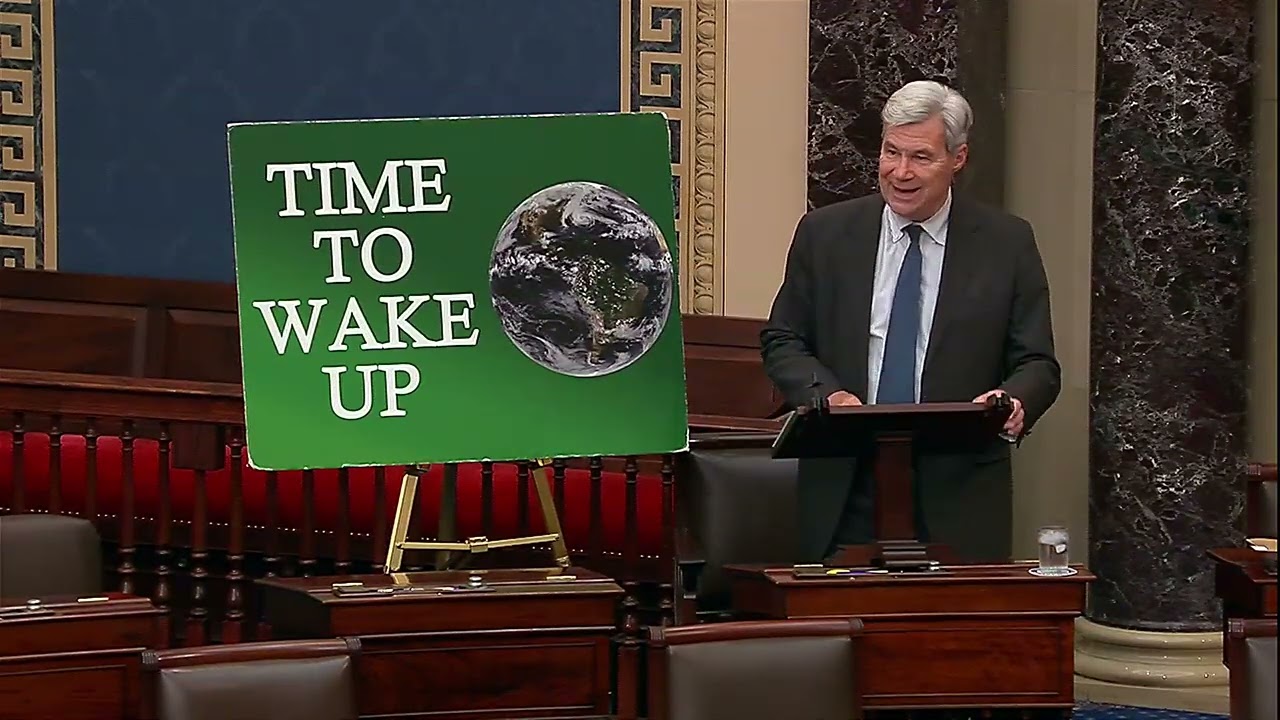
XO thaT wind and solar are not energy
jb clark omb social cost carbon 86 memo 150 to epa 190 but only 4 harms [nit wildfire], not systemic economic risk cascade mortgage housing price collapse
700 billion subsidy
EPA carbon not pollut; us ff plants more than all but 6 cty
jerome powell fed shut dn our partic in int’l crntrlal banks 180 members gp: 4 min in disband task for on climate risk others refused; 86 own climate risk gp at fed;
yergin orzag 5k word manifsto for aff energy pragmatism; never mentions risk cost
---
g alert 12 22
the False Assumptions Behind Climate Regulations in Pennsylvania
By Kevin Mooney
December 06, 2022
While they were in the majority, Pennsylvania House Republicans spent their political capital to advance American energy independence, free speech rights, and scientific integrity.
Unlike too many their counterparts in Washington D.C., they were not cowed by hostile press coverage or well-funded pressure groups that have a stake in undermining sound science. Most recently, for instance, the House Environmental Resources and Energy Committee held a hearing this fall exploring the benefits of fossil fuels and pitfalls of “emergency declarations” advanced in the name of climate change.
Since Gov. Tom Wolf, the state’s outgoing Democratic governor, first announced back in October 2019 that he was taking executive action to combat climate change, Republican leaders have held a series of hearings calling attention to scientific data that debunks climate alarmism. They have also worked in partnership with Pennsylvania Democrats representing the energy sector to prevent Wolf from circumventing the state legislature along the way toward imposing carbon taxes.
In April, the Pennsylvania Senate fell just one vote shy of the requisite two-thirds majority needed to override Wolf’s veto of a concurrent resolution from the full General Assembly that would prevent the commonwealth from joining the multi-state climate change compact. Three Senate Democrats joined with Republicans in the override attempt. At issue, is the Regional Greenhouse Gas Initiative, commonly known as RGGI, a “cap and trade” regulatoryscheme operating under the guise of climate change that is designed to curtail carbon dioxide emissions throughout the 11 participating New England and Mid-Atlantic states. Government regulators in the RGGI states require electric power plants with a capacity of at least 25 megawatts to purchase carbon allowances at quarterly auctions whenever utilities surpass the greenhouse gas initiative’s predetermined cap on Co2 emissions. Speculators have latitude to resell allowances at higher prices. The auction process, which has been in motion since 2009, is where carbon taxes enter the equation. State Rep. Jim Struzzi, a Republican in Indiana County,explains why.
“RGGI is a tax,” Struzzi said in an interview. “It taxes the carbon dioxide emissions that come from plants anytime they are generating electricity and so basically it punishes these companies for being successful by creating the electricity we need for reliable energy in those cold winter months and hot summer months. If these companies are going to stay in business someone is going to have to pay these costs; and it’s going to be the factories, it’s going to be the consumers, and it’s going to affect everyone.”
Struzzi is the lead sponsor of legislation that would prohibit the governor from joining RGGI and imposing carbon taxes without legislative approval. Wolf vetoed an earlier version of the bill, which seven of his own Democrats co-sponsored on the House side. Wolf is not exactly an outlier among climate change activists in government who are actively working to circumvent the democratic process.
In his testimony before the Pennsylvania House, Marc Morano, the editor and publisher of the Climate Depot website, told lawmakers that he sees a certain parallel between climate change initiatives the COVID-19 lockdowns at all levels of government impacting businesses and schools across the country.
“The Biden administration believes that when democracy fails to achieve its climate goals, it's time to bypass democracy and Congress and follow the COVID model. Climate activists havelusted after the COVID lockdowns as the model for climate lockdowns,” Morano said. “The plan is to declare a 'climate emergency,' toss out elected representatives and follow China's one-party rule model by implementing energy restrictions through the bureaucracy. They don't need no stinkin' democracy. Throughout history, emergency declarations have been used and abused to crush freedom. For those who loved howunelected officials ruled our lives under COVID lockdowns, prepare for the attempts to make climate and energy lockdowns permanent.”
During the same hearing, Kevin Dayaratna, a statistician and data scientist with The Heritage Foundation, presented testimony focusing attention on the “Social Cost of Carbon,” or SCC, which federal regulators define as “economic damages per metric ton of carbon dioxide emissions.” The Biden administration is using the SCC in various climate models to determine the long-term impact of CO2, Dayaratna said. However, these models are based on assumptions that may not square with reality, the Heritage analyst warned. These assumptions tend, for example, to overlook the environmental benefits of Co2 emissions such as the “greening of the planet” that occurred between 1982 and 2009, Dayaratna said. At the same time, the models omit the deleterious effect of regulations that restrict Co2 emissions, he observed.Dayaratna cited figures from the Heritage Foundation that point to a severe economic fallout to U.S. that could result from rejoining the U.N.’s Paris Climate Agreement. By 2040, the U.S. could experience an average employment shortfall of more than 1.2 million lost jobs, loss of income of more than $87,000 for a family of four, and up to a 30% increase in household electricity expenditure, with an aggregate $7 trillion loss in GDP, Dayaratna said.
In Pennsylvania, the state-level outlook is every bit as bleak. The Commonwealth Foundation, a free-market group based in Harrisburg, has just published an analysis that finds RGGI’s “carbon tax regime” could lead to a 114% hike in electricity bills. Although Wolf had Pennsylvania join RGGI this year, the state has not participated in the most recent auctions since Wolf’s executive actions are the subject of legal challenges. Industry and labor groups have filed suit challenging the governor’s ability to act unilaterally on climate change policy as have state senators who have raised questions about the separation of powers. As a solution, the Commonwealth Foundation has proposed passing a constitutional amendment to allow the General Assembly “to disapprove regulations as a check on an agency’s power to restrict energy development in the state.”
Josh Shapiro, the incoming Democratic governor, expressed misgivings about Wolf’s approach toward RGGI while on the campaign trail. Since being elected, he hasn’t made any firm commitments about the state’s future participation. A constitutional amendment offers him a way out.
With his party poised to take a slim majority in the House next year, Shapiro will still need to contend with labor constituents and House Democrats residing in energy producing regions who are opposed to RGGI. Meanwhile, the scientific and economic rationale for the climate change initiative continues to unravel. Gregory Wrightstone, a geologist, and executive director of the Co2 Coalition, has repeatedly informed Pennsylvania House members thatCo2 is a “miracle molecule” that greatly benefits humanity and deserves greater appreciation.
“Critics of fossil fuels routinely exaggerate, and sometimes outright fabricate, their negative effects while ignoring altogether their enormous benefits,” Wrightstone said during his latest testimony before the Pennsylvania House.
“Coal and oil fueled the Industrial Revolution, which gave us unprecedented prosperity and health. Together with natural gas, they promise to raise billions of people in developing countries from poverty and deprivation. Modern economies cannot long survive without fossil fuels. In short, we love CO2 and so should you.”
In a victory forfree speech, climate skeptics have found expression before the Pennsylvania legislature like they have in few other public venues. In a potential victory for American energy, these same skeptics have also exposed the faulty assumptions underpinning costly regulations while alsocalling attention to unconstitutional executive actions.
Kevin Mooney is an investigative reporter with both the Commonwealth Foundation and the Heritage Foundation.
cited to justify trump paris bail:
Creatures of the Green Lagoon: San Francisco Mega-Foundations Bankrolling Eco-Activism (full series)
Paris Rises from the Dead | Tom Steyer | Sea Change Foundation
Energy Foundation | ClimateWorks Foundation
Summary: San Francisco is awash in five things: Homeless people, discarded needles, garbage, human feces, and virtually unlimited cash for the environmental Left. This once great city by the bay is ground zero for a bundle of mega-donors, pass-through funders, and powerful activist groups trying to “green” America’s prosperity and energy independence into oblivion. In its place they envision thestuff of nightmares: the end of the oil, gas, and coal industries; nationwide fracking bans; a return to the Paris Climate Agreement;an unprecedented spike in household energy prices; a radical Green New Deal; and “environmental justice” retribution to punish so-called climate polluters with fines and even prison sentences.
“Do as I say, not as I do” [elite hypocrit bs]may as well be the motto of the environmental Left. From their[ivory? biz?] towers, eco-mandarins prognosticate a coming climate apocalypse and the freedomswe must sacrifice to stave it off. Yet they almost never live with the consequences of their own policies. The same global warming gurus who tell Midwestern Americans the icecaps are melting and the seas are rising because Americans still drive cars live in the world’s toniest coastal cities and ownprivate yachts and jets.[not as many as putin or as bid, oligarch and FF ceos, joe manchin "houseboat?" NRA yacht for security?]]
No city is a greater testament to climate hypocrisy than San Francisco, home to some of the eco-Left’s biggest mega-donors: the Sea Change Foundation, the pass-through Energy Foundation, and Tom Steyer’s nonprofit network. Between them these giants have paid out over $2 billion in grants over the past two decades, almost all of it to left-wing groups lobbying for the disastrous Paris Climate Agreement, fracking bans, and a Green New Deal—the most extreme environmental policy agenda in American history. [vs NEPA et al signed by Nixon?]
This is the so-called New Energy Economy, paid for by billionaire hedge fund managers and ideologically motivated, tax-exempt foundations eager to remake America in their own image.Ironically, one of the billionaires, Steyer, earned much of his fortune trading in the oil and natural gas industry. If they get their way, expect a grim future of poverty and “environmental justice” prosecution in Soviet-style “People’s Courts.” [what is basis for this bs?]
Will Paris Rise from the Dead?
On November 4, 2020—the day after the presidential election—the United States formally withdrew from the Paris Climate Accord, an international climate change agreement entered into by President Barack Obama in 2015 and a major 2016 campaign promise of President Trump.
While Obama officials negotiated the agreement as a foreign treaty, it never received a vote in the Republican-controlled U.S. Senate—analysis strongly suggests that environmental groups even advised the administration against describing Paris as a “treaty”—despite the Constitution’s clear requirement that foreign treaties must be ratified by the Senate. Nevertheless, proponents widely treated the agreement as legally binding (and so unassailable) because it forced enormous greenhouse gas emissions targets on the country.[NOT BINDING YOU FECK]
By one estimate
https://www.heritage.org/impact/president-trump-cites-heritage-research-paris-climate-change-agreement [note slIght of hAND]
based on a U.S. Energy Department model, the Paris Climate Agreement could have cost the average family of four over $20,000 in lost income, raised household energy prices by as much as 20 percent, and cost the economy $2.5 trillion by 2035. Yet the effects on the global temperature would be minuscule. If United States cut all of its carbon dioxide (CO2) emissions, it would result in an estimated decrease of less than two-tenths of a degree Celsius by the end of the century.
Trump’s withdrawal from the disastrous “treaty” [WHen was the last actual treaty signed? last time congress declared war? gop awash in dark FF $] was a landmark victory for constitutional government and the American economy—but under a Democratic administration that victory has been reversed, and the country has reentered the Paris Climate Agreement after President Joe Biden signed an executive order to that effect, as he promised during presidential campaign to do on “Day One.”
That’s a scalp [odd slippage of metaphor, rt is master of character/hits]for activists in the eco-Left, the loudest supporters of the Paris “treaty,” none more so than Tom Steyer.
In the next installment, meet Tom Steyer—billionaire, major Democratic Party donor, former Democratic presidential candidate, and dedicated environmentalist with a wide streak of authoritarianism [says the trump [putin?] fan].
REF who will spk for the greed?
https://www.heritage.org/impact/president-trump-cites-heritage-research-paris-climate-change-agreement
MAY 15 NO NAME "HERITAGE IMPACT]
PResident Donald Trump cited Heritage Foundation research on the Paris climate change agreement during his speech in Harrisburg, Pa., that marked his 100th day in office.
“On top of that, it is estimated that for compliance with the agreement could ultimately shrink America’s GDP by $2.5 trillion over a 10 year period,” said Trump.
The figure is drawn from a report by Heritage experts Kevin Dayaratna, Nicolas Loris, and David Kreutzer. They concluded that the Paris climate accord would inflict devastating economic costs for practical no environmental benefit.
http://www.heritage.org/environment/report/consequences-paris-protocol-devastating-economic-costs-essentially-zero
“Policies adapted from domestic regulations emphasized in the Paris agreement will affect a variety of aspects of the American economy. As a result of the plan, one can expect that by 2035, there will be:
- An overall average shortfall of nearly 400,000 jobs;
- An average manufacturing shortfall of over 200,000 jobs;
- A total income loss of more than $20,000 for a family of four;
- An aggregate gross domestic product (GDP) loss of over $2.5 trillion; and
- Increases in household electricity expenditures between 13 percent and 20 percent.”
This is not the first time the Trump White House has relied on Heritage research into climate change regulations. In March, Trump issued an executive order undoing an Obama-era policy requiring the EPA to consider the “social cost of carbon” when making regulations.
Trump’s order was inspired by a **2013 Heritage analysis**finding that the EPA’s models were fundamentally flawed.
http://dailysignal.com//2013/09/16/scrutinizing-the-social-cost-of-carbon-comment-to-the-energy-department/
:{
Rolling back the “social cost of carbon” policy and other climate regulations could boost the economy, Loris wrote in March.}:
----
Actions
May 6, 2019
Reason.comattempted to refute the findings of a UN-sponsored study on the rate of global species extinction. The report issued by the Intergovernmental Science-Policy Platform on Biodiversity and Ecosystem Services (IPBES) predicted that up to one million species would become extinct over the coming decades as a direct consequence of human activity, and recommended “transformative change” to halt the widespread destruction of global ecosystems. Reason categorized the study’s conclusion as another example in “a long line of apocalyptic extinction predictions.” [33], [34], [35]
April 22, 2016
Julian Morris, Vice President of research at the Reason Foundation, published an article in the Orange County Register titled “Climate pact likely to do more harm than good” where he contends that the agreement reached at the Paris COP21 climate conference would be “unlikely to significantly reduce any climate-related harms.” [31]
“[B]y slowing down the rate of innovation and economic growth across the world, it could seriously hinder adaptation. And those consequences could be dire, especially for the poor who currently suffer most from climate-related problems,” Morris writes. [31]
According to Julian Morris, “economic analyses suggest that global warming of up to 3 degrees Celsius above preindustrial levels could generate net benefits for humanity.” He lists benefits as decreased heating costs, fewer temperature-related deaths, and increases in global crop production. [31]
March, 2016
The Reason Foundation was one of nearly 100 think tanks named in a**subpoena to ExxonMobil for communications** since January 1, 1977 with groups addressing issues with respect to climate change. [30] AG walker]
Ronald Bailey, science correspondent at Reason magazine, describes the subpoena as a “anti-free-speech effort”and argues that they are “a huge step in the direction of using the courts to silence people who hold views that differ from those of powerful government officials.” [30]
Bailey notes that “Over the years I have worked with several groups listed in the USVI subpoena on a wide variety of public policy issues relevant to resisting government encroachments into free markets, mostly not having anything to do with climate change.” [30]
2015
Since Pope Francis released the Encyclical on the Environment, the Reason Foundation has released a number of articlescritical of him. Reason magazine has said Pope Francis “doesn’t really understand capitalism,” and “hates free markets.” [16], [17], [18]
August 6, 2015
The Reason Foundation released a study, titled “Assessing the Social Costs and Benefits of Regulating Carbon Emissions,” by **Julian Morris**(the Foundation’s Vice President of Research.)[20]
According to the Reason Foundation, the study “shows that estimates of the ‘social cost of carbon” have been falling’ — and would fall further if new scientific evidence were incorporated. The study calls into question the analyses used to underpin the Obama administration’s newClean Power Plan and other federal regulations targeting emissions of greenhouse gases.” [21]
August, 2015
Ronald Bailey, science correspondent for Reason Magazine, quotes the industry-funded American Enterprise Institute, as well as Patrick Michaels and Paul Knappenberger of the Cato Institute in an article titled “Obama’s Clean Power Plan Would Reduce Global Warming by -0.015 Degree By 2100.”[22]
In the piece, Bailey also promotes his book, The End of Doom: Environmental Renewal in the Twenty-first Century,where he says that “the [climate] models are running hotter than actual temperatures.” he admits that his book was made possible by the Cato Institute, which “generously provided me with a grant that allowed me the time to write The End of Doom.”
January, 2015
Reason magazine released an overall positive review of Alex Epstein‘s book,The Moral Case for Fossil Fuels. Epstein is the founder of the Center for Industrial Progress (:{CIP:(style="box-sizing:border-box"):}:), a group that regularly publishes articles “debunking” environmentalism, and promoting the oil and coal industries. [19]
According to Ronald Bailey, Alex Epstein “makes a persuasive case that cheap and abundant fossil fuels are critical to enabling billions to escape conditions of Malthusian privation.”
August 29, 2014
Reason‘s science correspondent Ronald Bailey published an articlewhere he claims that doing nothing to prevent climate change would result in the same cost as climate action:
“In other words, doing nothing about climate change will cost future generations roughly the same as doing something,” Bailey writes.[23]
May 21 – 23, 2012
The Reason Foundation is listed as an official Co-sponsor (:{PDF:(style="box-sizing:border-box"):}:) of the Heartland Institute‘s Seventh International Conference on Climate Change (ICCC7). [24]
June 7, 2002
Kenneth Green of the Reason Foundation signed a joint letter to President Bush on the :{EPA:(style="box-sizing:border-box"):}:‘s Climate Action Report.[25]
Those who sign the letter describe themselves as “opponents of the Kyoto Protocol and similar domestic proposals to ration energy,” and applaud Bush for his “resolution in the face of continuing environmentalalarmism.”
The letter describes the 2002 Climate Action Report as “a compilation and summary of junk science produced by the Clinton-Gore Administration in order to support their Kyoto agenda,” and urge the report to be withdrawn and “re-written on the basis of sound science.”
==
clexit: Viv Forbes:
“There is no justification for the War on carbon dioxide – CO2 does not drive global temperature and Earth’s climate cannot be tweaked by erecting windmills or putting taxes on carbon dioxide. CO2 is naturally sequestered by oceans and the biosphere. Burning natural hydrocarbons merely recycles Earth’s carbonaceous nutrients vital to all life – already world food production and global forests have benefitted from the small increases in carbon dioxide plant food in Earth’s atmosphere.”
Clexit also featured an article by Will Happer, originally published in The Washington Times,where he argues “The Case for Nixing the Paris Agreement.” According to Happer, “[…] more CO2 is not a pollutant but is a benefit to humanity. The ‘social cost of carbon,’ aka CO2, is negative. It is immoral to prevent developing countries from using reliable, inexpensive fossil fuels to escape centuries of poverty.” [12], [13]
rgb
no lnx
Citizens’ Climate Lobby: Conservative climate event pushes for congressional action
Published on March 17th, 2022
TAGGED: CARBON FEE, CITIZENS CLIMATE LOBBY, CONGRESS, CONSERVATIVE, ECORIGHT
At the end of this month, conservative voters from across America will come to D.C. to build Republican support for a carbon price. This conservative climate leadership conference is hosted by Citizens’ Climate Lobby (CCL) and will be attended by more than 60 people who identify on the political right.
Citizens' Climate Lobby: Conservative climate event pushes for congressional action By Flannery Winchester
On Tues., March 29, attendees will hear from CCL staff, business leaders, other organizations on the eco-right, and members of Congress.Invited speakers from the Hill include Rep. John Curtis (R-UT-03), Rep. Nancy Mace (R-SC-01), Sen. Kevin Cramer (R-ND), among others.
“Today, we see Republicans in Congress getting engaged on the climate issue and bringing conservative solutions to the table. This event will show them that their voters are behind them and eager for them to do even more,” said Drew Eyerly, Conservative Outreach Director for CCL.
On Wed., March 30, attendees will be split between two tracks to receive training in lobbying and climate communications. The two tracks are based on age, offering tailored content for climate advocates who are over age 40 and those who are under 40. According to an Ipsos/Newsy poll, 77 percent of young Republicans say climate change is a serious threat. Research shows that 75 percent of Republicans under 40 support a specific policy of putting a price on carbon pollution and giving regular dividends to households, which CCL is pushing for.
“It’s especially important that representatives hear from younger conservatives, who we know are more than twice as likely to say this is an important issue to them, than older conservatives,” said Nate Abercrombie, CCL’s Conservative Outreach Coordinator in a recent interview.
The advocates at this month’s event are yet another wave in the tide of grassroots advocates pushing Congress for climate action. Each June, more than a thousand volunteers of all political stripes attend CCL’s annual conference and hold hundreds of meetings with congressional offices.
“Citizens’ Climate Lobby is a nonpartisan organization, and we believe that the best way to achieve strong, lasting climate legislation is with support across the political spectrum,” explained Madeleine Para, CCL’s Executive Director. “We’re grateful to these conservative volunteers for making their voices heard at this event. With every conversation, they’re showing elected Republicans that climate change should be a bridge issue that we all work together on.”
Flannery Winchester has put her words to work for magazines, for marketing agencies, and now for our earth as the Communications Director for Citizens’ Climate Lobby . She is grateful to spend every day working to preserve this beautiful planet.
rgb
climate Reprieve: Court allows Biden to weigh the social cost of carbon in policymaking
Environmentalists applauded late Wednesday after a federal appeals court blocked a Trump-appointed judge’s order barring the Biden administration from considering the future costs of climate damage in its rulemaking and public projects. By Jake Johnson Common Dreams Breaking Climate Law News: 5th Circuit stays injunction issued by Trump judge in lower court against gov't use of […]
https://www.eenews.net/articles/here-comes-the-social-cost-of-carbon-will-it-address-ej/
https://highline.huffingtonpost.com/article/disappearing-data/#introduction
used flawed CALCULATIONS TO ARGUE THAT CURTAILING GREENHOUSES GASES WASN'T WORTH THE COST
02.04
The U.S. government has a calculation for the “social cost of carbon,” which measures the environmental, economic and public health damages associated with emitting carbon dioxide into the atmosphere. Federal agencies use this figure to evaluate the costs and benefits of new climate regulations. At the end of President Barack Obama’s tenure in office, that figure was $40 per metric ton (a number environmental groups argued was too low). The number is expected to increase as the planet experiences rapid global warming.
But shortly after taking office, President Donald Trump signed an executive order that scrapped the Obama-era calculation, putting the economic harm of emitting climate-warming carbon dioxide far lower, at between $1 and $7 per ton. A July report by the Government Accountability Office determined that Trump’s calculations of the social cost of carbonare about seven times lower than previous federal estimates. And while Obama-era estimates placed future climate damages at $82 per ton of carbon by 2050, Trump’s calculation put it at just $11, the report found.
The lower figure allows the administration to argue that the upfront costs of reining in greenhouse gas emissions outweigh any future benefit to property, agriculture, coastal ecosystems and human health.Trump's EPA has used the number to justify weakening environmental safeguards and to roll back Obama-era regulations that slashed carbon pollution from power plants and new vehicles. For example, the EPA claims that rescinding the Clean Power Plan would save the U.S. $33 billion in “avoided costs” by 2030, a calculation it came to by looking only at the domestic costs of carbon pollution and by downplaying the impact that emissions will have on future generations.
Meanwhile, the Trump administration has led a campaign to undermine the validity of climate modeling so it can ignore possible environmental threats when evaluating new infrastructure, such as pipelines, power plants, highways and airports.When more than a dozen federal agencies published a sobering 1,600-page report in November 2018 that warned of the dire threat of global climate change, then-White House press secretary Sarah Huckabee Sanders claimed the assessment was “based on the most extreme model scenario” and “not data-driven.” Trump flatly denied the science: “I don’t believe it,” he told reporters.
One of the most significant court cases about climate change was decided this month by a federal appeals court in Chicago. Given that it was steeped in the enervating context of refrigerator regulations, you may have missed it. But amid the stultifying discussions of compressors and insulation foam was a crucial advance in our nation’s belated attempts to forestall global climate catastrophe.
It all comes down to a new phrase: the Social Cost of Carbon.
Here’s why it’s important. By law, government agencies—in this case, the Department of Energy—are often required to show that the benefits of a proposed regulation exceed the costs. Sometimes this is straightforward: If it costs industry $100 million to prevent pollution that will do only $10 million in damage, the government (usually) can’t force them to do it.
Sometimes it’s downright Solomonic. If that pollution regulation can save a single life, is that worth $100 million in industry costs? You might say yes, but usually, the government says no. In fact, we “price lives” all the time—by requiring some safety protections but not others, by building roads the way we do, and in a thousand other ways.
But what about climate change? The costs of a particular regulation—in this case, covering refrigerators—are sometimes easy to assess. But how do you capture the “benefits” of preventing cataclysmic climate change?
Beginning in 2010, a group of economists and scientists set about answering that question. They tried to calculate the likely future costs of shifting climate zones, agricultural disruptions, more extreme events like Superstorm Sandy, more outbreaks of disease, and the many other effects of climate change.
The result is the Social Cost of Carbon (SCC), which, long story short, was calculated to be $36 per ton. That figure, while admittedly an approximation, is the best estimate that the government has put forward so far.
That’s why the Department of Energy used it in its refrigeration regulations—and that’s why some industry groups sued, alleging that the SCC is no better than a guess.
In Zero Zone v. Department of Energy, two conservative judges on the Seventh Circuit Court of Appeals disagreed, upholding the use of the SCC and the regulations based on it.
“They did not equivocate,” said Daniel Esty, professor at Yale Law School and the Yale School of Forestry and Environmental Studies, and, from 2011-2014, commissioner of the Connecticut Department of Energy and Environmental Protection.
When he worked at the Environmental Protection Agency under President George H.W. Bush, Esty was part of the team that implemented similar economic analyses in the context of regulating acid rain. Since then, he’s worked on incentive-based ways to address environmental problems—like the “Cap and Trade” approach to climate change. His name is frequently bandied about as a possible director of the EPA in a Hillary Clinton administration.
“Putting a price on pollution in general, and carbon in particular, is the best strategy for motivating change in behaviors that cause harm,” Esty told The Daily Beast. “It’s been hard to figure out the right price… but the judges in this case made clear that this was a serious and thoughtful exercise… It wasn’t an eyeball guess.”
Indeed, while most industry groups have opposed the idea of an SCC, Esty said that having the SCC ratified by a federal appeals court (review by the Supreme Court is possible, but unlikely) will help companies who have already made commitments to sustainability.
“There are a number of companies, after last year’s Paris Agreements, who are beginning to think about how to prepare for a world—not yet in place in the U.S. but in place in Europe—where there is a price on carbon,” he said. “Many large companies are thinking about what internal price for carbon they should use. The Social Cost of Carbon can be a rallying point for them, for investment planning and decisions on energy projects… the [$36 per ton] price can be taken up by companies in their internal analyses.”
On the other hand, some environmental scientists have argued that the $36 per ton price is far too conservative.
For example, a study published last year by two Stanford University scientists arrived at a price of $220 per ton. One of them, Frances Moore, told The Daily Beast that “the current models used in the government’s SCC essentially assume that climate change will not affect economic growth,” she said. “They assume climate change will have effects in some specific sectors, but the effect is not big enough to substantially alter the trajectory of economic development.”
This, Moore said, is a flawed assumption.
“There are some econometric studies that … find the effects of climate change on economic growth in poor countries could be large. Our paper simply incorporates these statistical findings into the model.” Moreover, Moore told The Daily Beast, “because impacts to economic growth compound over time, even small impacts to the growth rate have very large implications for total climate damages. This is why our value of $220 per ton is so much larger than the U.S. government’s value.”
Esty replied, “Getting started with some kind of price is much better than no price. As the science gets better, we’ll have more clarity about what the harms are, and the costs of harms will be more clear. But having some price is critical and that’s what this case really does.”
From this point on, government agencies can rely upon the existing SCC, pointing to the Zero Zone case as a significant ratification of the SCC in principle, and this figure in practice. Ironically, its next challenge may come from the left rather than the right: Moore told The Daily Beast that the National Academy of Sciences is reviewing the government’s methodology and may well recommend a higher figure.
But in the meantime, this obscure case could well mark a turning point in the way the government includes climate change-related damages in its rulemaking.
“When companies undertake activities and have harm that they’re not paying for—because they’re sending them up a smokestack or down an effluent pipeline—there is going to be an assessment of those costs that are thrown onto society,” Esty said. “It’s only one step beyond that to make companies pay for harm they are causing. That’s where we’re headed over the next decade.”
“The world,” he said, “is turning.”
March 23, 2017
Bezdek spoke at the Heartland Institute's 12th International Conference on Climate Change (ICCC12) on a panel titled “Fossil Fuels and Human Prosperity.” [15]
[vid]
Roger Bezdek was one of several witnesses sponsored by Peabody Energy, fighting a legal case on M**innesota's Social Cost of Carbon (SCC)**.Peabody Energy's list of skeptical scientists included the following: [10]
DeSmog reviewed the case findings, and reported how the arguments presented by Peabody were rejected by the Administrative Law Judge (ALJ). Some of Peabody's central “scientific” arguments, as commented on by The ALJ in findings documents, were as follows: [11]
p.18“Peabody asserted that significant climate change is not occurring or, to the extent climate change is occurring, it is not due to anthropogenic causes. Furthermore, Peabody insisted that any current warming and increased CO2 in the Earth’s atmosphere are beneficial. Based on its position on climate change, Peabody maintained that the externality value of CO2 would most accurately be set at or below zero.…”
p.31 “The Administrative Law Judge concludes that Peabody Energy has failed to demonstrate, by a preponderance of the evidence, that climate change is not occurring or, to the extent climate change is occurring, the warming and increased CO2 in the Earth’s atmosphere are beneficial.”
The Judge ruled unambiguously against Peabody, as reported *Bloomberg BNA*. [12] The Guardianalso suggested a number of reasons that Peabody Energy lost the case, including Richard Lindzen's own admission that the case hinged on ignoring the IPCC expert consensus, and instead listening to contrarian science:[13]
“All of this [opposition] testimony is flawed to the extent it simply relies on … predictions by the Intergovernmental Panel on Climate Change […] today the best evidence indicates that … a much lower climate sensitivity value of 1°C or 1.5°C is correct […]” [13]
“Peabody’s scientists made errors that were easy to identify and point out to the Judge. Furthermore, the Judge was smart, quickly able to see through nonsense non-science,” The Guardianreports. “For those of you that read the report, you’ll notice that the Peabody side made claims about the natural variability of Earth’s climate, about Earth temperature changes, and about extreme weather events.”[14]
Some notable judicial conclusions were as follows, reports *The Guardian*: [14]
“22. The Administrative Law Judge concludes that Peabody failed to demonstrate that an equilibrium climate sensitivity of 1 or 1.5°C is correct.”
“23. The Administrative Law Judge concludes that the climate sensitivity is reasonably considered to be in the 2-4.5°C range.”
“47. The Administrative Law Judge concludes that Peabody failed to demonstrate that the relied upon process is neither peer-reviewed nor transparent.”
June 21, 2007 - Formerly Stated Climate Change an 'Intractable Problem'
The Social Cost of Carbon | Climate Change | US EPA
https://www.epa.gov/climatechange/**social**-**cost**-**carbon**
1.
:{[PDF]:(style="font-weight:bold;cursor:auto;margin:0px 3px 0px 0px;float:left"):}:Social Cost of Carbon, December 2015
https://www3.epa.gov/climatechange/Downloads/EPAactivities/**social**-**cost**-**carbon**.pdf
1.
Evaluating Climate Policy Options, Costs and Benefits | Climate ...
https://www.epa.gov/.../evaluating-climate-policy-options-costs-and-benefits
1.
Social Cost - The Cost of Carbon Pollution
costofcarbon.org/faq
2.
The 'Social Cost of Carbon' Is the Most Historic Climate Change ...
www.thedailybeast.com/.../the-social-cost-of-carbon-is-the-most-historic-climate-chan...
1.
Social Cost of Carbon - Huffington Post
www.huffingtonpost.com/news/social-cost-of-carbon/
2.
:{[PDF]:(style="font-weight:bold;cursor:auto;margin:0px 3px 0px 0px;float:left"):}:The Social Cost of Carbon - OECD
https://www.oecd.org/env/cc/37321411.pdf
1.
by P Watkiss - Cited by 17 - Related articles
costs) of climate change. In the UK, these are usually referred to as the Social Cost of Carbon (SCC), and can be used to assess the economic benefits of climate ...
What is the Social Cost of Carbon? | Center for Strategic and ...
https://www.csis.org/analysis/what-social-cost-carbon
1.
Federal Court Blocks Challenge To Social Cost Of Carbon : NPR
www.npr.org/2016/08/17/.../federal-court-blocks-challenge-to-social-cost-of-carbon
1.
Estimated social cost of climate change not accurate, Stanford ...
news.stanford.edu/2015/01/12/emissions-social-costs-011215/
1.
But according to a new study, published online this week in the journal*Nature Climate Change*, the actual cost could be much higher. “We estimate that the social cost of carbon is not $37 per ton, as previously estimated, but $220 per ton,” said study coauthor Frances Moore, a PhD candidate in the Emmett Interdisciplinary Program in Environment and Resources in Stanford’s School of Earth Sciences.
Based on the findings, countries may want to increase their efforts to curb greenhouse gas emissions, said study co-author Delavane Diaz, a PhD candidate in the Department of Management Science and Engineering at Stanford’s School of Engineering. “If the social cost of carbon is higher, many more mitigation measures will pass a cost-benefit analysis,” Diaz said. “Because carbon emissions are so harmful to society, even costly means of reducing emissions would be worthwhile.”
For their study, Moore and Diaz modified a well-known computer model for calculating the economic impacts of climate change, known as an integrated assessment model, or IAM. Their alternative formulation incorporated recent empirical findings suggesting that climate change could substantially slow economic growth rates, particularly in poor countries.
IAMs are important policy tools. Because they include both the costs and benefits of reducing emissions, they can inform governments about the optimal level of investment in emission reduction. The U.S. Environmental Protection Agency, for example, uses the $37 average value from three IAMs to evaluate greenhouse gas regulations. Canada, Mexico, the United Kingdom, France, Germany and Norway have also used IAMs to analyze climate and energy policy proposals.
While useful, IAMs have to make numerous simplifying assumptions. One limitation, for example, is that they fail to account for how the damages associated with climate change might persist through time.
“For 20 years now, the models have assumed that climate change can’t affect the basic growth rate of the economy,” Moore said. “But a number of new studies suggest this may not be true. If climate change affects not only a country’s economic output but also its growth, then that has a permanent effect that accumulates over time, leading to a much higher social cost of carbon.”
In the new study, Moore and Diaz took a widely used IAM, called the Dynamic Integrated Climate-Economy (DICE) model, and modified it in three ways: They allowed climate change to affect the growth rate of the economy; they accounted for adaptation to climate change; and they divided the model into two regions to represent high- and low-income countries.
“There have been many studies that suggest rich and poor countries will fare very differently when dealing with future climate change effects, and we wanted to explore that,” Diaz said. Poor countries may be more vulnerable to changes in rainfall and rising sea levels.
One major finding of the new study is that the damages associated with reductions in economic growth rates justify very rapid and very early mitigation that is sufficient to limit the rise of global temperature to 2 degrees Celsius above pre-industrial levels. This is the target that some experts say is necessary to avert the worst effects of global warming.
“This effect is not included in the standard IAMs,” Moore said, “so until now it’s been very difficult to justify aggressive and potentially expensive mitigation measures because the damages just aren’t large enough.”
The pair’s IAM also shows that developing countries may suffer the most from climate change effects. “If poor countries become less vulnerable to climate change as they become richer, then delaying some emissions reductions until they are more fully developed may in fact be the best policy,” Diaz said. “Our model shows that this is a major uncertainty in mitigation policy, and one not explored much in previous work.”
They note two important caveats to their work, however. First, the DICE model’s representation of mitigation is limited. It doesn’t take into account, for example, the fact that clean technologies take time to develop and deploy.
Second, while it explores the effects of temperature on economic growth, the model does not factor in the potential for mitigation efforts to also impact growth.
“For these two reasons, the rapid, near-term mitigation level found in our study may not necessarily be economically optimal,” Diaz said. “But this does not change the overall result that if temperature affects economic growth rates, society could face much larger climate damages than previously thought, and this would justify more stringent mitigation policy.
no lnx many
THE BLOG
Koch-Funded Climate Contrarians Make Mischief on Capitol Hill
With Congress about to head out of town for its summer recess, a Washington-based think tank is ramping up a campaign to foil any attempts to institute a tax on carbon emissions.
https://www.huffpost.com/entry/koch-funded-climate-contr_b_3620727
By
Elliott Negin, Contributor
Senior Writer, Union of Concerned Scientists
Jul. 19, 2013, | Updated Dec. 6, 2017
This post was published on the now-closed HuffPost Contributor platform. Contributors control their own work and posted freely to our site. If you need to flag this entry as abusive, send us an email.
Institute for Energy Research economist Robert P. Murphy criticized the Obama administration's calculation of the "social cost of carbon" at a recent Senate hearing.
With Congress about to head out of town for its summer recess, a Washington-based think tank is ramping up a campaign to foil any attempts to institute a tax on carbon emissions, The Hill, a Washington political trade publication, reported this week.
"We're hoping to put the final nail in the coffin of the carbon tax," said Benjamin Cole, the communications director for the Institute for Energy Research (IER) and its advocacy arm, the American Energy Alliance (AEA). "The proposal should be dead on arrival by the time lawmakers come back from August recess."
IER's campaign includes a survey of American attitudes about such a tax and a $120,000 to $150,000 radio ad buy targeting a handful of House members who, according to Cole, "are soft on the carbon tax issue."
The Hill story, however, merely described IER as a "conservative" group. That doesn't explain why a think tank named the Institute for Energy Research is so dead set against a carbon tax, given the initiative would certainly help some energy technologies, especially wind, solar and other renewables.
So why is IER so down on cutting carbon?
Because it's backed by the fossil fuel industry, that's why.
The Koch Connection
Over the last decade or so, IER and AEA have received hundreds of thousands of dollars from ExxonMobil; the American Petroleum Institute (API), the oil and gas industry's trade association; the Center to Protect Patient Rights, a secretive nonprofit group linked to Charles Koch and his brother David, the billionaire owners of the coal, oil and gas behemoth Koch Industries; and the Charles Koch-controlled Claude R. Lambe Charitable Foundation, one of a handful of Koch family funds.
Top IER-AEA officials also are well-entrenched members of the Koch brothers' climate change contrarian network. IER and AEA President Thomas Pyle, for example, is a former lobbyist for Koch Industries and the National Petrochemical and Refiners Association. IER and AEA Director of Regulatory and State Affairs Daniel Simmons, meanwhile, worked for the API-, ExxonMobil- and Koch-funded American Legislative Exchange Council (ALEC), a stealthy lobby group that has been trying to repeal state standards requiring electric utilities to use more renewable energy. Before his stint as director of ALEC's Natural Resources Task Force, Simmons was a research fellow at the Koch-founded and funded Mercatus Center at George Mason University.
Not to be outdone, IER founder and CEO Robert L. Bradley, Jr. -- a former public policy analysis director at the now-defunct Enron Corp. -- is an adjunct scholar at the Koch-founded and funded Cato Institute and the API- and Koch-funded Competitive Enterprise Institute. He also has been a featured speaker at the API- and Koch-funded Heartland Institute's annual climate science-bashing conference, and is a member of the academic review committee at the Koch-funded Institute for Humane Studies at George Mason. The Institute for Humane Studies' chairman, I should add, is Charles Koch.
The Social Cost of Carbon
IER is doing more than trying to kill a carbon tax in its crib. Just yesterday, IER Senior Economist Robert P. Murphy testified on the "social cost of carbon" at a hearing on Capitol Hill. That's the official government estimate of the financial damage caused by carbon pollution, and it's important, as my colleague Rachel Cleetus pointed out in a recent blog, because it enables federal agencies to include the societal value of cutting carbon emissions, either directly or indirectly, when conducting traditional cost-benefit analyses of regulations.
The Obama administration recently boosted the monetary costs of carbon pollution to better reflect reality. According to Cleetus, a senior climate economist at the Union of Concerned Scientists: "The increase in the new social cost of carbon estimate is broadly consistent with what we're seeing in the scientific and economic literature on the growing risks and costs of climate change, and in fact is very likely an underestimate of the true cost of our carbon emissions.
"The increase is also consistent with the costs of climate change that we are already experiencing, such as those associated with sea level rise and rising temperatures," she continued. "Climate change is making coastal flooding, extreme heat, extreme precipitation, and other weather events worse, while we have more people and property in harm's way."
So what did Murphy tell the Senate Committee on Environment and Public Works?
In the same way that fossil fuel industry-funded contrarians are still trying to manufacture doubt about climate science, Murphy tried to poke holes in climate economics. He criticized the computer models and the methodology used to arrive at the new cost estimate and underscored the subjective nature of the exercise. "Before justifying economically damaging regulations by reference to 'the' social cost of carbon," he said, "policymakers must realize the dubious nature of this concept."
Cleetus's blog provides useful context for understanding some of the key issues Murphy brought up in his testimony. For example, Cleetus agrees that the computer models used to calculate the social cost of carbon are not perfect, but not because they overstate the potential damage.
"[The computer models] don't reflect just how devastating unchecked climate change will be," she writes. "For instance, some economic analyses assume that areas of the planet will remain economically productive, even under a worst-case warming scenario. It's hard to imagine people will want to keep doing business in an underwater city or that we'll still have economic activity in places that are too hot and humid for people to walk outside for more than a few minutes without suffering from heat stroke."
Cleetus also stressed that applying the social cost of carbon when calculating the costs and benefits of government regulation is just one tool in our arsenal to combat climate change. "Congress should also live up to its responsibilities," she says, "and put a price on carbon through legislation."
IER Says Let the Free Market Do Its Magic
IER's website features an essay that acknowledges that "climate change and energy security are issues of great concern for many Americans," but states unequivocally that policies to reduce carbon emissions "would be extremely expensive, consume resources that could be directed to immediate and profound problems, and have limited potential to affect climate...."Any sense of urgency to address climate change, the essay continues, has been fueled by media hype, profit-seeking renewable-energy and carbon-pollution-control companies, scientists on the research-funding gravy train, foreign nations plotting to undermine U.S. economic strength, and opportunistic politicians.
I kid you not.
I emailed IER's communication director, Benjamin Cole, yesterday morning to find out if his organization, given its opposition to a carbon tax, would endorse any government action on climate change.
His response: "Our approach would be to allow free markets and American consumers to balance most effectively the demands of America's energy needs with environmental concerns."
I asked him to elaborate: "Does that mean you are against all pollution regulations? You would want the free market to take care of environmental pollution?"
To which he responded: "The Institute for Energy Research has not endorsed any proposal that addresses climate change. As a 501c3 research organization, we provide analysis concerning the various proposals and their potential economic and environmental impacts. But we do not advocate for any specific legislation."
For some reason, I'm not surprised. Why advocate for specific legislation when the free market will take care of it? Isn't that just what Charles Koch would say?
Correction: The original blog published on Friday, July 19, included a passage that inadvertently mischaracterized economist Robert P. Murphy's July 18 Senate testimony by taking a portion of it out of context. The caption under his photo likewise mischaracterized what he said. Elliott Negin regrets the errors, which have been corrected.
Elliott Negin is the director of news and commentary at the Union of Concerned Scientists.In May, he published a six-part series in the Huffington Post, Unreliable Sources: How the Media Help the Kochs & ExxonMobil Spread Climate Disinformation," which documents that leading news organizations routinely fail to disclose the fossil fuel industry funding behind climate change contrarian think tanks.
“They did not equivocate,” said Daniel Esty, professor at Yale Law School and the Yale School of Forestry and Environmental Studies, and, from 2011-2014, commissioner of the Connecticut Department of Energy and Environmental Protection.
When he worked at the Environmental Protection Agency under President George H.W. Bush, Esty was part of the team that implemented similar economic analyses in the context of regulating acid rain. Since then, he’s worked on incentive-based ways to address environmental problems—like the “Cap and Trade” approach to climate change. His name is frequently bandied about as a possible director of the EPA in a Hillary Clinton administration.
“Putting a price on pollution in general, and carbon in particular, is the best strategy for motivating change in behaviors that cause harm,” Esty told The Daily Beast. “It’s been hard to figure out the right price… but the judges in this case made clear that this was a serious and thoughtful exercise… It wasn’t an eyeball guess.”
Indeed, while most industry groups have opposed the idea of an SCC, Esty said that having the SCC ratified by a federal appeals court (review by the Supreme Court is possible, but unlikely) will help companies who have already made commitments to sustainability.
“There are a number of companies, after last year’s Paris Agreements, who are beginning to think about how to prepare for a world—not yet in place in the U.S. but in place in Europe—where there is a price on carbon,” he said. “Many large companies are thinking about what internal price for carbon they should use. The Social Cost of Carbon can be a rallying point for them, for investment planning and decisions on energy projects… the [$36 per ton] price can be taken up by companies in their internal analyses.”
On the other hand, some environmental scientists have argued that the $36 per ton price is far too conservative.
For example, a study published last year by two Stanford University scientists arrived at a price of $220 per ton. One of them, Frances Moore, told The Daily Beast that “the current models used in the government’s SCC essentially assume that climate change will not affect economic growth,” she said. “They assume climate change will have effects in some specific sectors, but the effect is not big enough to substantially alter the trajectory of economic development.”
This, Moore said, is a flawed assumption.
“There are some econometric studies that … find the effects of climate change on economic growth in poor countries could be large. Our paper simply incorporates these statistical findings into the model.” Moreover, Moore told The Daily Beast, “because impacts to economic growth compound over time, even small impacts to the growth rate have very large implications for total climate damages. This is why our value of $220 per ton is so much larger than the U.S. government’s value.”
Esty replied, “Getting started with some kind of price is much better than no price. As the science gets better, we’ll have more clarity about what the harms are, and the costs of harms will be more clear. But having some price is critical and that’s what this case really does.”
From this point on, government agencies can rely upon the existing SCC, pointing to the Zero Zonecase as a significant ratification of the SCC in principle, and this figure in practice. Ironically, its next challenge may come from the left rather than the right: Moore told The Daily Beast that the National Academy of Sciences is reviewing the government’s methodology and may well recommend a higher figure.
But in the meantime, this obscure case could well mark a turning point in the way the government includes climate change-related damages in its rulemaking.
“When companies undertake activities and have harm that they’re not paying for—because they’re sending them up a smokestack or down an effluent pipeline—there is going to be an assessment of those costs that are thrown onto society,” Esty said. “It’s only one step beyond that to make companies pay for harm they are causing. That’s where we’re headed over the next decade.”
“The world,” he said, “is turning"
The 'Social Cost of Carbon' Is the Most Historic Climate Change ...
www.thedailybeast.com/.../the-social-cost-of-carbon-is-the-most-historic-climate-change...The Social Cost of Carbon | Climate Change | US EPA
https://www.epa.gov/climatechange/**social**-**cost**-**carbon**
1.
:{[PDF]:(style="font-weight:bold;cursor:auto;margin:0px 3px 0px 0px;float:left"):}:Social Cost of Carbon, December 2015
https://www3.epa.gov/climatechange/Downloads/EPAactivities/**social**-**cost**-**carbon**.pdf
1.
Evaluating Climate Policy Options, Costs and Benefits | Climate ...
https://www.epa.gov/.../evaluating-climate-policy-options-costs-and-benefits
1.
Social Cost - The Cost of Carbon Pollution
costofcarbon.org/faq
2.
The 'Social Cost of Carbon' Is the Most Historic Climate Change ...
www.thedailybeast.com/.../the-social-cost-of-carbon-is-the-most-historic-climate-chan...
1.
Social Cost of Carbon - Huffington Post
www.huffingtonpost.com/news/social-cost-of-carbon/
2.
:{[PDF]:(style="font-weight:bold;cursor:auto;margin:0px 3px 0px 0px;float:left"):}:The Social Cost of Carbon - OECD
https://www.oecd.org/env/cc/37321411.pdf
1.
by P Watkiss - Cited by 17 - Related articles
costs) of climate change. In the UK, these are usually referred to as the Social Cost of Carbon (SCC), and can be used to assess the economic benefits of climate ...
What is the Social Cost of Carbon? | Center for Strategic and ...
https://www.csis.org/analysis/what-social-cost-carbon
1.
Federal Court Blocks Challenge To Social Cost Of Carbon : NPR
www.npr.org/2016/08/17/.../federal-court-blocks-challenge-to-social-cost-of-carbon
1.
Estimated social cost of climate change not accurate, Stanford ...
news.stanford.edu/2015/01/12/emissions-social-costs-011215/
1.