seven 7 mtns
AN 7 25
Vance Boelter, who allegedly shot Melissa Hortman, a Democratic Minnesota state representative, and her husband, Mark Hortman, on June 14, 2025, studied at Christ for the Nations Institute in Dallas. The group is a Bible school linked to the New Apostolic Reformation, or NAR.
The NAR is a loosely organized but influential charismatic Christian movement that shares similarities with Pentecostalism, especially in its belief that God actively communicates with believers through the Holy Spirit. Unlike traditional Pentecostalism, however, the organization emphasizes modern-day apostles and prophets as authoritative leaders tasked with transforming society and ushering in God’s kingdom on Earth. Prayer, prophecy and worship are defined not only as acts of devotion but as strategic tools for advancing believers’ vision of government and society.
After the shooting, the Christ for the Nations Institute issued a statement “unequivocally” denouncing “any and all forms of violence and extremism.” It stated: “Our organization’s mission is to educate and equip students to spread the Gospel of Jesus Christ through compassion, love, prayer, service, worship, and value for human life.”
But the shooting has drawn attention to the school and the larger Christian movement it belongs to. One of the most important aspects of NAR teachings today is what is called “the Seven Mountain Mandate.”
The Seven Mountain Mandate calls on Christians to gain influence, or “take dominion,” over seven key areas of culture: religion, family, education, government, media, business and the arts.
With over three decades of experience studying extremism, I offer a brief overview of the history and core beliefs of the Seven Mountains Mandate.
‘Dominion of Christians’
The Seven Mountains concept was originally proposed in 1975 by evangelical leader Bill Bright, the founder of Campus Crusade for Christ. Now known as “Cru,” the Campus Crusade for Christ was founded as a global ministry in 1951 to promote Christian evangelism, especially on college campuses.
United by a shared vision to influence society through Christian values, Bright partnered with Loren Cunningham, the founder of Youth With A Mission, a major international missionary training and outreach organization, in the 1970s.
The Seven Mountains Mandate was popularized by theologian Francis Schaeffer, who linked it to a larger critique of secularism and liberal culture. Over time, it evolved.
C. Peter Wagner, a former seminary professor who helped organize and name the New Apostolic Reformation, is often regarded as the theological architect of the group. He developed it into a call for dominion. In his 2008 book “Dominion! How Kingdom Action Can Change the World,” he urged Christians to take authoritative control of cultural institutions.
For Wagner, “dominion theology” – the idea that Christians should have control over all aspects of society – was a call to spiritual warfare, so that God’s kingdom would be “manifested here on earth as it is in heaven.”
Since 1996, Bill Johnson, a senior leader of Bethel Church, and Johnny Enlow, a self-described prophet and Seven Mountains advocate, among others, have taken the original idea of the Seven Mountains Mandate and reshaped it into a more aggressive, political and spiritually militant approach. Spiritual militancy reflects an aggressive, us-vs.-them mindset that blurs the line between faith and authoritarianism, promoting dominion over society in the name of spiritual warfare.
Their version doesn’t just aim to influence culture; it frames the effort as a spiritual battle to reclaim and reshape the nation according to their vision of God’s will.
Lance Wallnau, another Christian evangelical preacher, televangelist, speaker and author, has promoted dominion theology since the early 2000s. During the 2020 U.S. presidential election, Wallnau, along with several prominent NAR figures, described Donald Trump as anointed by God to reclaim the “mountain” of government from demonic control.
In their book “Invading Babylon: The 7 Mountains Mandate,” Wallnau and Johnson explicitly call for Christian leadership as the only antidote to perceived moral decay and spiritual darkness.
The beliefs
Sometimes referred to as Seven Mountains of Influence or Seven Mountains of Culture, the seven mountains are not neutral domains but seen as battlegrounds between divine truth and demonic deception.
Adherents believe that Christians are called to reclaim these areas through influence, leadership and even, if necessary, the use of force and to confront demonic political forces, as religion scholar Matthew Taylor demonstrates in his book “The Violent Take It By Force.”
Diverse perspectives and interpretations surround the rhetoric and actions associated with the New Apostolic Reformation. Some analysts have pointed out how the NAR is training its followers for an active confrontation. Other commentators have said that the rhetoric calling for physical violence is anti-biblical and should be denounced.
NAR-aligned leaders have framed electoral contests as struggles between “godly” candidates and those under the sway of “satanic” influence.
Similarly, NAR prophet Cindy Jacobs has repeatedly emphasized the need for “spiritual warfare” in schools to combat what she characterizes as “demonic ideologies” such as sex education, LGBTQ+ inclusion or discussions of systemic racism.
In the NAR worldview, cultural change is not merely political or social but considered a supernatural mission; opponents are not simply wrong but possibly under the sway of demonic influence. Elections become spiritual battles.
This belief system views pluralism as weakness, compromise as betrayal, and coexistence as capitulation. Frederick Clarkson, a senior research analyst at Political Research Associates, a progressive think tank based in Somerville, Massachusetts, defines the Seven Mountains Mandate as “the theocratic idea that Christians are called by God to exercise dominion over every aspect of society by taking control of political and cultural institutions.”
The call to “take back” the culture is not metaphorical but literal, and believers are encouraged to see themselves as soldiers in a holy war to dominate society. Some critics argue that NAR’s call to “take back” culture is about literal domination, but this interpretation is contested.
Many within the movement see the language of warfare as spiritually focused on prayer, evangelism and influencing hearts and minds. Still, the line between metaphor and mandate can blur, especially when rhetoric about “dominion” intersects with political and cultural action. That tension is part of an ongoing debate both within and outside the movement.
Networks that spread the beliefs
This belief system is no longer confined to the margins. It is spread widely through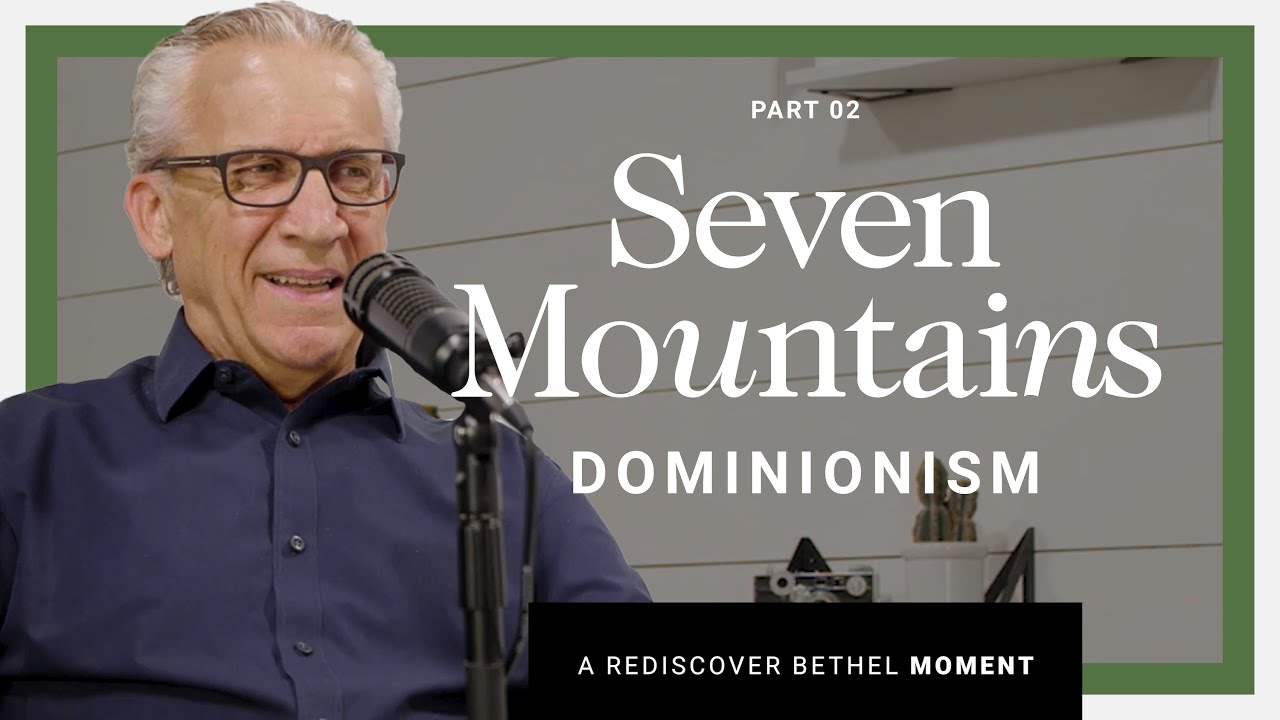 , podcasts,
 and political networks.
It’s hard to know exactly how many churches are part of the New Apostolic Reformation, but estimates suggest that about 3 million people in the U.S. attend churches that openly follow NAR leaders.
At the same time, the Seven Mountains Mandate doesn’t depend on centralized leadership or formal institutions. It spreads organically through social networks, social media – notably podcasts and livestreams – and revivalist meetings and workshops.
André Gagné, a theologian and author of “American Evangelicals for Trump: Dominion, Spiritual Warfare, and the End Times,” writes about the ways in which the mandate spreads by empowering local leaders and believers. Individuals are authorized – often through teachings on spiritual warfare, prophetic gifting, and apostolic leadership – to see themselves as agents of divine transformation in society, called to reclaim the “mountains,” such as government, media and education, for God’s kingdom.
This approach, Gagné explains, allows different communities to adapt the action mandate to . It encourages individuals to see themselves as spiritual warriors and leaders in their domains – whether in business, education, government, media or the arts.
Small groups or even individuals can start movements or initiatives without waiting for top-down directives. The only recognized authorities are the apostles and prophets running the church or church network the believers attend.
The framing of the Seven Mountains Mandate as a divinely inspired mission, combined with the movement’s emphasis on direct spiritual experiences and a specific interpretation of scripture, can create an environment where questioning the mandate is perceived as challenging God’s authority.
Slippery slope
These beliefs have increasingly fused with nationalist rhetoric and conspiracy theories.
A powerful example of NAR political rhetoric in action is the rise and influence of the “Appeal to Heaven” flags. For those in the New Apostolic Reformation, these flags symbolize the belief that when all earthly authority fails, people have the right to appeal directly to God’s authority to justify resistance.
This was evident during the Jan. 6, 2021, Capitol insurrection, when these flags were prominently displayed.
To be clear, its leaders are not calling for violence but rather for direct political engagement and protest. For some believers, however, the calls for “spiritual warfare” may become a slippery slope into justification for violence, as in the case of the alleged Minnesota shooter.
Understanding the Seven Mountains Mandate is essential for grasping the dynamics of contemporary efforts to align government and culture with a particular vision of Christian authority and influence.
Art Jipson, Associate Professor of Sociology, University of Dayton
This article is republished from The Conversation under a Creative Commons license. Read the original article.
rww
Early in 2021, Christian nationalist home-schooling advocate, author, and podcaster Heidi St. John launched a bid for U.S. Congress in Washington state’s 3rd Congressional District. Outraged by incumbent Republican Rep. Jaime Herrera Beutler’s vote to impeach former President Donald Trump in the wake of the Jan. 6 insurrection at the Capitol, St. John decided to try and unseat her in the GOP primary by MAGA voters, denouncing public libraries as “evil organizations,” and pledging to “be a mom for America.”
Earlier this month, St. John appeared on the “Stand Up For The Truth” podcast, where she soundedSeven Mountains and Christian nationalist themesthat have been central to her campaign, describing politics as “a spiritual battle” and vowing to “bring back the name of God into the political sphere.”
“[Politics is] in my blood,” St. John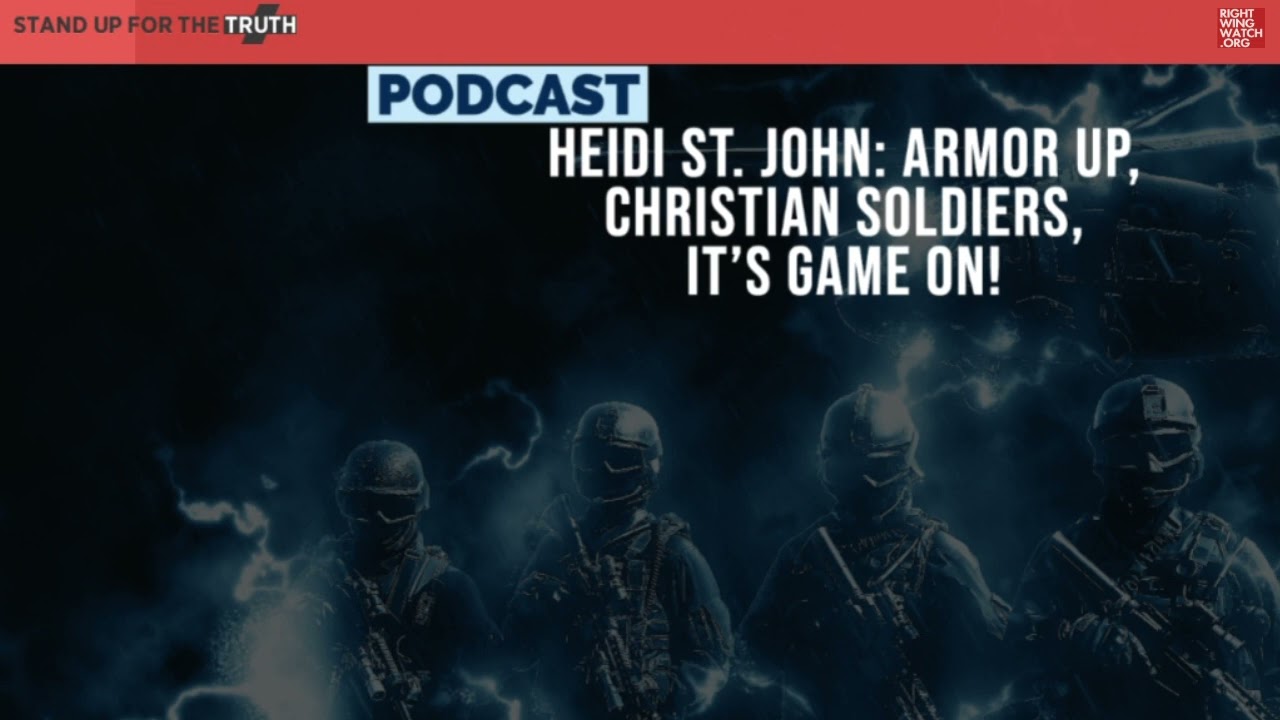 . “And I think it should be in the blood of every Christ follower. Politics determined policy, and it is policy that has murdered 63 million of our unborn in this country. It is policy that has gotten us into the mess that we are in as a nation, and we need wise people and godly people to ascend to positions of authority in the nation.”
“What we’ve observed over years and years and years is a church deciding to pull itself out of arguably one of the most important aspects of the culture, which is determining our laws and determining the policy that governs the people here,” she continued. “Christians belong in every sphere of influence. We have a command to be strong and courageous. [God] did not say, ‘Be strong and courageous except for in the political sphere, stay out of that one.’ No, we belong in every sphere of influence. We belong in medicine. We belong in entertainment. We belong in education. And we belong in politics.”
“[Christians] should be canvassing, they should be helping clean up the voter rolls, they should be running for positions of authority in every sphere of influence,” St. John added. “We bring back the name of Jesus, we bring back the name of God into the political sphere and we say out loud, ‘What is the biggest problem in our country? We have turned away from God.'”
“This is a spiritual battle,” St. John declared. “We know that we serve the Lord of Heaven’s armies. We serve the creator of the universe, the one who spoke the world into being. He can do anything. And I think he’s calling his people back out of hiding and out of the shadows and into the battle and onto the battlefield.”[pixvid: armour up xian soldiers it's game on!]
an no lnx 121
in addition to symbols of white supremacy, many of the rioters at the Capitol on Jan. 6 carried signs bearing religious messages, such as “Jesus Saves" and “In God We Trust" while others chanted “Jesus is my savior and Trump is my president." In a video interview, one of those who breached the Senate floor describes holding a prayer to “consecrate it to Jesus" soon after entering.
Many white evangelical leaders have provided religious justification and undying support for Trump's presidency, including his most racially incendiary rhetoric and policies. But as a scholar of religion, I argue that a particular segment of white evangelicalism that my colleague Richard Flory and I call Independent Network Charismatic, or INC, has played a unique role in providing a spiritual justification for the movement to overturn the election which resulted in the storming of the Capitol.
INC Christianity is a group of high-profile independent leaders who are detached from any formal denomination and cooperate with one another in loose networks.
Prayer marches
In the days and hours leading up to the storming of the U.S. Capitol on Jan. 6 the group Jericho March organized marches around the Capitol and Supreme Court building praying for God to defeat the “dark and corrupt" forces that they claimed, without evidence, had stolen the election from God's anointed president – Donald Trump.
Jericho March is a loose coalition of Christian nationalists formed after the 2020 presidential election with the goal of overturning its results. Leading up to and following the Capitol violence, their website stated: “We are proud of the American system of governance established by our Founding Fathers and we will not let globalists, socialists, and communists destroy our beautiful nation by sidestepping our laws and suppressing the will of the American people through their fraudulent and illegal activities in this election." This statement as well as others were removed some time after the Capitol riot.
Jericho March's main activity has been organizing prayer marches around Capitol buildings around the nation after the election, imitating the “battle of Jericho" in the Bible. In this biblical battle God commanded the army of his chosen people, the nation of Israel, to blow trumpets and then march around the city walls until God brought the walls down and allowed Israel to invade and conquer the city. According to the Bible, this was the first battle that the nation won in its conquest of Canaan, the “promised land" that it occupied afterward.
Jericho March's activities culminated in a large prayer rally on Dec. 12 in Washington, D.C., that included prayer marches and speeches on the mall by convicted and pardoned former National Security Advisor Michael Flynn, former U.S. Rep. Michele Bachmann, the Trump-supporting founder of MyPillow Mike Lindell and far-right Oathkeepers militia founder Stewart Rhodes.
Michael Flynn among other speakers at a Jericho March rally.
They also held prayer marches and vigils around the Supreme Court and Capitol surrounding the Jan. 6 election certification. Jericho March members believe that their prayer marches will help defeat the corrupt forces they claim, without the basis of any evidence, “stole" the election and that God will install Trump in his rightful place as president on Jan. 20.
Their strategy is peaceful prayer marches, however. After the Capitol violence they released this statement: “Jericho March denounces any and all acts of violence and destruction, including any that took place at the U.S. Capitol."
There is no evidence that anyone affiliated with the Jericho March organization took part in the Capitol breach. However, their leaders, I argue, are providing the religious motivation for the fight to overturn the election. Here's why.
'Prophets' and Charismatic Christianity
A key part of the Jericho March events has been a group of INC Christians who claim to be modern-day “prophets," including Lance Wallnau, Cindy Jacobs and Jonathan Cahn.
Charismatic Christianity, similar to Pentecostal Christianity, emphasizes the “gifts of the Holy Spirit," which include healing, exorcism, speaking in spiritual languages, and prophecy – defined as hearing direct words from God that reveal his plans for the future and directions for his people to follow.
Scholars use the term Charismatic to describe Christians in mainline or independent churches that emphasize the gifts of the spirit as opposed to Pentecostal Christians, who are affiliated with official Pentecostal denominations. Independent Charismatic Christians tend to be more unorthodox in their practices, as they are less tied to formal organizations.
In our research, we found that in most Charismatic churches, those who receive visions or direct words from God that make predictions that later correspond to events or have uncanny insights into people's lives are seen to have the “gift of prophecy." Some particularly gifted “prophets" are seen as being able to predict world events and get directions from God regarding entire nations.
While most Charismatic churches do not engage in this world-event predicting type of prophecy, some independent, high-profile leaders that do have become increasingly important in INC Christianity.
'Seven mountains of culture'
:{
}:
Before the 2016 election a group of INC “prophets" proclaimed Trump to be God's chosen candidate, similar to King Cyrus in the Bible, whom God used to restore the nation of Israel. After their prophesies of Trump's winning the election came true, these “prophets" became enormously popular in INC Christianity.
:{
}:
In our book, we showed that INC Christianity is significantly changing the religious landscape in America – and the nation's politics – by providing an unorthodox theology to promote conservative Christians rising to power in all realms of society. It is the fastest-growing Christian group in America.
Between 1970 to 2010, the number of regular attenders of U.S. Protestant churches as a whole shrank by an average of .05% per year. At the same time, independent Charismatic churches, a category in which INC groups reside, grew in attendance by an average of 3.24% per year. According to the World Christian Database there are over 36 million people attending U.S. independent Charismatic churches – that is, those not affiliated with denominations.
INC beliefs are different from those of most traditional Christian groups, including those affiliated with official Pentecostal denominations. INC promotes a form of Christian nationalism the primary goal of which is not to build congregations or to convert individuals, but to bring heaven or God's intended perfect society to Earth by placing “kingdom-minded people" in powerful positions at the top of all sectors of society, the so-called “seven mountains of culture" comprising government, business, family, religion, media, education and arts/entertainment.
One INC leader we interviewed in 2015 explained, “If Christians permeate each mountain and rise to the top of all seven mountains … society would have biblical morality, people would live in harmony, there would be peace and not war, there would be no poverty." They see Trump as fulfilling God's plan to place “kingdom-minded" leaders in top government positions, including Cabinet members and Supreme Court appointments.
Trump as God's chosen president
Many of those referred to as prophets in INC Christianity predicted another Trump victory in 2020. After his Nov. 3 loss, many we have studied have not recanted their prophecies, and have adopted Trump's conspiratorial rhetoric that the election was fraudulent. Many believe that the demonic forces that have stolen the election can still be defeated through prayer.
For INC Christianity's “prophets," Trump is God's chosen candidate to advance the kingdom of God in America, so any other candidate, no matter what the vote totals show, is illegitimate.T
Brad Christerson, Professor of Sociology, Biola University
This article is republished from The Conversation under a Creative Commons license. Read the original article.
FROM YOUR SITE ARTICLES
Evangelical 'prophets' predicted Trump would appoint 3 Supreme ... ›
RELATED ARTICLES AROUND THE WEB
For some Christians, the Capitol riot doesn't change the prophecy ... ›
#MAGA Church: The Doomsday Prophet Who Says the Bibl
https://www.alternet.org/2020/05/libertarian-journalist-explains-the-links-between-qanon-and-fundamentalist-christianity/
this week in Oregon, Republican primary voters picked a major extremist to run against incumbent Democratic Sen. Jeff Merkley in the general election: Jo Rae Perkins, who is an avowed believer in the QAnon conspiracy theory.Perkins won by almost 20%, which was certainly decisive — and given how much of a blue state Oregon is, pundits are predicting that Merkley will enjoy a landslide victory over Perkins in November.
:{
}:
Despite the fact that this choice is likely to be a huge electoral blunder, we can’t totally disregard the QAnon believers. Those who embrace the QAnon cult are quite serious about it — as serious as evangelical Christian fundamentalists are about their faith, according to libertarian journalist Bonnie Kristian.
The QAnon theory claims that Donald Trump became president in order to combat a worldwide sex trafficking ring that includes Hillary Clinton and other prominent Democrats— and a mysterious figure named Q is giving them information and updates about their cause. During her victory speech, Perkins specifically mentioned Q and told supporters, “I stand with President Trump, I stand with Q and the team. Thank you, Anons. Thank you patriots.” And she referenced the QAnon slogan, “Where we go one, we go all.”
Kristian, in an op-ed for The Week, explains that while QAnon devotees are far from mainstream, they have a fundamentalist-like devotion to their cause. And she notes that QAnon’s “narrative centers on a cabal of powerful figures in government, business, academia and media who make time for child sex trafficking and satanic sacrifice in their busy schedule of world domination.” Q, she adds, is “the movement’s anonymous digital prophet.”
Although QAnon isn’t known for being a religious movement per se, The Atlantic’s Adrienne LaFrance has reported on QAnon-minded churches being developed. And Kristian predicts that QAnon will grow as a religious sect.
“The church of QAnon may be a portent of things to come,” Kristian writes. “Traditional religiosity is declining in America, but humanity will not cease to be religious. It will merely diversify its sources ofincreasingly customized religiosity. From lapsed evangelicals, as many QAnon adherents seem to be, to religiously unaffiliated ‘nones,’ people crave the community, meaning and purpose church provides — even if they abandon or reject its teachings.”
Kristian notes the similarities between QAnon’s views and the views of end-time Christian fundamentalists, who have an obsession with the apocalypse.
“QAnon builds on apocalyptic thinking common in parts of evangelical and fundamentalist Christianity in America,” Kristian explains. “Q drops frequently include Bible passages, and the style of study of scripture and Q texts employed — the careful search for hidden prophetic meaning and correspondence to history and current events — is very much a creature of the religious right.”
//
https://www.alternet.org/2020/05/the-church-of-qanon-will-conspiracy-theories-form-the-basis-of-a-new-religious-movement/
no lnx twt pix
Followers of the QAnon movement believe in wild and dangerous conspiracy theories about U.S. President Donald Trump. Now a faction within the movement has been interpreting the Bible through QAnon conspiracies.
I have been studying the growth of the QAnon movement as part of my research into how extremist religious and political organizations create propaganda and recruit new members to ideological causes.
On Feb. 23, I logged onto Zoom to observe the first public service of what is essentially a QAnon church operating out of the Omega Kingdom Ministry (OKM). I’ve spent 12 weeks attending this two-hour Sunday morning service.
What I’ve witnessed is an existing model of neo-charismatic home churches — the neo-charismatic movement is an offshoot of evangelical Protestant Christianity and is made up of thousands of independent organizations — where QAnon conspiracy theories are reinterpreted through the Bible. In turn, QAnon conspiracy theories serve as a lens to interpret the Bible itself.
[Read more:
QAnon conspiracy theories about the coronavirus pandemic are a public health threat]
Trump vs. the ‘deep state’
The QAnon movement began in 2017 after someone known only as Q posted a series of conspiracy theories about Trump on the internet forum 4chan. QAnon followers believe global elites are seeking to bring down Trump, whom they see as the world’s only hope to defeat the “deep state.”
OKM is part of a network of independent congregations (or ekklesia) called Home Congregations Worldwide (HCW). The organization’s spiritual adviser is Mark Taylor, a self-proclaimed “Trump Prophet” and QAnon influencer with a large social media following on Twitter and YouTube.
The website of Omega Kingdom Ministries mixes QAnon theories and biblical references.
The resource page of the HCW website only links to QAnon propaganda — including the documentary Fall Cabal by Dutch conspiracy theorist Janet Ossebaard, which is used to formally indoctrinate e-congregants into QAnon. This 10-part YouTube series was the core material for the weekly Bible study during QAnon church sessions I observed.
The Sunday service is led by Russ Wagner, leader of the Indiana-based OKM, and Kevin Bushey, a retired colonel running for election to the Maine House of Representatives.
Bible and QAnon narratives
The service begins with an opening prayer from Wagner that he says will protect the Zoom room from Satan. This is followed by an hour-long Bible study where Wagner might explain the Fall Cabalvideo that attendees had just watched or offer his observations on socio-political events from the previous week.
Everything is explained though the lens of the Bible and QAnon narratives. Bushey then does 45 minutes of decoding items that have appeared recently on the app called QMap that is used to share conspiracy theories. The last 15 minutes are dedicated to communion and prayer.
At a service held on April 26, Wagner and Bushey spoke about a QAnon theory, called Project Looking Glass, that theU.S. military has secretly developed a form of time-travel technology.Wagner suggested to e-congregants that time travel can be explained by certain passages in the Bible.
On May 3, the theme of the QAnon portion of the service was about COVID-19. Bushey spoke about a popular QAnon theory that the pandemic was planned. (There is no evidence of this.) And when an anti-vax conspiracy theory documentary called “Plandemic” went viral , the video was shared on the HCW websites as a way for e-congregants to consume the latest in a series of false theories about the coronavirus.
Leveraging authority
What is clear is that Wagner and Bushey are leveraging religious beliefs and their “authority” as a pastor and ex-military officer to indoctrinate attendees into the QAnon church. Their objective is to train congregants to form their own home congregations in the future and grow the movement.
[Followers of the QAnon movement regularly show their support for Donald Trump at his political rallies, including this one held in Pennsylvania in 2018.
(Shutterstock)]
OKM’s ministry is rooted in Taylor’s prophecies. Wagner regularly mentions that if it wasn’t for Taylor, he would have never started this ministry.
On its website, OKM references the Seven Mountains of Societal Influence. Seven Mountains utilizes the language of Dominionism — a theology that believes countries, including the United States, should be governed by Christian biblical law. Its goal is to attain sociopolitical and economic transformation through the gospel of Jesus in what it calls the seven mountains or spheres of society: religion, family, education, government, media, entertainment and business. This blends QAnon’s apocalyptic desire to destroy society “controlled” by the deep state with the need for the Kingdom of God on Earth.
Wagner and Bushey have taught their congregation to stop listening to any media —even Fox News — because they’re are all “Luciferian.” What they provide instead is a road map to QAnon radicalization comprised of QAnon YouTube channels for the congregation’s daily media diet, the Qmap website that lists new QAnon conspiracy theories and Twitter influencers.
‘Deep state church’
They further insist that as Trump continues to “drain the swamp” in Washington, it’s “our” responsibility to drain the deep state church swamp. They believe the same deep state that controls the world has also infiltrated traditional churches. As Wagner stated in his April 12 service: “I am here to focus on the deep state church. This goes beyond our church and involves our culture and our politics. Kevin is here to talk about QAnon and the military operation to save the world.”
Like any church, they also run outreach ministries. OKM is currently raising funds for something called Reclamation Ranch, which Wagner describes as a safe place for children rescued after being held underground by the deep state. Children at risk is an ongoing theme in many QAnon conspiracy theories, including the famous fake “Pizzagate” theory.
As of May, OKM moved from Zoom to YouTube to accommodate the growth in attendees. At last count, approximately 300 accounts participated in the recent services.
While that’s not a lot of followers, we should be concerned about these latest developments. OKM provides formalized religious indoctrination into QAnon, a conspiracy movement that is both a public health threat by spreading false information about the coronavirus pandemic and a national security concern.The Conversation
Marc-André Argentino, PhD candidate Individualized Program, 2020-2021 Public Scholar, Concordia University
This article is republished from The Conversation under a Creative Commons license. Read the original article.