Gibney Alex Docu
---
:{:{spitzer CLIENT 9}:
---
---
gibney doc hbo mayer 4 25 DARK MONEY GAME
PVT INVESTigators, tried to buy sign collectors and co’s
2 suicides, LH re-elected after scandAL BROKE
DEWINE 5 MILLION?
---
DN
A new set of documentaries directed by Academy Award-winning filmmaker Alex Gibney premieres April 15 and April 16 on HBO. The films in The Dark Money Game series investigate the origins and impacts of campaign finance in the U.S. “Our country is being run by a small group of people who have an enormous amount of money, and they dominate our politics,” says Gibney. “It’s almost as if bribery has become utterly legalized. It’s pay to play. It’s quid pro quo.”
AMY GOODMAN: This is Democracy Now!, democracynow.org. I’m Amy Goodman, with Juan González.
We end today’s show with a new documentary series premiering today on HBO. Alex Gibney is the Academy Award-winning director of the HBO original The Dark Money Game.
NARRATOR: In Mexico, it’s a bite. In China, it’s tea money. In America, it’s called campaign finance.
TYLER FEHRMAN: There’s a whole political world out there that runs on dark money.
JEFFREY WILLIAMS: When elected public officials deal with business interests, corruption and bribery take over.
NARRATOR: Dark money led to the biggest case of political corruption in the history of Ohio.
JEFFREY WILLIAMS: In 2019, there was an investigation involving Matt Borges and Neil Clark. Neil had been one of the most powerful lobbyists in the history of the state.
NEIL CLARK: I’m ready to [bleep] people over.
EMILY GLATFELTER: That recording with Neil Clark and undercovers, those were critical to connect that dotted line.
NEIL CLARK: Every politician’s got to have somebody that is the hitman.
TYLER FEHRMAN: The FBI asked me to essentially spy.
MATT BORGES: You’re not like trying to set me up here, are you? That would be bad for both of us, but it would be worse for you.
TYLER FEHRMAN: And I thought, “What is he going to do?”
JEFFREY WILLIAMS: This was a organized conspiracy on a massive scale. But I fear this case is not a one-off example.
NARRATOR: Dark money has heralded a new era of vast corruption.
JANE MAYER: If corporate America was going to reassert its power, it had to create a counterrevolution and take political power back.
ROBERT SCHENCK: We had a little Bible verse: “The wealth of the wicked is laid up for the righteous.” So, let’s baptize the billionaires’ money.
NARRATOR: The Supreme Court rolled back rules on campaign finance.
RUSS FEINGOLD: Citizens United said corporations can create a super PAC.
NARRATOR: Now corporations could fund elections with unlimited amounts of cash.
JANE MAYER: One way you could look at it is that it’s a fair fight. Another way is that both parties are corrupt.
RUSS FEINGOLD: When it comes to the power of big business, the fix seems to be in.
JANE MAYER: A tiny group of people have bought an inordinate amount of influence.
JAMES BOPP: People with money will always have an advantage. Always.
NARRATOR: Money has a way of changing the rules.
AMY GOODMAN: For more, we’re joined by Alex Gibney, Academy Award-winning director this new two-part series, The Dark Money Game, an HBO original premiering tonight, 15 years after the Citizens United Supreme Court case.
I want to thank you so much for being with us. In these last few minutes, as you feature Jane Mayer, the great New Yorker investigative reporter, her book called Dark Money, talk about what’s critical for people to understand today as your two-part series premieres, The Dark Money Game.
ALEX GIBNEY: I think what’s critical to understand is that our country is being run by a small group of people who have an enormous amount of money, and they dominate our politics. It’s almost as if bribery has become utterly legalized. It’s pay to play. It’s quid pro quo. And unless we stop the system of money in politics, we’re done, because then our lives will simply be ruled by the people who have the most money.
JUAN GONZÁLEZ: And, Alex, how do these films relate to your earlier work, in particular The Crime of the Century on the opioid crisis?
ALEX GIBNEY: Well, it was doing a film on the opioid crisis that made me understand that one of the reasons there was such an anemic response to, literally, the intentional poisoning of America by a few corporations was because so many people in Congress were being paid off to look the other way, to focus on the needs of their donors rather than on the needs of their constituents. So it was that anger that led me to investigate this.
We found an extraordinary story in Ohio that’s literally quid pro quo corruption. And all the people on the FBI wiretap are saying, “It’s good now because of Citizens United.” And then we tried to look back at how we got to this place by looking at the corruption of the Supreme Court. So, you know, and I was inspired, as you say, by the great work of Jane Mayer, who’s in the film.
JUAN GONZÁLEZ: And in terms of what you’re hoping people will do, especially this coming out on the 15th anniversary of the Citizens United case? JANUARY? TRIAL VS ANNOUNCEMENT?
ALEX GIBNEY: Yes. I mean, I hadn’t originally intended for that to be the case, but nothing could be more apt, because Citizens United is the single most damaging decision the Supreme Court has come up with in the last 15 years, because it’s destroyed our democracy. And we need to understand that in order to get our democracy back, we have to reinvigorate our laws, as many states are doing, in order to be able to end this system of, essentially, legalized corruption.
AMY GOODMAN: Alex, we want to stay with you and post online our second part at democracynow.org. Alex Gibney, Academy Award-winning director of the new HBO original series, The Dark Money Game, premiering tonight. I’m Amy Goodman, with Juan González.
--
In Part 2 of our conversation with Academy Award-winning filmmaker Alex Gibney, he discusses in detail his new set of documentaries that premiere April 15 and April 16 on HBO in The Dark Money Game series, which investigate the origins and impacts of campaign finance in the U.S. Building on reporting by Jane Mayer of The New Yorker, in Ohio Confidential, he tracks the corruption case of former Ohio House Speaker Larry Householder, and in Wealth of the Wicked, he looks at the history of campaign financing and what led up to the Citizens United decision of 2010.
AMY GOODMAN: This is Democracy Now!, democracynow.org, The War and Peace Report. I’m Amy Goodman.
We’re continuing Part 2 with our conversation with the Oscar-winning director Alex Gibney. He has a new series out called The Dark Money Game. Alex is the award-winning director of Enron: The Smartest Guys in the Room, Going Clear: Scientology and the Prison of Belief and the Oscar-winning Taxi to the Dark Side. But tonight, HBO is premiering his two-part series. It’s called The Dark Money Game, and it’s divided in two parts. Tonight is Ohio Confidential. This is a clip.
CALLER 1: I kind of like the word “dark.” “Shadowy,” I don’t know what shadowy is.
CALLER 2: I hear what you’re saying now. My problem with the “dark money” is that nobody really knows that that’s an unreported — you know, contributors don’t have to report their names.
CALLER 1: Secret groups that hide —
CALLER 2: Secret groups, secret contributors.
CALLER 1: — that hide behind.
CALLER 2: Right.
CALLER 1: Yeah.
CALLER 2: Right, that’s what I’d rather do, is just make sure that people know that there are secret — secret people who we don’t know that are trying to tell us what to do.
AMY GOODMAN: That’s a clip from The Dark Money Game. It’s actually part one, that’s premiering tonight, and that’s called Ohio Confidential.
So, Alex Gibney, lay it out for us, this incredible two-part series that’s based on the book and the investigative reporting of Jane Mayer called Dark Money.
ALEX GIBNEY: Right. So, I was very much inspired by Jane’s work and always wanted to work with her. And so we had an opportunity to do something, in a way to kind of update what she had done as part of Dark Money, though some of the original reporting is in this.
The Ohio Confidential episode, which is the one that airs tonight, is kind of a jaw-dropping case that nobody’s heard of. It’s one of the biggest political corruption cases in American history, certainly in Ohio’s history. And it revolves around a slush fund that an energy company, FirstEnergy, $60 million slush fund, put into a dark money vehicle that was run by an Ohio politician named Larry Householder. He used it to become speaker of the House in Ohio and then paid back FirstEnergy by jamming through a $1.3 billion subsidy for FirstEnergy that was taken, you know, from Ohio citizens, off the backs of the citizens. So it’s really a jaw-dropping case.
But the interesting thing is that those wiretaps, which are FBI wiretaps, the FBI stumbled into this scheme when they were following a sort of a gambling case and they started to hear these lobbyists talk about this pay-to-play scheme. But they were cackling to each other, because they thought, “This is great. We can legally bribe now because of that great Supreme Court ruling called Citizens United.” So, that’s what attracted me to this particular story, because it has a much broader implication, the idea that they caught these people, but this is the kind of thing, since Citizens United, that’s going on all over the country.
AMY GOODMAN: And what were those recorded conversations that we just listened to?
ALEX GIBNEY: They were literally body wires of FBI informants and also phone wiretaps, obtained by warrant by the FBI. And originally, they were looking into — it was a gambling — it was a gambling matter. I can’t remember now. But as they were looking into that matter, they stumbled upon a number of lobbyists and politicians talking about this scheme, this FirstEnergy scheme, to basically defraud the Ohio public, but also to boost the fortunes of a politician in exchange for a huge payback from the public coffers of Ohio. And they began to investigate it.
And ultimately, Larry Householder, who was the Ohio speaker of the House, was convicted of conspiracy. Now, that’s rare. And it was only because they were so exceedingly brash and stupid that they literally laid out quid pro quo bargains in their conversations, because that’s the one thing you can’t do with — in the wake of the Citizens United decision. You know, you’re supposed to be able to funnel all this money into independent groups called super PACs, and you can keep the money dark by using 501(c)(4)s, which can’t be penetrated by public inquiry. So, but it’s supposed to be independent of the candidate. Well, we all know that that’s a sham, that it’s never independent of the candidate. But in this case, because of the wiretaps, you could hear all of the conspirators talk about how it wasn’t independent at all, and they had literally agreed to a deal.
AMY GOODMAN: So, that’s part one, Ohio Confidential, that’s premiering tonight on HBO. Part two is Wealth of the Wicked. And, of course, in this film, which tracks the history of campaign finance, you’re showing, in both cases, how bribery has been virtually legalized in the United States, this on the 15th anniversary of the Supreme Court decision Citizens United. Elaborate on what you found.
ALEX GIBNEY: Well, we went back, you know, to something called the Powell Memo, which was a memo that was drafted by a future Supreme Court justice named Lewis Powell for the American Chamber of Commerce. And the idea was: How do American corporations get back all this power? There are all these terrible laws that are doing things like protecting citizens from pollution or lung cancer from cigarette smoke, or, you know, any number of other things, and we’ve got to eliminate them. And they embark on a plan.
Over time, we see how that plan turned out. And it turned out, to great effect, with a kind of corruption and packing of the Supreme Court, by joining forces first with evangelical Christians, who were motivated by overturning Roe v. Wade, and then, ultimately, by plying Supreme Court justices with money and friends who, over time, sort of influenced them to take a kind of deregulatory posture. So, you see how it moves and how the court moves, not only to overturn Roe v. Wade, as we know, but also to overturn an enormous legacy of government rules and regulations that were designed to protect us as citizens from corporate abuse.
And maybe the thing that’s most jaw-dropping is, at one point, we look at a Supreme Court decision related to an Ohio — sorry, Indiana mayor, in which he had awarded a contract for garbage trucks to the Peterbilt company, and in return, he got a kickback, and he was convicted of bribery. The Supreme Court overturned it, because, in their wisdom, they said, “Well, wait a minute, he didn’t get the money before. He got the money after. So, that’s called a gratuity.” So, as long as you get the money, you get the bribe after the act, it’s OK. That really was a jaw dropper, because it went as far as anything I’ve ever seen to legalizing bribery.
AMY GOODMAN: So, Jane Mayer’s book Dark Money, the subtitle, The Hidden History of the Billionaires Behind the Rise of the Radical Right, it’s amazing it came out at the beginning of the Trump one presidency. Now we’re almost talking, what, nine, 10 years later, and we’re talking about what many people — who many people call President Trump’s co-president, Elon Musk, the richest man in the world. Your next project is, not surprisingly, on Elon Musk. And if you can talk about how that relates to your current series, The Dark Money Game, and what you’re doing? Give us a sneak peek of this next project.
ALEX GIBNEY: Well, that was a project, strangely enough, that I started about two years ago. And now, now already, the people I’m working with on that have decided I need to expand my brief, because, obviously, the story’s gotten a lot bigger.
But you can see how the Elon Musk story relates to the dark money project, and indeed we allude to it in the dark money films. I mean, in the 2024 campaign, he dropped $288 million into a super PAC to support Trump. And also, he is now the bank that keeps the Republican Party in check, lest, you know, one of — you know, lest three or four people defect from the program that the Trump administration has in mind, because if anybody defects, then Elon Musk will drop $50 million or $100 million into your district and primary you and send you packing. So, they’re all so scared of losing power that they’ll do anything to — including watch the end of American democracy, in order to keep being reelected. So, it’s the money that Musk represents that is directly related to dark money.
The Musk story is much bigger than that, and actually relates to the attempt to destroy truth. That’s really what it’s about. And that is sort of chapter one of the authoritarian playbook. If you can eliminate the distinction between fact and fiction, then you’re free to engage in propaganda, and you’ve eliminated the distinction between right and wrong.
AMY GOODMAN: So, as we wrap up, clearly, the problem is bipartisan.
ALEX GIBNEY: Yes.
AMY GOODMAN: Citizens United, you could say, started this 15 years ago. Do you think united citizens and noncitizens can stop it?
ALEX GIBNEY: Yes, we can. It’s up to us. But we’ve got to scream, and we’ve got to scream pretty loud. You are seeing some attempts to stop the influence of money in politics in states. I live a lot of my time in Maine now, and Maine is very good on that. And a number of other states understand it. You know, we don’t want to live by the rules of oligarchs who create a society that’s good for them but not for us. So, yeah, we’ve got to do a lot of screaming. But we’ve got to get it — we better get working, because things are moving pretty fast in the wrong direction.
AMY GOODMAN: Well, I want to thank you so much for spending this time with us, Alex. Alex Gibney is the Academy Award-winning director of the HBO original The Dark Money Game. It’s in two parts. The first airs tonight on HBO, Ohio Confidential, and Wealth of the Wicked airs on Wednesday night. To see Part 1 of our discussion, go to democracynow.org. I’m Amy Goodman. Thanks so much for joining us.
---
:{:{col dispatch}:
- new two-part HBO documentary, "The Dark Money Game," examines the influence of dark money in politics, focusing on a bribery scandal in Ohio.
- The documentary features interviews with journalists, law enforcement officials, and former Ohio House Speaker Larry Householder, who was sentenced to prison for his role in the scandal.
- Filmmaker Alex Gibney explores how corporate money, funneled through dark money groups, was used to pass a $1 billion nuclear bailout in Ohio.
- The documentary also delves into the influence of the Citizens United Supreme Court decision, which opened the floodgates for dark money in politics.
The words of the late, prolificOhio lobbyist Neil Clark narrate a new HBO documentary from award-winning filmmaker Alex Gibney about dark money's nefarious and pervasive influence on politics from statehouses to the U.S. Supreme Court.
A pay-to-play scandal that unfolded at the Ohio Statehouse and sent a top politico to federal prison is the focus of the first in a two-part series, "The Dark Money Game." The documentaries detail how the Ohio scheme fits into a larger puzzle of political corruption across the nation.
Gibney, whose projects include "The Crime of the Century" and “Enron: The Smartest Guys in the Room," used Clark's recorded conversations with undercover FBI agents and excerpts of the book published after Clark's suicide to explain how the Sicilian superlobbyist justified his role in the state's largest corruption scandal.
The first part of the series, titled "Ohio Confidential," details how Akron-based FirstEnergy spent more than $60 million to fuel former Ohio House Speaker Larry Householder's return to political power, pass a $1 billion nuclear bailout and defend that bailout against a ballot initiative to block it.
The conspirators used corporate money funneled through a series of 501(c)(4) nonprofits, which are often called dark money groups because they aren't legally to disclose their donors.
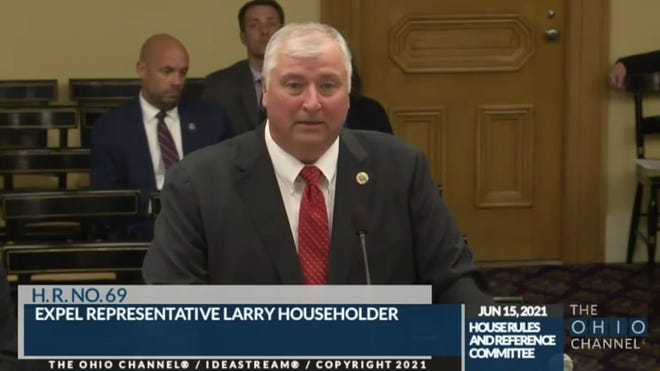
The film features retired FBI agent Jeff Williams, Assistant U.S. Attorney Emily Glatfelter, former U.S. Attorney David DeVillers, former Ohio Supreme Court Chief Justice Maureen O'Connor, political strategist Tyler Fehrman and statehouse reporter Laura A. Bischoff, who offer insights into how the pay-to-play scheme unfolded. Bischoff covered the case for The Columbus Dispatch, Cincinnati Enquirer, Akron Beacon Journal, Canton Repository and other news outlets in Ohio.
There's a moment in the documentary that shows how Householder first pitched the nuclear bailout bill to reporters. Bischoff asks if FirstEnergy's prolific donations played any role in the bill.
"And he looks at her like, 'Are you crazy?'" Gibney recalled. "When you see somebody lie like that, just lie. Bald-faced lie. You think, wow. It kind of takes your breath away. Because at that moment, he was sitting on the slush fund and knew exactly where the money was coming from. It should tell us all, trust but verify."
The second film, "Wealth of the Wicked," examines how corporate money, the anti-abortion movement, religious leaders and conservative lawyers united to open the floodgates of dark money in politics. The project was inspired by Jane Mayer’s book “Dark Money: The Hidden History of the Billionaires Behind the Rise of the Radical Right."
When can you watch 'Ohio Confidential'?
"Ohio Confidential" debuts at 9 p.m. on Tuesday, April 15. "Wealth of the Wicked" debuts on Wednesday, April 16 at the same time. Both films, which are about two hours long each, will be available to stream on HBO Max on Tuesday, April 15.
Gibney talked about his inspiration for the documentaries and what caught his eye about the Ohio scandal. The conversation was edited for length and clarity.
Q: Why did you want to dig into dark money and its influence?
A: I think it was an emotional reaction to the overturning of Roe v. Wade, the Dobbs decision, and my understanding that there was a lot of money behind it. Suddenly, it seemed like the Supreme Court had done something that was supremely undemocratic because they had kind of rigged the system.
That got me animated and thinking about it. Citizens United, I felt was also one of the most disastrous decisions ever, and for a long time I had been studying money in politics. And I'd always wanted to work on something with my pal, Jane Mayer, who had written that great book, "Dark Money."
(The Court) overturned Dobbs but they were also extremely hardcore in terms of favoring corporate interests over what I would call citizens' interests. And those two things really animated me in wanting to dig into this.
Q: Why did you choose to highlight the Ohio pay-to-play scandal?
A: We were looking for a story in which corruption played a big role, but also one of the things that was interesting to us about that case was that on a lot of the audio tapes, a lot of the conspirators were all chuckling about how Citizens United, it's a get out of jail free card.
Now we can do whatever we want. It just seemed like not only was it a massive corruption scandal based on dark money but also there was this cynicism about Citizens United that it somehow made corruption legal.
There were other issues related to Ohio that had to do with gerrymandering and also supermajorities in the House that were limiting the democratic possibilities of pushing back against corruption, so for all those reasons, it seemed like a good story.
Ohio just seemed like an incredible story. It's also a story that most people in this country have never heard of.
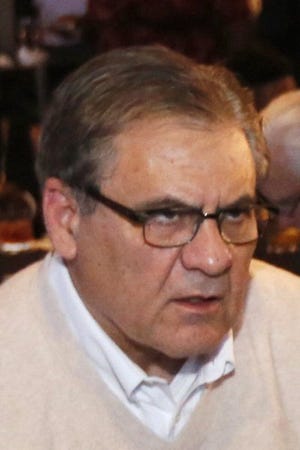
Q: Why use lobbyist Neil Clark as a lens for the story?
A: He's kind of a tragic figure. I don't know that we knew that we were going to necessarily lean so heavily into Neil at the beginning but having read his memoir, posthumously published, and also hearing him so much on the tapes, it began to organically make sense.
It felt also like he was a character, too, who felt that he had become seduced in a way by the idea that Citizens United was giving him permission to do what her ordinarily might not do or would have been nervous to do.
So, for all those reasons, he seemed like a fascinating, important, interesting and tragic figure, also somebody who lost his life over the issue.
*Q: What people, institutions or factors helped to uncover the Ohio scandal that didn't exist in other cases of corruption?
A: (The FBI) They stumbled on the case because they were looking into this (Cincinnati City Council corruption) case. They started to hear whisperings of this case as they were pursuing another case. So, they literally tripped into it.
That, to me, also was intriguing because it shows that the burden in this kind of world where everything is a wink and a nod, the burden on law enforcement is extreme because the law has been so narrowed in terms of how you can prosecute quid pro quo. That only because they were extremely reckless and because the FBI just stumbled into it was there really an investigation that could take off.
Q: The FBI committed substantial resources to this case in Ohio. Do you think that level of resources will be available going forward under a new administration?
A: That's a question for (FBI Director) Kash Patel, but if you're asking my hunch, my hunch would be no. This administration seems to be OK with a certain level of corruption particularly involving money in politics. It was interesting that this administration basically said they were no longer going to prosecute, for example, the Foreign Corrupt Practices Act.
I think that they are likely to look at it more as business as usual, and that's really a terrible thing for all of us. The idea that corruption's OK so long as it's in the service of making a profit. But the people who are losing are us, the citizens.
*Q: When you were looking at the Ohio case, were you surprised that Householder was reelected and Republicans won more seats?
A: I was shocked. It's kind of shocking that when somebody gets caught with their hands in the cookie jar that they're just reelected, that it just becomes 'Oh well, that's just politics.'
It's also, to some extent, a comment on the kind of tribal nature of our politics, which have become so associated with identity. The people vote because 'oh, I'm a Republican so I'm going to vote for the Republican' without any more reckoning about who that individual represents or what he or she has done.
At some basic level, I think most of us, whether you're a Democrat or a Republican, are offended by the idea of bribery and inside deals and corruption. The idea that somebody can pay somebody off to get a result that the rest of us can't get. It's not playing fair.
But there still is a tendency to coalesce around tribal motives, particularly when districts are so gerrymandered that the people in the middle don't really have a voice anymore.
*Q: The documentaries look at the line between bribes and legal campaign contributions. Where is that line, or is it wherever the U.S. Supreme Court decides to set it?
A: I think the line becomes fuzzier and fuzzier and fuzzier every day, and that's the problem.
I think there has been an attempt, particularly by the Supreme Court, to essentially legalize bribery as if to say bribery isn't bribery, it's just speech. I just think that's nonsense, but that's where we're going.
*Q: Particularly in "Wealth of the Wicked," you dive into the influence of religion on politics and politics on religion. Why do you think these have become so intertwined?
A: I was trying to get at the idea that religion obviously has a strong emotional hold on people, and the film isn't anti-religion in the sense that I believe people should believe whatever it is they want to believe.
But when you get to the point where the state begins to favor a certain kind of religion over another or favors religion over people who may not believe, then you've got a problem, and that's not what was intended by the Constitution. You're supposed to have freedom of religion, but the state's not supposed to endorse one.
Because religion, people feel very strongly about it. They fight wars about it. They kill each other over it as we see day in and day out. So if you can harness that politically and people aren't principled about keeping it out of government, then you've got a real problem.
*Q: Is the cat out of the bag on Citizens United, the landmark U.S. Supreme Court decision that allowed unlimited corporate and union spending in politics, or is there a way to clean up (dark money) 501(c)4 nonprofits, this murky stream of corporate funding of politics?
A: Obviously, you have a Supreme Court that's not sympathetic to undoing that.
Even while you have all these massive super PACs, at least we knew Elon Musk dropped$288 million for Donald Trump. But not to know? That really is the fundamental issue at stake for FirstEnergy. If the citizens had known that Larry Householder had gotten $60 million from FirstEnergy to pass a bill that was going to benefit FirstEnergy to the tune of $1.3 billion, I think the result might have been different. I would hope so.
*Q: I finished the second documentary and didn't feel too hopeful about the future of politics. What are you hoping viewers take away from this two-part documentary?
A: Take it back. If there's one single biggest problem in American politics, it's that we've allowed money to take over.
The big moneyed interests have taken over American politics, and that has to be a referendum for people from now on. In other words, I'm not voting for you unless you're going to pledge to take money out of politics because otherwise, you're just going to be another crooked pol who does what your funders want you to do rather than what your voters want you to do.
While I'm pessimistic, I'm also hopeful. There seems to be a sentiment that moneyed interests have taken over our politics in ways that aren't good for most of us. Well, we've got to change that. And that's not a left-right issue, that's a middle class versus the oligarchs issue.
:{*:{State government reporter Jessie Balmert can be reached at jbalmert@gannett.com or @jbalmert on X}:
---
==
wiki 4 25
The Dark Money Game is a 2025 two-part documentary miniseries by acclaimed documentary filmmaker Alex Gibney which explores the use of dark money in United States politics.[1][2]
The miniseries comprises the following films:
- Ohio Confidential - covers the Ohio nuclear bribery scandal
- Wealth of the Wicked - traces the history of campaign finance law in the United States, focusing on the influence of super PACs and religious groups, as well as the fine line between bribes and donations within the political process
References
- Smith, David (April 15, 2025). "'We're on a knife edge': Alex Gibney warns about the dangers of dark money" – via The Guardian.
- Fienberg, Daniel (April 15, 2025). "'The Dark Money Game' Review: Alex Gibney's Two Feature-Length HBO Documentaries Tackle Urgent Issues in Uninspired Ways".
External links
---
---
guk
when the Rev Robert Schenck saw Donald Trump secure the Republican presidential nomination in Cleveland, Ohio, in 2016, he turned to a fellow evangelical and asked: “Are we really going to do this? We’re going to choose this man who’s inimical to everything we believe?” The Christian leader looked at Schenck and replied: “I don’t care how bad he is. He’s going to get us the court we need.’”
[
Dark money: the quixotic quest to clean up US campaign financing
Read more
https://www.theguardian.com/us-news/2022/apr/06/dark-money-campaign-financing-citizens-united)
This anecdote about the devil’s bargain struck between Trump and the religious right is told in The Dark Money Game, director Alex Gibney’s new diptych of documentaries investigating how untraceable political spending has corrupted America’s highest court, corroded its democracy and put oligarchs in charge.
Inspired by Jane Mayer’s book Dark Money: The Hidden History of the Billionaires Behind the Rise of the Radical Right, the two films examine how a supreme court decision in 2010 known as Citizens United enabled corporations and unions to inject unlimited funds into elections, fostering a “pay-to-play” system.
One film, Ohio Confidential, examines a vast bribery scandal in Ohio involving the lobbyist Neil Clark and the alleged manipulation of political outcomes through secret funds. Another, Wealth of the Wicked, analyses the supreme court’s role in opening the floodgates to corporate influence in politics and the subsequent weakening of democratic institutions.
Together they tell a devastating tale of how financial manipulation and legally ambiguous bribery have eroded the foundations of US democracy, empowering Trump and a class of oligarchs in ways that echo dictatorships around the world.
Speaking via Zoom from his home in New Harbor, Maine, Gibney warns: “We’re on a knife edge now, teetering toward authoritarian rule. What it really is is crony capitalism and that’s what unites this administration with [Russia’s Vladimir] Putin, [Hungary’s Viktor] Orbán, [India’s Narendra] Modi and others.
“It’s a sense that government is nothing more than a bunch of traded favours among rich people and that’s the terrifying part because, when you’re only loyal to the capo di tutti capi as opposed to the constitution, suddenly the Department of Justice just becomes the Department of Vigilante Justice.
“The FBI becomes an instrument of revenge, not law and order, and you can see that the regulatory state is being dismantled brick by brick. They’re trying to destroy government, which is what the Powell memo effectively was trying to say way back in the day.”
The “Powell memo” was the work of Lewis Powell, a corporate lawyer from Virginia in the 1950s and 1960s commissioned by the US Chamber of Commerce to devise a strategic plan for reasserting corporate power and a conservative agenda over a political domain perceived as too liberal. One section of his secret blueprint described “exploiting judicial action” as an “area of vast opportunity”.
This vision was realised with the help of the Federalist Society, which cultivated and promoted conservative legal thinkers who adhere to principles such as originalism and textualism. Led by Leonard Leo, the group became a “pipeline” for placing conservative judges on the bench at all levels, including the supreme court.
Its influence was felt in 2010 with the supreme court’s 5-4 ruling in Citizens United v Federal Election Commission, which decided that corporations and unions have the same first amendment rights as individuals when it comes to political speech.
The ruling means that wealthy donors, corporations and special interest groups can spend unlimited cash on any candidate or cause as long as they do not give money directly to the candidate but rather set up so-called independent entities known as super political action committees, or Super Pacs. As The Dark Money Game puts it: “Fifteen years later, fringe groups could bundle billions in secret slush funds to frustrate popular rule.”
Gibney elaborates: “It’s the most bullshit kind of rationale. Anybody with common sense would know that this is a vehicle for corruption because it basically means that you’re giving permission for people to have those kind of wink-and-nod conversations where you know how to convey the meaning, which is: ‘If you give me this money, I’ll do this for you,’ but you don’t have it directly, just have it in a roundabout way.
“It’s like Japanese bunraku theatre, which has nearly life-size puppets, and behind the puppets are these men in black who move the puppets. You actually see them but they sort of disappear into the background.”
Gibney, whose past films include Wise Guy: David Chase and the Sopranos, The Crime of the Century and The Forever Prisoner, also highlights the alliance that formed between big business interests seeking deregulation and social and religious conservatives, particularly on issues such abortion.
He explains: “Big business was like, how do we play the long game so that we can get what we want, which is unfettered, unregulated capitalism? Along the way they realised it’s not very popular to say, ‘We want the right to pollute in your community because it’ll make us more money.’ That’s not a good political campaign slogan.
“They needed a very powerful emotional issue and that was abortion and so they join forces, in a way, with anti-abortion activists and over time engineer a takeover of the supreme court by utilising both money and that religious fervour.”
Gibney’s star witness is Schenck, an evangelical minister and former anti-abortion lobbyist who used to denounce “baby killers”, bring dead foetuses to demonstrations and put his body down in front of abortion clinics. He later had a crisis of conscience, changed his mind and came to support Roe v Wade, the 1973 supreme court ruling that enshrined reproductive rights.
Gibney says: “He talks about how there was this unholy alliance between big business and religious conservatives such as he and they cut a deal, which is you guys need money in order to carry on your crusade and we need your help so that we can make more money and pass some of it on to you by dismantling economic regulations.”
In the film, Schenck explains: “Whenever you talked about government regulation the argument was eventually these same characters who control my business are going to start trying to control your church. So it’s in your best interests that we defang this monster, and that brought a lot of religious conservatives over.
“We have a little aphorism built on a Bible verse: ‘The wealth of the wicked is laid up for the righteous.’ So, yeah, let’s baptise the billionaires’ money. We can do that and it eventually brought together this alliance.”
Schenck describes a carefully orchestrated “Operation Higher Court” to influence supreme court justices. This involved building relationships through social events, the use of “stealth missionaries” (wealthy donors), and catering to their personal and ideological leanings. Religious connections, particularly conservative Catholicism and groups such as Opus Dei, appeared to play a role.
Schenck says the most successful couple he “deployed” were Don and Gayle Wright of Ohio, who built strong relationships with Justices Samuel Alito, Antonin Scalia and Clarence Thomas. “I don’t know all the details. To be candid, I didn’t want to know what they were up to. Whatever it was, our donors were quite pleased. They saw the justices become bolder, more brazen, more confident and they rewarded us and the justices with whom they developed relationships for it.”
The biggest beneficiary has been Thomas, who received donations, luxury gifts and holidays from the Republican mega-donor Harlan Crow. In 2019 Thomas and his wife flew on Crow’s jet to Indonesia for nine days island-hopping on Crow’s yacht, raising concerns about a potential quid pro quo.
Gibney says of the justices: “Over time these are the friends they have. They begin to absorb the point of view of billionaires: we don’t want rules or regulations when it comes to deploying our capital. We want to be able to do whatever it is that we want to do. Then you get to a point where, over time, the supreme court seems to be saying that there should be no rules or regulations when it comes to big money.”
Wealth of the Wicked depicts the scheme to fill supreme court vacancies with conservative justices who would be willing to overturn Roe v Wade. Opponents of abortion rights had paced their faith in past Republicans such as Ronald Reagan only to be constantly disappointed.
The Rev Robert Schenck in The Dark Money Game. Photograph: HBO
However, Leo provided a list of pre-vetted candidates to Trump, who made it public during his election campaign to successfully woo conservative Christian voters who might otherwise have recoiled from his sexual affairs, verbal insults and casual cruelty. The overturning of Roe v Wade in 2022 was the ultimate victory for this decades-long effort. All the justices in the majority had been promoted by Leo and raised Catholic.
Meanwhile Ohio Confidential paints a picture of deep-seated corruption within Ohio’s state government, involving $1bn worth of bribes allegedly funneled through dark money groups that appears to have influenced legislation.
Gibney’s film begins with Neil Clark, a powerful lobbyist known by various nicknames like “Godfather” and “Prince of Darkness”. He was under FBI investigation and found dead in Florida in 2021 with a gunshot wound to the head, ruled a suicide, and wearing a [Ohio governor] Mike DeWine campaign T-shirt.
Clark had been creating video diaries before his death, seemingly intending to reveal the secrets he had kept. He said: “Now I no longer feel the need to keep people’s secrets. Relieved from this career-long burden, it’s time for me to share. And share I will. A Sicilian never forgets.”
The FBI launched an investigation into Clark and others, using undercover agents posing as corrupt businessmen. Wiretaps and body wires captured conversations revealing potentially illegal activities and connections to powerful figures such as the Ohio house speaker, Larry Householder, now serving 20 years in prison for racketeering.
The influx of dark money is shown to have enabled the Republican party’s takeover of state legislatures, including Ohio’s, in 2010. This led to aggressive gerrymandering, redrawing districts that made it almost impossible for Republicans to lose and incentivising politicians to cater to extremes rather than the broad public interest.
As goes Ohio, so goes the nation, Gibney argues. “Ohio is a story of where people actually got caught doing what they do every day in every state, so my presumption would be that this goes on in every state all the time. But because the Feds didn’t happen to stumble into it, we don’t hear about it. As the FBI admitted themselves, it was a case that they stumbled into by accident.”
With a convicted criminal now occupying the Oval Office, and embracing lawlessness daily, such forces can feel overwhelming. As the political consultant David Axelrod told the New York Times newspaper last week, “We’re living in a bizarro world where heroes are being targeted and scoundrels are in a position to target them.”
But a common thread running through both Gibney’s films is bribery. He hopes that will be enough to offend a basic sense of morality. “In a very essential way, most of us think bribery is a deeply immoral act where one person, by crossing somebody’s palms with silver, can get an advantage that the rest of us don’t have. We feel that’s wrong and it is wrong and so now it’s up to us to shout loudly enough so that the rule of law is restored.”
---
---
#What HBO's 'The Dark Money Game' won't tell you about the left
Here's an important truth that HBO’s ‘The Dark Money Game’ doesn't want you to know about politics in America today
 By
Published April 17, 2025
'The Dark Money Game' on HBO won't tell the truth about Democrats and politics | Fox News
"The Dark Money Game" – two new feature-length documentaries from Alex Gibney that debuted this week on HBO make it sound like the network’s initials stand for Helping Bernie on Oligarchy. Some leftist journalists and filmmakers have suggested Donald Trump represents the end of American democracy, but the bitterest socialists suggest democracy was ended by the Supreme Court in the 2010 Citizens United decision.
To paraphrase a famous bank commercial, it’s apparently the worst decision in the history of decisions.
Radical documentarian Gibney – dyspeptic enough that he told the Daily Beast in 2013 that Pope Benedict XVI was a "criminal" – made two films under the heading "The Dark Money Case." They debuted this week on HBO. In the two documentaries, he uncorked a large conspiracy theory, that religious conservatives and rapacious corporate capitalists have overthrown democracy since 2010. This conspiracy was realized with the help of those evil conservatives at the Federalist Society.
TIM DILLON SAYS REBRANDING OF CORE AMERICAN VALUES AS 'RIGHT-WING' IS THE 'CRAZIEST THING' HE'S EVER HEARD
The first of the two Gibney documentaries, "Ohio Confidential," is about a bribery scheme within the Republican Party, but to Gibney the "corruption" in Ohio included the passage of a pro-life bill. "Flush with campaign cash from dark money donors, the anti-abortion side was all smiles, like a team that plays the game knowing the fix is in."
All the journalism exposing dark money from George Soros or Reid Hoffman or Arabella Advisors or Act Blue is never going to get a minute on HBO. Ohio’s scandal is presented as a national scandal for the GOP. But, any local scandal for the Democrats is never national.
Gibney was inspired by leftist New Yorker writer Jane Mayer and her 2017 book "Dark Money: The Hidden History of the Billionaires Behind the Rise of the Radical Right." She echoed the thought that a pro-life bill in Ohio represented "private interests" taking over politics. When the Left loses, the "public interest" loses.
Journalists should expose bribery when it happens in politics, of course, but Gibney and HBO proceed as if one side of the democracy is corrupt, and that "dark money" is somehow something that is never scandalous when employed on behalf of the Left. So, all the journalism exposing George Soros or Reid Hoffman or Arabella Advisors or Act Blue is never going to get a minute on HBO. Ohio’s scandal is presented as a national scandal for the GOP. But any local scandal for the Democrats is never national.
10 YEARS AFTER SUPREME COURT'S CITIZENS UNITED RULING, BIG CORPORATIONS HAVEN'T HIJACKED OUR ELECTIONS
The second Gibney documentary, "Wealth of the Wicked," focuses on the origin of the Citizens United case, how the McCain-Feingold "campaign reform" bill made it illegal for the group Citizens United to air ads for its film "Hillary: The Movie" within 60 days of an election. "Campaign reform" was designed to prevent conservatives from going around the liberal media elite with critical films about Democrats. Now they try to suppress that information as a "misinformation" offense.
Mayer complained that in 90% of races, the candidate spending the most money is the winner. "And if you have so much more money than the other side has, you can completely drown out the other side."
CLICK HERE FOR MORE FOX NEWS OPINION
The problem with an argument like this is that many House and Senate races are not competitive. According to Ballotpedia, in 2024, 43 House and Senate candidates won an election by five percentage points or fewer, representing 9% of all congressional elections. Eighty candidates won an election by ten percentage points or fewer, representing 17% of all congressional elections. Candidates who aren’t expected to have a chance won’t get funded.
Charlie Kirk says Democrats took young people for ‘granted’ Video
Then there’s the umbrage about "completely drowning out the other side." This is unintentionally hilarious, because these Gibney films for HBO always drown out the other side. In this case, Gibney offered "conservatives" like former pro-lifer Rob Schenck, who is now in favor of abortion. Hence, they are no longer conservatives.
Schenck underlined the Gibney thesis: "We have a little aphorism built on a Bible verse: ‘The wealth of the wicked is laid up for the righteous.’ So, yeah, let’s baptize the billionaires’ money. We can do that and it eventually brought together this alliance."
The leftist critique of big money in politics, and their demands to somehow remove it, is utopian wishful thinking. Trying to take money out of politics is like trying to take the bark out of dogs. It can’t be done. It’s especially near-sighted because it doesn’t acknowledge the centrality of TV advertising and the news media in campaigns.
CLICK HERE TO GET THE FOX NEWS APP
The Left complains that speech is money, but leftist journalists can propagandize on HBO and that somehow doesn’t count as "money in politics," which it certainly is. What’s the advertising equivalent of that kind of airtime? The Left doesn’t see it that way, because dominating the national discussion is what they define as democracy.
"Non-commercial" non-capitalist media outlets like PBS and NPR promote a lot of leftist messaging and drown out conservatives, which represents Gibney’s radical goal of "taking the money out." But they’re taking the money out of conservative pockets and using it to smear them. That’s somehow the antonym of "oligarchy." Documentaries like these imply the political system is unfair when conservatives win anything.
CLICK HERE TO READ MORE FROM TIM GRAHAM
Tim Graham is the Executive Editor of NewsBusters.org and co-author with Brent Bozell of "Unmasked: Big Media’s War Against Trump."
---
an 12 24
Alex Gibney on 'The Bibi Files,' Netanyahu’s corruption case and how endless war keeps him in power
---
NO LNX
Client 9 and Other Interested Parties
:{NYT
By David Carr
Oct. 22, 2010
CAN that really be Eliot Spitzer, the disgraced former governor of New York, smiling into the camera with his co-host, Kathleen Parker, on a new CNN talk show, or is it some kind of fever dream? Did that sordid call-girl scandal really happen?
It did, every tawdry, tabloid inch of it. And now a story that seemed too far-fetched to be a movie, let alone a documentary, will arrive in theaters on Nov. 5, bringing with it a lurid tide of sex escorts, fallen politicians and dark conspiracies.
Even with frank testimony filmed against a gleaming money-and-power New York backdrop, as a documentary whodunit “Client 9: The Rise and Fall of Eliot Spitzer” is not much of a mystery. Who took down Mr. Spitzer? Mr. Spitzer did. As the movie, directed by Alex Gibney, vividly reiterates, when Mr. Spitzer was at the height of his powers as the governor of New York in 2008, he chose to patronize a high-priced escort service and was caught on a federal wiretap. In an age where the private rarely stays that way, it was a breathtakingly self-destructive (and extensively covered) act.
But Mr. Gibney is a filmmaker who is never content to leave well enough alone; there is always a story behind the story. He suggests that Mr. Spitzer, who as New York State’s attorney general had poked some of the most powerful figures in American capitalism right in the eye, may have been the victim of something beyond his own moral shortcomings.
The conspiracy to take down Mr. Spitzer may be a major preoccupation of “Client 9,” but Mr. Spitzer’s halting attempts to explain himself may prove more riveting.
Mr. Gibney, probing as an off-camera voice to understand what Mr. Spitzer could have been thinking when he became a client of the Emperor’s Club V.I.P. in early 2006, asks, “Why, you know, why hookers? I mean, why, particularly when that’s, you know, illegal?”
Image
Gov. Eliot Spitzer of New York with his wife, Silda, as the scandal emerged.Credit...Timothy A. Clary/Agence France-Presse — Getty Images
Mr. Spitzer, articulate and forceful on every topic save himself, struggles to answer. “Hmmmm. Ah, ah, ah, again, I don’t want to delve into, certainly don’t want to speak for others, and, and even in my own case, um, don’t really want to speak to that issue, except to say that you cave to temptations in a way that perhaps seems easier, and uh, eh, and perhaps is, in some very twisted way, um, less damaging.”
The camera pauses on his face, bearing silent witness to how the mighty fall. But Mr. Spitzer is not the only flawed character in a film full of them.
There is Maurice R. Greenberg, also known as Hank, the former chief executive of A.I.G., who resigned after Mr. Spitzer began an investigation into fraudulent business activities. Joseph Bruno, the longtime majority leader of the New York Senate, recounts the uncivil war between himself and Mr. Spitzer with obvious relish, although he himself ended up convicted of federal corruption charges in 2009. Roger Stone, the ultimate dirty trickster (with a Nixon tattoo on his back), is filmed high above New York, talking about how some of his handiwork he says he wrote a letter to the F.B.I. tipping it off to Mr. Spitzer’s thing for call girls and having sex with his socks on brought down a sitting governor.
The rogue’s gallery is part of a documentary that is one of a flurry of recent films for Mr. Gibney. The director of the Oscar-winning “Taxi to the Dark Side,” Mr. Gibney has made “Casino Jack and the United States of Money” (about the lobbyist Jack Abramoff), “My Trip to Al Qaeda” (a documentary of the journalist Lawrence Wright’s play of the same name describing his struggles writing about terrorism) and also directed a segment in “Freakonomics.” Although he was in a busy stretch, Mr. Gibney said that when he was approached with the idea by Jedd and Todd Wider, brothers who had produced “Taxi to the Dark Side,” he could not resist the epic example of male fallibility that intersects with darker themes of money, power and corruption.
He was asked whether Mr. Spitzer was simply a good man who did bad things.
“I think the better way to answer that is that he was a force for good,” Mr. Gibney said. “There has always been corruption in American business, but what has changed is that the new class of rich has become untethered to normal people. They are only tethered to other rich people, and here you have a rich and powerful guy who cares about what is happening to those people and decides to punch back.”
Mr. Gibney agrees that Mr. Spitzer was the author of his own downfall, but his film suggests there were plenty of eager hands ready to help that descent along. He points out that Kenneth Langone, the co-founder of Home Depot and a former director of the New York Stock Exchange who was assailed by Mr. Spitzer for signing off on a huge salary for the leader of the nonprofit exchange, seemed to know a lot about the governor’s day-to-day life.
Image
The Republican operative Roger Stone and friend.Credit...Magnolia Pictures
“How did Kenneth Langone know that Spitzer was in line at the post office sending money orders to the escort service? Whenever my conspiracy gene kicks in, I have to check myself, but I doubt that Langone even knows anyone who goes to the post office,” he said. So Mr. Spitzer was being followed? “Somebody was watching him.”
Clearly Mr. Spitzer was acting recklessly for someone in the public eye, and among the people who were amazed were those who worked at the escort service that he patronized. Cecil Suwal, the improbable 23-year-old “operations manager” of Emperor’s Club V.I.P., is something of a giggle box of truth. “Ultimately, vice just took over virtue, and he could not control himself,” she says in the film, with a disarming, girlish laugh.
The film spends a great deal of time delving into the high-end prostitution business, but the viewer can’t help but dwell on the fact that Mr. Spitzer put his future in the hands of a child-woman madam who had custody of his most intimate secrets.
Although Ashley Dupre, an escort and would-be pop singer, was the symbol of Mr. Spitzer’s public abasement, Mr. Gibney suggests that she only spent a few hours with him one night at the Mayflower Hotel in Washington. It was “Angelina,” a pseudonym given by Mr. Gibney, who was Mr. Spitzer’s steadiest paid date.
We are introduced to her early in the film pretty, articulate and seeming to be the only voice of truth in a documentary full of spinners and liars. But in a cinematic tactic sure to raise hackles, later in the film it is revealed that although the words belong to Angelina, Mr. Gibney hired and styled an actress to play her role because the actual person did not want to be seen on camera.
“The standard way to do it would have been to have electronically altered her voice and back-lit her, but she would have ended up looking like a mobster or a monster,” he said. “And I didn’t reveal it right away because I wanted people to invest in who she was and the truth of what she was saying.”
Image
Alex Gibney, director of “Client 9: The Rise and Fall of Eliot Spitzer.”Credit...Timothy Greenfield-Sanders
Oddly enough, even though a sex worker did not want to be identified, Mr. Spitzer decided to sit for not just one interview but five.
“After speaking to a number of folks and talking with Alex about what he intended to do, I got the sense that he was going to tell a story in a truthful and straightforward manner and I thought I could make a contribution,” Mr. Spitzer said.
And now that he has seen the film?
“I think it was useful for me to answer certain questions that he posed and that he delivered the sense that some of the work we were doing was important given the events that unfolded since,” he said. “Of course I told him I wished the story ended differently, but that wasn’t really up to him.”
Peter Elkind, an editor at large for Fortune magazine who collaborated with Mr. Gibney on the documentary and has written a book on the Spitzer affair, said that silence was a nonstarter for the former governor.
Mr. Spitzer, he said, “wants to remain a public voice, he wants to be heard, and so I think the interviews are a part of explaining himself, being his own advocate, that ensure that he will remain a public personality.”
Or course it will be a long time if ever before the former “Sheriff of Wall Street” will wield that kind of influence. Mr. Spitzer said it would be “hubris” to suggest that the ensuing financial meltdown would have gone any differently had he remained in office, but added, “I deeply regret that I was not able to play a role in what happened subsequently.”
Even after all the sit-down interviews and a movie’s worth of research, Mr. Gibney can’t fully explain how a man whose life was built on coldly rational choices behaved in such irrational ways. But he did reach at least one conclusion about his subject.
“When you believe you are a force for good, that what you are doing is important, it’s as if you can’t do anything bad,” he said. “And once that happens, it’s the first step toward a double life.”
A version of this article appears in print on , Section AR, Page 10 of the New York edition with the headline: Client 9 And Other Interested Parties. Order Reprints | Today’s Paper | Subscribe
See more on: Eliot Spitzer, Alex Gibney
---
CLIENT 9
Here’s Stone, who also takes objection to Gibney’s assertion that Ken Langone had Spitzer followed by private investigators:
Azi
Seriously —– “An attendee heard Mr. Stone saying the filmmaker and movie organizers could “eat shit.”
I never said this. I did say BULLSHIT out loud when I learned that “Angelina” the Hooker in the movie was an actress and that the movie nevers reveal the name or visage of a resal hooker who actually banged Spitzer. The unamed hooker is the source of the the claim that Spitzer did NOT wear black socks- a contrivance ! a device ! Gibney has NO on record source for that claim OR the claim that Langone hired a PI to “get the goods ‘ on Spitzer none at all. That is because he has prrof of neither.
Never said Gibney could “eat shit”. He is not a bad fellow at all- just an idelogue with an agenda.
Stone
---