Prop 23 ~ AB 32
prop 23 AB 32
see AB 32 original node
and extensions
carl pope thinks breAkthru
http://www.ecowatch.com/california-climate-policy-1988157045.html
===
A new analysis by a non-partisan business group finds that California’s climate policies have been a boon for the state’s economy.
Assembly Bill 32, also known as AB 32 or the Global Warming Solutions Act of 2006, requires California to reduce climate-cooking greenhouse gas emissions to 1990 levels by 2020 — which meant cutting emissions about 25 percent from where they were at in 2006, when AB 32 was passed by the California State Legislature and signed into law by Governor Arnold Schwarzenegger.
According to the analysis from Environmental Entrepreneurs (E2) analysis, AB 32 and related climate policies have pumped some $48 billion into the state economy over the past decade while helping create about 500,000 jobs. Read more.
http://www.desmogblog.com/2016/08/18/california-s-climate-policies-good-gold-state-s-economy
==
==
:{California House Races: Logue and Knight Of California's three known ALEC members, two ran for higher office in this election: state Rep. Dan Logue (R-3) for U.S. House district three against incumbent Rep. John Garamendi (D). Garamendi, who outspent Logue, won his race with 52% of the vote. ALEC member state Sen. Steve Knight (R-21) ran for U.S. House district 25 against fellow Republican former state Sen. Tony Strickland. Knight won the election. - See more at:
http://www.prwatch.org/node/12654#sthash.DkN3oZ13.dpuf}:
California Assemblyman Dan Logue is "the brains behind" an effort to put a Suspend AB 32 initiative on the state's November 2010 ballot. The initiative (Proposition 23: the California Jobs Initiative) would suspend California's Global Warming Solutions Act, A.B. 32, until the state's unemployment rate dips to 5.5 percent or lower[1] for four consecutive calendar quarters - a condition that has occurred only three times in the last 30 years, according to initiative opponents.[2], [3]
Contents [hide] |
Title
Termed by supporters the California Jobs Initiative, California state Attorney General Jerry Brown has given it the official title Suspends Air Pollution Control Laws Requiring Major Polluters to Report and Reduce Greenhouse Gas Emissions That Cause Global Warming Until Unemployment Drops Below Specified Level for Full Year[4].
Economic impact
The economic study [5] that the initiative's backers originally cited[6] to justify the initiative has been widely attacked [7], [8] for a number of reasons, one being including the costs but omitting the benefits; its main author has declined to defend the study against these criticisms.[9]. This study, by Cal State University Sacramento Business School dean Sanjay Varshney and professor Dennis Tootelian, was funded by the California Small Business Roundtable advocacy coalition.[10]
A December 2009 report by the Center for Resource Solutions (CRS), looking at the Varshney study and three other studies, reported that "Three of four prominent analyses show the costs of climate policy are far outweighed by projected economic growth". These three other studies were conducted by the California Air Resources Board (CARB); University of California researchers; and Charles RiverAssociates/Electric Power Research Institute.[11]
A [March 2010] report by California's Legislative Analyst's Office predicted that AB 32 will result in short-term job losses, even though, the Huffington Post reported[12], "the Union of Concerned Scientists pointed out that the report admits that predicting job losses or gains from AB 32 is extremely difficult, provides no independent research to back its claim of overall job losses, and fails to mention the numerous studies that have found that AB 32 would be a net job creator with little or no impact on small businesses."
Supporters
The California Secretary of State's website lists Thomas W. Hiltachk as the initiative's proponent.[13]
The SuspendAB32.org website lists proponents of the effort as U.S. Congressman Tom McClintock and California Assemblyman Dan Logue.[14]
Ted Costa, CEO of People's Advocate, had also been listed as a proponent until he turned against the effort in March 2010 due to its "country club" organization and unreported oil industry funding.[15]
Committee
The committee supporting this effort is the California Jobs Initiative Committee; its officers are[16],[17]:
- Sponsor: Jon Coupal, president of the :{Howard Jarvis :(style="background-color:#ffff66;"):}:Taxpayers Association
- Treasurer: Colleen C. McAndrews of Bell, McAndrews & Hiltachk, LLP
- "Other Principal Officer" Scott Folwarkow, Valero's director of government affairs in California
Financial support
Records from California's secretary of state show more than $3 million has been spent to qualify the initiative, with eighty percent of that money from special interests outside of California, and 78 percent oil money.[18]
A March 18 2010 Secretary of State filing reported the following "stop AB 32" donors:[19]
- Valero Services Inc., $500,000; San Antonio TX
- Tesoro Companies, $100,000; Long Beach. (Company HQ is in San Antonio TX[20].)
- World Oil Corp., $100,000; Houston TX
- Tower Energy Group, $100,000; Torrance CA
- No New Taxes, a Project of the Howard Jarvis Taxpayers Association, $100,001; Los Angeles CA
- Southern Counties Oil Co. DBA Total Energy Products, $50,000; Orange CA
- JACO Oil Co., $10,000; Bakersfield CA
- Lumber Association of California and Nevada PAC, $5000; Folsom CA
- Roger W. Cohen, Retired Physicist, $1000; La Jolla. (The former Manager of Strategic Planning and Programs for **Exxon**Mobil, he also reportedly lives (with same wife) in Durango CO.[21])
Other large donors include:
- Adam Smith Foundation, $498,000; Jefferson City, MO. Missouri is home to two of the nation's largest coal companies, Peabody Energy Corp. and Arch Coal Co.[22]; principals with the foundation have refused to say where the money came from.[22]
- In September 2010, Flint Hills Resources, a Kansas petrochemical company that is a subsidiary of Koch Industries, donated $1 million to the campaign.[23]
See ElectionTrack's page for a current list.
History
As of mid-February 2010, Dan Logue had asserted that $700,000 had been committed to the effort to gather signatures, but neither he nor Ted Costa would identify the backers.[24]
Up to $2 million had been pledged by Texas-based refiners Valero and Tesoro, the Los Angeles Times reported March 3.[25]
PR Firms
Queries about the initiative's financial backers were referred to PR firm Goddard Claussen, a Sacramento-and-DC firm which "created the Harry and Louise ads that helped kill health reform back in the early 1990s"; the Sacramento News and Review reported this firm had been hired to run the campaign.[26]
Identified as spokeswoman for the signature-gathering effort is Anita Mangels[27] of Bay Area "ballot measure and issue advocacy" firm Woodward & McDowell[28], which is running the anti-AB32 AB 32 Implementation Group[29]. This firm has previously run campaigns to defeat measures that would have restricted smoking and permitted pay-at-the-pump auto insurance.[30].
Opponents
Opposing the initiative is Californians for Clean Energy and Jobs, "sponsored by environmental organizations and business. Major Funding by Green Tech Action Fund, Environmental Defense Fund and the Natural Resources Defense Council Action Fund California Ballot Measures Committee", according to the group's website.[31] On June 23, 2010, San Francisco Mayor Gavin Newsom, Sierra Club Chairman Carl Pope, and Bay Area environmental leaders held a press conference calling on Valero and Tesoro to stop “bankrolling a deceptive, special interest effort to repeal California's clean air and clean energy laws.”[18]
Contributions
From ElectionTrack, May 11 2010, contributors are:[32]
- Green Tech Action Fund, San Francisco: $500,000 on 2010-03-31
- Environmental Defense Fund, New York: $75,000 on 2010-03-31
- Natural Resources Defense Council, New York: $12,500 on 2010-03-30
- Natural Resources Defense Council Action Fund, California Ballot Measures Committee (Nrdc), Sacramento: $50,000 on 2010-03-25
- Nicolas Berggruen $250,000 donation [33]
- Thomas Steyer [34](Hedge fund manager) donated $2.5 million [35]
- John Doerr (Venture capitalist) contributed $500,000 [36]
- Anne Earhart (heiress to the Getty family fortune) has donated $250,000 [37]
See ElectionTrack's page on this committee for a current list.
States vow to sue CA if Suspend AB 32 fails
In September 2010, theattorneys general of at least four states are preparing to sue California if AB 32 survives the Prop 23 challenge. The attorneys general of Alabama, Nebraska, Texas, and North Dakota have been devising a legal strategy to challenge the California act on the grounds that it "interferes with the right to freely conduct interstate commerce" and thus violates the U.S. Constitution, according to attorney general ofNorth Dakota Wayne Stenehjem.[38]
Contact
"Stop AB32" website: http://www.jobs2010ca.com/ ( formerly http://SuspendAB32.org )
"No on 23, Stop the Dirty Energy Proposition" (Keep AB32) website: http://www.stopdirtyenergyprop.com
Articles and Resources
Related SourceWatch Articles
- AB 32
- Goddard Claussen
- AB32 Implementation Group
- Woodward & McDowell
- People's Advocate
- Ted Costa
- Bell, McAndrews & Hiltachk, LLP
- Thomas W. Hiltachk
- Koch Industries
- David H. Koch
References
- ↑ Colin Sullivan (2010-02-11). Drive to Delay Calif. Climate Law May Be Stuck in Neutral. New York Times (ClimateWire). Retrieved on 2010-02-26. “The brains behind the initiative in the state Assembly, Republican Dan Logue, recently told the Los Angeles Times that his campaign had $600,000 available to fund the signature-gathering operation, which requires 433,000 signatures by April 16 to qualify for the general election. His measure as currently drafted would repeal the law, A.B. 32, until the state's unemployment rate dips to 5.5 percent. But many close to the process, including an ally of Logue, say the effort has flagged in recent weeks and has yet to begin gathering signatures with about two months left until the deadline.”
- ↑ Jim Sanders (2010-03-04). Capitol Alert: Drive launched to derail state's greenhouse gas law - Sacramento Politics - California Politics. Sacramento Bee. Retrieved on 2010-03-04. “Opponents contend that the four-quarter threshold for reinstatement essentially would kill AB 32 because state records show that California has met the requirement only three times in the past three decades.”
- ↑ Craig Miller (2010-05-03). AB 32 Stopper Headed for Ballot. KQED's Climate Watch. Retrieved on 2010-07-30. “The proposed ballot measure would freeze AB-32 until the state’s unemployment level dropped to five-and-a-half percent—or lower--for one full year. That’s something that’s happened only three times since the mid-1970’s: once in the late 1980s (for about ten quarters), a similar stretch in the late ‘90s, and once in 2005-06. After the deep recession of the early ‘80s, it took the state’s unemployment rate about four-and-a-half years to move from its 11% peak back to the 5.5 percent threshold.”
- ↑ Margot Roosevelt (2010-02-06). Effort underway to suspend California's global-warming law. Los Angeles Times. Retrieved on 2010-03-04. “Sponsors of the California initiative, including Rep. Tom McClintock (R-Granite Bay), Ted Costa of the People's Advocate, a Sacramento-based anti-tax group, and Thomas Hiltachk, an attorney with Republican Party ties, have dubbed the measure the California Jobs Initiative. The official wording of the initiative, however, lies in the hands of Atty. Gen. Jerry Brown, an outspoken advocate of AB 32 and a presumptive Democratic candidate for governor. On Wednesday, his office discarded the "jobs initiative" title in favor of the unwieldy: "Suspends Air Pollution Control Laws Requiring Major Polluters to Report and Reduce Greenhouse Gas Emissions That Cause Global Warming Until Unemployment Drops Below Specified Level for Full Year."”
- ↑ Sanjay Varshney and Dennis Tootelian (2009-06). Cost of AB 32 on California Small Business - Summary Report of Findings (pdf).
- ↑ About AB 32 - Get California Back to Work! Suspend AB 32. Suspend AB 32. Retrieved on 2010-03-12. “Economists estimate if nothing is done AB 32 will...”
- ↑ Mattew E. Kahn (2009-09-21). [http://www.arb.ca.gov/cc/scopingplan/economics-sp/matthew_kahn.pdf A Review of Cost of AB 32 on California Small Businesses—Summary Report of Findings by Varshney & Associates]. Retrieved on 2010-03-01.
- ↑ James L Sweeney (2010-02-16). [http://www.stanford.edu/group/peec/cgi-bin/docs/policy/research/Sweeney%20Review%20of%20Varshney.pdf Review of Varshney/Tootelian Report “Cost Of AB 32 On California Small Businesses – Summary Report Of Findings” (draft)]. Retrieved on 2010-03-01.
- ↑ Steven Maviglio (2010-02-27). Business-Backed Economist Backs Off His Anti-AB32 Study. The California Majority Report. Retrieved on 2010-03-01. “In an interview with the Sacramento Business Journal http://sacramento.bizjournals.com/sacramento/latestnews.html, Sanjay Varshney, Dean of the Business School at California State University Sacramento, declined to defend his results when pressed by the reporter to defend the criticism from the Stanford economists. “I haven’t really kept up with the debate,” he told the Business Journal. “It will be very difficult for me to comment.””
- ↑ Michael Shaw (2009-07-24). Debate soars over costs of climate bill. Sacramento Business Journal. Retrieved on 2010-03-12.
- ↑ unknown (2009-12-03). Controversy Over Economic Impacts of California's Climate Law: A Comparative Analysis of Projections. PRNewswire. Retrieved on 2010-03-12. “Climate Solutions and Economic Growth in California (http://www.resource-solutions.org/publications.php) examines the assumptions, models and results of four different economic modeling efforts conducted by the following organizations: l) California Air Resources Board (CARB); 2) University of California researchers; 3) Charles River Associates/Electric Power Research Institute; 4) Varshney and Tootelian. The first three studies all found strong growth even while considering only a narrow class of benefits -- expected energy savings from efficiency measures. The fourth study, Varshney and Tootelian, includes only costs and no benefits associated with the law. Broader economic benefits expected to occur, such as boosts to the clean energy and pollution control sectors, improvements in public health, and increased investment in clean tech industries, were not included in any of the studies.”
- ↑ Jonathan Kim (2010-03-12). Petition to Kill California's Anti-Pollution Legislation Is Off to a Rocky, Slimy Start. Huffington Post. Retrieved on 2010-03-12.
- ↑ Initiatives and Referenda Cleared for Circulation - Elections & Voter Information. California Secretary of State. Retrieved on 2010-03-12.
- ↑ Proponents - Get California Back to Work! Suspend AB 32. SuspendAB32.org. Retrieved on 2010-03-01.
- ↑ Margot Roosevelt (2010-03-12). Fight splits backers of ballot initiative to suspend state's global warming law. Los Angeles Times. Retrieved on 2010-03-12. “[Costa said] "they believe they can run this thing out of the country club, and to hell with the little people of California. If they have half a million dollars, how come they haven't reported it?".”
- ↑ ? (2010-03-13). Capitol Alert: Valero, Howard Jarvis group lead fight to suspend AB 32. Sacramento Bee. Retrieved on 2010-03-13.
- ↑ Statement of Organization Recipient Committee (form 410) Amendment # 1323890. California Secretary of State. Retrieved on 2010-03-18.
- ↑ 18.0 18.1 Daniel Wood, "Texas Oil Firms Behind California Greenhouse Gas Initiative" truthout, June 24, 2010.
- ↑ California Jobs Initiative Committee (2010-03-18). Late Contribution Report (form 497). California Secretary of State. Retrieved on 2010-03-18.
- ↑ Products and Services. Tesoro Corporation. Retrieved on 2010-03-18. “Incorporated in Delaware in 1968, Tesoro Corporation is a FORTUNE 100 company and one of the largest independent refining and marketing companies in the Western United States. Headquartered in San Antonio, Texas, Tesoro operates seven refineries, wholesale and commercial marketing activities and a network of retail fuel stations.”
- ↑ AGCI Past Participants :: About Roger Cohen. Aspen Global Change Institute. Retrieved on 2010-03-18.
- ↑ 22.0 22.1 Dan Morain (2010-05-02). Battle to suspend emissions law has no boundaries - Sacramento Opinion. Sacramento Bee. Retrieved on 2010-05-11. “Two of the nation's largest coal companies are based in St. Louis, Peabody Energy Corp. and Arch Coal Co. Arch and Peabody cite AB 32 in their annual reports, warning that such laws could force electricity generators to switch from coal to other fuel.”
- ↑ Todd Woody, "Koch brothers jump into Prop 23 fight" Grist, September 3, 2010.
- ↑ Michael Gardner (2010-02-12). Critics: State can’t handle greenhouse gas mandates. SignOnSanDiego.com. Retrieved on 2010-03-01. “Supporters of the initiative have until July 5 to collect the signatures of 433,971 registered voters. Logue said the campaign has 'commitments' for about $700,000...He and Costa declined to reveal who has pledged financial assistance.”
- ↑ Margot Roosevelt (2010-03-03). Texas-based refiners pledge to fund fight against California's global warming law. Los Angeles Times. Retrieved on 2010-03-04. “Two Texas-based refinery giants have pledged as much as $2 million to fund signature gathering for a ballot initiative to suspend California's landmark global warming law, according to Sacramento sources. The companies, Valero Energy Corp. and Tesoro Corp., own refineries in California that would be forced under the law to slash emissions of heat-trapping greenhouse gases.”
- ↑ Cosmo Garvin (2010-03-03). Shocker! Texas oil company bankrolling bid to scrap California's global warming law.. Sacramento News & Review. Retrieved on 2010-03-04.
- ↑ unknown (2010-03-11). The Buzz: Ted Costa, who pushed to suspend AB 32, now opposes effort. Sacramento Bee. Retrieved on 2010-03-12.
- ↑ Team (Anita Mangels, Project Director). Woodward & McDowell. Retrieved on 2010-03-12.
- ↑ Ali Winston (2010-01-18). Green firms balk at coalition's lobbying effort. San Francisco Chronicle. Retrieved on 2010-03-12.
- ↑ Associated Press (1994-01-05). "Pay-at-Pump Plan pushed back", Lodi News-Sentinel. Retrieved on 2010-03-12.
- ↑ STOP the Texas Oil Companies' Dirty Energy Proposition. Californians for Clean Energy and Jobs. Retrieved on 2010-05-11. “[The effort is] sponsored by environmental organizations and business. Major Funding by Green Tech Action Fund, Environmental Defense Fund and the Natural Resources Defense Council Action Fund California Ballot Measures Committee. FPPC ID # 1324059”
- ↑ Campaign Contributions to Californians For Clean Energy And Jobs, Sponsored By Environmental Organizations And Business. ElectionTrack. Retrieved on 2010-05-11. “...Cash on hand: $649,221 as of [?]; Contributions since [?]: $637,500”
- ↑ Billionaire shells out $250,000 to fight Proposition 23
- ↑ The World's Billionaires [http://www.forbes.com/lists/2008/10/billionaires08_Thomas-Steyer_RUIR.html]
- ↑ Billionaire shells out $250,000 to fight Proposition 23
- ↑ Billionaire shells out $250,000 to fight Proposition 23
- ↑ Billionaire shells out $250,000 to fight Proposition 23
- ↑ Mark Schapiro, "4 States Prepare Legal Assault On California's Climate Law" HuffPo, September 9, 2010.
External resources
- http://SuspendAB32.org supporting the initiative
- StopDirtyEnergyProp.com opposing the initiative. (Earlier: No on Valero site in opposition)
- Initiative and Referendum Qualification Status - Elections & Voter Information. California Secretary of State. Retrieved on 2010-03-04.
- Campaign Finance Activity - Propositions & Ballot Measures. California Secretary of State. Retrieved on 2010-03-04.
- Why oil billionaire David Koch is secretly funding Astroturf to repeal CA clean energy laws Climate Progress, August 19, 2010
- Don’t panic: Much of California’s climate-change strategy can survive Big Oil’s ballot attack—sort of Sacramento News & Review, July 22, 2010
Campaign Finance
- Stop AB 32 (California Jobs Initiative Committee) financial data from California Secretary of State, ElectionTrack
- Keep AB 32 (Californians For Clean Energy And Jobs) financial data from California Secretary of State, ElectionTrack
External articles
http://www.huffingtonpost.com/2010/09/09/california-greenhouse-law_n_710609.html?ir=Politics
This story comes courtesy of California Watch
The attorneys general of at least four states are preparing to sue California if the state’s landmark law limiting greenhouse gas emissions survives a challenge at the ballot box this November.
The attorneys general of Alabama, Nebraska, Texas and North Dakota have been devising a legal strategy to challenge the California act, signed by Gov. Arnold Schwarzenegger in 2006, on the grounds that it interferes with the right to freely conduct interstate commerce, according to Wayne Stenehjem, the attorney general of North Dakota.
“We are going to test the limits of how much you can constrain interstate commerce in the name of climate change,” Stenehjem said.
California and other states are now in the forefront of the response to global warming in the wake of this year’s congressional retreat from federal climate legislation. California’s Global Warming Solutions Act, widely known as AB 32, imposes 80 percent carbon emission reductions by 2050 across all sectors of the economy.
That measure is now being challenged by Proposition 23, an initiative on the November ballot that would delay implementing the law until California’s unemployment rate drops to 5.5 percent or below. The state’s unemployment rate, which now stands at about 12 percent, was last at 5.5 percent in November 2007.
Stenehjem is hoping the initiative passes. And if not, he and his fellow attorneys general will sue, he said. “We will be posing a direct challenge to the interstate commerce clause of the U.S. Constitution,” he said.
A precedent for any interstate commerce lawsuit against California is likely to come first from a case involving Minnesota and North Dakota.
North Dakota supplies 60 percent of Minnesota’s energy, much of it from a massive lignite coal mine. Shortly after Minnesota Gov. Tim Pawlenty signed a law mandating a 30 percent reduction in CO2 emissions from coal-fired power plants by 2012 and an 80 percent reduction by 2050, tensions erupted with the electricity supplier next door: The North Dakota legislature appropriated $500,000 to finance preparation of a legal challenge by Stenehjem, the attorney general.
“Minnesota cannot regulate the way we do things in North Dakota,” he said.
The federal Environmental Protection Agency has the authority to regulate greenhouse gases, but it has yet to do so. That leaves California, much like Minnesota, confronting a national electrical grid, subject to widely varying standards governing greenhouse gas emissions.
California obtains 30 percent of its power from beyond its borders, most of it from states in the Pacific Northwest and Southwest. The California Energy Commission did not immediately provide a state-by-state breakdown of all energy suppliers to the Golden State, but North Dakota does not appear to be one of them.
Stenehjem’s fellow attorneys general are already at the forefront of using the courts to slow climate regulations. Texas Attorney General Greg Abbott sued the EPA in federal court earlier this year, hoping to overturn the agency’s “endangerment finding” that greenhouse gases pose a threat to the environment and public health - a finding which triggered the agency’s ability to regulate CO2 emissions.
When asked about its California strategy, Tom Kelley, spokesman for the Texas attorney general, demurred in an e-mail: “We have conversations with a wide variety of entities and officials about various issues, but we don’t divulge the substance of those conversations. The Texas Office of the Attorney General has a long-standing policy of not divulging publicly any legal strategies in advance.”
Two Texas oil companies, Valero Energy Corp. and Tesoro Corp., are thus far the biggest contributors to the effort to block the California law governing greenhouse gases, channeling more than $4 million into the “Yes on 23” campaign.
Alabama Attorney General Troy King filed a brief in support of an effort by the Tennessee Valley Authority to overturn North Carolina’s regulation of greenhouse gases as a “public nuisance.” That case was decided in favor of the authority last July by the 4th Circuit Court of Appeals, a decision that could have significant effects on the legal leverage available to states to restrict emissions.
King’s office did not respond to numerous calls requesting comment about Stenehjem’s strategy. Neither did the office of Nebraska Attorney General Jon Bruning.
Steven Maviglio, spokesman for the “No on 23” campaign, said, “We are confident that our state’s clean air and electricity standards are bulletproof from any attacks from states where oil and coal companies control politicians.”
Anita Mangels, director of communications for the “Yes on 23” campaign, said she was not aware of the legal strategy, and that “it bears no relevance to Proposition 23, which will be voted on by California voters and is focused wholly on a temporary suspension of AB 32.”
She added, “After the election, we fold up our tents and go home.”
David Farnsworth, a senior associate with the Regulatory Assistance Project, which represents current and former utility regulators, said that legal fights such as these could prove decisive as state regulatory authorities are compelled to illustrate that “the imminent dangers from climate change outweigh whatever impact restrictions on coal-powered electricity might have on interstate commerce.”
California, he said, would have a strong argument to make now that the EPA has determined that greenhouse gases constitute a health risk. Stanley Young, communications director at the California Air Resources Board, which is implementing the rules governing AB 32, said: “We are aware of possible commerce clause implications and craft our regulations to address those concerns.”
For North Dakota’s Stenehjem, legal challenges are the one option left for limiting the uncertainties created for states, which are left to deliver, or obtain, electricity across state lines with different rules and, ultimately, different prices for carbon dioxide.
“We cannot meet the energy needs of the United States if we face a patchwork of different laws regulating energy,” he said.
solnit tom dispatch
In the jihad that concerns me right now, most of the monsters come from Texas; the prey is in California; and it’s called our economy and our environment. Four years ago, with state Assembly Bill 32, the Global Warming Solutions Act of 2006, we Californians decided we’d like to cultivate our environment for the benefit of all of us, human and biological, now and in the long future.
They’d like to pillage it to keep their profit margins in tip-top shape this year and next. The latest tool to do this is called Proposition 23, and it’s on our ballot on November 2nd. It is wholly destructive, cloaked in lies, and benefits no one -- no one human, that is, though it benefits the oil corporations a lot. (You could argue that it benefits their shareholders, but I’d suggest that their biological and moral nature matters more than their bank accounts do and that, as a consequence, they’re acting against their deepest interests and their humanity.)
When he signed AB 32 into law, Governor Arnold Schwartzenegger, who’s totally weird, termed out, but really good on climate stuff, said: “Some have challenged whether AB 32 is good for businesses. I say unquestionably it is good for businesses. Not only large, well-established businesses, but small businesses that will harness their entrepreneurial spirit to help us achieve our climate goals. Using market-based incentives, we will reduce carbon emissions to 1990 levels by the year 2020. That's a 25% reduction. And by 2050, we will reduce emissions to 80% below 1990 levels. We simply must do everything in our power to slow down global warming before it's too late."
With Proposition 23, two out-of-state oil corporations, Valero and Tesoro, and right-wing oil billionaires based in New York and Kansas are trying to use the California initiative process, originally intended to allow citizen intervention in the governance of this state, to countermand AB 32 and set policy for us. “According to data from the California Secretary of State's office,” Kate Sheppard recently reported in Mother Jones magazine, “more than 98% of contributions to the pro-Prop. 23 campaign are from oil companies. Eighty-nine percent of the contributions come from out of state… Valero contributed $4 million, Tesoro gave $1.5 million, and a refinery owned by the notorious Kansas-based billionaire brothers David and Charles Koch, of Koch Industries, kicked in another $1 million. Just last week, Houston-based Marathon oil contributed $500,000.”
Actually, Tesoro and Valero are headquartered out of state, but their refineries in California gave us 2.4 million pounds of toxic chemicals in our air and water last year, and they’d like to continue offering the citizens of my state these gifts that keep giving illness, death, and long-term environmental devastation without interference. The coming vote is not about protecting fancy places for upscale hikers -- the stereotype used to portray environmentalism as a white-person’s luxury movement -- it’s about air quality for inner-city people, especially those who live near refineries and harbors. This is the kind of environmental degradation that’s about childhood asthma and increased deaths from respiratory illness. In other words, Prop. 23 is part of a corporate war on the poor. A vote for Prop. 23 is a vote to turn the lungs of poor children into a snack for dinosaurs, to put it in bluntly Hollywood-ish terms.
Lies of the Living Dead
To sabotage AB 32, they’re spending lots and lots of money and telling lots and lots of lies. Start with the proposition’s name -- “The California Jobs Initiative” -- designed to make you think that this measure will create jobs. Actually, according to most reputable analyses, it will do the opposite. A green economy has made jobs, is making jobs, and will make more jobs. This stealth initiative would suspend AB 32 until unemployment in California drops below 5.5% for four consecutive quarters, which it won’t anytime soon, if ever.
The implication is that doing something about climate change is a luxury we cannot afford in this bleak economy. That’s a lie. Down the road, if we don’t retool to address a future in which there’s less petroleum (at far higher prices), we’ll truly crash and the suffering will be intense. AB 32 would prevent that crash; Prop. 23 steers us directly into it.
The more we heat up the planet, the more it costs all of us, not just in money, but in colossal famines, displacements, deaths, and species extinctions, as well as in the loss of some of the things that make this planet a blue-green jewel, including its specialized habitats from the melting Arctic to bleaching coral reefs.
Doing something about climate change makes economic sense right now. It’s good business.
It’s hardly surprising that the corporate aliens lie when it comes to the relationship between doing something about climate change and the economy. After all, oil corporations funded a lot of the disinformation campaigns which, for years, promoted the idea that human-caused climate change was a figment of the overheated imaginations of mad environmentalists, and later that there was controversy (as well as corruption) among scientists when it came to global warming. The only honest information would have been that about 97% of the world’s relevant scientists overwhelming agree that climate change couldn’t be more real and is a genuine danger to humanity and the planet -- and that the evidence is all around us in freakish weather, rising oceans, melting arctic ice and glaciers, shifting habitats, and more.
The Phantom of Democracy
The oil dinosaurs want to win so badly in my home state because what happens here matters everywhere. The nation often follows where California goes. In the 1970s, we started setting energy efficiency standards that mean we Californians now use about half the energy of the average American (with no diminishment of quality of life or pocketbook pain). In the last decade, we created cutting edge measures to curb carbon emissions.
In 2002, Los Angeles state assemblywoman Fran Pavley (now a state senator) put out AB 1493, which was to -- and will -- reduce vehicle greenhouse gas emissions. It was, unfortunately, held up for six years by the Bush administration and then transformed into a national standard by Barack Obama as one of his first acts in office. Pavley also authored the now embattled “Global Warming Solutions Act of 2006,” AB 32.
http://climateprogress.org/2010/07/16/california-proposition-23-clean-energy-climate-ab3/
Tesoro and Valero
and Koch: Flint Hills Resources’ Pine Bend Refinery in Rosemount, Minn., is among the top processors of heavy crude in the United States and a leader in providing cleaner-burning and high-performance fuels. The refinery primarily refines Canadian crude oil, which it processes into products such as gasoline, diesel, propane and butane, used mainly in the Upper Midwest. The refinery, which celebrated 50 years of operation in 2005, also manufactures asphalt, heating fuels, and sulfur for fertilizers. In addition, it supplies much of the jet fuel used at the Minneapolis/St. Paul International Airport.
Nevertheless, Ohio-based Murray Energy Corp., the nation’s largest privately owned coal producer, has made donations in California campaigns twice this year.
In February, as California Watch has reported, Murray Energy’s political committee and executives, including combative CEO Robert Murray, combined to contribute nearly $25,000 to GOP Senate candidate Carly Fiorina’s campaign against Barbara Boxer, the incumbent Democrat.
(At the same Ohio fundraiser, Fiorina obtained an additional $39,000 from Midwestern companies that sell coal mining equipment and supplies.)
Then, in May, Murray Energy donated $30,000 to California’s Proposition 23, which would suspend the state’s AB 32 anti-global warming measure until the economy rebounds from the recession. Another donor, the American Coalition For Clean Coal Electricity, a Washington, D.C.-lobbying group, gave $5,000. Prop. 23 is sponsored by the energy industry, and its biggest booster is the Valero Energy Corp. from San Antonio, Texas.
Beyond the donations to Fiorina and Prop. 23, coal concerns haven’t had much to do with California politics. Coal PAC, the industry lobby, has made occasional donations to California members of Congress, federal records show. In recent years, Coal PAC has donated $16,500 to former Rep. Richard Pombo, R-Tracy; $7,000 to Rep. Devin Nunes, R-Clovis; $5,250 to Rep. Jerry Lewis, R-Redlands; $4,500 to Rep. Wally Herger, R-Chico; $2,500 to Rep. Darrell Issa, R-Vista; and $500 to Rep. Dana Rohrabacher, R-Huntington Beach.
Also, in 2000, four Pennsylvania coal companies donated to California’s state Democratic committee. They were Bologna Coal ($479); Camelot Coal ($383); Forcey Coal $200); and Miller Brothers Coal ($250).
http://www.californiawatch.org/watchblog/1-ohio-coal-company-donated-fiorina-also-gave-prop-23
--
Congressman Tom McClintock and Assemblyman Dan Logue, who led the highly partisan but failed Prop. 23 effort, are departing (or largely departing) the district. They have been toxic to many causes, because they are ideologues, not pragmatic problem solvers.
REPORT: The Politician Behind The Campaign To Repeal California’s Clean Energy Law
This post is part of a Progressive Media blogging series on the fossil fuel-funded Prop 23 effort to repeal California’s clean energy climate law. Read Rebecca Lefton’s posts on Prop 23’s economic impact, national repercussions, and funding from Texas oil companies.*
In the California legislature, the loudest voice to kill the landmark clean energy climate change law AB32 has become Assemblyman Dan Logue (R-Chico). Described by Sacramento insiders as a “backbencher,” Loguehas built a powerful coalition of former tobacco lobbyists and Texan oil companies to orchestrate Prop 23, an initiative to essentially rescind AB 32. But who is Logue?
During an interview earlier this month in Yuba City, California, Logue told the Wonk Room that he thinks that “the issue of global warming is not solved,” referring to climate change as a “scam.” Calling his repeal effort an “epic battle,” Logue claimed that the pro-Prop 23 forces would raise up to $45-50 million:
Climate Change LOGUE: I think the issue of global warming is not solved. I do not think the science has been settled. [...] This is a scam.
How Much Will Prop 23 Raise?LOGUE: But no, it could be up to forty, fifty million a piece. I don’t know if it will get there, but it will be probably the most intense petition drive in the history of the state.
Impacting The National Debate LOGUE: I got a call from the Wall Street Journal, they said if you can stop AB 32 in California, you can save the country.
Wording Of Prop 23 WR: Do you think if it was a full scale repeal, the language would turn some people off?
LOGUE: It would be more difficult to pass.
Watch it:
Logue told us that the Wall Street Journal had encouraged him to push his AB 32 repeal initiative in order to derail national efforts to address climate change. Ironically, the Wonk Room ran into the Wall Street Journal’s John Fund a week after speaking to Logue. Fund told us that he thinks people who deny the existence of anthropogenic climate change are “troglodytes.”
Originally, the initiative to repeal AB 32 was pushed by Ted Costa, a veteran right-wing activist behind many conservative initiatives and head of the group People’s Advocate. In a separate interview, Costa told the Wonk Room that he met privately with Logue, who was “crying that he had a bill to repeal AB 32.” Logue’s bill, AB 118, died in committee, but Costa said he and Rep. Tom McClintock(R-CA) advised Logue to use an initiative to instead rescind California’s clean energy law using provisions concerning the unemployment rate.
To draft the initiative, Costa said he initially worked with California GOP and tobacco lawyer Tom Hiltachk to write the language. But after submitting Costa’s initiative, Hiltachk resubmitted the Prop 23 “California Jobs Initiative” using slightly altered provisions “to get better financial backing.” According to Costa, Hiltachk lied to him, secretly pushing him out so that the money raised for the proposition could be funneled back to Hiltachk and his friends in the “million-dollar consultant” world. Before long, Costa said he received a call from a “high powered lobbyist” to tell him he was out of the process.
Costa told the Wonk Room that he became disgusted when he kept hearing Logue and others involved gleefully discussing the potential of raising $50 million from oil companies and the Chamber of Commerce. Logue believes Costa has “sour grapes” because he did not win the contract to gather signatures. Costa, however, says Logue is “full of shit” and is afflicted with “politician’s disease” for pushing an initiative just to get rich.
link
Smelling A Chance To Burn Oil Money, Tobacco Lobbyists Orchestrate Effort To Repeal CA Clean Energy Law
This post is part of a Progressive Media blogging series on the fossil fuel-funded Prop 23 effort to repeal California’s clean energy climate law. Read Rebecca Lefton’s posts on Prop 23’s economic impact, national repercussions, and funding from Texas oil companies.*

To manage their initiative to roll back California’s landmark climate change law, AB 32, big oil is turning to the same deceptive tobacco operatives who engineered Philip Morris’ fight against efforts to tax cigarettes and stop childhood as well as indoor smoking. According to veteran right-wing activist Ted Costa, former Philip Morris outside counsel Tom Hiltachk co-opted his AB 32 repeal initiative, known as Proposition 23 (”Prop 23″). Hiltachk’s name appears on both versions of Prop 23 filed with the California Attorney General, and his tactics and already ubiquitous in the campaign.
Hiltachk, who is also serving as an attorney for Republican gubernatorial candidate Meg Whitman, has made a career writing misleading right-wing initiatives, then pitching the initiatives to corporations that may benefit from their passage. To fund Prop 23, he reached out to a friend from his days working for the tobacco industry, Mike Carpenter. Carpenter, the former top California lobbyist for Philip Morris, now lobbies for Valero, a Texan oil company with operations in California. To date, Valero has been the prime driver of the Prop 23, donating over $1 million so far directly to the effort.
The Prop 23 campaign seems to be laundering money and using front groups to promote their efforts. Indeed, one of the most visible groups supporting Prop 23, the California Manufacturers and Technology Association, which is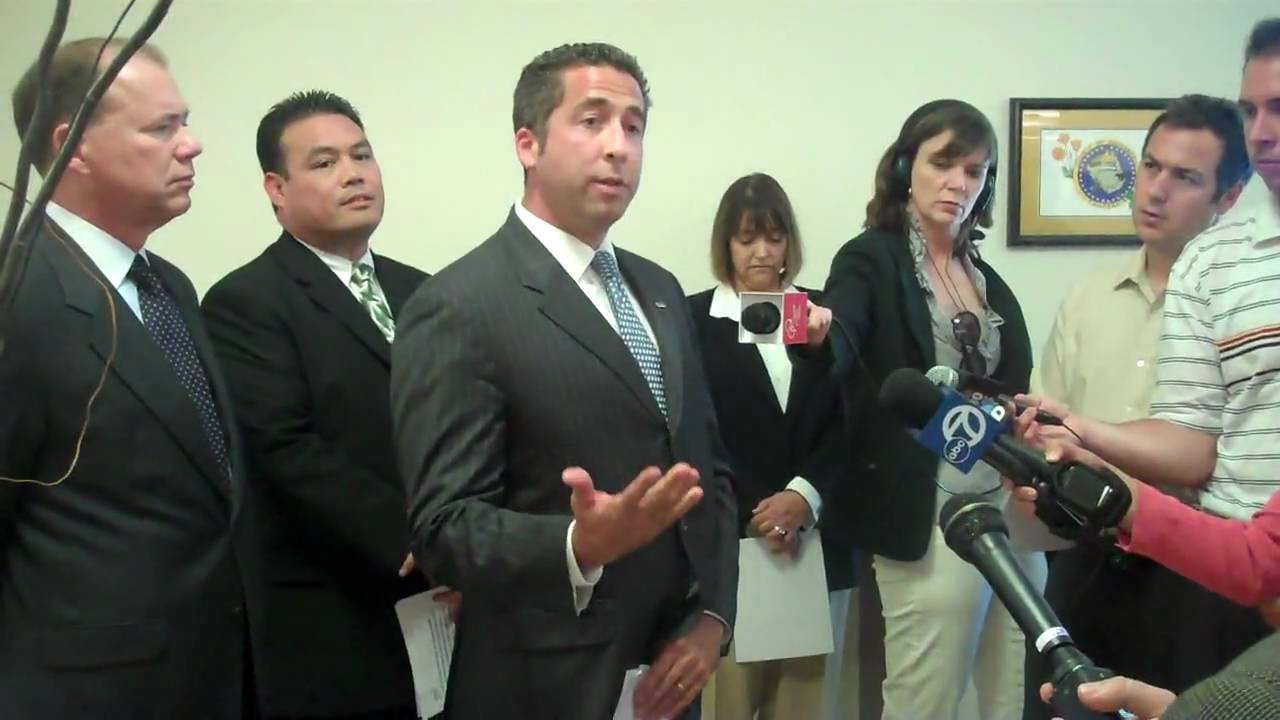 press events and “pro-business” organizing is funded by Valero. Carpenter sits on the board of the conservative think-tank, the Pacific Research Institute, producing bunk studies to bolster pro-Prop 23 claims. Other large donations to the pro-Prop 23 campaign are from front groups like the Missouri-based Adam Smith Foundation and the Howard Jarvis Taxpayers Association, which both carefully conceal their funding.
But these under-the-radar tactics of shifting money around and using phony groups are nothing new to Hiltachk and Carpenter:
– During the eighties and nineties, Hiltachk and his law partners helped the tobacco industry, with funding from Philip Morris and R.J. Reynolds, coordinate a variety of stealth front groups. While his law firm received over a million from tobacco interests, Hiltachk helped organize “Californians for Smokers’ Rights,” a supposedly “grassroots” group that relied on tobacco industry consumer lists to mobilize opposition to anti-smoking initiatives. Working with “academic” fronts like the Claremont Institute (also funded by tobacco), Hiltachk and his law partner Charles Bell mobilized business opposition through a front they helped manage called Californians for Fair Business Policy.
– As the top California lobbyist for Philip Morris, Carpenter helped liaison to nonprofit groups to orchestrate efforts to fight back against anti-smoking laws. Working closely with Hiltachk’s law firm at the time, Nielsen, Merksamer, Parrinello, Mueller & Naylor, Carpenter distributed news clips, recommended tobacco donations to certain outside groups, and mobilized messaging and polling operations against an initiative to tax cigarettes to fund anti-childhood smoking programs, according to files with the Legacy Tobacco Documents Library. One document shows Carpenter receiving a pro-tobacco screed from the Pacific Research Institute, faxed by a communications officer at Philip Morris. The Pacific Research Institute, funded by Valero and tobacco interests, is now helping to provide academic-sounding cachet to the pro-Prop 23 campaign.
After millions of Californians needlessly suffered or died from smoking, the pair ultimately failed in their tobacco lobbying. California voters successfully passed several successive cigarette taxes and smoking bans.
It appears Hiltachk and Carpenter are up to their old tricks. Carpenter is busy recruiting trade association support for the initiative, spending April meeting with groups like the California League of Food Processors. And for his part, Hiltachk has tapped firms he has steered contracts to for over twenty years, like Goddard Claussen West and Woodward & McDowell, to do the legwork of signature gathering and ad making. According to Costa, the Prop 23 proponents boasted to him that they would raise $50 million for their campaign. Aside from the devastating impact Prop 23 will have on California’s economy and the prospects for addressing climate change, at least former tobacco operatives like Hiltachk and Carpenter will be doing quite well.
http://wonkroom.thinkprogress.org/2010/07/27/prop23-tobacco/
California Prop. 23 - Campaign Contributions - Nov. 2010
*Updated as of Oct. 21, 2010 11 a.m.
| This ballot measure ... | Background | Get Alerts | Get Alerts | Get Alerts | Get Alerts | Get Alerts | Get Alerts | Get Alerts | Get Alerts | Get Alerts | Get Alerts | Get Alerts | Get Alerts |
|---|---|---|---|---|---|---|---|---|---|---|---|---|---|
| Prop. 23 Suspends Air Pollution Control Laws Requiring Major Polluters to Report and Reduce Greenhouse Gas Emissions That Cause Global Warming Until Unemployment Drops Below Specified Level for Full Year. (Source: Official Voter Information Guide) |
| Bill Analysis | |||||||||||
| Total Contributions | In Support of Prop. 23: | $9,094,509 | In Opposition to Prop. 23: | $29,932,149 |
| Top Contributors | Top Contributors | Top Contributors | Top Contributors | Top Contributors | Top Contributors | Top Contributors | Top Contributors | Top Contributors | Top Contributors | Top Contributors | Top Contributors | Top Contributors | Top Contributors | Top Contributors | Top Contributors | Top Contributors | Top Contributors | Top Contributors | Top Contributors | Top Contributors | Top Contributors | Top Contributors | Top Contributors | Top Contributors | Top Contributors | Top Contributors | Top Contributors | Top Contributors | Top Contributors | Top Contributors | Top Contributors | Top Contributors | Top Contributors | Top Contributors | Top Contributors | Top Contributors | Top Contributors | Top Contributors | Top Contributors | Top Contributors | Top Contributors | Top Contributors | Top Contributors | Top Contributors | Top Contributors | Top Contributors | Top Contributors | Top Contributors | Top Contributors |
|---|---|---|---|---|---|---|---|---|---|---|---|---|---|---|---|---|---|---|---|---|---|---|---|---|---|---|---|---|---|---|---|---|---|---|---|---|---|---|---|---|---|---|---|---|---|---|---|---|---|
| In Support of Prop. 23 | Valero Services, Inc. | — | $4,075,315 | Tesoro Companies | — | $1,540,637 | Flint Hills Resources | — | $1,000,000 | Marathon Petroleum Company LLC | — | $500,000 | Adam Smith Foundation | — | $498,000 | Occidental Petroleum Corp. | — | $300,000 | Tower Energy Group | — | $200,000 | CVR Energy Inc. | — | $150,000 | Howard Jarvis Taxpayers Assoc. | — | $102,386 | National Petrochemical & Refiners Assoc. | — | $100,000 | World Oil Corp. | — | $100,000 | ||||||||||||||||
| Contributions by State | Contributions by State | Contributions by State | Contributions by State | Contributions by State | Contributions by State | Contributions by State | Contributions by State | Contributions by State | Contributions by State | Contributions by State | Contributions by State | Contributions by State | Contributions by State | Contributions by State | Contributions by State | Contributions by State | Contributions by State | Contributions by State | Contributions by State | Contributions by State | Contributions by State | Contributions by State | Contributions by State | Contributions by State | Contributions by State | Contributions by State | Contributions by State | Contributions by State | Contributions by State | Contributions by State | Contributions by State | Contributions by State | Contributions by State | Contributions by State | Contributions by State | Contributions by State | Contributions by State | Contributions by State | Contributions by State | Contributions by State | Contributions by State | Contributions by State | Contributions by State | Contributions by State | Contributions by State | Contributions by State | Contributions by State | Contributions by State | Contributions by State |
| In Support of Prop. 23 | Texas | — | $4,261,315 | California | — | $2,600,099 | Kansas | — | $1,001,000 | Ohio | — | $530,000 | Missouri | — | $498,000 | Washington, D.C. | — | $104,000 | Colorado | — | $60,000 | Virginia | — | $10,000 | Louisiana | — | $9,995 | Washington | — | $5,000 | Mississippi | — | $5,000 |
• Contribution figures, geographic location and support and opposition are based on information disclosed by the individual campaign committees and published by the California Secretary of State. Campaign committees can declare positions on multiple ballot measures, in these cases MAPLight.org has included the total figures from these committees on each relevant proposition page. Industry and interest designation based on analysis conducted by MAPLight.org.
• Click on the link below to download the latest contribution totals compiled by MAPLight.org.
 Prop 23 Contributions 20101021.xls
http://maplight.org/content/california-prop-23-nov-2010
While Valero, Tesoro and other small refineries are bankrolling the bulk of the California Jobs Initiative, at least $498,000 has come from a Missouri-based group called the Adam Smith Foundation. Maviglio’s number-crunching reveals that 80 percent of the funding comes from outside California’s borders.
A report released by the Political Economy Research Institute at the
University of Massachusetts, Amherst ranked Valero and Tesoro as No. 12 and No. 32, respectively, on a national list of “Toxic 100 Air Polluters.”
http://climateprogress.org/2010/07/09/california-climate-law-proposition-23-ab32/#comment-284360
prop 23
Written by (actually co-opted from Ted Costa)
To manage their initiative to roll back California’s landmark climate change law, AB 32, big oil is turning to the same deceptive tobacco operatives who engineered Philip Morris’ fight against efforts to tax cigarettes and stop childhood as well as indoor smoking. According to veteran right-wing activist Ted Costa, former Philip Morris outside counsel Tom Hiltachk co-opted his AB 32 repeal initiative, known as Proposition 23 (“Prop 23″). Hiltachk’s name appears on both versions of Prop 23 filed with the California Attorney General, and his tactics and already ubiquitous in the campaign.
Hiltachk, who is also serving as an attorney for Republican gubernatorial candidate Meg Whitman, has made a career writing misleading right-wing initiatives, then pitching the initiatives to corporations that may benefit from their passage. To fund Prop 23, he reached out to a friend from his days working for the tobacco industry, Mike Carpenter. Carpenter, the former top California lobbyist for Philip Morris, now lobbies for Valero, a Texan oil company with operations in California. To date, Valero has been the prime driver of the Prop 23, donating over $1 million so far directly to the effort.
EXCLUSIVE: PowerPoint Reveals Tesoro Recruiting Other Oil Companies, Including :{BP, To Repeal CA Clean Energy}:
*This post is part of a Progressive Media blogging series on the fossil fuel-funded Prop 23 effort to repeal California’s clean energy climate law. Read Rebecca Lefton’s posts on Prop 23′s economic impact, national repercussions, and funding from Texas oil companies.
Working with veteran tobacco lobbyists in Sacramento, Texan oil companies are orchestrating a campaign to roll back California’s landmark clean energy climate change law, AB 32. So far, the largest donations have came from San Antonio-based Valero, which has ponied up over $1 million for the effort, and refining giant Tesoro, also based in San Antonio, contributing $525,000. Today, the Sacramento Bee reports that state Democrats are asking Attorney General Eric Holder to open an investigation into these donations.
In public, the repeal AB 32 campaign — given the Orwellian moniker “California Jobs Initiative” — says it is about helping low income people, small businesses, and improving the California economy. But behind closed doors, it’s about boosting already sky high oil company profits. According to Valero’s 10-Q corporate disclosure forms, the company views compliance with AB 32 as a risk to their bottom line.
According to a PowerPoint presentation obtained by the Wonk Room, Tesoro has been courting other oil companies to join their crusade to rescind AB 32. At an April 13th presentation to the Western States Petroleum Association, Dave Reed, a Tesoro refinery executive in Los Angeles, pitched his clean energy repeal initiative, Proposition 23. The Western States Petroleum Association is an oil trade group, like the American Petroleum Institute on the national level, that advocates for the interests of their industry, including expanded offshore drilling off California’s coast. The Association is made up of many oil companies operating in California, including BP, ExxonMobil, and Shell Pipeline. Reed’s PowerPoint drives home the message that cleaning the air and diversifying California’s energy sources will have a negative “impact on [Tesoro's] business.” View a screenshot of Page 15 of the presentation below:
Shortly after Reed’s presentation, three Western States Petroleum Association members — Venoco, Occidental Oil and Gas, and Berry Petroleum — donated to the Prop 23 campaign. Other Association members, like BP and ExxonMobil, have remained quiet — although it is possible these companies are secretly funneling their donations through fronts like the Adam Smith Foundation, a Missouri-based nonprofit that is mysteriously financing the repeal AB 32 campaign.
Leading Prop 23 proponent Assemblyman Dan Logue (R-Linda) told the Wonk Room that he expects that his effort will raise a whopping $50 million. To date, Chevron has explicitly steered clear of the Prop 23 campaign. To gain extra funds, Valero lobbyist Mike Carpenter, a former top Philip Morris political operative, has spent the past few months recruiting other trade association support for the initiative, spending April meeting with groups like the California League of Food Processors.
Related Posts:
- REPORT: The Politician Behind The Campaign To Repeal California’s Clean Energy Law
- Smelling A Chance To Burn Oil Money, Tobacco Lobbyists Orchestrate Effort To Repeal CA Clean Energy Law
- EXCLUSIVE: PowerPoint Reveals Tesoro Recruiting Other Oil Companies, Including BP, To Repeal CA Clean Energy
ca med assoc mjr donor, 6 on 0100 scale
| MARYSVILLE, CA 95901 |
|---|
| Legislative Assignments: |
Assembly Committee on Human Services Assembly Committee on Natural Resources Assembly Committee on Jobs, Economic Development and the Economy |
\
Business group loses 'green' members in global-warming fight
BY ALI WINSTON, California Watch | Sunday, Jan 17 2010 03:00 AM
Last Updated Sunday, Jan 17 2010
CALIFORNIA'S LARGEST GREENHOUSE GAS POLLUTERS
The 100 largest CO2-emitting facilities in California, according to self-reported data for 2007 from the California Air Resources Board.
- Chevron -- Richmond
- Shell Oil -- Martinez
- BP West Coast -- Carson
- Chevron -- El Segundo
- Dynegy -- Moss Landing
6. Sycamore -- Bakersfield
- ExxonMobil -- Torrance
8. Valero -- Benicia
9. Sunrise Power -- Bakersfield
- Tesoro -- Martinez
- SoCal Edison/Mountainview -- Rosemead
- La Paloma -- McKittrick
- Cemex Black Mountain -- Victorville
- LA Dept. Water & Power Haynes -- LA
- ConocoPhillips Wilmington -- LA
- Pastoria Energy/Calpine -- Folsom
- ConocoPhillips -- Rodeo
- Delta Energy/Calpine -- Folsom
- High Desert Power Project -- Victorville
- Searles Valley Minerals -- Trona
21. Aera Energy/Belridge -- Bakersfield
22. Kern River Cogen -- Bakersfield
- AES Alamitos -- Long Beach
- SMUD Cosumnes -- Sacramento
- SDG&E Palomar -- San Diego
- Metcalf Energy -- San Jose
- Elk Hills Power -- Tupman
- Midway-Sunset Cogen -- Fellows
- CalPortland -- Mojave
- Mitsubishi Cement -- Lucerne
- Tesoro -- Wilmington
- LA Dept. Water & Power Valley -- LA
- Ultramar/Valero, Wilmington
- ACE Cogeneration -- Trona
- ConocoPhillips Carson -- Carson
- AES -- Huntington Beach
37. Plains Exploration & Production -- Bakersfield
- LA Dept. Water & Power Scattergood -- LA
- Burney Forest Products -- Burney
- TXI Riverside Cement -- Oro Grande
- National Cement -- Lebec
- Lehigh SW Cement -- Cupertino
- Turlock Irrigation/Walnut Energy -- Turlock
- Air Products Hydrogen Plant -- Wilmington
- Air Liquide Hydrogen Plant -- El Segundo
- NRG Energy Encina -- Carlsbad
- Dynegy South Bay -- Chula Vista
48. Occidental Elk Hills -- Bakersfield
- Stockton CoGen -- Benicia
- Air Products Hydrogen Plant -- Carson
51. Aera Energy MOCO D&E -- Bakersfield
- RRI Energy Etiwanda -- Rancho Cucamonga
53. Big West of California -- Bakersfield
54. Lehigh SW Cement -- Tehachapi
- Blythe Energy -- Blythe
- Crocket Cogen -- Crockett
- Cardinal Cogen -- Stanford
- DTE Woodland Biomass Power -- Woodland
- SMUD SPA -- Sacramento
- CalPortland -- Colton
- RRI Energy Ormond Beach -- Oxnard
62. Mt. Poso Cogen -- Bakersfield
- Salinas River Cogen -- San Ardo
64. Mid-Set Cogen -- Bakersfield
- Sargent Canyon Cogen -- San Ardo
- Martinez Cogen -- Martinez
- Lehigh SW Cement -- Redding
- Coalinga Cogen -- Coalinga
- PG&E Humboldt Bay -- Eureka
70. Berry Petroleum -- Bakersfield
- RMC Cemex -- Davenport
- Port of Stockton District Energy Facility -- Stockton
- SMUD SCA -- Sacramento
74. Rio Bravo Jasmin -- Bakersfield
75. Rio Bravo Poso -- Bakersfield
- Sierra Pacific Industries -- Quincy
- RRI Energy Mandalay Inc. -- Oxnard
- Mirant Potrero LLC -- San Francisco
- U.S. Borax -- Boron
- RRI Energy Coolwater -- Daggett
- ExxonMobil SYU -- Santa Barbara
- NRG Energy -- El Segundo
- Procter & Gamble Paper Products -- Oxnard
- Imperial Irrigation District -- El Centro
- Berry Petroleum Co. Placerita -- Santa Clarita
86. Aera Energy LLC Lost Hills -- Bakersfield
- BP West Coast Wilmington Calciner -- Wilmington
- Aera Energy LLC Coalinga -- Coalinga
- Air Products and Chemicals Inc. -- Martinez
- Hanford L.P. GWF Cogeneration Plant -- Hanford
- Calpine King City Cogen LLC -- King City
- THUMS Long Beach Co. -- Long Beach
- ConocoPhillips Santa Maria -- Arroyo Grande
- Ontario Linerboard Mill -- Ontario
95. High Sierra Limited -- Bakersfield
- CalEnergy Salton Sea 1-5 -- Calipatria
- Modesto Irrigation District Woodland -- Modesto
- AES Redondo Beach -- Redondo Beach
- GWF Power Systems Nichols Road -- Bay Point
- Geysers Power Company LLC Calpine -- Co
Links
An organization representing some of California's biggest carbon polluters is working to alter the state's global-warming law, while claiming to represent several "green" environmental companies that have since left the coalition after learning of its recent actions.
The coalition, calling itself the AB 32 Implementation Group, says it represents a broad section of California interests focused on global-warming regulations. The group, which is being managed by a large public relations firm, Woodward & McDowell, features photographs of white clouds and a field of flowers on its website.
But the organization itself includes 22 of the state's biggest carbon pollutersas ranked by the state Air Resources Board. Oil refiners, cement manufacturers, chemical companies, and trucking firms figure prominently. And, according to environmentalists and lawmakers, the Implementation Group has engaged in a steady campaign to undermine the Global Warming Solutions Act of 2006, which mandates a 25 percent reduction in the state's emissions by 2020.
California Watch found companies on the Implementation Group's membership list that no longer exist or whose executives were surprised to learn of the group's efforts to alter the global-warming law. Many of these companies are environmental-technology firms that had added a green luster to the Implementation Group's big-business coalition, which includes more than 180 companies and associations.
The PR firm running the group has a history of clashing with environmentalists. In the 1990s, Burlingame-based Woodward & McDowell helped defeat Proposition 128, dubbed "Big Green," which mandated sweeping changes to environmental laws. Company associate Dave Fogarty said his firm helped the Implementation Group draft its mission statement and manages its public image, but they have promoted a variety of issues, from school bonds to transportation funding, over the years.
Environmentalists say the Implementation Group has yet to make major inroads into changing the law. But V. John White, the executive director of the Center for Energy Efficiency and Renewable Technologies and a lobbyist for the Sierra Club, said the Implementation Group and its allies are "trying to create a political juggernaut they can use to beat CARB into the ground."
For the past several months, the powerful California Air Resources Board has been writing detailed regulations that will set into motion the state's global-warming law, signed with fanfare by Gov. Arnold Schwarzenegger in 2006. The law leaves numerous important decisions to the board, including the details of a first-in-the-nation "cap-and-trade" system that would require big polluters to limit their emissions while giving financial incentives to companies that make improvements.
The Air Resources Board's final product could dramatically alter the bottom line for businesses in the state, and spur new industries designed to "capture," or clean up, global-warming emissions. While the board is writing these regulations, the Implementation Group has acted as the public face for its members while pressuring the board to lessen the burden on businesses. The board has multiple deadlines through 2011 to finalize the regulations.
TOP OFFICIALS' COMMENTS AT ODDS WITH GROUP'S NAME
Although the AB 32 Implementation Group says it wants "regulatory certainty" and wants to "ensure greenhouse-gas-emission reductions are achieved," a top official with the group has publicly supported legislative proposals that would delay the rollout of AB 32, citing potential harm to the economy.
In April 2008, Dorothy Rothrock, who is the co-chair of the Implementation Group and vice president of government affairs for the California Manufacturing and Technology Association, told a legislative hearing she favored a plan that involved suspending AB 32 for a year.
"We appreciate the Senate Republicans putting forth these ideas to help stimulate the economy," she said. "AB 32 in particular will add significant costs to manufacturing, particularly in the electricity side."
In an interview, Rothrock said her support for the suspension of AB 32 stemmed from her role as the vice president of the manufacturer's association, not her position with the Implementation Group. "There's a real difference between what I say as the vice president of CMTA and the co-chair of the Implementation Group," she said.
The chief sponsors of the Implementation Group are the California Manufacturers and Technology Association and the California Chamber of Commerce. One prominent member, the Western States Petroleum Association, is a trade organization for companies such as BP, Chevron, ExxonMobil, Shell, Tesoro and Valero.
Few groups are more active in monitoring the global-warming regulations than the Implementation Group. Since 2007, it has sent 41 letters to the Air Resources Board, the governor's office and local air quality districts. The most recent missive was sent Jan. 11, and complained about the board's proposed cap-and-trade system.
The group and its sponsors have questioned an economic-impact study downplaying the financial effect on businesses; complained about the fairness of $63 million in new fees imposed on large polluters; challenged the resources board in court for documentation of the board's spending; and questioned the board's authority to conduct a carbon-offset program.
Despite the organization's name, at least one member of the AB 32 Implementation Group said that "implementing" the global-warming law was not the group's actual goal.
"The title may be misleading," acknowledged James Duran, the legislative action chairman for the California Hispanic Chambers of Commerce and a member of the Implementation Group. The role of the group, Duran said, is "to provide a focused voice on how to ensure that business economic impact is quantified and minimized."
SOME GROUP MEMBERS NO LONGER EXIST
California Watch found five businesses listed as Implementation Group members that were unaware that a high-ranking member of the group had called for suspending AB 32. All five are "green" enterprises that would benefit directly from AB 32's emphasis on clean energy and sustainable practices.
"I knew that they had an agenda, but I didn't realize they were using people like me to further their goals," said Steve Coyle, principal of Town-Green, a sustainable architecture firm in Oakland. Coyle's firm joined the group in hopes of bringing a "progressive voice" to its debate. He said he was dismayed that Rothrock, the group's co-chair and chief public representative, had called for suspending the law. He has since notified the group that he wants out.
Other companies were similarly surprised by the Implementation Group's connections to major polluters.
"I was completely unaware of that," said Jeff Cox, a senior policy adviser at FuelCell Energy, a Connecticut-based company that makes zero-emissions energy equipment. "We were of the belief that it was an ad hoc group of business interests - but it appears that the group has been shanghaied by a group of well-connected interests."
Cilion, a Central Valley ethanol producer that closed its doors this June, was also in the dark about the Implementation Group's activity. According to Karri Hammerstrom, a former spokeswoman, Cilion's board of directors supported AB 32. "They believed Cilion was a tool to help implement AB 32," Hammerstrom said.
Another company listed as an Implementation Group member, Planktos, was sold in 2008 to a Cyprus-based firm that plans to operate copper mines in British Columbia. Planktos once proposed creating algae blooms in the ocean to absorb carbon dioxide. Its phone number now leads to a Farmer's Insurance office.
California Watch is a project of the Center for Investigative Reporting with offices in the Bay Area and Sacramento.
http://latimesblogs.latimes.com/greenspace/2010/09/koch-brothers-global-warming-prop-23-climate-change.html
Billionaire Koch brothers back suspension of California climate law
September 2, 2010 | 11:16 pm
A company owned by oil billionaires Charles and David Koch has contributed $1 million to Proposition 23, a November ballot initiative to suspend California’s groundbreaking 2006 global-warming law.
The contribution came from Flint Hills Resources LP, based in Wichita, Kan., a wholly-owned subsidiary of Koch Industries, the nation's second-largest private company, with estimated annual revenue of $100 billion. It was posted online Thursday by the California secretary of state.
Prop. 23 was launched by two Texas-based refiners, Valero Energy Corp. and Tesoro Corp. which have been its primary funders. The involvement of the Koch brothers signals that the California initiative is likely to become the focus of a national campaign, now that climate change legislation has stalled in Congress.
The Koch brothers (pronounced “Coke”), who operate oil refineries in Alaska, Texas and Minnesota, have sponsored a web of groups involved in campaigns to deny the significance of climate change and the need for renewable energy. Koch-funded groups have trained and organized "tea party" activists across the country.
"If you combined BP’s approach to safety with Enron’s greed, you would have Koch," said Steve Maviglio, a spokesman for the "No on 23" campaign. "With this contribution, the out-of-state oil companies trying to put their profits before California jobs just got a lot dirtier."
A spokeswoman for the "Yes on 23" campaign was unavailable for comment Thursday night.
The Koch contribution came as California tea party activists indicated that they will campaign for Prop. 23. They have scheduled a rally in Sacramento on Sept. 12.
In March, Greenpeace issued a report critical of the brothers' activities, titled "Koch Industries: Secretly Funding the Climate Denial Machine." Last week, the New Yorker magazine published a 9,990-word article, "Covert Operations: The billionaire brothers who are waging a war against Obama" by Jane Mayer.
AB 32, California's 2006 climate change law, would slash the state's emissions of carbon dioxide and other greenhouse gases down to 1990 levels by 2020 -- a cut amounting to about 15% below today's levels. The law, which would curb emissions from industry and transportation, is strongly backed by Gov. Arnold Schwarzenegger.
Scientists say that global warming is already affecting the state, melting the snowpacks that provide water for its large agricultural industry and its fast-growing cities.
Prop. 23 would suspend the law until unemployment in the state, now above 12%, drops to 5.5% for four consecutive quarters, a level only seen three times in the last three decades.
So far, the Prop. 23 campaign has raised $8.2 million. Opponents of the measure, who have raised about $6.6 million, got a boost last month with a $2.5-million donation from San Francisco hedge fund mogul Thomas Steyer, the first installment of a $5-million pledge. Steyer, founder of the $20-billion Farallon Capital Management, assumed the co-chairmanship of the "No on 23" campaign, with former Secretary of State George Shultz..
UPDATE: Sept. 4 story in the Los Angeles Times on the Koch brothers contributions.
-- Margot Roosevelt