Praireland
-=-=-
-=-=
Corporate Media Failed to Report the Facts and the Stakes of the Prairieland Case | Common Dreams
Corporate Media Failed to Report the Facts and the Stakes of the Prairieland Case
The extremely harsh sentences for Texas anti-ICE protesters did not set off any alarm bells among mainstream papers, and were underreported by national news outlets that should have covered their clearly national implications.
Jul 26, 2026
-=-=
PRAIRIELAND 100 YRS TODD CHEER ; TERR ENHANCE AND MAT’L SUPPORT?
NOT USED IN JAN 6
DOX TRESPASS CAN BE USED
30 YRS CONSPIR FOR MOVING BOX OF ZINES, NOT AT NOISE PROTEST
ANTIFA TERROR
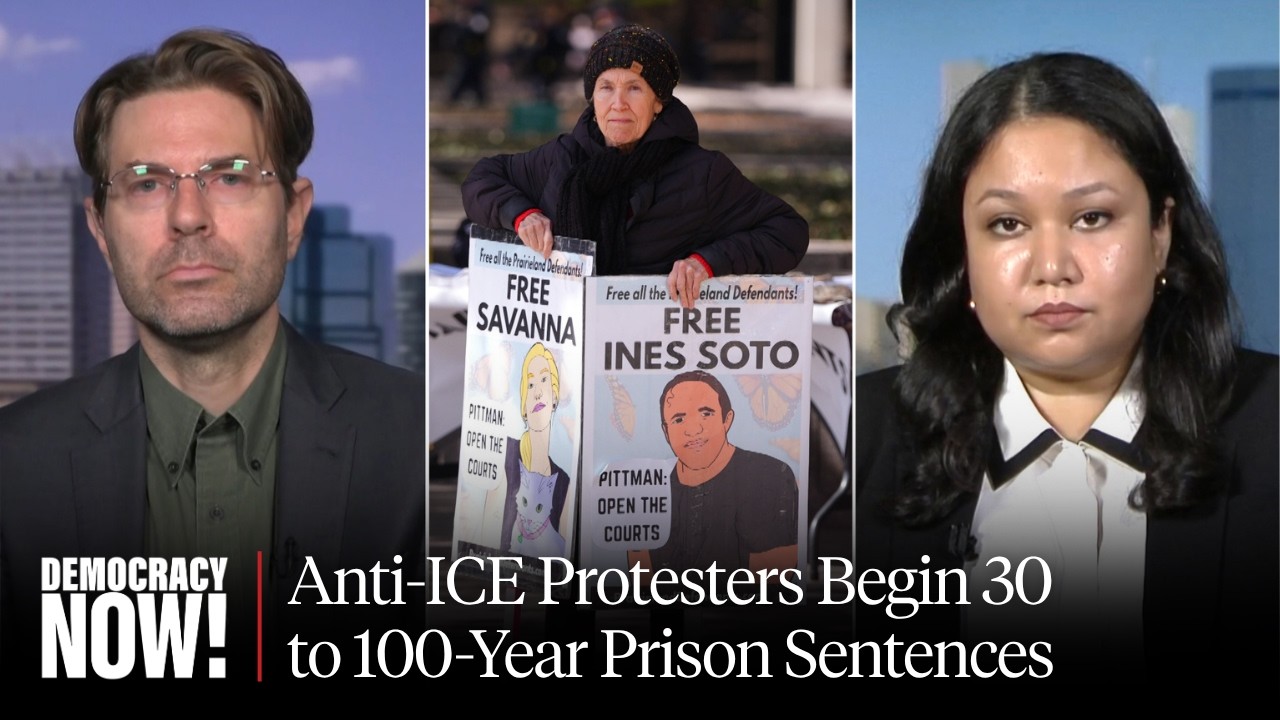
Prairieland Nine: Texas ICE Protesters Get Up to 100 Years in Prison as Trump Targets Anti-Fascists
Jun 25, 2026 Latest Shows
A group of anti-ICE protesters in Texas were sentenced to 30 to 100 years in jail on Tuesday, after federal prosecutors accused them of being an "antifa terror cell." The activists attended a protest outside the Prairieland ICE jail in Alvarado, Texas, on July 4 of last year, during which fireworks were set off and a police officer was shot and wounded. All nine defendants were found guilty after being tried before a federal judge in Texas.
Matt Sledge, political reporter for The Intercept, warns that "we just have to watch for this playbook to be applied elsewhere." "Now anyone engaged in basic protests with the wrong political beliefs can be labeled a domestic terrorist, when they have no intention of violence, not engaged in any violence, not interested in any violence," says Sufia Khalid, deputy director of the National Security Criminal Defense Center, who represents one of the Prairieland defendants.}:}:
-=-=-=
intercept 11 25
Federal prosecutors have filed a new indictment in response to a July 4 noise demonstration outside the Prairieland ICE detention facility in Alvarado, Texas, during which a police officer was shot.
There are numerous problems with the indictment, but perhaps the most glaring is its inclusion of charges against a Dallas artist who wasn’t even at the protest. Daniel “Des” Sanchez is accused of transporting a box that contained “Antifa materials” after the incident, supposedly to conceal evidence against his wife, Maricela Rueda, who was there.
But the boxed materials aren’t Molotov cocktails, pipe bombs, or whatever MAGA officials claim “Antifa” uses to wage its imaginary war on America. As prosecutors laid out in the July criminal complaint that led to the indictment, they were zines and pamphlets. Some contain controversial ideas — one was titled “Insurrectionary Anarchy” — but they’re fully constitutionally protected free speech. The case demonstrates the administration’s intensifying efforts to criminalize left-wing activists after Donald Trump announced in September that he was designating “Antifa” as a “major terrorist organization” — a legal designation that doesn’t exist for domestic groups — following the killing of Charlie Kirk.
Sanchez was first indicted in October on charges of “corruptly concealing a document or record” as a standalone case, but the new indictment merges his charges with those against the other defendants, likely in hopes of burying the First Amendment problems with the case against him under prosecutors’ claims about the alleged shooting.
It’s an escalation of a familiar tactic. In 2023, Georgia prosecutors listed “zine” distribution as part of the conspiracy charges against 61 Stop Cop City protesters in a sprawling RICO indictment that didn’t bother to explain how each individual defendant was involved in any actual crime. I wrote back then about my concern that this wasn’t just sloppy overreach, but also ablueprint for censorship. Those fears have now been validated by Sanchez’s prosecution solely for possessing similar literature.
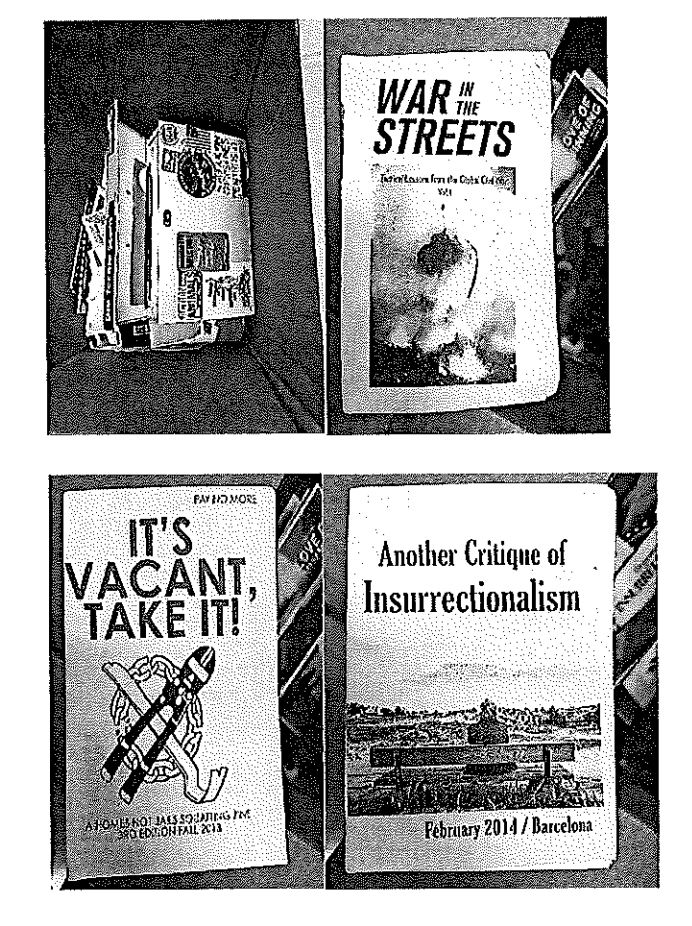 Photos of the zines Daniel Sanchez is charged with “corruptly concealing.” Photo: U.S. District Court, Northern District of Texas
There have been other warnings that cops and prosecutors think they’ve found a constitutional loophole — if you can’t punish reporting it, punish transporting it. Los Angeles journalist Maya Lau is suing the LA County Sheriff’s Department for secretly investigating her for conspiracy, theft of government property, unlawful access of a computer, burglary, and receiving stolen property. According to her attorneys, her only offense was reporting on a list of deputies with histories of misconduct for the Los Angeles Times.
If you can’t punish reporting it, punish transporting it.
It’s also reminiscent of the Biden administration’s case against right-wing outlet Project Veritas for possessing and transporting Ashley Biden’s diary, which the organization bought from a Florida woman later convicted of stealing and selling it. The Constitution protects the right to publish materials stolen by others — a right that would be meaningless if they couldn’t possess the materials in the first place.
Despite the collapses of theCop City prosecution and the Lau investigation — and its own dismissal of the Project Veritas case — the Trump administration has followed those dangerous examples, characterizing lawful activism and ideologies as terrorist conspiracies (a strategy Trump allies also floated during this first term) to seize the power to prosecute pamphlet possession anytime they use the magic word “Antifa.”
That’s a chilling combination for any journalist, activist, or individual who criticizes Trump. National security reporters have long dealt with the specter of prosecution under the archaic Espionage Act for merely obtaining government secrets from sources, particularly after the Biden administration extracted a guilty plea from WikiLeaks founder Julian Assange. But the rest of the press — and everyone else, for that matter — understood that merely possessing written materials, no matter what they said, is not a crime.
Most Read
Pardoned Capitol Rioter Tried to Hush Child Sex Victim With Promise of Jan. 6 Reparation Money, Police Say
Amanda Moore](https://theintercept.com/2025/11/17/pardoned-jan-6-child-abuse-molestation-andrew-paul-johnson/)
[
Wyden Blasts Kristi Noem for Abusing Subpoena Power to Unmask ICE Watcher
Sam Biddle](https://theintercept.com/2025/11/21/wyden-noem-dhs-customs-unmask-social-media/)
Guilt by Literature
At what point does a literary collection or newspaper subscription become prosecutorial evidence under the Trump administration’s logic? Essentially, whenever it’s convenient. The vagueness is a feature, not a bug. When people don’t know which political materials might later be deemed evidence of criminality, the safest course is to avoid engaging with controversial ideas altogether.
The slippery slope from anarchist zines to conventional journalism isn’t hypothetical, and we’re already sliding fast. Journalist Mario Guevara can tell you that from El Salvador, where he was deported in a clear case of retaliation for livestreaming a No Kings protest. So can Tufts doctoral student Rümeysa Öztürk, as she awaits deportation proceedings for co-writing an opinion piece critical of Israel’s wars that the administration considers evidence of support for terrorism.
At least two journalists lawfully in the U.S. — Ya’akub Ira Vijandre and Sami Hamdi — were nabbed by ICE just last month. The case against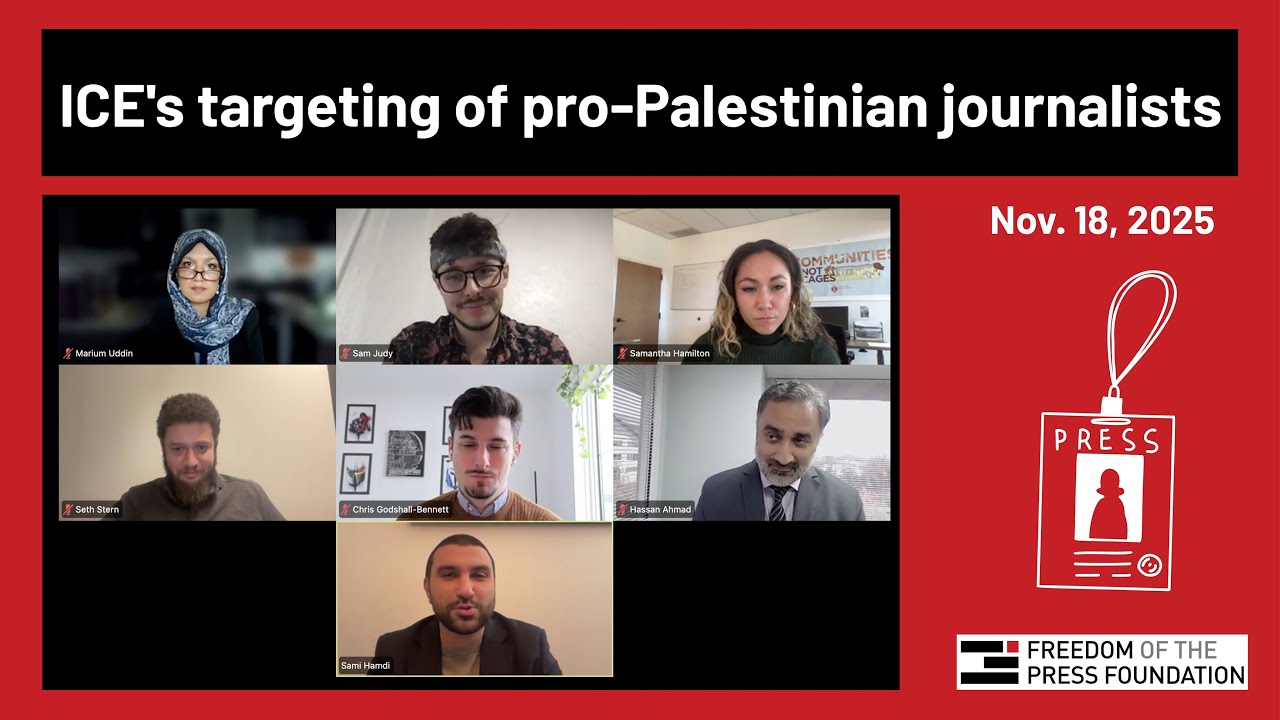 is partially based on his criticism of prosecutorial overreach in the Holy Land Five case and his liking social media posts that quote Quranic verses, raising the question of how far away we are from someone being indicted for transporting a Quran or a news article critical of the war on terror.
Related
“Antifa” Protesters Charged With Terrorism for Constitutionally Protected Activity](https://theintercept.com/2025/10/17/antifa-ice-protesters-terrorism-texas-prairieland/)
Sanchez’s case is prosecutorial overreach stacked on more prosecutorial overreach. The National Lawyers Guild criticizedprosecutors’ tenuous dot-connecting to justify holding 18 defendants responsible for one gunshot wound. Some defendants were also charged with supporting terrorism due to their alleged association with “Antifa.” Anarchist zines were cited as evidence against them, too.
Sanchez was charged following a search that ICE proclaimed on social media turned up “literal insurrectionist propaganda” he had allegedly transported from his home to an apartment, noting that “insurrectionary anarchism is regarded as the most serious form of domestic (non-jihadi) terrorist threat.” The tweet also said that Sanchez is a green card holder granted legal status through the Deferred Action for Childhood Arrivals program.
The indictment claims Sanchez was transporting those materials to conceal them because they incriminated his wife. But how can possession of literature incriminate anyone, let alone someone who isn’t even accused of anything but being present when someone else allegedly fired a gun? Zines aren’t contraband; it’s not illegal to be an anarchist or read about anarchism. I don’t know why Sanchez allegedly moved the box of documents, but if it was because he (apparently correctly) feared prosecutors would try to use them against his wife, that’s a commentary on prosecutors’ lawlessness, not Sanchez’s.
Violent rhetoric is subject to punishment only when it constitutes a “true threat” of imminent violence. Even then, the speaker is held responsible, not anyone merely in possession of their words.
Government prosecutors haven’t alleged the “Antifa materials” contained any “true threats,” or any other category of speech that falls outside the protection of the First Amendment. Nor did they allege that the materials were used to plan the alleged actions of protesters on July 4 (although they did allege that the materials were “anti-government” and “anti-Trump”).
We don’t need a constitutional right to publish (or possess) only what the government likes.
Even the aforementioned “Insurrectionary Anarchy: Organizing for Attack” zine, despite its hyperbolic title, reads like a think piece, not a how-to manual. It advocates for tactics like rent strikes and squatting, not shooting police officers. Critically, it has nothing to do with whether Sanchez’s wife committed crimes on July 4.
Being guilty of possessing literature is a concept fundamentally incompatible with a free society. We don’t need a constitutional right to publish (or possess) only what the government likes, and the “anti-government” literature in Sanchez’s box of zines is exactly what the First Amendment protects. With history and leaders like Vladimir Putin and Viktor Orbán as a guide, we also know it’s highly unlikely that Trump’s censorship crusade will stop with a few radical pamphlets.
The Framers Loved Zines
There’s an irony in a supposedly conservative administration treating anti-government pamphlets as evidence of criminality. Many of the publications the Constitution’s framers had in mind when they authored the First Amendment’s press freedom clause bore far more resemblance to Sanchez’s box of zines than to the output of today’s mainstream news media.
Revolutionary-era America was awash in highly opinionated, politically radical literature. Thomas Paine’s “Common Sense” was designed to inspire revolution against the established government. Newspapers like the Boston Gazette printed inflammatory writings by Samuel Adams and others urging the colonies to prepare for war after the Coercive Acts. The Declaration of Independence itself recognized the right of the people to rise up. It did not assume the revolution of the time would be the last one.
One might call it “literal insurrectionist propaganda” — and some of it was probably transported in boxes.
The framers enshrined press freedom not because they imagined today’s professionally trained journalists maintaining careful neutrality. They protected it because they understood firsthand the need for journalists and writers who believed their government had become tyrannical to espouse revolution.
For all their many faults, the framers were confident enough in their ideas that they were willing to let them be tested. If the government’s conduct didn’t call for radical opposition, then radical ideas wouldn’t catch on. It sure looks like the current administration doesn’t want to make that bet.
-=-=
- Josh Kovensky @ Talking Points Memo: FBI’s Top Influencers Tout ‘Antifa’ Funding Investigations
FBI Director cites NSPM-7 as enabling crackdown on left-leaning activists.
THE White House wanted investigations into those it describes as left-wing activists and the groups that fund them. And now, FBI Director Kash Patel says, the FBI is delivering.
The FBI is investigating funding associated with left-wing activism, Patel confirmed to longtime podcaster and brief FBI Deputy Director Dan Bongino on his recently revived streaming show.
“This FBI, thanks to what we stood up over the last year, has made significant headway under the NSPM-7 process in looking at those who funded these streams,” Patel told Bongino, adding that the bureau is “starting to arrest people who used their funds to incite violence in the guise of political peaceful protest.”
The White House issued NSPM-7 in September, a presidential memo that directed federal law enforcement to investigate ideologies — naming those who espouse “anti-Americanism, anti-capitalism, and anti-Christianity” — as potential sources of political violence. That memo has been operationalized in part through several terrorism prosecutions, TPM reported this month. Patel’s remarks suggest that the FBI is implementing the memo to investigate funding sources for left-leaning activist groups.
At the same time, it’s Kash Patel. He’s more a streamer than a law enforcer. Bongino’s brief tenure at the FBI — during which he memorably complained about the workload before the administration took the unprecedented step of appointing a “co-deputy director” to assist him — testifies to some of this. Beyond that, Patel is operating in Trumpworld, a universe where senior officials can curry favor with the president by demonstrating how tough they are in carrying out his fantasies. Even in that credibility-killing environment, Patel has distinguished himself by using his megaphone as FBI director to misstate details in sensitive, ongoing investigations.
One ongoing case that Patel mentioned in Wednesday’s discussion with Bongino is the Prairieland prosecution. The case is the Trump administration’s first terrorism prosecution against a group of people that it has deemed members of “Antifa.” In the case, prosecutors accuse an “Antifa cell” in North Texas of having staged a demonstration outside an ICE detention facility that left one police officer shot and wounded.
After Bongino brought up the case, Patel claimed that there have been more than two dozen federal arrests. Per TPM’s count, sixteen people have been charged in federal court over the incident.
The trial was set to start on Tuesday. But District Judge Mark Pittman for the Northern District of Texas declared a mistrial during jury selection, reportedly after a defense attorney wore a jacket with a T-shirt underneath that featured a picture of Jesse Jackson and other civil rights leaders.
Patel likened the case to the Cop City prosecution in Georgia. There, state prosecutors filed a sprawling RICO indictment against a group of activists that had been protesting the construction of a police training center. Critics accused prosecutors of using the case to silence activists that had no tie to any act of alleged wrongdoing; a judge dismissed the RICO charges in December.
The FBI director said that his agency had to “rearrest everybody” in order to compensate for errors in the state investigation. It’s unclear what he was referring to. No federal charges have been filed in the Cop City case.
He did suggest that his leadership had seen a change in the FBI’s focus to “Antifa,” the chimerical group of beliefs that Trump II leadership has held up as a national, internal enemy.
Federal law enforcement is not only pursuing foreign threats, he said, “but those who cause violence here in America and use the guise of politics to delete that violence.”
Threats from the administration to investigate ideologically opposed charities spread fear in the nonprofit community last year. Some, per TPM’s reporting, sought to move money overseas; others considered whether to incorporate subsidiary fiscal sponsors as separate organizations.
He reminded Bongino that the two of them had “launched a serious investigation” when the podcaster was in government last year.
“We had said these organizations don’t operate alone, don’t operate in silence. They operate with a heavy heavy stream of funding,” Patel said. “And we started looking into it. And guess what, Dan? We found them.”
Josh Kovenskyis an investigative reporter for Talking Points Memo, based in New York. He previously worked for the Kyiv Post in Ukraine, covering politics, business, and corruption there.
---