capitol police
2 wounded in scalise shooting?
also DC metro cops? michael fanone?
21 in house did not support bill praise boebert
---
In June 2021, Boebert was one of 21 House Republicans to vote against a resolution to give the Congressional Gold Medal to police officers who defended the U.S. Capitol.
CNN —
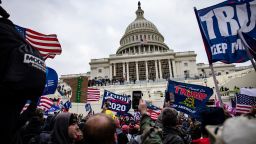
Despite the House and Senate coming to an agreement that will award the Congressional Gold Medal to the officers who defended the Capitol, 21 House Republicans voted against the legislation Tuesday, the latest reminder that members of Congress still cannot agree on the factsof the deadly January 6 riot.
The final vote in the House on Tuesday was 406-21. The number of House Republicans voting against the bill nearly doubled since the first time a version of the bill came to the House floor, as the vote when the bill first passed the House in March was 413-12. Republican Rep. Lance Gooden of Texas was the only GOP member to vote no in March and change his vote to yes this time around.
Both the House and the Senate had passed their own resolutions to bestow the medals, but the initial pieces of legislation varied. The revised bills will now award three medals – one to the entire US Capitol Police force, and one to the Metropolitan Police Department, “so that the sacrifices of fallen officers and their families, and the contributions of other law enforcement agencies who answered the call of duty on January 6, 2021, can be recognized and honored in a timely manner.”
A third will be put on display at the Smithsonian Institution, with a plaque that lists all the law enforcement agencies that protected and defended the Capitol.
Republican Rep. Marjorie Taylor Greene of Georgia told reporters that she voted against the Congressional Gold Medal to US Capitol Police Officers and MPD because she does not believe the legislation should refer to January 6 as an insurrection.
[
Related articleYouTube suspends Sen. Ron Johnson's account for posting video about dubious Covid-19 treatments](https://www.cnn.com/2021/06/12/politics/ron-johnson-youtube-covid/index.html)
“I wouldn’t call it an insurrection,” Greene told reporters.
Greene also said she had issue with the language of the bill that referred to the Capitol complex as “the temple of our American Democracy.”
“This is not a temple. That is for sure,” Greene said.
Republican Rep. Thomas Massie of Kentucky also said his vote against the legislation was because of the language of the bill, specifically the references to the Capitol as a temple and January 6 as an insurrection.
“There are pending cases or trials right now, indictments against people, and I think if we called it an insurrection, it could have a bearing on their case,” he said. “If they just wanted to give the police recognition, they could have done it without trying to make it partisan,” he said.
When asked if he thought what happened on January 6 was an insurrection, he answered, “I think it was a mob but I don’t think it was an insurrection, no.”
Pressed again, he said, “They were protesting and I don’t approve of the way they protested, but it wasn’t an insurrection. My goodness. Can you imagine what a real insurrection would look like?”
[
Related articleWhy did 21 Republicans oppose honoring those who served on January 6?](https://www.cnn.com/2021/06/16/politics/gold-medal-january-6-insurrection/index.html)
Other members such as Rep. Andrew Clyde and Rep. Andy Biggs ignored questions from CNN asking to explain their vote.
Rep. Warren Davidson, an Ohio Republican, explained in a tweet that the reason he voted against the bill but previously voted for an earlier version of the legislation was because the final version of the bill referenced fallen Capitol Police Officer William “Billy” Evans who was killed as the result of an attack on the Capitol on April 2.
“‘Yes’ was the easy vote, but it’s wrong to conflate 4/2 with 1/6. My “no” vote is an effort to make that clear” Davidson tweeted.
“I have already voted to award the Congressional Gold Medal to DC Metro and Capitol Police for their bravery on 1/6. Today’s vote was an attempt to rewrite history and further a Democrat narrative” Davidson added.
Republican Rep. Adam Kinzinger, who has been an outspoken critic of former President Donald Trump and his supporters that remain in the House, publicly criticized his 21 colleagues who voted against the legislation.
“How you can vote no to this is beyond me,” Kinzinger tweeted after the vote. “Then again, denying an insurrection is as well. To the brave Capitol (and DC metro PD) thank you. To the 21: they will continue to defend your right to vote no anyway.”
Republican Rep. Liz Cheney of Wyoming, a frequent Trump critic herself, specifically criticized Rep. Paul Gosar, who, in addition to voting no on the legislation, had referred to the shooting of Capitol rioter Ashli Babbitt as an execution earlier Tuesday.
“On January 6, as the violent mob advanced on the House chamber, I was standing near @RepGosar and helped him open his gas mask. The Capitol Police led us to safety. It is disgusting and despicable to see Gosar lie about that day and smear the men and women who defended us,” tweeted Cheney, who was ousted from GOP leadership last month after she repeatedly rejected Trump’s election lies.
[
Related articleHelp was requested from DC National Guard 12 times during US Capitol riot, Democrats say](https://www.cnn.com/2021/06/15/politics/jan-6-insurrection-guard-fbi/index.html)
In February, the Senate unanimously voted to award a Congressional Gold Medal to Officer Eugene Goodman, who singlehandedly led a mob of insurrectionists away from the Senate chamber minutes before the chamber doors were sealed with senators still inside. But the House version of the legislation opted to award the medal to the whole of the police force rather than singling out one individual for the medal.
The legislation does name several individual officers, including Goodman, for their valor, saying “Capitol Police Officers Brian Sicknick and Howard Liebengood, Metropolitan Police Department Officer Jeffrey Smith, and those who sustained injuries, and the courage of Capitol Police Officer Eugene Goodman, exemplify the patriotism and the commitment of Capitol Police officers, and those of other law enforcement agencies, to risk their lives in service of our country.”
The 21 Republicans who voted against the bill are:
- Lauren Boebert of Colorado
- John Rose of Tennessee
- Andy Harris of Maryland
- Thomas Massie of Kentucky
- Bob Good of Virginia
- Louie Gohmert of Texas
- Barry Moore of Alabama
- Ralph Norman of South Carolina
- Matt Rosendale of Montana
- Marjorie Taylor Greene of Georgia
- Chip Roy of Texas
- Paul Gosar of Arizona
- Andy Biggs of Arizona
- Warren Davidson of Ohio
- Scott Perry of Pennsylvania
- Matt Gaetz of Florida
- Greg Steube of Florida
- Andrew Clyde of Georgia
- Jody Hice of Georgia
- Mary Miller of Illinois
- Michael Cloud of Texas
---
an 6 25
no lnx
Trump White House 'engaged' as Republicans attempt 'pathetic' rewrite of J6 history
FILE PHOTO: U.S. President Donald Trump gestures beside U.S. first lady Melania Trump as they leave the U.S. Capitol building on the inauguration day of Donald Trump's second presidential term in Washington, U.S. January 20, 2025. REUTERS/Carlos Barria/File Photo
Matt Lasloand Raw StoryJune 27, 2025 | 07:32AM ET
WASHINGTON — The Jan. 6, 2021 attack is once again the talk of Capitol Hill.
While Democrats are hanging replica plaques across the Capitol pressuring Speaker Mike Johnson (R-LA) to display an official congressionally-mandated plaque honoring Capitol Police officers for defending the Capitol on Jan. 6, President Donald Trump continues quietly pressuring Republican congressional leaders to formally investigate the bipartisan select Jan. 6 committee that disbanded in 2023.
“The president wants it,” Rep. Barry Loudermilk (R-GA) told Raw Story.
Even so, the ball seems to be in Johnson's court, and he’s remained mum since saying he would launch his own J6 investigation at the start of the year.
Low-level form of legislative civil disobedience
In 2022, while the Capitol was still undergoing post-riot repairs, lawmakers from both parties came together and passed a law requiring a plaque for the west front of the Capitol — where officers were first overrun on Jan. 6, 2021 — honoring the men and women of the Capitol Police who protected Congress in the face of violent insurrectionists.
Three years later and there’s still no official plaque, which is why a handful of House Democrats, including House Minority Leader Hakeem Jeffries (D-NY), unveiled their own replica plaques this week.
“It is a very low-level form of legislative civil disobedience,” Rep. Jamie Raskin (D-MD) told Raw Story.
As the top Democrat on the House Judiciary Committee, Raskin says the speaker is flaunting the very Constitution he swore an oath to uphold.
“The speaker is in violation of the law. That's an indefensible posture for a speaker of the U.S. House of Representatives,” Raskin said. “Our poster replicas are saying, we are going to go ahead and honor the officers until Mike Johnson starts following the law.”
To many of the lawmakers left trapped in the House gallery on Jan. 6, 2021, let alone Capitol Police officers themselves, the plaque is personal.
“It's important so that nobody ever forgets the truth,” Rep. Veronica Escobar (D-TX) told Raw Story.
Escobar says the refusal to hang the plaque shows Republican "tough on crime" rhetoric is mere lip service.
“It’s evidence of the fact that they really aren't interested in supporting law enforcement. That's what it comes down to,” Escobar said. “They are so afraid of Donald Trump, and these were his soldiers.”
Democrats accuse the speaker of thumbing his nose at the Capitol Police officers who protect him daily.
“It's pathetic,” Rep. Jim McGovern (D-MA) told Raw Story. “The speaker won't put it up. So I don't know what the hell's the problem, but it's an insult to our brave men and women in law enforcement who protected us that day.”
McGovern’s the top Democrat — or ranking member — of the House Rules Committee, which plays the all-important role of providing parameters for debate before any measure can be voted on by the full House of Representatives.
The veteran Massachusetts congressman says he plans to use that perch to regularly remind Republicans of their party’s sin of omission.
“I'm gonna raise it in every Rule I do now,” McGovern said. “Why isn’t the plaque up? Why is it not displayed? Why is he disobeying — why is the speaker disobeying the law?”
The White House is engaged
On the other side of the aisle, some Republicans are also wondering where the official plaque is.
“I'm surprised, personally surprised it hasn't been done," Loudermilk said. “I don't think that's controversial. Regardless of who did what, who started it, who was responsible — there was violence here that the Capitol Police were engaged in.”
Even though Loudermilk wants to investigate the former select Jan. 6 committee, he says commemorating the heroism of the Capitol Police is the least Congress can do.
“We've got some colleagues saying, ‘Well, there's nothing more than a tour.’ I'm like, ‘No, it was way beyond that.’ There was violence,” Loudermilk said. “There was violence on both sides. I mean, of course, police had to counter the violence. I don't have a problem with having the plaque honoring the Capitol Police and what they've done.”
Still, Loudermilk dismisses the work of the bipartisan Jan. 6 select committee, which is why he continues calling on the speaker to let him formally launch his own investigation.
“There's been no movement on it. I would say there's been a negotiation going on, but it's just been a one-sided negotiation,” Loudermilk said.
With Congress rushing to wrap up an array of measures ahead of their July Fourth recess, Loudermilk is hoping to get the speaker’s ear this week.
“I'm hoping by the end of the week we'll have something,” Loudermilk exclusively told Raw Story. “The White House is engaged.”
After interviewing upwards of 1,000 witnesses, reviewing thousands of documents and releasing a detailed 814-page report on their findings, Democrats who served on the panel dismiss this latest White House effort as a smokescreen intended to distract from the damning details they uncovered.
“The January 6 select committee may have produced the most successful legislative investigation, certainly in the 21st Century, and one of the most successful ones in the history of the US Congress,” Raskin told Raw Story. “We produced a report. They have not laid a glove on a single detail in that report. They're trying to rewrite history.”
---
===
an 1 25
The national Fraternal Order of Police (FOP), which endorsed President Donald Trump in the 2024 election, isn't interested in discussing the 47th president's mass pardons of insurrectionists who attacked the U.S. Capitol on January 6, 2021.
HuffPost White House correspondent S.V. Dáte reached out to the FOP after Trump announced he was pardoning roughly 1,500 people charged and convicted in relation to the deadly siege of the Capitol, in which roughly 140 police officers were injured while battling rioters. Those injured during the insurrection included both members of the U.S. Capitol Police Department along with Washington D.C. Metropolitan Police Department officers.
"We don't have a statement about that," the FOP told Dáte, who tweeted that he specifically asked the union its thoughts on Trump "releasing HUNDREDS of violent felons who assaulted cops."
READ MORE:**'The defendant you testified against is being released': Ex-Capitol cop shares DOJ alerts**
Trump's pardons included both those convicted of lower-level offenses like unlawful parading, and those convicted of seditious conspiracy (the most serious charge). The rioters who have been released from prison include high-profile defendants like Guy Reffitt, who brought a gun to the Capitol, and who was turned in by his own son.
Some of the officers who were attacked and testified publicly in the trials against insurrectionists received preemptive pardons from former President Joe Biden hours before Trump was sworn in. Sgt. Aquilino Gonell, who provided testimony to the House Select Committee on the January 6 Attack, was among those Biden pardoned. He recently shared a screenshot of his call log with former Capitol Police Officer Harry Dunn, which showed automated alerts from the Department of Justice letting him know that defendants he testified against have since been released from prison.
"The issuance of these pardons should not be mistaken as an acknowledgment that any individual engaged in any wrongdoing, nor should acceptance be misconstrued as an admission of guilt for any offense," Biden stated after issuing the pardons. "Our nation owes these public servants a debt of gratitude for their tireless commitment to our country."
Click here to read Dáte's tweet.
===
no pix twt lnx
Press freedom advocates and journalists described a Friday report of Capitol Police manhandling and shoving reporters in the Russell Senate Office Building as "bizarre" and "disturbing," with some calling the altercation an incident far more likely to take place in a totalitarian regime than in a democracy.
As Roll Call reported Friday, Capitol Police pushed and "slammed into" reporters on Thursday afternoon around the time that senators were voting on the spending bill. The police attempted to prevent reporters from speaking to lawmakers—a practice that is common in the Senate basement, where the incident took place.
Suzanne Nossel, CEO of PEN America, called Roll Call's report a "disturbing account," while the National Press Club said in a statement that Capitol Police's actions "contravened the chamber's long-standing bipartisan practice of supporting journalists’ access to lawmakers.
According to Roll Call, some reporters believed the Sergeant-at-Arms had made more Capitol Police available in the Senate building because of the suspected presence of an independent reporter without credentials who had approached senators in the past. But journalists denounced the Capitol Police for handling the situation by assaulting reporters.
"Capitol Police dramatically over-reacted on Thursday and did more harm than good when they prevented accredited reporters from doing their job and further obstructed senators from communicating with the press. There was no call for the police to shove or place their hands on the reporters," said Alison Fitzgerald Kodjak, president of the National Press Club.
According to an audio recording provided to Roll Call, an officer pushed a pregnant reporter and "slammed into" NBC journalist Leigh Anne Caldwell as she was trying to interview Sen. Shelley Moore Capito (R-W.V.). The Capitol Police also repeatedly told reporters that attempting to speak with senators as they walked down the hallway—a common practice on the Hill—was a "violation" and something people "get locked up" for doing. Washington Post congressional reporter Paul Kane disputed the claim on social media.
"It was insane, people were getting shoved into walls," Paul McLeod, a BuzzFeed reporter, told Roll Call. "It was unsustainable. It was violent."
Kane shared an image of the Capitol Police attempting to block the press from reaching senators.
Capitol Hill reporter Matt Laslo told Roll Call that senators including Sen. Dianne Feinstein (D-Calif.) appeared taken aback by the officers' behavior, as well.
"Feinstein was doing an interview with one reporter, and she just stopped and her jaw just dropped," he told the outlet. "She was confused. She was just unable to keep doing an interview that she wanted to do because the officers were creating such a mess.”
Other journalists wrote that the altercation was the latest evidence that Capitol Police have grown "increasingly aggressive"toward the press recently.
Capitol Police on the Senate side have been increasingly aggressive with press for awhile now. It's completely unacceptable. https://t.co/EUcfrdBAme
— Joe Perticone (@JoePerticone) February 15, 2019
Press freedom advocates have accused President Donald Trump of creating an increasingly hostile environment for the press due to his disdain for journalists who report on his administration and deeply unpopular policies. The altercation took place days after a BBC journalist was physically attacked at Trump's rally in El Paso, Texas, by a man yelling, "Fuck the media!" The National Press Club also stated that journalists' access to reporting on Capitol Hill must be protected.
"At a time when we have seen the press' physical access around Washington reduced—including through fewer White House, State Department and Pentagon news briefings—Capitol Hill remains one of the few bright spots for reporters," said Barbara Cochran, president of the National Press Club Journalism Institute. "We call upon the Sergeant-at-Arms to continue the office's long-standing practice of working with the standing committees in devising access protocols for those times when heightened-security is warranted."
https://www.rollcall.com/news/congress/capitol-police-crackdown-press-escalates-physical-altercation
A Capitol Police crackdown turned physical Thursday afternoon, when officers clashed with reporters attempting to speak with senators in a location known as key territory for lawmakers and media to mix: the Senate basement.
Capitol Police officers physically shoved reporters away from senators heading to vote on the spending package, even when lawmakers were willingly engaging with the press.
Officers surrounded lawmakers and escorted them, physically blocking reporters from walking and talking alongside senators. It is common for Capitol Police to be present in the basement during a vote, but there were many more officers on hand than usual.
“It got really ugly,” said Paul McLeod, a BuzzFeed immigration reporter who witnessed the escalation.
Sen. Shelley Moore Capito engaged with the media as she made her way from the Senate subway to the elevators. But Capitol Police officers then encircled the West Virginia Republican, physically blocking reporters.
One of the reporters who said he was physically handled by Capitol Police was veteran Capitol Hill reporter Matt Laslo. He provided an audio recording of the incident to Roll Call.
“I am a pregnant woman and you just pushed me” one reporter is heard saying to a Capitol Police officer on the recording. Others repeatedly asked why they were not being permitted to ask senators questions and why officers were putting their hands on them.
NPR’s Kelsey Snell and NBC’s Leigh Ann Caldwell were also pushed by Capitol Police officers during the altercation. McLeod was standing right behind Caldwell, who was walking with Capito when he said an officer “slammed into her.”
‘It was insane’
“It was insane, people were getting shoved into walls,” McLeod said. “It was unsustainable. It was violent.”
Paul Orgel, chairman of the Radio and Television Correspondents Association executive board, told Roll Call that the group is still gathering information about the incident and consulting with correspondents.
“To say the least, this is a very serious situation,” he said Thursday night.
The Standing Committee of Correspondents for the daily press convenes next week for a regular meeting, and it is likely that the altercation will be on the agenda for discussion.
The panels, made up of reporters elected by their colleagues, oversee press operations and work to ensure press access to public officials and proceedings on Capitol Hill.
Capitol Police did not give reporters any immediate explanation for the heightened security and forceful tactics in an area where reporters and lawmakers usually interact without incident.
But a spokesperson later said Capitol Police officers “observed significant pedestrian crowding in the area of the Senate subway” ahead of the spending bill vote Thursday.
“The USCP monitored the situation to ensure that senators were able to safely traverse the crowds in order to make their way to the Senate chamber to vote. The USCP provided support during this time to ensure that the current rules and protocols in place were adhered to in order to ensure the safety and security of members of Congress, staff, and members of the press,” Capitol Police spokesperson Eva Malecki said in a statement Friday.
During the vote Thursday afternoon, Capitol Police Inspector Thomas Lloyd Jr. repeatedly said, “That’s a violation,” pointing to reporters walking alongside senators as they moved through the basement — a regular practice during votes.
He then told staff from the Senate press galleries, which facilitate press coverage of the chamber, that reporters should not be moving with senators.
“Surrounding them — we lock people up for that,” said Lloyd as reporters gathered to listen to Alabama Sen. Richard C. Shelby’s comments.
“If the public does that, they get locked up,” he said.
The gray concrete tunnel where the Senate subway deposits senators at the Capitol for votes is a longstanding stakeout spot for reporters hoping to catch lawmakers on their way to the chamber.
Many senators stop and talk or walk and talk as reporters gather around to catch the latest comment. Others employ age-old avoidance tactics, including fake phone calls or staffers by their side firmly stating, “We’re late, she can’t talk,” or a similar excuse.
Multiple Capitol Police officers flanked Sen. Susan Collins, R-Me., on Thursday. (Bill Clark/CQ Roll Call)
“This was first time any officer put their hands on me or my co-workers in front of me, so it was really disheartening,” said Laslo, who has been covering Capitol Hill for 12 years.
Even some senators appeared to be taken aback.
“Feinstein was doing an interview with one reporter, and she just stopped and her jaw just dropped,” Laslo said. “She was confused. She was just unable to keep doing an interview that she wanted to do because the officers were creating such a mess.”
Managing crowds
Capitol Police have been tasked with managing crowds of reporters during high-profile events in recent months, including the media mayhem that descended during Justice Brett Kavanaugh’s confirmation hearings. But the media presence Thursday didn’t come close to reaching that threshold.
“This might not have even been the biggest vote today” McLeod said about the number of reporters in the basement Thursday. He said that votes earlier in the day, including on the nomination of Attorney General William P. Barr, drew a larger crowd of reporters.
“This was just a fairly run-of-the-mill day. It just came out of nowhere for us,” he said of the press access limitation.
After the shoving and shouting that erupted around Capito and Feinstein, the situation was on a path of de-escalation. Officers continued to escort lawmakers through the basement, but they hung a little further back and stopped barricading the press away from senators.
Lloyd said Capitol Police were told to have a more significant presence by the sergeant-at-arms’ office, but did not cite a specific event or cause for the ramped-up security.
Laslo said he thought Lloyd and his team were part of creating a problem, rather than preventing one.
“The police were actually forcing reporters into becoming obstacles for senators,” he said.
A handful of reporters picked up on clues that might offer some insight into the heightened security posture. More than one reporter overheard Capitol Police officers in the basement talking on the phone about a political trackerwho has caused problems in the past, including allegedly assaulting Interior Department senior adviser and spokeswoman Heather Swift in the Longworth House Office Building.
The individual is known to hang out in the basement of the Russell Senate Office Building and approach senators with questions, but he is not a member of the press. He is usually equipped with a hand-held GoPro camera.
The Russell Building is a public space, but the individual often stands among members of the press, leading to confusion about his status.
==
U.S. Capitol Police order journalists to delete photos, videos
August 2, 2017
Andrew Desiderio, a Congressional reporter for The Daily Beast, was covering the arrest of protests in a Senate hallway on July 25, 2017, when he was reportedly ordered by a U.S. Capitol Police officer to delete a video that he had filmed.
Other journalists in attendance, such as Gabby Morongiello of the D.C. Examiner, reported that a Senate press gallery staffer told journalists not to take any photos or video of the protesters being arrested.
According to Jonathan Peters, the Columbia Journalism Review’s press freedom correspondent, journalists are generally prohibited from taking photos and videos in the Senate’s second and third-floor hallways — but that doesn’t give the U.S. Capitol Police the right to force journalists to delete photos and videos that have already been captured.
“Journalists have Fourth Amendment protections against unreasonable searches and seizures of their persons and equipment, and they have rights under the Privacy Protection Act, a federal law that generally requires law enforcement officers to get a subpoena to search or seize a journalist’s documentary or work-product materials,” Peters writes. “That includes photos and videos. Police may not delete footage, photographs, or social media posts from a journalist’s device, nor can police force a journalist to do those things.”
==