System Constraints
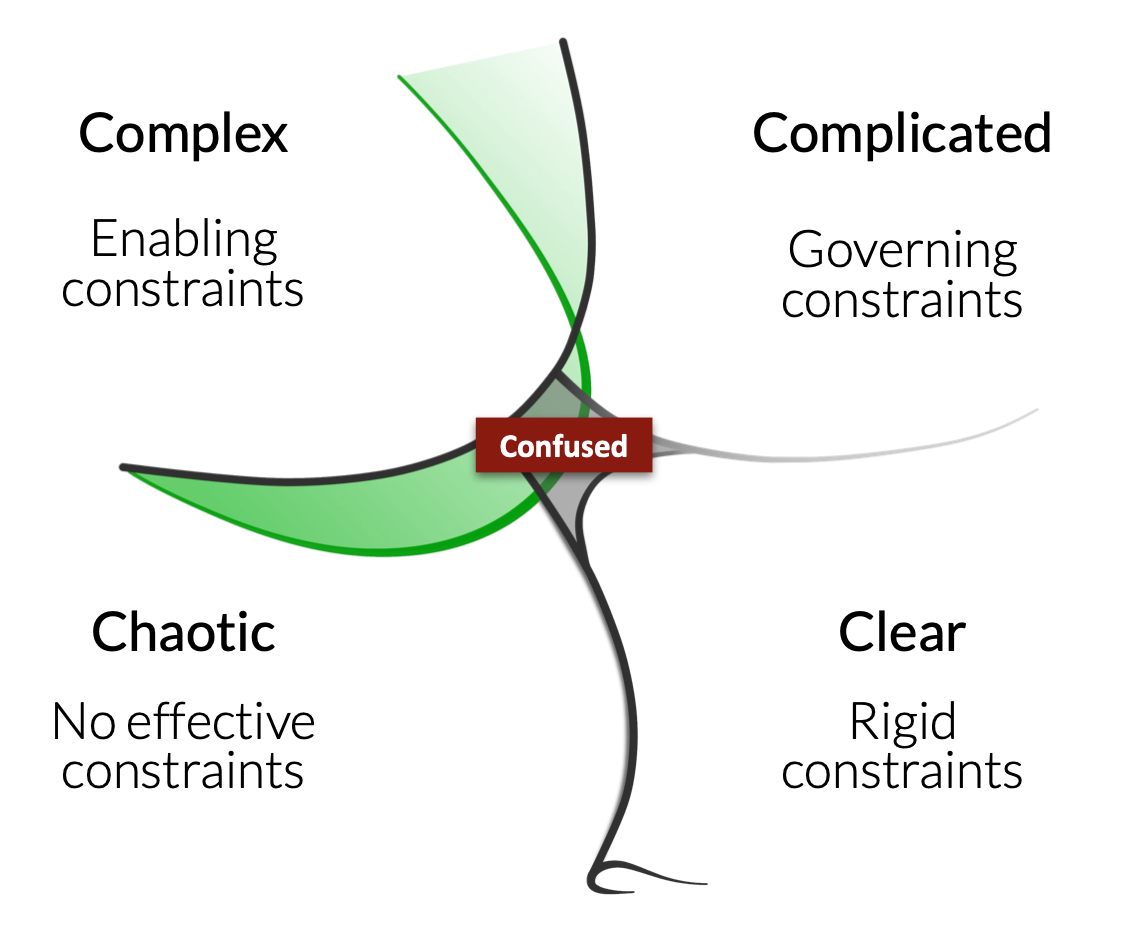
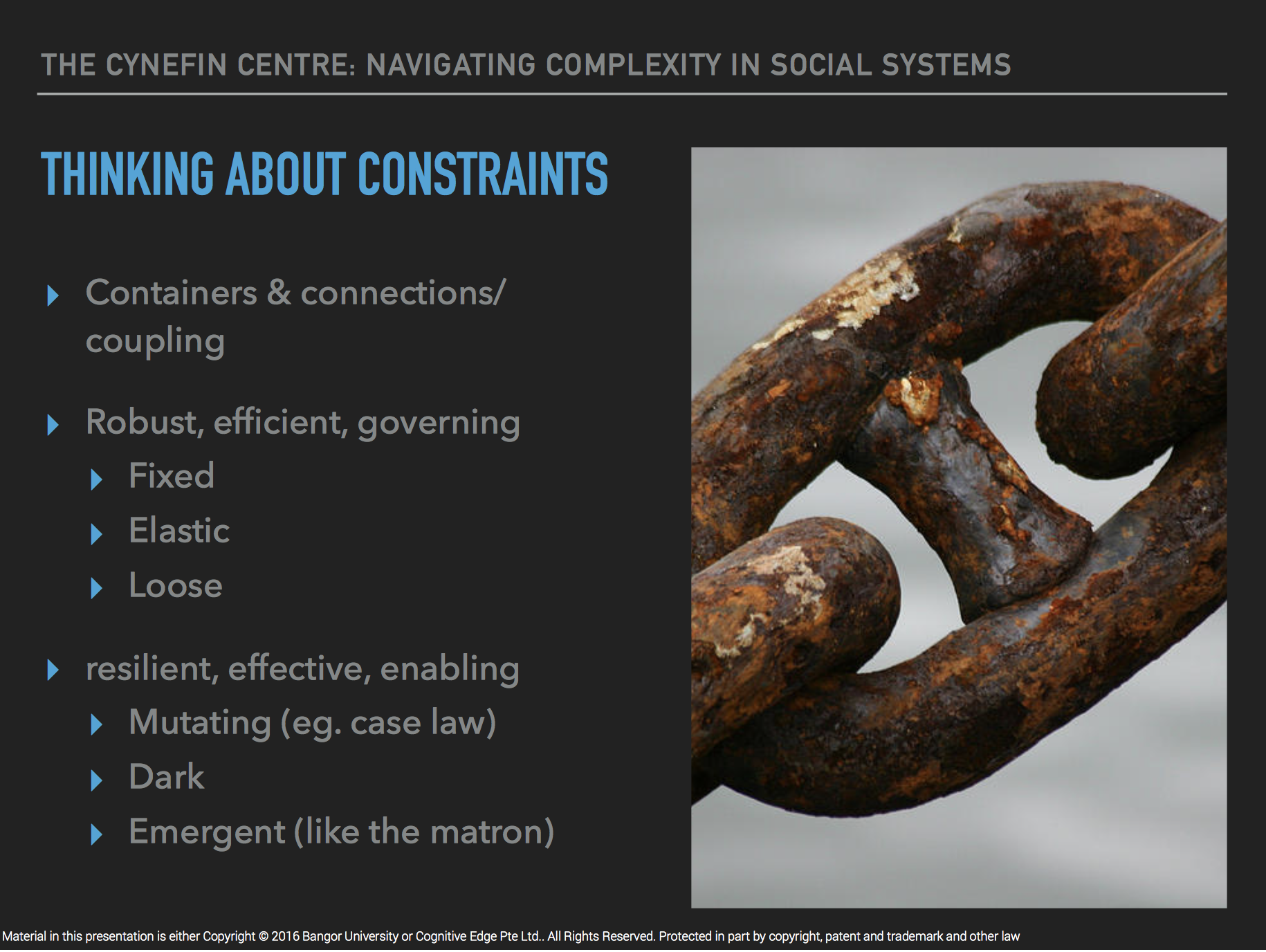
- In plain English, a constraint is often thought of as a limitation or restriction. However, in the Cynefin use of the term, a constraint refers to how we contain, couple, and link things. A constraint can therefore also be enabling, as much as limiting.
- The legitimate concerns of an organisation, either industrial or government, should be limited to managing constraints, both those which contain and those which link people and things and then allocating to resources ideally on an emergency evidence base from those they serve or who work for them.
- Barriers limit or delineate behavior. Once the barriers are set, the system can self-regulate within those boundaries. The founders of eBay, for example, created barriers by establishing a simple set of rules. Among them are pay on time, deliver merchandise quickly, and provide full disclosure on the condition of the merchandise. Participants police themselves by rating one another on the quality of their behavior.
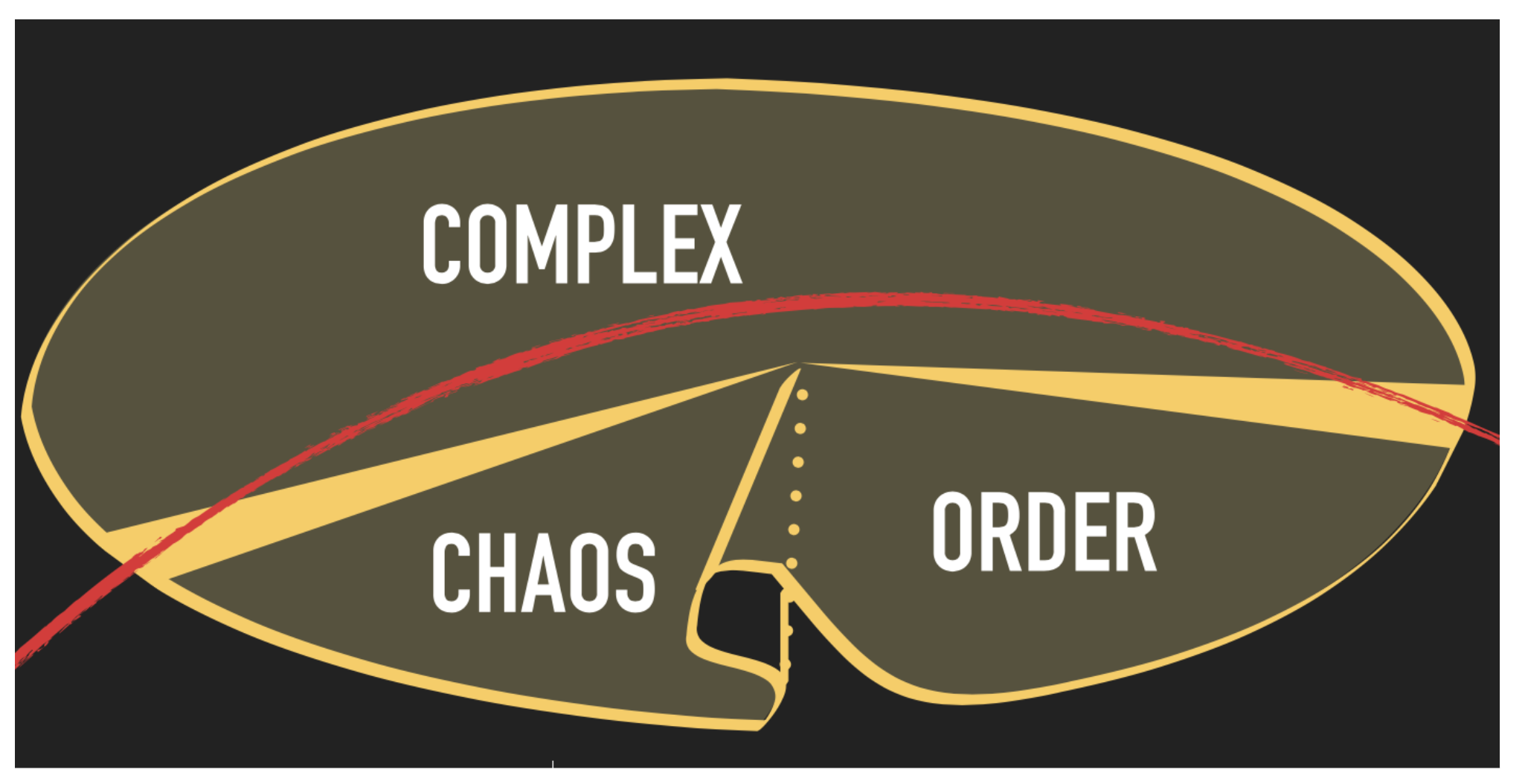
ORDER System
- everything is connected by constraints which are known, visible, stable, and highly structured.
- Don’t really exist in Nature. Humans are good at creating order.
- Think of the exoskeleton of an insect — it has a rigid shell that is not going to change but within it things may change.
CHAOS system -
- no tangible constraints
COMPLEX system
- everything is connected with everything else but we don’t know what or where the connections are.
- Think of an endoskeleton is like our spine — it gives coherence but doesn’t contain completely, so you get huge amounts of variation around it.