Global Warming Policy Fdn
=-==
oops duplicate see also GWPF
820 primary on covid fail
maybe mistaken for FORUM
---
roberts climate obstruct
- Networks of think tanks are spreading obstruction globally
A group of think tanks—public policy institutes that perform research and
advocacy—have promoted disinformation and misinformation about climate
science and contested climate policies via reports and presentations to leg-
islatures, news and social media, and other channels.49,50,51 They present
quasi-academic positions while shifting the framing of climate change from
a science-based issue to a matter of individual liberty and economic free-
dom (Chapter 5). They have also funded research reports and conferences to
challenge the IPCC consensus on anthropogenic climate change52 and have
networked transnationally to increase their capacity to promote or disrupt
specific political discourses on the topic.53 Their institutional structure is
shaped by the predominance of men, especially in the case of European think
tanks, illustrating a documented alignment between masculinity and climate
contrarianism.54 There is also a strong convergence between the far-right,
neoliberal thought advanced by these think tanks and resistance to climate
action (Chapter 5).55
Many of the most influential think tanks are based in the United States, but
the dominance of think tanks has spread globally, thanks in part to the Atlas
Network, a global network of such organizations that advocates free-market
(libertarian) and neoliberal policies (Chapter 5). The Heartland Institute in the
United States, the Free Market Foundation in South Africa, and the Global
Warming Policy Foundation in the United Kingdom all have worked to chal-
lenge climate policies and programs (Chapter 5). Similar ideas and practices
have also spread to think tanks in the Global South, such as Andes Libre in Peru
and the Instituto Liberdade in Brazil (Chapter 8). Funding flows around the
world to support these think tanks, which share information, tactics, events,
connections, experts, board memberships, and legal support.56...
:{---
omg covid delingpole zinc grift
https://www.desmog.co.uk/2020/08/10/how-uk-climate-science-deniers-turned-their-attention-coronavirus-covid-19
no pix twt
on December 31, 2019 many of us were reflecting on the past year and thinking about what opportunities lay ahead. Few were paying close attention to early reports ofunexplained cases of pneumonia thousands of miles away in Wuhan, the large capital city of China’s Hubei Province.
But less than three months later, on March 23, Boris Johnson was ordering anational lockdown to try and stop that virus, by then known worldwide as COVID-19, from raging across the UK. This came 52 days after the chief medical officer of England hadconfirmed the nation’s first two cases.
The coronavirus crisis once again saw the UK divided — between those putting their trust in public health experts and their recommendations, and those quick to question the science on which the government claimed to base its decisions for controlling the pandemic. For those who have watched the decades-long efforts to slow climate action, this was a familiar phenomenon. And the coronavirus pandemic seemed to give fresh ammunition to some familiar faces.
A close look at commentary on both COVID-19 and climate change reveals significant crossover between unqualified voices casting doubt on experts recommending action.
Why?
“There’s nothing mysterious about this,” says Stephan Lewandowsky, a professor of cognitive science, who studies the persistence of misinformation in society at the University of Bristol.
“I think COVID is just climate change on steroids in a particle accelerator,” he says. “The same forces are happening: You have the inevitability of a virus which is the same as the inevitability of the physics. And opposing that you have politics which motivates some people to deny the inevitables and instead resort to bizarre claims.”
Find out more about the crossover between COVID and climate science denial in DeSmog's special series
'No need to panic’
Commentators with a history of casting doubt on established climate science first turned their attention to COVID in the days just after Chinese authorities ordered the 11 million residents of Wuhan, a city the size of London, intolockdown.
On January 24,Ross Clark, a columnist for The Spectator who has lamented“hysteria” around COVID-19, said there was “no need to panic about coronavirus” despitewarnings from leading epidemiologists about the potential spread of the outbreak.
On January 29,British economistRoger Batesimilarlyargued on the website of theAmerican Enterprise Institute (AEI), a climate science denying free-market lobby group, that news reports around COVID-19 were unnecessarily sparking a major political reaction.
“A contagion will happen at some point, and it’s important we recognize it and react. Unless the coronavirus mutates into something far more dangerous, this isn’t it,” he wrote[spectator pix]
the idea that governments and the media were overreacting to the coronavirus threat was echoed by libertarian online magazine:{Spiked:(style="background-color:#ffff66;"):}:,which has takenfunding from notorious backers of climate science denial theKoch family, and hasincluded Bate and other AEI scholars among its contributors. It published an article as early as January 30 saying there was“mass hysteria in the newsrooms” around COVID.
By mid-February, the World Health Organization had declared that the threat of COVID-19 spreading across the world was“high” — yet a relaxed attitude continued to prevail among some commentators.
On February 19, centre-right blog ConservativeHome published an article by**Daniel Hannan**, a columnist and former Tory MEP,claiming that COVID-19 was unlikely to be as lethal as the common flu.
Hannan, a leading figure in the UK’s campaign to leave the EU, haslinks to various American lobby groups that have spread misinformation on climate change including theCato Institute and theHeritage Foundation. He encouraged ConservativeHome readers to “cheer up” and discouraged “panic” over the virus. That message was taken up by Clark in anotherSpectator article, arguing that “coronavirus hysteria” was “the latest phenomenon to fulfil our weird and growing appetite for doom"
[pix]
clark told DeSmog he stood by his analysis but acknowledged: “Clearly, COVID-19 took off more than I, or virtually anybody imagined it would at that stage.”
“There is a very broad range of opinions among virologists, epidemiologists and others who might be regarded as expert in this field,” he said, “so the idea that I am at odds with some mythical consensus of expert opinion is false.”
“I have been around long enough to know there is no such thing as scientific consensus on either issue [climate change or COVID], nor indeed on any matter where evidence is still emerging and open to wide interpretation,” he added.
Even after the World Health Organizationdeclared the contagion to be a pandemic in early March, commentators who have long cast doubt on warnings issued by climate scientists continued to deny that COVID-19 was a major threat.
Mail on Sunday columnistPeter Hitchensclaimed that Britain was infected by a “bad case of madness,” arguing that restrictions were bein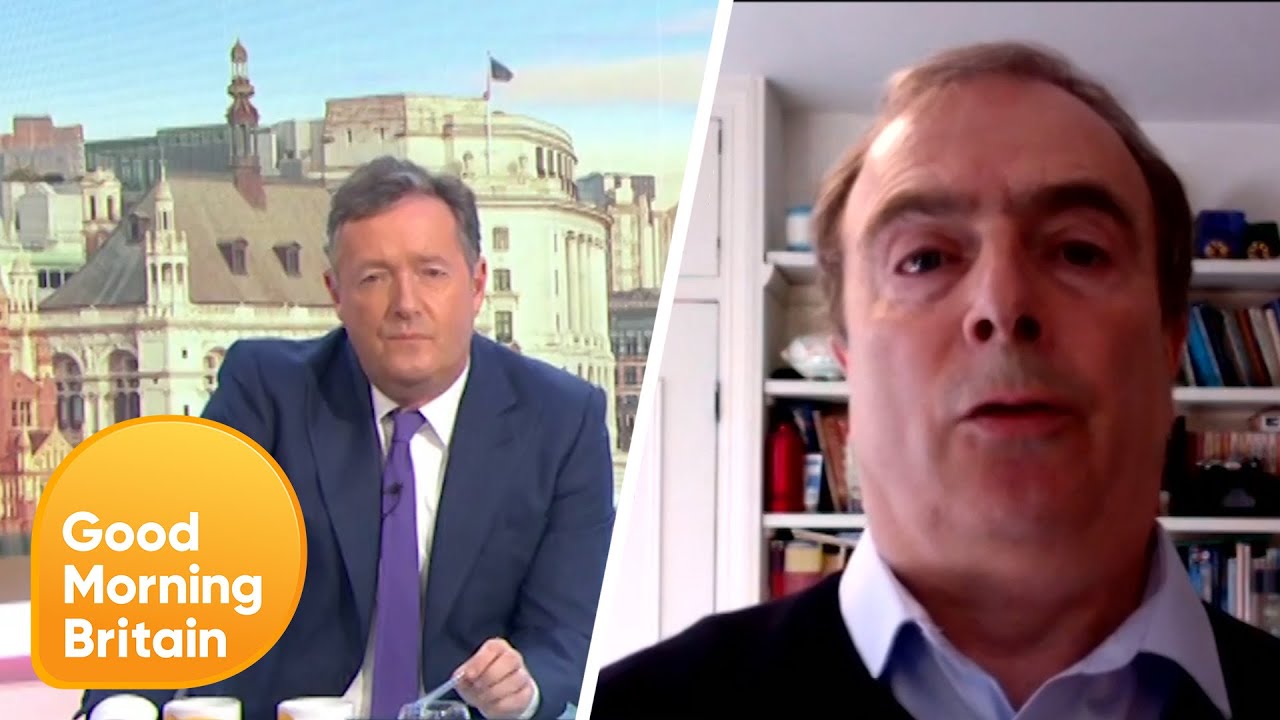 and “unreason.”
The language was familiar: Hitchens has previouslyrejected science showing human activity is responsible for global warming, and labeled measures to tackle climate change such as environmental taxes asa “sort of madness.”
For Lewandowsky, this “hysteria” narrative is part of a wider phenomenon of undermining expertise across the board, from Brexit, to climate change, and now COVID-19.
Lewandowsky points out that this also extends to many on the fringes of the political debate, such as controversial commentatorKatie Hopkins, who had over a million Twitter followers before the platform banned her, and has said the public were being“played” by the government for being asked to wear face masks. Or Brexit Party leaderNigel Farage, who described a police visit to his home as “lunacy” after he apparently broke lockdown rules.
Both have also cast doubt on the reality an of climate change.
“They’re quite explicit about saying that one person’s fact is another person’s lie, because that then enables them to avoid accountability,” Lewandowsky argues.
Miracle cures and conspiracy theories
These commentators’ contributions to the debate haven’t been without consequence. Some have spread conspiracy theories that have had real-world impact, while others have admitted to ignoring official safety guidelines, putting the public at risk of catching the disease.
ColumnistJames Delingpolewrote in a March 28article for the Spectator Australia titled ‘Wu Flu Notes’ that he had gone about his daily business despite having symptoms that align with coronavirus and that it was possible he had “infected lots of graduates.”
Some days later, Delingpole posted a tweet claiming a “high-powered zinc formula” had helped him recover from the illness without the need to go into intensive care – despite little being known about whether any such formula can be a cure for the virus.
He went on to write, “what I’d like more than anything is for this stuff to be available on the open market for everyone. But to mass produce it my friend needs ££££. If I crowdfunded it who’d be interested?” He concluded his request by asking for “potential big money backers."
[twt]
delingpole’s zinc promotion was comparable to comments made by US conspiracy theoristAlex Jones, who, a few weeks prior, hadreceived a cease-and-desist letter from a top New York attorney based on claims he had marketed and sold fraudulent COVID-19 treatments on his conspiracy website. US President Donald Trump was also widely criticised for suggesting that disinfectant taken internally could be a treatment for the virus.
Theories about miracle cures can take hold partly as a result of personal politics, Lewandowsky argues. Under lockdown, “you’re asked to stay at home and to look after other people by not doing what you’d like to do, and that is very challenging if you’re a believer in personal freedom and autonomy,” he says.
The same can be said of the motivations for spreading misinformation on climate change: “A lot of climate denial is very high-pitched, frenetic, emotional, angry, toxic – and that’s all triggered because people’s identity is at stake.”
The desire to reach for conspiracy theories may also stem from a need to feel that individuals still retain some control, says Evita March, a senior lecturer of psychology at Federation University Australia. “Conspiracy theories offer the believer some comfort in that there is still behavioural predictability,” she says.
And there were plenty of conspiracy theories flying around, pushed by long-time climate science deniers.
Piers Corbyn, brother of former Labour Party leader Jeremy Corbyn, was quick to promote the idea that coronavirus was thefault of politically liberal billionaires, and that it was related to the**Chinese-developed 5G mobile network**.
The latter conspiracy, alsopromoted by Infowars’ Jones, had significant real-world consequences. Over the Easter weekend it wasreported that 20 phone masts had been subject to arson attacks. According to Mobile UK, the trade association for four mobile network operators, an estimated 50 masts had beentargeted by April 15
[bbc pix]
david Lawrence, a researcher at campaign group Hope Not Hate, told DeSmog that theories around 5G have existed for a number of years, so “the stage was already set.” ”When the global COVID-19 outbreak occurred, there was both a susceptibility to be exploited and a ready-made explanation to hand,” he said.
“In some ways this is similar to climate change,” said Lawrence, “in that people who work in industries that would be negatively affected by efforts to reduce carbon emissions might be more likely to find reasons to reject the scientific consensus.”
Such conspiracy theories become popular — whether in relation to climate change or COVID-19 — because they are a means of “simplifying and attributing blame,” particularly during a time when “people feel that they have lost control over their lives,” says Lewandowsky.
“Some will seek comfort in the idea that there are bad people out there causing the pandemic because, for some, knowing there are bad people responsible for terrible things is more comforting than to assume that these things are uncontrollable,” he says. “It allows people to direct anger at someone.”
Distrusting modellers
Many commentators directed their fire at a familiar foe — scientific models.
On April 1, the same day the United Nations announced thepostponement of the annual UN climate change conference, two prominent UK climate science deniersargued in The Wall Street Journal that the pandemic had “dramatically demonstrated the limits of scientific modelling to predict the future.”
Benny Peiser andAndrew Montford, the Director and Deputy Director of the UK’s principal climate science denial campaign group the**Global Warming Policy Foundation (GWPF)**, criticised policymakers for using academic research that was subject to a “lack of quality control.” “In normal times this doesn’t matter much, but it’s different when studies find their way into the policy world,” they wrote.
They did not mention that the GWPF’s own approach to ‘peer-review’, which undercover reporters in 2015 showed operated on the basis of sending reports to its members of its own advisory council. The model has been described by UK charity Sense About Science, whose Advisory Council included GWPF advisor Matt Ridley, as “a way of trying to give scientific credibility to certain claims in the hope that a non-scientific audience will not know the difference.”
Eight days later, Breitbart’s Delingpole similarly criticised scientific modelling,dismissing research from the University of Washington forecasting more than150,000 deaths from the disease across the US as “operating in the realms of purest fantasy.” Whether on climate change or the pandemic, “we have no idea whether or not we can trust” scientific experts and their modelling, Delingpole argued[pix BB]
clark takes a similar view, telling DeSmog: “on both COVID-19 and climate change there are a lot of people who seem to favour the results of modelling over real-world observation.” Those who want action “will latch on to any model” that suits their ends, he claimed, and will “decide that is 'the science', that it is fact, beyond all challenge.”
Anarticle in Spiked likewise argued in April that “worst-case scenario thinking” and “doomsday forecasts” from models had clouded political judgement, referencing the obesity crisis, swine flu, and climate change.
This process of regularly casting doubt on models represents the “weaponisation of the scientific method,” says Imran Ahmed, founder of the Centre for Countering Digital Hate. “Those sorts of sly tactics that have been used by these groups have amounted to an entire culture of how they spread information, spread ideas, and build audiences for their groups.”
“It’s expressed through philosophical strands which are anti-expert, faux-populist and conspiracies” and can include the “incel movement, climate denial, vaccine denial, identity-based hate,” he argues.
“As new facts emerge and as the understanding of the scientific movement changes,” says Ahmed, “these actors look back at previous consensuses and say, ‘see, they were lying back then.’”
Attacking environmentalists
As well as attacking coronavirus experts on their response recommendations, many commentators who oppose climate action also attacked those looking further ahead by putting forward proposals to ensure recovery plans were consistent with governments’ environmental pledges.
For months, commentators who regularly question the veracity of mainstream climate science denounced environmental activists for supposedly distracting the world with climate change amid the threat of pandemics.
On March 12, Telegraph columnistSherelle Jacobsargued that university funding should be redirected away from climate change research and towards “the scientifically uncontested problem of pandemics.” The day after, when the UK was effectively put under a national lockdown, Dutch climate science denial groupCLINTEL published anopen letter titled “Fight virus not carbon.”
Greenpeace,The Climate Group, and many other environmental organisations believe that the government should include environmental policies in coronavirus economic recovery measures to “build back better,” particularly as the country seeks to position itself as a climate leader ahead of hosting the UN climate talks in November 2021.
Some commentators spun this argument to imply that the environmental movement was happy that the virus has spread.
On March 22, former Top Gear presenterJeremy Clarksonclaimed in the Sunday Times that “greens just can’t stop smiling” because COVID-19 was “their idea of a wet dream.” Spiked contributor Ross Clark echoed this position in a response to DeSmog’s questions, saying that “there is a strand of opinion on the left which wants these crises — climate change and COVID — to be as big as possible because they see it as a way of undermining capitalism, and other aspects of our lives, and reforming society in their own dream vision.”
On March 25, a couple of days after Clarkson’s polemic appeared, Spiked editor Brendan O’Neill similarly argued that the pandemic was “a glimpse of the dystopia greens want us to live in.”
“The truth is that if the COVID-19 crisis has shown us anything, it is how awful it would be to live in the kind of world greens dream about. Right now, courtesy of a horrible new virus, our societies look not dissimilar to the kind of societies Greta Thunberg, Extinction Rebellion, green parties and others have long been agitating for,” he wrote.
[pix] o’Neill reiterated this position when contacted by DeSmog, saying both the “green movement” and the reaction to COVID represented “privileged Westerners taking political decisions and actions” to the detriment of some of society’s most vulnerable. “Progressives should be questioning the impact of the reaction to COVID-19 on working people and poor people,” he said.
In June, 57 charitieswrote to Prime Minister Boris Johnson asking him to put the creation of jobs in low-carbon sectors at the forefront of his economic recovery plans. They also asked the government to cancel the debts of developing countries struggling with both the impacts of the pandemic and the climate crisis.
Delingpole later wrote in acolumn for Breitbart saying environmentalists were celebrating the lockdown as a blueprint for a “new world order.” The GWPF took this argument one step further,publishing an image of a crying woman with the text, “net zero, like lockdown but permanent” — a reference to the UK government’s plans to slash the country’s emissions.
As these pieces were appearing, a Twitter account claiming to represent the climate protest group Extinction Rebellion (XR) in the East Midlandsposted an image of an XR-branded sticker on a lamppost with the words, “corona is the cure, humans are the disease.”
Official XR accounts were quick to condemn the tweet andsaid that they were not affiliated with the newly created account, which has since been deleted. But various outlets and commentators used the tweet to condemn the protest group.
Gaia Fawkes, the environmental section of political blog Guido Fawkes,suggested the post showed that XR was “in favour of extinction,” though it acknowledged coordinators of the organisation had “distanced themselves” from the supposed splinter group. A spokesperson for the site told DeSmog it stood by its reporting despite well-publicised doubts over the authenticity of the East Midlands organisation, stating it was “unaware of any publicly available list of ‘official’ [XR] groups at the time.”
The GWPF likewise claimed the Twitter account’s “anti-human sentiment” was “widely shared” among environmentalists,rejecting claims that the East Midlands account was fake.
Author and Guardian columnist George Monbiot suggests that while it is predominantly money that is behind climate science denial or tobacco industry lobbying, “with COVID-19, the motive definitely varies,” but the outcome is essentially the same.
“There are a lot of very well-paid people who are very professional and they’re using the expertise that they’ve gathered in other areas of dispute about scientific facts and the policies arising from them, and applying those directly to the pandemic,” he argues.
“Take their power seriously, but don’t take any of their arguments at face value,” Monbiot concludes. “It’s not worth trying to deconstruct the nonsense they come out with.”
Political impact
Unlike in theEU referendum or Trump’s presidential campaign, pushing anti-expert rhetoric may no longer be a winning strategy in the wake of COVID-19. Polling shows that despite worry about the pandemic and its impacts, the public still wants governments totackle climate change. And politicians attaching themselves to the anti-science bandwagon are now struggling in the polls.
For the Centre for Countering Digital Hate’s Ahmed, attacking the concept of expertise around COVID-19 is “the first truly great strategic mistake by those who espouse this radical world view.”
The US and UK are two of the countries hardest hit by the coronavirus pandemic, and both have leaders “who have been denying evidence and fact,” says Lewandowsky. “Johnson and Trump are creating a situation in which the very thought that we could establish a common truth is under attack,” he says. Both are regularly backed by commentators who also openly question the concept of expertise, whether on climate change or coronavirus.
But these positions have begun to hurt both leaders. Johnson has plummeted from a position of public popularity prior to the UK’s lockdown to anegative approval rating almost four months later. And the gap between the majority of Americans who disapprove of Trump’s leadership and those keeping faith with the president now sits ataround 15 percent, numbers that could see him lose November’s election.
That may reflect a wider shift in the public mindset, Lewandowsky argues: “My hope is that the COVID crisis has kind of given us a reset here, and there’s some evidence that people are beginning to say that we do need experts and data.”
==
bit lost see clintel
https://www.desmog.co.uk/2019/09/06/climate-science-deniers-planning-coordinated-european-misinformation-campaign-leaked-documents-reveal
A coalition of climate science denial groups is gearing up for a European media blitz later this month, in an apparent bid to derail efforts to set an EU-wide “net zero” emissions target, documents obtained by DeSmog show.
Plans for a self-styled “European Declaration” include press conferences in Brussels, Rome and Oslo and a letter to be sent to leaders of EU and UN institutions, scheduled for mid-September.
The letter claims to have “400 independent Climate Scientists and Professionals” signed up so far.
Some notable signatories are part of a trans-Atlantic network of thinktanks pushing for environmental deregulation post-Brexit, and have a history of climate science denial. A number of former employees of the network’s member organisations are now staffers in Boris Johnson’s cabinet Brulle, Professor of Sociology at Drexel University and an expert on climate science denial, told DeSmog the campaign looked like a panicked response to recent high-profile efforts to highlight the climate crisis:
“The rise of the Extinction Rebellion movement, and the immense popularity and influence of Greta Thunberg, are having a significant impact on media coverage of climate change and concern about this issue. I would suspect that the aim of the campaign is to blunt the impact of these climate advocacy efforts.”
“The talking points are stale and patently scientific nonsense. That isn't critical. The point would be to keep the ‘contested’ nature of climate change alive.”
Geoffrey Supran, a Research Associate at Harvard University who gave evidence to the European Parliament in March on oil giant ExxonMobil’s historic promotion of climate science denial, said he thought the move was an attempt to distract from the various upcoming efforts to increase action on climate change globally, such as the UN Climate Action Summit at the end of the month:
“These people are the rhetorical equivalent to the kid in the classroom screaming ‘Look at me! Look at me!’ They're desperate for attention.”
“As always, they presumably hope to muddy the waters of public and political discourse on the climate crisis. To feed the echo chamber of sympathetic right-wing media and blogs, and to prey on naive and unsuspecting journalists who may be tempted to exercise false balance in their climate coverage.”
Coordinated effort
The campaign is being spearheaded by a new Netherlands-based climate science denial group called the Climate Intelligence Foundation (CLINTEL), launched in April with funding from Niek Sandmann, a multimillionaire real estate developer.
The group’s co-founder Guus Berkhout, an engineering professor who began his career at Shell and set up the Delphi Consortium in the 1980s to develop new exploration methods for the oil and gas industry, told DeSmog that interest in the campaign had been “overwhelming”.
Berkhout said there were plans to hold press conferences in European capitals and that the effort was being “expanded to a World Climate Declaration”. He declined to offer further details or comment.
In addition to CLINTEL, the international organising group includes some well-known figures from the climate misinformation world, including:
- Professor Richard Lindzen, former Distinguished Senior Fellow at the Cato Institute (USA)
- Viv Forbes, Chairman of the Carbon Sense Coalition (Australia)
- Professor Fritz Vahrenholt, Speaker at the European Institute for Climate and Energy (Germany)
- Professor Jeffrey Foss, Contributor to the Frontier Centre for Public Policy (Canada)
- Jim O’Brien, Chair and Co-founder of the Irish Climate Science Forum (Ireland)
- Terence Dunleavy, Founding Chairman of the International Climate Science Coalition (New Zealand)
In an email seen by DeSmog, Berkhout explains that “signatures are being collected from persons who give a valuable contribution to the climate debate and are recognised as such”. He goes on to boast that there are “already a lot of great names on the list”.
Of the 400 signatories, only a handful have a background in climate science, with the majority being writers, engineers and geologists with no direct expertise in the field.
In addition to the Cato Institute's Richard Lindzen,the list features numerous figures from US-based libertarian groups, including Patrick Michaels of the Competitive Enterprise Institute, and Charles Battig and Willie Soon from the Heartland Institute, which provides a total of 12 signatures alone. All three organisations are members of the Atlas Network, a Koch-funded international umbrella body of free-market groups.
UK affiliates of the network include the Institute of Economic Affairs (IEA), the Adam Smith Institute (ASI) and the Taxpayers’ Alliance. A number of former employees of these groups are now working in Boris Johnson’s government.
Taxpayers’ Alliance founder Matthew Elliott is reportedly advising new Chancellor Sajid Javid, whose Conservative leadership campaign he ran, while former employee Chloe Westley has joined Boris Johnson’s Number 10 team. International Trade Secretary Liz Truss has appointed two special advisors from the IEA and ASI.
UK support
The UK’s principal climate science denial group, the Global Warming Policy Foundation(GWPF), founded by former Chancellor Nigel Lawson in the run-up to the 2009 Copenhagen climate summit, is also well-represented in the campaign.
At least four members of its Academic Advisory Council feature in the letter’s signatories, and other contributors to the GWPF have also backed the “declaration”.
One is Northumbria University Professor Valentina Zharkova, who gave a lecture to the group last year claiming that climate change is caused by natural solar cycles. A paper Zharkova co-authored in June on the same subject was criticised for containing “basic errors” and an investigation into how it came to be published was launched by the scientific journal that printed it.
CLINTEL also has close ties to the GWPF. Berkhout wrote an essay for the UK group last year insisting that climate change was purely a natural phenomenon. And in February, the GWPF published an article by its Dutch counterpart that said: “Yes, the Earth is warming up. But that is business as usual. Earth’s history tells us that climate change has always happened.”
The following month GWPF director Benny Peiser spoke at a gathering in Amsterdam where CLINTEL announced its upcoming launch.
At that event, Berkhout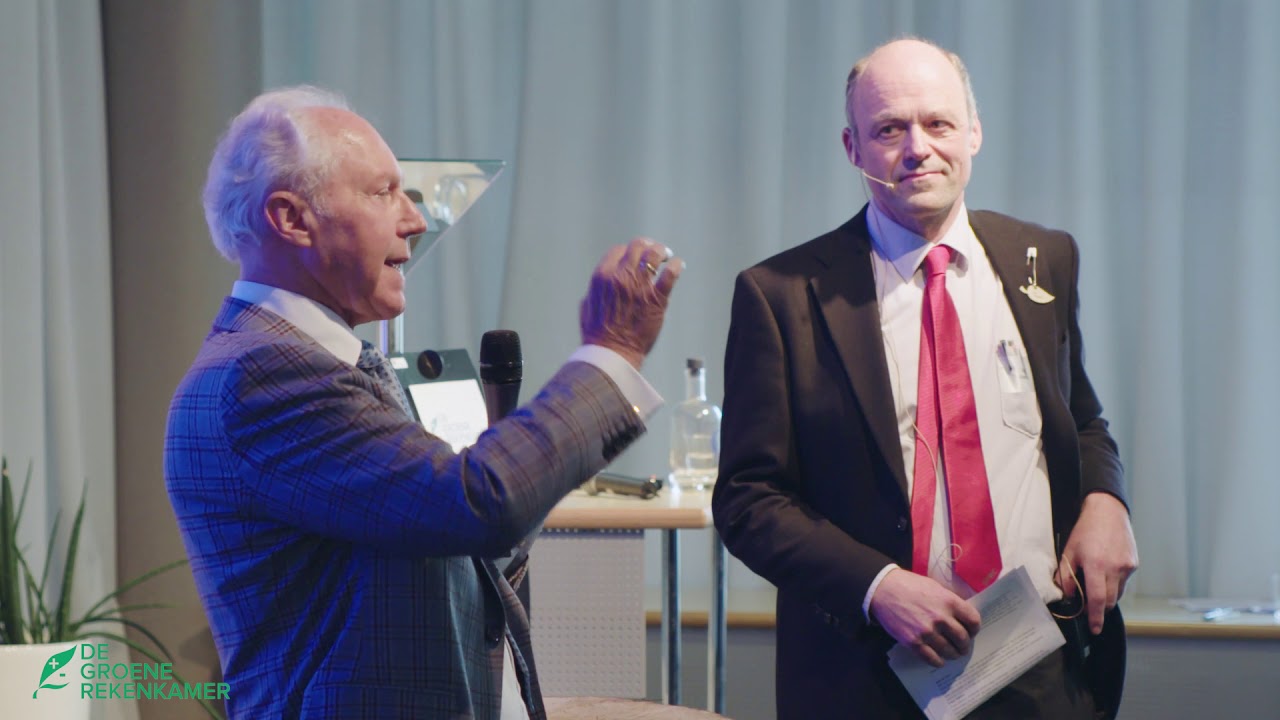 : “in this whole audience, apart from the organisation and a few brave ones, I don't see young people. So the first thing we are going to do is talk with the young people.” CLINTEL currently has a youth wing called “Young Clintel”.
The GWPF did not respond to a request for comment.
Other UK signatories include directors and former directors of lesser-known oil and gas companies, as well as five Fellows of the Geological Society, a professional body representing Earth scientists.
In addition to the EU “net zero” emissions target under consideration, planned “climate strike” protests and the upcoming UN Climate Action Summit, the media offensive may also, given its European focus, be timed to coincide with a crunch government meeting in Germany on how the country will meet its 2030 emissions target, set to take place on 20 September.
German signatories to the letter include a spokesperson for the European Institute for Climate and Energy (EIKE), which a Der Spiegel investigation earlier this year found had been working closely with the insurgent, far-right Alternative for Germany party to campaign against action on climate change.
==
ties to brexit, cambr anal
ExxonMobil’s former CEO is Rex Tillerson, who was until recently the US Secretary of State. He was appointed by Donald Trump, who Cambridge Analytica were influential in getting elected.
Big Coal
Cambridge Analytica also has ties to the world’s biggest coal company, Peabody Energy.
The link there is through Christian Patrick Teroerde, who was a director of SCL Elections - a subsidiary of Cambridge Analytica’s parent company, SCL Group.
Teroerde is also a director of Hanson Asset Management, which bought a major stake in Peabody in the 1990s, when it was the world’s largest coal company.
Peabody filed for bankruptcy in 2016 as coal prices crashed. Since Donald Trump got elected, Peabody has bounced back, big time.
Brexit and Climate Science Denial
Hanson Asset Management also links to DeSmog UK’s previous map that tied Cambridge Analytica to Brexit and climate science denial.
The company was built on the wealth of Lord James Hanson, who was a big Euro-sceptic. He founded the anti-EU campaign group Business for Sterling, whose Head of Research was Dominic Cummins.
Cummins went on to be the campaign director for the official Brexit campaign group, Vote Leave. One of the whistleblowers in the Guardian claimed Cambridge Analytica was working for Vote Leave via a youth campaign organisation called BeLeave and the company’s Canadian spin-off, Aggregate IQ.
Vote Leave was supported by two members of the Conservative party with climate science denial links: North Shropshire MPOwen Paterson and hereditary peer Matt Ridley. Both are well-known allies of the the UK’s most prominent climate science denial campaign group, the Global Warming Policy Foundation.
The Electoral Commission is currently investigating the unofficial Brexit campaign, Leave.EU, which Cambridge Analytica is also thought to have worked with, though the company denies this.
Leave.EU was bankrolled by climate science denier Arron Banks and was fronted by another climate science denier, former UKIP-leader Nigel Farage. Both were famously photographed in a golden elevator with Donald Trump.
Both Vote Leave and Leave.EU also have ties to the party currently propping up the government, the Democratic Unionist Party, through another Brexit campaign group - Grassroots Out. DUP MP and climate science denier Sammy Wilson was a key player in Grassroots Out.
Here’s an interactive map of how it all fits together:
https://www.desmog.uk/2018/03/29/mapped-cambridge-analytica-s-ties-fossil-fuel-industry
=
gwpf attacked attack roy soc: http://www.thegwpf.org/images/stories/gwpf-reports/montford-royal_society.pdf
yet
http://www.desmog.uk/2016/10/12/world-s-oldest-scientific-academy-royal-society-allow-climate-denying-gwpf-lecture-go-ahead-despite-internal
==
05/12/2014 12:21 PM
Climate Change Debate
A Famous Scientist Becomes a Skeptic
Interview Conducted By Axel Bojanowski
Meteorologist Lennart Bengtsson has long been considered a cool head in the often heated conflict over global warming. In an interview, he defends his decision to join an organization that is skeptical of climate change.
The debate over climate change is often a contentious one, and key players in the discussion only rarely switch sides. But late last month, Lennart Bengtsson, the former director of the Hamburg-based Max Planck Institute for Meteorology, one of the world's leading climate research centers, announced he would join the academic advisory council of the Global Warming Policy Foundation (GWPF).
GWPF, based in Britain, is a non-profit organization and self-described think tank. Conservative politician Nigel Lawson founded the organization in 2009 in order to counteract what he considered to be an exaggerated concern about global warming. The organization uses aggressive information campaigns to pursue its goals.
The lobby group's views markedly differ from those of the UN climate panel, the IPCC, whose reports are the products of the work of hundreds of scientists who classify and analyze vast amounts of climate knowledge accumulated through years of research. The most recent IPCC report states that man-made emissions of greenhouse gases are leading to significant global warming, with serious environmental consequences.
Bengtsson was known for maintaining moderate positions even during the most vitriolic debates over global warming during the 1990s. In an interview with SPIEGEL ONLINE, he discusses why he made the shift to the skeptics' camp.
SPIEGEL ONLINE: Mr. Bengtsson, why did you decide to join the Global Warming Policy Foundation, an organization known for its skepticism about climate change?
Bengtsson: It is important to allow a broad debate on energy and climate. We must urgently explore realistic ways to address the different scientific, technical and economic challenges in solving the world's energy problems and the associated environmental issues.
SPIEGEL ONLINE: Why do you think the GWPF is particularly suitable for that goal?
Bengtsson: Most of the members of GWPF are economists and this is an opportunity for me to learn from some of these highly qualified members who are active in areas outside my own expertise. At the same time, it will allow me to contribute by my own meteorological knowledge, to broaden the debate.
SPIEGEL ONLINE: The people at GWPF don't exactly have a reputation for reconsidering their opinions. Have you become a so-called climate skeptic?
Bengtsson: I have always been a skeptic and I believe this is what most scientists really are.
SPIEGEL ONLINE: But weren't you one of the alarmists 20 years ago? Do you think your position at that time was wrong?
Bengtsson: I have not changed my view on a fundamental level. I have never seen myself as an alarmist but rather as a scientist with a critical viewpoint, and in that sense I have always been a skeptic. I have devoted most of my career to developing models for predicting the weather, and in doing so I have learned the importance of validating forecasts against observed weather. As a result, that's an approach I strongly favor for "climate predictions." It's essential to validate model results, especially when dealing with complex systems such as the climate. It's essential do so properly if such predictions are to be considered credible.
SPIEGEL ONLINE: You think there's a need for climate research to do some catching up in this regard?
Bengtsson: It is frustrating that climate science is not able to validate their simulations correctly. Since the end of the 20th century, the warming of the Earth has been much weaker than what climate models show.
SPIEGEL ONLINE: But the IPCC report discusses these problems in detail.
Bengtsson: Yes, the scientific report does this but, at least in my view, not critically enough. It does not bring up the large difference between observational results and model simulations. I have full respect for the scientific work behind the IPCC reports but I do not appreciate the need for consensus. It is important, and I will say essential, that society and the political community is also made aware of areas where consensus does not exist. To aim for a simplistic course of action in an area that is as complex and as incompletely understood as the climate system does not make sense at all in my opinion.
SPIEGEL ONLINE: In the past, you have complained about what you described as a strong tendency towards politicization in climate research. Why have you now joined an organization that is inherently political in nature?
Bengtsson: Throughout my life, I have been fascinated by predictability and frustrated by our inability to predict. I don't believe it makes sense for our generation to believe or pretend that we can solve the problems of the future because do not understand what these problems will be. Just do this thought experiment: Imagine you're in month of May 1914, and try to work out a plan of action for the next 100 years! Hardly anything will make sense.
SPIEGEL ONLINE: So do you suggest we should carry on with business as usual just because forecasts are complicated?
Bengtsson: No. I think the best and perhaps only sensible policy for the future is to prepare society for change and be prepared to adjust. In 25 years, we'll have a world with some 9 to 10 billion people that will require twice as much primary energy as today. We must embrace new science and technology in a more positive way than we presently do in Europe. This includes, for example, nuclear energy and genetic food production to provide the world what it urgently needs.
URL:
- http://www.spiegel.de/international/world/meteorologist-lennart-bengtsson-joins-climate-skeptic-think-tank-a-968856.html
attack roy soc: http://www.thegwpf.org/images/stories/gwpf-reports/montford-royal_society.pdf
http://www.sourcewatch.org/index.php?title=Global_Warming_Policy_Foundation
The Global Warming Policy Foundation (GWPF) is a United Kingdom group opposing action to mitigate climate change. Founded by Nigel Lawson,[1] it is a registered educational charity "deeply concerned about the costs and other implications of many of the policies currently being advocated" to mitigate global warming.[2]
Although founder Lawson claims to accept that anthropogenic global warming is occurring, this acceptance appears to be "considerably less than half-hearted;"[3] the GWPF webpage banner image sports a short-term (2001-2010) temperature graph (blue, below) giving the appearance that the world is not warming.


Compare the 10-year GWPF graph (blue) to the longer-term graphs to the right: 1979-2010 showing the true global warming signal[4] (with natural variability removed) and 1880-2010 (including natural variability).
Contents [hide] |
Start Up
The GWPF was founded, curiously, at the same time as the climategate emails were released on the University of Tomsk's server. At the time of its foundation the average age of its trustees was 74. Chairman Nigel Lawson stated "We will certainly be actively involved in monitoring what is being said, in correcting errors where the are errors. The only thing we will not be actively engaged in is what are the causes of the temperature changes on the planet: how much is CO2, how much is solar radiation, how much is cosmic rays. We won't be getting into all that."[5]
Funding not transparent; just 1.6% comes from memberships
The Global Warming Policy Foundation does not reveal where its funding comes from.[6] In their first years accounts they say "the soil we till is highly controversial, and anyone who puts their head above the parapet has to be prepared to endure a degree of public vilification. For that reason we offer all our donors the protection of anonymity".[7] The accounts show the extent to which the secretive Foundation is funded by anonymous donors, compared with income from membership fees. Its total income for the period up to 31 July 2010 was £503,302, of which only £8,168 (or 1.6%) came from membership contributions. The foundation charges a minimum annual membership fee of £100.[8]
In 2012, the Guardian exposed Lawson's links to coal-fired power companies in Europe.[9]
Charitable Status
The GWPF is a registered charity (Number 1131448), which gives it certain tax advantages. Its charitable objectives are stated as: "To advance the public understanding of global warming and of its possible consequences, and also of the measures taken or proposed to be taken in response to it, including by means of the dissemination of the results of the study of and research into (a) the sciences relevant to global warming (b) its impact upon the environment economies and society (c) and the above mentioned measures."[10]
Actions
CRU email theft - call for enquiry
In an op-ed announcing the GWPF launch and hopefully predicting failure of the December 2009 United Nations climate change conference in Copenhagen, Nigel Lawson called for a high-level independent inquiry into the content of the emails stolen from the University of East Anglia's Climatic Research Unit.[11]
After 3 govt enquiries cleared climate scientists, a denialist "enquiry" by skeptic Montford
When the three British Government enquiries into the CRU email saga were completed Dr Benny Peiser of the Global Warming Policy Foundation immediately announced it would to stir the issue up once more.[12] Andrew Montford was commissioned to write an "enquiry" into the climategate emails claims and was paid £3000 for his efforts. The results were released in September 2010.
The choice of Montford was ironic given the serious inaccuracies in his book, The Hockey Stick Illusion.[13] Furthermore the Global Warming Policy Foundation's own funding is mired in controversy whilst it enjoys charitable status, yet Montford himself is critical of what he calls 'fake charities'.[14] In his "enquiry" Montford criticized the official enquiries for not including known skeptics on their panels. This is a distortion of the truth however, since the Parliamentary Enquiry at the least included Graham Stringer Labour MP for Blackley and Broughton, a man who has consistently voted very strongly against laws to stop climate change.[15] [16] Montford knows this and records a cosy chat with Stringer on his blog.[17]
"900 papers" claim; subsequent analysis shows Exxon ties, Energy and Environment papers
In mid-April 2011, the GWPF provided "900+ Peer-Reviewed Papers Supporting Skepticism Of "Man-Made" Global Warming (AGW) Alarm".[18] The blog Carbon Brief analyzed them, and found that -
- 9 of the top 10 authors had ties to ExxonMobil
- "prominent scientists featured on the list didn't agree that their work supported skepticism about anthropogenic global warming - and had unsuccessfully asked for their work to be removed from similar lists in the past", and
- the most-cited journal was Energy and Environment, a journal with a very low impact factor whose editors are AGW deniers.[19]
Location
The GWPF is located at 1 Carlton House Terrace, London, in a room rented from the Institute of Materials, Minerals and Mining.[1]
Personnel
In November 2009, the GWPF listed:
Director
- Benny Peiser, Director; a social anthropologist.[20]
- Sir James Spooner is Honourary Treasurer
Board of Trustees
The Board of Trustees includes:[21]
- Lord Barnett
- Peter R. Forster (the Bishop of Chester)
- Lord Donoughue
- Lord Fellowes
- Martin Jacomb
- Lord Lawson (Chairman)
- Henri Lepage
- Baroness Nicholson
- Lord Turnbull
Academic Advisory Council
Academic Advisory Council members need not hold academic positions, Benny Peiser reports.[22]
As of December 2011, members are: [23],
- Adrian Berry, Viscount Camrose
- Samuel Brittan
- Ian Byatt
- Bob Carter
- Vincent Courtillot
- Freeman Dyson
- Christian Gerondeau
- Indur Goklany
- William Happer
- David Henderson
- Terence Kealey (Buckingham University)
- Anthony Kelly (GWPF)
- Deepak Lal
- Richard Lindzen
- Ross McKitrick
- Robert Mendelsohn, economics professor at Yale University
- Alan Peacock (Buckingham University)
- Ian Plimer
- Gwyn Prins
- B P Radhakrishna
- Paul Reiter
- Matt Ridley, writer (Buckingham University Honourary Degree, 2003)
- Alan Rudge, electrical engineer
- Philip Stott, Professor Emeritus of Biogeography at the School of Oriental and African Studies, University of London
- Richard Tol
- David Whitehouse, writer
Former members include:
- Hal Lewis (d. May 26, 2011[24])
Articles and resources
References
- ↑ 1.0 1.1 The voices of climate change sceptics. guardian.co.uk. Retrieved on 2009-11-24.
- ↑ Launched today!. www.thegwpf.org. Retrieved on 2009-11-24.
- ↑ Strip away the figleaf and reveal naysayers. timesonline.co.uk. Retrieved on 2009-11-24.
- ↑ Foster & Rahmstorf graph via ThinkProgress, [1], by Joe Romm, dated 2011-12-13, accessed 2011-12-18
- ↑ [2]
- ↑ [3]
- ↑ Page 4 [4]
- ↑ [5]
- ↑ Carrington, Damian. "Lord Lawson's links to Europe's colossal coal polluter | guardian.co.uk", The Guardian, London: GMG. Retrieved on March 8, 2012.
- ↑ [6]
- ↑ Nigel Lawson, "Copenhagen will fail – and quite right too", Times Online, November 23, 2009.
- ↑ [7]
- ↑ [8]
- ↑ [9]
- ↑ [10]
- ↑ [11]
- ↑ [12]
- ↑ 900+ Peer-Reviewed Papers Supporting Skepticism Of "Man-Made" Global Warming (AGW) Alarm. GWPF (2011-04-14). Retrieved on 2011-11-03.
- ↑ Energy and Environment – “journal of choice for climate skeptics”. Carbon Brief (2011-04-21). Retrieved on 2011-11-03. “We reported last week that nine out of the top 10 authors listed by the GWPF were linked to ExxonMobil. We also discovered that prominent scientists featured on the list didn't agree that their work supported skepticism about anthropogenic global warming - and had unsuccessfully asked for their work to be removed from similar lists in the past. We used the same data analysis tools to examine where the papers on the list were published. The most cited journal by a clear margin was Energy and Environment, which provided 131 papers to the list - almost 15 percent of the total. Energy and Environment's editor Sonja-Boehmer Christiansen has said that she is "following [her] political agenda" in editing the journal, which is co-edited by Benny Peiser, director of the Global Warming Policy Foundation. Christiansen noted in evidence submitted to the UK Parliament that E&E has been characterised as " a journal of choice for climate skeptics," also stating: "If this [is] so, it happened by default as other publication opportunities were closed to them…"”
- ↑ Dr Benny Peiser. www.thegwpf.org. Retrieved on 2009-11-24.
- ↑ Board of Trustees. www.thegwpf.org. Retrieved on 2009-11-24.
- ↑ Peiser email to ahaynes, 2011-11-10
- ↑ Academic Advisory Council. www.thegwpf.org. Retrieved on 2011-12-16.
- ↑ University of California, Santa Barbara (June 2011). "Campus Notes 93106" 21 (8). Retrieved on 9 June 2011.
Related SourceWatch articles
External resources
- The GWPF website
- GWPF Profile on PowerBase
- Carbon Brief profile [13]
- GWPF financial statement for UK Charities Commission, dated 2011-07-31
- Charity Overview for the UK Charities Commission, accessed 11 December 2011
External articles
- GWPF calls for transparency but refuses to make public its donors
- Lawson and the think-tank bent on hijacking global warming debate http://www.independent.co.uk/news/science/lawson-and-the-thinktank-bent-on-hijacking-global-warming-debate-1833142.html
- Global Warming Policy Foundation promotes shale gas on the BBC[14]
- Bob Ward, Lord Lawson's Global Warming Policy Foundation is spreading errors, The Guardian, 21 October 2011.
- DeSmogBlog, Lord Lawson's Global Warming Policy Foundation Mistaken On Actual Facts
http://www.carbonbrief.org/profiles/global-warming-policy-foundation
he Global Warming Policy Foundation was formed in November 2009. Coincidentally this was at the height of media interest in the '**Climategate**' scandal, in which emails between climate scientists at the University of East Anglia were hacked and published.
Dr Benny **Peiser**is the director of the foundation, which has a stated aim of "bring[ing] reason, integrity and balance to a debate that has become seriously unbalanced, irrationally alarmist, and all too often depressingly intolerant". Spokespeople from the GWPF have been quoted extensively in the media. The GWPF is registered as an educational charity.
The foundation's Board of Trustees include its chairman, the Conservative former energy minister and chancellor Lord (Nigel) Lawson; Lord Barnett and Lord Donoughue of the Labour party; and Baroness (Emma) Nicholson of the Liberal Democrats. Other Trustees include Sir Martin Jacomb, former chancellor of Britain's first private university, the University of Buckingham; the Rt Rev Peter Forster the Bishop of Chester; and Lord Turnbull, a former Cabinet Secretary and former Head of the Home Civil Service.
The foundation also has an Academic Advisory Council, which is chaired by Professor David Henderson, a fellow of the neo-liberal thinktank the Institute of Economic Affairs. Members include the Telegraph's consulting editor on science Adrian Berry (Vicount Camrose); Sir Samuel Brittan, an economic commentator for the Financial Times; and Matthew Ridley, author of The Rational Optimist.
Bob Ward, of the Grantham Institute for Climate Change and the Environment, has stated:
"Some of those names are straight from the Who's Who of current climate change sceptics. To me, this is pretty much indistinguishable from the websites that are run by rightwing, free-market thinktanks in the US. It's just going to be a way of pumping material into the debate that hasn't been through scrutiny".
It is not clear who funds the foundation. The GWPF has an expected annual budget of £200,000, and has been actively seeking a consultant fundraiser. The GWPF has informed the charity commission in writing that "[the GWPF] will not accept donations from energy companies or from individuals with a significant interest in oil companies." The foundation has also stated that any donation greater than £50,000 will be "referred to the trustees for approval." To date the GWPF has declined to reveal the source of seed donations of £50,000.
Lord Lawson, author of An Appeal to Reason, A Cool Look at Global Warming, registered the charity, registered its website address and shares its lawyers, Farrer & Co. The GWPF has offices with the Institute of Materials, Minerals and Mining. When questioned by MPs during the Science and Technology committee inquiry into the CRU emails, Lord Lawson refused to say who had donated to the foundation. He said when asked: "In football this is called playing the man and not the ball. You get a yellow card for that." He has been quoted by the website Left Foot Forward as stating the seed donor is "a private individual, who wished to remain anonymous."
Lord Lawson is chairman of Central Europe Trust Ltd, which on its website states it represents clients including BP Amoco, Texaco and Royal Dutch/Shell Group. This prompted Lord Prescott to say in Parliament of the foundation: "From what I can see of it, it is not so much a thinktank as a petrol tank." Lawson has said that there are no links between the foundation and his chairmanship. In a letter responding to Lord Prescott, then Deputy Prime Minister, dated November 2009, he states: "[CET Ltd] has not, in fact, had any oil company clients for many years now, and at the present time its only involvement in the energy sector is a small interest in wind and other renewables."
The foundation has been quoted widely in the media since its inception. Most statements made question the wisdom of policy designed to mitigate climate change, or challenge the robustness of climate science practice. The spokespeople for the foundation are Lord Lawson and Dr Benny Peiser.
There have been some questions about the credibility of the Global Warming Policy foundation as a balanced arbiter of climate science. Dr Peiser was quoted in the Times on December 1, 2009 criticising NASA research in the following terms: "The predictions come in thick and fast, but we take them all with a pinch of salt. We look out of the window and it's very cold, it doesn't seem to be warming. We're very concerned that 100-year policies are being made on the basis of these predictions." Days later Dr Peiser was quoted in the Guardian stating: "We are certainly not taking a critical stance on the basic science of the greenhouse effect or the fact that CO2 emissions in the atmosphere are having an effect on climate."
The robustness of information supplied by the foundation has also been challenged. A graphic used on the website at the launch of the foundation was criticized for showing an inaccurate temperature in 2003. Although now corrected, the graphic still present on the**website**shows a decline in temperature from 2001 to 2008; misrepresenting the overall trend in rising temperatures by cherry-picking just a few years of data to create a negative trend. The first decade in this century was in fact the warmest decade in the instrumental record, containing six of the hottest years on record.
The Global Warming Policy Foundation published a review of the three separate independent inquiries into the University of East Anglia emails, which they commissioned Andrew Montford, author of the The Hockey Stick Illusion: Climategate and the Corruption of Science, to write for a fee of £3000. Montford, a chartered accountant, stated at the launch of the publication: "I'm partisan in this argument. There is no denying that."
There are a number of links between the GWPF and the University of Buckingham, Britain's first private university. The university was founded with the assistance of neo-liberal thinktank The Institute of Economic Affairs, which provided the "intellectual framework for the creation of Buckingham as a university". Sir Martin Jacomb is on the Board of Trustees for the foundation and was until earlier this year chancellor of the university. Dr Terence Kealey who sits on the academic advisory council of the foundation, is vice-chancellor of the university. Dr Peiser is a visiting fellow at the university. Philipp Mueller, who has been recently employed by the foundation as assistant director and is responsible for media enquiries, graduated from the University of Buckingham with an MA from the Global Affairs Programme.
Matt Ridley
Science writer Matt Ridley frequently uses his Wall Street Journal column to dismiss the threat of climate change and argue that climate scientists should not be trusted. Ridley has suggested that "the threat of a dangerously large warming is so improbable as to be negligible" and has compared climate scientists to eugenicists. The Journal does not disclose that Ridley is an unpaid advisor to the Global Warming Policy Foundation, which was founded by the chairman of a company that represents several major oil companies.
The Wall Street Journaleditorial page has also cast doubt on climate change, calling it a "fad-scare" and claiming that the science is "disputable." In January 2012, the Journal published an op-ed by 16 scientists and engineers -- most of which do not conduct climate research -- to muddle the science and undermine action on climate change, yet reportedly rejected a climate change essay by 255 members of the National Academy of Sciences.
Cuccinelli : Want Fries With That ?
Posted on August 27th, 2010Jo4 comments
Virginia Attorney General Kenneth Cuccinelli appears to be permitted to pursue in the law courts his alleged “witch hunt” of everything liberal, free-thinking, freedom-loving, tolerant and open-minded that ever breathed – just because he can – this time kicking at the pit-props of intellectual freedom in research in Climate Change Science :-
http://www.legalnewsline.com/news/228460-ruling-on-global-warming-professor-coming
“24 August 2010 : Ruling on global warming professor coming : BY JESSICA M. KARMASEK : CHARLOTTESVILLE, Va. (Legal Newsline) – A ruling is expected in a week on a demand by Virginia Attorney General Kenneth Cuccinelli that the University of Virginia release research records of a well-known climate change researcher, according to The New York Times. Cuccinelli has demanded that the university produce information relating to grant applications by Michael E. Mann, who the Times calls a “prominent climate scientist.” It was Mann who produced the widely publicized “hockey stick” graph showing a sharp increase in global average temperatures in the industrial age. Mann worked at UVA from 1999-2005 and has since taught at Penn State University. His work was called into question in the investigations into the so-called Climategate scandal following the unauthorized release of hundreds of e-mails from a British climate center last fall. Several investigations, including an extensive review of his research by PSU, have cleared him of academic misconduct. Cuccinelli, a Republican and climate change skeptic, has already sued the federal Environmental Protection Agency to try to prevent it from imposing regulations on carbon dioxide and other climate-altering gases. Now, the attorney general has demanded that UVA release documents relating to Mann’s grant applications at the university. According to an article published in the Times on Tuesday, Cuccinelli suspects Mann may have violated the state’s Fraud Against Taxpayers Act by manipulating data in applications for more than $450,000 in research grants. But Mann and the university contend the attorney general is engaged in a “witch hunt” and is violating both academic freedom and the First Amendment…”
Virginia Attorney General Kenneth Cuccinelli appears to be wasting a lot of the State’s time and money on this derelict non-scandal. One wonders whether the citizens of Virginia will continue to require the services of Cuccinelli in future – if so, would he be reducd to serving in roadside diners at some point in the future just to make a living ?
I suspect that the Global Warming Policy Foundation report into alleged “misconduct” by Climate Change Scientists will be released at about the same time as this ruling. One wonders it the report and the ruling are going to be released together deliberately :-
http://www.thegwpf.org/climategate/1204-investigation-into-climategate-inquiries-announced.html
http://www.cwwa2009.com/climate-change/climate-denial-machine-lackey-andrew-montford-set-to-lead-fake-inquiry-into-the-3-official-inquiries-that-exonerated-u-k-scientists-of-allegations-of-fraud-and-misconduct/
“Climate Denial Machine lackey Andrew Montford set to lead fake inquiry into the 3 official inquiries that exonerated U.K. scientists of allegations of fraud and misconduct : Posted on August 22, 2010 : Climate sceptics mislead the public over hacked emails inquiry : Previous mistakes mean Andrew Montford is not the right man to lead an inquiry into the UEA climate emails : by Bob Ward, The Guardian, August 19, 2010…”
http://www.guardian.co.uk/environment/cif-green/2010/aug/19/climate-sceptics-mislead-public
Who are the Global Warming Policy Foundation ? And why is it that many Scientists apparently disregard the Foundation’s views, some commentators even claiming that the GWPF are “dismissed out of hand” by those with Scientific training ? :-
http://www.sourcewatch.org/index.php?title=Global_Warming_Policy_Foundation
It’s important to have credentials. And there are some notably well-learned people apparently fully behind the Global Warming Policy Foundation edifice :-
http://www.thegwpf.org/who-we-are/academic-advisory-council.html
But, who funds the GWPF ? :-
http://www.leftfootforward.org/2010/03/five-questions-for-lord-lawson-and-benny-peiser/
Is this a similar grouping to the people who funded the Renewable Energy Foundation (including popular UK TV game show host Noel Edmonds) – which some claim to be an outfit wedded to the techniques of propaganda ? By setting themselves up as having a position strongly opposed to Wind Power, the REF have, according to some, done great damage to policy development for the transition to a Low Carbon Economy :-
http://www.ref.org.uk/index.php/publications/178-paul-frederik-bach-the-variability-of-wind-power
Bad Science, Climate Change, Global Warming, The Data, Unqualified OpinionAndrew Montford, Benny Peiser, Bishop Hill, Bob Ward, Climate Change, Cuccinelli, diner, Freedom Fries, fries, Global Warming, Global Warming Policy Foundation, GWPF, Kenneth Cuccinelli, legal beagle, London School of Economics, LSE, Michael Mann, Nigel Lawson, Noel Edmonds, REF, Renewable Energy Foundation, roadside diner, Virginia, Who funds the GWPF ?, Who funds the REF ?