Peiser, Benny
---
distanced self from heartland after they got bad PR? see pielke
attack roy soc: http://www.thegwpf.org/images/stories/gwpf-reports/montford-royal_society.pdf
===
https://www.opendemocracy.net/en/dark-money-investigations/global-warming-policy-foundation-net-zero-watch-koch-brothers/
pix
Steve Baker MP, a trustee of the lobby group, has led the opposition to the government's net-zero policies
An influential Tory-linked lobby group leading the backlash against the UK government’s net-zero policy has received hundreds of thousands of dollars from an oil-rich foundation with huge investments in energy firms, openDemocracy can reveal.
The Global Warming Policy Foundation (GWPF), which also campaigns as Net Zero Watch, has also received more than half a million dollars through a fund linked to the controversial billionaire Koch brothers.
The GWPF has long refused to disclose its donors and claims it will from anyone with an interest in an energy company.
But tax documents filed with US authorities and uncovered by this website reveal the network of dark money behind it for the first time – including the $30m shares in 22 companies working in coal, oil and gas that are held by one of its donors.
shadow climate secretary Ed Milibandsaid: “US right-wing groups with links to big oil are desperate to stop action against the climate crisis. Now they are trying to extend their reach into UK political debate."
A registered UK charity, the GWPF is one of the most vocal groups in British politics opposing the government’s ‘net zero’ plans and has been at the forefront of recent calls to restart fracking.
The Tufton Street-based group’s trustees include former chancellorNigel Lawson and Steve Baker, who leads the ‘Net Zero Scrutiny’ group of backbench Tory MPs and was recently criticised for sharing a paper by the group that denied the climate crisis.
Over four years the GWPF’s US arm, the American Friends of the GWPF, received more than $1.3m from US donors. At least $864,884 of this has been channelled to the UK group, with some being held back for expenses.
Of the £1.45m that the GWPF has received in charitable donations since 2017, at least 45% has come from the US.
American ideological groups are trying to interfere in British democracy
The Global Warming Policy Foundation’s US ‘friends’ group did not have to declare the sources of this so-called ‘dark money’ – but openDemocracy has discovered through the filings of other groups that:
- Between 2016 and 2020 the American Friends of the GWPF received $620,259 from the Donors Trust. Described as a “dark money ATM” for the US political Right, the secretive trust has given hundreds of millions of dollars to more than 100 groups working to cast doubt on the scientific consensus behind climate change.
- The Donors Trust has received millions from the Koch brothers, who inherited their father’s oil empire and spent hundreds of millions of dollars funding the climate denial movement before David Koch’s death in 2019. More recently, it received nearly $4.8m from America First Works, a non-profit closely tied to Donald Trump that contributed millions to his failed 2020 reelection bid as well as to campaigns to restrict mail voting. The GWPF told openDemocracy that the Donors Trust was simply a “middleman, matching donors to those seeking funding” and that it was “able to vet [donors with which it was matched] in line with our funding policy”.
- TheGWPF also received $210,525 in 2018 and 2020 from the Sarah Scaife Foundation – set up by the billionaire libertarian heir to an oil and banking dynasty. The US-based foundation has $30m worth of shares in 22 energy companies including $9m in Exxon and $5.7m in Chevron, according to its financial filings. It has bankrolled numerous conservative causes, including the right-wing Daily Caller news site and the Heritage Foundation think tank.
“It is disturbing that the Global Warming Policy Foundation is acting as a channel through which American ideological groups are trying to interfere in British democracy,” said Bob Ward, policy and communications director at the LSE Grantham Research Institute on Climate Change and the Environment.
Founded by Lawson and university lecturer Benny Peiser in 2009, the GWPF has long been accused of promoting climate denialism.
Last week, Peiser the unfounded claim that Putin has “colluded with the green movementin Europe and all over the world”.
The GWPF – which Greenpeace UK said has “spent the last twenty years campaigning to preserve our addiction to fossil fuels” – has become increasingly prominent in recent years.
The group was forced to set up a new non-charitable organisation for its political lobbying in 2014 after the Charity Commission found its stance on climate change breached charity rules.
Labour MP Graham Stringer sits on its board of trustees, while two of Global Warming Policy Foundation’s staff recently became advisers to Tory MP Craig Mackinlay. Another trustee, Terence Mourdant, is a long-standing Tory donor who gave £25,000 to Boris Johnson’s leadership campaign.
Steve Baker, who joined the GWPF last year and has called on Boris Johnson to resign over partygate, is a long time admirer of US libertarians. He has previously received expenses-paid trips to conferences organised by US conservative groups that have been accused of opposing environmental action.
‘Net Zero Watch’
In October last year, the UK government announced its strategy for reducing carbon emissions to net zero by 2050.
The same month, the GWPF’s campaigning arm – the similarly-named Global Warming Policy Forum – rebranded itself as Net Zero Watch, a name it continues to use alongside the original moniker.
In a statement announcing the change, Peiser claimed that in a “net zero future you will be poorer and colder” and “that a political backlash is long overdue” in response to the policy.
Net Zero Watch has repeatedly claimed that the cost of living crisis is the result of net-zero policies.In a report published in March, it said that renewable energy is responsible for the crisis and called for the government to reintroduce coal power plants and restart fracking.
Climate policy researchers said that the group is spreading “misinformation and propaganda” about net zero rather than providing analysis.
Net Zero Watch has found allies in Parliament among a group of 20 Tory MPs and Peers, who formed the Net Zero Scrutiny Group, a cadre of backbench Conservative MPs modelled on the European Research Group that has emerged as a staunch critic of Boris Johnson’s net-zero plans.
Net Zero Scrutiny Group members include former work and pensions secretary Esther McVey; Robert Halfon, a former schools minister; and Tory peer Peter Lilley, who is a former trustee of the GWPF.
Craig Mackinlay and Steve Baker, the MPs leading the group, are regularly quoted on press releases from Net Zero Watch and have repeated some of its lines on the economic cost of net zero word-for-word.
In February, Harry Wilkinson, currently head of policy at Net Zero Watch, and Ruth Lea, a former GWPF trustee, began working for Mackinlay as parliamentary advisers. Wilkinson has previously tweeted that “The ‘climate crisis’ is a religious belief, nothing to do with science.”
The GWPF shares its Tufton Street address with a number of anonymously funded think tanks who have become increasingly vocal in their opposition to climate change mitigation policies.
Earlier this year, Nigel Farage announced he was forming a new campaign for a referendum on net zero.
Farage’s financial backers include the private equity billionaire Jeremy Hosking who openDemocracy recently revealed has huge financial interests in fossil fuels.
The GWPF disputed that the Sarah Scaife Foundation has an interest in oil companies, telling openDemocracy: “The wealth that ultimately created the Scaife Foundation was created at the end of the nineteenth century and the start of the twentieth. It would be ludicrous to suggest that three generations on, it represents an oil company interest.”
Steve Baker MP said: "I understand the GWPF has already given a response to these allegations, which appear to be ridiculous.
It is an extraordinary fact that the same newspapers and commentators who would usually be the first to protest any kind of poverty are wasting the public's time with these attempts to distract from the real issues at hand. It would be better if the political world focused their attention on how our current energy strategy has driven up energy prices and contributed to the terrible cost-of-living crisis that so many are experiencing.”
omg covid delingpole zinc grift
https://www.desmog.co.uk/2020/08/10/how-uk-climate-science-deniers-turned-their-attention-coronavirus-covid-19
no pix twt
on December 31, 2019 many of us were reflecting on the past year and thinking about what opportunities lay ahead. Few were paying close attention to early reports ofunexplained cases of pneumonia thousands of miles away in Wuhan, the large capital city of China’s Hubei Province.
But less than three months later, on March 23, Boris Johnson was ordering anational lockdown to try and stop that virus, by then known worldwide as COVID-19, from raging across the UK. This came 52 days after the chief medical officer of England hadconfirmed the nation’s first two cases.
The coronavirus crisis once again saw the UK divided — between those putting their trust in public health experts and their recommendations, and those quick to question the science on which the government claimed to base its decisions for controlling the pandemic. For those who have watched the decades-long efforts to slow climate action, this was a familiar phenomenon. And the coronavirus pandemic seemed to give fresh ammunition to some familiar faces.
A close look at commentary on both COVID-19 and climate change reveals significant crossover between unqualified voices casting doubt on experts recommending action.
Why?
“There’s nothing mysterious about this,” says Stephan Lewandowsky, a professor of cognitive science, who studies the persistence of misinformation in society at the University of Bristol.
“I think COVID is just climate change on steroids in a particle accelerator,” he says. “The same forces are happening: You have the inevitability of a virus which is the same as the inevitability of the physics. And opposing that you have politics which motivates some people to deny the inevitables and instead resort to bizarre claims.”
Find out more about the crossover between COVID and climate science denial in DeSmog's special series
'No need to panic’
Commentators with a history of casting doubt on established climate science first turned their attention to COVID in the days just after Chinese authorities ordered the 11 million residents of Wuhan, a city the size of London, intolockdown.
On January 24,Ross Clark, a columnist for The Spectator who has lamented“hysteria” around COVID-19, said there was “no need to panic about coronavirus” despitewarnings from leading epidemiologists about the potential spread of the outbreak.
On January 29, British economistRoger Bate similarlyargued on the website of theAmerican Enterprise Institute (AEI), a climate science denying free-market lobby group, that news reports around COVID-19 were unnecessarily sparking a major political reaction.
“A contagion will happen at some point, and it’s important we recognize it and react. Unless the coronavirus mutates into something far more dangerous, this isn’t it,” he wrote[spectator pix]
the idea that governments and the media were overreacting to the coronavirus threat was echoed by libertarian online magazine:{Spiked:(style="background-color:#ffff66;"):}:,which has takenfunding from notorious backers of climate science denial theKoch family, and hasincluded Bate and other AEI scholars among its contributors. It published an article as early as January 30 saying there was“mass hysteria in the newsrooms” around COVID.
By mid-February, the World Health Organization had declared that the threat of COVID-19 spreading across the world was“high” — yet a relaxed attitude continued to prevail among some commentators.
On February 19, centre-right blog ConservativeHome published an article by**Daniel Hannan**, a columnist and former Tory MEP,claiming that COVID-19 was unlikely to be as lethal as the common flu.
Hannan, a leading figure in the UK’s campaign to leave the EU, haslinks to various American lobby groups that have spread misinformation on climate change including theCato Institute and theHeritage Foundation. He encouraged ConservativeHome readers to “cheer up” and discouraged “panic” over the virus. That message was taken up by Clark in anotherSpectator article, arguing that “coronavirus hysteria” was “the latest phenomenon to fulfil our weird and growing appetite for doom"
[pix]
clark told DeSmog he stood by his analysis but acknowledged: “Clearly, COVID-19 took off more than I, or virtually anybody imagined it would at that stage.”
“There is a very broad range of opinions among virologists, epidemiologists and others who might be regarded as expert in this field,” he said, “so the idea that I am at odds with some mythical consensus of expert opinion is false.”
“I have been around long enough to know there is no such thing as scientific consensus on either issue [climate change or COVID], nor indeed on any matter where evidence is still emerging and open to wide interpretation,” he added.
Even after the World Health Organizationdeclared the contagion to be a pandemic in early March, commentators who have long cast doubt on warnings issued by climate scientists continued to deny that COVID-19 was a major threat.
Mail on Sunday columnistPeter Hitchensclaimed that Britain was infected by a “bad case of madness,” arguing that restrictions were bein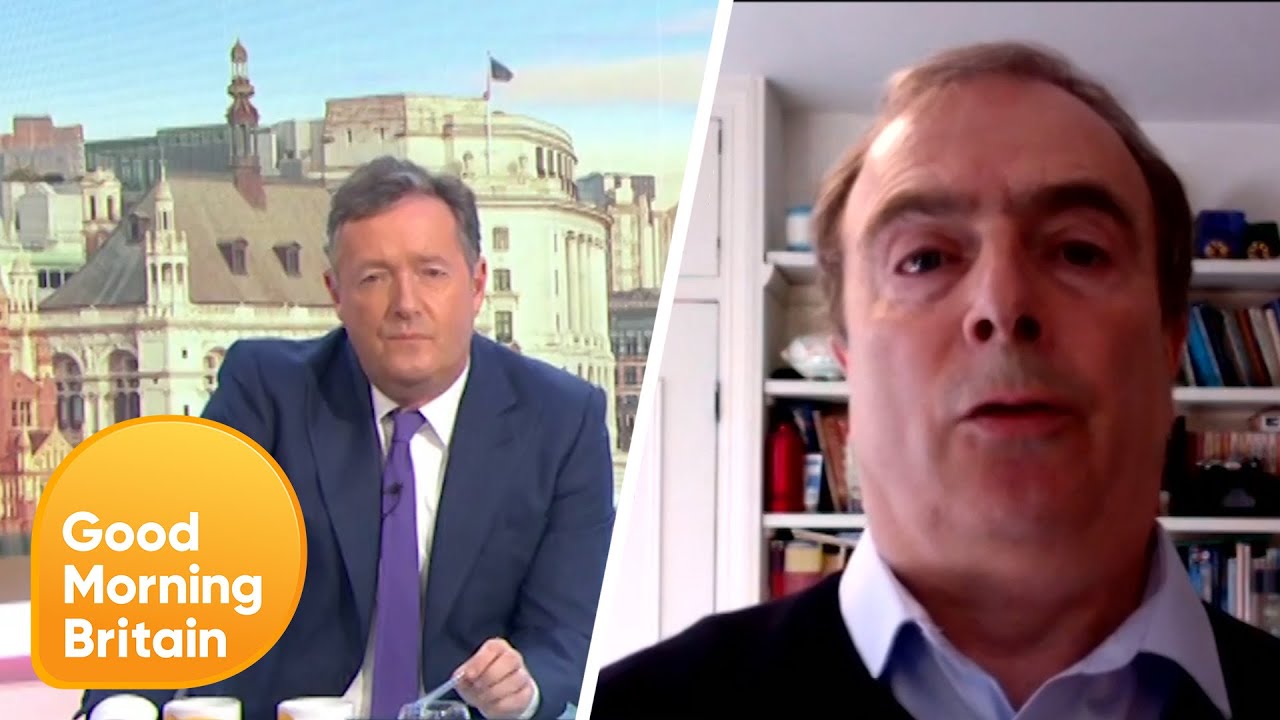 and “unreason.”
The language was familiar: Hitchens has previouslyrejected science showing human activity is responsible for global warming, and labeled measures to tackle climate change such as environmental taxes asa “sort of madness.”
For Lewandowsky, this “hysteria” narrative is part of a wider phenomenon of undermining expertise across the board, from Brexit, to climate change, and now COVID-19.
Lewandowsky points out that this also extends to many on the fringes of the political debate, such as controversial commentatorKatie Hopkins, who had over a million Twitter followers before the platform banned her, and has said the public were being“played” by the government for being asked to wear face masks. Or Brexit Party leaderNigel Farage, who described a police visit to his home as “lunacy” after he apparently broke lockdown rules.
Both have also cast doubt on the reality an of climate change.
“They’re quite explicit about saying that one person’s fact is another person’s lie, because that then enables them to avoid accountability,” Lewandowsky argues.
Miracle cures and conspiracy theories
These commentators’ contributions to the debate haven’t been without consequence. Some have spread conspiracy theories that have had real-world impact, while others have admitted to ignoring official safety guidelines, putting the public at risk of catching the disease.
ColumnistJames Delingpolewrote in a March 28article for the Spectator Australia titled ‘Wu Flu Notes’ that he had gone about his daily business despite having symptoms that align with coronavirus and that it was possible he had “infected lots of graduates.”
Some days later, Delingpole posted a tweet claiming a “high-powered zinc formula” had helped him recover from the illness without the need to go into intensive care – despite little being known about whether any such formula can be a cure for the virus.
He went on to write, “what I’d like more than anything is for this stuff to be available on the open market for everyone. But to mass produce it my friend needs ££££. If I crowdfunded it who’d be interested?” He concluded his request by asking for “potential big money backers."
[twt]
delingpole’s zinc promotion was comparable to comments made by US conspiracy theoristAlex Jones, who, a few weeks prior, hadreceived a cease-and-desist letter from a top New York attorney based on claims he had marketed and sold fraudulent COVID-19 treatments on his conspiracy website. US President Donald Trump was also widely criticised for suggesting that disinfectant taken internally could be a treatment for the virus.
Theories about miracle cures can take hold partly as a result of personal politics, Lewandowsky argues. Under lockdown, “you’re asked to stay at home and to look after other people by not doing what you’d like to do, and that is very challenging if you’re a believer in personal freedom and autonomy,” he says.
The same can be said of the motivations for spreading misinformation on climate change: “A lot of climate denial is very high-pitched, frenetic, emotional, angry, toxic – and that’s all triggered because people’s identity is at stake.”
The desire to reach for conspiracy theories may also stem from a need to feel that individuals still retain some control, says Evita March, a senior lecturer of psychology at Federation University Australia. “Conspiracy theories offer the believer some comfort in that there is still behavioural predictability,” she says.
And there were plenty of conspiracy theories flying around, pushed by long-time climate science deniers.
Piers Corbyn, brother of former Labour Party leader Jeremy Corbyn, was quick to promote the idea that coronavirus was thefault of politically liberal billionaires, and that it was related to the**Chinese-developed 5G mobile network**.
The latter conspiracy, alsopromoted by Infowars’ Jones, had significant real-world consequences. Over the Easter weekend it wasreported that 20 phone masts had been subject to arson attacks. According to Mobile UK, the trade association for four mobile network operators, an estimated 50 masts had beentargeted by April 15
[bbc pix]
david Lawrence, a researcher at campaign group Hope Not Hate, told DeSmog that theories around 5G have existed for a number of years, so “the stage was already set.” ”When the global COVID-19 outbreak occurred, there was both a susceptibility to be exploited and a ready-made explanation to hand,” he said.
“In some ways this is similar to climate change,” said Lawrence, “in that people who work in industries that would be negatively affected by efforts to reduce carbon emissions might be more likely to find reasons to reject the scientific consensus.”
Such conspiracy theories become popular — whether in relation to climate change or COVID-19 — because they are a means of “simplifying and attributing blame,” particularly during a time when “people feel that they have lost control over their lives,” says Lewandowsky.
“Some will seek comfort in the idea that there are bad people out there causing the pandemic because, for some, knowing there are bad people responsible for terrible things is more comforting than to assume that these things are uncontrollable,” he says. “It allows people to direct anger at someone.”
Distrusting modellers
Many commentators directed their fire at a familiar foe — scientific models.
On April 1, the same day the United Nations announced thepostponement of the annual UN climate change conference, two prominent UK climate science deniersargued in The Wall Street Journal that the pandemic had “dramatically demonstrated the limits of scientific modelling to predict the future.”
Benny Peiser and:{Andrew Montford:(style="background-color:#ffcc66;"):}:, the Director and Deputy Director of the UK’s principal climate science denial campaign group the**Global Warming Policy Foundation (GWPF)**, criticised policymakers for using academic research that was subject to a “lack of quality control.” “In normal times this doesn’t matter much, but it’s different when studies find their way into the policy world,” they wrote.
They did not mention that the GWPF’s own approach to ‘peer-review’, which undercover reporters in 2015 showed operated on the basis of sending reports to its members of its own advisory council. The model has been described by UK charity Sense About Science, whose Advisory Council included GWPF advisor Matt Ridley, as “a way of trying to give scientific credibility to certain claims in the hope that a non-scientific audience will not know the difference.”
Eight days later, Breitbart’s Delingpole similarly criticised scientific modelling,dismissing research from the University of Washington forecasting more than150,000 deaths from the disease across the US as “operating in the realms of purest fantasy.” Whether on climate change or the pandemic, “we have no idea whether or not we can trust” scientific experts and their modelling, Delingpole argued[pix BB]
clark takes a similar view, telling DeSmog: “on both COVID-19 and climate change there are a lot of people who seem to favour the results of modelling over real-world observation.” Those who want action “will latch on to any model” that suits their ends, he claimed, and will “decide that is 'the science', that it is fact, beyond all challenge.”
Anarticle in Spiked likewise argued in April that “worst-case scenario thinking” and “doomsday forecasts” from models had clouded political judgement, referencing the obesity crisis, swine flu, and climate change.
This process of regularly casting doubt on models represents the “weaponisation of the scientific method,” says Imran Ahmed, founder of the Centre for Countering Digital Hate. “Those sorts of sly tactics that have been used by these groups have amounted to an entire culture of how they spread information, spread ideas, and build audiences for their groups.”
“It’s expressed through philosophical strands which are anti-expert, faux-populist and conspiracies” and can include the “incel movement, climate denial, vaccine denial, identity-based hate,” he argues.
“As new facts emerge and as the understanding of the scientific movement changes,” says Ahmed, “these actors look back at previous consensuses and say, ‘see, they were lying back then.’”
Attacking environmentalists
As well as attacking coronavirus experts on their response recommendations, many commentators who oppose climate action also attacked those looking further ahead by putting forward proposals to ensure recovery plans were consistent with governments’ environmental pledges.
For months, commentators who regularly question the veracity of mainstream climate science denounced environmental activists for supposedly distracting the world with climate change amid the threat of pandemics.
On March 12, Telegraph columnistSherelle Jacobsargued that university funding should be redirected away from climate change research and towards “the scientifically uncontested problem of pandemics.” The day after, when the UK was effectively put under a national lockdown, Dutch climate science denial groupCLINTEL published anopen letter titled “Fight virus not carbon.”
Greenpeace,The Climate Group, and many other environmental organisations believe that the government should include environmental policies in coronavirus economic recovery measures to “build back better,” particularly as the country seeks to position itself as a climate leader ahead of hosting the UN climate talks in November 2021.
Some commentators spun this argument to imply that the environmental movement was happy that the virus has spread.
On March 22, former Top Gear presenterJeremy Clarksonclaimed in the Sunday Times that “greens just can’t stop smiling” because COVID-19 was “their idea of a wet dream.” Spiked contributor Ross Clark echoed this position in a response to DeSmog’s questions, saying that “there is a strand of opinion on the left which wants these crises — climate change and COVID — to be as big as possible because they see it as a way of undermining capitalism, and other aspects of our lives, and reforming society in their own dream vision.”
On March 25, a couple of days after Clarkson’s polemic appeared, Spiked editor Brendan O’Neill similarly argued that the pandemic was “a glimpse of the dystopia greens want us to live in.”
“The truth is that if the COVID-19 crisis has shown us anything, it is how awful it would be to live in the kind of world greens dream about. Right now, courtesy of a horrible new virus, our societies look not dissimilar to the kind of societies Greta Thunberg, Extinction Rebellion, green parties and others have long been agitating for,” he wrote.
[pix] o’Neill reiterated this position when contacted by DeSmog, saying both the “green movement” and the reaction to COVID represented “privileged Westerners taking political decisions and actions” to the detriment of some of society’s most vulnerable. “Progressives should be questioning the impact of the reaction to COVID-19 on working people and poor people,” he said.
In June, 57 charitieswrote to Prime Minister Boris Johnson asking him to put the creation of jobs in low-carbon sectors at the forefront of his economic recovery plans. They also asked the government to cancel the debts of developing countries struggling with both the impacts of the pandemic and the climate crisis.
Delingpole later wrote in acolumn for Breitbart saying environmentalists were celebrating the lockdown as a blueprint for a “new world order.” The GWPF took this argument one step further,publishing an image of a crying woman with the text, “net zero, like lockdown but permanent” — a reference to the UK government’s plans to slash the country’s emissions.
As these pieces were appearing, a Twitter account claiming to represent the climate protest group Extinction Rebellion (XR) in the East Midlandsposted an image of an XR-branded sticker on a lamppost with the words, “corona is the cure, humans are the disease.”
Official XR accounts were quick to condemn the tweet andsaid that they were not affiliated with the newly created account, which has since been deleted. But various outlets and commentators used the tweet to condemn the protest group.
Gaia Fawkes, the environmental section of political blog Guido Fawkes,suggested the post showed that XR was “in favour of extinction,” though it acknowledged coordinators of the organisation had “distanced themselves” from the supposed splinter group. A spokesperson for the site told DeSmog it stood by its reporting despite well-publicised doubts over the authenticity of the East Midlands organisation, stating it was “unaware of any publicly available list of ‘official’ [XR] groups at the time.”
The GWPF likewise claimed the Twitter account’s “anti-human sentiment” was “widely shared” among environmentalists,rejecting claims that the East Midlands account was fake.
Author and Guardian columnist George Monbiot suggests that while it is predominantly money that is behind climate science denial or tobacco industry lobbying, “with COVID-19, the motive definitely varies,” but the outcome is essentially the same.
“There are a lot of very well-paid people who are very professional and they’re using the expertise that they’ve gathered in other areas of dispute about scientific facts and the policies arising from them, and applying those directly to the pandemic,” he argues.
“Take their power seriously, but don’t take any of their arguments at face value,” Monbiot concludes. “It’s not worth trying to deconstruct the nonsense they come out with.”
Political impact
Unlike in theEU referendum or Trump’s presidential campaign, pushing anti-expert rhetoric may no longer be a winning strategy in the wake of COVID-19. Polling shows that despite worry about the pandemic and its impacts, the public still wants governments totackle climate change. And politicians attaching themselves to the anti-science bandwagon are now struggling in the polls.
For the Centre for Countering Digital Hate’s Ahmed, attacking the concept of expertise around COVID-19 is “the first truly great strategic mistake by those who espouse this radical world view.”
The US and UK are two of the countries hardest hit by the coronavirus pandemic, and both have leaders “who have been denying evidence and fact,” says Lewandowsky. “Johnson and Trump are creating a situation in which the very thought that we could establish a common truth is under attack,” he says. Both are regularly backed by commentators who also openly question the concept of expertise, whether on climate change or coronavirus.
But these positions have begun to hurt both leaders. Johnson has plummeted from a position of public popularity prior to the UK’s lockdown to anegative approval rating almost four months later. And the gap between the majority of Americans who disapprove of Trump’s leadership and those keeping faith with the president now sits ataround 15 percent, numbers that could see him lose November’s election.
That may reflect a wider shift in the public mindset, Lewandowsky argues: “My hope is that the COVID crisis has kind of given us a reset here, and there’s some evidence that people are beginning to say that we do need experts and data.”
==
an influential US think tank has hosted a well-known UK climate science denier at an event attacking what one speaker called Europe’s “socialist” net zero policies.
The Heritage Foundation panel event on December 8, called “Lessons for America from Europe’s Green Energy Disaster”, featured Benny Peiser, director of the Global Warming Policy Foundation (GWPF), the UK’s main climate science denial group.
The GWPF published two reports this year rejecting climate science on the greenhouse effect. Its campaign arm Net Zero Watch, of which Peiser is also director, in October called for “a new fleet of coal fired power stations”.
The event is the latest example of UK and US groups working together to oppose climate action. Other links across the Atlantic include the Atlas Network, a fossil fuel-linked US think tank that works with UK libertarians, to the GWPF receiving money from its US “Friends of GWPF” fundraising arm.
Peiser used the event, which was streamed online, to claim that the energy crisis is caused by “a dogmatic prioritization” of renewable energy over alternatives like “shale gas or nuclear”.
According to the International Energy Agency, however, the energy crisis is caused by the high wholesale cost of gas and fuelled by Russia’s invasion of Ukraine.
The Heritage Foundation presents itself as a mainstream think tank and has influenced several Republican US administrations. However, along with Peiser, this week’s event featured a number of links to climate science denial.
Fossil Fuel Links
The event’s chair Diana Furchtgott-Roth – who is director of Heritage’s Center for Energy, Climate, and Environment – wrote an article for Forbes last month which argued that the West should encourage “all countries” to use “natural gas, coal, and nuclear” to help the poor.
The article also cast doubt on climate science, suggesting “some research shows little change” in extreme weather, downplayed sea-level rises, adding: “Climate change is going on, as it has for millennia.”
In 2019, Furchtgott-Roth received $227,304 from the Manhattan Institute for Policy Research, a think tank which received more than $3 million from oil giant Koch Industries’ charitable arm Koch Foundations, according to a Greenpeace investigation.
The panel’s other speaker was Nile Gardiner, director of Heritage’s Margaret Thatcher Center for Freedom, who said: “I do think the British government needs to rethink the whole green energy agenda. It’s not a conservative agenda, in fact it’s a socialist agenda.”
He said: “I think net zero has become basically a form of religion, and anyone who questions the dogma on this immediately is accused of being a heretic.”
Climate Deniers
Gardiner also repeatedly endorsed calls for a Brexit-style referendum on the UK’s net zero policies, an idea which has been pushed by climate science denial groups.
Gardiner cited a YouGov survey commissioned by CAR26, whose director Lois Perry said in August: “I do not believe that man-made climate change is a thing.” In November 2021, Perry spread the conspiracy theory that global warming is a “con” by “elites” to make people poor and hungry.
He also argued that a “net zero referendum” was justified due to what he called the “vast sum of public money” involved in cutting emissions to net zero. The UK’s net zero target will cost less than 1 percent of GDP per year by 2035, according to the government’s advisory Climate Change Committee.
The economic policies of Liz Truss received high praise from Gardiner.He stated her “overall approach” of cutting taxes was “absolutely right”, adding that she was brought down by “her U-turn over the issue of [abolishing] the top rate of tax”. Truss’s mini-budget cost the UK economy £30 billion, according to analysis by the independent Resolution Foundation.
The Heritage Foundation event was attended by Myron Ebell of the Competitive Enterprise Institute, which has received funding from ExxonMobil. Ebell was tapped by Donald Trump’s team to lead its transition for the Environmental Protection Agency in 2016.
==
ref 2 desmog
https://www.desmog.co.uk/2019/11/18/how-climategate-laid-foundations-fake-news-era
lord Lawsonstepped to the curb hailing a taxi. We had both been at an event in a swish Fleet Street hotel discussing illegal phone hacking by journalists. I had followed him out onto the pavement and asked whether thehacking of scientists' emails from the servers of the British university had been unethical — as well as criminal. “It was a whistleblower,” he scowled. The black taxi took off, leaving me in a cloud of diesel.
Another Lord, though of a different stripe, Lord Monckton, I have met many times. The one that comes to mind is when he was the star turn during a fringe event of climate deniers near the Vatican in April 2015. I began by asking whether he, as a Catholic, believed the Pope could in fact be fallible when pronouncing climate change the challenge of our age. Before I knew where we were, the faux peer was accusing Barack Obama of being the centre of a global Communist-Fascist conspiracy.
Dr S Fred Singer I interviewed at a Heartland Institute conference in Las Vegas, the United States, back in 2014. He spoke quietly and softly, explaining his role in recruiting Lawson, the former British chancellor, to the climate denial cause. This mattered because Singer is the grandfather of the denial of climate science, and has been associated with both tobacco and oil companies.
These three men were influential in turning Climategate into an international scandal 10 years ago now.
Creating a storm
The illegal hacking of thousands of private emails between climate scientists, both at the University of East Anglia and elsewhere, and their publication in November 2009 was supposed to be the smoking gun which proved that hundreds of highly respected, indentured university scientists working around the world had conspired together to exaggerate the risks from climate breakdown.
The target of the hack attack had been Pennsylvania State University Professor Michael Mann, the author of the first ‘Hockey Stick’ graphwhich showed a dramatic uptick in average global temperatures following hundreds of years of a fairly stable climate. Professor Phil Jones was collateral damage: accused of academic dishonesty, hauled in front of a powerful Parliamentary committee to answer these trumped up charges, his life’s work unfairly called into question. He considered suicide.
Climategate should have been a storm in a teacup. The emails revealed nothing new. A few choice phrases were taken out of context, twisted, and presented as damning evidence. It was Lord Lawson who turned it into a crisis for climate science.
He launched the Global Warming Policy Foundation (GWPF) in Parliament just in time to make best use of the faux scandal, toured the newspaper offices using his reputation as Thatcher’s one time chancellor to persuade editors to take the event seriously, and called on his Tory friends to open their cheque-books to fund his opaque think tank.
The GWPF scored some initial successes. Lawson is said to have persuaded his former friend, Lionel Barber, until recently the editor of the Financial Times, to take the Climategate fiasco seriously. This in turn likely influenced the Guardian in its decision to run day after day of coverage of the hacked emails, and its reporters’ fruitless attempt to find the hacker.
Lawson was also influential in the decision of the Science and Technology Committee of the House of Commons to launch its investigation — trapping Professor Jones under the cameras and the hot lights to answer evidently preposterous allegations. Lawson, even during a hearing which he had been influential in being opened, refused to say who was funding his new thinktank.
Manufacturing denial
Alongside Lawson, Singer and Monckton were also there from the very beginning and had significant roles to play in the development of the GWPF.
Singer was among the first climate deniers in the world, indeed when he entered the fray most climate scientists were aware of the complexity and contingency in the research. It was firmly established that carbon dioxide in the atmosphere caused heating, and that the amount pumped out through the use of fossil fuels was inextricably rising. But issues like the sensitivity of the atmosphere to change and how quickly this would change was still hotly debated.
Singer worked with the Atlas Economic Research Foundation (now Atlas Network) in the United States. The foundation was primarily concerned with promoting free market, neoliberal economics. Friedrich von Hayek was the intellectual inspiration. He argued that any regulation would distort the market, leading to hardship.
This ideology was very much in the ascendancy around the world: Lord Lawson has been its “chief architect” in the UK and as chancellor had torn apart the regime of financial regulations. But as well as causing economic collapse in many of the economies where it was tested, neoliberalism now faced the challenge posed by climate science — which would inevitably lead to calls to stop (or regulate, or tax) fossil fuel use.
[pix clatham hse]
The Atlas Foundation turned to Singer for help. The physicist had previously worked with the tobacco industry deliberately creating smoke and mirrors around the increasing scientific consensus that smoking caused cancer. The foundation received money from the oil industry, including Koch Industries and ExxonMobil, and was instrumental in founding the Institute of Economic Affairs (IEA) in the UK. It was a trustee of the IEA — David Henderson — who first approached Lord Lawson at an event hosted by the London School of Economics and persuaded him to take up the cause of climate denial.
Lord Monckton also had a part to play. A viscount, Monckton was born into money, but despite his rather eccentric denials, actually missed out on becoming a member of the House of Lords when hereditary peers were abolished. The viscount worked for a very short period for Thatcher’s policy unit. He later lost £1m in prize money when he launched a puzzle betting no-one could crack it. They could.
Monckton became something of a hero to the climate denier community when he published a two-page rant in the Sunday Telegraph claiming that he alone had exposed the fatal flaw of the science of climate change. The rather eccentric ramblings had originally been drafted as a report for a private investor (with an historic interest in**fracking**).He was also instrumental in formulating talking points from the Climategate scandal for climate science deniers across the world.
[pix congress?!]
Monckton — if you believe his side of the story — advised Lawson to establish the GWPF and take up his new climate denier cause — attacking science rather than policy. He also claimed to have recommendedDr Benny Peiser— who wrote his dissertation on whether people are more athletically active in the summer — as the head of the charity. Peiser denied this version of events, desperate to distance Lawson and the think tank from the discredited and conspiracy-prone Monckton.
Political game
Lawson once boasted that he was responsible for what he (modestly) called Lawson’s Law: he advised the Tory party not to fight elections based on what the electorate actually cared about, but instead to persuade the electorate to care about what the Tory party could win an election on.
Lawson did not advise fake news, but it encouraged a distortion of reality that has seriously undermined our politics. It opened the floodgates.
Along the way, the GWPF has gotten into bed with the wildest of right-wing neoliberal think tanks, becoming intimately entwined with those responsible for serious spin and corporate lobbying around Brexit.
Lawson himself was instrumental in the Vote Leave campaign (before applying for residency in France). He was happy to appeal to reactionary populism to settle scores within the Tory party.
One consequence of this is that Nigel Farage long ago adopted the tactics of his namesake. Farage has dabbled in climate denial. He has gone further in stirring up populism. He is the master of scapegoating. And he is forever throwing “dead cats” into the political arena, keeping us constantly focused on our relationship with the EU. And in doing so, his Brexit Party — a party riddled with a Lawsonian brand of climate science denial — came close to destroying Lawson’s Tory party while continuing to push the UK towards the hardest of Brexits.
Moving on
Lawson, Monckton, and Singer have all quietly fallen off the radar. But their legacy, honed through the manufactured scandal of Climategate, lives on.
Lawson made himself chairman of the GWPF for life, but age has — with the same inevitability as climate breakdown — taken its toll and he has retired from climate politics to hisbeautiful mansion in the south of France. The GWPF lost the argument. It is now ineffective, losing support, and should soon be defunct. Singer has long retired from his think tank. Monckton is still attacking the Pope, but to no effect.
From climate denial and the fakest of fake news, to corporate lobbying and media spin — you reap what you sow.
==
https://www.desmog.co.uk/2018/10/11/climate-science-deniers-respond-ipcc-report-anger-fear-and-distortion
mike s
big UN report arrived on Monday, saying in no uncertain terms that the world has up to two decades to massively cut emissions by transforming the global economy if we want to avoid terrible climate impacts.
Given the implications of the Intergovernmental Panel on Climate Change's (IPCC) findings — government intervention, progressive social policies, more international aid — it’s perhaps not surprising that those who deny climate change is real or a problem pushed back. It took a few days, but the climate science deniers’ response to the IPCC report is now in full flow.
What we see is three distinct layers of climate science denial at play here:
There’s the ‘this isn’t happening’ sun-spot brigade. There’s the ‘this is happening but it’s all a Communist ruse’ zealots. And then there’s the team who reluctantly admit they’ve lost the debate but shoehorn in a number of caveats and excuses to justify why nothing should happen.
‘This isn’t happening’
Over at Steve Bannon's alt-right hate machine Breibart, James Delingpole calls the IPCC report: “wailing hysteria and worryingly eco-fascistic policy prescriptions”.
Quoting Benny Peiserof the oft-debunked Global Warming Policy Foundation (GWPF), he claims that the climate breakdown “hasn’t been supported by real-world evidence”.
Delingpole draws on an old friend, author Rupert Darwall, to claim that “science” is really just a pretext, devised by “ideological Euro Greenies, to destroy the fossil fuel hegemony of countries like the U.S. and to impose on them a new, eurocentric, renewable energy global tyranny.”
Now in full flow, Delingpole mocks reporting (such as ours) that points to the egregious media coverage in the UK, which favoured Strictly Come Dancing over ecological crisis. He asks, could it be that within the media universe “a few vestiges of the old standards still prevail? That maybe some editors still recognise a complete non-story when they see one?”
The BBC's editors decided it was a story, but had a slightly odd approach to covering it.
As DeSmog UK pointed out, Newsnight chose to invite on US climate science denier Myron Ebell.
Ebell is the former head of President Trump’s Environmental Protection Agency (EPA) transition team and a Director of the libertarian US think tank the Competitive Enterprise Institute (CEI).
His appearance has been heavily slated. Environmental writer Mark Lynas described the interview as “utterly pointless and embarrassing. Car-crash television, and a waste of time that could have been used addressing the real questions.”
“If you want political analysis, ask a policy analyst. If you want propaganda, ask Myron Ebell,” said Simon Lewis, professor of global change science at University College London.
Not to be denied their place in the sun, LBC radio got in on the action, giving a platform to GWPF-founder Lord Nigel Lawson to spout his stock in trade — that all this talk of climate action is just “PC claptrap”.
Not content with giving Nigel Lawson a platform, LBC doubled up by bringing Piers Corbyn on to deny not just climate breakdown — “I'll challenge the IPCC and the professor just speaking, there is no scientific paper in existence that shows that increases of carbon dioxide worldwide drive world temperature rises” — but that coral reefs were under threat.
The IPCC's report compiled evidence from more than 6,000 papers. It said 70 to 90 percent of coral reefs would be lost with 1.5C of warming, and almost all with 2C of warming.
‘It’s all a ruse’
Over at Conservative Woman — which regularly runs pieces by Conservative non-woman and GWPF researcher Harry Wilkinson — a headline runs “Top scientist shoots the climate-change alarmists down in flames”. In that article, Wilkinson quotes American climate science denier Richard Lindzen,who the GWPF contrived to give its annual lecture on the day the IPCC report was released.
In an extraordinary talk, Lindzen equates the climate consensus with “the suicide of industrial society”. His talk is a homage to oil and coal arguing: “the power these people desperately seek includes the power to roll back the status and welfare that the ordinary person has acquired and continues to acquire through the fossil fuel generated industrial revolution and return them to their presumably more appropriate status as serfs.”
Lindzen has form. Back in 2017 writing at Merion West, Lindzen argued that believing climate change is largely caused by increases in carbon dioxide is “pretty close to believing in magic.”
In 2015 The Daily Mail reported Lindzen compared people believing in global warming to religious fanatics: “As with any cult, once the mythology of the cult begins falling apart, instead of saying, oh, we were wrong, they get more and more fanatical.”
The Spectator would seem to agree. Its beleaguered editor Fraser Nelson tweeted a sneering comment in support of Ross Clark’s article, in which he states:
“It isn’t hard to spot the problem with issuing frightening-sounding deadlines. If the deadlines come and go, without us managing to lower emissions and yet still life goes on, it makes the people setting the deadlines look rather foolish.”
“It is also somewhat counter-productive. Given the failure of the world to come to an end, it is tempting to say, just as we do when religious cults and other fantasists make doom-laden predictions which fail to come to pass: well, the whole thing must be a hoax. What is the point of listening any further?”
Clark has a long history of climate denial. Back in 2015 he wrote in the Express the sort of paean to fossil fuel capitalism that Richard Lindzen would have been proud of:
“Climate change is not the greatest risk to the world: the biggest danger we face is the economic decline which would result from the loss of the cheap energy which has improved lives beyond all recognition over the past two centuries.”
“You name it: better food, better transport, better medical care. Ultimately, all the fantastic improvements in our lives since 1800 have been down to one thing: our ability to harness energy from fossil fuels.”
In summary: Everything’s getting better forever and ever. Except the IPCC report tells us that's very much not the case, unless we take radical action.
Which is perhaps why, in a second Breitbart article, Delingpole took aim at the organisations charged with implementing this ‘green tyranny’ that would see a move away from fossil fuels — specifically the Committee on Climate Change's (CCC) Chief Executive, Chris Stark.
He’s a man full of “revolutionary fervour” for cutting the UK’s emissions and helping the world avoid terrible climate impacts, Delingpole (sort of) writes. “If this doesn’t chill you to the marrow, it should”, apparently.
He’s not the only one that’s scared the CCC might now become empowered. Nick Timothy, a former SPAD for Theresa May who is credited with getting the UK’s Department of Climate Change shut down, urges Telegraph readers to “take back control” from “unaccountable entities” such as the CCC.
And entities such as the Nobel committee, perhaps.
Bjorn Lomborg over at the Wall St Journal took the opportunity to distort the work of just-announced Nobel Prize winner, climate economist, William Nordhaus. Lomborg claims Nordhaus said that “proposed cost of CO2 cuts aren't worth it”.
But as Carbon Brief’s Simon Evans points out on Twitter, Nordhaus literally wrote in one of his many, many papers on the economic rationale for climate action:
“The future is uncertain so we should have more climate policy, not less.”
As Evans points out, the entire framing used by Lomborg is just wrong: [twits]
In one sense the new ideological discomfort of the shrinking climate denial network is understandable. As the IPCC reports outlines, mass systemic change is required - a systemic change that is incompatible with the economic system the climate science deniers revere.
‘It’s happening, but…’
The Daily Mail - a bastion of climate science denial under former editor Paul Dacre - started uncharacteristically promisingly with Peter Oborne’s excellent report from Bangladesh, which seems to be based on actual facts and actual reporting and firmly grounded in reality.
But then on Wednesday they had Stephen Glover veer from acknowledging the level of crisis, to arguing that it’s all just too expensive so nothing should be done. He writes:
“This week’s IPCC report judged that global warming must be kept to a maximum of 1.5C warmer than pre-industrial levels, rather than the 2C ceiling previously envisaged. How can scientists be so sure that the lower figure should become the new goal?
“I ask because it carries enormous extra costs. The IPCC estimates that new energy infrastructure — wind, solar and electricity storage — as well as technologies that can capture CO2 from the atmosphere, could cost a jaw dropping £1,800 billion.”
“This will be paid for by the likes of you and me.” He’s not the only one that acknowledges climate change is a problem but isn’t really willing to countenance the solutions.
Rod Liddle in The Sun takes aim first at vegetarians, then at windfarms.
Of the IPCC’s suggestion that we’re going to have to eat a lot less meat, he says: “Climate change is a fact. But when they conflate two issues for reasons of fashion, I begin to smell a rat”.
So Rod isn’t going veggie. But what of another IPCC finding, that the world is going to need a heck of a lot more windfarms? No. He doesn’t fancy that either:
“Wind turbines are a blight on our landscape”, he says, “causing misery wherever they are”.
That's all pretty normal messaging for newspapers known for objecting to climate policy. But what’s new about the latest spate of climate science denial is its politics.
Having overwhelmingly lost the scientific debate, these groups are now pivoting to a new position which is centred around two ideas: first that the new is too apocalyptic and second that it’s too expensive.
Given what is required is systemic change, they are swiftly changing positions to defend the indefensible — an economic system based on extraction and exploitation of natural resources and mass consumerism that the IPCC tells us must be in its end-phase.
But it’s not all bad…
Amongst the torrent of climate science denial from the usual suspects, there are also a few shoots of refreshing reality appearing. For instance, the normally obstinate Times runs an editorial that breaks with their own columnist Matt Ridley’s vehement do-nothingery and points to the IPCC report to make his stance look absurd:
“The IPCC report’s authors warn that cutting emissions fast enough to keep the planet sufficiently cool could mean a $2.5 trillion hit to global GDP. Others estimate that switching to electric cars will create new industries worth $7 trillion a year in the US alone. It is true that a revolution will be necessary, but it should be bloodless and it will be good for us. So bring it on.”
==
===
1/16
Matt Ridley: Two Op-Eds And One Essay. Matt Ridley frequently contributes to The Wall Street Journal’s op-ed pages about climate change and sometimes discloses that his family leases land for coal mining in northern England. During the time period examined for this study, Ridley authored two climate-related Journal op-eds -- and one additional piece published for “The Saturday Essay” in the Journal’s Life section, where he asserted that fossil fuels “will save the world.” One Ridley op-ed co-authored with Benny Peiser, director of the U.K.-based climate denial organization Global Warming Policy Foundation, was titled “Your Complete Guide to the Climate Debate” and released shortly before the international climate talks in Paris. Dozens of scientists criticized and debunked this op-ed on Climate Feedback, calling it a “very biased and misleading presentation of the science,” and adding that it contained “rampant cherry-picking, misleading statements, and flawed logic.” Climate Feedback assigned the op-ed an overall credibility score of “Low” to “Very Low.” A previous Media Matters analysis found that between January 2011 and October 15, 2012 -- when Ridley was a columnist for the Journal -- he authored 18 columns about climate change in which he frequently distorted climate science and compared climate scientists to eugenicists because eugenicists "insist[ed] that its tenets were beyond reasonable challenge." In one 2012 Journal:{ column, Ridley asserted that global warming will be a “net good” for the planet. :(style="background-color:#ffffff;"):}:*Media Matters*:{, :(style="background-color:#ffffff;"):}:[Frequent Misinformers Spreadsheet:{, }:Climate Denial/Misinformation Spreadsheet:{, }:10/29/12:{, }:12/20/12:{; }:The Wall Street Journal:{, }:3/13/15:{; Climate Feedback, }:11/27/15:{]}:
==
t two members of Lord Lawson’s climate change science denying Global Warming Policy Foundation (GWPF) did when they bet Chris Hope, a Cambridge University researcher, that 2015 wouldn’t be the hottest year ever recorded.
“You win some, you lose some,” Benny :{Peiser:(style="background-color:#ffff66;"):}:, director of the GWPF, told Reuters, adding that the pace of warming “is not something that people… need to be greatly concerned about”.
But new data released this week by meteorologists in the UK and US proved the GWPF wrong as 2015 saw “record-shattering” global temperatures.
Climate Bet
Five years ago British engineer Alan Rudge and Australian geologist Ian Plimer – both members of the GWPF academic advisory council – bet Hope £1,000 each that the Earth would be cooling by now, not warming.
==
morano seems to be flogging ipcc defectors,
http://www.thegwpf.org/lennart-bengtsson-resigns-gwpf-voices-shock-and-concern-at-the-extent-of-intolerance-within-the-climate-science-community/
LENNART BENGTSSON RESIGNS: GWPF VOICES SHOCK AND CONCERN AT THE EXTENT OF INTOLERANCE WITHIN THE CLIMATE SCIENCE COMMUNITY
- Date: 14/05/14
- :{
}:
- The Global Warming Policy Foundation
It is with great regret, and profound shock, that we have received Professor Lennart Bengtsson’s letter of resignation from his membership of the GWPF’s Academic Advisory Council.
The Foundation, while of course respecting Professor Bengtsson’s decision, notes with deep concern the disgraceful intolerance within the climate science community which has prompted his resignation.
Professor Bengtsson’s letter of resignation from our Academic Advisory Council was sent to its chairman, Professor David Henderson. His letter and Professor Henderson’s response are attached below.
Dr Benny Peiser, Director, The Global Warming Policy Foundation
===
Benny Peiser is a UK social anthropologist on the Heartland Institute "Global warming experts" list. He runs CCNet (network) and is frequently quoted in Local Transport Today, a transport journal that frequently features the views of climate change skeptics. He is director of the Global Warming Policy Foundation.[1] He is co-editor of the skeptic journal Energy and Environment[2] and is on the editorial board of the Electronic Journal of Sustainable Development[3]
Contents[hide] |
Peiser makes invalid claims on climate change scientific consensus
Peiser's "claim to fame" in the war on climate change science was a 2005 study that he claimed refuted an earlier study by Dr. Naomi Oreskes.
Originally published in the prestigious publication, Science, the Oreskes study looked at 928 research papers on climate change and found that 100% agreed with the scientific consensus.[4] Peiser originally stated in January 2005 that Oreskes was incorrect and that "in light of the data [Peiser] presented... Science should withdraw Oreskes's study and its results in order to prevent any further damage to the integrity of science. On October 12, 2006, Peiser admitted that only one of the research papers he used in his study refuted the scientific consensus on climate change, and that study was NOT peer-reviewed and was published by American Association of Petroleum Geologists. Peiser's incorrect claims were published in the Financial Post section of the National Post, in a May 17, 2005 commentary authored by Peiser himself.[5][6][7]
Peiser states "an overwhelming majority of climatologists is agreed"
Peiser claims to be a climate change "skeptic," but on October 12, 2006 Peiser states: "I do not think anyone is questioning that we are in a period of global warming. Neither do I doubt that the overwhelming majority of climatologists is agreed that the current warming period is mostly due to human impact." However, he also states that "... this majority consensus is far from unanimous," and that "there is a small community of sceptical researchers that remains extremely active." [5]
Peiser is a Social Anthropologist, and not a Climate Scientist or Climate Policy Analysist
According to a search of 22,000 academic journals, Peiser has published 3 research papers in peer-reviewed journals: Sports Medicine, 2006; Journal of Sports Sciences (2004); and, Bioastronomy 2002: life among the stars (2004). None of these studies are related to human-induced climate change.
Peiser's departmental webpage describes him as:-[8]
- Senior Lecturer in Social Anthropology & Sport Sociology, Liverpool John Moores University
- Main research interests:
- societal evolution and neo-catastrophism
- social implications of historical impact disasters and the current impact hazard
- ritualised and sanctioned violence
- origins and evolution of sport
In an article on the BBC website he is describe as a 'Leading British anthropologist' and is quoted as saying "Apocalyptics typically exaggerate the possible dangers we may face in the future while ignoring or underestimating the probability of finding a social, technological or medical remedy for the predicament."[9]
He runs CCNet (network) to counter 'doomsday scaremongering about the possible effects of climate change'.[10]
However is frequently provides views on climate change science.
- "Throughout history, moderate warming has significantly contributed to enhanced living standards. ... Lamentably, many climate change researchers have exaggerated the potential health risks due to global warming."[11]
- Failure at Copenhagen will be greeted with understandable despair by those people who have been convinced by the doomladen prophecies of numerous climate scientists, many journalists, most political leaders, and all ‘green’ pressure groups.[12]
- Peiser is described by Local Transport Today as a 'climate policy analyist'.[12]
Lobbied Canadian Prime Minister
Benny Peiser was one of 60 'accredited experts' who in April 2006 wrote to Canadian Prime Minister Stephen Harper denying climate change and urging inaction [13]
Articles and resources
Related SourceWatch articles
References
- ↑ "[1]"
- ↑ "[2]"
- ↑ "[3]"
- ↑ Naomi Oreskes, "Beyond the Ivory Tower: The Scientific Consensus on Climate Change", Science, December 3, 2004.
- ↑ "RE: “The scientific consensus on climate change” - The letter Science Magazine refused to publish", January 4, 2005.
- ↑ "Bolt's Minority View", MediaWatch, ABC TV, October 30, 2009.
- ↑ Benny Peiser, "RE: Media Watch enquiry", ABC TV website, October 12, 2006.
- ↑ Dr Benny Peiser - Senior Lecturer.
- ↑ Scientists criticise Hawking 'hype'.
- ↑ CCnet. Liverpool John Moores University.
- ↑ It is cold that kills.
- ↑ 12.0 12.1 UN deadlock puts strain on UK’s transport and climate agenda.
- ↑ "[4]"
External resources
Memorandum to UK Parliament http://www.publications.parliament.uk/pa/cm200910/cmselect/cmsctech/memo/climatedata/uc2602.htm
External articles
- DeSmogBlog's research on Benny Peiser.
- David Whitehouse, "Scientists criticise Hawking 'hype'", BBC News online, October 17, 2001.
- wikipedia:Benny Peiser
- Carbon Brief Profile [6]
Categories: Climate change | People | United Kingdom | Heartland Global Warming Experts