hansen jim bak
---
punked by shillenberger? re breakthru? but wsj op ed 2019
---
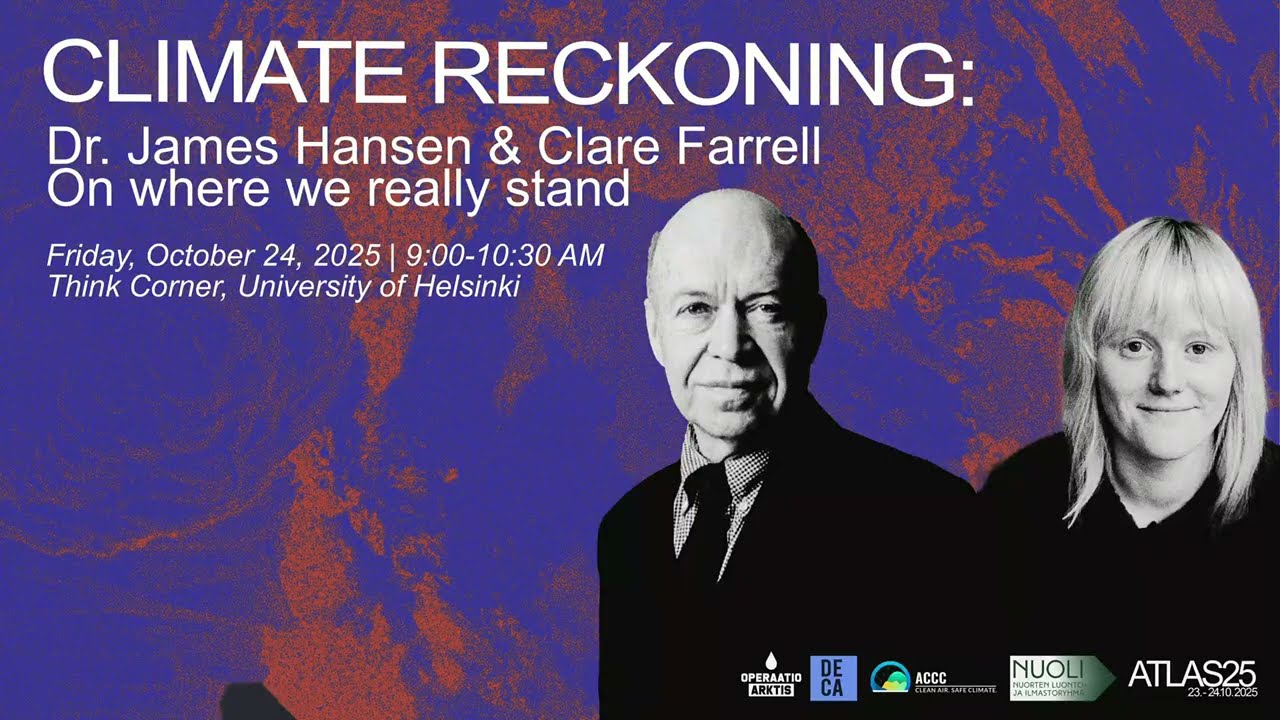
STARTS 23 IN
---
shillenberger oversight 9 22 refs hansen
https://www.wsj.com/articles/the-climate-needs-nuclear-power-11554420097
About WSJ
Opinion Commentary
The Climate Needs Nuclear Power
If governors are serious about global warming, they’ll preserve this vital source of clean energy.
By James Hansen and Michael Shellenberger
April 4, 2019
[pix The Diablo Canyon nuclear-power plant in San Luis Obispo, Calif.
Many environmentalists have changed their minds about nuclear energy over the past decade. While the share of energy produced by solar and wind has grown rapidly, nuclear remains America’s largest source of clean, zero-emissions electricity. Anyone seriously interested in preventing dangerous levels of global warming should be advocating nuclear power.
But two-thirds of U.S. nuclear plants in the U.S. are at risk of being closed prematurely and replaced by natural-gas generation, which is currently cheaper in many states. If that happens, carbon emissions could increase by an amount equivalent to adding 47 million new cars to the road.
Ideally, the federal government would solve this problem, but between Republican skepticism of climate change and Democratic opposition to nuclear energy, that’s unlikely to happen before many nuclear-plant operators must decide whether to shut down. Thus the job of keeping these beleaguered nuclear plants open falls to state governments.
Lawmakers in Ohio and Pennsylvania are considering proposals to keep their nuclear plants operating. Ohio is at risk of losing two plants that produce 90% of its clean energy. Pennsylvania’s five nuclear plants produce nearly as much electricity as do all of America’s solar panels and farms. Nuclear accounts for 93% of the Keystone State’s clean, zero-emissions electricity. If Pennsylvania and Ohio’s nuclear plants close and are replaced by facilities that burn natural gas, it would be like adding 13.5 million new cars to the roads.
Nuclear plants can be saved through modest subsidies similar to the ones extended by lawmakers in Connecticut, Illinois, New Jersey and New York between 2016 and 2018. Those subsidies have been smaller than the federal subsidy that wind-energy generators have received for 27 years. In 2017 New York energy regulators gave nuclear power generators a subsidy of $17.34 per megawatt-hour. They also subsidized wind generators at $23 per megawatt-hour on top of the federal subsidy of $22 per megawatt-hour.
The fossil-fuel lobby’s objections to nuclear power are understandable. The American Petroleum Institutewants to replace Ohio’s and Pennsylvania’s nuclear plants with natural-gas plants because its members stand to benefit. But why do groups that claim to be concerned about the climate oppose nuclear power?
Some Democratic lawmakers in Pennsylvania and environmental groups such as the Natural Resources Defense Council are urging state legislators not to subsidize nuclear without increasing subsidies for solar and wind. While combining subsidies for nuclear with subsidies for wind and solar worked to get legislation passed in New York and Illinois in 2016, such an approach risks backfiring in Ohio and Pennsylvania, where state lawmakers are more fiscally conservative and tend to be skeptical of renewables.
Saving nuclear plants won’t be free, but keeping them open will keep electricity prices lower than if natural gas is allowed to dominate. Both Ohio and Pennsylvania still produce large amounts of electricity from coal, which is being replaced by natural gas. If both coal and nuclear plants are replaced by gas, ratepayers will be vulnerable to future price increases at the hands of monopolistic gas generators.
New York and California, meanwhile, are moving ahead with plans to close two nuclear plants. In the Empire State, Westchester County’s Indian Point will close in 2021 and, on the West Coast, San Luis Obispo’s Diablo Canyon will go offline in 2025. California is already set to miss its 2030 target of a 40% reduction in emissions below 1990 levels. If Diablo Canyon closes and half of its output is replaced by natural gas, there’s no way they’ll get there.
[[https://ww2.arb.ca.gov/news/california-moves-accelerate-100-new-zero-emission-vehicle-sales-2035
The California Air Resources Board today approved the trailblazing Advanced Clean Cars II rule that sets California on a path to rapidly growing the zero-emission car, pickup truck and SUV market and deliver cleaner air and massive reductions in climate-warming pollution.
The rule establishes a year-by-year roadmap so that by 2035 100% of new cars and light trucks sold in California will be zero-emission vehicles, including plug-in hybrid electric vehicles. The regulation realizes and codifies the light-duty vehicle goals set out in Governor Newsom’s Executive Order N-79-20. ]]
{{{ 2021 Wednesday, February 24.
Two reports cast doubt
California is unlikely to meet its ambitious climate goals, two reports released Tuesday show.
The first, from California State Auditor Elaine Howle, doesn’t mince words: “The state will fall short of meeting the 2030 goal” of a 40% reduction in greenhouse gas emissions from 1990 levels “unless emissions reductions occur at a faster pace.” The audit, which found that transportation emissions have actually increased since 2013, rebuked the California Air Resources Board for overstating the impact of its emissions-reduction programs — including rebates that encourage Californians to buy clean vehicles, CalMatters’ Rachel Becker reports.
- Howle: The air board “generally does not know how often many of its incentive payments influence consumers to purchase a cleaner (lower-emission) vehicle than they otherwise would have purchased.”
Gov. Gavin Newsom, who in September ordered the air board to ban the sale of new gas-powered cars by 2035, wants to direct $1.5 billion toward constructing electric charging and hydrogen fueling stations and subsidizing purchases of zero-emissions cars. The rebates would be paid with money from the state’s carbon trading program, which Howle characterized as “unpredictable.” Officials are currently reevaluating whether the program should form the cornerstone of California’s climate policy.
The second Tuesday report, from the Energy Institute at UC Berkeley’s Haas School of Business and nonprofit think tank Next 10, found that Californians are paying two to three times more for electricity than it costs utilities to provide — which could push customers to use appliances powered by fossil fuels instead. And rates are expected to keep growing steadily for the next decade, according to the California Public Utilities Commission.
- The report: “This massive gap … creates incentives that … discourage electricity consumption, even though greater electrification will reduce pollution and greenhouse gas emissions.”
The news comes as Newsom is scheduled to deliver today the keynote speech at a policy summit called Driving California Forward, dedicated to discussing “forward-thinking solutions to achieving California’s ambitious climate goals and zero-emission vehicle targets.”}}}:
It is notable that while three natural-gas plants are being built to succeed Indian Point, local opposition to the construction of solar and wind farms has kept them from being built at anywhere near the rate necessary to replace the nuclear facility’s output.
We’ve been here before. Environmentalists promised that solar and wind would replace output from California’s San Onofre Generating Station, which closed in 2013, and the Vermont Yankee Nuclear Plant, which shut down the following year. Instead, they were replaced mostly by natural gas, and emissions rose in both states. At the rate Vermont is building new wind farms, it would take 474 years to match the electricity generation it lost from closing Vermont Yankee.
The problem isn’t only that nuclear plants generate far more electricity. It’s that solar and wind generate it only sporadically, which means they must be backed up by other sources of power 100% of the time. There is great hype about batteries, and using dams as pumped storage. But those solutions remain extremely expensive, which is why whenever nuclear plants close anywhere in the world, they are usually replaced by coal or natural-gas plants—not solar, not wind and not batteries.
It doesn’t have to be this way. The governors of California, New York, Ohio and Pennsylvania can take actions to keep their nuclear plants operating. Governors in those states have in recent years urged more action out of Washington to address climate change. They’ll have far more credibility and influence if they first take action in their home states.
Mr. Hansen is a climate scientist and head of Climate Science, Awareness and Solutions Program at Earth Institute Columbia University. Mr. Shellenberger is president of Environmental Progress.
Appeared in the April 5, 2019, print edition as 'The Climate Needs Nuclear Power'.
---
......The effort to suppress global warming dissidents is not new. Grist Magazine writer David Roberts said, “When we’ve finally gotten serious about global warming, when the impacts are really hitting us and we’re in a full worldwide scramble to minimize the damage, we should have war crimes trials for these bastards – some sort of climate Nuremberg.” Professor Richard Parncutt has called for the execution of prominent “GW deniers.” Climate Progress Editor Joe Romm called for deniers to be strangled in their beds. James Hansen, who has headed NASA’s Goddard Institute for Space Studies, has likewise called for trials of global warming deniers.
The global warming agenda is a desperate effort to gain greater control over our lives. Political commentator Henry Louis Mencken (1880-1956) explained that “the whole aim of practical politics is to keep the populace alarmed (and hence clamorous to be led to safety) by menacing it with an endless series of hobgoblins, all of them imaginary.” That’s the political goal of the global warmers.
PROTO CLIMATE LOCKDOWN GREEN POLICE? TOTALITARIAN TYRANT BS GUBMINT
Walter E. Williams is a professor of economics at George Mason University. To find out more about Walter E. Williams and read features by other Creators Syndicate writers and cartoonists, visit the Creators Syndicate Web page at www.creators.com.
---
These specific statements stem from commentaries and publications surrounding the climate debate:
- Strangle in their beds: This quote is often attributed to blogger and physicist Joe Romm of Climate Progress, who made the comment regarding climate change deniers. [1, 2]
- James Hansen: Former NASA climatologist James Hansen did not make this specific statement. However, he has controversially advocated for putting fossil fuel executives and prominent climate deniers on trial for crimes against humanity regarding environmental damage. [1]
- The "Bed" Phrase: The exact phrasing "strangle in their beds" originated from a 2011 blog post by Joe Romm, which was later referenced by commentators like the late Walter Williams when criticizing suppression of speech in the climate change debate. [1, 2, 3]
You can verify the context of these remarks directly on The Ecologist or by reading analyses on the Union of Concerned Scientists
---
amy 12 22
Lots going on in the climate litigation space lately! The Supreme Court is still mulling a jurisdictional argument in the Boulder climate liability case. Meanwhile, in September, EPA rejected a petition asking it to commence rule-making for greenhouse gases as pollutants under the Toxic Substances Control Act. Earlier this month, the petitioners (including legendary NASA climate scientist James Hansen and Carbon Majors report author Richard Heede) took their request to court, seeking to compel the agency to regulate GHGs under TSCA.
The biggest climate litigation news in a while came over the Thanksgiving holiday when 16 Puerto Rican municipalities filed the first-ever climate RICO complaint.
he Racketeer Influenced and Corrupt Organizations Act was passed in the 1970s to give the government a way to deal with organized crime. The Mafia. In the 1980s, the Supreme Court upheld the use of the law in civil cases as well, which can be brought against individuals, organizations, or corporations. If you listened to our season on the Chevron-Ecuador caseyou might remember that Chevron successfully sued U.S. attorney Steven Donziger under RICO. This time the complaint flows the other way, alleging that the global oil majors, their trade associations, and a network of dark money-funded think tanks and operatives were part of an organized conspiracy to mislead the public on climate change, resulting in a multitude of damages. Because the plaintiffs are 16 Puerto Rican towns, the damage is pegged specifically to 2017 Hurricane Maria, and the likelihood of more and worse storms battering the island for years to come.
I started following this case three years ago, and went to Puerto Rico in 2019 to meet with attorney Melissa K. Sims. Sims is senior counsel for the plaintiffs law firm, Milberg. She originally went to Puerto Rico while working on one of the opioid cases with them. "The interesting part about the opioid litigation is that really it all started in Puerto Rico," she says. "We filed a class action for the municipalities in Puerto Rico early on and we filed racketeering, one of the first cases that filed racketeering in federal court. And what we found out was, you know, Puerto Rico has been kind of the guinea pig for big pharma."
One of Sims's first trips there was about a year after Hurricane Maria and she was shocked by how much devastation there still was. Then she saw an article in the newspaper shortly after about how climate change was making hurricanes more intense, and storm surge more damaging. And how much of these outcomes had been predicted decades prior by climate scientists working for oil companies. And a lightbulb went off "If it's proven that you caused it and if it's proven that you, you know, conspired with somebody else to profit off that loss to a municipality you should have to pay for it," she says.
Last week, Sims’ firm filed a RICO case on behalf of 16 Puerto Rican municipalities, against 7 oil companies, three coal companies, and hundreds of organizations and operatives, alleging “consumer fraud, racketeering, antitrust, fraudulent misrepresentation, negligent misrepresentation, negligent fraudulent concealment, conspiracy to defraud, products liability, strict liability failure to warn, negligent failure to warn, and unjust enrichment, as a result of the devastating storms of September 2017, and the aftermath of those storms which occurred as a result of the Defendant’s acts and omissions.”
I’ll be bringing you a whole lot more on that story in the weeks and months ahead, it’s a really big deal!
---
GONZALEZ:Dr. James Hansen is widely regarded as the leading climate change scientist in the country. It was his testimony to a Senate committee in 1988 that first brought the threat of global warming to the world’s attention. For the past quarter of a century he has headed the Goddard Institute for Space Studies, NASA’s premiere climate research center.
Just over a year ago, Dr. Hansen went public with a charge that made headlines around the world, that the Bush administration had been trying to silence his warnings about the urgent need to address climate change.
AMY GOODMAN:You may have heard Dr. James Hansen mentioned before on Democracy Now! His name has been cited by many guests on the show.
JOHN PASSACANTANDO:This government, at the behest of its oil company contributors, has been told not to put out information about global warming, not to allow the scientists to talk about their expertise with the press, about the connection between global warming and hurricanes. :{That happened at :{NOAA}:. There’s been pressure on Dr. James Hansen at :{NASA}:.
}:
PAUL EHRLICH:I think it’s true that attitudes have changed slightly in the White House, because they now see a political issue, but they have worked very, very hard to suppress the science on global warming. For instance, they sent some junior jerk to try and keep Jim Hansen, who’s one of our very top climate scientists, from saying what he thought.
CHRIS MOONEY:Apparently, a NASA aide was instructed to interfere with Hansen’s ability to do press interviews. Actually, this completely backfired, because Hansen is not someone to be told to be quiet. And so, he just went to the media anyway, and it ended up exploding.
TIM FLANNERY:Can you imagine what it would be like for one of the world’s leading scientists, who is revered by everyone, to have this pipsqueak who lied about his credentials controlling what he tells the public? Just appalling. And, you know, the countries around the world would — I don’t know what they’d pay to have the advice of a Jim Hansen. It’s the sort of stuff we all desperately need. And here, in a country that actually pays him a salary and allows him to do his work, he is silenced. I mean, I honestly cannot see the sense of that. I can’t see who benefits.
AMY GOODMAN:That last speaker was acclaimed Australian scientist and writer Tim Flannery. Well, today, Dr. James Hansen himself joins us in our firehouse studio. His story of how the Bush administration tried to silence his warnings on climate change is detailed in a new book. It’s called Censoring Science: Inside the Political Attack on Dr. James Hansen and the Truth of Global Warming. It’s written by author Mark Bowen. He joins us from a studio in Watertown, Massachusetts.
We welcome you both to Democracy Now!
Dr. Hansen, 1988, talk about the significance of that time.
DR. JAMES HANSEN:Well, I think it had become clear that the climate was changing and that human-made greenhouse gases were a reason for the long-term trend in the climate. And I just wanted to draw that to the attention of the public, because we really need to do something before the climate change becomes large, just because of the inertia of the system. If we wait until the climate change is large, then it’s too late to stop it from happening.
AMY GOODMAN:So, what did you do twenty years ago?
DR. JAMES HANSEN:Well, I just reported that the world at that time was getting warmer, and I expected 1988 to be the warmest year in the period of instrumental record, which it did turn out to be, and that humans were primarily the reason for this long-term warming trend.
JUAN GONZALEZ:And, of course, that was twenty years ago, and while the Bush administration has gotten a lot of attention for its failure to heed any kinds of warnings, there was another administration before that, the Clinton administration, as well. And I think Bowen talks in the book about some problems that you had with Al Gore and — could you talk about how the Clinton administration reacted to some of the warnings you raised?
DR. JAMES HANSEN:Well, my concern is general with both Republican and Democratic administrations. They both feel that they can control what scientists say to the public. So their offices of public affairs in the science agencies are headed, in general, by political appointees, and they review the press releases before they go out. So, it doesn’t really make sense in a democracy. The public should be honestly informed. And then, of course, the publications are allowed to make the decisions, and they don’t have to follow exactly what the science says. There are other considerations that they have. But they shouldn’t influence what is presented, the scientific evidence. And I object to that, regardless of which administration is in power.
AMY GOODMAN:So, before we go on to the Bush administration, where you did have the most trouble, can you talk about what happened during the Clinton years and how you were able to express or not your research?
DR. JAMES HANSEN:Well, the one particular event that stands out in my mind is when I wrote a paper called “Global Warming in the 21st Century: An Alternative Scenario,” in which I emphasized that it’s not only carbon dioxide, but other climate forcings — methane and black soot — and we need to address those also. And for some reason,the people in the White House didn’t like emphasis on the non-CO2 parts of the story, and I just — the press release just kept coming back, and I would try to change it, they would change it, and finally I gave up. I just couldn’t get a press release through the way I wanted it.
JUAN GONZALEZ:So, in essence, in these kinds of press releases, there’s a back-and-forth, as the White House or the environmental people at the White House —-
DR. JAMES HANSEN:Yeah.
JUAN GONZALEZ:—- edit your press releases?
DR. JAMES HANSEN:Yeah. And that’s another strange thing, because they don’t even admit that it’s going to the White House. You know, it goes to NASA headquarters, and then it sort of disappears for a couple weeks. And where is it? Well, it’s very often at the White House, and I mentioned that. And now, they tried not to make that known, you know? And that’s, again, something that’s very inappropriate, in my opinion. And again, it’s happened in both administrations.
AMY GOODMAN:So let’s talk about what happened when the Bush administration came in. You were continuing to do your research. First of all, explain your place of work and the significance of NASA Goddard.
DR. JAMES HANSEN:Well, NASA is important, I think, because of the global observations that we make from satellites. We see what’s happening, for example, on Greenland and then West Antarctica. My laboratory is also involved in the global models that try to interpret what’s happening. And we’re also located at Columbia University, where we have the opportunity to work with people who have the data from the history of the earth over thousands and millions of years. You put together these different things — the satellite information, the information on how the earth responded in the past when greenhouse gases changed and other things changed, and the models — and then you get a picture of how the system works.
And that’s what really concerns me, because it’s the inertia of the system which tells us we’re already pushing it, so that it’s going to respond more over the next several decades. There’s a lot more climate response which is already in the pipeline, that we haven’t seen it yet, and that’s why we have to have an understanding of what’s happening, so we can take the actions now before it’s too late.
JUAN GONZALEZ:Of course, the speech of yours that got even more attention was then in December of ’97 — was it? — when you also then raised again the sense that you were — not only that the planet was reaching the tipping level in terms of the dangers of greenhouse emissions, but also, shortly afterwards, you started getting the articles appearing in the New York Times and other places about the direct attempts by the government to silence you.
DR. JAMES HANSEN:1997 — I think you mean —-
JUAN GONZALEZ:I’m sorry, 2007.
DR. JAMES HANSEN:Yeah, 2006, I believe. I gave a speech inDecember of 2005 at the American Geophysical Union meeting, in which I tried to connect the dots.And the dots extend all the way to the role of special interests in confusing the public, you know, in not allowing straight scientific discussion of what’s happening and what’s causing it.
And, of course, the main problem is fossil fuel use. And the truth is, we cannot put all of the fossil fuel -— the carbon dioxide from all the fossil fuels back into the atmosphere without creating a completely different planet. The last time that carbon dioxide was in the atmosphere, there was no ice on the planet. It was a completely different planet. And we have to realize we either are going to have to leave a lot of the fossil fuels in the ground, or else we’re going to have to capture the carbon dioxide when the fossil fuels are burned. And that just is not well understood, and the fossil fuel companies would rather that you didn’t understand that.
AMY GOODMAN:Who are those special interests, those fossil fuel companies that you’re talking about?
DR. JAMES HANSEN:Well, it’s —-
AMY GOODMAN:How do they stop the conversation?
DR. JAMES HANSEN:Well, it’s the coal industry, and it’s also the oil industry. And they -— you know, they put out disinformation, they fund a small number of scientists, and they expect the media to give you a balanced story. And by “balanced,” they mean that the scientists are saying that something’s happening, it would have to balanced by someone saying, “Oh, this is just natural.” You know, and even though the story has become very clear — you know, it’s 99.99 percent certain that humans are influencing the climate — but still, they make the story appear much less certain than it is, and therefore, why should we take actions as long as it’s uncertain?
AMY GOODMAN:We’re talking to Dr. James Hansen, who is heading up the NASA’s Goddard Institute. He has for twenty-five years. And when we come back, we will also be joined by Mark Bowen, who has written a book about James Hansen called Censoring Science. Stay with us.
[break]
AMY GOODMAN:We’re talking about Censoring Science: Inside the Political Attack on Dr. James Hansen and the Truth of Global Warming. Our guests are Dr. James Hansen, himself — for the past twenty-five years he’s headed NASA’s Goddard Institute — we are also joined by Mark Bowen, who wrote Censoring Science.
Mark, well, thank you very much for joining us from Massachusetts. Why did you choose to take this on as the topic of your book?
MARK BOWEN:Well, actually, I was going to write a — I was hoping to write a book about Jim, anyway, back in 2005, back in the fall of 2005. I was actually talking to an editor about doing that, and — because he’s been the person who has explained why the climate is changing now for about thirty years. He played a big role in the first book I wrote called Thin Ice. And so, I was just kind of amazed when all of a sudden he made the headlines there in the New York Times at the end of January 2006. And I actually waited about a month because of a funny kind of arrangement I had with my editor where he was supposed to contact Jim first, but then, at the end of February, I called Jim and sent him an email, and he responded within, it turns out, about twenty minutes and said, “Sure, let’s do it.” And so, I’ve been trying to keep up with him basically now for about two years, as I tried to write this book, as he continued to just move along at this breakneck pace you see.
JUAN GONZALEZ:And in your book, you talk quite a bit about what was going on in the Bush administration in reaction to Dr. Hansen’s statements and viewpoints. In some of the clips that we ran, people kept referring to this young “pipsqueak” or this political appointee. Talk about Michael Deutsch [sic], the young man right out of college, and his efforts to muzzle Dr. Hansen.
MARK BOWEN:OK, his name is George Deutsch.
:{JUAN GONZALEZ::{I’m sorry.}::{ George Deutsch, yes.}:
}:
MARK BOWEN:He was a twenty-four-year-old political appointee. He was in an unusually senior position for a person of his experience or lack of experience. He had come straight from the Bush-Cheney war room for the reelection campaign. As it turned out, he had neglected to graduate from college, although he had put that on his resume. And according to the person who hired him for this post, he told her also that he had graduated from college, point blank.
But it’s not really true to say that he was the person who squelched Jim Hansen. He was acting clearly on orders from the top two or at least the second-in-command of public affairs at NASA at the time, a fellow named Dean Acosta, who is the assistant — I don’t know, they have complicated names — assistant — deputy assistant administrator for public affairs. And Mr. Deutsch — Mr. Acosta was working in concert with people from the Council on Environmental Quality and the Office of Science and Technology Policy within the White House.
The way that it played out, because they were so cunning about doing it, was that all the standard media outlets could pin it on was this young man. The New York Times, for instance, left it at that. And so, in my book, I go into fairly complete detail about exactly what was going on, because they were very consciously not leaving a paper trail, telling people not to send emails on this issue, and trying to keep it all — they would often —they would hold meetings where there would be generally two senior political appointees and one career NASA person, so there would be no witnesses at the NASA person’s level.
And then that person would be told not to put anything in writing and not to send emails about it, only to communicate by telephone and voice or in meetings. But this George Deutsch, unfortunately, he was kind of young and inexperienced, and he did leave an email trail, and that was part of the reason that the New York Times even printed the story, was because there was at least some evidence of a documentary sort. It’s not true that it was just George Deutsch doing it.
AMY GOODMAN:So here was this young man, George Deutsch, who you had to go through, you had to get approval for to do your interviews with the public, with reporters; is that right, Dr. Hansen?
DR. JAMES HANSEN:Well, yeah, after my talk at AGU, I was told that I had to have prior approval to speak to the media. And for a few days, I followed that procedure, and they did disallow me to speak to National Public Radio, for example, and they sent a substitute instead of me. And then NPR decided they didn’t want to do the interview. And there were a couple of other cases like that. But then I decided I wasn’t going to let this continue in the long run, and so that was when I contacted other media and Andy Revkin wrote an article for the New York Times.
AMY GOODMAN:Well, Dr. Hansen, last year you testified at a hearing of the House Oversight and Government Reform Committee. Also called to testify was James Connaughton, the chair of the White House Council on Environmental Quality. This is some of what Connaughton had to say.
JAMES CONNAUGHTON:Well, I want to start, as I indicated, of having the highest personal regard and professional regard for Dr. Hansen and his work. My son and I were just watching him on TV last night on the History Channel.
Congressmen, senior administration officials, highly accomplished senior scientists, we all chafe at having to talk to our public affairs people, but the public affairs people are there for a reason. They’re there to organize and be sure that what we are saying is official government policy, is understood, and that the people who might have to then respond to those statements can effectively do so. I mean, this is a process that’s been with us for a long, long time, and it works well. Now, we all chafe from it. I can understand Dr. Hansen especially chafing if it comes from someone relatively young and inexperienced. But the policy of public affairs is a very important one.
Now, I would note that I am not aware of any instance where any scientist in pursuing their science, of any scientist in seeking peer review of their science, was in any way controlled, handled or otherwise managed in their scientific work. I mean, from what I see all over the world and with people coming to me, scientists come and speak their mind to me, they come and speak their mind to you. What we’re talking about is a science policy interface, and that has significant implications that require some level of management.
AMY GOODMAN:Prior to his confirmation as chair of the White House Council on Environmental Quality, Connaughton worked as a lobbyist for the mining, chemical and utilities industries. Dr. James Hansen, respond to what he has to say.
DR. JAMES HANSEN:Well, the point is that scientists should be able to give the results of their science. And this — both in the case of testimony to Congress and in science that is presented to the public through the media, it makes no sense that it should be censored by the White House before the scientist is able to speak. I mean, what is the rationale by which the White House can review and change testimony to Congress before it’s given? I mean, that’s — there’s no rationale. And our democracy assumes that the public and Congress is well informed.
The story that I was told when I was asked, why do I have to have mytestimony reviewed by the Office of Management and Budget in the White House before it’s given to Congress, and they said, “Well, your testimony needs to be consistent with the President’s budget.” I mean, it doesn’t make sense.
JUAN GONZALEZ: Mark Bowen, I’d like to ask you, in that clip we had of James Connaughton, he was also — the White House Council on Environmental Quality, his staff particularly, were the ones who also edited immediately after the 9/11 attacks the press releases from the EPA about the health and safety situation that the public was exposed to, and an IG report later made clear that the White House had downplayed inappropriately the health risks that people faced. In your research on Dr. Hansen, to what degree is this a widespread practice throughout the Bush administration, in terms of how they deal with science and the putting out of science information to the public?
MARK BOWEN:It’s everywhere. It’s all over the place. Right after Jim went public there in late January, there was a meeting of the American Association for the Advancement of Science in San Francisco, and the Union of Concerned Scientists organized a little side meeting, which was completely filled, just overflowing with scientists from all over the government, telling similar incidents.
And at that meeting, David Baltimore, who was the — well, he was president-elect of the association at the time, he said that he wasn’t surprised. Every time he heard a new incident, he wasn’t surprised to hear it. He said it was the result of a theory of government, and he was talking, of course, about this kind of imperial presidency, the unitary executive, that sort of thing. And I have — there’s a chapter of the book entitled “A Theory of Government that We Must Vociferously Oppose.” That’s a quote from David Baltimore’s speech.
We don’t — it would be boring to go into the litany of public agencies, everything from the Fish and Wildlife Service to the EPA to the FDA, that have experienced similar control of scientific information.
AMY GOODMAN:I wanted to turn to Philip Cooney, the former chief of staff at the White House Council on Environmental Quality. He also testified at that House hearing last year. He was questioned by Representative Henry Waxman, the chair of the Oversight and Government Reform Committee.
:{REP. HENRY WAXMAN::{Mr. Cooney, you had a senior position at the White House, but there were officials in the White House who were more senior to you. Your immediate boss was James Connaughton, chairman of the White House Council on Environmental Quality. }::{Was Mr. Connaughton aware of your role in proposed edits for climate change reports?}:
}:
PHILIP COONEY:He knew that we were reviewing reports as they came in ordinarily from OMB for review.
REP. HENRY WAXMAN:Did he personally review your edits?
PHILIP COONEY:No, not most —-
UNIDENTIFIED:Mr. Chairman.
REP. HENRY WAXMAN:Did you discuss -—
UNIDENTIFIED:Mr. Chairman, his boss is behind him and is available.
REP. HENRY WAXMAN:Yeah, excuse me, but I have the time. I didn’t interrupt you. I waited ’til you were finished, then I interrupted you. Did you discuss the edits with him?
PHILIP COONEY:No, not ordinarily.
REP. HENRY WAXMAN:Did he give you any instructions about how any of these three documents should be edited?
PHILIP COONEY:No. He understood that my objective was to align these communications with the administration’s stated policy.
AMY GOODMAN: Philip Cooney had come from the American Petroleum Institute, worked at the White House until 2005, and then left to return to a familiar haunt, taking a job as a corporate issues manager with Exxon Mobil.
Mark Bowen, talk about the email trail and the documentation you have of Philip Cooney, of James Connaughton, of how the White House censored the reports.
MARK BOWEN:Well, first of all, it’s very clear that James Connaughton was playing a very definite role in editing those reports. His name is all over it. Even Karl Rove is involved at one point.
AMY GOODMAN:How?
MARK BOWEN:Not so much in the report, but in — actually it was in — early on, I think it was — well, when Christie Whitman was still the administrator of EPA, she was very embattled, because she was actually in favor of doing something about global warming. It became known — and this is what caused Philip Cooney to lose his job — it became known that the CEQ, Council on Environmental Quality, was editing a climate subsection of a report on the environment by EPA. When that went public, a disgruntled EPA employee brought it public, there was, of course, a major response by the White House. It was at that time that Karl Rove became involved, actually, and encouraged and helped Philip Cooney figure out how to respond to the media.
But, yeah, the email trail is quite clear that not only was Philip Cooney, James Connaughton — there was a fellow named William O’Donovan [Kevin O’Donovan], I think he was. He was a special assistant to the Vice President on domestic policy, who also left the government to go work for Shell shortly thereafter, who was involved.And they wereexchanging emails on a regular basis with people from Exxon Mobil, from the Competitive Enterprise Institute, and so on and so forth, in which they were — you know, they were kind of these funny, joking emails in which they were poking fun, calling people names, including calling Jim Hansen names, and figuring out responses to these discomfiting things that were coming up in the media. But the whole policy was very clearly worked out by this kind of gang of people.
And I think this — in that same hearing in which Philip Cooney was being — was testifying with Jim — by the way, there’s an amazing picture that I’ve received from the New York Times with Jim Hansen holding his hand up, with George Deutsch on one side of him and Philip Cooney on the other. That was how Jim testified at that hearing.
There was a Democratic congressman from Kentucky named Yarmuth, who revealed that the staff members from Waxman’s committee had gotten access to a whole bunch of communications between the Council on Environmental Quality, Philip Cooney and the Vice President’s office. And he read from one of them. It became clear that there was a lot of communication going on on a regular basis with the Vice President’s office.
And what this prompted was a lawyer from CEQ to stand up, and basically there was about a fifteen-minute discussion. James Connaughton also stood up — this is while Philip Cooney was testifying — and made it clear that the committee was not allowed to use that information because they were invoking executive privilege to keep any communications with the Vice President off the record. But there’s a lot of evidence somewhere, and Mr. Yarmuth very slyly managed to get it into the record. What he did was he read from a hand transcription of an email that one of his staffers had been allowed to look at but not use as part of the record and hearing.
JUAN GONZALEZ:And, James Hansen, when all of this was going on — you’re a career scientist — what your fellow scientists in NASA and other parts of the government, what was their reaction to — one, to the advisability of you standing up and how they felt about it, as well as to how they acted when this kind of censorship or muzzling of their viewpoints was occurring?
DR. JAMES HANSEN:Well, I think a discouraging thing is that people have come to accept this, to expect it, you know, and I think we have to strongly object to this. It’s interesting that — the thing you just showed, where Philip Cooney said, “Well, I was just aligning the science to fit the policy.” Well, that’s — that’s just nonsense, I mean, if they can make their policy decisions without following exactly what the science — where it might make you go because the executives have other sources of information and various things they’re trying to do. But they shouldn’t change the science itself. But they’re doing that on a widespread basis, and we have to object to that. But, of course, scientists are, you know, concerned about our job and do not easily object to it, but I think that we have to do that.
:{AMY GOODMAN::{You met with }::{Vice President Dick Cheney?}:
}:
DR. JAMES HANSEN:Yes, I spoke with the six cabinet members on the Climate and Energy Task Force that the vice chairman —- the Vice President was the chair of in 2001.
AMY GOODMAN:And what did you tell him?
DR. JAMES HANSEN:Well, at that time, we made clear that the climate was changing because of human-made changes in atmospheric composition and that carbon dioxide was the primary cause of that, but there were other gases also that affect it. And we tried to give an indication of the kind of scenario for the future that we’re going to need to follow if we’re going to avoid disastrous climate effects over the next several decades.
AMY GOODMAN:And what was the response?
:{:{DR. JAMES HANSEN:}::{ }::{Well, the response, frankly, was the withdrawal of the US from any agreements for addressing the global climate change problem. And we’ve -—}:
}:
AMY GOODMAN:You mean pulling out of the Kyoto Protocol?
DR. JAMES HANSEN:Yes, for example, and not — and again going more after more fossil fuels, rather than alternatives such as improved energy efficiency for future energy needs.
JUAN GONZALEZ:And in terms of some of your analysis about the road ahead out of this growing crisis, the both immediate and long term, what do you see as some of the key things that our government, as well as other governments around the world, need to do?
DR. JAMES HANSEN:Well, the most important thing is — if you just look at how much carbon dioxide there is in the different fossil fuels, coal is the really big issue. The important step is to have a moratorium on any new coal-fired power plants until we have the technology to capture the carbon dioxide and sequester it. And if we would do that, that’s a good fraction of the solution. But we’re also going to have to use the other fossil fuels more conservatively. We’re going to need to emphasize energy efficiency. And eventually we have to find sources of energy that don’t produce greenhouse gases.
AMY GOODMAN:I’m just looking at a piece in the New York Times from a few days ago by Andrew Revkin that said, “Dr. Hansen “and eight co-authors have drafted a fresh paper arguing that the world has already shot past a safe eventual atmospheric concentration of carbon dioxide, which they say would be around 350 parts per million, a level passed 20 years ago,” Andrew Revkin writes. This is controversial. “Some longtime champions of Dr. Hansen, including the Climate Progress blogger Joe Romm, see some significant gaps in the paper” — still in draft form — “and part ways with Dr. Hansen over whether such a goal is remotely feasible.”
DR. JAMES HANSEN:Well, yeah. Unfortunately, Joe feels that we have to talk about what’s practical. I think we have to look at the science and tell us exactly what it — and tell the people exactly what it is pointing to. And the history of the earth tells us that even 385 parts per million is too much. And we can still go backwards. The ocean does take up carbon dioxide. If we would phase out the use of coal, except to recapture the CO2, then it is feasible to get back below 350 parts per million. But we’re going to have to put a stop on new coal-fired power plants until we have the technology to capture the CO2.
AMY GOODMAN:Do you see that happening with any of the candidates right now, what they’re proposing?
DR. JAMES HANSEN:I think it could happen. I think — I haven’t seen either — any of the candidates say we’re going to have a moratorium on coal-fired power plants. But they’re beginning to say things to recognize the problem. So I think it’s possible, but no one has exactly stated that.
JUAN GONZALEZ:I mean, it seems that in terms of the reaction of many of the candidates to the increasing crisis in terms of supply of oil is that they’re looking at either — at nuclear energy or increased coal use to sort of deal with trying to get the country more energy independent, rather than the long-term prospects of actually having more efficient use of energy and reductions in terms of our society adjusting dramatically to a different use of energy in the future.
DR. JAMES HANSEN:Yeah, and they’re saying things like, “Well, we will reduce by 2050 the CO2 emissions by 60 percent or 80 percent,” but they really need to have a specific strategy, and that, I do think, has to start with coal. If we would phase that out — oil — we’re going to hit peak oil very soon, if we haven’t already.
AMY GOODMAN:Which means?
DR. JAMES HANSEN:Which means that we have used half of the oil that’s readily available. And so, the amount — the emissions from oil are going to start to decline just because the supply of oil is limited. So that’s why coal becomes the issue. Now we’re starting to use more and more coal, and we just can’t do that unless we have the technology to capture the CO2.
AMY GOODMAN:How dire is the situation right now?
DR. JAMES HANSEN: It’s becoming dire, because we have to start within the next few years on a track — on a different track. We have to realize that we have to get to energy sources beyond fossil fuels, and we need to do that sooner. The fossil fuel companies want you to believe that, well, let’s use up all the fossil fuels, and then we’ll worry about what we’re going to do after that. Unfortunately, we can’t do that unless we capture the carbon dioxide.
AMY GOODMAN:And, Mark Bowen, this is your second book on the issue, Censoring Science, this, your latest. What were you most surprised by in your research for this book?
MARK BOWEN:Would you mind if I just responded a little bit to the Joseph Romm comment that you mentioned earlier?
AMY GOODMAN:Yes, go ahead.
MARK BOWEN:I think if you actually read his remarks, he doesn’t part ways significantly with Jim.I don’t think Andy really got that right. He’s agreeing very much with Jim’s analysis. I think Jim is right in saying that he doesn’t think that what Jim is proposing is politically feasible, but he follows the logic of Jim’s arguments very well. And, in fact, there’s one way in which — well, we don’t have to get into details, but anyway — so I don’t — I think at least Joseph Romm is certainly agreeing with most of the logic of what Jim is saying.
Well, what I found most shocking? I’ve said this a couple times. I think what was most shocking was, first of all, the widespread corruption. It was just everywhere. It was all over the top echelons of NASA. And that’s a little shocking, really.
I think — you know, I was talking to a — I gave a talk a couple weeks ago, and there was a science teacher from Burlington, Massachusetts, which isn’t far from here, who told me that when she saw Al Gore’s movie — or she showed it to her kids in her class — she’s an elementary school science teacher — they were — the most interesting thing they saw was the incident where Jim was actually censored by George W. Bush’s father in 1989. They found that amazing. They were astounded by that. I’m not too astounded by it, because I was aware of that. But in this administration, it’s just everywhere, and that was a little shocking.
The next thing was just the arrogance of it, the ineptitude of it. They were caught because they didn’t do it even remotely well. And what that really translated into was just stupidity.I mean, didn’t they know they were going to get caught? Didn’t they realize that ultimately — you know, most of the people in NASA — everybody, really, except the political appointees, is honest, experienced, good at what they do. I was very impressed with them.
Also, the Republican staffers on Sherwood Boehlert’s committee — you know, at the time that Jim went public there in January 2006, both houses of Congress were Republican-dominated, and it was a Republican committee chairman of the House Science Committee who went after NASA on this when Jim went public, and his two staffers, David Goldston and Johannes Loschnigg, who did the investigation for Mr. Boehlert, also were extremely good at what they did, very honest, and were shocked at what they saw.
So, you know, most of the people in government — I was actually very inspired by most of the people I met in government. It was just this cabal up at the top who were just shockingly corrupt and shockingly arrogant and therefore stupid, really.
AMY GOODMAN:Well, we’re going to leave it there. Mark Bowen, author of Censoring Science: Inside the Political Attack on Dr. James Hansen and the Truth of Global Warming, and Dr. James Hansen, himself — for the past twenty-five years, he’s headed NASA’s Goddard Institute for Space Studies — thank you so much for joining us.
==
https://www.npr.org/books/titles/138265021/censoring-science-inside-the-political-attack-on-dr-james-hansen-and-the-truth-o
Censoring Science
Inside The Political Attack On Dr. James Hansen And The Truth Of Global Warming
by MARK BOWEN
fresh air
2005 am geophys talk --> b2 censor (future talk, letter call had to referred to mamgt for permision); eg NPR NY public affairs office (9th flr said no) most libral media outfit in cty; holiday w/ grandkids, so outed restriction --> NYT; congress alarmed; now public affairs in mult agy are political appt; clint wild in email; BBT AA acosta? Geo Deutsch (directions by mouth so no notes, often no witness); mission st used in talks, to understand and protect the home planet" deleted by bass in night, no consult vs making of st; "special interests a roadblock to policy.
==
blue planet 50 million yen, split
i can find no corrob nasa ethics problem Laura Giza,
==
https://eelegal.org/ee-legal-vs-nasa/
case Summary
Dr. James Hansen was the top climate scientist at the National Aeronautics and Space Administration (NASA) and now former director of the NASA’s Goddard Institute for Space Studies, and in many ways the original climate alarmist. As part of our investigation of Dr. Hansen for using his position with NASA to enrich himself through outside employment, on January 19, 2011, E&E Legal (under its former name) filed a FOIA request asking for any forms relating to Dr. Hansen’s outside employment income.
Specifically, the request sought records detailing whether and how Dr. Hansen has complied with applicable federal ethics and financial disclosure laws and regulations, and NASA Rules of Behavior. It also sought records to determine whether Dr. Hansen has filed applications for outside employment, like speeches, books (emails obtained already indicate NASA staffed worked on this), cash awards and other gifts, and other support.
NASA denied the FOIA request in March 2011 in part because of a FOIA exemption that “permits the Government to withhold all information about individuals in ‘personnel and medical files’ when the disclosure of such information ‘would constitute a clearly unwarranted invasion of personal privacy.’” Also in NASA’s denial was the claim that E&E Legal “failed to make the requisite showing with respect to Dr. Hansen’s outside activity …, namely, how these specific documents would contribute to the public’s understanding of the operations or activities of the Government, or how it would shed light on NASA’s performance of its statutory duties, such that the public’s disclosure outweighs Dr. Hansen’s privacy interest.”
But Dr. Hansen, like other senior federal employees, waived certain privacy interests as a condition of employment, and in fact is required to file permission forms before pursuing outside employment opportunities. These requirements include an annual detailed public financial disclosure.
After refusing to release Dr. Hansen’s public financial records, on June 21, 2011, E&E Legal filed a lawsuit in federal district court in the District of Columbia to force NASA to release ethics records for Dr. Hansen. We maintained that NASA’s compliance with ethics laws, and a senior employee’s outside revenue-generating activities, are patently of public interest, as is clear in the Ethics in Government Act of 1978.
In late September 2011, under pressure from our FOIA request and the subsequent lawsuit against NASA, we finally received Dr. Hansen’s 2010 public financial disclosure, revealing up to $1,232,500 in additional outside income in 2010 including honoraria for speeches, prizes for climate change advocacy, and first class air travel for he and his wife on trips to Australia, Japan and Norway.
E&E Legal’s FOIA request and litigation exposed significant conflicts of interest and potential ethics violations for Dr. Hansen and the work he does for taxpayers at NASA, as well as demonstrating that climate change scientists are hardly the disinterested and modestly paid scientists that radical environmentalists typically portray them as, in contrast to allegedly bought-off and highly-paid climate ‘skeptics.’
Legal Documents
June, 29, 2011: Complaint and Prayer for Declaratory and Injunctive Relief
June 21, 2011 : Exhibit 1: ATI Freedom of Information Act Request (1/19/11)
June 21, 2011: Exhibit 2: Dr. Hansen 2007 SF-278 Disclosure
June 21, 2011: Exhibit 3: Dr. Hansen 2008 SF-278 Disclosure
June 21, 2011: Exhibit 4: Dr. Hansen 2009 SF-278 Disclosure
June 21, 2011: Exhibit 5: Gavin Schmidt’s Permission to Engage in Outside Employment or Activity (Form 17-60)
June 21, 2011: Exhibit 6: NASA Initial Determination (2/15/2011)
June 21, 2011: Exhibit 7: E&E Legal Appeal Under the Freedom of Information Act (3/15/11)
June 21, 2011: Exhibit 8: NASA Final Determination (5/2/2011)
Press Releases
October 3, 2011: NASA FOIA Disclosure Shows the Wealth Keeps Flowing for Dr. James Hansen
June 29, 2011: Statement in Response to AAAS
June 21, 2011: Plaintiff Asks Court to Force NASA to Produce Ethics and Outside Employment Records of Dr. James Hansen
March 16, 2011: Plaintiff Appeals NASA Denial of Request for Dr. James Hansen’s Ethics Disclosure
January19, 2011: Plaintiff Seeks NASA Records on Dr. James Hansen
Media Coverage
August 19, 2011: Chesser: Suing NASA and UVA (American Spectator)
August 15, 2011:You don’t need a Weatherman to know which way the wind blows (Canada Free Press)
July 20, 2011: Greens go for the gold, leave us in the red (Washington Times)
July 19, 2011: NASA’s Inconvenient Ruse (Forbes)
June 29, 2011: Bizarre: NYT follows AAAS lead on “FOIA requests equate to death threats”(Watts Up With That?)
June 29, 2011: Climate Science Disclosures – Freedom Of Information Or Chilling Effect? (Science 2.0)
June 29, 2011: Chesser: Elite Science’s Selective Outrage (American Spectator)
June 23, 2011: Horner: Lawsuit Seeks Ethics Filings of NASA’s Global Warming Activist, James Hansen (Breitbart.com)
June 23, 2011: James Hansen, Government Employee, Climate Scientist on the Take (American Thinker)
June 22, 2011: Conservative group sues NASA for climate scientist’s records (The Hill)
June 22, 2011: NASA Scientist Accused of Using Celeb Status Among Environmental Groups to Enrich Himself (FoxNews.com)
June 21, 2011: Horner: NASA Must Release Records For Tax Funded Global Warming Activist (Townhall.com)
June 21, 2011: Did climate scientist James Hansen personally benefit from public office? (Daily Caller)
June 21, 2011: NASA’s Hansen asked to account for outside activities (Watts Up With That)
no lnx
==
https://www.ucsusa.org/resources/nasa-reaches-muzzle-renowned-climate-scientist-speaks-out
NASA Reaches for Muzzle as Renowned Climate Scientist Speaks Out
Published Dec 12, 2006
NOTE: The following is one of a series of case studies produced by the Union of Concerned Scientists' Scientific Integrity Program between 2004 and 2010 to document the abuses highlighted in our 2004 report,Scientific Integrity in Policy Making.
Dr. James E. Hansen, the top climate scientist at the National Aeronautics and Space Administration (NASA), believes that the world has little time to waste in reversing its current trend toward global warming. In late 2005, however, Dr. Hansen's ability to voice his concerns about global warming was severely compromised by NASA public affairs officials. After he called on the United States to reduce greenhouse gas emissions in a December 2005 lecture, Dr. Hansen found that NASA officials began reviewing and filtering public statements and press interviews in an effort to limit his ability (as well as that of other government scientists) to publicly express scientific opinions that clashed with the Bush administration’s views on global warming.
While Dr. Hansen's scientific standing is unquestionable—he was described by CBS' 60 Minutes as "arguably the world's leading researcher on global warming"¹—administration officials found some of his conclusions politically inconvenient. In a lecture at the December 2005 meeting of the American Geophysical Union, Dr. Hansen argued that the earth will become "a different planet" without U.S. leadership in cutting global greenhouse gas emissions.² This position conflicted with the Bush administration's policy of opposing mandatory reductions in greenhouse gas emissions. In January 2006, NASA publicized data showing that 2005 was likely the warmest year in over a century.³
In January 2006, Dr. Hansen told Andrew Revkin of the New York Times that he was warned of "dire consequences" if he continued to make similar statements. Revkin reported that George Deutsch, a public affairs officer appointed by the White House, denied a request from National Public Radio to interview Dr. Hansen, calling NPR the country's "most liberal" media outlet and arguing that his job was "to make the president look good."4 Mr. Deutsch later resigned after it was revealed that he had fabricated his own academic credentials.5
Arguing that his loyalty was to NASA's mission statement, which then read in part "to understand and protect our home planet," Dr. Hansen refused to be silenced. ''Communicating with the public seems to be essential,'' the Times reported him as saying, ''because public concern is probably the only thing capable of overcoming the special interests that have obfuscated the topic."6
Dr. Hansen's public stand helped to bring about reforms of NASA's public relations policy. In February 2006, after the widely publicized allegations of censorship, NASA Administrator Michael Griffin issued an agency-wide statement clarifying that the role of public affairs officers was not "to alter, filter or adjust engineering or scientific material produced by NASA's technical staff."7 This statement was followed, on March 30, by an official new NASA media policy, which supports principles of openness.8
However in February 2006, the phrase "to understand and protect our home planet" was deleted from NASA's mission statement without any notification to agency scientists. The replacement mission statement, which reads "to pioneer the future in space exploration, scientific discovery and aeronautics research," represented the first time that knowledge of Earth was not explicitly stated as part of NASA's mission.9
Dr. Hansen pointed out that Bush administration attempts to control scientific information on climate change were not limited to NASA, and that colleagues at NOAA have told him that conditions there are, in general, much worse.10 Said Hansen, "In my thirty-some years of experience in government, I've never seen control to the degree that it's occurring now. I think that it's very harmful to the way that a democracy works. We need to inform the public if they are to make the right decisions and influence policy makers."11
- “Rewriting the Science,” 60 Minutes, March 19, 2006, transcript accessed December 7, 2006.
- James E. Hansen, “Is There Still Time to Avoid ‘Dangerous Anthropogenic Interference’ with Global Climate? A Tribute to Charles David Keeling,” December 6, 2005, talk at the American Geophysical Union meeting, accessed December 7, 2006.
- NASA, “2005 Warmest Year in Over a Century,” January 24, 2006, accessed December 7, 2006.
- Revkin, Andrew C. “Climate Expert Says NASA Tried to Silence Him.” New York Times, January 29, 2006, accessed December 7, 2006.
5. Revkin, Andrew C. “A Young Bush Appointee Resigns His Post at NASA,” New York Times, February 8, 2006, accessed December 7, 2006.
- Revkin, January 29, 2006.
- Griffin, Michael “Statement on Scientific Openness,” February 4, 2006, National Aeronautics and Space Administration, accessed December 7, 2006.
- “NASA Policy on the Release of Information to News and Information Media,” March 30, 2006, accessed December 7, 2006.
- Revkin, Andrew C., “NASA’s Goals Delete Mention of Home Planet,” New York Times, July 22, 2006, accessed December 7, 2006.
10. Farrell, Bryan, “Political Science,” The Nation, February 13, 2006, accessed December 7, 2006.
- “A Conversation With Dr. James Hansen,” New York Times video interview, accessed December 7, 2006.
==
https://wattsupwiththat.com/2011/11/18/dr-james-hansens-growing-financial-scandal-now-over-a-million-dollars-of-outside-income/
Dr. James Hansen's growing financial scandal, now over a million dollars of outside income
Anthony Watts / November 18, 2011
It seems esteemed NASA astronomer turned climatologist turned paid activist Dr. James Hansen of the Goddard Institute for Space Studies (GISS) has not been reporting some income that he is required by law to do. How long will NASA continue to look the other way? Chris Horner explains. – Anthony
A Summary of James E. Hansen’s NASA Ethics File
By Christopher Horner
NASA records released to resolve litigation filed by the American Tradition Institute reveal that Dr. James E. Hansen, an astronomer, received approximately $1.6 million in outside, direct cash income in the past five years for work related to — and, according to his benefactors, often expressly for — his public service as a global warming activist within NASA.
This does not include six-figure income over that period in travel expenses to fly around the world to receive money from outside interests. As specifically detailed below, Hansen failed to report tens of thousands of dollars in global travel provided to him by outside parties — including to London, Paris, Rome, Oslo, Tokyo, the Austrian Alps, Bilbao, California, Australia and elsewhere, often business or first-class and also often paying for his wife as well — to receive honoraria to speak about the topic of his taxpayer-funded employment, or get cash awards for his activism and even for his past testimony and other work for NASA.
Ethics laws require that such payments or gifts be reported on an SF278 public financial disclosure form. As detailed, below, Hansen nonetheless regularly refused to report this income.
Also, he seems to have inappropriately taken between $10,000 and $26,000 for speeches unlawfully promoting him as a NASA employee. This is despite NASA ordering him to return at least some of the money, with the rest apparently unnoticed by NASA. This raises troubling issues about Hansen’s, and NASA’s, compliance with ethics rules, the general prohibition on not privately benefitting from public service, and even the criminal code prohibition on not having one’s public employment income supplemented. All of this lucrative activity followed Hansen ratcheting up his global warmingalarmism and activism to be more political which, now to his possible detriment, he has insisted is part of his job. As he cannot receive outside income for doing his job, he has placed himself in peril, assuming the Department of Justice can find a way to be interested in these revelations.
The following summarizes records produced by the Department of Justice to resolve litigation against the National Aeronautics and Space Administration (NASA) for refusing to comply with a Freedom of Information Act (FOIA) request regarding the required financial disclosures Dr. James Hansen, director of NASA’s Goddard Institute for Space Studies.
These records are his applications for outside employment or other activity (form 17-60), approvals and accompanying documents, and public financial disclosure (form SF 278).
As detailed in the American Tradition Institute’s lawsuit which yielded these records, Hansen suddenly became the recipient of many, often lucrative offers of outside employment and awards after he escalated his political activism — using his NASA position as a platform, and springboard. This began with a strident “60 Minutes” interview in early 2006, alleging political interference by the Bush administration in climate science.
Hansen acknowledged this timing on his website, noting that first he was offered an award of “a moderate amount of cash– $10,000″ by an outside activist group. He claims to have turned this down because of the nominating process (without elaborating what that meant), and because of the impropriety of appearing to be financially rewarded for his outspokenness (“I was concerned that it may create the appearance that I had spoken out about government censorship [sic] for the sake of the $”).
Given that Hansen makes no bones about his (often outrageous) outspokenness and activism being, in his view, part of his job, this surely is also another way of saying it would look as if he were having his NASA salary supplemented by appreciative activists and others. That would violate the criminal code, 18 U.S.C. 209.
Yet, as the offers soon became larger, Hansen changed his mind.
The records reveal that NASA initially was very direct in warning Hansen of his responsibilities and prohibitions relating to these activities, which covered the subject of his public employment. Later, after Hansen gained much media attention and condemnation of his NASA superiors for (falsely) claiming he had been “muzzled” (the second president named Bush he claimed had muzzled him), certain clear restatements of the law were dropped from the approval letters responding to his applications for outside employment.
NASA oversight of Hansen’s compliance with ethics-related reporting requirements similarly waned. At no point did they seek reconciliation of his serially conflicting attestations detailed here.
Improper Receipt of Outside Income Without Obtaining Advance Permission
Hansen’s 2009 speech at Dartmouth University for a $5,000 honorarium and up to $1,000 in expenses came in violation of the clear rule against promoting his appearances as, or emphasizing his job with, NASA. It also had not been approved. NASA’s Deputy Chief Counsel Laura Giza, after admonishing these violations, demanded he return the improperly obtained money:
“[Y]ou may not accept the offered honorarium and travel expenses. If you’ve already received this money, you need to return it to Dartmouth.
“Also, in the future, if you have not received word that one of your outside activity requests has been approved, or at least that the legal office has concurred in the request, you should contact the Goddard legal office about the request before engaging in that activity. NASA regulations require that you obtain approval for certain outside activities…prior to engaging in that activity. 5 CFR 6901.103(d).”
If there were further correspondence about this demand it would be in NASA’s document production, but there are no such records. The only lawful scenario, therefore, is that Hansen quietly agreed to the demand, but did not inform NASA whether he complied. Otherwise, NASA, Hansen, or both have violated the ethics and/or transparency statutes and regulation.
Yet subsequent financial disclosure forms show Hansen attesting to accepting even more money, between $5,001 and $15,000, for a 2008 speech at Illinois Wesleyan University for which his file, according to NASA, contains no request for permission to engage in this outside employment, or approval to do so(each a condition precedent to lawfully engage in the activity, and to accepting the money).
There is no correspondence about these two glaring discrepancies in his filings reflecting more apparently improperly accepted outside income than most federal employees will ever see in their careers.
In order to continue his employment Hansen would therefore be required to bring himself back in compliance with the ethics rules by returning the money, between somewhere more than $10,000, and $26,000.
Although Hansen reported the income from both honoraria, he did not report receipt of travel expenses for him to get there. This omission is a pattern in his filings, to the tune of surely tens of thousands of dollars for airfare, meals and lodging to locations all around the country and Europe, all required by ethics laws to be reported.
For example, consider these failures to reportoften elegant air and hotel/resort accommodationsreceived on his SF278 as required by law (the amount of direct cash income received from the party providing him travel, as well, is in parentheses):
- Blue Planet Prize ($500,000), travel for Hansen and his wife to Tokyo, Japan, 2010
- Dan David Prize ($500,000), travel to Paris, 2007
- Sophie Prize ($100,000), Oslo Norway, travel for Hansen and his wife, 2010
- WWF Duke of Edinburgh Award, Travel for Hansen and his wife, London, 2006
- Alpbach, Austria (alpine resort)(“business class”, with wife), 2007
- Shell Oil UK ($10,000), London, 2009
- FORO Cluster de Energia, travel for Hansen and wife (“business class”), Bilbao, Spain, 2008
- ACT Coalition, travel for Hansen and wife to London, 2007
- Progressive Forum ($10,000)(“first class”), to Houston, 2006
- Progressive Forum ($10,000), to Houston, 2009
- UCSB ($10,000), to Santa Barbara, CA
- Nierenberg Prize ($25,000), to San Diego, 2008
- Nevada Medal ($20,000), to Las Vegas, Reno, 2008
- EarthWorks Expos, to Denver, 2006
- California Academy of Science ($1,500), to San Francisco, 2009
- CalTech ($2,000), travel to Pasadena, CA for Hansen and his wife, 2007
The following is an incomplete list of other travel apparently accepted to make paid speeches and/or receive cash awards but not reported on SF278 financial disclosures:
Boston, Washington, DC (twice); Columbus, OH; Omaha, NE; Wilmington, DE; Ithaca, NY (business class); Chapel Hill, NC; Deerfield, IL (Sierra Club “No Coal” campaign); Dartmouth, NH; Alberta, Canada (as consultant to a law firm helping run an anti-oil sands campaign), Stanford; Minneapolis; Missoula, MT
Other travel apparently accepted but not reported, to provide expert testimony including on cases involving federal policy:
California (Central Valley Chrysler-Jeep v. Witherspoon), Vermont (Green Mountain Chrysler Plymouth etc v. Torti)
Failing to Report Gifts
World Wildlife Fund gave Hansen an engraved Montres Rolex watch, which typically run $8,000 and up (2006), but which was not reported by Hansen on his SF 278 under “gifts”, which must be reported if valued at more than $260.
Failure to Report Receipt of Free Legal Services
On his website Hansen said he began accepting free legal services in 2006. These are not reported on his financial disclosures, as they should be.
Also, NASA’s document production shows him attesting to receiving more, separate free legal services in the form of an amicus brief drafted for he and a few others to intervene before the Supreme Court in Massachusetts v. EPA. This was not reported on his SF278, as required.
These lapses on both Hansen’s part and NASA demand scrutiny to determine how laws designed to protect the taxpayer are, or are not, being respected.
==
milloy
horner: A Summary of James E. Hansen’s NASA Ethics File
By Christopher Horner
NASA records released to resolve litigation filed by the American Tradition Institute reveal that Dr. James E. Hansen, an astronomer, received approximately $1.6 million in outside, direct cash income in the past five years for work related to — and, according to his benefactors, often expressly for — his public service as a global warming activist within NASA.
This does not include six-figure income over that period in travel expenses to fly around the world to receive money from outside interests. As specifically detailed below, Hansen failed to report tens of thousands of dollars in global travel provided to him by outside parties — including to London, Paris, Rome, Oslo, Tokyo, the Austrian Alps, Bilbao, California, Australia and elsewhere, often business or first-class and also often paying for his wife as well — to receive honoraria to speak about the topic of his taxpayer-funded employment, or get cash awards for his activism and even for his past testimony and other work for NASA.
Ethics laws require that such payments or gifts be reported on an SF278 public financial disclosure form. As detailed, below, Hansen nonetheless regularly refused to report this income.
Also, he seems to have inappropriately taken between $10,000 and $26,000 for speeches unlawfully promoting him as a NASA employee. This is despite NASA ordering him to return at least some of the money, with the rest apparently unnoticed by NASA. This raises troubling issues about Hansen’s, and NASA’s, compliance with ethics rules, the general prohibition on not privately benefitting from public service, and even the criminal code prohibition on not having one’s public employment income supplemented. All of this lucrative activity followed Hansen ratcheting up his global warming alarmism and activism to be more political which, now to his possible detriment, he has insisted is part of his job. As he cannot receive outside income for doing his job, he has placed himself in peril, assuming the Department of Justice can find a way to be interested in these revelations.
The following summarizes records produced by the Department of Justice to resolve litigation against the National Aeronautics and Space Administration (NASA) for refusing to comply with a Freedom of Information Act (FOIA) request regarding the required financial disclosures Dr. James Hansen, director of NASA’s Goddard Institute for Space Studies.
These records are his applications for outside employment or other activity (form 17-60), approvals and accompanying documents, and public financial disclosure (form SF 278).
As detailed in the American Tradition Institute’s lawsuit which yielded these records, Hansen suddenly became the recipient of many, often lucrative offers of outside employment and awards after he escalated his political activism — using his NASA position as a platform, and springboard. This began with a strident “60 Minutes” interview in early 2006, alleging political interference by the Bush administration in climate science.
Hansen acknowledged this timing on his website, noting that first he was offered an award of “a moderate amount of cash– $10,000″ by an outside activist group. He claims to have turned this down because of the nominating process (without elaborating what that meant), and because of the impropriety of appearing to be financially rewarded for his outspokenness (“I was concerned that it may create the appearance that I had spoken out about government censorship [sic] for the sake of the $”).
Given that Hansen makes no bones about his (often outrageous) outspokenness and activism being, in his view, part of his job, this surely is also another way of saying it would look as if he were having his NASA salary supplemented by appreciative activists and others. That would violate the criminal code, 18 U.S.C. 209.
Yet, as the offers soon became larger, Hansen changed his mind.
The records reveal that NASA initially was very direct in warning Hansen of his responsibilities and prohibitions relating to these activities, which covered the subject of his public employment. Later, after Hansen gained much media attention and condemnation of his NASA superiors for (falsely) claiming he had been “muzzled” (the second president named Bush he claimed had muzzled him), certain clear restatements of the law were dropped from the approval letters responding to his applications for outside employment.
NASA oversight of Hansen’s compliance with ethics-related reporting requirements similarly waned. At no point did they seek reconciliation of his serially conflicting attestations detailed here.
Improper Receipt of Outside Income Without Obtaining Advance Permission
Hansen’s 2009 speech at Dartmouth University for a $5,000 honorarium and up to $1,000 in expenses came in violation of the clear rule against promoting his appearances as, or emphasizing his job with, NASA. It also had not been approved. NASA’s Deputy Chief Counsel Laura Giza, after admonishing these violations, demanded he return the improperly obtained money:
“[Y]ou may not accept the offered honorarium and travel expenses. If you’ve already received this money, you need to return it to Dartmouth.
“Also, in the future, if you have not received word that one of your outside activity requests has been approved, or at least that the legal office has concurred in the request, you should contact the Goddard legal office about the request before engaging in that activity. NASA regulations require that you obtain approval for certain outside activities…prior to engaging in that activity. 5 CFR 6901.103(d).”
If there were further correspondence about this demand it would be in NASA’s document production, but there are no such records. The only lawful scenario, therefore, is that Hansen quietly agreed to the demand, but did not inform NASA whether he complied. Otherwise, NASA, Hansen, or both have violated the ethics and/or transparency statutes and regulation.
Yet subsequent financial disclosure forms show Hansen attesting to accepting even more money, between $5,001 and $15,000, for a 2008 speech at Illinois Wesleyan University for which his file, according to NASA, contains no request for permission to engage in this outside employment, or approval to do so (each a condition precedent to lawfully engage in the activity, and to accepting the money).
There is no correspondence about these two glaring discrepancies in his filings reflecting more apparently improperly accepted outside income than most federal employees will ever see in their careers.
In order to continue his employment Hansen would therefore be required to bring himself back in compliance with the ethics rules by returning the money, between somewhere more than $10,000, and $26,000.
Although Hansen reported the income from both honoraria, he did not report receipt of travel expenses for him to get there. This omission is a pattern in his filings, to the tune of surely tens of thousands of dollars for airfare, meals and lodging to locations all around the country and Europe, all required by ethics laws to be reported.
For example, consider these failures to report often elegant air and hotel/resort accommodations received on his SF278 as required by law (the amount of direct cash income received from the party providing him travel, as well, is in parentheses):
- Blue Planet Prize ($500,000), travel for Hansen and his wife to Tokyo, Japan, 2010
- Dan David Prize ($500,000), travel to Paris, 2007
- Sophie Prize ($100,000), Oslo Norway, travel for Hansen and his wife, 2010
- WWF Duke of Edinburgh Award, Travel for Hansen and his wife, London, 2006
- Alpbach, Austria (alpine resort)(“business class”, with wife), 2007
- Shell Oil UK ($10,000), London, 2009
- FORO Cluster de Energia, travel for Hansen and wife (“business class”), Bilbao, Spain, 2008
- ACT Coalition, travel for Hansen and wife to London, 2007
- Progressive Forum ($10,000)(“first class”), to Houston, 2006
- Progressive Forum ($10,000), to Houston, 2009
- UCSB ($10,000), to Santa Barbara, CA
- Nierenberg Prize ($25,000), to San Diego, 2008
- Nevada Medal ($20,000), to Las Vegas, Reno, 2008
- EarthWorks Expos, to Denver, 2006
- California Academy of Science ($1,500), to San Francisco, 2009
- CalTech ($2,000), travel to Pasadena, CA for Hansen and his wife, 2007
The following is an incomplete list of other travel apparently accepted to make paid speeches and/or receive cash awards but not reported on SF278 financial disclosures: Boston, Washington, DC (twice); Columbus, OH; Omaha, NE; Wilmington, DE; Ithaca, NY (business class); Chapel Hill, NC; Deerfield, IL (Sierra Club “No Coal” campaign); Dartmouth, NH; Alberta, Canada (as consultant to a law firm helping run an anti-oil sands campaign), Stanford; Minneapolis; Missoula, MT Other travel apparently accepted but not reported, to provide expert testimony including on cases involving federal policy: California (Central Valley Chrysler-Jeep v. Witherspoon), Vermont (Green Mountain Chrysler Plymouth etc v. Torti)
Failing to Report Gifts
World Wildlife Fund gave Hansen an engraved Montres Rolex watch, which typically run $8,000 and up (2006), but which was not reported by Hansen on his SF 278 under “gifts”, which must be reported if valued at more than $260.
Failure to Report Receipt of Free Legal Services
On his website Hansen said he began accepting free legal services in 2006. These are not reported on his financial disclosures, as they should be.
Also, NASA’s document production shows him attesting to receiving more, separate free legal services in the form of an amicus brief drafted for he and a few others to intervene before the Supreme Court in Massachusetts v. EPA. This was not reported on his SF278, as required.
These lapses on both Hansen’s part and NASA demand scrutiny to determine how laws designed to protect the taxpayer are, or are not, being respected.
Posted onNovember 21, 2011AuthorSteve MilloyCategoriesClimate & Energy
==
shallow ALTO blog repost
"President
NASA Scientist Accused of Using Celeb Status Among Environmental Groups to Enrich Himself
By William Lajeunesse
Published June 22, 2011
| FoxNews.com
nasa_logo.jpg
:{The NASA scientist who once claimed the Bush administration tried to "silence" his global warming claims is now accused of receiving more than $1.2 million from the very environmental organizations whose agenda he advocated.
In a lawsuit filed Tuesday in Washington, D.C., a group claims NASA is withholding documents that show James Hansen failed to comply with ethics rules and financial disclosures regarding substantial compensation he earned outside his $180,000 taxpayer-paid position as director of the Goddard Institute for Space Studies.
"Hansen's office appears to be somewhat of a rogue operation. It's clearly a taxpayer-funded global warming advocacy organization," said Chris Horner, a co-founder of The American Tradition Institute, which filed the lawsuit. "The real issue here is, has Hansen been asking NASA in writing, in advance, for permission for these outside activities? We have reason to believe that has not been occurring."}:
The lawsuit claims Hansen privately profited from his public job in violation of federal ethics rules, and NASA allowed him to do it because of his influence in the media and celebrity status among environmental groups, which rewarded him handsomely the last four years.
Gifts, speaking fees, prizes and consulting compensation include:
-- A shared $1 million prize from the Dan David Foundation for his "profound contribution to humanity." Hansen's cut ranged from $333,000 to $500,000, Horner said, adding that the precise amount is not known because Hansen's publicly available financial disclosure form only shows the prize was "an amount in excess of $5,000."
-- The 2010 Blue Planet prize worth $550,000 from the Asahi Glass Foundation, which recognizes efforts to solve environmental issues.
-- The Sophie Prize for his "political activism," worth $100,000. The Sophie Prize is meant to "inspire people working towards a sustainable future."
-- Speaking fees totaling $48,164 from a range of mostly environmental organizations.
-- A $15,000 participation fee, waived by the W.J. Clinton Foundation for its 2009 Waterkeeper Conference.
-- $720,000 in legal advice and media consulting services provided by The George Soros Open Society Institute. Hansen said he did not take "direct" support from Soros but accepted "pro bono legal advice."
Hansen did not respond to Fox News' request for comment.
Federal rules prohibit government employees from receiving certain types of income outside their job. Employees are required to file Form 17-60 in writing before any outside activity. And annually, they're required to submit Form SF 278, after receiving outside compensation.
The American Tradition Institute filed a Freedom of Information Act request for those two documents for Hansen. The lawsuit claims NASA has "repeatedly and unlawfully refused to produced the requested materials."
"Should the taxpayer know what's going on? Should, as FOIA intends, NASA disclose documents to shed light on its operations and its compliance within the law? We say yes. The law says yes. NASA says no," Horner said.
Mark Hess, chief of communications for the Goddard Space Center, sent Fox News NASA's response to Horner's FOIA request. It said in many cases the documents Horner requested did not exist. Horner claims they should, if Hansen was complying with the law."
I told you so. Hansen was a liar and a cheat who enriched himself with "adjusted" science. The money he got was peanuts. The money expended, both public and private, to meet his phony "peril" is incalculable.Conservatively we all are paying two or three times a reasonable price for energy because of Hansen's bunkum. Let us hope Hansen does the perp walk.
==
Search Results
Web results
Dr. James Hansen's growing financial scandal, now over a ...
wattsupwiththat.com › 2011/11/18 › dr-james-hansens-growing-finan...
2.
**30 years later, deniers are still lying about Hansen’s amazing global warming prediction**
**Koch paychecks seem to be strong motivators to lie**
Mon 25 Jun 2018 06.00 EDT Last modified on Wed 27 Jun 2018 00.39 EDT
**In the WSJ, deniers again lie about Hansen**
In their WSJ opinion piece, Michaels and Maue claimed:
Translation: "Temperature has not increased if you omit the data showing it has increased."
Michaels’ and Maue’s misinformation didn’t stop there:
**Why lie? To keep cashing Koch paychecks**
We would have to be incredible suckers to take their bet.
https://www.ecowatch.com/james-hansen-climate-lawsuit-2461920577.html
==
==
http://insideclimatenews.org/news/25042016/warren-buffett-berkshire-hathaway-climate-change-renewable-energy-solar-fossil-fuels-coal-bnsf
The youth petitioners first requested the state initiate greenhouse gas rulemaking procedures in June 2014. The state refused to do so in August of the same year. The youth appealed that refusal last September, and in a June 2015 decision highlighting the urgency of the climate crisis, the judge ordered the state to reconsider the youth’s petition taking into account current climate science.
Then, in July 2015, the youth plaintiffs met with Gov. Inslee to plead their case personally. Just 11 days later, Gov. Inslee ordered the Department of Ecology to institute greenhouse gas rulemaking, as the youth had requested for more than a year. In August 2015, the Department of Ecology again refused the youths’ request for a science-based rulemaking because they had initiated similar rulemaking at Gov. Inslee’s request. Because the Department of Ecology also rejected the youths’ constitutional and public trust rights, the case, resulting in this decision,was argued in front of Judge Hollis Hill on Nov. 3, 2015.
“In this important ruling, Judge Hill has made it very clear what [the Department of] Ecology must do when promulgating theClean Air Rule: preserve, protect and enhance air quality for present and future generations and uphold the constitutional rights of these young people,” said Western Environmental Law Center attorney Andrea Rodgers. “We will hold Ecology accountable every step of the way to make sure that Judge Hill’s powerful words are put into action. This is a huge victory for our children and for the climate movement. To Gov. Inslee, we hope you take this message with you to Paris and heed Judge Hill’s finding that ‘if ever there were a time to recognize through action this right to preservation of a healthful and pleasant environment, the time is now.’”
This case is one of several similar state and international cases, all supported by Our Children’s Trust, seeking the legal right to a healthy atmosphere and stable climate. Cases brought by youth to protect the atmosphere are pending before trial judges in North Carolina, Pennsylvania and Colorado, and before appellate courts in Massachusetts and Oregon.
Significantly, similar legal issues are being considered in a federal lawsuit brought in August 2015 against the federal government by 21 young people from across the U.S. and Dr. James Hansen as guardian for all future generations, in the U.S. District Court for the District of Oregon. Just last week in that case, the world’s largest fossil fuel industry representatives filed a request to intervene to protect their commercial economic interests in fossil fuel exploitation and to thwart the youth’s request for protection of their fundamental constitutional rights. The proposed intervenors,the American Fuel and Petrochemical Manufacturers (representing members ExxonMobil, BP, Shell, Koch Industries and virtually all other major refiners and petrochemical manufacturers), the American Petroleum Institute (representing 625 oil and natural gas companies) and the National Association of Manufacturers, called the youth’s case “a direct threat to [their] businesses.”
==
fee and dividend; http://www.huffingtonpost.com/dr-james-hansen/the-american-party_b_3358546.html?view=print&comm_ref=false hansen
==
grist; swiftboating : I don’t know how NASA’s James Hansen keeps up his pace of writing — or how he puts up with the steady stream of disinformation launched against him. I am not trying to create a cult of personality around him, but I do feel under some obligation to give his writing as much attention as possible — as I think he has done more than any other scientist to raise awareness on climate change, and deserves our thanks, not slander.
“The latest swift-boating,” Hansen explains in a new post (PDF), “is the whacko claim that I received $720,000.00 from George Soros.” Here is a smear from *Investors Business Daily*, of all places — I have no idea why investors would be interested in such drivel — which migrated over to the conservative websight NewsBusters in an article titled, “Is Global Warming Alarmist James Hansen a Shill for George Soros?“
Hansen explains, “Here is the real deal, with the order of things, as well as I can remember without wasting even more time digging into papers and records”:
ref 404 -->
https://web.archive.org/web/20080302113938/https://www.newsbusters.org/blogs/jake-gontesky/2007/09/26/global-warming-alarmist-james-hansen-shill-george-soros
Is
Global Warming Alarmist James Hansen a Shill for George Soros?
By Jake Gontesky | September 26, 2007 - 08:58 ET
The claims against anthropogenic global warming skeptics are often the same: they're all shills for big oil or other industry wishing to poke holes in the 'consensus theory' of global warming (which isn't a consensus at all). Under the so-called "politicization of science" program, George Soros' (the favorite fundraiser of many democrats) has reportedly given as much as $720,000 to Hansen to help package his alarmist claims and get them pushed by the mainstream media (The Soros Threat to Democracy):
How many people, for instance, know that James Hansen, a man billed as a lonely "NASA whistleblower" standing up to the mighty U.S. government, was really funded by Soros' Open Society Institute , which gave him "legal and media advice"?
That's right, Hansen was packaged for the media by Soros' flagship "philanthropy," by as much as $720,000, most likely under the OSI's "politicization of science" program.
So he got some big paychecks from Soros - but was there a quid pro quo? The evidence certainly indicates as much:
That may have meant that Hansen had media flacks help him get on the evening news to push his agenda and lawyers pressuring officials to let him spout his supposedly "censored" spiel for weeks in the name of advancing the global warming agenda.
Hansen even succeeded, with public pressure from his nightly news performances, in forcing NASA to change its media policies to his advantage. Had Hansen's OSI-funding been known, the public might have viewed the whole production differently. The outcome could have been different.
Did Soros' funding pay off? You be the judge. Do a quick google search on James Hansen to read any of the thousands of mainstream media stories touting Hansen's claims of censorship by the Bush administration. This wouldn't be the first time credibility questions have been raised regarding Hansen and his alarmist claims see "[When does 1,400 Media Interviews = Muzzled" (03/20/07)].
But the alarmist's favorite poster-boy James Hansen is hardly the only benefactor of Soros' funding designed to get more media play for politicized topics important to the left - check out the full article for more on the non-disclosure disclosures regarding immigration and other big topics of the day.
Jake Gontesky routinely writes columns exploring the mainstream media coverage of the global warming debate and other topics in the world of atmospheric science. As a meteorologist, his viewpoints are frequently explored from a scientific standpoint rather than a purely political one. Read more at Notes in the Margin.
==
ref to orig (note no name and fwd to friend button, also don't they know about thse grants b/c it was made public = transparent?
https://web.archive.org/web/20080223075813/http://ibdeditorial.com/IBDArticles.aspx?id=275526219598836
The Soros Threat To Democracy
By INVESTOR'S BUSINESS DAILY | Posted Monday, September 24, 2007
Democracy: George Soros is known for funding groups such as MoveOn.org that seek to manipulate public opinion. So why is the billionaire's backing of what he believes in problematic? In a word: transparency.
George Soros & MoveOn.org: Exclusive Series
How many people, for instance, know that James Hansen, a man billed as a lonely "NASA whistleblower" standing up to the mighty U.S. government, was really funded by Soros' Open Society Institute , which gave him "legal and media advice"?
That's right, Hansen was packaged for the media by Soros' flagship "philanthropy," by as much as $720,000, most likely under the OSI's "politicization of science" program.
That may have meant that Hansen had media flacks help him get on the evening news to push his agenda and lawyers pressuring officials to let him spout his supposedly "censored" spiel for weeks in the name of advancing the global warming agenda.
Hansen even succeeded, with public pressure from his nightly news performances, in forcing NASA to change its media policies to his advantage. Had Hansen's OSI-funding been known, the public might have viewed the whole production differently. The outcome could have been different.
That's not the only case. Didn't the mainstream media report that 2006's vast immigration rallies across the country began as a spontaneous uprising of 2 million angry Mexican-flag waving illegal immigrants demanding U.S. citizenship in Los Angeles, egged on only by a local Spanish-language radio announcer?
Turns out that wasn't what happened, either. Soros' OSI had money-muscle there, too, through its $17 million Justice Fund. The fund lists 19 projects in 2006. One was vaguely described involvement in the immigration rallies. Another project funded illegal immigrant activist groups for subsequent court cases.
So what looked like a wildfire grassroots movement really was a manipulation from OSI's glassy Manhattan offices. The public had no way of knowing until the release of OSI's 2006 annual report.
Meanwhile, OSI cash backed terrorist-friendly court rulings, too.
Do people know last year's Supreme Court ruling abolishing special military commissions for terrorists at Guantanamo was a Soros project? OSI gave support to Georgetown lawyers in 2006 to win Hamdan v. Rumsfeld — for the terrorists.
OSI also gave cash to other radicals who pressured the Transportation Security Administration to scrap a program called "Secure Flight," which matched flight passenger lists with terrorist names. It gave more cash to other left-wing lawyers who persuaded a Texas judge to block cell phone tracking of terrorists.
They trumpeted this as a victory for civil liberties. Feel safer?
It's all part of the $74 million OSI spent on "U.S. Programs" in 2006 to "shape policy." Who knows what revelations 2007's report will bring around events now in the news?
OSI isn't the only secretive organization that Soros funds. OSI partners with theTides Foundation, which funnels cash from wealthy donors who may not want it known that their cash goes to fringe groups engaged in "direct action" — also known as eco-terrorism.
On the political front, Soros has a great influence in a secretive organization called "Democracy Alliance" whose idea of democracy seems to be government controlled solely of Democrats.
"As with everything about the Democracy Alliance, the strangest aspect of this entire process was the incessant secrecy. Among the alliance's stated values was a commitment to political transparency — as long as it didn't apply to the alliance," wrote Matt Bai, describing how the alliance was formed in 2005, in his book "The Argument: Billionaires, Bloggers and the Battle to Remake Democratic Politics."
Soros' "shaping public policies," as OSI calls it, is not illegal. But it's a problem for democracy because it drives issues with cash and then only lets the public know about it after it's old news.
That means the public makes decisions about issues without understanding the special agendas of groups behind them.
Without more transparency, it amounts to political manipulation. This leads to cynicism. As word of these short-term covert ops gets out, the public grows to distrust what it hears and tunes out.
The irony here is that Soros claims to be an advocate of an "open society." His OSI does just the legal minimum to disclose its activities. The public shouldn't have to wait until an annual report is out before the light is flipped on about the Open Society's political action.
==
omg:
To understand and protect our home planet; to explore the universe and search for life; to inspire the next generation of explorers … as only NASA can.
In Feb. 2006, the mission statement was “quietly altered” to remove the phrase “to understand and protect our home planet.” Even a year ago, NASA scientists predicted that because of the mission statement revision, there would “be far less incentive to pursue projects to improve understanding of terrestrial problems like climate change caused by greenhouse gas emissions.” Top NASA climatologist James Hansen called the deletion “a shocking loss,” because he had “been using the phrase since December 2005 to justify speaking out about the dangers of global warming.”
In contrast to the previous mission statement, the 2006 revision “was made at NASA headquarters without consulting the agency’s 19,000 employees or informing them ahead of time.” Instead, it was submitted as part of the 2006 Earth Science Research and Analysis budget, which is a joint product of the :{White House’s Office of Management and Budget and the NASA Administrator, Michael Griffin. http://thinkprogress.org/politics/2007/06/04/13576/griffin-nasa-mission/
}:
http://grist.org/news/james-hansen-to-quit-nasa-become-full-time-climate-activist/
pooley: spr 89 Hnasens's testimony to Gore comm rewritten by B2 OMB 251 (not man). gore asked if he could out omb, yes, then reporters at house so Hansen went quiet for years 252
rogers showed up an hansen talk, H sent ltr? sating don't go tobacco road
ccs basically bolting a factory on pwr plant that uses 1/4 power 266
hansen said ceos crimes against humantiy and nature 271
see cheney:
Indeed, the campaign to sow doubts about climate change has grown
more aggressive in recent years. No longer is the administration
simply censoring scientific reports - it has moved to silence the
scientists themselves. In the wake of Hurricane Katrina, the
administration refused to allow a top federal scientist whose
research links increased hurricane intensity to global warming to
speak to the press. It sent out a gag order to top government polar
scientists, demanding that anyone attending international scientific
conventions agree not to speak to reporters about "climate change,
polar bears and sea ice." And it ordered a former intern from the
Bush-Cheney campaign in the NASA press office to prevent Dr. James
Hansen, the godfather of global-warming science, from talking to the
media.
"Interference with communication of science to the public has been
greater during the current administration than at any time in my
career," Hansen testified before Congress in March, suggesting that
NASA's press office had become an "office of propaganda." This month,
when news leaked that the Pentagon plans to kill a satellite program
critical to monitoring the Earth's climate, NASA's scientists issued
a confidential memo warning that the move "places the overall climate
program in serious jeopardy."
==
wiki
http://en.wikipedia.org/wiki/James_Hansen
James Edward Hansen (born March 29, 1941) is an American adjunct professor in the Department of Earth and Environmental Sciences at Columbia University. Hansen is best known for his research in the field of climatology, his testimony on climate change to congressional committees in 1988 that helped raise broad awareness of global warming, and his advocacy of action to avoid dangerous climate change. In recent years, Hansen has become an activist for action to mitigate the effects of climate change, which on a few occasions has led to his arrest.
After graduate school, Hansen continued his work with radiative transfer models, attempting to understand the Venusian atmosphere. Later he applied and refined these models to understand the Earth's atmosphere, in particular, the effects that aerosols and trace gases have on Earth's climate. Hansen's development and use of global climate models has contributed to the further understanding of the Earth's climate. In 2009 his first book, Storms of My Grandchildren, was published.[1]
From 1981 to 2013, he was the head of the NASA Goddard Institute for Space Studies in New York City, a part of the Goddard Space Flight Center in Greenbelt, Maryland.
Contents
- 1 Early life and education
- 2 Research and publications
- 3 Analysis of climate change causation
- 4 Climate change activism
- 5 Honors and awards
- 6 Controversies
- 7 See also
- 8 References
- 9 Further reading
- 10 External links
Hansen was born in Denison, Iowa to James Ivan Hansen and Gladys Ray Hansen.[2] He was trained in physics and astronomy in the space science program of James Van Allen at the University of Iowa. He obtained aB.A. in Physics and Mathematics with highest distinction in 1963, an M.S. in Astronomy in 1965 and a Ph.D. in Physics, in 1967, all three degrees from the University of Iowa. He participated in the NASA graduate traineeship from 1962 to 1966 and, at the same time, between 1965 and 1966, he was a visiting student at the Institute of Astrophysics at the University of Kyoto and in the Department of Astronomy at the University of Tokyo. Hansen then began work at the Goddard Institute for Space Studies in 1967.[3]
Research and publications
As a college student at the University of Iowa, Hansen was attracted to science and the research done by James Van Allen's space science program in the physics and astronomy department. A decade later, his focus shifted to planetary research that involved trying to understand the climate change on earth that will result from anthropogenic changes of the atmospheric composition.
Hansen has stated that one of his research interests is radiative transfer in planetary atmospheres, especially the interpretation of remote sensing of the Earth's atmosphere and surface from satellites. Because of the ability of satellites to monitor the entire globe, they may be one of the most effective ways to monitor and study global change.His other interests include the development of global circulation models to help understand the observed climate trends, and diagnosing human impacts on climate.[4]
...
Analysis of climate change causation
"The first action that people should take is to use the democratic process. What is frustrating people, me included, is that democratic action affects elections but what we get then from political leaders is greenwash."
James Hansen (March 2009)[54]
Hansen noted that in determining responsibility for climate change, the effect of greenhouse gas emissions on climate is determined not by current emissions, but by accumulated emissions over the lifetime of greenhouse gases in the atmosphere. By this measure, the U.K. is still the largest single cause of climate change, followed by the U.S. and Germany, even though its current emissions are surpassed by the Peoples Republic of China.[55]
On public policy, Hansen is critical of what he sees as efforts to mislead the public on the issue of climate change. He points specifically to the Competitive Enterprise Institute's commercials with the tagline "carbon dioxide—they call it pollution, we call it life",[56] and politicians who accept money from fossil-fuel interests and then describe global warming as "a great hoax."[57] He also says that changes needed to reduce global warming do not require hardship or reduction in the quality of life, but will also produce benefits such as cleaner air and water, and growth of high-tech industries.[58] He was a critic of both the Clinton and George W. Bush Administrations' stances on climate change.[59] Addressing the potential effects of climate change, Hansen has stated in an interview in January, 2009, "We cannot now afford to put off change any longer. We have to get on a new path within this new administration. We have only four years left for Obama to set an example to the rest of the world. America must take the lead."[60]
Climate change activism
Criticism of coal industry
Hansen has been particularly critical of the coal industry, stating that coal contributes the largest percentage of anthropogenic carbon dioxide into the atmosphere.[61] He acknowledges that a molecule of carbon dioxide emitted from burning coal has the same effect as a molecule emitted from burning oil. The difference is where the fuel originally resides. He says that most oil comes from Russia and Saudi Arabia, and that no matter how fuel-efficient automobiles become, the oil will eventually be burned and the :{CO:{
2}:}: emitted. In a 2007 testimony before the Iowa Utilities Board, he stated that the United States has a large reservoir of coal, which makes it a resource that can be controlled through action by U.S. politicians, unlike oil which is controlled by other countries.[61] He has called for phasing out coal power completely by the year 2030.[62]
During his testimony before the Iowa Utilities Board in 2007, Hansen likened coal trains to "death trains" and asserted that these would be "no less gruesome than if they were boxcars headed to crematoria, loaded with uncountable irreplaceable species."[63] In response, the National Mining Association stated that his comparison "trivialized the suffering of millions" and "undermined his credibility."[64][65] Citing the reactions of "several people" and "three of his scientific colleagues" as his primary motivation, Hansen stated that he certainly did not mean to trivialize suffering by the families who lost relatives in the Holocaust and then apologized, saying he regretted that his words caused pain to some readers.[66]
Mountaintop removal mining
James Hansen arrested at a demonstration outside theWhite House, August 29, 2011

On June 23, 2009, James Hansen, along with 30 other protesters including actress Daryl Hannah, was arrested on misdemeanor charges of obstructing police and impeding traffic, during a protest against mountaintop removal mining in Raleigh County, West Virginia.[67] The protesters intended to enter the property of Massey Energy Company, but were blocked by a crowd of several hundred coal miners and supporters.[68] Hansen said that mountaintop removal for coal mining "[provides] only a small fraction of our energy" and "should be abolished."[69]Hansen called on President Barack Obama to abolish mountaintop coal mining.[70]
Hansen and about 100 other people were arrested in September 2010 in front of the White House in Washington, DC. The group was seeking a ban on mountaintop removal or surface mining.[71][72]
Cap and trade
In 2009 Hansen spoke out against cap and trade, advocating instead what he believes would be a progressive carbon tax at source carbon as oil, gas or coal, with a 100% dividend returned to citizens in equal shares, as proposed by Citizens Climate Lobby. He has made many appearances and talks supporting the work of CCL.[73][74][75][76][77]
Retirement from NASA
Hansen retired from NASA in April 2013, saying he planned to take a more active role in the political and legal efforts to limit greenhouse gases.[78] The same month, the National Center for Science Education, an organization noted for defending the teaching of evolution in United States science classrooms, named Hansen as an advisor to support the extension of its area of concern into the teaching of climate change.[79]
Keystone Pipeline
In a CBC interview aired in April 2013, as Joe Oliver (politician) lobbied in Washington, DC for approval of Keystone pipeline extension intended to carry more synthetic crude oil from Canada's Athabasca Oil Sands to the Gulf of Mexico,[80] Hansen forcefully argued against the use of these unconventional fossil fuels. According to Intergovernmental panel on climate change IPCC and other energy organizations "there is more than twice as much carbon in the tar sands oil" than in conventional oil. Hansen argued that coal, tar sands, and tar shale should not be used as energy sources because of their carbon emissions and claimed that the completion of the Keystone pipeline would increase the extraction of oil from oil sands. He explained that the effects of climate change may not be apparent until the far future: "It's not the case where you emit something and you see the effect. We see the beginnings of the effect but the large impacts are going to be in future decades and that science is crystal clear ... Effects come slowly because of the inertia of the climate system. It takes decades, even centuries to get the full response. But we know the last time the world was 2 degrees warmer, sea level was 6 meters or 20 feet higher."[81] Hansen urged President Obama to reject the Keystone pipeline extension intended to carry more synthetic crude oil from Canada's Athabasca Oil Sands to the Gulf of Mexico.[80] On February 13, 2013, Hansen was again arrested at the White House, along with Daryl Hannah and Robert F. Kennedy, Jr., during a further protest against the proposed Keystone pipeline extension.[82]
Proposed solutions
At the end of 2008, Hansen stated five priorities that he felt then President-elect Obama should adopt "for solving the climate and energy problems, while stimulating the economy". The five priorities were: efficient energy use, renewable energy, a smart grid, generation IV nuclear reactors and carbon capture and storage. Regarding nuclear, he expressed opposition to the Yucca Mountain nuclear waste repository, stating that the $25 Billion (US) surplus held in the Nuclear Waste Fund "should be used to develop fast reactors that consume nuclear waste, and thorium reactors to prevent the creation of new long-lived nuclear waste."[76]
In 2009 Hansen wrote an open letter to President Barack Obama where he advocated a "Moratorium and phase-out of coal plants that do not capture and store CO2".[73] In his first book Storms of My Grandchildren, similarly, Hansen discusses his Declaration of Stewardship, the first principle of which requires "a moratorium on coal-fired power plants that do not capture and sequester carbon dioxide".[83]
In March 2013, James Hansen co-authored a paper in Environmental Science & Technology, entitled "Prevented mortality and greenhouse gas emissions from historical and projected nuclear power". The paper examined mortality levels per unit of electrical power produced from fossil fuels (coal and natural gas) as well as nuclear power. It estimated that an average of 1.8 million lives were saved worldwide, between 1971 and 2009, through the use of nuclear power instead of fossil fuels. Hansen also concluded that the emission of some 64 billion tonnes of carbon dioxide equivalent were avoided by nuclear power use between 1971 and 2009. Looking to the future, between 2010 and 2050, it was estimated that nuclear could additionally avoid up to 80 to 240 billion tonnes.
In a published rebuttal to Hansen's analysis, eight energy and climate scholars said that "nuclear power reactors are less effective at displacing greenhouse gas emissions than energy efficiency initiatives and renewable energy technologies". They went on to argue "that (a) its near-term potential is significantly limited compared to energy efficiency and renewable energy; (b) it displaces emissions and saves lives only at high cost and at the enhanced risk of nuclear weapons proliferation; (c) it is unsuitable for expanding access to modern energy services in developing countries; and (d) Hansen's estimates of cancer risks from exposure to radiation are flawed".[84]
In 2013, with other leading experts, Hansen was co-author of an open letter to policy makers, which stated that "continued opposition to nuclear power threatens humanity's ability to avoid dangerous climate change."[85]
Honors and awards
Hansen was elected to the National Academy of Sciences in 1996 for his "development of pioneering radiative transfer models and studies of planetary atmospheres; development of simplified and three-dimensional global climate models; explication of climate forcing mechanisms; analysis of current climate trends from observational data; and projections of anthropogenic impacts on the global climate system."[86] In 2001, he received the 7th Annual Heinz Award in the Environment (endowed with US$250,000) for his research on global warming,[87] and was listed as one of Time Magazine's 100 Most Influential People in 2006. Also in 2006, the American Association for the Advancement of Science (AAAS) selected James Hansen to receive its Award for Scientific Freedom and Responsibility "for his courageous and steadfast advocacy in support of scientists' responsibilities to communicate their scientific opinions and findings openly and honestly on matters of public importance."[88]
In 2007, Hansen shared the US $1-million Dan David Prize for "achievements having an outstanding scientific, technological, cultural or social impact on our world". In 2008, he received the PNC Bank Common Wealth Award of Distinguished Service for his "outstanding achievements" in science. At the end of 2008, Hansen was named by EarthSky Communications and a panel of 600 scientist-advisors as the Scientist Communicator of the Year, citing him as an "outspoken authority on climate change" who had "best communicated with the public about vital science issues or concepts during 2008."[89]
In 2009, Hansen was awarded the 2009 Carl-Gustaf Rossby Research Medal,[89] the highest honor bestowed by the American Meteorological Society, for his "outstanding contributions to climate modeling, understanding climate change forcings and sensitivity, and for clear communication of climate science in the public arena."[90]
Hansen won the 2010 Sophie Prize, set up in 1997 by Norwegian Jostein Gaarder, the author of the 1991 best-selling novel and teenagers' guide to philosophy Sophie's World,[91] for his " key role for the development of our understanding of human-induced climate change."
Foreign Policy named Hansen one of its 2012 FP Top 100 Global Thinkers "for sounding the alarm on climate change, early and often".[92]
In December 2012, Hansen received the Commonwealth Club of California’s annual Stephen H. Schneider Award for Outstanding Climate Science Communications at a ceremony in San Francisco[93]
On November 7, 2013 Hansen received the Joseph Priestley Award at Dickinson College in Carlisle, Pennsylvania "...for his work advancing our understanding of climate change, including the early application of numerical models to better understand observed climate trends and to project humans' impact on climate, and for his leadership in promoting public understanding of climate and linking the knowledge to action on climate policy." He delivered a lecture, entitled, "White House Arrest and the Climate Crisis," later that same day at Anita Tuvin Schlechter Auditorium on the college's campus.[94]
Controversies
Allegations by Hansen of censorship
In 2007, Hansen has stated that in 2005 NASA administrators had attempted to influence his public statements about the causes of climate change.[95][96] Hansen said that NASA public relations staff were ordered to review his public statements and interviews after a December 2005 lecture at the American Geophysical Union in San Francisco. NASA responded that its policies are similar to those of any other federal agency in requiring employees to coordinate all statements with the public affairs office without exception.[97] Two years after Hansen and other agency employees described a pattern of distortion and suppression of climate science by political appointees, the agency’s inspector general found that the NASA Office of Public Affairs had mischaracterized the science of climate change intended for the public.[98]
In June 2006, Hansen appeared on 60 Minutes stating that the George W. Bush White House had edited climate-related press releases reported by federal agencies to make global warming seem less threatening.[99] He also stated that he was unable to speak freely without the backlash of other government officials, and that he had not experienced that level of restrictions on communicating with the public during his career.[99]
Trials for energy company executives
In 2008 interviews with ABC News, The Guardian, and in a separate op-ed, Hansen has called for putting fossil fuel company executives, including the CEOs of ExxonMobil and Peabody Coal, on trial for "high crimesagainst humanity and nature", on the grounds that these and other fossil-fuel companies had actively spread doubt and misinformation about global warming, in the same way that tobacco companies tried to hide the link between smoking and cancer.[100][101][102]
Arrests
Hansen and 1251 other activists were arrested in August and September 2011, at another demonstration in front of the White House. Hansen urged President Obama to reject the Keystone pipeline extension intended to carry more synthetic crude oil from Canada's Athabasca Oil Sands to the Gulf of Mexico.[80] On February 13, 2013, Hansen was again arrested at the White House, along with Daryl Hannah and Robert F. Kennedy, Jr., during a further protest against the proposed Keystone pipeline extension.[82]
Criticism
In January 2009, Andrew Freedman wrote in the Washington Post, that the American Meteorological Society had erred in giving Hansen its Carl-Gustaf Rossby Research Medal: "His body of work is not at issue... Rather, the problem arises due to the AMS' recognition of Hansen's public communication work on climate change."[103] Former AMS member Joseph D'Aleo, a skeptic of human-caused climate change, also criticized the award.[103][104]
Also in 2009, physicist Freeman Dyson criticised Hansen's climate-change activism. "The person who is really responsible for this overestimate of global warming is Jim Hansen. He consistently exaggerates all the dangers... Hansen has turned his science into ideology."[105] Hansen responded that if Dyson "is going to wander into something with major consequences for humanity and other life on the planet, then he should first do his homework".[105] Dyson stated in an interview that the argument with Hansen was exaggerated by the New York Times, stating that he and Hansen are "friends, but we don't agree on everything."[106]
After Hansen's arrest in 2009 in West Virginia, New York Times columnist Andrew Revkin wrote: "Dr. Hansen has pushed far beyond the boundaries of the conventional role of scientists, particularly government scientists, in the environmental policy debate."[69] In 2009, Hansen advocated the participation of citizens at a March 2 protest at the Capitol Power Plant in Washington, D.C. Hansen stated, "We need to send a message to Congress and the president that we want them to take the actions that are needed to preserve climate for young people and future generations and all life on the planet".[107]
In June 2009, New Yorker journalist Elizabeth Kolbert wrote that Hansen is "increasingly isolated among climate activists."[108] Eileen Claussen, president of the Pew Center on Global Climate Change, said that "I view Jim Hansen as heroic as a scientist.... But I wish he would stick to what he really knows. Because I don't think he has a realistic idea of what is politically possible..."[108]
In July 2009, New York Times climate columnist Christa Marshall asked if Hansen still matters in the ongoing climate debate, noting that he "has irked many longtime supporters with his scathing attacks against President Obama's plan for a cap-and-trade system."[109] "The right wing loves what he's doing," said Joseph Romm, a senior fellow at the Center for American Progress, a think tank.[109] Hansen said that he had to speak out, since few others could explain the links between politics and the climate models. "You just have to say what you think is right," he said.[109]
no lnx see below:
MON JAN 14, 2008 AT 06:01 PM PST
BLAST FROM THE PAST – JAMES HANSEN, 1988
byMeteor BladesFollowforDaily Kos
In the hot summer of 1988 - while Americans prepared to decide whether Vice President George H.W. Bush or the "Atari Democrat" – Massachusetts Governor Michael Dukakis – would replace Ronald Reagan in the Oval Office, James Hansen, director of NASA’s Goddard Institute for Space Studies, testified at a congressional hearing that he was convinced the earth’s atmosphere was warming up, that the warming was caused by human activity, and that severe shocks would result. A three-scenario graph accompanying his testimony sent a clarion warning.
The smears and propaganda began almost immediately from contrarians such as Patrick Michaels and a snake-oil salesman named S. Fred Singer. Eventually, it became known that both men (and others) were part of a well-financed campaign on the part of fossil-fuel companies to persuade Americans (and politicians) that global warming was a hoax and that Hansen and other scientists sounding the alarm were fools or worse.
The hearings in June 1988 weren’t the first time Hansen had said trouble was brewing. Nor were they the first time other scientists had publicly spoken of the potential crises warming might cause. But 1988 demarcated two periods. Before then, the science of climate change was tentative and the political opposition was mostly directly toward keeping data from being gathered in the first place, much less analyzed. Afterward, with the science ever more sure and cohesive, a cabal of petro-industrialists paid aggressive liars to attack the science and, sometimes, the scientists. Chief among those in the crosshairs were Hansen and the Intergovernmental Panel on Climate Change, the research organization set up in that same watershed year by the World Health Organization and the United Nations Environment Program.
With the express purpose of casting "doubt on the theory of global warming," front groups with misleading names such as the Global Climate Coalition, the Global Climate Information Project, and the Cooler Heads Project (as well as the Competitive Enterprise Institute and the National Consumer Coalition) spread fabrications while their corporate sponsors paid tens of millions of dollars for public relations campaigns, advertising, and contributions to Democratic and Republican politicians.
These slick propagandists were immensely successful. In the ‘90s, President Bill Clinton – under assault by retrograde ideologues over a wide range of issues – chose to invest only a smidgen of his political capital to deal with a crisis many in the chattering classes still claimed was bogus. Throughout the ‘00s, the propagandists’ comrades-in-avarice have directly controlled the federal machinery, censoring, distorting, threatening and dragging their feet. The professional deniers’ favorite targets, from the IPCC to Hansen to Al Gore, have been repeatedly vindicated. Global warming has become the worst nightmare of the deniers and delayers: a household phrase.
Yet their two-decade-long assault on science and sound policy continues its negative impacts. Key world leaders, even including Mister Bush, say they understand that global warming is a crisis. But their acknowledgement hasn't been transformed into a passionate commitment for what matters: bold action.
Scientific interest in climate change goes back nearly two centuries, but the politics of global warming are only 50 years old.
In 1957, the National Academy of Sciences published its first general report on climatology in which it was noted: "In consuming our fossil fuels at a prodigious rate, our civilization is conducting a grandiose scientific experiment." That metaphor was the invention of Roger Revelle, the Harvard geochemist and oceanographer whose lectures 10 years later would have a lasting impact on a young undergrad named Al Gore.
At the same time NAS was channeling Revelle, Edward Teller, father of the hydrogen bomb and an avid advocate for building hundreds of nuclear power plants, warned at the December 1957 meeting of the American Chemical Society that increasing CO2 might someday melt the polar icecaps and flood the world’s coastal regions.
Teller’s remarks and Revelle’s testimony to a congressional committee sparked a Washington Sunday Star article by Phil Yeager and John Stark in January 1958: "Mystery of the Warming World." It was published on page 26 and included the prediction that CO2 warming of the climate might generate "a type of control regulation, law, interstate compact, and international agreement which could scarcely help clashing with some of our cherished notions of free enterprise. Industry, which might blossom in some directions ... would be hamstrung in others. ... Further, in view of the global nature of the problem, ordinary international agreements might prove inadequate for effective regulation." International controls backed up by penalties, the prescient pair wrote, would be "sure to foster great heat and controversy."
Meanwhile, in what would set the standard for later propaganda campaigns, Shell Oil rejected the idea that "our furnaces and motor car engines will have any large effect on the CO2 balance."
Over the next 20 years, climate science slowly took off as data was gathered by new agencies such as the National Center for Atmospheric Research and the National Oceanic and Atmospheric Administration, satellite measurements became routine, and computer modeling became more sophisticated.
While much of the public first bumped up against the possibility of abrupt climate shift from the 2004 science fiction film The Day After Tomorrow, scientists meeting at a workshop at MIT in 1970 and an international conference in Stockholm in 1971 revealed to each other that evidence from ice cores and the ancient seabed hinted the atmospheric changes many of them had been speculating would come about gradually might actually happen in a single human life span, or a single generation. At the time, based on limited measurements available to them, the probable change they saw was another ice age.
Although the new findings came at what seemed a propitious moment – a mass movement was focusing attention on all things environmental – progress on the political front dragged. Congress didn’t hold its first hearings exclusively devoted to climate change until 1976. That same year, a Harvard postdoctoral researcher asked Jim Hansen’s help in calculating the greenhouse effect of humanmade gases in the earth's atmosphere.
In 1977, the National Academy of Sciences published and widely publicized the work of a panel of experts, "Energy and Climate." Chaired by Revelle, the panel said there was a possibility that average temperatures might climb a dangerous 6° Celsius by 2050. They urged more spending on research.
On the heels of that report, Congress passed the National Climate Act in late 1978 to set up the National Climate Program Office as part of NOAA. A meager budget, a weak mandate and a kind of we-did-our-part attitude from Congress hampered the office from the beginning. Frustrated and worried, geophysicist Wallace Broecker at Columbia University's Lamont-Doherty Earth Observatory wrote a letter on April 7, 1980, to Massachusetts Senator Paul Tsongas.
As physicist-historian Spencer Weart writes:
Declaring that "the CO2 problem is the single most important and the single most complex environmental issue facing the world," and that "the clock is ticking away," Broecker insisted that a better research program was needed. "Otherwise, another decade will slip by, and we will find that we can do little better than repeat the rather wishy-washy image we now have as to what our planet will be like ..."
Bad timing. Into the Oval Office strode Ronald Reagan. Opposed to government regulation in general and hostile to eco-concerns in particular, the new president appointed anti-environmentalists to key posts and began chopping funding for everything from conservation outreach to renewable energy R&D to CO2 studies. A price was to be paid for those going against the grain. Hansen, who by 1981 had been focusing on the subject intensively for four years and was the new chief at Goddard, published with seven colleagues a piece in Science which said:
"The combined warming of carbon dioxide and trace gases should exceed natural temperature variability in the 1980s and cause the mean global temperature to rise above the maximum of the late 1930s."
Next thing you know, The New York Times had put a story on the front page, and the Department of Energy had withdrawn funding it had promised Hansen, compelling him to lay off five Goddard staffers. It was the first round of something Hansen has become all-too-familiar with over nearly three decades: ignore the message, behead the messenger.
All research into the greenhouse effect might have been lost had it not been for Al Gore, by then a three-term Congressman from Tennessee. His hearings in 1981 got some short-lived press attention. As a new Senator, he pushed for new hearings in 1984 that included the testimony of climate scientist Carl Sagan, who, with other scientists, had been looking into "nuclear winter."
Further hearings took place in 1987. Congress passed four bills in which "global warming" was specifically mentioned, including the "Global Climate Protection Act" that required a plan for placing a ceiling on greenhouse gases. Among the issues being studied by early 1988 was a "carbon tax" levied on emissions of CO2.
With record temperatures and massive drought that summer, the public was primed to hear what Hansen had to say. From the scientists’ point of view, it appeared that, finally, they were going to be seriously listened to.
On June 23, Hansen sat before the Senate Committee on Energy and Natural Resources. He later recalled for Audubon’s Robert H. Boyle that he had testified:
"First, that the world was getting warmer on decadal time scales, which I said could be stated with 99 percent confidence. Second, that with a high degree of confidence I believed there was a causal relationship with an increased greenhouse effect. And third, that in our climate model there was a tendency for an increase in the frequency and the severity of heat waves and droughts with global warming." Besieged by the media afterward, he said, "It's time to stop waffling so much and say that the greenhouse effect is here and affecting our climate now."
Accompanying Hansen’s testimony was this graph of three potential scenarios, part of a paper he and his colleagues published soon afterward. Given the uncertainties over the prospects for government regulation and about volcanic eruptions that can mask the effects of greenhouse emissions, the presentation of a spectrum of possibilities was precisely the behavior that should be expected of good scientists. After introducing the three scenarios, Hansen focused on Scenario B, the one he thought most likely. As can be seen, it matches what has actually occurred.
Flak burst around Hansen immediately. Soon, the new Bush Administration was complaining about him to NASA. Some respected scientists challenged the conclusions of his analysis. Hansen refused to shut up. In 1995, the IPCC vindicated him in its Second Assessment Report, which declared "the balance of evidence suggests that there is a discernible human influence on global climate."
Typical of the barrage of malicious distortion from the various industry-funded "coalitions" initiated after Hansen’s 1988 testimony is that of theCATO Institute’s Patrick Michaels. In testimony to the House Committee on Small Business on July 29, 1998, Michaels intentionally – call that dishonestly – omitted the B and C scenarios so he could say that Hansen had been off by 400%, and, therefore, everyone was right to be skeptical of the entirety of global warming predictions. Michaels’ claim-by-omission would ultimately wind up in Michael Crichton’s novel, State of Fear, which the scientists at RealClimate thoroughly debunked.
Enter the second Bush administration. One of the first of its many anti-environmental moves was to suppress the
U.S. National Assessment of the Potential Consequences of Climate Variability and Change.
The multi-volume assessment, mandated by the Global Change Research Act of 1990, had taken a decade of study and been published just two months before Mister Bush had taken the oath of office.
It had immediately come under attack from the Competitive Enterprise Institute and the American Enterprise Institute. The assessment was not merely shelved like so many other government reports. The White House barred government scientists from using its contents or even referring to it. Future government reports relating to global warming got the administration’s special treatment. For instance, oil industry lobbyist Philip Cooney was made chief of staff at the White House Council on Environmental Quality. Here’s some of his handiwork. he resigned from the CEQ when his editing efforts were revealed in 2005 and was immediately hired by ExxonMobil.
While industry shills and right-wing ideologues could count on sockpuppets like Sean Hannity and other conduits for global warming denial, to their fury and that of the administration, Hansen continued to refuse to shut up. After a lecture in December 2005 in which he called for immediate cuts in greenhouse gas emissions, Goddard’s public affairs staff was ordered "to review his coming lectures, papers, postings on the Goddard Web site and requests for interviews from journalists." Officials have repeatedly claimed ever since that they weren’t trying to gag him. Hansen merely points skeptics towardMark Bowen’s book, Censoring Science: Inside the Political Attack on Dr. James Hansen and the Truth of Global Warming.
Last month, Hansen delivered yet another sure-to-be-disputed heads-up. For years, many scientists thought that stabilizing atmospheric carbon to a level of 550 parts per million (vs. the pre-industrial level of 275 ppm) would stave off a global warming disaster. More recently, however, the view has been that 450 ppm is the so-called "tipping point" for when "fast-feedback" effects will lead to runaway warming. But at the San Francisco meeting of the American Geophysical Union in December, Hansen told gathered scientists that he thinks the tipping point may be 350 ppm.
We’re already at 383 ppm.
In the January 5, 2008, issue of New Scientist, in a review of Mark Bowen’s book, Chris Mooney writes of Hansen: "Here's a guy who really just wanted to get back to the hobbit hole of his research, but who was forced by the political situation in which he found himself - and the failures of others to step up and do the job - to march off and confront the dragon."
Hard not to call him a hero for having done so.
This essay couldn’t have been written without extensive cribbing from the analysis and bibliography of Dr. Spencer Weart at his extraordinary Web site The Discovery of Global Warming: A hypertext history of how scientists came to (partly) understand what people are doing to cause climate change. Weart is director of the Center for History of Physics of the American Institute of Physics in College Park, Maryland.
MON JAN 14, 2008 AT 06:01 PM PST
**BLAST FROM THE PAST – JAMES HANSEN, 1988**
byMeteor BladesFollowforDaily Kos
:{
}:
In the hot summer of 1988 - while Americans prepared to decide whether Vice President George H.W. Bush or the "Atari Democrat" – Massachusetts Governor Michael Dukakis – would replace Ronald Reagan in the Oval Office, James Hansen, director of NASA’s Goddard Institute for Space Studies, testified at a congressional hearing that he was convinced the earth’s atmosphere was warming up, that the warming was caused by human activity, and that severe shocks would result. A three-scenario graph accompanying his testimony sent a clarion warning.
The smears and propaganda began almost immediately from contrarians such as Patrick Michaels and a snake-oil salesman named S. Fred Singer. Eventually, it became known that both men (and others) were part of a well-financed campaign on the part of fossil-fuel companies to persuade Americans (and politicians) that global warming was a hoax and that Hansen and other scientists sounding the alarm were fools or worse.
 The hearings in June 1988 weren’t the first time Hansen had said trouble was brewing. Nor were they the first time other scientists had publicly spoken of the potential crises warming might cause. But 1988 demarcated two periods. Before then, the science of climate change was tentative and the political opposition was mostly directly toward keeping data from being gathered in the first place, much less analyzed. Afterward, with the science ever more sure and cohesive, a cabal of petro-industrialists paid aggressive liars to attack the science and, sometimes, the scientists. Chief among those in the crosshairs were Hansen and the Intergovernmental Panel on Climate Change, the research organization set up in that same watershed year by the World Health Organization and the United Nations Environment Program.
With the express purpose of casting "doubt on the theory of global warming," front groups with misleading names such as the Global Climate Coalition, the Global Climate Information Project, and the Cooler Heads Project (as well as the Competitive Enterprise Institute and the National Consumer Coalition) spread fabrications while their corporate sponsors paid tens of millions of dollars for public relations campaigns, advertising, and contributions to Democratic and Republican politicians.
These slick propagandists were immensely successful. In the ‘90s, President Bill Clinton – under assault by retrograde ideologues over a wide range of issues – chose to invest only a smidgen of his political capital to deal with a crisis many in the chattering classes still claimed was bogus. Throughout the ‘00s, the propagandists’ comrades-in-avarice have directly controlled the federal machinery, censoring, distorting, threatening and dragging their feet. The professional deniers’ favorite targets, from the IPCC to Hansen to Al Gore, have been repeatedly vindicated. Global warming has become the worst nightmare of the deniers and delayers: a household phrase.
Yet their two-decade-long assault on science and sound policy continues its negative impacts. Key world leaders, even including Mister Bush, say they understand that global warming is a crisis. But their acknowledgement hasn't been transformed into a passionate commitment for what matters: bold action.
Scientific interest in climate change goes back nearly two centuries, but the politics of global warming are only 50 years old.
In 1957, the National Academy of Sciencespublished its first general report on climatology in which it was noted: "In consuming our fossil fuels at a prodigious rate, our civilization is conducting a grandiose scientific experiment." That metaphor was the invention of Roger Revelle, the Harvard geochemist and oceanographer whose lectures 10 years later would have a lasting impact on a young undergrad named Al Gore.
At the same time NAS was channeling Revelle, Edward Teller, father of the hydrogen bomb and an avid advocate for building hundreds of nuclear power plants, warned at the December 1957 meeting of the American Chemical Society that increasing CO2 might someday melt the polar icecaps and flood the world’s coastal regions.
Teller’s remarks and Revelle’s testimony to a congressional committee sparked a Washington Sunday Stararticle by Phil Yeager and John Stark in January 1958: "Mystery of the Warming World." It was published on page 26 and included the prediction that CO2 warming of the climate might generate "a type of control regulation, law, interstate compact, and international agreement which could scarcely help clashing with some of our cherished notions of free enterprise. Industry, which might blossom in some directions ... would be hamstrung in others. ... Further, in view of the global nature of the problem, ordinary international agreements might prove inadequate for effective regulation." International controls backed up by penalties, the prescient pair wrote, would be "sure to foster great heat and controversy."
Meanwhile, in what would set the standard for later propaganda campaigns, Shell Oil rejected the idea that "our furnaces and motor car engines will have any large effect on the CO2 balance."
Over the next 20 years, climate science slowly took off as data was gathered by new agencies such as the National Center for Atmospheric Research and the National Oceanic and Atmospheric Administration, satellite measurements became routine, and computer modeling became more sophisticated.
While much of the public first bumped up against the possibility of abrupt climate shift from the 2004 science fiction film The Day After Tomorrow, scientists meeting at a workshop at MIT in 1970 and an international conference in Stockholm in 1971 revealed to each other that evidence from ice cores and the ancient seabed hinted the atmospheric changes many of them had been speculating would come about gradually might actually happen in a single human life span, or a single generation. At the time, based on limited measurements available to them, the probable change they saw was another ice age.
Although the new findings came at what seemed a propitious moment – a mass movement was focusing attention on all things environmental – progress on the political front dragged. Congress didn’t hold its first hearings exclusively devoted to climate change until 1976. That same year, a Harvard postdoctoral researcher asked Jim Hansen’s help in calculating the greenhouse effect of humanmade gases in the earth's atmosphere.
In 1977, the National Academy of Sciences published and widely publicized the work of a panel of experts, "Energy and Climate." Chaired by Revelle, the panel said there was a possibility that average temperatures might climb a dangerous 6° Celsius by 2050. They urged more spending on research.
On the heels of that report, Congress passed the National Climate Act in late 1978 to set up the National Climate Program Office as part of NOAA. A meager budget, a weak mandate and a kind of we-did-our-part attitude from Congress hampered the office from the beginning. Frustrated and worried, geophysicist Wallace Broecker at Columbia University's Lamont-Doherty Earth Observatory wrote a letter on April 7, 1980, to Massachusetts Senator Paul Tsongas.
As physicist-historian Spencer Weart writes:
Declaring that "the CO2 problem is the single most important and the single most complex environmental issue facing the world," and that "the clock is ticking away," Broecker insisted that a better research program was needed. "Otherwise, another decade will slip by, and we will find that we can do little better than repeat the rather wishy-washy image we now have as to what our planet will be like ..."
Bad timing. Into the Oval Office strode Ronald Reagan. Opposed to government regulation in general and hostile to eco-concerns in particular, the new president appointed anti-environmentalists to key posts and began chopping funding for everything from conservation outreach to renewable energy R&D to CO2 studies. A price was to be paid for those going against the grain. Hansen, who by 1981 had been focusing on the subject intensively for four years and was the new chief at Goddard, published with seven colleagues a piece in Science which said:
"The combined warming of carbon dioxide and trace gases should exceed natural temperature variability in the 1980s and cause the mean global temperature to rise above the maximum of the late 1930s."
Next thing you know, The New York Times had put a story on the front page, and the Department of Energy had withdrawn funding it had promised Hansen, compelling him to lay off five Goddard staffers. It was the first round of something Hansen has become all-too-familiar with over nearly three decades: ignore the message, behead the messenger.
All research into the greenhouse effect might have been lost had it not been for Al Gore, by then a three-term Congressman from Tennessee. His hearings in 1981 got some short-lived press attention. As a new Senator, he pushed for new hearings in 1984 that included the testimony of climate scientist Carl Sagan, who, with other scientists, had been looking into "nuclear winter."
Further hearings took place in 1987. Congress passed four bills in which "global warming" was specifically mentioned, including the "Global Climate Protection Act" that required a plan for placing a ceiling on greenhouse gases. Among the issues being studied by early 1988 was a "carbon tax" levied on emissions of CO2.
With record temperatures and massive drought that summer, the public was primed to hear what Hansen had to say. From the scientists’ point of view, it appeared that, finally, they were going to be seriously listened to.
OnJune 23, Hansen sat before the Senate Committee on Energy and Natural Resources. He later recalled for Audubon’s Robert H. Boyle that he had testified:
"First, that the world was getting warmer on decadal time scales, which I said could be stated with 99 percent confidence. Second, that with a high degree of confidence I believed there was a causal relationship with an increased greenhouse effect. And third, that in our climate model there was a tendency for an increase in the frequency and the severity of heat waves and droughts with global warming." Besieged by the media afterward, he said, "It's time to stop waffling so much and say that the greenhouse effect is here and affecting our climate now."
 Accompanying Hansen’s testimony was this graph of three potential scenarios, part of a paper he and his colleagues published soon afterward. Given the uncertainties over the prospects for government regulation and about volcanic eruptions that can mask the effects of greenhouse emissions, the presentation of a spectrum of possibilities was precisely the behavior that should be expected of good scientists. After introducing the three scenarios, Hansen focused on Scenario B, the one he thought most likely. As can be seen, it matches what has actually occurred.
Flak burst around Hansen immediately.Soon, the new Bush Administration was complaining about him to NASA. Some respected scientists challenged the conclusions of his analysis. Hansen refused to shut up. In 1995, the IPCC vindicated him in its Second Assessment Report, which declared "the balance of evidence suggests that there is a discernible human influence on global climate."
Typical of the barrage of malicious distortion from the various industry-funded "coalitions" initiated after Hansen’s 1988 testimony is that of the CATO Institute’s Patrick Michaels. In testimony to the House Committee on Small Business on July 29, 1998, Michaels intentionally – call that dishonestly – omitted the B and C scenarios so he could say that Hansen had been off by 400%, and, therefore, everyone was right to be skeptical of the entirety of global warming predictions. Michaels’ claim-by-omission would ultimately wind up in Michael Crichton’s novel,State of Fear, which the scientists at RealClimate thoroughly debunked.
Enter the second Bush administration. One of the first of its many anti-environmental moves was to suppress the
U.S. National Assessment of the Potential Consequences of Climate Variability and Change.
The multi-volume assessment, mandated by the Global Change Research Act of 1990,
had taken a decade of study and been published just two months before Mister Bush had taken the oath of office.
It had immediately come under attack from the Competitive Enterprise Institute and the American Enterprise Institute. The assessment was not merely shelved like so many other government reports. The White House barred government scientists from using its contents or even referring to it. Future government reports relating to global warming got the administration’s special treatment. For instance, oil industry lobbyist Philip Cooney was made chief of staff at the White House Council on Environmental Quality. Here’s some of his handiwork. he resigned from the CEQ when his editing efforts were revealed in 2005 and was immediately hired by ExxonMobil.
While industry shills and right-wing ideologues could count on sockpuppets like Sean Hannity and other conduits for global warming denial, to their fury and that of the administration, Hansen continued to refuse to shut up. After a lecture in December 2005 in which he called for immediate cuts in greenhouse gas emissions, Goddard’s public affairs staff was ordered "to review his coming lectures, papers, postings on the Goddard Web site and requests for interviews from journalists." Officials have repeatedly claimed ever since that they weren’t trying to gag him. Hansen merely points skeptics toward Mark Bowen’s book, Censoring Science: Inside the Political Attack on Dr. James Hansen and the Truth of Global Warming.
Last month, Hansen delivered yet another sure-to-be-disputed heads-up. For years, many scientists thought that stabilizing atmospheric carbon to a level of 550 parts per million (vs. the pre-industrial level of 275 ppm) would stave off a global warming disaster. More recently, however, the view has been that 450 ppm is the so-called "tipping point" for when "fast-feedback" effects will lead to runaway warming. But at the San Francisco meeting of the American Geophysical Union in December, Hansen told gathered scientists that he thinks the tipping point may be 350 ppm.
We’re already at 383 ppm.
In the January 5, 2008, issue of New Scientist, in a review of Mark Bowen’s book, Chris Mooney writes of Hansen: "Here's a guy who really just wanted to get back to the hobbit hole of his research, but who was forced by the political situation in which he found himself - and the failures of others to step up and do the job - to march off and confront the dragon."
Hard not to call him a hero for having done so.
^This ^essay ^couldn’t ^have ^been ^written ^without ^extensive ^cribbing ^from ^the ^analysis ^and ^bibliography ^of Dr. ^Spencer ^Weart ^at ^his ^extraordinary ^Web site The ^Discovery ^of ^Global Warming: A ^hypertext ^history ^of ^how ^scientists ^came ^to (partly) ^understand ^what ^people ^are ^doing ^to ^cause ^climate change. Weart ^is ^director ^of ^the ^Center ^for ^History ^of ^Physics ^of ^the ^American ^Institute ^of ^Physics ^in ^College Park, Maryland.
ORIGINALLY POSTED TO DAILY KOS ON MON JAN 14, 2008 AT 06:01 PM PST.
==
https://www.facingsouth.org/2011/10/special-investigation-whos-behind-the-information-attacks-on-climate-scientists.html
2x?
fac so sue s
his week, in a courtroom in Prince William County, Virginia, a hearing will take place that could have implications for the privacy rights of scientists at colleges and universities across the country.
It's part of a lawsuit brought by the American Tradition Institute, a free-market think tank that wants the public to believe human-caused global warming is a scientific fraud. Filed against the University of Virginia, the suit seeks emails and other documents related to former professor Michael Mann, an award-winning climate scientist who has become a focus of the climate-denial movement because of his research documenting the recent spike in earth's temperature.
By suing the university, the American Tradition Institute wants to make public Mann’s correspondence in an effort to find out whether he manipulated data to receive government grants, a violation of the state’s Fraud Against Taxpayers Act.
But a Facing South investigation has found that the Colorado-based American Tradition Institute is part of a broader network of groups with close ties to energy interests that have long fought greenhouse gas regulation. Our investigation also finds that ATI has connections with the Koch brothers, Art Pope and other conservative donors seeking to expand their political influence.
'A Hostile Environment'
 The controversy involving ATI began in January, when the group submitted a Freedom of Information Act request to U.Va. seeking documents connected to Mann (photo at left), who now directs the Earth System Science Center at Penn State. After the school was slow to produce the materials, ATI along with Virginia Del. Robert Marshall (R), another global-warming skeptic, filed a lawsuit in May seeking to expedite the documents' release. This week's hearing will consider Mann's motion to intervene in the case in order to protect privacy interests he does not think will be adequately protected by the other parties.
A physicist and climatologist with advanced degrees from Berkeley and Yale, Mann’s research contributed to the "hockey stick graph," which shows a sharp rise in the earth’s temperature in recent years. He was also among those caught up in the so-called "Climategate" controversy, involving emails hacked from a British university that climate skeptics claimed showed global warming was a fraud. Multiple investigations by Penn State, the National Science Foundation's Inspector General, the National Oceanic and Atmospheric Administration and British parliament have cleared Mann and others of misconduct and determined that the content of the emails in no way changed the scientific consensus that global warming is occurring as a result of human activity.

Despite those exonerations, however, Mann became the target of a separate ongoing investigation launched last year by Virginia Republican Attorney General Ken Cuccinelli, a global-warming skeptic who issued civil subpoenas for Mann's emails and other documents. A Virginia judge dismissed the investigation, but Cuccinelli -- who previously challenged the Environmental Protection Agency's finding that greenhouse gas pollution endangers public health -- is now appealing that decision to the Supreme Court of Virginia. ATI is seeking the same documents as Cuccinelli.
ATI's lawsuit has been widely condemned by science, academic and civil liberties groups, who describe it as a politically motivated intrusion into academic freedom. The board of the American Association for the Advancement of Science said that such legal challenges "have created a hostile environment that inhibits the free exchange of scientific findings and ideas." Earlier this year, public-interest groups including the American Association of University Professors sent a letter to the U.Va. president noting that the Virginia public documents statute expressly exempts scholarly data of a proprietary nature that has not yet been publicly released, published, copyrighted or patented.
"While we need freedom of information laws to hold public officials accountable, the law has exemptions for good reason," saidFrancesca Grifo, director of the Scientific Integrity Program at the Union of Concerned Scientists, one of the letter's signatories. "Scientists should be able to challenge other scientists’ ideas and discuss their preliminary thinking before their analyses are complete and published."
But ATI has fired back against the scientists and academics, accusing them of taking part in a conspiracy to mislead and defraud the public.
"Once again these self-interested groups -- who hope to protect their billions of dollars in government funding of dubious, unsupportable research -- accuse ATI of 'harassment and intimidation' of scientists," ATI Executive Director Paul Chesser said in a statement. "It shows how blind they are to the fact that ATI has acted in the interest of sound, verifiable science and for the protection of the hard-earned money that taxpayers are forced to relinquish for such research."
ATI's Western roots
The American Tradition Institute’s foray into the Virginia case marks the expansion of a controversial group already known for its fierce advocacy on behalf of oil, gas and coal interests in Western states.
The American Tradition Institute was launched in Colorado in February 2009 as the nonprofit Western Tradition Institute, changing its name to ATI last year. WTI, in turn, was a spinoff of the Western Tradition Partnership (WTP) -- a 501(c)(4) political advocacy group backed by energy interests.
"They are offshoots from the same poisoned roots," said Peter Fontaine, the attorney representing Michael Mann in the ATI lawsuit.
WTP, which has since changed its name to American Tradition Partnership (logo above), describes itself as a "no-compromise grassroots organization dedicated to fighting the radical environmentalist agenda." It was first registered as a Colorado nonprofit in 2008 by Scott Shires, a Republican operative with a checkered past: He was fined over $7,000 for campaign finance violations in Colorado, pleaded guilty in a scheme to fraudulently obtain federal grants for developing alternative fuels, and was tied to an illegal gambling ring. WTP was active on behalf of oil and gas industry interests in the 2008 commissioners race in Garfield County, a center of Colorado's energy industry.
Last year, the then-Western Tradition Partnership also backed a Colorado ballot initiative that would have allowed voters to opt out of the state’s renewable energy standard, which requires 30 percent of the electricity produced by investor-owned utilities to come from renewable sources by 2030. WTP missed the filing deadline to put the measure on the ballot, but ATI is picking up the slack: The group has sued Colorado over the standard, and is targeting similar renewable energy promotion programs in Delaware, Minnesota, Montana, New Mexico and Ohio.
The groups have not only been fighting on behalf of the energy industry: They’ve also been targeting laws that restrict corporate money in elections and that require disclosure of contributions. In 2009, Western Tradition Partnership sued the city of Longmont, Colo. over their local Fair Campaign Practices Act. The city eventually settled the suit and agreed to drop requirements that political donors have their identities disclosed on campaign advertisements.
And in the wake of the U.S. Supreme Court's 2010 *Citizens United* decision, WTP successfully challenged the constitutionality of the Montana Corrupt Practices Act of 1912, which prohibited independent expenditures by corporations to influence political campaigns -- a law originally aimed at powerful mining and railroad interests in the state.
But even while it has fought to weaken election laws, WTP has at times run afoul of them. A decision issued last year by the Montana Commission of Political Practices found that the organization had broken state campaign laws by failing to register as a political committee or properly report its donors and spending. The investigation discovered that the group had solicited unlimited contributions to support pro-mining, pro-logging and pro-development candidates in Montana and avoided disclosing the contributions by passing them along to a sham political action committee that in turn ran attack ads against Democrats.
As Commissioner Dennis Unsworth said in his decision, the group's wrongdoing "raises the specter of corruption of the electoral process."
A window into the climate-denial industry
 In the Western Tradition Partnership's Winter 2010 newsletter, the group announced that it changed its name to the American Tradition Partnership. It also reported in an article datelined North Carolina that it had launched the American Tradition Institute, a think tank that would be "battling radical environmentalist junk science head on."
The group would be led by Paul Chesser, who they described as a "noted climate scholar." In fact, Chesser (photo at left) is not a scientist but has long worked in what environmental advocates call the "climate denial machine": a network of organizations, many backed by energy interests, that work to create doubt about the science of human-caused global warming.
According to his bio, Chesser grew up in Rhode Island and worked as an accountant in Los Angeles. He launched his reporting career in North Carolina, where he edited two weekly conservative Christian newspapers, The Raleigh World and The Triad World. Now defunct, the papers were owned by World Newspaper Publishing, whose stated purpose is to "bring journalism informed by a distinctly Christian worldview to major cities across America."
From there, Chesser moved to the John Locke Foundation (JLF), a free-market think tank based in Raleigh, N.C. that has been a leading voice of climate denial in North Carolina. The Locke Foundation decries what it calls "global warming alarmism" and promotes the views of global warming skeptics like Patrick Michaels, who left the climatologist's office at the University of Virginia in 2007 over controversy about his funding sources and fringe views.
The Locke Foundation was founded and is largely funded by Art Pope, a North Carolina millionaire and leading conservative benefactor. As a national director of the free-market advocacy group Americans for Prosperity, Pope has close ties to the Koch brothers, the billionaire owners of the Kansas-based Koch Industries oil and chemical conglomerate and leading funders of global warming denial efforts. The Koch Family Foundations have also contributed at least $70,000 to the Locke Foundation.
It was at the Locke Foundation that Chesser began his crusade against the growing scientific consensus about climate change. He served as an editor of Carolina Journal, the group’s monthly newspaper that relentlessly attacks the science of global warming in its climate coverage. While there he also began working with Climate Strategies Watch, an initiative that sought to discredit the Center for Climate Strategies, a nonprofit group that helps states figure out ways to reduce greenhouse gas pollution.
Climate Strategies Watch was a joint project of the Locke Foundation and the Heartland Institute, a corporate-backed think tank in Chicago where Chesser also served as a special correspondent. Heartland has received at least $676,000 from ExxonMobil since 1998. Between 1997 and 2008, they also received $30,000 from foundations connected to the Kochs and another $50,000 from Pope's family foundation. One of Heartland's government-relations advisors also served as Exxon's senior environmental advisor.

Chesser was soon fully immersed in the climate-denial network. He became an associate fellow for the National Legal and Policy Center, a conservative think tank heavily funded by the Scaife Foundations, which are controlled by the family that owns Gulf Oil. He blogged for the Cooler Heads Coalition, an industry front group led by the Competitive Enterprise Institute -- a fierce opponent of greenhouse gas regulation that has taken over $2 million from ExxonMobil as well as funding from the American Petroleum Institute, Texaco and the Koch, Scaife and Pope foundations. (ATI’s director of litigation, Christopher Horner, is a CEI fellow.)
Now at the American Tradition Institute, Chesser again finds himself speaking for a group largely bankrolled by fossil fuel interests. According to its most recent filing with the IRS, ATI last year received $40,000 from its sister group ATP, which in turn is supported by oil, gas and coal interests. It received another $5,000 from the Atlas Economic Research Foundation, a Virginia-based think tank that since 1998 has received over $1 million in funding from Exxon Mobil; between 1997 and 2008, Atlas also received $122,300 from the Koch foundations and $735,000 from the Pope foundation.
But ATI's biggest funder is Montana businessman Doug Lair and his Lair Family Foundation; they contributed $5,000 and $135,000 respectively to the group last year -- over 75 percent of its total income.
Lair’s fortune comes from Lair Petroleum, the family business that was sold in 1989 to William Koch, the lesser-known brother of Charles and David Koch. As recently as 2010, Lair Petroleum was listed as Lair’s employer in state campaign finance reports, although now he’s also an investor in commercial and agricultural real estate.
Along with the American Tradition Partnership, Lair and another Montana resident recently filed a lawsuit challenging the constitutionality of Montana campaign finance laws, arguing that limits on donation amounts and corporate contributions are impermissible under the First Amendment -- a suit similar to others filed by the group. The plaintiffs are represented by James Bopp Jr., a prominent conservative attorney who worked as a legal adviser to the group behind the Supreme Court's Citizens United decision that successfully challenged strictures on corporate money in elections.
"The Supreme Court has ruled that corporate political speech is protected by the First Amendment, and you cannot ban political speech just because the speaker is a corporation," said Bopp.
A chilling trend for academic freedom
 The hearing on the American Tradition Institute's Freedom of Information Act lawsuit against the University of Virginia seeking Michael Mann's records is set for Tuesday, Nov. 1 before Judge Gaylord Finch in Prince William County Court. The hearing was postponed from September after Finch said he wanted to allow more time for arguments because of the case's significance.
"If it wasn't clear before, it should now be clear to everybody,"David Schnare(photo at right), pro bono director of ATI's Environmental Law Center, said at the time. "This is an extremely important case, and we appreciate Judge Finch’s careful attention to detail as we proceed."
Critics say the case not only symbolizes the industry attack on climate science but is part of a growing trend of using public information requests to target academics for political reasons.
Earlier this year, the Republican Party of Wisconsin filed a records request seeking materials from University of Wisconsin history professor William Cronon after he criticized Republican Gov. Scott Walker's push for legislation to weaken public-sector unions. Soon after, the Mackinac Center for Public Policy -- a free-market think tank based in Michigan -- submitted Freedom of Information Act requests seeking materials related to the Wisconsin union battle from labor studies faculty at the University of Michigan, Michigan State and Wayne State.
In the Cronon case, the University of Wisconsin's Faculty Senate passed a resolution arguing that open records laws are abused when they become partisan tools. "What was begun as a classic notion of sunshine being the best disinfectant has turned into a law that's used as a weapon to target not government officials and offices but individual public employees," said professor Howard Schweber, one of the political scientists who helped craft the resolution.
In the end, the university released some Cronon emails but withheld others, including exchanges with students protected under the Family Educational Rights and Privacy Act and what it considered private exchanges among scholars. In the Wayne State case, the think tank's action led the university to take down some pages of its Labor Studies Center's website and investigate whether they had violated state campaign finance laws.
The American Tradition Institute is also using open records law to target another prominent and award-winning climate scientist:James Hansen, director of NASA's Goddard Institute for Space Studies. In January, ATI filed a federal FOIA request with NASA seeking information on how Hansen "has complied with applicable federal ethics and financial disclosure laws and regulations, and NASA Rules of Behavior." An outspoken advocate for limiting greenhouse gas pollution, Hansen has long been a target of global-warming skeptics for his research and activism. ATI has sued NASA for withholding documents over concerns about Hansen's privacy rights.
:{In the upcoming hearing on the U.Va. case, Mann's attorney, Peter Fontaine (
}:), told Facing South that he will argue his client should be permitted to intervene in the ATI lawsuit because of his personal interest in protecting his private email correspondence with other scientists -- what Fontaine calls the "raw materials of scholarship" that lead to finished science.
"If this information is disclosed and allowed to be cherry-picked, distorted and mischaracterized, it will result in a terrible chilling of the rights of scientists to exchange their ideas," said Fontaine, co-chairof Cozen O’Connor’s energy and climate change programs and an EPA air pollution enforcer in the early 1990s. "It would be a blatant violation of my client's copyrights to his private emails, as well as his First Amendment rights and the right to academic freedom."
Fontaine faces a formidable adversary in ATI’s Schnare, who holds advanced science degrees from the University of North Carolina at Chapel Hill and worked as an attorney with the Department of Justice and Virginia Attorney General before serving in the same EPA air-pollution enforcement job as Fontaine from 1999 until his retirement four months weeks ago. Schnare dismissed the idea that the lawsuit is targeting Mann or his scholarly position on climate science, and said he plans to argue that the professor should not be allowed to intervene.
"This case is about FOIA, not Mike Mann," Schnare said. "If he had wanted to protect himself from embarrassing emails, he should not have pressed 'send' to begin with."
==
820 srch: hansen horner ATI schnare
ATI Law Center Asks Court to Force NASA to Produce Ethics ...
www.prnewswire.com › news-releases › ati-law-center-...
1.
Dr. James Hansen's growing financial scandal, now over a ...
wattsupwiththat.com › 2011/11/18 › dr-james-hansens-...
2.
SPECIAL INVESTIGATION: Who's behind the 'information ...
www.facingsouth.org › 2011/10 › special-investigation...
2.
Did climate scientist James Hansen personally benefit from ...
dailycaller.com › 2011/06/21 › documents-sought-did-...
1.
October | 2012 | SayWhat?
scottbrophy.com › 2012/10
1.
American Tradition Institute | DeSmog
www.desmogblog.com › american-tradition-institute
2.
David Schnare | DeSmog
www.desmogblog.com › david-schnare
2.
NASA's Hansen asked to account for outside activities | Watts ...
wattsupwiththat.wordpress.com › 2011/06/21 › nasas-h...
1.
:{:(style="background-color:#ffffff;"):}:
Find out who's behind the 'information attacks' on climate ...
grist.org › climate-skeptics › 2011-10-31-whos-behind-...
1.