MILLOY 2
see main and eboy tag
SEE THREE
CNP?
see ~ CSR --> ESG
22/ 12 tags evil congrats, partic holo victim is evil perversion
5/16 capt 519 txt
---
evil feck nom
congrats: nom furies 2/19 chems
---
===
POLITICO E AND E
Internal emails reveal Interior’s Empire Wind deliberations
:{:{By Ian M. Stevenson, Benjamin Storrow | 08/28/2025}:
The messages show the Trump administration included offshore wind foes in the push to cancel permitted projects.
Turbines operate off the coast of Block Island, Rhode Island. Julia Nikhinson/AP
When NOAA scrutinized a wind project off the coast of New York this spring, it turned to a new hire who had spent years criticizing offshore wind.
Annie Hawkins — who helmed a fishing industry group opposed to coastal wind projects before joining NOAA as its top lawyer — was one of several senior officials included in a planning email in the days leading up to an Interior Department order that halted construction on Empire Wind, according to emails obtained by POLITICO’s E&E News.
The emails — obtained in a Freedom of Information Act request — provide a glimpse into President Donald Trump’s sustained attack on the wind industry. They show that administration officials moved quickly in April to assemble findings that would later be cited by Interior Secretary Doug Burgum as the rationale for halting construction of the 54-turbine project.
It is unclear what role Hawkins played in deliberations over the Empire Wind stoppage, which was later reversed. The documents indicate she was included on one email and later removed. NOAA, which is part of the Commerce Department, declined to comment. Interior and its Bureau of Ocean Energy Management, which oversees offshore wind, did not respond to requests for comment. Hawkins referred questions to NOAA.
But Hawkins’ presence on the email chain is likely to raise questions among offshore wind supporters.
The emails also show that senior officials at Interior received detailed recommendations from Green Oceans, a Rhode Island group opposed to offshore wind, for how to cancel leases granted to offshore wind developers. Interior issued a stop work order last week to Revolution Wind, a project off Connecticut and Rhode Island.
The administration’s deliberations around Empire Wind came shortly after the project developer, Equinor, began offshore construction and amid a public campaign from congressional Republicans and offshore wind opponents to have the project stopped.
Matthew Giacona, who was then deputy director at BOEM, thanked officials at NOAA in an email dated April 11 for their “engagement this week” and invited them to assist in Burgum’s review of offshore wind leases and permits. On the first day of his second term in January, Trump halted all new wind permits and ordered a review of existing leases.
If NOAA “has any reports or analyses that can be provided to inform the Secretary’s comprehensive assessment, these inputs would be extremely helpful as we ensure the Secretary has full information available as he continues his review,” Giacona wrote in the April 11 message.
Erik Noble, NOAA’s principal deputy assistant secretary for oceans and atmosphere, replied: “Message received. We will be in touch.”
Included on Noble’s email were officials such as Hawkins, Interior policy adviser Brittany Kelm, Interior Deputy Solicitor Damon Hagan, Interior Associate Solicitor Karen Hawbecker and BOEM chief of staff Jennafer Foreman. Hawkins was later removed from the email chain, according to the documents.
BOEM officials appear to have begun drafting the stop work order before they received the report from NOAA. Bureau officials shared a draft of an order to Equinor to shut down construction on Empire Wind on the morning of April 15.
In a separate reply 20 minutes before noon on April 15, Noble replied to Hawbecker, Hagan, Kelm and other administration officials with a “technical screening analysis” of the Empire Wind project.
Hawbecker promptly forwarded the report to BOEM’s then-acting Director Walter Cruickshank and James Anderson, BOEM’s associate director of the Office of Budget & Administration.
“FYI — here’s NOAA’s document,” Hawbecker wrote. “I’m assessing it now.”
Less than three hours later, Cruickshank sent an email with a draft of the order to two BOEM officials. “This is close hold until it’s sent. No word yet on when that will be, as the Secretary’s Order needs to come first,” he wrote.
‘Flawed science’
That NOAA report became the administration’s justification for taking the rare step to halt construction. In an email April 17, Anderson called the report “the basis of” another memo from Burgum ordering the construction halt. Burgum himself posted on social media that NOAA scientists had “revealed” the project’s approval was “built on bad & flawed science.”
But Interior has not released the contents of the report. In response to a prior records request from E&E News, the department blacked out all 27 pages of its findings.
Interior’s deliberations came as offshore wind opponents called for the Trump administration to stop Empire Wind.
Rep. Chris Smith, a New Jersey Republican, sent Burgum a letter in late March calling on Interior to halt the project. The leader of a fishing group penned an opinion piece in the New York Poston April 10 warning of ecological destruction if the Trump administration allowed Empire Wind to move forward.
Steve Milloy, a conservative activist who questions climate science, followed with an opinion piece in the Daily Caller saying Interior needed to stop construction of offshore wind projects underway to satisfy the intent of Trump’s Day 1 executive order.
Trump lifted the work stoppage in May after claiming to strike a deal with New York Gov. Kathy Hochul, a Democrat, to permit two pipelines in the state. Hochul rejected that claim, but said she was open to permitting pipelines that complied with state law.
The order nevertheless represented a massive setback for Equinor, which has estimated it cost the company more than $200 million. It also raised issues for other offshore wind developers like Ørsted, which suddenly found itself unable to sell a share of a nearby project under construction at an attractive price.
Equinor declined to comment on the emails.
Matt Walker, a regional campaign manager at the Natural Resources Defense Council, an environmental group, called the administration’s stop-work orders “reckless, rushed and entirely unjustified.”
“According to email records, the administration apparently needed no more than a few hours to assess information about the Empire Wind project before putting a stop-work order in place,” he said by email.
Hawkins was one of the leading critics of offshore wind before joining NOAA, regularly criticizing the industry as the head of the Responsible Offshore Development Association.
RODA, as the group is commonly known, repeatedly criticized the Biden administration’s for moving too quickly to permit offshore wind projects. In 2020, before Biden took office, the group called for a five-year moratorium on new offshore wind leasing. It later filed an unsuccessful legal challenge to Vineyard Wind, a 62-turbine development being built off the coast of Massachusetts.
Hawkins previously worked as an attorney representing the Fisheries Survival Fund, an industry group for the scallop industry that unsuccessfully challenged Empire Wind’s lease in court.
‘We’ll talk soon’
But Hawkins has not always been critical of Empire Wind. In 2021, she hailed negotiations between Equinor and fishermen over Empire Wind’s turbine placement as a model for collaboration between the fishing and wind industries.
“Is it a solution to all the problems, and if we do this there are no impacts? Absolutely not. Is it a potentially good, effective way to minimize some of the impacts? Yes,” Hawkins told E&E News at the time. “It does highlight that there are things we can do working together to minimize the impacts.”
The records also show how one anti-wind nonprofit, Green Oceans, shared detailed recommendations with Interior for how to revoke offshore wind leases and scored a meeting with a senior Interior official in May.
In emails to Burgum and acting Assistant Secretary for Lands and Minerals Management Adam Suess, the organization shared a 68-page report called “Cancelling Offshore Wind Leases.”
The report includes detailed analyses of relevant laws and regulations, pointing out potential law violations for wind projects off the coasts of Massachusetts and Rhode Island. It was written by Maureen Koetz, president of Planet A* Strategies, who previously worked at the Nuclear Energy Institute and as aide to former Sen. Pete Domenici, a New Mexico Republican.
One of the potential issues the report flagged was national security.
BOEM and the Department of Defense “still do not have an adequate analysis or evaluation of the cumulative impacts to national security” of the projects in New England, the report stated.
The Green Oceans group sent the report to Suess on May 2 — two weeks after the Empire Wind stop-work order — along with a reminder about a meeting scheduled the following week.
“I appreciate it,” Suess wrote back to the group. “We’ll talk soon.”
Last week, BOEM halted work on Revolution Wind, a 65-turbine project off of Rhode Island that is 80 percent completed. BOEM said in a letter to Ørsted that the stoppage was needed to address “national security interests of the United States.”
Green Oceans, which was founded in 2023 by a group of property owners, has emerged as one of the leading offshore wind opponents in New England.
Elizabeth Knight, a co-founder of Green Oceans, could not be reached for comment.
---
8 23 snapshot
https://www.mediamatters.org/climate-deniers/15-nonsensical-comments-made-right-wing-media-during-2023s-summer-climate-fueled
15 nonsensical comments made by right-wing media during 2023’s summer of climate-fueled extreme weather events
Special PROGRAMS
CLIMATE & ENERGY
WRITTEN BY ALLISON FISHER
PUBLISHED 08/07/23
July 2023 was the earth’s hottest month on record, punctuated by record-shattering extreme heat events, catastrophic floods, and historic wildfires. While major media outlets sounded the alarm on the climate crisis, climate denial and downplay reached a fever pitch among right-wing media outlets and influencers.
Many in the right-wing media have downplayed the record heat — suggesting that it’s normal summer weather, despite clear evidence that the intensity of this summer’s heat waves would not have been possible without climate change — or dismissed its lethal impact by arguing that more people die of cold than heat. Others have said those linking July’s extreme weather to climate change are weaponizing these events to push a radical climate agenda or call for climate lockdowns.
Here are 15 other examples that illustrate the lengths to which right-wing media are going — often deploying nonsensical arguments or outright lies that attempt to ignore the fact that there is scientific consensus that carbon emissions are heating our planet— to maintain climate denial in the face of climate-fueled catastrophes:
1 in
response to extreme weather that grounded planes in the Northeast, Fox host Rachel Campos-Duffy said the left is “trying to control the weather” and “trying to be God.” [Fox News, Fox & Friends, 7/3/23]
Responding to calls for climate action, Newsmax host Eric Bolling denied that human activity is responsible for warming: “Real scientists, meaning those not purchased by the kings of propaganda, well, they’ll tell you there is actually no such thing as climate change.” [Newsmax, Eric Bolling The Balance, 7/11/23]
Fossil fuel shill Steve Milloy on Newsmax’s Rob Schmitt Tonight: “The Earth is greener than ever before. Have we affected the planet and wildlife? Yeah, sure. But you know, in the end, it's been, I think, positive. The Earth is carrying more life now than ever before thanks to warming, thanks to CO2, thanks to fossil fuel use.” [Newsmax, Rob Schmitt Tonight, 7/11/23]
Newsmax host Greg Kelly said that “LGBTQ+IA whatever has been kind of pushed so relentlessly. … I think climate change and the whole phony debate about it has something to do with it,” suggesting the goal is to decrease population in order to reduce climate impacts. [Newsmax, Greg Kelly Reports, 7/11/23]
Fox host Jesse Watters suggested that U.S. special presidential envoy for climate John Kerry made it “impossible” to believe in climate change because according to Watters he lied about using a private plane. [Fox News, Jesse Watters Primetime, 7/13/23]
Conservative radio and Fox News host Mark Levin on his radio show said climate change is a religion not based on science: “This is a religion. This is an ideology. This isn’t science. ...Don't you see how hot it is in Nevada? In the middle of the damn summer? It's what we have air conditioning for.” [Westwood One, The Mark Levin Show, 7/13/23]
Far-right media host Steven Crowder claims that carbon dioxide is not pollution because plants use it: “Is carbon dioxide the — basically, you know, the neurotoxin atmospheric poison that people make it out to be? Because you just pointed out plants thrive on it.” [Rumble, Louder with Crowder, 7/15/23]
Fox host Greg Gutfeld attempted to downplay the record-breaking heat with bizarre logic: “The problem with using weather — like saying, ‘This place broke records’ — how many states, how many countries didn't break records? Nobody ever provides you the context. They’re going, ‘Three countries had record-breaking heat waves.’ It’s like, well, how many countries are there?” [Fox News, The Five, 7/17/23]
The Daily Wire’s Matt Walsh claimed that the record heat is not a result of human activity but the sun: “The sun … that’s what calls the shots on Earth. It determines the temperature. It determines everything in terms of weather. … And until you can figure out a way to literally control the sun, there is basically nothing we can do to intentionally and significantly raise, lower, or otherwise affect the temperature on Earth.” [The Daily Wire, The Matt Walsh Show, 7/18/23]
The Daily Wire’s Ben Shapiro: “Thank God we have this thing called air conditioning. … You know what’s a great cure for being super-duper hot outside? Being a first world country.” [The Daily Wire, The Ben Shapiro Show, 7/20/23]
Fox Business host Larry Kudlow on America Reports: “This is not an overly hot July. ... Hot weather happens in some places; cooler weather happens in other places. We do not have a climate catastrophe.” [Fox News, America Reports, 7/21/23]
Turning Point USA founder Charlie Kirk on climate science and why carbon dioxide is not pollution: “The science is not solid. The science is debated. They look at science as if it is religious, irrefutable dogma.” Kirk added, “The built-in premise of the climate hoax is carbon is bad. OK, well, carbon is life, actually. … Don’t plants thrive on carbon dioxide?” [Real America’s Voice, The Charlie Kirk Show, 7/24/23]
On The Ingraham Angle, American Majority founder Ned Ryun called climate change a “hoax”: “It is nothing more than an attempt to manipulate people into a state of fear to have them give more control over to a ruling elite who would take this hoax and enforce it through a whole host of means.” [Fox News, The Ingraham Angle, 7/27/23]
On America’s Newsroom, fossil fuel shill Daniel Turner deliberately conflated weather with climate: “And if you look at the weather forecast for this great city, where I’m born and raised, next Friday is mid-70s. So we are in what's called a heat wave.” [Fox News, America’s Newsroom, 7/28/23]
Climate denier Marc Morano on Jesse Watters Primetime blamed global wildfires on arsonists, dismissing the role of climate change: “This is a global problem of people starting this. Now, is it climate change? Well, this would be the equivalent of blowing up a dam or sabotaging a dam and allowing a valley to flood and then saying, oh, look, climate change is causing more floods.” [Fox News, Jesse Watters Primetime, 7/28/23]
Pagination
Current page1
…
Next page
Related
Right-wing media deny climate change in face of deadly and record-breaking extreme weather event
07/20/23
Right-wing media downplay the hottest day in modern history with the help of Twitter’s community notes feature
07/11/23
Only 5% of national TV news segments on the record-shattering heat wave that scorched Texas mentioned climate change
07/03/23
climate denial roundup
https://www.dailykos.com/stories/2022/7/12/2109866/-Given-an-Inch-by-SCOTUS-Deniers-Take-a-Mile-to-Use-WVa-v-EPA-to-Deconstruct-Administrative-State
Well we took a week off, but we're still not done being mad about the minoritarian justices on the Supreme Court giving polluters a free pass in the West Virginia v. EPA case.
:{Though there was some relief in that it doesn't directly say the EPA can't do anything about climate change, the reality is that by bringing the "major questions doctrine" out of polluter wishlists and into to the Court's majority opinions, it may be even more underhandedly devastating than what a straight reading of the supposedly "narrow" ruling would suggest. But EPA authority on carbon pollution } .
- scOTUS has just _{handed polluters the argument they need}_:{ to strike down wide swaths of federal regulations. The only exception would be regulations Congress specifically calls for, but even then courts can, and likely will, use the "major questions" excuse to say that whatever the Executive branch did wasn't actually what Congress delineated. And that's assuming that Congress is ever capable of passing real legislation addressing climate pollution — hard to envision currently given that polluters have used campaign contributions to purchase the GOP and Supreme Court. :(style="letter-spacing:0.3px;margin-top:0px"):}::{Are we sure 'purchase' is the right word, given that :(style="letter-spacing:0.3px;margin-top:0px"):}:[_{we still don't know}_:{ the financial instrument used to pay off Brett Kavanaugh's credit card debt? }::{– Ed.]}:
Pollution profiteers know they've won. You can see it in their reactions. At the Koch-funded Daily Caller, coal/tobacco lawyer Steve Milloy _{crowed that}_"it’s hard to see how any EPA regulation of greenhouse gases is legal since Congress never authorized such regulation."
Normally, Steve Milloy is the type of person that you should believe the exact opposite of what he says, given that his career has been to defend tobacco and fossil fuels. In years prior, if he said a SCOTUS ruling meant no more EPA regulations, smart money would be on the opposite.
So we include that quote not because we think Milloy has abandoned polluter propaganda and is suddenly telling the truth. Instead, we draw your attention to it because while it is polluter propaganda, unfortunately we now have a Supreme Court that turns polluter propaganda into precedent. But when the Supreme Court lies about "major questions" in the same way polluters have funded lawyers to cook up over the years, it's not a lie, it's a doctrine.
On the Wall Street Journal's opinion page, long home to polluter propaganda, two lawyers representing people who profit off of a product that's destroying the planet's ability to sustain human civilization lay out the game plan going forward: _{**no more deference to the administrative state**}_.
"West Virginia and the major questions doctrine are certain to surface again soon," write David Rivkin and Mark DeLaquil, pointing to "the Securities and Exchange Commission’s proposed climate-change disclosure regulations" the FTC's anti-monopoly moves and Title IX regulations for public education. (See this WSJ editorial for another example of using this ruling to attack anything they don't like, in this case "_{Pete Buttigeig's Climate Toll Road}_.")
"Going forward," Rivkin and DeLaquil conclude, "the first question in any important case concerning agency power is whether Congress actually intended for the agency to be regulating at all, not whether agency attorneys were clever enough to find a vague statute to justify a new rule."
In other words, the first thing lawyers for polluters and profiteers are going to do when regulated is claim that Congress didn't intend for this, and whether they're right won't matter, because they'll already have purchased sufficient votes on the Hill to prevent legislation.
This Supreme Court has now been captured by the same far-right patriarchal white supremacist polluters that have thoroughly corrupted the Republican party. They're even using the same lawyers! A couple weeks before the Journal published David Rivkin'scelebration gutting the administrative state, it published David Rivkin celebration the overturning of Roe, with a piece headlined "_{Supreme Court Reclaims Its Legitimacy}_."
Let's hope one day that actually becomes true.
kind of fading? PICKS UP LOCKDOWN W INGRAHAM
SEEMS EMBELATIC, IMMUNE TO FACT/ REALITY
Right-wing media deny climate change in face of deadly and record-breaking extreme ...
https://www.mediamatters.org/climate-deniers/right-wing-media-deny-climate-change-face-deadly-and-record-breaking-extreme
Media Matters for America
Fox Business host Stuart Varney indulged climate change denier Marc Morano and said climate change is “a good debate.” When discussing extreme ...
as the climate crisis becomes more evident and destructive,even exceeding climate scientists’ earlier predictions, Fox News and other influential right-wing outlets and figures are downplaying the severity of climate-fueled events and pushing dangerous climate denial.
This summer has been marked by a series of record-breaking extreme weather events, illustrative of the rapidly intensifying effects of global warming. Unprecedented heat waves, wildfires, and floods have wreaked havoc across North America. Meanwhile, global sea surface temperatures have reached alarming levels, and the world just experienced its hottest day on record — four days in a row. These events align with scientists' warnings, but the acceleration of warming and the intensity of this summer’s extreme heat suggest that the climate crisis is unfolding faster than expected.
Last month, when smoke from hundreds of wildfires raging across Canada polluted the air over major population centers in the U.S., Fox News dismissed the link between the fires and climate change; meanwhile conspiracy theories seeking alternative explanations for Canada’s record-breaking wildfire season flourished online. In response to news that Earth had reached its hottest temperatures ever recorded, bad actors attempted to distract from the unsettling milestone by focusing on CNN’s use of the phrase “hottest day ever.” As deadly heat continues to scorch parts of the U.S., Asia, and Europe with no end in sight, and with a 1,000-year flood event having left parts of Vermont and New York state underwater, right-wing media cling to talking points that deny climate science.
By flooding the zone with climate denial right when the climate crisis is most evident, right-wing media run cover for Republican decision-makers who are actively obstructing climate action, ward off accountability for the fossil fuel industry, and pollute information systems for those attempting to understand the link between extreme weather and our dependence on fossil fuels. This tactic, like the extreme heat, has no end in sight.
Right-wing media responded to deadly climate change-fueled heat and flooding with denial and delay
- Fox Business host Stuart Varney indulged climate change denier Marc Morano and said climate change is “a good debate.” When discussing extreme heat in Phoenix, Arizona, Morano said, “This is not outside the normal bounds of hot summer weather,” and claimed that CNN, The New York Times, and others are “weaponizing hot summer heat waves to turn it into some kind of climate action.” Varney asked Morano whether “that is not the result of CO2 emissions'' and said, “It's a good debate. This is a very good debate.” Fox Business, *Varney & Co*., [7/19/23]
- Far-right radio host Steven Crowder hosted climate contrarian Bjorn Lomborg, who downplayed the climate crisis by arguing that more people die from cold than heat: “We are not talking about a world where most people die from heat. No, most people die from cold. Cold is fantastically more dangerous for a lot of different reasons.”:{ Rumble, :(style="background-color:#ffffff;"):}:*Louder with Crowder*:{, :(style="background-color:#ffffff;"):}:[7/19/23:{]}:
- The Daily Wire’s Matt Walsh suggests that the extreme heat is normal for summer: “:{Well it’s summertime and that means it's hot outside … This is when the media, as it does every year, claims that the hot weather is a sign of our impending planetary doom.” The Daily Wire, :(style="background-color:#ffff66;"):}:*The Matt Walsh Show*, [7/18/23]
- Far-right pundit James Lindsay: “Climate struggle sessions ramping up. They're going to try and fail to make that transition again. The propaganda isn't going to work this time either, though.” Twitter, [7/18/23]
- Fox News host Laura Ingraham, in response to an Axios article about extreme weather: “I'm not taking@Axios seriously until they start crusading against coal burning in China — anyone who claims to worry about carbon emissions should start there or button it. Even the ‘best states for climate change’ get hit with extreme weather” Twitter, [7/18/23]
- COVID-19 conspiracy theorist Dr. Naomi Wolf: “Oh! Conclusions: this will happen more and more often because climate change so: stay indoors, do remote work, ‘mask’. Back where we were again.” Twitter, [7/18/23]
- Right-wing Irish political activist and conspiracy theorist Ben Gilroy: “Today media continue to propagandise weather showing high temperatures in Death Valley USA — yet the park rangers wear jackets and gloves? The elites UN climate scam is really about securing a world government plutocracy, depopulation, and severely cutting your quality of life.” Twitter, [7/18/23]
- Fox host Jesse Watters downplayed the extreme heat as simply “summer”: “It's been a hot July. Some call it ‘global warming,’ some call it ‘summer.’ But what's the best way to beat the heat? Ice cream.” Fox News, *Jesse Watters Primetime*, [7/17/23]
- Lindsay mocked conditions in the southern U.S. that were so humid they had the potential to interfere with humans’ ability to sweat, pushing the limits of survivability. Twitter, [7/17/23]
- Longtime fossil fuel shill Steve Milloy: “@AP: 'Around the world, millions feel the heat of an unrelenting summer.' Two points: 1. It is summer. It gets hot. 2. There 8 billion in the world. If only 'millions' are experiencing extreme heat, that doesn't sound much like 'climate change.'” :{Twitter,:(style="background-color:#ff9900;"):}::{ :(style="background-color:#ffffff;"):}:[7/17/23:{]}:
- Misogynist influencer and alleged sex trafficker Tristan Tate: “They’re naming heatwaves like they used to name new ‘Covid variants’. Can somebody in the government give me the job of whoever makes the names up? I’ll do it for free. Watch out! The ‘lovely warm summer’ heatwave has just hit Europe.” Twitter, [7/15/23]
- COVID-19 conspiracy theorist and anti-vaccine influencer Dr. Eli David: “When the weather is a bit warmer than usual: Experts™: IT'S PROOF OF GLOBAL WARMING!!!!! When the weather is colder than usual: Experts™: WEATHER AND CLIMATE ARE TWO DIFFERENT THINGS YOU MORONS!!!!!” Twitter, [7/17/23]
- Newsmax host Chris Salcedo mocked concern over the record heat:“Newsflash folks, it gets hot in the summer.” He continued, “After a few particularly hot days on the Fourth of July weekend, the left — they went into full fearmongering mode.” Salcedo then interviewed Milloy, who warned that climate activists would call for :{climate lockdowns. Newsmax:(style="background-color:#ff6600;"):}::{,:(style="background-color:#ffffff;"):}::{ *The Chris Salcedo Show*:(style="background-color:#ffff66;"):}::{, :(style="background-color:#ffffff;"):}:[7/17/23:{]}:
- On The Five, Jesse Watters attacked “the left” for connecting climate change to heat waves across the globe and mocked climate activists:“The left rushing to blame global warming for that dangerous heat wave gripping the nation and the world right now. But I think the heat's getting to their heads. Climate change-obsessed liberals are actually acting crazier than usual, with eco-extremists in Germany literally gluing their hands to airport runways as a way to sound thealarm on how the planet's cooked.” Fox News, *The Five*, [7/17/23]
- Fox host Greg Gutfeld also attempted to downplay the record-breaking heat with bizarre logic: “The problem with using weather — like saying, ‘This place broke records’ — how many states, how many countries didn't break records? Nobody ever provides you the context. They’re going, ‘Three countries had record breaking heat waves.’ It’s like, well, ‘How many countries are there?’” Fox News, *The Five*, [7/17/23]
- On America’s Newsroom, Lomborg suggested that more air conditioning is the way to address extreme heat: “The way to fix this, of course, is to make sure that people get lots of air conditioningand that they can actually afford the energy that they will run their air conditioning on. That’s one. The second one is to remember that, yes, there are many people dying from heat, but many, many more people dying from cold.:{” Fox News, :(style="background-color:#ffffff;"):}:*America’s Newsroom*:{, :(style="background-color:#ffffff;"):}:[7/17/23:{]}:
- Climate change denier and former University of Alabama professor Matthew Wielicki: “We used to call this summer. Now we call this a climate crisis.” Twitter, [7/15/23]
- Milloy: “India's monsoon season is not affected by emissions. Indians have died in monsoon flooding since there have been Indians and monsoons. It is really dishonest and disgusting to surf tragic deaths for climate.” Twitter, [7/14/23]
- Right-wing British pundit Brendan O’Neill, who has been praised by anti-renewable energy activist Michael Shellenberger, wrote that “global warming could be good for humankind.”:{ Citing Lomborg, O’Neill wrote that “the truth is that global warming could be good for humankind” because more people die from the cold than heat. “It’s pissing down in Britain,” he continued, “Where’s our global warming? Even the name of the heatwave is designed to conjure up visions of hellfire and torment.” Spiked, :(style="background-color:#ffffff;"):}:[7/14/23:{]}:
- On Fox News at Night, Carl Demaio, a political operative and conservative radio host, called a California campaign to warn residents about climate-driven extreme heat “wasteful spending” and “fear porn.” Fox News, *Fox News at Night*, [7/12/23]
- Newsmax host Eric Bolling, in response to calls for climate action after flooding in the Northeast, denied that human activity is responsible for warming: “It's raining, so we all must change our behavior. Unprecedented weather events — look flooding’s terrible, loss of property is a disaster, and our hearts go out to those affected. But just imagine, for one moment, the ridiculousness and the pompousness to think that: one, our behavior has any real impact on weather and the Earth, and two, even if that were true — which it’s not — that we could do anything about it without making things worse.” Newsmax, *Eric Bolling The Balance*, [7/11/23]
- Fox host Laura Ingraham also mocked the extreme heat and calls to action, suggesting that climate change is a made-up crisis: “It's hot, hot, hot all right. After all, we're in the middle of a season called ‘summer.’” Ingraham later played a clip from a previous show, arguing that “COVID lockdowns set the predicate for more to come.” She said, “Their so-called public health expertswere wrong on everything from lockdowns to masks to social distancing. And yet now we see the usual suspects lining up to exploit another hyped crisis: of course, I’m talking about climate change.” Fox News, *The Ingraham Angle*, [7/11/23]
- Right-wing journalist and author Alex Berenson: As climate change hysteria reaches a new level of screeching (1-in-1000 this, world's hottest that), remember that weather-related deaths have PLUNGED since 1970. The wealthier the world becomes, the easier managing climate change will be. And wealth requires energy. Period. Twitter, [7/10/23]
- On Jesse Watters Primetime, guest host Pete Hegseth mocked reports of record-breaking heat and blamed media for “hyping climate insanity”: If there is one thing the mindless left loves to magically discover every year, it’s that summer is hot. Hegseth continued, “It was hotter in New York in April.And it’s not even the hottest June we’ve ever had. The data shows that the 80s and 90s … were a lot hotter.” Fox News, :{Jesse Watters Primetime:(style="box-sizing:border-box"):}:, [7/7/23]
-
https://boingboing.net/2023/06/08/lobbyist-on-fox-claims-nyc-air-pollution-from-wildfires-is-harmless-theres-nothing-in-them.html
no lnx twt]
Lobbyist on Fox claims NYC air pollution from wildfires is harmless: "There's nothing in them."
MARK FRAUENFELDER THU JUN 8, 2023
Steven Milloy. Image: Fox News
Fox News' Laura Ingraham went into attack mode against scientists who are warning New Yorkers to take precautions against the air pollution caused by the Canadian wildfires. In addition to making fun of TV reporters wearing masks to protect themselves and questioning why the woke media hasn't complained about China's chronic air pollution, she invited expert Steven Milloy on her show to explain why New Yorkers had nothing to be concerned about.
According to Wikiepedia, Milloy is lawyer and lobbyist known for challenging the science behind public protection policies. He has close ties to the tobacco and oil industries. He also has a mean streak.
Milloy told Ingraham that the particulate matter from the fire is simply "innocuous" "carbon particles." He said, "There's nothing in them. They have no effect. EPA has all this testing on real-life human beings it shows no effect. This is total junk science."
But the EPA's website says that particulate matter has deleterious effects. Small particles can penetrate deep into the lungs and bloodstream and have been linked to serious health issues like premature death in people with heart or lung disease, nonfatal heart attacks, irregular heartbeat, aggravated asthma, decreased lung function, and increased respiratory symptoms, with heart or lung disease patients, children, and older adults being most at risk.
Here's a transcript of Ingraham's conversation with Milloy:
Steven Milloy
The air is ugly, it's unpleasant to breathe. And for a lot of people, they get anxiety over it. But the reality is there's no health risk. Okay, there's EPA research, they've done lots of clinical research on asthmatics, on elderly asthmatics, on children, on elderly with heart disease, not a cough or wheeze from any of them. We have this kind of air in India and China all the time. No public health emergency.
Laura Ingraham
Speaking of — do you notice like in all the coverage of you know, [CNN chief climate correspondent] Bill Weir, the tailpipes, all this? They never, ever mentioned the fact that China is the number one polluter in the world never.
Steven Milloy
Yeah, this is like clean air in China. I mean, it's really bad. You know, they in the winter, they never turn on their scrubbers for the air pollution because they don't care. Weir has no idea what he's talking about. This doesn't kill anybody. This doesn't make anybody cough. This is not a health event. This has got nothing to do with climate. First off, these are this is wildfire smoke, this is natural. This is not because of climate change, fossil fuel, you know, internal combustion engines. He just has no idea what he's talking about.
Laura Ingraham
All day, by the way, it seemed like the media figures that we've become accustomed to seeing on television during these crises, they seem like they were back in their element, in kind of almost enjoying the moment of wearing masks again. Didn't they seem to have a little pep in their step with those masks? Now, they talked about the dangers of something called "particulate matter" from the smoke. Here's CNN earlier,
CNN reporter
Consider wearing a mask and that is because of the particulate matter in the air. This is among the tiniest, most dangerous kind of pollutants and it's the kind of thing found in this wildfire smoke. These particles are so small, they can get into the lungs when you breathe them in, get into the bloodstream, and cause all kinds of health issues.
Laura Ingraham
Steve, we're back at the masks. Ramin Oskoui is watching from heaven by the way, from Maine, I know you are. Go ahead.
Steven Milloy
Yeah, this is crazy. This is all particulate matter, but particulate matter was not a concern until EPA invented it as one in the 1990s and they've been writing into the Obama administration, now the Biden administration.
Laura Ingraham
What is it? Are there health concerns?
Steven Milloy
No. particulate matter is very fine soot.
Laura Ingraham
Well, you don't want to be breathing that in.
Steven Milloy
They're just carbon particles. They're innocuous, okay? They're innocuous. There's nothing in them. They have no effect. EPA has all this testing on real life human beings it shows no effect. This is total junk science.
COMMENTS
AIR POLLUTION CANADIAN WILDFIRES CHINA DEBUNKING EPA FOX NEWS HEALTH RISKS LAURA INGRAHAM MEDIA NYC PARTICULATE MATTER POLLUTION SCIENTISTS STEVEN MILLOY
no lnx twit vid
With Canadian wildfires, Fox News follows its COVID playbook
Fox guest on hazardous smoke: “There's no health risk. … Particulate matter is very fine soot. It's just carbon particles — they're innocuous.”
Special PROGRAMS
CLIMATE & ENERGY
WRITTEN BY MATT GERTZ
PUBLISHED 06/08/23
Fox News hosts and guests and other right-wing media figures are minimizing the public health risk of the cloud of particulate matter from Canadian forest fires that descended on much of the United States this week and mocking people for taking steps to protect themselves.
:{
}:
The coverage is reminiscent of Fox’s disastrous handling of the COVID-19 pandemic, particularly its early days, when the network downplayed the potential danger posed by the virus.
Smoke from wildfires in Ontario and Quebec inundated the Midwest and East Coast on Wednesday. Major metropolises were under hazardous air quality warnings, and a reddish-orange haze choked New York City, which at one point had the lowest air quality of any major city in the world. On Thursday, the smoke-filled air is expected to spread further into the Midwest and South even as conditions improve in the Northeast.
Scientists say such wildfires are becoming larger and more frequent as “forests around the world increasingly dry out amid the warming climate,” a fact calmly observed by Rupert Murdoch’s Wall Street Journal but furiously derided by his Fox employees.
Many major news outlets published reports noting that experts recommend people in affected areas wear high-quality masks to prevent health problems caused by the smoke. Those can include “trouble breathing, burning eyes, dizziness, headache or nausea,” particularly among high-risk populations including children, seniors, and people with respiratory problems including asthma. As Fox medical correspondent Dr. Janette Nesheiwat put it during a Wednesday appearance on Fox News Tonight, “If you do have to go outside, an N-95 can help protect you from that large particulate matter.”
Nesheiwat has a lot of work to do within Fox’s own building if she hopes that message will sink in for its audience. Hosts elsewhere on the network treated the idea of wearing masks in response to the wildfire smoke as a punch line.
On Wednesday afternoon, Jeanine Pirro presented the notion as a left-wing conspiracy, saying, “Democrats are pumping upclimate hysteriaand bringing back, you guessed it, mask insanity.” That night, Sean Hannity mocked “young, healthy people” for putting on masks, Jesse Watters lashed out at government officials for recommending their use, and Laura Ingraham claimed they “seem a little giddy to be back in the masks” and arepromoting “panic porn.”
In fact, Fox’s influential hosts repeatedly downplayed the idea that the wildfire smoke poses any health risk at all.
:{
}:
“I keep reading and hearing reports and people being interviewed — 'I had a hard time breathing' — and I'm like, I'm walking in the same place you're walking in and I don't feel a thing, and I'm trying to understand, and my -- I work out regularly, so I think I'm relatively in tune with my body,” Hannity said. “I think if it was difficult -- if I was having difficulty breathing, I would notice. But these are young people saying this. Are they all snowflakes?”
“Yes,” OutKick host Charly Arnolt replied. “I think people just like to make a big deal out of nothing.”
“Everybody is saying stay inside, but I didn't listen,” Watters said at the top of his show over the chyron “Jesse Braves ‘Hazardous’ Air Quality.”
“Why? Because I love you,” he continued. “I came into the city for you tonight. I braved the smoke so you could watch your favorite show. The air quality is hazardous. ‘Worse than 9/11.’ But, I said, I don't care. The show must go on.”
Ingraham decided that the perspective her viewers needed to hear about the potential health impacts of smoke on the respiratory system was that of Steve Milloy, a notorious climate denier and former cigarette and coal lobbyist who told them they had nothing to fear.
“Steve, no one's denying it is unpleasant. My eyes are pretty itchy and watery, yesterday and a little bit today, and it might go on for a couple more days,” Ingraham said after introducing her guest. “But is this wholly out of the ordinary?”
“No. This happens anytime there's a wildfire in the West. I mean, it's unusual in the East. Look, the air is ugly, it's unpleasant to breathe, and for a lot of people, they getanxietyover it. But the reality is there's no health risk,” Milloy replied. “We have this kind of air in India and China all the time — no public health emergency.” (Both countries reportedly see more than 1 million premature deaths a year from air pollution.)
“This doesn't kill anybody, this doesn't make anybody cough, this is not a health event,” he further explained.
:{
}:
“Particulate matter is very fine soot. It's just carbon particles — they’re innocuous,” Milloy later added. “There's nothing in them. They have no effect.”
Video
CitationFrom the June 7, 2023, edition of Fox News' The Ingraham Angle
Meanwhile, at Fox’s cable news competitor Newsmax, host Greg Kelly highlighted the upside of the hazardous levels of smoke blanketing New York City. “I'll tell you, it actually smells like wood smoke. It's not an unpleasant odor, to be honest,” he said. “It is pretty, it actually is pretty. It's a beautiful, interesting aura the city has right now.”
The modern right-wing media ecosystem is defined less by its ideology than its grievances. Popular figures within that milieu,for reasons financial and partisan, despise Democrats, liberals, experts, and the mainstream press, which they consider one and the same, and reflexively oppose whatever those hated entities support.
That reflexive opposition became lethal when COVID-19 spread across the United States. Fox News hosts initially told their viewers, incorrectly, that the virus was no more deadly than the flu and urged them to treat it as a Democratic hoax to damage President Donald Trump. Later, they endorsed untested and ineffective COVID-19 “cures” while downplaying the effectiveness of masks, social distancing, and vaccines.
This irresponsible coverage assuredly led to the deaths of Fox viewers. But virtually no one at the network was held accountable for their actions during a public health crisis, so now they are following the same playbook.
THE LATEST
With Canadian wildfires, Fox News follows its COVID playbook
06/08/23 12:19 PM EDT
Ben Shapiro says Trump mishandled classified documents “not for any nefarious purpose, but because Trump likes things and so he takes them”
06/08/23 12:05 PM EDT
Fox News continued to provide the worst and least amount of coverage of violence against trans people while platforming figures falsely branding the trans community as violent
06/08/23 11:00 AM EDT
Linda Yaccarino just started as Twitter’s new CEO, but Elon Musk already destroyed the platform for advertisers
06/08/23 9:27 AM EDT
200+ things that Fox News has labeled “woke”
06/08/23
Related
Sean Hannity mocks New Yorkers for wearing masks to protect themselves from wildfire smoke
06/07/23
Fox News host Jeanine Pirro calls it “insanity” to wear a mask to protect yourself from wildfire smoke
06/07/23
Fox News' Jesse Watters attacks government officials for suggesting masking to protect against wildfire smoke
06/07/23
morano gmail 5 23
uSA Today is raising the eco-warrior cry over the new “battleground” in the fight against the climate bogeyman: Americans’ lawns.
No, we’re not kidding.
The liberal newspaper doom mongered how “[g]as leaf blowers and lawn mowers are shockingly bad for the planet” and praised how “[b]ans are beginning to spread.” USA Today immediately kicked off its nutty April 30 climate agitprop by making it seem like the fight against lawnmowers was a noble crusade against Thanos’ minions in Marvel’s Avengers: Endgame (2019): “Your lawn may be the next climate change battleground. And parks. And playgrounds.”
The newspaper ludicrously propagandized that “[r]egulators and clean-air advocates are increasingly eyeing the pollution emitted by small gasoline engines used to power lawn mowers and leaf blowers as they seek to blunt climate change.” The newspaper apparently found this nonstory so important that it plastered the item on the front page of its May 1 print edition. [Climate avengers, assemble!]
twt no lnx
in other words: sure, small business owners may have their profit margins sliced significantly, but at least it’s in the name of fighting ManBearPig. The newspaper praised California, Denver, Colorado and Washington, D.C. as crusaders leading the regulatory fight against the supposed lawn mower threat. “Here we go again,” Climate Depot Founder Marc Morano said in comments to MRC Business. “Every day Americans wake up to find that some new unelected bureaucracy or bureaucrat has determined that in order to save the planet, a major modern tool or convenience is going to be banned.” Morano blasted USA Today for pushing woke, eco agitprop:
Forcing Americans to pay three times higher for electric equipment in order to save the planet and meet climate goals -- is unacceptable.
All Americans need to know about these restrictions, said JunkScience.com founderSteve Milloy, is that “the government can still use gas-powered blowers but residents and their lawn care companies can't. It's obviously not about air quality.” Rather, Milloy stated, “it's about left-wing government asserting more and more mindless control over our lives. Even if it was true that gas-powered lawn equipment somehow affected air quality or were too noisy, I'd rather suffer that than rogue government.”
Of course, USA Today never mentioned anything about the existence of homeowner association [HOA(s)] regulations that commonly regulate household landscaping across many communities in the U.S. HOA-USA.com estimated that there are currently 370,000 HOAs in the U.S. representing over 40 million households.
One of the common HOA violations that should be avoided, said BankRate.com, involved landscaping.“HOAs are responsible for the community’s curb appeal, so expect yours to have rules about overgrown lawns, weeds and unkempt exteriors.” So by USA Today’s logic, it’s either Americans living or operating in HOA communities pay a small fortune to upgrade their landscaping equipment or risk a possible HOA fine.
"Will Bill Gates, Leonardo DiCaprio, Al Gore, John Kerry, and UN officials give up private jet flying,"Morano questioned. "Or is it just ordinary Americans who have to give up gas leaf blowers, gas stoves, and gas lawn mowers?"
Conservatives are under attack. Contact USA Today Interim Editor-in-Chief Michael McCarter at EIC@usatoday.com and demand his publication quit targeting Americans’ landscaping equipment.
Marc Morano
Business
Global Warming
Pollution
ESG
USA Today
Environment
Suggested Reading by NewsBusters
Cali Bureaucrats Bans Sale of Diesel Trucks After 2036
Washington Examiner’s ‘Liberal Media Scream’ With the MRC’s Assessment
Bloomberg LP Insanely Boasts About Its Latest Anti-AmericanESGPush on Companies
agenda 21 reboot // gt reset morano fuckery wingnuttery
https://www.mediamatters.org/climate-deniers/right-wing-media-use-misinformation-around-15-minute-cities-pivot-toward-climate
mma 4 23
Misinformation surrounding a plan to reduce traffic in the city of Oxford, England, is the latest example of how three years after the onset of COVID-19, anti-vaxxers and anti-maskers have seamlessly transitioned into climate change denial, and how this message is proliferating not just in Europe, but now in the U.S. as well.
The Oxford plan, which aims to cut down on daytime traffic and greenhouse gas emissions from cars, has been conflated with a broader “15-minute city” urban planning concept, which calls for communities where necessities are within walking/biking distance. The plan recently made headlines when right-wing media influencers presented it as one component of the sprawling “Great Reset” conspiracy theory, saying its goal is to lock down residents and essentially turn cities into open-air prisons. Backlash, led in part by climate change denier Jordan Peterson, was so severe that academics and politicians who support the plan or the related idea of a 15-minute city got death threats.
What is a 15-minute city?
In a nutshell, the concept of the 15-minute city is that life’s necessities such as schools and grocery stores should be just a short walk or bike ride away. According to Carlos Moreno, an urban planning professor who helped lay out the plan in Paris, cities should be “designed so that we can live, work and thrive in them without having to constantly commute elsewhere.” The goal is to foster healthier habits and stronger social relationships between neighbors by prioritizing green space, accessibility, and safety for human bodies, bikes, and public transportation, rather than cars.
The City of Oxford is implementing a separate strategy, Local Plan 2040, to help achieve these goals. But that’s not what has drawn so much attention in the media.
The traffic plan approved by the Oxford County Council which triggered backlash is meant to reduce commuting time and greenhouse gas emissions from excess traffic. According to a fact check from the Associated Press: “Oxfordshire has approved a plan to put ‘traffic filters’ on some main roads, restricting drivers’ access during daytime hours and freeing up space for buses, cyclists and pedestrians. But car owners can apply for daylong permits to bypass the new rules, and many other vehicles are exempt. All parts of the county will remain accessible by car, officials said.”
Right-wing opposition to the 15-minute city has been firmly rooted in COVID conspiracy theories
Despite what is actually happening in Oxford, right-wing influencers have painted the plan as a thin veneer for controlling every aspect of residents’ movement with the goal of preventing them from owning cars or leaving town at all. According to DeSmog, in 2022 in England, COVID-19 conspiracy theorist David Fleming, along with figures tied to climate denial think tank Global Warming Policy Foundation, created a group to oppose the plan and spread false claims via leaflets to Oxford residents. One founding signatory was Del Bigtree, a U.S. filmmaker and founder of the Informed Consent Action Network, an anti-vaccine group.
The seeds for the conspiracy theory to take root in the U.S. were planted back in April 2020. Frequent Fox News guest and climate change denier Steve Milloy warned of an impending “climate lockdown” and the idea proliferated, with figures like Laura Ingraham and Alex Jones claiming in 2021 that COVID-19 lockdowns were conditioning the public for even more stringent mandates in the name of climate change.
15-minute city fearmongering comes to the US
The ideas driving the 15-minute city are not new. New urbanism and public transit enthusiasts have been gaining traction on social media as Gen Zers and millennials lament their childhood confinement to suburbs that felt unnavigable and isolating. For years, but especially post-pandemic, cities across the globe have prioritized walkability and mixed-use development.
Right-wing media are working hard to maintain the status quo in part through elaborate conspiracy theories about 15-minute cities or anything seemingly related. Right-wing media figures including Australian anti-lockdown campaigner Bernie Spofforth, Turning Point USA contributor Drew Hernandez, and Swedish climate change denier Peter Imanuelsen have insisted they are being spearheaded by The World Economic Forum. In truth, the WEF has mixed things to say about the concept.
Right-wing culture warrior James Lindsay, said in a March 7 segment on One America News’ Morning News with Stephanie Myers that 15-minute cities are a means of “more social control.” He went on to say that they would lead to “new kinds of car non-ownership subscription borrowed models, kind of like Uber, but with no owner. All these things going, so that you don't have freedom of movement” before falsely claiming that in Oxford, “you can only leave your zone so many days a year” and “absolutely no vehicle that emits any kind of ah, you know, I guess CO2 or whatever was allowed to drive during certain hours.”
In the same segment, host Stephanie Myers again suggested that residents of 15-minute cities would be allocated 100 passes per year permitting them to leave their designated zones. In reality, Oxford drivers will always be able to get wherever they want using alternate routes, as only some roads will have traffic filters. Both Myers and Lindsay are misleadingly referencing the fact that local residents will have to apply for 100 day-long permits per year, where they can use any road at any time of the day free of charge.
On an April 6 segment of OAN’s Tipping Point with Kara McKinney, Jeffrey Tucker, former editorial director for the Koch-funded Foundation for Economic Education, blamed Dr. Anthony Fauci for 15-minute cities. Tucker said Fauci, who served as chief medical adviser to President Joe Biden and was a lead member of the White House COVID-19 Task Force under Trump, wanted people “imprisoned in our local communities and condemned to forage and eat bugs” and that he and the ruling oligarchy would insist on “no football games, no concerts, no amusement parks, certainly no church. They want us doomed to a kind of a pre-medieval existence with them in charge.”
In the interview, Tucker also used the familiar trope of Democrats supposedly being soft on crime, but he claimed it was intentional. “They really want to dismantle our cities. There’s no better way to do that than through crime,” he said. And the fact that cities like New York, Chicago and San Francisco are “collapsing in a miasma of blood and weed” would supposedly give them an excuse, he said.
Climate change denier Marc Moranospoke about 15-minute cities on an April 10 segment of OAN’s In Focus. Morano told OAN contributor Alison Steinberg that 15-minute cities are “conjuring up a little place called … East Germany, where you literally had to apply to the government in order to go from place to place. … All of this again is so that we will stay at home. That's actually the goal. They loved COVID lockdowns.” Steinberg asked of “radical leftists”: “Do you think they really realize — hey, you're not going to be able to drive to go get your little soy crackers that you like eating every night while you’re watching and playing your video games?”
In an April 11 segment of Fox News' The Ingraham Angle,Laura Ingraham spoke with U.K. professor Norman Fenton, who claimed 15-minute cities are “absolutely catastrophic” and that “the idea is essentially to stop you — yeah, it’s to stop you going out of the zone, stop you traveling wherever you want. … But in practice, people will have to go out of the zone to get to work, to take their kids to school and stuff like that.”
Fenton is a memberof HART (Health Advisory and Recovery Team), described by The Daily Dot as “a group of prominent proponents of an anti-vaccination, anti-lockdown, anti-mask strategy.” He has inaccurately suggested that the spike in second-wave COVID-19 deaths in 2021 may have been caused by vaccines.
Before turning his attention to 15-minute cities, Fenton also railed against the UK government's net-zero emissions target, misleadingly conflating it with a report on absolute zero emissions, which is not a current policy goal. He suggests that the government might prohibit airplane travel and shipping in the U.K. by 2050. This is not happening.
Online, one American anti-vaccine group seems particularly concerned about Oxford. Children’s Health Defense, Robert F. Kennedy Jr.'s anti-vax group, promoted a video of a young girl making a speech at a protest in Oxford calling 15-minute cities a “dystopian reality” on Telegram and on Twitter. One article on the group’s news site gives credence to the idea that 15-minute cities could in fact lead to “climate lockdowns.” The group also promoted a February protest against 15-minute cities in Oxford. Kennedy recently announced his bid for the presidency.
Infowars promoted a video that compares a hen house to a 15-minute city because “it’s a spot-on illustration of how they view the people as vassals, or serfs – who only exist to produce eggs to be harvested.” The Telegram channel for the anti-vax group The Truth About Cancer wrote that 15-minute cities are proof that “we are under attack” from the “globalist ghouls.”
For online conspiracy theory networks, anti-15-minute city propaganda has been a gateway to climate change denial
On social media, an infamous COVID-19 conspiracy theory network has also signaled a shift to climate change denial, with the 15-minute city as a catalyst.
A channel that has been promoted by White Rose, an international disinformation group that operates on a network of Telegram channels, is among those promoting conspiracy theories about the 15-minute city, in addition to climate change denial.
The channel, Wide Awake Media, has 26k subscribers on its Telegram channel and has recently been gaining traction on Twitter. It has occasionally featured posts about climate change but started posting more often on the topic in January 2023 when the topic of 15-minute cities was becoming popular in right-wing media. This topic has provokedviolent responses suggesting that leaders who support green policies should be killed.
On March 31, Wide Awake noted on both Twitter and Telegram that it had turned its attention to climate change, calling it a scam and comparing it to the COVID-19 pandemic.
[twit]
members of White Rose, which made headlines for distributing anti-vax stickers, posters, and leaflets, have also discussed the group’s shift to 15-minute cities. The group has repeatedly promoted Wide Awake, which primarily sells merchandise promoting conspiracy theories, in its channel.
The continued popularity of 15-minute city conspiracy theories proves that climate change denial is the perfect place for anti-vax and anti-mask enthusiasm to thrive as COVID-19 becomes less prominent in the news cycle but their need to prove they are “wide awake” persists. We have also seen that it can be easily adapted for U.S. audiences with their specific villains, such as Fauci, and framed as an affront to American values, such as our obsession with cars.
mma 2 23
Right-wing media are vilifying a group of environmental activists known as Defend the Atlanta Forest, particularly Manuel Terán, a member who was shot and killed by Atlanta police on January 18, falsely portraying the group as having a strictly anti-police objective.
The commentary is no surprise coming from media figures who have repeatedly derided young climate activists both in Europe and in the United States who were engaging in nonviolent protest.
Twenty-six-year-old Terán, whose pronouns were they/them and was known as “Tortuguita” by family and friends, was killed while occupying an urban forest south-east of Atlanta. The area occupied by activists is set to be destroyed to make way for a movie studio and a $90 million police training facility known by many as “Cop City.” The Georgia Bureau of Investigation said that Tortuguita shot a Georgia State Patrol officer before being killed; Defend the Atlanta Forest disputes this claim, and no body camera footage has been released. Following Tortuguita’s death, opponents of Cop City took to the streets and damaged property, including an empty police car, in protest.
Right-wing media deliberately mischaracterized the goals of Defend the Forest
Defend the Atlanta Forest describes itself as an “autonomous movement” aiming to preserve land with ties to the Muscogee Nation — land which represents a long history of injustice. Right-wing media insisted that those occupying the forest were motivated by anti-police sentiment, trying to justify the killing.
On January 24, John Roberts, co-anchor of Fox News’ America Reports, asked whether protesters were “more … about being anti-police than being pro-environment” and parroted far-right commentator Andy Ngo, who called them “spoiled children of privilege trying to burn Atlanta down” in the New York Post. On Newsmax, on January 23, journalist Carolyn Ryan also echoed the idea that the activists only “claim” to want to protect the old-growth forest. Speaking with Roberts on January 24, Juan Williams, who for years served as a “liberal” co-host on Fox News’ The Five, said that “no question these people are from out of city, out of state” and that he hopes the protesters are “put down.”
The brutal murder of Tyre Nichols at the hands of police in neighboring Tennessee showed us, once again, that police use excessive and deadly force under questionable circumstances. Yet without footage, right-wing media have unquestioningly accepted the Atlanta police’s narrative.
On January 23, OAN host Dan Ball called the protesters “environmental whackos” and “defund-the-police Nazis” and insisted, despite conflicting information from Defend the Forest, on characterizing police’s behavior toward the group as peaceful. He also claimed that “police and witnesses” saw Tortuguita shoot first, not mentioning that the only witnesses were the police.
“They had no right to be in that forest,” said Fox News host Jenine Pirro, referring to the protesters on the January 24 segment of Hannity. “Someone from there shoots a cop and that’s what started the whole thing. … They turned it into police violence.”
Attacks fit a pattern of vitriol toward climate activists around the world
Right-wing media have similarly smeared grassroots groups that are loudly demanding climate justice. Just Stop Oil, Last Generation, and Extinction Rebellion, which participated in protests throughout 2022 and in 2023, where theyblocked roads and threw food on well-known works of art, have drawn outrage from the right, with some influencers suggesting they should be physically punished for their radical, yet peaceful, tactics.
The Daily Wire’s Matt Walsh and former Daily Caller writer Greg Price have suggested that these activists be dismembered, “beaten with a bullwhip, or forced into “labor camps where they spend all day drilling for oil.” Frequent Fox News guest and climate change denier Steve Milloy called climate activists “enemies of humanity.” The Washington Free Beacon put forth the absurd notion that Democrats would soon storm the Capitol over climate change policy. And in an October 14 segment of Tucker Carlson Tonight, Carlson suggested that they should be monitored by the FBI.
Fox News Digital writer Thomas Catenaccioften writes about activists embracing extreme tactics. In July, Catenacci falsely claimed that climate activists had embraced “violence” as the “deadline to 'save the planet' draws near.” It’s not uncommon for Fox News journalists to vilify activists who support causes they oppose while defending or downplaying extreme and violent actions of activists whose causes they support.
Antifa, the right’s favorite scapegoat, has become part of the conversation as well, with media figures referring to the movement and forest defenders interchangeably to fearmonger about the protests.
Neo-nazi collaborator Jack Posobiec portrayed Defend the Atlanta Forest as antifa, which right-wing figures have blamed for the January 6 insurrection, as well as other violent incidents.
Fox host Jesse Watters alleged on December 16, without evidence and before the shooting even took place, that Defend the Atlanta Forest was “plotting to kill cops” and that the protesters were “all card-carrying members of antifa.”
Over the past few years, antifa has been used to detract attention from the climate crisis and its impacts. In September 2020, podcaster Joe Rogan and other misinformers blamed antifa for wildfires on the West Coast,and climate activists were similarly blamed for wildfires during Europe’s extreme heat wave this past summer. The right wants people to think climate activists are dangerous, and it seems they’re willing to say anything to support that.
Some right-wing figures have targeted climate activists with vile personal attacks
Tortuguita’s gender identity has been a subject of scrutiny for right-wing media since their death, seemingly for no reason other than to further antagonize networks’ prejudiced audiences. On the January 25 episode of Newsmax’s Tipping Point, guest and right-wing journalist Pedro Gonzalez was upset that some media outlets called Totuguita by their nickname and used their preferred pronouns: “It’s kind of ridiculous, but PBS did all their coverage by referring to him using his they/it pronouns and his preferred nickname.”
On January 23, Newsmax host Jenn Pellegrino acknowledged Tortuguita’s pronouns but continued to misgender them, seemingly on purpose, as did most of the right-wing shows covering the story. Newsmax host Rob Schmitt on January 23 said that “cutting down trees to train more cops is almost as offensive as intentionally misgendering somebody,” adding that antifa “descended on Atlanta to defend trees from fascism.”
Right-wing media have also found other ways to insult young protesters and connect climate change to culture war issues like gender, beauty standards, and mental illness. In a nauseating November 22 segment of Gutfeld!, host Greg Gutfeld compared activists to Charles Manson and lamented that “it’s not just gender that’s no longer binary; it’s sanity. … In the old days, they’d be carted off, placed in comfy cells with padded walls.”
The foulness continued as conservative “comedian” Jamie Lissow :{s:(style="background-color:#ffff66;"):}:aid of the group Last Generation, “No one is banging these girls.” “You know what kills me about them? They could be attractive,” said Gutfeld. “But they hate all, like, patriarchal standards of beauty,” he concluded.
Almost no one is a better example of this than 19-year-old Greta Thunberg, whom right-wing media influencers have mocked for her autism diagnosis, calling her psychotic and mentally ill, and even advocating violence against her.
The right is coming for your right to assemble
By framing protesters as violent, aggressive, and mentally ill, right-wing media figures are making excuses for state efforts to criminalize civil disobedience in response to climate change protests and public outrage over violent and racist policing.
Cop City is funded by the Atlanta Police Foundation, which has a slew of corporate donors and has helped make Atlanta the most surveilled city in the U.S. In 2020, a report found that fossil fuel companies including Chevron and Shell and the banks that fund them are donors for police foundations across the country.
As journalist Dharna Noor noted in Atmos, “Police exist primarily to protect existing structures and institutions. They are deployed to defend the exploitation of the land’s resources—like what is happening in Atlanta.”
And Republican state lawmakers are actively trying to hinder lawful opposition. Since 2020, eight states have enacted laws that increase penalties and charges for either interfering with oil and gas activity or disturbing meetings of government officials. Iowa, Oklahoma, and Florida have all passed laws protecting motorists who hit protesters.
Nineteen forest defenders have been charged with domestic terrorism. But according to Grist, nine are “alleged to have committed no specific crime beyond misdemeanor trespassing,” or tree-sitting.They’re facing five to 35 years in prison.
Right-wing media and politicians are sending a clear message: If they had their way, exercising your right to protest could be a death sentence, if the thing you’re protesting doesn’t kill you first.
boing 1 23 https://boingboing.net/2023/01/10/oil-and-tobacco-lobbyist-blames-trans-atlantic-slave-trade-on-wind.html
twt:
NYTimes airhead
"Clean, abundant energy is the foundation on which a more equal, just and humane world can be built." Two points:1. Wind power made the trans-Atlantic slave trade possible.2. Modern 'clean' energy has been a disaster.
Incredible.
Steve Milloy, it should be noted, is a lawyer and lobbyist whose entire career has been based on spewing pseudo-scientific skepticism on behalf of the tobacco and oil industries. He led the Advancement of Sound Science Center, a Phillip Morris-funded lobbying group created specifically to discredit claims that secondhand smoke is bad. He also worked for the Occidental Petroleum-funded National Environmental Policy Institute and several other oil-backed non-profits used to launder industry-backed climate denialism. From Mother Jones:
"Polar Bear Scare on Thin Ice," blared FoxNews.com columnist Steven Milloy, an adjunct scholar at the libertarian Cato Institute ($75,000 from ExxonMobil) who also publishes the website JunkScience.com. Two days later the conservative Washington Times published the same column. Neither outlet disclosed that Milloy, who debunks global warming concerns regularly, runs two organizations that receive money from ExxonMobil. Between 2000 and 2003, the company gave $40,000 to the Advancement of Sound Science Center, which is registered to Milloy's home address in Potomac, Maryland, according to IRS documents. ExxonMobil gave another $50,000 to the Free Enterprise Action Institute—also registered to Milloy's residence. Under the auspices of the intriguingly like-named Free Enterprise Education Institute, Milloy publishes CSRWatch.com, a site that attacks the corporate social responsibility movement. Milloy did not respond to repeated requests for comment for this article; a Fox News spokesman stated that Milloy is "affiliated with several not-for-profit groups that possibly may receive funding from Exxon, but he certainly does not receive funding directly from Exxon."
[…]
Citing a single graph from a 146-page overview of a 1,200-plus- page, fully referenced report, Milloy claimed that the [Arctic Climate Impact Assessment] "pretty much debunks itself" because high Arctic temperatures "around 1940" suggest that the current temperature spike could be chalked up to natural variability. "In order to take that position," counters Harvard biological oceanographer James McCarthy, a lead author of the report, "you have to refute what are hundreds of scientific papers that reconstruct various pieces of this climate puzzle."
In other words, this is the guy who pioneered the art of digging out random details or typos that cause surface-level confusion in every center-right idiot with a Facebook account, which in turn convinces them that "the science" is wrong or bad because they "did their own research."
So if you start seeing your uncle or whoever posting about how wind is responsible for the Trans-Atlantic Slave Trade, well, now ya know why. From there, it's just a few steps to "The Nazis used oxygen to breathe, so maybe clean air is actually bad, too?"
- BIG OIL
- BIG TOBACCO
- CLIMATE DENIAL
- CLIMATE DENIERS
- JUNK SCIENCE
- LOBBYING
- LOBBYISTS
- OIL INDUSTRY
- SNAKE OIL
- STEVE MILLOY
amy gmail 11 22
over the past month or so, thanks in large part to the work of reporter Michael Thomas, the Internet has rediscovered an effort that's been underfoot for more than a decade: the coal-funded attack on clean energy. In a few viral Twitter threads, Thomas has focused on the work of two longtime anti-renewables campaigners, John Drozand Kevon Martis, who have spent the past 15 years or so fighting renewable energy projects at the local level (and convincing and training others to do the same).
I first heard about Martis and Droz through Scott Peterson at Checks and Balances Project,back in 2018 when he was digging into the sudden, successful backlash against wind energy in Ohio and Michigan. They're still going strong (Droz is now a member of the CO2 Coalition as well) and, according to Thomas, gaining steam. I suspect we'll see a resurgence of anti-renewable activity as the fossil fuel industry looks to leverage the Inflation Reduction Act incentives for gas and dampen the benefit of the Act for renewables. So it's a good time to look at where that work fits in the broader climate countermovement.
When I look at both Droz's and Martis's presentations, what I see are the fingerprints of a guy who predates both of them in the anti-climate battle:Steve Milloy.Which is interesting because Milloy also happens to be the highest-paid staffer at the same organization where Martis is a senior fellow: Energy & Environment Legal Institute (E&E Legal), previously known as the American Tradition Institute—the organization that went after climate scientists like James Hansen, Michael Mann, and Katharine Hayhoe in the early aughts, trying to discredit them, and climate science in general. E&E Legal is also affiliated or sharing counsel with the Energy & Environment Action Team, the Free Market Environmental Law Clinic, and the Competitive Enterprise Institute. Droz, Martis, E&E, and CEI turn up on all sorts of documents and letterstogether, too, and Milloy and Droz are both frequent speakers at Heartland Institute events.
According to the most recent 990 on file for E&E Legal,Milloy is pulling in close to half a million dollars a year from his role as a board member and senior policy fellow there. Their "Videos" sectionis dominated by Milloy's regular appearances "debunking" climate science on Fox News, Newsmax, and OAN. E&E Legal has received funding from Arch Coal, Peabody Coal, and the Koch brothers-funded Donors Trust.
Lately I've been thinking a lot about two things the media and much of the climate movement tends to dismiss as long past—old-school climate denial and the coal lobby. Both are not only still around, but seem to be having a bit of a renaissance. This ad that the Heartland Institute started running earlier this month, for example, looks like something you might have seen in the early 2000s:
[htlnd twt 97%]
And for at least a couple of decades, Heartland's longtime warrior Milloy has been at the intersection of the coal lobby and climate denial. Although he's often laughed off as something of a clown (he likes to call environmentalists "watermelons," green on the outside but red in the middle, and go on social media tirades against the "climate bedwetters"), Milloy is also lurking in the background of the climate denial resurgence.
Among Milloy's many claims to infamy is the fact that he is the architect of the proposed EPA "secret science" rule, something he's been pushing since the late 1990s. As Naomi Oreskes, who covered Milloy in her book Merchants of Doubt, pointed out in 2018, the proposal seemed reasonable on its face but was actually intended to do something Milloy has wanted to do for decades: erode the credibility of epidemiological studies, in order to erode the credibility of science, period. For Milloy, as with everything he does, it was also in service of his longtime goal: rolling back air pollution regulations. He came very close to getting his way under Trump, and I suspect we haven't seen the last of it.
A core Milloy belief is that EPA scientists are basically biased in favor of more regulation, and therefore can't be trusted. It's an idea that comes up over and over in Martis's and Droz's presentations, too. Check out the cover of one of Droz's presentations, taking aim at a state-level environmental policy, for example:
[pix]
and compare it with the way Milloy talks about federal environmental policy in one of his many Wall Street Journal op-eds:
[pix l]
I interviewed Milloy a couple years back, when he was basking in the glory of multiple wins under President Trump, posting pictures with his pals inside the Environmental Protection Agency and bragging about "eating the greens' lunch."A perfect example of the bizarre place Milloy holds on the right: he says he was a member of Trump's EPA transition team, and the leader of that team, Myron Ebell, the Director of Global Warming and International Environmental Policy at the Competitive Enterprise Institute, confirmed that claim to me, but Trump's EPA would never confirm nor deny his presence on the team. According to Milloy, though, he "was the only person on the team with a background in EPA science, so I was brought on to write the science part of the transition plan."
When reporter Paul Thacker covered controversial toxicologist (and Milloy pal) Ed Calabrese's studies being embraced by the Trump EPA, he told me he was surprised to see how much respect the rightwing climate denier universe showed Milloy. "He's like one of their warriors, that's one of the things that really struck me when I was writing about these Calabrese emails," Thacker told me at the time. "He's sort of their prince."
During the Trump administration, the prince of the climate deniers made a lot of his long-held dreams come true. There was EPA declining to tighten their air pollution standards, the rollback of mercury regulations, and then the 2018 disbanding of the EPA's Particulate Matter Review Panel, or as Milloy put it to me: "Blowing out that particulate matter sub-panel, another huge win."
"I’ve got huge wins under my belt, it's been tremendously satisfying for me,” he said.
When I asked him if he thought Republicans would take up the secret science proposal again, if and when they regained power of the government, Milloy replied, "That is on my agenda."
Also on the agenda? De-funding the EPA and handing environmental regulation over to the states. Milloy says the environment in which the EPA was created 50 years ago is not the one we're living in today. "The environment is clean," he says. "We know what's dangerous and what is not, or how to quickly determine that issue when it arises. Every state has a strong environment agency. The U.S. EPA should be dramatically reduced in size and authority, with most of its responsibilities delegated to states."
Advocates who work on environmental issues at the state level disagree. Take methane regulations: "Nobody has the staff resources to regulate methane emissions or VOCs [volatile organic compounds] from oil and gas drilling," says Sharon Wilson, who tracks methane emissions for the nonprofit Earthworks. She points to New Mexico as a recent example. "New Mexico just passed methane rules that look really good on paper. But they have five employees—five—to go out and inspect and regulate the entire state's oil and gas industry, which is expansive."
More than anything, of course, Milloy wants to win his lifelong battle against air pollution regulations. One of his earliest jobs was running The Advancement of Sound Science Center (TASSC), which was created by Philip Morris and their PR firm APCO in the 1990s to deal with the mounting evidence that linked secondhand smoke and, more broadly, indoor air pollution, to cancer. The secondhand smoke issue brought the tobacco industry together with lots of other industries that were worried about air pollution regulation—automotive, manufacturing, and, of course, fossil fuels. Which is how Milloy, working for the tobacco industry, became one of the first leaders of the climate countermovement.
And fairly early on, Milloy connected the dots on air pollution and climate change, especially around the subject of particulate matter, microscopic particles in the atmosphere that are tiny enough to be inhaled. Particulate matter and greenhouse gas emissions are mostly generated by the same activity—the combustion of fossil fuels—which is why Milloy has said “PM2.5 is more important than CO2 on climate regulations.” His fear was that while climate policy had proven easy to beat back, industry was unlikely to be so lucky with air pollution; confusing people about atmospheric carbon is one thing, convincing them to embrace dirty air is something else altogether.
That sub-panel that Milloy "blew out" went ahead and published their work in the New England Journal of Medicine shortly after Trump left office. “We unequivocally and unanimously concluded that the current PM2.5 standards do not adequately protect public health," they wrote. Under Biden, the Clean Air Scientific Advisory Committee (CASAC) agreed, and the EPA is in the process of strengthening the standards. According to Milloy, who backed a suit against the EPA trying to force the EPA to reinstate Trump appointees to the CASAC, it's all predicated on fraudulent science. And if he were just one dude shouting on Twitter, it would be easy to dismiss,but this is a guy the Republican Party is likely to tap to restructure—or dismantle—the EPA if and when they regain power.
“What I think the right wing has done is try to saw the legs off the infrastructure that holds up environmental decision-making,” said Eric Schaeffer, a longtime EPA employee-turned-whistle blower and executive director of the nonprofit Environmental Integrity Project. “It’s hard to attack clean air and clean water, they don’t want to do that, so they suggest the science is flawed, make it about ‘secret science.’ It’s decades of that, and then you wind up in the middle of a pandemic and it’s like … we’re seeing right now the impacts of a decades-long campaign to undermine science.”
Although it was a front group for Philip Morris,TASSCalso included oil, chemical, and automotive companies, like Exxon, Dow, and GM, all working together to counteract efforts to regulate air pollution. In 1996, RJ Reynolds Tobacco Company was a funder of Milloy's website, JunkScience.com, which he still runs today. Memos outlining the creation of TASCC could pass as mission statements for Milloy's enterprise today, too. "It must be part of a larger mosaic that concentrates all of the EPA's enemies against it at one time."
TASCC operated under the principle that if an economic argument can't keep regulation at bay, your next best move is to undermine the science that regulation is based on. And almost as soon as he started working on air pollution, Milloy had new science to contend with: a 1993 epidemiological study that looked at 8,000 people across six American cities and found that exposure to fine particulate matter—PM2.5, or soot—was correlated to reduced life expectancy. Not what you want to hear when the companies you work for sell the products that produce PM2.5: cigarettes, cars, coal, and oil.
Milloy started by picking apart the methodology: the subject group was too small, researchers hadn't controlled for other factors, and epidemiology's reliance on observational data makes it suspect in general. He manufactured controversy around the researchers keeping their data private. And he targeted the scientists themselves, particularly lead researcher Steven Dockery and one of the statisticians involved, C. Arden Pope, calling them fraudsters.
But it's hard to discredit scientists who are, themselves, incredulous of their findings. “In all honesty, we were not even willing to lick the stamp on the manuscript [of the Harvard Six Cities study] because the result seemed so… It wasn't that it was absurd. It's just that it was a bit bigger than we expected, and we were a bit concerned about it,” Pope told me. That led the researchers to ask the American Cancer Society to re-run the analsysis with their own, independently collected cohort of subjects.They got similar results, and so did the Health Effects Institute, an organization half-funded by the EPA, and half-funded by the automotive industry. Milloy kept fighting it, but nothing worked. In 1997 the EPA passed its first regulation on particulate matter. It has tightened those regulations every eight years or so, right up until Scott Pruitt decided not to in 2018 (one of the Trump EPA moves that Milloy counts as a personal win).
Also during the 1990s, Milloy produced the paper that would become the basis for the "secret science" proposal at Trump's EPA. He was contracted by the Department of Energy to write it, but says when he submitted it to an EPA full of Clinton appointees, they wouldn't publish it, "because I said regulations were based on politics and not science. So, I decided to cut my contract and publish it on my own," he said. "It got picked up in the Wall Street Journal and that’s what sort of launched me into whatever I am today.”
25 years later, he "put it in the transition plan and talked with Pruitt about it,"Milloy said.
It wasn't new science or a new strategy that handed Milloy a win after 25 years. It wasn't new evidence that finally vindicated him, it was just…access. Being on the Trump EPA transition team enabled him to smuggle in all sorts of ideasfrom his pals, including James Enstrom, a tobacco-industry funded scientist who published one of the few studies contradicting the Six Cities data. While Milloy points to Enstrom’s study as proof that Pope et al are peddlers of “junk science,” Pope points to the 25 years worth of additional studies that have consistently replicated the Six Cities result, and says Enstrom "has a six year follow-up that he published in this sort of obscure journal a year or so ago. And he just barely doesn't get statistical significance. And so reports that [PM 2.5] has no effect.”
That obscure journal that put out Enstrom's paper is published by another friend of Milloy's, that toxicologist I mentioned before, Ed Calabrese, whose (mostly industry-funded) research focuses on the idea that a little bit of pollution and radiation are actually**good**for you. Calabrese's journal, Dose-Response, where he publishes his own research, published Enstrom's PM 2.5 study in 2017. When Trump EPA administrator Scott Pruitt announced in 2018 that the agency would not strengthen the regulations on particulate matter, he cited Enstrom's study as justification for the science on PM2.5 being "too uncertain" to act upon.
Almost as soon as the U.S. government began to mandate quarantine in response to the Covid-19 pandemic, Milloy took to Twitter to warnthat Covid lockdown would lead to climate lockdown,and to take aim at one of his favorite scientific targets: epidemiology.
Aside frompolitical ideology— Milloy says that while he started out apolitical he’s now a “full blown conservative, libertarian, free market guy,”—there’s also a PM 2.5 connection with Covid. Early in the pandemic, Harvard released a study correlating PM 2.5 exposure with increased risk of death from the virus.
Milloy's wins on PM2.5 under President Trump illustrate just how much of the U.S. regulatory apparatus the administration was able to dismantle in a short amount of time, but they're an indicator of something else too: a willingness to go further than conservatives ever have in the battle against environmental regulation, to actually go ahead and attack clean air and water. Why? In a word, climate.If the Supreme Court does, as many expect it to, eventually, overturn the precedent set by Massachusetts v EPA, which granted the EPA the right to regulate greenhouse gas emissions, one of the remaining ways for the EPA to get at CO2 is to regulate particulate matter. Both are emitted via the combustion of fossil fuels. Which is a big part of the reason Milloy, a longtime lobbyist for coal, has focused on blocking PM 2.5 regulations since 1990. As he put it to me recently: "PM2.5 is the most important backdoor science scheme for regulating fossil fuel emissions."
I don't recall seeing a lot of anti-renewables rhetoric from Milloy over the years, but since his arrival at E&E in 2016, it's become a mainstay of his public presence. Just this week, in fact, he :{described proposed:(style="background-color:#ffffff;"):}::{ onshore wind farms in the UK with a list of Kevon Martis's greatest hits:(style="background-color:#ffff66;"):}::{,:(style="background-color:#ffffff;"):}: warning that it would "junk up beautiful countryside with ugly, expensive, climatically pointless and bird-killing wind turbines."
Another sign of what's next: Milloy, Droz, E&E Legal and the Competitive Enterprise Instiute have joined the fight against Environmental, Sustainability, and Governance (ESG) guidelines in the finance industry as well. Milloy says it's a "leftist scam."And E&E Legal, Droz, Heartland and CEI teamed up on a letter to the SECrecently, arguing that: "The Commission’s current proposal [to standardize climate disclosures in finance] is similar to much previous ESG activism in that it uses the language of business and financial management in order to suggest that it seeks practical, prosperity-enhancing goals, but is actually animated by environmental theory that is hostile to hydrocarbon energy and industrial development per se for moral and ideological reasons."
Groups like CEI, E&E Legal, Heartland Institute, and various others in the free-market, libertarian universe sprung into action against ESG in 2020 after mostly ignoring it for years. It was the SEC's move to standardize climate risk disclosure and ESG guidance, to make it auditable and enforceable, to, in effect, finally make ESG real that was the problem. Prior to the Commission's finding in 2020 that inconsistencies and fragmentation in climate-related disclosures had led to just the sort of confusion amongst investors that the SEC was created to address,ESG was just a handy greenwashing tool for polluting companies and industries. It rarely, if ever, caught the attention of these groups.
No surprise to see Milloy and E&E Legal hopping onboard now though: like all of their other efforts, the anti-ESG push has been led and largely funded by coal.Earlier this year, Documented publishedits investigationinto how state treasurers in coal states became the frontline warriors in this fight. Attorneys general in those states have gotten involved now, too.
There's a small group of lone wolf climate denier dudes whose work I follow because it's a pretty decent bellwether of where the climate countermovement is headed next. Milloy is one of them,and his talking points in recent years have cycled through the following themes: climate change is a hoax, Covid (and related mitigation measures) is a hoax, ESG and renewables are a scam, and Americans should be concerned about election integrity. By connecting all of these to conservative identity, operatives like Milloy, and the various groups they work with and for, have managed to breathe new life into ideas thought to be buried in the past, from the notion that CO2 is actually goodfor the planet to the idea that wind turbines are dangerous for birds to plain old garden variety climate denial.
10 22 mail
new trend is sweeping conservative America. It’s called the anti-ESG movement, or anti-”woke capitalism” movement, and it’s one of the biggest emerging barriers to corporate action on climate change.
Anti-ESG proponents want to stop corporations from following environmentally and socially conscious investing principles, commonly referred to as Environment, Social and Governance (ESG) principles. They say companies are prioritizing “left-wing” goals over the financial interests of businesses and their employees, and should be prevented by law from doing so.
This movement has gained a massive following in the last six months. Elon Musk supports it, as do billionaire investors Peter Thiel and Bill Ackman, who are are backing a new financial firm dedicated to anti-ESG investing. Banning “woke investing” is also one of the biggest recent priorities of Leonard A. Leo, the prominent conservative legal activist who runs one of the “best-funded and most sophisticated operations in American politics,” according to a New York Times investigation published Wednesday. In the past year, 17 states have proposed or adopted legislation seeking to bar state investments in “woke” companies[twt]
the anti-ESG movement frames itself as a strictly financial enterprise. Its proponents insist it’s not political movement. They’re simply trying to get politics out of the financial system so people can make the most money as possible.
But the anti-ESG movement is, at its core, a lobbying effort created by climate deniers to make money for fossil fuel companies. It did not originate with financial experts or economists, but with two prominent industry operatives who’ve spent decades spreading disinformation about the human health risks of fossil fuels and cigarettes.
These former coal and tobacco operatives first started their movement to ban socially conscious investing in 2004. Only now, nearly two decades later, have they been able to get mainstream conservative America on board.
The anti-ESG movement is the climate denial movement
Before the anti-ESG movement was the anti-ESG movement, it was the anti-CSR movement, the acronym standing for Corporate Social Responsibility. The two leaders of the anti-CSR movement were Steve Milloy and Tom Borelli.
Milloy is a former coal company executive and paid advocate for Phillip Morris and ExxonMobil. His career focus is developing communication strategies to deny or downplay the risks of tobacco and fossil fuel pollution. He is among the most prominent people “clouding the climate change debate,” according to theThe Washington Post.
Borelli is “one of the best-known of the science corrupters who worked for the tobacco industry,” according to The Center for Media and Democracy. In the 90s, while working for Phillip Morris, he led the tobacco industry’s efforts to team up with other polluting industries—like coal and chemicals—to promote anti-science rhetoric. “The climate denial movement is a direct result of these coalitions,” according to CMD. (He now promotes climate denial).
In 2004, Milloy and Borelli formed a non-profit called the Free Enterprise Education Institute. The non-profit’s purpose, according to its tax forms, was to “educate the public about the American system of free enterprise” by “maintaining a website about its research.”
The website they launched was called CSRwatch.com, and was marketed as a news destination for anyone opposed to “corporate social responsibility.” CSRwatch primarily aggregated news articles attacking corporations that had climate change and other socially conscious policies, like refusing to invest in child labor.
 |
A February 16, 2006 screenshot of CSRwatch.com. Source: Wayback Machine.
One article posted to CSRwatch in 2006, for example, slammed corporations that refuse to invest in overseas sweatshops, saying they deprive children in developing countries of good paying jobs. "They try to shut down so-called sweatshops as though no jobs [are] better than what they consider to be low quality jobs, as though working as a 12-year-old beggar, thief or prostitute is better than working in a garment or shoe factory,” it read.
The article also slammed pro-indigenous corporate policies."I would love to meet just one corporate social responsibility activist … who's willing to go native for even one month and live in a state-of-the-art mud hut in malaria-infested rural Africa under the indigenous conditions they extol and perpetuate,"it read.
CSRWatch was directly funded by the fossil fuel industry. From 2004 to 2005,**ExxonMobil**gave the Free Enterprise Education Institute $80,000. The non-profit also received grants from a Koch family charity foundation, DonorsTrust, and The Randolph Foundation, all conservative groups with ties to fossil fuels.
The original anti-ESG investing movement was not so great at investing
CSRWatch was not Borelli and Milloy’s only effort to push back against ESG investing in the mid-2000s. They also set up a mutual fund called the The Free Enterprise Action Fund, designed to show that being anti-woke was also good business.
The fund sought to achieve long-term investment returns “while aggressively challenging CEOs who use shareholder assets to advance the liberal political agenda.”But, perhaps because neither Borelli nor Milloy had any experience managing money professionally, the fund didn’t do very well, according to a 2006 Slate piece:
Judging by the early returns, these free-marketers are failing the test of the marketplace. The fund has attracted a paltry $5.2 million in assets as of March 31. Returns have lagged the S&P 500 badly. In its first 10 months in business, the fund returned 2.32 percent while the S&P 500 rose 4.72 percent.
Of course, the fund’s poor performance could also simply have been explained by the fact that it’s bad business to ignore environmental and social risk factors.Indeed, this is why the bulk of the financial and corporate worlds don’t agree with the anti-ESG movement. They know that ESG investing, particularly investing with climate change risk in mind, is not ideological. It’s merely the smartest long-term financial decision.
The anti-ESG movement doesn’t agree with this assessment for one reason, and one reason only: They’re climate deniers. And the fact that they’re climate deniers is not a coincidence. That is what the fossil fuel industry intended.
The new anti-ESG movement: same folks, different face
The original anti-ESG movement eventually appeared to fizzle.CSRwatch.com stopped being updated in late 2007 and the domain expired in 2008. Shortly after, The Free Enterprise Action Fund was merged into a separate mutual fund that had nothing to do with anti-ESG advocacy.
The Free Enterprise Education Institute :{was then acquired by the :(style="background-color:#ffffff;"):}::{National Center for Public Policy Research:(style="background-color:#ff9900;"):}:, a much larger right-wing think tank funded by some of the similar players, including ExxonMobil. The NCPPR announced that Milloy and Borelli would remain at the head of the project, which would from then on be called the Free Enterprise Project.
At the time, Borelli said the merger would “significantly enhance our ability to educate the public on emerging threats to our free enterprise system.” And though it took about 14 years, it appears Borelli was correct.
The new anti-ESG financial firm backed by Peter Thiel and Bill Ackman, Strive Asset Management, is being led by Justin Danhof, the former executive Vice President of the NCPPR. In a recent interview with the Capitol Account newsletter,Danhof explained his qualifications: “I ran a program called the Free Enterprise Project,” he said. “We were really at the beginning of what you would call any sort of pushback against ESG, woke capital — before it was even a term.”
It may be more sophisticated today, but the anti-ESG movement is the same as it ever was: a political effort to delay climate action led by fossil fuel industry propagandists. It follows the classic playbook of climate disinformationby trying to “both sides” the idea of climate risk. But Witold Henisz, the director of the Wharton School’s ESG program, put it best: “Climate risk is investment risk. There is no credible other side, only an ideological opposition cynically seeking a wedge issue for upcoming political campaigns.”
“Proponents of climate science and more sustainable investing need to plan and execute their counterattack,” he added. “Silence in the face of such an attack is complicity. Which side are you on?”
Further reading
- How to Confront the Anti-ESG Campaign. Wharton School of the University of Pennsylvania, August 2022.
- Banks and Business Leaders Who Use ESG Aren’t ‘Woke.’ They’re Protecting Their Bottom Lines.Fortune, September 2022.
- The Republican War on “Woke Capitalism” Is Really Just a War on Capitalism.Slate, June 2022.
Steve Milloy on Twitter: "ESG is a communist scheme for ...
https://twitter.com › junkscience › status
Jul 10, 2022 — ESG is a communist scheme for circumventing democratic processes to impose arbitrarily-determined standards on corporations in order to hijack ...
https://twitter.com › JunkScience › status
Sep 8, 2022 — ESG is an illegal leftist scheme for circumventing democratic processes to impose arbitrarily-determined standards on companies in order to ...
"The Top 10 Under-reported Climate Flops of 2021" (Steve ...
https://www.masterresource.org › top-10-climate-flops-...
Dec 28, 2021 — One is Steve Milloy, founder and proprietor of JunkScience. ... Environmental, social and corporate governance (ESG) investing is all the ...
SEC urged to tackle companies' ESG boasts
https://www.corporatesecretary.com › articles › sec-urg...
Aug 15, 2019 — The SEC has received the latest request to act on ESG-related ... risks to their businesses,' E&E Legal director Steve Milloy writes.
Conservative shareholders attack 'climate clown show'
https://www.eenews.net › Articles
Jun 10, 2022 — Conservative rabble-rouser Steve Milloy wasn't happy last year when ... They are part of a broader conservative assault on ESG investing ...
Time to separate the G from ESG, SquareWell Partners argues ...
https://valueedgeadvisors.com › 2022/04/16 › time-to-s...
In response to MSCI's recent 2022 ESG trends to watch report, which states ... for Opposing Anti-Shareholder Proposal from Oil Industry Shill Steven Milloy.
Conservative Shareholder Proposals Rise Amid Anti-ESG ...
https://news.bloomberglaw.com › securities-law › conse...
Aug 31, 2022 — At Exxon, Steve Milloy, a top proponent of anti-ESG proposals who previously worked on the Trump administration's EPA transition team, ...
How to Confront the Anti-ESG Campaign
https://knowledge.wharton.upenn.edu › article › how-to...
Aug 30, 2022 — The anti-ESG or anti-woke investment movement is following the ... and Steven J. Milloy, the average level of support received was 7%.
Shareholder Proposals and ESG's Discontent - 24/7 Wall St.
https://247wallst.com › sponsored-content › 2022/07/18
Jul 18, 2022 — This year, shareholders presented 924 ESG proposals to companies in ... on ESG issues – Steven Milloy, The National Legal and Policy Center, ...
Defenders of ESG Go on the Offensive | Morningstar
https://www.morningstar.com › articles › defenders-of-...
Sep 7, 2022 — ... anti-ESG proposals filed by the National Legal and Policy Center, the National Center for Public Policy Research, and Steven J. Milloy ...
cfact 4 22
kos http://redgreenandblue.org/2022/02/25/fossil-fuel-apologists-blame-everyone-putin-course/
russia invaded Ukraine yesterday, because “President Biden supports transgender rights, _{canceled}_ the Keystone XL pipeline, and like all world leaders, was bent to the incredible power of international energy and climate overlord Greta Thunberg.” That’s the view from denierland, and we honestly wish we were joking or exaggerating or otherwise misrepresenting the online reactions from climate and general rightwing “experts”
By Climate Denier Roundup
So here’s the roundup of reactions from crazytown:
No quicker than you can say “moment of uncertainty ripe for disinformation,” Tucker Carlson (who’s_{**been defending Putin**}_) _{had :{Marc Morano on his show to:(style="background-color:#ff9900;"):}:}_ –what else – blame Biden _{and climate concern}_ for the Russian invasion.
Matt Walsh, a comedian of sorts who works at Ben Shaprio’s fracker-funded propaganda shop [DAILY WIRE] and has written a whole “children’s book” attacking trans people, _{tweeted that he was}_ “so glad that the west (sic) gave up on energy independence because Greta Thunberg yelled at us.” This is of course exactly backwards. If Greta’s calls for replacing fossil fuels with renewables were heeded, then countries would already be providing clean energy for themselves without needing to rely on Russia’s fossil fuels.
And despite what you may expect, Walsh was _{hardly}_ the _{only one}_ attributing Putin’s aggression to Greta Thunberg, _{as though that makes any sense at all}_.
Similarly nonsensical is tobacco-shill turned fossil fool Steve Milloy, who _{claimed Putin’s invasion is just like COVID and climate mandates}_, also quote-tweeted a story about Ukrainian people in traffic leaving Kyiv, with the comment “_{imagine you were in this and driving an EV}_”. As though it would be better to be beholden on the fossil fuels imported from Russia while Russia invades your country, than it would be to merely be reliant on the electricity generated by power plants running on Russian fuels.
While we’re imagining though, imagine having an electric car and clean energy grid to power it, so you’re not reliant on Russian fossil fuels for your car or electricity!
Similarly wrong yet Right wasDan Crenshaw, Texan Republican who has _{received $689,000 from the oil and gas industry}_ for his campaigns for one of the _{most obviously gerrymandered}_ districts in the country. He _{suggested}_ that the Keystone XL pipeline could have replaced the fossil fuels we import from Russia, as though that pipeline was for US consumption (and not the global market it’s already reaching anyway). “Relying on Russian oil is a choice.” he added, “And it’s a stupid one.”
And he’s right! It’d be infinitely smarter to not rely on oil at all!
(But we somehow doubt that’s what he meant.)
(Originally appeared at DailyKos)
subpoena eboys and horner?!
This story was originally published by The New Republic and is reproduced here as part of the Climate Desk collaboration.
It was known as the Great Pea Soup. In 1952, a thick, greenish-yellow fog smothered London, halting traffic and daily life. At the time, when households burned cheap coal for heat, factories spewed unregulated smoke, and buses burned diesel fuel, Londoners were used to a certain degree of greasy haze. But the Great Smog or Big Smoke, as this 1952 pea-souper was also known, was unprecedented. Bitterly cold air “soaked up the pollution and held it like a blanket over the city” for four days straight, according to the *Daily Mail*. Twelve thousand people died.
We now know that short-term and long-term exposure to air pollution can kill people, particularly those with pre-existing conditions.
Sixty-five years later, our scientific understanding of air pollution has advanced immeasurably. We now know—because of events like the Great Pea Soup, but also a groundbreaking 1993 :{Harvard University study:(style="background-color:#ffff66;"):}: of smog-ridden U.S. cities and countless research papers since then—that short-term and long-term exposure to air pollution can kill people, particularly those with pre-existing conditions. “The evidence is so large,” said C. Arden Pope, a professor at Brigham Young University world-renowned researcher of air pollution’s impacts on human health. “There are very few people conducting this research and publishing it in the peer-reviewed literature who don’t think fine particles pollution can lead to death.”
There are, indeed, very few people who believe air pollution—specifically “fine particulate” pollution, or PM2.5—doesn’t cause death. Those who do, however, are getting louder and gaining influence in conservative political circles and inside President Donald Trump’s administration. These air-pollution deniers have just one hope: the repeal of clean-air regulations that have long protected Americans’ health.
At last month’s Conservative Political Action Conference (CPAC), during a little-noticed panel on climate change and environmental regulation, air pollution denial was rampant and went unchallenged.Steve Milloy,formerly a paid flack for the tobacco and fossil fuel industries and member of Trump’s Environmental Protection Agency transition team, argued that excessive air pollution is not linked to premature death. “My particular interest is air pollution,” Milloy said, alleging that EPA’s scientists are inherently biased. “These people validate and rubber-stamp the EPA’s conclusion that air pollution kills people.” Milloy also said, baselessly, that EPA scientists are “paying for the science it wants,” and that Trump must change the research process at the agency.....
no lnx
https://apps.publicintegrity.org/united-states-of-petroleum/fueling-dissent/
‘A lot like climate’
In June, two peer-reviewed studies trumpeted a conclusion at odds with years of solid science: fine-particle pollution long linked to premature death and chronic illness isn’t as dangerous as health advocates contend. If true, the findings would call into question health benefits claimed by the U.S. Environmental Protection Agency, which has set ever-tightening air-quality standards.
There was a catch, however. The articles — which were published within a week of one another — appeared in Critical Reviews in Toxicology and Regulatory Toxicology and Pharmacology, two journals favored by industry consultants alleged to promote pay-for-play science. And both studies were funded by API, a trade group that has spent $40 million since 2013 to lobby Congress on topics ranging from taxes to global warming.[twitter]
“Our study is published...air quality does not kill. $600 million of EPA junk science up in smoke,” climate-change skeptic and Donald Trump acolyte Steve Milloy tweeted in June, linking to the Regulatory Toxicology article. During a congressional luncheon a month later, the former coal executive took credit for conceiving the study before turning it over to friend, S. Stanley Young, and two other statisticians, who authored the final article. No mention of Milloy’s involvement is made in the publication.
Read more about how Big Oil is trying to sow skepticism of science among judges ]
Some of the same data were used in the Critical Reviews article published by Louis Anthony “Tony” Cox Jr., which also disputed the link between fine particles and mortality. Cox, a biostatistician from Colorado, started consulting for API in 1988. Cox disclosed that his paper “benefitted from close proofreading and copy-editing suggestions from API” but denied in an interview that his findings were influenced. In November, he was named the next chair of the EPA’s Clean Air Scientific Advisory Committee, drawing criticism from groups like the Union of Concerned Scientists.
The science on particle pollution, much like the science on global warming, is exhaustive and widely accepted, with thousands of studies pointing to serious health implications. The World Health Organization notes that particulate matter “affects more people than any other pollutant,” with effects observed at even “very low concentrations.” The particles — found in automotive and industrial exhaust and smaller than one-fifth of the width of a strand of hair — form a toxic mix with ozone that lodges deep in the lungs. Unlike Cox, most researchers are no longer fixated on whether this form of pollution is fundamentally dangerous; they worry instead about whether it can cause — not just exacerbate — chronic illness.
Attacking the science is one way of undermining the Clean Air Act, said John Walke of the Natural Resources Defense Council, which advocates for more protective air-quality standards. The Clean Air Act is routinely hailed as one of the most cost-effective federal laws, even by business groups. In 2015, the EPA estimated that the law will have saved the U.S. economy $2 trillion by 2020 while costing $65 billion to implement. About 85 percent of the act’s benefits come from reducing fine-particle pollution, which raises the risk of early death. Opponents of the law “deny that air pollution is deadly … or even harmful in order to try to pretend that no benefits are delivered,” Walke said.
Steve Milloy
milloy’s July luncheon at the Rayburn House Office Building — billed as a “congressional staff and media briefing” — was little more than a plug for his latest book, “Scare Pollution: Why and How to Fix the EPA,” which condemns the “echo chamber of deceptive science” on ozone and fine particles. The event was hosted by Myron Ebell, who chairs the Cooler Heads Coalition, a climate-skeptics’ group that began as an alliance of free-market think tanks. “It’s a lot like climate,” Milloy told the audience. “This stuff is pulled out of thin air.”
“It’s a lot like climate... This stuff is pulled out of thin air.”
Reached for comment, Milloy said the study is not an attack on the Clean Air Act but part of his 20-year effort to expose the EPA’s “garbage-in, garbage-out” air pollution research. He denied having any formal ties to API. “I am very, very disappointed in the American Petroleum Institute and all the oil companies for not defending their products, for leaving the science to people like me,” he said.
Young, who authored the study, stood behind its findings and disputed the idea that industry funding presents ethical conflicts. His study data are publicly available, he said, but the EPA isn’t as transparent. Ebell agreed, accusing the agency of using “junk science” to justify air-quality and greenhouse-gas regulation.
Despite their misgivings about the EPA, all three men have become tethered to the agency. Earlier this year, Ebell oversaw the EPA transition for Trump, leading a group that included Milloy. Young was named to the EPA’s Science Advisory Board in October.
Sen. Sheldon Whitehouse, D-R.I., co-founder of the Senate Climate Action Task Force, complained that such appointments have become all too common. “These people were fringe fanatics and industry stooges fighting on behalf of the industry a propaganda war against science,” he said.
Milloy and Ebell were listed among the authors of a $2 million plan to amplify uncertainty in climate science — as revealed in a 1998 API memo leaked to The New York Times. Both say the memo grew out of an API brainstorming session that never resulted in concrete action, with Milloy calling it “just a big joke.”
Years before, API had refuted the very concept of global warming under President Charles DiBona, who joined the institute shortly after a stint as energy policy advisor to Richard Nixon in the 1970s. White House communications show that DiBona regularly met with then-API President Frank Ikard, a close friend of Nixon’s, before becoming Ikard’s deputy in 1974....
Marc Morano
Weekly update · October 8, 2021
NEWS
Google's Climate Crackdown: A conversation with Marc Morano | Washington Examiner
Washington Examiner
In this interview, ClimateDepot.com founder Marc Morano tells Doug McKelway, the tactic is another step that big tech and its progressive allies have ...
Facebook Twitter Flag as irrelevant
Marc Morano Debunks #COP26 Climate Extortion in "Green New Deal: The Great Regret ...
Canada NewsWire
Marc Morano will debunk COP26 climate extortion in his presentation "Green New Deal: The Great Regret" on Oct. 6, 2021, at 7 p.m. MDT for part two of ...
Facebook Twitter Flag as irrelevant
Marc Morano, who is anti-vax, anti-mask and pro-insurrection, is suddenly worried about (left ...
Red, Green, and Blue
Marc Morano, who is anti-vax, anti-mask and pro-insurrection, is suddenly worried about (left) political violence? 0. Published on October 4th, 2021.
Facebook Twitter Flag as irrelevant
Representatives, sparked by critical federal report, express frustration with leaders of ...
Yahoo News
7h ago. More From. Washington Examiner. Washington Examiner. Google's Climate Crackdown: A conversation with Marc Morano. 31m ago. Washington Examiner ...
Facebook Twitter Flag as irrelevant
White House wants Central America to step up as new wave of migrants heads north - Yahoo News
Yahoo News
Google's Climate Crackdown: A conversation with Marc Morano. 29m ago. Washington Examiner. Most of world agrees to set 15% global minimum tax as holdouts ...
Facebook Twitter Flag as irrelevant
EXCLUSIVE: Experts BASH Big Tech for Reported Demonetization of So-Called 'Climate Denial'
NewsBusters
Climate experts Steven Milloy and Marc Morano bashed Google/YouTube for reportedly vowing to prohibit ads on videos questioning climate change.
https://www.newsbusters.org/blogs/free-speech/catherine-salgado/2021/10/08/exclusive-experts-bash-big-tech-reported
no lnx
EXCLUSIVE: Experts BASH Big Tech for Reported Demonetization of So-Called ‘Climate Denial’
Catherine Salgado
October 8th, 2021 12:48 PM
The atmosphere for content creators with Google just reached a new freezing point. YouTube and parent company Google reportedly plan to demonetize all content from so-called “climate deniers.”
Climate experts Steven Milloy and Marc Morano bashed Google/YouTube for reportedly vowing to prohibit ads on videos questioning climate change. “This is Big Tech Collusion with the government,” Morano stated. “Google’s demonetization is an admission that we are winning, a treasure far more valuable than Google ad revenue,” Milloy said.
Climate Depot publisher Morano said, “Google is simply doing the bidding of the federal government and global groups like WHO and the UN. Google is implementing a policy that says you officially cannot disagree with the claims of your government or quasi-government organizations. This is Big Tech collusion with the government.”
Morano compared the Google/YouTube climate video ban to recent COVID-19 restrictions: “They have labeled as ‘misinformation’ any COVID claims that were not in line with WHO, and now they will do the same with any climate claims that are not in line with the UN climate panel.” Morano said, “For decades the progressive movement has tried to impose and sought a one-party state in America.Climate activists [like] Tom Friedman on the pages of The New York Times extolled the virtues of China’s one-party system.”
He continued: “When COVID came along, they were able to achieve their long-sought vision of no dissent under essentially a one-party state in the once free West. John Stossel has already faced the wrath of the climate censors of Big Tech.” Morano warned, “Big Tech has shut down COVID lockdown dissent [and] vaccine mandate dissent, and now they have their sights set on climate ‘denial.’” Morano also indicated he fears his video series, the Morano Minute, will soon be banned.
:{
}:
Milloy, founder of JunkScience.com, told MRC Free Speech America, “Demonetization of websites that expose the climate hoax does nothing but validate what climate realists have been saying for years: It’s not about the climate; it’s about the political power. If what we were saying was wrong, we would have been laughed off the Internet long ago. Instead, reality is validating us and public support for climate idiocy is going nowhere.”
Milloy even added that “Google’s move will have no effect on climate realist web sites for the simple reason that the ad revenue is pretty trivial.” “We do it because we oppose the abuse of science, especially as it is being used to advance totalitarianism.”
Google and YouTube will no longer allow ads or creator payments which allegedly contradict “‘well-established scientific consensus around the existence and causes of climate change,’ the company’s ads team said in a statement,” reported Axios. Google promised to consider “context” and said it consulted “experts,” including from the United Nations, Axios wrote. Axios called the move “one of the most aggressive measures any major tech platform has taken” regarding climate change.
Google and YouTube are increasing censorship through demonetization. YouTube has also reportedly demonetized fishing and hunting videos. Grabien, “which provides a suite of tools for newsmakers and curates its own original news content,” had its channel on YouTube demonetized in August. Google also demonetized a Daily Mail column from Piers Morgan criticizing gymnast Simone Biles for abandoning her fellow U.S. gymnasts at the Tokyo Olympics in August.
Conservatives are under attack. Contact YouTube here or send feedback and contact Google at (650) 253-000 and demand that Big Tech be held to account to mirror the First Amendment. If you have been censored, contact us using CensorTrack’s contact form, and help us hold Big Tech accountable.
https://junkscience.com/2012/04/epa-human-experiments-debunk-notion-of-killer-air-pollution-agency-hides-exculpatory-results/
EPA human experiments debunk notion of 'killer' air pollution: Agency hides exculpatory results
The U.S. Environmental Protection Agency has conducted air pollution experiments on live human subjects that discredit its claims that fine particulate matter kills people.
JunkScience.com obtained the explosive and heretofore undisclosed results through the Freedom of Information Act (FOIA) and reveal them here for the first time.
Introduction.
Last September, JunkScience.com broke the news that EPA researchers had reported in Environmental Health Perspectives the case study of a woman who allegedly suffered atrial fibrillation after being exposed to concentrated airborne fine particulate matter (PM2.5) in an experimental setting.
After disposing of the EPA’s effort to link the woman’s atrial fibrillation with her exposure to PM2.5, we commented:
It’s also worth asking whether this is the only study subject that the EPA has studied. Are there others? What were their results? Do we only get to hear about the one result that could possibly be twisted to fit the EPA agenda?
To answer this question, we filed a Freedom of Information Act request with the agency to see if we could get answers those questions.
Result and Analysis of the FOIA Request.
Below is a copy of the of the response we received from the EPA:
[doc] This data sheet shows the following:
- EPA has been conducting air pollution effects tests on human subjects since at least January 2010.
- By the time the EPA researchers had published their September 2011 report in *Environmental Health Perspectives*, they had conducted 41 such tests.
- Of the 41 human experiments, clinical effects were reported by the EPA in only two study subjects. Both of these are controversial. One is the case study reported in *Environmental Health Perspectives*,which has been previously debunked. The other study subject flagged by the EPA researchers as experiencing a clinical effect (“a short episode of an elevated heart rate during exposure”), in fact, denied feeling any effects. This reported effect was most probably due to some pre-existing condition or other stressor given the low-level of PM2.5 to which the study subject was exposed. Certainly the EPA has no reason to believe that was not the case or that the alleged heart rate jump was due to the PM2.5 exposure.
- The other 39 study subjects were exposed to PM2.5 levels up to 21 times greater (i.e, up to 750 μg/m3) than the EPA’s own permissible exposure limit for PM2.5 on a 24-hour basis (i.e, 35 μg/m3). All reported exposures among the 39 study subjects were greater than the EPA’s 24-hour PM2.5 standard. Seven study subjects were exposed to levels 10 times greater than the EPA’s 24-hour PM2.5 standard. No clinical effects were reported for any of these exposures.
Discussion.
There are at least three points to be made in light of this discovery.
1. The experimental results provide no evidence that ultra-high exposures to PM2.5 kill.
EPA administrator Lisa Jackson testified to Congress last September that,
[Airborne] particulate matter causes premature death. It doesn’t make you sick. It’s directly causal to dying sooner than you should.
These experiment results — produced by EPA’s own researchers — in no way support Jackson’s assertion.
2. The experimental results invalidate EPA’s cost-benefit analyses for its CSAPR and MATS rulemakings.
The EPA justified the multibillion dollar costs of its Cross-State Air Pollution Rule (CSAPR) and its Mercury Air Toxics Standard (MATS) largely on the basis that the rules would prevent thousands of premature deaths from PM2.5, thereby purportedly providing tens of billions of dollars in monetized health benefits from “lives saved.”
But ambient levels of PM2.5 are typically far below the PM2.5 levels to which subjects were exposed in this EPA experiment. We reported earlier that the EPA’s 24-hour PM2.5 of 35 μg/m3 was exceeded only about 0.0096% of the time in the U.S. during 2009.
Moreover, the EPA experiment provides no evidence that PM2.5, even at very high exposures, causes any health effects, let alone premature death.
3. EPA and its researchers have heretofore failed to disclose to the public these significant results.
Finally, there is the matter of the ethics and perhaps even the legality of the conduct of the EPA and its researchers.
The EPA’s experimental data on PM2.5 clearly paint a quite different picture than that provided by the September 2011 report in Environmental Health Perspectives and the agency’s recent PM2.5-related regulations (i.e., CSAPR and MATS).
The EPA researchers failed to mention the results from the other 40 human experiments in their Environmental Health Perspectives report. At the very least, their failure to disclose their own contrary results raises serious ethical concerns.
As an agency, the EPA failed to disclose these stunning results in its CSAPR and MATS rulemakings. This ought to raise concerns about the legal bases for these rulemakings. More than simply ignoring its own negative data, the agency seems to have actually hid them from public view.
Conclusion.
In addition to these EPA-conducted experiments, there is other compelling data that casts doubt on the EPA’s claim that PM2.5 causes premature mortality, including historic air pollution data, current Chinese experience with air quality and the study “Fine Particulate Air Pollution and Total Mortality Among Elderly Californians, 1973–2002.”
The results of JunkScience.com’s FOIA request add to this growing body of evidence.
Given the significant actual costs of the EPA’s PM2.5-related regulations on society, it is incumbent upon Congress to conduct a thorough investigation of the agency and its PM2.5 claims.
related: https://junkscience.com/2020/07/more-appalling-lnt-fraud-from-the-national-academy-of-sciences/
More appalling LNT fraud from the National Academy of Sciences
In his new paper, Ed Calabrese reports that the ever-fraudulent National Academy of Sciences ignored data showing no genetic damage among the Japanese atomic bomb survivors because it would expose the limitations of extrapolating from animal data.[nyt 1956 headline]1st int'l cong on genetic copenhagen]]
==
http://www.trwnews.net/Documents/Dow/junkscicom.htm
2x?
CLEAR PROFILE: STEVEN MILLOY AND JUNKSCIENCE.COM
1155 Connecticut Ave Nw, Suite 300, Washington DC 20036
Phone: 202-467-8586 Fax: 202-467-0768
http://www.clearproject.org/reports_milloy.html
Current Affiliations:Front man, Junkscience.com web site
Adjunct Scholar, Cato Institute
Commentator, Fox News.com
Compiled December 2001
Role in backlash movement: Industry flack.
Overview :"Junkman"Steven Milloy has made a career of lobbying for polluting industries, heading corporate front groups to deny environmental concerns, and ridiculing individual environmentalists on behalf of corporate interests. In the world according to Milloy, any scientific study that does not support the world view where all chemicals are safe is "junk science", all environmentalists are alarmist, and pollution and second hand smoke are harmless. The labels fly fast and furious, regardless of where the scientific mainstream falls on an issue and regardless of what point we are at in the scientific discovery process.
Interestingly, Milloy denies he was ever a lobbyist. In 1998, while executive director of the Advancement of Sound Science Coalition, he replied to an inquiry into whether he was a lobbyist: "I do not lobby for ANYONE. Before I became executive director of TASSC, I did some technical consulting for a D.C. firm which had the policy of registering all its employees and consultants as lobbyists (whether or not they lobbied) pursuant to a new law passed in 1995. I am aware of the listing and have asked it to be corrected since I no longer work for that firm. I challenge anyone to produce any evidence that I have ever lobbied any government official for anything."
However, Milloy shows up in federal lobbyist registration data for 1997 as having lobbying expenditures on his behalf, indicating his firm, the EOP Group, believed him to be an active lobbyist, "technical" or otherwise. The same federal records indicate Milloy represented the American Petroleum Institute, FMC Corp, Fort Howard, International Food Additives Council, and Monsanto. Interestingly, according to these records,Milloy lobbied for Monsantoon the subject of "food safety and labeling", which is lobbyist speak for "biotech foods". (Center for Responsive Politics, Lobbyist Database) According to the Washington Representatives, Milloy was still registered as a lobbyist with the EOP Group in 1999, with the American Petroleum Institute and FMC Corp listed as clients. (1999 Washington Representatives).
According to Milloy's official biography, Milloy holds a B.A. in Natural Sciences from The Johns Hopkins University, a Master of Health Sciences in Biostatistics from The Johns Hopkins University School of Hygiene and Public Health, a Juris Doctorate from the University of Baltimore, and a Master of Laws from the Georgetown University Law Center.
About Junkscience.com and Citizens for the Integrity of Science (CFIS)
Since 1996, Junkscience.com has listed links to current articles on many environmental and public health issues, with running commentary courtesy of the "junkman".
Milloy defines Junk science as "bad science used by lawsuit-happy trial lawyers, the 'food police,' environmental Chicken Littles, power-drunk regulators, and unethical-to-dishonest scientists to fuel specious lawsuits, wacky social and political agendas, and the quest for personal fame and fortune." (http://www.junkscience.com/faqs.html)
Though Milloy refuses to disclose organizational details such as who pays his bills, there are a few things we know about Milloy's outfit: Though there is no contact information other than an email on the web site, Junkscience.com is registered to Milloy Inc, at the same address as the EOP Group, the lobbying firm in Washington, DC. where Milloy was registered as a lobbyist . However, the phone number for junkscience.com is registered to "Advancement of Sound Science Coalition" (a well exposed corporate front group and a former project of the EOP Group) at 1155 Connecticut Ave NW, Suite 300 in Washington, DC. This is the same phone number and address Milloy has used for the Citizens for the Integrity of Science, Junkscience.com, NoMoresScares.com, and of course, the defunct Advancement of Sound Science Coalition. The fax number used on numerous press releases over the years is "an interoffice fax" at 1155 Connecticut Ave NW,. according to a simple internet search.
Milloy's Citizens for the Integrity of Science, (CFIS) the supposed organization that sponsors Milloy's junkscience.com page, does not exist in IRS records as a non-profit (as of fall 2001), though by using a "dot.org" web address, non-profit status is suggested. Why wouldn't Milloy register his "dot.org" as a non-profit? Non-profits are subject to certain pesky rules of public disclosure- information that could be damaging to junkscience.com and the Citizens for the Integrity of Sceince's credibility. Thus, we are missing the elusive pieces of evidence we need: a solid money trail, names of board members, articles of incorporation- all things Milloy never wants us to find.
The internet site, CFIS.org (Citizens for the Integrity of Science), is registered to Steve Milloy's home address in posh Potomac, MD, with Steve Milloy listed as the administrative contact. So who is actually paying for junkscience.com? We don't know, and Milloy has repeatedly refused to disclose his patrons. Steve Milloy answers question of who pays for Junkscience.com (annoyingly in the third person), "Steve Milloy [is paying for junkscience.com]. But who pays isn't important; the substance is. Steve figures he has the junk science debate won when an opponent raises a collateral issue like funding." Collatoral issue, Steve? We see it is pretty central, especially if former (?) client Monsanto is paying for all that pro-biotech spin, for example. And can you blame us if we wonder why Milloy is pretending to run a non-profit that exists as nothing more than the same phone number set up for an known tobacco industry front group in 1993?
CFIS does appear to have some sort of board, though we know of only two members, including Milloy. In a May 11,1999 Freedom of Information Act filed by Citizens for the Integrity of Science posted on the Junkscience web page, Steve Milloy listed himself and Michael Gough of the Competitive Enterprise Institute as "Directors" of Citizens for the Integrity of Science, with TASSC's old 1155 Connecticut address and contact info, which is also Milloy's current business address.
Previous Positions/Projects
- While a registered lobbyist with the EOP Group, Milloy's clients included Monsanto, the American Petroleum Institute, Crosthwait Terney (a conservative legal firm) the FMC Corporation, and the International Food Additives Council.b(1996 Washington Representatives, Washington Representatives, 1999 and Center for Responsive Politics lobbyist database 1997 data.) Milloy claims he was "a technical consultant" for the lobbying firm.
- Milloy was a leader in the already defunct NoMoreScares.com, a web site launched in August 2000 primarily to defend biotech food and malign Fenton Communications, one of the only PR firms in Washington DC willing to work with non-profit public interest groups and their relatively small PR budgets. Other coalition members included Elizabeth Whelan of the American Council on Science and Health, Alex Avery and Michael Fumento of the Hudson Institute, National Center for Public Policy Research, Bonner Cohen of the Lexington Institute, and Michael Gough of the Cato Institute. No More Scares disappeared almost as hastily as it was brought into existence, perhaps made redundant by the Guest Choice Network, which is now called "The Center for Consumer Freedom". Who can keep track of who is doing what? (Which is exactly the goal of ever-changing corporate front groups)
- Milloy was Director of Science Policy Studies at the National Environmental Policy Institute.
- According to the P.R. Watch report "How Big Tobacco Helped Create the Junkman," Milloy got his full fledged launch as an industry apologist in the early 1990s working for the tobacco industry.
- :{
}:
- In 1992 Milloy worked for James Tozzi at Multinational Business Services. Tozzi, a former career bureaucrat at the U.S. Office of Management and Budget who had spearheaded the Reagan-era OMB campaign to gut environmental regulations, is described in internalPhilip Morrisdocuments as the company's "primary contact on the EPA/ETS risk assessment during the second half of 1992." During that period, the memo noted, "Tozzi has been invaluable in executing our Washington efforts including generating technical briefing papers, numerous letters to agencies and media interviews," a service for which Philip Morris paid an estimated $300,000 in consulting fees.
Check out the full PR Watch report, complete with links to original tobacco documents.
- According to PR Watch, after leaving Tozzi's service, Milloy became president of his own organization called the "Regulatory Impact Analysis Project, Inc.," where he wrote a couple of reports arguing that "most environmental risks are so small or indistinguishable that their existence cannot be proven." Shortly thereafter, he launched the "Junk Science Home Page." Calling himself "the Junkman," he offered daily attacks on environmentalists, public health and food safety regulators, anti-nuclear and animal rights activists, and a wide range of other targets that he accused of using unsound science to advance various political agendas.
- Between March 1997 and the fall of 1998, Milloy was the well-paid head of the corporate front group,The Advancement of Sound Science Coalition (Milloy was paid $100,000 for the 1998 fiscal year according to TASSC's IRS 990 form). For a time, the Junkscience.com web site and TASSC were one and the same.
The now-defunct Advancement of Sound Science Coalition (TASSC), founded primarily by Philip Morris in 1993, was part of a corporate plan to pump millions of dollars into a campaign to cast doubt on a variety of environmental and public health issues, including global warming and second hand smoke.(The New York Times, April 25, 1998) TASSC, originally set up as a front group by APCO and Associates (PR firm related to EOP Group, Milloy's previous employer), and faded into oblivion after September 1998, possibly due to the damage caused by the negative exposure in the 1998 New York Times article. TASSC was funded by Philip Morris, Exxon, Procter and Gamble, Dow, 3M and other large corporations, primarily as a pro-tobacco and anti-tort voices. TASSC left the scene in 1998, yet Milloy has used TASSC's phone number and address for all his subsequent ventures.
Though later a project of the EOP Group, TASSC was originally based in the Washington, D.C. offices of the lobbying firm APCO Associatesand claimed a membership of over 400 corporations representing chemical, agricultural, manufacturing, oil, dairy, timber, paper and mining interests, including Amoco, Chevron, and Occidental Petroleum, as well as industry trade associations. TASSC also had a science advisory panel of over 200 members, including some of the most prominent science skeptics in America. TASSC is mentioned by name in the now infamous "tobacco papers" as a group organized to help with the "scientific" message that second hand smoke is harmless. The purpose of TASSC, as described in a memo from APCO's Tom Hockaday and Neal Cohen, was to "link the tobacco issue with other more 'politically correct' products"--in other words, to make the case that efforts to regulate tobacco were based on the same "junk science".
- Environmental Policy Analysis Network- Created and run by Steven Milloy, the Environmental Policy Analysis Network is an earlier incarnation of a one-man front group. EPAN served as the pre-TASSC vehicle for Milloy's editorial campaign for "sound science" and as the home for Milloy's "Junk Science Home Page" This is particularly interesting in light of the fact that "junkscience.com" lists the EOP Group's address as the contact on its web registration.
Highlights, Achievements
- Milloy put out his latest book in September 2001 published by the Cato Institute Press, "Junk Science Judo: Self Defense Against Health Scares and Scams". Both of Milloy's previous books on similar topics were published by the Cato Institute, a Washington, D.C.-based free market think tank.
- In October 1999 Milloy rejoiced in the death of Dr. David Rall, founder of the National Institute of Environmental Health Sciences, renowned public health leader, and by reputation a very kind person. Milloy wrote, "As far as David Rall is concerned, he was a bad guy when he was alive. ...Death did not improve track record." Milloy began his commentary on Rall's untimely death with "Scratch one junk scientist who promoted the bankrupt idea that rats with a chemical predicts cancer in humans exposed to much lower levels of the chemical -- a notion that, at the very least, has wasted billions and billions of public and private dollars." (Washington Post, October 12, 1999 and Grist Magazine, October 18, 1999)
- Milloy was equally callous following the fall 1999 death of Senator John Chafee, a Rhode Island Republican. Milloy viewed his death as a good thing for polluters because, "Unfortunately, Sen. Chafee too often acted like a Democrat on environmental and regulatory issues. The good news is his replacement as committee chairman will be Sen. James Inhofe (R-Okla.) who has shown courage in opposing the Kyoto protocol and the EPA air quality proposals." (As Grist Magazine's Muckracker column pointed out 11/08/99, Milloy was also wrong about Inhofe being Chafee's replacement)
Read other articles about Steve Milloy and his projects:
John Schwartz, The Washington Post, February 21, 1999. "If you Seek the Truth, Don't Trash the Science."
P.R. Watch/Center for Media and Democracy
"The Usual Suspects: Industry Hacks Turn Fear on its Head"
An excerpt on Milloy and other "junkscience" talking heads, from John Stauber and Sheldon Rampton's "Trust Us, We're Experts". Posted by TomPaine.com
Other interesting sites
"Internet Bunk and the Junkscience Page" We don't know who writes this page, but he is a true skeptic and provides interesting reading.
"Junk Science and the Art of Spin-Doctoring", by Australian journalist Stewart Fist
Source: http://www.clearproject.org/reports_milloy.html
For additional articles like this one, go to the Tittabawasse River Watch web site www.trwnews.net. for complete coverage of the Tittabawassee River Dow Chemical dioxin contamination saga.. The source organization's web site link is listed above. The Newspaper / Media page of our site contains an extensive archive of media articles dating back to January 2002. The Newspaper / Media page may be accessed by scrolling down to the bottom of the CONTENTS section and clicking on the Newspaper/Media link.
==
omg
https://www.desmogblog.com/steve-milloy
credentials
- Juris Doctorate, University of Baltimore. [1]
- Master of Laws (Securities regulation), Georgetown University Law Center. [1]
- Master of Health Sciences (Biostatistics), Johns Hopkins University School of Hygiene and Public Health. [1]
- B.A., Natural Sciences, Johns Hopkins University. [1]
Background
Steve Milloy was most recently the Director of External Policy and Strategy at Murray Energy Corp, which claims to be the largest privately-owned coal producer in the United States. He held the position from October 2013 until May 2015. Milloy is the publisher of the website JunkScience.com, a former columnist for Fox News, co-creator and manager of the Free Enterprise Action Fund, a former adjunct scholar with the Competitive Enterprise Institute and the president of the business consulting firm Steven J. Milloy, Inc. Milloy is also a Senior Policy Fellow at the Energy & Environment Legal Institute. [2], [3], [33]
On his website, Steve “The Junkman” Milloy proclaims himself a pioneer fighting against “faulty scientific data used to advance special, and often hidden, agendas.”
Milloy and Tobacco
Steve Milloy has been associated with the major American tobacco companies since at least 1997. In 1997, he took over as the executive director of The Advancement of Sound Science Coalition(TASSC), a front group set up by Philip Morris in 1993 and run by the public relations firm APCO & Associates. The main objective of TASSC was to question the science showing detrimental effects of cigarette smoke. The idea was for TASSC to create an extensive grassroots campaign where it would be promoted as a legitimate scientific source.
The coalition created materials and reprinted news articles to distribute to TASSC audiences, found “appropriate scientists/spokespeople” to participate in and promote the coalition's message, and established a nationwide media tour defaming “unsound science” on radio and television and in newspapers. According toPRWatch.org, Philip Morris budgeted $880,000 for TASSC in 1994.[4]
When Steve Milloy took over as executive director of TASSC in March 1997, he cited TASSC-sponsored website Junkscience.com, of which he was also publisher, as a tool in promoting the coalition's message. [5]
Philip Morris quietly retired TASSC in 1998. However, according to Tim Lambert's Deltoid blog and The New Republic, Steve Milloy was still under contract as a consultant with Philip Morris through 2005. In both 2000 and 2001 Milloy charged Philip Morris $92,500 in fees and expenses for his consulting work. [6]
Syngenta Funding
In February 2012, the Center for Media and Democracy, analyzing documents uncovered as part of a lawsuit against chemical giant Syngenta,found that the company's PR department had spent millions of dollars to advance messaging about its weed-killer “atrazine.” The documents revealed Milloy was promised at least one cheque for $25,000 by Syngenta in 2008. [78]
The email thread shows a Syngenta representative offered to give Milloy talking points on atrazine. Milloy noted that, at the time, he was working through the National Center for Public Policy Research. [78]
CMD reported in 2016 that preliminary risk assessments by the EPA had found that routine use of atrazine was likely harming animals and our ecosystems. [79]
...
Stance on Climate Change
In the 2006 article, “The Greenhouse Myth,” Steve Milloy stated that the “doubling of atmospheric CO2 from pre-Industrial Revolution days might increase global temperature from between 0.5 degrees Centigrade to 1.5 degrees Centigrade – that is, not much.” He went on to declare that anthropogenic climate change is not based on “actual temperature measurements and greenhouse physics – rather it comes from manmade computer models relying on myriad assumptions and guesswork.” [7]
Key Quotes
March 17, 2019
Responding to claims that a mother of one of the children suing the federal government for climate change inaction was herself an anti-pipeline protester, Milloy alleged that the parent was:
“a case in point of an activist using her child as a human shieldbehind which she advances her intellectually and morally bankrupt political agenda. Their science and economics is so bad that they gotta use kids.” [76]
April 26, 2018
“I do have a bias,” Milloy told reporter Carolyn Kormann at The New Yorker. “I’m all for the coal industry, the fossil-fuel industry. Wealth is what makes people happy, not pristine air, which you’ll never get.” [77]
April 24, 2018
DiscussingScott Pruitt's “secret science” initiative that would severely limit the data the EPA uses, Steve Milloy told E&E news that he also had a role to play: [65]
“I look at it as one of my proudest achievements. The reason this is anywhere is because of Steve Milloy,” he said.
March 13, 2018
Milloycelebrated Trump's appointment of Mike Pompeo as new Secretary of State on Twitter: [64]
...
February 13, 2018
On Twitter, Milloy describes the termination of the EPA Climate Change Research Program under the new budget as “Winning”: [59]
[twt]
December 29, 2017
In a statement to *OneNewsNow*, Milloy described efforts by U.S. Mayors to sign on to a climate pact to tackle climate change at a local level following President Trump's withdrawal from the Paris Climate Agreement, as a wasted effort:[57]
“You could stop all greenhouse gas emissions from the United States today and keep them shut down until the year 2100 and it would hardly make any difference in terms of the amount of greenhouse gases in the atmosphere,” Milloy said in his statement to OneNewsNow.
“So it's not going to have any effect on climate. I'm not quite sure what they're trying to accomplish. I just assume this is more virtue signaling/resistance activity going on.” [57]
September 1, 2015
“Virtually every environmental policy I've seen since the early 1990s has been basically politics and not science.” [37]
June, 2015
“I think it [the encyclical] is going to be a big mistake for him [Pope Francis]. I think he is going to come out with a document that is going to be ripped to shreds.” [36]
...[vid]
April 22, 2014
Speaking at The Heritage Foundation's Happy Earth Day: Dispelling Environmental Myths and Celebrating Human Achievement event, Milloy, at 36:03 states:
“Coal is ground-zero in the environmental wars, and it is the most important battle that we’re fighting today. The overarching eco-myth that I will debunk is the one about coal being a dirty form of energy that our country can do without. First, I am going to talk about the need for coal and then discuss the wanton and reckless smearing and elimination of it. The coal industry helps generate about 40% of the U.S.’ electricity. Coal makes the lowest cost and most reliable electricity. The coal industry, directly or indirectly, employs about 800,000 people, generates 50 billion dollars in labor income, and contributes about 100 billion dollars to GDP. Yet, these impressive statistics don’t somehow come close to doing justice to the benefits America, and the world, derive from the tremendous natural resource that is coal, of which we are blessed to have a several hundred-year supply.” [34]
At 39:52 Milloy goes on to say:
“Of the many guises of the “War on Coal,” global warming is perhaps the most used excuse… Simple math shows that the Obama war on coal, for purposes of climate control, is futile. Even if U.S.’ CO2 emissions stopped today and were to be zero for the remainder of this century, atmospheric CO2 levels would only decrease by about 3%. There would be no measurable impact on global climate, at a cost of 25% of global GDP. We can debate the science of global warming to our heart’s content, and we should, but the reality is worldwide hydrocarbon use is increasing. By itself, China is adding the equivalent of the entire U.S. coal fleet between now and 2020, India is adding 71 gigawatts of coal power between now and 2018—almost as much as the Obama EPA has already shuttered. Obama’s unilateral actions are all based on “junk science” that will accomplish nothing except hurt our standard of living, devastate coal communities, raise electricity prices for all, and cause power outages.” [34]
June 21, 2012
“There's really only about 25 of us doing this. A core group of skeptics. It's a ragtag bunch, very Continental Army. I'm happy to be a denier.” [32]
May 26, 2011
“Yes, what logic […] brilliant. […] I don’t know anything … so rather than keeping my big fat mouth shut until I learn something, I'll side with the likes of Al Gore, Osama bin Laden, Charles Manson, the Discovery Channel gunman, Nancy Pelosi, Barack Obama, Harry Reid, Henry Waxman, Bobby Rush and every other whacked out, intellectually and morally bankrupt believer in global warming.” [8]
February 1, 2006
“Our opposition to global warming alarmism is based on three points. First, we don't believe the available scientific data indicate that human activity is measurably changing global climate - history shows that natural climate change can be far more significant than any slight change in climate that may have occurred over the last 200 years.
“Second, even if human activity is altering global climate to some extent, such climate change might actually be beneficial - historically, civilization has fared better in warmer climatic conditions as opposed to cooler climatic conditions.
“Third, even if humans are undesirably affecting global climate, the best path forward may be adaptation to that climate change rather than harming the global economy through the expenditure of hundreds of billion dollars under the questionable rationale that greenhouse gas regulation can act as some sort of global thermostat.” [9]
“When the Clean Air Act was enacted in 1970, air pollution in the U.S. was more of an aesthetic than a public health problem. That is even more the case today. Few people realize this after 30 years of non-stop junk science-fueled alarmism from environmental activists.”[10]
Key Deeds
October 22, 2018
Milloy joined forces with Heartland Institute Senior Fellow Fred Palmer to create an activist shareholder group called Burn More Coal, established for the purpose of preventing the closure of coal-fired power plants. BMC’s motto includes the phrase, “Coal is Life.” [73]
The group filed a shareholder proposal with Duke Energy demanding an economic justification for the planned decommissioning of some of Duke's coal plants:
“What will be the actual benefit to anyone or anything of it? Global CO2 emissions are higher now than ever and increasing.” [73]
The move came as Duke plans to retire 14 coal plants by 2020 to comply with federal and state environmental regulations and under pressure from low natural gas prices and increasing demand for renewable energy. [73]
In an interview with The Daily Caller, Palmer said:
“There is a cabal in the utility industry that wants to decarbonize independent of federal policy. It’s as if Al Gore were running the utility industry.” [73]
August 7, 2018
Milloy spoke at the Heartland Institute's “America First Energy Conference” (AFEC 2018) in New Orleans, Louisiana. [70]
“The purpose of this event is to promote and expand energy freedom in the United States, as outlined in President Donald Trump’s bold America First Energy Plan, a proposal first released during the 2016 presidential campaign. The president’s plan marks a decisive change in direction from the Obama administration’s 'war on fossil fuels' and focus on the theory of catastrophic man-caused climate change,” the conference description reads. [71]
Milloy moderated a session titled “Climate Lawsuits Against Energy Companies and the Government” and spoke on Panel 6, titled
.” [72]
April 30, 2018
Milloy wrote an article at USA Todaydownplaying recent controversies affecting EPA Administrator Scott Pruitt:[67]
“President Trump should ignore calls to fire Environmental Protection Agency Administrator Scott Pruitt. As mountains are made of molehills and double standards are everywhere, regulatory reform accomplishments are vilified for partisan reasons,” Milloy wrote. [67]
While Milloy conceded that Pruitt “ made some avoidable but minor errors in judgment,” he countered that it was pale in comparison to Obama era EPA's “partisan and junk science-fueled war against the coal industry.” Milloy argued that “What Pruitt is really 'guilty' of is effectively executing Trump’s campaign promises and executive orders to rein in the rogue EPA. “
“So Scott Pruitt flew first class a few times and got a deal on a condo lease? Give me a break,” he concluded. [67]
April 24, 2018
Speaking with *E&E News*, Milloy claimed that he had a key role to play in the “secret science” initiative unveiled by Scott Pruittthat would prevent the Environmental Protection Agency from using any studies that do not make the raw data public. Milloy wouldn't speak about the EPA event, however said: [66]
“If I was going to be there, I would be very excited. I look at it as one of my proudest achievements. The reason this is anywhere is because of Steve Milloy,” he said.
Pruitt introduced the initiative, which would still be subject to a 30-day comment period: [66]
“The science that we use is going to be transparent, reproducible and able to be analyzed by those in the marketplace,” Pruitt said. “This is the right approach. Today is a red letter today. It's a banner day. It's an agency taking responsibility for how we do our work and respect the process to make sure we can enhance confidence in our decision making.”
Milloy also posed for a photo with Marc Moranowhile he was at the EPA HQ:[twt pix morano]
March 5, 2018
Milloy posed for a photo with Chris Horner, Marc Morano, and Steve Goddard/Tony Heller at what appeared to be an event promoting Morano's new book,*The Politically Incorrect Guide to Climate Change*, by RegneryPublishing. Horner had written the first version of the book in 2007. [63]
Heller described them as the “The Washington DC global warming scam demolition team.” He also tweeted the image: [63]
february 4, 2018
In January 2018, more than 200 scientistsendorsed an open lettercalling on the American Museum of Natural History (AMNH) to remove climate change denier Rebekah Mercer from its board and to “end ties to anti-science propagandists and funders of climate science misinformation.” *The New York Times* reported that those among the AMNH letter calling for Mercer to step down were Michael E. Mann, director of the Earth System Science Center at Pennsylvania State University, and Katharine Hayhoe, director of the Climate Science Center at Texas Tech University. [60]
Milloy was among a group of climate change deniers whoresponded with their own open letter, calling for the AMNH “not to cave in to this pressure.” The letter was signed by numerous individuals with ties to groups funded by the Mercer Family Foundation such as Will Happer of the CO2 Coalition; Richard Lindzen, a fellow at the Cato Institute; and Craig Idso, the chairman of the Center for the Study of Carbon Dioxide and Global Change. There are a number of signatories affiliated with the Heartland Institute, which has received over $5.78 million from the Mercer Family Foundation since 2008. [61]
The letter reads: [62]
“The Earth has supported abundant life many times in the geological past when there were much higher levels of carbon dioxide in the atmosphere. It is quite likely that future generations will benefit from the enrichment of Earth’s atmosphere with more carbon dioxide.
“Make no mistake, the agitators are not defending science from quackery — quite the contrary!”
February 3, 2018
As reported at *ThinkProgress*, Steve Milloy went to twitter to defend Joe McCarthy and Donald Trump. He first tweeted, ““There is no greater Left-wing invented slur than ‘McCarthyism.'” Milloy's defense came after FBI director James Comey defended the FBI's pushback agains the Nunes memo. [58][comey twt]
- PDF orPowerPoint of the presentation.
The event description read as follows: [52]
“At the America First Energy Conference, we plan to examine—one year and one day after Trump’s shocking Election Day victory—the following:
“Where does Trump’s America First Energy Plan stand?
“How much progress has been made in implementing it, and what remains to be done?
“What scientific and economic evidence is there that the plan is putting the nation on the right path for economic growth, environmental protection, or both?” [52]
According to *CNBC*, Milloy laid out an eight-point plan to reform the EPA while at the conference, with his suggestions including requiring Congressional approval and judicial review on all major EPA regulations. [55]
In a fundraising letter obtained by DeSmog, Fred Palmerhad promoted the event as having the goal to “review the scientific and economic evidence that exposes the fraud inherent in the Obama-era regulation regime” while discussing “the overwhelming benefits of fossil fuels to us all.” [53]
Many of the other speakers have regularly spoken at the Heartland Institute's past ICCCs. Notable speakers listed so far include Joe Bast, Fred Palmer, Roger Bezdek, H. Sterling Burnett, Hal Doiron,Paul Driessen, John Dale Dunn, Myron Ebell, Heartland's new President Tim Huelskamp, Craig Idso, David Legates, Jay Lehr, Anthony Lupo, Ross McKitrick, Steve Milloy, Todd Myers, John Nothdurt,David Schnare, and numerous others. [54]
Scott Pruitt also addressed the conference in a recorded video, personally thanking Heartland for “what you're doing to advance energy” and “for what you're doing to advance natural resources. [68]
The Climate Investigations Center put up a parody of the America First Energy conference website, complete with profiles on the individual speakers and highlighting their corporate funding and ties to groups such as the Cooler Heads Coalition (CHC). [69]
May 25, 2017
:{The Daily Signal :(style="background-color:#ffff66;"):}:reportedthat Steve Milloy opposed an investor-led proposal that would cause ExxonMobil to measure how GHG-reduction regulations would affect the company's assets. [50]
“It’s kind of ironic that you have a president who wants to roll back regulations against oil producers, yet companies like Exxon want more rules to be heaped on them,” said Milloy. [50]
The Signal noted that Milloy, an Exxon shareholder, would speak in opposition to the measure at Exxon's upcoming meeting. In April, *E&E News* reportedMilloy had submitted a resolution through the Free Enterprise Action Fund requesting that Exxon block stockholders from filing resolutions.[51]
March 23 - 24, 2017
Milloy spoke on two panels at theHeartland Institute's 12th International Conference on Climate Change (ICCC12). [49]
Panel 4A: Human Health Effects
...[vid]
February 23, 2017
Steve Milloy was a speaker on a CPAC 2017 panel sponsored by the Energy and Environment Legal Institute (E&E Legal) titled “Fake Climate News Camouflaging an Anti-Capitalist Agenda – and What President Trump Plans To Do About It,” according to the CPAC agenda (PDF). [45]
*E&E News* reported that the panel included fellow climate change deniers Tony Heller (AKA Steven Goddard) and James Delingpole. According to E&E News, Milloy said that he hoped that the Trump administration would completely end scientific research at the Environmental Protection Agency (EPA). [46]
Video of the event was posted on the the Energy & Environment Legal Institute's (E&E Legal) Facebook page: [47
[vid]
Milloy accused the EPA of doing “the science it wants” and said it “can't be responsible for producing science and then regulating” based on that science. He added that being selected by Trump to the EPA transition team was “a dream come true after fighting EPA for 25 years.” [46]
Under the Trump administration, Milloy said, global warming deniers would be able to participate in debates to kill key climate polices from the Obama administration including the endangerment finding; [46]
“The endangerment finding needs to be repealed,” he said. “If it's not, then President Trump is going to be forced to issue his own climate policy.” [46]
*New Republic* reportedthat Milloy also denied that air pollution was a problem. “My particular interest is air pollution,” Milloy said. “These people validate and rubber-stamp the EPA’s conclusion that air pollution kills people.” [48]
December 12, 2016
Steve Milloy was an attendee at a private meeting also attended by Trump's EPA Transition team lead Myron Ebell on Capitol Hill. E&E News reported that the event was not open to the public or to the press and Ebell refused to give any details. The event was hosted by the Competitive Enterprise Institute (CEI)and held in the hearing room of the Senate Environment and Public Works (EPW) Committee. The EPW committee is chaired by SenatorJames Inhofe who, like Trump, has described human-caused climate change as a hoax. [41]
*DeSmog* reportedthat the event featured the “Who's Who of Climate Science Deniers.” Australian Senator Malcolm Roberts, who spoke at the event, also wrote that the meeting was a gathering of the Cooler Heads Coalition and listed some of the participants on Facebook: [42], [43]
Names mentioned above included:
- Tony Heller
- Tim Ball
- Fred**Singer**
- Ken Haapala
- Craig Rucker
- Randy Randall
- Steve Milloy
- Marc Morano
- James Delingpole
- Chris Horner
- Myron Ebell
- Tom de Weise
- James Taylor
- Pat Michaels
- Austin Smithson
- Brandon Middleton
- Marlo Lewis
DeSmog also noted that three of the attendees—Myron Ebell, Randy Randol, and Steve Milloy—had all been part of theGlobal Climate Science Communications Team in the late 1990s, a group organized by the American Petroleum Institute. According to an early memo, the group said “victory will be achieved when […] Average citizens 'understand' (recognize) uncertainties in climate science; recognition of uncertainties becomes part of the 'conventional wisdom'.” [44]
May 18, 2016
Steve Milloy was a signatory to a full page color advertisement in The New York Times titled “Abuse of Power” (PDF) sponsored by The Competitive Enterprise Institute (CEI). The ad serves as an open letter from 43 signatories including organizations and individuals in response to New York Attorney General Eric Schneiderman, U.S. Virgin Islands Attorney General Claude Walker, and the coalition of Attorneys General investigating groups denying man-made climate change.[38],[39]
“Attempts to intimidate CEI and our allies and silence our policy research are unconstitutional,” said CEI president Kent Lassman. “The First Amendment protects us and everyone has a duty to respect it – even state attorneys general. CEI will continue to fight for all Americans to support the causes in which they believe.” [38]
The Competitive Enterprise Institute received a subpoena from AG Walker on April 7, 2016. On April 20, CEI filed an objection to the subpoena calling it “offensive,” “un-American,” and “unlawful,” and are contending that AG Walker is “violating CEI’s First Amendment rights.” [38]
The “freedom of speech” argument was echoed by ExxonMobil's legal team, as well as numerous other conservative groups including the Pacific Legal Foundation, and Heritage Foundation and the recently-formed Free Speech in Science Project, a group created by the same lawyers who defended the Competitive Enterprise Institute in the past. [40]
The CEI letter lists the following signatories:
- Kent Lassman — President & CEO, Competitive Enterprise Institute
- C. Boyden Gray — Former White House Counsel
- Andrew C. McCarthy — Former Chief Assistant United States Attorney, Southern District of New York
- :{Michael B. Mukasey :(style="font-weight:700"):}:— U.S. Attorney General, 2007-2009; U.S. District Judge, 1988-2006
- Ross McKitrick — Professor of Economics, University of Guelph
- Ronald D. Rotunda — Distinguished Professor of Jurisprudence, Chapman University
- :{Richard S. Lindzen:(style="font-weight:700"):}: — Professor Emeritus of Atmospheric Sciences, MIT
- :{William Happer:(style="font-weight:700"):}: — Emeritus Professor of Physics, Princeton University
- :{Jim DeMint :(style="font-weight:700"):}:— President, The Heritage Foundation
- James H. Amos, Jr. — President & CEO, National Center for Policy Analysis
- :{John A. Baden:(style="font-weight:700"):}: — Chairman, Foundation for Research on Economics & the Environment
- Lisa B. Nelson — CEO, American Legislative Exchange Council
- :{Paul Driessen:(style="font-weight:700"):}:— Author & Energy Policy Analyst
- :{Thomas J. Pyle:(style="font-weight:700"):}: — President, Institute for Energy Research
- Steven J. Allen — Vice President & Chief Investigative Officer, Capital Research Center
- :{David Ridenour:(style="font-weight:700"):}: — President, National Center for Public Policy Research
- :{Steven J. Milloy:(style="font-weight:700"):}: — Publisher, JunkScience.com
- :{Brooke Rollins:(style="font-weight:700"):}:— President & CEO, Texas Public Policy Foundation
- :{Paul Gessing:(style="font-weight:700"):}:— President, Rio Grande Foundation
- Ron Arnold — Researcher & Author
- William Perry Pendley — President, Mountain States Legal Foundation
- Adam Brandon — President & CEO, FreedomWorks
- Hank Campbell — President, American Council on Science and Health
- :{Craig Rucker:(style="font-weight:700"):}: — Executive Director, Committee for a Constructive Tomorrow
- Tom McCabe — CEO, Freedom Foundation
- Richard B. Belzer — Economist
- :{Heather R. Higgins:(style="font-weight:700"):}: — President & CEO,Independent Women's Voice
- Joseph G. Lehman — President, Mackinac Center for Public Policy
- Sabrina Schaeffer — Executive Director, Independent Women's Forum
- Joseph Bast — President, The Heartland Institute
- John C. Eastman — Founding Director, The Claremont Institute’s Center for Constitutional Jurisprudence
- Robert Alt — President & CEO, The Buckeye Institute
- Michael Pack — President & CEO,The Claremont Institute
- Josh Blackman — Assistant Professor, South Texas College of Law
- Lynn Taylor — President, Tertium Quids
- David Rothbard — President, Committee for a Constructive Tomorrow
- :{Tracie Sharp:(style="font-weight:700"):}: — President & CEO, State Policy Network
- :{Kenneth Haapala:(style="font-weight:700"):}: — President, Science and Environmental Policy Project
- :{Tim Phillips:(style="font-weight:700"):}: — President, Americans for Prosperity
- Myron Ebell — Director of the Center for Energy & Environment, Competitive Enterprise Institute
- :{George Landrith:(style="font-weight:700"):}: — President, Frontiers of Freedom
- John Tillman — CEO, Illinois Policy Institute
- :{Craig D. Idso:(style="font-weight:700"):}:— Chairman, Center for the Study of Carbon Dioxide and Global Change
September 1, 2015
Alex Epstein hosted Steve Milloy on the Center for Industrial Progress's podcast titled “Power Hour” in an episode titled “Steve Milloy on the Science and Policy of Emissions.” [37]
Milloy says that “Virtually every environmental policy I've seen since the early 1990s has been basically politics and not science,” and discusses his believe that the EPA's attempts to clean the air are unnecessary, especially with regards to fine particulate matter (PM2.5) produced largely by automobiles and coal-fired power plants.
On the program (at 48:00) Milloy also admits that he “was in the coal industry.” He goes on to claim that “no air pollution in the world comes anywhere close to smoking a cigarette. Even in China, where you breathe the worst air all day, that's equivalent to one or two cigarettes.” He continues that “we know what the risks are from smoking.” These statements are interesting given his long-standing support of the tobacco industry.
March 2015
Steve Milloy is one of several climate change skeptics cc'd on an email from S. Fred Singer in hopes of countering the documentary film “Merchants of Doubt,” which exposes the network of climate change skeptics and deniers trying to delay legislative action on climate change.
The October, 2014 email was leaked to journalists before the documentary was released. “Can I sue for damages?” Singer asked in the email. “Can we get an injunction against the documentary?”
InsideClimate News reports in their article “Leaked Email Reveals Who's Who List of Climate Denialists,” how “Many of those copied on the email thread, such as Singer and communications specialist Steven Milloy, have financial ties to the tobacco, chemical, and oil and gas industries and have worked to defend them since the 1990s.” [35]
InsideClimate News also documented all those who were cc'd on the email, including the following skeptics and groups:
- Ron Arnold
- Timothy Ball
- Joseph “Joe” Bast
- Joe Bastardi
- Michael Bastasch
- William Briggs
- Russell Cook
- Judith Curry
- Joe D'Aleo
- James Delingpole
- David Paul Driessen
- James Enstrom
- Steve Goddard
- Pierre Gosselin
- Greenie Watch
- William Happer
- Jim Lakely
- Patrick J. Michaels
- Steven J. Milloy
- Christopher Monckton
- Marc Morano
- Joanne Nova
- Roger Pielke Sr.(Or Roger Pielke Jr. - Unclear in Email)
- Thomas P. Sheahen
- S. Fred Singer
- Wei-Hock (Willie) Soon
- Roy Spencer
- James Taylor
- Anthony Watts
DeSmogBlog covered the emails here: “Merchants of Doubt Film Debuts, Textbook Denial Attack Campaign Led By Fred Singer Ensues” and DeSmogBlog also archived a full copy of the Singer email thread (PDF).
April 22, 2014
Milloy is a speaker at The Heritage Foundation's “Happy Earth Day: Dispelling Environmental Myths and Celebrating Human Achievement” event. [34]
See the video footage here:
...
https://www.desmogblog.com/2020/06/25/district-columbia-fraud-lawsuit-exxon-oil-climate-disinformation
Washington, D.C. is suing the four largest investor-owned oil and gas companies — BP, Chevron, ExxonMobil, and Shell — for allegedly misleading consumers about climate change, including historically undermining climate science and even now using deceptive advertising about the companies’ role in leading solutions to the climate crisis.
District of Columbia Attorney General Karl A. Racine announced the consumer fraud lawsuit on Thursday, June 25. The lawsuit claims that the four oil majors violated the District’s Consumer Protection Procedures Act by engaging in misleading acts and practices around the marketing, promotion, and sale of fossil fuel products, which produce globe-warming pollution. The D.C. lawsuit alleges that these companies knew since at least the 1950s about the harmful consequences of burning fossil fuels and that they engaged in a campaign to deceive the public about those risks.
[twet]
For decades, these oil and gas companies spent millions to mislead consumers and discredit climate science in pursuit of profits,” said Attorney General Racine. “The defendants violated the District’s consumer protection law by concealing the fact that using fossil fuels threatens the health of District residents and the environment. [The Office of Attorney General] filed this suit to end these disinformation campaigns and to hold these companies accountable for their deceptive practices.”
In particular, the D.C. Attorney General's Office called out the oil industry's use of fake grassroots groups, such as the Advancement of Sound Science Coalition, which started out as a front group for tobacco giant Philip Morris in 1993. This group had transitioned to become the Advancement of Sound Science Center in 1997 and was run out of the home of climate science denier Steve Milloy, who most recently worked in public relations for coal company Murray Energy. The group has now been phased out of existence.
The lawsuit also highlighted the role of oil and gas industry groups, including the American Petroleum Institute and the now-defunct Global Climate Coalition — a fossil fuel-backed group launched in 1989 that for decades influenced the scientific process behind the United Nations climate assessments, using lobbyists and industry-funded scientists to attack climate scientists and manipulate the international UN climate negotiations.
The District of Columbia lawsuit is asking the court to order the companies to end their disinformation campaigns and pay civil penalties.
D.C. Joins Minnesota in Suing Oil Companies
The announcement from D.C. comes just one day after Minnesota Attorney General Keith Ellison announced that Minnesota is suing Exxon, Koch Industries, and the American Petroleum Institute for allegedly leading a 30-year campaign undermining climate science and misleading the public about the dangers of fossil fuels.
Already over a dozen cities, counties, and states across the country have filed lawsuits against ExxonMobil and other major fossil fuel companies in an attempt to hold the industry accountable for what is now a well-documented campaign to cast doubt on climate science and delay climate policies. While these lawsuits are grounded in varying legal claims such as public nuisance, product liability theories, and consumer fraud, they all aim to hold companies like Exxon and Chevron liable for deceptive communication about their products to protect profits, much like litigation against manufacturers of tobacco, lead paint, asbestos, and opioids.
Like the Minnesota lawsuit filed the day before, the D.C. complaint explains the striking similarities between the tobacco industry’s campaign to deceive the public about the health risks of smoking, and the fossil fuel industry’s efforts to deliberately downplay the climate impacts of fossil fuels.
According to a press release from the D.C. Attorney General’s Office, “The [oil] companies not only employed the Advancement of Sound Science Coalition — a fake grassroots citizen group created by Big Tobacco as part of the industry’s misinformation campaign — they also funded and promoted some of the same scientists hired by tobacco companies. These scientists disputed the conclusions of climate researchers, despite not having any training in climate science themselves.”
The D.C. complaint also details how the fossil fuel industry’s communication tactics shifted once the climate science became indisputable
[twt vid]
More recently these oil and gas companies have tried to portray themselves as environmentally responsible companies committed to solving climate change through investments in clean energy, and misleadingly promoting the fossil fuel natural gas as “clean.” The lawsuit claims this portrayal is deceptive because the companies’ actual investments in renewable energy like wind and solar are miniscule (Shell directed just 1.2 percent towards “greener” energy, for example), and because fossil fuel products like natural gas still produce carbon emissions, and release the powerful greenhouse gas methane during production, and therefore are not actually “clean.”
“The fact of the matter is that no fossil fuel product is ‘safe,’ nor ‘clean.’ It all creates carbon emissions, and it all represents a threat to consumers,” Attorney General Racine said during a press call.
ExxonMobil is facing other lawsuits for alleged deceptive advertising and misleading consumers, including from the city and county of Boulder, Colorado, the Commonwealth of Massachusetts, an environmental organization called Beyond Pesticides, and most recently the state of Minnesota.
Exxon spokesperson Casey Norton told DeSmog, “This lawsuit further demonstrates the ongoing coordinated, politically motivated campaign against energy companies. Legal proceedings like this waste millions of dollars of taxpayer money and do nothing to advance meaningful actions that reduce the risks of climate change.”
According to Chevron spokesperson Sean Comey, “The claims against the company are meritless. This type of litigation detracts from constructive efforts to address the important policy issues presented by climate change.”
According to D.C.’s Deputy Attorney General in the Public Advocacy Division, Kate Konopka, the District did not coordinate with Minnesota and was not even aware of Attorney General Ellison’s lawsuit until it was filed yesterday. The D.C. Attorney General Karl Racine has been investigating Big Oil and ExxonMobil in particular for potential fraud for the past several years, as had attorneys general in New York and Massachusetts.
The investigations followed groundbreaking investigative reporting in 2015 revealing the extent of Exxon’s early knowledge of climate change. Over the last five years researchers and journalists have uncovered even more evidence demonstrating not only what fossil fuel companies knew about climate science and when, but how they worked to conceal that knowledge and create a false impression of scientific uncertainty.
“The remarkable thing about these cases is how much evidence we have even before we get to discovery,” Kert Davies, founder and director of the watchdog group Climate Investigations Center, told DeSmog. “We have a mountain of evidence of what they knew and what they did to deceive the public about the threat of climate change. And yet we’ve only scratched the surface.”
==
https://insideclimatenews.org/news/18052020/secret-science-epa-transparency-rule-wheeler-pollution-environment
lavelle
As the deadline approached for public comment on a controversial "transparency" rule proposed by the Environmental Protection Agency, 39 top scientific organizations and academic institutions joined together on Monday to warn that if finalized, the regulation would greatly diminish the role of science in decisions affecting the environment and the health of Americans.
In a lettersubmitted to the EPA, the American Association for the Advancement of Science, the world's largest scientific society, and a wide array of other professional groups and universities, strongly opposed the rule, which they said is "not about strengthening science, but about undermining the ability of the EPA to use the best available science in setting policies and regulations."
The groups signing the letter included organizations as diverse as the American Psychological Association and the Crop Science Society of America, and universities from Harvard and the Massachusetts Institute of Technology to the University of California, Los Angeles.
The letter was part of an outpouring of opposition on the last day for public comment on the proposed rule, called "Strengthening Transparency in Regulatory Science." The rule would restrict the EPA's use of scientific studies relying on health data that excludes names or other identifying information to protect patients' confidentiality or that are not "capable of being substantially reproduced."
critics say the regulation will knock out from consideration some of the most important human health research, while giving industry opponents of environmental protection rules a new avenue to challenge the agency's actions, even after President Donald J. Trump leaves the White House.
EPA Administrator Andrew Wheeler, who has vowed to finalize the rule this year, has characterized the plan as a "good government" effort that will increase public confidence in the agency's decisions.
"I fundamentally believe in Community Right to Know and the American public has the right to know what scientific studies underline the Agency's regulatory decisions," Wheeler said in a statement last month, thanking the agency's Science Advisory Board for "their support of the concept of the proposed rule."
In fact, the 44-member board, made up of outside advisers, most of whom were appointed during the Trump administration, has expressed reservations about the proposed "transparency" rule.
"There is minimal justification provided in the Proposed Rule for why existing procedures and norms utilized across the U.S. scientific community, including the federal government, are inadequate," the board wrote in a report to Wheeler last month, referring to practices like peer review that are routinely used by scientific journals and have long been in use at the EPA.
"Moving forward with altered transparency requirements beyond those already in use, in the absence of such a robust analysis, risks serious and perverse outcomes," the advisory board added.
The idea of challenging EPA science as lacking in "transparency" dates back more than 25 years to a strategy developed by tobacco and fossil fuel industry advisers to fight national air quality standards on particulate matter pollution produced by combustion. Industry advisers took an approach of raising doubts about the original scientific studies on the grave health risks of so-called PM 2.5.
The EPA eventually set fine particle pollution standards, but the fight over the science never quieted, in large part because a wide range of regulations affecting the fossil fuel industry, including those seeking to address climate change, have been based on that science. When Republicans were in control of Congress, the House three times passed legislation to rein in the EPA's use of science, but the bills were never taken up by the Senate.
The Trump administration picked up the idea, and received 600,000 comments when the new rule was first proposed in 2018. Wheeler addressed some of the issues on public access to confidential data in a "supplemental" proposal initially released in March with an April 17 public comment deadline.
That deadline was extended to May 18 after health and environmental groups blasted Wheeler for advancing the plan in the midst of the Covid-19 pandemic.
In public comments filed in the last eight weeks, scientific organizations have raised concerns that the changes that Wheeler made last month have substantially broadened the scope of the science that could be subject to challenge. For instance, the Seattle Aquarium, which conducts research on water quality and the impacts of pollution, said the revised plan could restrict the EPA's use of "situationally unique research" that by definition could not be reproduced—for example, science based on one-time events like the 2010 Deepwater Horizon oil spill in the Gulf of Mexico.
"Our lives, ocean and planet depend on maintaining a strong, science-driven EPA," wrote Robert W. Davidson, president and CEO of the aquarium.
But an EPA spokesman said in an email that in the revisions Wheeler made clear that such "situational" research would not be excluded simply because it could not be replicated. "Science transparency does not weaken science, and does not endanger health, quite the contrary," the spokesman said. "By requiring transparency, scientists will be required to publish hypothesis and experimental data for other scientists to review and discuss, requiring the science to withstand skepticism and peer review."
Joel Green, water quality biologist for the Hoh Tribe in Washington State, said that the proposed rule raises concerns for the 20 Treaty Tribes of western Washington, which rely on the harvest of fish from the Pacific Ocean and Washington rivers. Green included a list of 60 human health studies on the dangers of mercury that he said could be excluded from consideration or given less weight in future EPA rulemaking under the new "transparency" regulation.
"The proposed rule does nothing to advance the EPA's mission to protect human health and the environment, but rather would be an invitation to polluting industries to legally challenge regulations protecting human health, and for the EPA to weaken those regulations," Green said.
But other groups supported the proposed rule. The American Council on Science and Health, for example, a nonprofit advocacy group that often opposes EPA protections, submitted comments largely in favor of the transparency proposal.
"External validation, checking someone's work, is a reasonable approach," wrote Chuck Dinerstein, senior fellow at the American Council on Science and Health.
The pesticide industry, represented by CropLife America and including Bayer Crop Science, supports the rule and called for extra time to provide comments. After the Obama administration proposed banning the widely-used insecticide, chlorpyrifos, which has been linked to brain damage in children, CropLife America in 2016 petitioned EPA to halt regulatory decisions that are based on science for which the raw data is not available. The Trump administration announced in 2019 it would not ban chlorpyrifos.
Two members of the EPA's Science Advisory Board submitted comments that dissented from the board's report to Wheeler and supported the EPA's proposal, with some qualifications. John Graham, a former senior official in the George W. Bush administration, wrote, " I believe the public at large (including affected interest groups) are entitled to access the information used by government to support the regulations (or deregulatory actions) that impact them." But he noted that the EPA was likely to need a process for considering case-by-case waivers from the transparency requirements. And he suggested that the EPA set up a standing committee of its Science Advisory Board to assist the agency in addressing such situations.
"Working the kinks out of the process will require that the Agency take some time, meet with scientific organizations, engage in dialogue about key concerns, and do some consensus building," Graham wrote.
The hundreds of comments filed in the last few weeks by scientific organizations overwhelmingly opposed the rule, suggesting that the EPA is a long way from building such consensus.
But Steve Milloy, a former coal industry executive who runs the website junkscience.com and has long called for a ban on the use of what he called "secret science" at the EPA, said in an interview that the effort to enact the transparency rule already has had the kind of impact he and other proponents had hoped to see.
"I think the most important thing about it is this issue has been moved to the forefront of the regulatory science debate," Milloy said. "That's all you can hope for in the end. This has drawn a lot of attention to the problem of secret science, and that's very gratifying."
Georgina Gustin contributed reporting to this article.
==
smoking gun memo(s?)
Denial Industry - Global Policy Forumwww.globalpolicy.org › component › content › article
Sep 19, 2006 - By George Monbiot ... They set back action on climate change by a decade. ... It was started by the tobacco company Philip Morris. ... By May 1993, as another memo from APCO to Philip Morris shows, the fake citizens' group had a ... such as "global warming", "nuclear waste disposal" and "biotechnology".
https://www.globalpolicy.org/component/content/article/212/45267.html
By George Monbiot
:{Guardian[guk lx]
September 19, 2006}:
For years, a network of fake citizens' groups and bogus scientific bodies has been claiming that science of global warming is inconclusive. They set back action on climate change by a decade. But who funded them? Exxon's involvement is well known, but not the strange role of Big Tobacco. In the first of three extracts from his new book, George Monbiot tells a bizarre and shocking new story.
ExxonMobil is the world's most profitable corporation. Its sales now amount to more than $1bn a day. It makes most of this money from oil, and has more to lose than any other company from efforts to tackle climate change. To safeguard its profits, ExxonMobil needs to sow doubt about whether serious action needs to be taken on climate change. But there are difficulties: it must confront a scientific consensus as strong as that which maintains that smoking causes lung cancer or that HIV causes Aids. So what's its strategy?
The website Exxonsecrets.org, using data found in the company's official documents, lists 124 organisations that have taken money from the company or work closely with those that have. These organisations take a consistent line on climate change: that the science is contradictory, the scientists are split, environmentalists are charlatans, liars or lunatics, and if governments took action to prevent global warming, they would be endangering the global economy for no good reason. The findings these organisations dislike are labelled "junk science". The findings they welcome are labelled "sound science".
Among the organisations that have been funded by Exxon are such well-known websites and lobby groups as TechCentralStation, the Cato Institute and the Heritage Foundation. Some of those on the list have names that make them look like grassroots citizens' organisations or academic bodies: the Centre for the Study of Carbon Dioxide and Global Change, for example. One or two of them, such as the Congress of Racial Equality, are citizens' organisations or academic bodies, but the line they take on climate change is very much like that of the other sponsored groups. While all these groups are based in America, their publications are read and cited, and their staff are interviewed and quoted, all over the world.
By funding a large number of organisations, Exxon helps to create the impression that doubt about climate change is widespread. For those who do not understand that scientific findings cannot be trusted if they have not appeared in peer-reviewed journals, the names of these institutes help to suggest that serious researchers are challenging the consensus.
This is not to claim that all the science these groups champion is bogus. On the whole, they use selection, not invention. They will find one contradictory study - such as the discovery of tropospheric cooling, which, in a garbled form, has been used by Peter Hitchens in the Mail on Sunday - and promote it relentlessly. They will continue to do so long after it has been disproved by further work. So, for example, John Christy, the author of the troposphere paper, admitted in August 2005 that his figures were incorrect, yet his initial findings are still being circulated and championed by many of these groups, as a quick internet search will show you.
But they do not stop there. The chairman of a group called the Science and Environmental Policy Project is Frederick Seitz. Seitz is a physicist who in the 1960s was president of the US National Academy of Sciences. In 1998, he wrote a document, known as the Oregon Petition, which has been cited by almost every journalist who claims that climate change is a myth.
The document reads as follows: "We urge the United States government to reject the global warming agreement that was written in Kyoto, Japan, in December 1997, and any other similar proposals. The proposed limits on greenhouse gases would harm the environment, hinder the advance of science and technology, and damage the health and welfare of mankind. There is no convincing scientific evidence that human release of carbon dioxide, methane, or other greenhouse gases is causing or will, in the foreseeable future, cause catastrophic heating of the Earth's atmosphere and disruption of the Earth's climate. Moreover, there is substantial scientific evidence that increases in atmospheric carbon dioxide produce many beneficial effects upon the natural plant and animal environments of the Earth."
Anyone with a degree was entitled to sign it. It was attached to a letter written by Seitz, entitled Research Review of Global Warming Evidence. The lead author of the "review" that followed Seitz's letter is a Christian fundamentalist called Arthur B Robinson. He is not a professional climate scientist. It was co-published by Robinson's organisation - the Oregon Institute of Science and Medicine - and an outfit called the George C Marshall Institute, which has received $630,000 from ExxonMobil since 1998. The other authors were Robinson's 22-year-old son and two employees of the George C Marshall Institute. The chairman of the George C Marshall Institute was Frederick Seitz.
The paper maintained that: "We are living in an increasingly lush environment of plants and animals as a result of the carbon dioxide increase. Our children will enjoy an Earth with far more plant and animal life than that with which we now are blessed. This is a wonderful and unexpected gift from the Industrial Revolution."
It was printed in the font and format of the Proceedings of the National Academy of Sciences: the journal of the organisation of which Seitz - as he had just reminded his correspondents - was once president.
Soon after the petition was published, the National Academy of Sciences released this statement: "The NAS Council would like to make it clear that this petition has nothing to do with the National Academy of Sciences and that the manuscript was not published in the Proceedings of the National Academy of Sciences or in any other peer-reviewed journal. The petition does not reflect the conclusions of expert reports of the Academy."
But it was too late. Seitz, the Oregon Institute and the George C Marshall Institute had already circulated tens of thousands of copies, and the petition had established a major presence on the internet. Some 17,000 graduates signed it, the majority of whom had no background in climate science. It has been repeatedly cited - by global-warming sceptics such as David Bellamy, Melanie Phillips and others - as a petition by climate scientists. It is promoted by the Exxon-sponsored sites as evidence that there is no scientific consensus on climate change.
All this is now well known to climate scientists and environmentalists. But what I have discovered while researching this issue is that the corporate funding of lobby groups denying that manmade climate change is taking place was initiated not by Exxon, or by any other firm directly involved in the fossil fuel industry. It was started by the tobacco company Philip Morris.
In December 1992, the US Environmental Protection Agency published a 500-page report called Respiratory Health Effects of Passive Smoking. It found that "the widespread exposure to environmental tobacco smoke (ETS) in the United States presents a serious and substantial public health impact. In adults: ETS is a human lung carcinogen, responsible for approximately 3,000 lung cancer deaths annually in US non-smokers. In children: ETS exposure is causally associated with an increased risk of lower respiratory tract infections such as bronchitis and pneumonia. This report estimates that 150,000 to 300,000 cases annually in infants and young children up to 18 months of age are attributable to ETS."
Had it not been for the settlement of a major class action against the tobacco companies in the US, we would never have been able to see what happened next. But in 1998 they were forced to publish their internal documents and post them on the internet.
Within two months of its publication, Philip Morris, the world's biggest tobacco firm, had devised a strategy for dealing with the passive-smoking report. In February 1993Ellen Merlo, its senior vice-president of corporate affairs, sent a letter to William I Campbell, Philip Morris's chief executive officer and president, explaining her intentions: "Our overriding objective is to discredit the EPA report ... Concurrently, it is our objective to prevent states and cities, as well as businesses, from passive-smoking bans."
To this end, she had hired a public relations company called APCO. She had attached the advice it had given her. APCO warned that: "No matter how strong the arguments, industry spokespeople are, in and of themselves, not always credible or appropriate messengers."
So the fight against a ban on passive smoking had to be associated with other people and other issues. Philip Morris, APCO said, needed to create the impression of a "grassroots" movement - one that had been formed spontaneously by concerned citizens to fight "overregulation". It should portray the danger of tobacco smoke as just one "unfounded fear" among others, such as concerns about pesticides and cellphones.APCO proposed to set up "a national coalition intended to educate the media, public officials and the public about the dangers of 'junk science'. Coalition will address credibility of government's scientific studies, risk-assessment techniques and misuse of tax dollars ... Upon formation of Coalition, key leaders will begin media outreach, eg editorial board tours, opinion articles, and brief elected officials in selected states."
APCO would found the coalition, write its mission statements, and "prepare and place opinion articles in key markets". For this it required $150,000 for its own fees and $75,000 for the coalition's costs. By May 1993, as another memo from APCO to Philip Morris shows, the fake citizens' group had a name: the Advancement of Sound Science Coalition. It was important, further letters stated, "to ensure that TASSC has a diverse group of contributors"; to "link the tobacco issue with other more 'politically correct' products"; and to associate scientific studies that cast smoking in a bad light with "broader questions about government research and regulations" - such as "global warming", "nuclear waste disposal" and "biotechnology". IN GLB HE SUGGESTS THIS WAS TO MAKE IT HARDER TO EXPOSE TASSC? EFFORT AS A TOBACCO FRONT, THUS OTHER ISSUES IN MIX] APCO would engage in the "intensive recruitment of high-profile representatives from business and industry, scientists, public officials, and other individuals interested in promoting the use of sound science".
By September 1993, APCO had produced a "Plan for the Public Launching of TASSC".The media launch would not take place in "Washington, DC or the top media markets of the country. Rather, we suggest creating a series of aggressive, decentralised launches in several targeted local and regional markets across the country. This approach ... avoids cynical reporters from major media: less reviewing/challenging of TASSC messages."
The media coverage, the public relations company hoped, would enable TASSC to "establish an image of a national grassroots coalition". In case the media asked hostile questions, APCO circulated a sheet of answers, drafted by Philip Morris. The first question was: "Isn't it true that Philip Morris created TASSC to act as a front group for it? "A: No, not at all. As a large corporation, PM belongs to many national, regional, and state business, public policy, and legislative organisations. PM has contributed to TASSC, as we have with various groups and corporations across the country."
There are clear similarities between the language used and the approaches adopted by Philip Morris and by the organisations funded by Exxon. The two lobbies use the same terms, which appear to have been invented by Philip Morris's consultants. "Junk science" meant peer-reviewed studies showing that smoking was linked to cancer and other diseases. "Sound science" meant studies sponsored by the tobacco industry suggesting that the link was inconclusive. Both lobbies recognised that their best chance of avoiding regulation was to challenge the scientific consensus. As a memo from the tobacco company Brown and Williamson noted, "Doubt is our product since it is the best means of competing with the 'body of fact' that exists in the mind of the general public. It is also the means of establishing a controversy." Both industries also sought to distance themselves from their own campaigns, creating the impression that they were spontaneous movements of professionals or ordinary citizens: the "grassroots".[--> secret sci?]
But the connection goes further than that. TASSC, the "coalition" created by Philip Morris, was the first and most important of the corporate-funded organisations denying that climate change is taking place. It has done more damage to the campaign to halt it than any other body.
TASSC did as its founders at APCO suggested, and sought funding from other sources. Between 2000 and 2002 it received $30,000 from Exxon. The website it has financed - JunkScience.com - has been the main entrepot for almost every kind of climate-change denial that has found its way into the mainstream press. It equates environmentalists with Nazis, communists and terrorists. It flings at us the accusations that could justifably be levelled against itself: the website claims, for example, that it is campaigning against "faulty scientific data and analysis used to advance special and, often, hidden agendas". I have lost count of the number of correspondents who, while questioning manmade global warming, have pointed me there.
The man who runs it is called Steve Milloy. In 1992, he started working for APCO- Philip Morris's consultants. While there, he set up the JunkScience site. In March 1997, the documents show, he was appointed TASSC's executive director. By 1998, as he explained in a memo to TASSC board members, his JunkScience website was was being funded by TASSC. Both he and the "coalition" continued to receive money from Philip Morris. An internal document dated February 1998 reveals that TASSC took $200,000 from the tobacco company in 1997. Philip Morris's 2001 budget document records a payment to Steven Milloy of $90,000. Altria, Philip Morris's parent company, admits that Milloy was under contract to the tobacco firm until at least the end of 2005.
He has done well. You can find his name attached to letters and articles seeking to discredit passive-smoking studies all over the internet and in the academic databases. He has even managed to reach the British Medical Journal: I found a letter from him there which claimed that the studies it had reported "do not bear out the hypothesis that maternal smoking/ passive smoking increases cancer risk among infants". TASSC paid him $126,000 in 2004 for 15 hours' work a week. Two other organisations are registered at his address: the Free Enterprise Education Institute and the Free Enterprise Action Institute. They have received $10,000 and $50,000 respectively from Exxon. The secretary of the Free Enterprise Action Institute isThomas Borelli. Borelli was the Philip Morris executive who oversaw the payments to TASSC.
Milloy also writes a weekly Junk Science column for the Fox News website. Without declaring his interests, he has used this column to pour scorn on studies documenting the medical effects of second-hand tobacco smoke and showing that climate change is taking place. Even after Fox News was told about the money he had been receiving from Philip Morris and Exxon, it continued to employ him, without informing its readers about his interests.
TASSC's headed notepaper names an advisory board of eight people. Three of them are listed by Exxonsecrets.org as working for organisations taking money from Exxon. One of them is Frederick Seitz, the man who wrote the Oregon Petition, and who chairs the Science and Environmental Policy Project. In 1979, Seitz became a permanent consultant to the tobacco company RJ Reynolds. He worked for the firm until at least 1987, for an annual fee of $65,000. He was in charge of deciding which medical research projects the company should fund, and handed out millions of dollars a year to American universities. The purpose of this funding, a memo from the chairman of RJ Reynolds shows, was to "refute the criticisms against cigarettes". An undated note in the Philip Morris archive shows that it was planning a "Seitz symposium" with the help of TASSC, in which Frederick Seitz would speak to "40-60 regulators".
The president of Seitz's Science and Environmental Policy Project is a maverick environmental scientist called S Fred Singer.He has spent the past few years refuting evidence for manmade climate change. It was he, for example, who published the misleading claim that most of the world's glaciers are advancing, which landed David Bellamy in so much trouble when he repeated it last year. He also had connections with the tobacco industry. In March 1993, APCO sent a memo to Ellen Merlo, the vice-president of Philip Morris, who had just commissioned it to fight the Environmental Protection Agency: "As you know, we have been working with Dr Fred Singer and Dr Dwight Lee, who have authored articles on junk science and indoor air quality (IAQ) respectively ..."
Singer's article, entitled Junk Science at the EPA, claimed that "the latest 'crisis' - environmental tobacco smoke - has been widely criticised as the most shocking distortion of scientific evidence yet". He alleged that the Environmental Protection Agency had had to "rig the numbers" in its report on passive smoking. This was the report that Philip Morris and APCO had set out to discredit a month before Singer wrote his article.
I have no evidence that Fred Singer or his organisation have taken money from Philip Morris. But many of the other bodies that have been sponsored by Exxon and have sought to repudiate climate change were also funded by the tobacco company. Among them are some of the world's best-known "thinktanks": the Competitive Enterprise Institute, the Cato Institute, the Heritage Foundation, the Hudson Institute, the Frontiers of Freedom Institute, the Reason Foundation and the Independent Institute, as well as George Mason University's Law and Economics Centre. I can't help wondering whether there is any aspect of conservative thought in the United States that has not been formed and funded by the corporations. Until I came across this material, I believed that the accusations, the insults and the taunts such people had slung at us environmentalists were personal: that they really did hate us, and had found someone who would pay to help them express those feelings. Now I realise that they have simply transferred their skills.
While they have been most effective in the United States, the impacts of the climate-change deniers sponsored by Exxon and Philip Morris have been felt all over the world. I have seen their arguments endlessly repeated in Australia, Canada, India, Russia and the UK. By dominating the media debate on climate change during seven or eight critical years in which urgent international talks should have been taking place, by constantly seeding doubt about the science just as it should have been most persuasive, they have justified the money their sponsors have spent on them many times over. It is fair to say that the professional denial industry has delayed effective global action on climate change by years, just as it helped to delay action against the tobacco companies.
This is an edited extract from Heat, by George Monbiot, published by Allen Lane.
More Information on Social and Economic Policy
More Information on the Environment
More General Analysis on Transnational Corporations
More Information on Transnational Corporations
==
==
oops not milloy but ebell and morano
aha wow omg:
cfg big lobbyist on climate vs CoC? enforcer drives polarization, RINO hunters
Climate science skeptics grasp for power in changing GOP
Nick Sobczyk, E&E News reporter
Published: Tuesday, March 10, 2020
Skeptics of mainstream climate science and hard-line conservatives think they still have a hold on the GOP, despite a recent rhetorical evolution among congressional Republicans.
Climate science skeptics grasp for power in changing GOP
MARCH 10, 2020
As originally published in E&E News.
By: Nick Sobczyk
March 10, 2020
Skeptics of mainstream climate science and hard-line conservatives think they still have a hold on the GOP, despite a recent rhetorical evolution among congressional Republicans.
It’s part of a battle for the soul of the party between hard-right organizations, such as the Club for Growth, and the newfangled and well-funded ecosystem of conservative clean energy groups, led most prominently by ClearPath and Citizens for Responsible Energy Solutions.
There are abundant signs on Capitol Hill that people who question climate science are losing clout with Republicans. But they are insistent that not much has changed, particularly with President Trump still in the White House.
“I don’t think we’re losing much ground,” said Myron Ebell, a prominent energy advocate with the Competitive Enterprise Institute and a longtime opponent of the scientific consensus that greenhouse gases are warming the planet. Ebell helped lead Trump’s EPA transition team.
“I do think that there’s been more hand waving,” he added, “but I don’t think Republican voters have been influenced very much by the hand waving and the shouting.”
Party leadership on Capitol Hill would beg to differ. And even some Trump-loyal Republicans are happy to distance themselves from the climate science denial movement, even if they’re not willing to offer the kind of policies many experts say will be necessary to reduce the use of fossil fuels — the primary driver of climate change.
House Minority Leader Kevin McCarthy (R-Calif.) and his top energy deputies rolled out a package of small-ball climate change bills last month, pointing to polls that show younger voters increasingly worried about the issue.
None would reduce fossil fuel use, but they would aim to reduce emissions through carbon capture and sequestration (Greenwire, Feb. 12).
Meanwhile, Republicans on powerful committees such as Energy and Commerce have largely dropped outright climate denial for the kind of “energy innovation” talking points favored by CRES and ClearPath.
“Both sides now recognize climate is changing, temperature is increasing we need to do something about it,” said Energy and Commerce Committee ranking member Greg Walden (R-Ore.). “We’re just speaking out and making our own views known better, and there is more evidence.”
Policywise, what they’re doing is phenomenal and unbelievable and beyond anything we could have hoped. It truly is.
Marc Morano, director of communications at the Committee for a Constructive Tomorrow]
The fact remains, however, that the Republican president frequently denies climate change and for a time employed a man — William Happer — tasked with performing a critical review of federal climate science.
For skeptics and libertarian ideologues alike who want to see the federal regulatory regime torn down, that’s an important audience.
“Policywise, what Andrew Wheeler is doing is phenomenal. Policywise, what Donald Trump is doing is phenomenal,” said Marc Morano, director of communications at the Committee for a Constructive Tomorrow, who has questioned climate science for years.
“Policywise, what they’re doing is phenomenal and unbelievable and beyond anything we could have hoped,” he said. “It truly is.”
Fighting over the details
There’s no meaningful debate among climate scientists about whether temperatures are rising because of man’s industrial activity.
A host of peer-reviewed studies warn of potentially catastrophic economic and environmental effects, many of which are readily apparent today, without dramatic changes to global greenhouse gas emissions. Most objections to the science have virtually zero credibility in the world’s scientific community.
Still, politically, Ebell doesn’t think it’s useful for conservatives to cede the debate because he said McCarthy’s efforts won’t convince voters who want the federal government to address climate change to vote Republican.
“If local environmental groups or local media in their districts start looking into these bills and start giving them publicity in the local media, they’re going to have a hard time explaining themselves because we’ve conceded that global warming’s a problem, and we’ve got a plan which will do nothing to address it,” Ebell said.
“So I think it’s not a well-thought-out way to proceed on this issue, and I doubt that they’re going to get very much positive spin out of it with voters,” he said.
Prominent conservative organizations, meanwhile, are making similar arguments with more subtle references to the science of climate change.
After McCarthy, Louisiana Rep. Garret Graves and other Republicans came out with their package of bills last month, the Club for Growth promptly blasted it, threatening to withhold endorsements from supporters.
“When you give an inch on principle, you concede a negotiating posture that has also led to devastating bipartisan agreements on bailouts, spending and regulation,” Scott Parkinson, vice president of government affairs for the Club for Growth, wrote in a subsequent letter to the editor in The Washington Post last month.
“Club for Growth will continue to work with principled conservatives who reject climate alarmism and fight for energy and environmental policies based on sound economic principles,” he wrote.
Despite those disagreements, the Republican efforts on climate aren’t actually all that new, and they’re generally more focused on repackaging GOP-backed policies through a climate change lens.
One of the bills they rolled out last month, for instance, would make permanent the 45Q tax break for carbon capture and sequestration, which a Republican-led Congress expanded in 2018.
Graves, the House Select Committee on the Climate Crisis’ ranking member, is also leading a letter to National Economic Council Director Larry Kudlow, to be sent in the coming weeks, urging the White House to promote fossil fuel exports as a way to reduce global greenhouse gas emissions.
Top Republicans, including Minority Whip Steve Scalise of Louisiana and conference Chairwoman Liz Cheney of Wyoming, are expected to sign.
The Trump administration, of course, is already gung-ho about exporting fossil fuels, but Republicans argue that it can help the fight against climate change because U.S. exports have lower life-cycle emissions than sources in the developing world.
The current backdrop, however, is that U.S. emissions are increasing, undermining Republicans who point to emissions reductions during the last 15 years. EPA’s most recent numbers found that greenhouse gas emissions rose 3.1% in 2018 — during Trump’s second year in office — despite the continued decline of coal (Climatewire, Feb. 13).
Meanwhile, the party as a whole still roundly rejects carbon pricing and regulations, tools that most climate experts say will be necessary to deploy clean energy technology to the market and reduce emissions fast enough to stave off the worst effects of climate change.
“Looking back over the last several years there have been policies that are entirely consistent with Republican ideology that we can continue doing that achieve multiple goals,” Graves said. “My whole thing is let’s not sit here and fight over the details of the science.”
Constituent services?
Ebell and other skeptics dismiss conservative clean energy groups as empty vessels with money but no loyal supporters, but they’re having an impact.
CRES alone spent nearly $500,000 lobbying on various energy issues in the fourth quarter of 2019, according to disclosure forms, including with several outside lobbying firms.
Much of the lobbying effort went toward getting clean energy priorities into the tax extenders package at the end of last year, according to CRES Executive Director Heather Reams, but CRES and ClearPath were enthusiastic about Republicans adopting their rhetoric in early 2020.
Still, Reams said she doesn’t see her group’s efforts as in direct conflict with those who question climate science. Rather, she believes she offers Republicans who want to talk about climate change a supportive landing pad.
“They’re responding to voters,” Reams said. “So I think it’s a very unfair position that some groups are putting Republican members in. These are complex problems and deserve complex solutions, and keeping your head in the sand is not a solution.”
And in a sign that the climate skeptic wing’s influence could be petering out, the Heartland Institute — a conservative think tank that has long dispersed debunked theories about climate change — laid off some of its staff last week amid reported financial woes (Greenwire, March 9).
Efforts to promote carbon taxes as a conservative solution to climate change have been less successful so far, however, showing the limits of the Republican transformation. Currently, the policy has only a small constituency.
Read the rest of the article here....e&e
==
short-lived/ trolling for clients?! http://www.epahumantesting.com
domains by proxy az
wordpress blog
- Registry Server URL: https://rdap.verisign.com/com/v1/domain/epahumantesting.com
- Last updated from Registry RDAP DB: 2019-09-15 03:00:28 UTC
- Registrar Server URL: https://rdap.secureserver.net/v1/domain/EPAHUMANTESTING.COM
- Last updated from Registrar RDAP DB: 2019-09-15 12:24:16 UTC
==
200 pp autobio?! Smoked Out
tozzi ETS?
risk asses:
Chapter 2Politics Over Science
I left the lobbying firm shortly after the EPA’s risk assessment for secondhand smoke was finalized in December 1992. I spent the next two years landing and completing a contract from the U.S. Department of Energy to do a study on the roles of science and politics in the setting of federal environmental policy.
At the time the Energy Department was in the process of cleaning up the Cold War-era messes left by its nuclear weapons laboratories. It was concerned that the EPA would set impossible-to-meet cleanup standards. One of the Department’s potential horrors of concern was that EPA would force it to decontaminate its 1,360-square mile Nevada nuclear weapons testing site by vacuuming up the top inch of sand, decontaminating it and then spreading the decontaminated sand. The Department of Energy was staring at hundreds of billions of dollars in cleanup costs.
So I put together a team and we spent a year interviewing hundreds of people from the government, industry and environmental groups about the EPA risk assessment process. At the end, we produced a report called “Choices in Risk Assessment” that concluded that most environmental that is, most EPA policy was determined by politics rather than science. The report deconstructed in unprecedented detail the EPA-propagated myth that its decisions were driven by science.
The problem with our report was that, although it was the brainchild of the anti-EPA Energy Department of the Bush administration, it was completed under the Energy Department of the very pro-EPA Clinton administration. When the report was reviewed by the Office of the Secretary of Energy, I was called to the Secretary’s office. Staff their told me in no uncertain terms that “Choices in Risk Assessment” did not come to the proper conclusions and so would not be published by the Department of Energy.
But I wasn’t about to allow the hard work of my team to be deep-sixed by political incorrectness. So I had the report published and distributed by mail on my own, a move undertaken more out of frustration than with any other outcome in mind. This was, after all, the pre-Internet days of the fall of 1994. I had no media experience or contacts. I didn’t really know anyone on Capitol Hill. I just knew that “Choices in Risk Assessment” said something important and when the Wall Street Journal editorial page heard about the report, it did too.
When the Wall Street Journal spotlighted “Choices in Risk Assessment” in its lead editorial of December 6, 1994, requests for the report came in fast and furious.i By coincidence, the report had come on the heels of the Republican capture of Congress and was aperfect companion for Newt Gingrich’s “Contract with America” campaign platform that included a promise to reform the regulatory process. When the new Congress started in 1995, I was invited to testify by a Senate committee about the report.
In early 1995, Republicans had high hopes for reformulating how agencies like EPA conducted risk assessments.
i ^See Rethinking Risk (Editorial), Wall Street Journal, December 6, 1994....
One other response of note to “Show Us the Bodies, EPA” came from the director of membership for the mega-green group Environmental Defense Fund. Amid a spirited debate in the JunkScience.com comments, Sam Parry challenged back:i
I just wish someone on here — anyone — would provide one single link to a peer-reviewed scientific study denying that current air pollution levels contribute to the premature deaths of tens of thousands of Americans per year. Is that really too much to ask?
“One single link”? That’s all? No problem. I responded to Parry with a2005 study published in the journal Inhalation Toxicologyby UCLA epidemiologist Jim Enstrom. In the study, Enstrom looked to see if there was a correlation between PM2.5and death in a group 49,975 elderly Californians, with a mean age of 65 years as of 1973.ii
The data ran through the year 2002, by which time 39,846 of the study subjects had died. From his analysis, Enstrom concluded that:
These epidemiologic results do not support a current relationship between [PM2.5]and [death] in elderly Californians, but they do not rule out a small effect, particularly before 1983.
i
See http://junkscience.com/2011/07/29/show-me-the-bodies-challenge-unnerves-enviros/comment-page-1/#comment-4460.
ii ^ Enstrom JE, Fine Particulate Air Pollution and Total Mortality Among Elderly Californians, 1973–2002, Inhalation Toxicology, 17:803–816, 2005.
...
The report also had another upside this EPA PM2.5 human experimentation scandal finally made a media breakthrough. Though the issue had previously been covered by some conservative media and also on an ongoing basis by an NBC-TV affiliate in North Carolina, on April 2, 2014 it made the very top of the Drudge Report with the headline:
SHOCK REPORT: EPA tested deadly pollutants on human beings.
The next day the Drudge Report added the headline:
Experiments on children?
The EPA inspector general’s ploy to discourage media reporting of the controversy had failed. The Associated Press ran the headline, “EPA Fails to Disclose Risks in Human Tests.”i The New York Times headline was “E.P.A. Faulted for Failure to Report Risks.”ii The Washington Post followed with “EPA did not disclose cancer risks in tests.”iii
The good news was that the EPA human experiments story had achieved a level of national prominence that EPA had sought to avoid. The bad news was that no one was getting to the real issue whether, in fact, PM2.5 was as deadly as EPA claimed and whether the agency had justified its PM2.5 regulations on the basis of blatant falsehoods
i ^ Associated Press, EPA Fails to Disclose Risks in Human Tests, April 2, 2014.
ii ^ New York Times, E.P.A. Faulted for Failure to Report Risks, April 3, 2014.
iii
Washington Post, EPA did not disclose cancer risks in tests, April 2, 2014.
...
(huffmaN) He is also distressed that others may suffer the way he does if they participate in
ongoing studies. He believes no one should be falsely and unknowingly exposed to a lethal gas
and only by stopping this human experimentation will he be relieved of his continuing concern
that others not suffer what he now does. Id at ¶ 6.
11. Steven J. Milloy is a member of the American Tradition Institute who supports
and shares the ATI’s purposes. See Milloy Decl. at ¶ 7.
- One of the great horrors Mr. Milloy and his family suffer is the memory of the
incarceration of Mr. Milloy’s uncle, Zoran Galkanovic, at the Mauthausen concentration camp.
Upon threat of death, Mr. Galkanovic was forced to rise each morning and identify those
individuals at the concentration camp too ill to work, knowing they would subsequently be
executed. Id at ¶ 2.
- German physicians conducted large-scale human experimentation at the
Mauthausen concentration camp. "German doctors subjected Mauthausen prisoners to
pseudoscientific medical experiments, including testing levels of testosterone, experimenting
with delousing chemicals, medicines for tuberculosis, and nutrition experiments.Camp physician
Hermann Richter surgically removed significant organs--e.g., stomach, liver, or kidneys--from
living prisoners solely in order to determine how long a prisoner could survive without the organ
in question. Eduard Krebsbach, the executive camp doctor between autumn 1941 and autumn
194 3, killed an undetermined number of prisoners by injecting phenol directly into their hearts."
Verified Complaint 5
See, U.S. Holocaust Memorial Museum, "Mauthausen Killing Operations," Holocaust
Encyclopedia, http://www.ushmm.org/wlc/en/article.php?Moduleid=l0007729 (accessed
September 11, 2012. "It was behind the gray stone walls of Mauthausen, in his native Austria,
that Dr. [Aribert] Heim committed the atrocities against hundreds of Jews and others that earned
him the nickname Dr. Death and his status as the most wanted Nazi war criminal still believed by
the Simon Wiesenthal Center to be at large. Dr. Heim was accused of performing operations on
prisoners without anesthesia; removing organs from healthy inmates, then leaving them to die on
the operating table; injecting poison, including gasoline, into the hearts of others; and taking the
skull of at least one victim as a souvenir. See, New York Times, "Uncovering Lost Path of the
Most Wanted Nazi," February 4, 2009. Id at ¶3.
- Because of the inhumanity forced on Mr. Galkanovic, Mr. Milloy has accepted as
a family responsibility the fight against any government who subjects its citizens to inhumane
treatment. Id at ¶ 4. He is deeply aggrieved by the kind of human experimentation being
conducted by the U.S. EPA and will not be relieved until it stops. Id at ¶ 5.
- After learning of how the U.S. Environmental Protection Agency (EPA) was
risking the lives and health of human study subjects and was failing to honestly represent the
nature of the human experimentation that is the subject of the instant matter, Mr. Milloy was
appalled by this inhumanity. Id at ¶ 4.
16.Mr. Milloy has dedicated a majority of his current work effort to expose and stop
the EPA's improper, unethical and illegal human experimentation. Mr. Milloy is deeply
aggrieved by the kind of human experimentation being conducted by the U.S. Environmental
Protection Agency and will not be relieved until it stops. Id at ¶ 4.
- Mr. Milloy owns and maintains two websites dedicated to exposing government
Verified Complaint 6
excess and dishonest science. Since 1996, JunkScience.com (http://www.junkscience.com) has
been dedicated to exposing the abuse of science by special interests, including the EPA. Since
September 2012, EPAHumanTesting.com (http://www.epahumantesting.com) has focused on
exposing EPA's unlawful and immoral failure to protect human study subjects. These efforts
reflect Mr. Milloy’s dedication to ensuring honest, ethical government, especially in cases where
the government engages in science and human experimentation. Id at ¶ 6.
18. David Schnare is a member of the American Tradition Institute who supports and
shares the ATI’s purposes. See Schnare Decl. at ¶ 9. ...
==
Greta Thunberg, at age 16, has quickly become one of the most visible climate activists in the world. Her detractors increasingly rely on ad hominem attacks to blunt her influence.
Thunberg gained prominence after she began skipping some days of school to protest climate inaction outside Swedish parliament. She spearheaded the school walkouts that saw more than a million children across the globe leaving their classrooms to demand action on global warming.
She has addressed world and U.N. leaders and has been nominated for the Nobel Peace Prize. Later this month, she'll sail across the Atlantic Ocean in a 60-foot yacht powered by solar panels and underwater turbines on her way to participate in the U.N. climate talks in New York (see related story).
But the success of Thunberg — who describes herself on Twitter as a "16 year old climate activist with Asperger" — remains a sore point for those who reject mainstream climate science and some who have helped shape or encourage the Trump administration's rollback of climate policy.
They frequently point to Thunberg's autism, claim she is used by her parents and compare her call to young people on climate change to "Hitler Youth." They have pointed to her "monotone voice" and framed her as a "millenarian weirdo" with the "look of apocalyptic dread in her eyes."
A recent opinion piece in The New York Times prompted an outcry among climate hawks and Thunberg's allies, who said the newspaper was validating these types of personal attacks on the teenage activist.
Experts say relying on ad hominem attacks has significant collateral damage in that they dissuade people with intellectual and developmental disabilities from speaking publicly. While the language of describing someone as a "puppet" or abused by adults may appear coded, it's clearly a dog whistle that signals her words should be discounted because her mind works differently, said Steve Silberman, author of "NeuroTribes: The Legacy of Autism and the Future of Neurodiversity."
"It's classic autism bashing," he said. "They feel at liberty to do it because autism has been framed as a pathology for decades, so they feel like they don't have to hold back, than just 'other' her, turn her into a freak when she's actually making more sense than 95% of the adults who have addressed this issue for the last 30 years."
Patrick Moore, chairman of the board of directors of the CO2 Coalition, which promotes the benefits of carbon dioxide, wrote on Twitter that "Greta=Evil." In an interview with E&E News, Moore denied that his numerous mentions of Thunberg's autism in media appearances and on social media were attacks on her disability but that he instead was "comparing her masters to Hitler."
He said that Thunberg's public speeches were written for her, that she was a "puppet" and that she was unable to answer questions in interviews because her ideas were not her own.
"They aren't her ideas," he said. "There's a reason why 16-year-olds don't vote, don't drink, don't drive, don't whatever. At that age, she is not an adult, and therefore she has no right to influence people in a political process."
Moore's group has been increasingly active on Capitol Hill and in the Trump administration. CO2 Coalition co-founder Will Happer is now serving on the National Security Council at the White House and spearheaded a shelved plan to conduct an "adversarial" review of climate science. Moore was recently invited by congressional Republicans to downplay an alarming U.N. extinction report.
Earlier this year, Trump enthusiastically tweeted a quote from a Moore performance on Fox News in which Moore said climate science was "fake news" and that more carbon dioxide would be good for humanity.
Moore said he was seeking to show Thunberg "is a full-blown tool of adults."
"She is being abused by her parents, by Al Gore, by society at large that is on side with this ideology as if there is a climate emergency," he said. "What a nonsensical, stupid concept, there is no climate emergency, I think you know, otherwise people would be fleeing from it."
While her critics claim to attack Thunberg for ideas, critiques that mention her personal traits are harmful and reliant on "prejudiced ideas about autistic people," said Zoe Gross, a spokeswoman for the Autistic Self Advocacy Network. People are quick to label autistic traits, including tone of voice and facial expressions, as "creepy." She said criticism of Thunberg that highlights the way she speaks, answers questions and displays emotions is clearly an attempt to belittle her.
"Some people may be making assumptions out of ignorance ... but others are explicitly saying that autistic people are not worth listening to," Gross wrote in an email response to questions. "It's upsetting to see any person being belittled because of their disability, especially a child. People with all kinds of disabilities can form and express opinions, speak up for ourselves and others, and become advocates and leaders."
Thunberg's critics include those who have been close to the Trump EPA.
Steve Milloy, who served on the Trump administration's EPA transition team and has pushed to restrict the use of science at the agency, has referred to Thunberg as an "adult-exploited empty-headed child."
"She's ignorant, maniacal and is being mercilessly manipulated by adult climate bedwetters funded by Putin," he wrote recently on Twitter.
At his congressional hearing, Moore testified alongside Marc Morano, who works for the conservative Committee for a Constructive Tomorrow and has a blog that misrepresents and attacks climate science. Morano has been invited by the Trump administration to EPA events weakening the role of science at the agency; he was photographed giving his book "The Politically Incorrect Guide to Climate Change" to former EPA Administrator Scott Pruitt. Morano's blog describes Thunberg as an "autistic prophet." In his Twitter feed, Morano retweets criticisms of her that center on her autism.
"She hasn't been called a mascot. Which; is really what she is. She'll get a Nobel Prize and a wanna-be Ph.d. from Harvard. For being autistic and not going to school," wrote one follower retweeted by Morano.
Conservative media have also begun using Thunberg's character traits in an attempt to minimize her words. A columnist at The Federalist, for instance, recently wrote that Thunberg's struggles with autism while growing up "bred in her an absolutist attitude that is far from attractive." An editor of the right-wing British magazine Spiked, which receives funding from the Koch brothers network,called Thunberg a "weirdo" and wrote that "there is something chilling and positively pre-modern about Ms Thunberg."
Andrew Bolt, a Sky News host, recently wrote a column that called Thunberg "deeply disturbed."
"I have never seen a girl so young and with so many mental disorders treated by so many adults as a guru," he wrote. "But Thunberg has something very rare as well: a sense of absolute certainty. She shows not the slightest doubt and forgives not the slightest compromise. This allows followers who are tormented with doubt and burden of freedom to relax into her totalitarian certainty. And in Thunberg's case, that certainty comes from what normally would be seen as a disability."
In the New York Times opinion piece, The Weekly Standard editor Christopher Caldwell called Thunberg a "complicated adolescent."
"Intellectually, she is precocious and subtle," Caldwell wrote. "She reasons like a well-read but dogmatic student radical in her 20s. Physically, she is diminutive and fresh-faced, comes off as younger than her years, and frequently refers to herself as a 'child' — about the last thing the average 16-year-old would ever do."
Thunberg's autism actually informs her activism and motivates her to speak out against the falsehoods spouted by climate deniers, said Silberman, the author of "NeuroTribes." He said she doesn't pay any attention to the false notion of a "debate" in climate science.
Thunberg speaks like "one of the few people who has woken up out of this fever dream of bullshit that's spread by these right-wing politicians and oil company misinformation," Silberman said.
"Unlike most neurotypical people, she can't just shrug off the fact that of course oil company executives are going to lie and politicians who are beholden to them are going to lie," he said. "She can't abide that, it bothers her almost viscerally."
For her part, Thunberg has said that autism is "not a 'gift'" but that it "CAN be a superpower."
"I've had my fair share of depressions, alienation, anxiety and disorders," she wrote in a Facebook post in April. "But without my diagnosis, I would never have started school striking. Because then I would have been like everyone else."
==
https://www.eenews.net/stories/1060084153
e&e
Climate change. Secondhand smoke. Air pollution.
There's a growing body of science showing that humans are threatened by all three. Policymakers have spent years crafting public health protections based on that research.
Steve Milloy just sees junk to debunk.
The former securities lawyer and Trump EPA transition official has held significant sway over some of the agency's major policy moves under Administrator Scott Pruitt.
There is a mountain of science that says he's wrong. The chemicals, drugs and environmental impacts that Milloy says are demonized by politically motivated scientists and their allies all pose health risks to humans.
Milloy won't have it.
He's spent his career attacking the science used by government agencies to protect the public. As a result, he's among a distrustful minority of critics who refuse to accept mainstream research, or most of it. He's been taking discredited positions for two decades. And he's done it gladly.
Now, he's having his brightest moment in President Trump's America.
"The left has tried to make me radioactive for 25 years now, but I have defied them successfully and I've come out on top, and that is so empowering you can't believe it," Milloy said in an interview. "They've said just about every nasty thing they can say about me, and somehow, by hook or by crook, I have made it through and I'm winning."
Two years ago, Milloy's claims didn't resonate in broader Washington. His book "Scare Pollution: Why and How to Fix the EPA" was regarded by policymakers as, essentially, the bizarre complaints of a man shouting at the clouds, a crank who opposed any and all regulations. He was a blogger who ran JunkScience.com, with the tagline "All the Junk That's Fit to Debunk."
So for years, Milloy, a veteran of some of the most conservative think tanks in Washington and a former executive at the Murray Energy Corp. coal company, had no real influence at EPA. Instead, the agency served as a useful target of his ire.
Then Trump was elected.
With Pruitt expressing empathy toward industry, Milloy has helped muster some major changes at EPA. He's largely unknown to the public, a symptom, perhaps, of toiling for years in obscurity. A number of Milloy's friends, who are fellow critics of established climate and air pollution science, are members of EPA's Science Advisory Board. Some of them are researchers funded by the fossil fuel industry.
His daily Twitter feed is a mix of attacks on communism, liberals and "climate bedwetters." He also posts frequent exclamations of triumph.
Like these:
Trump rolls back a policy by President Obama that sought to reduce greenhouse gas emissions. "WINNING!!" Milloy writes. A judge lifts a ban on coal exports at a port in Oakland, Calif. "WINNING!!" Pruitt will get "Secret Science" out of EPA. Very "YUGE WINNING!!"
"Thank God for President @realDonaldTrump," Milloy wrote recently.
In the past, Milloy was a hired crusader helping companies and think tanks fight against regulations and public health protections. Members of industry and conservative think tanks have helped pay Milloy's salary for decades. He wouldn't disclose who his funders are in a recent interview, allowing only that they include "private foundations."
In April, Milloy was in the audience at EPA headquarters when Pruitt proposed a rule that would restrict some types of science that the agency can use to craft regulations. A smile beamed across this face. Major science organizations point out that the rule would exclude some of the most important air pollution studies ever conducted, because they use data that are unavailable to the public.
Milloy celebrated with Marc Morano, who tweets under the moniker @ClimateDepot and works for the conservative Committee for a Constructive Tomorrow. They were in the Rachel Carson Green Room, named after the famed environmentalist, who Milloy said "misrepresented the existing science on bird reproduction and was wrong about DDT causing cancer."
The symbolism of the moment was not lost on Milloy.
He tweeted: "Climate skeptic barbarians @junkscience and @climatedepot. Not just at the EPA's gate, but inside the administrator's office eating the greens' lunch."
One policy expert who opposes Milloy's positions said it was stunning to see him shaking the hand of the EPA administrator. He described Milloy as having a Cheshire cat grin and expressed personal repugnance that he was celebrated at EPA headquarters. The expert, who didn't want to go on the record in a story that could be interpreted as praising Milloy's ascendance, expressed grudging admiration for Milloy's persistence. He took unpopular, contrarian views for decades before finally finding a moment of influence.
"Game respect game," the policy expert said.
Milloy's policy goals are indeed a long game, and they stretch back to his time fighting science on behalf of tobacco companies. After the scientific body of evidence showing the health risks of smoking became overwhelming, the industry shifted to attacking the way studies could be used. Milloy headed the Advancement of Sound Science Coalition, a group funded by Philip Morris International Inc. and other cigarette companies that attacked scientific studies on the health risks of secondhand smoke.
The presence of people like Milloy shuts out the voices of qualified scientists in the public policy arena, said Augusta Wilson, an attorney with the Climate Science Legal Defense Fund.
"What it means is that the policies that get developed are ultimately going to reflect the interests of industry, the tobacco industry, the oil and gas industry and others, rather than a real, fundamental focus on human health and the environment, which is what should be happening and which is the agency's core mission," she said.
In the Washington policy world, you're up or you're down depending on who's in the White House. But Milloy said he has never seen himself as being on the outs, just traveling a learning curve that has led to now. He said this is the time for people like him, who viewed the George W. Bush administrations as a failure because it didn't go after environmental issues aggressively enough, letting bureaucrats settle policy goals.
Milloy, who has a master's degree in biostatistics from Johns Hopkins University and a law degree from the University of Baltimore, has a resume rich with affiliations at conservative think tanks that oppose environmental regulations. They include the Cato Institute, Energy and Environment Legal Institute, Heartland Institute and Competitive Enterprise Institute. Many of those groups hold sway at Pruitt's EPA, making it seem as if Milloy's career has been building to this moment.
Milloy said it won't be easy to strip his imprint from EPA, even if the next administration goes after Pruitt's so-called science transparency plan. Democrats are going to have to fight the "politics of backsliding on these issues," he said.
"These are years they're not getting back," Milloy said.
Others question whether Milloy has any real sway at EPA and whether anything he has influenced has any durability. All of Milloy's attempts to subvert science are legally vulnerable because they're so far outside of established research, said John Walke, a former EPA air attorney and director of clean air, climate and energy at the Natural Resources Defense Council.
"It's really hard to overstate how much of an outlier and irrelevant he's been in environmental and public health policy debates over the past three decades," Walke said. "He has always been on the losing side of the public health debates, promoting the interests of the tobacco companies and oil companies and dirty freight truck companies. There's this subculture of industry and untrained scientists who try to pick apart consensus science to fend off regulation for as long as possible, well past its expiration date."
When asked to provide the names of some allies, Milloy hesitated. He said he thrives on the explosions of emotion he is capable of producing in his critics and doesn't need external validation.
"I don't even know that I'm representative of anything, because I'm the only person I know that has been doing whatever is I've been doing for the last 25 years," Milloy said. "For me, it's been this tremendous educational experience. When I die, I'm not going to sit there and wonder what that was all about. I have been fortunate that I have been able to do this continuing education on scholarship in a way. The fact that my ideas have now gained traction in government and are going to be part of public policy, well, that's awesome.
"Who in Washington could ask for more?"
==
https://www.desmogblog.com/steve-milloy
update no lnx vid
Key Deeds
October 22, 2018
Milloy joined forces with Heartland Institute Senior Fellow Fred Palmer to create an activist shareholder group called Burn More Coal, established for the purpose of preventing the closure of coal-fired power plants. BMC’s motto includes the phrase, “Coal is Life.” [73]
The group filed a shareholder proposal with Duke Energy demanding an economic justification for the planned decommissioning of some of Duke's coal plants:
“What will be the actual benefit to anyone or anything of it? Global CO2 emissions are higher now than ever and increasing.” [73]
The move came as Duke plans to retire 14 coal plants by 2020 to comply with federal and state environmental regulations and under pressure from low natural gas prices and increasing demand for renewable energy. [73]
In an interview with The Daily Caller, Palmer said:
“There is a cabal in the utility industry that wants to decarbonize independent of federal policy. It’s as if Al Gore were running the utility industry.” [73]
August 7, 2018
Milloy spoke at the Heartland Institute's “America First Energy Conference” (AFEC 2018) in New Orleans, Louisiana. [70]
“The purpose of this event is to promote and expand energy freedom in the United States, as outlined in President Donald Trump’s bold America First Energy Plan, a proposal first released during the 2016 presidential campaign. The president’s plan marks a decisive change in direction from the Obama administration’s 'war on fossil fuels' and focus on the theory of catastrophic man-caused climate change,” the conference description reads. [71]
Milloy moderated a session titled “Climate Lawsuits Against Energy Companies and the Government” and spoke on Panel 6, titled “Reforming the EPA: Lots of Progress, More to Do.” [72]
April 30, 2018
Milloy wrote an article at USA Today downplaying recent controversies affecting EPA Administrator Scott Pruitt: [67]
“President Trump should ignore calls to fire Environmental Protection Agency Administrator Scott Pruitt. As mountains are made of molehills and double standards are everywhere, regulatory reform accomplishments are vilified for partisan reasons,” Milloy wrote. [67]
While Milloy conceded that Pruitt “ made some avoidable but minor errors in judgment,” he countered that it was pale in comparison to Obama era EPA's “partisan and junk science-fueled war against the coal industry.” Milloy argued that “What Pruitt is really 'guilty' of is effectively executing Trump’s campaign promises and executive orders to rein in the rogue EPA. “
“So Scott Pruitt flew first class a few times and got a deal on a condo lease? Give me a break,” he concluded. [67]
April 24, 2018
Speaking with E&E News, Milloy claimed that he had a key role to play in the “secret science” initiative unveiled by Scott Pruitt that would prevent the Environmental Protection Agency from using any studies that do not make the raw data public. Milloy wouldn't speak about the EPA event, however said: [66]
“If I was going to be there, I would be very excited. I look at it as one of my proudest achievements. The reason this is anywhere is because of Steve Milloy,” he said.
Pruitt introduced the initiative, which would still be subject to a 30-day comment period: [66]
“The science that we use is going to be transparent, reproducible and able to be analyzed by those in the marketplace,” Pruitt said. “This is the right approach. Today is a red letter today. It's a banner day. It's an agency taking responsibility for how we do our work and respect the process to make sure we can enhance confidence in our decision making.”
Milloy also posed for a photo with Marc Morano while he was at the EPA HQ:
March 5, 2018
Milloy posed for a photo with Chris Horner, Marc Morano, and Steve Goddard/Tony Heller at what appeared to be an event promoting Morano's new book,The Politically Incorrect Guide to Climate Change, by Regnery Publishing. Horner had written the first version of the book in 2007. [63]
Heller described them as the “The Washington DC global warming scam demolition team.” He also tweeted the image: [63]
February 4, 2018
In January 2018, more than 200 scientists endorsed an open letter calling on the American Museum of Natural History (AMNH) to remove climate change denier Rebekah Mercer from its board and to “end ties to anti-science propagandists and funders of climate science misinformation.” The New York Times reported that those among the AMNH letter calling for Mercer to step down were Michael E. Mann, director of the Earth System Science Center at Pennsylvania State University, and Katharine Hayhoe, director of the Climate Science Center at Texas Tech University. [60]
Milloy was among a group of climate change deniers who responded with their own open letter, calling for the AMNH “not to cave in to this pressure.” The letter was signed by numerous individuals with ties to groups funded by the Mercer Family Foundation such as Will Happer of the CO2 Coalition; Richard Lindzen, a fellow at the Cato Institute; and Craig Idso, the chairman of the Center for the Study of Carbon Dioxide and Global Change. There are a number of signatories affiliated with the Heartland Institute, which has received over $5.78 million from the Mercer Family Foundation since 2008. [61]
The letter reads: [62]
“The Earth has supported abundant life many times in the geological past when there were much higher levels of carbon dioxide in the atmosphere. It is quite likely that future generations will benefit from the enrichment of Earth’s atmosphere with more carbon dioxide.
“Make no mistake, the agitators are not defending science from quackery — quite the contrary!”
February 3, 2018
As reported at ThinkProgress, Steve Milloy went to twitter to defend Joe McCarthy and Donald Trump. He first tweeted, ““There is no greater Left-wing invented slur than ‘McCarthyism.'” Milloy's defense came after FBI director James Comey defended the FBI's pushback agains the Nunes memo. [58]
...
EPA Adopts Fringe Science Claim That Small Doses of Pollution Are Healthy 2/19 see Chemicals.
omfg
Sam Nickerson
The U.S. Environmental Protection Agency (EPA) in April 2018 proposed relaxing standards related to how it assesses the effects of exposure to low levels of toxic chemicals on public health.
Now, correspondence obtained by the LA Times revealed just how deeply involved industry lobbyists and a controversial, industry-funded toxicologist were in drafting the federal agency's proposal to scrap its current, protective approach to regulating toxin exposure.
The proposed change came just two weeks after atop EPA official contacted toxicologist Ed Calabrese, whose claim that low doses of carcinogens and radiation are healthy stressors akin to physical exercise that activate the body's repair mechanisms has been panned by more mainstream researchers.
"I wanted to check to see if you might have some time in the next couple of days for a quick call to discuss a couple of items … " EPA deputy assistant administrator Clint Woods wrote to Calabrese.
The EPA's proposed regulation, signed by then-Administrator Scott Pruitt and published in the U.S. Government's Federal Register, copied Calabrese's recommendations to Woods almost verbatim.
Calabrese, who was also quoted in the EPA's press release for the proposal, celebrated the announcement in an email to former coal and tobacco lobbyist Steve Milloy, who served on President Donald Trump's EPA transition team.
"This is a major big time victory," Calabrese wrote. Milloy, who is also a Fox News commentator, replied that it was "YUGE."
The EPA's proposal is a departure from its long-time "linear no-threshold" approach to regulating the study of toxins: once a substance is found to be harmful at one level, the danger applies at all levels. In other words, there can be no safe level of radiation exposure.
Calabrese argues this approach is overly cautious and a financial detriment to industry. The new rule would require that regulators look at "various threshold models across the exposure range" for pollutants.
Low doses of otherwise toxic chemicals can be beneficial to human health in specific clinical situations, the LA Times noted, but experiments have produced mixed results and experts say it would be a risk to apply the findings to regulation for the general public.
"There is no way to control the dose a person gets from an industrial or agricultural chemical," David Jacobs, a professor of public health at the University of Minnesota, told the newspaper. "It's not being doled out in pills and monitored by a physician who can lower it if the patient isn't responding well."
The EPA has not announced a date for when it will make a decision on the rule proposal.
Health experts believe that if the EPA does adopt the rule, it could lead to wholesale changes to the agency's standards for regulating toxic waste, pesticides, and air and water quality.
"Industry has been pushing for this for a long time," George Washington University professor of environmental and occupational health David Michaels told the LA Times. "Not just the chemical industry, but the radiation and tobacco industries too."
Calabrese has long been connected to these industries and has received funding from tobacco firm R.J. Reynolds, Dow Chemical, Exxon Mobil and others, the LA Times reported.
Calabrese's role in the EPA's proposal illustrates how the Trump administration has pursued environmental policy recommendations from industry lobbyists based on research running counter to mainstream science.
According to the LA Times, Calabrese first emailed Milloy about whether it would be possible to get the EPA to abandon the linear no-threshold model in September 2017, not even nine months after Trump was sworn into office.
EPA Adopts Fringe Science Claim That Small Doses of Pollution Are Healthy 2/19 see Chemicals.
ref
https://www.latimes.com/local/california/la-me-secret-science-20190219-story.html
Scientist says some pollution is good for you — a disputed claim Trump’s EPA has embraced
By SUSANNE RUST
FEB 19, 2019 | 5:00 AM
Scientist says some pollution is good for you — a disputed claim Trump’s EPA has embraced
Water samples are taken for testing from a canal in the Cawelo Water District near Bakersfield in 2015. A researcher who has suggested that exposure to toxic chemicals can be good for humans is helping to shape Environmental Protection Agency policies. (Brian van der Brug / Los Angeles Times)]
In early 2018, a deputy assistant administrator in the EPA, Clint Woods, reached out to a Massachusetts toxicologist best known for pushing a public health standard suggesting that low levels of toxic chemicals and radiation are good for people.
“I wanted to check to see if you might have some time in the next couple of days for a quick call to discuss a couple items …,” Woods wrote to Ed Calabrese.
Less than two weeks later, Calabrese’s suggestions on how the EPA should assess toxic chemicals and radiation were introduced, nearly word for word, in the U.S. government’s official journal, the Federal Register.
“This is a major big time victory,” Calabrese wrote in an email to Steve Milloy, a former coal and tobacco lobbyist who runs a website, junkscience.com, that seeks to discredit mainstream climate science.
“Yes. It is YUGE!” wrote Milloy, in response.
It was a glorious moment for Calabrese, who had been snubbed for decades by mainstream public health scientists because of his controversial research and theories.
Massachusetts toxicologist Ed Calabrese
Massachusetts toxicologist Ed Calabrese (University of Massachusetts)]
It also signified the major shift the EPA has taken under the Trump administration. More than any before it, this White House has actively sought out advice from industry lobbyists and the scientists they commission in setting pollution rules.
Denouncing the Obama-era EPA as an agency beholden to environmental extremists, the administration has not only dismissed mainstream science but embraced widely discredited alternatives that critics say are not consistent with the agency’s focus on improving public and environmental health.
Calabrese’s role illustrates a different side of this shift: the potential removal of longstanding public health practices and the incorporation of industry-backed and disputed science into federal environmental policy.
Calabrese spent decades advancing his ideas, facing skepticism and criticism from peers in the toxicology community while winning funding from companies whose bottom lines conformed with his views.
He says most of the pushback he receives comes from left-of-center toxicologists who see him as “the devil incarnate” for accepting industry funding and challenging their ideology. He maintains his science is solid and will be vindicated in time.
“These environmental regulatory people are very closed-minded,” he said. They won’t reconsider their standards, [note trumpian pop psych] and see that some of the agents they call harmful “actually can induce adaptive responses,” Calabrese said.
This view — that pollution and radiation can be beneficial — has many experts worried. The fact that such a position may become EPA policy, they say, portends a future in which corporate desires outweigh public and environmental health.
“Industry has been pushing for this for a long time,” said David Michaels, former assistant secretary of labor for the Occupational Safety and Health Administration who’s a professor of environmental and occupational health at George Washington University. “Not just the chemical industry, but the radiation and tobacco industries too.”
If the EPA ultimately adopts Calabrese’s proposed new regulations, researchers say it could change decades of standards and guidelines on clean air, water and toxic waste. It could also fundamentally alter the way the government assesses new chemicals and pesticides entering the marketplace.
“This is industry’s holy grail,” said Michaels.
If the EPA ultimately adopts Ed Calabrese’s proposed new regulations, researchers say it could change decades of standards and guidelines on clean air, water and toxic waste, such as those that apply to PBF Energy's Torrance Refining Co.
If the EPA ultimately adopts Ed Calabrese’s proposed new regulations, researchers say it could change decades of standards and guidelines on clean air, water and toxic waste, such as those that apply to PBF Energy's Torrance Refining Co. (Luis Sinco / Los Angeles Times)]
Can pollution be healthy?
For decades, federal agencies charged with investigating and regulating carcinogens, toxic chemicals and radiation have been guided by the assumption that if a substance is dangerous at some level, it is harmful at any level. The higher the exposure, the more harm done. The lower the dose, the less. And the risk doesn’t entirely disappear until the substance is removed.
This is known as the linear no-threshold model, and industry dislikes it because it generally assumes that there is no level, or threshold, of exposure that can be considered totally safe.
But research done on low exposures to toxins has been less than definitive. Experiments designed to test carcinogens and radiation at low levels often produce conflicting results — with, for example, some studies of a chemical showing harm, other studies showing no effect, and a few suggesting a net benefit. In other cases, there is no information at all to guide regulators.
In the face of such uncertainty, the EPA and other agencies have taken a cautious approach by relying on the linear no-threshold model. Where data are absent or uncertain, they assume some level of risk.
It is an imperfect but protective approach, say many public health specialists. They argue that in a human population that varies widely in age, health and levels of chemical exposures, it is imperative that the agency cast a wide, conservative and protective net.
For decades, national and international scientific bodies have upheld this approach. It has been reviewed and re-reviewed dozens of times, including most recently by the congressionally chartered National Council on Radiation Protection and Measurements, the National Academy of Sciences, Engineering and Medicine and the EPA.
At the same time, industry has funded scientists to conduct and promote research designed to poke holes in the linear no-threshold model.
And that is where Calabrese comes in. He has long argued that regulators “erred on the side of being protective” at the cost of billions of dollars per year to industry.
Calabrese is a proselytizer of hormesis, the idea that dangerous chemicals and radiation are beneficial at low doses. He says they have a stimulating effect.
Polluting industries have promoted hormesis as an alternative to linear no-threshold for decades, but they had gotten little traction until the EPA embraced it last April.
“It’s clearly not mainstream,” said Thomas Burke, professor and director of the Risk Sciences Institute at Johns Hopkins’ Bloomberg School of Public Health.
Burke and other experts say there are clearly scenarios where toxic chemicals can have beneficial effects in clinical and pharmacological settings, such as in the case of tamoxifen, which at low doses is effective at preventing and treating breast cancer but at higher doses can lead to blood clots, stroke and uterine cancer.
But, they say, what happens in a clinical setting can’t and shouldn’t be immediately applied to a regulatory, public health setting.
In the clinical case, “you have a doctor controlling and administering the medication to an individual,” said David Jacobs, a professor of public health at the University of Minnesota, who has published studies showing hormetic effects in some industrial pollutants. “The doctor can pull the medication at any time.”
“There is no way to control the dose a person gets from an industrial or agricultural chemical,” he said. “It’s not being doled out in pills and monitored by a physician who can lower it if the patient isn’t responding well.”
Therefore, Jacobs said, it would be dangerous to use hormesis as a framework for protecting public and environmental health.
“It really doesn’t pass the sniff test” when applying it to public health, Burke said, while allowing for its place in the forum of ideas. “I always teach my classes that there are other theories. It’s like any part of science, there are different points of view. Whether it’s about climate change or low doses.”
But he also teaches that one needs to know who has skin in the game. And in the case of hormesis, he said, that’s industry.
EPA headquarters in Washington, D.C.
EPA headquarters in Washington, D.C. (Associated Press)]
Big Tobacco embraces disputed research
In the early 1980s, Calabrese was a tenured professor at the University of Massachusetts, stringing together public agency and industry-funded grants to study chemicals in drinking water and the effects of ozone on mice.
His funders included the EPA, the state of Massachusetts, the Hoffman-LaRoche pharmaceutical company and semiconductor giant Digital Corp.
Then in 1985, he reached out to the Council for Tobacco Research, the research arm of the tobacco industry, seeking a grant to examine “a possible inherited and metabolic susceptibility to lung cancer in smokers.” His proposal was declined.
Sheldon Sommers, a physician at New York’s Lenox Hill Hospital and scientific director of the council, wrote in response to the grant application that Calabrese’s proposal “...is a mad hatter’s tea party sort of epidemiologic approach, and a total $2.1 million plus would likely be frittered away in my opinion,” according to documents from the UC San Francisco Truth Tobacco Industry Documents archive.
But by the 1990s, Calabrese had solidly established himself as a trusted scientist with the tobacco industry. He found they were interested in research that questioned the methods that regulatory agencies use to assess risk.
In a 1994 proposal to R.J. Reynolds, Calabrese offered to investigate a new kind of smokeless cigarette for the company, but also incorporate into his research “the loss of current benefits associated with smoking, such as protection from certain types of cancers and other illnesses…”
It was when he began his work on hormesis that Calabrese got attention from a broader range of industries.
With seed money from R.J. Reynolds, Dow Chemical, Procter & Gamble and others, as well as the EPA, Calabrese established a hormesis working group at the University of Massachusetts, which he called the Biological Effects of Low Level Exposures, or BELLE. Minutes from a 1990 advisory board meeting show the group chose not to use the word “hormesis” in its official name.
According to documents, Calabrese and his funders also held off on pushing a hormesis regulatory agenda until they’d built a sizable base of published scientific research.
Between 1990 and 2013, Calabrese received more than $8 million from companies and institutions, including R.J. Reynolds, Exxon Mobil, Dow Chemical, General Electric, the Department of Energy and the U.S. Air Force, to conduct research on hormesis.
Spokesmen from Exxon Mobil and the Air Force say they no longer fund Calabrese’s work.
Calabrese established his own scientific society, the International Dose Response Society, and his own hormesis journal — now called Dose Response — where he served as editor-in-chief.
He wrote hundreds of articles, in his own journal and in others (including “Should hormesis be the default model in risk assessment?” and “The importance of hormesis to public health”), organized dozens of conferences and delivered scores of talks.
And while his publication portfolio is vast, it is also broad. It includes not just studies of hormesis, but research on soil ingestion, opinion pieces on law and regulatory policy, historical treatise on science, and a few scathing, posthumous rebukes of revered scientists, such as Herman Muller, a Nobel prize-winner and supporter of linear no-threshold.
Calabrese insists his funding does not influence his work.
“My job involves finding financial support to do studies in my field,” said Calabrese. “I seek support from the private and public sectors. The University independently evaluates each of these for compliance with the rules.”
Not all of his money comes from industry or government agencies with extensive toxic waste sites. Between 2000 and 2013, Calabrese received $50,000 from the EPA to hold a conference on soil ingestion, and $50,000 from CalEPA for a reference database he built on cancer publications. He also received a $750,000 joint grant from the EPA and the American Chemistry Council, the chemical industry’s trade group, to study soil ingestion by construction workers.
Yet, despite his prolific career, he has instigated criticism and rebuke from many of his peers for his push on public and environmental health policy. He has been described as a “prominent industry consultant,” having “outlying views,” whose science is “way out there.”
For years he failed to get regulatory agencies to take him seriously.
Then Donald Trump was elected president.
President Trump and former EPA Administrator Scott Pruitt
President Trump and former EPA Administrator Scott Pruitt (Associated Press)]
‘We are winning’
On Sept. 5, 2017, nearly nine months after Trump was sworn in as president and seven months after Scott Pruitt was confirmed as head of the EPA, Calabrese wrote an email to Milloy, the former coal lobbyist who is a Fox news commentator. The Los Angeles Times obtained the emails through a public records request to the University of Massachusetts.
“I wanted to connect with you on whether and how it may be possible to get the EPA to consider changing the LNT [linear no-threshold model] to something far better,” Calabrese wrote.
Milloy had served on Trump’s EPA transition team and was still in touch with high-ranking officials in Pruitt’s agency.
A few months later, Calabrese wrote to Milloy again, letting him know that he’d corresponded with Ryan Jackson, Pruitt’s chief of staff, and sensed interest in a move against linear no-threshold.
Not long after Woods, the EPA’s deputy assistant of the Office of Air and Radiation, emailed Calabrese asking if he wanted to talk about “default linear assumptions” and other items.
The two arranged a call, and on April 19, 2018, Woods sent Calabrese draft language for a small section in the EPA’s proposed new ruling on transparency, called “Strengthening Transparency in Regulatory Science.”
“It is good what you have but you need a little more,” wrote Calabrese, who then suggested a line, which he altered twice, in email exchanges with Woods, before settling on this: “EPA shall also incorporate the concept of model uncertainty when needed as a default to optimize low dose risk estimation based on the major competing models (LNT, Threshold, and Hormesis).”
In other words, if the EPA is uncertain about a particular chemical’s impacts at low doses, it would abandon linear no-threshold as a default, and try other models instead, including hormesis.
On April 25, Milloy sent Calabrese the final wording for the draft proposal, which included Calabrese’s line nearly word for word.
“I am almost passing out with surprise and euphoria… ” Calabrese wrote Milloy after seeing the document.
The rule was posted for comment in the Federal Register on April 30, although a final ruling has not been announced.
John Konkus, an EPA spokesman, said the input and perspective from “the Editor-in-Chief of the journal, Dose Response” was welcomed, and reflected the perspective of “a wide variety of scientific experts” the agency reached out to when drafting the proposal.
Public health specialists outside the agency say that if the final language is adopted, it is likely to tie the EPA up in knots as it tries and then debates all the alternative models. It could also have profound effects on current and future standards for drinking water, air and toxic waste sites.
“EPA tries to be conservative in its setting of risks,” said Jan Beyea, a retired radiation physicist who has worked with the National Academies of Science. “Calabrese and collaborators think that most pollutants are good for you at low doses, so no need to be conservative.”
EPA spokeswoman Molly Block declined to speculate on whether the rule would be passed and how it would affect environmental rules that were set based on the linear no-threshold model.
Industry groups have praised the proposed change.
“We support moving away from over-reliance on the linear no -threshold default,” wrote a spokesman for the American Chemistry Council, the trade group for the chemical industry. It’s a method, he says that “frequently results in inflated health risk estimates and unwarranted, costly risk management decisions.”
Milloy also seemed pleased with the proposed ruling.
“The EPA should be open and transparent about how and what they are basing their decisions on,” he said, “and they should be using the best science available.”
In any case, he said, “we’re winning.”
Susanne Rust
CONTACT
Susanne Rust is an investigative reporter specializing in environmental issues. Before coming to the Los Angeles Times, she was the editor of Columbia University’s Energy & Environmental Reporting Project, where she oversaw several reporting projects, including a series that examined ExxonMobil’s understanding of climate science in the 1980s, 1990s and early 2000s. Rust started her career in 2003 as a science reporter at the Milwaukee Journal Sentinel. She is the recipient of numerous journalism awards, and was a John S. Knight fellow at Stanford University in 2009, and the Center for Investigative Reporting’s environment reporter between 2010 and 2014.
==
Climate Denier Steve Milloy Now Director at Coal Giant Murray Energy ...
https://www.desmogblog.com/.../climate-denier-steve-milloy-now-director-coal-giant-...
2.
Missing: duke | Must include: duke
PEOPLE: Steve Milloy doesn't like 'climate bedwetters' -- Tuesday ...
https://www.eenews.net/stories/1060084153
1.
Missing: denier | Must include: denier
Steve Milloy on Twitter: "DeFazio on climate: "This is the existential ...
https://twitter.com/junkscience/status/1073757414770524162?lang=en
1.
Missing: duke | Must include: duke
steve milloy | PolluterWatch
polluterwatch.com/category/freetagging/steve-milloy
1.
Links to tobacco industryedit]
While at FoxNews.com, Milloy has continued to criticize claims that second-hand tobacco smoke causes cancer.[3] However, with the release of confidential tobacco industry documents as part of the Tobacco Master Settlement Agreement, the objectivity of Milloy's stance on second-hand smoke has been questioned. Based on this documentation, journalists Paul D. Thacker and George Monbiot, as well as the Union of Concerned Scientists and others, have contended that Milloy is a paid advocate for the tobacco industry.[3]
Milloy's junkscience.com website was reviewed and revised by a public relations firm hired by the R. J. Reynolds Tobacco Company.[17] Milloy also worked as executive director of The Advancement of Sound Science Coalition (TASSC), which was established in 1993 by Philip Morris and its public relations firm "to expand and assist Philip Morris in its efforts with issues in targeted states."[3][18][19] A 1994 Philip Morris memo listed TASSC among its "Tools to Affect Legislative Decisions".[20] According to its 1997 annual report, TASSC "sponsored" junkscience.com.[21]
The New Republic reported that Milloy, who is presented by Fox News as an independent journalist, was under contract to provide consulting services to Philip Morris through the end of 2005.[3] In 2000 and 2001, for example, Milloy received a total of $180,000 in payments from Philip Morris for consulting services.[22] A spokesperson for Fox News stated, "Fox News was unaware of Milloy's connection with Philip Morris. Any affiliation he had should have been disclosed."[3] Milloy's association with the Cato Institute ended shortly afterwards; however, as of March 2008, he continues to write for FoxNews.com, where he is described as a "junk science expert."[23] Monbiot wrote: "Even after Fox News was told about the money [Milloy] had been receiving from Philip Morris and Exxon, it continued to employ him, without informing its readers about his interests."[24] Thacker wrote:
Objective viewers long ago realized that Fox News has a political agenda. But, when a pundit promotes this agenda while on the take from corporations that benefit from it, then Fox News has gone one disturbing step further.[3]
Climate change
Milloy argues that human activity has little impact on climate change and that regulations to limit greenhouse gas emissions are unwarranted and harmful to business interests. He has recently offered a prize of $500,000 to anyone who can "prove, in a scientific manner, that humans are causing harmful global warming," stating that "JunkScience.com, in its sole discretion, will determine the winner, if any."[25]
In 2004, when the Arctic Climate Impact Assessment was released by the Arctic Council and the International Arctic Science Committee, Milloy wrote that the report "pretty much debunks itself."[26] Milloy based his assertions that the variation was natural on his interpretation of just one graph from the overview of the large study. One of the lead authors of the study, oceanographer James J. McCarthy, commented that those taking Milloy's position would "have to refute what are hundreds of scientific papers that reconstruct various pieces of this climate puzzle." Milloy's assertion was repeated by lobbyists including the Competitive Enterprise Institute[2]
In 2005, it was reported that non-profit organizations operating out of Milloy's home, and in some cases employing no staff, have received large payments from ExxonMobil during his tenure with Fox News.[2][3][27] A Fox News spokesperson stated that Milloy is "... affiliated with several not-for-profit groups that possibly may receive funding from Exxon, but he certainly does not receive funding directly from Exxon."[2]
Milloy is the Executive Director of DemandDebate.com,[28] an organization that seeks to eliminate what it calls "bias" in environmental education.[29] A Competitive Enterprise Institute press release says he "coordinated" the group's activities at the recent Live Earth concert in New York, at which a plane circled the event pulling a banner reading, "DON’T BELIEVE AL GORE — DEMAND DEBATE.COM."[30]
U.S. Surgeon General
In 1998, Milloy, writing on behalf of TASSC, co-wrote an article which called for the abolition of the position of United States Surgeon General. "We have not had a surgeon general for three years. Has anyone noticed? Is anyone's health at risk," asked the authors.[31][32]
DDT
Milloy has campaigned against the 1972 ban on non-public-health uses of DDT in the United States and in favour of wider use of DDT against malaria, which he claims could be largely eliminated if DDT were used more aggressively. He has been particularly critical of Rachel Carson who, he wrote, "misrepresented the existing science on bird reproduction and was wrong about DDT causing cancer."[33]
Milloy's junkscience.com web site features The Malaria Clock: A Green Eco-Imperialist Legacy of Death,[34] which he claims counts up the approximate number of new malaria cases and deaths in the world, most of which he says could have been prevented by the use of DDT. As of June 2007, Milloy's clock stood at more than 94 million dead, 90% of whom were said to have been expectant mothers and children under five years of age. "Infanticide on this scale appears without parallel in human history," writes Milloy. "This is not ecology. This is not conservation. This is genocide."
Critics have argued that the clock holds Carson "responsible for more deaths than malaria has caused in total,"[35] a charge that a footnote at the bottom of the malaria clock webpage seems to acknowledge, stating: "Note that some of these cases would have occurred irrespective of DDT use. Note also that, while enormously influential, the US ban did not immediately terminate global DDT use and that developing world malaria mortality increased over time rather than instantly leaping to the estimated value of 2,700,000 deaths per year. However, certain in the knowledge that even one human sacrificed on the altar of green misanthropy is infinitely too many, I let stand the linear extrapolation of numbers from an instant start on the 1st of the month following this murderous ban."[34]
Milloy's claims about malaria in general are generally held to have been debunked, with many commentators pointing to the close links between Milloy, DDT-advocacy and the tobacco industry as casting suspicion on the motives for his difficult to support claims.[36]
In 2006, following a press release by the World Health Organization recommending more extensive use of indoor residual spraying with DDT and other pesticides, Milloy wrote, "It’s a relief that the WHO has finally come to its senses."[37] In 2007, the WHO clarified its position, saying it is "very much concerned with health consequences from use of DDT" and reaffirmed its commitment to phasing out the use of DDT.[38]
Asbestos and the World Trade Center
On September 14, 2001, three days after terrorist attacks destroyed the World Trade Center, Milloy wrote that the World Trade Center towers might have stood longer, preventing many casualties, had the use of asbestos fire-resistant lagging not been discontinued during the Towers' construction.[39] Milloy's article reported that, "In 1971, New York City banned the use of asbestos in spray fireproofing. At that time, asbestos insulating material had only been sprayed up to the 64th floor of the World Trade Center towers," and cited an expert who questioned the efficacy of the asbestos-free lagging that was used on the steel in the upper floors.
Advocates for banning asbestos were highly critical of the article,[39] questioning his motives and disputing his conclusions. The International Ban Asbestos Secretariat charged him with "insensitivity that is hard to fathom."[40]
Food safety
Responding to criticism of the safety of the food product Quorn by the Center for Science in the Public Interest (CSPI), Milloy accused CSPI of having an undisclosed relationship with Quorn's main competitor, Gardenburger. Writing for FoxNews.com, Milloy said that "CSPI appears to have an unsavory relationship with Quorn competitor, Gardenburger" and called the CSPI's complaints "unscrupulous shrieking", noting comments in CSPI newsletters like "Remember the saturated fat and the E.coli bacteria that could be hiding inside [a hamburger]? You can keep the taste but forget the worries with Gardenburger."[41]
Rall controversy
In 1999, David Platt Rall, a prominent environmental scientist, died in a car accident. Steven Milloy, at the time a Cato adjunct scholar, commented: "Scratch one junk scientist....". Cato Institute President Edward Crane called Milloy's comments an "inexcusable lapse in judgment and civility," but Milloy refused to apologize, stating "I'm sorry for [Rall's] family that he's dead. It's not intended as a slight to them. But he had a huge role to play in junk science and that's undeniable".[42]
Registration as a lobbyist
The United States Senate Lobby Filing Disclosure Program lists Milloy as a registered lobbyist for the EOP Group for the years 1998–2000.[43] The guidebook Washington Representatives also listed him as a lobbyist for the EOP Group in 1996.[44] The EOP Group's clients include the American Crop Protection Association (pesticides), the Chlorine Chemistry Council, Edison Electric Institute (fossil and nuclear energy), Fort Howard Corp. (a paper manufacturer) and the National Mining Association. Milloy himself was personally registered as a lobbyist for Monsanto Company and the International Food Additives Council. Milloy denies ever lobbying, and in a 1998 email response to his registration as a lobbyist under EOP he wrote:
I do not lobby for ANYONE. Before I became executive director of TASSC, I did some technical consulting for a D.C. firm which had the policy of registering all its employees and consultants as lobbyists (whether or not they lobbied) pursuant to a new law passed in 1995. I am aware of the listing and have asked it to be corrected since I no longer work for that firm.[45]
Corporate activism
Milloy and former tobacco executive Tom Borelli run a mutual fund called the Free Enterprise Action Fund (FEAF). The fund has criticised companies that voluntarily adopt high environmental standards. Through the platform of the FEAF, Milloy has criticized a number of other corporations for adopting environmental initiatives:
- The FEAF criticized Microsoft for abandoning the use of PVC in its packing materials.[46]
- Milloy accused the Business Roundtable, a pro-business organization of CEO's, of being "silent about current threats to business", adding, "Last September, we warned 18 member company CEOs participating in the BRT’s 'sustainable growth' initiative to stop wasting corporate resources."[47]
- Milloy and Borelli argued that General Electric is harming its shareholders by launching a program to curtail greenhouse gas emissions. They also accused G.E. of ignoring the input of global warming skeptic groups such as the Cato Institute and the Competitive Enterprise Institute in forming their environmental policy.[48]
FEAF has been criticised by investment analyst Chuck Jaffe as being "an advocacy group in search of assets." Jaffe concludes "Strip away the rhetoric, and you’re getting a very expensive, underperforming index fund, while Milloy and his partner Thomas Borelli get a platform for raising their pet issues."[49]
Similarly, Daniel Gross, in a Slate magazine article, wrote that FEAF "seems to be a lobbying enterprise masquerading as a mutual fund." Gross noted that Milloy and Tom Borelli, the former head of corporate scientific affairs for Philip Morris, lack any money management experience; he also noted that FEAF had badly underperformed the S&P 500 during its first 10 months of existence. Gross concluded that "...in the short term, it looks like Borelli and Milloy are essentially paying the fund for the privilege of using it as a platform to broadcast their views on corporate governance, global warming, and a host of other issues."[50]
Books
- Green Hell: How Environmentalists Plan to Control Your Life and What You Can Do to Stop Them, Regnery Publishing, 2009, ISBN 978-1-59698-585-8
- Junk Science Judo: Self-defense Against Health Scares and Scams, Cato Institute, 2001, ISBN 1-930865-12-0
- Silencing Science, Cato Institute, 1999, ISBN 1-882577-72-8 (with Michael Gough)
- Science Without Sense: The Risky Business of Public Health Research, Cato Institute, 1996, ISBN 1-882577-34-5
- Science-Based Risk Assessment: A Piece of the Superfund Puzzle, National Environmental Policy Institute, 1995, ISBN 0-9647463-0-1
See also
Note
https://phys.org/news/2018-10-epa-healthy.html
The Trump administration is quietly moving to weaken U.S. radiation regulations, turning to scientific outliers who argue that a bit of radiation damage is actually good for you—like a little bit of sunlight.
The government's current, decades-old guidance says that any exposure to harmful radiation is a cancer risk. And critics say the proposed change could lead to higher levels of exposure for workers at nuclear installations and oil and gas drilling sites, medical workers doing X-rays and CT scans, people living next to Superfund sites and any members of the public who one day might find themselves exposed to a radiation release.
The Trump administration already has targeted a range of other regulations on toxins and pollutants, including coal power plant emissions and car exhaust, that it sees as costly and burdensome for businesses. Supporters of the EPA's new radiation guidance argue the government's current no-tolerance rule for radiation damage forces unnecessary spending for handling exposure in accidents, at nuclear plants, in medical centers and at other sites.
"This would have a positive effect on human health as well as save billions and billions and billions of dollars," Edward Calabrese, a toxicologist at the University of Massachusetts, said in 2016. He was to be the lead witness at a congressional hearing Wednesday on EPA's push for what it calls transparency in science.
The proposed rule would require regulators to consider "various threshold models across the exposure range" when it comes to dangerous substances.
While it does not specify that it's addressing radiation and chemicals, an EPA news release on the rule quotes Calabrese as saying it would: "The proposal represents a major scientific step forward by recognizing the widespread occurrence of non-linear dose responses in toxicology and epidemiology for chemicals and radiation and the need to incorporate such data in the risk assessment process."
The comment period for the science regulation has ended and the agency is currently reviewing the comments. There's no specific date for final action by the administration. The EPA declined to make an official with its radiation-protection program available.
Radiation is everywhere, from potassium in bananas to the microwaves popping our popcorn. Most of it is benign. But what's of concern is the higher-energy, shorter-wave radiation, like X-rays, that can penetrate and disrupt living cells, sometimes causing cancer.
As recently as this March, the EPA's online guidelines for radiation effects advised: "Current science suggests there is some cancer risk from any exposure to radiation."
"Even exposures below 100 millisieverts"—an amount roughly equivalent to 25 chest X-rays or about 14 CT chest scans—"slightly increase the risk of getting cancer in the future," the agency's guidance said.
But that online guidance—separate from the rule-change proposal—was edited in July to add a section emphasizing the low individual odds of cancer: "According to radiation safety experts, radiation exposures of ...100 millisieverts usually result in no harmful health effects, because radiation below these levels is a minor contributor to our overall cancer risk," the revised policy says.
Calabrese and his supporters argue that smaller exposures of cell-damaging radiation and other carcinogens can serve as stressors that activate the body's repair mechanisms and can make people healthier. They compare it to physical exercise or sunlight.
Mainstream scientific consensus on radiation is based on deceptive science, says Calabrese, who argued in a 2014 essay for "righting the past deceptions and correcting the ongoing errors in environmental regulation."
EPA spokesman John Konkus said in an email that the proposed rule change is about "increasing transparency on assumptions" about how the body responds to different doses of dangerous substances and that the agency "acknowledges uncertainty regarding health effects at low doses" and supports more research on that.
The radiation regulation is supported by Steven Milloy, a Trump transition team member for the EPA who is known for challenging widely accepted ideas about manmade climate change and the health risks of tobacco. He has been promoting Calabrese's theory of healthy radiation on his blog.
But Jan Beyea, a physicist whose work includes research with the National Academies of Science on the 2011 Fukushima nuclear power plant accident, said the EPA science proposal represents voices "generally dismissed by the great bulk of scientists."
The EPA proposal would lead to "increases in chemical and radiation exposures in the workplace, home and outdoor environment, including the vicinity of Superfund sites," Beyea wrote.
At the level the EPA website talks about, any one person's risk of cancer from radiation exposure is perhaps 1 percent, Beyea said.
"The individual risk will likely be low, but not the cumulative social risk," Beyea said.
"If they even look at that—no, no, no," said Terrie Barrie, a resident of Craig, Colorado, and an advocate for her husband and other workers at the now-closed Rocky Flats nuclear-weapons plant, where the U.S. government is compensating certain cancer victims regardless of their history of exposure.
"There's no reason not to protect people as much as possible," said Barrie.
U.S. agencies for decades have followed a policy that there is no threshold of radiation exposure that is risk-free.
The National Council on Radiation Protection and Measurements reaffirmed that principle this year after a review of 29 public health studies on cancer rates among people exposed to low-dose radiation, via the U.S. atomic bombing of Japan in World War II, leak-prone Soviet nuclear installations, medical treatments and other sources.
Twenty of the 29 studies directly support the principle that even low-dose exposures cause a significant increase in cancer rates, said Roy Shore, chief of research at the Radiation Effects Research Foundation, a joint project of the United States and Japan. Scientists found most of the other studies were inconclusive and decided one was flawed.
None supported the theory there is some safe threshold for radiation, said Shore, who chaired the review.
If there were a threshold that it's safe to go below, "those who profess that would have to come up with some data," Shore said in an interview.
"Certainly the evidence did not point that way," he said.
The U.S. Food and Drug Administration, which regulates electronic devices that emit radiation, advises, broadly, that a single CT scan with a dose of 10 millisieverts may increase risks of a fatal cancer by about 1 chance in 2,000.
Supporters of the proposal say it's time to rethink radiation regulation.
"Right now we spend an enormous effort trying to minimize low doses" at nuclear power plants, for example, said Brant Ulsh, a physicist with the California-based consulting firm M.H. Chew and Associates. "Instead, let's spend the resources on minimizing the effect of a really big event."
Read more at: https://phys.org/news/2018-10-epa-healthy.html#jCp
Trump administration is quietly moving to weaken U.S. radiation regulations, turning to scientific outliers who argue that a bit of radiation damage is actually good for you—like a little bit of sunlight.
The government's current, decades-old guidance says that any exposure to harmful radiation is a cancer risk. And critics say the proposed change could lead to higher levels of exposure for workers at nuclear installations and oil and gas drilling sites, medical workers doing X-rays and CT scans, people living next to Superfund sites and any members of the public who one day might find themselves exposed to a radiation release.
The Trump administration already has targeted a range of other regulations on toxins and pollutants, including coal power plant emissions and car exhaust, that it sees as costly and burdensome for businesses. Supporters of the EPA's new radiation guidance argue the government's current no-tolerance rule for radiation damage forces unnecessary spending for handling exposure in accidents, at nuclear plants, in medical centers and at other sites.
"This would have a positive effect on human health as well as save billions and billions and billions of dollars," Edward Calabrese, a toxicologist at the University of Massachusetts, said in 2016. He was to be the lead witness at a congressional hearing Wednesday on EPA's push for what it calls transparency in science.
The proposed rule would require regulators to consider "various threshold models across the exposure range" when it comes to dangerous substances.
While it does not specify that it's addressing radiation and chemicals, an EPA news release on the rule quotes Calabrese as saying it would: "The proposal represents a major scientific step forward by recognizing the widespread occurrence of non-linear dose responses in toxicology and epidemiology for chemicals and radiation and the need to incorporate such data in the risk assessment process."
The comment period for the science regulation has ended and the agency is currently reviewing the comments. There's no specific date for final action by the administration. The EPA declined to make an official with its radiation-protection program available.
Radiation is everywhere, from potassium in bananas to the microwaves popping our popcorn. Most of it is benign. But what's of concern is the higher-energy, shorter-wave radiation, like X-rays, that can penetrate and disrupt living cells, sometimes causing cancer.
As recently as this March, the EPA's online guidelines for radiation effects advised: "Current science suggests there is some cancer risk from any exposure to radiation."
"Even exposures below 100 millisieverts"—an amount roughly equivalent to 25 chest X-rays or about 14 CT chest scans—"slightly increase the risk of getting cancer in the future," the agency's guidance said.
But that online guidance—separate from the rule-change proposal—was edited in July to add a section emphasizing the low individual odds of cancer: "According to radiation safety experts, radiation exposures of ...100 millisieverts usually result in no harmful health effects, because radiation below these levels is a minor contributor to our overall cancer risk," the revised policy says.
Calabrese and his supporters argue that smaller exposures of cell-damaging radiation and other carcinogens can serve as stressors that activate the body's repair mechanisms and can make people healthier. They compare it to physical exercise or sunlight.
Mainstream scientific consensus on radiation is based on deceptive science, says Calabrese, who argued in a 2014 essay for "righting the past deceptions and correcting the ongoing errors in environmental regulation."
EPA spokesman John Konkus said in an email that the proposed rule change is about "increasing transparency on assumptions" about how the body responds to different doses of dangerous substances and that the agency "acknowledges uncertainty regarding health effects at low doses" and supports more research on that.
The radiation regulation is supported by Steven Milloy, a Trump transition team member for the EPA who is known for challenging widely accepted ideas about manmade climate change and the health risks of tobacco. He has been promoting Calabrese's theory of healthy radiation on his blog.
But Jan Beyea, a physicist whose work includes research with the National Academies of Science on the 2011 Fukushima nuclear power plant accident, said the EPA science proposal represents voices "generally dismissed by the great bulk of scientists."
The EPA proposal would lead to "increases in chemical and radiation exposures in the workplace, home and outdoor environment, including the vicinity of Superfund sites," Beyea wrote.
At the level the EPA website talks about, any one person's risk of cancer from radiation exposure is perhaps 1 percent, Beyea said.
"The individual risk will likely be low, but not the cumulative social risk," Beyea said.
"If they even look at that—no, no, no," said Terrie Barrie, a resident of Craig, Colorado, and an advocate for her husband and other workers at the now-closed Rocky Flats nuclear-weapons plant, where the U.S. government is compensating certain cancer victims regardless of their history of exposure.
"There's no reason not to protect people as much as possible," said Barrie.
U.S. agencies for decades have followed a policy that there is no threshold of radiation exposure that is risk-free.
The National Council on Radiation Protection and Measurements reaffirmed that principle this year after a review of 29 public health studies on cancer rates among people exposed to low-dose radiation, via the U.S. atomic bombing of Japan in World War II, leak-prone Soviet nuclear installations, medical treatments and other sources.
Twenty of the 29 studies directly support the principle that even low-dose exposures cause a significant increase in cancer rates, said Roy Shore, chief of research at the Radiation Effects Research Foundation, a joint project of the United States and Japan. Scientists found most of the other studies were inconclusive and decided one was flawed.
None supported the theory there is some safe threshold for radiation, said Shore, who chaired the review.
If there were a threshold that it's safe to go below, "those who profess that would have to come up with some data," Shore said in an interview.
"Certainly the evidence did not point that way," he said.
The U.S. Food and Drug Administration, which regulates electronic devices that emit radiation, advises, broadly, that a single CT scan with a dose of 10 millisieverts may increase risks of a fatal cancer by about 1 chance in 2,000.
Supporters of the proposal say it's time to rethink radiation regulation.
"Right now we spend an enormous effort trying to minimize low doses" at nuclear power plants, for example, said Brant Ulsh, a physicist with the California-based consulting firm M.H. Chew and Associates. "Instead, let's spend the resources on minimizing the effect of a really big event."
 Explore further:CT scans may increase the risk of brain cancer
Read more at: https://phys.org/news/2018-10-epa-healthy.html#jCp
orwellian transparency, no press allowed?
secret sci bs:
https://www.desmogblog.com/2018/05/05/scott-pruitt-epa-secret-science-plan-defend-tobacco-clean-air-rules?utm_source=dsb%20newsletter
In early 1998, lobbying and PR company Powell Tate was busy with a strategy to protect its tobacco industry clients from health and safety regulations.
Costing roughly $200,000, the plan was called “Secret Science” and would be a public affairs campaign “mounted in three phases” to influence the public, scientists, corporations, and policymakers.
After “laying the groundwork,” the plan was to build “a critical mass of outrage” and then offer a solution to all the outrage and division the campaign had whipped up.
The plan’s aim, according to a separate memo, was clear.
“Focus public attention on the importance of requiring the disclosure of taxpayer-funded analytical data upon which federal and state rules and regulations are based, as well as the analytic data underlying health and safety studies funded by the government…”
Held in the “Phillip Morris” collection of tobacco litigation archives at the University of California San Francisco, the plan’s aims will today sound eerily familiar to anyone following the Trump administration's attempts to restrict the science its key environment agency can use.
U.S. Environmental Protection Agency (EPA) Administrator Scott Pruitt has put forth a proposed rule that many experts say will hamstring the agency’s ability to use scientific studies as a basis for rulemaking and, in turn, for protecting millions of Americans.
“The era of secret science @EPA is coming to an end,” Pruitt tweeted, as he announced the proposal that is currently in the middle of a 30-day comment period.
The era of secret science @EPA is coming to an end. The ability to test, authenticate, & reproduce scientific findings is vital for integrity of rulemaking process. Americans deserve to assess legitimacy of the science underpinning Agency decisions. ➡️ https://t.co/eBbdX4UTGw
— Administrator Pruitt (@EPAScottPruitt) April 24, 2018
“I’ve been working on this for 20 years,” said Steve Milloy in an interview with The New Yorker.
From Tobacco Defender to Climate Science Denier
Milloy is a climate science denier and former coal executive who, 20 years ago, was the executive director of a group known as The Advancement of Sound Science Coalition — or TASSC. More recently, he was a member of President Trump's EPA transition team.
TASSC was funded by the tobacco industry, initially Philip Morris, and had been launched in the early 1990s with another lobbying firm, APCO Associates.
This was not the earliest sign of a tobacco-sponsored campaign to restrict the EPA’s ability to build rules around scientific evidence.
As reported by The Intercept, another former EPA transition team member, lawyer Christopher Horner, was working on the same issue for his client, RJ Reynolds, in 1996.
Both Horner and Milloy are part of the machinery of corporate-funded climate science denial that has worked for years to block action on climate change — action that would damage the bottom line of the people who have funded their careers over the years.
An October 2017 academic paper in the International Journal of Health Planning and Managementfound how groups like the Competitive Enterprise Institute and the Heartland Institute, where Milloy and Horner hold positions, were part of a network of “strategic allies” for the tobacco industry.
Both men argue that they are acting in the interests of “transparency” and claim to be fighting against “junk science” (for all this talk of transparency, Horner was not so keen to talk about his coal funding when approached on the fringes of the Paris climate talks in 2015).
Horner and Milloy are both connected to the Energy & Environment Legal Institute — a right-wing group that has specialized in targeting EPA officials and climate scientists with legal requests for their emails.
Milloy attended Pruitt’s launch event for his proposed “secret science” rule alongside another climate science denier, the Committee for a Constructive Tomorrow’s Marc Morano.
From yesterday's science transparency event at EPA:
Climate skeptic barbarians @JunkScience and @ClimateDepot.
Not just at the EPA's gate, but inside the administrator's office eating the greens' lunch. pic.twitter.com/2QkYQo6iOk
— Steve Milloy (@JunkScience) April 25, 2018
Pruitt’s rule — Strengthening Transparency in Regulatory Science — would mean that the EPA would be unable to use scientific studies as a basis for policy unless the data underlying the research was public and could be reproduced.
According to emails released under Freedom of Information Act (FOIA) laws, the proposal was developed after EPA officials consulted with Republican congressman Lamar Smith, who has a bill now sitting before the Senate that would put similar requirements on the agency.
Scientists, science advocacy and professional groups, and environmental advocates have heaped heavy criticism on Smith’s bill and Pruitt’s proposed rule.
The rule could be unworkable, as many health studies rely on personal and confidential information and so would “violate healthy privacy laws,” according to the Union of Concerned Scientists.
An open letter signed by almost 1,000 scientists and coordinated by the Union of Concerned Scientists said: “In reality, these are phony issues that weaponize ‘transparency’ to facilitate political interference in science-based decision making, rather than genuinely address either. The result will be policies and practices that will ignore significant risks to the health of every American.”
The American Geophysical Union, a professional society representing 60,000 earth and atmospheric scientists, also addressed a letter to Pruitt, criticizing the rule: “At a time when the Administration is proposing significant cuts to EPA funding, this policy would become an unnecessary burden on the agency and further hamstring its ability to protect public health and the environment. In general, to exclude vital scientific information from consideration would put our local communities’ health and well-being at risk.”
At the end of the letter, the society also couldn't help calling out the atmosphere of climate science denial Pruitt introduced to the agency, especially talking points instructing employees to emphasize uncertainty around humans' role in causing climate change.
Polluted Air Denial
The focus for Milloy has been regulations around fine particulate air pollution or, more specifically, particulate matter that is less than 2.5 micrometers across (PM2.5).
In an op-ed in The Wall Street Journalin March, Milloy argued that PM2.5 particles were “not associated with death” and that EPA rules formed from studies linking PM2.5 to death were based on “dodgy science to advance a political agenda.”
A May 2018 World Health Organization (WHO) report estimated that about 7 million people a year die from air pollution linked to heart disease, stroke, lung cancer, and chronic obstructive pulmonary disease.
“PM2.5 includes pollutants, such as sulfate, nitrates, and black carbon, which pose the greatest risks to human health,” the WHO said.
Sources of the deadly airborne particles include agriculture, transport, wood burning, and coal-fired power plants. On release of the report, Milloy wrote: “Air pollution kills no one.”
Just days ago, the EPA announced $30 million in grants to improve air quality, which, according to Pruitt, would “enhance public health.”
Air Pollution Causes Premature Death
Professor Jonathan Samet, dean of the Colorado School of Public Health and an internationally recognized authority on health effects of pollution and smoking, said the EPA and others had “systematically considered the evidence on PM2.5” and found it was “causally linked to premature mortality.”
He told DeSmog that EPA head Pruitt was bound by the Clean Air Act to set National Ambient Air Quality Standards that protect the public health with an “adequate margin of safety.”
Samet said: “This is a legal requirement on the Administrator and any relaxation of standards would require evidence supporting such a change.”
While the explanatory notes around Pruitt’s proposed rule claims that the confidentiality issues could be addressed, Samet said: “The complexities of sharing of private and confidential information are not adequately addressed in the proposed rule.”
“There are other considerations not addressed, such as costs. I note that evidence-based decisions are made in many sectors, including clinical care, without any requirements similar to those proposed.”
“The proposed rule has the potential to restrict consideration of a broad body of evidence relevant to regulatory decision-making, such as studies from outside the U.S.”
The EPA is accepting public comments on the proposed rule until May 30, 2018.
Tags:
the advancement of sound science coalition
Strengthening Transparency in Regulatory Science
==
==
https://www.democracynow.org/2018/7/6/as_scott_pruitt_resigns_former_epa
...we’re joined in Washington, D.C., by two former EPA officials who have left the agency under Pruitt. Mustafa Ali is the former head of the environmental justice program at the Environmental Protection Agency. And Chris Zarba is a career EPA employee, who retired in February after leading the agency’s Scientific Advisory Boards. Also joining us from Washington, D.C., is Kristin Mink, the mother and teacher in Washington, D.C., who confronted Pruitt earlier this week at a restaurant, calling on him to resign. Also with us, Emily Atkin, staff writer at The New Republic whose latest piece is headlined “Scott Pruitt Is Gone. His Assault on the Environment Continues.”
We welcome you all to Democracy Now! Let’s begin with Mustafa Ali. You were one of the first to quit the EPA when Scott Pruitt became its chief. Talk about your response. What do you think brought him down?
MUSTAFA ALI: Well, I think it was a number of things, Amy, that brought him down. Folks should definitely be focused on the policy and how the choices that were being made were placing our country and our citizens in much greater harm. So I think that that’s the first place that we should always start, because that actually affects public health and the environment. You know, the scandals that he was a part of also were just the extra added incentive for him to need to leave. I think that he actually didn’t understand what the job description was, which was to protect public health and the environment. So, if he couldn’t do that, he should have never accepted the position.
AMY GOODMAN: And what was the spark for you to leave, Mustafa Ali? And when was that? It was almost at the very beginning of his term.
MUSTAFA ALI: Yeah, I left on March the 8th of 2017. And, you know, I took a look at some of the decisions that were being proposed and actions that were being moved forward on. And I knew that the vulnerable communities that I had worked for—communities of color, low-income communities and indigenous populations—would sort of be placed in a much more dangerous situation by the things that they were proposing. So I knew that I could not be a part of that, and I decided to walk away.
AMY GOODMAN: Chris Zarba, you left in February. Talk about the reasons you left. You’re ex-director of the EPA’s Science Advisory Board.
CHRIS ZARBA: Actually, I was planning on retiring a year before I really retired. And I had identified a number of excellent candidates that I would recommend for people to take my position when I retired. After the election, those people who were interested in the position backed down. And I actually decided to stay an additional year, because I truly believed in the agency and the mission of the Science Advisory Board, and I thought if I stayed another year, I could be helpful in helping the organization get through a very difficult time.
AMY GOODMAN: And what was your reaction yesterday when President Trump tweeted that Scott Pruitt was out?
CHRIS ZARBA: Well, my immediate reaction was—I mean, I think there’s 12 or 14 individual investigations on his ethical behavior. And while I think they all should continue, they really are quite trivial compared to some of the other things that Scott Pruitt was pushing for. And that’s why I’m here. And at the top of that list is the bill that he has proposed that’s called transparency in regulatory science. And the implications are huge to the health of the American public. And it’s important that that message get out there and people be aware of what’s happening.
AMY GOODMAN: Talk about the EPA Science Advisory Board and what was happening to it, Chris Zarba.
CHRIS ZARBA: So, the Science Advisory Board—anything that EPA does that is based on science of consequence, it really requires—sometimes it’s by law, and sometimes you just have to do it—an independent science review. So the Science Advisory Board consists of—and the panels and the standing committees underneath it—200 to 300 nationally recognized scientists. They’re all cleared for ethics conflicts of interest. They come from industry, academia, state and local government. They conduct independent reviews, and they write reports that summarize the strengths and limitations of the science that the EPA is going to be using.
What happened in the past year, the rules of governing the Science Advisory Board changed quite substantially as a result of an October 31st directive from Scott Pruitt. And there were a variety of changes, but some of the key ones were that the term limit for SAB members went from six years to three. So each year we went from an 18 percent turnover rate to over a 36 percent turnover rate. The second thing was, is that any SAB member that had an active EPA grant needed to be terminated. So I had to pick up the phone and fire quite a few of these nationally recognized scientists. And at the same time, if these scientists had a grant from industry, there was no issue with that. It was only if you had an EPA grant. And the third and most concerning thing that we had to do is that in considering new members of the SAB, we couldn’t consider anyone that had an active EPA grant, which meant that a huge portion of some of the most qualified scientists in the nation could not even be considered for these positions. And when you put all those three things together, it certainly leads to the perception that the Science Advisory Board could be compromised, and it would make people question the reports that will be coming out in the coming months.
AMY GOODMAN: Can you tell us who Steven Milloyis, the architect of the tobacco industry’s defense of the dangers of cigarette smoke?
CHRIS ZARBA: Yeah. So, in the past several years, Congress has tried to pass a bill called the HONEST Act.And it was an act that would apply just to EPA, and it would limit the kind of data that we could use to set policy. It never passed. But it then was proposed by Scott Pruitt, and it’s called the transparency in—transparency in regulatory science. And what that does is it prevents EPA from using any data where all the information is not made publicly available.
So, much of the data EPA uses is human subject data, where people, let’s say, in a community were accidentally exposed to contaminated drinking water. They were—got sick, had problems with that. It was found out, unfortunately, and then scientists would come in and study what happened and what exposures people had and what the consequences were. Well, while that was a terrible—those things are terrible, they do provide a unique opportunity for scientists to get real data on what’s safe—what the safe level is or dangerous level is for different contaminants. In getting the public to agree to let the scientists use their data, they frequently sign confidentiality agreements, which means that we, the scientists, cannot share the person’s name or phone number or address, so that they have that anonymity. And basically, this act is proposing that if all of that data isn’t made publicly available, scientists and EPAcan’t use it to set regulations, which means that the vast majority of science that EPA has to set clean levels for different contaminants and classes of contaminants in the environment goes away, and all of those rules go away.
There was a recent study done by a group called the Environment Protection Network, and they calculated thatif this law had passed 20 years ago, approximately 50,000 Americans would have died each year in the past 20 years. So, if you add that up, it comes out to about a million Americans could have died prematurely as the result of that bill. So, when I said earlier that the ethical issues with Scott Pruitt are trivial compared to some of these bigger issues, this is what I’m referring to. A million Americans is important.
AMY GOODMAN: We’re talking with Chris Zarba, ex-director of the EPA’s Science Advisory Board—he left the EPA in February—and Mustafa Ali, one of the first to resign last year after EPA chief Scott Pruitt started. Well, yesterday, it was announced Scott Pruitt is out. When we come back, we’ll speak to the mother who confronted Scott Pruitt this week in a restaurant, demanding he resign.
...
---
==
:On April 24, U.S. Environmental Protection Agency (EPA) Administrator Scott Pruitt released a proposed rule that would restrict which scientific studies EPA could use in creating new regulations. The move — already controversial when it was first revealed over a month ago — would prevent EPA from considering studies in which the data is not available to the public, including the private health information of individuals in medical studies, and which is based on one-time events, such as the 2010 BP oil spill in the Gulf of Mexico.
Prominent climate science deniers were in attendance at the EPA announcement, including Marc Morano, Steve Milloy, and Will Happer.
...
twit:"era of secret science @EPA is coming to an end. The ability to test, authenticate, & reproduce scientific findings is vital for integrity of rulemaking process. Americans deserve to assess legitimacy of the science underpinning Agency decisions"
March 16, E&E reported that EPA Admin Scott Pruitt is brewing more plans to further hobble how the EPA uses (or in this case, doesn’t use) science to protect the public. According to E&E, the effort will be similar to the Orwellian-esque HONEST Act that Lamar Smith sponsored a year ago but is stalled in the Senate. Pruitt’s idea is to apply a blanket set of new criteria to studies the EPA can cite. The “sound science” recommendations are designed to sound reasonable, but in practice would render lots of high quality, relevant research off-limits.
https://www.eenews.net/stories/1060084153
PEOPLE
Steve Milloy doesn't like 'climate bedwetters'
Scott Waldman, E&E News reporter
Climatewire: Tuesday, June 12, 2018
pix
Steve Milloy shook EPA Administrator Scott Pruitt's hand after Pruitt announced plans to overhaul how the agency uses science in rulemakings. junkscience.com
Climate change. Secondhand smoke. Air pollution.
There's a growing body of science showing that humans are threatened by all three. Policymakers have spent years crafting public health protections based on that research.
Steve Milloy just sees junk to debunk.
The former securities lawyer and Trump EPA transition official has held significant sway over some of the agency's major policy moves under Administrator Scott Pruitt.
There is a mountain of science that says he's wrong. The chemicals, drugs and environmental impacts that Milloy says are demonized by politically motivated scientists and their allies all pose health risks to humans.
Milloy won't have it.
He's spent his career attacking the science used by government agencies to protect the public. As a result, he's among a distrustful minority of critics who refuse to accept mainstream research, or most of it. He's been taking discredited positions for two decades. And he's done it gladly.
Now, he's having his brightest moment in President Trump's America.
"The left has tried to make me radioactive for 25 years now, but I have defied them successfully and I've come out on top, and that is so empowering you can't believe it," Milloy said in an interview. "They've said just about every nasty thing they can say about me, and somehow, by hook or by crook, I have made it through and I'm winning."
Two years ago, Milloy's claims didn't resonate in broader Washington. His book "Scare Pollution: Why and How to Fix the EPA" was regarded by policymakers as, essentially, the bizarre complaints of a man shouting at the clouds, a crank who opposed any and all regulations. He was a blogger who ran JunkScience.com, with the tagline "All the Junk That's Fit to Debunk."
So for years, Milloy, a veteran of some of the most conservative think tanks in Washington and a former executive at the Murray Energy Corp. coal company, had no real influence at EPA. Instead, the agency served as a useful target of his ire.
Then Trump was elected.
With Pruitt expressing empathy toward industry, Milloy has helped muster some major changes at EPA. He's largely unknown to the public, a symptom, perhaps, of toiling for years in obscurity. A number of Milloy's friends, who are fellow critics of established climate and air pollution science, are members of EPA's Science Advisory Board. Some of them are researchers funded by the fossil fuel industry.
His daily Twitter feed is a mix of attacks on communism, liberals and "climate bedwetters." He also posts frequent exclamations of triumph.
Like these:
Trump rolls back a policy by President Obama that sought to reduce greenhouse gas emissions. "WINNING!!" Milloy writes. A judge lifts a ban on coal exports at a port in Oakland, Calif. "WINNING!!" Pruitt will get "Secret Science" out of EPA. Very "YUGE WINNING!!"
"Thank God for President @realDonaldTrump," Milloy wrote recently.
In the past, Milloy was a hired crusader helping companies and think tanks fight against regulations and public health protections. Members of industry and conservative think tanks have helped pay Milloy's salary for decades.He wouldn't disclose who his funders are in a recent interview, allowing only that they include "private foundations."
In April, Milloy was in the audience at EPA headquarters when Pruitt proposed a rule that would restrict some types of science that the agency can use to craft regulations. A smile beamed across this face. Major science organizations point out that the rule would exclude some of the most important air pollution studies ever conducted, because they use data that are unavailable to the public.
Milloy celebrated with MarcMorano, who tweets under the moniker @ClimateDepot and works for the conservative Committee for a Constructive Tomorrow. They were in theRachel Carson Green Room, named after the famed environmentalist, who Milloy said "misrepresented the existing science on bird reproduction and was wrong about DDT causing cancer."
The symbolism of the moment was not lost on Milloy.
He tweeted: "Climate skeptic barbarians @junkscience and @climatedepot. Not just at the EPA's gate, but inside the administrator's office eating the greens' lunch."
One policy expert who opposes Milloy's positions said it was stunning to see him shaking the hand of the EPA administrator. He described Milloy as having a Cheshire cat grin and expressed personal repugnance that he was celebrated at EPA headquarters. The expert, who didn't want to go on the record in a story that could be interpreted as praising Milloy's ascendance, expressed grudging admiration for Milloy's persistence. He took unpopular, contrarian views for decades before finally finding a moment of influence.
"Game respect game," the policy expert said.
Milloy's policy goals are indeed a long game, and they stretch back to his time fighting science on behalf of tobacco companies. After the scientific body of evidence showing the health risks of smoking became overwhelming, the industry shifted to attacking the way studies could be used. Milloy headed the Advancement of Sound Science Coalition, a group funded by Philip Morris International Inc. and other cigarette companies that attacked scientific studies on the health risks of secondhand smoke.
The presence of people like Milloy shuts out the voices of qualified scientists in the public policy arena, said Augusta Wilson, an attorney with theClimate Science Legal Defense Fund.
"What it means is that the policies that get developed are ultimately going to reflect the interests of industry, the tobacco industry, the oil and gas industry and others, rather than a real, fundamental focus on human health and the environment, which is what should be happening and which is the agency's core mission," she said.
In the Washington policy world, you're up or you're down depending on who's in the White House. But Milloy said he has never seen himself as being on the outs, just traveling a learning curve that has led to now. He said this is the time for people like him, who viewed the George W. Bush administrations as a failure because it didn't go after environmental issues aggressively enough, letting bureaucrats settle policy goals.
Milloy, who has a master's degree in biostatistics from Johns Hopkins University and a law degree from the University of Baltimore, has a resume rich with affiliations at conservative think tanks that oppose environmental regulations. They include the Cato Institute, Energy and Environment Legal Institute, Heartland Institute and Competitive Enterprise Institute. Many of those groups hold sway at Pruitt's EPA, making it seem as if Milloy's career has been building to this moment.
Milloy said it won't be easy to strip his imprint from EPA, even if the next administration goes after Pruitt's so-called science transparency plan. Democrats are going to have to fight the "politics of backsliding on these issues," he said.
"These are years they're not getting back," Milloy said.
Others question whether Milloy has any real sway at EPA and whether anything he has influenced has any durability. All of Milloy's attempts to subvert science are legally vulnerable because they're so far outside of established research, said John Walke, a former EPA air attorney and director of clean air, climate and energy at theNatural Resources Defense Council.
"It's really hard to overstate how much of an outlier and irrelevant he's been in environmental and public health policy debates over the past three decades," Walke said. "He has always been on the losing side of the public health debates, promoting the interests of the tobacco companies and oil companies and dirty freight truck companies. There's this subculture of industry and untrained scientists who try to pick apart consensus science to fend off regulation for as long as possible, well past its expiration date."
When asked to provide the names of some allies, Milloy hesitated. He said he thrives on the explosions of emotion he is capable of producing in his critics and doesn't need external validation.
"I don't even know that I'm representative of anything, because I'm the only person I know that has been doing whatever is I've been doing for the last 25 years," Milloy said. "For me, it's been this tremendous educational experience. When I die, I'm not going to sit there and wonder what that was all about. I have been fortunate that I have been able to do this continuing education on scholarship in a way. The fact that my ideas have now gained traction in government and are going to be part of public policy, well, that's awesome.
"Who in Washington could ask for more?"
ref e&e
sci supp heritiage
. EPA chief Scott Pruitt is expected to roll out plans soon to restrict the agency's use of science in rulemakings, pitting him against critics who say it would threaten public health and environmental protections.
In a closed-door meeting at the Heritage Foundation on Monday, Pruitt told a group of conservatives that he has plans for additional science reform at the agency, according to multiple attendees. EPA hasn't formally shared details of the plan, but it's widely expected to resemble an effort that Republican lawmakers and conservative groups have been pushing for years. It's been met with staunch resistance from Democrats and many scientists.
The plan could come "sooner rather than later," said Steve Milloy, who served on Trump's EPA transition team and attended the meeting at the Heritage Foundation.
EPA did not respond to a request for comment. And Milloy cautioned that he did not know the specifics of the plan and said he was not authorized to discuss the meeting.
The initiative is expected to require EPA — when issuing rules — to rely only on scientific studies where the underlying data are made public. It's an idea that House Science, Space and Technology Chairman Lamar Smith (R-Texas) has been championing for years. He and others argue that EPA has been crafting regulations based on "secret science" to advance its regulatory agenda.
Smith, one of the leading opponents of mainstream climate science in Congress, has repeatedly accused federal climate scientists of engaging in a massive conspiracy to falsify climate data. And he has repeatedly introduced bills that would require EPA to publicize data it uses when crafting regulations.
Those efforts died when President Obama was in the White House, and Smith's newest legislative push doesn't appear to be moving even though Republicans control both chambers of Congress. The House passed a bill dubbed the "Honest and Open New EPA Science Treatment (HONEST) Act" — requiring that EPA rules be based on science for which underlying data is publicly available and reproducible — last March. But the measure has gone nowhere since it was referred to the Senate Environment and Public Works Committee.
Smith has tried to push the idea elsewhere, too. In comments on the 2019 budget proposal, the GOP majority on the Science panel led by Smith suggested that EPA's funding should be contingent on the administrator's "requiring that all scientific and technical information and data relied on to support a risk, exposure, or hazard assessment; criteria document; standard; limitation; regulation; regulatory impact analysis; or guidance issued by the EPA is made publicly available."
Smith did not respond to a request for comment.
Critics on the left and in the scientific community see the effort as an attempt to hinder EPA from issuing rules.
"A lot of the data that EPA uses to protect public health and ensure that we have clean air and clean water relies on data that cannot be publicly released," said Yogin Kothari with the Union of Concerned Scientists.
Many scientific studies rely on data that can't be made public for reasons like patient privacy concerns or industry confidentiality.
"If EPA doesn't have data to move forward with a public protection for a safeguard, it doesn't have to do that at all," said Kothari. "It really hamstrings the ability of the EPA to do anything, to fulfill its mission."
Publishing raw data also opens scientists up to attacks from industry, which can twist or distort data to shape a deregulatory agenda, said Betsy Southerland, a former senior EPA official in the Office of Water who worked on a staff analysis of the "HONEST Act."
Southerland, who left EPA last summer, said the effort is deceptive and is not about transparency, but about sidelining peer-reviewed science that supports regulation of pollution. She said there are numerous examples of groundbreaking studies that are not replicable, such as human health studies after the dropping of atomic bombs in Hiroshima or the ecological effects of the BP PLC Gulf of Mexico oil spill. In many of the older studies, there are a plethora of people, including some who are dead, who could no longer be tracked down.
"This is just done to paralyze rulemaking," she said. "It's another obstacle that would make it so hard and so difficult to go forward with rulemaking that in the end, the only thing that would happen — in the best case you would greatly delay rulemaking; in the worst case you would just prevent it. It would be such an obstacle you couldn't overcome it."
Publicizing the data in some EPA actions, which often come after years of research, could be extensive. For example, risk assessments for certain chemicals sometimes cite hundreds or even thousands of studies, all of which would have to be tracked down for data collection, according to the EPA analysis of the "HONEST Act."
Requiring data transparency would cost hundreds of millions of dollars because it would require EPA staff to track down data from study authors and create an online management system to store and present those data, the analysis found. In addition, EPA staff would have to spend time redacting personally identifiable information in the studies, and study authors would likely require payments for preparing and sending their data.
EPA career staff estimated that Smith's legislation would add $250 million in costs annually for the first few years after it was implemented, Southerland said. That estimate was dismissed by senior EPA officials who said those costs were inflated and that the agency would not use many studies to which the rule would apply, but they did not provide evidence, she said. EPA's analysis of Smith's bill was published by the radio program "Marketplace."
Milloy, who has long pushed for EPA to stop issuing regulations unless the underlying scientific data are made public, said the science reform effort could be done through a directive, in the same way that Pruitt reshaped EPA's science advisory panels.
The overhaul of those committees is another area where Pruitt came through on one of Smith's longtime priorities.
In October, Smith was seated front and center at an event where Pruitt announced that he would reform the advisory panels to bar researchers who take government funding. Critics said that move skewed the advice EPA is getting by making it tough for researchers who rely on public funding to participate, but keeping industry-funded scientists on board.
Pruitt then appointed as science advisers a number of researchers whose work is funded by industry, energy lobbying groups and conservative think tanks, while forcing out academics from major research institutions.
"Pruitt did a great job in cleaning up the science advisory boards, and if he does that kind of work on this, that's fantastic," Milloy saidof the expected science data reform effort. "My goal is to make sure EPA does not rely on scientific studies unless the data is made available for replication by somebody."
Kothari of the Union of Concerned Scientists called it "alarming" that the Trump administration's science agenda "is being run by the chairman of the Science Committee, given that he has continued to not care about how science informs policymaking."
"This is the second thing now that this administrator will be implementing based on legislation that was never enacted," Kothari said. "It's just another excuse for Pruitt's EPA to really abrogate EPA's responsibility to protect human health and the environment."
==
This is a guest post by ClimateDenierRoundup
It goes without saying that peer review is an important safeguard against shoddy pseudoscience. Peer reviewers are so vital to the scientific endeavour that they recently got their own monument!
But peer review is not a perfect process. It’s necessary to ensure quality science, of course. But sometimes peer review goes wrong. For example, a journal whose editor is a climate denier with ties to Heartland recently published a paper claiming to refute the greenhouse theory. The paper is so bad that one scientist told DeSmog it is “laughable,” in part because the paper takes issue with the fact that greenhouses have glass roofs, and the atmosphere does not.
Seriously.
So although deniers try to downplay the importance of the consensus to claim that a vast global conspiracy keeps their work out of peer-reviewed journals, it’s not impossible for their shoddy science to get published.
Most recently, Daily Caller’s Michael Bastasch, our favorite Koch operative masquerading as a reporter, covered a new study by “veteran statistician Stan Young” claiming to “expose huge flaws in EPA science.” Surprisingly, Bastasch included a number of reasons to question the accuracy of the study.
The post starts with an indication that Young’s study had been shopped around for three years before being peer-review published. Bastasch also includes a quote from reviewers who rejected the study from other journals, and a surprisingly lengthy section about the EPA’s decades-old establishment of the lethality of PM 2.5 pollution.
Bastasch mentions that the backstory on the struggle for this paper to pass peer review comes from a book, Scare Pollution. For some reason, he fails to mention that this book is written by Steve Milloy, the guy who wrote columns for Fox News until it was revealed that he was a tobacco industry lobbyist before becoming a fossil fuel booster. While Milloy does not appear to be an author of the study, he refers to it on his site JunkScience as “My California study” (the research is based on California health info).
The Milloy connection hints at the backstory behind the study, which is an attempt to debunk theseminal Six Cities study from Harvard that established the link between pollution and mortality. Because of its use by the EPA as a justification for regulations, the Six Cities study has long been a target for anti-EPA and pro-industry forces, particularly Lamar Smith.
While we haven’t yet dug into the details of the study, we hope some of you smart people do soon. It will likely make an appearance in Congress the next time someone wants to argue against EPA regulations.
And when even their denier peers include multiple red flags about how it struggled to pass peer-review, it shouldn’t be too hard to debunk this study purporting to debunk decades of studies.
reposted on rutgers football social media
https://rutgers.forums.rivals.com/threads/new-study-deflates-common-air-pollution-claims.124656/
https://junkscience.com/2017/06/major-study-finds-no-association-between-pm2-5-and-death/
bs
Features
More coming as JunkScience.com is rebuilt.
- NEW! (9-22-16) FACT SHEET: Particulate Matter in Outdoor Air Does NOT Cause Death
- Guided tour to EPA’s illegal human experiments. Take a guided tour of EPA’s violation of every standard of human research protection adopted since the Nuremberg Code.
- 100 Things You Should Know About DDT. So good it was even marked as recommended reading by the New York Times.
- Climate Features. We were the first web site with comprehensive overviews of various global warming issues. Here are some of our best.
- Things You Should Know About Tanning Safety. A comprehensive review of UV radiation-skin cancer issues.
==
This story was originally published byThe New Republicand is reproduced here as part of theClimate Deskcollaboration.
It was known as the Great Pea Soup. In 1952, a thick, greenish-yellow fog smothered London, halting traffic and daily life. At the time, when households burned cheap coal for heat, factories spewed unregulated smoke, and buses burned diesel fuel, Londoners were used to a certain degree of greasy haze. But the Great Smog or Big Smoke, as this 1952 pea-souper was also known, was unprecedented. Bitterly cold air “soaked up the pollution and held it like a blanket over the city” for four days straight, according to the *Daily Mail*. Twelve thousand people died.
We now know that short-term and long-term exposure to air pollution can kill people, particularly those with pre-existing conditions.
Sixty-five years later, our scientific understanding of air pollution has advanced immeasurably. We now know—because of events like the Great Pea Soup, but also a groundbreaking 1993 Harvard University study of smog-ridden U.S. cities and countless research papers since then—that short-term and long-term exposure to air pollution can kill people, particularly those with pre-existing conditions. “The evidence is so large,” said C. Arden Pope, a professor at Brigham Young University world-renowned researcher of air pollution’s impacts on human health. “There are very few people conducting this research and publishing it in the peer-reviewed literature who don’t think fine particles pollution can lead to death.”
There are, indeed, very few people who believe air pollution—specifically “fine particulate” pollution, or PM2.5—doesn’t cause death. Those who do, however, are getting louder and gaining influence in conservative political circles and inside President Donald Trump’s administration. These air-pollution deniers have just one hope: the repeal of clean-air regulations that have long protected Americans’ health.
At last month’s Conservative Political Action Conference (CPAC), during a little-noticed panel on climate change and environmental regulation, air pollution denial was rampant and went unchallenged. Steve Milloy,formerly a paid flack for the tobacco and fossil fuel industries and member of Trump’s Environmental Protection Agency transition team, argued that excessive air pollution is not linked to premature death. “My particular interest is air pollution,” Milloy said, alleging that EPA’s scientists are inherently biased. “These people validate and rubber-stamp the EPA’s conclusion that air pollution kills people.” Milloy also said, baselessly, that EPA scientists are “paying for the science it wants,” and that Trump must change the research process at the agency.
It is extensively proven, and widely accepted, that air pollution can harm humans, which is why the government regulates it. PM2.5 refers to tiny particles that are 2.5 micrometers or less in diameter—small enough to penetrate deep into the circulatory system and potentially infiltrate the central nervous system. The particles range in composition, originating anywhere from cement dust to tobacco smoke to pollen. They are currently regulated under the Clean Air Act, a widely popular law passed in 1963 that has seen major amendments receiving unanimous or overwhelming support in the Senate. The CAA currently requires Congress to set what’s known as National Ambient Air Quality Standards for particulate matter.
“These people validate and rubber-stamp the EPA’s conclusion that air pollution kills people.”
Even Breitbart, the alt-right media organization with close ties to Trump, seems to accept that air pollution is bad for human health. It has published dozens of articles over the years—many from wire services, but some from its own contributors—that report, without opinion, about studies on the issue. “The chronic problem of pollution in China has been linked to hundreds of thousands of premature deaths,” Thomas D. Williams, Breitbart‘s Rome bureau chief, wrote in 2015. “The fine particles are believed to play a role in cardiovascular disease, lung problems, cancer, and emphysema.” Earlier this month, Breitbart senior editor-at-large Joel B. Pollack reported, “Air quality in some East Asian capitals is famously poor, with residents of Beijing taking extreme measures to avoid the health risks associated with heavy pollution.”
But Breitbart has also provided a platform for those leading the charge for air pollution denial. Last year, it published a column by Milloy titled, “How stupid is air pollution ‘science’?” And earlier this month, Breitbart columnist James Delingpole—who usually sticks to columns attacking climate science—joined the fray. In an article declaring that “The EPA’s Air Pollution Scare Is Just Another Fake News Myth,” Delingpole took issue with the most recent State of Global Air report, which found that air pollution contributed to 4.2 million deaths in 2015, because the study was partly funded by the EPA—while conveniently ignoring that it was also funded by 23 car companies and Exxon Mobil. Delingpole cited Milloy exclusively and extensively, linking to Milloy’s “fact sheet” on air pollution.
“Frankly, it’s full of stuff and nonsense,” said Janice Nolen, the assistant vice president of national policy at the American Lung Association, referring to Milloy’s fact sheet. “Particle pollution is one of the most researched topics in the scientific world, and has been reviewed extensively.”
There are pages of false claims in Milloy’s sheet, but a few are particularly egregious. He argues that two renowned air pollution studies that established the basic connection between PM2.5 and death—the aforementioned Harvard study and one by Pope, the BYU professor—have controversial methodologies that cannot be resolved because scientists refuse to make the raw data available. “For results to be considered to be scientifically credible, they must be capable of being independently replicated,” Milloy writes. This claim is the basis of a Republican-led bill currently being pushed through the House of Representatives.
“Particle pollution is one of the most researched topics in the scientific world, and has been reviewed extensively.”
There are several problems with this line of argument. The raw data Milloy seeks is private medical information on human subjects who were assured confidentiality when they participated in these studies. “There’s this issue if this data becomes public, will anyone be able to go and knock on these people’s doors?” said Marianthi-Anna Kioumourtzoglou, an environmental health professor at Columbia University. Long-term health data is also difficult to reproduce because the people who participated in the study have grown up; many likely have died. This is why, scientists say, many public health studies simply can’t be replicated. (The Harvard study, however, was successfully replicated in 2001 by the Health Effects Institute, which is funded by EPA, the motor vehicle industry, and the oil and gas industry. A similar reanalysis was published in 2005.)
Milloy and Delingpole also claim that “not one single” epidemiological or toxicological study has ever shown that particulate pollution directly caused a death, either in the short term or due to prolonged exposure. Kioumourtzoglou says this is a fundamental misunderstanding of how scientists classify cause of death. When people die, they are given an International Classification of Diseases (ICD) code to signify what happened, and there is no ICD code for pollution. “If you died of a heart attack, you get the ICD code for a heart attack,” she said. “If exposure to PM2.5 has caused a heart attack, on your death certificate, it would still say heart attack, not PM2.5.”
Pope, whose study was one of the first to establish the connection between short-term exposure to fine particulate matter and death, also said Milloy’s claim misunderstands the type of person who dies from exposure. A perfectly healthy person is not going to croak from a short jog through haze. But people who are already unhealthy—who have asthma, or cardiovascular or heart disease—should be worried. “We often refer to it as triggering,” Pope said. “Particulates will trigger these acute events, such as heart attack.”
This is not to say that the research on this subject is flawless. Kioumourtzoglou, unlike Milloy, has lead and published studies on problems with the scientific methods surrounding the impact of particulate matter pollution on human health. Scientists cannot strap pollution monitors onto humans and follow them around for years at a time, so sometimes they rely on models that predict air pollution concentrations at certain locations and times. “We have to rely on less than perfect measurements,” she said. “And these are known to induce error.”
The error, however, is exactly the opposite of what Milloy claims. Kioumourtzoglou’s research has found that current air pollution measuring methods tend to understate the effects of air pollution. “In reality,” she said, “the effects are even worse than documented.”
The good news is, Milloy and Delingpole remain outliers in a sea of evidence. As ThinkProgress pointed out last month, “The Centers for Disease Control, the World Health Organization (WHO), the National Institutes of Health, the American Lung Association, and the United Nations all link air pollution to increased risk of asthma, heart disease, and stroke. In 2013, the WHO even concluded that air pollution could be categorized as a human carcinogen.” Even Breitbart, as indicated above, has published uncritical articles about these organizations’ findings.
The bad news is, we already know that outliers can have disproportionate impact on policy.
The bad news is, we already know that outliers can have disproportionate impact on policy. Just look at the debate surrounding climate change. Despite near-consensus in the scientific community, one third of Congress are climate change deniers, as are Trump and his new EPA administrator, Scott Pruitt. What’s more, they’re using their fact-free ideology to dismantle policies that slow climate change. Trump is expected to issue an executive order this week undoing the Clean Power Plan, which regulates carbon emissions from fossil fuel plants. He is also considering withdrawing from the Paris Climate Agreement, the landmark international accord to stop global warming.
Milloy and Delingpole surely would like air-pollution deniers to have a similar impact on national policy. Given Milloy’s closeness to Trump’s inner circle, and Breitbart‘s growing influence on the White House, and it doesn’t seem so far-fetched. But even if that doesn’t come to pass, these deniers have already succeeded in shaping—or rather, creating—a debate that no politician or scientist should rightly entertain. And that debate is now a public reality. Milloy’s “fact sheet,” for instance, is the first result in a Google search of “PM 2.5 science.” A legitimate scientific article is second.
Steve Milloy, Rivers on Fire, and the End of the EPA
While Delingpole apparently revels in his job as a journalist covering the “fake news” around climate science, one of the other panelists apparently feels a bit more inspired by the literary world. Steve Milloy, former policy director at coal giant Murray Energy Corp, said in his opening remarks, “If you're familiar with Les Misérables … I've been kind of like Inspector Javert — doggedly after the EPA.”
It was an interesting comparison given that Javert is a character so blindingly obsessed with duty that he ends up committing suicide rather than accepting that the target of his pursuit, a convict guilty of stealing food, could be a moral person.
Also according to Milloy, he was on Trump’s EPA transition team, information which was not previously disclosed but now appears in his Twitter bio.
As a chronic opponent of the EPA, Milloy showed his excitement for what’s to come from a Trump presidency, enthusiasm which dates back to the campaign trail:
“During the campaign, Donald Trump was the only Republican candidate I have heard, ever, ever, ever heard … say that he wanted to abolish the EPA, he said that many times.
[Trump] knows that the EPA has been involved in regulatory overreach and of course that struck a chord with me because ever since I’ve worked on EPA issues, it’s always been involved in regulatory overreach. You know in 1970, when the EPA was formed, yeah the air wasn’t as clean as it should be, sometimes the rivers caught on fire. [shrugs] That was the price of industrialization at the time.”
==
GP:
One of those tobacco denial alumni, lawyerSteve Milloy, himself an , knows that a small group of people can have an outsized impact with enough funding—even in the face of 97-99 percent of the world's climate scientists. Milloy once said, “There's really only about 25 of us doing this. A core group of skeptics. It's a ragtag bunch, very Continental Army."
wayback?
cited by rand simberg? vs Mann investigation

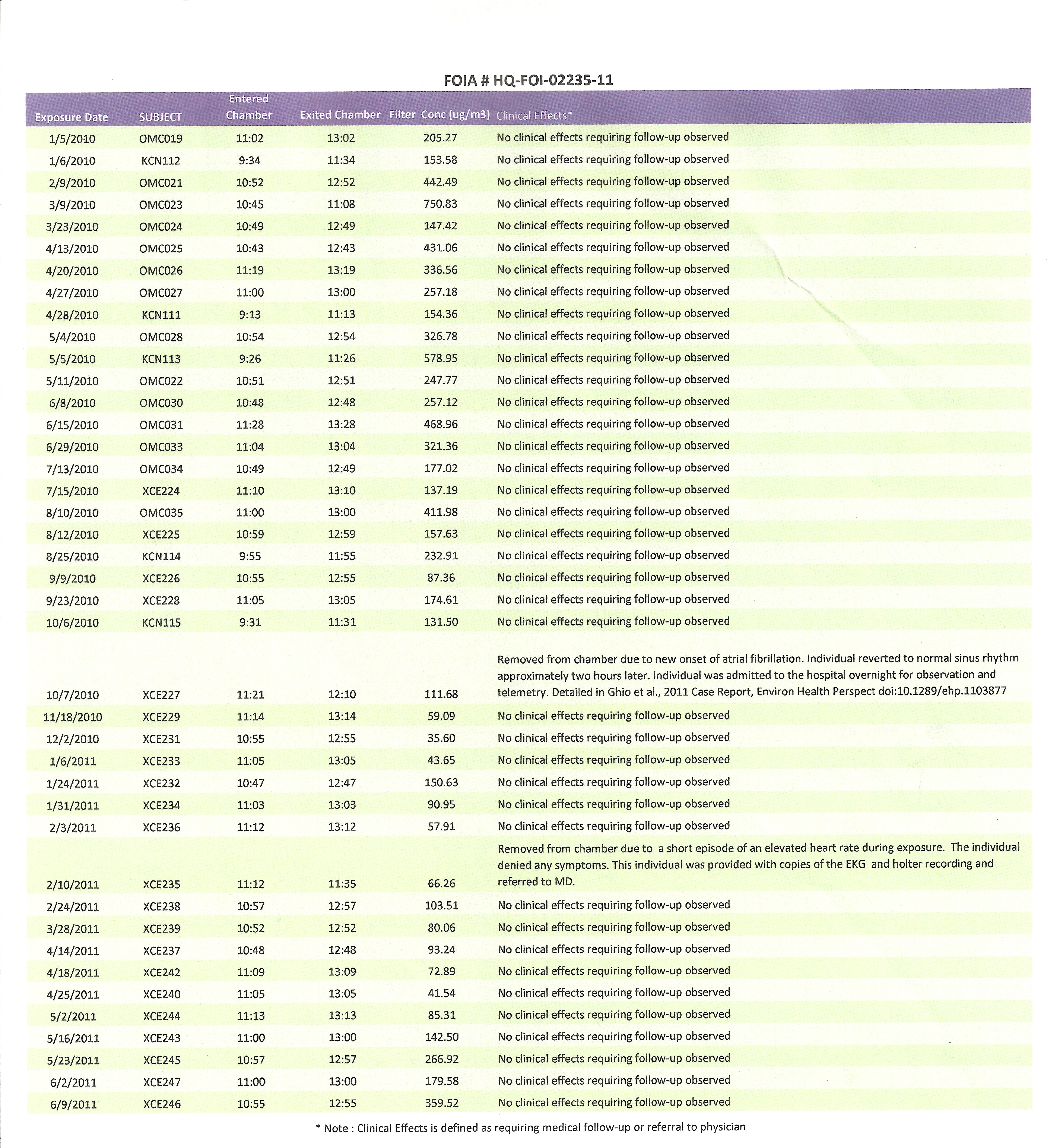
We get your issue the ink you need to win.
Advocacy Ink is a full-service public relations firm located in the metro D.C. area. Our clients include authors, organizations, issue campaigns, and candidates. Our mission is to advance free market principles and our clients’ public relation goals.
NEWS: Milloy Comments On Penn State Scandal And Investigation Of Michael Mann
February 2, 2010
The following statement is from Steve Milloy, publisher of JunkScience.com an author of Green Hell: How Environmentalists Plan to Control Your Life and What You Can Do to Stop Them
Here's our early take on today's Penn State report <http://www.research.psu.edu/orp> on its Michael Mann investigation:
- The review apparently extended little further than the Climategate e-mails themselves, an interview with Mann, materials submitted by Mann and whatever e-mails and comments floated in over the transom. Not thorough at all.
- Comically, the report explains at length how the use of the word "trick" can mean a "clever device." The report ignores that it was a "trick... to hide the decline." There is no mention of "hide the decline" in the report.
- The report concludes there is no evidence to indicate that Mann intended to delete e-mails. But this is contradicted by the plain language and circumstances surrounding Mann's e-mail exchange with Phil Jones - See page 9 of Climategate & Penn State: The Case for an Independent Investigation <http://www.commonwealthfoundation.org/docLib/20100111_PB2202Climategate.pdf>
- The report dismisses the accusation that Mann conspired to silence skeptics by stating, "one finds enormous confusion has been caused by interpretations of the e-mails and their content." Maybe there wouldn't be so much "confusion" if PSU actually did a thorough investigation rather than just relying on the word of Michael Mann.
- Although PSU is continuing the investigation, its reason is not to investigate Mann so much as it is to exonerate climate alarmism. On page 9 of the report, it says that "questions in the public's mind about Dr. Mann's conduct... may be undermining confidence in his findings as a scientist... and public trust in science in general and climate science specifically."
There needs to be a thorough and independent investigation of Climategate. PSU's report is a primer for a whitewash," concluded Milloy.
==
An energy advocacy organization and a large trucking association filed a lawsuit challenging the validity of an Environmental Protection Agency panel that is writing regulations to control particulate matter pollution.
The lawsuit, filed Friday in U.S. District Court in Washington D.C., claims that most of the members of the independent scientific review committee are not independent. The suit said that 22 of the 26 members received a combined $192 million in EPA grant money and are dependent on the agency for research funds.
It was filed by the Energy and Environment Legal Institute, a Washington, D.C.-based group that has previously filed lawsuits challenging EPA regulation of particulate matter pollution and other issues. The institute describes itself as an “organization engaged in strategic litigation, policy research, and public education on important energy and environmental issues.”
The institute was joined in the suit by plaintiffs including the Western States Trucking Association.
“I think we have a pretty good case because the law requires that this panel be independent and unbiased, and it’s clear to us that it is not,” Steve Milloy, co-counsel for the plaintiffs, told Trucks.com. “The EPA has poured ungodly amounts of money over the years to these researchers, so how could they go against the EPA’s stance on PM2.5?”
That is the designation for particulate matter — including dust, dirt and soot — that is 2.5 micrometers in diameter and smaller and considered by the EPA to have the most harmful health effects.
Milloy said the institute believes that science does not support EPA’s position that exposure to PM2.5 is harmful to people and the environment.
“We are asking the court to prevent the EPA from convening the panel until the panel can be formed in a balanced manner in compliance with applicable laws,” said David Schnare, the institute’s general counsel and a former EPA official.
John Walke, clean air director for the Natural Resources Defense Council, said the EELI lawsuit is “baseless” and “lacked merit.”
“One of their attorneys filing this lawsuit is a notorious denier of the very well-established link between PM2.5 air pollution and mortality,” Walke told Trucks.com.
Walke said that Milloy has called the U.S. Science Advisory Board, Johns Hopkins University, Harvard University, the American Heart Association and the World Health Organization part of the “junk science mob” because they all agree that particulate matter is harmful.
Particulate matter is regulated because it “can cause premature death and harmful effects on the cardiovascular system” and other “significant health problems,” according to the EPA.
Diesel trucks are one of the nation’s biggest sources of particulate matter pollution, according to the Union of Concerned Scientists.
The EPA declined to discuss the lawsuit with Trucks.com, saying only that it “will review and respond accordingly to the lawsuit.”
The plaintiffs allege that the EPA violated federal law by failing to appoint independent committee members to the Clean Air Scientific Advisory Committee Particulate Matter Review Council last November. The committee is scheduled to have its first meeting on May 23.
“The EPA is obligated to appoint an independent committee to provide advice and recommendations to the administrator of the EPA every five years,” according to the lawsuit.
The lawsuit claims that of the 84 EPA grants that “have produced thousands of published studies” on particulate matter, the institute isn’t aware of any that have challenged the agency’s stance on the harmful health effects associated with exposure to PM2.5.
It’s important to have an impartial committee review the EPA’s findings because of the negative financial impact the agency’s rulings could have on small-business truckers, said Joe Rajkovacz, spokesman for the Western States Trucking Association.
The association, headquartered in Upland, Calif., represents nearly 1,000 construction and freight industry-related trucking companies.
Many members have spent thousands of dollars to retrofit their trucks to comply with California particulate emissions requirements, Rajkovacz said.
“Federal law requires the EPA to run all of its rule-makings through an advisory committee, who is supposed to be an independent committee that weighs the science they are basing their rule-makings on,” Rajkovacz said. “What kind of science do you think we will get if most of the independent researchers’ financial well-being is dependent on grant money from the EPA?”
James E. Enstrom, a retired UCLA epidemiologist, also is a plaintiff in the lawsuit. He published a critical analysis in the peer-reviewed medical journal Inhalation Toxicology that failed to support a relationship between PM2.5 and premature deaths in California.
The lawsuit asks the court to issue a stay, ordering that the panel “may not convene to meet or hold session until it has been properly constituted.” It also seeks to require the EPA to establish an advisory committee that is made up of members independent of the agency, who have a “balanced point of view.”
==
rational wiki 2x?
Steve "The Junkman" Milloy is a commentator for Faux News and the founder of junkscience.com, which fails desperately at thought-out explanations on science. He has also been a "scholar" at the Cato Institute and is currently an adjunct at the Competitive Enterprise Institute. He has close ties to tobacco and oil companies, which is no surprise—Milloy consistently denies the risk of second-hand smoke and human ties to global warming. He holds a "B.A. in Natural Sciences from the Johns Hopkins University, a Master of Health Sciences in Biostatistics from the Johns Hopkins University School of Hygiene and Public Health, a Juris Doctorate from the University of Baltimore, and a Master of Laws from the Georgetown University Law Center." Or so he says.[1]
In 2011, Steven Milloy was found in contempt of court by the Circuit Court for Montgomery County for failure to pay child support. He was forced to pay $180,000 in back payments.[2]
Milloy is the SOB who popularized the term "junk science" when referring to inconvenient facts. To him, junk science means "faulty scientific data and analysis used to advance special and, often, hidden agendas." This sounds very much like a conspiracy theory, and, judging by Green Hell, probably is. In reality, Milloy's own denials of scientific findings are what would be more appropriately called "junk science".
Contents
- :{1:(style="display:table-cell;padding-left:0px;padding-right:0.5em"):}::{Ultimate global warming challenge:(style="display:table-cell"):}:
- :{2:(style="display:table-cell;padding-left:0px;padding-right:0.5em"):}::{Green Hell:(style="display:table-cell"):}:
- :{2.1:(style="display:table-cell;padding-left:0px;padding-right:0.5em"):}::{Just a tiny bit of his bull (selected posts):(style="display:table-cell"):}:
- :{2.1.1:(style="display:table-cell;padding-left:0px;padding-right:0.5em"):}::{'Humans!' The anti-people green video:(style="display:table-cell"):}:
- :{2.1.2:(style="display:table-cell;padding-left:0px;padding-right:0.5em"):}::{Poof: A 2-inch fish makes 80,000 jobs vanish:(style="display:table-cell"):}:
- :{2.1.3:(style="display:table-cell;padding-left:0px;padding-right:0.5em"):}::{Protest Green Genocide: Get a DDT T-Shirt:(style="display:table-cell"):}:
- :{2.1:(style="display:table-cell;padding-left:0px;padding-right:0.5em"):}::{Just a tiny bit of his bull (selected posts):(style="display:table-cell"):}:
- :{3:(style="display:table-cell;padding-left:0px;padding-right:0.5em"):}::{So… where's the actual fighting back?:(style="display:table-cell"):}:
- :{4:(style="display:table-cell;padding-left:0px;padding-right:0.5em"):}::{Denying human evolution:(style="display:table-cell"):}:
- :{5:(style="display:table-cell;padding-left:0px;padding-right:0.5em"):}::{Burn, baby burn:(style="display:table-cell"):}:
- :{6:(style="display:table-cell;padding-left:0px;padding-right:0.5em"):}::{Send Steve your investment money:(style="display:table-cell"):}:
- :{7:(style="display:table-cell;padding-left:0px;padding-right:0.5em"):}::{See also:(style="display:table-cell"):}:
- :{8:(style="display:table-cell;padding-left:0px;padding-right:0.5em"):}::{External links:(style="display:table-cell"):}:
- :{9:(style="display:table-cell;padding-left:0px;padding-right:0.5em"):}::{Notes:(style="display:table-cell"):}:
- :{10:(style="display:table-cell;padding-left:0px;padding-right:0.5em"):}::{References:(style="display:table-cell"):}:
Ultimate global warming challenge
Milloy offered a prize of $500,000 to anyone who could disprove that:
- Manmade emissions of greenhouse gases do not discernibly, significantly, and predictably cause increases in global surface and tropospheric temperatures along with associated stratospheric cooling.
- The benefits equal or exceed the costs of any increases in global temperature caused by manmade greenhouse gas emissions between the present time and the year 2100, when all global social, economic and environmental effects are considered.[3]
Despite a few very on-target papers by the likes of Christopher Keating, a member of the Physics Department of the US Navy,[4] nobody won.[5] Obviously, a Fox News commentator definitely knows more about science than Keating.
Green Hell
Green Hell is a book by Milloy, and also the name of a blog by the same person. Its full title is Green Hell: How Environmentalists Plan to Control Your Life and What You Can Do to Stop Them, which breaks new records for incredibly long inane titles.[note 1]
The book claims that the word green is designed to be cuddly, while real environmentalists are incredibly ugly creatures (no doubt baby eaters as well). It also quote mines to make it sound like the evil environmentalists want to exercise totalitarian control over how many children you have, when in reality only a few nutjobs think that would be practical or desirable.
Just a tiny bit of his bull (selected posts)
Most of his posts are either old, old news or a one-sentence comment on what someone else wrote. A few posts are entirely other people's content. Still, he does have a few little gems, and here they are for his eternal embarrassment.
'Humans!' The anti-people green video
Steve Milloy appears to like to repeat the old, worn-out lie that greens hate people. Well, greens are people, so that's a problem right there.
In the post, the author uses what appears to be a comedic video parodying the green movement.[6] It portrays humans as ax-wielding savages cutting off the heads of forest animals, killing the Earth, and then going to other planets. This view is, unfortunately, much more accurate than we would like. It is unknown whether the blogger is aware of the comedic intent of the video, but in any event, he treats it as if it is serious.[7]
Poof: A 2-inch fish makes 80,000 jobs vanish

The fish in question. Obviously involved in a green plot to exterminate humans!
This isn't actually his assertion — like most of his posts, it's a one sentence commentary on a story, from, in this case, Fox News.[8] In any event, the darter in question was a highly endangered species native to a given area, and the loss of the habitat would cause the species to be severely threatened. Oh, and the dam got built anyway. Oh, and did we mention that this story was about thirty years old when he posted about it on May 11, 2009? (And did we mention William F. Buckleytongue-lashed fellow conservatives for not supporting the snail darter?)
Protest Green Genocide: Get a DDT T-Shirt
In this 2009 post, Steve Milloy advocates buying a DDT T-shirt (from his website, of course!)[9] to protest the UN wanting to roll back the use of DDT, calling it a "weapon of mass survival". This revolves around a myth that we need DDT, and nothing else will suffice.
In 2006 the World Health Organization (WHO) stated that "One of the best tools we have against malaria is indoor residual house spraying. Of the dozen insecticides WHO has approved as safe for house spraying, the most effective is DDT." The WHO also confirmed that DDT poses no health risk as long as it is used properly.[10]
DDT is not extraordinary. There are other, safer bug-repellents, as well as mosquito nets. DDT builds up in the systems of plants and animals, and can adversely affect humans. Thus eventually it will cause more damage than it prevents.
So… where's the actual fighting back?
That's a good question. Milloy touches on it lightly a few times, such as asking you to send him money buy a T-shirt from his site, but very little of the book appears to dwell on it. So, for those wondering, RationalWiki has made our own list (stop reading when you start feeling uncomfortable):
- write a letter to your representative in government
- make a blog about it
- protest outside your Capitol buildings
- go out and hunt endangered species
- drive a sixty-foot long truck
- use leaded gasoline
- send Steve Milloy money
- Assassinate remove reasonable people public enemies
Denying human evolution
In response to the question "What's the real deal on evolution?" posted on the Cato Institute's "Ask Our Scholars" page of their website, Milloy replied as follows:
"Explanations of human evolution are not likely to move beyond the stage of hypothesis or conjecture. There is no scientific way — i.e., no experiment or other means of reliable study — for explaining how humans developed. Without a valid scientific method for proving a hypothesis, no indisputable explanation can exist.
The process of evolution can be scientifically demonstrated in some lower life forms, but this is a far cry from explaining how humans developed.
That said, some sort of evolutionary process seems most likely in my opinion. But there will probably always be enough uncertainty in any explanation of human evolution to give critics plenty of room for doubt."[11]
Burn, baby burn
Milloy is one of the leaders of the Burn More Coal shareholder activist group,[12] which aims to profit from climate change denialism.
On his forum, there is even more wingnuttery. For example, one user claims that phasing out coal plants is "stupid and murderous," and that moonbats are "worse than a child molester."[13]
Send Steve your investment money
He also manages a mutual fund, the "Free Enterprise Action Fund," whose sole purpose is so Steve Milloy can oppose shareholder activism… by engaging in shareholder activism. It has mediocre returns because it spreads its investments out in small positions in too many blue chip companies for its small market capitalization, all so he can file shareholder proposals seeking to repeal company policies on the environment and sweatshops, show up at shareholder meetings to harangue company officials about any company policy or activity (including charitable donations and such) other than pure pursuit of profit, and also so he can vote the fund's shares against anyone else's shareholder proposals but his own.
According to the fund's prospectus,[14] the fund invests in companies which are being targeted by or have already changed their policies due to "harmful social activists," defined in three ways:
- Lending institutions who have changed their lending policies based on social activism rather than traditional assessments of credit worthiness
- Energy companies who have based decisions on pressure from social activists rather than profitability
- Manufacturing companies who have foregone moving manufacturing to foreign countries in response to pressure from social activists
In other words he doesn't like banks who make home loans to certain people who don't happen to be rich and white, oil and electric companies adopting environmental standards for their operation, and companies who don't offshore their manufacturing to Third World sweatshops. But isn't it the case that people buying shares in companies so they can have a say in changing company policies a free enterprise activity operating within the marketplace rather than through regulatory means, just the sort of thing a libertarian should in theory have no problem with? Well no, not according to Steve Milloy it isn't.
See also
- Anti-environmentalism
- Global warming conspiracy theory
- Michael Fumento
- Rachel Carson
- Hard green
- Sound science
- TASSC
External links
- Steve Milloy - still a dishonest SOB
- Junk Science entry at The Skeptic's Dictionary
- DeSmog Blog's profile and category for his bullshit
- Deltoid's category
- Milloy's SourceWatch page
- Thank You for Investing: A very curious right-wing mutual fund, Slate
- Pundit for hire, The New Republic
Notes
- :{Jump up:(style="user-select:none;top:-99999px;clip:rect(1px, 1px, 1px, 1px);overflow:hidden;position:absolute !important;padding:0px !important;border:0px !important;height:1px !important;width:1px !important"):}:↑ The history of the wars of New-England with the Eastern Indians; or, a narrative of their continued perfidy and cruelty, from the 10th of August, 1703, to the peace renewed 13th of July, 1713. And from the 25th of July, 1722, to their submission 15th December, 1725, which was ratified August 5th, 1726 is actually longer, but who cares?
References
- :{Jump up:(style="user-select:none;top:-99999px;clip:rect(1px, 1px, 1px, 1px);overflow:hidden;position:absolute !important;padding:0px !important;border:0px !important;height:1px !important;width:1px !important"):}:↑ His website
- :{Jump up:(style="user-select:none;top:-99999px;clip:rect(1px, 1px, 1px, 1px);overflow:hidden;position:absolute !important;padding:0px !important;border:0px !important;height:1px !important;width:1px !important"):}:↑ http://casesearch.courts.state.md.us/casesearch/inquiryDetail.jis?caseId=26446FL&loc=68&detailLoc=MCCI
- :{Jump up:(style="user-select:none;top:-99999px;clip:rect(1px, 1px, 1px, 1px);overflow:hidden;position:absolute !important;padding:0px !important;border:0px !important;height:1px !important;width:1px !important"):}:↑ The challenge
- :{Jump up:(style="user-select:none;top:-99999px;clip:rect(1px, 1px, 1px, 1px);overflow:hidden;position:absolute !important;padding:0px !important;border:0px !important;height:1px !important;width:1px !important"):}:↑ His paper
- :{Jump up:(style="user-select:none;top:-99999px;clip:rect(1px, 1px, 1px, 1px);overflow:hidden;position:absolute !important;padding:0px !important;border:0px !important;height:1px !important;width:1px !important"):}:↑ Big surprise
- :{Jump up:(style="user-select:none;top:-99999px;clip:rect(1px, 1px, 1px, 1px);overflow:hidden;position:absolute !important;padding:0px !important;border:0px !important;height:1px !important;width:1px !important"):}:↑ On the right hand side, under tags, there is a big fat comedy tag
- :{Jump up:(style="user-select:none;top:-99999px;clip:rect(1px, 1px, 1px, 1px);overflow:hidden;position:absolute !important;padding:0px !important;border:0px !important;height:1px !important;width:1px !important"):}:↑ His very, very short post on the video, very little of which is his own writing.
- :{Jump up:(style="user-select:none;top:-99999px;clip:rect(1px, 1px, 1px, 1px);overflow:hidden;position:absolute !important;padding:0px !important;border:0px !important;height:1px !important;width:1px !important"):}:↑ http://www.foxnews.com/story/0,2933,519818,00.html
- :{Jump up:(style="user-select:none;top:-99999px;clip:rect(1px, 1px, 1px, 1px);overflow:hidden;position:absolute !important;padding:0px !important;border:0px !important;height:1px !important;width:1px !important"):}:↑ Get a DDT T-shirt
- :{Jump up:(style="user-select:none;top:-99999px;clip:rect(1px, 1px, 1px, 1px);overflow:hidden;position:absolute !important;padding:0px !important;border:0px !important;height:1px !important;width:1px !important"):}:↑ http://www.un.org/apps/news/story.asp?NewsID=19855
- :{Jump up:(style="user-select:none;top:-99999px;clip:rect(1px, 1px, 1px, 1px);overflow:hidden;position:absolute !important;padding:0px !important;border:0px !important;height:1px !important;width:1px !important"):}:↑ Q and A with Steve Milloy
- :{Jump up:(style="user-select:none;top:-99999px;clip:rect(1px, 1px, 1px, 1px);overflow:hidden;position:absolute !important;padding:0px !important;border:0px !important;height:1px !important;width:1px !important"):}:↑ About Burn More Coal
- :{Jump up:(style="user-select:none;top:-99999px;clip:rect(1px, 1px, 1px, 1px);overflow:hidden;position:absolute !important;padding:0px !important;border:0px !important;height:1px !important;width:1px !important"):}:↑ In a conversation
- :{Jump up:(style="user-select:none;top:-99999px;clip:rect(1px, 1px, 1px, 1px);overflow:hidden;position:absolute !important;padding:0px !important;border:0px !important;height:1px !important;width:1px !important"):}:↑ Free Enterprise Action Fund prospectus, page 2
- Bronze-level articles
- Denialists
- Authors
- Clogosphere
- Enablers
- Creationists
- Conspiracy theorists
- Libertarian wingnuttery
- Pseudoscience promoters
- Shysters
- Global warming denialists
- Living people
==