MTA docu
find other ppl PO'd about CU 2020
see badass, authors allies
knock down the house
Jubilee Films is a production company started by Lears and Blotnick.
2022
To the End focuses on the effects of climate change. It features Ocasio-Cortez, Varshini Prakash, the co-founder of the Sunrise Movement, Alexandra Rojas, executive director of the Justice Democrats, and Rhiana Gunn-Wright, the climate policy director for the Roosevelt Institute. The film debuted at the 2022 Sundance Film Festival[48][49] and was presented at the Tribeca Film Festival in June 2022.[50]
---
MTA Ymail 5 26
That one maneuver: treating property as a person, unleashed every social justice issue we hold dear:
• weapons manufacturers fueling endless war
• fossil fuel giants torching the planet
• insurance and pharmaceutical corporations smothering Medicare for All
• corporate “speech” overriding public safety
• corporate “privacy” blocking inspections of dangerous facilities
• corporate “takings rights” used to attack environmental and labor protections

[
 ](https://www.youtube.com/watch?v=swovERCu7n4)
###
who rules am
2.8M views•2 years ago
hmmn
am olig
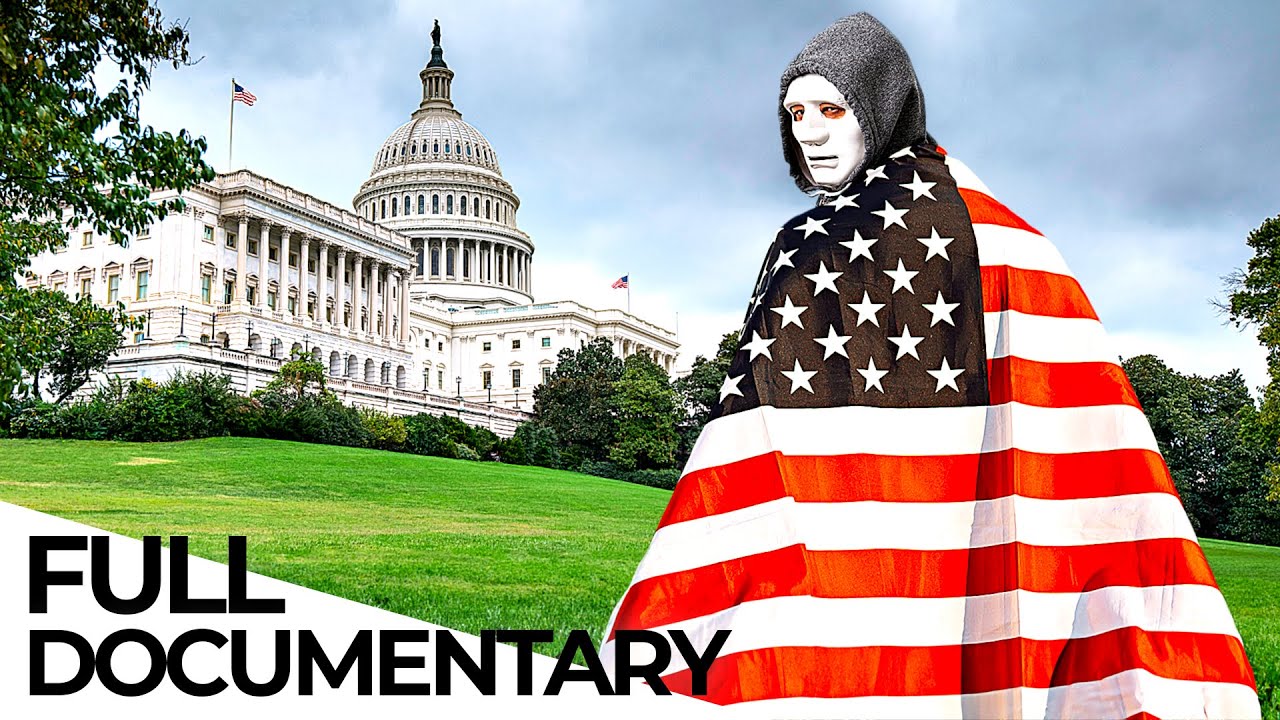
in America, lobby groups, corporations and billionaires invest millions of dollars to ensure that the 'right' candidate wins elections. It affects everything from the selection of local officials to presidential elections and creates countless conflicts of interest, undermining what used to be a model democracy. And it has a serious impact on people's daily lives. Drug prices are the highest in the world. Tax rates for the wealthy have fallen. Climate change is being denied. The impunity and extent of this is staggering. For many, this is nothing less than "legal corruption".
ENDEVR explains the world we live in through high-class documentaries, special investigations, explainer videos and animation. We cover business, economic, geopolitical, society/related topics and everything in between that we find worthwhile and interesting. New videos are published every Wednesday and Sunday (sometimes also on Fridays).
Quintus Studios GmbH Gerrit Kemming Akazienstraße 28 10823 Berlin hello@quintusstudios.com +49 30 98 556 174
astra?
CLEMENTS 2011 BOOK BRILLIANT CORP PERSON SUM
---
the insurrectionist next door pelosi dtr
1971 FBI file break-in: On March 8, 1971, under the cover of darkness, eight ordinary citizens broke into an FBI office in Media, Pa.
alex jones
outgrow the system doku doughnut economics
https://rafilm.se/outgrow-the-system
58 min
Director Cecilia Paulsson & Anders Nilsson
Producer Cecilia Paulsson / Teater K
In co-production with RåFILM
Kate Raworth, creator of Doughnut Economics economics summarizes it in this short clip from the documentary "Outgrow the system"
---
AM PROMISE DEBRA WINGER
---
cedar pt ufw Brief amicus curiae of Senators Sheldon Whitehouse, Jeff Merkley, Richard Blumenthal, Cory Booker, and Alex Padilla filed.
---
---
4 24
we talked to economist Joseph E. Stiglitz about his new book,*The Road to Freedom,* and his ideas about what it will take to build a more fair economy and good society after the collapse of neoliberalism.
The current so-called “polycrisis” — political, economic, and environmental — means the question of what comes next has been very much on the minds of today’s thinkers. Today we present an exclusive excerpt from economist and philosopher Daniel Chandler’s forthcoming book, Free and Equal: A Manifesto for a Just Society. Chandler, who directs the Programme on Cohesive Capitalism at the London School of Economics, offers a take on the future based on his reading of the philosopher John Rawls, the influential theorist of justice....
---
---
LEWIS BLACK COMIC CORP ACCTABILITY
---
https://www.brennancenter.org/our-work/analysis-opinion/how-big-business-bailed-out-nazis
How Big Business Bailed Out the Nazis
A tragic tale of what can go wrong when profits are entangled with politics.
Ciara Torres Spelliscy
The views expressed are the author’s own and not necessarily those of the Brennan Center for Justice.
Considering the outcome of this year’s presidential primaries, where the best-financed candidates were defeated, I’ve been asked repeatedly whether corporate money in politics really matters. And I’ll grant, corporate money so far mostly gone to losing candidates. But history may give us some greater perspective on how corporate money in politics can prove decisive.
It’s a largely forgotten piece of history, but in 1932 the German Nazi Party was facing financial ruin. How did the Nazis move from being broke to being in control of the German government just a year later? The Nazi Party was bailed out by German industrialists in early 1933.
The industrialists who led the way were two huge German firms, I.G. Farben and Krupp. Leaders of both of companies were among the few civilians who were later charged with war crimes at the Nuremberg Tribunals after World War II. These trials placed the story of their financial and moral support of the Nazis into the historical record. Krupp was a huge arms manufacturer. I.G. Farben was a vast chemical company which made everything from Bayer aspirin to Zyklon B, the poison used in the gas chambers.
According to The Arms of Krupp, the Nazi Party was essentially bankrupt in late 1932. Joseph Goebbels, who would later become the Minister of Propaganda, complained, “[w]e are all very discouraged, particularly in the face of the present danger that the entire party may collapse….The financial situation of the Berlin organization is hopeless. Nothing but debts and obligations.”
Regardless of the party’s financial problems, Hitler was named Chancellor in late January 1933. He called for elections in early March. With less than two weeks left before the vote, Herman Goering sent telegrams to Germany’s 25 leading industrialists, inviting them to a secret meeting in Berlin on February20, 1933. Attending the gathering were four I.G. Farben directors and Krupp chief Gustav Krupp. Hitler addressed the group, saying “private enterprise cannot be maintained in a democracy.” He also told the men that he would eliminate trade unions and communists. Hitler asked for their financial support and to back his vision for Germany.
According to Robert Jackson, the former Supreme Court Justice and chief U.S. prosecutor at Nuremberg, “[T]he industrialists…became so enthusiastic that they set about to raise three million Reichsmarks worth about [$30 million today] to strengthen and confirm the Nazi Party in power.”
Gustav Krupp was the first executive to speak at the Berlin meeting, and pledged one million marks. As the United Nations summarized in a 1949 report, Krupp was a key financier for the Nazi Party, including through his corporation:
It was clear from the evidence that Gustav Krupp embraced Nazism shortly prior to the seizure of power by the Nazi Party and continued his allegiance thereafter.He played an important part in bringing to Hitler’s support other leading industrialists and through the medium of the Krupp firm… from time to time made large scale contributions to the [Nazi] Party Treasury.
Hitler awarded Krupp the title of Fuhrer of Industry later in 1933.
Krupp acted in concert with other businessmen, including the directors of I.G. Farben, then Europe’s largest corporation. I.G. Farben’s full name was Interessen Gemeinschaft Farbenindustrie Aktiengesellschaft which translates to “Community of Interest of the Dyestuffs Industry, Incorporated” or as one of the Nuremburg prosecutors, Josiah DuBois Jr. in his book, The Devil’s Chemists, put it, the name was “like the cross between a service club and Easter eggs.” But what I.G. Farben did with the Nazis was no laughing matter, including using slave labor at a specially-constructed plant at Auschwitz called Monowitz.
In the opening of the tribunal against the directors of I.G. Farben, prosecutor U.S. Gen. Telford Taylor stated: “The indictment accuses these men of major responsibility for visiting upon mankind the most searing and catastrophic war in human history. It accuses them of wholesale enslavement, plunder, and murder.”
At the February meeting, the I.G. Farben executives gave the Nazis 400,000 marks, and a total of 4.5 million marks by the end of 1933, according to The Crime and Punishment of I.G. Farben. This infusion of corporate cash saved the Nazi Party from financial disaster. The rest, as they say, is history — tragic, tragic history.
As the book Hell’s Cartel explains, the history of the German industrialists’ support of Hitler shows “what can go wrong when political objectives and the pursuit of profit become dangerously entwined.” One can only surmise what might have happened if the businessmen had simply said “no” to Hitler that night.
---
---
1 24 an robt reich
when I was a boy, my father sold dresses and blouses to the wives of factory workers. As the wages of those workers rose through the 1950s, my father earned enough to expand his business to a second shop in another factory town not far away. We were by no means rich, but he earned enough to put us in the middle class.
For three decades after World War II, the average hourly compensation of American workers rose in lockstep with the nation’s productivity gains. In other words, as workers produced more value, they got more pay.
It was a virtuous cycle, from which our family and tens of millions of others benefited: The economy grew, and the middle class expanded. Its purchasing power rose, causing the economy to grow faster. This fueled new investments and innovations that further enriched and enlarged the middle class.
But then, beginning in the late 1970s, the virtuous cycle came to a halt.
While productivity gains continued much as before and the economy continued to grow, wages began to flatten. Starting in the early 1980s, the median household’s income stopped growing altogether, when adjusted for inflation.
Today, the median household is earning just a bit more than it did in 1979, 45 years ago (adjusted for inflation).
If you’re a non-supervisory worker who relies on an hourly wage — still the vast majority of workers — you’re earning no more than you earned in 1969. Job security also declined.
So, despite an economy that’s far larger and more productive than it was 40 or 50 years ago, the typical American worker has gone nowhere.
The standard explanation attributes this to neutral “market forces,” especially globalization and technological innovations that have made many working Americans less competitive.
While surely important, the standard explanation can’t account for much of what’s happened. It doesn’t explain why the transformation occurred so suddenly, over a relatively small number of years. Nor why other advanced economies facing similar forces didn’t succumb to them. Nor why so much of the nation’s income and wealth have gone to the top.
America’s middle class has shrunk because of its declining bargaining power — orchestrated and directed by America’s oligarchy. The economic gains that would otherwise have gone to the middle class went instead to the moneyed interests at the top. Let me explain.
1. The financialization of the economy
Before the 1980s (as I noted in our discussion about the decline of the common good), large corporations were in effect owned by all their stakeholders, who were assumed to have legitimate claims on them.
As early as 1914, the popular columnist and public philosopher Walter Lippmann called on America’s corporate executives to be stewards of America. “The men connected with [the large corporation] cannot escape the fact that they are expected to act increasingly like public officials …. Big businessmen who are at all intelligent recognize this. They are talking more and more about their ‘responsibilities,’ and their ‘stewardship.’”
This vision of corporate governance came to be widely accepted by the end of World War II. Frank Abrams, chairman of Standard Oil of New Jersey, declared in a 1951 address that typified what other chief executives were saying at the time:
*“The job of management is to maintain an equitable and working balance among the claims of the various directly affected interest groups … stockholders, employees, customers, and the public at large. Business managers are gaining professional status partly because they see in their work the basic responsibilities [to the public] that other professional men have long recognized as theirs.”
Pulp and paper executive J.D. Zellerbach told Timemagazine that “[t]he majority of Americans support private enterprise, not as a God-given right but as the best practical means of conducting business in a free society … . They regard business management as a stewardship, and they expect it to operate the economy as a public trust for the benefit of all the people.”
But a radically different vision of corporate ownership emerged in the late 1970s and early 1980s. It came from corporate “raiders” who mounted hostile takeovers with high-yield junk bonds.
The raiders used leveraged buyouts and undertook proxy fights against the “industrial statesmen” who, in their view, were depriving shareholders of the wealth that properly belonged to them.
The raiders assumed shareholders were the only legitimate owners of the corporation and that the only valid purpose of the corporation was to maximize shareholder returns.
This transformation did not happen by accident. It was a product of changes in laws governing corporations and of financial markets — changes that were promoted by the monied interests, America’s oligarchs.
In 1974, at the urging of pension funds, insurance companies, and Wall Street, Congress enacted the Employee Retirement Income Security Act. Before then, the giant portfolios of pension funds and insurance companies could be invested in only high-grade corporate and government bonds. Legally, it was their fiduciary obligation.
The 1974 Act changed that, allowing pension funds and insurance companies to invest in the stock market — thereby making a huge pool of capital available to Wall Street.
In 1982, another large pool of capital became available when Congress allowed savings and loan banks — the bedrocks of local home mortgage markets — to invest their deposits in a wide range of financial products, including junk bonds and other risky ventures promising high returns.
The convenient fact that the government insured savings and loan deposits against losses made these investments all the more tempting (and ultimately cost taxpayers some $124 billion when many of the banks went bust).
Meanwhile, the Reagan administration loosened other banking and financial regulations and simultaneously cut the enforcement staff at the Securities and Exchange Commission.
All this made it possible for corporate raiders to get the capital and the regulatory approvals they needed to mount unfriendly takeovers.
During the whole of the 1970s, there had been only 13 hostile takeovers LBO of companies valued at $1 billion or more. During the 1980s, there were 150.
Even where raids did not occur, CEOs felt pressured to maximize shareholder returns for fear their firms might otherwise be targeted. Hence, they began to see their primary role as driving up share prices.
The easiest and most direct way for CEOs to accomplish this feat was to cut costs — especially payrolls, which constitute most firms’ largest single expense.
Accordingly, the corporate statesmen of the 1950s and 1960s were replaced by the corporate butchers of the 1980s and 1990s, whose nearly exclusive focus was to “cut out the fat” and “cut to the bone.”
When Jack Welch took the helm of GE in 1981, the company was valued by the stock market at less than $14 billion. When he retired in 2001, it was worth about $400 billion. Welch accomplished this largely by cutting payrolls.
Before his tenure, most GE employees had spent their entire careers with the company. But between 1981 and 1985, a quarter of them — 100,000 in all — lost their jobs, earning Welsh the moniker “neutron Jack.” Even when times were good, Welch encouraged his senior managers to replace 10 percent of their subordinates every year in order to keep GE competitive.
Other CEOs tried to outdo even Welch. As CEO of Scott Paper, “Chainsaw” Al Dunlap laid off 11,000 workers, including 71 percent of headquarters staff. Wall Street was impressed, and the company’s stock soared.
When Dunlap moved to Sunbeam in 1997, he promptly laid off half of Sunbeam’s 12,000 employees. (Unfortunately for Chainsaw Al, he was caught cooking Sunbeam’s books; the SEC sued him for fraud, and he settled for $500,000, agreeing never again to serve as an officer or director of any publicly held company.)
In consequence of this change in the purpose of the American corporation, share prices soared, as did the compensation packages of CEOs. The results have been touted as “efficient” because resources theoretically have been shifted to “higher and better uses.”
But the human costs of this transformation have been huge. Millions of workers have lost jobs and wages. Many communities have been abandoned.
Nor have the efficiency benefits been widely shared.
As corporations have steadily weakened their workers’ bargaining power, the link between productivity and workers’ income has been severed.
Almost all the gains from growth have gone to the top. As noted, the average worker today is no better off than his or her equivalent 40 years ago, adjusted for inflation. Most are less economically secure.
Not incidentally, few own any shares of stock.
The richest 1 percent of Americans now own 52 percent of all the shares of stock owned by Americans. The richest 10 percent, 93 percent. The nation’s economic gains, once distributed broadly to the working and middle class — have been siphoned to the top.
2. Globaloney
Wages have also been suppressed because workers who are worried about keeping their jobs have accepted lower pay, relative to the economy’s productivity gains, than they did 40 years ago.
Here again, political decisions steered by the nation’s oligarchy have played a significant role. Some of the prevailing job insecurity is the result of trade agreements that invited American companies to outsource jobs abroad.
The conventional view equating “free trade” with the “free market” — in contrast to government “protectionism” — is wrong.
Just as all nations’ markets reflect political decisions about how they should be organized, so-called “free trade” agreements entail complex negotiations about how different market systems are integrated.
Within these negotiations, the interests of large corporations and Wall Street, to fully protect the value of their intellectual property and financial assets, have repeatedly trumped the interests of average working Americans to protect the value of their labor.
3. The Fed and inflation
When the Federal Reserve raises interest rates and Congress opts for austerity to reduce federal budget deficits — two policies favored by the oligarchy — the resulting unemployment also undermines the bargaining power of average workers.
Higher unemployment keeps wages low. This means higher corporate profits, leading to higher returns for shareholders.
The high inflation after the pandemic was driven in part by supply shortages and a major government stimulus. But it was also driven by monopolistic corporations using the excuse of inflation to raise their prices.
The Fed, however, believed that a root cause of inflation was wage growth, and it set out to slow the economy and loosen the labor market by raising interest rates. Here, too, the strategy was consistent with the views of the moneyed interests and was pushed by them.
4. The risk-shift to workers
Public policies that emerged during the New Deal and World War II placed most of the risks of economic change on large corporations rather than workers — through Social Security, worker’s compensation, 40-hour workweeks with time-and-a-half for overtime, and employer-provided health benefits (wartime price controls encouraged such tax-free benefits as substitutes for wage increases).
By the 1950s and 1960s, a majority of the employees of large companies remained with the companies for life. Their paychecks rose steadily with seniority, productivity, the cost of living, and corporate profits. When they retired, they received generous corporate pensions.
But after the junk-bond and takeover mania of the 1980s, that relationship broke down.
Even full-time workers who have put in decades with a company can now find themselves without a job overnight — with no severance pay, no help finding another job, no health insurance, and little or no pension.
Nearly one out of every five working Americans is now in a part-time job. Many are temporary workers, freelancers, independent contractors, or consultants, whose incomes and work schedules vary from week to week or even day to day. Two-thirds of American workers are living paycheck to paycheck.
The risk of getting old without a pension is rising.
In 1980, more than 80 percent of large and medium-sized firms gave their workers “defined-benefit” pensions that guaranteed them a fixed amount of money every month after they retired.
Now, fewer than 10 percent of companies provide their workers defined-benefit pensions. Instead, they offer “defined contribution” plans whose risks have been shifted to the workers. When the stock market tanks, as it did in 2008 and then again in 2020, their 401(k) plans tank along with it.
A quarter of all workers with so-called “matching” defined-benefit plans get no match because they don’t earn enough to contribute to them.
Meanwhile, the risk of a sudden loss of income continues to rise. Even before the crash of 2008, the Panel Study of Income Dynamics at the University of Michigan found that over any given two-yearstretch, about halfof all families experienced some decline in income.
Those downturns have become progressively larger. In the 1970s, the typical drop was about 25 percent. By late 1990s, it was 40 percent. By the mid-2000s, family incomes rose and fell twice as much as they did in the mid-1970s, on average.
Workers who are economically insecure are not in a position to demand higher wages. They are driven more by fear than by opportunity.
This is another central reality of American capitalism as organized by those with the political power to make it so.
5. The demise of labor unions
Fifty years ago, when General Motors was the largest employer in America, the typical GM worker earned $35 an hour in today’s dollars.
Today, America’s largest employer is Walmart, and the typical entry-level Walmart worker earns about $11 an hour.
This doesn’t mean the typical GM employee a half-century ago was “worth” four times what the typical Walmart employee today is worth. The GM worker was not better educated or motivated than today’s Walmart worker.
The real difference is that GM workers a half-century ago had a strong union behind them that summoned the collective bargaining power of all autoworkers to get a substantial share of company revenues for its members.
Because more than a third of workers across America then belonged to a labor union, the bargains those unions struck with employers raised the wages and benefits of non-unionized workers as well. Non-union firms knew they would be unionized if they did not come close to matching the union contracts.
Today’s Walmart workers do not have a union to negotiate a better deal. They are on their own. Because only 6 percent of today’s private-sector workers are unionized, most employers across America have no incentive to match union contracts. This puts unionizedfirms at a competitive disadvantage.
The result has been a race to the bottom.
Some argue that the decline of American unions is simply the result of “market forces.” But other nations have been subject to many of the same “market forces” and continue to have strong unions. In Sweden, 90 percent of workers in the private sector are unionized. These unions continue to provide their middle classes sufficient bargaining power to command a significant share of economic growth — a much larger share than that received by the middle class in the United States.
Why the difference? Look to politics and the allocation of power.
***
The National Labor Relations Act of 1935 guaranteed American workers the right to organize into unions and imposed on employers the legal responsibility to bargain with them.
As unions gained economic power in the late 1930s and 1940s, they gained greater. political power and wielded it to further enlarge the bargaining clout of American workers. After the legendary Treaty of Detroit in 1950, when Big Business and Big Labor agreed to share productivity gains in exchange for labor peace, the rate of unionization increased dramatically, as did wages and benefits.
Which is why, by the mid-1950s, almost a third of all American employees in the private sector of the economy belonged to a union, and why the median wage increased in tandem with productivity growth.
But starting in the late 1970s, the process went into reverse. Union membership began to decline, as did the economic and political power of unions, along with the bargaining clout of most workers.
The reasons for the decline involved the changes I’ve already noted — globalization, labor-replacing technologies, and a shift in the purpose of the corporation to maximizing shareholder returns.
But the decline of labor unions was also the consequence of political and legal decisions demanded by the monied interests.
When the Taft-Hartley Act of 1947 allowed states to enact “right-to-work” laws, workers who did not pay dues got a free ride off of those who did, thereby undermining the incentive for anyone to join a union in the first place.
Until the 1980s, such laws had minimal effect because they were enacted in southern and western states. Most industries remained in the north.
But as corporations came under increasing pressure to show high returns and cut labor costs, many CEOs found “right-to-work” states more alluring. Even the old heartland industrial states of Indiana and Michigan have enacted “right-to-work” laws.
CEOs whose corporations had high percentages of unionized workers moved, or threatened to move, to “right-to-work” states.
Additionally, Reagan’s notorious firing of the nation’s air traffic controllers for going on strike (which he had a right to do because they had no right to strike) signaled to the nation’s large employers that America had embarked on a different era of labor relations.
Workers who inhabited the local service economy — retail, restaurants, custodial, hotels, elder and child care, hospitals, transportation — faced a different challenge. Their jobs were in less danger of disappearing, because they couldn’t be outsourced abroad and most would not be automated. In fact, the number of local service jobs in America has continued to grow.
But because so many workers expelled from the older industrialized economy had no choice but to seek local service jobs, service-sector employers easily found people willing to work for low wages, few benefits, and little chance of advancement.
Walmart and major fast-food chains, such as Starbucks, have been aggressively anti-union. They’ve blocked union votes, fired workers who tried to organize, refused to enter into contract negotiations, and intimidated others into rejecting the union — all in violation of the National Labor Relations Act.
A succession of Democratic presidents have promised legislation streamlining the process for forming unions and increasing penalties on employers who violate the law, but nothing has come of these promises. (President Biden has been the first to strengthen the National Labor Relations Board and encourage it to enforce the law.)
The result of all this has been a steady decline in the percentage of private-sector workers who are unionized. Despite the jolt of labor activism in 2023, that percentage continues to drop.
The decline parallels the declining share of total income going to the middle class.
Take a look:

6. Summary
The underlying problem is that average working Americans have steadily lost the bargaining power to receive as large a portion of the economy’s gains as they received in the first three decades after World War II. As a result, instead of the middle class growing, it has shrunk.
To attribute this to the impersonal workings of the “free market” is to ignore how the market has been reorganized since the 1980s. America’s oligarchs — the moneyed interests — have spearheaded this reorganization in order to receive a steadily larger share of the nation’s economic gains. As those gains have risen, so has the oligarchy’s power to accumulate even more.
But it doesn’t have to be this way. Next week we’ll look at whether — and how — countervailingpower can be restored so that more of America’s poor and working class can ascend into the middle class once again.
*Robert Reich is a professor at Berkeley and was secretary of labor under Bill Clinton. You can find his writing at https://robertreich.substack.com/.*
---
---
https://parallaxperspectives.org/we-the-people-vs-corporate-rule-its-up-to-us-may-2023-tv-program-and-article-about-constitutional-amendment
GREG C
"We the People vs. Corporate Rule: It’s up to Us” — May 2023 TV program and article about constitutional amendment
May 23, 2023 COMING EVENTS + ONLINE OPPORTUNITIES, Democracy, Electoral Reforms, Voting Rights (Also see Political Parties and Elections), Economics, Labor, Capitalism, Trade, Poverty (Also see Taxes), Examples of Parallax Views, Governmental Abuses, Judicial and Constitutional, Organizing & Activism (Also see Nonviolence, Outreach), Our Current Political Crisis (in addition to Trump and Trumpism), Political Parties and Elections (Also see Democracy ...), TV Programs: "Glen's Parallax Perspectives" Series
The May 2023 episode of “Glen’s Parallax Perspectives” TV series makes a solid case for amending the U.S. Constitution in a way that would greatly strengthen democracy and promote fairness and progress for the wide range of issues people care about.
For a long time the Supreme Court has given business corporations constitutional rights that our nation’s founders intended only for human beings – and the Supreme Court has allowed Big Money to corrupt our elections.
Glen interviewed two well informed guests who are savvy organizers working with the organization Move to Amend. They explain how we got into this horrible problem – and how we can get out of it by passing the “We the People” amendment (HJR 54 in the 2023 Congress) to the U.S. Constitution.
This TV interview provides much more information, insights and encouragement that will add to what some people already know about these issues and will be a really inspiring eye-opener for people who are relatively new to these issues.
Anyone anywhere can watch this May 2023 program through this blog:
Glen typed up a very thorough summary of what we said during the interview — and included some additional information. Besides watching the interview video, I hope you will also read the thorough summary through the next link:
2023.05 We the People vs. Corporate Rule — SUMMARY AND MORE INFORMATION
Please tell your friends about this powerfully informative TV program. Share this blog link to the video and thorough summary I’ve linked above.
Questions? Contact Glen Anderson (producer and host) at (360) 491-9093 or glen@parallaxperspectives.org (Note this new e-mail address.)
---
4 23 email drilled
on Monday this week the Supreme Court finally weighed in on whether it would take up the jurisdictional argument that oil companies are making in multiple climate liability suits. The companies have been arguing for the past five years that these cases, brought on behalf of municipalities and states, are asking state courts for judgements that would impact federal policy and thus belong in state court. Attorneys representing state and local arguments have argued that their cases—which claim that oil companies' delay tactics on climate increased the cost of adaptation and thus the companies are liable for a portion of those costs—were appropriately filed in state court. Every circuit court has agreed, as has the Department of Justice, and now the Supreme Court as well.
"The companies' history of climate, deception, and misinformation, coupled with their unchecked fossil fuel production promotion, and so on, it makes them liable for at least some of the costs that these communities face, so that these costs don't fall entirely on the taxpayers." — Marco Simons, EarthRights International, attorney representing Boulder and other Colorado municipalities against oil companies.
Marco Simons, EarthRights International (
https://www.drilledpodcast.com/r/8ec832b3?m=bf6fa0ec-1090-4b3f-b920-7e98d9adb3de)
0:16 • Click to play audio (
https://www.drilledpodcast.com/r/e6e65463?m=bf6fa0ec-1090-4b3f-b920-7e98d9adb3de)
Suncor, a Canadian company whose U.S. subsidiary is headquartered in Colorado, is a defendant in the Boulder climate case.
It's big news, but what will it mean for these cases? Some of them, including Boulder, which was the case invoked in the initial petition to the Supreme Court, will go back to arguing against other motion-to-dismiss arguments in state court. But others, starting with Hawaii, will move towards trial and that's a really big deal because it means some of these cases will get into the phase of litigation oil companies have been trying their hardest to avoid: discovery. In civil cases, the discovery phase is when companies will be asked to hand over documents and make their executives available for depositions. The evidence gathered during discovery in these cases could spell trouble for the oil company defendants in multiple other cases, including ongoing fraud suits in Massachusetts and Minnesota, a RICO, or racketeering, case filed on behalf of Puerto Rican municipalities, and even international cases given that the majority of these companies operate globally.
"At this point, we're optimistic about moving forward and securing justice for our clients, who have been facing significant harms and costs due to the climate crisis while the oil companies, of course, continue to profit from their deception and misinformation." —Marco Simons, EarthRights International
[audio]
But of course, oil majors have not put all their eggs in the jurisdictional basket. As I've been writing about for years now, one of the key arguments they're making in these cases is a First Amendment argument. In broad strokes, the argument goes like this: anything they've ever said about climate was in the interest of shaping policy, which makes it political speech (or "petitioning speech" in legalese), and therefore protected. It was clear this was going to be the driving force of these cases when the oil company defendants appointed Chevron's attorney, Ted Boutrous with Gibson Dunn, as their spokesperson across the board. Boutrous is a renowned First Amendment attorney, and Gibson Dunn is the firm that brought and won the most famous corporate free speech in the country's history: Citizens United. And now, even as the broader jurisdictional argument seems to be dead in the water, oil companies have formulated another one: the First Amendment question in these cases is foundational, and is not something that state courts should be weighing in on.
That argument has already been briefed in multiple cases, and it's only a matter of time before it makes its way to the most pro-corporate Supreme Court this country has had in decades...maybe ever. In the meantime, cases will move forward, and it's possible that so many cases moving into discovery will prompt discussion of a tobacco-style settlement. But I wouldn't go counting those chickens just yet.
---
---
https://www.alternet.org/Bank/trump-alvin-bragg/
no lnx an 3 23
Jon Stewart: Here’s why Trump was elected president in the first place
Alex Henderson March 28, 2023
Former President Donald Trump predicted that on Tuesday, March 21, he would be arrested in connection with Manhattan District Attorney Alvin Bragg, Jr.'s investigation of alleged hush money payments to porn star Stormy Daniels. But a week later, on Tuesday morning, March 28, such an arrest had yet to materialize. Trump had not been indicted.
Nonetheless, Bragg's investigation continues. And the former president is also facing two separate criminal probes from the U.S. Department of Justice (DOJ) and special counsel Jack Smith as well as a criminal probe from Fulton County, Georgia District Attorney Fani Willis.
Comedian Jon Stewart, who formerly hosted "The Daily Show" on Comedy Central and now hosts "The Problem With Jon Stewart" on Apple TV+, weighed in on Trump's legal problems during a late March appearance on CNN.
READ MORE:Why the threat of 'Trumpist violence' must not 'be discounted': political science professor
CNN host Fareed Zakaria, interviewing the 60-year-old Stewart, noted fears that reports of a possible Trump indictment are "going to turn him into a martyr."
:{:{Stewart sarcastically responded, "The idea that someone may face accountability who's that rich and powerful is outrageous. This country shouldn't stand for it."}:
Stewart's tone became serious, however, when he added, "Fareed, we either have the rule of law, or we have no rule of law. The rule of law does not take into account if that might make you a martyr to somebody. I'd much rather the conservation be: What is the law? What exactly are we saying that he did? His lawyer went to jail for the same situation for a couple of years."
The former Trump attorney that Stewart is referring to is Michael Cohen, who has testified that he made hush money payments to Daniels on Trump's behalf. Cohen was sentenced to three years in federal prison after pleading guilty to tax evasion and campaign finance violations, but he did not serve the entire sentence.}:
READ MORE:Trump's MAGA apologists show their 'demagoguery' with bogus attacks on DA Bragg: ex-federal prosecutor
Stewart told Zakaria, "The reason why Donald Trump became popular in the first place and the reason (for) these populist movements is that the citizenry have become fed up with the lack of accountability for those in power. We have no accountability in our financial systems; we have no accountability for the bankers…. And instead of bringing accountability to the rampant corruption that surrounds our government and our financial systems, the Supreme Court just changed the definition of corruption rather than prosecuting it…. You can influence-peddle as long as you don't explicitly say, 'By the way, this money, is so that I may influence this law specifically.'"
READ MORE:Why the threat of 'Trumpist violence' must not 'be discounted': political science professor
Watch the full video below or at this link.
Jon Stewart: This is why Trump became popular in the first place
www.youtube.com
FROM YOUR SITE ARTICLES
Donald Trump attacks 'racist' Alvin Bragg and 'horseface' Stormy Daniels in social media rant ›
'Going full fascist': Morning Joe blasts Trump’s latest 'dehumanizing' attack on Manhattan DA Alvin Bragg ›
Alvin Bragg smacks down Jim Jordan: No 'legitimate basis for ... ›
RELATED ARTICLES AROUND THE WEB
New York DA Alvin Bragg responds to requests on Trump ... ›
Alvin Bragg: Manhattan DA tells CNN that his office's investigation of ... ›
Manhattan DA Bragg privately warns of intimidation after Trump calls ... ›
---