Clements, Jeff
---
2011 BOOK BRILLIANT SUMMARY SEE BOTTOM
Jeff Clements is the president of American Promise
MTA DOCU?
===
---
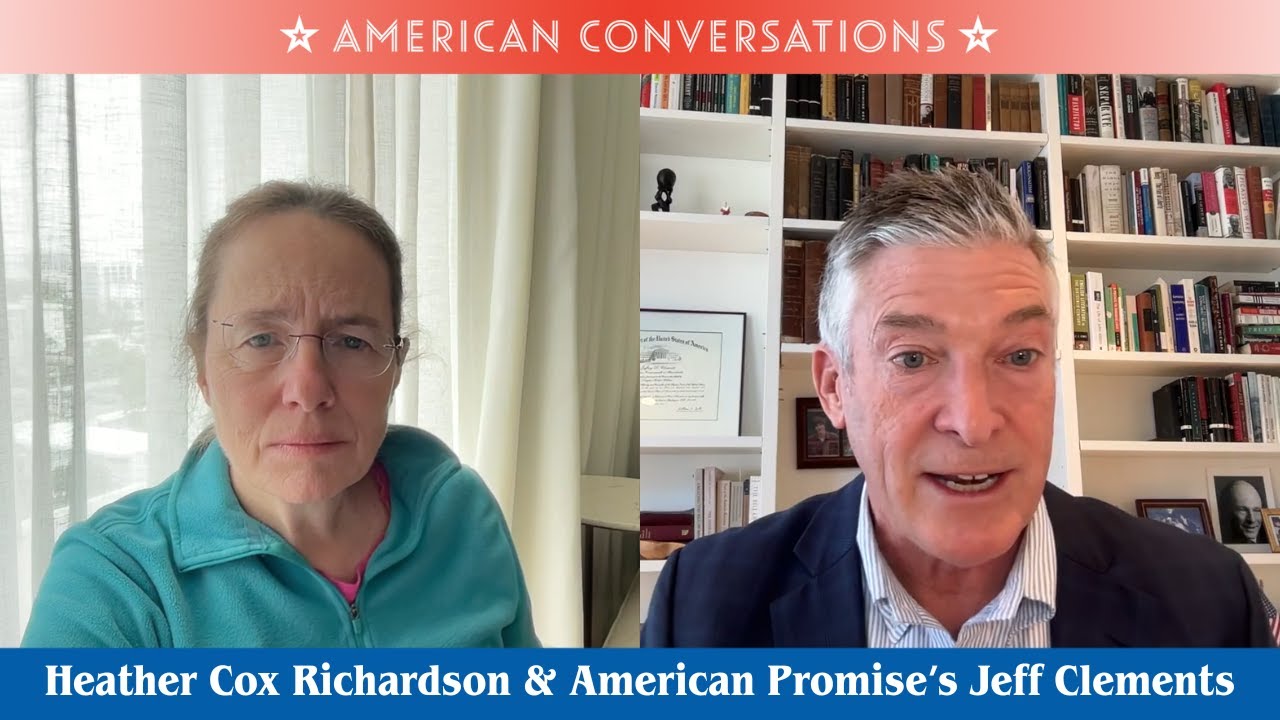
American Conversations: Jeff Clements on Citizens United and Campaign Spending Reform 35 MIN
Streamed live on Jan 28, 2026
Jeff Clements is a former Assistant Attorney General of Massachusetts and the co-founder and CEO of American Promise, a nonprofit advancing a constitutional amendment to restore lawmakers’ authority to set the rules for money in politics. He’s also the author of "Corporations Are Not People."
1:01
Jeff Clemens is a former assistant attorney general of Massachusetts. He is the co-founder and CEO of a group called
1:09
American Promise. That is a nonprofit that wants to amend the Constitution to
1:16
uh get rid of Citizens United and restore the ability of lawmakers to set
1:21
the rules for money in politics. and he's got a really interesting story about that that actually starts before
1:28
Citizens United. Um, so welcome Jeff. Thank you for being here today.
1:33
Thanks Heather. So good to be here with you. So let's start off here. You know, all
1:39
of us have heard about Citizens United, but I wonder if you could just take us
1:44
through the history of that a little bit. So what is Citizens United, but then where did it come from and why is
1:52
that court case so important? Yeah. So the you know we hear a lot
1:57
about Citizens United around money and politics. Um and you know Citizens United sounds like a good thing, right?
2:03
We want to be united citizens. Here's the thing though. Um, it actually refers to a Supreme Court case in January 2010,
2:12
um, in which the Supreme Court struck down the federal bipartisan campaign reform act. That law in the early 2000s
2:20
had been intended to close some loopholes that corporations and some unions were using and and and wealthy
2:26
donors to end around the limits that Americans wanted on spending in campaigns on on contributions in
2:32
campaigns. Um, which had historically been something Americans had wanted and had passed at the state and federal
2:39
level. Well, in Citizens United, the court heard argument that the uh McCain
2:44
fineold, as it was called, the bipartisan campaign reform act after senators John McCain and Senator Fineold
2:51
of Wisconsin. Um the court held in Citizens United that
2:56
that law was unconstitutional. And then the because a violation of free speech according to the court that
3:03
spending money in elections is a free speech right. And in doing so, the court overturned several previous decisions,
3:10
including one from just a few years before when Justice Okconor was still on the court, in which the court had upheld
3:17
the exact same law. So now that law was unconstitutional and the backstory of the Citizens United
3:25
decision is interesting because uh the court said and it seemed like they were
3:30
making it up to many Americans that yeah campaign contribution limits are still
3:35
okay because that could cause corruption. So you know many of us know that the limit on contributions directly
3:42
to a candidate's campaign is $3,500 at the federal level. Um, and then you're
3:48
scratching your head, well, how come Elon Musk can spend $300 million to influence the election? And the reason
3:54
is the Supreme Court said those are independent expenditures. They're not going directly to the campaign.
4:01
Therefore, they don't violate free uh therefore we're not allowed to limit those because that would violate free
4:06
speech. And the court cited a case called Buckley versus Valo 1976. And for
4:13
many Americans, Citizens United is famous for opening the floodgates of uh
4:19
of money in politics. It's why we have 20 billion dollar elections and all the corruption we see now. But Buckley
4:26
versus Valo 50 years ago is what rewrote the first amendment, rewrote the
4:32
constitution, resulted in a massive transfer of power to the wealthy interests that Citizens United depended
4:38
on. Okay. So, I've heard of Buckley V. Vallejo and it is as you say coming up
4:43
on its right right within two days coming up on its 50th anniversary. Uh
4:48
can you talk us talk to us about that and then I want to come back to what it means to have money in politics to this
4:54
extent. What is Buckley vale? Why is it important and what did it say?
5:00
Well, the major import of Buckley versus Valo, another Supreme Court case, 1976, as I said, is that for the first time in
5:08
American history, and remember 1976 was the bicesentennial, 200 years of American independence, not once had the
5:16
Supreme Court said that money in politics is free speech or ever intervened to stop the people, the
5:24
American people, from having campaign spending rules and limits. the states
5:30
had them for decades and and from the in the 1800s in the in the 20th century. Um
5:37
the federal laws had gone back at least to the Teddy Roosevelt days when corporations were prohibited from
5:42
spending money in federal elections. Not once had the Supreme Court said the first amendment free speech has anything
5:48
to do with that. People knew we needed those. It got us out of the guilded age. It got us out of other times of
5:54
concentrated power threatening the very foundation of democracy. Here we are now, 19 early 1970s, the 72 election, um
6:03
massive campaign spending scandals, um eventually leading to the resignation of President Nixon uh under a um
6:11
impeachment threat because of the scandals and the coverups. And bear in
6:16
mind, vice president, his vice president, Agnu, had already resigned because he'd been indicted for bribery.
6:23
So the corruption was rampant. The American people demanded a response. The American people got a response. Congress
6:29
passed the Federal Elections Campaign Act. It created the Federal Elections Commission. It put limits on spending
6:35
for campaigns. It put limits on, you know, self-funding of campaigns from if
6:41
you're rich enough, just ignore the limits and spend all your own money and buy the office. This law said you can't
6:47
do that. It it basically stopped the kind of scandals that had resulted in
6:52
the resignation of a president and vice president, much more. So, first time in
6:58
history, it goes up to the United States Supreme Court under an argument that that law violates the free speech rights
7:04
of those who want to spend unlimited money to get elected or to elect their
7:10
favorite candidate. Um, the decision came down and and as I said,
7:16
unprecedented, the court said that that federal law is unconstitutional in
7:21
several respects. It upheld the Federal Election Commission. and it upheld the contribution limits directly to the
7:27
campaign as I mentioned. But then as Citizens United would note almost almost 50 years later, the court invented a
7:35
rule. The court simply announced that independent spending cannot be limited.
7:41
Um you cannot limit the spending of wealthy candidates. You cannot limit the spending of um of wealthy donors if it's
7:48
going into certain independent things that now we see are super PACs. uh we'd
7:54
call them today, but that kind of way of spending. And so the the Supreme Court essentially moved the constitutional
8:01
rule about who decides the rules for anti-corruption laws away from the
8:06
American people and the states and Congress to itself. And we had 50 years
8:11
of dozens and dozens of cases because the lawyer, I'm a lawyer, believe me, the message went out. If you got a
8:17
clever theory that can strike down any limits, any rules about how you want to use money to influence elections, take
8:24
it to the Supreme Court. You got a pretty good chance. They'll vi they'll they'll just knock down the law and decide for themselves a new rule that
8:30
says you're that we're not allowed to limit that money. So, scores of cases went up to the Supreme Court. They made
8:36
a mess of it because judges aren't they don't know that much about politics really and that's how it should be. And
8:42
they took it away from the people who do know about politics and money and politics. the legislators, the people,
8:47
and they took it to themselves and they've made a mess of it. And that's what Citizens United really put on steroids in 2010.
8:54
So, I understand uh if I'm correct, that that it has always been tradition in the
9:01
American court system to have at least one person on the Supreme Court who has served an elected office. We don't have
9:07
someone like that now. I believe Sander Day Okconor was the last person who' had to run for an election. and and as a
9:13
result, exactly as you say, there's a divorce between an understanding of the actual political system and the theory
9:18
behind it. Now, um listen, I we don't really have the time for this, but I but I got to ask two things and then I do
9:25
want to get into the implications of this. First of all, what was the case Buckley vallejo? Um you know, why did
9:32
they push that? And why did the courts make such a dramatic statement? Because of course, the parallel to that, it
9:38
seems to me, is their acceptance. um you know quite out of the blue in the late 19th century of the idea that
9:44
corporations are people which you know at first they completely ignored when um
9:49
when actually was the case with Rosco Conkling brought it forward and then you know a few years later they just said oh
9:55
this is settled law when in fact it wasn't settled law at all it was completely made up so the what was the Buckley vallejo
10:03
decision I mean a court case and why did they make such an astonishing change
10:10
yeah well you In the 1970s, the court generally was incredibly activist as uh
10:15
and and they had gotten used to kind of deciding that that they were the decision makers about the constitutional
10:21
rules and they didn't particularly worry about how sound the grounding of the
10:27
different rules are across many different areas. Some of them they they got right. You know, certainly nobody
10:32
would, I hope, would want to question, you know, Brown versus Board of Education and the long delayed
10:38
enforcement of the 15th Amendment and the right to vote and so forth. But on this one, they really got it wrong. And,
10:45
you know, there's some interesting stories. I I tell it in my book, Corporations Are Not People. Now, 10 years ago, that on that that book, but
10:51
you know, Justice Powell uh had gone on the Supreme Court appointed by Richard Nixon. um the famous author of the
10:58
Powell memo outlining to the US Chamber of Commerce how an activist Supreme Court can be the best tool to basically
11:06
rest power away from what he perceived as the mob of of Americans, what many of
11:12
us would have called democracy, um and move it to the courts and impose these
11:17
constitutional restraints on democracy. So he basically invented the theory um
11:24
that had been dusted off from the 1800s as you said Heather back in the when they invented the theory that
11:30
corporations h are like people in in the in the guilded age. He dusted that off
11:36
put it into the first amendment and created the the corporate speech theory. The theory that corporations have free
11:41
speech rights too. And then Buckley versus Valo was an application of that in the campaign finance world but not
11:48
just for corporations. It applied to basically any concentrated wealth. Um
11:54
and and the rule by this court for some of them certainly like Justice Powell
11:59
intentional uh to transfer a massive transfer of power from the American
12:05
people to the judiciary. So you're killing me here and wealthy interest. I say toalthy interest....
---
LI
scrape
Bill Shireman
· 2ndSecond degree connection
Innovative Sustainability Advocate | Driving Positive Change in Business and Society | Passionate about Environmental Stewardship and Ethical LeadershipInnovative Sustainability Advocate | Driving Positive Change in Business and Society | Passionate about Environmental Stewardship and Ethical Leadership
Follow
John Wass
John Wass
John Wass
· 3rdThird degree connection
Co-Founder and CEO of Profit Isle, WaveMark, Swift Rivers | MIT STEX25 & CSAIL | Board Member | Serial EntrepreneurCo-Founder and CEO of Profit Isle, WaveMark, Swift Rivers | MIT STEX25 & CSAIL | Board Member | Serial Entrepreneur
Message
Daniella Ballou-Aares
Daniella Ballou-Aares
Daniella Ballou-Aares
· 3rdThird degree connection
CEO at Leadership Now ProjectCEO at Leadership Now Project
Follow
Manu Meel
Manu Meel
Manu Meel
· 3rdThird degree connection
CEO, BridgeUSA | Forbes 30 Under 30 | The Hopeful Majority Podcast CEO, BridgeUSA | Forbes 30 Under 30 | The Hopeful Majority Podcast
Follow
Anastasia Khoo
2018 sundance Executive Producer of short film "Dulce."
Anastasia Khoo
· 3rdThird degree connection
Taking social change organizations to the next levelTaking social change organizations to the next level
Message
Randi Feinberg
Randi Feinberg
Randi Feinberg
· 3rdThird degree connection
Chief Operating Officer, American PromiseChief Operating Officer, American Promise
Message
Aliya Bhatia
Aliya Bhatia
Aliya Bhatia
· 3rdThird degree connection
Executive Director at Vot-ERExecutive Director at Vot-ER
Message
Kaitlin LaCasse
Kaitlin LaCasse
Kaitlin LaCasse
· 3rdThird degree connection
American PromiseAmerican Promise
Message
Brian Boyle
Brian Boyle
Brian Boyle
· 3rdThird degree connection
Chief Program Officer & General CounselChief Program Officer & General Counsel
Message
Julia Brown
Julia Brown
Julia Brown
· 3rdThird degree connection
American PromiseAmerican Promise
Message
Alan LaPolice
Alan LaPolice
Alan LaPolice
· 3rdThird degree connection
Independent Leader, Educator and Political ReformerIndependent Leader, Educator and Political Reformer
Message
Leila B.
Leila B.
Leila B.
· 3rdThird degree connection
Independent Financial Services and Marketing ProfessionalIndependent Financial Services and Marketing Professional
Message
Tracy Marshall
Tracy Marshall
Tracy Marshall
· 3rdThird degree connection
Senior Vice President, Principal at Development Guild DDISenior Vice President, Principal at Development Guild DDI
Message
John P. McCrea
John P. McCrea
John P. McCrea
· 3rdThird degree connection
Enabling Business Leaders to learn, engage, & become powerful advocates to win passage of The For Our Freedom Amendment to the U.S. ConstitutionEnabling Business Leaders to learn, engage, & become powerful advocates to win passage of The For Our Freedom Amendment to the U.S. Constitution
Message
Owen Elton
Owen Elton
Owen Elton
· 3rdThird degree connection
Politics Researcher & Master of Urban Planning StudentPolitics Researcher & Master of Urban Planning Student
Message
Sue Ash, SPHR
Sue Ash, SPHR
Sue Ash, SPHR
· 3rdThird degree connection
Heart Centered Human Resources Executive; My posts reflect my valuesHeart Centered Human Resources Executive; My posts reflect my values
Message
Ayden Nichol
Ayden Nichol
Ayden Nichol
· 3rdThird degree connection
Fellow at the Alaska CenterFellow at the Alaska Center
Message
Connor Flotten
Connor Flotten
Connor Flotten
· 3rdThird degree connection
Research Manager at American PromiseResearch Manager at American Promise
Message
Jere Halligan
Jere Halligan
Jere Halligan
· 3rdThird degree connection
Senior Director • Head of Marketing and Technology • CommunicationsSenior Director • Head of Marketing and Technology • Communications
Follow
Maia Cook
Maia Cook
Maia Cook
· 3rdThird degree connection
Yale Senior | Deputy Executive Director of Equal CitizensYale Senior | Deputy Executive Director of Equal Citizens
Message
key backgrounder}:
Corporations like Exxon are using spurious free speech claims to fend off regulation
Updated by Jeff Clements and John Coates Feb 14, 2017
http://www.vox.com/the-big-idea/2017/2/14/14601932/exxon-first-amendment-free-speech-citizens-global-warming
no lnx
Corporations like Exxon are using spurious free speech claims to fend off regulation
By Jeff Clements and John Coates Feb 14, 2017,
This story is part of a group of stories called
The Big Idea
Oref jeff clements and coats
https://www.vox.com/the-big-idea/2017/2/14/14601932/exxon-first-amendment-free-speech-citizens-global-warming
Why is the attorney general of Massachusetts, Maura Healey, being forced to justify to a Texas judge why and how she is doing her job?
In the latest instance of the corporate takeover of the First Amendment — and other constitutional rights —Exxon Mobil, the world’s largest oil and gas corporation, has invented a constitutional right to obstruct state investigations into allegations of fraud.
Investigations by the Massachusetts and New York attorneys general began late last year after the Los Angeles Times reported that Exxon scientists and executives have known for decades about the connection between fossil fuel consumption and the likelihood of catastrophic changes in the Earth’s atmosphere and climate.
The report alleged that as early as the 1980s, Exxon scientists were warning the company in internal communications that global climate change could "indeed be catastrophic (at least for a substantial fraction of the earth's population)." According to the journalists’ report, Exxon’s internal teams used that information for purposes of assessing the potential for profitable investment in new oil exploration and production. Yet these were the same climate models that Exxon “dismissed as unreliable and based on uncertain science” in statements to investors, consumers, and the general public.
A parallel with investigations of Big Tobacco
The attorneys general embarked on investigations on behalf of their citizens, asking whether Exxon was guilty of selling products and equity while concealing information about their risks.
The similarity of these allegations to the illegal conspiracy of the tobacco industry — a cover-up of internal corporate knowledge about deadly consequences of continued consumption of its products — did not escape notice. In January 2016, the Department of Justice asked the FBI to investigate whether Exxon should be prosecuted under the federal Racketeer Influenced and Corrupt Organizations Act, as the tobacco industry was. The investigations by the Massachusetts and New York attorneys general, focusing on whether Exxon had been forthright in its disclosures to investors, soon followed.
Given identified sources and specific studies cited in news reports, it is not surprising that chief law enforcement officers of federal and state governments would investigate. Indeed, it would be extremely troubling if they did not.
But rather than show that the allegations of investor and consumer fraud are baseless, Exxon Mobil is misusing the Constitution to continue to conceal what it knew about the connection between catastrophic climate change and continued fossil fuel use, and when.
It is not uncommon, of course, for companies to resist subpoenas from attorneys general on a variety of legal grounds. For example, Exxon could have filed a motion in Massachusetts asking a judge to set aside the subpoena on the grounds that it was overly broad, and arguing that the investigation exceeded the jurisdiction of the attorney general. (In fact, Exxon did just that, and lost.)
Until fairly recently, no US court would have entertained free speech claims by a corporation that wanted to strike down regulation
But Exxon has gone much further. It has filed a federal “civil rights” lawsuit in its home court of Texas against the New York and Massachusetts attorneys general. The multibillion-dollar global corporation claims that the state investigations violate a previously unrecognized corporate right under the Constitution both to “speak” and to “not speak” about climate change any way it wants, however deceptive that speech may be.
This is where the Supreme Court’s decision in Citizens United v. Federal Election Commission is taking the country. That 2010 ruling is infamous for opening the floodgates of big, dark money in our elections by deciding that any limits on supposedly “independent” political ads violate the speech rights of corporations, unions, and billionaires. What is less well-known about Citizens Unitedis how radically it empowers corporations to misuse the First Amendment in other ways — ways we now see playing out in the Exxon case, and elsewhere.
Citizens United was the capstone on a remarkable series of cases, dating only to the 1970s, that revolutionized the application of the First Amendment in the corporate context. Very few people realize just how quickly this constitutional revolution has occurred; very few people realize that American corporations thrived for the first two centuries of American history with virtually no First Amendment protections.
In the early 20th century, First Amendment cases involving firms tended to involve media companies, as when Louisiana Gov. Huey Long imposed special taxes on newspapers (a clear attempt to punish them). It was generally assumed that the “speech” of business corporations was no more free from court scrutiny than the language of their contracts or their SEC filings.
That finding was then broadened and expanded in National Bank of Boston v. Bellotti(1978), which held that corporations can contribute to ballot initiatives, and again in Central Hudson Gas & Electric Corp. v. Public Service Commission(1980), which asserted that a utility could run advertisements promoting the use of electricity.
Those two cases continue to be cited in almost all commercial speech cases — and they are cited more and more frequently. Citizens United affirmed those cases and extended them to campaign finance laws. After his appointment to the high court in 1971, however, Justice Lewis F. Powell Jr., a former business lawyer who ardently believed that corporate America was being undermined by the public’s support for reformers like Ralph Nader, helped reinvent the Court’s doctrine in this area. In Virginia State Pharmacy Board v. Virginia Citizens Consumer Council (1976), the Court said, on First Amendment grounds, that the state could not forbid pharmacists from advertising prescription drug price — a remarkable departure from precedent.[why wd they wnt to?]
Despite the “free speech” rhetoric, corporations are not simply seeking to offer opinions about public policy issues. They do that all the time, routinely spending millions to fund ads, research, policy papers, and lobbying activities.
Today corporations are claiming that their “rights” to speak clash with longstanding forms of regulation of business activity. Whenever they are required to disclose information to consumers, regulators, the public, or enforcement officials, they argue, their First Amendment rights are implicated. Whenever they seek or transmit information, they say, they are “speaking,” and the First Amendment gives them the right to do that without fear of consequences.
A growing number of constitutional challenges to reasonable regulations
In recent years, large corporations have been emboldened to argue that corporate speech rights entitle them to strike down state health care prescription information laws — those forbidding pharmaceutical companies from selling information about the prescribing patterns of individual doctors, for example. They have argued that speech rights forbid certain securities regulations — specifically, those requiring investigation and disclosure of whether a company sells “conflict minerals” from the Democratic Republic of Congo. They have said that the First Amendment gives them a right to decline to say on product labels that the meat they sell comes from foreign countries, or that food products contain genetically modified ingredients.
In a related egregious constitutional expansion, corporations have even attacked minimum wage laws as violating their rights under the 14th Amendment’s equal protection clause — when, as is typical, such laws treat firms differently based on size (or form of organization). The corporate misuse of the First Amendment and the Constitution more broadly, has gone viral. It now might be considered corporate legal malpractice not to take a swing at challenging, on constitutional grounds, any law that gets in the way of the largest corporate profits.
Investigations by public agents, including attorneys general, are a necessary component of law enforcement. Efforts by public agents to ascertain facts in such investigations should not create constitutional controversy, provided the agents respect due process and other constraints on how they perform these duties. If corporations can invoke “free speech” as a way to conceal relevant information about allegedly false statements — if they can effectively create immunity from investigation by playing a constitutional trump card — then we are on a slippery slope to the civic incapacity and relative weakness in both rule of law and economic growth that characterizes Russia and other regimes that collapse the distinction between economic and political power.
That’s why Exxon’s attack on the state investigations says so much about the damage to our constitutional framework wrought by the Supreme Court’s invention of these new corporate rights. In our federal system, attorneys general are the highest law enforcement officers in the state, generally elected directly by people, and charged with protecting the public interest and checking the abuse of corporate power. Yet in the post–Citizens United world, Exxon — with a virtually unlimited budget — can summon any officials with the temerity to do their job into physically distant courts. Trumped-up “civil rights” litigation of this kind has self-evident potential for the harassment and intimidation of would-be investigators.
Even the majority of justices in Citizens United did not argue that corporate speech rights protected fraudulent statements. Yet unless the Court revisits its First Amendment doctrines, Exxon’s attack on efforts by the states to investigate its conduct shows that such nuances may not matter. Whether Exxon wins or loses its “free speech” claims, it has already delivered its real message: Those who stand up for the public interest will face a high cost.
Jeff Clements is the president of American Promise, a national nonpartisan group of American citizen leaders working for the 28th Amendment to secure government of the people, not money. He previously was a partner in a Boston law firm and served as chief of the Public Protection Bureau in the Massachusetts Attorney General’s Office.
John Coates is the John F. Cogan Jr. professor of law and economics, as well as research director of the Center on the Legal Profession, at Harvard Law School. Before joining Harvard, he was a partner at Wachtell, Lipton, Rosen & Katz specializing in financial institutions and mergers and acquisitions.
---
---
---
https://www.newsweek.com/big-money-citizens-united-campaign-funding-1451687
Today, Senator Tom Udall (D-NM) introduces the Democracy for All Amendment to overturn Citizens United v. FEC and get big money out of politics. The bill is co-sponsored by Senate Minority Leader Chuck Schumer (D-NY) along with 2020 presidential candidates Senator Elizabeth Warren (D-MA), Senator Kamala Harris (D-CA), Senator Bernie Sanders (D-VT), Senator Kirsten Gillibrand (D-NY), Senator Cory Booker (D-NJ), Senator Amy Klobuchar (D-MN) and Senator Michael Bennet (D-CO).
If passed and ratified, the Amendment will become the 28th Amendment to the US Constitution. This constitutional amendment will enable what the vast majority of Americans across the political spectrum urgently want, which are reasonable limits on money in state and federal elections to combat corruption, increase electoral competition, and protect the right of every American to speak, be heard and have representation in our political system.
With a large number of Democratic Senators and presidential candidates joining in support of the proposal, and with Senate Majority Leader Mitch McConnell adamantly opposed, some may be tempted to write this off as a partisan stunt.
Others may point to the high bar for constitutional amendments needing passage by two-thirds of Congress and ratification by three-quarters of the states. They might assume this proposal is an exercise in futility. Both reactions, while understandable in normal political times, are misplaced today.
With record-breaking money flooding our political system, a collapse in confidence in both our government and democracy itself, political parties fragmented and challenged by outsiders, independents, and billionaire-driven free-lance political operations, any calculation about the stability of current political alignments is hazardous at best.
Today, the American electorate is alienated, angry and fearful, sensing that the people have lost control of the system. And they're right.
The 2018 midterm election was the most expensive in history with over five billion dollars spent in all races. Most of this money came from less than half of 1 precent of Americans. Nearly 90 percent of voters see corruption as widespread, and more than half now call political corruption a crisis that is greater than deficits, immigration and climate change.
A series of disastrous Supreme Court decisions has helped create the dire situation we face. A decade ago, in Citizens United v. Federal Election Commission, the Court decreed that because money may amplify speech, limits on political spending amount to a violation of free speech rights, no matter the amount or source of money or the consequences to the free speech rights of those without such money.
By now it is clear that the Court's theory, that unlimited spending increases information for voters and competition to incumbents, has failed. Only a tiny elite donate more than $200 to political campaigns. Yet, these donations account for more than 70 percent of all individual contributions to federal candidates, PACs, parties and outside groups.
Data shows that because money reigns, most Americans cannot participate meaningfully in determining candidates and election results. Wealthy Americans and corporate interests hold wildly disproportionate influence, and they typically have different policy preferences than the average voter. Incumbents raise more money because they can reward donors and punish enemies, and they usually win, no matter how frustrated the voters may be.
The Court has not corrected course but has doubled down in subsequent cases, going after long-standing state and federal anti-corruption laws as supposed violations of the First Amendment. So, only a constitutional amendment can fix the problem and give power to the American people and the states, curbing a race toward plutocracy.
Historically, amendments have come in turbulent times. Americans ratified four amendments between 1961 and 1971, just as their grandparents ratified four amendments between 1910 and 1920 to help bring America out of the crisis of inequality that marked the Gilded Age. Eight of amendments have nullified Supreme Court decisions.
But historic analogy alone won't get an amendment ratified. Successful amendments must meet two critical requirements: A national consensus that it must be done, and ubiquitous citizen and political engagement that creates the will for the 2/3 vote in Congress and ratification across 38 diverse states. This amendment meets both requirements.
National consensus is overwhelming and persistent.More than 75 percent of Americans support an amendment to limit the power of money in state and federal elections. Citizen grass-roots efforts from Republicans, Democrats and Independents have driven votes in scores of states and local communities that have passed resolutions for this amendment, typically with 70-85 percent popularity. In states from Montana to Maine, and Wyoming to New Hampshire, Republicans and Democrats have joined together to support an amendment to authorize effective election spending rules.
As of this month, twenty states and more than 800 towns and cities have passed formal resolutions calling for the amendment. Millions of Americans have petitioned Congress, state legislatures, and have passed ballot initiatives in five states to advance this amendment.
We must continue to move this constitutional amendment forward and renew our national commitment to effective self-government of equal, free citizens. In the past three years, five more states took action in legislatures or ballot initiatives to press Congress to act, and 250 candidates in 2018 signed a pledge to support the amendment. In all 50 states, Americans have joined local associations, participated in 28th Amendment town halls, written, called, and visited Capitol Hill and state legislatures in citizen lobby days. They've successfully conducted cross-partisan community outreach where they live.
Millions of Americans are tired of the cynicism and know that the era of toxic partisanship, corruption, domination of money from the few, and massively unequal representation must end. Only then will effective democracy have a future, and will we be able to tackle so many urgent, long-festering and dangerous national challenges.
Jeff Clements is President of American Promise
==
- : Historian Doris Kearn Goodwin discusses the amendments of the twentieth century to show that the 28th will be possible with the leadership of empowered citizens. American Promise President Jeff Clements outlines the mistakes of the Supreme Court and why the people must have the last word.
- : Who’s minding the store? The Supreme Court has been perpetuating big money in politics since the 1970s, but who was keeping track? It will take courageous citizen action and a constitutional amendment to reverse the legacy of big money and special interests.
-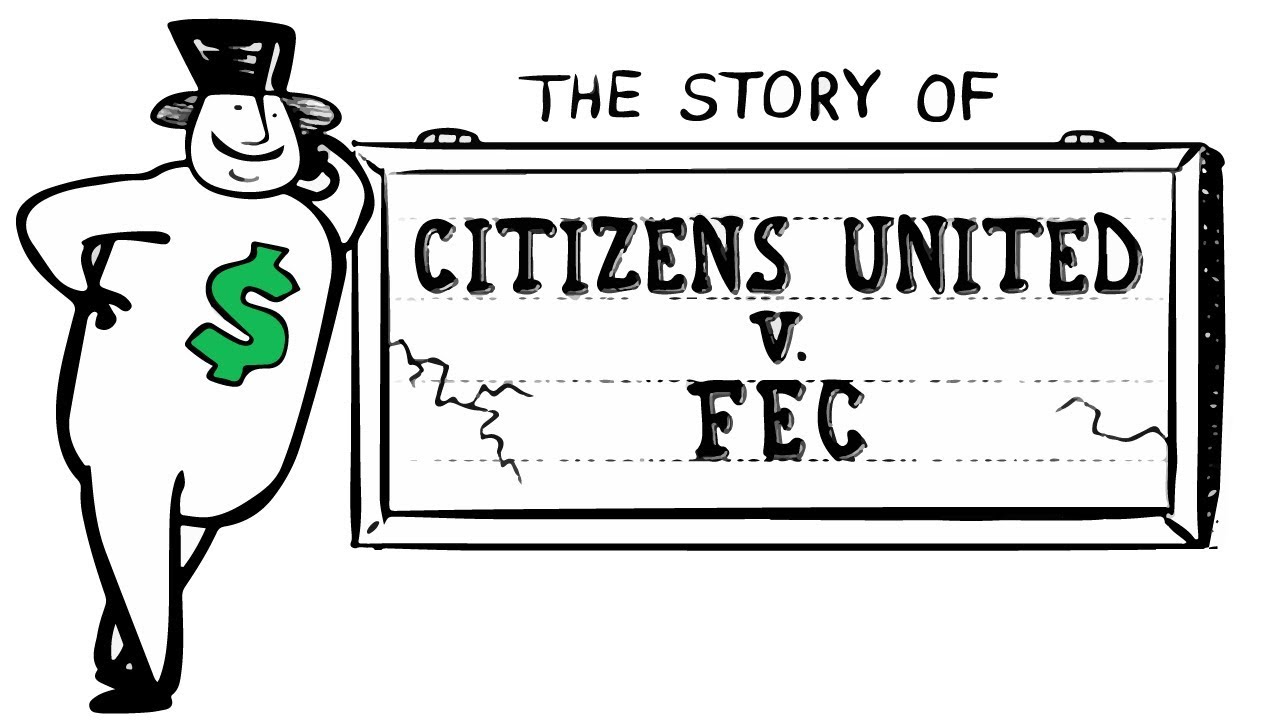 : ‘The Story of Stuff’ production group explains how big money got into our politics: from the definition of corporations to regulation and court decisions.
- : American Promise Board member, author, and Harvard professor, Lawrence Lessig, discusses the decline of our democracy and the rise of corruption on TEDx.
https://www.youtube.com/watch?v=PJy8vTu66tE&feature=youtu.be}:
oct 2016
Our democracy no longer represents the people. Here's how we fix it | Larry Lessig | TEDxMidAtlantic
money primary is tweedism (don't care about electing, just nominating)
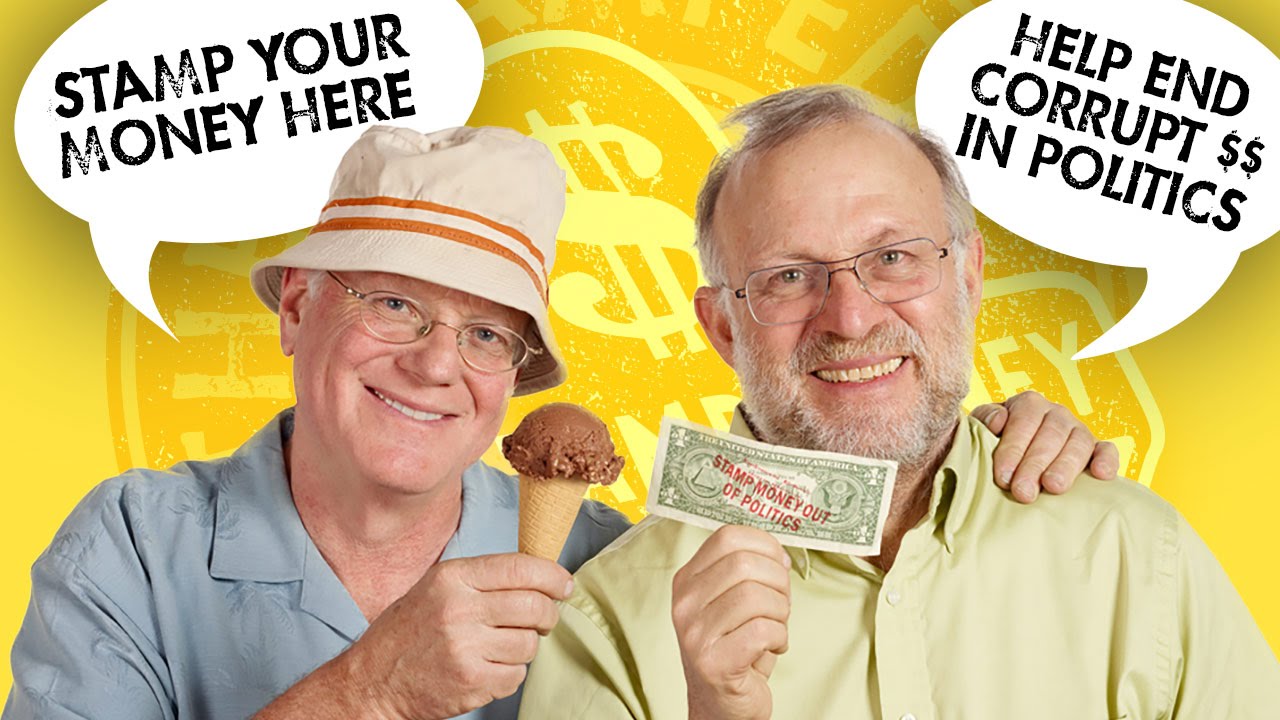 : The ice cream guys talk about why we should all care about big money in politics, and Ben Cohen’s Stamp Stampede. Stamp big money out!
==
sf law library 1018 see my notes mta 6/19
American Promise President Jeff Clements and attorney John O'Grady of O'Grady Law Group for a conversation about the 28th Amendment at the San Francisco Law Library. Be part of the dialogue about the problems with big money in politics and how a constitutional amendment could solve them.
---
---
https://kpfa.org/episode/the-ralph-nader-radio-hour-september-17-2018/
2012 corps are not ppl, new ed 2018 fwd bill moyers
https://www.amazon.com/Corporations-Are-Not-People-Rights/dp/1609941055
game over for democ and plane if they win; metaphor used by scotus
ralph: corps are doing comprehensive and long range strategy, want predictable environment, do propgnda of kids looking at screens...
const = DNA bit all the big right fights in history have been; we can't let those who won the fights before down
corps want us to be not cits but consumer, watcher, spectator, maybe vote every once in a while [but --> Like button?!]
fine print contract and tort DE-form are 2 big ways = CORP STRAT is "systemic," hijack childhood : sell junk food, violent media and __
this is RADICAL pgm
CU 2010 led to series of cases (powell wrote decisions) to get corp person, set in motion by Powell memo
==
What does former U.S. Senator Olympia Snowe, a Republican from Maine, have in common with former State Senator and current President of Our Revolution Nina Turner, a progressive from Ohio? They both support a 28th Amendment to the U.S. Constitution so people, not money, govern America.
Dark money attack ads paint the picture of a country divided, but when it comes to getting money out of politics, Americans stand together. And based on findings from the Government of Citizens, Not Money report released today by American Promise, Take Back Our Republic, and Fix It America, there is significant cross-partisan support for an amendment to the U.S. Constitution that would allow Congress to set reasonable limits on campaign spending and secure political equality for all Americans.
Using data from voting records for state and federal officials, poll results, public statements, and ballot initiatives, the report identifies over 200 Republican lawmakers including former U.S. Senator Olympia Snowe (R--ME) and former U.S. Senator Alan Simpson (R--WY) who support the 28th Amendment.
The report also demonstrates that nearly 80 percent of Americans are united in support for the 28th Amendment.
---
am promise:
The 28th Amendment is winning everywhere, not just in New Mexico and New Hampshire. In Wisconsin, Citizen Leaders are pushing their legislature to put a resolution on the ballot after nearly 100 local communities passed resolutions – including one in Speaker Paul Ryan’s hometown, Janesville, WI, where it passed with 84 percent support.
---
http://www.vox.com/the-big-idea/2017/2/14/14601932/exxon-first-amendment-free-speech-citizens-global-warming
...
Citizens United was the capstone on a remarkable series of cases, dating only to the 1970s, that revolutionized the application of the First Amendment in the corporate context. Very few people realize just how quickly this constitutional revolution has occurred; very few people realize that American corporations thrived for the first two centuries of American history with virtually no First Amendment protections.
In the early 20th century, First Amendment cases involving firms tended to involve media companies, as when Louisiana Gov. Huey Long imposed special taxes on newspapers (a clear attempt to punish them). It was generally assumed that the “speech” of business corporations was no more free from court scrutiny than the language of their contracts or their SEC filings.
That finding was then broadened and expanded in National Bank of Boston v. Bellotti(1978), which held that corporations can contribute to ballot initiatives, and again in Central Hudson Gas & Electric Corp. v. Public Service Commission(1980), which asserted that a utility could run advertisements promoting the use of electricity. Those two cases continue to be cited in almost all commercial speech cases — and they are cited more and more frequently. Citizens United affirmed those cases and extended them to campaign finance laws.After his appointment to the high court in 1971, however, Justice Lewis F. Powell Jr., a former business lawyer who ardently believed that corporate America was being undermined by the public’s support for reformers like Ralph Nader, helped reinvent the Court’s doctrine in this area. In Virginia State Pharmacy Board v. Virginia Citizens Consumer Council (1976), the Court said, on First Amendment grounds, that the state could not forbid pharmacists from advertising prescription drug price — a remarkable departure from precedent.
Despite the “free speech” rhetoric, corporations are not simply seeking to offer opinions about public policy issues. They do that all the time, routinely spending millions to fund ads, research, policy papers, and lobbying activities. Today corporations are claiming that their “rights” to speak clash with longstanding forms of regulation of business activity. Whenever they are required to disclose information to consumers, regulators, the public, or enforcement officials, they argue, their First Amendment rights are implicated. Whenever they seek or transmit information, they say, they are “speaking,” and the First Amendment gives them the right to do that without fear of consequences...
---
==
[https://web.archive.org/web/20120207182858/https://www.alternet.org/story/153345/
the_real_history_of_'corporate_personhood':_meet_the_man_to_blame_for_corporations_having_more_rights_than_you/ ]
Jeffrey Clement's Corporations Are Not People: Why They Have More Rights Than You Do and What You Can Do About It.)
https://www.theusconstitution.org/blog/new-book-tells-the-back-story-behind-the-powell-memo/
Readers of CAC’s report, A Capitalist Joker, know that we traced the aggressive advocacy of the idea that corporations should have the same rights as individuals to a memorandum written by Lewis Powell for the Chamber of Commerce shortly before Justice Powell was nominated by President Richard Nixon for a seat on the United States Supreme Court. This fascinating and somewhat disturbing excerpt of a new book by Jeff Clement fills in many new details of this story. It is well known, as Clement details, that Lewis Powell, just a matter of months before joining the Court, played the lead role in pushing corporations to exploit what he called “an neglected opportunity in the courts,” and that the for the last forty years, the Chamber of Commerce and other corporations have successfully pursued this strategy, aided by Justice Powell, in a line of cases that culminated with the 2010 ruling in Citizens United v. FEC.
Clement explains that Powell first developed the notion that corporations have the same constitutional rights as “We the People” in the process of spreading false information about the health of cigarettes for Phillip Morris. From 1964 until he joined the Court in 1971, Powell served as a director and member of the executive committee of Phillip Morris, and in that role, according to Clement, Powell played a critical role in trying to discredit the facts about the health of cigarettes and developing constitutional arguments against government regulation of the tobacco industry. For example, as Clements observes, Powell promoted the idea that Phillip Morris had a First Amendment right to equal time to respond to public service announcements that warned the public of the hazards of smoking, an idea with no basis in law. The story Clements tells — how Powell’s campaign to bend the Constitution to serve the interests of corporations culminated in Citizens United —is an important one for anyone concerned about the negative impact of Citizens United on our democracy and everyone working to overturn the ruling.
==
The Real History of 'Corporate Personhood': Meet the Man to Blame for Corporations Having More Rights Than You
The real history of today's excessive corporate power starts with a tobacco lawyer appointed to the Supreme Court.
December 6, 2011 |
[pix 1973 Supreme Court]
The following is an excerpt of Jeffrey Clement's Corporations Are Not People: Why They Have More Rights Than You Do and What You Can Do About It.)
In 1971, Lewis Powell, a mild-mannered, courtly, and shrewd corporate lawyer in Richmond, Virginia, soon to be appointed to the United States Supreme Court, wrote a memorandum to his client, the United States Chamber of Commerce. He outlined a critique and a plan that changed America.
Lewis Powell, like the Citizens United dissenter Justice John Paul Stevens, was a decorated World War II veteran who returned to his hometown to build a most respected corporate law practice. By all accounts, Powell was a gentleman — reserved, polite, and gracious — and a distinguished lawyer and public servant. Commentators and law professors cite Powell’s “qualities of temperament and character” and his “modest” and “restrained” approach to judging. At his funeral in 1998, Sandra Day O’Connor, who had joined the Supreme Court in 1987, said, “For those who seek a model of human kindness, decency, exemplary behavior, and integrity, there will never be a better man.” Even the rare critic will cite Lewis Powell’s decency and kindness.
Much about these accounts must be true, but none tells the whole story of Lewis Powell. All of them, and even the principal Powell biography, omit the details of how he used his gifts to advance a radical corporate agenda.It is impossible to square this corporatist part of Powell’s life and legacy with any conclusion of “modest” or “restrained” judging.
Powell titled his 1971 memo to the Chamber of Commerce “Attack on American Free Enterprise System.” He explained, “No thoughtful person can question that the American economic system is under broad attack.” In response, corporations must organize and fund a drive to achieve political power through “united action.” Powell emphasized the need for a sustained, multiyear corporate campaign to use an “activist-minded Supreme Court” to shape “social, economic and political change” to the advantage of corporations.
Powell continued:
But independent and uncoordinated activity by individual corporations, as important as this is, will not be sufficient. Strength lies in organization, in careful long-range planning and implementation, in consistency of action over an indefinite period of years, in the scale of financing available only through joint effort, and in the political power available only through united action and national organizations.
The roots of Citizens United lie in Powell’s 1971 strategy to use “activist” Supreme Court judges to create corporate rights. “Under our constitutional system,” Powell told the U.S. Chamber of Commerce, “especially with an activist-minded Supreme Court, the judiciary may be the most important instrument for social, economic and political change.”
Powell’s call for a corporate rights campaign should not be misunderstood as a “conservative” or “moderate” reaction to the excesses of “liberals” or “big government.” Rather, to understand the perspective of Powell and his allies is to understand the difference between a conservative and a corporatist.
Powell and the Tobacco Corporations Show the Way
By the time of his 1971 memorandum, Lewis Powell was a director of more than a dozen international corporations, including Philip Morris Inc., a global manufacturer and seller of cigarettes.Powell joined Philip Morris as a director in 1964, when the United States surgeon general released the most devastating and comprehensive report to date about the grave dangers of smoking. He remained a director of the cigarette company until his appointment to the Supreme Court in 1971. Powell also advised the Tobacco Institute, the cigarette lobby that finally was exposed andstripped of its corporate charter in the 1990s after decades of using phony science and false statements to create a fraudulent “debate” about smoking and health.
The story of the cigarette corporations and their response to public efforts to address addiction, smoking, and health is a big piece of the larger story of how corporate rights took such significant pieces of the Constitution and American democracy. The ideas expressed by Powell in his 1971 memorandum to the Chamber of Commerce came out of his personal involvement in the aggressive resistance of the cigarette corporations to efforts to address the devastating social and public costs of its lethal products. As a director and an executive committee member of Philip Morris, Powell shared responsibility for the fraudulent attack on the conclusions of scientists and the surgeon general by the cigarette industry and for its false insistence for years that “no proof” showed cigarettes to be unhealthy.
Hints of this work can be seen in the Philip Morris annual reports issued during Powell’s tenure as a director, which reflected the broader campaign of the company and the cigarette industry to discredit the science about smoking and health and to misrepresent the facts to keep people smoking and get young people to start. We now know, thanks to the 2007 findings of a federal judge, that many of the assertions in these annual reports were knowingly false. According to the reports themselves, these statements and others were made “on behalf of the Board of Directors,” including Powell:
• 1964: “The industry continues to support major research efforts directed towards resolving the many unanswered questions on smoking and health.”
• 1967: “The year1967 was marked by an intensification of exaggerated claims made relative to the possible adverse health effects of smoking on health. ... We deplore the lack of objectivity in so important a controversy. ... Unfortunately the positive benefits of smoking which are so widely acknowledged are largely ignored by many reports linking cigarettes and health, and little attention is paid to the scientific reports which are favorable to smoking.”
• 1967: “We would again like to state that there is no biological proof that smoking is causally related to the diseases and conditions claimed to be statistically associated with smoking ... no proof that the tar and nicotine levels in smoke are significant in relation to health.”
• 1969: “No biological or clinical proof that smoking is causally related to human disease ... serious doubt that smoking is a causative factor in heart disease.”
• 1970: “Often the scientific information which is relied on to indict cigarette smoking is of dubious validity.”
Absent convincing evidence, it might be reckless to say that Philip Morris and the other tobacco corporations engaged in a willful, aggressive, wide-ranging conspiracy and racketeering enterprise so that the corporations could sell more products that kill people. But now that the evidence is in, we know that that is exactly what happened. We know this thanks to scientists, victims of the conspiracy, state attorneys general (both Democrats and Republicans), the United States Department of Justice (under both Presidents Bill Clinton and George W. Bush), and Judge Gladys Kessler and a panel of U.S. Court of Appeals judges appointed by Presidents Ronald Reagan, Bill Clinton, and George H. W. Bush.
In 2006, the U.S. Department of Justice took the cigarette corporations to trial, alleging that they had engaged in a racketeering conspiracy.Eighty-four witnesses testified in the nine-month trial, and hundreds of internal corporate secrets were finally exposed. When the verdict came in, Judge Kessler concluded that “overwhelming evidence” proved that the cigarette corporations “conspired together” to fraudulently deny that cigarettes caused cancer, emphysema, and a long list of other fatal diseases; to manipulate levels of highly addictive nicotine to keep people smoking; to market addictive cigarettes to children so that the corporations would have “replacement smokers” for those who quit or died; and that they “concealed evidence, destroyed documents, and abused the attorney-client privilege to prevent the public from knowing about the dangers of smoking and to protect the industry” from justice.
As counsel to the cigarette industry and as a Philip Morris director, Powell already had begun testing the use of activist-minded courts to create corporate rights. In one case in the late 1960s, Powell argued that any suggestion that cigarettes caused cancer and death was “not proved” and was “controversial.” Therefore, according to Powell, the Federal Communications Commission wrongly violated the First Amendment rights of cigarette corporations by refusing to require “equal time” for the corporations to respond to any announcement that discouraged cigarette smoking as a health hazard.
Even the U.S. Court of Appeals for the Fourth Circuit, based in the tobacco-friendly South, rejected this claim. Although Powell lost that time, he went on to win far more than he could have imagined after he got on the Supreme Court and helped change the Constitution.
Powell’s 1971 memo to the Chamber of Commerce laid out a corporate rights and a corporate power campaign. The Chamber and the largest corporations then implemented these recommendations with zeal, piles of money, patience, and an activist Supreme Court. In equating corporations with “We, the People” in our Constitution, no justice would be more of an activist than Lewis Powell after he joined the Supreme Court in 1972.
1972: Powell Gets His Chance
In January 1972, President Nixon filled two Supreme Court vacancies, appointing Powell to one seat and William Rehnquist, a conservative Republican lawyer from Phoenix, Arizona, to the other. Rehnquist never hid his conservative views, which were well known and, to some, controversial. At the same time, neither Congress nor most Americans knew of Powell’s radical corporatist views. In his Senate confirmation hearing, no one asked about his recent proposal to the Chamber of Commerce recommending the use of an “activist-minded Supreme Court” to impose those views on the nation. No one asked because neither Powell nor the Chamber of Commerce disclosed the memo during his confirmation proceedings.
Once on the Court, these two Nixon appointees followed very different paths. Justice Powell would go on to write the Court’s unprecedented decisions creating a new concept of “corporate speech” in the First Amendment. Using this new theory, the Court struck down law after law in which the states and Congress sought to balance corporate power with the public interest. With increasing assertiveness by the Supreme Court even after Powell retired in 1987, the new corporate rights theory has invalidated laws addressing the environment, tobacco and public health, food and drugs, financial regulation, and more.
Powell helped shape a new majority to serve the interest of corporations, but for years, several vigorous dissents resisted the concept of corporate rights. The most vigorous came from the conservative Justice William Rehnquist. He grounded his dissents in the fundamental proposition that our Bill of Rights sets out the rights of human beings, and corporations are not people. For years, Rehnquist maintained this principled conservative argument, warning over and over again that corporate rights have no place in our republican form of government.
Here Come the Foundations
Despite the Rehnquist dissents, Powell’s vision of an unregulated corporate political “marketplace,” where corporations are freed by activist courts from the policy judgment of the majority of people, won out. Powell, of course, could not have acted alone. He could not have moved a majority of the Court to create corporate rights if no one had listened to his advice to organize corporate political power to demand corporate rights. Listen they did — with the help of just the sort of massive corporate funding that Powell proposed.
Corporations and corporate executives funded a wave of new “legal foundations” in the 1970s. These legal foundations were intended to drive into every court and public body in the land the same radical message, repeated over and over again, until the bizarre began to sound normal: corporations are persons with constitutional rights against which the laws of the people must fall.
Huge corporations, including Powell’s Philip Morris, invested millions of dollars in the Chamber of Commerce’s National Chamber Litigation Center and other legal foundations to bring litigation demanding new corporate rights. In rapid succession, corporations and supporters funded the Pacific Legal Foundation, the Mid-Atlantic Legal Foundation, the Mid-America Legal Foundation, the Great Plains Legal Foundation (Landmark Legal Foundation), the Washington Legal Foundation, the Northeastern Legal Foundation, the New England Legal Foundation, the Southeastern Legal Foundation, the Capital Legal Center, the National Legal Center for the Public Interest, and many others.
These foundations began filing brief after brief challenging state and federal laws across the country, pounding away at the themes of corporations as “persons,” “speakers” and holders of constitutional rights. Reading their briefs, one might think that the most powerful, richest corporations in the history of the world were some beleaguered minority fighting to overcome oppression. The foundations and the corporate lawyers argued that “corporations are persons” with the “liberty secured to all persons.” They used new phrases like “corporate speech,” the “rights of corporate speakers,” and “the corporate character of the speaker.” They demanded, as if to end an unjust silence, “the right of corporations to be heard” and “the rights of corporations to speak out.”
This corporate campaign sought to redefine the very role of corporations in American society. The message was insistent: We should no longer think of corporations as useful but potentially insidious industrial economic tools. We should no longer be concerned that corporations might leverage massive economic power into massive political power or trample the public interest for the profit of the few. Instead, we should think of corporations as pillars of liberty, institutions that Americans can trust. They would protect our freedom for us. They would stand up to “bad” government for us.
A 1977 brief of the Chamber of Commerce, for example, argued that the Court should strike down a state law that limited corporate political spending in citizens’ referendum elections because corporations help maintain our freedoms: “Business’s social role is to provide the people a valuable service which helps maintain their freedoms. ... The statute at issue prevents the modern corporation from fulfilling a major social obligation. ... ”
By 1978, the millions of dollars invested in the radical corporate rights campaign began to pay off. The first major victory for the corporate rights advocates came in 1978, with a corporate attack on a Massachusetts law in First National Bank of Boston v. Bellotti. Several international corporations — including Gillette, the Bank of Boston, and Digital Equipment Corporation — filed a lawsuit after the people of Massachusetts banned corporate political spending intended to influence a citizen referendum. Justice Lewis Powell cast the deciding vote and wrote the 5–4 decision wiping off the books the people’s law intended to keep corporate money out of citizen ballot questions. For the first time in American history, corporations had successfully claimed “speech” rights to attack laws regulating corporate money in our elections.
With that success, an emboldened corporate rights campaign next attacked energy and environmental laws. In the 1982 case of Central Hudson Gas & Electric Corporation v. Public Service Corporation of New York, utility corporations and the array of corporate legal foundations all argued that a New York law prohibiting utility corporations from promoting energy consumption violated the corporations’ rights of free speech. The corporations won again, and again Justice Powell wrote the decision for the activist Supreme Court that he had imagined in his 1971 Chamber of Commerce memo. The corporate interest in promoting energy consumption for corporate profit trumped the people’s interest in energy conservation. Over a period of six years, Justice Powell wrote four key corporate rights decisions for the Supreme Court. These unprecedented cases transformed the people’s First Amendment speech freedom into a corporate right to challenge public oversight and corporate regulation.
Powell led a majority of the Court to accept the repeated mantra that “corporations are persons” and corporate “voices” must be free, and the sustained attacks on the people’s laws continued for the next two decades. Oil, coal, and utility corporations, tobacco corporations, chemical and pharmaceutical corporations, alcohol corporations, banking and other Wall Street corporations, and many others all successfully claimed corporate speech rights to invalidate federal, state, and local laws. As you will see in Chapter Two, corporations even succeeded in attacking the right of parents to know whether the milk they fed their children came from cows treated with Monsanto’s genetically engineered recombinant DNA bovine drug.
In 2007, the U.S. Chamber of Commerce’s National Chamber Litigation Center celebrated thirty years of using judicial activism on behalf of corporations and admitted that it was “the brainchild of former U.S. Supreme Court Justice Lewis Powell.” The brainchild, with its motto of “Business Is Our ONLY Client,” bragged about such “victories” as convincing the Supreme Court to throw out a decision by a jury of people to impose punitive damages for the unlawful conduct of Philip Morris, Inc.
The Consequences
The success of the Powell–Chamber of Commerce plan transformed American law, government, and society, with two devastating consequences for the country. First, corporations gained new political power at the expense of average citizens and voters. Corporations poured out money to lobbying and election campaigns and to help friendly politicians and hurt unfriendly politicians. With even modest reform crushed by corporate rights decisions such as Bellotti v. First National Bank of Boston — and now much more so, Citizens United — corporations could threaten “independent expenditure” campaigns against politicians who did not bend their way. Corporate money to influence legislative votes and politician behavior lost its scandalous, shameful nature. Bags of corporate cash were no longer bags of cash; they were “speech.” How could “speech” be corrupt or scandalous?
Washington and many state capitals became playgrounds for corporate lobbyists, and our elected representatives became increasingly disconnected from the will of the people. With the new, organized corporate radicalism, staggering amounts of corporate money flooded Washington and our political system. Between 1998 and 2010, for example, the Chamber of Commerce spent $739 million on lobbying. Pharmaceutical and health care corporations spent more than $2 billion on lobbying in the past twelve years. Three corporations seeking military contracts, Northrop Grumman Corporation, Lockheed, and Boeing, spent more than $400 million on lobbying. GE Corporation ($237 million), AT&T ($162 million), the pharmaceutical corporate lobby PHRMA ($195 million), ExxonMobil ($151 million), Verizon ($149 million), and many more corporations all joined the lobby- fest.25 Financial, labor, energy, environmental, health, trade, and other legislation and policy tilted in favor of corporate interests; the hurdles for advancing the public interest became much higher.
Second, the successful corporate rights campaign created a corporate trump card over public interest laws. If laws that were inconvenient to corporate business models somehow made it through the corporate lobbyist machine, corporations now had constitutional “rights” to attack the laws in the courts. It no longer mattered if the majority of people and our representatives chose laws to curb pollution, require disclosure, protect the public health, or nurture small businesses and local economies. The democratic process was no longer enough to decide the issue. After the creation of “corporate speech” rights, it was now up to federal judges to decide whether the law served an “important” state interest and was not too “burdensome.”
The Lost Promise of Earth Day
On that far-off Earth Day in 1970, Americans reclaimed the water, air, land, and forests that belong to all of us and to our descendants. We reclaimed the promise of government of the people, where people and our representatives would weigh, debate, and decide the balance of private and public, corporate and human. Since that spring day in 1970, we have pushed resources and the ecological systems on which life depends to the breaking point. Even as the oil, gas, and coal corporations mimic the strategy of the cigarette corporations to create a fraudulent “controversy” and “open question” about the global warming “hoax,” we have ripped past the point of no return on climate pollution.
While the evidence of national and global environmental destruction at a level that will challenge our civilization and way of life is more compelling now than in 1970, our leaders in government are not even debating, let alone enacting, possible solutions. Incredibly, the current debate in Congress is not what we can do to save our world but whether Congress should strip the Environmental Protection Agency of its authority to regulate pollution that causes the global climate crisis.
Corporate media might tell you that the reason for inaction is that Americans oppose environmental regulation and oppose drastic changes to address the energy and environmental crisis. Yet there is little reason to believe that this is true. In fact, try an experiment. Find a moment to talk seriously in a nonpolitical, non-confrontational way with your friends, neighbors, or family members, regardless of what political party or philosophy they may favor. I bet that you will find that they too think that we cannot continue to rely on corporations to protect freedom for us and that corporate business as usual will condemn us to disastrous energy, economic, and environmental policies and ensure that we pass to our children a very bleak and weak nation and world.
This basic understanding of the connection between our state of decline and crisis on one hand and our corporate-driven energy, environmental, economic, foreign and military policy on the other, is one of the many points of consensus among the American people that the corporatist political elite ignores. According to an independent, nonpartisan 2010 Pew Research poll, for example, huge majorities of Americans favor better fuel efficiency standards for cars and trucks (79 percent), more funding for alternative energy (74 percent), more spending on mass transit (63 percent), and tax incentives for hybrid or electric vehicles (60 percent).
Similarly, for years, most Americans have supported, and still support, stronger, not weaker, environmental and energy policies. This is true even in times of recession, terrorism, and deep concern about budgets.26 From 1995 to 2008, when the independent multiyear Gallup poll was last done, through every variety of political environment, from good economies to bad, from terrorist attacks to war, the American people have been consistent in the response. More than twice as many Americans say we need “additional, immediate, and drastic action” to prevent major environmental disruption, compared to those who say “we should just take the same actions we have been taking on the environment.” The percentage of those identifying a need for “drastic, immediate action” was 35 percent in 1995, 38 percent in 2007, and 34 percent in 2008. When you add in those who say “we should take some additional action,” the range of Americans who want better, stronger, tougher environmental protection has stayed between 80 and 90 percent over the past ten years. The percentage of those who chose the status quo answer (“we should just take the same actions we have been taking on the environment”) has ranged from 13 to 20 percent.
For years, most of us have known that the gathering and urgent environmental and energy crisis cannot be ignored, but what has our government done? Maintain the status quo, more or less, and usually much less as the global environmental crisis has worsened and the demand for fossil fuel exploitation soars.
Polls are not infallible, but I suspect that these results would be duplicated in most family discussions around the dinner table. And I believe that we would see a similar disconnect between what people know about the state of our nation and the world and what the corporate-dominated government does. Whether the issue is the environment, the economy, the decades-long wars in the Middle East and bloated military budgets, agri-corporate subsidies and industrial food systems, or corporate welfare, what most people think or want out of our government does not matter much anymore.
We have become accustomed to thinking that we cannot change, that our problems are too big, that our government can- not be effective. This was not always so, and it does not have to be so now. The choice we face in America now about whether to succeed or fail begins with our choice about whether we agree with Lewis Powell, the U.S. Chamber of Commerce, and the corporate rights movement that massive, global corporate entities are the same as people.
---
2X ANNOTATIONS
---
2011 book corp not ppl clement
The real history of today’s excessive corporate power starts with a tobacco lawyer appointed to the Supreme Court.
*December 6, 2011
1973 Supreme Court
The following is an excerpt of Jeffrey Clement’s Corporations Are Not People: Why They Have More Rights Than You Do and What You Can Do About It.)
In 1971, Lewis Powell, a mild-mannered, courtly, and shrewd corporate lawyer in Richmond, Virginia, soon to be appointed to the United States Supreme Court, wrote a memorandum to his client, the United States Chamber of Commerce. He outlined a critique and a plan that changed America.
Lewis Powell, like the Citizens Uniteddissenter Justice John Paul Stevens, was a decorated World War II veteran who returned to his hometown to build a most respected corporate law practice. By all accounts, Powell was a gentleman — reserved, polite, and gracious — and a distinguished lawyer and public servant. Commentators and law professors cite Powell’s “qualities of temperament and character” and his “modest” and “restrained” approach to judging. At his funeral in 1998, Sandra Day O’Connor, who had joined the Supreme Court in 1987, said, “For those who seek a model of human kindness, decency, exemplary behavior, and integrity, there will never be a better man.” Even the rare critic will cite Lewis Powell’s decency and kindness.
Much about these accounts must be true, but none tells the whole story of Lewis Powell. All of them, and even the principal Powell biography, omit the details of how he used his gifts to advance a radical corporate agenda. It is impossible to square this corporatist part of Powell’s life and legacy with any conclusion of “modest” or “restrained” judging.
Powell titled his 1971 memo to the Chamber of Commerce “Attack on American Free Enterprise System.” He explained, “No thoughtful person can question that the American economic system is under broad attack.” In response, corporations must organize and fund a drive to achieve political power through “united action.” Powell emphasized the need for a sustained, multiyear corporate campaign to use an “activist-minded Supreme Court” to shape “social, economic and political change” to the advantage of corporations.
Powell continued:
But independent and uncoordinated activity by individual corporations, as important as this is, will not be sufficient. Strength lies in organization, in careful long-range planning and implementation, in consistency of action over an indefinite period of years, in the scale of financing available only through joint effort, and in the political power available only through united action and national organizations.
The roots of Citizens Unitedlie in Powell’s 1971 strategy to use “activist” Supreme Court judges to create corporate rights. “Under our constitutional system,” Powell told the U.S. Chamber of Commerce, “especially with an activist-minded Supreme Court, the judiciary may be the most important instrument for social, economic and political change.”
Powell’s call for a corporate rights campaign should not be misunderstood as a “conservative” or “moderate” reaction to the excesses of “liberals” or “big government.” Rather, to understand the perspective of Powell and his allies is to understand the difference between a conservative and a corporatist.
Powell and the Tobacco Corporations Show the Way
By the time of his 1971 memorandum, Lewis Powell was a director of more than a dozen international corporations, including Philip Morris Inc., a global manufacturer and seller of cigarettes. Powell joined Philip Morris as a director in 1964, when the United States surgeon general released the most devastating and comprehensive report to date about the grave dangers of smoking. He remained a director of the cigarette company until his appointment to the Supreme Court in 1971. Powell also advised the Tobacco Institute, the cigarette lobby that finally was exposed and stripped of its corporate charter in the 1990s after decades of using phony science and false statements to create a fraudulent “debate” about smoking and health.
The story of the cigarette corporations and their response to public efforts to address addiction, smoking, and health is a big piece of the larger story of how corporate rights took such significant pieces of the Constitution and American democracy. The ideas expressed by Powell in his 1971 memorandum to the Chamber of Commerce came out of his personal involvement in the aggressive resistance of the cigarette corporations to efforts to address the devastating social and public costs of its lethal products. As a director and an executive committee member of Philip Morris, Powell shared responsibility for the fraudulent attack on the conclusions of scientists and the surgeon general by the cigarette industry and for its false insistence for years that “no proof” showed cigarettes to be unhealthy.
Hints of this work can be seen in the Philip Morris annual reports issued during Powell’s tenure as a director, which reflected the broader campaign of the company and the cigarette industry to discredit the science about smoking and health and to misrepresent the facts to keep people smoking and get young people to start. We now know, thanks to the 2007 findings of a federal judge, that many of the assertions in these annual reports were knowingly false. According to the reports themselves, these statements and others were made “on behalf of the Board of Directors,” including Powell:
• 1964: “The industry continues to support major research efforts directed towards resolving the many unanswered questions on smoking and health.”
• 1967: “The year 1967 was marked by an intensification of exaggerated claims made relative to the possible adverse health effects of smoking on health. … We deplore the lack of objectivity in so important a controversy. … Unfortunately the positive benefits of smoking which are so widely acknowledged are largely ignored by many reports linking cigarettes and health, and little attention is paid to the scientific reports which are favorable to smoking.”
• 1967: “We would again like to state that there is no biological proof that smoking is causally related to the diseases and conditions claimed to be statistically associated with smoking … no proof that the tar and nicotine levels in smoke are significant in relation to health.”
• 1969: “No biological or clinical proof that smoking is causally related to human disease … serious doubt that smoking is a causative factor in heart disease.”
• 1970: “Often the scientific information which is relied on to indict cigarette smoking is of dubious validity.”
Absent convincing evidence, it might be reckless to say that Philip Morris and the other tobacco corporations engaged in a willful, aggressive, wide-ranging conspiracy and racketeering enterprise so that the corporations could sell more products that kill people. But now that the evidence is in, we know that that is exactly what happened. We know this thanks to scientists, victims of the conspiracy, state attorneys general (both Democrats and Republicans), the United States Department of Justice (under both Presidents Bill Clinton and George W. Bush), and Judge Gladys Kessler and a panel of U.S. Court of Appeals judges appointed by Presidents Ronald Reagan, Bill Clinton, and George H. W. Bush.
In 2006, the U.S. Department of Justice took the cigarette corporations to trial, alleging that they had engaged in a racketeering conspiracy. Eighty-four witnesses testified in the nine-month trial, and hundreds of internal corporate secrets were finally exposed. When the verdict came in, Judge Kessler concluded that “overwhelming evidence” proved that the cigarette corporations “conspired together” to fraudulently deny that cigarettes caused cancer, emphysema, and a long list of other fatal diseases; to manipulate levels of highly addictive nicotine to keep people smoking; to market addictive cigarettes to children so that the corporations would have “replacement smokers” for those who quit or died; and that they “concealed evidence, destroyed documents, and abused the attorney-client privilege to prevent the public from knowing about the dangers of smoking and to protect the industry” from justice.
As counsel to the cigarette industry and as a Philip Morris director, Powell already had begun testing the use of activist-minded courts to create corporate rights. In one case in the late 1960s, Powell argued that any suggestion that cigarettes caused cancer and death was “not proved” and was “controversial.” Therefore, according to Powell, the Federal Communications Commission wrongly violated the First Amendment rights of cigarette corporations by refusing to require “equal time” for the corporations to respond to any announcement that discouraged cigarette smoking as a health hazard.
Even the U.S. Court of Appeals for the Fourth Circuit, based in the tobacco-friendly South, rejected this claim. Although Powell lost that time, he went on to win far more than he could have imagined after he got on the Supreme Court and helped change the Constitution.
Powell’s 1971 memo to the Chamber of Commerce laid out a corporate rights and a corporate power campaign. The Chamber and the largest corporations then implemented these recommendations with zeal, piles of money, patience, and an activist Supreme Court. In equating corporations with “We, the People” in our Constitution, no justice would be more of an activist than Lewis Powell after he joined the Supreme Court in 1972.
1972: Powell Gets His Chance
In January 1972, President Nixon filled two Supreme Court vacancies, appointing Powell to one seat and William Rehnquist, a conservative Republican lawyer from Phoenix, Arizona, to the other. Rehnquist never hid his conservative views, which were well known and, to some, controversial. At the same time, neither Congress nor most Americans knew of Powell’s radical corporatist views. In his Senate confirmation hearing, no one asked about his recent proposal to the Chamber of Commerce recommending the use of an “activist-minded Supreme Court” to impose those views on the nation. No one asked because neither Powell nor the Chamber of Commerce disclosed the memo during his confirmation proceedings.
Once on the Court, these two Nixon appointees followed very different paths. Justice Powell would go on to write the Court’s unprecedented decisions creating a new concept of “corporate speech” in the First Amendment. Using this new theory, the Court struck down law after law in which the states and Congress sought to balance corporate power with the public interest. With increasing assertiveness by the Supreme Court even after Powell retired in 1987, the new corporate rights theory has invalidated laws addressing the environment, tobacco and public health, food and drugs, financial regulation, and more.
Powell helped shape a new majority to serve the interest of corporations, but for years, several vigorous dissents resisted the concept of corporate rights. The most vigorous came from the conservative Justice William Rehnquist. He grounded his dissents in the fundamental proposition that our Bill of Rights sets out the rights of human beings, and corporations are not people. For years, Rehnquist maintained this principled conservative argument, warning over and over again that corporate rights have no place in our republican form of government.
Here Come the Foundations
Despite the Rehnquist dissents, Powell’s vision of an unregulated corporate political “marketplace,” where corporations are freed by activist courts from the policy judgment of the majority of people, won out. Powell, of course, could not have acted alone. He could not have moved a majority of the Court to create corporate rights if no one had listened to his advice to organize corporate political power to demand corporate rights. Listen they did — with the help of just the sort of massive corporate funding that Powell proposed.
Corporations and corporate executives funded a wave of new “legal foundations” in the 1970s. These legal foundations were intended to drive into every court and public body in the land the same radical message, repeated over and over again, until the bizarre began to sound normal: corporations are persons with constitutional rights against which the laws of the people must fall.
Huge corporations, including Powell’s Philip Morris, invested millions of dollars in the Chamber of Commerce’s National Chamber Litigation Center and other legal foundations to bring litigation demanding new corporate rights. In rapid succession, corporations and supporters funded the Pacific Legal Foundation, the Mid-Atlantic Legal Foundation, the Mid-America Legal Foundation, the Great Plains Legal Foundation (Landmark Legal Foundation), the Washington Legal Foundation, the Northeastern Legal Foundation, the New England Legal Foundation, the Southeastern Legal Foundation, the Capital Legal Center, the National Legal Center for the Public Interest, and many others.
These foundations began filing brief after brief challenging state and federal laws across the country, pounding away at the themes of corporations as “persons,” “speakers” and holders of constitutional rights. Reading their briefs, one might think that the most powerful, richest corporations in the history of the world were some beleaguered minority fighting to overcome oppression. The foundations and the corporate lawyers argued that “corporations are persons” with the “liberty secured to all persons.” They used new phrases like “corporate speech,” the “rights of corporate speakers,” and “the corporate character of the speaker.” They demanded, as if to end an unjust silence, “the right of corporations to be heard” and “the rights of corporations to speak out.”
This corporate campaign sought to redefine the very role of corporations in American society. The message was insistent: We should no longer think of corporations as useful but potentially insidious industrial economic tools. We should no longer be concerned that corporations might leverage massive economic power into massive political power or trample the public interest for the profit of the few. Instead, we should think of corporations as pillars of liberty, institutions that Americans can trust. They would protect our freedom for us. They would stand up to “bad” government for us.
A 1977 brief of the Chamber of Commerce, for example, argued that the Court should strike down a state law that limited corporate political spending in citizens’ referendum elections because corporations help maintain our freedoms: “Business’s social role is to provide the people a valuable service which helps maintain their freedoms. … The statute at issue prevents the modern corporation from fulfilling a major social obligation. … ”
By 1978, the millions of dollars invested in the radical corporate rights campaign began to pay off. The first major victory for the corporate rights advocates came in 1978, with a corporate attack on a Massachusetts law in First National Bank of Boston v. Bellotti.Several international corporations — including Gillette, the Bank of Boston, and Digital Equipment Corporation — filed a lawsuit after the people of Massachusetts banned corporate political spending intended to influence a citizen referendum. Justice Lewis Powell cast the deciding vote and wrote the 5–4 decision wiping off the books the people’s law intended to keep corporate money out of citizen ballot questions. For the first time in American history, corporations had successfully claimed “speech” rights to attack laws regulating corporate money in our elections.
With that success, an emboldened corporate rights campaign next attacked energy and environmental laws. In the 1982 case of Central Hudson Gas & Electric Corporationv.Public Service Corporation of New York,utility corporations and the array of corporate legal foundations all argued that a New York law prohibiting utility corporations from promoting energy consumption violated the corporations’ rights of free speech. The corporations won again, and again Justice Powell wrote the decision for the activist Supreme Court that he had imagined in his 1971 Chamber of Commerce memo. The corporate interest in promoting energy consumptionfor corporate profit trumped the people’s interest in energy conservation.Over a period of six years, Justice Powell wrote four key corporate rights decisions for the Supreme Court. These unprecedented cases transformed the people’s First Amendment speech freedom into a corporate right to challenge public oversight and corporate regulation.
Powell led a majority of the Court to accept the repeated mantra that “corporations are persons” and corporate “voices” must be free, and the sustained attacks on the people’s laws continued for the next two decades. Oil, coal, and utility corporations, tobacco corporations, chemical and pharmaceutical corporations, alcohol corporations, banking and other Wall Street corporations, and many others all successfully claimed corporate speech rights to invalidate federal, state, and local laws. As you will see in Chapter Two, corporations even succeeded in attacking the right of parents to know whether the milk they fed their children came from cows treated with Monsanto’s genetically engineered recombinant DNA bovine drug.
In 2007, the U.S. Chamber of Commerce’s National Chamber Litigation Center celebrated thirty years of using judicial activism on behalf of corporations and admitted that it was “the brainchild of former U.S. Supreme Court Justice Lewis Powell.” The brainchild, with its motto of “Business Is Our ONLY Client,” bragged about such “victories” as convincing the Supreme Court to throw out a decision by a jury of people to impose punitive damages for the unlawful conduct of Philip Morris, Inc.
The Consequences
The success of the Powell–Chamber of Commerce plan transformed American law, government, and society, with two devastating consequences for the country. First, corporations gained new political power at the expense of average citizens and voters. Corporations poured out money to lobbying and election campaigns and to help friendly politicians and hurt unfriendly politicians. With even modest reform crushed by corporate rights decisions such as Bellottiv.First National Bank of Boston — andnow much more so, Citizens United — corporationscould threaten “independent expenditure” campaigns against politicians who did not bend their way. Corporate money to influence legislative votes and politician behavior lost its scandalous, shameful nature. Bags of corporate cash were no longer bags of cash; they were “speech.” How could “speech” be corrupt or scandalous?
Washington and many state capitals became playgrounds for corporate lobbyists, and our elected representatives became increasingly disconnected from the will of the people. With the new, organized corporate radicalism, staggering amounts of corporate money flooded Washington and our political system. Between 1998 and 2010, for example, the Chamber of Commerce spent $739 million on lobbying. Pharmaceutical and health care corporations spent more than $2 billionon lobbying in the past twelve years. Three corporations seeking military contracts, Northrop Grumman Corporation, Lockheed, and Boeing, spent more than $400 million on lobbying. GE Corporation ($237 million), AT&T ($162 million), the pharmaceutical corporate lobby PHRMA ($195 million), ExxonMobil ($151 million), Verizon ($149 million), and many more corporations all joined the lobby- fest.25 Financial, labor, energy, environmental, health, trade, and other legislation and policy tilted in favor of corporate interests; the hurdles for advancing the public interest became much higher.
:{:{Second, the successful corporate rights campaign created a corporate trump card over public interest laws. If laws that were inconvenient to corporate business models somehow made it through the corporate lobbyist machine, corporations now had constitutional “rights” to attack the laws in the courts}:. It no longer mattered if the majority of people and our representatives chose laws to curb pollution, require disclosure, protect the public health, or nurture small businesses and local economies. The democratic process was no longer enough to decide the issue. After the creation of “corporate speech” rights, it was now up to federal judges to decide whether the law served an “important” state interest and was not too “burdensome.”
SEE CHEVRON DEFERENCE}:
The Lost Promise of Earth Day
On that far-off Earth Day in 1970, Americans reclaimed the water, air, land, and forests that belong to all of us and to our descendants. We reclaimed the promise of government of the people, where people and our representatives would weigh, debate, and decide the balance of private and public, corporate and human. Since that spring day in 1970, we have pushed resources and the ecological systems on which life depends to the breaking point. Even as the oil, gas, and coal corporations mimic the strategy of the cigarette corporations to create a fraudulent “controversy” and “open question” about the global warming “hoax,” we have ripped past the point of no return on climate pollution.
While the evidence of national and global environmental destruction at a level that will challenge our civilization and way of life is more compelling now than in 1970, our leaders in government are not even debating, let alone enacting, possible solutions. Incredibly, the current debate in Congress is not what we can do to save our world but whether Congress should strip the Environmental Protection Agency of its authority to regulate pollution that causes the global climate crisis.
Corporate media might tell you that the reason for inaction is that Americans oppose environmental regulation and oppose drastic changes to address the energy and environmental crisis. Yet there is little reason to believe that this is true. In fact, try an experiment. Find a moment to talk seriously in a nonpolitical, non-confrontational way with your friends, neighbors, or family members, regardless of what political party or philosophy they may favor. I bet that you will find that they too think that we cannot continue to rely on corporations to protect freedom for us and that corporate business as usual will condemn us to disastrous energy, economic, and environmental policies and ensure that we pass to our children a very bleak and weak nation and world.
This basic understanding of the connection between our state of decline and crisis on one hand and our corporate-driven energy, environmental, economic, foreign and military policy on the other, is one of the many points of consensus among the American people that the corporatist political elite ignores. According to an independent, nonpartisan 2010 Pew Research poll, for example, huge majorities of Americans favor better fuel efficiency standards for cars and trucks (79 percent), more funding for alternative energy (74 percent), more spending on mass transit (63 percent), and tax incentives for hybrid or electric vehicles (60 percent).
Similarly, for years, most Americans have supported, and still support, stronger, not weaker, environmental and energy policies. This is true even in times of recession, terrorism, and deep concern about budgets.26 From 1995 to 2008, when the independent multiyear Gallup poll was last done, through every variety of political environment, from good economies to bad, from terrorist attacks to war, the American people have been consistent in the response. More than twice as many Americans say we need “additional, immediate, and drastic action” to prevent major environmental disruption, compared to those who say “we should just take the same actions we have been taking on the environment.” The percentage of those identifying a need for “drastic, immediate action” was 35 percent in 1995, 38 percent in 2007, and 34 percent in 2008. When you add in those who say “we should take some additional action,” the range of Americans who want better, stronger, tougher environmental protection has stayed between 80 and 90 percent over the past ten years. The percentage of those who chose the status quo answer (“we should just take the same actions we have been taking on the environment”) has ranged from 13 to 20 percent.
For years, most of us have known that the gathering and urgent environmental and energy crisis cannot be ignored, but what has our government done? Maintain the status quo, more or less, and usually much less as the global environmental crisis has worsened and the demand for fossil fuel exploitation soars.
Polls are not infallible, but I suspect that these results would be duplicated in most family discussions around the dinner table. And I believe that we would see a similar disconnect between what people know about the state of our nation and the world and what the corporate-dominated government does. Whether the issue is the environment, the economy, the decades-long wars in the Middle East and bloated military budgets, agri-corporate subsidies and industrial food systems, or corporate welfare, what most people think or want out of our government does not matter much anymore.
We have become accustomed to thinking that we cannot change, that our problems are too big, that our government can- not be effective. This was not always so, and it does not have to be so now. The choice we face in America now about whether to succeed or fail begins with our choice about whether we agree with Lewis Powell, the U.S. Chamber of Commerce, and the corporate rights movement that massive, global corporate entities are the same as people.
---
---