Nicholas Jacobs Ihs
---
ggl 7 26
AI Overview


+12
Nicholas F. Jacobs is an Assistant Professor of Government at Colby College, specializing in the American presidency and political geography. He is a prominent commentator on Donald Trump's political rise, co-authoring several acclaimed books and analyses detailing how the 45th president reshaped the Republican Party and the modern executive branch. [1, 2, , 4, 5]
Scholarship on the Trump Presidency
Jacobs and his co-author Sidney M. Milkis explore Donald Trump's political style as the climax of an "executive-centered partisanship" that dates back to the mid-20th century. They co-authored the book What Happened to the Vital Center: Presidentialism, Populist Revolt, and the Fracturing of America (2022). Additionally, they expanded this into deeper historical contexts in their book Subverting the Republic: Donald J. Trump and the Perils of Presidentialism. [1, 2, 3, , 5]
Analysis of the Rural Electorate
Beyond the presidency, Jacobs and Daniel M. Shea published The Rural Voter: The Politics of Place and the Disuniting of America (2023). This work analyzes the core of Donald Trump's base, demonstrating how a new political identity built on geographic uniqueness, racial anxieties, and perceived threats to traditional ways of life has reshaped rural politics. [1, 2, 3]
Broader Political Commentary
As an expert, Jacobs frequently connects the populist insurgency style of Donald Trump to broader contemporary anti-establishment movements across the American political spectrum. He has provided insight to outlets like The Atlantic regarding how incoming administrations interact with rural demographics and offers commentary on the evolving fragility of modern political parties. [1, 2, 3, 4]
---
Top co-authors
- Auburn University
uchic Sidney Milkis - Center for Effective Government
Sidney M. Milkis is the White Burkett Miller Professor in the Department of Politics and a Faculty Fellow at the Miller Center. He was awarded the Cavaliers’ Distinguished Teaching Professorship for 2018-2020, the highest teaching award at the University of Virginia, which recognizes an eminent scholar for outstanding undergraduate teaching. Milkis is co-director of a new all-university initiative, Project on Democracy and Capitalism, which is exploring the complex relationship between self-government and markets.
...What Happened to the Vital Center: Presidentialism, Populist Revolt, and the Fracturing of America(2022), coauthored with Nicholas Jacobs. He is the co-editor, with Jerome Mileur, of three volumes on twentieth century political reform: Progressivism and the New Democracy (1999); The New Deal and the Triumph of Liberalism (2002); and The Great Society and the High Tide of Liberalism(2005).
...
li blank?
- University of Virginia
Sidney M. Milkis is the White Burkett Miller Professor of Politics at the UVA Department of Politics and a scholar at the Miller Center. His research and teaching focus on the American presidency, political parties, and social movements. He has expressed strong public disapproval of dehumanizing rhetoric in modern American politics. [1, 2, 3]
- University of Virginia
eg
Donald Trump, the Republican Party, and the Hazards of Executive-Centered Partisanship
- May 2025
DOI:10.1007/978-3-031-73168-6_5
- In book: The Changing Character of the American Right, Volume I (pp.95-128)
Abstract
:{Donald Trump’s 2017–2021 presidency and his challenge to the peaceful transition of power reflects a profound transformation within the Republican Party and :{raises questions about the evolution of conservatism into a form of authoritarianism}:. This chapter situates Trump’s first presidency in a century-long development of executive-centered partisanship, and details the institutional and partisan logics that allowed his administration to advance his “America First” agenda and reshape the GOP.
Despite few legislative successes and endangering fellow Republicans’ electoral chances, Trump’s deep connection with the party base and his redefinition of party politics signify more than mere personality cult. This chapter argues that Trump’s approach represents a culmination of trends that threaten liberal democracy, suggesting that the challenges of presidential partisanship will persist beyond his first term and into his second period in power.}:
Abstract
This chapter focuses on the “Third New Deal,” its transformation of the party system, the development of a newly empowered presidential office, and the origins of executive-centered partisanship. We argue that the deep roots of our present discontents can be traced back to these institutional transformations—the desire to overcome, or transcend, populist protest rather than to mediate it through strong, collective institutions. The chapter closes by reflecting on similar concerns raised by political scientists during the transformation; and it reinterprets the foundational 1950s report from the American Political Science Association Committee on Political Parties. Most overlook how this report, and its praise for democratizing the political system, also remained attentive to concerns over presidential power and the institution’s growing dominion over political party organizations. As the advice in the report went unheeded, the inability to create responsible party organizations laid the groundwork for the explosive movement politics we detail in Chapters 4 and 5.
---
ripple wapo
---
CHAPMAN OC
The gift from the conservative billionaire helps fund a program in “Humanomics,” which the university defines as “reintegrating the study of the humanities and economics.”
$5 million to California university from billionaire Charles Koch sparks an uproar – East Bay Times
---
act blue quote appears nowhere else; interview not published?
---
NO ONE COULD POSSIBLY HAVE PREDICTED THIS
7 26
I I what I think is interesting about this and and I do think we can say it's problematic um
is here you have this individual who you know when I sat down with him in October I I asked him you know what why are you
wearing the scarlet D around your neck why would you do that and he said well the only reason I'm doing it is to get access to act blue so I can raise money
so here you have this individual that doesn't want to be a Democrat I actually don't think you know, has openly said, he's not going to vote for the
Democratic leadership, is an acolyte of Bernie Sanders, who also doesn't want to call himself a Democrat. And what are these individuals able to do? They're
:
able to take over a the Democratic party. Um, and to me, this is a this echoes the same and it is of the same
:
type of problem that we saw in 2016. an individual who never really wanted to be a Republican, was a Democrat for most of his personal life, bursts out on the
scene and ends up taking over the Republican party. So, the the deeper problem, the the longer uh term problem
is the the just hollowess of our organized party life. And I get that there's very few defenders of our
two-party system. that our our politics, our political system, our constitution only works with two healthy robust
political parties. And when they can be hijacked um by by outsiders, um parties are not
1:29
1 minute, 29 seconds
able to do the work of selecting candidates, of building consensus, uh you know, of of of doing the the work of democratic persuasion.
 Nicholas Jacobs Goldfarb Family Distinguished Chair in American Government, Colby College; Institute for Humane Studies
IT wasn’t a surprise, but it was a bombshell.
*On July 6, 2026, Politico published the detailed account of a Maine woman who said she had been sexually assaulted by Maine Democratic Senate nominee Graham Platner almost five years ago. Platner called the allegation “categorically untrue,” then said he was “taking the time to reflect on the best path forward.”
Platner had gained the fervent support of progressives in Maine and outside. But he had been dogged by accusations of, variously, racist, misogynist and dishonest behavior – he claimed not to have known the meaning of an SS tattoo on his chest. But his supporters remained behind him.*
DISHONEST graham-platner-maine-us-senate-primary-bid-sends-dubious-message
Democracy Dies in Darkness
Opinion
I know firsthand why Graham Platner shouldn’t be a U.S. senator
I quit the campaign last fall, disturbed by what I'd learned about the Maine Democratic Senate primary candidate.
June 8, 2026
By Genevieve McDonald
Genevieve McDonald, a former Maine state representative, is the former political director of Graham Platner’s Democratic Senate primary campaign in Maine.
I became Graham Platner’s political director in August 2025 as he launched a bid for the Democratic Senate primary in Maine. Taking the job meant leaving a position as a senior policy adviser at a government relations firm in the state, but I thought that Platner and I shared the same goal: fighting for the working people of Maine.
What readers are saying
The conversation explores the contentious political landscape surrounding the candidacy of Graham Platner and the incumbent Susan Collins. Participants express strong opinions about both candidates, with many criticizing Collins for her support of Trump and her voting record,... Show more
This summary is AI-generated. AI can make mistakes and this summary is not a replacement for reading the comments....ENDIT
Soon after the assault allegations appeared, the Platner campaign was in trouble. His early political champion, Sen. Bernie Sanders, took a day to echo what party officials and once-supportive social media stars had almost immediately demanded: that Platner drop out of the campaign. By the evening of July 8, Platner had suspended his campaign.*
*Politics and legal affairs editor Naomi Schalit spoke with political scientist Nicholas Jacobs, who has followed the campaign and talked with Platner directly in 2025.
An NPR host yesterday opened an interview with a Maine reporter by observing, “A lot going on in your little state.” Maine has two senators, just like other states. Why is this such a high-profile race?
I thought when I moved to Maine in 2019 from Virginia, I was going to the quiet countryside. Politics has been anything but since then. Maine was destined to be in the national spotlight this year because Republican Sen. Susan Collins is up for reelection, running for her sixth consecutive term in office. Every time she is up for reelection, she is viewed as a vulnerable incumbent, if not the most vulnerable incumbent, in the Republican Party. So we were destined to get lots of outside money and outside attention before the whole Platner story even began.

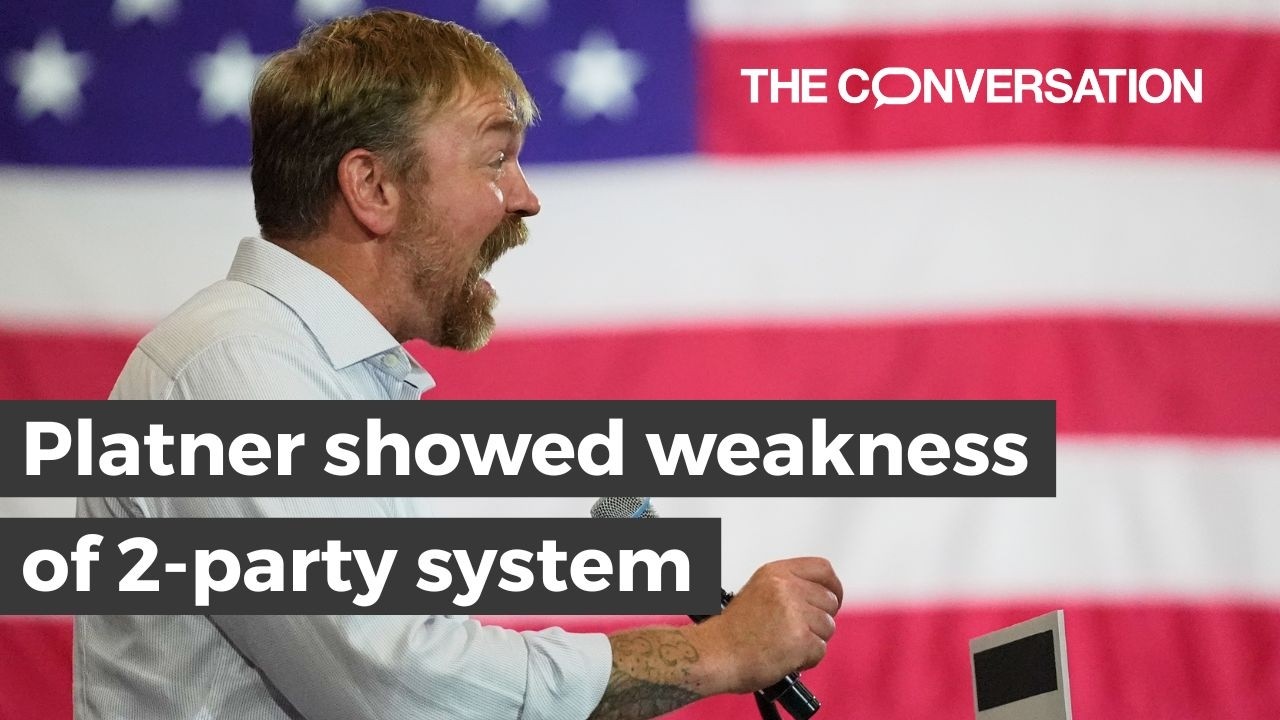
Colby College political scientist Nicholas Jacobs explains why he believes Platner’s rise points to a bigger issue: the growing ability of outsider candidates to take over America’s political parties.
In the past, candidates generally emerged from a pipeline – electoral experience, vetting by the party. They did not emerge out of candidate recruitment by outsiders or party critics. But nationally we’re seeing that kind of insurgent recruitment, including with Platner. Is this a new kind of politics?
Political scientists have been thinking about that question for quite a long time. As far back as the early 1970s they started thinking about how changes to the structure of these party organizations, in particular the rules governing the nomination process, began to produce a different type of candidate. Those changes sat side by side with different types of technologies that I think also increased the likelihood of a candidate-centered campaign.
Now, you could say we’re living in an anti-establishment era, which might mean that voters on the right and the left are more disposed or more likely to favor candidates who are running against the establishment.
As unusual as Graham Platner is, this style of politics is increasingly more common. In 2010, scholars were becoming attuned to something known as the “invisible primary.” That’s where a lot of endorsements among party elites and interest group activists, well before voters had any say in the primary process, meant these insiders had come to some sort of consensus on who the candidate should be.
There’s a flip side of that, which is mirrored in Donald Trump in 2016 and in some of these progressive insurgencies of the past couple of years. Would-be candidates themselves and activist organizations are able to put forward potential contenders for nomination outside of that traditional system where you work your way up through legislative office. That’s clearly what happened with Platner.
In 2025, individuals associated with the Bernie Sanders presidential campaign – now sort of the Bernie Sanders machine – came up to Maine looking for candidates. They found a guy who did an ad against some Norwegian salmon commercial fisheries, realized he was cut straight from central casting, and that’s how we got Graham Platner.
Don’t let yourself be misled. Understand issues with help from experts
Is there a connection between Platner’s populism and why his deeply engaged supporters weren’t able to look past his obvious problems?
Donald Trump, as a populist candidate, has been able to let scandal after scandal just roll off his shoulders. The left was very critical of Trump supporters forgiving him, to the extent that even Trump himself famously says he can stand in the middle of Fifth Avenue, shoot someone and people will still support him.
There’s an equivalency with Platner, and some of it has to do with a populist style of politics. Platner and Trump really excel, as all populists do, in defining who they’re against, at identifying the enemy, whether it’s immigrants, the deep state, the swamp, the oligarchy or the establishment.
Both Platner and Trump have viewed the national media as an enemy. Every scandal, every attack, every criticism that’s levied at the leader of a populist movement seems to vindicate their idea that there’s some larger force out there trying to take them down. The sexting scandal that broke about a month ago, it was the Platner campaign itself that said this was a hit job, a smear from The New York Times.
There is a sizable mass of individuals in the state, including some elected Democrats, who view this latest set of allegations of sexual assault that Politico reported as a fabricated hit job from the Democratic establishment.
Graham Platner and Sen. Bernie Sanders, left, join hands at an event in Orono, Maine, on May 24, 2026. AP Photo/Robert F. Bukaty
If the critics are the enemy, then Maine’s Democratic Party has a serious problem in terms of who gets to be the next candidate.
Not every Democrat in Maine is ride or die with Platner, nor were they when he did a very impressive job in getting the most votes ever in the Democratic primary last month, after Gov. Janet Mills had suspended her campaign.
The Mills campaign really never mobilized. By early spring here in Maine, when Mills tried to fight back, she ran one set of ads calling out some post that Platner had written diminishing sexual assault, particularly in the military. The left in the state attacked her pretty strongly, saying, “You’re going to weaken our candidate. This isn’t right.”
The fact that a lot of the women who were featured in the ad were Democratic Party stalwarts kind of played into this idea that it was the establishment taking on the insurgency. Several months later, it seems they might have had a point.
Are there lessons from what happened with Platner?
The simple, shallow lesson is this was just bad campaign strategy.
People came in and recruited Platner and just didn’t do enough opposition research. So the next time that they come in and pull somebody out of central casting, they just would want to hire better lawyers to dig up dirt on their own candidate.
But what’s problematic about this is something else.
I sat down with Platner in October 2025. I asked him, “Well, why are you wearing the Scarlet D – for Democrat – around your neck? Why would you do that?
And he said, "The only reason I’m doing it is to get access to Act Blue, so I can raise money.” Act Blue is the Democratic Party’s main fundraising platform.
*Editor’s note: The Conversation has reached out to the Platner campaign for a comment and will update this story if it receives one.
So you have this individual who doesn’t want to be a Democrat. He’s openly said he’s not going to vote for the Democratic leadership. He’s an acolyte of Bernie Sanders, who also doesn’t want to call himself a Democrat. What are such individuals able to do? They’re able to take over the Democratic Party.
This is the same type of problem that we saw in 2016: An individual who never really wanted to be a Republican, who was a Democrat for much of his life, bursts out on the scene and ends up taking over the Republican Party.
So the deeper, longer-term problem is the hollowness of America’s organized political party life. I get that there are very few defenders of our two-party system, but our politics, our political system, our Constitution only work with two healthy, robust political parties.
When they can be hijacked by outsiders, parties are not able to do the work of selecting candidates, of building consensus, of doing the work of democratic persuasion. You might say it becomes an entirely different political game altogether.
{This story has been updated to reflect Platner’s withdrawal from the Senate race.*}:
---
REF WSJ
The ‘Mad Scientist’ Behind Graham Platner’s Scandal-Plagued Rise
Dan Moraff rushed vetting of the Maine Senate candidate. He says he’s trying to blow up the way Democrats run campaigns.
By
and
June 21, 2026
Rushing to launch Graham Platner’s Senate bid, Dan Moraff, a progressive up-and-comer and Platner’s top strategist, asked a Democratic research firm to vet the political novice.
A thorough background check of a Senate candidate, which has become standard practice in key races, can take several weeks and cost roughly $20,000 or a monthly retainer. Moraff asked for an expedited, cheaper review to be done within days, according to people familiar with the matter.
Election 2026
The Red Flag That Led to Graham Platner’s Implosion Was Hiding in Plain Sight
July 9, 2026
-
---
Election 2026
The Chaotic Sweepstakes to Replace Graham Platner Has Begun
20 hours ago
-
---
Election 2026
Graham Platner Ends Maine Senate Campaign After Sexual-Assault Allegation
July 8, 2026
-
---
Politics Newsletter
Yes, Platner Is Out. But There Is Plenty of Other Midterm Drama.
7 hours ago
-
---
Politics and Policy
The Democratic Influencer Who Helped Bring Down Graham Platner
July 9, 2026
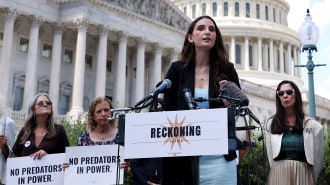
Cheyenne Hunt says problem of sexual misconduct by powerful men goes ‘beyond partisan lines.’
-
---
Election 2026
Bernie Sanders Urges Graham Platner to Exit Senate Race
July 7, 2026

-
---
Disclosure statement
Nicholas Jacobs does not work for, consult, own shares in or receive funding from any company or organization that would benefit from this article, and has disclosed no relevant affiliations beyond their academic appointment.
Partners

Institute for Humane Studies provides funding as a member of The Conversation US.
---
ggl 7 26
[### State Building in Crisis Governance: Donald Trump and ... - PMC

National Institutes of Health (NIH) | (.gov)
https://pmc.ncbi.nlm.nih.gov › articles › PMC9348439](https://pmc.ncbi.nlm.nih.gov/articles/PMC9348439/)
by NF JACOBS · 2022 · Cited by 3 — NICHOLAS F. JACOBS is an Assistant Professor of Government at Colby College. He has published over two dozen articles and book chapters on topics ranging ...Read more
[### Did Democrats hurt their cause by supporting Platner for so ...

The National Desk
https://thenationaldesk.com › news › americas-news-now](https://thenationaldesk.com/news/americas-news-now/did-democrats-hurt-their-cause-by-supporting-platner-for-so-long-graham-platner-susan-collins-maine-us-senate-race-2026-midterm-elections)
3 hours ago — Jacobs called Collins a “powerful incumbent who is persistently underrated.” There will be no new primary elections for Platner's replacement.Read more
[### Nicholas F. Jacobs

UnHerd
https://unherd.com › author › nicholas-f-jacobs](https://unherd.com/author/nicholas-f-jacobs/)
May 19, 2025 — Nicholas F. Jacobs is an Assistant Professor of Government at Colby College. His latest book is The Rural Voter.Read more
Nicholas F. Jacobs
May 19 2025 - 12:00am 5 mins
Where, I often wonder, were the headlines during Biden’s presidency that read: The Democrats are Hurting the Very People Who Elected Them?
Surely it wasn’t because such stories couldn’t be found. Prolonged school closures disproportionately damaged urban students — precisely those whose families turned out heavily for Democrats. Their ambivalence on crime and policing left the working-class and minority neighborhoods of blue cities to bear the brunt of rising disorder.
And surely it’s not because pundits are reluctant to frame stories in terms of voters being hurt by the very politicians they supported. Quite the opposite. When it comes to rural voters, this genre of storytelling is practically its own subfield. Timothy Noah’s recent column in The New Republic is the latest entrant, warning that Trump’s new tariff proposals will again “badly screw” the very voters who support him. Jennifer Rubin repeatedly paints Trump’s base as a self-immolating mass of misinformed populists. And it is nothing new; this narrative was everywhere during Trump’s first term: “Trump Country Could Be Hit Hardest by His Policies”; “Trump’s Trade War Hurts the People Who Elected Him.”
And yet, this peculiar framing...
// white rural age
---
REPOST WAPO RIPPLE
---
UPDATE MAINE MON
NO ONE COULD POSSIBLY HAVE PREDICTED THIS
7 26
I I what I think is interesting about this and and I do think we can say it's problematic um
is here you have this individual who you know when I sat down with him in October I I asked him you know what why are you
wearing the scarlet D around your neck why would you do that and he said well the only reason I'm doing it is to get access to act blue so I can raise money
so here you have this individual that doesn't want to be a Democrat I actually don't think you know, has openly said, he's not going to vote for the
Democratic leadership, is an acolyte of Bernie Sanders, who also doesn't want to call himself a Democrat. And what are these individuals able to do? They're
:
able to take over a the Democratic party. Um, and to me, this is a this echoes the same and it is of the same
:
type of problem that we saw in 2016. an individual who never really wanted to be a Republican, was a Democrat for most of his personal life, bursts out on the
scene and ends up taking over the Republican party. So, the the deeper problem, the the longer uh term problem
is the the just hollowess of our organized party life. And I get that there's very few defenders of our
two-party system. that our our politics, our political system, our constitution only works with two healthy robust
political parties. And when they can be hijacked um by by outsiders, um parties are not
1:29
1 minute, 29 seconds
able to do the work of selecting candidates, of building consensus, uh you know, of of of doing the the work of democratic persuasion.
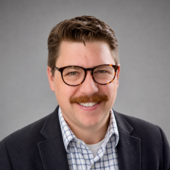 Nicholas Jacobs Goldfarb Family Distinguished Chair in American Government, Colby College; Institute for Humane Studies
IT wasn’t a surprise, but it was a bombshell.
*On July 6, 2026, Politico published the detailed account of a Maine woman who said she had been sexually assaulted by Maine Democratic Senate nominee Graham Platner almost five years ago. Platner called the allegation “categorically untrue,” then said he was “taking the time to reflect on the best path forward.”
Platner had gained the fervent support of progressives in Maine and outside. But he had been dogged by accusations of, variously, racist, misogynist and dishonest behavior – he claimed not to have known the meaning of an SS tattoo on his chest. But his supporters remained behind him.*
Soon after the assault allegations appeared, the Platner campaign was in trouble. His early political champion, Sen. Bernie Sanders, took a day to echo what party officials and once-supportive social media stars had almost immediately demanded: that Platner drop out of the campaign. By the evening of July 8, Platner had suspended his campaign.*
*Politics and legal affairs editor Naomi Schalit spoke with political scientist Nicholas Jacobs, who has followed the campaign and talked with Platner directly in 2025.
See Naomi Schalit’s activity on LinkedIn BERZERK MURKY MAINE WBUR
An NPR host yesterday opened an interview with a Maine reporter by observing, “A lot going on in your little state.” Maine has two senators, just like other states. Why is this such a high-profile race?
I thought when I moved to Maine in 2019 from Virginia, I was going to the quiet countryside. Politics has been anything but since then. Maine was destined to be in the national spotlight this year because Republican Sen. Susan Collins is up for reelection, running for her sixth consecutive term in office. Every time she is up for reelection, she is viewed as a vulnerable incumbent, if not the most vulnerable incumbent, in the Republican Party. So we were destined to get lots of outside money and outside attention before the whole Platner story even began.
Colby College political scientist Nicholas Jacobs explains why he believes Platner’s rise points to a bigger issue: the growing ability of outsider candidates to take over America’s political parties.
In the past, candidates generally emerged from a pipeline – electoral experience, vetting by the party. They did not emerge out of candidate recruitment by outsiders or party critics. But nationally we’re seeing that kind of insurgent recruitment, including with Platner. Is this a new kind of politics?
:{:{Political scientists have been thinking about that question for quite a long time.}:
STANFORD EDU
As far back as the early 1970s they started thinking about how changes to the structure of these party organizations, in particular the rules governing the nomination process, began to produce a different type of candidate. Those changes sat side by side with different types of technologies that I think also increased the likelihood of a candidate-centered campaign.}:
Now, you could say we’re living in an anti-establishment era, which might mean that voters on the right and the left are more disposed or more likely to favor candidates who are running against the establishment.
As unusual as Graham Platner is, this style of politics is increasingly more common. In 2010, scholars were becoming attuned to something known as the “invisible primary.” That’s where a lot of endorsements among party elites and interest group activists, well before voters had any say in the primary process, meant these insiders had come to some sort of consensus on who the candidate should be.
There’s a flip side of that, which is mirrored in Donald Trump in 2016 and in some of these progressive insurgencies of the past couple of years. Would-be candidates themselves and activist organizations are able to put forward potential contenders for nomination outside of that traditional system where you work your way up through legislative office. That’s clearly what happened with Platner.
In 2025, individuals associated with the Bernie Sanders presidential campaign – now sort of the Bernie Sanders machine – came up to Maine looking for candidates. They found a guy who did an ad against some Norwegian salmon commercial fisheries, realized he was cut straight from central casting, and that’s how we got Graham Platner.
Don’t let yourself be misled. Understand issues with help from experts
Is there a connection between Platner’s populism and why his deeply engaged supporters weren’t able to look past his obvious problems?
Donald Trump, as a populist candidate, has been able to let scandal after scandal just roll off his shoulders. The left was very critical of Trump supporters forgiving him, to the extent that even Trump himself famously says he can stand in the middle of Fifth Avenue, shoot someone and people will still support him.
There’s an equivalency with Platner, and some of it has to do with a populist style of politics. Platner and Trump really excel, as all populists do, in defining who they’re against, at identifying the enemy, whether it’s immigrants, the deep state, the swamp, the oligarchy or the establishment.
ENEMY JUL 9 X Graham Platner for Senate on X: "My name might be on the ballot right now, but that ballot line belongs to the people of Maine. https://t.co/RKVyLU76tm" / X
Both Platner and Trump have viewed the national media as an enemy. Every scandal, every attack, every criticism that’s levied at the leader of a populist movement seems to vindicate their idea that there’s some larger force out there trying to take them down. The sexting scandal that broke about a month ago, it was the Platner campaign itself that said this was a hit job, a smear from The New York Times.
MAINE MON
This story was produced as part of apartnership with NOTUS and the nonprofit, nonpartisan Allbritton Journalism Institute.*
Some Democrats are worried Graham Platner’s sext messages could ruin their chances of retaking the Senate majority, with rumors swirling about potentially even more shoes to drop about the Democratic candidate seeking to oust Maine Sen. Susan Collins in November.
“He has questions he’s got to answer,” Vermont Sen. Peter Welch told NOTUS, adding that a steady “drip drip drip” of negative information about a candidate is “never good.”
“It’s not good, but it’s up to the voters of Maine to decide,” California Sen. Alex Padilla said.
Platner met with Senate Minority Leader Chuck Schumer and other Democratic senators in Washington on Tuesday. The meetings were scheduled before last week, but they came as anxiety grows in the party that the candidate might not be able to unseat Collins, a vulnerable Republican who has faced criticism for not doing enough to stand up to President Donald Trump amid a worsening economy and another costly war in the Middle East.
Asked about his meeting with Platner at a news conference on Tuesday, Schumer responded by giving the same terse statement five different times.
“I met with Graham Platner today,” Schumer said. “We’re going to beat Susan Collins and take back the Senate.”
Platner did not respond to questions from NOTUS after a separate meeting with a group of Democratic senators at the offices of the Democratic Senatorial Campaign Committee on Tuesday. New York Sen. Kirsten Gillibrand, the chair of the committee, was similarly tight-lipped.
“I’m very optimistic we’re going to win Maine,” Gillibrand said.
Platner’s campaign confirmed to NOTUS that he had exchanged sexually explicit texts with multiple women who were not his wife in the first year of his marriage, as reported by The New York Timesand The Wall Street Journal. Amy Gertner, Platner’s wife, said she disclosed the texts to a campaign staffer last August during an internal opposition research review, before Platner launched his candidacy. Gertner said the couple had gone through marriage counseling since then and moved on, criticizing the staffer for leaking the existence of the texts to the press.
NOTE NICKY FALSE EQUIV VS ENEMY OF THE PPL FAKE NEWS
Platner has struck a defiant tone, blaming “establishment media outlets” for focusing on “gossip” rather than policy issues like health care and income inequality. He also accused his former aide and the news outlets of reporting on her claims about his text message of “journalistic malpractice.”
It’s been hard to pin down Platner over the past few days. His campaign had agreed before the news broke to make the candidate available for an interview with NOTUS on Sunday. That interview never happened. The campaign cited changes to Platner’s schedule.
Republicans have sought to make Platner’s character an issue in the race, spending millions of dollars on ads highlighting offensive social media posts he made years ago and the tattoo of Nazi symbol he got as a Marine serving abroad — one he covered up after he became a candidate. Now they’ve got even more material to work with, allowing them to poke holes in Platner’s explanation that his misdeeds occurred when he was young.
“No one wants Susan Collins to lose more than me. I am for whoever can beat her and I am angry that feels less likely than it was yesterday,” lamented Neera Tanden, a former aide to President Joe Biden, after the new reporting about Platner’s personal life.
Meanwhile, Platner’s most prominent backers in the Senate are standing by him.
“I think it’s important for us to focus on the issues facing working families a little bit more than Graham Platner’s marriage,” Independent Sen. Bernie Sanders of Vermont told NOTUS. “My understanding is that his wife… is standing by her husband, and I wish their marriage the very best.”
 Graham Platner, Democratic candidate for U.S. Senate, and Sen. Bernie Sanders, left, join hands at a May 24 event in Orono. Photo by Robert F. Bukaty of the Associated Press.
It would be difficult for Democrats to nominate someone else with the June 9 primary only days away. Either Platner would have to drop out or Democrats would have to coalesce around David Costello, a little-known candidate who’s polling far behind Platner. And the election is already underway: Early voting started two weeks ago.
Platner’s insurgent, working-class platform has energized voters, pushing establishment-backed Maine Gov. Janet Mills out of the race in April to the dismay of top Democrats in Washington who felt the popular two-term governor was a safer bet. Mills and her allies ran the same playbook against Platner — attacking him over his online history — to no avail. Mills noted in an interview on Monday that she suspended her campaign and didn’t drop out, saying “I am still on the ballot.” However, a source close to Mills told NOTUS they haven’t received any indication that the governor is ramping up her campaign.
Platner, an oyster farmer and combat veteran, has promised to take on corporate elites in both parties in Washington. He’s vowed not to support Schumer as Democratic leader in the Senate, and argued his party must mount a more aggressive congressional opposition to Trump, including denying votes to fund the government and blocking any of the president’s future nominations to the Supreme Court if Democrats win a majority next year.
Appearing at a town hall last week on the southern coast of Maine — the 71st of his campaign — Platner said his grassroots-led approach would not only help flip control of the Senate next year, but help usher in a political revolution across the country that would make it easier to pass progressive proposals like Medicare-for-All.
“We are looking at possibly not just flipping red to blue, we’re looking at flipping red to fighting Democrats. That’s a huge shift,” Platner said in Phippsburg, a small town of about 2,000 people located on the mouth of the Kennebec River.
More than 400 attendees packed into a sweltering elementary school gym to hear from Platner, according to his campaign. A few days earlier, he drew thousands more to a pair of rallies that featured Sanders. Instead of campaign pins, volunteers handed out oyster shells with “Graham for Senate” written on them.
Dressed in a gray work shirt, cap, and denim jeans, Platner told jokes about overcharging tourists for oysters at his oyster farm and talked up New Deal-style programs that would help revitalize the working class. In response to one woman’s question about preventing domestic violence, Platner lamented what he called “a very toxic version of masculinity” that makes men lonely and aggressive, one he said he struggled with before finding help through therapy. The crowd hung on his every word.
“I’m never looking for a political candidate that says, ‘I’ve done no wrong ever,’ because what would that make me? I’m not that either,” Kyle Drew, 52, a tattooed diving instructor from Woolwich, Maine, told NOTUS before the new reporting on Platner’s sexual text exchanges. “I think there’s a lot of us who have been where he’s been in certain places.”
RELATED STORY: Read our full archive of Graham Platner’s deleted Reddit comments
An 18-year-old recent high school graduate introduced Platner at the town hall with a dismissive comment about the candidate’s many inflammatory posts on Reddit — posts that Platner said he made while suffering from PTSD after returning home from serving in the Middle East.
“I couldn’t care less about social media comments made over 15 years ago,” she told the audience, eliciting a round of applause. “If someone is willing to openly acknowledge a mistake, apologize, and move forward in a different direction, that seems pretty damn good to me.”
Shirley Helms, a 69-year old retiree from Woolwich, who talked to NOTUS before the news of the sexting came out, said Platner’s issues paled in comparison to those of Trump.
“I don’t think anybody’s perfect,” Helms told NOTUS. “And when you look at the person who’s president and all the very negative things about him, I think Platner’s problems are minuscule compared to Trump.”
Maine is one of the Democrats’ best Senate pickup opportunities; Kamala Harris carried the state by seven points in the 2024 presidential election. Platner has edged Collins in recent polls, but those surveys were conducted prior to his latest controversy. Polls have also missed the state’s preferences before, particularly in 2020, when former Maine Speaker of the House Sara Gideon failed to oust Collins after leading in nearly every survey of the race, a costly failure that haunts Democrats to this day.
Collins, 73, is seeking her sixth term. The senator argues that ability to secure federal dollars for Maine as chair of the powerful Senate Appropriations Committee are reasons why voters should stick with her. The post has given her campaign a boost, allowing her to attend countless ribbon-cutting and ground-breaking ceremonies alongside stakeholders in the state, which wouldn’t be possible without the funds she steered home.
“I’ve been able to secure, in the last five years, $1.5 billion for 674 projects,” Collins said last week after helping law enforcement in the town of Auburn, Maine, break ground on a new joint Police and Fire Department building. “With my opponent, that would go away. He would not have the seniority, the experience, the knowledge, or the respect in order to secure that funding. It makes a huge difference to the state of Maine.”
 Sen. Susan Collins speaks with reporters during the Maine Republican State Convention in April. Photo by Matt Junker.
Platner says Collins is trying to “buy off” votes with earmarks. He says the money Collins brings home to Maine hasn’t been distributed equitably, noting that people continue to pay high costs for health care and goods and services. And he alleges Collins’ opposition to Trump is performative and that she does little to block his agenda in Washington.
In an interview with NOTUS in Maine last week, Collins questioned Trump’s strategy in Iran and called the high cost of fuel “a major issue” in her state, particularly for those in rural areas dealing with heating and travel costs.
“People have to drive long distances to get to work to access services, and it makes a big difference when gas prices are so high in where I live, in Bangor,” the senator said.
Of her relationship with Trump, Collins said people in Maine have “distinguished between my record and the record of the president,” adding, “I support the president when I agree with him. I don’t, when I do not.”
Collins and Platner also clashed over Platner’s military service and comments he made about a wounded U.S. soldier. Collins called out one of his deleted social media posts in which he criticized a wounded U.S. soldier in Afghanistan “appalling” and “disgraceful.” She also disputed the notion that she was directly responsible for sending Platner to war in Iraq, as Platner had said in a New York Times interview last month.
“The fact is, that was Platner’s decision to serve,” Collins told reporters. “He was not drafted.”
Platner told reporters her remarks were “callous” and “disgusting.” The Army and Marines veteran, who has said he suffered from PTSD after serving a total of four tours in the Middle East, said Collins voted to keep the war in Iraq going and accused her of laying blame on “all of us who — in our late teens and early twenties — signed up to serve our country.”
The back-and-forth over Platner’s military service was largely overshadowed, however, by the news that Platner had sent explicit messages to other women while married to his wife. Democrats fear more damaging revelations could emerge, but at least for the moment, they’re sticking by Platner, recognizing the huge stakes if their party fails to oust Collins in November.
“I’ve heard some of my colleagues’ concerns about what we’ve read in the papers,” Nevada Sen. Catherine Cortez Masto, who backed Mills, said Monday. “But at the end of the day, we’ve got to win.”
“We all know that he’s lived a very, you know, real experience,” said Sen. Ruben Gallego of Arizona. “The voters of Maine are going to decide what they’re going to do, but we know that at this point this man can still win the as a fabricated hit job from the Democratic establishmentrace, and as long as he continues, I think we’ll all be there.” ENDIT ME MON
There is a sizable mass of individuals in the state, including some elected Democrats, who view this latest set of allegations of sexual assault that Politico reported
---
---
FB AND YAHOO “NEWS”
JUST VID?
Democratic Senate nominee Graham Platner from Maine dropped out of the race following allegations of sexual assault, which he has denied.
As his campaign unraveled, our politics editor spoke with Colby College political scientist Nicholas Jacobs, who had interviewed Platner during his campaign.
Jacobs says he believes Platner's rise points to a bigger issue: the growing ability of outsider candidates to take over America's political parties.
Platner showed weakness of 2-party system
Platner showed weakness of 2-party system
//
 Follow
CBS News anchor tells viewers Democrats dropped Platner because he was looking 'like a loser'
Lindsay Kornick
Fri, July 10, 2026 at 5:04 AM PDT
3 min read
Add Yahoo as a preferred source to see more of our stories on Google.
MORE YAHOO
Politics
Socialists launch radical platform to abolish the US Senate in bid to fundamentally transform America
Fox News
1.1K
3 min read
Business & finance
If you invested $10,000 in Trump's mining company last year, you'd have only this much today
TheStreet
399
3 min read
News
Latino Trump Voters Twice As Likely To Describe Themselves As ‘American’ Than By Ethnicity
Forbes
1.7K
2 min read
World
Iran admits to Trump advisers "they made a mistake" in shooting at ships in strait
CBS News
Politics
Potential Platner replacements neck and neck with Collins in new Maine Senate poll
The Hill
195
2 min read
News
Last U.S. Polio Survivor in an Iron Lung Dies After the Machine Began to Break Down and No One Could Repair It
People
68
4 min read
News
School districts suspected of shielding sex predators revealed by feds — including 2 in California
California Post
---
GGL 6 26
AI Overview
Dr. Nicholas F. Jacobs Nicholas Jacobs | Colby College is the Goldfarb Family Distinguished Chair in American Government at Colby College Colby News, where he serves as the Inaugural Director of the non-partisan Public Policy Lab Nicholas Jacobs | Colby College. He is a noted political scientist, co-author of books such as Subverting the Republic and The Rural Voter, and a frequent contributor to The Conversation. [1, 2]
The keywords in your query connect him to several specific organizations and roles:
- IHS (Institute for Humane Studies): Dr. Jacobs has been a fellow, grant recipient, and contributor for the Institute for Humane Studies Nicholas Frederick Jacobs - The Colby College Community Web, having recently published political commentary and research heavily supported by the institute Democrats don’t get why they’ve lost most working class voters. [1, 2, 3]
- Colby College: His primary academic home Nicholas Jacobs | Colby College, where he teaches government and leads the $5-million funded Public Policy Lab designed to rebuild trust in public institutions Colby News. [1, 2, 3]
- Koch / Funder / Donor / Partner: This connection stems from the Koch Foundation’s long-standing financial support of the Institute for Humane Studies. While not a direct employee of Koch, Dr. Jacobs's past fellowships and research have been indirectly tied to this network Nicholas Frederick Jacobs - The Colby College Community Web, as is the funding for the classical liberal scholarship he promotes through his work.
Do you need information on Dr. Jacobs's recent political commentary, or would you like a breakdown of his published books on rural voting and presidentialism? Let me know how I can help you delve deeper into his academic work!
---
[### The New Driving Force of Identity Politics Is Class, Not Race

X · ColbyCollege
2 likes · 1 year ago](https://x.com/ColbyCollege/status/1860699944476123597)
Assistant Professor of Government Nick Jacobs was a source for a @WSJ story on how the nation is increasingly voting along class lines.Read more
:{:{---}:
Trump: Causes and Consequences | Perspectives on Politics | Cambridge Core
In “Building a Conservative State: Partisan Polarization and the Redeployment of Administrative Power,” Nicholas Frederick Jacobs, Desmond King, and Sidney M. Milkis explode the myth that Republicans such as Donald Trump are interested in the retrenchment of state power, as suggested by their rhetoric. Instead they show that partisan differences do not lead to contractions in the size of the state, but rather the redeployment of state power to pursue radically different policies. Indeed, the Trump administration has used the state to pursue extensive deregulation, expansion of law enforcement and border policing, and a growth in the military. The rhetoric of retrenchment has become a justification to cut social and other programs less favored by Republicans as a way to claw back deficits, as overall spending simultaneously increases in line with Republican ideological principles.
---
Title: Whose Knowledge Counts?
Trust, Expertise, and the Politics of Sustainability in Rural America Speaker: Nicholas F. Jacobs, Colby
College In many rural communities, sustainability efforts face
not just logistical or economic hurdles, but a deeper
crisis of legitimacy—one rooted in longstanding
mistrust of outside experts and institutions. This talk
explores how knowledge itself becomes contested
terrain, where technical expertise is often viewed as
disconnected from lived experience and political power.
Understanding rural resistance requires grappling
with how people make sense of the past, locate blame,
and defend the integrity of their communities.
---
AN 6 26 HHMN COLBY IHS KOCHSUCKER
How much can free peoples achieve?
That question has animated the Institute for Humane Studies since 1961. Founded by Dr. F. A. “Baldy” Harper, a former economics professor at Cornell University, IHS was formed against a backdrop of a world still recovering from two world wars, widespread physical and economic devastation, and the early years of the Cold War. Construction of the Berlin Wall began just a few months after our doors opened.
From the beginning, IHS has advanced the frontiers of political, economic, cultural, and intellectual freedom. That has meant gathering and supporting generations of the world’s leading minds within the liberal tradition. When, in the 1970s, Soviet communism deprived millions of their lives and livelihoods, the Nobel-winning economist Friedrich Hayek was elaborating alternatives from our offices.
Today, with surging illiberalism at home and abroad threatening these same liberties and the human progress they unleash, IHS provides the rare spaces where liberals of all stripes—left, classical, and conservative—can unite behind the principles of freedom and human flourishing.
Though the world has changed much since our founding, IHS’s commitment to the principles of the liberal tradition hasn’t wavered. Nearly 65 years later, we’re still welcoming the dreamers and radicals and scholars working toward a freer, more prosperous, and more peaceful world.
BUSTED ON THIS
Since 2016, when Donald Trump shattered the Democrats’ blue wall by winning working-class voters across the Midwest, a cottage industry has sprung up on the left dedicated to answering a single question: How can Democrats win back the working class?
The answers come in different forms. Sometimes it is veteran Vermont Sen. Bernie Sanders – barnstorming red districts, railing against oligarchy and corporate greed.
Or it’s Connecticut Sen. Chris Murphy, who after the 2024 election declared, “Democrats must reclaim our identity as the party of the working class.”
Or the answer comes from a new generation of candidates – tattooed veterans, mechanics, bartenders – whose biography is supposed to do the political work that policy has not.
Graham Platner, the Maine Senate candidate who has become the left’s latest blue-collar savior, put the theory in its most unguarded form.
“We are in a form of class war,” he says. “And if the Democratic Party is going to have a future with working people, it needs to pick the side of working people.”
How does he define the working class? “Essentially everybody who isn’t making all their money on an immense amount of wealth.”
The theory is all the same: Somewhere out there is a latent working-class majority, held together by shared economic grievances, waiting to be politically reassembled to vote for Democrats. The New Deal did it – Democrats can do it again.
I’m a political scientist who has written extensively about rural and working-class communities. I believe it is an open question whether these reformist Democrats are really interested in understanding working-class voters on their own terms. Because working-class voters, as they tell us themselves, are not simply waiting to be activated by the right program, the right messenger, the right phrase. “Fight the oligarchy” probably isn’t going to do it.
Working-class voters have a worldview. For 50 years, it has been growing less compatible with the Democratic Party’s – not because working-class voters changed, but because Democrats did.
Working-class identity
Since the early 1950s, the American National Election Studies has asked respondents whether they think of themselves as members of the working class. This article uses my analysis of that data.
While a larger proportion of the electorate has obtained a college degree and household incomes have risen, the share of Americans who consider themselves working class has remained remarkably stable: roughly 35% of voters for the past 70 years, 38% in 2024.
Working-class identity is something more durable and culturally grounded than a description of who isn’t a billionaire. It is a specific way of looking at the world.
There are conventional ways to define the working class, but they often miss how people understand their own place in society. In the 2024 American National Election Studies, for example, 21% of those who identify as working class have a college degree, only 5% belong to a private-sector union, and 37% own stocks. Conversely, most Americans without a college degree do not identify as working class.
Working-class voters have never been a predominantly Democratic group – not even at the height of the New Deal coalition. Based on the American National Election Studies self-report measure, the working-class share of the Democratic coalition peaked around 56% in 1960 and has fallen more or less continuously since, sitting at just about 30% today.
Meanwhile, the share of working-class voters who identify as Democrats has been declining for half a century: A majority did so in 1958, but not since.
Working-class voters have not become Republicans. Only in 2020 and 2024 – the first time in the survey’s history – did more working-class voters identify as Republican than Democrat, and even then by narrow margins.
The data shows a working class that is politically homeless: estranged from the Democrats, not captured by the Republicans, stuck in the middle with diminishing attachment to either party.
Economic abandonment
So what drove them out?
A segment of the progressive left has a ready answer: Democrats abandoned working-class voters economically – on trade, wages and industrial policy. Working-class voters responded rationally. Fix the economics and the coalition comes back.
Trade is where the argument is strongest. In 1988, roughly 74% of both Democrats and working-class voters groups favored limits on imports to protect American jobs. AKA TARIFFS?
By 2024, only 26% of Democrats favored limits, while a majority – 54% – of working-class voters continued to do so. NOTE NO CITATION FOR STATS
Unlike most Democrats, many working-class communities do not see globalization in their interest. Running alongside the trade gap is a widening divide over values that no tariffs can fix.
What fairness requires
In 1984, Democrats and working-class voters broadly agreed that treating people more equally would mean fewer social problems. A divergence opened after 2008 and accelerated after 2016, with Democrats now 28 points more likely than working-class voters to think we should worry more about equality.
In 1986, half of mainstream Democrats and a slightly smaller percentage of working-class voters agreed with the idea that Black Americans don’t succeed because they don’t try hard enough. By 2024, Democratic agreement had collapsed to 13%. Working-class voters declined too, but to 32%.
The gap that opened between them is not primarily a story about rising working-class racial resentment. It is a story about the Democratic Party’s rapid post-2008 shift toward a worldview that places far greater explanatory weight on structural barriers and far less on individual effort and personal responsibility.
Working-class voters, who historically have understood their own lives through a framework of hard work and earned reward, did not shift so dramatically.
Alignment becomes division
On cultural questions, the pattern persists: Working-class voters did not move right in reactionary revolt. Democrats moved left.
In 1986, similar levels of Democrats and working-class voters agreed with the statement “This country would have many fewer problems if there were more emphasis on traditional family ties.” By 2024 a 25-point gap emerged. LGBT MARRIAGE?
On whether religion is an important part of their life: a near-zero gap through the early 1990s, but 17 points by 2024. On abortion, a 3-point gap in 1980 became 30 points in 2024. Regarding whether immigration levels should be increased, the two groups were virtually identical in 2000 – around 8% support – but by 2020 Democrats were at 48%, working-class voters at 24%.
But even where working-class voters nominally agree with a Democratic policy goal, they don’t trust the institution being asked to deliver it – a distrust decades in the making.
How the ‘system’ plays
In 1958, working-class voters and Democrats were within 5 points of each other on whether government wastes a lot of tax money. By 2024 that gap reached 27 points – not because working-class voters lurched toward anti-government extremism, but because mainstream Democrats became dramatically more trusting of government as an instrument of social change. LOGIC? DEMS LIKE GOVT ACTION SO DO NOT LABEL IT AS WASTE?
Working-class voters are 17 points more likely than Democrats to say people like them have no say in what government does. In 2024, 88% of working-class voters and 75% of Democrats said government is run by a few big interests. Both groups agree the system is captured.
Yet the Democratic policy response, invariably, is to expand the system.
On support for expanding government – from healthcare to jobs to environmental programs – Democrats and working-class voters have diverged dramatically since the 1980s. By 2024, there were approval gaps of between 20 and 30 points on providing government health insurance, environmental spending and a guaranteed jobs program. BECAUSE KOCHSUCKERS HAVE SPENT 100S OF MILLIONS OVER DECADES TO TRASH THEM
On every major plank of the progressive economic agenda, Democrats are now substantially to the left of the workers they claim to champion. AND THAT’S WHY THEY WON EVERY SINGLE MIDTERM ELECTION SO FAR. MAMDANI HUGE WORKING CLASS SUPPORT
Not all class war
Working-class voters have been telling pollsters for 60 years that the political system doesn’t hear them. Democrats, over the same period, have grown more comfortable with the institutions working-class voters have increasingly less faith in.
This distrust is the accumulated residue of specific experiences: deindustrialization that happened on government’s watch, trade deals that economists endorsed and workers paid for, a 2008 financial crisis response that saved the banks and foreclosed on their homes, an opioid epidemic that regulators missed entirely.
LIBTARD DEREGULATION ENRON CREATED THE GT RECESSION:
To be fair, this is precisely what the new crop of reform candidates say they want to fix. The argument that the right candidate can move the needle is not crazy. Candidate quality matters. Personal trust can substitute for institutional trust, at least at the margins.
But economic grievance politics is a very small slice of what working-class voters are telling us. The data documents a comprehensive, decades-long divergence in how working-class voters and mainstream Democrats understand fairness, government, personal responsibility and social change.
Reducing that to class war jams working-class voters into a prefabricated YOU MEAN LIKE COOKED UP IN THINK TANK CEI AEI IHS? progressive agenda rather than taking seriously what they are actually saying.
Nicholas Jacobs, Goldfarb Family Distinguished Chair in American Government, Colby College; Institute for Humane Studies
This article is republished from The Conversation under a Creative Commons license. Read the original article.
---
The Goldfarb Center for Public Affairs is Colby College's hub for politics, policy, and the press. Located in Waterville, Maine, it was founded in 2003 through an endowment by Colby Trustee Emeritus William Goldfarb. CLASS 68 HIRED ACLU
---
Colby College • 5300 Mayflower Hill • Waterville, Maine 04901 (434) 465-7971 • nfjacobs@colby.edu • https://web.colby.edu/nfjacobs APPOINTMENTS Colby College Public Policy Lab Inaugural Director 2025-Present Government Department The Goldfarb Family Distinguished Professorship in American Government 2025-Present Associate Professor 2024-Present Assistant Professor 2021-2024 Faculty Fellow 2019-2021 Arizona State University School of Civic and Economic Thought and Leadership Faculty Research Associate 2018-2021 EDUCATION University of Virginia 2019 Doctor of Philosophy, with Distinction, Government University of Virginia 2016 Master of Arts, Government University of Mary Washington 2011 Bachelor of Arts, Summa Cum Laude, Political Science PUBLICATIONS
...
Popular Media (Selection) “What Liberals Get Wrong About Rural Rage.” Politico. April 5, 2024. “The Truth about ‘Rural Rage’.” Reason. March 7, 2024 (with Kal Munis). “New Book on Rural America Started with a False Conclusion, Then Looked for Evidence.“ The Daily Yonder. March 6, 2024. “Biden Faces an Uphill Climb With Rural Voters. Big New Spending May Not Help.” Barron’s. November 14, 2023 (with Joe Grassi*). * Undergraduate Student, Colby College “Will the Maine Massacres Change the Politics of Gun Control in Rural America?” The Hill. October 30, 2023 (with Dan Shea). “Why Resentful Rural Americans Vote Republican.” The Washington Post. October 20, 2022 (with Kal Munis). “Colby Polling Initiative: How we Missed Maine’s Independent Spirit.” Portland Press Herald, November 10, 2022 (with Dan Shea and Carrie LeVan). “Is Obama Breaking Norms as a Former President? Not Really.” The Washington Post. September 25, 2018. CURRENT PROJECTS
...
Haynesville Fellow, The Haynesville Project 2025-Present Adam Smith Fellow, Mercatus Center at George Mason University 2017-2019 Beeke-Levy Fellowship, Franklin and Eleanor Roosevelt Institute 2018 Moody Foundation Research Fellow, Lyndon B. Johnson Presidential Library 2018 Humane Studies Fellowship, Institute for Humane Studies 2018 Arthur M. Schlesinger, Jr. Fellowship, John F. Kennedy Presidential Library 2017 Jack Miller Center Summer Fellow 2015 President's Fellowship, University of Virginia 2014-2019 Research Grants Rural Voters and Non-Competitive Elections, Unite America 2024 Maine Civic Health Study, Maine Community Foundation 2024 Rethinking Rural Conference, President’s Office, Colby College 2024 Developing Text Analysis, Goldfarb Center at Colby College 2023 SINGLEMARKETS, ARENA Centre for European Studies 2022-2025 Witnessing Rural Resentment, Goldfarb Center at Colby College 2022 McVey Data Science Initiative, Colby College 2021 Special Projects Initiative, Provost's Office, Colby College 2020 Hayek Fund for Scholars, Institute for Humane Studies 2020 Charles Koch Foundation, Dissertation Award 2018 Double-Hoo Undergraduate and Graduate Research Award, UVA 2018 Institute for Humane Studies Research Grant 2018 Graduate School of Arts and Sciences Council Competitive Research Grant, UVA 2018 Institute for Humane Studies Scholarship 2017 Conference and Travel Grant, American Political Science Association 2017, 2019 Bradley Fellowship, The Lynde & Harry Bradley Foundation 2015- 2017 AHSS Summer Research Award, UVA 2016 Department of Politics Research Grant, UVA 2016 TEACHING
...
McVey Data Science Initiative, Colby College 2022, 2023 Davis Artificial Intelligence Institute, Colby College 2021
TEACHING INEQUALITY? SOUNDS DEI DUDE
...
Honors Theses Advised Joseph Grassi. 2025. “Off the Grid: Rural Identity, Environmentalism, and Renewable Energy Policy in Rural New England.”
Serena Klebba. 2025. “Abortion on the Ballot: The Procedural Role of Direct Democracy in Shaping Abortion Policy Post-Dobbs.” Dev Purohit. 2025. “Shared Track, Divided Rule: The Role of Polycentrism in Shaping Public Transportation in U.S Metropolises.” Samuel McKeown. 2024. “After the Bell: Examining the Political and Communal Effects of Rural School Closure.” Fiona Nash. 2024. “Not in My Zoning Code: Understanding the Mechanisms of Policy Diffusion of Deregulatory Zoning Reform Across U.S. Cities.” Caleb Schmidt. 2024. “Whose Line is it Anyway: Maine’s Pine Tree Power Movement to Predict the Rise and Fall of Large-Scale Utility Municipalization Movements.” Claudia Miner. 2023. “The Consequences of State Intervention on the Future Attitudes and Participation of Children.” Caleb Bitting. 2023. “Misinformation’s Grip on the American Legislative Process”
...
Referee American Political Science Review; American Journal of Political Science; British Journal of Political Science; European Political Science Review; Journal of Politics; Publius: The Journal of Federalism; Journal of Public Policy; Legislative Studies Quarterly; Congress & the Presidency; Political Behavior; American Political Thought; Electoral Studies; Political Geography; Public Opinion Quarterly; Political Science Quarterly; Journal of Experimental Political Science; State Politics & Policy; Rural Sociology; Socius; Theory and Social Inquiry; Perspectiveson Politics; Aletheia; Policy Studies Journal; Journal of Rural Studies; State and Local Government Review; Social Science Quarterly; PS: Political Science & Politics; Maine Policy Review; Social Currents; Politics and Religion; Journal of Education Policy; Acta ....
Teaching and Research Assistant, Miller Center, Gilder Lehrman Teacher’s Seminar 2015
...
Awards Committee, APSA Section on Federalism and Intergovernmental Relations 2019-2020
....
PRES
...Institute of Politics, University of Chicago 2024 “Keynote Address, Bridging the Divide Conference”
...Mercatus Center, George Mason University 2023 “Applied Research on Markets & Morality” University of Oslo, Norway 2022 “The Politics of European and American Single-Market Governance” Oxford University and Stanford University 2021 “The Changing Character of the American Right” Wright Symposium, American Society for Public Administration 2021 “If Congress Can’t Budget, Can It Influence Intergovernmental Relations?” Mercatus Center, George Mason University (Postponed due to COVID-19) 2020 "Public Governance and the Classical-Liberal Perspective" American Political Science Association, APSA Roundtable 2019 "Executive Federalism and Populist Challenges to Governance
...
Institute for Humane Studies and Liberty Fund 2017 “Federalism and Competition
Media Interviews The Washington Post; The New York Times; Wall Street Journal; USA Today; The Boston Globe; NPR (and affiliates); The Times of London; CNN; BBC; C-Span; Daily Yonder; Forbes; Bloomberg; VOX; Fortune; Real Clear Politics; Roll Call; The Hill; Politico; The Atlantic; Verge; American Banker; Maine 207; News Center Maine; Portland Press Herald; Kennebec Journal; Maine Morning Sentinel
---
BEZOS DISEMINATION
- Democrats don’t get why they’ve lost most working class voters
Jun 2, 2026 — Reducing that to class war jams working-class voters into a prefabricated progressive agenda rather than taking seriously what the...

The Washington Post
- Nicholas Jacobs - The Conversation
Mar 11, 2024 — Goldfarb Family Distinguished Chair in American Government, Colby College. Fellow, Institute for Humane Studies. Nicholas Jacobs i...
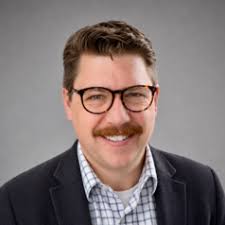

The Conversation
- Democrats don't get why they've lost most working class voters
Jun 2, 2026 — Democrats don't get why they've lost most working class voters * Nicholas Jacobs - Goldfarb Family Distinguished Chair in American...
Bozeman Daily Chronicle
- Democrats don’t get why they’ve lost most working class voters
Jun 2, 2026 — By Nicholas Jacobs, Goldfarb Family Distinguished Chair in American Government, Colby College; Institute for Humane Stud June 2, 2...

CTPost
---
UVA EDMUND FUCKING BURKE
Nicholas Jacobs | Department of Politics
Nicholas Jacobs
Graduate Student
Degrees
BA, University of Mary Washington
Field
American Political Development, American Political Thought
Research Interests
My research focuses on the historical development of the American presidency. It is motivated by the fact that extant accounts of presidential history often neglect the set of <i>vertical</i> relationships between local, state, and national actors that structure and motivate presidential politics. My work, therefore, concerns the president in the federal order and seeks to explain how federalism has constrained and expanded opportunities for presidents to carry out their political goals. Additionally, I study developments in presidential rhetoric and political theory on the nature of decentralized governance and constitutional leadership – especially ideational developments during the Progressive Era. For example, my largest project in this area argues that Woodrow Wilson was heavily influenced by the partisan and political thought of Edmund Burke, and that Wilson’s critique of the American Constitution is an attempt to build “conservative” principles into a post-Civil War federal order.
Graduate Student Employment Status
Institution/Department
Colby College
Current Placement
Assistant Professor
Graduation Year
2016
---
[### Building a Conservative State: Partisan Polarization and ...

jstor
https://www.jstor.org › stable](https://www.jstor.org/stable/26742541)
by NF Jacobs · 2019 · Cited by 39 — Jacobs is a Doctoral Candidate in the De- partment of Politics at the University of Virginia (nfj5fs@ · virginia.edu). Desmond King is Andrew Mellon Professor ...Read
Building a Conservative State
Nicholas F. Jacobs, Desmond King and Sidney M. Milkis
Perspectives on Politics
Vol. 17, No. 2, Trump: Causes and Consequences (June 2019), pp. 453-469 (17 pages)
Published By: American Political Science Association
---
G. Calvin Mackenzie is a prominent American political scientist and educator known for his extensive research on the U.S. presidency and governmental ethics. Born in Massachusetts, Mackenzie graduated from Bowdoin College and earned his PhD from Harvard University. He served in the Vietnam War with the U.S. Army and began his academic career at Colby College, where he holds the title of Goldfarb Family Distinguished Professor of Government. Throughout his career, Mackenzie has authored over fifteen books, including significant works such as "The Politics of Presidential Appointments" and "The Liberal Hour," the latter co-authored with historian Robert Weisbrot and nominated for a Pulitzer Prize. His research critiques the evolving nature of presidential appointments and explores the dynamics of political change during the 1960s. Mackenzie has also held influential roles in various governmental commissions and as a consultant to congressional committees. In addition to his academic contributions, he has been active in professional associations and has lectured internationally, including a Fulbright position in Vietnam. Mackenzie's work continues to shape the discourse on governance and public policy in the United States.
...
Mackenzie’s most renowned book, The Liberal Hour: Washington and the Politics of Change in the 1960s (2008), was coauthored with Robert Weisbrot, a historian and fellow professor at Colby College. The scholars argue in the book that during the turbulent era of the 1960s, the politicians who held seats of power in Washington, DC, were the most effective instruments of change. This is opposed to the popular belief that the decade’s burgeoning counterculture was responsible for driving pivotal changes in the areas of civil rights and social legislation. The Liberal Hour received high acclaim and was a finalist in history for the Pulitzer Prize in 2009.
In 2016 Mackenzie published The Imperiled Presidency: Leadership Challenges in the Twenty-First Century. In the book, Mackenzie evaluates the role of the executive branch compared with the legislative and judicial branches of the US government and makes the provocative argument that the presidency is too weak rather than too strong.
AMAZON
G. Calvin Mackenzie (Author) Format: Hardcover
1.6/5
The Imperiled Presidency: Presidential Leadership in the 21st Century calls for a dramatic re-evaluation of the American president’s role within the separation of powers system. In contrast with claims by academics, pundits, media, and members of Congress, this provocative new book argues that the contemporary American presidency is too weak rather than too strong. Cal Mackenzie offers the contrarian argument that the real constitutional crisis in contemporary American politics is not the centralization and accumulation of power in the presidency, but rather that effective governance is imperiled by the diminished role of the presidency.
The product of more than three years of research and writing and nearly four decades of the author’s teaching and writing about the American presidency, The Imperiled Presidency is the first book-length treatment of the weaknesses of the modern presidency, written to be accessible to undergraduates and interested citizens alike. It engages with a wide range of literature that relates to the presidency, including electoral politics, budgetary politics, administrative appointments, and the conduct of foreign affairs. It would be a useful complement to courses that rely primarily on a single textbook, as well as courses that are built around more specific readings from a range of books and articles.
Review
““Cal Mackenzie has written a provocative study of how contemporary political, social, and technological forces have weakened the president's ability to lead successfully and what can be done to facilitate that leadership. This wonderfully written book is a major contribution to our understanding of the 21st century presidency's frustrations and potential.”” ―Stephen J. Wayne, Georgetown University
““Cal Mackenzie provides a healthy counterbalance to those who argue that recent presidents have amassed too much power. By underscoring how changes in the external environment have affected the power of the presidency, this work re-centers the debate over how much influence the institution of the presidency has today and how much influence it ought to have in the future if we are to achieve a better functioning federal government. Every student of the presidency will expand their understanding by reading this very fine book.”” ―Peter M. Rouse, former White House Chief of Staff
About the Author
G. Calvin Mackenzie is Goldfarb Family Distinguished Professor of Government at Colby College where he has taught since 1978. His specialty areas include presidential transitions and the politics of presidential appointments, and he has been a consultant on these matters to presidential staff and congressional committees.He is the author or editor of scores of articles and nearly twenty books, including The Liberal Hour: Washington and the Politics of Change in the 1960s (co-authored with historian Robert Weisbrot), which was a finalist for the 2009 Pulitzer Prize in History.
[
Top](https://www.amazon.com/Imperiled-Presidency-Leadership-Challenges-Twenty-First/dp/1442260734#)About this itemSimilarQuestionsReviews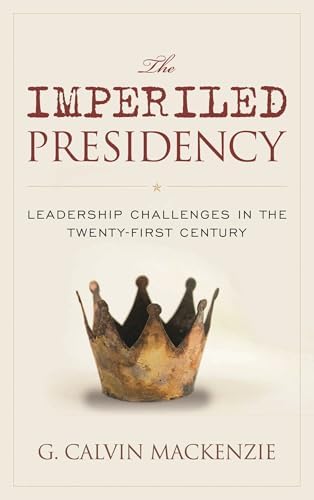 The Imperiled Presidency: Leadership Challenges in the Twenty-First Century
Product details
- ASIN : 1442260734
- Publisher : Rowman & Littlefield
Mackenzie, G. Calvin, and Robert Weisbrot. “The Liberal Hour: An Interview with G. Calvin Mackenzie and Robert Weisbrot.” Interview by David Liebers. History News Network. George Mason U, n.d. Web. 24 July 2013.
---
FULL PAGE AD IN FRONT OF CONF PGM APSA President Kathleen Thelen
2018%20APSA%20Annual%20Meeting%20Program.compressed
Fund Your Passion Institute for Humane Studies is offering funding to fit your needs. IHS Sabbatical Research Fellowships Looking to fund your sabbatical research while exploring topics in the classical liberal tradition? IHS is awarding four $42,000 semester-long sabbaticals to faculty looking to delve into the merits and challenges of free markets, individual rights, and other precepts. Application Deadlines: August 1, 2018 for sabbaticals during Spring Semester 2018-19 October 1, 2018 for sabbaticals during Fall Semester 2019-20 March 1, 2019 for sabbaticals during Spring Semester 2019-20 Apply here: https://theihs.org/sabbatical-fellows
IHS Grant for Free Speech and Open Inquiry Want to foster free speech and civil discourse in academia? Faculty can receive up to $25,000 to facilitate research, teaching, and programs on the importance of independent thought and intellectual diversity in higher education through the IHS Grant for Free Speech and Open Inquiry. Applications accepted on a rolling basis. Apply here: https://theihs.org/fsoi-grant
---
William D. Adams was the President of Colby from 2000 to 2014. Major accomplishments included conducting the largest capital campaign in the history of Maine, which raised $376 million;[19] a new strategic plan for the college; accepting a major gift for the Colby College Museum of Art – the Lunder Collection of American Art – and the construction of a new wing for the museum to house it in 2013;[20] expansion onto the "Colby Green" with the construction of the Diamond Building in 2007 and the Davis Science Building in 2014. In 2014, a documentary was created depicting a wide range of student experiences, including academic climate, social gatherings, athletics, and graduate outlooks, called Colby Life.[21]
On July 1, 2014, David A. Greene took office as the new president of the college.[22] Under Greene's leadership, Colby launched Dare Northward, the most successful fundraising initiative[23] by a liberal arts college at more than $1 billion, exceeding its original goal of $750 million.[24]
With a priority on community engagement and partnerships, Colby has led an investment of more than $250 million in downtown Waterville since 2019.[25]
....
After Brown University, Greene joined the University of Chicago and in 2006, Greene was promoted to executive vice president in charge of financial strategy and fundraising, real estate development, campus master planning, and external relations.[4][10]
Under Greene's administration, Colby College has engaged in an ongoing revitalization of Waterville, ME, investing $85 million in local civic projects under the theory that through a partnership between the town and the college, both will flourish by attracting more students to the town, which will then have jobs they can fill upon graduation.[6] Colby College has also added artificial intelligence (AI) to the list of course offerings to begin to build a “moral foundation into algorith....
150 OF 300 M FOR SCI BUT NO FUNDERS MENTIONED, NOT IN BROCURE ASK, NOT IN PRESS RELEASE
- The Davis Family: Andrew Davis ’85 (Trustee of the Shelby Cullom Davis Charitable Fund and President of Davis Selected Advisors) and his family provided the $30-million lead gift to launch the institute in 2021. [1, 2, 3]
- Anonymous Support: The broader Colby College science and technology ecosystem later received a historic $150-million lead commitment, which builds upon the foundation established by the Davis gifts. [1, 2]
Additional highlights of Colby’s investment in the sciences include establishing the Davis Institute for Artificial Intelligence, the first of its kind at a liberal arts college; the development of a 500-acre coastal research campus via the acquisition of Maine’s Allen and Benner islands; and launching the McVey Center for Computational and Data Sciences.
The College has also created a series of programs to support creativity, research, and innovation, including the Buck Lab for Climate and Environment, the Linde Packman Lab for Biosciences Innovation, and the Halloran Lab for Entrepreneurship.
---
[### AI@Colby

https://sites.google.com › colby.edu › explore-ai](https://sites.google.com/colby.edu/explore-ai/home)
The Davis Institute for Artificial Intelligence (DavisAI) is looking for motivated student researchers to join our interdisciplinary team. We want students from ...Read more
---
DavisAI] Partner with DavisAI to Bring Expert Speakers to Campus
The Davis Institute for Artificial Intelligence (DavisAI) is looking for motivated student researchers to join our interdisciplinary team. We want students from all academic disciplines to help us bridge the gap between technical expertise and real-world innovation.
Applications received by Tuesday, May 12th will be given equal consideration. Applications will be considered on a rolling basis thereafter.
What you’ll do:
- Conduct research or build projects tailored to your own interests.
- Engage the Colby community and beyond in vital discussions about AI.
- Enable engagement with DavisAI external partnerships (locally, nationally, and/or internationally)
- Explore diverse topics like:
- Deep Learning, NLP, and Computer Vision.
- User experience and survey instruments.
- Writing opinion pieces on the impact of AI on education and society.
The Details:
- Pay: $15.60 per hour.
- Commitment: 5–6 hours per week during the academic year.
- Who: Open to all years—no prior coding experience required!
Contact: Leslie Lima at _davisai@colby.edu_

[DavisAI] Partner with DavisAI to Bring Expert Speakers to Campus
The Davis Institute for Artificial Intelligence (DavisAI) is pleased to offer a new opportunity to enhance our campus conversation around the evolving role of AI across all disciplines.
We are offering funding for speaker stipends and expenses for experts you recommend from your fields of interest who have engaged meaningfully with AI. Whether through evening talks, classroom visits, or specialized student-faculty engagements, we want to support the presence of experts who matter to you.
If your speaker is selected, the DavisAI Institute will provide financial support for these engagements.
To submit your speaker suggestions, please complete our _DavisAI Speaker Recommendation Form_.
Contact: Leslie Lima at _davisai@colby.edu_
[AI Society] How do AI models “feel”?
Today’s topic: How does the presence of “emotion-related representations” in language language models change how we work with them? It will be helpful, but not necessary, to review this summary of a much larger paper from Anthropic on the topic. Plus, sneak peak of
Who: All students, no AI or CS experience necessary.
What: Weekly low-stakes discussion group.
When: Tuesdays, from 4–5 p.m.
Where: Olin Collaborative Space (the large glass room on the first floor of Olin Science Center).
Why: The AI Society is a weekly student gathering hosted by DavisAI to discuss recent AI developments and studies, share how AI is affecting learning and scholarship across disciplines, and collaborate on projects. Bring your questions and curiosities!

[DavisAI] Interdisciplinary Summer Bridges Program
DavisAI Interdisciplinary Summer Bridges Program is now live on _Handshake_ and accepting applications! It is a paid eight-week program where students can learn AI fundamentals during phase one and turn ideas into practice during phase two.
No coding experience required! All majors & year levels up to juniors are welcomed!
Application Deadline: Monday, March 16, 2026
Contact: DavisAI at _davisaiadmin@colby.edu_

[DavisAI] Call for work: Journal of Writing With and About AI
The Journal of Writing With and About AI (JWAI), is an annual online journal published by the Davis Institute for Artificial Intelligence at Colby College (DavisAI).
JWAI’s mission is to engage the Colby community in critical AI literacy through creative and scholarly writing. Published by DavisAI, the journal features works that investigate and examine the changing natures of human-machine interactions through experimentation and critical reflection.
Colby College students, staff, and faculty are welcome to submit to our third issue from January 1–May 15, 2026. Submissions will be reviewed on a rolling basis.
Find our full submission guidelines, including how to submit, here.
Contact: DavisAI at _davisaiadmin@colby.edu_
---
EVIL TWIN
Why rural Maine may back Democrat Graham Platner’s populism in the Senate campaign − but not his party
Published: November 13, 2025
Every few years, Democrats try to convince themselves they’ve found the one – a candidate who can finally speak fluent rural, who looks and sounds like the voters they’ve lost.
In 2024, that hope was pinned on Tim Walz, the flannel-wearing, “Midwestern nice” governor whose small-town roots were supposed to unlock the rural Midwest for a Harris–Walz victory.
Now those expectations have migrated to New England, onto Graham Platner – the tattooed veteran and oyster farmer from Maine who swears from the stump, wears sweatshirts instead of suits, and, some believe, could be the party’s blue-collar savior against Sen. Susan Collins, the Republican incumbent running her sixth campaign for U.S. Senate.
I study rural politics and live in rural Maine. I’m skeptical whether Platner can reach the independents and rural moderates Democrats need. But I also see why people think he might: He’s speaking to grievances that are real, measurable and decades in the making.
Platner represents Democrats’ anxieties about class and geography – a projection of the authenticity they hope might reconcile their national brand with rural America. On paper, he’s the kind of figure they imagine can bridge the divide: a plainspoken Mainer.
But his story cuts both ways. He’s the grandson of a celebrated Manhattan architect, his father is a lawyer and his mother is a restaurateur whose business caters to summer tourists. He attended the elite Hotchkiss School.
It’s a life of silver spoons and salt air. That tension mirrors the Democratic party itself, led and funded by urban professionals who are increasingly aware of just how far they strayed from their working-class roots.
If Platner is to prevail, he must assemble a coalition that expands beyond what the party has become – concentrated in urban and coastal enclaves, financed nationally and culturally distant from much of rural America.
Yet Platner’s immediate hurdle isn’t rural Maine at all. It is the Democratic primary, and those voters do not live where his campaign imagery is set.
PIXCrowd members at a town hall meeting in the southern Maine town of Ogunquit listen to U.S. senatorial candidate Graham Platner on Oct. 22, 2025. Sophie Park/Getty Images

Opportunity zone
In 2024, nearly 6 in 10 registered Democrats in Maine lived south of the state capital Augusta. That part of the state would not constitute an urban metropolis anywhere else in the U.S., but it is a drastically different world than the one Platner is fighting for.
The party’s gravitational center sits in Cumberland and York counties: Greater Portland and the southern coastal strip. That electorate is more educated, affluent and urban than the state as a whole, clustered in Portland’s walkable neighborhoods, college towns such as Brunswick and artsy coastal communities that swell with summer tourists.
Southern Maine – closer in feel to Boston’s suburbs than to the paper mills and potato fields up north – is where Democrats are already strong. Collins’ vulnerability lies instead among independents in small cities and towns, in deindustrialized and rural counties drifting rightward for two decades.
The 2020 U.S. Senate race – one that nearly every analyst, myself included, thought Collins was doomed to lose to Democrat Sara Gideon – makes that reality clear.
Collins outperformed Donald Trump in every county. She built commanding margins in rural Maine, offsetting Democratic gains in Portland and the southern coast. Her real breakthrough came in the kinds of small towns where Trump lost and she won or closed the margin: Ellsworth, Brewer, Machias, Gardiner and Winterport.
Those former mill towns and service hubs once anchored the Maine Democratic Party. They’re home to exactly the kinds of voters who, in principle, might give someone like Platner a hearing: not deeply ideological, modestly skeptical of both parties and wary of national polarization.
But they are also the voters least represented in the Democratic primary electorate or the donor class fueling Platner’s campaign.
Doing it as a Democrat
According to the most recent Federal Election Commission figures, only about 12% of Platner’s haul has even come from inside Maine. The nationalization of campaign finance is becoming more common for U.S. Senate candidates.
But there are two differences worth noting.
Platner’s in-state share is higher and more geographically diffuse than Gideon’s 2020 campaign. Then, in what became Maine’s most expensive Senate race, just 4% of Gideon’s war chest was homegrown. Most of that Maine money was heavily concentrated in Portland and the southern coastal corridor.
While 64% of Gideon’s Maine total fundraising amount came from the three southernmost counties, 88% of Platner’s current in-state funding is from outside the urban-suburban core of southern Maine.
That divergence matters. It suggests that while Platner’s campaign is still fueled by national money, its local base – however small – extends beyond the usual Portland orbit.
And there is a reason Platner’s message has not been dead on arrival.
The economic populism he’s advancing speaks directly to the material frustrations many rural residents express – frustration with corporate consolidation, rising costs and the feeling that prosperity never reaches their communities.
The 2024 Cooperative Election Study shows that rural independents and moderates often share progressive instincts on precisely these issues: Large majorities of rural, moderate/independent New Englanders support higher taxes on the wealthy and expanded health coverage. Platner is emphasizing those issues – corporate power, health costs, infrastructure, wages – where the urban–rural divide is narrowest.
Platner may be closing that gap. In an October 2025 survey, 58% of likely Democratic primary voters named him as their first choice for the 2026 Senate nomination. While that support has likely changed in the aftermath of two controversies – his chest tattoo that resembled a Nazi icon and recent posts on Reddit, including one in which he says rural people “actually are” “stupid” and “racist” – that poll’s most notable finding is the consistency of support across income and education levels.
Still, while his message may bridge income and education, the biggest obstacle facing Platner is the simplest one: He’s trying to do all of this as a Democrat.
Republican U.S. Sen. Susan Collins speaks on Nov. 4, 2020, in Bangor, Maine, after Democratic challenger Sara Gideon called her to concede. AP Photo/Robert F. Bukaty
Hearing, not speaking
Being anchored in metropolitan and professional networks far removed from rural life shapes not only what Democrats stand for but how they speak, focusing on moral and cultural commitments that resonate nationally but feel abstract in smaller, locally based communities.
That’s why even an economically resonant message struggles once it meets the national brand.
Rural independents and moderates often agree with Democrats on taxes, health care and wages. Those alignments fade when policy is framed through the institutions and moral language of a party many no longer see as compatible with rural ways of living.
It’s not clear yet how Platner will respond on issues that don’t poll well in rural Maine – environmental regulation, gun control or immigration – where loyalty to the national agenda has undone many would-be reformers before him.
And that schism is not because rural voters misunderstand their “self-interest” or because racial dog whistles have led them astray. It is hostility toward a party that, with rare exception, sees the future as something rural America must adapt to, not something it should help define.
That is the danger of treating biography as the solution to a decades-long realignment. Platner might be as close as Democrats have come in years to a candidate who can talk credibly to rural voters about power, place and policy. But he still has to do it while wearing the “scarlet D” – the weight of a party brand built over generations.
Whether he wins or loses, his campaign already points to a deeper question: Can Democrats do more than rent rural authenticity? Put more bluntly, the real test is not whether Platner can speak to rural Maine, it is whether his party can finally learn to hear it.
Author
 Nicholas Jacobs Goldfarb Family Distinguished Chair in American Government, Colby College; Institute for Humane Studies
Disclosure statement
Nicholas Jacobs does not work for, consult, own shares in or receive funding from any company or organization that would benefit from this article, and has disclosed no relevant affiliations beyond their academic appointment.
Partners

Institute for Humane Studies provides funding as a member of The Conversation US.
DOI
https://doi.org/10.64628/AAI.f9sr5cxrt
We believe in the free flow of information
Republish our articles for free, online or in print, under a Creative Commons license.
Republish this article
Get our best stories
We’d like to text you every day or two with one link to a story from The Conversation that explains, inspires or sparks your curiosity.
You might also like
A man in a green camo baseball hat and green zipped fleece, pointing.
Rural voters don’t necessarily love Walz, despite the camo hat and small‑town upbringing
A woman wearing a hat and a blue shirt that says 'Roe roe roe your vote, speaks with a black young man holding campaign information outside of a beige house, standing in a driveway.
Abortion is not influencing most voters as the midterms approach – economic issues are predominating in new survey
A newspaper named the 'Uvalde Leader-News' is shown with the date 'May 24, 2022' in white block print on top of a totally black front page.
Why gun control laws don’t pass Congress, despite majority public support and repeated outrage over mass shootings
Why rural Coloradans feel ignored − a resentment as old as AmeriCA...
---
Funders
---
Tim Walz has a rural image, but that doesn’t mean rural America will vote for him. Tom Williams/CQ Roll Call/Getty Images
Rural voters don’t necessarily love Walz, despite the camo hat and small‑town upbringing
Published: August 21, 2024
he selection of Tim Walz as Kamala Harris’ running mate has sparked a wave of commentary suggesting that simply by elevating a former small-town football coach to the candidacy for vice president, Democrats will naturally secure the allegiance of rural voters nationwide.
At first glance, such analysis – tinged with wishful thinking – seems self-evident. Walz, the governor of Minnesota, was raised in a small, rural town in Nebraska and runs a Midwestern state with a strong rural identity. And it is hard to deny that many rural advocates and writers genuinely feel seen and represented with the choice of Walz – a feeling not felt in quite some time. Indeed, you can now sport a Harris-Walz camo hat this hunting season.
But a closer examination reveals that such expectations may be overly simplistic and optimistic.
 Tim Walz campaigns for governor in St. James, Minn., on Sept. 15, 2018. Walz won the election, getting only 40.3% of the rural vote. Tom Williams/CQ Roll Call/Getty Images
Nationalization of the rural voter
While Walz’s selection may offer symbolic value, it demands a lot of a single candidate to overcome a seismic restructuring of American political geography. Over the past 40 years, as political scientist Dan Shea and I show in our book “The Rural Voter,” Republican partisans have come to dominate rural politics.
In one respect, Walz has built his career trying to reverse that tide, advocating for communities like the one he came from. His positions are, of course, open to interpretation, but Walz has had to grapple with what we call the “nationalization” of the rural voting bloc – the fact that rural voters in all parts of the country view themselves as politically powerless, victims of bad government policy and culturally maligned.
While images of corn dog-eating, dad-joking, “Midwestern Nice” folksiness have become routine in covering Walz, they do little to explain the real issues that have made rural voters a sizable force in recent American elections.
Over the past 40 years, this politicized identity has come to distinguish rural voters from urban ones, and even from other groups that are predisposed to vote for Republican or conservative candidates. Drawing on a nationally representative sample of 7,500 rural voters from February 2024, I joined 15 other scholars in digging into these views.
“Midwestern Nice” does little to capture the grievance and anxiety felt by many rural residents living across the country. As multiple indicators suggest, majorities of rural residents think their communities get less government spending than they deserve, that local kids will not do as well as their parents later in life, and that much of this is the fault of urbanites. On this front, the Midwest is no different than the rest of the country.
Limited success in rural contests
Given the fact that rural voters in the Midwest are much like the rest of the country, Walz’s performance within his home state of Minnesota is a relevant bellwether for his national appeal among rural voters. Though Walz has deep rural roots, rural voters have not always supported him as much as his backstory might quickly suggest.
In six elections over the past eight years, populist candidates for major offices in upper Midwestern states have seen differing levels of success in rural parts of their districts or states. Using the vote share that each candidate received from majority-rural counties – counties where the rural population is more than 50% of the total – as a proxy for rural support both district- and statewide, Walz’s performance has decreased among rural voters since he last ran for reelection to Congress in 2016. It does not exceed the support other candidates in the Midwest received from similar rural-majority counties.
I calculated the percent of the population living in a census-defined rural bloc for Walz’s former congressional district and the state of Minnesota. I then calculated the percent of Walz’s vote share that came from rural-majority counties in each of his past three elections, one for Congress and the other two for governor.
Like other Democrats in districts across the nation, Walz struggled to win rural voters in his congressional district – Minnesota’s First District – and statewide. Neither of those are majority-rural constituencies, but even when just looking at the most rural areas, Walz never won a majority. In fact, his largest losses running for reelection as governor in 2022 were in rural communities. That year, Walz captured just 38% of the vote in rural-majority counties across Minnesota.
Some might see this as evidence that no Democrat could do well in rural America. If not the folksy Walz, then who, they might ask?
Just look next door.
In Walz’s own Midwest region, other Democrats have performed strongly among rural constituencies. U.S. Sens. Tammy Baldwin of Wisconsin and Amy Klobuchar of Minnesota performed nearly as strong as their Republican opponents within the most rural parts of their electorate. Even Michigan Gov. Gretchen Whitmer outperformed Walz’s rural numbers.
That’s right, if Democrats wanted a candidate from the Midwest on the national ticket who did better with rural voters, Harris-Whitmer would have a better track record of rural support. And worth noting: Whitmer, Baldwin and Klobuchar each grew up in cities.
Managing Democrats’ expectations
None of this is to say that Democrats have made a mistake by playing into the rural or small-town trope that many have enthusiastically conjured over Walz’s candidacy. Walz is a clear counterbalance to the image constructed by another Midwestern, self-proclaimed spokesperson for rural America on the ballot: JD Vance.
A recent Washington Post poll on the two vice presidential nominees’ popularity shows that Walz has secured a marginal geographic advantage among voters across the U.S. In urban areas, about 20% of voters dislike Vance more than like him. Among rural respondents, just 14% of voters dislike Walz more than like him. Walz, however, is still less popular than popular among rural voters, while Vance is viewed favorably, on average.
But it is worth remembering that the most popular candidate to ever win rural America neither hails from a rural America nor pretends to. Donald Trump’s appeal lies not in his personal connection to rural life but in his ability to tap into the sentiments of rural discontent and align them with his broader political message. Trump has shown that the politics of rural identity do not easily translate to simple identity politics.
It should not be hard to find a candidate who won’t disdain rural voters as a basket of deplorables, as Hillary Clinton famously did in the 2016 presidential campaign. Nor should it be hard to find a candidate who believes that showing up in rural areas is not just good strategy but good for democracy.
But Walz’s challenge is not merely to present a rural-friendly image.
It’s addressing the deeper issues that motivate rural voters, such as economic insecurity, perceived cultural marginalization and distrust in government. Symbolic gestures – and camo hats – alone are not sufficient to sway their support.
- Minnesota
- Kamala Harris
- Cliches
- Amy Klobuchar
- Rural voters
- Gretchen Whitmer
- Midwest
- 2024 US presidential election
- Tim Walz
Author
 Nicholas Jacobs Assistant Professor of Government, Colby College
Disclosure statement
Nicholas Jacobs does not work for, consult, own shares in or receive funding from any company or organization that would benefit from this article, and has disclosed no relevant affiliations beyond their academic appointment.
Partners
Languages
- Français
- English
DOI
https://doi.org/10.64628/AAI.ve4dqa4gs
We believe in the free flow of information
Republish our articles for free, online or in print, under a Creative Commons license.
Republish this article
Get our best stories
We’d like to text you every day or two with one link to a story from The Conversation that explains, inspires or sparks your curiosity.
---
BABY LIAR INCUBATOR
Awards: Cal Mackenzie Fellowship (2022)
---