bernhardt2 bak
5 22 bak
2 main wd not save 6 23?
-=-=
CU TALK
Skip navigation
Search or ask a question
Create
Avatar image
Public Lands in Public Hands Fireside Chat with Secretary David Bernhardt
Colorado Law
Colorado Law
1.76K subscribers
Subscribe
Like
Share
Ask
Save
67 views Nov 29, 2025
Fireside Chat with Secretary David Bernhardt, former
Secretary of the Department of the Interior
"Public Lands in Public Hands – Reflections on 50 Years of Retention Policy" on Thurs, Oct 23rd and Fri, Oct 24th University of Colorado.
Public Lands in Public Hands: Reflections on 50 Years of Retention Policy
The Federal Land Policy and Management Act marked a new chapter in the history of public lands in the United States. In that 1976 law, Congress declared a national policy that public lands be retained in federal ownership and control for the benefit of the American people. Over the last 50 years, that retention policy has led to far reaching consequences for people and places across the country. Today, public lands provide critical support for
economic, environmental, social, and cultural values, contributing to the vitality of both urban and rural communities. Yet, the nation still struggles with the effects of dispossession and forced removal of Indigenous peoples from their ancestral lands, most of which remain in the hands of the Federal government. Retention of public lands also presents certain challenges to states, localities, and private property owners.
Despite 50 years of retention policy and widespread public support for keeping public lands in public hands, the future of public lands remains uncertain. Some want the federal government to sell off federal public lands or give them to the States. Others are keen to defend and celebrate the retention policy and their love of public lands.
The legal landscape has also changed dramatically over the past 50 years. Public land planning has proved to be a mixed bag, but it engages the public on the critical issues
facing public land planners, including resource development, grazing policy, land conservation, endangered species conservation, and the protection of cultural resources, among many other things. Modernizing the decision-making process has also taken center stage, with debates about strategies for making faster and smarter decisions. Adaptive management has also entered the public lands lexicon, although it sometimes seems more aspirational than real.
Colorado Law OCT 2025
1.76K subscribers
BEARS EARS?!
70 VIEWS?
Public Lands in Public Hands Fireside Chat with Secretary David Bernhardt
0:04
Thank you everybody for joining us. Um I'm so excited to have this conversation
0:09
with Secretary Burnernhard. Um we are going to probably talk for 30 354
0:15
minutes. We'll see how it goes, but we're going to leave 10 or 15 minutes at the end for some audience Q&A. We'll be
0:21
using Slido again. So please um help us out and provide us some questions. I think this is a really unique
0:26
opportunity, but I just wanted to start us off at the outset by thanking Secretary Burnernhard. It's really a
0:33
pleasure and a privilege to have you with us. Um, and we talked about this briefly last night, but I was going back
0:40
through some of our records here at the GES Wilkinson Center. We had a conference in 2010 right here in this
0:45
room to talk about the 40th anniversary of the public lands law review
0:50
commission report. And so really interesting conference and I was going back through those files and lo and behold what do I see? Secretary
0:57
Burnernhard had appeared at that conference and talked about the minerals chapter in the original public lands
review commission report. So welcome back to Colorado Law School. Thank you very much. Thanks for having me. I'm excited to be here. I look
1:07
forward to our discussion today. Yeah. So Secretary Burnernhard was the 53rd Secretary of the Interior serving
1:13
from 2019 to 2021. Of course led the agency responsible for more than 20% of
1:18
the nation's lands. um also served as a solicitor of the Department of the Interior from 2006 to 2009. Um hails
1:26
from Rifle, Colorado, so we'll talk a little bit about his background here in Colorado. Graduated from honors from
1:32
George Washington University in 1994. Um so again, welcome.
1:38
Um so, Secretary Burnernhard, the symposium is focused on federal public lands and really the role they played
1:44
for people across the West. um that big picture is public lands and public hands and these questions about retention of
1:49
federal public lands um and federal ownership, but there's of course a launching off point for lots of other issues that people care about. Um and so
1:56
we have a lot of fascinating ground to cover, but I really wanted to start with your personal connection to these issues because I think that's how we all come
2:03
into this conversation is through our own personal experiences and lens with public lands. And because you're from
2:08
Colorado and grew up in in rural Colorado, which is surrounded by public lands, I was hoping to um maybe get some
2:14
stories from you about your stories, reflections from your childhood. Did you spend a lot of time outside on public
2:20
lands and how did that influence you? Um sure. I'm happy to talk about that. Uh first off, um how many of you even
2:29
know where Rifle, Colorado is, which I that almost never happens. You know, John even raised his hand, right?
2:35
You're among friends. So, um, uh, for those few of you that don't
2:41
know, uh, Rifle is a very small, it's actually not that small anymore, but
2:46
when I, when I was growing up, it was pretty small, uh, rural community. and it um
2:52
it is largely surrounded by BLM lands and then the
2:58
adjoining areas are White River National Forest uh lands uh a little little
3:03
beyond the pretty parts of uh Garfield County are are definitely the White River National Forest lands. Um it also
3:11
has some unusual claims to fame. Um it was the home of the large world's
3:16
largest oil shell boom and bust in 1982.
3:22
Um and I got to live through that experience. Um and um and and so um on a
3:30
personal level um those lands uh I grew up I grew up about 140 ft from the
3:35
Colorado River and um those uh lands uh access to
3:41
public lands meant everything to particularly my brother and I. Um there was a panelist this morning that said
3:47
you know I uh we didn't have a lot of money so we went to um the parks and uh
3:53
we didn't have a lot of money uh like any money uh but um the public lands
4:00
provided me and my brother in particular uh respit and freedom
4:07
and enjoyment every single day and um and at all flavors some of which many of
4:13
you would not appreciate. But like uh from horseback riding
4:18
um I probably never went you know after I was seven or eight anywhere without a 22. Um I uh you know rode dirt bikes um
4:29
those particularly the BLM lands were um were everything to me. Um, but more
4:38
uh in the White River Forest uh served as our playground as well, whether it
4:43
was a ski area in the winter or my parents uh taking us a little farther field. And I, you know, I grew up
4:49
hunting on the Grand Mesa for elk. Um but the other consequence of growing up
4:55
there which probably had a much more profound effect on my life was a
5:01
realization through um the experience with oil shell and others that the
5:06
consequences of decisions made by federal officials
5:12
um could impact the entire hopes and dreams of a community
5:19
like Rifong. And that um that played a big role in both my career choices and
5:26
um certainly what I chose to focus on in terms of issues of interest.
5:32
I was on a football team in Rifle um because it's a small school, anybody gets to play. Um and uh and um
5:43
the town of Craig had a um would come to our our town to
5:49
play football and they would show up in the equivalent of a Greyhound bus. Um we
5:56
when we'd go to play them would show up in a like a short bus. I mean literally. Um and and and the and the difference
6:03
was because of the revenue that the school system and Craig
6:10
received from that coal mine. Okay. And you could
6:15
just see the stark contrast uh between the economic opportunity in one
6:20
community versus another. And that was very real to me. So that's that's really what I took away from Rifle. Beyond
6:27
that, the people were incredible. uh when uh when things went south in
6:34
uh in the [clears throat] early 80s um you know the community really struggled there was a lot of fear about the future
6:41
um a lot of belief that the government was not going to help them in any way shape or form turns out the town was
6:48
largely saved by a uranium miltailings remediation program but um but that
6:56
sense of powerlessness in the community led me to drop out of high and um and I ultimately got a GED and
7:02
went to college. So anyways, that's probably more than you want to know, but that's Well, thank you for sharing that. That's a really interesting story and I
7:08
appreciate you talking about your experiences. What was it like when you eventually decided to go to Washington
7:15
DC because you went to law school in Washington DC? Is that right? I did. That was um that was a complete
7:20
fluke. My plan in life was to be a water lawyer in Rifle, Colorado. Um you know
7:26
the lawyers in our community were really they played a important role in solving
7:32
problems and I you know um I used to go to fairboard meeting various meetings
7:38
and waterboard meetings and just sit there and listen to these uh there was one guy in particular named Russell
7:43
George and I just loved his role in our community and so my plan was to be a
7:49
water lawyer and rifle. I thought I was going to go to Denver Law School for law school and um I as a fluke got a job at
7:58
the US Supreme Court and uh went out there for a while and um
ultimately uh ended up uh Justice Ranquist asked me like what I was going
8:10
to do with my life and I said I was going to go to law school in Colorado and he said, "Well, that's great, but you know, you might want to think about
8:16
living somewhere for a little while besides Colorado." And so he kind of nudged me to think broader and I um
8:24
ended up I ended up um ended up getting um a scholarship to GW and went there.
8:31
That was the thought I put into it. What was that transition like? I mean when you got from rural Colorado I guess
8:36
you'd already been a little bit spent some time in DC but then you go to George Washington. You know what was the contrast like between what your
8:42
experiences were as a kid growing up in rifle and Washington DC? Did you feel connected? Did you feel like you know
8:48
your experiences weren't reflected? What was that like? Well, I think anyone that goes to look any this is a beautiful law school. So,
8:55
um you know for me personally, law school was um seemed like a lot of work.
9:03
[snorts] Um particularly that first uh semester and uh I had pretty much slided
9:08
through college without having to work too hard uh in school. I worked uh to pay my tuition. Uh spent a lot more time
9:14
doing that in college. So, it was a lot of work. But here's the thing about Washington DC. I I personally I think if
9:21
you're going to go to law school somewhere, it's very hard to not be inspired in Washington DC. Like if you
9:28
get frustrated, you ride your bike down to the Jefferson Memorial and you're like, "Okay." I mean, like, so it was a
9:35
great place to go to law school. Um it turned out that um in the summer of this
9:41
more you want to know too, but in the summer of my first year um I really wanted to come home and fly fish. So I
9:48
um convinced a little law firm and rifle to take me back as a 1L to to
9:54
serve as a clerk. Um I think they probably were going to pay me like $5 an hour. And I came back and to rifle and
10:02
you know um I was clerking in their office for a few days and one of them decided to run for state legislature and
10:09
he's like what we'd really like to do is have you go be my campaign manager which was a nice way of saying put up a bunch
10:15
of yard signs in Craig and Mer and so um he gave me a pickup truck and I did that
10:21
and um a buddy of his was running for Congress so after throwing the yard
10:26
signs up the buddy said Hey, would you drive me around um the third congressional district? So, I did that
10:33
and um the guy got elected and when he got elected to Congress, I was like the only person he knew in DC. So, he called
10:40
me up and he's like, "I know you're in law school, but can you come over and work for me?" And so, I ended up working
10:46
in the House of Representatives for a few years after that. And um got to work on natural resource issues for um the
10:53
western slope of Colorado. So, that was great. So, that was my next step. And then how did you eventually transition
10:59
into public service with the Department of the Interior? I'm curious about that. So, uh, absolutely no planning. Um, I, uh, I
11:06
went and worked at, um, a law firm called Brownstein Hyatt. It's at the time it was a pretty small law firm here
11:13
in DC, sorry, here in Denver. I think I was like the hundth employee hired orund
11:20
I think my billing number was like 113 or something. Um
11:25
and it turned out that I had you know every associate gets gets assigned some partners and um I was assigned three
11:33
partners who were all very different personalities. Uh a guy named Norm Brownstein who is the founder of this
11:39
firm and he is a great business generator and quite a character and everybody everybody was pretty much
11:45
terrified of him so they put me uh in with him. Um, another u person was a guy
11:53
named Tom Strickland who um was the person who convinced me to go to this law firm. He uh was a really nice guy,
12:00
served in government and his big pitch to me. I really didn't want to go to a law firm. I wanted to do public service
12:06
and he um told me like you can come to this law firm and you can go back and forth and it'll be great. It turned out that that leads to a lot of Washington
12:12
Post stories. But um uh but it was a good way to sell me on the firm. And
12:18
then the third person that I'd be working for was a gal named Gail Norton who had been the attorney general in
12:24
Colorado. She was at our firm and she actually was a real lawyer unlike uh
12:29
Norm and um and she really was the person who trained me and so um and tolerated me.
12:37
So, it turned out that um I was, you know, did a lot of work for her as an associate and she was nominated to be um
12:44
the secretary of the interior and you know, she's looking at her desk and she's like grabbing her briefcase and
12:50
her coffee cup and she's like, "Oh, I have an associate." And um what are you
12:55
going to do? And I'm like, "What do you mean what am I going to do?" And she's like, "Are you going to come with me?" And I'm like, "Nope." And uh and so
13:02
she's like, "You really ought to think about this cuz I think it'd be great for you." And I talked to a couple of friends of mine and they're like,
13:08
"Please don't go to interior. It's like the worst place on the planet to go. Like go if you want to go to public
13:13
service, go to Treasury or, you know, some place that would make a lot of money." I ended up calling the guy I had
13:20
clerked for um in Rifle and I said, "Hey, I got this opportunity." He goes, "Oh, you should go. You should
13:25
absolutely go." Um so I went and begged my wife to take a pay cut that the
13:30
earlier panel was talking about. And um she was a little nervous because uh we
13:37
were about to buy a house and it was going to screw everything up. I convinced her that if I could figure out
13:42
how to finagle the house, she would let me do public service for a year. And so I thought I won the lottery
13:50
and I um I went to Gail Norton. I said, "I'd love to come work at the Department of Interior." And they have a book
13:57
called The Plumbook that lays out kind of the political appointments in the Department. And I said, "I want this
14:02
job." And it was a deputy assistant secretary job. And she said, "Absolutely not. You're not qualified for that job."
14:09
[laughter] I was like, "Well, well, that sounds bad." Um, and [snorts] instead she gave me a job called counselor to the
14:15
secretary, which turned out to be I've had, I think, seven jobs at the Department of the Interior. It was probably my favorite job. Um, uh, it's
14:22
it's a great job, and she uh really did a big favor by doing that. But um that
14:28
job um working for Gail in that job was phenomenal. Um because um
14:37
number one um you realize really quickly in a building like that that the
14:43
decisions the secretary makes are really important to somebody somewhere.
14:49
Whatever you think about the decisions, they they matter to someone. and to have
14:54
the opportunity to study an issue,
14:59
um figure out what the law was, figure out what the facts were,
15:05
try and give the secretary a series of options. Um and then if she were to make a decision one way or another, try and
15:12
um you know, work to create the best um mechanism for that decision to be
15:18
implemented. Uh that was a incredible gift and you know you we heard the panel
15:23
about the career staff and you know as a young political appointee um every day I
15:30
I was able to have the best education on any particular issue. Uh generally I I
15:37
can also give you some antidotes that are the opposite of this, but in general
15:43
um you know the folks that would come to brief me about an issue were the experts
15:48
in their field and I could ask them you know dozens of questions. Most of them
15:55
uh questions that they like probably thought were ridiculous but they had to answer them or try to. And um and
16:02
because of that, I got this great education. And um my first year came to
16:07
tell my wife like, "Look, I'm leaving." And I begged her for another year. And I did that for basically seven years. Um
16:14
because I just loved the amount of information and and learning that I got
16:20
in these various roles that I had that ultimately led to solicitor under Gail. And um it it was incredible. And I tell
16:28
for the students in this room, I don't know how many of there of you there are in here, but like you learn so much in
16:35
public service. So much. Um, I've been an associate at a private firm and um,
16:42
I've trained a lot of associates at private firms and um, the experience is
16:48
rewarding in many ways at a private firm, but the the stuff that you get to work on is very significant in um,
16:56
practicing law in a public entity. And so I really encourage people to do that. Um, but you know, so I did that and
17:04
that's that's how I ended up working in Interior. Well, that's maybe a good segue. I'd plan to, you know, talk with
17:10
you about this maybe a little bit later, but since you brought it up, I'm, you know, really curious to hear your
17:16
reflections on not only the panel we just heard, but, you know, what's happening at the federal government, the
17:21
reductions in force, how we should all be thinking about that and, you know, what your personal reaction is to what
17:27
you're what you're seeing. Uh, let me give you another vignette. Let me tell you about the very first meeting I ever had in Interior. And I I
17:33
did not do this to uh be negative to John Leian in any way. But um my first
17:39
um my very first matter at the Department of the Interior, the very first matter I had was I arrive at
17:47
Interior and I'm like I'm I don't remember probably a 30-year-old lawyer. And look, I didn't
17:53
even know I had no idea where the cafeteria was. I had no idea like I had no idea about anything. And um
18:02
uh then solicitor Leie had um uh had been solicitor just a few days before
18:08
and had issued um a number of a number of uh initi worked with the department
18:14
of justice to initiate a number of actions. Uh, one of which was the um
18:19
basically the um seeking an implied reserved water right for the Black Canyon of the Gunnison. And um which you
18:27
know, whatever you think about it, um having that happen the last day of an
18:32
administration when the former attorney general for the state of Colorado was going to come in and be secretary um
18:39
created some awkwardness. You can only imagine, right? And um and uh and I got
18:45
stuck with that awkwardness. So I um as Secretary Norton is pretty excited about
18:50
this issue and um there's not a solicitor. So they look around and they're like, "Well, David can deal with
18:56
it." And so um they send me down to talk to the park service. And I had never even been to the park service offices
19:03
before. And I walk in and there's a whole room of um folks including some great people
19:09
from the solicitor's office who would who I'd really come to like later. And
19:14
um I basically I it was probably very abrupt and explained to them what I
19:19
thought about this matter and um the timing of it and what I wanted to do
19:26
about it. And uh one of the persons in the room said to me, no one basically no
19:31
one said anything. And then uh one of them said good luck with that kid.
19:37
Good luck with that kid. And I'm like, well, the secretary
19:44
is trying to tell us what to do and I've looked at a org chart, so this is really
19:52
awkward. So, I went back to my office and I sat there for like a day and a half completely paralyzed
19:59
trying to figure out what am I going to do in this instance? because if I go tell
20:05
Gail [snorts] on my first assignment like I was this successful that's going to be really uncomfortable, right? And
20:13
so that was a lesson to me um that you know you get a lot of help but sometimes
20:21
you don't. And um and there's nothing wrong with that, but it is it does
20:26
create an awkwardness between the political appointee and the um and the
20:34
agency. And they and they felt very strongly about their position and
20:39
ultimately that case was resolved eight years later with a ton of effort and I
20:45
think it ended up in a good result. So that's great. But um it it did end up
20:51
with a good result. Um and and you know so so the lesson there is this that
20:59
um my experience and I've written a book about this. My experience in the Bush
21:04
administration in in working with the career staff was
21:10
very very different than many folks experiences
21:16
working with the career staff in the Trump administration. Now, I I didn't have a lot of bad experiences in the
21:21
Trump administration because I was a known commodity at the Department in the Interior when I went back and um people
21:28
can have views about how things worked with me, but like at the end of the day, people knew. I knew the processes, I
21:35
knew the law, I knew the facts, and more importantly, I knew who to call to get an answer if I really needed it. And so,
21:42
but um I I've been involved in a number of projects that have highlighted activities that were
21:49
um that were very difficult for political appointees. And so, um I don't subscribe
21:56
to Russ's comment at all. Like that's not um my view of a goal of public
22:02
officials. But um I do believe that
22:08
um in 2016 and 2017 there was a real
22:14
effort to say um resist the views of the
22:20
administration. Resist them. And I think there were groups that advocated that
22:26
publicly and encouraged civil servants to do that. And I think that is
22:31
incredibly damaging. doesn't matter who the president is. Um I didn't agree with
22:37
all of the things that um the Biden administration was doing at the Department of Interior. You know what I
22:43
never suggested is that like the civil service should resist those efforts and
22:50
I I I believe that fundamentally undermines representative government whether you
22:55
like it or not. We have a process where people are elect one person. Sometimes
23:01
that person's not your person. That's called life. And the role of the
23:07
civil service is to help whomever is elected and help. And the
23:14
truth of the matter is if a political appointee gets the help
23:19
of a SCES or a senior executive service member, they can be a force multiplier on what
23:25
they accomplish, unquestionably be a force multiplier. But um you know undermining that is is
23:33
not not at all good for our system. So I do think I do think there at one level
23:40
there's there is you know a recognition that that occurred and you don't have to
23:45
agree with it but as as decisions move forward in the um as decisions move
23:51
forward in the Supreme Court I think what we're going to find is that the courts believe and the person in peer um
23:58
you know didn't exactly say this but you know I I I'm pretty sure right now the
24:03
Trump administration is like a 10 for 11 in front of the Supreme Court on presidential authority.
24:10
And am I wrong about that, sir? You you shook your head. No, I'm pretty sure it's 10 to 11. I mean, maybe it's 9 to
24:18
11, but it's pretty close. And the reason that is is because these
24:24
ambiguities that people talk about aren't that ambigu ambiguous. They just haven't been they just haven't
24:31
been pushed. And so we're going to see some of that and I do think it will
24:36
change it's going to change the flavor of the civil service to a certain extent. I don't think there's any question about that. U but I think it's
24:44
partially of reaction to activities and
24:49
that's just where we are. I'm not advocating it. I'm just saying that's where we are. And we're seeing this
24:54
dramatic reorganization and resizing the federal bureaucracy in real time play
24:59
out around us. And you know, I've felt discomfort because Congress hasn't really played any role in this
25:05
conversation, you know, as it's unfolded. And I just wonder, do you feel that discomfort? Do you think Congress
25:11
ought to be more involved in this conversation? Well, you know, Congress is um
25:18
first off, um there was a question about riffs um and and the legality of riffs
25:24
and and those can be litigated, but you know, a notification requirement
25:30
um is a notification requirement. And um at
25:36
at the end of the day, the enforcability of those things require and all of our a
25:41
all of the branches of government have roles, but each branch has to decide what they want to do with their role and
25:47
that's that's up to them. And there's 535 members of Congress and they have to line up and decide what they want to do
25:53
about any particular thing. um you know the the novelties on pocket recisions
26:00
and things like that, you know, those will play out and we'll find out where they where they stand. But um you know,
26:07
my suspicion and and I'm sure there's many people in the room that disagree with this, but my suspicion is a lot of
26:13
those actions will be upheld by the courts and um that this is not areas
26:19
that are really that unclear. They're just areas that have not been exercised. and um and they're going to be for the
26:27
next I don't know 1,200 days and then you know do you think really if like the
26:33
tables switch they're not exercised the other way. I I'm skeptical about that.
26:39
Yeah. Um well maybe transitioning into a related but slightly different topic.
26:44
This is a really interesting time to be talking to you because of course we're in the middle of a government shutdown. Um I think we're 3 weeks in. Um, the
26:52
last time we were in this position was December of 2018 into January of 2019
26:58
and you were the Secretary of the Interior at that time and made some really critical decisions about how to lead the government through that
27:04
process. And so my first question for you is just do you have any reflections to share from your firsthand experience
27:11
leading the Department of the Interior through that time? And how did you decide to for instance keep the parks
27:17
open to the American public or balance the risk of resource damage? I really it's an amazing opportunity to hear your
27:23
reflections from that period. Well, I actually remember that time quite acutely um for for two reasons
27:29
frankly. um the
27:35
the government shutdown that I think it started in uh December of 18 and then um
27:40
flowed into or yeah December of 18 and then flowed into 19 was also the same
27:46
moment that um uh my I I worked for three different secretaries, Gail
27:51
Norton, Durk Kempthorne and then Ryan Zinci and uh it was actually the moment
27:56
in time where um Ryan Zinci was leaving and I was finding out that I was going
28:03
to run uh the Department of the Interior and I actually um
28:10
you know I think I have the um privilege of being the only person to become the
28:15
acting secretary um during a shutdown and um and so you
28:22
know that that was awkward in itself. Um the the issue with the parks um was is
28:31
perhaps a interesting reflection on actions and reactions. Um
28:38
I think there was a shutdown in 2013 and um at in that shutdown the director
28:43
of the park service was very aggressive at basically saying um areas were closed
28:50
because of the shutdown. and give you an example. Um the World War II Memorial is
28:56
a very um the World War II memorial is an open area at the um National Mall.
29:02
It's it's you know you can walk around it and uh the then uh park service director decided that he would fence
29:10
that area closed during the shutdown to make it inaccessible. And um I was I
29:17
don't really know any of the facts about this other than what I heard from Ryan Zinci. And when that happened, that was
29:24
a great affront to Ryan Zinci, who was a former Navy Seal and thought that that
29:29
had been very um way too significant. So when we were developing the plans for
29:37
lapse of a shutdown for 2018, uh Ryan's vision
29:45
was that we would leave the park facilities open with law enforcement,
29:50
but people would be able to go in, but um there would be no uh you know,
29:56
there'd be no like fencing or stopping people from going in. there'd obviously be no services, you know, to the extent
30:03
you have a visitor center or something like that, but that was the vision. So, this starts and um
30:12
and I realize, you know, a ways in maybe two
30:18
weeks in that there were a number of problems and probably some of the groups that you represent were highlighting
30:24
some of those problems. But um what I what I ultimately decided to do is like
30:30
uh trash on the mall was a problem on the National Mall. So I took a DY pickup
30:35
myself and went down and started picking up trash and um and was really
30:42
recognizing the um stress that the facility staff were under. Um they you
30:48
know a lot of them make $18 an hour and two weeks into the shutdown they they
30:53
were they were stressed. Um, and obviously I realized like I couldn't pick up all the trash all the for very
31:00
long. And so, um, while I was picking up the trash at the National Mall, um, when
31:06
I was in the Bush administration, I had been involved in, um, Lynn Scarlet, who was the deputy secretary, had an effort
31:12
to rewrite Feria. And when she had rewritten it, she had, you know, I
31:17
solicitor her and I had to be involved in that. And I um had come up with some I had added some things to the act. And
31:25
so while I was picking up the trash, I was thinking I'm pretty sure if we had money,
31:32
I could use it to put the workers for facilities back to work. And so, um, I
31:40
went back to, uh, Interior and basically laid this out to the solicitor's office
31:45
and, uh, I wrote a memo and gave it to them. And we went back and forth on it for a couple days. And,
31:53
um, then in early January, I decided to issue the memo. And um because I had
31:59
just become the secretary, I knew like the Washington Post and um the New York Times would blast the heck out of me
32:06
about it. So um I decided that I needed to tell the White House before I did it.
32:13
And um uh when I met with President Trump and he told me I was going to run the department, I'd asked him one
32:20
question. And that question was um who do I report to?
32:26
And he had answered that question by saying, "You report to me." And I said, "No, no, no. Who, like really do I
32:32
report to you, the chief of staff?" And he said, "No, no, you report to me." So, um, since this was the first big thing I
32:40
was going to do, I mean, newsworthy thing I was going to do, um, I decided like, gosh, I really needed to get the
32:47
approval of the White House and I didn't have the courage to call the president directly. So what I did is I called his
32:53
secretary um who's was a lovely person and I said, "Hey, this is the junior
32:59
varsity quarterback for the Department of the Interior. I'm the temp. Um but I
33:04
need to tell somebody what I'm about to do." And she goes, "Do you need to tell the president?" And I said, "Well,
33:11
I need to tell somebody. I'm not sure if it's actually the president, but um" She goes, "The president will call you back
33:16
in like 15 minutes." I'm like, "Sure." So, I hang up the phone and I um
33:25
I wait 15 minutes, no phone call, but five about five minutes later, the phone call phone rings and it's the president
33:33
and he goes, "Hey Dave, how you doing? And how's Interior?" And I'm like, "It's great, sort of, but I have a big problem
33:39
and I want to tell you what I'm doing. I've decided this and I'm doing it." And he's like, "Okay, what is it?" And I
33:44
said, "Look, I'm going to use these recreation fees um to um open the parks
33:52
and it's going to be controversial." And um he listens to me why I go through
33:57
the merits of it. And he had three points at the end of it. His first point
34:02
was um why did you wait so long to make this
34:09
decision if it was important cuz it's been weeks. And I'm like, well, like I just became I'm the new guy and you
34:15
know, I had an excuse that was not very good. And he didn't really like that. Said you got to do those things faster.
34:21
Two, he said, "Man, this sounds like it's not going to be a very well-received decision." And I'm like, "It absolutely won't be, but it's the
34:27
right thing to do, I believe, and it's lawful." And um
34:33
and so he said, "Okay, here's here's a point, David. Um, number one, I think
34:39
when you do it, since you're the new guy, you should say, "President Trump directed me to do this,"
34:45
which I found remarkable. Like any any sub, you know, any subordinate wants to know that their boss has their back. And
34:53
then he also said, um, look, you're running the department. You don't need to call me. Just do stuff and if if it
35:00
if I need to, I'll call you. Which was very enabling. And so that that was a great conversation with the president.
35:06
And then I went ahead with the ruck fee issue um which GAO didn't like but OM[B/]
35:11
did and um and um you know I think that it's the approach that they're taking on
35:17
this shutdown except they didn't have to wait till um they didn't have to wait
35:23
till the bad actions happened to figure out that it was it would be a band-aid for a while. So we'll see how it plays
35:29
out for them. But you know there's a point where the shutdown becomes um difficult for everybody.
35:36
Um and that it's generally at that point that the policy makers get together and
35:42
figure out what they actually want to do. And um you know until that happens there's no resolution and it just it
35:49
comes down to Congress and um folks deciding that there's consensus. Our our
35:54
country moves incredibly quickly when we decide to move. Sometimes it just takes a while to move. So that's where I think
36:00
we are. What What did you say to the civil servants who were being impacted at that time or what would you say to them now?
36:06
I mean, look, first off, the exempted employees know um you know that they're
36:14
in a role that it's exempt and they they understand that. I I have spoken to a
36:20
lot of the um police uh capital sorry the park police and others and and they
36:26
understood their role um without much um difficulty. There was actually we
36:32
actually had um I set up a box that was basically a
36:38
[snorts] um a suggestion box when I was deputy secretary and I kept that going when I was secretary and um oddly enough I had
36:47
a lot of comments like keep the shutdown going from folks and I'm sure there's also folks that were very concerned um
36:54
but you know just like the American public they they have views about the merits of it. Um so okay transitioning
37:02
and then we'll start to take some questions but you know I have a burning question in my mind which is kind of the focus of symposium is this policy of
37:09
retaining federal public lands and federal public ownership. We've seen a lot of proposals from Senator Lee and
37:14
others about you know um ordering or or legislating the disposal of federal public lands. And so I wonder where you
37:21
are on these issues. Do we have the right policies in place in terms of retention of federal public lands? What
37:27
should our policies be? you know, and how did you maybe react to what Senator Lee was proposing? Well, um you know, I
37:34
I I said that my view of um my of public
37:39
lands was highly influenced by my experiences in rifle and and I do believe that um
37:48
and I continue to believe that our current system places a lot of the hopes
37:53
and dreams of a community like Greg or Rifle at the discretion [snorts]
38:00
of a federal land manager. And when I was going through my confirmation as
38:05
secretary, um Chuck Schumer wanted to meet with me and I knew that was going to be a great
38:11
meeting. Um and he um you know, he he needed to give a speech and he he met
38:18
with me and he basically said, you know, you're um you know, you only care about
38:23
industry. And I said, I don't actually care about industry at all, but I care about the people that are in these
38:29
communities. And here's what he said to me. He said, "There aren't very many people out
38:37
there. There aren't very many people out there."
38:43
I'll never forget that. And I told him that those people were just as important
38:49
as any damn people in Central Park. And my my own view uh by the way, he did not
38:56
support my nomination. Um uh my my view has
39:03
been and continues to be that these lands are vitally important for our
39:10
solace, for our recreation, for all of these things,
39:15
but they also have to be lands that are workable to allow communities to thrive in the future. And when I look at land
39:23
management today, I say I grew up in Rifle. And you know what a lot of people did? They drove to Aspen to work and
39:32
then they drove back to Rifle. And that's a long drive every day.
39:38
And there is a lot of land between Rifle and Aspen that the White River National
39:46
Forest controls. Could any of that land any could an acre
39:53
be used for homesites? You know, Leopold, nobody really wants to talk about
39:59
Leopold, but Leopold said that the one of the highest uses of land was for home sites. And I'm not I'm not advocating
40:07
large swats of land, but I do think we have to ask ourselves as our country grows.
40:14
What are the best utilization of these lands? And are they optimized today or
40:19
tomorrow? And I don't I don't believe a particular acreage is sacrosanked. I
40:25
mean, I I don't know if many of you know even know where Weld County is, but Weld
40:30
County at one time was largely public land. And um my my my mother's family came
40:38
over here from uh the Ukraine and um
40:44
basically great wager stern sugar company went over to Ukraine and areas in Russia and recruited sugarbeat
40:51
farmers to come to the United States and said we'll give you land and what they
40:57
are really doing is allowing them to take advantage of the Homestead Act and and those people that came over, you
41:04
know, created farms and built wealth for themselves and their family. And at
41:10
least in my mother's situation, there's her family has farms that have been in their family for like a hundred years.
41:17
And so I do think there's a societal benefit to thinking about these things. I'm not saying they should be um done,
41:25
but I do think it's important to have conversations about what are the best uses of that. It's for 535 members of
41:32
Congress to decide. I'm all for Congress thinking about how to do things better.
41:37
Nevada has sewa. I guess you guys talked about that yesterday, but are there ways
41:42
to optimize these um activities? And I say yes. Somebody today mentioned that
41:48
the parks were for sale or that there were proposals. And whoever said that, I
41:53
would like them to send me a specific proposal on selling the parks because I have not like I know that that's not
41:59
what Mike Lee's proposal said. Um it may have some otherbody might have it but I doubt it. Like I can't imagine um that
42:07
idea is floating around publicly. Your predecessor Ryan Zinci was one of the people in Congress who stood up and
42:13
said no this isn't what what's right. And so how did you react to that when you saw that?
42:18
Well Ryan's a great member of Congress and uh and I love him. So, I mean, you
42:25
know, at the end of the day, um, everybody is entitled to their opinion.
42:31
To to be fair, the Trump administration's policy in 2016 was
42:37
largely we're not interested in land sales and we we kept that uh as or at
42:42
least as a general matter. um in tw the president's 2024
42:49
um campaign, he talks about a couple of ideas that I do think merit consideration. Nobody really talks about
42:55
them, but like the notion of freedom cities. Has anybody has anybody thought about whether those are a good or bad
43:01
idea? Maybe. I mean, yes, it's a bad idea or yes, you've thought about them or yes, it's a good
43:08
idea. I mean, I any of those are great, by the way. Any of those answers, but like it's worth thinking about, right? I
43:14
mean, um, uh, so I think that's a novel, like it's a novel idea. Um, the governor
43:21
of Nevada, um, during the campaign asked the president to, um, think about
43:28
activities for, um, you know, additional housing and and relinquishment of some
43:33
land in Nevada. I think if you look at SUA's acreage, what you'd see is the net acreage of SWA and federal lands has
43:41
gone up during the lifetime of SUA. um or sorry uh southern sniploma I I
43:47
misacronym one of our best acronyms. Uh so sniplma um obviously I think the
43:53
net acre federal acreage has gone up. So anyways that's my two cents on it.
43:59
Thank you. We're going to turn to some questions from the audience and we have um several really interesting and provocative questions. And I'm going to
44:06
start with maybe one of the more provocative questions, but um you know, we heard a really interesting presentation yesterday morning at the
44:12
very outset about how the park service had been kind of sanitizing the communications or pulling back some of
44:17
the interpretive content. And so the question here really relates to that and is what your what is your opinions of
44:23
the administration removing um racial history from the communications materials from the national parks and
44:29
monuments. Um especially since you you know you took the step of helping to memorialize the Springfield race riot
44:35
when you were leading the department. Well, I'm not I'm not familiar with that particular edict. and talked about one
44:41
that I know which was um I I know Secretary Zinci was very interested in
44:47
eliminating the word climate change from everything related to the National Park
44:53
Service and um so we went through an exercise to do that. Um
45:00
and I think it was largely unsuccessful. Um but um you know I think that um
45:06
everybody has their view on how um information should be presented. And
45:11
here's something about the Secretary of the Interior I would say. And um I told
45:16
you earlier that I took over during a shutdown. Um,
45:22
I actually I was actually ordered um to become the secretary at noon on a
45:29
particular day so that I could attend a cabinet meeting uh because I apparently had to be the person at the cabinet
45:35
meeting. And um my family and I were not planning on being in town. And so I came
45:40
back to do this cabinet meeting. So I walked in the door as deputy
45:45
secretary um at Interior. I went over um did this
45:51
cabinet meeting uh and then came back as acting secretary I guess and I went um
45:58
into my deputy secretary office which is um you know in in on sixth floor of
46:05
interior and I'm sitting there doing my work and I look out and the security detail is all standing outside my door
46:12
and of course we're shut down so there's like no one even around and um like
46:18
there are very awkward in this door because they they're like in the secretary's office they have a place to
46:23
go sit but I got three of them stand in front of my door and I go out and say what are you guys doing and they say
46:30
well we're here to protect you uh from the imaginary invaders and um I say well
46:36
why don't you go sit in your office and they're like uh cuz you're not down there. I'm like
46:43
oh okay let me think about that. So, I was like, "Okay, well, if I'm going to
46:48
be the acting secretary um before I walk down there and I'm going to I'm not ever going to sit in the secretary's office
46:54
unless I get confirmed, but I'll figure out what I'm going to do." But I know with the shutdown, I'm not going to have a computer for 3 weeks. So, um I decided
47:03
I wanted to print out um uh one document before I walked down
47:10
there and it was um uh there's a statutory provision that lays out the duties of the secretary.
47:17
And I um printed it just cuz I wanted to think through myself like what I had
47:23
just gotten myself into. And um I go down there and um it lays
47:31
out um the following that
47:36
the secretary um is responsible for the supervision of
47:43
all public business for 13 different agencies. And I've always thought the word
47:50
supervision was like the perfect word for Congress
47:56
to utilize in a statute because supervision is
48:03
um an active word. [clears throat] It's not passive and it also says the buck stops with you
48:11
that you're accountable. And so my my view on these things is the law gives
48:18
the authority to the secretary to supervise all activities including
48:26
the activities of the National Park Service and however they want to
48:31
supervise them. It's not a passive activity and so um but they are also
48:36
accountable you know um uh David Burnernhard made mistakes and people can
48:42
call out David Burnernhard's mistakes and that comes with the territory you know I don't get to blame anybody I get to accept them and that's that's the
48:48
job. So that's my perspective on that particular matter. Um that's thank you and that's an interesting segue to the
48:54
next question and you know one of the reasons that I think your experiences are so unique is because you serve both
49:00
as the solicitor and the secretary and I think maybe the only person that's ever had both roles. Um and so you know one
49:07
of the questions that folks I think are interested in is if a person is working as a government lawyer and believes that
49:13
the client agency or the decision maker is proposing something that you believe is contrary to law or ille illegal like
49:20
what should the the um lawyer do in that circumstance or how would you think about that?
49:26
Well, um that's a great question. Um I I guess first off in terms of being
49:33
the only person to serve as secretary and solicitor. Um I I got to serve as
49:38
deputy too. Um the um there are people who have been act the
49:47
um solicitor and have acted as secretary in certain periods of a secretary's
49:52
absence. Um but I think I'm the only person that's ever been confirmed um from both roles. Um my my view of and
50:01
it'd be interesting to hear Mr. Lee's opinion, but I don't think there's probably any job better than being the attorney um to the Secretary of the
50:09
Interior uh or probably any agency uh council. Um
50:16
because to be very fair, um you're a lawyer first and foremost.
50:23
Um but there's also a role of policy in that job that it's it's that that that
50:29
that in that is you know maybe in the ether of that job. So it's a little different
50:36
than being a lawyer in private practice. On top of that you're a lawyer for the
50:42
United States government. And I've always believed that um that comes with
50:48
a different standard. Um, it turns out that I'm probably wrong about that and there's probably people that disagree
50:53
whether I've lived up to this standard, but you know, when you're an advocate,
50:59
um, at least in the in DC, like you know, you're you're you're ethically obligated
51:06
to, um, be a forceful advocate. Um and
51:12
um you know uh you you may push an argument in court as a private council.
51:19
Um I think a government lawyer is held to a different standard. The government lawyer needs to be in a position that
51:26
they're um they're going to win. Okay. Um
51:35
or at least believe that they're going to win. Um, when you go talk to your
51:41
client as the solicitor, clients can really differ. Um, I uh I
51:48
had uh Gail Norton as my first client as solicitor and and she was a lawyer and
51:55
so she had real views. we had this uh litigation that really was started in the um Clinton administration related to
52:03
Indian trust that was very difficult and um and she was terrified that she was going to be held in contempt in this
52:08
case and ultimately she was by the way. Um but um she she just did not want that
52:15
to happen. Um when I first briefed Dirk Kempthorne on this case he's like you
52:20
mean I could be held in contempt? Would they put me in jail? like how awesome, what a spectacle that would be. Like it
52:25
was a completely different reaction, right? Like let's do it. But um but
52:32
um your question was like you know the job of the lawyer is to give is to give
52:39
in my opinion to give the secretary his options and lay out the risk for him.
52:44
And so let's say the options are A, B, and C. And I've had instances where like they don't like that option any of A, B,
52:51
and C. And so they say go find another option and like you do that for like three days and you come back and say yep
52:57
BCA like get a pick see you know and um Captor and he got really frustrated with
53:03
me and at one point I said to him look I have three options for you and I'm pretty damn good at my job like I know
53:09
you might not feel that way but like um I'm pretty good at my job and like if I
53:14
had a fourth option I probably would have brought it in by now like you know and so just make it just pick one and
53:20
I'll make it work. Um, but the truth of the matter is my view is that the client
53:27
gets to assess the risk and decide what they want to do when they're secretary. That's a very different action
53:33
than if the secretary directs you to take an action that you believe is
53:39
legal. In that case, I believe you have two choices. I mean, actually, you
53:44
really have one choice. Um, you have a choice to like really think through your decision. Um but the real choice is you
53:52
have the choice to resign and um no one let alone a lawyer should take an action
54:00
that they believe is illegal. And um and that's my view. I mean I've always felt
54:05
very comfortable in working for people because I'm like they're not going to ask me to do something like that and to
54:11
the extent they do like it's pretty easy for me to say I'm out of here. So um
54:16
that's been my standard. Thanks for sharing that. Okay, one last question. Um, and this is going to touch
54:22
on something that just I think is in the media cycle right now, but a lot of folks are concerned about, and that's
54:28
Anoir. ANWR Um, and Anoir continues to be a hot topic. Um, there's a move now to
54:33
reopen the area to leasing. And so, the question is whether you think your personal opinion is whether exploring
54:40
and developing Anoir is worth the effort. Um, especially considering where the market is right now and the costs
54:45
that are associated with that. Well, I have a long history with the
54:51
Arctic National Wildlife Refuge. Um, when Gail Norton interviewed to be Secretary of the Interior, um, before
54:58
she interviewed, she came and asked me, you know, I'm her associate. She asked me like like it would matter what I said. Um, whether um, George W. Bush
55:07
would he had, I think, proposed in his campaign that he would open Anoir. And she's like, uh, will we get it open? And
55:15
I'm like, nope. And um and she's like, "I'm not going to say that in the interview." And I'm like, "Okay." Um and
55:22
uh she got the job and uh one of when I when I became her counselor, one of the first things she said is like, "Okay,
55:29
Ann Cle really has Anoir, but I want you to like deal with it in Congress." And I'm like, "This is hopeless, but okay."
55:34
Um and then I I come back as deputy secretary and um like, "We're going to
55:40
do Anoir again." And we get it through Congress. And um and then um I I
55:46
remember going to Ryan and like I don't know how excited he was about Anor, but I do know when I said, "Hey, we got it."
55:52
He's like, "A study, right?" And I'm like, "Oh, no. We didn't get a study. We have a lease sale." And he's like, "Oh."
55:57
Um so, um so, you know, we we did a lease sale at the end of the last
56:04
administration. Um the BLM decided to cancel the leases. The court said that was illegal. I think Bergam reissued the
56:11
leases yesterday or maybe he's going to I I don't follow it that closely yesterday. Is that So now the leases are
56:18
back in place. Um they announced that they're going to have another lease sale. My view of it is like Congress has
56:25
mandated those sales so they're going to do something or they'll litigate it. But
56:30
um whether it's worth it um you know the
56:36
the market decides those questions and um uh I think that you know there's
56:43
obviously even the last administration supported the development of the NP um which I always personally thought um
56:52
well it doesn't really matter what I thought personally um but the the truth of the matter is like there's
56:57
significant wildlife value if you believe there's significant wildlife values in the 1.5 million acres that
57:03
equal the coastal plane of Anoir. There's also significant wildlife values at Lake Teshook. And so um so you know
57:11
my my view is that um they'll have a lease sale and maybe it'll get developed
57:17
or maybe it won't. Um and uh you know if the country needs the energy it will be
57:24
developed. Okay. Well that's all the time we have. Please join me in thanking the
57:29
secretary. Thank you very much. [applause] Thank you.
All
From Colorado Law
-=-=
2X OMFG
DESMOG MANY PIX
What America Still Stands to Lose as Zinke Leaves Interior and Ex-Oil Lobbyist David Bernhardt Stands by

onDec 16, 2018
PIX TRUMP LIES
With the resignation of Interior Secretary Ryan Zinke, environmental and public lands advocates are asking: Will the new leader be any better for the environment than the previous one? And from their perspective, the answer is a resounding, “No.”
David Bernhardt, the current Deputy Interior Secretary, a former oil industry lobbyist, is likely to become Acting Secretary when Zinke leaves at the end of the year. He shares the same types of conflicts of interest his boss does. The Western Values Project (WVP), a pro-public lands group, has documented Bernhardt’s many conflicts, illustrating how his work helps special interest groups — including some of his former clients — in advancing agendas that often undermine protections for public lands and wildlife.
“Ryan Zinke’s tenure at the Department of Interior was a disaster for public lands of historic proportions,” WVP’s executive director Chris Saeger wrote in a recent statement. “The public and Congress should continue their commitment to vigilant oversight over the ongoing ethical abuses at Interior in order to repair its reputation.”
Saeger finds little to celebrate with the latest turnover in the Trump administration: “The musical chairs that have become the hallmark of this administration mean that at least in the interim, Trump is just replacing one scandal-plagued Secretary with the ultimate DC swamp creature and ex-lobbyist David Bernhardt.”
David Bernhardt: ‘Too conflicted to even be Acting Secretary’
As the second in command at the Department of Interior (DOI), Bernhardt can step in as the Acting Secretary when his boss leaves, overseeing the department for 210 days without action by the President.
Though it isn’t certain President Trump will pick him, Bernhardt’s deep understanding of how the Interior Department works has helped Zinke accomplish the fossil fuel industry-friendly policy moves that Trump continues to praise, from cutting public lands protections for Bears Ears and Staircase-Escalante national monuments to diminishing the Endangered Species Act.
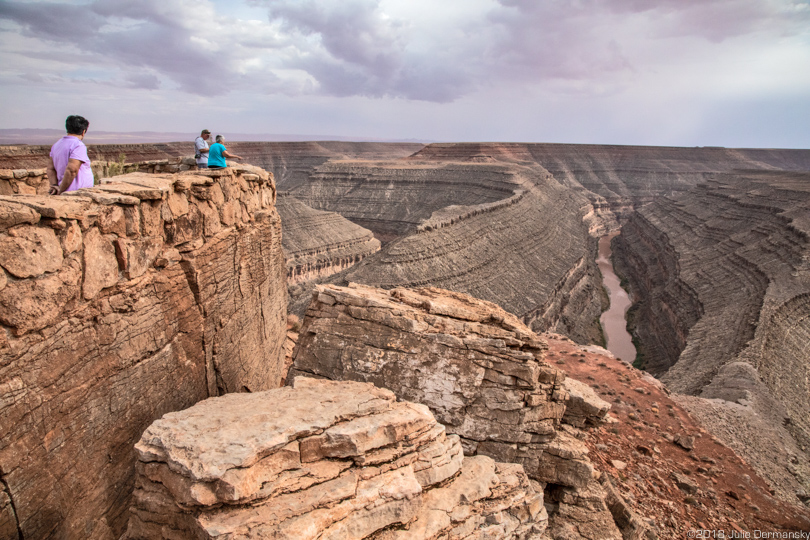
Visitors at an overlook of Gooseneck Bend, an area of Bears Ears National Monument which loses protection under the Trump administration’s proposal to shrink the monument.

Valley of the Gods in Bears Ears, part of the national monument that will no longer be protected if President Trump’s proclamation to reduce the size of it stands.
Jonathan B. Jarvis, 18th director of the National Park Service, says Bernhardt is to Zinke what ex-coal lobbyist Andrew Wheeler is to the similarly scandal-ridden Scott Pruitt, who resigned as head of the Environmental Protection Agency (EPA) in July, calling him “smart, shrewd, low-profile, and effective.”
As Mother Jones reported in October, “some of the most radical changes under Trump have come from the many behind-the-scenes appointees, the government insiders, who have come out of the swamp the president pledged to drain. At Interior, that’s been Bernhardt and his allies.”
Saeger’s group had called for Zinke’s resignation for his potential conflicts of interest and sees Bernhardt through the same lens. He warns, “The bottom line is that Bernhardt is too conflicted to even be Acting Secretary.”
Together Zinke and Bernhardt started the largest rollback of federal land protections in U.S. history and prepared the largest U.S. offshore oil and gas lease sale (which ended as a flop in August).
In addition, they have instructed the Bureau of Land Management, which is in the Interior Department, to revise its rules on methane emissions from natural gas drilling on public lands, pushed for more roads in wilderness areas, canceled a study examining the health impacts of coal mining, and dismissed violations committed by coal companies.
Warning From Scientist Who Worked Under Zinke
“I’m delighted to see Ryan Zinke get his comeuppance. He was corrupt and arrogant in his disdain for science and public lands,” Joel Clement, a former senior scientist and policy expert with the Interior Department, wrote in an email following the news of Zinke’s resignation, “but his number two at Interior is equally corrupt and far more circumspect-beware.”
Clement, who filed for whistleblower protection and ultimately resigned while working under Zinke, is now a senior fellow with the Center for Science and Democracy with the Union of Concerned Scientists (UCS). He currently works to expose political interference in science and fight attacks on federal science from the Trump administration and Congress.
Under Secretary Zinke, Clement, a biologist, was removed as a top climate expert at the Interior Department and moved into an accounting position within the Office of Natural Resources Revenue, a job he lacked expertise for and which collects royalties from oil companies operating on federal lands. Clement claimed he was reassigned in retaliation for his work on the impacts of climate change on Native Alaskan communities.
“America’s public lands, and the natural and cultural resources they contain, belong to all of us,” Clement recently wrote in a Scientific American editorial. In the editorial, he rolled out the UCS report, “Science Under Siege at the Department of the Interior,” documenting what Clement describes as the “most egregious and anti-science policies and practices at the DOI under Secretary Zinke.”
The report outlines how the DOI under Secretary Zinke and his political team, including Bernhardt, attack science “from sidelining the work of the agency’s own scientists to systematically refusing to acknowledge or act on climate change.” According to the report, “these actions have far-reaching and serious implications for our health, the environment, and the future of our public lands.”
America’s Public Lands in the Crosshairs
In August I visited areas in Utah’s Bears Ears and Grand Staircase-Escalante national monuments that Trump left unprotected after he slashed both monuments’ boundaries. Multiple Native American tribes, including the Utah Diné (Navajo), Hopi, Zuni, and Ute, hold Bears Ears, in particular, as culturally and historically important land.
President Trump’s proclamation splitting Grand Staircase-Escalante into three monuments reduced the national monument by 46 percent and his proclamation splitting Bears Ears into two monuments reduced the lands under protection by 85 percent. Legal challenges against the proclamations are ongoing.
Here are photos I shot of those public lands in southern Utah on both monuments, which, under Trump and Zinke’s watch, have lost protection from oil, gas, mining, and other extractive activities:
Lands Cut From Grand Staircase-Escalante National Monument
-=-=
-=-=
pretty subruse./set; kinda suggests east coast payback vs west; weather patterns bring smoke; fuel load, possible climate is changing, longer fire season; at the same time forest magmt, pvt sector better;
https://news.yahoo.com/climate-change-activists-ignoring-crucial-210746382.html
cda burns nyc orange
Former Interior Secretary David Bernhardt said forest management is an essential component of wildfire prevention and, consequently, air quality protection.
encounter books
https://www.washingtontimes.com/news/2023/may/4/book-review-you-report-to-me-accountability-for-fa/
pendejo
OPINION:
The first must-have volume for would-be political appointees hoping to restore America after the swearing-in of a Republican president in 2025 has just been published.
In “You Report to Me: Accountability for the Failing Administrative State” (Encounter, 2023), former Interior Secretary David Bernhardt describes the growth of the federal bureaucracy over more than two centuries, discusses the lessons he learned over a two-decade period in and around the Department of the Interior, and details what appointees must know to deliver the change promised the American people.
It is the perfect accompaniment to The Heritage Foundation’s “Mandate for Leadership: The Conservative Promise,” which is described as “a comprehensive policy guide for the next conservative U.S. president,” released days ago. “Mandate” examines what to do; “You Report to Me,” after exposing the “failed administrative state” and how it got that way, explores how to do it.
Mr. Bernhardt has the bona fides to write authoritatively of a department, established in 1849, that manages 413 million acres, nearly a fifth of the country, with 70,000 employees and an annual budget exceeding $16 billion.
Born and raised on Colorado’s rural western slope, Mr. Bernhardt is the only person ever confirmed by the Senate as the department’s solicitor (top lawyer), deputy secretary and secretary. He served Presidents George W. Bush and Donald Trump; in fact, “you report to me” was Mr. Trump’s instruction to him. Strikingly, when Mr. Bernhardt called Mr. Trump as ordered, it was the president, not a senior staffer as under Mr. Bush, who returned his call.
“I speak for the mice,” one bureaucrat answered Mr. Bernhardt, who regularly engaged department employees at headquarters and in the field, when he asked what she did. The exchange illustrates Mr. Bernhardt’s greatest concern regarding civil service: “employees who advocate for their own pet cause rather than serving as neutral, technically competent administrators … faithfully executing the authority that Congress … granted to the secretary of the interior.”
Mr. Bernhardt doubts the bureaucrat read the law she was charged with implementing, but she alone is not blameworthy. Culpable too are “political leaders of both parties” for their “longstanding failure … to guide agency decision making in accordance with the law and to hold civil service members accountable for their job performance.”
Mr. Bernhardt, who entered the Interior building in 2001 with Secretary Gale Norton, another Coloradoan, documents a new, worrisome change in the civil service: its outright antipathy toward political appointees who join the department, as he did in January 2017.
Federal civil servants have always been predominantly left of center;in fact, recent studies show they are 2-to-1 Democrat to Republican; senior civil servants are 3 to 1. Nonetheless, they previously set aside their personal views to fulfill their responsibilities consistent with the vision of those America sent to Washington.
When Mr. Trump took office, however, many rebelled. For example, 400 career lawyers in one Justice Department division refused to prepare legal briefs to prevent biological males from competing against biological females in high school and college athletics, leaving those filings to 12 political appointees.
Although largely complimentary of the response of civil servants to his efforts and those of former Secretary Ryan Zinke to implement Mr. Trump’s policies, Mr. Bernhardt details instances when bureaucrats flouted orders. For example, Mr. Zinke directed the Bureau of Land Management to plan to move its headquarters to the West, home to 99% of the 245 million acres it manages and 97% of its employees.
Two years later, Mr. Bernhardt replaced Mr. Zinke and asked to see the plan. None had been prepared. The bureau’s senior civil servants, representing hundreds of years of employment with the agency, were stonewalling. Mr. Bernhardt accomplished the move, but two years later than if civil servants had followed orders. Such insubordination is not lost on the American people. A recent survey found 60% believe career federal employees have too much influence over policy.
Mr. Bernhardt explores recent rulings of the Supreme Court, including its landmark decision inWest Virginia v. Environmental Protection Agency, which “signals a potential for [the Court] returning power to the American people instead of a bureaucracy in Washington, D.C.”
Congress too must do its job, Mr. Bernhardt urges, not just by reforming the civil service and the regulatory process, but also by delegating specific statutory authority, by holding political appointees accountable for agency decisions, and by evaluating whether the programs it created are achieving intended results.
“Driving Change as a Political Appointee,” Mr. Bernhardt’s concluding chapter, contains sage advice from his decades in and around the Interior Department for those who recognize both that “[t]he nation needs competent, experienced administrators to serve at both career and political levels of the federal executive branch” and that “the American people deserve a government that serves them better.”
It is required reading for any citizen who, despite “[t]oday’s rancorous political environment,” wishes to accept Mr. Bernhardt’s challenge to serve as he did. Although he sets out an informative road map for success, Mr. Bernhardt argues the true “blueprint for accountable government” is in the “Constitution’s separation of power and in the oath taken every career civil servant, every executive appointee, every member of Congress, and every federal judge.”
• William Perry Pendley, a Wyoming attorney and Colorado-based public-interest lawyer for three decades, served in the Reagan administration and led the Bureau of Land Management for President Donald Trump.
also cpac energy policy
https://www.c-span.org/person/?9273113/DavidBernhardt
omg
https://www.c-span.org/video/?528141-1/after-words-david-bernhardt
may 2034
Former Trump administration Interior Secretary David Bernhardtargued that the administrative state has amassed unaccountable power over the last 20 years. He was interviewed by American Enterprise Institute senior fellow Adam White.
WE WILL TALK A LOT IN THIS CONVERSATION ABOUT THE AGENCY'S RELATIONSHIP TO THE PRESIDENT, THE LEADER OF THE AGENCY'S RELATIONSHIP TO THE BUREAUCRACY. I'LL TALK ABOUT CONGRESS AND THE COURT, BUT MAYBE WE SHOULD TALK FIRST ABOUT THE INTERIOR DEPARTMENT. BUT MY GUESS IS IT'S NOT NECESSARILY THE MOST FAMOUS OF THE CABINET DEPARTMENTS. NO OFFENSE. IT'S ONE THAT I KNOW WELL FROM MY OLD CAREER IN ENERGY LAW. BUT FOR THOSE WHO DON'T STUDY INTERIOR QUITE SO CLOSELY, COULD YOU JUST TALK WHAT IT DOES? ABSOLUTELY. FIRST OFF, IT'S A IMPORTANT AGENCY WITH A VERY IMPORTANT MISSION IN THE DEPARTMENT OF THE INTERIOR MANAGES APPROXIMATELY ONE IN EVERY FIVE ACRES OF LAND IN THE UNITED THROUGH ITS ADMINISTRATIVE JURISDICTION. THAT'S CONVERTED CONFERRED TO IT BY CONGRESS, AS WELL AS ACTIVITIES THAT TAKE PLACE ON THE OUTER CONTINENTAL SHELF. AND SO IT HAS A MILIEU OF RESPONSIBILITIES RELATED TO THOSE LANDS, DEPENDING ON THE DIRECTION THE CONGRESS HAS PROVIDED.
FOR EXAMPLE, SOME THESE AREAS CONGRESS HAS DESIGNATED TO BE NATIONAL PARKS, IN OTHERS FISH AND WILDLIFE REFUGES. OTHER LANDS ARE DESIGNATED MULTIPLE USE LANDS ADMINISTERED BY THE BUREAU OF LAND MANAGEMENT. THE DEPARTMENT, THE INTERIOR ALSO MANAGES WATER RESPONSIBILITIES IN THE WEST THROUGH WHAT IS CALLED THE BUREAU OF RECLAMATION AND PLAY A VERY IMPORTANT ROLE IN DELIVERING WATER FOR AGRICULTURE AND MUNICIPAL AND INDUSTRIAL USES TO A LOT OF PEOPLE IN THE WEST AND THEN THEIR SCIENTIFIC RESPONSIBILITIES, SUCH AS THE USGS LOGICAL SURVEY. NOW WHAT'S REALLY INTERESTING ABOUT THE DEPARTMENT IS IT'S A VERY OLD AGENCY. IT WAS ACTUALLY ESTABLISHED. IN 1849 AND IT WHEN IT WAS ESTABLISHED, IT WAS THE OUTCOME OF OTHER CABINET DEPARTMENTS HOPING TO GET RID OF CERTAIN ACTIVITIES THAT THEY HAD WITHIN THEIR JURISDICTION. SO THE DEPARTMENT OF TREASURY WAS ABLE TO GET OUT OF THE WORK ASSOCIATED WITH THE GENERAL LAND OFFICE, WHICH WAS LARGELY IN CHARGE OF TRANSFERRING LANDS AS A MEANS OF CREATING REVENUE FOR THE FEDERAL GOVERNMENT. THE WAR DEPARTMENT TRANSFERRED THE RESPONSIBILITIES ASSOCIATED WITH AMERICAN INDIANS TO THE DEPARTMENT OF THE INTERIOR.
THE VETERANS PENSIONS AND BENEFITS WERE PART OF THE DEPARTMENT OF THE INTERIOR, AND EVEN THE OFFICE WAS INITIALLY A PART OF THE DEPARTMENT OF THE INTERIOR. AND SO IT WAS EVEN BACK IN THE 1840S AND FIFTIES, IT WAS THIS ORGANIZATION, AND THAT WAS VERY COMPLEX, BASED ON A LOT OF STUFF THAT OTHER DEPARTMENT DIDN'T WANT TO FOCUS ON. WHEN YOU COME TO WASHINGTON, OFTEN YOU SEE ALL THESE AGENCIES AND YOU KIND OF FEEL LIKE THEY'VE BEEN HERE FOREVER. BUT BUT SOME OF THEM ARE VERY NEW. SOME OF THEM ARE VERY OLD. AND YOUR STORY ABOUT THE HISTORY OF INTERIOR REMINDS ME OF JUST 20 YEARS AGO WHEN THE GOVERNMENT CREATED THE DEPARTMENT OF HOMELAND SECURITY AND HAD TO BRING TOGETHER SO MANY DIFFERENT COMPONENT PARTS, SOME NOT NEW, SOME OLD. AND SOMETIMES IT'S HARD TO ACTUALLY WORK OUT HOW ALL OF THESE THINGS WILL ROW IN THE SAME DIRECTION AND I GATHER THAT EVEN FOR AN AGENCY THAT'S NOW ALMOST, WHAT, ALMOST 200 YEARS OLD, SOMETIMES IT IS STILL DIFFICULT TO ROW EVERYTHING IN THE SAME DIRECTION.
SO WHAT YOU HAVE AT AN AGENCY LIKE INTERIOR IS SPECIFIC, AND WITHIN THAT DEPARTMENT SPECIFIC AGENCIES HAVE VERY DIFFERENT STATUTORY MISSIONS AND SO IN THE ROLE OF DEPUTY SECRETARY OR SOLICIT ARE OR EVEN SECRETARY, YOU'RE OFTEN HARMONIZED AS IN THE MANDATES OF THESE AGENCIES IN A WAY THAT WORKS FOR YOUR OVERALL RESPONSIBILITIES. AND SO HISTORICALLY THAT CAN HAVE TENSION THAT CAN HAVE A LOT OF PUBLIC ATTENTION. AND AND YOU DO LEARN THROUGH THAT PROCESS HOW TO TRY AND MANAGE THE RESPONSIBILITIES IN A WAY THAT'S CONSISTENT WITH THE LAW, CONSISTENT WITH THE FACTS, AND THEN TO THE EXTENT THAT IT'S APPROPRIATE, CONSISTENT WITH THE POLICY DIRECTION THAT THE PRESIDENT HAS NOW, EVEN BEFORE YOU BECAME DEPUTY SECRETARY, THEN SECRETARY, INTERIOR WAS AN AGENCY THAT YOU KNEW PRETTY WELL YOU'D HAD A LONG CAREER THERE, RIGHT? THAT'S CORRECT. I SPENT EIGHT YEARS AS A POLITICAL APPOINTEE, FIRST AS A VERY JUNIOR APPOINTEE, WORKING MY WAY UP IN THE BUSH ADMINISTRATION FOR EIGHT YEARS.
I ULTIMATELY SERVED AS A SOLICITOR OF THE DEPARTMENT, WHICH IS THERE A CHIEF LEGAL OFFICER AT THE END OF THE BUSH GEORGE W BUSH ADMINISTRATION, AND THEN, OF COURSE, RETURNED TO SERVE AS DEPUTY SECRETARY IN THE TRUMP ADMINISTRATION. NOW BACK TO THE THEME OF THE BOOK YOU REPORT TO ME. HOW WOULD YOU DESCRIBE THE RELATIONSHIP BETWEEN A PRESIDENT AND HIS CABINET SECRETARIES? WELL, I THINK IT REALLY IS A RELATION SHIP THAT IS LARGELY DEPENDENT ON THE VIEWS OF THE RELATIONSHIP. THE PRESIDENT ACTUALLY WANTS TO HAVE. I MEAN, IF YOU LOOK AT CONSTITUTION, YOU KNOW, THERE IS THERE'S NOT A LOT OF DIRECTION ON THE JOB DESCRIPTION OF OF THE RELATIONSHIP BETWEEN THE SECRETARY AND THE PRESIDENT. YOU KNOW, THE PRESIDENT POINTS YOU YOU HAVE TO BE CONFIRMED BY THE UNITED STATES SENATE. AND THEN THE CONSTITUTION BASICALLY SAYS THE PRESIDENT CAN ASK YOU FOR A WRITTEN REPORT. RIGHT. RIGHT. AND IT AND ULTIMATELY THE RESPONSE ABILITIES ASSOCIATED WITH THAT JOB ARE LAID OUT IN LAW.
BUT YOU HAVE TO HAVE A RELATIONSHIP WITH THE PRESIDENT AND WHAT HE WANTS. AND, FOR EXAMPLE, WHEN I SIT DOWN WITH THE PRESIDENT TO TALK ABOUT A POTENTIALLY I'M SERVING AS SECRETARY, ONE OF THE QUESTIONS I HAD FOR HIM IS WHAT DID HE WANT IN THE JOB OF SECRETARY? BECAUSE DEPENDING ON, YOU KNOW, HIS INTERESTS, THE ROLE MAY BE SOMETHING THAT I WAS NOT THE OPTIMAL CANDIDATE FOR. SO WE WE TALKED ABOUT AND AND ULTIMATELY THE PRESIDENT DECIDES HOW THAT RELATIONSHIP IS GOING TO WORK, WHAT THE INVOLVEMENT IS THAT HE WANTS WITH THE SECRETARY. AND AND IT'S A VERY PERSONAL CHOICE, IN MY OPINION. NOW, INTERIOR'S A BIG PLACE, BUT THE WHITE HOUSE IS A BIG PLACE TO THE PRESIDENT HAS NOT JUST HIS HIS CORE STAFF AND ADVISERS. THERE'S THE ENTIRE DOMESTIC POLICY COUNCIL, THE NATIONAL ECONOMIC COUNCIL, NATIONAL SECURITY COUNCIL, OIRA, ALL OF THAT. AND SO WHEN PRESIDENT TRUMP SAYS YOU REPORT TO HIM, I MEAN, UNDERSTAND THAT THE SENSE THAT YOU'RE YOU'RE HIS APPOINTEE AND YOU'LL HAVE A A ONE ON ONE RELATIONSHIP IN A LOT OF YOUR WORK, BUT YOU'RE STILL SURELY WORKING A LOT WITH THE BROADER TEAM OF THE WHITE HOUSE. AND AT ITS BEST, THAT LARGER STRUCTURE HELPS THE POLICYMAKING PROCESS. SO HOW DID YOU NAVIGATE THAT REPORTING TO THE PRESIDENT? BUT WORKING WITH THE BROADER TEAM?
WELL, FIRST OFF, YOU'RE ABSOLUTELY RIGHT THAT THERE IS ENTIRE TEAM. AND, YOU KNOW, MY PERSPECTIVE ON THE PRESIDENT'S DIRECTION WAS AS FOLLOWS YOU'RE WORKING WITH EVERYBODY COLLABORATIVELY BECAUSE YOU ARE A TEAM AND AND YOU WANT TO ACCOMPLISH WHAT YOU NEED TO ACCOMPLISH. AND YOU'RE PART OF AN EFFORT WHERE THE WHITE HOUSE IS RAISING ISSUES, POTENTIALLY. YOU'RE GIVING THEM SOLUTIONS OR RAISING ISSUES TO THEM TO ENSURE THAT THEY ARE AWARE OF OF ACTIVITIES THAT. THE PRESIDENT SET VERY CLEAR GOALS FOR ME. HE SAID, HERE ARE YOUR GOALS. BUT WHAT THAT STATEMENT MEANT TO ME WAS THAT ULTIMATELY I HAD THE ABILITY TO TALK TO THE PRESIDENT WHEN I NEEDED OR WANTED TO, AND THAT TO ME WAS A DIFFERENCE THAN THE EXPERIENCE THAT I'D SEEN IN THE IN THE BUSH ADMINISTRATION AT TIMES IN THE IN THE BUSH ADMINISTRATION. I WITNESSED IT TAKING LITERALLY MONTHS FOR A SECRETARY TO BE ABLE TO RAISE AN ISSUE DIRECTLY. THE PRESIDENT, WHILE WORKING THROUGH THAT WHITE HOUSE PROCESS WITH PRESIDENT TRUMP, YOU COULD MOVE FORWARD AND GET THAT CALL BACK VERY, VERY QUICKLY. AND THAT ALLOWED YOU TO RESOLVE ISSUES AND MOVE FORWARD AT A PACE THAT REALLY WAS DRAMATICALLY DIFFERENT THAN MY EXPERIENCE IN THE PRIOR ADMINISTRATION. AND THAT WAS IMPORTANT. THE TO ME IT WAS AT LEAST IMPORTANT. AND I THINK IT WOULD BE IMPORTANT TO ANY MANAGER WHAT YOU WANT AS A AS A MANAGER, I THINK OF ANY ROLE IS, YOU KNOW, YOU WANT CLEAR DIRECTION, YOU WANT A DEGREE OF CONSISTENCY IN THAT DIRECTION.
AND AND WHEN YOU NEED FEEDBACK OR, A RESPONSE, YOU WANT THAT QUICKLY AND YOU WANT TO KNOW THAT THE SUPERIOR HAS YOUR BACK TO A CERTAIN EXTENT. I THINK EVERYBODY THAT WORKS FOR ANYONE WANTS THOSE TYPES OF THINGS. AND AS I LAY OUT IN THE BOOK YOU REPORT TO ME, I FELT THAT I HAD THAT WITH THE PRESIDENT. WHAT'S AN EXAMPLE THAT. WELL, A GREAT EXAMPLE WOULD BE ONE OF THE FIRST ACTIONS THAT I TOOK. I CAME IN AS AN SECRETARY. IT WAS IN THE MIDDLE OF A GOVERNMENT SHUTDOWN. AND I EXPLAINED THIS IN THE BOOK, AND I MADE A DECISION TO BEGIN TO UTILIZE SOME MONEY FOR RECREATIONAL THAT WAS THAT WAS FROM RECREATIONAL FEES TO ADDRESS SOME ISSUES AT THE NATIONAL PARKS AND ACTUALLY PUT SOME OF OUR FOLKS THAT WERE IN FACILITIES FEES AND MAINTENANCE WHO ARE REALLY HURTING BACK TO WORK RIGHT AWAY DURING THE SHUTDOWN AND IN DOING THAT, I KNEW THAT IT WOULD BE CONTROVERSIAL AND I WAS CONFIDENT IT WAS LEGAL. BUT I RAISED THE ISSUE WITH THE WHITE HOUSE AND DIRECTLY WHAT THE PRESIDENT EXPLAINED TO HIM. WHAT I WAS GOING TO DO. AND HE SAID TO ME, HEY, THREE THINGS ESSENTIALLY, YOU'RE DOING THIS NOW, EVEN THOUGH IT'S BEEN A WHILE WITH THE SHUTDOWN, MAYBE YOU SHOULD HAVE THOUGHT ABOUT DOING IT SOONER, WHICH I THOUGHT WAS A COMPLETELY LEGITIMATE AND RESPONSIBLE ISSUE. SECONDLY, YOU'RE THE NEW GUY AND BECAUSE YOU'RE THE NEW GUY, MAYBE YOU OUGHT TO SAY THAT I YOU TO DO THIS, WHICH I FOUND INCREDIBLY INTERESTING, GIVEN THAT I HAD TOLD HIM IT WOULD BE A CONTROVERSIAL DECISION THAT HE WOULD HAVE MY BACK AND THEN THIRD AND THIS WAS REALLY IMPORTANT TO ME HE SAID HEY WHEN YOU HAVE SOMETHING THAT YOU THINK IS RIGHT AND YOU NEED TO DO IT, JUST DO IT AND LET ME KNOW AND RUN YOUR DEPARTMENT THE WAY YOU NEED TO. AND THAT WAS VERY ENABLING. AND TO HAVE THAT DIRECTION FROM FROM THE PRESIDENT, UNITED STATES TO MOVE FORWARD ON HIS POLICY, VISION I THOUGHT WAS AN INCREDIBLE ACT OF MANAGEMENT.
NOW, WHEN YOU'RE NOT DEALING WITH THE PRESIDENT IN THE WHITE HOUSE, YOU'RE DEALING WITH THE BROADER INTERIOR TEAM. AND THAT'S ONE OF THE CORE MESSAGES OF THE BOOK, THE DIFFICULTY OF LEADING A LARGE CABINET, A CABINET LEVEL WITH MANY STATUTORY RESPONSIBILITIES AND A HUGE TEAM OF CIVIL SERVANTS AND OTHERS WHO DON'T NECESSARILY AGREE WITH A GIVEN PRESIDENT'S PARTICULAR AGENDA. HOW WOULD YOU DESCRIBE THE RELATIONSHIP BETWEEN THE CABINETS OF THE AGENCY'S LEADER AND, THE THE CIVIL SERVANTS? WELL, FIRST OFF, IT STARTS WITH THE ROLE OF A RESPECTIVE SECRETARY. AND IN THE IN THE CASE OF THE SECRETARY OF THE INTERIOR, CONGRESS HAS CLARIFIED THAT THE SECRETARY OF THE INTERIOR SUPERVISES ALL FUNCTIONS OF THE DEPARTMENT OF THE INTERIOR AND THEN LISTS THOSE FUNCTIONS. AND WHAT'S INTERESTING THAT I'VE ALWAYS THOUGHT IS THE WORD SUPERVISE HIS SUPERVISE TO ME IS A IS A WORD THAT CONVEYS BOTH AN ACTIVE SENSE LIKE YOU NEED BE ON TOP OF THINGS AND AN ELEMENT OF ACCOUNTABILITY AND THEN WORD ALL ADDED TO THAT MEANS YOU'RE RESPONSIBLE FOR EVERYTHING THAT'S OCCURRING IN THAT DEPARTMENT WHICH IS SIGNIFICANT IN THE ROLE.
SO I WAS VERY LUCKY WHEN I FIRST CAME TO INTERIOR DURING THE BUSH ADMINISTRATION, AND I ENDED UP WORKING IN A VERY SMALL OFFICE AND. THE GREAT THING ABOUT THAT PARTICULAR OFFICE WAS THAT THE FOLKS IN THAT OFFICE BELIEVED IT WAS THEIR MISSION. THE CAREER FOLKS IN THAT OFFICE BELIEVED IT WAS THEIR MISSION TO HELP SECRETARY SHINE NO MATTER, WHO THE SECRETARY WAS. AND SO THAT WAS GETTING IN AN EXPERIENCE TO WORK COLLABORATIVELY WITH CAREER STAFF ME A COUPLE OF THINGS. FIRST OFF, IT TAUGHT ME THAT I COULD OVER PERFORM IF I WORKED WITH THEM, IF THEY COLLABORATED WITH ME, IF I WAS ABLE TO LEARN FROM THEIR EXPERTISE AND THEN USE TO MOVE THE BALL FORWARD IN 2016 AFTER THE ELECTION, WHAT WE SAW IN THE IN IN THE PRESS IN PARTICULAR HERE WAS A LOT OF. HIGHLIGHTING EFFORTS TO SUGGEST THAT FOLKS IN THE CIVIL SERVICE SHOULD BE RESISTANT TO THE NEW PRESIDENT. AND THAT WAS, FRANKLY ENCOURAGED IN THE MEDIA. IF YOU GO BACK AND LOOK AT BLOOMBERG STORIES OR OTHERS AND, I HIGHLIGHT SOME OF THOSE STORIES IN THE BOOK, AND THAT WAS VERY TROUBLING TO ME BECAUSE THE END OF THE DAY, WHEN YOU SIGN UP FOR THE CIVIL SERVICE AND, YOU TAKE THE YOU TAKE THE SAME EVERYONE TAKES TO, YOU KNOW, WELL AND FAITHFULLY EXECUTE THE LAW AND IN DOING THAT IN DOING THAT, YOU BUY INTO THE SYSTEM OF WHOEVER IS THE PERSON THAT'S ELECTED. YOU NEED TO CARRY OUT THE MISSION ACCORDING TO THE DIRECTION THE AMERICAN PEOPLE EXPECT AND SO MY FIRST MESSAGE AS DEPUTY SECRETARY LAID OUT, YOU KNOW, MY MY VIEW OF NEED FOR US TO WORK TOGETHER AND HIGHLIGHT, YOU KNOW, THE RESPECTIVE ROLES, THE CIVIL SERVICE ON ONE HAND AND POLITICAL APPOINTEES. NOW, THE BOOK THE BOOK, A WHOLE SERIES OF OF EVENTS FROM OTHER AGENCIES WHERE YOU SEE A LACK OF COLLABORATION AT DIFFERENT TIMES. AND I ALSO HIGHLIGHT SOME GREAT POINTS OF COLLABORATION IN A PRESIDENT'S AND A PRESIDENT'S FRUSTRATION WITH THE BUREAUCRACY IS THAT IT'S A VERY OLD STORY IN WASHINGTON.
PRESIDENT TRUMAN WAS WAS FRUSTRATED. THE BUREAUCRACY HE, IF I REMEMBER CORRECTLY, HE JOKED THAT PRESIDENT EISENHOWER WOULD ARRIVE THINKING HE'S LIKE A GENERAL, WHERE EVERYTHING HE DOES WILL IMMEDIATELY GET SALUTED. YOU'LL FIND OUT. IN FACT, THINGS MOVE A LOT. KENNEDY AND HIS ADMINISTRATION FRUSTRATED WITH THE BUREAUCRACY. PRESIDENT CLINTON, PRESIDENT OBAMA, THEY WERE OFTEN FRUSTRATED WITH MILITARY BUREAUCRACY. WE OFTEN THINK ABOUT THIS AS REPUBLICAN PRESIDENTS BEING FRUSTRATED BY BY DOMESTIC POLICY, CIVIL SERVANTS. THIS HAPPENS ON BOTH SIDES OF THE AISLE. THAT SAID, THERE DOES SEEM TO BE A DIFFERENCE RECENTLY IN THE LAST FEW ADMINISTRATIONS. AND LIKE YOU SAID AT THE OUTSET OF THE TRUMP ADMINISTRATION, WHERE YOU HAD CIVIL SERVANTS PROTESTING AROUND THE ARRIVAL, THEIR THEIR NEW LEADERSHIP, I REMEMBER STORIES OF THE EPA BUREAUCRACY PROTESTING OUTSIDE OF THE EPA BUILDING. THAT'S RIGHT. EVEN BEFORE SECRETARY OR ADMINISTRATOR PRUITT WAS WAS APPOINTED TO THE AGENCY.
WHAT HAS CHANGED IN THE LAST, SAY, 20 YEARS OR SO? I THINK A COUPLE OF THINGS. BUT BUT I ALSO THINK ALL OF THESE THINGS CAN BE OVERCOME. BUT DO THINK THAT ON ONE HAND, IT BECAME SOCIALLY ACCEPTABLE TO ENGAGE IN THIS ACTIVITY. THE OTHER HAND, IT IS ALSO A RESULT, I BELIEVE, OF A FEELING OF IMPUNITY THAT THERE WILL BE NO CONSEQUENCE FOR FOR ACTING IN A MANNER THAT'S UNACCEPTABLE ALL. AND I THINK IN SOME INSTANCES ACTUALLY BELIEVE THAT THE ACTIVITIES ARE BEYOND APPROPRIATE. AND I HIGHLIGHT THE BOOK AN EXAMPLE OF AN INDIVIDUAL WHO IS WORKING WITH THE WHITE HOUSE ON COMMUNICATIONS AND SHE DEVISES A METHODOLOGY WHERE IF THE WHITE HOUSE DOESN'T LIKE SHE'S WRITTEN AND GIVES HER EDITS BACK SHE WILL MAKE CHANGES TO THE EDITS BUT THEN REINSERT HER OWN LANGUAGE THAT WASN'T APPROVED BACK INTO THE DOCUMENT IN OTHER PLACES AND THEN SEND IT FORWARD, QUOTE A WORKAROUND AND YOU KNOW, IN ANY OTHER LINE OF WORK THAT WOULD BE BLATANT, BLATANT IN SUBORDINATION HERE, THE PERSON ACTUALLY A BOOK HIGHLIGHTING HER UTILIZATION OF DOING THAT. AND SO I THINK ON ONE HAND IT BECAME ACCEPTABLE. WHY IS THAT. YEAH. WELL, OF IT, IN MY OPINION, IS THAT THE LEADERS OF THESE AGENCIES THEMSELVES HAVE ALLOWED SOME OF THIS TO HAPPEN FROM STANDPOINT OF NOT CLEAR THAT THEY ARE RESPONSIBLE FOR THESE DOCUMENTS.
THEY'RE GOING TO TRY TO CHECK THEM, GOING TO ADD IN THEM, THEY'RE GOING TO OWN THEM AND DOING THAT, THEY'RE GOING TO DO THE EFFORT TO RIGOROUS IN THEIR REVIEW AND. WHAT I REALLY FOUND IS IF YOU ARE RIGOROUS YOUR REVIEW AND YOU AND YOU ARE WILLING TO DO THE WORK, PEOPLE FIND A WAY TO ACCOMMODATE YOU AND REALIZE THAT, YOU KNOW, ULTIMATELY THE BUCK DOES STOP WITH YOU. AND IF YOU'RE WILLING TO SHOULDER THE BURDEN OF THE RESPONSIBILITY THEY ARE. THEY ARE TYPICALLY WILLING TO WORK WITH, YOU KNOW, A PROFESSIONAL CIVIL SERVICE, A NONPARTISAN CIVIL SERVICE IS ACTUALLY ONE OF THE GREAT ACHIEVEMENTS OF AMERICAN HISTORY. IN THE AFTER THE CIVIL WAR IN THE LATE 19TH CENTURY, YOU HAD LAWS LIKE THE PENDLETON ACT THAT WERE ENACTED IN ORDER TO GET US AWAY FROM A SPOILS SYSTEM, WHERE EACH NEW NEWLY ELECTED PRESIDENT WOULD COME IN AND HAND OUT JOBS LIKE POLITICAL GIFTS. YOU'D HAVE A PROFESSIONAL CIVIL SERVICE THAT WOULD CARRY OVER FROM ONE ADMINISTRATION TO THE NEXT FOR THE SAKE OF STABILITY IN GOVERNMENT FOR FOR FOR FOR EXPERTISE, GOVERNMENT AND MORE.
A MOMENT AGO, YOU MENTIONED THE RESPECTIVE ROLES OF THE CIVIL SERVANTS VERSUS THE POLITICAL APPOINTEES. MAYBE YOU COULD UNPACK THAT A LITTLE BIT. WHAT ARE THE RESPECTIVE ROLES OF THE POLITICAL APPOINTEES AND THE CIVIL SERVICE? WELL, I THINK AT THE END OF THE DAY, I'M JUST AS I SAID, YOU KNOW, THE SECRETARY IS THE SUPERVISOR OF THAT AGENCY, WHETHER PEOPLE LIKE IT OR NOT, WHOEVER IS APPOINTED AND CONFIRMED IS IN CHARGE, THE VIEWS OF THE PRESIDENT ARE ON ONE HAND A IMPORTANT COMPONENT BUT BUT BUT EQUALLY IMPORTANT, THE LAWS THAT YOU'RE TASKED ADMINISTERING. THOSE ARE ULTIMATELY YOUR TRUE RESPONSIBILITY. AND YOU HAVE FACTS. AND IT'S WITHIN THE REALM OF LOOKING AT THE CONFINES OF THE LAW, LOOKING AT THE FACTS YOU HAVE. AND THEN TO THE EXTENT THAT THERE'S POLICY DISCRETION, THAT'S THE DIFFERENCE THAT AN ELECTION SHOULD MAKE. BUT ULTIMATELY, ALL OF THAT RESPONSIBILITY RESTS WITH THOSE SENIOR APPOINTEES AND. THEN IT'S DELEGATED DOWN AND AS IT'S DELEGATED DOWN THOSE RESPONSIBLE PARTIES ARE REALLY THERE FOR THE CIVIL TO HELP THE ACTUAL OFFICIAL, THE PRINCIPAL, MAKE THE RIGHT DECISION OR TAKE THE RIGHT ACTION. AND HELP THEM AND INFORM THEM THEY'RE THERE TO BE AN AIDE. AND IN TERMS ASSISTANCE AND CARRYING OUT THE RESPONSIBILITIES, THEY'RE NOT THERE TO BE THE POLICY DIRECTOR.
THEY'RE NOT THERE TO BE THE, YOU KNOW ADVOCATE FOR A CAUSE. THEY'RE THERE TO FAITHFULLY CARRY OUT THE LAW AS IT'S AS IT HAS BEEN CONFERRED BY CONGRESS. AND BY WHOEVER IS IN CHARGE, SUBJECT TO THE POLICY THAT EXISTS AND TO DO THAT AND TO DO THAT, THERE ARE INCREDIBLE PEOPLE. I YOU KNOW, EARLY ON IN TENURE IN THE BUSH ADMINISTRATION, I WORKED WITH SOMEONE WHO. SHE SHE BASICALLY HAD WORKED ON THE SAME ISSUE FOR FOR MANY MANY YEARS THROUGH CONSECUTIVE ADMINISTRATIONS. AND EVERY TIME A NEW A DIFFERENT PARTY CAME IN TO POWER, THEY WOULD CHANGE ON THAT ISSUE, 180 DEGREES AND SHE HAD A DOCUMENT CALLED AN ENVIRONMENTAL REVIEW IS, AN ENVIRONMENTAL IMPACT STATEMENT. AND AND I WAS LOOKING IT ONCE AND SHE HAD LITERALLY COLOR CODED IN THE FACTS ASSOCIATE IT WITH THE DOCUMENT FOR THOSE FACTS THAT WERE THE BEST ARGUMENTS FOR ONE ADMINISTRATION VERSUS ANOTHER TO SAVE HER TIME EVERY TIME SOMEBODY CAME BACK IN AND SAID, HEY, WE NEED HELP WITH THIS, AND THOSE ARE THE PEOPLE THAT CAN REALLY DO HELP YOU MAKE PHENOMENAL PROGRESS. AS FOR IN CHARGE, CONVERSELY, IF YOU HAVE 1% OF FOLKS RESISTING, THAT'S ONE THING. IF YOU HAVE 2%, THAT'S ANOTHER.
IF YOU HAVE 10% OR 20 OR 15. AND MY FEAR IS IF WE DON'T RECOGNIZE THE IMPORT INSTEAD OF HOLDING PEOPLE ACCOUNTABLE ALL TO THEIR RESPONSIBILITIES, THAT NUMBER COULD GROW DEPENDING ON WHOEVER THEY HAPPEN TO NOT LIKE BEING ELECTED AND WE CAN'T HAVE THAT AND HAVE OUTCOMES THAT ARE GOOD FOR THE AMERICAN PEOPLE. NOW LET'S SET ASIDE THE SORT OF OBVIOUS CASE WHERE A CIVIL SERVANT IS MAKING LIFE DIFFICULT FOR PRESIDENT BECAUSE HE'S A REPUBLICAN OR BECAUSE HE'S A DEMOCRAT. JUST BY SETTING THOSE ASIDE. WHAT ABOUT THE CASES WHERE A CIVIL SERVANT THINKS THAT THE POLITICALLY APPOINTED LEADERSHIP IS JUST WRONG ON AN ISSUE IS IS IS MISINTERPRETING A STATUTE, IS MISCONSTRUING THE FACTS IT'S NOT EVEN SO MUCH A DISAGREEMENT ABOUT THE POLICY DISCRETION. THEY JUST THINK THAT THE LAW OR THE FACTS ARE ON THE OTHER SIDE OF THE DECISION. NOW, OF COURSE THEY COULD THEY COULD RESIGN, BUT THERE MUST BE SOME KIND OF DIALOG OR PROCESS. THERE ARE CERTAINLY IS. I MEAN, FIRST OFF, ANY EMPLOYEE CAN GO TO THE, YOU KNOW, THE GENERAL COUNSEL'S OFFICE OR THE SOLICITOR'S OFFICE. THEY CAN RAISE ISSUES WITH THEIR SUPERVISOR. THEY CAN GO TO THE INSPECTOR GENERAL. THERE AREN'T HIGHER MECHANISMS. AND AND IF THEY THINK IT'S REALLY INAPPROPRIATE IN TERMS OF LIKE A POLITICAL ACTIVITY, THEY CAN EVEN GO TO THE OFFICE OF SPECIAL COUNSEL.
SO THERE'S A WHOLE HOST OF REMEDIES IS THAT YOU CAN TAKE BEYOND RESISTANCE OR BAD BEHAVIOR AND THOSE REMEDIES SHOULD BE TAKEN MANY TIMES. YOU KNOW, AN EMPLOYEE NOT NECESSARILY KNOW THE LAW OR HAVE FULL ASSESSMENT OF THE FACTS OR HAVE A PERSPECTIVE, AND THAT DIALOG IS HELPFUL OTHER TIMES THE POLITICAL APPOINTEE MAY BE MISINFORMED AND THE IMPORTANCE OF AS THE ROLE OF A POLITICAL APPOINTEE, IN MY OPINION, IS THE ABILITY TO IDENTIFY THE LAW AND IDENTIFY THE FACTS AND BE ABLE TO GET THE INFORMATION YOU NEED TO MAKE AN INFORMED DECISION. AND THAT REALLY IS MAXIMIZED WHEN YOU HAVE COLLABORATION BACK FORTH BY WITH THE CAREER STAFF AND YOU OFTEN HAVE IT AND AND SOMETIMES IT'S EDUCATIONAL FOR BOTH PARTIES. YOU RECOUNT A STORY IN THE BOOK WHERE THERE WAS A DEBATE AROUND APPLYING THE ENDANGERED SPECIES ACT AND. THE LAWYERS WERE WE'RE READING A STATUTORY I THINK THE TERM WAS INDIRECT EFFECTS. AND THEY SAID, HERE'S WHAT THE LAW MEANS. AND THERE WERE OTHER EXPERTS IN THE AGENCY OR OUTSIDE OF THE AGENCY ADVISING THE AGENCY WHO WERE CONSTRUING THE TERM INDIRECT EFFECTS MUCH, MUCH MORE BROADLY. SO YOU HAVE PEOPLE IN AND AROUND THE AGENCY WHO HAD A VERY BROAD SENSE OF THE AGENCY'S MISSION. AND THEN YOU HAD LAWYERS WITHIN THE AGENCY WHO WERE WHO WERE FOCUSING MUCH MORE ON THE STATUTES, IS THAT I THOUGHT THAT WAS AN INTERESTING EXAMPLE.
IS THAT IS IT A COMMON OCCURRENCE IN AGENCY, IN YOUR EXPERIENCE? OH, GO AHEAD. WELL, PARTICULARLY ON AN ISSUES RELATED TO SCIENCE, YOU CAN HAVE YOU KNOW, THERE ARE LEGAL AND REGULATORY TERMS. AND THEN CAN HAVE ISSUES THAT PEOPLE THINK ARE AND YOU KNOW, WE LIVE IN A SOCIETY OF LAW. AND SO AT THE END OF THE DAY TO HAVE ANY CERTAINTY OF OUR DECISION MAKING TO HAVE PREDICTABILITY IN THE LAW THAT WHAT THE HOW THE LAW TO FIND SOMETHING OR HOW THE REGULATION DEFINED SOMETHING IS REALLY IMPORTANT. AND SOMEBODY CAN HAVE A VIEW ON WHAT A WORD MIGHT MEAN. MAYBE THE REGULATION SHOULD BE A BROADER DEFINITION OR A DIFFERENT DEFINITION. WELL, THAT'S LEGITIMATE, BUT THE ISSUE THAT NEEDS TO BE TAKEN UP IS YOU SHOULD CHANGE YOUR REGULATION OR YOU SHOULD CHANGE THE STATUTE YOU DON'T GET TO INSERT YOUR VIEW THERE. THERE'S THERE'S A NUMBER OF EXAMPLES IN THE BOOK WHERE THERE ARE TERMS THAT ARE COMMONLY USED HAVE MAYBE A MEANING THAT IS SOMEWHAT DIFFERENT IN A PARTICULAR LEGAL OR REGULATORY CONTEXT.
AND THE ON THE AGENCY IS TO THEIR REGULATIONS OR CHANGE THEM. MAYBE ONE OF THE MOST FAMOUS EXAMPLES. THIS IS THE DECADES LONG FIGHT OVER THE STATUTES THAT GOVERN THE WATERS OF THE UNITED STATES. THAT'S THE EPA AND THE ARMY CORPS. AND YOU'LL HAVE LONG SCIENTIFIC DOCUMENTS ON HOW DIFFERENT BODIES OF WATER ARE CONNECTED OR NOT CONNECTED. BUT FIRST AND FOREMOST, THERE IS THE LEGAL REQUIREMENTS THAT CONGRESS HAS PUT IN LAW. THE AGENCIES ARE GOVERNED BY THE LAWS. BUT WHEN I TALK WITH FOLKS IN CIVIL SERVICE AND I MEAN GOOD FOLKS IN CIVIL SERVICE WHO REALLY ARE DOING THE BEST JOB THAT THEY CAN, THEY OFTEN TALK ABOUT THE AGENCIES MISSION. AND IT'S MY SENSE THAT AGENCY PERSONNEL, FIRST AND FOREMOST, HAVE A BROAD SENSE THE AGENCY'S MISSION. AND IT'S NOT ALWAYS ROOTED IMMEDIATELY. STATUTORY TEXT. I DON'T BLAME THEM. THEY'RE NOT THE LAWYERS. BUT HOW CAN POLITICALLY APPOINTED LEADERSHIP REALLY MOVE THE AGENCY WHEN THE AGENCY STAFF LIKE THE NEW POLICIES, ARE AT ODDS WITH THEIR KIND OF GENERAL SENSE OF AN AGENCY MISSION?
I GUESS THAT PROBABLY REQUIRES A LOT OF TRUST BETWEEN THE NEW LEADERS AND THE IN THE INCUMBENT STAFF. WELL, I THINK FIRST AND FOREMOST, IT REQUIRES, AS YOU HAVE TO BE CLEAR, YOU HAVE TO BE DIRECT IN WHAT YOU LAY OUT AND THEN YOU HAVE TO BE RIGOROUS IN INSISTING THAT. THAT'S THE WAY YOU'RE DOING IT. AND IT TAKES TO CHANGE. AND AGENCIES, CULTURE, A LOT OF FOLKS A LOT OF FOLKS ARE PASSIONATE ABOUT MISSION AND THAT'S FANTASTIC. I LIKE THAT MAKES THINGS GREAT BUT THAT PASSION HAS TO BE COMBINED BY THE REALITY OF THE LAW. AND THAT'S WHAT I TRY AND HIGHLIGHT IN THE BOOK IS AT THE END OF THE DAY, THE CONGRESS DECIDES WHAT THE LAW IS. THE EXECUTIVE BRANCH CLARIFIES WHERE X THROUGH GUIDANCE ON REGULATIONS AND GUIDANCE ACTIVITIES. AND THEN WE HAVE TO APPLY THAT IF WE WANT A DIFFERENT SYSTEM. THE TO DO IT IS GO CHANGE THE LAW. THERE'S NOTHING WRONG WITH THAT.
THAT'S GREAT. BUT THAT'S A ROLE OF ACTIVIST. IT'S NOT THE ROLE THE CIVIL SERVANT JUST SIMPLY DECIDING WHAT THE LAW MIGHT BE. NOW, WE'VE BEEN TALKING AT A VERY HIGH LEVEL GENERALITY MOSTLY, BUT THE SUBTITLE OF YOUR BOOK IS A ACCOUNTABILITY FOR THE FAILING ADMINISTRATIVE STATE. YOUR BOTTOM LINE IN THE BOOK IS THAT THERE ARE SOME VERY SIGNIFICANT REFORM THAT ARE NEEDED REFORMS TO THE CIVIL SERVICE AND MORE IN ORDER TO BRING ABOUT A NEW GENERATION OF AGENCY WORK THAT REALLY DOES FOLLOW EACH PRESIDENT'S DIRECTIONS IN ENFORCING THE STATUTES. ABSOLUTELY I FUNDAMENTALLY BELIEVE KNOW WHEN YOU LOOK BACK AT HISTORY, MUCH OF THE ENVIRONMENT THAT'S CREATED, WHAT I VIEW AS A IS A LACK OF ACCOUNTABILITY REALLY IS FROM THE 1960S FORWARD. AND WHAT'S INTERESTING AND IS THAT'S WHEN A NUMBER OF APPEAL MECHANISM WERE PUT IN PLACE. AND IT'S ALSO THE SAME TIME THAT THE EXECUTIVE BRANCH REALLY BEGAN EXPAND THE THE SCOPE OF THE ADMINISTRATIVE STATE IN SOME WAYS. AND SO YOU HAVE THESE THINGS HAPPENING TOGETHER AND ALL OF THIS AUTHORITY FLOWS TO THE EXECUTIVE BRANCH, THE PEOPLE AT THE HIGHEST LEVELS WITH THE RESPONSIBILITY ARE DELEGATING THAT DOWN WITHOUT A LOT OF OVERSIGHT.
AND MY VIEW IS THAT WHAT WE NEED TO DO IS, IS IMPROVE OUR METHODOLOGIES OF ACCOUNTABILITY MINIMIZE THE OPPORTUNITIES FOR UNNEEDED APPEALS, CONSIDER EVEN MOVING INTO MORE OF AN ATWELL SYSTEM. THESE ARE ALL QUESTIONS FOR CONGRESS, NOT FOR DAVID BERNHARDT OR OTHERS, BUT TO THINK ABOUT HOW WE IMPROVE THE SYSTEM SO WE GET BETTER OUTCOMES FOR THE AMERICAN PEOPLE. I ALSO BELIEVE THAT LEADERS OF THESE AGENCIES NEED TO BE BETTER PREPARED. I THINK THEY NEED TO UNDERSTAND THE LAW OF THE AGENCY. THEY'RE GOING TO THEY NEED TO UNDERSTAND THE PROCESSES BETTER AND THINK THAT THAT PREPARATION HELPS THEM MOVE FORWARD. NOW, BEEN TALKING ABOUT PRESIDENTS AND AGENCIES. WE HAVE MENTIONED CONGRESS A FEW TIMES. CONGRESS HAS A BUNCH OF DIFFERENT IN PLAY HERE. THERE'S THE PROCEDURAL LAWS ABOUT HOW AGENCIES DO THEIR WORK.
THE LAWS YOU JUST MENTIONED GOVERNING, CIVIL SERVICE AND ACCOUNTABILITY. AND THEN THERE'S THE SUBSTANTIVE LAWS OF THE ARE ACTUALLY ADMINISTERING. YOU TALK IN YOUR BOOK ABOUT HOW BROADLY STATUTES ARE WRITTEN. THEY LEAVE IMMENSE DISCRETION IN THE HANDS OF OF THE AGENCIES. BUT A LOT OF THE SUBJECTS THAT THE DEPARTMENT AND OTHERS ARE ACTUALLY ADMINISTERING, THEY'RE VERY COMPLICATED. THEY REQUIRE A LOT OF JUDGMENTS. HOW COULD CONGRESS ACTUALLY WRITE LAWS THAT ARE THAT ARE CLEAR AND SPECIFIC, BUT STILL ENABLE THE AGENCY TO TO TO MAKE JUDGMENTS BASED ON THE FACTS?
WELL, CONGRESS HAS IT COULD DO A LOT. CONGRESS COULD DECIDE WHETHER THEY PLAY A ROLE IN THE ISSUANCE OF NEW REGULATIONS. CONGRESS COULD HAVE TO APPROVE THEM. CONGRESS COULD ASK. YOU KNOW, I WAS I FOUND IT INTERESTING WHENEVER I TESTIFIED, CONGRESS NO ONE SAID TO ME, ARE YOU ACCOMPLISHING YOUR MISSION? WHAT IS WHAT ARE THE GOALS OF THIS PROGRAM? YOU KNOW I BELIEVE THAT EVERY PROGRAM SHOULD BE LOOKED AND AND CONGRESS SAY, WHAT ARE WE TRYING TO ACCOMPLISH HERE? AND ARE WE. AND IF WE'RE NOT, MAYBE WE OUGHT TO THINK ABOUT DOING THIS PROGRAM DIFFERENTLY AND IMPROVING IT. THE PROBLEM IS OVERSIGHT BY CONGRESS INVOLVES A LOT OF WORK AND INVOLVES A LOT OF EFFORT, BUT THEY REALLY SHOULD THESE PROGRAMS INSTEAD OF THE PROGRAM JUST SIMPLY BEING ON AUTOPILOT. YOU'RE IN, YOU'RE OUT. THE FIGHTS ON THE BUDGET ARE NEVER ABOUT DRAMATICALLY DECREASING THE PROGRAM.
WHAT THEY'RE REALLY ABOUT IS HOW FAST ARE WE GOING TO INCREASE THE PROGRAM? AND AND WHAT DOES IT MEAN WHEN WE AND AND THOSE ARE QUESTIONS THAT IF IF YOU WE HAVE LIMITED RESOURCES AND YOU ASSUME WE WANT THE BEST OUTCOMES WE CAN HAVE AND WE'RE IN THE MIDDLE OF A TECHNICAL TECHNOLOGICAL REVOLUTION. YOU THINK CONGRESS WOULD BE SAYING, WHAT IS THE PURPOSE OF THIS PROGRAM? HOW CAN IT BE DONE MORE EFFICIENTLY? WHERE CAN IT BE DONE? AND AND IN DOING THAT, SHOULD WE BE RESTRUCTURING THE WAY GOVERNMENT WORKS? AT THE END OF THE INTERIOR IS ORGANIZED PRETTY MUCH THE SAME WAY IT'S BEEN ORGANIZED SINCE THE VERY BEGINNING OF TIME, WHICH IS ONE LOCAL FIELD OFFICE A LITTLE WAYS AWAY. ANOTHER LARGER MANAGEMENT OFFICE, A STATE OFFICE OR REGIONAL OFFICE AND THEN HEADQUARTERS. AND THAT'S THE WAY IT'S BEEN ALIGNED SINCE SINCE INTERIOR STARTING NOW, CONGRESS HAS WRITTEN THESE BROAD, BROAD LAWS. AND YOU MENTIONED EACH PRESIDENT GOING TO HAVE HIS OWN VIEW OF WHAT THE RIGHT POLICY IS WITHIN THAT FIELD DISCRETION. BUT WHAT THAT MEANS IS, THAT WE HAVE HUGE SWINGS IN POLICY FROM ONE ADMINISTRATION TO THE NEXT.
THE STORY YOU TOLD EARLIER ABOUT THE CIVIL SERVANT WITH THE COLOR CODED ENVIRONMENTAL IMPACT STATEMENT. ON ONE HAND, I LIKE THAT STORY. IT'S A GOOD EXAMPLE. A CIVIL SERVANT WHO'S REALLY TRYING TO WORK WITH WITH LEADERS FROM BOTH POLITICAL PARTIES ON OTHER HAND, IT IS A LITTLE HORRIFYING TO THINK THAT THE CIVIL SERVANTS HAVE TO THINK ABOUT THE INEVITABLE SWINGS IN POLICY FROM ONE ADMINISTRATION TO THE NEXT. I KNOW EACH PRESIDENT COMES TO OFFICE TO PUT HIS OWN STAMP ON THE POLICIES, BUT WHAT COULD AN ADMINISTRATION DO TO HELP ENSURE SOME STABILITY FROM ONE ADMINISTRATION TO THE NEXT? SO MY OF THAT IS THAT THAT REALLY IS THE CHOICE OF BECAUSE, FOR EXAMPLE, THERE ARE SOME STATUTES LET'S TAKE THE DETERMINATION OF WHETHER SOMETHING AS A A LISTED SPECIES UNDER THE ENDANGERED SPECIES ACT. RIGHT. THAT'S THAT ACT LESS FIVE SPECIFIC CRITERIA THAT DETERMINATION. FIVE AND THOSE FIVE DON'T CHANGE UNDER ANY CIRCUMSTANCE. RIGHT. SO WHETHER IT'S A ONE POLITICAL PARTY AS SECRETARY OR THE OTHER AT THE END OF THE DAY, THE FIVE ARE IMMUTABLE.
AND THE ONLY THING THAT'S THE QUESTION IS, DOES THE FACTS SUPPORTED DETERMINATION BASED ON THOSE FIVE? AND SO CONGRESS DECIDES ULTIMATELY IN THESE AREAS WHAT SCOPE OF JURISDICTION THEY WANT TO GIVE TO THE EXECUTIVE AND THAT SCOPE MAY VARY OR IT MAY BE LIMITED. AND AND SO MY VIEW IS THAT REALLY IS THE ROLE OF CONGRESS TO TO DETERMINE THAT. AND THEN AND THEN IT'S THE EXECUTIVE'S JOB TO IMPLEMENT IT ACCORDINGLY. WHAT ABOUT THE COURTS? OBVIOUSLY, THE COURTS GET TO DECIDE WHETHER OR NOT THE EXECUTIVE IN THE CASE I JUST MENTIONED, YOU KNOW, LOOKED AT THOSE FIVE FACTORS, APPLIED THE FACTS TO THOSE FIVE FACTORS AND MADE A REASONABLE DECISION BASED ON THE LAW. ON ONE HAND AND THE FACTS ON THE OTHER AND THAT'S THAT'S THE DECISION IN THE LAST FEW YEARS THE SUPREME COURT HAS HAD HAS SHOWN GREAT INTEREST IN MAYBE RECALIBRATING HOW PARTS OF THE ADMINISTRATIVE STATE WORK.
THE COURT HAS LOOKED CASES INVOLVING AGENCY INDEPENDENCE THE INDEPENDENCE OF PEOPLE WITHIN AGENCIES TO THEY'VE LOOKED AT THE ZONE OF DISCRETION THAT AGENCIES GET. IT'S CALLED THE NON DELEGATION DOCTRINE QUESTIONS ABOUT MAYBE CONGRESS DELEGATED AN UNCONSTITUTIONAL AMOUNT OF POWER TO TO AN AGENCY AND COURTS. THE SUPREME COURT'S THOUGHT ABOUT WHAT WE CALL CHEVRON DEFERENCE, WHICH IS NOT DEFERENCE, THE CHEVRON OIL COMPANY, BUT BUT DEFERENCE. IT'S NAMED AFTER A CASE INVOLVING CHEVRON. AND IT'S A DEFERENCE TO THE AGENCIES OF THE LAWS AND YOU WORK THROUGH SOME OF THOSE DOCTRINES AND AND YOU'D LIKE TO SEE THE COURTS RETHINK SOME OF THESE THINGS, MAYBE A LITTLE LESS DEFERENCE, BOTH TO THE AGENCIES AND A LITTLE LESS DEFERENCE CONGRESS IN IN DELEGATING MUCH POWER AWAY. THAT'S RIGHT. IN THE IN THE BOOK, WHAT I TALK ABOUT AND I THINK THIS IS PART OF A PHENOMENON, CHEVRON BASICALLY ALLOWED AGENCIES TO BELIEVE THAT THEY COULD PUSH THE LIMIT ON THE INTERPRETATION OF STATUTES. SO TO THE EXTENT THERE THAT THEY COULD FIND IN AMBIGUITY, THEY COULD DRIVE THAT AMBIGUITY MAYBE TO A PLACE THAT THEY WOULD LIKE TO GO AS A MATTER OF POLICY. AND IN DOING THAT, I BELIEVE AGENCIES BECAME MORE AND MORE AGGRESSIVE. AND THE OR SORRY AND THE COURTS, BY DEFERRING TO THEM, ENCOURAGED AND AND KNOW THE COURTS HAVE A VIEW THAT LIKE MAYBE THE EXECUTIVE BRANCH IS THE BEST PLACE FOR THOSE ISSUES TO BE WORKED OUT.
MY, MY VIEW PERSONALLY IS THAT IS, IS, IS NOT GOOD OVERALL FOR REPRESENTATIVE GOVERNMENT IN THAT IT IS IT IS IT IS ENCOURAGED SO MUCH THAT IT'S TAKEN AWAY BOTH THE ROLE OF CONGRESS TO A SOME EXTENT. AND THAT IS ESSENTIALLY THE COURTS ABDICATING THEIR ROLE TO AN EXTENT. AND MY MY OWN VIEW OF THAT IS A PRINCIPLE WOULD HELP THE AGENCIES BE A LITTLE MORE THOUGHT FALL IN THE GROUNDING OF THEIR OF THEIR POLICY THESE. AND IT'S SO MUCH EASIER A EXECUTIVE TO WANT TO FIND A SOLUTION THAT DOESN'T REQUIRE HAVING TO GO TO THE UNITED STATES CONGRESS AND GET AT. AND SO THERE'S A CONSTANT NUDGING OF COULD WE COULD WE MAYBE JUST FIT THIS A LITTLE FARTHER? AND THEN THOSE ARE THE CASES THAT OFTEN CREATE, CREATE EXTRAORDINARY SITUATIONS.
YEAH, WELL, WE'RE LIVING IN A IN A IN A UNDER GOVERNMENT NOW WHERE IT SEEMS WITH EACH NEW ADMINISTRATION, THE NEW ADMINISTRATION IS MAKING A LOT OF NEW POLICIES. CONGRESS IS SITTING BACK KIND, SITTING IN JUDGMENT OF IT ALL. AND LOT OF DECISIONS ARE BEING MADE TO SORT OF ONCE A POLICY IS ENACTED BY DISTRICT COURT JUDGES WHO GET LAWSUITS AND WHO MAKE HUGELY IMPORTANT DECISIONS ABOUT POLICIES GOING FORWARD OR NOT GOING FORWARD. BUT IT SEEMS LIKE EVERYBODY ELSE IS KIND OF DOING SOMEBODY ELSE'S JOB HERE. MAYBE I GUESS THE COURTS COULD NUDGE THE POLITICAL ENERGY BACK TO CONGRESS, BUT THAT'S GOING TO BE THAT'S GOING TO REQUIRE A HUGE JUDGMENT CALL BY THE SUPREME COURT ITSELF OVER WHETHER TO CREATE A NEW NON DELEGATION DOCTRINE. WELL, AND AND AND HOW FAR THECOURTS ARE WILLING TO GO ON THAT IS A QUESTION BUT I THINK THE LAST TERM HAS INDICATED THAT THEY'RE AT LEAST GOING TO TRY TO NUDGE THINGS A LITTLE BIT OF A DIRECTION. AND THAT AND I THINK THAT IS IMPORTANT. IT DOES PUT ONUS ON THE OTHER BRANCHES NOW AND AND AT THE END OF THE DAY, AT THE END OF THE DAY, IT MAY BE DISCOMBOBULATING.
IT MAY CREATE AN ELEMENT OF UNCERTAINTY, BUT WE HAVE TO MOVE TO A PLACE. HERE IS MY UNDERLYING AND THIS IS REALLY IN THE BOOK THE AMERICAN PEOPLE HAVE TO FEEL AND BELIEVE FUNDAMENTALLY THAT THE GOVERNMENT WRIT LARGE IS ACCOUNTABLE TO THEM AND THAT IT ACTS FAIRLY AND NOT IN AN ARBITRARY WAY. AND IF IF WE DON'T MAKE CHANGES, I FEAR THAT WE'RE GOING TO MOVE FARTHER AND FARTHER AWAY FROM THE AMERICAN PEOPLE HAVING THAT CONFIDENCE. AND WHEN I SEE FOLKS ACTIVE HERE RESISTING A PRESIDENT, WHOEVER THEY ARE, ON WHETHER WHETHER I VOTED FOR THAT PRESIDENT OR NOT, I SAY THAT SIMPLY CANNOT STAND. YEAH. WELL, THE TIME WE HAVE LEFT, LET'S TALK ABOUT SOME OF THE SPECIFIC EXAMPLES OF OF THAT YOU GRAPPLED WITH WHEN YOU WERE LEADING INTERIOR AND SPEAKING OF MOVING FURTHER AND FURTHER AWAY. ONE OF THE MOST CONTROVERSIAL DECISIONS YOU MADE WHILE YOU WERE THE WAS THE DECISION TO MOVE THE HEADQUARTERS OF A OF A SUBCOMPONENT INTERIOR, THE BUREAU OF THE BUREAU OF LAND MANAGEMENT.
THAT'S RIGHT. MOVE IT OUT WEST TO THE BOULDER JUNCTION. GRAND JUNCTION. WHY? WHY MOVE IT OUT THERE? WHY NOT JUST KEEP IT HERE IN WASHINGTON? SO, YOU KNOW, I AM. WELL, MY PREDECESSOR, RYAN ZINKE, BEFORE REALLY THEN FROM THE MOMENT HE WAS NOMINATED AND HE BEGAN WORKING OUR REORGANIZATION PLAN AND AND IT REALLY WAS A VERY EFFORT TO TRY AND REFORM THE DEPARTMENT OF THE INTERIOR MANAGEMENT REGIME AND OF THE COMPONENTS FROM THE VERY BEGINNING WAS TO BEGIN TO THINK ABOUT MOVING THE HEADQUARTERS OF AGENCIES OUT WEST. AND IT TURNS OUT IN SOME, FOR EXAMPLE, THE BUREAU OF RECLAMATION WITHIN THE DEPARTMENT ONLY HAS FEW PEOPLE HERE IN WASHINGTON MOST OF THEM ARE ALREADY OUT WEST. OTHER AGENCIES HAVE HAVE DONE THAT WITH THE BUREAU OF LAND MANAGEMENT. WHEN I LOOKED AT THE SITUATION WE HAVE FOLKS IN STATE OFFICES IS THAT REALLY COULD YOU KNOW WE COULD DEPLOY OUR ASSETS TO THE STATES. WE COULD SET UP A REGION, A HEADQUARTERS IN THE WEST AND MOST OF THE BUREAU OF LAND MANAGEMENT LANDS AND ACTIVITIES ARE IN THE WEST. AND MY VIEW WAS THAT YOU COULD KEEP THE FOLKS YOU NEEDED IN D.C., THE PEOPLE THAT DEAL WITH CERTAIN THINGS THAT NEED TO BE HERE, BUT THAT YOU COULD PUT THEM OUT THERE AND AND THAT THE PERSPECTIVE OF THAT THEY WOULD HAVE WOULD BE.
NUMBER ONE, DIFFERENT IN THAT THEY WOULD CLOSER TO THE ISSUES THAT THEY WORK ON. BUT THERE WAS ALSO A FACTOR THAT PEOPLE DIDN'T REALLY APPRECIATE PUBLICLY, AND THAT WAS THIS THAT FOR MANY YEARS, INTERIOR TO GET THEIR BEST AT THE BUREAU OF LAND MANAGEMENT TO COME TO WASHINGTON D.C. TO WORK. AND WHY WOULD THAT BE? WELL, THE COST OF HOUSING IS DRAMATICALLY DIFFERENT. THE COMMUTE TIME HAS DRAMATICALLY DIFFERENT. AND SOME OF OUR BEST MANAGERS IN THE WEST REALLY LOVE THEIR WESTERN LIFESTYLE. AND SO THE ABILITY TO RECRUIT THE BEST AND THE BRIGHTEST TO SERVE THESE IMPORTANT ROLES, I THOUGHT WAS A VERY A VERY POSITIVE THING. AND SO WE WENT THROUGH A PROCESS OF REORGANIZING AND SENT SENT THE FACILITIES IN A DIFFERENT DIRECTION AND NOW TODAY WITH THE TECHNOLOGY ASSOCIATED WITH ZOOM AND ALL OF THESE OTHER SIMILAR APPLICATIONS AND I HAVE A HARD TIME BEING BELIEVING THAT THERE IS NOT A BENEFIT TO MOVING A SUBSTANTIAL NUMBER OF THESE POSITIONS TO DIFFERENT PARTS OF THE COUNTRY. I CAN ASSURE YOU THAT THERE IS CERTAINLY IMPACT IF YOU ARE MAKING A DECISION THAT AFFECTS A COMMUNITY AND YOU HAVE SEEN THAT COMMUNITY, YOU'VE BEEN YOU'VE INTERACTED WITH THAT COMMUNITY THAT HAS A DIFFERENCE IN THE WAY YOU APPROACH A PROBLEM THAN IF YOU DON'T. I HAVE TO ADMIT, I'VE GONE BACK AND FORTH ON THIS ISSUE OVER THE YEARS. YOU POINT OUT ALL THE REASONSIT WOULD BE GOOD FOR AGENCIES TO BE CLOSER TO THE COMMUNITIESAND AND THE PLACES THAT THEY'RE REALLY AFFECT THING. ON THE OTHER HAND, I WONDER IF MOVING THESE AGENCIES OR PARTS OF THEM OUT TO DISTANT PLACES YOU MOVE USDA TO IOWA MOVE DEPARTMENT OF TRANSPORTATION TO DETROIT.
YOU KNOW, MOVE HOUSING AND DEVELOPMENT TO OUT TO A MAJOR US CITY OUTSIDE OF WASHINGTON THAT MIGHT MAKE IT MORE DIFFICULT, RIGHT, FOR THE AND AND THE POLITICALLY ACCOUNTABLE LEADERS TO REALLY SUPERVISE AND AND MANAGE PEOPLE IN THESE DISTANT PLACES. I MEAN, MAYBE THERE'S SOME WISDOM IN THE FOUNDERS PUTTING IN THE CONSTITUTION THAT WE'D HAVE THIS THIS TEN MILE SQUARE DISTRICT ACT THAT WOULD HAVE THAT WOULD BE THE SEAT GOVERNMENT WOULDN'T NECESSARILY HAVE EVERYTHING. BUT BUT FOCUSING AS MUCH AS POSSIBLE IN ONE PLACE WHERE IT WOULD ALL WORK TOGETHER. WELL, THERE'S CERTAINLY AN ARGUMENT FOR THAT. AND, YOU KNOW, MY MY VIEW ON THAT WOULD BE THAT WE HAVE YOUR POSITION IS LIKELY TO PREVAIL OVER TIME. I DON'T THINK WE'RE LIKELY TO SEE A DRAMATIC ELIMINATION OF THE GOVERNMENT IN A FEDERAL GOVERNMENT IN WASHINGTON, D.C.
BUT AT THE SAME TIME, I WOULD SAY THAT WHEN YOU LOOK AT LIMITED, YOU TO ASK YOURSELF HOW DO YOU OPTIMIZE THOSE RESOURCES TO SERVE THE PEOPLE? AND HAVING A BUNCH OF PEOPLE HERE MAY OR MAY NOT OPTIMALLY UTILIZE THAT RESOURCE VERSUS PUTTING THEM IN OFFICES THAT HAVE FUNCTIONS. MY, MY VIEW IS MAYBE YOU DON'T NEED A HEADQUARTERS OF, YOU KNOW, 1500 PEOPLE WHEREVER IS MAYBE THE OR THOUSANDS OF PEOPLE MAYBE THOSE ARE ARE ACTIVITIES THAT WOULD BE RESTRUCTURED SOME WAY. FOR EXAMPLE, WHEN A DOCUMENT COMES IN FROM THE BUREAU OF LAND MANAGEMENT TO DC TO BE REVIEWED, WHEN I WHEN I GOT TO INTERIOR. 30 OR 40 PEOPLE WOULD REVIEW THAT DOCUMENT BEFORE IT CAME TO THE DESK OF THE SECRETARY OF THE INTERIOR TO BE SENT TO THE FEDERAL REGISTER. AND, YOU KNOW, MY MY QUESTION IS, ARE ALL OF THOSE POSITIONS REALLY CRITICAL OR COULD WE PUT THOSE POSITIONS IN PLACES, IN FIELD OFFICES THAT REALLY NEED THE SUPPORT? SO I THINK THAT'S REALLY THE QUESTION. WHEN YOU GET DOWN TO THE ANALYSIS IS HOW DO YOU OPTIMIZE PRODUCTIVITY? THAT ORGANIZATION IN A WAY THAT'S EFFECTIVE AND TO OUR LEADERS REALLY NEED TO BE HERE AND. MY VIEW OF THAT WITH THE BLM DIRECTOR WAS ABSOLUTELY NOT. I COULD INTERACT AND LEAD HIM AND HIS DEPUTIES JUST AS EASILY WITH, HIM LOCATED AS IN GRAND JUNCTION AS I COULD, HAVING AN OFFICE AT 1849 C STREET AND I COULD TALK TO HIM JUST AS OFTEN.
YEAH. AND I THINK SURELY THAT'S THE RIGHT ANSWER IN THE END. IS THAT MOVING JOBS OUT OF WASHINGTON WOULD ACHIEVE EVERYTHING THAT YOU DESCRIBE. ALSO, IT MIGHT HELP PEOPLE IN FAR AMERICAN CITIES, TOWNS TO FEEL MORE CONNECTED IN THE PART OF THE GOVERNMENT. THAT'S RIGHT. WE'VE TALKED A LOT ABOUT DOCUMENTS AND THE PRODUCTION AND REVIEW OF DOCUMENTS IN GOVERNMENT. I'M A I'M A LAWYER. I KNOW SORT OF THE LEGAL PROCESS AROUND ADMINISTRATION VERY WELL. IT SEEMS TO ME THAT WE'VE CREATED A SYSTEM THAT'S VERY GOOD AT PRODUCING DOCUMENTS AND, ANALYSIS, BUT NOT NECESSARILY VERY GOOD AT ACTUALLY ADMINISTERING AN LAWS IN WAYS THAT MAKE REAL CHANGES IN DAY TO DAY. EVERY NEW ADMINISTRATION ANNOUNCES NEW POLICIES. THERE'S EXECUTIVE ORDERS AND MEMOS AND THEN RULE MAKINGS AND ENVIRONMENTAL IMPACT STATEMENTS AND ON AND ON AND ON. BUT THAT'S NOT THE SUM TOTAL OF ADMINISTRATION. AT THE END OF THE DAY, THE JOB OF ADMINISTRATION IS ACTUALLY TO TO CHANGE, TO CARRY OUT THAT PROCESS IN A WAY THAT MAKES IN DAY TO DAY LIFE. HOW DO WE GET OUT OF THIS TRAP WHERE WE'RE PRODUCING DOCUMENTS OVER AND OVER AGAIN, BUT NOT ACTUALLY IMPLEMENTING THEM? YOU CAN'T REALLY BUILD ANYTHING IN AMERICA ANYMORE. WE CAN OTHER THAN STACKS AND STACKS OF ENVIRONMENTAL IMPACTS STATEMENTS. AND THAT'S JUST ONE EXAMPLE. HOW DO WE MOVE, ADMINISTER NATION FROM A PROCESS TO ACTUAL OUTCOMES?
WELL, YOU KNOW, THAT'S A GREAT QUESTION. AND ONE OF THE INTERESTING THINGS ABOUT WORKING WITH PRESIDENT IS HE WAS AN OUTCOME PERSON LIKE HE DIDN'T WANT TO HEAR PROCESS. RIGHT. HE WANTED ONE. NOW, THAT'S NOT ALWAYS THAT'S ALWAYS THE BEST THING. IT MAY NOT BE, BUT AT THE END OF THE DAY, THE GOVERNMENT IS HERE TO SERVE THE PEOPLE AND DELIVER THE OUTCOMES THAT THE AMERICAN PEOPLE NEED. AND TO DO THAT EFFECTIVELY, YOU HAVE TO LOOK AT THE PROCESSES YOU HAVE IN PLACE AND SAY, HOW CAN YOU MAKE THEM BETTER? AND, YOU KNOW, YOU LOOK AT THE PERMITTING PROCESS, THERE'S LOTS OF IDEAS OUT THERE OF TO IMPROVE THAT PROCESS. WHEN I WAS THE SECRETARY AND EVEN THE DEPUTY SECRETARY AND INTERIOR, YOU KNOW, WE SAT DOWN AND SAID, OKAY, WHAT CAN WE DO ADMINISTRATIVELY TO IMPROVE THIS PROCESS IN A WAY THAT MAKES IT MEET THE THE GOALS OF THE ACT, WHICH FUNDAMENTALLY WERE TO UNDER NEPA, WHICH WAS TO ENSURE THAT THERE WAS A PUBLIC PARTICIPATION PROCESS AND THAT IN DECISION IS INFORMED OF ALTERNATIVES.
THE PROPOSED ACTION AND THE VARIED ENVIRONMENTAL CONSEQUENCES AND WE TOOK A MASSIVE SLOW PROCESS AND CONSOLIDATED IT INTO A SERIES OF CALLS AND BRIEFINGS, A FACE TO FACE COMMUNICATION AND JUST RECENTLY I RECEIVED AN EMAIL FROM A CAREER CIVIL SERVANT THAT WAS EXPLAINING TO ME HIS RECOLLECTION OF MEETING WITH ME TO DISCUSS AN ENVIRONMENTAL DOCUMENT THAT WE STREAMLINED WHERE I BASICALLY SAID, HEY, ON PAGE 230, YOU SAID X AND I'M NOT SURE WHERE YOU GOT THAT FROM. AND HIS REACTION WAS, OH GOD, WHAT IN THE HECK DID SAY ON PAGE 230? BECAUSE HE WAS SURPRISED THAT PEOPLE WOULD ACTUALLY READ DOCUMENT. AND WE HAVE SET UP PROCESSES THAT ARE MORE ABOUT THE PROCESS THAN THE INFORMING OF THE DECISION MAKER AND MOVING FORWARD AND ULTIMATELY, CONGRESS IS GOING TO HAVE TO GRAPPLE WITH THE BEST WAY FORWARD WITH SOME OF THESE THINGS. AND THEY'RE TRYING.
BUT WHEN IT TAKES YEARS TO DEVELOP A PLAN FOR SOMETHING YEARS TO LITIGATE IT, IT REALLY BEGINS TO FREEZE WHAT WE CAN DO AS A COUNTRY. YEAH, IT SEEMS ONE OF THE GREATEST CHALLENGES WE FACE RIGHT NOW THAT THE UNSTEADINESS OF ADMINISTRATION FROM ONE ADMINISTRATION TO THE NEXT THE CHANGES AND ALSO JUST THE IF YOU HAVE A HUGE CAPITAL INTENSIVE PROJECT, A HUGE ENERGY PROJECT. NOW THE NEW GREEN ENERGY PROJECTS ARE RUNNING INTO THIS. THEY HAVE A PLANNING HORIZON OF A DECADE OR MORE AND AN INVESTMENT HORIZON BEYOND THAT. IF ACTUALLY WANT TO DO THAT, THEY NEED SOME STABILITY. AND WHAT WE'RE SEEING IS, IS UNCERTAINTY AND THAT WILL DETER INVESTMENT AND INNOVATION. AND HOW DO WE SOLVE THIS? WELL, ULTIMATELY, THE RULES HAVE TO ON SOME OF THESE, THE REALITY YOU'RE THE PROBLEM YOU IDENTIFIED IS CLEAR. AND INVESTORS REALIZE. RIGHT R AND R OR OPERATORS OR EVEN OTHER GOVERNMENT AGENCIES AND. SO WHAT DO THEY DO? THEY TRY GET THROUGH THE PROCESS OR THEY JUST SIMPLY WALK AWAY. AND OUR CHALLENGE, PARTICULARLY IN A TIME WHERE THE PUBLIC AND MANY GOVERNMENTS ARE EXPECTING MAJOR INFRASTRUCTURE CHANGE, IS THAT SOMETHING HAS TO IMPROVE.
MY OWN VIEW OF THIS IS THAT IS THAT THE REALITY TODAY IN OUR SOCIETY IS THAT VIRTUALLY EVERY DECISION IS REALLY MEANINGFUL. WE THOUGHT THROUGH IN TERMS OF THE POTENTIAL ENVIRONMENTAL IMPACTS AND AND THAT IS AN IMPORTANT CONSIDERATION. BUT WE ALSO HAVE TO FACTOR IN THE SOCIAL BENEFITS OF PROJECTS AND AND AND AND MAKE DECISIONS COLLECTIVELY ABOUT DO WE WANT TO MOVE FORWARD WITH THESE ITEMS IN A RESPONSIBLE TIME FRAME BECAUSE WE AREWRAPPED UP IN RED TAPE LITERALLY. AGAIN THE BOOK IS TITLED YOU REPORT TO ME ACCOUNTABILITY FOR THE FAILING ADMINISTRATIVE STATE, AND THE AUTHOR IS DAVID BERNHARDT. FORMER SECRETARY OF THE INTERIOR DAVID FOR JOINING US ON BOOK TV'S. AFTERWARDS THANKS A LOT FOR HAVING ME.
CRC HIT TOUTED BY ZINKE:
https://capitalresearch.org/article/arabellas-long-war-part-1
“Keep It in the Ground” | Web of “Pop-Up” Groups
Anatomy of an Arabella Campaign | Harried Until the End
Summary: For years “dark money” activists ran a coordinated campaign to sabotage and undermine the Trump administration from the offices of Arabella Advisors in Washington, DC. The campaign culminated in the most extreme environmentalist regime in American history under President Joseph Biden.This report goes inside that campaign to destroy Trump’s Department of the Interior and promote the Left’s war on affordable energy.
In 2019, the Capital Research Center’s groundbreaking report on Arabella Advisors exposed the half-billion-dollar network for the first time, dragging Arabella into the limelight as the posterchild of the Left’s “dark money.” Since then we’ve continued to uncover this now $730 million **activist empire**, tracing its shadowy campaigns on everything from abortion on demand to packing the Supreme Court to its war on the Trump administration.
This report on the Arabella network examines theprofessional Left’s years-long campaign to undermine President Donald Trump’s Department of the Interior, laying the groundwork for the Biden administration’s crusade against oil and the most radical environmentalist policies in American history.
“Keep It in the Ground”
The U.S. Department of the Interior is primarily responsible for managing roughly 450 million acres of federal land and conservation of their natural resources, most critically the nation’s vast reserves of oil and natural gas. It manages hundreds of dams and reservoirs, regulates drilling on public lands, runs the National Park Service, and maintains public monuments, including dozens attacked by radical Black Lives Matter activists in 2020.
The department also plays a role in foreign diplomacy and national security. Under President Trump that includedinternational wildlife trafficking bans, encouraging trade of precious metals and rare earths, and promoting his Indo-Pacific security and economic strategy.
But the department’s openness to expanding oil and gas production brought the sharpest attacks from the Left. Since the department is entirely under the president’s purview, halting all drilling on public land is far easier than attempting to halt private oil and gas production nationwide—the radical Left’s ultimate goal.
“The natural place to start phasing out supply is on our public lands and oceans where a ban on new leasing will keep up to 450 billion tons of carbon pollution in the ground,” Center for Biological Diversity director Kieran Suckling said in 2015. Bill McKibben, founder of the ultra-leftist 350.org, has also stated that “public lands are one of the easiest places for us to control the flow of carbon into the atmosphere.”
Unsurprisingly, that’s been the policy of Democratic presidents and their activist allies for years. President Barack Obama canceled lease sales in the Artic and Atlantic offshore sites and banned the leasing of coal on federal lands. Phasing down “extraction of fossil fuels from our public lands” was in the Democratic Party’s 2016 platform. That same year a 350.org activist asked Democratic presidential nominee Hillary Clinton what she meant by “extraction on public lands is a done deal?” Clinton replied, “That’s where [President Obama] is moving: No future extraction. I agree with that.” Her running mate, Virginia Sen. Tim Kaine, later assured another 350.org activist that “I actually am now in that position.”
But even “phasing down” is too conservative for today’s “keep it in the ground” Left. No less than 20 Democratic presidential hopefuls vowed to ban drilling on public lands outright during their party’s 2020 primary. Ever the pawn of the radical Left, on January 27, 2021—exactly one week after his inauguration—President Biden indefinitely suspended development of new oil and gas wells on public lands, which the left-leaning San Francisco Chronicle cheered as “a first step to halting the granting of federal drilling leases permanently.”
Why does this matter? Federal lands account for roughly 24 percent of America’s oil, natural gas, and coal production. In 2019, total crude oil production reached an all-time high of 4.471 billion barrels, with a significant chunk of that growth coming from oil drilled on federal lands. Biden’s ban blocks future development of these key resources, removing them from the supply stream and hampering the energy independence the United States struggled to achieve in recent years. This means higher gasoline and household electricity prices, an estimated $11.3 billion in lost federal royalties and rental fees, and the destruction of hundreds of thousands of jobs across the economy.
With a single executive order, the Left could advance its crusade to “keep it in the ground” for years in the name of global warming. The stakes couldn’t be higher—all that stood in its way was the Trump administration.
In the next installment, watch Arabella Advisors target the Interior Department with two “pop-up” groups.
Tags: 350.org, Accountable.US, Arabella Advisors, Center for American Progress, Center for Biological Diversity, climate change, Department of the Interior, global warming, Hopewell Fund, natural gas, new vent, oil, public lands, Sixteen Thirty Fund, Western Values Project Hayden Ludwig
Hayden Ludwig is a Senior Investigative Researcher at Capital Research Center. He is also a columnist at the Washington Free Beacon and writes regularly for the American Conservative. Ludwig is…+ MORE BY HAYDEN LUDWIG
pt 2
Web of “Pop-Up” Groups
Enter Arabella Advisors, a consulting firm based in Washington, DC, that quietly runs arguably the most powerful activist and lobbying network in politics. Arabella manages four in-house nonprofits collectively called the “sisters,” each of which controls a small army of activists and a legion of “pop-up” groups. And each pop-up group is made to look like a slick, stand-alone website. These pop-ups target virtually every issue in politics—control of the courts, abortion access, gun control, and voter registration and mobilization, even the Trump-Russia collusion hoax—pushing left-wing policies in every corner. What makes Arabella so powerful is how these “pop-ups” deceive individuals into believing they represent genuine local grassroots interests, such as one pop-up in Alaska created to oppose creation of the Pebble Mine run from Arabella’s plush offices in DC.
Arabella’s network is extraordinarily well-funded. In 2019 alone, the four “sisters” reported total revenues exceeding $730 million and poured out $648 million. Between the network’s creation in 2006 and its Form 990 filing for 2019 (the latest available), Arabella’s empire has received more than $3 billion and spent nearly $2.5 billion. Most of that funding was directed to the network’s flagship 501(c)(3) nonprofit, the New Venture Fund, whose largest known donors include the Gates, Ford, Hewlett, Packard, andBuffettFoundations.
Beginning in 2017, Arabella turned its guns on Trump’s Department of the Interior using a pop-up pair: Western Values Project (WVP) and its “sister,” Western Values Project Action (WVPA).
According to their websites, WVP and WVPA were created in 2013 in Helena, Montana, to expose corrupt corporate lobbyists preying on public lands in the West. In reality, WVP is run by the 501(c)(3) New Venture Fund while WVPA is run by the 501(c)(4) Sixteen Thirty Fund, Arabella’s in-house lobbying shop. Whatever staff the groups actually have would have been paid by one of Arabella’s nonprofits or possibly by Arabella Advisors itself; we’ll likely never know. But in its 2018 Form 990, New Venture Fund revealed that it is the “paymaster” for Sixteen Thirty Fund (which reported zero employees on its own 2018 Form 990) and “pays the salary and immediately invoices Sixteen Thirty Fund, which reimburses the full amount.”
It’s common for groups to use both kinds of nonprofit to maximize their ability to lobby through the 501(c)(4) and raise non-lobbying funds through the 501(c)(3), since donors may deduct donations to the 501(c)(3) from their taxes. But Arabella takes that tactic to another level, using pop-up fronts for its nonprofits that can take advantage of the New Venture and Sixteen Thirty Fund’s respective tax advantages without disclosing their relationship to one another. Donations to WVP and WVPA in fact benefitted the Arabella-run nonprofits behind the projects, as an archived version of WVP’s website from October 2019 reveals.
Until late 2019 the website for WVP and WVPA revealed a handful of staffers, including Chris Saeger, ex-communications director for the Montana Democratic Party and former Service Employees International Union (SEIU)staffer; Jayson O’Neill, a Democratic staffer for Montana’s legislature and Gov. Brian Schweitzer (D); and Yetta Stein, a staffer for the left-wing political action committee End Citizens United and staffer for the 2018 reelection campaign Sen. Jon Tester (D-MT). The archived website also showed a small advisory board consisting of:
- Kjersten Forseth, a former chief of state for Colorado State Senate Democrats, former director of the left-wing strategy group ProgressNow Colorado, political director for the Colorado AFL-CIO, and chief political strategist for Rocky Mountain Voter Outreach, a Denver-based get-out-the-vote and ballot initiative firm.
- Kent Salazar, an environmental health manager for Albuquerque, New Mexico, former New Mexico State game commissioner for Gov. Bill Richardson (D), and a board member for the left-wing National Wildlife Federation.
- Pat Smith, a lawyer representing Indian tribes in Montana, member of the 2010 Montana Redistricting Commission, and appointee of Montana Gov. Steve Bullock (D) to the Northwest Power and Conservation Council.
WVP’s advisory board also included Caroline Ciccone, who in 2019 was executive director of the New Venture Fund pop-up and anti-Trump “oversight” group Restore Public Trust. Ciccone is a former communications director for the Democratic National Committee (DNC), Obama appointee to the U.S. Small Business Administration, and Democratic strategist. From 2014 to 2017 she led Americans United for Change (AUFC), a top left-wing strategy group whose national field director Scott Foval was recorded in late 2016 by undercover journalists from Project Veritasbragging that AUFC had paid mentally ill and homeless people to instigate violence at Trump campaign rallies. “We know that Trump’s people will [tend to] freak the f— out,” Foval said in the video. “It is not hard to get some of these assholes to ‘pop off.’” The scandal ultimately led back to Robert Creamer, co-founder of the powerful consulting firm Democracy Partners and a former general consultant to AUFC who directed parts of a vast network of advocacy groups all aligned in support of Hillary Clinton’s presidential bid. This led to speculation that his firm helped Clinton’s campaign violate collusion laws. Foval described Creamer’s role in the scandal as the “kingpin” who is “diabolical, and I love him for it.” Within days of the video’s release Creamer resigned, and Foval was fired.
Also present was Kyle Herrig, a New Venture Fund board member who sat on the advisory boards of at least five New Venture Fund projects, including American Oversight, a judicial activist and litigation group; Allied Progress, which attacked Trump cabinet officials; and the Ciccone-run Restore Public Trust.
In early 2020 it was announced that Western Values Project and these three Arabella “pop-ups” were being rolled into a new organization: Accountable.US, itself a former New Venture Fund project fully established as an independent nonprofit sometime later that year, headed by president Kyle Herrig and executive director Caroline Ciccone. (It appears that Western Values Project Action remains a project of Sixteen Thirty Fund, but that remains unclear as of writing.)
This reveals that Western Values Project, far from being a grassroots group, is enmeshed in a deeply networked, highly coordinated cabal of professional activists—and it always was.
In the next installment, break down the Arabella campaign against the Interior Department and Interior Secretary Ryan Zinke.
pt 3 zinke ad cartoon overturned boat
anatomy of anArabella Campaign
From 2017 to 2018, WVP ran an all-out attack against Trump administration Secretary of the Interior Ryan Zinke,publishing post after post savaging Zinke and his staff. WVP even published a massive website, DepartmentofInfluence.org, which compiled boatloads of data on nearly every appointee to the Trump administration’s Department of the Interior. The group’s goal was clear: Drive Ryan Zinke out of office and undermine the department’s policies. They finally succeeded in December 2018, and Zinke resigned in early January 2019 amid ethics complaints alleging he had misused public funds during official travel and spent large sums on frivolous things.
CRC has counted nine Freedom of Information Act (FOIA) cases filed by WVP between April 2017 and Zinke’s resignation, all sporting WVP’s supposed address: aUPS store in Whitefish, Montana (704C 13th St. E., #568, Whitefish, MT 59937). As investigative reporter Dave Skinner points out, “‘Suite 568’ is actually a $150-per-year private mail box, snugged next to a sales placard touting a ‘street address, not a P.O. box number.’”
In these complaints WVP describes itself as “a not-for-profit public interest organization” and “a tax-exempt organization within the meaning of Section 501(c)(3) of the Internal Revenue Code,” never mentioning its status as a project of the New Venture Fund or its connection to Arabella Advisors. At least one FOIA request was co-filed with American Oversight, another former New Venture Fund pop-up run by Kyle Herrig that also used a UPS Store address in its filings (1030 15th St., NW, Suite B255, Washington, DC 20005) and describes itself as “a nonpartisan, non-profit section 501(c)(3) organization.”
These FOIA complaints exclusively targeted the Department of the Interior. Highlights include:
- Requests for Zinke’s travel receipts, “a daily schedule of the Secretary’s events, meetings and activities including locations and attendees”;
- Seeking correspondence between department heads and members of various oil and gas interests, such as the American Petroleum Institute, Colorado Oil and Gas Association, and Independent Petroleum Association of America;
- Demanding access to all records, emails, and expenditures pertaining to Lolita Zinke, Ryan Zinke’s wife;
- Asserting that Zinke threatened Alaska Republican Sens. Lisa Murkowski and Dan Sullivan for voting against the 2017 effort to repeal Obamacare; and
- Multiple FOIA complaints complaining that department had not complied with prior FOIA complaints.
On October 22, 2018, the Department of the Interior’s Office of Inspector General released its investigative report into Zinke’s alleged ethics abuses and recommended it to the Department of Justice. The office noted that it “initiated this investigation” in December 2017 “based on information we received while investigating [Zinke’s] use of noncommercial aircraft for U.S. Governmental travel.” The source of that information isn’t named, but it isn’t a stretch to believe it originated with Western Values Project.
Eight days later on October 30, WVP released its statement on the probe calling on Zinke to resign. It launched a website (HasRyanZinkeBeenFiredYet.com) demanding the same. On November 9, WVPA released a $30,000 attack ad in seven Montana newspapers accusing Zinke’s “priorities” of being “upside down” and calling for his resignation—presumably paid for by the Sixteen Thirty Fund, which controls WVPA’s finances. One month later Zinke resigned.
INSERT IMAGE: https://www.influencewatch.org/app/uploads/2021/02/Western-Values-Project-Zinke-Attack-Ad-2019.pdf
Big Green’s Campaign Rolls On
Joining WVP and WVPA was the Center for Western Priorities (CWP), a front for the California mega-activist group Resources Legacy Fund—by my count the 16th-largest environmentalist group in the country, spending over $42 million in 2018 alone. CWP painted Zinke as a feckless tool of the oil and gas industry, accusing him of “following President Trump’s marching orders to attack our public lands” and fomenting an “illegal attack on America’s national monuments.” When Zinke resigned in January 2019, CWP labeled him “the most anti-conservation Interior Secretary of all time.”
Almost immediately after Ryan Zinke resigned in December 2018, CWP and WVP turned their guns on undermining Deputy Secretary of the Interior David Bernhardt, who became acting secretary on January 2, 2019, and was officially confirmed in April.
Bernhardt served in the George W. Bush administration’s Department of the Interior, leaving in 2009 as the department’s solicitor. After that he led the Denver firm Brownstein Hyatt Farber Schreck’s natural resources law practice, where his clients included Halliburton Energy Services and the Independent Petroleum Association of America, and he lobbied for Cobalt International Energy and Samson Resources. Before his appointment to the Trump administration, Bernhardt was also registered as a lobbyist for the Westlands Water District in California’s San Joaquin Valley.
On December 17, CWP policy director Jesse Prentice-Dunn published a long hit piece calling Bernhardt a “walking conflict of interest” who would continue “Ryan Zinke’s culture of corruption” and accusing the department of shilling for Big Oil. That same day WVP published the website DavidBernhardt.org, calling Bernhardt “the ultimate DC swamp creature” and an “ex-lobbyist who is too conflicted to be Interior Secretary,” while detailing a laundry list of ethics charges in an attempt to derail his confirmation to the post. Memos about Bernhardt’s background and conflicts of interest and more FOIA requests followed from WVP and CWP, including one from Democracy Forward, a leftist litigation group created by Clinton crony Marc Elias (of Perkins Coie fame) in 2017 to target the Trump administration.
In February, the Campaign for Accountability (CFA), a former “pop-up” of the Arabella-run Hopewell Fund, petitioned the Interior Department inspector general to investigate Bernhardt’s ties to Westlands Water District as a conflict of interest and urged the Senate to reject his confirmation. CFA, which specialized in targeting Trump political appointees, was founded by alumni of another left-wing litigation group, Citizens for Responsibility and Ethics in Washington (CREW), and has been represented by the ex-Arabella pop-up American Oversight in past lawsuits.
The Center for American Progress joined in, labeling Bernhardt “the most conflicted Trump Cabinet nominee.” Greenpeace and the Center for Biological Diversity urged the department’s inspector general to investigate those conflicts of interest, melodramatically declaring him “the most dangerous man in America for endangered species and public lands.” The Sierra Club demanded the Senate reject his confirmation, as did the National Parks Conservation Association and the Natural Resources Defense Council (NRDC).
In March, WVPA launched a six-figure television ad buy targeting Democratic Sen. Martin Heinrich (NM) and moderate Republican Sens. Cory Gardner (CO) and Martha McSally (AZ) to oppose Bernhardt’s confirmation. The assault continued until the Senate confirmed Bernhardt in April 2019. From then on the group’s crusade against Trump’s Department of the Interior focused on thwarting its agenda.
In the next installment, the professional Left’s years-long campaign culminates in the Biden Administration’s rush toward radical “green” policies.
pt 4
Harried Until the End
WVP filed another five FOIA requests against the Department of the Interior between 2019 and 2020, almost certainly with the intent of discovering ammo for future ethics complaints. Among its requests were all communications between the department and Bernhardt’s former clients from Brownstein Hyatt and the Westlands Water District as well as copies of “all text messages sent by Secretary David Benhardt from July 1, 2017,” through February 2020. The leftist website Outside Online even set up a “David Bernhardt Scandal Tracker” days after his confirmation.
But much of the Left’s campaign shifted to halting Trump’s supposed war on public lands until he left office in January 2021. “Yes, Trump really is coming to take your public lands,” WVP howled in late 2019, claiming the administration was selling off federal land to oil interests bent on pillaging it. In reality, the Bureau of Land Management (which is part of the Interior Department) continued tolease lands to drilling companies in 5–10 year options, a decades-old practice. As a result, oil and gas production soared in 2019, particularly in New Mexico and Wyoming, which sit atop massive deposits.
The Department of the Interior disbursed a staggering $11.69 billion to the states in 2019 alone from energy production on federal and Indian-owned lands, a $2.76 billion increase over 2018. Gasoline prices dropped from a nationwide average of $2.813 in 2018 to $2.691 in 2019 to $2.258 in 2020. [NO MENTION OF EPIC PANDEMIC FAIL] And the United States achieved energy independence in 2019, with energy production exceeding consumption for thefirst timesince 1957. In a single year, energy production increased by an impressive 5.7 percent, with so-called fossil fuels accounting for 80 percent of all energy production and consumption that year.
WVP harried Trump and his cabinet out of office, blasting “Secretary David Bernhardt’s Wildly Destructive Track Record” in December 2020—which included such silliness as staging Trump’s May 2020 Fox News town hall inside the Lincoln Memorial, allowing national parks to be used as “centerpieces” for his reelection campaign, and holding “expensive military-infused Independence Day rallies on the National Mall” (the horror!).
Targeting Trump’s energy and environmental policies were among Biden’s first moves in office. Biden cancelled a planned expansion to the Keystone oil pipeline (Keystone XL or “export limited”), pledged to protect 30 percent of U.S. land and water by 2030, and froze new leases for oil and gas development on federal land.
Biden’s nominee for the department, Rep. Debra Haaland (D-NM), was confirmed in March 2021 on a nearly party line vote (four Republicans joined with every Democrat in the Senate). Haaland has been criticized by conservatives as a far-left extremist with a perfect 2020 score and 98 percent lifetime score from the League of Conservation Voters,which ranks politicians for their fidelity to leftist environmental legislation. (Incidentally, Haaland received a 100 percent score from the pro-abortion groups Planned Parenthood and NARAL Pro-Choice America.) While Haaland told Congress during her confirmation process that fossil fuels “will continue to play a major role in America for years to come,” she’s a global warming ideologue who trumpeted “keep fossil fuels in the ground,” voting “against all new fossil fuel infrastructure,” and transitioning to “100% clean energy” in her 2018 reelection campaign.
In May, the Biden administration proposed ramping up the Interior Department’s 2022 budget by $2.5 billion (17 percent) to $17.6 billion in order to “address the climate crisis” and create “good-paying union jobs.” Biden wants to conserve 30 percent of U.S. lands and waters by 2030 (it’s currently about 26 percent), a plan proposed by liberal groups in the states as “30 by 30” largely as a measure to “slow climate change” by storing carbon dioxide in plants and soil. He also wants to spend $86 million on the “Civilian Climate Corps,” a reboot of Franklin Roosevelt’s New Deal–era Civilian Conservation Corps. He also wants to spend $300 million “plugging orphan oil and gas wells” and $249 million to boost renewable energy production on public lands.
With pressure from the far Left and willing enablers embedded in the executive branch, the Biden administration will undoubtedly continue down the road toward ever more radical “green” policies—with Arabella’s support. Only one question remains: How much does Biden owe to Arabella’s long war against the Trump Department of the Interior?
end
mofo
1/21 OPB
eastern Oregon ranchers Dwight and Steven Hammond’s imprisonment sparked the armed takeover and 41-day occupation of the Malheur National Wildlife Refuge in 2016.
Environmental groups have vowed to protest a Bureau of Land Management proposal to reissue grazing permits to Eastern Oregon ranchers Dwight and Steven Hammond. The men’s imprisonment sparked the armed takeover and occupation of the Malheur National Wildlife Refuge five years ago this month.
The permit would allow Hammond Ranches Inc. to graze livestock on thousands of acres of public land near Burns. The BLM’s proposal argues that the Hammonds have historically complied with past grazing permits, despite repeated violations that demonstrate otherwise.
“The problem is that the finding is false, and it’s counter to what is known based on the BLM’s own records,” said Erik Molvar, executive director of the Western Watersheds Project, an environmental watchdog.
“Not only did Hammond Ranches Inc. violate the terms of their grazing permits, they did so in such a flagrant way that the principals went to prison,” he said.
A jury convicted Dwight Hammond and his son Steven of arson in 2012 for fires set on federal land more than a decade earlier. The mandatory minimum sentence for their crimes was five years in prison, but the trial judge gave Dwight Hammond three months and Steven Hammond one year. The men served the time and were released.
the U.S. Department of Justice successfully appealed the initial sentencing decision, which then required the Hammonds to return to prison to serve out the full five-year minimum. The men’s reimprisonment inspired protests that led to the armed takeover and 41-day occupation of the Malheur National Wildlife Refuge in Harney County.
President Donald Trump pardoned Dwight and Steven Hammond in 2018 after they had served roughly three and four years in prison, respectively.
The BLM then in 2019 attempted to reinstate the family’s grazing permits. The Western Watersheds Project led a federal lawsuit challenging the agency’s actions.
A district court judge blocked the BLM’s decision, saying denial of a federal grazing permit would not excessively harm the Hammond family’s business. The judge also said federal authorities needed to further evaluate the family’s history as stewards of the land before issuing grazing permits.
The agency’s proposed decision now asserts the Hammonds are in good standing and compliance with past permits. The BLM cites the Hammonds’ “extensive historic use of these allotments, past proper use of rangeland resources,a high level of general need.” The agency’s announcement came on New Year’s Eve.
Molvar said his group expects the Trump administration to approve the permits before the president leaves office. If so, the Western Watersheds Project will again consider legal action.
Attempts to reach Hammond Ranches Inc. and the BLM were unsuccessful.
Members of the public can submit comments on the proposed decision in person, in writing or by email until Jan. 15.
https://www.opb.org/article/2021/01/20/hammond-family-grazing-permit/
U.S. Bureau of Land Management on Tuesday issued a grazing permit and privilege to two Eastern Oregon ranchers whose imprisonment sparked the armed takeover of the Malheur National Wildlife Refuge in 2016.
With the stroke of Interior Secretary David Bernhardt’s pen, restoring Dwight and Steven Hammond’s grazing permit is one of the final acts of the outgoing Trump administration. The permit lasts for 10 years.
The Hammonds had their grazing permit revoked after a jury convicted them in 2012 for arson on public lands a decade earlier.
The men went to prison, served time and were released, but the U.S. Department of Justice later ordered them back to prison to finish the mandatory minimum five-year sentence.
that decision inspired protests in Burns, Ore., that devolved into a 41-day armed standoff at the Malheur refuge. A jury later acquitted leaders of the takeover, including brothers Ammon and Ryan Bundy.
Then-President Donald Trump pardoned the Hammonds two years later.
The BLM proposed restoring the family’s permit on New Year’s Eve 2020.
The family’s lawyer sent the following statement via email:
“The Hammond family wishes to extend their sincerest appreciation and thanks to the many individuals and organizations who have supported them, their livelihood and the agricultural industry as a whole. They look forward to helping manage the natural resources in a responsible and productive manner. Everyone’s efforts have truly been a blessing.”
Before issuing a permit like the one awarded to the Hammonds, the Bureau of Land Management must evaluate several factors, including whether the applicants have been good stewards of the land and have complied with past grazing permits.
Environmental groups have opposed the reissuance of those permits, saying the arson conviction and previous revocation of grazing permits indicates the family is, in fact, not in good standing with the federal government.
“It’s corruption, down to the fact that they raced through the weekend to get this rubber-stamped before the inauguration,” said Paul Ruprecht, Nevada-Oregon director for the Western Watersheds Project, in a press release.
https://www.citizen.org/article/bernhardt-buddies/
see oversight comm list ppl
oversight422
G'Day,
since we spoke i've dug into the three questions you asked, so here's some preliminay results:
1) on following the money, it's tough because exposing that is fastest/easiest/surest way to undermine credibility, especially astroturf orgs. As a result they have gotten very good at hiding it, as I'm sure you've noticed. Mostly they use DAFs. Brulle has done great work on this at macro level, but it's tough to trace it to specific oil corps.
A few NGOs have done great work on following the $, especially CTP, which is sadly defunct, but gives good clues on what still may be going on.
Another difficulty is money gets shuttled between 501c3 and C4 "action" sister arms, and the IRS won't rule on what % of political spending is allowable IRRS got beaten up badly trying to do due dilligence when a bunch of Tea Party orgs swamped them with applications (proto-Trumpista grift); Rick Scott GOP "platform" calls for halving their already insufficient budget]
As far as post-Paris action, the Big Four cleave pretty dramatically between the US and EU based companies. Royal Dutch Shell lawsuit loss; EV (opposed by API, Koch)
BP, perhaps replaying the Lord Brown Beyond Petroleum glory days, made significant moves under former Susan Dio; it promised and actually followed through on an evaluation on its funding and membership of trade associations, which have played a critical role in denial
[quick recap:
Phase 1) it's not real
2) it's real but just natural variation (sunspots, medieval ice age...)
2a: it might be real and human-caused, so we will work on it: GCC made up of fossil fuel and other corps and trade Associations eg API; as such fronts are exposed as worse than useless, the corps bail to prevent reputational damage to brand, consumer boycotts, shareholder revolts); trade associations keep the front going as long as possible, then make new ones (or just rebrand].
3) it's real and human caused, but too expensive to fix (wreck economy)
3a) Lomborg: more efficient to do Y (or do evil in the guise/name of green: frack, nuke)
4) Delayism: net zero, greenwash algae, CCS hydrogen BS
BP under Dio based on their audit did actually quit some of the smaller more aggressive denialist trade associations ( [BP dumped WEA, WSPA, and AFPM, so did Shell on latter) SAAGs), but all Big 4 have stayed in API, the biggest, best funded and effective denial org (using the traditional sellout rationale, we can be more effetive at making change from the inside). API efforts have gotten a huge boost/cover from Ukraine invasion. The IPPC gave us ten years (now 8) to make drastic changes to GHG emissions, but gas prices/inflation give GOP big cudgel going into midterms, especially as corp Dems Sinema and Manchin (biggest FF recipient now that Imhofe is heading for exit) have stalled BBB (cf. McCoy Exxon lobbyist]. Ukraine is a watershed: it's either an impetus to decarbon or an excuse not to. It's given API the ability to run their talking points (energy dominance/security) non-stop on Fox.
BP's audit effort was also thwarted by its reliance on rhetoric vs action; all that's required is lip service to Paris and a vague net zero pledge. Dio made some other laudable efforts, e.g. Washington state carbon efforts, but she was pretty quickly shown the door and replaced by fracker.
The Big 4 (especially ) have quit/ defected from dome SAAB, but all remain in API, some professing the old we can change it better from with in canard; but API is by far the biggest and presumably most powerful lobby; and it allows the Big 4 to fight lkegislation and regulation it pretends to favor; plus presumably API is still funding (and directing?) the smaller and regional trade associations that fight bills and regs, eg Methane. Texas Oil & Gas Lawler is member; sold as bridge fuel, wer now know methane is 80 times mmore potent, and though it does not stay in atmosphere as long as C)2, what that means is cuts will have an imediate effect (in terms of say arctic sea ice that reflects sunlight). 50% reduction, quick and comparatively cheap, woud equal all Chinese coal plants? Big 4 opposed Trump rollback of Obama regs because they'd already spent the money to meet them?
Most outrageously, after fighting them for decades, and bemoaning how they hurt the economy (and accomlish nothing?), API now favors them over a price on methane; as Franta points out, whatever action is on the table, we are against it.
SAABs:
Just as the corporations stepped back and trade assocuations stepped up (buffer), state, sector and regional trade associations are most aggressive.
IPAA: Big 6
XTO/Exxon, CoC GEInst BP says quit $ 2014;
1929, President Herbert Hoover, potential funder of 1998 Smoking Gun action plan
IPAA is one of the largest energy contributors to both Republican and Democratic candidates for Congress (wiki?). but 92-97% GOP
IPAA is a significant lobbying arm of the oil industry, spending 1.4 million on lobbying in 2018.
API Jack Gerard
NY city and state lawsuit de Blasio (// NAM [BP, Exxon])
Deep ties to Trump swamp grifters: Bernhardt, Zike, Pruitt, Kudlow, Wheeler
IPAA Had List Of Environmental Regulations It Hoped to Roll Back, Succeeded on “Four or Five High-Profile Issues (including methane?).
Energy in Depth
IPAA describes Energy in Depth as the industry’s lead “rapid response platform” for the fracking industry. IPAA created Energy in Depth (EID) shortly after the environmental impacts from the fracking boom began to make national headlines. IPAA member Exxon/XTO was one of EID’s first funders....
Funding for EID comes directly from unnamed oil and gas corporations like Exxon, Halliburton, Schlumberger, Oxy, Marathon Oil, and is funneled through IPAA, which funds the Energy in Depth project on an annual basis.
According IPAA budget documents, the EID campaign costs more than $2 million dollars per year, representing about one fifth of IPAA’s total budget,...
in a 2009
Attacked Oreskes and Supran, air pollution researcher, Guardian columnist?
FTI Consulting
Dittus (founder Exxon, congress staff?)
Surveillance activists
Main Street Investrs Coaltion fights shareholder activism
Compass Lexecon (divestment hacademics) Started by Univ of Chicago Posner
Divestmentfacts.com hackademics (thugh does reveal IPCC funding)
FTI claimed that the site and its surrogates had the ability “to say, do and write things that individual company employees cannot and should not.”
Monsanto RoundUp hit on Carey Gillam GMO
Catanzaro?
AFPM: 300 US and international members; Koch and API funding; Total france left;
Shell defects Ben van Beurden, backed methane ; opposed EVs; Drevna lobbyist at IER; Critical Infrastructure anti-activist West Virginia;
July 2016
The Center for Media and Democracy (CMD) reported AFPM President Chet Thompson attended private, undisclosed meetings with republican attorneys general to coordinate on defending ExxonMobil and push back against climate change legislation.23
Thompson spoke at the event alongside prominent climate change denier Myron Ebell of the Competitive Enterprise Institute, who was recently selected to head Donald Trump’s “EPA transition team.” 24
...The American Fuel & Petrochemical Manufacturers (AFPM) joined U.S. Chamber of Commerce, the National Association of Manufacturers, and others in filing a petition for review (PDF) attempting to block the Environmental Protection Agency’s Clean Power Plan.
Charles Drevna, then the president of AFPM, testified to Congress. Drevna, representing AFPM, opposed limits on carbon dioxide under the Clean Air act, and also cautioned that we should not move to electric vehicles (read more about the Industry’s fight against electric vehicles at Desmog’s Koch vs. Clean project):37
...
Both the American Fuel and Petrochemical Manufacturers (AFPM) and the American Petroleum Institute (API) challenged the U.S. Renewable Fuel Standard in court, calling renewables “phantom fuels.”40
“Greenhouse gases are regulated by the Environmental Protection Agency under the Clean Air Act, even though the Clean Air Act never authorized such regulation. AFPM believes that using this 40-year-old law to control of greenhouse gases (GHG) emissions threatens our nation’s economic and energy security. -->
“AFPM acknowledges climate change is real and is committed to the development of sound policies that enable our members to supply the fuel and petrochemicals that growing global populations and economies need to thrive, and to do so in an environmentally sustainable way.”
WSPA /Western Energy Alliance
The Oversight hearings (and report) will be critical in countering the drillbaby drill narrative; not only is BBB stalled, but the Trump justices have previwed how SCOTUS will neuter EPA on emissions: major questions and . This means it's all up to you, no pressure ;) To keep up morale, I'm having team raid jackets made:
I've updated the expert list a bit:
3 inch
https://www.amazon.com/3-inch-Letters-Transfer-Clothing-T-Shirt/dp/B09F6D1BCX/ref=pd_di_sccai_cn_sccl_4/132-3969665-8219040?pd_rd_w=Xf1zh&pf_rd_p=1ed8df3a-0df8-4988-98b9-252e4c99c568&pf_rd_r=FMFH8E71ZEP00HDFQDDY&pd_rd_r=d69a352b-6d48-4f0f-b832-424592e792b4&pd_rd_wg=VmboY&pd_rd_i=B09F6D1BCX&th=1
Paleris 20 Sheets Iron on Letters for Clothing, 2 Inch 5 Colors Heat Transfer Vinyl Letters Patches PU Alphabets Sticker for T-Shirt Printing DIY Crafts Decorations (Black, White, Yellow, Red, Blue)
Visit the Paleris Store
https://www.amazon.com/Paleris-Clothing-Transfer-Alphabets-Decorations/dp/B09M83KXXH/ref=pd_sbs_sccl_4/132-3969665-8219040?pd_rd_w=Wz1Ie&pf_rd_p=4b6b5072-e9bd-4f30-a3af-a1f5d52978ec&pf_rd_r=W0ZJEPHHHW47SK8PK3H7&pd_rd_r=c415d522-2138-407d-9792-909072a82427&pd_rd_wg=X2300&pd_rd_i=B09M83KXXH&psc=1
https://www.citizen.org/article/bernhardt-buddies/
no lnx tables
Former lobbying and legal clients of Interior Secretary David Bernhardt have spent nearly $30 million lobbying the federal government since the start of the Trump administration. This spending, documented in a Public Citizen analysis of Bernhardt’s recusals and lobbying records, underscores the extraordinarily close ties between the Interior Department and corporate interests during the Trump era.
Even in a cabinet full of corporate cronies, the pervasive conflicts of interest at the Interior Department under Bernhardt and his predecessor Ryan Zinke stand out. Bernhardt’s conflicts are so extensive that he has been labeled a “walking conflict of interest.” Public Citizen has filed two ethics complaints in 2017 and 2019 against Bernhardt, as have other ethics watchdogs and environmental groups.
Public Citizen identified 17 former lobbying and legal clients who were on Bernhardt’s recusal list and have lobbied the federal government since the start of the Trump administration. The analysis found $29.9 million in lobbying spending by former Bernhardt clients. Of the 17 former clients, 14 have lobbied the Interior Department since the start of the Trump administration. The eight largest, each of which have spent more than $1 million on lobbying since the Trump administration began, were:Sempra Energy, Noble Energy, Equinor, the Independent Petroleum Association of America, Cadiz Inc., NRG Energy, the Westlands Water Districtand the Forest County Potawatomi Community.
The path of Bernhardt, an adept lawyer with deep insider knowledge, is a classic example of how Washington D.C.’s revolving door blurs the lines between corporate interests and government. After graduating from law school in 1994, Bernhardt worked as an aide to U.S. Rep. Scott McInnis (R.-Colo), then worked as a corporate lawyer. Bernhardt spent several years advancing through several jobs at the Interior Department under President George W. Bush, ending the Bush administration as the Interior Department’s solicitor.After President Barack Obama’s election, Bernhardt returned to his corporate law and lobbying practice. Over the course of his lobbying career, Bernhardt has been paid $2.1 million by the oil and gas industry, $1.2 million by the mining industry and $1.5 million by other energy companies, according to data from the Center for Responsive Politics.
Bernhardt led the Trump administration’s transition team’s Interior Department work and was nominated to be former Interior Secretary Ryan Zinke’s deputy secretary in April 2017. Bernhardt came to the job with a list of conflicts so extensive that he had to carry around an index card to remember them. Bernhardt’s former legal and lobbying clients include onshore and offshore oil and gas firms, water pipeline projects, tribal interests, agribusiness and mining firms, among others. Many of Bernhardt’s colleagues at Interior are already following his revolving-door example: A review by HuffPost found that at least 11 former Trump Interior Department officials have now been hired by industry or lobbying firms, landing at BP, the American Petroleum Institute and others.
Since Bernhardt took over from the scandal-plagued Zinke in April 2019, the Interior Department has proceeded with a long list of pro-industry moves. Those decisions include:
Pushing to allow oil drilling in the formerly off-limits Arctic National Wildlife Refuge, after Congress authorized doing so in the 2017 tax bill, though the administration missed its goal of selling oil leases in 2019.
Weakening the Endangered Species Act by making it harder to designate species that are likely to be threatened by future events such as climate change and by opening the door to analysis of the effect of endangered species designations on corporate interests such as developers or logging companies.
Proposing to award a permanent water supply contract to the Westlands Water District, a powerful California water agency and former Bernhardt client that supplies water to large agribusiness
Rolling back rules and polices protecting clean air, water and wildlife to allow more drilling and mining on public lands, including getting rid of rules aimed at reducing methane leaks, boosting more oil leasing in the habitat of the vulnerable greater sage grouse and eliminating punishment for companies and local governments that kill migratory birds.
Moving the Bureau of Land Management’s headquarters to Grand Junction, Colo, providing easy access to fossil fuel interests and in a building that’s home to offices for oil and gas giant Chevron Corp.
Opening 1 million acres of land in California to fracking and oil drilling.
Easing offshore oil drilling safety rules imposed after the 2010 Deepwater Horizon disaster.
Lobbying Spending by Former Clients on Interior Secretary David Bernhardt’s Recusal List Through Third Quarter 2019
Company Name Description Agencies lobbied Lobbying spending since 1/1/2017
Sempra Energy San Diego electric and natural gas utility company Interior, Energy, Transportation, Treasury, White House, Bureau of Indian Affairs, U.S. Trade Representative $6,690,000
Noble Energy Company LLC Houston oil and gas exploration firm Interior, Energy, Commerce, State, White House $5,790,000
Equinor /Statoil Gulf Services LLC/ Statoil Wind U.S. arm of Norway’s state oil company Interior, Energy, Commerce, State, Treasury, White House, Coast Guard, Customs & Border Protection $3,920,000
Independent Petroleum Association of America Oil and gas industry trade group Interior, White House, Commerce, Energy, Treasury, EPA, U.S. Trade Representative $3,590,972
Cadiz Inc. Private company proposing a groundwater pumping project and pipeline from Mojave Desert to Southern California Interior
$1,990,000
NRG Energy Electric generation and power utility company Interior, Energy, Federal Energy Regulatory Commission, White House $1,970,000
Westlands Water District California agency that provides water to agribusiness Interior, Justice $1,530,000
Forest County Potawatomi Community Wisconsin tribe with gambling interests Interior, Bureau of Indian Affairs $1,210,000
Halliburton Energy Services LLC Major oil field services company Commerce, Energy, Justice, State, White House $720,000
Hudbay Minerals/Rosemont Copper Company Canadian firm that owns a proposed open-pit copper mine near Tucson, Ariz. Interior, White House, EPA, Army Corps of Engineers, U.S. Forest Service $520,000
US. Oil and Gas Association Oil and gas industry trade group Interior, EPA $489,432
Aspira Technologies/ Active Network Registration and payment processing software firm Interior, USDA, U.S. Forest Service $450,000
Cobalt International Energy Offshore oil and gas company Congress $280,000
National Ocean Industries Association Offshore oil and gas industry trade group Interior, EPA $280,000
Taylor Energy Co. Offshore oil and gas company Interior $220,000
Garrison Diversion Conservancy District North Dakota water agency Interior $200,000
Eni Petroleum, North America Italian oil company Energy, State, Treasury $58,000
Total $29,908,404
SOURCE: BERNHARDT ETHICS RECUSAL LETTER DATED AUGUST 15, 2017; PUBLIC CITIZEN ANALYSIS OF CENTER FOR RESPONSIVE POLITICS DATA (SEE APPENDIX).
Under federal conflict of interest law (18 U.S.C. 208), officers of the executive branch must avoid taking official actions for one year that impact their financial interests. The Office of Government Ethics (OGE) has defined “financial interests” to include the financial interests of immediate former employers and clients. However, OGE views the conflict of interest statute very narrowly when it comes to affecting former employers or clients. Officials must excuse themselves from a “particular matter involving specific parties” such as contracts, grants, licenses, investigations or litigation only if it is likely to affect primarily a former employer or client rather than an industry or class of persons as a whole. This definition of a conflict of interest is often toothless, as it does not cover far broader areas such as rulemaking, legislation, or general policymaking, such as an industrywide rules or policies that benefit a former employer or client. Separately, President Trump’s ethics Executive Order prohibits appointees from taking official actions in any matter that is directly and substantially related to their former employers or clients and bars federal appointees from overseeing the same issue areas they lobbied on in the two years before they were appointed. However, this executive order has been routinely ignored under the Trump’s administration. Bernhardt’s recusals started expiring in November 2017, when he was Interior Secretary Ryan Zinke’s top deputy. The final recusals expired in August 2019.
INTERIOR SECRETARY DAVID BERNHARDT’S RECUSAL CARD. SOURCE: WESTERN VALUES PROJECT]
Even when Bernhardt was required to abide by his lengthy recusal list, numerous former Bernhardt clients were free to have meetings with other Interior Department officials: An analysis of Interior Department calendars last year by Documented, an investigative website, found evidence of at least 70 meetings between top Trump administration officials at the Interior Department and former Bernhardt clients or employers, including his former law firm Brownstein Hyatt Farber Schreck, the Independent Petroleum Association of America, the U.S. Oil and Gas Association and the National Ocean Industries Association. Bernhardt even gave an exclusive interview to an energy industry group’s in-house publication.
“We have unprecedented access to people that are in these positions who are trying to help us, which is great.” – Barry Russell, president and CEO, Independent Petroleum Association of America,
(quoted in recording obtained by Reveal from the Center for Investigative Reporting.)
During the Trump administration, oil and gas industry lobbyists have expressed confidence that their views would receive an audience from top Interior Department officials. Dan Naatz, political director of the Independent Petroleum Association of America, told a conference room audience of about 100 executives in June 2017 that Bernhardt, then deputy secretary, was a known quantity. “We know him very well, and we have direct access to him, have conversations with him about issues ranging from federal land access to endangered species, to a lot of issues,” Naatz said, according to Reveal from the Center for Investigative Reporting, which obtained a recording of the event. The association’s CEO, Barry Russell, boasted of his meetings with cabinet secretaries, saying “we have unprecedented access to people that are in these positions who are trying to help us, which is great.”
Industry groups’ belief in their ability to exert influence at the highest levels coincides with evidence that Bernhardt has consistently favored industry over conservation interests and public health.
For example, the New York Times reported in March 2019 that Bernhardt in August 2017 blocked the release of an analysis finding that two toxic pesticides, malathion and chlorpyrifos, would jeopardize hundreds of animals, fish and plants. In the fall of 2017, Bernhardt was actively involved in the agency’s work to issue an opinion on the potential effects of three pesticides on endangered species, going so far as to instruct the staff “to change its method for determining the potential effects,” according to an inspector general’s report on the pesticide issue published in December 2019.
That report revealed Bernhardt to be an aggressive, hands-on manager of the Interior Department’s pesticide policy process. Bernhardt told other Interior officials in an October 2017 e-mail that “I need to be updated” on the issue and requested detailed briefing materials. According to the inspector general’s report, Bernhardt was highly critical of the initial recommendation by career employees in the Interior Department’s U.S. Fish and Wildlife Service, calling it a “pathetic waste of energy, effort, and resources” because it was developed prior to consultation with theInterior Department’s solicitor’s office. That office is led by another political appointee, Daniel Jorjani, who has close ties to the oil and gas industry. The New York Times reported that Interior Department lawyers, echoing industry concerns, advocated for a narrower standard that would result in fewer plants and animals being deemed in danger of extinction due to pesticide use.
However, the inspector general concluded that Bernhardt’s involvement in this process “did not constitute a conflict of interest” or a violation of ethics regulations because Bernhardt’s former clients were not users of the pesticides in question.By contrast, the inspector general found in a separate report that another top Interior official, Douglas Domenech, violated a conflict of interest rule by accepting meetings with his former employer, the Texas Public Policy Foundation.
Full List of David Bernhardt’s Recusals Including Lobbying and Legal Work
Company Name Lobbyist? Description Recusals
Aspira Technologies/Active Network
Y Bernhardt lobbied for this firm, which formerly ran the Interior Department’s Recreation.gov website. Aspira lost the contract to Booz Allen Hamilton, which won a 10-year contract to revamp the site in 2017. Statutory and White House pledge
Brownstein Hyatt Farber and Schreck LLP/BHFS-E PC/UBE PC Y Bernhardt’s former law firm from 1998 to 2001 and 2009 to 2016 Statutory and White House pledge
Cadiz Inc. N Bernhardt did legal work for this company, which is proposing a 43-mile water project from the Mojave Desert to Southern California.
Statutory and White House pledge
Center for Environmental Science Accuracy and Reliability N Bernhardt was a board member of this California-based group, whose chairman, Jean Sagouspe, is a California almond farmer who has been critical of water regulations and endangered species protections.
Statutory and White House pledge
Cobalt International Energy Y Bernhardt lobbied for this offshore oil and gas company on bills to expand offshore oil and gas drilling, including legislation to speed up permits for offshore production after the Deepwater Horizon oil spill. Statutory and White House pledge
Eni Petroleum, North America N Italian oil producer that in November 2017 received the first federal permit for Arctic drilling since 2015 and started drilling in December 2017. “Wouldn’t that be a nice Christmas present!?!?,” an Interior spokesperson wrote to a reporter. Statutory and White House pledge
Equinor /Statoil Gulf Services LLC/ Statoil Wind N U.S. arm of Norway’s state oil company, which has offshore oil drilling in the Gulf of Mexico as well as wind power projects Statutory and White House pledge
Forest County Potawatomi Community N Bernhardt represented this Wisconsin tribe, which operates a casino in Milwaukee, in litigation over the Interior Department’s decision to reject a deal requiring the state of Wisconsin to reimburse the Potawatomi tribe for losses suffered if a rival tribe opened a competing casino. Statutory
Garrison Diversion Conservancy District N A North Dakota water agency managing a 165-mile pipeline project in North Dakota to bring water from the Missouri River to ensure water supplies in drought-prone eastern North Dakota. The $1.2 billion project, a key priority of North Dakota politicians, is scheduled to start in 2020. Statutory
Halliburton Energy Services LLC N Major oil field services company Statutory and White House pledge
Hudbay Minerals/Rosemont Copper Company Y Toronto-based firm that owns a proposed open-pit copper mine near Tucson, Ariz. Statutory and White House pledge
Independent Petroleum Association of America N Oil and gas industry trade group whose political director boasted of “direct access” to Bernhardt and “conversations with him about issues ranging from federal land access to endangered species” Statutory and White House pledge
Don Klees (individual) N n/a Statutory and White House pledge
National Ocean Industries Association N Offshore oil drilling industry trade group. Statutory and White House pledge
Noble Energy Company LLC N Houston-based oil and gas exploration firm with operations in U.S., Israel, Africa. Statutory and White House pledge
NRG Energy N Electric generation and power utility company Statutory and White House pledge
Santa Ynez River Water Conservation District, Improvement District No. 1 N Water agency north of Santa Barbara, Calif Statutory
Sempra Energy N San Diego-based electric and natural gas utility company Statutory and White House pledge
Targa Resources Company LLC N Houston-based natural gas and oil pipeline operator Statutory and White House pledge
Taylor Energy Company LLC N Company whose offshore oil drilling platform in the Gulf of Mexico sunk in 2004, spilling 4,500 gallons per day ever since. Under Trump, the company has had numerous meetings with Scott Angelle, a Louisiana politician and ally of offshore oil drillers, who leads the Bureau of Safety and Environmental Enforcement, which oversees the industry.
Statutory and White House pledge
U.S. Oil and Gas Association N Oil and gas industry trade group Statutory and White House pledge
Westlands Water District Y California agency that provides water to agribusiness. Interior has proposed a permanent water supply contract for Westlands, which would siphon away water for growers of almonds, pistachios and other crops and threaten endangered species. Statutory
SOURCE: DAVID BERNHARDT ETHICS RECUSAL LETTER DATED AUGUST 15, 2017.
Other Bernhardt Lobbying and Legal Clients Since 2009
Company Name Lobbyist? Description Dates
Access Industries N Bernhardt initially registered as a lobbyist for Ukrainian-born billionaire Leonard Blavatnik’s industrial conglomerate. Bernhardt later wrote as part of his 2017 confirmation process that he did not end up doing lobbying work for Access Industries, even though he had registered to do so. The issue likely was sensitive for Bernhardt because many critics say Blavatnik has ties to the Kremlin. 2011
Alcatel-Lucent Submarine Networks Y Lobbying for underwater telecommunications cable company 2013
American West Potash N Legal services for mining firm 2012-2014
American Wind Energy Association N Legal services for wind energy trade group 2013-2014
Archer Daniels Midland Co. N Legal services for food processing and commodities company 2013
Association of American Publishers Y Lobbying for publishing industry trade group 2009
Coastal Point Energy Y Lobbying for wind energy firm 2009-2010
Diamond Ventures Inc. Y Lobbying for Arizona real estate investment firm 2010-2012
DLJ Real Estate Capital Partners N Legal services for private equity real estate investor 2012
First Wind Energy Y Lobbying for wind power firm 2010
Freeport LNG Expansion Y Lobbying for expansion of liquefied natural gas export plant south of Houston. Approved by federal energy regulators in 2019. 2010
Kingman Farms Ventures N Legal services for Arizona vegetable farm 2014
Lafarge North America -Western Region N Legal services for cement, asphalt, concrete company. N/A
Navajo Nation Y Lobbying on water rights issues 2012
Otay Water District Y Lobbying for San Diego area water and sewer district 2011
Safari Club International N Legal services for pro-hunting group that has opposed endangered species designations and received oil industry contributions.
N/A
Samson Resources Y Lobbying for Oklahoma-based oil and gas drilling firm 2012-2013
State of Alaska Y Legal services for state of Alaska. Represented state in unsuccessful lawsuit against federal government over state plan to conduct seismic testing for oil in coastal plain of Arctic National Wildlife Refuge. 2014-2015
Strata Production Co. Y Lobbying for New Mexico-based oil and gas exploration company 2010
UR Energy USA Legal services foruranium mining company 2009-2012
Vail Resorts Management Co. Y Lobbying for ski resort firm 2010-2011
SOURCES: DAVID BERNHARDT NOMINEE STATEMENT TO SENATE AND 2017 PUBLIC FINANCIAL DISCLOSURE REPORT
“It doesn’t take a huge leap of faith to say something ain’t right here,” –Glenwood Springs, Colo. Mayor Jonathan Godes, quoted by Politico
Key Bernhardt Clients and Employers
Brownstein Hyatt Farber Schreck: Bernhardt was head of the natural resources practice at Brownstein Hyatt, a law and lobbying firm. The firm, founded in 1968 in Colorado, has deep ties to industry in the western U.S. and has become one of the largest lobbying firms in Washington. Founder Norman Brownstein is a major political donor and vice president of the American Israel Public Affairs Committee. Bernhardt first worked as an associate at Brownstein Hyatt from 1998 to 2001 after leaving his first job in Congress. After ascending to the role of Interior Department’s solicitor, Bernhardt returned to Brownstein Hyatt as a shareholder in 2009. He has lobbied on development projects and environmental issues that involved the Bureau of Reclamation, the implementation of the Endangered Species Act, and energy and water regulations, all areas he has jurisdiction over as an official in the Interior Department. According to Bernhardt’s financial disclosure form, he earned $1.1 million working for Brownstein Hyatt in the 12 months prior to taking office.
Given the scale of Brownstein Hyatt’s work for clients with interests before the Interior Department, navigating conflicts has been a challenge. An analysis by the Western Values Project found that Brownstein Hyatt employees had at least 10 meetings with Interior Department officials after Bernhardt started at the agency as deputy secretary in 2017. In September 2018, Bernhardt canceled an appearance at a forum in Colorado on water issues due to potential conflict of interest concerns. The Washington Post reported that a water rights issue involving a Brownstein Hyatt client was to be on the agenda at the conference.
The Trump era has undeniably been a huge boon for Brownstein Hyatt,which for the first time was the top lobbying firm in D.C, as measured by revenue, in the second quarter of 2019, according to figures compiled by Politico. With second-quarter revenue of $10.1 million, Brownstein Hyatt edged out Akin Gump. (Akin Gump retook first place in the third quarter of 2019.) According to an analysis by the Center for Western Priorities, Brownstein’s lobbying revenues from the drilling, mining, water and gambling industries have risen more than 300 percent since Bernhardt’s nomination in April 2017. The analysis found that 36 Brownstein clients paid nearly $12 million to lobby Interior, and at least two dozen saw their projects or priorities advance.
One of Brownstein Hyatt’s clients , Rocky Mountain Resources , has proposed to expand a limestone mine on federally owned land near Glenwood Springs, Colo. The former CEO of the mining company, Chad Brownstein, is the son of Norman Brownstein, chairman of Brownstein Hyatt. In January 2020, Chad Brownstein resigned from the mining firm, which is facing financial troubles, warning investors that an auditor found that the company might not be able to continue operations due to “limited liquidity and lack of revenues.” The Brownstein Hyatt lobbyists working for RMR, Jon Hrobsky and Luke Johnson, both worked at the Interior Department under President George W. Bush and worked as aides to Republicans on Capitol Hill. RMR paid Brownstein Hyatt $100,000 in lobbying fees for two quarters of work in 2019, according to lobbying records.
However, city leaders in Colorado oppose the project so strongly that the city has launched a public relations campaign to oppose the mine, saying it will harm tourism in the area. “Our concern is that there is going to be one of the largest mines in Colorado directly abutting our city,” Glenwood Springs Mayor Jonathan Godes told Politico. “And when you have a former lobbyist for one of the largest legal lobbying firms in the extractive industry running DOI … and Norm Brownstein the father of the CEO of Rocky Mountain Resources, it doesn’t take a huge leap of faith to say something ain’t right here.” Interior Department officials say Bernhardt is serious about compliance with ethics rules. An Interior Department spokesman told E&E News that “Secretary Bernhardt is and always has been committed to upholding his ethical responsibilities, and the allegation of undue influence or political favoritism is blatantly false and without merit.”
Cadiz Inc.: Bernhardt did legal work for Cadiz Inc., a Los Angeles-based publicly traded water company, which is proposing a 43-mile water project that would pump water from an aquifer under the Mojave Desert near Joshua Tree National Park to Southern California cities. The company’s CEO and president is Scott Slater, a former colleague of Bernstein’s at Brownstein Hyatt who remains at the firm while also working at Cadiz. According to a 2013 U.S. Securities and Exchange Commission filing, Brownstein Hyatt has a financial stake in the Cadiz project. The firm was awarded up to 400,000 shares of Cadiz common stock, based on the achievement of several development milestones. Slater and fellow Brownstein Hyatt shareholder Chris Frahm also have long represented the San Diego County Water authority, a public agency that has paid Brownstein Hyatt $25 million over two decades. Before President Trump’s inauguration, the incoming administration put the Cadiz project on a $138 billion list of emergency and national security projects. Slater welcomed the news, issuing a statement that: “We are appreciative of the inclusion on any list of priority infrastructure projects. We are ready to bring reliable water to Southern California and put people to work.”
At Bernhardt’s first confirmation hearing in May 2017, Sen. Maria Cantwell (D-Wash.) called on Bernhardt to permanently recuse himself from matters related to his former corporate clients and highlighted the Cadiz project as particularly egregious. After Trump’s inauguration, Slater said prospects for the water project had improved under Trump and Republican control of Congress. “The dynamics have changed,” Slater told McClatchy.
In April 2017, the Interior Department ruled that the Cadiz project wouldn’t need a strict environmental review because it fell under the path of a railroad, revoking prior Obama administration legal guidance and eliminating a major hurdle for the water project. An Interior Department spokeswoman said at the time that Deputy Secretary Bernhardt has “absolutely no role in anything related to Cadiz.” Sen. Dianne Feinstein (D-Calif.), an opponent of the project, called the decision “clearly just an effort to circumvent an environmental review that any project of this magnitude on federal land would normally undergo.” Slater told the Guardian that “there is nobody saying anymore in the federal government that we’re not within the scope of the right-of-way.” However, the Trump’s administration’s ruling was overruled in 2019 by a federal judge, who held that the railroad pathway could be used only for railroad purposes. The investment firm Apollo Global Management is a major investor in the Cadiz project. Apollo has also provided a $184 million loan to Kushner Companies, the family real estate firm of President Trump’s son-in-law, Jared Kushner. An Apollo representative told the Los Angeles Times that there is “no connection whatsoever between Apollo’s business with the Kushner Cos. and any government action regarding the Cadiz Valley project.”
Center for Environmental Science Accuracy and Reliability (CESAR): Bernhardt was a board member and volunteer for this Dixon, Calif.-based group, whose chairman, Jean Sagouspe, is a California almond farmer who has argued against water regulations and endangered species protections. The group has been active in numerous challenges to the Endangered Species Act. In 2012, CESAR filed a lawsuit demanding that the American eel be protected as a threatened species. However, conservation groups argued that CESAR’s true motive was to provoke lawmakers into rewriting federal endangered species law. “They had this weird strategy of attempting to use environmental laws to destroy the environment,” Kierán Suckling, executive director of the Center for Biological Diversity told E&E News. Suckling said he considers CESAR a “front group” for the powerful Westlands Water District, another former Bernhardt client.
Cobalt International Energy: Bernhardt lobbied for this Houston-based offshore oil and gas company on several bills to expand offshore oil and gas drilling, including legislation to speed up permits for offshore production after the Deepwater Horizon oil spill and legislation to reverse an Obama administration decision to delay Gulf of Mexico oil and natural gas lease sales and cancel sales off the coast of Virginia. Cobalt, which focuses on the Gulf of Mexico and Africa oil drilling operation, filed for Chapter 11 bankruptcy reorganization in December 2017. Cobalt faced Securities and Exchange Commission and Justice Department investigations over whether it violated anti-foreign bribery law, but the probes did not lead to charges.
Hudbay Minerals Inc./Rosemont Copper Company: Bernhardt lobbied for this proposed $1.9 billion open pit copper mine that would threaten creeks and wildlife habitat thatis home to endangered jaguarssoutheast of Tuscon, Ariz. The project, which would be the third-largest copper mine in the county, is opposed by local environmentalists and Native American tribes. In August 2019, a federal judge put the project on hold, ruling that the U.S. Forest Service abdicated its duty to protect a national forest by allowing dumping of waste materials there. Bernhardt spoke at an October 2017 meeting of the National Mining Association’s board of directors at the Trump International Hotel meting along with Energy Secretary Rick Perry. In his speech to the group, which counts Hudbay as a member, Bernhardt recalled his childhood in the small town of Rifle, Colo. and described the importance of mining to the local economy there. “We are conducting a top-to-bottom review of how our government can be a better business partner,” Bernhardt said in the speech, in which he criticized what he described as “uninformed, arbitrary, and frankly senseless” regulations imposed by the Obama administration.
Independent Petroleum Association of America: Public record requests indicate extensive connections between the IPAA and the Interior Department. Bernhardt did legal work for this trade group, which represents producers and refiners of oil and gas, and which has long been critical of endangered species protections, including for the greater sage grouse and American burying beetle, that make drilling on public lands more difficult. Just months into the Trump administration, the IPAA’s CEO, Barry Russell, noted in a private meeting with his members that Bernhardt had previously led an IPAA legal team set up to challenge federal endangered species rules. “Well, the guy that actually headed up that group is now the No. 2 at Interior,” Russell said, according to Reveal from the Center for Investigative Reporting, which obtained a recording of the event. “So that’s worked out well.”
Emails obtained by the Western Values Project through the Freedom of Information Act indicate that IPAA lobbyists worked closely at the start of the Trump administration to arrange meetings with key Interior Department officials about their plans for the greater sage grouse,a small bird that has faced severe habitat loss. In one e-mail, IPAA lobbyist Samantha McDonald requested a call with an Interior Department official and several oil companies, noting that “to ignore the problem could potential (sic) jeopardize several dozen projects in Wyoming.” The IPAA achieved a long-sought goal in March 2019 when the Trump administration weakened protections on millions of acres of sage grouse habitat, rolling back Obama-era protections that were intended to boost the bird’s population and prevent it from being placed on the endangered species list.
In another case, the IPAA’s McDonald reached out to high-level Interior Department officials on behalf of an IPAA member, Cimarex Energy, to get a drilling permit approved that had been rejected. This incident was first reported by Reveal from the Center for Investigative Reporting. And in yet another case, McDonald pressed Trump administration officials on efforts to remove the American burying beetle from the endangered species list, citing “significant impacts on our Oklahoma producers.” In May 2019, the U.S. Fish and Wildlife Service proposed to downgrade the shiny, orange-spotted beetle from endangered to threatened status, a move the IPAA praised as “long overdue.”
National Ocean Industries Association (NOIA): Bernhardt has a longstanding relationship with this trade group, which represents the offshore oil and gas drilling industry. At Brownstein Hyatt, Bernhardt represented NOIA in a lawsuit brought by environmental groups to challenge an Obama administration offshore lease sale in the Gulf of Mexico after the Deepwater Horizon disaster. Bernhardt appears to have been a regular speaker at NOIA’s annual meetings, speaking at a 2011 spring meeting, appearing in photos with former Vice President Dick Cheney and industry executives at the group’s fall 2013 meeting, and speaking again at the 2014 annual meeting. At the latter event, Bernhardt gave a presentation on regulatory issues in the wake of the April 2010 oil rig explosion, which killed 11 people and triggered an 87-day oil spill. In the presentation, Bernhardt argued that federal rules “do not impose liability on contractors” such as Halliburton, the BP contractor that was found to have used flawed cement at the BP offshore well. “The agency’s actions create a minefield where regulations are applied to an entire class of people to whom the application of the regulations was never contemplated,” Bernhardt wrote. The Fifth U.S. Circuit Court of Appeals in 2017 ruled in favor of the industry’s argument, holding that the Interior Department’s oil drilling safety division does not have authority over contractors.
Page 1 of David Bernhardt: Offshore Issues a Look Ahead Panel Presentation(4/2014)
Contributed to
DocumentCloud by
Alan Zibel of
Public Citizen •
View document or
read text
Under the Trump administration, the Interior Department has been receptive to input from NOIA officials and members. A report from Documented identified 12 meetings between NOIA and Interior Department officials in 2017 and 2018. The Trump administration has been eager to grant the offshore oil drilling industry’s wishes, including rollback of offshore oil drilling safety rules imposed after the 2010 Deepwater Horizon disaster. The Interior Department even approved hundreds of onshore and offshore drilling permits and leases during the 35-day government shutdown of 2019, a departure from Interior’s past practice. However, a White House executive order repealing an Obama-era ban on offshore drilling was blocked by a federal judge in March 2019 and, as result, has been delayed indefinitely. Meanwhile, bipartisan opposition to offshore drilling has been growing, with Sen. Marco Rubio (R-Fla.) temporarily blocking the confirmation of Bernhardt’s deputy, Katharine MacGregor, over concerns about the Trump administration’s stance on oil drilling off the Florida coast.
Westlands Water District: Since Bernhardt entered the Trump administration in July 2017, he has been dogged by ethical questions over his ties to his longtime client the Westlands Water District, a powerful California water agency that provides water to massive California farms. The water district, which employed Bernhardt as a lobbyist until 2016, paid nearly $2.4 million to Brownstein Hyatt, including about $1.3 million while Bernhardt was employed as a lobbyist there, according to federal lobbying records.
Much of the controversy surrounding Bernhardt’s work for Westlands surrounds the period immediately before his confirmation as deputy secretary of the Interior Department. Bernhardt testified at his confirmation hearing that he had “not engaged in regulated lobbying activity” for Westlands since November 2016. However, reports by E&E News and Reveal from the Center for Investigative Reporting disclosed that Bernhardt was working for Westlands up until his nomination as deputy secretary. “The moment he deregistered as a lobbyist, he ceased all lobbying activities on our behalf,” Johnny Amaral, Westlands’ former deputy general manager and former chief of staff for Rep. Devin Nunes (R-Calif.) told E&E News. “He does, however, still consult for us and give us legal advice.” One e-mail, sent days before Bernhardt’s April 28, 2017 nomination to be deputy secretary, showsAmaral planning meetings in Washington, D.C., with top executives from Westlands and including former Reps. Dennis Cardoza (D-Calif.) and Denny Rehburg (R-Mont.), as well as Bernhardt and other Brownstein Hyatt colleagues.
Documents released by the Western Values Project provide further evidence of Bernhardt’s close relationship with Westlands officials, including calls and meetings in May and June 2017. Just before being confirmed as deputy secretary, Bernhardt sent several invoices for expenses incurred, noting in two July 2017 emails that Brownstein Hyatt’s invoices to Westlands should no longer say “federal lobbying” because Bernhardt had deregistered as a lobbyist in late 2016.
After starting work at the Interior Department, Bernhardt continued to take actions that benefited former clients. Bernhardt acknowledged in a New York Times interview that, months after joining the Interior Department in 2017, he directed a department official to weaken protections for fish in an effort to distribute more water to Westlands – the same issue on which he had previously lobbied. Bernhardt told the New York Times that “Everything I do, I go to our ethics officers first” and said that he was executing President Trump’s agenda of helping help rural America. “I don’t believe for a minute that I’m doing things to benefit Westlands. I’m doing things to benefit America.” Nevertheless, agency documents reveal that Bernhardt, as deputy secretary, held numerous meetings on California water issues as soon as a few weeks after he joined the agency, even though he was barred by ethics rules from working on those issues for a year. Documents released by Friends of the Earth, the environmental group, show extensive e-mail conversations between Bernhardt and an agency ethics official over recusals and other ethics issues.
In November 2019, the Interior Department released a proposal to award Westlands a permanent water supply contract that would siphon away water from Northern California rivers to San Joaquin Valley agribusiness, including growers of almonds, pistachios and other crops. That diversion of water will come at the expense of San Francisco Bay Area residents, who get fresh water from the same source, and conservation groups say it will harm fisheries and threaten vulnerable wildlife.
Conclusion
The extraordinary corporate influence over the Interior Department under President Donald Trump demonstrates the ability of corporations and industry interests to exercise undue influence over public policy in Washington, D.C. Trump has done the bidding of corporations by appointing corporate executives and lobbyists to governmental agencies that regulate them. Under the Trump administration in general, and in the Interior Department in particular, Washington’s revolving door has created an outright crisis. Public Citizen has long supported important ethics reforms in this crucial area, including the landmark For the People Act (H.R. 1) that passed the U.S. House in 2019.
This sweeping reform legislation would slow the revolving door both into and out of the federal government and dramatically rein in the capture of regulatory agencies by the corporations and industries these agencies oversee. Under the bill, registered lobbyists could not be appointed to an agency they lobbied in the past two years and would not be able to oversee the same specific issue areas lobbied during the previous two years. All presidential appointees, formers lobbyists or not, would not be able to take actions that directly and substantially benefit their former employers or clients of the past two years. In addition, all members of Congress and senior congressional staff would have two-year bans on becoming registered lobbyists, up from the current one year for the House, and the definition of lobbying would change to include consulting activities, closing an often-used loophole.
President Trump has pushed ethical boundaries like no other president before him, and the environment and our public lands will be impacted for decades. The only small silver lining is that we now know how to strengthen the system against future presidents who lack an ethical compass.
Lobbying By Former Bernhardt Clients During Trump Administration Through Q3 2019
Year Company Q1 Q2 Q3 Q4 # of Lobbyists Total
2017 ActiveNetwork/Aspira $0 $50,000 $50,000 3 $100,000
2018 ActiveNetwork/Aspira $50,000 $50,000 $50,000 $50,000 3 $200,000
2019 ActiveNetwork/Aspira $50,000 $50,000 $50,000 3 $150,000
2017 Cadiz $190,000 $190,000 $195,000 $195,000 14 $770,000
2018 Cadiz $190,000 $180,000 $180,000 $170,000 12 $720,000
2019 Cadiz $170,000 $170,000 $160,000 11 $500,000
2017 Cobalt International Energy $90,000 $90,000 $70,000 $30,000 1 $280,000
2017 Eni $25,000 $10,000 $10,000 $7,000 1 $52,000
2018 Eni $6,000 $0 $0 $0 1 $6,000
2017 Equinor $160,000 $230,000 $260,000 $460,000 19 $1,110,000
2018 Equinor $380,000 $580,000 $380,000 $310,000 16 $1,650,000
2019 Equinor $400,000 $370,000 $390,000 28 $1,160,000
2017 Forest County Potawatomi $100,000 $100,000 $90,000 $90,000 $380,000
2018 Forest County Potawatomi $100,000 $100,000 $90,000 $120,000 $410,000
2019 Forest County Potawatomi $180,000 $150,000 $90,000 $420,000
2017 Garrison Diversion $10,000 $10,000 $10,000 3 $30,000
2018 Garrison Diversion $20,000 $20,000 $20,000 $20,000 2 $80,000
2019 Garrison Diversion $30,000 $30,000 $30,000 3 $90,000
2017 Halliburton Co $80,000 $80,000 $85,000 $85,000 5 $330,000
2018 Halliburton Co $25,000 $37,500 $37,500 1 $100,000
2019 Halliburton Co $107,500 $112,500 $70,000 5 $290,000
2017 Rosemont Copper Hudbay Minerals $30,000 $30,000 $40,000 $40,000 3 $140,000
2018 Rosemont Copper Hudbay Minerals $40,000 $40,000 $60,000 $60,000 3 $200,000
2019 Rosemont Copper Hudbay Minerals $60,000 $60,000 $60,000 2 $180,000
2017 IPAA $339,255 $236,399 $233,936 $263,738 10 $1,073,328
2018 IPAA $309,982 $387,856 $359,671 $385,635 13 $1,443,144
2019 IPAA $400,678 $366,970 $306,852 13 $1,074,500
2017 National Ocean Industries Assoc $20,000 $20,000 $30,000 $20,000 2 $90,000
2018 National Ocean Industries Assoc $60,000 $40,000 $20,000 $20,000 2 $140,000
2019 National Ocean Industries Assoc $20,000 $20,000 $10,000 2 $50,000
2017 Noble Energy $630,000 $440,000 $380,000 $450,000 26 $1,900,000
2018 Noble Energy $710,000 $450,000 $490,000 $420,000 12 $2,070,000
2019 Noble Energy $320,000 $980,000 $520,000 10 $1,820,000
2017 NRG Energy $190,000 $230,000 $180,000 $280,000 19 $880,000
2018 NRG Energy $230,000 $230,000 $120,000 $150,000 16 $730,000
2019 NRG Energy $110,000 $120,000 $130,000 6 $360,000
2017 Sempra Energy $470,000 $520,000 $540,000 $520,000 19 $2,050,000
2018 Sempra Energy $590,000 $580,000 $700,000 $790,000 24 $2,660,000
2019 Sempra Energy $780,000 $530,000 $670,000 21 $1,980,000
2017 Taylor Energy $30,000 $30,000 $40,000 $40,000 2 $140,000
2018 Taylor Energy $40,000 $30,000 $10,000 $0 3 $80,000
2019 Taylor Energy $0 $0 $0 1 $0
2017 US Oil & Gas Assn $44,994 $48,896 $44,994 $42,725 $181,609
2018 US Oil & Gas Assn $35,579 $50,570 $37,908 $54,837 $178,894
2019 US Oil & Gas Assn $39,682 $44,098 $45,149 $128,929
2017 Westlands Water District $140,000 $130,000 $140,000 $140,000 4 $550,000
2018 Westlands Water District $140,000 $140,000 $140,000 $140,000 3 $560,000
2019 Westlands Water District $140,000 $140,000 $140,000 2 $420,000
Total $29,908,404
SOURCE: PUBLIC CITIZEN ANALYSIS OF CENTER FOR RESPONSIVE POLITICS LOBBYING DATA
Topics
Climate & Energy: Fighting Climate Change, Promoting Clean & Affordable Energy, Protecting Health & the Environment
Making Government Work: Corporate Influence in Government
Interior Department Corruption
Taking on Trump
YOU MIGHT BE INTERESTED IN
Corporate Calendars
March 10, 2020
Fueling Failure
August 12, 2021
Fossil Filled
May 20, 2020