PERRY 2 doe
---
see 3 amigos; resigned as soon as ukraine story started to break?! we now know why 9/20 CORRUPT --> IMPEACH
no merri
coup w meadows?!
GRID RELIABLE TRAVIS FISHER BS ROB BRADLEY THOMAS PYLE
OHIO FUCKERY MURRAY COAL NUKE PLANT?
when is he out? gone 1/20
also 4 p's?! xian
age of trump
capt 818
see bak
pension? ETP bd, online sports betting lobbyist?
GGL 7 26
AI Overview
Former Texas Governor and U.S. Energy Secretary Rick Perry is connected to massive artificial intelligence (AI) and energy infrastructure projects in Texas. These include Fermi America (near Amarillo) and the Stargate project (in Abilene). [1, 2, 3, 4]
Fermi America
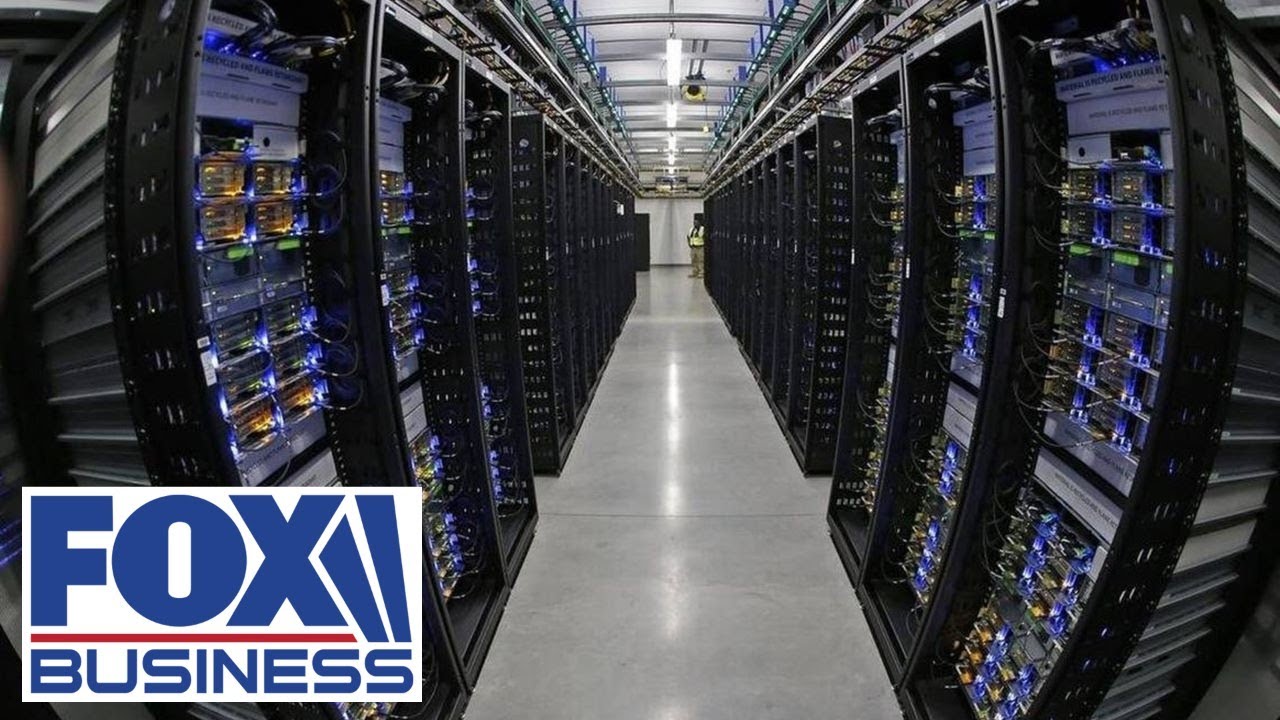
Fermi America (formerly Fermi Inc.) is a colossal, 5,000+ acre private power grid and data center campus located adjacent to the Pantex nuclear weapons plant outside Amarillo, Texas. [1, 2, 3, 4]
Co-founded by Perry and investor Toby Neugebauer, the campus was branded the "Donald J. Trump Advanced Energy and Intelligence Campus". [1, 2, 3, 4]
- Power & Compute Goal: Designed to provide up to 18 million square feet of hyperscale AI computing and generate up to 11 gigawatts of power. [1, 2]
- Energy Mix: Intended to run primarily on natural gas and nuclear power, alongside solar and battery arrays. The company planned to use Westinghouse AP1000 nuclear reactors. [1, 2, 3]
- Current Status: The project has faced financial and leadership headwinds. Neugebauer abruptly departed as CEO in April 2026, and the project has faced delays and shifts in strategy, focusing more heavily on near-term natural gas generation as it pursues Department of Energy (DOE) loans. [1, 2, 3, 4, 5]
The Stargate Project
Separate from Perry's Fermi development, the "Stargate" project is another major gigawatt-scale data center campus under development in Abilene, Texas. Developed by Lancium, Stargate is geared specifically toward next-generation, energy-efficient AI infrastructure. [1, 2]
Former Energy Secretary Rick Perry discusses how massive energy campuses like Stargate and Fermi drive US innovation and competitiveness:
- Rick Perry’s AI plan: A colossal nuclear campus in Trump’s image
Jun 26, 2025 — The complex is called the Donald J. Trump Advanced Energy and Intelligence Campus. The project is located next to the Pantex nucle...


The Washington Post
- Rick Perry-led company plans to build nation’s largest AI, nuclear project - E&E News by POLITICO
Jun 27, 2025 — Rick Perry, a former Energy Secretary, co-founded Fermi America, a company that plans to build the nation's largest nuclear and na...


E&E News by POLITICO
- Rick Perry-led company eyes DOE loan for massive AI project
Sep 9, 2025 — A DOE tool? Data centers are expected to consume growing amounts of the nation's power as AI advances. Texas is a growing hub for ...

E&E News by POLITICO
---
Interesting reminder that... The Pantex Plant site is located 17 miles northeast of Amarillo, in Carson County, Texas. It is an active federal facility, aka superfund site, owned by the U.S. Department of Energy/National Nuclear Security Administration.
1
u/andre3kthegiant avatar
andre3kthegiant
•
9mo ago
Just another grift to bilk money out of the taxpayers!
Enjoy spending billions to clean it up, because it is “so safe”.
The only nuclear plant the world needs is already in existence and safely tucked, 151 million kilometers away.
1
u/Energy_Balance avatar
Energy_Balance
•
9mo ago
That was some fast money.
"Through a combination of natural gas turbine purchases, a focus on procuring other long lead-time equipment, and negotiations with Southwestern Public Service Company (“SPS”), the local utility, we expect to secure approximately 1.1 GW of power for our operations by the end of 2026 (including an expected 200 megawatts (“MW”) from our expected contractual arrangement with SPS). We believe this rapid power delivery timeline is a critical differentiator that will allow Fermi to attract tenants that require near-term access to large-scale, reliable energy to power their AI data center compute needs. Project Matador is in close proximity to the U.S. Department of Energy’s (the “DOE”) Pantex Plant (the “Pantex Plant”), the nation’s primary nuclear weapons center, which employs approximately 4,600 skilled nuclear professionals.
Our proximity to the Pantex Plant offers us the opportunity to access a highly experienced workforce steeped in nuclear safety culture and expertise. We believe this proximity to critical United States nuclear and security infrastructure will be highly attractive to our prospective tenants. With key regulatory approvals in progress, growing stakeholder relationships and energy infrastructure readiness, we believe that Project Matador represents unmatched, sector-defining potential to deliver up to 11 GW of power to on-site compute centers by 2038 through a redundant and flexible mix of natural gas, nuclear and solar energy power. Project Matador is expected to be anchored by what we believe would become the nation’s second-largest nuclear generation complex with capacity to house up to four AP1000 Pressurized Water Reactors developed by Westinghouse."
- https://www.sec.gov/Archives/edgar/data/2071778/000121390025094424/ea0252333-11.htm#:~:text=We%20are%20an%20%E2%80%9Cemerging%20growth,Being%20an%20Emerging%20Growth%20Company.%E2%80%9D
---
[### Family Affair: Commerce Secretary's Sons Cash In on A.I. ...

The New York Times
https://www.nytimes.com › U.S. › Politics](https://www.nytimes.com/2025/11/20/us/politics/howard-lutnick-family-ai.html)
Nov 20, 2025 — Neugebauer turned to Kyle and Brandon Lutnick to help Fermi raise $107.6 million as an early step in plans to build the President Donald J.Read more
Family Affair: Commerce Secretary’s Sons Cash In on A.I. Frenzy
Howard Lutnick is helping push data center projects. His family companies are profiting from them.
A mammoth data center is rising in Amarillo, Texas. Firms controlled by the Lutnick family have helped finance it, banking millions in fees in the process.Credit...Paul Ratje for The New York Times
By Eric LiptonMichael RothfeldDavid Yaffe-Bellany and Ana Swanson
Eric Lipton reported from Miami; Michael Rothfeld from New York; David Yaffe-Bellany from Lugano, Switzerland; and Ana Swanson from Washington.
Nov. 20, 2025
Kyle Lutnick, the 29-year-old scion of his family’s real estate business, traveled in July to Amarillo, Texas, to walk a dusty tract of land with the head of an artificial intelligence start-up called Fermi America.
He was touring the site of a future data center with Toby Neugebauer, a billionaire who is building one of the behemoth facilities that will power the next generation of A.I. Mr. Lutnick’s company was helping raise capital for the center, banking millions in fees in the process.
“Polite young man,” Mr. Neugebauer said in an interview.
A month later, Kyle’s father, Howard Lutnick, was photographed with Mr. Neugebauer at an event near the White House that celebrated Fermi’s partnership with a South Korean company on the same data center project.
This sequence of events — a son making money on a project his father is boosting as a federal official — has come up repeatedly since President Trump tapped Howard Lutnick to head the Commerce Department, according to an investigation by The New York Times.
In that role, Mr. Lutnick has twisted the arms of American allies, dangling policy favors in exchange for investments in U.S. industrial projects. At times, these tactics have created opportunities for his family’s clients to gain access to much-needed foreign capital, The Times found.
Mr. Lutnick, for example, demanded that the South Korean government invest billions of dollars in U.S. industry to reduce tariffs. Mr. Neugebauer is vying for a share of those investment dollars to build the data center that Mr. Lutnick’s family is also helping to finance.
The job of commerce secretary has always been to promote American industry through deal-making at home and abroad, and the position has traditionally been populated with titans of industry who were expected to bring a business sensibility to meetings filled with career government workers.
But never in modern U.S. history has the office intersected so broadly and deeply with the financial interests of the commerce secretary’s own family, according to interviews with ethics lawyers and historians.
Since February, Kyle Lutnick and his younger brother Brandon, 27, have helped run a network of companies under the corporate umbrella of Cantor Fitzgerald L.P. The companies, led by their father until this year, include the Wall Street investment firm Cantor, the securities brokerage BGC Group and the real estate company Newmark Group.
Brandon is the chairman of Cantor Fitzgerald L.P., and Kyle is the executive vice chairman. The sons and their two younger siblings have a controlling ownership stake in all three companies in the network.
The family’s companies operate in a wide range of industries, from cryptocurrencies to data centers, that overlap with Mr. Lutnick’s work in government, raising concerns even among high-level staff members in the Commerce Department, according to five current and former officials and others familiar with the matter.
It is a blurring of lines that has become a defining characteristic of Mr. Trump’s second term, where top officials and their family members have retained major stakes in industries the government oversees. For months, the president’s two older sons and the sons of his Middle East adviser, Steve Witkoff, have traveled the world pursuing deals that have generated hundreds of millions in profits, at least on paper.
As for Mr. Lutnick, The Times did not find evidence that he had intervened in policy discussions with the intention of driving business to his family. But as he promoted data center construction, business has boomed at the Lutnick companies.
Newmark recently announced that it had completed more than $25 billion of data center deals in the past 12 months, taking a small cut in fees on each transaction. “We are having our best year ever,” Brandon Lutnick said in October at a conference in Switzerland.
Image
Brandon Lutnick speaking at a crypto conference in Lugano, Switzerland, last month. The family’s companies operate in a wide range of industries that overlap with Howard Lutnick’s work in government.Credit...Maurizio Fiorino for The New York Times
The White House and the Commerce Department said in statements that Mr. Lutnick had fulfilled his ethics requirements and took them seriously.
“The fact of the matter is that the only special interest guiding Secretary Lutnick and the rest of the Trump administration’s decision-making is the best interest of the American people,” said Kush Desai, a White House spokesman.
Representatives for Cantor and Newmark said the firms had business expertise and relationships that long predated Mr. Lutnick’s role in the administration.
Newmark’s chief executive, Barry Gosin, said in a statement that the company was the industry leader in raising capital and leasing for data centers.
“Newmark’s data center advisory work is independent of governmental and other private activities,” Mr. Gosin said. “Our success in this sector reflects the optimal outcomes we deliver for our clients.”
‘Enough Money’
Howard Lutnick first drew international attention in 2001, when 658 employees of Cantor, including his younger brother, were killed in the attacks on the World Trade Center. Mr. Lutnick was not at work that morning because he was dropping off Kyle for the first day of kindergarten.
Over the next two decades, he rebuilt the business in the wake of the tragedy. It now has more than 13,000 employees, and has expanded into new areas of the finance world, after acquiring Newmark in 2011.
At times, Mr. Lutnick has pushed boundaries and found his companies in the cross hairs of law enforcement. Cantor and affiliates agreed to pay more than $50 million over the last decade to settle at least eight separate investigations of illegal gambling and money laundering, incomplete, false or misleading statements in financial filings, and other issues, enforcement records show. In some cases, the firms settled without admitting or denying wrongdoing.
When Mr. Trump nominated him to lead the Commerce Department, Mr. Lutnick noted that at the age of 63, he wanted to serve the nation. “I’ve made enough money in my life,” he said at his confirmation hearing.
Mr. Lutnick has said he eliminated any ethics issues by turning over his ownership stake of the companies to his children, a process he announced in May, with an agreement that excluded him from any profits or losses after that date.
He has also claimed that he does not speak to his sons about their work. “I would love to talk to them about it, but I’m not allowed,” Mr. Lutnick said on a podcast in March.
The actual transfer of his ownership stake was not completed until early October, meaning he continued to have a financial interest in parts of the family’s business while he was commerce secretary, with his name on filings in full view of any client.
Until his divestment was completed, the Trump administration granted Mr. Lutnick an ethics waiver. That permitted him to participate in certain policy matters that might benefit the firms, while prohibiting him from working on specific deals in which they were involved.
Three ethics lawyers interviewed by The Times said it was not clear whether Mr. Lutnick had violated federal ethics rules or the terms of his waiver. But they said the Lutnick family’s connections to the same deals in both government and private spheres — like its involvement on different sides of Fermi’s data center project — raised questions about whether Mr. Lutnick was doing enough to distance himself from possible ethical conflicts.
“If there is a cloud of distrust over whether the action of that official is aimed at the public interest versus their family’s own interest, that’s a problem,” Kedric Payne, general counsel at the nonpartisan Campaign Legal Center, an ethics group, said after reviewing documents at the request of The Times. “You’re going to create a risk that the public will just start to really lose trust in the government.”
Pressuring the Emiratis
Artificial intelligence has become a vital engine of the U.S. economy in recent years, drawing hundreds of billions of dollars in investment from around the world. Much of that money has flowed into data centers — sprawling facilities that sit on vast swaths of land and run industrial-grade computers that power A.I.
So it is no surprise that major commercial real estate brokers like Newmark were attracted to the sector.
In 2023, when Mr. Lutnick was the company’s chairman, Newmark expanded its team of investment bankers specializing in data centers. The company helps select land for these colossal projects, find power supplies and line up billions of dollars worth of loans and other financing.
The data center boom is “a modern-day gold rush,” Chad Lavender, a top Newmark executive, said in a podcast interview in September, shortly before the company reported record earnings for the quarter. “We’re seeing a ton of activity.”
Now Mr. Lutnick is helping foster that activity from Washington. The Commerce Department is seeking to accelerate data center construction with tax breaks, grants and permits to build new power sources to fuel the facilities.
Mr. Lutnick has also repeatedly pressed foreign nations to send chunks of their own money to help build data center projects in the United States, at the same time that his family’s company serves as one of the data center industry’s leading deal makers, earning tens of millions in fees.
Image
Mr. Lutnick at an announcement of new tariffs in April. A blurring of lines has become a defining characteristic of President Trump’s second term, where top officials and their family members have retained major stakes in industries the government oversees.Credit...Haiyun Jiang for The New York Times
Among the nations that Mr. Lutnick has pressured is the United Arab Emirates.
This spring, the Emiratis approached the Trump White House, requesting access to advanced U.S.-made computer chips, which are crucial to the Emirates’ ambitions of dominating the A.I. industry.
It was a controversial ask.
During the Biden administration, the United States had established strict controls to limit access to the chips, fearing that the Emiratis might share them with China and allow the Chinese to create sophisticated weapons that could be turned on U.S. soldiers. Even some within Mr. Trump’s administration were reluctant to give the Emirates unfettered access to the most advanced chips.
Mr. Lutnick was open to exporting chips, with the right safeguards in place. But his position gave him the power to say “no” and the Emiratis knew it. That is because the Commerce Department oversees the nation’s export licenses.
So he made clear that he wanted the Emiratis to commit billions of dollars to the construction of data centers in the United States in return for the chips, according to administration officials involved in the process.
“You will invest in America and build data centers in America for an equal amount of chips,” Mr. Lutnick said, describing the terms of the deal with the Emiratis during Senate testimony in June.
Eventually the chips deal was approved. Newmark’s clients are one of the possible beneficiaries.
Early this year, the Emirates agreed to commit money to help build the U.S. portion of a global network of data centers. The flagship site of this network, named after the 1994 sci-fi movie “Stargate,” is rising in Abilene, Texas.
Newmark has helped finance construction of the Abilene facility, soon to become one of the largest data centers in the country. The firm brokered more than $9.4 billion in loans this year for a partnership working on the project.
The Emirati money ultimately might not be used on the Abilene data center, executives involved in the effort said. But it is already helping finance other Stargate sites.
Deals have also been struck with Saudi Arabia to invest at least $20 billion in energy and data center projects in the United States, helping bring yet more business to the real estate brokers who structure financing for these projects, though there is no indication whether it will benefit Newmark specifically.
A Commerce Department spokesman said Mr. Lutnick did not pressure Middle East partners to fund specific projects, just to spend money on data centers somewhere in the United States.
A similar instance of overlaps played out again in July.
That month, Mr. Lutnick joined Mr. Trump in Pittsburgh, boasting about the billions of dollars that private companies are spending on a slate of data centers, including a giant project in Lancaster, Pa.
“The A.I. revolution will change the way the world works, and we cannot lose,” Mr. Lutnick said at the event. “The Trump administration will not let us lose.”
What he did not mention was that Newmark was involved in the Lancaster project. A few weeks after Mr. Lutnick’s appearance in Pennsylvania, the company announced it had brokered a $4 billion joint venture to build a “state-of-the-art A.I. data center campus” there.
A Commerce Department spokesman said Mr. Lutnick had no role in any of the individual deals that he promoted in Pennsylvania, and attended the event simply to support the industry.
Pressuring the Koreans
Toby Neugebauer, who is building the Fermi data center that will power the next generation of artificial intelligence, said he chose Newmark because of the expertise of its staff, not its connection to the commerce secretary.Credit...Paul Ratje for The New York Times
The intersection of Mr. Lutnick’s work as commerce secretary and his sons’ as data center deal makers is most apparent in the Fermi America project in Amarillo.
Fermi was co-founded in January by Rick Perry, the former Texas governor who was Mr. Trump’s first-term energy secretary, and Mr. Neugebauer, a major Republican donor who has supported Mr. Trump. The company has not yet generated any revenue.
This year, Mr. Neugebauer turned to Kyle and Brandon Lutnick to help Fermi raise $107.6 million as an early step in plans to build the President Donald J. Trump Advanced Energy and Intelligence Campus, which would be powered in part by nuclear energy.
Mr. Neugebauer said he chose Newmark because of the expertise of its staff, not its connection to the commerce secretary. He said he knew that seeking favors would most likely backfire.
“Was never going to help me,” he said. “Makes it harder.”
In July, Mr. Neugebauer gave a tour of the Texas construction site to Kyle Lutnick, a Stanford graduate who has worked as a D.J. under the stage name Kxtz. Mr. Neugebauer said that he gave Kyle and other visitors Fermi-branded cowboy hats, and that Kyle later texted a picture of himself with the hat.
Soon Mr. Neugebauer was also engaging with Kyle’s father. Shortly after the Texas tour, Mr. Lutnick announced that South Korea had agreed to a trade deal that would funnel $350 billion into the United States.
Mr. Neugebauer coveted a piece of those investments.
His plan was to get the South Korean government, with the support of the Trump administration, to help finance a nuclear power plant to fuel his Amarillo data center. Components for the plant would be supplied by Doosan Enerbility, a South Korean industrial giant.
In August, Mr. Lutnick appeared alongside Mr. Neugebauer during a U.S.-Korean business summit at the historic Willard InterContinental hotel, where Fermi and Doosan announced plans to collaborate.
Mr. Neugebauer and his Doosan counterpart posed for a photo holding their memorandum of understanding, flanked by Mr. Lutnick and a Korean government official.
“You’re going to see a national and economic security fund built with the Japanese money, the Korean money and other countries’ money,” Mr. Lutnick said on CNBC the day after the event.
Image
A photo distributed in a news release by Fermi America showing Mr. Lutnick with Kim Jung-kwan, South Korea’s trade minister; Jongdoo Kim, the president of Doosan Enerbility Nuclear Power Plant BG; and Mr. Neugebauer.
Days after the Doosan announcement, Fermi unveiled its financing deal for the Amarillo project, with both Newmark and Cantor listed as advisers. The companies were paid $6 million for this work, according to a financial filing.
In a bigger coup for the Lutnick companies, Cantor jointly managed an initial public offering of Fermi’s stock in early October that valued the company at more than $12.5 billion. Millions of dollars in additional fees flowed to Cantor.
“Honored to co-lead the I.P.O. for such an innovative and inspiring company Fermi America,” Kyle Lutnick posted on social media at the closing of that deal.
Ben Kass, a Commerce Department spokesman, said no decision had been made on where to allocate the funds South Korea had agreed to spend in the United States. So far, he said, the department is planning to use part of the money to promote U.S. shipbuilding, rather than nuclear power.
Still, Mr. Kass added, the final terms of the trade deal remain under negotiation.
Image
Rick Perry, the former Texas governor who was Mr. Trump’s first-term energy secretary, co-founded Fermi with Mr. Neugebauer.Credit...Paul Ratje for The New York Times
At a recent meeting in Washington, Mr. Neugebauer pressed Deputy Commerce Secretary Paul Dabbar to direct money from the Korean trade deal toward Fermi’s nuclear plant.
Mr. Neugebauer has an important ally in Senator Ted Cruz, Republican of Texas and the chairman of the Senate Commerce Committee. Fermi is also seeking low-interest financing from the Energy Department, which is offering billions of dollars in nuclear-energy loans.
“Toby has been a close friend of mine for 20 years,” Mr. Cruz said last week, at a Cantor-sponsored conference at the Ritz-Carlton in Miami Beach, after he wrapped Mr. Neugebauer in a bear hug by the pool. “It is a powerful proposal to bring billions of investments to Texas and create a whole lot of jobs.”
Mr. Neugebauer remains optimistic that the Commerce Department will help him get the Korean funding.
“Do I think it probably gets done?” Mr. Neugebauer said. “Yes.”
He added, “We got no special treatment.”
Image
The site where a natural gas facility is being built to help power the Fermi data center. Artificial intelligence has become a vital engine of the U.S. economy in recent years, drawing hundreds of billions of dollars in investment from around the world.Credit...Paul Ratje for The New York Times
Cade Metz contributed reporting. Susan C. Beachy, Kitty Bennett and Laine Cibulskis contributed research.
Eric Lipton is a Times investigative reporter, who digs into a broad range of topics from Pentagon spending to toxic chemicals.
Michael Rothfeld is an investigative reporter in New York, writing in-depth stories focused on the city’s government, business and personalities.
David Yaffe-Bellany writes about the crypto industry from New York. He can be reached at davidyb@nytimes.com.
Ana Swanson covers trade and international economics for The Times and is based in Washington. She has been a journalist for more than a decade.
A version of this article appears in print on , Section A, Page 1 of the New York edition with the headline: Sons of Commerce Chief Cash In as He Pushes A.I.. Order Reprints
---
DESMOG MURRAY OHIO
December 17, 2019
Murray Energy bankruptcy filings revealed that the energy company, even while undergoing bankruptcy, had continued to fund a wide range of climate change denial groups. That included theInternational Climate Science Coalition (ICSC), a group that has closely guarded its funding sources, which received $60,000. Other groups named included the Heartland Institute ($130,000), the Competitive Enterprise Institute ($200,000), and Government Accountability & Oversight ($300,000). Murray’s company also donated $60,000 to the Center for the Study of Carbon Dioxide and Global Change, making it one of the group’s largest donors. See related reporting from The Intercept, Energy and Environment News*, and *The New York Times.65 ^66 ^67
Other groups funded by Murray Energy include FreedomWorks, the Cato Institute, the Committee for a Constructive Tomorrow, and Judicial Watch. As The New York Times noted, Murray continued to fund climate change denial even as his company was going bankrupt.
May 31, 2018
Based on a draft Department of Energy (DOE) memo obtained by Bloomberg,the Trump administration was making plans to bail out coal and nuclear plants. This followed more than a year of lobbying by Murray for President Donald Trump and Energy Secretary Rick Perry to bail out struggling coal plants. *Bloomberg*was the first to report:68 ^69
“Trump administration officials are making plans to order grid operators to buy electricity from struggling coal and nuclear plants in an effort to extend their life, a move that could represent an unprecedented intervention into U.S. energy markets.
“The Energy Department would exercise emergency authority under a pair of federal laws to direct the operators to purchase electricity or electric generation capacity from at-risk facilities, according to a memo obtained by Bloomberg News. The agency also is making plans to establish a ‘Strategic Electric Generation Reserve’ with the aim of promoting the national defense and maximizing domestic energy supplies.”
In August of 2017, Murray hadsent a letter to the White House requesting assistance from the Trump administration. In particular, he was lobbying on behalf of FirstEnergy, one of Murray Energy’s largest customers and which ultimately filed for bankruptcy in March 2018.70 ^71
“We are desperate for the President to, once again, order Energy Secretary Perry to invoke Section 202(c) of the Federal Power Act for FirstEnergy’s merchant power plants,” Murray wrote in the letter to the White House.
In September, Perry had called on the Federal Energy Regulatory Commission (FERC) to speed up a proposed “grid resiliency” rulethat would prop up coal and nuclear plants with the stated goal of preserving grid reliability. This, despite Perry’s own agency finding that the closure of those coal plants would have little impact on the grid.72 ^73
Murray claimed FirstEnergy’s bankruptcy could have been prevented if FERC had turned down the rule.74
Despite Murray’s claim he “didn’t have any involvement” in the rule DOE proposed to FERC*,In These Times* revealed a March 2017 meeting between Perry and Murray, in which Murray presented his “action plan” for federal agencies to aid the coal industry and in which he hugged Perry.75 ^76
===}:
mma
Trump campaign echoes right-wing media’s lies about an EV mandate
Special ProgramsClimate & Energy
Written by Ilana Berger
Published 09/10/24
- The Biden administration is cutting car pollution and incentivizing automakers to produce electric vehicles. Right-wing media repeatedly misconstrued these efforts, falsely claiming they were attempting to take away voters’ gas-powered cars or forcing them to buy electric vehicles. No such federal mandate exists. Yet now the Trump-Vance campaign has adopted this false claim.
- ## Harris has supported efforts to expand access to electric vehicles during her time as vice president, but that did not include a federal mandate
- The EPA finalized a tailpipe emissions rule in March, but it was not a mandate.In March, the EPA established tailpipe emissions standards for the auto industry in a bid to slash greenhouse gas emissions. According to NPR, “The EPA rules are not written as an EV mandate or a ban on the sale of gas cars. … Instead, the EPA sets standards that apply across an entire fleet – meaning an automaker still can make vehicles with higher emissions, as long as they also make enough very low or zero-emission vehicles that it averages out.” NPR, [3/20/24]
- E&E News clarified that “there is no EV ‘mandate’ from the administration, although President Joe Biden and Vice President Harris have backed a series of climate policies that seek to incentivize the production and purchasing of EVs.” E&E News, [9/3/24]
- The New York Times also wrote of the EPA rule that it “does not mandate sales of electric vehicles, and consumers can still buy and drive gas-powered cars.” The New York Times, [3/20/24]
- The Inflation Reduction Act allocated billions toward supporting the adoption of EVs through tax credits, loans, and funding for charging networks, critical minerals, and battery manufacturing. Harris cast the tie-breaking vote that passed the Inflation Reduction Act, which created $47 billion in EV investment on top of tax credits and loans. Atlas EV Hub, [9/2/22; accessed 9/6/22; Twitter/X, 8/7/24]
- Harris also oversaw parts of the Infrastructure Investment and Jobs Act that distributed funding to school districts for electric buses and to states for EV charging stations.The act, also known as the Bipartisan Infrastructure Law, provided $7.5 billion to build a network of charging stations, and $900 million of that went to the electric school bus initiative. AP News, [12/13/21; Spectrum News, 5/29/24]
- ## Right-wing media falsely claim that the Biden-Harris administration has already implemented an EV mandate
- Former Texas Gov. Rick Perry and Fox contributor Tammy Bruce claimed that “the EV mandate” is an example of Harris “moving money into these Green New Deal projects.” On The Evening Edit, Bruce said that Harris admitted during her CNN interview that “the Inflation Reduction Act was about moving money into those, that New Green Deal projects.” “Yeah, and that’s what this administration is all about … pushing money into these programs. The EV mandate’s a great example of it,” said Perry. Fox Business, *The Evening Edit*, [8/30/24]
- On Newsmax’s American Agenda, right-wing commentator Tom Del Beccaro said, “Michigan really should be easy for Trump at this point. They — Kamala put in the EV mandates. She’ll do it again, and the EV mandates have been a disaster.”Newsmax, *American Agenda*, [8/29/24]
- The Washington Examiner falsely characterized tax credits in the IRA as an “EV mandate.” “Kamala Harris’ EV mandate costs taxpayers $7,500 and Ford $44,000 per car,” the article said. “Kamala Harris has debuted yet another 180-degree policy reversal via press release,” the article said. The Washington Examiner, [8/28/24]
- Fox host Sean Hannity called the EPA rule a “ban” and claimed that the administration is “finding any way they can to trick you, the American people, into supporting something that many Americans don't want.” Fox contributor Ari Fleischer, former White House press secretary under George W. Bush, said, “I think all of us want to do something about carbon emissions, etc., but the best way to do it is not through command and control mandates that will not work.” Fox News, *Hannity*, [3/20/24]
- ## After a Harris campaign official said Harris does not support an EV mandate, right-wing media insisted that she could not change, or has not changed, her position on the issue
- In August, Harris’ director of rapid response, Ammar Moussa, wrote in an email to supporters that “Vice President Harris does not support an electric vehicle mandate.” The Hill, [8/29/24]
- On Hannity, Fox host Jeanine Pirro said that Harris “can’t say she is against the EV mandate when she is the one who, I believe, sponsored the bill. And in addition to that, the bill had times built in where, after 2030 you had to have only 50 percent of the cars could be fossil fuel or gas-fueled, and by 2040-45 -- I mean, these are not flip-flops, Joe. These are lies."Fox News, *Hannity*, [8/29/24]
- On The Faulkner Focus, Fox News contributor Steve Hilton claimed that Harris “does want to take away your car.” Hilton said, “They claim that it’s not a mandate because it’s not mandating what you buy, it only mandates what can be sold. As if there is a difference between those two things. … As far as it stands today, Kamala Harris does want to take away your car, she does want to take away your truck.” Fox News, *The Faulkner Focus*, [8/28/24]
- ## Former President Trump and his running mate JD Vance have adopted the false right-wing media claim that there is a federal EV mandate and that it is negatively impacting voters
- At an August 8 press conference at Trump’s Mar-a-Lago club in Palm Beach, Florida, Trump said that if Harris becomes president, “everybody’s going to be forced to buy an electric car, which they're not going to do, because they don't want that. People want gasoline-propelled cars. They want hybrids. They want to have everything, and they want electric.” Politico, [8/8/24]
- In March, when the Biden administration finalized a new Environmental Protection Agency rule that set strict limits on pollution from new gas-powered cars, Trump campaign national press secretary Karoline Leavitt called the move a “job-killing electric vehicle mandate at the federal level.”FoxNews.com, [3/28/24]
- Trump’s official campaign account posted on X: “Crooked Joe Biden’s INSANE and RADICAL EV mandates will BAN your gasoline-powered vehicles and force you to buy expensive and unreliable electric vehicles. President Trump will always protect your FREEDOM to drive what you want!”Twitter/X, [3/20/24]
Related
On Facebook, content trashing electric vehicles reliably draws engagement
07/03/24
01/19/24
09/02/22
[Perry joins Phelan’s team as he faces three opponents in the race for Speaker (Texas Scorecard) – House Speaker Dade Phelan has announced former Gov. Rick Perry as a new senior advisor. “Governor Perry's service to...
.
3 days ago](https://dallasexpress.com/state/rick-perry-joins-forces-with-dade-phelan-as-new-senior-advisor/)
[
 Texas Public Radio | TPR
Reflecting on Rick Perry's years leading Texas
Under pressure from conservative activists and some members of his own party, Perry's executive order was eventually overturned by the Texas...
.
May 7, 2024](https://www.tpr.org/podcast/the-source/2024-05-07/reflecting-on-rick-perrys-years-leading-texas)
[
 Houston Public Media
How Rick Perry seized on — and influenced — the changing winds of Texas politics
A new book from University of Houston political science professor and Party Politics co-host Brandon Rottinghaus examines Perry's career and...
.
May 7, 2024](https://www.houstonpublicmedia.org/articles/shows/houston-matters/2024/05/07/486781/how-rick-perry-seized-on-and-influenced-the-changing-winds-of-texas-politics/)
[
 Texas Standard
New book ranks Rick Perry among Texas’ most notable governors
Rick Perry's story is a story of second chances. Like you say, he starts as a kind of conservative Democrat and really adapts himself...
.
May 7, 2024](https://www.texasstandard.org/stories/rick-perry-texas-politics-legacy-book-brandon-rottinghaus/)
[
 The Texas Observer
Rick’s Requiem: The Serious Impact of an Unserious Politician
It's been a decade since the pride of Paint Creek, James Richard Perry—yes, that's Rick—occupied the Texas governor's mansion.
.
May 7, 2024](https://www.texasobserver.org/rick-perry-biography-governor-politician/)
[
 The Texas Tribune](https://www.texastribune.org/2024/02/29/rick-perry-dade-phelan-primary-election/)
===
PENSION? 1 24 paxton abbott?
trib tag: rick-perry
living his dream
former Texas Gov. Rick Perry lives on 50 acres in Central Texas with his two best friends from college — in separate houses a few hundred yards apart — fulfilling a dream five decades in the making, he tells Axios.
- One of those friends is former Texas Department of Transportation executive director Joe Weber, who held that job for 18 months while Perry was governor.
Driving the news: In a wide-ranging interview with Axios, Perry shared details about his life since leaving office — and his thoughts on several other subjects.
Why it matters: Perry has kept a relatively low profile since resigning in 2019 as energy secretary in the Trump administration.
Yes, but: "I haven't been bored," Perry says. "So that's a good thing."
The big picture: Perry says he still has "a very close working relationship with the Saudis," specifically former Saudi energy minister Khalid al-Falih.
- Perry is also on the board of Energy Transfer Partners, the pipeline company run by Dallas billionaire and Republican megadonor Kelcy Warren.
- "I'm not fond of public boards," Perry says. "I serve on the only public board I serve on, and that's just out of a great respect for the man who owns the company."
His dream: Perry and his college friends told each other that one day they'd retire near each other and maybe run a beer and bait store.
- "We made a deal that when we finished doing whatever we were going to do in life ... we would live hopefully in close proximity," Perry says. "This is our aspiration."
- Perry says he and his wife, Anita, also spend a lot of their time caring for their five special-needs dogs on their Round Top property and visiting their grandchildren whenever possible.
Catch up quick: Perry was the longest-serving governor in Texas history, in office from 2000 to 2015, before becoming energy secretary in 2017.
- He also had a short stint on
 ."
- And he ran for president in 2012 and 2016.
- "I've never not liked what I did in life," he says.
Meanwhile: Perry has also joined the Sports Betting Alliance, the group lobbying to legalize mobile sports gambling in Texas — though he opposed any expansion of legal gambling while in office.
- "This one's different because this is not an expansion of gambling," Perry tells Axios. "There's $6 billion worth of mobile sports betting going on in the state of Texas, and the state of Texas doesn't get a dime of that. It's not regulated."
Between the lines: Lt. Gov. Dan Patrick has said he won't bring a sports betting bill to the floor without the support of Senate Republicans. Perry says he believes Patrick will change his mind.
- "I think the lieutenant governor is a true public servant," Perry says. "He does not want to be the individual who stands in the way of something that could help lower property taxes substantially."
State of play:Perry shared his thoughts on a few other topics, too, including what it's like to run for president while under indictment, the state of Texas' energy grid, and whether Gov. Greg Abbott should have offered to pardon a man recently convicted of murder.
Flashback: In 2014, a Travis County grand jury indicted then-governor Perry on felony abuse-of-power and coercion charges after he acted on a threat to veto state funds for the local district attorney's office because the DA refused to resign following her drunk-driving arrest.
- The district attorney, Rosemary Lehmberg, pleaded guilty to driving while intoxicated but retained her position.
- All of the charges against Perry were eventually dismissed. He says the ordeal cost him more than $2 million.
Zoom in: Perry says the indictment hampered his 2016 presidential run. Echoing former President Trump, Perry says he believes his indictment was also "totally for political reasons."
- "It completely kept me tied up, distracted," Perry says. "I couldn't raise any money."
Separately: Perry has long been an ally to the fossil fuel industry, but while governor he also backed a massive infrastructure project designed to carry wind power from West Texas to Dallas. But now he thinks the state has moved too far in the direction of renewable energy.
- "We've kind of taken our eye off the ball," he tells Axios.
- He thinks the grid needs more nuclear and natural gas-powered energy.
The intrigue: Perry says he supports Gov. Abbott's efforts to pardon Daniel Perry (no relation), the man convicted of the murder of a Black Lives Matter protester in Austin.
- "I understand why he is doing it," Perry says. "The left is going to basically say, 'Oh, he's interfering with the jury system,' but governors can get involved with a lot of different things up to and including pardoning someone."
Zoom out: Perry says he thinks the case is indicative of a larger problem and that the state's grand jury system might need an overhaul.
- "I think the Texas Legislature needs to take a long and hard look at the grand jury system in the state of Texas," he says. "If it's abused even once, that's too much. And I will suggest to you, it has been abused multiple times."
---
2 24
trump energy secretary, Republicans blast Biden for bowing to 'elite environmental lobby'](
Fox News
Climatedepot.com Executive Director Marc Morano discusses the impact on American energy from the Biden administration's halt of liquefied natural gas ...
mma 1 24
echo BS hannity
RICK PERRY (GUEST): Never before have we seen evidence of people who have harm on their minds to do to Americans freely coming into this country. And the shocking part about this, Sean, is that you have a president and administration that seems to be helping them right along. We want to go cut the border wire and let these people freely come in and dilute this country. I am stunned that Americans are not just up in arms, literally, with what is going on and sending a clear message.
---
---
Why this former Trump official comes out looking absolutely terrible in the Mark Meadows texts
Chris Cillizza
Analysis by Chris Cillizza, CNN Editor-at-large
Updated 5:13 PM ET, Mon April 25, 2022
(CNN)Plenty of people -- members of Congress, former top White House aides -- come out looking bad in the more than 2,000 texts sent and received by Trump chief of staff Mark Meadows between Election Day 2020 and January 20, 2021, obtained by CNN.
No one -- and I mean NO ONE -- looks worse than Rick Perry, however.
You remember Perry -- the former Texas governor who served as the secretary of energy in former President Donald Trump's White House.
What you may not remember is that CNN reported this about Perry back in December 2021:
"Members of the House Select Committee investigating the January 6 attack on the US Capitol believe that former Texas Governor and Trump Energy Secretary Rick Perry was the author of a text message sent to then-White House chief of staff Mark Meadows the day after the 2020 election pushing an 'AGRESSIVE (sic) STRATEGY' for three state legislatures to ignore the will of their voters and deliver their states' electors to Donald Trump, three sources familiar with the House Committee investigation tell CNN."
At the time, Perry's team flatly denied that he was the sender of those texts to Meadows. Here's the specific denial: "A spokesman for Perry told CNN that the former Energy Secretary denies being the author of the text." No explanation was offered for why the number used in the text was associated with Perry.
Which brings me to the texts that CNN reported on Monday. And these lines from CNN's story (bolding is mine):
"Previously disclosed text messages showed that former Trump administration Energy Secretary Rick Perry and Trump's son, Donald Trump Jr., each texted Meadows on November 4 and 5 with ideas for overturning the election.
"On November 7, hours before the election was called, Perry texted Meadows again: 'We have the data driven program that can clearly show where the fraud was committed. This is the silver bullet.'
"While Perry has previously denied CNN reporting about his text messages to Meadows, CNN has confirmed it's his cell phone and he signed this text, 'Rick Perry,' including his number."
So, in order to now believe Rick Perry's initial denials, you have to believe:
- Someone got Perry's phone without him knowing about it.
- That same person texted Meadows repeatedly about ways to possibly overturn the election.
- That person, ingeniously, signed the texts "Rick Perry."
So, either you believe that or you believe that the texts from Rick Perry's phone and signed "Rick Perry" were, in fact, from Rick Perry.
If you believe that, then it's pretty clear that either Perry or Perry's staff weren't being truthful to CNN in the initial report on the texts that came from him. (Perry hasn't commented since the release of the new Meadows texts.)
Like I said, lots of people look bad in these texts. No one looks worse than Perry.
===
---
https://www.msn.com/en-us/news/politics/newly-revealed-mark-meadows-texts-appear-to-contradict-denials-by-marjorie-taylor-greene-rick-perry/ar-AAWAlLd
no lnx
4/25/22
Salon
Newly revealed Mark Meadows texts appear to contradict denials by Marjorie Taylor Greene, Rick Perry
Jon Skolnik
Rep. Marjorie Taylor Greene, R-Ga., urged former White House Chief of Staff Mark Meadows to have former President Donald Trump declare martial law after his 2020 election loss in order to keep the former president in office.
Her plea, first reported by CNN, came January 17, weeks after the Capitol riot, when Greene texted Meadows that she and a number of Republicans felt that declaring a police state was "the only way to save our Republic."
"In our private chat with only Members, several are saying the only way to save our Republic is for Trump to call for Marshall [sic] law," she wrote to him. "I don't know on those things. I just wanted you to tell him. They stole this election. We all know. They will destroy our country next. Please tell him to declassify as much as possible so we can go after Biden and anyone else!"
Meadows reportedly did not respond to the message.
The shocking revelation comes just days after Greene was forced to testify in trial about her actions and rhetoric leading up to the Capitol riot. In one exchange during the proceeding last week, Greene was asked whether she called on Meadows to have Trump declare martial law.
"I don't recall," she responded. "I don't remember."
RELATED: Marjorie Taylor Greene denies calling for Pelosi's execution during trial, then backtracks
That response was, more or less, carried through the entire proceeding, with Greene claiming that she doesn't remember saying things for which there is documented proof.
In another exchange during the trial, Greene suggested that the January 6 insurrection was orchestrated by Black Lives Matter and Antifa. But according to Monday's newly unearthed texts, Greene privately pleaded with Meadows to have Trump ask the rioters to stand down, indicating that she knew the riot was led by Trump supporters.
"Mark I was just told there is an active shooter on the first floor of the Capitol Please tell the President to calm people This isn't the way to solve anything," Greene wrote at the time.
Greene's texts to Meadows reportedly came just weeks after a "heated" December meeting in the Oval Office, wherein numerous Trump aides clashed with some of the former president's most ardent election deniers, including ex-Trump lawyer Sydney Powell and Michael Flynn, Trump's national security advisor.
During the meeting, CNN reported, Flynn also suggested that Trump invoke martial law in order to overturn the 2020 election. But numerous Trump aides reportedly pushed back on the idea, deeming it too extreme.
RELATED: Marjorie Taylor Greene is blasting through campaign funds
Hours before the election was called, former Trump Cabinet member and Texas Republican governor Rick Perry texted Meadows:"We have the data driven program that can clearly show where the fraud was committed. This is the silver bullet."Perry has previously denied such participation, but according to CNN, Meadows' trove included "one text message signed by Rick Perry, sent from Rick Perry's cell phone, with Rick Perry's phone number, saying 'This sort of thing is my bag.'"
2x? trump impeach
November 20, 2019

FILE PHOTO: U.S. Secretary of Energy Rick Perry listens during a news conference after the Partnership for Transatlantic Energy Cooperation conference in Vilnius, Lithuania October 7, 2019. REUTERS/Ints Kalnins/File Photo Purchase Licensing Rights, opens new tab
(Reuters) - U.S. diplomat Gordon Sondland testified on Wednesday that he had informed U.S. Energy Secretary Rick Perry in July that Ukraine's president would comply with President Donald Trump's request for a probe of the Ukrainian gas company Burisma, where Joe Biden's son was a board member.
Sondland's testimony, in a Democrat-led impeachment probe of Trump's Ukraine dealings, raises questions about Perry, who had been one of Trump's longest-serving and most scandal-free Cabinet members. Perry has denied being in any conversations where the Bidens were mentioned. Last month, Perry said he would step down from his post on Dec. 1.
The U.S. House impeachment investigation centers on Trump's request here during a July phone call with Ukraine President Volodymyr Zelenskiy that Kiev investigate the son of his Democratic rival and former Vice President Joe Biden.
Trump held up nearly $400 million in military aid to Ukraine as he asked Zelenskiy to investigate the Bidens.
Sondland, the U.S. ambassador to the European Union, testified that he sent Perry and other Trump officials an email a week before the July 25 call that said Zelenskiy "intends to run a fully transparent investigation and will 'turn over every stone.'"
Here's why Perry's name keeps coming up in the U.S. House of Representatives investigation.
WHAT IS PERRY'S HISTORY IN UKRAINE?
Perry has been involved in Ukraine in his capacity as Trump's top energy official since 2017, when Ukrainian President Petro Poroshenko was in power. That year, Perry helped seal a deal to sell U.S. coal to Ukraine as Kiev struggled to get fuel from pro-Russia regions.
Perry led a U.S. delegation to Zelenskiy's inauguration in May as a last-minute substitute for Vice President Mike Pence. Democratic lawmakers want to know what kind of conversations he had with Ukraine's newly elected leader.
Perry has been touting U.S. exports of what he calls "freedom gas" - a term he coined for American liquefied natural gas - that could provide Ukraine an alternative to Russian fuel.
WHO ARE 'THE THREE AMIGOS'?
After briefing Trump on the Zelenskiy inauguration, Perry, Sondland, and Kurt Volker, the former U.S. envoy to Ukraine, became known as the "three amigos." They were responsible for a side-channel Ukraine policy, under Rudy Giuliani, Trump's personal lawyer.
Giuliani, at Trump's behest, pushed Kiev to investigate Joe Biden, a contender for the Democratic presidential nomination next year, and his son Hunter, who was on the board of the Ukrainian gas company Burisma. The Bidens have not been accused of wrongdoing.
Sondland said on Wednesday Giuliani conveyed to Perry, Volker, and others that Trump wanted a public statement from Zelenskiy committing to investigations of Burisma and the 2016 election.
Sondland said in earlier testimony that he first connected Burisma with the Bidens after Perry and Volker told him about unspecified conditions that had to be met prior to the White House's granting Zelenskiy a meeting with Trump. It has not come up in the testimony whether Perry had directly told Sondland that Trump wanted a probe of the Bidens.
HOW HAS PERRY RESPONDED?
Perry has said he has never had a meeting with Ukrainian or U.S. officials that mentioned Biden, or his son Hunter. "Not once, as God is my witness, not once was a Biden name, not the former vice president, not his son ever mentioned," Perry told the Christian network CBN news in early October.
But according to Sondland's testimony on Wednesday, Perry replied to Sondland's email ahead of the July 25 call that mentioned Zelenskiy's interest in the investigation that Trump sought, and said he had heard that the call between the two presidents was being arranged.
Perry has said he is stepping down Dec. 1, though news reports started appearing in April that he wanted to resign.
Perry has refused to hand over documents to investigators, or testify. A spokeswoman said he would not participate in a "secret star chamber inquisition." Brian McCormack, Perry's former chief of staff, and Wells Griffith, a National Security Council official on energy, also refused to testify.
The Energy Department's spokeswoman, Shaylyn Hynes, said on Wednesday Sondland had misrepresented both Perry's interaction with Giuliani and the direction he received from Trump. Perry spoke to Giuliani only once at Trump's request, the DOE said. "No one else was on that call. At no point before, during or after that phone call did the words 'Biden' or 'Burisma' ever come up in the presence of Secretary Perry," Hynes said.
Trump has said he made his July 25 call with Zelenskiy at Perry's urging. Perry has said he merely wanted Trump to talk about liquefied natural gas.
Reporting by Timothy Gardner; Editing by Bernadette Baum
---
[ E&E News by POLITICO
Perry aide opens lobby firm, signs energy clients
A former close aide to Energy Secretary Rick Perry has set up shop on K Street. Jeff Miller, who managed Perry's 2016 presidential campaign,...
.
Mar 21, 2017](https://www.eenews.net/articles/perry-aide-opens-lobby-firm-signs-energy-clients/)
[
 ThinkProgress
Trump dines with energy lobbyist whose client seeks power bailout
A GOP lobbyist and strategist, who managed Rick Perry's 2016 presidential bid, reportedly dined with President Trump Wednesday night.
.
Apr 5, 2018](https://archive.thinkprogress.org/former-perry-adviser-miller-lobbies-for-firstenergy-9d2c235a7cf5/)
[
 Center for American Progress
Rick Perry’s Dirty Industry Donors and What They Could Mean for the Department of Energy
Former Gov. Rick Perry has cultivated close ties with industry donors that raise concern about his ability to perform the duties of energy secretary without...
.
Jan 19, 2017](https://www.americanprogress.org/article/rick-perrys-dirty-industry-donors-and-what-they-could-mean-for-the-department-of-energy/)
[
 NBC News](https://www.nbcnews.com/id/wbna44442051)
https://www.americanoversight.org/investigation/rick-perrys-energy-industry-connections-in-the-u-s-and-abroad
Before being selected to head the Department of Energy in President Donald Trump’s administration, former Texas Gov. Rick Perry ran for the 2016 Republican presidential nomination, where he benefited from millions of dollars in campaign spending by the energy industry. One donor was Dallas billionaire Kelcy Warren, the CEO of Energy Transfer Partners,who gave a pro-Perry PAC $6 million. }:
Another longtime Perry backer was Michael Bleyzer, whom Perry recommended in May 2019 for the board of Ukraine’s state-owned natural gas company, Naftogaz. A little more than a month later, Ukraine awarded an oil and gas exploration deal to Bleyzer and his partner.
The energy industry connections went further than that, though. Prior to his confirmation, Perry also resigned from the boards of Sunoco Logistics Partners and Energy Transfer Partners, both developers of the Dakota Access Pipeline. One of Perry’s former top advisers, Jeff Miller, raised money for President Donald Trump’s reelection campaign and ran a lobbying shop that counted Energy Transfer Partners among its clients.
As secretary, Perry attended energy and commerce events in Kentucky with Senate Majority Leader Mitch McConnell, a vocal opponent of stronger energy regulations. And Perry’s energy connections weren’t just professional — his son, Griffin Perry, helps lead oil and gas investment firm Grey Rock Energy Partners, a company that former Sec. Perry was an investor in before joining the administration.
Perry’s business and industry ties weren’t limited to energy, either. In 2016, Perry joined the board of Celltex Therapeutics, a stem cell company through which he had previously undergone “experimental back surgery.” The company was founded by David G. Eller, a Perry donor, and had moved its operations to Mexico in 2013. But a 2017 Texas law could open the door for the company to again provide treatment in the U.S. After resigning from the Celltex board and recusing himself from matters related to the company, Perry’s wife joined the board.
In November 2019, Perry resigned to be replaced by his deputy, Dan Brouillette, who had been involved in many of the administration’s more controversial energy policies. But even with Perry out, American Oversight continued to investigate the role special or private interests may have played in the administration’s energy policy.
uPDATES
Preguntas Abiertas Sobre los Aliados de Trump
0...
Perry’s Energy Industry Connections and the Trump Administration’s Ukraine Policy
One of the “three amigos” running shadow Ukraine foreign policy, Perry helped push an energy deal that could benefit his associates, according to new reporting from ProPublica and Time.
News Roundup: What Trump Knew, and What We Know
September 10, 2020
We’ve known for months that President Donald Trump has been downplaying the severity of the coronavirus. In the spring, we knew that Covid-19 wasn’t just like the seasonal flu, despite Trump’s reassurances that it was. And we’ve known that the pandemic won’t just “disappear,” no matter how many times the president insists it will.
Energy Department Releases Records from Rick Perry’s May 2019 Trip to Ukraine
March 16, 2020
related docs no lnx
July 1, 2020
No Records Response from DOE Regarding Communications with Jeffrey Miller
Department of Energy
AGENCY REPLY
May 28, 2020
DOE Calendar Entries for Communications with Assistant Sec. for Fossil Energy Steven Winberg and Trump Donor Bob Murray
Department of Energy
AGENCY RECORD
May 26, 2020
DOE Calendars for Senior Officials from January and February 2018
Department of Energy
AGENCY RECORD
January 13, 2020
Joint Status Report: American Oversight v. DOE – Perry and Brouillette’s Ukraine Records and Communications
Department of Energy
LITIGATION
November 18, 2019
DOE Recusal Statement from Secretary Perry
Department of Energy
AGENCY RECORD
November 8, 2019
Complaint: American Oversight v. DOE — Perry and Brouillette’s Ukraine Records and Communications
Department of Energy
LITIGATION
October 21, 2019
FOIA to DOE Seeking Communications with Employees of Murray Energy or FirstEnergy
Department of Energy
FOIA REQUEST
September 20, 2019
NRR from DOE Regarding Communications Between Rick Perry, Energy Transfer Partners, and Sunoco Logistics Partners
Department of Energy
AGENCY REPLY
September 5, 2019
DOE Records Regarding Rick Perry’s Travel Expenses During 2017
Department of Energy
AGENCY RECORD
August 20, 2019
FOIA to DOE for Communications with Celltex Therapeutics
Department of Energy
FOIA REQUEST
August 20, 2019
FOIA to DOE for Communications with Energy Transfer Partners and Sunoco Logistics Partners
Department of Energy
FOIA REQUEST
August 20, 2019
FOIA to DOE for Communications with Jeff Miller
Department of Energy
FOIA REQUEST
August 20, 2019
FOIA to DOE for Ethics Waivers Granted to Secretary Perry
Department of Energy
FOIA REQUEST
August 9, 2019
FOIA to DOE Asking for Perry Communications with Campaign Donors
Department of Energy
FOIA REQUEST
August 9, 2019
FOIA to DOE Seeking Communications Between Secretary Perry and Michael Bleyzer
Department of Energy
FOIA REQUEST
June 11, 2019
FOIA to DOE Seeking Communications between Sec. Perry and Sen. McConnell
Department of Energy
FOIA REQUEST
February 22, 2019
FOIA to DOE Seeking Communications Between Rick Perry and Don Willett
Department of Energy
FOIA REQUEST
December 28, 2018
DOE Calendars for Deputy Secretary Brouillette from September to December 2017
AGENCY RECORD
December 17, 2018
No Records Response from DOE Regarding Industry Communications about FERC Rule
Department of Energy
AGENCY REPLY
November 29, 2018
FOIA to DOE Seeking Secretary Perry’s Personal Email Communications
Department of Energy
FOIA REQUEST
October 17, 2018
FOIA to DOE Seeking Updated Calendars for Senior Staff Officials
Department of Energy
FOIA REQUEST
October 4, 2018
FOIA to DOE Regarding Secretary Rick Perry’s Son’s Business Interests
Department of Energy
FOIA REQUEST
August 20, 2018
Energy Secretary Rick Perry Calendars for February to December 2017
Department of Energy
AGENCY RECORD
June 14, 2018
FOIA to DOE Seeking Scheduler Communications with Outside Entities
Department of Energy
FOIA REQUEST
January 31, 2018
FOIA to DOE Regarding Photographer Placed On Administrative Leave
Department of Energy
FOIA REQUEST
January 31, 2018
FOIA to DOE Seeking Photos
Department of Energy
FOIA REQUEST
January 31, 2018
FOIA Seeking Communications with Murray Energy Corporation
Department of Energy
FOIA REQUEST
January 31, 2018
FOIA Seeking Information Related to Murray Energy
Department of Energy
FOIA REQUEST
November 1, 2017
FOIA to DOE for Calendars of Senior Officials
Department of Energy
FOIA REQUEST
1b$ ~ Griddy texas freeze 221 class action lawsuit
==
https://www.alternet.org/2021/02/extreme-weather/
salon
The catastrophe that swept Texas last week was 90 years in the making. Its roots lie in a decision during the 1930s to escape federal regulation of power rates under the terms of Franklin D. Roosevelt's New Deal by forcing all Texas utilities to avoid importing or exporting power across state lines, thereby pretending that Texas electricity was not actually part of the national economy.
As the biggest oil and gas producer in the world, Texas had already set itself up in the business of regulating the global price of oil through the Texas Railroad Commission, which set limits on oil and gas production to keep oil prices artificially high. So going it alone on electricity prices seemed like a logical extension — except that in the case of electricity, Texas business wanted low prices, not high ones.
Implicit in the creation of what Texans call their "power island" was an understanding that cheap electricity was the only significant goal. Reliability came a distant second and clean air wasn't even on the radar screen. When Texas deregulated its electricity sector in 1999, it went further than most states. ERCOT, the Electric Reliability Council of Texas, kept prices low by refusing to pay utilities for keeping standby generation capacity in case of an extreme weather event. Since Texas also remained disconnected from other regions which might have provided backup power in the case of a shortage, the state denied itself any kind of safety net, either in-state or elsewhere.
Extreme heat waves were very much on the Texas radar, because high-demand summer days were frequent — and _{profitable for generators.}_ So money was made, and summer blackouts were few, for almost 20 years. As the climate spun out of control, however, even in summer Texas barely avoided resorting to rolling blackouts to manage record demand during worsening hot spells. (In fact, in El Paso, on the state's western border, they happened.)
Meanwhile, the pretense that it never gets cold in Texas _{kept obstructing efforts}_ to make the ERCOT grid winter-hardened. In _{1989, federal regulators}_ pointed out that Texas lacked simple weatherization measures common to more northern states.In 2011, winter storms triggered rolling blackouts. In 2014, the term "polar vortex" came into common use as Texas once again lost winter power. In 2018 and 2019, the polar vortex struck two years in a row.
Yet Texas business and political leaders kept insisting that the cost of winterizing the power system was simply not worth it. The state's major industrial power users didn't want to pay their share of the bill. Any conversation about providing backup by connecting the Texas grid to the rest of America remained totally off limits.
This year, of course, disaster became catastrophe. Those who doggedly opposed investments in reliability have had to find a new tune — their favorite being to blame renewable energy, in spite of manifest evidence that this is untrue.
Former Texas governor Rick Perry _{went to bat}_ for the state's electron isolationism: "Texans would be without electricity for longer than three days to keep the federal government out of their business." Perry went on to blame the state's reliance on wind power for the crisis, a richly ironic canard. It was Perry himself who led the campaign to create Texas's innovative and wind-power targeted CREZ transmission project, which was largely responsible for the fact that 2020 was the first year in which Texas got more electricity from wind than from coal.
Perry's scapegoating of his own wind revolution for the blackout was echoed by current Gov. Greg Abbott, who said, "Our wind and our solar got shut down, and they were collectively more than 10 percent of our power grid, and that thrust Texas into a situation where it was lacking power on a statewide basis." That was a lie. As the chart below shows, most of the collapse in power generation came from natural gas, coal and nuclear, since even in a normal winter Texas gets relatively little of its power from wind and solar. (Although Texas wind turbines lack simple weatherizing technology used by wind farms in other states to its north.) [grf]
as the disasters cascaded — no power, shut-down oil and gas production, no water, unreliable food — voices from urban communities suffering freezing homes flooded by burst pipes began to fire back, blaming the state regulators for their refusal to invest in winter-hardy generation for the state. It was "_{just horrible to see,"}_ said Dallas Mayor Eric Johnson. "The power and water outages in Texas have created a situation that's worse than even the early days of the pandemic," warned Rep. Joaquin Castro, a Democrat from San Antonio.
But deeply ingrained in the Texas power sector was the governor's belief that hard freezes didn't happen often enough to be worth preparing for. That misguided belief was os deeply ingrained that when _{the Texas Monthly asked}_ ERCOT CEO Bill Magness if the savings from failing to build resilience were worth it to consumers, he dismissed the question: "I am not aware that we have ever conducted a real cost-benefit analysis on that topic." That wasn't true. ERCOT had analyzed this, and it turned out that the agency's _{eight-year-old estimate}_ of the daily cost of such a blackout was $2.8 billion — enough to cover a lot of weatherization.The 2020 freeze brought a whole new class of costs to bear. Not only was electricity generation shut down, but as a result so were many oil fields. IHS Markit estimated that the Texas freeze had shut down at least 20% of the nation's oil and gas production, largely in the Permian Basin, which made it harder to get gas-fired electricity back on line.
As more and more voters got more and more upset, a new refrain was heard, even from Abbott: _{Texas needed to weatherize}_. The governor called for a special legislative session to get it done, and was suddenly outraged. "Everyone knows how challenging the past few days have been for our fellow Texans," Abbott said. "All of us in the state of Texas believe it is completely unacceptable that you had to endure one minute of the challenge that you faced."
So can we write off the Texas tragedy to Lone Star exceptionalism? A quasi-secessionist electricity island, with inadequate requirements for getting ready for winter, pays the price?
Up close it looks like it. But pull back and include the summer of 2020, and it's clear that what went wrong in Texas has a lot do with the fires that brought California to its knees six months earlier. The summers of 2017 and 2018 had made it clear that California didn't have nearly enough firefighters standing by for an event like the lightning strikes that rained down in August 2020. It was also clear the state had allowed PG&E and its other utilities to invest too little in fire hardening rural power lines. Worse yet, most communities in the fire-hazard areas had failed to adopt or enforce adequate fireproofing measures on homes and businesses. But California's politics are — in the American context — at polar opposites to Texas. (In fact, California's problem is significantly harder to fix than the polar vortex threat to Texas.)
To understand why neither red nor blue America can reliably and safely provide electricity to its population, we need to contrast the American attitude towards natural disasters — they happen, but we recover — with the Dutch approach to flooding, which is more like: We can't prevent the storms, but we can protect ourselves against the damages. Since the Dutch adopted this attitude as national policy 70 years ago, not a single citizen has died in a flood. Prevention has proven cheaper than rescue and repair: Even though a third of the nation lies below sea level, Holland's annual expenditures for flood prevention, at $1.5 billion, are a fraction of American costs for flood recovery, even on a per capita basis.
If President Biden is looking for another issue on which he can unite the country, starting a conversation on the need to massively invest in fire, flood and storm resilience in a climate-stressed world offers a promising opportunity. How about "Build it back safely" as a subset of "Build it back better"?
FROM YOUR SITE ARTICLES
- Why We Love Storms - Alternet.org ›
- Texas declared 'a failed state' as power outages and freezing ... ›
- How Texas repeatedly failed to protest its power grid against ... ›
RELATED ARTICLES AROUND THE WEB
- Extreme Weather | National Climate Assessment ›
- Extreme Weather on Earth | National Geographic Society ›
- Extreme weather - Wikipedia ›
11/19
https://www.energy.gov/articles/remarks-secretary-perry-global-energy-institute-us-chamber-commerce
Remarks As Prepared for Secretary Perry
Thank you…Marty (Durbin, President, Global Energy Institute)… for that kind introduction….it is great to be back at the Chamber of Commerce… and to address business leaders who are invested in America’s energy future.
I always like to remind people ... that while Washington sets policy goals for the nation…those goals can only be achieved when it treats you as senior partners…who drive our progress.
And as I conclude my time as U.S. Energy Secretary…[bailed/ scandal of funder?]I believe that to be true… now more than ever.
And I am delighted by the extraordinary progress we’ve made together in energy.
To appreciate how far we’ve come…we must step back and remember where we once were.
When the Department of Energy first opened its doors more than four decades ago. America was producing far too little energy at home…and importing far too much of it from abroad… often from unfriendly sources.
As a result…we had gas lines at the pump…and unemployment lines nationwide.
At that time…the conventional wisdom from Washington was clear.
Americans were told that the age of abundance and affordability was over.CARTER
They were told we could no longer produce enough energy … to sustain our way of life.
They were told that even if we could…it would somehow destroy our environment.
And so…they were told to trim their sails…tighten their belts…buy a sweater… downsize their dreams…and let government regulate scarce supply.
But in their short-sighted deliberations…they forgot something that was blindingly obvious.
They forgot about our country’s history… of expanding supply… changing entire economic landscapes….and doing it through the phenomenal power of innovation.
They forgot how… only 30 years before …we had split the atom….20 years after that…we had put an American into space…and in 1969…we had walked on the moon.
But I am proud to say there were plenty of Americans …who didn’t forget.
And while Washington continued to work against them…something refreshingly different was happening in many of our states and in the private sector.
In places like my home state of Texas…taxes were reduced and regulations reined in…providing both the incentive and the freedom to innovate.
And with innovation came a revolution in technology.
The major breakthroughs in hydraulic fracturing and horizontal drilling…began in Texas.
And at DOE…in our National Labs…research and development not only made this technology possible…but others as well.
And today…President Trump has brought to Washington a commitment to rein in regulation… and put innovation squarely in the driver’s seat of our economic and energy policy.
He has signed off on new pipelines…and removed draconian restrictions on responsible oil and gas exploration.
And let me stress how proud I am of DOE’s efforts to revive andrevitalize nuclear energy… and to advance renewables…battery storage…and energy efficiency.
The President has pushed through tax as well as regulatory reform.
He has revived America’s sense of purpose and opportunity.
And so…manufacturing is booming…jobs and wages are soaring…opportunity is bursting out everywhere…and America is in the midst of a truly historic energy revolution.
From fossil fuels to renewables…supply has risen…costs have fallen…efficiencies have increased… energy diversity has expanded.
The United States is now producing its energy more abundantly and more affordably…more cleanly and more efficiently…and from a wider range of energy sources… than anyone was predicting just a few short years ago….and we are now standing right at the doorstep… of energy independence.
Today….we are the world’s second biggest generator of wind and solar energy.
We are number one in producing oil…producing more of it than Saudi Arabia …and we are number one in producing natural gas…producing more of it than Russia.
And today…the world is seeking our energy leadership and innovation…and we are providing it.
We are now sharing our energy bounty with the world…and by doing so…we are changing the world. FRYING IT?
In the blink of an eye…we’ve become a net exporter of natural gas…exporting our LNG to 36 countries spanning five continents.
By next year…we’ll become a net energy exporter as well…and we are poised to export the technology that unleased our bounty in the first place
From oil and gas to nuclear technology…no matter which resource or technology we offer… we are paving the way toward liberating our democratic friends and allies from dependence on dictatorial nations that wield their power as a geopolitical weapon.
We will help our friends increase their energy security….strengthen their economic security…and bolster their national security.
Now granted…this won’t happen overnight.
As everyone in this room knows…our businesses face blatantly unfair competition from the Kremlin...and from China…which are engaged in efforts to make entire continents economically dependent and politically subservient to their ways and their will.
But despite these challenges…I believe that if Washington does its job right...we can and we will meet this challenge together.
But there is another challenge we face today.
We stand at a critical crossroads….with one road leading to an unprecedented new wave of innovation…and the other leading to a catastrophic return to overregulation.
The first road is being paved by an already-emerging revolution in Artificial Intelligence.
Through A.I….our Department of Energy…and its National Labs…are on a path to revolutionizing every part of the energy landscape…from exploration…to development…to delivery.
To that end…I am pleased to announce today that DOE is committing $20 million for projects through its ARPA-E program…to drive early-stage innovations in AI and machine learning.
But then there’s the other road.
In the name of clean energy…some are proposing… to regulate every source besides renewables…completely out of existence.
The irony is…that through innovation…. we are already making our energy cleaner.
We are producing more zero-emissions renewables NOTE NO NAMES DETAIL STATS #…and more low-emissions natural gas… than ever before.
We are making our coal cleaner than it’s ever been…we’ve driven down mercury and other emissions….to historically low levels.
And we will make greater reductions through carbon capture utilization and storage….or CCUS [KOOKOO?]…technologies.
And as we revitalize zero-emissions nuclear energy through advanced reactor technology….we will drive down emissions in our energy mix even further.
And that is precisely why….the same country that leads the world in oil and gas production…. leads all nations…including every signatory of the Paris accord…in reducing energy-related emissions.
And you who are in the private sector are a big reason for this progress.
You’re the reason that from 2005 through 2018…while our GDP rose significantly…America’s total greenhouse gas emissions fell dramatically…with the reduction especially strong in our power sector.
You’re the reason Americans now benefit from some of the lowest electricity rates in the world…they are half of what the EU pays…and one-third of what Germany pays.
You’re the reason that energy-related carbon emissions fell at an even greater pace.
And you’re reason we’re doing it all…without sacrificing one single fuel…one bit of growth…one iota of opportunity.
For those who would abandon the spirit of innovation…and ban all fuels besides renewables…here are some tough questions.
What will they say to unemployed Americans from that region who are about to find well-paying jobs as our LNG exports boom and a petro-chemical industry that is making a remarkable comeback?
Thanks to lower energy costs from that same shale revolution…thePresident’s Council of Economic Advisors’ recent report notes that U.S. consumers now save more than $203 billion a year…or $2500 for a family of four.
What will they say to those consumers?
Thanks to that same revolution…the CEA report notes that from 2005 to 2017…U.S. energy-related greenhouse gas emissions were lowered by nine percent.
How do they square their support for the environment with advocating a ban on fuels that are making it cleaner?
The world’s two most reliable 24/7 fuels are nuclear and coal…both of which they want us to ban.
What will they say to the world’s poorest peoplewhen these same fuels provide them reliable…life-saving…life-changing electricity… for the first time ever?
As we approach these crossroads…it is my hope that our country chooses wisely.
It is my hope that we choose the proven path…the path that ignites prosperity… liberates nations… and empowers people everywhere.
It is my hope that we choose the path of innovation…the surest path to a more abundant…affordable…and clean…energy future…for America…and for the world.
Thank you.
https://www.alternet.org/2020/10/trump-corruption-2648564184/
it's been a long, difficult week in Trumpworld with all of the incriminating reports of corruption surrounding President Donald Trump and his administration. With Election Day less than five days away, Trump is likely feeling the pressure as the opposing forces work over time to state their case and prove that he is unfit for the office of the presidency.
Many of the stories raise more questions about Trump's leadership and the hidden agendas of his White House officials and other members of his administration.
Here's a breakdown of the stories circulating this week:
1. Trump, Turkey President Recep Tayyip Erdogan, and the Turkish Bank A new report by the New York Times has uncovered details about Trump and U.S. Attorney Bill Barr questionable handling of possible violations of U.S. sanctions involving billions of dollars worth of gold and cash that was funneled to Iran.
When Geoffrey S. Berman, a top federal prosecutor in Manhattan, traveled to the White House to speak with Barr and some of his top administrative officials about the criminal investigation into the state-owned Turkish bank, Halkbank, Barr suggested that the bank be allowed to avoid indictment by paying only a fine and admitting that some wrong was done. Barr's sentiments also echoed Turkey President Recep Tayyip Erdogan's words as he had reportedly asked Trump repeatedly to stop the investigation. Trump's presumed eagerness to please Erdogan has also raised questions about where the president truly stands. For Berman, Barr's request raised red flags and questions about whether or not Barr was colluding with foreign operatives.
"This is completely wrong," Berman later told lawyers in the U.S. Department of Justice, according to people who received intel about the proposal and Barr's reaction. "You don't grant immunity to individuals unless you are getting something from them — and we wouldn't be here."
This report is yet another cloud over Trump and his administration regarding where their loyalty lies.
2. Pompeo Family Email ScandalU.S. Secretary of State Mike Pompeo was caught in the middle of an email scandal when it was revealed that he and his wife, Susan Pompeo had conducted official White House business using personal email addresses. Now, the couple is being investigated by both Congress and the State Department's inspector generals for "potential misuse of government resources." On multiple occasions, Susan Pompeo is said to have regularly utilized her personal email address for business matters, according to email correspondence.
"The emails show that Susan Pompeo routinely gives instructions to State Department officials from her personal email address about everything from travel plans and restaurant reservations to the elite Madison Dinners," according to NBC News.
Below is an example of the types of messages Susan Pompeo sent to a State Department official. The message captures a conversation between her and a State Department official whose name was redacted from the record.
"The dryer isn't hooked up... I think you told me someone was coming to fix that?" Susan Pompeo said via text message to a State Department official. "Ma'am – On it, I was told it was fixed. Let me get you an answer," the official responded by email hours later.
3. Rick Perry's Dirty Dealing A new report centers on former United States Secretary of Energy Rick Perry and his involvement in an attempted scheme to help some of his friends profit off a massive gas deal. Although Perry has denied the allegations, there are multiple details that highlight Perry's ties to Ukraine, according to Pro Republica.
During a six-month investigation, reporters from Time magazine, WNYC and ProPublicadiscovered that "Perry and his staff at the Energy Department worked to advance energy deals that were potentially worth billions of dollars to Perry's friends and political donors."
Two of these deals seemed set to benefit Energy Transfer, the Texas company on whose board Perry served immediately before and after his stint in Washington. The biggest was worth an estimated $20 billion, according to U.S. and Ukrainian energy executives involved in negotiating them.
4. Wilbur Ross' Chinese Conflict of InterestLike Perry, Ross found himself at the center of controversy when he failed to separate from his business ties while serving as the U.S. Commerce Secretary. According to ForeignPolicy.com, documents appear to suggest that Ross' potential conflicts of interest surrounding Chinese business are much more evident than previously thought.
Here is a breakdown of the conflicts surrounding Perry, his business ties, and government affiliation.
In Chinese corporate documents obtained by Foreign Policy, Ross is listed as serving on the board of a Chinese joint venture until January 2019—nearly two years into his term as commerce secretary. That joint venture, now called Huaneng Invesco WLR (Beijing) Investment Fund Management Co., is an investment partnership formed in September 2008 between Huaneng Capital Services, the U.S. management company Invesco, and a firm Ross founded, WL Ross & Co. Huaneng Capital Services is an arm of China Huaneng Group, a major state-owned power producer.
As Election Day approaches, more incriminating reports are circulating and raising more questions about the integrity of the Trump administration.
https://www.alternet.org/2020/09/democrats-say-the-gops-attempt-to-smear-biden-accidentally-exposed-a-trump-officials-corrupt-scheme/
igor salon
the Republican report aimed at raising questions about the dealings of Democratic nominee Joe Biden and his son Hunter Biden in Ukraine appears to have accidentally implicated former Energy Secretary Rick Perry in an energy scheme in the foreign nation, according to the top Democrat on the Senate Finance Committee.
Republicans led by Sen. Ron Johnson, R-Wis., released their much-hyped report on Hunter Biden’s role at the Ukrainian energy firm Burisma on Wednesday. However, it found no evidence of actual wrongdoing and relied largely on debunked claims, old statements and narratives pushed as part of a Russian disinformation campaign.
But the report did find new evidence related to Perry’s actions in Ukraine while he served in President Donald Trump’s Cabinet.
Amos Hochstein, a member of the supervisory board at the state-owned Ukrainian energy firm Naftogaz, told lawmakers that Perry “inappropriately pressured the Ukrainian government” to place Texas oil executive Robert Bensh on the board of the company while officials at the Department of Energy pressured the government to sign a deal with a “private business entity connected to Mr. Bensh,” according to a :{letter Wyden:(style="background-color:#ffff66;"):}::{ sent to Department of Energy Inspector General Teri Donaldson:(style="background-color:#ffffff;"):}:.
perry also pressured the Ukrainian government to place one of his longtime campaign supporters, Michael Bleyzer, on the board during a trip to Ukraine for President Volodymyr Zelensky’s inauguration in 2019, Wyden wrote. Bleyzer and his partner were later awarded a drilling contract in the country.
“Mr. Bleyzer’s contract that he was awarded was despite the fact that he was not the highest bidder in the process,” Hochstein told lawmakers. “Other . . . bids were higher, and therefore, Ukraine chose a bid that paid itself less.”
The heads of the state-owned Naftogaz conglomerate have since filed a lawsuit seeking to overturn the contract, arguing that the Ukrainian government acted “illegally and with bias” in agreeing to the deal, Wyden noted.
“Witness testimony in this investigation has directly implicated former Secretary Rick Perry in alleged wrongdoing, and the department more broadly, in a scheme to undermine anti-corruption efforts that were implemented by Ukraine in partnership with the international community,” Wyden wrote.
Politico reported last year that Perry — who along with then-Ambassador to the European Union Gordon Sondland and Ukraine envoy Kurt Volker were the “three amigos” who pushed a shadow foreign policy in Ukraine — played an active role in the Trump administration’s pressure on Zelensky, which ultimately led to the president’s impeachment.
ProPublica reported earlier this month that Perry repeatedly pushed deals that “were potentially worth billions of dollars to Perry’s friends and political donors” and could “stand to benefit” the secretary himself. Two of the deals, including one worth $20 billion, went to the Texas firm Energy Transfer. Perry served on the company’s board before and after his stint at the Energy Department and bought shares now worth about $800,000 three months after leaving his post, according to the report.
Ethics experts told the outlet that Perry’s efforts were violations of federal regulations. His actions also caught the attention of federal prosecutors, though he is reportedly not the target of any investigations.
The interview with Hochstein was part of the Senate Republicans’ investigation into whether Hunter Biden’s position at Burisma affected U.S. foreign policy. The report asserted that his position was “problematic and did interfere in the efficient execution of policy with respect to Ukraine.” However, it did not include any new evidence suggesting his role affected the Obama administration’s policy. It also acknowledged that “the extent to which Hunter Biden’s role on Burisma’s board affected U.S. policy toward Ukraine is not clear.”
Wyden, the ranking Democrat on the Senate Finance Committee, said the probe pushed “Russian disinformation.” He further described it as “an attempted political hit job facilitated by the State Department.”
A Finance Committee aide told Talking Points Memo that finding new evidence against the Trump administration “was certainly not Republicans’ goal.”
“While Republicans’ Ukraine investigation showed Vice President Biden did nothing wrong,” the aide said, “it succeeded in implicating former Secretary Perry in a corrupt scheme to pressure the Ukrainian government to change the board of Naftogaz.”
trump inc pod
https://www.alternet.org/2020/09/rick-perrys-ukrainian-dream-ex-energy-secretary-accidentally-lead-trump-into-impeachment-and-simultaneously-helped-his-friends-cash-in-on-a-big-gas-deal/
rick Perry came to Washington looking for a deal, and less than two months into his tenure as energy secretary, he found a hot prospect. It was April 19, 2017, and Perry, the former Texas governor, failed presidential candidate and contestant on “Dancing With the Stars,” was sitting in his office on Independence Avenue with two influential Ukrainians. “He said, ‘Look, I’m a new guy, I’m a deal-maker, I’m a Texan,’” recalls one of them, Yuriy Vitrenko, then Ukraine’s chief energy negotiator. “We’re ready to do deals,” he remembers Perry saying.
The deals they discussed that day became central to Ukraine’s complex relationship with the Trump administration, a relationship that culminated in December with the House vote to impeach President Donald Trump. Perry was a leading figure in the impeachment inquiry last fall. He was among the officials, known as the “three amigos,” who ran a shadow foreign policy in Ukraine on Trump’s behalf. Their aim, according to the findings of the impeachment inquiry in the House, was to embarrass Trump’s main political rival, Joe Biden.
Alongside this political mission, Perry and his staff at the Energy Department worked to advance energy deals that were potentially worth billions of dollars to Perry’s friends and political donors, a six-month investigation by reporters from Time, WNYC and ProPublica shows. Two of these deals seemed set to benefit Energy Transfer, the Texas company on whose board Perry served immediately before and after his stint in Washington. The biggest was worth an estimated $20 billion, according to U.S. and Ukrainian energy executives involved in negotiating them.
if this long-discussed deal succeeds, Perry himself could stand to benefit: In March, three months after leaving government, he owned Energy Transfer shares currently worth around $800,000, according to his most recent filing with the Securities and Exchange Commission.
Perry appears to have stayed on the right side of the law in pursuing the Ukraine ventures. Federal prosecutors in the Southern District of New York, or SDNY, questioned at least four people about the deals over the past year, according to five people who are familiar with the conversations and discussed them with our reporting team on the condition of anonymity. “As far back as last year, they were already interested in events that had taken place in Ukraine around Rick Perry,” including allegations that Perry “was trying to get deals for his buddies,” says one of the people who spoke to the Manhattan prosecutors. Perry is not a target of their investigation, according to two sources familiar with the probes.
But two ethics experts say Perry’s efforts were violations of federal regulations. Administration officials are not allowed to participate in matters directly relating to companies on whose board they have recently served. Other experts say Perry and his aides may have broken a federal rule that prohibits officials from advocating for companies that have not been vetted by the Commerce Department. “Even if it skirts the criminal statute, it’s still unethical,” says Richard Painter, the top ethics lawyer in the White House of President George W. Bush, with whom we shared our findings.
Through a spokesman, Perry said he “never connected or facilitated discussions” between Energy Transfer and Ukraine’s state energy firm in one of the deals we uncovered. The spokesman declined to comment on the other ventures Perry advanced while in government, including the $20 billion deal, or on the federal probe. In response to written questions for this article, Energy Transfer said, “We are not aware of any contact between Secretary Perry and Ukrainian officials on Energy Transfer’s behalf.”
Our investigation shows how the hunt for energy profits in Ukraine mixed money and politics at the highest levels of the Trump administration. Perry, in and out of office, advanced the business interests of his friends and political allies. The Ukrainians, in turn, sought to exploit Perry’s agenda to advance their national interests. Now the success of Perry’s deals may depend on the outcome of the November elections, according to Ukrainian officials involved in the negotiations. That means the presidential race will not only set the conduct of American foreign policy. It could also reshape billions of dollars’ worth of business deals whose fate is closely tied to who is in power.
This account is based on interviews with more than two dozen current and former government officials and energy executives in the U.S. and Ukraine. Our reporting team has pursued leads and sources in Miami, Houston, New York, Kyiv and Washington, D.C., and reviewed hundreds of pages of legal documents, lobbying records, corporate emails and internal government communications. Many of the details the team uncovered have not previously been reported, and together they reveal another side of the events that set the stage for the impeachment of the U.S. president.
The Ukrainians were never naive in their overtures to the Trump team. They realized that Trump was a businessman. “We studied his psychological profile,” says Konstantin Eliseev, who advised Ukraine’s president on foreign policy when Trump took office in 2017. Their strategy, says Vitrenko, was “to lure or to seduce” the Trump administration by offering deals to its officials. “It was typical for Ukrainian politicians,” says the energy negotiator. “They thought that if they could, to some extent, corrupt the U.S. government, or get them interested commercially or personally, it would help.”
The Ukrainians desperately needed that help. Since 2014, they have been at war with Russia, and their country relies on U.S. support for its very survival. The first offer they dangled in that April 2017 meeting with Perry was indeed seductive: They were looking for a Western partner to take a 49% stake in the country’s gas pipeline network. “It’s a classic cash cow,” says Oleksandr Kharchenko, one of the Ukrainian energy experts involved in trying to sell a stake in the company. Its annual profits, he says, are close to $2 billion.
The Ukrainians apparently got Perry’s attention. From the outset, Perry’s focus on Ukraine had puzzled his colleagues in government, who say that he took a personal interest in the country’s affairs. Those affairs would normally fall under the purview of the State Department, not the Energy Department. But at the U.S. Embassy in Kyiv, officials felt that Perry’s office had taken the lead on Ukraine policy. “Secretary Perry’s staff was very aggressive in terms of promoting an agenda and excluding embassy personnel from meetings without giving explanations,” David Holmes, a senior embassy official, said in a deposition to Congress during the impeachment inquiry last year.
Some of the voices driving that agenda were not members of the Energy Department but private businessmen, usually from Texas. The most visible was Michael Bleyzer, an old friend and political donor of Perry’s. Known for his long mane of silver hair and a passion for scuba diving, Bleyzer was born in the Ukrainian city of Kharkiv and had immigrated to the U.S. in 1978. As Bleyzer explained in a series of emails and phone interviews, he shares an interest in photography with Perry, and they have taken trips together to shoot pictures in Colorado and Israel. “He considers me to be Mr. Ukraine,” says Bleyzer. “Whenever he had questions about Ukraine, he would turn to me.”
So did the Energy Department. In July 2017, three months after Perry’s first Ukraine meeting, his staff invited Bleyzer to discuss Ukraine policy at their office in Washington, according to their internal emails. (The emails were released in February in response to a Freedom of Information Act request from American Oversight, a good-governance watchdog.) Over the following year, Bleyzer became a steady presence at the U.S. Embassy in Kyiv, often requesting meetings with U.S. Ambassador Marie “Masha” Yovanovitch. “Bleyzer came to the embassy once a month,” says a person familiar with the meetings. The embassy staff were deeply concerned about the dual role Bleyzer appeared to be playing, both as a private businessman in search of oil and gas deals in Ukraine, and as an informal adviser to Perry. “We always tried to convince Masha not to take the meeting,” says a person familiar with these visits. “But she said: ‘I can’t. He’s Perry’s buddy.’” (Yovanovitch declined to comment for this article.)
Bleyzer also had contacts at Energy Transfer, the company where Perry used to be a director. Its CEO, Kelcy Warren, gave $6 million to super PACs behind Perry’s 2016 presidential race. In mid-June 2018, Bleyzer organized a trip to Kyiv for one of the company’s executives. “I brought Energy Transfer to Ukraine,” Bleyzer says of that trip. Their interest, he says, had to do with Ukraine’s gas pipeline network, which the country had opened to foreign investment. It was the same deal the Ukrainians had pitched in Perry’s office a year earlier, in April 2017. “Bleyzer told me, when he came to visit me, that this [company] was blessed by Perry,” says one of the Ukrainian executives he met with. “The company was called Energy Transfer.” (Bleyzer denies saying this and says he “never discussed Energy Transfer with Perry.”)
The two sides did not make an obvious match. Energy Transfer has never done a major deal outside of North America. But the investment in Ukraine was enticing. The country’s pipeline system is a reliable moneymaker, says Sergey Makogon, the head of the company that operates it. Russia pays more than a billion dollars a year to send its gas through Ukraine’s pipelines to Europe. If Energy Transfer invested in that pipeline system, it could get a share of those profits. Vitrenko, who later led the negotiations with Energy Transfer, says they discussed an American investment of as much as $3 billion.
During his time in the Trump administration, Perry had no formal ties to Energy Transfer. He had sold his shares in the company after Trump nominated him to his Cabinet and stepped down from its board. At his confirmation hearing before the Senate in January 2017, Perry said under oath that he had no conflicts of interest in leading the U.S. Energy Department. But during his tenure, the Energy Department worked to advance a deal between Ukraine and Energy Transfer, according to three of the Ukrainian negotiators involved. “They support this deal 100%,” says Kharchenko, one of the Ukrainian negotiators. The Energy Department says it did not encourage or advance these talks. The company says it never got enough information from the Ukrainians to determine the value of a potential investment.
But the pipeline system was hardly the biggest project Ukraine had to offer the Americans. Far more valuable was the prospect of selling American gas in Europe.At the end of 2015, while Perry was serving on the company’s board, Energy Transfer received a federal permit to build a gas-export terminal in Lake Charles, in southern Louisiana. A few months later, the company signed a deal with Shell, the Dutch energy giant, to jointly develop the terminal at an estimated cost of about $11 billion.
This new export venture had left one big question unanswered: Where would Energy Transfer ship its gas? The global market for liquefied natural gas, or LNG, has plenty of suppliers, with shipments pouring out of Qatar, Australia and other major exporters. To make this project succeed, Energy Transfer needed a major buyer for its gas, ideally a buyer that would commit to a long-term supply deal. By 2019, an opportunity like that had emerged in Ukraine.
Perry wasn’t coy about his agenda in Ukraine. When he first visited Kyiv in November 2018, he told a gathering of businessmen about a complex way to get American gas to Europe. It would involve shipping the gas to Poland on giant tankers, then stashing it underground in Ukraine before selling it back, westward, into the European Union. “The potential for Ukraine is stunning,” Perry told the business roundtable. Soon after, officials at the Energy Department began to coin new terms for American LNG, calling it “freedom gas” and “molecules of freedom” as they sought to market it around the world.
While the Obama administration also sought to undercut Russian energy influence by exporting American LNG to Europe, some of Perry’s colleagues in the Trump administration were surprised, and often frustrated, by the secretary’s focus on selling gas. “He was a fierce advocate for LNG exports around the globe,” saidTom Pyle, who headed the Trump transition team at the Department of Energy. “But he failed to restart the nuclear-waste program or initiate the much needed reforms at the agency, which are major disappointments,” Pyle told the energy-focused publication E&E News.
Perry ultimately went straight to the top in Ukraine with his energy evangelism — and his favored disciples. In May 2019, Trump sent him to Kyiv to attend the inauguration of Ukraine’s new president, Volodymyr Zelensky. During a meeting that day, Perry did something his handlers at the U.S. Embassy did not expect, despite their extensive planning for the talks. Perry handed a piece of paper to Zelensky and urged him to have a look. As he did so, Perry explained that the note contained a list of names of “people he trusts,” according to Holmes, the U.S. diplomat, who was the official note taker at the event.
Among the names on the list was Bleyzer, Perry’s old friend from Houston. The following month, June 2019, Bleyzer finally got the deal he wanted in Ukraine. In an auction of licenses to drill for oil and gas, the choicest license went to Bleyzer’s company, which got the rights to develop some of Ukraine’s biggest oil and gas fields over the next 50 years. The deal was first reported by The Associated Press in November. It is potentially worth billions of dollars.
There was another name on Perry’s list, and it surprised the Ukrainians:Robert Bensh. A little-known oil and gas executive from Texas, Bensh had known Perry for only a few months by that point. Starting in the early 2000s, Bensh spent over a decade as one of the few American investors in Ukraine’s oil and gas sector. His contacts in Kyiv included close associates of Ukraine’s corrupt former President Viktor Yanukovych, who was ousted in a revolution in 2014. After that revolution, Bensh’s business in Ukraine dried up, and he had returned to Houston. “I wanted nothing to do with Ukraine,” Bensh told our reporting team in a series of interviews.
The Ukrainians soon understood at least one of the reasons for his return: Bensh was tied to Perry’s dream of exporting American gas to Ukraine. Along with a group of investors from Louisiana, Bensh was promoting a company called Louisiana Natural Gas Exports Inc., better known among its founders as LNGE. Established in June 2018, the company had no deals or assets to its name. The man listed as its co-founder and director,Marsden Miller, is related to Bensh by marriage. In 1987, a jury in Louisiana found Miller guilty of corruption; his sentence was later overturned, and the government dropped the case against him after the U.S. Supreme Court narrowed the relevant statute in an unrelated case. LNGE owns no gas fields, no pipelines, no tankers and no export terminal. But its executives had connections in Ukraine and at the Energy Department. On July 10, 2019, those connections began to bear fruit.
That date marked a turning point in Ukraine’s relations with the Trump administration. It was that afternoon in the White House that two officials from Kyiv were pressured to open investigations into Trump’s political rivals. National Security Adviser John Bolton memorably called the day’s events a “drug deal.”
But the Ukrainians had another date with the Trump administration that evening. After the unsettling interaction at the White House, the two had a dinner meeting in a restaurant near the White House with two top Perry aides. Also there: Robert Bensh. As he sat down at the table, Oleksandr Danyliuk, then the national security adviser to Ukraine’s president, remembers wondering why Bensh would be invited to a private dinner with senior government officials. “Smells like trouble,” Danyliuk remembers thinking.
The deal Bensh and his partners had in mind was very similar to the one Perry had raised during his first trip to Kyiv eight months earlier. To them, at least, it seemed like a win all around. Shipping U.S. gas via Poland to Ukraine and then reselling it in the European Union would “make money for LNGE,” Bensh explains. It could also make a lot of money for an American company like Energy Transfer that was looking for long-term buyers of gas from its export terminal. “To be able to build their terminals, they have to get orders,” says Bensh. And of course the deal would also fit with Perry’s agenda of selling American “freedom gas” to the world.
But from Ukraine’s point of view, the plan had some critical flaws. One was the cost of transport: shipping American gas to Europe is expensive. And if Ukrainians agreed to buy that gas, they might get stuck paying a premium for many years to come. While prior governments in Kyiv had espoused the idea, the new administration there was skeptical. “It looks like it would be a big disaster,” says Danyliuk, the national security adviser. In any case, during that dinner near the White House, he was too preoccupied with the day’s “drug deal” to talk about any gas deals. Bensh could see it was the wrong time to push.
But Perry continued to promote his vision for American natural gas exports. That same month, July 2019, he was among the U.S. officials urging Trump to hold a phone call with Ukraine’s new president. “The only reason I made the call was because Rick asked me to,” the president later told a group of Republican lawmakers, according to a report in Axios that cited three of them. “Something about an LNG plant,” Trump reportedly added. When the call took place on July 25, 2019, Trump urged the Ukrainian president to open investigations against the Biden family, famously asking Zelensky to “do us a favor.” A rough transcript of the call would become Exhibit A of the impeachment inquiry.
The rough transcript makes no mention of Perry’s gas agenda, but in the wake of the presidential shakedown, Perry pressed ahead.For much of that summer, his staff had been preparing to sign an international energy agreement during a summit in Warsaw. The aim of the summit, which began at the end of August 2019, was to pave the way for U.S. companies to ship gas to Ukraine via Poland. LNGE was angling to become one of those U.S. companies, and Perry’s team had invited the company’s chief executive to attend. The company had even written up a preliminary offer to Naftogaz, Ukraine’s state energy firm.
Perry and his staff were urging Ukraine to sign it, according to three energy executives close to the ongoing negotiations. “They basically said: ‘If you want us as friends, you’ve got to do this,’” one of them recalled. But the Ukrainians had bigger worries at the time. A few days before the summit, Politico had broken the news that the Trump administration had frozen a package of military aid to Ukraine later revealed to be worth $400 million. The Kyiv delegation was desperate to get the freeze lifted. “The biggest priority for me was the military aid,” says Danyliuk.
So he left it to Naftogaz, the state energy company, to consider the offer of a deal with LNGE. “We looked them up,” says Andrew Favorov, the Naftogaz executive who vetted the potential partner. A Google search led them to the past legal woes of Miller, LNGE’s co-founder and director. That was a red flag for the Ukrainians. Moreover, says Favorov, “The company has no real assets.” So Naftogaz advised its government not to pursue a gas deal with the Louisiana company.
Soon the deal faced another problem. Three weeks after the Warsaw summit, news broke that a whistle-blower had raised the alarm over Trump’s pressure campaign in Ukraine, and the White House released the rough transcript of Trump’s phone call with Zelensky. Amid all the public attention, the discussions of a U.S.-Ukraine gas deal went quiet, according to energy executives involved on both sides. With the impeachment investigation gaining steam, and his name emerging as a central player in the Ukraine saga, Perry announced in October that he would resign from the Energy Department at the end of the year.
The deal that Perry and his allies pursued for three years while he was in Washington didn’t die when he stepped down and returned to Texas. After Trump’s acquittal in the Senate on Feb. 5, Perry’s allies inside and outside of government revived the massive U.S. gas-export deal he had been advancing, and pushed forward. In early March, representatives of LNGE met with Perry’s successor as energy secretary, Dan Brouillette, a veteran of Louisiana politics. “He told us they were still 100% behind the deal,” says one of the LNGE representatives who was at that meeting. The Energy Department denies it supported the deal. The meeting with LNGE “was purely introductory and informational,” says Shaylyn Hynes, a spokesperson for the department.
After that meeting, things in Ukraine began to move fast. On March 11, the Zelensky government issued a decree appointing Bensh to the board of Naftogaz. Two days later, Ukraine’s deputy energy minister announced that Ukraine had agreed to a major LNG deal with the Americans. The U.S. partner on the deal: Louisiana Natural Gas Exports.
The details were not disclosed, but the way the deal came about raised eyebrows on both sides of the Atlantic. In the U.S., critics pointed out that the Energy Department’s apparent support for the deal appears to have violated federal rules that bar U.S. officials from advocating for U.S. companies that have not been vetted by the Commerce Department. LNGE never went through that vetting process, according to its executives. “The vetting process is there to identify conflicts of interest, previous improper dealings, anything that might reflect poorly on the U.S. government as a whole,” says Theo LeCompte, who was a deputy chief of staff at the Commerce Department during Barack Obama’s second term. Brouillette’s office confirmed that LNGE had not been vetted and denied that the department had advocated for the company.
On the Ukrainian side, things were even more curious: Ukraine had not invited any competition for the deal. But even with the U.S. Energy Department’s apparent blessing, the deal still wasn’t a lock. Naftogaz executives were still refusing to partner with the Louisiana company. As an alternative partner on the Ukrainian side, Kyiv’s Energy Ministry proposed an obscure state entity called MGU, which holds the shares of Ukraine’s gas pipeline system.
But executives at that company also began to raise alarms, most notably the chairman of its supervisory board, Walter Boltz, a stately Austrian who had been brought in to help clean up the notoriously troubled Ukrainian gas industry. “Nobody wanted to tell the Americans, ‘OK, this is a silly idea, stop it,’” says Boltz of the Louisiana deal. “You need to keep your friends happy.” And the Ukrainians, he added, “might even be willing to pay a little bit more, I guess, to make Trump happy and keep the military aid flowing.”
By the end of May, the Energy Ministry had fired the skeptic Boltz and announced another preliminary agreement with the Louisiana company. In a 20-page document, known as a memorandum of intent, the two sides spelled out the rough terms of the deal. Ukraine would agree to take shipments of gas from Louisiana for the next 20 years, according to a copy obtained by our reporting team. The volumes involved were substantial, amounting to 5.5 billion cubic meters per year, more than the annual gas consumption of Slovakia, an EU member that borders Ukraine. Executives at the Louisiana company say they projected the total sales from the deal to be around $20 billion, or roughly a billion dollars per year over two decades.
Still, the agreement left one crucial question unanswered: Where was the Louisiana company going to get all that gas? In June, LNGE turned to Energy Transfer. By that point, Perry had reclaimed his seat on the board of Energy Transfer and acquired its stock. Once the Louisiana executives had their preliminary deal with Ukraine, they went to Energy Transfer in search of a gas terminal, says Miller, the co-founder of LNGE. In a statement, Energy Transfer played down these discussions, saying they amounted to “one introductory conference call” that did not go any further, and Miller insists they did not talk about a partnership in Ukraine at the time. Other executives at LNGE say it was just one step toward completing the $20 billion deal. “First we had to finalize the deal in Ukraine,” one of them says. “Then we get the gas.”
It was at this final stage in the negotiations that the deal ran into major trouble. The Ukrainians began to stall. According to one official involved in Ukraine’s deliberations about the deal, the reason for the delay was in large part political. By then, the COVID-19 pandemic was raging, and Trump’s approval ratings had gone into sharp decline amid his chaotic handling of the outbreak. His chances of winning reelection began to look less and less likely.
For the Ukrainians, that changed the political equation behind the deal. “If Biden is elected, I’d say Biden’s [team] would be pretty curious, to say the least,” about how the deal with LNGE came together, says the official involved in Ukraine’s deliberations. “In terms of relationships, that would be very damaging,” adds the official. “Given the latest [poll] numbers, that’s simply a stupid thing to do,” he says.
Perry’s allies found themselves getting the cold shoulder. Six months after the Zelensky government named Bensh to the board of Naftogaz, he has yet to officially take up that post. Bleyzer, Perry’s friend from Texas, hasn’t fared much better. Soon after he won the licenses to develop oil and gas fields in Ukraine in June 2019, Naftogaz challenged the awarding of those licenses in court. Ukraine’s government, which owns 100% of Naftogaz, has declined to interfere in the litigation, which has prevented Bleyzer’s oil and gas projects from getting off the ground.
As for Energy Transfer, during the heat of the impeachment investigation in October 2019, the Ukrainian Parliament decided that selling the country’s gas pipelines wasn’t such a great idea, and it voted to ban foreign ownership of those pipelines. The global collapse in gas prices during the COVID-19 pandemic, meanwhile, hit Energy Transfer hard. Its plans to build an LNG-export terminal in Louisiana took a blow at the end of March 2020, when Shell, its 50-50 partner in the project, decided to pull out, citing adverse market conditions.
Some of the executives in Louisiana are furious over the foot-dragging in Kyiv, and they put the blame on Naftogaz. In emails obtained by our reporting team, Miller, the director and co-founder of the Louisiana company, lashed out at Naftogaz for telling the government in Kyiv about Miller’s overturned conviction on corruption charges. “This is the guy who went to the U.S. Attorney for the SDNY?” Miller wrote indignantly to his colleagues, referring to Andriy Kobolyev, the Naftogaz CEO. Indeed, the U.S. attorney’s office for New York’s Southern District had contacted Kobolyev in the fall of 2019, and he says he agreed to speak to its investigators. Those investigators have since questioned at least three other people about Perry’s efforts to secure gas deals in Ukraine, according to the people familiar with what they told the investigators.
But earlier this year, prosecutors dropped that line of questioning, according to two people familiar with the questions they have posed since April. Noah Bookbinder, a former anti-corruption prosecutor with whom we shared our findings, says U.S. laws make prosecuting conflicts of interest difficult. “Criminal conflicts of interest are not charged all that frequently, because they can be hard to prove,” he says. “It’s got a relatively modest sentence. So often prosecutors will look at that and say, ‘It’s a lot of hard work to prove that, and it’s not the biggest offense. So we’re not going to take the time to go down that path.’”
Two years ago, some Democrats called for tighter restrictions on potential conflicts of interest, and they have pointed to Perry’s relationship with Energy Transfer to justify new legislation. Sen. Elizabeth Warren introduced a bill in 2018, known as the Anti-Corruption and Public Integrity Act, that would ban corporations from hiring or paying former heads of agencies they have lobbied. In a letter to Perry and Energy Transfer last January, Warren urged Perry to resign from Energy Transfer’s board. “This is exactly the kind of unethical, revolving-door corruption that has made Americans cynical and distrustful of the federal government,” Warren wrote. In a curt reply, the company told Warren it was “fully aware of our legal and ethical standards related to Secretary Perry rejoining our board.”
So is the $20 billion deal dead? Not necessarily. The Ukrainians appear to be waiting to see which way the political winds turn in November. Should Trump win another term, some Ukrainians assume Perry’s deal might come back to life. “Wait three months, and then see what happens,” says the official involved in the deliberations in Kyiv. “This is obvious political stuff. You don’t have to be a genius to understand this logic.”
But for all the Ukrainian efforts to seduce the Americans, some at least are disappointed with the entire process. They had hoped, on some level, that the U.S. agenda was still driven by a shared set of goals and values, like strengthening alliances and pushing back against the influence of Russia. But over time, says Vitrenko, the energy negotiator, it became clear that the overarching aims were simpler and, to the Ukrainians, more familiar. “It was about making deals,” he says. And making money.
Contact Us
You can contact us via Signal, WhatsApp or voicemail at 347-244-2134. Here’s more about how you can contact us securely.
You can always email us at tips@trumpincpodcast.org.
2018 bs doe study
https://blog.ucsusa.org/jeremy-richardson/department-of-energy-releases-bogus-coal-study
Department of Energy Releases Bogus Study to Prop Up Coal Plants
JEREMY RICHARDSON, SENIOR ENERGY ANALYST | APRIL 10, 2018, 9:40 AM EDT
This post is a part of a series onCoal-in-Context
UPDATE (4/16/2018): PJM has released its own response, noting that the NETL report “reaches some sweeping conclusions that are not supported by the specific facts concerning grid operations” and debunking NETL’s claim that blackouts would have occurred without the coal units dispatched during the bomb cyclone.
A few months ago, the Department of Energy (DOE) made a request to one of its national labs, the National Energy Technology Laboratory (NETL), to study the impacts on the electricity grid of a severe cold snap called the bomb cyclone that hit the Northeast in early January 2018. NETL conducts important R&D on fossil energy technologies. The report released last week uses deeply flawed assumptions to inaccurately paint coal (and to a lesser extent, fuel oil) as the savior that prevented large-scale blackouts during the extreme cold, while greatly understating the contribution from renewable energy sources. It also estimates a bogus value for coal providing these so-called “resiliency” services. One has to wonder whether this deeply flawed and misleading study is part of the administration’s continued attempts to prop up the coal industry at all costs, especially after FERC rejected the DOE’s fact-free proposal to bail out coal and nuclear plants late last year. The utility FirstEnergy, which owns and operates a fleet of coal and nuclear generators, immediately seized upon NETL’s report and is petitioning DOE for an emergency bailout.
Separating the Facts from the Fiction
The report emphasizes the fact that fossil and nuclear power played a critical role in meeting peak demand during the cold snap. Across six regions, according to the report, coal provided 55 percent of daily incremental generation, and the study concludes that at least for PJM Interconnection (which manages the electricity grid across 12 Midwest and Mid-Atlantic states as well as DC), “coal provided the most resilient form of generation, due to available reserve capacity and on-site fuel availability, far exceeding all other sources” without which the region “would have experienced shortfalls leading to interconnect-wide blackouts.” The report then goes on to incorrectly estimate value of these “resiliency” services to be $3.5 billion for PJM.
The nugget of truth here is that we do need reserve capacity to be available in times of peak demand, especially during extreme weather events that lead to greatly increased need for heating or cooling. And this is especially important during the winter, when the demand for natural gas for home heating spikes in some parts of the country, leading to higher prices and less natural gas available for electricity generation (since home heating takes priority over electricity generation in terms of natural gas pipeline delivery contracts). In the Northeast, which uses a lot of natural gas for heating, this shortfall in natural gas led to an increase in electricity generation from dirty fuel oil, as the report points out.
However, regional transmission organizations (RTOs) and independent system operators (ISOs) were prepared for the cold snap, and the markets performed as expected. PJM in particular put systems in place to prepare for extreme cold weather following the 2014 Polar Vortex, and electricity markets in the Eastern U.S. are organized to provide payments to power plants for providing either energy (electrons to the grid) or capacity (the ability to switch on and provide a certain level of output if called upon). As fossil generators retire because they are uneconomic, plenty of other resources are under construction or in advanced planning stages and will be ready at the time they’re needed. This is why planning for future electricity needs is critical, and this is the responsibility of regional grid operators—one they take quite seriously.
To that point, grid operators and reliability experts see no threat to grid reliability from planned retirements of coal and nuclear power plants. The North American Electric Reliability Corporation (NERC), whose mission is to ensure the reliability of the bulk power system for the continent, finds in its 2017 Long-Term Reliability Assessment, that (contrary to NETL raising potential reliability issues from future coal and nuclear retirements) most regions of the country have sufficient reserve margins through 2022, as new additions more than offset expected retirements. PJM, in its strongly worded response to FirstEnergy’s petition to DOE for an emergency bailout (see below), stated “without reservation there is no immediate threat to system reliability.”
Beyond this, the report and its pseudo-analytic underpinnings really goes off the rails. Let’s take a few of its misleading points in turn.
How to Quantify Resiliency
NETL decided to consider the incremental generation from each fuel source—that is, how much more electricity was produced by each fuel during the bomb cyclone—as a metric for which fuel provides the grid with resilient services. As they put it:
....
===
==
PPP rww 720
Former Texas Gov. and U.S. Energy Secretary Rick Perry is partnering with a religious-right effort to “disciple” 500,000 local officials into a conservative Christian “worldview” and shape public policies in 40,000 U.S. localities. Perry’s undertaking was announced in a June letter to supporters of Capitol Ministries from the organization’s president Ralph Drollinger, whose weekly Bible studies teach members of Trump’s Cabinet and the U.S. Congress that the Bible instructs public officials to support right-wing social, economic, environmental, and criminal justice policies.
“I am passionate about Capitol Ministries’ efforts to reach today’s 500,000 elected local government leaders with the Gospel of Jesus Christ and disciple them with the Word of God, so they may form a Christian worldview in their hearts,” Perry is quoted in the Drollinger letter. “I see this effort as critically important. America’s ideological future hangs in the balance.”
Drollinger and Capitol Ministries have aggressive expansion plans in multiple directions. Drollinger has previously announced Capitol Ministries’ goal of establishing “discipleship” ministries in 200 nations, all 50 states, and all 40,000 localities in the U.S. With help from Vice President Mike Pence and Secretary of State Mike Pompeo, Capitol Ministries is expanding its presence among high-level officials in foreign capitals. Perry has become the group’s “spokesman for Local Government Ministries.”
As part of the partnership, Perry has begun emailing local officials offering to send them a weekly Bible study taken from Drollinger’s “Oaks in Office,” a guidebook for conservative Christian public officials.
“This is a critical time for our nation,” Perry declared in an invitation included with Drollinger’s letter. “Spreading secularism is threatening to smother the very values that our founding fathers based out country upon—values that you and I hold very dear.”
Perry wrote that Capitol Ministries’ Bible studies that he participated in as a cabinet member were “in-depth, theologically sound and they drilled deep in Scripture.” He added, “They helped us all understand more about God, biblical truths, and what God expects of us as leaders.”
Drollinger’s letter affirmed that the studies being sent to local officials who respond to Perry’s emails “examine crucial policy issues through the timeless lens of God’s Word”—meaning scripture as interpreted by Drollinger.
Drollinger is not humble about his approach to the Bible, dismissing those who interpret scripture and its demands differently than he does. He has demonstrated contempt for liberal Christians and the “social gospel,” and he has described the Catholic Church as “one of the primary false religions in the world.” He teaches that legislators who do not share his worldview cannot be counted on to do the right thing because, he has written, “the longer a person rejects Christ, the greater his depravity becomes.”
Drollinger’s Bible studies, which are available online, instruct public officials that the government’s job is to “quell evil” and punish sin; that “as a lawmaker it is incumbent on you to stand for the death penalty”; that entitlement programs lack “any basis of biblical authority”; that “radical environmentalism” is a “false religion.:{”:(style="background-color:#ffff66;"):}: Drollinger recruits only men to run Capitol Ministries Bible studies, because he believes women are not permitted to teach men about the Bible.
In March, Drollinger complained about “evil pork” in coronavirus relief legislation, fretting that unemployment benefits in the bill might be an “impetus to slothfulness” and “antithetical to free-market capitalism.”
Drollinger, who insists that he is not a Christian nationalist, tells Christian public officials that they should refuse to participate in interfaith “syncretistic” prayer breakfasts; syncretism refers to the blending of belief systems. According to Drollinger, “God only hears the prayers of leaders and citizens who are upright, who live righteously through faith in Jesus Christ.”
When Perry was a member of Trump’s cabinet and participating in Drollinger’s weekly Bible studies, other cabinet members called Perry the “teacher’s pet,” Drollinger told Intercessors for America’s prayer warriors in 2018. Perry was among the featured speakers at Capitol Ministries’ global training session for ministry leaders that was held at the Museum of the Bible in Washington, D.C. in December.
Drollinger asked IFA’s intercessors to pray that cabinet officials would use their platforms to fulfill the “Great Commission”—the biblical command by Jesus to his followers to “make disciples of all nations.” U.S. Secretary of Agriculture Sonny Perdue and Trump-appointed NASA Administrator Jim Bridenstine have both raised money for Capitol Ministries.
Drollinger’s letter asks for financial contributions to support the “massive effort” which, he wrote, “will impact not only the eternal souls of local political leaders but the very future of the United States.”
Perry’s ill-fated bid for the 2012 Republican presidential nomination was unofficially launched with a prayer rally backed by religious-right leaders and many of the “apostles” and “prophets” who are now among Trump’s strongest supporters.
Tags: Ralph DrollingerRick PerryChristian NationChurch-StateCapitol Ministries
==
an 220
this
judge refused to toss Rick Perry’s indictment. Now Perry is backing his opponent in Court of Criminal Appeals race
The Texas Tribune February 26, 2020
A PAC with close ties to Perry is backing Gina Parker’s campaign to oust incumbent Judge Bert Richardson in the GOP primary.
==
https://www.motherjones.com/politics/2020/01/evangelicals-are-anticipating-the-end-of-the-world-and-trump-is-listening/
no lnx
Evangelicals Love Donald Trump for Many Reasons, But One of Them Is Especially Terrifying
End Times.
Stephanie Mencimer January 23, 2020
Mother Jones
The enemies of Israel have unleashed a massive air attack on the Promised Land. Hundreds of fighter jets streak across the sky. But before Israel can be destroyed, fire rains from the heavens and the enemy jets explode in mid-air with no explanation. Hailstones the size of golf balls follow the fire. The ground shakes. Birds pick clean the bodies of the fallen attackers. The enemy is vanquished without a single Israeli casualty, and the country is saved.
These are some of the opening scenes of the bestselling 1995 book Left Behind: A Novel of the Earth’s Last Days, by Jerry B. Jenkins and the late evangelical minister Tim LaHaye. But don’t mistake this scenario for a mere action sequence: It’s based on the war of Gog and Magog, a biblical conflict prophesied in the Book of Ezekiel. In the Bible, Gog is the leader of Magog, a “place in the far north” that many evangelicals believe is Russia. According to Ezekiel’s prophecy, Gog will join with Persia—now Iran—and other Arab nations to attack a peaceful Israel “like a cloud that covers the land.” LaHaye, like many evangelicals, believed this battle would bring on the Rapture, the End Times event when God spirits away the good Christians to heaven before unleashing plagues, sickness, and other horrors on the unbelievers remaining on Earth. Meanwhile, the Antichrist reigns supreme.
The story of Gog and Magog is central to the bloody eschatology long embraced by millions of American evangelicals. In recent years, End Times has gained special political currency as believers have seen any number of Middle East conflagrations as fulfilling Ezekiel’s prophecy, notably the US invasion of Iraq and the war in Syria. Gog and Magog took on fresh relevance earlier this month, when the Trump administration assassinated Maj. Gen. Qasem Soleimani, the commander of Iran’s elite Quds Force.
On many levels, President Donald Trump’s self-created crisis in Iran seems to have no relationship to any sort of coherent foreign policy or geopolitical plan for the future. The assassination has yielded few if any tangible rewards for the US. But there is an eager constituency for Trump’s improvised policy toward the Middle East and Iran in particular: the evangelical Christians who see it as a means of ushering in the return of Christ. Lured by the promise of conservative Supreme Court justices, anti-abortion measures, and a commitment to Christian supremacy under the guise of religious freedom, white evangelicals voted for Trump in higher numbers than any other group—more than 80 percent.
He desperately needs them if he’s going to be reelected. And while some have expressed concern about the administration’s inching toward war with Iran, many of those with what were once fringe beliefs have cheered the killing of Soleimani. “Iran has this big part to play in biblical history,” says religious historian Diana Butler Bass, who grew up in the evangelical church, attended an evangelical college and seminary, and wrote her Ph.D. thesis at Duke University on American fundamentalism. “There are these particular prophecies from Ezekiel, where there is talk of a war that will happen at a very important moment in Israel’s history. And that war is going to kick off the End Times. People in this prophetic community believe Iran is going to be one of these aggressors.”
“When Iran gets into the news, especially with anything to do with war, it’s sort of a prophetic dog whistle to evangelicals.”
Bass thinks this worldview may be central to understanding Trump’s foreign policy. “When Iran gets into the news, especially with anything to do with war, it’s sort of a prophetic dog whistle to evangelicals. They will support anything that seems to edge the world towards this conflagration,” she says. “They don’t necessarily want violence, but they’re eager for Christ to return and they think that this war with Iran and Israel has to happen for their larger hope to pass.”
Not all or even most evangelicals believe in the literal truth of these sorts of prophecies, though nearly 60 percent of white evangelicals, according to one 2010 poll, believe Jesus is definitely or probably going to return by the year 2050. But those who do subscribe to this apocalyptic world view seem to be overrepresented among Trump’s religious supporters and advisers. In October, a host of influential evangelical pastors came to the White House to pray with Trump to protect him from impeachment. Among those who laid hands on the president as he stood, head bowed, in the Oval Office, was repeat visitor Greg Laurie, pastor of a California megachurch. A few days after the killing of Soleimani, Laurie made a YouTube video with Don Stewart, author of 25 Signs We Are Near the End, to discuss Iran and the End Times. “The scenario that the Bible predicted, seemingly so impossible,” Stewart promised, “is now falling into place.”
From the outset, Trump has surrounded himself with people who hail from the fringes of the evangelical community that is steeped in the language of biblical prophecy, and his administration regularly reflects that language back to them in its messaging. In March 2017, for instance, Trump issued an official White House statement recognizing the Persian New Year in which he misattributed a quote to Cyrus the Great, the libertine pagan leader of the ancient Persian empire who was anointed by God to free Jews in Babylon. Ordinary Americans probably wouldn’t have even noticed the announcement, but evangelicals knew that Trump was speaking their language. Many of them believe Trump is like Cyrus, a flawed nonbeliever who nonetheless is chosen by God to work his miracles on Earth.
Secretary of State Mike Pompeo, who was reportedly instrumental in pushing for the killing of Soleimani, is also a master of such messaging. In March, during an interview in Jerusalem with the Christian Broadcasting Network (founded by another apocalyptic preacher, Pat Robertson), Pompeo showed his familiarity with another Iran-centric Bible story popular with End Times evangelicals. In the story, a Persian king is urged to slaughter the Jews in his kingdom at the urging of the evil adviser Haman. But his Jewish Queen Esther convinces him not to and saves her people. Asked whether he thought Trump could be a modern-day Esther, saving the Jews from Iran, Pompeo replied, “As a Christian, I certainly believe that’s possible.” The secretary of state’s End Times beliefs made headlines again after the Soleimani killing, as meme-makers circulated a quote from a speech he made in a Kansas church in 2015. A few days after the Supreme Court legalized same-sex marriage, Pompeo said: “We will continue to fight these battles. It is a never-ending struggle. … until the Rapture.”
The State Department did not respond to questions about how Pompeo’s religious views may affect his foreign policy decisions. But it’s not hard to see how apocalyptic evangelicalism might be influencing the Trump administration as it seeks to mobilize the millions of evangelicals reached by televangelists and megachurch pastors preaching the End Times. The most blatant appeal to this constituency came when Trump made the controversial decision to move the American embassy in Israel from Tel Aviv to Jerusalem, a long-desired goal of evangelicals who see it as fulfilling a biblical prophecy necessary in securing the Second Coming. What may be less obvious is how Trump’s disdain for international governing bodies like NATO also dovetails almost perfectly with End Times theology, whether he realizes it or not.
Matthew Avery Sutton, a Washington State University history professor and author of American Apocalypse: A History of Modern Evangelicalism, says evangelicals who believe the end is near have always been hostile to any sort of international organizations. That’s because they believe biblical prophecies that say that in the last days, a world leader who preaches peace will emerge and move toward a one-world government. In fact, the prophecy goes, that leader will be the Antichrist who will force the world to accept a false religion and persecute people who don’t accept him as a Messiah. (In Left Behind, the Antichrist is a Romanian UN secretary-general.) Evangelicals love Trump’s talk of pulling out of NATO, his attacks on the UN, and his trashing of the Paris climate change accord. “They hate the UN,” Sutton says. “Trump’s unilateralism is also music to their ears.”
Trump is not the first president to surround himself with evangelical Christians with an apocalyptic bent. Ronald Reaganwas advised by Billy Graham and Jerry Falwell, andpersonally believed in the End Times and the coming apocalypse, writing about it in his journals. He appointed people like Interior Secretary James Watt, a Pentecostal fundamentalist whose disdain for environmental conservation seemed to be informed by his belief that the end of the world was nigh. In an appearance before Congress, he told stunned lawmakers, “I do not know how many future generations we can count on before the Lord returns.”
Apparently George W. Bush was also part of this apocalypse-now group. When Bush was trying to convince French president Jacques Chirac to support an invasion of Iran in 2003, he reportedly told Chirac: “Gog and Magog are at work in the Middle East. Biblical prophecies are being fulfilled.” Chirac had no idea what Bush was talking about and had to consult a biblical scholar.
George W. Bush: “Gog and Magog are at work in the Middle East. Biblical prophecies are being fulfilled.”
Trump, who seems unable to distinguish between the New and Old Testaments, doesn’t seem particularly fluent in the prophecies of Ezekiel. But he has brought into the White House a host of people who are.Quite a few also hail from what Bass delicately describes as the “not respectable charlatan wing” of evangelical Christianity. They’re the prosperity preachers and prophets of the sort depicted by Sinclair Lewis in Elmer Gantry. “I have no doubt at all that those people are sitting right next to [Trump], giving him these Bible verses, telling him about these prophecies,” Bass says, “which means that they are kind of egging him on, [telling him] that he’s part of God’s prophetic fulfillment for these last days.”
Many of those who have become White House regulars are associated with something known as the New Apostolic Reformation, what Christianity Today describes as “a loosely connected group of Pentecostals and Charismatics.” They’re the ones who speak in tongues, scour the news for clues to biblical prophecies, engage in faith healing, and preach prosperity gospel—the notion that faith in God (or, usually, the preacher) will make people wealthy (or at least enrich the preacher). These apostles tend to embrace “dominionist” theology that implores Christians to take over of all levels of government, media, and education as a way of preparing for the End Times and return of Christ. Influential politicians like former Rep. Michele Bachmann (R-Minn.), who has made several visits to the Trump White House, former vice presidential candidate Sarah Palin, and former Trump Energy Secretary Rick Perry fall into this camp.
Peter Montgomery, a senior fellow at the liberal nonprofit People for the American Way who has tracked the religious right for many years, says that the network of preachers who come from NAR and Pentecostal media operations “are telling people over and over again that Trump was ‘chosen,’ that God intervened in the election. Some of them say very explicitly that Trump is playing a role in God’s End Time plans to bring about the return of Christ.”
One of the most prominent representatives of the Left Behind wing of the evangelical movement is San Antonio televangelist John Hagee, who has been calling for a war with Iran for more than a 15 years. In 2005, Hagee wrote a best-selling book, Jerusalem Countdown, that claimed the Bible predicted a war with Iran. (In2011, it was turned into a movie of the same title, starring Bionic Man Lee Majors and Randy Travis.) Shortly after the book was published, Hagee created Christians United for Israel, a Christian Zionist organization that now claims to have 8 million members. It lobbies for support for Israeli settlements, military aid to Israel, and for the US to join with Israel to launch a preemptive strike on Iran.
He has said that gays caused Hurricane Katrina, referred to the Catholic Church as the “great whore,” called Hitler a “half-breed” Jew, and said that Hitler was part of God’s plan to get the Jews back to Israel.
Hagee, now 79, had once been popular with powerful Republicans during the George W. Bush administration, despite some of his more controversial statements. Among other things, he has said that gays caused Hurricane Katrina, referred to the Catholic Church as the “great whore,” called Hitler a “half-breed” Jew, and said that Hitler was part of God’s plan to get the Jews back to Israel. His star began to fall in 2008 after he endorsed Sen. John McCain for the GOP presidential nomination. McCain rejected his support, calling Hagee’s views “crazy and unacceptable.”
The election of Barack Obama consigned Hagee to his megachurch in San Antonio. But Trump has restored him to the corridors of power in Washington. Hagee endorsed Trump early in 2016. Once Trump was elected, Hagee met with the new president for two hours in 2017 to discuss moving the US embassy in Israel from Tel Aviv to Jerusalem. Foreign policy experts feared the embassy relocation would destabilize the region and hamper peace talks, but Trump moved it anyway in May 2018. Israeli troops killed more than 50 people in the protests that followed.
Hagee attended the opening ceremony alongside notables such as Ivanka Trump and husband Jared Kushner, and he gave the closing benediction.“Let every Islamic terrorist hear this message: Israel lives,” he announced. “Let it echo down the marble halls of the presidential palace in Iran: Israel lives.” He later told the Texas Observer that he was looking forward to Trump confronting Iran, explaining, “The sum of Iran’s evil is greater than the whole of its parts.”
When Christians United for Israel held its annual DC confab and lobbying day last summer, Trump sent no fewer than five top administration officials to address attendees, including Pompeo and Vice President Mike Pence (both evangelicals themselves), then–national security adviser John Bolton, a special envoy to the Middle East, and the US Ambassador to Israel David Friedman. Pompeo opened the speech by telling the crowd of more than 5,000 people, “This is what it must have looked like to be part of the crowd for the fishes and the loaves. What a miracle that was.” Once more the story of Queen Esther came in handy, this time as Pompeo compared it to modern-day Iran.
:{
}:
Hagee is one of the most prominent of Trump’s evangelical supporters who see a war with Iran as a necessary step towards the End Times, but he’s far from the only one. The White House has hosted a steady stream of dominionists and NAR apostles since Trump took office, including Lance Wallnau, author of God’s Chaos President.An evangelical leader with a consulting business in Dallas, Wallnau has become famous as one of the few evangelicals who accurately prophesied Trump’s election after receiving divine inspiration to read chapter 45 of the Book of Isaiah. That’s the story of King Cyrus, whom Wallnau and many other evangelicals think Trump resembles.(For $45, Wallnau and ex-con televangelist Jim Bakker now sell a Trump/Cyrus coin that people can use to pray for Trump’s reelection.) Dr. Lance, as he’s known, has made several visits to the White House, including for a private briefing on Jared Kushner’s Middle East peace plan.
Facilitating many of these visits is Paula White-Cain, the controversial televangelist associated with the Trinity Broadcasting Network who became Trump’s spiritual adviser after he saw her preach on TV in the early aughts. White led a 20,000-strong megachurch in Tampa that was investigated by Sen. Charles Grassley (R-Iowa) in 2007 for lavish spending on private jets and big houses and possible violations of its tax-exempt status. His report did not find any wrongdoing—church leaders refused to cooperate with the investigation—but in 2012, White’s church declared bankruptcy. She went on to lead a mostly African American church in Florida where she remained until last spring, when her son took over the ministry.
Now on her third marriage, White has long been at odds with more elite, mainstream evangelicals because of her particular self-help brand of prosperity gospel. Southern Baptist leader Russell Moore called White a “charlatan” and “heretic.” Nonetheless, in late October, Trump installed her in an official post at the White House office of public liaison to do outreach to evangelicals, formalizing access for some of the more extreme members of that group. She has referred to Trump as a modern-day Esther and called his enemies “demonic.”
Bass says that evangelical elites of the sort who associated with President George W. Bush have long looked down their noses at populist preachers like White and her crowd, but Trump has elevated them to positions of power. It’s a win-win situation. The evangelicals are at last in the influential positions those who disparaged them once held. And Trump’s narcissism is receiving special nourishment by their insistence that he was chosen by God. “I think that Trump likes it when people think he’s close to God—he called himself the ‘chosen one’—and to think that all of this has some sort of divine backing,” Bass says. “I don’t think there’s ever been a president who was quite influenced by this stream of evangelicalism as Trump has been.”
:{
}:
Naturally, there are political benefits to all of this. The administration has struggled to provide evidence of any imminent threats from Soleimani, but the timing for the assassination was certainly fortuitous for someone looking to mobilize evangelicals. Not only was Trump embroiled in impeachment hearings, he was still chaffing from a recent editorial in the evangelical publication Christianity Today, founded by Billy Graham, calling for him to be removed from office on moral grounds. Trump announced the killing of Soleimani just hours before appearing at the launch of his campaign’s Evangelicals for Trump coalition in Miami.
That event took place at a Pentacostal Latino church headed by Guillermo Maldonado, who speaks in tongues and hosts a TV show called “The Supernatural Now.” He’s the founder of the King Jesus International Ministry, a Miami megachurch with upwards of 20,000 members and a large TV and radio presence. Maldonado is also another regular White House visitor who has preached that Trump has a role in God’s plans for the End Times. At the 2019 Global Prophetic Summit, he claimed that God told him, “America, I have prepared this time, I have raised somebody in office to open the doors for my gospels.”
André Gagné, a theology professor at Concordia University in Montreal, says the apocalyptic worldview is concerning at such high levels of power, because believers may be rather sanguine about the possibility that assassinating an Iranian general might spur an even bigger war or nuclear confrontation in the Middle East. “If it brings the end of the world, it brings the end of the world,” Gagné says. “They’re ready. They can’t wait for the Rapture to happen. For them it’s the ultimate reunion with God.”
===
===
pension plan / crony capitaLISM
Rick Perry Rejoins Pipeline Company Energy Transfer’s Board of Directors
Former U.S. Energy Secretary Rick Perry has rejoined the board of the company that oversees Energy Transfer Partners, one of the biggest pipeline operators in the United States. The company, owned by billionaire Kelcy Warren, is best known for its Dakota Access crude oil pipeline, the construction of which drew months of massive resistance led by the Standing Rock Sioux and other Native American nations. Perry had previously served as a director of Energy Transfer Partners before stepping down in 2016 as the corporation faced backlash over the Dakota Access pipeline
==
https://www.rollingstone.com/politics/politics-news/leading-republicans-praise-god-for-bringing-us-trump-918203/
perry and nikki
==
==
https://www.alternet.org/2019/11/trumps-base-is-a-cult-rick-perry-slammed-after-saying-donald-trump-is-the-chosen-one-during-fox-news-interview/
no lnx twt
‘Trump’s base is a cult’: Rick Perry slammed after saying Donald Trump is ‘the Chosen One’ during Fox News interview
Written by Roxanne Cooper / Raw Story November 25, 2019
Rick Perry shocked some Fox News viewers when he announced during the weekend that Donald Trump was ‘sent by God’ to lead the country. The outgoing US Energy Secretary also told Fox & Friends’ hosts that President Trump was ‘the Chosen One.’
“God’s used imperfect people all through history,” Perry said, naming several Biblical figures. “King David wasn’t perfect, Saul wasn’t perfect, Solomon wasn’t perfect.”
The interview, which can be seen below, was met with scorn and derision. Here’s a sample:
“A man too arrogant, too self-absorbed, to seek God’s forgiveness is precisely the type of leader John Adams prayed would never occupy the White House” – Rick Perry https://t.co/ecNUH44VFX**
— Tim Miller (@Timodc) November 25, 2019
Wow. #RickPerry said trump is “the chosen one” & was sent from god. A few years ago that very same man called trump a “cancer” and a “false prophet.” Corruption sure changes things for ppl. The only god @SecretaryPerry worships is money. #FakeChristian https://t.co/SbHmJzj6HT**
===
https://www.texasobserver.org/rick-perry-exports-his-pay-to-play-politics-to-ukraine/
11/13/19
it appears that Rick Perry exported his pay-to-play politics from the Texas governor’s mansion to the notoriously corrupt
Ukrainian oil and gas sector, where, as President Donald Trump’s energy secretary, he has played an outsized role in opening up the industry to private investors.
As the Associated Press reported on Monday, two of Perry’s longtime political patrons won what could be an immensely profitable drilling contract on a sprawling patch of land owned by the Ukrainian government.
Per the AP, Perry traveled to Ukraine to attend the inauguration of President Volodymyr Zelensky in May. During the trip, Perry urged Zelensky to appoint all new members to the advisory board of the country’s massive state-owned natural gas company, Naftogaz,helpfully giving him a list of recommended energy advisors. At the top was Michael Bleyzer, a silver-maned Ukrainian-American who has made a name for himself in Houston as an eccentric oil and gas investor. He also happens to be a longtime benefactor of Perry’s political career.
In the meeting with Zelensky, the energy secretary emphasized his friendship with Bleyzer. A week later, Bleyzer and his business partner Alex Cranberg, also a longtime Perry backer, filed a bid to drill on a government-controlled plot. They were ultimately awarded the contract despite offering several million dollars less than the only other bidder.
The revelations that Perry engaged in what looks to be a classic example of political cronyism should be unsurprising to those familiar with Governor Goodhair’s tenure.
Since 2017, Perry has played the role of international salesman for the American energy industry, particularly as an enthusiastic hawker of liquified natural gas, which he famously dubbed “freedom gas.” But as one of the Trump administration’s so-called “three amigos” who have led the United States’ diplomatic efforts in Ukraine, Perry is now embroiled in the impeachment inquiry into the president. He refused to comply with House Democrats’ subpoenas for documents related to his meetings with the Ukraine president and has declined to testify before committee members leading the impeachment investigation. Reports of his donors’ receiving a lucrative drilling contract in Ukraine now only heightens the scrutiny on Perry.
The revelations that Perry engaged in what looks to be a classic example of political cronyism should be unsurprising to those familiar with Governor Goodhair’s tenure. Over his 12 years running Texas, he developed a reputation as a brazen purveyor of pay-to-play politics, shamelessly installing his biggest political donors in powerful positions of public trust.
Of the 4,000 jobs that he filled during his gubernatorial career, more than a quarter of them went to political donors—many of them woefully unqualified. From 2001 to 2010, those appointees gave Perry more than $17 million, about 20 percent of his total haul, according to Texans for Public Justice.
In turn, those donors were treated kindly by the Perry government. In 2011, Texas billionaire Harold Simmons, who had pumped $1.2 million into Perry’s coffers, got his radioactive waste dump permit greenlit by Perry’s appointees on the Texas Commission on Environmental Quality despite objections from some staffers.
Perry also used massive economic development slush funds to shovel money back to his donors. In 2010, the Observerfound that 20 of the 55 companies that received grant money from Perry’s Texas Enterprise Fund—a state warchest for corporate economic incentives—had contributed to either his campaign or the Republican Governors Association that he helmed. Those companies had a combined $2.2 million in political contributions and received a windfall of $175 million in taxpayer-financed incentives. More than $16 million from his new Emerging Technology Fund was given to Perry’s major donors. These programs have notoriously little accountability when it comes to job-creation metrics, often falling far short of original promises. One $30 million grant went to an energy group that never existed.
In hindsight, it was a small miracle that Perry made it this long without getting stuck in the swamp.
Bleyzer and Cranberg—currently embroiled in Perry’s latest scandal—have deep ties to Texas and Perry. In 2009, then-Governor Perry appointed Bleyzer to the advisory board for the Emerging Technology Fund, his new tax-incentive fund for startup ventures. The following year, Bleyzer cut Perry’s campaign a $30,000 check.
Cranberg—an energy investor, longtime GOP mega-donor, and University of Texas at Austin graduate—was appointed to his alma mater’s board of regents by Perry in 2011.That same year, Perry’s campaign paid $16,000 to Cranberg’s company for use of his private luxury jet. During his controversial tenure on the board of regents, Cranberg was seen as “the ringleader of a bloc of regents” who were influenced by outside interests that aimed to “stage an attack on academic research” and coordinate an ouster of UT’s president, the Texas Tribunereported in 2011. Perry’s former campaign manager Jeff Miller is now a lobbyist for Cranberg’s company and has visited Perry’s Energy Department at least a dozen times, according to the AP.
Perry’s office said he is only doing his job as a booster for American energy interests. “What he did not do is advocate for the business interests of any one individual or company,” Shaylyn Hynes, the Energy Department press secretary, told the AP. Bleyzer and Cranberg also denied any wrongdoing.
In hindsight, it was a small miracle that Perry made it this long without getting stuck in the swamp. He was almost able to slip out the back door while he was still in good standing as a member of the federal civil servantry. Last month, just as the Ukraine heat was turning up, he announced that he was resigning in December.
Helping two political pals secure a massive contract in Ukraine is another example of the pay-to-play approach that served Perry so well in Texas; this time, it’s at a global level. Perry has talked about his aspirations for Ukraine to become “the Texas of Europe.” On the corporate cronyism front, he may just have succeeded.
https://www.bloomberg.com/news/articles/2011-08-31/perry-s-friends-in-texas-discover-donations-dovetail-with-state-contracts
Business
Perry’s Texas Friends Find Donations Dovetail With Contracts
Alison Fitzgerald
When Texas billionaire Harold Simmons wanted to build a radioactive waste dump, one data point that would loom large in the permitting process wasn’t required on the application: He is a major donor to Governor Rick Perry.
“Everybody was aware that this was an important item for the people that were seeking the license as well as for the governor’s office,” said Larry Soward, a Perry-appointed, Republican member of the Texas Commission on Environmental Quality at the time of Simmons’s permit application.
Simmons, who has donated more than $1.2 million to Perry’s campaigns, was granted the permit over the objections of some TCEQ staffers concerned the site threatened the Ogallala Aquifer, a water source for much of the plains.
At least three commission employees resigned in protest and Soward voted against the permit. Meanwhile, a state employee who advanced the permit became a lobbyist for the company a month after it was approved.
The permit process for the site, run by Simmons’s company Waste Control Specialists LLC, a subsidiary of the publicly traded Valhi Inc., is one example of how Perry’s donors’ close ties to the governor can influence government grants, appointments and permits.
Perry’s Aug. 13 entry into the 2012 Republican presidential primary is casting new light on his record and adversaries are using it to challenge his candidacy.
Political Attacks
“As Americans look past his swagger, they’ll see he represents more of the same lobbyist-run politics as usual that they despise,” said Rodell Mollineau, president of American Bridge 21st Century, a Washington-based Democratic opposition research group. Perry spokesman Mark Miner didn’t respond to requests for comment.
Jim Henson, project director at the Texas Politics Project at the University of Texas at Austin, said it isn’t unusual in the Lone Star State for governors to favor business allies.
“Perry’s accumulated a long list of these stories,” said Henson. “It’s always discomforting to look at these things, when somebody is on one spreadsheet for campaign donations and then shows up again on another spreadsheet for government contracts or political appointments,” he said.
Waste Control Specialists spokesman Chuck McDonald said no favoritism was shown and the review was more rigorous to avoid any appearance of impropriety.
“Since the owner of the company is a well-known, longtime, multi-decade contributor to all conservative office holders, that made everybody want to make sure that the process was thorough and complete,” McDonald said.
Perry Record
Perry has a public record of rewarding his political donors with jobs and state contracts. He has appointed about 4,000 people -- including many donors -- to commissions, boards and other posts, according to Texans for Public Justice, an Austin-based, nonpartisan group that tracks state political donations.
Last week, Perry named James Lee, president of JHL Capital Holdings, to the Texas Higher Education Coordinating Board. Lee, who served on Perry’s 2011 inaugural committee, has donated more than $190,000 to Perry’s campaigns during the last decade, according to Texans for Public Justice.
The governor also appointed Dan Friedkin, chief executive officer of The Friedkin Group, chairman of the Texas Parks and Wildlife Commission. Friedkin is the third most generous individual donor to Perry, contributing more than $750,000 during the last decade.
Business Grants
In addition to appointments, the governor controls two business development funds to lure companies to Texas, help them grow, and develop new industries. The funds are administered by the governor’s office and Perry has final approval of all awards.
The Texas Enterprise Fund has distributed more than $400 million in grants to 71 companies since 2004, according to a state auditor report. Perry donors have been recipients, including an April 2006 $500,000 grant to Sanderson Farms, whose Chief Executive Officer Joe Sanderson has given Perry $165,000 in campaign contributions.
Simmons, chairman of Contran Corp., a holding company that owns Waste Control Specialists, is the governor’s second largest individual donor.
In addition to giving more than a million dollars to the governor’s campaigns, Simmons, 80, donated at total of $600,000 to the Republican Governors Association when Perry served in its leadership in 2007, 2008 and 2011, according to data compiled for Bloomberg by the Center for Responsive Politics, a Washington-based group that tracks political money. As Perry faced both a primary and general election challenge last year, Simmons gave the RGA $1.1 million, funds the organization used to help re-elect its members.
Swift Boat Group
Simmons has been a Republican political benefactor for years. He donated $4 million to the Swift Boat Veterans for Truth that questioned Democratic nominee John Kerry’s Vietnam war service in the 2004 presidential election. Last year, he gave $1 million to American Crossroads, a group founded with help from former Bush adviser Karl Rove, according to the center.
Simmons’ expansion into radioactive waste storage began in Texas in 2003, when his company urged state lawmakers to pass legislation allowing a private company to build and run a low-level disposal site that would be owned by the state, according to McDonald. Perry signed it into law on June 20, 2003.
Three Applications
A year later, Waste Control Specialists, which ran an existing hazardous waste site in Andrews County in West Texas, applied for three permits to dispose of radioactive waste.
The plan was to build three facilities on the 1,300-acre site in Andrews County. One facility would take waste from federal government national labs and military bases; another would take waste from nuclear plants, hospitals and other sites in Texas and Vermont, as part of a joint disposal agreement; and a third site would dispose of radioactive “by-products” from anywhere.
The permits had to be approved by the Texas Commission on Environmental Quality, whose three commissioners were all appointed by Perry.
Environmentalists raised concerns because the site was near the Ogallala Aquifer, which provides water for drinking and agriculture from Texas to Nebraska. The engineers and geologists reviewing the application for the commission said it didn’t address those water contamination concerns. Glenn Lewis, part of the TCEQ team that reviewed the permit, called the initial application “laughably deficient.”
Texas Water Board
According to Lewis, the initial maps from the Texas Water Board -- where five of the six members were appointed by Perry - - showed the proposed disposal site was on top of the aquifer. Waste Control Specialists drilled 560 borings and 450 monitoring wells mapping the water and shared the data with the water board. In 2006, the water board changed the maps, moving the Oglalla’s boundaries away from the Waste Control Specialists’ site.
The new maps didn’t resolve the issue for the commission’s engineers and geologists, who were still unsure the facility could prevent radiation contamination of groundwater.
On Aug. 14, 2007, the review team wrote a memo explaining their concerns that concluded, “Issuance of a license for the proposed facility cannot be recommended.”
Two months later, the executive director of the agency, Glenn Shankle, drafted the first permit and recommended commission approval. Two agreed, and Soward voted no.
Permit Opposition
In an interview, Soward said he hadn’t concluded the facility shouldn’t be located in Andrews County. He was opposed because of outstanding questions about the geology and the process.
“There was an overriding issue out there that the agency had somehow improperly handled the applications,” Soward said. “I thought this whole matter should be subject to a very open and involved contested case hearing to shine the brightest possible light on these issues.”
Three members of the technical review team, including Lewis, resigned or took early retirement to protest the permit approval. Soward, who had served as a deputy to Perry when the governor was agriculture commissioner, didn’t seek another appointment to the commission and said he is no longer close to Perry.
Shankle said he never saw the staff memo that recommended against permit approval, and he said he was wasn’t pressured by the governor to advance the permit. He began talks with Waste Control Specialists about a job during the permitting process. The commission approved the permits six months after he left, he said. A month later, he became a lobbyist for the company.
“We agreed that we would not come to an agreement about whether I was going to work with them until after the commission decided on the permit. There was no influence whatsoever in this matter,” Shankle said in an interview.
===
==
frack ukraine
https://www.texasobserver.org/rick-perry-exports-his-pay-to-play-politics-to-ukraine/
11/13/19
it appears that Rick Perry exported his pay-to-play politics from the Texas governor’s mansion to the notoriously corrupt
Ukrainian oil and gas sector, where, as President Donald Trump’s energy secretary, he has played an outsized role in opening up the industry to private investors.
As the Associated Press reported on Monday, two of Perry’s longtime political patrons won what could be an immensely profitable drilling contract on a sprawling patch of land owned by the Ukrainian government.
Per the AP, Perry traveled to Ukraine to attend the inauguration of President Volodymyr Zelensky in May. During the trip, Perry urged Zelensky to appoint all new members to the advisory board of the country’s massive state-owned natural gas company, Naftogaz,helpfully giving him a list of recommended energy advisors. At the top was Michael Bleyzer, a silver-maned Ukrainian-American who has made a name for himself in Houston as an eccentric oil and gas investor. He also happens to be a longtime benefactor of Perry’s political career.
In the meeting with Zelensky, the energy secretary emphasized his friendship with Bleyzer. A week later, Bleyzer and his business partner Alex Cranberg, also a longtime Perry backer, filed a bid to drill on a government-controlled plot. They were ultimately awarded the contract despite offering several million dollars less than the only other bidder.
The revelations that Perry engaged in what looks to be a classic example of political cronyism should be unsurprising to those familiar with Governor Goodhair’s tenure.
Since 2017, Perry has played the role of international salesman for the American energy industry, particularly as an enthusiastic hawker of liquified natural gas, which he famously dubbed “freedom gas.” But as one of the Trump administration’s so-called “three amigos” who have led the United States’ diplomatic efforts in Ukraine, Perry is now embroiled in the impeachment inquiry into the president. He refused to comply with House Democrats’ subpoenas for documents related to his meetings with the Ukraine president and has declined to testify before committee members leading the impeachment investigation. Reports of his donors’ receiving a lucrative drilling contract in Ukraine now only heightens the scrutiny on Perry.
The revelations that Perry engaged in what looks to be a classic example of political cronyism should be unsurprising to those familiar with Governor Goodhair’s tenure. Over his 12 years running Texas, he developed a reputation as a brazen purveyor of pay-to-play politics, shamelessly installing his biggest political donors in powerful positions of public trust.
Of the 4,000 jobs that he filled during his gubernatorial career, more than a quarter of them went to political donors—many of them woefully unqualified. From 2001 to 2010, those appointees gave Perry more than $17 million, about 20 percent of his total haul, according to Texans for Public Justice.
In turn, those donors were treated kindly by the Perry government. In 2011, Texas billionaireHarold Simmons, who had pumped $1.2 million into Perry’s coffers, got his radioactive waste dump permit greenlit by Perry’s appointees on the Texas Commission on Environmental Quality despite objections from some staffers.
Perry also used massive economic development slush funds to shovel money back to his donors. In 2010, the Observerfound that 20 of the 55 companies that received grant money from Perry’s Texas Enterprise Fund—a state warchest for corporate economic incentives—had contributed to either his campaign or the Republican Governors Association that he helmed. Those companies had a combined $2.2 million in political contributions and received a windfall of $175 million in taxpayer-financed incentives. More than $16 million from his new Emerging Technology Fund was given to Perry’s major donors. These programs have notoriously little accountability when it comes to job-creation metrics, often falling far short of original promises. One $30 million grant went to an energy group that never existed.
In hindsight, it was a small miracle that Perry made it this long without getting stuck in the swamp.
Bleyzer and Cranberg—currently embroiled in Perry’s latest scandal—have deep ties to Texas and Perry. In 2009, then-Governor Perry appointed Bleyzer to the advisory board for the Emerging Technology Fund, his new tax-incentive fund for startup ventures. The following year, Bleyzer cut Perry’s campaign a $30,000 check.
Cranberg—an energy investor, longtime GOP mega-donor, and University of Texas at Austin graduate—was appointed to his alma mater’s board of regents by Perry in 2011.That same year, Perry’s campaign paid $16,000 to Cranberg’s company for use of his private luxury jet. During his controversial tenure on the board of regents, Cranberg was seen as “the ringleader of a bloc of regents” who were influenced by outside interests that aimed to “stage an attack on academic research” and coordinate an ouster of UT’s president, the Texas Tribunereported in 2011. Perry’s former campaign manager Jeff Miller is now a lobbyist for Cranberg’s company and has visited Perry’s Energy Department at least a dozen times, according to the AP.
Perry’s office said he is only doing his job as a booster for American energy interests. “What he did not do is advocate for the business interests of any one individual or company,” Shaylyn Hynes, the Energy Department press secretary, told the AP. Bleyzer and Cranberg also denied any wrongdoing.
In hindsight, it was a small miracle that Perry made it this long without getting stuck in the swamp. He was almost able to slip out the back door while he was still in good standing as a member of the federal civil servantry. Last month, just as the Ukraine heat was turning up, he announced that he was resigning in December.
Helping two political pals secure a massive contract in Ukraine is another example of the pay-to-play approach that served Perry so well in Texas; this time, it’s at a global level. Perry has talked about his aspirations for Ukraine to become “the Texas of Europe.” On the corporate cronyism front, he may just have succeeded.
==
gen'l update
https://www.alternet.org/2019/11/how-the-firing-of-marie-yovanovitch-exposed-a-second-layer-to-trumps-ukraine-racket/
no lnx
How the firing of Marie Yovanovitch exposed a second layer to Trump’s Ukraine racket
PBS NewsHour
Written by Nancy LeTourneau / Washington Monthly November 15, 2019
Republicans have made a big deal out of the fact that a president has the right to fire an ambassador. During her testimony on Friday, Marie Yovanovitch agreed. She said,”I have always understood that I served at the pleasure of the President.” The issue under review is not the fact that Trump fired Yovanovitch. Rather, it is the reason he did so. As Yovanovitch’s testimony made clear, she became an obstacle to the president’s attempt to exploit corruption in Ukraine.
Here is how Yovanovitch described the situation in Ukraine.
It was— and remains—a top U.S. priority to help Ukraine fight corruption. Significant progress has been made since the 2014 Revolution of Dignity. Unfortunately, as the past couple of months have underlined, not all Ukrainians embraced our anti-corruption work. Thus, perhaps, it was not surprising, that when our anti-corruption efforts got in the way of a desire for profit or power, Ukrainians who preferred to play by the old, corrupt rules sought to remove me. What continues to amaze me is that they found Americans willing to partner with them and, working together, they apparently succeeded in orchestrating the removal of a U.S. Ambassador.
As George Kent said during Wednesday’s hearing, “You can’t promote principled anti-corruption action without pissing off corrupt people.” It’s clear that Ambassador Yovanovitch pissed off some corrupt people and they launched a smear campaign in order to get her fired.
We know that on the Ukrainian end, those people included two corrupt former prosecutors Viktor Shokin and Yuriy Lutsenko. It appears that the role of Lev Parnas and Igor Fruman was to connect people like that to Rudy Giuliani, as well as reporters like John Solomon. That’s the nexus between Yovanovitch and Trump’s attempt to bribe the Ukrainian government in order to get dirt on his political opponent. There were actually three groups of actors in this drama.
Trump wanted dirt on Joe Biden, as well as affirmation of his conspiracy theory about Ukraine interfering in the 2016 election to help Clinton.
Zelensky wanted U.S. support, both in the form of a White House meeting and military aid.
Corrupt Ukranians wanted to upend the anti-corruption efforts of career professionals like Yovanovitch.
The Ukrainians fed dirt on Yovanovitch to both Giuliani and Solomon, which eventually got her fired. At the same time, they dished out lies about the Bidens and the 2016 election, which Giuliani took back to Trump and Solomon published in his articles. Trump used those lies to pressure Zelensky into making a public statement about opening investigations into the Bidens and the 2016 election—holding out a White House meeting and military aid as the payoff. Everyone was going to get what they wanted, until the whistleblower exposed the whole racket.
That is why I nearly jumped out of my seat on Wednesday when Representative Jim Himes said that “President Trump wasn’t trying to end corruption in Ukraine, I think he was trying to aim corruption in Ukraine at Vice-President Biden and at the 2020 election.” There were actually two quid pro quos that were part of this whole deal. In addition to the one Trump was using against Zelensky, the corrupt prosecutors were willing to dish up dirt on the president’s political opponents in exchange for an end to U.S. anti-corruption efforts in Ukraine.
This is where Bill Taylor’s testimony about the two diplomatic channels that were at work in Ukraine—the regular and the irregular—comes into play. Amidst their efforts to get dirt on Trump’s political opponents, the irregular channel, led by Rudy Giuliani, was working to undermine the anti-corruption efforts of the regular channel. The smears against Yovanovich and her eventual firing were part of that effort.
==
https://www.alternet.org/2019/10/about-to-become-available-for-dwts-internet-mocks-rick-perry-quitting-trump-administration/
no lnx
‘About to become available for DWTS’: Internet mocks Rick Perry quitting Trump Administration
Image by Gage Skidmore, Wikipedia
Written by David Badash / The New Civil Rights Movement October 4, 2019
Secretary of Energy Rick Perry is reportedly quitting the Trump administration next month, and the Internet is having a blast mocking his reasons for leaving – whatever they may be.
Perry, who took the job because he thought the Energy Secretary was something of a global oil and gas ambassador, is expected to depart next month, Politico reports Thursday night.
Curiously, just one day ago it was widely reported that Secretary Perry, unlike everyone else in the Trump administration, would be happy to cooperate with the House Democrats’ impeachment inquiry. That news came after folks remembered that Perry had traveled to Ukraine, and as Politico noted, “led the U.S. delegation to Ukrainian President Volodymyr Zelensky’s inauguration in May.”
Now his role in that illegal and impeachable extortion scandal is being closely scrutinized.
Politico cites unnamed sources, calling them “three people familiar with his plans” who “requested anonymity to discuss the departure before an official announcement was made.”
“No evidence has emerged that Perry was directly involved with Trump’s attempt to drum up an investigation of his political opponent,” Politico was certain to add.
?
@AnthonyAdragna
· 20h
Replying to @AnthonyAdragna @SecretaryPerry
Guys, if you aren't following @bjlefebvre, you're doing it wrong. He's an incredible colleague and breaks news like this.
Anthony Adragna
?
@AnthonyAdragna
Even as it's said to be unrelated to his upcoming departure, Perry has become a main figure in the unfolding Ukraine scandal, @bjlefebvre and I reported earlier this week. https://www.politico.com/news/2019/10/01/menendez-perry-ukraine-016229 …
Democrats turn eye to Rick Perry in Ukrainian probe
politico.com
377
5:06 PM - Oct 3, 2019
Twitter Ads info and privacy
172 people are talking about this
That said, the timing of the news of his expected departure is rather curious, and many on social media were only too happy to mention it.
Adam Parkhomenko
?
@AdamParkhomenko
Rick Perry plans on resigning soon. He wants you to know it is absolutely not because of his work with Ukraine. One more time. It is ABSOLUTELY because of Ukraine.
10.4K
4:56 PM - Oct 3, 2019
Twitter Ads info and privacy
2,844 people are talking about this
Report Advertisement
David Rothkopf
?
@djrothkopf
It was just announced Rick Perry would work with Congress on the Ukraine probe and one day later it was announced he would resign. Coincidence?
8,214
5:02 PM - Oct 3, 2019
Twitter Ads info and privacy
2,227 people are talking about this
John Fugelsang
?
@JohnFugelsang
I refuse to make fun of Rick Perry resigning bc A) it’s hacky, B) it’s been done, and I forget the 3rd thing. https://twitter.com/djrothkopf/status/1179909741071536138 …
David Rothkopf
?
@djrothkopf
It was just announced Rick Perry would work with Congress on the Ukraine probe and one day later it was announced he would resign. Coincidence?
4,576
5:41 PM - Oct 3, 2019
Twitter Ads info and privacy
736 people are talking about this
Harry Litman
?
@harrylitman
Trump ordered Pence not to attend Zelensky inauguration (sending Rick Perry instead) -- a diplomatic slap of a piece with the withholding of aid to strong-arm them into providing (read: concocting) dirt on the Bidens. Petty and nefarious -- a Trump cocktail.
1,106
4:58 PM - Oct 2, 2019
Twitter Ads info and privacy
343 people are talking about this
Pé Resists
@4everNeverTrump
Hey, Rick Perry is resigning soon!
Remember when Rick Perry authorized the transfer of our nuclear secrets to Saudi Arabia?
Someone in Congress should ask him if Trump ordered him to do that and for what reason...
3,563
5:39 PM - Oct 3, 2019
Twitter Ads info and privacy
1,178 people are talking about this
Charlotte Clymer??????
?
@cmclymer
Rick Perry has three reasons for resigning, which means we'll find out the two he can remember.
3,867
4:58 PM - Oct 3, 2019
Twitter Ads info and privacy
494 people are talking about this
Report Advertisement
Amy Siskind ??????
?
@Amy_Siskind
Move over Sean Spicer - Rick Perry about to become available for DWTS.https://www.politico.com/news/2019/10/03/rick-perry-expected-to-resign-000189 …
Energy Secretary Rick Perry eyeing exit in November
politico.com
670
5:46 PM - Oct 3, 2019
Twitter Ads info and privacy
166 people are talking about this
The Hoarse Whisperer
@HoarseWisperer
...and now news is breaking that Rick Perry is resigning.
Resigning frees him to cooperate without restriction (like Volker).
Another rat flees the Trumptanic and heads straight toward a likely meeting with Congress. https://twitter.com/kylegriffin1/status/1179778165234978818 …
Kyle Griffin
?
@kylegriffin1
Energy Secretary Rick Perry, who has met on at least three occasions with Ukrainian President Volodymyr Zelensky, has pledged to cooperate with House Democrats in their impeachment probe. "We are going to work with Congress and answer all their questions." https://cnn.it/2nRArY8**
6,049
5:08 PM - Oct 3, 2019
Twitter Ads info and privacy
1,733 people are talking about this
Bakari Sellers
?
@Bakari_Sellers
I almost forgot the guy who wanted to get rid of the Dept of Energy is over the Dept of Energy.
One of the funny subtle jokes of the writers this season was putting Rick Perry in charge of nuclear weapons. https://twitter.com/anthonyadragna/status/1179906897585020928 …
Anthony Adragna
?
@AnthonyAdragna
BREAKING: @SecretaryPerry expected to resign in November, according to three people familiar with his plans.
His departure is unrelated to the ongoing Ukraine scandal, they say. https://www.politico.com/news/2019/10/03/rick-perry-expected-to-resign-000189 …
John Bresnahan
?
@BresPolitico
· 20h
Rick Perry expected to resign in November - POLITICO https://www.politico.com/news/2019/10/03/rick-perry-expected-to-resign-000189 …
Energy Secretary Rick Perry eyeing exit in November
politico.com
Topher Spiro
?
@TopherSpiro
Didn't he attend the Ukrainian president's inauguration in Pence's place? Hmm...I wonder what he knows and what he said to the Ukrainians
392
4:59 PM - Oct 3, 2019
Twitter Ads info and privacy
73 people are talking about this
The Hoarse Whisperer
@HoarseWisperer
The Sean Spicer-Rick Perry face-off on Dancing with the Stars is going to be epic.
https://www.politico.com/news/2019/10/03/rick-perry-expected-to-resign-000189 …
Energy Secretary Rick Perry eyeing exit in November
politico.com
----
Light bulb manufacturers score victory with new Trump energy rule
The Department of Energy finalized a rule Wednesday that will prevent Obama-era efficiency standards for light bulbs from being implemented. The decision was cheered by lighting manufacturers that have spent the last two years lobbying Congress and the DOE to reverse new energy efficiency standards that would have affected billions of light bulbs sold in the U.S. Read more
:{:{
}:}:
The Department of Energy finalized a rule Wednesdaythat will prevent Obama-era efficiency standards for commonly used light bulbs from being implemented.
The decision was cheered by lighting manufacturers that have spent the last two years lobbying Congress and the DOE to reverse new energy efficiency standards that would have affected billions of light bulbs sold in the U.S. The stricter standards were set to go into effect in January 2020.
Environmental groups, on the other hand, expressed disappointment and argued the decision would worsen the climate by enabling the sale of inefficient bulbs that contribute to carbon dioxide emissions.
The National Electrical Manufacturers Association applauded the Trump administration’s new rules in a statement Wednesday, arguing the Obama-era efficiency standards were not feasible for manufacturers producing certain kinds of lamps. It said the rule change “will not impact the market’s continuing, rapid adoption of energy-saving lighting in the next few years.”
The trade group, which represents major lighting manufacturers such as General Electric and Acuity Brands, fiercely fought new DOE efficiency standards when they were finalized on President Barack Obama’s final full day in office. It spent $5 million on lobbying since the start of 2017 and dispatched dozens of revolving door lobbyists.
The Trump administration cited statistics from lighting trade groups in its final rule, noting that the Obama-era regulations would place costs on retailers that have to replace their outdated bulbs. DOE argued in its new rule that the new efficiency standards were not consistent with a 2007 law that requires the agency to phase out inefficient bulbs by 2020.
The environmental advocacy group Natural Resources Defense Council, which spent $2.4 million on lobbying since 2017, disagreed. The group said in a press release it will “explore all options, including litigation, to defend these critically important lighting efficiency standards.”
The new DOE rule is a win for light bulb manufacturers. But the lighting trade group, along with prominent air conditioning and appliance manufacturers, are urging Congress to take the next step and amend the 1975 law that requires DOE to periodically craft new efficiency standards.
The American Lighting Association, a lighting industry trade association that does not deploy registered lobbyists, flew its members to Washington in May to push for changes to “modernize” the 43-year-old Energy Policy and Conservation Act. The group said it had lunch with Daniel Simmons, who oversees the DOE’s energy efficiency programs. Simmons previously worked for the conservative Institute for Energy Research, a nonprofit that fights renewable energy efforts.
The Association of Home Appliance Manufacturers has called on lawmakers to change the act by excluding some products that already operate at high efficiency and to require DOE to consider the impact of new regulations. Representing industry giants such as LG Electronics and GE Appliances, the trade group is on pace to break its own lobbying spending record in 2019, shelling out $675,000 through the first half of the year.
“More stringent federal efficiency standards are likely to increase costs for manufacturers and consumers without providing meaningful energy savings,” the group said in a press release.
The Air Conditioning Heating, & Refrigeration Institute shelled out a record $1 million in cold hard cash last year and another $552,000 through the first half of 2019. It reported dispatching lobbyists to DOE to lobby for “needed reforms” to the law to “improve the regulatory process and accountability.”
In February, DOE proposed changes to slow down the rulemaking process for setting new efficiency standards. That move was criticized by environmental groups but drew support from appliance and lightbulb manufacturers and other affected trade groups.
==
==
1.DOE
Perry: Dems live in a 'fantasy world' on climate change
Energywire: Thursday, August 15, 20192.
==
https://www.desmogblog.com/2019/08/07/documents-shine-new-light-koch-brothers-early-efforts-abolish-department-energy
A scheme to abolish the Department of Energy (DOE) helped spur a failed 1980 Libertarian Party presidential bid — and in the process laid the groundwork for Charles and David Koch's powerful network of influence — as documents from a newly published archive show.
The documents in the new KochDocs.org archive include a relatively little-noticed column penned by fossil fuel industrialist Charles Koch for the Libertarian Review in August 1977, in which Charles, who had served as a member of President Carter’s energy task force in 1976, argued against Carter’s energy policy, writing that the “only ‘certainty’ to be associated with governmental planning is that it will not work, will tend to produce results opposite to those intended, and will doom any substantial private long-range planning in energy development.”
Within three years, the Energy Department had been established by federal law — and its abolishment had become a central plank of the Libertarian Party’s 1980 presidential campaign, which featured Ed Clark as its presidential candidate and Koch Industries’ David Koch as his running-mate.
“There’s nothing wrong with America’s energy problems that deregulated, decontrolled private enterprise can’t cure,” a Clark campaign ad published on May 5, 1980 proclaimed.
“One of my first priorities as President would be to abolish the Department of Energy,” the ad quoted Clark as saying.
The documents shine new light not only on the Kochs’ early opposition to the formation of the Department of Energy but also on their evolution from direct participation in politics to secretive behind-the-scenes funders of the American political right.
“That election also handed the Kochs their first political setback, driving them to rethink their approach to libertarian ideas,” The New York Times reported in 2014. “Instead of replacing the Republican Party, they have helped to profoundly reshape it.”
The Department of Energy plays a heavy role in the nuclear industry — a competitor for Koch Industries, which is heavily invested in fossil fuels — and includes branches that fund research into energy and technology and that offer the federal government a source of information and data about the country’s energy supplies intended to be independent from industry sources.
“Seeing that letter from Charles Koch, basically opposing the creation of the Department of Energy, really struck me as significant,” Lisa Graves, the director of the Koch Docs project, told DeSmog. “That’s in some ways the origin story.”
An Animating Battle
The drive to create a federal energy department arose following OPEC’s 1973 oil embargo, which ended in 1974 but left a huge mark on the next presidential campaign. “Carter won that race. He comes into office in 1977, he’s sworn in, and one of the things that he feels he has a mandate from the American people to do is to address comprehensively the energy needs of America,” Graves said, “but there’s Charles Koch saying 'no' and using pretty strong rhetoric in his article.”
The dispute could potentially affect Koch Industries' interests, and not just because the Carter administration was considering an energy policy that included taxes that would have affected the Kochs. The Department of Energy would also offer Congress independent expertise on energy. “In essence, are Americans going to have information about the best public policy options for energy coming exclusively from the industry itself,” Graves asked, “or from independent sources focused on the public interest?”
“This is a battle that [Charles and David] fought and lost 40 years ago,” Graves added, “and yet it’s still a battle that is animating the Republican Party candidates that Koch has backed.”
Though the Energy Department still exists today, it’s currently helmed by a man who, like the Kochs, previously called for its abolition. In 2017, President Trump appointed Rick Perry to run the Department of Energy.
During his own failed presidential bid in 2012, Perry had called for the DOE to be abolished (once famously forgetting the name of the department during a televised primary debate in 2011).
Following his nomination, Perry walked back his call to abolish the DOE outright. “My past statements made over five years ago about abolishing the Department of Energy do not reflect my current thinking,” Perry told Congress during his confirmation hearings. “In fact, after being briefed on so many of the vital functions of the Department of Energy, I regret recommending its elimination.”
Perry’s tenure in office at the DOE has been called “a bonanza for corporations and the Koch brothers,” as climate science deniers and Koch-network veterans joined the top ranks of the Energy Department.
“In essence,” said Graves, “they have dramatic control or influence within these agencies because so many of the people who’ve been appointed either to top positions or to not-Senate-confirmed positions have Koch ties, either to Koch Industries or to their nonprofit operations.”
Holding the Purse Strings
The Libertarian Party was formed in the early 1970s, holding its first national convention in 1972 — a time when it countedjust 150 members in New York City — and electing its first state legislative candidate in Alaska in 1978.
The KochDocs archive's documents show that from 1976 to 1979, David Koch repeatedly cut big checks for the Libertarian Party, receiving personal thank you notes from party officials.
That funding surged when David became the party’s vice presidential candidate.
“You may know or know of the Koch family of Wichita, KS,” Steve Buckstein of the Clark for President Finance Committee wrote in a May 14, 1980 letter to an oil executive. “David Koch is Ed Clark's running mate, and through a loophole in the FECregulations is able to avoid the contribution limits placed on PACS and individuals. David is personally contributing at least $500,000 to the Clark campaign.”
Of the $3.48 million that the Clark for President Committee ultimately fundraised, $2.086 million came from David Koch personally, according to a December 1980 report by Ed Crane and Chris Hocker of the Libertarian Party. All told, Koch contributed 57 percent of the Clark campaign’s finances, the report adds, after taking into account additional money given or loaned to the party’s national committee.
The campaign seems to have been aware that so much funding by one individual could create an appearance that the party was too much under the sway of the Kochs. Under the heading “MORE NASTY QUESTIONS,” a campaign document includes the question: “According to the Federal Election Commission, your running mate, Mr. Koch, has already contributed half a million dollars to your campaign. Do you think it’s healthy to rely so heavily on one person’s money?”
'Too Far Off the Deep End'
The KochDocs archive's documents highlight the disdain that the Kochs expressed not only for the Democratic Party, but also for Republicans.
“I have been a supporter of Libertarian activities since the early 1960s and have found them to be the only effective way to combat the rapidly increasing governmental control over all aspects of our lives,” Charles G. Koch wrote in a December 23, 1975 letter on Koch Industries letterhead to the Rocky Mountain Oilman association. “Prior to that time, I supported the Republican Party but abandoned them in disgust when I found that in spite of their free enterprise rhetoric they were no better allies in the fight for free enterprise than the Democratic Party.”
In more recent years, Koch Industries' reported political contributions have overwhelmingly funded Republican candidates, while continuing to espouse a libertarian ideology. That, however, is only the tip of the iceberg on the Kochs' deeply opaquepolitical spending. (A recently revealed memo from the Koch-founded group Americans for Prosperity suggests that the network might make an effort to fund incumbent Democrats against progressive challengers in upcoming elections, GQreported in June, writing that “[b]y bankrolling incumbents, they can potentially shut out future progressive upstarts like Alexandria Ocasio-Cortez and Ayanna Pressley, both of whom beat long-sitting congressmen in 2018.”)
David Koch has distanced himself from today's Libertarian Party, saying that the party had moved too far afield from mainstream politics.
“I think the Republican Party has a great chance of being successful and that’s why I support it,” he said in 2012.
“The Libertarian Party is a great concept,” he added. “I love the ideals, but it got too far off the deep end, and so I dropped out.”
The documents on KochDocs.org highlight the role that the Kochs played in pushing the Libertarian Party towards fiercely advocating on energy and adopting a political platform that went past deregulation and into the wholesale dismantling of programs like the U.S. Postal Service and the Federal Aviation Administration. As a Libertarian Party candidate, David Koch had personally pushed for the abolishment of the Department of Energy on behalf of the party.
“The policies followed under both Republican and Democratic administrations have given us our current energy problems,” David Koch said in a May 31, 1980 statement. “President Carter has continued these mistaken policies and given us the Department of Energy boondoggle, a hefty new tax on domestic production, and a 10-cent a gallon fee on imported oil.”
David Koch, the oil executive, wrote that this was good reason to support Clark over what he called“establishment politicians.”
“Specifically, a Clark administration will abolish the Department of Energy,” David Koch continued, “whose only functions are to interfere with energy production and distribution and hand out subsides.”
==
===
see other stories of dereg scam?
With Congress limiting what can be dumped at nuke sites, the energy department may just redefine what it’s dumping
The Hanford Nuclear Site has been dubbed the most toxic place in America.
===
==
4/19 bailling? pension plan? znk prutt gone, mueller report?
==
DOE SHIPPED NUCLEAR WASTE TO NEVADA FOR YEARS The U.S.Department of Energy shipped potentially dangerous nuclear material incorrectly labeled as low-level radioactive waste intoNevada for several years, the governor said. [HuffPost]
==
Perry says federal coal and nuke bailout not dead, but encourages ...
https://www.utilitydive.com/news/perry-says-federal-coal-nuke...not.../550461/
1.
:{:(style="overflow-wrap:break-word"):}:
Department of Energy moves forward with controversial test reactor ...
https://www.sciencemag.org/.../department-energy-moves-forward-controversial-test-r...
1.
In a move that will roll back safety standards that have been observed for decades, theTrump administration reportedly has plans to reclassify nuclear waste previously listed as "high-level" radioactive to a lower level, in the interest of saving money and time when disposing of the material.
The Department of Energy (DOE) plans to observe a new interpretation of which nuclear waste qualifies as "high-level waste," which must be disposed of deep underground to avoid contaminating the surrounding environment. Under the new standards, radioactive materials at three nuclear sites will be classified as low-risk, enabling officials to dispose of the waste in shallow pits.
The Hanford Site in Washington state, the Savannah River Site in South Carolina, and the Idaho National Laboratory all contain millions of gallons of sludge and other waste following decades of use by the DOE, which reprocessed nuclear rods at the sites when the department was extracting plutonium for hydrogen bombs.
The DOE for decades classified any material that was created during reprocessing as high-level waste, but it will now label the sludge at the three sites as safe due to its level of radioactivity.
Under the new rules, the waste — which includes toxic and radioactive elements such as uranium and plutonium — can now be stored in shallow pits that may leak into the surrounding soil.
Washington Gov. Jay Inslee, who is running for the Democratic nomination in the 2020 presidential race, slammed the Trump administration for "unilaterally" deciding to potentially put Washington residents and their environment at risk, without consulting with the states in question — going against previous agreements between the states and the federal government.
insleee twt]
By taking this action, the administration seeks to cut out state input and move towards disposal options of their choosing, including those already deemed to be unsafe by their own assessments and in violation of the existing legally binding agreement," Inslee said in a statement. "We will consider all options to stop this reckless and dangerous action."
The Energy Department claims that downgrading the risk level of the sludge is necessary to allow for faster clean-up of the sites and to save money for the federal government — a claim which "flies in the face of sound science and judgment," according to Columbia Riverkeeper, a non-profit group which aims to protect Washington state's Columbia River.
"The Trump administration's attempt to cut corners with nuclear waste undermines effective, long-term cleanup at the Hanford Nuclear Site," said Lauren Goldberg, legal and program director at the organization. "People in the Pacific Northwest value clean water and strong salmon runs."
The Natural Resources Defense Council (NRDC) called the DOE's move "irresponsible and outrageous."
"The Trump administration is moving to fundamentally alter more than 50 years of national consensus on how the most toxic and radioactive waste in the world is managed and ultimately disposed of," saidGeoff Fettus, senior attorney at NRDC. "No matter what they call it, this waste needs a permanent, well-protected disposal option to guard it for generations to come."
At the Seattle-based newspaper The Stranger, Katie Herzog wrote that the DOE's action is the latest attempt by the Trump administration to "change the definition" of a problem to avoid addressing it effectively.
[twt]
Recently, the Trump administration has also sought to changethe official government definition of the poverty line to avoid paying for government benefits for struggling families, and the definition of domestic violence to limit the funds that go to agencies serving survivors.
Reclassifying dangerous elements, one critic wrote on social media, "doesn't mean it's going to make it any less harmful to the public."
==
People Moves
RICK PERRY IS DONE PRETENDING TO KNOW WHAT THE ENERGY DEPARTMENT DOES
The former Texas governor is reportedly looking for more remunerative work.
BY BESS LEVIN
APRIL 18, 2019 11:58 AM
https://www.vanityfair.com/news/2019/04/rick-perry-energy-department-departure
2 and half years ago, if you had to guess whether Rick Perry would make it past the halfway point of Donald Trump’s first term, you probably would’ve gone with “hell no.” Perry appeared primed for a scandal-inspired departure or an unceremonious firing, considering the Dancing with the Stars alum reportedly didn’t know what the Energy Department did until after he was nominated as its secretary. (He also famously said it would be one of several federal agencies he would abolish while running for president on 2012.) Yet, against all odds, Perry still stands! And he’s apparently planning an exit on his own terms.
Bloomberg reports that Perry “has been seriously considering his departure for weeks.” According to two sources familiar with his thinking, Perry’s “motivation in seeking to leave before the end of Trump’s first term is a desire to build his income before retiring,” presumably for some sort of industry gig, though another reality TV stint is of course always an option.
An Energy Department spokeswoman denied the former Texas governor would be leaving the administration anytime soon, saying in a statement that “He is happy where he is serving President Trump and leading the Department of Energy.” Unlike some other cabinet members, Perry has reportedly “enjoyed a good rapport” with the president, which would explain why we’ve never seen his name mentioned in some sort of Twitter tirade. Trump apparently asked if Perry wanted to take over as Homeland Security secretary before he asked Kirstjen Nielsen to resign earlier this month. Perry declined, and would presumably not have been a great fit for the second iteration of D.H.S. Stephen Miller is trying to reshape in his white-ragey image. As Bloomberg notes, during his presidential campaign, Perry accused his G.O.P. opponents of not having a “heart” about immigrants. In Texas, Perry helped advance legislation that allowed undocumented children of immigrants to pay in-state tuition for college.
Perry himself may not be the sharpest crayon in the pack: at Texas A&M University, the future Energy Secretary got a B, two Cs, two Ds, and an F in his chemistry classes, according to The Daily Beast. He also got a C in physics, and a D in a class titled “Meats.” But Perry, at least, knows how to stay under the radar, and apparently has a knack for timing leaks about his career to coincide with the release of the Mueller report.
also vf
Oops: Rick Perry Tricked Into Discussing Energy Policy with Russian Pranksters
by BESS LEVIN
Energy Secretary Nominee Rick Perry Reportedly Didn’t Realize He’d Be In Charge of America’s Nukes
by TINA NGUYEN
Donald Trump Versus the Wind
==
Trump's Budget Cuts Could Have a Chilling Effect on U.S. Clean Energy Leadership
BY: DAN GEARINO
The national labs are the country's cradle of innovation for renewable energy and efficiency. President Trump's proposal for deep budget cuts sends a message.
APR 2, 2019
This story was co-published with The Weather Channel.
At the Ames Laboratory, a national energy lab in the heart of Iowa, scientists and engineers are developing low-cost substitutes for the rare-earth metals used in electric-vehicle batteries and solar cells to reduce the need for imports from geopolitical rivals like China.
It's the kind of foundational research and development being carried out at national labs across the country that has helped to dramatically lower energy technology costs and pushed clean energy toward a tipping point.
But that renewable energy work and its local economic impact are at risk in the Trump administration's budget proposal for the coming year.
The administration's proposal would zero out energy efficiency and renewable energy (EERE) funding at the Ames lab and would slash similar funding by more than half at almost all of the national labs with EERE programs. With labs targeted for cuts in more than a dozen states, each representing jobs and local economic impact, the budget plan isn't likely to get through Congress without major changes, but scientists say that kind of proposal alone can have a chilling impact.
At the flagship National Renewable Energy Lab, where breakthroughs in solar, wind and electric vehicle technology have increased energy efficiency and lowered costs, the administration's proposed budget would leave wind power projects with a third of their current funding. Work on energy efficient buildings technologies, targeting another major source of greenhouse gas emissions driving climate change, would be left with less than 8 percent of current funding, according to the budget documents released in March by the Department of Energy.
In all, the proposed budget would cut 86 percent of new spending for the Energy Department and labs' work in energy efficiency and renewable energy, going from nearly $2.4 billion to a proposed $343 million.
Congress started hearings on the Energy Department budget last week, and the funding numbers are likely to change significantly before it's done. That happened in each of the past two years as President Donald Trump and his administration promoted fossil fuel interests and talked down renewable energy.

But the threat still has a chilling effect on scientists and the surrounding communities, where the total proposed cuts at the national labs would cost thousands of jobs and interrupt work that is essential to the leadership of the U.S. and its private businesses in the energy economy, congressional Democrats and scientists say.
The proposal may do damage even if lawmakers reject the bulk of the cuts, said Jacob Carter of the Union of Concerned Scientists, because it creates a sense of instability at the labs, hurting morale and any sense of job security and undermining officials' ability to attract and retain scientists. And any cuts that are eventually approved also ripple through the surrounding economies, connected universities and businesses.
"The fallout of this would be drastic given the multiplier-effect on DOE-supported jobs is in the range that could double or triple that job fallout," U.S. Rep. Marcy Kaptur, D-Ohio, chair of the subcommittee that oversees the Energy Department budget, said at last week. "It is no secret that the innovation economy faces fierce international competition, including those with nefarious intent."
House Democrats estimate the budget cuts would eliminate 6,100 jobs in the national labs, many of which would be in energy efficiency and renewable energy.
"We're sliding backward," Kaptur said.
Energy Secretary Rick Perry discussed the budget before U.S. House and Senate committees last week, emphasizing the research areas getting increases in funding, such as supercomputing, but saying little to disagree with lawmakers from both parties who questioned the proposed cuts to the national labs.
Perry said the administration's budget was just the beginning of a process, noting that when he was in Texas politics, "the governor's budget was a very useful doorstop." With the Energy Department's budget proposal, he said he was just "saluting the flag on the 5 percent reduction across the board" that had been ordered by the White House, then he went on to praise the national labs' work as "what keeps America ahead."
'Crown Jewels' of U.S. Science Capabilities
The Department of Energy's national labs are the "crown jewels in the national science capability," said Lynn Orr, who was undersecretary for science and energy at the department for the final three years of the Obama administration, overseeing budgets for 13 of the 17 national labs. He now teaches at Stanford.
"People mostly don't know what the labs are, what they do," he said. "Taken together, they are a very important part of our national R&D enterprise."
The labs are the foundation of the Energy Department's research and development efforts, and those efforts helped to make the department by far the leader among government agencies in the number of patents per billion dollars of spending in 2013 and 2014, according to a report done while Orr was at the agency.
They developed crucial technology used in electric vehicle batteries, designed utility-scale energy storage now used by private companies, developed coatings used to reduce wear and tear on wind turbines, and worked with industry to develop energy efficient lighting and window technologies, among many other developments.
Pooling Expertise for Difficult Research
Ames Laboratory, nestled among the science buildings at Iowa State University in Ames, specializes in developing new materials to improve the efficiency of manufacturing and clean energy technologies.
Its Critical Materials Institute brings together engineers and scientists from labs and universities around the country to pool their resources on projects involving rare-earth metals and other important materials that could be subject to supply disruptions.
It's not "sexy" research, so the work of the lab and others like it often isn't known or appreciated by the public, said Tom Barton, a chemist who was director of the lab from 1988 to 2007, and is now on the faculty at Iowa State.
But it's important to U.S. competitiveness, he said.
Under the administration's budget proposal, funding for the lab's research related to energy efficiency and renewable energy would be eliminated. That includes the advanced manufacturing research."I think the Ames lab is something the state of Iowa should be proud of, and it's something the nation should be proud of," Barton said.
A spokeswoman for the lab declined to comment about the potential effects of budget cuts, referring those questions to the Department of Energy, which had no comment. Adam Schwartz, the lab's director, emailed a statement about the importance of what the lab does.
"We use our scientific expertise and unique capabilities to create materials and energy solutions for our economic and national security," Schwartz said. The lab has about 380 employees, plus shared faculty with Iowa State, visiting scientists and graduate students.
Officials at other labs also declined to publicly discuss the president's budget proposal for the most part, directing questions to the Department of Energy.
NREL's Economic Impact Tops $1 Billion a Year
The National Renewable Energy Laboratory in Golden, Colorado, would also face transformative cuts under the Trump administration's proposed budget, dropping from $332 million this fiscal year to $206 million in the next one.
That kind of loss would reverberate across the entire renewable energy industry, which relies on research from the lab to improve the efficiency of wind turbines, solar panels and other components of the clean energy economy.
The lab issued a news release this month calling attention to a study about the economic impact of the lab's work. During the 2017 fiscal year, the lab had 1,745 full-time and part-time employees and contributed $1.1 billion to the nation's economy, the release said. A lab spokeswoman referred budget questions to the Energy Department.
At the Pacific Northwest National Laboratory in Richland, Washington, where the research and development work includes making the electricity grid more efficient and resilient, overall funding would fall from $603 million this year to $521 million under the administration's proposed budget. Funding for its energy efficiency and renewable energy work would drop from about $78 million in the current year to $24 million next year, according the budget breakdown released in March.
The cut didn't make sense to Republican Rep. Dan Newhouse of Washington, who asked Perry to explain at the hearing. Perry said he agreed that the lab's work was vital.
Newhouse's objection reflects why the labs' funding is typically protected: The national labs are found in communities nationwide, represented by Republicans and Democrats, and several are in states with an outsize influence on presidential politics, such as Iowa.
The Energy Department's Argument
The Department of Energy says in a budget summary document that the cuts to energy efficiency and renewable energy funding are part of a focus on "early-stage R&D, where the federal role is strongest, and reflects an increased reliance on the private sector to fund later-stage research." In other words, it argues that the government should have a smaller role in developing technologies that are close to being ready for market.
Orr saw early indications of that approach during the transition to the Trump administration after the 2016 election.
"Their view, I think, is that it's fine to do the fundamental science, but if it's stuff that has potential commercial utility, even if it's far downstream, that should be done by private industry," Orr said.
He disagrees with that approach and thinks it is harmful to the economy to reduce funding for energy efficiency and clean energy.
There is a worldwide race to see which countries and companies will be leaders in the transition to clean energy, and the U.S. is unwise to reduce the government's role, he said.
Fears of a Chilling Impact on Science
A larger concern is that the administration is eroding the country's science infrastructure, said Carter of the Union of Concerned Scientists, who previously was a scientist for the U.S. Environmental Protection Agency.
The administration is succeeding at sending a message to scientists that their work is not valued and that they will face ongoing instability about budgets, he said.
The Union of Concerned Scientists found low morale in a survey of federal scientists last year. It didn't include employees of the national labs, but Carter suspects that there are similar problems there.
Barton, the former Ames lab director, said the constant threat of cuts may be bad for morale, but the fact that this threat comes almost every budget cycle reduces its effect.
If the budget cuts were to be enacted, that would be bad for the economy and bad for the environment, Kaptur told Perry during the hearing.
"Emblazoned on the president's budget request are the words, 'A Budget for a Better America: Promises Kept, Taxpayers First,'" she said. "However, the proposals in this request tell a very different story. In fact, the president's budget request harms America's energy future, our competitiveness, our consumers and our economy."
PUBLISHED UNDER:
Two coal companies just became even more influential over the Trump administration.
A new report reveals that Murray Energy and Alliance Resource Partners successfully lobbied to have a conservative nominee to the government’s energy regulator thrown out — simply because he opposed a plan to force taxpayers to bail out money-losing coal plants.
As Politico reported, the two coal companies — owned by two major Republican donors and Trump allies, Bob Murray and Joe Craft — teamed up with Energy Secretary Rick Perry to pressure the White House to drop the nomination of David Hill to the Federal Energy Regulatory Commission (FERC). Hill had served as the Energy Department’s general counsel under President George W. Bush.
What was Hill’s undoing? He had previously said that Perry’s costly plan to raise consumer energy bills in order to subsidize uneconomic coal plants was “absolutely not the solution."
Last January, FERC unanimously rejected the coal bailout proposal.
Rick Perry’s plan to make taxpayers bail out coal and nuclear rejected by federal agency
Since then, Perry and Big Coal have been working overtime to stack FERC, which oversees the U.S. grid and regulates interstate electricity transmission, with cronies who will force Americans to buy costly coal and nuclear power. This vision would amount to a multi-billion dollar taxpayer bailout at the expense of cheaper renewable sources and natural gas.
The revelation also serves to further cement the relationship between the coal industry and the Trump administration. Not only has President Donald Trump tapped Craft’s wife as the next U.N. ambassador but under former Environmental Protection Agency (EPA) Administrator Scott Pruitt, Craft often met with the agency and he even gave Pruitt basketball tickets. Pruitt is reportedly now consulting for Craft’s coal company.
Meanwhile, Murray is well-known for his wish list of policy demands delivered during Trump’s first year in office; current EPA Administrator Andrew Wheeler also used to lobby on behalf of Murray Energy.
All of this is to say that we now have the staggering hypocrisy of a Republican administration seeking to force American ratepayers to pay billions of dollars a year more in energy bills to prop up dirty energy — even as Trump and GOP leaders have been characterizing Democratic efforts to speed up clean energy deployment to save a livable climate as “socialism.”
Wyoming’s coal plants are so unprofitable Republicans turned to a ‘socialist program’ to save them
Indeed, when FERC killed Perry’s plan last year, they explained it would be unduly discriminatory against cheaper renewable energy sources. As Commissioner Cheryl LaFleur explained at the time in a concurring opinion,subsidizing the electricity dinosaurs was not FERC’s job:“I believe the Commission should continue to focus its efforts not on slowing the transition from the past but on easing the transition to the future.”
But in the past year, Big Coal has already succeeded in replacing one anti-bailout FERC commissioner, Robert Powelson, with a pro-coal crony, Bernard McNamee.
Former FERC Chairman Kevin McIntyre’s untimely death in January means Perry and the coal industry will have a second pro-bailout commissioner if they can keep thwarting candidates who are more supportive of the cheap, clean energy of the future rather than the costly, dirty energy sources of the past. Those in favor of forcing taxpayers to prop up the coal industry would need only one more vote on FERC to pass Perry’s plan.
So it still remains possible that the Trump administration will be able to achieve its dream of a centrally-planned economy where consumers are forced to pay billions to keep coal plants running and spewing their toxic and climate-destroying pollution.
===
===
ref
https://thinkprogress.org/ferc-rejects-rick-perry-coal-bailout-7d361281760d/
Federal Energy Regulatory Commission (FERC) unanimously rejected Energy Secretary Rick Perry’s plan to raise consumer energy bills in order to subsidize coal and nuclear power plants — a major blow to the Trump administration’s effort to slow the growth of solar and wind power.
Back in September, Perry asked FERC, which oversees the U.S. grid and regulates interstate electricity transmission, to adopt a new federal rule that would require Americans to buy more coal and nuclear power, a taxpayer bailout at the expense of cheaper renewable sources (and natural gas).
To make the case for his new rule, Perry had to fabricate an economic threat to U.S. grid reliability from cheap renewables and then propose a rule to account for the supposedly undervalued reliability benefit of coal and nuclear power. That meant Perry also had to ignore his own grid study, which had made clear renewables were not a threat to power reliability.
Oops: Rick Perry may have stumbled upon the solution to going 100 percent renewable
But FERC, by a vote of 5-0 on Monday, didn’t buy that logic. The unanimous vote is especially notable since3 of the 5 commissioners are Trump appointees, including the new chair.
The rule-making explains all of the measures FERC has been taking to maintain grid reliability — while also keeping electricity prices low through market competition. It directly rejects the notion that power prices needed to be tweaked to reward coal and nuclear, saying the Proposed Rule did not satisfy “the threshold statutory requirement of demonstrating” that the grid operators’ current pricing schemes “are unjust and unreasonable.”
FERC goes even further, slapping down the core of Perry’s argument, namely that somehow cheap renewables (and natural gas) are forcing essential coal and nuclear plants to be shut down. They note that “the extensive comments submitted” by the grid operators “do not point to any past or planned generator retirements that may be a threat to grid resilience.”
The commissioners add, “It also has not been shown that the remedy in the Proposed Rule would not be unduly discriminatory or preferential.” If you remove the double negative, they are saying that Perry’s plan would be unduly discriminatory or preferential, which, of course, was the whole point of the plan.
FERC did announce it would start a new proceeding to “take additional steps to explore resilience issues” in the bulk grid system.
Commissioner LaFleur, in a concurring opinion, said that while grid reliability has always been his top priority, subsidizing the electricity dinosaurs was not the FERC’s job: “I believe the Commission should continue to focus its efforts not on slowing the transition from the past but on easing the transition to the future.”
===
==
Officials are outraged after Trump administration secretly ships ‘weapons-grade plutonium’ to an unwitting state
by Cody Fenwick January 30, 2019
Nevada officials fumed Wednesday after the Trump administration revealed in a court filing that it has secretly shipped radioactive plutonium to the state despite local objections, the Nevada Independent reported.…
===
==
https://www.politico.com/story/2017/11/06/trumps-coal-backers-energy-power-rick-perry-244535
proposal by Energy Secretary Rick Perry to alter the nation's electricity markets would provide a windfall for a small group of companies — most strikingly one owned by coal magnate Bob Murray, a prominent backer of President Donald Trump.
Perry's plan would force consumers to subsidize ailing coal-fired and nuclear power plants with billions of dollars, in what he calls an effort to ensure that the nation’s power network can withstand threats like terrorist attacks or severe weather. But his narrowly written proposal would mostly affect plants in a stretch of the Midwest and Northeast where Murray's mining company, Murray Energy, is the predominant supplier, according to a POLITICO analysis of Energy Department data.... The company and its PAC together sent $200,000 to pro-Trump election efforts last year, while Bob Murray threw an invitation-only West Virginia fundraiser for Trump in 2016. Perry’s proposal, which needs approval from the Federal Energy Regulatory Commission, is the Energy secretary's most aggressive step yet toward helping Trump reverse what he has denounced as former President Barack Obama's "war on coal." But while it would stimulate demand for coal, it would also increase power prices for millions of customers.<..."Customers get less than nothing while a few companies and their investors get a whole lot of something," Nora Mead Brownell, a Republican former electricity regulator, said of Perry's plan, noting the high cost estimates. “Money that gets spent there doesn’t get invested in doing what you really need to do, which is upgrading the grid."
Meanwhile, Bob Murray’s company has publicly acknowledged that its future depends on whether Perry’s plan flies.
“Murray Energy has a vital and critical interest in the outcome of this rulemaking proceeding," the company said last month in its comments to regulators. "Given the current threats to those resources, Murray Energy, along with other coal producers and related industries ... is threatened with bankruptcy and significant economic harm if those resources are forced out of the market by unreasonable and unsupportable market pricing mechanisms.”
The company declined to comment on its financial status or its communications with the Trump administration. But Bob Murray has been vocal in urging Trump and Perry to aid the U.S. coal industry, after he attacked Obama as "the greatest destroyer that America has ever seen."
Since Trump’s swearing-in, Murray has made personal pleas for help in face-to-face meetings with Trump and DOE officials, including Perry and Brian McCormack, Perry’s chief of staff.
At those meetings in the summer, Murray urged Trump to declare a power grid emergency and force coal-fired power plants owned by one financially troubled company, FirstEnergy Solutions, to stay open even if the company sank into bankruptcy. Those plants bought about two-thirds of their coal from Murray in 2015, according to POLITICO's analysis of U.S. Energy Information Administration data.
At DOE's urging, the White House ultimately declined to declare the emergency. But Perry’s new proposed rule would accomplish the same result by requiring the power markets to cover the costs to run the economically ailing plants, enabling them to keep producing power.
Ohio-based Murray Energy, the No. 5 U.S. coal producer, is the largest supplier to the dwindling number of coal-fired power plants in one stretch of the Rust Belt and Appalachia, overseen by an electricity market called the PJM Interconnection. The power plants in PJM account for roughly 44 percent of Murray's sales, according to POLITICO's analysis.
Murray's nearest competitor, industry leader Peabody Energy Corp., sold about 9 percent of its coal in that market. In total, Murray sold 24 million tons of coal to PJM merchant coal plants in 2015, far more than Peabody's 15 million tons.
[Perry: Fossil fuels help prevent sexual assault in Africa
By DARIUS DIXON]
"Murray is by far the largest player in the Northern Appalachian basin and de facto one of the biggest gainers if FERC acts on the DOE [proposal]," said Joe Aldina, director of coal research for the analytics and data company S&P Global.
DOE defended its proposal, and said there was a clear need for some type of action.
“There is broad and substantial support for this action beyond coal suppliers," DOE public affairs director Robert Haus said in an email, noting that even critics have called for some kind of market reform. “Filed public comments show that while supporters and critics differ on how to approach reforming the market, there is widespread consensus that FERC needs to act.”
The proposal is not Perry’s first effort to promote coal, which has seen its share of the national electricity supply slump from more than 50 percent a decade ago to about one-third now — a fall mostly caused by flat power consumption and gains by natural gas.
In August, Perry’s department issued a report that raised questions about whether coal’s decline could threaten the country's power system, and contending that coal power plants' ability to run around-the-clock and store large fuel inventories gives them advantages over natural gas or renewable power when it comes to national security. Those advantages don't help them, though, in competitive markets where power sources go head to head on price.
The DOE proposal calls for power market operators to guarantee payments to power plants that keep 90 days of fuel on site. That requirement would be virtually impossible for natural gas-fired power plants to meet — they get their fuel via pipelines — and would totally exclude wind or solar plants.
By requiring 90 days of on-site fuel, the measure would create incentives for most coal-fired power plants to increase their fuel supplies, providing a quick boost for miners.
One recent analysis by consulting firm ICF said the proposal could cost nearly $4 billion a year, while another study by Energy Innovation, a nonprofit firm that analyzes climate and energy policies, said the figure could be as high as $10.6 billion annually. Perry has dismissed concerns over the costs, asking “What’s the cost of freedom?" when pressed by lawmakers.
“It’s about the coal producers, frankly,” said Kit Konolige, a senior utilities analyst with Bloomberg Intelligence. The rule might affect individual power producers differently, he added, but “you can certainly say it would definitely be a plus for coal miners.”
Players in the power business say the rule appears to focus on the PJM market, because it would only apply to electricity generators in certain types of regional power markets. It would exclude those in regions where state regulators oversee the economics of power companies.
The rule was “certainly targeted at the PJM region,” said Andy Ott, CEO of PJM, which oversees all or parts of Delaware, Illinois, Indiana, Kentucky, Maryland, Michigan, New Jersey, North Carolina, Ohio, Pennsylvania, Tennessee, Virginia, West Virginia and the District of Columbia.
Among the nation’s roughly 280,000 megawatts of coal-fired power, Perry’s rule is tightly written to affect only about 40,000 megawatts, according to POLITICO's analysis. Power capacity from plants owned by the companies FirstEnergy and NRG account for nearly 40 percent of that slice, according to EIA data for 2015, the most recent year for which the information is complete. Murray provided two-thirds of the coal FirstEnergy bought for its competitive plants, and only 2 percent of NRG's.
Among those plants that would benefit from the plan are four coal power generating units at FirstEnergy's Murray-supplied Sammis plant in Ohio that are set to retire within the next three years. FirstEnergy, the parent of the troubled FirstEnergy Solutions subsidiary, could see its plants sell an additional $500 million in electricity a year if Perry's plan is enacted, but its CEO played down the notion that Perry's effort was designed to help it.
“I don’t think the DOE initiative has anything to do with FirstEnergy, despite what’s been reported in some of the media,” CEO Chuck Jones said on an earnings call with analysts. “I think it has to do with preserving critical fuel-secure baseload generating facilities — and I think that’s what it’ll do, whether FirstEnergy owns them or [FirstEnergy Solutions] creditors own them or whether FES creditors sell them to a third party that we don’t even know of today.”
The fate of Perry's proposed rule ultimately falls to the leaders of FERC, an independent agency largely made up of technocrats that have developed the power market rules over two decades. (The agency is overseen by a five-member bipartisan panel of presidential nominees.) Perry has directed the agency to take “final action” by Dec. 11, though the agency is not required to follow his timeline.
DOE's proposal has attracted vociferous opposition from power producers and trade groups representing wind, solar and natural gas energy, and has been criticized by five former FERC chairs from both parties. Dynegy and NRG Energy, two of the power companies likely to see the biggest benefits from the plan — and which have big investments in PJM competitive coal plants — also oppose the proposal as too expensive and a distortion of the market.
DOE's plan would also provide a lifeline to money-losing nuclear plants owned by Exelon Corp., NextEra Energy and FirstEnergy. But the coal industry says its situation is the more dire.
“We don’t have time to wait for regular order,” said Paul Bailey, CEO of the American Coalition for Clean Coal Electricity, noting that DOE's plan wasn't the first to tackle problems in the power markets.
“The DOE-FERC proposal just magnifies the conversation that’s going on and made it more urgent. What DOE did was good,” he said. “Clearly, people are focusing on this right now to a degree they wouldn’t have six months ago. No doubt about that.”
==
desmog
Compared to many other Senate confirmation hearings for potential Cabinet members, the hearing for U.S. Energy Secretary proved much faster and less rocky for nominee and former Texas Republican Governor Rick Perry.
Perry's hearing lasted about three and a half hours and included only two rounds of questioning. That was far shorter than either Oklahoma Attorney General Scott Pruitt's nearly six hour hearing for Environmental Protection Agency head, in which he faced four rounds of questions, or the eight and a half hour hearing for Secretary of State nominee and retired ExxonMobil CEO, Rex Tillerson. Before this hearing, Perry was on the record as an enthusiastic climate change denier who previously failed to come up with either the name or the functions of the agency he could soon run.
It seems unclear why Perry, a just-departed board member of Energy Transfer Partners — owner of the Dakota Access pipeline— skated through with far less turbulence than his peers. One potential explanation: some senators from the Committee on Energy and Natural Resources found themselves busy with another task, besides questioning Perry, today. That is, they were in a rush to get to the “Leadership Luncheon” put on by the Trump Inaugural Committee, the latter funded by major corporate sponsors, including Chevron, J.P.Morgan Chase, Bank of America, and others.
==
https://www.alternet.org/trumps-department-energy-neuters-nuclear-oversight-safety-board
ProPublica Local Reporting Network.
The Trump administration has quietly taken steps that may inhibit independent oversight of its most high-risk nuclear facilities, including some buildings at Los Alamos National Laboratory, a Department of Energy document shows.
An order published on the department’s website in mid-May outlines new limits on the Defense Nuclear Facilities Safety Board — including preventing the board from accessing sensitive information, imposing additional legal hurdles on board staff, and mandating that Energy Department officials speak “with one voice” when communicating with the board. The board has, by statute, operated independently and has been provided largely unfettered access to the nation’s nuclear weapons complexes in order to assess accidents or safety concerns that could pose a grave risk to workers and the public. The main exception has been access to the nuclear weapons themselves.
For many years, the board asked the Department of Energy to provide annual reviews of how well facilities handled nuclear materials vulnerable to a runaway chain reaction — and required federal officials to brief the board on the findings. It also has urged the energy secretary not to restart certain nuclear operations at various sites until work could be done safely.
At Los Alamos, the board has conducted ongoing reviews of the plutonium facility, holding hearings in Santa Fe and in recent years identifying imminent and “major deficiencies” in the building that could put the public at risk in the event of an earthquake. The lab sits on an active and complex geological fault system capable of causing a high magnitude quake.
The Energy Department’s orderis the latest effort to limit transparency and weaken the board’s ability to conduct oversight, experts and critics say. And it represents another step by the Trump administration to stall or halt the work done by advisory boards and committees across the federal government, including a scientific advisory board at the Environmental Protection Agency and several of the Department of Labor’s advisory committees established to protect worker safety and health.
“This administration is very regressive,” said Robert Alvarez, who helped draft the legislation that created the board in the 1980s as a senate staff expert for Sen. John Glenn, D-Ohio, and subsequently served as senior policy adviser for former Energy Secretary Bill Richardson. “We shouldn’t have to wait for something to blow up or catch fire in order to pay attention to a safety problem.”
...
===
grid security bs coal nuke
https://insideclimatenews.org/news/12062018/ferc-no-power-grid-national-security-emergency-trump-perry-coal-subsidy-energy-regulators-congress
top regulators of the nation's power grid told Congress on Tuesday that they see no immediate national security emergency to justify propping up coal and nuclear power plants with a government order, as the Trump administration is considering.
All five members of the Federal Energy Regulatory Commission, FERC, weighed in at a hearing of the Senate Energy and Natural Resources Committee on a debate that has been roiling the industry and its regulators for months. It was the first time in many years that the whole commission had appeared before the committee together.
Even though most of them were appointed by President Donald Trump, they seemed ambivalent or even hostile to his repeated attempts, along with Energy Secretary Rick Perry, to require grid operators to buy power from uneconomical coal and nuclear power plants.
Trump political supporters and influential fossil fuel companies, including the coal company Murray Energy and utility FirstEnergy, have pushed for a government-ordered bailout, while a diverse mix of environmental advocates, major grid operators and some public utility companies and natural gas suppliers have argued strongly against it.
The administration wants to keep coal and nuclear generators from being driven out of business by cheaper natural gas or carbon-free wind and solar. A few months ago, FERC rebuffed Perry's attempt to subsidize plant operators who keep 90 days of fuel on hand. Now, the White House has told Perry to use his own emergency powers under two laws to bail the industry out on grounds that plant closures are presenting a national security emergency.
But the idea that the grid is currently so frail as to present an urgent military crisis has received little support, and next to none at the commission.
FERC's chairman, Kevin McIntyre, reading a formal statement aloud, spoke of the deliberative approach the commission has adopted: opening a docket to solicit the views of all parties, especially the grid operators with the fingertip control of electricity supply. To Trump and his allies, this is bureaucratese for kicking the can down the road and risks providing too little assistance too late.
Vigilance, but No Rush to Intervene
Commissioner Neil Chatterjee, a Kentucky native and former energy advisor to pro-coal Senate Majority Leader Mitch McConnell (R-Ky.), was the most receptive to some kind of action, if not on an emergency basis.
"In my view, 'no action' is like driving your car without a seat belt," he said.
Other commissioners echoed Chatterjee's call for "vigilance." But while they said it was important to keep the grid resilient during storms, heat waves, cold snaps or market upheavals, they looked askance at emergency federal intervention that would favor one fuel or another.
That, said Commissioner Robert Powelson, a former member of Pennsylvania's Public Utility Commission and past president of the National Association of Regulatory Utility Commissioners, would be "a real step back" from the benefits that have accrued to competing fuel suppliers and to consumers alike.
It would also retreat from the climate and other environmental benefits from wind and solar, as well as from storage technologies and smart metering that are helping to clean up the grid.
Commissioners Richard Glick, a former official with energy company Iberdrola, and Cheryl LaFleur, a former executive at National Grid USA who was appointed to FERC by President Barack Obama in 2010, were most hostile to the Trump plan.
"We cannot try to stop the natural evolution of this industry by claiming that there is a national security emergency unless there is evidence that suggests that an emergency actually exists," Glick said.
GOP Senator also Skeptical of Emergency Claim
After more than an hour of testimony, Sen. Martin Heinrich (D-N.M.) asked the question directly:
"Do any of you believe that in the wholesale power markets we are facing an actual national security emergency at the moment?"
"I do not," said LaFleur, the most outspoken of the commission's opponents of intervention.
"Would anyone answer that with a yes?" Heinrich inquired.
Nobody did.
Republican Sen. Lisa Murkowski of Alaska, the committee's chairwoman, also said she was skeptical.
"As with many controversies, with so much at stake in such a heavily regulated industry such as energy, the various interests are locked in," she noted. "This is battle, this is mortal conflict for some."
Murkowski is closely aligned with the oil and gas industry. Its lobbying group, the American Petroleum Institute, has joined renewable energy advocates to strongly oppose the administration's efforts on behalf of coal and nuclear.
'FERC Does Not Pick Winners and Losers'
The committee's ranking Democrat, Maria Cantwell of Washington, said she found the idea of intervening in markets "mind-boggling."
The commissioners, in more measured words, seemed to agree with her.
"FERC does not pick winners and losers in the market," Powelson said. "Instead we create an environment where the market can pick the winners and losers." He called it a "moral hazard" to do otherwise.
"We need to be wary of people using the situation or a potential situation as a way to achieve market changes that they haven't been able to achieve otherwise," Glick said.
PUBLISHED UNDER:
===
https://www.ecowatch.com/coal-nuclear-bailout-trump-2574242069.html
Trump Administration Plans Costly Taxpayer Bailout of Unprofitable Energy Industries
The Trump administration is planning to bail out unprofitable coal and nuclear plants by mandating grid operators buy electricity from them in the name of national security, Bloomberg reported late Thursday.
A draft Department of Energy memo circulated before a National Security Council meeting Friday proposes invoking rarely-used emergency authorities under the Defense Production Act and Federal Power Act to force grid operators to purchase power from struggling plants. Per the memo, the move is meant as a "stop-gap measure" while the administration conducts a two-year study on "grid security challenges" facing the country.
The proposal is the latest overture by the Trump administration as it struggles to make good on a campaign promise to help the coal and nuclear industry—as well as some of the president's biggest donors.
As reported by Bloomberg:
"While administration officials are still deciding on their final strategy—and may yet decide against aggressive action—the memo represents the Energy Department's latest, most fully developed plan to intervene on behalf of coal and nuclear power plants, pitched to the president's top security advisers.
...
Opponents of the new plan contend bailouts are a solution in search of a problem. They argue there are many ways to back up the grid that won't cost ratepayers billions of dollars. A coalition of natural gas and renewable power advocates told [Energy Secretary Rick] Perry that 'power plant retirements are a normal, healthy feature of electricity markets,' and therefore there is no emergency that would justify Energy Department action."
deeper dive:
RELATED ARTICLES AROUND THE WEB
- FirstEnergy Bankruptcy a 'Cautionary Tale' for Coal and Nuclear ... ›
- Coal, nuclear plant operator files for bankruptcy, asks Trump for a ... ›
- This is a 'test case' for whether Trump is really serious about saving ... ›
- Opinion | The Trump Administration's Coal Bailout - The New York ... ›
==
---
https://insideclimatenews.org/news/29032018/firstenergy-coal-nuclear-power-plant-subsidy-electric-grid-reliability-emergency-order-rick-perry
Deep in debt and undercut in the marketplace by renewable power, the big utility company FirstEnergy appealed to the Trump administration on Thursday to use emergency powers to let it charge more for standby power from its coal and nuclear plants.
The request, in a letter to Energy Secretary Rick Perry, followed an announcement that the company plans to close three nuclear plants in Ohio and Pennsylvania unless they can get a break.
FirstEnergy said that if it has to shutter outmoded or uncompetitive plants, the nation's largest regional grid operator—PJM Interconnection—might lose the capacity to reliably serve its customers from the Atlantic Coast into the Midwest.
The highly unusual request would benefit not only FirstEnergy's own subsidiaries in the 13-state region, but any other company in a similar position.
The emergency section of the law is not intended as a tool for shaping the economy. And any bonus payments to subsidize the sinking plants would be passed on to consumers.
Still, FirstEnergy's request appeared to fall on sympathetic ears, as Perry "liked" a Twitter message by a Bloomberg reporter about the company's letter seeking his intervention. The agency's press office said it "will now go through our standard review process."
Echoes of Perry's Coal Bailout Plan
Perry has repeatedly expressed sympathy for the plight of companies with stranded coal and nuclear assets. A few months ago, he told the Federal Energy Regulatory Commission (FERC) to take steps to subsidize hard-pressed power plant operators. The commission turned his order aside, but it has opened an examination of how and whether to address the issue.
Environmentalists, including the Sierra Club, which leads a campaign to rid the U.S. grid of coal-burning power plants, a large source of greenhouse gas emissions, said they would fight any such bailout in court.
The American Petroleum Institute, a trade lobby whose members also produce natural gas, issued a sharp condemnation of the call for subsidies.
"FirstEnergy's latest attempt to spread a false narrative surrounding the reliability of the electric grid is nothing more than a ruse that will force Main Street consumers to pay higher prices," API Market Development Group Director Todd Snitchler said. "For FirstEnergy to cry wolf on the issue of grid reliability is irresponsible and is the company's latest attempt to force consumers to pay for a bailout. PJM is responsible for the reliability of the grid and if there is an emergency, PJM already has the tools to respond."
FirstEnergy's letter made the same argument for a bailout that Perry has offered.
It asked him to order PJM "to promptly compensate at-risk merchant nuclear and coal-fired power plants for the full benefits they provide to energy markets and the public at large, including fuel security and diversity."
"PJM has done little to prevent this emergency despite the numerous signs for many years that the emergency was coming," the company said. "PJM continues to claim that all is well with its system, but at the same time shows it does not have a clear view of what resilience is, how to measure it, or how to ensure it. PJM has demonstrated little urgency to remedy this problem any time soon—so immediate action by the Secretary is needed to alleviate the present emergency."
A 'Dizzying' Attack on PJM and Regulators
In a detailed thread on Twitter dissecting FirstEnergy's bid, Ari Peskoe, an energy analyst at Harvard University, said the company's argument was "dizzying" in its critique of FERC, which regulates the grid, and PJM, which operates it regionally.
The company called FERC's reliance on advice from the grid operators "misplaced" since between them they have allowed the markets to move in ways that put companies like FirstEnergy at a competitive disadvantage.
In threatening to close the nuclear plants, the company said only a policy intervention could save them.
"The market challenges facing these units are beyond their control," said Don Moul, chief nuclear officer for FirstEnergy and president of the generation subsidiaries. "We stand ready to roll up our sleeves and work with policy makers to find solutions that will make it feasible to continue to operate these plants in the future."
Coal and the Northeast's 'Bomb Cyclone'
In seeking an emergency intervention by Perry, FirstEnergy came loaded with an argument made just a few days ago in a report by analysts at the National Energy Technology Laboratory, an arm of the Energy Department.
They asserted that in the prolonged cold snap and brutal storm of late December and early January—an event that came to be called the "Bomb Cyclone"—coal fired plants had ramped up and saved the eastern grid, including PJM's territory and neighboring zones, from the risk of collapse.
The report warned darkly of an impending catastrophe if more coal plants shut down, as seems likely under current market trends.
PJM in February released its own report on the same period of cold weather. It said its systems were not stressed as badly as during the 2014 "polar vortex" period, and that its experience proved robustness, not frailty.
"Overall, the grid and the generation fleet performed well," PJM said. "Even during peak demand, PJM had excess reserves and capacity."
...
===
==
https://www.democracynow.org/2018/1/18/how_trumps_deregulatory_push_is_harming
...
SHAIKH: We’re speaking to David Cay Johnston, author of the new book, It’s Even Worse Than You Think: What the Trump Administration Is Doing to America. Let’s go back to February. This is President Trump speaking a month after he took office.
PRESIDENT DONALD TRUMP: We’re cutting regulations big league. We are really cutting them by massive amounts. The auto industry just left a week ago. They were here in the same room. And they are very happy with what—what we’re doing. And everyone is. I think just about everyone. The financial industry—we’re having a lot of the different industries in. And we’re cutting regulations in just about every industry. In fact, I can’t think of any that we’re not.
NERMEEN SHAIKH: So that’s President Trump speaking in February. So, could you talk about what Trump has done to different agencies? In your book, you talk about several, but let’s start with the EPA.
DAVID CAY JOHNSTON: Well, EPA is run by Scott Pruitt, who hopes to become a U.S. senator in Oklahoma, who has vowed to destroy the agency. So, staff members are not allowed to use certain words. They’re not being allowed to go to scientific conferences. So, once again, the investment the taxpayers have made in expertise and knowledge is being wasted.
In the regulatory environment, they are basically allowing polluters to get away with all sorts of stuff. There was a move by the Obama administration to stop taking the toxic residue, the coal ash, from power plants, turning it into a slurry, with water, and then you put it into a pond next to a river. And as we know, in South Carolina, I think it was, and several other places, some of these old dikes broke and ruined the drinking water, for weeks or months, and killed all the wildlife. The Trump administration basically is saying to polluters, “Go ahead and pollute.”
Well, what is pollution? Not only is it a threat to your health and safety, but it’s a way to jack up profits, by taking costs you should endure to clean up your mess and spewing them onto everybody else. So, of course, profits for companies like that will go up, because they’re being allowed to make you or your children get asthma or have other illnesses because of the pollution. How does that make us better off? That makes us worse off. The problem is, you’re not going to get asthma tomorrow. He’ll be out of office, even if he had two terms, before you get sick and die.
AMY GOODMAN: We had the headline today about the former photographer with the Department of Energy seeking whistleblower protection, saying he was fired for documenting collusion between the Trump administration and a coal company executive. Simon Edelman says he was fired after he leaked photographs of a March 29th meeting between Energy Secretary Rick Perry and coal magnate Robert Murray, showing the two embracing at a meeting. Murray said he played no role in drafting a Department of Energy rule subsidizing coal and nuclear power plants. But a photo clearly shows a letter drafted by Murray and addressed to Energy Secretary Rick Perry touting an “action plan.” And then you have the whole story of FERC, the Trump-appointed panel, that actually ruled against Trump in his subsidizing of coal.
DAVID CAY JOHNSTON: Well, they did, in this particular case. But there is a chapter in my book about how the electricity markets in America, which, by design, raise prices and don’t lower them, are going to continue to worsen. Now, this example that comes from the leaked photographs is very revealing of the fact that truth is a very fungible issue in this administration. And when it comes to electricity prices in this country, I mean, everybody pays for electricity. It’s the one—one of the common things we have, like the weather. This is an administration that is all out for the people who make profits. It isn’t interested in consumers. It isn’t interested in businesses whose profits are diminished if they have to pay excessive electricity prices.
==
| G. Michael | Brown | Department of Energy | Executive Adviser | Ben Carson campaign; Cheseapeake Energy; American Coalition for Clean Coal Electricity | oil and gas; coal; fossil fuel |
==
ENERGY HOLDINGS PERMEATE TRUMP STAFF: Six of President Donald Trump’s senior advisers together own between $3.7 million and $12.3 million in energy company stocks, Pro’s Ben Lefebvre reports. Those officials — Ken Juster, Marc Short, Chris Liddell, Kathleen "KT" McFarland, Stephen Munisteri and Greg Katsas — have holdings in energy giants Exxon Mobil, Chevron, Kinder Morgan and a host of other companies. Watchdogs say that could create major conflicts of interest for a White House that has pledged to grow the nation's fossil fuel production.
[ad: chev heart nature]
Overall, about a dozen White House officials have some stake in energy companies, according to POLITICO and Center for American Progress analysis of financial disclosure forms. And the holdings would violate conflict of interest laws if any of these Trump staff try to shape energy policy, according to Paul S. Ryan, vice president of policy and litigation at government watchdog Common Cause. “It becomes a legal problem if it causes a conflict of interest. They would have to say, ‘Nope, sorry boss, can’t work on that,’” he told Ben.
THE PERRYS JET OFF TO ITALY: Energy Secretary Rick Perry’s wife will join him on a trip to Rome for the G7 energy ministers meeting that kicks off this weekend, traveling as part of the official U.S. delegation, which means taxpayers are footing her bill. Anita Perry was invited to the meeting by Italian Economic Development Minister Carlo Calenda, according to Energy Department spokesman Bob Haus. She’s scheduled to speak at a Sunday side event called “Africa 2030: Empowering the continent through innovation, green tech solutions and capacity building."
The who, what, where and how: The invitation came after a conference call last month between Rick Perry and Calenda, who later sent a March 31 letter saying that the Enel Foundation, the nonprofit arm of an Italian energy company, had formally asked Anita Perry to speak. In the letter, which Haus provided to POLITICO, Calenda also invited Anita Perry to attend a "welcome cocktail" for G7 ministers and their delegations, as well as a separate "cultural program" during the meeting. "In accordance with normal travel policy Mrs. Perry’s trip will be paid for by the Department of Energy, given her invitations and speaking role," Haus said, adding that her travel as part of the delegation was approved by the DOE general counsel’s office.
Anita Perry’s attendance raised eyebrows among some former Obama administration DOE officials but on a few rare occasions, other agency chiefs have managed to take their spouses on official business. One former DOE official recalled former Energy Secretary Ernest Moniz taking his wife, Naomi, on two foreign work-related trips. One was to her native Brazil, where the couple paid for Naomi's expenses out of pocket. The other was to a presidential inauguration in a South American country, which was covered by the government because there were activities specifically for the spouses of delegation members.
==
https://www.vanityfair.com/news/2017/07/department-of-energy-risks-michael-lewis
....
Meanwhile, inside the D.O.E. building, people claiming to be from the Trump administration appear willy-nilly, unannounced, and unintroduced to the career people. “There’s a mysterious kind of chain from the Trump loyalists who have shown up inside D.O.E. to the White House,” says a career civil servant. “That’s how decisions, like the budget, seem to get made. Not by Perry.” The woman who ran the Obama department’s energy-policy analysis unit recently received a call from D.O.E. staff telling her that her office was now occupied by Eric Trump’s brother-in-law. Why? No one knew. “Yes, you can notice the difference,” says one young career civil servant, in response to the obvious question. “There’s a lack of professionalism. They’re not very polite. Maybe they’ve never worked in an office or government setting. It’s not hostility so much as a real sense of concern with sharing information with career employees. Because of that lack of communication, nothing is being done. All policy questions remain unanswered.”
The D.O.E. has a program, for example, to provide low-interest loans to companies to encourage risky corporate innovation in alternative energy and energy efficiency. The loan program became infamous when one of its borrowers, the solar-energy company Solyndra, was unable to repay its loan, but, as a whole, since its inception in 2009, the program has turned a profit. And it has been demonstrably effective: it lent money to Tesla to build its factory in Fremont, California, when the private sector would not, for instance. Every Tesla you see on the road came from a facility financed by the D.O.E. Its loans to early-stage solar-energy companies launched the industry. There are now 35 viable utility-scale, privately funded solar companies—up from zero a decade ago. And yet today the program sits frozen. “There’s no direction what to do with the applications,” says the young career civil servant. “Are we shutting the program down?” They’d rather not, but if that’s what they are going to do, they should do it. “There’s no staff, just me,” says the civil servant. “People keep bugging me for direction. It’s got to the point I don’t care if you tell me to tear the program down. Just tell me what you want to do so I can do it intelligently.” Another permanent employee, in another wing of the D.O.E., says, “The biggest change is the grinding to a halt of any proactive work. There’s very little work happening. There’s a lot of confusion about what our mission was going to be. For a majority of the workforce it’s been demoralizing.
...
===
omg
https://www.ecowatch.com/rick-perry-africa-2503770911.html
Last week, one of the most senior officials in the Trump administration, Energy Sec. Rick Perry travelled to South Africa to represent the U.S. at the Africa Oil Week.
During his time at the Oil Week conference in the coastal city of Cape Town, Perry delivered the keynote address on global energy policy, telling his audience that the Trump Administration was keen on "strengthening our African energy partnerships."
It soon became very clear what he actually meant.
He quickly criticized the Obama Administration for "discriminating" against the nuclear and coal industries.
Not surprisingly, given the agenda of the Trump Administration and given that Perry was governor of oil rich Texas, Perry said they were keen for those partnerships to include fossil fuels.
Perry said he was a "big fan of fossil fuels" and it was time to break the global "culture of shame" around their use.
He was also keen on the formation of "a global clean coal alliance" including traditional coal powers such as the U.S., India, Australia and South Africa.
Commentators see Perry's speech as a clear indication that the Trump Administration is taking its pro-fossil fuel agenda to Africa.
One press outlet reported Perry as saying, "If you admit you support fossil fuels, it's like saying you've made some huge social error. But it's in fossil fuels that you will see real growth."
He continued: "That's my message to Africa. America is truly your friend and your partner. And we're here to help Africa use fossil fuels and use them cleanly with the world's newest and best technology."
"My showing up here is about U.S. support for Africa," he said. "We will invest in African energy projects, but it's also time to let technology be your friend. We will help this continent make more power, and we will do it cleanly."
But strip away the greenwashing and there is nothing clean about what Perry is advocating. There is no such thing as clean coal: it is a misnomer. Parry's strategy is basically: drill Africa drill; frack, Africa, frack and mine for coal, Africa, mine for coal.
As one blogger for Platts noted, Perry "urged African producers to emulate the U.S. in its shale oil and gas revolution."
The Daily Maverick added, "His fondness for fossil fuels was one of the few things he was firm on during his press conference on the first floor of the Westin hotel in Cape Town on Tuesday. That, and that the benefits of fracking outweigh environmental concerns."
In promoting fossil fuels, Perry is persisting in the neo-Colonial attitude with which America has treated Africa for generations: Western oil companies should be able to exploit Africa's fossil fuel reserves, no matter what cost. He also forgets that Africa is one of the regions that has the most to lose from climate change, too.
You only have to ask the people of the Niger Delta, who have suffered sixty years of repression, violence and pollution due to oil, to understand how oil rarely benefits local indigenous communities. As one Niger Delta person once said, as he surveyed his polluted cropland: "What has the oilman ever done for us?"
===
https://www.ecowatch.com/doe-coal-nuclear-bailout-2491308467.html
DOE Proposes Outrageous, Massive Coal and Nuclear Bailout
By Miles Farmer
Department of Energy (DOE) Sec. Rick Perry just proposed a massive bailout for coal and nuclear power plants. The radical and unprecedented move is couched under a false premise that power plants with fuel located on site are needed to guarantee the reliability of the electricity system. The proposal relies on a mischaracterization of DOE's own recent study of electricity markets and reliability (discussed here), which if anything demonstrated that this kind of proposed action is not justified.
If adopted, the proposal would essentially ensure that coal and nuclear plants in regions encompassing most of the country continue to run even where they are too expensive to compete in the energy market. It would saddle utility customers with higher costs, while posing obstacles to the electricity system integration of cleaner and less risky energy sources such as solar and wind.
The Natural Resources Defense Council (NRDC) is still carefully analyzing the proposal, but below is a very preliminary take:
The proposal would bail out expensive and uncompetitive coal and nuclear plants
The proposal asks the Federal Energy Regulatory Commission (FERC) to take action within 60 days that would financially prop up "fuel-secure resources," which must have "a 90-day fuel supply on site enabling [them] to operate during an emergency, extreme weather conditions, or a natural man-made disaster." This requirement is aimed squarely at coal and nuclear power plants, which would generally be able to satisfy these criteria.
Many coal and nuclear units are very expensive and are having trouble competing in the wholesale electricity market (as discussed here). So the proposal asks FERC to bail out these power plants by essentially guaranteeing them profits and insulating them from competitive market forces. The proposal amounts to a massive subsidy that would ensure the plants continue to operate, rather than being economically retired when they are more expensive than other units (including wind and solar) that sell electricity at lower cost.
The proposal would radically reshape electricity regulation for most of the country
The rule would have a massive scope, covering regional wholesale markets where electricity is bought and sold to serve most of the nation's customers. It would apply to areas where the electricity system is operated by regional entities known as Regional Transmission Operators (RTOs) or Independent System Operators (ISOs), which administer competitive markets for electricity. The RTOs tell the more expensive plants not to operate when there's cheaper electricity available from other plants.

Federal Energy Regulatory Commission
As shown in the map, RTOs cover most of California, the Midwest and southern states in the middle of the country, as well as the mid-Atlantic and Northeast. The Electric Reliability Council of Texas (ERCOT) is not subject to FERC jurisdiction and would not be covered by the proposed rule, if adopted.
Secretary Perry's proposal would be a radical departure from the way FERC currently regulates electricity prices in these regions. Under FERC's system, electricity prices in RTOs are governed by competitive market forces. A power plant is only insulated from this system by FERC under extremely limited circumstances, where a detailed examination of the grid reveals that the plant is needed for reliability purposes. The plant is then guaranteed its costs of operating, but only on a temporary basis, until a replacement can be constructed.
The proposal would lead to higher energy bills and more pollution
Customers across the country would ultimately foot the bill for supporting these more expensive plants. While no credible analysis has been conducted of the costs (which can't even be done given the vagueness of the proposed rule), it is safe to assume that the toll would be many billions of dollars.
The proposal also would favor more expensive and risker power plants over cleaner and safer energy sources such as wind and solar power. Coal power plants emit a massive amount of pollution. They are one of the largest sources of greenhouse gases causing climate change. Coal plants also cause an array of other problems, such as acid rain and asthma. And while low-carbon, nuclear energy poses myriad health and safety risks (discussed here).
The proposal is unjustified
The purported basis for the proposal is that "[t]he resiliency of the nation's electric grid is threatened by the premature retirements of power plants that can withstand major fuel supply disruptions caused by natural or man-made disasters."
But DOE's own reliability report found that all regions of the country have excess supply of energy resources needed to meet demand. Furthermore, while it included a brief discussion of the potential benefits of on-site fuel supply, it also highlighted examples of power plants with on-site fuel supply failing, such as coal plants that could not operate during the 2014 Polar Vortex when their fuel supplies froze in the extreme cold.
The lesson that no type of power plant is immune to weather-related disruptions was clear during the recent hurricanes. Nuclear power plants had to be taken off-line in preparation for Hurricane Irma. Natural gas plants and pipelines suffered disruptions during Hurricane Harvey, and the onsite coal pile at a W.A. Parish plant in Texas became so saturated with rainwater that the coal could not be delivered into storage silos, forcing the plant to switch to natural gas for the first time in eight years.

Nuclear Availability in Florida during Hurricane Irma.Data from SNL Energy, "Daily Nuclear Operations"
Ultimately, the proposal's justification is as flimsy as Secretary Perry's initial suggested basisfor subsidizing coal and nuclear—that "baseload" is necessary for the system, a myth that has been thoroughly debunked (as discussed here and here).
DOE is asking FERC to rush to judgment
FERC has already adopted detailed regulations to ensure the reliability of the grid, and follows established processes to consider any necessary tweaks. As DOE's own report explained, these systems have worked to meet the industry's high reliability standards even as the mix of generation serving customers' needs has changed dramatically.
DOE is asking FERC to sidestep that normal process by adopting its radical proposal in a mere 60 days, a timeline that would make it impossible to conduct any of the rigorous analysis that would surely be necessary before making such extreme changes. DOE's proposal is so vague that FERC could not possibly adopt it as is, making it hard to see how FERC could possibly advance it in a manner that complies the procedural requirements for a formal rulemaking proposal.
FERC should reject Secretary Perry's proposal
Perhaps the only silver lining in Secretary Perry's proposal is that DOE has no independent authority to adopt this proposed rule, which is already eliciting pushback from leaders like NY Attorney General Eric Schneiderman. As discussed here, FERC, not DOE, is the agency primarily responsible for regulating electricity markets. FERC should reject Secretary Perry's outrageous and poorly thought out request.
Miles Farmer is a clean energy attorney with the Natural Resources Defense Council.
==
dance w/ stars
b43 signed wind law texas
https://www.dailykos.com/stories/2017/4/18/1654064/-Rick-Perry-forgets-that-wind-energy-works
First Rick Perry forgot about the Department of Energy. Then he forgot what the Department of Energy did. Now that he’s actually, unbelievably, in charge of that same department, ThinkProgress reports that Perry seems to have forgotten where energy comes from.
Perry wrote in the memo, first reported by Bloomberg, that the United States is “blessed as a nation to have an abundance of domestic energy resources, such as coal, natural gas, nuclear, and hydroelectric.” These sources provide a “stable, reliable and resilient grid,” he explained. Nowhere in the memo did Perry list wind, solar, or energy storage as options for grid reliability.
Rick Perry is from Texas. Texas now produces more than 20,000 MW of electricity from wind, making the state the largest producer of wind energy in the nation. Over 12 percent of power in the Lone Star State comes from the abundant breeziness that’s all too familiar to anyone who has spent time in the western part of the state. Wind power in Texas was boosted because the state senate passed a renewable energy standard in 1999 that was actually signed by George W. Bush. In fact, the blog Knowledge Problem reports that wind power in West Texas grew so quickly that transmission capacity has been the real limiting factor and price of energy in the area has been so low that consumers were actually paid to use power.
In the first half of 2008, prices were below zero nearly 20 percent of the time.
Who was governor of Texas when consumers were getting power for less than free? That would be James Richard "Rick" Perry. But now Perry is not only carefully leaving wind out of his memos, he’s sliding in hints that he has an axe ready for windmills.
The former Texas governor has been tasked by President Donald Trump with prioritizing fossil fuels and nuclear energy over renewables.
While jogging his memory, Perry might want to note that the Bureau of Labor Statistics reports that wind already accounts for twice as many jobs in America as coal, and that while coal has been trending down, wind jobs have been rising.
As the wind energy industry continues to grow, it will provide many opportunities for workers in search of new careers. These careers extend beyond the wind farm: it also takes the efforts of workers in factories and offices to build and operate a turbine.
no link
===
https://www.ecowatch.com/rick-perry-protestors-2489751440.html
omfg note black death BS
Rick Perry to Climate Activists: Fossil Fuels Save Lives
Protestors showed up to the National Petroleum Council's meeting in Washington, DC on Monday to call outSecs. Rick Perry and Ryan Zinke for their controversial stances on climate change.
After an activist expressed, "climate change is killing people," the Secretary of Energy remarked in the conference room full of oil industry representatives and executives that fossil fuels save lives.
"This industry is leading the world in affecting the climate and affecting the climate in a positive way," Perry said, according to Bloomberg. "I'm proud to be a part of this industry. You want to talk about saving lives, that's what we are doing."
The former Texas governor praised Texas' efforts in reducing carbon dioxide and other pollution and that U.S. liquefied natural gas, which produces fewer greenhouse gas emissions compared to coal, is replacing dirty coal plants.
He also insisted that energy access saves lives in Africa, an industry talking point, Bloomberg noted.
"It upsets me when some guy stands up and says, 'What are you going to do, you're killing people,'" Perry said to applause. "No sir. You want to kill people, you take energy away from them and you see how those north African countries will be treated."
Some of the fossil fuel industry's biggest names, including Exxon Mobil and Shell, were present at the annual meeting.
According to Bloomberg, the protestors were removed from the hotel conference room after their remarks.
The Trump administration's environmental PR problem has been under heavy scrutiny in the wake of devastating Atlantic hurricanes that destroyed parts of Texas, Florida and the Caribbean.
Earlier this month, Perry dismissed the link between climate change and its effect on extreme weather after Hurricane Harvey wrecked Houston.
"We can line up scientists on both sides of this," he told CBS News, but "this is not the time to be having this conversation."
Rather, Perry said, the focus should be on helping Hurricane Harvey victims.
"Everyone wants to run to the climate change debate, but that is very secondary at this particular time," he said.
This week happens to be Washington's inaugural " National Clean Energy Week," an event touted to bring together "high-profile elected leaders and national clean energy organizations for substantive discussions around commonsense solutions that directly address America's need for abundant, reliable forms of energy."
Perry is one of the featured speakers at Tuesday's star event, the Symposium & Demonstration Fair on Capitol Hill.
But environmental organizations criticized the weeklong event as an "ultimate corporate greenwashing experience."
In a letter addressed to members of Congress, the groups called out some of the sponsors of National Clean Energy Week as "some of the dirtiest actors in the energy industry," such as the American Gas Association, American Petroleum Institute, Biomass Power Association, Energy Recovery Institute (garbage incineration), and the Nuclear Energy Institute.
The letter was signed by organizations including 350.org, Friends of the Earth and Oil Change International.
"The climate crisis is real, and these clean energy claims are phony," said Dr. Mary Booth, director of the Partnership for Policy Integrity, a nonprofit that applies science to inform clean energy policy. "We're writing Congress to remind it that clean energy doesn't come out of a smokestack. Congress must keep its hands off Americans' wallets when these super-polluters come asking for clean energy subsidies."
===
https://www.ecowatch.com/pruitt-critique-climate-change-2450974735.html
EPA Boss Launches Program to 'Critique' Scientific Consensus on Climate Change
The ever-prescient John Oliver talked about this back in 2014. In the clip above, the Last Week Tonight host takes aim at climate change deniers who contest the overwhelming scientific consensus that human activity is causing the planet to warm.
"You don't need people's opinion on a fact," the British comedian said. "You might as well have a poll asking: 'Which number is bigger, 15 or 5?' or 'Do owls exist?' or 'Are there hats?'"
Well, the Trump administration is now seeking opinions.
U.S. Environmental Protection Agency (EPA) Administrator Scott Pruitt has launched a program to "critique" climate change science, a senior administration official told Climatewire. The government plans to recruit individuals to study the issue.
According to the report:
The program will use "red team, blue team" exercises to conduct an "at-length evaluation of U.S. climate science," the official said, referring to a concept developed by the military to identify vulnerabilities in field operations.
"The administrator believes that we will be able to recruit the best in the fields which study climate and will organize a specific process in which these individuals ... provide back-and-forth critique of specific new reports on climate science," the source said.
"We are in fact very excited about this initiative," the official added. "Climate science, like other fields of science, is constantly changing. A new, fresh and transparent evaluation is something everyone should support doing."
The EPA did not return Climatewire's request for comment.
You may have heard about the "red team, blue team" strategy of skeptics versus scientists before.Energy Secretary Rick Perry is in favor of the plan and Pruitt touted its benefits to Breitbart earlier this month saying, "The American people need to have that type of honest, open discussion, and it's something that we hope to help provide as part of our leadership."
But as Sen. Al Franken (D-MN) pointed out to Perry during his department's budget hearing last week, even the notorious oil baron Koch brothers know this strategy of trying to disprove extensive, peer-reviewed research does not work.
"You're not the first to do red team/blue team," Franken said. "The Koch brothers hired a red team of skeptics in 2012, in an effort to cast doubt on mainstream science. It was called the BEST Project, and much to the chagrin of their funders, the skeptical scientists found that mainstream climate science is correct."
Pruitt has cozy ties with the fossil fuel industry and has sued the EPA more than a dozen times over regulations as Oklahoma Attorney General. Since taking the EPA's helm, Pruitt has assisted with President Trump's systematic dismantling of critical rules that protect the environment in favor of energy development.
Environmental groups have spoken out against Pruitt's new initiative.
"Pruitt continues to push the same playbook of delay and deceit that the fossil fuel industry has been peddling for decades," 350.org U.S. campaigns director Jenny Marienau said. "This latest crusade from the fossil fuel puppets in the Trump administration is an attempt to distract from their dangerous regression on climate protections, so the already wealthy can reap even more profit. But the science is clear: we need to keep fossil fuels in the ground and transition to a 100% clean energy economy that works for all of us. It's our only shot at a safe and livable planet. Our communities are already bearing the brunt of the fossil fuel industry's lies—there's no time left for debate."
Greenpeace Climate Liability campaigner Naomi Ages also criticized the program. "Using the EPA and our tax dollars to attack scientific consensus and promote the agenda of the fossil fuel industry is hugely destructive to this country," Ages said. "We know the Trump administration does not believe that U.S. law applies to them, but rejecting heavily-scrutinized, peer-reviewed climate science is idiotic and cynical, especially when the consequences will be disastrous."
Pruitt notoriously told CNBC in March that he does not believe carbon dioxide drives climate change, and hinted that he wants to reconsider the EPA's 2009 "endangerment finding" that greenhouse gases are harmful to public health and welfare and should be regulated.
Ages explained, "In what seems like an act of comedic theater, the Pruitt EPA and the Trump Administration are actually setting up the fulfillment of the fossil fuel industry's desperate desire to obliterate the CO2 endangerment finding. You can expect the outcome of this process to echo all of Scott Pruitt strange contrivances: Some phony logic that says CO2 is essential for life and more of it will be just great for everyone."
==
===
Head of Energy Dept. Denies CO2 Is Main Cause of Climate Change
Energy Sec. Rick Perrysaid in an interview with CNBC Monday that he doesn't believe carbon dioxide is the "primary control knob" driving climate change.
"Most likely the primary control knob is the ocean waters and this environment that we live in," Perry explained to host Joe Kernen, elaborating that the "debate" over man-made climate change should be about "just how much" humans are influencing the climate "and what are the policy changes that we need to make to effect that."
Perry's comments come just over three months after EPA chief Scott Pruitt told Kernen that he doesn't believe carbon dioxide is a "primary contributor" to climate change. Pruitt and Perry's comments go against established science as well as scientific findings from multiple government agencies, and elicited widespread criticism and outrage from the scientific community. Since Pruitt's comments, the EPA webpage directly rebutting his stance on carbon dioxide has been removed.
As reported by the Houston Chronicle:
Perry's comments drew attacks from environmental groups, which called the former Texas governor a "climate denier."
"Rick Perry's outrageous comments are the latest indication that this administration will do everything in its power to put polluter profits ahead of science and public health," Sierra Club Climate Policy Director Liz Perera said.
For a deeper dive:
Washington Post, AP, CNBC, InsideClimate News, Market Watch, Gizmodo, Mashable, Houston Chronicle. Commentary: ThinkProgress, Joe Romm column)