Generation Now
---
4 25 sorta generic for dark money laundering firstenenergy ohio nuke
gibney doc hbo mayer 4 25
PVT INVESTigators, tried to buy sign collectors and co’s
2 suicides, LH re-elected after scandAL BROKE
DEWINE 5 MILLION?
---
longstreth
neil clark, Grant street consultants
https://assets.documentcloud.org/documents/6999130/Ohio-House-complaint.pdf
gen now is hh 501c4
:{===
---
Prosecutors say Householder hatched bribery scheme at Washington steakhouse. He says he spent the weekend with family
By Andrew J. Tobias, Jake Zuckerman cleveland.com (TNS)
Updated March 2, 2023
CINCINNATI — Ex-Ohio House Speaker Larry Householder testified Wednesday that he didn’t attend a trio of high-dollar dinners in Washington, D.C. with FirstEnergy executives in January 2017, contradicting the testimony of a former top political aide and disputing other versions of the story prosecutors have presented to jurors during his corruption trial.
Householder said instead that he spent the week of ex-President Donald Trump’s inauguration largely with his family, attending concerts, political banquets and private dinners. He said he only ran into Chuck Jones, the then-CEO of FirstEnergy, a couple of times in passing, including at the home of Rex Elsass, a top GOP political strategist, and then again in the lobby of his hotel.
The testimony is flatly at odds with what Jeff Longsteth told jurors last week. Longstreth, who has cut a plea deal as part of the case, told jurors last week that he and Householder discussed what eventually became a deal to pass priority legislation for FirstEnergy in exchange for tens of millions of dollars in political contributions.
Prosecutors have used the exchange and the imagery it conveys — a politician flying on a corporate jet to Washington, D.C., to hatch a corrupt bribery scheme over steaks — as a key part of their narrative of the complex case. They’ve previously introduced evidence of the dinners, in the form of corporate expense reports and receipts from FirstEnergy that list Householder and Jones as among the attendees.
Householder said Wednesday he hadn’t seen the receipts until the trial, and reaffirmed he wasn’t there.
“No,” he said several times.
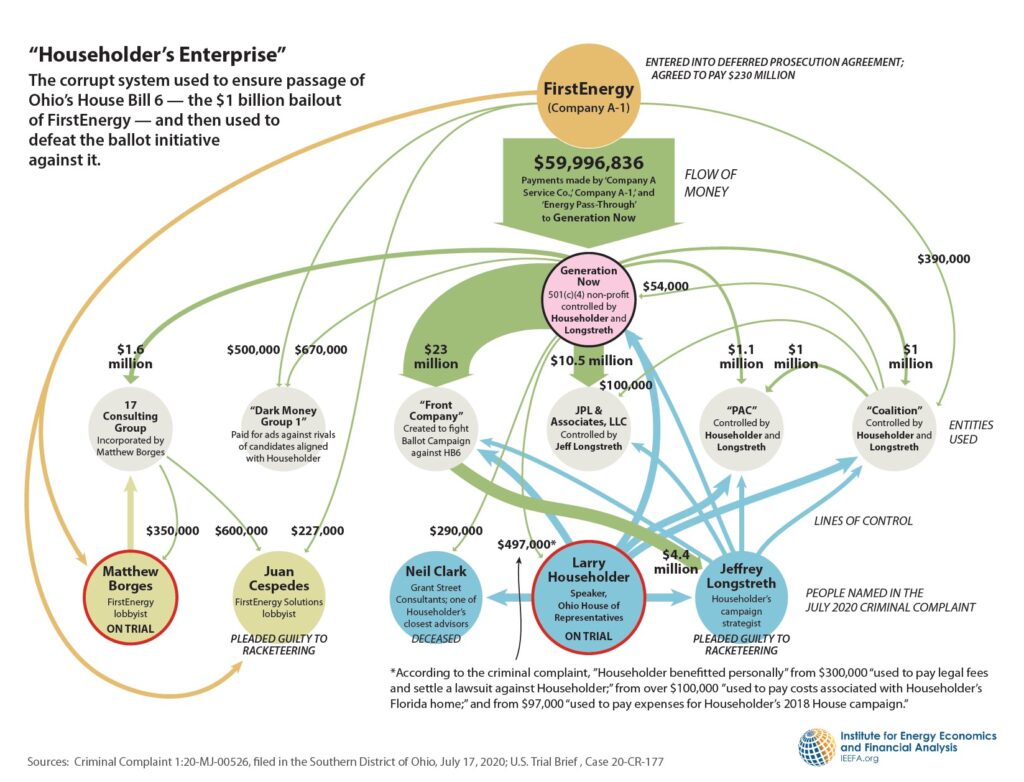
Prosecutors said that FirstEnergy, while seeking a bailout for two Ohio nuclear plants owned by former subsidiary FirstEnergy Solutions , paid $60 million in bribes to Generation Now, a nonprofit Householder secretly controlled in exchange for his help passing the bill.
But on Wednesday, Householder said he didn’t direct the spending, vendors, or contributions of Generation Now. He said that power belonged to Longstreth, the signatory on the account.
The money helped Householder defeat a rival Republican candidate, then-House Speaker Ryan Smith, who didn’t support the bailout. Householder then pushed for the law’s passage in 2019 and with help of his co-defendant, Matt Borges, and others, defended it against a repeal attempt. The nonprofit covered the costs. Prosecutors say its operators used its funds to pay themselves hundreds of thousands of dollars as well.
Householder’s lawyers called two witnesses on Wednesday. In the morning, Bob Klaffky, a prominent Columbus lobbyist, disputed testimony from Juan Cespedes, another lobbyist who’s pleaded guilty in the case and is cooperating with prosecutors.
Cespedes has told jurors that Klaffky had given a $400,000 check to Householder during an October 2018 meeting in which FirstEnergy Solutions’ representatives emphasized their need for a bailout. Klaffky testified that an FES executive, David Griffing, actually gave Householder the check, although he said he generally didn’t remember the meeting well.
But the most notable witness testimony from Wednesday came from Householder, who let loose a full press of folksy appeal and self-assuredness from the witness stand. He struggled, perhaps in jest, to recall how many years he has been married to his “pizza addict” wife, Taundra, who sat in the courtroom watching. He cackled loudly when asked about a claim from another alleged conspirator, the late lobbyist Neil Clark, who unwittingly told undercover FBI agents he served as Householder’s “proxy” with Generation Now. He showed jurors a picture of his son near the stage at a Trace Adkins concert in Washington D.C. that he said he took.
He spent time trying to get jurors to disbelieve Longstreth, who in his testimony had portrayed Householder as an exacting, all-knowledgeable and hands-on boss.
In 2018, Longstreth had helped orchestrate Householder’s campaign for speaker, which involved recruiting friendly candidates and helping them defeat Smith’s allies in that year’s Republican primary election.
But on Wednesday, Householder described delegating a lot of the responsibility for his campaign to Longstreth and Megan Fitzmartin, who worked for Longstreth and who also previously testified in the case.
He also contradicted testimony offered by Rep. Dave Greenspan, a Westlake Republican who in 2019 voted against House Bill 6, the bailout legislation. Greenspan claimed Clark threatened him on Householder’s behalf regarding his no-vote on HB6; that Householder nixed other legislation Greenspan was working on at the time; and that Householder’s lieutenant, Longstreth, dispatched an intermediary asking Greenspan to delete his texts with Householder regarding HB6.
Householder denied any inolvement on each of those three points.
“I absolutely did not threaten him,” Householder said.
Another anecdote helps illustrate the difference between Longstreth and Householder’s respective testimonies. Longstreth described to jurors a phrase — “casket carriers” — that Longstreth said meant to convey the significance Householder placed on loyalty.
“I understood it to mean a loyal team around him that would be with him until his death and to lower the casket in the ground,” Longstreth said.
But Householder said he had a different interpretation of the term, saying it reflected his desire to not make any more enemies than he already had throughout his lengthy political career.
“When you get to be the age that I am, you’re not looking for any more enemies. And if you’re in politics, there’s probably going to be enough people throwing mud at you when your casket goes by,” he said. “In other words, I don’t want enemies, I want friends. I didn’t come back [re-enter politics] to make more enemies.”
And rather than what Longstreth said, that Householder prized loyalty above all when looking for legislative candidates, Householder said he looked for independent thinkers who pay attention.
“You get a much better debate,” Householder said.
Householder’s attorneys say they expect he will testify for about another hour on Thursday morning. From there, Householder faces his true crucible: answering questions from federal prosecutors who have now spent years trying to put him behind bars.
Borges will have the opportunity to question Householder as well.After that, Borges may testify in his own defense, his lawyers said. If he does not, they likely will rest their case.
On his way out out of the courtroom Wednesday, Borges said when asked whether he may testify despite any potential legal risks: “Whatever you see tomorrow, know that it was my choice.”
===
Published 2:34 PM PST, March 1, 2023
CINCINNATI (AP) — Former Republican Ohio House Speaker Larry Householder directly contradicted FBI testimony in his corruption trial Wednesday, taking the stand for the first time to deny attending a series of swanky dinners in Washington, D.C. where prosecutors have alleged he and executives of Akron-based FirstEnergy Corp. hatched a $60 million bribery scheme in 2017.
Householder, 63, looked relaxed and confident during his first day of testimony, setting the stage by describing his lifetime lived in a single rural Ohio county, his early political-underdog days and his rising path to become speaker. His wife of 38 years, Taundra, sat facing him from the gallery.
The trial is in its fifth week before a jury and U.S. District Court Judge Timothy Black in Cincinnati.
Householder and Matt Borges, 50, a lobbyist and former Ohio Republican Party chair, have been charged with conspiracy to participate in a racketeering enterprise involving bribery and money laundering. Federal prosecutors allege Householder controlled a scheme, secretly funded by FirstEnergy, to elect allies, win the speakership, pass a $1 billion nuclear plant bailout and that Borges sought to bribe an operative for inside information on the referendum to overturn it. Both have pleaded not guilty and maintain their innocence. Each faces up to 20 years in prison if convicted.
Householder told jurors that he invented the strategy of recruiting large numbers of like-minded Republican House candidates and setting up expensive operations to help them all get elected at once, requiring the raising of large sums of money. But he denied demanding loyalty oaths from his recruits or extracting promises to vote a certain way.
“I really looked for people who are independent-minded,” he said.
Three of Householder’s former caucus members testified last week that he pressured them to vote for the bill, and texts were presented in which Householder appeared to express anger at disloyalty.
Associate Jeff Longstreth, among four other individuals and a dark money group charged in the scheme, had testified for the prosecution that Householder wanted “casket carriers,” people so loyal they would carry his casket on the day of his funeral. Householder told jurors “casket carriers” were just friends, and that a long-time politician like him doesn’t need anymore enemies.
In another denial of previous allegations, Householder said he never granted Statehouse superlobbyist Neil Clark, a co-defendent who died by suicide in 2021, a “proxy” to act on his behalf. The former speaker guffawed at the suggestion.
“I don’t give up my right to speak for myself,” he said.
Clark was taped describing himself as Householder’s “proxy” while speaking to two undercover FBI agents posing as developers. He went on to describe in detail Householder’s use of dark money groups to conceal campaign contributions. Householder’s attorneys have said Clark exaggerated.
Perhaps the day’s most striking exchange was when Householder described his trip to Republican President Donald Trump’s inauguration in January 2017. He recounted flying to Washington on a FirstEnergy plane, then outlined his weekend activities in detail — photo opportunities, cocktail parties, balls, parades, a concert with his son and pizza with a wife “addicted” to it.
Missing from the account were several dinners, which earlier documents had shown were arranged by Longstreth, head of the dark money Generation Now, to involve then-FirstEnergy CEO Chuck Jones, Vice President Michael Dowling and others. Householder said he had not attended any such dinners. He said he saw Jones on the plane flights to and from the inaugural, and then throughout the weekend only at a “packed” house party hosted by media consultant Rex Elsass and perhaps once more in passing. Asked if he attended the dinners, Householder simply said, “No” or “I was not.”
Earlier in the trial, FBI Agent Blane Wetzel had walked through internal documents from both Generation Now and FirstEnergy, phone records, emails and other documents indicating Jones, Dowling and Householder were part of a party of eight that met three times in D.C. over Trump’s inaugural weekend.
It was about two weeks later that Longstreth opened a bank account for Generation Now, through which FirstEnergy admitted in an agreement to avoid prosecution to pushing millions of bribes aimed at getting the bailout bill passed. The same day, Longstreth emailed Dowling “wiring instructions” for FirstEnergy to put money in the account. Regular $250,000 began flowing.
Longstreth and Generation Now have pleaded guilty to their parts in the bribery scheme, as has a third individual, Juan Cespedes, who testified last week. Clark had pleaded not guilty.
Cross-examination of Householder had not yet begun at day’s end Wednesday.
Earlier in the day, Statehouse lobbyist Robert Klaffky testified to being present at a meeting where a $400,000 check from his client, FirstEnergy Solutions, was given to Householder in an envelope. Klaffky said he could not remember what was said at the meeting, but that he was certain he had not witnessed pay-to-play.
Klaffky said he was already a Householder insider and adviser before taking on FirstEnergy Solutions, a subsidiary that owned the two nuclear plants, as a client — and wanting him to win the speakership.
Borges’ attorney, Karl Schneider, said he expected his client also to take the stand.

Smyth covers government and politics from Columbus, Ohio, for The Associated Press. She was part of the AP team honored as a finalist for the 2025 Pulitzer Prize in breaking news.
==
"A Cycle of Corruption": A Timeline of the Householder/HB6 Scandal - Common Cause Ohio
2025
- January 17, 2025: The SEC announced that American Electric Power—which has managed to fly under the radar until now—has agreed to pay $19 million because of their $1.2 million dark money payments in the corruption scheme as well as lies to investors.
- January 17, 2025: Former FirstEnergy executives Chuck Jones and Mike Dowling wereindicted on federal racketeering charges.
- January 9, 2025: Judge rejects former FirstEnergy executives Chuck Jones and Mike Dowling’s request for grand jury transcripts.
2024
- December 3, 2024: Former Chair of the Public Utilities Commission Sam Randazzo’s shell company pleaded guilty for its role in enabling the secret payment of $4.3 million from FirstEnergy to Randazzo.
- November 18, 2024:Two former lobbyists for FirstEnergy Joel Bailey and Justin Biltz pleaded the Fifth during questioning by the Ohio Consumer Counsel in a state regulatory investigation by the Public Utilities Commission of Ohio.
- November 12, 2024: Larry Householder’s attorney says that Householder will seek a presidential pardon from Donald Trump.
- October 15, 2024:Cuyahoga County Common Pleas Judge Kevin Kelley scheduled Householder’s trial on state charges including theft in office, aggravated theft, telecommunications fraud, money laundering and tampering with records for April 28, 2025.
- September 13, 2024:FirstEnergy agrees to pay $100 million fine to settle charges from the SEC about the company’s role in the Householder/HB6 scheme. Chuck Jones still faces charges.
- September 12, 2024:The Securities and Exchange Commission (SEC) filed charges against Chuck Jones, former FirstEnergy CEO alleging that Jones participated in the scheme to directly and indirectly provide Householder about $60 million to garner support for legislation to benefit FirstEnergy and misled investors.
- September 11, 2024: Former FirstEnergy CEO Chuck Jones and former Senior Vice President of External Affairs Michael Dowling were charged with bribery and engaging in a pattern of corrupt activity in an amended complaint.
- July 12, 2024: FirstEnergy loses appeal to shield internal investigations of HB6 scheme. However, this decision didn’t make these records immediately available to the public.
- August 26, 2024:Prosecutors respond to Householder’s appeal: “Householder could not have lawfully received millions of undisclosed dollars from FirstEnergy for campaign or election purposes. The FirstEnergy payments were akin to bags of cash or deposits into Householder’s personal account that he could use for any purpose.”
- May 31, 2024: Larry Householderpleads not guilty to state charges.
- April 19, 2024:Public records reveal that FirstEnergy gave $2.5M to Republican Governors Association, a dark money group backing Mike DeWine’s bid for governor.
- April 15, 2024:Lt. Gov. Jon Husted refuses to say if he knew about dark money contribution.
- April 10, 2024: Public records reveal thatFirstEnergy made a secret $1 million payment to a group to support Lt. Gov. Jon Husted’s campaign.
- April 9, 2024:Former PUCO chair Sam Randazzo died likely as the result of suicide.
- March 24, 2024:Larry Householder indicted on state charges including theft in office and campaign finance violations.
- February 28, 2024: Former Ohio Speaker Householder files appeal, says bribe payment was within First Amendment rights.
- February 12, 2024: Two former FirstEnergy executives, Randazzo indicted by Summit County grand jury.
2023
- December 4, 2023:Grand jury indicts former state public utilities chairman, Sam Randazzo, for federal bribery, embezzlement crimes
- June 29, 2023:Larry Householder is sentenced to 20 years in prison.
- March 9, 2023:Larry Householder and Matt Borges were found guilty of racketeering (trial transcripts).
- Jan. 20, 2023:Jury selection begins.
- Jan. 6, 2023:Prosecutors’ trial briefreveals that FirstEnergy gave $400K to two dark money nonprofits One Ohio United and Citizens for a Working America. These organizations than passed the money on to the Hardworking Americans PAC which targeted Larry Householder’s opponent in the 2018 Republican primary.
- Jan. 4, 2023:Yost and other lawmakers subpoenaed as witnesses.
- Jan. 3, 2023:Judge Tim Black denies Larry Householder’s motion to dismiss.
2022
- December 2022:FirstEnergy agrees to pay $3.9M for failing to tell the Federal Energy Regulatory Commission about payments to former PUCO Chairman Sam Randazzo and to Generation Now.
- October 2022:AEP receives a second subpoena from the U.S. Security and Exchange Commission.
- March 2022:U.S. District Court Judge Timothy Black publishes schedule for Householder’s trial with jury selection on Jan. 20, 2023.
2021
- July 2021:FirstEnergy reaches a deferred prosecution agreement and is fined $230 million. FirstEnergy admitted to conspiring “with public officials and other individuals and entities to pay millions of dollars to public officials in exchange for specific official action for FirstEnergy Corp.’s benefit.”
- June 2021:The Ohio House expels Householder (75-21). American Electric Power (AEP) announces that the SEC has issued a subpoena about the role of a nonprofit affiliated with AEP, Empowering Ohio’s Economy which gave $150,000 to Generation Now. House Bill 6 includes a bailout of coal plants owned in part by AEP. AEP’s nonprofit also gave $200,000 to the Coalition for Opportunity & Growth. This appears to be the committee that spent $1 million in 2018 to candidates favored by Householder.
- American Electric Power Co. workers secure coal barges before making their way down the Ohio River. Photo by Ty Wright of Bloomberg via Getty Images.
- April 2021: FirstEnergy begins talks about deferred prosecution.
- March 2021:Veteran lobbyist Neil Clark dies as a result of suicide. This month, Gov. DeWine also signs House Bill 128, which partially repeals House Bill 6. HB 128 doesn’t remove language in House Bill 6 that gutted the energy efficiency and renewable energy mandates or remove the subsidies for two coal plants owned by Ohio utility companies.
- February 2021: Generation Now Pleads Guilty to federal racketeering. Householder’s chief political aide Jeff Longstreth signed the plea document.
2020
- Nov. 21, 2020:Sam Randazzo resigns as chair of the Public Utilities Commission.
- Nov. 16, 2020:The FBI raids Chair of the Public Utilities Commission Sam Randazzo’s house.
- October 2020: Householder allies Longstreth & Cespedes’ guilty pleas unsealed. Longstreth admittedthat he participated in the management of Generation Now, the nonprofit funded by FirstEnergy and that he “engaged in financial transactions that were designed to conceal the nature, source, ownership and control of payments.” Cespesdes admitted that he orchestrated payments to Generation Now and that he understood that the funds were meant to help Larry Householder achieve political goals and to help pass House Bill 6. Separately, FirstEnergy fired its CEO Chuck Jones and Vice President Mike Dowling.
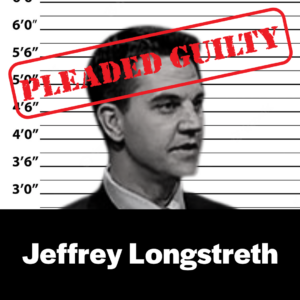
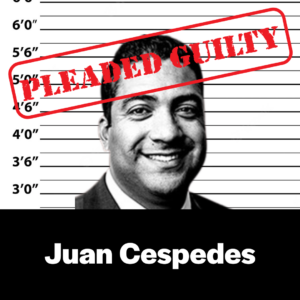
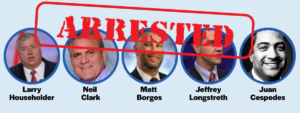
- July 21, 2020:Former Speaker of the Ohio House Larry Householder and his allies — Neil Clark, Matt Borges, Jeff Longstreth, and Juan Cespedes — are arrested. All of them, as well as Generation Now 501(c)(4) were charged with public corruption and racketeering. Not only was FirstEnergy not charged at this time, but it also simplyappears as “Company A” in the complaint. The complaint lays out how dark money groups were used to benefit Householder politically and to garner a bailout.
- February 2020: FirstEnergy Solutions announced it successfully restructured under Chapter 11 bankruptcy and that it is changing its name to Energy Harbor
- January 2020: Jeff Longstreth, Larry Householder’s chief political aide and strategist, received $1M from Generation Now.
2019
- November 2019:In a win for the utilities (but a loss for Ohio ratepayers) PUCO eliminates the requirement for a new rate case for FirstEnergy.
- October 2019:Pro-referendum campaign misses deadlines & the energy bailout bill (House Bill 6) goes into effect.
- September 2019:Tyler Fehrman, the campaign manager for the referendum on House Bill 6, wears a wire for the FBI during meetings with Matt Borges, an Ohio Republican operative and lobbyist. These recordings reveal that Borges was attempting to gain insider information about the referendum effort.
- August 2019: The Attorney General approved a referendum petition for a public vote to overturn House Bill 6. Ohioans for Energy Security launched a $1 million TV and radio ad campaign opposing the referendum on HB6. These ads were aggressive and xenophobic.
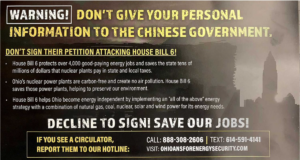
- Image of xenophobic mailer paid for by Ohioans for Energy Security

- July 2019: Ohio House passes House Bill 6 (53-43).
- May 2019: Ohio Senate passes House Bill 6 (19-12).
- May-July 2019: Ads from Generation Now—funded by FirstEnergy promoting House Bill 6 — appear on thetelevision, social media, and in Ohioans’ mailboxes.
- April 2019:House Bill 6 was introduced to bail out two nuclear plants, paid for by utility ratepayers. That month, Sam Randazzo was also confirmed by the Ohio Senate as chair of the PUCO.
- January 2019: FirstEnergy gives $4.3 M to Sustainability Funding Alliance, a shadowy for-profit corporation run by Sam Randazzo, who was later appointed the Chair of the Public Utilities Commission of Ohio (PUCO).
2018
- March 2018:FirstEnergy Solutions announces closure of nuclear plants including Davis Besse and files for bankruptcy.
---
State-ex-rel-Yost-v-FirstEnergy-et-al-Complaint-Al
:{:{...Larry Householder, the powerful Speaker of the Ohio House from almost two decades earlier, had won back his seat representing Perry County in November 2016. As he took office in January 2017, he was already plotting his path back to the Speaker’s dais. To do so, he would need to fund a slate of primary election challengers for state representative elections. “Team Householder,” as these candidates would become known, would be counted on to support Householder’s eventual selection as Speaker. To get Team Householder elected, Householder and his political operatives needed cash -- a lot of cash. FirstEnergy Corp. and FirstEnergy Solutions had it, and were willing to spend it to gain a third government lifeline for their nuclear operations. }:
So was formed what one of the Defendants would call "The Unholy Alliance." In some ways, this was not so very different from how other Speakers have come to power. What set the Unholy Alliance apart was how the money was routed to disguise its source -- and the expected Legislative Solution as a reward. The Unholy Alliance moved ever-larger amounts of money around in a shell game using 501(c)(4) entities and other co-conspirators designed to conceal the source of funds and to circumvent Ohio's campaign finance laws and IRS requirements for 501(c)(4) nonprofits. The vast majority of the money came from FirstEnergy Corp. and its subsidiary. }:
...
p6
:{:{Generation Now would use an infusion of over $7 million in new money to fund advertising and media services, applying pressure on members of the Senate to support the bailout bill. But perhaps just as important, while the debate was raging over H.B. 6, the House and Senate were in the middle of negotiating the state’s biennial budget, House Bill 166. The House, which begins the appropriations process, had passed its version of the budget on May 9, 2019. The Senate had passed its version on June 20, 2019 -- and it needed House concurrence on its amendments, or a conference committee to iron out the differences.}:
While the biennial budget is typically completed by June 30th in odd numbered years, the Speaker slammed the brakes on the entire state’s operating budget, exerting maximum pressure on the Senate to take up H.B. 6. The House and Senate both agreed to the conference committee report for the budget and passed it on the same day, July 17, 2019. Notably, July 17, 2019 was the same day the Senate passed H.B. 6 and sent it back to the House with amendments. The House passed the Senate's version of H.B. 6 on July 23, 2019 and it was promptly signed into law by the Governor.
While the bailout was law, it was not yet secured. Almost immediately, forces mobilized to put H.B. 6 to a statewide vote, called a referendum. However, a statewide vote would first require challengers to get tens of thousands of voter signatures on a referendum petition. The financial vehicle to defeat the petition process would be the same one used before: Generation Now. Another $40 million would go toward sidelining signature collection companies, and direct voter appeals opposing repealing H.B. 6. Ultimately, the Unholy }:
...
:{:{A. PLAINTIFF: 1. Ohio Attorney General Dave Yost brings this action for and on behalf of the sovereign State of Ohio in his capacity as chief law officer for the State and on behalf of its citizens in parens patriae to remedy a generalized harm to the people of the State of Ohio.}:
B. DEFENDANTS: 2. FIRSTENERGY CORP. is an Akron, Ohio-based public utility holding company. FirstEnergy Corp. is the parent company of FirstEnergy Service Company and former parent company of FirstEnergy Solutions Corp. FirstEnergy Corp. senior management, including its then-President and CEO Charles Jones, also served as senior officers of FirstEnergy Service Company. FirstEnergy Corp. directed and controlled the operation of FirstEnergy Service Company through this shared leadership. FirstEnergy Corp. also played an integral role in establishing and funding Partners for Progress, Inc., which is described below. 3.
FIRSTENERGY SERVICE COMPANY (“FIRSTENERGY SERVICE”) is an Ohio corporation with its principal place of business in Akron, Ohio, and is a wholly-owned subsidiary of FirstEnergy Corp. At all times relevant to this Complaint, FirstEnergy Service provided administrative, management, financial, compliance, ethical, external affairs, and political and regulatory advocacy services to FirstEnergy Solutions Corp. In }:
...
JPL & ASSOCIATES LLC (“JPL & ASSOCIATES”) is an Ohio Limited Liability Company located in Franklin County, Ohio. Jeff Longstreth is the statutory agent for JPL & Associates. JPL & Associates received and disbursed funds used in furtherance of the affairs of the Enterprise.}:
- CONSTANT CONTENT CO. (“CONSTANT CONTENT”) is an Ohio Company that received and disbursed funds used in furtherance of the affairs of the Enterprise. Jeff Longstreth directs and controls the business activities of Constant Content.
12. NEIL CLARK (“CLARK”) is a career lobbyist who owns and operates Grant Street Consultants, which is located in Columbus, Ohio. Clark served as a proxy for Enterprise member Larry Householder, made decisions impacting the affairs of the Enterprise in Householder's absence and served as an emissary for the Enterprise in its dealings with legislators, candidates and signature collectors.
- 13. MATT BORGES (“BORGES”) is a registered Ohio lobbyist. Borges was contracted to perform lobbying services on behalf of FirstEnergy Corp. and FirstEnergy Solutions. Through strategy development and lobbying, Borges furthered the affairs of the Enterprise.}:
...
:{:{JUAN CESPEDES (“CESPEDES”) is a registered Ohio lobbyist affiliated with The Oxley Group, LLC. Throughout the course of the Enterprise, Cespedes was contracted to perform lobbying services on behalf of FirstEnergy Solutions and later, its successor in interest, Energy Harbor. In his role, Cespedes facilitated the flow of funds between FirstEnergy Solutions, FirstEnergy Service, Partners for Progress, Inc. and Generation Now. Also, in furtherance of Enterprise affairs, Cespedes coordinated Enterprise activities and strategies and acted as a conduit for the flow of money between Enterprise members and instrumentalities.}:
:{C. NON-DEFENDANT ENTITIES
- PARTNERS FOR PROGRESS, INC. (“PARTNERS FOR PROGRESS”) is a nonprofit corporation organized under the laws of the State of Delaware. Partners for Progress, which was led by a lobbyist for FirstEnergy entities, was established to further the policy and political interests of FirstEnergy Corp. and FirstEnergy Solutions. FirstEnergy Corp. provided Partners for Progress with $5 million in seed money on its establishment in 2017. For the next three years, Partners for Progress received and disbursed tens of millions of dollars used to further the affairs of the Enterprise. }:
- COALITION FOR GROWTH & OPPORTUNITY, INC. (“COALITION FOR GROWTH & OPPORTUNITY”) is a 501(c)(4) non-profit entity organized under the laws of the State of Delaware. Coalition for Growth & Opportunity, which operates in Ohio, received and disbursed funds used in furtherance of the affairs of the Enterprise.}:
- ...
HARDWORKING OHIOANS, INC. (“HARDWORKING OHIOANS”) is an Ohio corporation that received and disbursed funds used in furtherance of the affairs of the Enterprise.
- GROWTH & OPPORTUNITY PAC, INC. (“GROWTH & OPPORTUNITY PAC”) is a federally registered political action committee based in Lexington, Kentucky. Growth & Opportunity PAC received and disbursed funds used in furtherance of the affairs of the Enterprise. Eric Lycan, an attorney practicing in Lexington, Kentucky, is identified in regulatory filings as the treasurer of Growth & Opportunity PAC and Coalition for Growth and Opportunity.
- 20. OHIOANS FOR ENERGY SECURITY, LLC (“OHIOANS FOR ENERGY SECURITY”) is an Ohio corporation that received and disbursed funds used in furtherance of the affairs of the Enterprise.
- 21. FIRSTENERGY PAC FSL (“FIRSTENERGY PAC”) is an Ohio registered political action committee funded by, and operated to further the interests of, FirstEnergy Corp. and its subsidiaries. FirstEnergy PAC shares its address (76 South Main Street, Akron, Ohio 44308) with Defendant FirstEnergy Corp. Steven Staub, Vice President and Treasurer at FirstEnergy Corp., serves as the Treasurer of FirstEnergy PAC. FirstEnergy PAC donated over $290,000 to candidates for the Ohio legislature between January 1, 2017 and June 4, 2020.
===
AN 4 24
Next to gerrymandering, the biggest institutional driver of dangerous and destructive political misrepresentation in Ohio and across America is the U.S. Supreme Court’s disastrous 2010 Citizens United ruling allowing unbridled, dark money, pay-to-play corruption, which has now led to the biggest political bribery scandal in state history.
The central feature of that criminal racketeering scheme was the use of 501(c)(4) dark money groups by FirstEnergy and now-imprisoned former Ohio House Speaker Larry Householder to launder campaign donations and prop up the candidacies of politicians who would support an unnecessary $1.3 billion bailout for the utilities industry at the expense of consumers.
Corporate dark money largess
Householder’s dark money group, Generation Now, has pleaded guilty to participating in the conspiracy, and was used by FirstEnergy to funnel more than $60 million worth of bribes to Householder’s political machine to make him Ohio House Speaker and pass the bailout. Ohio Gov. Mike DeWine signed the bailout the same day it was passed.
$15 million of the Generation Now came via another dark money group, Partners for Progress. FirstEnergy gave $25 million to Partners for Progress between 2017 and 2019. A FirstEnergy lobbyist named Dan McCarthy was listed as the principal of Partners for Progress in 2017, later leaving to become DeWine’s legislative affairs director where he lobbied to pass the House Bill 6 bailout. Certain FirstEnergy executives were also involved in choosing the three directors of Partners for Progress, two of whom were FirstEnergy lobbyists.
FirstEnergy also gave $1 million in 2017 to a dark money group called Freedom Frontier supporting Jon Husted as he made a Republican Party primary bid for the nomination to run for governor. The group then supported DeWine after Husted dropped out of the primary race to become his running mate.
In 2018, FirstEnergy donated $2.5 million to a Republican Governors Association-affiliated dark money group called State Solutions backing DeWine for governor. In 2019, they gave $300,000 to another dark money group called Securing Ohio’s Future, for a grand total of nearly $4 million in dark money to support DeWine/Husted.
Leaving no pocket unfilled, FirstEnergy also made a $300,000 contribution in 2019 to a dark money group called Liberty Ohio, which a FirstEnergy lobbyist tied to now-Ohio Senate President Matt Huffman, calling it “the Huffman C4.”
As far as traditional campaign spending, now-indicted former FirstEnergy executive Chuck Jones hosted a fundraiser for DeWine at his home. The company also gave nearly $1 million in traditional campaign money to legislators, other officeholders, candidates and political parties. This included FirstEnergy’s largely employee-funded political action committee, which gave $25,202 to the 2018 DeWine campaign and $10,000 to his inaugural committee. Alongside Jones providing $12,700 in food and beverages for the DeWine fundraiser, the total in traditional funding comes to $47,902. After the scandal broke in 2020, DeWine pledged to donate $35,000 of that, noting at the time that FirstEnergy executives had not been charged.
Influence peddling
Shortly before winning the 2018 race for governor, DeWine met with FirstEnergy executives at an RGA fundraiser in downtown Columbus on Oct. 10, 2018, the Dayton Daily News first reported. Shortly after, FirstEnergy Solutions donated $500,000 to the Republican Governor’s Association, according to tax records.
Shortly after winning the 2018 race for governor, on Dec. 18, 2018, DeWine, Husted, Jones and now-indicted FirstEnergy executive Michael Dowling met at the Columbus Athletic Club. That same night, Jones and Dowling went from that dinner to the German Village condo of FirstEnergy lobbyist Sam Randazzo, where they seem to have negotiated a $4.3 million payment that FirstEnergy has admitted in a deferred prosecution agreement was a bribe.
When Randazzo was indicted by the U.S. Department of Justice in December 2023 on 11 felony counts of bribery and embezzlement, the charges included allegations that Randazzo had a corrupt relationship with the FirstEnergy executives stretching back to 2010, allegedly serving as general counsel to the Industrial Energy Users of Ohio while secretly being paid as a consultant for FirstEnergy: Randazzo settled disputes over electricity rates on terms acceptable to the energy companies, then channeled the settlement money through shell companies where he skimmed off a portion, the indictment said.
Between 2016 and 2019, FirstEnergy paid $13 million into Randazzo’s shell companies, a state-level indictment of Randazzo said. Of that, Randazzo passed $7.75 million to the industrial users and pocketed the rest, it said. DeWine’s chief of staff, Laurel Dawson, was married to a man who had been a paid lobbyist for FirstEnergy — and who had received a $10,000 loan from Randazzo in 2016, the indictment said.
In January 2019, as Randazzo was being vetted to chair the PUCO, he told Dawson, DeWine’s then-chief of staff, about the $4.3 million payment, but he did not tell her about the other millions he had received from FirstEnergy, the indictment said. Randazzo didn’t report any of the payments to the Ohio Ethics Commission, it added.
A former aide gave DeWine a 198-page dossier reporting shady financial connections between Randazzo and FirstEnergy on Jan. 28, 2019. But the governor’s office says that Dawson never told the governor about the $4.3 million payment before DeWine nominated Randazzo to chair the PUCO on Feb. 4, 2019.
According to the state indictment, Randazzo spent the rest of the year and part of the next helping to draft and openly lobby for the corrupt bailout. The bailout was passed and signed in July 2019.
Householder and four others were arrested in July 2020. But it wasn’t until the following November — when the FBI searched Randazzo’s condo — that Dawson says she told the governor about the $4.3 million payout.
DeWine has staunchly defended Dawson, just as he defended McCarthy, the former aide and FirstEnergy lobbyist with the dark money bribery pass-through group. McCarthy resigned his position in September 2021, but DeWine has kept Dawson on staff as an advisor earning more than $180,000 per year. In September 2023, DeWine appointed McCarthy to the state racing commission.
What’s happened since?
After the scandal broke, the nuclear part of Ohio House Bill 6 was eventually repealed, but the law’s gutting of the state’s renewable energy portfolio still stands, as does the bailout of two 1950s-era coal plants, one of which is in Indiana.
Householder and former state GOP Chairman Matt Borges are serving 20 years and five years respectively in federal prison for their roles. Two other lobbyists cooperated and are awaiting sentencing, while a third died by suicide wearing a “DeWine for governor” t-shirt in June 2021. Randazzo died by suicide on April 9, 2024.
FirstEnergy shareholders have filed a lawsuit, an ongoing case in which DeWine has been subpoenaed and Husted has been called on to give a sworn deposition.
Asked this week about the Oct. 10, 2018 RGA fundraiser meeting with FirstEnergy executives, DeWine claimed, “I don’t remember that. I’m not disputing it. I just don’t remember. I don’t remember the meeting.”
As for the Dec. 18, 2018 dinner with FirstEnergy executives, DeWine has said he doesn’t recall Randazzo’s name coming up.
Asked this week about the $4 million that FirstEnergy spent in dark money supporting his bid for governor, DeWine claimed he didn’t know about it.
*Sure, Jan.
After the death of Randazzo, Ohio Attorney General Dave Yost has said the state’s prosecution will proceed, and Jones and Dowling, who have pleaded not guilty, will still have to face their day in court.
U.S. Attorney for the Southern District of Ohio Ken Parker has said his team will also continue to pursue the widespread corruption case.
Citizens United
Deploying one of the most absurd, naive, and destructively dumb statements I’ve ever read in a U.S. Supreme Court ruling from my lifetime, then-Justice Anthony Kennedy in 2010 authored the landmark campaign finance decision in Citizens United v. Federal Elections Commission:
“(W)e now conclude that independent expenditures, including those made by corporations, do not give rise to corruption or the appearance of corruption. … The fact that speakers (i.e., donors) may have influence over or access to elected officials does not mean that these officials are corrupt. … The appearance of influence or access, furthermore, will not cause the electorate to lose faith in our democracy,” Kennedy claimed.
What combination of delusional hallucinogenics was Kennedy on what he made that obnoxious declaration?
As then-Justice John Paul Stevens obsesrved in his decent, the majority’s Citizens United ruling is “a rejection of the common sense of the American people.”
This entire dark money political bribery and money laundering scheme in Ohio was made possible exactly because a narrow majority of Republican justices on the U.S. Supreme Court declared that for the purposes of the constitution, corporations are people and money is speech.
They followed the Citizens United ruling with several others that removed any and all accountability for dark money political spending, including upholding the SpeechNow.org v. FEC appellate ruling months after Citizens United, and their McCutcheon v. FEC ruling in 2014 by another 5-4 vote.
Combined, these decisions have cleared the way for wealthy individual donors, corporations, and other moneyed special interests to spend unlimited dark money on elections. And oh boy, have they ever.
Outside groups have poured billions of dollars into influencing American elections since the Citizens United ruling.
Take just our races in Ohio for one of our seats in the U.S. Senate, and just outside spending for or against candidates: According to OpenSecrets.org, in 2004 the amount was just over $45,000. In 2010, it was nearly $3.5 million. In 2016, it was more than $54 million. In 2022, it was just shy of $100 million dollars.
Restoring representation
This is all so far beyond ridiculous there’s nary a word for it. Gerrymandered rigging of district maps to guarantee supermajority party power goes hand-in-hand with a system of campaign finance that allows for this kind of pervasive pay-to-play corruption infecting government.
If voters are ever to truly save Ohio and the American Republic by restoring true representation of the people and the people’s interests, poisonous gerrymandering and corrupt political spending have to be addressed as first priorities.
This should have been done here in Ohio nearly four years ago when the FirstEnergy scandal first broke. But supermajority Republican lawmakers, with DeWine by their side, instead spent 2021 and 2022 imposing more unconstitutionally gerrymandered maps. And while they’ve found time to indulge every culture war distraction on the extremist right-wing menu, they’ve done absolutely nothing to address widespread public corruption.
This relentless, belligerent misrepresentation of the people of Ohio and our best interests has only led to miserable public outcomes, and for myself, as a seventh generation Ohioan whose family moved here in 1805, it all embarrasses us deeply in the eyes of the nation.
Ohio Capital Journal is part of States Newsroom, a nonprofit news network supported by grants and a coalition of donors as a 501c(3) public charity. Ohio Capital Journal maintains editorial independence. Contact Editor David Dewitt for questions: info@ohiocapitaljournal.com. Follow Ohio Capital Journal on Facebook and Twitter.
==
---
:{:{COLUMBUS (AP) — A former top utility regulator awaiting trial on charges he took millions in bribes in conjunction with the largest corruption scandal in Ohio’s history died by suicide on Tuesday, a spokesperson for the Franklin County Coroner’s Office said. Sam Randazzo, 74, the one-time chair of the Public Utilities Commission of Ohio, faced the prospect of spending the rest of his life in prison if convicted of the dozens of criminal charges he faced in simultaneous federal and state investigations. He had pleaded not guilty to all of them, most notably the allegation that he accepted a $4.3 million bribe from Akron-based FirstEnergy Corp. in exchange for regulatory favors.}:
A spokesperson for the county coroner’s office said Randazzo was found unresponsive at a building he owned in Columbus at just before noon. Email newsletter signup Sign up for our daily email newsletter The U.S. Attorney’s Office, Ohio Attorney General’s Office and office of Republican Gov. Mike DeWine, who initially appointed Randazzo to the PUCO, all declined immediate comment. FirstEnergy has admitted to using dark money groups to fund a $60 million bribery plot that allowed former Republican Ohio House Speaker Larry Householder to win the speakership, elect his allies and pass and defend a $1 billion nuclear bailout bill, known as House Bill 6, for two of its affiliated nuclear plants.
A jury convicted Householder and lobbyist Matt Borges last year on federal racketeering charges for their roles in the scheme. Householder was sentenced to 20 years in prison, Borges to five. Both have appealed. Randazzo resigned his regulatory post in November 2020 after FBI agents searched his Columbus townhome and FirstEnergy revealed in security filings what it said were bribery payments of $4.3 million for his future help at the commission a month before DeWine nominated him as Ohio’s top utility regulator. He is the second person that was accused as part of the sweeping investigation to take his own life.
Long-time Statehouse lobbyist Neil Clark, one of the five people initially arrested in the probe in July 2020, died by suicide in March 2021 after pleading not guilty. The remaining two men, Juan Cespedes and Jeffrey Longstreth, pleaded guilty and are cooperating with the government in the ongoing inquiry.}:
Read more at: https://irontontribune.com/2024/04/11/ex-utility-regulator-charged-in-firstenergy-scheme-dies-by-suicide/
---
DUCK 4 25
The Columbus Dispatch
Dark Money Game: What happened to Neil Clark and Larry Householder?
4 days agoFormer Ohio House Speaker Larry Householder was sentenced to 20 years in prison for racketeering and bribery. FirstEnergy, the company at the center of the scandal, paid $230 million in penalties.
- apnews.com
Only include results for this siteHide site from these results
Share feedback about this site
AP News
https://apnews.com › article › ohio-4a98679f0b1e10b47a22c21d4e6c1c49
Lobbyist named in $60M Ohio bribery probe is found dead
Clark had pleaded not guilty to the role federal prosecutors allege he played in an elaborate $60 million scheme led by then-Ohio House Speaker Larry Householder to pass legislation containing a $1 billion bailout for two Ohio nuclear power plants. Clark had denied all wrongdoing. Former U.S. Attorney David DeVillers mentioned Clark's death during a presentation on the government's bribery ...
- cincinnati.com
Only include results for this siteHide site from these results
Share feedback about this site
Cincinnati Enquirer
Columbus lobbyist Neil Clark died by suicide, autopsy confirms
At the time of his death, Clark was facing a federal racketeering charge in connection with a nearly $61 million bribery scheme to pass a $1 billion bailout for two nuclear plants in northern Ohio ...
- nbc4i.com
Only include results for this siteHide site from these results
Share feedback about this site
NBC4 WCMH-TV
Lobbyist charged in FirstEnergy bribery investigation is found dead
Clark had made a not-guilty plea in August over an alleged role in a $60 million scheme federal prosecutors say funneled money from FirstEnergy companies to then-Ohio House Speaker Larry ...
- dispatch.com
Only include results for this siteHide site from these results
Share feedback about this site
The Columbus Dispatch
Neil Clark's tell-all book published after his suicide is a whopper
Ohio superlobbyist Neil Clark's tell-all book has Statehouse insiders abuzz. ... Clark, who died by suicide in March near his home in ... FirstEnergy Solutions contributed $500,000 to the RGA the ...
- 10tv.com
Only include results for this siteHide site from these results
Share feedback about this site
10tv.com
Neil Clark, lobbyist named in $60 million Ohio bribery probe, found ...
Neil Clark, lobbyist named in $60 million Ohio bribery probe, found dead in Florida Clark entered a not guilty plea in August over an alleged role in a $60 million scheme. To stream 10TV on your ...
- dispatch.com
Only include results for this siteHide site from these results
Share feedback about this site
The Columbus Dispatch
HB 6: Neil Clark's book may hold clues about Sam Randazzo, others
Apr 11, 2024It's so tragic that two influential people connected to House Bill 6 took their lives — lobbyist Neil Clark in 2021 and now Former Public Utilities Commission of Ohio Chairman Sam Randazzo.
- news5cleveland.com
Only include results for this siteHide site from these results
Share feedback about this site
News 5 Cleveland
Ohio lawmakers vote to repeal scandal-ridden FirstEnergy bill
Mar 26, 2025In April 2024, Randazzo would become the second defendant accused in the scandal to die by suicide. Neil Clark, a lobbyist accused of bribery, killed himself after pleading not guilty in 2021 ...
- yahoo.com
Only include results for this siteHide site from these results
Share feedback about this site
Yahoo
https://www.yahoo.com › news › feds-going-firstenergy-execs-bribed-195144580.html
Are feds going to say FirstEnergy execs bribed more Ohio public ... - Yahoo
3 days agoRandazzo and lobbyist Neil Clark each died by suicide. Two others, lobbyist Juan Cespedes and political consultant Jeff Longstreth, pleaded guilty in the case and testified for the prosecution ...
- axios.com
Only include results for this siteHide site from these results
Share feedback about this site
Axios
HBO's 'Ohio Confidential' documentary explores Larry ... - Axios
6 days ago"Ohio Confidential" unpacks HB6, Larry Householder and dark money in politics. ... "Ohio Confidential" features the suicide of lobbyist Neil Clark to unravel the story of FirstEnergy's $60 million bribery scheme, which secured power for Speaker of the House Larry Householder and 2019 passage
==
https://insideclimatenews.org/news/22072020/inside-clean-energy-ohio-bribery
Reach Dan at dan.gearino@insideclimatenews.org.
Last October, I went to the public library in my Columbus, Ohio, neighborhood and saw a woman standing outside the front entrance, asking people to sign a petition.
The signatures were for a proposed ballot measure to repeal an Ohio law, passed a few months earlier, that provided taxpayer-funded bailouts for nuclear and coal-fired power plants. The legislation also got rid of Ohio's requirements that utilities meet annual targets for renewable energy and energy efficiency.
Two people standing near the petition gatherer were "blockers," paid operatives there to discourage me and any other passers-by from signing it. They were handing out postcards from a dark money group saying that the campaign to repeal the law was part of a Chinese government plot to harm the United States.
as of Tuesday, the world knows that the campaign to pass the Ohio law and the attacks on the effort to repeal it were part of what prosecutors call the largest bribery scheme in Ohio history.
The $61 million scheme was bankrolled by the utility FirstEnergy, the Akron-based company that was the main beneficiary of the bailout legislation, and the money went to accounts controlled by Ohio House Speaker Larry Householder for his political and personal use, prosecutors said.
Householder, a Republican, and three lobbyists have been arrested and charged. Also charged was a dark money group, Generation Now.
I wrote extensively about the battle over the law before it was passed. With Tuesday's events, the shocking thing for me is not the brazen nature of the wrongdoing or its scale. It's that much of this scheme—most of it even—was legal and indicative of the way energy and utility policy is done in Ohio and other states.
Before I started at InsideClimate News in 2018, I covered Ohio energy and utilities for The Columbus Dispatch for about a decade. I have written about this subject for long enough that I have mostly lost my ability to be shocked by the ways that utilities, legislators and regulators often solve political and financial problems by dumping costs onto the public.
The 82-page charging document from the U.S. Attorney's Office in the Ohio case reads like a novel, using wiretap recordings and recovered emails and text messages to tell the story of a shameless and successful plan by an elected official to get a utility to finance his personal piggy bank in exchange for passing a bailout for that company.
Householder got $61 million. FirstEnergy got a bailout of more than $1 billion to subsidize money-losing nuclear plants, courtesy of Ohio ratepayers.
You can read the full document, and I encourage you to do so.
But here is some of what was done in public that I and other reporters thoroughly documented:
- FirstEnergy was unable to get the Ohio General Assembly and the governor to sign a nuclear plant bailout in 2017 and early 2018. So the company spent heavily on Republican primary elections in 2018 for seats in the Ohio House to elect a group of lawmakers who would support Householder's bid to become speaker and support the bailout. At least nine Householder-backed candidates won in these races, and FirstEnergy's donations were substantial and publicly reported.
- Even after helping to elect pro-Householder and pro-bailout legislators in 2018, Householder didn't have enough support in the House from Republicans to become speaker, so he approached Democrats for help. Democrats gave Householder the decisive votes to become speaker as part of an agreement in which Householder pledged not to bring forward legislation that would curb the power of labor unions, among other concessions.
- When Householder unveiled the bailout measure, House Bill 6, he surprised some environmental advocates by revealing that the bill would include a cancelation of rules that say utilities must invest in renewable energy and energy efficiency. Despite getting rid of clean energy mandates, he and his colleagues described the legislation as a "clean air" measure because the main point of the bill was to subsidize nuclear power, which has almost no emissions.
- Supporters of the bailout bill were struggling to get the votes they needed in the Ohio House, so they amended the bill to also include a bailout of two coal-fired power plants owned by Ohio Valley Electric Corp. With this change, the clean air bill supported some of the dirtiest power on the market.
- The bill narrowly passed in the House and Senate and was signed by Gov. Mike DeWine last summer. Immediately, a group tied to owners of competing power plants said it was launching a petition campaign to let voters decide on the law. Supporters of the bailout responded by hiring "blockers" who impeded the work of petition gatherers and a media campaign that said, without evidence, that the repeal effort was part of a plot by the Chinese government to take over Ohio's electricity supply. In the face of this opposition, the repeal campaign failed to get enough signatures.
The charging document tells the story of what was happening behind the scenes of the public story, how FirstEnergy's publicly reported donations was just a small part of a much larger effort carried out through dark money groups, and how Householder controlled the dark money spending even though he claimed he had no responsibility for the groups' outlandish claims and actions.
Now we focus on what happens with the prosecution, and look for additional arrests, including potentially of other government or company officials.
But what risks being lost is that elected officials and a utility went through this whole process with seemingly little thought about what the energy future ought to look like, and how they can play a role in getting there.
They scrapped clean energy standards almost as an afterthought, and have yet to replace them with any sort of strategy for how Ohio's energy economy can avoid being left behind by states that have been much more aggressive in attracting jobs and projects related to solar, wind and battery storage.
The alleged shenanigans of Householder and company to win an election and pass a bill have consequences that will last a few years. But the lack of a plan for the future is much more damaging, the kind of thing that could sting for generations.
==
---
https://www.ewg.org/energy/22892/ohio-shady-front-groups-fight-dirty-attack-grassroots-campaign-against-1-billion
10/19
Ohio, Shady Front Groups Fight Dirty To Attack Grassroots Campaign Against $1 Billion Nuke/Coal Bailout
An ugly political war is raging in Ohio, pitting consumer and environmental advocates against big utilities and dark-money front groups that want to make electricity customers pay more than $1 billion to bail out failing nuclear and coal-fired power plants. The bad guys are fighting dirty, using deceitful scare tactics and alleged cash payoffs that are now under investigation by the state attorney general, to derail the anti-bailout campaign.
It’s a fight for the future of energy that could erupt in other states as utilities seek public subsidies to prop up their outdated, inefficient, dirty and dangerous power plants against competition from cheaper and cleaner solar and wind power. Figures compiled by EWG show that in the past three years, five states have handed utilities more than $15 billion in taxpayer-funded bailouts of failing nuclear plants.

This summer, Ohio utility interests spent almost $10 million to push through legislation to slap a surcharge on ratepayers’ monthly electricity bills in a move to subsidize two nuclear plants owned by FirstEnergy Solutions and two coal plants owned by Ohio Valley Electric Corp. Not only are the plants not needed to provide a secure supply of electricity but the bill would also effectively stop state renewable energy and efficiency mandates for utilities.
Republican Gov. Mike DeWine signed the bill. But a grassroots group, Ohioans Against Corporate Bailouts, wants to let voters decide whether to overturn the law.
The anti-bailout campaign has until Oct. 21 to collect more than 265,000 signatures to put a referendum on the November 2020 ballot. The bailout surcharge would be on hold until the vote. But two shadowy front groups – Generation Now andOhioans for Energy Security,both of which have refused to reveal their funding sources – are trying to keep the question off the ballot.
Last month, Ohioans for Energy Security unveiled a TV ad that used ominous military imagery and voice-of-doom narration to imply falsely that because Chinese banks had lent money for natural-gas plants that would benefit if the nukes and coal-burners were closed, the anti-bailout campaign is helping Beijing “meddle in our elections”:
> . They shuttered our factories. Now they’re coming for our energy jobs. The Chinese government is quietly invading our American electric grid, intertwining themselves financially in our energy infrastructure. Now a special-interest group boosting Chinese financial interests is targeting Ohio’s energy – taking Ohio money, exporting Ohio jobs,even risking our national security.
Although FirstEnergy Solutions says it has no connection to Ohioans for Energy Security, Bloomberg reported that two people featured in the ad had, in an earlier video, identified themselves as employees of the utility.
As Ohioans for Energy Security’s $3 million-plus ad campaign continues, Generation Now hired a consulting firm called FieldWorks to try to convince voters not to sign the petition calling for the anti-bailout referendum.
Last week, the Dayton Daily News reported that Ohioans Against Corporate Bailouts alleged that unidentified door-to-door solicitors had offered their petition circulators $10,000 to $100,000 to quit and offered to buy signed petitions. Generation Now told the Daily News that FieldWorkswas not authorized to offer cash, and a staffer was fired “after misbehavior was documented.”
Buying or selling election petitions is a felony. Ohio Attorney General Dave Yost said he had opened an investigation into the allegations, saying his office “will not tolerate harassment and intimidation in the state’s petition process.”
A third anti-referendum front group has now surfaced, misleadingly called Protect Ohio Clean Energy Jobs. Emails and documents obtained by our colleagues at the Energy and Policy Institute revealed that an outside lobbyist for FirstEnergy Solutions is the group’s treasurer.
The group is running Facebook adsthat direct people to SaveOhioCleanEnergyJobs.com, a site that provides false and misleading information about the referendum and urges voters to “remove your signature before it is filed with the Ohio Secretary of State’s Office.”
Efforts to thwart Ohioans’ grassroots campaign for clean energy are of a piece with strategies we’re seeing across the nation. Utilities want to continue to control the grid with power from their expensive central plants, and slow down the inevitable transition to renewable sources that serve customers rather than generate profits for shareholders. This greedy and shortsighted strategy is driving up costs for everyone, including vulnerable low-income families, increasing air pollution that threatens public health and fueling the climate crisis.
---
==
https://www.cincinnati.com/story/news/2019/07/02/who-paid-all-money-buy-all-those-nuclear-bailout-ads-ohio-house-bill-6/1443145001/
no lnx
Who paid all that money to buy all those nuclear bailout ads raining on Ohio?
Josh Goad, Cincinnati Enquirer Published 10:00 p.m. ET July 2, 2019 | Updated 3:29 p.m. ET July 12, 2019
If you're an Ohioan with a TV or radio, you've probably heard about a nuclear power bailout bill that lawmakers are considering in Columbus. But what you can't find out is exactly how much money is being spent on those ads – or who originally gave the money for them.
House Bill 6 seeks to tax Ohioans 80 cents a month through their utility bill to bailout First Energy Solutions' nuclear power plants in Northern Ohio. Critics say the bill, which also will boost costs for commercial and industrial customers, will discourage the use of renewable energy for businesses across the state. Proponents say the bill will help Ohio stay energy independent and keep badly needed jobs in the communities around the plants.
The bill, which has the backing of powerful House Speaker Larry Householder, triggered up to $8.3 million in ads and other campaign spending, published estimates show. For comparison, a record $45 million was spent in the 2018 Ohio gubernatorial race.
Yet an Enquirer analysis of ad purchases for and against House Bill 6 and reported to the Federal Communications Commission shows just $2.7 million in sales. The Cincinnati market, the state's third largest, was the leader in ads on the bailout bill.
Why the gap between the $2.7 million hard figure and the $8.3 million estimate? Some broadcasters, including Cincinnati's WCPO-TV, are choosing not to post billings for the ads – and under FCC rules, they don't have to do so.
The big money behind the bill hasn't been reserved for ads this year. Groups allied with Householder put $800,000 into ads for Ohio's 2018 campaigns, boosting candidates who put Householder into the speaker's seat. A couple of the winning candidates also are key sponsors of House Bill 6.
But donors behind the campaign money, and for many of the ads you've seen about the bill, can't be pinpointed.
The money backing the bill primarily started with a 501(c)(4) or "dark money" organization called Generation Now that doesn't have to list donors. Generation Now then gave to a political action committee, which must disclose donors. So while it's clear which candidates got the "dark money" boosting the nuke plant bailout went, it's uncertain who originally contributed it or the money that bought airtime.
Who runs Generation Now and is on its board isn't clear. But the Columbus address of a longtime Householder adviser, Jeff Longstreth, is listed as the principal office in documents filed to the Ohio Secretary of State. So far, the 501(c)(4) hasn't filed paperwork with the IRS– a step that such nonprofits seeking to stay in existence take. Paperwork that's normally filed with broadcasters, listing the board members of groups airing political ads also is missing.
==
intercept 719
find shillenberger connects]
TUESDAY, a dark-money effort linked primarily to the Ohio nuclear industry delivered an audacious payoff, as a newly elected state legislature overcame years of opposition to shower a $1.1 billion bailout on two state nuclear plants.
Several dark-money groups spent millions to replace key Republican state legislators in the spring of 2018, followed by a furious lobbying campaign to make sure those new lawmakers elected a new House speaker — one who was amenable to the subsidy. The nuclear industry in Ohio has been on the brink of failure for several years, but previous legislatures had objected to a bailout, reading the writing on the wall: Nuclear power is neither a cost-effective solution for power nor an effective response to climate change, despite hopes for its success.
The dark-money effort deployed a variety of vehicles that went by names like theConservative Leadership Allianceand the Ohio Clean Energy Jobs Alliance. Murray Energy, a coal company, also gave heavilyto current state House Speaker Larry Householder and his allied candidates, and the bailout from Ohio also includes subsidies to prop up failing coal plants in the state.}:}:
In April 2018, two nuclear plants, both owned by the electric utility FirstEnergy, filed for bankruptcy and have been threatening to cease operations if not bailed out. They were under increasing pressure to compete with cheaper alternatives, ranging from natural gas to wind and solar. The bankruptcy filings give a glimpse into the company’s political spending: more than $30 million from 2018-2019 on lobbying and campaigns in Ohio and Pennsylvania (where the company also sought a bailout, so far unsuccessfully).
The payoff is extraordinary in degree — something like $30 million for campaigns in Ohio and Pennsylvania to win $1.1 billion in government subsidy. But it is similar in kind to other nuclear projects across the country. According to the Environmental Working Group, a nonprofit devoted to research and advocacy, five cash-strapped states across the country have foisted more than $15 billion in subsidies on failing nuclear power plants since 2016, the latest sign that nuclear is unable to stand in a competitive energy market against lower-cost renewables.
IN OHIO, the state House battle was fought in at least 18 competitive Republican primaries, all proxy battles between Reps. Ryan Smith, the incumbent House speaker, and Larry Householder. Householder was a co-sponsor of the nuclear bailout bill that stalled in the legislature in 2018, making him a key ally to the nuclear industry. Several dark-money vehicles backed the pro-Householder candidates, andwon 15 of the 18 races. Four pro-Householder candidates lost in the general election, but the primary wins put Householder in contention for the speakership.
The industry even targeted one Republican state representative who had rebuffed FirstEnergy’s advances before making a bid for Congress. “I didn’t budge when they came into my office to lobby me,” former state Rep. Christina Hagansaidof FirstEnergy. “I became the target of the company and the members of our leadership team who wanted to get it done but couldn’t because I wasn’t going to be supportive. I’m sure they just wanted to make an example of me in my race for higher office that if you don’t play well, this is what will happen to you.”
On top of the dark money, FirstEnergy’s political action committees directly contributed more than $150,000to the campaigns of Householder and candidates aligned with him, while giving none to Smith last cycle. Of the pro-Householder candidates who won their races, all but one supported the bailout.
Dark money also contributed to ads on Ohio television.Generation Now spent almost $2 million on ads in favor of the bailout, and perhaps much more. The Growth & Opportunity PAC, which got more than$1 million in donations from Generation Now, also blanketed the state House districts with television ads in favor of Republican candidates. Generation Now’s office is listed as the Columbus address of a longtime Householder adviser, according to the Cincinnati Enquirer.
:{The new lawmakers entered office in January, and Householder, who, along with his son, flew to Donald Trump’s inauguration on a FirstEnergy-chartered plane, :{won with the backing of 26 Republican and 26 Democratic representatives, while Smith got the votes of 34 and 11, respectively. Householder was able to win the support of those Democrats with his opposition to right-to-work legislation, as unions pushed Democrats to back him in the speaker fight with Smith. }::{}:
}:
On July 23, Smith and 14 other House Republicans voted against the bailout, but Householder was able to push it through 51-38, backed by nine Democrats. It was quickly signed by the state’s new governor, Republican Mike DeWine. (FirstEnergy also contributed to the campaign of DeWine, who then tapped a FirstEnergy lobbyistto be his liaison to the legislature.)That month, the legislature also began work on reviving the nuclear bill known as HB 6. At least seven witnesses who spoke to the legislature in support of the bill drew on testimony written by a FirstEnergy lobbying firm, according to a review of metadata by the Energy and Policy Institute, which has closely tracked the fight.
The Ohio legislation reads as if it was designed specifically to undermine the planet’s continued capacity to support a steady human population. Along with propping up the state’s two nuclear plants, it also provides subsidies for failing coal plants in the state, as well as one in Indiana. It cuts and eventually ends any subsidies for new wind or solar, while approving just $20 million annually for large-scale solar projects that have already been approved. It even ends programs aimed at encouraging Ohio residents to reduce power consumption, through upgrades to appliances or heating and cooling systems.
In April, Householder denied that the corporate PAC money had anything to do with the nuclear bill, and said that FirstEnergy should be applauded for its civic engagement.“For them to care about those people who are trying to serve the state of Ohio and make sure they’ve got good quality candidates moving forward I think is important for anybody,” he said.
When asked specifically about ads from the dark money–funded Growth & Opportunity PAC, Householder said, “I’ll tell you who’s paying for these ads: it’s working men and women from Ohio, who want to save their jobs and it’s Ohio corporations, headquartered in Ohio, that want to stay here. That’s who’s paying for it.” He did not respond to a request for comment from The Intercept.
THE ROLE OF the nuclear industry in the shuffling of speakers was not prominent in the news coverage of the politics, but it wasn’t entirely unknown. Gregory Jaczko, who served as chair of the Nuclear Regulatory Commission from 2009 to 2012, said that the industry’s role in the affair was visible to those paying close attention. “FirstEnergy has been trying, really, for years to get this subsidy, and the legislature kept denying it, and nobody really, even the previous governor [John Kasich] was not really supportive of it,” he said. “FirstEnergy put a lot of money into local races and essentially turned the legislature around. So they ran this thing through.”
On a policy level, the legislation is appalling, said Jaczko, who has become an outspoken critic of the industry, and recently published a book, “Confessions of a Rogue Nuclear Regulator.” Building new wind and solar capacity would not only be a better climate solution and produce more jobs, he said, it would be far cheaper for the state, and it’s the direction Ohio will have to go eventually anyway. Wind and solar “creates a brand new economy, which is going to be a future-looking economy rather than a dying economy,” said the former NRC chair. “Nuclear is dying. It’s dying in Ohio.”
Winning the speakership is quite the comeback for Householder, whose career appeared to be cut short in the mid-2000s by a federal investigation intokickbacks and a pay-to-play scandal. Ohio Secretary of State Ken Blackwell, a Republican, had referred the case to the FBI; it was resolved without charges.Householder won election back to the House in 2016, and during his first cycle, the incumbent speaker resigned amid his own FBI investigation. Smith took over on a temporary basis, leading to the battle between the two.The irony, he noted, is that Ohio had planned to be a testing ground for next-generation smaller nuclear power plants, which purported to solve some of the problems associated with nuclear energy, and won federal subsidies to try to build them.
“As soon as they got that money from the Department of Energy, they decided they weren’t going to pursue these reactors anymore,” Jaczko said. No new nuclear plants are planned for Ohio or anywhere else in the United States, and the closure of the two currently operating facilities is not a matter of if, but when. The billion-dollar subsidy only delays the transition to wind and solar, he said.
Ohio’s two senators, both of whose campaigns have taken money from FirstEnergy throughout their careers, were on different pages when asked about the billion-dollar bailout. Republican Sen. Rob Portman, whose campaigns have taken at least $615,000 from FirstEnergy PACs since his first run for Senate in 2009, said he didn’t know enough of the details of the decision and was swamped with other things this week.
Democratic Sen. Sherrod Brown, though, was indignant.“You don’t bail out utility companies and raise prices for customers,” Brown said. The utility has contributed around $380,000 to Brown’s campaigns since 1997, when he was in the House of Representatives. “And you don’t undermine the efforts our state has made on alternative energy and other energy sources. So it’s just wrong.” Asked about reports of the involvement of dark-money groups in pushing the bailout, Brown said: “Of course there is.”
“I mean, these things happen because these monied interests control the state legislature. There’s no question about it.”
In a statement Brown’s office sent later in the day, the senator added that expending enormous resources to prop up outdated sources of power would only hurt Ohio going forward. “Of course we need to make sure our state has access to reliable power, but we shouldn’t do that by raising the utility bills of hardworking Ohioans,” Brown said. “We need solutions designed for Ohio workers and families, not Wall Street and fat-cat lobbyists. By eliminating the renewable standard, Ohio is going backward when almost every other state is looking to the good-paying jobs of the future. It’s short-sighted and it is going to result in significant lost opportunities in our state—our businesses will be less competitive, energy developers will avoid investing in Ohio, and there will be fewer jobs in this growing sector.”
The cost of the nuclear bailout for Ohio ratepayers is a bargain compared to the bill being given to residents in South Carolina. The cost of a failed program to build a nuclear power plant there topped $9 billion. Two of the companies involved — Dominion Energy and SCANA Corporation — entered into a buyout and settled a large portion of the bill, leaving ratepayers responsible for footing the remaining $2.3 billion, more than twice the Ohio figure. Not a single kilowatt of energy was produced in South Carolina by the project, which consisted largely of a hole in the ground.
The Ohio subsidies for coal and nuclear, which follow bailouts doled out by Illinois, New York, and New Jersey, underscore the futility of pursuing nuclear power.
Nuclear power once offered the tantalizing promise of endless cheap and clean energy, and to this day remains a hope in the minds of some climate activists. But in reality, nuclear hasn’t met the promise. It is far more expensive to produce nuclear power than wind or solar, and the world has not solved the intractable problem of nuclear waste, to say nothing of safety. To truly meet the scale of the climate crisis with nuclear power, Jaczko said, the world would need to start construction on roughly 1,000 plants this year. But because of the safety concerns, waste problem, and astronomical cost, there are just a handful being built. Ohio lawmakers, though, are hanging on to the bitter end — courtesy of Ohio’s residents.... Ohio homeowners and businesses are now stuck paying more to keep old, uneconomical power plants running, and money-saving energy efficiency programs will likely disappear.
---
ref 2
ENERATION NOW INC
COLUMBUS, OH$50,00009/10/18Growth & Opportunity PACGENERATION NOW INC
COLUMBUS, OH$750,00004/12/18Growth & Opportunity PACGENERATION NOW INC
COLUMBUS, OH$250,00004/02/18Growth & Opportunity PAC
==