$ shuffle shell
this is 7/18 distinction
SEE Pass thru shell launder 3-4
see am action network
eventually disambig money launder (foreign eg drugs), dark $, outside spenders ....
this is domestic hiding $ by moving thru mult entities, funnel from one part of country with different rules etc
shuffle refers to c3 c4 sister groups? eg amactionnetwork and forum?
see c4 social welfare (IRS has never defined what % of spending would constitute being a primarily political vs social welfare or educ org?) Plus got ass handed to them when they looked at applications w/ Tea Party etc in title]
bunch of affiliate orgs c4 sister arm w/ "action" in name? tend to be more aggressive eg ALEC action
an ah 1 23
Thanks in part to the U.S. Supreme Court’s 2010 ruling in Citizens United v. Federal Election Commission, the phrase “dark money” is heard a great deal these days in connection with U.S. politics. Citizens United, with its majority opinion by libertarian then-Justice Anthony Kennedy, defined campaign and election spending as a form of constitutionally protected “speech.” And it opened the “dark money” floodgates in a major way.
The Daily Beast’s Roger Sollenberger, in an article published by the Daily Beast on January 19, examines the “dark money machine” of former President Donald Trump. According to Sollenberger,that operation is only getting worse — and is purposely designed to be “confusing.”
“Just when it seemed like former President Donald Trump’s dark money maze couldn’t get any darker, it looks like someone shot the lights out,” Sollenbergerreports. “At least, that’s the impression experts in nonprofit law took away from a pair of previously unreported tax filings from the dark money arm of Trump’s political machine, America First Works. Those experts said it appears from the filings and other incorporation records that the advocacy group — which raised almost no money in 2021 — has closed down its original Virginia entity and opened another one in Washington, D.C. under the same name, with the same board of directors. The question is why — and it comes as Trumpworld is laying the groundwork for a second Trump term.”
READ MORE: **Analysis explains the real reason behind Trump’s 'byzantine structure' of dark money groups**
On December 21, 2022, Axios’ Lachlan Markay reported that if Trump wins the 2024 election, he “will enjoy a key asset absent from his 2017 White House transition: a sprawling infrastructure already preparing to staff a new administration and immediately enact major policies.” Allies of the former president, Sollenberger notes, cite that infrastructure as a key difference between Trump and a MAGA Republican he may be running against in 2024’s GOP presidential primary: Florida Gov. Ron DeSantis — that is, if DeSantis decides to run. Firebrand author Ann Coulter, pundits at Fox News and Fox Business and writers for the National Review have all been pushing DeSantis for 2024.
“2021 was essentially a rebuilding year for Trump’s dark money machine,” according to Sollenberger. “That work not only came at a cost, it also appears to have happened in a black box, adding another layer of opacity on top of a fundraising and advocacy network that’s already grown so convoluted even legal experts have a hard time untangling it. In this instance, not only is it hard to follow the money, it’s hard to say for sure whether there’s all that much money to follow in the first place. At least, there appears to be a lot less of it flying around in the fractious 12 months after Trump left the White House.”
Sollenberger goes on to explain why America First Works fits the definition of a dark money operation.
“AFW is a 501(c)(4) nonprofit organization, which are often colloquially called ‘dark money’ groups,” Sollenberger explains. “These groups can raise funds in unlimited amounts, and while they don’t have to disclose their donors’ identities, the organizations can use a chunk of that unattributed money for political activity. According to its 2021 tax filing, which was first obtained by The Daily Beast,AFW — which raised about $51 million the previous year — doled out millions of dollars in transfers and grants. That filing shows that the funds all went to a handful of groups that make up a financial and political support network behind the former president.”
The Daily Beast reporter adds, “Those transactions included a $3 million grant to AFW’s 501(c)(3) counterpart, America First Policy Institute, and an additional $250,000 to Make America Great Again Policies — a lesser-known entity which has reported having a cost-sharing agreement with a new pro-Trump super PAC. AFW also paid another $250,000 for ‘research’ to Republican opposition research firm America Rising, according to the document.”
Sollenberger points out that if Trump’s dark money “maze” is “maddeningly difficult to follow,” that is “almost certainly part of the point,” according to government and campaign finance watchdogs.
Interviewed by the Beast, Brendan Fischer (who serves as deputy director of government for the watchdog group Documented), discussed the drop that occurred with America First Works in 2021 and told the Beast, “America First Works served as the dark money arm of Trump’s campaign in 2020, and it is not uncommon for a politically active dark money group to see a decline in revenue during a non-election year. But this drop is precipitous, and can’t be explained by election cycles alone…. The in-kind contributions of staff time and office space indicate that AFW employees were still working and on the payroll in 2021…. It also would be understandable if AFW was just going to spend down its existing funds and close up shop, but that’s not what’s going on either.”
The “name changes” with Trump-associated “dark money” operations, according to Sollenberger, are designedto be confusing.
“Last December,” Sollenberger reports, “an AFW spokesperson told The Daily Beast it wasn’t a name change; America First Policies had been ‘sold’ to America First Works 'in a private deal’…. However, previously unreported tax filings now show that another ‘America First Works’ was created that same year, this one in Washington, D.C. AFW1 reported a $140,100 grant to the new America First Works (AFW2), which AFW1 cites as a related entity.”
Sollenberger continues, “But The Daily Beast also obtained AFW2’s tax filing, which shows that the two groups share a slate of directors and that the grant comprised all of AFW2’s revenue for 2021. Almost all the money — around $132,000 of it — was spent on a ‘security deposit,’ the document shows, though it discloses no other underlying assets. Again, all of these moves and name changes seem designed to do one major thing: confuse.”
READ MORE:**How billionaire GOP megadonors are funding a major 'hub for election denial': report**
-=-=
-=-=
-=-=
PKO
Kimberly Leonard and Gary Fineout
08/27/2026
JACKSONVILLE, Florida — Democrats are using a leaked grand jury report on Hope Florida as a fresh line of attack against Sunshine State GOP incumbents, seizing on findings that Gov. Ron DeSantis’ administration “misappropriated” $10 million in taxpayer funds from a health care settlement intended to help needy children.
The controversy — first uncovered by GOP state lawmakers — has given Democrats an opening to tie two prominent Republicans to a dispute over millions of dollars in taxpayer money that ultimately flowed into a DeSantis-backed political committee.
The long-running scandal involved a charity connected to an initiative spearheaded by Florida first lady Casey DeSantis, called the Hope Florida Foundation, and has entangled GOP Sen. Ashley Moody and Florida Attorney General James Uthmeier, both of whom were appointed to their current jobs by the governor and are up for elections in November.
On Wednesday, a grand jury report looking into the funds was leaked to CBS Miami. According to the report, jurors concluded that state officials shifted upwards of $10 million as part of a “sophisticated scheme to fund political activities” because the money eventually went to a political committee and the Republican Party of Florida to defeat an amendment that would have broadly legalized marijuana in the state. Some of the money also flowed into a political committee tied to Gov. DeSantis himself, according to the grand jury.
But the report — which was apparently issued in January but has been kept under seal since then — also concluded there wasn’t enough evidence to criminally charge anyone because “nobody will take responsibility” for routing the money to the foundation or “had any memory of who made it.” At the time money was shifted, Moody was state attorney general while Uthmeier was the governor’s chief of staff.
CBS Miami published its story on the grand jury report on Wednesday, the same day state Rep. Angie Nixon, the Democrat running against Moody, launched her campaign kickoff event in Jacksonville. Ahead of her kickoff, Nixon called on Moody to resign and described the funds transfer as “corrupt” and “disrespectful” in an interview with POLITICO. She drew attention to the report in her stump speech before a crowd of around 200 people who gathered for her campaign launch later that night.
“It just came out today,” Nixon said of the news report. “She stole $10 million for medically needy kids in order to defeat two citizen-led ballot initiatives that you all placed on the ballot that would have allowed you all to have healthier lives.”
Asked about this before the revelations in the grand jury report were published, Moody’s campaign pointed to how Florida’s Agency for Health Care Administration, which is responsible for setting health policy and planning, negotiated and settled the agreement with health insurer Centene after Centene overbilled Florida’s Medicaid program. The settlement ultimately led to the health insurer paying back the state $57 million, with another $10 million flowing into Hope Florida.
Moody’s Senate office spokesperson, Will O’Grady, said Thursday the leaked report “confirms what we have said all along,” regarding how AHCA negotiated the agreement “and the settlement funds were disbursed according to its terms.”
“Neither the Department of Legal Affairs nor the former attorney general had knowledge of how the settlement money would be spent,” he said. “Attempts to characterize this any other way are disingenuous.” Moody released a similar statement on X, blaming the news on the “political season” where “there may be a tendency to misrepresent the facts.”
But the grand jury report concluded Moody knew about the plans to divert the money to the foundation and “authorized” John Guard — then a top official in her office — to sign the settlement agreement. The report additionally stated Guard worried about the transfer and raised it with Moody, and as a result the settlement was rewritten so that AHCA was directing the funds instead of the attorney general. In her statement, Moody said “multiple agencies” signed the final agreement.
President Donald Trump nominated Guard for a federal judgeship last year but did not renominate him this year. Guard appeared before the grand jury, though Moody and Uthmeier didn’t. Asked about the leaked grand jury report on Thursday, DeSantis said during a press conference in Lake City, Florida, that “the only crime that was apparent” was its leak.
“There was no diversion of any Medicaid funds. It was a private settlement,” he said. The governor also argued that the “whole reason” the investigation came up was to “smear” his wife, though he didn’t raise the fact that the news had reached a fever pitch last year while Casey DeSantis was weighing a run for governor. The first lady is only mentioned in the grand jury report in the context of describing what Hope Florida is, not in regard to any transfer of funds.
Uthmeier was not only the governor’s chief of staff when the money was transferred but was also leading the political committee the governor was pushing to try to convince the public to vote against the pot ballot measure. Asked about the report Thursday, Uthmeier during a press conference in The Villages called it a “politically motivated witch hunt” and “hoax,” and maintained “nobody did anything wrong here.” He accused Democrats of collusion with the press to leak the report, though didn’t offer evidence of how CBS obtained the report, and pointed out how he wasn’t allowed under Florida law to comment on grand jury proceedings.
Democrat José Javier Rodríguez, who’s running against Uthmeier for Florida attorney general, called on his rival to “resign, come clean and turn himself in.” He pointed out that the report also said that Uthmeier was a key figure in the diversion of the funds and later was among those who’d been blocking the release of the report.
“This report pulls back the veil on the corruption Floridians have been seeing for years,” Javier Rodríguez said. “Enough is enough.”
David Jolly, the Democratic nominee for governor, pledged Thursday to “reopen” an investigation “into the laundering of Medicaid funds” if elected. Jolly, in a statement posted on X, noted that those involved — including Uthmeier and Moody — had been appointed to key posts by DeSantis, which he asserted was designed to “further insulate anyone from accountability and hide the truth from Floridians.” The campaign for Rep. Byron Donalds, the Republican nominee for governor, did not immediately respond to a request for comment.
Nixon said she wasn’t certain whether her campaign would be able to run ads on the matter — she has raised about $2.5 million since launching her campaign in January, an amount that falls far short of what would be needed to run a statewide ad. She added, however, that she would “hit [Moody] hard on it.”
“Kids are probably going to die because they didn’t get the resources that they needed,” she told POLITICO.
Annette Taddeo, the Democratic candidate for Florida chief financial officer, used the report to criticize current CFO Blaise Ingoglia, another DeSantis appointee, for “ignoring stealing in plain sight” and spending time criticizing local government instead of focusing on issues in state government.
Ingoglia was not in his position at the time the transfer occurred, but Katie Strickland, now a top aide for him, worked in the DeSantis administration at the time and was identified by other witnesses “as a participant in meetings and conversations.” The grand jury found her testimony “not credible” and called her testimony “least informative” because “she could hardly recall any details or information” about the settlement. Strickland did not immediately respond to a request for comment.
Meanwhile, state Senate Democrats called on both Moody and Uthmeier to resign.
Democrats aren’t the only ones raising concerns. The initial investigation was started by GOP members of the state House before the grand jury took it up. The GOP state representative leading the investigation, Alex Andrade, had sent his records to the Second Judicial Circuit. GOP Sen. Rick Scott, a two-term former governor, had praised the state House’s work and said the money should be paid back. When asked about the latest report, Scott called it “deeply concerning.”
“Money designated to help poor kids was diverted to political ads,” he said. “Florida families deserve accountability, not more finger pointing in Tallahassee.”
Andrade declined to comment on the leaked report.
Former GOP Rep. Matt Gaetz, now a host on One America News Network, praised CBS Miami’s Jim DeFede over X for producing a “great scoop” and later drew attention to the fact that Uthmeier had been leading the political committee against the marijuana amendment.
When Uthmeier celebrated a $1.2 million settlement on X with consulting firm Deloitte over its diversity, equity and inclusion practices, Gaetz taunted with, “What PAC are you sending the settlement money to?”
Kimberly Leonard reported from Jacksonville, and Gary Fineout reported from Tallahassee.
-=-=
-=-=-
12 22 kpfa
17 (so gop) states pass laws to prot dark $
nc policy
four out of five Americans, across the political spectrum, consistently support transparency when it comes to contributions to organizations that spend money on campaigns. Unfortunately, a growing number of states, now including North Carolina, are advancing so-called “donor privacy” bills to block public access to information about who is spending big money to secretly influence our vote and our government.
:{
}:
Senate Bill 636, is one such bill that is on track to pass the state Senate this week. What’s more, the mandate in this bill to conceal donor information applies not just to 501(c)(3) charitable, religious, and education organizations, but also to 501(c)(4) organizations that regularly engage in substantial partisan campaign activity, 501(c)(5) labor organizations and 501(c)(6) organizations like chambers of commerce.
Basically, if someone wants to spend big in North Carolina elections, all they will need to do under this legislation is to find some nonprofit groups through which they can route the money and they can be certain that the public won’t be able to trace the cash back to them. The effect will be to render limits on campaign contributions even more meaningless than they already are.
Sadly, all these new so-called donor privacy bills work toward the same general goal: preventing the public identification of big donors to nonprofit organizations. These bills strike at the heart of the “important government interests” that the U.S. Supreme Court identified in the seminal 1976 case,Buckley v. Valeo,in which the justices found that disclosure informs voters about the sources of political spending and helps to guard against corruption.
And it’s no surprise that these “donor privacy” bills are straight out of the ALEC playbook. The organization even has a “toolkit” for it.
Under current North Carolina law, so-called IE-only (independent expenditure) PACs are subject to disclosure, and so are the groups that donate to IE-only PACs. But in dark money shell games, that only accounts for the first two entities that are spending in North Carolina elections. If the money trail goes back further, through three or four nonprofits, the state Board of Elections and the public likely won’t be able to investigate those transactions. Current campaign finance statutes don’t require such nonprofits that are a few steps removed to disclose their donors, and if the SBOE wants to investigate, the nonprofits will be able to point to the provisions that would become law in SB 636 to say that they are not even allowed to disclose those transactions.
These shell games already exist of course, but SB 636 puts up another new wall, saying that the public can’t get access to this information if the money trail goes through more than just one or two nonprofits. The proposal would make it easy for wealthy special interests to route their money through a few groups just to avoid transparency and accountability.
During the 2020 election cycle, North Carolina voters were inundated with ads that distorted the facts. For example, in state Senate District 31, the innocuously named Citizens for a Better NC Senate sent mailers that lied about candidate Terri LeGrand’s policy views. Reporters traced the ultimate funding source for the mailers back to a Virginia nonprofit that was funded, in part, by donations from other nonprofits.
The beneficiary of those false ads was state Sen. Joyce Krawiec, who is now through her sponsorship of SB 636, helping to lead the charge to allow fat-cat donors to hide their political contributions by funneling them through nonprofit groups.
A few big-name examples of 501(c)(4) groups on the GOP side that have abused these loopholes would be the NRA, Club for Growth, and Heritage Action, the 501(c)(4) sister group to the Heritage Foundation. Democratic-leaning groups, like the 1630 Fund and Future Forward, may have less name recognition, but they have also engaged in similar tactics. Even small groups with one or a few wealthy funders can take advantage of the loophole, routing their money through a series of shell LLCs and 501(c)(4) groups before it gets to the Super PACs, at which point it’s impossible to determine where the money ultimately came from.
Donor privacy laws codify these practices and prevent the public from ever finding out who is funding our elections.
The bottom line: We all pay a price when political contributions influence our government. With the Greg Lindberg scandal, the now-imprisoned insurance company executive was trying to buy favorable treatment from regulators, putting North Carolina consumers at risk.When Duke Energy lobbies officials whose campaigns it helped fund to avoid paying its fair share of environmental cleanups, we all pay the price with higher utility bills.
We can all agree that the current political system isn’t working as well as it should for regular North Carolinians and their families. And now with Senate Bill 636, state legislators are threatening to make things even worse, by making it nearly impossible for voters to learn the identities of the big-money donors trying to influence our elections.
Rather than carving our legal protections for nonprofits’ political spending, state lawmakers should require real transparency regarding the sources of big money in our elections to create more government accountability, less influence for wealthy special interests, and less political corruption.
Melissa Price Kromm is the executive director of N.C. Voters for Clean Elections.
judd
12 22
andrew Ross Sorkin speaks with FTX founder Sam Bankman-Fried during the New York Times DealBook Summit on November 30, 2022 (Photo by Michael M. Santiago/Getty Images)
Former FTX CEO Sam Bankman-Fried, better known as SBF, burst onto the political scene and cast himself as the financial savior of the Democratic Party. In May, SBF said he was prepared to spend up to $1 billion to help Democrats win in 2022 and 2024.
Like many of SBF's claims, that turned out to be bluster. Public campaign finance filings show that SBF spent just $41 million in the 2022 midterm elections. Much of that was spent propping up unsuccessful Democratic primary candidates, including $11 million to Carrick Flynn, who lost a Congressional primary in Oregon. Still, SBF made substantial donations to Democratic Super PACs, including $6 million to the House Majority PAC, the Super PAC affiliated with Speaker Nancy Pelosi (D-CA). The spending made SBF one of the top two donors to Democrats in the 2022 cycle. (Billionaire George Soros technically spent more, but most of it was donated to Soros' own PAC and not distributed.)
When FTX collapsed and declared bankruptcy, the media portrayed it as a serious blow to Democrats.
| [gfx] |
Even based on public campaign finance reports, this was an oversimplification. SBF donated to Republicans favorable to crypto, including Senator-elect Katie Britt (R-AL), Senator John Hoeven (R-ND), and Senator Lisa Murkowski (R-AK). SBF also donated to the National Republican Campaign Committee, which supports the election of Republicans to the House. Further, another FTX executive, Ryan Salame, publicly donated about $23 million in the midterms, and almost all of it went to Republicans.
FTX itself donated to a slew of Republican Super PACs just before the election, including $1 million to the Senate Leadership Fund (SLF), $750,000 to Congressional Leadership Fund (CLF), and 150,000 to the American Patriots PAC. These donations would have almost certainly required the approval of SBF, the company's then-CEO.
Now, SBF has admitted that his image as a top supporter of Democratic candidates was a ruse. After FTX's bankruptcy, in a phone interview with crypto content creator Tiffany Fong, SBF said that he gave just as much money to Republicans in the 2022 cycle. SBF just made sure that those donations were secret.
I donated about the same amount to both parties this year. That is not generally known because, despite Citizens United being literally the highest-profile Supreme Court case of the decade and the thing everyone talks about when they talk about campaign finance, for some reason, in practice, no one can possibly fathom the idea that someone in practice actually gave dark. All my Republican donations were dark. And the reason was not for regulatory reasons. It's just reporters freak the fuck out if you donate to a Republican. They are all secretly liberal and didn't want to have that fight. So I made all the Republican ones dark.
If SBF is telling the truth, it would make him one of the Republicans' top donors.Since much of SBF's spending on behalf of Democrats went to failed Democratic primary candidates, it's possible that SBF spent significantly more helping Republicans than Democrats in the general election.
SBF blames "reporters" for his deception, but he chose to hold himself out as someone who was willing to spend $1 billion to elect Democrats. That generated an enormous amount of media coverage and raised the profile of FTX. All the while, he was engaged in the much more mundane task of buying influence from both parties. How did SBF do it?
The top Super PAC for Republican Senate candidates was Mitch McConnell's SLF. But the largest donor, by far, to the SLF is One Nation. Through September 30, 2022, One Nation donated $53.5 million to the SLF. Like the SLF, One Nation is run bySteven Law,a former Chief of Staff to McConnell. But unlike the SLF, One Nation is organized as a 501(c)4 non-profit organization and can keep its donors secret. One Nation can collect unlimited donations from people like SBF, keep their identities secret, and then pass the money on to the SLF. The top Super PAC for Republican House candidates, CLF, also has an affiliated non-profit, the American Action Network, that operates the same way.
The truth about SBF's political spending is an example of his duplicity. But, more importantly, it illustrates how the public has no idea who is actually funding candidates in the United States. The largest sums of money spent on elections come from anonymous donors. Making disclosure effectively optional allows unscrupulous individuals like SBF to manipulate public perception.
The DISCLOSE Act is one solution to this problem. It would require "organizations spending money in elections – including super PACs and 501(c)(4) dark money groups – to promptly disclose donors who have given $10,000 or more during an election cycle." If the DISCLOSE Act was law, SBF's donations to all candidates would be public. The bill would also "crack down on the use of shell corporations to hide the identity of the donor by requiring companies spending money in elections to disclose their true owners."
The Senate brought the DISCLOSE Act up for a vote in September. All Democratic members voted for it, and all Republican members opposed it. Since the bill required 60 votes to pass, it failed.
"The American people are fed up with dark money influence campaigns that rig their government against them and stymie their priorities," Senator Sheldon Whitehouse (D-RI), who sponsored the legislation, said. "The DISCLOSE Act would shine a light on special interest spending to neutralize its toxic effect, giving Americans’ voices a chance to be heard. Republicans heeded the wishes of dark money donors today, but the fight to pass this bill isn’t over."
grassrootsbeer...Koch-Controlled Organizations Spent More Than $1.1 Billion During the 2020 Election Cycle
Center for Media and Democracy (CMD) series,Part 1 of 4!
Connor Gibson
Sep 7
I recently wrote a four-part barrage of articles on Charles Koch’s advocacy network for the Center for Media and Democracy (CMD). I’m crossposting them here, with CMD’s permission: see part 2.
Part 1: Koch-Controlled Organizations Spent More Than $1.1 Billion During the 2020 Election Cycle
In the 2020 election cycle, 28 organizations controlled by Charles Koch, his family, and Koch Industries executives spent a combined $1.1 billion, primarily to influence public policy and politics in the U.S., and had net revenues of $2.7 billion.
By the end of 2020, the combined assets of these nonprofits totaled $2.8 billion, an increase of $1.5 billion from the beginning of the year.
Other comparably large conservative financiers such as the Bradley, Scaife and Searle foundations show significantly less in net revenue, expenditures, and assets.
Click image to open the interactive table!
These latest figures eclipse the political spending disclosed by Koch Industries, the company that serves as the engine for all Koch-controlled nonprofits. In comparison, Koch Industries spent only $22.4 million on federal lobbying and campaign contributions in the 2020 election cycle.
But Charles Koch's organizations regularly spend over half a billion dollars annually, with a total of $607.9 million in expenses in 2019, and $638.6 million in 2020.
In 2020 alone, Koch-controlled organizations raised over $2.2 billion dollars—more than four times what they collectively raised the previous year. Before 2020, the combined revenue of Koch-controlled nonprofit organizations never reached the $1-billion threshold, with $501.1 million in net revenue in 2019, and approximately $650 million in 2018.
In order to avoid any double-counting, these net revenue and net expense totals account for all grants and expenses exchanged between Koch-controlled organizations. Those payments can be viewed here:
Click image to open interactive table!
These calculations likely fail to account for the total policy and political spending overseen by Charles Koch since Koch Industries and a fleet of Koch-controlled limited liability companies (LLCs) do not disclose similar finances. In rare instances of disclosure, Koch Industries and members of the Koch family have been known to invest millions more in policy-influencing organizations.
Charles Koch's Return on Political Investments
Despite waning news coverage, Charles Koch’s donor network remains unique in terms of its size and its top-down control by executives of a single company.
Unlike large donor-advised funds that finance a wide array of charities and nonpolitical causes, the bulk of Koch's "Stand Together" cluster of groups has coordinated around election and policy priorities.
Charles Koch's political fleet played a significant role in steering the policy priorities of the Trump administration, due in part to its influence in staffing the former president's cabinet.Even though Koch told reporters he was so displeased with Trump that he might even support Democrats—a rhetorical trick he pulls every few years—the tens of millions of dollars his organizations invested in U.S. Senate and House races went almost exclusively to Republicans.
In addition to showing obvious partisan preferences, Koch has financed groups involved in extremist activity, including the 2021 attack on the U.S. Capitol. In 2022, Koch Industries is still financing many politicians who worked to invalidate the results of the 2020 presidential election, despite signaling to Politico that it would discontinue such support.
This political spending continues to pay off during the Biden presidency. Last year Koch exploited the Democrats' weak majority by undermining the comprehensive climate and infrastructure legislative package known as Build Back Better. The Koch machine also spent heavily to tank the voting and election reform policy known as the For the People Act, despite knowing full well that doing so went against popular sentiment across the political spectrum.
Each of these counterattacks fed into another major priority for Koch: installing radical judges to the U.S. Supreme Court who are willing to do the bidding of the wealthiest people and corporations in the country. His astroturf organization Americans for Prosperity (AFP) spent "seven figures" on efforts to support the confirmations of Trump nominees Neil Gorsuch, Brett Kavanaugh, and Amy Coney-Barrett—for a total price tag of between $3 and $10 million.
This corporate-captured Supreme Court is already delivering victories to the Koch network. The Court supported an attack on IRS donor disclosure rules advanced by the AFP Foundation—the sister group of the organization that supported the confirmations of Gorsuch, Kavanaugh, and Coney-Barrett. Most recently, at the behest of a number of Koch-controlled or Koch-funded organizations and attorneys general, the Court struck down key aspects of the Environmental Protection Agency's climate change mitigation regulations.
The next two articles in this series will explore more about the rapid growth and evolution of Charles Koch's powerful political machine.
Methodology notes:
The figures reported here are drawn from the financials of 25 nonprofits regulated by the Internal Revenue Service (IRS) and three super PACs regulated by the Federal Election Commission (FEC).
Our calculations include money raised and spent by three Koch-controlled super PACs: AFP Action, Stand Together PAC, and Freedom Partners Action Fund, even though two of these (Stand Together PAC and Freedom Partners Action Fund) have been terminated. Asset totals for these FEC-regulated organizations were sourced from each super PAC’s reported cash on hand at the end of each year, based on year-end reports or termination reports filed with the FEC.
For the purposes of this article, "Koch-controlled" specifically means organizations under direct operational control of Charles Koch, his family members, or his fellow executives at Koch Industries. Most of these groups were founded by the Koch family.
Noteworthy groups heavily financed by Koch Industries or governed in part by Koch executives were excluded if they are not operated at the ultimate discretion of Charles Koch, his family, or his company. Among the many groups excluded are the American Legislative Exchange Council (ALEC), the Cato Institute, the Kansas Policy Institute, the Independent Women's Forum, and the American Institute for Economic Research.
Our calculations exclude numerous Koch-controlled LLCs that are part of the network's overall political operations, such as i360 and Stand Together Communications (formerly, In Pursuit Of). Many expenditures to these LLCs are disclosed in the IRS 990 filings of Koch-controlled organizations and super PACs, but given that the revenue and expenditures of the LLCs themselves are undisclosed, those figures have been excluded.
While most of these organizations exist primarily to influence matters of policy or politics, groups such as the Koch Cultural Trust and others are involved in philanthropic activity. Some spending by the Koch Family Foundation (formerly known as the Fred C. and Mary R. Koch Foundation) relates to student scholarships for dependents of Koch company employees. The Stand Together Foundation finances many charities that are not inherently political, but are generally tied to Koch's ideology of limited government and unregulated markets. The Stand Together Foundation was born out of a crisis communications push following Koch’s poor public relations in the 2010s, a topic that will be examined in part three of this series.
connor g emil CMD
pt 1 https://substack.com/redirect/4dc75e64-2da4-4533-a381-7a9ba81848d5?r=1n6e6
...a previously unreported 501(c)(4) “social welfare” political nonprofit called CCKC4 received a giant cash injection of $1.2 billion in 2020, making it a potentially formidable political player.
CCKC4 is controlled by Charles Koch’s son, Chase Koch. Chase Koch is the president of Koch Disruptive Technologies (KDT), the venture capital subsidiary of Koch Industries.
The cash transfer increased CCKC4’s assets from $37 million in 2019 to $1.3 billion at the close of 2020, significantly exceeding the value of the other largest Koch-controlled nonprofits like the Charles Koch Foundation ($462 million) and Charles Koch Institute ($364 million).
The $1.2 billion received by CCKC4 represents over half of the $2.7 billion in combined net revenue received by 28 Koch-controlled nonprofit organizations from 2019-2020. Most of the organization’s massive cash injection appears to have been invested as a basis for the organization’s endowment.
CCKC4 presumably stands for “Charles Chase Koch 501(c)(4).” It has no website nor public presence. CCKC4 filed IRS 990s in 2018 and 2019, and received its determination letter confirming its tax-exempt status in May of 2020.
The group lists its purpose simply as “grant-making,” but it has only made two grants since coming into existence. In 2019, CCKC4 gave $10 million to the Charles Koch Foundation, of which Chase is a board member.
Unlike the majority of Koch-controlled 501(c)(3) nonprofits that cannot primarily engage in political activity, CCKC4 is a dark money 501(c)(4) “social welfare” organization that can legally funnel up to half of its spending into political races. This indicates Chase Koch’s continued interest in political influence, contradicting his public relations push as he took on a prominent role at Koch Industries.
The group’s IRS tax filings list the $1.2 billion infusion as unspecified payments from individuals, $953 million of which was in the form of stock and other securities.
“The $1.2 billion funding of CCKC4 makes it one of the largest section 501(c)(4) social welfare organizations and a potential major player in political and policy circles,” said Lloyd Hitoshi Mayer in an email to the Center for Media and Democracy (CMD). Mayer is a law professor at the University of Notre Dame Law School.
The scale of the organization is unusual for a 501(c)(4) organization, but not unprecedented. Professor Mayer compared the organization’s sizable assets to $3.4 billion reported by Fund for Policy Reform in 2019. The Fund is one of many organizations linked to the liberal political financier George Soros.
“The decision by the Koch family and these other billionaires to fund 501(c)(4)s at this level demonstrates the important role that 501(c)(4)s serve as philanthropic and policy vehicles that are not subject to the limits on political activity faced by 501(c)(3) charities,” said Mayer, whose research expertise relates to politically active nonprofit organizations.
“It also demonstrates the importance of an obscure tax law change in 2015 that exempted gifts to 501(c)(4)s from the federal gift tax. Before that statutory change, it was uncertain whether the gift tax applied to such gifts,” Mayer said. “Gifts that exceed the annual gift tax exclusion ($16,000 per recipient as of 2022) generally count toward the exemption amount, and most very wealthy individuals use up the lifetime exemption through gifts to their children and other family members.”
CMD contacted a Koch Industries executive who serves as director of several Koch-controlled nonprofits for comment, but received no response.
CCKC4 routed $125 million to a Koch-owned LLC
IRS disclosures show that Chase Koch’s nonprofit circulates substantial amounts of dark money between limited liability companies (LLC) controlled by the Koch family.
CCKC4 paid $125 million to the Non-Profit 1888 Feeder Fund, LLC in 2020.
Securities and Exchange Commission (SEC) filings indicate the Non-Profit 1888 Feeder-Fund has gross assets exceeding $2.1 billion as of May 2022. It is an asset allocation fund that manages diversified portfolios of investments, registered to operate in the states of Colorado, Delaware, and Kansas.
Professor Mayer noted the possibility that the $125 million sent from CCKC4 to the Nonprofit 1888 Feeder Fund could reflect the value of a specific investment the LLC is managing for CCKC4. “It is common for large investors to make their investments through LLCs that pool funds from multiple investors,” Mayer said.
The Non-Profit 1888 Feeder-Fund is one of several subsidiaries of 1888 Investments, LLC, which reported several key facts in recent SEC filings:
- It manages over $16.5 billion in assets for 60 clients.
- Its clients include 41 “high net wealth individuals.” It is unclear if these wealthy individuals include donors to Charles Koch’s political network.
- Its clients include 13 nonprofits, which are not specified. It’s unclear if these are only Koch family trusts, or if they include Koch’s politically oriented organizations like the Stand Together Chamber of Commerce or Americans for Prosperity.
- It has 11 employees. Its employees and board overlap significantly with Koch Industries.
- Its most recent SEC investment disclosures show a total of $78.3 million invested in four publicly traded companies. $72 million of that total is invested in Blue Owl Capital.
Both 1888 Investments and the Non-Profit 1888 Feeder-Fund are subsidiaries of 1888 Management Fund.
1888 is the year that Charles Koch’s grandfather, Harry Koch, immigrated to the United States.Bloomberg was first to report on the company in 2016:
With little fanfare, the Kochs are building an operation called 1888 Management LLC to manage part of their personal wealth. Initially tucked inside the private Koch Industries Inc.,1888 has been quietly scouting for personal investments for the Kochs, whose money and influence have helped shape the modern conservative movement in the U.S.
The ultimate size of the parent LLC, 1888 Management, is unclear. Bloomberg reported that someone familiar with 1888 Management claimed it was managing over $2 billion in investments.
CCKC4 received $30 million from another Koch-controlled LLC, EFPRP Investments, LLC. The purpose of this transaction is not clear, and little public information exists regarding EFPRP Investments.
The arrangement between nonprofits and LLC’s allows donors to skirt nonprofit disclosure laws and spend more dark money on political causes, both domestic and international. The Koch-funded Philanthropy Roundtable advocates this strategy:
LLCs are not subject to annual distribution requirements; they give donors the latitude to invest in domestic and foreign for-profit ventures; they can be used to fund ballot initiatives, direct lobbying, political campaigns, and individual candidates; and they can be used to support foreign charities without the requirement imposed on private foundations to determine that prospective foreign grantees are the equivalents of Section 501c3 public charities.
The next article in this series will examine one large grant that CCKC4 made to an independent donor advised fund, which the Koch network appears to be using to further obscure its spending.
YIKES SEE AMICUS
:{
}:
attempt to use NAACP v Ala/14th to make corp dark $ CONST PROTECTED?!
...
The negative effects that these new amicus campaigns have on our democ-
racy are twofold. The wealthy few fund the campaigns, excluding the majority
of Americans from the process and exacerbating preexisting countermajoritarian
and inequality concerns. And without a mechanism for disclosure, the general
public currently does not, and cannot, know how judicial reasoning is influenced
by masked private actors.
...
Donors have reaped enormous returns on their investments. As I have doc-
umented, the :{Roberts Court has handed down over eighty partisan Republican
5-4 decisions 87 that benefit an easily identifiable Republican Party-donor inter-}:
est.88
:{:{These include decisions that remove constraints on anonymous giving
(e.g., Citizens United v. FEC, 89 Americans for Prosperity Foundation v. Bonta 90), as}:
well as decisions that weaken the power of countervailing institutions like labor
unions (e.g., Janus v. American Federation of State, City & Municipal Employees,}:
158:{
Council 3191), regulatory agencies (e.g., Seila Law v. Consumer Financial Protection}:
Bureau92), and the civil jury (e.g., Epic Systems Corp. v. Lewis93).
The effects of this litigation strategy on our democracy are frightening: the
courts are becoming an arena for enacting policies by judicial decree that are too
unpopular to pass through democratically elected legislatures. These coordi-
nated efforts warp the judiciary toward anonymous, ultrawealthy donor inter-
ests, all without the public ever learning about the role of dark-money interests
in shaping the law. The Supreme Court was already, by its nature, an avenue for
countermajoritarian ideas and policies to prosper.
But as Barry Friedman ex-
plains, especially when the Court is acting during a period of judicial suprem-
acy—as it arguably is now—the countermajoritarian aspect of the institution will
flourish.94 Alongside those concerns, the emergence of the dark-money amicus
machine increases the probability that the Court’s rulings will run counter to the
will of the American people (i.e., counter to democracy), and instead for the
benefit of the hidden interests that had a secret hand in putting Justices on the
Court and then filed masked amicus briefs...
151
:{Sure enough,:{ Chief Justice Roberts’s}: ruling in favor of the Koch network—a:{6-3 decision with all Republican-appointed Justices in the majority—cast doubt}:
on the constitutionality of disclosure requirements of any kind, turbocharging
the kind of secretive influence through which the Koch operation and its allies
already dominate the public sphere.56}:
:{
}:
:{:{Significantly, many of the donors behind these amici lobbied for the confir-}:
mation of the Justices hearing the case. For instance, Americans for Prosperity,
the 501(c)(4) group directly affiliated with the plaintiff Foundation, spent “mil-
lions” of dollars on a “Full Scale Campaign” to confirm Justice Barrett to the
bench while AFPF’s cert petition was pending before the Court.57}:
Yet, in spite of all this lobbying on her behalf by an affiliate of one of the parties, Justice Barrett
rebuffed calls for her recusal in this matter by me and others—a recusal seem-
ingly required under the Court’s own due-process precedent58—and heard the
case anyway.59
:{
}:
D. Amicus Briefs and Dark-Money Influence on the Courts
:{
}:
Amicus briefs play an important role in the appellate process. Indeed, I have
filed many myself.60 Interested parties should be able to use amicus briefs to ad-
vance their view of the law or their conception of the public interest or to educate
...
https://www.yalelawjournal.org/pdf/F7.WhitehouseFinalDraftWeb_v4zwakx5.pdf
drilled 6 22
transcript
Amy: Today, another super wonky legal thing that I swear to God is fascinating. Amicus briefs. OrAmicus briefs. It's Latin, and I hear lawyers pronounce it both ways. If you know the correct pronunciation, please just share it with me! At any rate, an Amicus or Amicus is Latin for friend.
So these are also sometimes referred to as friend of the court briefs. And way back before the internet and before large accessible libraries, even judges and their clerks couldn't so easily look up other cases that were relevant to the case at hand. So lawyers or other experts would submit these briefs that would point out similarities between the cases they were hearing and previous cases. It evolved over the years to include expert briefs more generally, but in the last decade or so it has morphed into something else entirely, just a mountain of anonymously funded briefs, pushing particular agendas, especially since the passage of Citizens United in 2010, which enabled endless amounts of anonymous corporate funding.
There's just been an explosion. Now, as you might assume, the Supreme court does have disclosure rules about these things. Of course it does, but they're ridiculous! You only have to disclose funding if it went toward the actual hands-on manual production of the brief. So like if Charles Koch paid someone to type that brief, you have to disclose that. But if he funded an entire Amicus program at your think tank, you don't.
Just to give you a sense of how rapidly this is exploding right now amici filed 781 briefs in the 2014 Supreme court term. That was a more than 800 % increase from the 1950s and a 95% increase from 1995. And the number of filings has just continued to rise since then. In the court's 2019 term, amici filed 911 briefs. The 2020 term featured almost 940.
Some high profile cases will even draw more than a hundred amicus briefs. And there's another disturbing trend: amici showing up at the certiori stage, or cert. That's the phase when the Supreme court is being petitioned to hear a case or reject it. Between 1982 and 2014, the percentage of petitions with at least one cert stage amicus more than doubled.
When I first started looking into this, it really didn't make sense because I thought is any judge really going to be surprised or swayed by a brief from the Cato Institute that says, we don't think you should regulate business? No, but here's the thing they're not swayed by the organization.
They're swayed by the attorney representing them. And any good amicus program worth it's dark money knows which lawyers will get which judges' attention at the cert stage. These connected lawyers can improve the chances of the court viewing the case as cert-worthy. At any stage seasoned members of the Supreme court bar add credibility to Amicus briefs. The late justice, Ruth Ginsburg actually talked about this in a 2008 interview. She said, "clerks often divide the Amicus briefs into three piles. Those that you can skip entirely. Those that should be skimmed. And those that should be read in full. If the attorneys submitting the Amicus brief has significant experience before the court, it would be more likely that their brief would be placed in a higher priority pile."
So it is actually an effective strategy. And more and more Supreme court justices are actually citing Amicus briefs in their rulings. From 2008 to 2013, the Supreme court cited amicus 606 times in 417 opinions. Between the 1994 and 2003 terms, the court's majority opinion referenced an Amicus brief only 38% of the time.
And in earlier terms like 1946 to 1955, it was less than 20% of the time. So it's gone from. 18% in the fifties to more than a hundred percent today. Another tactic folks will use with an Amicus briefs is to gather so many of them that it gives the justices the sense that there's some kind of consensus behind one side or the other.
Of course what all of this points to is the ability of people with deep pockets to tilt the courts in their favor. You would think that the Supreme court would just improve its disclosure requirements and be done with it. But for some reason, it hasn't done that. So in the meantime, Sheldon Whitehouse, the Senator from the great state of Rhode Island has proposed legislation that would force the issue.
He's here today to walk us through that legislation and why the Supreme court resists transparency, and how this whole Amicus thing is really messing with democracy. That's coming up after this quick break,
Senator Whitehouse: You press on the Supreme court to take action. And their first response is to pretend that there's no problem. And then you keep pressing and, um, ultimately within the judiciary, somebody realizes, okay, there actually is a problem. And, um, they'd begin to do some work on it. I don't know whether that's quietly blessed by the Supreme court or despite the Supreme court, but it's happened twice.
It happened first on amicus disclosure where the Supreme court said nothing to see here, not a problem, go away, but then the judicial conference said, okay, this is actually a really serious question. And they set up a special committee to look into it. And judge Mollette, um, as a part of that discussion in the public, uh, meeting, I guess said, Hey, we really got to know who the power is behind the throne on these Amicus briefs.
And she's obviously a respected DC circuit court of appeals judge. So, um, despite the Supreme court's indifference that has been taken up within the federal judiciary. And then recently the, um, peculiar failure of the court to disclose, um, gifts in the form of so-called personal hospitality, which as read by the Supreme court does not require that you even know the person who's giving you personal hospitality, not exactly the customary definition of the word personal.
But again, I wrote a letter asking for an explanation to all the different circuit courts of appeal and after ignoring it for quite a long time on the Eve of our hearing, uh, the circuit court. Sent in a joint response. I think again, through the judicial conference saying, okay, you're right, this is serious.
And we're going to have a group of people look at it once again. I don't know if that is despite the Supreme court or because they got a quiet signal from the Supreme court saying you better, you better look into this. Whitehouse isn't going away. Now that's twice that we've been through the same routine with them, which is they pretend that everything is fine. And it's only when you persist that somebody then acknowledges no, it is not fine. It is really wrong. And now we have these ongoing reviews, but it would be far better if the court from the get go took this seriously and took it up, you know, of its own volition. And didn't put us through all these delays and prevarications.
Amy: Do you think there's a sense that the threat of Congress legislating this versus them setting their own rules kind of drives that along as well? Like makes them take it more seriously?
Senator Whitehouse: Lord knows what, what the reason is for them to be so obtuse about what seemed to be unbelievably obvious ethics and conflicts problems. But I do think that knowing that Congress isn't going away has created some faint with, of accountability, at least in the judicial conference, if not in the Supreme.
It seems to me and please correct me if I'm wrong, but it seems to me like in a lot of these cases, the justices themselves probably do have some inkling of who's funding what, but this would provide more transparency for the public. Is that, is that accurate or do you think that judges themselves are often in the dark too?
To the extent that Supreme Court justices are in the dark about who is behind some of these, that is a case of willful blindness. Because they often, they often go and sit with these groups and with their funders at Federalist society dinner. When all the chums come together. So if, if, if you can't figure that out, as you're sitting at the Federalist society gala at the table with front group organizations and those who fund them, then you have a problem of perspicacity unbecoming of a judge.
The problem is if everybody knew, right then the story would get far worse for the court. Because what we have right now is these little flotillas of right-wing amici show up, they ask the court to do X. The court almost invariably does X or at least some part of X, and there's a stunning win rate.
And if it were public who was behind those briefs, it would make the problem of the win rate look even worse. Right. It would cross reference likely with funders of republican senators who participated in packing the court with these right wing operative judges. And it would trace back to entities funding, the selection of these very justices.
Amy: Right.
Senator Whitehouse: They know enough to know that this is a world in which they don't like, they don't want the information to get out there because of their own problem.
Amy: Right, right. I read your Yale law journal article again this morning. And I know you noted a few different groups that show up a lot. Are there any particular attorneys who, are kind of like popular picks of these groups To be counsel on these briefs?
Senator Whitehouse: Yes, there are. And I just don't have them top of mind, but there are some pretty regular frequent flyers in the legal regime around this, the most obvious one who comes to mind right now in the wake of this wretched Cruz versus federal election commission decision is Don McGahn.
Amy: Right.
Senator Whitehouse: Don McGahn who picked the last three judges or was told who to pick by the Federalist Society, White House counsel during their selection. Let's put it that way. And Mitch McConnell, who orchestrated their confirmation through extraordinary obstacles, like for instance, faking an FBI background investigation. Faking an FBI supplemental background investigation for Kavanaugh. They're on the same brief telling the court what to do, and gee, big surprise the court does as instructed.
But I mean, if you want it, if you want to look at it like quick payback loop, FEC is like the perfect. That case in general is pretty stunning on multiple levels, but also totally predictable because the Federalist society justices are absolutely determined to expand the role of dark money for very obvious, but also very unfortunate political reasons.
Amy: I'm assuming that there are various dark money funded efforts against these disclosures. Have you come up against any, I don't know, obvious kind of, um, dark money funded opposition to improving disclosure and transparency?
Senator Whitehouse: Yes. I mean, there's a whole, Right-wing media operation to try to discredit it right. And to point out that it's, hypocritical of Democrats to play by the rules. And at the same time, want to clean up the rules. That's not an actual hypocrisy, but they frame it as one as part of their narrative. So you certainly see that in action.
And of course, there's this mad rush for the court to build a constitutional right to dark money. We'll get ahead of our legislation requiring disclosure of dark money. And if you want to go to the case in which they did that, I mean, it's just a beauty of a case calledAmericans for prosperity foundation versus Bonta,at the end of the day. We went through a number of respondents as the officials changed in California, but Americans for prosperity foundation, which is the5 0 1 C3, three twin to the Koch brothers' 5 0 1 C4 battleship Americans for prosperity,with massive overlap between the two: same address, overlapping boards, same staff.
You could pierce the corporate veil between the two with a banana, and they pick Americans for prosperity foundation as the petitioner to try to get this dark money constitutional right. To have a foundation. And when they do that, 50, at least 50 it's actually more, but it gets harder and harder to prove as you got into these small groups with no records, but at least 50 dark money, amici showed up at the certiorari stage.
And the cert stage to push the Supreme court to take up this case. And by the way, it lurked for a very long, strange period of time at the Supreme court. And they only took it up oncethey had judge Barrett giving them six and they only took it up literally two days after the attack on the Capitol, when everybody in America was looking elsewhere.
Wow. January 8th, they took the case up. So they've got the case of the twin of the Koch brothers, political battleship supported by 50 dark money front groups that they take onto their docket in the shadow of the attack, on the Capitol. And sure enough, they created a constitutional right to dark money for this group.
Amy: Right. Right. I've been looking at this with respect to the, um, the climate cases, because the very specific argument they're making about political speech in those cases is, um, I dunno, it, it keeps jumping out to me as like a broadening of this stuff. And I think they're going to try to get it to the Supreme court and blur the line between fraud and lying.
Senator Whitehouse: Absolutely. Absolutely. I think if you look at the tobacco fraud case with the department of justice, one, it makes an extremely good template for a climate fraud case. Against the fossil fuel industry, the Supreme court never took it up, but DOJ won big and just devastating decision by the DC district court, which was powerfully upheld in a unanimous decision by the DC circuit court of appeals. And the Supreme court declined to review it. So that's floating out there as a template and a way to end corporate fraud, but just, you wait for these guys to say that, oh, well, when it's a petition in government, right, exactly then there's special protection here. And the government of all people it was in the worst possible position to police fraud against itself because they treat government as an interested party rather than as the popular summation of the public will. Right. So, yeah, you could see that you could see that coming just as clearly as you could see theAFPF case coming.
Amy: Yeah. Thank you so much for your time and I'll keep you guys posted
Senator Whitehouse: Keep on this, there's lots of good material and we haven't been getting anywhere near enough attention. So thank you.
==
see technical def of dark $ below:
https://www.alternet.org/2021/05/dark-money/
salon
More than a decade ago, the U.S. Supreme Court issued its historic ruling in _{Citizens United v. FEC}_, opening the door for corporations to spend unlimited amounts of money on political causes (although not directly to political candidates). As corrosive as that decision was to democracy, it came with a slight proviso. As Justice Anthony Kennedy _{wrote}_: while "the Government may not suppress [corporate] speech altogether," it may "regulate corporate political speech through disclaimer and disclosure requirements." Citizens United found, in other words, that corporations could spend without limit, but government had a right to force public disclosure that spending to the public.
Since then, it's become abundantly clear that money in politics takes numerous forms, far beyond the obvious subterfuge of a corporation donating to a political action committee that then funds a political candidate. In the nonprofit world, big-money donors pump hundreds of millions into politically-motivated 501(c) organizations, which are not required to disclose their donors. Those groups then funnel this money into _{patently political ventures}_, even though they are technically forbidden from engaging in significant lobbying. That two-step process describes the phenomenon known as "dark money," which allows wealthy individuals and corporations to exert enormous influence on the political system behind a veil of anonymity.
DAF $ c3 c4 shuffle?
FTM$
The favorite DAF sponsor of the Right is DonorsTrust. Used heavily by Charles Koch,**Robert Mercer**, and Adolph Coors, it pours money into a network of right-wing charities and social welfare nonprofits. DonorsTrust gave more than $8.4 million to Project Veritas from 2014-18, or nearly one-third of the group’s contribution revenue. DonorsTrust’s yearly contribution rose from $607,000 in 2014 to a high of $2.4 million in 2017. Several members and staff of DonorsTrust have close ties to Koch-backed operations. The related Donors Capital Fund gave $20,000 to Project Veritas from 2014-15.
Project Veritas has a 501(c)(4)political arm, Project Veritas Action Fund, to which the billionaire, Trump-supporting Mercer family has steered funds. In 2018, a nonprofit called Making America Great, chaired by Rebekah Mercer, the daughter of former Renaissance Technologies co-CEO and Breitbart News funder Robert Mercer, donated $750,000 to the action fund. The Mercer Family Foundation has not donated directly to Project Veritas in recent years, but it’s possible it has used DonorsTrust to do so. From 2014-18, the foundation gave $10.9 million to DonorsTrust, including nearly $8.2 million in 2018, a big increase from previous years. By shifting more of its charitable dollars through DonorsTrust, the family is effectively hiding its donations from the public. In 2012, Robert Mercer donated $25,000 to Project Veritas through his LLC Gravitas Maximus.
igor salon
https://www.alternet.org/2021/10/glenn-youngkin-2655355138/
A billionaire Trump donor who funded a group that marched on the Capitol ahead of the Jan. 6 Capitol riot is bankrolling a dark-money group boosting Virginia Republican gubernatorial candidate Glenn Youngkin's attacks on Democratic opponent Terry McAuliffe.
The Republican-aligned Restoration PACthis week launched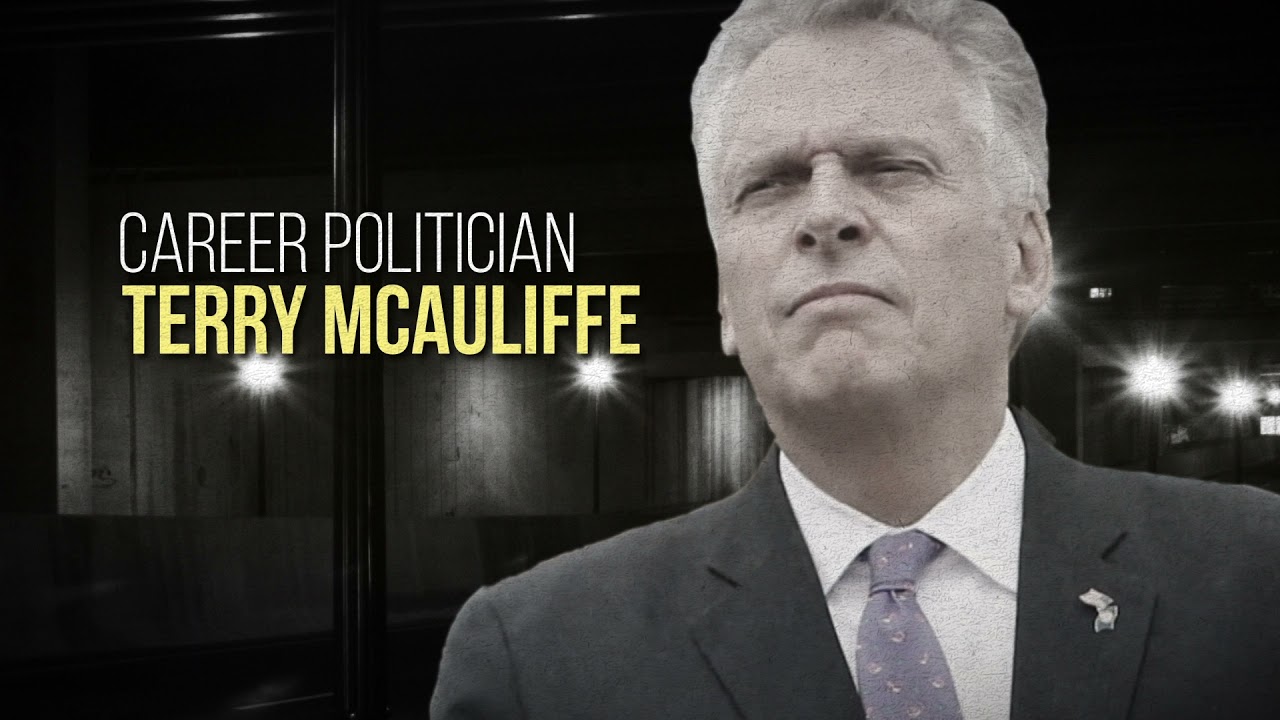 attacking McAuliffe, who served a previous term as governor, over crime rates. (Virginia's unusual term limits restrict governors to one term, but does not bar them from running again after leaving office.) The PAC has spent $1.767 million funding ads against McAuliffe, making it by far the largest independent expenditure group in the race.
The group is funded almost entirely by Republican mega-donor Richard Uihlein, co-founder of the Wisconsin shipping supply giant Uline. Uihlein contributed $24.5 million to the group in the 2020 election cycle, making up 97% of its funding, according to data from the Center for Responsive Politics. He put another $1.5 million into the group in May, according to FEC filings.
Uihlein and his wife Liz are among the biggest Republican donors in the country, having given more than $65 million to former President Donald Trump,Republican candidates and conservative groups since 2019. The Uihleins have also contributed $4.3 million over the past five years to theTea Party Patriots, including $800,000 in October 2020, making them by far the group's biggest donors.
The Tea Party Patriots participated in the "March to Save America" rally that preceded the Capitol riot and were one of 11 groups listed as part of the "#StopTheSteal coalition," according to WBEZ. The group also contributed to Rep. Mo Brooks, R-Ala., who was accused by "Stop the Steal" organizer Ali Alexander of helping plan the rally, which Brooks has denied. Tea Party Patriots also contributed to Sens. Ted Cruz, R-Texas, and Josh Hawley, R-Mo., who led objections to the certification of Electoral College results in the Senate.
Restoration PAC last month also gave $942,000 to Women Speak Out Virginia — 2021, a PAC affiliated with the anti-choice Susan B. Anthony List that launched a $1.4 million campaign to attack McAuliffe on abortion.
Uihlein's foundation also contributed $275,000 to Trump booster Charlie Kirk's Turning Point Action between 2014 and 2016. The group was listed as a participant in the Capitol protest and Kirk took credit for "sending 80+ buses full of patriots to DC to fight for this president" in a since-deleted tweet.
Turning Point Action also previously received $50,000 from the Judicial Crisis Network, a conservative dark-money group that helped Trump fill federal courts with conservative judges and is pushing to restrict voting. The group also funds theRepublican Attorneys General Association (RAGA), giving it $2.1 million last October and a total of $12.7 million since 2014. RAGA's fundraising arm, the Rule of Law Defense Fund,**sent out robocalls**urging supporters to "march to the Capitol building and call on Congress to stop the steal" on Jan. 6.
The Judicial Crisis Network has multiple legal aliases it uses for other initiatives, including The Concord Fund and Free to Learn Action. That latter group has launched a $1 million ad campaign focused on "critical race theory" in schools, an issue Youngkin and other conservatives have seized on. The group is spending $1 million attacking McAuliffe for arguing that parents should not dictate school curricula.
The Judicial Crisis Network is also closely aligned and shares staff with the Judicial Education Project and its Honest Elections Project, a conservative initiative pushing voting restrictions. The Judicial Education Network is almost entirely funded by the Donors Trust, a dark-money group backed by the Koch network. Donors Trust in 2019 gave more than $20 million to at least a dozen groups who would later question the results of the election. Last year, the Honest Elections Project announced a six-figure ad campaign stoking fears of a "brazen attempt to manipulate the election system for partisan advantage" before the election even happened.
Youngkin has tried to walk a fine line on Trump's election lies as he tries to solidify his Republican base without alienating independent and suburban voters in the increasingly blue state. He refused to acknowledge President Biden's election victory while seeking the Republican nomination, doing so only after he had already triumphed over Republican rivals. And while Youngkin has said he would have voted to certify the election results, he is nonetheless calling for an "audit" of voting machines in Virginia (something the state already does) and boosting election conspiracy theorists.
Youngkin, the former CEO of the private equity firm the Carlyle Group, is also the primary funder of Virginia Wins, contributing $1 million to back Republican candidates in down-ballot races. The PAC has funneled tens of thousands to candidates who attended the Stop the Steal rally, organized transportation for others to attend the event, defended Capitol rioters or pushed election conspiracy theories, Mother Jones reported on Thursday....
https://www.alternet.org/2021/05/dark-money/
salon
More than a decade ago, the U.S. Supreme Court issued its historic ruling in _{Citizens United v. FEC}_, opening the door for corporations to spend unlimited amounts of money on political causes (although not directly to political candidates). As corrosive as that decision was to democracy, it came with a slight proviso. As Justice Anthony Kennedy _{wrote}_: while "the Government may not suppress [corporate] speech altogether," it may "regulate corporate political speech through disclaimer and disclosure requirements." Citizens United found, in other words, that corporations could spend without limit, but government had a right to force public disclosure that spending to the public.
Since then, it's become abundantly clear that money in politics takes numerous forms, far beyond the obvious subterfuge of a corporation donating to a political action committee that then funds a political candidate. In the nonprofit world, big-money donors pump hundreds of millions into politically-motivated 501(c) organizations, which are not required to disclose their donors. Those groups then funnel this money into _{patently political ventures}_, even though they are technically forbidden from engaging in significant lobbying. That two-step process describes the phenomenon known as "dark money," which allows wealthy individuals and corporations to exert enormous influence on the political system behind a veil of anonymity.
Last year alone, more than _{$1 billion in dark money}_ was spent in the 2020 election, a record high. Contrary to some people's assumptions, "both sides" actually do it — dark money flows to and from Democrats as well as Republicans. In truth, anonymous money has been part of America's political bloodstream for _{decades now}_, but not until relatively recently has the debate around it rose to a national level. Last month, in the firs major case of its kind since Citizens United, the issue of nonprofit donor disclosure returned to the highest court in the land.
In this case, _{**Americans for Prosperity Foundation** v. Bonta}_ (consolidated with another, functionally identical case, _{**Thomas More Law Center**v. Bonta}_) the Supreme Court will decide whether political nonprofits can be compelled to disclose who their largest donors are. This case in question specifically concerns donor disclosure rules in California, but its implications are unmistakably nationwide. And while the Koch-funded Americans for Prosperity and the Christian-oriented Thomas More Center are distinctly right-wing in ideological terms, they have some surprising allies before the high court.
As things work now, the IRS annually collects from every nonprofit a form called Schedule B, which lists the personal information of each nonprofit's largest donors. The stated legal purpose is to regulate or prevent various financial crimes like fraud and money laundering. California is unique in requiring nonprofits to submit their Schedule B forms to the state attorney general's office — if they want to keep on raising tax-deductible donations.
To be clear, California collects the information, but does not release it to the public. But this seemingly innocuous bureaucratic regulation has sent shockwaves throughout the conservative nonprofit world — not to mention a number of liberal-leaning or civil-libertarian nonprofits as well, _{including}_ the NAACP Legal Defense and Educational Fund, the ACLU and the Human Rights Campaign.
Broadly speaking, the strange coalition of plaintiffs in the Americans for Prosperity argue that the state's interest in collecting Schedule B's — which, once again, would not be made publicly accessible — does not outweigh the burden that the law would impose upon them. They further argue that this burden may be acute for nonprofits that advocate for or against controversial causes, like abortion. Furthermore, the plaintiffs have argued that if their donors are unmasked — by means of a hack or leak, for instance — these donors could be at risk of severe reprisal, causing a chilling effect on future donations.
John Bursch, vice president of appellate advocacy at Alliance Defending Freedom, a conservative-libertarian group, told Salon in an interview he sees this as "a free association problem."
"Whether it's a conservative organization or a liberal or progressive organization," Bursch said, "they all recognize that publicly exposing donors to groups that engage in public advocacy risks chilling — causing people to not donate, or to donate below thresholds where they won't appear on a Schedule B."
Bursch currently represents the Thomas More Law Center,a Christian conservative legal nonprofit that briefly embraced Donald Trump's efforts to overturn the presidential election and is now battling on behalf of donor privacy. He alleges that there have been several cases when donors have felt threatened because of their connections to Americans for Prosperity Foundation or Thomas More. _{Court documents}_ detail purported instances of doxing, death threats and even assassination attempts. It's worth noting that the plaintiffs also fear "economic reprisal," such as boycotts or criticism of their businesses, activities that are clearly _{legal and constitutionally protected}_ expressions of free speech.
To make their case, the plaintiffs draw upon an unlikely parallel: the Supreme Court's seminal 1958 ruling in _{NAACP v. Alabama}_, where the justices found that Alabama officials could not force the NAACP to turn over its membership list due to the possibility of violent public retaliation against its members.
At the time of that decision, Justice John Marshall Harlan _{wrote}_ that the NAACP had made "an uncontroverted showing" that the "revelation of the identity of its rank-and-file members has exposed these members to economic reprisal, loss of employment, threat of physical coercion, and other manifestations of public hostility." Alabama's effort to expose NAACP members was largely understood by racial justice advocates as a clear attempt to dismantle the civil-rights group through the use of racial terror.
Bursch acknowledged that the historical circumstances around NAACP do not resemble those of the current case, but insisted, "To think that [Thomas More] donors might not face life or death is not really accurate."
Unsurprisingly, many critics of the corrosive force of money in politics reject any comparison between the cases. In a statement to Salon, Sen. Sheldon Whitehouse, D-R.I., drily observed "an enormous gap between the Supreme Court case cited by petitioners — a civil rights-era decision where NAACP members had reason to fear state-sanctioned bombings, assassinations and other violence — and theproblem of billionaires secretly running dark-money-funded political covert ops in our country."
Daniel Weiner, deputy director of the Brennan Center's Election Reform Program, echoed that analysis in an interview with Salon: "I always pause at any contemporary actor analogizing themselves to the NAACP in the South in 1958. And that includes folks on the right and left. AFP, whether or not it is right on the merits, represents some of the most powerful interests in the country. This is not comparable to the NAACP in the South prior to the civil rights movement."
There's another important difference between the two cases: While the plaintiffs in the Americans for Prosperity case are alleging a largely hypothetical risk of reprisal, they are demanding a result that in goes further than in the NAACP decision. As Vox's Ian Millhiser _{explained}_, "the plaintiffs insist that they are entitled to facial relief — meaning that the state's disclosure rule must be tossed out for all nonprofits, regardless of whether donors to those nonprofits face harassment, or even if they want to keep their donations secret."
Weiner said that a universal ban on mandatory donor disclosures is not warranted, arguing that the plaintiffs' case goes no further than claiming "that the law should not be applied to them. It's hard to see how all this adds up to 'the law is facially invalid,' which is a really sweeping position to take in light of a couple incidents."
Bursch responded that Americans for Prosperity "is precisely the type of case where a facial ruling would be appropriate," saying, "It's almost nonsensical to suggest that thousands of charities should have to individually sue California to keep their donor information confidential."
Even though California has no plans to release "dark money" donors' names, Bursch argues there is still likely to be a chilling effect, claiming that the state does not maintain a secure record-keeping system and leaves an "_{open door}_" for hackers. It's true that in 2012, a Schedule B for Planned Parenthood was leaked in California, potentially revealing hundreds of donors' names and addresses. But such occurrences have been rare.
As mentioned above, nonprofit donor disclosure is a particularly hot topic when it comes to dark money, which typically moves through 501(c)(4) nonprofits, or "social welfare organizations," which collect money from anonymous donors and then spend it on campaigns or candidates on said donors' behalf.
Americans for Prosperity Foundation, however, is a (501)(c)(3), meaning that in order to preserve its tax-exempt status, it's supposed to designate its funds for "charitable, religious, educational, scientific, literary, testing for public safety, fostering national or international amateur sports competition, and preventing cruelty to children or animals," according to _{IRS rules}_. However, Americans for Prosperity, the group's sister organization, is a 501(c)(4), meaning that it can more significantly engage in political advocacy and lobbying — largely in favor of reduced taxes, deregulation and other business-friendly policies — and has done so _{vigorously}_.
Bursch claimed earnestly that dark money has "nothing" to do with the current Supreme Court case, reminding this reporter that 501(c)(3) charities like AFPF are barred by federal law "from participating in any political advocacy, which is where the dark money issue arises." Explaining the relationship between Americans for Prosperity and its affiliated foundation, he said, "My understanding is that the 501(c)(3) can't fund the 501(c)(4). So, although they share a name and perhaps some common goals, the work they engage in is completely different. You can't cross those lines."
AFP did not respond to Salon's request to comment on its relationship with AFPF, which has been known to cross some lines.In 2010, the Democratic Congressional Campaign Committee_{accused}_ AFPF of financing blatantly political commercials that criticized the Obama administration, alleging that the ads "made the Americans for Prosperity Foundation a de facto political action group in violation of the federal tax code," according to the New York Times.
Bursch said that he believed or understood that AFP and AFPF had a "different office, different directors, different employees and different purposes." In fact, a comparison of _{AFP}_ and _{AFPF's}_ 2018 tax filings shows that a significant number of officers, directors, trustees and key employees work at both entities, including Nancy Pfotenhauer, Mark Holden, Robert Heaton, Emily Seidel, Slade O'Brien and various others.
Supplemental information on AFPF's filings also states that "certain employees of Americans for Prosperity Foundation may perform services for Americans for Prosperity, a related organization, through a service contract between the organizations." (This relationship also goes the other way.) AFPF is additionally listed as AFP's "direct controlling entity," a designation whose legal meaning is not entirely clear but certainly suggests an intimate relationship.
Not all contributors to political nonprofits count as "dark money donors," to be sure. Some are ordinary citizens, no doubt, genuinely interested in contributing to what they believe are nonpartisan endeavors. But it's precisely the lack of donor disclosure that makes the whole process opaque.
Rep. Hank Johnson, D-Ga., a staunch critic of money in politics, affirmed the need for more effective disclosure in light of the AFP and AFPF's purposefully mysterious relationship. "Because we're dealing with dark money, we don't really know the relationship between AFPF and AFP," he said. "When a 501(c)(3) gives money to a 501(c)(4) to engage in electioneering activities, that's what dark money is all about." (Salon could not find clear evidence that money has flowed from AFPF to AFP, let alone how it might have been used.)
"The Federalist Society and the Federalist Society Foundation both share the same goals and aspirations," Johnson expressed. "People are trying to exert influence. That's the reason why they contribute to these organizations that have a political agenda."
FROM YOUR SITE ARTICLES
- Sen. Warren calls for investigation into 'dark money' used to fund US ... ›
- CVS Health quietly donated a staggering amount to a dark money ... ›
- Justice Amy Coney Barrett called on to recuse in big dark money ... ›
RELATED ARTICLES AROUND THE WEB
- "Dark Money" Funds Climate Change Denial Effort - Scientific ... ›
- What is political 'dark money' — and is it bad? – Center for Public ... ›
BS i assume this all pioneered by gop:
https://www.influencewatch.org/non-profit/sixteen-thirty-fund/
c4:
The Sixteen Thirty Fund (sometimes styled “1630 Fund”) is a left-of-center lobbying and advocacy organization founded in 2008.[1]Sixteen Thirty Fund often operates alongside its charitable “sister” nonprofit New Venture Fund, which provides similar funding and fiscal sponsorship services to center-left organizations. Both groups, along with the Hopewell Fund and Windward Fund, are administered by Arabella Advisors, a Washington, D.C.-based philanthropy consulting firm that caters to left-leaning clients.
According to its founding documents, the Sixteen Thirty Fund was created with seed funding from Americans United for Change (AUFC), ACORN, USAction, the Sierra Club, and Working America. [2]
Both Sixteen Thirty Fund and New Venture Fund have been criticized as “dark money” organizations by left-leaning news outlets, including the New York Times, for serving as a way for left-wing groups to anonymously funnel money toward various advocacy issues, such as attacking vulnerable Republicans or pushing state-level environmental restrictions. [3] [4]
In April 2021, the New York Timescriticized Arabella’s “system of political financing, which often obscures the identities of donors,” as “dark money,” calling the network “a leading vehicle for it on the Left.” [5] In May 2021, the New York Times identified Sixteen Thirty Fund as one of the “leading dark money spenders on the Left” for quietly supporting Democrats with more than $63 million in super PAC donations that hurt Republicans in the 2020 election, as well for “help[ing] create and fund dozens of groups, including some that worked to block Mr. Trump’s nominees and push progressive appointments by Mr. Biden.” [6]
The Atlantic, a left-leaning magazine, has called the Sixteen Thirty Fund “the indisputable heavyweight of Democratic dark money” which funneled “roughly $61 million of effectively untraceable money to progressive causes,” making it the “second-largest super-PAC donor in 2020.” Of Arabella Advisors, the Atlanticnoted that the “mothership” company runs a “massive progressive dark-money group you’ve never heard of.” It added: “Democrats have quietly pulled ahead of Republicans in untraceable political spending. One group helped make it happen.” [7]
Left-leaning Politico has called the Sixteen Thirty Fund a “massive ‘dark money’ network” responsible for “boost[ing] Democrats” in the 2018 midterm elections, a “liberal dark-money behemoth,” a “secretly funded nonprofit,” and “one of the Left’s financial hubs” responsible for “attacking Republican senators” in 2019. [8] [9] [10]
The Sixteen Thirty Fund has also been characterized as one of the “key groups founded to resist Trump” by the left-leaning Atlantic. [11] Politico noted in late 2021 that the Sixteen Thirty Fund “exploded in size during the Trump administration,” doling out “a whopping $410 million in 2020” and “aiding Democratic efforts to unseat then-President Donald Trump and win back control of the Senate” for Democrats. [12]
In its 2018 Form 990, New Venture Fund shows a $26.7 million grant to the Sixteen Thirty Fund for “capacity building.” [13] Sixteen Thirty Fund’s Form 990 of the same year, also shows zero employees,and notes in Schedule O that “New Venture Fund (NVF) is the paymaster for Sixteen Thirty Fund payroll.NVF pays the salary and immediately invoices Sixteen Thirty Fund, which reimburses the full amount.” [14] [they just use same accountant?]
Arabella and its nonprofit network have been criticized as “dark money” funders both for channeling hundreds of millions of dollars to left-wing organizations and for hosting hundreds of “pop-up groups”—websites designed to look like standalone nonprofits that are really projects of an Arabella-run nonprofit. [15]
In November 2019, Politico criticized the Sixteen Thirty Fund, the 501(c)(4) advocacy wing of Arabella’s nonprofit network, as a “little-known,” “massive ‘dark money’ group [that] boosted Democrats” in the 2018 midterm elections with $140 million. “The money contributed to efforts ranging from fighting Supreme Court Justice Brett Kavanaugh and other Trump judicial nominees to boosting ballot measures raising the minimum wage and changing laws on voting and redistricting in numerous states,” the left-leaning website reported. Politico also noted that Sixteen Thirty Fund’s biggest single donation (made anonymously) was for $51.7 million, “more than the group had ever raised before in an entire year before President Donald Trump was elected,” adding that “the group’s 2018 fundraising surpassed any amount ever raised by a left-leaning political nonprofit.” [16]
The left-leaning Washington Postfurther criticized Arabella’s Sixteen Thirty Fund as a “big campaign donor” in a November 21, 2019 opinion by the editorial board, which called on Congress to change nonprofit disclosure laws, noting in particular a $26.7 million anonymous donation to the Fund. [17] However, the Postalso failed to connect the Sixteen Thirty Fund to Arabella Advisors and its other three nonprofits.
In a November 24, 2019 letter to the editor published by the Washington Post, Capital Research Center president Scott Walter identified the $26.7 million donation as originating with the New Venture Fund, the largest of Arabella’s in-house nonprofits, and confirmed Politico’s suspicion that the Sixteen Thirty Fund is “part of a larger network of dark money.” [18]
...[some rep from above]
Controversies
“DARK MONEY” CRITICISM FROM THE LEFT AND RIGHT
Arabella and its nonprofit network have been criticized as “dark money” funders both for channeling hundreds of millions of dollars to left-wing organizations and for hosting hundreds of “pop-up groups”—websites designed to look like standalone nonprofits that are really projects of an Arabella-run nonprofit. [59]
In April 2021, the New York Timescriticized Arabella’s “system of political financing, which often obscures the identities of donors,” as “dark money,” calling the network “a leading vehicle for it on the Left.” [60] In May 2021, the New York Times identified Sixteen Thirty Fund as one of the “leading dark money spenders on the Left” for quietly supporting Democrats with more than $63 million in super PAC donations that hurt Republicans in the 2020 election, as well for “help[ing] create and fund dozens of groups, including some that worked to block Mr. Trump’s nominees and push progressive appointments by Mr. Biden.” [61]
Robert Maguire, research director for the far-left Citizens for Responsibility and Ethics in Washington (CREW), said of Sixteen Thirty Fund in 2021: [62]
“Altogether this is absolutely one of the largest fundraising machines I have ever come across . . . I am really struggling to think of any other group, especially recently, that could rival it,” he added, comparing the amount of money flowing through Sixteen Thirty Fund to the Koch brothers’ network at the height of its influence earlier this decade.
In November 2019, Politico criticized the Sixteen Thirty Fund, the 501(c)(4) advocacy wing of Arabella’s nonprofit network, as a “little-known,” “massive ‘dark money’ group [that] boosted Democrats” in the 2018 midterm elections with $140 million. “The money contributed to efforts ranging from fighting Supreme Court Justice Brett Kavanaugh and other Trump judicial nominees to boosting ballot measures raising the minimum wage and changing laws on voting and redistricting in numerous states,” the left-leaning website reported. Politico also noted that Sixteen Thirty Fund’s biggest single donation (made anonymously) was for $51.7 million, “more than the group had ever raised before in an entire year before President Donald Trump was elected,” adding that “the group’s 2018 fundraising surpassed any amount ever raised by a left-leaning political nonprofit.” [63] However, Politico failed to tie the Sixteen Thirty Fund to Arabella Advisors’ nonprofit network.
The left-leaning Washington Postfurther criticized Arabella’s Sixteen Thirty Fund as a “big campaign donor” in a November 21, 2019 opinion by the editorial board, which called on Congress to change nonprofit disclosure laws, noting in particular a $26.7 million anonymous donation to the Fund. [64] However, the Postalso failed to connect the Sixteen Thirty Fund to Arabella Advisors and its other three nonprofits.
In a November 24, 2019 letter to the editor published by the Washington Post, Capital Research Center president Scott Walter identified the $26.7 million donation as originating with the New Venture Fund, the largest of Arabella’s in-house nonprofits, and confirmed Politico’s suspicion that the Sixteen Thirty Fund is “part of a larger network of dark money.” [65]
In November 2020 Politicocalled the Sixteen Thirty Fund a “liberal dark-money behemoth” and “one of the Left’s biggest financial hubs” for raising $137 million in 2019, much of which was spent on an “eight-figure ad campaign attacking Republican senators.” Politicoalso noted that “more than half of the Sixteen Thirty Fund’s money came from just three anonymous sources in 2019” and it made grants to over “100 different liberal organizations” that year. [66]
ILLEGAL ELECTION INTERVENTION COMPLAINT (2021)
On May 15, 2021, the right-leaning watchdog Americans for Public Trust (APT) filed a complaint (archived here) with the Federal Election Commission (FEC), which oversees political groups’ spending, alleging violations of the Federal Election Campaign Act by Hansjorg Wyss, the Wyss Foundation, the Berger Action Fund, the New Venture Fund (in its capacity as the parent of the Hub Project), and Sixteen Thirty Fund. [67] According to APT, “Mr. Wyss indirectly funded federal electoral advocacy through his nonprofit organizations,” failing to set them up as political action committees (PACs), and “the intended recipient of these funds was ultimately a variety of organizations whose primary purpose is to engage in electoral advocacy.”
Organizations which receive contributions in excess of $1,000 or makes contributions in excess of $1,000 in a calendar year is considered a PAC for the major purpose of influencing elections. PACs are subject to strict financial reporting requirements that 501(c)(3) and (c)(4) nonprofits are not. [68] The complaint points out that the Wyss Foundation, Berger:{Action Fund,}: and New Venture**Fund**, which are all 501(c) nonprofits, have failed to file a statement of organization with the FEC, despite Wyss contributing at least $56.5 million from the Wyss Foundation to the New Venture Fund and another $135 from the Berger Action Fund to the Sixteen Thirty Fund. The 501(c)(4) Sixteen Thirty Fund spent $30 million influencing the 2018 midterm elections in order to favor Democratic candidates, “thereby triggering classification as a political committee,” according to APT.
U.S. law strictly prohibits foreign nationals from making direct or indirect contributions to political action committees. [69] Wyss, who was born in Switzerland, resides in the U.S. under an “E-2 VISA” (which is intended for foreign investors who live and work in the country) and “is not a permanent resident of the U.S. under a ‘green card,'” according to his attorney. [70] The complaint cites $41,000 in illegal federal campaign contributions Wyss paid between 1998 and 2003, claiming that, “Since that time, [Wyss] has made indirect contributions and expenditures by means of an intricate network of organizations in a scheme to obscure his role as the source of these funds.” [71]
APT alleges that Wyss established the Hub Project, a front for the “dark money” funder New Venture Fund and the recipient of significant funding from the Wyss Foundation, in order “to avoid any connection with the sizeable election activities carried out by the Hub Project and Change Now,” a super PAC associated with the Hub Project. “Operating since 2015
without the requisite FEC filing,” APT writes, “the Hub Project has been immune to any oversight and accountability despite significant spending in federal election.” It adds:
The Hub Project has served as a vehicle for the political spending of Mr. Wyss. This is demonstrated by the fact that Mr. Wyss has not publicly disclosed his role in founding the Hub Project. Neither his influence nor his financial support can be found anywhere on the group’s website. Rather, information regarding his involvement with the Hub Project was the result of “interviews with five people with knowledge of The Hub Project, an internal memo from another liberal group that was obtained by The New York Times.”
HIDING POLITICAL AGENDA BEHIND “FAKE NEWS SITES”
The nonprofit watchdog OpenSecrets (published by the Center for Responsive Politics) reported in May 2020 on Arabella’s involvement in numerous “fake news sites,” pouring millions of untraceable dollars into advertisements and other digital content “masquerading as news coverage to influence the 2020 election.” [72]
OpenSecrets identified five Facebook pages (Colorado Chronicle, Daily CO, Nevada News Now, Silver State Sentinel, Verified Virginia) that “gave the impression of multiple free-standing local news outlets,” but are in fact “merely fictitious names used by the Sixteen Thirty Fund,”Arabella’s 501(c)(4) lobbying nonprofit. [73] These pages published Facebook political advertisements that favored Democrats and left-wing causes during the 2020 election. After the report was published a number of these pages were deleted.
States Newsroom, which runs another network of left-wing “fake news” websites, was originally created as “Newsroom Network,” a project of the Arabella-run 501(c)(3) Hopewell Fund. In June 2019, States Newsroom was spun off as an independent nonprofit with its own 501(c)(3) tax-exempt status, but a number of its local affiliates are used by the Hopewell Fund as its own legal aliases. [74]
While States Newsroom does not disclose its donors (and is not required to by the IRS), [75]
IRS application records obtained by OpenSecrets show the States Newsroom was offered a $1 million donation from the Wyss Foundation, a private foundation primarily funded by Swiss billionaire Hansjorg Wyss, who made his fortune as CEO of a controversial medical device manufacturer called Synthes.
A financial statement in the IRS records obtained by OpenSecrets shows that the States Newsroom plans to bring in more than $27 million in contributions before the end of 2021.
And in 2018 theHopewell Fund gave $1.72 million to News for Democracy, which OpenSecrets points out “was at the crux of a network of seemingly independent Facebook pages disguised as news outlets that started spending on digital ads in 2018,” with backing from the Sixteen Thirty Fund and Investing in US, an investment vehicle funded by LinkedIn founder and liberal billionaire Reid Hoffman. [76]
Also among these “dark money” groups was ACRONYM, which raised $9.4 million from “secret donors” through April 2019, including $250,000 from Arabella’s 501(c)(3) New Venture Fund. ACRONYM is affiliated with a super PAC, PACRONYM, which spent close to $18 million aiding Democrats and hurting Republicans through independent expenditures in the 2020 election. [77] ACRONYM also owns and operates Courier Newsroom, which in turn manages a network of left-wing websites that present themselves as local news outlets while spreading “hyperlocal partisan propaganda,” according to the centrist watchdog Newsguard. [78] Courier Newsroom spent at least $20,000 in digital advertising campaigns on Facebook between March 2019 and May 2020; its total spending in Facebook ads as of June 2021 is nearly $1.4 million. [79] [80]...
st l
no lnx
Groups with Missouri ties hit with fine over fundraising violation
Groups with Missouri ties hit with fine over fundraising violation
Kurt Erickson Nov 20, 2017
JEFFERSON CITY • A national conservative organization with ties to Missouri Republicans has agreed to pay part of a $350,000 fine to the Federal Election Commission in a case one activist compared to a money laundering scheme.
:{
}:
Without admitting wrongdoing, the American Conservative Union agreed to the fine in connection with allegations that it pocketed $90,000 by illegally passing a $1.71 million donation to a federal political action committee.
:{
}:
At the time, the executive director of the ACU was Gregg Keller, a top aide to former U.S. Sen. Jim Talent and an adviser and campaign manager for five Republican presidential candidates. Keller now runs a political consulting business in Washington.
During the 2016 election cycle, his company, Atlas Strategy Group, worked for GOP gubernatorial candidate John Brunner. Keller declined to comment Monday.
ACU spokesman Ian Walters said the organization’s current leadership “discovered and self-reported” the issue shortly after taking office.
“The conciliation agreement with the Federal Election Commission relates to decisions made five years ago by ACU’s previous chairman and previous executive director, both of whom no longer have any affiliation with the organization,” Walters said.
The treasurer of the PAC that received the money is James Thomas III of Kansas City, who serves as treasurer to numerous GOP figures in Missouri.
Thomas, who has ties to powerhouse political consultant Jeff Roe, declined to address the fine.
“I don’t speak on behalf of these committee. I just keep the books and file the reports,” Thomas said.
According to a complaint filed by theCitizens for Responsibility and Ethics, a Democratic-leaning watchdog organization, an entity known as Government Integrity LLC donated $1.8 million to the ACU in 2012. Later that day, the ACU made a $1.71 million contribution to the Now or Never PAC.
Afterward, the settlement notes that Keller wrote to a top ACU official and said, “FYI. We have the 90K.”
The official replied, “Well done!!!!”
Under federal election law, the maneuver was illegal because it shielded the actual source of the money.
“This is one of the clearest cases we’ve seen of laundering money through a dark-money nonprofit to conceal the source of a political contribution,” CREW executive director Noah Bookbinder said Monday.
The ACU, Government Integrity LLC and the Now or Never PAC will pay the fine.
Gregg Keller
Gregg Keller
Tags
Gregg Keller American Conservative Union Dark Money James C. Thomas Iii
lee f
https://theintercept.com/2020/02/15/dark-money-irs-reporting-501c
DARK MONEY GROUPS backed by foreign corporate donors are supporting the Trump administration’s decision to roll back one of the last remaining ways for authorities to monitor the flow of unlawful campaign cash in American elections.
In recent years, 501(c) nonprofits have become the entities of choice for secret campaign spending.These nonprofit groups, which do not have to report any donor information to the public, can receive unlimited contributions from any source and, thanks to the Supreme Court’s 2010 Citizens United decision, spend unlimited amounts on elections.
Foreign spending, whether by a foreign national or a foreign-owned corporation, is still illegal under federal law. But the law has been poorly enforced, and the few instances in which penalties have been applied in recent years have come in reaction to publicly reported foreign corporate spending to Super PACs, such as The Intercept’s reporting on Chinese corporate donations in 2016 and the recent federal indictment over a shell company owned by a Russian national that gave to President Donald Trump’s Super PAC in 2018.
The one check on foreign contributions to dark-money groups has been the Schedule B form, which reports 501(c) donor information confidentially to the Internal Revenue Service. Under a new rule proposed last September by the Treasury Department and the IRS, nonprofits will no longer be required to report donor information, even to the government, allowing an unprecedented level of secrecy.
Lobbyists for foreign-funded groups have pushed the administration to move forward with the rule, which is close to being finalized. The U.S. Chamber of Commerce, the largest business lobby organization in the world, spent over $10 million to influence the last 2018 midterm election cycle using its general fund. The group, which has foreign corporate donors, has lobbied in support of the IRS rule to repeal the Schedule B requirement, claiming in a letter to officials that the accidental leak of donors could reduce corporate free speech rights.
“Identifying, harassing, and intimidating the organization’s supporters is a chief means of silencing that organization’s speech,” wrote Caroline L. Harris, the Chambers’ chief tax policy counsel, and Ryan P. Meyers, the deputy general counsel of the group, in a regulatory letter to officials overseeing the rule change. “The Chamber applauds the work of Treasury and the Internal Revenue Service (IRS) in eliminating onerous reporting requirements.”
The National Association of Manufacturers, which counts several corporations based in foreign countries as members, in a letter to IRS officials, similarly called the Schedule B requirement an “unnecessary administrative filings that raise the potential for misuse in a way that chills protected speech.”
Both NAM and the Chamber of Commerce, which spends more than $160 million a year, are organized as 501(c)(6) trade associationsand under no obligation to disclose donor money to the public — only to the government through the annual Schedule B form to its 990 annual filing. After the Citizens United decision, the two groups led an effort to defeat the DISCLOSE Act, legislation that would have forced groups engaged high-dollar election advocacy to reveal donor information. The Chamber also lobbied successfully to stop President Barack Obama from issuing an executive order to force government contractors to disclose grants to 501(c) groups.
Foreign-based firms such as Brazilian petrochemical firm Braskem, Al Zayani Investments in Bahrain, and Turkish conglomerate Tekfen are listed on the Chamber’s website as dues-paying members. Faced with criticism in the past that its foreign funding might bleed into the Chamber’s vast domestic lobbying and campaign spending budget, the group has claimed that any foreign donations are walled off from domestic funds, and that foreign donors make up a small percentage of its overall budget.
But the removal of the Schedule B requirement could make those claims impossible to verify. A large foreign national firm could provide multimillion-dollar donations for use in U.S. elections to the Chamber under the new rule and such giving would never be reported to government officials.
That’s precisely the danger of removing Schedule B forms, campaign finance experts warn. The Campaign Legal Center, a campaign finance watchdog that has filed the ethics complaints that led to enforcement action on foreign money in the past, cautioned the IRS that the rule would simply open the door to more foreign spending.
“Congress has failed to pass new transparency legislation, and the FEC has failed to enforce the transparency laws that are on the books,” said Brendan Fischer, director of Campaign Legal Center’s federal reform program. “As a result, the only donor disclosure reports that dark-money groups file with any federal agency are the confidential Schedule B reports filed with the IRS. These confidential donor reports are one of the few ways that federal agencies could detect and deter foreign money in U.S. elections.”
It’s not hard to comprehend the many ways in which completely secret legal entities could incentivize illegal election behavior. In 2016, reporters from the Telegraph conducted a sting operation on a Republican campaign operative working in support of Trump. The operative was offered a $2 million check from a Chinese businessman by the reporters. He responded by offering a plan for how to conceal the money, suggesting that it be routed through his consulting firm to a pair of 501(c)4 groups and then to a pro-Trump Ssuper PAC.
The FBI is also investigating the National Rifle Association over allegations that the group, which is organized as a 501(c)4, may have received financial support from Russian sources. McClatchy reported that counterintelligence officials believe that Russian interests may have contributed to the NRA’s $30 million election advertising campaign in 2016.
Foreign firms increasingly finance major American business associations. As The Intercept has previously reported, a major Chinese chemical company joined the American Chemistry Council, a 501(c)6 that routinely lobbies lawmakers and spends money in elections.
The Trump administration had originally tried to remove the Schedule B form last summer in a surprise decision. A federal judge in Montana, however, ruled that the IRS had failed to follow proper regulatory procedure and ordered the agency to conduct a formal rule-making to allow the public and stakeholders to weigh in on the change.
“The rise of ‘dark money’ in U.S. elections has made it easy for foreign entities to contravene these laws by funneling money into U.S. elections through groups that that [sic] do not publicly disclose their donors, such as 501(c)(4) social welfare organizations and 501(c)(6) trade associations,” wrote the Campaign Legal Center in a letter to the IRS.“This change would further enable foreign entities to donate millions of dollars to such organizations for the purpose of influencing U.S. elections without any risk of scrutiny by federal regulators.”
Republican-aligned think tanks have joined the business-backed push to eliminate the Schedule B.Several nonprofits backed by billionaire Charles Koch, including his marquee group Americans for Prosperity, testified on February 7 in support of the rule change. FreedomWorks, a conservative grassroots group backed by business interests, has also mobilized hundreds of letters to the agency.
Hans von Spakovsky, a former Federal Election Commission member now with the Heritage Foundation, appeared at the hearing alongside other conservative activists in support of the rule change.
Von Spakosvsky, an avowed critic of campaign finance regulations and voting rights laws, testified that “their claim that this will somehow allow foreign money to suddenly flood into American elections is absurd,” according to a transcript of his remarks. Von Spakovsky said the FEC had plenty of authority and expertise in combating foreign money during his tenure, despite the fact that the agency has historically only intervened to investigate foreign money through disclosed political action committees on a few occasions in its 45-year history. He did not cite any examples of the FEC investigating 501(c) groups.
==
==
https://www.opensecrets.org/news/2019/10/donors-to-anti-obama-dark-money-grp/
Former “dark money” giant Americans for Job Security has walked out from the shadows, disclosing its donors last week following years of complaints and lawsuits filed by ethics watchdogs.
Between 2010 and 2012, the group raked in at least $65 million from billionaires, corporations and nebulous groups that don’t disclose their own sources of funding, recent filings show. Many of the group’s top donors have now lined up behind President Donald Trump, cutting big checks to his reelection bid. The now-defunct conservative group was largely active in the 2012 election cycle, spending $15.2 million on political ads attacking then-Democratic President Barack Obama during his reelection bid. The group also spent almost $5 million on independent expenditures in the 2010 cycle targeting Democrats and promoting Republicans in congressional races. Between late 2011 and 2012, the group gave out $26.3 million in grants, most of which went to the Center to Protect Patient Rights, another dark money group with close ties to the Koch brothers. Americans for Job Security’s political activities triggered a 2012 complaint by the Citizens for Responsibility and Ethics in Washington, a left-leaning watchdog group, alleging that the conservative business league acted — yet failed to register — as a political committee. The recent disclosure was prompted by several lawsuits the ethics group filed against the Federal Election Commission over the years and a September agreement requiring the dark money group to register as a political committee and reveal its donors. “This is a major victory for transparency and the rule of law,” said Noah Bookbinder, executive director of the watchdog group, in a press release. “This is the first major release of dark money sources in the post-Citizens United era, a rare and long overdue victory in the fight against the illegal use of dark money in politics.” Among the group’s biggest donors are billionaires with a history of bankrolling conservative causes, records show.
| Donor(s) | Total Given (2010-2012) |
|---|---|
| Charles Schwab | $8,800,000 |
| John J. Fisher | $5,000,000 |
| Center to Protect Patient Rights | $4,645,000 |
| Hensel Phelps Construction | $2,930,000 |
| William Fisher | $2,000,000 |
| Rosebush Corp | $2,000,000 |
| Richard & Helen Devos | $2,000,000 |
| Doris Fisher | $2,000,000 |
| Crossroads Grassroots Policy Strategies | $2,000,000 |
| Workforce Fairness Institute | $1,500,000 |
Showing 1 to 10 of 172 entries
John Fisher, owner of the Oakland Athletics and son of Gap Inc. founders Donald and Doris Fisher, gave generously to the group, shelling out $5 million between 2010 and 2012. His mother and his two brothers, Robert and William Fisher, also combined to give the group another $5 million, making the Fisher family the group’s biggest donor. The California philanthropist mostly gave to conservative causes in the past, doling out $416,400 to Republican candidates and parties last cycle. Spreading his fortune between the two major parties, Fisher also gave $2,800 each this year to several Democratic presidential hopefuls, including self-funded businessman John Delaney and Sens. Cory Booker (D-N.J.), Kamala Harris (D-Calif.) and Michael Bennet (D-Colo.). Paypal executive Peter Thiel gave the conservative group $500,000. An outspoken Trump supporter and GOP donor, the venture capitalist gave a $1 million check last year to Club for Growth Action, a conservative super PAC, and $100,000 to Trump’s inaugural committee in 2017. He also gave a total of $500,000 to Trump’s joint fundraising committee, Trump Victory. Many of the group’s top donors between 2010 and 2012 are now Trump allies. Billionaire investor Charles Schwab delivered $8.8 million to the conservative group between 2010 and 2012. A longtime GOP donor, the brokerage firm chairman has given $9.4 million to conservative outside spending groups from 2011 to 2019. Schwab became a staunch Trump supporter in 2016, giving $1 million to the president’s inaugural committee and more than $100,000 to the Republican National Committee legal fund, which helps pay for Trump’s legal bills. Schwab and his wife Helen each gave $1 million to the pro-Trump super PAC Future45 last year.
Casino mogul Sheldon Adelson and his wife Miriam also chipped in $250,000 to fuel the conservative group. Longtime Republican megadonors, the couple shelled out $122.3 million to conservative political groups in 2018, including $10 million to pro-Trump super PAC America First Action. The couple doled out $20 million in 2016 to Future45 and gave $5 million to fund Trump’s inaugural festivities in 2017.
Adelson’s support for the president earned him a seat at the dining table at the White House with Trump, Jared Kushner and then-Secretary of State Rex Tillerson in 2017, as well as closer access to Japanese Prime Minister Shinzo Abe for his casino bid in Japan, ProPublica reported. Real estate developer Geoffrey Palmer, who gave Americans for Job Security almost $2 million between 2010 and 2012, has given America First Action a total of $6 million to support Trump since 2017. Palmer also gave $5 million to pro-Trump super PAC Rebuilding America Now and $765,200 to Trump Victory. The late Richard and Helen DeVos, in-laws of current Education Secretary Betsy DeVos, gave Americans for Job Security $2 million. The couple gave $2.8 million to conservative groups during the 2016 election cycle — right before their daughter-in-law became Trump’s appointee — with the entire DeVos family giving more than $10 million throughout the cycle. Many other current and former Trump cabinet members are also among the group’s now disclosed donors. Secretary of the Treasury Steven Mnuchin, who was previously an investment banker, gave $5,000 to the group in 2012. Linda McMahon, formerly the head of the Small Business Administration under Trump, left the cabinet to chair America First Action in May. McMahon and her husband Vince gave Americans for Job Security $10,000 in 2012. Americans for Job Security also attracted millions of dollars from corporations whose executives tend to give to Republicans.
**Hensel Phelps Construction**, one of the biggest construction managing companies in the country, coughed up $2.93 million to support the group. Since 1990, affiliates of the Colorado-based firm have combined to give $914,458 to political candidate campaigns, 94 percent of which went to support Republicans. Jeffrey Wenaas, the CEO of Hensel Phelps, gave exclusively to conservative causes over the years.
The dark money group also hauled in $3 million from oil and gas giant **Devon Energy**, whose PAC gave exclusively to conservative groups in the past. Texas-based Beal Bank also shelled out $1 million to fund the conservative group between 2010 and 2012. Andrew Beal, founder of Beal Bank, spent more than $300,000 to fund a Facebook meme campaign to support Trump’s 2016 presidential bid, CNBC reported. While Americans for Job Security disclosed its sources of revenue, many of its donors are limited liability companies or tax-exempt organizations whose sources of income remain hidden under federal law. Some of those groups that donated to Americans for Job Security keep on giving large sums to other similar organizations, making the money flow among a network of conservative dark money groups virtually untraceable.
**Rosebush Corp**, a 501(c)(4) organization that was once denied tax-exempt status by the IRS, gave a $2 million grant to Americans for Job Security in 2012, as first disclosed in Rosebush’s tax filing. In 2011, the 501(c)(4) also gave a $750,000 grant to **Americans for Limited Government**, a dark money group led by real estate developer Howard Rich, which spent millions running ads against Democrats. Like with the Center to Protect Patient Rights, money shuffled between the Rich-linked group and Americans for Job Security. Rich’s group received $10,000 from Americans for Job Security in 2011 and another $100,000 from the group in 2012, two years after it gave the dark money giant $60,000, recent filings show.
**:{Wellspring:(style="background-color:#ff9900;"):}: Committee**, another dark money group residing on the web of conservative tax-exempt organizations, gave Americans for Job Security $346,098 in 2010. OpenSecrets previously reported that the committee injected a total of nearly $3 million into the conservative group from 2008 to 2010 and gave out grants worth more than $17 million from 2008 to 2011. The group officially shut down in December 2018. Reporter Karl Evers-Hillstrom and researchers Anna Massoglia and Alex Baumgart contributed to the report.
==
mma
https://www.mediamatters.org/blog/2019/03/18/Dont-believe-right-wing-media-when-they-say-the-Green-New-Deal-would-cost-93-trillion/223140
no lnx twt
Don’t believe right-wing media when they say the Green New Deal would cost $93 trillion
Politico calls the analysis "bogus," and even its lead author won't defend it
Blog ››› March 18, 2019 9:44 AM EDT ››› EVLONDO COOPER
Melissa Joskow / Media Matters
Right-wing media outlets have repeatedly asserted that the Green New Deal would come with the absurd price tag of "$93 trillion" or "$94 trillion," uncritically repeating claims from a back-of-the-envelope, deeply flawed analysis produced by the American Action Forum, a conservative think tank. Politico recently determined that the $93 trillion figure was "bogus," and quoted the lead author of the AAF analysis, Douglas Holtz-Eakin, admitting that he had no idea how much it would cost to implement the Green New Deal.
American Action Forum has ties to the fossil fuel industry
The American Action Forum, a 501(c)(3) nonprofit, and its 501(c)(4) “sister organization,” the American Action Network (AAN), have been funded by a who’s who of the polluter syndicate.
AAN has received at least $250,000 from the American Petroleum Institute, a trade association for the oil industry that has donated to groups in the Koch network. And AAN has received at least $35,000 from the American Natural Gas Alliance, a pro-fracking gas industry trade group. Dow Chemical has given at least $250,000. AAN has also been funded by other Koch-connected groups such as Americans for Job Security, Donors Trust, and the Wellspring Committee. It's gotten money from Karl Rove's Crossroads GPS too. AAN has in turn donated millions to AAF.
Though some information about its funding has been made public, AAN has generally refused to disclose its donors. In 2014, MSNBC called AAN a "dark money power player," noting that it had been running numerous attack ads against Democratic candidates. FactCheck.org noted that same year that AAN has spent tens of millions of dollars supporting Republican candidates.In 2018, a watchdog group filed suit against AAN for violating campaign finance laws and abusing its nonprofit status.
AAF's Green New Deal cost analysis is problematic from top to bottom
Considering the think tank’s connections to the fossil fuel industry, it’s not surprising that the American Action Forum’s report found the Green New Deal untenable. What is surprising is how flippant Holtz-Eakin, president of AAF and former head of the Congressional Budget Office, was about the rigor of the analysis he co-authored. When challenged about the accuracy of the report’s claim that the Green New Deal would cost some $93 trillion over 10 years, Holtz-Eakin told Politico, “Is it billions or trillions? Any precision past that is illusory.”
The Green New Deal resolution introduced by Rep. Alexandria Ocasio-Cortez (D-NY) and Sen. Ed Markey (D-MA) on February 7 is just a broad, 14-page outline of goals with no policy specifics, so determining a price tag was a fanciful exercise. AAF's claims of a $92.9 trillion total cost, or $653,000 per household, have no basis in reality. As Politico reporter Zack Colman put it:
When they set out to put a price tag on the Green New Deal last month, Holtz-Eakin and his associates had no real policy or plan to evaluate, so they made one up to perform back-of-the-envelope calculations.
…
And the AAF study does not distinguish between government and private-sector spending, nor does it attempt to quantify the benefits of reducing pollution or other policies. For example, Stanford University civil and environmental engineering professor Mark Jacobson estimated that eliminating the electricity sector’s carbon emissions would avoid $265 billion in annual U.S. damages beginning in 2050.
Colman also pointed out that more than $80 trillion of the alleged $93 trillion total cost would come from implementing a jobs guarantee and universal health care -- policy ideas that have no direct relation to greening the economy, even though they are in the Green New Deal resolution.
Politico declared that the $93 trillion figure is "bogus" -- or, in an earlier version of the article published behind a firewall, "essentially vapor."
The fact-checking project PolitiFact also found the $93 trillion figure to be untrustworthy, calling it "only about as strong as a clothespin in high wind." It noted that "the [AAF] report itself is full of assumptions, qualifiers and caveats," and when a fact-checker reached out to Holtz-Eakin, the AAF president "made it clear to us that the report aims to provide very rough estimates on a plan that’s only partially developed." PolitiFact rated as "false" this claim from Sen. Joni Ernst (R-IA): "At $93 trillion, the Green New Deal would cost more than the entire recorded spending of the U.S. since the Constitution went into effect in 1789."
Other journalists have also pointed out major problems with the AAF analysis. Paul Blest at Splinter noted that AAF used cost estimates for a universal jobs program ("$6.8 trillion to $44.6 trillion") and universal health care ("$36 trillion") that are vastly higher than estimates produced by other think tanks. AAF also failed to account for how much money programs like universal health care could save. According to Blest:
[AAF's] ballpark estimate on a federal jobs guarantee has a range of $38 trillion. The centrist Brookings Institution’s estimate last year, by the way, put the high end on a job guarantee at $543 billion a year, or $5.4 trillion over 10 years.
On Medicare for All, too, the AAF’s number is substantially higher than previous estimates. The libertarian Mercatus Center’s estimate set out to prove last year that Medicare for All would bankrupt the country, and inadvertently found that Medicare for All would eventually save about $2 trillion in national health expenditures. Even Mercatus, however, put the cost of Medicare for All at $32.6 trillion over 10 years.
The ClimateDenierRoundup column at Daily Kos pointed out another problem with AAF's jobs-program estimates:
The jobs price tag is wrong because it’s double counting: many of those jobs would be created by the other parts of the GND. Improving energy efficiency and building a clean energy economy will create a lot of jobs, which are counted in the GND’s green policy price tag tally. But then AAF simply counts those jobs again in the jobs guarantee portion, as though none of those promised jobs would be used to put the green in the Green New Deal.
Green New Deal sponsor Markey called out major flaws in the report too, starting with the basic premise: "Putting a price on a resolution of principles, not policies, is just Big Oil misinformation." Markey pointed out that AAF calculated the cost of "policies that aren't even in the resolution," such as eliminating air travel:
Ed Markey
?
@SenMarkey
The AAF analysis of the #GreenNewDeal spends some time doing basic multiplication on the impact of making all air travel unnecessary, a concept mentioned nowhere in the resolution text.
Ed Markey
?
@SenMarkey
Any so-called "analysis" of the #GreenNewDeal that includes artificially inflated numbers that rely on lazy assumptions, incl. about policies that aren’t even in the resolution is bogus. Putting a price on a resolution of principles, not policies, is just Big Oil misinformation.
Markey also noted that AAF did not provide any support for its cost estimate for a low-carbon electricity grid.
Ed Markey
?
@SenMarkey
Another example, the $5.4 trillion it estimates to transition our electric grid comes seemingly from thin air, as NO SOURCES are documented for their generation cost assumptions.
Ed Markey
?
@SenMarkey
The AAF analysis of the #GreenNewDeal spends some time doing basic multiplication on the impact of making all air travel unnecessary, a concept mentioned nowhere in the resolution text. https://twitter.com/SenMarkey/status/1100099740316942336 …
As The New York Times recently put it, "For now it’s impossible to pin down dollar figures on the plan." FactCheck.org agreed, writing that "the experts we spoke to said it’s not possible to put a specific price tag on the Green New Deal."
Perhaps most egregiously, AAF’s analysis of the Green New Deal completely ignored the enormous cost of not fighting climate change. Just last year, climate disasters and extreme weather events cost the U.S. an estimated $91 billion. According to the U.N. Intergovernmental Panel on Climate Change, a 1.5 C rise in the global average temperature would cost $54 trillion. Things only get more expensive (and catastrophic) from there. According to Axios:
You think $54 trillion is a lot? That number comes from research that also says that a 2.0°C increase will cause $69 trillion of damage, and a 3.7°C increase will cause a stunning $551 trillion in damage.
$551 trillion is more than all the wealth currently existing in the world, which gives an indication of just how much richer humanity could become if we don't first destroy our planet.
Current policies in place around the world have us on track for about 3.3 C of warming by 2100 if we don't dramatically change course.
AAF's analysis also ignored the significant economic benefits that would come from taking addressing climate change. "Bold climate action could deliver at least US$26 trillion in economic benefits through to 2030, compared with business-as-usual," according to a recent report from the Global Commission on the Economy and Climate.
Fox News and other right-wing outlets have been hyping the $93 trillion figure
Right-wing media have been heavily citing the AAF report since its release on February 25 -- and they have often used the $93 trillion figure without noting that it's at the top end of a range AAF provided. Fox News has been particularly eager to amplify the huge estimate. Hosts and guests have cited price tags between $91 trillion and $94 trillion on Fox News shows including Fox & Friends, The Greg Gutfeld Show, and Watters’ World, and on Fox Business Network shows including Varney & Co., Trish Regan Primetime, Making Money with Charles Payne, and Sunday Morning Futures with Maria Bartiromo. Sean Hannity has cited the AAF report at least three times on his Fox News show. He typified Fox's incurious reporting on AAF’s analysis during the March 5 episode of Hannity:
SEAN HANNITY (HOST): They are going to eliminate fossil fuels, gas, and oil. They're going to destroy the lifeblood of our economy. They're going to get rid of planes, mandate you rebuild your home. Who's paying for that? The estimates now are as high as $94 trillion in 10 years --that's their proposal.
Many other right-wing media outlets have also uncritically amplified AAF's enormous estimate, including The Daily Caller, The Daily Wire, and the Washington Free Beacon.
Some Republican politicians such as Wyoming Sen. John Barrasso have also latched onto the $93 trillion estimate and publicized it through mainstream and right-wing media. Barrasso issued a press release with the figure, wrote an opinion piece about it for USA Today, and made an appearance on Fox News to promote it. During Barrasso’s interview on Fox's America's Newsroom, co-host Sandra Smith falsely claimed that “the nonpartisan Congressional Budget Office” was behind the $93 trillion figure and Barrasso failed to correct her error. (Fox & Friends co-host Ainsley Earhardt also falsely credited the report to the CBO.) From the February 28 episode of America’s Newsroom:
SANDRA SMITH (HOST): The Green New Deal, all the rage on the left. But a new study finds that it comes with a staggering price tag: the plan estimated to cost is as much as $93 trillion. That breaks down to $600,000 per household. Those are some big numbers. Joining us now, Sen. John Barrasso, a Republican from Wyoming who chairs the Committee on the Environment and Public Works. Been hearing you talk a lot about this, sir, and this price tag. It is a lofty one. This is the nonpartisan Congressional Budget Office that did a study on this and came up with those numbers: $93 trillion, $600,000 per household. What do you think?
SEN. JOHN BARRASSO:Well, this Green New Deal is a big green bomb that will blow a hole in our strong economy. It will destroy the energy independence we now have from foreign countries. It will destroy what we’ve been doing to actually lower emissions. The cost to families -- electricity alone would go up by about $3,600 per family, per year. This is something, Sandra, that we cannot as a nation afford. The economy can't afford it. Our nation can’t survive it.
Some Fox News personalities and Republican politicians, includingPresident Donald Trump, have cited an even larger unsubstantiated figure for Green New Deal costs: $100 trillion. As Dave Anderson recently reported for the Energy and Policy Institute, that number originated from a flippant Twitter thread by a Manhattan Institute senior fellow. The Manhattan Institute has been funded by ExxonMobil, and the chair of its board is also the CEO of a hedge fund that is the top shareholder in Peabody Energy, a major coal company. The $100 trillion figure was mentioned by Fox host Charles Payne during an interview with EPA chief Andrew Wheeler on March 4 on Your World with Neil Cavuto, and it was also cited on other Fox programs and right-wing sites like Townhall.
Right-wing echo chamber amplifies misinformation by design
The spread of the $93 trillion figure is a textbook example of how the right-wing media sphere disseminates misinformation to stymie climate action (and the spread of the $100 trillion figure too, for that matter). Conservative media outlets have been freaking out about the Green New Deal since even before the resolution was unveiled. AAF rushed out a quickie estimate of its potential costs that even its lead author won't robustly defend. Surely the think tank knew that its ready-made, sky-high number would be quickly picked up and regurgitated by conservative commentators, writers, and politicians -- and it was. It is not likely to matter that AAF's report has been called out as “bogus” and poked full of holes. You can expect right-wing media to keep on promoting it.
Short Link
http://mm4a.org/4Br
Posted In
Environment & Science, Climate Change
Network/Outlet
Fox News, Fox Business
Person
Donald Trump, Douglas Holtz-Eakin, Ed Markey, Alexandria Ocasio-Cortez, Sean Hannity, John Barrasso, Sandra Smith
Show/Publication
Hannity, Politico, Daily Kos, Splinter, FOX & Friends, The Five, Your World with Neil Cavuto, Greg Gutfeld Show, Watters' World, Varney & Co., Trish Regan Primetime, Making Money with Charles Payne, Sunday Morning Futures, The Daily Caller, The Daily Signal, The Washington Free Beacon, Townhall
Stories/Interests
Climate Change
==
==
https://www.prwatch.org/news/2016/03/13064/flint-casualty-right-wing-government-experiment
arn p
Flint Is a Casualty in the Right Wing's War on Local Democracy
Submitted by Arn Pearson on March 31,
This month's hearing in Congress about the crisis in Flint, Michigan shed more heat than light on the decisions that poisoned the water more than 100,000 residents rely on to drink and bathe, including nearly 30,000 children and teens. Democrats focused their ire on Governor Rick Snyder, while Republicans predictably tried to deflect blame onto the Environmental Protection Agency as part of their long-standing campaign to eliminate the agency responsible for regulating polluters.
But two Members of Congress honed in on the real culprit in the debacle: Governor Snyder's "emergency manager" law that stripped Flint of any local democratic control and put its fate in the hands of unaccountable executives hand-picked by Snyder.
"Did that emergency management system fail under your leadership in this matter?" asked Rep. Bonnie Watson Coleman (D-NJ), demanding a yes or no response from Snyder.
"That would be a fair conclusion," Snyder eventually conceded.
"This is a failure of a philosophy of governance you advocated," said Rep. Gerry Connolly (D-VA). "A city in America... is on its knees because of your emergency manager's decision to save $4 million. And now it's going to cost a lot more to clean up."
Is this really happening in the world's leading republic?
Funding the War on Local Democracy
Governor Snyder's controversial emergency manager law is a cornerstone of the Right Wing's war on labor and local democracy in Michigan, which has been orchestrated by a network of "think tanks" and committees backed by the billionaire DeVos family, the Michigan Chamber of Commerce, the Kochs, and other politicos.
Thanks to record spending by outside groups in 2010 and $6 million of Snyder's own fortune, the Republican Party in Michigan joined 11 other states in capturing the governor's mansion from the Democrats and flipped the Michigan House, giving the party a lock on political power for the first time since 2002.
The Republican Governors Association Michigan 2010 PAC dominated the playing field to become the "largest political action committee in the history of Michigan politics," according to the Michigan Campaign Finance Network.
Through an elaborate shell game, 98 percent of the $8.4 million raised and spent by the RGA MI 2010 PAC came from outside Michigan, while Michigan donors gave the national Republican Governors Association (RGA) $8.6 million, including $5.4 million from the state Chamber of Commerce.
The RGA MI 2010 PAC then contributed $5.3 million to the state Republican Party, and sent off $3 million to back Rick Perry's bid for a third term as governor of Texas, while the national RGA spent $3.6 million on sham issue ads attacking Snyder's Democratic opponent.Still with me?
All in all, the RGA raised and redistributed $114 million to PACs in at least 15 states, helping to elect a slate of right-wing governors, including Wisconsin's Scott Walker, who moved quickly to attack public sector unions.
Right-wing billionaires and their corporations played a big role in raising all that money. Records on Open Secrets show that the DeVos family, Amway, and its parent company, Alticor, pumped $1.9 million into the RGA's 2010 political operation.
David Koch personally gave $1 million, while his brother William chipped in $100,000 and Koch Industries another $50,000. The Kochs have since become RGA's #1 source of cash, bankrolling the RGA to the tune of $5.3 million during the 2014 election cycle.
Paul Singer also ponied up $1.4 million. Casino magnate Sheldon Adelson gave a million that year, and News America, a subsidiary of Rupert Murdoch's News Corp. that owns the pro-Republican outlet Fox News, sprung another $1.3 million.
DeVos Dynasty Targets Michigan
Although Snyder—a business executive and venture capitalist—campaigned as a moderate Republican who promised to run the state like a business and create jobs, the deep pockets driving the Republican surge had more ambitious ideas.
Their goals: break the unions, scrap public sector labor contracts, and privatize government services.
Dick DeVos, son of billionaire businessman and Amway co-founder Richard DeVos, took a first crack at this agenda when he spent $35 million of the family fortune to run for governor in 2006. He lost badly, but he didn't let up.
In 2009, DeVos helped his close ally, Ron Weiser, get elected as chair of the Michigan Republican Party, where he was able to coordinate the party's 2010 landslide victory. By 2014, political observers were calling the DeVos family Michigan's "most potent interest group," and their spending on in-state candidates and political committees had increased to $4.9 million.
After Snyder's election, DeVos-backed groups like the Mackinac Center for Public Policy were poised to help move his legislative agenda forward.
Launched in 1987, the Mackinac Center is one of the nation's largest state-based, right-wing pressure groups promoting "free market," pro-business policies. It is an active member of the State Policy Network (SPN) and the American Legislative Exchange Council (ALEC), two important cogs in the Koch machine.
Mackinac has long been one of the key groups leading the Michigan charge for the big ticket items on DeVos' right-wing wish list, including breaking the back of organized labor.
Ronald Reagan may have once said, "[w]here free unions and collective bargaining are forbidden, freedom is lost," but that's just crazy-liberal talk as far as the Mackinac Center is concerned.
As a Mackinac staffer told a state legislator in 2011: "Our goal is [to] outlaw government collective bargaining in Michigan."
Mackinac's activities have been fueled by DeVos as well as money from the Koch network of billionaires. Between 2010 and 2012, the Mackinac Center received $1.5 million from the DonorsTrust and Donors Capital Fund, preferred investment vehicles of the Koch donor network, and four DeVos foundations kicked in another $560,000 between 1998 and 2011.
However, those totals public do not reveal how much billionaire cash Mackinac has received through checks from personal trust accounts or from corporations, which are not publicly reported.
Mackinac at the Root of Sweeping Emergency Manager Powers
Once sworn in, Snyder wasted no time in making one of the most audacious power grabs in the country.
On March 16, 2011, while thousands protested outside, he signed Public Act 4 into law, giving him the ability to take near-total control over financially struggling municipalities through appointed "emergency managers."
Few could have been more pleased than the DeVos family and their confederates at the Mackinac Center.
The provision for emergency financial managers dates back to a 1988 Michigan law, but those managers wielded limited power.
Mackinac's Louis Schimmel called for loosening limits and expanding managers' powers as early as 2005, and the group reprinted his article in January 2011. They argued that: "The state's policy prescription for fiscally floundering cities should be to appoint[] far more powerful emergency financial managers than they have in the past."
Mackinac pressed for sweeping authority for emergency managers to assume the powers of elected city councils and mayors, break union contracts, and revise municipal charters, while getting legal immunity from any liability for the results of their actions.
Snyder's emergency manager law included all four of those changes, and the Mackinac bunch patted themselves on the back while singing the law's praises.
Concerned citizens and critics, however, denounced it as "financial martial law."
Other cities around the country have had emergency managers, including New York City in the 1970s, but their powers were limited to financial matters.
The Snyder-Mackinac approach to the law was dramatically, exponentially different. It gave unelected and unaccountable managers chosen by the governor near total control over all city decisions—including things like where a city gets its water.
Snyder's First Emergency "Tyrant"? A Mackinac Guy
Snyder chose the architect of the expanded emergency powers—Mackinac's Louis Schimmel—to be the first person he appointed as an emergency manager, installing him as the potentate for Pontiac, Schimmel's home town.
Within months, Schimmel had fired key city officials and privatized the entire public works department. The Pontiac City Council still held their weekly meetings, packed with angry citizens, but they had no authority to make any decisions.
When asked by a local radio station if the emergency manager law made him a dictator, Schimmel replied: "I guess I'm the tyrant in Pontiac then, if that's the way it is."
Schimmel didn't get any argument from state court judge Rae Lee Chabot, who reversed the manager's action to cut Pontiac's pension board in half, a decision that ignored the legal requirements of Michigan's Open Meetings Act.
"[I]t looks like a dictatorship," Chabot said.
State-Controlled Pontiac Outsources Water to Indicted Corporation
Shortly before Schimmel took control of Pontiac using the law he helped create, his predecessor as emergency manager of Pontiac, Michael Stampfler, flexed his muscles under Snyder's new law and outsourced the city's water treatment to United Water Services.
Watchdog Chris Savage broke the story on Eclectablog.
"This is big news," he wrote, because the giant for-profit water company had just been indicted by a federal grand jury in 2010 on 26 felony counts of conspiracy and Clean Water Act violations for its mishandling of water services in Gary, Indiana. (The company's workers have since been acquitted of criminal charges in the Gary case, but United Water paid $645,000 in civil fines under a consent agreement in 2014.)
Schimmel completed the outsourcing process in November 2011 by firing key public works employees and turning full control over to United Water.
Before long, consumer complaints over water quality, outages, and sewer backups started piling up. It took nearly three years before Oakland County, where Pontiac is situated, announced that it was taking over operations.
All the warning signs were there for Flint.
Savage summed up the problem well:
Emergency Financial Managers are generally good at what they do. They are typically trained as accountants and business optimizers. They know how to trim and cut and lean out organizations to squeeze every last drop of profits out of them. Unfortunately for the residents of Michigan, things like parks, public safety and the protection of natural resources don't produce profits and generally are presented as 'costs'…When we begin to put a price tag on the very things that make our cities, society and state good, safe, livable and lovable, while putting CPA-like EFMs in charge, you can expect that these things will suffer in order to save money, even if it puts our citizens at risk."
Democracy? What Democracy?
Citizens and public employees in Michigan were not having it.
Following extensive protests, opponents sprang into action and quickly gathered more than 200,000 signatures to qualify a voter initiative, Proposal 1, for the November 2012 ballot to repeal Snyder's expanded emergency manager law.
Stand Up for Democracy, the ballot committee backing Proposal 1, received 91 percent of its funding from the American Federation of State, County and Municipal Employees (AFSCME) Michigan Council 25, according to the Michigan Campaign Finance Network.
Opposition to Proposal 1 was led by Bob LaBrant, Senior Counsel at the Sterling Corporation, a leading Republican PR firm, and the former director of political and legal campaigns at the Michigan Chamber of Commerce for 34 years. LaBrant's ballot committee, called Citizens for Fiscal Responsibility, focused its strategy on a court fight to bump Proposal 1 off the ballot. That effort ultimately failed, and the group spent little on campaigning against the measure.
On November 6, 2012, 53 percent of Michigan's voters cast ballots to repeal Snyder's emergency manager law. But that didn't stop Governor Snyder and his backers.
Barely one month later, Snyder pushed a slightly revised bill through the lame duck legislature and restored the sweeping powers of his emergency managers.
Only this time, he added an appropriation which, under Michigan law, prevents it from being subject to referendum. Check and mate.
Kevyn Orr, who later became emergency manager for Detroit, sent an email to the Detroit Free Press saying, "Michigan's EM law is a clear end-around the prior initiative that was rejected by the voters in November. ...[A]though the new law provides the thin veneer of a revision it is essentially a redo of the prior rejected law."
The new law did contain what critics call a "choose your poison" provision, allowing municipalities to choose between an emergency manager, bankruptcy, arbitration, or a consent agreement.
Not on the table for cash-strapped cities reeling from the collapse of the auto industry and the impact of free trade agreements: any state largesse like the 86 percent corporate income tax cut that Snyder handed Michigan businesses in 2011, worth an estimated $1.7 billion per year.
The resurrection of Snyder's emergency manager law wasn't even the most dramatic thing to happen in the 2012 lame duck session.
According to Mother Jones, DeVos and his close allies—who led a $23.2 million campaign to defeat another voter initiative, Proposal 2, aimed at enshrining collective bargaining in the state constitution—had devised a plan to ram through "right-to-work" legislation before anyone knew what hit them.
They pitched the plan to legislative leadersand a Snyder aide on November 20, and by early December unleashed an ad campaign using a new group, the Michigan Freedom Fund, closely tied to Dick DeVos.
Snyder surprised the public by calling the measure to a vote on December 6, and five days later the birthplace of modern industrial unions became a "right-to-work" state.
The following May, at the State Policy Network's annual meeting in Oklahoma City, Dick DeVos and the Mackinac Center were recognized for their leadership in the legislative fight to win passage of the "right-to-work" law in Michigan. As reported by PR Watch, Dick's wife Betsy DeVos personally presented SPN's highest award to Mackinac's president, Joseph Lehman.
Mackinac's blog noted that it had been pushing for "right-to-work" since 1990 and had posted more than 500 "articles, blog posts, special essays and news [clips] generated by Mackinac Center analysts" backing the legislation.
The victory didn't come cheap.
The big players of Michigan's right wing had spent millions to defeat Proposal 2, an attempt to protect union rights in the state.
That funding included $9.2 million from the Michigan Chamber of Commerce, $5.5 million from the Michigan Alliance for Business Growth, $2 million from the DeVos family, and $2 million from Sheldon and Miriam Adelson.
The Michigan Freedom Fund spent another $1 million on the post-election ad campaign leading up to legislature's adoption of the "right-to-work" law.
The Mackinac Center had an annual budget of $4.4 million as of 2012. Aside from checks to groups that do not disclose their major donors, the DeVos family spent more than $44 million in publicly reported funding on the Republican Party, party committees, and candidates in Michigan between 1997 and 2013.
Expanded Emergency Management Comes to Flint
Plagued by the loss of 90 percent of its industrial workforce, disinvestment, and depopulation, Flint was facing a severe financial crisis by the time Governor Snyder took office.
Since then, Snyder has appointed four emergency managers to seize control of the city's assets and run Flint's local affairs.
Flint voters elected a new mayor on November 8, 2011, but a state review panel declared a "local government financial emergency" the same day, and Snyder had installed his first emergency manager, Michael Brown, by December 1.
The next day, Brown dismissed more than half a dozen key city administrators and Flint's elected officials had their pay and benefits removed.
In January 2012, angry Flint residents joined a protest near Governor Snyder's home. AFSCME filed suit and managed to get a restraining order on Brown, but Brown was back by April in time to unveil his budget, which included cuts in nearly every department and a tax hike.
Jack McHugh at Mackinac claimed in a March 2012 column that municipal budget problems were a "cancerous fiscal malpractice," and he argued that Snyder's emergency manager expansion provided the "rigorous 'chemotherapy'" needed "to sustain the necessary functions of tapped-out school districts and local governments."
In Flint's case, the cure turned out to be worse than the disease.
Frustrated with expensive water service from Detroit and frequent rate increases, Flint and surrounding Genesee County had joined nearby cities in 2010 to form the new Karegnondi Water Authority.The plan was to obtain water directly from Lake Huron once a new pipeline was complete. (That is now projected to be June 2016.)
The Flint City Council voted for the new water source in March 2013, albeit symbolically as it had no power, and the emergency manager and state treasurer approved a plan to switch water supplies a few weeks later.
That's when the trouble started.
"Flint Residents Can Taste History"
John Doe Guard UK docs:
==
https://www.exposedbycmd.org/2016/09/28/koch-connection-scott-walker-john-doe-documents/
A cache of documents recently released by *The Guardian* shed new light on how Governor Scott Walker, his top advisors, and allies evaded the state’s campaign finance system in an unprecedented effort to win 15 elections and maintain control of the Wisconsin Senate and Supreme Court as well as the Executive Mansion in the tumultuous recall period of 2011 and 2012.
The Guardian documents also illuminate the activities of Americans for Prosperity (AFP), the shadowy “grassroots” arm of the Koch political machine.
In February 2012, David Koch told the Palm Beach Post “we’ve spent a lot of money in Wisconsin. We are going to spend a lot more.”
In June 2012, Tim Phillips, the national head of AFP, told CNN that the group had pumped some $10 million in Wisconsin, but the independent watchdog group, the Wisconsin Democracy Campaign, could only account for a few million, which AFP spent on “It’s Working!”ads developed with the McIver Institutethat year.
The newly released documents help to explain the discrepancy. They paint a picture of AFP as a key partner along with the Republican Governors Associationin maintaining GOP electoral control of the state in 2011-2012. In doing so, Walker and the groups engaged in unprecedented activities that so stretched the bounds of legality that a bipartisan group of state District Attorney’s launched a criminal investigation known as a “John Doe” investigation under Wisconsin law.
SUPPORT FOR WALKER’S UNION-BUSTING ACT 10 BILL
The Center for Media and Democracy (CMD) has taken a closer look at the Koch related emails in the Guardian cache.
Emails in February-March 2011 show that Scott Walker’s campaign guru R.J. Johnson and AFP Wisconsin State Director Matt Seaholm coordinated over the message, content, and placement of radio and TV ads after Walker’s Act 10 bill, ending the state’s 50-year tradition of collective bargaining, was introduced quickly sparking mass protest.
“Do you think this is the right message and delivery? We don’t want something to go up that might hurt walker [sic] by missing the mark,” Seaholm wrote to Johnson March 7, 2011.
Seaholm was in contact with national Koch operatives Tim Phillips, the head of AFP nationally, and Sean Noble, the head of the shadowy national organization called the Center to Protect Patient Rights, as well as AFP’s Lorri Pickens and John Connors, who had intermittently worked for AFP and other right-wing groups in the state.
Emails also show R.J. Johnson, his business associate Deborah Jordahl, Stephan Thomson the executive director of the Republican Party of Wisconsin, and Seaholm, Pickens, and Connors working together to bus people into Madison for the hearing on Walker’s collective bargaining bill and for a rally in Madison.
Johnson and Jordahl were unhappy about AFP ads supporting moderate Republican Senator Dale Schultz, who opposed the collective bargaining bill. “WTF?” asked Johnson. Pickens explained the screw-up by saying that AFP’s national director, Tim Phillips, “wanted to do ads to help and show AFP presence and apparently talked to someone in Walker’s office.”
When such groups coordinate over budget ads and a pending vote on the budget bill, they are engaged in “issue advocacy” permissible under the tax code and Wisconsin campaign finance law, but when they run phony issue ads and engage in electioneering in advance of an election, such actions raise reasonable concerns about potentially illegal campaign coordination circumventing state campaign limits and disclosure laws and IRS rules about the appropriate activities of tax-exempt “charitable organizations.”
HOLDING THE SUPREME COURT TO ENSURE THE SUCCESS OF THE WALKER AGENDA
On March 2, 2011, AFP’s Seaholm sent a memo and budget to AFP national leader, Phillips. The highly partisan analysis runs down the races from the upcoming recall elections and state Supreme Court race, to Congressional elections (Paul Ryan, Herb Kohl), to the presidential, and strategizes on how they can all be kept in the Republican column.
“1) Supreme Court – Right now there is 4-3 conservative majority on the Court.Justice David Prosser is up for reelection on April 5th. While he did very well in the primary (55%), there will now be a renewed fight for the spot because unions know that if they take their fight to the current court, they will lose. If they take it to a court with Joanne Kloppenberg, a liberal, on it, they will win. This could stop everything that Walker is trying to accomplish and they know it. Goes without saying, that would be a bad thing,” wrote Seaholm.
He listed races he thought AFP could influence. “A typical targeted Assembly seat will have a budget of $100,000-125,000. Again, outside influence can go a very long way. This seat is in the La Crosse media market, which has per point cost of roughly $25-30.”
“Despite all of the attention that is currently on Madison, we have one of the brightest and strongest conservative minds in America in Paul Ryan. A poll just released today shows him with an approval rating at 38 percent in his district. While he is doing the heavy lifting for our cause in Washington, we can’t let him slip back home.”
“And one more thing … Wisconsin’s 8 electoral votes could actually go for a Republican. While Obama won handily, Gore and Kerry won by roughly 1%. Now you have a Republican Gov, a Republican Senator, Republican Legislature … this state is at worst, a purple state and at best, slightly red. The Republican candidate for president will have to make inroads in the midwest to win.With all of the focus on Wisconsin, why not put the resources into this state and kill two birds with one stone,” Seaholm stated.[trump wins by 22k .8%]
On March 14, another email shows Sean Noble, from the Center to Protect Patient Rights in Arizona, prepping a “WI Budget” for AFP’s involvement in the state Supreme Court race. The budget would include: polling to test messaging, voter ID by volunteers, and two pieces of mail to “AFP activities/modeled activists.” In addition “Non_AFP activities” are listed and budgeted including “Voter ID to 2010 GOTV pool $20,000, Voter ID to remaining AFP modeled activists $50,000, Voter ID to swing universe $22,000, $22,000 Express.”
“Total for State Supreme Court plan $350,000” is the bottom line, Noble writes to Phillips, the head of AFP. This email seems to put Noble in the drivers seat when it comes to AFP spending.
Seaholm forwarded this budget to R.J. Johnson saying: “this is what Sean pitched to the powers that be.”
The same day Seaholm asked Johnson: “OK does anyone have oppo on kloppenburg?,” and R.J. Johnson replied, “Yes. I know what we need to do there. Can we collaborate on message? Really important.”
Later emails from March 25 have Johnson urging Seaholm to move on his court radio ad buys, and Seaholm responding “we’ll be moving on the buys this morning.”
On March 29, Seaholm told Johnson that he ran into problems over the ad buy with legal counsel and an angry Johnson responding “Jesus Matt I never got a call from you or an email.” “This is a pretty big development to leave an office line if that is where you called. I left talk open for you with an assurance the job was done.”
The *Washington Post*describes CPPR as part of a “political network spearheaded by conservative billionaires Charles and David Koch.” Sean Noble was described by ProPublica as Kochs’ “dark money man.”In Wisconsin, this money was very dark indeed.
All this activity in a very close Wisconsin Supreme Court race, that was eventually won only after a costly recount, yet the Wisconsin Democracy Campaign, which closely tracks money in politics, does not even have AFP listed as a group spending money in the race.
If $350,000 were spent, that would be a substantial sum given that Prosser himself raised only about $59,000 for that race along with public financing.
Marcus S. Owens, the former director of the IRS Exempt Organizations Division spoke to CMD about the emails: “This is pretty specific information about individuals coordinating a campaign intervention. You would not expect to see a 501(c)(3) charity engaging in this. If it was acting as a 501(c)(4),it goes into the column of inappropriate (c)(4) activity, and if it rises to the primary activity of the organization it jeopardizes that organization’s tax exempt status.”
WINNING THE WALKER RECALL
An early email from Republican Governors Association’s Nick Ayers laid out the coordinatedstrategy for the recall races to Scott Walker in March 25, 2011.
“Spoke to Gillespie this morning. My sense is that everyone’s heart (AFP, WIGOP, RSLC, RGA, CFG) is in the right place but no one is clear on the entire battle plan, and that is leaving very vulnerable gaps in both the planning and execution of a winning strategy.”
Here Ayers names key groups involved in the campaign coordination prosecutors were investigating; Ed Gillespie from the Republican State Leadership Conference,Americans for Prosperity, the Wisconsin Republican Party, and Club for Growth. The groups would go on to spend some $30 million in the recall races ($20 million funneled through Wisconsin Club for Growth, $10 million via the RGA) an enormous sum in a small state. RGA registered as an “independent expenditure” group (Right Direction Wisconsin) and swore an oath not to coordinate with candidates or their agents.
Multiple emails suggest that RGA, a partisan political organization, and AFP worked closely on recalls. One email from Walker fundraiser Kate Doner in August 2011, puts the AFP spending to that point at $1 million. On September 7, 2011, Doner will list AFP/Koch as a key partner and urge Governor Walker to “lock them down and make them work for you.”
After the April Wisconsin Supreme Court race on May 11, 2011, Seaholm wrote to R.J. Johnson, subject: “Conf Call later this afternoon,” asking if Johnson is available to have a call “to see what Sean Noble’s guys are thinking?” Johnson replied, “Depending on time, yes.”
At the time, Noble’s Center to Protect Patient Rights and the related Coalition to Protect Patient Rights were focused on battling President Obama’s 2010 health care reform bill funneling money to a host of groups, all pretending to be genuine grassroots voices on the issue.
The email doesn’t reveal what “Noble’s guys” were thinking but, in the final two weeks of the gubernatorial recall election in June of 2012, a brand new group with the name “Coalition for American Values” suddenly appeared out of nowhere to run $400,080 on a pounding rotation of express advocacy ads (the “vote for” “vote against” kind) appealing to “Wisconsin nice” by saying the recall wasn’t “the Wisconsin way.”
“I didn’t vote for Governor Walker, but I am definitely against this recall…Recall isn’t the Wisconsin way…Vote for Scott Walker, June 5.”
Years later, sleuthing by CMD through public records revealed that these powerful ads with pretty B-roll of farms and fishermen didn’t come from Wisconsin at all, but an out-of-state group tied to two of the most powerful billionaires on the planet, David and Charles Koch.
CMD filed a complaint with the state elections board in 2014, after it discovered that Coalition for American Values was funded entirely by Noble’s multi-million dollar CPPR operation, which itself was funded by other Koch-connected entities.
In California during the same time period, CPPR was investigated by the state’s Attorney General Kamila Harris for campaign money laundering. In 2013, it and related groups paid stiff fines and were ordered to disgorge $15 million as part of a settlement with the state. Though CPPR was given the largest fine in California electoral history, both Noble and the Kochs denied any wrongdoing for engaging in the complex shell game that prevented voters from knowing who was really behind the big ad buys in that state.
In Wisconsin, CPPR’s phony front group (Coalition for American Values) was registered as an independent expenditure committee running express advocacy ads. Even under Wisconsin’s 2015 Supreme Court decision shutting down the John Doe, coordination between CPPR and Wisconsin candidates or their agents would be barred.
In addition, Coalition for American Values like Wisconsin Club for Growth told the IRS that it had not engaged in “direct or indirect” political campaign activities–even though both groups appear to have spent almost the entirety of their funds on electioneering in 2012 in violation of IRS policy.
It is notable that the suspect ads were later pulled down leaving blank spaces in CMD’s article about the complaint. But one ad survived the purge on the invaluable website *Wispolitics* and is reproduced here.
CMD noted that theCoalition for American Values Action Fund, registered at the federal level, paid Wisconsin political operative John Connors’ firm Campaign Now a total of $44,724 in January, July, and August 2012, according to April/October 2012FEC filings.
Connors’ biography includes interning for Scott Walker, working for AFP Wisconsin, and working for the “Franklin Center for Government and Public Integrity”/Wisconsin Watchdog, which appeared to have great inside sources on the John Doe investigation as it relentlessly attacked prosecutors with more than 350 articles.
But most importantly, Wisconsin Club for Growth’s R.J. Johnson had used John Connors as the titular head of the shell organizations he set up in the state to engage in electioneering, Citizens for Strong America and United Sportsmen. New documents indicate that Johnson was paying Connors for his services in 2011.
AFP’s efforts in Wisconsin were lauded in 2014 by Republican Governors Association Executive Director Phil Cox, in audio obtained by Lauren Windsor of the Undercurrent. Cox told a gathering of right-wing donors that Americans for Prosperity was a “tremendous partner” and “heavily involved” in the recall elections.
Together, two of the key organizations under investigation, Wisconsin Club for Growth and RGA would spend an estimated $30 million in the recall period of 2011-2012.
For almost 40 years, Wisconsin campaign finance statutes read:
“When the true source of support or the extent of support is not fully disclosed, or when a candidate becomes overly dependent upon large private contributors, the democratic process is subjected to a potential corrupting influence. The legislature therefore finds that the state has a compelling interest in designing a system for fully disclosing contributions and disbursements made on behalf of every candidate for public office and in placing reasonable limitation on such activities. Such a system must make readily available to the voters complete information as to who is supporting or opposing which candidate or cause and to what extent, whether directly or indirectly.”
One wonders what the results would have been in Wisconsin had the true sources of the campaign cash been revealed at the bottom of every ad.
See CMD’s complaint against the Koch backed Coalition for American Values here. See CMD’s analysis of many of the ads run in the recall period. Follow CMD’s reporting and analysis of the Guardian documents @PRwatch.org.
==
https://www.skadden.com/insights/publications/**2020/**08/2020-election-year-issues
with the 2020 election campaign in full swing despite the COVID-19 pandemic, companies are facing a variety of both typical and unique challenges regarding political law compliance. This is the third in a series of mailings discussing political law issues that take on greater importance during a presidential election year.
In the decade since the Supreme Court’s Citizens United decision, politically active nonprofits organized under Section 501(c)(4) of the Internal Revenue Code (IRC) have played an ever-increasing role in politics. 501(c)(4) organizations may accept unlimited corporate and personal donations and engage in political activity, such as by making independent expenditures, doing so in most jurisdictions without disclosing their donors.
These organizations are common and can be aligned with either party, certain interest groups and even government officials or candidates at the federal level and in many states. Although the lack of donor disclosure can make this organizational structure appealing to many donors, 501(c)(4)s also can present significant legal and compliance risk, as recently seen in the indictment of the speaker of the Ohio House of Representatives, certain of his associates and the 501(c)(4) organization they controlled.
Under the IRC, a 501(c)(4) is a nonprofit organization that must be primarily engaged in “social welfare” activities, and also may engage in political activity, as long as such political activity is not the organization’s primary activity.However, the Internal Revenue Service has not clarified how to determine whether political activity is an organization’s primary activity, making it common for 501(c)(4) organizations to engage in significant political activity. As such, beyond the tax status, one must take a holistic approach when considering other laws that may apply to such organizations.
Donations to a 501(c)(4) can present legal risk primarily in five areas for the donor:
- Linkage: A donation to a 501(c)(4) that is linked with a government action may form the basis of a federal prosecution under the “honest services fraud” provision of the federal mail and wire fraud statute. As we have seen in previous applications by prosecutors and courts, an honest services fraud violation can result even if there is no express quid pro quo agreement, but merely evidence suggesting that there is a link between a benefit, such as a donation, and the public official performing an official act.
- Illegal Dark Money: If, for the purpose of obscuring the source of a contribution, a donor to a 501(c)(4) donates with the intent or understanding that the organization then will contribute to another organization, there is a potential dark money legal issue. Generally, political contributions must be made in the name of the true source of the funds and not obscured by a conduit.
- Campaign Finance: Although 501(c)(4) organizations that only make independent expenditures are not subject to contribution limits, a 501(c)(4) that coordinates its activities with candidates or parties, or otherwise contributes to campaigns and parties, will generally be subject to contribution limits as a PAC. In federal and certain state elections, corporate contributions also would be impermissible. Thus, the organization’s failure to comply with campaign finance coordination rules may cause a donation to the organization to be viewed as an impermissible contribution.
- Misuse of Funds: As with any organization that is not transparent in its spending, there is a risk of 501(c)(4) organization funds being misused. In addition, as a tax exempt organization, a 501(c)(4) may not be used for the benefit of any one individual or a particular business interest. For example, the use of funds for gifts and entertainment benefitting public officials or other individuals controlling the organization may be improper
- Pay-to-Play: Although 501(c)(4) organizations are generally not covered under state and local pay-to-play rules, they could be a vehicle for an indirect violation of a federal pay-to-play rule.
One can see most of the above elements in the recent indictment of Ohio House Speaker Larry Householder,as well as several consultants and lobbyists, and the 501(c)(4) organization with which they were involved. The indictment alleged a link between $60 million in donations and legislation pushed by Mr. Householder that benefitted the donor. It also noted that the 501(c)(4) organization secretly donated to another 501(c)(4), which then made a reportable contribution to a super PAC. Moreover, the indictment suggested that certain spending by Ohio campaigns funded by the 501(c)(4) was coordinated. Finally, the indictment alleged that more than $400,000 from the 501(c)(4) also was used to provide a personal benefit to Mr. Householder, including payment of his debts and vacation home expenses.
Given this indictment and other cases involving these organizations, companies and individuals considering donations to politically active 501(c)(4) organizations in the 2020 cycle should evaluate the circumstances of the donation and organization in light of these risk areas.
This memorandum is provided by Skadden, Arps, Slate, Meagher & Flom LLP and its affiliates for educational and informational purposes only and is not intended and should not be construed as legal advice. This memorandum is considered advertising under applicable state laws.