Nuclear Power
===
capt/bak 719
see tag (includes weapons)
morano and shill-enbeger together at last 2/19
KUSHNER AND FLYNN TRY TO SELL TO SAUDIS
RUBIO ORBAN HUNGARY
===
fusion business?! tmtg trump
PSW 4 26 CORRUPT STATS $ TRUMP KIDS BARRON
ARAB JUSTIN SUN SUE LIBERTY, DRONE PLUS GOLF MERGER
pakistan stable coin?

Apr 22, 2026 Pod Save the World
Tommy and Ben break down another chaotic and consequential week in global affairs. Trump blinks and extends the ceasefire with Iran, but the Strait of Hormuz remains closed as US-Iran negotiations stall. Meanwhile, an internal power struggle between Iran's elected leaders and military is complicating talks, and the human cost for ordinary Iranians continues to mount. In Lebanon, Trump stunned Israeli Prime Minister Bibi Netanyahu by publicly ordering Israel to stop bombing, but the IDF continues to occupy southern Lebanon, and an explosive image of an IDF soldier desecrating a statue of Jesus Christ threatens to erode evangelical support for Israel.
The guys also dig into the sprawling conflicts of interest and corruption plaguing Trump's foreign policy team: Jared Kushner's billion-dollar Gulf slush fund, Don Jr. and Eric Trump’s drone grift, and the Trump family’s foray into the crypto and fusion energy business. Finally, they talk about the historic election results in Hungary and Bulgaria,
Trump’s slow-rolling regime change efforts in Cuba, and reports that FBI Director Kash Patel is such a sloppy drunk that he’s become a threat to national security. Then Tommy is joined by former USAID official Nicholas Enrich to talk about his new book, Into the Wood Chipper: A Whistleblower’s Account of How the Trump Administration Shredded USAID. Preorder Ben’s book All We Say: The Battle for American Identity: A History in 15 Speeches and subscribe to his Substack here.
---
===}:
an 3 26
...
Landa has repeatedly filed lawsuits in response to allegations against nursing homes with which he is affiliated. In 2022, he brought a suit for libel against The American Prospect, as well as one of its reporters and an editor, following an investigation titled “The Nursing Home Slumlord Manifesto.” Years earlier, he sued freelancers writing for ProPublica, also alleging defamation. Judges dismissed both cases.
Landa’s nomination remains under consideration by the Senate Foreign Relations committee. (No hearing has been scheduled.) But if confirmed as ambassador to Hungary, Landa would hold a powerful position.
Hungary, despite its small population and historically minor role in U.S. foreign policy, holds increasing symbolic importance in the global conservative movement.
In a mid-February visit to Budapest, Trump administration officials reinforced their support for Orban. Secretary of State Marco Rubio signed an agreement to nurture Hungary’s civilian nuclear program. (The country does not presently have nuclear weapons, according to the World Nuclear Association, an international organization that publishes reports on global nuclear activity.)
“We are entering this golden era of relations between our countries,” Rubio in Budapest, “not simply because of the alignment of our people, but because of the relationship that you have with the president of the United States.”
===
BROWN U 23 PP
Furthermore, since 2019, Environmental Progress
has accepted $125,000 from the Rodel Charitable
Foundation which is committed to the
“advancement of nuclear energy because our
current technologies (particularly wind, solar and
hydro power) will not produce enough energy
supply to significantly reduce the use of fossil fuel
sources.”83 84
Michael Shellenberger, the founding president of
Environmental Progress, has ties to the Nuclear
Energy Institute, which includes utilities and fossil
fuel-affiliated companies such as Dominion Energy
:{:{and Duke Energy.85 86}:
Shellenberger is also on the}:
advisory board of Alliance for Responsible
Citizenship, which has stated, “Nuclear +
petrochemicals...will keep us going” and includes
prolific climate obstructionist Bjørn Lomborg and
Republican presidential candidate Vivek
Ramaswamy on its board.87
---
an 2 25
A top Arizona Republican is hoping the Trump administration will do what a federal court wouldn’t: overturn a national monument protecting lands around the Grand Canyon so that mining companies can extract uranium and other valuable minerals from the land.
Arizona Senate President Warren Petersen sent a letter to the U.S. Department of the Interior on Feb. 7 requesting a meeting with Secretary of the Interior Doug Burgum to discuss ending the “government overreach” of the national monument and ban on uranium mining in the area.
At issue is the Baaj Nwaavjo I’tah Kukveni – Ancestral Footprints of the Grand Canyon National Monument, which President Joe Biden created in 2023. Petersen and Ben Toma, who was at the time the speaker of the state House of Representatives, sued to have the designation revoked.
The GOP’s lawsuit argued that Biden did not have the power to create the monument, which spans 917,618 acres the federal government already managed. They also claimed it harms both the state and local communities by permanently barring uranium mining — limiting the state’s potential future revenue — and complicating land development.
On Jan. 27, Judge Stephen McNamee ruled that the Arizona Legislature and the other plaintiffs did not have standing to sue and dismissed the case.
The Grand Canyon is the ancestral homeland of multiple tribal nations across the Southwest, and tribes still rely on the canyon for natural and cultural resources that are significant and sacred to their communities.
The monument protects thousands of historical and scientific objects, sacred sites, vital water sources and the ancestral homelands of many Indigenous communities.
The monument’s name comes from the Indigenous names the Havasupai and Hopi gave to the area. In the Havasupai language, Baaj Nwaavjo means “where Indigenous peoples roam,” while I’tah Kukveni means “our ancestral footprints” in the Hopi language.
The monument restricts new mining within the area, but any mining rights in place before the designation have not been impacted.
Petersen called the Biden administration’s designation of Baaj Nwaavjo I’tah Kukveni a “land grab,” and said keeping it in place contributes to high energy costs and the United States’ reliance on foreign powers.
“Ending the federal government’s hold of this piece of land falls in line with the Trump Administration’s goals of energy independence, job creation, and lower costs for Americans,” he said in a written statement.
Petersen said that government scientists believe that there is more than 300 million pounds of uranium is buried near the Grand Canyon.
“The energy that could be produced from this mineral is astronomical,” he said.
“I look forward to working with Secretary Burgum on this matter of importance for Arizona and the entire nation,” he added.
Arizona Mirror is part of States Newsroom, a nonprofit news network supported by grants and a coalition of donors as a 501c(3) public charity. Arizona Mirror maintains editorial independence. Contact Editor Jim Small for questions: info@azmirror.com.
---
===
9 24 debate
jdv complained only one nuke plant DID NOT MENTION BRIBERY SCANDAL
===
OCT 24
CLEVELAND, Ohio - Artificial intelligence craves power, and shuttered nuclear reactors in Ohio’s neighboring states have plans to restart to satisfy the country’s growing appetite for electricity.
If nuclear power has a renaissance, Ohio is a prime location.
Ohio could generate more electricity not just at its Perry and Davis-Besse nuclear plants, but also at eight coal power plants that could be retrofitted with nuclear reactors,according to report last month from the U.S. Department of Energy.
It’s been a long time since nuclear energy was embraced in the United States. Most of the U.S. nuclear fleet was built in the 1970s and 1980s, and just threenew nuclear reactors have been built in the U.S. since 1997.
But with electricity demand projected to double, many think nuclear power will be embraced again.
“Man, it’s a git-r-done type of moment,” said Dale Vines, a longtime executive who’s spent decades in the nuclear industry, including some work at Ohio’s two nuclear plants.
That is, of course, if the demand for electricity justifies the hefty price tag.
“Nuclear seems like it might be having a renaissance of sorts, but that doesn’t change the fact that there are extreme costs and hurdles to building a nuclear plant,” said Matt Brakey, who heads the energy management firm Brakey Energy in Chagrin Falls.
In a report released Monday, the Department of Energy said the U.S. could triple its nuclear capacity.
In another report from September, the Department of Energy said Ohio has room for roughly 13,200 more megawatts of nuclear generation, more than six times what Davis-Besse and Perry power plants produce today.
Growing demand
Electricity is going through a classic supply and demand problem. While not the only reason, new data centers are a main culprit.
Big tech companies like Amazon, Google and Microsoft are building data centers across the U.S. and in Ohio. New Albany, a suburb of Columbus, has 17 alone.
These large buildings — filled with computers, routers and other networking equipment — are the backbone of digital services, like AI and cryptocurrency. And they can use as much electricity as a small city.
Electricity demand has been flat in the U.S. for decades, but it is now expected to grow each year. Estimates vary, but in a report published Monday, the Department of Energy says electricity demand could more than double by 2050.
The trend already is affecting residential electric bills. The PJM, which operates what’s known as “the grid” across Ohio and 12 other states, saw huge price increases in recent auctions, partially because many power plants are closing.
“On paper it’s a very attractive time to invest in new generation,” Brakey said.
Several other things are expected to happen by 2050 that could exasperate the situation.
Coal-fired power plants, because of regulations, will eventually need to find ways to either capture their emissions or shut down, said Ken Petersen, former president of the American Nuclear Society.
And many of the companies building data centers, like Big Tech firms, have also pledged to reduce their carbon footprints or be carbon neutral by 2050, said Grant Goodrich, executive director of Case Western Reserve University’s Great Lakes Energy Institute.
Nuclear can generate carbon-free electricity. Wind and solar are part of the solution, but can’t be the solution on their own, several experts told cleveland.com last week. That also means more eyes on nuclear power.
That demand for electricity is already causing two shuttered nuclear reactors to reopen.
The utility that owns one of the Three Mile Island nuclear reactors near Harrisburg, Pennsylvania, has plans to restart it. Microsoft has agreed to buy the electricity for the next 20 years, according to the Associated Press.
And the Palisades nuclear plant along Lake Michigan also plans to reopen, and the owner of the plant told the Associated Press that it has “multi-decade” deals in place to sell power.
Nuclear has obvious hurdles, like costs, but experts tell cleveland.com that these long-term commitments make reopening old plants feasible. They could also be key to building new nuclear reactors.
Big, small and smaller reactors
Nuclear reactors generally fall into three categories: large nuclear, small modular reactors - known as SMRs - and what are called micro-reactors.
Large nuclear refers to what exists today at the Davis-Besse and Perry power plants. There are 94 of these reactors across the U.S. — mostly built in the 1970s and ’80s. One of these reactors creates about 1,000 megawatts of power.
Then there are what’s called small modular reactors, or SMRs. These, in theory, could be built in factories and then assembled at the power plant — driving down costs.
These smaller reactors can generate between 50 and 350 megawatts — but they can be combined at one location to create larger quantities of power. None have been built and finished in North America - yet. But the U.S. Navy has used them for 75 years.
Microreactors are even smaller, producing between one and 50 megawatts. These could be used for more niche applications, like in a rural community or near an industrial operation. But they likely wouldn’t be used to retrofit an existing powerplant.
Changes in attitudes
Attitudes around nuclear energy have changed drastically. In 2019 both Davis-Besse and Perry received bailouts as part of the now infamous House Bill 6. Neither were seen as financially viable without subsidies.
Even a year ago, both Vines and Petersen said most of the focus was on small modular reactors, because they are cheaper to build upfront and more versatile than large nuclear.
But electricity demand is strong enough that large nuclear reactors, which are more costly upfront but cheaper in the long run, are once again being considered, Vines and Petersen said.
The Department of Energy’s report from September suggests both could be used in Ohio.
At Ohio’s two nuclear plants along Lake Erie - one in Perry northeast of Cleveland and one to the west near Oak Harbor -the report said that each could add about 600 megawatts of new nuclear power generation by building multiple small modular reactors on site.
Experts like Vines and Petersen say more large nuclear reactors could likely be built at Davis-Besse and Perry — especially since the original plans for the power plants were much larger. But the Department of Energy report looks at what can be built with the existing infrastructure.
Cleveland.com reached out to Vistra, which now owns the two Ohio nuclear plants, for comment.
Additionally, at eight of Ohio’s coal plants, the Department of Energy suggests that much more nuclear power can be built.
At four coal plants that have already shut down, the Department of Energy said there’s the potential to use small modular reactors to retrofit them with 600 megawatts of nuclear capability — and 10 of these could be set up at the four power plants.
Or those sites could be used to build four large nuclear reactors that create 1,117 megawatts each.
That isn’t all. At four coal power plants that are still up-and-running, the Department of Energy said there could be a similar conversion to nuclear power. Again, those plants could fit either 10, 600-megawatt retrofits or four new large nuclear reactors.
The nuclear plants were easy to identify, but which specific coal plants weren’t identified by name in the report in the Department of Energy report.
The big plans of yesteryear
Ohio has just two nuclear reactors today, but at one time the plan was to build even more.
Davis-Besse has just one nuclear reactor. The original plans were to build a second and third reactor. Both were canceled in 1981. Perry had similar plans to build a second reactor, but that was canceled in 1994.
There were also plans to build two nuclear reactors near Berlin Heights, southeast of Sandusky, according to the Nuclear Regulatory Commission.These plans were canceled in 1980, and that land is now part of the Edison Woods Reserve.
Reactors across the U.S. were canceled, mostly because the supply and demand curve for electricity was opposite of what we see today, experts said.
The 1970s were a time of energy crisis in the U.S., that included events like the oil shock of 1973-74 and a similar oil crisis later that decade.
Goodrich said this prompted a focus on making all uses of electricity more efficient. But when oil production returned to normal, so did prices.
Then there was the near disaster at Three Mile Island in 1979, closing one of the two reactors there. The other operated until 2019 but now has plans to reopen under the Microsoft deal.
Before that disaster, building nuclear power plants cost hundreds of millions of dollars, Vines said. Because of the new regulations, project swelled into the billion-dollar range.
A similar cycle happened in the 2010s, where nuclear was once again getting a hard look, Vines said. But when fracking meant that natural gas was cheaper and more abundant, natural gas power plants once again made electricity cheap.
Davis-Besse, Perry have a head start
If Davis-Besse or Perry wanted to revive their decades-old plans, any infrastructure that might exist would likely need to be redone, Vines said.
Some nuclear plants in the U.S. already are licensed to expand and could start building tomorrow. But according to the Department of Energy’s report, Ohio’s two nuclear plants are not in that kind of situation.
Still, both nuclear plants would have a head start, Vines said.
First, the environmental work at both plants has already been done. Building a power plant means testing the soil, and investigating seismic activity and weather patterns. You need to know how much heat can be dissipated into the water. And you need evacuation plans.
Davis-Besse and Perry would have that mostly done, Vines said.
Second would be electrical infrastructure. Any power plant means building expensive substations and transmission lines. Davis-Besse and Perry also would have a head start on that front.
So, too, would existing coal plants. These locations would have a similar head start, and because they’re already industrial sites, nuclear retrofits could be a way to reuse them, Goodrich said.
What Davis-Besse and Perry have, which coal power plants don’t, is a community that’s used to nuclear.
Vines said the people who live in those communities have now done so for decades. People living near a coal plant may not necessarily be as open to nuclear.
Underpinning all of this is cost, and timing.
Estimates vary but building any new nuclear reactors from scratch, when you consider regulations and that much of this technology is new, will take a number of years.
The last two nuclear reactors to be built, Vogtle 3 and 4 in Georgia, took 15 years to build before opening in 2023 and 2024. They cost close to $31 billion, well above the initial estimates, according to the Associated Press. WESTINGHOUSE?
No one has finished a small modular reactor, yet, although some projects are in progress.
There’s also another problem in going first, Petersen said. Nuclear reactors will get cheaper to build over time.
===
ap
ATLANTA (AP) — The second of two new nuclear reactors in Georgia has entered commercial operation, capping a project that cost billions more and took years longer than originally projected.
Georgia Power Co. and fellow owners announced the milestone Monday for Plant Vogtle’s Unit 4, which joins an earlier new reactor southeast of Augusta in splitting atoms to make carbon-free electricity.
Unit 3 began commercial operation last summer, joining two older reactors that have stood on the site for decades. They’re the first two nuclear reactors built in the United States in decades.
The new Vogtle reactors are currently projected to cost Georgia Power and three other owners $31 billion, according to calculations by The Associated Press. Add in $3.7 billion that original contractor Westinghouse paid Vogtle owners to walk away from construction, and the total nears $35 billion.
Electric customers in Georgia already have paid billions for what may be the most expensive power plant ever. The reactors were originally projected to cost $14 billion and be completed by 2017.
Utilities and their political supporters on Monday hailed the plant’s completion. Georgia Gov Brian Kemp proclaimed he was “thankful for this historic achievement by Georgia Power and its partners.” Chris Womack, CEO of Atlanta-based Southern Co., which owns Georgia Power, argues Vogtle will make the state’s electrical grid more reliable and resilient and help the utility meet its goal of zeroing out carbon emissions by 2050.
REUTERS 2024
...Since the beginning of 2023, that nuclear generation share has climbed to 30% thanks to the start-up of the final two reactors at the Vogtle site.
Preliminary construction on the final two reactors - Vogtle 3 and Vogtle 4 - began in 2009, and were originally slated to cost around $14 billion, according to a Vogtle Construction Monitoring report.
However, a series of development delays and massive cost overruns meant the final reactors only entered production within the last 18 months, nearly 15 years after project commencement.
The final bill for units 3 and 4 was over $35 billion, according to a report titled Plant Vogtle: The True Cost of Nuclear Power in the U.S., issued this year by a group of Georgia consumer advocates.
The report's authors claim that the final cost of electricity generated by the Vogtle reactors will be $10,784 per kilowatt hour (KWh), which would make it "the most expensive electricity in the world."
===
The last two nuclear reactors to be built, Vogtle 3 and 4 in Georgia, took 15 years to build before opening in 2023 and 2024. They cost close to $31 billion, well above the initial estimates, according to the Associated Press. WESTINGHOUSE?
===
Georgia's Vogtle plant starts a new nuclear era — or ends it ...

Grist.org
https://grist.org › energy › plant-vogtle-georgia-nuclear](https://grist.org/energy/plant-vogtle-georgia-nuclear/)
[
NO LNX
Georgia’s Vogtle plant could herald the beginning — or end — of a new nuclear era
The $35 billion nuclear project is an investment in the future or a cautionary tale, depending whom you ask.
Atomic plant Vogtle is a 2-unit nuclear power plant located in Burke County, near Waynesboro, Georgia.
Gautama Mehta
Environmental Justice Fellow
Published
Apr 08, 2024
Few issues are as divisive among American environmentalists as nuclear energy. Concerns about nuclear waste storage and safety, particularly in the wake of the 1979 Three Mile Island reactor meltdown in Pennsylvania, helped spur the retirement of nuclear power plants across the country. Nuclear energy’s proponents, however, counter that nuclear power has historically been among the safest forms of power generation, and that the consistent carbon-free energy it generates makes it an essential tool in the fight against global warming.
But this well-worn debate may not actually be the one that determines the future of nuclear energy in the United States. More decisive is the unresolved question of whether the U.S. actually has the practical ability to build new nuclear plants at all.
The answer to this question may hinge on what happens in the wake of a construction project that’s reaching completion near Waynesboro, Georgia, where the second in a pair of new nuclear reactors is scheduled to enter commercial service at some point over the next three months. Each reactor has the capacity to power half a million homes and businesses annually without emitting greenhouse gases. Despite this, they are hardly viewed as an unambiguous success.
The construction of those reactors — Units 3 and 4 of Plant Vogtle, the first U.S. nuclear reactors built from scratch in decades — was a yearslong saga whose delays and budget overruns drove the giant nuclear company Westinghouse into bankruptcy. The reactors, first approved by Georgia regulators in 2009, are reckoned to be the most expensive infrastructure project of any kind in American history, at a total cost of $35 billion. That’s nearly double the original budget of the project, which is set to cross the finish line seven years behind schedule. Much of the cost was ultimately borne by Georgia residents, whose energy bills have ballooned to pay off a portion of the overruns.
“It’s a simple fact that Vogtle had disastrous cost overruns and delays, and you have to stare that fact in the face,” said John Parsons, a researcher at MIT’s Center for Energy and Environmental Policy Research. “It’s also possible that nuclear, if we can do it, is a valuable contribution to the system, but we need to learn how to do it cheaper than we’ve done so far. I would hate to throw away all the gains that we’ve learned from doing it.”
What kind of learning experience Vogtle ends up being may well come down to how it’s interpreted by the state and regional utility officials who approve new sources of power. Many are likely looking at the monumental expense and difficulty of building Vogtle and thinking they’d be foolish to try their hand at new nuclear power. Other energy officials, however, say those delays and overruns are the reason they’d be foolish not to.
The case for building more nuclear plants in the wake of Vogtle rests on a simple argument: Because the new reactors were the first newly built American nuclear plant to come online since 1993 — and the first to begin construction since the 1970s — many of their challenges were either unique to a first-of-a-kind reactor design or a result of the loss of industrial knowledge since the decline of the nuclear industry. Therefore, they might not necessarily recur in a future project, which could take advantage of the finalized reactor design and the know-how that had to be generated from scratch during Vogtle.
The Biden administration, which sees nuclear energy as an important component of its plan to get the U.S. to net-zero emissions by 2050, is betting that Vogtle can pave the way for a rebirth of the nuclear industry.
The generational gap between Vogtle and previous nuclear projects meant that the workforce and supply chain needed to build a nuclear plant had to be rebuilt for the new units. Their construction involved training some 13,000 technicians, according to Julie Kozeracki, a senior advisor at the Department of Energy’s Loan Programs Office, a once-obscure agency that has become one of the federal government’s main conduits for climate investments under the Biden administration.
When Vogtle’s Units 3 and 4 were approved by Georgia regulators in 2009, the reactor model, known as an AP1000, had never before been built. (It was Westinghouse’s flagship model, combining massive generation capacity with new “passive safety” features, which allow reactors to remain cooled and safe without human intervention, external power, or emergency generators in the case of an accident.) It later emerged that the reactor’s developer, Westinghouse, had not even fully completed the design before starting construction, causing a significant share of the project’s costly setbacks. While that was bad news for Georgians, it could mean a smoother path ahead for future reactors.
“In the course of building Vogtle,” Kozeracki told Grist, “we have now addressed three of the biggest challenges: the incomplete design, the immature supply chain, and the untrained workforce.”
These factors helped bring down the cost of Unit 4 by 30 percent compared to Unit 3, Kozeracki said, adding that a hypothetical Unit 5 would be even cheaper. Furthermore, as a result of the Inflation Reduction Act, the climate-focused law that Congress passed in 2022, any new nuclear reactor would receive somewhere between 30 and 50 percent of its costs back in tax credits.
“We should be capitalizing on those hard-won lessons and building 10 or 20 more [AP1000s],” Kozeracki said.
Despite this optimism, however, no U.S. utility is currently building a new nuclear reactor. Part of the reason may be that it’s already too late to capitalize on the advantages of the Vogtle experience. For one thing, the 13,000 workers who assembled Vogtle may not all be available for a new gig.
“The trained workforce is a rapidly depreciating asset for the nuclear industry,” said John Quiggin, an economist at the University of Queensland, in an email. “Once the job is finished, workers move on or retire, subcontractors go out of business, the engineering and design groups are broken up and their tacit knowledge is lost. If a new project is started in, say, five years, it will have to do most of its recruiting from scratch.”
In Quiggin’s view, the opportunity has already passed, as much of the physical construction at Plant Vogtle happened years ago. “You can’t go back and say, ‘Look, we’ve got the team, we know what we did wrong last time, we’re going to do it better this time.’ It’ll be a totally new group of people doing it,” he said in an interview.
“It would have been better to start five years ago,” Kozeracki acknowledged. “But the second best time is right now.”
The federal government has put money on the table, but whether a new nuclear plant will actually get built is ultimately in the hands of a constellation of players including the nuclear industry, utility companies, and utility commissions, who would have to work together and overcome their current stalemate. None of them are clamoring to shoulder the risk of taking the first step.
“Everybody’s hoping that someone else would solve the cost problem,” Parsons said.
Utility commissioners — the state-level officials, often in elected positions, whose approval would be needed to site a future reactor — are wary of being blamed for passing on potential cost overruns to ratepayers.
“It would just be surprising for me if a Public Service Commission signed off on another AP1000 given how badly the last ones went,” said Matt Bowen, a researcher at Columbia’s Center on Global Energy Policy.
If more nuclear energy is built soon, it will most likely be in the Southeast, where power companies operate under what’s called a “vertically integrated monopoly” profit model, meaning they do not participate in wholesale energy markets but rather generate energy themselves and then sell it directly to customers.
Under this model, utilities are guaranteed a return on any investment their shareholders make, which is paid for by their customers at rates set by the state-level utility commissions. Many ratepayer advocates accuse these commissions of effectively rubber-stamping utility demands as a result of regulatory capture — at the expense of customers who are unable to choose a different power company. But this same dynamic means that vertically integrated utilities are in the best position to build something as expensive as a nuclear plant.
“Their primary business model is capital expenditure,” explained Tyler Norris, a Duke University doctoral fellow and former special advisor at the Department of Energy. “The way they make money is by investing capital, primarily in generation capacity or transmission upgrades. They have an inherent incentive to spend money; they make more money the more they spend.”
Under the regulatory compact between states and utilities, it is utility commissioners’ job to make sure those expenditures (which ultimately, after all, come from ratepayer money) are “just and reasonable.”
Tim Echols, a member of Georgia’s Public Service Commission, said in an email that he would not approve another nuclear reactor in Georgia in the absence of “some sort of federal financial backstop” to protect against the risk of a repeat of the Vogtle experience.
“I haven’t seen any other [utility commission] raise their hand to build a nuclear reactor,” added Echols, who is also the chair of a committee on nuclear issues at the National Association of Regulatory Utility Commissioners.
Kozeracki, of the Department of Energy, said that private-sector nuclear industry players have also asked for such a backstop in the form of a federal cost overrun insurance program, which would require Congressional legislation. However, she added that it might be incumbent upon industry figures to explain just how much more capacity to build such a backstop would give them.
“The real piece that’s missing there is a compelling plan from the nuclear industry for what they would deliver with something like a cost overrun insurance program,” Kozeracki said.
There is an ongoing debate among nuclear advocates about whether a different type of reactor, such as the so-called small modular reactors currently in development, is a more viable solution than the AP1000. The Nuclear Regulatory Commission has issued a permit for the Tennessee Valley Authority to build one such reactor. But the excitement around SMRs has somewhat waned since the cancellation of a much-anticipated project in November. Experts told Grist that some, but not all, of the knowledge and lessons gained through the Vogtle experience would carry over to a new project that was not an AP1000.
The search for new nuclear solutions is coinciding with what could be a dramatic juncture in the history of American energy planning. In recent months, utilities across the country have reported anticipating massive increases in demand for electricity, which had remained relatively flat for two decades. A December report from the consulting firm Grid Strategies found that grid planners’ five-year forecasts for the growth of their power loads had nearly doubled over the last year.
The growth in demand is largely attributed to a mix of new data centers, many of which will power artificial intelligence, as well as new industrial sites.
For James Krellenstein, co-founder of the nuclear energy consultancy Alva Energy, this new load growth “dramatically changes the calculus in favor of nuclear.”
“Facing both the need to decrease carbon emissions while having to increase the amount of power that we need, nuclear is a natural technology for that challenge,” Krellenstein added.
So far, however, utilities have responded instead by seeking to rapidly expand fossil fuel generation — in particular, by building new natural gas plants.
“We’re seeing utilities put forward very large gas expansion plans, and this is eating nuclear’s lunch,” said Duke University’s Norris.
Kozeracki characterized the utilities’ plans as shortsighted. “I recognize that natural gas may feel like the easy button, but I should hope that folks are able to account for the cost and benefits of decarbonizing resiliently and make choices their children will be proud of, which I think would be starting new nuclear units now,” she said.
Norris urged caution in accepting the largest estimates of forecasted electricity demand. “Utilities have every incentive to characterize a worst case scenario here for extreme load growth, and not seriously consider demand response solutions, so that they can justify very large capital expenditures for capacity,” Norris said. “That’s why it’s so important that the clean energy and climate community be very engaged in these state level resource planning processes.”
===
an 12 24
Environmental advocates this week responded with concern to Meta looking for nuclear power developers to help the tech giant add 1-4 gigawatts of generation capacity in the United States starting in the early 2030s.
Meta—the parent company of Instagram, Facebook, WhatsApp, and more—released a request for proposals to identify developers, citing its artificial intelligence (AI) innovation and sustainability objectives. It is "seeking developers with strong community engagement, development, ...permitting, and execution expertise that have development opportunities for new nuclear energy resources—either small modular reactors (SMR) or larger nuclear reactors."
The company isn't alone. As TechCrunchreported: "Microsoft is hoping to restart a reactor at Three Mile Island by 2028. Google is betting that SMR technology can help it deliver on its AI and sustainability goals, signing a deal with startup Kairos Power for 500 megawatts of electricity. Amazon has thrown its weight behind SMR startup X-Energy, investing in the company and inking two development agreements for around 300 megawatts of generating capacity."
In response to Meta's announcement, Johanna Neumann, Environment America Research & Policy Center's senior director of the Campaign for 100% Renewable Energy, said: "The long history of overhyped nuclear promises reveals that nuclear energy is expensive and slow to build all while still being inherently dangerous. America already has 90,000 metric tons of nuclear waste that we don’t have a storage solution for."
"Do we really want to create more radioactive waste to power the often dubious and questionable uses of AI?" Neumann asked. "In the blind sprint to win on AI, Meta and the other tech giants have lost their way. Big Tech should recommit to solutions that not only work but pose less risk to our environment and health."
"Data centers should be as energy and water efficient as possible and powered solely with new renewable energy," she added. "Without those guardrails, the tech industry's insatiable thirst for energy risks derailing America's efforts to get off polluting forms of power, including nuclear."
In a May study, the Electric Power Research Institute found that "data centers could consume up to 9% of U.S. electricity generation by 2030—more than double the amount currently used." The group noted that "AI queries require approximately 10 times the electricity of traditional internet searches and the generation of original music, photos, and videos requires much more."
Meta is aiming to get the process started quickly: The intake form is due by January 3 and initial proposals are due February 7. It comes after a rare bee species thwarted Meta's plans to build a data center powered by an existing nuclear plant.
Following the nuclear announcement, Meta and renewable energy firm Invenergy on Thursday announced a deal for 760 megawatts of solar power capacity. Operations for that four-state project are expected to begin no later than 2027.
===
===
12 24
Meta Platforms, owner of Facebook, last night said it would put out an RFP for up to 4 gigawatts of new nuclear capacity to power AI-related datacenters. This is great news a nuclear sector that has acquired a lot of momentum over the past year. While prior deals like Microsoft's for Three Mile Island have centered on existing or recently retired reactors, Meta's move holds out the promise of Big Tech underwriting new plants.
But timing is everything. These plants are slated for the 2030s and, if history is any guide, that may be optimistic. In the meantime, Meta is contracting for new gas plants to power a planned datacenter in Louisiana. Big Tech does have a critical role to play in any long-term revival of nuclear power in the US. But in the race to dominate AI, hyperscalers will opt for power that is available now - much of it coming from gas turbines. Read about it here at Bloomberg Opinion
===
anand ink 9 24
You may have read recently about Microsoft cutting a deal to reopen Three Mile Island to power its A.I. development efforts. And if you’re old enough to remember March 28, 1979, you probably read that with a bit of a shudder.
While the news on the day of the meltdown was indeed extremely frightening, luckily the aftermath — at least considered in physical impacts — wasn’t really all that bad. Despite the release of some highly dangerous radioisotopes into the surrounding environment, no health impacts have been linked to the release (there has been someargument over rates of illness following the accident, but the very small uptick in some cancers has been attributed to increased stress around the experience itself). TMI-2 has been in a more-or-less safe state all these years (safe enough for people to spend these decades working right next door without ill effect); most of its damaged reactor was removed for controlled disposal in Idaho.
The far more important fallout was symbolic. The Three Mile Island accident — which took place just a couple of weeks after the release of the nuclear-meltdown thriller 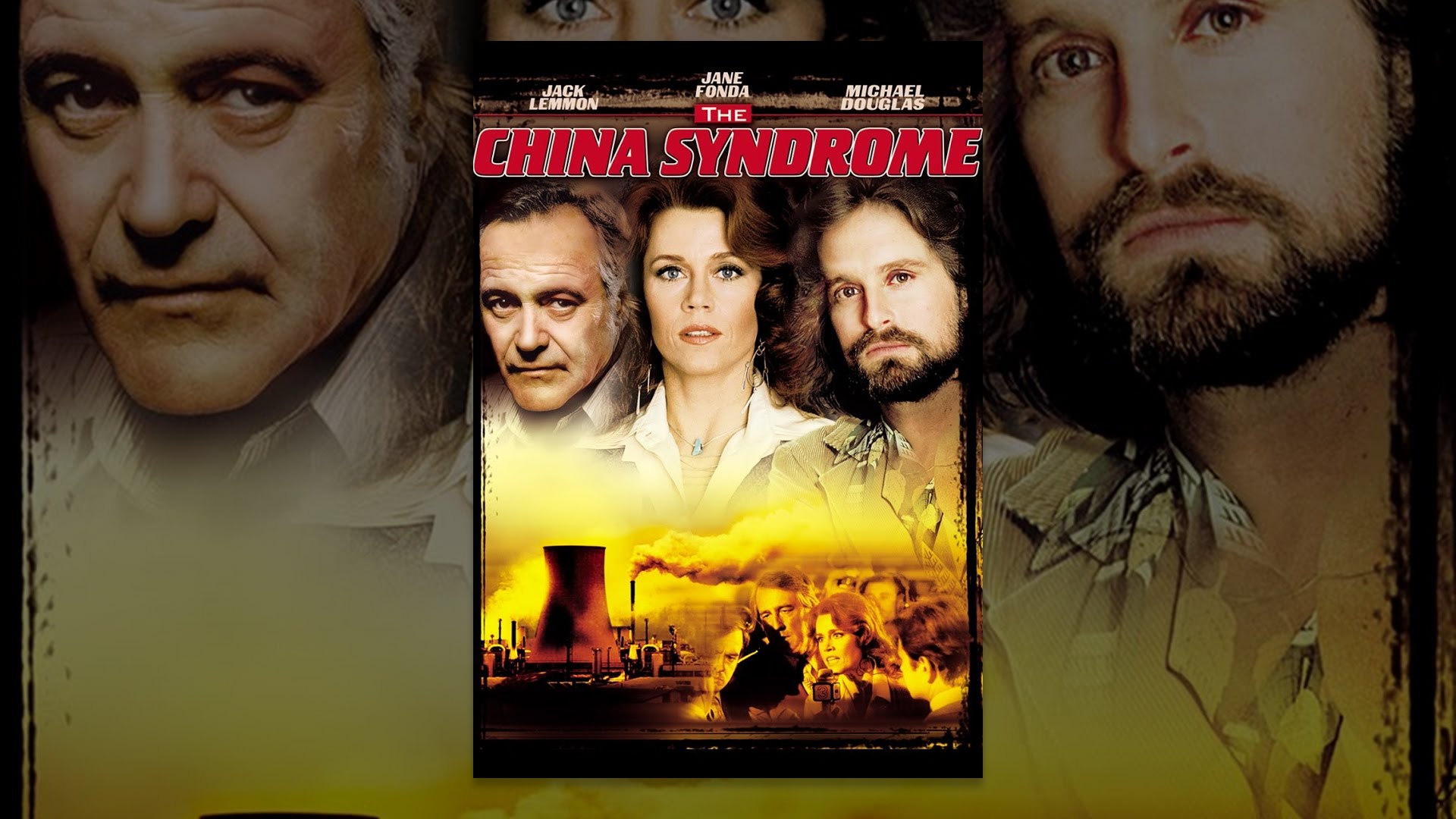 * — crystallized the defining fear of the time and, like the film (or maybe compounding it), the effects have been largely symbolic. Three Mile Island was a PR disaster for the nuclear power industry, leading both on the one hand to better regulation of existing plants and on the other to diminishing public support for the construction of new facilities.
Whether that’s been for good or ill has long been debated. Ashistorian Natasha Zaretsky has written:
The Intergovernmental Panel on Climate Change (IPCC) recently warned that the window to prevent the worst consequences of the climate crisis is rapidly closing, and July 2019 was the hottest month on earth ever recorded. In this dystopian moment of ecological catastrophe, it is hard not to look back at Three Mile Island with a strange nostalgia, which is arguably why some environmentalists once opposed to nuclear power have now embraced it as a carbon-free technology that will need to be enlisted in the transition to a post-fossil fuel economy.
But did you know that TMI-1 (the other half of the plant; the one that didn’t suffer a meltdown) ran until 2019 and only closed when electricity became so cheap (driven by the then-plummeting cost of natural gas generation) that it was no longer profitable to run the reactor? The current owners (the folks who’ve now made the agreement with Microsoft) were reluctant to abandon the plant until they felt they had no other options, given how high startup costs would be for anyone deciding to get back into the business. Microsoft’s investment solves that problem.
Even though TMI-1 has been cooking away, supplying its 800 megawatts to the grid all these years as most people have slowly forgotten about the incident, there’s no reason to be totally complacent about nuclear power. The threat of nuclear reactor accidents isn’t unfounded, a point driven home by the Chernobyl disaster of 1986 (that far worse incident persists even more strongly as a metaphor for humanity’s technological and political hubris). Waste and what to do with it is a serious issue. Radioactive materials are scary indeed, and there’s no denying the potential for much worse to happen.
Though looking back, even the Chernobyl disaster had a strange kind of upside, clearing humans out of the way and making way for wildlife to flourish. Something to think about, considering the existential scale of some of the other threats we face.
Speaking of those, this revival of Three Mile Island reaches back into the collective past for a thread that’s neatly tied up with two of the most pressing challenges for humanity these days: climate change and A.I. (even if you count A.I. as an expression of unfettered capitalism and not something that’ll be turning us all into grey goo or paperclips anytime soon).
And speaking of how it could always be worse, the firms behind those energy-hungry artificial intelligences could be turning to even nastier forms of power generation to make possible their mission of creative destruction and putting artists out of work unleashing consciousness and solving as-yet-unforeseen business challenges. Or something like that.
But you know what? They are in fact doing just that. Coal has staying power. Gas is back!
Doesn’t seem worth it, does it? Burning even more fossil fuel and releasing ever more carbon into the already over-sated atmosphere for the benefit of these generative models that we depend on to…er…invent poison foods, create imaginary friends, eliminate jobs, and enable propaganda?
Maybe going back to nukes isn’t so bad?
Even so, in every generation, there is an alleged threat to the survival of all humankind. Some persist, and some fade into the past. And in the story on Three Mile Island, three of them crash into each other: the anxiety over today’s greatest existential threat, climate change, is compelling a relaxation of anxiety about a once-dreaded existential threat in nuclear power, but the purpose of this revival is to facilitate A.I., which could well be the next apocalypse we all fear.
===
===
https://www.alternet.org/2021/06/larry-householder/ [pix w/ sessions]
In July 2020, Republican Larry Householder, then speaker of the Ohio House of Representatives, was arrested in a federal bribery case along with four of his associates. And this week, the Ohio House opted to expel him in a bipartisan 75-21 vote.
Republicans have a majority in the Ohio House, but during a time of extreme partisanship in the United States, enough Republicans and Democrats in the Ohio House were in agreement that Householder needed to go.
In the Associated Press, reporters Andrew Welsh-Huggins, Farnoush Amiri and Julie Carr Smyth note, "Defiant to the end, Householder reiterated his innocence in a House floor speech before the vote and predicted again he would be acquitted of accusations that he orchestrated a $60 million bribery scheme meant to approve legislation to prop up two nuclear power plants and then kill a ballot issue trying to overturn the law."
after the vote, the former Ohio House Speaker told reporters, "I can tell you this much: fellow elected officials who didn't like public citizen Householder are really not going to like private citizen Householder."
Rep. Brian Stewart, before the vote, urged fellow Republicans in the Ohio House to "do the right thing" and expel Householder, saying, "If racketeering, bribery and money laundering do not constitute disorderly conduct, then frankly, nothing ever could."
If convicted, Householder could face up to 20 years in federal prison.
Welsh-Huggins, Amiri and Smyth explain, "Householder and four associates were arrested in July in an investigation connected to the nuclear bailout legislation, House Bill 6, which contained a $1 billion ratepayer-funded rescue that would have added a new fee to every electricity bill in the state and directed over $150 million a year through 2026 to the plants near Cleveland and Toledo."
FROM YOUR SITE ARTICLES
- [Alaska's bipartisan state House coalition is imperiled following GOP ...
RELATED ARTICLES AROUND THE WEB
- Ohio House Removes And Replaces Newly Indicted Larry ... ›
- Larry Householder won't be dumped from Ohio House in near future ›
- Ohio House speaker, 4 others arrested in $60M bribery case ›
===
===
For Utilities, the Best of Both Worlds
The Illinois and Ohio scandals are tied to the ways utility companies have responded to the competition brought on by electricity deregulation. Both states are among the 15 or so that implemented deregulation laws in the late 1990s and early 2000s, leading to systems today in which power plants must compete on an open market.
At one time, nuclear and coal-fired power plants were strong competitors on that market, but now they are struggling because of the low costs to operate plants that run on natural gas, along with the plunging costs of wind and solar power.
Rather than close plants that are not profitable or barely profitable, plant owners have chosen to seek government subsidies.
Illinois passed the Future Energy Jobs Act in 2016, one of the measures cited in the U.S. attorney's recent filing as being tainted by corruption. The law provided subsidies for two nuclear power plants and included a major expansion of the state's support for renewable energy and energy efficiency. The nuclear plants are owned by Exelon, which is ComEd's parent company.
The law's supporters argued that the plants were a vital source of carbon-free power and that they were important for jobs and the economy.
Other states have enacted their own laws or regulatory actions in recent years that include nuclear subsidies as part of a package or a larger agenda that also expanded use of renewable energy. They include Connecticut, New Jersey and New York.
In Ohio, it was a different story, with elected officials hostile to renewable energy. House Bill 6, passed in 2019, gave more than a billion dollars to two nuclear power plants owned by a company with ties to FirstEnergy. It also provided subsidies for two coal-fired power plants owned by Ohio Valley Electric Corp., and canceled the requirements of a 2008 law that had required utilities to invest in renewable energy and energy efficiency.
Environmental groups that had supported the 2016 Illinois law opposed the 2019 one in Ohio. But the laws are alike in that they started as nuclear bailouts and then sponsors added whatever provisions they needed to get them passed.
Both laws subvert the market, which is unfair to competing owners of power plants, said Michael Haugh, an energy policy consultant who has done work for the Office of the Ohio Consumers' Counsel, the state's utility consumer advocate, and for the R Street Institute, a think tank that advocates for open markets and limited government.
The result is that utilities have a system in which they can earn substantial profits in situations where they are well-equipped to compete, and can get government protection to guarantee profits when they are ill-equipped to compete.
"They found the way to walk the line in-between," Haugh said, which, he added, is "the best of both worlds" for the companies.
Favors and Inducements
Documents in the Illinois case describe years of favors and other inducements that ComEd provided to a "Public Official A." Although the documents do not name the official, they refer to the person as speaker of the Illinois House during the period of the alleged crimes. That was Mike Madigan, a Democrat, who remains speaker.
ComEd agreed to pay a fine of $200 million and cooperate with the investigation, while Madigan has not been charged. A spokeswoman for Madigan said he "never made a legislative decision with improper motives and has engaged in no wrongdoing here."
Illinois Gov. J.B. Pritzker, also a Democrat, said at a public appearance last week that he is "furious with what is being reported" and that Madigan has a lot that he needs to answer for, to authorities and voters.
The agreement between prosecutors and ComEd was the largest development so far in an investigation that Chicago media have been reporting on since last summer, based on reports of authorities raiding officials' homes and offices.
Threats and Payoffs
==
COVID COVER BS
proposal to Change Rule on Nuclear Waste DisposalA proposal from the Nuclear Regulatory Commission would allow for the disposal of some nuclear waste in municipal landfills, rather than a licensed nuclear waste facility. Status: Proposed rule change published March 6, 2020; public comment period closes April 20, 2020.
Proposal to Change Rule on Nuclear Waste Disposal
A proposal from the Nuclear Regulatory Commission would allow for the disposal of some nuclear waste in municipal landfills, rather than a licensed nuclear waste facility.
Status: Proposed rule change published March 6, 2020; public comment period closes April 20, 2020.
===
https://www.ecowatch.com/sea-level-rise-nuclear-plants-2645160125.html
==
FEB 2019
Senior Trump administration officials pushed a project to share nuclear power technology with Saudi Arabia over the objections of ethics officials, according to a congressional report, in a move that could have benefitted a company which has since provided financial relief to the family of Jared Kushner.
Citing whistleblowers within the US government, the report by the Democrat-led House oversight and reform committee alleges “abnormal acts” in the White House regarding the proposal to build dozens of nuclear reactors across the kingdom.
The committee on Tuesday opened an investigation into the allegations, which include concerns over whether White House officials in the early months of the Trump administration sought to work around national security procedures to push a Saudi deal that could have financially benefited close supporters of the US president.
According to the report, the nuclear effort was pushed by former national security adviser Michael Flynn, who was fired in early 2017 and is awaiting sentencing for lying to the FBI in the Russia investigation.
Derek Harvey, a National Security Council official brought in by Flynn, continued work on the proposal, which has remained under consideration by the Trump administration.
Relying on the whistleblower accounts, email communications and other documents, the committee’s report details how National Security Council and ethics officials repeatedly warned the actions of Flynn and a senior aide could run afoul of federal conflicts of interest law and statutes governing the transfer of nuclear technology to foreign powers.
The report also notes one of the power plant manufacturers that could benefit from such a deal includes Westinghouse Electric, a subsidiary of Brookfield Asset Management, a company which struck a deal in August to rescue the Kushner family’s 666 Fifth Avenue tower in Manhattan from massive debts.
Detailing the White House’s continued efforts to promote the deal, the report highlights how in May, energy secretary Rick Perry told a congressional committee he “tried to really drive home” to Saudi Arabia how “you have to use Westinghouse” for “the best reactors in the world”.
It also notes Mr Kushner, the president’s son-in-law and adviser, allegedly remains “directly involved” with those efforts, and that he would be travelling to Saudi Arabia in late February to “share elements of the economic plan” of a US peace proposal in the Middle East.
The White House and Mr Kushner did not immediately respond to a request for comment.
The report comes at a time when lawmakers are increasingly uneasy with the close relationship between the Trump administration and Saudi Arabia, which has raised alarms even among members of the president’s party in Congress.
Lawmakers from both parties have expressed concerns that Saudi Arabia could develop nuclear weapons if the US technology were transferred without proper safeguards.
Mr Trump has made the kingdom a centrepiece of his foreign policy in the Middle East as he tries to further isolate Iran. In the process, he has brushed off criticism over the killing of Washington Postcolumnist Jamal Khashoggi and the Saudis’ role in the war in Yemen.
Former White House ethics chief, Richard Painter: Donald Trump is 'mentally unwell'
Congressional investigators are also probing the role of Tom Barrack, a proponent of the nuclear proposal who ran Trump’s presidential inaugural committee, which is under separate investigation by federal prosecutors in New York. Rick Gates, a former Barrack employee and cooperator in Mr Mueller’s investigation, was also involved in advocating for the nuclear proposal.
A spokesman for Mr Barrack said in a statement he will cooperate with the House probe.
“Mr Barrack’s engagement in investment and business development throughout the Middle East for the purpose of better aligned Middle East and US objectives are well known, as are his more than four decades of respected relationships throughout the region,” the statement said, noting that Mr Barrack never joined the Trump administration.
Mr Harvey did not immediately return a request for comment.
According to the report, the whistleblowers came to the committee because they had concerns “about efforts inside the White House to rush the transfer of highly sensitive US nuclear technology to Saudi Arabia in potential violation of the Atomic Energy Act and without review by Congress as required by law — efforts that may be ongoing to this day”.
A 2017 article by the nonprofit news outlet ProPublica detailed some of the concerns raised inside the National Security Council about the nuclear proposal — known as the “Marshall Plan for the Middle East” — advocated by a company called IP3 International.
IP3 is led by a group of retired US military officers and national security officials, including retired rear admiral Michael Hewitt, retired Army general Jack Keane and former Reagan national security adviser Bud McFarlane.
IP3 and other proponents of nuclear power in the Middle East argue the US needs to be involved because otherwise it will lose out to Russia, China and others on billions of dollars in business. They also say that US involvement - and the limits on nuclear fuel that come with it - are essential to stem an arms race in the region.
“The only way to address concerns over development of weapons of mass destruction is for the US to participate in the introduction and secure operation of international nuclear power plants,” the company said in a statement on Tuesday. It also said it “looks forward to sharing what we know” with the House committee.
Up until the month before he joined the Trump administration, Flynn listed himself on public documents as an adviser to an iteration of Mr Hewitt’s company advocating for the nuclear power proposal.
Last year, IP3 told the Washington Post that Flynn was offered a role in the company but never formally came aboard. On Tuesday, the company said Flynn “was never an advisor to IP3 or its affiliate, he had no stake in the company and was never compensated or reimbursed for expenses by IP3”.
Still, according to the report, Flynn served as a conduit for IP3 inside the White House.
Just days after Mr Trump’s inauguration, the company sent Flynn a draft memo for the president’s signature that would have appointed Mr Barrack as a “special representative” in charge of carrying out the nuclear power proposal and called on the director of the CIA and the secretaries of state, energy, treasury and defense to lend him support.
The report also quotes former deputy national security adviser KT McFarland as saying Mr Trump personally told Mr Barrack he could lead the plan’s implementation.
The report also catalogs the actions of Mr Harvey, the Flynn confidant who was put in charge of the NSC’s Middle East and North African affairs.
According to the report, upon entering the White House in January 2017, Mr Harvey saw his mission as getting Mr Trump to adopt the nuclear proposal despite the objections of ethics and national security officials.
Even when HR McMaster, who replaced Flynn as national security adviser, and NSC lawyer John Eisenberg directed that work stop on the proposal because of concerns about its legality, Mr Harvey continued pursuing the proposal, according to the report.
Mr Harvey was fired from the NSC in July 2017. He then joined the staff of Republican congressman Devin Nunes of California, a Trump ally and the former Republican chairman of the House intelligence committee.
==
corey booker : 1/2 our green power, have to phase out given 12 yr deadline, R&D new models
==
===
https://www.texasobserver.org/rick-perry-exports-his-pay-to-play-politics-to-ukraine/
11/13/19
it appears that Rick Perry exported his pay-to-play politics from the Texas governor’s mansion to the notoriously corrupt
Ukrainian oil and gas sector,where, as President Donald Trump’s energy secretary, he has played an outsized role in opening up the industry to private investors.
As the Associated Press reported on Monday, two of Perry’s longtime political patrons won what could be an immensely profitable drilling contract on a sprawling patch of land owned by the Ukrainian government.
Per the AP, Perry traveled to Ukraine to attend the inauguration of President Volodymyr Zelensky in May. During the trip, Perry urged Zelensky to appoint all new members to the advisory board of the country’s massive state-owned natural gas company, Naftogaz,helpfully giving him a list of recommended energy advisors. At the top was Michael Bleyzer, a silver-maned Ukrainian-American who has made a name for himself in Houston as an eccentric oil and gas investor. He also happens to be a longtime benefactor of Perry’s political career.
In the meeting with Zelensky, the energy secretary emphasized his friendship with Bleyzer. A week later, Bleyzer and his business partner Alex Cranberg, also a longtime Perry backer, filed a bid to drill on a government-controlled plot. They were ultimately awarded the contract despite offering several million dollars less than the only other bidder.
The revelations that Perry engaged in what looks to be a classic example of political cronyism should be unsurprising to those familiar with Governor Goodhair’s tenure.
Since 2017, Perry has played the role of international salesman for the American energy industry, particularly as an enthusiastic hawker of liquified natural gas, which he famously dubbed “freedom gas.” But as one of the Trump administration’s so-called “three amigos” who have led the United States’ diplomatic efforts in Ukraine, Perry is now embroiled in the impeachment inquiry into the president. He refused to comply with House Democrats’ subpoenas for documents related to his meetings with the Ukraine president and has declined to testify before committee members leading the impeachment investigation. Reports of his donors’ receiving a lucrative drilling contract in Ukraine now only heightens the scrutiny on Perry.
The revelations that Perry engaged in what looks to be a classic example of political cronyism should be unsurprising to those familiar with Governor Goodhair’s tenure. Over his 12 years running Texas, he developed a reputation as a brazen purveyor of pay-to-play politics, shamelessly installing his biggest political donors in powerful positions of public trust.
Of the 4,000 jobs that he filled during his gubernatorial career, more than a quarter of them went to political donors—many of them woefully unqualified. From 2001 to 2010, those appointees gave Perry more than $17 million, about 20 percent of his total haul, according to Texans for Public Justice.
In turn, those donors were treated kindly by the Perry government. In 2011, Texas billionaire Harold Simmons, who had pumped $1.2 million into Perry’s coffers, got his radioactive waste dump permit greenlit by Perry’s appointees on the Texas Commission on Environmental Quality despite objections from some staffers.
Perry also used massive economic development slush funds to shovel money back to his donors. In 2010, the Observerfound that 20 of the 55 companies that received grant money from Perry’s Texas Enterprise Fund—a state warchest for corporate economic incentives—had contributed to either his campaign or the Republican Governors Association that he helmed. Those companies had a combined $2.2 million in political contributions and received a windfall of $175 million in taxpayer-financed incentives. More than $16 million from his new Emerging Technology Fund was given to Perry’s major donors. These programs have notoriously little accountability when it comes to job-creation metrics, often falling far short of original promises. One $30 million grant went to an energy group that never existed.
In hindsight, it was a small miracle that Perry made it this long without getting stuck in the swamp.
Bleyzer and Cranberg—currently embroiled in Perry’s latest scandal—have deep ties to Texas and Perry. In 2009, then-Governor Perry appointed Bleyzer to the advisory board for the Emerging Technology Fund, his new tax-incentive fund for startup ventures. The following year, Bleyzer cut Perry’s campaign a $30,000 check.
Cranberg—an energy investor, longtime GOP mega-donor, and University of Texas at Austin graduate—was appointed to his alma mater’s board of regents by Perry in 2011.That same year, Perry’s campaign paid $16,000 to Cranberg’s company for use of his private luxury jet. During his controversial tenure on the board of regents, Cranberg was seen as “the ringleader of a bloc of regents” who were influenced by outside interests that aimed to “stage an attack on academic research” and coordinate an ouster of UT’s president, the Texas Tribunereported in 2011. Perry’s former campaign manager Jeff Miller is now a lobbyist for Cranberg’s company and has visited Perry’s Energy Department at least a dozen times, according to the AP.
Perry’s office said he is only doing his job as a booster for American energy interests. “What he did not do is advocate for the business interests of any one individual or company,” Shaylyn Hynes, the Energy Department press secretary, told the AP. Bleyzer and Cranberg also denied any wrongdoing.
In hindsight, it was a small miracle that Perry made it this long without getting stuck in the swamp. He was almost able to slip out the back door while he was still in good standing as a member of the federal civil servantry. Last month, just as the Ukraine heat was turning up, he announced that he was resigning in December.
Helping two political pals secure a massive contract in Ukraine is another example of the pay-to-play approach that served Perry so well in Texas; this time, it’s at a global level. Perry has talked about his aspirations for Ukraine to become “the Texas of Europe.” On the corporate cronyism front, he may just have succeeded.
===
==
OMFG
1 link?
https://www.alternet.org/2019/10/how-ohios-fascist-pro-nuke-attack-on-democracy-threatens-the-referendum-process-across-the-nation/
no lnx
How Ohio’s fascist pro-nuke attack on democracy threatens the referendum process across the nation
Written by Harvey Wasserman / Common Dreams October 20, 2019
A terrifying series of gestapo-style assaults, petiton buying, bribery, mass media manipulation and systematic intimidation has smacked into the attempt of Ohio citizens to repeal a billion-dollar bailout for two dangerously failing atomic reactors on Lake Erie.
The unprecedented assault threatens the referendum process in Ohio and across the nation.
It also threatens to keep on line two very old, dangerously decayed reactors where melt-downs and explosions could forever contaminate the Great Lakes region and more. (For a full explanation, hear this one-hour discussion).
The story may end Monday, October 21, when signatures are due to qualify an anti-nuclear referendum for the fall 2020 ballot.
It begins with the July passage by the gerrymandered Ohio Legislatureof HB6, a massive bailout scheme designed to subsidize the Perry and Davis-Besse nukes, plus two fifty-year-old coal burners, one of them in Indiana. HB6 does support ten small solar facilities. But it also kills an extremely popular, effective energy efficiency program along with larger subsidies for wind and solar energy in general.
The bailout is vehemently opposed by a large majority of Ohioans, including most of its usually pro-corporate media. Commercial, industrial and environmental groups did mount a massive campaign meant to stop the bill from passing. But with help from Democrats in both houses, the Legislature narrowly approved the bailouts.
Almost immediately, a referendum was filed for repeal. With 265,000 signatures due by October 21, Ohioans Against Corporate Bailouts began hiring canvassers.
Ohio’s GOP Secretary of State delayed the process as long as possible. He waiting a full 20 days before turning down the first petition submission. He then waited another 20 to certify the second.
But as soon as the referendum supporters began gathering signatures, pro-nuke forces attacked with a fascist assault unlike any other in US history.
First they began running an astonishing wave of TV ads claiming thereferendum was a plot by Chinese Communists to take over Ohio’s electrical grid. The ads feature (they are still running!) hordes of goose-stepping Chinese soldiers, sinister footage of China’s dictator, shuttered US factories, and more.
Accompanied by high-gloss mass mailings, the pro-nuke forces are also running saturation radio ads warning Ohioans to shun all signature gatherers lest they be tracked by sinister communists out to ruin their lives and credit. A toll-free number is offered to those willing to call in the location of any repeal supporters.
But the pro-nuke gestapo has also leapt from mere media manipulation to physical intimidation.When the referendum-gatherers hit the streets, they were confronted by industry “blockers” to tangibly prevent them from doing their job. In one case (as filmed on a security camera) a blocker smacked the cell phone out of the hands of a signature gatherer as he tried to photograph her. Gatherers have widely reported close-up verbal assaults. In some cases as many as three paid blockers have surrounded a single signature gatherer to prevent anyone from coming near to signing a petition.
Because many of the signature gatherers are hired employees, they’re required to register contact information with the state. The pro-nuke mob has assaulted them with threatening phone calls. In some cases they’ve reportedly offered substantial cash payments and airline tickets if they leave the state. One signature gatherer reported being offered $2500 (!) for the day’s accumulated sign-up sheets, which would presumably then be shredded.
Under the circumstances, many now wonder if the pro-referendum forces have been able to accumulate the required 265,000 signatures, plus the many more needed for a traditional cushion. The Republican Secretary of State is certain to discard as many signatures as he can, especially with the micro-managed scrutiny of the nuclear industry.
The ramifications of such an outcome are staggering. It could signal the death of the popular referendum, a cornerstone of the democratic process.
It could also mean two old, uncompetitive, uninsured, un-inspected crumbling atomic reactors highly likely to explode will continue to threaten the entire Great Lakes region for years to come.
==
==
ew 919
Japan's new environmental minister, Shinjiro Koizumi, called Wednesday for permanently shutting down the nation's nuclear reactors to prevent a repeat of the 2011 Fukushima disaster, comments that came just a day after Koizumi's predecessorrecommended dumping more than one million tons of radioactive wastewater from the power plant into the Pacific Ocean.
==
==
is this about macho? mr dealmaker? never give up a possible edge?
US just terminated the Intermediate-Range Nuclear Forces Treaty and plans to test new missiles
Mark Sumner / Daily Kos August 2, 2019
As Donald Trump stated he would do back in January, he has withdrawn the United States from the 1987 Intermediate-Range Nuclear Forces (INF) Treaty. This action follows another failure of Trump’s vaunted negotiation…
===
there's a weird nerdy techo-optimist mansplaining aspect to this? if you irrational girly treehuggers would just man up, we could solve all our energy problems.
===
===
https://www.commondreams.org/views/2019/07/11/quake-make-los-angeles-radioactive-dead-zone
Had Friday’s 7.1 earthquake and other ongoing seismic shocks hit less than 200 miles northwest of Ridgecrest/China Lake, ten million people in Los Angeles would now be under an apocalyptic cloud, their lives and those of the state and nation in radioactive ruin.
The likely human death toll would be in the millions. The likely property loss would be in the trillions. The forever damage to our species’ food supply, ecological support systems, and longterm economy would be very far beyond any meaningful calculation. The threat to the ability of the human race to survive on this planet would be extremely significant.
The threat to the ability of the human race to survive on this planet would be extremely significant.The two cracked, embrittled, under-maintained, unregulated, uninsured, and un-inspected atomic reactors at Diablo Canyon, near San Luis Obispo, would be a seething radioactive ruin.
Their cores would be melting into the ground. Hydrogen explosions would be blasting the site to deadly dust. One or both melted cores would have burned into the earth and hit ground or ocean water, causing massive steam explosions with physical impacts in the range of Hiroshima and Nagasaki. The huge clouds would send murderous radioactive isotopes into the atmosphere that would permanently poison the land, the oceans, the air … and circle the globe again and again, and yet again, filling the lungs of billions of living things with the most potent poisons humans have ever created.
In 2010, badly maintained gas pipes run by Pacific Gas & Electric blew up a neighborhood in San Bruno, killing eight people. PG&E’s badly maintained power lines have helped torch much of northern California, killing 80 people and incinerating more than 10,000 structures.
Now in bankruptcy, with its third president in two years, PG&Eis utterly unqualified to run two large, old, obsolete, crumbling atomic reactors which are surrounded by earthquake faults. At least a dozen faults have been identified within a small radius around the reactors.The reactor cores are less than fifty miles from the San Andreas fault, less than half the distance that Fukushima Daiichi was from the epicenter that destroyed four reactors there.
Diablo cannot withstand an earthquake of the magnitude now hitting less than 200 miles away. In 2014, the Associated Press reported that Dr. Michael Peck,the Nuclear Regulatory Commission’s site inspector at Diablo, had warned that the two reactors should be shut because they can’t withstand a seismic shock like the one that has just hit so close. The NRC tried to bury Peck’s report. They attacked his findings, then shipped him to Tennessee. He’s no longer with the Commission.
All major reactor disasters have come with early warnings. A 1978 accident at Ohio’s Davis-Besse reactor presaged the 1979 disaster at Three Mile Island. The realities were hidden, and TMI spewed radiation that killed local people and animals in droves.
Soviet officials knew the emergency shut-down mechanism at Chernobyl could cause an explosion — but kept it secret. Unit Four exploded the instant the rods meant to shut it down were deployed.
Decades before disaster struck at Fukushima Daiichi, millions of Japanese citizens marched to demand atomic reactors NOT be built in a zone riddled by fault lines, washed by tsunamis.
In California, ten thousand citizens were arrested demanding the same. Diablo’s owners hid the existence of the Hosgri Fault just three miles from the site. A dozen more nearby fault lines have since been found, capable in tandem of delivering shocks like the ones shaking Ridgecrest. No significant structural improvements have been made to deal with the newfound fault lines.
The truly horrifying HBO series on Chernobyl currently topping all historic viewership charts shows just a small sample of the ghastly death and destruction that can be caused by official corruption and neglect.
Like Soviet apparatchiks, the state of California has refused to conduct independent investigations on the physical status of the two Diablo reactors. It has refused to hold public hearings on Dr. Peck’s warnings that they can’t withstand seismic shocks like the ones now being experienced so dangerously nearby. If there are realistic plans to evacuate Los Angeles and other downwind areas during reactor melt-downs/explosions, hearings on them have yet to be held.
In the wake of the 2011 explosions at Fukushima, the NRC staff compiled critical reforms for American reactors, including Diablo. But the Commission killed the proposed regulations. So nothing significant has been done to improve safety at two coastal reactors upwind of ten million people that are surrounded by earthquake faults in a tsunami zone like the one where the four Fukushima reactors have already exploded.
There are no excuses. These seismic shocks will never stop. Diablo is scheduled to shut in 2024 and 2025. But massive advances in wind, solar, batteries and efficiency have already rendered the nukes’ power unnecessary. A petition demanding Governor Newsom and the state independently investigate Diablo’s ability to operate safely is at www.solartopia.org.
That petition began circulating before these latest quakes. The continued operation of these two reactors has now gone to a whole new level of apocalyptic insanity.
==
==
https://www.ecowatch.com/moscow-nuclear-power-protest-2639327154.html
Their signs read "We want to live!" and "Road to Death," and many bear the bright yellow symbol warning of radiation. On Monday, several hundred protesters gathered in the south of Moscow outside residential housing blocks that overlook a nuclear waste site.
==
With Congress limiting what can be dumped at nuke sites, the energy department may just redefine what it’s dumping
The Hanford Nuclear Site has been dubbed the most toxic place in America.
===
https://www.nytimes.com/2016/12/21/opinion/to-slow-global-warming-we-need-nuclear-power.html
If 20 fire marshals came around and told us our houses were about to burn down, we’d buy some fire insurance. So when the leading science academies in 20 developed countries, along with several major American corporations and the national security community, all tell us that burning fossil fuels is causing dangerous changes to the climate, we think it’s time for the United States to get serious about clean energy. It also means supporting safely operating nuclear power plants that produce carbon-free electricity.
Already, 60 percent of our carbon-free electricity comes from the 99 nuclear reactors that dot the nation’s map, from Avila Beach, Calif., to Seabrook, N.H. These reactors provide low-cost, reliable electricity for the United States, which uses nearly 20 percent of the world’s electricity. But over the next decade, at least eight of these reactors are scheduled to shut down. That will push up carbon emissions from the American electricity sector by nearly 3 percent, according to the United States Energy Information Administration.
In California, the closing of the San Onofre Nuclear Generating Station in 2012 contributed to a 24 percent increase in carbon emissions from the electricity sector, according to data from the California Environmental Protection Agency Air Resources Board. Carbon emissions from the electricity sector in New England rose 5 percent in 2015, the first year-to-year increase since 2010, largely because of the closing of the Vermont Yankee Nuclear Power Station in December 2014, according to ISO New England, the region’s grid operator.
==
intercept 719
TUESDAY, a dark-money effort linked primarily to the Ohio nuclear industry delivered an audacious payoff, as a newly elected state legislature overcame years of opposition to shower a $1.1 billion bailout on two state nuclear plants.
Several dark-money groups spent millions to replace key Republican state legislators in the spring of 2018, followed by a furious lobbying campaign to make sure those new lawmakers elected a new House speaker — one who was amenable to the subsidy. The nuclear industry in Ohio has been on the brink of failure for several years, but previous legislatures had objected to a bailout, reading the writing on the wall: Nuclear power is neither a cost-effective solution for power nor an effective response to climate change, despite hopes for its success.
:{:{
The dark-money effort deployed a}: variety of vehicles }:that went by names like theConservative Leadership Allianceand the Ohio Clean Energy Jobs Alliance. Murray Energy, a coal company, also gave heavilyto current state House Speaker Larry Householder and his allied candidates, and the bailout from Ohio also includes subsidies to prop up failing coal plants in the state.
In April 2018, two nuclear plants, both owned by the electric utility FirstEnergy, filed for bankruptcy and have been threatening to cease operations if not bailed out. They were under increasing pressure to compete with cheaper alternatives, ranging from natural gas to wind and solar. The bankruptcy filings give a glimpse into the company’s political spending: more than $30 million from 2018-2019 on lobbying and campaigns in Ohio and Pennsylvania (where the company also sought a bailout, so far unsuccessfully).
The payoff is extraordinary in degree — something like $30 million for campaigns in Ohio and Pennsylvania to win $1.1 billion in government subsidy. But it is similar in kind to other nuclear projects across the country. According to the Environmental Working Group, a nonprofit devoted to research and advocacy, five cash-strapped states across the country have foisted more than $15 billion in subsidies on failing nuclear power plants since 2016, the latest sign that nuclear is unable to stand in a competitive energy market against lower-cost renewables.
IN OHIO, the state House battle was fought in at least 18 competitive Republican primaries, all proxy battles between Reps. Ryan Smith, the incumbent House speaker, and Larry Householder. Householder was a co-sponsor of the nuclear bailout bill that stalled in the legislature in 2018, making him a key ally to the nuclear industry. Several dark-money vehicles backed the pro-Householder candidates, andwon 15 of the 18 races. Four pro-Householder candidates lost in the general election, but the primary wins put Householder in contention for the speakership.
The industry even targeted one Republican state representative who had rebuffed FirstEnergy’s advances before making a bid for Congress. “I didn’t budge when they came into my office to lobby me,” former state Rep. Christina Hagansaidof FirstEnergy. “I became the target of the company and the members of our leadership team who wanted to get it done but couldn’t because I wasn’t going to be supportive. I’m sure they just wanted to make an example of me in my race for higher office that if you don’t play well, this is what will happen to you.”
On top of the dark money, FirstEnergy’s political action committees directly contributed more than $150,000to the campaigns of Householder and candidates aligned with him, while giving none to Smith last cycle. Of the pro-Householder candidates who won their races, all but one supported the bailout.
Dark money also contributed to ads on Ohio television.Generation Now spent almost $2 million on ads in favor of the bailout, and perhaps much more. The Growth & Opportunity PAC, which got more than$1 million in donations from Generation Now, also blanketed the state House districts with television ads in favor of Republican candidates. Generation Now’s office is listed as the Columbus address of a longtime Householder adviser, according to the Cincinnati Enquirer.
The new lawmakers entered office in January, and Householder, who, along with his son, flew to Donald Trump’s inauguration on a FirstEnergy-chartered plane, won with the backing of 26 Republican and 26 Democratic representatives, while Smith got the votes of 34 and 11, respectively. Householder was able to win the support of those Democrats with his opposition to right-to-work legislation, as unions pushed Democrats to back him in the speaker fight with Smith. :{
}:
On July 23, Smith and 14 other House Republicans voted against the bailout, but Householder was able to push it through 51-38, backed by nine Democrats. It was quickly signed by the state’s new governor, Republican Mike DeWine. (FirstEnergy also contributed to the campaign of DeWine, who then tapped a FirstEnergy lobbyistto be his liaison to the legislature.)That month, the legislature also began work on reviving the nuclear bill known as HB 6. At least seven witnesses who spoke to the legislature in support of the bill drew on testimony written by a FirstEnergy lobbying firm, according to a review of metadata by the Energy and Policy Institute, which has closely tracked the fight.
The Ohio legislation reads as if it was designed specifically to undermine the planet’s continued capacity to support a steady human population. Along with propping up the state’s two nuclear plants, it also provides subsidies for failing coal plants in the state, as well as one in Indiana. It cuts and eventually ends any subsidies for new wind or solar, while approving just $20 million annually for large-scale solar projects that have already been approved. It even ends programs aimed at encouraging Ohio residents to reduce power consumption, through upgrades to appliances or heating and cooling systems.
In April, Householder denied that the corporate PAC money had anything to do with the nuclear bill, and said that FirstEnergy should be applauded for its civic engagement.“For them to care about those people who are trying to serve the state of Ohio and make sure they’ve got good quality candidates moving forward I think is important for anybody,” he said.
When asked specifically about ads from the dark money–funded Growth & Opportunity PAC, Householder said, “I’ll tell you who’s paying for these ads: it’s working men and women from Ohio, who want to save their jobs and it’s Ohio corporations, headquartered in Ohio, that want to stay here. That’s who’s paying for it.” He did not respond to a request for comment from The Intercept.
THE ROLE OF the nuclear industry in the shuffling of speakers was not prominent in the news coverage of the politics, but it wasn’t entirely unknown. Gregory Jaczko, who served as chair of the Nuclear Regulatory Commission from 2009 to 2012, said that the industry’s role in the affair was visible to those paying close attention. “FirstEnergy has been trying, really, for years to get this subsidy, and the legislature kept denying it, and nobody really, even the previous governor [John Kasich] was not really supportive of it,” he said. “FirstEnergy put a lot of money into local races and essentially turned the legislature around. So they ran this thing through.”
On a policy level, the legislation is appalling, said Jaczko, who has become an outspoken critic of the industry, and recently published a book, “Confessions of a Rogue Nuclear Regulator.” Building new wind and solar capacity would not only be a better climate solution and produce more jobs, he said, it would be far cheaper for the state, and it’s the direction Ohio will have to go eventually anyway. Wind and solar “creates a brand new economy, which is going to be a future-looking economy rather than a dying economy,” said the former NRC chair. “Nuclear is dying. It’s dying in Ohio.”
Winning the speakership is quite the comeback for Householder, whose career appeared to be cut short in the mid-2000s by a federal investigation intokickbacks and a pay-to-play scandal. Ohio Secretary of State Ken Blackwell, a Republican, had referred the case to the FBI; it was resolved without charges.Householder won election back to the House in 2016, and during his first cycle, the incumbent speaker resigned amid his own FBI investigation. Smith took over on a temporary basis, leading to the battle between the two.The irony, he noted, is that Ohio had planned to be a testing ground for next-generation smaller nuclear power plants, which purported to solve some of the problems associated with nuclear energy, and won federal subsidies to try to build them.
“As soon as they got that money from the Department of Energy, they decided they weren’t going to pursue these reactors anymore,” Jaczko said. No new nuclear plants are planned for Ohio or anywhere else in the United States, and the closure of the two currently operating facilities is not a matter of if, but when. The billion-dollar subsidy only delays the transition to wind and solar, he said.
Ohio’s two senators, both of whose campaigns have taken money from FirstEnergy throughout their careers, were on different pages when asked about the billion-dollar bailout. Republican Sen. Rob Portman, whose campaigns have taken at least $615,000 from FirstEnergy PACs since his first run for Senate in 2009, said he didn’t know enough of the details of the decision and was swamped with other things this week.
Democratic Sen. Sherrod Brown, though, was indignant.“You don’t bail out utility companies and raise prices for customers,” Brown said. The utility has contributed around $380,000 to Brown’s campaigns since 1997, when he was in the House of Representatives. “And you don’t undermine the efforts our state has made on alternative energy and other energy sources. So it’s just wrong.” Asked about reports of the involvement of dark-money groups in pushing the bailout, Brown said: “Of course there is.”
“I mean, these things happen because these monied interests control the state legislature. There’s no question about it.”
In a statement Brown’s office sent later in the day, the senator added that expending enormous resources to prop up outdated sources of power would only hurt Ohio going forward. “Of course we need to make sure our state has access to reliable power, but we shouldn’t do that by raising the utility bills of hardworking Ohioans,” Brown said. “We need solutions designed for Ohio workers and families, not Wall Street and fat-cat lobbyists. By eliminating the renewable standard, Ohio is going backward when almost every other state is looking to the good-paying jobs of the future. It’s short-sighted and it is going to result in significant lost opportunities in our state—our businesses will be less competitive, energy developers will avoid investing in Ohio, and there will be fewer jobs in this growing sector.”
The cost of the nuclear bailout for Ohio ratepayers is a bargain compared to the bill being given to residents in South Carolina. The cost of a failed program to build a nuclear power plant there topped $9 billion. Two of the companies involved — Dominion Energy and SCANA Corporation — entered into a buyout and settled a large portion of the bill, leaving ratepayers responsible for footing the remaining $2.3 billion, more than twice the Ohio figure. Not a single kilowatt of energy was produced in South Carolina by the project, which consisted largely of a hole in the ground.
The Ohio subsidies for coal and nuclear, which follow bailouts doled out by Illinois, New York, and New Jersey, underscore the futility of pursuing nuclear power.
Nuclear power once offered the tantalizing promise of endless cheap and clean energy, and to this day remains a hope in the minds of some climate activists. But in reality, nuclear hasn’t met the promise. It is far more expensive to produce nuclear power than wind or solar, and the world has not solved the intractable problem of nuclear waste, to say nothing of safety. To truly meet the scale of the climate crisis with nuclear power, Jaczko said, the world would need to start construction on roughly 1,000 plants this year. But because of the safety concerns, waste problem, and astronomical cost, there are just a handful being built. Ohio lawmakers, though, are hanging on to the bitter end — courtesy of Ohio’s residents.... Ohio homeowners and businesses are now stuck paying more to keep old, uneconomical power plants running, and money-saving energy efficiency programs will likely disappear.
==
https://www.ecowatch.com/floating-chernobyl-nuclear-plant-arctic-2639056000.html
north pole
==
DOE SHIPPED NUCLEAR WASTE TO NEVADA FOR YEARS The U.S.Department of Energy shipped potentially dangerous nuclear material incorrectly labeled as low-level radioactive waste intoNevada for several years, the governor said. [HuffPost]
==
the conv 619
==
omfg
Julia Conley
In a move that will roll back safety standards that have been observed for decades, the Trump administration reportedly has plans to reclassify nuclear waste previously listed as "high-level" radioactive to a lower level, in the interest of saving money and time when disposing of the material.
The Department of Energy (DOE) plans to observe a new interpretation of which nuclear waste qualifies as "high-level waste," which must be disposed of deep underground to avoid contaminating the surrounding environment. Under the new standards, radioactive materials at three nuclear sites will be classified as low-risk, enabling officials to dispose of the waste in shallow pits.
The Hanford Site in Washington state, the Savannah River Site in South Carolina, and the Idaho National Laboratory all contain millions of gallons of sludge and other waste following decades of use by the DOE, which reprocessed nuclear rods at the sites when the department was extracting plutonium for hydrogen bombs.
The DOE for decades classified any material that was created during reprocessing as high-level waste, but it will now label the sludge at the three sites as safe due to its level of radioactivity.
Under the new rules, the waste — which includes toxic and radioactive elements such as uranium and plutonium — can now be stored in shallow pits that may leak into the surrounding soil.
Washington Gov. Jay Inslee, who is running for the Democratic nomination in the 2020 presidential race, slammed the Trump administration for "unilaterally" deciding to potentially put Washington residents and their environment at risk, without consulting with the states in question — going against previous agreements between the states and the federal government.
insleee twt]
By taking this action, the administration seeks to cut out state input and move towards disposal options of their choosing, including those already deemed to be unsafe by their own assessments and in violation of the existing legally binding agreement," Inslee said in a statement. "We will consider all options to stop this reckless and dangerous action."
The Energy Department claims that downgrading the risk level of the sludge is necessary to allow for faster clean-up of the sites and to save money for the federal government — a claim which "flies in the face of sound science and judgment," according to Columbia Riverkeeper, a non-profit group which aims to protect Washington state's Columbia River.
"The Trump administration's attempt to cut corners with nuclear waste undermines effective, long-term cleanup at the Hanford Nuclear Site," said Lauren Goldberg, legal and program director at the organization. "People in the Pacific Northwest value clean water and strong salmon runs."
The Natural Resources Defense Council (NRDC) called the DOE's move "irresponsible and outrageous."
"The Trump administration is moving to fundamentally alter more than 50 years of national consensus on how the most toxic and radioactive waste in the world is managed and ultimately disposed of," saidGeoff Fettus, senior attorney at NRDC. "No matter what they call it, this waste needs a permanent, well-protected disposal option to guard it for generations to come."
At the Seattle-based newspaper The Stranger, Katie Herzog wrote that the DOE's action is the latest attempt by the Trump administration to "change the definition" of a problem to avoid addressing it effectively.
[twt]
Recently, the Trump administration has also sought to changethe official government definition of the poverty line to avoid paying for government benefits for struggling families, and the definition of domestic violence to limit the funds that go to agencies serving survivors.
Reclassifying dangerous elements, one critic wrote on social media, "doesn't mean it's going to make it any less harmful to the public."
[jon oliver vid] with permission from our media associate Common Dreams.
RELATED ARTICLES AROUND THE WEB
- Nobel Prize Winner Could Have a Solution to Nuclear Waste ›
- The US put nuclear waste under a dome on a Pacific island. Now it's ... ›
- As Nuclear Waste Piles Up, Private Companies Pitch New Ways To ... ›
- Why the Scariest Nuclear Threat May Be Coming from Inside the ... ›
From Your Site Articles
==
https://www.npr.org/2019/04/30/716837443/as-nuclear-waste-piles-up-private-companies-pitch-new-ways-to-store-it
...Currently there are 89 casks at Peach Bottom with room for three more, says Pat Navin, site vice president for Exelon, the company that partially owns and operates the power plant.
"That is 40 years worth of spent fuel stored over there currently and it's less than the size of a football field," says Navin. "Probably half a football field."
Enlarge this image
A worker looks at a panel in the control center at Peach Bottom. The site is expanding its temporary storage to hold all the waste generated during the 60 years the plant is licensed to operate.
Olivia Sun/NPR
It's a surprisingly small amount of waste when you consider that's enough spent fuel to produce about 10 percent of Pennsylvania's electricity over four decades.
But without a permanent disposal site, Navin says they're going to run out of room. So they're expanding the temporary storage to hold all the waste generated through the 60 years the plant is licensed to operate.
Navin says this storage is safe. The metal containers are sturdy enough to withstand things like an earthquake and, eventually, a move.
"When the opportunity comes for these to be sent somewhere else then these will double as a shipping container as well," he says.
ENVIRONMENT AND ENERGY COLLABORATIVE
New Mexico Is Divided Over The 'Perfect Site' To Store Nation's Nuclear Waste
Private companies propose their own storage plans
As the waste piles up, private companies are stepping in with their own solutions for the nation's radioactive spent fuel. One is proposing a temporary storage site in New Mexico, and another is seeking a license for a site in Texas.
But most experts agree that what's needed is a permanent site, like Yucca Mountain, that doesn't require humans to manage it.
"Institutions go away," says Edwin Lyman, acting director of the Nuclear Safety Project at the Union of Concerned Scientists. "There's no guarantee the owner will still be around for the duration of time when that waste remains dangerous, which is tens or hundreds of thousands of years."
Once it is safe to remove the spent fuel from the pool, it's stored outside in metal casks. They are lined up on a concrete base, behind razor wire and against a hillside near the power plant.
:{
}:
A California company says it has a viable plan for permanent storage. Deep Isolation wants to store spent fuel in holes drilled at least 1,000 feet underground in stable rock formations. The company says the waste would be separate from groundwater and in a place where it can't hurt people.
"I like to imagine having a playground at the top of the Deep Isolation bore hole where my kids and I can go play," says CEO Elizabeth Muller.
Enlarge this image
Deep Isolation CEO Elizabeth Muller and her father, Richard Muller, after the company successfully inserted and then retrieved a canister from a deep bore hole in 2018.
Deep Isolation
Last November, Muller's company conducted a test north of Austin, Texas. Crews lowered an 80-pound canister into a drilled hole. It was a simulation, so no radioactive substances were involved. The goal was to determine whether they could also retrieve the canister.
The test was successful, and that's important. Regulators require retrieval, because new technology could develop to better deal with the spent fuel. And the public is less likely to accept disposal programs that can't be reversed, according to the International Atomic Energy Agency.
Proving the waste can be retrieved may be the easy part. The bigger challenge is federal law, which doesn't allow private companies to permanently store nuclear waste from power plants.
[People walk into the north portal of Yucca Mountain in Nevada during a congressional tour on July 14, 2018. The site was supposed to provide permanent storage for the nation's nuclear waste, but safety concerns and opposition have stalled that plan.
]
Current law also says all the waste should end up at Yucca Mountain in Nevada. By contrast, Deep Isolation's technology would store waste at sites around the country, likely near existing nuclear power plants.
"I just don't see how there would be political support from every other state, other than Nevada, for changing the law, so that spent nuclear fuel could stay in your state forever," says Lyman.
Despite the law, all that waste in dozens of states is staying put for now.
==
Perry says federal coal and nuke bailout not dead, but encourages ...
https://www.utilitydive.com/news/perry-says-federal-coal-nuke...not.../550461/
1.
:{:(style="overflow-wrap:break-word"):}:
Department of Energy moves forward with controversial test reactor ...
https://www.sciencemag.org/.../department-energy-moves-forward-controversial-test-r...
1.
https://www.facingsouth.org/2019/03/institute-index-south-pays-dearly-nuclear-industrys-failed-renaissance
In the decade after the meltdown at Pennsylvania's Three Mile Island nuclear power plant, which took place 40 years ago this week, number of nuclear plant orders that U.S. utilities canceled nationwide amid skyrocketing costs: about 100
In today's dollars, estimated amount those abandoned plants cost taxpayers and ratepayers: over $40 billion
Amount ratepayers shouldered in cost overruns alone for the approximately 100 nuclear power plants built around that time: over $200 billion
Year in which Forbes magazine called the U.S. nuclear power program "the largest managerial disaster in business history, a disaster on a monumental scale": 1985
Year in which the nuclear power industry began using the term "nuclear renaissance" to hype a hoped-for revival of reactor construction: 2001
Between 2007 and 2009, number of applications for new reactor construction projects submitted to the U.S. Nuclear Regulatory Commission by utility companies: 18
Of those proposed projects, number that were in the South, where electricity markets are dominated by the monopoly utility model with guaranteed profits, and where some states allow utilities to force customers to pay in advance for construction projects: 13
Of the 18 proposed reactor projects, number that are still proceeding today, with others canceled amid skyrocketing costs driven in part by the 2011 Fukushima Daiichi nuclear power plant disaster in Japan: 1
Amount Duke Energy wants to charge its South Carolina customers for a decade of planning for two reactors that were never built at its Lee plant in Cherokee County: $240 million
Amount Florida Power & Light has already charged Florida ratepayers for two new proposed reactors at its Turkey Point plant in Miami-Dade County, construction of which is on hold and may never resume: over $300 million
Amount South Carolina ratepayers must pay for SCE&G's and Santee Cooper's now-canceled project involving construction of two new reactors at the Summer plant in Fairfield County: $2.3 billion
Number of powerful 5 kilowatt home solar electric systems that could be installed with $2.3 billion: more than 65,000
Initial cost estimate for the one commercial nuclear project that's still proceeding, Georgia Power's construction of two reactors at Plant Vogtle in Burke County: $14 billion
Current cost estimate for the Vogtle project, now set to finish in 2022: over $27 billion
Because of Georgia's nuclear prepayment law, approximate amount the Vogtle project has already added to the average annual Georgia Power electricity bill: $120
Year in which Democrats angered by the prepayment scheme's economic injustice and Republicans upset over its violation of free-market principles united in Georgia's legislature to quash similar deals for any other commercial reactors built in the state: 2018
Amount in additional taxpayer-backed federal loan guarantees that were announced for the Vogtle project last week amid a visit to the plant by U.S. Energy Secretary Rick Perry, who called it "the real new green deal": up to $3.7 billion
Total amount in federal loan guarantees the Vogtle project has received to date: $12 billion
(Click on figure to go to source.)
==
Dealings with Saudis Raise Questions About Trump Administration Policy
The House Oversight Committee has opened an investigation. Rep. Elijah Cummings (D-Md.) already commented that the investigation is “crucial” for understanding the Trump Administration’s aims.
Flynn was allegedly involved in the following proposal, per NBC News:
The proposal, which involved enlisting the U.S. nuclear power industry to build nuclear plants across the Middle East, wasbacked by a group of retired generals who formed a firm called IP3. Flynn described himself in financial disclosure filings as an “advisor” to a subsidiary of IP3, IronBridge Group Inc., from June 2016 to December 2016 — at the same time he was serving as Trump’s national security adviser during the presidential campaign and the presidential transition, the report says.
Not only was Flynn told he might have violated the law, the Trump administration’s pursuit of this nuclear tech transfer, Cummings said, appears “ongoing.”
These goals may even raise new speculation about why President Donald Trump, for instance, responded the way he did in the aftermath of Saudi Arabian agents’ assassination of journalist and permanent U.S. resident Jamal Khashoggi.
Rick Gates Knew About This, Too
Flynn’s aide Derek Harvey reportedly had a conference call with Trump friend Tom Barrack and former Trump campaign deputy chairman Rick Gates. Gates, it should be noted, was also deputy chair of the Trump Inaugural Committee, which is also under investigation by federal prosecutors. If Gates knew about it Special Counsel Robert Mueller likely knew about it.
---
Ohio Weighs a Nuclear Bailout. Will It Boost Renewables, Too?
BY: DAN GEARINO
The powerful utility FirstEnergy has been pushing for federal and state nuclear subsidies for years. It spent big in the last Ohio election and won a power shift in the legislature.
A plan to have Ohio taxpayers bail out the state's two struggling nuclear power plants was a non-starter in the legislature just a few months ago. Now, it's a high priority.
What happened? New state lawmakers, many of whom owe their elections in large part to a powerful backer with a vested interest in fossil fuels and nuclear power.
FirstEnergy, the Akron-based utility that long owned the Ohio nuclear plants, spent heavily in Republican legislative primaries. The company and its allies backed the winners in enough races to get its preferred candidates into top positions.
FirstEnergy's aggressive strategy has broad implications for Ohio's energy future. It has been a leading adversary of policies that support renewable energy and energy efficiency, while at the same time seeking state and federal bailouts for its older nuclear and coal plants. It was among those urging the Trump administration to use emergency powers to provide financial support to uncompetitive fossil fuels plants that otherwise might close.
The next few months may now show the extent to which the company's agenda has become the state of Ohio's agenda.
Legislative leaders are preparing to introduce a bill that would provide subsidies to companies that operate nuclear plants. A previous nuclear bill died in 2017 after it wasn't brought up for a committee vote in the Republican-controlled House. But the House leadership, while still Republican, has changed.
"Those with specific interests have figured out how to game the system and how to maximize their influence," said Catherine Turcer, executive director of Common Cause Ohio, a group that works for fair elections and government transparency.
This push for a nuclear bailout could also present an opportunity for renewable energy in Ohio, a state with a renewable energy manufacturing base but an on again, off again history of support for wind and solar.
On their own, nuclear subsidies are politically difficult to get approved. Three other states that passed similar measures—Illinois, New Jersey and New York—all did so as part of wide-ranging energy legislation that also increased support for renewable energy. Pennsylvania, where FirstEnergy is pushing another nuclear subsidy bill, is also considering including subsidies for renewable energy.
Can there be a grand bargain with environmental advocates in Ohio?
The new House speaker relied on Democrats for his rise to power. If the bill includes some Democratic energy priorities, it may pick up enough votes to pass this time, in spite of FirstEnergy's previous opposition to most of those priorities.
There is an economic case to support renewable energy and energy efficiency in Ohio. The state is a leader in clean energy jobs, thanks in part to its manufacturing roots, and advocates have long argued that this edge in manufacturing could be the foundation for a much larger clean energy economy.
But so far, Ohio lawmakers who support clean energy say they haven't been invited to the table.
A Bargain with Democrats to Win Power
....
==
barrack
https://www.propublica.org/article/trump-inc-podcast-who-was-behind-the-plan-to-give-saudi-arabia-nuclear-power
==
House Democrats are accusing the Trump administration of moving toward transferring highly sensitive nuclear technology to Saudi Arabia in potential violation of U.S. law. Critics say the deal could endanger national security while enriching close allies of President Trump. Saudi Arabia is considering building as many as 16 nuclear power plants by 2030, but many critics fear the kingdom could use the technology to develop nuclear weapons and trigger a nuclear arms race in the Middle East. We speak with Democratic Congressmember Ro Khanna of California and Isaac Arnsdorf, a reporter with ProPublica. Arnsdorf first wrote about the intense and secretive lobbying effort to give nuclear technology to Saudi Arabia in 2017. His reporting was cited in the House report.
---
Transcript
This is a rush transcript. Copy may not be in its final form.
JUAN GONZÁLEZ: House Democrats are accusing the Trump administration of moving toward transferring highly sensitive nuclear technology to Saudi Arabia in potential violation of U.S. law. Critics say the deal could endanger national security while enriching close allies of President Trump. Saudi Arabia is considering building as many as 16 nuclear power plants by 2030, but many critics fear the kingdom could use the technology to develop nuclear weapons and trigger a nuclear arms race in the Middle East. During an interview with 60 Minutes last year, Saudi Crown Prince Mohammed bin Salman made clear that if Iran acquired nuclear weapons, Saudi Arabia would do the same.
CROWN PRINCE MOHAMMED BIN SALMAN: [translated] Saudi Arabia does not want to acquire any nuclear bomb. But without a doubt, if Iran developed a nuclear bomb, we will follow suit as soon as possible.
JUAN GONZÁLEZ: On Thursday, the House Oversight Committee issued an interim report on the proposed Saudi deal, after multiple whistleblowers came forward accusing several top White House advisers and Trump allies of attempting to push through the transfer of the nuclear technology despite legal and ethical warnings. At the center of the controversy is the company IP3, which was formed to help U.S. companies build nuclear plants in Saudi Arabia and elsewhere in the region, in what they dubbed a “Middle East Marshall Plan.” Former national security adviser Michael Flynn worked as an adviser for a subsidiary of the firm before entering the White House, and reportedly continued to advocate on behalf of the company once in office. IP3 was co-founded by former Reagan official Bud McFarlane, who pleaded guilty to participating in the Iran-Contra cover-up in 1988.
AMY GOODMAN: The House report also names several other high-ranking Trump officials and allies reportedly involved in the proposed Saudi deal, including Trump’s son-in-law, his adviser Jared Kushner; Energy Secretary Rick Perry; and Trump’s billionaire friend Tom Barrack, who served as chair of Trump’s inaugural committee. According to the report by the congressional committee, the White House may still be discussing the plan.
We’re joined now by two guests. In Washington, D.C., Democratic Congressmember Ro Khanna of Silicon Valley in California joins us. He serves on the House Oversight Committee. And here in New York, Isaac Arnsdorf is with us, a reporter with ProPublica. He first wrote about the intense and secretive lobbying effort to give nuclear technology to Saudi Arabia in 2017. His reporting was cited in the House report.
We welcome you both to Democracy Now! Congressmember Ro Khanna, let’s begin with you. What are you doing on the House Oversight Committee? What is the leadership doing there?
REP. RO KHANNA: Well, it’s a very serious matter. Here’s why people should care. The Saudis have been giving arms to al-Qaeda in Yemen. There’s reports of that. And the last thing we want to do as a country is to transfer nuclear secrets to Saudi Arabia, which could lead to proliferation and a threat to our security.
And as the journalist you have on has reported, there is a lot of financial conflict of interest here. Tom Barrack, who headed up the president’s inaugural committee to raise $100 million-plus, is also pushing for this deal and has financial interest in the deal. So the Oversight Committee is going to have an investigation to see what are the financial interests that are driving this administration to potentially sell nuclear secrets to the Saudis and what laws have been violated, because, as you know, they have to come to Congress, under the Atomic Energy Act, and offer certain guidelines, which they haven’t done.
JUAN GONZÁLEZ: And, Congressman, this attempt by the administration is still very much alive. There was a meeting February 12th, just last week, in the White House between President Trump and some nuclear power developers. What do you know about that meeting and what came out of there?
REP. RO KHANNA: Well, we need to find out more facts. That’s why we need an investigation. We need to know who was in that meeting, what was discussed, whether they followed the law that the Atomic Energy Act requires. I mean, even when we transfer nuclear technology to allies, such as India, when George Bush did that, it requires years of process. It requires the consultation of Congress. Here you’re talking about the potential sale of nuclear secrets to the Saudis, who aren’t an ally, who have engaged in the proliferation of weapons that are being used against our own troops, and there is no process for notification of Congress. And you have extensive reporting of people who gain—stand to gain billions of dollars from these investments.
AMY GOODMAN: So, Isaac Arnsdorf, the report of the House Oversight Committee cites your reporting. You did a piece yesterday. You did a piece last year. Explain first what the “Middle East Marshall Plan” is and then the financial interests of people like, well, Trump, a close confidant, spoke at the Republican National Convention, Tom Barrack, headed the inaugural committee, Michael Flynn and others.
ISAAC ARNSDORF: So, the “Middle East Marshall Plan” was this idea that bubbled up in this company that you mentioned, IP3, which was that they can strengthen economic and political ties between the U.S. and Saudi Arabia by having the U.S. companies export nuclear power technology to Saudi Arabia. And they started lobbying the Trump administration, and initially the Trump transition, about how this would fit with Trump’s ideas about his approach to the Middle East and make America great, restoring American jobs in American industry.
And Tom Barrack was very receptive to this idea, because he was promoting a similar kind of economic outreach to the region. He had a lot of ties with the leaders there. And thanks to the support of Tom Barrack and also General Flynn, who was involved in the project before he was in the White House, the project, the idea, gained a lot of traction in the early days of the administration.
AMY GOODMAN: And take it through to now.
ISAAC ARNSDORF: So, initially, in the first three months, as detailed by the whistleblowers who spoke to the House Oversight Committee, this was really something that was happening in kind of a—kind of being rushed through the National Security Council, and that wasn’t complying with the requirements of the Atomic Energy Act, that requires all kinds of review, because, obviously, the U.S. very tightly controls this technology, because it can be misused to build nuclear weapons.
More recently, the administration has been taking steps to go through that formal process and have negotiations with the Saudis about reaching a formal agreement to share nuclear power technology. If that were to happen, Congress would not have to actually ratify the treaty, but it would have 90 days to pass a joint resolution that could block it.
JUAN GONZÁLEZ: Well, you would think, though, with all the stuff that’s happened in relationship to Saudi Arabia—the murder of the journalist Jamal Khashoggi, the decision by Congress to cut off military aid to the war in Yemen—that there would be some reconsideration of the Trump administration of such a controversial move. What’s your sense of what the thinking is, going on here?
ISAAC ARNSDORF: Well, there was already a lot of bipartisan skepticism about the idea of sharing nuclear power technology, and calls to tell Congress more about what was happening in those negotiations, or even call off those negotiations. And you’ve certainly seen an escalation, since all the things that you mentioned, of members of both parties saying, “We need to put a pause on this. We need to get some more information.”
AMY GOODMAN: Let’s turn to Energy Secretary Rick Perry speaking last year at a meeting of the House Science, Space and Technology Committee. Energy Secretary Perry was asked to respond to concerns about nuclear proliferation in light of U.S. negotiations with Saudi Arabia on nuclear energy.
ENERGY SECRETARY RICK PERRY: That goes right to the point that we tried to make with the Saudi crown prince in our conversations with him and with his team, that not only will it send a powerful message if they go into an acceptable one, two, three, with additional protocols, but that we—that they do that, because if they don’t, the message that’s sent—if the Chinese or the Russians, which don’t require any of that, not only does it send the message—I think the wrong message—by the kingdom of Saudi Arabia, but it also sends the message to the United States that we’re no longer the leader in the world when it comes to civil nuclear power—Westinghouse, best reactor builder in the world. … The second point that we tried to really drive home to the crown prince was that if you want the best reactors in the world, you have to come to the United States, and you have to use Westinghouse.
AMY GOODMAN: Congressmember Ro Khanna, the significance of the testimony of Rick Perry, the energy secretary, and his involvement here?
REP. RO KHANNA: Well, I think it’s a worldview into how the Trump administration looks at the relationship with the Saudis. It’s all about money, whether it’s selling them arms sales or selling nuclear secrets. There’s no moral consideration. I mean, Tom Barrack, as recently as a week ago, was out there defending the Khashoggi murder and defending the Saudi regime’s murder of Khashoggi. He actually said, appallingly, that the United States has done worse, which I totally disagree with. But it gives you a sense of what’s driving this. It’s financial interests. It’s selling interests into the Saudis for money, and no concern for our security and no concern for the morality of the Saudis’ policies.
JUAN GONZÁLEZ: And, Isaac, in that clip, the energy secretary referred to the one, two, three. A lot of people are not familiar with that. Could you talk about the legal limitations on what the administration can do or can’t do in terms of transferring nuclear power technology?
ISAAC ARNSDORF: So, that refers to the section of the Atomic Energy Act that requires these negotiations and these agreements before sharing this technology. And what the secretary was describing there is really a very challenging policy problem, where the Saudis want nuclear power—maybe they have a legitimate interest in diversifying their economy from oil, but, as you heard the crown prince describe in the clip that you played, maybe they also want to keep up with their neighbor Iran, with potential military implications. So, the Saudis want nuclear power. They’re pursuing it. If the U.S. doesn’t help them get it, are they going to turn around and go to Russia or China? And then there are going to be even less security assurances than they would have with the U.S. So, that’s a very real policy problem that security experts struggle with.
But what you’re seeing with the Trump administration is that they are arriving at an answer to that policy problem that, based on what we’ve seen out of the House Oversight Committee, was, to a large extent, based on people with conflicts of interest promoting this for other reasons.
AMY GOODMAN: I also want to talk about Jared Kushner’s connection to this. The House report states, “In January 2018, Brookfield Business Partners, a subsidiary of Brookfield Asset Management, announced its plans to acquire Westinghouse Electric for $4.6 billion. Westinghouse Electric is the bankrupt nuclear services company that is part of IP3’s proposed consortium to build nuclear reactors in Saudi Arabia, and which stands to benefit from the Middle East Marshall Plan. In August 2018, Brookfield Asset Management purchased a partnership stake in 666 Fifth Avenue, a building owned by Jared Kushner’s family company.” Isaac?
ISAAC ARNSDORF: This is especially interesting given that Jared Kushner is on his way to the region very shortly. And there’s a lot of discussion in the House Oversight Committee’s report about materials being prepared for conversations between Kushner and the president, and obviously Jared Kushner has developed a very close relationship with MBS, the crown prince, and was reportedly described as “in his pocket.”
AMY GOODMAN: Ro Khanna, would you like to add to this?
REP. RO KHANNA: Well, I would just say we need transparency. But here is one thing that the president and the administration could do to show some distance from the Saudi regime, and that is to sign the War Powers Resolution that will stop U.S. support for the Saudi war crimes in Yemen. As you know, we passed it through the House; next week, the Senate is going to take it up. And I hope that the president will sign it and at least put some distance between U.S. policy with the Saudis. But we need to understand all of the financial interests that administration officials and their friends have with the Saudis and what’s driving our policy.
AMY GOODMAN: One last thing, Congressmember Ro Khanna. You’re a leader in the Congress around the issue of Yemen. Talk about the legislation that was just passed and how getting nuclear power to Saudi Arabia, which could conceivably be turned into nuclear weapons, plays into this picture of the worst humanitarian crisis in the world.
REP. RO KHANNA: Well, I appreciate your reporting on this. There are nearly 14 million Yemenis who face the potential of famine. That is because the Saudis have been bombing the port cities, and food and medicine isn’t being allowed in. It’s being inspected, and that’s leading to hyperinflation in Yemen. People don’t have food and medicine.
We passed in the House the War Powers Resolution that would stop the U.S. support for the Saudi bombing in Yemen. It’s expected to pass the Senate next week or in the next couple weeks. That will be the first time in the history of this country that the War Powers Resolution has ever passed, since 1973. And what that will do is make it unambiguously clear that the United States doesn’t support the Saudi bombing. As it is, since we passed the House resolution, we’ve seen a temporary ceasefire in the bombing campaign, and some hopeful signs that food and medicine will go in.
I think it would be the exact wrong message for us to be selling nuclear secrets to the Saudis, especially given the reporting that the Saudis are transferring some of these weapons to al-Qaeda in Yemen. And in terms of the point that Russia or China may supply the Saudis, the United States has prevented that type of action when we want to. We prevented it in Iran. We’re trying to prevent it in other countries. There’s no reason the United States should tolerate any sale of nuclear weapons to the Saudis.
AMY GOODMAN: Well, we’re going to leave it there but continue to follow this issue. Ro Khanna, Democratic congressmember from California, member of the House Oversight Committee, that’s going to be investigating this Saudi nuclear issue. Also with us, in New York, Isaac Arnsdorf, a reporter with ProPublica, who first wrote about the intense and secretive lobbying effort to give nuclear technology to Saudi Arabia in 2017, his reporting cited in the House report. And we’ll link to your latest report, “House Panel Probes Trump Advisers’ Push for Saudi Nuclear Deal.”
This is Democracy Now! When we come back, we’ll be joined by a man whose father possibly faces the death penalty in Saudi Arabia. He’s in prison
==
interview jackzo sp gregory, new bk?
https://kpfa.org/episode/the-ralph-nader-radio-hour-february-18-2019/
==
Officials are outraged after Trump administration secretly ships ‘weapons-grade plutonium’ to an unwitting state
by Cody Fenwick January 30, 2019
Nevada officials fumed Wednesday after the Trump administration revealed in a court filing that it has secretly shipped radioactive plutonium to the state despite local objections, the Nevada Independent reported.…
===
Gregory Jaczko, Confessions of a Rogue Nuclear RegulatorGregory Jaczko recounted his time with the Nuclear Regulatory Commission,…booktv 1/19
==
https://www.ecowatch.com/nuclear-power-cost-renewables-2625524662.html
Nuclear Power Is Economically Obsolete
By Grant Smith
Last year the Trump administration's Energy Department announced the launch of a media campaign to counter what an official called "misinformation" about nuclear power. We haven't noticed an upsurge in pro-nuclear news—because there is none to report.
On the first day of 2019, the energy industry trade journal Power asked whether new technology can save nuclear power by making new reactors economically feasible—not only to replace coal and natural gas but also to compete with the rapidly dropping cost of renewable energy. The verdict from Peter Bradford, a former member of the federal Nuclear Regulatory Commission:
. . . [N]ew nuclear is so far outside the competitive range. . . . Not only can nuclear power not stop global warming, it is probably not even an essential part of the solution to global warming.
His bleak outlook is shared by the authors of a recent article in the Proceedings of the National Academy of Sciences. The authors—an engineer, an economist and a national security analyst—reviewed the prospects for so-called advanced designs for large nuclear reactors, and for much smaller modular reactors that could avoid the billions in construction costs and overruns that have plagued the nuclear energy industry since the beginning.
They concluded that no new designs can possibly reach the market before the middle of the century. They cite the breeder reactor that, according to the Bulletin of Atomic Scientists, received $100 billion in public development funds worldwide over six decades and still did not get off the ground.
The authors say there may be an opening for small modular reactors but that it will be very difficult to find a market for these reactors without—as is always the case with nuclear power—a massive infusion of taxpayer dollars. "For that to happen," they argue, "several hundred billion dollars of direct and indirect subsidies would be needed to support their development and deployment over the next several decades, since present competitive energy markets will not induce their development and adoption."
Despite the past failure and poor future outlook, support for more nuclear funding persists. In a recent study, the Energy Department pointed to the $50 billion in federal incentives provided to renewables like solar and windpower between 2005 and 2015, implying that such policies can have a similar impact on modular nuclear reactors. But unlike nuclear power, the costs of wind and solar have dropped dramatically, to the point where the cost of new, unsubsidized utility-scale wind and solar power investment can now compete with that of existing coal and nuclear power plants.
The bigger question is whether nuclear power is needed at all.
Nuclear advocates' claims that nuclear power is required to fight climate change falls short. California met its climate goal of reducing greenhouse gas emissions to 1990 levels by 2020 four years early by turning off its nuclear plants and setting policies that prioritize renewables, energy efficiency and energy storage investments over natural gas plant additions.
An argument advanced in the Energy Department report is that, to ensure that power can be delivered 24/7, large coal and nuclear power plants designed to run day and night—also known as baseload plants—need to be replaced by small nuclear units that run day and night. However, mounting, real-world evidence refutes this assertion.
Recent studies from New York and California show that it is cheaper to invest in renewables, energy efficiency and energy storage in order to replace aging nuclear plants than it is to keep the existing plants running. Savings range from hundreds of millions to billions of dollars—achieved without any impact on electric system reliability.
Nuclear power belongs in a museum. We shouldn't continue to squander public dollars on a technology that will never make economic sense. We should divert resources into improving and deploying wind, solar, energy efficiency and energy storage technology that we know will keep the lights on, effectively reduce carbon emissions and cost what we can afford to pay. Grant Smith is senior energy policy advisor at Environmental Working Group.
RELATED ARTICLES AROUND THE WEB
- Renewables Now Contribute Nearly One-Fifth of U.S. Electricity ... ›
- Nuclear Energy in the U.S.: Expensive Source Competing with ... ›
- High costs and renewables challenge the case for nuclear power ... ›
- Barriers to Renewable Energy Technologies ›
==
Ill Nuclear Workers’ Benefits Petitions Have to Be Reviewed Within 6 Months. Some Have Languished About a Decade.
by Rebecca Moss, Santa Fe New Mexican
A petition filed by a Los Alamos worker has been in limbo for 10 years. At the Savannah River Site, a petition has lingered for 11 years. At Sandia National Laboratories, workers have been waiting seven years for a final decision.
https://go.propublica.org/e/125411/l-utm-campaign-dailynewsletter/5zk18v/317879303
The Los Alamos Lab Worker Who Started a Year Too Late for Benefits
by Rebecca Moss, Santa Fe New Mexican
If Gilberto Ulibarri had begun a year earlier, he would have been deemed eligible for compensation from the government because the lab had not kept adequate records of radiation exposure. But because he started in 1996, he was fending for himself.
==
==
see edward calabrese milloy good for you
...
Not mentioned by the AP: One of the biggest fans of the notion that a little radiation isgood for you is billionaire nutjob Robert Mercer, who helped buy Donald Trump an election and whose daughter remains the biggest financial backer of Dead Breitbart's Home For White Resentment, yes, even after Mercer's divorce from Steve Bannon last year.
Mercer finds the whole idea simply enchanting, and apparently picked it up from Arthur Robinson, the crazy rightwing Oregon doctor and sheep rancher who wants to collect everyone's urine and find the secret of NIMH, or at least immortality. In addition to filling his ranch with Mercer-donated freezers (which in turn are filled not with Indianas Jones, but with 14,000 pee samples), Robinson fills the minds of dumb billionaires with fake science, as this lovely Jane Mayer profile of Mercer discussed in 2017. Mercer, you see, likes to
:{downplay the dangers posed by nuclear war. Mercer, speaking of the atomic bombs that the U.S. dropped on Hiroshima and Nagasaki, argued that, outside of the immediate blast zones, the radiation actually made Japanese citizens healthier. The National Academy of Sciences has found no evidence to support this notion. Nevertheless, according to the onetime employee, Mercer, who is a proponent of nuclear power, "was very excited about the idea, and felt that it meant nuclear accidents weren't such a big deal." [...]
Robinson appears to be the source of Robert Mercer's sanguine view of nuclear radiation: in 1986, Robinson co-authored a book suggesting that the vast majority of Americans would survive "an all-out atomic attack on the United States." Robinson's institute dismisses climate change as a "false religion."}:
Well OF COURSE it does. We know of no evidence Mercer or Robinson directly influenced the new EPA thinking, but obviously those kooks are part of the anti-science deregulatory machine surrounding Trumpworld. Part of the background radiation, if you will.
===
11'18
OCTOBER 13, 2018
Author Discussion on Democracy and Rural America
Professors Loka Ashwood for-profit democracy
and Katie Cahill examined the relationship between rural America and government.
subsidy, ej?
https://www.c-span.org/video/?452867-5/author-discussion-democracy-rural-america
==
2 Courts Upheld State Nuclear Subsidies. Here's Why That's a Big Deal for Renewable Energy, Too.
:{BY: DAN GEARINO
A defeat in federal court likely would have been used to challenge state policies around the country that promote renewable energy, environmental law experts say. Read more}:
===
https://www.alternet.org/trumps-department-energy-neuters-nuclear-oversight-safety-board
ProPublica Local Reporting Network.
The Trump administration has quietly taken steps that may inhibit independent oversight of its most high-risk nuclear facilities, including some buildings at Los Alamos National Laboratory, a Department of Energy document shows.
An order published on the department’s website in mid-May outlinesnew limits on the Defense Nuclear Facilities Safety Board — including preventing the board from accessing sensitive information, imposing additional legal hurdles on board staff, and mandating that Energy Department officials speak “with one voice” when communicating with the board. The board has, by statute, operated independently and has been provided largely unfettered access to the nation’s nuclear weapons complexes in order to assess accidents or safety concerns that could pose a grave risk to workers and the public. The main exception has been access to the nuclear weapons themselves.
For many years, the board asked the Department of Energy to provide annual reviews of how well facilities handled nuclear materials vulnerable to a runaway chain reaction — and required federal officials to brief the board on the findings. It also has urged the energy secretary not to restart certain nuclear operations at various sites until work could be done safely.
At Los Alamos, the board has conducted ongoing reviews of the plutonium facility, holding hearings in Santa Fe and in recent years identifying imminent and “major deficiencies” in the building that could put the public at risk in the event of an earthquake. The lab sits on an active and complex geological fault system capable of causing a high magnitude quake.
The Energy Department’s orderis the latest effort to limit transparency and weaken the board’s ability to conduct oversight, experts and critics say. And it represents another step by the Trump administration to stall or halt the work done by advisory boards and committees across the federal government, including a scientific advisory board at the Environmental Protection Agency and several of the Department of Labor’s advisory committees established to protect worker safety and health.
“This administration is very regressive,” said Robert Alvarez, who helped draft the legislation that created the board in the 1980s as a senate staff expert for Sen. John Glenn, D-Ohio, and subsequently served as senior policy adviser for former Energy Secretary Bill Richardson. “We shouldn’t have to wait for something to blow up or catch fire in order to pay attention to a safety problem.”
The five-member board was formed in 1988 near the close of the Cold War, as the public and Congress began to question the lack of accountability at the Department of Energy and its predecessor agencies, which since the end of the Manhattan Project had made their own rules and been entirely self-regulating. At the time, there were reports of widespread radiological contamination at the Rocky Flats Plant in Colorado and problems at other nuclear facilities. The board’s formation also came on the heels of the Chernobyl nuclear disaster.The Department of Energy did not respond to multiple requests for comment, but said in a presentation that the order will increase efficiency and decrease costs. “This order does not hinder cooperation with the board or to prevent them from accomplishing their safety oversight responsibilities,” the presentation said. A spokesman for the safety board also declined comment on the order, saying it was in the Energy Department’s purview. The spokesman said the board and staff are waiting to see how it “shakes out.”
Chernobyl, Alvarez said, showed the lax conditions in which nuclear power and materials were being manufactured both in the then-Soviet Union and the United States, and the calamity that could arise from an accident. The board was born out of that understanding, and now relies on a staff of more than 100, several of whom are stationed at lab sites. These staffers create weekly one-page reports that outline mishaps and near-misses and help inform larger recommendations.
The board does not have regulatory power, but for the first two decades of its life, all of its recommendations were adopted by the energy secretary.
Now, Alvarez said, the Department of Energy is trying to “isolate and fence off” the board’s access, part of a “constant effort to chip away at the ability of the board to do oversight.”
“We have seen too many serious safety and security lapses at DOE nuclear sites to accept any attempts to weaken” the board, Udall said, adding that he wants to preserve the board’s “critical role as an independent watchdog for public health and safety.”Sen. Tom Udall, D-N.M., said in an email that the board is integral to New Mexico’s weapons labs. The board also oversees facilities in California, Washington state, South Carolina and other states.
He said he will be asking the Department of Energy for a “full account” of how the changes will affect worker safety and public health.
The safety board’s very existence — and its ability to provide nuclear safety information to the public — has been threatened in recent years, advocates of the board say. Last summer, for example, the board’s then-chairman proposed dissolving the board entirely. A few months later, the National Nuclear Security Administration, an arm of the Energy Department that oversees the nation’s nuclear stockpile, said less information should be made public by the board.
Last September, the board rescinded one its long-pending recommendations, related to emergency safety, after concluding that the Department of Energy failed to understand the problems and that officials did not to intend to remedy them. The board has made no new recommendations since 2015.
Critics of the board, including some of its former leaders, say limiting its access to information may be a good thing.
Sean Sullivan, who retired as the board’s chairman in February, recommended last summer that the board be disbanded, saying it was a relic of the Cold War and its oversight was redundant of the work already done by the Department of Energy and the National Nuclear Security Administration. The proposal, he said, was a cost-cutting measure but it was opposed by other board members and abandoned.
Sullivan says it makes sense for the Department of Energy to have control over all information released to the public and it has long been frustrated when the safety board autonomously made safety information public.
For instance, Sullivan said, when board staff raised concerns in 2015 about uranium processing at the Y-12 nuclear facility in Tennessee, it was reported by a local paper and caused a headache for the nuclear security administration. Energy officials had yet to discuss problems at the site with congressional representatives from the state.
“Government shouldn’t try to hide things,” said Sullivan, emphasizing that he was speaking as a private citizen, but “if the public gets everything, conclusions may be drawn which are inaccurate — and that in and of itself can be problematic.”
Some of the nuclear security administration’s dissatisfaction with the board was revealed last fall when former Energy Undersecretary Frank Klotz recommended that the board stop publishing its weekly, one-page site reports from several national laboratories, including Los Alamos, online.
Klotz, citing an article about nuclear safety problems at Los Alamos, published in September in The New Mexican, said the reports were unflattering and might discourage workers from bringing issues to light in the future (even though workers are unnamed in the reports), the Center for Public Integrity reported.
Current acting board chairman Bruce Hamilton drew up a proposal recommending the board staff make weekly reports orally to board members, so as to avoid public embarrassment, but it was not adopted and the reports are still available. Around the same time, all Energy Department staff were required to undergo training to “control” the release of unclassified information.
David Jonas, a Washington, D.C., lawyer who served as general counsel for both the National Nuclear Security Administration and the safety board, said there have long been disagreements between the board and the Department of Energy. But there’s never before been such explicit limits on what the safety board can access, as outlined in the order, he said.
“The defense board is going to end up getting a little less information based on this,” he said.
The statute establishing the safety board explicitly gave board members and staff powers of investigation and said the secretary of energy should cooperate fully with the board and provide it “with ready access to such facilities, personnel, and information as the Board considers necessary to carry out its responsibilities.”
The new order appears to add caveats to how the law is carried out. Board members can no longer speak to lab staff without permission from the Department of Energy. The order may also make it difficult for them to access records related to how much radiation exposure workers receive.
While the statute that established the board technically trumps the order, the document gives the Department of Energy “more power to resist the defense board requests” and as a result will delay the process of getting information to the safety board, Jonas said.
He anticipates a legal fight, saying, “It’s a mess.”
Even before the start of the Trump administration, the Department of Energy had been tightening control over information released to the public.
In January 2017, while Barack Obama was still president, the Energy Department deleted several requirements for what types of incidents laboratory managers must report to a federal database used by the safety board to review problems at laboratories. Beginning that fall, labs no longer had to report certain potential safety problems or provide as much information about “near-miss” accidents.
The impact of the change is already apparent. Under the old reporting requirements, the Los Alamos lab detailed 103 incidents in 2016 and 77 incidents in the first nine months of 2017. Under the new order, Los Alamos reported just 13 incidents for the last three months of 2017 and 28 for the first six and a half months of 2018.
Sullivan, on behalf of the board, wrote a letter to Energy Secretary Rick Perry in May 2017 saying the new requirements “negatively affect safety oversight” and reduce nuclear facilities’ ability to learn from mistakes. (Sullivan personally voted against sending the letter.) Perry declined to make changes, saying the new rules still ensure “safety oversight is not degraded at defense nuclear facilities.”
The safety board voted last month to hold up to three public hearings beginning in late August on the intent of the new order and how it might impact access to information. Hamilton, the board chairman, was the only member to vote against holding the hearings.
==
aussie heard slam?
https://www.ecowatch.com/scientists-hit-back-another-paper-claims-100-renewables-is-possible-and-affordable-2569987338.html
Scientists Hit Back: Another Paper Claims 100% Renewables is Possible and Affordable
Is it possible for the world to run on 100 percent renewable energy? It's a noble goal, as the best science tells us we must significantly slash fossil fuel consumption or else the planet faces dangerous climate change.
A number of academics believe it's not only feasible to wean off coal, natural gas and other polluting fuels by transitioning to renewable sources such as solar and wind power, it's even cost-effective.
==
2/18 budget
In addition, the legislation extends tax credits to makers of biodiesel and "renewable diesel," and pushes back the deadline for nuclear facilities to qualify for credits. The nuclear provision would benefit the only plant in the works, under construction by Southern Company, in Georgia.
===
icn
...here were no subsidies involved, McDonald said. As Georgia Power, the largest subsidiary of Southern Company, has expanded its solar capacity, solar farms have been built and operated by other companies through competitive bidding, helping to keep costs down, Edge said.
"It's market driven," McDonald said. The state has "lots of good, flat land," plenty of sunshine, and interest rates were low, making solar investments more affordable. The initiative was carried out as solar technology was advancing and prices for solar panels were falling, he said. "It was like a perfect storm."
McDonald, a former state lawmaker whose current term on the commission won't expire until 2020, said he still supports coal, nuclear and natural gas because they can run 24 hours a day, but he said solar offered an opportunity to help diversify the state's energy mix.
With the cost of solar power in Georgia dropping from 13 cents per kilowatt-hour to below 4 cents in the last five years, McDonald said he expected continued growth in a way that moves "slowly and methodically."
[graph]
Georgia reached No. 8 in the Solar Energy Industry Association's 2016 national rankings. And last year, at No. 9, it was producing enough electricity from the sun to power about 175,000 homes. Before 2013, Georgia didn't have much solar power at all.
Solar is still less than 2 percent of the state's electricity generation mix—almost all of it utility scale—so there's plenty of room to grow.
Georgia Power spokesman John Kraft said that compared to distributed, rooftop systems, "utility scale solar is currently the most cost effective, and these large-scale installations provide the most value for Georgia Power customers." But he also said the utility does offer customers programs to support rooftop solar.
Renewable energy "plays an important role in the diverse generation mix we use to serve customers," Wilson Mallard, director of renewable development for Georgia Power, said in a written statement. The company, he said, will continue to make sure every renewable energy project "helps us keep energy reliable and affordable."
An Unusual Alliance: Sierra Club + Tea Party
The gains of the last five years were made in part because people who are not normally political allies have worked together, or at least rowed their separate boats in the same direction.
Just a few years ago, critics, utilities and elected officials were saying solar power was too expensive and the state was too cloudy, recalled Sierra Club's Georgia Director Ted Terry.
Lauren 'Bubba' McDonald, Jr., chairman of Georgia's PSC
"I give a lot of credit to Bubba (McDonald)," Terry said. "He actually went to Germany, where it is cloudy, and found how they were deploying solar without as much (sun) as in Georgia," he said. "When he sees something that's working, he's going for it. He sticks with it."
Dooley, whose Green Tea Coalition and out-of-the-ordinary views have drawn a lot of national attention, helped persuade the commission to expand solar in the state.
"You respect each other's differences and you understand everybody has a right to believe what they believe, and you focus on what you have in common," Dooley said.
The Big Lift: Getting the Legislature to Help
Success with a five-member commission is one thing. Moving the state's conservative legislature toward new policies that encourage rooftop or smaller-scale distributed solar will be a bigger political lift.
"Historically we have not had solar-friendly policies," said solar business owner Don Moreland, chair of the Georgia Solar Energy Association. He described fighting for pro-solar legislation as "a long slog".
But that slog sometimes pays off, and Georgia in 2015 joined more than two dozen other states in allowing third parties to finance limited-sized solar systems. Its Solar Power Free-Market Financing Act of 2015 was passed with support from a broad coalition of electric utilities, environmental interests and others. With this business model, homes and businesses are allowed to host solar panels installed and operated by a solar provider and, though long-term contracts, get some of their benefits without having to pay the up-front costs or maintenance.

Dooley, who in 2016 helped defeat a utility-backed measure in Florida to limit rooftop solar power, argues that the nuclear plant backlash in Georgia could open new opportunities for more coalition-building and more compromise to advance solar power.
"A lot of people are looking at it and wanting solar and renewable energy as a way to provide some kind of competition," she said. "A lot of Tea Party activists don't like monopolies at all."
Dooley wants to buck conservative doctrine and persuade the legislature to boost financial incentives for residential rooftop solar.
Even as utilities in other states try to claw back net metering policies, she wants Georgia lawmakers to make sure people with rooftop solar get a "fair market rate" for the extra electricity their solar panels produce.
Lawmakers should also make sure homeowners and businesses can sell electricity generated by their solar panels to their neighbors, she said. And she thinks electric cooperatives need to be told they must be faster connecting privately owned solar panels into their systems.
The Solar Message for a Conservative State
"It's all about the message," Dooley said. "Free market, competition, choice, expanding the energy portfolio and energy mix. I don't want excessive regulations."
Some lawmakers might be receptive to her arguments. But they're monitoring the political winds and watching Plant Vogtle.
"I wasn't a big supporter of solar, but the economics have drastically changed," said State Sen. Chuck Hufstetler, a Republican from northeast Georgia who chairs the Senate Finance Committee and has been critical of the nuclear plant's financing.
He echoed Dooley in saying Plant Vogtle's problems have voters looking for other energy choices and acknowledged he's thinking about introducing legislation with implications for solar power.
Terry, with the Sierra Club, said he's optimistic about solar in Georgia.
Solar technology continues to improve, he said. He noted that Atlanta is expected this month to spell out how it intends to get all its electricity from clean fuel sources by 2035, likely giving solar another boost.
"It's just a good time to be in this space," he said. "There is so much happening with this technology."
PUBLISHED UNDER:
NATIONAL ENVIRONMENT REPORTING NETWORK - SOUTHEAST
==
https://www.ecowatch.com/vogtle-nuclear-plant-2519385301.html
Betraying Ratepayers and Clean Energy Future, Georgia Panel Approves Vogtle Nuclear Reactors
By Jessica Corbett
Georgia's public utility commission voted 5-0 on Thursday to continue construction on two half-finished nuclear reactors that will cost an estimated $25 billion, even though the project is now "more than $10 billion over budget and five years late."
Opponents of nuclear power were disappointed by the unanimous decision, which the Wall Street Journal noted was considered "a victory for Southern Co., whose subsidiary Georgia Power is the primary owner of the Alvin W. Vogtle Electric Generating Plant, which has two existing reactors." The project has faced opposition from local residents as well as national groups that emphasize the long-term risks of nuclear power.
"Georgia Power should scrap this disaster immediately and instead transition away from dangerous nuclear and fossil fuel-based electric generation and toward a 100 percent clean energy economy that creates good jobs, protects our environment, and shields our communities from the gross financial risks associated with bad bets like Vogtle," said Ted Terry, director of the Sierra Club's Georgia Chapter, after the vote.
"Georgia Power's profits have soared because they've been allowed to pick the pockets of families, schools and churches for a boondoggle that even the [public utility commission's] staff has called too uneconomic to continue—yet today commissioners chose not to stop it," Terry added. "The commission has failed Georgia's hard-working families and businesses today by choosing to be lapdogs for Georgia Power instead of watchdogs for the people of Georgia."
Construction on the reactors "has been plagued by delays and spiraling costs, compounded when the main contractor filed for bankruptcy" in March, the Associated Press reported.
"Most people have to pay for their mistakes, but Georgia Power is still profiting from theirs," said Kurt Ebersbach, senior attorney for the Southern Environmental Law Center. "There's something wrong with a system that rewards this kind of failure."
The decision will likely "shape the future of the nation's nuclear industry, partly because the reactors at Plant Vogtle were the first new ones to be licensed and to begin construction in the U.S. since 1978," the AP noted—all while consumers of power in Georgia pay the price.
"Under state law, Georgia Power's 2.4 million customers will ultimately reimburse the state-regulated monopoly for the flagship plant as they pay their monthly electricity bills," the AP explained. "That law allows Georgia Power to charge its customers now for the interest it pays on the borrowed money needed for the project. Under an older law, the utility had to wait until the plant was operating to collect those interest charges from its customers, a practice that meant the interest owed grew during the construction period."
"Even though customers had no control over Georgia Power's mistakes, they're going to be the ones footing the bill," said Nathaniel Smith, chief equity officer at the Atlanta-based nonprofit Partnership for Southern Equity. "These impacts will be especially difficult on the most vulnerable Georgians who are already struggling to put food on the table."
However, there may still be hope for cancelling the project. The Atlanta Journal-Constitution reported that Georgia utility regulators "conditioned their approval of the Vogtle nuclear project on no small caveat: that Congress approves roughly $800 million worth of tax credits"—meaning that if federal lawmakers don't approve the tax credits, the state regulators may reconsider their decision.
Reposted with permission from our media associate Common Dreams.
RELATED ARTICLES AROUND THE WEB
===
see perry 2
https://www.ecowatch.com/doe-coal-nuclear-bailout-2491308467.html
DOE Proposes Outrageous, Massive Coal and Nuclear Bailout
By Miles Farmer
Department of Energy (DOE) Sec. Rick Perry just proposed a massive bailout for coal and nuclear power plants. The radical and unprecedented move is couched under a false premise that power plants with fuel located on site are needed to guarantee the reliability of the electricity system. The proposal relies on a mischaracterization of DOE's own recent study of electricity markets and reliability (discussed here), which if anything demonstrated that this kind of proposed action is not justified.
If adopted, the proposal would essentially ensure that coal and nuclear plants in regions encompassing most of the country continue to run even where they are too expensive to compete in the energy market. It would saddle utility customers with higher costs, while posing obstacles to the electricity system integration of cleaner and less risky energy sources such as solar and wind.
The Natural Resources Defense Council (NRDC) is still carefully analyzing the proposal, but below is a very preliminary take:
The proposal would bail out expensive and uncompetitive coal and nuclear plants
The proposal asks the Federal Energy Regulatory Commission (FERC) to take action within 60 days that would financially prop up "fuel-secure resources," which must have "a 90-day fuel supply on site enabling [them] to operate during an emergency, extreme weather conditions, or a natural man-made disaster." This requirement is aimed squarely at coal and nuclear power plants, which would generally be able to satisfy these criteria.
Many coal and nuclear units are very expensive and are having trouble competing in the wholesale electricity market (as discussed here). So the proposal asks FERC to bail out these power plants by essentially guaranteeing them profits and insulating them from competitive market forces. The proposal amounts to a massive subsidy that would ensure the plants continue to operate, rather than being economically retired when they are more expensive than other units (including wind and solar) that sell electricity at lower cost.
The proposal would radically reshape electricity regulation for most of the country
The rule would have a massive scope, covering regional wholesale markets where electricity is bought and sold to serve most of the nation's customers. It would apply to areas where the electricity system is operated by regional entities known as Regional Transmission Operators (RTOs) or Independent System Operators (ISOs), which administer competitive markets for electricity. The RTOs tell the more expensive plants not to operate when there's cheaper electricity available from other plants.
....
==
==
http://www.alternet.org/news-amp-politics/watch-john-oliver-exposes-one-biggest-american-health-hazards-no-one-talking-about
==
so carolina
https://www.ecowatch.com/summer-nuclear-station-canceled-2467656474.html
==
E&E
Westinghouse parent's finances erode ahead of key U.S. deadlines
Kristi E. Swartz, E&E News reporter
Published: Monday, June 26, 2017
Toshiba Corp. must get auditors to sign off on its earnings statements by August or the owner of bankrupt nuclear contractor Westinghouse Electric Co. LLC faces being delisted from the Tokyo Stock Exchange.
The Japanese conglomerate was demoted from the first to the second tier of the exchange after the company confirmed its liabilities were greater than its assets. Toshiba also said its losses through March of this year are greater than originally thought.
The news comes as Scana Corp.'s South Carolina Electric & Gas (SCE&G) unit continues to negotiate Toshiba's payment of roughly $1.7 billion in parent guarantees for its V.C. Summer nuclear expansion project. Southern Co. subsidiary Georgia Power's new $3.7 billion agreement with Toshiba and a new services agreement with Westinghouse for its Plant Vogtle expansion project are scheduled to be presented before a bankruptcy judge tomorrow.
A full hearing has been scheduled for July, according to a number of motions and other documents filed Friday on the matter.
Both utilities have taken over finishing their reactors after Westinghouse filed for Chapter 11 bankruptcy protection in March, citing significant cost pressures at both projects. SCE&G and Georgia Power are using Westinghouse's AP1000 reactor design to build the nation's first nuclear projects from scratch in 30 years.
Georgia Power and Westinghouse struck a new services agreement earlier this month for Southern Co.'s nuclear unit to become Vogtle's main contractor. That issue is also before the judge tomorrow. Meanwhile, an interim agreement is in place until Wednesday at 5 p.m.
Georgia Power continues to analyze the cost of finishing one or both reactors or abandoning the project. The utility, which is building Vogtle with a group of public power companies, is expected to disclose that information in August, according to Southern's CEO.
"We do continue our efforts to complete a thorough, full-scale schedule and cost-to-complete analysis for the project and will work with the co-owners and the Georgia Public Service Commission to determine the best path forward for customers," Georgia Power spokesman Jacob Hawkins said.
SCE&G's interim agreement expires today, but it's likely that the utility and co-owner Santee Cooper will extend the deadline. The company has remained tight-lipped on what it plans to do.
It will release information through normal filing procedures, a spokeswoman said last week. Santee Cooper's board is also scheduled to meet this morning to discuss many matters, including a resolution titled "V.C. Summer authorization."
That SCE&G has not finalized its agreement with Toshiba is one likely reason for a deadline extension. The company also is waiting for Congress to extend production tax credits.
The House voted last week to extend tax credits for nuclear projects beyond the end of 2020, a deadline that V.C. Summer and Vogtle will likely miss. The Senate has yet to take up its version of the bill.
But the largest unknown is how long it will take to finish V.C. Summer and how much that will cost. Scana executives have said publicly that they have been waiting for Westinghouse and subcontractor Fluor Corp. to hand over the highly detailed project schedule, but media reports over the weekend, including a Charleston, S.C., Post and Courier story on missing documentation, revealed that one may not actually exist.
The lack of an integrated project schedule is perhaps the most serious and damaging example of what the utilities have said is a long-standing issue: Westinghouse has not been forthcoming with information.
SCE&G and Georgia Power said they were going to do their own individual analysis of how long it will take to finish their respective projects, but officials from both utilities have said publicly that Westinghouse was going to be more forthcoming with information — including data and intellectual property — after it filed for bankruptcy.
"Up to this date, quite frankly, we've had a difficult time getting information out of Westinghouse. There are a lot of things they consider to be business-sensitive," said Steve Byrne, SCE&G's chief operating officer, to shareholders in March. "While I understand that, they need to understand that I need to have this information."
Byrne told South Carolina regulators at an April meeting that SCE&G still didn't have the schedule.
The absence of a schedule combined with the threat of rising costs at V.C. Summer led environmental groups to ask the South Carolina Public Service Commission for a hearing to discuss the project. The PSC granted the request, but the environmental groups filed a letter Friday saying they had a conflict with the currently scheduled August date.
It is unclear whether the issue of a nonexistent schedule extends to Vogtle, as well. But Vogtle's main analysts have said for years that the lack of one is an issue. Georgia Power officials have said the schedule was in the hands of Westinghouse and its subcontractors.
The topic likely will resurface again at a hearing scheduled for Thursday, particularly because a recent PSC staff report said Georgia Power could have averted the crisis at Vogtle had the utility developed its own detailed schedule years ago.
==
http://www.ecowatch.com/nuclear-energy-collapse-2360633461.html
Nuclear Giants Limp Towards Extinction
By Paul Brown
Any lingering hope that a worldwide nuclear power renaissance would contribute to combating climate change appears to have been dashed by U.S. company Westinghouse, the largest provider of nuclear technology in the world, filing for bankruptcy, and the severe financial difficulties of its Japanese parent company, Toshiba.
After months of waiting, Toshiba still could not get its auditors to agree to its accounts this week. But it went ahead anyway and reported losses of nearly $5 billion for the eight months from April to December, in order to avoid being delisted from the Japanese stock exchange.
The company admitted it too could face bankruptcy, and is attempting to raise capital by selling viable parts of its business.
In a statement, it said: "There are material events and conditions that raise substantial doubt about the company's ability to continue as a going concern."
Nuclear Reactors
The knock-on effects of the financial disasters the two companies face will be felt across the nuclear world, but nowhere more than in the UK, which was hoping Westinghouse was about to start building three of its largest nuclear reactors, the AP 1000, at Moorside in Cumbria, northwest England.
The UK's Conservative government will be particularly embarrassed because, in late February, it won a critical parliamentary by-election in the seat that would be home to the Moorside plant, on the guarantee that the three reactors would be built—a pledge that now seems impossible to keep.
"I think the day of the large-scale nuclear power station is over," said Martin Forwood, campaign co-ordinator for Cumbrians Opposed to a Radioactive Environment. "There is no one left to invest anymore because renewables are just cheaper, and these prices are still going down while nuclear is always up."
Toshiba and Westinghouse are in deep trouble because the reactors they are currently building—the same design as the ones planned for Cumbria—are years late and billions of dollars over budget. Even if the companies can be refinanced, it seems extremely unlikely they would risk taking on new reactor projects.
Both the UK and Toshiba have looked to the South Korean nuclear giant KEPCO to take over the Moorside project, but the company is unlikely to want to build the Westinghouse design and would want to put forward its own reactor, the APR 1400.
###
This would delay the project for years, since the whole safety case for a new type of reactor would have to be examined from scratch.
But the company is already under pressure from within South Korea, where Members of Parliament have urged KEPCO not to take on a risky project in the UK. Twenty-eight members of the Republic of Korea's "Caucus on Post-Nuclear Energy" have called on KEPCO not to invest in Moorside.
The other nuclear giant present in Britain, the French-owned Électricité de France (EDF), is in serious difficulties of its own. It is already deep in debt and its flagship project to build a prototype 1,600 megawatt reactor at Flamanville in northern France is six years behind schedule and three times over budget at €10.5 billion.
Originally due to open in 2012, its start date is now officially the end of 2018, but even that is in doubt because an investigation into poor quality steel in the reactor's pressure vessel is yet to be completed.
Despite this, the company and the UK government are committed to building two more of these giant reactors in Somerset in southwest England, and have started pouring concrete for the bases to put them on. These reactors are due to be completed in 2025, but nobody outside the company and the UK government believes this is likely.
So, with troubles of its own, EDF is in no position to help Toshiba out of its financial difficulties. In the nuclear world, this leaves only the Chinese and the Russians who might be capable of taking on such a project.
The Russians will be ruled out on political grounds, and the Chinese are already helping out EDF with a large financial stake in the Somerset project. They also want to build a nuclear station of their own design at Bradwellin Essex, southeast England—another project that looks likely to take more than a decade to complete.
Vast Capital Costs
The problem for all these projects, apart from the vast capital cost and the timescales involved, is that the energy industry is changing dramatically. Solar and wind power are now a cheaper form of producing electricity across the world, and are less capital-intensive and quicker to build.
Despite the fact that there are more than 430 nuclear reactors in operation worldwide and the industry still has great economic and political clout, it is beginning to look like a dinosaur—too big and cumbersome to adapt to new conditions.
Nuclear power now produces about 10 percent of the world's electricity, while 40 percent is from coal and 23 percent from renewables. The rest is mainly from natural gas.
"Nuclear lobbyists are abandoning the tiresome rhetoric about a nuclear power renaissance," said Jim Green, national nuclear campaigner with Friends of the Earth Australia. "They are now acknowledging that the industry is in crisis."
"The crisis-ridden U.S., French and Japanese nuclear industries account for half of worldwide nuclear power generation," he continued. "Renewable energy generation doubled over the past decade, and strong growth, driven by sharp cost decreases, will continue for the foreseeable future."
Reposted with permission from our media associate Climate News Network.
==
[http://www.ecowatch.com/fukushima-radiation-robots-2280538279.html Radiation Levels at Fukushima Is So High It Killed Two Robots] 2/17 see [https://ic.ucsc.edu/college8core/c8wiki/index.php/Category:Nuclear Nuclear].
==
http://www.ecowatch.com/nuclear-energy-accidents-2165717823.html
===
http://ecowatch.com/2013/11/08/3-claims-pro-nuclear-film-pandoras-promise/
By Denise Robbins
CNN aired the pro-nuclear power film Pandora’s Promise last night, which propagated three common myths about nuclear power: it suggested the environmental movement’s “scare tactics” are what has inhibited nuclear power, claimed nuclear power is cheaper than renewables and downplayed complications from nuclear waste. This led to a generally one-sided story, which has led to criticism from many reviewers.
Here’s how the film Pandora’s Promise propagated nuclear power myths:
1. Claimed Nuclear Energy Is Cheaper Than Renewable Energy
The enormous cost of building nuclear power plants is a key inhibiting factor for the energy source. Despite receiving immensely greater subsidies than renewable energy from the beginning of its development, nuclear energy is still not competitive with fossil fuels in the U.S., and new wind energy is estimated to be less expensive than new nuclear generation. Yet the Breakthrough Institute’s Michael Shellenberger asserted that nuclear power is “a much more economical alternative to very expensive solar panels or very expensive wind turbines that require backup power.” He also dismissed renewable energy and energy efficiency, one of the cheapest ways to address climate change, as a “religion.”
Renewable energy prices have actually been dropping while the costs of nuclear are on the rise—as nuclear power has scaled up in France and the U.S., so have the costs of power plant construction. Meanwhile, solar prices have dropped 99 percent in the last quarter century, and solar and wind energies are predicted to be cost-competitive with fossil fuels—without the use of subsidies—by 2025.
2. Blamed Environmentalists For Preventing Nuclear Deployment
Pandora’s Promise focused on opposition to nuclear power from some in the environmental movement. In the film, author Mark Lynas even compared anti-nuclear activists to global warming deniers. However, this narrative paints a misleading picture: the lack of nuclear expansion in the U.S. comes down to a simple case of economics. Currently, nuclear power cannot compete with gas-fired power. As the libertarian Cato Institute’s Jerry Taylor explained that there’s “zero evidence” that environmental opposition is preventing new nuclear power plants, a myth that he said has been purported by nuclear advocates who “like to dodge the cost estimates.”
3. Whitewashed The Issue Of Nuclear Waste
Although nuclear power has potential to become a major power source, it comes with baggage. The U.S. has accumulated more than 70,000 metric tons of spent nuclear fuel, and continues to accumulate 2,200 tons per year, yet CNN’s documentary made light of this waste—Lynas claimed that nuclear waste is “not an environmental issue.”
The Associated Press reported that the nation “has no place to permanently store the material, which stays dangerous for tens of thousands of years.” Most of this waste currently “sits in water-filled cooling pools like those at the Fukushima Dai-ichi” at the power plants themselves, some of which “contain four times the amount of spent fuel that they were designed to handle.”
The film also failed to mention leaks that currently challenge the upstate New York power plant, Indian Point. According to the Union of Concerned Scientists, the plant experiences consistent leaks during refueling, though the Nuclear Regulatory Commission did not act on this. The scientists called the status quo of nuclear waste cleanup “untenable,” yet CNN’s documentary barely glossed over this ongoing issue.
Visit EcoWatch’s NUCLEAR page for more related news on this topic.
==
==
Japan is marking the fifth anniversary of the meltdown of the Fukushima nuclear plant. On March 11, 2011, a massive earthquake and tsunami hit the northeast coast of Japan, killing 20,000 people. Another 160,000 then fled the radiation in Fukushima. It was the world’s worst nuclear disaster since Chernobyl. At least 100,000 people from the region have not yet returned to their homes. A full cleanup of the site is expected to take at least 40 years. A representative of the families of the victims spoke during Friday’s memorial ceremony in Tokyo.
Kuniyuki Sakuma: "For those who remain, we are seized with anxieties and uncertainties that are beyond words. We spend life away from our homes. Families are divided and scattered. As our experiences continue into another year, we wonder: 'When will we be able to return to our homes? Will a day come when our families are united again?'"
The Fukushima nuclear meltdown sparked massive anti-nuclear protests across Japan and led to a four-year nationwide moratorium on nuclear plants. The moratorium was lifted, despite sweeping opposition, last August.
Topics:
Florida: Nuclear Power Station Leaking Radiation into Sea
March 11, 2016
Headlines
Meanwhile, in Florida, the Turkey Point nuclear power station appears to be leaking radiation into the waters off the coast of Miami. A recent study by scientists at the University of Miami found tritium levels up to 215 times higher than normal in the water of the Biscayne Bay. Tritium is a radioactive isotope produced by nuclear reactors. The site’s cooling canals, which are the part of the facility that appear to be leaking the radiation, are currently permitted to operate at 104 degrees—the hottest in the nation.
Topics:
==
http://ecowatch.com/2016/03/01/fukushima-nuclear-waste/
==
http://ecowatch.com/2016/02/17/indian-point-leak/
==
http://thefreethoughtproject.com/navajo-water-supply-horrific-flint-cares-native-american/
hmm
he news out of Flint, Michigan brought the issue of contaminated drinking water into sharp focus, as it was revealed that officials at every level—local, state and federal—knew about lead-poisoned water for months but did nothing to address the problem.
Under state-run systems like utilities and roads, poorer communities are the last to receive attention from government plagued by inefficiencies and corrupt politicians. Perhaps no group knows this better than Native Americans, who have been victimized by government for centuries.
In the western U.S., water contamination has been a way of life for many tribes. The advocacy group Clean Up The Mines! describes the situation in Navajo country, which is far worse than in Flint, Michigan.
Since the 1950s, their water has been poisoned by uranium mining to fuel the nuclear industry and the making of atomic bombs for the U.S. military. Coal mining and coal-fired power plants have added to the mix. The latest assault on Navajo water was carried out by the massive toxic spills into the Animas and San Juan rivers when the EPA recklessly attempted to address the abandoned Gold King mine.
==
FEDS CANCEL STUDY OF CANCER RISKS NEAR U.S. NUCLEAR FACILITIES
Sep 11, 2015 by Casey Coates Danson
[Translate]
---
By Sue Sturgis, Facing South | Report
This week the Nuclear Regulatory Commission announced it was canceling a National Academy of Sciences pilot study of cancer risks near US nuclear facilities, citing budget pressures.
The NRC said that “continuing the work was impractical, given the significant amount of time and resources needed and the agency’s current budget constraints.” The NAS estimated that the study would take 39 months and cost $8 million.
Nuclear watchdogs blasted the NRC’s decision, with Maryland-based Beyond Nuclear calling it “outrageous.”
“Study after study in Europe has shown a clear rise in childhood leukemia around operating nuclear power facilities, yet the NRC has decided to hide this vital information from the American public,” said Cindy Folkers, a radiation and health specialist with the group. “An $8 million price tag for the next phase of this study is a drop in the bucket for an agency with a $1 billion annual operating budget.”
Beyond Nuclear raised concerns about industry manipulation, noting that it had obtained documents showing NRC staff had been approached by the president of the US National Council on Radiation Protection and Measurements offering a cheaper, faster and less sensitive study design, which the NRC has not yet agreed to accept. The Council is funded in part by the nuclear industry and has pro-nuclear ties.
The NAS study was to focus on seven facilities, six of them nuclear power plants: San Onofre Nuclear Generating Station in California, Millstone Power Station and Haddam Neck Plant in Connecticut, Dresden Nuclear Power Station in Illinois, Big Rock Point Nuclear Plant in Michigan, and Oyster Creek Nuclear Generating Station in New Jersey.
The other facility that was to be part of the study is Nuclear Fuel Services in Erwin, Tennessee, which produces nuclear fuel for the US Navy and processes weapons-grade uranium into fuel for nuclear power plants. Originally built in the 1950s by the W.R. Grace chemical conglomerate and now owned by Virginia-based BWX Technologies, the NFS plant in northeast Tennessee’s Unicoi County has a long history of safety problems. They include a 2006 leak of highly enriched uranium, details of which were withheld from the public.
A 2010 report by a university scientist documented uranium contamination downstream from the plant in the Nolichucky River, which provides drinking water for Tennessee communities including Greeneville, and in Davy Crockett Lake, a recreation site maintained by the Tennessee Valley Authority. Besides being radioactive, uranium is a toxic metal that can impair normal functioning of the kidneys, liver, heart, brain and reproductive system. According to the Environmental Protection Agency, long-term chronic intakes of uranium isotopes in food, water, or air can lead to internal irradiation and/or chemical toxicity.
Barbara O’Neal of the Erwin Citizens Awareness Network, a group that’s been critical of NFS, told the Greeneville Sun she suspects the NRC may have pulled the plug on the cancer risk study because the agency didn’t want information it found to be released to the public.
People living near NFS have long raised concerns about cancers and other health problems in their communities. In response, the federal Agency for Toxic Substances and Disease Registry conducted a public health assessmentin 2007. However, it focused only on volatile organic compound pollution from the facility and not radiation, since the federal Comprehensive Environmental Response, Compensation, and Liability Act that gives ATSDR its authority excludes releases of the kinds of radioactive materials NFS handles.
While preparing its report, ATSDR received comments from concerned plant neighbors (commenters’ names are not included in the report):
I grew up in the big green two-story house which I think is now owned by NFS. When W.R. Grace built “the plant” down where Mrs. Home’s frog pond used to be, we had no idea what was in store. The security and regulations then were few and far between. As kids, we would still go down there and walk around the fence to see the stuff that leaked out of the big tanks. The ground was always wet. When we heard the alarm go off, we ran to the upstairs bedroom to watch the men in white suits run up the hill. Orange smoke came out of the smokestacks. My aunt was a secretary there and one night came and took us away from our house because “something” was about to happen “down at the plant”. Never knew what. I know we ate radiation straight from Mama’s garden. Our beloved little dog died of cancer. My dad died at 56 with colon cancer. Our next door neighbor died of colon cancer; I doubt she was 60. A friend and close neighbor had extensive colon cancer in his early 30’s. I had a huge lymphoma removed from my heart at the age of 30. My brother had kidney failure in his early 30’s. My sister and I both have thyroid nodules and weird protein levels in our blood that can lead to multiple myelosis. These all have to be watched closely. At the age of only 64, I also have an autoimmune disease that makes life difficult. People in Erwin are still brainwashed about NFS. Those that know the truth have died or moved away. My mother died of heart failure at 65. I believe her heart was broken.
Another commenter, a resident of Erwin, offered this account of health woes:
I live on Washington Street and I have been diagnosed with Multiple Sclerosis. I have had several lymph nodes removed due to unexplained fevers, weight loss, lymphadenopathy, etc. My illness developed when I moved to Washington Street. … I worked inside this home doing medical transcription spending all my time there from the time we moved in until approximately a year ago. My health continued to deteriorate during this period of time. I began working outside my home a year ago and I have improved considerably since then. I have been told by many well-educated individuals that there may be something in my home environment that caused by illness. With the continued improvement in my health after getting away from the house during the day … I believe there may be something to this assumption.
And yet another comment from a resident in nearby in North Carolina:
I live in the NC county (Yancey) adjacent to and downwind from Erwin TN. As a (now retired) health care professional, I have observed over many years what appears to be higher than average occurrences per capita of several debilitating diseases here. Multiple sclerosis, various unusual types of cancer, spina bifida, clefting/midline developmental disabilities among others are more prevalent in the local population than would be expected. While nobody is yet able, or willing to point the finger toward the Erwin plant … there is suspicion that airborne products from this facility passing through this area in highest concentration could be a factor in these statistics. Certainly further study is warranted.
In the end, the plant’s neighbors got few answers to questions about their health from ATSDR. It now looks like they won’t be getting answers from the NRC any time soon.
==
https://en.wikipedia.org/wiki/Shoreham_Nuclear_Power_Plant
The Shoreham Nuclear Power Plant was a completed General Electric nuclear boiling water reactorlocated adjacent to Long Island Sound in East Shoreham, New York. The plant was built between 1973 and 1984 by the Long Island Lighting Company (LILCO), but never operated.
In 1983, the Suffolk County Legislature voted that the county could not be safely evacuated in the event of a serious nuclear accident at the plant, and the governor of New York, Mario Cuomo, ordered state officials not to approve any LILCO-sponsored evacuation plan. The plant was completed in 1984 and in 1985 LILCO received federal permission for low-power 5 percent power tests.
The plant faced considerable public opposition after the 1979 Three Mile Island accident and the 1986 Chernobyl disaster. There were large protests and two dozen local groups opposed the plant. In 1981, 43 percent of Long Islanders opposed the plant; by 1986, that number had risen to 74 percent.
On May 19, 1989, LILCO agreed not to operate the plant in a deal with the state under which most of the $6 billion cost of the unused plant was passed on to Long Island residents. In 1992, the Long Island Power Authority bought the plant from LILCO. The plant was fully decommissioned in 1994.
Contents
Proposal:{:(style="margin-right:0px;margin-left:0px"):}:[edit:{]}:
Long Island Lighting Company (LILCO) President John J. Tuohy announced plans for the plant on April 13, 1965 during a stockholder's meeting.[2]The plant was to be the first commercial nuclear power plant on Long Island and initially had little formal opposition, as Brookhaven already had multiple research nuclear reactors at the Brookhaven National Laboratory, about 5 miles (8.0 km) south of Shoreham.
LILCO purchased a 455-acre (1.84 km2) site in an area which was sparsely populated at the time. They announced the plant would produce 540 megawatts, cost between $65 and $75 million and would be online in 1973.[3][4] At the time, demand for electricity was increasing more than 10 percent per year on Long Island and the Atomic Energy Commission was strongly pushing all power companies to use nuclear power.[3]
In 1968, LILCO increased the size of the plant from 540 to 820 megawatts and announced plans to build two more reactors in Jamesport. Those reactors never got beyond the drawing board stage but this helped delay and increase the costs of the plant.[3][4]
In 1969, LILCO announced plans for a reactor at Lloyd Harbor in Huntington, New York — closer to Manhattan in a more densely populated area. Following resident opposition, the proposal was dropped in 1970, setting the stage for opposition to any nuclear power plant on Long Island.[3]
The plant was to be situated near the path of airplanes landing at MacArthur Airport and the New Haven Airport. It was also to be built in an area that the U.S. Air Force had designated as "high hazard" due to its proximity to the Naval Weapons Industrial Reserve Plant, Calverton, where Grumman military fighter planes were tested, which was five miles (8 km) from the Shoreham site. The Lloyd Harbor Study Group were concerned that a plane could crash into the plant,[5] though studies suggest that an airliner impacting a containment structure would not destroy the structure or even cause sufficient damage to permit the escape of radioactive materials from the reactor core.[6]
Construction:{:(style="margin-right:0px;margin-left:0px"):}:[edit:{]}:
The plant was built between 1973 and 1984. Its location on Long Island Sound — near the mouth of the small stream that forms the border between Brookhaven and Riverhead towns — was largely rural at the time (although within 60 miles of Manhattan). Cost overruns caused its estimated final cost to approach $2 billion by the late 1970s, due to low worker productivity[citation needed] and design changes ordered by the NRC.[3]
Public opposition:{:(style="margin-right:0px;margin-left:0px"):}:[edit:{]}:
See also: List of anti-nuclear protests in the United States
The Sierra Club, the Audubon Society and environmentalist Barry Commoner opposed the issuance of a construction permit for the Shoreham plant.[7] The plant drew considerable opposition after the 1979 Three Mile Island accident and the 1986 Chernobyl disaster, resulting in delays and cost increases before New York Governor Mario Cuomo ordered purchasing and decommissioning of the plant. The state would ultimately take over LILCO also.[8]
The first small anti-Shoreham demonstration took place in June 1976. On June 3, 1979, following the Three Mile Island accident, 15,000 protesters gathered in the largest demonstration in Long Island history.[3] 600 were arrested as they scaled the plant's fences.[9]
LILCO's problems were compounded by NRC rules in the wake of Three Mile Island, requiring that operators of nuclear plants work out evacuation plans in cooperation with state and local governments. Politicians from local entities joined the opposition, saying their communities could not be evacuated quickly in case of an accident, as any land evacuation off the island would involve traveling at least 60 miles (97 km) back through New York City to reach its bridges.[3]
Nora Bredes, executive director of the Shoreham Opponents Coalition, was a primary organizer of the grass-roots campaign against Shoreham during the 1980s. She lobbied officials, organized advertising campaigns, wrote pamphlets, and planned rallies.[10] Ms. Bredes drew together more than two dozen local opposition groups which included the Lloyd Harbor Study Group, the Farm Bureau, The Long Island Safe Energy Coalition and its newsletter Chain Reaction, Safe'n Sound with its Sound Times newspaper, and the S.H.A.D. Alliance (modeled on New Hampshire's Clamshell Alliance). According to a Newsday poll, in 1981, 43 percent of Long Islanders opposed the plant; by 1986, that number had risen to 74 percent.[10]
On May 19, 1989, LILCO agreed not to operate the plant in a deal with the state under which most of the $6 billion cost of the unused plant was passed along to Long Island residents. The Long Island Power Authority (LIPA), headed by Richard Kessel, was created in 1986 specifically to buy the plant from LILCO (which it did in 1992) for one dollar. The plant was fully decommissioned in 1994.
Closure:{:(style="margin-right:0px;margin-left:0px"):}:[edit:{]}:
On February 17, 1983, the Suffolk County Legislature announced with a 15-1 vote that the county could not be safely evacuated.[3][10] The newly elected governor of New York, Mario Cuomo, ordered state officials not to approve any LILCO-sponsored evacuation plan.[3]
The plant was completed in 1984. In 1985 LILCO received federal permission for low-power 5 percent tests. Confidence in LILCO declined in 1985 when it took nearly two weeks to restore power to all of the island following Hurricane Gloria.
Between 1985 and 1989, as local communities continued to refuse to sign the necessary evacuation plan, LILCO proposed asking the U.S. Congress to approve a law for the evacuation — a move which went nowhere.[specify]
On February 28, 1989, Cuomo and LILCO announced a plan to decommission the plant, which involved the state taking over the plant and then attaching a 3 percent surcharge to Long Island electric bills for 30 years to pay off the $6 billion price tag.[3][10][11] In 1992, Shoreham became the first commercial nuclear power plant in the US to be dismantled.[10]
Aftermath:{:(style="margin-right:0px;margin-left:0px"):}:[edit:{]}:
It cost $186 million to decommission the reactor, with the radioactive materials license ending in May 1995. The low-pressure turbine rotors are currently in use at the Davis-Besse Nuclear Power Station. LILCO paid Philadelphia Electric Company $50 million to take its fuel to the Limerick Nuclear Power Plant.[12]
In August 2002 a 100 MW Gas Turbine Power Plant was commissioned on the Shoreham site utilizing the existing switchgear that was in place for the decommissioned nuclear facility. This facility utilizes two 42 MW GE LM6000PC Jet Engine Generators equipped with Sprint injection (can increase capacity to 50 MW each) and Spray Mist Evaporative Cooling (SMEC).[13]
The electric transmission infrastructure has remained, connecting it to the Long Island electric grid. In 2002 the Cross Sound Cable, a submarine power cable capable of transmitting 330 MW, was laid from the Shoreham plant across Long Island Sound to New Haven, Connecticut. During the Northeast Blackout of 2003 the cable was used to ease the effects of the blackout on Long Island. After extended negotiations with Connecticut the cable was put into permanent use.[14]
In 2004, trustees of the Long Island Power Authority voted “to erect two 100-foot wind turbines at the 47-acre site of the long-defunct Shoreham nuclear power plant as part of a renewable-energy program”.[15]
Had the Shoreham Nuclear Power Station gone into operation as planned, it would have prevented the emission of an estimated three million tons of carbon dioxide per year.[16]
- Cravens, Gwyneth (2007). Power to Save the World: the Truth about Nuclear Energy. New York: Vintage. p. 247. https://en.wikipedia.org/wiki/Gwyneth_Cravens east hampton rennov boat shed w. nat'l lampoon, longnow http://www.itif.org/person/gwyneth-cravens breathru
See also:{:(style="margin-right:0px;margin-left:0px"):}:[edit:{]}:
- Anti-nuclear movement in the United States
- Broadwater Energy
- Licensed to Kill? The Nuclear Regulatory Commission and the Shoreham Power Plant
- List of canceled nuclear plants in the United States
- Nuclear power in the United States
==
long is press
...In the end, the protestors say that they had little to do with their cause’s success.
“I think LILCO lost more than we won,” says Peter Maniscalco, who was protesting by camping out in his car one block from the plant for 55 days in 1989 when he heard the news. “Our job was to keep the issue alive long enough for them to do themselves in,” he says.
By that time, LILCO had long since lost the public relations war. “Three Mile Island was the first dagger,” says Kessel of the 1979 partial-core meltdown in Pennsylvania, the biggest nuclear power plant accident in U.S. history. “Chernobyl was the second dagger and the final dagger, in my view, was Hurricane Gloria and LILCO’s inability to respond to it quickly and the decision of its chairman to stay in Italy rather than come back” to deal with the resulting power outages, he adds, referring to then-LILCO CEO William Catacosinos, who was vacationing with his wife at the time.
Parts of eastern LI were without power for up to two weeks following that 1985 storm, and four years later public resentment toward LILCO culminated in Shoreham’s demise.
“Despite all the great efforts made by many people, Shoreham was licensed for commercial purposes, and had the state not entered into a deal with LILCO to close Shoreham, that plant would have operated commercially,” Kessel says. Ultimately, it was LILCO’s proposed evacuation plan—which attempted to address the logistics behind a mass-departure from the East End—that was the final nail in the coffin after Cuomo refused to sign off on it.....
==
wiki
He served as the Executive Director of the New York State Consumer Protection Board from 1983 to 1995, where he negotiated rate freeze agreements with Consolidated Edison, Niagara Mohawk and other electric and telephone utilities, which Kessel estimated saved consumers $1 billion.[1]
In 1989, Kessel was appointed by then-Governor Mario Cuomo to become the chairman of the Long Island Power Authority. He led the negotiations on the decommissioning of the Shoreham nuclear power plant, which had been constructed at a total cost of $5.5 billion and had never generated any commercial power. In February 1992, he handed over a $1 bill to purchase the Shoreham facility from the Long Island Lighting Company and oversaw its decommissioning and the shipment of its nuclear fuel off of Long Island.[2] He left his spot as chairman in 1995 and remained as a trustee of LIPA, returning to the chairmanship in 1997 when he was reappointed by then-Governor George Pataki.[2]
He was responsible for the LIPA's May 1998 takeover of LILCO, funded by a $7 billion offering in municipal bonds, then the largest sale of such bonds in the United States. Upon the takeover, LIPA cut rates for electricity by 20%, followed by refund checks of $101 to each Suffolk customer and $232 to each customer in Nassau and the portions of Queens served by LILCO.[3]
He was able to achieve reductions in what had been some of the highest rates for electric power in the country.[4]
In 2003, an audit by the New York State Controller criticized LIPA and Kessel for spending more than $45,000 to conduct improper political polls, and for paying more than $500,000 over 14 months to a single no-bid contracted employee.[citation needed]
Kessel was the target of an investigation by the New York State Office of the Inspector General for accepting separate salaries at LIPA for his roles as both chairman and president.In July 2008, the Inspector General ruled that he had not acted improperly, noting that he had been asked by Governor Pataki to stay on as chairman through 2006, that he had raised the issue that the Public Authorities Accountability Act prohibited him from being paid a salary as chairman and that he had received two written legal opinions that supported the position that a full-time chairman could be compensated.[4][5]
On January 24, 2007, then-Governor Eliot Spitzer announced that Kevin Law would replace Kesselas Chairman of LIPA until the fall when a new Chairman would be named and Law would become Chief Executive Officer of LIPA.[2]
In September 2008, Kessel was selected to become the President and Chief Executive Officer of the New York Power Authority, which operates 18 power-generating facilities across New York State. Kessel succeeds Roger B. Kelley, who had been forced out by Governor David Paterson in June 2008, and will take office as of October 14, 2008.[4][6]
==
http://www.wnyc.org/story/272337-long-islands-power-problems-mean-big-paydays-wall-street-firms-sandy/
long Island's Power Problems Mean Big Paydays for Wall Street
Feb 27, 2013 · by Robert Lewis
From 
After Sandy plunged most Long Island residents into a prolonged darkness, Governor Andrew Cuomo’s office began meeting with a global investment bank, Lazard Frères and Co., to figure out a way to restructure the Long Island Power Authority.
Just last month at his State of the State speech, Cuomo announced he had a solution.
“The time has come to abolish LIPA period,” Cuomo said. “We want to privatize the Long Island service.”
But it wasn’t too long ago that another Cuomo stood up to give the same speech. Mario Cuomo announced the exact opposite 25 years ago.
“On Long Island, I will pursue vigorously the transition to public power. I do this to provide reliable, affordable electricity to ratepayers,” Mario Cuomo pledged in his 1988 State of the State speech.
And like today, in the background was the same company: Lazard. In the late 1980’s the firm provided a rate analysis that made the case for public power on Long Island.
No one has accused the firm – which has a $950,000 contract through March -- of any wrongdoing or even of providing anything less than expert financial advice then and now. However, the company’s role in the initial push for public power and their current role working on privatization, highlights a frustrating fact: officials have tried a number of complex financial deals over the years to lower rates on Long Island. But while these deals have made Wall Street a lot of money, they have so far failed to lower electric bills that are among the highest in the country.
“Wall Street makes money from investments and deals,” said Matthew Cordaro, who was recently appointed to LIPA’s board and opposes privatization. “They’re interested in seeing something happen. The fact of whether it’s economic or not or the best thing for the ratepayer is sort of secondary. I mean, they are a profit making entity.”
Problems go back decades
Long Island’s quest for cheap power goes back a half-century, to a very different time.
In the 1960’s, the investor-owned Long Island Lighting Company joined the nationwide rush to build nuclear plants. The company started work on a nuclear plant in Shoreham, along the north shore of Long Island, in 1973.
But a partial meltdown in 1979 at the Three Mile Island nuclear plant in Pennsylvania scared people.
Irving Like, one of the earliest opponents of a nuclear plant on Long Island, says that helped turn public opinion.
“When Chernobyl occurred, that was like the finishing blow,” Like said referring to a 1986 nuclear accident in the former Soviet Union.
Despite the opposition, the Long Island Lighting Company steadily moved forward with its plans to open Shoreham.
In order to stop the plant from opening, Governor Mario Cuomo and state politicians in 1986 formed the Long Island Power Authority. They gave LIPA the power to take over the investor owned utility. That takeover didn't happen until 1998, under Governor George Pataki's administration, when LIPA sold $7 billion in bonds to buy the Lighting Company's transmission and distribution system.
The Shoreham nuclear plant cost more than $6 billion but never officially opened. It’s still there because the thick concrete walls would be too expensive to tear down, said Matthew Cordaro, a former Lighting Company executive who helped license the plant.
Cordaro was asked to join the LIPA board earlier this month. He lives a mile away from the plant and stopped recently near the shore of Wading River to watch the sun set behind the hulking sarcophagus.
“It’s always an emotional experience. I live here and whenever I stand in this location or see the plant or drive by the gate, the main gate, it stirs emotions and feeling about what a waste it was, how Long Islanders have suffered to such an extent for no good reason,” Cordaro said.
Long Island residents are still paying for the Shoreham plant, which is why their rates are among the highest in the country.
Governors including Cuomo, and Pataki, and now another Cuomo have tried to do something about that fact. And in the background offering complex financial cures have been Wall Street firms.
Wall Street to the rescue
After Sandy, Andrew Cuomo’s people started working withLazard, a global investment bank, to figure out a way to restructure LIPA. Lazard says it can privatize the utility without rates going up.
But Lazard told state officials in the late 1980’s that a public takeover would save ratepayers money.
That apparent switch is confusing to Irving Like, an original LIPA board member turned critic who wonders what Lazard is thinking.
“I was hoping that they would go back and look at some of their own files and some of the analysis that they’ve done in the past,” Like said.
Lazard, which declined to comment for this article, is just one of many financial firms that officials have hired over the years to consult on lowering the cost of power on Long Island. Records show this advice has stood to make these companies a lot of money.
In the 1980’s and 90’s, these firms told LIPA and local officials that the best way to lower rates and provide reliable power for Long Island was to do a public takeover of the Lighting Company. But at the same time these companies hoped to make millions underwriting the bonds necessary to finance such a deal.
In its 1987 proposal to act as LIPA's financial adviser, Lazard indicated it would determine if a public takeover would save ratepayers money. The firm also asked to "be considered by LIPA for the possible rendering of underwriting services either for this project or others," records show. At the time, another financial firm working for Suffolk County actually waived its consulting fees in order to win favorable consideration as an underwriter should its advice lead to a bond sale.
Bear Stearns was LIPA’s consultant in 1998 when the authority decided to sell $7 billion in bonds to buy the Lighting Company’s transmission and distribution system.
Bear Stearns earned more than $2 million for its consulting work leading up to the takeover, according to news reports from the time. Just before the bond sale, the company quit its consulting gig to become the lead underwriter – making Bear Stearns eligible for the biggest chunk of an estimated $40 million in underwriting fees.
The motives of bankers advising LIPA have long been a concern, said Larry Shapiro, who ran the New York Public Interest Research Group’s environmental programs in the 1990’s.
“When the advice that you’re getting is ‘Please do what I tell you and, oh yeah, I’m going to make many, many millions of dollars if you just happen to do exactly what I tell you.’ It’s possible that’s good advice but it’s also possible that the rationale for providing that advice is just for that adviser to make a lot of money,” Shapiro said.
The push to privatize
A 2011 consultant’s report to LIPA found privatization could mean $50 million in fees for banks, attorneys and other firms. That report also found privatization would raise rates for Long Island customers. The authority’s system is only worth about $4 billion while LIPA still owes $7 billion on bonds.
But Lazard has identified a way to get the state out of the power business on Long Island without raising rates, Cuomo aide Larry Schwartz said.
“One solution would be if you sold it and you get $4 billion. That lowers the debt to about $3.5 billion. And with the low interest rates out there one thought is you would go out there and refinance the debt at the lower rate,” he said.
The cost of paying off that securitized debt would be added to customers’ bills.
The New York Power authority could also help. That state authority could take over LIPA’s capital leases, Schwartz said. These leases are largely power purchase agreements LIPA has with electric plants.
The New York Power Authority is working closely with the governor’s office. It’s NYPA that actually hired Lazard for $950,000 through March, according to a copy of the contract WNYC obtained through a Freedom of Information Law request.
The agreement shows Lazard is looking at all options and not just privatization.
Earlier this week Cuomo reiterated his support for the state getting out of the power business on Long Island.
“Well, you could have government come in and run everything and run a utility company and run the wires and run the poles. I think that would be a mistake. This is not what government does well,” said Cuomo, answering reporters’ questions after a speech on Staten Island. “Or you can privatize it and let a private company come in and provide the power and you regulate it. I think that’s the modality that makes the most sense.”
Schwartz says Lazard, which doesn’t underwrite bonds, was only hired to work on this initial analysis. The company has no guarantee of work in the event of privatization.
“They wouldn’t be any more eligible than anybody else would be under an RFP or a competitive bidding process," Schwartz said. “It wasn’t like they came to us pitching us with this idea because they were looking to make money on a deal. We retained them to do an analysis for us.’
==
http://www.npr.org/2012/11/17/165321973/sandy-reveals-troubled-past-for-long-island-utility
robb and her mentor taylor
Sandy Reveals Long Island Utility's 'Boondoggle' Past
NOVEMBER 17, 2012 5:24 AM ET:{Transcript}:
Nearly three weeks after Hurricane Sandy slammed into New York and New Jersey, the lights and heat have finally come back on across most of the region.
But nowhere was the wait for power longer than on Long Island, where about 1,000 customers are still in the cold and dark, and utility mismanagement has deep roots.
The list of the Long Island Power Authority's alleged failures is epic. New York Gov. Andrew Cuomo said that in the runup to Sandy, LIPA failed to stockpile utility poles, so after the storm it ran out. Newsday reported LIPA has no system to automatically to report outages, and Moody's warned that the power authority was in danger of running out of cash.
"It has been the product of catastrophes, and it continues to experience them," says Kenneth McCallion, a former federal prosecutor with decades of experience dealing with power companies on Long Island.
Federal Investigation
McCallion says to understand what ails LIPA, you have to go back to its roots. The Long Island Power Authority is a state agency that was formed to take over a private power company — one with a deeply troubled history — called Long Island Lighting Co., or LILCO.
"It came to our attention because we were investigating a number of unions in Long Island, and one of them was a security guards union," McCallion says. This was back in the early 1980s. "And the security guard union was looking to organize and take over the security functions at the Shoreham plant as it was being built."
Shoreham wasn't just a regular power plant; it was a nuclear plant — and a controversial one.
"So we were alarmed and became increasingly concerned as we furthered our investigation — not only from a national security standpoint," McCallion says.
Back then, guys on the Brooklyn task force called the east end of Long Island the "wild east." McCallion realized that a number of unions and contractors working at the Shoreham nuclear power construction site were the targets of other organized crime investigations. Several union leaders ended up in prison.
But for decades, the Shoreham project staggered forward.
A 'Colossal Mess'
"We noticed that the construction seemed to be going on forever — they'd build part of the plant and then literally some of it was ripped out and then reconstructed," McCallion says.
In the 1960s, when LILCO started building Shoreham, the utility said it would cost between $65 million and $75 million. The final bill was 100 times larger — more than $6 billion.
"The rumor among the trades at Shoreham was that they never really wanted the project to finish because it was just a tremendous boondoggle for everyone except the consumers of electricity on Long Island," McCallion says.
"It was just a colossal mess in terms of the construction of the plant in so many ways," says Karl Grossman, an investigative journalist who wrote a book about Shoreham. A box of nuclear engineering documents was discovered in a town dump; questions about safety and evacuation routes consumed communities near the plant; electricity rates on Long Island skyrocketed.
Engineers working there said if the plant ever came online, they would move. And in the mid-1980s, McCallion brought a civil Racketeer Influenced and Corrupt Organizations, or RICO, action against the power company on behalf of Long Island's Suffolk County.
One of McCallion's witnesses fled to Alaska and would testify only by videotape.
"He was fearful of basically testifying and being without protection," McCallion says. "Because, I mean, Long Island construction trades at the time — and the garbage haulers and the security guard unions — were rather upset that the Shoreham project may come to a halt. And they certainly had the capability to retaliate against the whistle-blowers. One of them just decided to go up to Alaska and stay there."
The Bailout Continues
Still, McCallion won.
"We successfully prosecuted LILCO as a racketeering organization — not a traditional one, not an organized-crime family, but as having engaged in an intentional scheme to defraud," he says.
The jury's verdict could have bankrupted LILCO, but McCallion settled and then New York State bailed LILCO out.
In the late 1990s, the state agency, the Long Island Power Authority, issued $7 billion in bonds and bought the company.
"LIPA really takes over as the utility on Long Island from LILCO," McCallion says, "but is saddled with this multibillion-dollar Shoreham debt."
Financially, Grossman says, it was a bad deal for consumers, but Long Islanders backed it anyway because the LIPA takeover meant the Shoreham nuclear plant would never open.
"The sentiment at the time was very clear — better our money than our lives," Grossman says.
Today the Long Island Power Authority is still deeply indebted. Long Island consumers pay some of the highest electric rates in America. But most of LIPA's cash goes to debt service. And that's very likely one reason it was unprepared for Sandy and its aftermath.
==
romm
The traditional definition of chutzpah involves a guy who kills his parents, then pleads for mercy because he is now an orphan. The modern definition of chutzpah involves … Sen. James Inhofe (R-OK).
The chair of the Senate Environment and Public Works Committee has an Earth Day (!) op-ed arguing we should embrace carbon-free nuclear power because of the threat posed by global warming. You remember Inhofe, the guy who called global warming a hoax, the guy who for over a decade has trashed climate scientists, such as James Hansen, whom he called in 2006 a “NASA scientist and alarmist.”
Apparently, however, Inhofe no longer sees Hansen as radioactive. He writes, without a trace of irony:
James Hansen, the former head of NASA’s Goddard Institute for Space Studies, said in 2013 that ‘continued opposition to nuclear power threatens humanity’s ability to avoid dangerous climate change.’
How cool is it that Inhofe is now apparently on board with top climatologist Hansen on the urgent need “to avoid dangerous climate change” by accelerated deployment of zero-carbon technologies? Presumably he’ll soon be on board with Hansen’s call for a high and rising carbon dioxide fee (returned to the public as a dividend), and a World War II scale effort to return CO2 levels back to 350 parts per million from their current level of 400 ppm (and rising 2+ ppm a year).
As an aside, what’s holding nuclear power back is its exorbitant price. Indeed, just this week a panel of experts unanimously agreed that nukes have all but priced themselves out of the market. Perhaps Inhofe should have supported the climate bill that came out of the House of Representatives in 2009, since its carbon pricing mechanism would have been nuclear power’s best chance at a resurgence.
As for Inhofe’s bromancing of Hansen, I suspect it is unrequited, but then they say politics does make for strange bedfellows. Or at least for new definitions of chutzpah
==
http://ecowatch.com/2014/06/14/fukushima-children-dying/
Some 39 months after the multiple explosions at Fukushima, thyroid cancer rates among nearby children have skyrocketed to more than forty times (40x) normal.
More than 48 percent of some 375,000 young people—nearly 200,000 kids—tested by the Fukushima Medical University near the smoldering reactors nowsuffer from pre-cancerous thyroid abnormalities, primarily nodules and cysts. The rate is accelerating.
More than 120 childhood cancers have been indicated where just three would be expected, says Joseph Mangano, executive director of the Radiation and Public Health Project.
The nuclear industry and its apologists continue to deny this public health tragedy. Some have actually asserted that “not one person” has been affected by Fukushima’s massive radiation releases, which for some isotopes exceed Hiroshima by a factor of nearly 30....
===
alec
Nuclear Industry:
- EnergySolutions
- Nuclear Energy Institute (trade association)
- Duke, Progress, AEP, and Pinnacle West all have notable nuclear generation capacity
===
pjt c:
Fukushima: An Update from Japan
by Brian Covert
When International Atomic Energy Agency (IAEA) officials praised the authorities in Japan in October 2011 for their “efficient” handling of the Fukushima nuclear accident seven months after it occurred, perhaps the organization was speaking a little too soon or thinking too wishfully.
Or perhaps it had something to do with the head of the IAEA at the time, Yukiya Amano, being a career bureaucrat from Japan who was just doing what he was hired to do. Or perhaps the IAEA itself was just doing the job it was created to do back in 1957 by the United Nations of supporting and promoting the “peaceful use” of nuclear energy worldwide.
Or maybe it was just a simple matter of laying the first foundation of The Official Story: that the Fukushima nuclear disaster was basically, as Japanese authorities have insisted, sotei-gai — beyond expectations — that it was totally unforeseen and could not possibly have been predicted, but not to worry: Everything would soon be under control and back to business as usual.
Despite the best efforts of a “poodle press” in Japan, snuggled comfortably in the elite laps of power, to repeat such reassuring words to an anxious public, some of the truth did manage to come out about what is arguably the worst nuclear accident in human history.
Looking back decades from now, however, 2013 may well be remembered as the year when the iron lid finally came down over the truth and The Official Story concerning Fukushima was set firmly in place.
It was this year that the Tokyo Electric Power Co. (TEPCO), operator of the Fukushima plant, admitted that, among other problems, 300 tons of radioactive groundwater could not be stopped from leaking every day from the Fukushima plant into the nearby Pacific Ocean. It was highly contaminated water, of course, but it was not officially expected to harm sea life or human beings in any way. Not to worry.
Then there was the announcement in September 2013 that Tokyo — a city located less than 320 kilometers (200 miles) from the ongoing nuclear crisis at Fukushima — was chosen to be the site of the 2020 Summer Olympic Games.
A month later, as if to bolster Japan’s good news, a United Nations scientific committee, in a report to be submitted to the UN General Assembly, downplayed all the public worry over Fukushima. The UN committee placed the levels of radiation as being “very low,” stating: “No discernible increased incidence of radiation-related health effects are expected among exposed members of the public or their descendants.” This prompted a strong rebuke from citizens groups and others in Japan who saw this as an attempted whitewash of major proportions by the UN.
But there was one more step to be taken before The Official Story could be called airtight: In November and December 2013, the Japanese government — with the blessing of the administration of U.S. President Barack Obama and despite strong public opposition at home in Japan — proceeded to ram a bill through its parliament that, upon becoming law, would make whistleblowing a crime of state that could result in a prison term of up to 10 years.
This “state secrets protection bill” was supposedly intended to protect Japanese government and military secrets from possible terrorist actions (and, no doubt, from an Edward Snowden-type of situation) at a time when Japan’s military-industrial complex was expanding in lock-step with that of the U.S. But it could also be considered no mere coincidence that this state secrets bill was being pushed through to law at a time when TEPCO was just starting a yearlong operation in decommissioning the Fukushima nuclear plant that was unprecedented both in scale and in the potentially devastating consequences that could result if the slightest thing — forces of nature, mechanical failure, human error — went wrong in the course of that year.
This operation involves removing some 1,500 fuel rods from a Fukushima reactor, one by one, and placing them in a more secure area, something that has never been attempted before anywhere. Radiation levels said to be many thousands of times those of the 1945 U.S. atomic bombing of Hiroshima could be emitted from the Fukushima nuclear plant if any unforeseen problems occur along the way.
Now that Japan’s state secrets bill has become law, leaking sensitive information concerning Fukushima could technically be considered a crime, both for the whistleblower who leaks it and for any journalist who reports it. The extended “war on terror” has now joined hands with “atoms for peace,” with truth becoming the first casualty.
As of the end of 2013, nearly three years after the crisis began at Fukushima, there are an estimated 150,000-plus Japanese residents evacuated from the Fukushima area, many living in temporary housing. Some of that housing is reportedly now in substandard condition, with residents essentially being left to fend for themselves.
Confirmed cases of thyroid cancer are now appearing in some children from the Fukushima area, and the numbers of such cases are certain to rise in the future. Reports of increased levels of radiation, of varying degrees, have also come up throughout Japan and beyond its borders.
Meanwhile, TEPCO and two government ministries are busy arguing about which one of the three parties is responsible for cleaning up the contaminated water that is seeping into the ground and into the nearby sea. And yet, in spite of these and many other problems along the way, the IAEA has wavered little in its praise for Japan’s handling of the Fukushima accident and the quote-unquote “good progress” that has resulted.
The Official Story surrounding Fukushima is one of an unexpected disaster being dealt with swiftly and safely by honest, open authorities facing unlucky circumstances — and being duly investigated by an independent-minded news media that is diligently doing its job. But like all official stories, this story has a long and sordid history behind it. It is a history that people need to know about if they are to understand how and why Fukushima happened in the first place, and which direction the crisis is likely to take in the future.
Here, then, is the story behind the story of Fukushima.
This research was originally published as chapter 14 in Censored 2013: Dispatches From the Media Revolution, eds. Mickey Huff, Andy Lee Roth, and Project Censored (New York: Seven Stories Press, 2012).
On the Road to Fukushima: The Unreported Story behind Japan’s Nuclear-Media-Industrial Complex
Prologue
===
Disaster Spiraling Out of Control at Fukushima as Japan's Prime Minister Asks for Global Help
By Harvey Wasserman / AlterNet
Massive quantities of heavily contaminated water are pouring into the Pacific Ocean, dousing workers along the way. Huge, flimsy tanks are leaking untold tons of highly radioactive fluids.
==
bush 2 admin:
NRC said no backup control for nuke plants, some guys will run thru fire; backup potassium iodide pills p11
19 mtgs/contacts w/ nuke ind over $1/2 mil contrib
---
bush2:
An amendment to prohibit funding the "Yucca Mountain Youth Zone" website. Voting YES indicates opposition to using Yucca Mountain as the national nuclear waste repository. The amendment's sponsor says:
- I would like to introduce the American people to the newest member of the Bush administration's energy policy team. His name is Yucca Mountain Johnny. He is the star of the Energy Department's Yucca Mountain Youth Zone Web site devoted to brainwashing school children into believing that burying the Nation's nuclear garbage 90 miles from Los Vegas is safe.
- The Web site features games and activities to make high level nuclear waste fun. High level nuclear waste is not fun. It is dangerous, and the Department of Energy should not be using taxpayer money for a propaganda tool.
- I would probably not be as upset with Joe Camel, excuse me, Yucca Mountain Johnny, if there was a more balanced approach on this Web site. It doesn't talk about the potential of accidents or being an inviting target for terrorists. It doesn't talk about the fact that Yucca Mountain is in a volcanic and seismic zone area. It doesn't say anything about the existence of safer and cheaper alternatives.
- Among Yucca Mountain Johnny's witty sayings, he says, "The worst mistake is never making one." Well, Yucca Mountain is a mistake. This Web site is a mistake. Yucca Mountain Johnny is a mistake, and to promote the proposed nuclear waste repository to our children under the guise of education is a big mistake.
- The amendment's opponents respond:
- To my knowledge, nobody has questioned the accuracy or truth of what is on the Web site. My guess is that most of the children that access this website use it for term papers and papers in their classrooms that they have to do on nuclear power.
- Whether you oppose or support the repository, we should at least want the facts out to our children and adults who wish to use that same Web site about just what exactly it is.
Reference: Energy and water development appropriations bill; Bill HR 5427 Amendment 919 ; vote number 2006-200 on May 24, 2006
===
William Ostendorff, NRC Commissioner, Invested In Honeywell During Plant Lockout
Posted: 05/14/2013 12:04 pm EDT | Updated: 05/14/2013 8:49 pm EDT
WASHINGTON -- Nuclear Regulatory Commissioner William Ostendorff has invested in Honeywell International Inc., an NRC licensee, since as early as 2009, according to financial disclosure records reviewed by The Huffington Post. Honeywell operates a controversial uranium conversion facility in Illinois and has come before the Nuclear Regulatory Commission several times for a variety of issues at the site since Ostendorff became a commissioner.
A lockout of the union workforce at Honeywell in 2010 and 2011 raised safety concerns that the agency investigated. And Honeywell battled the commission over a critical regulatory exemption it sought, a fight that finally went against the company in January 2013. Honeywell has also held regular discussions with the NRC regarding an upgrade to its emergency preparedness in the wake of the Fukushima disaster in March 2011.
Ostendorff personally visited the Illinois plant, known as the Honeywell Metropolis Works Uranium Conversion Facility, on Oct. 5, 2012, according to an NRC document. Later that month, on Oct. 16, the NRC issued a "confirmatory order" listing upgrades that needed to be made for earthquake and other natural disaster preparedness before the plant could re-open, at the same time praising Honeywell for its cooperation. "Due, in part, to Honeywell’s cooperation and stated commitment to protect workers and public safety, the NRC decided to issue a Confirmatory Order in lieu of a Notice of Violation and consideration of civil penalties," read the NRC's public statement at the time.
The NRC's commissioners are chosen by the president, but are typically selected in a bipartisan pair. Ostendorff was the GOP choice, picked in 2009. A former captain in the Navy, Ostendorff also worked in the Bush administration as a top official in the National Nuclear Security Administration, and was previously a GOP staffer on the House Armed Services Committee from 2003 to 2007.
His term officially began in April 2010, and he was confirmed to a second term in 2011, which runs until 2016. In 2009, he signed his personal financial disclosure form in November and listed his ownership of Honeywell International, putting it at a range of $1,000 to $15,000. In March and April 2011, two forms, the most recent available, list his Honeywell investment increasing in value to a range of $15,000 to $50,000.
Ostendorff, like all senior officials at the NRC, promised not to participate in decisions that could have "a direct and predictable effect on my financial interests," according to a letter he sent to the agency's ethics office when he was tapped for the post in 2009.
In a statement to the Huffington Post Monday, an Ostendorff spokesperson noted that top NRC officials are not specifically barred from owning shares of Honeywell. "The stock was sold last summer before the Commission considered an adjudicatory matter last fall involving the Honeywell operation that holds an NRC license. Commissioner Ostendorff followed applicable NRC requirements," the statement added.
When notified of Ostendorff's investment, Stephen Lech, president of the United Steelworkers Local 7-669, which represents workers at Honeywell's plant in Illinois, responded: "I'm speechless."
"Even if he did sell his stock before the decision to approve the current seismic work, his investment in the company prior to that is inappropriate," Lech added later. "He was on the commission prior to and during our lockout in 2010 and 2011 when we were pleading with the agency to prevent the company from operating our facility with unsafe and untrained scab labor. During that same period, the scabs in [the] plant had a releaseof deadly hydrofluoric acid and the NRC took no enforcement action, instead referring the incident to OSHA [Occupational Safety and Health Administration]."
A reader tipped off HuffPost to the existence of Ostendorff's Honeywell investment in response to a request for NRC staffers to share stories about the ongoing internal turmoil that led former NRC Chairman Gregory Jaczko to resign. (Send additional tips to ryan@huffingtonpost.com.)
In August 2012, HuffPost reported that Ostendorff was under investigation for attempting to thwart a probe into safety concerns at the Palisades Power Plant on Lake Michigan, a location represented by Energy and Commerce Committee Chairman Fred Upton (R-Mich.). Last Monday, news broke that the plant was leaking "slightly" radioactive water.
The NRC updated its list of restricted securities in a December memo sent to The Huffington Post by an NRC official. But the memo also adds that even if a stock were not on the list, it could still present a conflict. "There is no prohibition against owning security interests in entities not on this list. However, employees are required to disqualify themselves from participation in any NRC particular matter involving parties affecting the financial interest of any entity not on this list if they, their spouse, or minor children, collectively hold securities worth more than $15,000 in that entity," the memo reads.
Honeywell does not appear on the December 2012 list of restricted securities, but the memo does bar commissioners from investing in "[e]ntities licensed or regulated by the Commission to mill, convert, enrich, fabricate, store, or dispose of source, byproduct or special nuclear material," which Honeywell does. The company's sheer size may have kept the firm off the list, since its nuclear operations make up only a small part of its overall business.
While Honeywell has had a host of issues before the NRC, few have come up for a vote, which meant that Ostendorff wasn't legally required to divest until fall of 2012. But current and former NRC officials say that rules focusing exclusively on cases that require a formal vote do not address how NRC policy is set, and understate the role commissioners can play in influencing issues that don't come up for a formal vote.
The NRC has some of the strictest restrictions on investment for its senior leaders, because its decisions don't just have a tangential relationship to companies' bottom lines, but can make or break a quarter, or a year. Honeywell's stock tanked in 2009 in the wake of the financial crisis, but it has been rising steadily since.
"It's unfortunate that anyone in such a powerful position within the NRC would even own stock in a company that they have regulatory authority over," Lech said.
Clarification: This piece has been updated to clarify that uranium conversion, rather than enrichment, is conducted at the Honeywell facility in Illinois, and that Honeywell has had regular discussions with the NRC over emergency preparation upgrades and has not entered into any related litigation.
===
When Uranium Energy Corp. sought permission to launch a large-scale mining project in Goliad County, Texas, it seemed as if the Environmental Protection Agency would stand in its way.
To get the ore out of the ground, the company needed a permit to pollute a pristine supply of underground drinking water in an area already parched by drought.
Further, EPA scientists feared that radioactive contaminants would flow from the mining site into water wells used by nearby homes. Uranium Energy said the pollution would remain contained, but resisted doing the advanced scientific testing and modeling the government asked for to prove it.
The plan appeared to be dead on arrival until late 2011, when Uranium Energy hired Heather Podesta, a lobbyist and prolific Democratic fundraiser whose pull with the Obama administration prompted The Washington Post to name her the Capitol's latest "It girl."
Podesta -- the sister-in-law of John Podesta, who co-chaired President Obama's transition team -- appealed directly to the EPA's second in command, Bob Perciasepe, pressing the agency's highest-level administrators to get directly involved and bring the agency's local staff in Texas back to the table to reconsider their position, according to emails obtained by ProPublica through the Freedom of Information Act.
==
==
amy g; btsb; wall st putting no $ in nuke? terrorist can hot a plant w/o even entering w/ conventinal means? p66
===
1st wave not up to deal with nuke and chemicals past wwII
B2 NRC said no backup control for nuke plants, some guys will run thru fire; backup potass iodide pills p11 toledo nuke plant almost failed 103 firstenergy could not find leak, so moved monitors so alarms wd stop (total of 20 near misses US)
Delay House 2003 energy act 38b tax breaks for poluters (2Kx ROI on lobby) oil and gas 47.5b$, coal and utilities 9.3B; nuke $9b, 2.4b for renewqable but mostly went to converting NAT"L GAs To COAL?! 107
dept energy spenser abraham FEDSOC reclass nuke as 'incidental waste" strat ignor
===
WASHINGTON - Under a withering assault from the industry, Nuclear Regulatory Commission Chairman Gregory Jaczko is stepping down, effective upon the confirmation of his successor, according to a statement from Jaczko.
The resignation follows months of bureaucratic knife-wielding by the four industry-backed members of the five-person panel. Like something out of Dumas, the passionate infighting stretched back decades. The industry effort was spearheaded by Democratic Commissioner Bill Magwood. Magwood, it turned out, had led a strikingly similar coup against his boss at the Department of Energy before taking his spot, a saga first reported by HuffPost late last year as the coup was unfolding.
Magwood's ally at the time was Alex Flint, then a GOP Senate staffer who took the lead on nuclear policy. He's now the top lobbyist for the nuclear industry -- whose criticism of Jaczko coincided with Magwood's dramatic assault.
Jaczko and the pro-industry commissioners clashed over his opposition to using Nevada's Yucca Mountain as a depository for nuclear waste. The commissioners further accused him of heavy-handed leadership when he put the NRC on emergency footing following the Fukishima disaster in 2011. They argued that he was pushing forward too fast with costly new safety regulations.
HuffPost reported that Magwood, who spent his career moving in and out of the private sector, had done nuclear safety consulting for the company that owns the Fukishima nuclear power plant. Magwood confirmed the consulting work during Senate testimony, but said that his connections have not influenced his decision-making.
Jaczko, with the help of Majority Leader Harry Reid (D-Nev.), his Senate patron; Rep. Ed Markey (D-Mass.), his former boss in the House; and Sen. Barbara Boxer (D-Calif.), chair of the environment and public works committee; staved off the threat to his position in the face of multiple demands from the GOP that he resign. The White House, meanwhile, stood by Jaczko, with then-Chief of Staff Bill Daley suggesting the equivalent of couples counseling.
But on Monday, Jaczko called it quits. "After nearly eight years on the Commission, I am announcing my resignation as Chairman of the U.S. Nuclear Regulatory Commission, effective upon the confirmation of my successor. My responsibility and commitment to safety will continue to be my paramount priority after I leave the Commission and until my successor is confirmed," he said.
"I thank Chairman Jaczko for always fighting for the health and safety of the American people," Boxer said in a statement. "I look forward to the President’s nomination of a successor that will carry the same level of concern in this post-Fukushima era."
Reid, meanwhile, said Jaczko "dedicated his tenure to improving the safety of nuclear energy, and his leadership during the Fukushima nuclear crisis protected millions of Americans. His work toward a safe and effective nuclear energy policy has left Nevada and the nation more secure."
In an interview with HuffPost, Jaczko declined to endorse either of the two Democrats on the panel for re-nomination, saying that the decision would be made by others.
The battle against Jaczko reveals the flip-side of corporate influence on politics. While the traditional understanding of money in politics has to do with favors and rewards, it works in reverse, too: Act against corporate interests, and become a target for personal destruction.
Magwood publicly accused Jaczko of abusive behavior toward women, charges that were never backed up, and were mocked by Boxer as "McCarthyist" in their lack of specificity.
"This is the ugly underbelly of large corporate lobbying," said a former Democratic staffer, who has worked with the men at the center of both controversies and is now a corporate lobbyist himself, in December. "It really is by any means necessary."
Jaczko, by announcing his resignation several months after the attempted coup, has likely put an end to the attack. His term was set to expire in June 2013, and given the controversy, it wouldn't have been difficult for the GOP to bottle up his re-appointment.
The move gives the White House time to appoint its own nominee. That decision will likely be left to Reid, however, who is a strident opponent of turning Yucca Mountain into a waste depository.
"I am confident whomever replaces Chairman Jaczko will share his commitment to protecting the safety of the American people over the interests of a single industry. This is an opportunity for the nuclear industry to demonstrate its commitment to public safety by supporting a Chairperson who puts the safety of American citizens first," Reid said.
"Greg was my trusted aide for many years and his talent in applying science to public policy was an asset to my staff and the state of Nevada," Reid added. "I wish him well in his future endeavors."
The Nuclear Energy Institute, the lobbying arm of the nuclear industry, did not immediately respond to a request for comment on Jaczko's resignation.
A separate former senior Democratic aide who has worked with Jaczko, Magwood and Flint said that Yucca was the impetus for the industry's opposition to the outgoing chairman. Magwood "and the industry hate Greg because they think he was put on the commission by Reid, who's anti-Yucca, and he's gonna be a Reid stooge. And you know what? They're f*cking right," the former aide said. "That's exactly why he was put on there. But that commission and that agency were complete and total captives of the nuclear industry. One and the same."
UPDATE: 11:55 a.m. -- Other members of the Senate Committee on Environment and Public Works weighed in on Jaczko's resignation shortly after it was announced.
Sen. James Inhofe (R-Okla.), the committee's ranking member, said, "Throughout his time at the NRC, it was abundantly clear that Chairman Jaczko used his office to undermine the NRC to the point that all four of his fellow commissioners wrote to the President to ask for assistance as a last resort. With his resignation today, the NRC can focus on its mission of safety without the distractions of Jaczko's inappropriate behavior."
Meanwhile, Sen. Bernie Sanders (I-Vt.), who also sits on the committee, praised Jaczko's efforts. "Chairman Jaczko has served the interests of the public extremely well on the commission," Sanders said in a statement. "He has a consistent voting record supporting the swift implementation of strong safety reforms."
Sanders added, "For his efforts to hold the nuclear industry accountable, Chairman Jaczko was subjected to repeated personal attacks made by some of his colleagues and pro-industry advocates in Congress. I am extremely disappointed he is leaving the Commission."
===
BM handled PR for TMI
==
http://news.google.com/newspapers?nid=1891&dat=19861124&id=sbUfAAAAIBAJ&sjid=ZdcEAAAAIBAJ&pg=2086,6282251
nofziger
---
nyer
Lieberman knew that he would need a Republican for every Democrat he lost. Like the White House, he concluded that significant subsidies for the nuclear-power industry could win Republican support. Lieberman coaxed nine Republicans into forming a group to write nuclear legislation that could be merged with whatever climate bill emerged from Boxer’s committee. By not automatically resisting everything connected to Obama, these senators risked angering Mitch McConnell, the Republican leader and architect of the strategy to oppose every part of Obama’s agenda, and the Tea Party movement, which seemed to be gaining power every day. The senators also knew, however, that they could exercise enormous influence on the legislation—and that their top asks would be granted.
George Voinovich, of Ohio, told both Harry Reid, the Senate Majority Leader, and Lieberman that the right nuclear language could win his vote, so Lieberman used a nuclear bill that Voinovich’s staff was drafting as the framework for the group. Lindsey Graham, who grew up in Central, South Carolina, near a nuclear plant, wanted tax incentives and loan guarantees to help the nuclear industry.