Steve Davis Doge
---
-=-=
firstpost
Meet Steve Davis, Elon Musk’s cost-cutting crusader at Doge
Steve Davis, Elon Musk’s longtime lieutenant, is now leading cost-cutting efforts at the Department of Government Efficiency (Doge). Known for his relentless frugality at SpaceX, Boring Co, and X (formerly Twitter), Davis has a history of slashing budgets and negotiating hard bargains

Billionaire Elon Musk has reportedly asked his confidant Steve Davis (in picture) to recruit staff for Doge. File Image/AFP
FP Explainers|Feb 11, 2025, 18:42:08 IST
For over two decades, Steve Davis has been one of Elon Musk’s most trusted executives, known for his relentless cost-cutting measures at multiple Musk-led companies, including SpaceX, The Boring Company, and Twitter (now X).
Now, Davis has taken on a new challenge: overseeing the Department of Government Efficiency (Doge), a Musk-driven initiative aimed at reducing government spending.
While Doge is not an official government agency, its influence is already being felt as it delves into government waste across various agencies.
https://www.youtube.com/embed/yD4_uRPStOg?si=c5nf9G3cvR4v-DVb
A history of extreme frugality
Davis first started working with Musk in 2003 at SpaceX, shortly after earning a master’s degree in aerospace engineering from Stanford University. His ability to solve engineering and financial challenges quickly made him a key player in Musk’s circle.
One notable early example of his cost-cutting acumen was when Musk assigned him to find an alternative to a $120,000 part, reported Bloomberg. Davis successfully found a cheaper replacement for just $3,900, earning a simple but telling response from Musk: “Thanks.”
His reputation for extreme cost-efficiency carried over to his role as the president of The Boring Company. Even though the company has raised around $800 million in capital, Davis is known for meticulously approving expenses as small as a few hundred dollars.
 More from Explainers

Who is Akash Bobba and the other members of Elon Musk’s secret Doge team?

Who is Nikhil Rajpal, the Indian-origin engineer who is part of Elon Musk’s controversial Doge?
He has also driven tough negotiations with suppliers, ensuring that Boring gets the lowest prices on everything from raw steel and sensors to hose fittings. His go-to advice for staff negotiating deals: “Go back and ask again.”
Twitter (X) takeover: Slashing costs and staff
Davis’ expertise in financial streamlining was put to use in Musk’s high-profile takeover of Twitter in 2022. He played a crucial role in the dramatic reduction of costs and staff, cutting expenditures and renegotiating contracts.
At one point, he scrutinised janitorial costs at a Twitter data centre in Atlanta to identify potential savings. His aggressive approach contributed to what many saw as a chaotic restructuring process but aligned with Musk’s vision of financial discipline.
Advertisement
'X' logo is seen on the top of the headquarters of the messaging platform X, formerly known as Twitter, in downtown San Francisco, California. File Image/Reuters
His commitment to Musk’s mission was so extreme that he, along with his wife and newborn, lived at Twitter’s headquarters for a time, sleeping in makeshift quarters.
Some speculated that he would take over as Twitter’s CEO, but instead, he returned to his role at The Boring Company while taking on responsibilities at Doge.
Vantage|Published 2 hours ago
The role of Doge and its government reach
Doge, Musk’s initiative to curb government waste, has already begun making waves. Under Davis’ leadership, the programme has gained access to various government departments, including the US Agency for International Development (USAID), the Treasury, and the Centers for Medicare & Medicaid Services.
Doge staff have even accessed the Treasury’s payment system to look for inefficiencies, a move that has prompted legal challenges. A federal judge in New York recently restricted Doge’s access to the Treasury’s payment system, with further hearings pending.
A protester holds a sign referencing Elon Musk, who is heading US President Donald Trump's drive to shrink the federal government, as demonstrators gather in protest of US President Donald Trump outside New York's City Hall, in New York City, US, February 5, 2025. File Image/Reuters
Davis’ involvement in Doge has raised concerns about potential conflicts of interest, given Musk’s past regulatory challenges at SpaceX, Tesla, and The Boring Company. Critics argue that Musk’s influence could be used to weaken regulatory bodies that have historically clashed with his businesses.
Advertisement
However, US President Donald Trump, who appointed Musk to lead Doge, has dismissed these concerns, stating that Musk will put the interests of the country first.
Davis’ leadership style: Relentless & unconventional
Davis is known for his unconventional leadership style. At The Boring Company, he regularly schedules meetings as late as 7pm, often participating remotely while eating dinner, reported The New York Post.
He enforces strict deadlines and has been known to send employees on flights between Austin and Las Vegas just to retrieve necessary machine parts rather than waiting for commercial shipping.
His commitment to cost-cutting has occasionally resulted in logistical challenges. In one instance, when a critical machine part was delayed en route to Las Vegas, Davis’ deadline pressure was so intense that The Boring Company paid an employee’s relative to track down the freight truck and get it moving again.
Davis himself has been described as a tireless worker, often seen pacing around his mobile home in Bastrop, Texas, late into the night while on the phone.
Regulatory hurdles & legal scrutiny
Davis’ tenure at The Boring Company has not been without controversy. The company has encountered significant regulatory hurdles, particularly concerning environmental regulations.
One project in Los Angeles was shut down after local residents sued to block its progress.
In Las Vegas, Boring completed a tunnel system connecting a convention centre to two hotels, but the project remains closed to the public due to safety concerns.
Additionally, the Nevada Occupational Safety and Health Administration fined the company over $100,000 following worker complaints about hazardous conditions, including toxic debris falling from conveyor belts.
From yogurt entrepreneur to Musk’s right-hand man
Davis’ ability to multitask has been a defining trait since his college days. While pursuing a doctorate in economics at George Mason University, he simultaneously worked full-time at SpaceX and ran a frozen yogurt shop in Washington, DC, called Mr. Yogato, reported Bloomberg.
The shop became popular for its quirky promotions, including discounts for customers who sang along to “Mr. Roboto” or challenged Davis in Seinfeld trivia.
His entrepreneurial mindset and relentless energy have made him indispensable to Musk. Alex Tabarrok, one of Davis’ professors at George Mason, was quoted by The New York Post, who recalled, “He had so much energy and was so entrepreneurial. It’s been exciting to see him become one of Elon’s most trusted right-hand men.”
Whether driving down costs at Musk’s private companies or attempting to streamline federal expenditures, Davis has built a career on enforcing frugality with ruthless efficiency.
With inputs from agencies
-=-=
jan 2026 report
-=-=
REV DR PJT
Musk Connections: SpaceX, X (formerly Twitter), Boring Company
Other Corporate Connections: Board of Advisers, Atlas Society; Former owner, Mr. Yogato; Former owner, Thomas Foolery
DOGE Deployments:“Day-to-day leader.” SSA, GSA
Musk’s Long-Time Right-Hand Man
- Davis was appointed CEO and President of the Boring Company in 2018. The Boring Company is an infrastructure company that claimsto be building a system of tunnels in cities across the country. By digging tunnels underneath urban environments, the company claims it will “solve traffic, enable rapid point-point transportation and transform cities.”
- Initial reviews of the Boring Company’s tunnels found they failed to be the project that Musk hyped them up as. Musk claimed his tunnels would be able to sustain mass transit, with autonomous vehicles going faster than 100 miles per hour. Among several drawbacks, his tunnels seem to mostly fit individual cars, are likely to result in bottlenecks, and very likely will not be able to match the capacity of already-existing subway systems.
- Technology journalist Paris Marx criticized the entire project as the “Bullshit Company,” arguing that “He [Musk] wants credit for putting vehicles in tunnels despite us having run trains in tunnels for over a century and buses in them for several decades. Elon Musk is not an innovator; he’s a narcissist who thinks he knows better than the experts in the fields he decides to enter.”
- Davis started working at SpaceX in 2003 but has been involved with Musk since 2002, just after Musk and Thiel sold PayPal. He is said to be a hard-line Musk loyalist.
Day-To-Day Leader Of Doge
- The New York Times described Davis as the “day-to-day leader of DOGE.” He is reportedly the main person in charge of the operation. His authority seemingly surpasses the actual appointed head, Amy Gleason.
- Davis is used by Musk as an aggressive cost-cutter at his companies. Musk compared him to chemotherapy: “‘Steve is like chemo,’ Mr. Musk said at a transition meeting before President Trump took office. ‘A little chemo can save your life; a lot of chemo could kill you.’”
- Davis helped Musk construct DOGE after Trump was elected. He was in charge of interviewing potential DOGE recruits, and “met with agencies that employed engineers to assess the technical talent that DOGE might tap, three government officials said.”
- Davis reportedly pushed government officials to allow him to send government-wide emails. This push for access suggests he may have played a large role in emailing the government-wide “Fork in the Road” resignation offer in January.
Davis Was In Charge Of Slashing Costs At X And Spacex, Leading To Disastrous Consequences
- Davis was known for meticulously cutting costs at Musk’s companies. He was so involved in the restructuring of Twitter after its purchase that he, his wife, and newborn reportedly lived in makeshift quarters at Twitter’s headquarters.
- Court documents from lawsuits filed after the Twitter take-over indicate that Davis “pushed workers to violate rent contracts and demanded they violate local permitting laws — all to meet Musk’s cost-cutting goal.”
- In 2007, Davis’ cost-slashing led to a rocket mishap at SpaceX: “Mr. Davis removed components from SpaceX’s Falcon 1 rocket that prevented fuel from sloshing inside the vehicle, three former colleagues said. That caused the fuel to unbalance the rocket during a test flight, and it shut down midair before reaching orbit.” The March 2007 launch failure was sponsored by the Defense Advanced Research Projects Agency (DARPA) and the US Air Force (USAF).
Davis Helped Musk Run America Pac, A Super Pac That Was Accused Of Breaking Election Laws And Abusing Its Workers
- Davis helped run Musk’s Super PAC, America PAC. He helped imagine a scheme to pay registered voters $47 for signing a pledge that would identify them as potential Trump voters in the lead-up to the 2024 Presidential election.
- America PAC hired canvassers and maintained abusive working conditions for them. In October 2024, Wired reported that “America PAC door knockers were flown to Michigan, driven in the back of a U-Haul, and told they’d have to pay hotel bills unless they met unrealistic quotas.”
- America PAC hosted a $1 million giveaway for registered voters in battleground states who signed a petition supporting the Constitution. The PAC was sued by Philadelphia District Attorney Larry Krasner for the giveaway. It was also criticized by “some election experts who say it is a violation of the law to link a cash handout to signing a petition that also requires a person to be registered to vote.” One day after the election, Pennsylvania judge Angelo Foglietta denied Krasner’s bid, allowing the giveaway to continue.
- In March 2025, Elon Musk personally donated $1 million to a man who signed a petition opposing “activist judges” in the midst of a Wisconsin Supreme Court election. America PAC also announced that anyone supporting the petition would receive $100.
Davis Helped Musk Secure Government Contracts And Regulatory Approvals At Spacex And The Boring Company
- Davis opened SpaceX’s D.C office in 2008. In Washington, he negotiated with Federal agencies for SpaceX regulatory approvals. Among his projects was the SpaceX launchpad in Boca Chica, Texas. The project faced inquiries and regulatory requirements from the FAA, Texas Department of Transportation, and the Federal Energy Regulatory Commission, to name a few.
- The Boring Company has had to navigate a “morass of morass of national, state and local rules to build its tunnels” and has faced a litany of regulatory challenges. Davis was responsible for persuading public officials to score contracts and approvals for projects across the country.
- During Davis’ leadership, the Boring company was sued by Los Angeles residents for one of its projects. A tunnel system the company built in Las Vegas is closed because of safety concerns. The company was fined more than $100,000 by the Nevada OSHA department for maintaining an unsafe workplace. Toxic debris falling from conveyor belts were among the worker complaints to OSHA. Bloomberg has also reported that workers at his Las Vegas tunnel had to wade through toxic sludge.
Davis Is Ideologically Committed To Libertarianism
- Davis served on the board of advisors of the Atlas Society, a group dedicated to Ayn Rand’s libertarian philosophy. “The group is dedicated to exploring the philosophy of Ayn Rand, known for equating government bureaucrats with ‘looters and moochers.’” He has appeared at Ayn Rand conferences to speak about the work he has done with Musk,and has even quoted Atlas Shrugged off the top of his head. He has a cameo in Atlas Shrugged II.
*As Elon Musk’s DOGE continues to tear through agencies with little oversight or transparency, the Revolving Door Project is publishing profiles of reported DOGE employees: who they are, where they came from, and any conflicts of interest that might make their unfettered access to the federal government dangerous to the public. Read them all here.
---
CRIER
Brad Smith:A DOGE leader, health care entrepreneur, Smith essentially functioned as a chief of staff for DOGE during the presidential transition and has led the team with Steve Davis. He has operated as a kind of policy handyman for Mr. Trump, taking on a variety of health-related roles. Agency involvement: Department of Homeland Security, Federal Emergency Management Agency.
---
mass-firings-hit-speedbump-at-hhs-00261614
A sweeping layoff plan affecting more than 10,000 employees at the Department of Health and Human Services was abruptly delayed Friday over growing backlash with how the process was being orchestrated by BRAD SMITH, the DOGE lead at HHS, two officials tell POLITICO.
At the center of the controversy is Smith’s secretive approach and his attempts to shield one HHS agency he has ties to from the reduction in force process, according to the two officials as well as two others, all granted anonymity to describe the sensitive conversations. The fallout has laid bare internal tensions within DOGE and raised questions about transparency in one of the most consequential restructuring efforts of the federal workforce.
Critics say Smith, who led the Center for Medicare and Medicaid Innovation during President DONALD TRUMP’s first administration, is maneuvering to spare the Centers for Medicare & Medicaid Services, which houses CMMI, from the brunt of the layoffs, leading to a rare internal revolt within DOGE.
Smith and his top aide, RACHEL RILEY, “keep everything close to their chest. The playbook isn’t clear, whereas everywhere else, the playbook is very clear,” said one HHS official granted anonymity to speak candidly. They “are isolationists.”
Riley has drawn further scrutiny for her role in controlling access to the master plan that outlines in granular detail where cuts will fall across HHS. Riley, according to the HHS official, did not share the data files with many of the very people responsible for executing the layoffs — career staff and department heads — thus creating bottlenecks and confusion.
The backlash reached a boiling point at the end of last week, when department heads and senior leadership were learning about expected layoffs from news reports, according to the two people with direct knowledge of the matter. That prompted HHS chief of staff HEATHER FLICK and other department senior leadership to temporarily delay the RIF rollout.
An HHS spokesperson said that RIF notices did not go out on Friday so that all the data could be triple checked over the weekend, and that the restructuring process has been collaborative between the DOGE and HHS teams.
Each division built a plan to cut their personnel to 90 percent of Fiscal Year 2019 levels, the spokesperson said, and no division was exempted from that process. However, some parts of HHS had grown more than others over that time period.
Neither Smith nor Riley returned requests for comment. A DOGE spokesperson did not respond to a request for comment.
Smith co-founded a telehealth startup called CareBridge in 2019 before in 2021 founding Russell Street Ventures, a Nashville-based health care incubator, and later Main Street Health, a rural-focused provider network. Smith has since sold CareBridge, but he remains tied to Main Street Health, which is subject to regulation by CMS.
Smith worked closely with senior CMS officials in crafting the RIF plan, ultimately incorporating suggestions that reduced the overall impact on the agency — a contrast from other HHS agencies where he played a smaller role, according to one of the people familiar with the matter.
A revised timeline for the firings has not yet been announced, but those working on the HHS plan worked throughout the weekend to get the process back on track.
Today, CMS abruptly canceled a previously scheduled all-staff meeting with no explanation, said three people familiar with the matter granted anonymity to describe internal dynamics. But elsewhere in HHS, other employees received notices that RIFs might go out as soon as this evening, according to two others familiar with the matter and a document obtained by POLITICO. Still, the recipients acknowledged that it was only a best guess, and the timing could still change.
David Lim contributed to this report.
MESSAGE US — West Wing Playbook is obsessively covering the Trump administration’s reshaping of the federal government. Are you a federal worker? A DOGE staffer? Have you picked up on any upcoming DOGE moves? We want to hear from you on how this is playing out. Email us at .
Did someone forward this email to you? !
POTUS PUZZLER
What was the “White House Gang” of the early 1900s?
(Answer at bottom.)
Musk Radar
NEW BOSS AT USIP: A 28-year-old DOGE official has been tapped as the acting president of the U.S. Institute of Peace, the embattled organization where employees faced over the weekend.
According to a federal court filing today, NATE CAVANAUGH, a tech entrepreneur who the at the General Services Administration for DOGE, will be tasked with transfering the institute’s property to GSA, which manages the government’s leases, . In the filing, lawyers for USIP are requesting that the court blocks the transfer of USIP property to GSA.
Earlier this month, DOGE staff to USIP’s headquarters after some of the institute’s employees blocked DOGE members from entering.
WHO’S GOT ACCESS: New government disclosures released over the weekend show the broad access members of DOGE have gained to sensitive government systems, our KYLE CHENEY and JOSH GERSTEIN .
Discovery No. 1: MARKO ELEZ, who was fired from the Treasury Department last month after the discovery of his racist social media posts, has been working for weeks on sensitive systems at HHS. Elez is also part of DOGE’s core White House staff and has been detailed to at least four other government agencies, according to the documents.
Other revelations:
DOGE’s LUKE FARRITOR has access to 12 sensitive systems, including those that handle Medicare and Medicaid payments, contracts and acquisitions; National Institutes of Health grants and general HHS grants.}:
One employee detailed to the GSA, KYLE SCHUTT, has access to a database of “Unaccompanied Alien Children.”}:
DOGE acting administrator AMY GLEASON has been working on efforts to modernize Medicare and Medicaid payment systems. }:
ELON THE CHEESEHEAD: Musk was in Wisconsin on Sunday to lay out why he supports the Republican candidate in Tuesday’s high-profile state Supreme Court race, our SHIA KAPOS , and to explain why he awarded million-dollar checks to two Wisconsin residents who signed an America PAC petition opposing “partisan” judges.
“It’s to call attention” to the race, he told a crowd of about 2,000. The giveaways have sparked criticism for potentially violating election laws that bar giveaways in order to persuade voters.
The race will determine the balance of the court and serve as a litmus test for how voters are feeling nine weeks into the second Trump administration.
MAKING THEIR WAY IN: Over the weekend, DOGE gained access to a payroll system that processes salaries for about 276,000 federal workers across dozens of agencies, NYT’s CORAL DAVENPORT . That was despite objections from senior IT staff who feared the DOGE access could compromise highly sensitive government personnel information, including the possibility of making it more vulnerable to terrorist cyberattacks.
DOGE now has visibility into sensitive employee information, including Social Security numbers, and the ability to more easily hire and fire workers.
In the Courts
HOW THE TURNTABLES: Trump and his allies have in recent weeks called for the impeachment of at least five federal judges who have issued injunctions against administration actions, including DOGE moves to gut the federal government. But in past years, especially under JOE BIDEN’s administration, those same Trump allies celebrated judicial injunctions.
Two years ago, Trump which blocked the Biden administration from communicating with social media companies. “Just last week in a historic ruling, a brilliant federal judge ordered the Biden administration to cease and desist from their illegal and unconstitutional censorship and collusion with social media,” he said at a Turning Point Action summit.
In December, when a federal judge blocked the Biden administration from disposing of materials used for Trump’s promised Southern border wall before his inauguration. And in 2021, STEPHEN MILLER’s America First Legal Foundation asked for injunctions against the Biden administration, on the federal employee Covid-19 vaccine mandate.
Agenda Setting
IMPACT FELT: A 7.7-magnitude earthquake struck Myanmar on Friday. But as WaPo’s REBECCA TAN , Trump and DOGE’s cuts to USAID have stifled American response to the cleanup. Hours after the earthquake, the American officials charged with responding to the disaster received their termination letters. Most of the personnel who would have made up the U.S. response team, including security and sanitation efforts, were already on indefinite leave.
The programs that would have provided life-saving materials, including fuel and medical kits, were axed weeks ago. Trump pledged that America would provide $2 million in aid. But USAID officials say distributing the relief will be more difficult than ever, because the U.S. has severed valuable ties with local organizations and fired staff who would have restored those relationships.
GOT TWO MONTHS, BUDDY: The SEC and Musk agreed to give the president’s billionaire adviser another nine weeks to respond to the SEC’s lawsuit tied to his purchase of Twitter stock in 2022, our DECLAN HARTY . Musk will now have until June 6 to respond to the lawsuit, which revolves around the issue of when Musk first publicly disclosed his purchases of Twitter stock.
NOT CONVINCED: Trump has yet to win over Republicans with his push to transfer the Education Department’s $1.6 trillion student loan operation to another agency slated for deep staff cuts, our REBECCA CARBALLO . Trump initially was expected to transfer the portfolio to the Treasury, but instead, he plans to fold it into the Small Business Administration, surprising many lawmakers and conservatives.
Republicans are concerned about the size of the debt and the staffing needed to manage the system of servicers, borrowers and loan applications. “A lot of us were thinking it would go to the Treasury. We’re talking about the huge nature of student loans,” House Education and Workforce Chair TIM WALBERG (R-Mich.) said in an interview.
Knives Out
ELEPHANT(S) IN THE ROOM: A special election in Florida’s deep-red 6th Congressional District has enthused Democrats enough to bring out DNC Chair KEN MARTIN to canvas the area over the weekend. Half way through with our KIMBERLY LEONARD, Martin didn’t once bring up the Republican candidate, RANDY FINE. Instead, Trump and Musk were on his mind.
“I haven’t heard much about him at the doors, to be honest with you,” Martin said of Fine. “And so I think this race is about Donald Trump and Elon Musk and people’s deep dissatisfaction with what’s happening.”
What We're Reading
(NYT’s Eli Saslow)
(WaPo’s Theodoric Meyer)
(POLITICO’s John F. Harris and POLITICO Staff)
(The Atlantic’s Elaine Godfrey)
POTUS PUZZLER ANSWER
The White House Gang was a group of rambunctious children led by QUENTIN ROOSEVELT, the youngest of former President THEODORE ROOSEVELT’s children. The other members were ARCHIE ROOSEVELT, CHARLIE TAFT, the son of then-Secretary of War WILLIAM HOWARD TAFT, and a few other boys who went to school with Quentin. According to , the members conducted their “official business” meetings in the attic of the executive residence.
The boys’ antics would from time to time upset the president. “In 1908, [President Roosevelt] caught the boys decorating Andrew Jackson’s official portrait with well-placed spitballs,” the center wrote. “Eager to teach them a lesson about respecting the property of others, the president conducted a hastily arranged ‘trial.’
“After finding the conspirators guilty, TR banished the gang members from the White House for one week. ‘Portraits,’ recalled one gang member, ‘were henceforth taboo,’” according to the center.
A CALL OUT! Do you think you have a harder trivia question? Send us your best one about the presidents, with a citation or sourcing, and we may feature it!
Edited by Noah Bierman, Jennifer Haberkorn, and Kaitlyn Locke.
:{ 2026 POLITICO
---
duck 9 26
Meet Steve Davis, Elon Musk's cost-cutting crusader at Doge
- Feb 11, 2025Steve Davis, Elon Musk's longtime lieutenant, is now leading cost-cutting efforts at the Department of Government Efficiency (Doge). Known for his relentless frugality at SpaceX, Boring Co, and X (formerly Twitter), Davis has a history of slashing budgets and negotiating hard bargains For over two ...
- WIRED
- https://www.wired.com › story › usaid-whistleblower-says-it-was-even-worse-than-people-knew
USAID Whistleblower Says It Was Even Worse Than People Knew
- Apr 22, 2026Political appointees wanted a quiet drawdown, the whistleblower says. DOGE wanted an execution.
- Revolving Door Project
- https://therevolvingdoorproject.org › wp-content › uploads › 2026 › 01 › DOGE_-From-Meme-to-Government-Erosion-Machine.pdf
DOGE: From Meme to Government Erosion Machine
- DOGE's attack on USAID effectively dismantled the agency, abruptly ending funding for thousands of humanitarian efforts, which forced staff across the globe to abandon their posts and return to the United States.
-=-=
[### Face Behind HHS Cuts; FDA AI Struggles

MedPage Today
https://www.medpagetoday.com › ... › Features](https://www.medpagetoday.com/special-reports/features/115899)
Jun 4, 2025 — Brad Smith was a driving force behind the $67 billion in cuts to the agency, and stepped down just before Memorial Day, STAT reported.Read more
---
duck 11 25 ai
- Steve Davis was involved with the White House as a key figure in the Department of Government Efficiency (DOGE), where he focused on cost-cutting measures under Elon Musk's direction. Despite officially leaving DOGE in May 2025, he reportedly continued to exert influence and control over its operations.
 TechCrunch
More
Auto-generated based on listed sources. May contain inaccuracies.
Was this helpful?
POLITICO
https://www.politico.com › news › 2025 › 07 › 14 › doge-lead-steve-davis-did-not-go-quietly-00452257
DOGE lead Steve Davis did not go quietly - POLITICO
Jul 14, 2025DOGE lead Steve Davis did not go quietly The White House said DOGE's operational head had left. Then he tried to lead a meeting.

Wikipedia
https://en.wikipedia.org › wiki › Steve_Davis_(executive)
Steve Davis (executive) - Wikipedia
Davis continued to assert control over the program after his official departure in May 2025, defying White House orders and prompting internal confusion and legal concerns. [31] Politico reported that Davis held unauthorized meetings, installed allies as leaders, and removed dissenters, leading to resignations and dismissals across the initiative.

The Hill
https://thehill.com › homenews › administration › 5324467-doge-officials-exit-trump-adminstration
Top DOGE officials exit amid Elon Musk departure - The Hill
May 29, 2025A White House official confirmed to The Hill that adviser Steve Davis, adviser and spokesperson Katie Miller and lawyer James Burnham are also departing DOGE.

Business Insider
Elon Musk's right-hand man is leaving DOGE too - Business Insider
May 29, 2025Steve Davis is leaving the White House DOGE office. Davis, a longtime ally of Elon Musk, was a top official on the team. Musk began his process of leaving the White House on Wednesday.

Raw Story
https://www.rawstory.com › steve-davis-doge
'Bluffing': Sources describe bizarre coup as DOGE head ignores order to ...
Jul 15, 2025Steve Davis' departure from the Trump administration's Department of Government Efficiency wasn't just messy — it was downright odd, according to Politico. After the White House announced on May ...

TechCrunch
Steve Davis left DOGE in May, but officials say he's still running the ...
Jul 9, 2025Though he officially left the U.S. government in May, Steve Davis -- Elon Musk's low-flying former top lieutenant at the Department of Government Efficiency -- continues wielding influence at DOGE ...
MSN
Elon Musk's Chief Lieutenant at DOGE Leaves Agency - MSN
Steve Davis has left his role at the top of DOGE, the White House said Thursday. His departure comes on the heels of Elon Musk's announcement that he is stepping back from government work and ...

Bloomberg
Steve Davis, Musk's No. 2 at DOGE, Also Departs as Officials Hit Time ...
May 29, 2025Davis's departure leaves the future of the effort to scale back US government spending to lower-profile officials at the White House and federal agencies.
Daily Beast
https://www.thedailybeast.com › musks-doge-goon-steve-davis-planned-mutiny-after-he-was-dismissed
Musk's DOGE Goon Planned Mutiny After He Was Dismissed
Jul 16, 2025Steve Davis, Musk's former government lieutenant, continued to exert his authority over the Department of Government Efficiency (DOGE) even after receiving explicit White House orders to stop.

The Mercury News
Who is Steve Davis? Stanford grad leading Musk's 'DOGE' assault on ...
Feb 12, 2025The moves into government agencies by Musk, with Trump's blessing, have led to charges by Democrats that the White House is usurping Congress's power to allocate government spending.
---
nyt
no lnx
Musk Cost-Cutting Effort Is Being Guided by Health Entrepreneur
The inclusion of Brad Smith in Trump’s efficiency panel suggests that the team is preparing to focus particularly on the nation’s health care system.
By Theodore Schleifer and Noah Weiland
Dec. 6, 2024
The government-efficiency panel started by Elon Musk and Vivek Ramaswamy is being steered by a health care entrepreneur and former top health official in Mr. Trump’s first White House.
That official, Brad Smith, has been leading the nascent Department of Government Efficiency, known as DOGE. He has been effectively running it during the Trump transition effort, according to four people with knowledge of his role who spoke on the condition of anonymity because the role has not been announced. He has been in Palm Beach, Fla., as part of the largely undefined operation and traveled with Mr. Musk and Mr. Ramaswamy to Washington this week. Mr. Smith, a Rhodes Scholar, does not yet have a formal role.
Mr. Smith is working closely with Steve Davis, a longtime top lieutenant to Mr. Musk who frequently helps him with special projects. William McGinley, Mr. Trump’s first pick for White House counsel, is working for the DOGE on legal matters.
Those guiding DOGE are being closely watched given the ambitions and skepticism surrounding the cost-cutting project. The inclusion of Mr. Smith in leadership suggests that the team is preparing to focus in part on the nation’s health care system, where Mr. Smith has particular expertise.
Mr. Smith, who declined to comment, is close with Jared Kushner, Mr. Trump’s son-in-law, and has operated as a kind of policy handyman for Mr. Trump, taking on a variety of health-related roles in the former and future president’s orbit. He led an office at the Centers for Medicare and Medicaid Services that experiments with payment models for health services.
He became closely involved in the coronavirus pandemic response, helping coordinate “Project Airbridge,” a federal effort to fly medical supplies to the U.S. in the early months of the outbreak. He also sat on the board of Operation Warp Speed, the administration’s Covid-19 vaccine development program.
At one point, Mr. Smith took part in a campaign pushing the Food and Drug Administration to authorize the use of blood plasma to treat the virus.
Mr. Smith’s latest company, Carebridge, announced in October that it would be purchased by Elevance Health in a deal reportedly worth $2.7 billion. He co-founded Aspire Health, an in-home palliative care company, with Bill Frist, a former Republican senator from Tennessee.
Theodore Schleifer is a Times reporter covering campaign finance and the influence of billionaires in American politics.
Noah Weiland writes about health care for The Times.
See more on: U.S. Politics, Elon Musk, Vivek Ramaswamy, Donald Trump
---
AM PROS
FOur and a half years ago, Department of Government Efficiency co-czar Brad Smith stumbled on a counterintuitive revelation: The most effective way to slash federal health care spending involved drastically raising Medicare and Medicaid reimbursement rates for hospital care.
:{At the time, Smith was running something called the Center for Medicare and Medicaid Innovation, an obscure off-the-books laboratory created by the Affordable Care Act for experimenting with “alternative payment models”—neoliberal for “larger sums with less accountability.” In its ten years of operation, CMMI had spent more than $10 billion testing various methods of tweaking reimbursement standards in (theoretical) hopes of improving health care outcomes for lower costs:{. They had worked with UnitedHealth, Aetna, Molina,}: and other insurers in 13 states to reward primary care physicians who administered more preventative care and collected more specific data on their patients.
They’d worked with more than 100 hospitals and mega-practices to bundle payments for complex patients, in hopes of lowering the ultimate cost of treating chronic illnesses. CMMI had spent some $10 billion testing out dozens more schemes, nearly all of which subscribed to an ideology called “value-based care,” in which the central flaw of American health care is “volume-based” fee-for-service compensation schemes that incentivize “overutilization” of the health care system, and so the natural “solution” involves the government paying health care providers and various intermediaries to take steps designed to decrease said “utilization.”}:
Value-based care grew especially important during the Obama years, because the ACA mandated that insurance companies spend a minimum of 85 percent of patients’ premium dollars on “care,” wiping out profit drivers like the mandatory insurance policies UnitedHealth sold to college students that often boasted medical loss ratios as low as 10 percent. Insurers in turn began to focus their energies around their highest-revenue patients: seniors with a lot of complex health issues who were enrolled in the private Medicare offerings known as Medicare Advantage. They would soon buy up the medical practices, home health agencies, and surgery centers that treated these patients, in a move that enabled them to at once “align incentives” (i.e., control more of the medical decisions they were paying for), park the excess profit margins they weren’t allowed to report on their insurance sides, and find more Medicare patients to convert to MA plans.
Brad Smith was a value-based guy. He’d gotten in on the ground floor of the craze during the first term of the Obama administration, while helming the education reform foundation of former Senate Majority Leader Bill Frist (R-TN), whose billionaire brother Tom Frist founded the hospital behemoth HCA, whose long history of unnecessary overtreatment of Medicare patients perhaps ironically gave birth to the value-based revolution. Together, the two had built a home health care business with more than 650 employees that they had just sold for $440 million to health insurer Anthem.
Smith had been working as the chief operating officer of Anthem’s value-based business when he’d been tapped for the CMMI gig by one Adam Boehler, another value-based evangelist who often talked about how he wanted to “blow up” the “volume-based” ancien régime. Still, doctors, especially the types of doctors who complained about Obamacare and voted for Trump, hated value-based care, because it required spending way too much money on software and far more hours doing paperwork than the incentive payments could justify. Smith’s boss, Centers for Medicare & Medicaid Services (CMS) head Seema Verma, was value-based skeptical, and wanted to know whether CMMI’s programs were actually working as “intended.” So Smith ordered his staff to conduct a financial analysis of all 54 programs CMMI had bankrolled to test out the new approach to health care.
Smith and a 24-year-old deputy from his Nashville VC firm are said to be building the vision of what will replace everything that DOGE has eradicated.
The verdict was unambiguous: Value-based care was a bust. For two of its biggest programs, CMMI had spent $7 billion more than it had saved, just from compensating all the various intermediaries that had administered the trials. The reasons for this were twofold, say two individuals who worked on value-based care policy for the Obama administration: One, CMMI and CMS invariably outsourced the management of the trials to “venture capital or private equity firms or nonprofits where the CEO is making millions of dollars” that typically alienated and underpaid the clinicians they were ostensibly seeking to incentivize; and two, most of the policymakers involved were too preoccupied with “how they were going to monetize their expertise” to design programs that might actually save CMS money.
Lending credibility to that analysis, the shining star of the small agency’s roster of reform measures was the “Maryland All-Payer Model,” a state-operated system originally devised in the early 1970s by which an independent commission fixed flat hospital prices for the state that every payer—from Blue Cross to Medicaid—is expected to pay. The Maryland Model, which was modified in 2014 and discarded in favor of a more complex, almost European-style “global budgeting” system in 2018, is a rabbit hole with its own unique advantages and disadvantages, but it is decisively notvalue-based care, and sources familiar with CMMI said its affiliation with the initiative was something of a fluke, especially given that Medicare conclusively pays far higher rates for medical care in Maryland than anywhere else (though yearly per capita expenditures are higher in Florida). And yet the Maryland system saved CMS $1 billion over just five years tracked by CMMI, likely in large part by lacking the administrative middlemen and arbitrageurs in the system and the waste and fraud that tend to accompany them.
This analysis might have made for an embarrassing news cycle for CMMI and all the affiliated grifters who had cashed in on the value-based boom, like Smith’s predecessor Boehler, a college roommate of Jared Kushner’s who would soon sell his home health agency for $3.5 billion to UnitedHealth, or CMMI founding director Patrick Conway, who’d left the agency a few years earlier to become the richly remunerated CEO of Blue Cross in North Carolina, where he had rolled out a mandatory value-based care regime in conjunction with the CMMI-friendly healthtech Aledade, and recently been charged with driving under the influence after crashing his car with his two elementary school–aged daughters inside.
Instead, they were all saved by the pandemic, during which Smith was detailed to the Trump inner circle for assistance with various pandemic response efforts, and ended up becoming close to Kushner himself, according to The New York Times. By the time he returned to CMMI to write up the results of his staff’s analysis in The New England Journal of Medicine, CMS had rained down hundreds of billions of bailout dollars on the health care system, and no one even bothered making hay of the news that the agency had wasted $10 billion testing out cost-cutting ideas that didn’t pan out.
In one of his last acts at the agency, Smith introduced a new program called the Geographic Direct Contracting Model, or “Geo,” by which all remaining traditional Medicare beneficiaries were slated to be automatically assigned on the basis of their residence to a value-based care organization to which CMS would pay a flat annual fee to assume their health care “risk.” Geo contractors would be virtually unregulated, though they would be held to a medical loss ratio minimum requiring them to spend at least 60 percent of their revenues on care. The Biden administration scrapped Geo in early 2021, but kept a slightly less radical Smith plan with a similar goal of stealth total privatization after renaming it ACO REACH, for “Accountable Care Organization Realizing Equity, Access, and Community Health.”
Smith moved back to Nashville and took the helm at two new value-based care upstarts, a Medicaid home health intermediary called CareBridge and a rural Medicare Advantage play called Main Street Health. In late October, he sold the former to Elevance, the new name of the insurer to whom he’d sold his first home health company, Aspire. This time, the head count was lower—fewer than 500 employees—but the price tag was much, much bigger, at $2.7 billion.
A putative class action lawsuit filed last month in Florida by a “clinical assessor” for CareBridge alleges that she and other low-level employees were required to work 45 hours a week for only 40 hours’ pay, and dozens of negative reviews on job sites suggest assessors work as many as 20 extra hours without pay. Worse, employees say the job mostly consists of “managers … demanding that you drastically cut caregiver hours for people who desperately need someone in their home.”
“This is a greed-driven company that is preying on our nation’s most vulnerable and poorest people. If you can sleep at night and live with yourself while harming the poor and disabled during the day, this job is for you,” reads one review on Glassdoor. “If CareBridge is the future of healthcare then we heading to a sad state of affairs,” reads another.
Just months after the CareBridge deal, Smith was reported to be hanging around Mar-a-Lago with Steve Davis, the longtime Elon Musk loyalist who ran the hostile takeover of Twitter. Underneath Musk and Vivek Ramaswamy, who would soon depart, Smith and Davis are said to be the real operating leaders of DOGE, with the latter playing the bad cop masterminding the scorched-earth shutdowns and cuts, while Smith and a 24-year-old deputy from his Nashville VC firm are said to be building the vision of what will replace everything that DOGE has eradicated, according to a source familiar with his recruiting efforts. CMMI, a highly unusual agency with a ten-year, self-renewing budget outside the appropriations process and an extraordinary ability to grant waivers from the statutes governing CMS, including fraud and kickback statutes, is said to be a model for how Musk wants DOGE to reimagine the federal government.
As further evidence of that, Smith’s predecessor as CMMI director, Boehler, whose brand-new venture capital firm Rubicon Founders last spring raised more than a billion dollars for its latest fund and also groomed Trump’s newest CMMI director, 33 year-old Abe Sutton, is currently working as Trump’s special presidential envoy for hostage affairs. Boehler got his start in the health care business as a medical debt collector, first at a firm called MedeFinance and then with a shadowy empire called Accretive, which was banned from the state of Minnesota in 2012 after an employee left a laptop in a taxi that revealed the company had essentially seized the operations of a Minneapolis nonprofit hospital system and was using confidential health records, collected under the guise of value-based care modeling, to manipulate patients into coughing up large cash payments for hospital services to “embedded” collection agents, sometimes while under the influence of powerful anesthesia.
The obscure agency Boehler launched after leaving CMMI, the U.S. International Development Finance Corporation—best known for its failures to do much of anything with its nine-figure budget for bolstering supply chains during the pandemic after an ill-fated $765 million loan it made to Eastman Kodak was shelved after revelations of insider trading—was reported on Wednesday to be DOGE’s designated “replacement” for the U.S. Agency for International Development, under the leadership of venture capitalist Joe Lonsdale and Ben Black. The latter is the son of disgraced billionaire Leon Black, an accused sexual predator who was forced to leave the private equity juggernaut after revelations that he had wired nearly $200 million to Jeffrey Epstein, whom he considered his best friend, in the years before Epstein’s death. A January Substack post by Lonsdale and Black on their plans for “disrupting” the $43 billion USAID budget is light on specifics but advocates defunding nongovernmental organizations to pursue an “investment-driven model focused on strategic project finance initiatives.”
Foreign aid, of course, is a rounding error compared to the multitrillion-dollar health care budget, in which the *Prospect estimates a team of forensic accountants might easily find as much as a half-trillion dollars in waste annually, roughly $100 billion of that in Medicare Advantage overpayments alone. (Obama had the chance to clamp down on the obvious MA grift, but abruptly reversed course in 2014.) In a 2021 Zoom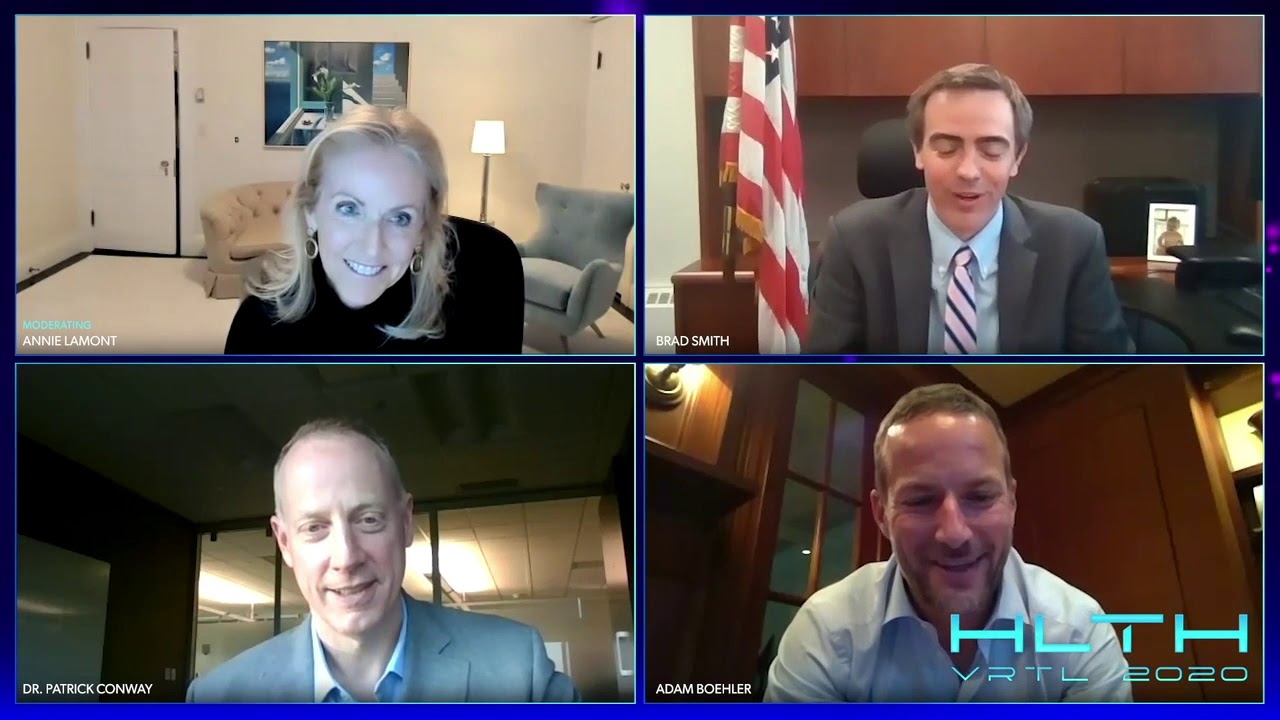 on the tenth anniversary of the agency and the future of “value-based care” moderated by ubiquitous value-based care venture capitalist Ann Lamont, Smith, Boehler, and CMMI founder Conway, now the CEO of UnitedHealth’s OptumRx division, held forth almost giddily on the rosy “future of value-based care,” with Boehler jokingly describing Conway as the agency’s “Adam Neumann,” the self-aggrandizing WeWork founder who burned some $20 billion in venture capital funding. At one point, Smith brought up his analysis, commending the agency for making “value-based care” such an inescapable industry buzzword but acknowledging that only five of the group’s 54 experiments had delivered any cost savings whatsoever. Lamont quickly changed the subject. “Imagine in a few years, we receive 90 percent of payments in value-based commitments. How do we get there?”
This probably wasn’t how any of them imagined it going down, but with Smith running the rogue operation that is apparently running the country, it seems likely we’ll get there.
Tags
Health & Social Policy CMS Medicare health insurance Affordable Care Act Obama Administration privatization federal government DOGE Elon Musk Donald Trump Trump transition
Maureen Tkacik is investigations editor at the Prospect and a senior fellow at the American Economic Liberties Project.
---
AI 9 25
Davis, a trusted engineer and cost-cutting lieutenant of Elon Musk, was the de-facto leader of the Department of Government Efficiency (DOGE), a group tasked with reducing federal spending under a Donald Trump administration in late 2024. Known for his relentless approach to cutting costs at Musk's companies like SpaceX, The Boring Company, and Twitter (now X), Davis was responsible for overseeing the effort to find billions in government savings. He left the DOGE initiative by May 2025, along with other officials, as their government employee time limit was reached.
Steve Davis's Role at DOGE
Davis was chosen for his long history of meticulously cutting costs at Musk's businesses, including SpaceX and Twitter.
He is considered a trusted confidant and loyal right-hand man to Musk, with their relationship dating back to 2003.
During the Twitter acquisition in 2022, Davis was deeply involved in restructuring efforts and was reportedly living at the company's headquarters with his newborn and partner to help cut costs.
As a special government employee, Davis could work for DOGE while remaining CEO of The Boring Company, but this role was limited to 130 days per year.
-
DOGE Initiative
- Purpose:
DOGE stands for Department of Government Efficiency, a private advisory group established by Musk with the goal of finding trillions in federal spending savings.
- Creation:
The unit was formed in January 2025 and was expected to last through July 4, 2026.
- Critique:
The initiative has faced criticism from Democrats, who have labeled its efforts as potentially illegal and a violation of the U.S. Constitution.
-
Departure from DOGE
- Time Limit:
By May 2025, Davis and other officials involved with DOGE had reached their 130-day limit as special government employees and were departing the project.
- Impact:
Davis's departure left the effort to reduce government spending up to lower-profile officials.
---