Brad Smith
---
CRIER
Brad Smith:A DOGE leader, health care entrepreneur, Smith essentially functioned as a chief of staff for DOGE during the presidential transition and has led the team with Steve Davis. He has operated as a kind of policy handyman for Mr. Trump, taking on a variety of health-related roles. Agency involvement: Department of Homeland Security, Federal Emergency Management Agency.
Rachel Riley:Adviser, Health and Human Services. Working at the Department of Health and Human Services she has worked closely with Brad Smith. The two requested access to payment systems at the Medicare agency, according to a document seen by The Times. Agency involvement: Department of Health and Human Services
rev dr Revolving Door Project | DOGE Agent: Brad Smith
Musk Connections: N/A
Other Corporate Connections: Founder of Russell Street Ventures, Co-founder of Aspire Health, Co-founder of CareBridge, Co-founder of Main Street Health.
DOGE Deployments:HHS
Brad Smith Is Reportedly Steve Davis’ Right Hand Man
- Smith has been reported to be working closely with Steve Davis to oversee DOGE’s operations. He has been spotted at the Department of Health and Human Services (HHS).
In Trump 1.0, Smith Advocated For Industry-Friendly Insurance Policies
- Brad Smith served in Trump’s first administration. He was the Director of the Center for Medicare & Medicaid Innovation, (CMMI). CMMI experimented with alternative payment models often in conjunction with large healthcare insurance companies such as UnitedHealth, Aetna and Molina.
- CMMI spent $10 billion over a decade searching for schemes to purportedly reduce healthcare costs that mostly subscribed to a “value-based care” model. This model claims the “central flaw of American health care is ‘volume-based’ fee-for-service compensation schemes that incentivize ‘overutilization’ of the health care system,” and therefore attempts to incentivize providers to engage in more preventative care and otherwise offer more “valuable” care that can cut down on “overutilization” of services. Often, federal funding is dispatched to a network of private intermediaries or to healthcare providers to help them find areas to reduce overutilization.
Smith Helped Manage Trump 1.0’s Lopsided Pandemic Response And Public-Private Partnerships
- Smith was on the board of Operation Warp Speed, Trump’s Covid-19 vaccine development and distribution program.
- During the initial stage of the pandemic, Smith “became closely involved” in coordinating “Project Airbridge,” a public-private partnership program instituted to help transport medical supplies shortly after the outbreak.
- A GAO audit from 2023 found that Project Airbridge suffered from a severe lack of oversight. “We could only confirm distributors delivered 35 percent of Airbridge PPE to designated healthcare facilities in prioritized locations instead of the 50 percent minimum required by FEMA […] FEMA paid to transport PPE that may not have been necessary to meet distributors’ needs and was not always delivered to locations most in need. Accordingly, the project’s $238 million may have been better spent on other COVID-19 initiatives.”
- Smith and Trump allies, such as Jared Kushner, pressed the FDA to expedite an approval for an experimental blood plasma treatment for Covid-19 ahead of the 2020 Republican National Convention. The NIH had still been conducting analyses on the safety of the treatment, and publicly objected to approving it too early.
- At the time of its approval by the Trump administration, the blood plasma treatment had not yet been tested with randomized trials. Additionally, right before Trump announced his FDA had approved the treatment, new data from Mayo Clinic trials that had been run turned out to have missing entries. During the announcement, Trump’s FDA chief Stephen Hahn “misinterpreted agency data and claimed that plasma reduced the mortality rate of Covid-19 patients by 35 percent — a substantial exaggeration of what the research actually showed.”
- In 2021, the World Health Organization recommended against the use of blood plasma to treat COVID-19. They only approved its continued use in trials for severe and critically ill cases
Brad Smith Operates An Investment Firm Named Russell Street Ventures, And Has Founded And Sold A Number Of Healthcare Companies For Billions Of Dollars
- Brad Smith foundedAspire Health in 2013, which he sold to Anthem for $440 million in 2018.
- Aspire was fined $115,000 by the Equal Employment Opportunity Commission in 2020. The company fired a worker in 2015 for exhausting her medical leave from a workplace injury. “The employee’s doctor cleared her to work without restrictions shortly thereafter, and, in August 2018, the employee applied for a position within Aspire’s Village House program. Hours before her interview, the former employee was notified that she was ineligible for rehire at Aspire due to medical records in her prior workers’ compensation file.”
- In 2018, Brad Smith started an investment firm, “part private equity firm and part incubator,” Russell Street Ventures, to invest in healthcare companies.
- Through Russell Street Ventures, he started a medicaid home health intermediary called CareBridge in 2019. He sold CareBridge to Elevance in October 2024 for $2.7 billion.
- CareBridge was the subject of a class action lawsuit in January 2025 for overworking its employees. Evidence of abusive working conditions at the company have been reinforced by “dozens” of negative reviews on job sites.
- ThroughRussell Street Ventures, he launched a rural “value-based care” company called Main Street Health in 2021. Main Street announced $315 million in financing in 2023.
*As Elon Musk’s DOGE continues to tear through agencies with little oversight or transparency, the Revolving Door Project is publishing profiles of reported DOGE employees: who they are, where they came from, and any conflicts of interest that might make their unfettered access to the federal government dangerous to the public. Read them all here.
---
AM PROS
FOur and a half years ago, Department of Government Efficiency co-czar Brad Smith stumbled on a counterintuitive revelation: The most effective way to slash federal health care spending involved drastically raising Medicare and Medicaid reimbursement rates for hospital care.
:{At the time, Smith was running something called the Center for Medicare and Medicaid Innovation, an obscure off-the-books laboratory created by the Affordable Care Act for experimenting with “alternative payment models”—neoliberal for “larger sums with less accountability.” In its ten years of operation, CMMI had spent more than $10 billion testing various methods of tweaking reimbursement standards in (theoretical) hopes of improving health care outcomes for lower costs:{. They had worked with UnitedHealth, Aetna, Molina,}: and other insurers in 13 states to reward primary care physicians who administered more preventative care and collected more specific data on their patients.
They’d worked with more than 100 hospitals and mega-practices to bundle payments for complex patients, in hopes of lowering the ultimate cost of treating chronic illnesses. CMMI had spent some $10 billion testing out dozens more schemes, nearly all of which subscribed to an ideology called “value-based care,” in which the central flaw of American health care is “volume-based” fee-for-service compensation schemes that incentivize “overutilization” of the health care system, and so the natural “solution” involves the government paying health care providers and various intermediaries to take steps designed to decrease said “utilization.”}:
Value-based care grew especially important during the Obama years, because the ACA mandated that insurance companies spend a minimum of 85 percent of patients’ premium dollars on “care,” wiping out profit drivers like the mandatory insurance policies UnitedHealth sold to college students that often boasted medical loss ratios as low as 10 percent. Insurers in turn began to focus their energies around their highest-revenue patients: seniors with a lot of complex health issues who were enrolled in the private Medicare offerings known as Medicare Advantage. They would soon buy up the medical practices, home health agencies, and surgery centers that treated these patients, in a move that enabled them to at once “align incentives” (i.e., control more of the medical decisions they were paying for), park the excess profit margins they weren’t allowed to report on their insurance sides, and find more Medicare patients to convert to MA plans.
Brad Smith was a value-based guy. He’d gotten in on the ground floor of the craze during the first term of the Obama administration, while helming the education reform foundation of former Senate Majority Leader Bill Frist (R-TN), whose billionaire brother Tom Frist founded the hospital behemoth HCA, whose long history of unnecessary overtreatment of Medicare patients perhaps ironically gave birth to the value-based revolution. Together, the two had built a home health care business with more than 650 employees that they had just sold for $440 million to health insurer Anthem.
Smith had been working as the chief operating officer of Anthem’s value-based business when he’d been tapped for the CMMI gig by one Adam Boehler, another value-based evangelist who often talked about how he wanted to “blow up” the “volume-based” ancien régime. Still, doctors, especially the types of doctors who complained about Obamacare and voted for Trump, hated value-based care, because it required spending way too much money on software and far more hours doing paperwork than the incentive payments could justify. Smith’s boss, Centers for Medicare & Medicaid Services (CMS) head Seema Verma, was value-based skeptical, and wanted to know whether CMMI’s programs were actually working as “intended.” So Smith ordered his staff to conduct a financial analysis of all 54 programs CMMI had bankrolled to test out the new approach to health care.
Smith and a 24-year-old deputy from his Nashville VC firm are said to be building the vision of what will replace everything that DOGE has eradicated.
The verdict was unambiguous: Value-based care was a bust. For two of its biggest programs, CMMI had spent $7 billion more than it had saved, just from compensating all the various intermediaries that had administered the trials. The reasons for this were twofold, say two individuals who worked on value-based care policy for the Obama administration: One, CMMI and CMS invariably outsourced the management of the trials to “venture capital or private equity firms or nonprofits where the CEO is making millions of dollars” that typically alienated and underpaid the clinicians they were ostensibly seeking to incentivize; and two, most of the policymakers involved were too preoccupied with “how they were going to monetize their expertise” to design programs that might actually save CMS money.
Lending credibility to that analysis, the shining star of the small agency’s roster of reform measures was the “Maryland All-Payer Model,” a state-operated system originally devised in the early 1970s by which an independent commission fixed flat hospital prices for the state that every payer—from Blue Cross to Medicaid—is expected to pay. The Maryland Model, which was modified in 2014 and discarded in favor of a more complex, almost European-style “global budgeting” system in 2018, is a rabbit hole with its own unique advantages and disadvantages, but it is decisively notvalue-based care, and sources familiar with CMMI said its affiliation with the initiative was something of a fluke, especially given that Medicare conclusively pays far higher rates for medical care in Maryland than anywhere else (though yearly per capita expenditures are higher in Florida). And yet the Maryland system saved CMS $1 billion over just five years tracked by CMMI, likely in large part by lacking the administrative middlemen and arbitrageurs in the system and the waste and fraud that tend to accompany them.
This analysis might have made for an embarrassing news cycle for CMMI and all the affiliated grifters who had cashed in on the value-based boom, like Smith’s predecessor Boehler, a college roommate of Jared Kushner’s who would soon sell his home health agency for $3.5 billion to UnitedHealth, or CMMI founding director Patrick Conway, who’d left the agency a few years earlier to become the richly remunerated CEO of Blue Cross in North Carolina, where he had rolled out a mandatory value-based care regime in conjunction with the CMMI-friendly healthtech Aledade, and recently been charged with driving under the influence after crashing his car with his two elementary school–aged daughters inside.
Instead, they were all saved by the pandemic, during which Smith was detailed to the Trump inner circle for assistance with various pandemic response efforts, and ended up becoming close to Kushner himself, according to The New York Times. By the time he returned to CMMI to write up the results of his staff’s analysis in The New England Journal of Medicine, CMS had rained down hundreds of billions of bailout dollars on the health care system, and no one even bothered making hay of the news that the agency had wasted $10 billion testing out cost-cutting ideas that didn’t pan out.
In one of his last acts at the agency, Smith introduced a new program called the Geographic Direct Contracting Model, or “Geo,” by which all remaining traditional Medicare beneficiaries were slated to be automatically assigned on the basis of their residence to a value-based care organization to which CMS would pay a flat annual fee to assume their health care “risk.” Geo contractors would be virtually unregulated, though they would be held to a medical loss ratio minimum requiring them to spend at least 60 percent of their revenues on care. The Biden administration scrapped Geo in early 2021, but kept a slightly less radical Smith plan with a similar goal of stealth total privatization after renaming it ACO REACH, for “Accountable Care Organization Realizing Equity, Access, and Community Health.”
Smith moved back to Nashville and took the helm at two new value-based care upstarts, a Medicaid home health intermediary called CareBridge and a rural Medicare Advantage play called Main Street Health. In late October, he sold the former to Elevance, the new name of the insurer to whom he’d sold his first home health company, Aspire. This time, the head count was lower—fewer than 500 employees—but the price tag was much, much bigger, at $2.7 billion.
A putative class action lawsuit filed last month in Florida by a “clinical assessor” for CareBridge alleges that she and other low-level employees were required to work 45 hours a week for only 40 hours’ pay, and dozens of negative reviews on job sites suggest assessors work as many as 20 extra hours without pay. Worse, employees say the job mostly consists of “managers … demanding that you drastically cut caregiver hours for people who desperately need someone in their home.”
“This is a greed-driven company that is preying on our nation’s most vulnerable and poorest people. If you can sleep at night and live with yourself while harming the poor and disabled during the day, this job is for you,” reads one review on Glassdoor. “If CareBridge is the future of healthcare then we heading to a sad state of affairs,” reads another.
Just months after the CareBridge deal, Smith was reported to be hanging around Mar-a-Lago with Steve Davis, the longtime Elon Musk loyalist who ran the hostile takeover of Twitter. Underneath Musk and Vivek Ramaswamy, who would soon depart, Smith and Davis are said to be the real operating leaders of DOGE, with the latter playing the bad cop masterminding the scorched-earth shutdowns and cuts, while Smith and a 24-year-old deputy from his Nashville VC firm are said to be building the vision of what will replace everything that DOGE has eradicated, according to a source familiar with his recruiting efforts. CMMI, a highly unusual agency with a ten-year, self-renewing budget outside the appropriations process and an extraordinary ability to grant waivers from the statutes governing CMS, including fraud and kickback statutes, is said to be a model for how Musk wants DOGE to reimagine the federal government.
As further evidence of that, Smith’s predecessor as CMMI director, Boehler, whose brand-new venture capital firm Rubicon Founders last spring raised more than a billion dollars for its latest fund and also groomed Trump’s newest CMMI director, 33 year-old Abe Sutton, is currently working as Trump’s special presidential envoy for hostage affairs. Boehler got his start in the health care business as a medical debt collector, first at a firm called MedeFinance and then with a shadowy empire called Accretive, which was banned from the state of Minnesota in 2012 after an employee left a laptop in a taxi that revealed the company had essentially seized the operations of a Minneapolis nonprofit hospital system and was using confidential health records, collected under the guise of value-based care modeling, to manipulate patients into coughing up large cash payments for hospital services to “embedded” collection agents, sometimes while under the influence of powerful anesthesia.
The obscure agency Boehler launched after leaving CMMI, the U.S. International Development Finance Corporation—best known for its failures to do much of anything with its nine-figure budget for bolstering supply chains during the pandemic after an ill-fated $765 million loan it made to Eastman Kodak was shelved after revelations of insider trading—was reported on Wednesday to be DOGE’s designated “replacement” for the U.S. Agency for International Development, under the leadership of venture capitalist Joe Lonsdale and Ben Black. The latter is the son of disgraced billionaire Leon Black, an accused sexual predator who was forced to leave the private equity juggernaut after revelations that he had wired nearly $200 million to Jeffrey Epstein, whom he considered his best friend, in the years before Epstein’s death. A January Substack post by Lonsdale and Black on their plans for “disrupting” the $43 billion USAID budget is light on specifics but advocates defunding nongovernmental organizations to pursue an “investment-driven model focused on strategic project finance initiatives.”
Foreign aid, of course, is a rounding error compared to the multitrillion-dollar health care budget, in which the *Prospect estimates a team of forensic accountants might easily find as much as a half-trillion dollars in waste annually, roughly $100 billion of that in Medicare Advantage overpayments alone. (Obama had the chance to clamp down on the obvious MA grift, but abruptly reversed course in 2014.) In a 2021 Zoom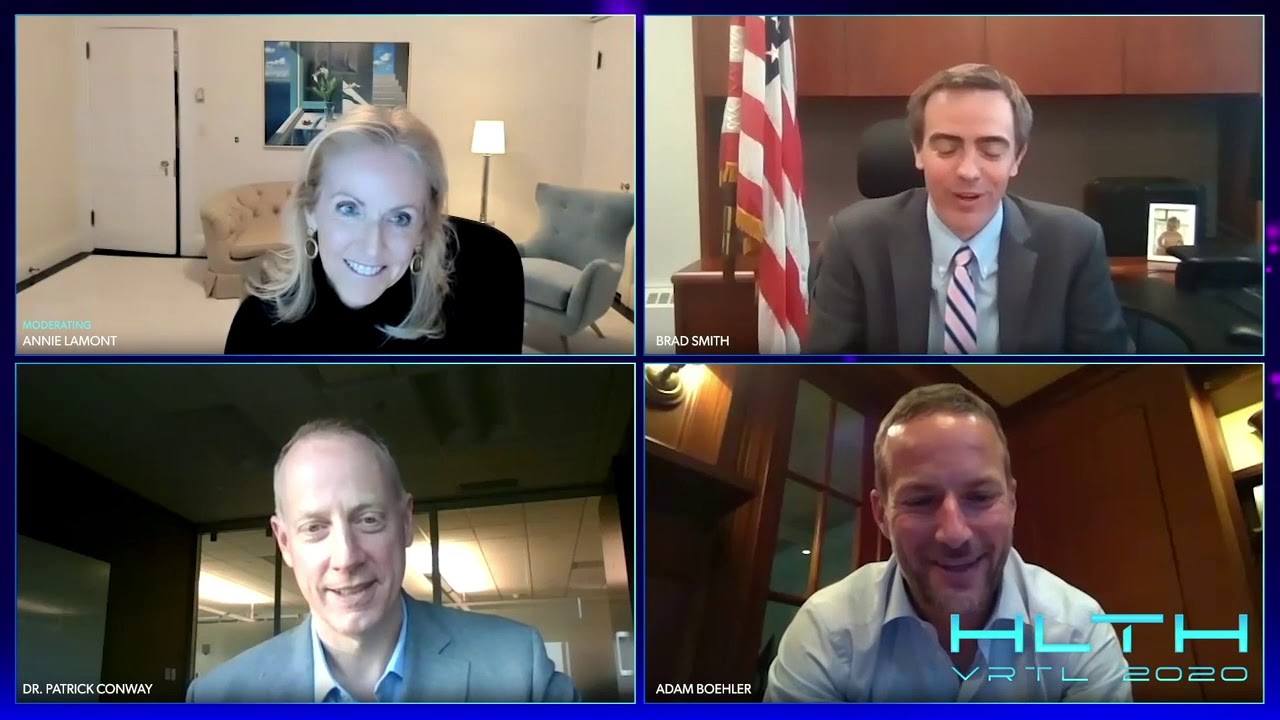 on the tenth anniversary of the agency and the future of “value-based care” moderated by ubiquitous value-based care venture capitalist Ann Lamont, Smith, Boehler, and CMMI founder Conway, now the CEO of UnitedHealth’s OptumRx division, held forth almost giddily on the rosy “future of value-based care,” with Boehler jokingly describing Conway as the agency’s “Adam Neumann,” the self-aggrandizing WeWork founder who burned some $20 billion in venture capital funding. At one point, Smith brought up his analysis, commending the agency for making “value-based care” such an inescapable industry buzzword but acknowledging that only five of the group’s 54 experiments had delivered any cost savings whatsoever. Lamont quickly changed the subject. “Imagine in a few years, we receive 90 percent of payments in value-based commitments. How do we get there?”
This probably wasn’t how any of them imagined it going down, but with Smith running the rogue operation that is apparently running the country, it seems likely we’ll get there.
Tags
Health & Social Policy CMS Medicare health insurance Affordable Care Act Obama Administration privatization federal government DOGE Elon Musk Donald Trump Trump transition
Maureen Tkacik is investigations editor at the Prospect and a senior fellow at the American Economic Liberties Project.
---
nyt
no lnx
Musk Cost-Cutting Effort Is Being Guided by Health Entrepreneur
The inclusion of Brad Smith in Trump’s efficiency panel suggests that the team is preparing to focus particularly on the nation’s health care system.
By Theodore Schleifer and Noah Weiland
Dec. 6, 2024
The government-efficiency panel started by Elon Musk and Vivek Ramaswamy is being steered by a health care entrepreneur and former top health official in Mr. Trump’s first White House.
That official, Brad Smith, has been leading the nascent Department of Government Efficiency, known as DOGE. He has been effectively running it during the Trump transition effort, according to four people with knowledge of his role who spoke on the condition of anonymity because the role has not been announced. He has been in Palm Beach, Fla., as part of the largely undefined operation and traveled with Mr. Musk and Mr. Ramaswamy to Washington this week. Mr. Smith, a Rhodes Scholar, does not yet have a formal role.
Mr. Smith is working closely with Steve Davis, a longtime top lieutenant to Mr. Musk who frequently helps him with special projects. William McGinley, Mr. Trump’s first pick for White House counsel, is working for the DOGE on legal matters.
Those guiding DOGE are being closely watched given the ambitions and skepticism surrounding the cost-cutting project. The inclusion of Mr. Smith in leadership suggests that the team is preparing to focus in part on the nation’s health care system, where Mr. Smith has particular expertise.
Mr. Smith, who declined to comment, is close with Jared Kushner, Mr. Trump’s son-in-law, and has operated as a kind of policy handyman for Mr. Trump, taking on a variety of health-related roles in the former and future president’s orbit. He led an office at the Centers for Medicare and Medicaid Services that experiments with payment models for health services.
He became closely involved in the coronavirus pandemic response, helping coordinate “Project Airbridge,” a federal effort to fly medical supplies to the U.S. in the early months of the outbreak. He also sat on the board of Operation Warp Speed, the administration’s Covid-19 vaccine development program.
At one point, Mr. Smith took part in a campaign pushing the Food and Drug Administration to authorize the use of blood plasma to treat the virus.
Mr. Smith’s latest company, Carebridge, announced in October that it would be purchased by Elevance Health in a deal reportedly worth $2.7 billion. He co-founded Aspire Health, an in-home palliative care company, with Bill Frist, a former Republican senator from Tennessee.
Theodore Schleifer is a Times reporter covering campaign finance and the influence of billionaires in American politics.
Noah Weiland writes about health care for The Times.
See more on: U.S. Politics, Elon Musk, Vivek Ramaswamy, Donald Trump
---
AM PRO
==
Key Musk DOGE adviser meets with leaders of Medicare agency
The Centers for Medicare & Medicaid Services oversees coverage for 160 million.
ByWill Steakin and Anne Flaherty
February 14, 2025,
IFrame Content
'It's incredibly dangerous': Rep. Robert Garcia reacts to DOGE spending cutsRep. Robert Garcia joined ABC News Live to react to the efforts of DOGE and Elon Musk to take on fraud and abuse within federal spending by the U.S. government.
A key member of Elon Musk's Department of Government Efficiency has met with leadership at the Centers for Medicare & Medicaid Services, the federal agency that oversees the nation’s Medicare and Medicaid insurance programs, according to internal records reviewed by ABC News.
The meeting on Thursday, which was titled "Planning Touch Base," included a top DOGE lieutenant, Rachel Riley, along with recently Trump-appointed top brass at CMS, including Acting Administrator and Chief of Staff Stephanie Carlton, John Brooks, Deputy Administrator and Chief Policy and Regulatory Officer at CMS, and Kim Brandt, the agency's new deputy administrator and chief operating officer, and other long-term staff at the agency, according to the records.
Sources said Riley, who is listed internally as a senior adviser at HHS and the State Department, works closely with Brad Smith, a healthcare entrepreneur and early senior DOGE member who for years has been a leading voice pushing for privatizing parts of Medicare and Medicaid.
Smith had worked in the first Trump administration to try to innovate the insurance programs, an effort that was mostly eclipsed by the pandemic.
Elon Musk leaves Blair House after a meeting with Indian Prime Minister Narendra Modi at Blair House, in Washington, Feb. 13, 2025.
Will Oliver/EPA-EFE/Shutterstock
### MORE: Judge will consider continuing to block Musk, DOGE from accessing Treasury payment systems
It is not immediately clear what was discussed at the meeting. Sources added that DOGE members have been on-site at the agency’s offices since last week and have been attending meetings with senior staff, asking for access to CMS's for payment systems.
### MORE: Judge will consider continuing to block Musk, DOGE from accessing Treasury payment systems
CMS oversees health care coverage for more than 160 million through Medicare, Medicaid, the Children's Health Insurance Program, and the Health Insurance Marketplace.
Medicaid and Medicare have long been considered a target by conservatives because of allegations of waste, fraud and abuse. A 2024 investigation by the Government Accountability Office found payment errors linked to the two programs reached over $100 billion worth in 2023. So far oversight efforts have been done internally by an HHS inspector general. AOC SAYS UNITED HEALTHCARE 80b/YR RFK 2X PAYMENT RATE
Democrats, though, worry that any “slash and burn” tactics by DOGE could inadvertently prevent people from accessing health care.
Trump has said he doesn’t want to restrict access, but rather root out fraud.
According to records reviewed by ABC News, the meeting also included Peter Nelson, recently appointed head of the CMS office overseeing Obamacare marketplaces, and Rebekah Armstrong, now leading CMS’ Office of Legislation.
Musk last week posted on X that his team would be targeting fraud at the agency.
---
6 26
[### Brad Smith - Vice Chair and President at Microsoft ...

LinkedIn · Brad Smith
375.6K+ followers](https://www.linkedin.com/in/bradsmi)
Education. Columbia Law School Graphic · Columbia Law School. 1985 Law. 1981 - 1985. Activities and Societies: Columbia Journal of Law and Social Problems.Read more
[### DOGE's Brad Smith: The little-known architect of $67B in ...

STAT
https://www.statnews.com › 2025/06/02 › brad-smith-d...](https://www.statnews.com/2025/06/02/brad-smith-doge-little-known-architect-67-billion-hhs-cuts/)
Jun 2, 2025 — After Webb, Smith attended Harvard University, where he graduated summa cum laude, and then received a Rhodes Scholarship to study at Oxford ...Read more
The shrewd startup founder who led DOGE’s cost-cutting at HHS
Brad Smith is the little-known architect of $67 billion in cuts
---
By Tara Bannow
June 2, 2025
Bannow interviewed more than 30 people, including former colleagues and employees of Brad Smith, for this story.
The relentless drumbeat of cuts to U.S. government research and disease prevention have devastated tens of thousands of affected workers and academics. To hear them tell it, today’s children and grandchildren will live shorter lives and the brightest scientists will flee the country.
There’s one man at the center of it all and, chances are, you haven’t even heard of him.
Brad Smith has been a leading figure within the Trump administration’s U.S. DOGE Service, directing its cost-cutting efforts at the Department of Health and Human Services, a vast agency whose charges include ensuring drugs are safe, preventing diseases from spreading, and administering health care for older, disabled, and low-income Americans.
---
[### Brad Smith's healthcare entrepreneurship and U.S. health ...

Facebook · Democrats, Republicans and Independents for Democracy
1 comment · 1 year ago](https://www.facebook.com/groups/288544190546353/posts/608081845259251/)
Meet Brad Smith—DOGE's health czar. Should a healthcare executive be ... Smith is Professor of Law at Capital University Law School. He ...Read more
[### DOGE Agent: Brad Smith

Revolving Door Project
https://therevolvingdoorproject.org › doge-agent-brad-s...](https://therevolvingdoorproject.org/doge-agent-brad-smith/)
Mar 28, 2025 — Brad Smith operates an investment firm named Russell Street Ventures, and has founded and sold a number of healthcare companies for billions of dollars.Read more
Missing: education | Show results with: education
[### Brad Smith (American lawyer)

Wikipedia
https://en.wikipedia.org › wiki › Brad_Smith_(America...](https://en.wikipedia.org/wiki/Brad_Smith_%28American_lawyer%29)
Bradford Lee Smith. (1959-01-17) January 17, 1959 (age 67). Milwaukee, Wisconsin, U.S. · Princeton University (BA) Graduate Institute of International StudiesRead more
[### 100 Days of DOGE: Who They Are and What They Do

Stratford Crier
https://stratfordcrier.com › News › Politics](https://stratfordcrier.com/100-days-of-doge-who-they-are-and-what-they-do/)
May 2, 2025 — Brad Smith: A DOGE leader, health care entrepreneur, Smith ... DOGE staffers, having graduated high school last year. A coder who interned ...Read more
---
[### Congressman Auchincloss probes corruption of healthcare ...

Congressman Jake Auchincloss (.gov)
https://auchincloss.house.gov › media › press-releases](https://auchincloss.house.gov/media/press-releases/congressman-auchincloss-probes-corruption-of-healthcare-executives-in-the-trump-administration)
Jun 17, 2025 — Smith's ability to win favor with CMS by protecting personnel from RIFs . Auchincloss has called on the boards of TrueMed and Main Street Health ...
[### User Clip: Rep. Auchincloss asks RFK about conflicts of ...

C-SPAN
https://www.c-span.org › clip › house-committee › user...](https://www.c-span.org/clip/house-committee/user-clip-rep-auchincloss-asks-rfk-about-conflicts-of-interest-in-hhs-with-brad-smith-and-calley-means/5166383)
Jun 24, 2025 — Rep. Auchincloss asks if RFK would ask Calley Means to sign financial disclosure forms and he also asks about Brad Smith CEO of Main Street and CMS ...
[### RFK Jr. Sputters After Getting Grilled On Proximity To ...

Yahoo
https://www.yahoo.com › news › rfk-jr-sputters-getting...](https://www.yahoo.com/news/rfk-jr-sputters-getting-grilled-202317907.html)
Jun 24, 2025 — One appointee, a former HHS DOGE staffer named Brad Smith, now runs a for-profit medical company. The other, Calley Means, is still in the ...
[### Mass. lawmaker probes possible conflicts of interest for top ...

Congressman Jake Auchincloss (.gov)
https://auchincloss.house.gov › media › in-the-news](https://auchincloss.house.gov/media/in-the-news/mass-lawmaker-probes-possible-conflicts-of-interest-for-top-rfk-advisers)
Jun 16, 2025 — Representative Jake Auchincloss is seeking information from the companies of two top advisers to Health Secretary Robert F. Kennedy to investigate potential ...
[### What to know about the man who led DOGE's cost cuts at HHS

statnews.com
https://www.statnews.com › 2025/06/02 › brad-smith-d...](https://www.statnews.com/2025/06/02/brad-smith-doge-hhs-profile-stephanie-carlton-cms-interview-elevance-medical-cost-trend-health-care-inc-newsletter/)
Jun 2, 2025 — A leading figure within DOGE who just left and has gotten little attention built his entire career in health care: Brad Smith.
[### 5 testy exchanges from RFK Jr.'s House hearing

The Hill
https://thehill.com › policy › healthcare › 5367167-ken...](https://thehill.com/policy/healthcare/5367167-kennedy-defends-hhs-changes/)
Jun 24, 2025 — Kennedy said, “Are you saying we should cut Medicare Advantage?” “Mr. Kennedy your dissembling and diversion distracts from the fact that you ...
[### RFK Jr. Sputters After Getting Asked About Proximity To ...

HuffPost
https://www.huffpost.com › entry › rfk-jr-health-budge...](https://www.huffpost.com/entry/rfk-jr-health-budget-hearing-trump-corruption_n_685ad9f3e4b0124a7193e90d)
Jun 24, 2025 — One appointee, a former HHS DOGE staffer named Brad Smith, now runs a for-profit medical company. The other, Calley Means, is still in the ...
[### The DOGE Czar's Plan to Loot Medicare

The American Prospect
https://prospect.org › health › 2025-02-14-doge-czars-...](https://prospect.org/health/2025-02-14-doge-czars-plan-to-loot-medicare/)
Feb 14, 2025 — Brad Smith, then director of the Center for Medicare and Medicaid Innovation, speaks about the coronavirus during a press briefing in the ...
People also ask
Who is the largest Medicare Advantage provider?
Who invented Medicare Advantage plans?
Feedback
[### CDC, NIH and more health agencies brace for layoffs with ...

CBS News
https://www.cbsnews.com › Politics](https://www.cbsnews.com/news/cdc-nih-hhs-layoffs-doge-rfk-jr-restructuring/)
Mar 21, 2025 — Some have been intimately involved with the plans, including former insurance executive Brad Smith, who was a top Medicare and Medicaid official ...
Missing: advantage | Show results with: advantage
[### How RFK Jr.'s HHS might run Medicare and Medicaid

Modern Healthcare
http://www.modernhealthcare.com › ... › Providers](http://www.modernhealthcare.com/politics-policy/robert-f-kennedy-jr-rfk-hhs-cms-medicare-medicaid-regulation/)
Nov 15, 2024 — "If there are confirmation hearings, RFK Jr. will presumably be peppered with questions about Medicaid waivers, Medicare Advantage payments, ...
---