cia 2
---
PRIMARY RENAME EZ 10 26
SEE EXTRA-JUDICIAL KILLING VENEZ MADURO RATCLIFFE
SEE DEEP STATE 3 // FBI
SEE CONSPIR 5
SEE THIEL PALANTIR LONSDALE IN Q TEL
mkultra uber1: TheBrain
-=-=
CIA used nsa shell to buy next pc for sat image steve jobs, spoke at cia?
books
Valley of Death: How Big Tech Is Fueling the Future of War
FRAUD DETECT SW --> TERROR, NOT GOOD AT 1ST, PRETTY GUI
---
-=-=
AN 10 26
Clandestine Kremlin meetings just sent tremors through CIA headquarters
THOM
Clandestine Kremlin meetings just sent tremors through CIA headquarters
Thom Hartmann October 13, 2026
Is Putin running America through Trump, is Trump just a “useful idiot” for the Russians, or is he the worst traitor America’s seen since the days of Benedict Arnold?
Yesterday morning, Trump took to his Nazi-infested social media site to announce to the world (and a bit earlier to people who give him $100,000 a month for market-moving information) that Russia and Ukraine had agreed to an “energy ceasefire,” telling the world “Both parties have agreed. Do not break it!”
Ukrainian President Zelenskyy responded that the deal was “news for me,” and the Kremlin spokesman said three days earlier that Russia wasn’t interested in any sort of a limited truce like Trump announced. But Trump made an identical announcement back in September, which was also a lie, and the night of his announcement both countries continued to bomb each other’s refineries and power plants.
I’m guessing that Trump’s announcement was designed to shift the news cycle away from reporting on the most nakedly pro-Russia act by any American president in our nation’s history that happened on Friday.
After one of his regular roughly-every-two-weeks-since-he-was-inaugurated phone calls with Putin, Trump announced that he’d just suspended our worldwide sanctions against any country that buys oil or refined products from Russia so that country could put millions of tons of diesel on the world market.
Every past sanction suspension — there have been a few — have lasted just 30 days, but Trump extended this one for six months, giving Russia billions they’re desperate for to keep up their violent, illegal war against our democratic ally, Ukraine.
As if to give Ukraine, Europe, the free world, and every American who believes in democracy instead of naked autocracy, Trump stood in front of the White House and told reporters:
“I want to thank President Putin.”
This won’t do a thing for American diesel prices, although Trump is hoping that angry truckers and farmers believe it will. Even if every drop of that diesel ended up here — and most of it won’t — it would only cover about nine days of what we burn here.
But in reality this is simply Trump bailing out his mentor, owner, blackmailer, or whatever Putin is. Russia’s diesel output right now is down 30 percent and Putin’s hold on the country is getting shaky, as Terrence Goggin (The West Point History Professor) argues so cogently. With prices this high, this deal will give Putin billions.
Following Trump’s announcement, Putin showed America and the world exactly how seriously he took Trump’s Friday statement: Saturday morning, Russian guided bombs killed at least 20 people, three of them children, in a residential neighborhood in Zaporizhzhia.
Trump’s response that afternoon, instead of calling Putin out, was to blame our diesel prices on Zelenskyy for hitting Russian refineries and to declare:
“I think it’s time for Ukraine to get a new president.”
In fact, diesel is high because refinery capacity in the Gulf states has crashed due to being hit over and over again by both Iranian and Houthi missiles. While Ukraine’s strikes are hurting Russian diesel supplies, as Putin noted two weeks ago at his annual Valdai forum in Moscow, that has nothing to do with America; we refine virtually all of our diesel right here at home.
Prices are high here because of scarcity-driven pricing around tight international supplies, and our oil companies are using those international rates to price-gouge American drivers on both diesel and gasoline. The industry that Trump said he’d do anything for if they gave him a billion dollars is now making tens of billions in windfall profits every week.
But this is just the beginning of Trump’s most recent anti-American crime spree.
Remember the Lindsey O. Graham Sanctioning Russia and Iran Act? It passed and was signed into law a mere three weeks ago and gives the Trump administration until Sunday of this week to begin punishing countries that still buy Putin’s oil.
He’s breaking that law right in front of us all.
And that’s on top of the Ending Importation of Russian Oil Act that flat-out banned all imports of any Russian energy products to the United States. If Trump wanted to issue waivers in a way that would comply with that law — which has been on the books for four years now, dating back to the Biden years — he’d first have to give Congress 45 days advance notice, certify in writing that Russia has withdrawn all of its troops from Ukraine and stopped all bombing, and then wait a full 90 days for Congress to give him a thumbs-up or a thumbs-down.
As Democratic Senator Jeanne Shaheen noted, Trump and his lickspittles have totally bypassed every one of those requirements; Republican Senator Thom Tillis said yesterday that the deal is both illegal and will put more American lives at risk.
Which provoked former Illinois Republican Congressman Joe Walsh — a frequent guest on my radio/TV program — to say:
“Trump is a traitor to the free world.”
Walsh used to be a lonely voice in his old party, but now he’s rapidly getting company. Mike Pence called the deal a “betrayal” of Graham’s legacy. Senator Lisa Murkowski and Congressmen Don Bacon and Michael McCaul have all condemned it.
Pennsylvania Republican Congressman Brian Fitzpatrick has warned Mike Johnson that he’ll use a discharge petition to force a vote on a bill he’s calling the Ronald Reagan Peace Through Strength Act that would block any purchase of Russian oil (even though two other laws already make it illegal).
Which caused Democratic Senator Mark Kelly to ask out loud the question a lot of Americans are wondering:
“Whose side is Trump on?”
I can think of two possible answers, and both are insane.
The first is that Putin is actually steering Trump’s presidency. First, weaken America and gut our military, and then give Putin whatever he wants:
Put an alcoholic B-list weekend TV guy in charge of the Pentagon, a plumber in charge of DHS, a fracking guy in charge of Energy, a wrestling billionaire in charge of Education, a brain-worm-disabled former heroin- and sex-addicted lawyer in charge of our nation’s health, let a ketamine-addled trillionaire rip apart our federal government and destroy our soft power around the world by taking down USAID, shut down our pro-democracy propaganda operations (VOA, etc.), put a weight-loss “miracle pill” hawker in charge of Medicare and Medicaid, a C-list former reality TV star in charge of our airlines, his own criminal defense lawyer to run the coverup of Epstein at the Department of Justice, etc. The list is virtually endless.
The Republican-led Senate Intelligence Committee documented that Trump’s 2016 campaign chairman, Paul Manafort, was also passing internal campaign data to a Russian intelligence officer while running the campaign and the two of them worked on a plan to hand eastern Ukraine to Moscow. Then there was Helsinki where Trump humiliated our intelligence service while all but shining Putin’s shoes on live TV.
In his first months in office, Trump outed an Israeli spy to the Russian Ambassador in what he thought was going to be a “secret Oval Office meeting” (the Russians released the photo to the press), resulting in MOSAD having to “burn” (relocate, change identity of) that spy.
The undercover agent was apparently working in Syria that year against the Russians, who were embroiled in the midst of Assad’s Civil War and indiscriminately bombing Aleppo into rubble.
That, in turn, prompted the CIA to worry that a longtime American spy buried deep in the Kremlin was similarly vulnerable to Trump handing him over to Putin.
As CNN noted (when the story leaked two years later):
“The source was considered the highest level source for the US inside the Kremlin, high up in the national security infrastructure, according to the source familiar with the matter and a former senior intelligence official.
“According to CNN’s sources, the spy had access to Putin and could even provide images of documents on the Russian leader’s desk.”
The CIA concluded that the risk Trump had burned or was about to burn our spy inside the Kremlin was so great that — at massive loss to US intelligence abilities that may even have otherwise helped forestall the invasion of Ukraine — they pulled our spy out of Russia in the first year of Trump’s first presidency, 2017.
Similarly, when they met in Helsinki on July 16, 2018, Trump and Putin talked in private for several hours and Trump ordered his translators’ notes destroyed; there is also concern that much of their conversation was done out of the hearing of the US’s translator (Putin is fluent in English) who may have been relegated to a distant part of the rather large empty ballroom in which they met.
The Washington Post reported, after a leak six months later, that when Trump met privately for those two hours with Putin the CIA went into “panic mode.” A US intelligence official told the Post:
“There was this gasp’ at the CIA’s Langley, Virginia headquarters. You literally had people in panic mode watching it at Langley. On all floors. Just shock.”
Things were picking up in 2019, as Putin was planning his invasion of Ukraine while Trump was preparing for the 2020 election.
In July 2019, Trump had conversations with five foreign leaders during and just before a presidential visit that month to Mar-a-Lago; they included Putin and the Emir of Qatar.
In one of those conversations, according to a high-level US Intelligence source, Trump “made promises” to a “world leader” that were so alarming it provoked a national security scramble across multiple agencies.
As The Washington Post noted in an article titled “Trump’s communications with foreign leader are part of whistleblower complaint that spurred standoff between spy chief and Congress”:
“Intelligence Community Inspector General Michael Atkinson determined that the complaint [against Trump] was credible and troubling enough to be considered a matter of ‘urgent concern,’ a legal threshold that requires notification of congressional oversight committees.”
On the last day of that month, July 31, Trump had another private conversation with Putin.
The White House spokespeople told Congress and the press that Trump said that he and Putin discussed “wildfires” and “trade between the nations.” No droids in this car…
But the following week, on August 2nd, The Daily Beast’s Betsy Swan reported that Trump had that week asked the Office of the Director of National Intelligence for a list of all its employees (including all our “spies”) who had worked there more than 90 days, and the request had intelligence officials experiencing “disquiet.”
Perhaps just by coincidence, months after Trump left office with cases of classified documents, The New York Times ran a story with the headline Captured, Killed or Compromised: C.I.A. Admits to Losing Dozens of Informants:
“Top American counterintelligence officials warned every C.I.A. station and base around the world last week,” the Times’ story’s lede began, “about troubling numbers of informants recruited from other countries to spy for the United States being captured or killed, people familiar with the matter said. (emphasis added)
Then there was the red carpet in Alaska last year, where Russia’s foreign minister showed up in a sweatshirt reading “CCCP,” as if to announce who’d won the Cold War after all. There’s the invitation to Putin, a man under indictment for war crimes and stealing children from Ukraine, to come to Mar-a-Lago for the G20 in December. Historian Heather Cox Richardson walked through that whole history Saturday night and closed by asking “how much more evidence is necessary” before we conclude that this president is working for Russia.
The second possibility is that nobody’s blackmailing or threatening Trump and he’s doing all of this of his own free will because he thinks it’ll make him richer.
The midterms were 25 days off when he made that call, diesel prices are killing Republican candidates, and Trump desperately needed a positive-sounding headline.
Meanwhile, the New York Times reported that Putin personally pitched Steve Witkoff and Jared Kushner at the Kremlin on the sale of Lukoil’s $20 billion in overseas assets to a group led by a Trump megadonor and including business partners of both the Kushner and Witkoff families.
Selling out your country for money and advantage has a name in American history, Benedict Arnold, who offered to hand West Point to the British for 20,000 pounds because — like with Trump and the Nobel Prize — he felt underappreciated.
But Arnold, at least, had been a real patriot before he turned. He’d been shot in the left leg storming Quebec and then had that same leg shattered leading the charge that won the Battle of Saratoga. There’s a monument on that battlefield today, a single carved boot honoring the leg while pointedly leaving off the name of the man it was attached to.
Unlike Arnold, Donald Trump used a diagnosis of bone spurs to stay out of Vietnam that the podiatrist’s own daughters say was a favor to Fred Trump, who just happened to be the doctor’s landlord and patron.
My dad was a Republican activist in Michigan. The Republican Party he loved defined itself by standing up to the Kremlin.
I can’t imagine what he’d make of a Republican president publicly thanking the man in the Kremlin for suggesting that America bankroll his bloody, unprovoked war, or of the Senate’s number two Republican going on Sunday television to defend this insanity.
US intelligence agencies have determined — and told Trump — that Putin has provided Iran with the satellite data and intelligence that country’s IRGC used to attack our bases and troops in the Gulf, killing at least 21 and sending hundreds of others to the hospital. And now Trump’s handing him billions while cutting off our ally Ukraine from American-made Patriot missile interceptors?
I’ll leave it to the lawyers and the impeachment committees to determine if that fits the definition of treason in the Constitution, which says:
“Treason against the United States, shall consist only in levying War against them, or in adhering to their Enemies, giving them Aid and Comfort.”
But whatever it is, when a president knowingly breaks his own country’s laws to send billions to a hostile nation’s dictator who’s slaughtering the people of a nation we promised — in writing in 1994 — to protect, most Americans know in their gut what to call it.
Whether Putin is giving the orders or Trump is freelancing to hustle more money into his kids Uday and Qusay’s investments, Ukraine’s children end up just as dead and America’s word and reputation ends up just as worthless.
-=-=
-=-=
OVERSIGHT MKULTRA WINGNUTTERY LUNA BURCHETT ELI CRANE MACE
The House Task Force on the Declassification of Federal Secrets convened a hearing on June 30, 2026, titled "Mind Control and Accountability: Uncovering the Truth of the CIA's MKULTRA Project." [1, 2, 3]
Quick Summary
Led by Chairwoman Rep. Anna Paulina Luna (R-Fla.), the committee investigated the CIA's Cold-War era covert mind-control operations. Members scrutinized the intelligence community's history of destroying project records and their current reluctance to declassify remaining documents. , 2, 3, 4]
Key Details & Claims
- Scale of Experiments: Chairwoman Luna stated the project involved at least 149 subprojects, spanning 80 institutions and 185 non-government researchers, which included covertly using unwitting hospital patients and prisoners for experimentation. , [2, 3, 4]
- Committee Interventions: Rep. Scott Perry (R-Pa.) pressed witnesses on the exact number of potential victims and why the government continues to redact relevant files. [1]
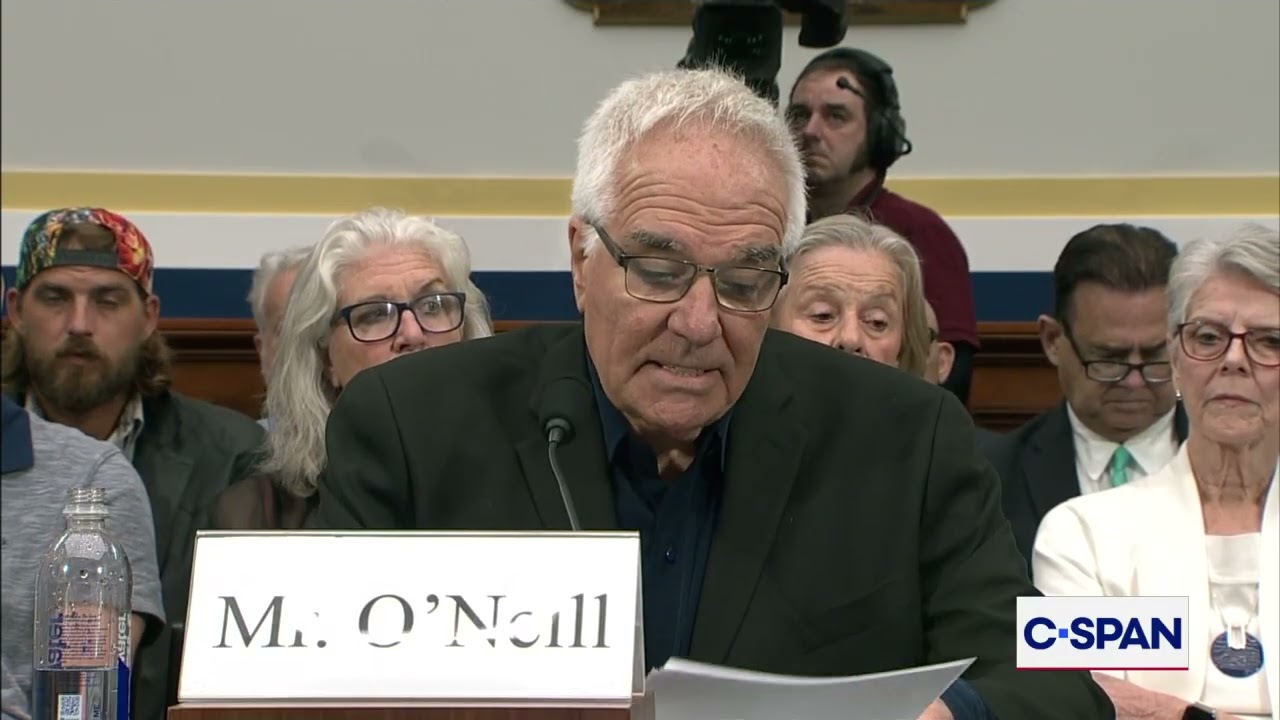
- Testimonies: Witnesses included investigative journalist Tom O'Neill, who claimed historical congressional probes were intentionally misled regarding the true efficacy of the CIA's human behavior modification efforts, and Stephen Kinzer, Senior Fellow at Brown University. , [2]
- Newly Discovered Files: During the hearing, Rep. Luna announced that the CIA had begun working to declassify newly discovered records associated with the project. [1]
Rep. Eli Crane (R-Ariz.) questioned Dr. Elizabeth Ginexi, former Scientific Program Official for the National Institutes of Health (NIH), on the lack of transparency the agency showed in explaining the origin of COVID-19 and how its role has contributed to Americans’ distrust in the federal government. He also questioned the relevancy of her presence at a hearing meant to examine MKULTRA.
boebert mace fauci vax cancer
Chairman Luna, Ranking Member Crockett,
7 26 kinzer oneil
Jun 30, 2026
The House Oversight Committee's Task Force on the Declassification of Federal Secrets holds a hearing entitled, "Mind Control and Accountability: Uncovering the Truth of the CIA’s MKULTRA Project."
Poisoner in Chief: Sidney Gottlieb and the CIA Search for Mind Control is a 2019 book by The New York Times journalist and historian[1] Stephen Kinzer. The book contains untold stories of a Central Intelligence Agency (CIA) chemist called Sidney Gottlieb, who tried to "find a way to control the human brain".[2] ^[3][4] In 1953, CIA director Allen Dulles appointed Gottlieb to "run the covert program".[4]
In Poisoner in Chief, Kinzer explains the MKUltra program, which was developed by Gottlieb, and described how drugs such as LSD help the CIA to control the minds of enemies.[5]
Title
Gottlieb was the CIA chief chemist, who helped the CIA if it needed a poison.[5] and he prepared a poison kit to be used in the assassination of Patrice Lumumba, former Prime Minister of the Democratic Republic of the Congo.[6]
Background
During the early period of the Cold War, the CIA imagined communists discovered "some kind of a drug or a potion or a technique that would allow them to control human minds". At that time, many movies and books referred to control minds so the CIA decided to obtain the technique of controlling the mind. The CIA started and ran the MKUltra project for 10 years.[5][7] According to The Guardian, Gottlieb was known as "the CIA's chief poison-maker".[8]
...
- Timeline of United States military operations
- The Brothers: John Foster Dulles, Allen Dulles, and Their Secret World War
manson ==> 1:52
1 minute, 52 seconds
led me to Dr. Lewis Jolian West, known to his friends as Jolly.
gottleib
3:32
3 minutes, 32 seconds
After becoming intrigued by the allegations against West, I learned that UCLA, his last academic home, had
3:39
3 minutes, 39 seconds
inherited his paper following his death in 1999.
3:44
3 minutes, 44 seconds
Nearly two months and more than 200 boxes later, I found the proverbial needle in a hay stack, correspondence
3:51
3 minutes, 51 seconds
between West and Dr. Sydney Gotautle, the architect of MK Ultra.
3:56
3 minutes, 56 seconds
The letters begin in 1953, just two months after CIA director Alan Dulles authorized the program and while West
4:05
4 minutes, 5 seconds
was stationed at the Lackland Air Force Base in San Antonio, Texas, where he was chief chief psychiatrist at the base hospital. In his first letter to
4:14
4 minutes, 14 seconds
Gotautle, West proposed conducting experiments on unwitting human subjects, including military personnel, prisoners,
4:22
4 minutes, 22 seconds
and psychiatric patients at the base hospital. He then outlined the experiments themselves in six more pages that could have been written by Joseph Mangallay.
4:32
4 minutes, 32 seconds
Using LSD in combination with hypnosis, Westperos inducing confusion, amnesia, and specific mental disorders in people...
5:38
5 minutes, 38 seconds
another document in West Papers that had even more significant implications. It was a 14-page report that West wrote in
5:45
5 minutes, 45 seconds
1956, just three years after he contracted with the CIA.
5:51
5 minutes, 51 seconds
In the report, West described administering LSD and other drugs in conjunction with hypnosis on unwitting
human subjects. And then he made a remarkable claim. He announced that he had learned how to replace true memories with false memories. than people without
their knowledge. In other words, he clarified, it has been found to be feasible to take the memory of a
definite event in the life of an individual and through hypnotic suggestion bring about the subsequent conscious recall to the effect that this
event never actually took place, but that a different fictional event actually did occur. If West report was...
paperclip
31:46
31 minutes, 46 seconds
Absolutely. Uh Kurt Blma, who was the chief of biological weapons development for the Nazi government, came to work
31:54
31 minutes, 54 seconds
for the CIA. So did Walter Shriber, who was the surgeon general of the Nazi army. Uh I can just tell a brief story.
...
33:00
33 minutes
Thank you. Uh my next question would be for either witness to comment Dr. Ker or Mr. O'Neal. Um both witnesses have
33:07
33 minutes, 7 seconds
written about the psy psychiatrist Lewis um Jolly West. Sydney got who ran MK Ultra program for the CI hired West as a
33:14
33 minutes, 14 seconds
contractor to conduct research for sub project 43 combining hypnotism drugs and sensory deprivation to create disassociative states in which to quote
33:23
33 minutes, 23 seconds
Mr. Kzer in his book Poisoner and Chief the human mind could be pulled away from its moorings. Following the assassination of President John F.
33:29
33 minutes, 29 seconds
Kennedy West psychiatrically examined Jack Ruby then in prison for murdering the president accused of the assassination Lee Harvey Oswald uh the
33:38
33 minutes, 38 seconds
assassin accused um of murdering President Kennedy Lee Harvey Oswald. A report emerged from West examination said that Ruby had suffered a acute psychotic break. Can you explain why Dr.
33:49
33 minutes, 49 seconds
West in particular was chosen to conduct an examination of Jack Ruby alone in his jail cell with no other psychologist present uh present?
33:59
33 minutes, 59 seconds
be happy to uh West inserted himself into the case when Ruby was the day of the shooting, the day after the
34:07
34 minutes, 7 seconds
shooting, rest approached the judge in the preliminary hearings and asked to be uh assigned to the case. He was refused
34:15
34 minutes, 15 seconds
by the judge. After Ruby was convicted at his first trial, uh an associate of West, uh Dr. Yubert Winston Smith, who
34:24
34 minutes, 24 seconds
was a psychiatrist and an attorney, took over Ruby's defense for his appeal, and he had already discussed uh appointing
34:32
34 minutes, 32 seconds
Ruby to the case, or excuse me, West to the case. Uh, and as you said, West examined Ruby alone at the jail cell and
34:40
34 minutes, 40 seconds
emerged to announce that in the preceding 48 hours, he had had a psych acute psychotic break from which he would never recover. He had been deare
34:49
34 minutes, 49 seconds
declared competent to stand trial in his the first time by a panel of I think eight psychiatrists. Uh this psychotic break lasted until his death in 1967.
35:01
35 minutes, 1 second
Two months after uh West examined him.
35:04
35 minutes, 4 seconds
Ruby testified for the first time and only time to the Warren Commission and it was the first time he ever publicly was supposed to say what his reasons were for shooting Oswald.
35:15
35 minutes, 15 seconds
the uh testimony had to be halted because he was babbling incoherently.
35:19
35 minutes, 19 seconds
And as Arlland Spectre, who was a counsel to the commission, wrote in his memoirs, he pulled him aside and said that they were uh cutting off the arms
35:28
35 minutes, 28 seconds
and legs of children in Albuquerque and El Palo and uh he said he was making no sense whatsoever. Rub uh West in his
35:36
35 minutes, 36 seconds
letters to Gotley from 1953 discussed experiments where he would induce specific mental disorders in
35:45
35 minutes, 45 seconds
people without their awareness. A year before the Kennedy assassination, he publicly spoke in Oklahoma City and
35:53
35 minutes, 53 seconds
talked about his LSD experiments inducing psychiatric breaks and psychosis in people with the use of LSD
36:02
36 minutes, 2 seconds
with of course later contradicted what he told the New York Times when he said he never used LSD in animal experimentation.
wuhan lab bs beard
82,200 views Jun 30, 2026 #cspan
Investigative journalist Tom O'Neill testifies on the CIA's MKUltra mind-control 1950s program: "I believe Congress was never told the truth about what this program actually achieved." Full video here: https://www.c-span.org/program/house-...
...
1:24:52
1 hour, 24 minutes, 52 seconds
So, just before we wrap up, is it in your expert opinion that Jack Ruby and Manson were assets of the intelligence
1:24:59
1 hour, 24 minutes, 59 seconds
agency specifically pertaining to MK Ultra? Were they MK Ultra vict?
1:25:03
1 hour, 25 minutes, 3 seconds
Yeah, theoretically, Manson I I've never been able to prove. Absolutely. Jack Ruby, I believe this is something else. the Warren
1:25:11
1 hour, 25 minutes, 11 seconds
Commission investigation. Uh on the Warren Commission was Alan Dulles, the former CIA director who authorized and
1:25:20
1 hour, 25 minutes, 20 seconds
and ran MK Alter until he was fired by President Kennedy. The liaison to the committee for the CIA, who handled the
1:25:28
1 hour, 25 minutes, 28 seconds
information coming from the CIA back and forth to the Warren Commission was Richard Helms, who was a direct supervisor of Jolly West. They knew who
1:25:36
1 hour, 25 minutes, 36 seconds
West was. They knew that um what Wes was capable of and what they had paid him to do and what he had reported to them that
1:25:43
1 hour, 25 minutes, 43 seconds
he could do, including inducing um mental disorders in people. Uh that was never disclosed to the commission as far
1:25:52
1 hour, 25 minutes, 52 seconds
as anyone knows. Uh so I believe that West was put in there to keep Jack Ruby from telling his story.
---
digby an 10 25
President Donald Trump's former "tormenter" turned Secretary of State, Marco Rubio, has become a "MAGA powerhouse," driving an "illegal war on Venezuela," writes Salon's Heather Digby Parton.
Digby Parton recalls Rubio's "most-cringe prime time performances" when he gave the rebuttal to President Barack Obama's 2013 State of the Union speech and , "cementing his reputation as the thirstiest man in the U.S. Senate."
What was viewed by many as the end of Rubio's career has long been forgotten, or at least ignored, and, Digby Parton writes, "it’s a testament to his limitless ambition that he came back from that and is now one of the most powerful people in the world."
The former Florida senator, she writes, "showed early on an aptitude for sensing which way the wind was blowing," and "over the years he held both moderate and conservative positions on most issues."
Rubio, she says, initially "rejected the scientific consensus on climate change and then, a few years later, decided it was true." He was also "once one of the Republican Party’s most vocal advocates for comprehensive immigration reform and even sponsored the DREAM Act," she writes.
"Now he energetically supports Donald Trump on the most draconian deportation program in American history," she writes, adding that "he broke with the GOP on more than one occasion when it came to budget battles, at times striking a pose as populist defender of the little guy, but overall he was a standard-issue right-wing conservative on taxes and spending."
Rubio's focus, she says, has always been national security and foreign policy as an "unreconstructed hawk," but has also taken a hard-line stance against human rights violations in China, Turkey and Venezeula.
Rubio also served as co-chair of the Senate Select Committee on Intelligence with Sen. Mark Warner (D-VA), with whom he led a three-year investigation that found clear evidence of Russian interference on Trump’s behalf in the 2016 election, exactly as Robert Mueller’s investigation had established, Digby Parton notes.
Rubio even once taunted Trump about his "small hands," something that Digby Parton says "for a man who carries around grudges like precious offspring, it’s odd that Trump has apparently decided to overlook all that, but Rubio worked hard to abase himself and get into the inner circle."
And while the political establishment and many Democrats were "relieved" when Trump chose Rubio as Secretary of State, thinking he would "keep Trump foreign policy from going off the rails," Digby Parton writes, "little did they know that Rubio had happily made a deal with the devil and now seems to relish the idea of ripping up the world order in Trump’s image."
"They certainly couldn’t have anticipated how eagerly Rubio would join in thedeportationcrusade by targeting foreign students for visa violations, as well as for unauthorized opinions about Israel and Charlie Kirk," she writes.
Among Rubio's other turns include his endorsement of the Trump administration's shutdown of medical and food programs of the U.S. Agency for International Development (USAID), of which Rubio had always been supportive.
"It came a something of a shock," she writes, adding "he even agreed to betray informants under U.S. protection to Salvadoran President Nayib Bukele in exchange for an agreement to lock up purported Venezuelan gang members in El Salvador’s gruesome gulag."
When Russia first invaded Ukraine, Rubio condemned President Vladimir Putin's aggression, but then quickly "changed his tune," "voting against military aid early on and adopting the Trump line that a negotiated settlement was the only way out."
Rubio's stance on Venezuela, she says, comes from his background as a member of "the anti-Castro Cuban-American community of South Florida."
"Rubio has a strong strain of anti-left ideology which has made him especially obsessed with Nicolás Maduro, Venezuela’s socialist authoritarian president," Digby Parton says.
According to recent reports in the *Wall Street Journal*, "the extrajudicial killings, CIA covert actions and pending war plans against Venezuela are all being driven by Rubio," she writes. "Rubio and deputy White House chief of staff Stephen Miller have carried the day with a full-fledged plan to pressure and perhaps depose the Venezuelan leader."
Rubio's future ambitions, she says, is the driving force in all of his actions.
"Marco Rubio almost certainly intends to run for president in 2028 and sees his service in that cause as the best way to fulfill his own agenda and expand both his power and his political profile," she says, adding "He’s a fully paid-up MAGA fanatic now, and no one should think otherwise."
---
---
---
Alex Jones: Fox's Sean Hannity "is CIA" and "clearly gets a CIA script" | Media Matters for America
---
https://www.alternet.org/2022/02/cia/
surveil US
---
---
an 7 25
The Guardian reports even dedicated CIA critic Tim Weiner is sounding the alarm on the damage President Donald Trump is doing the agency.
Weiner — who wrote the CIA political take-down ‘Legacy of Ashes’ about decades of CIA mistakes and bad behavior — compares Trump’s second administration to watching the U.S. stand with Russia, Iran and North Korea by voting against a UN resolution condemning the invasion of Ukraine.
“You come to the realization, if you hadn’t already: ‘My God, the president of the United States has gone over to the other side. He has joined the authoritarian axis,’” Weiner said.
READ MORE: Stick a fork in him: Trump finally faces the threat of retribution—from MAGA
A chapter of Weiner’s new book "The Mission" addresses how the CIA was blindsided by Russia’s influence operation on behalf of Trump’s 2016 campaign. This was when Russian intelligence began releasing hacked Democratic National Committee emails, dealing a devastating blow to Hillary Clinton’s campaign.
“The Russians stole our f—————— election. How do we make sure this never happens again?” Weiner recalls CIA head Tom Rakusan demanding of his staff.
Following two impeachments, an insurrection and a second election, Trump is back in the White House and bent on revenge against the CIA. He’s also hired, according to Weiner, “a coterie of dangerously incompetent and servile acolytes to the highest positions of national security”.
“What keeps me up at night,” he told The Guardian, “is the fact that Trump has put the instruments of American national security in the hands of crackpots and fools, and that their incompetence and ideological blinkers will blind them to a coming attack. If the United States gets hit again under Trump, he will destroy what is left of our democracy.”
READ MORE:'This is his king complex': Republicans split as Trump threatens to 'takeover' a 'pigsty'
Weiner describes new CIA director, John Ratcliffe — a former personal injury attorney — as “a spineless person who will do whatever Trump tells him to do.”
Ratcliffe immediately fired hundreds of recently hired staffers and then sent their names to Elon Musk in an unclassified email that Weiner said was probably intercepted by the Russians and Chinese, who are now presumably working to recruit them as spies.
“All they need to do is to find people who are either deeply resentful or who might have a financial or a drug problem to be exploited,” Weiner said.
Trump’s anti-diversity crusade was another foolish mistake because “if you want to spy in a nation like Somalia or Pakistan or China, it might be wise to have a workforce that is not made up exclusively of white guys, and who speak languages other than English,” Weiner said. “Diversity was one of the CIA’s few superpowers, and the mindless abolition of the effort to diversify the CIA’s officers and analysts was one of the most stupid self-inflicted wounds that Radcliffe could have delivered.”
READ MORE:'Blatantly political': Outrage grows as Americans receive misleading email from Trump admin
Sadly, Weiner says no “Robert Mueller” or “Barack Obama” is going to save the nation. What that takes is a massive upheaval from Americans.
“[T]he other day, several million Americans marched in the street to protest the Mad King. And just as only we can defeat ourselves, I think only we can save ourselves,” Weiner said.
Read the full Guardian report at this link.
---
Donald Trump Jr. calls to “abolish” the FBI, CIA, and IRS
07/08/24 mma
---
---
IF THE OLIN FOUNDATION was less than transparent about its mission, it was not for the first time. Between 1958 and 1966, it secretly served as a bank for the Central Intelligence Agency. During these eight years, the CIA laundered $1.95 million through the foundation. Olin, according to Miller, regarded his undercover role as part of his patriotic duty. Many of the government funds went to anti-Communist intellectuals and publications. But in 1967, the press exposed the covert propaganda operation, triggering a political furor and causing the CIA to fold the program. The CIA money at the Olin foundation, which was not publicized at the time, disappeared as quietly as it had arrived. The idea of using the private foundation to fund ideologically aligned intellectuals, however, persisted.
The Olin foundation invested in William F. Buckley Jr., whose television show, Firing Line, the foundation supported. It also funded Allan Bloom, author of the best-selling slam from the right at American higher education, The Closing of the American Mind (in which Bloom also lashed out at rock music as a "nonstop, commercially prepackaged masturbation fantasy"). The foundation also supported Dinesh D'Souza, author of Illiberal Education, which blasted "political correctness," castigating rules requiring sensitivity to women and minorities as the overreaching of liberal thought police.
---
https://www.democracynow.org/2021/9/28/cia_julian_assange_assassination_plot
yahoo isikoff
did the CIAunder the Trump administration plan to kidnap and assassinate WikiLeaks founder Julian Assange during a shootout in London? That is one of the explosive findings in a new exposé by Yahoo News that details how the CIA considered abducting and possibly murdering Assange while he took refuge in the Ecuadorian Embassy in London to avoid being extradited to Sweden for rape allegations, charges that were dropped in 2017. More than 30 former officials say formerCIADirector Mike Pompeo was apparently motivated to get even with WikiLeaks following its publication of sensitive CIA hacking tools, which the agency considered “the largest data loss in CIA history.” Michael Isikoff, chief investigative correspondent for Yahoo News, lays out the plans and describes how the abduction plan “was one of the most contentious intelligence debates of the entire Trump era,” noting it ultimately spurred the Justice Department to fast-track its legal case against Assange. We also speak with Assange’s legal adviser Jennifer Robinson, who says the latest revelations should alarm American citizens, as well as journalists around the world. “This is the CIA talking about conspiracy to kidnap and murder an Australian citizen and an award-winning journalist and editor who has done nothing but publish truthful information.”
---
---
https://www.alternet.org/2020/09/cia-director-suppressed-information-on-russia-to-avoid-angering-trump-intel-officials/
intelligence officials are worried that CIA Director Gina Haspel is intentionally withholding information about Russian activities from the White House to avoid angering President Donald Trump.
:{:{}:
}:
Nine current and former intel officials tell *Politico* that intelligence on Russia “is being suppressed” because Trump simply does not want to hear about any nefarious activities being conducted by the Russians.
In fact, several sources said that Haspel has assigned CIA general counsel Courtney Elwood to review every piece of intelligence about Russia before it gets sent over to the White House, which these officials said was “unprecedented that a general counsel would be involved to this extent.”
In fact, things have reportedly gotten so poisonous over at the CIA that one Russia specialist “quit earlier this year after Haspel accused him of lying about intelligence — an accusation that happens fairly often,” Politico’s sources say.
Trump’s anger at hearing intelligence about Russia’s efforts to interfere in American elections is well known, in the last week publicly attacked his own FBI director for saying that Russia is once again working to upend the 2020 election.
---
---
https://www.alternet.org/2020/02/how-the-cowardice-of-the-obama-administration-foreshadowed-the-impunity-of-trump/
no lnx
How the cowardice of the Obama administration foreshadowed the impunity of Trump
Written by Rebecca Gordon / Tom Dispatch February 18, 2020
On February 5th, the Senate voted to acquit President Donald J. Trump of abuse of power and obstruction of Congress. In other words, Trump’s pre-election boast that he “could stand in the middle of Fifth Avenue and shoot somebody” and not “lose any voters” proved something more than high-flown hyperbole. (To be fair, he did lose one Republican “voter” in the Senate — Mitt Romney — but it wasn’t enough to matter.)
The Senate’s failure to convict the president will only confirm his conception of his office as a seat of absolute power (which, as we’ve been told, “corrupts absolutely”). This is the man, after all, who told a convention of student activists, “I have an Article II, where I have the right to do whatever I want as president. But I don’t even talk about that.” Except, of course, he does.
The day after the Senate vote, a decidedly unchastened Trump spoke at a National Prayer Breakfast, brandishing a copy of USA Today whose banner headline contained a single word: “Acquitted.” After disagreeing with the prayerful suggestion offered by Arthur Brooks, former head of the conservative American Enterprise Institute (and a couple of millennia earlier by one Jesus of Nazareth), that we should love our enemies, the president promptly accused both Mitt Romney and House Speaker Nancy Pelosi of inadequate prayerfulness. He lumped Romney in with people “who use their faith as justification for doing what they know is wrong” and accused Pelosi, not for the first time, of lying when she says she prays for him.
Trump’s endless boasting about his invulnerability can certainly be blamed on the dismal swamp of his own psyche, but there’s another at least partial explanation for it — and it lies in the country’s collective failure to hold anyone responsible for crimes committed since 2001 in the “war on terror.” If one administration can get away with confining detainees in coffinlike boxes and torturing them in myriad other ways, why shouldn’t a later one go unpunished for, to take but one example, putting migrant children in cages?
Forward, Not Backwards
In 2009, Barack Obama prepared to enter the Oval Office promising to end the worst excesses of the previous administration’s war on terror. Although he did close the CIA’s detention centers and prohibit torture, he also quickly signaled that no one would be held accountable for the already well-documented practice of torture promoted by the administration of George W. Bush and his vice president, Dick Cheney. A week or so before Obama’s inauguration, the president-elect was already assuring ABC News’s George Stephanopoulos that, although there would be prosecutions if “somebody has blatantly broken the law,” on the whole he believed “that we need to look forward as opposed to looking backwards.”
In particular, Obama was concerned that government operatives should not be hampered in the future by fear of prosecution for past acts sanctioned by top officials:
“And part of my job is to make sure that, for example, at the CIA, you’ve got extraordinarily talented people who are working very hard to keep Americans safe. I don’t want them to suddenly feel like they’ve got to spend all their time looking over their shoulders.”
As it turned out, they need not have worried. On April 17, 2009, as Carrie Johnson and Julie Tate reported in the Washington Post, “President Obama and Attorney General Eric H. Holder Jr. reassured CIA employees anew yesterday that interrogators would not face criminal prosecution so long as they followed legal advice.” As Holder put it, “It would be unfair to prosecute dedicated men and women working to protect America for conduct that was sanctioned in advance by the Justice Department.”
The legal advice in question had been contained in a series of infamous memos written by that department’s Office of Legal Counsel (OLC) between 2002 and 2005. In them, the legal definition of torture was “clarified” for a nervous attorney general, Alberto Gonzalez, and the CIA. One memo, drafted by Deputy Assistant Attorney General John Yoo and signed by Assistant Attorney General for the OLC Jay Bybee, explained that to “constitute torture” under the law, physical pain “must be equivalent in intensity to the pain accompanying serious physical injury, such as organ failure, impairment of bodily function, or even death.” To meet the legal definition of psychological torture, mental suffering “must result in significant psychological harm of significant duration, e.g., lasting for months or even years.”
Not surprisingly, despite the previous administration’s stamp of approval on what were euphemistically called “enhanced interrogation techniques,” a three-year investigation by the Obama Justice Department into CIA interrogation practices came to a whimpering end in August 2012, when Holder announced that the only two remaining torture cases, both of which involved deaths in U.S. custody, would be dropped.
A year earlier, as Glenn Greenwald reported in the Guardian, Holder had decided not to prosecute anyone in 99 other cases of “severe detainee abuse.” The two remaining cases concerned the death by torture and hypothermia of Gul Rahman in the CIA’s notorious Salt Pit prison in Afghanistan in 2002 and that of “Manadel al-Jamadi, who died in CIA custody after he was beaten, stripped, had cold water poured on him, and then [was] shackled to the wall” at Abu Ghraib prison in Iraq.
Among those Holder presumably chose not to charge were the men responsible for designing and implementing the protocols that led to Rahman’s death, along with tortures like waterboarding and “walling” (the slamming of the back of a prisoner’s head repeatedly into a wall). Thus ended any hope of holding torturers legally accountable in the United States of America, early proof of the kind of impunity that has, in the Trump years, spread elsewhere.
Torturer Redux
Shortly before Donald Trump’s recent triumph in the Senate, one of those “extraordinarily talented people” hailed by President Obama resurfaced in a courtroom not as a defendant, but as a hostile witness. James Mitchell was called to the stand by the defense at pre-trial hearings at the Guantánamo detention facility in Cuba, the offshore prison for detainees in the war on terror set up by the Bush administration in 2002. In the dock almost 18 years later are five men, long held there, who have been accused of involvement in the 9/11 terrorist attacks. The most notorious is Khalid Shaikh Mohammed, often described as 9/11’s “mastermind.”
Mitchell is one of the two psychologists — the other being John “Bruce” Jessen — who designed the CIA’s main torture program. He has the honor of being considered the inventor of waterboarding, a series of techniques aimed at producing water-induced suffering that have formed part of the armamentarium of torturers for centuries. (Perhaps “reinventor” would be the more accurate term.) Mitchell was, in fact, the first person to perform waterboarding in the war on terror, as well as being the architect of walling, of confining victims in tiny boxes, and of a variety of other grim “enhanced interrogation techniques” first employed at CIA “black sites” set up around the world in those years.
Called by defense attorneys to describe the torture their clients endured, a “defiant” Mitchell told the courtroom, “I’d get up today and do it again.”
As New York Times reporter Carol Rosenberg explained, Mitchell was not actually talking about what he did to any of the five defendants in the dock at Guantánamo, although he did torture some of them. He was referring to the first prisoner to be waterboarded under the CIA torture program, Saudi national Abu Zubaydah who was waterboarded a total of 83 times over the course of a single month. President George W. Bush’s secretary of defense, Donald Rumsfeld, claimed (falsely, as it turned out) that he was “if not the number two, very close to the number-two person in” al-Qaeda and that he had run an al-Qaeda training camp in Afghanistan.
In fact, as the Obama administration acknowledged in 2010, Abu Zubaydah was never even a member of that group, let alone one of its key lieutenants. Captured in a joint CIA-FBI operation in Pakistan in 2002, he would be shuffled between CIA black sites for the next four-and-a-half years, including the Agency’s secret “Strawberry Fields” site at Guantánamo. In part because of what the CIA did to him, Abu Zubaydah remains imprisoned there to this day. According to CIA recommendations, he is never to be “placed in a situation where he has any significant contact with others and/or has the opportunity to be released.”
Nevertheless, Mitchell oversaw the 83 times Abu Zubaydah was waterboarded in a single month at a CIA black site in Thailand, during which he came close to death by drowning. On one of those occasions, as the Senate Intelligence Committee’s 2014 report on CIA torture revealed, he was observed to be “completely unresponsive, with bubbles rising through his open, full mouth.”
Not unlike our president, Mitchell seems to be deeply hurt by what he perceives as unfair criticism. “You folks have been saying untrue and malicious things about me and Dr. Jessen for years,” he complained to defense attorneys at the Guantánamo hearing. People may have said mean things about him, but in reality, far from being held accountable for torture, James Mitchell has luxuriated in his impunity, earning royalties from his book Enhanced Interrogation: Inside the Minds and Motives of the Islamic Terrorists Trying To Destroy America and giving speeches arranged through the Worldwide Speakers Group (which advertises him as “psychologist, CIA interrogator, author”) at $15,000 to $25,000 a pop.
Nor did Mitchell fare poorly while employed by the CIA. In fact, the Agency paid the company Mitchell and Jessen formed $81 million for their work. In addition, their contract included language guaranteeing that the U.S. government would cover any legal costs they incurred as a result of that work through the year 2021. This would turn out to come in handy when, in 2015, the American Civil Liberties Union (ACLU) sued the two of them on behalf of three of their victims: Suleiman Abdullah Salim, Mohamed Ahmed ben Soud, and the family of Gul Rahman, the detainee who had died of exposure to cold at the Salt Pit. Mitchell and Jessen settled the case in 2017 for an undisclosed sum, also paid by the U.S. government.
It Never Gets Easier
You’d think it would get easier over time. For almost two decades, I’ve been writing about torture. By now, you might imagine that I’d be at least somewhat desensitized to details about and descriptions of it. Instead, each time I dive into that cesspool, it appears even more disgusting and frightening.
If it’s hard for me, someone who has never been tortured and has spoken face-to-face with only a few torture survivors, imagine what it must be like for those who have survived the Bush-era torture programs, which went on for an unknown number of years. Actually, you don’t have to do too much imagining, since their testimony about how such abuse affected some of them and how lasting those effects were is available. In 2016, New York Times reporters Matt Apuzzo, Sheri Fink, and James Risen published a series of articles under the title “How U.S. Torture Left a Legacy of Damaged Minds.”
One of those profiled was Suleiman Abdullah Salim, a plaintiff in the ACLU suit against Mitchell and Jessen.A Tanzanian native, Salim was picked up in Mogadishu, Somalia, and turned over to U.S. operatives for reasons that remain murky. It’s most likely he was a victim of mistaken identity (and he wouldn’t have been the only such prisoner in the war on terror). We know, at least, that the Americans who bundled him onto a plane were expecting a Yemeni Arab and someone with much lighter skin. He ended up in Afghanistan at a black site he recalls as “the Darkness,” which was, in fact, the Salt Pit. There he was beaten, walled, shackled in complete darkness, exposed to relentless loud music, confined in a coffinlike box, repeatedly hung by the wrists — once for 48 hours straight — and drenched at times with ice water until he feared he was drowning.
Eventually, the CIA moved Salim to a prison at Bagram Airbase outside the Afghan capital, Kabul. In 2008, he was turned loose in Afghanistan with only the clothes he was wearing. The International Red Cross arranged a flight home to Zanzibar, Tanzania, where he still lives, haunted by the Darkness.
In 2010, the Times‘ Risen wrote, “Dr. Sondra Crosby of the Boston University School of Medicine, a physician, a Navy reservist and an expert on torture, was asked by Physicians for Human Rights, a New York-based group, to evaluate Mr. Salim.” She found that he was emaciated “like a skeleton” and “plagued by profound distress, inability to eat, and inability to sleep.” Risen’s report continues:
“‘He describes himself as a ghost walking around the town,’ she added. She noted other symptoms: flashbacks, short- and long-term memory loss, distress at seeing anyone in a military uniform, hopelessness about the future and a strong avoidance of noise. ‘He reports that his head feels empty — like an empty box,’ she said.”
The Times series also chronicled the suffering of another plaintiff in the case against Mitchell and Jessen: Mohamed ben Soud. He, too, was held at the Salt Pit, where his ordeal involved many of the same torture methods Salim had endured. Today, he has full-blown post-traumatic stress disorder. “He is racked with self-doubt and struggles to make simple decisions. His moods swing dramatically,” reported the Times.
First, Do No Harm?
The pre-trial hearings at Guantánamo have also revealed the rarely discussed role of doctors and other medical workers in the U.S. torture program. Apparently the reason we know that Abu Zubaydah was waterboarded 83 times and Khalid Shaikh Mohammed 183 times is that, as James Mitchell testified in January, a doctor was indeed present inside the torture chamber and used a little metal click-counter to keep track. According to the Times’s Rosenberg, however, doctors
“did more than count waterboarding sessions. Government investigations and evidence in the pretrial hearings of the men… show doctors conducted ‘rectal rehydration,’ carried out rectal cavity searches, and examined swollen feet and legs of captives who were sleep deprived for days by being shackled in painful positions.”
There is undoubtedly more to be uncovered about the role of medical personnel at the CIA’s global black sites. Indeed, there is more to be uncovered about all the ways in which detainees were stripped not only of their human rights but, at least in the minds of their tormentors, of their very humanity. At one point in his testimony, for instance, Mitchell turned to the attorney for Ammar al-Baluchi, one of the five 9/11 defendants. Speaking of Charlie Wise, the CIA interrogation chief and the rest of his crew, Mitchell said, “Looks like they used your client as a training prop.” According to the Guardian’s Julian Borger, in fact, under Wise’s leadership, “trainees had to use each of their techniques on Baluchi and other inmates in order to earn certification.”
And Mitchell himself used Abu Zubaydah as a demonstration prop, so bigwigs at the CIA would be implicated in what he was doing. Borger reports that “he waterboarded Abu Zubaydah even though he was quite sure the detainee had no actionable intelligence to surrender. It was done purely as a demonstration for the agency VIPs.”
The Price of Impunity
Thanks to the cowardice of the Obama administration, no CIA officer or any higher official in the administration of George W. Bush and Dick Cheney, no psychologist, no doctor, no one at all has yet been held accountable for the years of torture practiced on a global scale in the war on terror. Donald Trump himself, of course, got elected while publicly proclaiming about waterboarding that “I like it a lot” and he reportedly considered Gina Haspel’s black-site torture experiences a positive part of her resume when considering her for CIA director. Mitchell, of course, continues to make speeches and collect his royalties. George W. Bush has been rehabilitated as a kindly portrait painter.
Is it really so surprising, then, that we now have a man in the Oval Office who believes he has “the right to do whatever I want as president”? The history of the twenty-first-century war on terror suggests that, if he doesn’t have the right, he certainly appears to have the power.
Rebecca Gordon, a TomDispatch regular, teaches at the University of San Francisco. She is the author most recently of American Nuremberg: The U.S. Officials Who Should Stand Trial for Post-9/11 War Crimes and is now at work on a new book on the history of torture in the United States.
Follow TomDispatch on Twitter and join us on Facebook. Check out the newest Dispatch Books, John Feffer’s new dystopian novel (the second in the Splinterlands series) Frostlands, Beverly Gologorsky’s novel Every Body Has a Story, and Tom Engelhardt’s A Nation Unmade by War, as well as Alfred McCoy’s In the Shadows of the American Century: The Rise and Decline of U.S. Global Power and John Dower’s The Violent American Century: War and Terror Since World War II.
Copyright 2020 Rebecca Gordon
---
---
new
https://www.c-span.org/video/?460924-1/surprise-kill-vanish
Surprise, Kill, Vanish
Investigative journalist Annie Jacobsentalks about CIA covert operations from the Cold War to the present.
==
https://www.foreignaffairs.com/reviews/capsule-review/1991-09-01/cocaine-politics-drugs-armies-and-cia-central-america
https://www.ucpress.edu/book/9780520214491/cocaine-politics
Cocaine Politics
==
new
plan condor
---
https://www.alternet.org/2019/05/secret-archives-reveal-a-dirty-war-how-the-us-backed-a-foreign-militarys-conflict-that-kill-30000/
Rut Diamint, Torcuato di Tella University
History books may never tell the full story of the dictatorship that terrorized Argentina from 1976 to 1984.
But newly declassified United States military and intelligence documents recently delivered to Argentina offer new details about the country’s brutal military junta.
The archival documents were the fourth and final batch of 43,000 declassified U.S. telegrams, military records, intelligence and confidential memos given to Argentina following an extraordinary 2016 agreement between Argentine President Mauricio Macri and former U.S. President Barack Obama.
“Argentines now have more information about a dark period of our history that will allow us to continue strengthening justice, seeking and finding the truth,” Macri said on Twitterafter receiving the 7,500-document report on April 12.
The archives narrate the human rights abuses committed by Argentina’s military government, often with the assistance of the United States. They include the forced disappearances of 30,000 people, international assassination squads that stalked their victims abroad and the kidnapping of hundreds of babies born in detention.
Bloody history of US intervention
The U.S. declassification effort began under persistent pressure from Argentine human rights groups founded to uncover the atrocities of the dictatorship – a period I have spent my academic career studying.
Argentine democracy was interrupted by military coups six times in the 20th century.
The declassified documents outline what happened after the last coup, staged in 1976 by Gen. Jorge Rafael Videla. It gave way to the cruelest, most repressive and violent eight years of Argentina’s history.
In August 2000 representatives from Argentina’s Center for Legal and Social Studies and the original Grandmothers and Mothers of the Plaza de Mayo – a human rights group that locates the lost children of the dictatorship, which has since splintered into several factions – met with U.S. Secretary of State Madeleine Albright.
That encounter led to the declassification of 4,700 State Department documents in 2002. Those documents included U.S. diplomatic cables, memoranda, reports and meeting notes related to the Argentine dictatorship, and revealed clear U.S. involvement in the junta’s “dirty war.”
Now, Argentina has the military and intelligence archives behind these operations, too.
The declassified documents show that U.S. intervention in Latin America went well beyond giving “a little encouragement” to Latin American military regimes, as Secretary of State Henry Kissinger put it in 1976.
Argentina was the operations center for Plan Condor, a U.S-organized alliance between the dictatorships of Argentina, Bolivia, Brazil, Chile, Paraguay and Uruguay, created in 1975 and operational until around 1980.
Fearing the spread of communism across the Americas, the Ford administration offered these rightist military regimes everything from counterinsurgency training and financial assistance to intelligence briefings.
With U.S. support, Argentina’s junta kidnapped leftists, dissidents, union leaders and anyone who looked remotely like a threat. They tortured detainees, and then threw them alive and conscious out of airplanes into the River Plate, near Buenos Aires, or dumped their bodies in mass graves.
Pregnant women were killed after giving birth, their babies adopted by the families of childless generals. Neighbors under police surveillance informed on other neighbors to appease the junta, then were abducted and tortured anyway.
The U.S. eventually grew uncomfortable with the activities of its Argentine allies.
In 1976 Robert C. Hill, U.S. ambassador to Argentina, reported to Washington that the number of people detained by the junta must “run into the thousands” and, with Kissinger’s knowledge, confronted the Argentine government about its human rights abuses.
“[Argentina’s] security forces are totally out of control,” Assistant Secretary of State Harry Shlaudeman told Kissinger in 1976.
The U.S. withdrew its support from Plan Condor after Jimmy Carter became president in January 1977. Carter, a Democrat, hoped to see democracy restored in Argentina.
That would take another six years.
A bloody history learned little by little
Argentines have learned the details of this sadistic regime little by little.
Even in the waning days of the dictatorship, human rights groups began filing freedom of information requests and writs of habeas corpus with the dictatorship, to little effect.
The law began to work in democracy’s favor again after Argentina’s first post-dictatorship leader, the late President Raúl Alfonsín, was elected in 1983. He created a truth commission that uncovered 340 secret detention centers across Argentina and identified 8,690 “disappeared” people.
Once some perpetrators and victims were known, the victims’ families could file suits to hold the people who oversaw torture centers criminally responsible for their loved ones’ disappearance.
Painstaking archival research, interviews, investigations, lawsuits and prosecutions have followed under every administration since, albeit with differing levels of priority.
Much of what is known about the fates of those abducted by the military regime was discovered in the basement of the Argentine Air Force in 2013, where “black lists” of identified leftists were archived.
The newly declassified U.S. archives offer little new information that might bring closure to thousands of Argentine families whose loved ones remain, officially, “disappeared.”
As of 2017, 2,979 people had been tried for their role in the dictatorship. The charges include crimes against humanity, arbitrary detention and kidnapping. Another 593 cases remained in process.
‘Never again’
The newly declassified U.S. telegrams and confidential communications may spur new prosecutions.
They include the names of government officials and informants complicit in Plan Condor, as well as details on the torture techniques used to extract information from detainees.
“The release of these documents stands as a uniquely valuable contribution to the cause of human rights, the cause of justice and the cause of our fundamental right-to-know,” said Carlos Osorio, a Latin America analyst at George Washington University’s National Security Archive.
In 2014, under President Cristina Fernández, Argentina began its own declassification program, alongside that of the United States. Among other disclosures, it published thousands of dictatorship-era archives, including 648 pages documenting the staffing and day-to-day operations of the military junta’s foreign ministry, including its relations with the United States.
Argentina’s commitment to uncovering every dark detail of the dictatorship derives from a national sentiment that its democracy depends on understanding the past.
“Nunca mas” – “never again” – has become the rallying cry of a population that insists that history should not repeat itself.
Rut Diamint, Political Science Profesor, Torcuato di Tella University
This article is republished from The Conversation under a Creative Commons license. Read the original article.
---
==
new
https://www.alternet.org/news-amp-politics/we-have-cia-thank-qanon-conspiracy-theory
As the editor of the JFK Facts blog, I try not to spend a lot of time on stupid conspiracy theories, but given widespread ignorance and confusion on the subject, unpleasant journalist duty often calls.
Who killed JFK? The Federal Reserve? Nah. The Secret Service man? A hoax. Ted Cruz’s father? Pure B.S. George H.W. Bush? Heavy breathing is not the same as credible evidence. On a recent Black Vault podcast, the most common JFK question I heard was, “Was Kennedy assassinated because of his interest in UFOs?” Um, no, he was not.
Which brings me to QAnon, the imaginative conspiracy theorist now dominating the internet, attracting followers of President Trump, and obsessing the Washington Post, which has published adozen articles about QAnon in the span of fourdays. Like many conspiracy theories, the QAnon fever dream can be traced back to the assassination of JFK. The QAnon conspiracy theory is a psychedelic mushroom planted in the fertile manure of the Warren Commission. This mind-altering proposition grows in the gloom of anonymous chat groups. It is then stimulated by the bright lights of social media. And finally it is harvested and ingested by Trump cultists eager to prolong the alt-reality buzz that commenced on January 20, 2017.
But it all began on November 22, 1963.
Who Is QAnon?
For the uninitiated, “Q” is the moniker of a person or group of persons who post to 4Chan, a popular image website favored by the anonymous. Q’s “theory” (and I use the term generously) is that President Trump was persuaded by the military to smash a network of “deep state” pedophiles that has ruled America for decades. The president (it is said) is working with John F. Kennedy Jr. (who did not die in a plane crash). They will soon smash the perfidious plotters, QAnon predicts, and Barack Obama and Hillary Clinton will be sent to Guantanamo.
You may think this is nutty stuff. Buzzfeed News speculates that QAnon is actually a leftist goof on right-wing suckers. But read the respectful coverage of the pro-Trump Washington Times, where QAnon is described as a “mysterious figure” who has been “posting provocative questions about the government since October.” This stuff is taken seriously.
The historical foundation of this mash-up of the preposterous, the ludicrous and the vile is, you guessed it, the assassination of JFK.
From a December 2017 QAnon post about Trump’s alleged enemies:
- As a backup, they defined ‘conspiracy’ as crazy/mentally unstable and label anything ‘true’ as such.
- This works given most of what they engage in is pure evil and simply unbelievable (hard to swallow).
- The ‘fix’ has always been in – no matter which party won the election (-JFK (killed)/Reagan(shot)).
Why do people believe this nonsense?
One reason is that a few kernels of it are not nonsense. The CIA, in this April 1967 memo, launched a worldwide campaign to demonize critics of the Warren Commission as “conspiracy theorists.” Skepticism about official theory of JFK’s assassination, wrote one agency official with the approval of CIA director Richard Helms, “is of concern to the U.S. government including our organization.”
The agency distributed talking points for “friendly elite contacts,” including the bald-faced lie that accused assassin Lee Harvey Oswald was “an unknown quantity to any professional intelligence service.” In fact, CIA counterintelligence chief James Angleton had monitored Oswald’s movements, politics, personal life and foreign contacts for four years before he allegedly killed JFK.
If that fact became known, the CIA would have a world of hurt on its hands. So the agency said in its memo that the members of the Warren Commission were eminent men and “efforts to impugn their rectitude and wisdom tend to cast doubt on the whole leadership of American society.”
The Commission’s critics, said the CIA, “are enticed by a form of intellectual pride: they light on some theory and fall in love with it; they also scoff at the Commission because it did not always answer every question with a flat decision one way or another.” In other words, the CIA did define belief in “conspiracy” as a symptom of the mentally unstable and patriotically unreliable.
In fact, the doubts were fact-based. Skepticism about the Warren Commission’s conclusions percolated among the Washington insiders (including Lyndon Johnson, Robert Kennedy, and Jackie Kennedy) and among foreign leaders (including Fidel Castro and Charles DeGaulle). All of them concluded privately that JFK had been killed by his enemies, not by a lone gunman.
Of course, there are other factors contributing to the vogue of QAnon that have nothing to do with JFK.
The echo chamber effects of social media encourage the credulous. So does a president enamored with “alternative facts” (aka bullshit). The exhaustion of the American economic system, which no longer provides the majority with affordable education or upward mobility, leaves young people grasping for explanation of their plight.
But the U.S. government’s implausible account of JFK’s assassination—and the CIA’s self-serving defense—can always be cited by those who say “The government is lying.” So if you want to trace the roots of QAnon in American society, look to the Warren Commission and Langley. Please leave us JFK researchers out of it.
The Origins of JFK Theories
As I wrote a few years ago in The Atlantic, the popular belief in a conspiracy was widespread within a week of Kennedy’s murder. Between November 25 and 29, 1963, University of Chicago pollsters asked more than 1,000 Americans who they thought was responsible for the president’s death. By then, the chief suspect, Lee Oswald—a leftist who had lived for a time in Soviet Union—had been shot dead while in police custody by Jack Ruby, a local strip club owner with organized crime connections who hated Bobby Kennedy.
While the White House, the FBI, and the Dallas Police Department all affirmed that Oswald had acted alone and no one should believe “rumors” to the contrary, 62 percent of respondents said they believed that more than one person was involved in JFK’s assassination. Only 24 percent thought Oswald had acted alone. Another poll taken in Dallas during the same week found 66 percent of city respondents believed that there had been a plot.
The belief that Kennedy was killed by his enemies was not created by “conspiracy theorists” or Oliver Stone of the KGB. It was created by the circumstances of the crime and the assassination of Oswald.
The belief in conspiracy was nurtured the factual revelations that followed: The investigations of New Orleans District Attorney Jim Garrison in the late 1960s, the Church Committee investigation of 1975, the House Select Committee on Assassinations in 1978, and the Assassination Records Review Board in the 1990s. The vastly expanded historical record of JFK’s murder undermines the Warren Commission’s findings and destroys the CIA’s cover stories. While we still don’t have a good explanation of who killed Kennedy, we do know the available facts do not corroborate the official theory.
As long as the government and major media organizations deny the JFK facts, they give credibility to those who cultivate pernicious fantasies. They water the psychedelic mushroom now altering the American consciousness.
This article was produced by the Deep State, a project of the Independent Media Institute.
==
rfk2
https://www.ecowatch.com/syria-another-pipeline-war-1882180532.html
Syria: Another Pipeline War
The fossil fuel industry's business model is to externalize its costs by clawing in obscene subsidies and tax deductions—causing grave environmental costs, including toxic pollution and global warming. Among the other unassessed prices of the world's addiction to oil are social chaos, war, terror, the refugee crisis overseas, and the loss of democracy and civil rights abroad and at home.
As we focus on the rise of ISIS and search for the source of the savagery that took so many innocent lives in Paris and San Bernardino, we might want to look beyond the convenient explanations of religion and ideology and focus on the more complex rationales of history and oil, which mostly point the finger of blame for terrorism back at the champions of militarism, imperialism and petroleum here on our own shores.
America's unsavory record of violent interventions in Syria—obscure to the American people yet well known to Syrians—sowed fertile ground for the violent Islamic Jihadism that now complicates any effective response by our government to address the challenge of ISIS. So long as the American public and policymakers are unaware of this past, further interventions are likely to only compound the crisis. Moreover, our enemies delight in our ignorance.
As the New York Times reported in a Dec. 8, 2015 front page story, ISIS political leaders and strategic planners are working to provoke an American military intervention which, they know from experience, will flood their ranks with volunteer fighters, drown the voices of moderation and unify the Islamic world against America.
To understand this dynamic, we need to look at history from the Syrians' perspective and particularly the seeds of the current conflict. Long before our 2003 occupation of Iraq triggered the Sunni uprising that has now morphed into the Islamic State, the CIA had nurtured violent Jihadism as a Cold War weapon and freighted U.S./Syrian relationships with toxic baggage.
During the 1950's, President Eisenhower and the Dulles brothers rebuffed Soviet treaty proposals to leave the Middle East a cold war neutral zone and let Arabs rule Arabia. Instead, they mounted a clandestine war against Arab Nationalism—which CIA Director Allan Dulles equated with communism—particularly when Arab self-rule threatened oil concessions. They pumped secret American military aid to tyrants in Saudi Arabia, Jordan, Iraq and Lebanon favoring puppets with conservative Jihadist ideologies which they regarded as a reliable antidote to Soviet Marxism. At a White House meeting between the CIA's Director of Plans, Frank Wisner, and Secretary of State, John Foster Dulles, in September of 1957, Eisenhower advised the agency, “We should do everything possible to stress the 'holy war' aspect."
...
no lnx
Following several counter coups in the newly destabilized country, the Syrian people again tried democracy in 1955, re-electing al-Kuwaiti and his Ba'ath Party. Al-Kuwaiti was still a Cold War neutralist but, stung by American involvement in his ouster, he now leaned toward the Soviet camp. That posture caused Dulles to declare that “Syria is ripe for a coup" and send his two coup wizards, Kim Roosevelt and Rocky Stone to Damascus.
Two years earlier, Roosevelt and Stone had orchestrated a coup in Iran against the democratically elected President Mohammed Mosaddegh after Mosaddegh tried to renegotiate the terms of Iran's lopsided contracts with the oil giant BP. Mosaddegh was the first elected leader in Iran's 4,000 year history, and a popular champion for democracy across the developing world. Mosaddegh expelled all British diplomats after uncovering a coup attempt by UK intelligence officers working in cahoots with BP.
Mosaddegh, however, made the fatal mistake of resisting his advisors' pleas to also expel the CIA, which they correctly suspected, and was complicit in the British plot. Mosaddegh idealized the U.S. as a role model for Iran's new democracy and incapable of such perfidies. Despite Dulles' needling, President Truman had forbidden the CIA from actively joining the British caper to topple Mosaddegh.
When Eisenhower took office in January 1953, he immediately unleashed Dulles. After ousting Mosaddegh in “Operation Ajax," Stone and Roosevelt installed Shah Reza Pahlavi, who favored U.S. oil companies, but whose two decades of CIA sponsored savagery toward his own people from the Peacock throne would finally ignite the 1979 Islamic revolution that has bedeviled our foreign policy for 35 years.
Flush from his Operation Ajax “success" in Iran, Stone arrived in Damascus in April 1956 with $3 million in Syrian pounds to arm and incite Islamic militants and to bribe Syrian military officers and politicians to overthrow al-Kuwaiti's democratically elected secularist regime. Working with the Muslim Brotherhood, Stone schemed to assassinate Syria's Chief of Intelligence, its Chief of the General Staff and the Chief of the Communist Party and to engineer “national conspiracies and various strong arm" provocations in Iraq, Lebanon and Jordan that could be blamed on the Syrian Ba'athists.
The CIA's plan was to destabilize the Syrian government, and create a pretext for an invasion by Iraq and Jordan, whose governments were already under CIA control.Roosevelt forecasted that the CIA's newly installed puppet government would “rely first upon repressive measures and arbitrary exercise of power."
But all that CIA money failed to corrupt the Syrian military officers. The soldiers reported the CIA's bribery attempts to the Ba'athist regime. In response, the Syrian army invaded the American Embassy taking Stone prisoner. Following harsh interrogation, Stone made a televised confession to his roles in the Iranian coup and the CIA's aborted attempt to overthrow Syria's legitimate government.
The Syrian's ejected Stone and two U.S. Embassy staffers—the first time any American State Department diplomat was barred from an Arab country. The Eisenhower White House hollowly dismissed Stone's confession as “fabrications and slanders," a denial swallowed whole by the American press, led by the New York Times and believed by the American people, who shared Mosaddegh's idealistic view of their government.
Syria purged all politicians sympathetic to the U.S. and executed them for treason. In retaliation, the U.S. moved the Sixth Fleet to the Mediterranean, threatened war and goaded Turkey to invade Syria. The Turks assembled 50,000 troops on Syria's borders and only backed down in the face of unified opposition from the Arab League whose leaders were furious at the U.S. intervention.
Even after its expulsion, the CIA continued its secret efforts to topple Syria's democratically elected Ba'athist government. The CIA plotted with Britain's MI6 to form a “Free Syria Committee" and armed the Muslim Brotherhood to assassinate three Syrian government officials, who had helped expose “the American plot." (Matthew Jones in The 'Preferred Plan': The Anglo-American Working Group Report on Covert Action in Syria, 1957). The CIA's mischief pushed Syria even further away from the U.S. and into prolonged alliances with Russia and Egypt.
Following the second Syrian coup attempt, anti-American riots rocked the Mid-East from Lebanon to Algeria. Among the reverberations was the July 14, 1958 coup, led by the new wave of anti-American Army officers who overthrew Iraq's pro-American monarch, Nuri al-Said. The coup leaders published secret government documents, exposing Nuri al-Said as a highly paid CIA puppet. In response to American treachery, the new Iraqi government invited Soviet diplomats and economic advisers to Iraq and turned its back on the West.
Journalists in Syria today are regularly threatened and harassed when they attempt to uncover the government's decades-long repression— which is a far cry from those scribes who have reported on the glamorous lifestyle and open accessibility of Syrian president Bashar al-Assad and his family in recent years. And therein lies the impact of government-affiliated public relations — with the help of high-priced PR advisers who had worked in the Clinton, Bush and Thatcher administrations, Assad and his family have sought to portray themselves in the Western media as accessible, progressive and even glamorous, the NY Times reports.
Preferential treatment of world leaders in the media is nothing new, but the Assads have been especially determined to burnish their image — and have hired experts to do so. Lifestyle magazines and online outlets have published feel-good features about Assad and his wife Asma, often focusing on their glamorous lives. For example, in March of 2011 — just as Assad and his security forces initiated a brutal crackdown on political opponents that has led to the death of an estimated 10,000 Syrians — Vogue magazine ran a flattering profile of the first lady, describing her as walking "a determined swath cut through space with a flash of red soles," a reference to her Christian Louboutin heels. The Assad family paid the DC-based PR firm Brown Lloyd James $5,000 a month to act as a liaison between Vogue and the first lady, according to the firm. The Assads were in many ways ripe for celebrity treatment by the news media — the president, a trained ophthalmologist, received part of his education in Britain, where he met his wife, a Briton of Syrian descent who grew up in London and worked as an investment banker in New York. The campaign to make the ruling family the face of a more Westernized and open Syria began in 2006, when Mrs. Assad approached the PR firm Bell Pottinger in London. Tim Bell, a co-founder of the firm and a former media adviser to Margaret Thatcher, said Mrs. Assad contacted the firm after several first ladies, including Laura Bush, began to hold annual meetings and conferences. "She wanted to be a part of that club," Bell told the Times.
Having alienated Iraq and Syria, Kim Roosevelt fled the Mid-East to work as an executive for the oil industry that he had served so well during his public service career. Roosevelt's replacement, as CIA Station Chief, James Critchfield attempted a failed assassination plot against the new Iraqi president using a toxic handkerchief. Five years later the CIA finally succeeded in deposing the Iraqi president and installing the Ba'ath Party to power in Iraq.
A charismatic young murderer named Saddam Hussein was one of the distinguished leaders of the CIA's Ba'athists team. The Ba'ath Party's Interior Minister, Said Aburish, who took office alongside Saddam Hussein, would later say, “We came to power on a CIA train." Aburish recounted that the CIA supplied Saddam and his cronies a “murder list" ...CIA supplied Hussein with billions of dollars in training, Special Forces support, and weapons and battlefield intelligence knowing that he was using poisonous mustard and nerve gas and biological weapons—including anthrax obtained from the U.S. government—in his war against Iran.
Reagan and his CIA Director, Bill Casey, regarded Saddam as a potential friend to the U.S. oil industry and a sturdy barrier against the spread of Iran's Islamic Revolution. Their emissary, Donald Rumsfeld, presented Saddam with a pair of pearl-handled revolvers and a menu of chemical/biological and conventional weapons on a 1983 trip to Bagdad. At the same time, the CIA was illegally supplying Saddam's enemy—Iran—with thousands of anti-tank and anti-aircraft missiles to fight Iraq, a crime made famous during the Iran Contra scandal. Jihadists from both sides later turned many of those CIA supplied weapons against the American people.
Even as America contemplates yet another violent Mid-East intervention, most Americans are unaware of the many ways that “blowback" from previous CIA blunders has helped craft the current crisis. The reverberations from decades of CIA shenanigans continue to echo across the Mid-East today in national capitals and from mosques to madras schools over the wrecked landscape of democracy and moderate Islam that the CIA helped obliterate.
In July 1956, less than two months after the CIA's failed Syrian Coup, my uncle,Senator John F. Kennedy, infuriated the Eisenhower White House, the leaders of both political parties and our European allies with a milestone speech endorsing the right of self-governance in the Arab world and an end to America's imperialist meddling in Arab countries. Throughout my lifetime, and particularly during my frequent travels to the Mid-East, countless Arabs have fondly recalled that speech to me as the clearest statement of the idealism they expected from the U.S. Kennedy's speech was a call for recommitting America to the high values our country had championed in the Atlantic Charter, the formal pledge that all the former European colonies would have the right to self-determination following World War II. FDR had strong-armed Churchill and the other allied leaders to sign the Atlantic Charter in 1941 as a precondition for U.S. support in the European war against fascism.
Thanks in large part to Allan Dulles and the CIA, whose foreign policy intrigues were often directly at odds with the stated policies of our nation, the idealistic path outlined in the Atlantic Charter was the road not taken. In 1957, my grandfather, Ambassador Joseph P. Kennedy, sat on a secret committee charged with investigating CIA's clandestine mischief in the Mid-East. The so called “Bruce Lovett Report," to which he was a signatory, described CIA coup plots in Jordan, Syria, Iran, Iraq and Egypt, all common knowledge on the Arab street, but virtually unknown to the American people who believed, at face value, their government's denials.
The report blamed the CIA for the rampant anti-Americanism that was then mysteriously taking root “in the many countries in the world today." The Bruce Lovett Report pointed out that such interventions were antithetical to American values and had compromised America's international leadership and moral authority without the knowledge of the American people. The report points out that the CIA never considered how we would treat such interventions if some foreign government engineered them in our country. This is the bloody history that modern interventionists like George W. Bush, Ted Cruz and Marco Rubio miss when they recite their narcissistic trope that Mid-East nationalists “hate us for our freedoms."
The Syrian and Iranian coups soiled America's reputation across the Mid-East and ploughed the fields of Islamic Jihadism which we have, ironically, purposefully nurtured. A parade of Iranian and Syrian dictators, including Bashar al-Assad and his father, have invoked the history of the CIA's bloody coups as a pretext for their authoritarian rule, repressive tactics and their need for a strong Russian alliance. These stories are therefore well known to the people of Syria and Iran who naturally interpret talk of U.S. intervention in the context of that history.
While the compliant American press parrots the narrative that our military support for the Syrian insurgency is purely humanitarian, many Syrians see the present crisis as just another proxy war over pipelines and geopolitics. Before rushing deeper into the conflagration, it would be wise for us to consider the abundant facts supporting that perspective.
A Pipeline War
In their view, our war against Bashar Assad did not begin with the peaceful civil protests of the Arab Spring in 2011. Instead it began in 2000 when Qatar proposed to construct a $10 billion, 1,500km pipeline through Saudi Arabia, Jordan, Syria and Turkey.
Note the purple line which traces the proposed Qatar-Turkey natural gas pipeline and note that all of the countries highlighted in red are part of a new coalition hastily put together after Turkey finally (in exchange for NATO's acquiescence on Erdogan's politically-motivated war with the PKK) agreed to allow the US to fly combat missions against ISIS targets from Incirlik. Now note which country along the purple line is not highlighted in red. That's because Bashar al-Assad didn't support the pipeline and now we're seeing what happens when you're a Mid-East strongman and you decide not to support something the US and Saudi Arabia want to get done.)
Qatar shares with Iran, the South Pars/North Dome gas field, the world's richest natural gas repository. The international trade embargo, until recently, prohibited Iran from selling gas abroad and ensured that Qatar's gas could only reach European markets if it is liquefied and shipped by sea, a route that restricts volume and dramatically raises costs.
The proposed pipeline would have linked Qatar directly to European energy markets via distribution terminals in Turkey which would pocket rich transit fees. The Qatar/Turkey pipeline would have given the Sunni Kingdoms of the Persian Gulf decisive domination of world natural gas markets and strengthen Qatar, America's closest ally in the Arab world. Qatar hosts two massive American military bases and the U.S. Central Command's Mid-East headquarters.
The EU, which gets 30 percent of its gas from Russia, was equally hungry for the pipeline which would have given its members cheap energy and relief from Vladimir Putin's stifling economic and political leverage. Turkey, Russia's second largest gas customer, was particularly anxious to end its reliance on its ancient rival and to position itself as the lucrative transect hub for Asian fuels to EU markets. The Qatari pipeline would have benefited Saudi Arabia's conservative Sunni Monarchy by giving them a foothold in Shia dominated Syria.
The Saudi's geopolitical goal is to contain the economic and political power of the Kingdom's principal rival, Iran, a Shiite state, and close ally of Bashar Assad. The Saudi monarchy viewed the U.S. sponsored Shia takeover in Iraq as a demotion to its regional power and was already engaged in a proxy war against Tehran in Yemen, highlighted by the Saudi genocide against the Iranian backed Houthi tribe.
Of course, the Russians, who sell 70 percent of their gas exports to Europe, viewed the Qatar/Turkey pipeline as an existential threat. In Putin's view, the Qatar pipeline is a NATO plot to change the status quo, deprive Russia of its only foothold in the Middle East, strangle the Russian economy and end Russian leverage in the European energy market. In 2009, Assad announced that he would refuse to sign the agreement to allow the pipeline to run through Syria “to protect the interests of our Russian ally."
Assad further enraged the Gulf's Sunni monarchs by endorsing a Russian approved “Islamic pipeline" running from Iran's side of the gas field through Syria and to the ports of Lebanon. The Islamic pipeline would make Shia Iran instead of Sunni Qatar, the principal supplier to the European energy market and dramatically increase Tehran's influence in the Mid-East and the world. Israel also was understandably determined to derail the Islamic pipeline which would enrich Iran and Syria and presumably strengthen their proxies, Hezbollah and Hamas.
Secret cables and reports by the U.S., Saudi and Israeli intelligence agencies indicate that the moment Assad rejected the Qatari pipeline, military and intelligence planners quickly arrived at the consensus that fomenting a Sunni uprising in Syria to overthrow the uncooperative Bashar Assad was a feasible path to achieving the shared objective of completing the Qatar/Turkey gas link. In 2009, according to WikiLeaks, soon after Bashar Assad rejected the Qatar pipeline, the CIA began funding opposition groups in Syria.
Bashar Assad's family is Alawite, a Muslim sect widely perceived as aligned with the Shia camp. “Bashar Assad was never supposed to be president," says journalist Sy Hersh. “His father brought him back from medical school in London when his elder brother, the heir apparent, was killed in a car crash."
Before the war started, according to Hersh, Assad was moving to liberalize the country—“They had internet and newspapers and ATM machines and Assad wanted to move toward the west. After 9/11, he gave thousands of invaluable files to the CIA on Jihadist radicals, who he considered a mutual enemy."
Assad's regime was deliberately secular and Syria was impressively diverse. The Syrian government and military, for example, were 80 percent Sunni. Assad maintained peace among his diverse peoples by a strong disciplined army loyal to the Assad family, an allegiance secured by a nationally esteemed and highly paid officer corps, a coldly efficient intelligence apparatus and a penchant for brutality which, prior to the war, was rather moderate compared to other Mideast leaders, including our current allies.
According to Hersh, “He certainly wasn't beheading people every Wednesday like the Saudis do in Mecca." Another veteran journalist, Bob Parry, echoes that assessment. “No one in the region has clean hands but in the realms of torture, mass killings, civil liberties and supporting terrorism, Assad is much better than the Saudis."
No one believed that the regime was vulnerable to the anarchy that had riven Egypt, Libya, Yemen and Tunisia. By the spring of 2011, there were small, peaceful demonstrations in Damascus against repression by Assad's regime. These were mainly the effluvia of the Arab Spring which spread virally across the Arab League states the previous summer. However, Huffington Post UK reported that in Syria the protests were, at least in part, orchestrated by the CIA. WikiLeaks cables indicate that the CIA was already on the ground in Syria.
But the Sunni Kingdoms wanted a much deeper involvement from America. On Sept. 4, 2013, Secretary of State John Kerry told a congressional hearing that the Sunni kingdoms had offered to foot the bill for a US. invasion of Syria to oust Bashar al-Assad. “In fact, some of them have said that if the United States is prepared to go do the whole thing, the way we've done it previously in other places [Iraq], they'll carry the cost," he stated. Kerry reiterated the offer to Rep. Ileana Ros-Lehtinen (R-FL27): “With respect to Arab countries offering to bear the costs of [an American invasion] to topple Assad, the answer is profoundly Yes, they have. The offer is on the table."
Despite pressure from Republicans, Barrack Obama balked at hiring out young Americans to die as mercenaries for a pipeline conglomerate. Obama wisely ignored Republican clamoring to put ground troops in Syria or to funnel more funding to “moderate insurgents." But by late 2011, Republican pressure and our Sunni allies had pushed the American government into the fray.
In 2011, the U.S. joined France, Qatar, Saudi Arabia, Turkey and England to form the “Friends of Syria Coalition," which formally demanded the removal of Assad. The CIA provided $6 million to Barada, a British T.V. channel, to produce pieces entreating Assad's ouster. Saudi intelligence documents, published by WikiLeaks, show that by 2012, Turkey, Qatar and Saudi Arabia were arming, training and funding radical Jihadist Sunni fighters from Syria, Iraq and elsewhere to overthrow the Assad's Shia allied regime. Qatar, which had the most to gain, invested $3 billion in building the insurgency and invited the Pentagon to train insurgents at U.S. bases in Qatar. U.S. personnel also provided logistical support and intelligence to the rebels on the ground. The Times of London reported on Sept. 14, 2012, that the CIA also armed Jihadists with anti-tank and anti-aircraft missiles and other weapons from Libyan armories that the agency smuggled by ratlines to Syria via Turkey. According to an April 2014 article by Seymour Hersh, the CIA weapons ratlines were financed by Turkey, Saudi Arabia and Qatar.
The idea of fomenting a Sunni-Shia civil war to weaken the Syrian and Iranian regimes so as to maintain control of the region's petro-chemical supplies was not a novel notion in the Pentagon's lexicon. A damning 2008 Pentagon funded Rand report proposed a precise blueprint for what was about to happen. That report observes that control of the Persian Gulf oil and gas deposits will remain, for the U.S., “a strategic priority" that “will interact strongly with that of prosecuting the long war."
Rand recommends using “covert action, information operations, unconventional warfare" to enforce a “divide and rule" strategy. “The United States and its local allies could use the nationalist jihadists to launch a proxy campaign" and “U.S. leaders could also choose to capitalize on the sustained Shia-Sunni conflict trajectory by taking the side of the conservative Sunni regimes against Shiite empowerment movements in the Muslim world ... possibly supporting authoritative Sunni governments against a continuingly hostile Iran."
WikiLeaks cables from as early as 2006 show the U.S. State Department, at the urging of the Israeli government, proposing to partner with Turkey, Qatar and Egypt to foment Sunni civil war in Syria to weaken Iran. The stated purpose, according to the secret cable, was to incite Assad into a brutal crackdown of Syria's Sunni population.
As predicted, Assad's overreaction to the foreign made crisis—dropping barrel bombs onto Sunni strongholds and killing civilians—polarized Syria's Shia/Sunni divide and allowed U.S. policymakers to sell Americans the idea that the pipeline struggle was a humanitarian war. When Sunni soldiers of the Syrian Army began defecting in 2013, the Western Coalition armed the “Free Syrian Army" to further destabilize Syria. The press portrait of the Free Syria Army as cohesive battalions of Syrian moderates was delusional. The dissolved units regrouped in hundreds of independent militias most of whom were commanded by or allied with Jihadi militants who were the most committed and effective fighters. By then, the Sunni armies of Al Qaeda Iraq (AQI) were crossing the border from Iraq into Syria and joining forces with the battalions of deserters from the Free Syria Army, many of them trained and armed by the U.S.
Despite the prevailing media portrait of a moderate Arab uprising against the tyrant Assad, U.S. Intelligence planners knew from the outset that their pipeline proxies were radical jihadists who would probably carve themselves a brand new Islamic caliphate from the Sunni regions of Syria and Iraq. Two years before ISIS throat cutters stepped on the world stage, a seven-page Aug. 12, 2012 study by the U.S. Defense Intelligence Agency (DIA), obtained by the right wing group Judicial Watch, warned that thanks to the ongoing support by U.S./Sunni Coalition for radical Sunni Jihadists, “the Salafist, the Muslim Brotherhood and AQI (now ISIS), are the major forces driving the insurgency in Syria."
Using U.S. and Gulf State funding, these groups had turned the peaceful protests against Bashar Assad toward “a clear sectarian (Shiite vs Sunni) direction." The paper notes that the conflict had become a sectarian civil war supported by Sunni “religious and political powers." The report paints the Syrian conflict as a global war for control of the region's resources with “the west, Gulf countries and Turkey supporting [Assad's] opposition, while Russia, China and Iran support the regime."
The Pentagon authors of the seven-page report appear to endorse the predicted advent of the ISIS caliphate:
“If the situation continues unravelling, there is the possibility of establishing a declared or undeclared Salafist principality in eastern Syria (Hasakah and Deir ez-Zor) and this is exactly what the supporting powers to the opposition want in order to isolate the Syrian regime." The Pentagon report warns that this new principality could move across the Iraqi border to Mosul and Ramadi and “declare an Islamic state through its union with other terrorist organizations in Iraq and Syria."
Of course, this is precisely what has happened. Not coincidentally, the regions of Syria occupied by ISIS exactly encompass the proposed route of the Qatari pipeline.
But then in 2014, our Sunni proxies horrified the American people by severing heads and driving a million refugees toward Europe. “Strategies based upon the idea that the enemy of my enemy is my friend can be kind of blinding," says Tim Clemente, who chaired the FBI's Joint Terrorism Task Force between 2004 and 2008 and served as liaison in Iraq between the FBI, the Iraqi National Police and the U.S. Military. “We made the same mistake when we trained the Mujahedeen in Afghanistan. The moment the Russians left, our supposed friends started smashing antiquities, enslaving women, severing body parts and shooting at us."
When ISIS' “Jihadi John" began murdering prisoners on TV, the White House pivoted, talking less about deposing Assad and more about regional stability. The Obama Administration began putting daylight between itself and the insurgency we had funded. The White House pointed accusing fingers at our allies. On Oct. 3, 2014, Vice President Joe Biden told students at the John F. Kennedy, Jr. forum at the Institute of Politics at Harvard that “Our allies in the region are our biggest problem in Syria." He explained that Turkey, Saudi Arabia and the UAE were “so determined to take down Assad" that they had launched a “proxy Sunni-Shia war" funneling “hundreds of millions of dollars and tens of thousands of tons of weapons to Jihadists of the al-Nusra front and al-Qaeda"—the two groups that merged in 2014 to form ISIS.
Biden seemed angered that our trusted “friends" could not be trusted to follow the American agenda. “ISI[S] is a direct outgrowth of al-Qaeda in Iraq that grew out of our invasion," declared Obama, disassociating himself from the Sunni rebellion, “which is an example of unintended consequences which is why we should generally aim before we shoot." As if to demonstrate their contempt for America's new found restraint, our putative allies, the Turks responded to the U.S. rebukes by shooting down a plane belonging to our other putative ally, the Russians—probably to spoil a potential deal between Russia and the U.S. that would leave Assad in power.
Across the Mid-East, Arab leaders routinely accuse the U.S. of having created ISIS. To most Americans immersed in U.S. media perspective, such accusations seem insane. However, to many Arabs, the evidence of U.S. involvement is so abundant that they conclude that our role in fostering ISIS must have been deliberate. On Sept. 22, 2014, according to the New York Times, Iraqi leader, Shiite Cleric Muqtada al-Sadr, told Baghdad demonstrators that “the CIA created ISIS." Iraq's Deputy Prime Minister, Bahaa Al-Araji, echoed al-Sadr's accusation. “We know who made Daesh," Iraq's Treasury Secretary, Haidar al-Assadi, told the Digital News Aggregate, “The Islamic State is a clear creation of the United States, and the United States is trying to intervene again using the excuse of the Islamic State."
In fact, many of the ISIS fighters and their commanders are ideological and organizational successors to the Jihadists that the CIA has been nurturing for 30 years. The CIA began arming and training the Mujahedeen in Afghanistan in 1979 to fight the Soviets. Following the Soviet withdrawal, the CIA's Afghan Mujahedeen became the Taliban while its foreign fighters, including Osama bin Laden, formed Al-Qaeda. In 2004, then British Foreign Secretary Robin Cook told the House of Commons that Al-Qaeda took its name—meaning “database" in Arabic—from the voluminous CIA database of Jihadists—Mujahedeen foreign fighters and arms smugglers trained and equipped by the CIA during the Afghan conflict.
Prior to the American invasion, there was no Al-Qaeda in Saddam Hussein's Iraq. Bush destroyed Saddam's secularist government and his viceroy, Paul Bremer, in a monumental act of mismanagement, effectively created the Sunni Army, now named ISIS. Bremer elevated the Shiites to power and banned Saddam's ruling Ba'ath Party laying off some 700,000, mostly Sunni, government and party officials from ministers to school teachers. He then disbanded the 380,000 man army, which was 80 percent Sunni.
Bremer's actions stripped a million of Iraq's Sunnis of rank, property, wealth and power; leaving a desperate underclass of angry, educated, capable, trained and heavily armed Sunnis with little left to lose. General Petraeus' decision to import dirty war tactics, including torture and death squads, from the CIA's El Salvador conflict in order to shock and awe the Sunni resistance, instead ignited a shockingly bloody spiral of sectarian violence that devolved quickly into escalating atrocities topped finally by the Sunni Army signature head cutting. The Sunni insurgency named itself Al-Qaeda Iraq (AQI).
Beginning in 2011, our allies funded the invasion by AQI fighters into Syria. In June 2014 having entered Syria, AQI changed its name to ISIS. According to the New Yorker, “ISIS is run by a council of former Iraqi Generals ... many are members of Saddam Hussein's secular Ba'ath Party, who converted to radical Islam in American prisons." The $500 million in U.S. military aid that Obama did send to Syria almost certainly ended up benefiting these militant Jihadists. On Sept. 16, 2015, incredulous senators from the Armed Services Committee listened to U.S. General Lloyd Austin, Commander of the U.S. Central Command, explain that the Pentagon had spent $500 million to train and arm “moderate" insurgents in Syria and had only “four or five reliable moderate fighters" to show instead of the promised 5,000. The remainder apparently deserted or defected to ISIS.
Tim Clemente told me that the incomprehensible difference between the Iraq and Syria conflicts are the millions of military aged men who are fleeing the battlefield for Europe rather than staying to fight for their communities. “You have this formidable fighting force and they are all running away. I don't understand how you can have millions of military aged men running away from the battlefield. In Iraq, the bravery was heartbreaking—I had friends who refused to leave the country even though they knew they would die. They'd just tell you it's my country, I need to stay and fight," Clemente said.
The obvious explanation is that the nation's moderates are fleeing a war that is not their war. They simply want to escape being crushed between the anvil of Assad's Russian backed tyranny and the vicious Jihadi Sunni hammer that we had a hand in wielding in a global battle over competing pipelines. You can't blame the Syrian people for not widely embracing a blueprint for their nation minted in either Washington or Moscow. The super powers have left no options for an idealistic future that moderate Syrians might consider fighting for. And no one wants to die for a pipeline.
What is the answer? If our objective is long-term peace in the Mid-East, self-government by the Arab nations and national security at home, we must undertake any new intervention in the region with an eye on history and an intense desire to learn its lessons. Only when we Americans understand the historical and political context of this conflict will we apply appropriate scrutiny to the decisions of our leaders.
Using the same imagery and language that supported our 2003 war against Saddam Hussein, our political leaders led Americans to believe that our Syrian intervention is an idealistic war against tyranny, terrorism and religious fanaticism. We tend to dismiss, as mere cynicism, the views of those Arabs who see the current crisis as a rerun of the same old plots about pipelines and geopolitics. But, if we are to have an effective foreign policy, we must recognize the Syrian conflict is a war over control of resources indistinguishable from the myriad clandestine and undeclared oil wars we have been fighting in the Mid-East for 65 years. And only when we see this conflict as a proxy war over a pipeline do events become comprehensible.
It's the only paradigm that explains why the GOP on Capitol Hill and the Obama administration are still fixated on regime change rather than regional stability, why the Obama administration can find no Syrian moderates to fight the war, why ISIS blew up a Russian passenger plane, why the Saudi's just executed a powerful Shia cleric only to have their embassy burned in Tehran, why Russia is bombing non-ISIS fighters and why Turkey went out of its way to down a Russian jet. The million refugees now flooding into Europe are refugees of a pipeline war and CIA blundering.
Clemente compares ISIS to Colombia's FARC—a drug cartel with a revolutionary ideology to inspire its foot soldiers.“You have to think of ISIS as an oil cartel," Clemente said. “In the end, money is the governing rationale. The religious ideology is a tool that inspires its soldiers to give their lives for an oil cartel."
Once we strip this conflict of its humanitarian patina and recognize the Syrian conflict as an oil war, our foreign policy strategy becomes clear. Instead, our first priority should be the one no one ever mentions—we need to kick our Mid-East oil jones, an increasingly feasible objective, as the U.S. becomes more energy independent. Next, we need to dramatically reduce our military profile in the Middle East and let the Arabs run Arabia. Other than humanitarian assistance and guaranteeing the security of Israel's borders, the U.S. has no legitimate role in this conflict. While the facts prove that we played a role in creating the crisis, history shows that we have little power to resolve it.
As we contemplate history, it's breathtaking to consider the astonishing consistency with which virtually every violent intervention in the Middle East since World War II by our country has resulted in miserable failure. The long list of CIA and military adventures has each cost us dearly in national treasure, in liberty at home, in our moral authority abroad and in our national security. Without any memorable exception, every violent intervention has resulted in a catastrophic blowback far more costly to our country than any problems the authors meddling intended to solve. Our mischief has neither improved life in the Middle East nor has it made America safer.
A 1997 U.S. Department of Defense report found that “the data show a strong correlation between U.S. involvement abroad and an increase in terrorist attacks against the U.S." Let's face it, what we call the “war on terror" is really just another oil war. We've squandered $6 trillion on three wars abroad and on constructing a national security warfare state at home since oilman Cheney declared the “Long War" in 2001. The only winners have been the military contractors and oil companies who have pocketed historic profits. We have compromised our values, butchered our own youth, killed hundreds of thousands of innocent people, subverted our idealism and squandered our national treasures in fruitless and costly adventures abroad. In the process, we have turned America, once the world's beacon of freedom, into a national security surveillance state and an international moral pariah.
America's founding fathers warned Americans against standing armies, foreign entanglements and, in John Adams' words, “going abroad in search of monsters to destroy." Those wise men understood that imperialism abroad is incompatible with democracy and civil rights at home. They wanted America to be a “city on a hill"—a model of democracy for the rest of the world.
The Atlantic Charter echoed their seminal American ideal that each nation should have the right to self-determination. Over the past seven decades, the Dulles brothers, the Cheney Gang, the neocons and their ilk have hijacked that fundamental principle of American idealism and deployed our military and intelligence apparatus to serve the mercantile interests of large corporations and particularly, the petroleum companies and military contractors who have literally made a killing from these conflicts. It's time for Americans to turn America away from this new imperialism and back to the path of idealism and democracy. We should let the Arabs govern Arabia and turn our energies to the great endeavor of nation building at home. We need to begin this process, not by invading Syria, but by ending our ruinous addiction to oil.
==