THIEL 3
2 22 ERROR FIELD MISSING ON 2
SEE FOUR DIALOGUE 6 26
natcon
XIAN WACKO? SATAN SEE // JDV
~ESG
jeffrey epstein?!
SEE ICE MASS DEPORT
SEE AGENDA 2023 THIEL ANTI-CHRIST ONE WORLD GOVT
not just libtard but austrian
AI Overview
Tech billionaire and investor Peter Thiel is heavily influenced by the Austrian School of Economics, specifically the foundational theories of Ludwig von Mises and Friedrich Hayek. Their critiques of central planning and insights into free-market competition directly shape his business philosophy and investment strategies. [1, 2, 3, 4, 5]
Peter Thiel's Connection to the Austrian School
- Monopoly Over Competition: Thiel's famous business thesis that "competition is for losers" echoes the Austrian perspective on market efficiency. He advocates for creating monopolies through massive technological innovation rather than competing in zero-sum commodity markets. [1]
- Hayek Lifetime Achievement Award: Thiel was honored with the Hayek Lifetime Achievement Award in Vienna by the Austrian Economics Center, recognizing his contributions to economic freedom. [1]
- Contrarian Ideology: In his speeches, Thiel frequently cites Austrian thinkers to critique government regulations and warn about the technological and economic stagnation of the Western world. [1, 2]
The Core Austrian Thinkers
- Ludwig von Mises: Renowned for championing capitalism and critiquing socialism. He is best known for the "economic calculation problem," which proves that central planners cannot rationally allocate resources without a functioning price system.
 , 2, 3, 4]
- Friedrich Hayek: Mises's student and a Nobel Laureate. Hayek expanded on Mises's ideas by focusing on dispersed knowledge—the idea that market prices act as signals to coordinate the decentralized knowledge of millions of individuals. [1, 2, 3, 4]
Shared Principles
- Anti-Interventionism: Both Mises and Hayek argued that government intervention into the free market distorts the price system and causes widespread economic problems. [1, 2, 3]
- Business Cycle Theory: The Austrian theory asserts that artificially low interest rates distort capital markets, leading to "malinvestments" and inevitable financial bubbles. Thiel frequently applies these macroeconomic principles to his venture capital philosophies. [1]
To learn more about how Thiel translates these concepts into modern startup culture, you can explore the Mises Institute's analysis of his business philosophy. [1]
[### Report

Austrian Economics Center
https://www.austriancenter.com › 2021/10 › Rep...](https://www.austriancenter.com/wp-content/uploads/2021/10/Report-AEC-2015-english.pdf)
... Thiel as the next recipient of the Hayek Lifetime. Achievement Award. Presented by Meinhard Platzer (LGT) and Barbara Kolm (President of the Hayek Institute and.Read more
---
---
---
---
OMFG LOBBY UK REV DR
FT
:{:{Palantir’s ‘revolving door’ with government spurs huge growth Peter Thiel-chaired group has Washington and Westminster network that helped secure around $3bn in official contracts (L-R) Palantir chief executive Alex Karp, Palantir chair Peter Thiel, US President Donald Trump and US vice-president JD Vance © FT montage/Bloomberg/Getty Images for The Cambridge Union Palantir’s ‘revolving door’ with government spurs huge growth on x (opens in a new window) Palantir’s ‘revolving door’ with government spurs huge growth on facebook (opens in a new window) Palantir’s ‘revolving door’ with government spurs huge growth on linkedin (opens in a new window) Save current progress 0%}:
Tabby Kinder in San Francisco and Cynthia O’Murchu in London PublishedFEB 7 2025
Palantir is profiting from a “revolving door” of executives and officials passing between the $264bn data intelligence company and high level positions in Washington and Westminster, creating an influence network who have guided its extraordinary growth. }:
The US group, whose billionaire chair Peter Thiel has been a key backer of Donald Trump, has enjoyed an astonishing stock price rally on the back of strong rise of sales from government contracts and deals with the world’s largest corporations. Detailed findings by the Tech Transparency Project (TTP), which analysed transparency disclosures and dozens of job moves, as well as US and UK public records obtained by the Financial Times, show how Palantir has hired extensively from government agencies critical to its sales. The analysis reveals the US group’s sprawling influence network which includes: deep ties with largest client, the Department of Defense; a six-fold increase in lobbying spending in the US in the past decade; and creating a non-profit foundation to fund academic research and shape policy discussions. Palantir has won more than $2.7bn in US contracts since 2009, including over $1.3bn in Pentagon contracts, according to federal records. In the UK, Palantir has been awarded more than £376mn in contracts, according to Tussell, a data provider.
Palantir declined to comment. The company’s executives “have their fingerprints all over the Trump transition and administration”, said Bill Hartung, senior research fellow at the Quincy Institute for Responsible Statecraft. “Silicon Valley used to say ‘we don’t have to lobby because we have a superior product’, but now it is all in on politics.” Palantir argues its data analysis products are in demand from clients including BP and Hertz due to their market-leading ability to analyse complex sets of information. Its technology is credited with helping kill al-Qaeda leader Osama bin Laden, distributing Covid-19 vaccines and convicting financier Bernard Madoff. Palantir chief Alex Karp — an outspoken Democratic donor who backed Trump’s opponent Kamala Harris — said it would gain further windfalls from the new president’s expected focus on budget efficiency as well as higher spending on national security.
:{:{Its shares rose 340 per cent over the course of 2024, when it was the top performer in the S&P 500. Palantir’s top executives, Thiel and Karp, have earned over $1bn in share sales since Trump’s November election victory. “This is a revolution. Some people will get their heads cut off,” said Karp announcing stellar quarterly earnings on Monday that sent it stock to new highs. “We’re expecting to see really unexpected things and to win.”}:
The revolving door
While Elon Musk has emerged as Trump’s biggest Silicon Valley booster, Thiel was the tech sector’s champion of the president during his first campaign in 2016. The investor also played a crucial role in the ascendancy of JD Vance, launching the new vice-president’s venture capital career before becoming the largest donor to his campaign for US senate in 2022. }:
Thiel threw a celebration party for Trump’s inauguration at his DC home last month, attended by Vance as well as Silicon Valley leaders like Meta’s Mark Zuckerberg and OpenAI’s Sam Altman. After the US election in November, Trump began tapping Palantir executives for key government roles. Jacob Helberg, senior adviser to Karp, was nominated as under secretary of state for economic growth, energy and the environment, which would make him the top economic policy and trade official at the State Department. Meanwhile, Gregory Barbaccia, who worked at Palantir for a decade until 2020, was named federal chief information officer at the executive office of the President, overseeing the country’s $70bn IT budget. Palantir has also assembled former lawmakers and government officials from both Republican and Democrat backgrounds. In August, it recruited Mike Gallagher, an ex-Republican congressman who led the House Select Committee on China, to help identify contract opportunities.
He resigned from the House in April 2024 and under federal policy is banned from lobbying Congress for one year. In 2023, Palantir hired Geof Kahn, a former CIA veteran who worked on Trump’s 2016 transition team, and Jamie Fly, former foreign and national security adviser to Florida senator Marco Rubio, Trump’s secretary of state. Since 2019, it has hired former senior defence and legal officials, such as Trump administration appointees Matthew Turpin and Alexander Alden, Obama-era staffer Wendy Anderson and ex-Biden assistant Funmi Olorunnipa Badejo. At least six individuals have moved between Palantir and the Pentagon’s Chief Digital and Artificial Intelligence Office (CDAO), an office that oversees the defence department’s adoption of data, analytics and AI, according to the TTP. Meanwhile, Joe Lonsdale, a venture capitalist and Palantir co-founder, has played a central role in setting up and staffing Musk’s Department of Government Efficiency, a new advisory group seeking to cut swaths of the federal budget. A close ally of the Tesla chief, Lonsdale also helped establish and finance the pro-Trump America PAC, which became the vehicle through which Musk donated over $239mn to Trump’s campaign.
These sorts of moves allow companies like Palantir to gain “credibility on Capitol Hill,” said Jeff Hauser, executive director of the Revolving Door Project, and help them “exert both direct and indirect influence on contracting and appropriations”. Hauser added: “Palantir is doing it because it has been proven over decades that the revolving door can help companies win more contracts.” Ramping up lobbying In October, Palantir hired the firm of one of Washington’s most prominent corporate lobbyists, Miller Strategies, to lobby on defence policy and appropriations, according to federal disclosures. The firm’s head, Jeff Miller, had established himself as the go-to lobbyist for influencing the Trump administration during the president’s first term in office. His other tech clients include SpaceX, Amazon and Apple.
:{:{Recommended News in-depth}:
Palantir Technologies Inc
Palantir becomes a ‘Trump trade’ as investors bet on higher defence spending
:{:{ Overall, Palantir ramped up spending on lobbying last year to $5.8mn, up from around $1mn in 2015, according to federal disclosures. However, that compares to $12.3mn by Google, and $12.4mn and $8.8mn by traditional defence companies Lockheed Martin and Northrop Grumman respectively. Palantir has also backed the creation of a lobby trade group, the New American Industrial Alliance, which is advised by former Trump administration officials and aims to overhaul the Pentagon’s work with defence contractors.}:
It is also backed by Lonsdale’s 8VC venture firm. In 2023, it launched the Palantir Foundation for Defense Policy and International Affairs, which gained non-profit tax exempt status. The group said it is a “non-partisan organisation dedicated to advancing national security”, and was set up to influence policy discussions by funding academic research and hosting conferences. It publishes a journal called The Republic, with its first issue featuring an essay titled, ‘Don’t let copyright kill American AI’. Palantir has used a similar playbook in the UK. Its British business is overseen by Louis Mosley, a former activist in the Conservative party, while head of UK corporate affairs Ben Mascall was previously an adviser at the Ministry of Defence and the head of strategic communications at Downing Street. }:}:
:{:{Ahead of winning a contract worth up to £330mn with the NHS in November 2023 to help manage patient data, Palantir recruited two senior NHS officials specialising in AI and data, a move which raised concerns about the company’s growing ties to the health service. Palantir has also hired civil servants from departments including the UK’s Ministry of Defence and the Home Office, and forged other links with British government officials. It has used former high-level civil servants, such as former MI6 chief Sir John Sawers, to broker introductions to the UK government. }:
:{:{Recommended Aerospace & Defence}:
Palantir’s relentless rise
The company has been a client of Global Counsel, the lobbying firm founded by Labour peer Peter Mandelson — the incoming British ambassador to the US. Lobbying expenditure data is not publicly available in the UK. Palantir attended at least 13 ministerial-level meetings between 2022 and 2023, but also extended hospitality such as drinks and dinners to senior officials such as Caroline Bellamy, the chief data officer at the Ministry of Defence where Palantir has a $75mn contract. }:}:
In January 2024, Thiel personally met Lord Dominic Johnson, then investment minister, to “develop a relationship”, according to documents released to the FT under transparency laws. Johnson planned to address concerns about the lack of access to the European marketplace by Palantir’s defence arm and pitch the UK as a “world-leading destination and incubator for venture philanthropy”, the documents show. According to heavily redacted meeting notes provided to the FT, Thiel expressed pessimism about the UK economy citing high taxes, low growth and “the fact that growth is driven by real estate rather than innovation like tech”.
---
---
mpu 6 26 mpu
Peter Thiel's Plan To Replace Democracy (And Profit Off What Comes Next)
milton grandson 
lonsdale
gil duran: 9
In 1997, there was a book that came out called “The Sovereign Individual.”
3:03
It argued that in the 21st century, two technologies would result basically in the overthrow of democracy
3:11
and the demise of nations like the United States.
3:14
Cyber currency, which we would call crypto today.
3:17
And the other one was advanced automation that would create a world without jobs,
3:21
and that wealthy individuals who were savvy investors could profit from this coming doom
3:27
and prepare for it by making the right investments.
3:30
This book had a major impact on Peter Thiel.
3:33
And of course, it influenced the people Thiel was paying.
3:37
Joe Lansdale got to work.
3:39
He started a nonprofit, California Common Sense , allegedly dedicated to transparency and government
3:44
spending, so that voters could make a difference if they found things they were unhappy with.
3:48
On the surface, that sounds great, but two founders of that nonprofit started a for-profit:
3:53
OpenGOV.
3:54
OpenGOV is a software service for government agencies to manage data.
3:57
The idea of replacing democratic processes in the hands of all of us
GHIS MAXWELL!
4:29
But the think tanks would herald a few successful versions of their privatization plan.
4:34
Like Sandy Springs, Georgia, famously the first city in America
4:38
to privatize nearly all government services.
4:41
It was the darling of the libertarian press.
4:43
Everything for-profit, nothing public.
4:46
And a consulting firm making a little cash off the taxpayers at every juncture.
4:49
Those extra taxes for corporate profit started adding up, though.
4:54
Eventually, Sandy Springs unprivatized
4:56
saving taxpayers millions of dollars a year.
4:59
There were also nascent communities focused on Christian values
5:03
that the network state media heralds.
5:05
Battle Ground, Washington,
5:06
where a data center billionaire is buying up all the property to own the town,
5:11
the mayor is on his payroll,
5:12
and Highland Rim, a series of developments in Appalachia
5:16
run by the investment firm New Founding.
5:18
And that's not even including the California Forever Project,
5:21
a proposed tech city in Solano County
5:24
funded by Marc Andreessen, Reid Hoffman, Sam Altman and other billionaires.
5:29
But what if this was never really about these little mini governments?
5:33
Here's Peter Thiel saying the quiet part out loud in 2010.
5:37
[Thiel] Technology is this incredible alternative to politics.
...
7:13
You could pass laws, know, Cicero's in 15 states, we're getting dozens of laws passed.
7:17
And then we're going to teach people that and go to the national level.
7:20
[Gil] Riling people up is definitely part of their game plan.
7:22
That's what we saw in the San Francisco recalls.
7:24
San Francisco had a spike in crime during the pandemic,
7:28
but so did almost every big city in the United States.
7:30
Only in San Francisco,
7:32
which has extremely low crime rates compared to most cities in red states,
7:37
did they create this massive panic using social media and doom influencers
7:43
to convince everybody that everything was worse than it ever been.
7:47
And as Lonsdale got into nonprofits and think tanks,
7:49
Patri Friedman – remember him?
7:51
Milton Friedman's grandson?
7:53
Started his own VC firm with backing from Peter Thiel
7:56
called Pronomos Capital, existing entirely for investing in privatized governments.
8:01
In Honduras, Pronomos invested in the first government
8:04
run entirely by a for-profit corporation: Prospera.
8:08
[Gil] Prospera is this little enclave on the island of Roatan in Honduras
8:13
That claims to be its own little charter city
8:16
that was funded by American venture capitalists and has been touted
8:20
as the flagship project of the network state movement.
...
lonsdale
8:24
But the real flagship project is something bigger:
8:27
the entire United States government.
8:30
It shows in policy.
8:32
Remember the whole thing about taking over Greenland?
8:35
That idea emerged and was celebrated by the people we've been talking about.
8:38
I think having a frontier is very healthy.
8:40
I think part of America being great is that it's is growing and creating more wealth for everyone.
8:44
If the people in Greenland want to be part of us, if we can use those resources
8:48
better and make sure Russia and China don't get advantages in the Arctic.
8:51
The Freedom City as a name didn't really gain momentum,
8:54
but the idea is there, and the influence in the administration is clear.
8:58
Joe Lansdale helped staff up the Trump administration
9:01
and just recently accompanied administration officials to the Philippines
9:04
to christen a new regulatory zone.
9:07
Just last week, we signed a historic deal with the Philippines, 4000 acres
9:11
right next to Subic Bay, where we're going to build a
9:14
first-of-its-kind, AI-native industrial park.
9:17
I was there for a day in the Philippines with everyone.
9:20
They’re, they’re excited, what you guys are doing.
9:22
That sounds a lot like a startup city....
9:37
that this stuff could travel to the White House.
9:42
[Gil] In September 2024, there was a conference at Fort Mason
9:46
in San Francisco called Reboot 2024,
9:49
and its website announced that we are now in a new reality.
9:53
And that Silicon Valley was waking up and about to become this powerful force in politics.
9:58
And the guest speaker was Kevin Roberts of the Heritage Foundation
10:02
who was the guy who had shepherded Project 2025.
10:05
So here you had tech VCs in San Francisco...
kishner
10:20
for maritime prosperity zones,
10:23
districts on American soil with fewer regulations
10:26
for corporations to build ships and reinvigorate the industrial base.
10:30
Then there's the New American Industrial Alliance,
10:33
a tech industry interest group pushing for unrestricted data center growth.
10:37
They were listed as co-sponsors of the Blueprint for America,
10:41
lobbying for prosperity zones on American soil.
10:44
A plan to sell federal and public land to private companies
10:48
to build low regulation, low tax havens for progress.
10:52
Their co-sponsor on the Blueprint was the company behind Prospera in Honduras,
10:56
whose lobbying disclosures show they spent hundreds of thousands of dollars
11:00
pushing for prosperity zones.
11:02
But they also spent big on begging the American government for handouts of your money.
11:08
They've lobbied on refunding the US International Development Financial Corporation,
11:12
a government organization run by Epstein associate Ben Black
11:15
that uses tax dollars to invest in American companies abroad.
11:20
That's privatized foreign aid.
11:22
And they might finally get their way.
11:24
Black went to Honduras and promised investment in real estate and technology there,
11:28
including an investment in La Ceiba, which is slated to be absorbed by Prospera.
11:34
But it's more than just government handouts.
11:37
It's war crimes.
11:38
So we did a master plan.
11:39
And we've developed ways to redevelop Gaza.
11:41
Gaza is President Trump's and saying has amazing potential.
11:44
And this is for the people of Gaza.
11:45
We've developed it into zones.
11:47
[Gil] It was sort of insane to see it all come together in this way.
...11:55
there's always the idea of a new city that they're proposing.
11:59
And it's not clear why we need these new cities.
12:01
You know, Gaza should be rebuilt for for the Palestinians.
12:05
But these guys see it as an opportunity to take the land.
12:09
And so that shows you the degree to which this thinking is starting to imbue everything that they do.
12:15
[Sean] Look at how the people in this fringe movement
12:18
reacted to other invasions.
12:20
In 2019, Mark Lutter, leader of a Peter Thiel funded new city think tank, said that
12:25
overthrowing the Venezuelan government would be an opportunity for these projects.
12:30
And when the invasion did happen, Lutter suggested America
12:33
establish a Florida or Texas style government there.
12:36
He cites America paying for a wholesale development plan after regime change.
12:41
Which is exactly what we're doing in Iran today,
12:44
to the tune of $300 billion.
12:47
Palmer Luckey, Lonsdale and Thiel associate, and founder of AI defense contractor Anduril,
12:52
pictured here in cosplay,
12:54
suggested a privatized city on Guantanamo Bay in Cuba,
12:57
which President Trump also threatened with invasion.
13:01
Again, nobody wants this.
13:02
They know that.
13:03
That's why they hate populism.
13:05
That's why they hate democratic representation
13:07
despite all of this being couched in freedom.
13:10
What they're asking for is to exit entirely from any government structure.
13:14
But that's just not how it works,
13:16
especially when most of these guys are government contractors, and are still wanting
13:20
to have the benefits of our society without having the responsibilities of our society.
13:26
These are people who don't like being told “no.”
13:28
They're angry at the pushback against data centers, that we don't want AI to take over everything,
gil
13:33
that no one supports annihilating a civilization to replace it with one they can profit from.
13:38
People need to understand that the billionaires have become radicalized against democracy,
13:42
and they're in the process of using everything they have to try to destroy it.
13:45
And that's the battle of our moment.
13:47
That's the battle of our time.
...
13:49
It's not too late to push back.
13:51
Public response to data centers works.
13:53
Many of the governance as a service startups are starting their work
13:56
in towns and states where you can still have a voice to stop them.
14:01
The billionaire class wants to turn your home into their playland,
14:05
completely change how everything is run to funnel more wealth to themselves,
14:09
create chaos,
14:11
and then when everything is all f*cked up,
14:13
walk away with their winnings to their own private enclaves,
14:16
all under the guise of fixing a broken government.
14:20
A government that they broke.
14:21
And yeah, sure, the government is broken,
14:24
but it's not because of democracy or lack of corporate privatization.
14:28
It's because of corporate power.
14:30
We need more democracy and less corporate control.
---
---
buenosairesherald.com
Milei's proposal to allow 'non-human corporations' run by AI causes ...
Jun 5, 2026Politicians and tech experts expressed concern over the implications of President Javier Milei's proposal to allow "non-human corporations" run by artificial intelligence (AI) to operate in Argentina, with no regulations and low taxes. On Thursday, renowned British outlet Financial Times published an opinion article written by Milei — with the help of Deregulation Minister Federico ...
EL PAÍS English
June 5, 2026
Politicians and tech experts expressed concern over the implications of President Javier Milei’s proposal to allow “non-human corporations” run by artificial intelligence (AI) to operate in Argentina, with no regulations and low taxes.
On Thursday, renowned British outlet Financial Times published an opinion article written by Milei — with the help of Deregulation Minister Federico Sturzenegger — under the headline “Argentina invites AI to free itself.”
In it, he stated that AI must remain free of state regulation to prosper.
The libertarian leader said his government was looking to attract AI companies by proposing a change in legislation that would establish “a dedicated legal framework for the deployment of AI.”
The three pillars of this framework are “a commitment to keep AI unregulated”, “the creation of a new corporate category in Argentine law: the non-human corporation”, and a “low corporate tax rate”.
“We are open for business,” he wrote, stressing that this is “an invitation.”
Critics say this could open the doors to “programmed impunity” and that it may even turn Argentina into a “catastrophic experiment.”
AI revolution
The article compared the development of AI as a technology with the industrial revolution and the creation of limited liability companies, saying that an unregulated framework is required to unleash their full potential.
“As much as the industrial revolution freed us from the constraints of the human muscle, AI will free us from the constraints of the human brain, pushing productivity beyond our wildest dreams,” Milei said in the article.
Milei said he is committed to keep AI unregulated “so that it is free to be developed without the deadly hand of premature and poorly understood regulation.”
He also proposed the creation of “a new corporate category in Argentine law: the non-human corporation,” which would be operated by AI agents or robots. Human participation as shareholders would be possible, but not required.
“Where these systems exercise independent judgment in unpredictable environments, their actions entail real risks. Limited liability is not a luxury for such entities; it is a precondition for their existence,” the president said.
Those entities would benefit from a low corporate tax rate, and shareholders would be able to choose their form of corporate governance law, although final beneficiaries would have to be disclosed.
“Argentina has no interest in becoming a haven for illicit capital — but for all legitimate commercial activity our framework will offer unmatched terms,” he said.
Super RIGI
According to Milei, the proposals are part of a broader investment incentive regime known as RIGI, which the government submitted to Congress last week to attract businesses through tax breaks and other benefits.
However, the initiative — dubbed “Super RIGI” — does not mention the concept of “non-human corporations” or establish a deregulated framework for AI companies.
The proposal is primarily aimed at attracting companies interested in building large-scale AI data centers in Argentina, offering lower taxes, preferential foreign-exchange conditions and exemptions from export duties.
The incentives, however, are not limited to the AI sector.
“In the spirit of the Dutch merchants who made Amsterdam the financial capital of the 17th century, we intend to offer the most attractive legal and fiscal environment for the AI companies that will define the 21st century,” Milei wrote.
Sam Altman and Peter Thiel
In October, OpenAI — the company behind ChatGPT — and Argentine firm Sur Energy signed a letter of intent to develop a large-scale AI data center in Patagonia.
Patagonia, a sparsely populated region in southern Argentina known for its abundant natural resources and cool, dry climate, is widely seen as an attractive location for large data centers.
The project, known as Stargate Argentina, would be the first initiative of its kind in Latin America. The investment has been estimated at between US$20 billion and US$25 billion, although the project has yet to be formally launched.
OpenAI CEO Sam Altman said the initiative would help bring Milei’s vision of “how AI could drive Argentina’s growth and creativity” to life.
Milei has also announced a “social digital twin” program, which would use publicly available citizen data to create simulations intended to inform public policy decisions.
The concept bears similarities to services offered by Palantir, the data analytics company co-founded by tech investor Peter Thiel.
Thiel met with Milei in April and has spent the past months living in Argentina. The government has denied that Palantir — or any other private company — is involved in the digital twin initiative, which has yet to be launched.
Palantir has faced criticism from civil liberties groups over its work with U.S. government agencies, including contracts related to immigration enforcement and surveillance programs.
Thiel has also been linked to Próspera, a controversial semi-autonomous development project in Honduras designed to attract investment through a separate regulatory and governance framework.
Criticisms
Former lawmaker and Coalición Cívica leader Elisa “Lilita” Carrió said Milei’s article “confirms his full support for Peter Thiel, his philosophy, his beliefs and his economic power.”
According to Carrió, the proposal would turn Argentina into “a catastrophic experiment for human dignity” and move the country toward the “complete private totalitarianism” she believes Thiel advocates.
“Argentina has been chosen as the site of a social experiment with terrible consequences for human freedom,” Carrió said.
She argued that a lack of regulation for AI would mean “the dissolution of all moral and legal constraints, the end of the state, and the privatization of military and police power in the hands of private groups.”
Former Defense Minister Agustín Rossi said the Super RIGI initiative appeared to be “tailor-made for Javier Milei’s friends” and questioned why Economy Ministry officials had declined to clarify whether Palantir had lobbied in favor of the proposal.
Meanwhile, electronics engineer and AI specialist Ariel Garbarz argued in a post on X that the ideas of non-human corporations and the full deregulation of AI would create a system of “programmed impunity: human gains, social harm and responsibility shifted onto machines.”
“The ideological trick is to call the state’s decision to stop protecting its people ‘innovation,'” he warned.
Tech magnate Peter Thiel strengthens ties with Milei in Buenos Aires
Apr 23, 2026Tech magnate Peter Thiel strengthens ties with Milei in Buenos Aires The founder of Palantir, the data processing company, arrives in Argentina after his visit to Rome to talk about the Antichrist

La Derecha Diario
Peter Thiel moves to Argentina motivated by the reforms of Milei's ...
May 28, 2026The tech billionaire Peter Thiel will relocate to live in Argentina, enchanted by Argentina and the policies of the Government of Javier Milei, reflecting the growing international appeal of the libertarian direction.

YouTube
##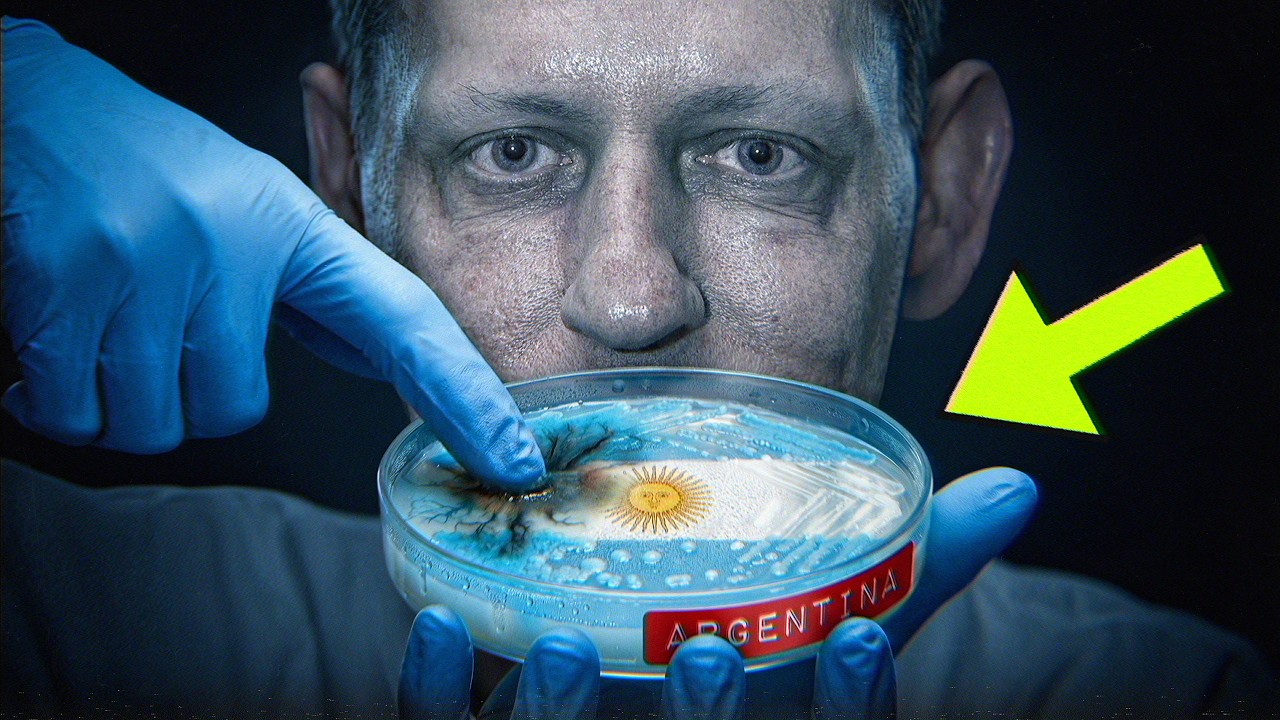
Jun 5, 2026We Found Out Peter Thiel's Sick Experiment On Argentina Dangerously Informed with Evie 147K subscribers Subscribed 5.4K
Created by:Dangerously Informed with Evie67K views14 min
New York Times
https://www.nytimes.com › 2026 › 05 › 28 › world › americas › peter-thiel-argentina.html
In Argentina, U.S. Tech Billionaire Peter Thiel Finds An Escape - The ...
May 28, 2026The billionaire's new roots in Argentina are said to be partly motivated by concerns about the future of the United States and shared beliefs with Argentina's right-wing leader.

The Washington Post
What's really behind Peter Thiel's panicked move to Argentina
Jun 4, 2026What's really behind Peter Thiel's panicked move to Argentina Some tech observers think that the Palantir overlord sees the end times coming, but his real motivation is likely much more ...

Raw Story
https://www.rawstory.com › peter-thiel-2676971006
Billionaire Trump ally's 'chilling' move out of US sparks panic: 'About ...
May 29, 2026Tech billionaire Peter Thiel, an outspoken supporter of President Donald Trump, has recently set "new roots" in Argentina as a potential "Plan B," The New York Times reported, fueling ...

thenerdreich.com
https://www.thenerdreich.com › the-sovereign-individual-thiel-argentina-and-the-network-state
The Sovereign Individual: Thiel, Argentina and the Network State
Jun 1, 2026As I mentioned in my April piece, The Sovereign Individual specifically listed Argentina and New Zealand as choice locations for bunker-mentality billionaires. Thiel obtained New Zealand citizenship in 2011, and the NYT reports that he is exploring the possibility of an Argentine passport as well.

The Nation
What's Really Behind Peter Thiel's Panicked Move to Argentina
Jun 3, 2026The big question raised by Thiel's panicked peregrinations is why one of our country's richest and most politically influential tech investors has decided to do a runner, as Ronnie Biggs might ...

Democratic Underground
https://www.democraticunderground.com › 1322117722
We Found Out Peter Thiel's Sick Experiment On Argentina - Democratic ...
Jun 7, 2026We Found Out Peter Thiel's Sick Experiment On Argentina We Found Out Peter Thiel's Sick Plan For Argentina Dangerously Informed with Evie Watch on Info Bookmark Add this thread to your Bookmarks (My DU » Bookmarks)

The Rio Times
Tech Billionaire Peter Thiel Moves His Family to Milei's Buenos Aires
May 29, 2026Key Facts — The headline: The Peter Thiel Argentina move involves a temporary family relocation to Buenos Aires and a 12 million dollar property purchase, according to a New York Times report cited by global outlets this week. — The drivers: Sources cited by the Times pointed to Thiel's concerns about California's proposed billionaire tax and a stronger ideological alignment with ...

UnHerd
https://unherd.com › newsroom › peter-thiel-wont-find-a-safe-haven-in-argentina
Peter Thiel won't find a safe haven in Argentina - UnHerd
May 30, 2026Peter Thiel is known for making and landing counterintuitive bets. But relocating to Argentina, his "escape hatch" from the risks of political turmoil in the developed world, may be his most confounding wager yet.
New York Post
Peter Thiel moves family to Argentina to flee taxes, AI meltdown ...
May 29, 2026The billionaire investor reportedly moved his family to Buenos Aires as a refuge from high taxes, political turmoil and potential catastrophes like nuclear war and an AI meltdown.
---
MMA
10/16/25
---
---
https://zeteo.com/p/peter-thiel-jd-vance-trump-maga-broligarch
:{:{In 2009, the arch-libertarian Cato Institute published an essay from Peter Thiel, an infamously right-wing venture capitalist, in which he confessed to some of his biggest political disappointments. “I no longer believe that freedom and democracy are compatible,” he wrote, making clear his distaste for elections. }:
Thiel complained that “the vast increase in welfare beneficiaries and the extension of the franchise to women” had been difficult for the libertarian cause. He was also frustrated that an “unthinking demos” – that is, ordinary voters – guided electoral politics. When Thiel was later accused of opposing women’s suffrage, Cato published a response from the author in which he seemed to double down on his desire to somehow escape democracy: “While I don’t think any class of people should be disenfranchised, I have little hope that voting will make things better.”}:
It would be one thing if Thiel, with his reactionary, anti-democratic beliefs, were an obscure tech investor with a blogger’s interest in politics. But Thiel is far more than that – he’s a billionaire financier for whom political struggle is the main event. A longtime Republican donor, Thiel at the 2016 Republican National Convention. He is singularly responsible for the rise of J.D. Vance, pouring a record $15 million into his Senate campaign. And while some tech elites have lately emerged as vocal Trump backers, Thiel was there first.
:{:{Thiel has long expressed irritation that we haven’t achieved a Jetsons-like future of infinite abundance, but he seems even more dissatisfied – bitterly so – with a political system he’s determined to upend. A billionaire who made his initial fortune as the CEO of PayPal, Thiel is now the eminence grise of a powerful network of investors and executives known informally as the ‘PayPal Mafia,’ many of whom support Trump’s bid for a second term. Having soured on democracy, Thiel has spoken of politics – and death, for that matter – as something that can be “escaped,” leading to a utopian place of true freedom.}:
His investments and donations have flowed accordingly, making him one of Silicon Valley’s most influential political operators while blazing a trail for a new crop of tech executives who have embraced the MAGA movement. Thiel invested in explicitly right-wing companies, dined with white nationalists, sponsored far-right writers, and founded startups dedicated to supporting the surveillance state.}:
He didn’t just speak at the Republican National Convention in 2016, announcing himself as a proud gay Republican. After the release of the “Access Hollywood” tape in which Trump bragged about sexually assaulting women, Thiel also offered a public show of support with a $1.25 million donation. According to Trump, it was Thiel who chose which tech companies were invited to the confab of CEOs at Trump Tower after the 2016 election.
By the time of the 2024 presidential cycle, however, as a liberal activist group began investigating Thiel’s activities, the billionaire decided he wanted out. He expressed disappointment less in Trump’s policies than in the chaos of his shambolic administration. When Trump asked for a multi-million-dollar campaign donation, Thiel said no, reportedly leading to a rift between the two.
In June, Thiel finally said he would vote for Trump… if someone put a gun to his head.
Then everything changed, on July 15, when Trump announced Ohio Sen. J.D. Vance as his running mate.
“The Most Significant Moment”
Put simply, there is no J.D. Vance without Peter Thiel. In “The Contrarian,” his biography of Thiel, journalist Max Chafkin described both Vance and Blake Masters as “extensions” of Thiel, men who owed their careers and much of their political thinking to the billionaire’s ideological influence – and financial sponsorship. (Masters lost his 2022 Senate election and, more recently, his 2024 House primary race.) Some politicians may be friendly to right-wing Silicon Valley “broligarchs,” but Vance has fashioned himself in Thiel’s image. And now, the billionaire hardliner seems on the verge of getting what he’s long wanted: one of his own in the White House.
:{:{Although he made his bones as a tech executive and financier, Thiel has written and lectured about his bugaboos – identity politics, women, democracy, higher education – since he was an undergraduate at Stanford University in the late 1980s, when he founded a conservative student paper, The Stanford Review.}:
Despite denouncing American campus culture and funding a fellowship to pay entrepreneurs to skip college, Thiel remains involved with Stanford as a guest lecturer and as one of its most famous alumni and critics. Over the years, Thiel has hired several alumni of The Stanford Review. And he is still, , giving talks at elite colleges about “the diversity myth” – the title of a book he published in 1995 with his friend David Sacks, who emerged this year as Trump’s top Silicon Valley supporter.}:
“We’re still in this groundhog day,” Thiel to a conservative student group at Harvard. His book felt “incredibly prophetic,” he said. “We were basically right. Very little I would change on the particulars.” In 2016, when Forbes drew attention to passages from “The Diversity Myth” that minimized rape (“a multicultural rape charge may indicate nothing more than belated regret”), Thiel and Sacks apologized.
If we’re in a groundhog day situation, it may be in part because powerful white men like Thiel can’t let go of certain political obsessions. Thiel has been lamenting the influence of leftist identity politics for more than 30 years. He about being forced to read – in college, 35 years ago – certain academically en vogue books, like Aimé Césaire’s post-colonial retelling of “The Tempest,” and the autobiography of Rigoberta Menchú, a Guatemalan Indigenous rights activist who won the Nobel Peace Prize. But over time, Thiel has found a receptive audience for his grievances. And he’s had no student more loyal than J.D. Vance.
In 2011, Vance was attending Yale Law School when Thiel came to give a talk. At the time, Vance was a Marine veteran and Ohio State graduate who had emerged from meager economic and social circumstances in southern Ohio to attend a top law program that served as a finishing school for future members of the power elite. Vance grew up steeped in evangelical Christianity but in college he drifted into Sam Harris-style atheism – a common enough path for a young man in the place and time. His colleagues saw him as politically conservative but not radically so. That would change.
:{:{Thiel’s subject matter was his typical fare. He spoke about the illusory satisfactions of chasing prestige and competing with one’s peers over a limited pot of rewards while the larger society faced technological stagnation and decay. For Vance, whose beliefs were proving to be malleable, it became a formative experience.}:
In attempting to escape his traumatic upbringing, Vance had allowed himself to be driven by the mindless pursuit of academic achievements and professional credentials. Rather than aspiring for a career as a federal judge or a partner at a white-shoe law firm, as so many of his classmates did, he realized that he dreaded his future as a lawyer. Despite being a product of the same milieu that Vance now inhabited, Thiel offered another way. “Peter’s talk remains the most significant moment of my time at Yale Law School,” Vance wrote in a widely cited essay in a Catholic magazine.....}:
---
vaden
AI Overview
The "Yale Law Republicans" do not have a dedicated, institutional donor funder. Instead, conservative presence and organizing at Yale Law School primarily receive backing through university-recognized student groups, alumni networks, and broad-based conservative organizations with ties to the law school. [1]
Key conservative entities at the school and their associated funders include:
- The Federalist Society: The prominent conservative and libertarian law student organization (founded at Yale) relies on large, national conservative foundations. Its network is heavily bankrolled by groups like the Searle Freedom Trust, the Scaife Foundation, and DonorsTrust, as well as the dark money network overseen by conservative activist Leonard Leo. , [2, 3]
- Institutional Portraits & Specific Initiatives: Major conservative initiatives at the law school have been funded by specific high-profile Republican megadonors. For example, Texas billionaire Harlan Crow provided a $105,000 donation in 2018 to commission and install the official portrait of Justice Clarence Thomas in the law school. [1]
For more than two decades, Yale Law School has also served as a focal point for the broader political ecosystem, helping to foster high-profile conservative leaders and their financiers in Silicon Valley and beyond. [1, 2]
---
GGL AI 6 26
When  Peter Thiel spoke at Yale Law School in 2011, there was no single named host. Rather, he delivered an invited address that was part of a speaker series at the institution. [1, 2, 3, 4]
The specific details regarding this address include:
- The Core Message: Thiel discussed technological stagnation and criticized elite professionals who get trapped in hyper-competitive but unrewarding career tracks. [1, 2]
- Impact on Vance: A then-law student named
 JD Vance attended the lecture. He frequently cites it as the most significant moment of his time at Yale Law School, prompting his shift into the tech and venture capital industries. [1, 2, 3]
If you would like, I can provide more details on:
- The books and philosophy of René Girard, which Thiel frequently incorporates into his lectures.
- Other appearances Thiel has made at Yale University. [1, 2, 3, 4]
X DANIEL
Peter Thiel's 2011 Yale Law School talk was hosted and organized by the Yale Law School Federalist Society. The event, which deeply influenced a then-student  J.D. Vance, featured Thiel criticizing elite professionals trapped in hypercompetitive but unrewarding jobs and arguing that higher education was a "bubblE.
RETWEET OF
9 MIN THUS NOT ALL
How Yale Propelled J.D. Vance’s Career
The G.O.P. vice-presidential nominee is remembered as a warm and personable student. But some are perplexed by what they see as his shift in ideology.
By Stephanie Saul
Published July 17, 2024Updated July 18, 2024
See more of our coverage in your search results. Add The New York Times on Google
When J.D. Vance applied to law school, he viewed it as a pathway out of his chaotic upbringing in working-class Middletown, Ohio.
Then he won a spot at his dream school. Yale Law not only accepted him for the fall of 2010, but also offered a nearly full ride the first year.
Over the next three years, Yale dramatically influenced the trajectory of his life, leading to important connections, a job in venture capital and marriage to a classmate.
Even his memoir, “Hillbilly Elegy,” was partly the outgrowth of a paper he wrote in a Yale class. And he leveraged the story, which chronicles his childhood and the alienation of the working class, into a best seller, a movie deal and a political career — winning election to the U.S. Senate in 2022, at age 38.
Despite Yale’s transformative role in his life, Mr. Vance’s relationship with the school could be summed up as conflicted.
Graduating from Yale was “the coolest thing” he had ever done, “at least on paper,” he wrote in his memoir. But he also portrayed himself as an outsider who flubbed law firm interviews and was baffled when asked whether he preferred chardonnay or sauvignon blanc — he had never heard of either. And his classmates remember his sarcasm and cynicism when discussing what he thought of as the school’s liberal bubble.
A correction was made on July 18, 2024
:
An earlier version of this article incorrectly described Yale Law’s offer to J.D. Vance. The school offered him a nearly full ride the first year. The details of his financial package in the subsequent years are not clear.
When we learn of a mistake, we acknowledge it with a correction. If you spot an error, please let us know at corrections@nytimes.com.Learn more
Stephanie Saul reports on colleges and universities, with a recent focus on the dramatic changes in college admissions and the debate around diversity, equity and inclusion in higher education.
---
REF
https://www.forbes.com/sites/antoniopequenoiv/2024/07/16/jd-vance-and-peter-thiel-what-to-know-about-the-relationship-between-trumps-vp-pick-and-the-billionaire/
JD Vance And Peter Thiel: What To Know About The Relationship Between Trump’s VP Pick And The Billionaire
Forbes Staff.
Pequeño is a breaking news reporter who covers tech and more.
Jul 16, 2024,
Topline
JD Vance, former President Donald Trump’s running mate, has had a long, collaborative relationship with GOP donor and Silicon Valley billionaire Peter Thiel, one that has aided Vance from his time in venture capital to his role as an Ohio senator.
Key Facts
Vance and Thiel’s relationship dates back to 2011, when the senator met Thiel following a talk the venture capitalist gave at Yale Law School that Vance has characterized as “the most significant moment of my time” at the institution, according to a blog post he wrote for Catholic magazine The Lamp.
Vance began planning for a career pivot outside of law following the talk, noting Thiel was “possibly the smartest person” he ever met and that Thiel’s Christian faith “defied the social template I had constructed—that dumb people were Christians and smart ones atheists,” according to the post.
Thiel later became a “pretty good mentor” to Vance, according to The Washington Post, with Vance making the switch to venture capital and joining the Thiel-co-founded Mithril Capital in 2015 as a partner, according to Politico.
Vance published “Hillbilly Elegy: A Memoir of a Family and Culture in Crisis” in 2016 while still working for Mithril Capital, thrusting the venture capitalist into the limelight as he began pondering a potential run for office in the future, according to the Post.
Vance left Mithril Capital in 2017 and joined Washington D.C.-based investment firm Revolution as a managing director to invest in startups outside of major hubs like Silicon Valley and New York City.
Vance launched his own venture capital firm in 2019 under the name Narya Capital, which sought to invest in startups in overlooked cities and reportedly received backing from Thiel and other billionaire investors like venture capitalist Marc Andreessen and former Google CEO Eric Schmidt, Axios reported.
Thiel also reportedly brought Vance, who had established himself as a critic of Trump, to Mar-a-Lago in 2021 to smooth over his relationship with the former president, according to The New York Times.
Following the meeting, Vance became more sympathetic to Trump and his policies, downplaying the Jan. 6 Capitol attack and securing an endorsement from the former president in his 2022 Senate run just weeks before Election Day.
Vance garnered more support from Thiel during his successful Senate run in 2022, receiving record-breaking donations of about $15 million from Thiel, which marked the largest amount of money donated to a single Senate candidate ever.
Most of Vance’s campaign advertising was outsourced to the Protect Ohio Values super PAC that Thiel donated to, Politico reported, noting Thiel helped recruit about 10 major donors for Vance including venture capitalist David Sacks, who donated $1 million.
Forbes Valuation
We estimate Peter Thiel’s net worth at $7.9 billion—largely thanks to his role as one of Facebook’s earliest investors, as well as his work as a general partner of venture capital firm Founders Fund, which is a key investor in Stripe and SpaceX. Thiel has also invested millions into Clearview AI, a controversial facial recognition software firm.
Tangent
Thiel’s backing appeared to be a massive difference-maker for Vance’s 2022 Senate run, as the then-candidate lacked a funding edge over his fellow candidates and had made a litany of anti-Trump comments years before, calling the former president “reprehensible,” “cynical” and privately suggested he could be “America’s Hitler.” Vance walked back his comments in the leadup to Election Day and managed to secure an endorsement from Trump, who later said Vance “gets it now, and I have seen that in spades.”
Crucial Quote
Thiel said during an interview at the Aspen Ideas Festival last month, “You hold a gun to my head, I’ll vote for Trump.” The comment seemingly showed reluctant support for Trump, as Thiel said if he was asked to make a pro-Trump argument, he would not, though he could “probably come up with anti-Biden arguments.” Thiel also noted he would not donate money to Trump and that he believes the former president will win in November. Thiel donated more than $1 million to Trump in 2016.
What Is Peter Thiel’s Connection To Donald Trump?
:{:{Thiel was one of Trump’s most significant donors in 2016 and has expressed a sort of reluctant support for the former president, backing congressional candidates who have echoed Trump-sourced conspiracy theories and later withdrawing further financial support for Trump.}:
Thiel told The Atlantic last year there were a lot of things he “got wrong” with his support for the former president in 2016. Thiel’s political ideology rests in disbelief of establishment institutions and criticism of progressive elites. He also has pushed for more restrictions at the border. Meanwhile, Vance has more closely aligned his politics with Trump’s, opposing nationally guaranteed abortion rights, pushing against strict gun laws and prioritizing the fight against inflation. However, Trump and Vance do not see eye to eye on everything, including their levels of public support for Project 2025.}:
Key Background
:{:{Thiel, who is also a co-founder of the CIA-backed analytics firm Palantir, has given millions of dollars in donations largely to Republican lawmakers and political action committees since 2010, occasionally donating to Democrats such as California Gov. Gavin Newsom and Rep. Ro Khanna, D-Calif., according to campaign finance tracker OpenSecrets.}:
Thiel has donated $20 million to the Saving Arizona PAC, which supported venture capitalist Blake Masters during a failed Republican Senate run in 2022. Masters is now running as an Arizona congressional candidate. Thiel has also donated thousands of dollars to Republican lawmakers such as Sen. Ted Cruz, R-Texas, Rep. Michael McCaul, R-Texas. and former Speaker of the House Kevin McCarthy, R-Calif.}:
Further Reading
What To Know About ‘Hillbilly Elegy’: The Memoir That Launched J.D. Vance’s Political Career (Forbes)
Here’s How Much J.D. Vance Is Worth (Forbes)
J.D. Vance Picked As Trump’s Running Mate: Here’s What To Know About Him (Forbes)
This Silicon Valley Billionaire Has Been Secretly Funding Hulk Hogan's Lawsuits Against Gawker (Forbes)
Thiel Was Good For $10 Million, But J.D. Vance’s Other Billionaire Backers Were Good For Nothing (Forbes)
---
---
AN 5 26
Talk of the Antichrist has surged in President Donald Trump's first year in office, and the discussion has broken out beyond the traditional right-wing circles.
Christian Paz, writing for Vox, reported Tuesday that talk of the Antichrist has become a larger conversation among more mainstream political circles than the typical evangelical prophecies.
The end-times conversation connects a renewed apocalyptic panic to those desperately searching for ways to grapple with a more complicated "crisis-driven" world by ascribing the "Antichrist" thinking to any figure who could match charismatic leaders in technology, war or politics.
The idea that Trump could fit that description has been proposed by far-right influencers like former Rep. MarjorieTaylor Greene and anti-Semitic commentator Nick Fuentes. Even Tucker Carlson asked the question. It came as Trump posted an AI photo of himself depicted as Jesus Christ. He later claimed that he thought it was a "doctor."
“But he’s radiating the spirit of Antichrist, no question," conservative Rod Dreher told the *Wall Street Journal*.
In March, CNN reported that billionaire Peter Thiel has been hosting secret lectures about the Antichrist in an undisclosed location in Rome.
"But the appearance of Thiel on the Vatican’s doorstep has raised eyebrows, given the tensions between Thiel’s thinking and that of Pope Leo XIV," the report said. "Two Catholic institutions have distanced themselves from the lecture series, which continues through Wednesday."
On Monday, the pope published his first encyclical, warning that artificial intelligence is causing problems for humanity, particularly when it comes to its use in war.
Meanwhile, "Thiel has previously written and lectured on the subject, arguing that the Antichrist is not necessarily a person but could come as a global government system. It would take control, he has argued, by exploiting people’s fears around artificial intelligence, climate change or nuclear war."
Paz, writing for Vox, explained that the colorful imagery and ambiguity in the Bible talking about the Antichrist can attract people trying to solve a kind of prepper puzzle.
“They read the Bible like it’s a secret code book, and that if they can unlock the code, then they can understand what’s going to happen in the end times,” historian Matthew A. Sutton told Vox. Sutton focuses on American apocalypticism at Washington State University. “It’s a very modern way to read the Bible compared to what you would’ve seen through much of church history.”
When he says "modern," he means the last 100 years. But as the world grapples with climate change, another war in the Middle East, the possibility of a pending economic catastrophe and leaders like Trump, talk of the Antichrist and the end times are being used to explain what people see as troubled times.
“Dressing political theory in apocalyptic robes carries risks," Sutton told Vox, though it's hardly a new idea. But it can become dangerous. "When powerful actors reframe ordinary policy debates, such as about guardrails for AI, as a battle against the antichrist, they raise anxieties, delegitimize compromise, and insinuate that democratic deliberation is spiritually suspect.”
But the panic about Trump has turned the world upside down over the course of his second term. So, while the right is spinning conspiracy theories about his being the Antichrist, he also fits the mold, the report said.
"He is surely a charismatic leader; he’s launched civilizational wars in the Middle East; he’s survived assassination attempts, mimicking the fatal, but healed, wound of the beast of Revelations; and he’s blasphemed and used the trappings of religion to advance his personal brand," said Paz for Vox.
Religious Studies Professor Robert Fuller called talk of the end times a "crisis mentality" and perpetuates hate.
"It makes compromise unthinkable since no one compromises with the devil. It justifies hatred and violence, recasting these traits as virtues," he said.
---
---
btb pt 3
something awfuL --> 4 chan chris pool moot; took down nazi page/news --> pol = polit incorrect; day before met w je in person; 47 min 2017 je sends 4chan lnx;
putin crypto
paid joi ito mit to hire 3 engr
thiel 2024 15 sergei belnekov fsb musk zuck
BREXIT START OF BIG THINGS; LOOT// USSR OLIGARCH BARGAINS
ADDICT KIDS TO GAMING?
alex dugin 59 min
Palantir is working on a tool for ICE that populates a map with potential deportation targets, brings up a dossier on each person, and provides a “confidence score” on the person’s current address, 404 Media has learned. ICE is using it to find locations where lots of people it might detain could be based. The findings, based on internal ICE material obtained by 404 Media, public procurement records, and recent sworn testimony from an ICE official, show the clearest link yet between the technological infrastructure Palantir is building for ICE and the agency’s activities on the ground. The tool receives peoples’ addresses from the Department of Health and Human Services among a range of other sources, according to the material.
12:23
Which people told you to pardon him?
12:26
Because curiously, Hernandez had spent
12:28
years cozing up to the far right in the
12:30
US and made himself a lot of friends.
12:32
According to the Wall Street Journal, he
12:34
forged a partnership with Kelsey Warren,
12:36
a Texas energy billionaire and major
12:38
Trump donor who owns a utility company
12:40
in the country. Hernandez also helped
12:42
propel the privatized city of Prosper in
12:44
the country, a project in which Trump
12:46
donors Peter Teal, Mark Andre, Sam
12:48
Alman, and CEO of Coinbase Brian
12:50
Armstrong are all heavily invested.
12:53
Hernandez was their meal ticket. As Gil
12:56
Duran writes, he championed special
12:58
economic zones where investors could set
13:00
their own tax, labor, and regulatory
13:02
rules under long-term legal guarantees.
13:05
However, when Hernandez's successor,
13:07
Samara Castro, came into office, she
13:10
rolled back the special economic zones.
13:12
That made longtime Trump fixer Roger
13:14
Stone write in January on his Substack.
13:17
Yes, even cartoon villains are on
13:19
Substack that Trump should crush
13:22
socialism and save a freedom city known
13:24
as Prosper. And indeed, it was Stone
13:27
that met with Trump at Mara Lago and
13:29
lobbyed him to pardon Hernandez. So yes,
13:32
400 tons of cocaine are a-ok okay to
13:35
enter the US. I mean, how else is
13:38
Palanteer's Alexander Karp supposed to
13:40
sit through an entire interview?
13:42
Lot of decisions when we began talking
13:44
annoying each other 10 years ago.
13:46
Hopefully I'm annoying you as much as 10
13:47
years ago. Uh or more uh when when when
13:52
Sorry, did I say sit? I meant fly. Now,...
The Bitchuation Room (with Francesca Fiorentini)
---
an 12 25
MAGA billionaires are about to juice up on performance-enhancing drugs and compete in sporting events in a new competition known as the Enhanced Games, aka the “Steroid Olympics”, according to Bloomberg's Chris Bryant.
The billionaire-backers of the games, Bryant writes, are doing this "as part of their plan to take their events-slash-telemedicine company publicvia a special-purpose acquisition company."
"That makes me even warier," he adds.
The Enhanced Games, scheduled to take place in Las Vegas in May, is understandably a controversial, proposed international multi-sport event where athletes will be permitted to use performance-enhancing substances (PEDs) under medical supervision. The event is designed to challenge the traditional Olympic movement by advocating for athlete autonomy, fair pay, and scientific advancement in sports.
"Instead of toiling away for years for fleeting and poorly compensated Olympic glory, Enhanced Games athletes can take testosterone, anabolic steroids, human growth hormone and other performance-enhancing compounds to win a share of $25 million in potential prize money," Bryant says.
"Incentivizing competitors to pharmaceutically push their bodies to the limit for our enjoyment feels unethical," he adds.
The events organizers claim to be empowering athletes — literally, telling Bryant in a statement, "All enhancement protocols will be based on substances already approved by the US Food and Drug Administration."
Athletes will also need to pass a medical screening to ensure they enter the competition “healthy and safe," Bryant explains.
"More than 60 percent of Enhanced’s social-media audience is aged 18 to 34 and almost all male. Steroid abuse is rife among this group," he writes.
The investors in this startup include what Bryant calls "a blend of Silicon Valley’s libertarian, longevity and self-optimization obsessions and MAGA’s transactional and anti-establishment credentials."
" Until now it’s been bankrolled by a who’s who of cashed up libertarians: Executive Chairman Christian Angermayer, who’s also chairman of psychedelic-drug company Atai Beckley NV and founder of Enhanced’s biggest shareholder, Apeiron Investment Group; venture capitalist Peter Thiel; and the Winklevoss twins. Donald Trump Jnr is also involved via venture firm 1789 Capital, where he’s a partner," he writes.
So far, only about a dozen have signed up for the games, Bryant says, including British swimmer Ben Proud, who won silver at the Paris Olympics and track athlete Fred Kerley, a two-time Olympics medalist over 100 meters.
"The organizers aren’t only relying on creating a sporting spectacle. The bulk of future revenues is expected to come from selling over-the-counter supplements and prescription hormones to US consumers," Bryant says.
And while the steroids promise to pump up the athletes, the startup's bottom line may be deflated.
"Enhanced could end up with a deflating share price and just $40 million to fund its controversial business plan, setting back its ambitions to make us superhuman. Fans of sporting fair play won’t shed many tears," Bryant notes.
---
---
meidas vid rockridge
this audience should go after. um he has done this in lectures around the world
50:03
where he actually puts up these pictures of certain people and in this case he was very against the activist Greta
50:08
Thunberg because she's been critical of AI. he was and um against the the activist and writer um Eleazar Uduka
50:16
Udlowski who is um a prominent critic of the tech industry's approach to AI, what
50:22
people might call AI doomerism and um so yeah, it's almost like saying not just
50:29
should the tech industry have a debate about the limits of AI but the people within that debate who are arguing for
...
55:50
well Trump married to immigrants I mean you know so that there is there is contradiction there of course but
55:55
without the technology that these people are supporting Trump with and providing and getting military contracts and
56:02
government contracts with Trump wouldn't be able to send bounty hunters out with
56:07
software on their phones with their kind of Amazon military costumes and round people up
56:13
yeah there's a role for the the tech industry Um, one of the interesting things that I'd been looking into was um
56:20
there was a project at the Claremont Institute, which is a Trump Allied think tank called the administrative state project. And that the um one of the
56:28
thinkers are on that project uh was co-writing opeds with the CTO of Palunteer. So it was all about thinking
56:36
around it was there there has been a lot of strategy and thinking um around how
56:42
the immigration how technology and tech advanced tech companies like Palunteer
56:48
will further the immigration enforcement push that we're seeing in America. So,
---
blake lost, jdv won record $? hageman montana wacko?
---
pbs
by the time Jeffrey Epstein pleaded guilty in 2008 to soliciting prostitution from an underage girl, he had established an enormous network of wealthy and influential friends. Emails made public this week show the crime did little to diminish the desire of that network to stay connected to the financier.
Thousands of documents released by the House Oversight Committee on Wednesday offer a new glimpse into what Epstein’s relationships with business executives, reporters, academics and political players looked like over a decade.
READ MORE:** Read Jeffrey Epstein’s newly released emails about Trump
They start with messages he sent and received around the time he finished serving his Florida sentence in 2009 and continue until the months before his arrest on federal sex trafficking charges in 2019.
During that time, Epstein’s network was eclectic, spanning the globe and political affiliations: from the liberal academic Noam Chomsky to Steve Bannon, the longtime ally of President Donald Trump.
Some reached out to support Epstein amid lawsuits and prosecutions, others sought introductions or advice on everything from dating to oil prices. One consulted him on how to respond to accusations of sexual harassment.
Epstein was charged with sex trafficking in 2019, and killed himself in jail a month later. Epstein’s crimes, high-profile connections and jailhouse suicide have made the case a magnet for conspiracy theorists and online sleuths seeking proof of a cover-up.
The emails do not implicate his contacts in those alleged crimes. They instead paint a picture of Epstein’s influence and connections over the years he was a registered sex offender.
Epstein kept a diverse political network
Epstein emailed current and former political figures on all sides, sending news clips and discussing strategy or gossip often in short, choppy emails laden with spelling and grammatical errors.
In several emails in 2018, Epstein advised Bannon on his political tour of Europe that year. Bannon first forwarded Epstein a news clip that described the German media as “underestimating” Bannon and that he was “As Dangerous as Ever.”
“luv it,” Epstein responded.
Epstein wrote that he’d just spoken to “one of the country leaders that we discussed” and that “we should lay out a strategy plan. . how much fun.”
Several months later, Epstein sent some advice: “If you are going to play here , you’ll have to spend time, europe by remote doesn’t work.”
“its doable but time consuming,” Epstein continued in a follow-up email, “there are many leaders of countries we can organize for you to have one on ones.”
Just a few months earlier, Epstein was insulting Trump — whose movement Bannon was a representative of — in emails to Kathryn Ruemmler, the former White House counsel under President Barack Obama.
Ruemmler sent a message to Epstein calling Trump “so gross.” A portion of that message was redacted, but Epstein replied, “worse in real life and upclose.”
In other emails with Ruemmler, Epstein detailed a whirlwind of well-known people he appears to have been meeting, hosting or speaking with that week, including an ambassador, a tech giant, foreign business people, academics and a film director.
“you are a welcome guest at any,” he wrote.
Jennifer Zuccarelli, a spokesperson for Goldman Sachs, where Ruemmler now works, declined to comment.
Epstein’s wealthy social circles
The financier emailed often with people in the upper echelons of wealth around the world, brokering introductions and chatting about politics and foreign affairs.
That included Silicon Valley investor Peter Thiel, who Epstein sent an email to in 2014 saying “that was fun , see you in 3 weeks.”
Four years later, Epstein asked if Thiel was enjoying Los Angeles, and, after Thiel said he couldn’t complain, replied “Dec visit me Caribbean.” It’s unclear if Thiel ever responded.
In emails with Sultan Ahmed bin Sulayem, an Emirati businessman, Epstein complimented Bannon, saying in 2018 that “We have become friends you will like him.”
“Trump doesn’t like him,” responded Sulayem.
A year earlier, Sulayem asked Epstein about an event where it appeared Trump would be in attendance, asking, “Do you think it will be possible to shake hand with trump.”
“Call to discuss,” Epstein wrote back.
In January 2010, biotech venture capitalist Boris Nikolic was attending the annual World Economic Forum in Davos, Switzerland, and Epstein emailed to ask, “any fun?”
Nikolic replied that he had met “your friend” Bill Clinton, as well as then-French President Nicholas Sarkozy and “your other friend,” Prince Andrew, “as he has some questions re microsoft.”
But then Nikolic said he was getting sick of meetings. Later, he wrote Epstein that “it would be blast that you are here.” He mentioned flirting with a 22-year-old woman.
“It turns out she is with her husand. Did not have chance to check him out. But as we concluded, anything good is rented ;)” Nikolic wrote.
Epstein kept in touch with academics
The theoretical physicist and cosmologist Laurence Krauss was among them. In 2017, Krauss reached out to Epstein via email for advice on responding to a reporter writing a story about allegations of sexual harassment against him.
“Is this a reasonable response? Should i even respond? Could use advice,” Krauss asked Epstein.
In an explicit exchange, Epstein asked Krauss if he’d had sex with the person in question and then suggested he should not reply to the journalist.
“No. We didn’t have sex. Decided it wasn’t a good idea,” replied Krauss.
Krauss said in an email to The Associated Press that he never hid the fact that he knew Epstein, and interacted with him several times.
“I sought out advice from essentially everyone I knew when false allegations about me were circulated in the press in 2018,” said Krauss. “I was as shocked as the rest of the world when he was arrested” in 2019.
In an August 2015 email exchange, Epstein told Chomsky, the famed linguist and social scientist, to only fly to Greece if he feels well, joking he previously had to send a plane for another “lefty friend” to see a doctor in New York.
In the same exchange, which dipped into academic arguments about warning signs on currency collapses, behavioral science models, and Big Data, Epstein offered his residences for Chomsky’s use.
“you are of course welcome to use apt in new york with your new leisure time, or visit new Mexico again,” Epstein wrote.
The emails also show that Epstein kept up a friendly relationship with Larry Summers, who was the treasury secretary under President Bill Clinton and former Harvard University president, and bantered about the 2016 presidential race and Trump.
Other emails showed a closer relationship. In 2019, Summers was discussing interactions he had with a woman, writing to Epstein that “I said what are you up to. She said ‘I’m busy’. I said awfully coy u are.”
Epstein replied, “you reacted well.. annoyed shows caring. , no whining showed strentgh.”
Summers issued a statement saying he has “great regrets in my life.”
“As I have said before, my association with Jeffrey Epstein was a major error of judgement,” the statement said.
Chomsky, Thiel, Bannon, and Sultan Ahmed bin Sulayem did not immediately respond to requests for comment, which were sent through email addresses available on their own or their organizations’ websites.
*Associated Press reporters John Hanna in Topeka, Kansas, and Claudia Lauer in...
---
---
WHY NOW? GUBMINT?
“We’re headed to a surveillance state”: Right-wing figures and podcasters are protesting the Trump administration’s relationship with Palantir
Palantir is coming under greater scrutiny even from Trump’s allies
Written by Noah Dowe & Ben Van Bloem
Published 11/10/25 MMA
The Trump administration’s deepening ties to data analysis firm Palantir has caused a surge in discontent in the conservative media sphere. Figures ranging from right-leaning podcasters like Theo Von and Tim Dillon to MAGA allies such as Steve Bannon and Tucker Carlson have warned Palantir’s “spy network” is a step toward a “police state.” Other figures on the far right, including white nationalist commentators Nick Fuentes and Stew Peters, have also railed against the tech company’s CEO and its ties to billionaire Trump-backer Peter Thiel.
The Trump administration is contracting Palantir to work with ICE
- Palantir makes software that searches through and organizes large datasets — and as a U.S. government contractor, that could include sensitive information about every American. Wired notes, “The software firm's work with Immigration and Customs Enforcement, the US Department of Defense, and the Israeli military has sparked numerous protests in multiple countries.” Wired, [8/11/25; Inc., 11/3/25]
- In May, Palantir made a $30 million deal with ICE to provide the agency with “near real-time visibility” into how migrants move in the United States.This comes at the same time that ICE is adopting more technology for surveillance, including facial recognition, to create biometric databases on populations of immigrants and people who interact with law enforcement. NPR, [5/5/25, Brookings Institution, 10/6/25]
- Trump chose Palantir to help “share data across agencies,” creating the possibility of a “master list of personal information on Americans that could give him untold surveillance power.”The apparent goal of the administration is to have Palantir compile a merged database that would include — but not be limited to — a person’s student debt, wages, bank account number, biometric data, and disability status. That information is currently siloed in different agencies, and experts warn that a merged database could be used by government actors to target political enemies, dissidents, and marginalized communities. The New York Times, [5/30/25, 4/9/25, The Guardian, 6/30/25]
- Palantir was co-founded by Peter Thiel, a longtime ally of President Donald Trump who supported his 2016 campaign and is also closely tied to Vice President JD Vance.Thiel hired Vance to his investment firm in 2017 and donated $15 million to a super PAC supporting the future vice president’s 2022 Ohio Senate campaign. CBS News, [7/16/24; Mother Jones, 7/23/25]
- The company and its CEO have also donated to the Trump inauguration fund and the construction fund for the ballroom replacing the East Wing of the White House.CEO Alex Karp donated $1 million to the inauguration, and Palantir is on a list of companies contributing to the estimated $300 million construction budget of the ballroom. Brennan Center, [7/1/25; Axios, 10/23/25]
- ## Right-wing figures and right-leaning podcasters have been critical of the Trump administration for working with Palantir, saying the collaboration “should scare everybody”
- Joe Rogan said that Palantir gathering “personal data of each American” is “kind of creepy.” YouTube, *The Joe Rogan Experience*, [9/9/25]
- War Roomhost Steve Bannon called Palantir “really the villain in the AI” space and expressed doubt that the company had actually “become MAGA, because then you see what they want to do.”Bannon later said convicted sex trafficker Ghislaine Maxwell’s case raises “big questions about Palantir and some of these other companies today about the surveillance technology — exactly who’s financing it, who owns it, who controls it, all of it.” Real America’s Voice, *War Room,* [6/30/25, 8/23/25]
- Podcaster Shawn Ryan told a guest on his show that people were worried that Palantir is “spying on us.”Guest Trae Stephens, a venture capitalist deeply involved in Palantir and other Thiel-related projects, defended the company and said that the “misconceptions around Palantir are crazy,” claiming that “a lot of the hysteria, like philosophically, is really troubling.” YouTube, *The Shawn Ryan Show*, [10/16/25]
- Infowarshost Harrison Smith said the administration’s work with Palantir was “probably the worst news I've heard all year, to be honest with you,” and described the company as “the backbone infrastructure of the Mark of the Beast.” InfoWars, *The American Journal*, [6/2/25]
- PBD Podcastresearcher Brandon Aceto said that Palantir is “a straight-up CIA contractor that harvests our data. It’s probably the biggest data center in the world, so that’s scary for a whole bunch of reasons.” YouTube, *PBD Podcast*, [6/3/25]
- PBD Podcastpanelist Vincent Oshana said Karp and his company “want to control everything.”Host Patrick Bet-David called Palantir’s history “very, very spooky.” YouTube, *PBD Podcast,*[6/10/25, 6/10/25]
- Timcast IRLpanelist Ian Crossland decried “the rise of Palantir and the spy network that’s being built,” claiming, “There’s going to be, like, spy tech everywhere.”Rumble, *Timcast IRL,*[9/13/25]
- Far-right figure Enrique Tarrio said he is “completely against” Palantir contracting for the government, calling it “the more advanced version of the Patriot Act.”According to Tarrio, “The Palantir thing I don't know enough about but I do think that just by what I'm seeing, it is something I am completely against because it's true. It's a second — it's the more advanced version of the Patriot Act.” Rumble, *Lords of War*, [6/4/25; Media Matters, 4/30/25]
- Tucker Carlson said “the technology, not just Palantir but all the emerging technology … it could be used to enslave the population really easily.” Carlson declared, “Every person should be concerned about the centralization of power and the use of technology to strip basic rights from citizens.” YouTube, *The Tucker Carlson Show,*[7/25/25]
- Right-wing political strategist Roger Stone criticized Palantir and claimed he told Vice President JD Vance that he does not “want Big Brother knowing everything about me.” Stone said, “I told him I did not like the idea of the federal government having a database on every American. I don't like Real ID. I don't like these stated plans of Palantir. I don't want Big Brother knowing everything about me, including my spending habits and everything about me, because I think it leads to a social credit score like they have in China.” BBC, [12/23/20, WABC, The Stone Zone, 10/2/25]
- Conservative commentators The Hodgetwins asked, “Why are Republicans giving Palantir all this power? Turning us into a damn police state.” Twitter/X, [6/4/25]
- Comedian and podcaster Tim Dillon has repeatedly questioned the administration’s relationship with Palantir, saying it “should scare everybody.”Dillon claimed, “If you don't have any reservations about Palantir taking everyone's information, I don't know. I can't — I don't know if I could trust you.” Dillon has also accused Palantir of “exporting technology all over the world for the purposes of death,” adding, “They are building this with Trump, with taxpayer money.” YouTube, *The Tim Dillon Show,* [6/7/25, 8/2/25, 8/16/25, 9/27/25]
- ## Some podcasters expressed specific distrust for Thiel and Karp
- Podcaster Theo Von said Palantir’s deal with the administration is “fucked” during an interview with Vice President JD Vance, called Peter Thiel a “dark lord,” and warned that “we’re headed to a surveillance state in America.”Von said, “This sounds crazy, dude. This sounds like we're only going to be human for, like, two more years. … They're going to have every — know everything about us. It makes you feel like you won't be a person anymore.” Von stated in a later episode “you won't be able to be a, like, hypothetically or on paper, illegal person in America in two years.” YouTube, *This Past Weekend w/ Theo Von,* [6/7/25, 7/23/25, 9/5/25]
- White nationalist commentator Nick Fuentes said that Palantir was “infiltrated from top to bottom by Israel” while criticizing Peter Thiel's connection to Vance. Fuentes said, “JD Vance, what do we know about him? He was mentored and groomed and basically a creation of Peter Thiel, the creator of Palantir, who is running Palantir with people like Alex Karp, infiltrated from top to bottom by Israel, and Trump picked him at the behest of Tucker and Musk.” Rumble, *America First with Nick Fuentes*, [9/19/25; Media Matters, 10/2/25]
- White nationalist podcaster Stew Peters called the Trump administration “a big joke,” claiming: “It's time to roll in Palantir and you know, put the final launching measures on this super surveillance state that our enemy wishes to deploy here in the United States — track, trace, and control.”Peters said, “JD Vance with his cryptic statement saying hey, you know, President Trump is in really good health but if tragedy strikes, I'm ready to lead. And then you see Peter Thiel right behind him smiling.” Rumble, *The Stew Peters Show,*[9/4/25; Media Matters, 3/13/23]
---}:
YT 10 25 -->
trump-supporting Silicon Valley billionaire Peter Thiel is set to extend his financial reach into the UK, after Keir Starmer and the US President announced a new transatlantic tech partnership incorporating his data mining company Palantir. As part of the deal Thiel’s company will invest a further £1.5 billion into Britain, on top of its already extensive interests in the NHS.
However, a Byline Times investigation can reveal that Thiel’s far deeper impact on the country could be an ideological one, focused on a network seeking to rehabilitate discredited race science and authoritarian ideas into the Conservatives, Reform UK and Labour.
At the centre of the network is his friend, admirer, and leading figure in the “neo-reactionary” movement, Curtis Yarvin, the blogger known as Mencius Moldbug.
Thiel’s venture firm has already invested in Yarvin’s company Tlon, and his main political protégé JD Vance — now US vice president — is also a big admirer. What began on fringe blogs is increasingly embedded in Washington, and is now being exported to Britain.
The ‘Dark Enlightenment’
Yarvin is not well yet known among the UK public but his “Dark Enlightenment” writings have been deeply influential on the US right and increasingly in the UK right too. These ideas include calls for the end of democracy, with Yarvin arguing that Western democracies should be replaced by what he has referred to as a “monarchy” run by an unelected dictator, or “CEO”.
They have also included the endorsement of discredited ideas about the “natural inferiority” of black people.
In a 2009 essay Yarvin argued that “the obvious statistical differences in the average talents of human races” justified eliminating the system of representative government.
“Obviously, once you stop believing in democracy, it is easy to stop seeing the failure of this political design in societies with a high percentage of non-Eurasian genetic ancestry as a moral reflection on persons of non-Eurasian ancestry, and start seeing it as a mere engineering failure…” he wrote.
Yarvin is also known for his repeated use of the n-word. In an interview with Byline Times, his associate and founder of the ‘Blue Labour’ movement, Maurice Glasman, confirmed that Yarvin had shown the racial slur to him during a London portrait sitting. Glasman said that he had reacted with disgust but admitted he remained interested in Yarvin’s views on artificial intelligence.
EXCLUSIVE
Silicon Valley Whistleblowers Warn Elon Musk ‘Hijacking’ Republicans to Control Entire US Government
Former followers of the ‘Dark Enlightenment’ say a planned ‘neo-reactionary’ hollowing out of government is happening in real time
Nafeez Ahmed
In February 2025, Yarvin appeared at the Alliance for Responsible Citizenship (ARC) summit in London, co-founded by Jordan Peterson and funded by GB News investor Paul Marshall. Its advisory board includes Peterson, commentator Douglas Murray, Lord Glasman, and Reform UK policy chief James Orr. Both Peterson and Murray have defended The Bell Curve, which claimed racial hierarchies in intelligence. The event was addressed by other leading figures on the right of British politics, including Conservative leader Kemi Badenoch.
Yarvin is also scheduled to appear at this year’s How the Light Gets In festival in London, where he will take part in three panels, including one in which Tony Blair’s former press secretary Alastair Campbell says he will interview him for a “lively discussion” as the “philosopher behind JD Vance”.
The upcoming Byline Times investigation will show how Thiel’s ideological network cuts across Britain’s political spectrum:
- Conservatives: Yarvin admirer Dominic Cummings’ former adviser Andrew Sabisky, who argued Black people are predisposed to lower IQ, now influences Civic Future’s Conservative leadership pipeline.
- Labour: Glasman co-leads Policy Exchange’s Future of the Left programme, which feeds into No.10.
- Reform UK: James Orr, who hosted Bell Curve author Charles Murray at Cambridge, now heads Reform’s policy think-tank.
Together, these strands form a cross-party pincer movement: Thiel’s hard power through Palantir’s contracts, and his soft power through the normalisation of discredited pseudo-scientific neo-reactionary ideas.
As figures like Yarvin move alongside establishment names, Thiel’s network is shifting ideas once confined to the far-right fringe into the centre of mainstream debate.
*Byline Times will publish its full exclusive investigation into Thiel’s new transatlantic network and the Big Tech’s British Takeover, in the coming days.
---
an 10 25
Within Christianity, evangelicals and mainline Protestants can have radically different approaches when it comes to the parts of the New Testament that they zero in on.
Mainline Protestants — Lutherans, Presbyterians, Episcopalians, the AME Church —will read the Book of Revelation, but as a rule, they aren't obsessed with it the way that evangelicals are. Evangelicals are often fixated on Armageddon and the End Times, and that includes evangelicals in the tech world.
Many evangelical tech bros, often described as "TheoBros," are aggressive supporters of President Donald Trump and the MAGA movement. And they are much more socially conservative than the right-wing libertarians one finds in the tech field.
In an article published by Wired on September 30, reporter Laura Bullard examines the relationship between tech bros and evangelical Christian fundamentalists.
Bullard asserts that billionaire tech bro and MAGA supporter Peter Thiel's is heavily focused on the Antichrist and Armageddon.
"Peter Thiel's Armageddon speaking tour has — like the world — not ended yet," Bullard explains. "For a full two years now, the billionaire has been on the circuit, spreading his biblically inflected ideas about doomsday through a set of variably and sometimes visibly perplexed interviewers…. Depending on who you are, you may find it hilarious, fascinating, insufferable, or horrifying that one of the world's most powerful men is obsessing over a figure from sermons and horror movies. But the ideas and influences behind these talks are key to understanding how Thiel sees his own massive role in the world — in politics, technology, and the fate of the species."
Bullard notes that "according to some Christian traditions," the Antichrist "is a figure that will unify humanity under one rule before delivering us to the Apocalypse."
"For Thiel," Bullard writes, "its evil is pretty much synonymous with any attempt to unite the world. 'How might such an Antichrist rise to power?' Thiel asked. 'By playing on our fears of technology and seducing us into decadence with the Antichrist's slogan: peace and safety.'"
*Read Laura Bullard's full article for Wired at this link.
ref
no lnx
By Laura Bullard
The Big Story
:{:{Sep 30, 2025}:
The Real Stakes, and Real Story, of Peter Thiel’s Antichrist Obsession
Thirty years ago, a peace-loving Austrian theologian spoke to Peter Thiel about the apocalyptic theories of Nazi jurist Carl Schmitt. They’ve been a road map for the billionaire ever since.
Peter Thiel’s Armageddon speaking tour has—like the world—not ended yet. For a full two years now, the billionaire has been on the circuit, spreading his biblically inflected ideas about doomsday through a set of variably and sometimes visibly perplexed interviewers. He has chatted onstage with the economist podcaster Tyler Cowen about the katechon (the scriptural term for “that which withholds” the end times); traded some very awkward on-camera silences with the New York Times columnist Ross Douthat; and is, at this very moment, in the midst of delivering a four-part, off-the-record lecture series about the Antichrist in San Francisco.
Depending on who you are, you may find it hilarious, fascinating, insufferable, or horrifying that one of the world's most powerful men is obsessing over a figure from sermons and horror movies. But the ideas and influences behind these talks are key to understanding how Thiel sees his own massive role in the world—in politics, technology, and the fate of the species. And to really grasp Thiel’s katechon-and-Antichrist schtick, you need to go back to the first major lecture of his doomsday road show—which took place on an unusually hot day in Paris in 2023. No video cameras recorded the event, and no reporters wrote about it, but I’ve been able to reconstruct it by talking to people who were there.
The venue was a yearly conference of scholars devoted to Thiel’s chief intellectual influence, the late French-American theorist René Girard. (Thiel identifies as a “hardcore Girardian.”) On the evening of the unpublicized lecture, dozens of Girardian philosophers and theologians from around the world filed into a modest lecture hall at the Catholic University of Paris. And from the dais, Thiel delivered a nearly hourlong account of his thoughts on Armageddon—and all the things he believed were “not enough” to prevent it.
By Thiel’s telling, the modern world is scared, way too scared, of its own technology. Our “listless” and “zombie” age, he said, is marked by a growing hostility to innovation, plummeting fertility rates, too much yoga, and a culture mired in the “endless Groundhog Day of the worldwide web.” But in its neurotic desperation to avoid technological Armageddon—the real threats of nuclear war, environmental catastrophe, runaway AI—modern civilization has become susceptible to something even more dangerous: the Antichrist.
According to some Christian traditions, the Antichrist is a figure that will unify humanity under one rule before delivering us to the apocalypse. For Thiel, its evil is pretty much synonymous with any attempt to unite the world. “How might such an Antichrist rise to power?” Thiel asked. “By playing on our fears of technology and seducing us into decadence with the Antichrist's slogan: peace and safety.” In other words: It would yoke together a terrified species by promising to rescue it from the apocalypse.
The Politics Issue
For our politics issue, WIRED examines the state of tech’s influence on governmental power—and the people who will change everything in the future.
By way of illustration, Thiel suggested that the Antichrist might appear in the form of someone like the philosopher Nick Bostrom—an AI doomer who wrote a paper in 2019 proposing to erect an emergency system of global governance, predictive policing, and restrictions on technology. But it wasn’t just Bostrom. Thiel saw potential Antichrists in a whole zeitgeist of people and institutions “focused single-mindedly on saving us from progress, at any cost.”
So humanity is doubly screwed: It has to avoid both technological calamity and the reign of the Antichrist. But the latter was far more terrifying for the billionaire at the podium. For reasons grounded in Girardian theory, Thiel believed that such a regime could only—after decades of sickly, pent-up energy—set off an all-out explosion of vicious, civilization-ending violence. And he wasn’t sure whether any katechons could hold it off.
When Thiel was finished, a moderator kicked off the Q&A session by noting, in so many words, that the speech had been a huge bummer. If the world was hurtling toward an apocalyptic crisis, he asked, what might the billionaire suggest we do?
Fend off the Antichrist, came the reply. But beyond that, Thiel said that he—like Girard—wasn’t really in the business of offering practical advice.
A few moments later, someone in the audience stood and offered a correction. “It’s not true what you said about Girard,” a man’s voice said.
Thiel—who often has a tendency to stonewall or steamroll his interlocutors—squinted in the speaker’s direction, trying to determine exactly who was pushing back. The voice had the rounded vowels and soft Rs of a recognizably Austrian accent and conveyed a quiet, familiar authority. “On many occasions,” the speaker went on, “young people asked Girard, ‘What should we do?’ And Girard told them to go to church.”
Thiel finally seemed to recognize who was speaking. He leaned in toward the microphone: “Wolfgang?”
II.
The voice belonged to Wolfgang Palaver, a 64-year old theologian from Innsbruck, Austria, whom Thiel had last seen in 2016, the year they both delivered eulogies at Girard’s funeral. Palaver has a round face, a bookish white mustache, and eyes permanently crinkled at the corners by laugh lines. But that night in Paris, there was no trace of humor in his voice. And he evidently commanded the billionaire’s respect.
Six months later, Thiel delivered his Armageddon lecture again, now at The Catholic University of America. According to a recap posted by one attendee, Thiel’s argument was pretty much the same. Except this time Thiel told his listeners how they might personally navigate the slender path between Armageddon and the Antichrist: “Go to church.”
In an October interview at the Hoover Institution, Thiel echoed the line again: “Girard always said you just need to go to church, and I try to go to church.” This spring, during one of the podcaster Jordan Peterson’s many failed attempts to interject, Thiel cut him off: “Girard’s answer would still be something like: You should just go to church.”
It’s not just that line. Although Thiel has never publicly acknowledged Wolfgang Palaver, the Austrian theologian’s influence arguably runs through nearly everything Thiel has ever said or written about the Antichrist and the katechon. In the 1990s, Palaver wrote a series of papers about Carl Schmitt, the German legal theorist tapped by the Nazis to justify Germany’s slip from democracy to dictatorship. Palaver’s papers critiqued a lesser-known, theological, and apocalyptic line of Schmitt’s thinking—and they seem to have fascinated Thiel ever since the two men first met in 1996. In his recent doomsday lectures and interviews, Thiel’s language often mirrors Palaver’s scholarship directly, sometimes closely paraphrasing it. (Thiel did not respond to WIRED's requests for comment.)
You know you live in strange times when one of the most influential billionaires in the world—an investor who lit the financial fuses on both Facebook and the AI revolution, who cofounded PayPal and Palantir and launched the career of an American vice president—starts dedicating his public appearances primarily to a set of ideas about Armageddon borrowed heavily from a Nazi jurist. (As in: the guy who rapidly published the most prominent defense of Hitler’s Night of the Long Knives.)
Carl Schmitt
Carl Schmitt
But the times have been even weirder for Palaver. A lifelong peace activist, he first wrote about Schmitt’s apocalyptic theories in hopes of driving a stake through their heart. Yet for years now, Palaver has watched as his own Girardian take on Schmitt seems to have provided a roadmap not only for Thiel’s speaking tour but for his considerable strategic interventions in global politics—from his investments in military tech to his role in shaping the careers of JD Vance and Donald Trump to his support of the National Conservatism movement. If Thiel takes his own thinking seriously, he seems to regard these moves as interventions in the end of human history.
For the past year or so, the two men have been in regular touch, meeting together once at Thiel’s home and debating with each other over text and email. In August, Palaver even hosted Thiel at the University of Innsbruck for a two-day, closed-door “dress rehearsal” of the billionaire’s four-part San Francisco Antichrist lecture series. In an interview with the Austrian news outlet Falter, Palaver said he’d agreed to the event with Thiel “in the hope of getting him to reconsider his positions.” In my own months of conversation with Palaver, he has said he fears that the investor has arrived at a potentially catastrophic interpretation of Schmitt.
And believe it or not, the nature of Palaver and Thiel’s relationship gets even more complicated. Palaver has been reluctant to oppose Thiel publicly, and in our conversations he sometimes downplays his own influence and disagreements with the billionaire. Perhaps that’s because, as followers of Girard, both men believe that any two figures who oppose each other strongly enough—as Palaver has opposed Schmitt, as Thiel opposes the Antichrist—are bound to mimic each other and become entangled. As Thiel himself has said, “Perhaps if you talk too much about Armageddon, you are secretly pushing the agenda of the Antichrist.”
III.
In some ways, Palaver and Thiel have always been mirror images of each other.
Palaver grew up in a small town in the Austrian Alps, less than an hour from the German border. The landscape of his childhood was idyllic: rolling valleys and meadows, dotted with small churches and boxed in by towering, snow-capped mountain ranges. The historical context was less so. Palaver was born 13 years after the Allies dropped their last bombs on Austria, and within a month of his fourth birthday, the Cuban Missile Crisis brought the world to the brink of nuclear war.
From a young age, Palaver was a peace activist, registering as a conscientious objector at 18 and then organizing against nuclear weapons in college. It was in a class about the roots of human violence where he came to study the work of Rene Girard—whose unusual theories were generating buzz in parts of Europe.
Peter Thiel’s Apocalyptic Philosophy: A Glossary
Want to know how the billionaire actually thinks? If you don’t know these terms, you kinda can’t.
Mimetic rivalry: The violence that results from humans’ fundamental tendency to imitate each other—specifically to mimic each other’s desires. A key concept for Rene Girard, Thiel’s biggest intellectual influence.
Scapegoat mechanism: The process by which humans find unity—and relief from mimetic rivalry—in ganging up on one target who gets blamed for all the community’s problems. According to Girard, scapegoating has provided less and less cohesion since the time of Christ.
The Antichrist: The figure, described briefly in the Bible, who ushers in the end times. For Thiel and the Nazi theorist Carl Schmitt, the Antichrist’s evil is pretty much synonymous with any attempt to unify the world.
Apocalypse: For some Girardians, the final explosion of violence that will result from unchecked mimetic rivalry in an age of world-killing weaponry.
The katechon: A Greek term, appearing in just two sentences of the Bible, for “that which withholds” the Antichrist and the end times. After World War II, Schmitt’s vision of the katechon was for a fragmented world of nationalist states, with no global unity. Thiel seems to envision something similar.
Girard’s core insight, Palaver would learn, is that all humans are imitators, beginning with their wants. “Once their natural needs are satisfied, humans desire intensely,” Girard wrote, “but they don’t know exactly what they desire.” So people mimic the aspirations of their most impressive neighbors—“thus ensuring for themselves lives of perpetual strife and rivalry with those they simultaneously hate and admire.”
According to Girard, this “mimesis”—this relentless copying—builds as it ricochets across relationships. In groups, everyone starts to look alike as they converge on a few models, ape the same desires, and furiously compete for the same objects. And the only reason this “mimetic rivalry” ever fails to break out into omnidirectional warfare is that, at some point, it tends to get channeled into a war of all against one. Via something Girard called the “scapegoat mechanism,” everyone aligns against an unfortunate target who is held responsible for the group’s ills. This mechanism is so essential to cultural cohesion, Girard wrote, that scapegoat narratives are the founding myths of every archaic culture.
But the arrival of Christianity, Girard believed, marked a turning point in human consciousness—because it revealed, once and for all, that scapegoats are actually innocent and mobs are depraved. In the crucifixion narrative, Jesus is murdered in a heinous act of collective violence. But unlike nearly every other sacrificial myth, this one is told from the perspective of the scapegoat, and the audience cannot help but understand the injustice.
With this epiphany, Girard wrote, the old scapegoating rituals instantly started to lose their effectiveness, having been unmasked and discredited. Humanity no longer gets the same relief from collective acts of violence. Communities still scapegoat all the time, but with less and less unifying cohesion to show for it. What awaits us at the end of history, then, is the unchecked, contagious, and ultimately apocalyptic violence of mimetic rivalry.
The upside of the crucifixion narrative, however, is that it offers humanity moral redemption. For Girard, the conclusion was clear: No matter the endgame, one must wholly reject scapegoating. Imitation remains inescapable, but we can choose our models. And the sound path forward, as he saw it, is to mimic Jesus—the one model who will never become a “fascinating rival”—in leading lives of Christian non-violence.
Girard’s theory almost immediately became a lodestar for the young Palaver, who recognized it as a bridge between his peace activism and theology. “You discover Girard,” Palaver says, “and you suddenly have a perfect tool to criticize all the scapegoaters.” And the young activist already had certain major scapegoaters in his sights.
In 1983—the same year as that first class on Girard—the bishop of Innsbruck tried to stop Palaver from rallying a group of young Catholics to join the largest-ever protest against American missiles in Europe. Dismissing Palaver’s views as geopolitical naivete, the bishop told him to read a German essay collection called Illusions of Brotherhood: The Necessity of Having Enemies. The book, Palaver realized, was full of references to an idea—coined by Carl Schmitt—that politics is grounded in distinguishing friends from enemies. Reading the book, Palaver realized he was “more or less against every sentence.”
So as a doctoral candidate, the young Austrian decided to write a Girardian critique of Schmitt. He would use Girardian theory against a legal architect of Europe’s last great calamity, who was now inspiring the Cold Warriors stoking its next. “Focusing upon Schmitt,” he explained, “meant for me turning against the archenemy of my pacifist attitude.”
By the late 1980s, Palaver had become one of a small cadre of Girardian devotees on faculty at the University of Innsbruck. Girard’s ideas were also picking up steam in academic circles elsewhere in Europe. But Girard himself continued to develop his theories in relative obscurity across the Atlantic, at Stanford University.
IV.
When Thiel arrived at Stanford in the mid 1980s, he was a teen libertarian with a zeal for Reagan-era anti-communism, a hatred for conformity stemming from his time in a draconian South African prep school, and a drive, as he has described it, to win “one competition after another.” He quickly filled the role of a classic overachieving conservative campus gadfly. He played on the Stanford chess team, maintained excellent grades, and was the founding editor of The Stanford Review, a right-wing student publication—which heaped scorn on the trendy politics of diversity and multiculturalism at a time when mass student demonstrations were railing against the Western canon and South African apartheid.
So it’s not surprising that Thiel found himself drawn to Robert Hamerton-Kelly, a cantankerous, theologically conservative Stanford campus minister who once referred to himself as a “bumpkin from South Africa armed with fascist boarding school education.” Hamerton-Kelly taught classes on Western Civilization and, according to the school newspaper, was booed on at least one occasion by anti-Apartheid audiences on campus. According to several people who knew them both, Thiel came to see Hamerton-Kelly as a mentor. And it was through him that Thiel got to know Girard personally.
Hamerton-Kelly was one of Girard’s closest friends at Stanford and one of mimetic theory’s loudest champions in the United States. He also led a biweekly Girardian study group in a trailer on campus, and at his invitation, Thiel became a regular fixture in the early 1990s. By Thiel’s own admission, his initial attraction to Girard’s mimetic thinking was simply contrarian. “It was very much out of temper with the times,” Thiel said in a 2009 interview, “so it had a sort of natural appeal to a somewhat rebellious undergraduate.” Beyond that, Thiel’s first impression was that mimetic theory was “crazy.”
But at some point, Thiel came to realize that—contrary to Ayn Rand’s fantasy of a few heroic, self-determined individualists striding against a backdrop of pale conformists—no one is immune to imitative desire and its frustrations. After graduating from Stanford law school, Thiel landed a highly coveted job as a securities lawyer at a prestigious Wall Street firm—and almost instantly hated it. “From the outside it was a place where everybody wanted to get in,” Thiel would later say. “On the inside, it was a place where everybody wanted to get out.” Then, when he applied to clerk under the conservative US Supreme Court justices Anthony Kennedy and Antonin Scalia, both men turned him down. By his own account, Girard’s theory of rivalry was gradually hitting home for the hyper-mimetic Thiel. “As I had this rolling quarter-life crisis in my twenties,” he has said, “there was something about this intense competition and desire to win that I came to question.”
On numerous occasions, Thiel has described his investment in Facebook as a wager on the explanatory power of Girardian theory. “I bet on mimesis,” Thiel would later say.
Finally, after a brief stint as a derivatives trader at Credit Suisse Group, Thiel headed home to the Bay Area to launch the career in tech that would make him famous. But in returning to California, Thiel was also coming back to Girard. In the summer of 1996, the 28-year old Thiel attended the annual conference of Girardians, held at Stanford that year. On the final day of the event, he found a seat in a lecture hall. Wolfgang Palaver—whom Thiel had never met—was squaring up to present one of the first English-language critiques of Carl Schmitt’s theories about the Antichrist and the katechon. It would help set a new course for Thiel’s thinking for the next 30 years.
V.
As a theorist, Schmitt is best remembered for two things: his incisive Weimar-era critique of liberalism and his decision to join the Nazi party in the run-up to the Second World War (before being cast aside by the Reich in 1936). Schmitt’s embrace of the Nazis, Palaver told his audience, stemmed from his fear of “the satanic unification of the world” under a global state, which Schmitt treated as synonymous with the reign of the Antichrist.
During the Second World War, Schmitt saw the globalist ambitions of the USSR as presenting precisely this kind of apocalyptic risk, according to Palaver. Schmitt, he said, was desperate to locate a katechon—the shadowy figure, referenced in Paul’s second letter to the Thessalonians, who stands in the way of the Antichrist in order to hold off the end of the world. Schmitt’s “greatest failure,” Palaver told his audience, “had been to think that Hitler was a katechon able to prevent the coming of a destructive world state.”
According to Girard’s mimetic theory, Schmitt was trying to solve an unsolvable political problem. Schmitt’s support of Hitler was effectively a bet that cranking up the volume on the scapegoat mechanism could work—that Germany would achieve social stability by channeling all of its fury toward Jews, the Roma, foreign powers, and all the other enemies that the Nazis designated as poisonous to the Reich. But Schmitt’s katechon, Palaver said, was doomed from the start.
“Far too late did Schmitt realize that his support of Hitler was actually serving the Antichrist,” Palaver told the Girardians. Schmitt was correct to warn against “the totalitarian dangers of a unified world,” but the old scapegoating rituals were no longer sustainable. Schmitt relied on a brutal nationalist ethos that saw countrymen as friends and everyone else as vile enemies. Girard had proved the world was evolving beyond the workability of such a scheme. So ultimately, Schmitt’s plan backfired. The atrocities perpetrated by the Nazi party had been so revolting, they’d prompted the spontaneous formation of the first truly global institution in human history. The Holocaust paved the way for the United Nations. His katechon had been an Antichrist all along.
This is the Girardian conundrum. If the old structures for containing violence no longer work, a violent world-ending apocalypse seems all but inevitable. For anyone who wants to shape history, Palaver suggested, there are two available courses of action: Follow in the footsteps of Schmitt or follow in the footsteps of Jesus. To follow Schmitt would be to invest in the katechon. By creating systems that permit violence against scapegoats, one might be able to postpone the far greater violence of the apocalypse. But for Palaver, the only morally acceptable answer was clear. Even if scapegoating could hold off the apocalypse for a time, we should not scapegoat. He ended his paper by quoting Girard’s call for “the definitive renunciation of violence.”
The “strange new thoughts” Thiel wanted his audience to entertain were, it turned out, largely those of Carl Schmitt.
After the presentation ended, Thiel rushed to introduce himself to Palaver. “He was familiar with Schmitt,” Palaver told me, because he knew Schmitt had been important to Leo Strauss, a key intellectual influence among conservatives around the time Thiel was running the Stanford Review. But much of Schmitt’s writing, taboo as it was, had never been translated into English. Now here was Palaver’s scholarship, bridging the gap between Thiel’s interest in conservative political theory and the work of René Girard, and Thiel was eager to discuss it.
That day, they joined around 20 other participants for an after-party at Girard’s house. “There, we talked for one and a half hours about how I see Strauss and Schmitt,” Palaver told me. The young Austrian was thrilled to learn that someone in the audience had found his presentation interesting. “Usually in academia, not many people will eagerly listen,” he said. “ So I was happy to find a conversation partner who was really interested in the topic.” It would be years before Palaver started to realize how much their fascinations with the same subject diverged.
VI.
In the summer of 2004, Thiel and his old mentor Hamerton-Kelly organized a weeklong Girardian seminar at Stanford and invited Girard and Palaver to take part. The gathering was a small, closed symposium with only eight participants and served as Thiel’s self-orchestrated debut as a Girardian intellectual. Newly wealthy after having sold PayPal in a deal valued at $1.5 billion, he footed the bill for the week and also helped underwrite the publication of a book that would collect all the papers presented at the seminar.
At Palaver’s suggestion, the theme of the conference was “Politics and Apocalypse.” It had been three years since 9/11, and mimetic theorists were still processing whether the terror attacks augured history’s final explosion of “planetary mimetic rivalry.” But for Thiel—who sat at the head of the seminar table—the attacks mainly exposed the West’s deep and pathetic inability to protect itself.
“The brute facts of September 11 demand a reexamination of the foundations of modern politics,” Thiel wrote in the paper he presented that July. “Today, mere self-preservation forces all of us to look at the world anew, to think strange new thoughts, and thereby to awaken from that very long and profitable period of intellectual slumber and amnesia that is so misleadingly called the Enlightenment.”
It would quickly become apparent that Thiel had spent some time considering the paper Palaver presented the day the two men met in 1996. The “strange new thoughts” Thiel wanted his audience to entertain were, it turned out, largely those of Carl Schmitt.
Where Palaver had been repulsed, Thiel extolled Schmitt’s “robust conception of the political,” in which “humans are forced to choose between friends and enemies,” and everything else is delusion. “The high points of politics,” he quotes Schmitt as saying, “are the moments in which the enemy is, in concrete clarity, recognized as the enemy.” In Thiel’s mind, Osama bin Laden was capable of this kind of politics. The West, with its fetish for individual rights and procedures, was not.
Schmitt, Thiel conjectured, would have responded to 9/11 by calling for a holy crusade against Islam. But the West was instead slipping beyond politics altogether, Thiel seemed to fear, toward the creation of a bland “world-embracing economic and technical organization.” This was Schmitt’s nightmare scenario. In such a world, Thiel said, “a representation of reality might appear to replace reality: Instead of violent wars, there could be violent video games; instead of heroic feats, there could be thrilling amusement park rides; instead of serious thought, there could be ‘intrigues of all sorts,’ as in a soap opera.” But that counterfeit reality, Thiel argued, would just be the “brief harmony that prefigures the final catastrophe of the Apocalypse”—the harmony, in Schmitt’s telling, of the Antichrist.
Thiel’s discussion of Schmitt didn’t mention Hitler or the Nazis once.
Then, about halfway through his paper, Thiel switched gears completely. As if having second thoughts, he ruled out Schmitt’s “drastic solutions” as “fraught with far too much violence” in an age of nuclear weapons. Then he shifted toward imagining “a way to fortify the modern West” that involved working around democratic institutions via misdirection, hidden meanings, and a lack of transparency—an approach he identified with the theorist Leo Strauss. (He titled his paper “The Straussian Moment.”)
“A direct path forward is prevented by America’s constitutional machinery,” Thiel said. “Still, there are more possibilities for action than first appear.” Strangely for someone so suspicious of global unity, Thiel saw one such possibility for action in the creation of a worldwide surveillance network. “Instead of the United Nations, filled with interminable and inconclusive parliamentary debates that resemble Shakespearean tales told by idiots,” Thiel said, “we should consider … the secret coordination of the world’s intelligence services, as the decisive path to a truly global pax Americana.” This surveillance supersystem, Thiel wrote, could act as “a political framework that operates outside the checks and balances of representative democracy as described in high school textbooks.”
“His theory of mimetic rivalry—that we tend to compete over the things that other people want—spoke directly to some of the pressures I experienced at Yale,” JD Vance wrote of Girard. “But it was his related theory of the scapegoat—and what it revealed about Christianity—that made me reconsider my faith.”
Sitting down the seminar table from Thiel, Palaver had no idea that Thiel had more than an academic interest in spycraft. Just a year earlier, Thiel had quietly incorporated a new company called Palantir Technologies, where he would spend the next two decades developing some of the most sophisticated surveillance infrastructure in human history. At the time of the conference, the firm was still in its infancy. But it would soon land its first major client: the CIA.
As Palaver recalls it, Thiel’s paper received little pushback from the Girardians around the table in 2004. “I reread it recently,” Palaver tells me. “You can feel the anxiety. You feel that he was worried.” After 9/11, Palaver sighs, “I think Thiel’s first reaction was: We have to build tools to never again be in a situation where people can sneak into the United States without discovery.”
About a month after the symposium, Thiel committed his most famous act of putting his money where his Girardian mouth was. In August of 2004, he put $500,000 in TheFacebook.com, becoming Mark Zuckerberg’s first major investor. On numerous occasions, Thiel has described this as a wager on the explanatory power of Girardian theory. “I bet on mimesis,” Thiel would later say. LinkedIn intellectuals began referring to Girard as “the godfather of the Like button.” One critic even speculated that Thiel saw Facebook as “a mechanism for the containment and channeling of mimetic violence.”
But that wasn’t the only investment Thiel would make based on the power of his favorite theories.
VII.
After World War II, according to Palaver, Schmitt himself eventually soured on the idea that Hitler was the katechon. Clearly, the Führer had been a bad bet.
In Schmitt’s postwar book The Nomos of the Earth, he pitched a new kind of katechon. This would be a world order “based on the equilibrium of several independent large blocs,” as Palaver summarized it in 1996. In Schmitt’s multipolar world order, each hegemonic power would have its own distinct “culture, race, language, and national heritage.” The world would be disunified by design. There would be no global regulatory bodies and no global enforcement mechanisms—no United Nations, no International Criminal Court.
In July of 2019, Thiel went onstage to present a keynote lecture at the inaugural US conference of a new international political force: the National Conservatism movement. Established that year by the Israeli political theorist Yoram Hazony, National Conservatives are opposed to “universalist ideologies” and want to “see a world of independent nations—each pursuing its own national interests and upholding national traditions that are its own—as the only genuine alternative.”
Peter Thiel
Thiel has presented a lecture at all but two US-based conference of the National Conservatives, where illiberal world leaders meet with their international counterparts and where right-leaning intellectuals from across the globe gather to give talks on the failures of liberalism, the necessity of reevaluating the separation of church and state, and the virtues of closed borders and self-interested, soil-deep nationalism. In 2021, Thiel was listed among the conference’s biggest donors of $50,000 or more.
Almost since the beginning, observers have noted that Hazony’s theories—and those of the National Conservatives in general—appear to be “suffused with the ideas of the German jurist Carl Schmitt,” though Hazony has disavowed the connection. Among the relatively few people associated with National Conservatism who do cite Schmitt openly in their own work are Thiel and Michael Anton, the essayist and sometime Trump administration official.
In 2023, Thiel returned to Schmitt’s ideas yet again when he gave his first major lecture on the Antichrist before the Girardians in Paris. This time he did refer obliquely to Schmitt’s “misadventure in nationalism”—a cute way of referring to his vigorously prosecuted Nazism—and gave much more air to the idea of the katechon.
After Thiel finished his talk—and Palaver issued his “go to church” correction from the audience—the Austrian went up to Thiel to say hello and make sure there were no hard feelings. As Palaver recalls it, Thiel responded that, in fact, he hoped they could discuss the substance of his lecture more deeply. So a year later, at Thiel’s invitation, Palaver flew to California to meet with Thiel in his sprawling Los Angeles home.
Before he arrived, the theologian was surprised to learn that Thiel had already decided what they would discuss: one of Palaver’s old papers critiquing Schmitt. “I had to reread it myself,” Palaver told me, “and I was partly astonished by what I had collected there and had to address.” It had been years since he’d thought about his mid-’90s scholarship. By the evening’s end, Palaver realized the same could not be said for his host.
As time went on, Palaver realized that he may have become a major vehicle for his once-taboo archenemy’s thought. “Some of those crazy ideas were really presented by myself for the first time,” Palaver says in his somewhat broken English. “And now they are all over the place.”
VIII.
As the National Conservatism movement picked up steam, its members began angling to have a man in the White House by 2024. They pinned their early hopes on Ron DeSantis, but when his campaign fizzled out, all eyes turned toward Ohio senator JD Vance.
It’s no secret that Vance is largely a product of Thiel—the billionaire has helped architect nearly every professional endeavor of Vance’s adult life, including his meteoric political rise. After Vance converted to Catholicism in 2019, he published an essay in the Catholic magazine The Lamp, partly attributing his conversion to the influence of two men: Peter Thiel (“he was possibly the smartest person I’d ever met”) and the late René Girard. “His theory of mimetic rivalry—that we tend to compete over the things that other people want—spoke directly to some of the pressures I experienced at Yale,” Vance wrote. “But it was his related theory of the scapegoat—and what it revealed about Christianity—that made me reconsider my faith.”
As Vance put it, “Christ is the scapegoat who reveals our imperfections, and forces us to look at our own flaws rather than blame our society’s chosen victims.” In applying this to his own life, Vance focused mainly on his generation’s petty online habits in the 2010s. “Mired in the swamp of social media, we identified a scapegoat and digitally pounced,” he wrote. “We were keyboard warriors, unloading on people via Facebook and Twitter, blind to our own problems.”
It was a fairly shallow gloss on Girard’s theory. But to many Girardians, it suggested Vance knew exactly what he was doing when—two months after Donald Trump selected him as a running mate—the nominee began tweeting that immigrants in Springfield, Ohio, were eating domestic pets. And when, on the campaign trail and in televised debates, he contorted himself to blame nearly every American crisis on immigrants.
For some Girardians, this was a breaking point. The mimetic theorist Bernard Perret lambasted Vance and his billionaire mentor in a French political journal, accusing them of “casting a shadow over Girard’s legacy.” Within months, several more prominent Girardians followed suit. “It’s difficult to claim Girard, who fundamentally believes that violence is linked to exclusion, and at the same time to accuse Haitians of eating dogs,” Girardian scholar Paul Dumouchel told a Canadian newspaper. “Either you didn’t understand Girard, or you’re a liar.”
It’s possible that Vance may have genuinely misunderstood the scapegoat mechanism. Or he may have been familiar enough with Girardian mimetic theory to recognize that, while the old sacred rituals might not work perfectly, they aren’t entirely broken yet. Collective acts of violence still bind people together somewhat—perhaps enough to win an election. “They feel relieved of their tensions and they coalesce into a more harmonious group,” Girard wrote. “They now have a single purpose, which is to prevent the scapegoat from harming them by expelling and destroying him.”
IX.
By February of 2025, Thiel’s Armageddon tour had gotten to the point where he was handing out T-shirts that said “Don’t Immanentize the Katechon.” (This was a nerdy Thielian play on the anti-utopian quote, “Don’t immanentize the eschaton”—meaning don’t try to manifest heaven on Earth.) In a recent interview, Thiel was asked whether or not Donald Trump might be the katechon, and he refused to answer. His reticence to name a katechon is a lesson he seems to take directly from Palaver’s account of Schmitt and Hitler. “If you identify too much as one thing, that can go very wrong,” Thiel told Cowen. “There’s always a risk that the katechon becomes the Antichrist,” he said, echoing Palaver’s 1996 paper.
Throughout Thiel’s strange circuit as an itinerant preacher, he and Palaver have been in frequent touch. The first time I spoke with Palaver, he’d recently emailed Thiel to express his disgust over JD Vance’s speech at the Munich Security Conference, where the vice president called for greater inclusion of nationalist populist parties like Germany’s far-right Alternative for Germany. Thiel engaged with Palaver's criticism of Vance without really conceding it, Palaver says. Whether the message trickled down to the vice president is unclear.
Last summer, I signed up to attend the 35th annual Girardian conference in Rome so I could spend time with Palaver in person. In the days leading up to it, I had dozens of unplanned conversations with mimetic theorists—in between lectures, in the back seats of taxis, and over espressos and cigarettes at tiny Roman cafés. The Girardians are a remarkably welcoming bunch, and many were reasonably eager to express how misrepresented they felt by the media. Several noted how disturbed they’d been to see a recent illustration, which accompanied a story in the Financial Times, of a smirking carved bust of Girard wearing a bright red MAGA hat.
By virtue of his enormous fortune (and his tendency to name-drop Girard whenever he speaks to the media), Thiel is easily the most well-known Girardian on the planet. He does not, however, speak for the vast majority of mimetic theorists—particularly the European contingent. Certainly, none of the Girardians I spoke with seemed remotely interested in constructing katechons.
It’s not that they aren’t thinking about the apocalypse. There’s no way to take Girard’s mimetic theory seriously without acknowledging his conclusion: As scapegoating becomes less and less effective, the world begins to fall apart. It was just that the Girardians I met seemed to be at peace with the thought that we might be living through the denouement of human history.
They were not interested in building katechons, they told me, because they do not want innocent people to get hurt. Their work is concerned with scapegoating less, not scapegoating more. Come what may. “Christ allows us to face this reality without sinking into madness,” Girard wrote. “The apocalypse does not announce the end of the world; it creates hope.”
Palaver wanted to make sure I understood that he, too, was concerned with scapegoating less—he seemed worried that I might be scapegoating Peter Thiel. It was a lesson he himself had learned over and over. “Schmitt was the type of thinking I was fighting against,” Palaver told me. “And partly I’m still fighting against Schmitt.” But over the years, Girard had prodded him to see that he was becoming mimetically entangled with his opponent. “To understand mimetic theory properly means to reflect also on your own possible scapegoats.” So when I wanted to talk to him about Thiel’s hand in Palantir and National Conservatism, Palaver kept steering the conversation back to the condition of the billionaire’s soul.
X.
In a June interview, the conservative columnist Ross Douthat asked Thiel whether he—with his heavy investments in AI, military tech, and the data analysis firm Palantir—is actually building tools that work in the service of the Antichrist. The halting six seconds the men subsequently devoted to unpacking the idea, which immediately became a meme, were remarkably underwhelming.
Thiel: I obviously don’t think that that’s what I’m doing.}:
Douthat: I mean, to be clear, I don’t think that’s what you’re doing either.}:
Less than a month before Douthat spoke with Thiel, I posed the exact same question to Palaver, and it elicited more of a response. Why was Thiel, given his fixation on preventing a one-world state, building surveillance tools that a totalitarian dictator could use to seize power? Was he on the side of the katechon or the Antichrist?
Palaver told me he wasn’t entirely sure. “There’s a tension between those two things, and in some ways he goes along with both of them,” he told me. “It’s a good strategy, if you have the means—to have something at stake on all the sides.” In other words, maybe the billionaire is hedging his bets—investing heavily in both the katechon and the one-world, totalitarian Antichrist.
But to understand why Thiel may be willing to take that risk, Palaver says you need to first understand that he’s human. “What I’ve observed are traces of deep fear,” he told me. “Fear of death, fear of terrorism.” It all comes down to a lack of trust and a craving for security, Palaver suspects. “There are so many cases where he expresses fears and concerns and a need for protection,” Palaver says. “And if your main thing is seeking protection, you play with fire.”
Palaver has decided that he has to pick his battles with Thiel. “We have different political views of the world. That's quite clear for him and for me,” he says. But matters of religion are different. “That’s where I hopefully can have an influence on him,” Palaver says. Ultimately, Thiel needs to choose who he is going to imitate. “In the end, you have to decide: Are you really going to be a Christian in a proper sense? Or are you a Schmittian?”
Let us know what you think about this article. Submit a letter to the editor at mail@wired.com.
Laura Bullard is a researcher and journalist drawn to stories at the intersection of religion, politics, and digital culture. She is a member of the Lumbee Tribe of North Carolina. ... Read More
Topics
longreads
apocalypse
Peter Thiel
JD Vance
politics
artificial intelligence
---
OMFG
AN 9 25
Many Christian nationalists and far-right MAGA Republicans have claimed that "holy war" or "jihad" is a concept that is unique to Islam. But quite a few religious scholars strongly disagree, emphasizing that is nothing inherently violent about either Islam or Christianity — and that an obsession with "holy war" comes from one's interpretation of the religion, not from the religion itself.
In an article published by on September 16, The New Republic's Gil Duran outlines the role that, in 2025, "holy war" is playing in Christian nationalism and the MAGA movement.
"Last week, in the hours after Charlie Kirk's assassination, the words 'demon' and 'evil' trended on X as some on the right portrayed his murder as the work of supernaturally possessed Democrats and leftists," Duran explains. "Major right-wing influencers echoed Carl Schmitt's ideas, calling for a political crackdown on Kirk’s critics. Chris Rufo, a prominent right-wing propagandist, called on law enforcement to 'infiltrate, disrupt, arrest, and incarcerate' the 'radical left.' This is where apocalyptic rhetoric always leads."
READ MORE:'Something is wrong': MAGA pundits say Trump is 'lying to us' about Charlie Kirk shooting
Duran notes that in Christian fundamentalist and MAGA circles, one is seeing a surge in "devil talk" and fear of The Antichrist.
"Over time, the identity of Satan's Little Helper has shifted from Native Americans to Communists, Hitler and Saddam Hussein and Barack Obama — even barcodes and microchips have been implicated," Duran observes. "From colonial days to the AI era, the hunt for the Antichrist continues. Today's QAnon conspiracy theorists believe they are battling a cabal of cannibalistic Satanists. 'Unhumans,' a 2024 book praised by (Vice President) JD Vance, equated progressives with bloodthirsty 'unhuman' creatures. This turns politics into a zero-sum holy war."
Duran points to tech mogul and billionaire donor Peter Thiel as an example of a prominent figure in MAGA World who is obsessing over The Antichrist. In the past, Thiel was more of a libertarian. But in recent years, he has taken a decidedly MAGA turn.
"Thiel is not a theologian, scholar, or prophet," Duran writes. "So why pay attention to his biblical musings? Because Thiel is one of the world's most influential men, and his Antichrist speeches reveal his deep belief that religion is a weapon for political warfare —and he's right. Thiel's Antichrist fixation fits a long tradition in American politics. Since the nation's founding, Americans have sought to name the Antichrist — usually by pointing the finger at their political enemies."
READ MORE: 'Deeply troubling': Military expert warns Trump is unilaterally 'deciding to kill people'
Duran notes what historian Robert Fuller, author of the 1995 book "Naming the Antichrist: The History of an American Obsession," had to say about that role that "holy war" plays in Christian fundamentalism.
Duran quotes Fuller as saying, "The symbol of the Antichrist has played a surprisingly significant role in shaping Americans' self-understanding. Because they tend to view their nation as uniquely blessed by God, they have been especially prone to demonize their enemies…. Once we label our adversaries in these cosmic terms — all good versus all evil — now, there's going to be no compromise."
---
---
THEHILL
Trump taps RFK Jr. deputy as interim CDC director
:{:{by Joseph Choi and Brett Samuels - 08/28/25}:
The Trump administration has picked Deputy Health and Human Services (HHS) Secretary Jim O’Neill to serve as acting director of the Centers for Disease Control and Prevention (CDC), a day after the administration fired current Director Susan Monarez, officials told The Hill.
Monarez is contesting her firing, though the White House has confirmed her ouster following a statement on Wednesday from HHS.
O’Neill is a Silicon Valley investor and former CEO of the Thiel Foundation, funded by Trump donor Peter Thiel. He previously served as principal associate deputy secretary at HHS during the George W. Bush administration.
He was sworn in as deputy secretary in June.
White House press secretary Karoline Leavitt said Thursday that HHS Secretary Robert F. Kennedy Jr. would announce a replacement for Monarez “very soon.”
WATCH: Remembering Hurricane Katrina's Devastation 20 Years Later | TRENDING
The tumult in leadership has sparked panic and outrage among public health groups and Democrats in Congress.
Following Monarez’s ouster, four top CDC leaders submitted their resignations on Wednesday.
Sens. Bill Cassidy (R-La.) and Bernie Sanders (I-Vt.), leaders of the Senate Committee on Health, Education, Labor and Pensions, have vowed to conduct oversight into the matter.
In a 2014 speech, O’Neill called for pushing against the Food and Drug Administration’s (FDA) mission to consider the efficacy of drugs in its decision to approve them, saying the agency should only consider safety.
“We should reform FDA so that it’s approving drugs after their sponsors have demonstrated safety and let people start using them at their own risk, but not much risk of safety,” O’Neill said at the time.
Tags Bernie Sanders Bil
---
AN 8 25
zephr.thedailybeast.com
https://zephr.thedailybeast.com › rfk-jr-scores-maha-win-as-trump-taps-his-deputy-for-top-cdc-role
RFK Jr. Scores MAHA Win as Trump Taps His Deputy for Top CDC Role
O'Neill served in senior roles at the Health Department under the George W. Bush administration before becoming managing director of the hedge fund Clarium Capital. During his time in Silicon Valley, he was CEO of the Thiel Foundation and co-founded the Thiel Fellowship, a grant
---
omg missed this 2017 sec
Monopoly Lover Peter Thiel Reportedly Vetting Candidates to Lead Anti-Monopoly Agency | Vanity Fair
---
REF GUK 4 24
The movement for corporate city states cannot believe its good luck. For years, it has been pushing the extreme notion that wealthy, tax-averse people should up and start their own high-tech fiefdoms, whether new countries on artificial islands in international waters (“seasteading”) or pro-business “freedom cities” such as Próspera, a glorified gated community combined with a wild west med spa on a Honduran island.
Yet despite backing from the heavy-hitter venture capitalists Peter Thiel and Marc Andreessen, their extreme libertarian dreams kept bogging down: it turns out most self-respecting rich people don’t actually want to live on floating oil rigs, even if it means lower taxes, and while Próspera might be nice for a holiday and some body “upgrades”, its extra-national status is currently beingchallenged in court.
Now, all of a sudden, this once-fringe network of corporate secessionists finds itself knocking on open doors at the dead center of global power.
The first sign that fortunes were shifting came in 2023, when a campaigning Donald Trump, seemingly out of nowhere, promised to hold a contest that would lead to the creation of 10 “freedom cities” on federal lands. The trial balloon barely registered at the time, lost in the daily deluge of outrageous claims. Since the new administration took office, however, would-be country starters have been on a lobbying blitz, determined to turn Trump’s pledge into reality.
“The energy in DC is absolutely electric,” Trey Goff, the chief of staff of Próspera, recently enthused after a trip to Capitol Hill. Legislation paving the way for a bevy of corporate city-states should be complete by the end of the year, he claims.
Inspired by the political philosopher Albert Hirschman, figures including Goff, Thiel and the investor and writer Balaji Srinivasan have been championing what they call “exit” – the principle that those with means have the right to walk away from the obligations of citizenship, especially taxes and burdensome regulation. Retooling and rebranding the old ambitions and privileges of empires, they dream of splintering governments and carving up the world into hyper-capitalist, democracy-free havens under the sole control of the supremely wealthy, protected by private mercenaries, serviced by AI robots and financed by cryptocurrencies.
Peter Thiel in Tokyo in 2019. Photograph: Kiyoshi Ota/Bloomberg via Getty Images
One might assume that it is contradictory for Trump, elected on a flag-waving “America first” platform, to lend credence to this vision of sovereign territories ruled over by billionaire god-kings. And much has been made of the colorful flame wars between the Maga mouth-piece Steve Bannon, a proud nationalist and populist, and the Trump-allied billionaires he has attacked as “technofeudalists” who “don’t give a flying fuck about the human being” – let alone the nation state. And conflicts inside Trump’s awkward, jerry-rigged coalition certainly exist, most recently reaching a boiling point over tariffs. Still, the underlying visions might not be as incompatible as they first appear.
The startup country contingent is clearly foreseeing a future marked by shocks, scarcity and collapse. Their high-tech private domains are essentially fortressed escape pods, designed for the select few to take advantage of every possible luxury and opportunity for human optimization, giving them and their children an edge in an increasingly barbarous future. To put it bluntly, the most powerful people in the world are preparing for the end of the world, an end they themselves are frenetically accelerating.
That is not so far away from the more mass-market vision of fortressed nations that has gripped the hard right globally, from Italy to Israel, Australia to the United States: in a time of ceaseless peril, openly supremacist movements in these countries are positioning their relatively wealthy states as armed bunkers. These bunkers are brutal in their determination to expel and imprison unwanted humans (even if that requires indefinite confinement in extra-national penal colonies from Manus Island to Guantánamo Bay) and equally ruthless in their willingness to violently claim the land and resources (water, energy, critical minerals) they deem necessary to weather the coming shocks.
Though it builds on enduring rightwing tendencies ... we simply have not faced such a powerful apocalyptic strain in government before
Interestingly, at a time when previously secular Silicon Valley elites are suddenly finding Jesus, it is noteworthy that both of these visions – the priority-pass corporate state and the mass-market bunker nation – share a great deal in common with the Christian fundamentalist interpretation of the biblical Rapture, when the faithful will supposedly be lifted up to a golden city in heaven, while the damned are left to endure an apocalyptic final battle down here on earth.
If we are to meet our critical moment in history, we need to reckon with the reality that we are not up against adversaries we have seen before. We are up against end times fascism.
Reflecting on his childhood under Mussolini, the novelist and philosopher Umberto Eco observed in a celebrated essay that fascism typically has an “Armageddon complex” – a fixation on vanquishing enemies in a grand final battle. But European fascism of the 1930s and 1940s also had a horizon: a vision for a future golden age after the bloodbath that, for its in-group, would be peaceful, pastoral and purified. Not today.
Alive to our era of genuine existential danger – from climate breakdown to nuclear war to sky-rocketing inequality and unregulated AI – but financially and ideologically committed to deepening those threats, contemporary far-right movements lack any credible vision for a hopeful future. The average voter is offered only remixes of a bygone past, alongside the sadistic pleasures of dominance over an ever-expanding assemblage of dehumanized others.
And so we have the Trump administration’s dedication to releasing its steady stream of real and AI-generated propaganda designed solely for these pornographic purposes. Footage of shackled immigrants being loaded on to deportation flights, set to the sounds of clanking chains and locking cuffs, which the official White House X account labeled “ASMR”, a reference to audio designed to calm the nervous system. Or the same account sharing news of the detention of Mahmoud Khalil, a US permanent resident who was active in Columbia University’s pro-Palestinian encampment, with the gloating words: “SHALOM, MAHMOUD.” Or any number of homeland security secretary Kristi Noem’s sadism-chic photo ops (atop a horse at the US-Mexican border, in front of a crowded prison cell in El Salvador, slinging a machine gun while arresting immigrants in Arizona …).
Kristi Noem speaks during a tour of an El Salvador prison in March. Photograph: Alex Brandon/AP
The governing ideology of the far right in our age of escalating disasters has become a monstrous, supremacist survivalism.
It is terrifying in its wickedness, yes. But it also opens up powerful possibilities for resistance. To bet against the future on this scale – to bank on your bunker – is to betray, on the most basic level, our duties to one another, to the children we love, and to every other life form with whom we share a planetary home. This is a belief system that is genocidal at its core and treasonous to the wonder and beauty of this world. We are convinced that the more people understand the extent to which the right has succumbed to the Armageddon complex, the more they will be willing to fight back, realizing that absolutely everything is now on the line.
Our opponents know full well that we are entering an age of emergency, but have responded by embracing lethal yet self-serving delusions. Having bought into various apartheid fantasies of bunkered safety, they are choosing to let the Earth burn. Our task is to build a wide and deep movement, as spiritual as it is political, strong enough to stop these unhinged traitors. A movement rooted in a steadfast commitment to one another, across our many differences and divides, and to this miraculous, singular planet.
Not so long ago, it was primarily religious fundamentalists who greeted signs of apocalypse with gleeful excitement about the long-awaited Rapture. Trump has handed critical posts to people who subscribe to that fiery orthodoxy, including several Christian Zionists who see Israel’s use of annihilatory violence to expand its territorial footprint not as illegal atrocities but as felicitous evidence that the Holy Land is getting closer to the conditions under which the Messiah will return, and the faithful will get their celestial kingdom.
Mike Huckabee, Trump’s newly confirmed ambassador to Israel, has strong ties to Christian Zionism, as does Pete Hegseth, his secretary of defense. Noem and Russell Vought, the Project 2025 architect who now leads the office of budget and management, are both staunch advocates for Christian nationalism. Even Thiel, who is gay and notorious for his party lifestyle, has been heard musing about the arrival of the antichrist of late (spoiler: he thinks it’s Greta Thunberg, more on that soon).
But you don’t need to be a biblical literalist, or even religious, to be an end times fascist. Today, plenty of powerful secular people have embraced a vision of the future that follows a nearly identical script, one in which the world as we know it collapses under its weight and a chosen few survive and thrive in various kinds of arks, bunkers and gated “freedom cities”. In a 2019 paper titled Left Behind: Future Fetishists, Prepping and the Abandonment of Earth, the communication scholars Sarah T Roberts and Mél Hogan described the longing for a secular Rapture: “In the accelerationist imaginary, the future is not about harm reduction, limits or restoration; rather it is a politics driving toward an endgame.”
Mike Huckabee touring Jewish settlements in East Jerusalem in 2008. Photograph: David Silverman/Getty Images
Elon Musk, who dramatically grew his fortune alongside Thiel at PayPal, embodies this implosive ethos. This is a person who looks up at the wonders of the night sky and apparently sees only opportunities to fill that inky unknown with his own space junk. Though he burnished his reputation warning about the dangers of the climate crisis and AI, he and his so-called “department of government efficiency” (Doge) henchmen now spend their days escalating those same risks (and many others) by slashing not only environmental regulations but entire regulatory agencies, with the apparent end goal of replacing federal workers with chatbots.
Who needs a functioning nation state when outer space – now reportedly Musk’s singular obsession – beckons? For Musk, Mars has become a secular ark, which he claims is key to the survival of human civilization, perhaps via uploaded consciousnesses to an artificial general intelligence. Kim Stanley Robinson, the author of the sci-fi Mars Trilogy that appears to have partially inspired Musk, is blunt about the dangers of the billionaire’s fantasies about colonizing Mars. It is, he says, “just a moral hazard that creates the illusion we can wreck Earth and still be okay. It’s totally not true.”
Much like religious end-timers who long to escape the corporeal realm, Musk’s drive for humanity to become “multiplanetary” is made possible by his inability to appreciate the multispecies splendor of our only home. Evidently uninterested in the vast bounty that surrounds him, or in ensuring Earth can continue buzzing with diversity, he instead deploys his vast fortune to bring about a future that would see a handful of people and robots eke out survival on two barren orbs (a radically depleted Earth and a terraformed Mars). Indeed, in a strange twist on the Old Testament tale, Musk and his fellow tech billionaires, having arrogated god-like powers to themselves, aren’t content to just build the arks. They appear to be doing their best to cause the flood. Today’s rightwing leaders and their rich allies are not just taking advantage of catastrophes, shock-doctrine and disaster-capitalism style, but simultaneously provoking and planning for them.
What of the Maga base, though? Not all are sufficiently faithful to earnestly believe in the Rapture, and most certainly don’t have the cash to buy a spot in a “freedom city” let alone on a rocket ship. Fear not. End times fascism offers the promise of many more affordable arks and bunkers, these ones well within reach for lower-level foot soldiers.
Listen to Steve Bannon’s daily podcast – which bills itself as Maga’s premier media outlet – and you will be barraged with a singular message: the world is going to hell, the infidels are breaching the barricades, and a final battle is coming. Be prepared. The prepper message becomes particularly pronounced when Bannon switches to hawking his advertisers’ products. Buy Birch Gold, Bannon tells his audience, because the over-leveraged US economy is going to crash and you can’t trust the banks. Stock up on ready-to-eat meals from My Patriot Supply. Sharpen your target practice using a laser-guided at-home system. The last thing you would want to do is depend on the government during a disaster, he reminds listeners (left unsaid: especially now that the Doge boys are selling off the government for parts).
End times fascism is a darkly festive fatalism – a final refuge for those who find it easier to celebrate destruction than imagine living without supremacy
Bannon doesn’t only urge his audience to make their own bunkers, of course. He also advances a vision of the United States as a bunker in its own right, one in which Ice agents stalk the streets, workplaces and campuses, disappearing those deemed enemies of US policy and interests. The bunkered nation lies at the heart of the Maga agenda, and of end times fascism. Inside its logic, the first job is to harden national borders and expunge all enemies, foreign and domestic. This ugly work is now well under way, with the Trump administration, enabled by the supreme court, having invoked the Alien Enemies Act to deport hundreds of Venezuelan immigrants to Cecot, the now infamous mega-prison in El Salvador. The facility, which shaves prisoners heads and packs up to 100 people into a single cell, stacked with bare bunks, operates under the civil liberties-destroying “state of exception” first declared over three years ago by the country’s crypto-loving, Christian Zionist prime minister, Nayib Bukele.
Bukele has offered to provide the same fee-for-service system for US citizens the administration would like to drop into a judicial black hole. “I love that,” Trump said recently, when asked about the proposal. No wonder: Cecot is the sick if logical corollary of the “freedom city” fantasy – a zone where everything is for sale and due process does not apply. We should expect much more of this sadism. In a chillingly candid statement, the acting Ice director, Todd Lyons, told the 2025 Border Security Expo that he wanted to see a more “business”-oriented approach to these deportations, “like [Amazon] Prime, but with human beings”.
If policing the boundaries of the bunkered nation is end times fascism’s job one, equally important is job two: for the US government to lay claim to whatever resources its protected citizens might need to get through the tough times ahead. Maybe it’s Panama’s canal. Or Greenland’s fast-melting shipping routes. Or Ukraine’s critical minerals. Or Canada’s fresh water. We should think of this less as old-school imperialism than super-sized prepping, at the level of the national state. Gone are the old colonial fig leaves of spreading democracy or God’s word – when Trump covetously scans the globe, he is stockpiling for civilizational collapse.
This bunker mentality also helps explain JD Vance’s controversial forays into Catholic theology. The vice-president, who owes his political career in no small part to the largess of the premier prepper Thiel, explained to Fox News that, according to the medieval Christian concept of ordo amoris (translated both as “order of love” and “order of charity”), love is not owed to those outside the bunker: “You love your family, and then you love your neighbor, and then you love your community, and then you love your fellow citizens in your own country. And then after that, you can focus and prioritize the rest of the world.” (Or not, as the Trump administration’s foreign policy would indicate.) In other words, we owe nothing to anyone outside our bunker.
Though it builds on enduring rightwing tendencies – justifying hateful exclusions is hardly new under the ethno-nationalist sun – we simply have not faced such a powerful apocalyptic strain in government before. The “end of history” swagger of the post-cold war era is rapidly being supplanted by a conviction we are in the actual end of times. Doge may wrap itself in the banner of economic “efficiency”, and Musk’s underlings may evoke memories of the young, US-trained “Chicago Boys” who designed the economic shock therapy for Augusto Pinochet’s dictatorial regime, but this is not simply the old marriage of neoliberalism and neoconservatism. It’s a new, money-worshiping millenarian mashup that says we need to smash the bureaucracy and replace humans with chatbots in order to cut “waste, fraud and abuse” – and, also, because the bureaucracy is where the Trump-resisting demons hide. This is where the tech bros merge with the TheoBros, a real group of hyper-patriarchal Christian supremacists with ties to Hegseth and others in the Trump administration.
Steve Bannon advances a vision of the United States as a bunker in its own right. Photograph: Chip Somodevilla/Getty Images
As fascism always does, today’s Armageddon complex crosses class lines, bonding billionaires to the Maga base. Thanks to decades of deepening economic stresses, alongside ceaseless and skillful messaging pitting workers against one another, a great many people understandably feel unable to protect themselves from the disintegration that surrounds them (no matter how many months of ready-to-eat meals they buy). But there are emotional compensations on offer: you can cheer the end of affirmative action and DEI, glorify mass deportation, enjoy the denial of gender-affirming care to trans people, villainize educators and health workers who think they know better than you, and applaud the demise of economic and environmental regulations as a way to own the libs. End times fascism is a darkly festive fatalism – a final refuge for those who find it easier to celebrate destruction than imagine living without supremacy.
It’s also a self-reinforcing downward spiral: Trump’s furious attacks on every structure designed to protect the public from diseases, dangerous foods and disasters – even to tell the public when disasters are headed their way – strengthen the case for prepperism at both the high and low ends, all while creating myriad new opportunities for privatization and profiteering by the oligarchs powering this rapid-fire unmaking of the social and regulatory state.
At the dawn of Trump’s first term, the New Yorker investigated a phenomenon that it described as “doomsday prep for the super-rich”. Back then, it was already clear that in Silicon Valley and on Wall Street, the more serious high-end survivalists were hedging against climate disruption and social collapse by buying space in custom-built underground bunkers and building escape homes on high ground in places like Hawaii (where Mark Zuckerberg has downplayed his 5,000 sq ft underground pad as a “little shelter”) and New Zealand (where Thiel purchased nearly 500 acres but found his plan to build a luxury survivalist compound rejected by local authorities in 2022 for being an eyesore).
This millenarianism is bound up with a suite of other Silicon Valley intellectual fads, all premised on an end-times-inflected belief that our planet is headed towards a cataclysm and it’s time to make some hard choices about which parts of humanity can be saved. Transhumanism is one such ideology, encompassing everything from minor human-machine “enhancements” to the quest to upload human intelligence into a still illusory artificial general intelligence. There is also effective altruism and longtermism, both of which skip over redistributive approaches to helping those in need in the here and now in favor of a cost-benefit approach to doing the most good in the long term.
Though they can appear benign at first glance, these ideas are shot through with dangerous racial, ableist and gender biases about which parts of humanity are worth enhancing and saving – and which could be sacrificed for the supposed good of the whole. They also share a marked lack of interest in urgently addressing the underlying drivers of collapse – a responsible and rational goal that a growing cohort of figures now actively shun. Instead of effective altruism the Mar-a-Lago regular Andreessen and others have embraced “effective accelerationism”, or the “deliberate propulsion of technological development” without guardrails.
Meanwhile, even darker philosophies are finding a wider audience, like the neoreactionary pro-monarchy rants of the coder Curtis Yarvin (another one of Thiel’s intellectual touchstones), or the “pro-natalism” movement’s obsession with dramatically increasing the number of “western” babies (a Musk fixation), as well as the exit guru Srinivasan’s vision of a “tech zionist” San Francisco where corporate loyalists and police join forces to politically cleanse the city of liberals to make way for their networked apartheid state.
Marc Andreessen and Balaji Srinivasan speak during a panel discussion about bitcoin in San Francisco in 2014. Photograph: Paul Chinn/San Francisco Chronicle via Getty Images
As the AI scholars Timnit Gebru and Émile P Torres have written, though the methods may be new, this “bundle” of ideological fads “are direct descendants of first-wave eugenics”, which also saw a small subset of humanity making decisions about which parts of the whole were worth continuing and which needed to be phased out, cleared out, or terminated. Until recently, few paid attention. Much like Próspera, where members can already experiment with human-machine mergers such as having their Tesla keys into their hands, these intellectual fads seemed to be the marginal hobby horses of a few Bay Area dilettantes with money and caution to burn. No longer.
Three recent material developments have accelerated end times fascism’s apocalyptic appeal. The first is the climate crisis. While some high-profile figures might still publicly deny or minimize the threat, global elites, whose ocean-front properties and datacenters are intensely vulnerable to rising temperatures and sea levels, are well-versed in the ramifying perils of an ever-heating world. The second is Covid-19: epidemiological models had long predicted the possibility of a pandemic devastating our globally networked world; the actual arrival of one was taken by many powerful people as a sign that we have officially arrived at what US military analysts forecasted as “the Age of Consequences”. No more predictions, it’s going down. The third factor is the rapid advancement and adoption of AI, a set of technologies that have long been associated with sci-fi terrors about machines turning on their makers with ruthless efficiency – fears expressed most forcefully by the same people who are developing these technologies. All of these existential crises are layered on top of escalating tensions between nuclear-armed powers.
None of this should be written off as paranoia. Many of us feel the imminence of breakdown so acutely that we cope by entertaining ourselves with various versions of life in a post-apocalyptic bunker, streaming Apple’s Silo or Hulu’s Paradise. As the UK analyst and editor Richard Seymour reminds us in his recent book, Disaster Nationalism: “The apocalypse is no mere fantasy. We are living in it, after all, from deadly viruses to soil erosion, from economic crisis to geopolitical chaos.”
The forces we are up against have made peace with mass death. They are treasonous to this world and its human and non-human inhabitants
Trump 2.0’s economic project is a Frankenstein’s monster of the industries driving all of these threats – fossil fuels, weapons and resource-ravenous cryptocurrency and AI. Everyone involved in these sectors knows that there is no way to build the artificial mirror world that AI promises to construct without sacrificing this world – these technologies consume too much energy, too many critical minerals, and too much water for the two to coexist in any kind of equilibrium. This month, the former Google executive Eric Schmidt admitted as much, Congress that AI’s “profound” energy needs are projected to triple in the next few years, with much of it coming from fossil fuels, because nuclear can’t come online fast enough. This planet-incinerating level of consumption is necessary, he explained, to enable an intelligence “higher” than humanity, a digital god rising from the ashes of our relinquished world.
And they are worried – just not about the actual threats they are unleashing. What keeps the leaders of these entangled industries up at night is the prospect of a civilizational wake-up call – of serious, internationally coordinated government efforts to rein in their rogue sectors before it’s too late. From the perspective of their ever-expanding bottom lines, the apocalypse is not collapse; it’s regulation.
The fact that their profits are predicated on planetary devastation helps explain why do-gooder discourse among the powerful is giving way to open expressions of disdain for the idea that we owe each other anything by right of our shared humanity. Silicon Valley is done with altruism, effective or otherwise. Meta’s Mark Zuckerberg pines for a culture that celebrates “aggression”. Alex Karp, Thiel’s business partner at the surveillance firm Palantir Technologies, the “losing” “self-flagellation” of those who question American superiority and the benefits of autonomous weapons systems (and, by association, the lucrative military contracts that have made Karp’s vast fortune). Musk informs Joe Rogan that empathy is “the fundamental weakness of western civilization” and he vents, after failing to purchase a supreme court election in Wisconsin: “It increasingly appears that humanity is a biological bootloader for digital superintelligence.” Meaning we humans are nothing but grist for Grok, the AI service he owns. (He did tell us he was “dark Maga” – and he’s not the only one.)
In arid and climate-stressed Spain, one of the groups calling for a moratorium on new datacenters calls itself Tu Nube Seca Mi Río – Spanish for “your cloud is drying my river”. The name is fitting, and not just for Spain.
An unspeakably dismal choice is being made before our eyes and without our consent: machines over humans, inanimate over animate, profits over all else. With stunning speed, the big tech megalomaniacs have quietly rolled back their net-zero pledges and lined up by Trump’s side, hellbent on sacrificing this world’s real and precious resources and creativity at the altar of a vampiric, virtual realm. This is the last great heist, and they are getting ready to ride out the storms they themselves are summoning – and they will try to defame and destroy anyone who gets in their way.
Consider Vance’s recent European sojourn, where the vice-president harangued world leaders for “handwringing about safety” in relation to job-destroying AI while demanding Nazi and fascist speech go uncurtailed online. At one point he made a telling aside, expecting a laugh that never came: “If American democracy can survive 10 years of Greta Thunberg’s scolding, you guys can survive a few months of Elon Musk.”
JD Vance speaks at the Munich Security Conference in February. Photograph: dts News Agency Germany/REX/Shutterstock
His comment echoed those made by his equally humorless patron Thiel. In recent interviews focused on the theological underpinnings of his far-right politics, the Christian billionaire has repeatedly compared the indefatigable young climate activist to the antichrist – a figure he warns was prophesied to come bearing a misleading message of “peace and safety”. “If Greta gets everyone on the planet to ride a bicycle, maybe that’s a way to solve climate change, but it has sort of this quality of going from the frying pan into the fire,” Thiel intoned.
Why Thunberg, why now? In part, it’s clearly the apocalyptic fear of regulation eating into their super-profits: accordingto Thiel, the science-based climate action Thunberg and others demand could only be enforced by a “totalitarian state”, which he claims is more dire a threat than climate breakdown (most distressingly, the taxes under such conditions would be “quite high”). There may also be something else about Thunberg that frightens them: her steadfast commitment to this planet and the many life forms who call it home – not to simulations of this world generated by AI, or to a hierarchy of those deserving of life and those who are not, nor to any of the various extra-planetary escape fantasies the end times fascists are selling.
She is committed to staying, while the end times fascists have, at least in their imaginings, already left this realm, ensconced in their opulent shelters or transcended to the digital ether, or to Mars.
Shortly after Trump’s re-election, one of us had the opportunity to Anohni, one of the few musicians who have attempted to make art that wraps its arms around the death drive that has gripped our world. Asked about what connects the willingness of powerful people to let the planet burn and the drive to deny bodily autonomy to women and to trans people like her, she responded by drawing on her Irish Catholic upbringing: it’s “a very long-held myth that we are enacting and embodying. This is the culmination of their Rapture. This is their escape from the voluptuous cycle of creation. This is their escape from Mother.”
How do we break this apocalyptic fever? First, we help each other face the depth of the depravity that has gripped the hard right in all of our countries. To move forward with focus, we must first understand this simple fact: we are up against an ideology that has given up not only on the premise and promise of liberal democracy but on the livability of our shared world – on its beauty, on its people, on our children, on other species. The forces we are up against have made peace with mass death. They are treasonous to this world and its human and non-human inhabitants.
Second, we counter their apocalyptic narratives with a far better story about how to survive the hard times ahead without leaving anyone behind. A story capable of draining end times fascism of its gothic power and galvanizing a movement ready to put it all on the line for our collective survival. A story not of end times, but of better times; not of separation and supremacy, but of interdependence and belonging; not of escaping, but staying put and staying faithful to the troubled earthly reality in which we are enmeshed and bound.
This basic sentiment, of course, is not new. It is central to Indigenous cosmologies, and it lies at the heart of animism. Go back far enough and every culture and faith has its own tradition of respecting the sanctity of here, and not searching for Zion in an elusive ever-distant promised land. In eastern Europe, before the fascist and Stalinist annihilations, the Jewish socialist Labor Bund organized around the yiddish concept of Doikayt, or “hereness”. Molly Crabapple, who has written a forthcoming book about this neglected history, defines Doikayt as the right to “fight for freedom and safety in the places where they lived, in defiance of everyone who wanted them dead” – and rather than be forced to flee to safety in Palestine or the United States. Perhaps what is needed is a modern-day universalization of that concept: a commitment to the right to the “hereness” of this particular ailing planet, to these frail bodies, to the right to live in dignity wherever on the planet we are, even when the inevitable shocks forces us to move. “Hereness” can be portable, free of nationalism, rooted in solidarity, respectful of indigenous rights and unbounded by borders.
Anti-Trump protesters march against the administration in New York in January. Photograph: Julius Constantine Motal/The Guardian
That future would require its own apocalypse, its own world-ending and revelation, though of a very different sort. Because as the scholar of policing Robyn Maynard has observed: “In order to make earthly planetary survival possible, some versions of this world need to end.”
We have reached a choice point, not about whether we are facing apocalypse but what form it will take. The activist sisters Adrienne Maree and Autumn Brown touched on this recently on their aptly named podcast, How to Survive the End of the World. In this moment, when end times fascism is waging war on every front, new alliances are essential. But instead of asking: “Do we all share the same worldview?” Adrienne urges us to ask: “Is your heart beating and do you plan to live? Then come this way and we will figure out the rest on the other side.”
To have a hope of combating the end times fascists, with their ever-constricting and asphyxiating concentric circles of “ordered love”, we will need to build an unruly open-hearted movement of the Earth-loving faithful: faithful to this planet, its people, its creatures and to the possibility of a livable future for us all. Faithful to here. Or, to quote Anohni again, this time referring to the goddess in which she now places her faith: “Have you stopped to consider that this might have been her best idea?”
---
---
11 24 BTB
jamie dimond spy c suite
seastead gawker; spy corp prevents police state?!
poindextee
target isreal ukraine; norway invrstor dumped over ICE
---
an 2 25
You know you are in deep constitutional trouble when your president invokes an apocryphal quote attributed to Napoleon Bonaparte to justify his contempt for the rule of law. On Feb. 15, Donald Trump took to his Truth Social platform and his personal X account to post the quote, “He who saves his Country does not violate any Law.” Later the same day, the official White House X account sent out the same message.
People who imitate Napoleon have long fascinated psychiatrists. In their field, “Napoleonic delusions” are classified as a subtype of the wider emotional disorder known as grandiosity. But whether Trump actually suffers from a definable mental illness or is simply trolling the libs, there is ample reason to believe he thinks he is above the law; or perhaps more accurately, that he is the law.
All of this looks to be pointing directly to a full-blown constitutional crisis.
Since his inauguration on Jan. 20, Trump has undertaken a variety of sweeping Napoleonic actions aimed, among other targets, at rolling back birthright citizenship guaranteed by the 14th Amendment; impounding and freezingfederal funds appropriated by Congress; asserting direct presidential control over independent federal agencies like the Securities and Exchange Commission, Federal Trade Commission, Federal Communications Commission, National Labor Relations Board and U.S. Agency for International Development; pink-slipping thousands of federal workers; expunging all diversity, equity, inclusion and accessibility programs from all federal agencies; removing LGBTQ mandates in government; and creating the Department of Government Efficiency to give Elon Musk and his post-pubescent DOGE minions authority to access confidential Treasury Department, IRS and Social Security databases. Vice President JD Vance has also floated the idea of defying adverse court orders.
Trump has been aided in his power grab by supine Republican majorities that have rubber-stamped his appointment of cabinet members. And while lower-court judges have pushed back against some of Trump’s actions, many of his executive orders appear headed to a Supreme Court firmly in the hands of a six-member MAGA-friendly majority, including three justices nominated by Trump himself.
All of this looks to be pointing directly to a full-blown constitutional crisis.
Although there is no universally accepted definition of a constitutional crisis, experts generally agree the term applies to situations where the Constitution no longer works as designed. In a 2017 essay for LawFare, Princeton political scientist Keith Whittington subdivided constitutional crises into “operational” and “fidelity” categories. The operational type, according to Whittington, occurs “when important political disputes cannot be resolved within the existing constitutional framework.” Crises of constitutional fidelity occur when the Constitution’s meaning is clear, but one or more branches of government or a key political actor willfully defies the national charter’s clear meaning.
Law professors Jack Balkin of Yale and Sanford Levinson of the University of Texas at Austin have added a third type of crisis to the operational/fidelity taxonomy that occurs when a power struggle breaks out between political rivals who allege the other is violating the Constitution and neither is willing to budge.
The archetypal constitutional breakdown, embodying all three dimensions, was the secession crisis that led to the Civil War. By the late 1850s, the slave-based economy of the Southern states had become incompatible with the wage-based industries of the North. The Constitution effectively ceased to function as more territories sought admission to the union and the balance between slave and free states could no longer be maintained.
Some commentators point to lesser historical antecedents such as the disputed election of 1876 that resulted in the election of Rutherford B. Hayes and the end of Reconstruction; Franklin Delano Roosevelt’s conflict with the Supreme Court over the New Deal; and the Watergate scandal of Richard Nixon.
What all constitutional crises share is an attempt to impose a paradigm shift in the practice of governance. And while Trump is no intellectual powerhouse, his narcissism and obsession with revenge make him the perfect instrument for promoting transformative ideas masterminded by others. These include:
The unitary executive theory
Harkening back to Nixon’s infamous declaration that “when the president does it, that means it is not illegal,” the unitary theory was first articulated as an explicit doctrine during the Reagan administration. Among its early proponents were Reagan-era Attorney General Edwin Meese and Samuel Alito, then a deputy in the Office of Legal Counsel.
In a widely cited 2006 essay, professors Karl Manheim and Allan Ides of Loyola Law School in Los Angeles described the doctrine as a theory of presidential supremacy that undermines the constitutional scheme of checks and balances:
The theory of the unitary executive is anything but an innocuous or unremarkable description of the presidency. In its stronger versions, it embraces and promotes a notion of consolidated presidential power that essentially isolates the Executive Branch from any type of Congressional or judicial oversight.
The theory was also championed by Bill Barr during his time as an OLC deputy in the George H.W. Bush administration. In 2018, Barr, then in private practice, restated his views in an unsolicited memorandum he sent to the Justice Department, criticizing the work of Special Counsel Robert Mueller, writing:
The Constitution itself places no limit on the President’s authority to act on matters which concern him or his own conduct. … He alone is the Executive branch [and] the sole repository of all Executive powers.
In February 2019, Trump made Barr his attorney general. The following July, Trump gave a speech, asserting that under Article II of the Constitution [which sets forth the powers of the presidency], “I have the power to do whatever I want.” Barr remained in office, operating in effect as Trump’s personal consigliere until December 2020, when he resigned under duress after failing to find widespread fraud in the 2020 election.
The radical constitutionalism of Russell Vought
A more aggressive version of the unitary theory animated by religious zealotry has been crafted by Russell Vought, recently confirmed for a second stretch as head of the Office of Management and Budget.
Vought is a graduate of the Georgetown University Law Center, a self-described Christian Nationalist, and a founder of the Center for Renewing America, a right-wing think tank dedicated to “forging a consensus of America as a nation under God.” Most importantly, he was one of the prime architects of Project 2025, the Heritage Foundation-sponsored blueprint for Trump’s second term.
There is no question that Vought’s ideas have caught Trump’s attention.
In a 2022 article written for the Claremont Institute, Vought urgently called for the restoration of presidential power as originally envisioned by the founders and for the defeat of progressive “living constitutionalism,” the jurisprudential model that holds the meaning of the Constitution should evolve over time. What is needed, Vought contends, is a form of “radical constitutionalism” committed to bolstering presidential power and curbing the power of the courts to bring the separation of powers back into balance and harmony.
There is no question that Vought’s ideas have caught Trump’s attention, as shown by his second nomination to head OMB and by Trump’s persistent pandering to the religious right.
Common-good constitutionalism
Dissatisfied with both originalism and living constitutionalism, Harvard Law professor Adrian Vermeule has come up with an alternative known as “common good constitutionalism.” Rather than pursue the fruitless quest of trying to discern the original intent of the founders or undertaking an endless quest to expand individual rights, Vermeule argues that judges should promote the “common good.”
Vermeule distilled his theory in the April 2000 issue of the Atlantic, writing that the goal of common good constitutionalism
is not is not to maximize individual autonomy or to minimize the abuse of power (an incoherent goal in any event), but instead to ensure that the ruler has the power needed to rule well … to promote substantive moral principles that conduce to the common good, [such as] respect for the authority of rule and of rulers; respect for the hierarchies needed for society to function … [and] a candid willingness to “legislate morality.”
Analytically, Vermeule fails to adequately define the common good, and to the extent he does in the article and elsewhere, his formulations are infused with the principles of “integralism,” an ideology that calls for subordinating the state to the values of the Catholic Church. Like proponents of the unitary executive theory, Vermeule calls for a strong president who pursues the common-good through “reasoned morality” for the benefit of all. Rather than rebelling, Vermeule suggests:
Subjects will come to thank the ruler whose legal strictures, possibly experienced at first as coercive, encourage subjects to form more authentic desires for the individual and common goods, better habits, and beliefs that better track and promote communal well-being.
Politically, Vermeule has been linked to fellow integralist Vance. In a recent post on X, he praised Vance’s incendiary address on free speech and religious freedom delivered at the Munich Security Conference this month.
The Dark Enlightenment
Still operating on the fringes of mainstream discourse but growing in potency is the Dark Enlightenment, also known as “the neo-reactionary movement,” an informal futuristic community of political theorists, academics, internet bloggers and Silicon Valley investors who believe that democracy has run its course and is no longer compatible with individual liberty.
Most Americans will be loath to hand over their rights and freedoms to a new Napoleon.
The movement emerged in the 2000s, inspired by the work of British philosopher Nick Land and American software engineer Curtis Yarvin. Convinced that democracy inevitably leads to social decline, decadence and deep-state totalitarianism, proponents call for democracy to be supplanted by a technocracy run by a powerful CEO-style monarch. The movement reportedly has influenced the thinking not only of Vance, but also of Musk (note the dark MAGA hats sported of late), tech titan Peter Thiel and Michael Anton, a former speech writer for Rupert Murdoch, Rudy Giuliani and Condoleezza Rice. In January, Trump appointed Anton to serve as director of policy planning in the State Department.
The most important question, of course, is whether the new paradigms and the constitutional crisis they have helped spawn will succeed in ending democracy. Despite the wreckage produced by Trump’s early actions, there is cause for hope. Current polling shows Trump’s approval ratings are tanking. According to the most recent Gallup survey, Trump is the least popular president in more than 70 years.
It will take time for an effective opposition to form. But in the long run, most Americans will be loath to hand over their rights and freedoms to a new Napoleon. The worst thing we can do now is surrender.
---
---
an 10 24
John McEntee, who served as the Director of the Trump White House Presidential Personnel Office, in a 2023 video said the U.S. should have “male only” voting. The video (below) resurfaced Monday, drawing outrage. It went viral, with over one million views in just 24 hours.
McEntee is the co-founder of a dating app for Republicans and conservatives, backed by billionaire Peter Thiel, called Date Right Stuff.
He is also a senior advisor at The Heritage Foundation’s far-right Project 2025. He leads “the group’s efforts to compile a database of thousands of vetted conservatives to staff a new conservative administration,” The New York Times reported last week.
McEntee got his start in the White House as Trump’s “body man,” a personal aide, but was fired by White House Chief of Staff John Kelly in 2018 because he was “under investigation by the Department of Homeland Security for serious financial crimes,” CNN reported at the time.
After Kelly’s exit, Trump brought McEntee back into the White House, but as the head of the White House personnel office. He was charged with purging the Executive Branch of anyone who was not deemed sufficiently loyal to Donald Trump.
READ MORE: ‘Confident’ Harris Campaign Says All Swing States ‘In Play’ in ‘Extremely Close’ Race
“So I guess they misunderstood,” McEntee says in the video, one of his many that show him eating in a restaurant. “When we said we wanted mail-only voting, we meant male — M A L E.”
The short clip (below) ends with him smiling. It was originally posted to his Date Right Stuff dating app TikTok account last year, which is filled with dozens if not hundreds of short clips showing McEntee opining on social and political issues. It was reposted Monday to an account on X that bears his name but says it is a supporters’ account.
That video is captioned: “Sorry we want MALE only voting. The 19th might have to go,” although McEntee did not say that specifically in the video.
Monday was the 50th anniversary of the Equal Credit Opportunity Act (ECOA), signed into law by Republican President Gerald Ford. TIME reports that before the law, “banks required women to have a male cosigner—typically a husband or father—on applications for credit cards, loans, and mortgages. It was an archaic policy in an archaic system that was designed to fail women—and for women to fail.”
MSNBC’s Jen Psaki profiled McEntee and his videos in July:
---
===
Why would the world’s richest man be “f-----” if Trump loses?
Because under a Harris administration, Musk may be held accountable for his many abuses of power — for busting unions and mistreating workers, for using SpaceX and Starlink to monopolize America’s satellite and space infrastructure, and for using his social media platform to knowingly spread dangerous lies.
When I say “may be held accountable,” I don’t mean Musk would be punished for supporting Trump, as Trump has promised to punish his opponents. Instead, Musk’s many possible violations of the law, including some that are quite recent, may finally catch up with him under a Harris administration.
Musk’s daily million-dollar sweepstakes giveaways to people who have registered to vote in battleground states appear to be clear violations of campaign finance law, which makes it illegal to pay money to people to register to vote.
Campaign finance law also makes it illegal for superPACs to coordinate with candidates. As the person in charge of one of the largest superPACs supporting Trump, Musk’s frequent conversations with Trump would appear to run afoul of these provisions, as well.
In addition, Pennsylvania — the state where Musk began his million-dollar sweepstakes — prohibits illegal lotteries and deceiving consumers by not providing a complete set of contest rules including odds of winning and details on how winners are selected. The district attorney of Philadelphia filed a lawsuit Monday to halt Musk’s giveaway.
Musk may also be held accountable for conflicts of interest between his being in “regular contact” with Russian president Vladimir Putin, as reported byTheWall Street Journallast Friday, and his status as one of the most important national security contractors to the U.S. government through his SpaceX and Starlink enterprises.
The Journalreports that Musk’s regular discussions with Putin — confirmed by several current and former U.S., European, and Russian officials — have involved business and geopolitical tensions.
Musk’s SpaceX, which operates the Starlink satellite system, has a $1.8 billion contract with U.S. military and intelligence agencies. It’s the primary rocket launcher for NASA and the Pentagon. It launches vital national security satellites into orbit and is the company NASA relies on to transport astronauts to and from the International Space Station.
To effectuate these contracts, Musk says he has top-secret security clearance.
How can someone who runs two of America’s most important military and intelligence agencies, and who has top-secret security clearance, be secretly meeting with Putin?
At one point, Putin reportedly asked Musk to avoid activating his Starlink satellite internet service over Taiwan as a favor to Chinese leader Xi Jinping, according to two people briefed on the request.
NASA Administrator Bill Nelson said The Wall Street Journal’s report should prompt an investigation.
Musk's conversations with Putin would clearly violate Musk’s security clearance if he failed to properly report them to the U.S. government. If classified information was leaked, Musk could be required to give up control of SpaceX, which holds the majority of his companies’ government contracts.
Musk has also been in contact with other high-ranking Russian officials, according toTheWall Street Journal,including Sergei Kiriyenko, Putin’s first deputy chief of staff. Last month, the U.S. Justice Department accused Kiriyenko of creating some 30 internet domains to spread Russian disinformation, including on Musk’s X, where it was meant to erode support for Ukraine and manipulate American voters ahead of the presidential election.
If Musk has been a witting conduit for Russian election disinformation, he could lose control of X. He could even go to jail.
Musk’s and Russia’s interests have increasingly overlapped. Russian forces occupying the country’s eastern and southern swaths have started using Starlink to enable secure communications and extend the range of their drones. Russian troops also began using Starlink terminals, brought in through third countries, undermining one of Ukraine’s few battlefield advantages.
Earlier this year, Musk gave airtime to Putin and his views on the U.S. and Ukraine when X carried Tucker Carlson’s two-hour interview with Putin inside the Kremlin. In that interview, Putin said Musk was “a smart person” and “you need to find some common ground with him, you need to search for some ways to persuade him.”
But what may get Musk really “f-----” is his leading role in the emerging anti-democracy movement.
Since Musk was born in South Africa, he’s ineligible to become president of the United States. But that doesn’t seem to be stopping him. He’s planning to become CEO of the United States of America, Inc.
The anti-democracy movement includes Musk, along with Peter Thiel (the self-styled libertarian who once wrote: “I no longer believe that freedom and democracy are compatible” and who invested $15 million in JD Vance’s bid for the Senate), JD Vance, Blake Masters (in whose Senate bid Thiel invested $10 million), tech entrepreneur David Sacks, and blogger Curtis Yarvin.
Yarvin, who comes as close as anyone to being the intellectual godfather of the anti-democracy movement, has written that real political power in the United States is held by a liberal amalgam of universities and the mainstream press, whose commitment to equality and justice is eroding the social order.
Yarvin believes democratic governments should be replaced with sovereign joint-stock corporations whose major “shareholders” select an executive with total power, who serves at their pleasure. Yarvin refers to the city-state of Singapore as an example of a successful authoritarian regime.
How to achieve Yarvin’s vision? The first step, as Vance offered in a 2021 podcast, is to replace “every single midlevel bureaucrat, every civil servant in the administrative state … with our people.”
The second step? We can only guess, but Trump has offered Musk a position in his administration to head up “government efficiency.”
In early October, Musk registered with the Texas secretary of state’s office a new corporation called United States of America, Inc.
If Trump becomes president, will Musk’s United States of America, Inc. replace the administrative state?
Robert Reich is a professor of public policy at Berkeley and former secretary of labor. His writings can be found at*
https://robertreich.substack.com/
---
---
an 11 23
In the 2022 midterms, PayPal co-founder Peter Thiel was a generous donor to far-right hyper-MAGA Republican candidates — many of whom lost. But according to The Atlantic's Barton Gellman, the wealthy tech entrepreneur has no interest in making any donations in 2024.
Gellman explains, "It wasn’t clear at first why Peter Thiel agreed to talk to me. He is, famously, no friend of the media. But Thiel — co-founder of PayPal and Palantir, avatar of techno-libertarianism, bogeyman of the left — consented to a series of long interviews at his home and office in Los Angeles. He was more open than I expected him to be, and he had a lot to say."
According to Gellman, "He wanted me to publish a promise he was going to make, so that he would not be tempted to go back on his word. And what was that thing he needed to say, loudly? That he wouldn't be giving money to any politician, including Donald Trump, in the next presidential campaign."
:{*:{Read Barton Gellman's full report for The Atlantic at this link (subscription required).:}:
---
Far-right billionaire Peter Thiel revealed as FBI informant: report - Alternet.org
---
https://www.alternet.org/jeffrey-epstein-set-up-meetings-with-trump-allies-before-2016-election/
no lnx
Revealed: Jeffrey Epstein set up meetings with Trump allies before 2016 election
Alex Henderson August 30, 2023
Four years have passed since wealthy financier Jeffrey Epstein, facing federal sex trafficking charges involving minors, was found dead in a Manhattan jail cell. A medical examiner ruled that Epstein, on August 10, 2019, had died from suicide by hanging.
Epstein, who was 66 when he died, associated with a lot of famous people. According to the Wall Street Journal, Epstein set up meetings with some of Donald Trump's supporters before the 2016 presidential election.
Those supporters included Thomas Barrack and PayPal co-founder Peter Thiel (a major donor to MAGA Republicans), WSJ journalists Khadeeja Safdar and David Benoit (not to be confused with the jazz musician) report.
Another was the late Vitaly Churkin, who was Russia's ambassador to the United Nations at the time.
Forbes reporter Sara Dorn, in a separate article on Epstein, notes, "The New York Times reported in May that e-mails from Epstein's assistant show he planned to meet with Thiel at least three times in 2014, but the paper did not confirm whether the meetings occurred and Thiel declined to comment at the time."
READ MORE: Ethics defenders cheer as Trump 'Big Lie' allies charged in Michigan
Find the Wall Street Journal's full report at this link (subscription required) and Forbes' article here.
---
MAY 2023 SLATE
IN the heady world of Republican mega-donors, news fell hard last week that Peter Thiel had sworn off funding the GOP in 2024 and had reportedly soured on the party's extremist candidates. Since then, whispers of meetings have begun circulating as the rest of the party's campaign-donor royalty are thrust further into the spotlight.
Reuters reported that at least four sources close to Thiel have heard him say on several recent occasions that he's withdrawn from American politics. But then, other reports note that it's not the first time Thiel's reportedly sworn off politics after an embarrassing loss, only to be drawn back in during the next election cycle.
"Thiel came to this conclusion by late 2022, the sources said. He believes Republicans are making a mistake in focusing on cultural flashpoints and should be more concerned with spurring U.S. innovation — a major issue for him — and competing with China," Reuters reported. Thiel confirmed as much in an interview released this week.
"I do worry that focusing on the woke issue as ground zero is not quite enough." Thiel argued that "the focus on identity politics, on the woke religion, is a distraction from stagnation. It's a distraction from economics."
Related
What does Peter Thiel want? He's building the right-wing future, piece by piece
Fair enough. Thiel's financial withdrawal from the GOP could hardly come as a surprise. After all, what internationally strategic, data-analytics billionaire would be caught doubling down on the same failed strategy that lost Republicans both the White House and Senate?
The GOP's anti-abortion and anti-trans rhetoric may be the most recently rumored causes for Thiel, who "I am proud to be gay; I am proud to be a Republican" on stage at the 2016 Republican National Convention, to withdraw. But those same political philosophies didn't stop him from funding a slate of right-wing candidates in 2022. The bottom line, Thiel dropped $35 million to bet on the wrong horses.
And Thiel's not the GOP's only spurned donor who's seemingly learned a lesson.
Even though Illinois packaging magnates Dick Uihlein and his wife Liz have already dropped $7 million into 21 congressional races this year, they don't seem to be funding any Illinois candidates this cycle (except one). They spent $89 million from 2021 to 2022 to become the top GOP — and second-biggest overall — political donors of the cycle. Yet every one of the Illinois candidates the couple backed ultimately lost their races.
There's also significantly less incentive for any megadonor to fund a crop of deeply unpopular greenhorn lawmakers in risky seats who appear willing to use market-hostile budget brinksmanship as a culture war proxy when (to the elite class' advantage) they should have been helping slow the Fed's portfolio-bleeding spree of interest-rate hikes.
So, between Republican Gov. Ron DeSantis and former president Donald Trump, who do the filthy rich like best for president in 2024? With Thiel sitting the 2024 cycle out, so far, here are six GOP megadonors who still have money on the table — and which candidates they're betting on in 2024:
Kenneth Griffin
Citadel hedge fund founder Kenneth Griffin dumped $72 million into the 2021-2022 cycle, becoming the second biggest GOP donor in the U.S. after announcing Citadel's HQ would move from Chicago to Miami.
And back in October — when Peter Thiel still thought he could avenge Trump's impeachment by ending the careers of the "Traitorous 10" — a spokesman for Griffin told CNBC that Griffin wanted to "elevate talented candidates and broaden the tent of the Republican Party to make it more representative of our country."
All of these signs — along with Griffin's vow not to back a third Donald Trump run — would suggest an early lead for Florida Republican Gov. DeSantis in the race to secure the megadonor's endorsement. But, despite some earlier supporting statements about DeSantis, Griffin may have been turned off already.
Griffin, who just bought Harvard University a building with his $300 million donation, was reportedly disturbed by DeSantis' statements and extreme politics. According to the New York Times, Griffin was put off when DeSantis described Russia's invasion of Ukraine as a "territory dispute" — and was again displeased by DeSantis signing Florida's six-month abortion ban into law. The Times' sources say Griffin is still likely to donate to DeSantis once he announces a formal run, though other candidates may get funding from Griffin as well.
Jeffrey and Janine Yass
Jeffrey Yass is a Republican billionaire, the Cato Institute's vice board chair, the founder of Susquehanna International and the richest Pennsylvania resident togame the tax system. Yass — who also funds a far-right Israeli think tank — and his wife Janine spent more than $56 million on 2022 Congressional campaigns, with $15 million going to the School Freedom Fund through the Club for Growth Super PAC.
DeSantis still has most of his campaign war chest left over from 2022, but he has already raised $12 million more this year — with a seven-figure donation from Yass. In the last five years, the GOP-aligned Club for Growth PAC took in nearly $3 million from Yass.
Notably, Yass' Susquehanna Group has a 15% stake (estimated to be worth $33 million) in TikTok parent company ByteDance. Yass has given Republican Sen. Rand Paul, of Kentucky, more than $10 million since 2020 -- and Paul has coincidentally become a fierce opponent of recently proposed TikTok bans.
Timothy Mellon
Finally, we have the heir and grandson of a Gilded Age Wyoming bank tycoon, Republican billionaire and racist children's book author Timothy Mellon — who dropped $41 million into the 2022 cycle.
Mellon, chairman of Florida-based Pan Am Systems, is one of a handful of primary funders for Club for Growth (along with Griffin). He was a prodigious Trump donor in 2020 and perhaps among the last of the GOP mega-donors still visibly backing Trump now.
He donated $20 million to the America First Action super PAC, then run by Linda McMahon -- the wife of former WWE head Vince McMahon, and the former Trump-appointed administrator of the Small Business Administration. Eventually, Mellon went on to throw $30 in the 2020 races. He came back again in 2021, bankrolling Texas Gov. Greg Abbot's $54 million border wall.
Per reporting from Politico, Mellon is back in Trump's corner again this year and already donating to Trump's super PAC, MAGA, Inc. It's worth pointing out that, even as some GOP mega-donors have shied from Trump's 2024 bid, the former president's fundraising surged following his recent indictments and he's so far raised more than any other candidate in Q1 — the majority of which came through his super PACs.
Thomas Peterffy
Griffin wasn't the only GOP mega-donor turned off by DeSantis' extreme positions. Citing the Florida governor's recent abortion and book bans, billionaire Interactive Brokers chair and Hungarian-born immigrant Thomas Peterffy gave a cold shoulder to DeSantis in mid-April when he hit pause on donations.
"I have put myself on hold," Peterffy told the Financial Times in April. "Because of his stance on abortion and book banning . . . myself, and a bunch of friends, are holding our powder dry."
DeSantis, he added, "seems to have lost some momentum."
However, Trump is still going to have to work the mega-donor if he wants to get cash flowing again. Even though Peterffy -- the richest man in Florida -- previously said he would vote for Trump if he became the GOP's nominee, he would "do whatever I can to make sure he is not." Peterfy was one of the five major donors who iced Trump after the GOP's disastrous showing in the 2022 midterms.
"The problem with Trump is he has so many negatives, he can't get elected, period," Peterffy told Bloomberg in November. "I think we need a fresh face."
Peterffy seems to have found that fresh face seems in Virginia Governor Glenn Youngkin.
Steve Schwarzman
If you were wondering how such an obnoxiously contrived and decidedly un-catchy GOP slogan -- "a new generation of leaders" -- got such wide circulation in Republican lawmakers' talking points, you can thank megadonors. For instance, when Blackstone Group CEO and prominent former Trump-backer Steve Schwarzman closed his wallet to Trump after the 2022 midterms, he used the euphemism to signal his funding intentions.
"America does better when its leaders are rooted in today and tomorrow, not today and yesterday," Schwarzman told CNBC in November. "It is time for the Republican Party to turn to a new generation of leaders and I intend to support one of them in the presidential primaries."
Although Schwarzman's unlikely to back Trump in the primary, there's no clear line of sight yet on who his favorite contender is at the moment. But South Carolina's Republican Sen. Tim Scott pulled had a warchest of $22 million leftover at the end of 2022 and Blackstone was his second-biggest donor.
Miriam Adelson
Republican mega-donor and so-called "$30 billion woman" Miriam Adelson isn't sitting the 2024 races out. In fact, she's been talking about them since she first returned to politics in 2021 following the death of her husband, GOP kingmaker Sheldon Adelson. Back then, her political huddles included both DeSantis and Republican Nikki Haley -- the former U.N. Ambassador and current presidential candidate. Haley would go on to land a private meeting with Adelson in 2021.
By 2022, an un-redacted tax filing revealed that Haley's PAC was the first federal donation Adelson made following her husband's death, and that Adelson's support for Haley in 2019 reached $250,000 -- making Adelson Haley's second-biggest donor. The documents provided a rare and early glimpse into Haley's growing network of conservative donors.
With Haley tanking in the polls so far, however, there's no way to predict how many more donors she'll be able to attract — even with Adelson's earlier votes of confidence.
==
new rep oct 2022
https://newrepublic.com/article/168125/david-sacks-elon-musk-peter-thiel
no lnx
PAYPAL MAFIA
The Quiet Political Rise of David Sacks, Silicon Valley’s Prophet of Urban Doom
Like his pals Elon Musk and Peter Thiel, Sacks is using his wealth and online clout to unite conservatives and former leftists in a reactionary movement against liberalism.
Last month, Chesa Boudin, the former district attorney of San Francisco, spoke with the leftist podcaster and political commentator Katie Halper on YouTube about the recall campaign that removed him from office in June. Soon after taking office in January 2020, Boudin, a former public defender who had promised a program of criminal legal reform, police accountability, and decarceration, was held responsible for San Francisco’s crime and social dysfunction by a coalition of business leaders, tech moguls, and even some of his former subordinates at the district attorney’s office.
Speaking to Halper, Boudin gave a passionate defense of his policies, while also zeroing in on the moneyed forces arrayed against him. “There’s no limit to how much you can donate to a recall in San Francisco,” he said, “and it’s very easy to hide the true source of those funds.”
The interview wrapped up, but the conversation wasn’t over. Halper invited her audience to discuss on Callin, a growing podcast platform, “the astroturf recall” that removed Boudin. But there was a glaring, unacknowledged irony: Callin, which has attracted a swathe of very online journalists from the left, right, and murkier ideological corners, was co-founded by David Sacks, a venture capitalist and longtime tech executive who was one of Boudin’s earliest and most vocal opponents. Sacks had branded Boudin “the Killer D.A.” whose policies caused innocent people to die. He told former Fox News star Megyn Kelly that there was “chaos and lawlessness in San Francisco,” a product of “Soros D.A.s” with their “progressive agenda of decarceration.” He challenged Boudin to a public debate—“if you have the huevos,” Sacks said—and then accused him of backing out of an agreed upon appearance on All-In, the popular podcast Sacks co-hosts with fellow tech investors Jason Calacanis, Chamath Palihapitiya, and David Friedberg.
Sacks was also one of the biggest recall donors; at one point in 2021, nearly one-third of all donations against Boudin came from him. Halper was trying to parse Boudin’s loss on a platform run by the man who had helped lead it. (“Under a system of global capitalism and tech monopolies, all platforms have owners,” Halper said. “But I don’t speak for them, and they don’t speak for me.”)*
After serving as PayPal’s founding chief operating officer, followed by stints as chief executive of Yammer and Zenefits, Sacks, 50, now leads a venture capital firm called Craft Ventures. While not yet a household name like his pal Elon Musk, he’s a regular across conservative media and on Twitter, where he has more than 400,000 followers, and exerts a growing influence in the political battles playing out in the tech industry. Sacks is part of the Tesla CEO’s “shadow crew” of friends and consiglieri, according to The Wall Street Journal. Text messages that were recently disclosed as part of Musk’s legal battle with Twitter showed that Musk sent his friend Sacks a tweet by conservative huckster Dinesh D’Souza expressing support for Musk’s takeover of Twitter. Sacks said he retweeted it. In other messages, the two discussed a potential monetary contribution from Sacks for the Twitter acquisition. In early October, Musk proposed a negotiated settlement to Russia’s war in Ukraine that mirrored arguments Sacks had made in a piece a week earlier for The American Conservative. Political consultant Ian Bremmer later wrote that Musk said he had spoken with Russian President Vladimir Putin, who had influenced Musk’s peace offer. Musk denied Bremmer’s report. On Twitter, Sacks backed Musk’s proposal and argued that the backlash generated—for example, against Musk’s suggestion that Russia should be given the Ukrainian region of Crimea—was the product of a “woke mob” that, Sacks later wrote in Newsweek, would cause the next world war. In a tweet, Musk praised the Sacks piece as “exceptionally well-said.”
Sacks is quietly becoming the leading practitioner of a new right-wing sensibility that has emerged in the political realignments provoked by Trumpism and the pandemic.
Sacks is quietly becoming the leading practitioner of a new right-wing sensibility that has emerged in the political realignments provoked by Trumpism and the pandemic. On foreign policy, it offers a blend of isolationism, Trumpist nationalism, suspicion of the deep state, and the anti-empire realism of John Mearsheimer. Domestically, the vision is more muddled, a series of angry poses, a politics of pique, much of it playing out on Twitter, Callin, YouTube, Rumble, Substack, and other online media, especially among people who may have once counted themselves on the left but now can’t countenance the sight of homeless encampments. It’s The Young Turks host Ana Kasparian dedicating an episode to “violent criminals being let off easy” in California; Jacobin columnist Ben Burgis calling critics of Kasparian’s reactionary takes on bail reform and other criminal legal system issues the “silliest scolds of the online left”; and Nando Vila, a Jacobin contributor and onetime host of The Jacobin Show, arguing that fighting false perceptions about crime is “definitely a losing battle, because all you have to do is see that it is real” in the form of homelessness, which has been increasingly criminalized.
These dissident leftists are joined by a growing number of tech and finance elites with reactionary politics. There’s billionaire William Obendorf, who also bankrolled the Boudin recall and is on the board of two anti-Boudin nonprofits, one of which paid Boudin replacement Brooke Jenkins $153,000, and Bill Ackman, a hedge fund manager and Democratic donor who praised Donald Trump’s election and became a dedicated defender of Kyle Rittenhouse. For a brief period in 2021, Clubhouse was the locus of these reactionary political currents—the hangout spot, really, for internet-famous venture capitalists and techies chafing against Silicon Valley’s traditionally liberal culture. Though the app didn’t sustain its early momentum, it inspired a number of imitators.
In the fall of 2021, Sacks launched Callin with $12 million in series A funding. Building on its predecessors, Callin offered both live and recorded audio discussions, podcast hosting, and ways for users to interact with hosts. The company made deals to bring aboard established journalists and podcasters, and the site’s sensibility quickly became defined by post-left, contrarian, or otherwise reactionary libertarian types such as Jesse Singal, Jimmy Dore, Glenn Greenwald, Michael Tracey, Briahna Joy Gray, and Matt Taibbi.* Many have taken on Sacksian talking points about unchecked urban crime and the alleged failures of defunding police that haven’t been defunded. Sacks himself has a now dormant Callin show called Purple Pills that featured guests like Boudin antagonist Michael Shellenberger, who sought to replace Gavin Newsom in the failed California gubernatorial recall, on “why progressives ruin cities.”
Sacks declined requests for an interview, both directly and through a representative. But his writings, media appearances, political donations, and professional network say a great deal both about his political rise and the way tech elites now exercise power.
Steeped in the inflammatory milieus of social media and Tucker Carlson demagoguery, Sacks and his fellow travelers often seem less to stand for anything than against the status quo—against criminal legal reform; against the public presence of homelessness; against a tradition of Democratic urban governance that, by indulging in identity politics, has failed to solve economic and social ills.They are angry, and they want the government, which they see as simultaneously incapable of doing much good, to work for them again.
Whether or not you buy into this doomer vision, it’s evolving into coherence, with increasing purchase in right-wing circles. This nascent movement’s talking points have the kind of blunt simplicity that, if not convincing, at least rack up retweets: Democrats are hysterically woke; liberalism has failed; drugs, crime, and homelessness are destroying cities; Black Lives Matter was only about riots. In this corner of the political imagination, crime, drug addiction, and homelessness are outrageous horrors—but mostly for how they threaten the daily peace of responsible, productive citizens. In an interview with Megyn Kelly on the day of the Boudin recall vote, Sacks said that the influx of fentanyl into the United States was China’s “payback” for the nineteenth-century Opium Wars, calling Democratic politicians “useful idiots for theChinese Communist Party.”
This ethos was perhaps best described by Vice’s Edward Ongweso Jr. and Jason Koebler when they called this year’s mayoral race in Los Angeles the “Nextdoor Election,” referring to the social app that has become an epicenter for racist and classist complaints about crime and homelessness. It’s a draconian version of call-the-manager politics—it’s time to let the police, the custodians of capitalist order, do something.
The godfather of the movement is Peter Thiel—call it PayPal mafia politics.
The symbolic epicenter of this movement is San Francisco, but really it’s the entire curdled utopian dream of California. In the eyes of rich techies who have seen their beloved metropolis fall into decay, vast inequality, and social misery, the state is dead. Their disappointment and alienation has melded with traditional Republican disgust toward liberal cities (and their non-white residents) to paint a picture of irredeemable urban squalor. These frightened urbanites are echoing the Trumpist drumbeat that cities—particularly in California—are dangerous, dark places that must be tamed. But despite California’s violent crime rate increasing by 6 percent in 2021, the state’s violent crime rate (466 per 100,000 residents) is far lower than its 1992 peak of 1,115 per 100,000 residents.
A low point of this hand-wringing came in August, when Boudin recall backer Michelle Tandler issued wild-eyed warnings about San Francisco dogs becoming addicted to meth by eating feces. Tandler worked at social networking service Yammer when Sacks was its CEO, and she’s frequently praised him on Twitter, where she’s accumulated a large following as a blistering “anti-San Francisco influencer,” according to The San Francisco Examiner, even though she now resides in New York City. In 2020, Sacks’s Craft Ventures made a seed round investment in a Tandler-led startup called Life School, and they both made donations on August 6, 2021, to the campaign to recall three members of the San Francisco school board. In December 2021, Life School announced a pivot—from classes teaching basic life skills to “an audio-first company” offering interviews with “experts about basic life skills.” The new company, a Substack-hosted publication called Growth Path Labs, provides brief podcasts with titles like “How to Give Critical Feedback” and “How to Fire Someone (with Humanity).”
The godfather of the movement is Peter Thiel—the billionaire venture capitalist, Gawker slayer, leading Republican donor, early Trump backer, PayPal co-founder, and Palantir founder and chairman who has expressed his indifference, at best, to democracy. In his political disciples—and former employees—J.D. Vance and Blake Masters, Thiel has found candidates to run on his belief system, right-wing Christian nationalists who are pro-business, pro-gun, and able to cater to conservative culture warriors. Call it PayPal mafia politics. The extensive corporate and political network that began with Thiel, Musk, Reid Hoffman, Max Levchin, and other early employees of the payments company—not all of whom share the same right-leaning politics—includes the lesser-known Sacks, PayPal’s founding COO.
Despite Sacks’s ties to the online post-left and his efforts to speak for San Francisco’s disenchanted Democrats, his record of campaign finance donations tells the story of a die-hard Republican. Sacks has helped power the political ambitions of traditional Republican politicians as well as Masters and Vance.He also donated to Hillary Clinton in 2016 and more recently to Kyrsten Sinema, “once again sticking a thorn in the side of progressives,” according to the San Francisco Chronicle. In 2021, he gave $70,223 to Florida Governor Ron DeSantis. He also donated $60,000 to Republican Miami Mayor Francis Suarez’s Miami for Everyone PAC, whose lead donor is Sacks’s podcast co-host Chamath Palihapitiya.
Now, Sacks is set to push his political project, and his money, further. Over the summer, an organization called PurpleGood Government PAC filed its first donor report. The PAC’s existence has yet to be widely reported, and his representative declined to answer questions about its plans, but the organization’s filings include people from Sacks’s network. The PAC’s treasurer is James Kull, a financial adviser who signed a mortgage for a Miami mansion purchased last year by an LLC whose address matched one used by Sacks. The PAC raised about $280,000 in the first six months of 2022, including $125,000 from Sacks and his wife. Three donors—EarthLink founder Sky Dayton, e-commerce entrepreneur Diego Berdakin, and the Dohring Family Trust—gave $50,000, with each entity giving separate payments of $5,000 and $45,000.
David Sacks speaks at the TechCrunch Disrupt conference in 2016.
PAUL CHINN/SAN FRANCISCO CHRONICLE/GETTY IMAGES]
The PAC has dispensed about $135,000 so far, most of it in the form of a $100,000 donation to Friends of Ron DeSantis leadership. A representative for Sacks declined to say whether the venture capitalist would support DeSantis over Donald Trump in a 2024 Republican presidential primary, but the money talks. Last October, Sacks hosted a fundraiser for the Florida governor and once tweeted his hopes for a Newsom-DeSantis matchup in 2024. In a further indication of DeSantis’s close contact with this tight-knit group, the court-disclosed Musk texts included an exchange with Palantir co-founder and venture capitalist Joe Lonsdale, who said that DeSantis called him to offer help sealing Musk’s Twitter bid.
Under Thiel’s guiding example, Sacks is forming his own political donor network.Last December, he hosted a fundraiser for Vance. In April, Sacks donated $1 million to Protect Ohio Values PAC, which supports Vance. Around the same time, Trump endorsed the Hillbilly Elegy author. Both the donation and the endorsement were reportedly brokered by Thiel. On September 15, Sacks co-hosted a Republican fundraiser with fellow PayPal mafia member Keith Rabois. Guests included current GOP Senators Rick Scott, Marco Rubio, Chuck Grassley, and Republican candidates Masters, Mehmet Oz, and Vance.
Despite his contributions to Vance, Sacks has barely tweeted or written about him. His $1 million donation received little media attention. But in March, Sacks praised Vance’s calls for U.S. military restraint in Ukraine. “This is why I’m proud to support @JDVance1,” tweeted Sacks, rounding it out with a MAGA reference. “It’s time to put America first.”
Thiel and Sacks met at Stanford, where they worked together on the Thiel-founded Stanford Review. In 1992, the Review published “The Rape Issue,” which included a piece by Sacks defending a student who had pleaded no contest to statutory rape. Sacks considered the crime “a moral directive left on the books by presexual revolution crustaceans.” According to Thiel biographer Max Chafkin, “Sacks included a graphic description of the encounter, noting that the 17-year-old victim ‘still had the physical coordination to perform oral sex,’ and ‘presumably could have uttered the word, ‘no.’” Rabois, who later became Sacks’s PayPal colleague, was also a contributor to “The Rape Issue.”In 2013, Rabois resigned as Square’s COO after being accused of sexual harassment.
Later, Sacks and Thiel wrote op-eds about economics and politics for The Wall Street Journal, National Review, and the San Francisco Chronicle. In 1995, they published a book called The Diversity Myth: Multiculturalism and Political Intolerance on Campus. Angry, trollish, homophobic, fixated on identity and campus politics, The Diversity Myth could easily be produced today, with panic about “woke” culture substituting for every mention of multiculturalism, which is wielded throughout as a bitter epithet. In the book, Sacks and Thiel revisited the Stanford rape, writing that “a multicultural rape charge may indicate nothing more than belated regret.” (In the authors’ moral universe, almost anything can be derisively labeled as “multicultural.”) When the line resurfaced in Forbes in 2016, both Thiel and Sacks apologized, although the book contains plenty of other similarly minded sentiments. They accused sexual assault activists of vilifying men and promoting fraudulent “‘advocacy numbers,’ not real facts,” writing that “the rape crisis movement transmits its exaggerated fears to freshmen yearly.”
:{:{}:
}:
The Diversity Myth was a deeply political book—not only in its screeds against multiculturalism and sexual assault education—but also in its production. It was sponsored by the Independent Institute, a libertarian think tank, and it was helped by Republican operatives and politicians of the era. The authors acknowledged the advice of Tom Duesterberg, who was Vice President Dan Quayle’s chief of staff; a former FCC commissioner; congressional staffers; and conservative political theorists, think tankers, and economists. They also announced that “a special thanks goes to Keith Rabois and the other victims of multiculturalism interviewed for this book.”
:{:{}:
}:
In 1992, while a first-year law student at Stanford, Rabois and two friends stood outside the home of a university lecturer and yelled homophobic slurs. Representative comments included: “Faggot! Hope you die of AIDS!” Afterwards, Rabois wrote to The Stanford Daily, “The intention was for the speech to be outrageous enough to provoke a thought of ‘Wow, if he can say that, I guess I can say a little more than I thought.’”
This nascent movement’s talking points have the kind of blunt simplicity that, if not convincing, at least rack up retweets.
Stanford’s administration basically conceded the point: The school condemned Rabois’s behavior, saying that “this vicious tirade is protected speech.” There was a lot of outrage, letter writing, and some campus struggle sessions about misogyny and bigotry within Stanford’s institutions—genuine attempts at social critique that are duly made fun of in The Diversity Myth. But there was no formal effort to punish Rabois. Instead, after becoming locally infamous, Rabois transferred to Harvard Law School, before moving on to PayPal and a successful tech career that made him fabulously wealthy. In the long tradition of conservative victimology, that makes Rabois a martyr.
Sacks’s early success at PayPal was naturally linked to Thiel, the company’s founding CEO. Sacks grew wealthy and powerful as part of the same tech and political networks for which Thiel and Musk are now leading figures. Sacks’s net worth hasn’t been reliably reported in public. Besides the Miami mansion worth $17 million, he owns a $23 million Hollywood Hills home and a$20 million home on San Francisco’s “Billionaires Row.” In addition to a fortune made as an executive, he’s a crypto investor who bought early into Solana, a popular crypto token.
Sacks has said that his political views have “evolved” from libertarian to “populist.”In a podcast interview with Bitcoin influencer Anthony “Pomp” Pompliano, Sacks said he had “working-class views” in line with a transforming Republican Party. He cited the work of Ruy Teixeira, a liberal political scientist who co-authored the influential book The Emerging Democratic Majority with John B. Judis, but recently joined the American Enterprise Institute, after arguing that Democrats’ “professional class hegemony” has made the party out of touch with working people’s concerns. Or, as Sacks describes it, everything is run by Democrats with college degrees, who enact “the tyranny of woke progressivism.” Even big corporations, Sacks tweeted, are run by Marxists, echoing the long-held belief of DeSantis that companies like Disney promote a “woke ideology.”
Like others in his tech orbit, Sacks is deeply concerned about perceived threats to online speech. A supporter of Musk’s Twitter takeover, he’s argued for a less-moderated Twitter, free from the censoriousness that conservatives accuse tech companies of cultivating. In an April interview with Fox News, Sacks said that we are living in a McCarthyist moment of “un-American movements’’ to stymie free speech. Comparing Musk’s proposed purchase of Twitter with the fall of the Berlin Wall, Sacks said, “It was the first time that you saw somebody stand up to this galloping wave of censorship that we’ve been seeing.”
David Sacks and Elon Musk in 2006
CHRISTIAN GRATTAN/PATRICK MCMULLAN/GETTY IMAGES]
But while Sacks’s project and carceral sensibility have scored victories including Boudin’s recall and the successful launch of Callin, it’s now facing significant headwinds. In August, Los Angeles District Attorney George Gascón, a progressive prosecutor in the Boudin mold, survived a second recall attempt. Trumpist reactionaries like Masters and Mehmet Oz are locked in tight races and Doug Mastriano, running for Pennsylvania governor, will probably lose. Thiel is quickly burning goodwill with Republican leaders like Mitch McConnell—though Vance may limp over the finish line. Few people beyond the right-wing technoratiseem to take seriously Curtis Yarvin, Thiel’s monarchist court philosopher and the de facto intellectual grise of this movement, who once said that America should be run in a manner that “feels like a startup.” That seems like a dim prospect when recent Thiel-funded startups—a Candace Owens–endorsed “anti-woke bank” and a conservative dating app started by a Trump appointee reportedly investigated by the Department of Homeland Security for financial crimes—have teetered between online mockery and outright failure.
For now, there are some loud, rich, and very online players espousing these ideas—with support from some corners of the GOP, and most recently Tulsi Gabbard, who announced her departure from the Democratic Party by denouncing its adherents for their “cowardly wokeness,” “anti-white racism,” and their tendency to “demonize the police but protect criminals at the expense of law abiding Americans.” But their ability to appeal beyond their cohort may be limited—can it scale?
Thiel, at least, seems to be shifting his focus to this question of political pragmatism—and perhaps a rejection of Sacksian doomerism. Speaking before the National Conservatism Conference on September 11, Thiel called for Republicans to find a “positive agenda” to present to the public, one that can “scale” beyond their own cloistered group of similarly aggrieved conservatives. “The temptation on our side is always going to be that all we have to do is say that we’re not California,” Thiel said. “It’s such an ugly picture, it’s the homeless poop people pooping all over the place, it’s the ridiculous rat-infested apartments that don’t work anymore, the woke insanities, there’s so much about it that it feels like … shooting fish in a barrel. It’s so easy, so ridiculous to denounce.”
In the same speech, Thiel praised Ron DeSantis as “offering a real alternative to California,” but worried that rising home prices in Texas and Florida meant that these supposed alternatives were replicating California’s mistakes. Instead of addressing these issues, Republicans were performing their congenital form of whatThiel called “nihilistic negation”—that is, the kind of reactionary obstructionism that has helped bring us to this point. In an age of widespread political cynicism, it plays well on social media,which privileges conflict and sensationalism.
The sort of social media envisaged by Thiel, Sacks, Musk, and other tech moguls might come to fruition if Musk’s bid to acquire Twitter closes, per a judge’s ruling, by the end of the month. It will also be a boon to Musk’s friends who invested in and supported the takeover. The recently disclosed text messages showed Musk being peppered with pitches about rejuvenating Twitter from PayPal mafia members and sycophantic hangers-on. In one set of messages, in which names were redacted, someone discussed letting “the boss himself”—Trump—back on the platform. The comments included some war-gaming and bluster about deplatforming political enemies. Masters was floated as a so-called VP of Enforcement. If there is to be a new regime adjudicating speech on Twitter—which would be set to go private under Musk’s ownership, removing it from certain corporate disclosure requirements—it might be overseen by people like Masters who share the same worldview as Sacks.
The positive, Sunshine State–style program promised by Thiel in his September speech has yet to materialize—DeSantis is currently in federal court defending his decision to suspend progressive prosecutor Andrew Warren for pledging not to prosecute abortion-related crimes. And Sacks is still in thrall to urban pessimism, a stance popular in San Francisco where Mayor London Breed recently said—to applause from a crowd—that drug dealers have more rights than “people who try to get up and go to work every day and take their children to school.” The day after the Boudin recall, Sacks went on Tucker Carlson to celebrate his victory and denounce the Democrats’ radical agenda of “decarcerationism.” Carlson credited Sacks with funding the recall and allowing “democracy to take place.” Sacks explained that Democrats and their “woke billionaire” supporters—George Soros, Reed Hastings—were deeply committed to the decarceral program, so it would be necessary to take the fight elsewhere. “This sort of playbook here is going to have to be replicated across the country.”
This article has been updated with a quote from Halper.
---
---
3 23 intercept
Death of Peter Thiel’s “Kept” Romantic Partner Is Being Investigated as a Suicide
Ryan Grim
Miami police plan to interview Thiel as part of probe into the sudden death of Jeff Thomas, a model and social media influencer, sources said.
---
ap 2020
kANSAS CITY, Mo. (AP) — A super PAC supporting conservative Kris Kobach’s campaign for an open U.S. Senate seat from Kansas has sent out a maileraccusing his chief rival in the Republican primary of performing abortions.
The claim against Rep. Roger Marshall, an OB-GYN endorsed by major anti-abortion groups, is based on a tweet by a Kansas woman whose social media posts have often accused the congressman of hypocrisy on abortion rights, the Kansas City Star reported.
Free Forever PAC, a group almost entirely funded by California billionaire Peter Thiel, paid for the mailer sent out just days before the Aug. 4 primary in Kansas. Thiel is a longtime Kobach ally who has steered $850,000 to the PAC.
Marshall’s campaign and Kansans for Life, the state’s leading anti-abortion group, decried the mailer as a smear. The medical procedure that Shonita Swank of Hoisington claims she underwent to remove an ectopic pregnancy does not constitute an abortion, they said.
An ectopic pregnancy, which occurs when a fertilized egg implants outside the uterus, can be life-threatening to the woman if not treated. Many anti-abortion groups, including National Right to Life and the U.S. Conference of Catholic Bishops, draw a distinction between the procedure and abortion.
“This is, without question, the most pathetic and low political lie we have ever seen. This patient, by her own public admission, had a tragic ectopic pregnancy, and Dr. Marshall literally saved her life. Dr. Marshall has never participated in an abortion,” said Eric Pahls, Marshall’s campaign manager.
Kobach’s campaign said it had no involvement with the mailers, but it called Swank’s claims in the tweet a “troubling accusation against Roger Marshall that needs to be answered.”
Swank said she doesn’t like the super PAC using her tweet in the mailer, but she doesn’t feel there is anything she can do about it. Swank said her criticism stems from frustration about her treatment and what she views as Marshall’s hypocrisy on abortion.
The mailers attacking Marshall follow ads from Plains PAC that attacked Kobach for his support of abortion rights in 2000 when he was a candidate for the Legislature. Kobach has said he changed his position after becoming a father.
The Plains PAC is run by C.J. Grover, a former staffer of Kansas Attorney General Derek Schmidt. The group has also launched attack ads targeting Kobach’s campaign for paying a white nationalist last year.
The GOP hasn’t lost a Senate race in Kansas since 1932, but Republicans are worried that could change if Kobach wins the nomination because it could turn off party moderates and independents. The Democratic nominee likely will be state Sen. Barbara Bollier, a retired Kansas City anesthesiologist and former moderate Republican who switched parties at the end of 2018.
---
---
btb CES fox exec in palantir van of death
21st Century Fox has hired Melody Hildebrandt as global chief information security officer, overseeing cybersecurity and risk management for the media conglomerate’s technology and communications.
Hildebrandt, who officially starts at the company June 1, will report to chief technology officer Paul Cheesbrough, who joined 21st Century Fox last fall from News Corp. Most recently, she worked at data-analytics and antifraud software company Palantir Technologies, where she served as EVP of business development and headed the company’s cybersecurity practice.
“Melody is an accomplished executive who is a proven leader in the cybersecurity industry,” Cheesbrough said in announcing her hire. “Her expertise, when combined with our existing capabilities, will add significantly to such an important area for our business.”
Hildebrandt joined Palantir, whose co-founders include Silicon Valley billionaire Peter Thiel and CEO Alex Karp, in 2010. At the company, she led the commercial business with a focus on issues including cybersecurity, financial crime, employee oversight and litigation faced by multinational clients.
Prior to Palantir, she was a consultant for Booz Allen Hamilton, working with U.S. and international governments to design military and strategy war games. She also previously worked with the French Ministry of Education while living in France, where she studied at the American University of Paris. Hildebrandt is the founder of Transcapitalist, a blog that explored the intersection of technology and free-market mechanisms.
---
---
an ah? 1 23
Cryptocurrencies are popular on the right, from MAGA Republicans to anti-MAGA libertarians. But in 2022, the cryptocurrency market suffered a major blow when crypto exchange FTX filed for bankruptcy and criminal fraud charges were filed against its founder, Sam Bankman-Fried. In December, Bankman-Fried agreed to be extradited back to the United States to face charges.
In an op-ed published by The Guardian GUK on January 17, journalist Zoe Williams argues that there are some important lessons to be learned from the FTX debacle. One is that FTX’s downfall underscores the need for strong market regulation. Another is that libertarians are foolish to have so much faith in a market that is insufficiently regulated.
Zoe Williams, today in The Guardian, argues that the FTX debacle underscores the need for market regulation.
“Naturally, if you unshackle a currency from the state and don’t regulate it, that’s a pretty libertarian proposition,” Williams writes. “You might even call it the ultimate free market. So, how’s that panning out for you, lads? Or should I say bros?.... Sam Bankman-Fried has resigned from the cryptocurrency exchange he founded, and FTX has filed for bankruptcy.”
Williams goes on to lay out some reasons why cryptocurrencies aren’t the panacea that some on the right believe they are.
“As Bankman-Fried continues to proclaim his innocence, investigators point in court to a $65bn (£53bn) backdoor between his two companies,” Williams observes. “They’ve also identified tens of millions of dollars of spending on hotels, travel, food and luxury items in under a year. No question, there will be technical details in here that are hard to understand, but there is a principle that is very easily grasped, that is as universal and intuitive as time itself.”
Williams continues, “Markets have never been free: they are social spaces and, as such, have always been governed by rules, which — since the first time a snake-eyed trader tried to cut flour with chalk — work because they are formally determined. Take away those rules, and soon, a greedy, clever person might take advantage. He won’t be able to help himself. He needs the rules as much as anyone else, if not more.”
The Guardian writer notes that billionaire political donor Peter Thiel has been a major cheerleader for cryptocurrencies.
“I think Thiel is right: crypto is the ultimate technology of libertarianism, the final frontier of discovery,” Williams writes. “He just missed the second footfall, which is that, through crypto, we will discover that libertarianism is b******t.”
READ MORE: The white male privilege scam
---
---
an 12 22
new right-wing anti-LGBTQ+ dating app struggling to perform for its users
Daniel Villarreal The New Civil Rights Movement
The Right Stuff, a conservative dating app funded by gay billionaire Peter Thiel, is showing signs of failure barely three months after its launch...
---
---
an ah 11 22
When the results of 2022 midterms came in on Election Night, one saw some patterns emerging. Democrats were performing much better than expected, and many of the Republicans who were defeating Democrats in statewide races in swing states tended to be traditional conservatives rather far-right hyper-MAGA conspiracy theorists.
Hyper-MAGA, ultra-Trumpian candidates, in fact, lost key gubernatorial races in Pennsylvania, Arizona, Wisconsin and Michigan, while many of the GOP governors who were reelected — Ohio’s Mike DeWine, Georgia’s Brian Kemp, New Hampshire’s Chris Sununu — were more traditional conservatives. One saw some ticket splitting in New Hampshire; Sununu was reelected by around 15 percent, while far-right MAGA conspiracy theorist Don Bolduc lost to incumbent Democratic Sen. Maggie Hasan by 9 percent.
DeWine and Sununu are often slammed as RINOs (Republicans In Name Only) by the MAGA crowd, but unlike Arizona’s Kari Lake, Michigan’s Tudor Dixon or Pennsylvania’s Doug Mastriano — Republican gubernatorial nominees who ran on ultra-MAGA platforms — they won. Conservative Washington Post opinion columnist Henry Olsen had a blunt comment in his November 22 column: “College-educated voters just aren’t into MAGA.”
But “weird” Republicans, The New Republic’s Graham Gallagher emphasizes in an article published on November 25, aren’t going away. In fact, they have achieved more and more prominence in the GOP and are making their presence felt in some right-wing think tanks such as the Claremont Institute.
“The ascendant weird right will likely struggle to sell its deeply anti-patriotic vision to many voters,” Gallagher explains. “In these segments of the mostly young, online-influenced American right, the optimistic vision espoused by Ronald Reagan’s ‘morning in America’ has been discarded. The elite educated right has moved even beyond the overt pessimism of Donald Trump’s ‘American carnage’ — now, disgust with equitable citizenship, personal liberty, and democratic self-governance is commonplace. Fed by an endless outrage cycle and a motivated and well-resourced donor class willing to pour money into increasingly reactionary think tanks like the avowedly anti-democratic Claremont Institute, right-wing thinkers and activists have begun to identify the foundational pillars of the United States itself with immorality and adopted a new fascination with medieval Catholicism and imported European extremisms.”
Gallagher points to “the right-wing embrace of (Russian President Vladimir) Putin” and former Rep. Allen West’s obsession with the Medieval Knights Templar as examples of how “bizarre” the “online weird right” can be. Others include beliefs that “real men don’t eat soybeans, seed oils are dangerous, meat substitutes will turn men into women and…. the best diet is all-meat.” And Gallagher cites some specific examples of how “weird” MAGA candidates could be in the 2022 midterms.
“Blake Masters and J.D. Vance — two Republican candidates for Senate funded in part by tech billionaire and new-right linchpin Peter Thiel — have embraced new-right ideas and actively courted the ‘weird right,’” Gallagher observes. “Vance has questioned whether women should leave violent marriages; Masters has praised domestic terrorist Theodore Kaczynski’s infamous manifesto, argued against legal access to contraception, and openly said that democracy is a smokescreen for the masses ‘stealing certain kinds of goods and redistributing them as they see fit.’ Americans on balance like democracy; legal contraception is almost universally popular; and Kaczynski’s unpopularity is so widely assumed that pollsters rarely ask about him. Masters, perhaps unsurprisingly, lost his bid to unseat Mark Kelly, and Vance badly underperformed in his blood-red home state.”
---
---
glorifi fail thiel
"anti-woke' right-wing bank GloriFi shuts down a month after launch
Daniel Villarreal The New Civil Rights Movement
GloriFi — an “anti-woke” bank endorsed by right-wing media figure Candace Owens and supported by millions in startup funds, raised with help from gay right-wing billionaire Peter...
https://www.alternet.org/2022/11/anti-woke-right-wing-bank/
---
---
https://www.mediamatters.org/peter-thiel/peter-thiels-recent-media-investment-period-tracking-app-dissuades-users-taking-birth
---
an 10 22
no lnx
Inside the Peter Thiel-backed 'opaque media organization' that’s funding conservative propaganda: report
Alex Henderson October 11, 2022
In the past, billionaire venture capitalist and PayPal co-founder Peter Thiel was described by many pundits as a libertarian. But in the 2022 midterms, the far-right U.S. Senate candidates he has been promoting — from “Hillbilly Elegy” author J.D. Vance in Ohio to Blake Masters in Arizona — are decidedly MAGA, pushing a severe social conservatism that is far removed from libertarianism.
:{:{}:
}:
Steve Bannon, host of the “War Room” podcast and former White House chief strategist in the Trump Administration, has praised the 54-year-old Thiel for trying to make Congress as MAGA as possible.
One of the tricks that Thiel and his Republican allies are using in the midterms, according to Daily Beast reporter Kelly Weill, is sending out “newspapers” that are meant to look like regular publications but are pushing MAGA candidates. In Arizona, Weill reports in an article published on October 11, such a publication is the Grand Canyon Times — which is promoting Masters, the MAGA Republican trying to unseat incumbent Democratic Sen. Mark Kelly.
:{:{}:
}:
“It was as if the Grand Canyon Times’ sports section had put a list of local football stars in a blender and printed the results,” Weill explains. “A brief profile on star running back Bijan Robinson was topped with a picture of tight end Aaron Greene, whose own biography showed a professional headshot of long snapper Ethan Nguyen. Other athletes’ profile pictures and biographical details also appeared randomized in the full-page spread on ‘former area high school football players.’ The rest of the paper—which was shared online by bemused Arizona sports fans — was chock-full of conservative political content, particularly articles championing Republican Senate candidate Blake Masters.”
READ MORE: Peter Thiel invested $1.5m in right-wing dating app 'The Right Stuff']
The Grand Canyon Times, Weill emphasizes, “isn’t a traditional newspaper,” but rather, is “part of an opaque media organization that recycles right-wing news articles across a network of hyperlocal-sounding news websites, which are padded out with press releases.”
“As the 2022 midterm elections approach, conservative campaigns have tapped the network to send realistic-looking, and unsolicited, newspapers to voters in critical districts,” Weill reports. “In publications like the Grand Canyon Times, the line between newspaper and political advertisement can be porous. At least two print editions of the paper, reviewed by The Daily Beast, contained disclaimers that described thecontents as ‘paid for by the Saving Arizona PAC.’ The PAC, which supports Masters’ Senate campaign, has received more than $13 million from conservative billionaire Peter Thiel.”
The Grand Canyon Times, according to Weill, is “an affiliate of Metric Media, a network of conservative websites tailored to look like local news outlets.” Metric, Weill reports, is “run by Brian Timpone, a former news anchor turned political spokesman.”
:{:{}:
}:
READ MORE: Peter Thiel announces departure from Facebook parent Meta to focus on far-right politics
---
anduril making semi robot tanks?!
---
---
https://www.alternet.org/2022/11/postliberalism/
salon kat j
...For Hazony, the primary issue was about how conservatives understand China, the rising superpower that NatCons see as America's No. 1 rival. Their conference had banned all speakers who are "pro-Xi, pro-Putin, racists or antisemites," although that standard seems malleable at times. (As Political Research Associates' Ben Lorber reported, this year'sNatCon included a meditation on the viciously xenophobic French novel "Camp of the Saints," approving mention of antisemitic Action Française leader Charles Maurras and an address by a former Trump speechwriter fired for alleged ties to white nationalists.) But some integralists, Hazony charged, had "always had a soft spot for dictatorship, for imperialism and for China," and in recent months that had become impossible to ignore, as members of the movement wrote articles praising China's government or culture.
Then there was Compact Magazine, the hybrid "radical American journal" Ahmari co-founded last March with fellow Catholic Matthew Schmitz and Marxist populist Edwin Aponte. Its professed agenda was to wage "a two-front war on the left and the right" and promote "a strong social-democratic state that defends community — local and national, familial and religious — against a libertine left and a libertarian right."
Although Compact has declined to specify who funds the magazine, a source familiar with its operations told Salon that it was launched with significant support from right-wing tech billionaire Peter Thiel — who has funded numerous other "new right" projects, from NatCon conferences to the political campaigns of J.D. Vance, Blake Masters and Josh Hawley — and Claremont Institute chair Tom Klingenstein (another top NatCon donor). Klingenstein did not respond to requests for comment. A source close to Thiel denied that Thiel has directly funded Compact, but couldn't rule out the possibility that an entity Thiel funds has in turn donated to the magazine. In a statement, Ahmari said, "Compact is an independent, for-profit publication supported by our subscribers. A group of investors helped us jump-start it. We respect their privacy and decline to name them."
Both Thiel and Klingenstein spoke at NatCon this year, and a handful of other NatCon speakers attended the integralist conference too. But on the whole, Hazony said, Compact was a bridge too far for most NatCons. While many in the movement were open to "rethinking the commitment to the free market as an absolute principle," and might even support targeted business regulations, he said, there was "no appetite, no capacity among nationalist conservatives to accept the ideal of social democracy as an alternative to the market mechanism."
Integralists had their own complaints. Some also involved foreign policy questions, like whether NatCons' enthusiastic defense of Ukraine amounted to a creeping neoconservative revival, or whether their strident hostility to China reflected warmed-over Cold War politics. But their main concern was more fundamental: NatCons, they charged, were abandoning the populist promise of Trumpism for a seat at the establishment table.
To be sure, NatCon 3 featured critiques of big business, but, with limited exceptions, most amounted to dragging "woke corporations." Ron DeSantis (introduced in Miami as "the future president") spoke dutifully about how free enterprise should be seen as a tool to help "our own people" rather than an end in itself. But his real firepower was saved for war stories: his battle with Disney over Florida's "Don't Say Gay" law, his resolution banning state pension funds from weighing environmental or social justice concerns in investment decisions, a promised law to help Floridians sue tech companies that commit "viewpoint discrimination."
Other speakers called forblacklisting banks that disinvest in fossil fuels; seizing universities' endowments; and making it illegal for employers to ask if applicants attended college, in order to disincentivize young people from entering the "inherently liberalizing environment" of higher education. (In a more recent example, after contrarian billionaire Elon Musk bought Twitter and numerous companies stopped advertising on the platform, Republicans suggested that congressional hearings into "leftist corporate extortion" might be in order.)...
---
---
https://www.alternet.org/2022/10/peter-thiel/ dating app rt stuff pre incubator?
---
an 10 22 me
Arizona Republican Senate candidate Blake Masters is facing scrutiny as a new public rebuke warns against voting for him in the upcoming midterm election.
According to HuffPost, the concerns about Masters were detailed in an open letter collectively supported by several of his former teachers, classmates, and other alumni from his school, Green Fields Country Day School in Tuscon, Ariz.
In the letter, they warned Masters will "lead Arizona down a dark, dystopian path” if he is elected in November. They also expressed concern about the aspiring lawmaker's dangerous rhetoric.
The letter, which was signed by more than 75 individuals affiliated the school, insists Masters is now “barely recognizable” compared to when he attended the school.
They also provided examples of Masters' disturbing actions and the political attacks.
"The Blake we see today is barely recognizable. He peddles extremist ideology — attacking veterans, calling abortion 'demonic,' being endorsed by Neo-Nazis, blaming gun violence on 'Black people, frankly,' and that’s just the tip of the iceberg," they wrote.
"He also belittles those who don’t share his views, and it’s clear Blake will lead Arizona down a dark, dystopian path," they added. "He is a man who gave up everything — his friends, his community, his values, and his integrity — all in pursuit of power, position, and prestige."
READ MORE: Republican Senate candidate Blake Masters gets blasted by the best man at his wedding
They also noted their concerns about the current state of politics and how Masters is contributing to the threats against democracy.
"We are deeply grieved to see the Blake we knew for two decades become the dangerous politician he is today. He is beholden to a power-hungry billionaire and his radical ideology. He wants to outlaw abortion nationally, privatize Social Security, and rip away the fundamental rights of others — women, people of color, and members of the LGBTQ community."
They later added, "We cannot sit idly by while his dishonesty, his selfishness, and his hateful, divisive rhetoric become the voice of Arizona in the U. S. Senate. The person Blake has become represents an unprincipled rejection of the way we all grew up in Arizona, and at Green Fields."
In conclusion, they wrote a direct message to Masters. "To Blake: If you’re reading this, even though you have abandoned our values, we will not let you diminish our community. We will continue standing together, without you."
---
---
lcv aug 2022
Washington, D.C. – In response to Blake Masters winning the Republican Primary for U.S. Senate in Arizona, LCV Victory Fund issued the following statements:
“Blake Masters has tied himself to big oil and MAGA radicals who want to upend our democracy,” said LCVVF Regional Campaigns Director Eva Estrada. “He continues to question climate science and has repeatedly pushed the Big Lie that the election was stolen from Donald Trump. Thankfully Arizonans have a proven climate leader who has taken on big oil and fought time and again to protect our democracy. LCV Victory Fund has made this race a top priority and will fight like hell to keep Captain Mark Kelly in the Senate.”
“We feel the impacts of climate change everyday. Record breaking heat and worsening droughts are affecting millions across our state, especially those who can least afford it.” said Chispa Arizona State Co-Director Vianey Olivarria. “It is frightening to see Blake Masters, a known climate denier and white supremacists, as the GOP nominee. “He does not reflect our values. Climate and the future of our communities is top of mind for Arizonans, and we deserve leaders in Congress who will stand up for us. We know Arizonans will elect a reasonable leader to the Senate again – Senator Mark Kelly.”
Blake Masters has shown time and again he is a radical candidate, questioning science and threatening our democracy:
- :{He has repeatedly }
 :{ in interviews, claiming, “we have to figure out if the earth is warming and why….”}:
- Blake Masters was Peter Thiel’s Deputy on the Trump transition team when they attempted to appointWilliam Happer, a known climate change denier, to be Trump’s science adviser.
- He has continuously repeated the big lie, pushing the false claim that President Trump won the 2020 election. Trump’s endorsement of Masters said ‘Blake knows that the ‘Crime of the Century’ took place, he will expose it and also, never let it happen again.’
- Super PAC funded by Masters’ old boss Peter Thiel blasted his opponent for not believing that the election was stolen from President Trump. ‘Mark Brnovich says President Trump is wrong on voter fraud. Really? Brnovich failed to convene a grand jury, certifying Biden as president. Now he’s nowhere to be found, making excuses … instead of standing with our president.”
---
---
an 9 22 ah
Among Never Trump conservatives, there has been a lot of debate over whether former President Donald Trump or Florida Gov. Ron DeSantis would be more dangerous to have in the White House in 2025. One school of Never Trumper thought argues that Trump would be more dangerous because he is undisciplined and lacks self-control; another Never Trumper argument, however, is that DeSantis would be more dangerous because he is a more focused and disciplined version of Trump. But one thing those Never Trumpers agree on is that the MAGA movement in general has an authoritarian mindset.
Conservative Daily Beast opinion columnist Matt Lewis, in a September 13 column, analyzes some of the MAGA Republicans who are being mentioned as possible post-Trump options for the GOP — namely, DeSantis and Blake Masters, who is running against incumbent Democratic Sen. Mark Kelly in Arizona’s 2022 U.S. Senate race. And the main thing they have in common, according to Lewis, is an affinity for “heavy-handed” authoritarianism.
“Ever since Donald Trump came down that gold-plated escalator in 2015, the American right has relied more on coercion than persuasion,” Lewis explains. “This month’s National Conservatism Conference — its third edition, held in Miami — signaled an increasing commitment to this heavy-handed approach. One breakout session included a call for mandatory military service for anyone making over $250,000 a year. And a speech by Blake Masters, the Republican candidate for U.S. Senate in Arizona, led a prominent conservative to unironically tweet: ‘Sounds like (Masters) is absorbing the Viktor Orban lesson.”
READ MORE: Fox News hosts furious over Joe Biden calling MAGA 'semi-fascism'
Lewis continues, “But perhaps the most newsworthy example came when Florida Gov. Ron DeSantis said tech companies ‘cannot be viewed as private entities’ because ‘we know without a shadow of a doubt they are doing the regime’s bidding when it comes to censorship.’ This, of course, comes on the heels of DeSantis going after Disney — when the company opposed Florida’s controversial “Parental Rights in Education’ bill, dubbed ‘Don’t Say Gay’ by its critics.”
The “prominent conservative” Lewis was referring to is author/journalist Rod Dreher, known for his work for the National Review, the now-defunct Weekly Standard and other publications. In a September 11 tweet, Dreher quotes Masters as saying that “libertarianism doesn’t work.”
“What happened to ‘limited government’ conservatives opposing intervention in the private sector, and opposing the state picking winners and losers?” Lewis writes. “The new right waves away such concerns, instead advocating for the government to use its awesome powers to do ‘good,’ as defined by the new right, just as it selectively embraces the good tech elites. Take, for example, PayPal founder Peter Thiel, an erstwhile libertarian, who during NatCon 3, praised DeSantis. Thiel, of course, famously funded successful GOP primary victories for Ohio Senate candidate J.D. Vance and Arizona Senate candidate Blake Masters.”
Lewis argues that DeSantis and Masters “represent a dangerous worldview that could define the post-Trump American right.”
READ MORE:Why Ron DeSantis is stumping for election deniers in key swing states: report
“Whereas Trump lacked a coherent and consistent philosophy — he flirted with populism, but Trump’s main agenda was always advancing Trump — these national conservatives are more competent, and they have an ethos,” Lewis warns.
“Trump can at least be laughed at, because he is essentially an out-of-touch old guy who says crazy shit. Likewise, ridiculous Republican lawmakers like Marjorie Taylor Greene and Lauren Boebert spout absurd, deliberately offensive things and are constantly committing malapropisms," Lewis continues. "These Trumpers get clicks, but they are not part of the new right’s ‘brain trust,’ like the NatCons. This raises the now-trite question of whether DeSantis would be more dangerous than Trump.”
Lewis speculates that DeSantis “might be merely playing up his authoritarian persona to appease the Trumpy Republican base” but adds that “DeSantis’ remarks about private companies and ‘the regime’ at NatCon 3 do little to quell my anxiety.”
“Devout believers in limited government have reason to fear national conservatism, and so do devout believers in Christianity,” Lewis writes. “But national conservatism isn’t about philosophical ideas or spiritual transcendence. It’s about earthly power — and who wields it.”
---
---
alex k
the Center for Media and Democracy (CMD) investigation has identified more than two dozen major U.S. companies that are publicly committed to environmental, social, and governance (ESG) principles yet have recently donated large amounts of campaign cash to a group of Republican state attorneys general that is hyper-focused on eroding air and water regulations, promoting fossil fuel companies, and using state governments to punish companies that try to limit their climate-related risks by divesting from oil, gas, and coal.
Republican attorneys general, along with fellow GOP governors and state financial officers, are weaponizing their public offices to prevent action on climate change. Their latest efforts seek to bar companies that divest from fossil fuels or employ other ESG principles from receiving government contracts.
And yet large U.S. companies such as AT&T, Cigna, Citigroup, Lowe’s, Pfizer, T-Mobile, and UPS—all of which publicly promote their commitment to ESG—have recently funded the political prosperity of these Republican AGs.
Contradictory Takes on Climate Change
“Climate change is one of the most pressing global challenges,” the multinational brewing company Anheuser-Busch InBev (AB InBev) acknowledges in its 2021 ESG report for investors. “Our evolved understanding of potential climate-related risks and opportunities across our value chain continues to inform our long-term strategy.”
AB InBev has set an ambitious climate goal for 2025, aiming to reduce its carbon emissions by 25% and purchase 100% of its electricity from renewable sources by then. In joining the international RE100 initiative to switch to 100% renewables, the company intends to achieve net zero greenhouse gas emissions by 2040.
But the beer giant is one of the largest corporate funders of the Republican Attorneys General Association (RAGA), a group of powerful state officials that has long attacked environmental regulations in the U.S. Members of RAGA—which receives substantial funding from fossil fuel companies to support the reelection campaigns of these AGs—have filed legal challenges against Obama-era air and water pollution regulations. Former Oklahoma AG Scott Pruitt is among those who have worked directly with fossil fuel lobbyists to challenge these laws.
Numerous other corporations have given large sums to RAGA for this year’s elections while publicly committing to ESG principles and, in many cases, to direct climate action.
RAGA recently scored a big win in West Virginia v. EPA when the right-wing justices who now dominate the Supreme Court ruled against the agency, preventing the Biden administration from regulating greenhouse gas emissions under the Clean Air Act without going back to Congress for explicit authorization.
Retaliating Against “Energy Discrimination”
As the Right gets more extreme in the U.S., climate-denying Republicans have added a new weapon to their arsenal: attacking financial firms that decrease their investments in fossil fuels.
GOP attorneys general and financial officers are joining state lawmakers in penalizing investment firms that divest from fossil fuel companies. Although they are members of a political party ostensibly committed to a free market, these GOP officials are meddling in corporate decision-making by trying to prevent executives from limiting the enormous financial risk posed by the effects of climate change—likely the biggest economic challenge of the century.
As with their outcry about critical race theory supposedly being taught in American schools, GOP politicians are attempting to cast climate action as a culture war issue, branding routine practices such as ESG disclosures to investors and divesting from a waning fossil fuel industry as “woke.”
In 2021, Texas enacted a law to root out alleged “energy discrimination,” seeking to prevent investment firms that decrease their stakes in oil, gas, and coal from managing the state’s pension and other funds. After the law passed, the energy task force of the ultra-conservative, corporate-funded American Legislative Exchange Council (ALEC) approved a model bill with similar language, directing state treasurers or comptrollers to maintain a list of firms that have divested from fossil fuels and to only issue government contracts to businesses with more than 10 employees that verify their allegiance to fossil fuels.
In the past year or so, similar legislation has been introduced in at least 15 states and has already passed in four. On Aug. 24, Texas released its first list of firms that allegedly “boycott energy companies,” including BlackRock, Credit Suisse, and UBS.
Dubious Claims
On Aug. 4, 19 GOP attorneys general sent a letterto BlackRock CEO Larry Finkaccusing his firm of making ESG investments that “force the phase-out of fossil fuels, increase energy prices, drive inflation, and weaken the national security of the United States.”
Claims like this are histrionic and often baseless. For example, BlackRock has invested more than $108 billion in Texas-based energy companies, and this year it plans to support proportionally fewer ESG shareholder resolutions than it did last year. And while Texas Attorney General Ken Paxton (R) and his allies from other states claim that ESG investing hurts their pension funds, academic studies like a recent one undertaken by researchers at the University of Pennsylvania and the Federal Reserve Bank of Chicago refute this. In fact, since Texas passed its anti-ESG law last year, the UPenn/Fed study indicates that it has already cost the state between $303 and $532 million, as Kate Aronoff points out in The New Republic.
Other evaluations of ESG investing are mixed, but when researchers from the New York University Stern Center for Sustainable Business and Rockefeller Asset Management analyzed over 1,000 relevant research papers from 2015–20, they found that a majority of the studies indicated ESG investing leads to either neutral or improved financial performance. The meta-analysis points out that “improved financial performance due to ESG becomes more marked over longer time horizons.”
Despite these findings, Republican state AGs and other officials have accelerated their attacks on climate action—a central tenet of ESG investing—in the past few years.
In August, Florida’s Gov. Ron DeSantis (R) and the trustees of the State Board of Administration voted to ban its investment managersfrom using ESG considerations in managing its portfolio of roughly $245 billion, primarily from the Florida Retirement System Pension Plan. Florida’s AG Ashley Moody (R) joined the governor in supporting the move.
In May, Kentucky’s AG Daniel Cameron(R) issued an opinion barring investment managers doing government business from employing ESG principles. On Sept. 1, Indiana’s AG Todd Rokita (R) did the same.
Meanwhile, right-wing entrepreneur Vivek Ramaswamy is cashing in on the GOP’s anti-ESG and anti-woke craze, as CMD recently reported. His firm Strive Asset Management (DRLL) is trying to pull business away from the Big Three asset managers in red states. It recently announced that it hasraised $250 million thanks to large investments from far-right tech mogul Peter Thiel and his affiliated groups.
Not only are GOP AGs targeting asset managers that reduce fossil fuel investments, but they’re going after regulators and ratings agencies as well.
In June, Paxton spearheaded a letterfrom a group of 12 Republican AGs to the Securities and Exchange Commission (SEC)opposing its proposed corporate disclosure requirements around sustainability. The rule would require firms to back up their claims of purportedly green or socially aware investments. Twenty-one GOP AGs sent another letter of opposition to the SEC on Aug. 16.
“The woke left is going full throttle in their mission to change every facet of American life… and erode our democratic institutions to suit their liberal agenda,” said West Virginia’s AG Patrick Morrisey (R).
In late July, Missouri’s AG Eric Schmitt (R) launched an investigation into whether Morningstar, a financial research and rating company, violated a state consumer-protection law by evaluating ESG issues. A few weeks later, 18 other AGs joined the probe. Schmitt and 16 other attorneys general are also trying to block California from setting its own vehicle emissions standards.
At the same time, the nonprofit State Financial Officers Foundation (SFOF) and its members are doing all they can to prop up fossil fuel companies and punish firms that divest from oil, gas, and coal. In West Virginia, state Treasurer Riley Mooretold five financial companies—the banks Goldman Sachs, JPMorgan, Morgan Stanley, and Wells Fargo, as well as BlackRock—that they would no longer be eligible for state contracts because they have reduced financing for coal projects.
Corporate Code of Silence ...
---
---
https://www.alternet.org/2022/08/jd-vance-2657891320/
an 8 22
no twt
Vance, the billionaire-backed U.S. Senate candidate in Ohio, has routinely positioned himself as an anti-opioid China-hawk, promising to rein in Big Pharma and bring jobs back to the U.S. But in recent weeks it has been revealed that Vance, a Trump-backed author, worked for a white shoe law firm that represented multiple Chinese companies and lobbied for Purdue Pharma, the maker of OxyContin. Vance then hired an American Enterprise Institute (AEI) resident who cited Purdue-funded studies to downplay the role overprescribing painkillers plays in the opioid crisis as the addiction specialist to Ohio's Appalachian region for his nonprofit, "Our Ohio Renewal."
The apparent contradiction, first reported by Politico, stems from a "vulnerability analysis" posted online by Protect Ohio Values (POV), the Super PAC through which Vance has raised millions of dollars for his Senate campaign. Because campaign finance law bars any candidates from communicating with their associated Super PACs, POV appears to have posted a trove of polling data, strategic documents, and opposition research on a low-profile Medium account for Vance to reference, detailing potential weak spots in his competitors' campaigns as well as his own.
Vance's vulnerability analysis reveals that the lawyer-turned-author, who founded a non-profit dedicated to curbing the opioid epidemic, had at one point worked for law firm Sidley Austin LLP in Washington, D.C. During Vance's time there, the firm's lobbying arm was working on behalf of Purdue Pharma, which pleaded guilty in 2020 to criminal charges and faced penalties of roughly $8.3 billion. During that same time, Sidley Austin also reportedly represented "a Chinese real estate company" and lobbied Alibaba Group, a massive Chinese e-commerce platform. But as a Senate candidate, Vance has repeatedly called for the U.S. to sever its economic ties with the country, calling globalization a "gravy train" for China.
"On one side you have people who want to go back to the America Last foreign policy, the weak on China trade policies," as Vance said in a recent Fox News interview. "And on the other side you have me, supported by President Trump, trying to bring back our manufacturing jobs from China."
The Associated Press (AP) then reported this week that Vance's charity suffered a major conflict of interest when it recruited an AEI resident who never disclosed Perdue's financial contributions to AEI while favorably citing Perdue-funded studies to argue that prescription painkillers played a significant role in the region's drastic uptick in opioid addiction. According to the AP, Dr. Sally Satel "occasionally shared drafts of the pieces with Purdue officials in advance." And as ProPublica reported in the past, AEI received financial support from Purdue totaling $800,000.
Vance's past work may prove a problem with other areas besides Big Pharma. He was with Sidley Austin while the firm filed an amicus brief in support of gay marriage back in 2015, while the Supreme Court was ruling on Obergefell v. Hodges. Since then, Vance has taken countless swipes at the LGBTQ+ community. AIn 2020, Vance excoriated the "conservative legal movement" after Supreme Court ruled that gay and trans workers cannot be fired for their gender identity or sexual orientation.
"The conservative legal movement has accomplished two things: libertarian political economy (enforced by judges) and betrayal of social conservatives and traditionalists," he wrote at the time in a since-deleted tweet.
Since the beginning of his campaign, numerous critics have also called out Vance's funding as problematic. Vance has repeatedly blasted Big Tech, claiming that the industry systematically censors conservative voices. But the Republican's chief benefactor is Peter Thiel, a prominent tech billionaire responsible for co-founding PayPal, Palantir Technologies, and Founders Fund, through which he was one of the first investors in Facebook.
---
---
https://www.nytimes.com/2022/08/03/opinion/blake-masters-arizona-senate.html
no lnx
ref 1
Guest Essay
The Violent Fantasies of Blake Masters
Aug. 3, 2022
By Sam Adler-Bell
Mr. Adler-Bell is a writer and a co-host of “Know Your Enemy,” a podcast about the conservative movement.
Blake Masters’s first campaign ad opens with a shot of the Sonoran Desert. A plaintive piano theme tinkles as Mr. Masters, a 35-year-old venture capitalist and, as of early Wednesday morning, the Republican nominee for Senate in Arizona, delivers a monologue in voice-over. “The truth is, we can’t take America for granted,” he says. “And if we want to keep it, we’ve got to fight for it.”
The angles are wide, and the focus is deep. The camera floats above the ground, drifting after a boy’s legs running over the dunes and peering upward at Mr. Masters and his family hiking at the golden hour. In another video, from November, Mr. Masters stands in the desert cradling a gun. “This is a short-barreled rifle,” he says. “It wasn’t designed for hunting. This is designed to kill people.”
Mr. Masters has said that his ads, which mingle scenes of wistful domesticity with bellicose rhetoric and stark vistas of Arizona wilderness, were inspired by the films of Terrence Malick, the enigmatic American director. Mr. Malick once told an interviewer that in filming “Badlands” — a movie set in 1958 about young lovers on a killing spree — he tried to minimize ’50s-era visual cues. “Nostalgia,” he said, “is a powerful feeling; it can drown out anything.” Instead, he wanted the film to feel like “a fairy tale, outside time.” This, he hoped, would “take a little of the sharpness out of the violence but still keep its dreamy quality.”
Perhaps Mr. Masters is trying to strike a similar balance. Juxtaposing pastoral serenity with masculine violence, his ads conjure a latent darkness — an eagerness to subdue through coercion and threat — undergirding the American dream.
In his victory speech in Chandler, Ariz., on Tuesday night, Mr. Masters — who was endorsed by Donald Trump in June — echoed the themes of his campaign: America is in trouble, riddled with crime and disorder; illegal immigration is an invasion; Big Tech is censoring conservatives and colonizing young people’s minds, while globalist corporations outsource jobs and make American life all but unlivable for middle-class families.
:{:{}:
}:
In his speech, Mr. Masters attacked “a small minority ofhard-core Democratic Party activists” who, he said, “control newspapers and television and schools and universities — and you better believe they control Big Tech, too,” framing the race as a battle against “the cartels,” “giant global corporations” and “a system that’s actively trying to destroy families.”
To close followers of conservative politics, this message may sound familiar. Mr. Masters is unmistakably a figure of the New Right: militant, internet-savvy culture warriors who position themselves as insurgent challengers of the sclerotic establishment in both parties. No longer doctrinaire libertarians, they see coercive state power as an indispensable tool for achieving conservative ends: mandating patriotic curriculums in schools, supporting the formation of “native-born” families, banning abortion and pornography, and turning back the rights revolution for L.G.B.T.Q. Americans.
“If you’re not using any political power to shore up a good society that follows the rule of law,” Mr. Masters warned recently, “you’ll get rolled.” Locked in civilizational battle with the radical left — the “enemy of true progress, the enemy of everything that is good” — conservatives who insist on libertarian orthodoxy are, for Mr. Masters, like pacifists in wartime: “You can recite an eloquent poem about pacifism right before they line you up against the wall and shoot you.”
For many young Trumpists, Mr. Masters is a dream candidate: a true believer who — as a ubiquitous New Right shibboleth has it — knows what time it is. He wants to ban “critical race theory” from schools and defund “gender ideology.” His campaign distributes yard signs that read, “Blake Masters won’t ask your pronouns in the U.S. Senate.” And he recently told the conservative talk show host Charlie Kirk that Dr. Anthony Fauci “will see the inside of a prison cell this decade.”
Likewise, his Twitter account is an endless stream of insular right-wing watchwords. In April, he called the Supreme Court nominee Ketanji Brown Jackson a “pedophile apologist.” In November, he tweeted, “When a society celebrates Antifa looters, arsonists, and pedophiles as heroes, while turning brave people like Kyle Rittenhouse into villains, it is a society that is not long for this world.” He frequently amplifies Mr. Trump’s 2020 election lies and he recently suggested that Democrats will “cheat” in the midterms.
But Mr. Masters also represents a distinctive innovation upon the swaggering MAGA message of other Republican hopefuls. A quintessential nerdy jock, he seems more Menlo Park than Capitol Hill; even in his pastoral campaign videos, he can sometimes be seen holding an iPad. He keeps a great deal of his wealth in cryptocurrencies. He is the well-groomed avatar of a hard-right Silicon Valley brain trust, including his former employer, the billionaire investor Peter Thiel, and an array of farseeing, anti-democratic titans of industry who see America as a stagnant and feeble empire in desperate need of vitalist reinvention.
Where Mr. Trump was merely a vehicle for disruption, Mr. Masters sees himself and his allies — including his fellow Thiel-backed Senate hopeful J.D. Vance of Ohio — as midwives of transformation.
Their diagnoses of American malaise are not fantastical; everyone can see the country is in trouble. But their prescriptions for how to fix it, the means they are willing to entertain to do so, are far outside the American mainstream, drawing on a political vision that sees democracy as an obstacle to the urgent interventions of enlightened philosopher kings.
Most strikingly, Mr. Masters’s presentation — mannered and serious; boyish but grave — is utterly devoid of Trumpian camp; there is none of the irony and kitsch that clung to Mr. Trump even in his cruelest moments. What’s left is only bitterness, enmity and a histrionic vision of a world being torn apart by the globalist left.
Mr. Masters faces a vulnerable Democratic incumbent, Mark Kelly, in November, but even if he doesn’t prevail, his nomination is a clear sign of a growing conservative appetite for radical solutions to American decline. If Mr. Masters does win, however, it may well be his bizarre and menacing vision of American politics — not the rosy amnesia of Mike Pence or the truculent populism of Ron DeSantis — that defines the future of the Republican Party.
Like many conservatives of his generation, Mr. Masters started out a libertarian.
At 19, he blogged on LiveJournal under the username kinggps in support of drug legalization, unfettered immigration and the elimination of the Supreme Court, which, he wrote, is “little more than a coercive microcosm of democracy.” As for national borders, Mr. Masters wrote, “Are we really supposed to believe that a government can draw a line in the sand, and that the people living on one side are somehow inherently different or deserving of more or less rights” than “those on the other?”
Mr. Masters shared his political musings in forums for body builders, CrossFit and gun enthusiasts, his online presence exuding the overconfidence, haughty logic-chopping, and occasional paranoia typical of late-aughts libertarianism. “I don’t mean any disrespect — but it takes years to understand where I’m coming from, let alone agree or disagree,” a beleaguered Mr. Masters posted on a CrossFit message board in 2007. He then signed off, recommending a workout for their minds: “taking 30 min. of your day” to read antiwar.com, the libertarian Mises Institute website, LewRockwell.com and CounterPunch.
A handful of dorm mates from Mr. Masters’s undergraduate years at Stanford told me he once recorded a liberty-themed rap, which, to my great regret, is no longer available online — though Mother Jones did uncover one 2008 video in which Mr. Masters wears Native American war paint and freestyles, “I’ve got the war paint on, as you can see/Who said what about cultural insensitivity?”
Mr. Masters’s life and political trajectory changed in 2012, when, as a law student at Stanford, he took a class taught by Mr. Thiel, the early Facebook investor who co-founded PayPal and Palantir.
When they met, Mr. Thiel was on his own journey away from hard-core libertarianism toward a more traditionalist and muscular nationalism. Like Mr. Masters, he had backed Ron Paul for president in 2008. And in a programmatic essay published the following year, Mr. Thiel declared that he no longer believed democracy and freedom were compatible: “The great task for libertarians is to find an escape from politics in all its forms.”
Lamenting that there were “no truly free places left in our world,” Mr. Thiel placed his hopes in “some sort of new and hitherto untried process that leads us to some undiscovered country.” That country, he wagered, would be found in cyberspace, outer space or in the open ocean. (At the time, Mr. Thiel had begun investing in “seasteading,” which entails building libertarian communes on seaborne platforms in international waters.)
This worldview, pervasive in Silicon Valley at the time, can be summarized as a libertarianism of “exit.” In 1970, the economist Albert O. Hirschman identified the choices for dissatisfied constituents of a troubled organization, business or nation:They can “exit,” leaving the organization behind and building something new, or they can use their “voice” to improve it from within.(“Loyalty,” a third choice, mediates between the other two.)
“The fate of our world,” Mr. Thiel wrote in his 2009 essay, “may depend on the effort of a single person who builds or propagates the machinery of freedom that makes the world safe for capitalism.”
By the time Mr. Masters was his student, however, Mr. Thiel was losing confidence that unfettered capitalism, alone, would lead to a better future. He was preoccupied with stagnation and a sense that the motor of technological change had stalled out. (“We wanted flying cars — instead we got 140 characters,” he complained in 2011.) In his Stanford class, Mr. Thiel — seeming to draw as much from the writings of French philosopher and literary critic René Girard as from business economics — described the impulse to imitate competitors as the death knell of true innovation, which requires visionaries to zig while everyone else zags.
Enthralled by these lectures, Mr. Masters began posting his meticulous class notes, in essay form, on a blog. The notes became a sensation, leading Mr. Thiel and Mr. Masters to collaborate on a 2014 book, “Zero to One: Notes on Startups, or How to Build the Future.” (The book is attributed to “Peter Thiel with Blake Masters.”) Since then, the two men’s lives have been entangled. Mr. Thiel invested in Mr. Masters’s start-up in 2012. And after he graduated from law school, he began working for Mr. Thiel, eventually becoming chief operating officer of Thiel Capital and president of the Thiel Foundation.
In “Zero to One,” Mr. Thiel and Mr. Masters describe the ideal founder as a sort of trollish uber-mensch: undaunted by censure, eager to offend, and constantly asking himself “the contrarian question”: What important truth do few people agree with me on? True innovation, they imply, requires heresy. Leaders must be willing to scandalize.
It was this philosophy that helped them see promise in Donald Trump. Where most conservative elites saw Mr. Trump’s offensiveness and vulgarity as a liability, Mr. Thiel and Mr. Masters saw it as an asset, a sign that he could disrupt establishment politics and break things open. As Mr. Masters said in an interview last year, “You can think of his administration as a start-up of sorts.”
But by investing in Mr. Trump, Mr. Thiel was also subtly reorienting his political posture. Once a leading advocate for “exit,” Mr. Thiel has since found his “voice,” using his wealth and power to shape American governance to his liking. In just a few years, he went from pining for off-world colonies and funding anarchist barges, to a prominent role on a presidential transition team.
In 2016, Mr. Thiel and Mr. Masters were charged with recommending appointees to populate the administrative state — a dream job for reformed libertarians convinced that their brilliant colleagues should be running the government. But their list of 150 names, Max Chafkin reported in his biography of Mr. Thiel, included people who were “too extreme even for the most extreme members of Trump’s inner circle.”The person they proposed for the F.D.A., for instance, was a tech mogul and bitcoin investor who had suggested replacing the agency with a “Yelp for drugs.”
“It was too much,” Steve Bannon told Mr. Chafkin. “People thought Trump was a disrupter. They had no earthly idea.”
For Mr. Thiel and Mr. Masters, the transition was a sign of greater disappointments to come. Despite all his bluster and chaos, Mr. Trump barely got anything done. Mr. Masters told National Review in November that an America First agenda “can’t just be doing tax cuts and deregulation and assuming that everything will work out.” But that’s basically all Mr. Trump accomplished.
Curtis Yarvin, an influential neo-reactionary blogger who is close to both Mr. Thiel and Mr. Masters, has furnished an explanation for this failure: Even a more dedicated nationalist than Mr. Trump would be thwarted in accomplishing his goals because he doesn’t actually control the state. Nothing happens without the consent of an unelected oligarchy of status-obsessed elites: the journalists and professors who shape the nation’s political reality, the corporate leaders who set its economic priorities, and the tenured agency bureaucrats empowered to decide, ultimately, how and whether to carry out the president’s will. This cabal, which Mr. Yarvin calls “the Cathedral,” has no investment in America’s national interest, only in the perpetuation of its own cultural hegemony. // deep state?
A creature of Silicon Valley, Mr. Yarvin sees American governance as a piece of old software larded with junk code: an accumulation of inefficient solutions to coding errors encountered in its long existence. The best way to radically improve its operation, Mr. Yarvin reasons, is to cease adding more workarounds and get rid of the junk code in one fell swoop. How? By replacing the president with a “Caesar” figure or “monarch” who would bypass the Constitution, shut down independent news outlets like CNN and The New York Times, and abolish many federal agencies.
That may sound nuts. And yet, a sense that the American state has become too weak to achieve its own aims is common among intellectuals across the political spectrum. The economist Tyler Cowen’s “state capacity libertarianism” and the Times columnist Ezra Klein’s “supply-side progressivism” are distinct flavors of the same plaint. All of them identify an accumulation of regulations and administrative procedures as a hindrance to delivering the things people need — energy, drugs, housing and infrastructure — in greater and cheaper abundance.
What’s distinctive about Mr. Yarvin is his hostility to democracy as such, which Mr. Masters and Mr. Thiel seem to share.As James Pogue reported in Vanity Fair, Mr. Masters has taken to citing Mr. Yarvin on the campaign trail. He has repeatedly referred to his own campaign — like Mr. Trump’s presidency — as a “start-up.” And according to Thielite doctrine, start-ups are not democratic. As Mr. Masters records in the notes from one of Mr. Thiel’s lectures that didn’t make it into “Zero to One,” “A start-up is basically structured as a monarchy. We don’t call it that, of course,” because “anything that’s not democracy makes people uncomfortable.”
Founders should not run an “absolute dictatorship,” Mr. Thiel said, according to Mr. Masters’s notes, but they do need to be “more tyrant than mob” to give their companies the nimbleness to execute a singular, revolutionary vision. “The best arrangement,” Mr. Thiel said, “is a quasi-mythological structure where you have a kinglike founder” who can “do more” than a democratic ruler. Many members of the New Right have called for a “refounding,” a moment when the rules are suspended and rewritten from above.
In a rambling conversation with a former Trump administration official, Michael Anton, on a podcast last summer, Mr. Yarvin described in detail how a future Trump-figure (or Mr. Trump himself) could seize dictatorial power, even elaborating a blueprint for a more organized and successful version of Jan. 6.It would require federalizing the National Guard, the participation of sympathetic law enforcement, and a mass mobilization many orders of magnitude bigger than Jan. 6.
:{:{}:
}:
Of course, Mr. Masters and Mr. Thiel have never endorsed such a plan. And Mr. Anton is careful to emphasize repeatedly that he and Mr. Yarvin are having a merely “theoretical” discussion.
But given how catastrophic Mr. Masters believes America has become — a “dystopian hell-world” he has called it — one wonders what exactly is justified and when. “The usual narrative is that society should be organized to cater to and reward the people who play by the rules,” Mr. Masters wrote on his blog in 2012, once again summarizing Mr. Thiel’s lecture.“But perhaps we should focus more on the people who don’t play by the rules. Maybe they are, in some key way, the most important. Maybe we should let them off the hook.”
The Masters campaign declined to comment for this article. Mr. Masters’s adviser, Katie Miller, grew impatient when I told her I was hoping to trace his intellectual journey from libertarianism to Trumpism, telling me she didn’t want another hit job trying to link Mr. Masters to the “alt-right.” No doubt Ms. Miller and Mr. Masters will dismiss the analysis above as guilt by association, too. Sure, Mr. Thiel and Mr. Yarvin are Mr. Masters’s friends and donors; that doesn’t mean he shares all their beliefs.
Mr. Masters, for his part, has insisted that if elected, he won’t be Mr. Thiel’s puppet. “I’ll hear him out because he’s smart,” he told Politico. “And I’ll take some votes that piss him off.” (It’s not clear which votes those might be. But Mr. Masters has said, despite having teared up at Mr. Thiel and his husband’s wedding in 2017, that he believes the Supreme Court erred in its Obergefell decision and that marriage ought to be “between a man and a woman.”)
In any case, it may not matter if Mr. Masters has some bonkers ideas; one senator with monarchist sympathies does not a counterrevolution make.
Just as socialists like Alexandria Ocasio-Cortez were elected on transformative platforms only to find themselves bogged down in the daily muck of legislating, surrounded by adherents to status quo policy and norms, this new crop of right-wing militants may likewise resign themselves to largely symbolic dissenting votes, Twitter provocation and media spectacle. (I, for one, would happily watch Blake Masters read from the Unabomber manifesto while preparing a casserole on Instagram Live.)
Then again, unlike the Democrats, who hastily sidelined Ms. Ocasio-Cortez as soon as she entered Congress, the Republican Party — belligerent, on the march, but deprived of an undisputed standard-bearer — may be more inclined to take leadership cues from young ideologues like Mr. Masters, who will enter office with a governing vision more coherent and radical than anything Mr. Trump espoused.
Already, Mr. Masters’s campaign is more embedded and on better terms with his party elite than left-wing insurgents were with the Democrats. His campaign manager, Amalia Halikias, was a press assistant for Jeb Bush in 2016. Despite the populist noises he occasionally makes on the trail, Mr. Masters is endorsed by the anti-tax billionaires of the Club for Growth PAC. Ms. Miller was Mike Pence’s press secretary and, later, communications director; she’s married to the senior Trump adviser Stephen Miller.
Most important, Mr. Masters’s vision, idiosyncratic as it may sound, comports with the basic governing impulses of the modern Republican Party. That vision might be summarized as “exit from within” — an escape from the inefficient obligations of democracy: oversight, dialogue, compromise, humility. It may be impossible to free the next Republican president from the tyranny of “the Cathedral,” but he will enjoy the fruits of the long conservative war on democratic institutions: a rubber-stamp Supreme Court, a geographically disenfranchised opposition, and state officials who sow doubt about election integrity.
The Thielites want to see the government hollowed out — to eject the administrative state and erase its memory — not to enhance liberty, but to make our nation’s current operating system more suitable for coercion. They wish to unseat the liberal technocratic elite only so they can install their own: a more competent, compliant and unfettered one.
Mr. Masters’s vision resonates in a Republican Party that longs for escape from the inefficient obligations of democracy: oversight, dialogue, compromise, humility.
What this vision is not, is a conservatism of limits. Rather, it is Promethean, progressive, in the most basic sense: It deplores any constraint on its power to govern, shape the future, despoil the planet, innovate, and expand the American economy. All limits — pluralism, democracy, ecology, human frailty — must be overcome in pursuit of winning the world game, reasserting American dominance and dispelling our decadent malaise. (At one time, Mr. Thiel and Mr. Masters were both interested in overcoming the ultimate limit: death itself.)
“The future is coming, whether or not we try to ignore it,” Mr. Masters wrote on Facebook in November 2020, endorsing Mr. Trump. “We can act to shape that future,” or wait “until it crashes down upon us. That vital impulse — of action over surrender — is what Trump represents.”
...? Mr. Malick’s films take a more ambivalent stance on the martial virtues. The man who fights is rarely morally superior to the man who stands completely still — though, often, they are the same man. “The Thin Red Line” (1998) depicts a proud moment for American empire, a pivotal battle on the Pacific front in World War II, from the standpoint of a dozen indistinct and alienated Army grunts. “This great evil, where does it come from?” a voice-over wonders, as our somnambulant soldiers kill the remaining Japanese. “How’d it steal into the world?” Mr. Malick, meditating on theodicy, not history, has no interest in worldly answers.
What Mr. Malick reveals about war, however — that it rewards bravery no more than cowardice, love no more than hate, and pity least of all — is perhaps a lesson Blake Masters has internalized. Mr. Masters treats politics as a game of moral and physical carnage in which nothing is precious, and rules are for losers and marks. Great nations are those that allow great men to rise above the law, while binding the rest of us ever tighter to its dictates. And Blake Masters wants to make America great again.
Sam Adler-Bell (@SamAdlerBell) is a co-host of the podcast “Know Your Enemy.”
The Times is committed to publishing a diversity of letters to the editor. We’d like to hear what you think about this or any of our articles. Here are some tips. And here’s our email: letters@nytimes.com.
Follow The New York Times Opinion section
---
---
no lnx few
https://www.alternet.org/2022/06/national-conservative-manifesto-a-plan-for-fascism-but-it-s-not-hypothetical/
'National Conservative' manifesto: A plan for fascism — but it's not hypothetical
[Viktor Orbán in 2014, Wikimedia Commons
Trump endorses strongman Viktor Orbán in Hungarian election: ‘He has my complete support’]
Kathryn Joyce andSalon June 24, 2022
Last November in Orlando, dozens of the right's leading intellectuals, writers and think tank staffers gathered for the first meeting of the National Conservatism conference since the COVID pandemic hit, drawing journalists from across the political spectrum seeking to untangle what this high-brow gathering of avowed nationalists was all about. The emergence of the "NatCon" movement several years earlier had alarmed many liberal, centrist and even mainline conservative observers with its efforts to rehabilitate the concept of nationalism.But it energized many on the right who were starting to describe themselves as "post-liberal," meaning they were no longer satisfied with the conservative marriage of convenience that had existed since at least the Reagan era and had drawn together the religious right, anti-communists and free-marketeers in a potent but sometimes uneasy coalition. That consensus, they declared loudly, was dead, and a new conservative fusion must arise to take its place.
After the disruption of the pandemic, the loss of the presidency and the rage of Jan. 6, last fall's NatCon II conference was focused on the goal of building that new coalition along nationalist and post-liberal lines: blending extreme social conservatism with a skeptical approach to some forms of laissez-faire capitalism and a sharp hostility to both global or international authority and what they see as corporate-driven liberal cultural hegemony.
Now, the movement has formalized its ideas in a new manifesto, "National Conservatism: A Statement of Principles," released last week by the Edmund Burke Foundation. This ambitious document calls for the creation of a "world of independent nations" as the sole bulwark against "universalist ideologies" that would impose a "homogenizing, locality-destroying imperium over the entire globe." The credited authors include some leading lights of the NatCon world: Israeli political theorist and Burke Foundation chair Yoram Hazony, former American Enterprise Institute president Christopher DeMuth, First Things editor R.R. Reno and American Conservative columnist Rod Dreher.
But the list of signatories is much longer, and also far broader, ranging from right-wing mega-donor Peter Thiel to former Trump administration staffers Mark Meadows and Ken Cuccinelli, Charlie Kirk of Turning Point USA, anti-critical race theory activist Christopher Rufo, multiple officials from Hillsdale College — a nerve center of contemporary right-wing politics — and numerous other think tank staffers and writers from across the spectrum of conservative media.
The manifesto hasn't gotten much attention so far — which isn't surprising, considering how much else is happening in the political realm. A column by David von Drehle in the Washington Post declared its contents akin to fascism, and a more substantial fisking in The Bulwark by Cathy Young found it "a document steeped in thinly veiled and sometimes distressingly overt authoritarian ideology." That's not wrong. But it's also worth observing that, in the battle to build a new conservative coalition, much of the NatCon platform has already won.
As Young notes, many of the NatCon's 10 priorities read, at first, like banal restatements of conservative ideology in general: national independence, the rule of law, God and public religion, free enterprise, family and children. But in ways both subtle and unsubtle, those familiar terms don't all mean what you'd think.
The NatCons hope to divorce nationalism from its association with the Nazis, who they claim were not "nationalist" at all.
The first two items, national independence and rejecting globalism and imperialism, follow one of the core, if questionable, goals of the NatCon movement, which is to divorce the concept of nationalism from its most powerful associations, such as the fascist regimes of Nazi Germany and Mussolini's Italy, which National Conservatives see as imperialist. Instead, NatCons want to attach the term to smaller, scrappier scrappy countries that resisted the Nazis or Soviet Communism.
While the manifesto holds that "Each nation capable of self-government should chart its own course," in alignment with its own legal, cultural and religious traditions, it warns against their "transferring" authority to any "transnational or supranational bodies" and advocates opposing "imperialism in its various forms." Those forms include modern-day China and Russia, of course, but also "the liberal imperialism of the last generation, which sought to gain power, influence and wealth by dominating other nations and trying to remake them in its own image."
The "liberalism" described here, as in most NatCon contexts, isn't the center-left politics of the Democratic Party, but rather "classical" liberalism, focused on individual rights, free trade and pluralistic cultures, which until recently was embraced by most mainstream conservatives as well. But within the post-liberal and NatCon world, that small-l liberalism contained the seeds of conservatism's undoing, leading inevitably to the big-L liberalism of progressive ideology by creating a culture in which it's too hard to raise children along traditionalist lines. In this view, societies that uphold pluralistic tolerance and diversity are inherently unfair by denying the majority the right to live in a culture that supports their values — in essence, allowing the minority to oppress the majority.
While both Young and von Drehle read the jabs at boomer "imperialism" as allusions to the Iraq War — which is at least partly true — "empire" for NatCons also has a larger meaning. First, they believe that international compacts, accords and governing bodies like the European Union or the UN infringe on national sovereignty, particularly when it comes to social issues. In the movement's conference this March in Brussels, Hazony sought to align the NatCon vision with Ukraine's fight against Russian aggression. Vladimir Putin's disdain for borders and national independence, he suggested, mirrored the attitudes of bureaucrats in Brussels and Washington. The obvious subtext was that Hungary and Poland — two post-liberal, overtly nationalist countries greatly admired within the movement — were facing EU sanctions over a variety of human rights issues, which Hungarian and Polish leaders rejected as an attempt to squash the rights of the nation-state, and sympathetic fellow speakers cast as the workings of a new "evil empire."
"Empire," in the NatCon world, refers to the right's long, losing battle in the cultural sphere, these days largely waged against what American conservatives call "woke corporations."
Secondly, and more broadly, "empire" in the NatCon world also refers to the sense of fighting a long, losing battle on the cultural front, largely against what American conservatives have taken to calling "woke corporations." This can take the form of Twitter bans, corporate Pride celebrations or the Walt Disney Company lobbying against Florida's "Don't Say Gay" law. (That same call to fight back against supposed ideological imperialism also underlies Rufo's recent calls for conservatives to "lay siege" to America's cultural institutions.)
That leads to one of the manifesto's next items, on "public religion," which declares that "No nation can long endure without humility and gratitude before God" and that therefore the Bible must be restored to its place "as the first among the sources of a shared Western civilization in schools and universities, as the rightful inheritance of believers and non-believers alike."The manifesto goes on to say that, "Where a Christian majority exists, public life should be rooted in Christianity and its moral vision, which should be honored by the state and other institutions both public and private."
...
---
an 5 22
Liberal economist Robert Reich examines a disturbing trend in an op-ed published by The Guardian GUK] on May 23: millionaires and billionaires funding Republican candidates who are overtly anti-democracy.
“Decades ago,” Reich writes, “America’s monied interests bankrolled a Republican establishment that believed in fiscal conservatism, anti-communism and constitutional democracy. Today’s billionaire class is pushing a radically anti-democratic agenda for America — backing Trump’s lie that the 2020 election was stolen, calling for restrictions on voting and even questioning the value of democracy."
[twt]
in an op-ed for the Cato Institute’s website back in 2009, Peter Thiel wrote, “I no longer believe that freedom and democracy are compatible.” Thiel has also written that the term “capitalist democracy” is an oxymoron. And such statements, according to Reich, speak volumes about his outlook.
“Thiel has donated at least $10m to the Arizona Republican primary race of Blake Masters, who also claims Trump won the 2020 election and admires Lee Kuan Yew, the authoritarian founder of modern Singapore,” Reich notes. “The former generation of wealthy conservatives backed candidates like Barry Goldwater, who wanted to conserve American institutions. Thiel and his fellow billionaires in the anti-democracy movement don’t want to conserve much of anything — at least not anything that occurred after the 1920s, which includes Social Security, civil rights, and even women’s right to vote.”
On May 19 and 20, the Conservative Political Action Conference (CPAC) held an event in Budapest, Hungary, where the keynote speaker was Hungarian Prime Minister Viktor Orbán. The fact that so many MAGA Republicans hold Orbán in high regard, according to Reich, speaks volumes about their authoritarian outlook.
“The Hungarian prime minister Viktor Orbán and his ruling Fidesz party have become a prominent source of inspiration for America’s anti-democracy movement,” Reich warns. “Steve Bannon, Trump’s former adviser, describes Orbán’s agenda as that of a ‘Trump before Trump’…. Orbán has used his opposition to immigration, LGBTQ+ rights, abortion and religions other than Christianity as cover for his move toward autocracy — rigging Hungary’s election laws so his party stays in power, capturing independent agencies, controlling the judiciary and muzzling the press…. Tucker Carlson — Fox News’ progenitor of White replacement theory — broadcast his show from Budapest.”
Reich wraps up his op-ed by stressing that Thiel’s agenda is a recipe for authoritarianism.
“Peter Thiel may define freedom as the capacity to amass extraordinary wealth without paying taxes on it, but most of us define it as living under the rule of law with rights against arbitrary authority and a voice in what is decided,” Reich writes. “If we want to guard what is left of our freedom, we will need to meet today’s anti-democracy movement with a bold pro-democracy movement that protects the institutions of self-government from authoritarian strongmen like Trump and his wannabes, and from big money like Peter Thiel’s.”
---
---
https://www.alternet.org/2022/04/aoc-elon-musk/
no lnx many twts
Elon Musk's attack on AOC draws far right Twitter trolls – and charges of 'staggering' misogyny
AOC catches a Republican launching a 'cynical' smear against her — and has the receipts to prove it
Rep.Alexandria Ocasio-Cortez at South By Southwest 2019 in Austin, Texas, nrkbeta
David Badash and The New Civil Rights Movement April 30, 2022
Whether you believe him or not (don't), Elon Musk claims he is buying Twitter to protect "free speech" but he's already turning the top social media platform into a home for the far-right – exactly as liberals warned.
On Thursday the billionaire was accused of sounding "just like Trump" when he posted a demonstrably false meme alleging conservatives haven't changed since 2008, while the "center" and liberals have moved to the left – with liberals running to the extreme far left. Again, demonstrably false.
Apparently not thrilled by the massive negative response from the left, on Friday Musk tweeted, "The far left hates everyone, themselves included!"
About 20 minutes later, again apparently gauging reaction, he added: "But I’m no fan of the far right either. Let’s have less hate and more love," acting as if he already owned the place – which he does not.
Friday night, Musk responded to a tweet from a powerful sitting member of Congress, U.S. Rep. Alexandria Ocasio-Cortez (D-NY). While she did not tag him, it was clearly about him.
"Tired of having to collectively stress about what explosion of hate crimes is happening bc some billionaire with an ego problem unilaterally controls a massive communication platform and skews it because Tucker Carlson or Peter Thiel took him to dinner and made him feel special," she wrote.
News reported Friday suggested Twitter co-founder and former CEO Jack Dorsey asked Musk to buy the social media site – and "libertarians" like Thiel urged him on.
The Wall Street Journal reported hours earlier thatDorsey "was whispering in Mr. Musk’s ear that Twitter should be a private company, people familiar with the matter say." The Journal also reported billionaire Peter Thiel, a strong Trump backer, had been urging Musk to get involved. Thiel is also a strong backer of Trump-aligned MAGA candidates.
So it's no wonder that Musk responded to AOC in a most vile manner, sexualizing her remarks, which was a dog whistle – if not a clarion call – to the misogynistic far right, who came barking with glee.
This was Musk's ugly response:...
Emma Vigeland, the co-host and producer of The Majority Report with Sam Seder weighed in: "Congratulations on reaching yet another right-wing milestone, Elon: projecting your own creepy sexual fixations onto Alexandria Ocasio-Cortez. It’s a rite of passage!"
---
https://www.alternet.org/2022/03/this-out-there-billionaire-donor-is-encouraging-the-gops-worst-extremes-conservative/
no lnx
This ‘out there’ billionaire donor is encouraging the GOP’s worst extremes: conservative
Peter Thiel speaking at the 2022 Converge Tech Summit atThe Waste ManagementPhoenix Open at the Skybar at TPC Scottsdale in Scottsdale, Arizona, Gage Skidmore]
Alex Henderson March 19, 2022
In the past, Peter Thiel was often described as a libertarian. But these days, the PayPal founder and billionaire political donor is much more MAGA and only wants Republican candidates who are as Trumpified as possible. Never Trump conservative Tim Miller takes a look at Thiel’s efforts to “remake” the Republican Party in a video posted by The Bulwark on March 17.
“He’s investing tens of millions in candidates who hew to an extreme nationalist agenda,” Miller explains in his video. “Here’s Thiel’s political spiel: crack down on immigration, go after big tech, isolationist foreign policy that’s tough on China but soft on Putin, dismantle big parts of the federal government, support Bitcoin and other alternative currencies, reject climate science. And of course, clamp down on anything he finds too woke.”
One of the far-right MAGA extremists who has been applauding Thiel is Steve Bannon, host of the “War Room” podcast and former White House chief strategist under President Donald Trump. Bannon said of Thiel, “I don’t think it’s just about flipping the Senate. I think Peter wants to change the direction of the country.”
The fact that Bannon likes Thiel so much, Miller warns, says a lot about Thiel’s ideology.
“(The) dude is so out there that even Steve Bannon described his proposals as far more disruptive than what Trump wanted,” Miller observes. “And the frightening part is, this guy does have an eye for predicting the future. He started PayPal and was among the first investors to Facebook. The last time oil prices skyrocketed, he was on it.”
Miller notes that in Wyoming, Thiel would like to see “anti-Trumper” Rep. Liz Cheney unseated — adding, “Still love ya, Liz.”
“He’s planning to finance a future of smart Trumps who share the former guy’s anti-democratic tendencies, but might be more competent when it comes to actually, you know, pulling it off,” Miller warns. “And because Thiel’s vision for the GOP might actually come to pass, you should get a sense for just how out there he can be.”
Miller continues, “Thiel wrote a book arguing that it actively makes things worse when we worry so much about racism and multiculturalism. He said he doesn’t think freedom and democracy are compatible, in part because women and welfare recipients are allowed to vote, and they don’t love their freedoms like White bros do. He’s a climate change truther…. And right now, it’s been the Thiel-backed candidates who have been the most vocal about the U.S. not doing anything to stop Russia’s advances in Ukraine.”
tim miller not my party bulwark
Watch the video below:https://www.youtube.com/watch?v=nM9L3nvyjOM
---
an 2 22
no lnx twt
In the past, some pundits described billionaire PayPal co-founder Peter Thiel as a “libertarian.” But in recent years, Thiel’s donations to Republican candidates have been decidedly MAGA — and according to New York Times reporters Ryan Mac and Lisa Lerer, Thiel is going out of his way to support far-right Donald Trump loyalists in the 2022 midterms.
“Mr. Thiel, who became known in 2016 as one of the biggest donors to Mr. Trump’s presidential campaign, has reemerged as a key financier of the Make America Great Again movement,” Mac and Lerer explain in an article published on Valentine’s Day. “After sitting out the 2020 presidential race, the venture capitalist this year is backing 16 Senate and House candidates, many of whom have embraced the lie that Mr. Trump won the election. To get these candidates into office, Mr. Thiel has given more than $20.4 million.”
Mac and Lerer note that according to OpenSecrets, Thiel and Citadel CEO Kenneth Griffin are “the largest individual donors to Republican politics this election cycle.”
Thiel obviously isn’t looking for moderation in the Republicans he donates to. At a recent event in Miami, according to the Times’ sources, Thiel described Rep. Liz Cheney of Wyoming as the face of “the traitorous ten” —which is how he views non-MAGA Republicans.
Mac and Lerer stress that “what sets Mr. Thiel’s spending apart” from Griffin’s is Thiel’s disdain for moderation and a preference for “hard-right candidates who traffic in the conspiracy theories espoused by Mr. Trump and who cast themselves as rebels determined to overthrow the Republican establishment and even the broader American political order.”
Lee Drutman, a senior fellow for the group New America, told the Times, “When you have a funder who is actively elevating candidates who are denying the legitimacy of elections, that is a direct assault on the foundation of democracy.”
According to Mac and Lerer, Thiel’s donations underscore a strong belief in the MAGA movement.
“The candidates Mr. Thiel has funded offer a window into his ideology,” the reporters observe. “While the investor has been something of a cipher, he is currently driven by a worldview that the establishment and globalization have failed, that current immigration policy pillages the middle class and that the country must dismantle federal institutions.”
One MAGA Republican who has noticed the types of Republicans Thiel is supporting is Steve Bannon, far-right host of the “War Room” podcast and former White House chief strategist.
Bannon told the Times, “I don’t think it’s just about flipping the Senate. I think Peter wants to change the direction of the country.”
---